
Background Introduction
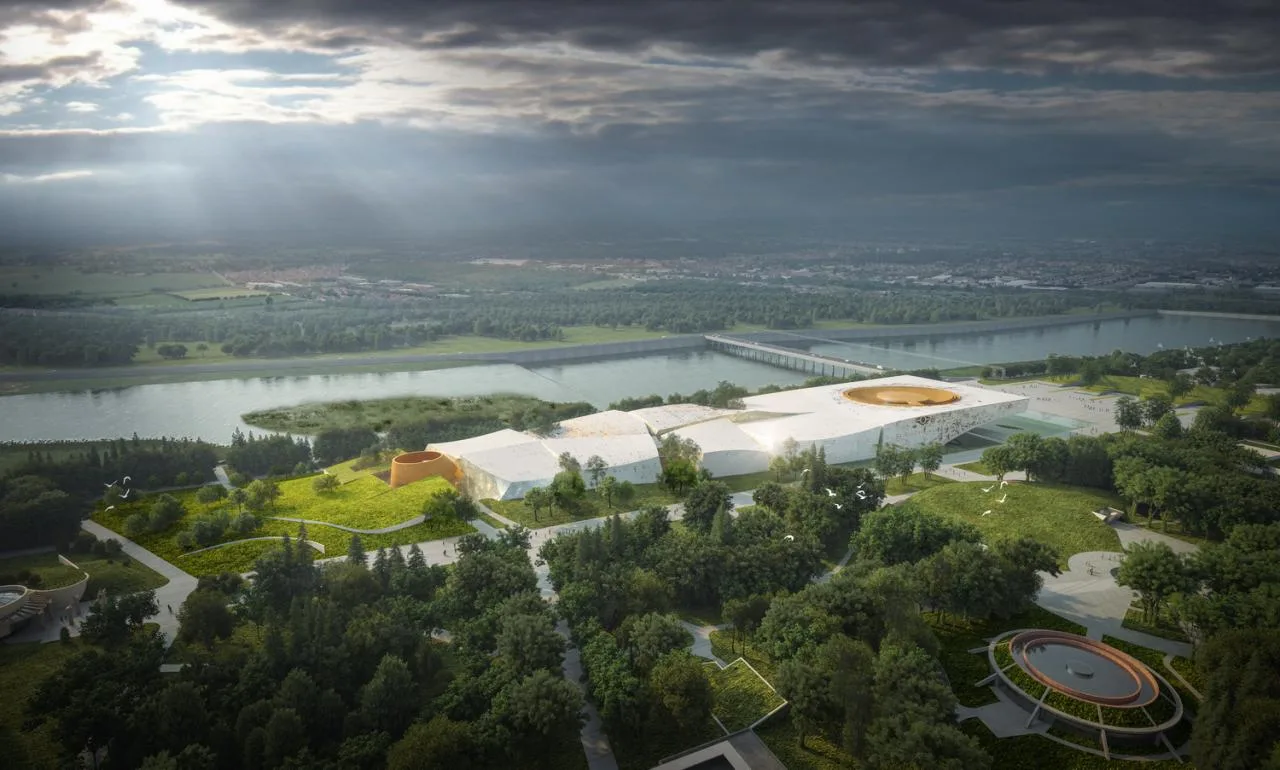
The Sanxingdui Ancient Site, located on the south bank of the Yazi River in northwest Guanghan City, Sichuan Province, spans 12 square kilometers and boasts a history of 5,000 years. It stands as the largest, longest-lasting, and most culturally significant ancient city and heritage site of the Shu civilization discovered in Southwest China to date. Renowned as one of the greatest archaeological discoveries of the 20th century, Sanxingdui is celebrated as the “source of the Yangtze River civilization.”
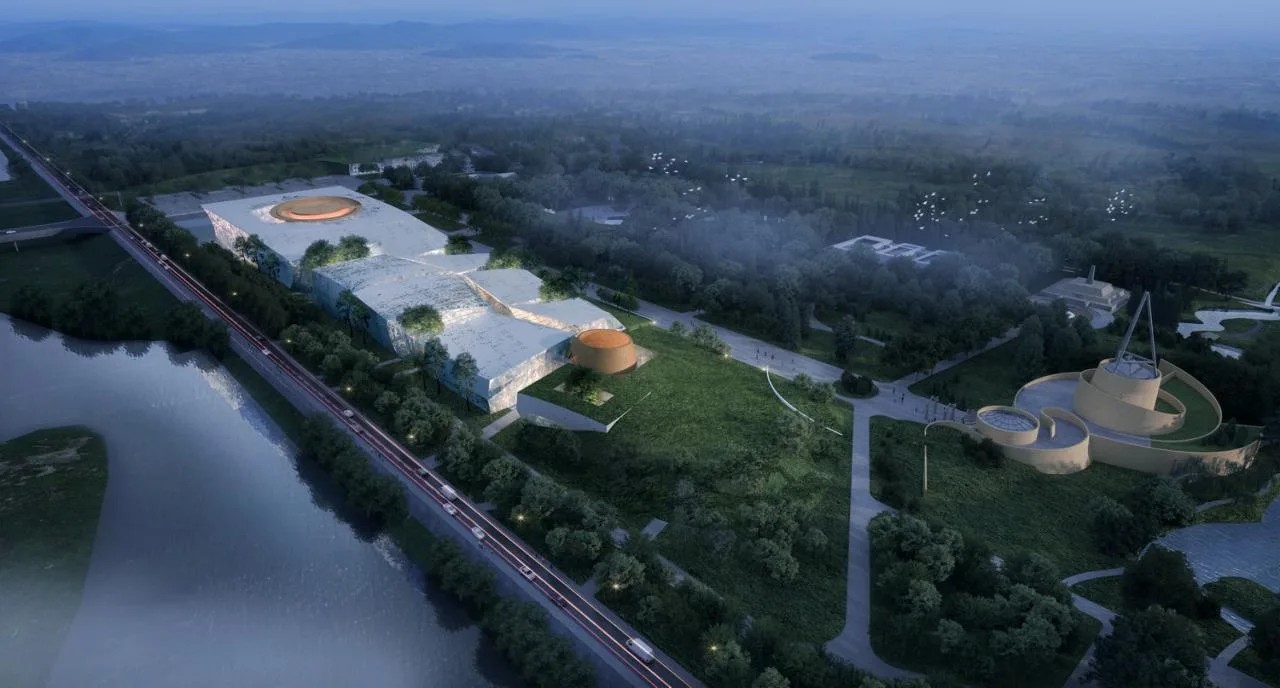
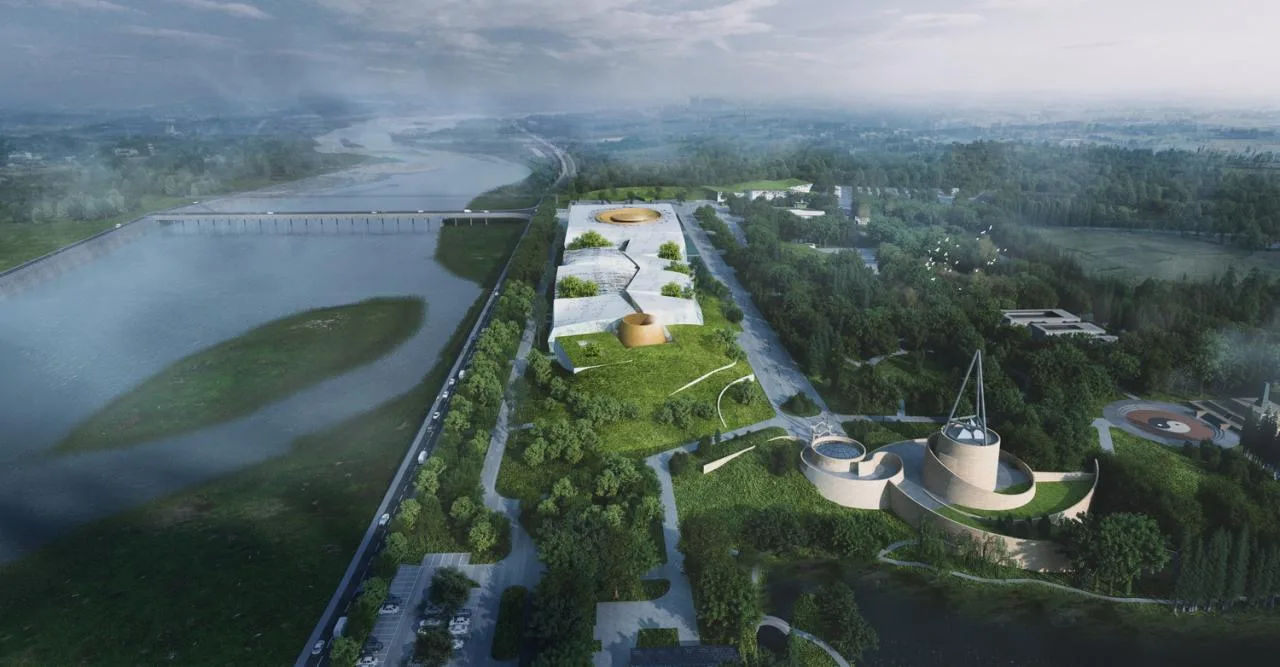
With ongoing excavations of multiple sacrificial pits, including Pit 6, the museum’s existing two exhibition halls no longer suffice to fulfill traditional roles such as research, education, and exhibitions, nor extended functions like leisure and entertainment. Hence, the urgent need for a new museum building arose. This new facility is situated on the north side of the museum complex, adjacent to a natural lake that serves as a flood discharge feature for the park. Halls 1 and 2 are primarily exhibition spaces open to visitors, with Hall 2 marking the park’s highest point. Its distinctive spiral-rise architectural design has become an iconic feature of the Sanxingdui Museum.
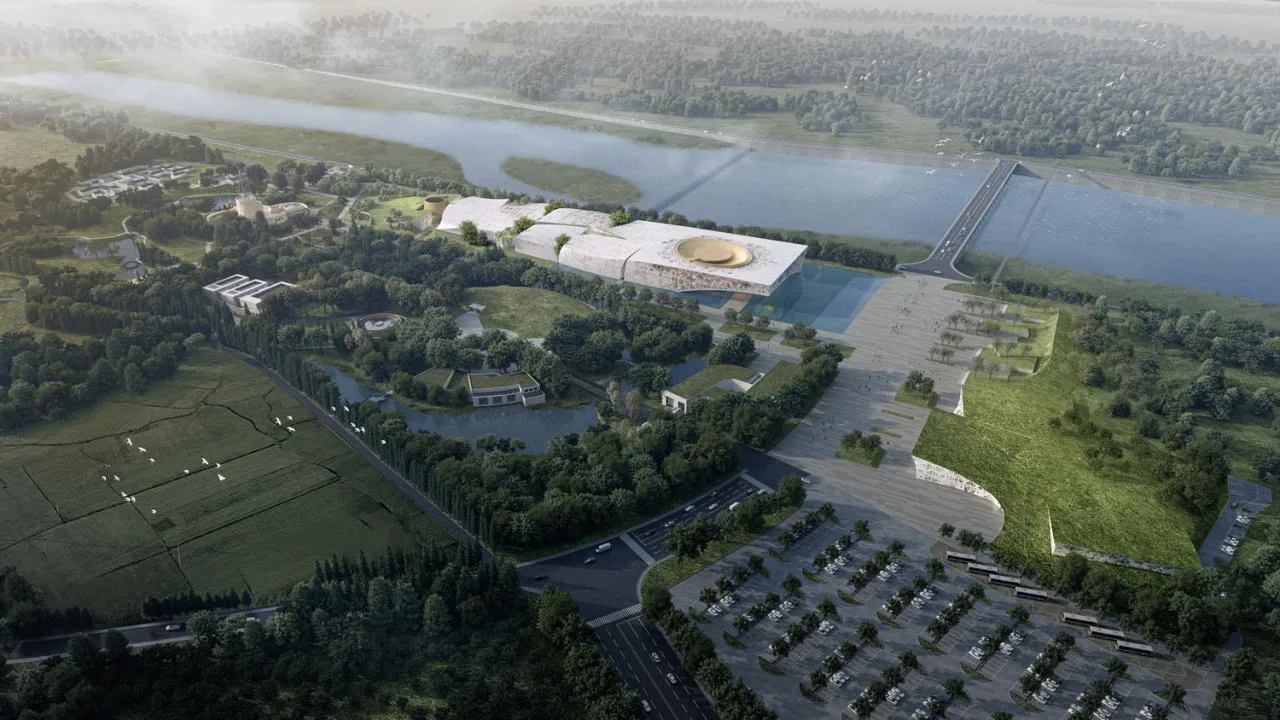
The new building is located near Building 2 and is significantly larger than the existing park structures. The site measures approximately 400 meters in length and 80 meters in width, forming a narrow, elongated plot. The design must carefully consider its impact on Building 2 and harmonize with the surrounding environment. To the east, the site borders an urban road, serving as the primary pedestrian access. The north side faces the Duck River, the cradle of the ancient Shu civilization. The south adjoins Zhongzhou Avenue, the park’s main axis, while the west borders Hall 2. These diverse and complex site conditions, coupled with strict height and planning regulations, present challenges for continuing the spiritual legacy of Sanxingdui while respecting and integrating with the environment.
Responding to Site Diversity and Integration
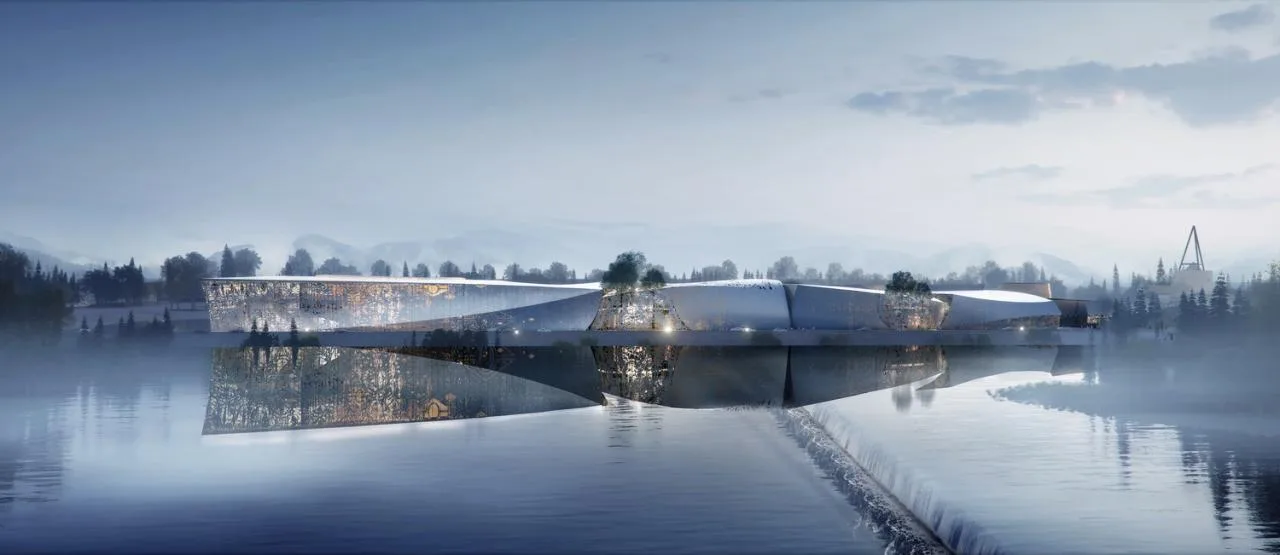
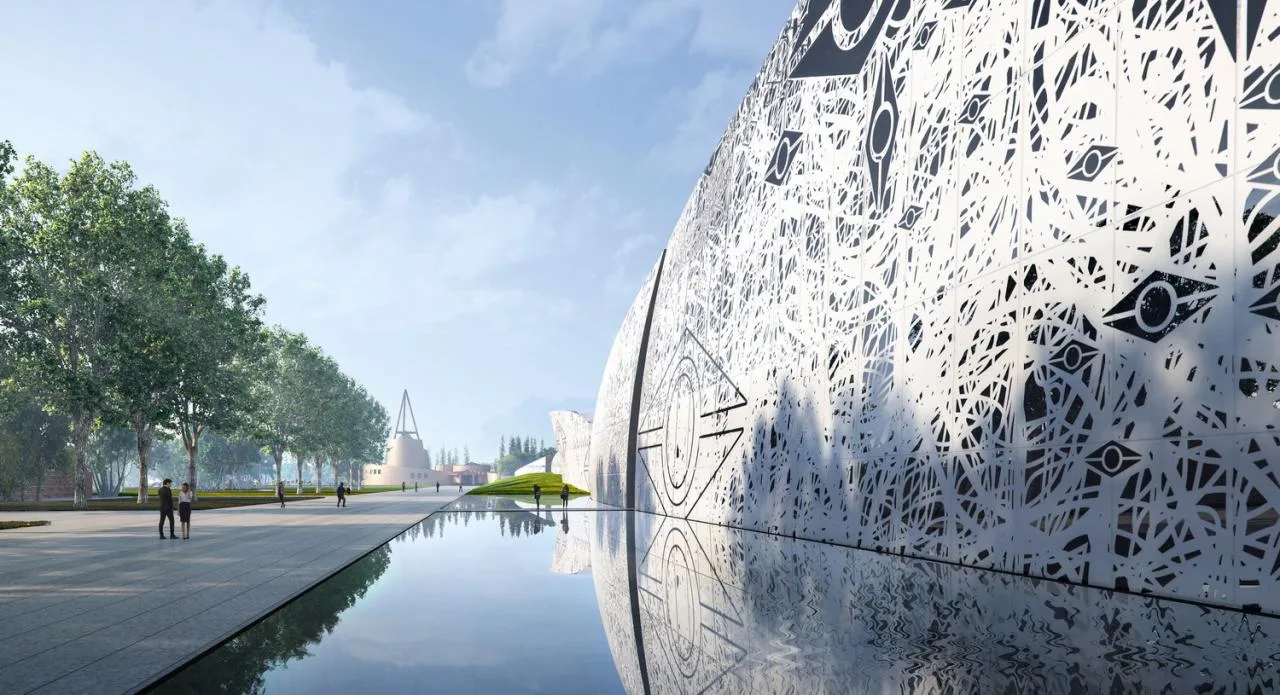
To address the complex site conditions, the design employs a multi-dimensional and differentiated approach: the building gradually rises from west to east, symbolizing emergence from the earth, while also reducing the perceived mass. Facing the park buildings, it integrates humbly into the soil cover; facing the city, it presents a complete architectural volume; facing the Duck River, it exhibits a continuous curved form that creates a striking reflection on the water’s surface. This varied treatment enables the building to blend naturally with the park environment, avoiding the monotony of a singular architectural expression. The result is a structure that commands a majestic presence at the urban interface while also embodying a new Sanxingdui Museum deeply rooted in Bashu’s land.
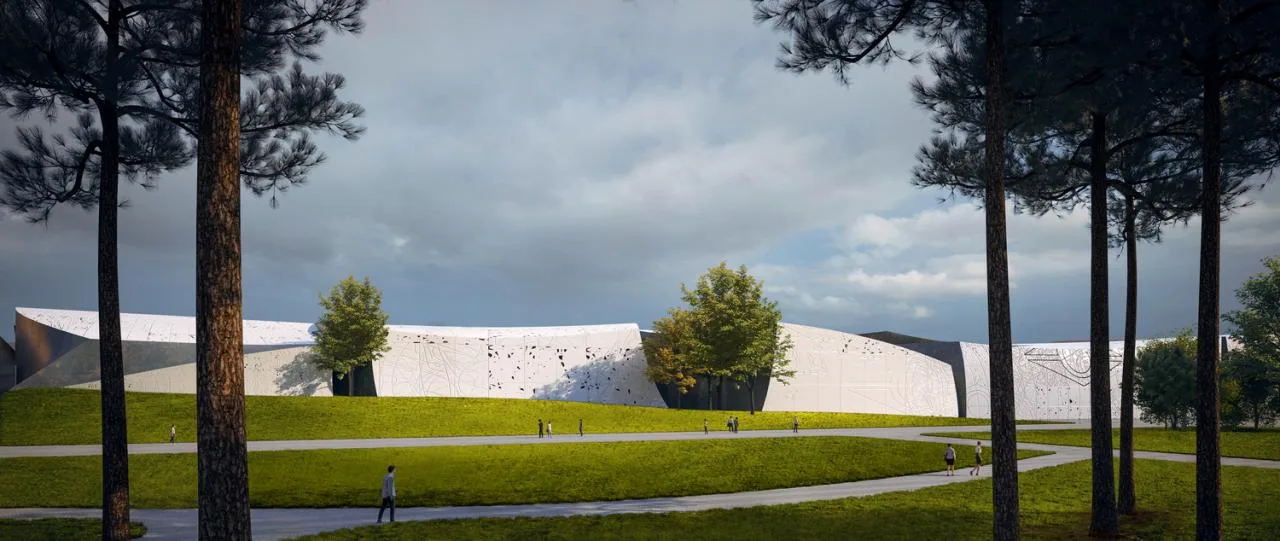
Visitors enter the park via a planned road connected to the ruins park from the city side. The overall design of the Sanxingdui Museum embraces a sustainable development vision, viewing the park as a “tree of life.” The design organizes the main trunk, branches, and leaves, using the cultural relic Tongtian Divine Tree as a guiding flow line throughout the museum area. This new axis connects all key visitor points coherently. Internal and external circulation paths clearly separate office, visitor, and cargo flows, while reorganizing the dual flow of pedestrians and vehicles. The main axis shifts northward, guiding visitors through the visitor center to each museum building along this route.
Creating a Divine Spatial Experience
To accommodate a 30,000-square-meter exhibition hall on a narrow, elongated site without creating a monotonous visitor experience, the design features two parallel exhibition halls on the north and south sides connected by a central linear corridor. This corridor transcends a simple passageway, becoming a historical, open, and multifunctional public space. Exhibition halls are grouped and interspersed with several leisure courtyards, linking architectural spaces with urban surroundings and creating open interfaces that engage with nature outside.
The first floor houses foundational exhibition spaces, including historical introductions and a heavy equipment exhibit. The second floor showcases themed exhibitions on excavation stories and recent archaeological discoveries. A vibrant two-story public hall connects these spaces, passing through the heavy equipment exhibit and an aerial courtyard. This layout forms a directed linear spatial sequence, offering varied exhibition experiences that seamlessly blend viewing, interaction, communication, and relaxation.
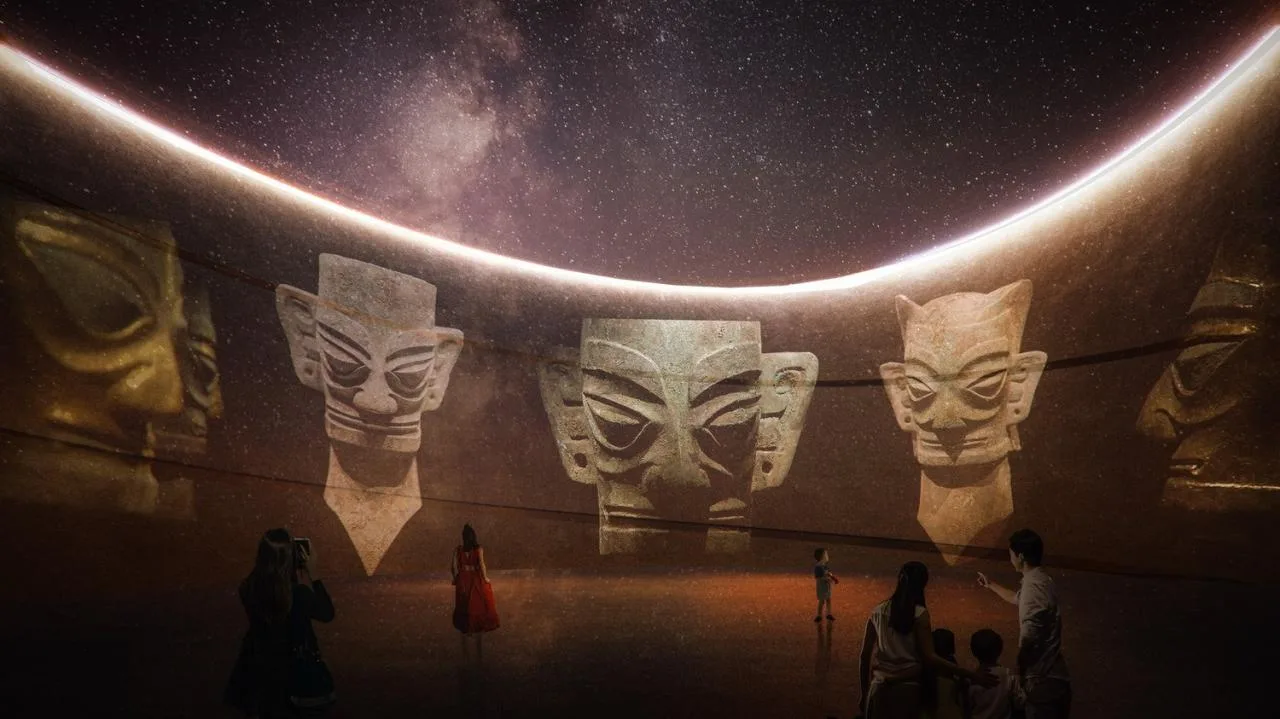
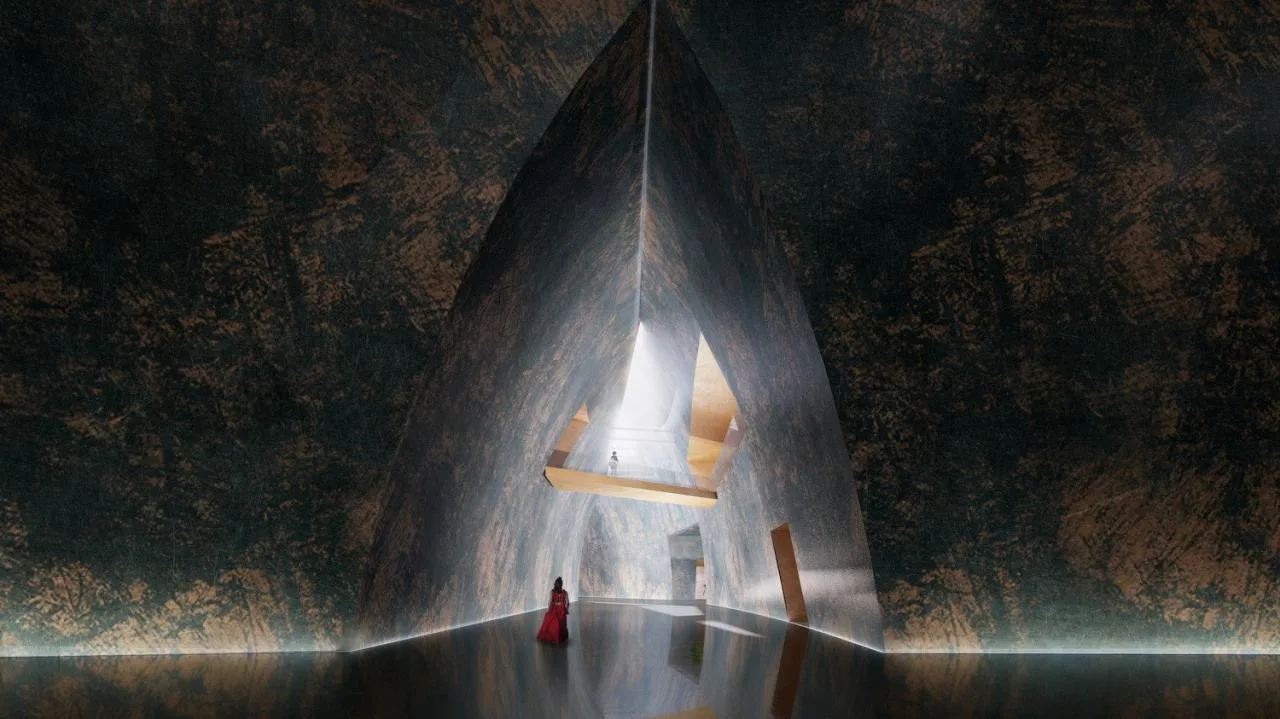
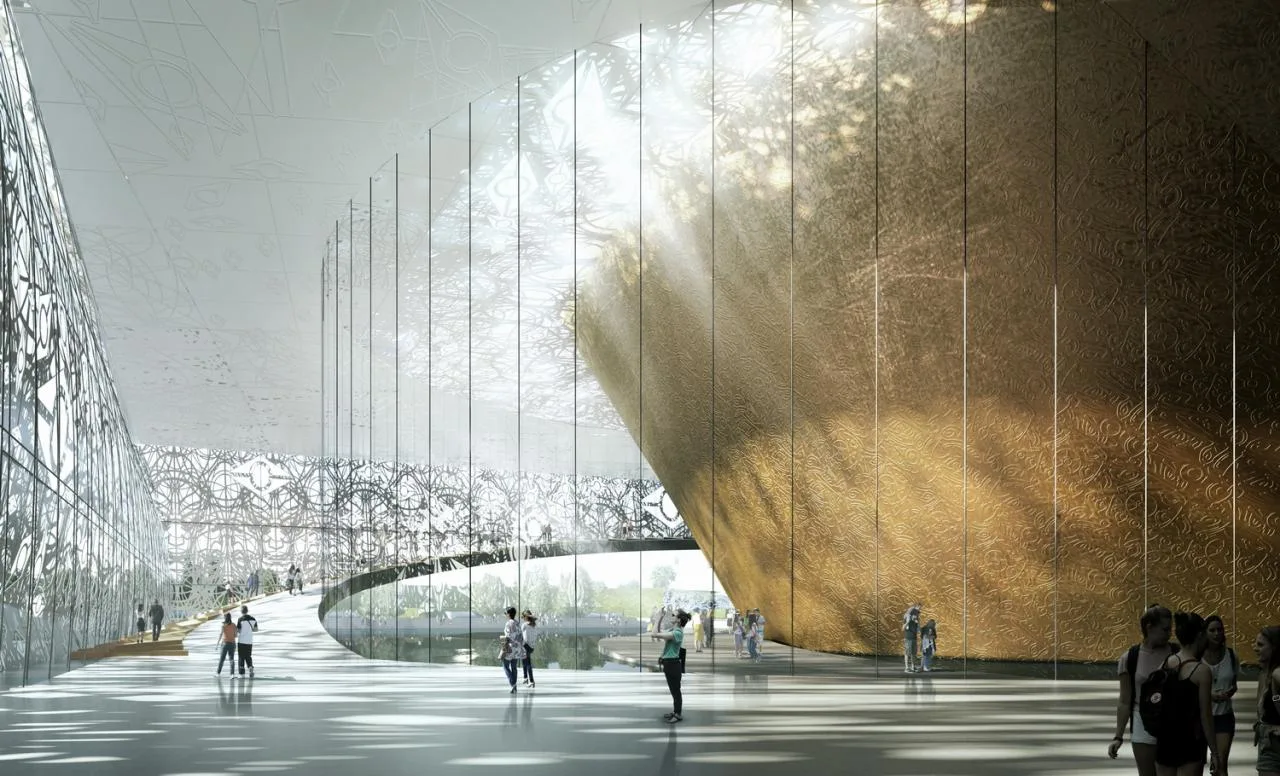
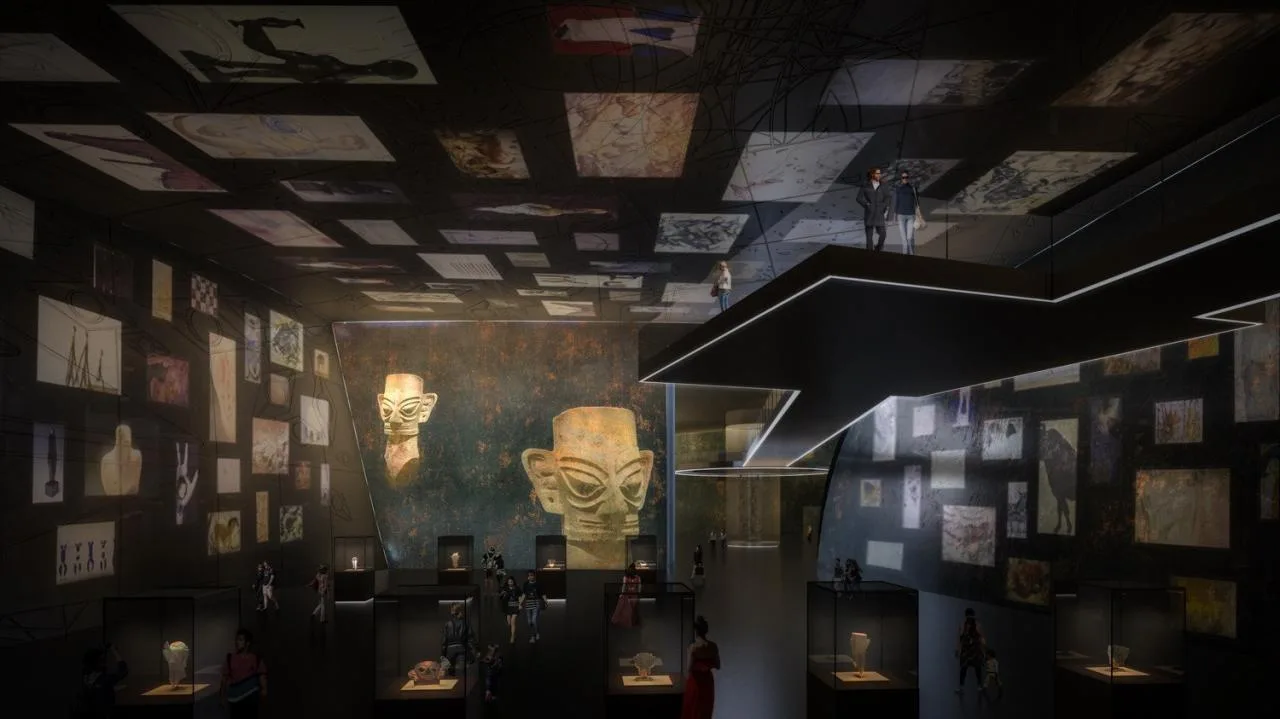
The museum visit begins at the southern edge of the water, where a golden entrance hall draws visitors inside. From there, they enter the Hall of Changing Light and Shadow. Guided by spatial design, visitors flow through the golden entrance hall, immersing themselves in the long historical narrative and elevating their spiritual experience as they embark on their tour.
The central corridor leads visitors through a mottled historical passage, starting with the “Ancient City and Ancient Kingdom” exhibition hall, moving through displays of ancient Shu production and artistic life that highlight cultural and technological achievements. Visitors then proceed through the sacrificial exhibition hall to areas featuring cultural relics and heavy equipment, exploring the lives of ancestors from thousands of years ago.
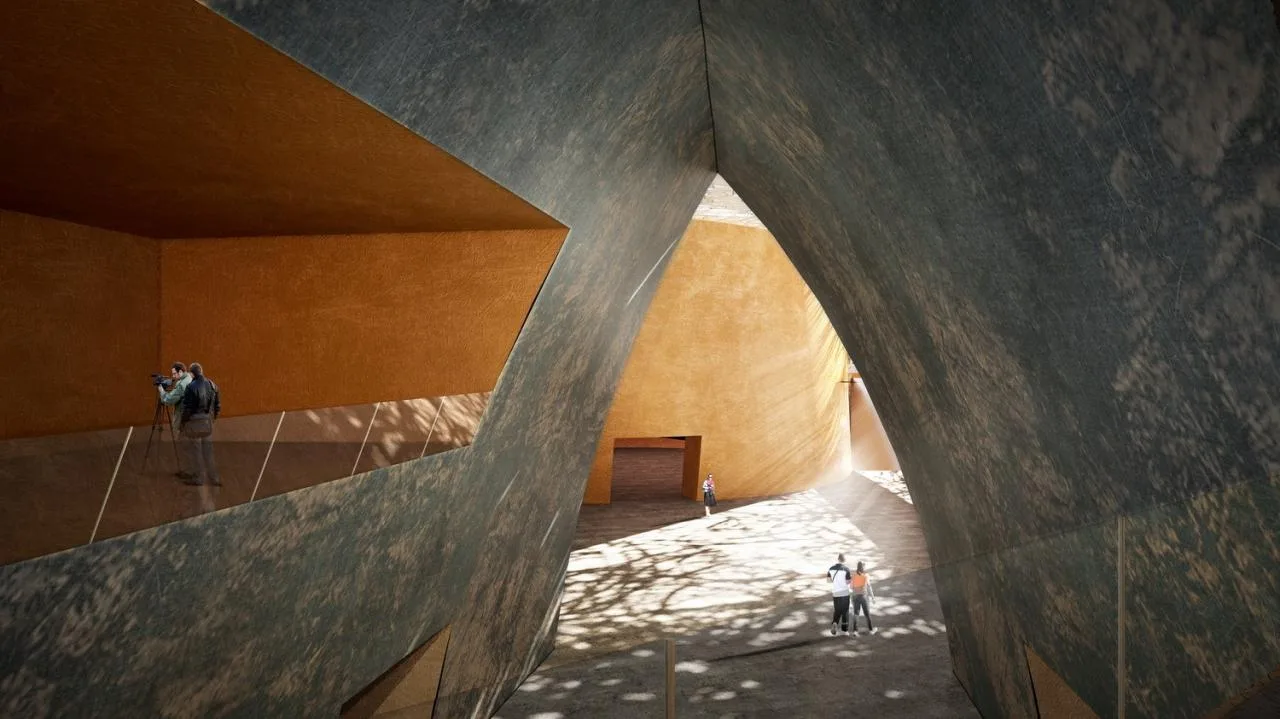
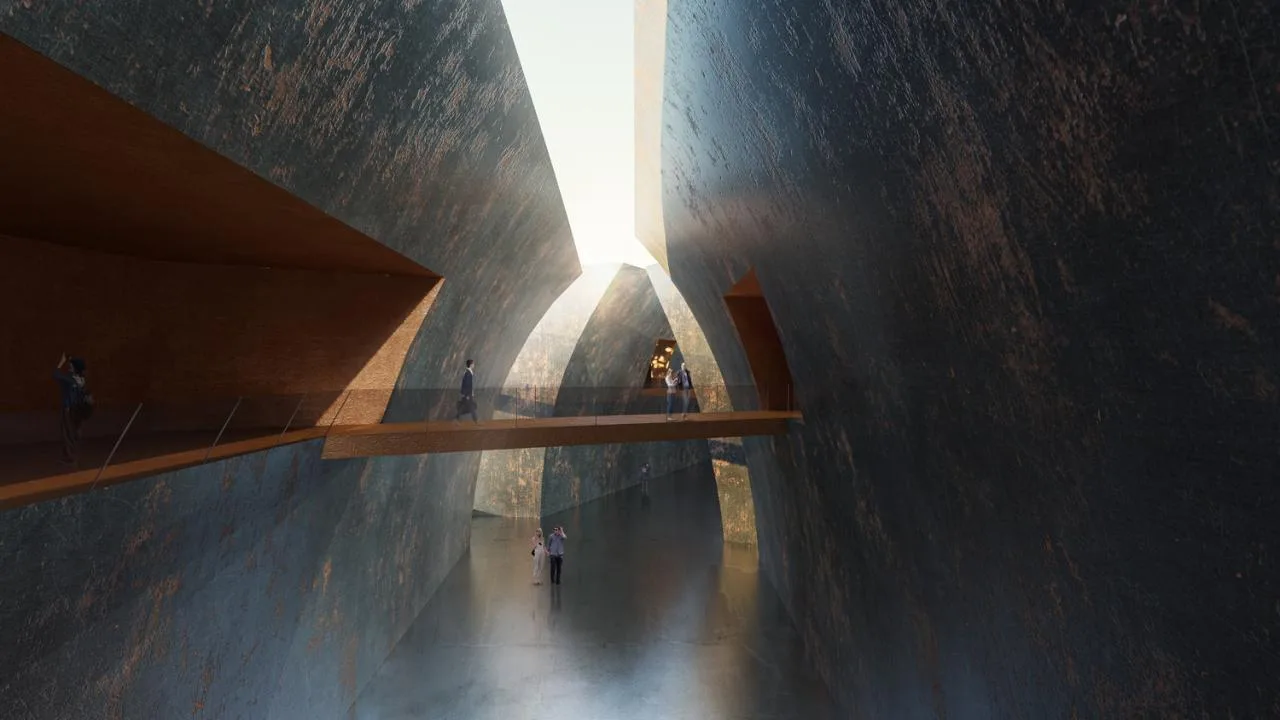
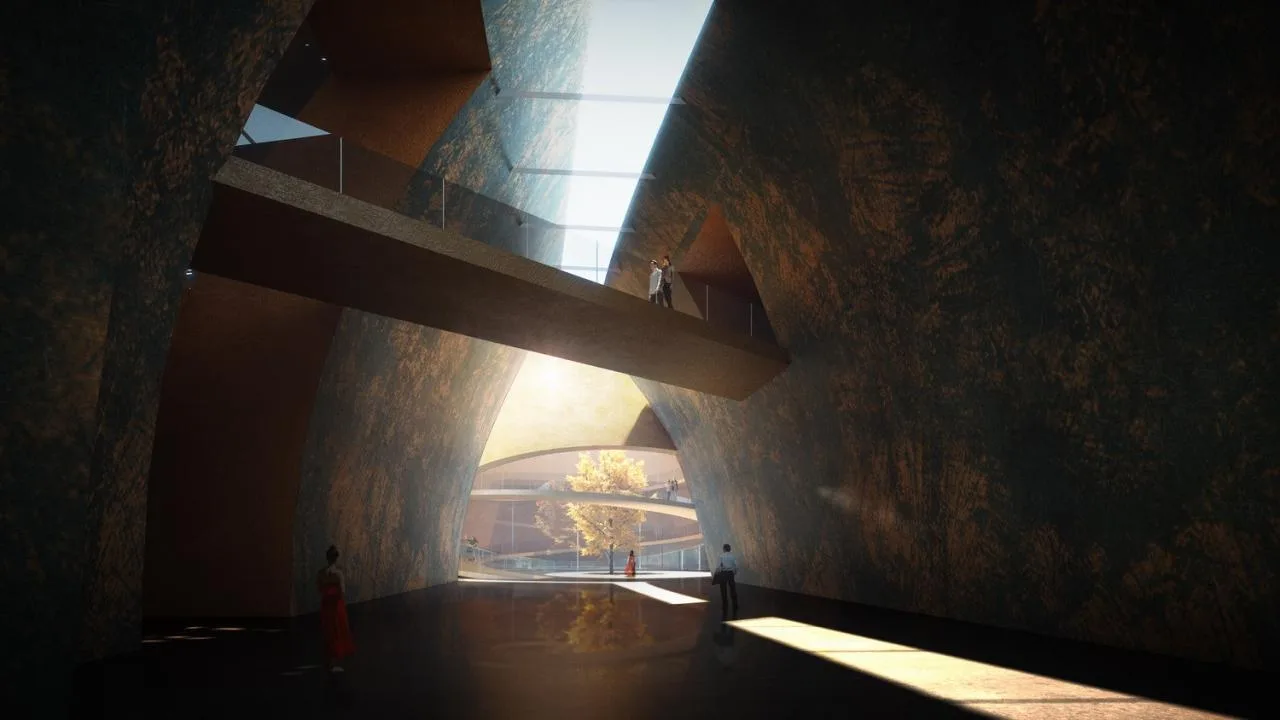
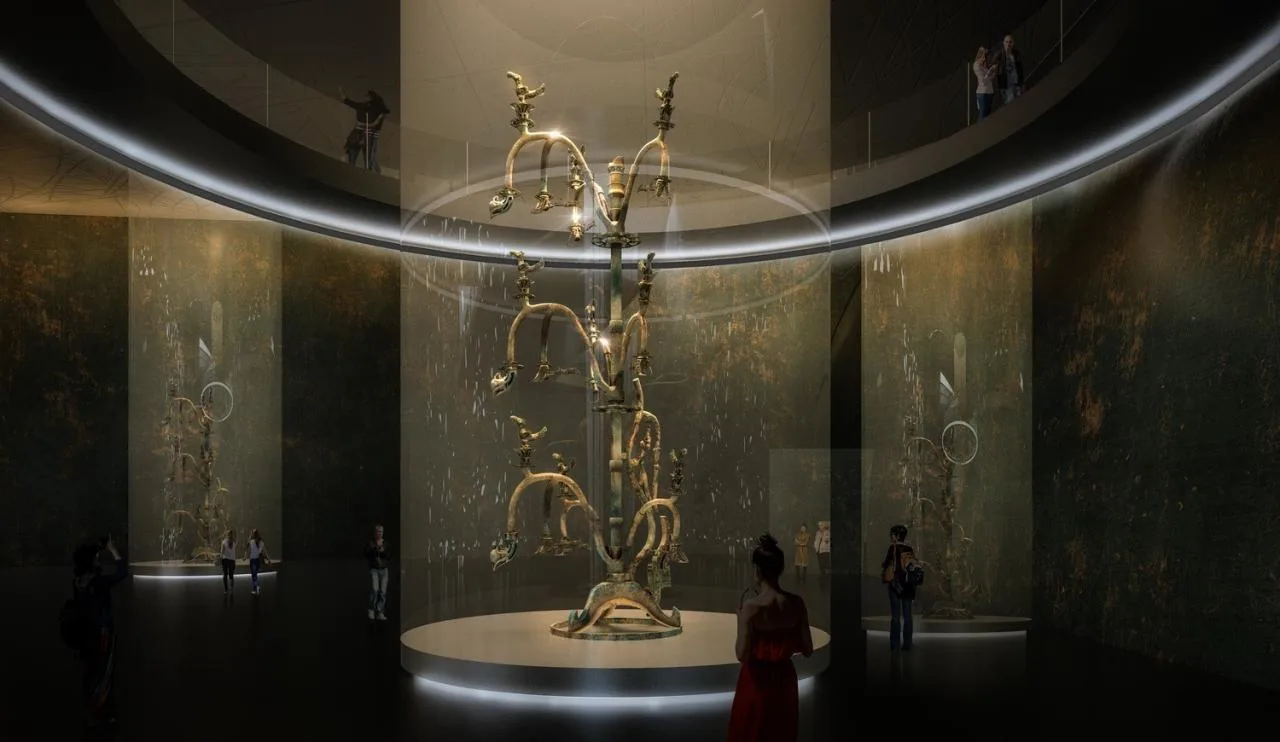
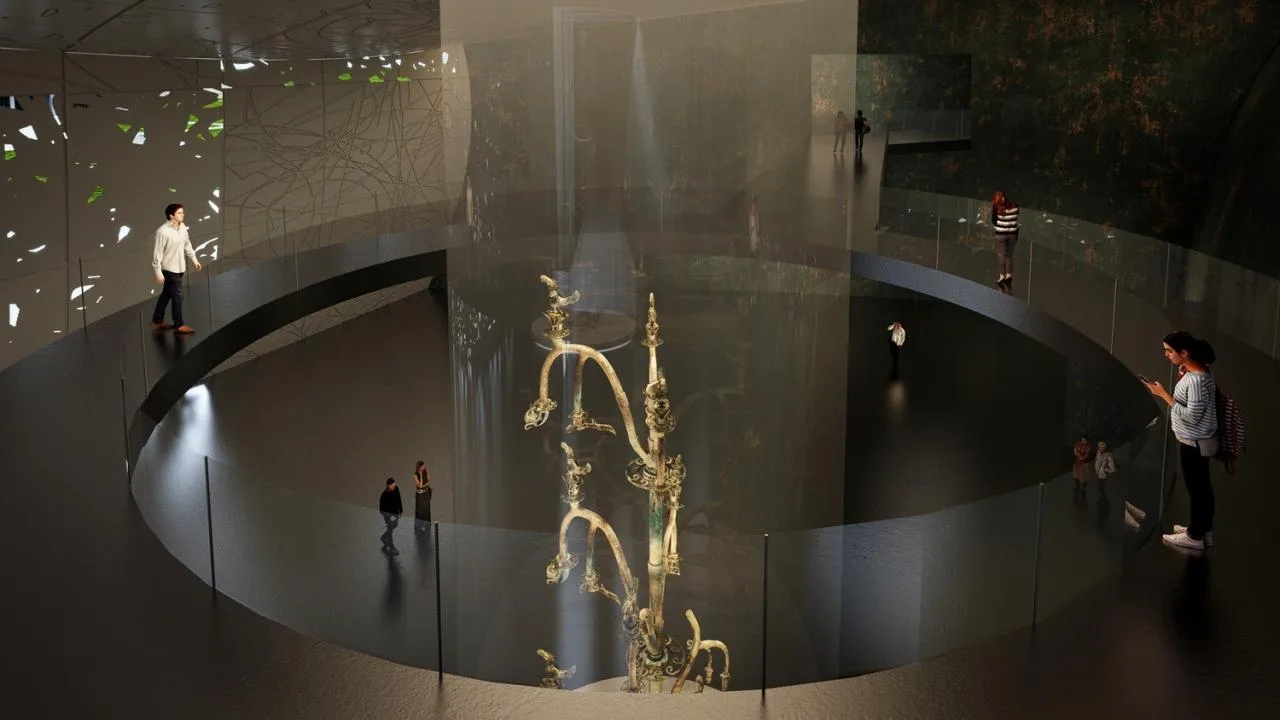
Exiting the specialized hall for cultural relics and heavy objects, visitors follow a public corridor shaped like a golden scepter to reach the westernmost cylindrical courtyard. A golden staircase guides visitors to the second floor, where a winding aerial corridor connects exhibition halls with public spaces, offering a unique vantage point. From this platform, visitors can overlook the Bronze God Tree, evoking the feeling of traveling back to an ancient sacrificial site. They can also view the Duck River through aerial courtyards nestled between halls, with sightlines extending across the entire park.
This excellent visual accessibility enhances orientation and enriches spatial experience. Public spaces are designed to fulfill multiple functions—including communication, interaction, relaxation, shopping, and flow guidance—providing visitors with a rich and engaging experience.
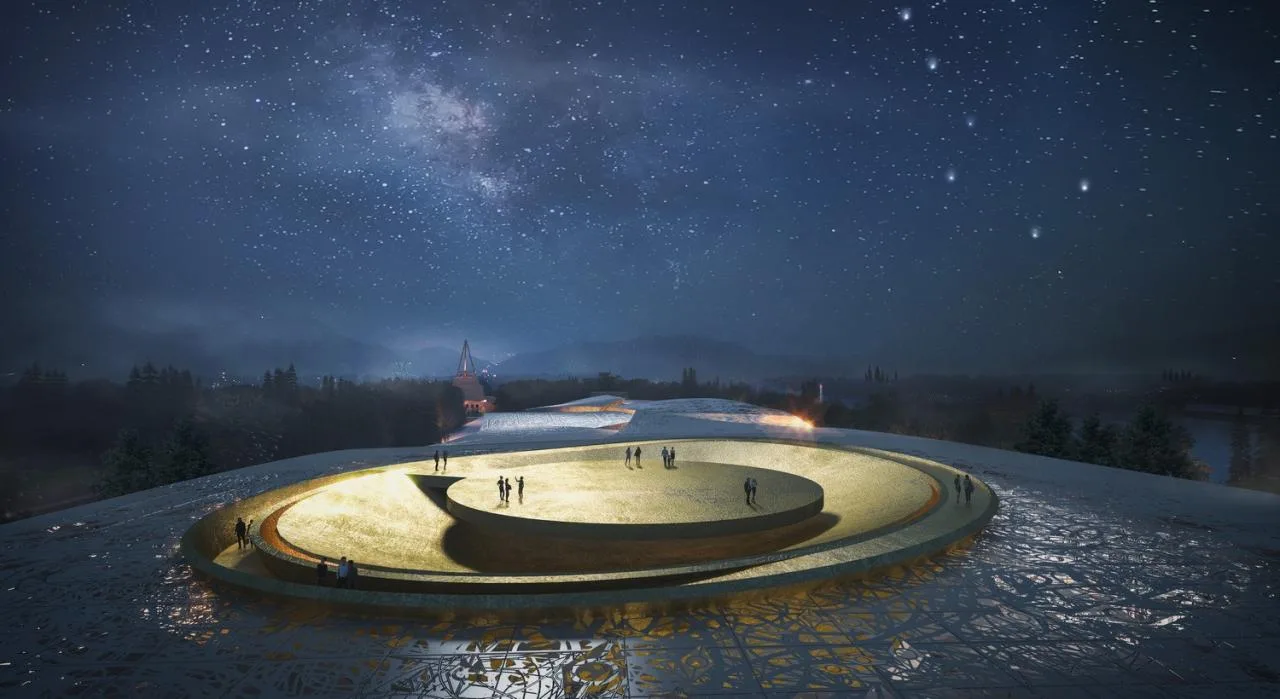
At the end of the visitor flow, guests can ascend onto a golden altar, inspired by a golden mask, without leaving the roof. From here, they overlook the ruins, face the North Star alongside the ancestors of Sanxingdui, gaze at the sky, and connect with the universe. The overall circulation organizes multiple indoor and outdoor spaces coherently, blending seamlessly with the park’s flow lines and introducing rhythmic changes at key nodes. This dynamic flow creates a museum that is not an isolated building but an integral part of the urban fabric, rich in interest, commemoration, and temporal significance.
Light as a Guide for Space
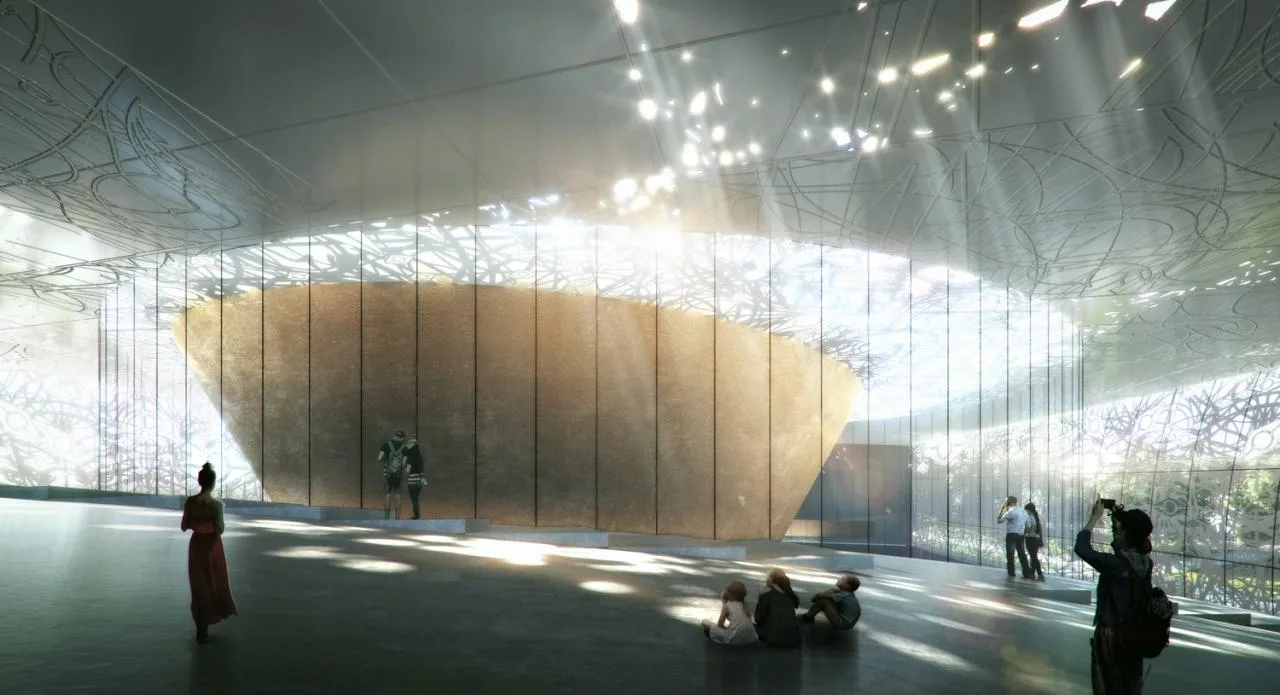
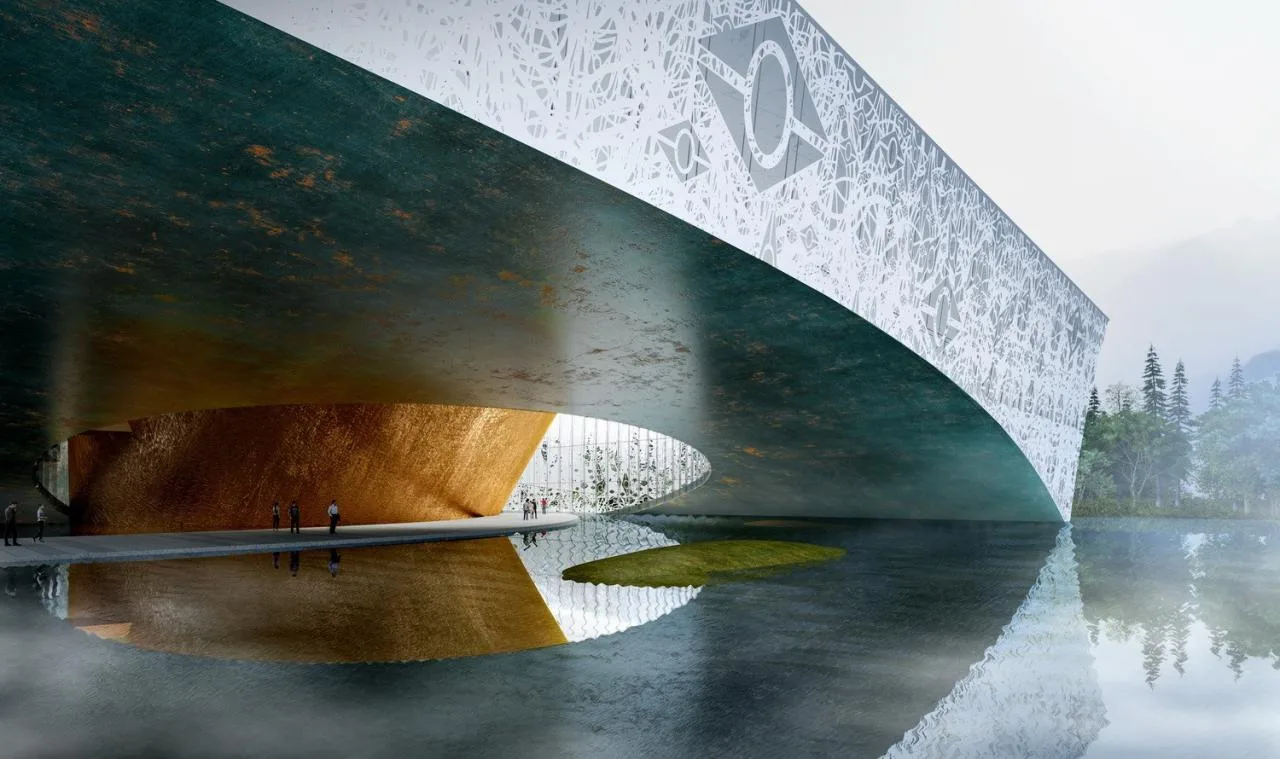
The long river of history is compressed within the inclined exhibition hall volumes. The exterior walls are clad with textured panels fashioned from custom bronze and gold materials, creating an immersive, mysterious atmosphere that evokes the ancient Shu Kingdom. The golden mask of Sanxingdui—symbolizing the glory of the ancient Shu civilization—defines the spiritual spaces at both ends of the building. The architectural image at the entrance, reflected in the waterfront, forms the “bronze eye” of Sanxingdui culture.
The golden hall spans two floors, combining an accessible ramp with a welcoming foyer. Natural light cascades from the roof, flowing along the walls and symbolizing the ancient Shu ancestors’ reverence for the sun. This golden space marks the end of the first-floor tour, from which visitors ascend via a ramp to the second floor, gradually emerging from the weight of history into light, stepping from the past toward the future, and freely navigating between history and modernity.
Abstract Design Language
The Sanxingdui culture is renowned for its abstraction and symbolism, elements we have woven into the architectural language of the new museum. From materials to form, the symbolic vocabulary reflects the natural features and social culture of the Sanxingdui region. Through architectural modeling techniques, the rich historical and cultural heritage is presented in a modern spatial and material context, enhancing recognition and reinforcing identity, while remaining accessible to a broad audience. The building’s form is concise and harmoniously integrated with the environment.
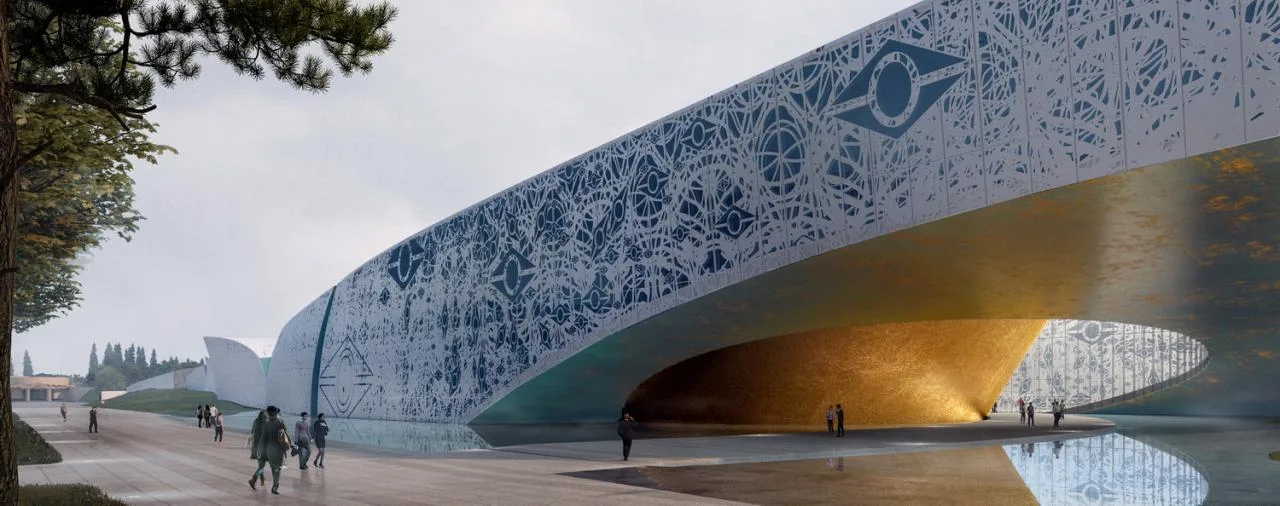
We drew inspiration from the ancient Shu Kingdom artifact, the Yuzhang, discovered at Sanxingdui, to abstractly shape the building. The Yuzhang was an important sacrificial vessel for the ancient Shu people, historically used to worship heaven and earth. In this design, the Yuzhang form expresses the architectural concept of unity between heaven and humanity.
Clear and Engaging Storytelling
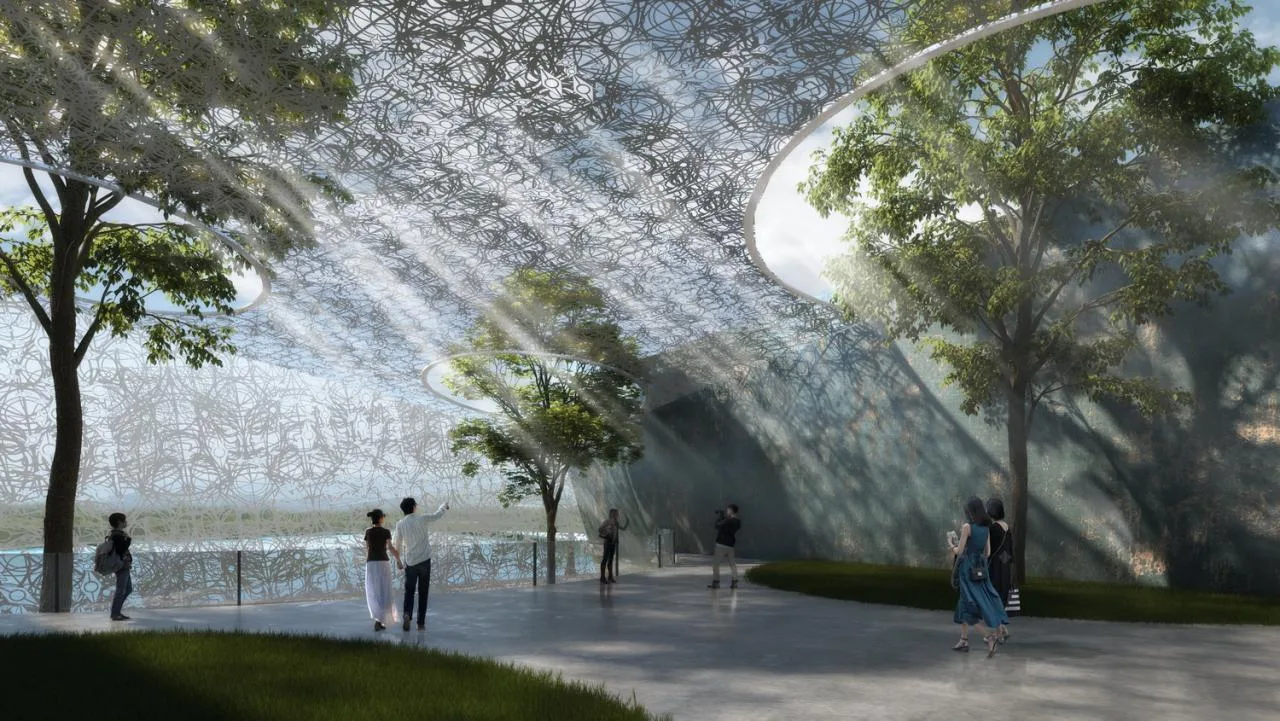
Inspired by fragments of jade Zhang found in sacrificial pits, the museum’s exhibition halls emerge organically from the terrain, forming a cluster that echoes the lines of Sanxingdui bronze ware. Trees planted in the gaps between halls help blend the building into the natural landscape. The exhibition volumes gradually ascend in height, with the final entrance volume rising above the water, establishing a dialogue with the new visitor center and symbolizing a bridge to the future.
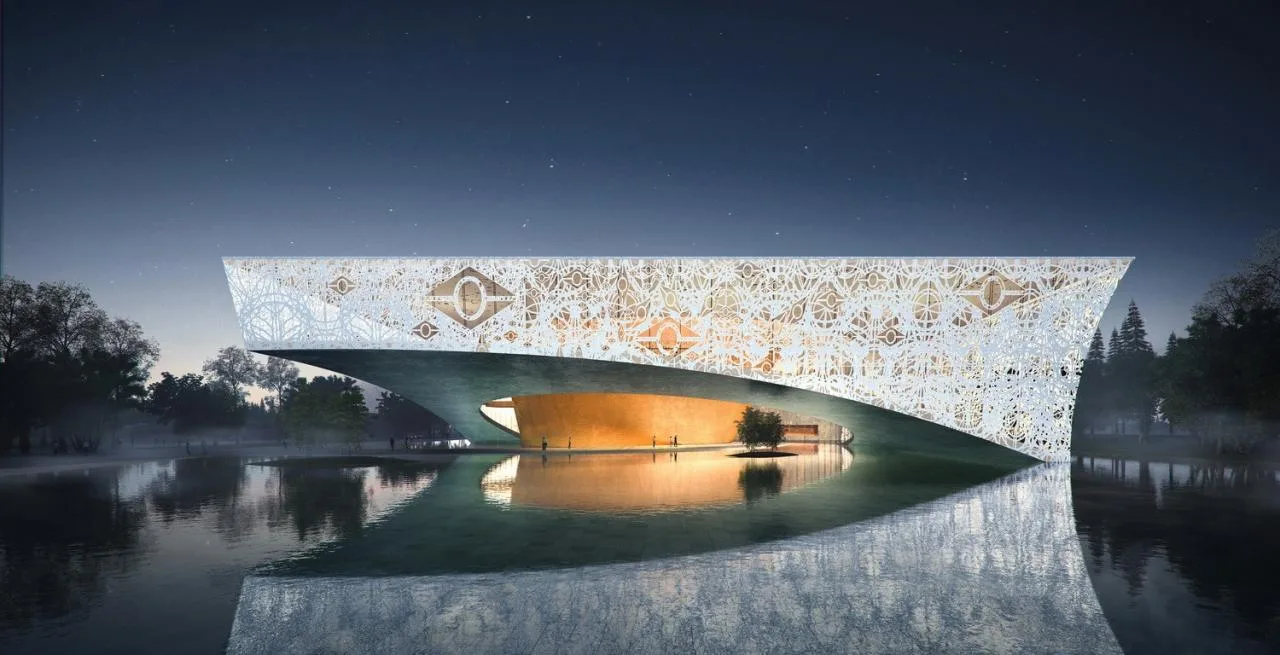
We extracted dynamic, tense curves and abstract symbols from Sanxingdui relics, using stacking, integration, and transformation techniques to create modern composite architectural skins. The gold and copper textures of the cultural relics are translated into the materiality of the public space facades, wrapping the building like a mysterious veil. These materials and forms evoke regional memories and contribute to the building’s humanistic character. Sanxingdui culture permeates the museum’s spatial layout, form treatment, material use, and craftsmanship, breathing new life into ancient culture through a contemporary architectural expression.
Conclusion
Green trees grow through the cracks in the building’s roof, integrating the museum seamlessly into the overall park and surrounding nature. The architectural transition from high to low, modern to natural, and urban to historical pays homage to the museum’s existing environment and exemplifies the Sanxingdui Museum’s commitment to embracing the future.
The new museum aims to establish itself as a world-class heritage institution, showcasing the magnificent Sanxingdui civilization and highlighting its unique charm and pivotal role in the history of Chinese and global civilization. By integrating thousands of years of cultural heritage, the museum leads the entire park with renewed vitality. Its smooth circulation drives engagement throughout the site and its surroundings, positioning Sanxingdui as a premier travel destination in Southwest China. Museums serve as vessels for preserving history and culture, condensed in time and space. This new museum chapter will accompany the ancient relics into the future.
Project Drawings
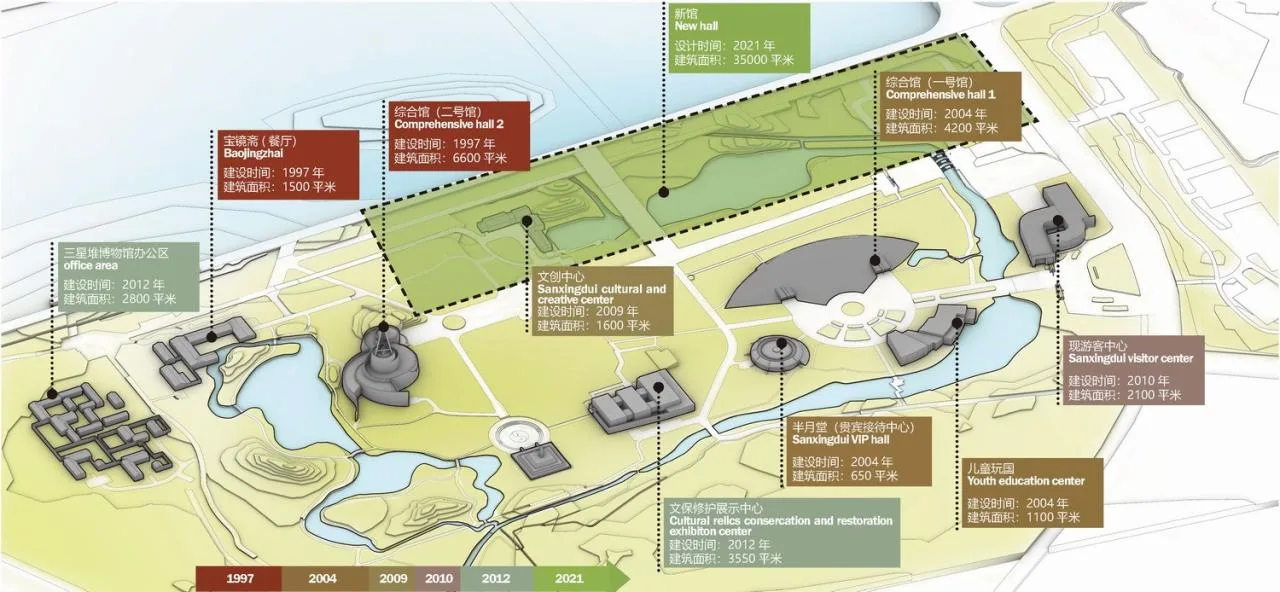
Current Site Conditions within the Museum Area
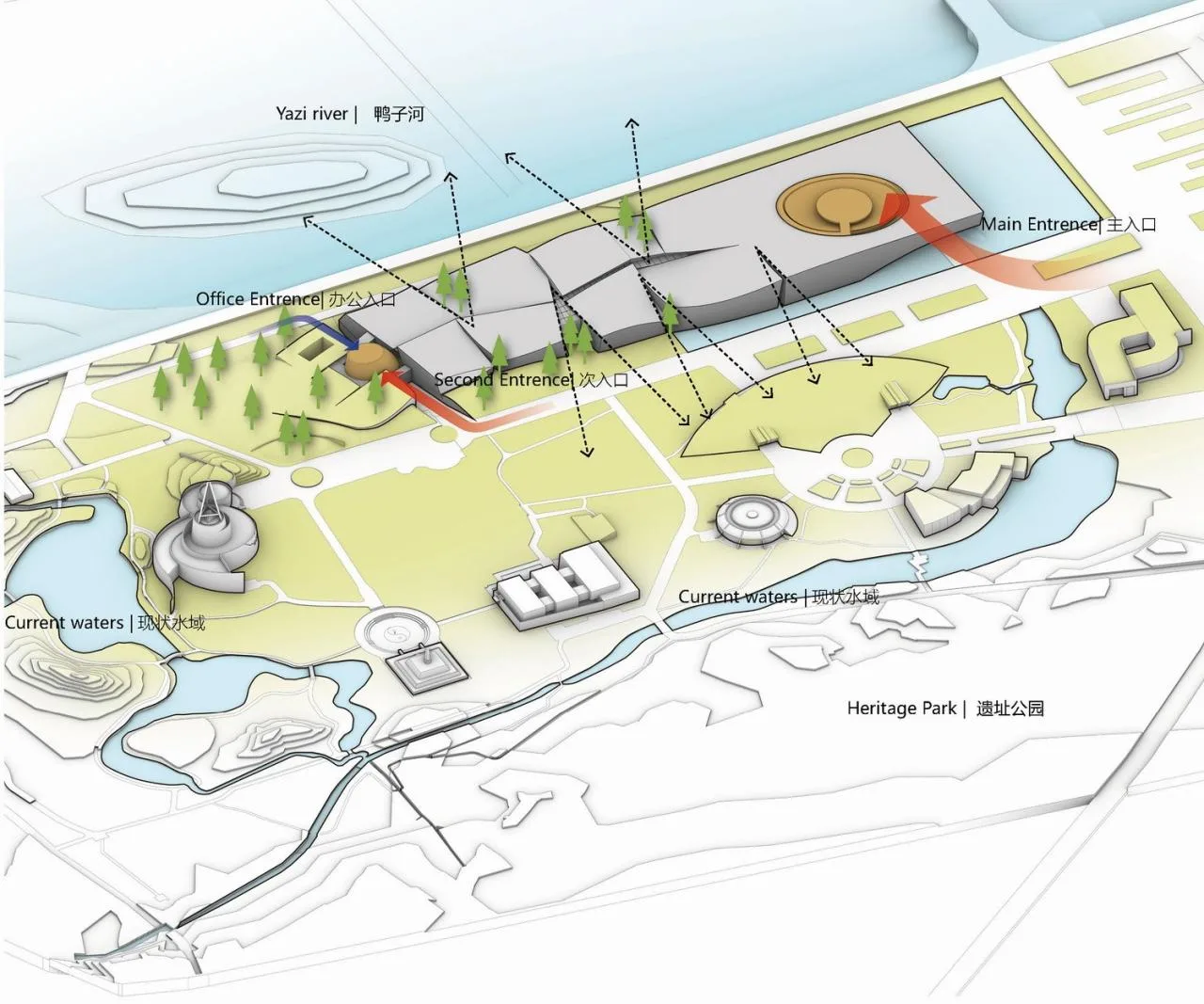
△ Site Response
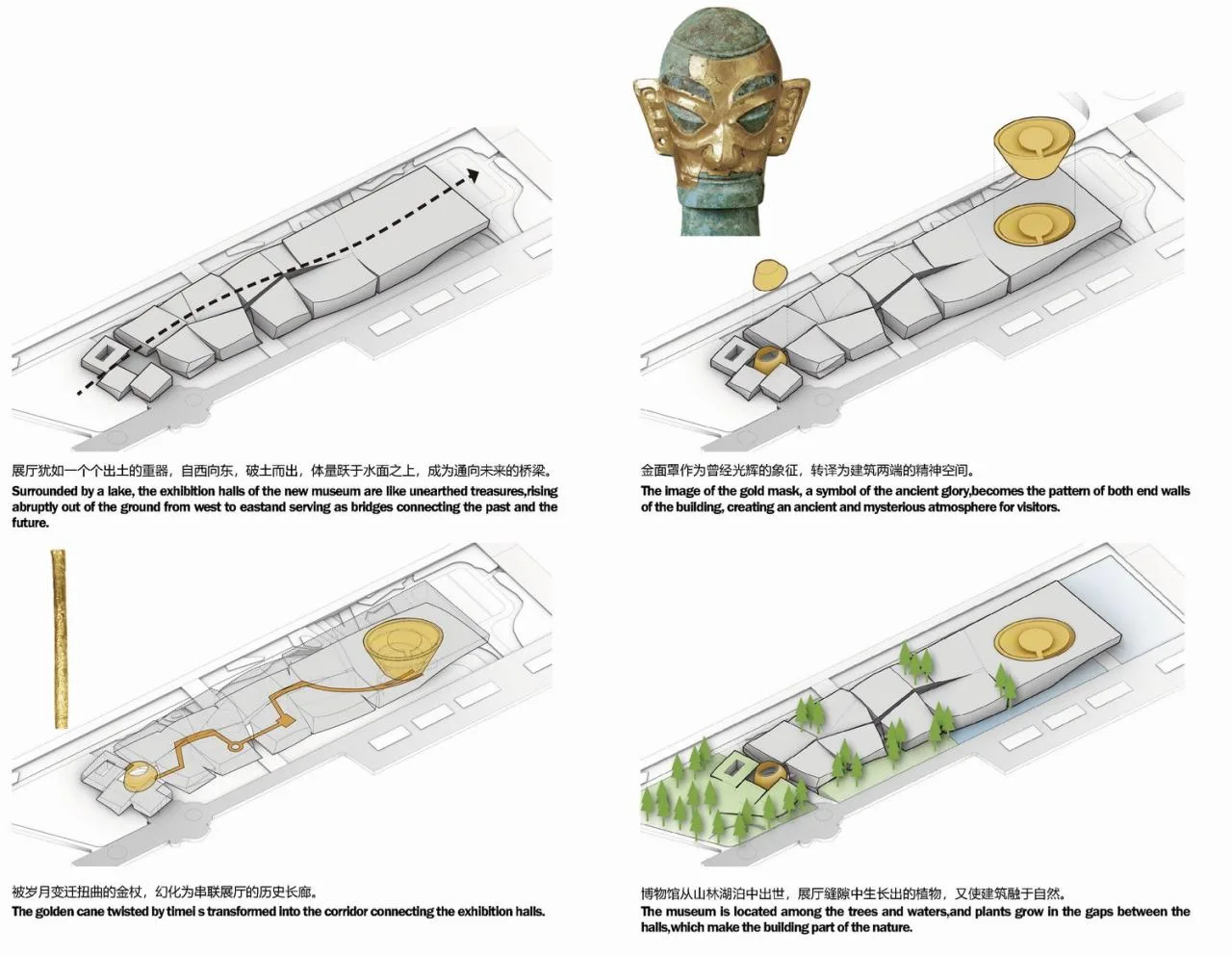
△ Massing Generation
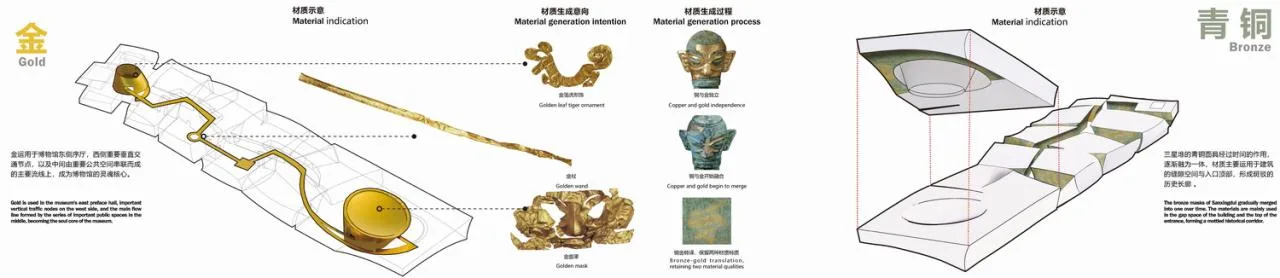
△ Material Design
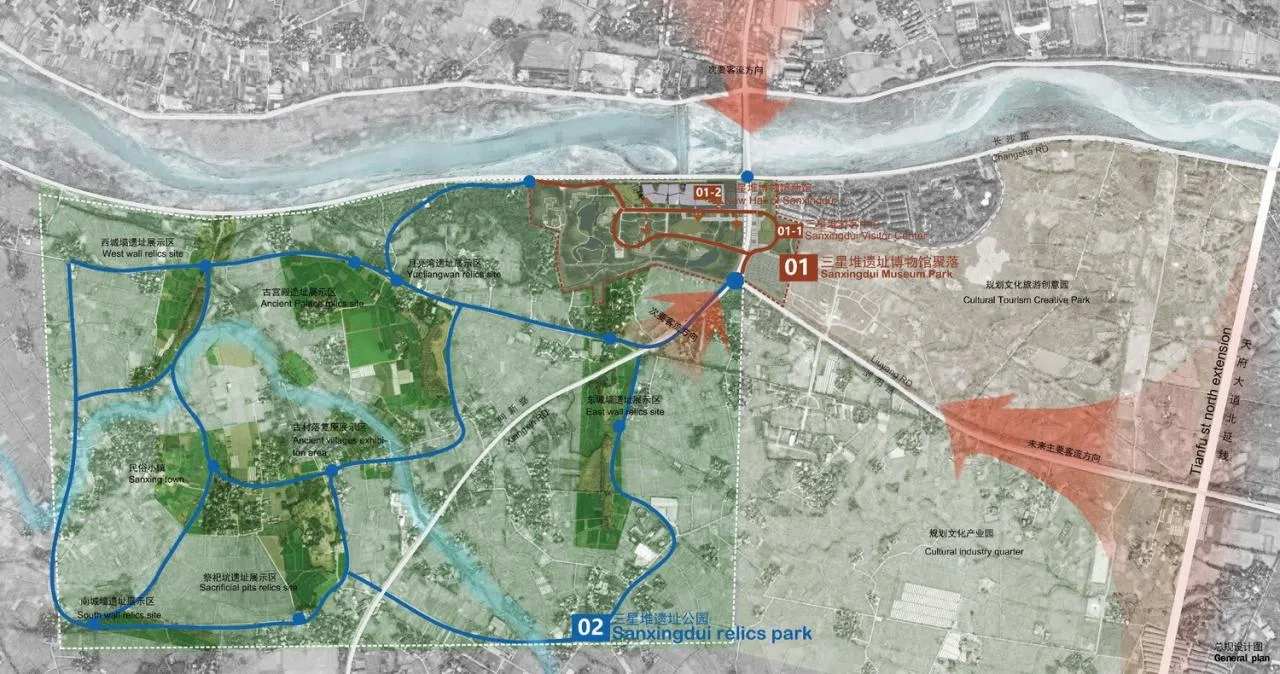
△ Regional Spatial Design
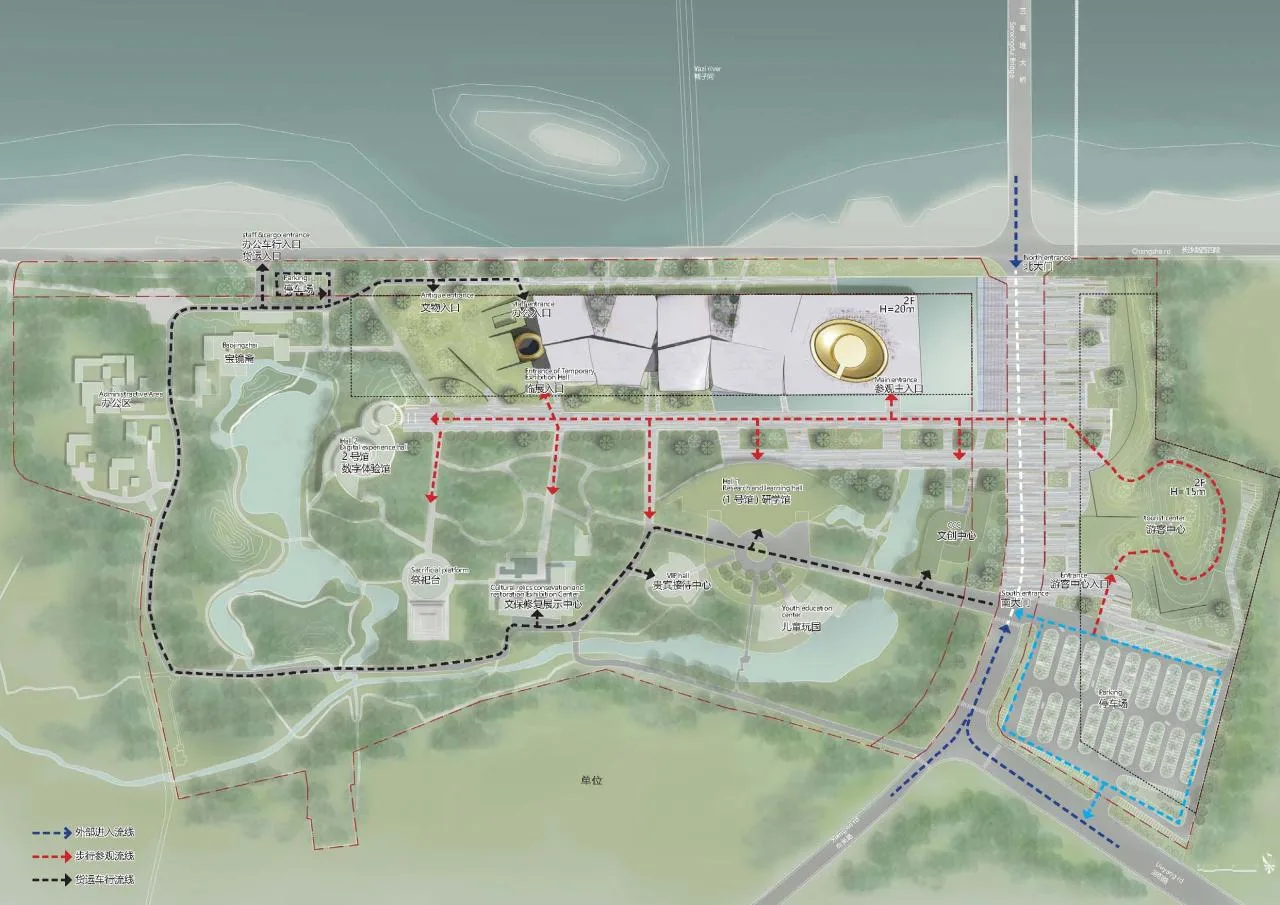
△ Master Plan and Indicators
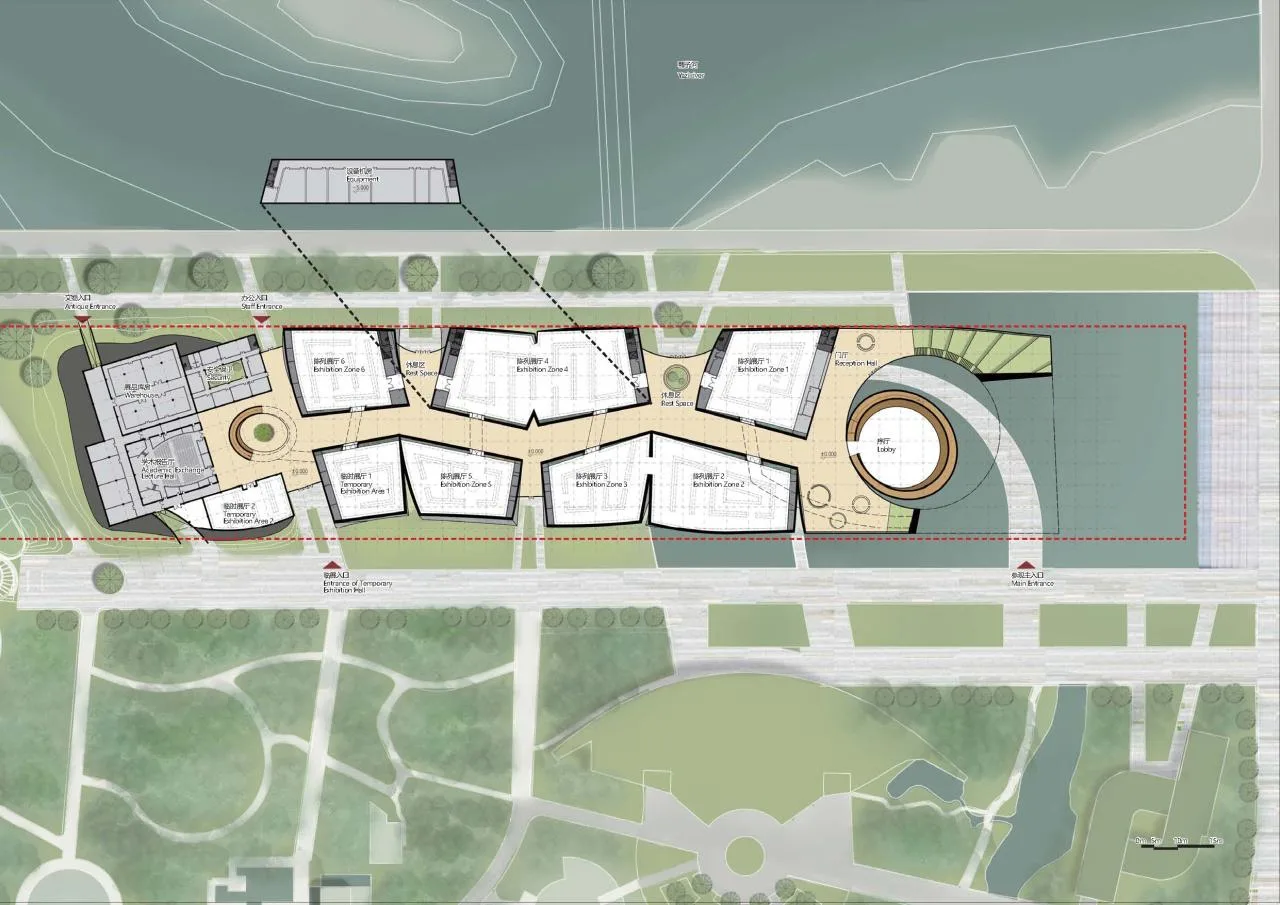
△ First Floor Plan
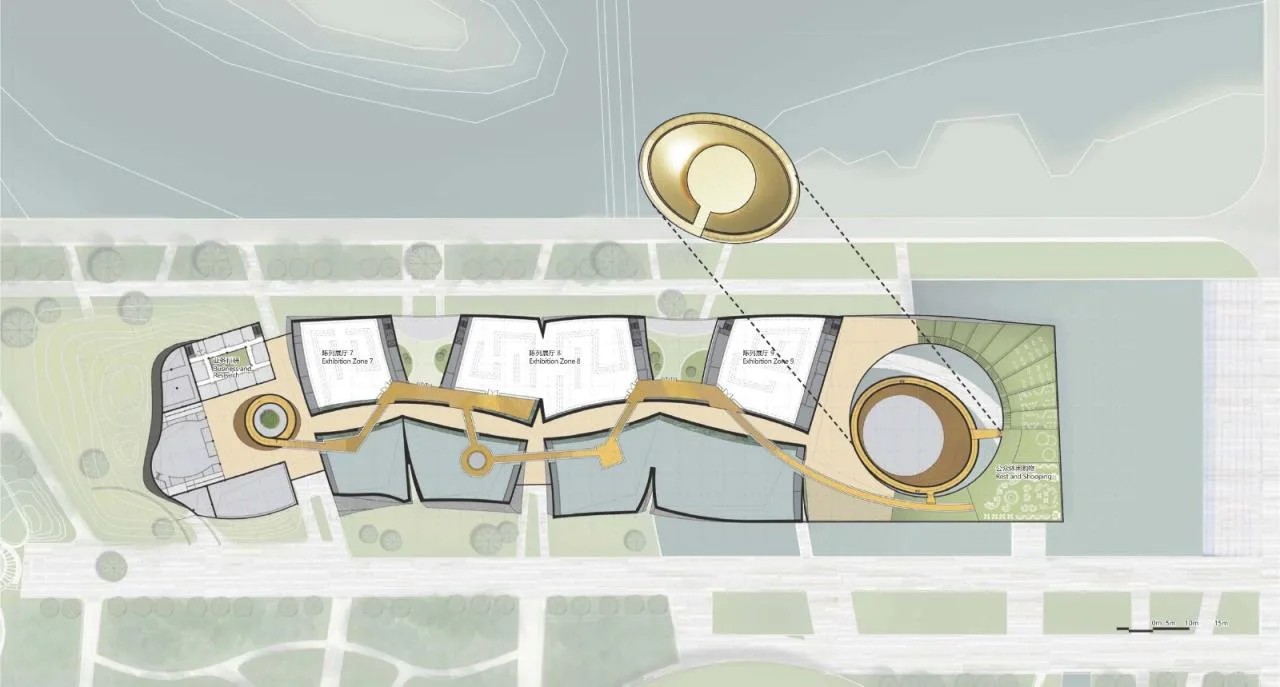
△ Second Floor Plan
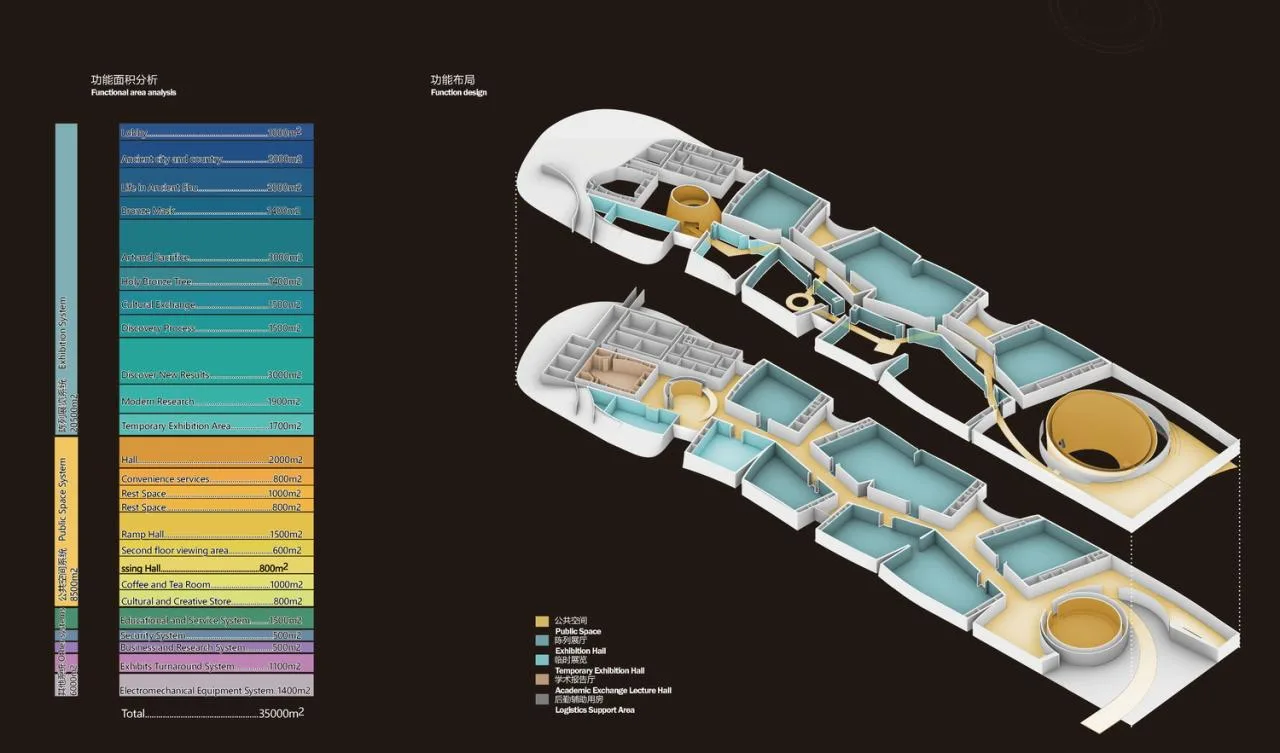
△ Functional Area Analysis
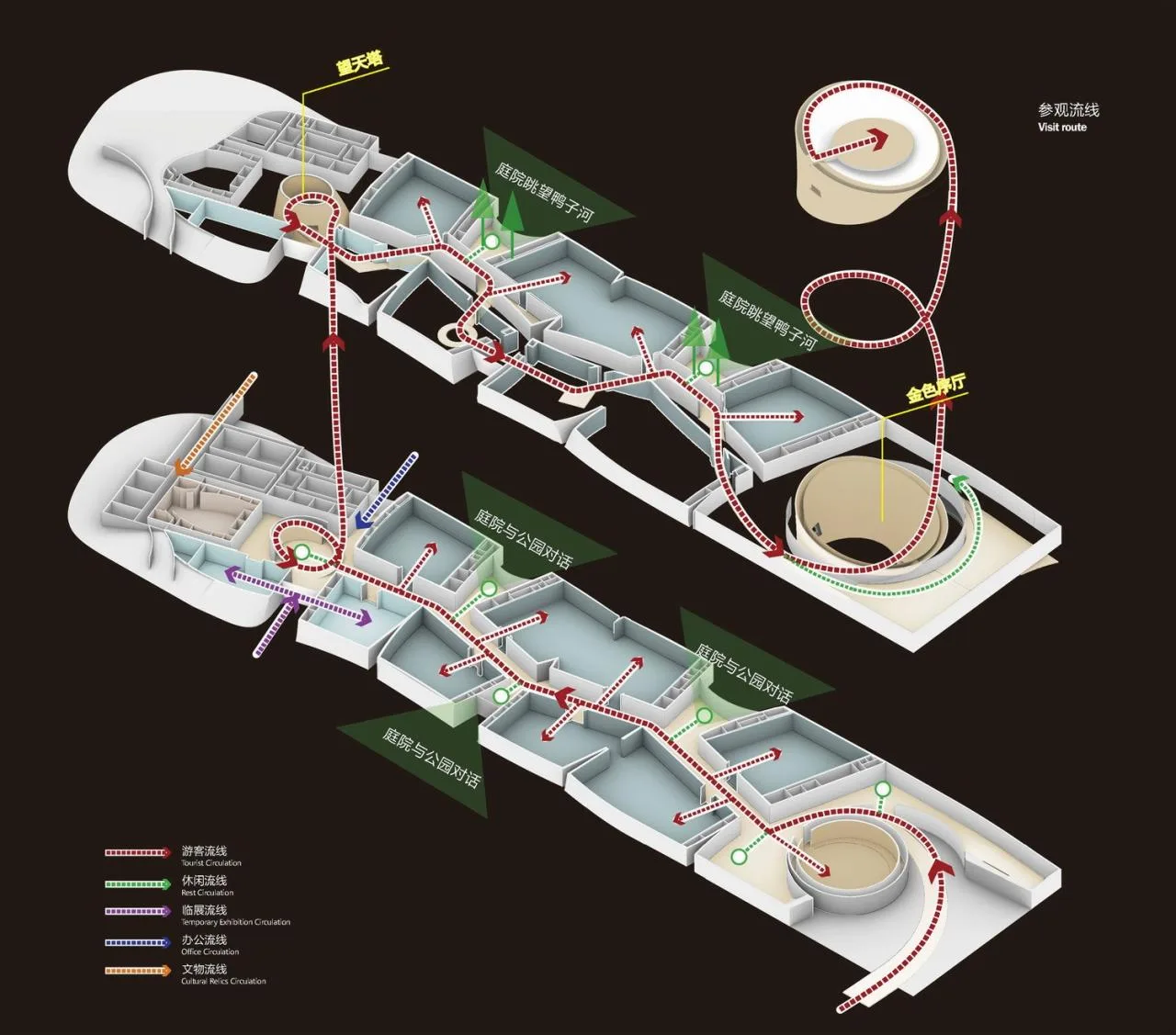
Analysis of Visitor Flow Lines

△ Section Diagram

△ Section Diagram
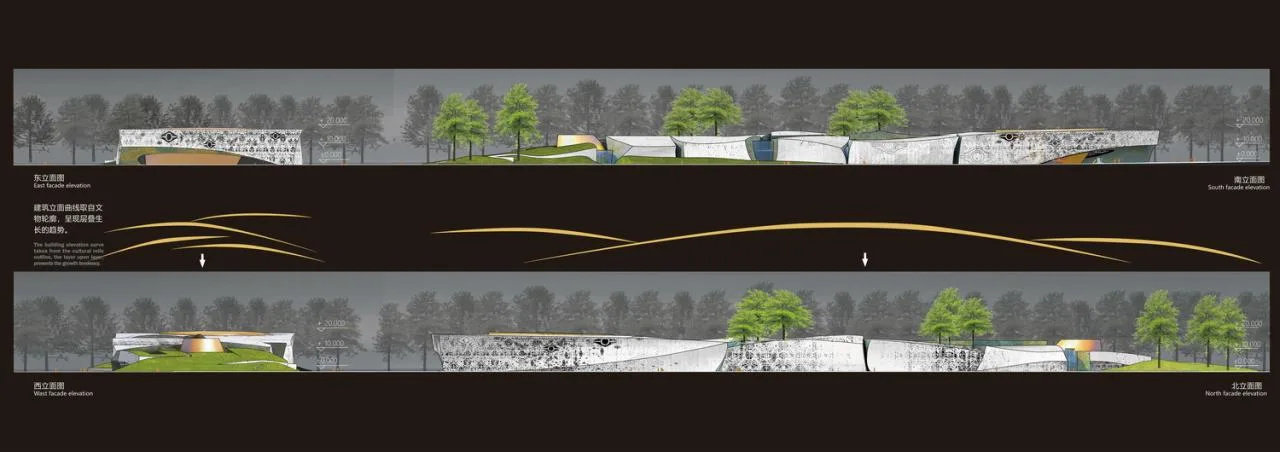
△ Elevation Drawing
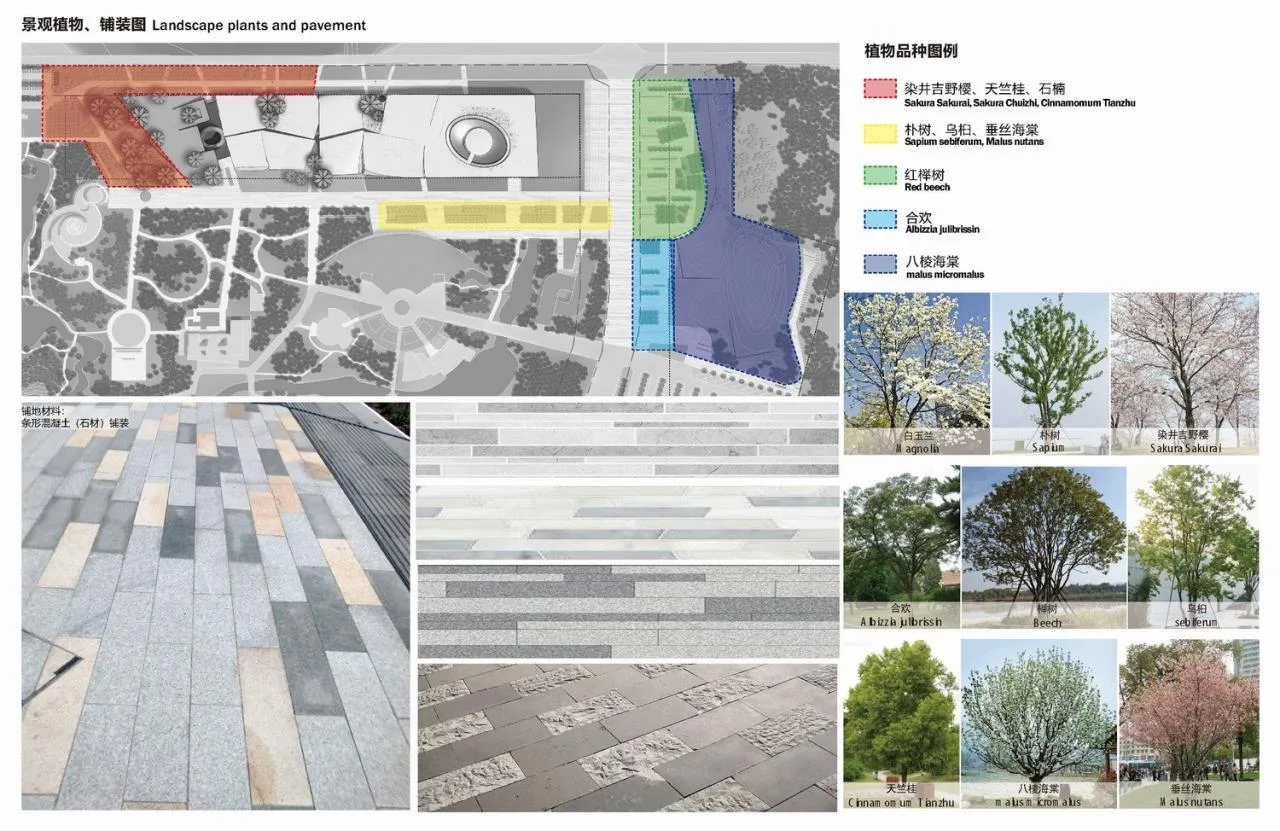
△ Landscape Greening Design
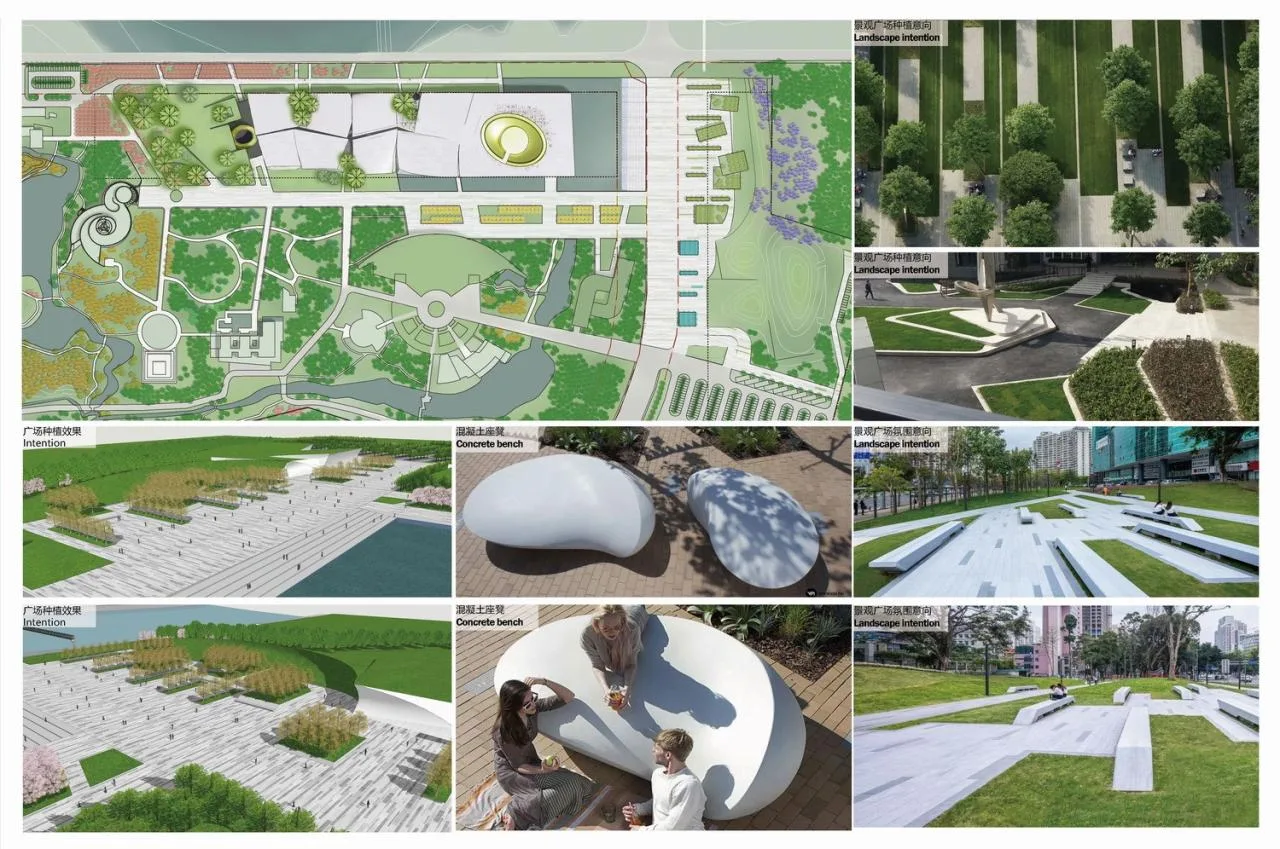
△ Landscape Greening Design
Project Information
Project Name: Conceptual Design for the New Building and Visitor Center of Sanxingdui Museum
Designer: Beijing Institute of Architectural Design and Research Co., Ltd. – Institute of Architecture and Cultural Heritage
Company Website: Beijing Institute of Architectural Design and Research Co., Ltd. (biad.com.cn)
Project Design & Year of Completion: March 2021
Main Creators and Design Team: Li Yinong, Sun Yaolei, Feng Xiaochen, Liu Daiyi, Zhou Guanghe, Long Yuxin, Zhang Ting
Project Location: Guanghan City, Sichuan Province
Building Area: 35,000 square meters
Photography Copyright: Institute of Architecture and Cultural Heritage
Client: Guanghan Sanxingdui Cultural and Tourism Development Co., Ltd.















Must log in before commenting!
Sign Up