
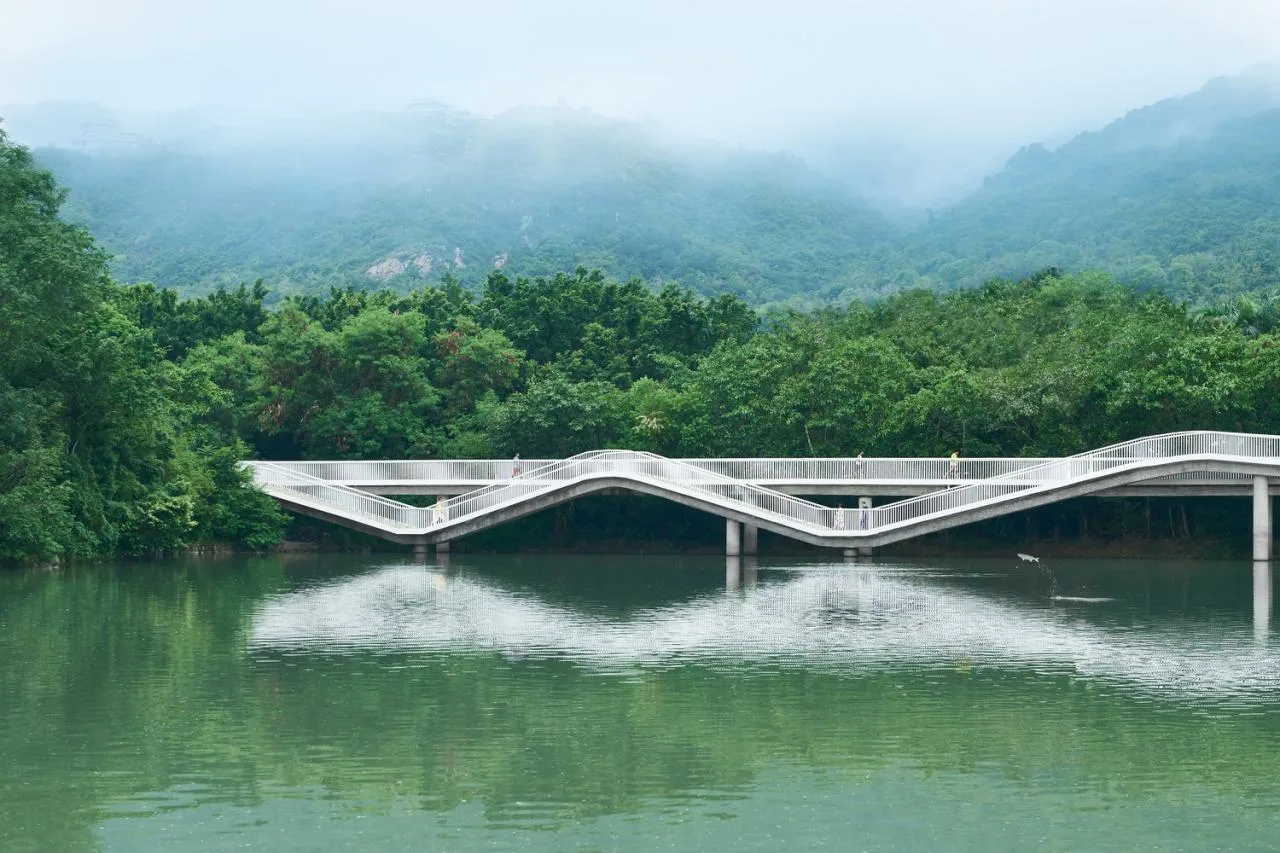
Shenzhen is the fastest-growing metropolis globally, expanding by over 1,000 hectares of new construction land each year. Xiaomeisha, located in Dapeng Bay on Shenzhen’s eastern side, is embraced by mountains on three sides and faces the water on one side. This area has long been a popular leisure spot for Shenzhen residents seeking to connect with nature. The Erfen Bridge is designed exclusively for pedestrians visiting the area, providing a crossing over the lake. Its design invites busy urban dwellers to slow down, relax, and enjoy the natural surroundings.
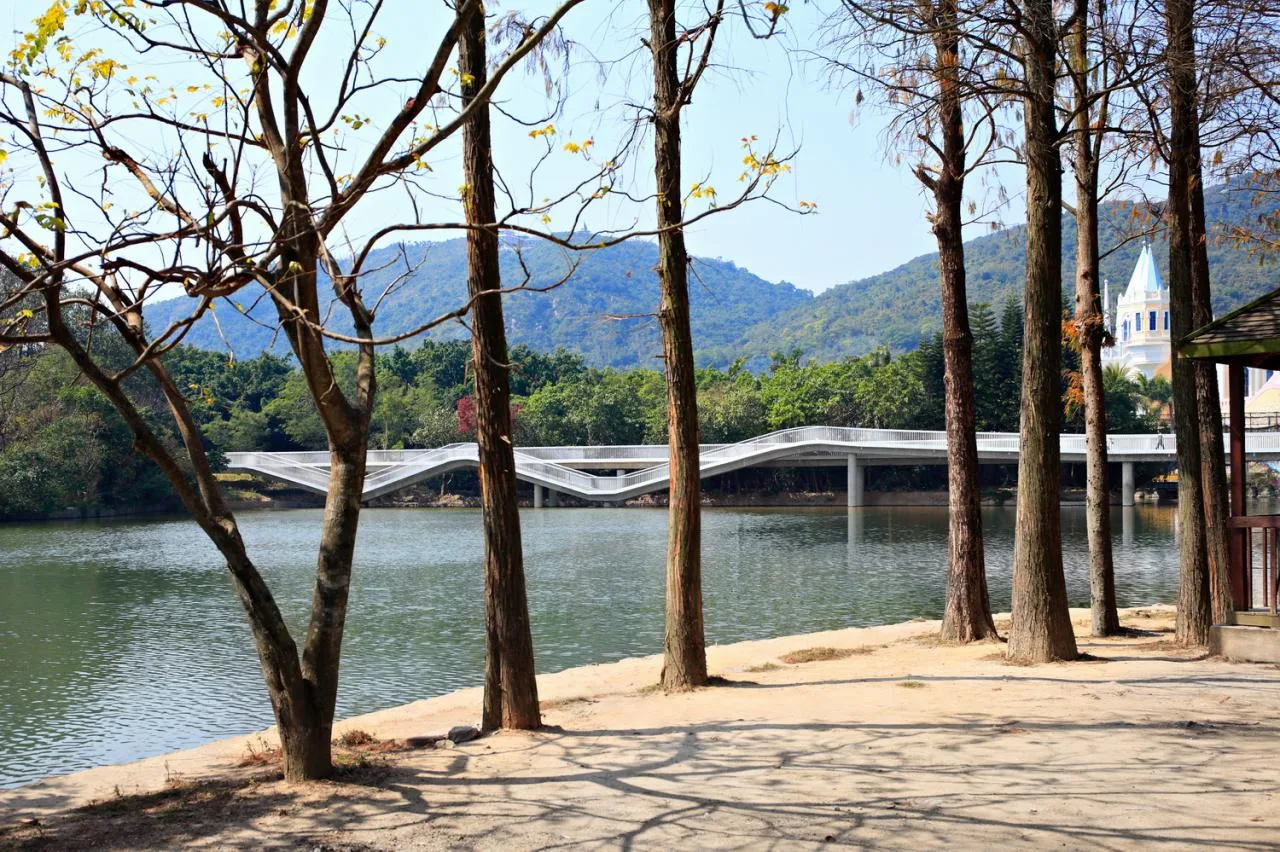
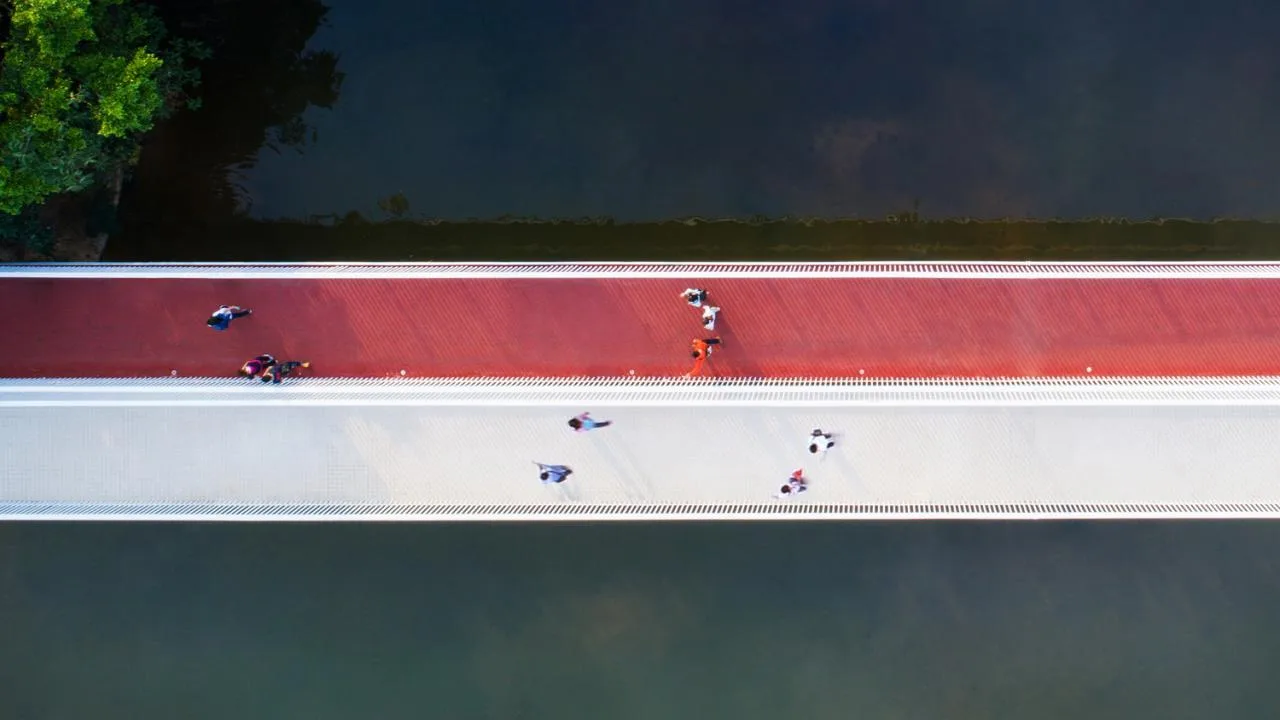
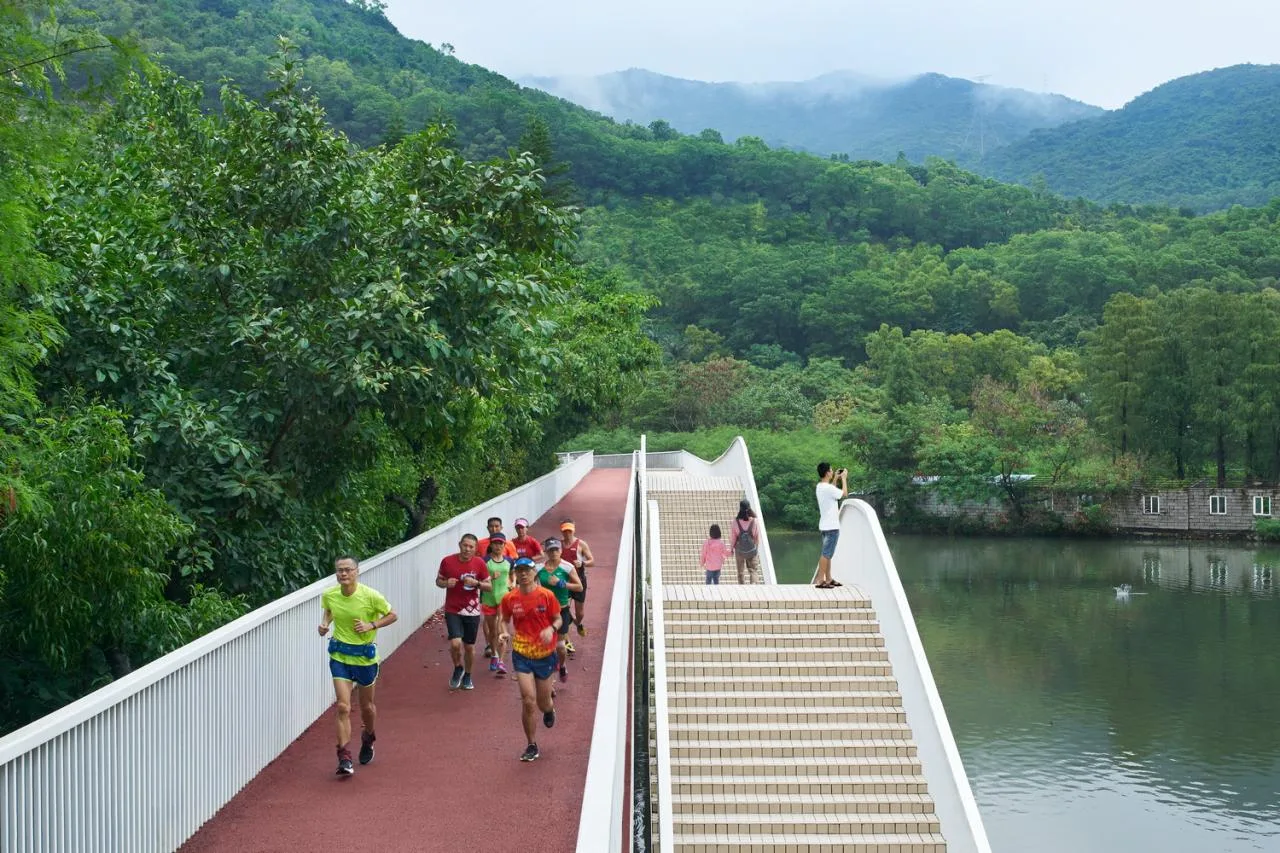
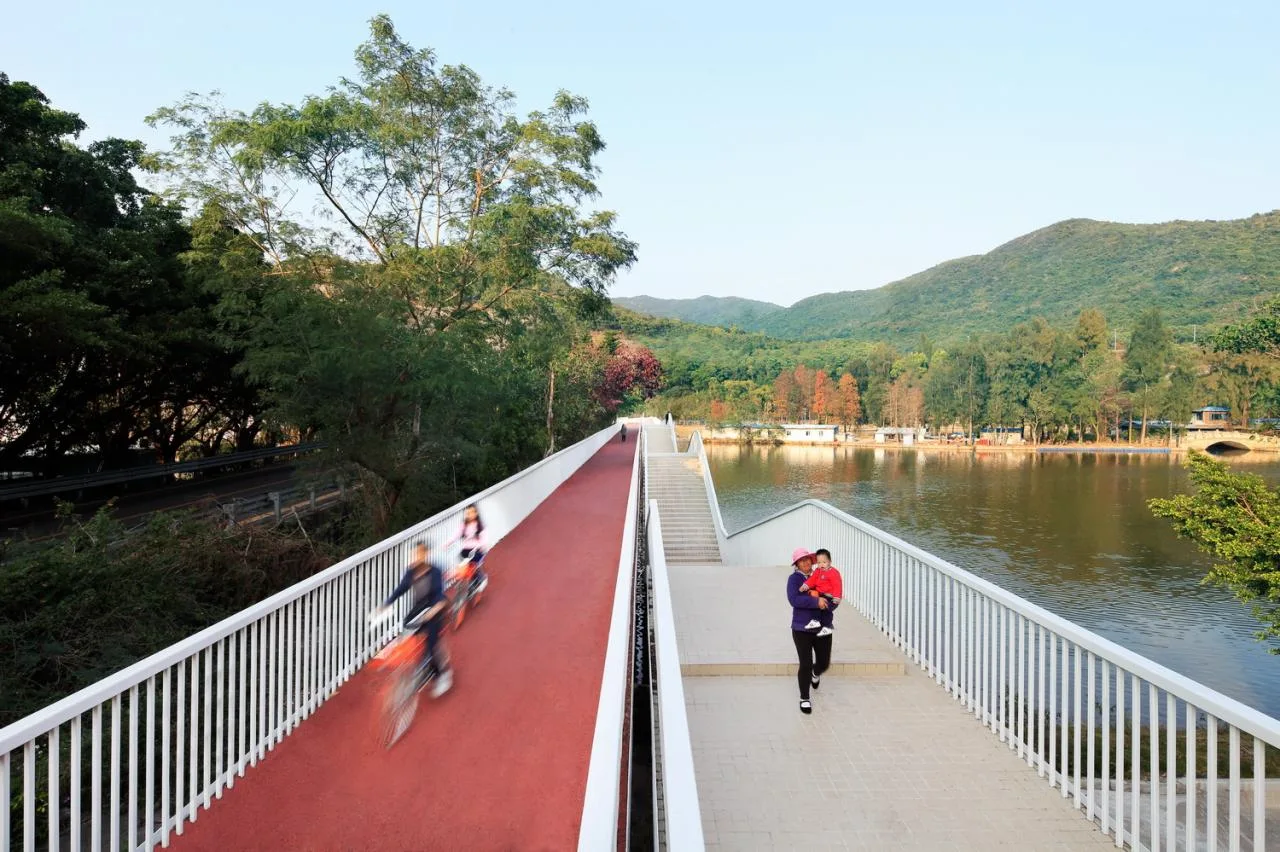
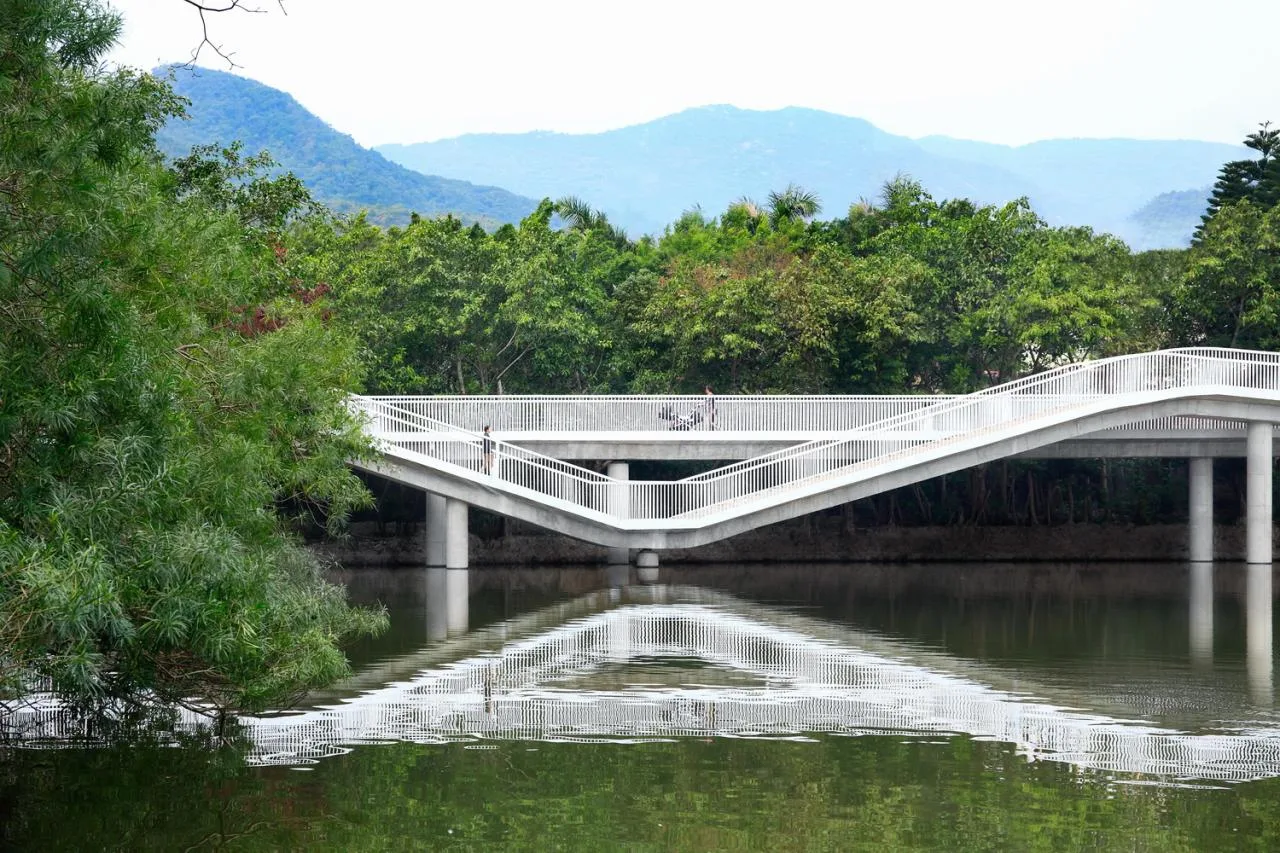
The pedestrian bridge is eight meters wide and consists of two distinct sections. One is a four-meter straight span that offers a flat, convenient path suitable for walking, jogging, cycling, wheelchairs, and children’s bikes. The other four-meter section features gentle undulations, sloping down toward the lake surface before rising above the adjacent road. This leisure trail’s streamlined design encourages visitors to slow their pace and savor the experience.
A bridge should be a scenic attraction in itself, much like the Jade Belt Bridge found in classical Chinese gardens. The calm lake surface is represented by straight lines, while the undulating hills are symbolized by curved forms. The bridge’s combination of straight and curved elements complements the natural surroundings and offers visitors varying perspectives.
The bridge’s plan primarily consists of straight lines and tangent arcs, while its facade features a mix of straight lines and tangent arcs as well. To simplify construction, the designers carefully optimized the geometric composition, ensuring that straight segments on the plan correspond to curved segments on the facade, and vice versa. This approach avoids complex double-curvature surfaces, making the structure easier to build.
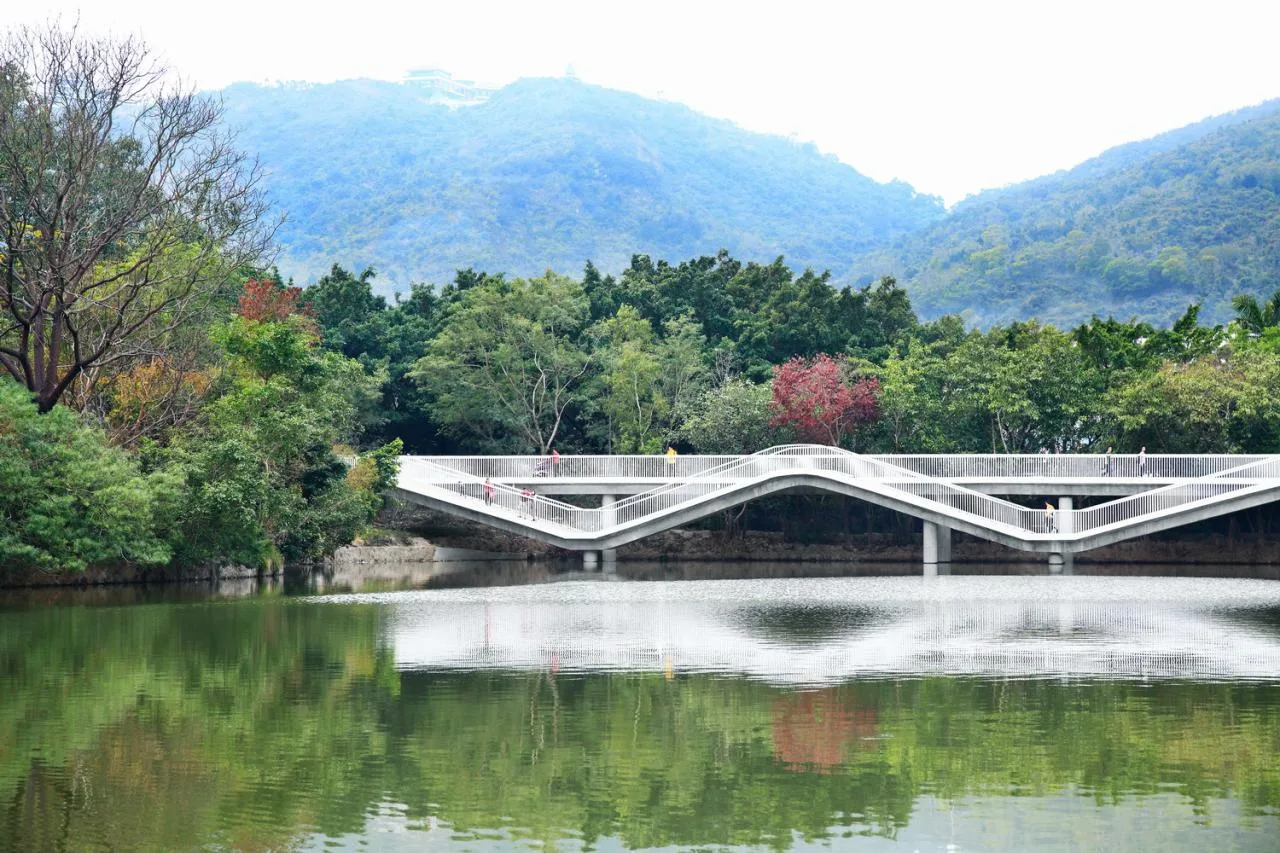
To balance beam height with column span and accommodate bridge shrinkage, creep, and thermal stresses, the designers implemented structural joints that adjust column placement. Beam height is kept within 750 mm, with column spans ranging from 15 to 22 meters. The bridge is divided into three sections, featuring cantilever beams on both ends, each controlled to a length within four meters.
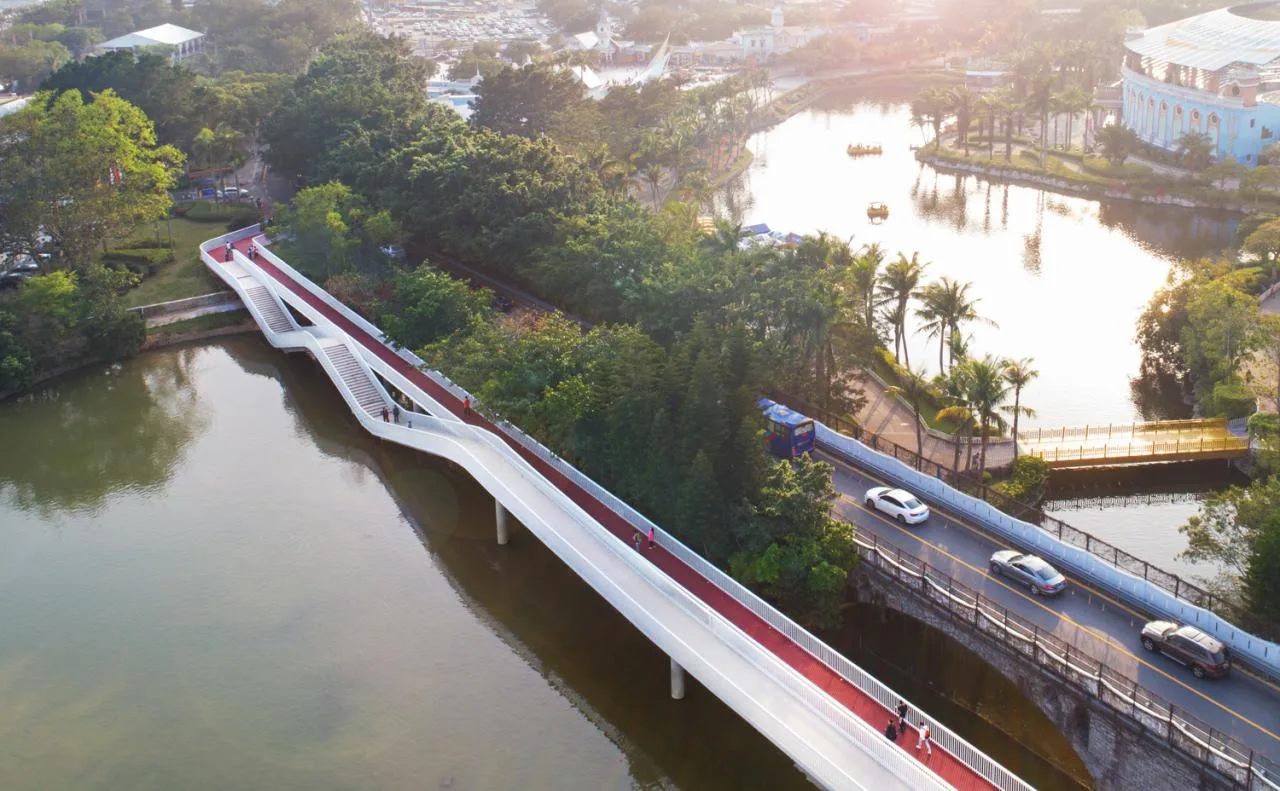
Designed as a practical municipal project, Erfenqiao prioritizes economy and rapid construction. To minimize maintenance, the bridge uses basic materials such as colored asphalt decks, floor tiles, and metal railings. Given the corrosive seaside environment, the main structure is cast-in-place reinforced concrete, constructed with conventional methods to ensure durability while highlighting the bridge’s public utility.
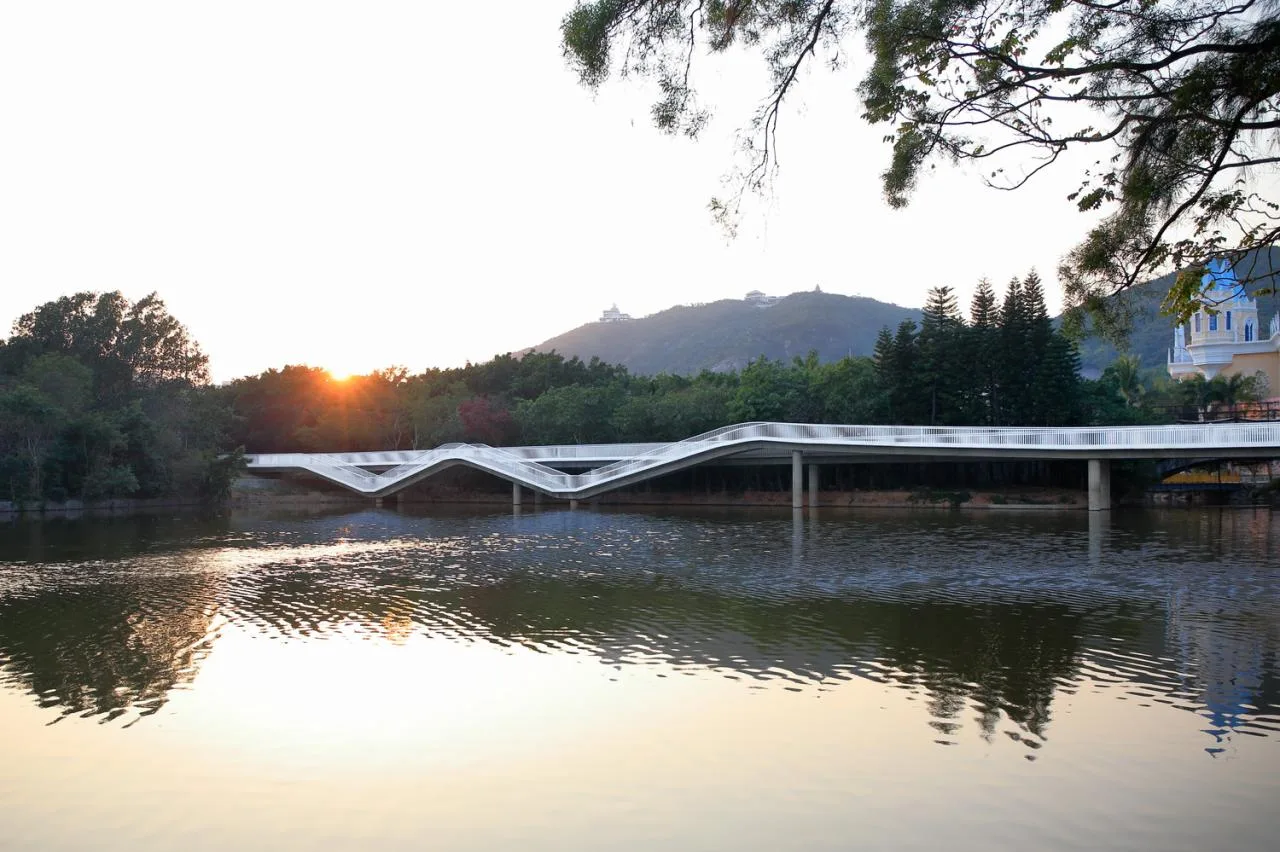
In an era that often prioritizes efficiency, the value of choice is easily overlooked. This project’s clever design offers pedestrians two path options at an unintentional node, making the binary bridge a form of interactive public art. It encourages reflection on individual will as a fundamental human value.
Project Drawings
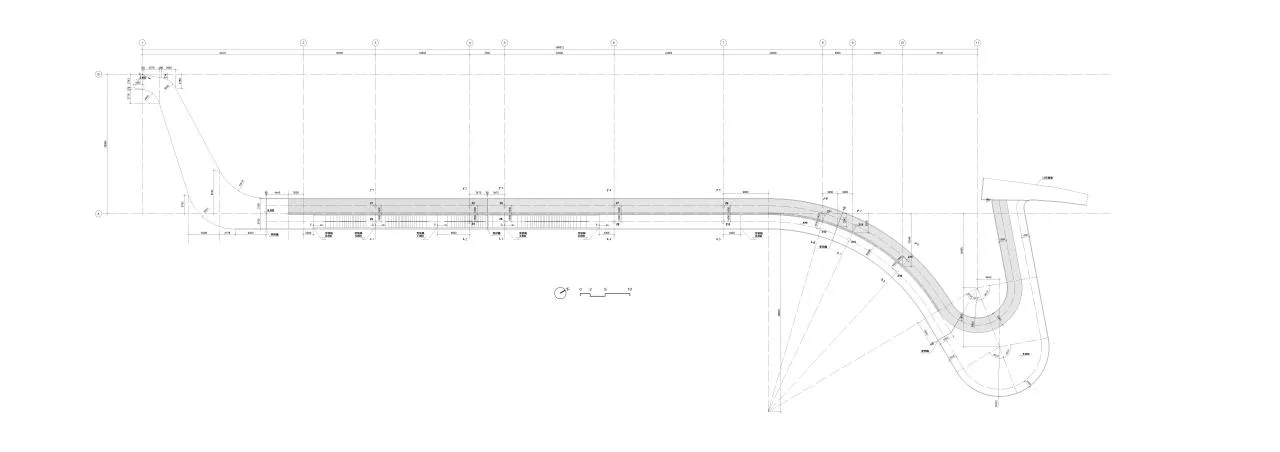
△ Plan View
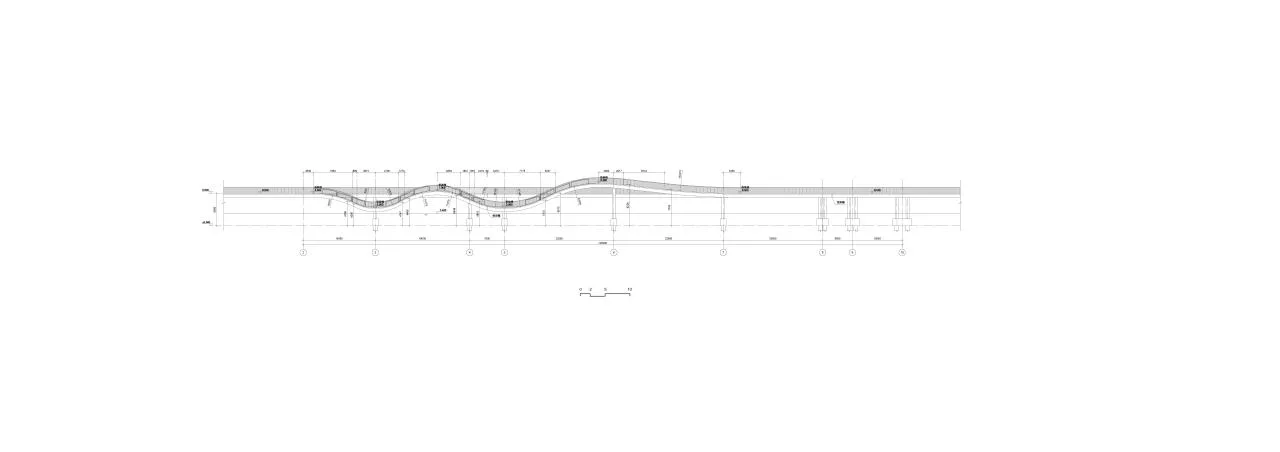
△ Elevation Drawing
Project Information
Project Name: Two Point Bridge
Location: Haikui Road, Yantian District, Shenzhen
Design Firm: Zhang Jianheng Architectural Firm
Lead Designer: Zhang Jianheng
Design Team: Thijs van Oostrom, Wang Shitao
Project Length: 160 meters
Design Date: March 2015
Completion Date: September 2017
Main Materials: Colored asphalt bridge deck, floor tiles, metal railings
Owner: Yantian District Construction Engineering Affairs Bureau, Shenzhen
Photography: Bai Yu















Must log in before commenting!
Sign Up