
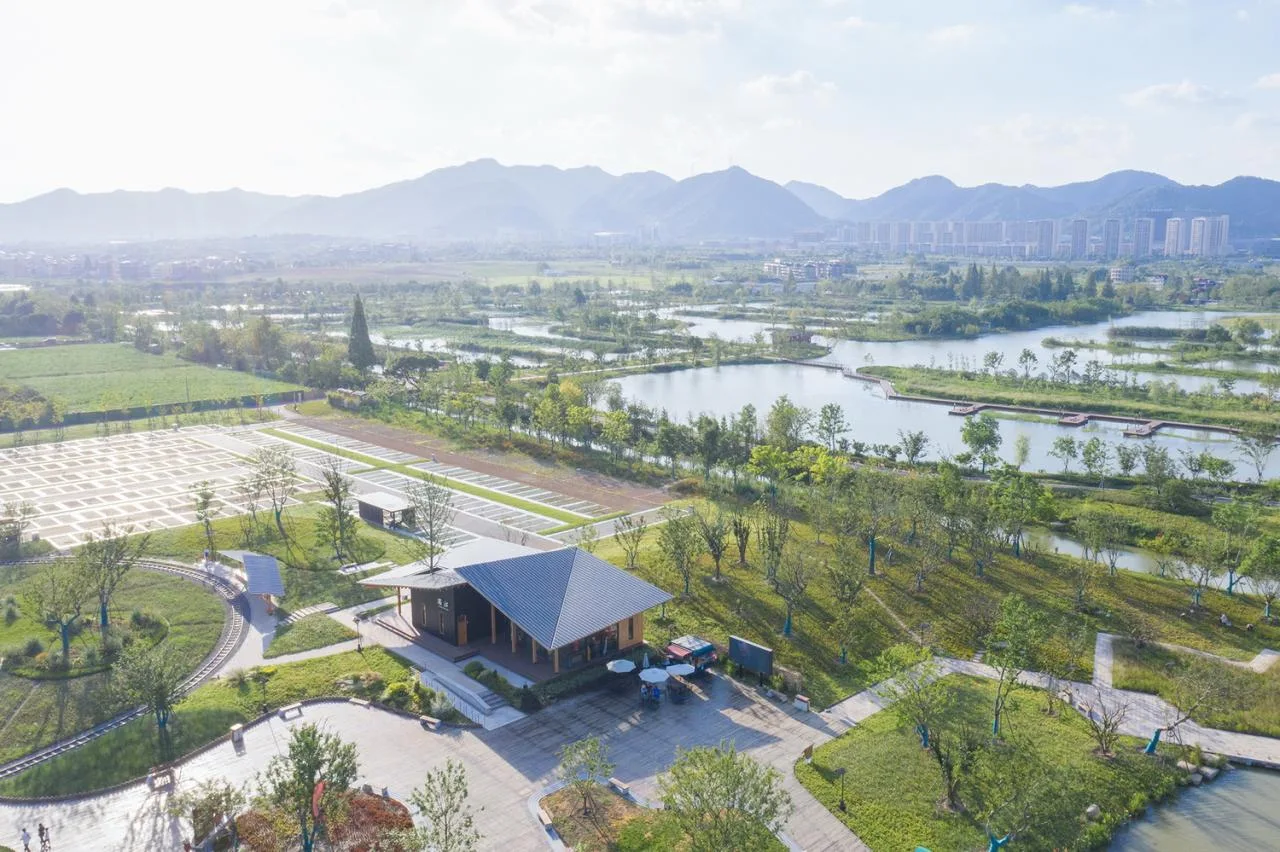
△ Aerial view © Zhao Yilong
Location and Environment
The project is situated within Yangpi Lake Wetland Park, Fuyang District, Hangzhou City. Historically a natural lake, Yangpi Lake was partially filled in during the 1980s to serve as a research base for the Rice Research Institute. Recently, reflecting a shift in urban development philosophy, the government aims to restore the area’s natural ecology, creating a breathable green space for the city and offering residents free access to open wetland parks.
During construction, several rare bird species were found inhabiting the area; today, egrets are commonly seen resting on the nearby green islands.
When commissioned, the lake’s landscape was already under development, imposing a tight three-month deadline to complete and operationalize the reception center. This posed a significant challenge. Fortunately, our collaboration with a highly skilled construction team allowed for efficient scheduling and process management, enabling us to meet this demanding timeline.
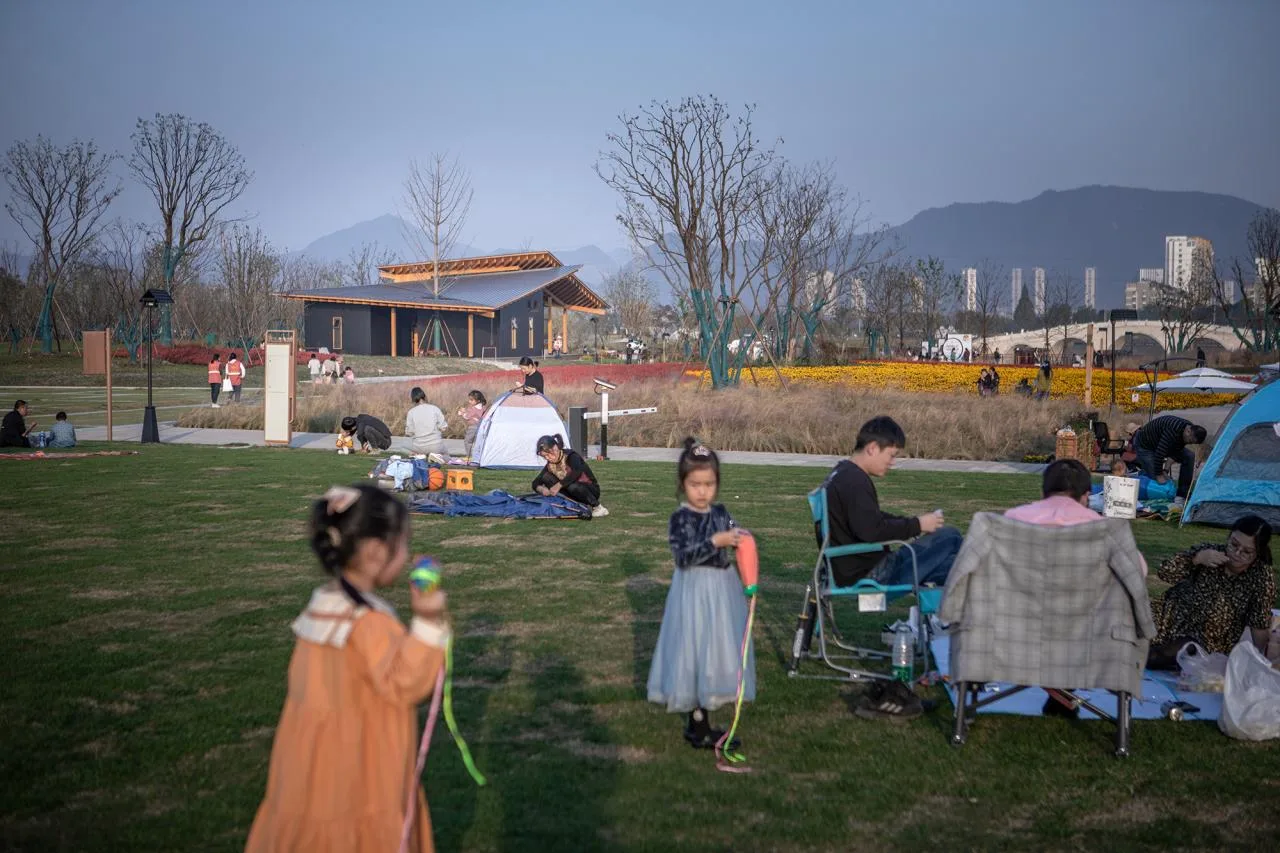
Tourists camping near the reception center © Rock Architecture – Zhao Sai
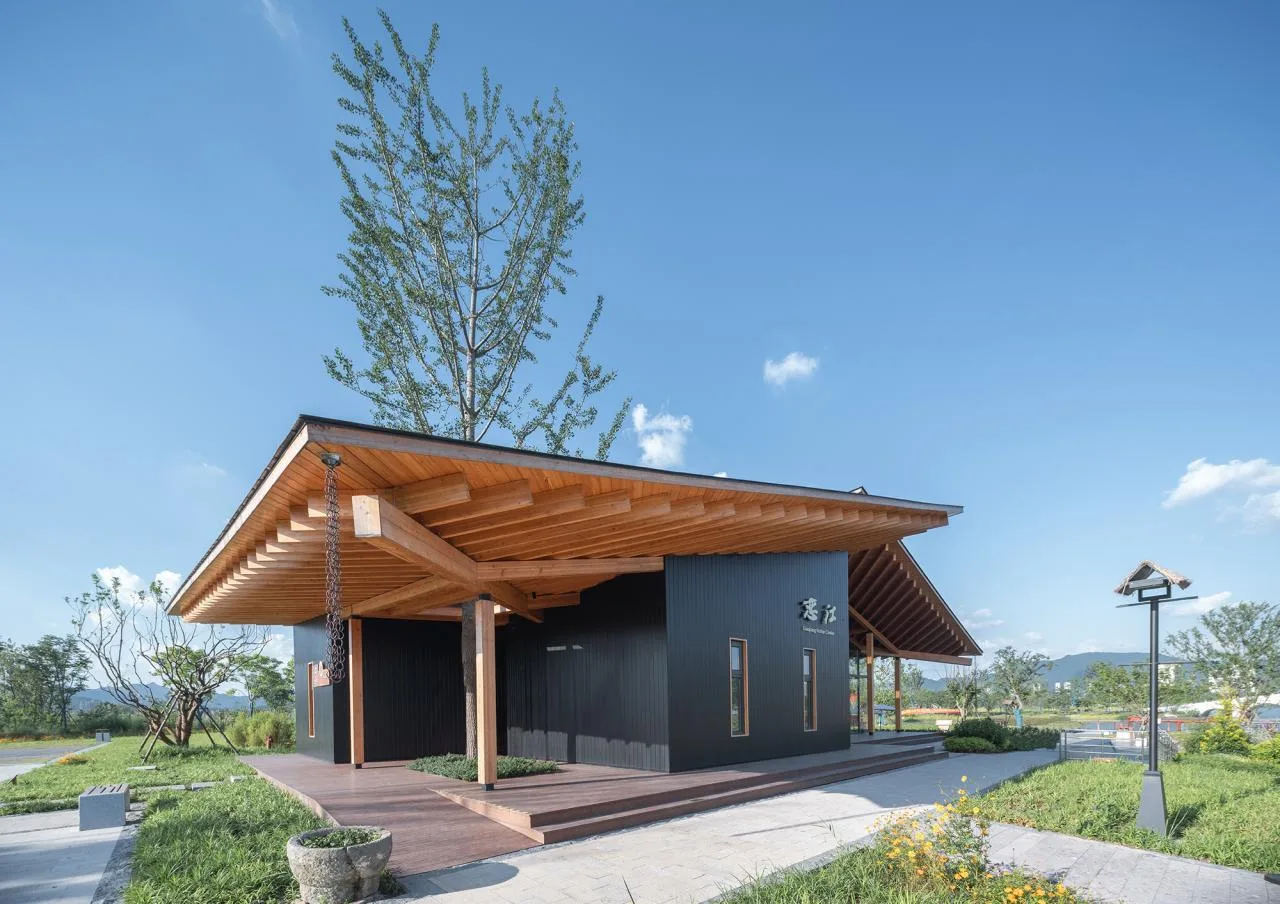
△ West entrance accessible for disabled visitors © Zhao Yilong
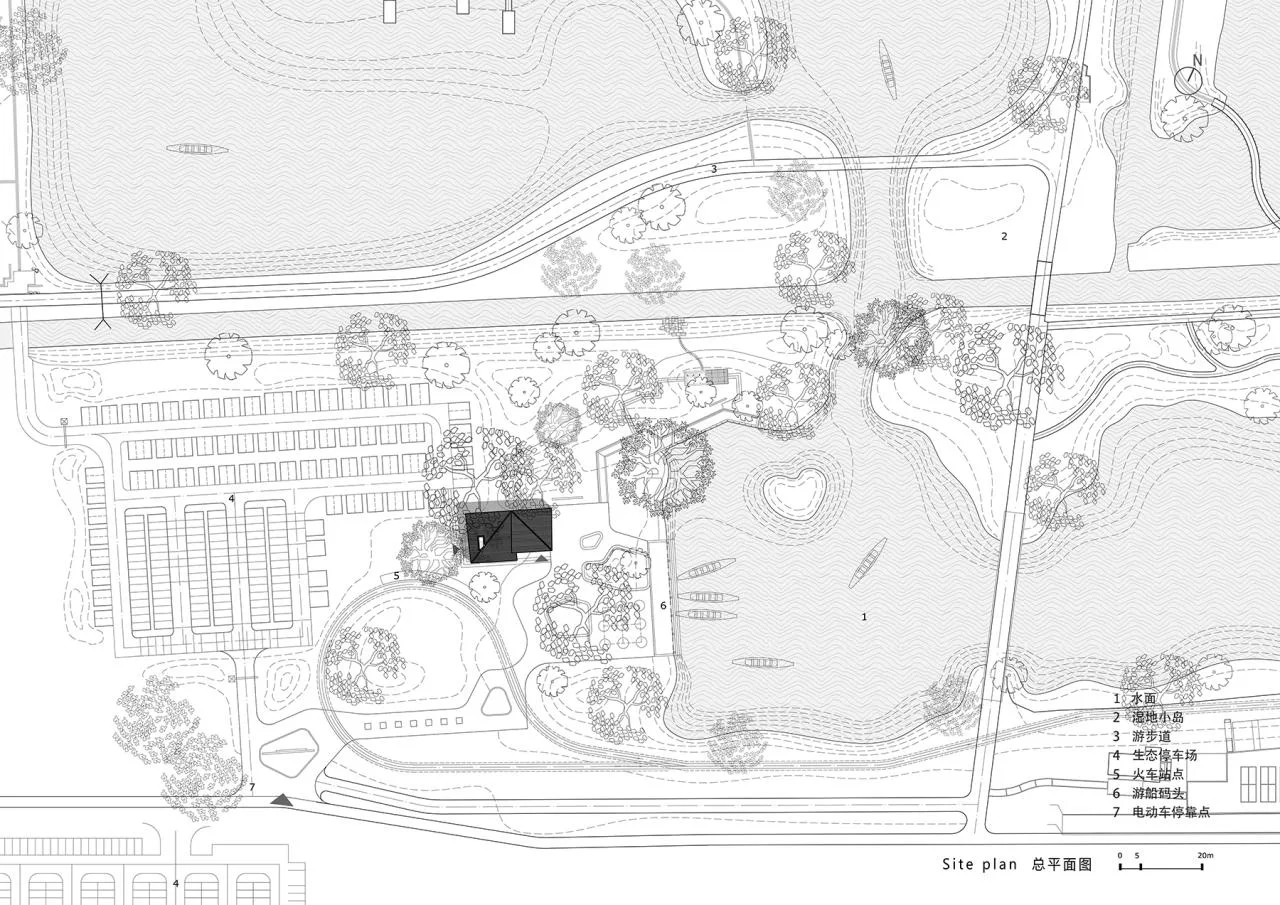
△ General layout plan © Jianlin Architecture
The reception center is adjacent to the parking lot on Yangpi Lake Wetland Park’s south side, near Fuyang city’s center. It experiences high pedestrian traffic and serves as a key gathering and reception hub. The building accommodates multiple functions: reception, consultation, ticket sales, management offices, medical facilities, restrooms, mother and baby rooms, water sales, and rest areas.
Though compact, the center supports a complex range of services. Nearby are boat and sightseeing train stops, further establishing this location as an important arrival and reception point within the park.
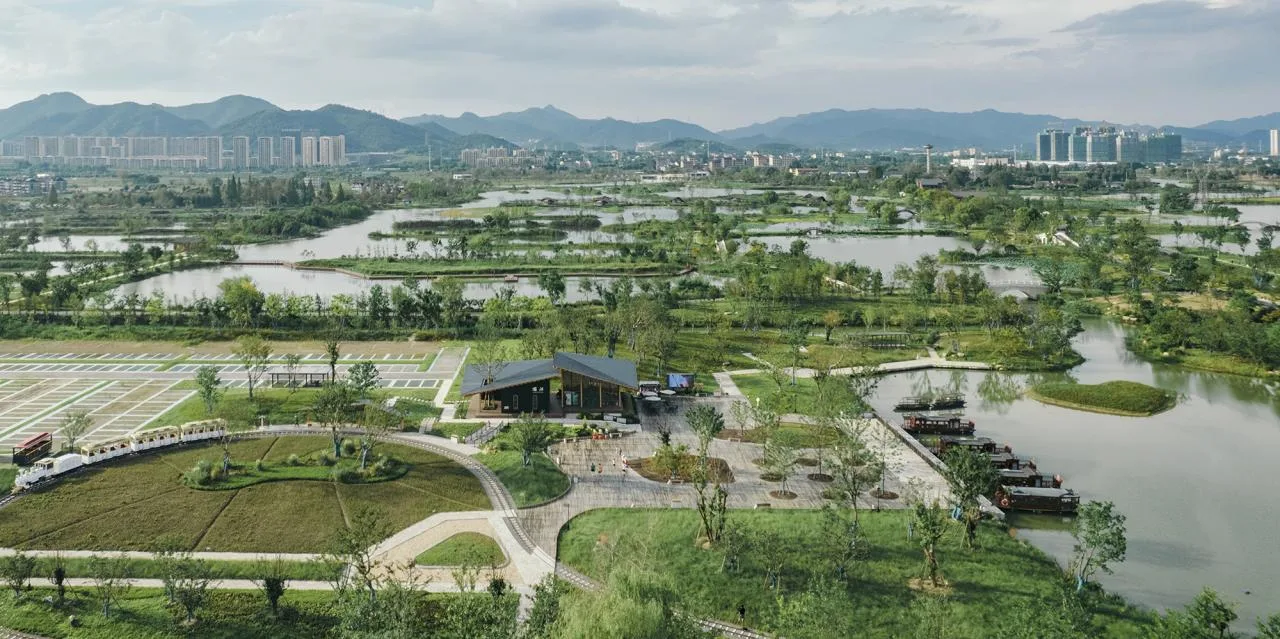
The reception center on the south side of Yangpi Lake Wetland © Rock Architecture – Zhao Sai
Design Inspiration
Q1: How to build the center quickly within such a short construction period?
This was our initial challenge. Prefabricated construction immediately came to mind as an efficient solution. Our firm has been exploring lightweight prefabricated buildings, which proved practical here. Key to success was partnering with a professional construction team and manufacturer to refine structural calculations, component connections, and construction processes. This collaboration minimized stress and ensured quality.
Moreover, this lightweight method reduced environmental impact, enabling rapid assembly with minimal land disturbance.
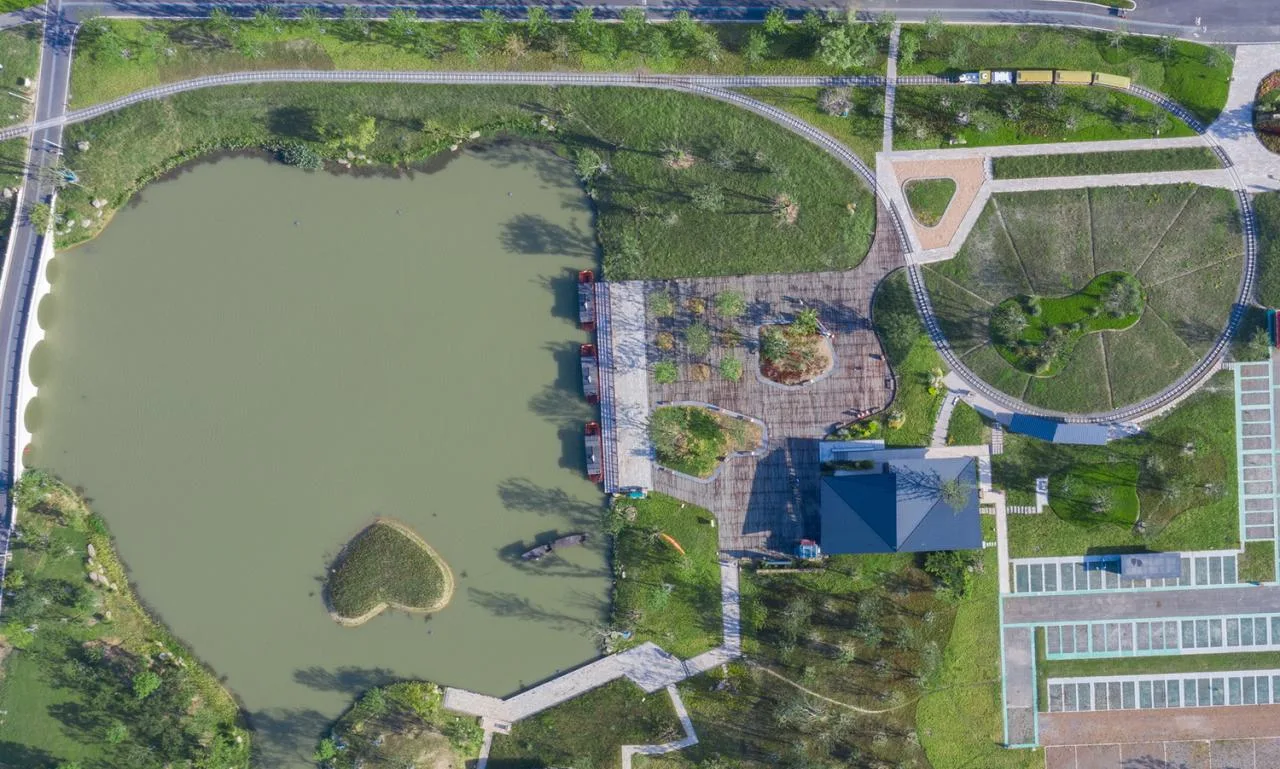
△ Aerial view of the site © Jianlin Architecture
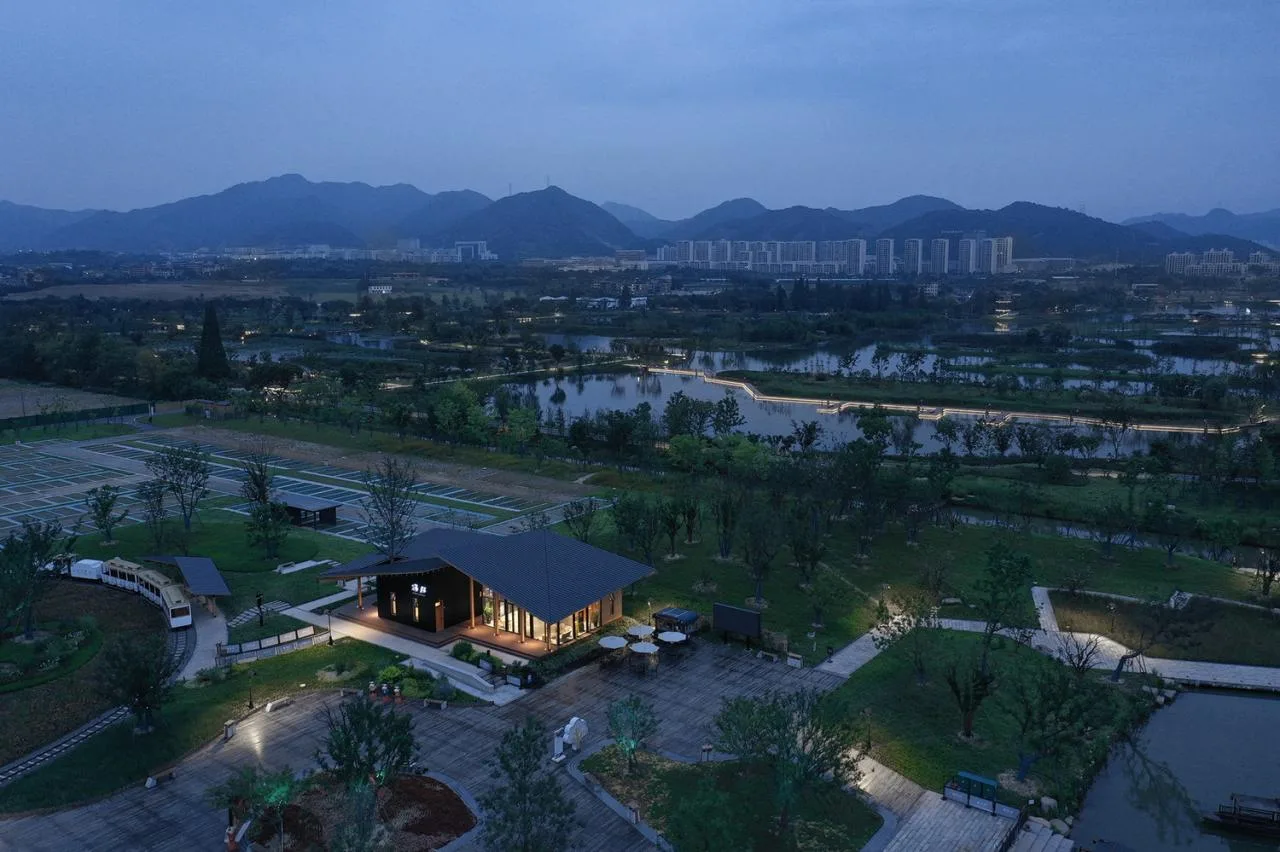
Early morning aerial view © Jianlin Architecture
Q2: What architectural form should the building take within the wetland park?
On first visiting the site, the sight of numerous white egrets perched on the green island left a lasting impression. Inspired by this, we envisioned the building as a bird resting on the greenery. The architecture features a large eaves roof, designed like folded bird wings with one side higher than the other, nestling low within the green space, blending harmoniously with the environment.
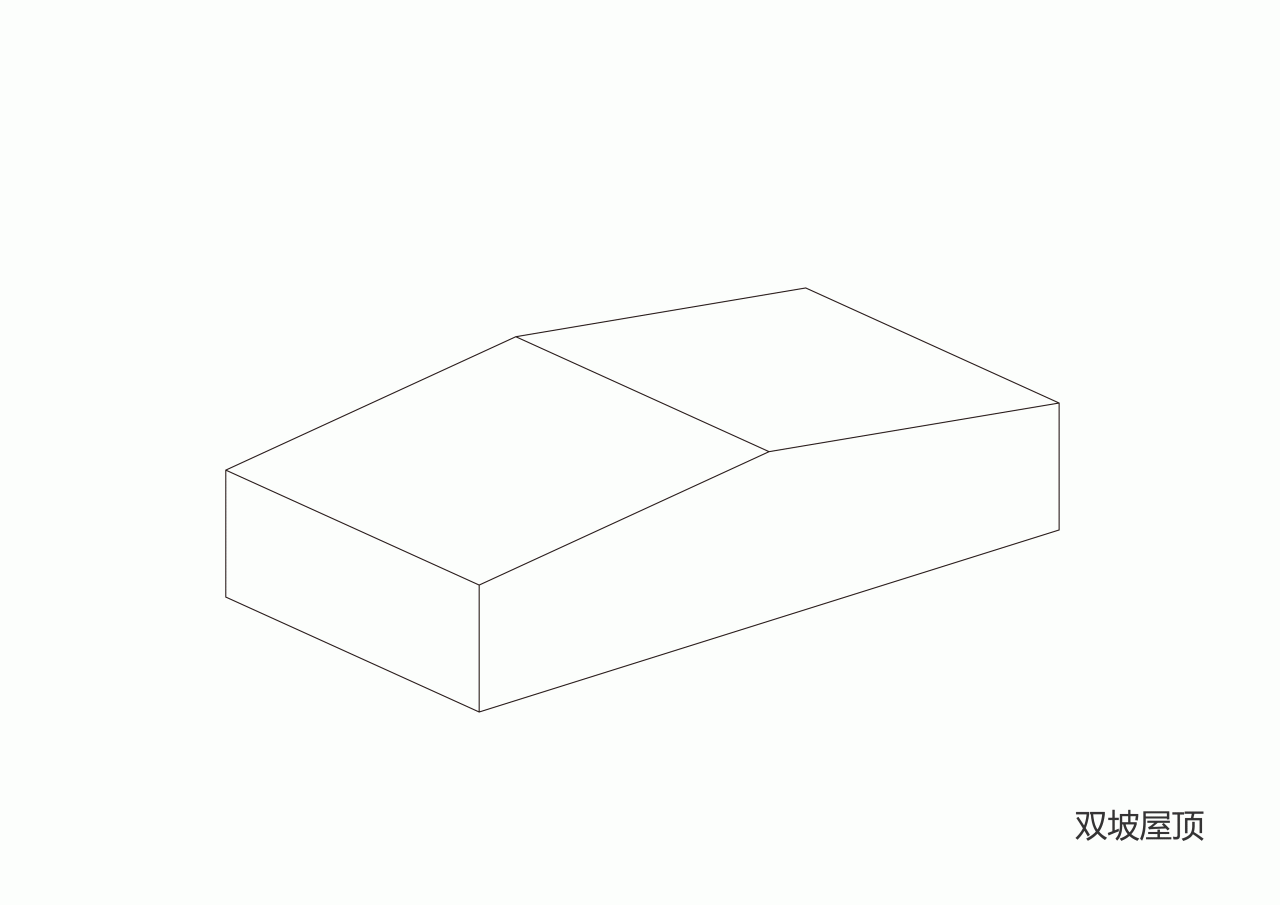
△ Design concept © Jianlin Architecture
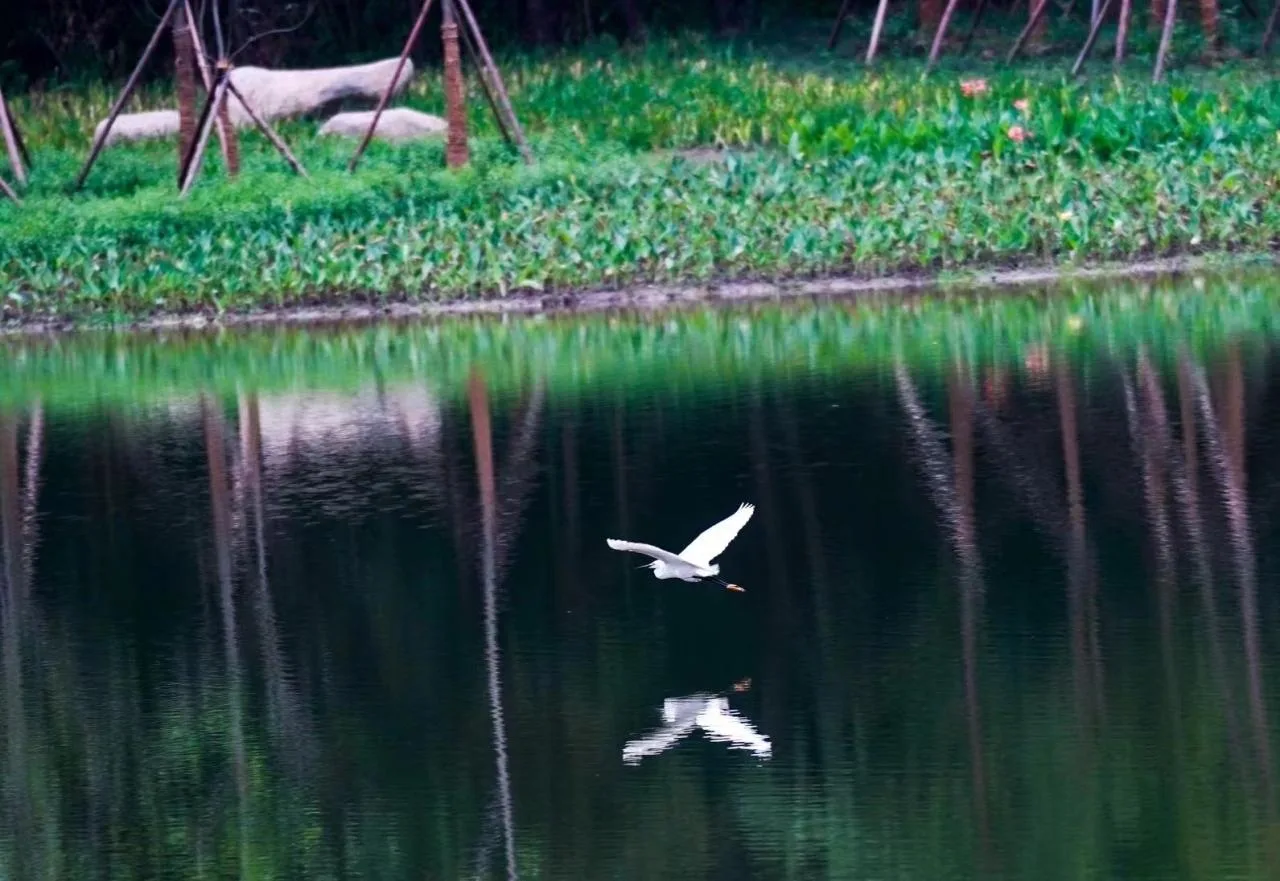
△ Natural scene of Yangpi Lake © Wang Renxiang
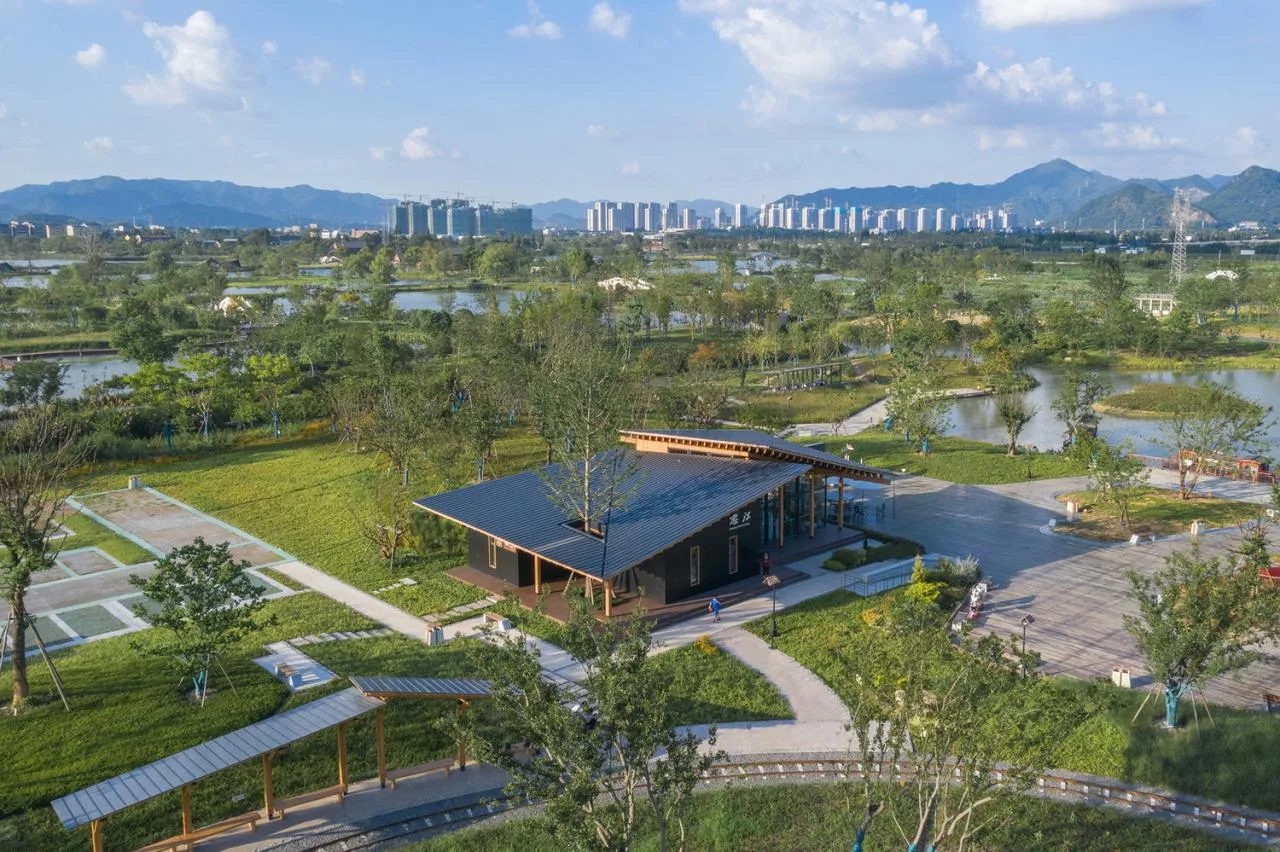
Two folded, upturned roofs © Zhao Yilong
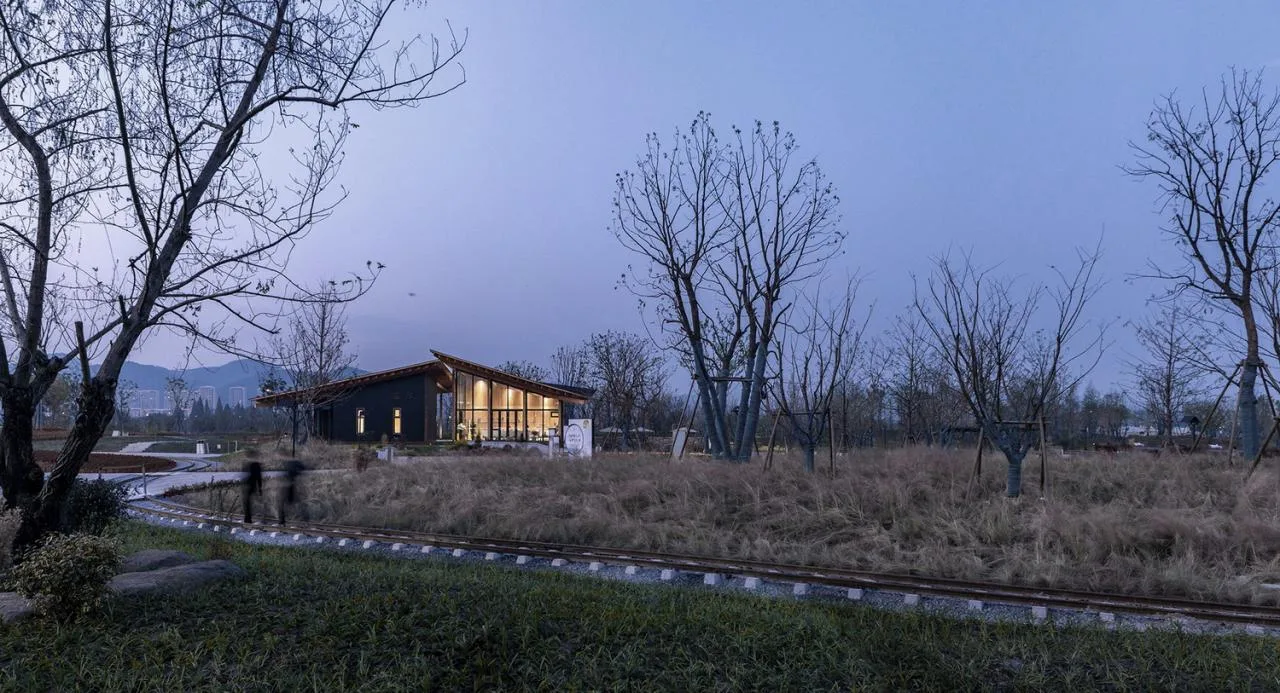
Evening view of the reception center © Rock Architecture – Zhao Sai
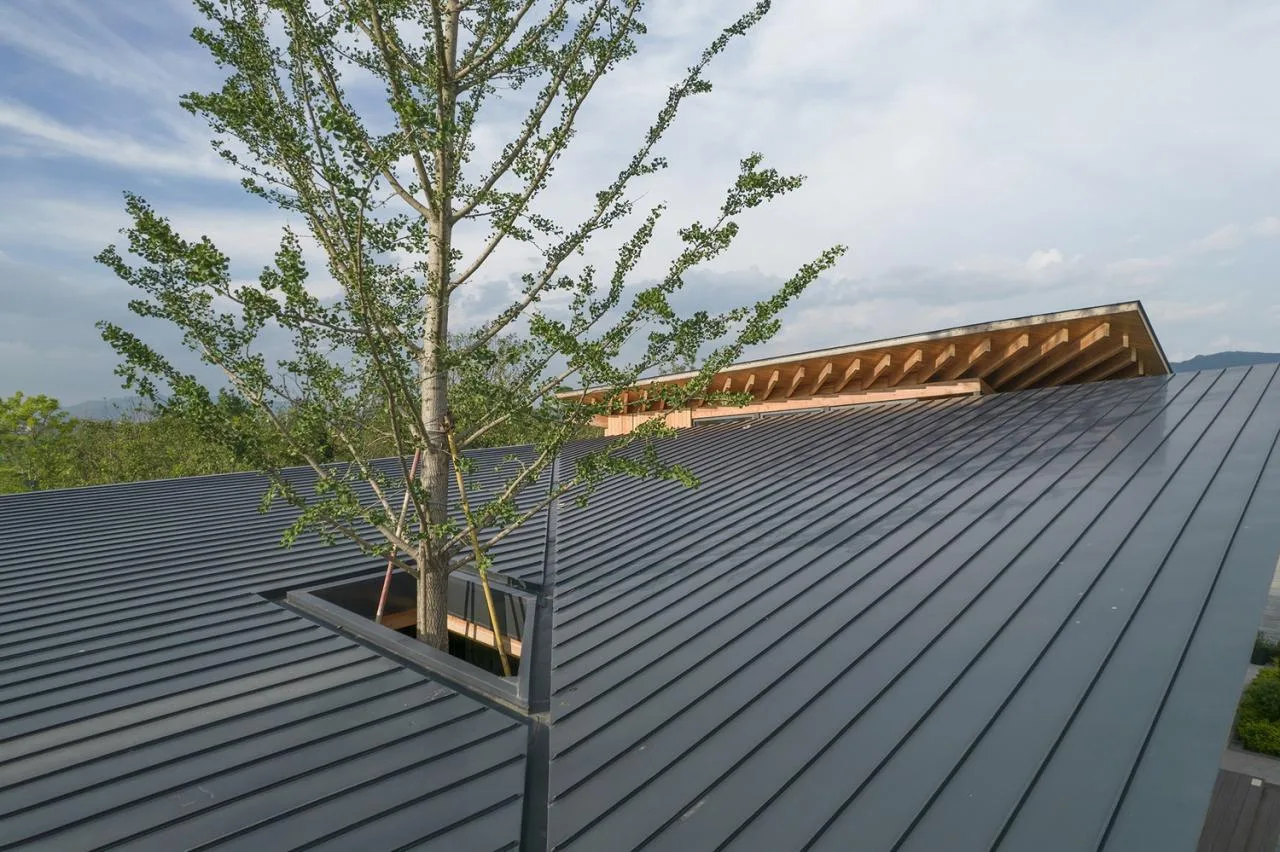
△ Metal roof detail © Rock Architecture – Zhao Sai
Integrating Complex Functions into a Compact Building
This was our third challenge. We organized the building into three distinct volumes, each housing specific functions: one volume includes women’s health, hot water, and sales; another contains men’s health, facilities for the disabled, and mother and baby rooms; the third volume serves reception, ticketing, office, and medical needs.
Physically, these volumes are staggered and combined with virtual spaces. Gray spaces beneath the two large roofs form entrances, rest areas, and courtyards. Visitors can enter through multiple eaves spaces and find shelter from rain beneath the extended roofs.
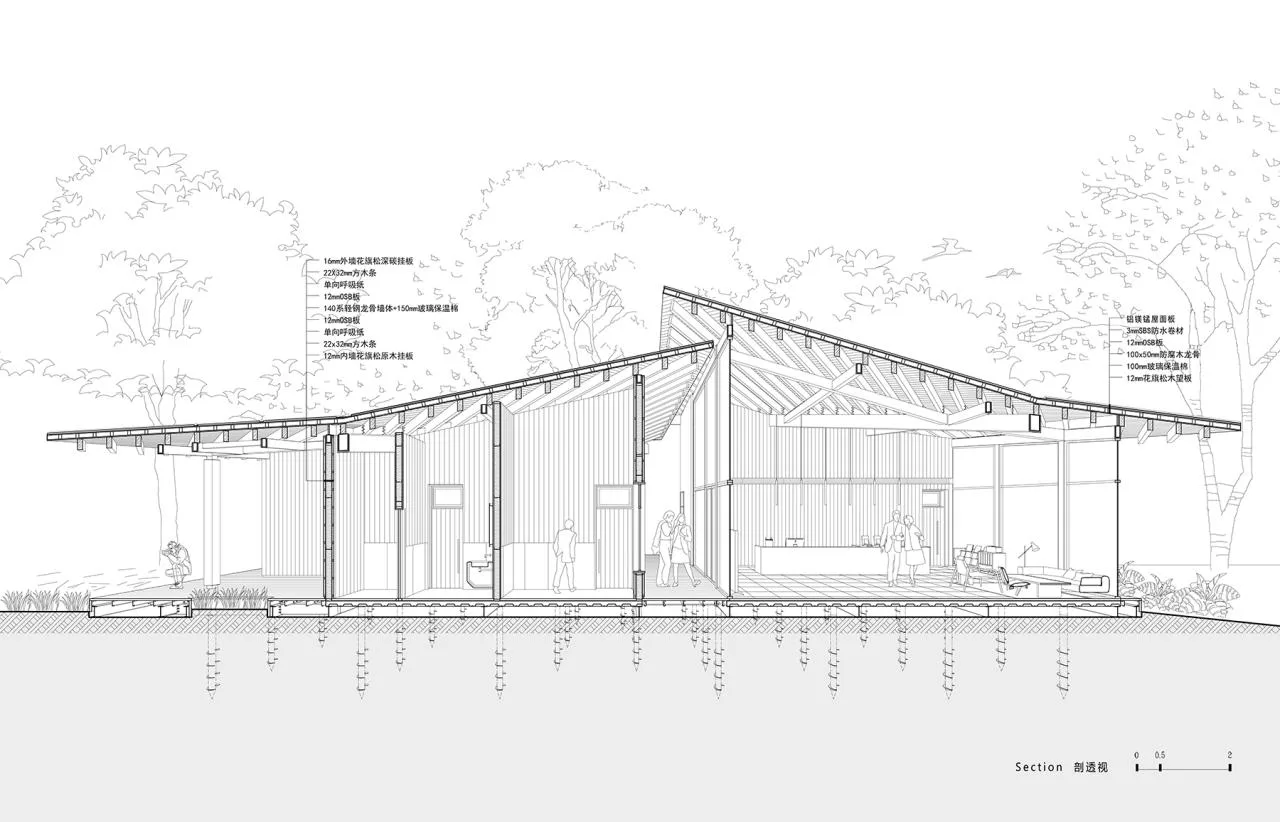
△ Sectional perspective © Jianlin Architecture
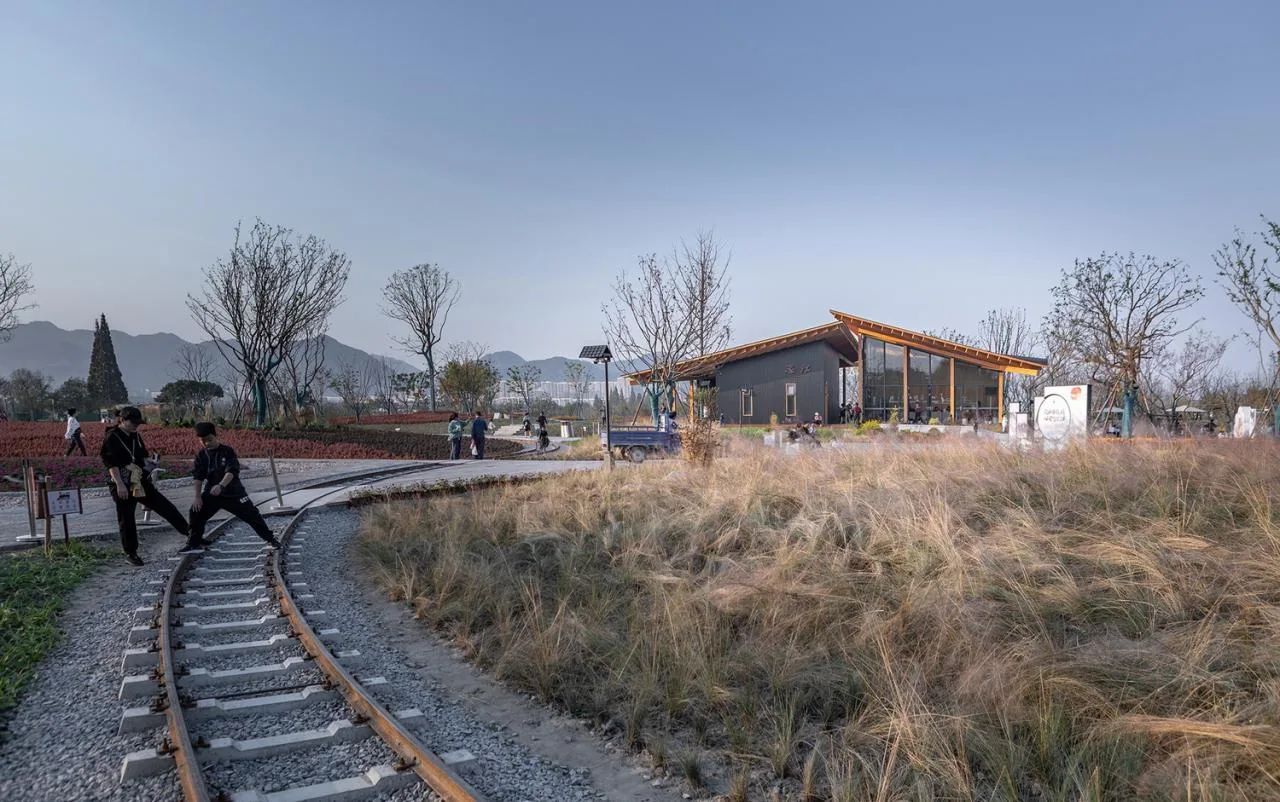
View towards the reception center from nearby railway tracks © Rock Architecture – Zhao Sai
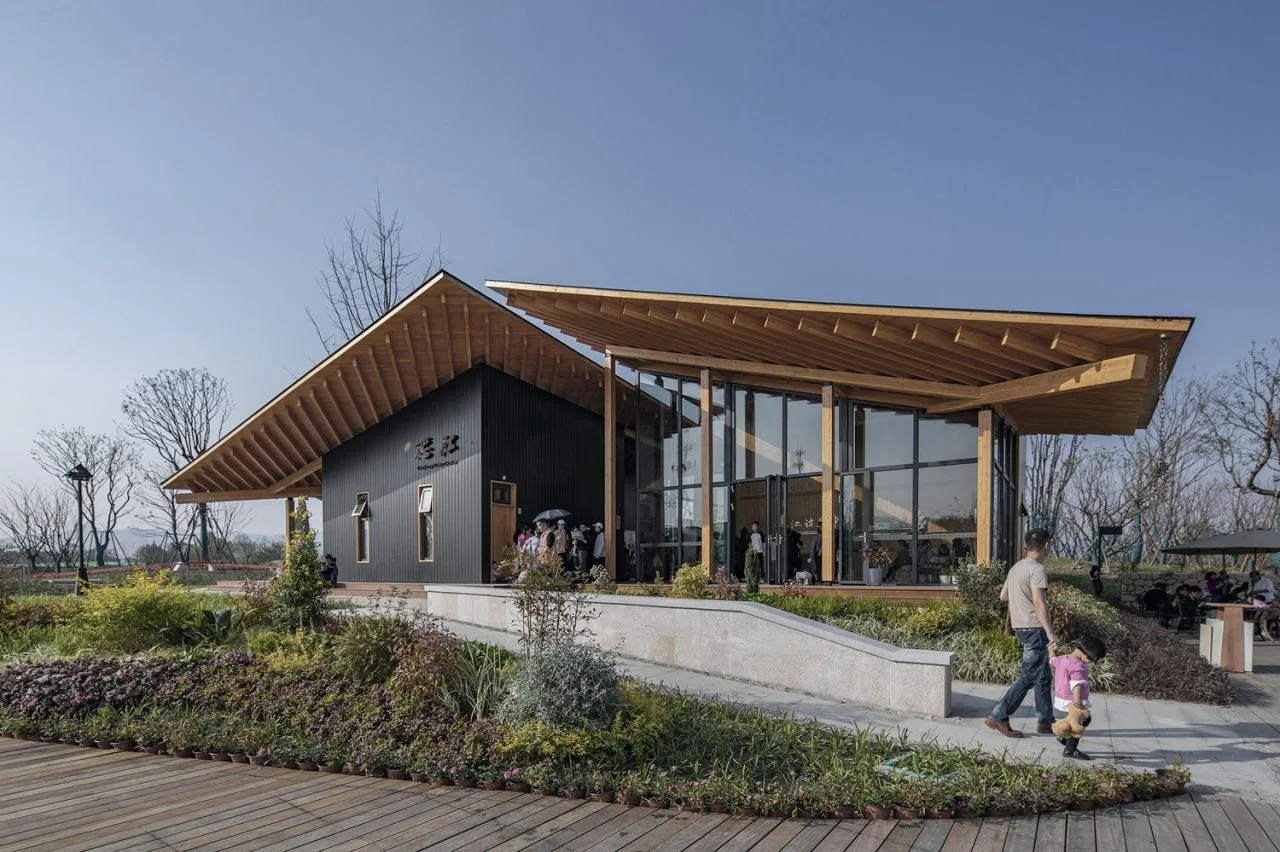
Relationship between virtual and physical volumes © Rock Architecture – Zhao Sai
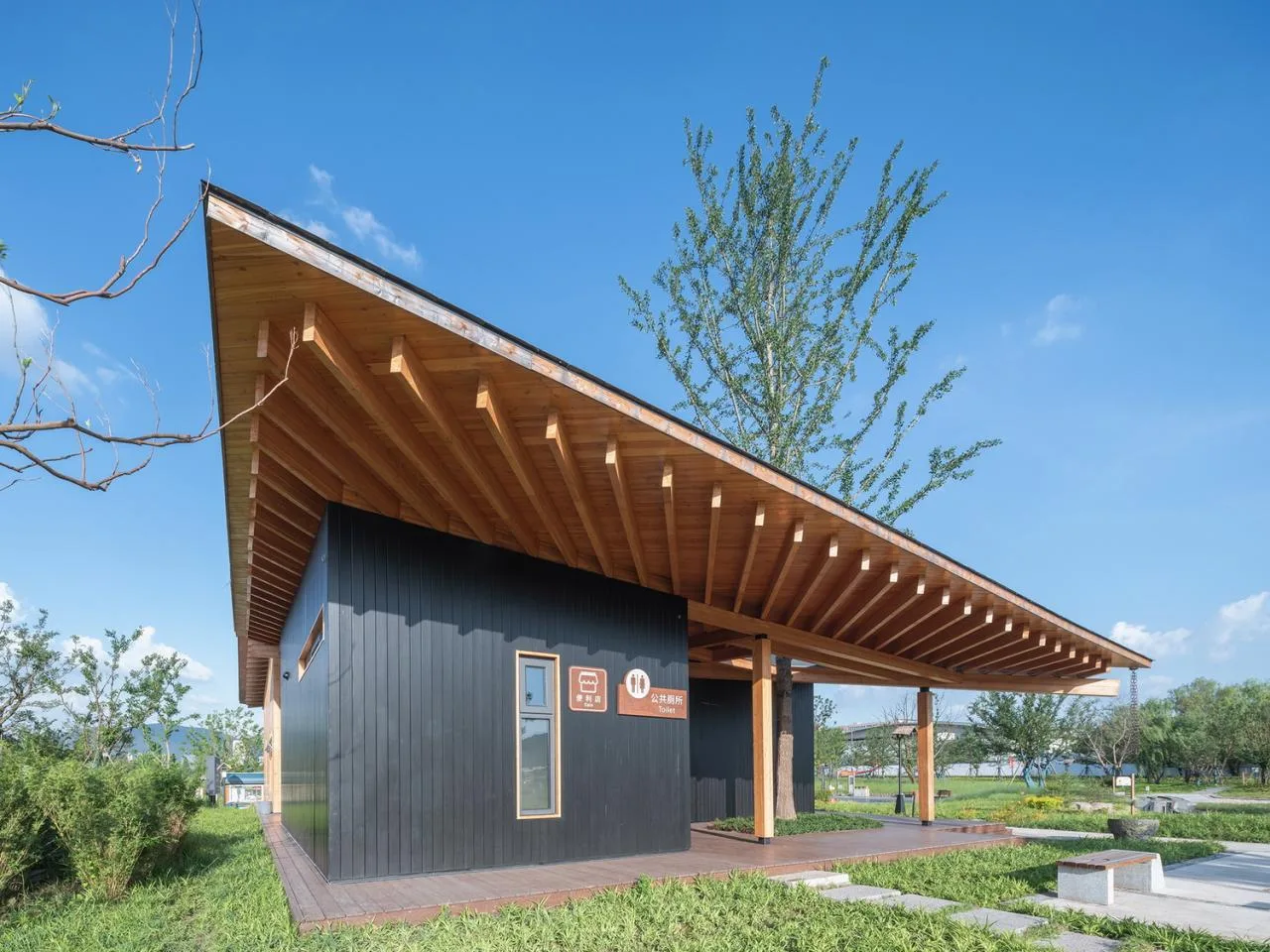
△ Overhanging eaves on the west side © Zhao Yilong
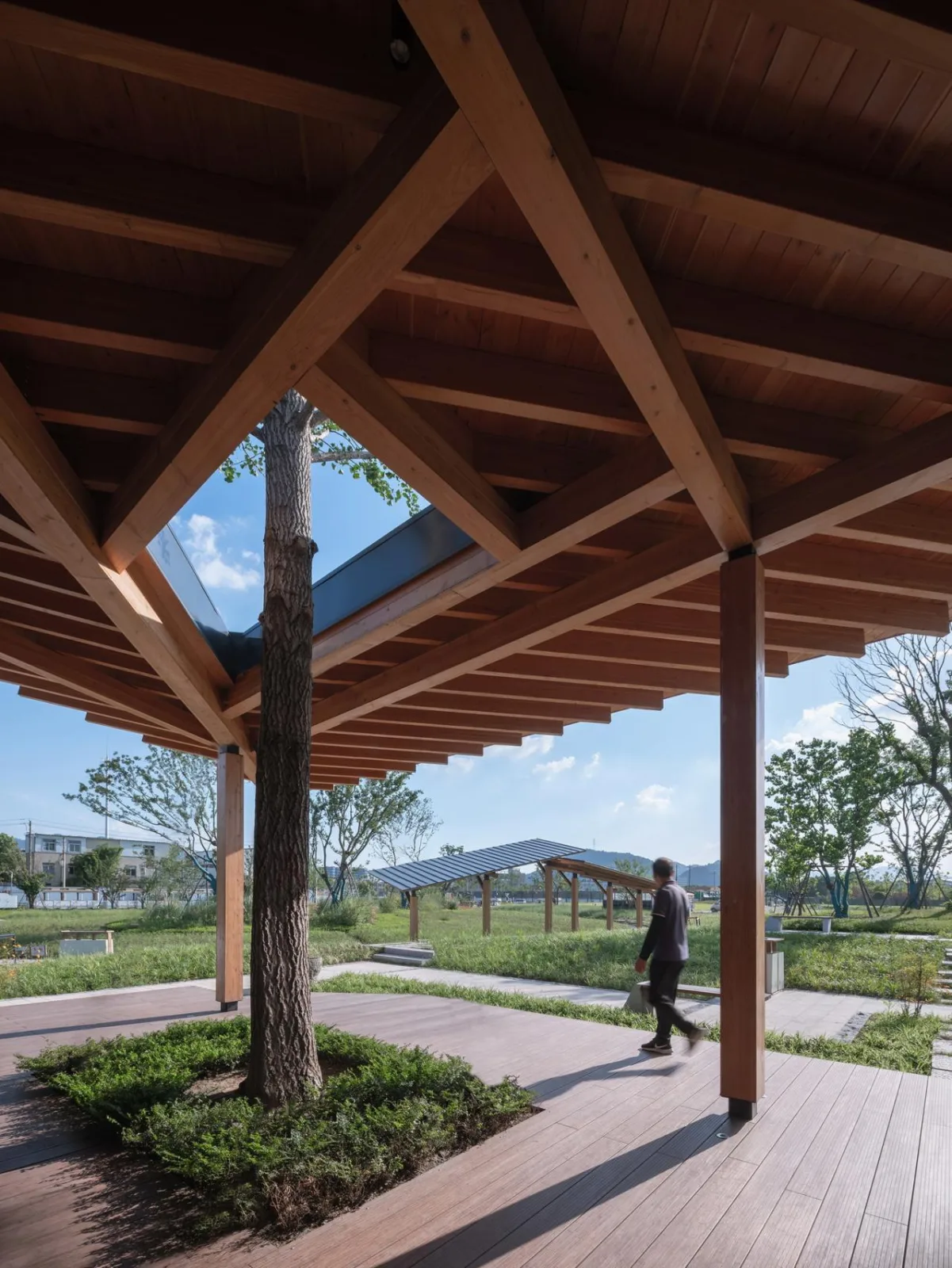
△ Gray space surrounding the tree courtyard © Zhao Yilong
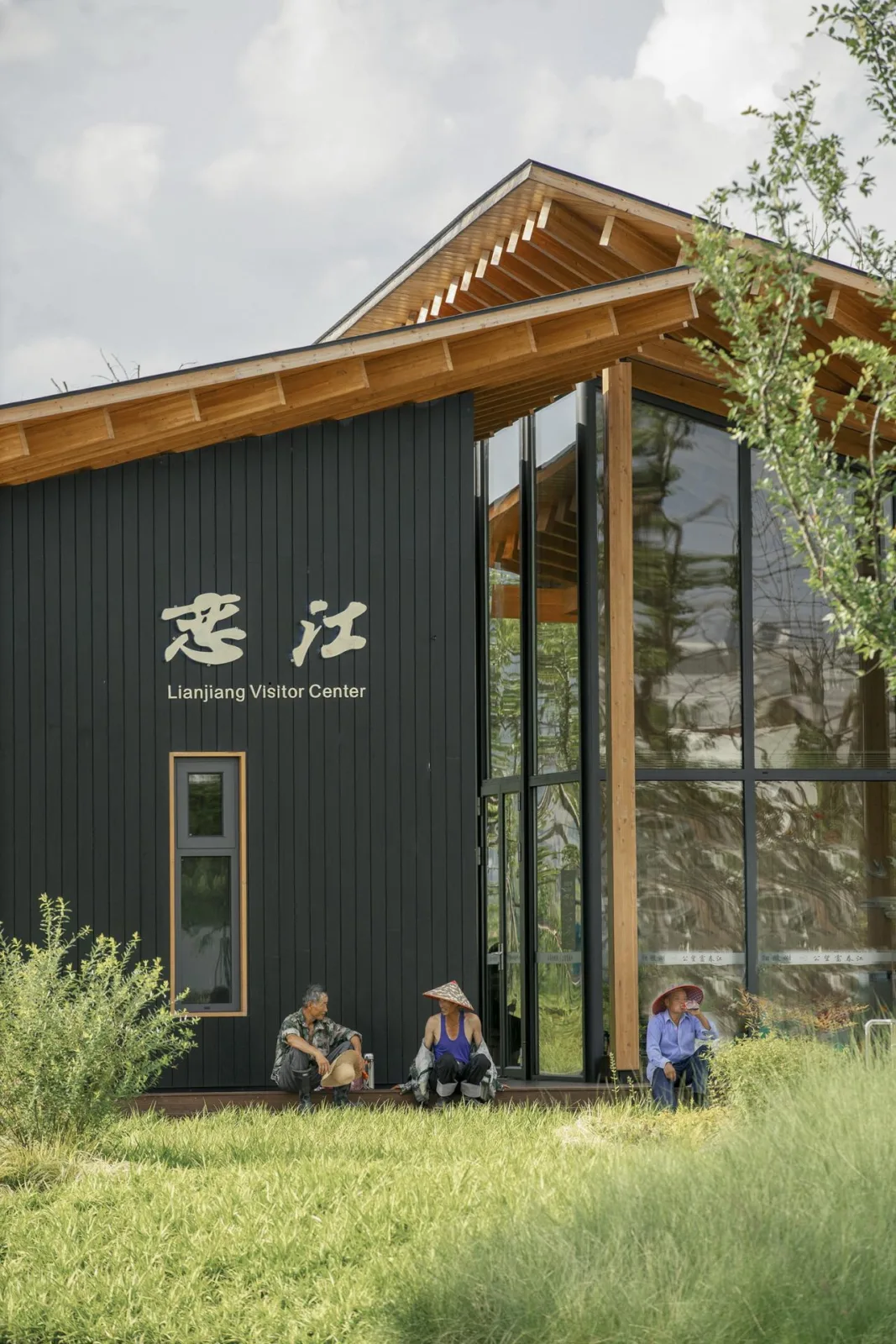
The gardener resting beneath the large roof © Rock Architecture – Zhao Sai
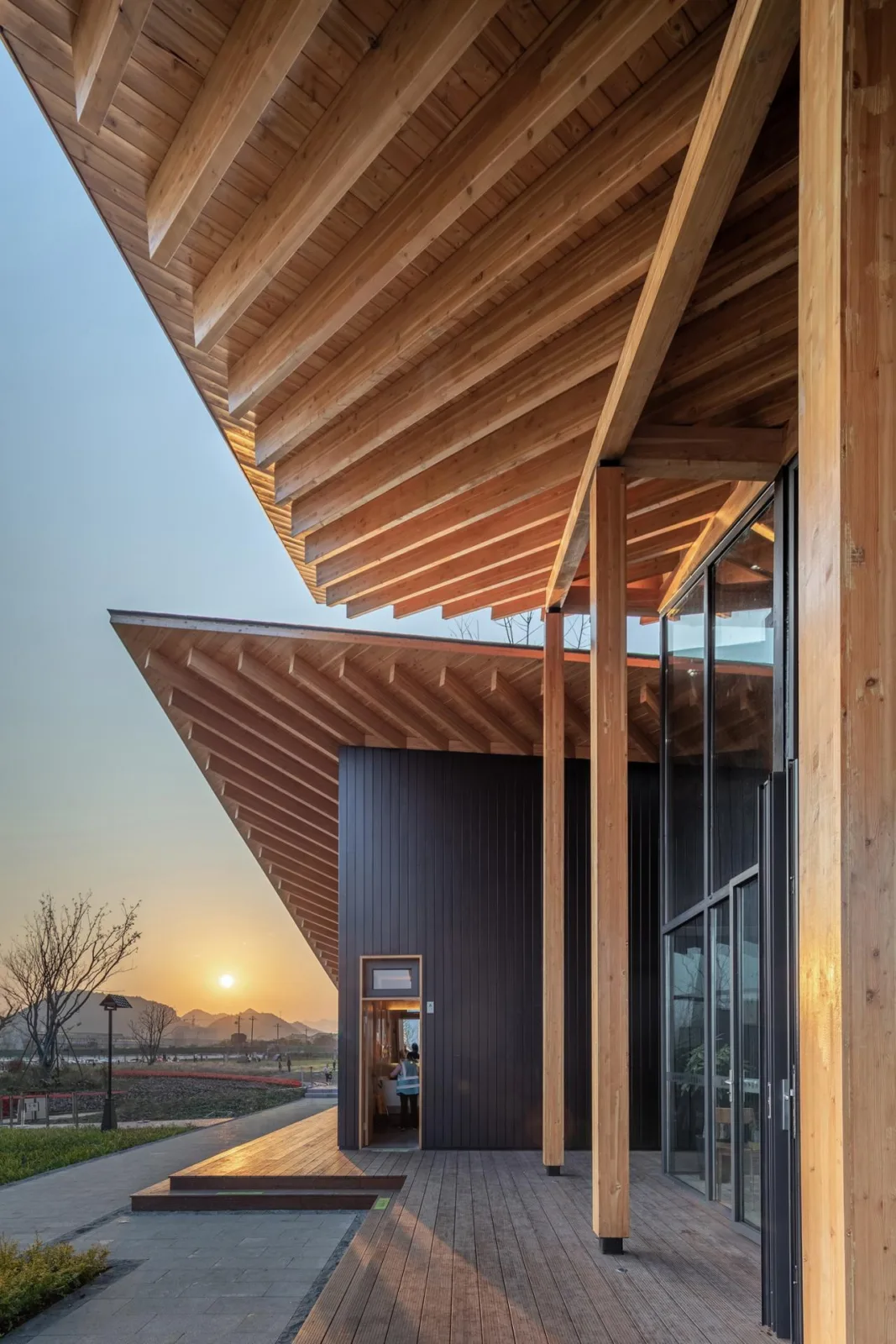
△ Gray space beneath the southern roof © Rock Architecture – Zhao Sai
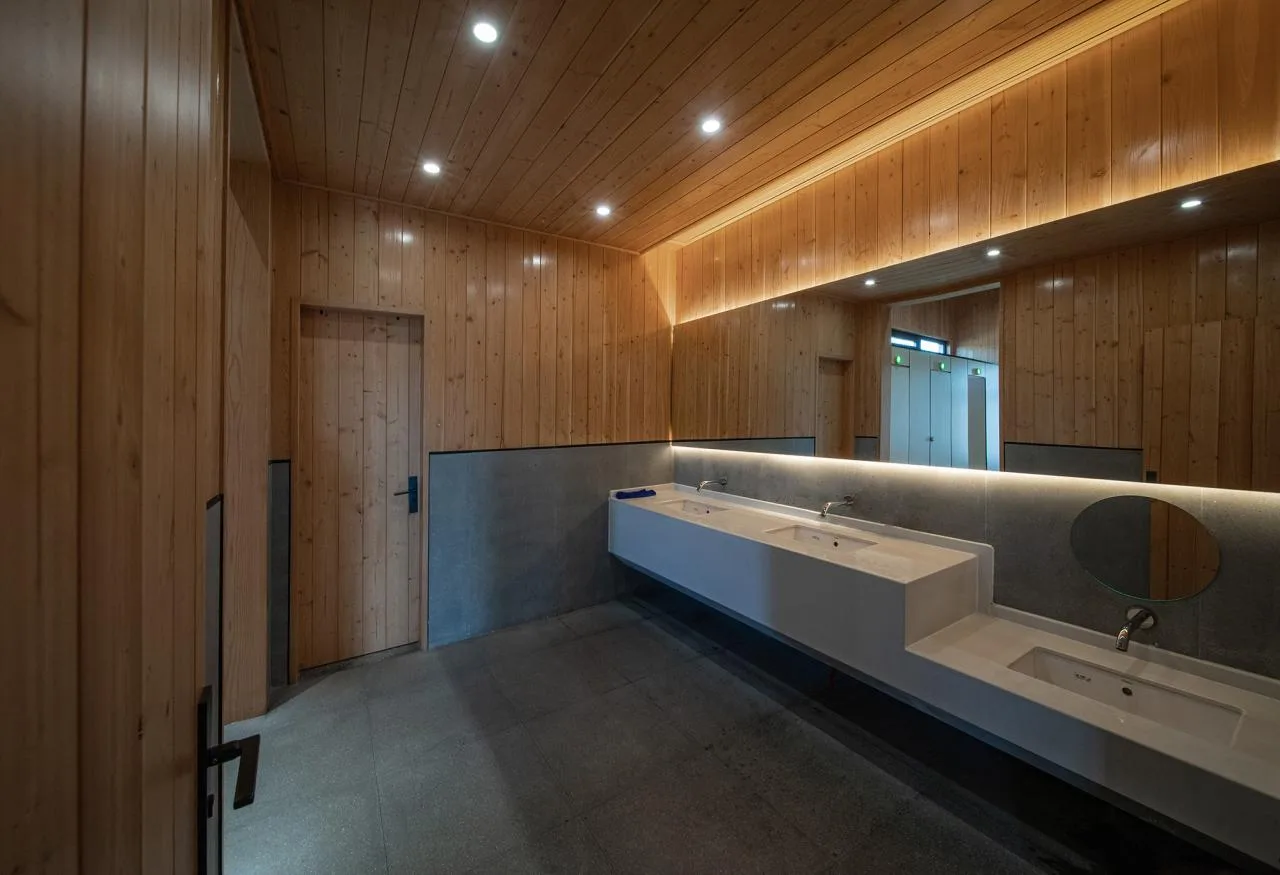
△ Bathroom Room 1 © Rock Architecture – Zhao Sai
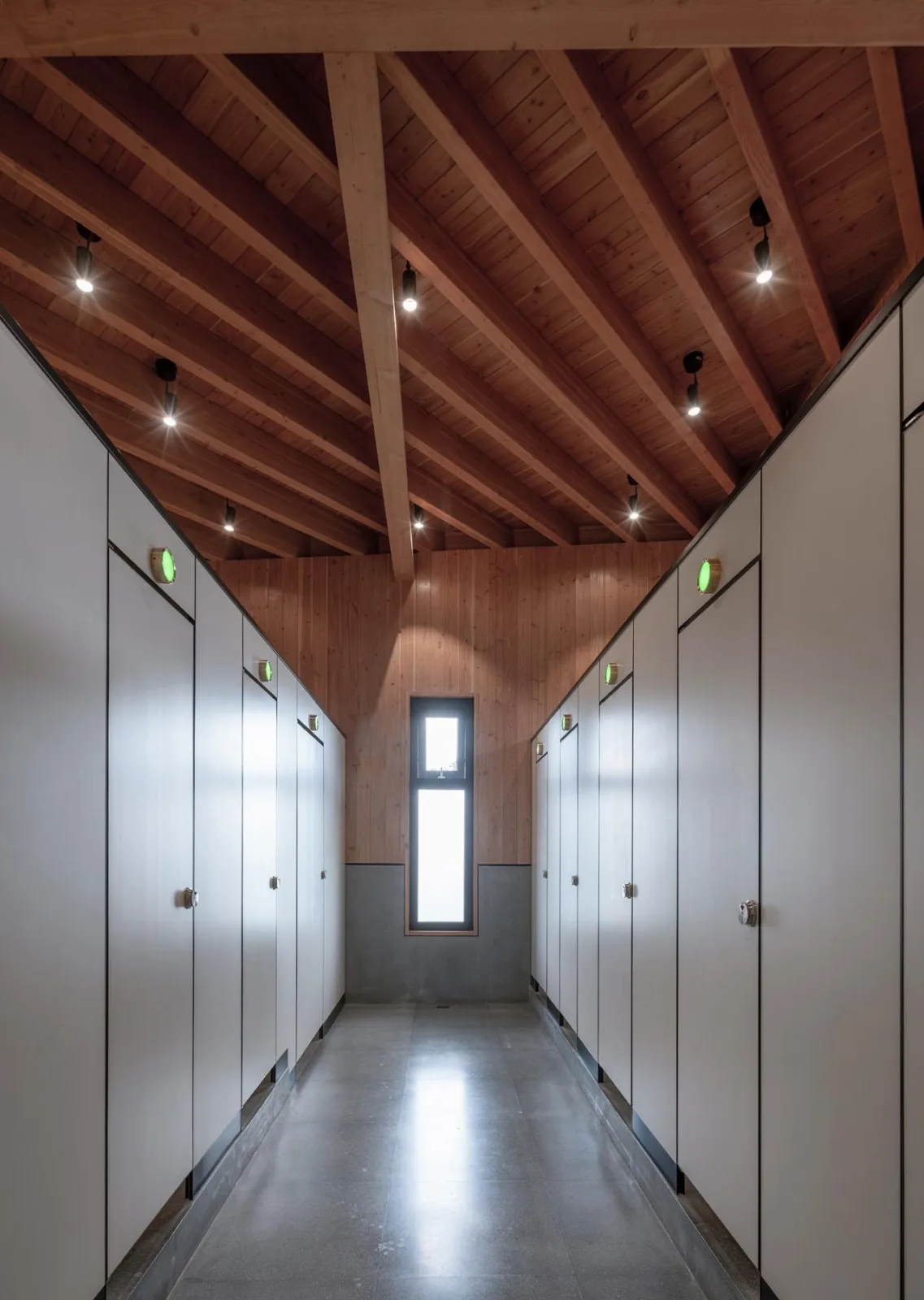
△ Indoor bathroom 2 © Zhao Yilong
Monthly Construction Diary
The entire reception center was completed from ground-up within just two months, reflecting a rapid and well-coordinated design and construction process. The team’s expertise and commitment were vital to this achievement.
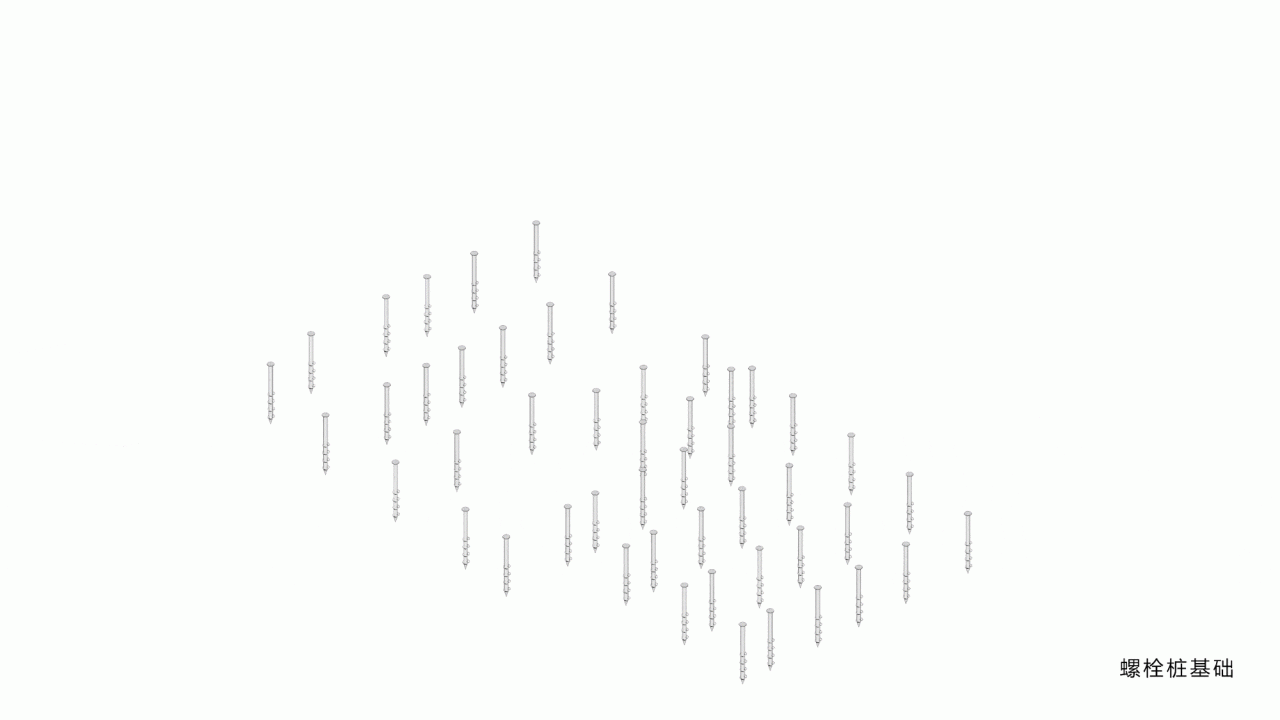
△ Construction process © Jianlin Architecture
On August 7, 2020, construction commenced with workers arriving on site and cranes lifting factory-processed beams and columns. Half of the foundation beams were erected, with screw piles staged nearby awaiting installation.
One week later, on August 13, many light steel frame walls were ready for assembly on the ground. The roof truss was mostly completed, and glued laminated timber beams were transported and protected on site, ready for installation. The indoor concrete floor was poured and leveled.
By August 18, the building frame and roof shape had formed, with all timber beams installed. The main structure was complete, allowing roof panels to be installed and waterproofed, enabling interior work to begin without weather concerns.
On August 22, exterior light steel frame walls were being installed. The roof observation panel was in place, with embedded wiring points reserved for lighting.
September 1 saw indoor air conditioning installation underway, along with plumbing and electrical piping embedded in walls. Base sealing and waterproofing for outdoor walls were complete, and wooden panels for the exterior walls were ready for installation. Roof steel beams were wrapped with particleboard, prepared for laminated Douglas fir cladding.
By September 8, exterior wooden boards were installed, and roof insulation and waterproofing were finished. Solid wood doors and windows, custom-made from Douglas fir, were being installed. The design unified roof and frame colors; among the three volumes, the public open volume features natural wood panels, while the bathroom volume uses black carbonized panels to distinguish public functions. Interior walls, floors, lighting, air conditioning, and sanitary fixtures were fully installed.
On September 13, the excavator worked on landscaping around the site. Aluminum-magnesium-manganese roof panels were installed, doors and windows were being fitted, and exterior wall construction was complete. Outdoor bamboo flooring was being laid, revealing the final architectural form.
By September 21, glass installation was finished. Workers fine-tuned building edge finishes and improved details. Surrounding landscape paths were paved, and soil slopes leveled.
On September 27, indoor lighting angles and outdoor light strip flatness were adjusted. Additional details for the roof drainage system were added. Interior gluing, jointing, and equipment debugging were completed. The entire construction, from structure to interior, was finished within two months.
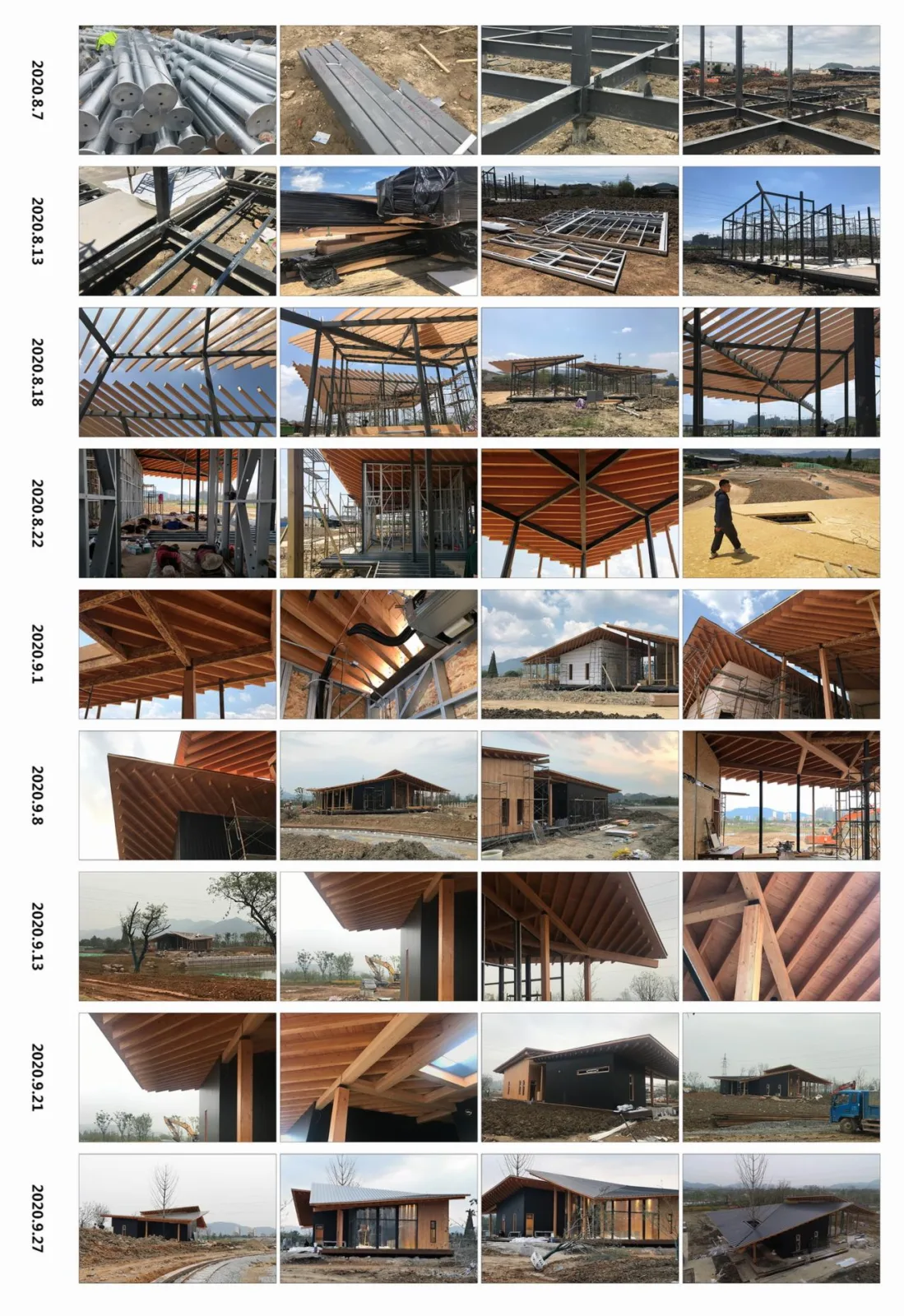
△ On-site construction documentation © Jianlin Architecture
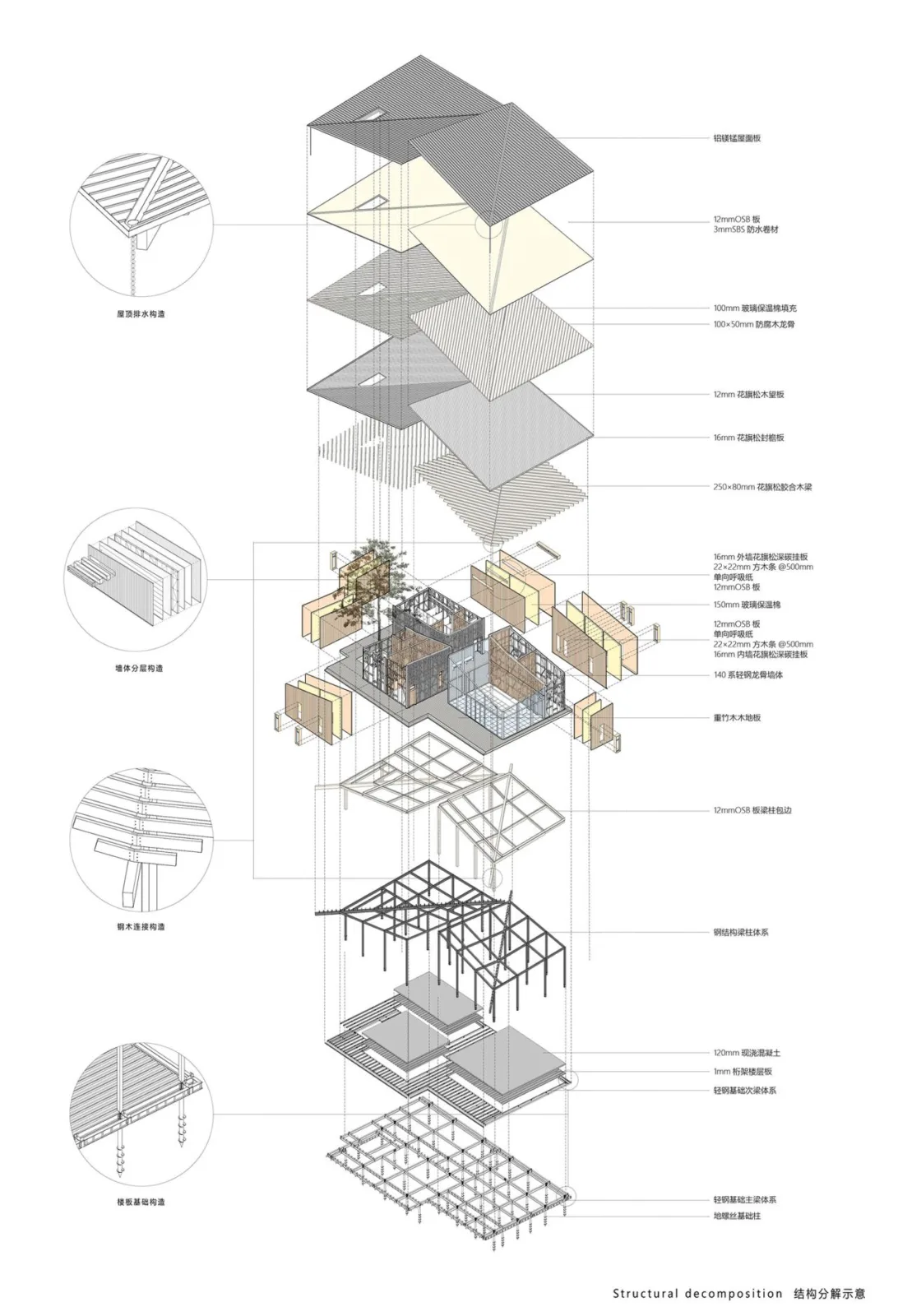
Schematic diagram of structural breakdown © Jianlin Architecture
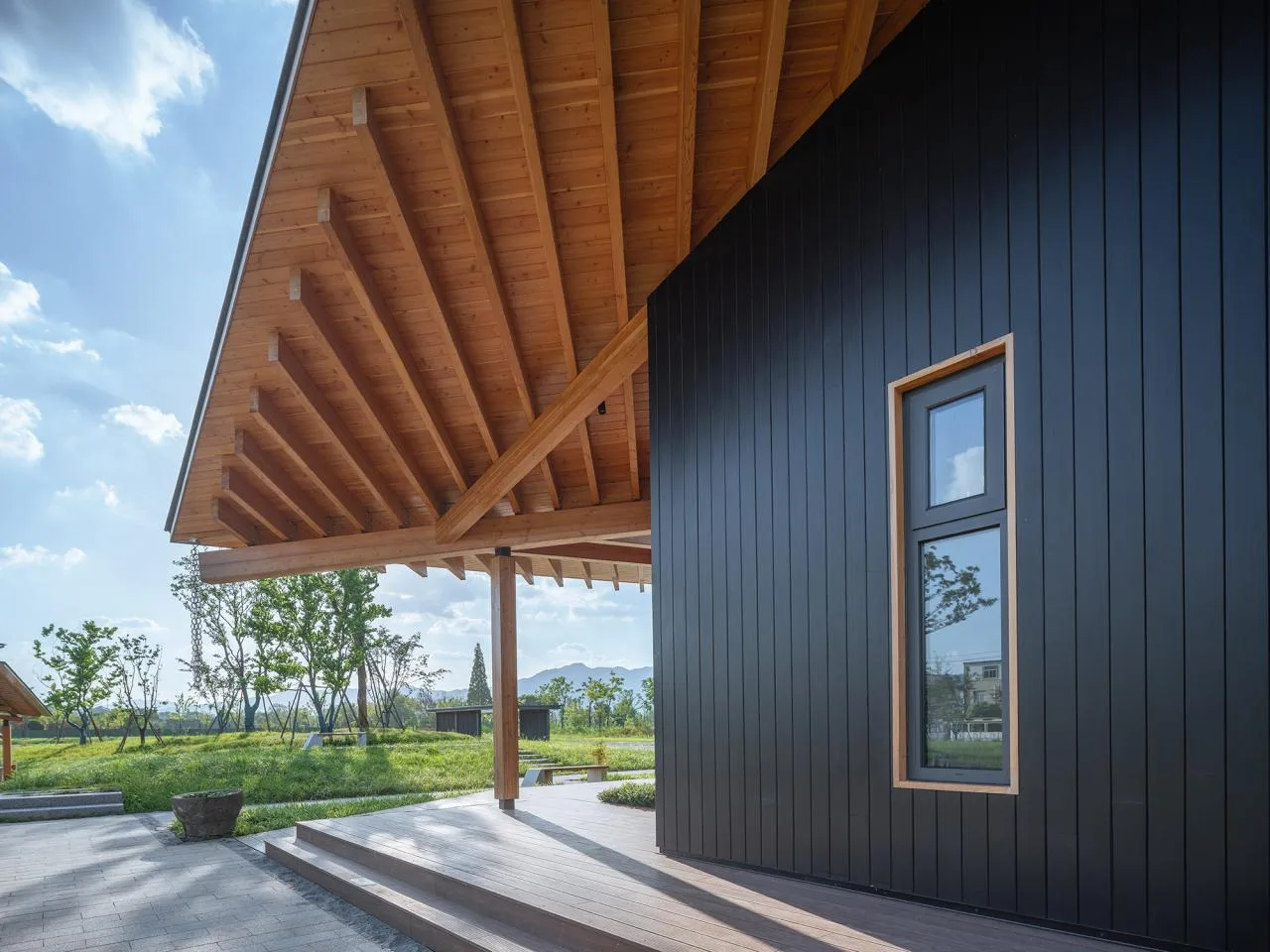
Under the prominent eaves © Zhao Yilong
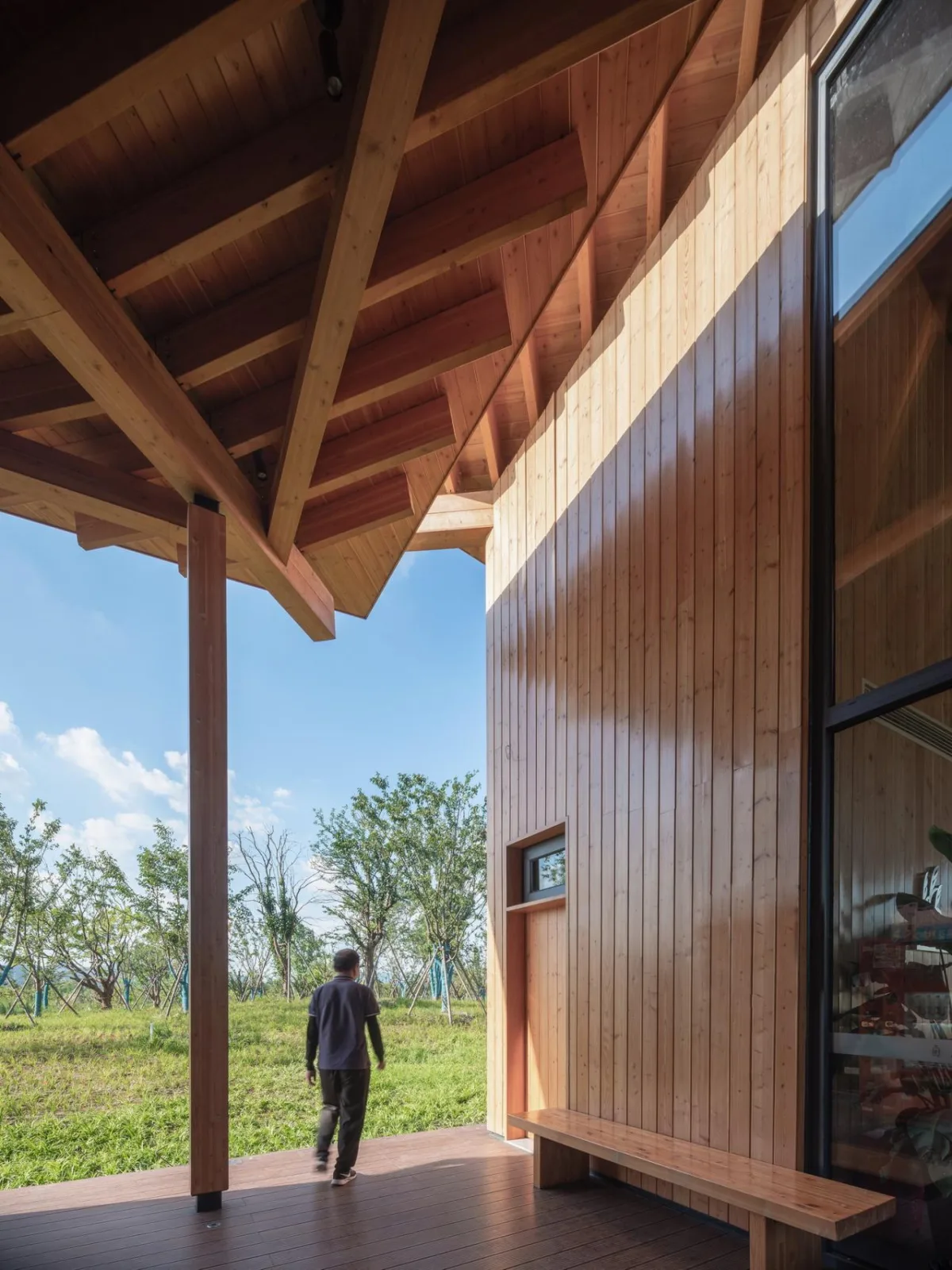
Gray space at roof junction © Zhao Yilong
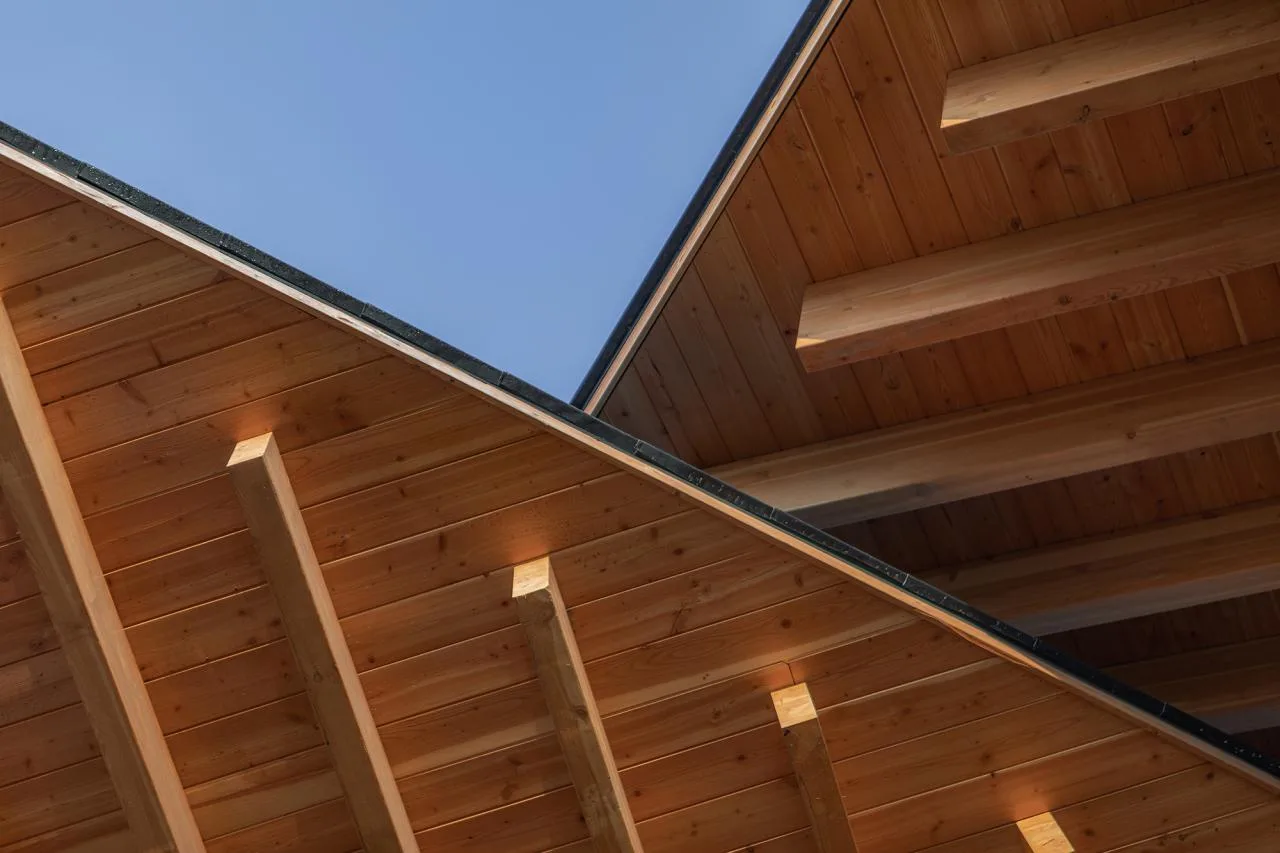
△ Overlapping roof layers © Rock Architecture – Zhao Sai
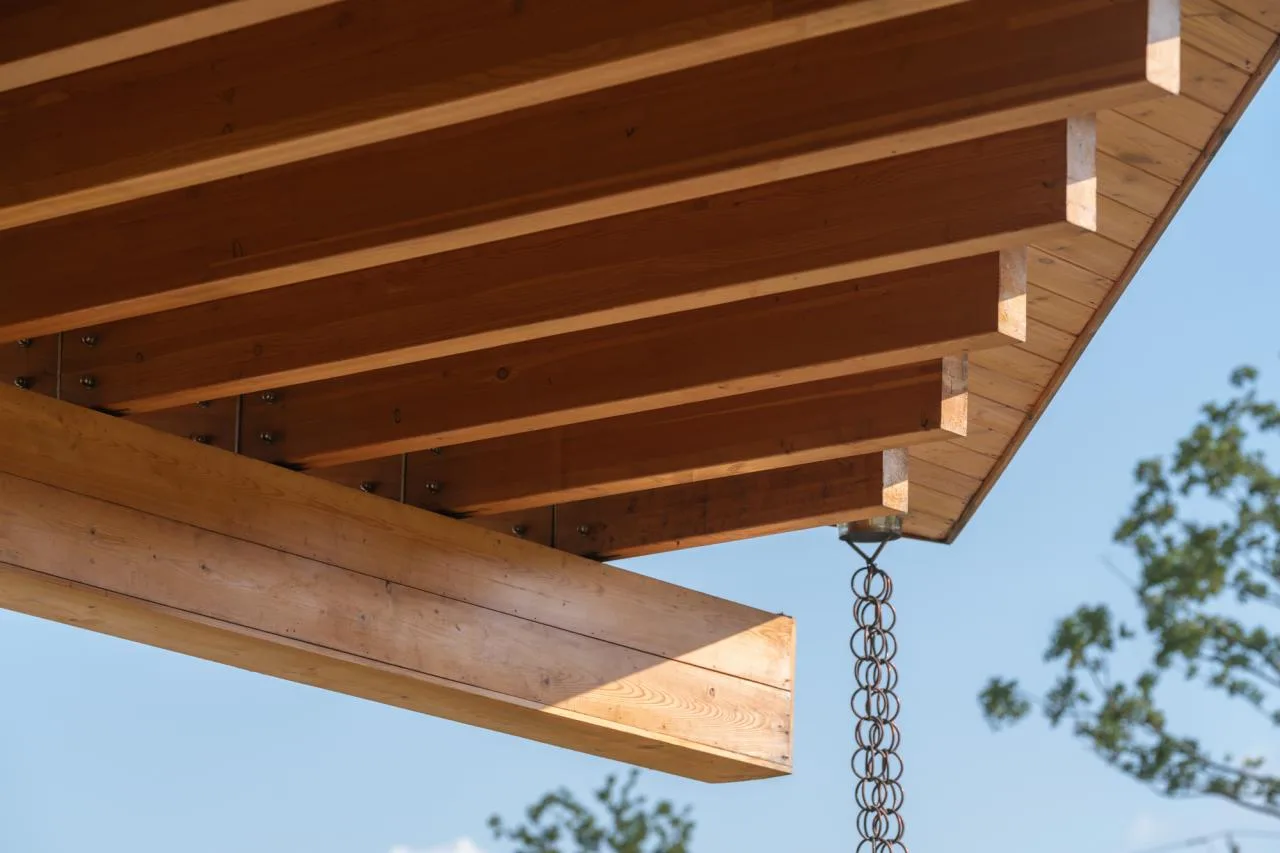
Details of wooden structure and steel beam connections © Zhao Yilong
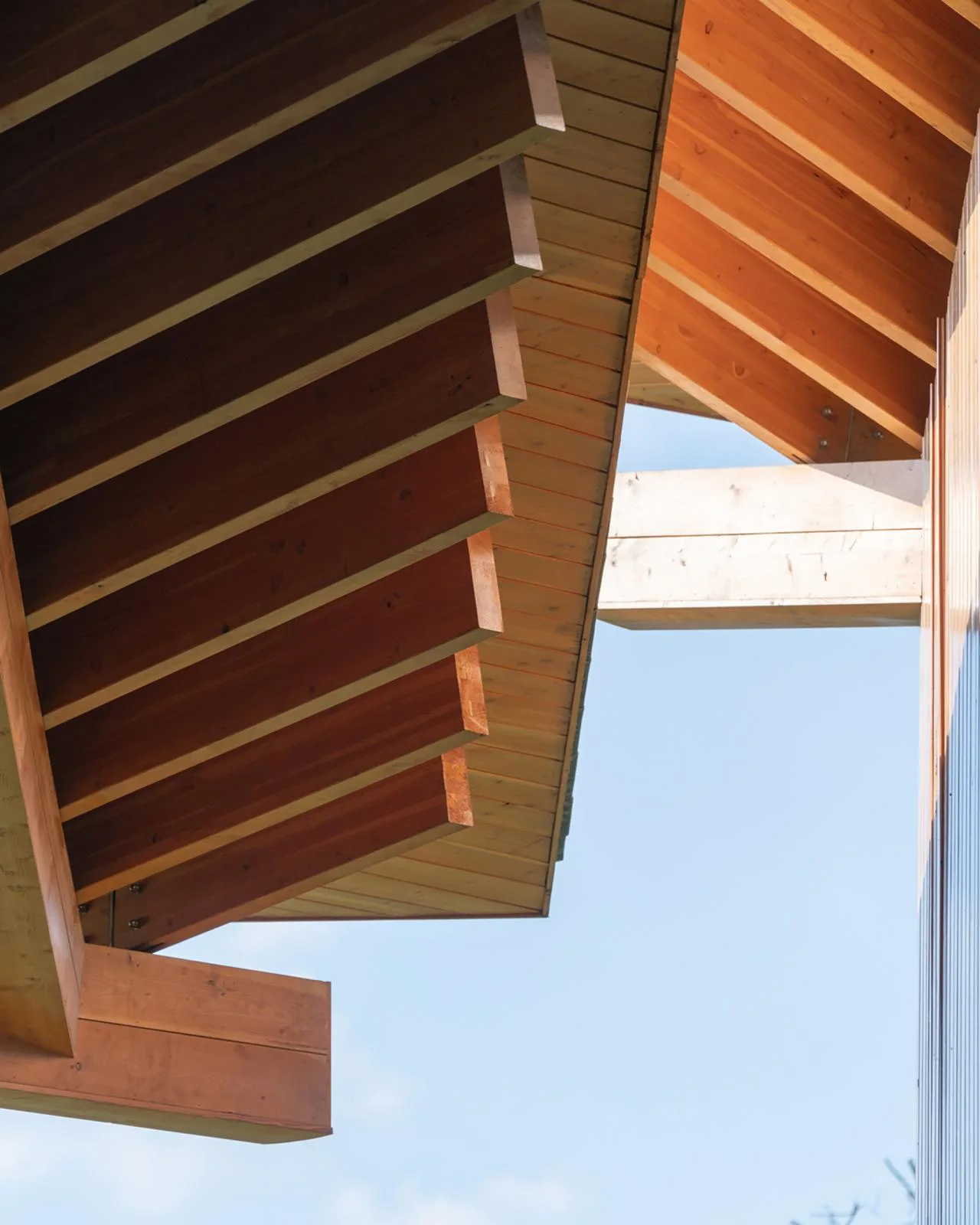
△ Roof structure details © Zhao Yilong
Notably, the entire building uses no traditional bricks. Instead, it is constructed entirely using lightweight prefabricated methods. Except for the cast-in-place concrete base and water-polished stone flooring, all components are assembled from modular materials such as sheet steel, light steel, heavy steel, and laminated wood, allowing for a waterless and sustainable construction process.
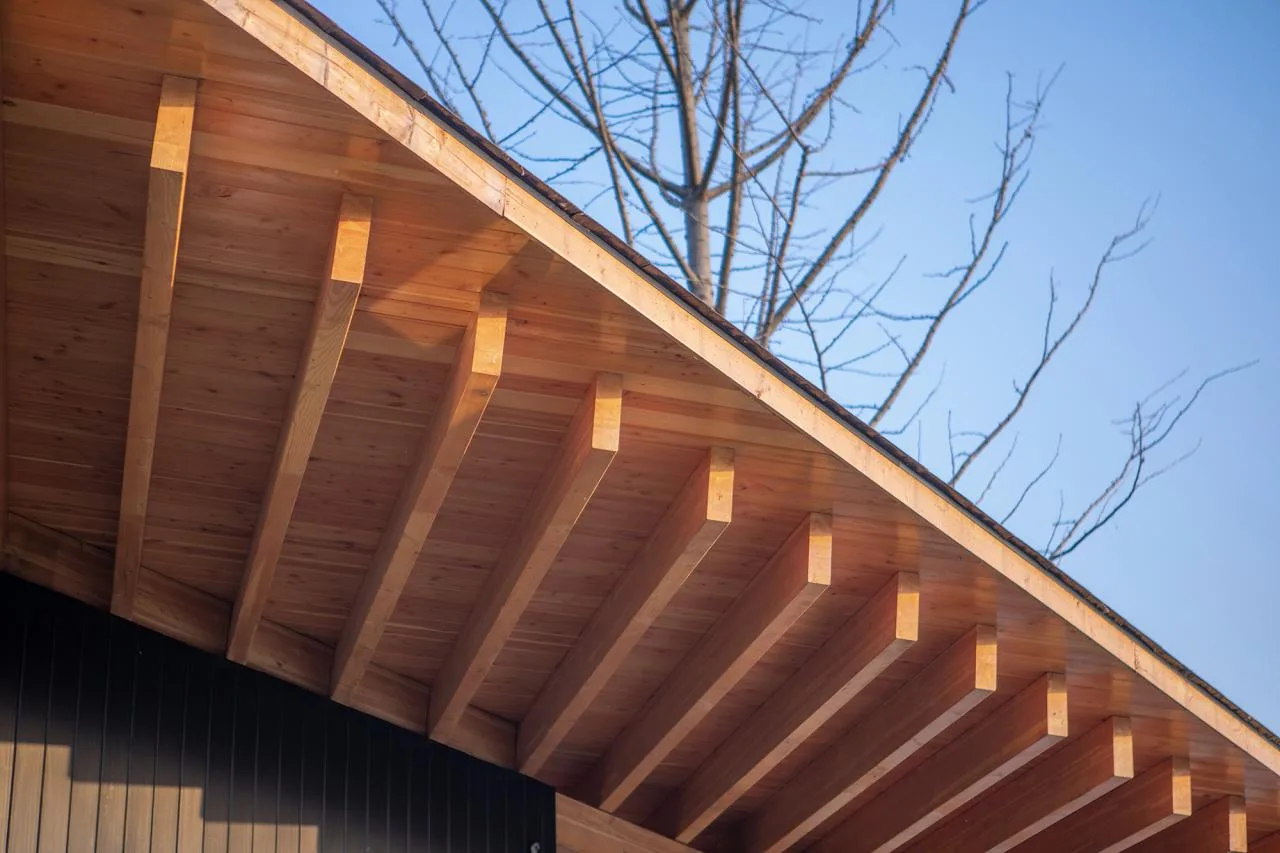
△ Eaves wood roof structure details © Rock Architecture – Zhao Sai
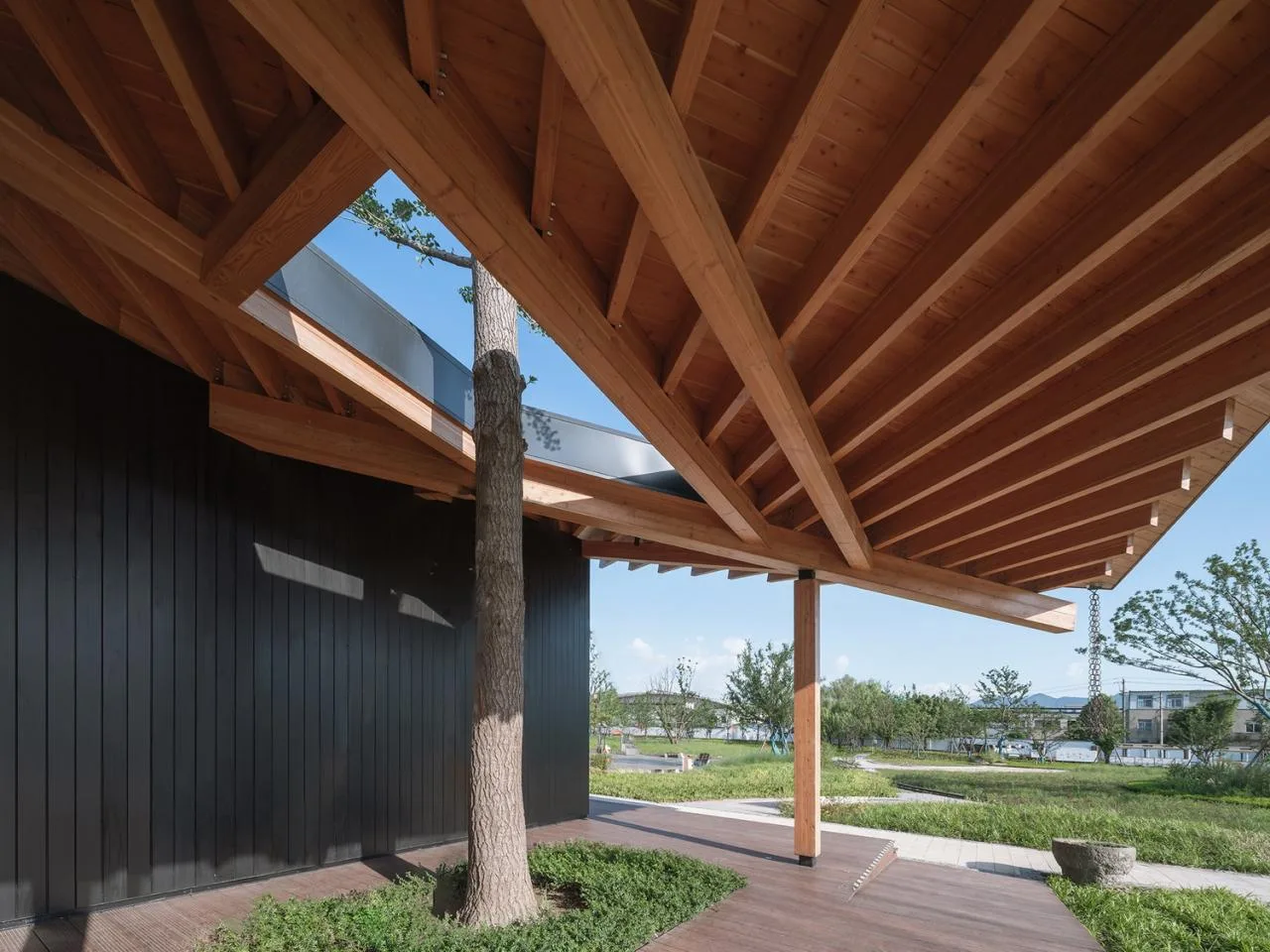
The courtyard beneath the large roof © Zhao Yilong
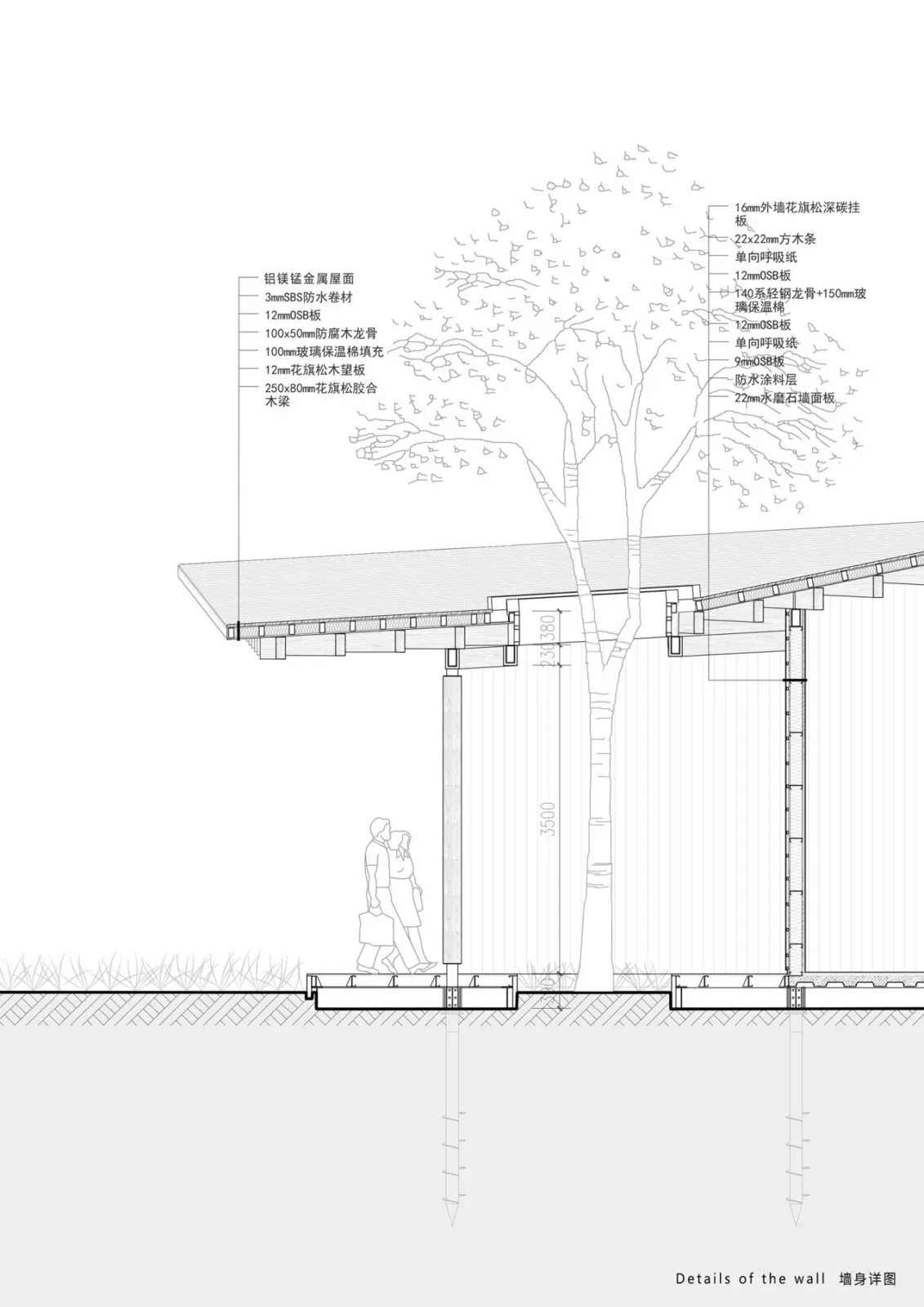
△ Detailed wall section © Jianlin Architecture
Reflection
For the Yangpi Lake Wetland project, we chose prefabricated construction for three main reasons:
- Speed: Traditional frame construction has a lengthy, complex process that makes timeline control difficult. Prefabricated buildings are lightweight, factory-made structures that are easy to transport and assemble on-site. This method offers clear process flows, easier quality control, better construction management, and significantly faster delivery.
- Environmental sustainability: Conventional construction causes substantial land damage and waste during both building and demolition. Elevated prefabricated structures minimize environmental impact, leaving the land unharmed and ready for immediate greening after removal. Materials can be reused or rebuilt, supporting a circular economy.
- Connection to traditional architecture: This method draws on China’s traditional wooden architecture, which emphasizes modular, prefabricated components that can be disassembled, reassembled, replaced, repaired, or relocated. The lightweight, modular approach also applies to peripheral materials such as bricks and tiles, supporting flexible, sustainable building practices. The lightweight connection between the building and the earth allows for easy removal, enabling the site to revert to natural land, embodying the highest wisdom of traditional Chinese architecture.
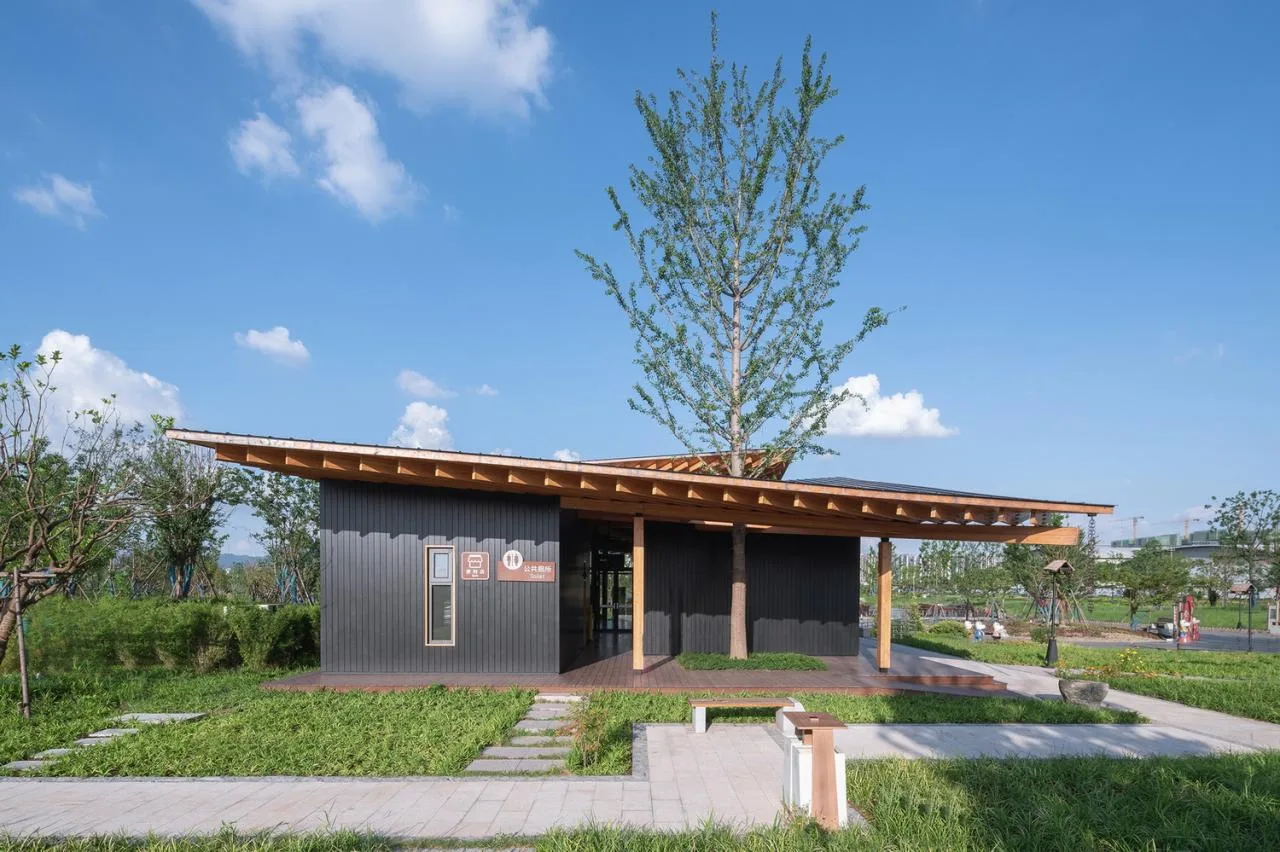
△ West facade © Zhao Yilong
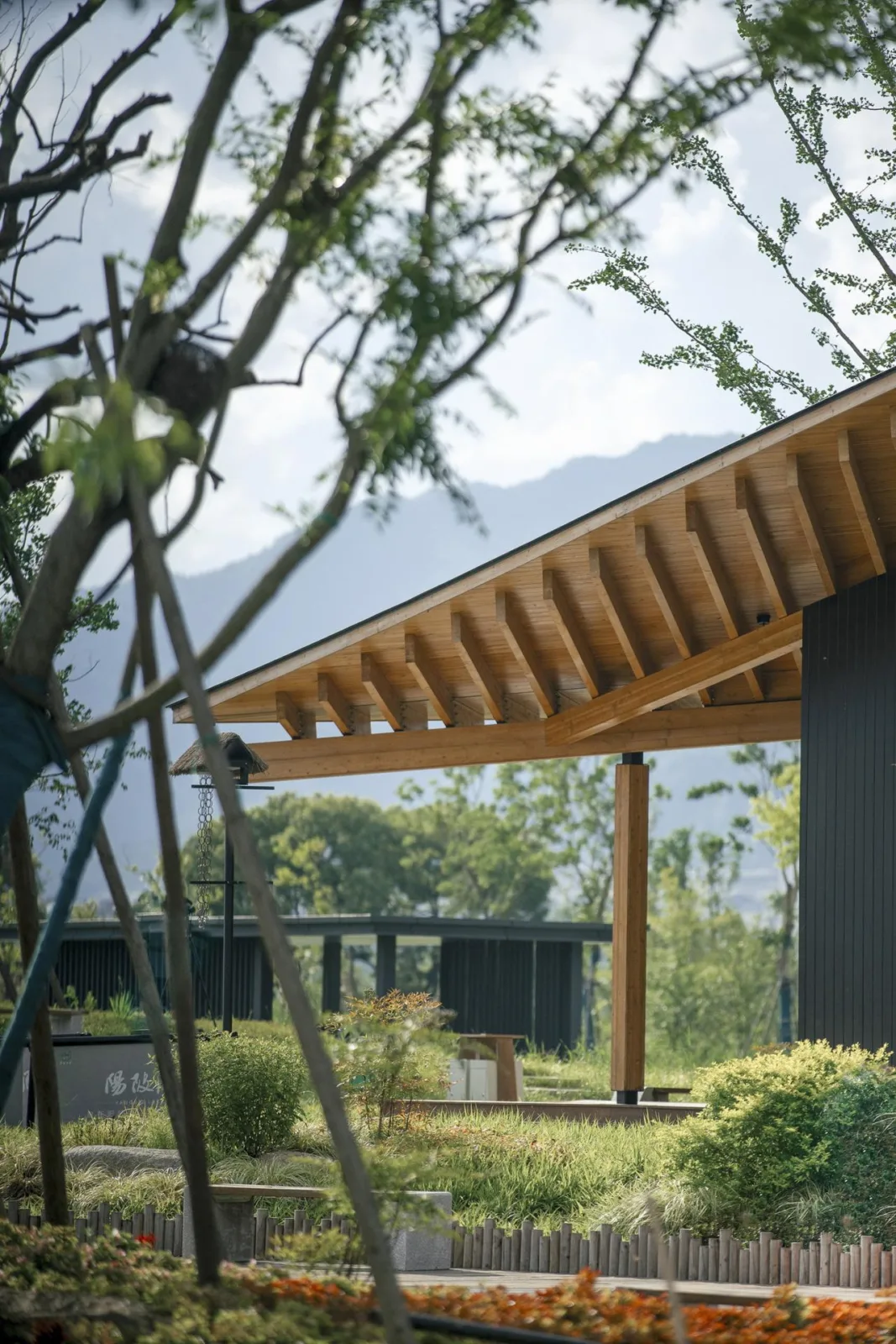
△ Overhanging eaves © Rock Architecture – Zhao Sai
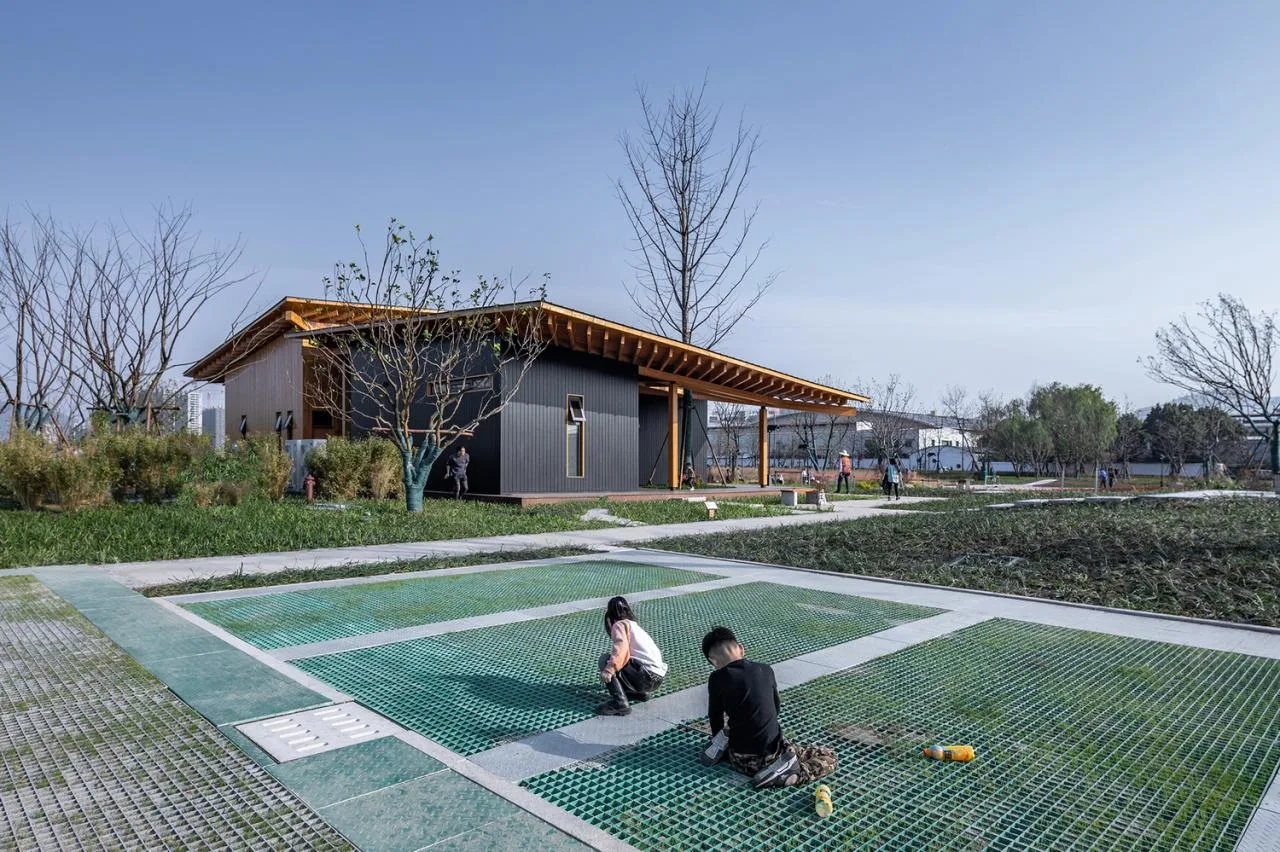
△ View toward the reception center from the parking lot © Rock Architecture – Zhao Sai
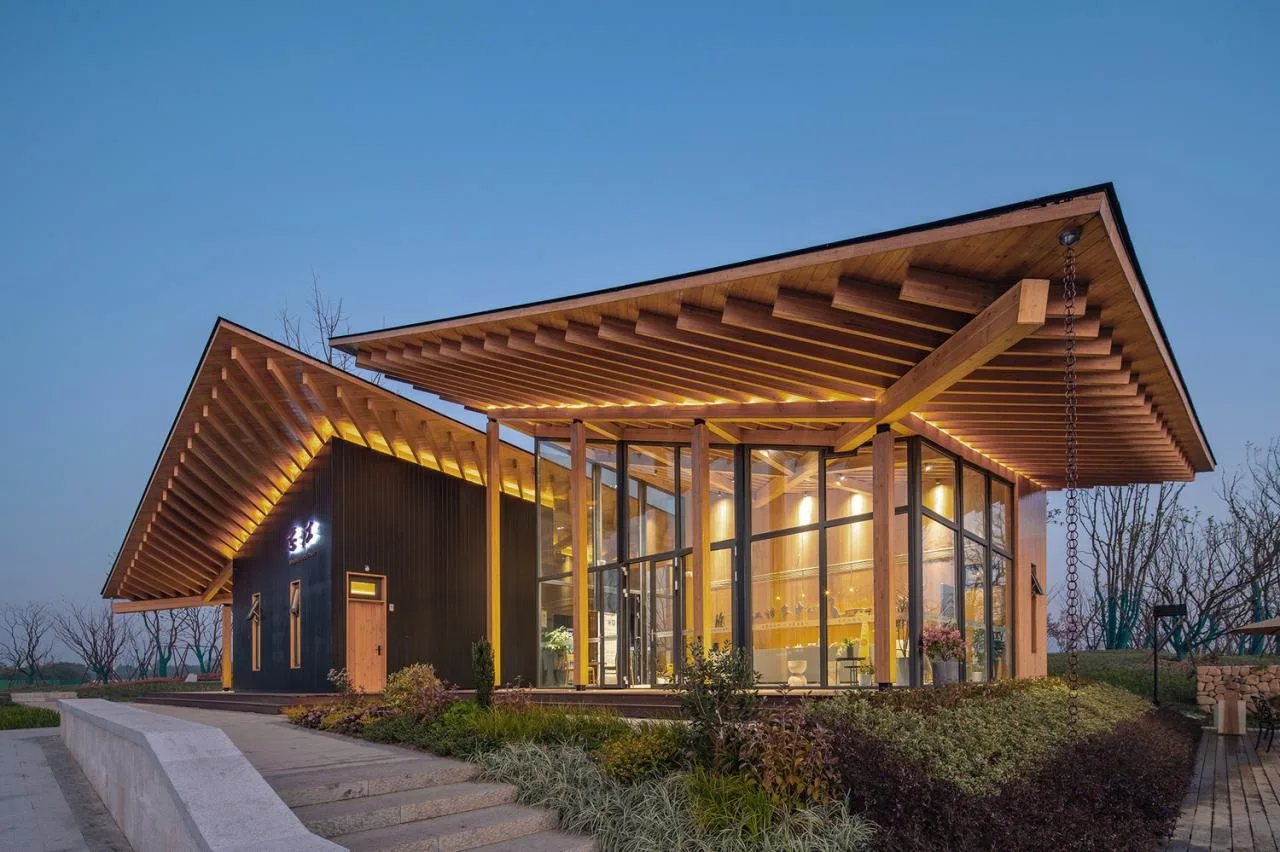
△ The two large roofs © Rock Architecture – Zhao Sai
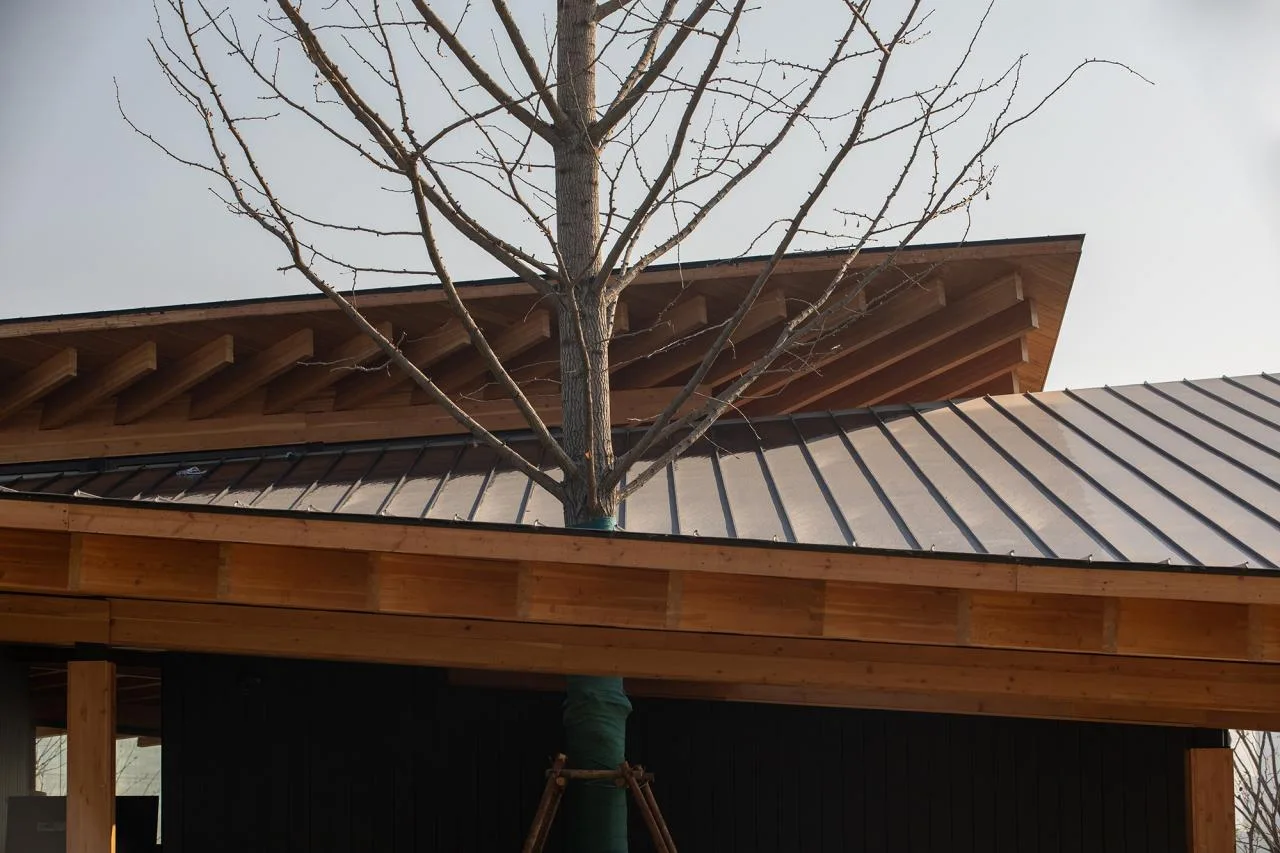
△ Tree integrated through roof detail © Rock Architecture – Zhao Sai
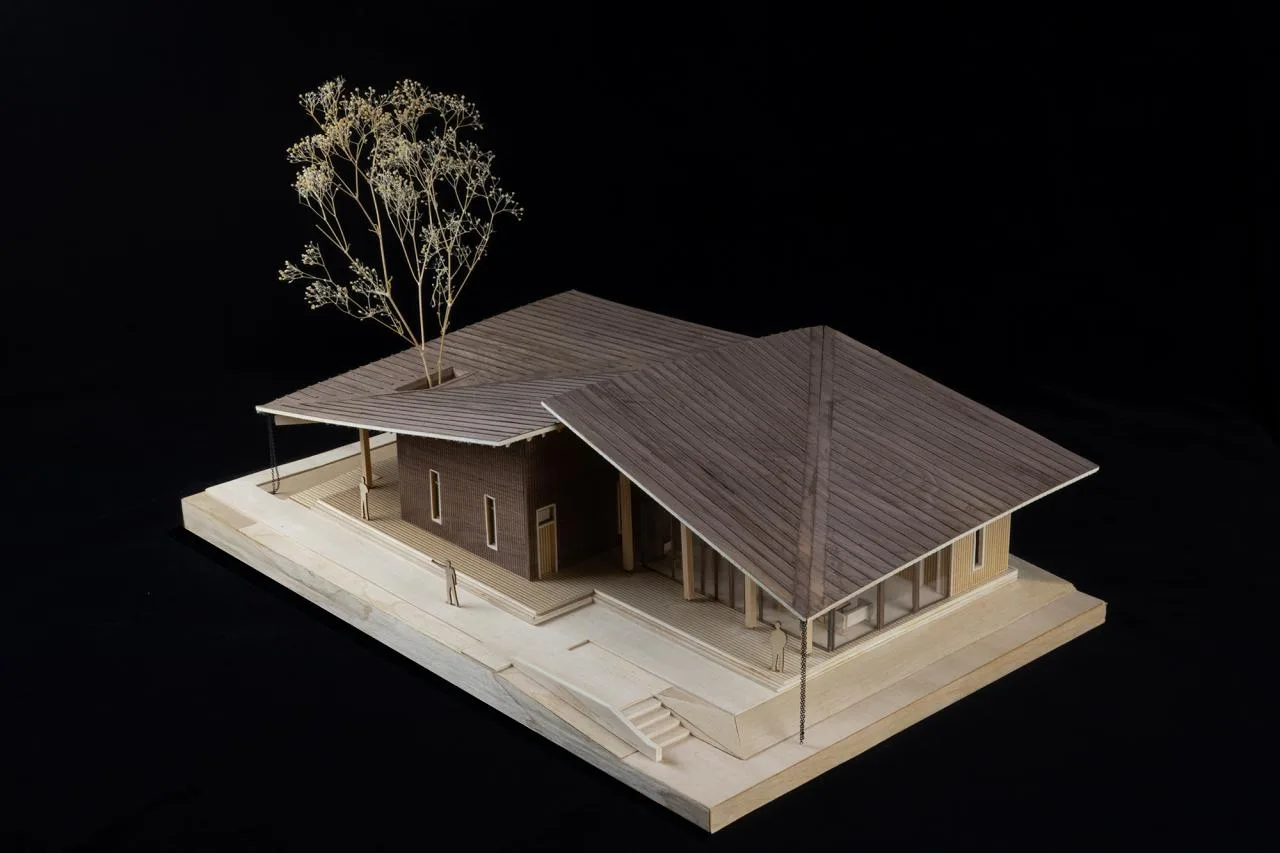
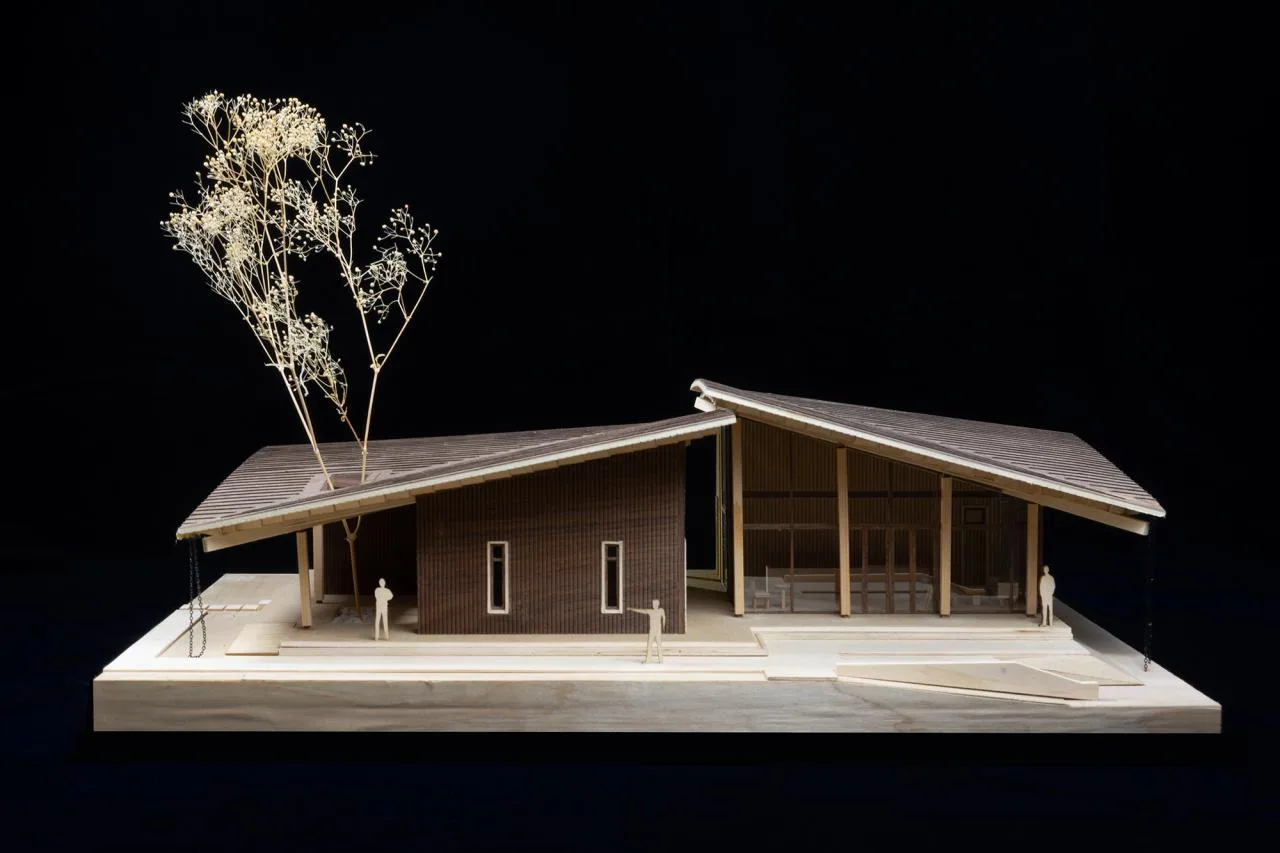
△ Handmade architectural model © Jianlin Architecture
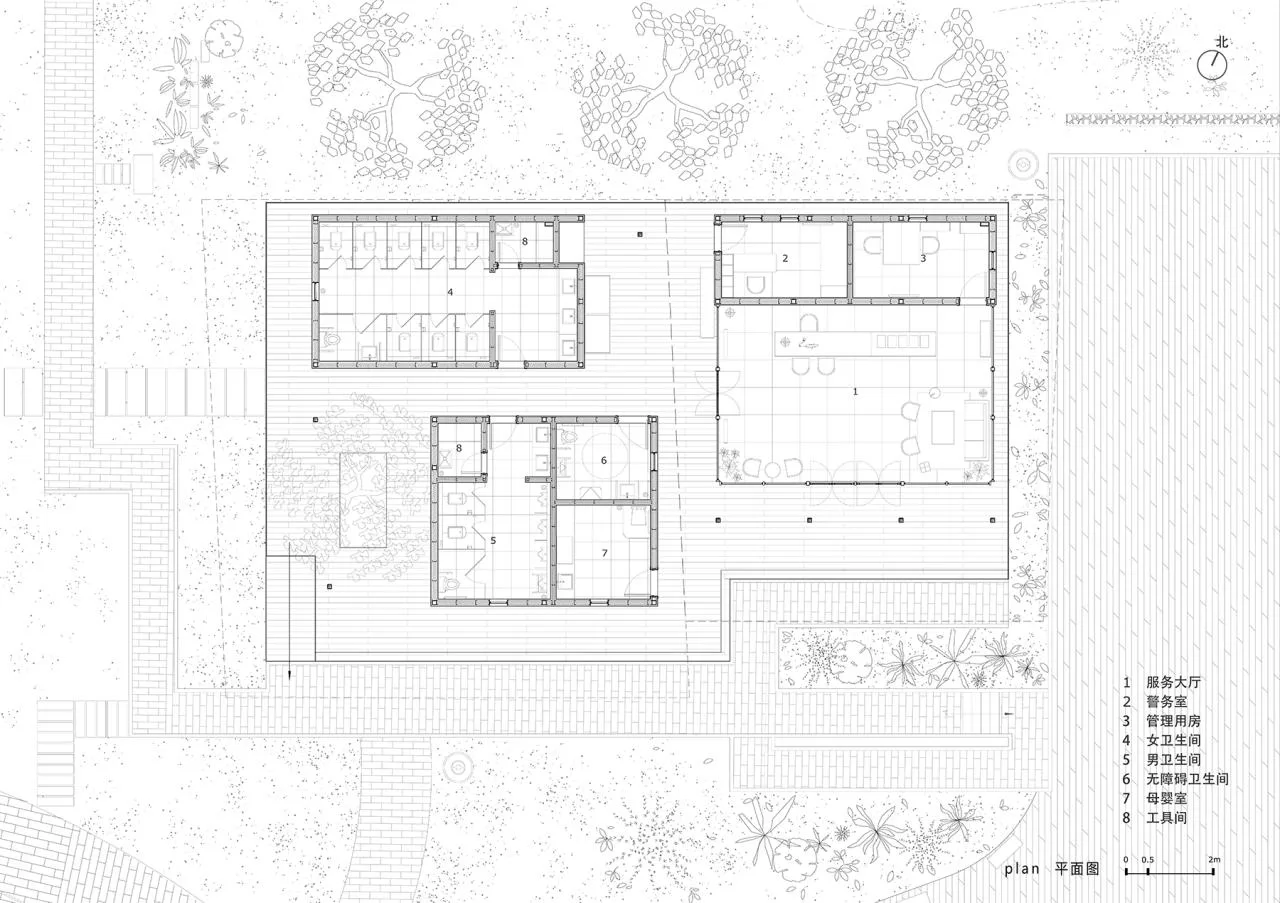
△ Floor plan © Jianlin Architecture
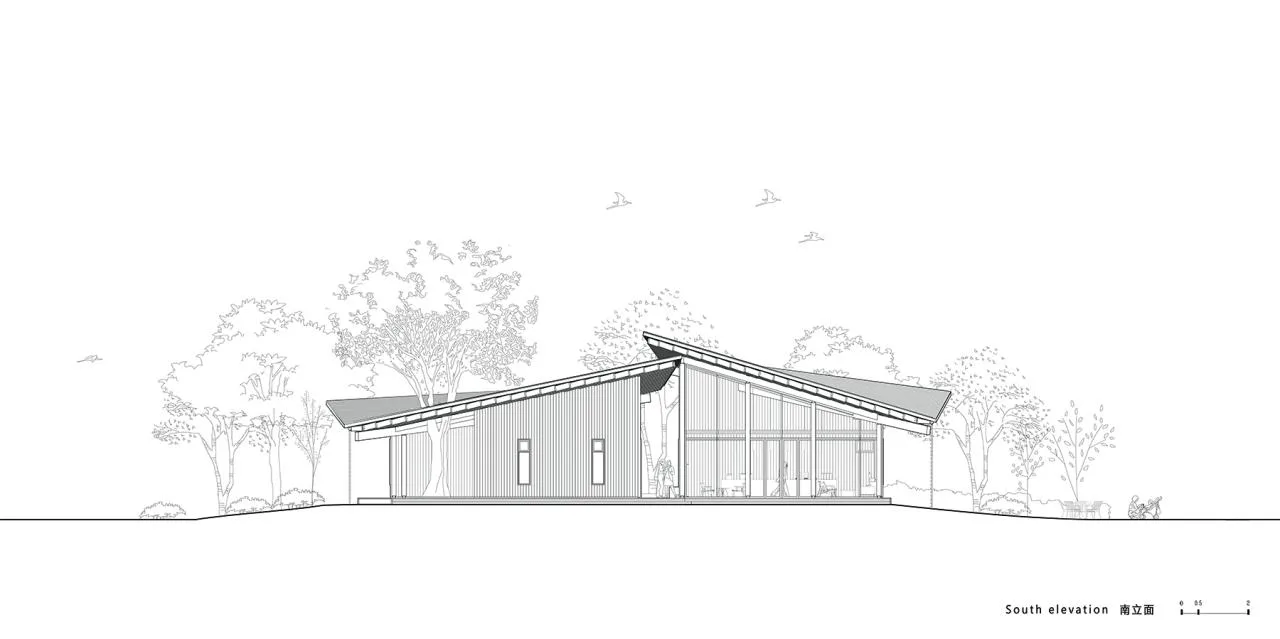
△ South elevation © Jianlin Architecture
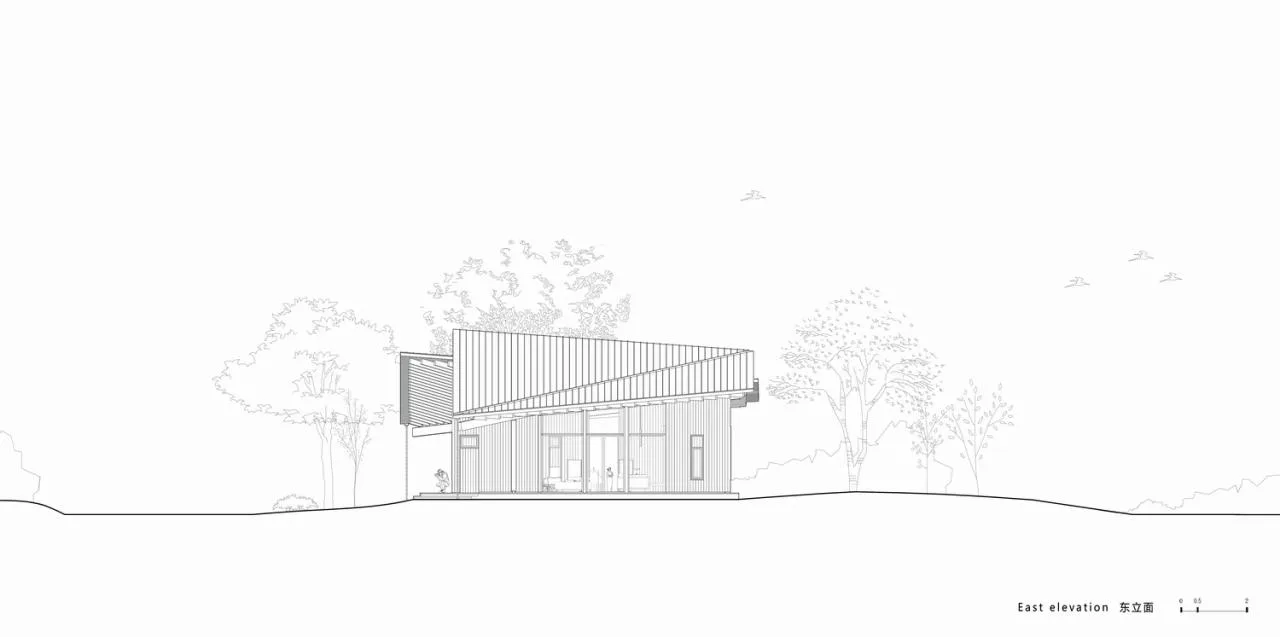
△ East elevation © Jianlin Architecture
Project Information
Project Name: Fuyang Yangpi Lake Wetland Park South Reception Center
Location: Yangpi Lake Wetland Park, Fuyang District, Hangzhou City
Owner: Hangzhou Fuchun Shanju Group Co., Ltd
Construction Company: Hangzhou Zhongpu Construction Technology Co., Ltd
Design Firm: Jianlin Architectural Design Firm
Company Website: __AI_ST_URL_0__
Project Type: Supportive Reception Facility · Public Building
Design Period: July 2020 – August 2020
Construction Period: August 2020 – October 2020
Lead Architects: Chen Lin, Liu Dongying
Design Team: Chen Yini, Wang Jiaxin, Cui Jiawei (intern), Huang Weibin (intern)
Structural System: Steel-wood structure, light steel assembly
Materials: Douglas fir laminated wood, carbonized cedar boards, aluminum-magnesium-manganese panels, bamboo and wood flooring, light steel walls, terrazzo
Building Area: 300 square meters
Architectural Photography: Rock Architecture – Zhao Sai, Zhao Yilong















Must log in before commenting!
Sign Up