
Project Background
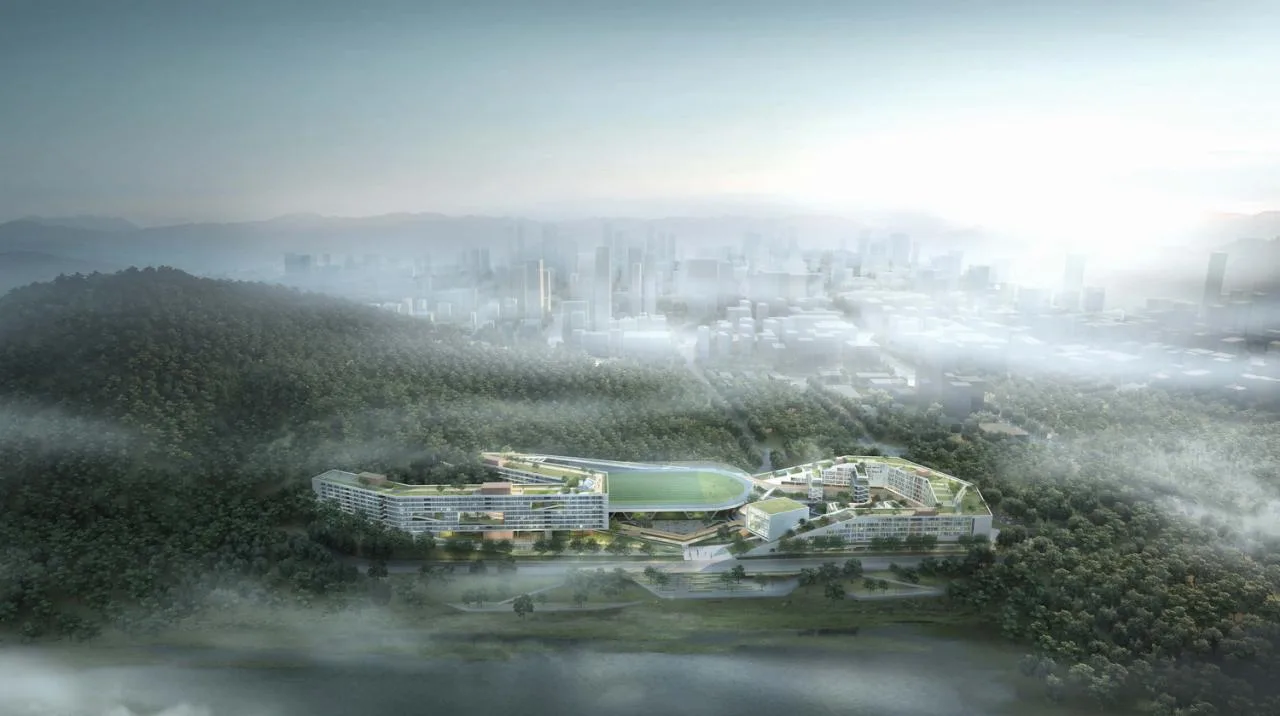
Located in Bao’an District, Shenzhen, this project sits near the Pearl River estuary to the west, a core region connecting Guangdong, Hong Kong, and Macau. The site is positioned in the southeast of Xinqiao Street, Bao’an District, Shenzhen. To the west lies a key urban renewal zone in the Xinqiao East area; a high-speed racing track borders the north; the remains of Lianfa Stone Field pond are to the east; and Volcano Country Park lies to the south with distant views of Phoenix Mountain Forest Park. The west and north sides are adjacent to a high-voltage corridor.
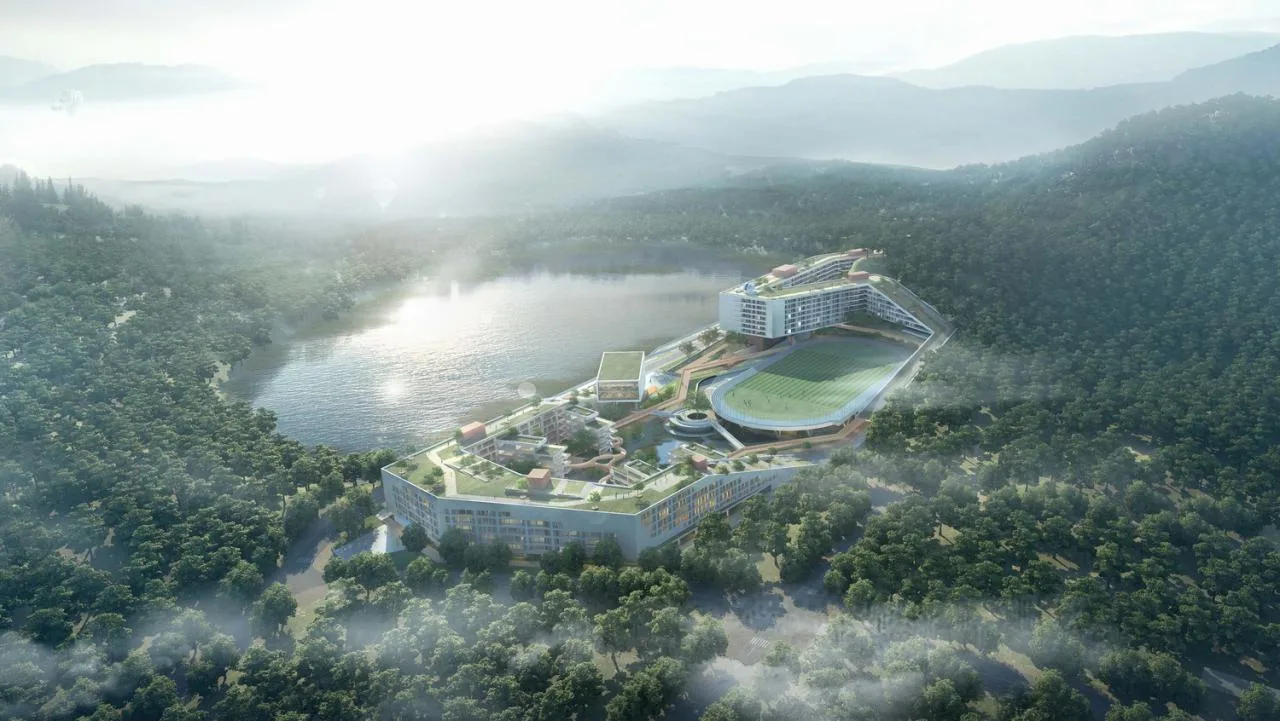
The site benefits from abundant natural resources and scenic beauty, with a favorable geographic location. The existing terrain shows notable elevation differences, with a maximum height variation of 38.62 meters. The landscape slopes from northwest (highest point at 66.21 meters) down to southeast (lowest point at 29 meters), forming three distinct plateaus at approximately 66.21m, 38m, and 29m elevations.
Hidden Garden by the Pond
A Campus Hidden Within Mountains and Forests
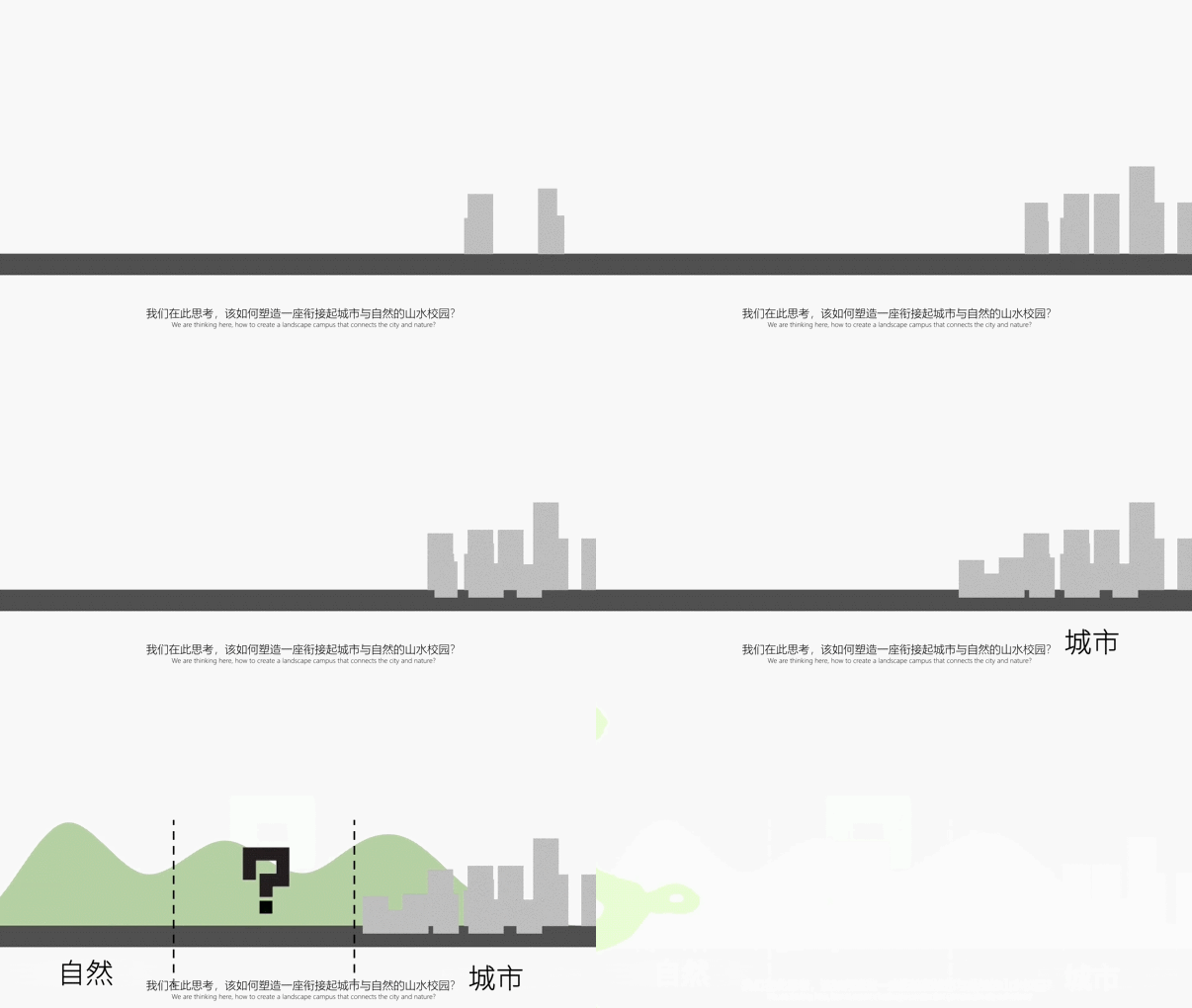
This site borders the urgently needed Xinqiao East urban renewal area and sits adjacent to the volcanic suburban park surrounded by abundant natural resources and the Lianfa Stone Field pond ruins. Positioned at the intersection of urban and natural environments, it acts as a seamless transition from city to nature.
Our design approach focuses on creating a landscape campus that harmoniously connects the urban context with the natural surroundings. By adapting to the terrain and following the natural mountain contours, we extend the greenery into the building blocks, crafting a multi-level green landscape that integrates the campus with both the city and the mountains—effectively making the “building disappear.”
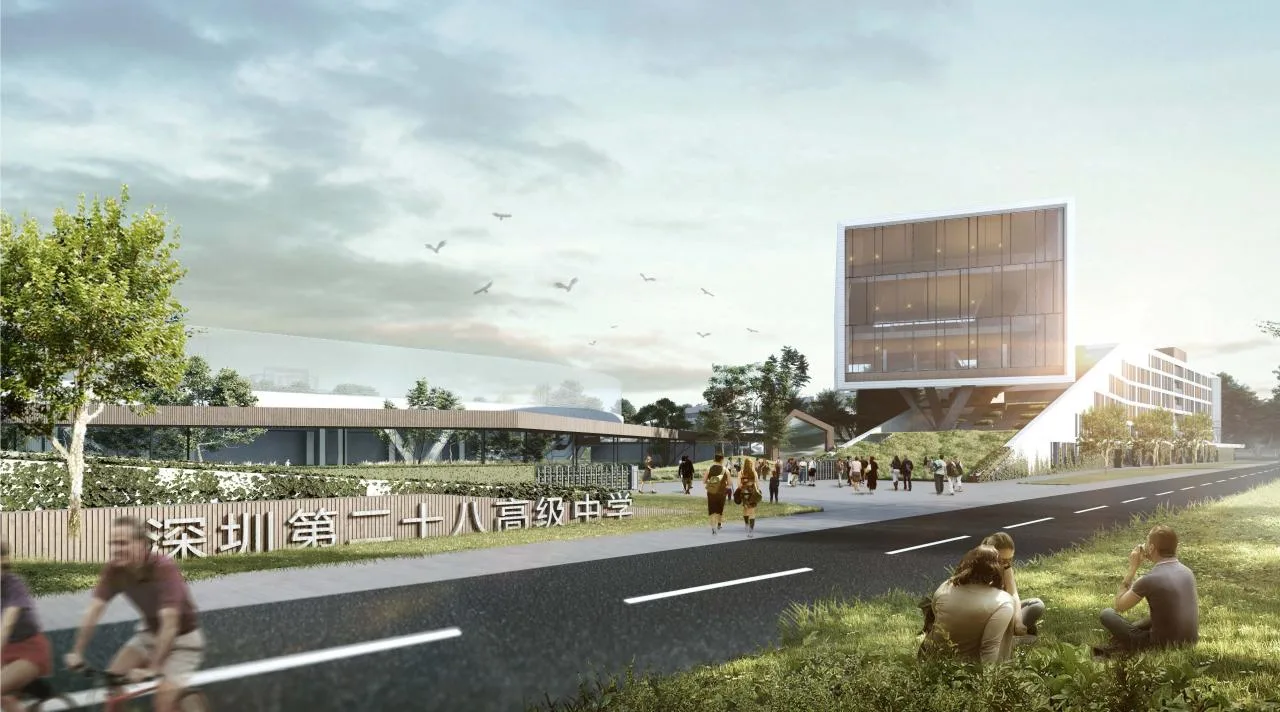
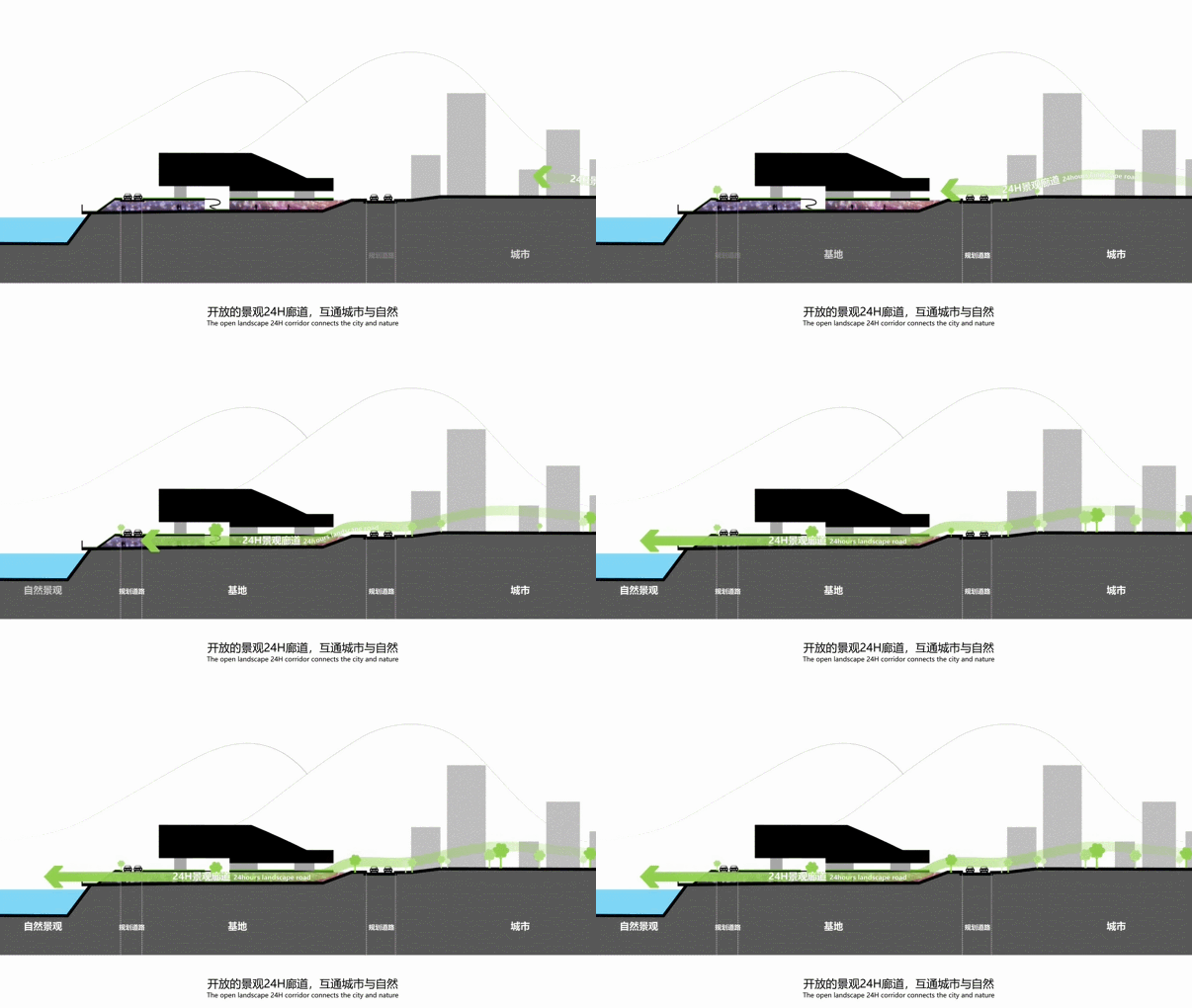
We introduced a 24-hour underground open corridor at the heart of the site to facilitate public underground passage and independent management. This design removes barriers caused by the narrow plot, seamlessly linking the city with nature.
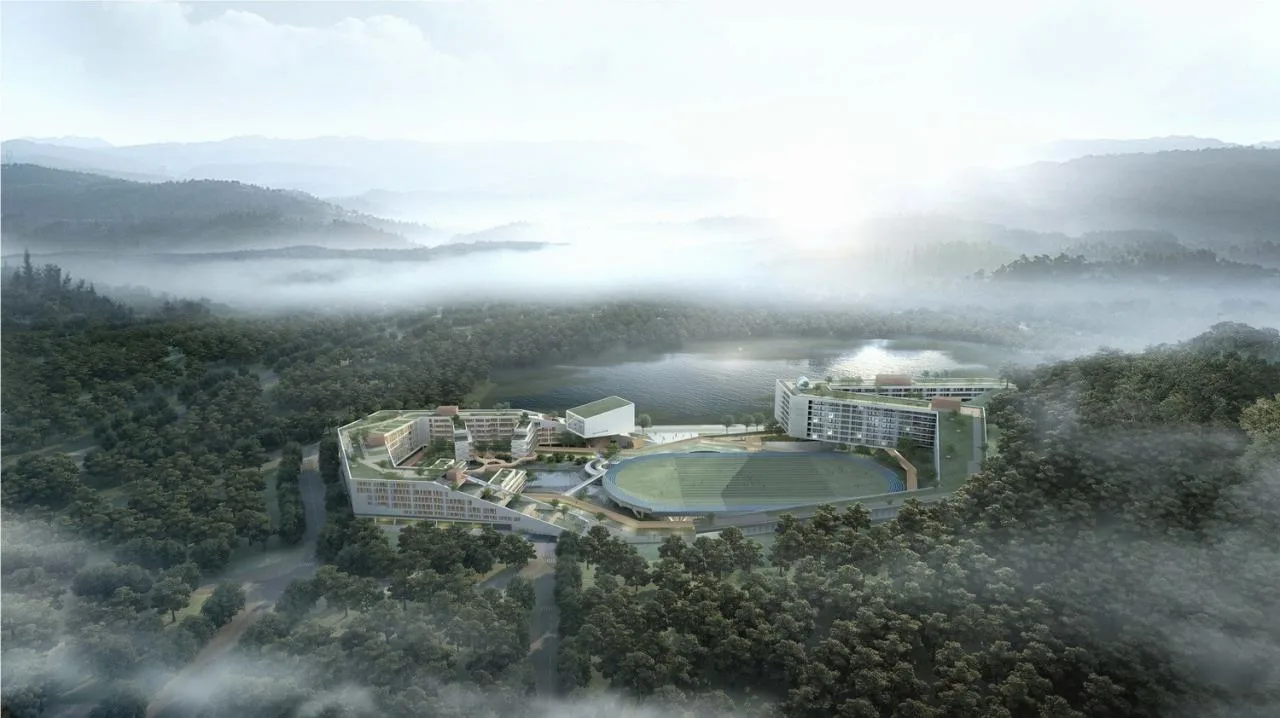
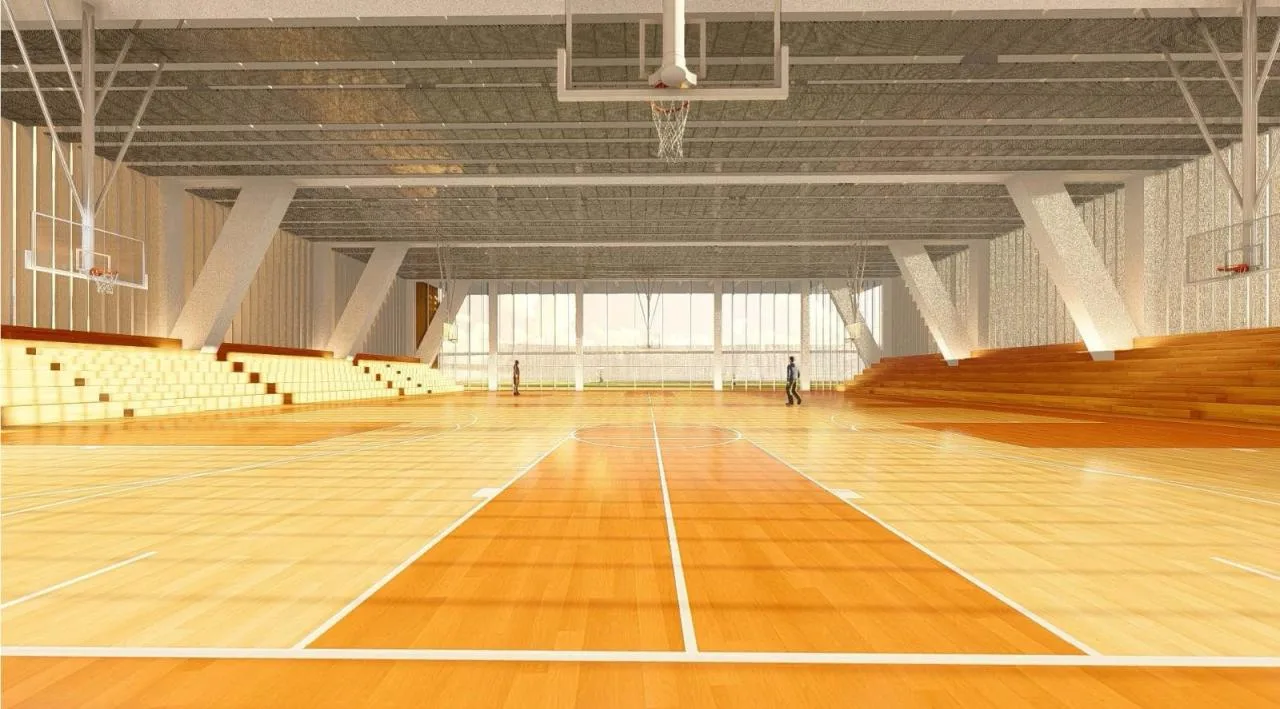
Given the site’s adjacency to a high-voltage corridor on the west side, we positioned the sports facilities there, naturally dividing the campus into two separate zones. Teaching and residential areas are arranged according to the three terraces on the site, with building volumes flanking both sides of the playground, retreating inward to form an urban landscape axis. The buildings encircle the mountain, emphasizing the natural relationship between mountain and water, responding gently to the site’s unique conditions.
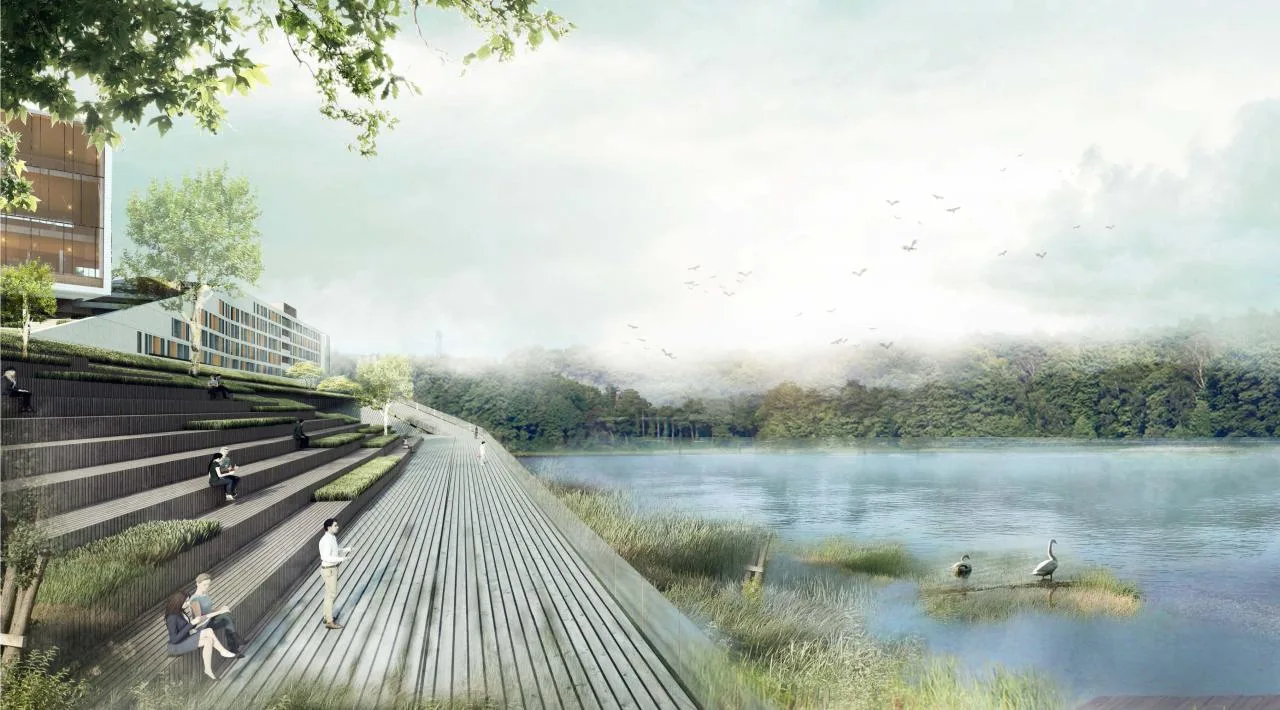
We envisioned the campus as an extension of both city and nature, “disappearing” into the mountains and sky. To continue the mountain network, we integrated green landscapes into the campus along the north-south axis. Inspired by Lingnan garden elements, we crafted a cultural and green landscape adjacent to winding corridors and scenic gardens.
Various recreational spaces are placed within the campus courtyards, connected by a covered sports corridor that provides shelter from wind and rain. An art gallery is included to foster campus culture. This spatial complexity encourages fun and exploration, redefining the learning environment for students.
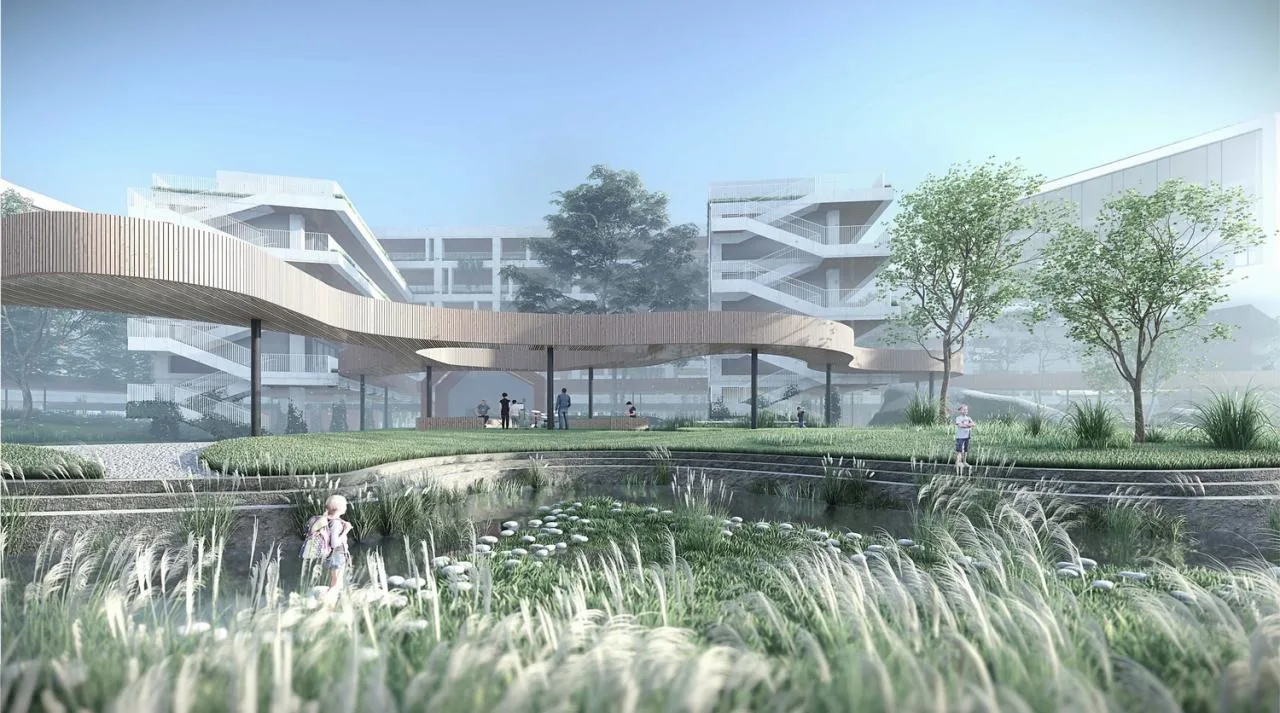
Creating a Natural, Open, and Harmonious Environment
Shanshui Campus
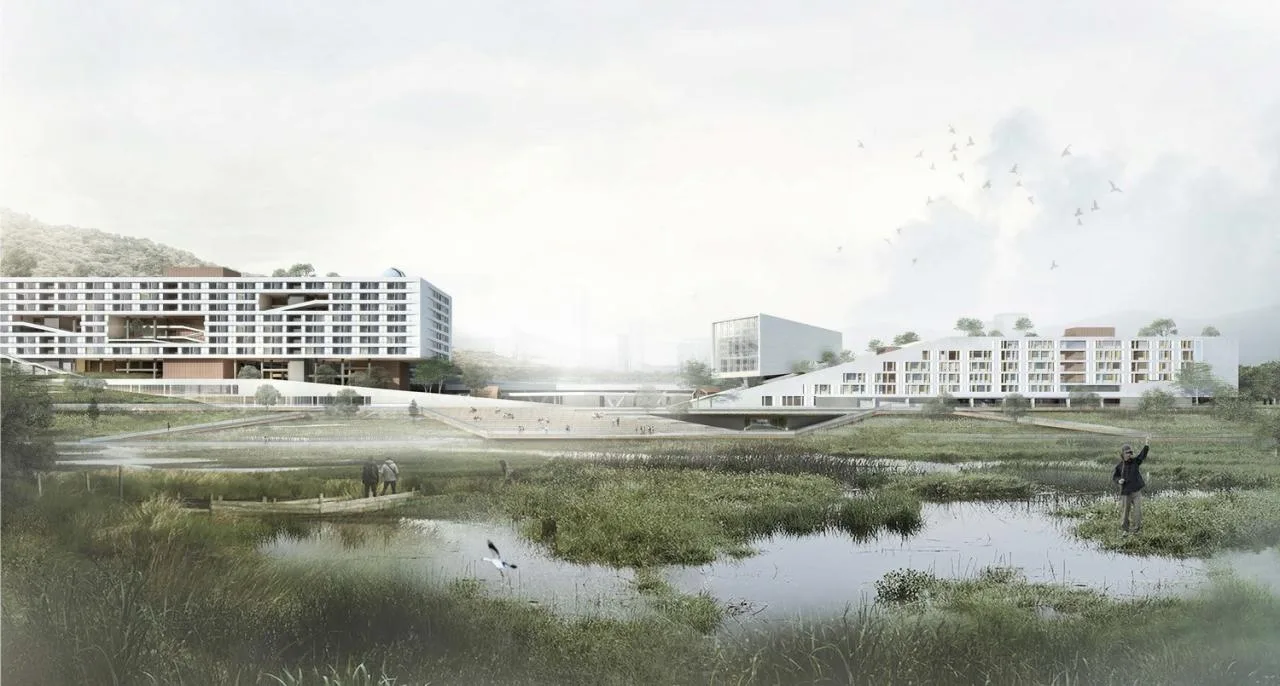
Our goal was to design a natural, scientifically exploratory campus. By studying Lingnan gardens and arranging winding road networks, we created a “Lingnan courtyard” at the atrium. This courtyard surrounds a wetland area where students are encouraged to learn directly from nature. The scenic courtyard also provides artistic inspiration, serving as a space where students can sketch, paint, and perform.
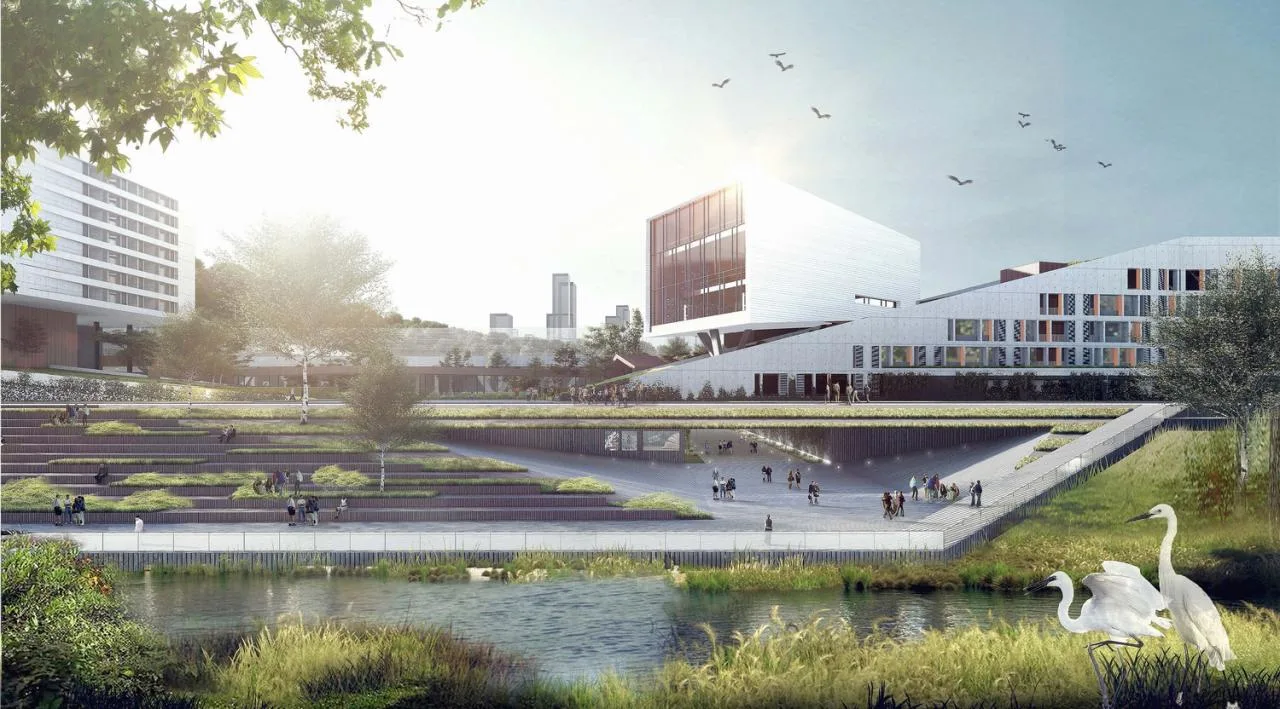
A two-story covered sports corridor bridge connects the campus’s various functional zones, including an efficient two-level bicycle lane overlapping with the sheltered pedestrian corridor. This “double corridors” concept promotes a city-friendly shared space, allowing students and teachers to enjoy leisurely park-like walks.
We designed a three-story community library by the lake, offering panoramic 365-degree views of the lakeside landscape. This library provides a romantic reading environment open to the public through a time-sharing management system, where visitors can enjoy books while taking in the lake and mountain scenery.
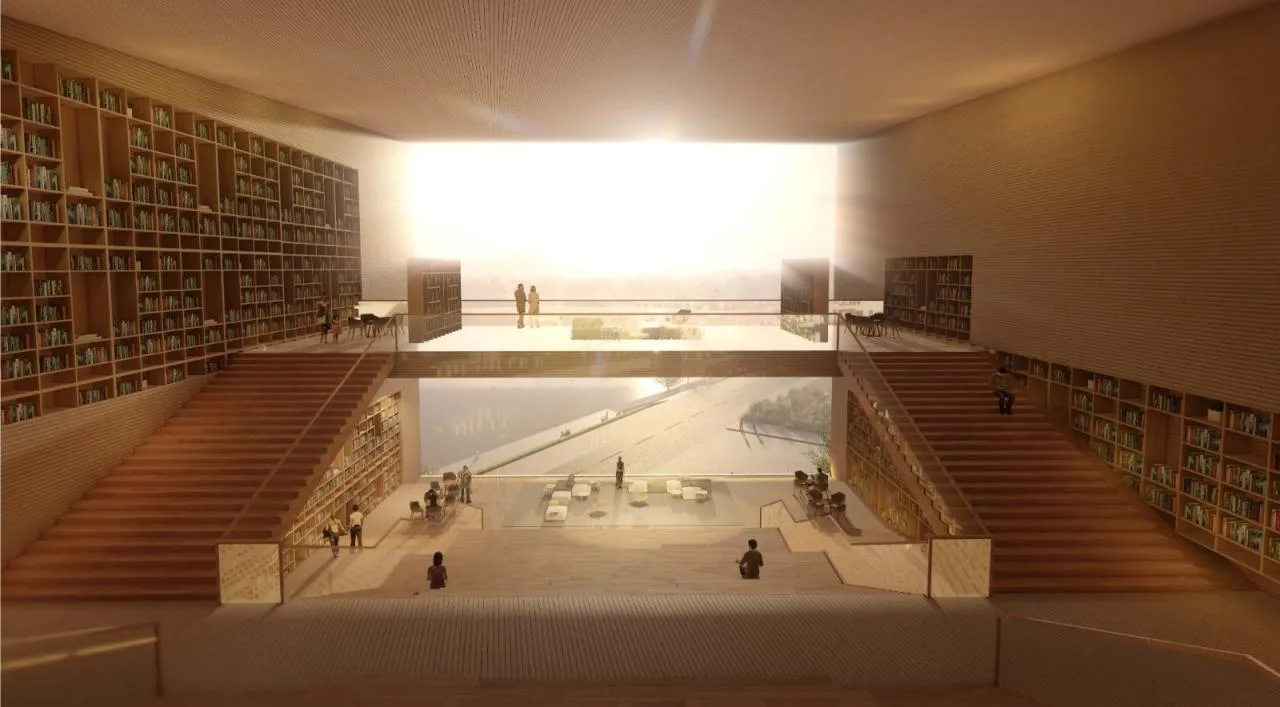
A 24-hour public passageway links the city directly with the campus, featuring an underground elevated layer that allows pedestrians to move through the school and reach the city observation deck. This design embodies a senior high school that grows in harmony with the surrounding mountains and rivers, responding to the urban context and cultural heritage.
It offers a place where people can share the natural beauty of the pond and mountains, experiencing a living environment fully integrated with nature.
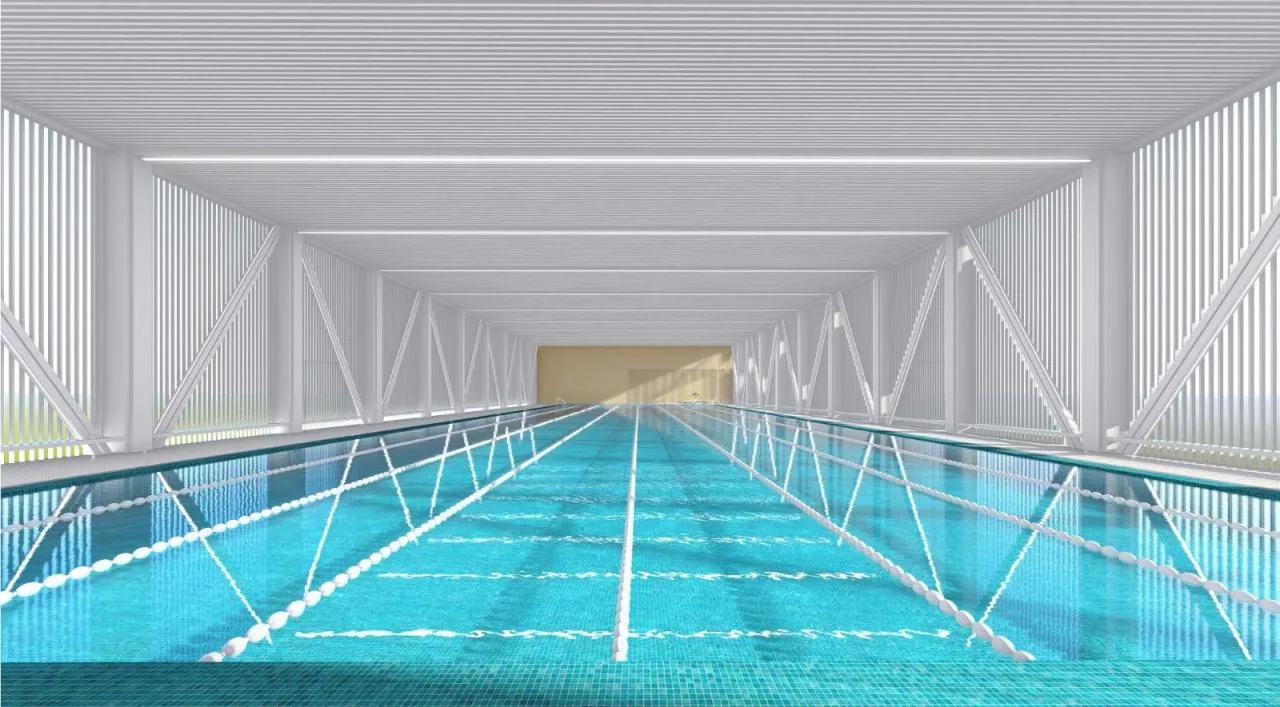
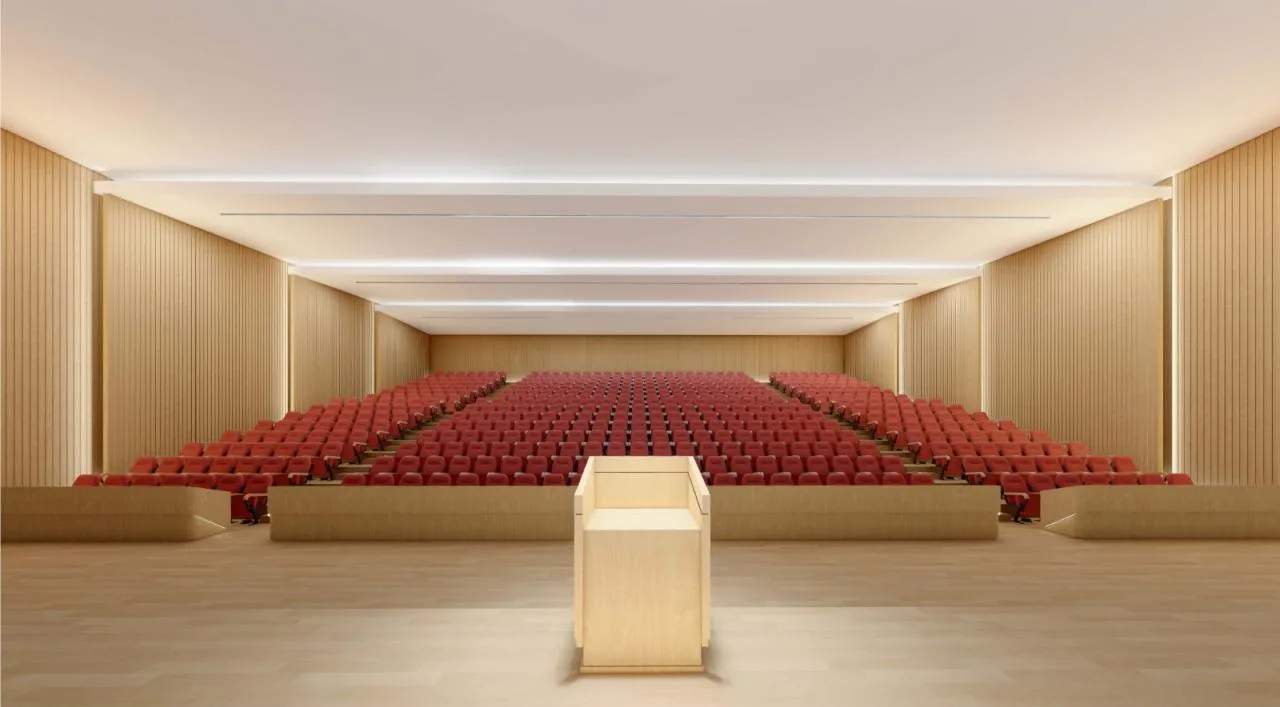
Project Drawings
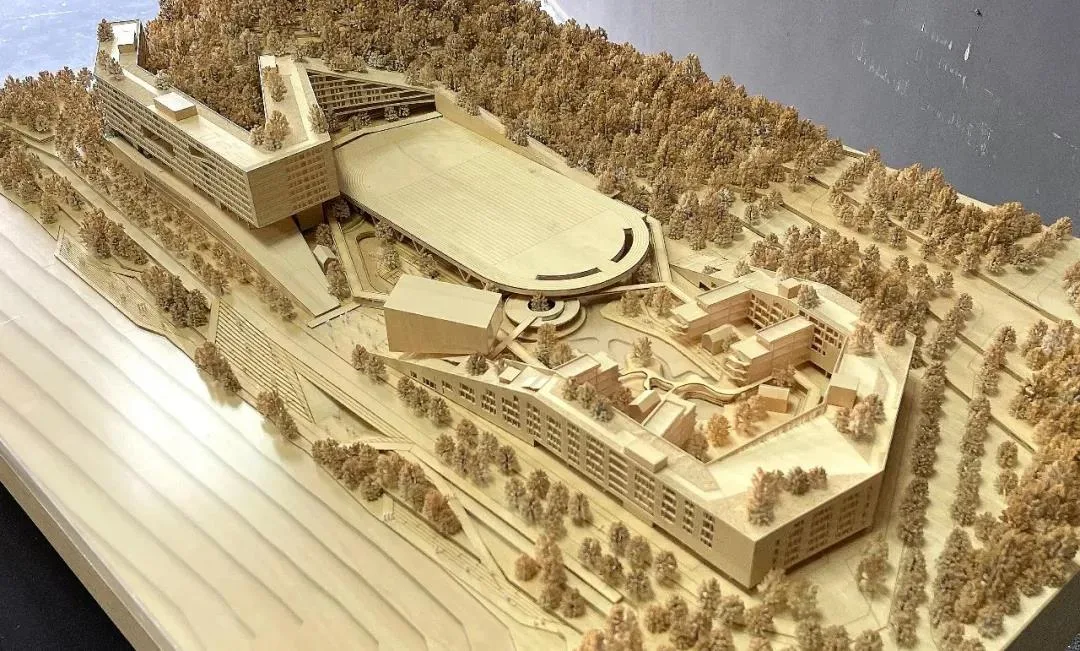
△ Architectural Model
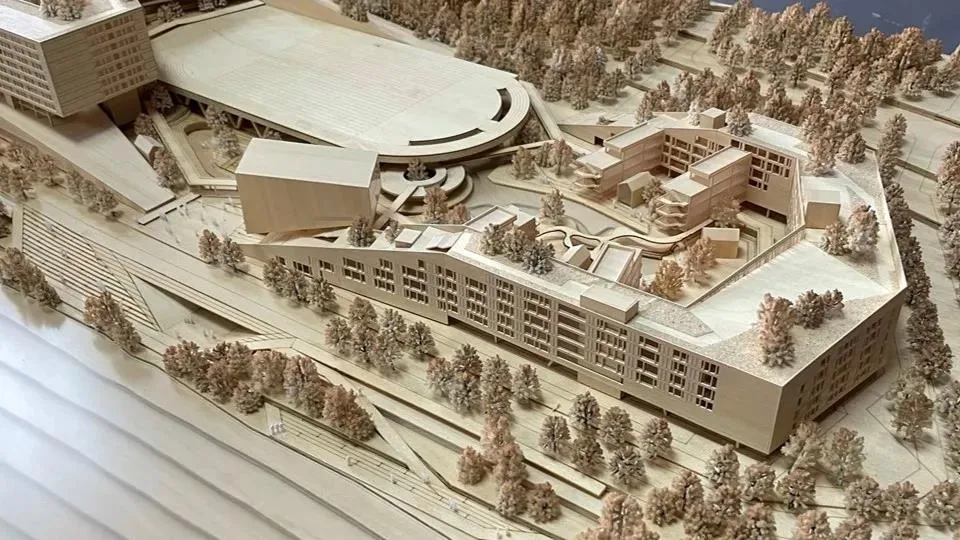
△ Architectural Model
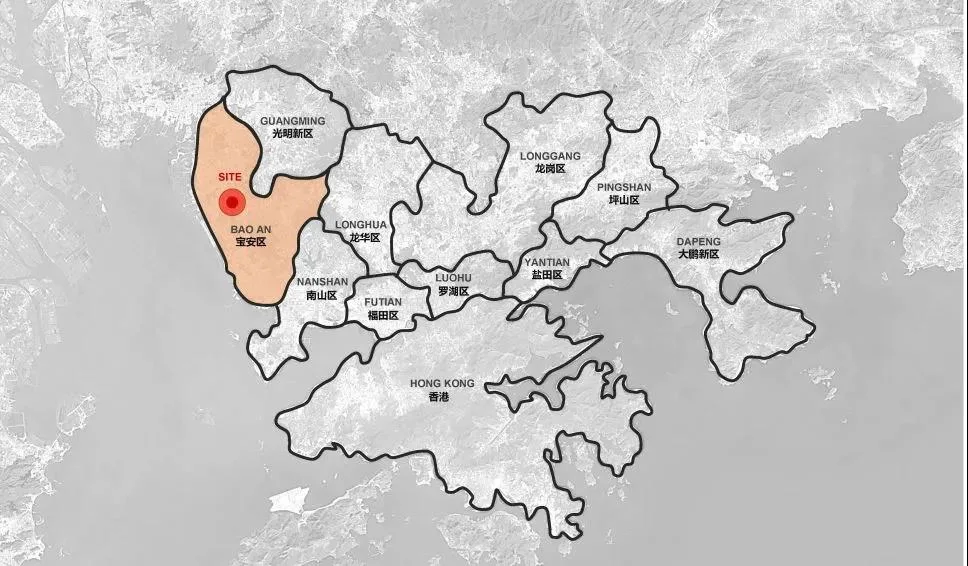
△ Base Diagram
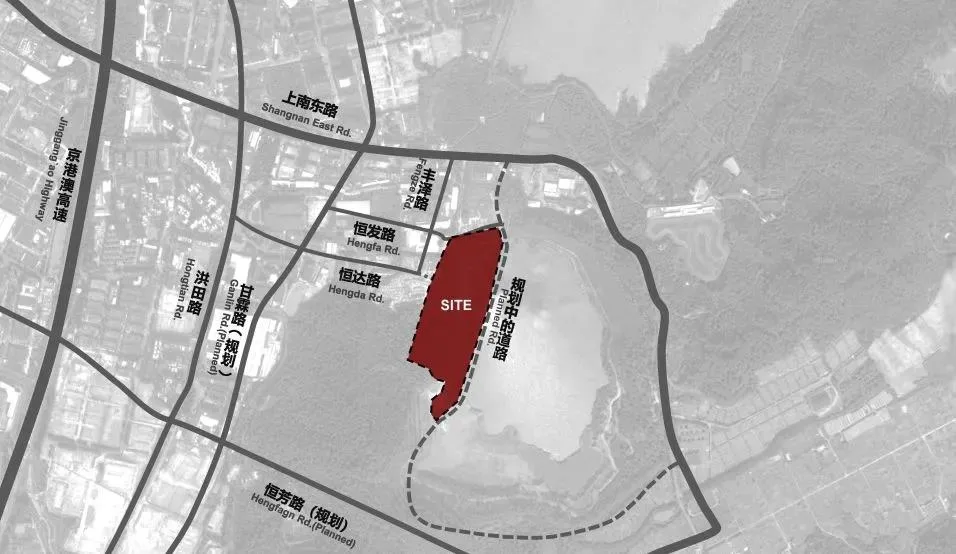
△ Location Analysis
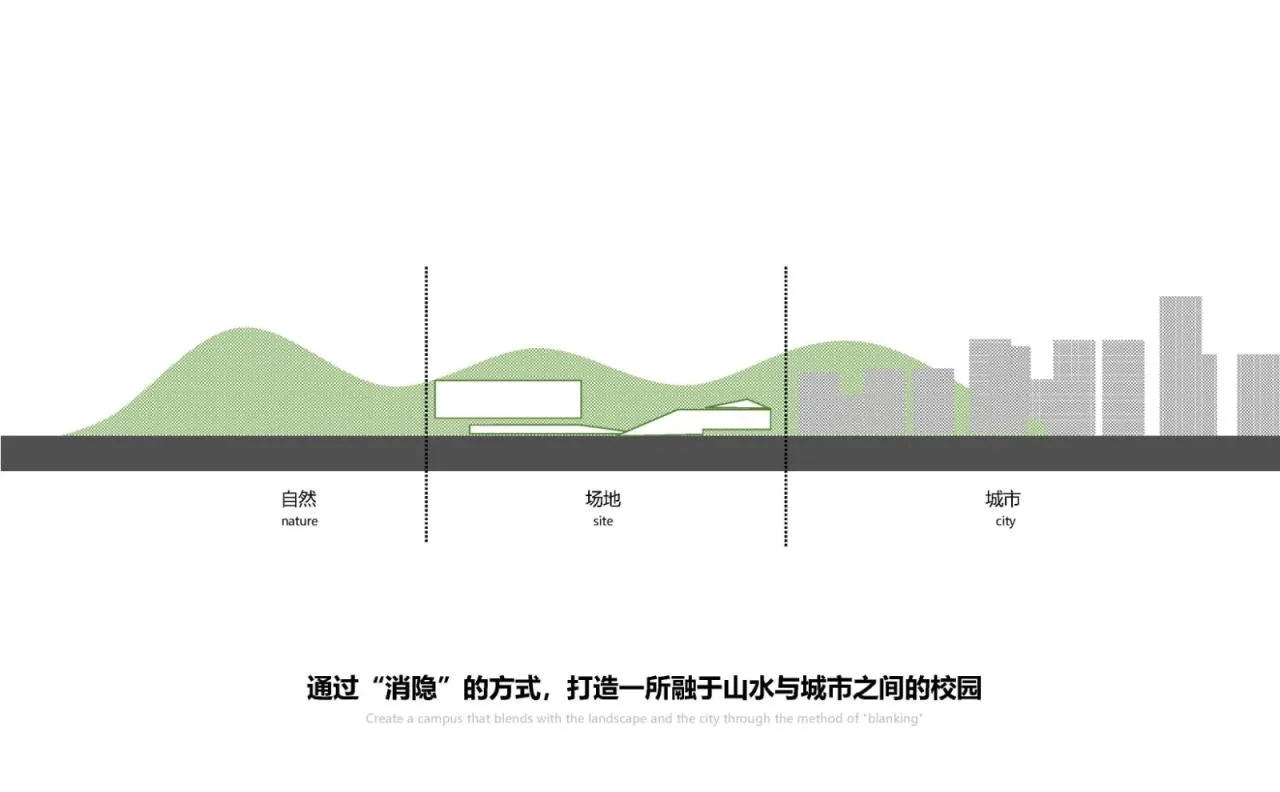
△ Analysis Chart
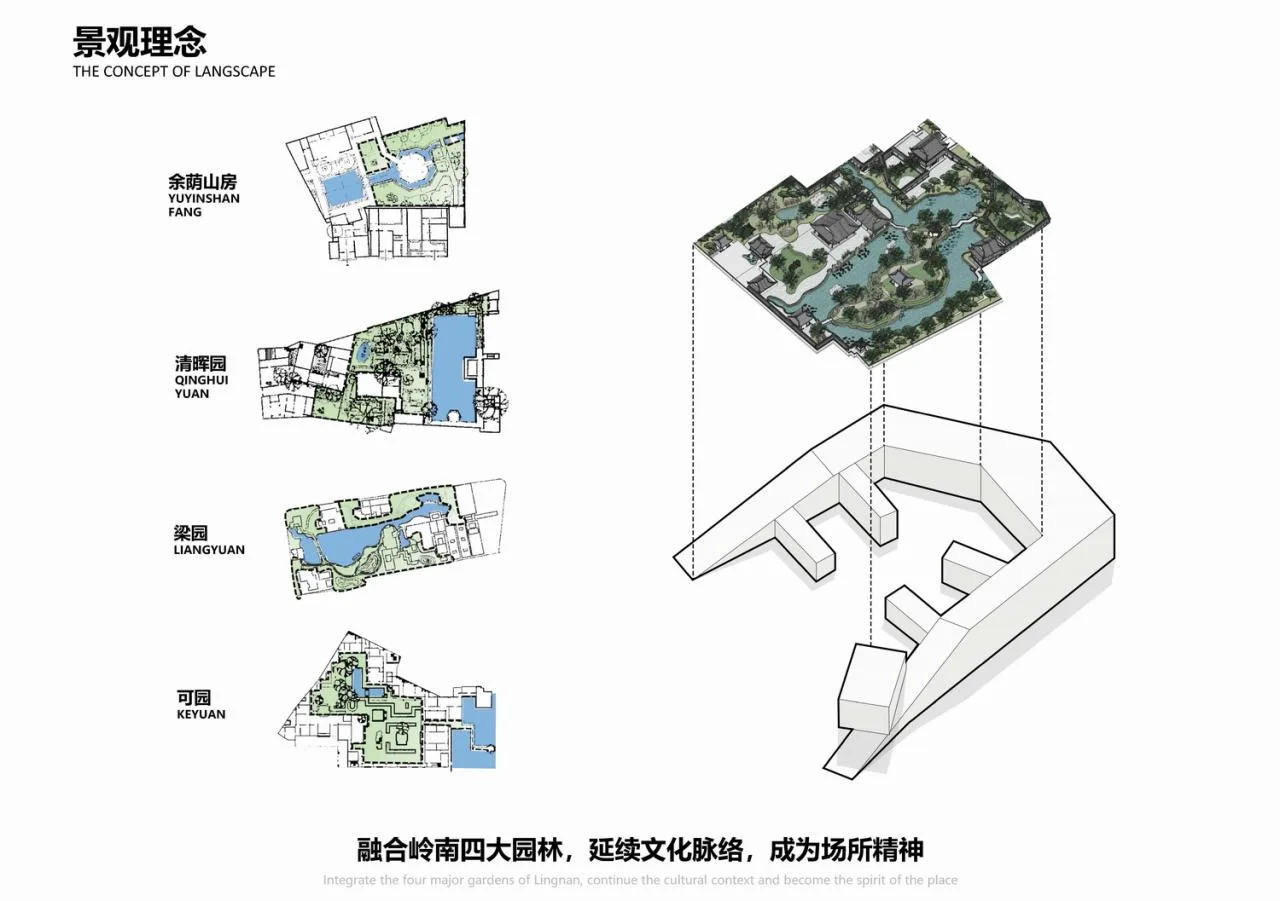
△ Landscape Concept
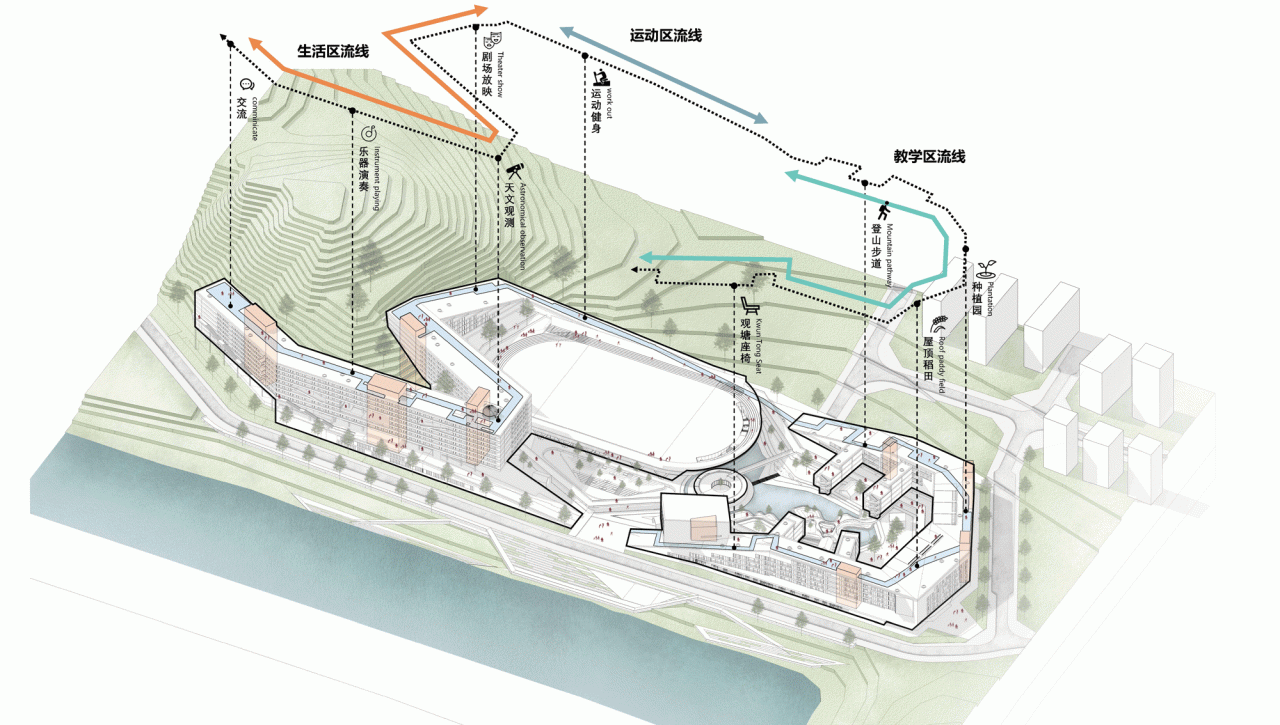
△ Streamline Analysis
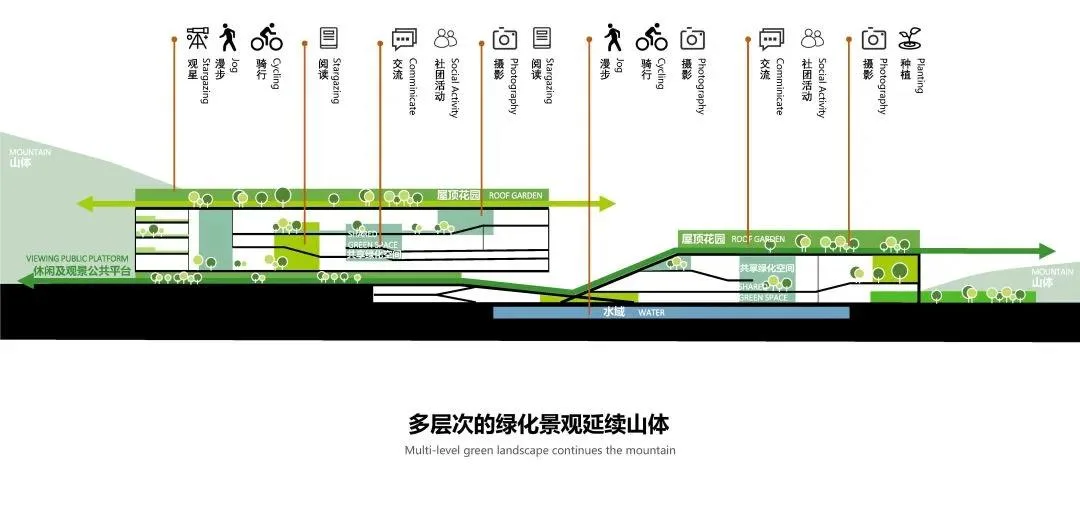
△ Analysis Chart
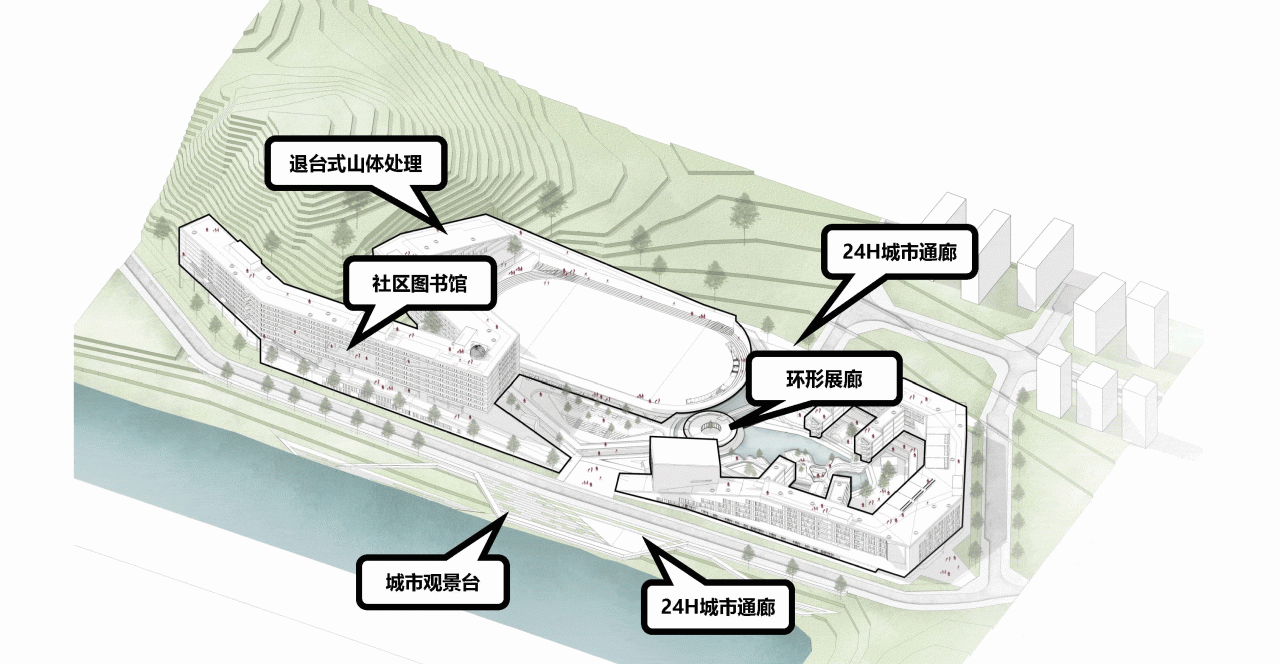
△ Analysis Chart
Project Information
Project Name: New Construction Project of Shenzhen No.28 Senior High School
Location: Xinqiao Street, Bao’an District, Shenzhen, Guangdong Province
Design Firms: Shenzhen Yijing Architectural Design Co., Ltd. & China Construction Technology Group Co., Ltd.
Lead Architect: He Mincong
Design Team: Xiao Lijun, Xie Yi, Chen Riming, Liu Yu, Shi Huaxi, Zhao Wenbin, Chen Zewei, Sun Mingyang, Zeng Qingqing, Xu Chuhan, Su Tingting
Article Author: One Environment Architectural Design
Owner: Bao’an District Construction and Engineering Bureau, Shenzhen
Construction Status: Bid-winning candidate proposal
Design Period: 2021
Land Area: 69,563.92 m²
Building Area: 130,000 m²
















Must log in before commenting!
Sign Up