
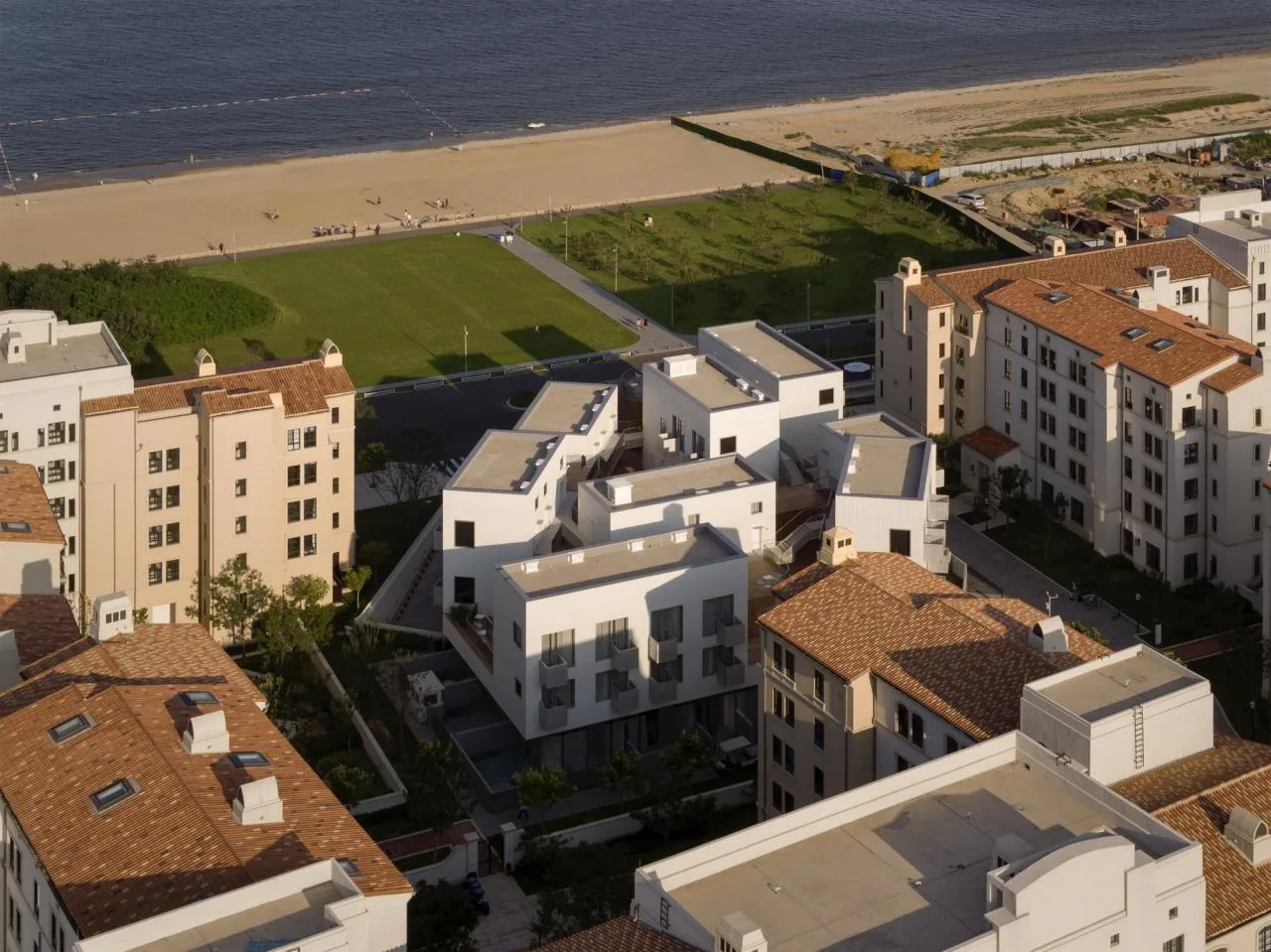
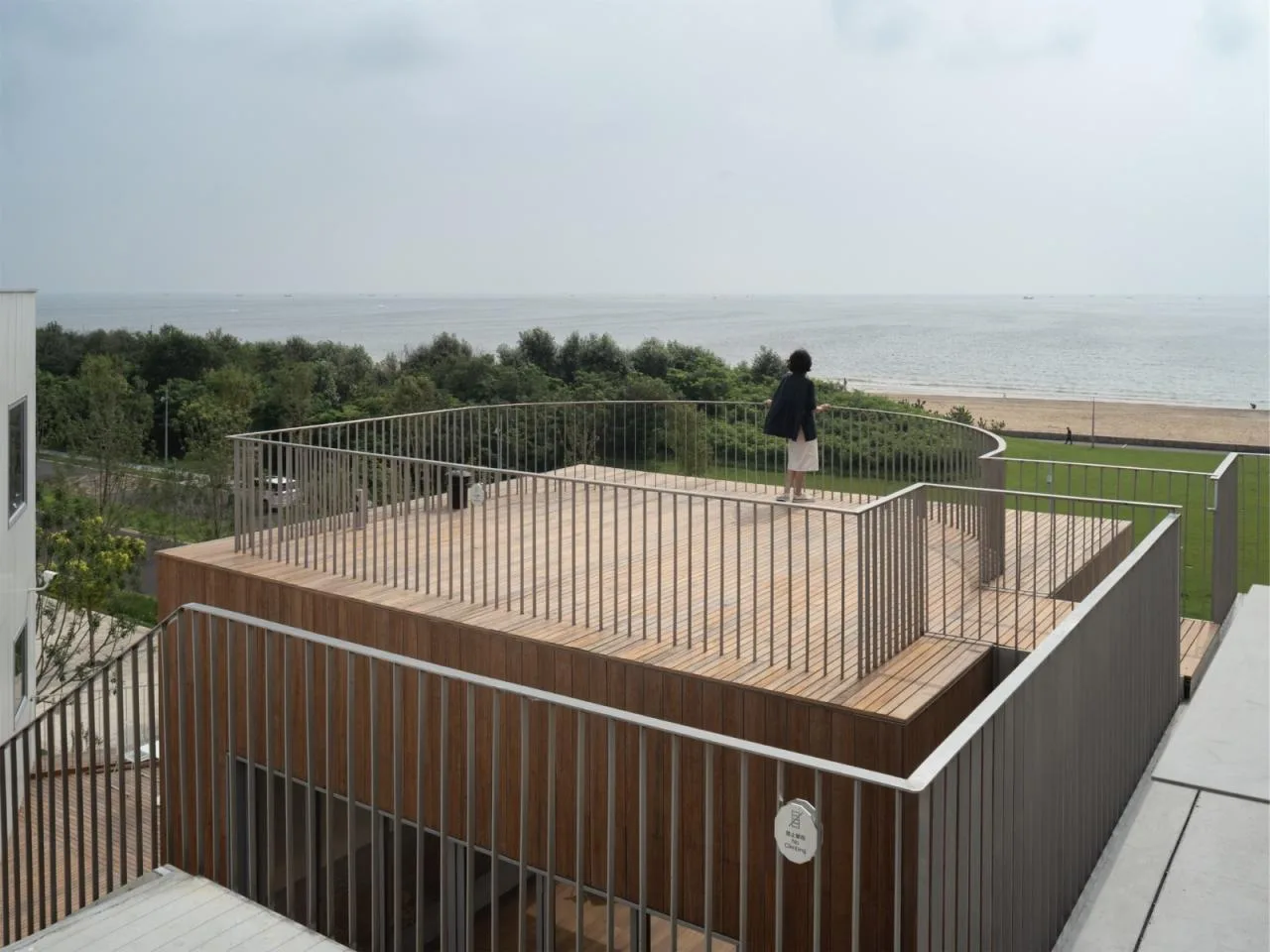
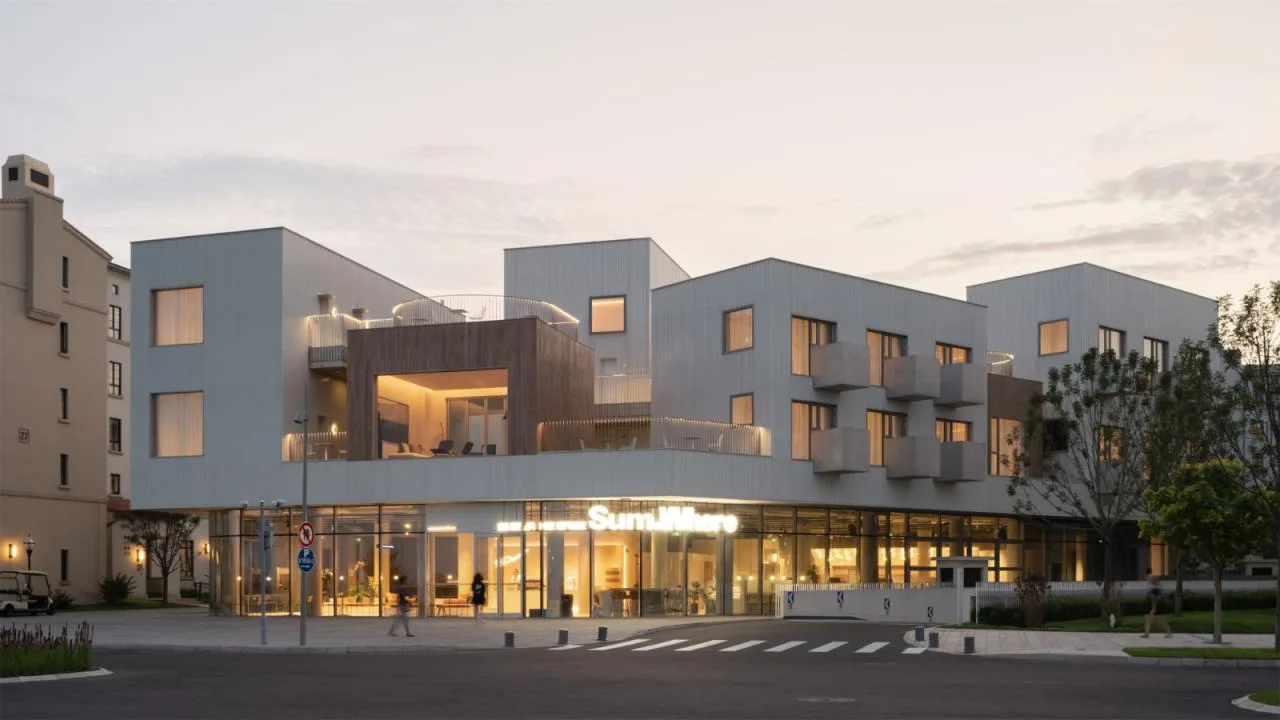
Project Overview: Located in the cultural and creative district of Anaya Community, Qinhuangdao, the hotel enjoys a prime position on the southeast corner, overlooking the south bank of the Gold Coast. Shielded from the city’s hustle, it offers magnificent sea views. Surrounding the hotel on three sides are clusters of 5-6 story European-style residential buildings, which together create a hexagonal layout reminiscent of traditional European town squares in both scale and spatial form.
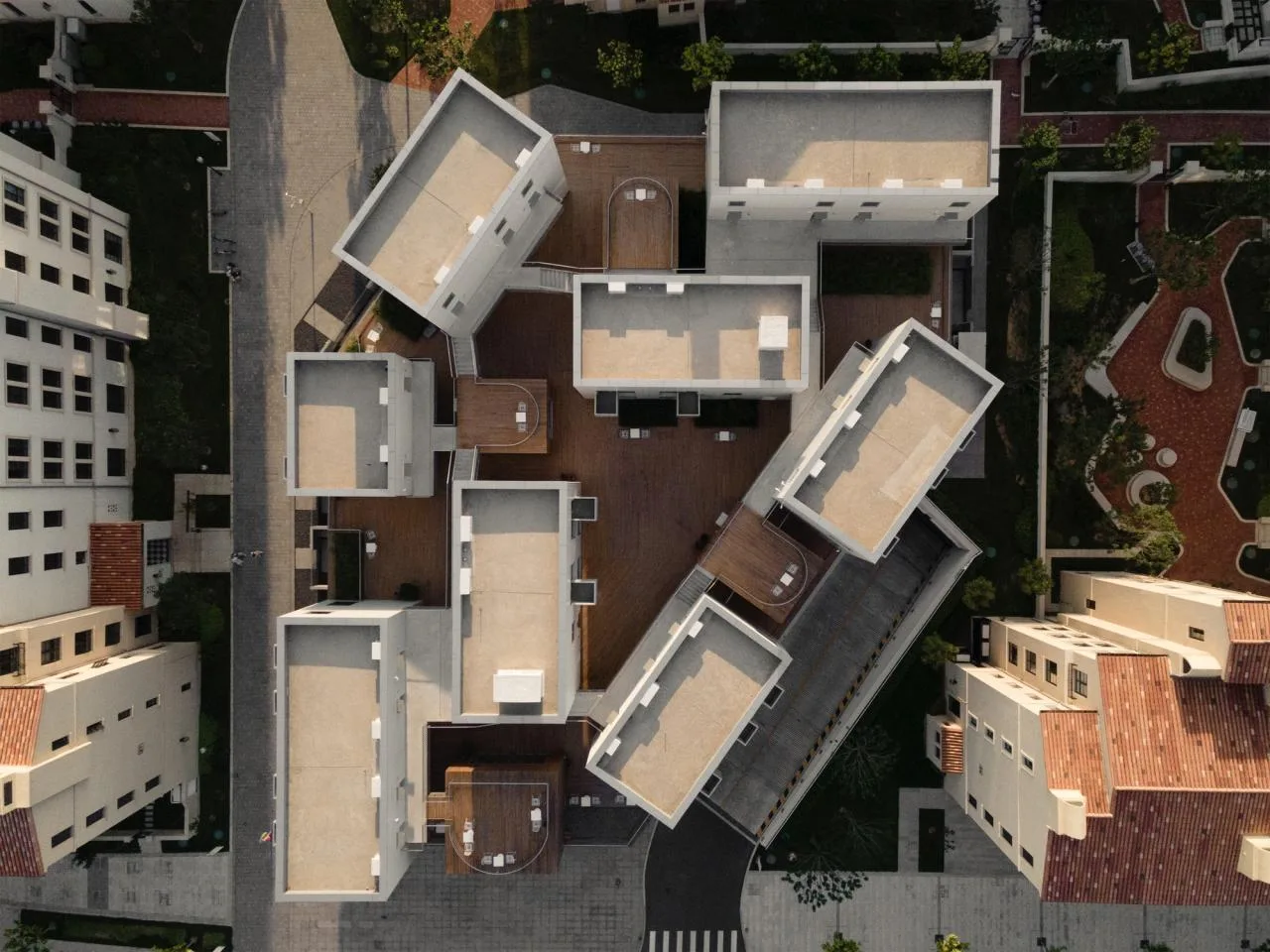
Faced with this unique setting, our design aims to redefine modern residential patterns. Observing contemporary society, we notice a shift towards individualism and miniaturized family units, as traditional family structures based on marriage or blood relations gradually dissolve. In an era where personal urban space shrinks and people grow weary of emphasizing their individual lifestyles, the significance of community rises. Furthermore, with the growth of the internet and virtual spaces, physical spaces have evolved from serving purely functional purposes to fulfilling spiritual and emotional needs.
The most valuable spaces now combine living, social, and cultural functions, offering a rich, immersive experience. Architecture thus must become a platform that fosters interaction and helps people rediscover emotional connections.
Traditional hotel designs prioritize privacy and independence within guest rooms, creating static and exclusive spaces. In contrast, our design embraces openness and community, encouraging dynamic interaction by providing ample public spaces beyond private rooms. The hotel becomes a shared, lively environment fostering social connections.
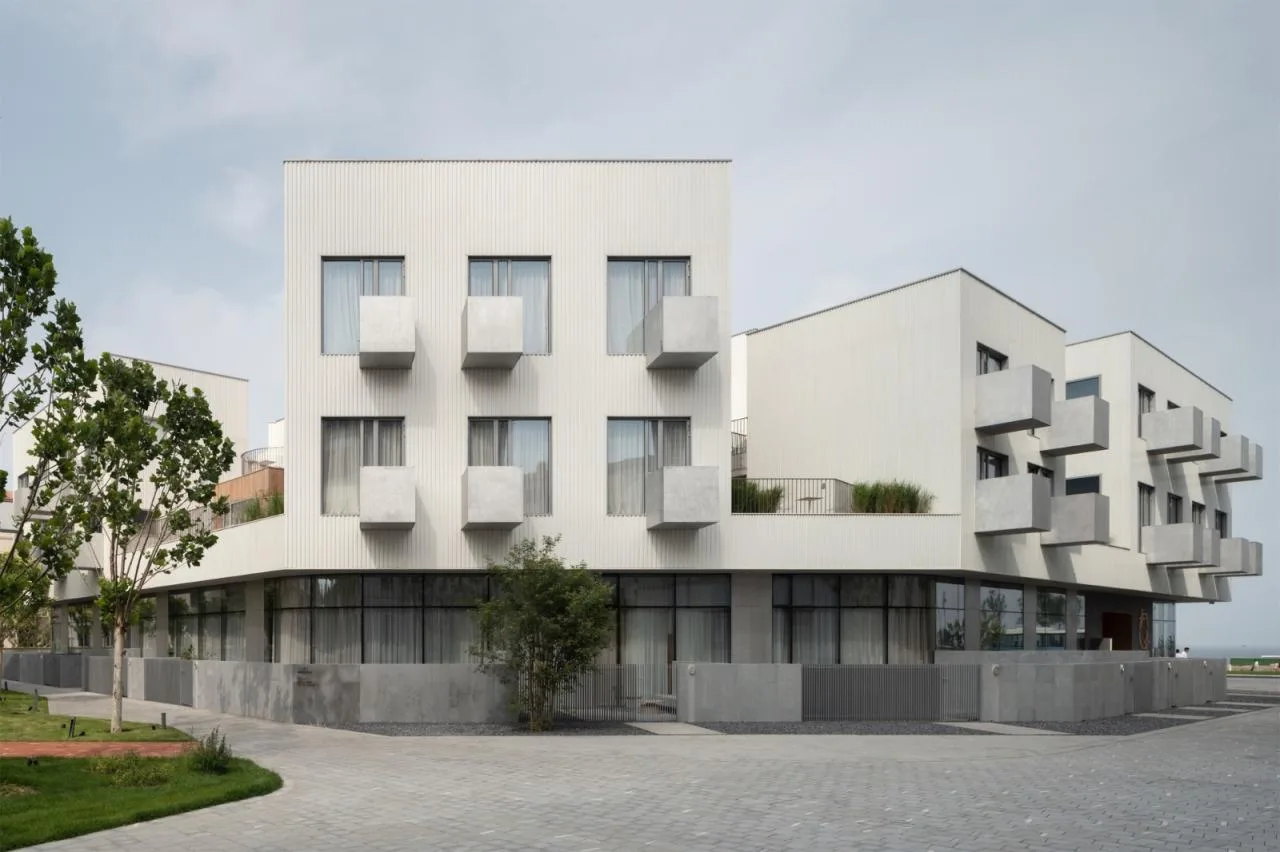
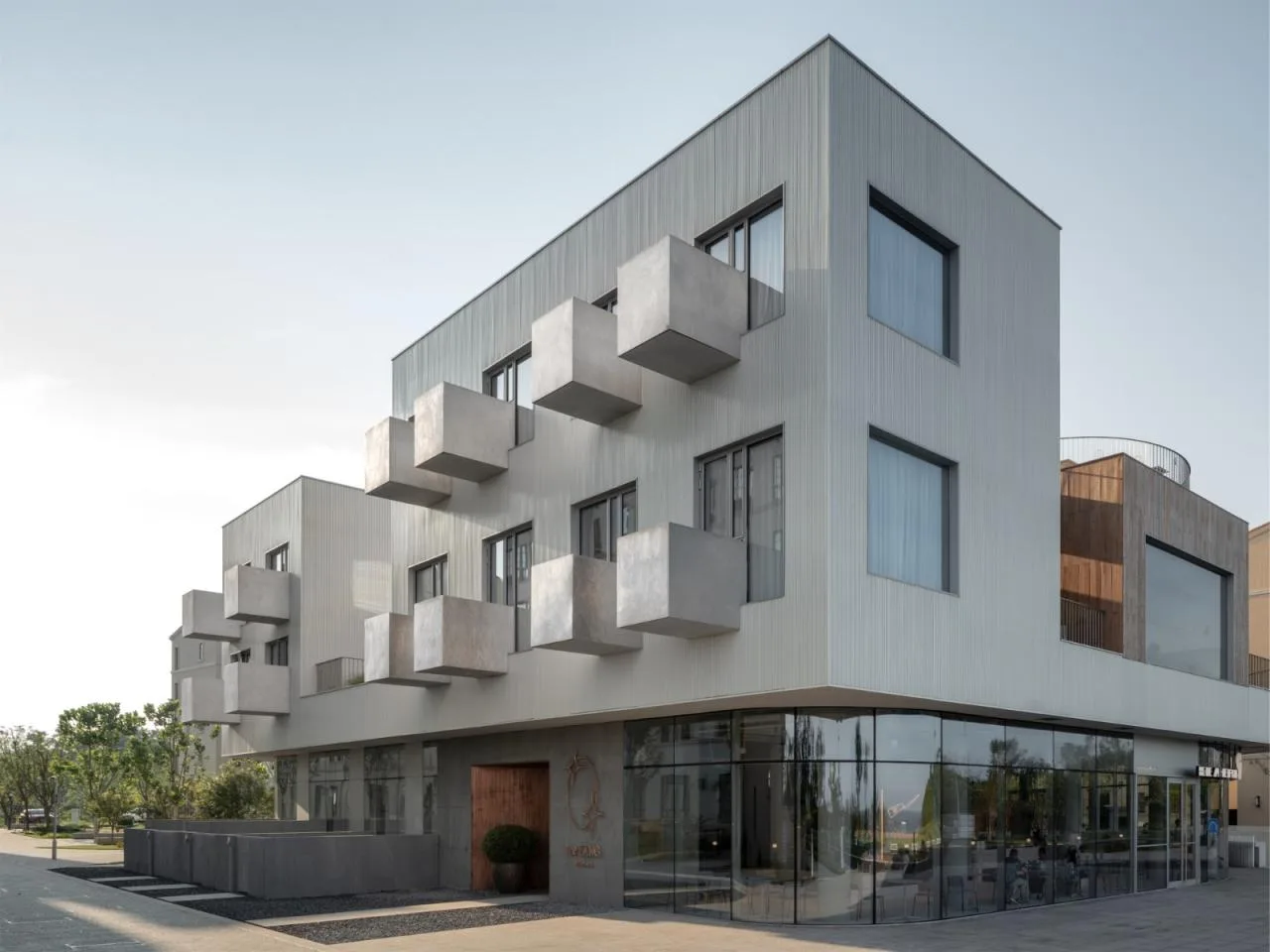
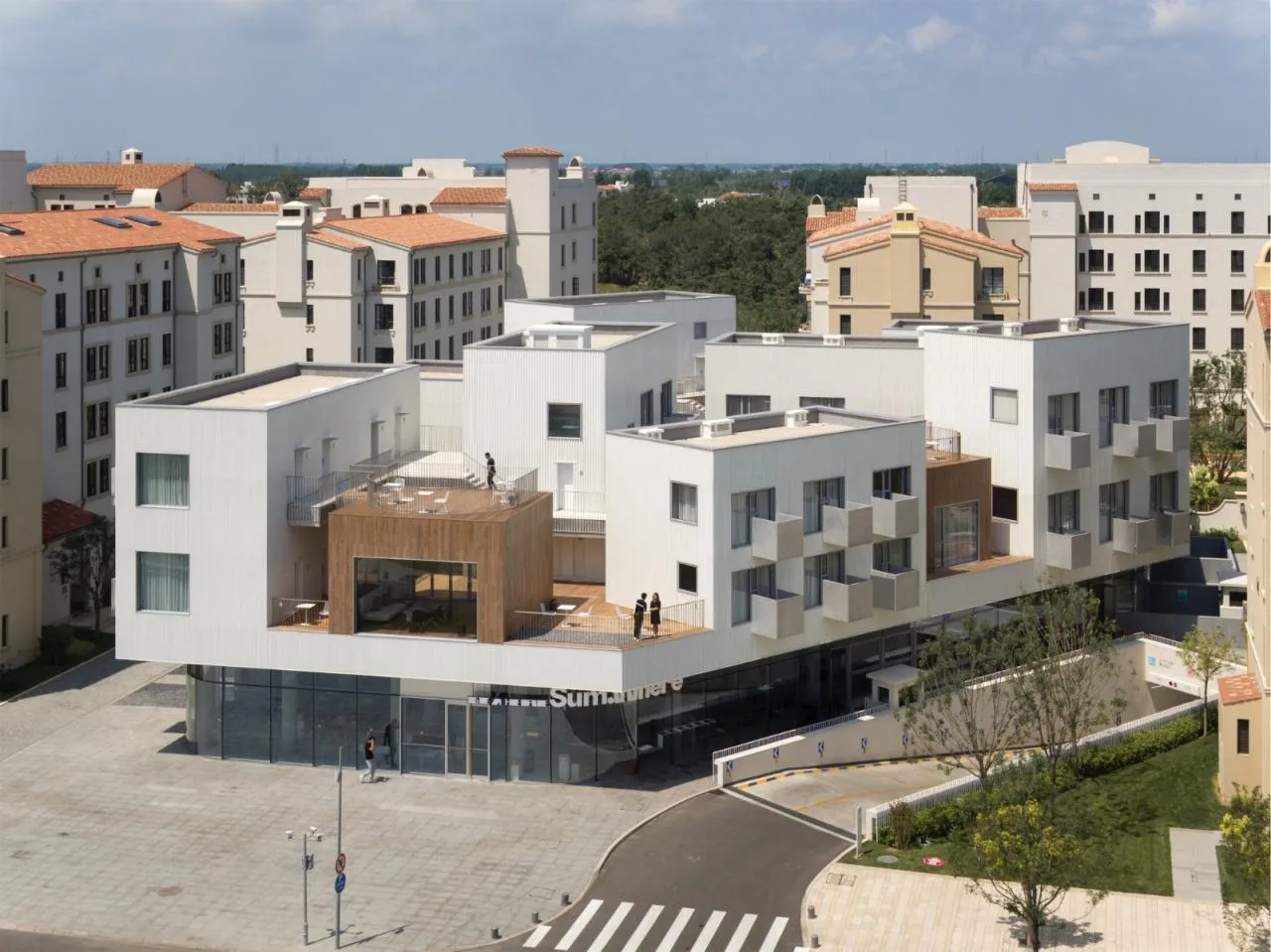
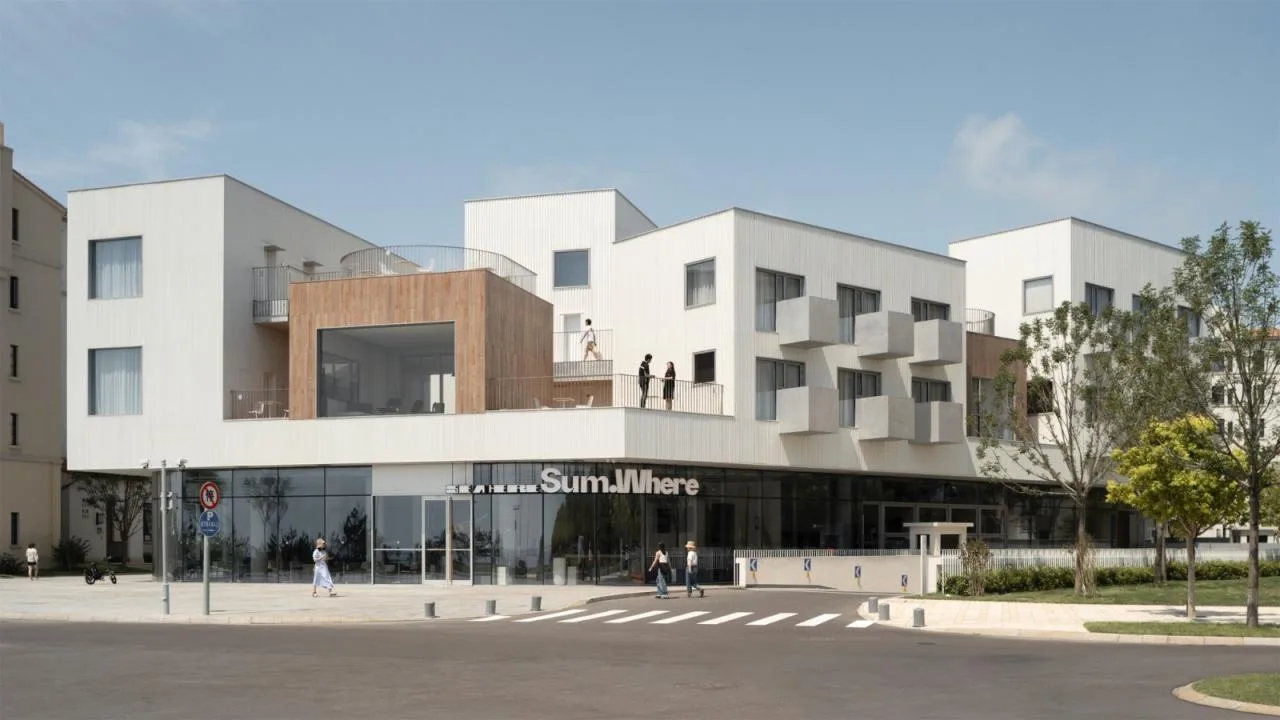
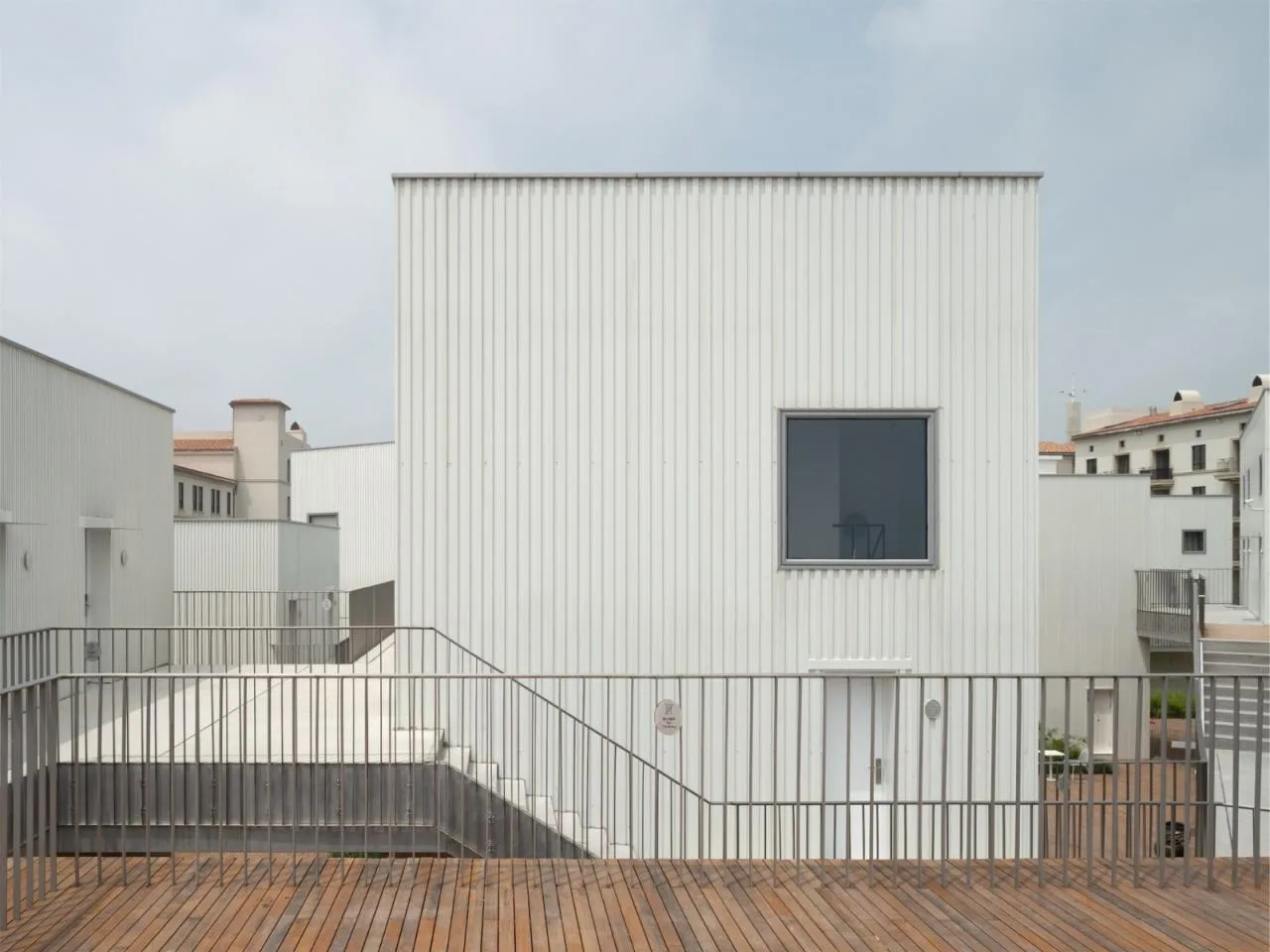
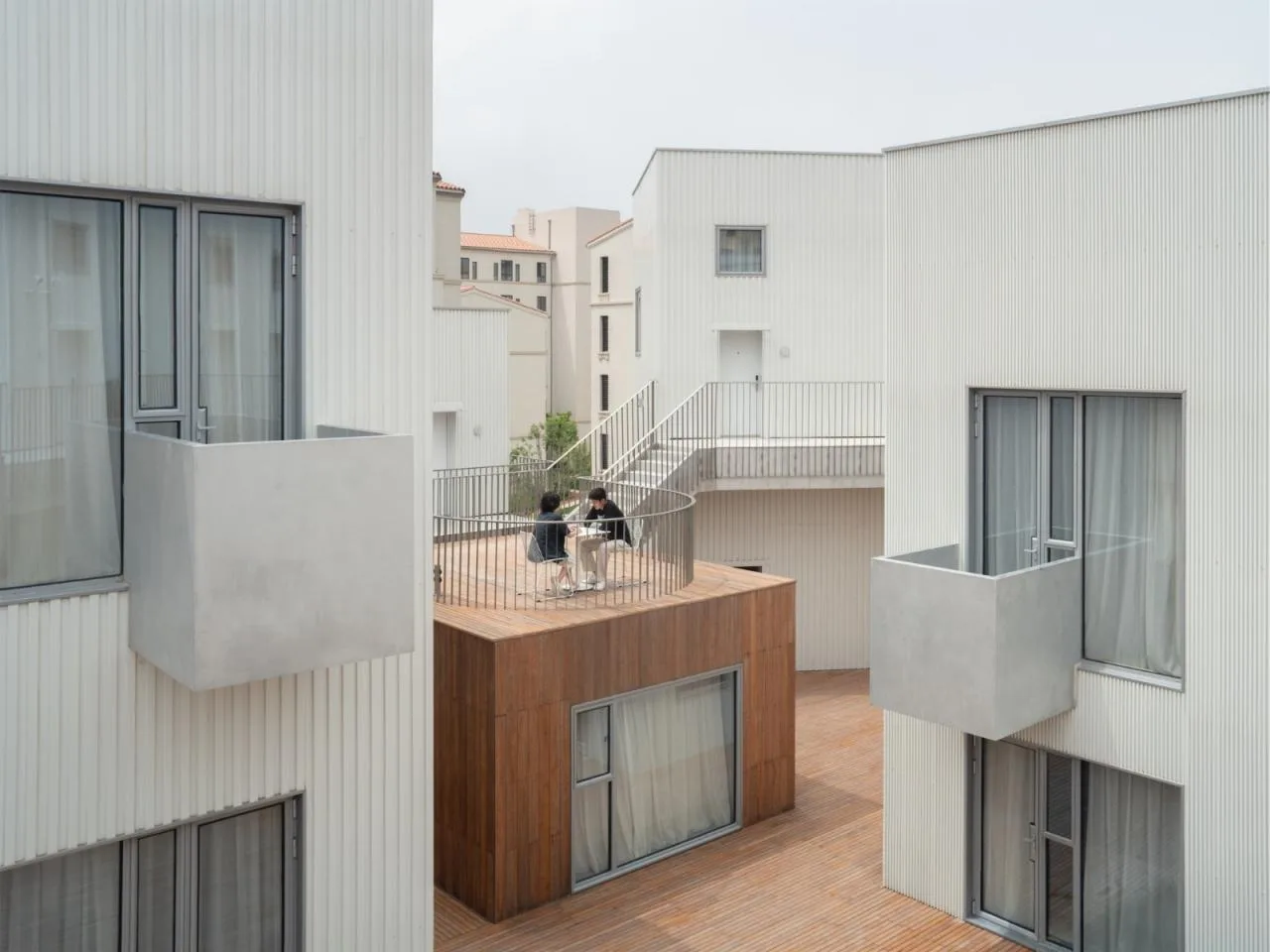
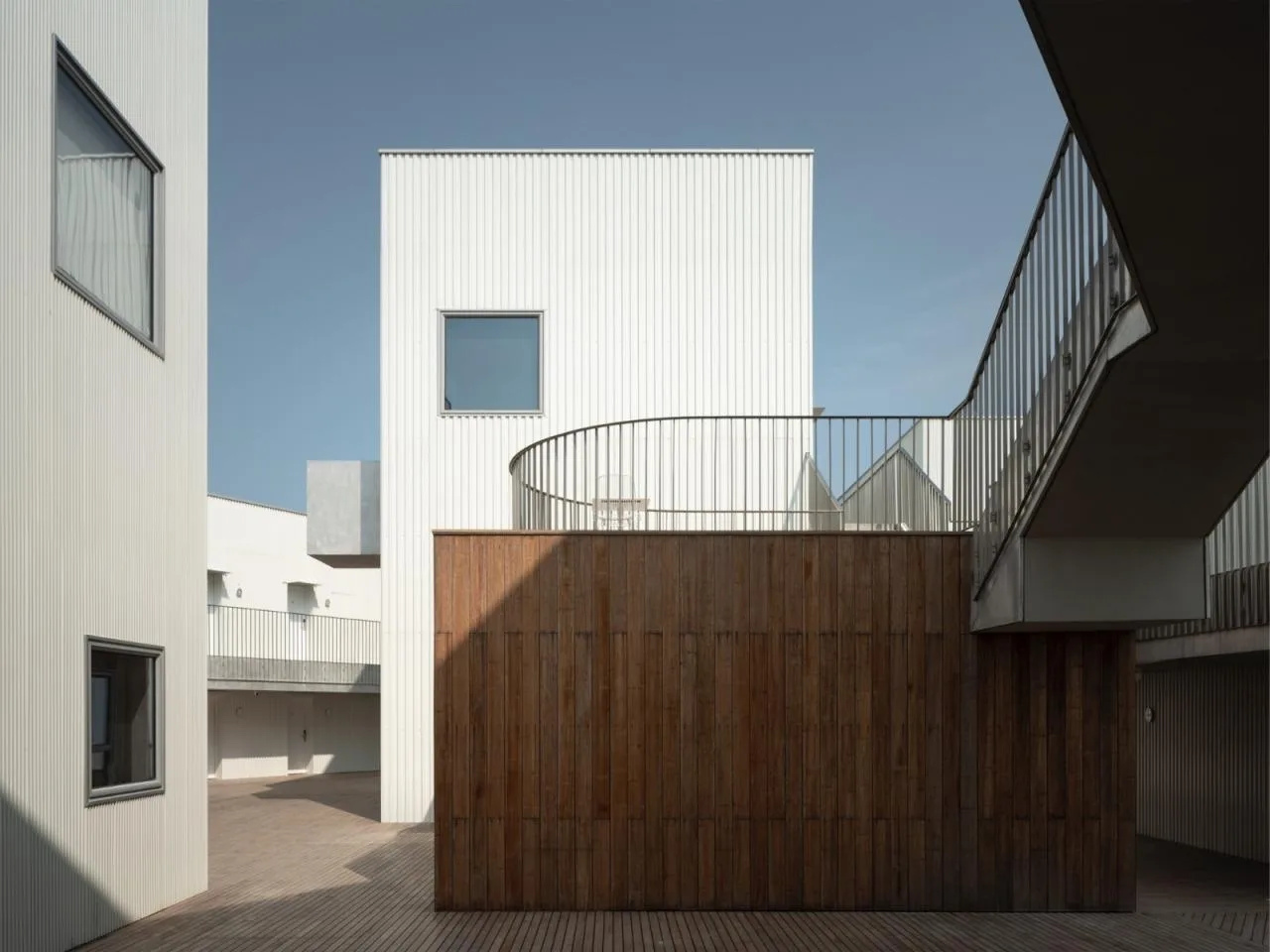
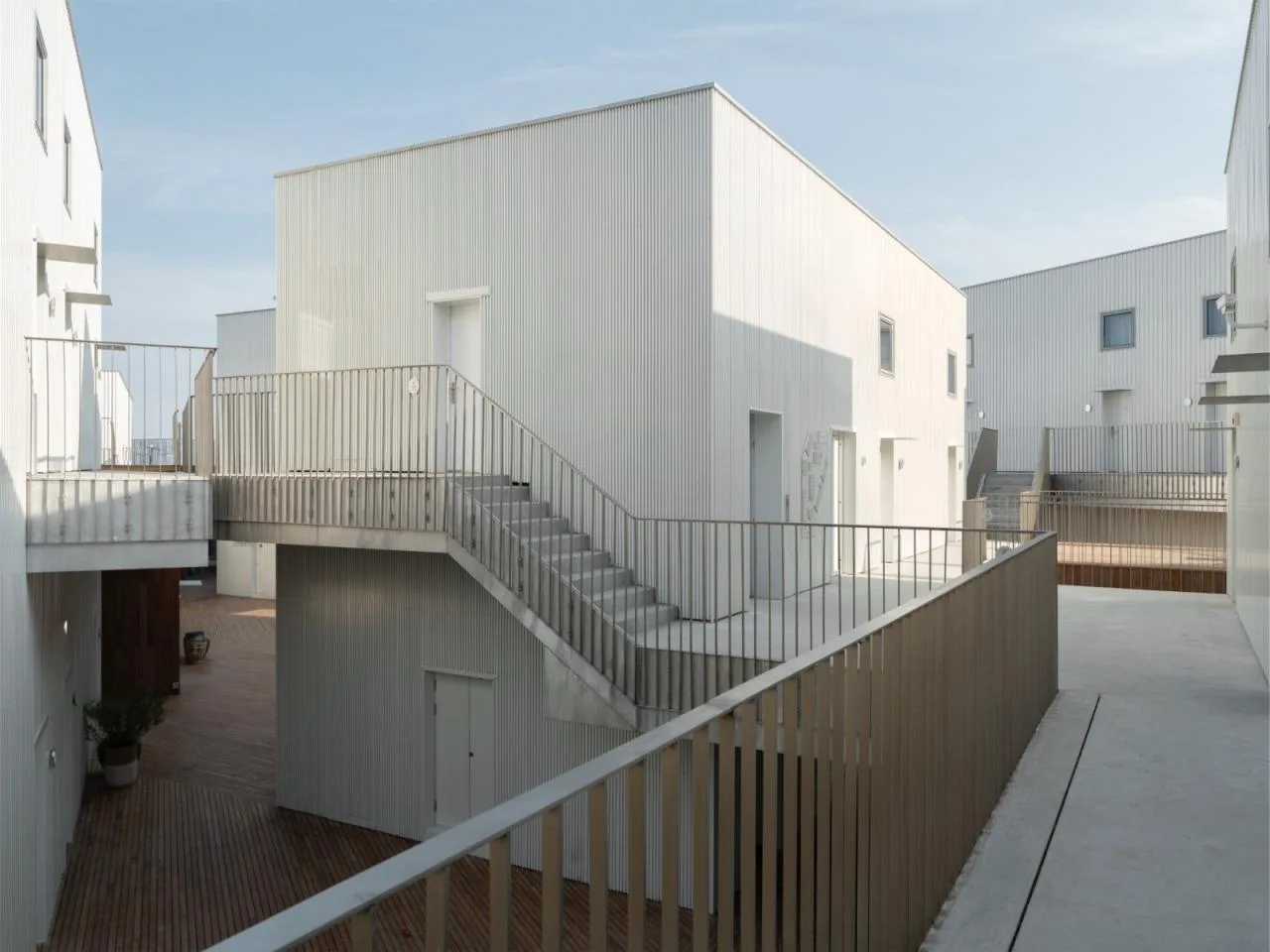
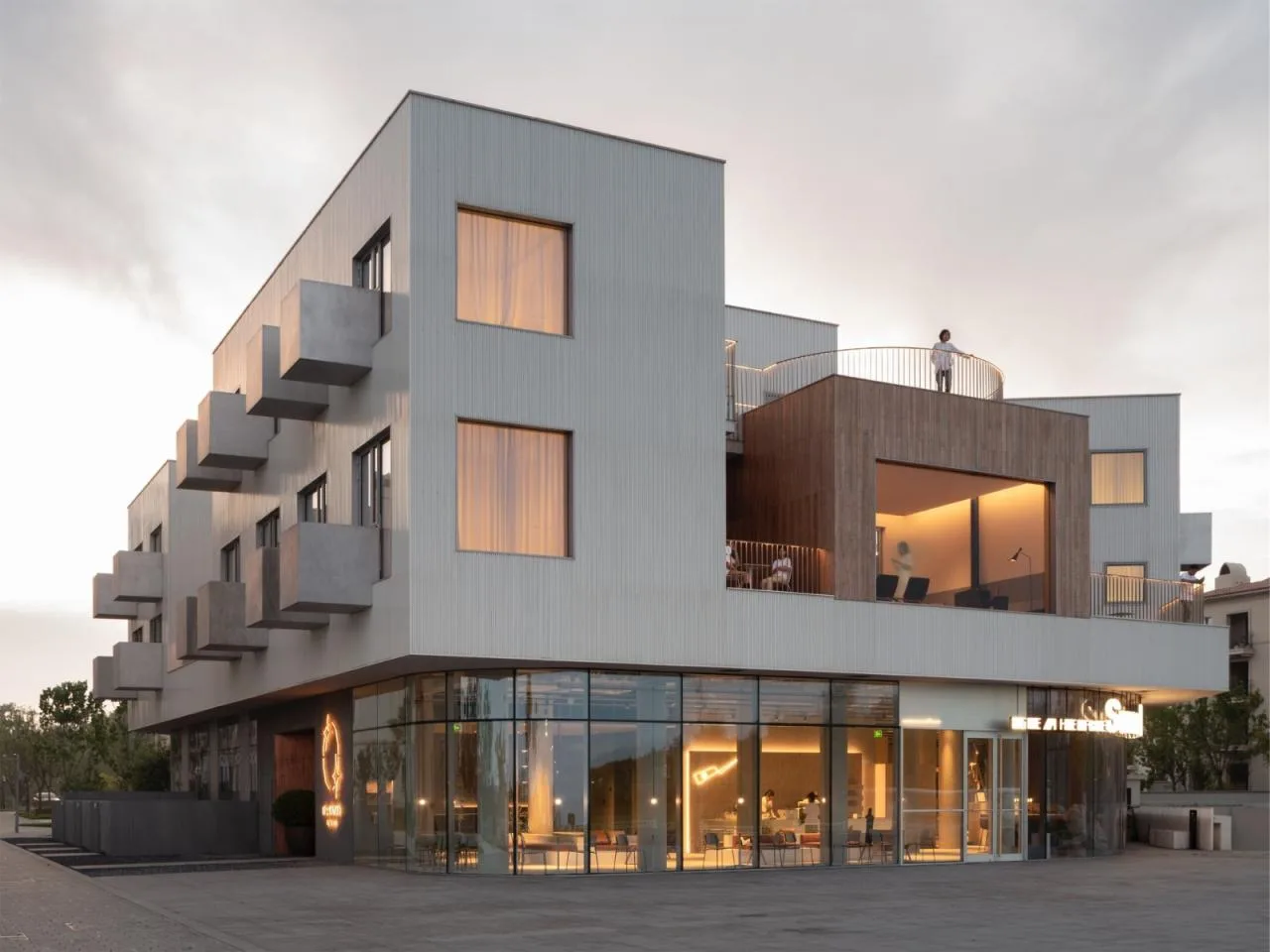
The building is conceived as a small, enclosed community. The ground floor features transparent glass curtain walls that create expansive views and an open ambiance, serving as the hotel’s main public space. Above, the second and third floors consist of eight staggered small buildings of varying heights, positioned on a large platform supported by glass curtain walls. These serve as guest accommodations.
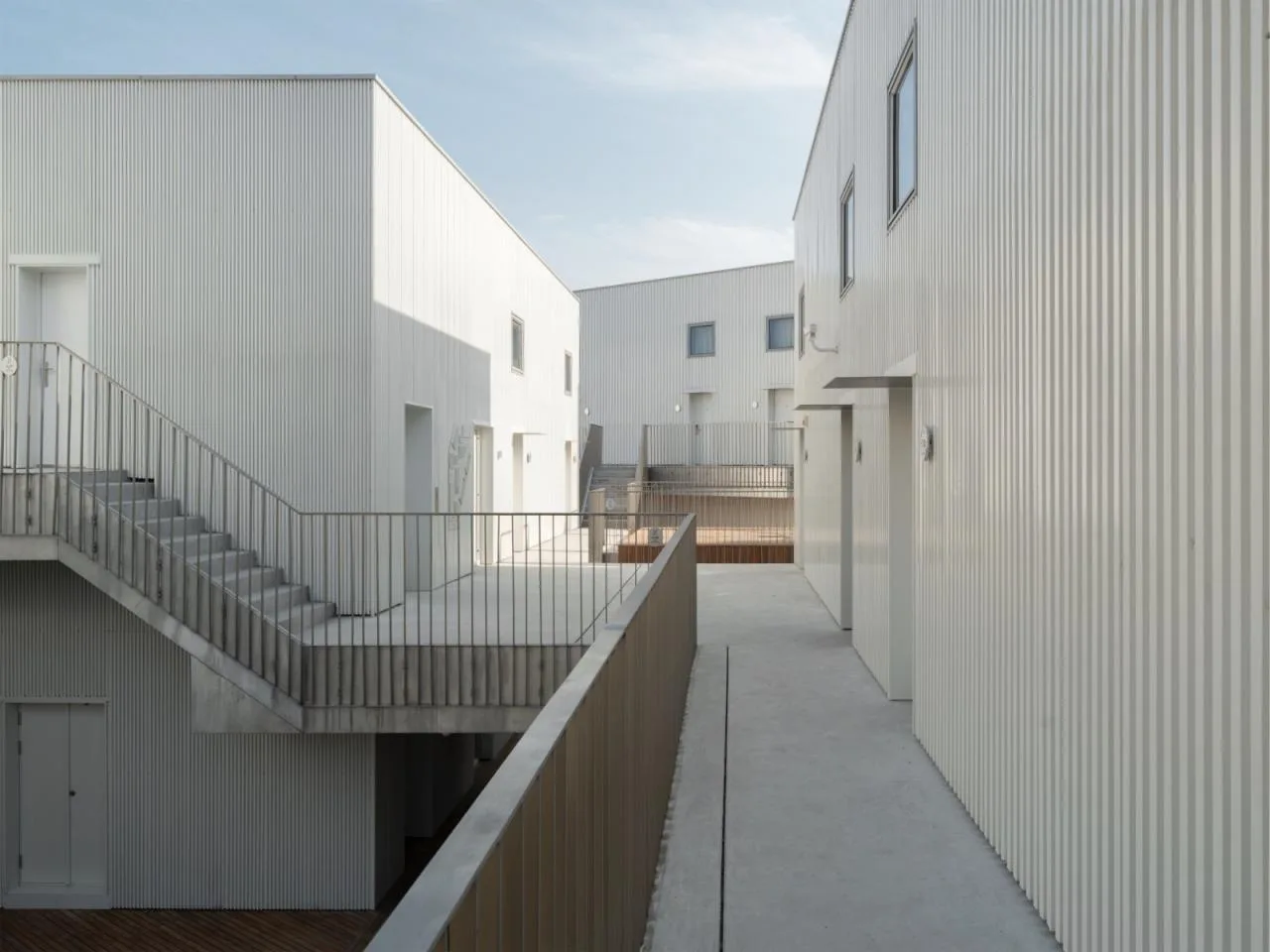
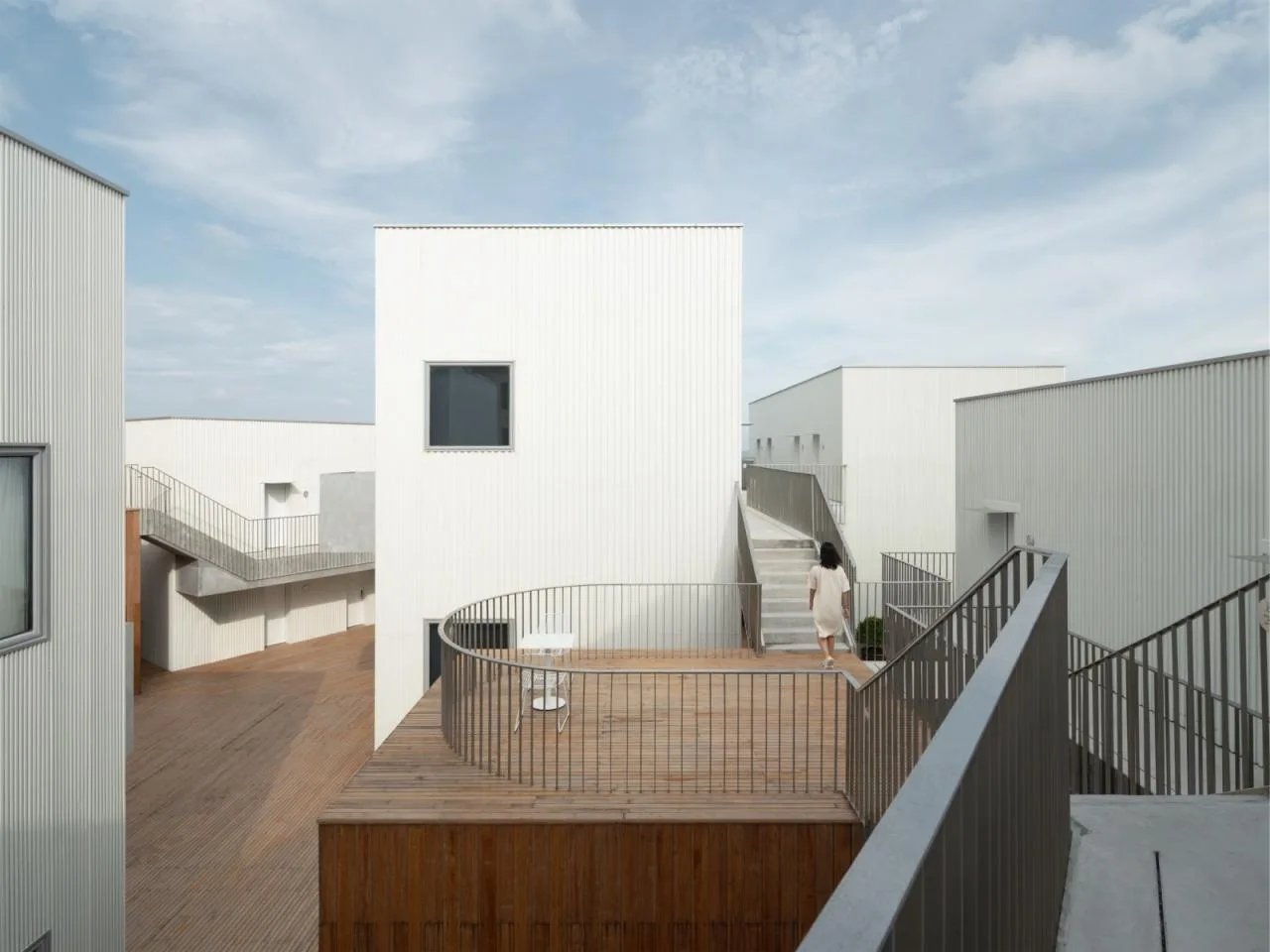
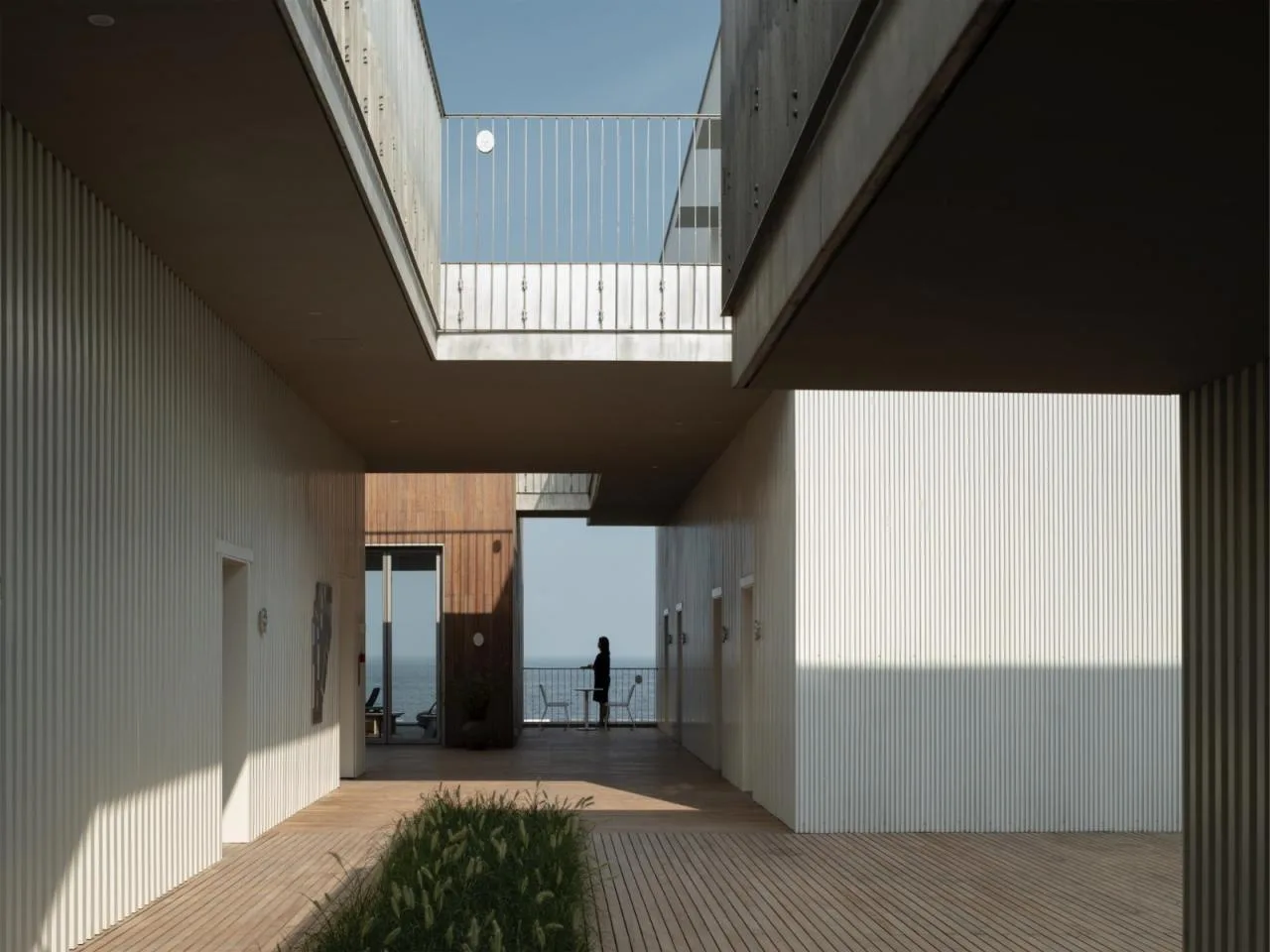
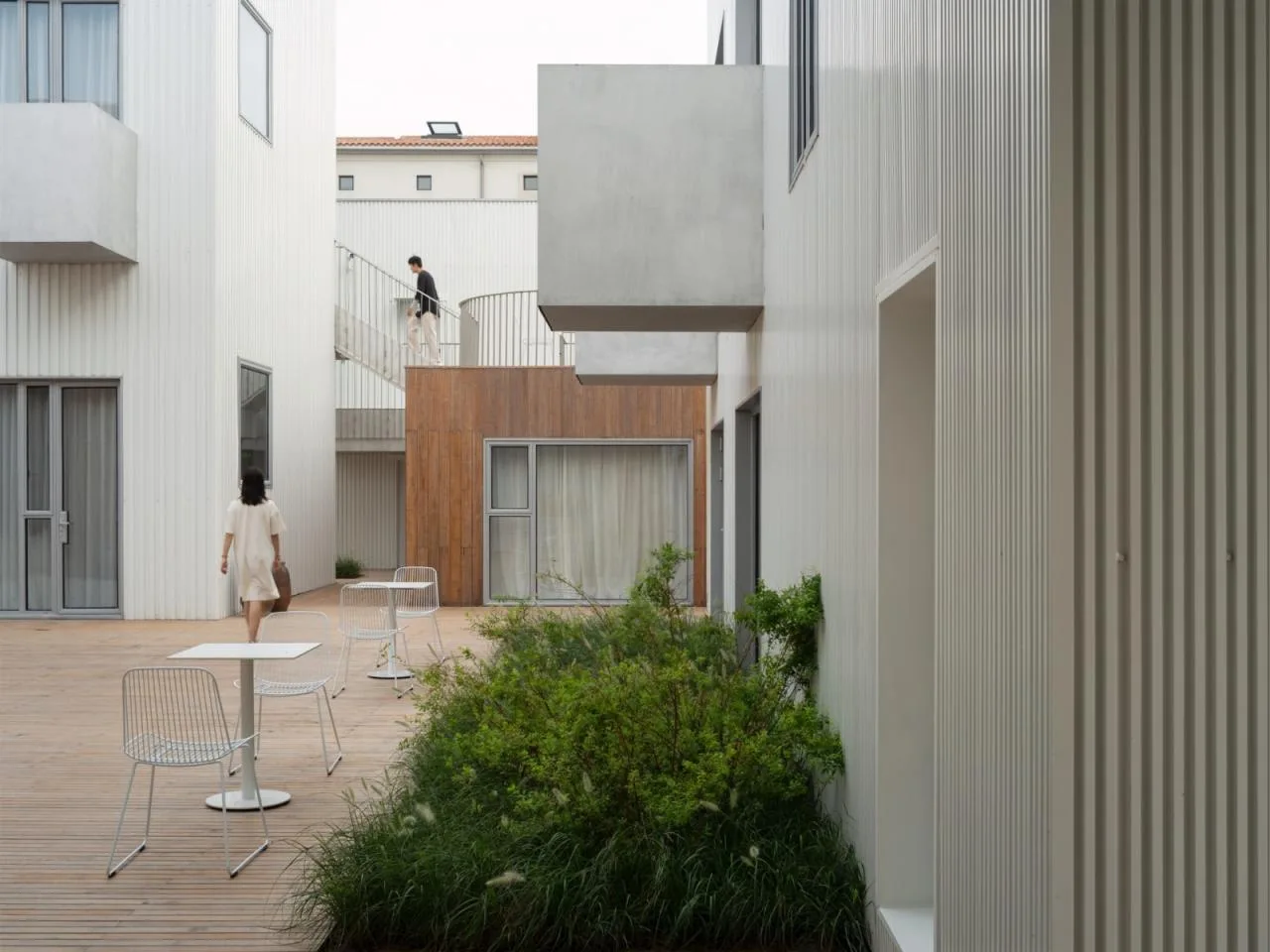
The slightly cantilevered platform creates the illusion of a floating community, while the exterior facade combines three sizes of white profiled steel panels to emphasize the building’s lightness. Interspersed among these are small houses crafted from natural bamboo and steel, adding warmth to the otherwise pristine white structure.
Each room includes a small balcony, enhancing interaction with the surrounding environment. These balconies feature irregular aluminum panel finishes, offering a modern and dynamic rhythm that enlivens the simple exterior.
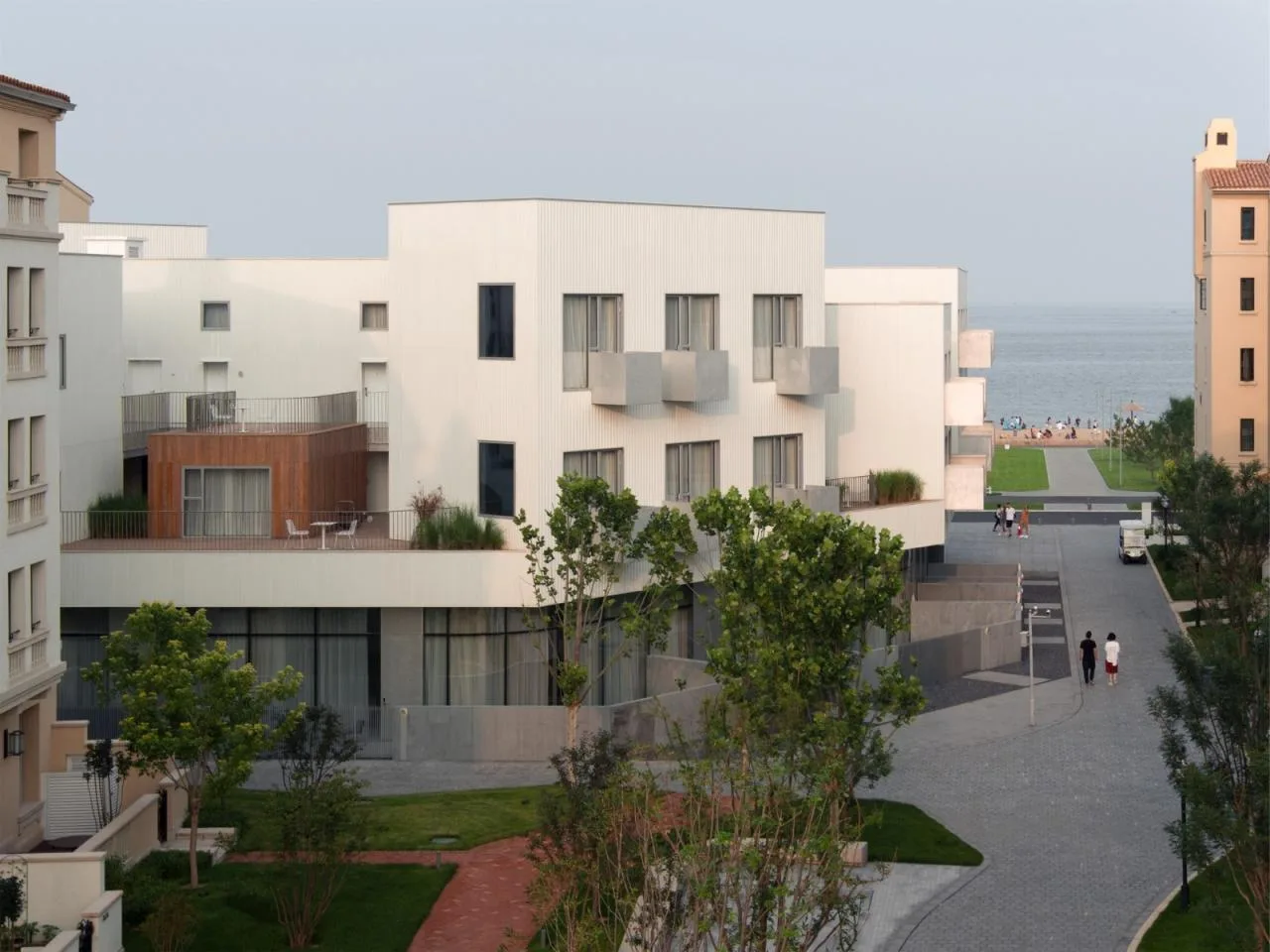
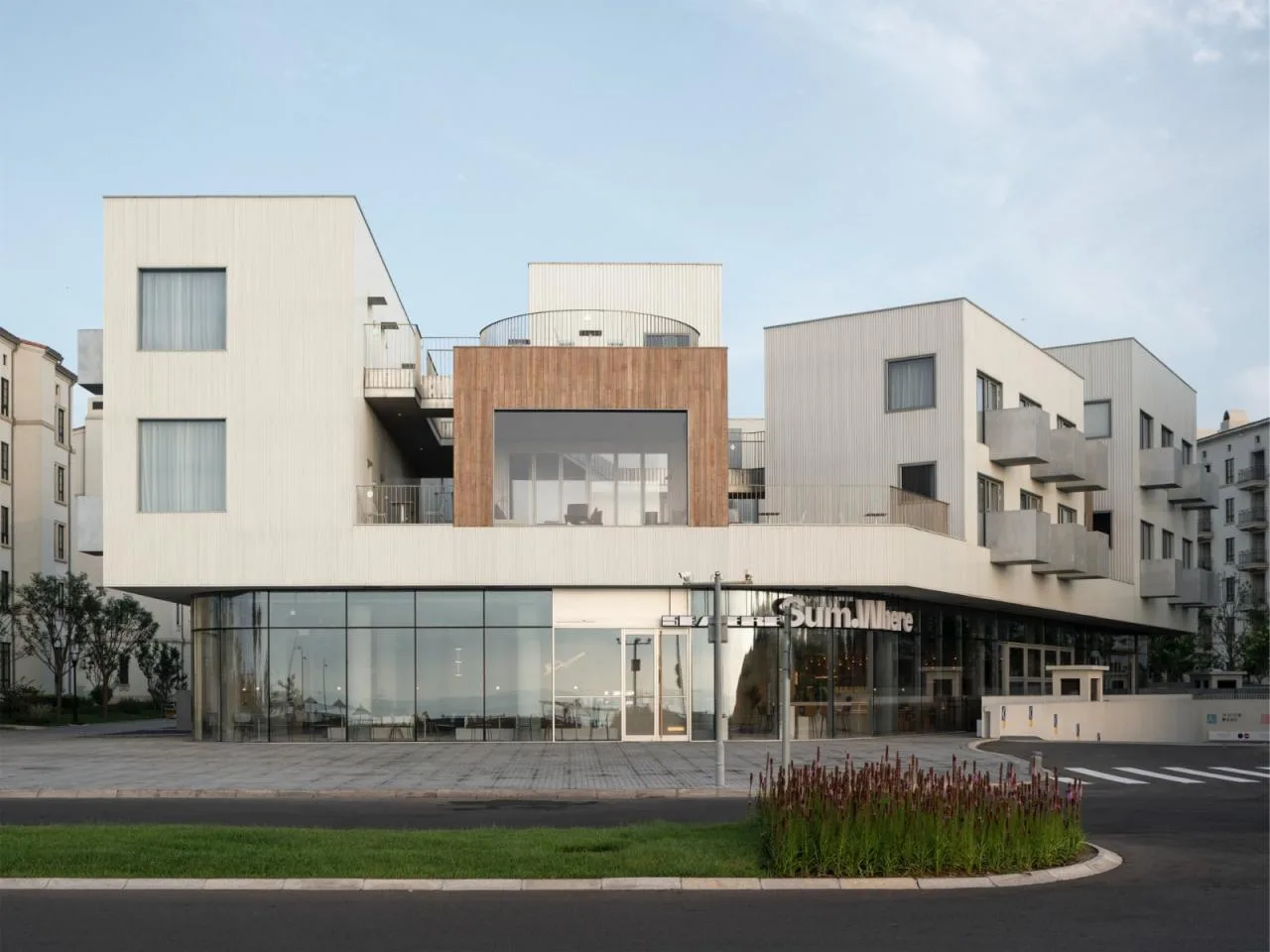
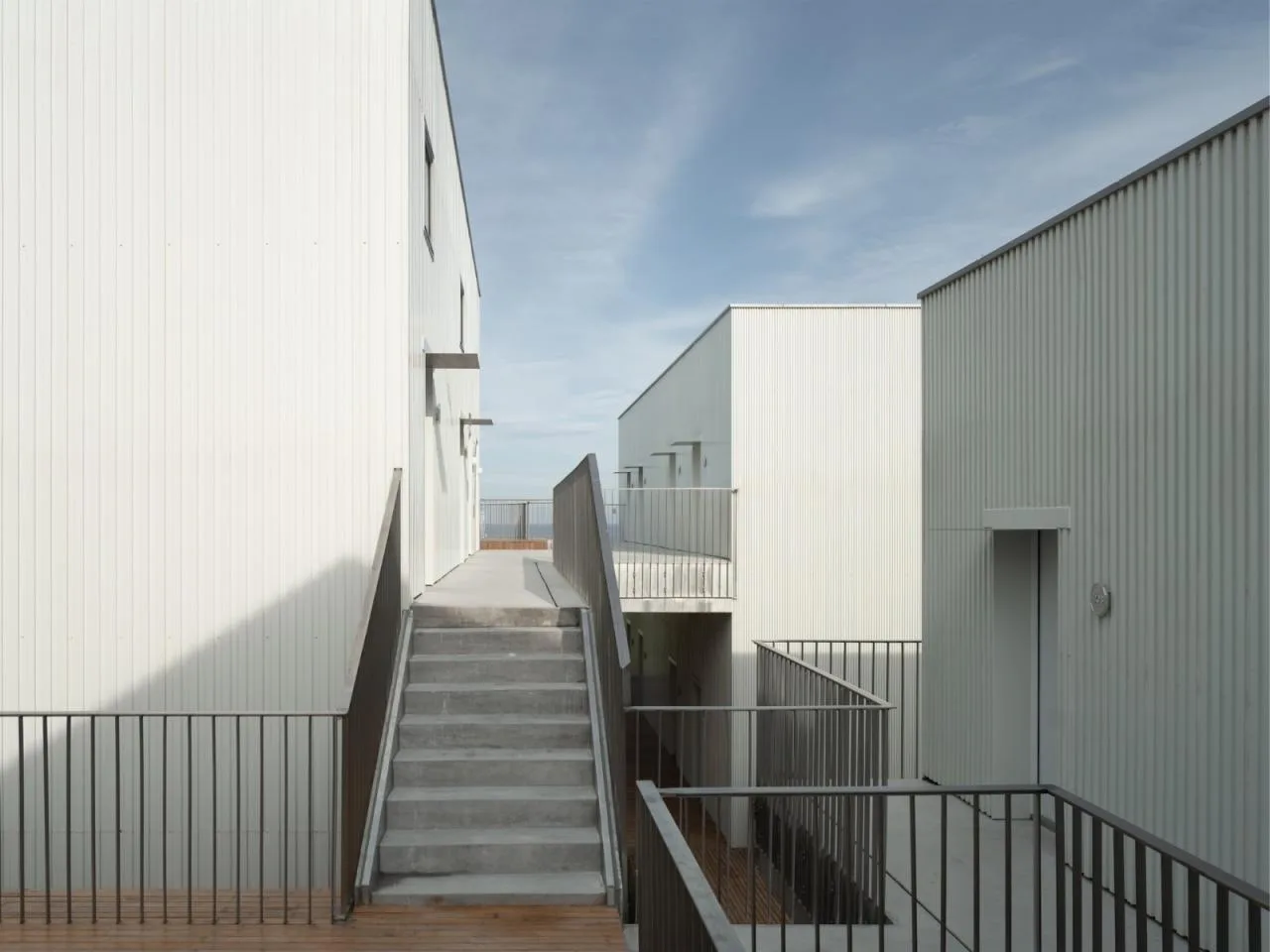
Spatially, we broke away from the conventional south-low, north-high residential layout by separating the small buildings and rearranging their orientation and height. This approach not only grants each guest room its unique scale but also creates naturally varied negative spaces between structures, forming interesting activity areas of diverse sizes and shapes.
Outdoor corridors connect the buildings, with varying heights causing the pathways to rise and fall. Descending towards the platform leads to a lively outdoor square, while ascending opens up expansive sea views. This dynamic circulation offers guests a varied spatial experience.
The overall design fosters community and interaction rather than strict privacy, envisioning a “shared community” for modern living. The concept extends the idea of “home” beyond individual rooms to encompass a variety of shared spaces.
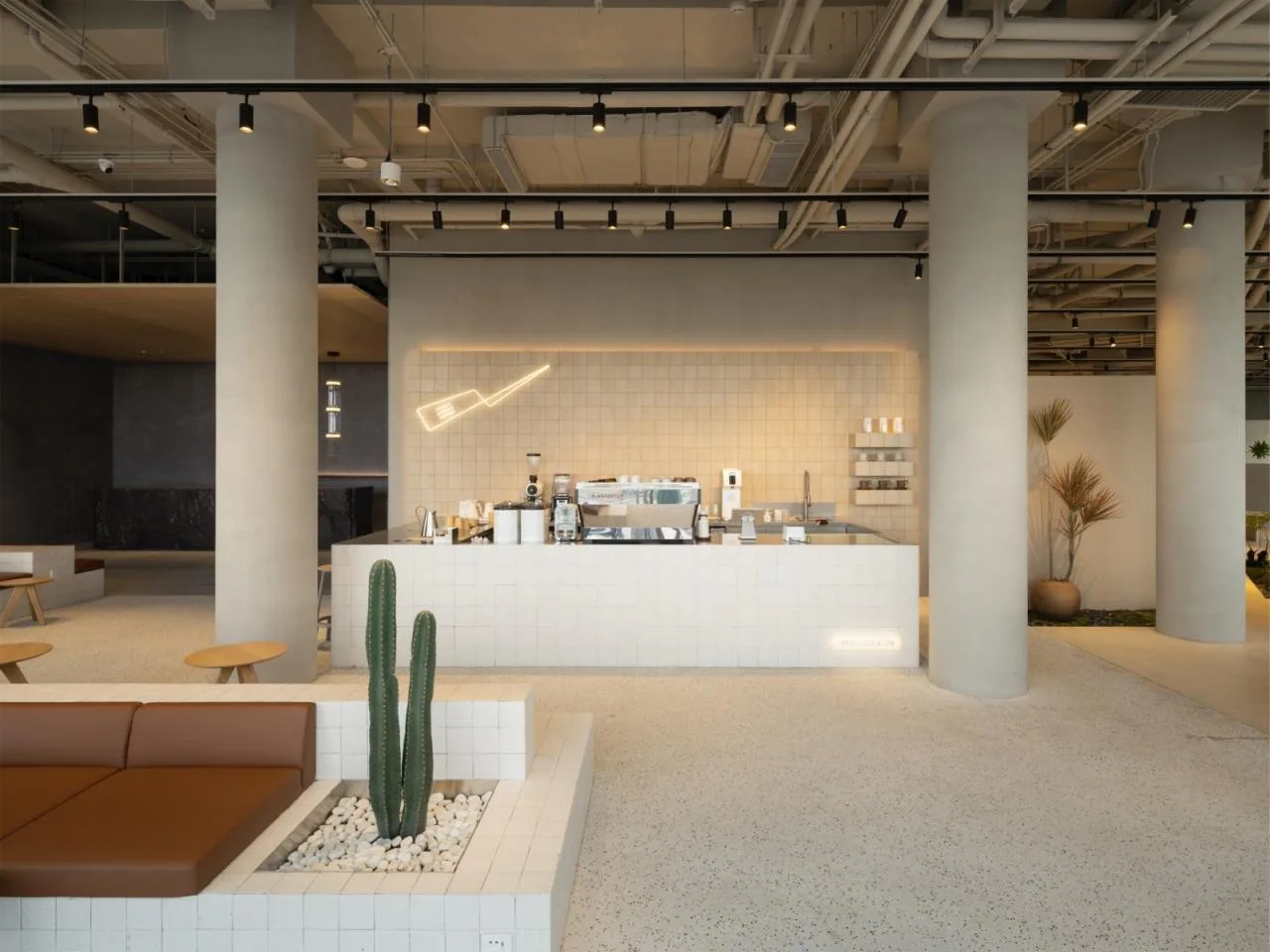
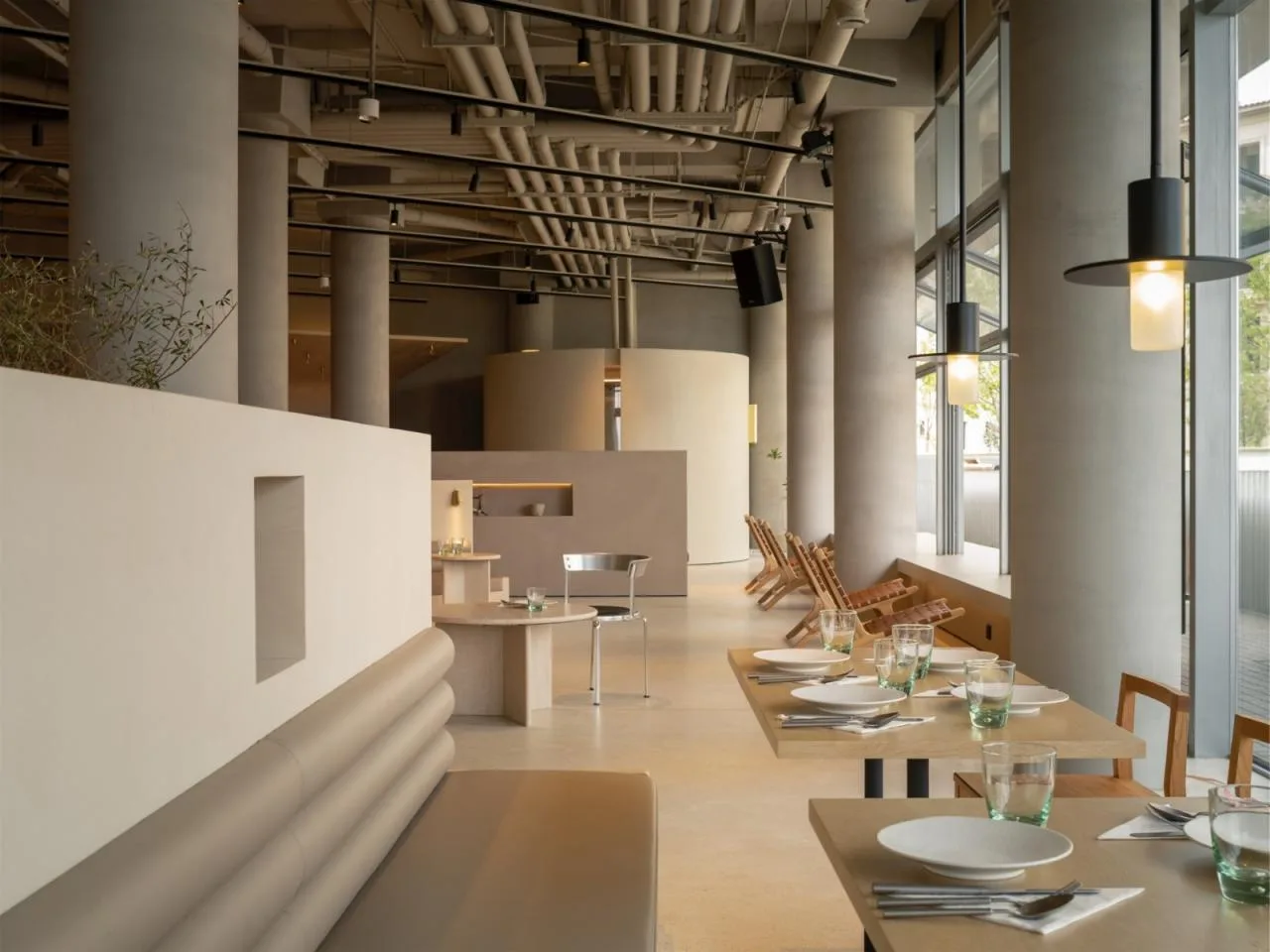
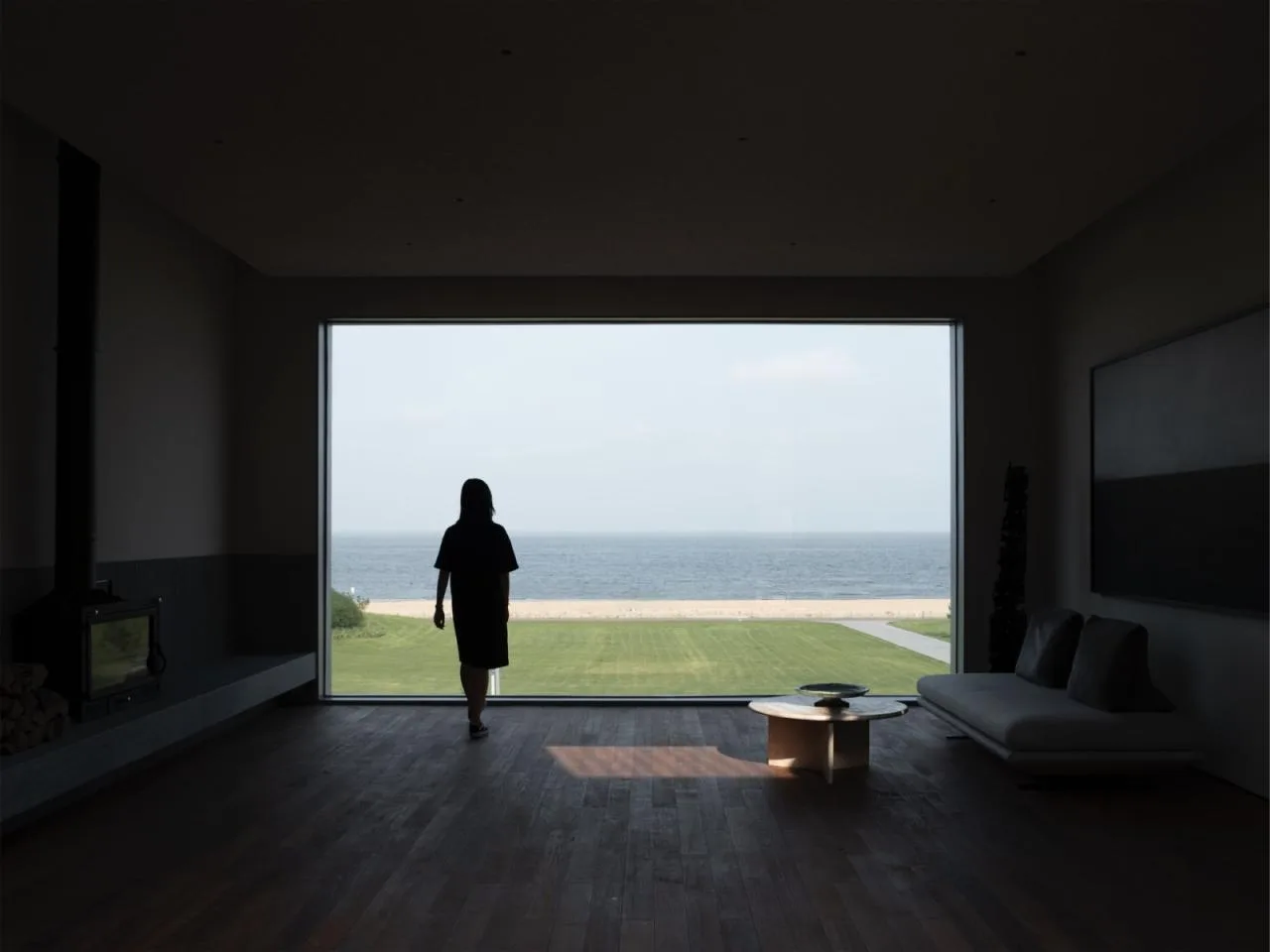
The interior is divided into public spaces and guest rooms. The lobby, café, and bar on the first floor flow seamlessly into one another, creating an open, transparent area accentuated by high ceilings and glass walls.
Minimalist design keeps decorative elements to a minimum, allowing natural elements like shifting light and shadow, sea air, and greenery to take center stage. This approach maximizes openness and brightness, reflecting a simple yet artistic aesthetic.
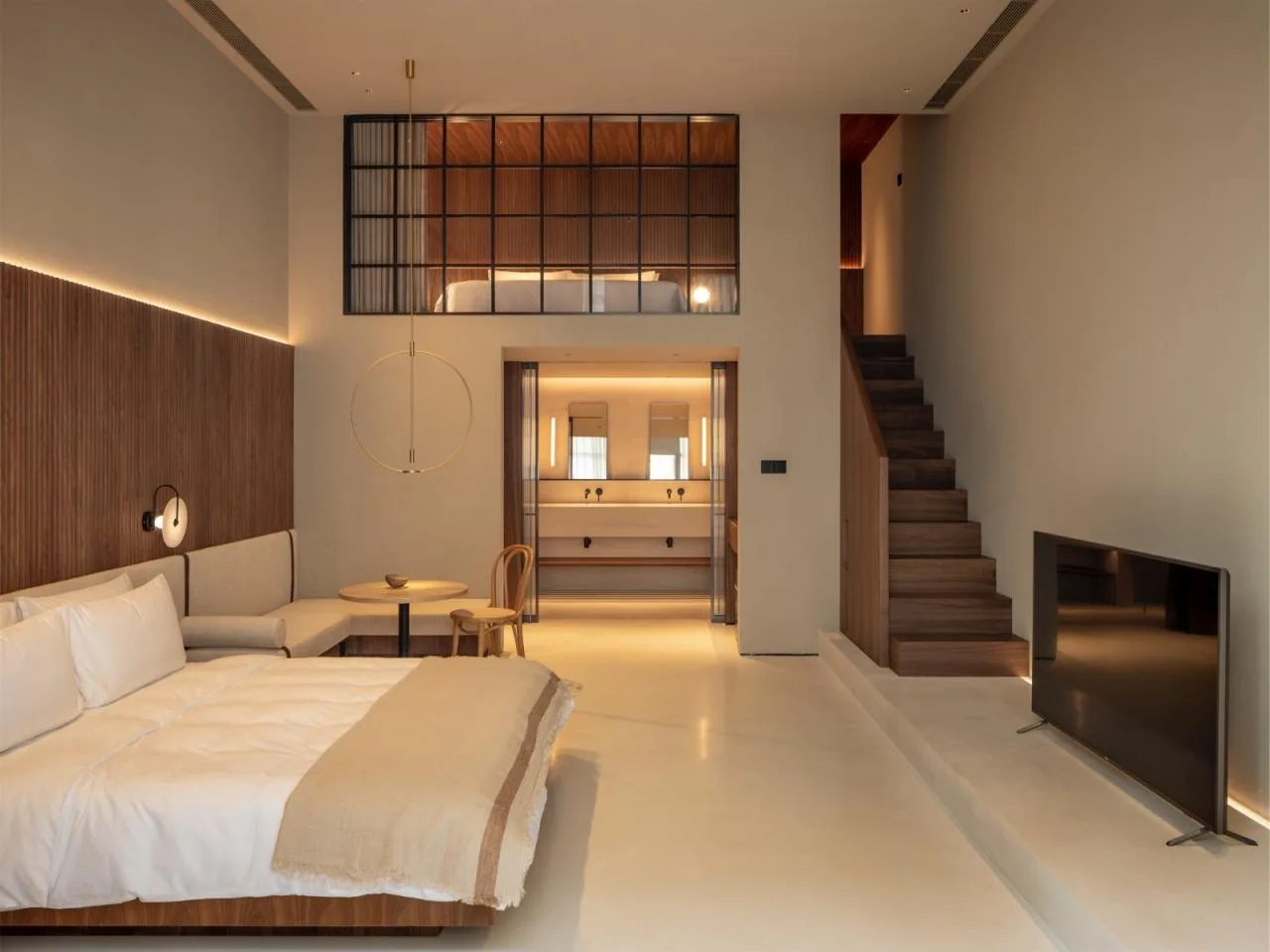
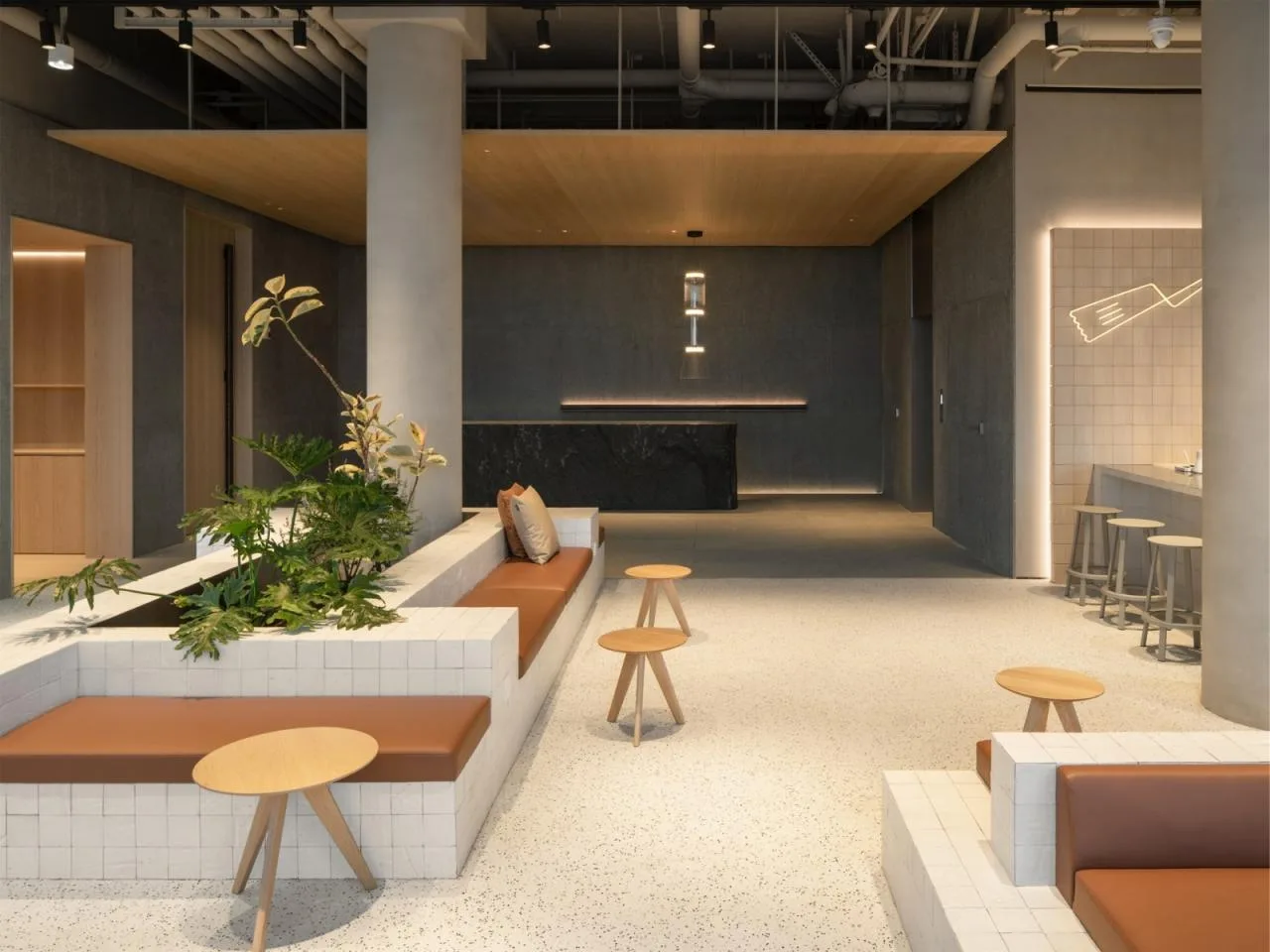
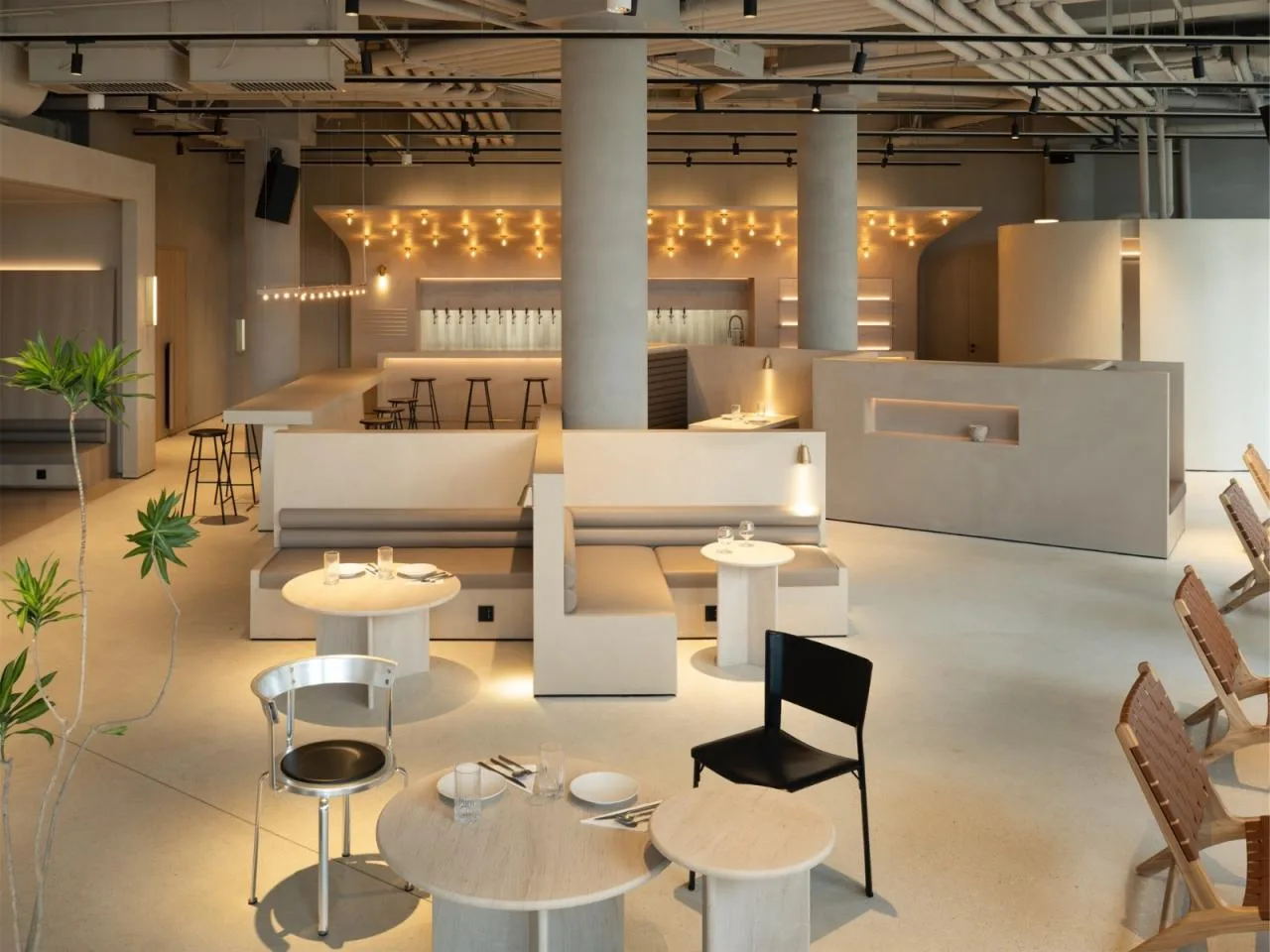
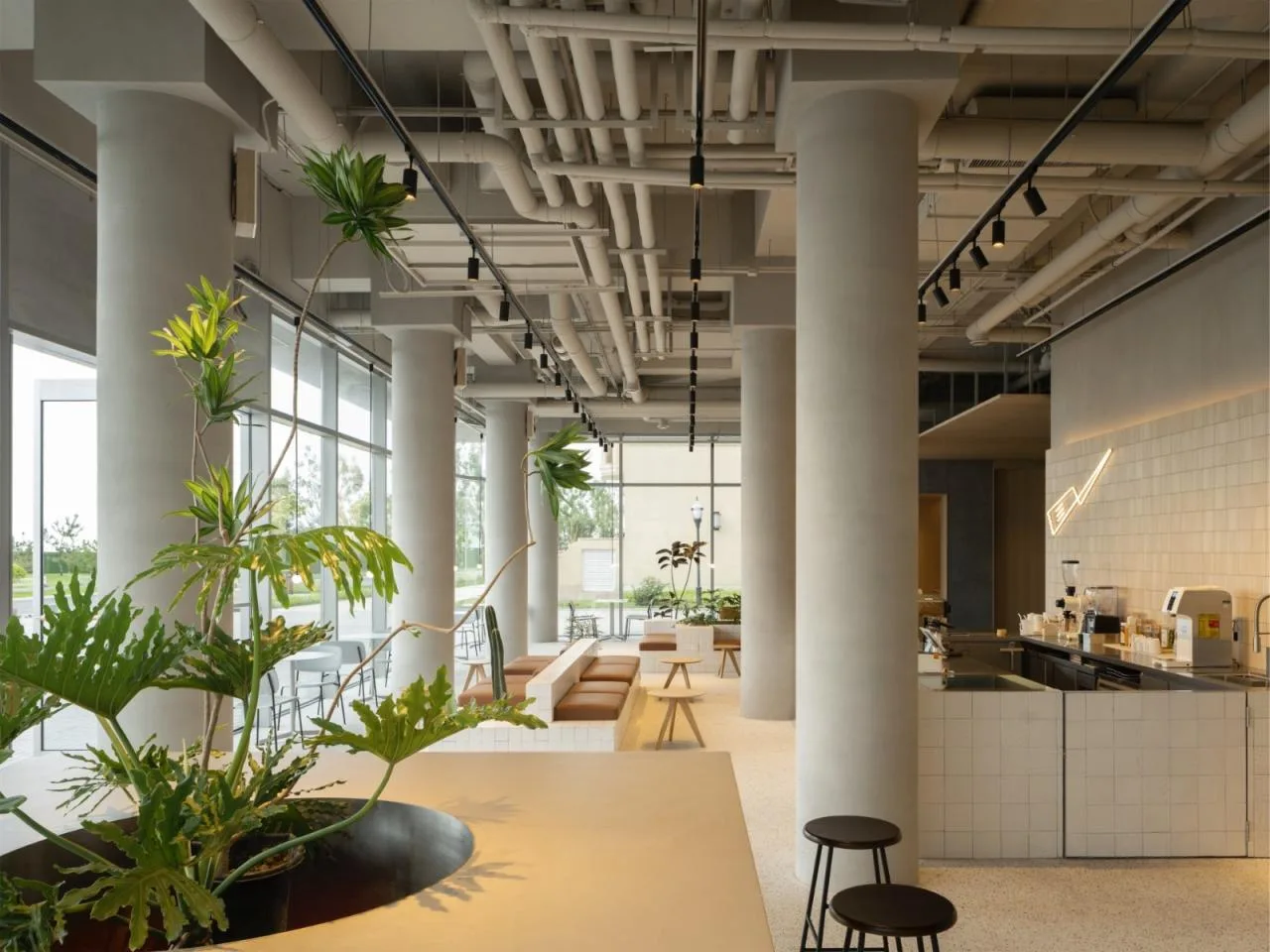
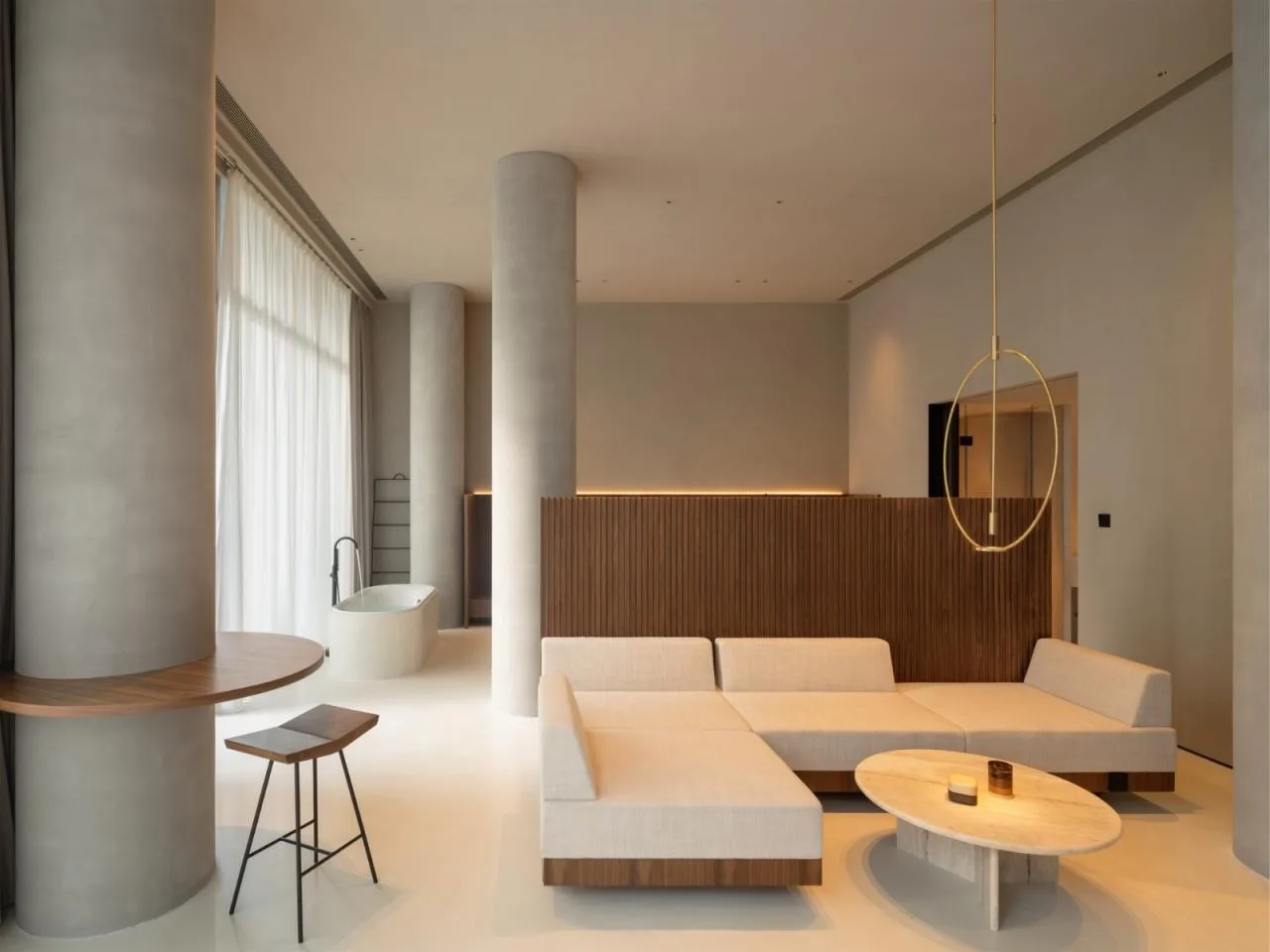
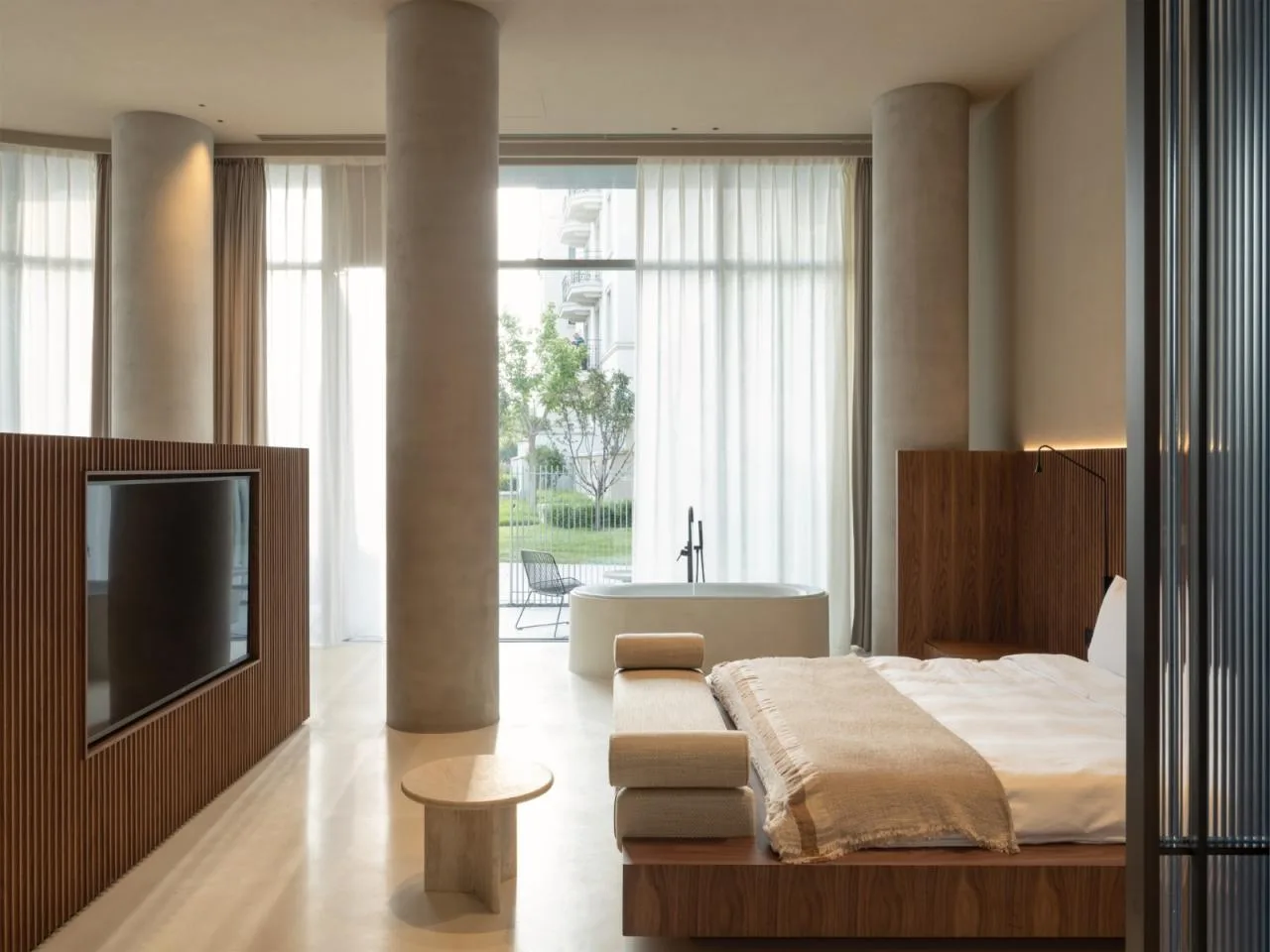
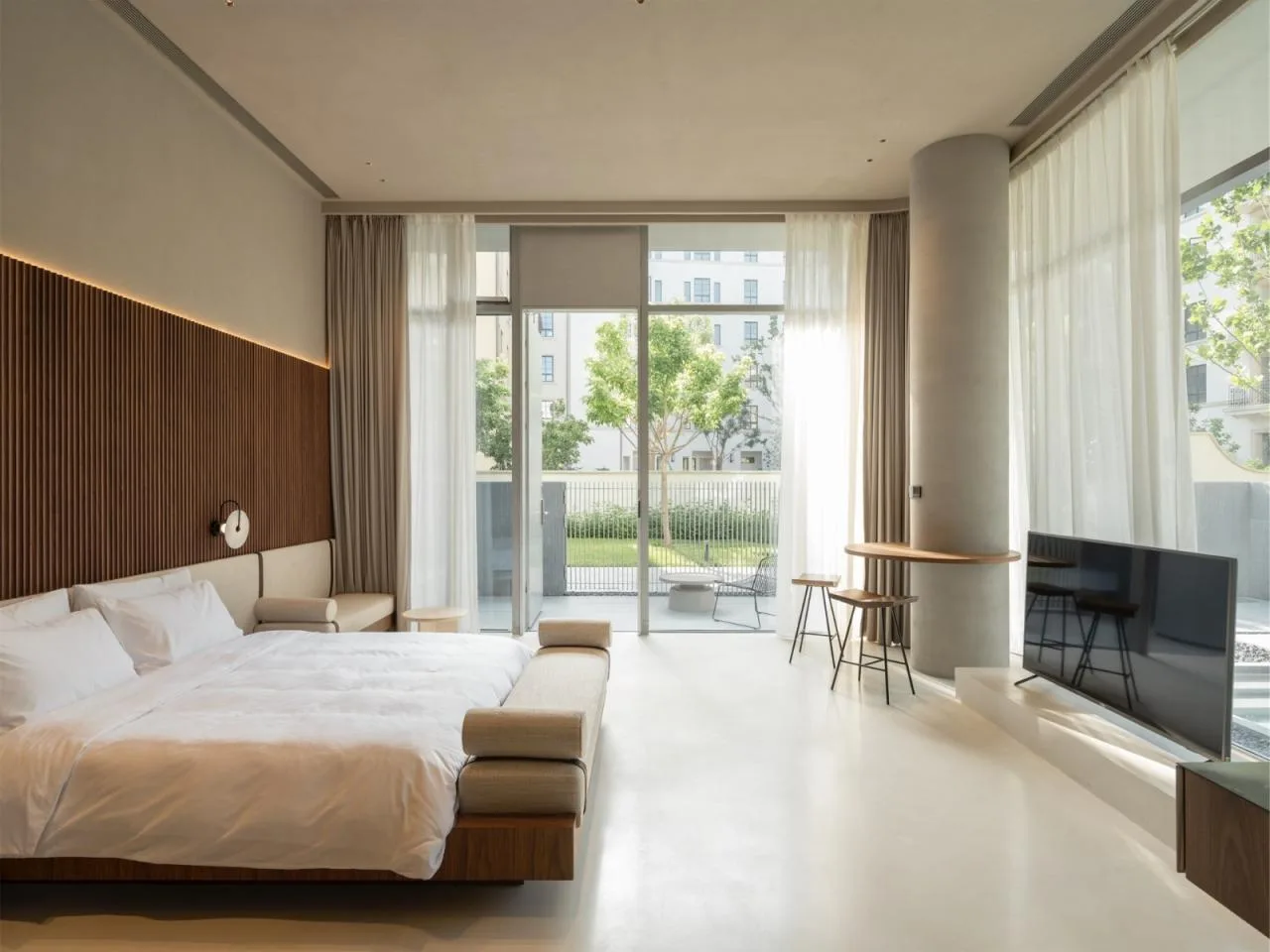
Guest rooms vary by floor: the ground floor offers slightly larger suites suited for families, while the upper floors feature smaller rooms in two types — 26-square-meter flats and 36-square-meter lofts. These compact interiors prioritize essential functions, leaving more room for outdoor terraces and communal areas.
Natural materials such as wood, textured coatings, and stone create a calm and restrained atmosphere. Considering the seaside’s humid climate, materials like wood veneers are treated for corrosion and moisture resistance, and dehumidifiers are installed to ensure guest comfort and attention to detail.
A shared living room with sea views is located on the second-floor platform, providing a welcoming space for guests from all rooms to relax and socialize.
Summary
The Tangshe Hotel project invites fresh perspectives on the relationship between people and space. Beyond providing a place to stay, the building fosters opportunities for strangers to connect and redefine social relationships. This design transcends traditional hotel concepts, exploring new models of community and shared hotels.
Smaller rooms encourage guests to venture beyond their private spaces to enjoy outdoor plazas, shared living rooms, corridors, and the coffee shop downstairs — all communal spaces that enable an “unlimited” living experience within a limited footprint.
Project Drawings
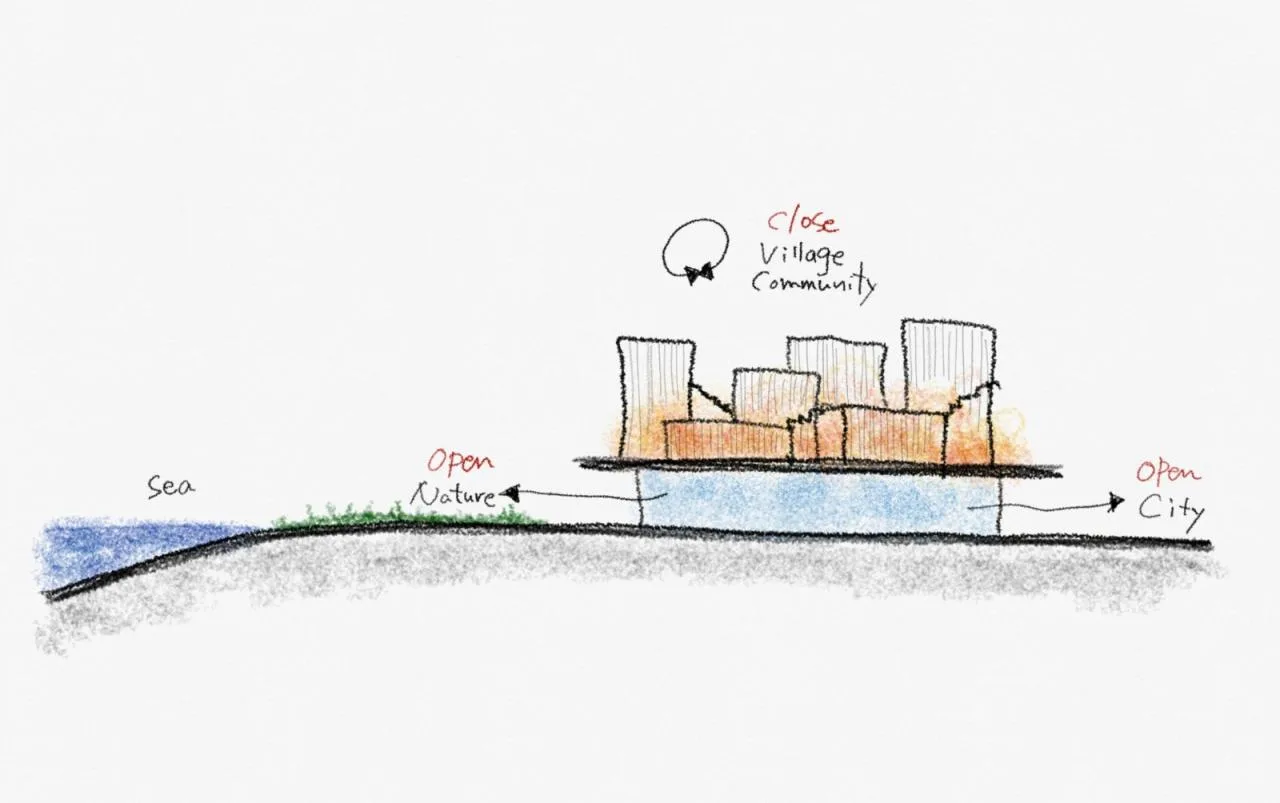
△ Hand-drawn sketch
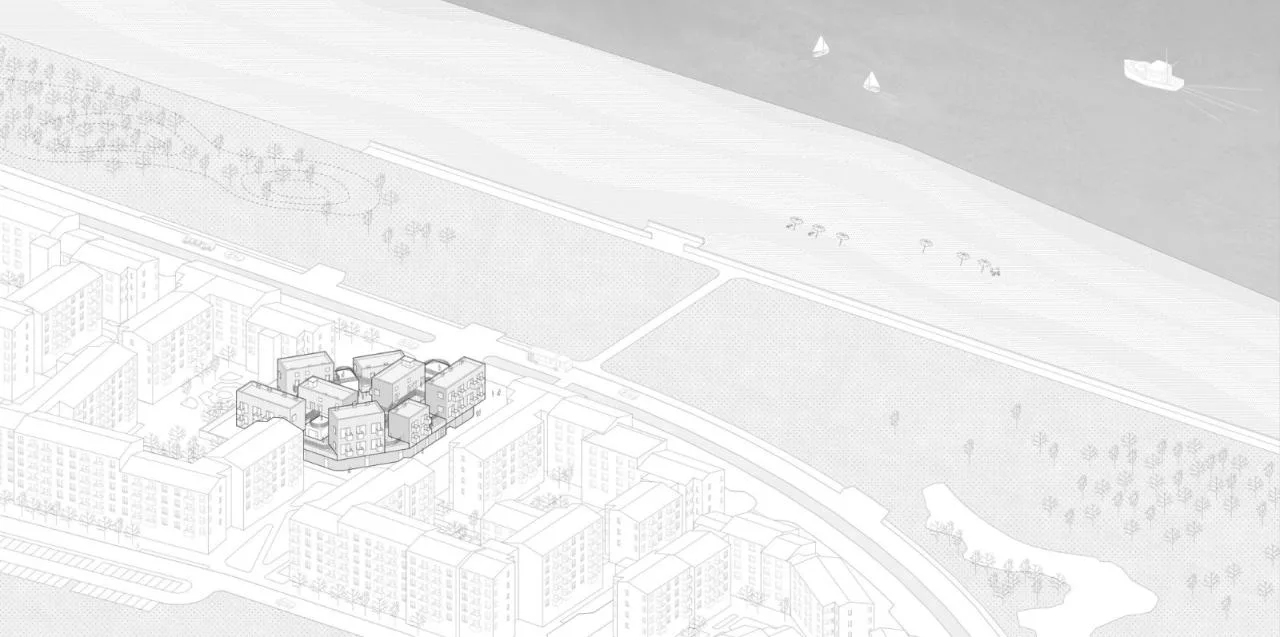
△ Aerial view
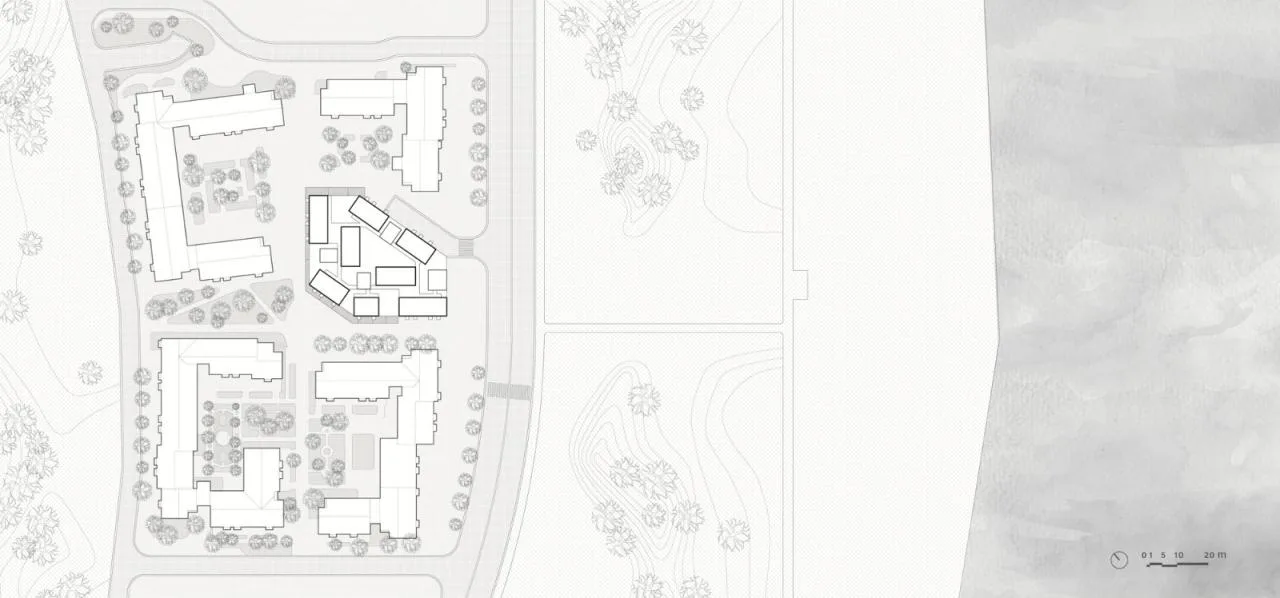
△ General layout plan
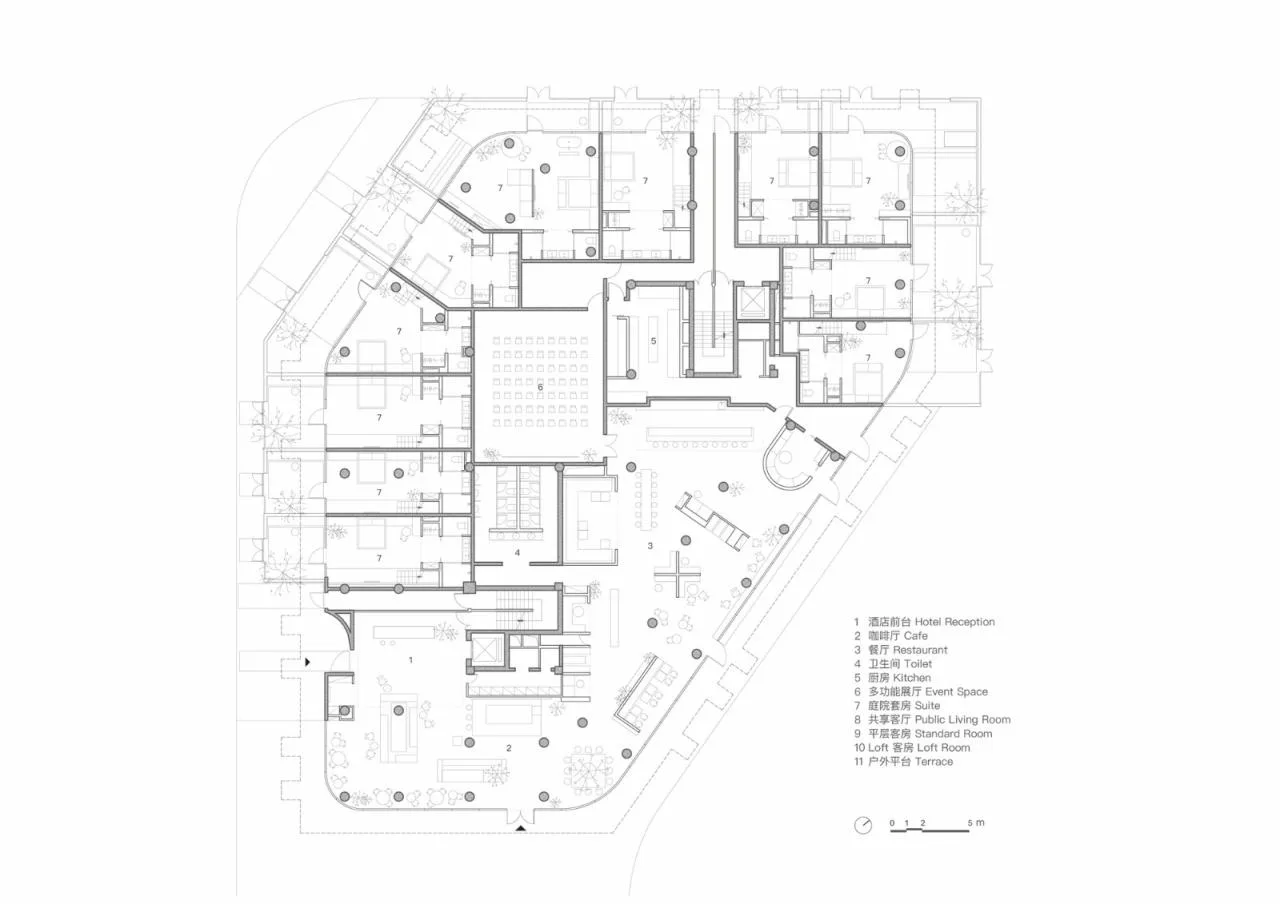
△ First floor plan
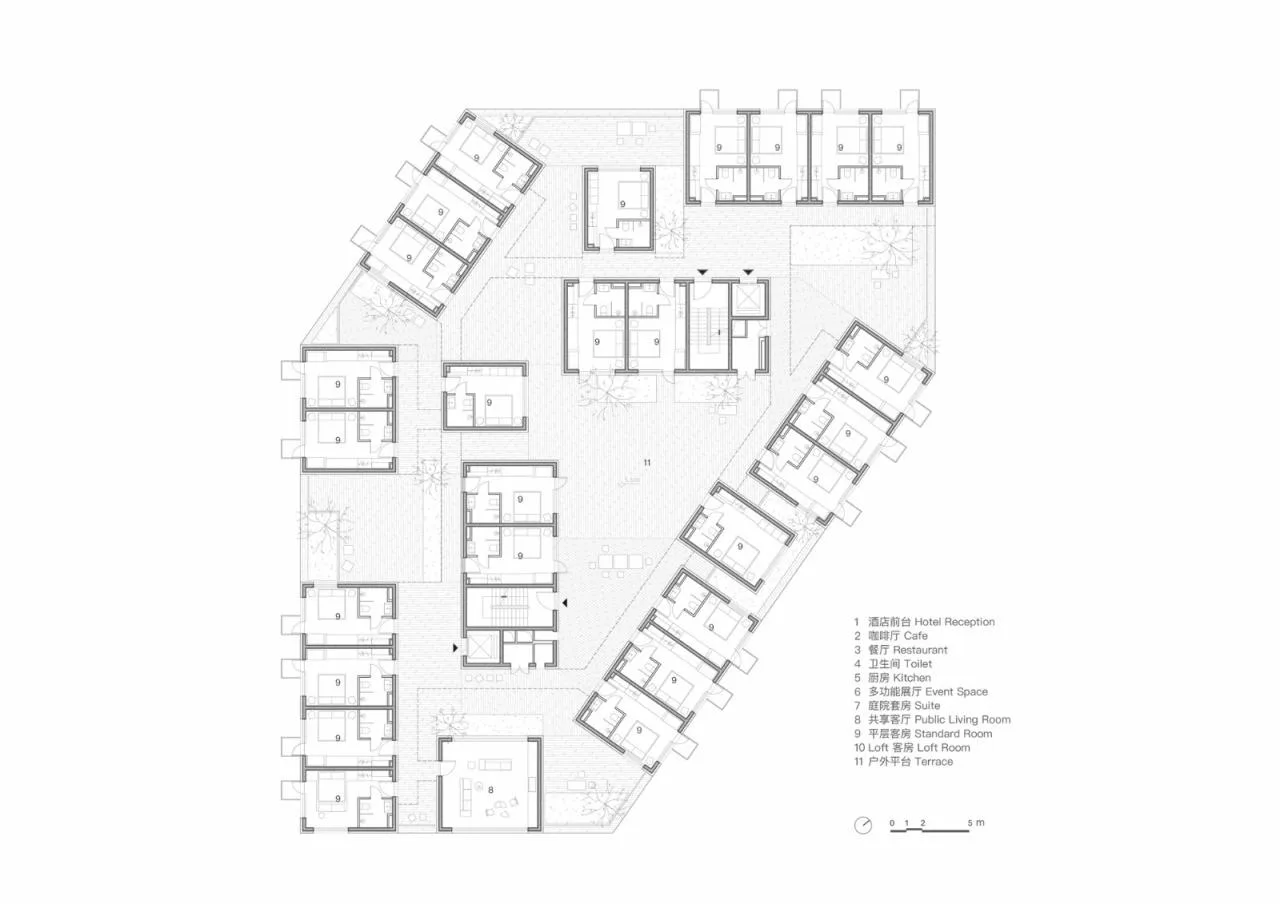
△ Second floor plan
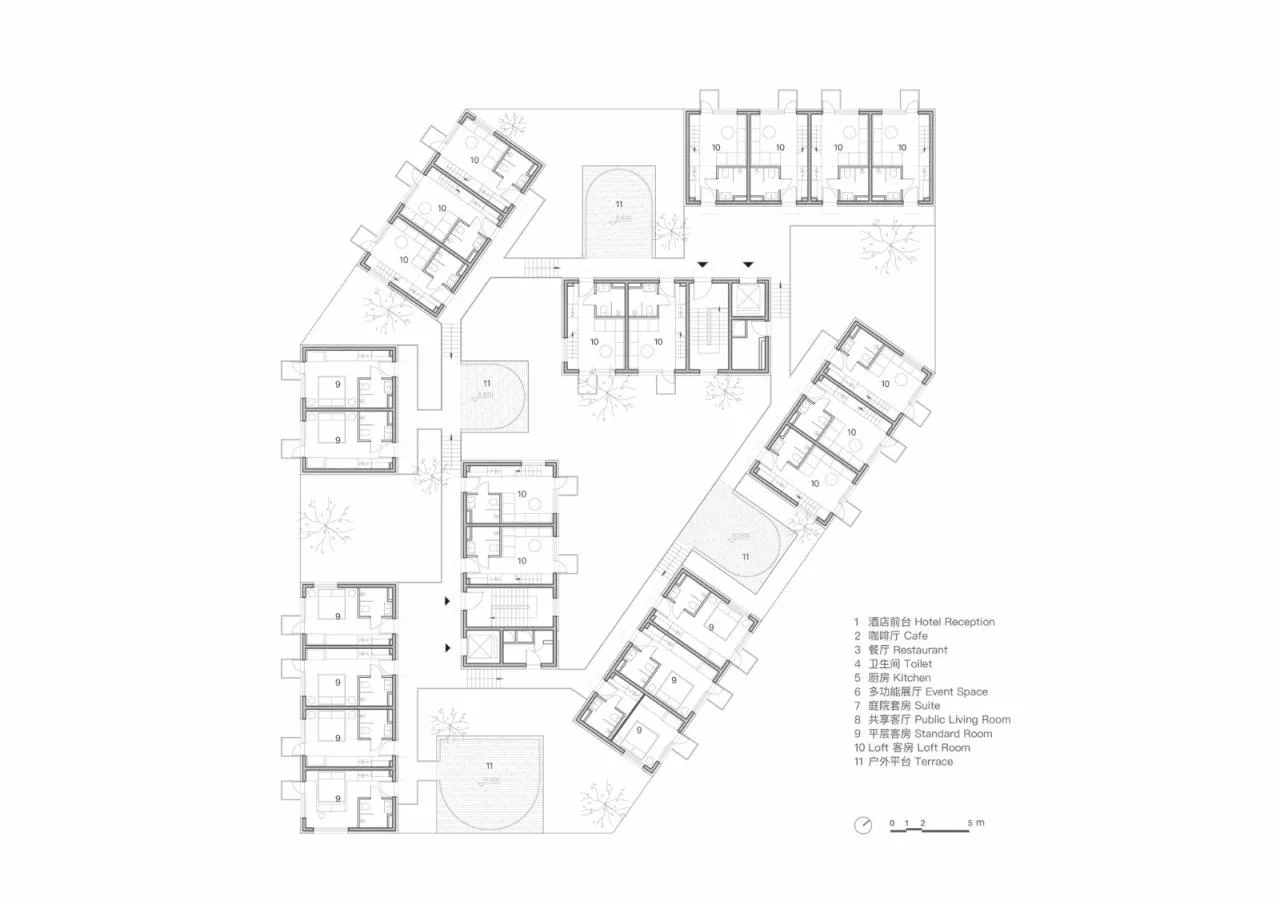
△ Third floor plan
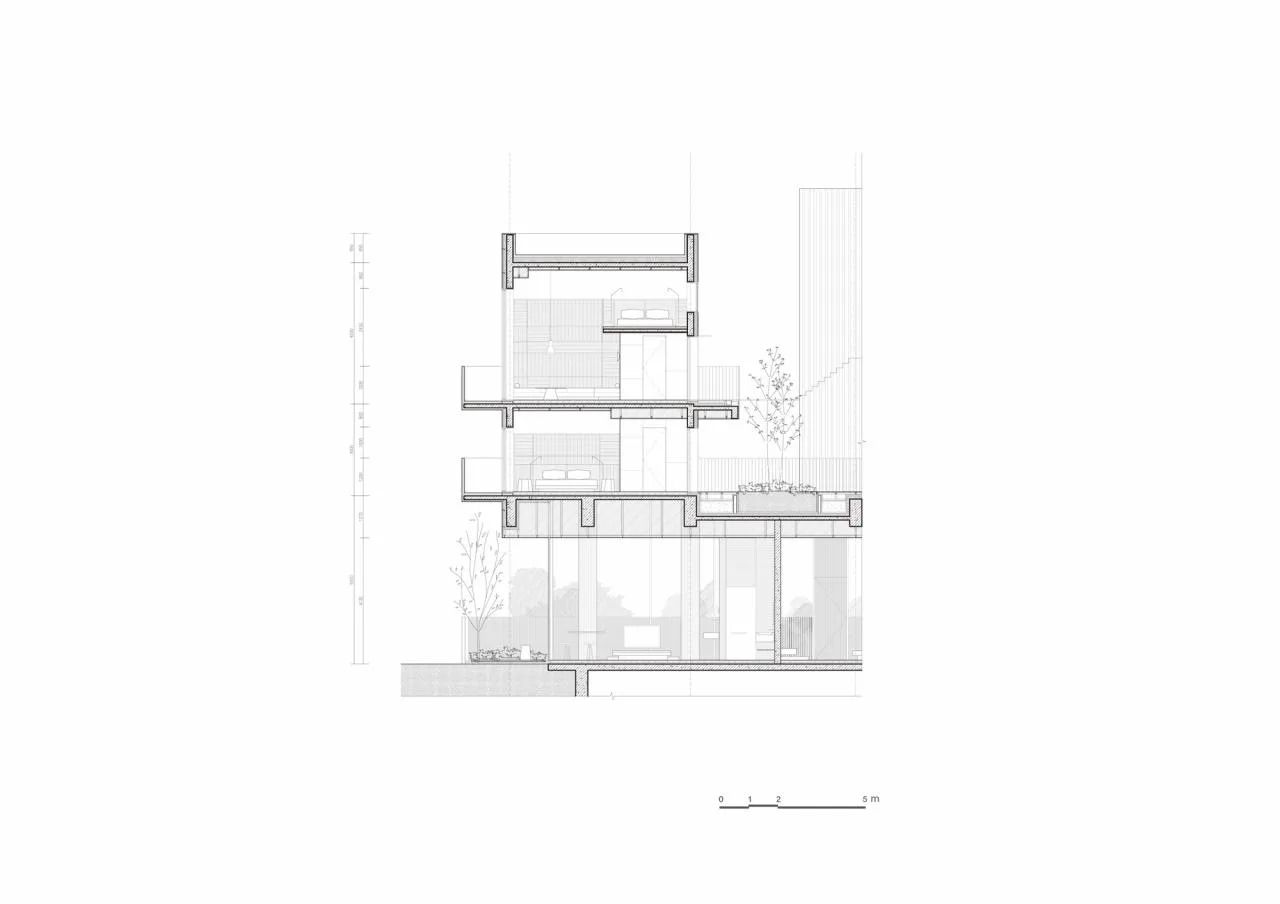
△ Section diagram
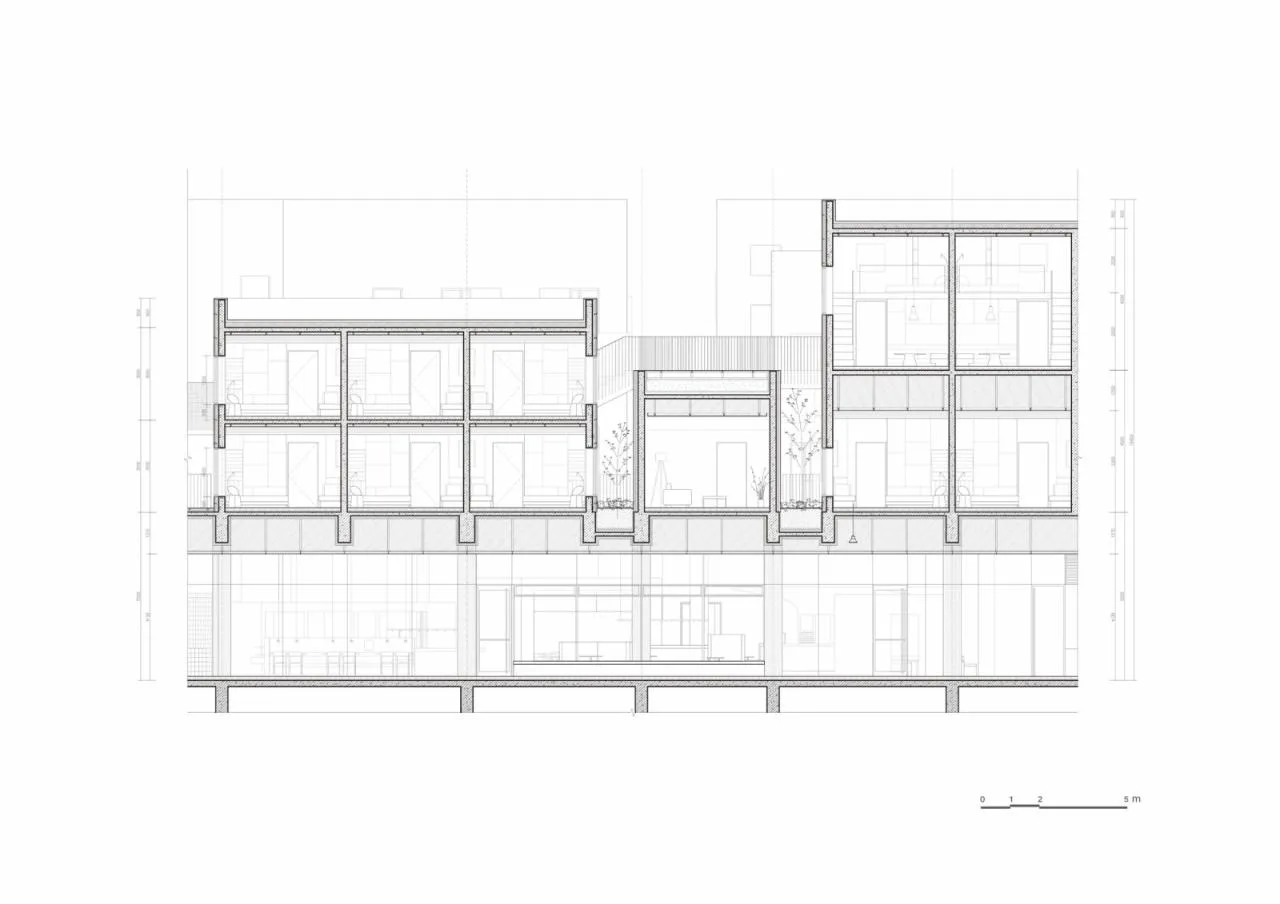
△ Section diagram
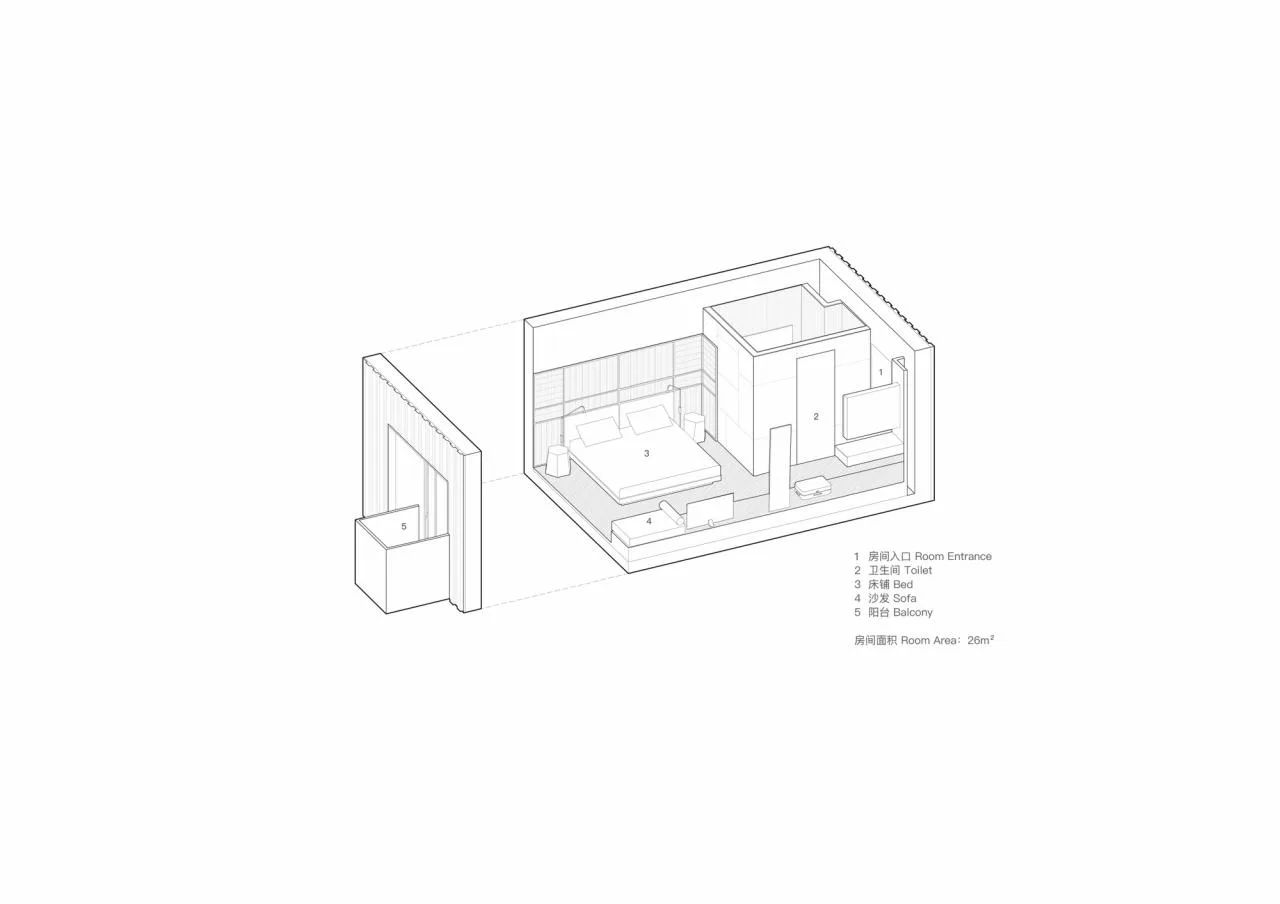
△ Unit 1
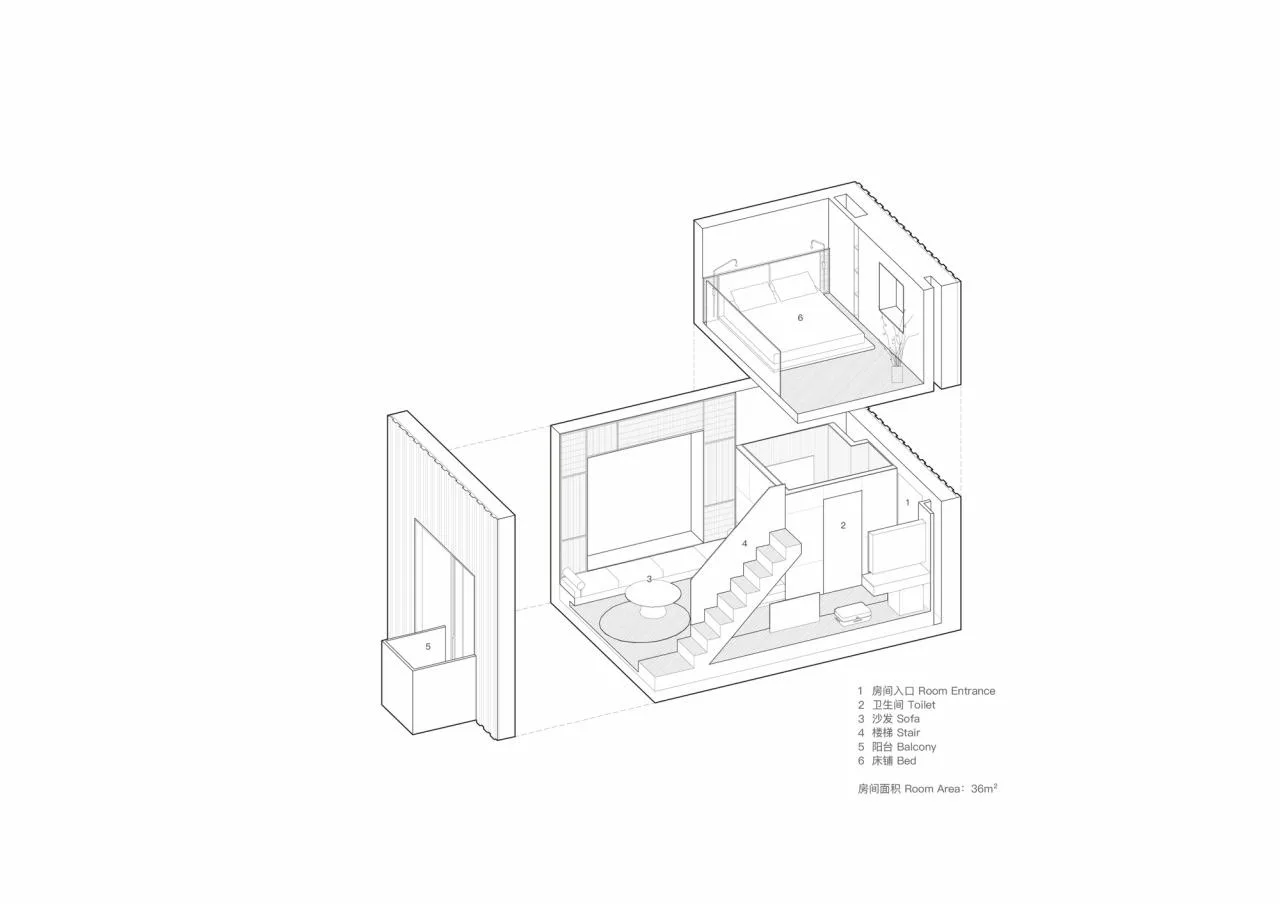
△ Unit 2
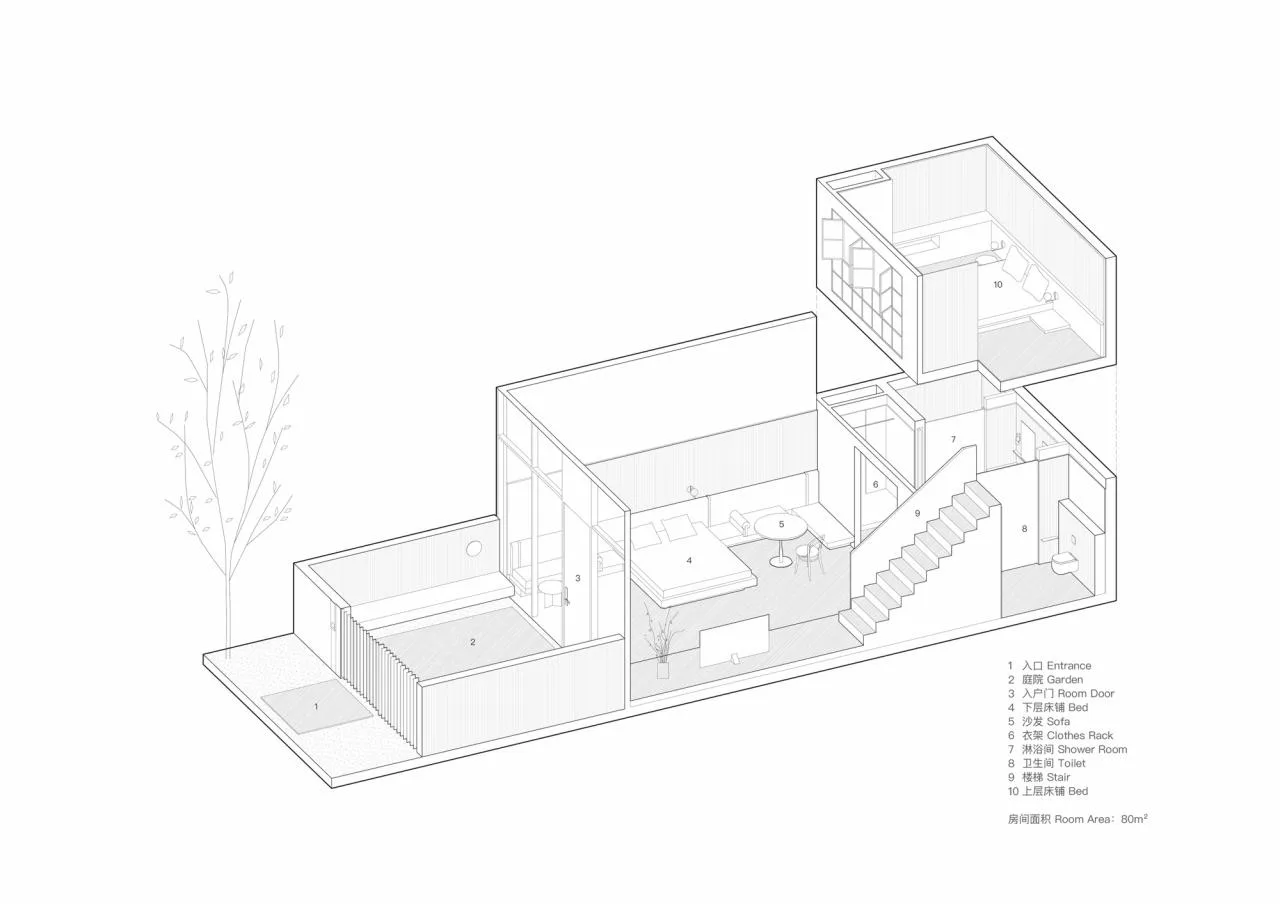
△ Unit 3
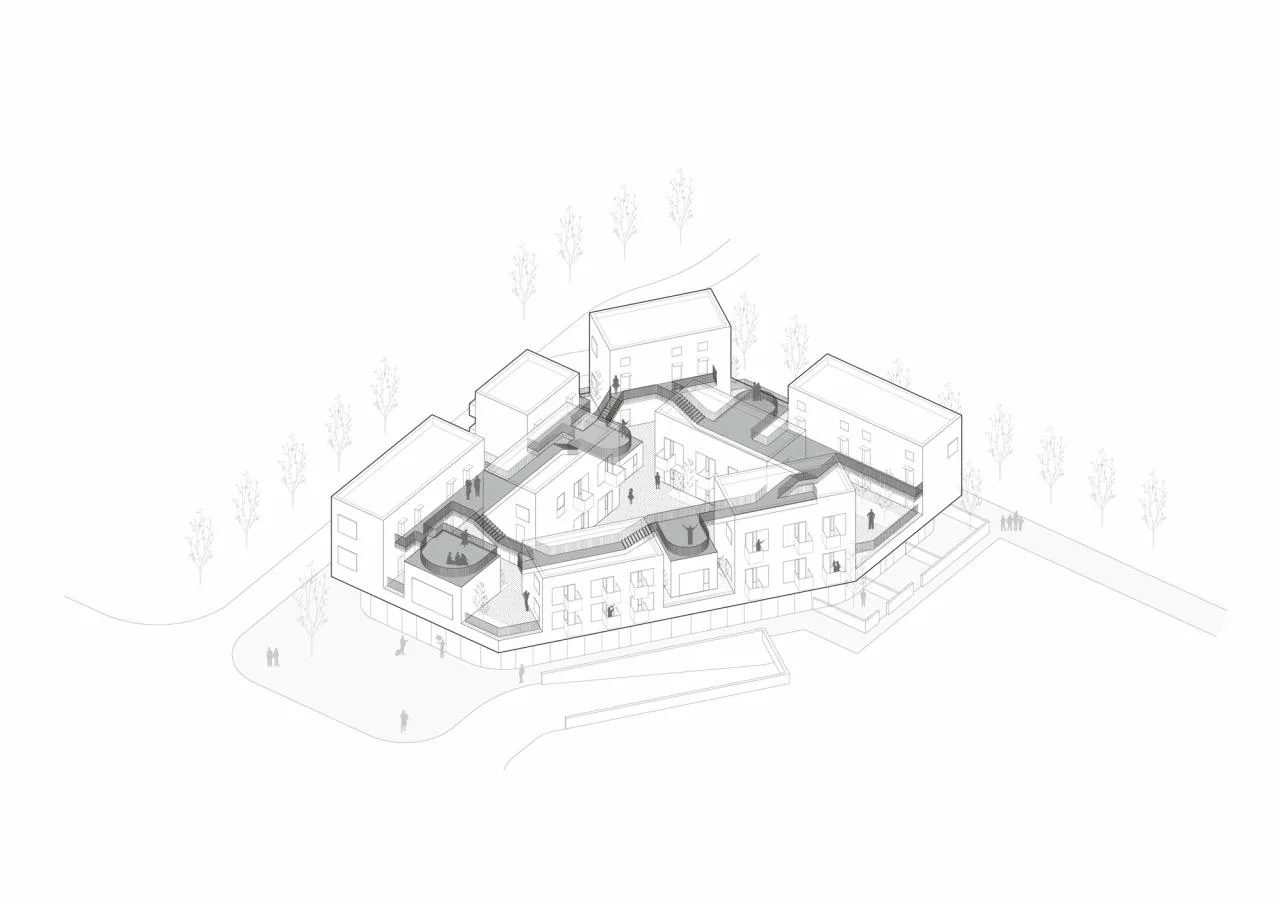
△ Roof streamline schematic
Project Information
Architectural Design: B.L.U.E. Architecture Studio
Area: 3,000 m²
Project Year: 2021
Photography: Ghana Yongyi
Design Team: Zhou Ping, Yang Zi Fujii, Ling Zi Liu, Nai Lun Chen, Mei Qing Le, Naixin Shi, Xuanjin He
Principal: theTang
Lighting Design: B.L.U.E. Architectural Design Firm
Location: Qinhuangdao, China















Must log in before commenting!
Sign Up