
The Dual Needs of Site Selection, Space, and Narrative
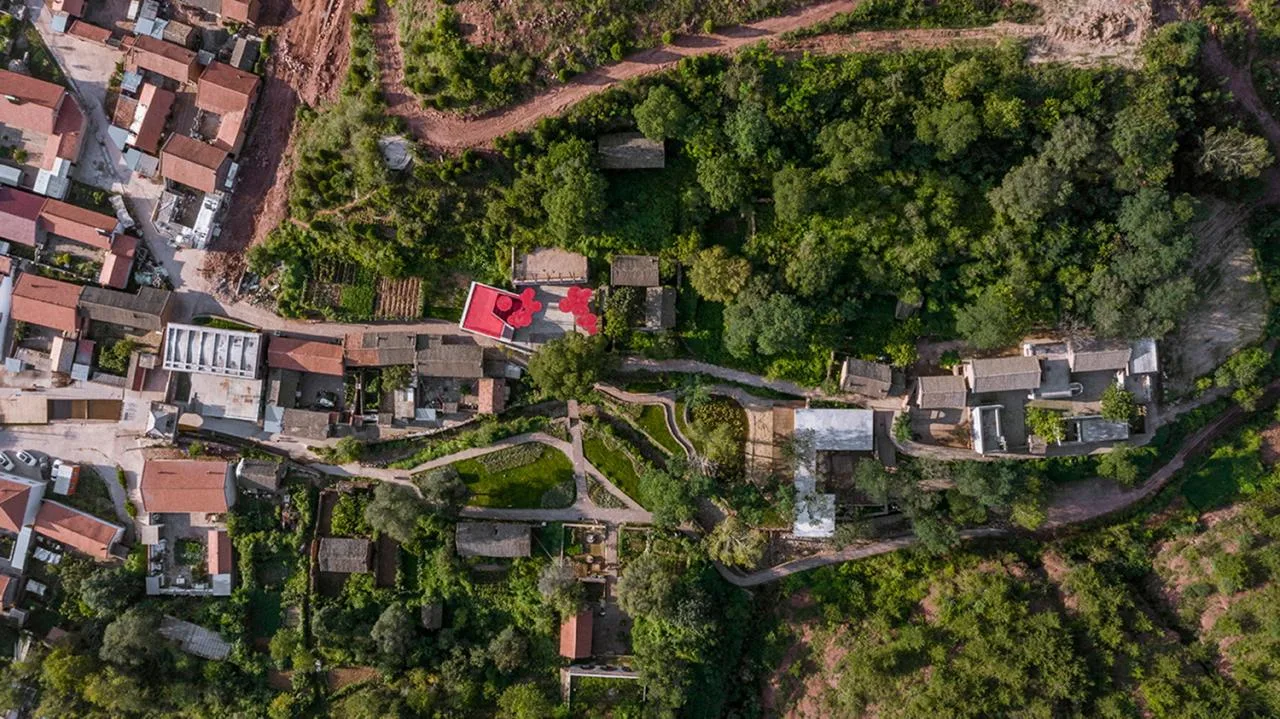
The project begins with a careful site selection process rather than a predetermined location, following the design team’s usual approach. The old village of Hanhonggou is shaped like a narrow shuttle, with this site positioned in the middle and rear of the village, adjacent to the village’s ditches and open spaces. Situated along the midline of the geographic axis, this site naturally becomes a visual focal point and the ideal spot to view the village’s central landscape.
Choosing to establish a leisure-oriented public building here mirrors the traditional Chinese garden practice of setting up pavilions as both scenic viewpoints and main landscape features.
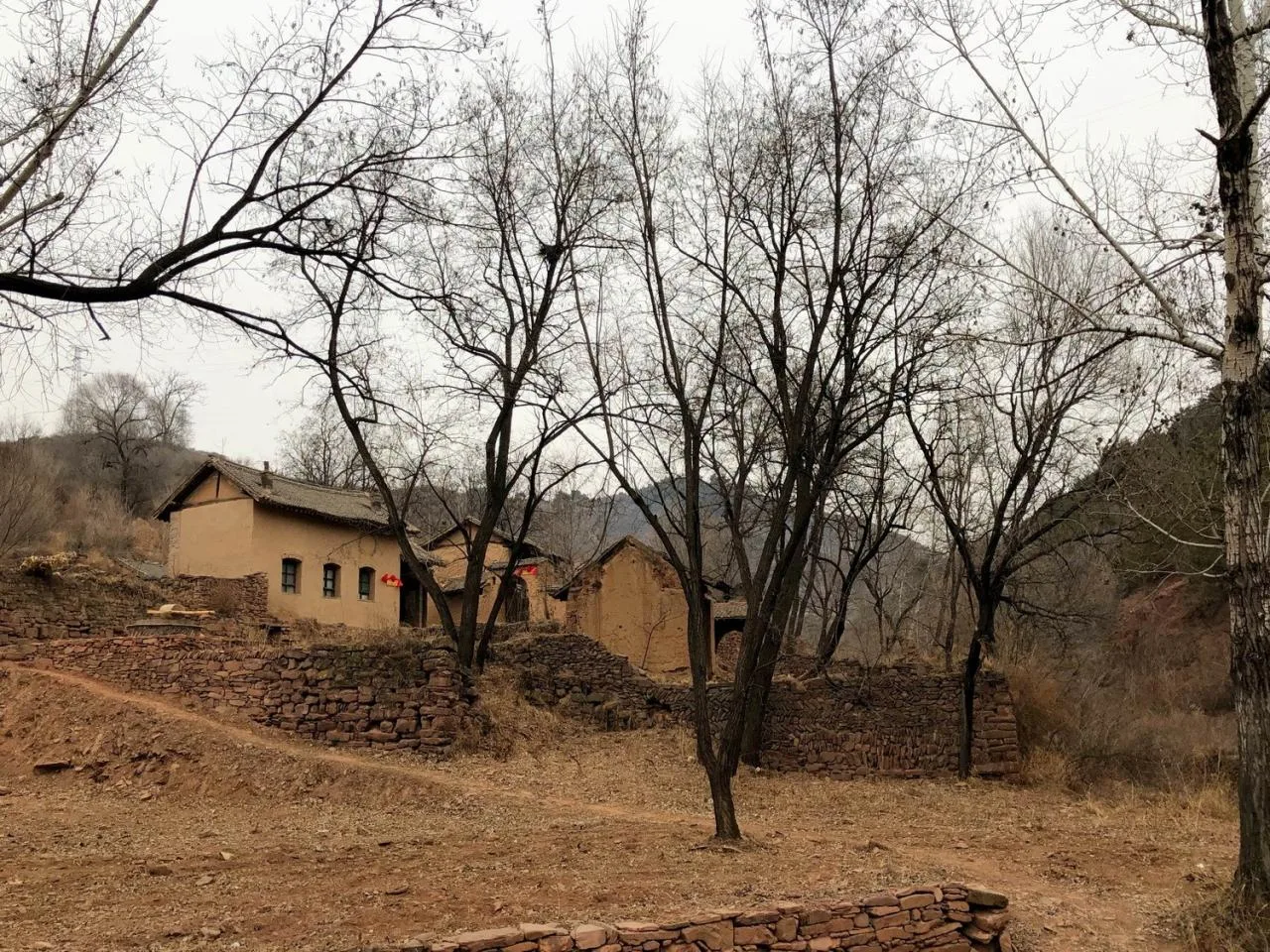
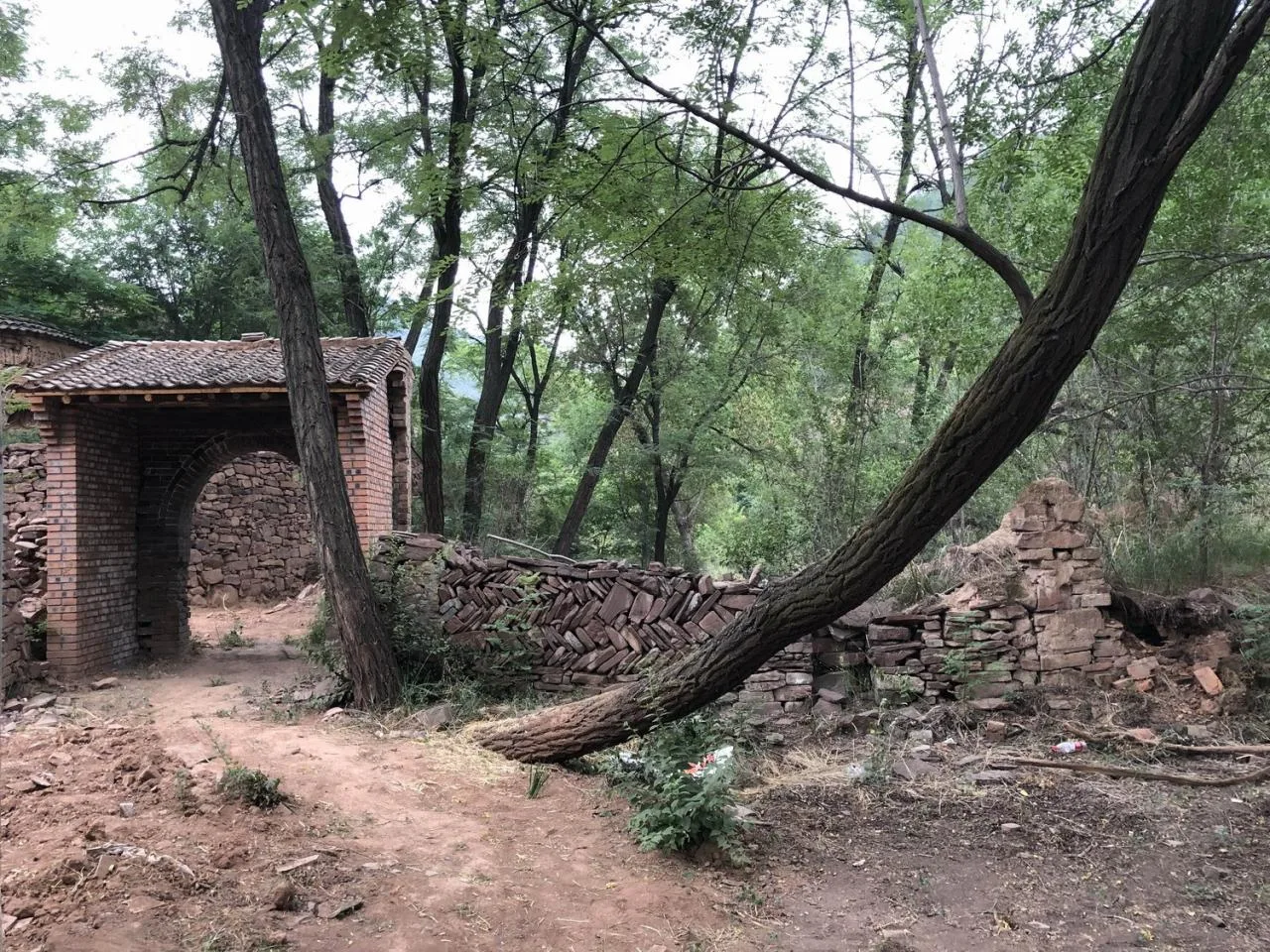
The site itself is an abandoned homestead within the village, rumored to have housed the Taiyue Military Region Firearms Repair Bureau during the Anti-Japanese War. Most original buildings have collapsed, leaving only half of the earthen houses and foundations intact. The existing courtyard gate was rebuilt later in line with local residential styles. The historical significance of the firearms repair bureau influenced the choice of this site and guided the subsequent design language.
Space Layout: Coexisting with Trees and Old Earthen Houses
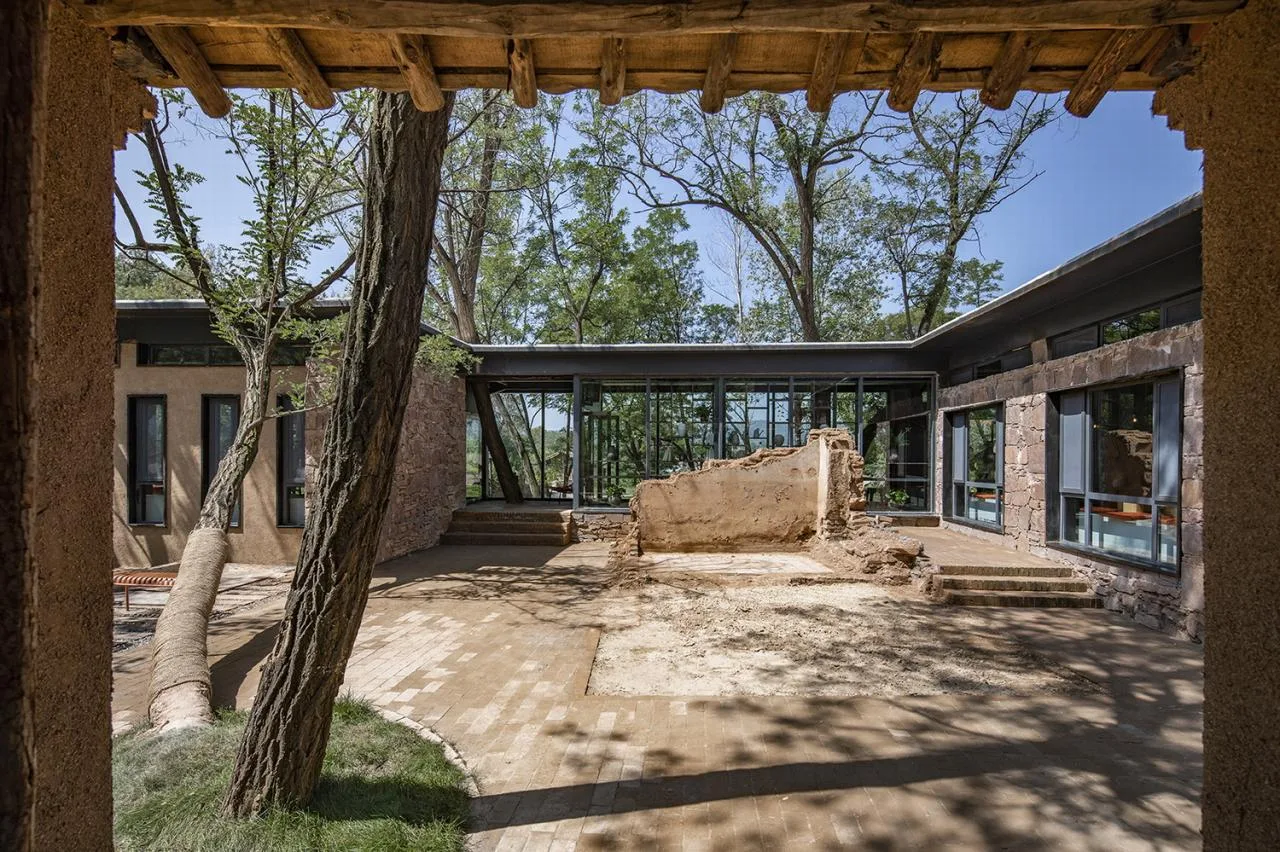
The most striking features on the site are the remaining half earthen houses and the irregular trees.
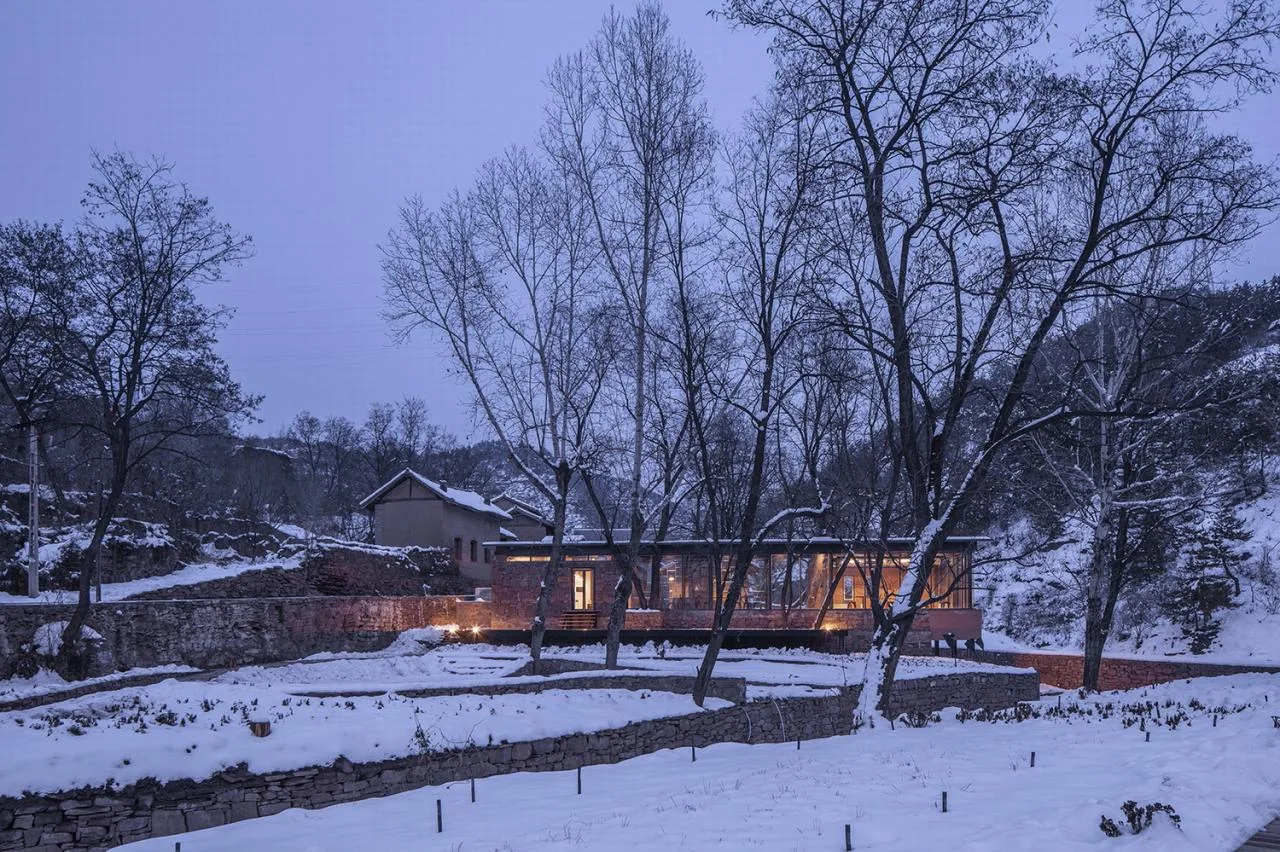
Half of the earthen house has collapsed, yet the remaining portion conveys a sense of time solidified, far from desolation. With all main houses in the courtyard reduced to foundations, the site’s trees have taken on a new visual and spatial significance. These trees, though not rare species, stand tall and slender with dark trunks resembling poles planted across the field, naturally becoming a foreground when viewing the site from a distance.
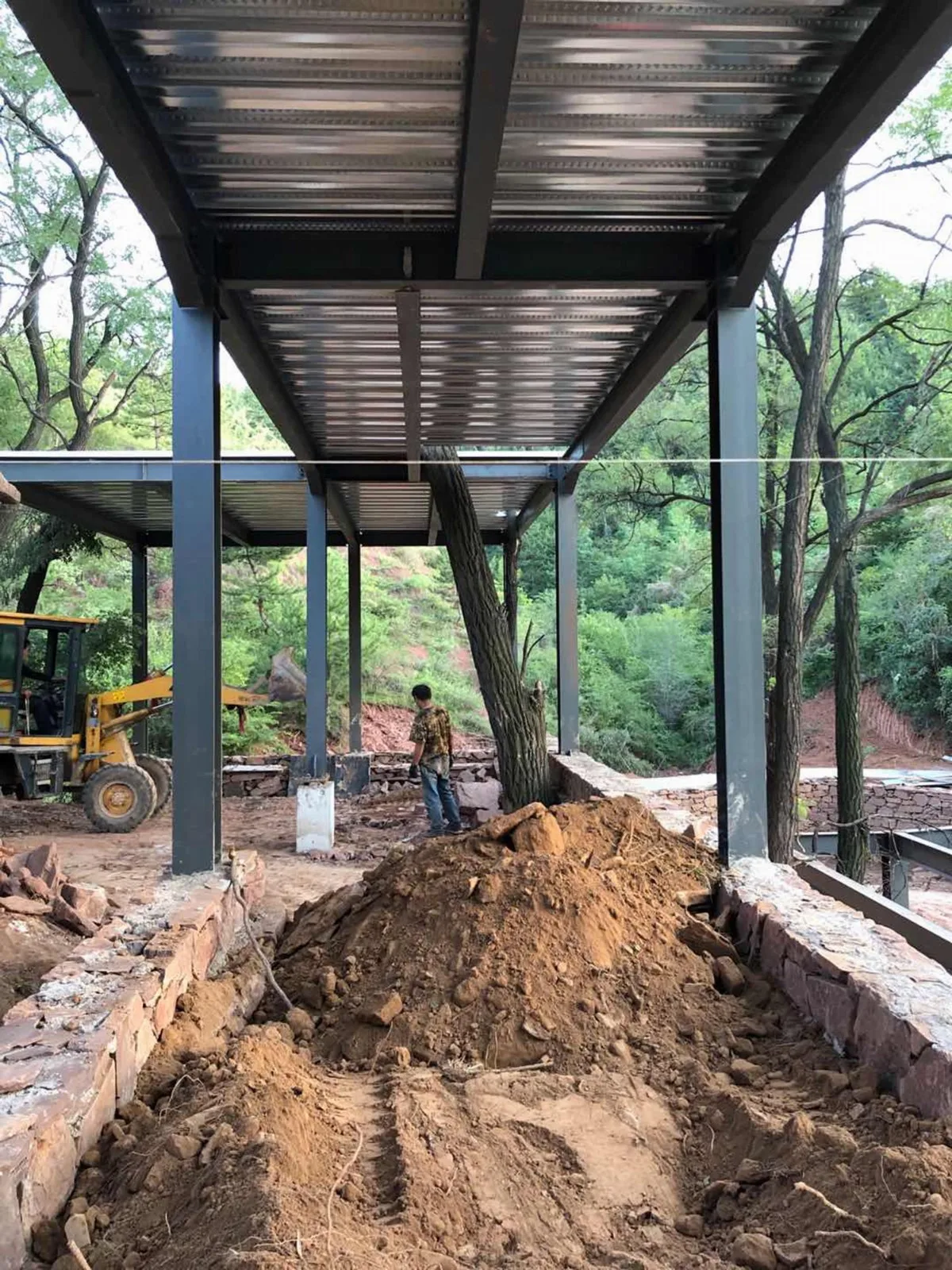
One standout is a heavily tilted tree at the site’s center, leaning nearly 30 degrees from the ground. This ‘rock tree’ introduces an almost unreal, sculptural quality, adding dramatic tension to the space.
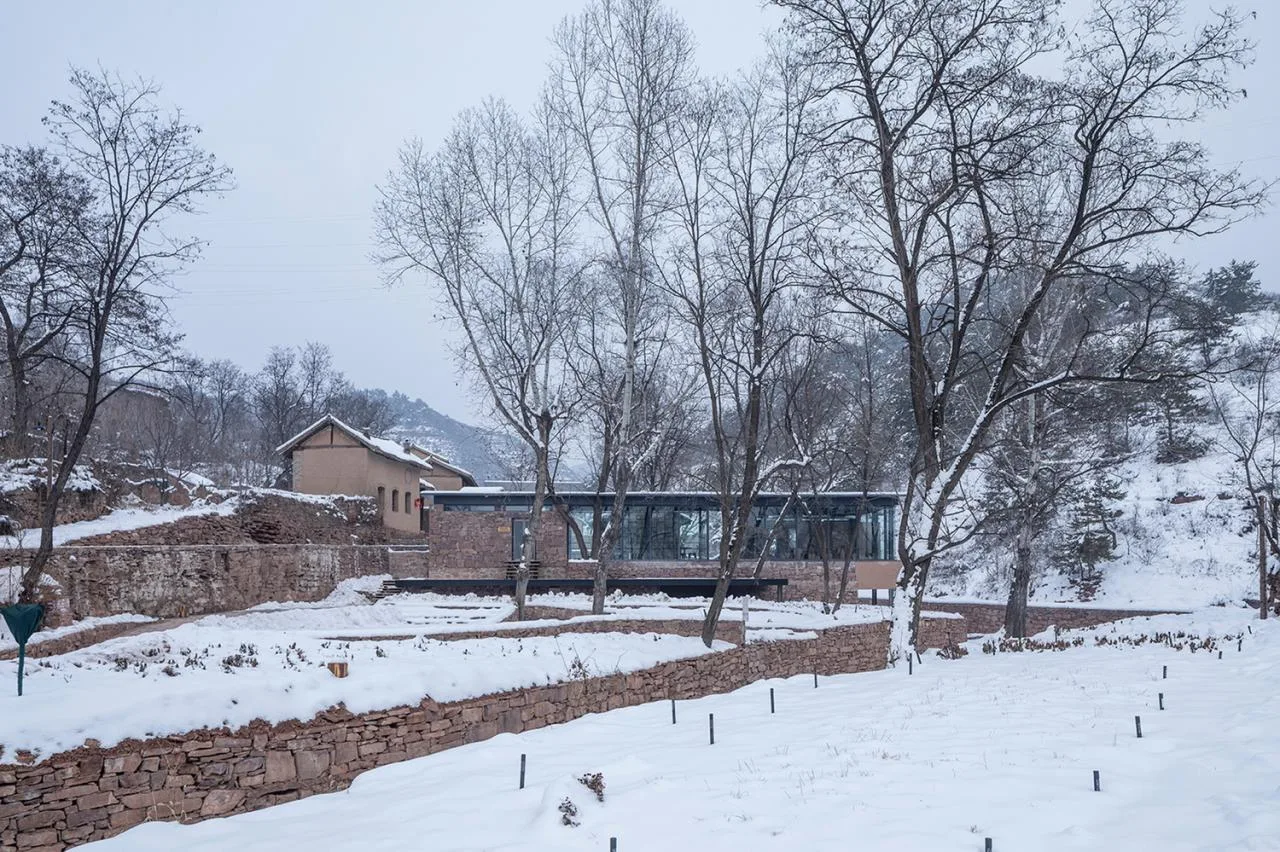
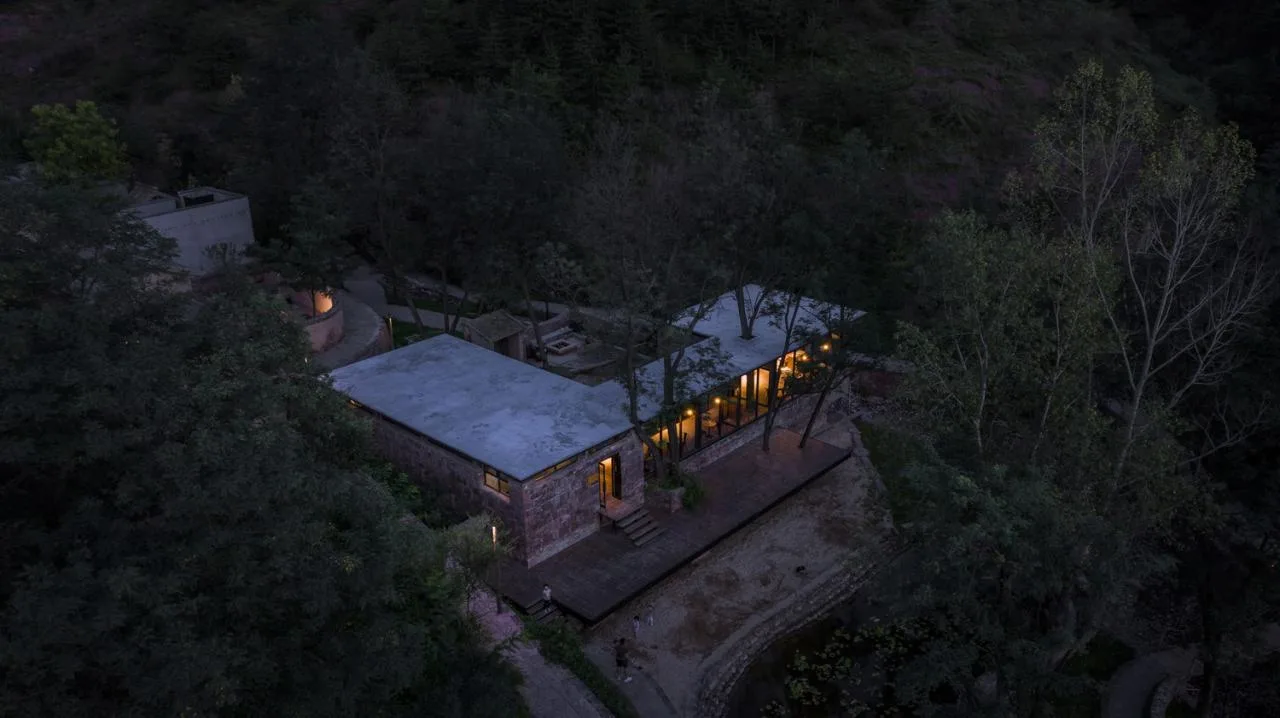
After thorough observation, the architect chose to preserve the half earthen house and the existing trees as foundational elements around which to build new spatial relationships. The new structure forms an L-shape, deliberately avoiding the old house and trees.
The inner side of the L embraces the half earthen house, partially enclosing it, while the outer side aligns with the row of vertical trees that create a silhouette in front of the building. The iconic tilted ‘rock tree’ remains preserved, still leaning toward the building. In the architect’s vision, children can playfully climb the angled trunk and jump down halfway, integrating the tree into childhood memories.
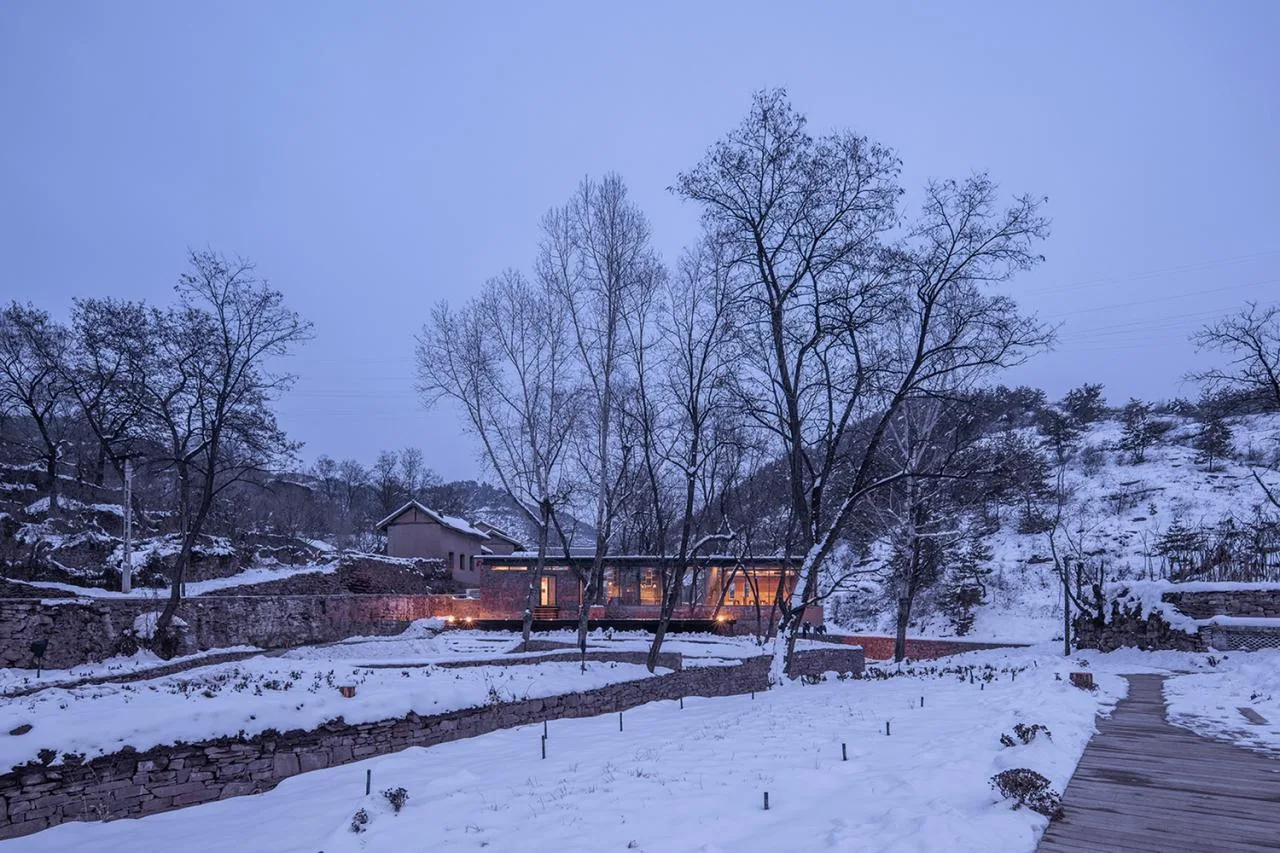
Upon completion, a symbiotic relationship was established between the old and new buildings, as well as between the structure and the trees, interweaving to create a renewed balance.
Architecture, Local Culture, and Modern Style Coexist
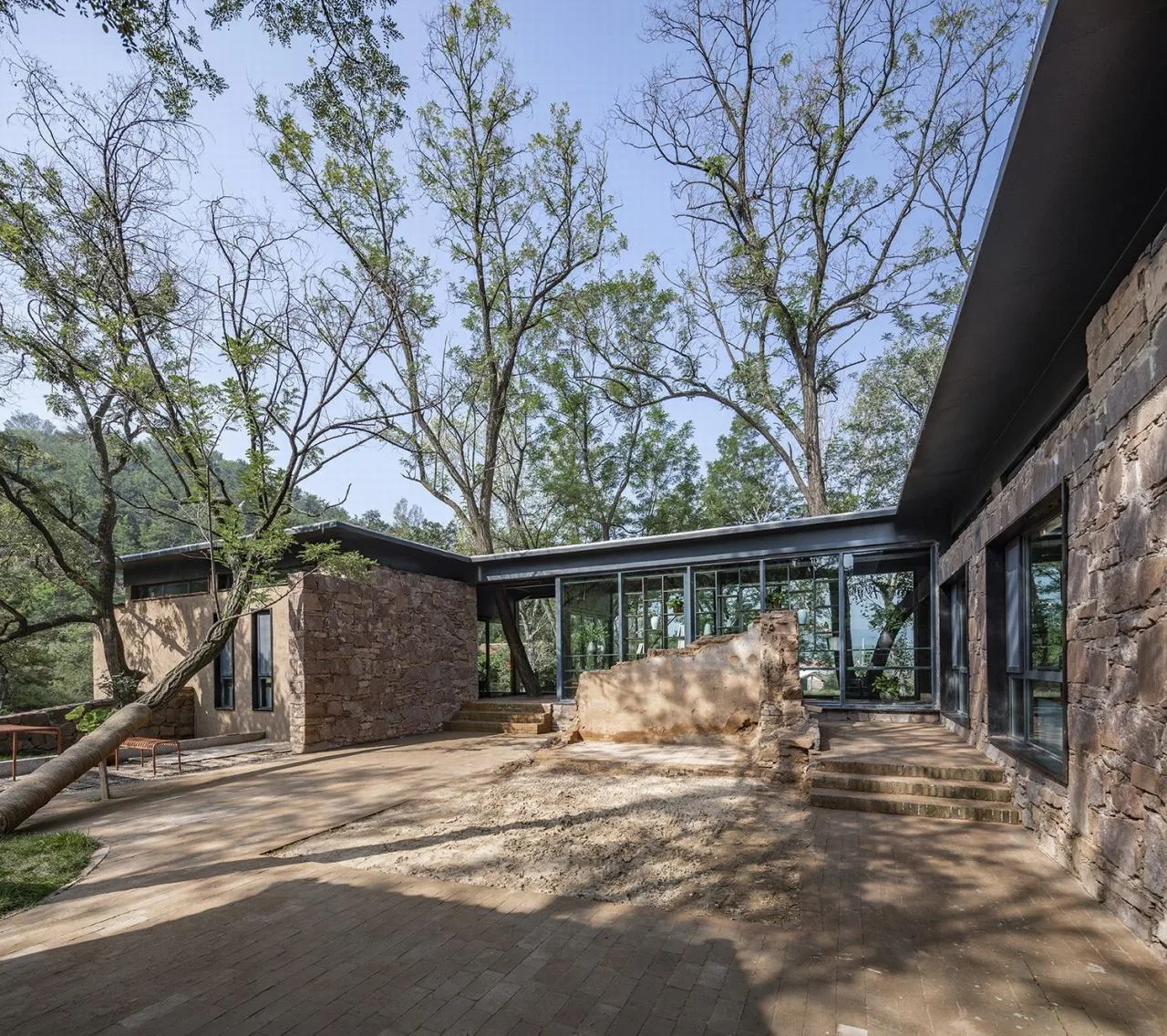
The single-story building emphasizes horizontal expression: its flat roof, outdoor platforms, and overhanging eaves create a spacious appearance. From afar, the horizontal lines of the building intersect with the vertical lines of the trees, forming a cross-like visual connection that strengthens the bond between architecture and nature.
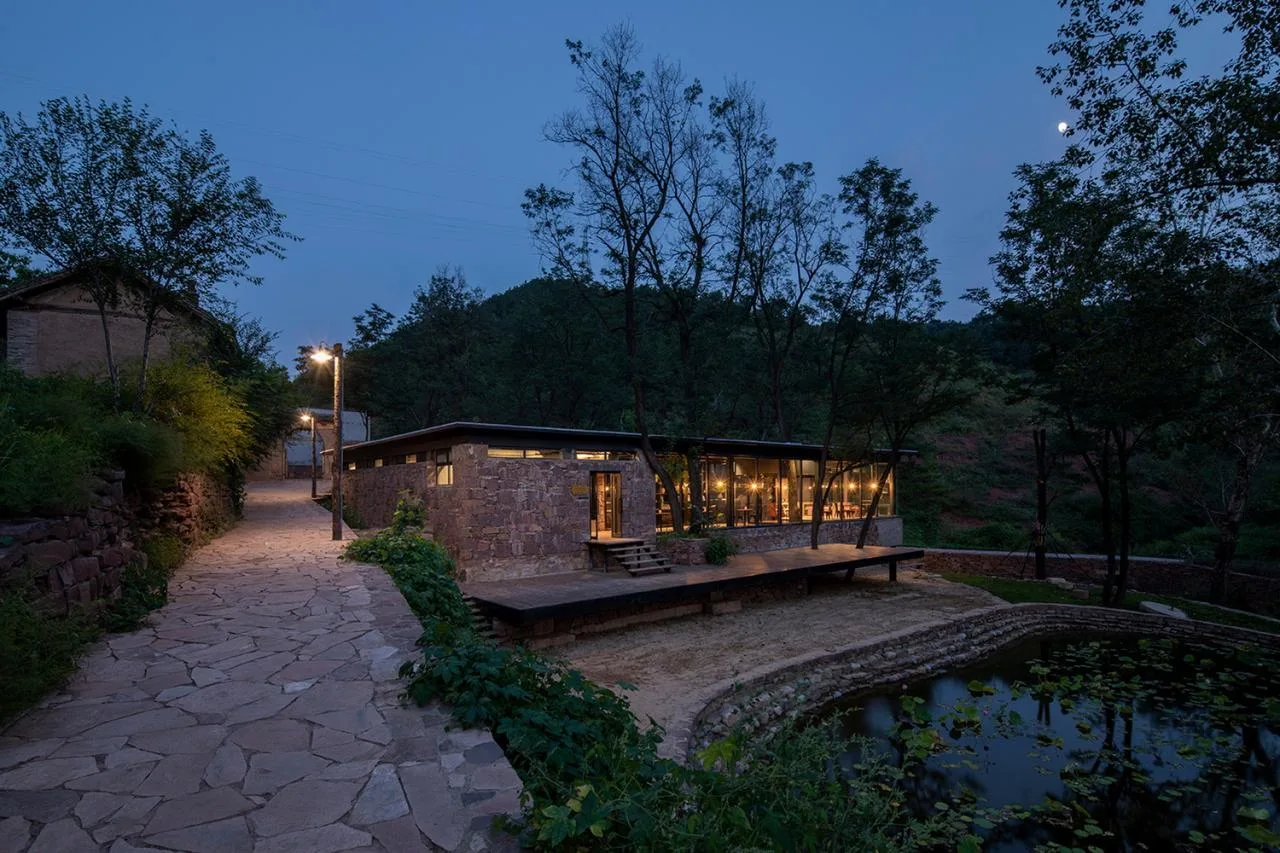
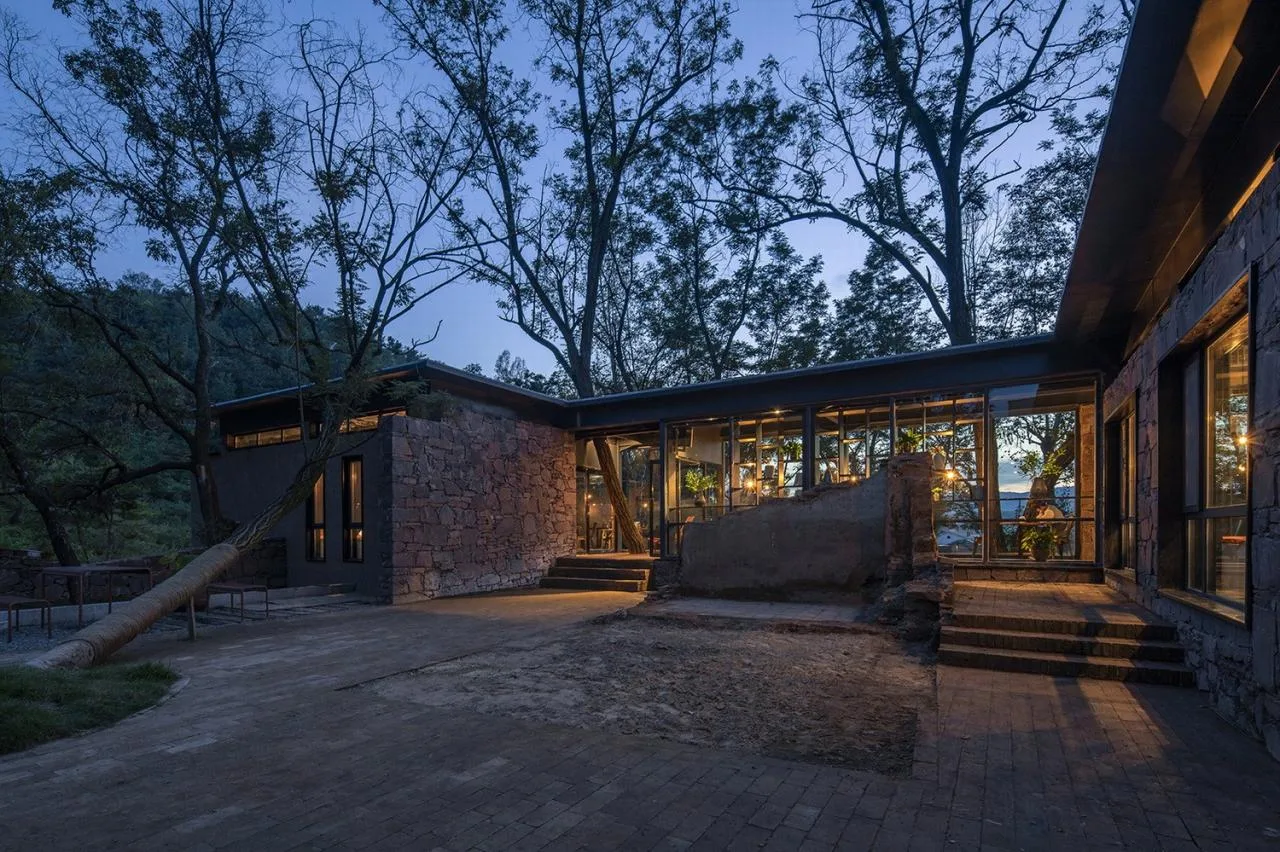
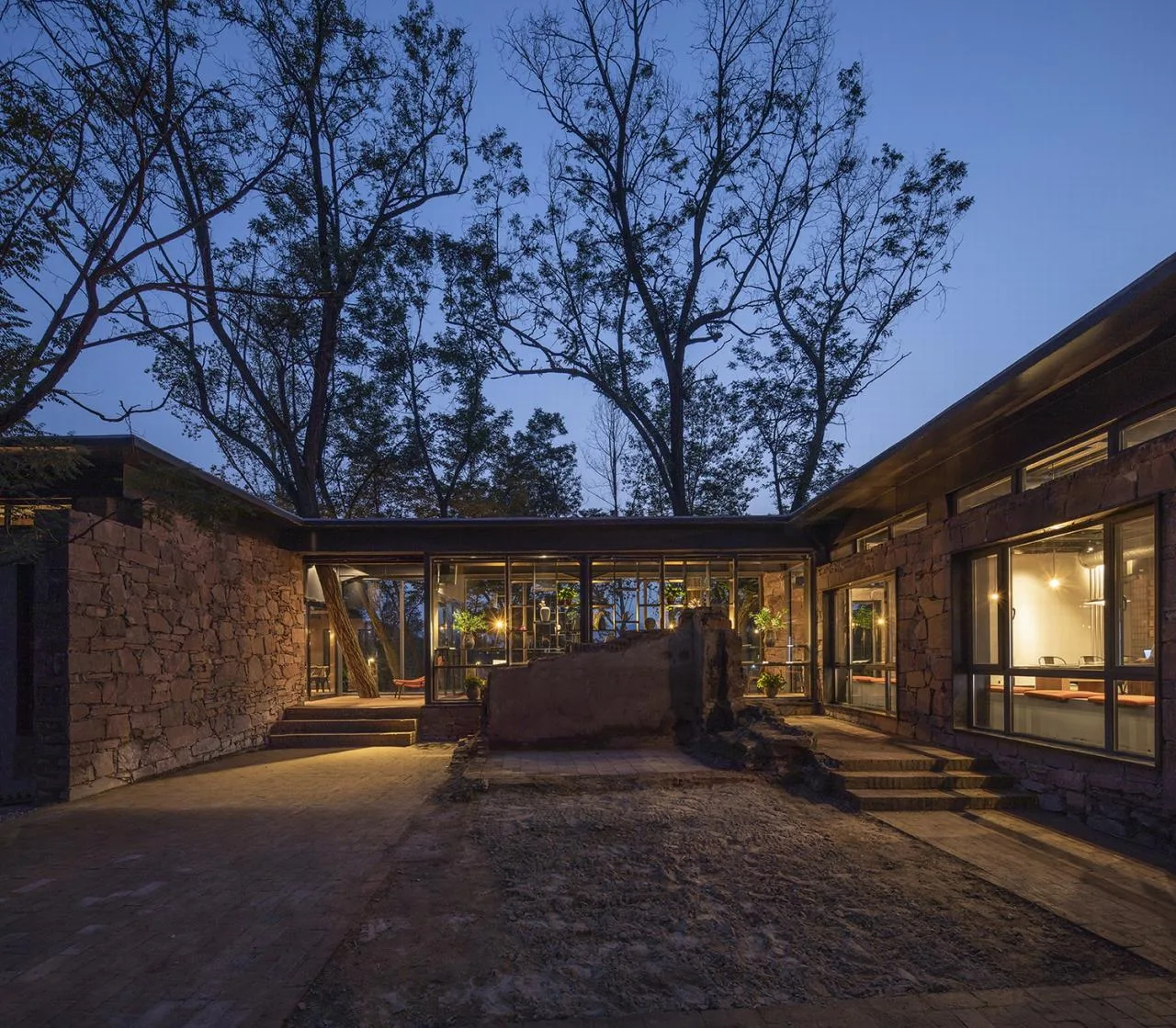
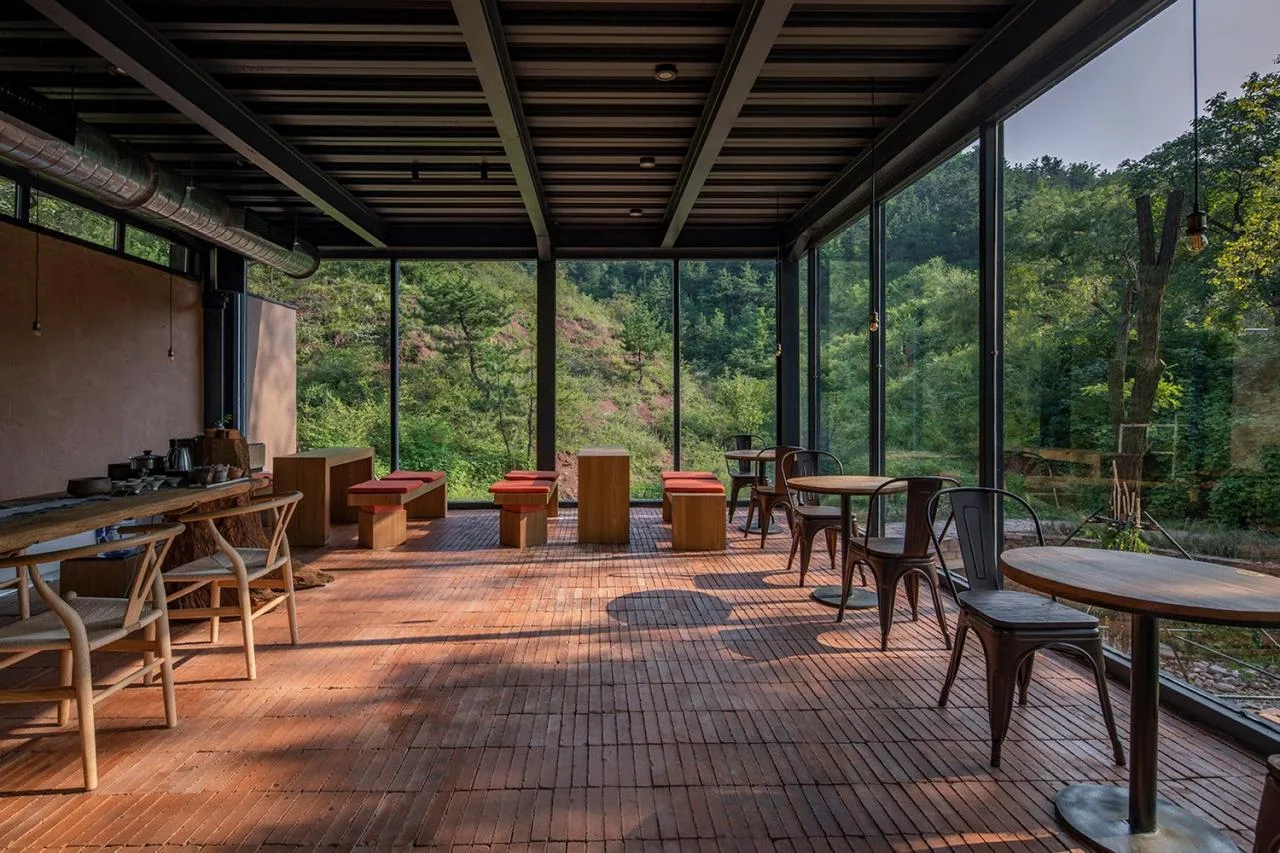
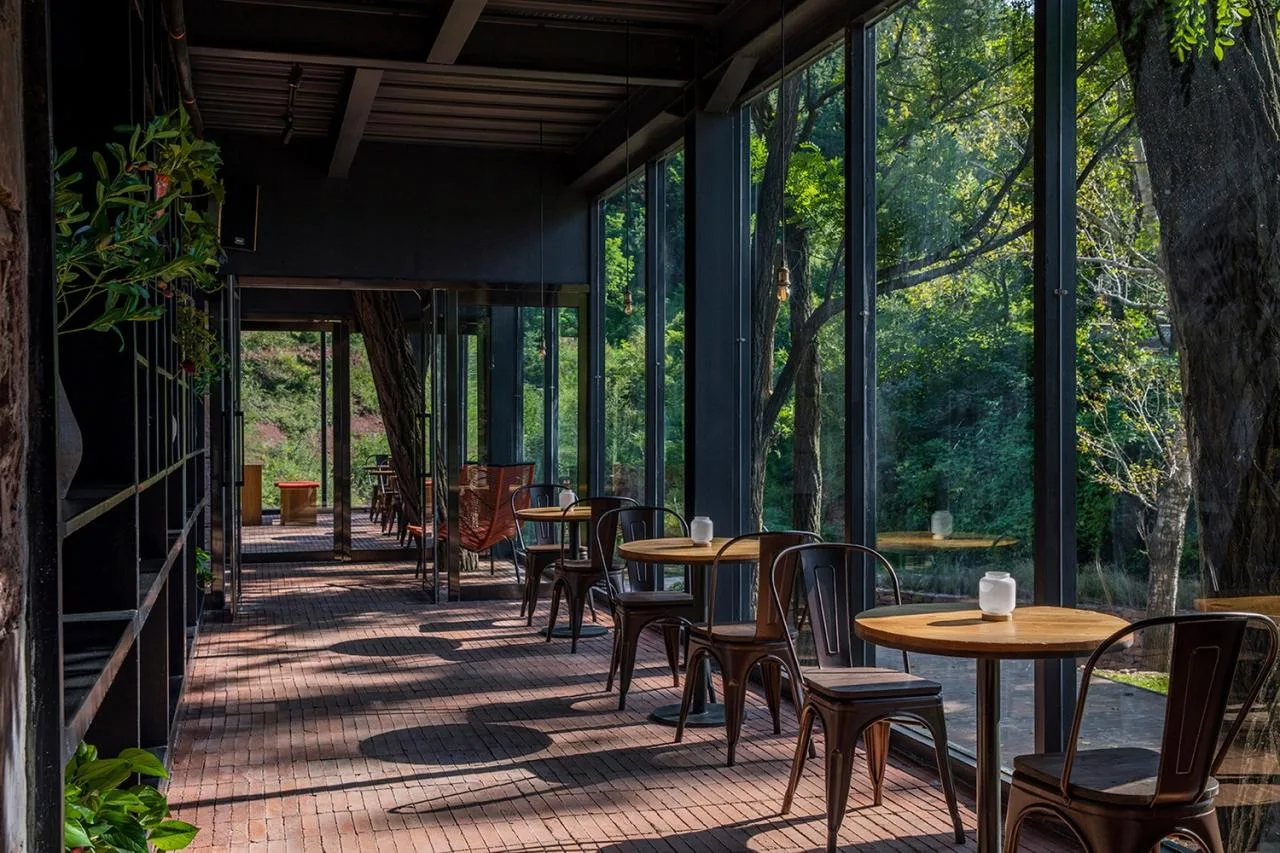
The building’s facade responds to sightlines and landscape logic. The exterior facing the central landscape is partially open, featuring floor-to-ceiling glass that invites the outdoors inside. Transparent materials soften the boundary between building and environment, allowing vision to flow seamlessly between indoor and outdoor spaces.
The road-facing facade is more enclosed, constructed using traditional local stone carving techniques. The inner courtyard side centers on the half earthen room, with adjacent floor-to-ceiling glass, while the facade opposite the old house is mainly solid walls.
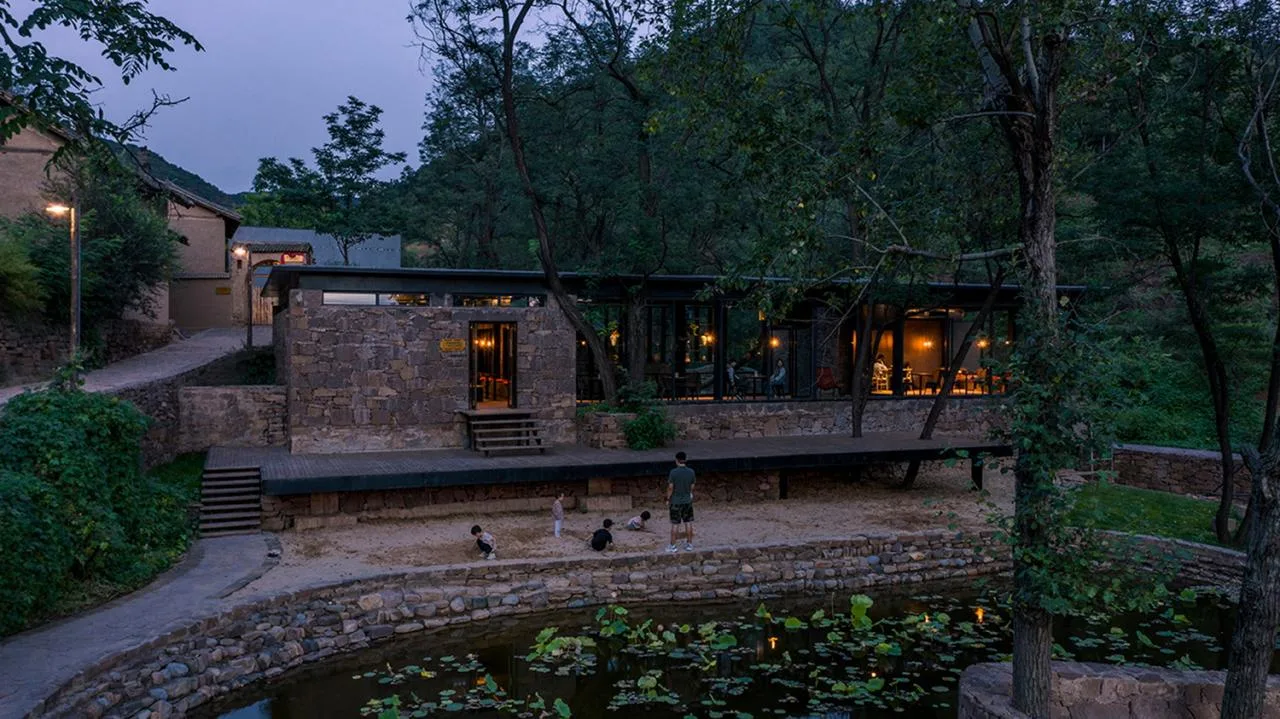
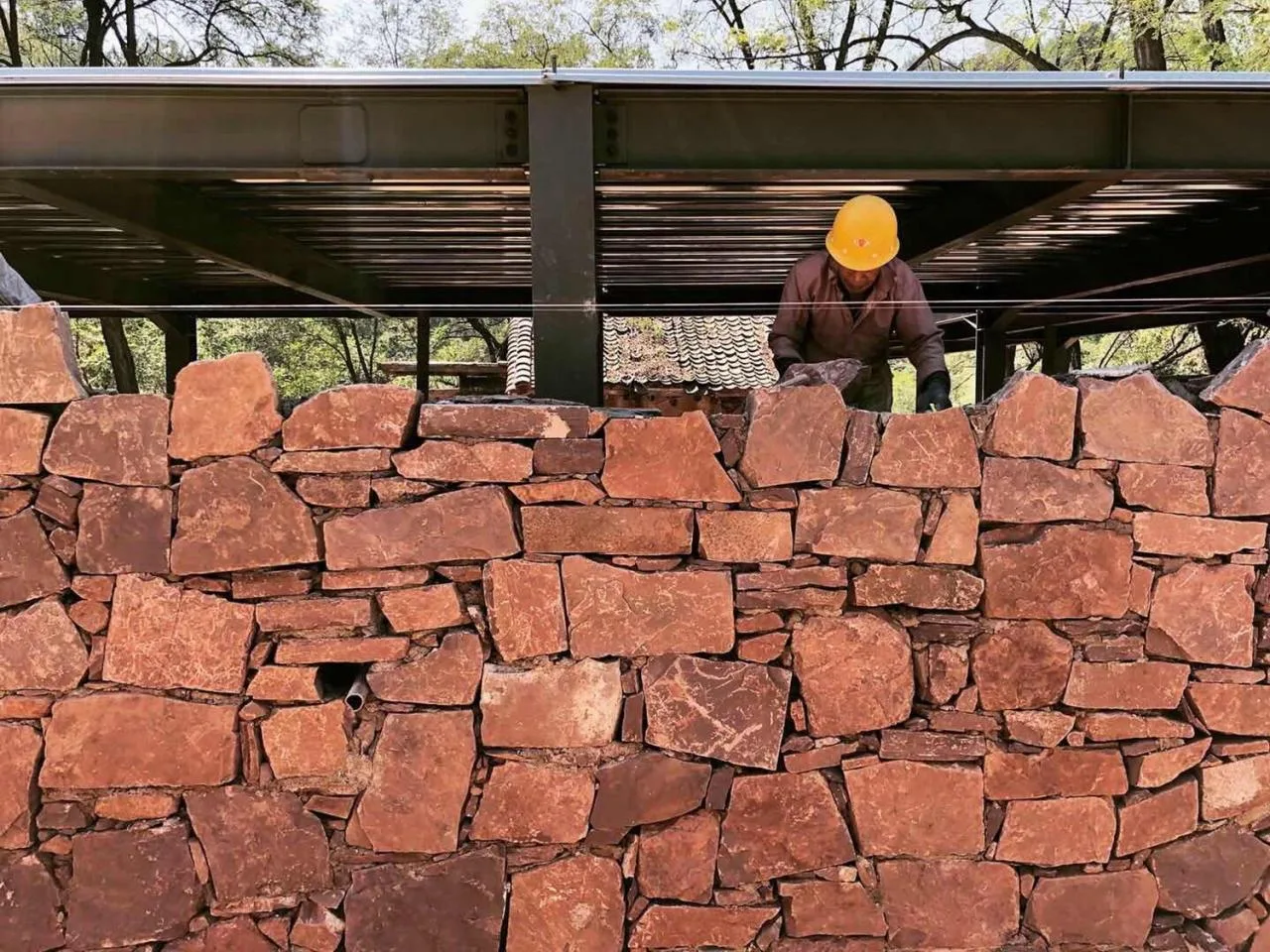
The building’s main structure is steel, with glass and rubble used for the exterior finishes. Steel construction allows for rapid building while minimizing impact on the trees. The use of rubble masonry (Maoshi) reflects traditional local architecture, creating a temporal and spatial connection between new construction and its surroundings.
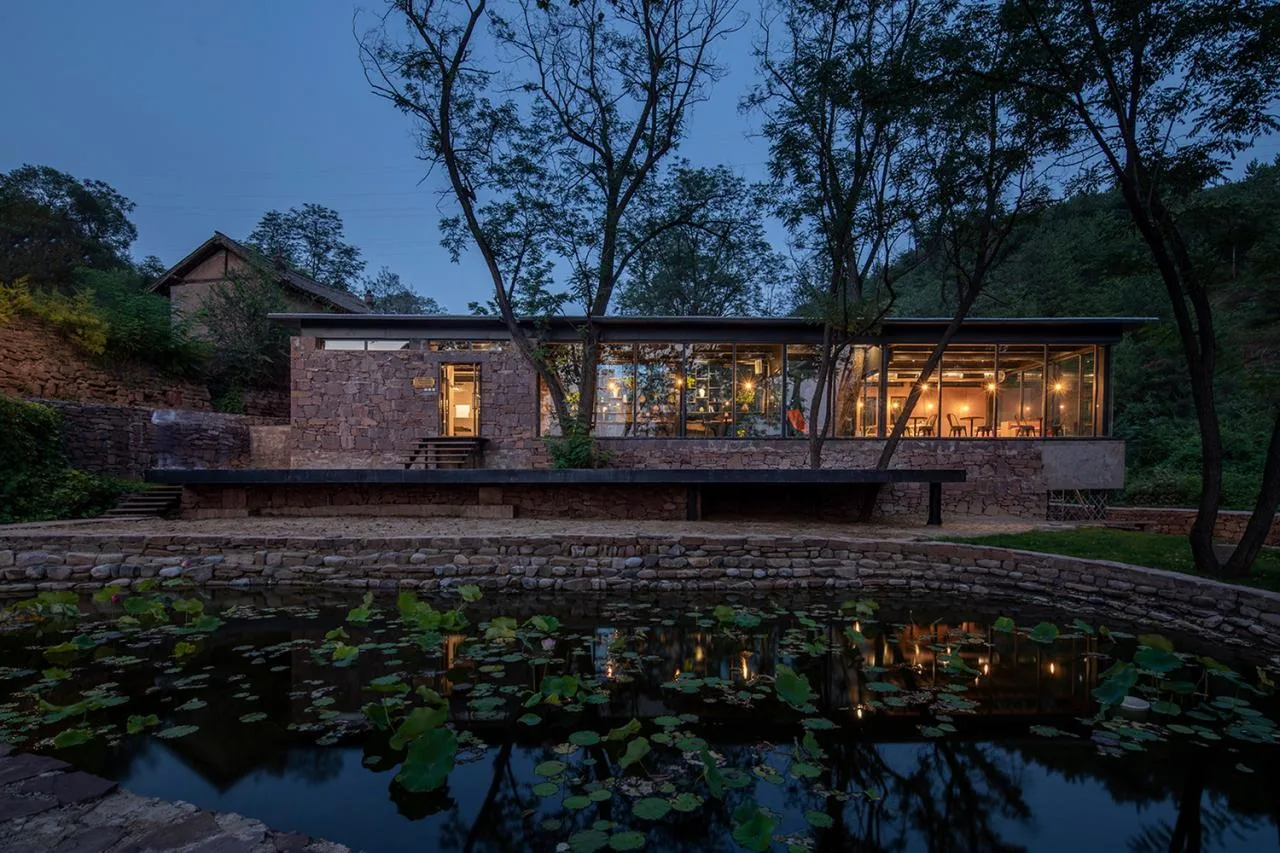
Functionally, the new building serves as a coffee shop and water bar, providing the main public leisure area for guests staying at the Hanhonggou homestay. To protect the site’s trees, the interior is divided into two zones separated by a semi-open grey space, with a tree growing through the middle.
This new building not only welcomes external visitors but also injects vitality and a modern flair into the historic village.
Interior: Rugged Yet Inviting
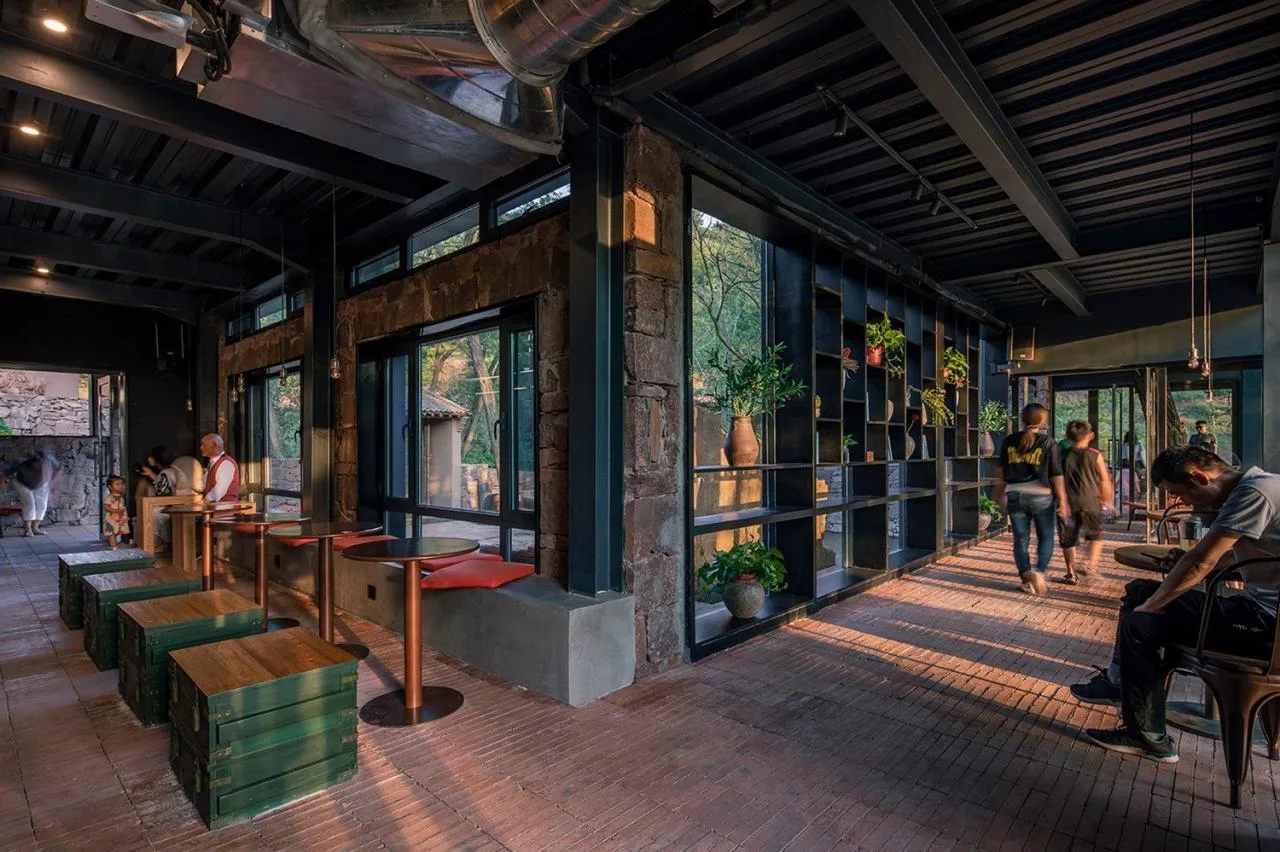
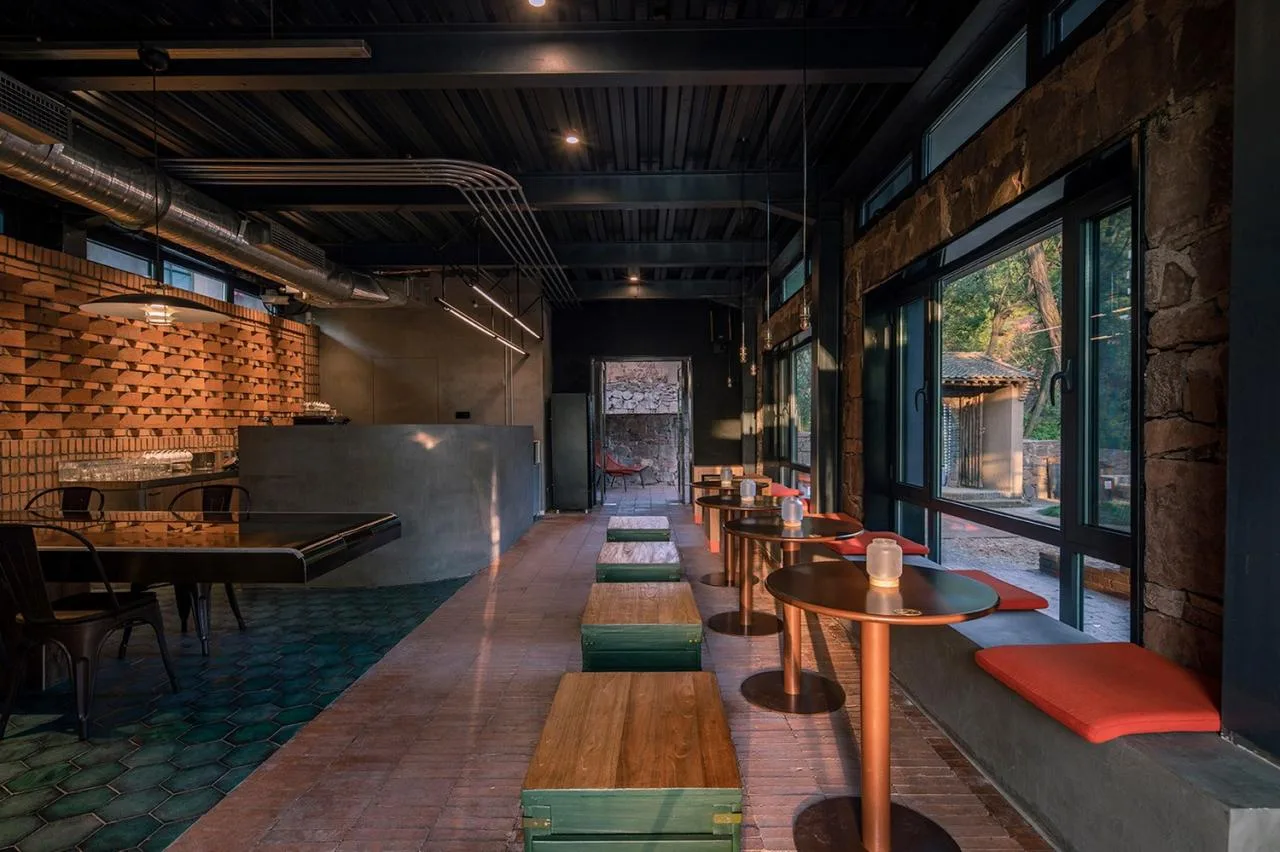
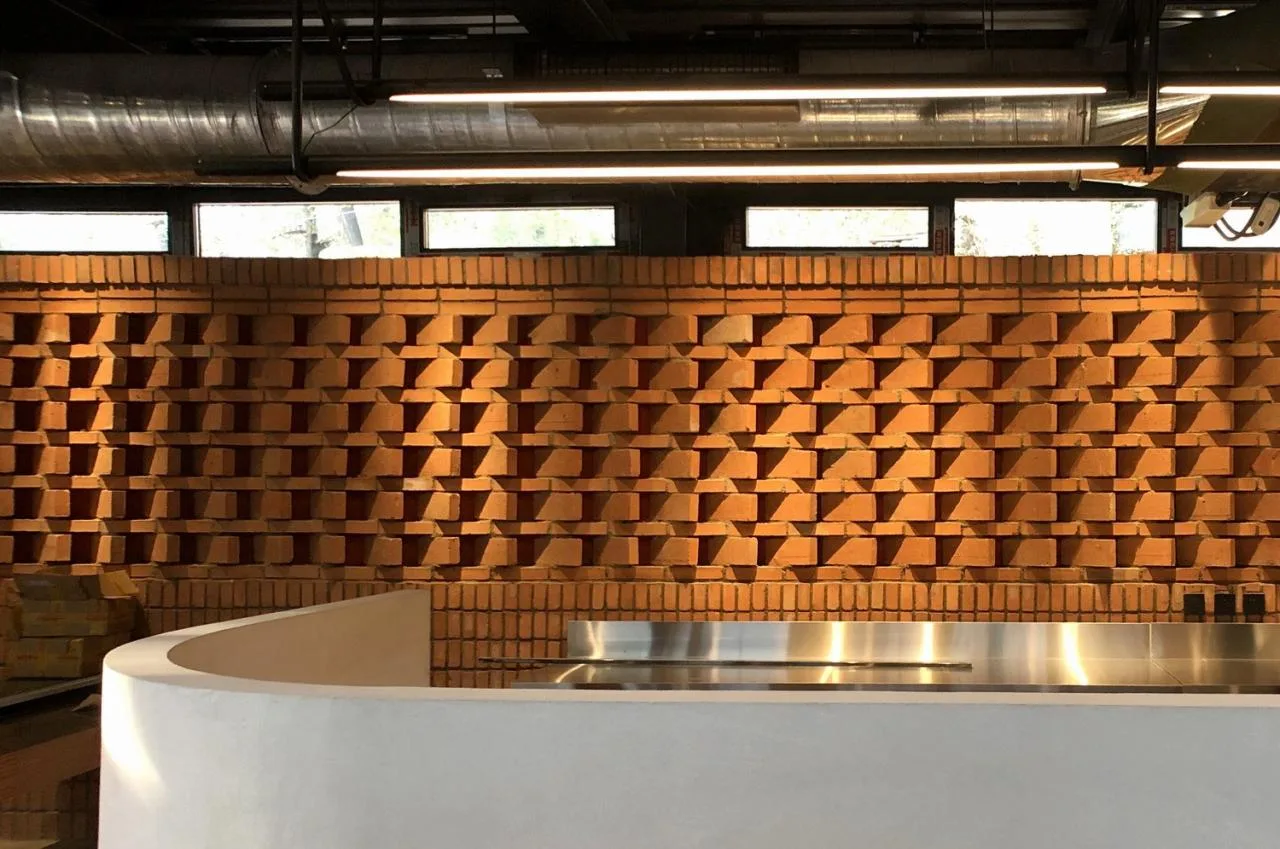
Given the building’s origin as a gun repair bureau during the Anti-Japanese War, the interior design naturally embraces a military theme. The space is straightforward, avoiding elaborate luxury. Floors and walls are predominantly red brick, chosen for their scale, semi-handmade texture, and warm tactile quality that balances the coldness of steel and glass.
Olive green glazed tiles are used selectively on the floor to create color and texture contrasts with the bricks, enlivening the atmosphere. Cement plaster finishes on the bar counter and fixed seating complement the industrial-style tables and chairs, ammunition box-inspired stools, and exposed ceiling pipes, all contributing to a rugged, utilitarian feel.
Lighting employs bare bulbs casting warm yellow light with slight glare, reinforcing the space’s relaxed and casual identity.
Outdoor Spaces Catering to Diverse Needs
The building’s outdoor area consists of two main parts: a courtyard and a wooden platform space.
The courtyard is modest in size, with the new building occupying its northwest corner. The grey space at the building’s entrance offers outdoor seating options. The old earthen house and ‘rock tree’ stand at the center of the courtyard, serving both as a visual focal point and a playful spot.
In the courtyard’s southeast corner, a barbecue pit and seating area accommodate gatherings and outdoor grilling. At night, guests can enjoy grilled skewers, beer, and starry skies in a relaxed atmosphere.
On the west side of the new building, next to the pool, there is an outdoor wooden deck and sandpit. The deck provides additional outdoor seating, while the sandpit offers a playful paradise for children.
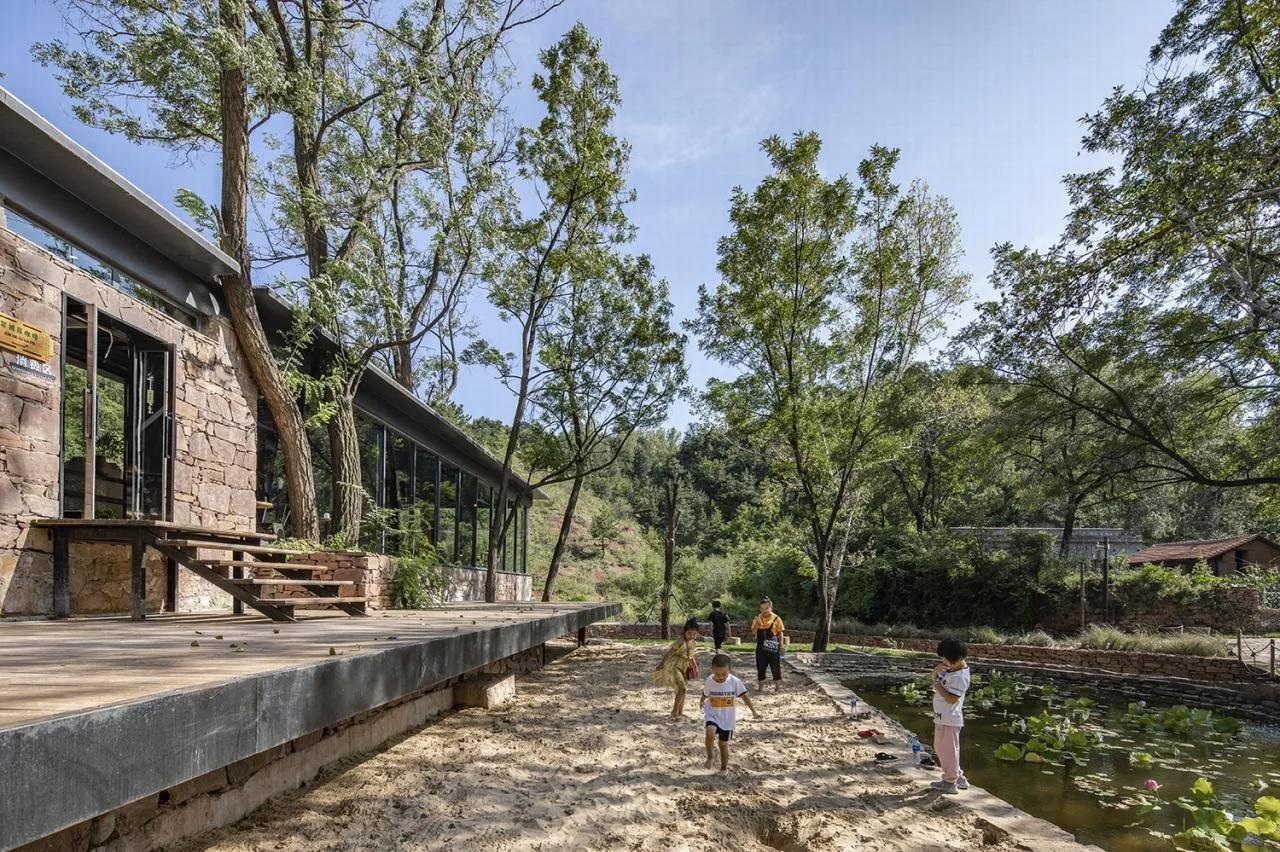
Unexpected Challenges: Damage to the Old House
The coffee shop construction was completed in July 2020, followed by trial operations welcoming customers. However, Qinyuan County soon faced a rare rainy season lasting nearly two months, causing many old earthen houses in the village to deteriorate and collapse due to leaking roofs.
The old earthen house in the café’s courtyard was also affected. By the end of August, workers noticed cracks at the corners and walls beginning to tilt. Despite efforts to repair the damage, the cracking and leaning persisted. For safety reasons, the roof and some walls had to be dismantled.
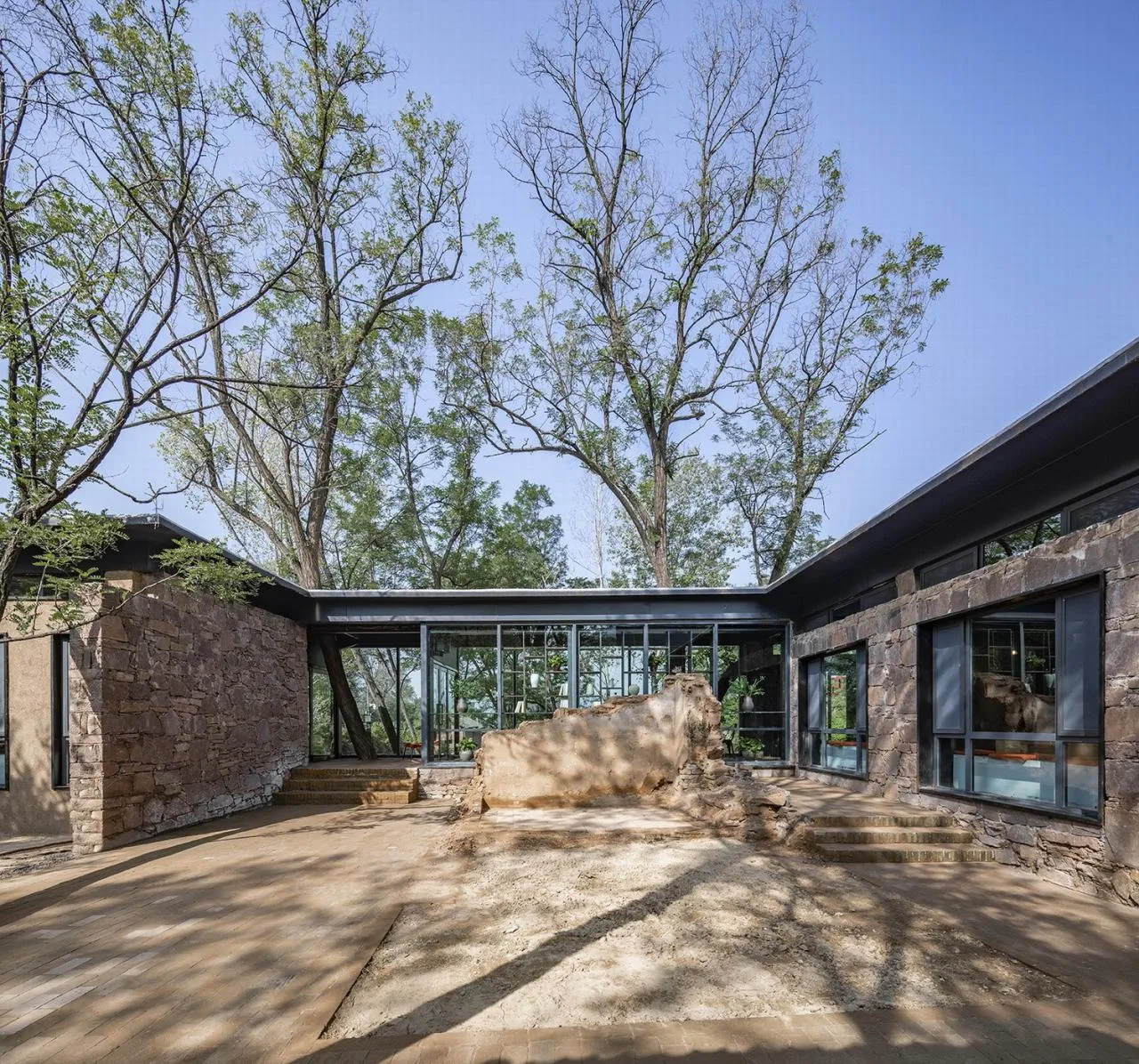
The traces of the old earthen house were not entirely lost. At the architect’s request, the lower half of the earthen wall was preserved, transforming into a play area for children alongside the sandpit. The lowered walls unexpectedly revealed the new building and created a more comfortable courtyard space.
Though future plans include protection and reuse of the old earthen walls, this current state was unplanned—an architectural coincidence reminding us that sometimes, loss opens new possibilities.
Project Drawings
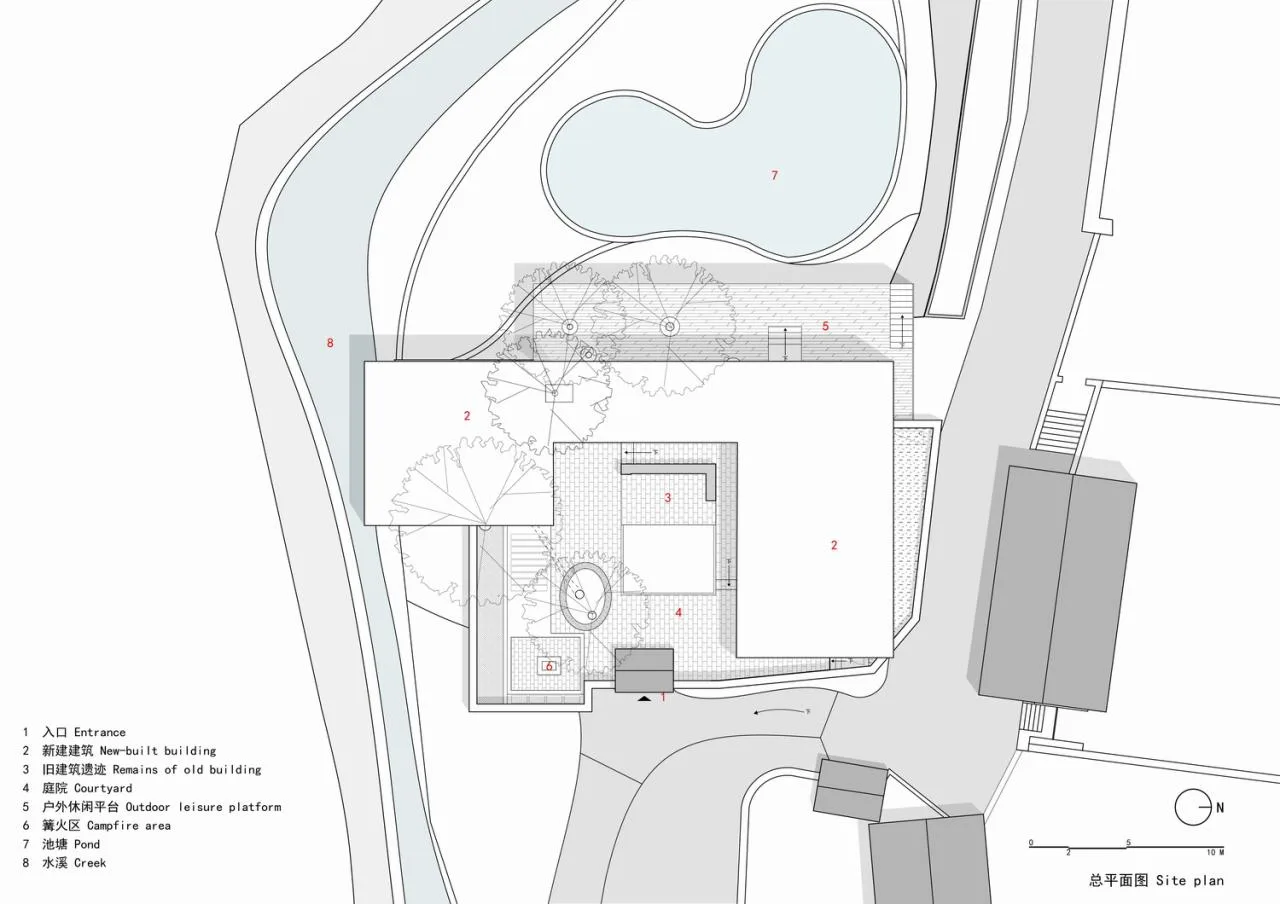
△ General Layout Plan
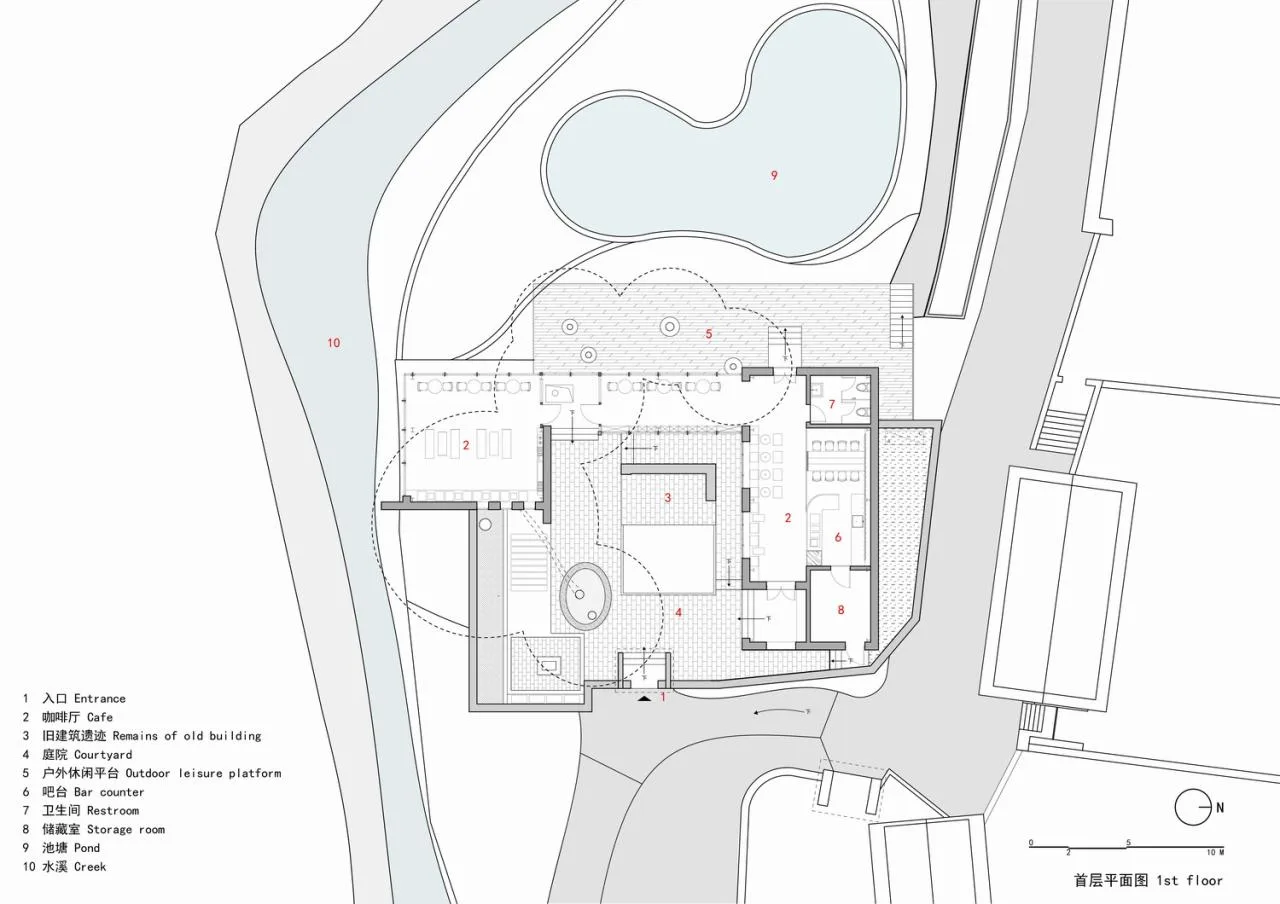
△ Plan View
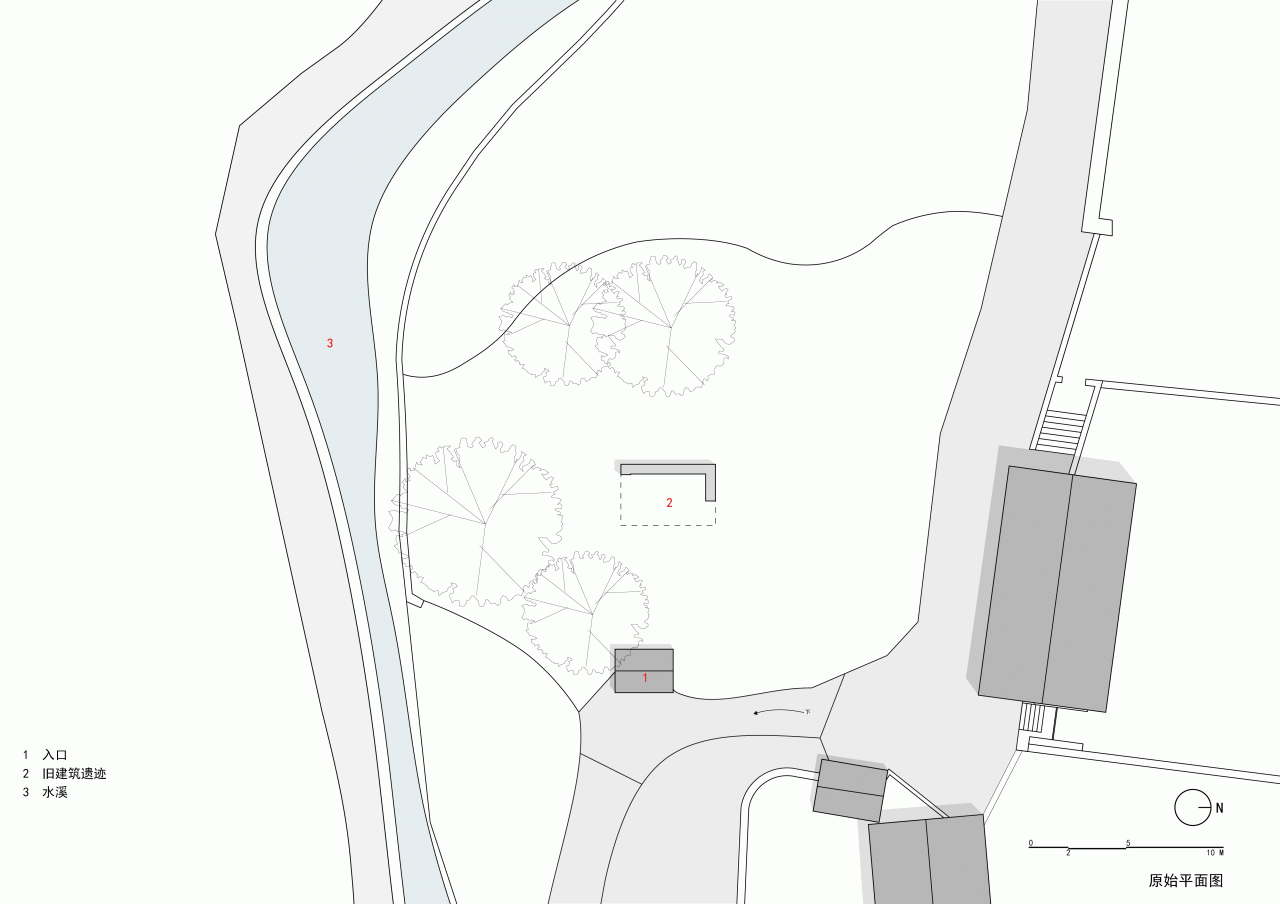
△ Generation Diagram
Project Information
Location: Hanhonggou Village, Qinhe Town, Qinyuan County, Shanxi Province
Owner: People’s Government of Qinhe Town, Qinyuan County
Architecture and Interior Design: Three Culture Architecture
Lead Architects: He Wei, Chen Long
Team Members: Liang Zhuyu, Sang Wanchen, Liu Mingyang, Cao Shiqing, Zhao Xinze, Li Junqi, Zhang Haoran (Intern)
Project Consultants: Zhou Rong, Lian Yirui
Resident Engineer: Liu Weidong
Design Year: 2019
Construction Year: 2020
Building Area: 170 square meters
Photography: Jin Weiqi, Sanwen Architecture















Must log in before commenting!
Sign Up