
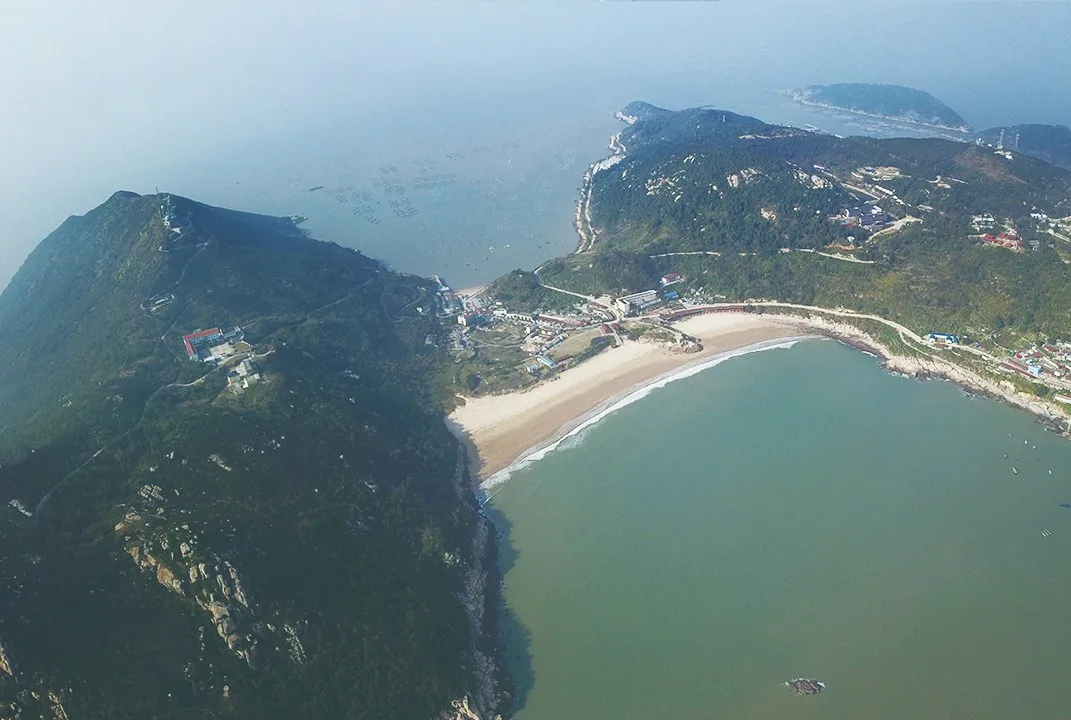
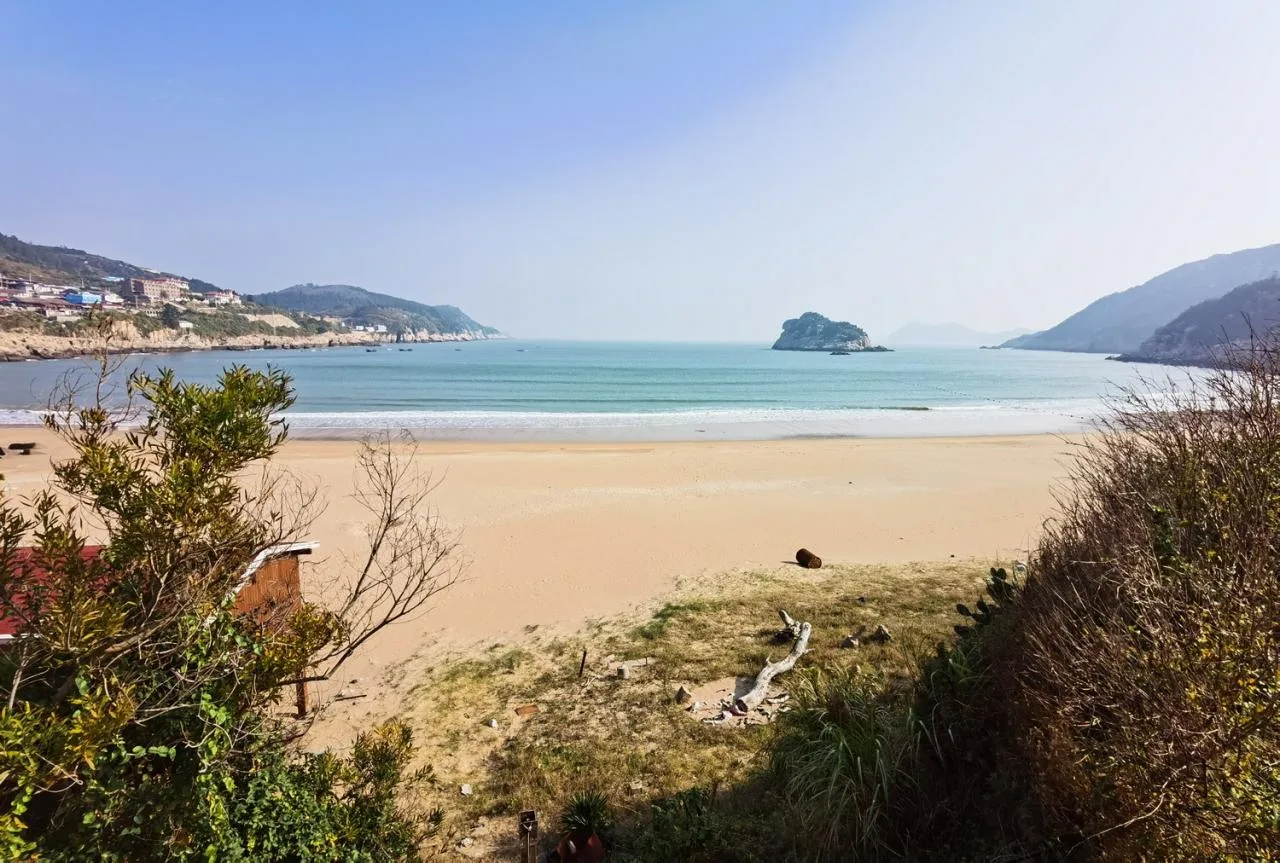
The Sea Slug Hotel is a central feature in the development of Zhejiang Nanji International Tourism Island, located in the East China Sea. It is positioned on a saddle-shaped landform that connects the Nanji Island Shellfish Nature Reserve to other parts of the island. Historically, this low-lying area was covered with sand dunes and faced the sea on both sides. The term “Ao” is commonly used for bays along the Fujian and Zhejiang coasts, which is why this spot is called “Dasha Ao”. Dashaoao is popular with local tourists for its fine texture and crystal-clear white shell sand.
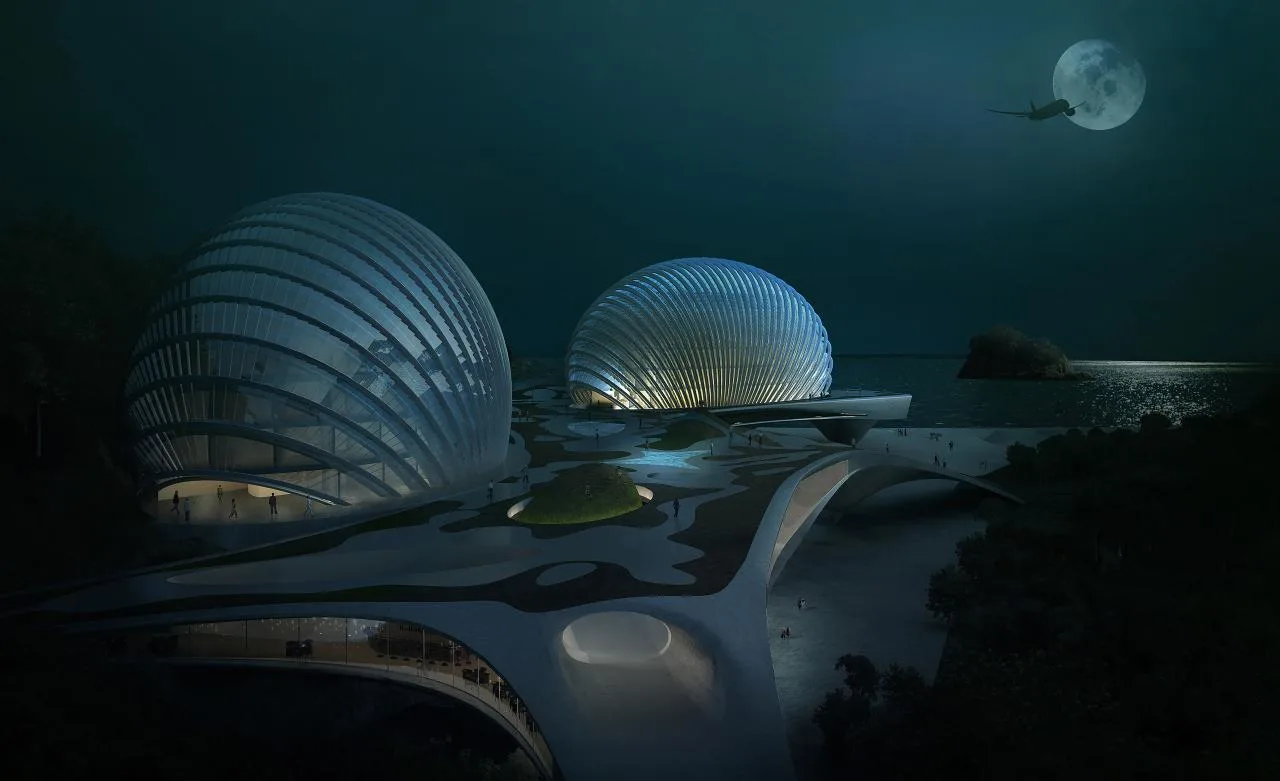
The design inspiration comes from the renowned shellfish and other marine mollusks native to Nanji Island. These mollusks lift themselves using soft legs and stretch their tentacles to explore their surroundings. The public area of the hotel floats above the sand, mimicking this movement. Instead of a simple flat surface separating sand and building, the hotel’s structure creates shaded areas beneath its gentle, tentacle-like forms suspended in the air. During the day, it serves as a relaxing seaside activity space, while at night, the flickering bonfires transform the “mollusks” into warm, glowing giants.
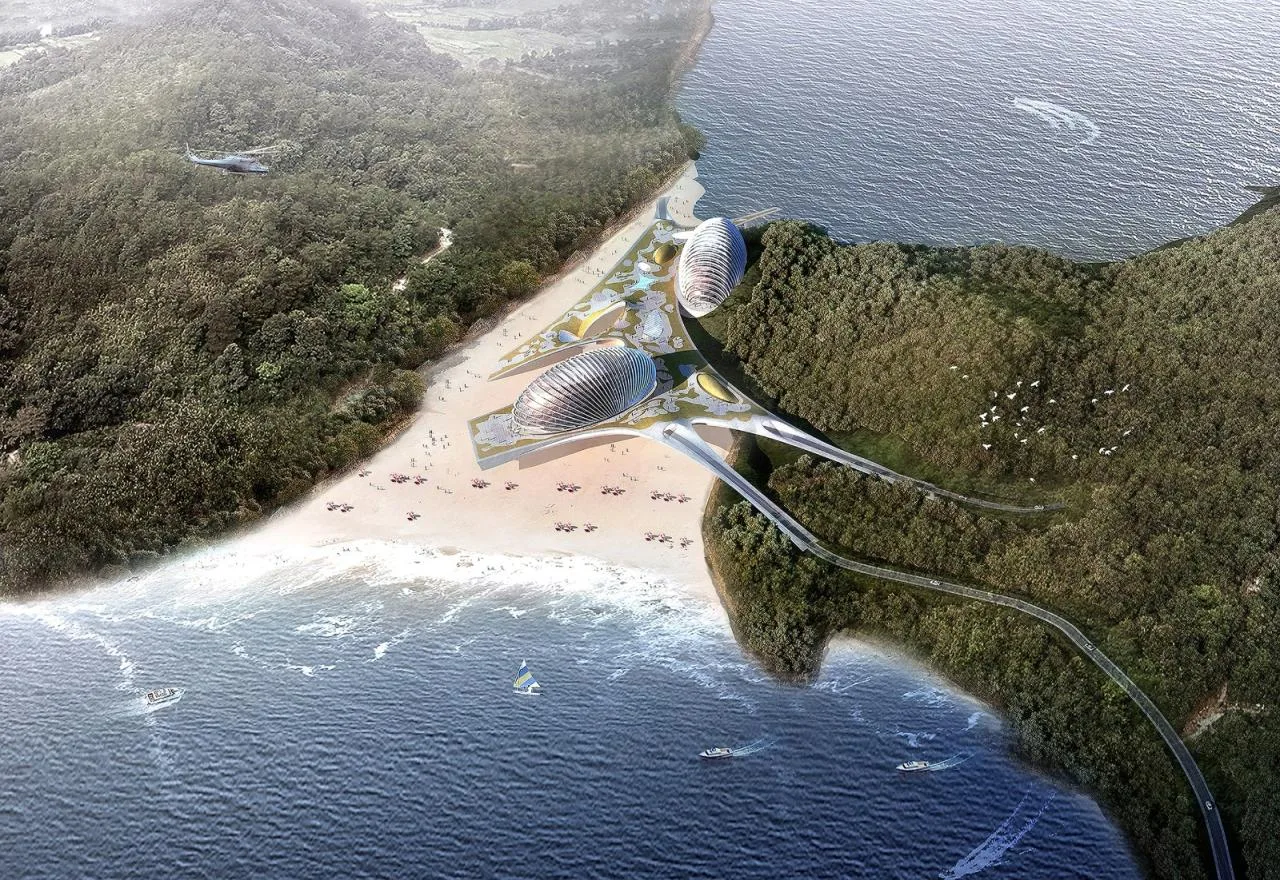
The hotel’s “tentacles” elevate public spaces, connecting visitors from the ground level to various amenities such as restaurants, bars, spas, and swimming pools. Two taller antenna-like structures extend towards the external road, welcoming guests arriving by car to a semi-outdoor lobby. This lobby functions as a semi-open garden, featuring a raised hill that leads guests to a private garden atop the public floor, reserved exclusively for hotel residents. Guest rooms are housed in two shell-shaped buildings, offering stunning sea views from most rooms. The architecture seamlessly blends with the landscape through organic forms and fluid connections, resembling a large creature resting on a tranquil bay, patiently awaiting visitors. The use of eco-friendly technologies minimizes environmental impact, ensuring that emissions do not enter the natural surroundings and allowing the hotel to maintain ecological balance as a positive part of the ecosystem.
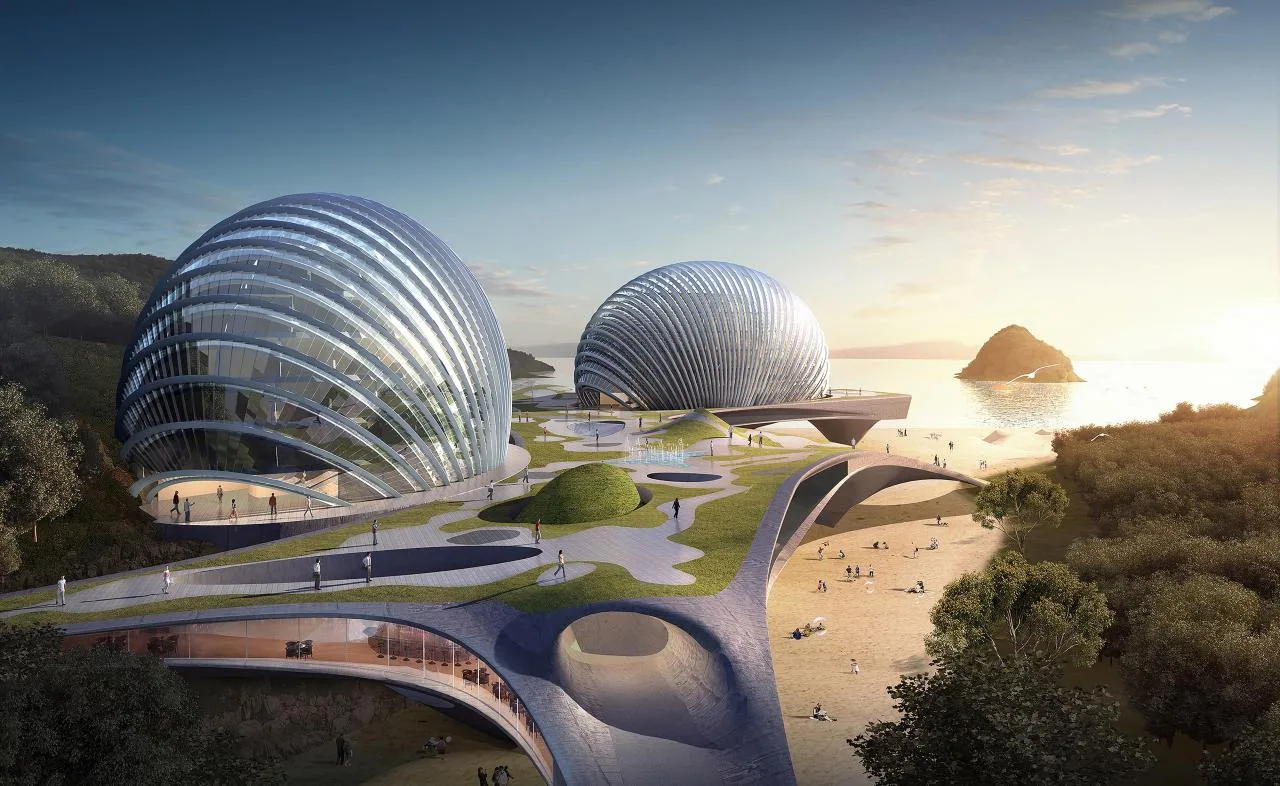
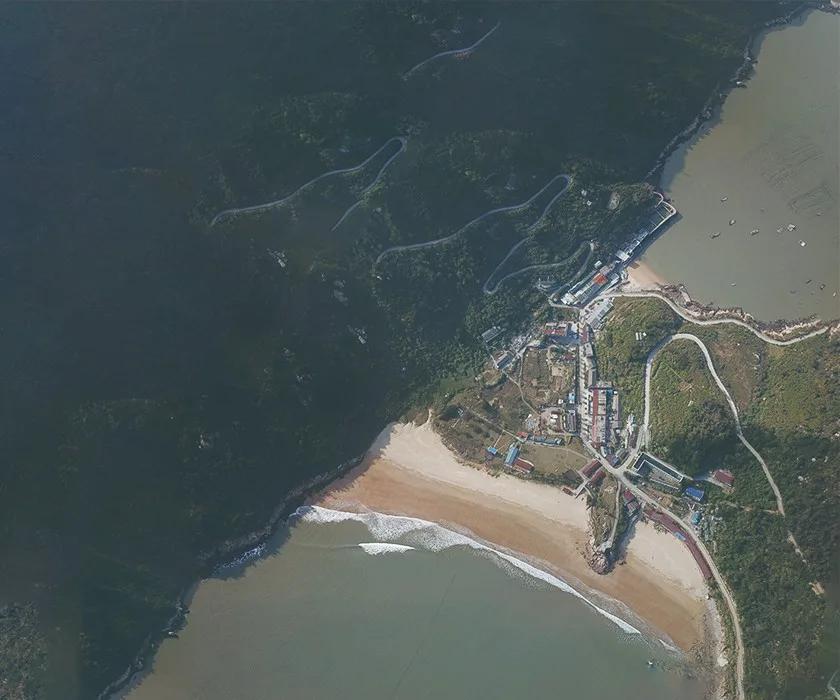
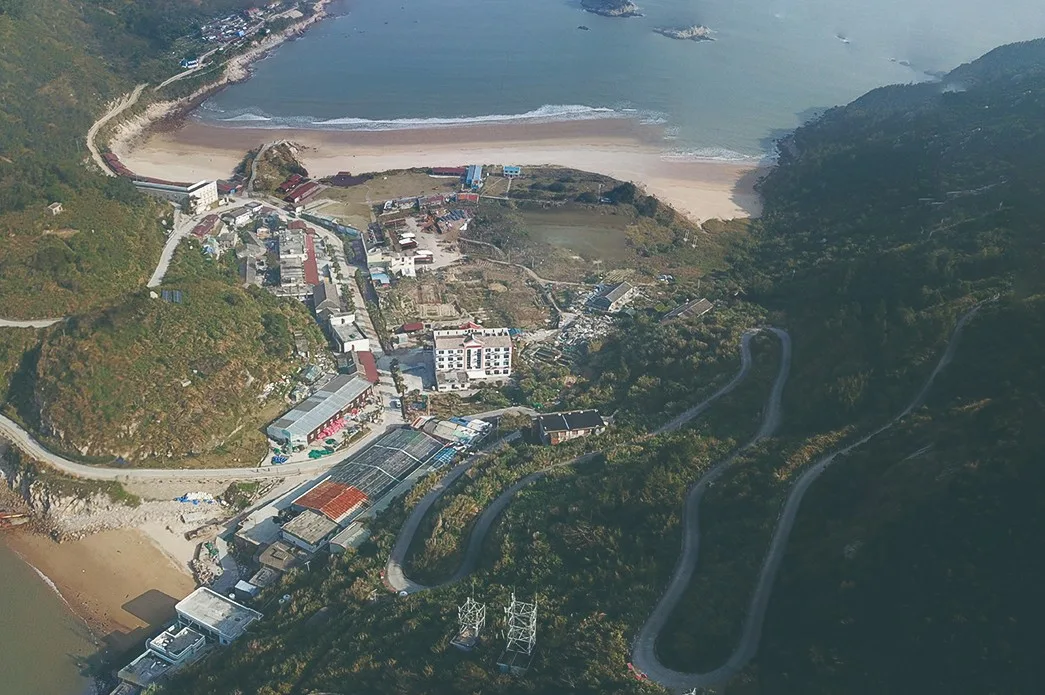
Originally, Dashaao Beach was crowded with small houses and scattered past constructions, which had completely taken over the western beach and divided what was once a continuous shoreline into two separate sections. With the island development plan focused on boosting tourism and restoring the environment, the site has been reimagined in the design. The existing houses are slated for demolition to restore the beach to its natural sandy state stretching from east to west, with two bays facing east and west. The elevated hotel partially covers the beach, but the boundary between the building and the shore is horizontal rather than vertical, blurring the division. The hotel invites the beach inside, and the beach peacefully embraces this large new arrival.
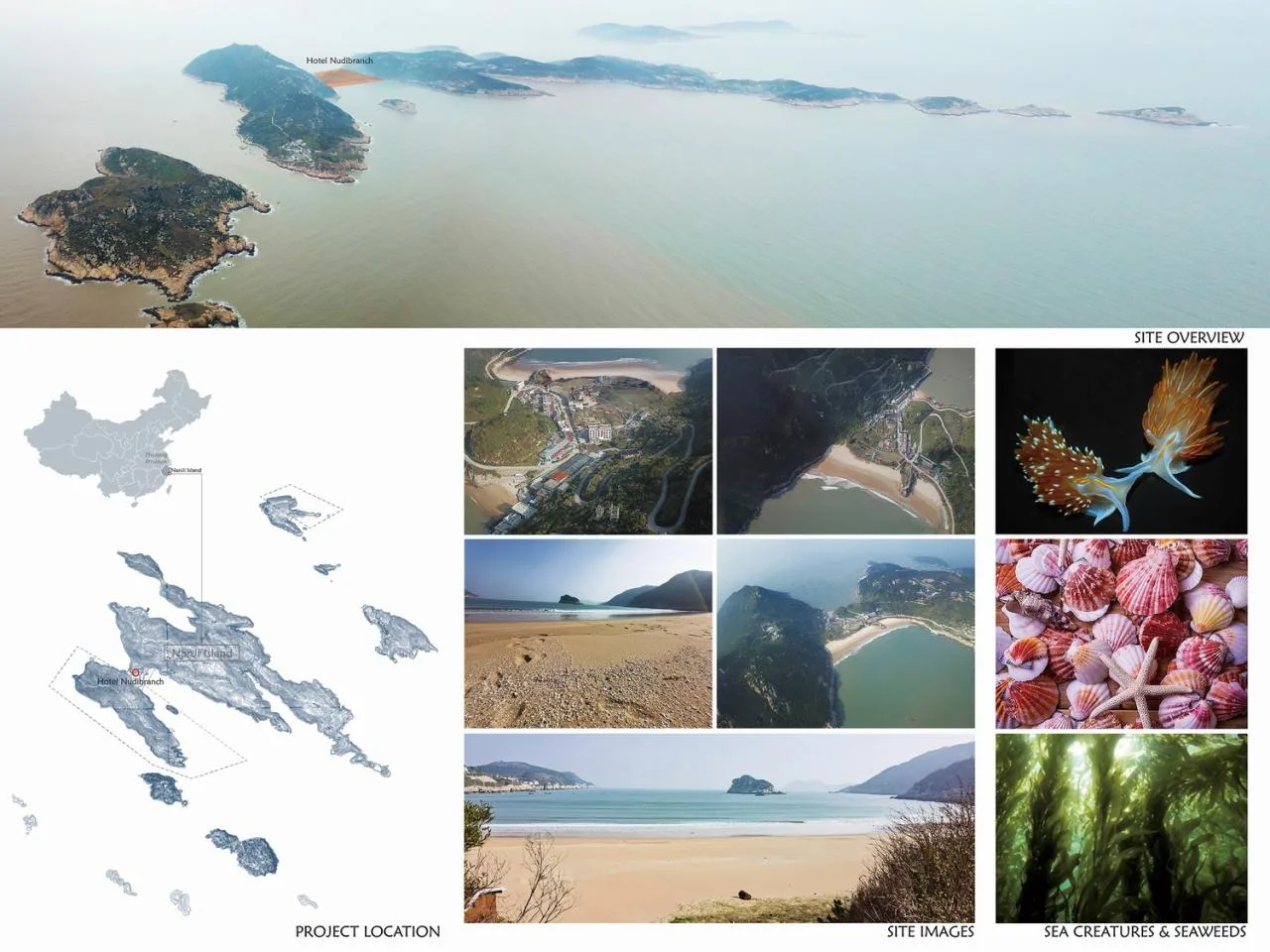
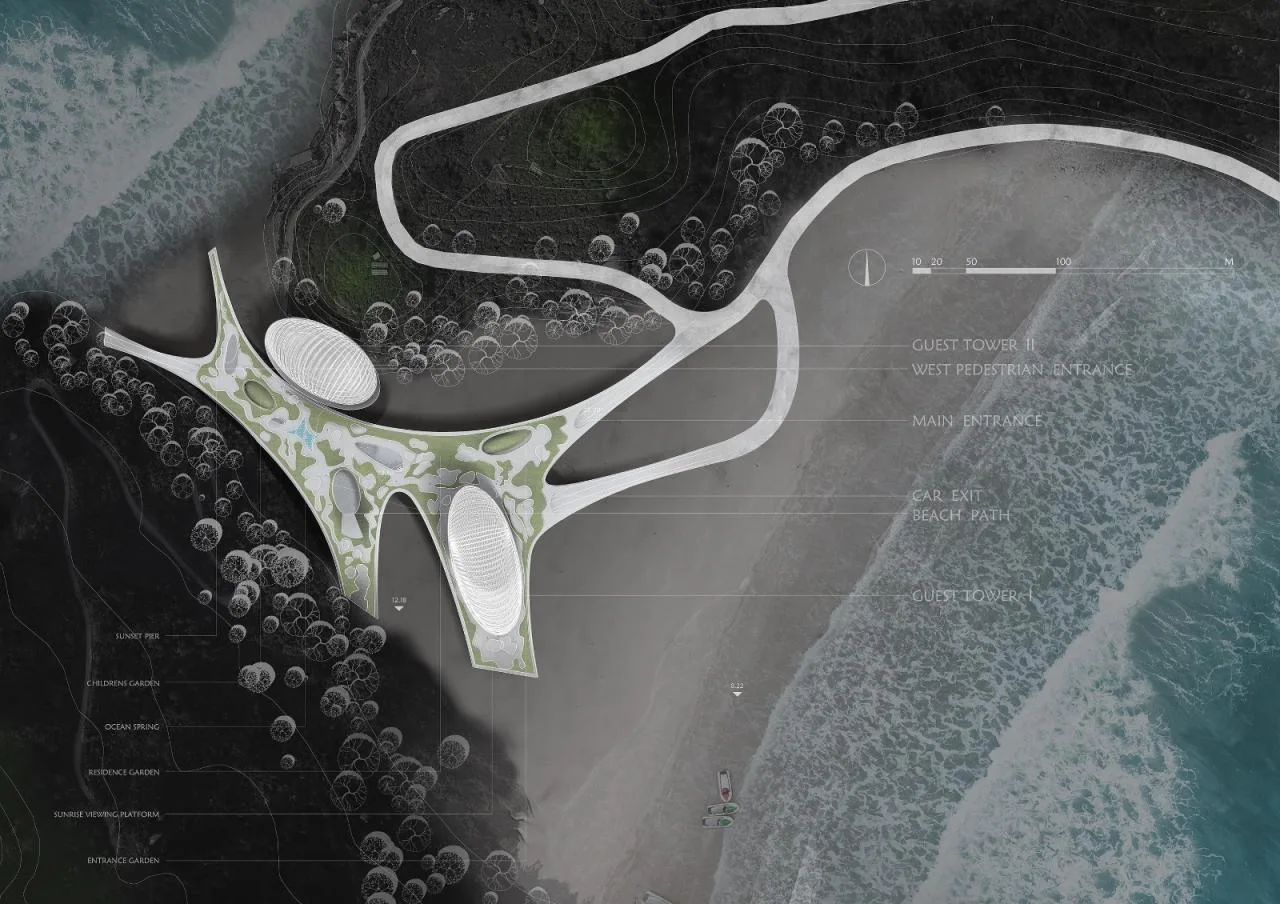
The public floors curve elegantly across the site, responding to its distinct parts. To the south, a graceful arc separates the hotel from the shellfish conservation area. To the north, the building both embraces and resists the nearby mountain, with a subtle curve expressing this ambiguous relationship. A tighter arc guides the road through the building, ending in a nearly symmetrical curve oriented toward the sunrise. Between these two arcs lies a broad curve facing the main beach to the east. On the west side, a smaller tentacle-like extension curves tightly toward one beach, while the other side rises deeply, facing the ideal angle for sunset views.
Inside, public functions are distributed throughout the curved spaces. Several hills rise from the beach and public floors to the platform, creating natural connections at varying heights. These connections are enhanced by visual sightlines and lighting and, together with the sky garden, form an integral part of the landscape system. The public area stretches from west to east, from sunrise to sunset, offering spectacular views in multiple directions for the hotel’s functional spaces.
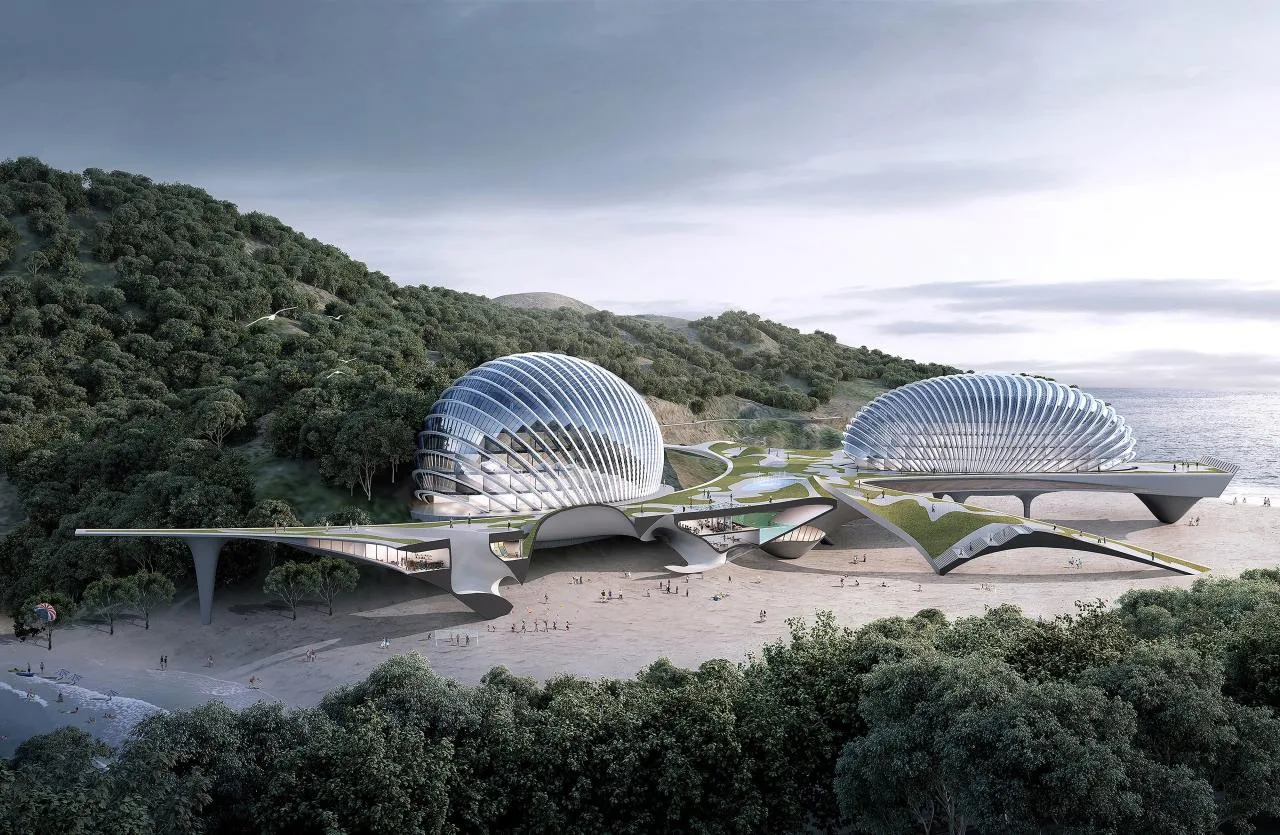
Guests can start their day at the morning restaurant, facing the sunrise and the sea. In the evening, they can unwind at the bar overlooking the sunset. At night, the central swimming pool offers views of Nanji Island’s pristine night sky, providing a perfect place to relax and rejuvenate. Hotel rooms are housed in glass shell structures on the elevated platform, carefully oriented to maximize high-quality sea views. Their double-layer glass curtain walls provide optimal insulation. The entire building goes beyond mere accommodation; it acts as an amplifier that enriches guests’ connection with nature.
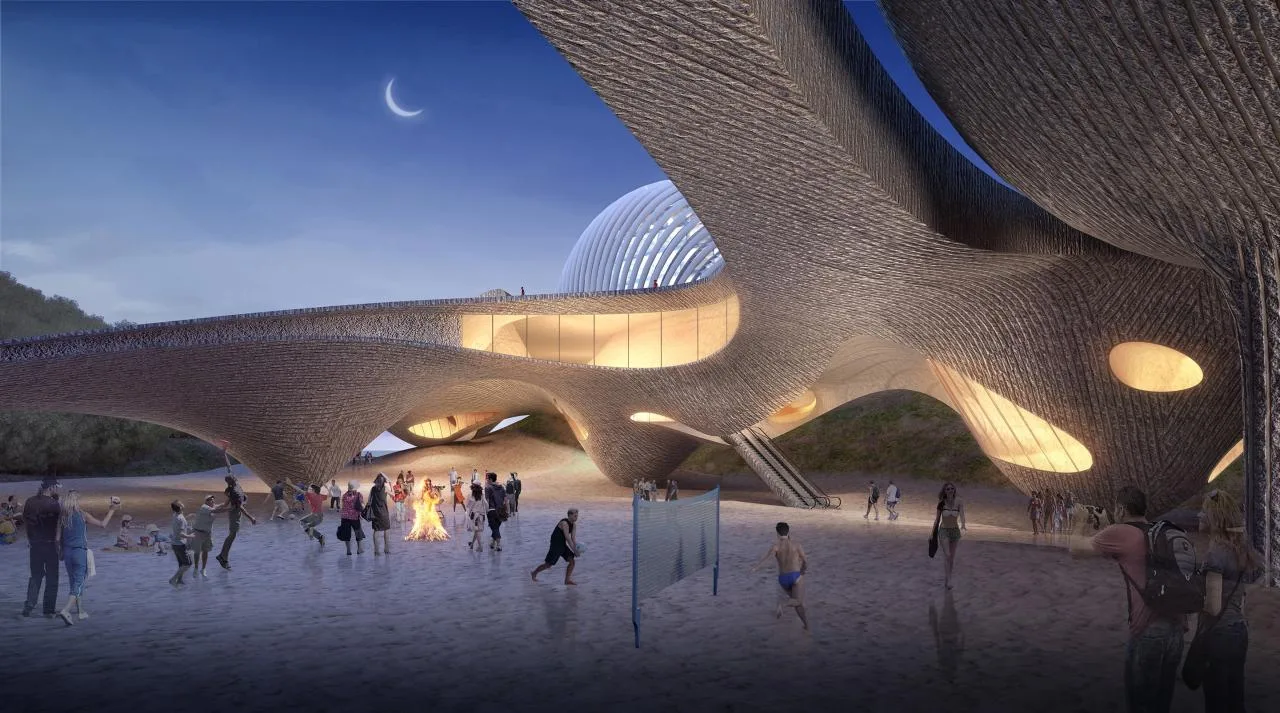
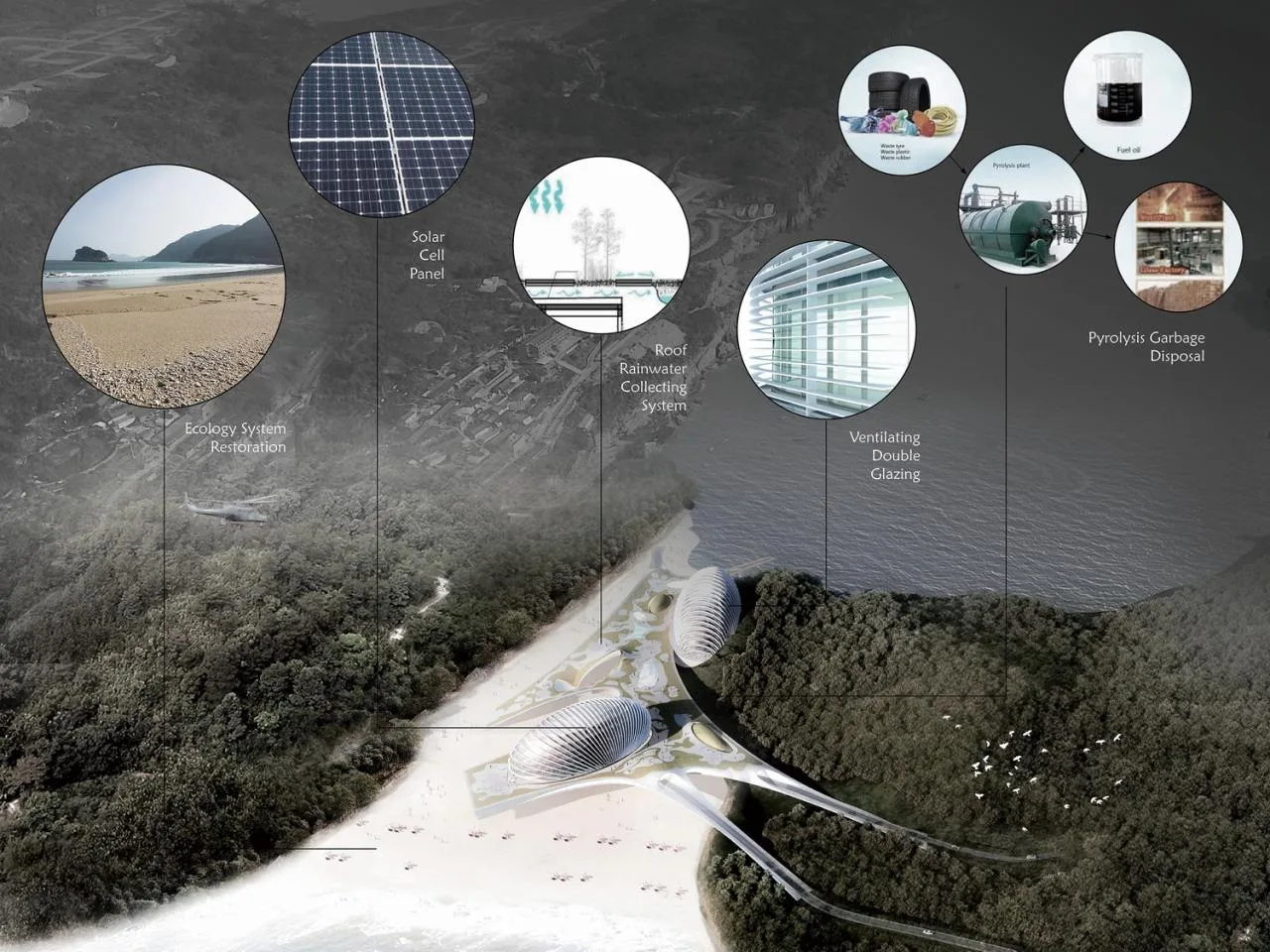
Ecological concerns have been a key focus throughout the design process. The hotel first restores the natural condition of Shawan, seamlessly integrating its organic form with the environment. The platform’s shadow provides shaded public spaces that remain comfortable even under the intense summer sun, without the need for air conditioning. Rainwater collection systems on the roof make use of greywater, while the building’s double-layer shell promotes natural ventilation. A biological waste processor converts waste into energy without incineration, creating an energy self-sufficient, zero-carbon, and zero-emission system for the hotel. The organic shape also encourages guests to explore the sea’s beauty and appreciate the island’s natural wonders.
The design employs parametric techniques to capture the optimal relationship between traffic routes and site orientation using digital technology. This dynamic relationship shapes the curved surfaces, helping the building to integrate naturally with its surroundings. Various design elements further blur boundaries between building and landscape. The angles of the hotel’s glass shells have been carefully calculated to reduce reflections towards the sun and the surrounding environment.
The future development plan for Nanji Island aims to significantly enhance tourism infrastructure while raising ecological design standards. The Sea Slug Hotel’s unique design and layout will become an iconic symbol of this ambitious plan—an eye-catching jewel crowning Nanji Island and the East China Sea.
Project Drawings
△ Overall Planning Map
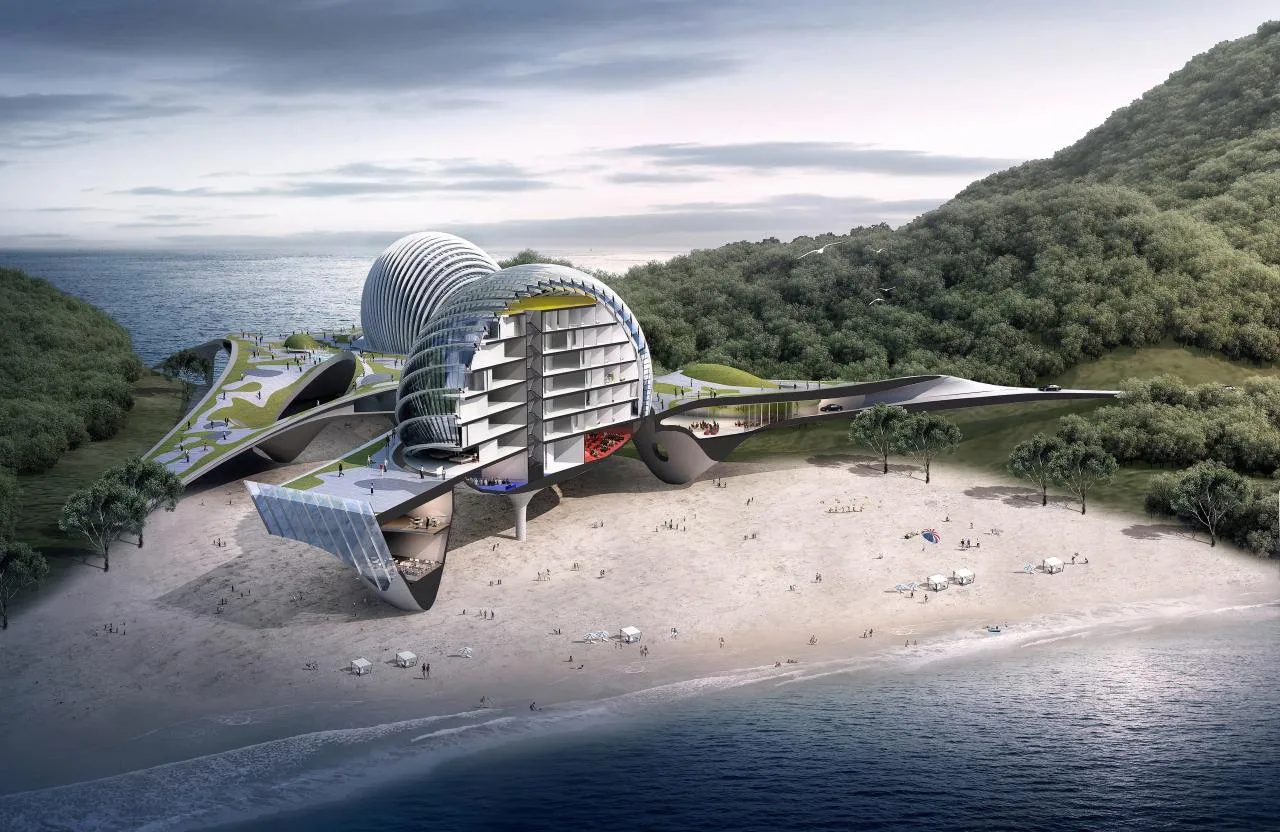
△ Section Diagram
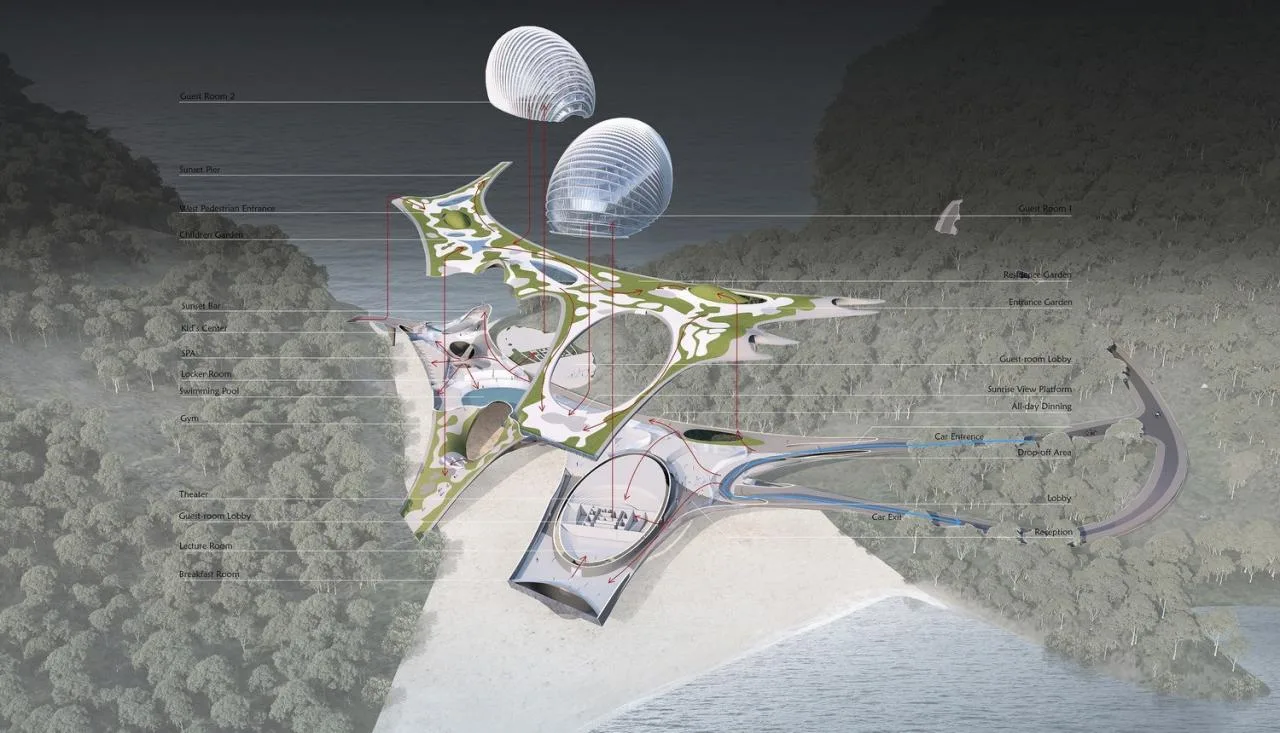
△ Flow Line and Composition
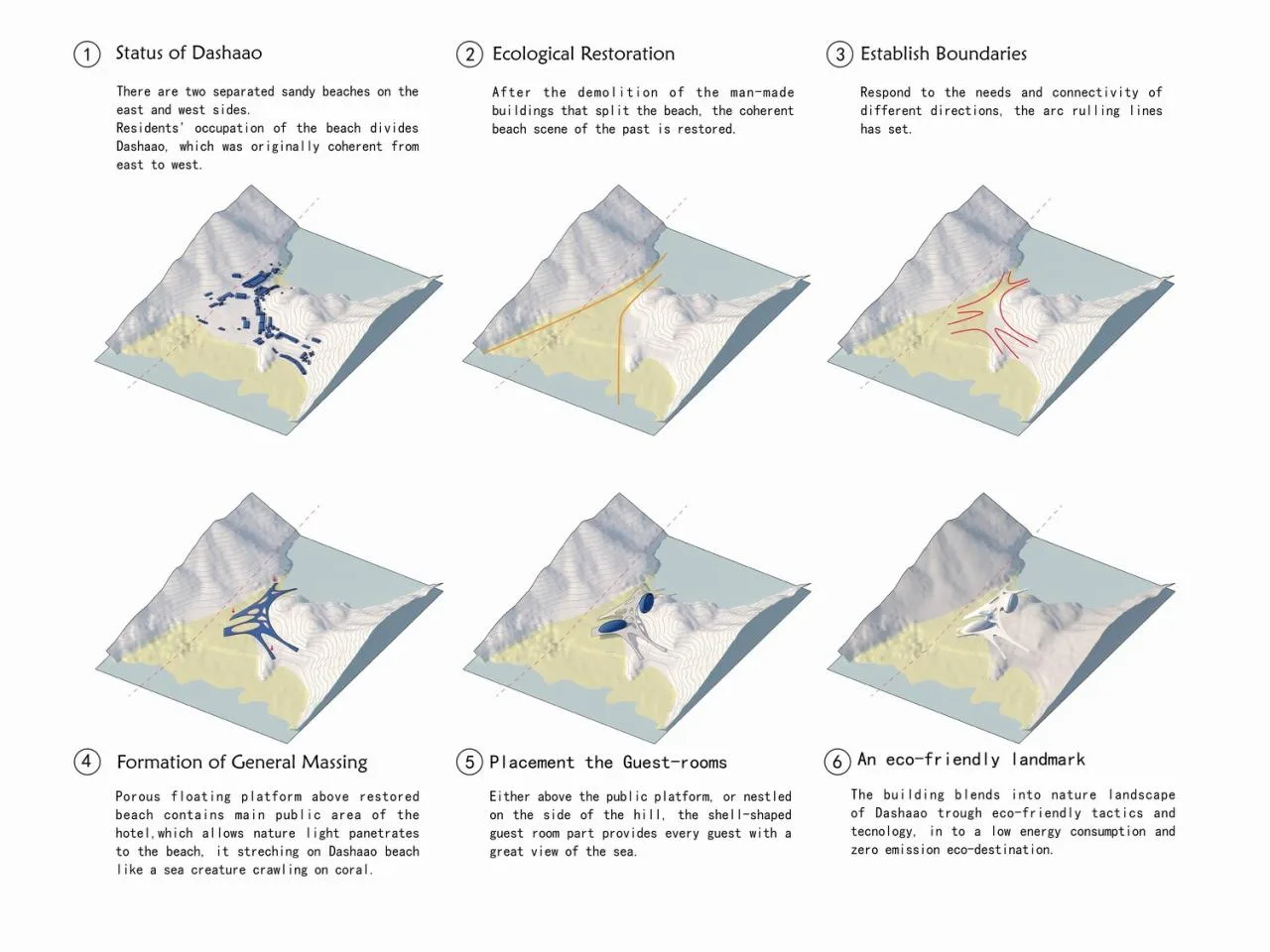
△ Design Evolution Diagram
Project Information
Project Name: Sea Slug Hotel
Project Status: Conceptual Stage
Location: Dashaao Beach, Dongping Street, Dongtou District, Wenzhou City, Zhejiang Province, China
Project Type: Landscape and Architectural Design
Design Period: 2019-2020
Function: Urban Public Facilities
Components: Hotel, Entertainment Area, Restaurant, Bar, SPA, Swimming Pool
Lead Architect: Pan Yan
Design Team: Pan Yan, Li Zhen, Tang Yimeng, Zheng Yu, Chen Hao, Mao Yameng, Sun Nan, Qiu Yuchen, ShAil Paragkum Patel
Ecological Design Consultant: Zoe Factory (UK Zero Carbon Factory)
Client: Pingyang (Nanlu Island) Tourism Investment Company
Image Credits: SpActrum / Pu Guan Architectural Design Firm















Must log in before commenting!
Sign Up