
1. Housing Shortage in Major Cities
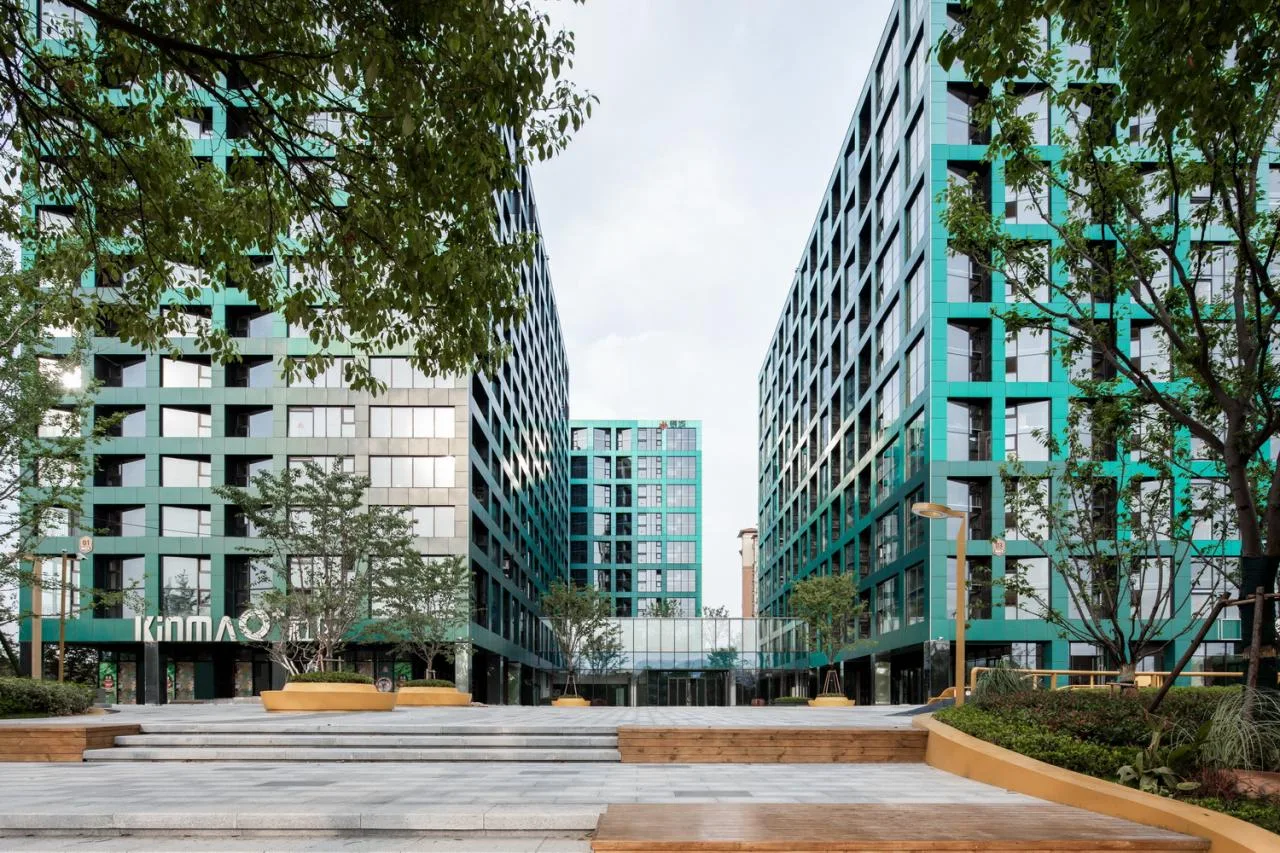
Today, the high cost of living in major cities has become a global social issue. Young people increasingly struggle to afford their own homes. Around the world, shared apartments have emerged as a solution to this shortage.
In London, brands such as WeLive, Haven, Common, Ollie, Lyf, and Quarters promote private bedrooms combined with shared amenities like kitchens, gyms, cinemas, and laundry rooms to keep rents affordable. Meanwhile, in Manhattan, former Mayor Michael Bloomberg relaxed zoning laws to enable the construction of New York’s first micro-apartment building, My Micro NY, providing affordable housing options for young residents.
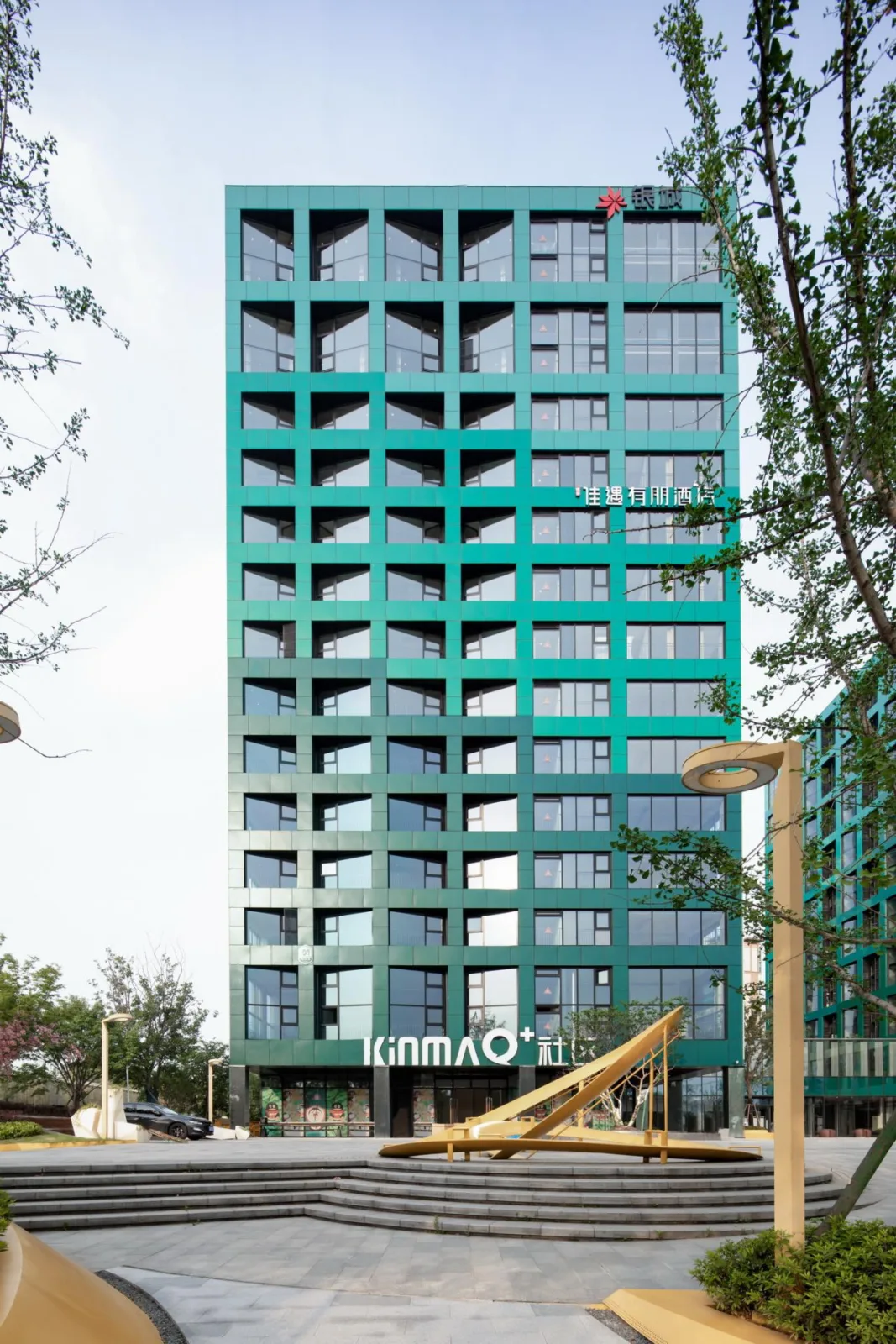
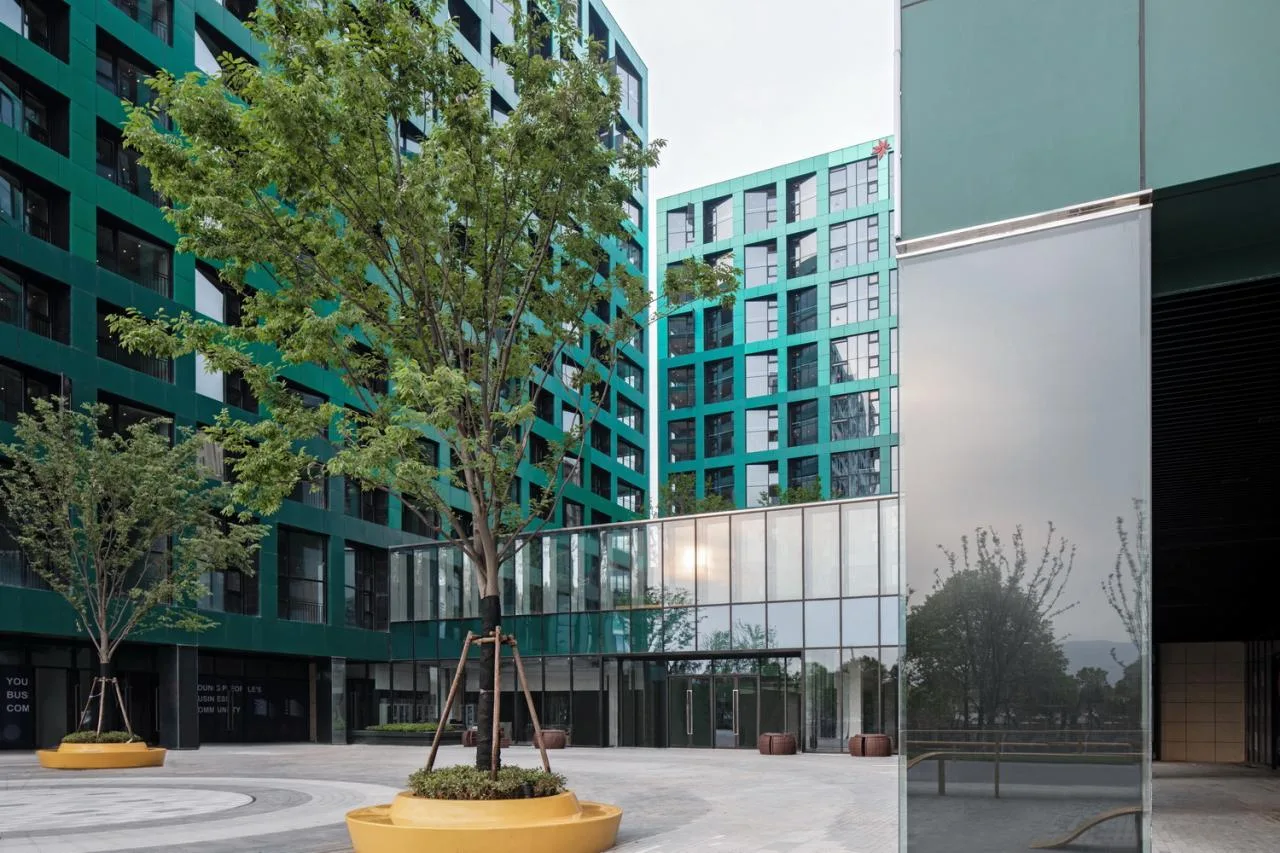
In Nanjing, the Yincheng Kinma Q+Community sets out to create affordable housing for 940 young people pursuing their futures here.
2. The Isolated Site Context
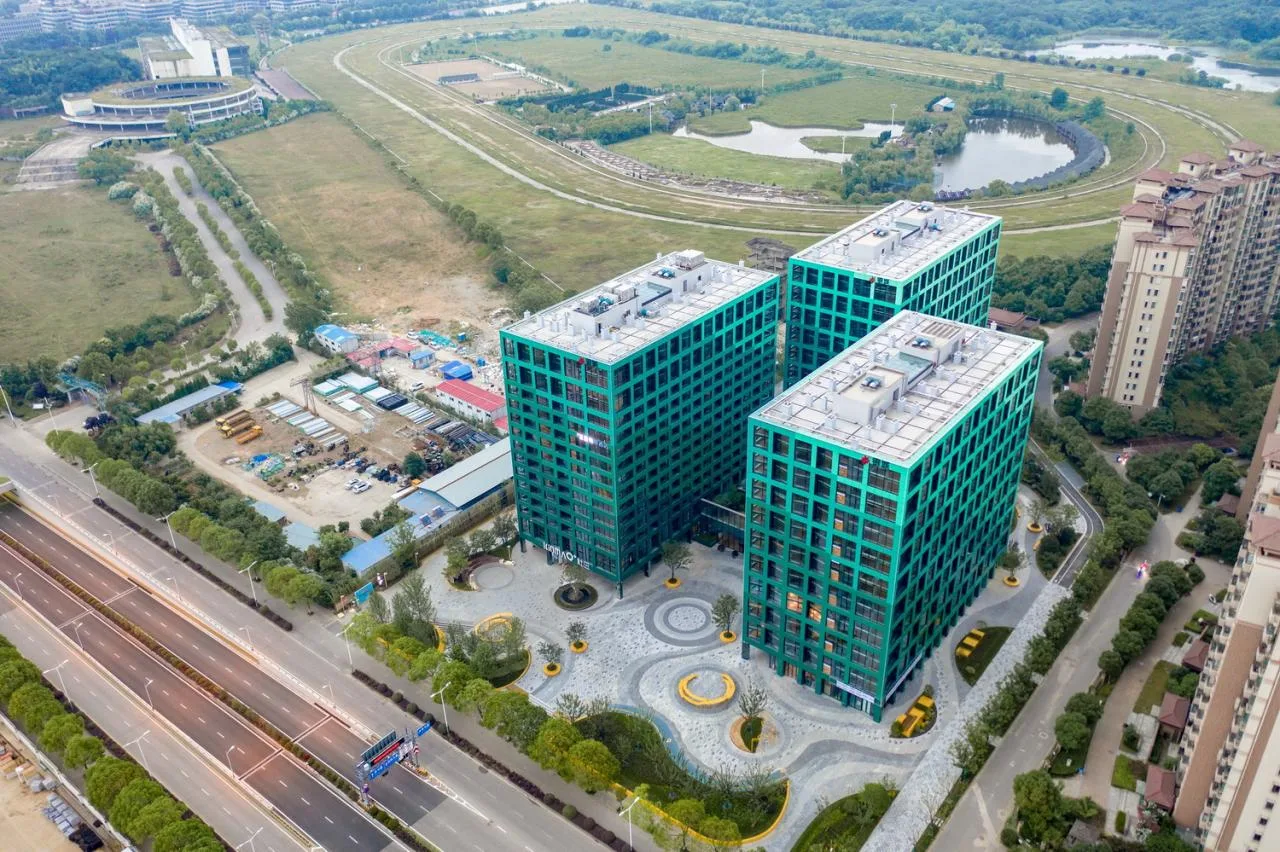
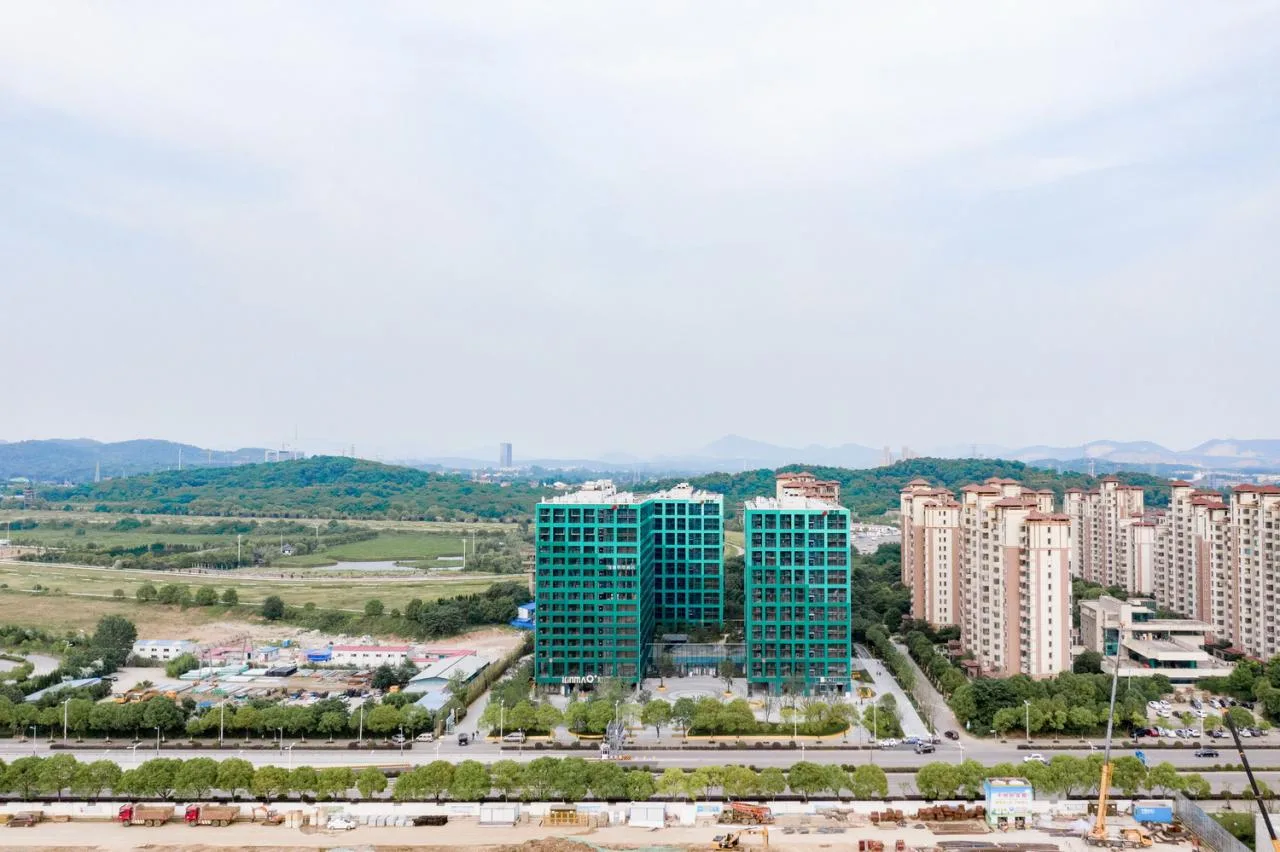
The project is situated in Qixia District, Nanjing, near Jinma Road subway station. The site is an irregular pentagon, sharply contrasting with the surrounding loose suburban landscape. To the north lies a discontinued racecourse now used as a temporary parking lot for car dealerships. To the west runs the fast-moving Golden Road, and to the south is a residential area with brown-painted façades, separated from the site by a wall.
Separated by fast traffic lanes and walls, the site lacks supporting facilities and public spaces, making it a typical isolated suburban plot. The Nanjing Yincheng Kinma Q+Community aims to overcome this isolation by fostering a strong sense of community and intimacy despite the high density of youth apartments and compact housing units.
3. Design Strategy: Maximize Private Facilities and Centralize Shared Amenities
Residential spaces typically include areas for reception, entertainment, dining, relaxation, and support facilities.
The common approach—”small but comprehensive”—means shrinking all functional spaces proportionally as overall living space decreases. However, beyond a certain critical point, reducing all spaces proportionally no longer works, as individual areas become too small to serve their intended purpose.
Simply making everything small is not our goal. Instead, we strive to preserve residents’ freedom and support their hobbies within budget constraints.
The solution is to divide living space into two parts: essential private facilities and shared public facilities that foster social interaction.
Private spaces are maximized to ensure tranquility and personalization, while shared amenities are centralized for optimal functionality and efficiency.
4. Maximization Strategies
4.1 Maximizing Private Space
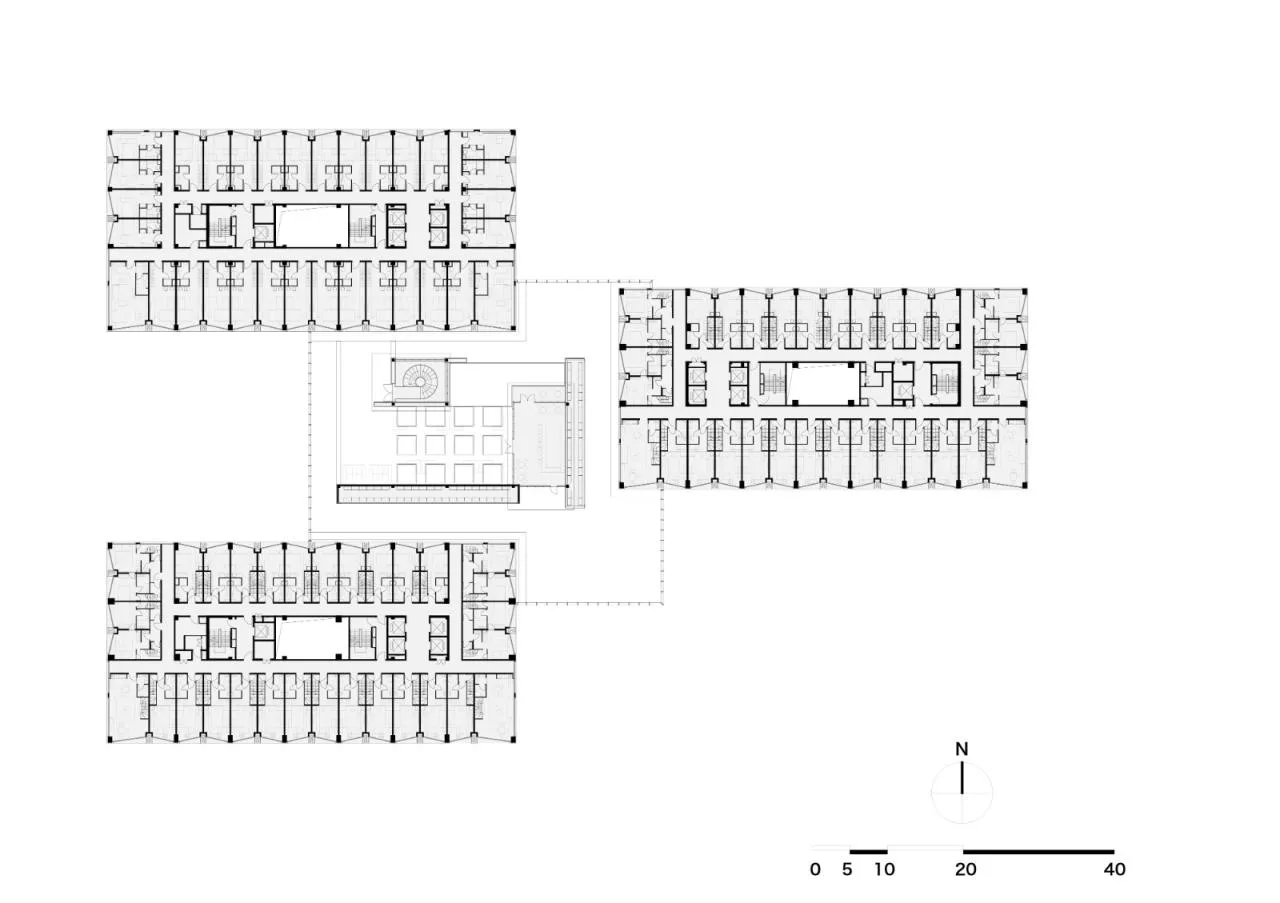
In terms of scale and user experience, it’s better to have simplified functions with adequate space than to cram complete functions into a limited area.
By breaking down, refining, categorizing, and separating living functions, the design eliminates reception, entertainment, and some dining functions from private domains, concentrating them in public social centers. This allows private spaces to focus on core living areas.
4.2 Maximizing Natural Light on Unit Facades
Private spaces are only 3.6 meters deep, making their ventilation and lighting facades extremely valuable. The facade design prioritizes maximizing window area for each room.
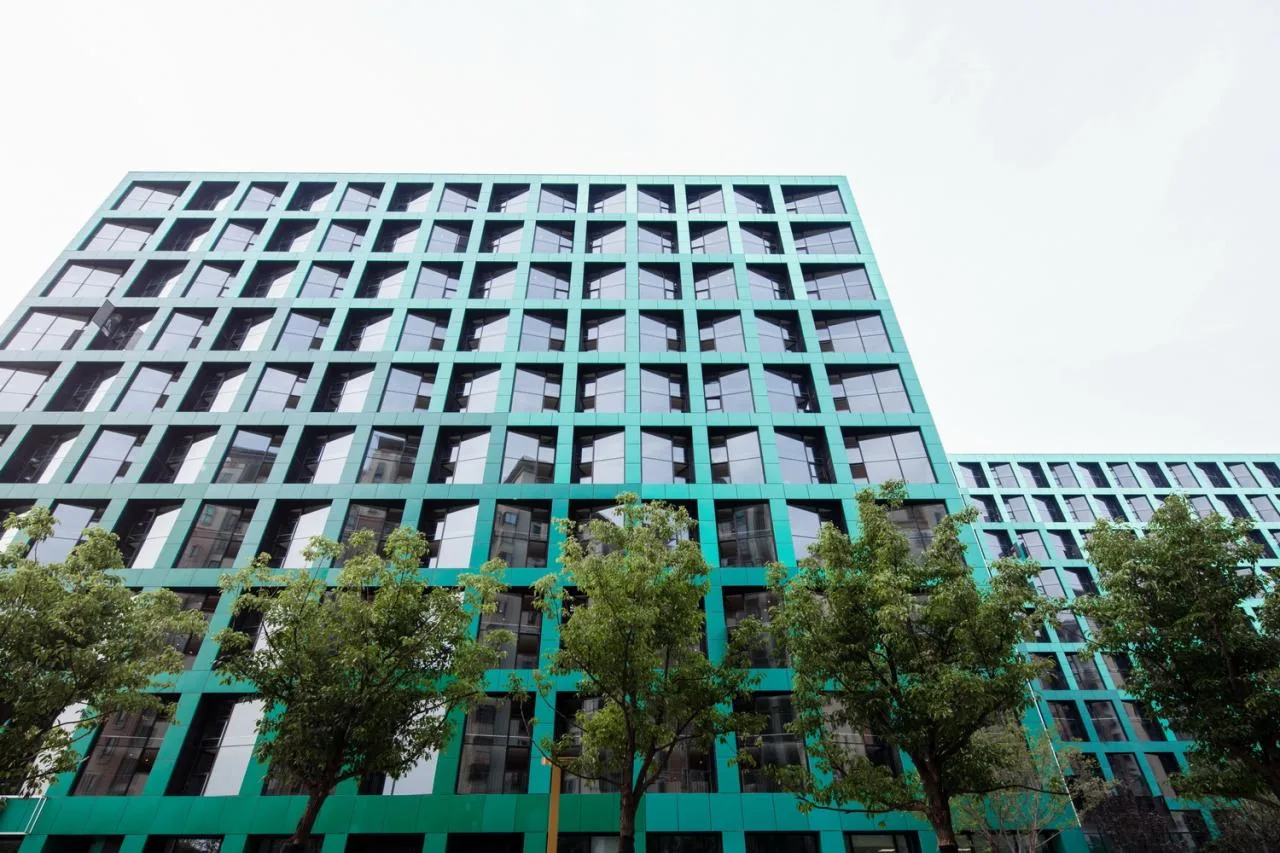
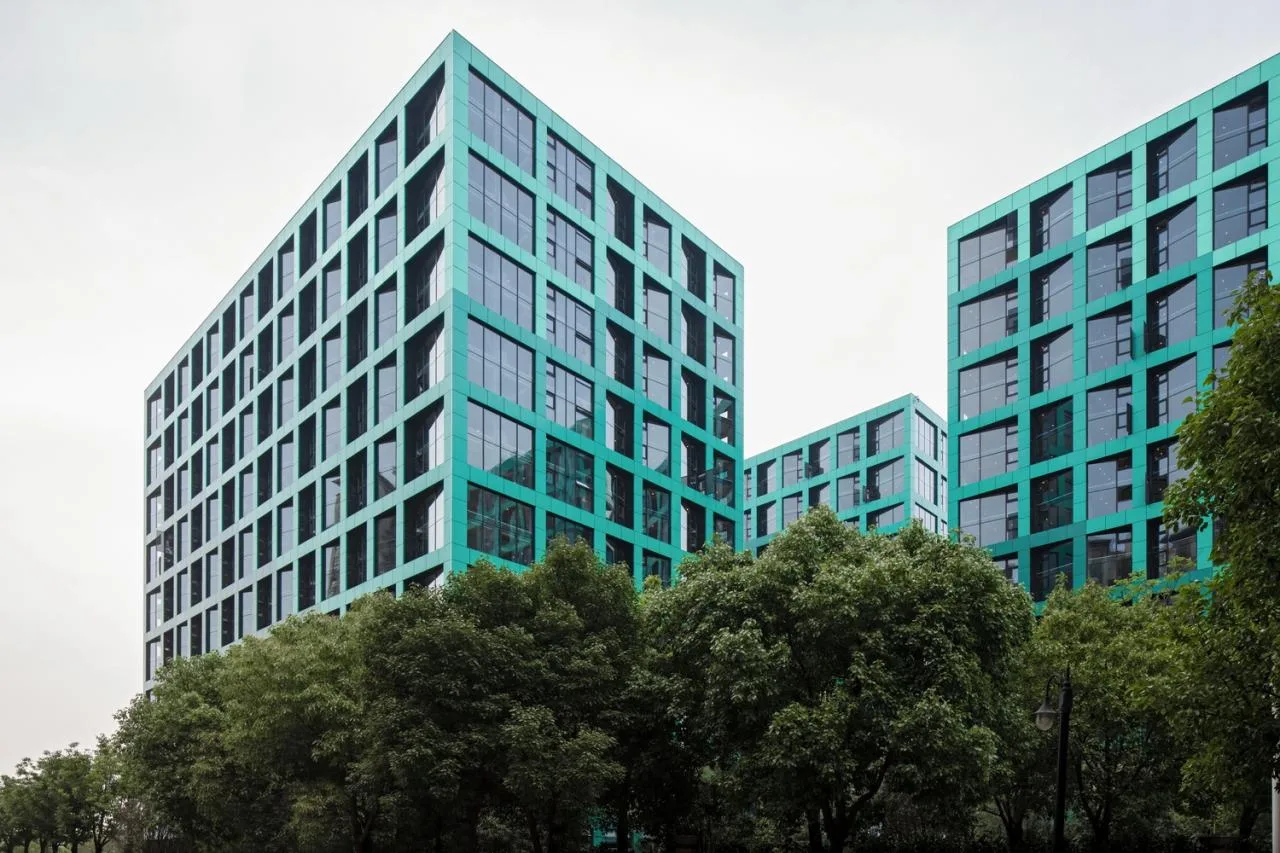
Except where structural beams and columns exist, all exterior wall space is allocated to windows. This functional approach naturally shapes the façade without unnecessary ornamentation.
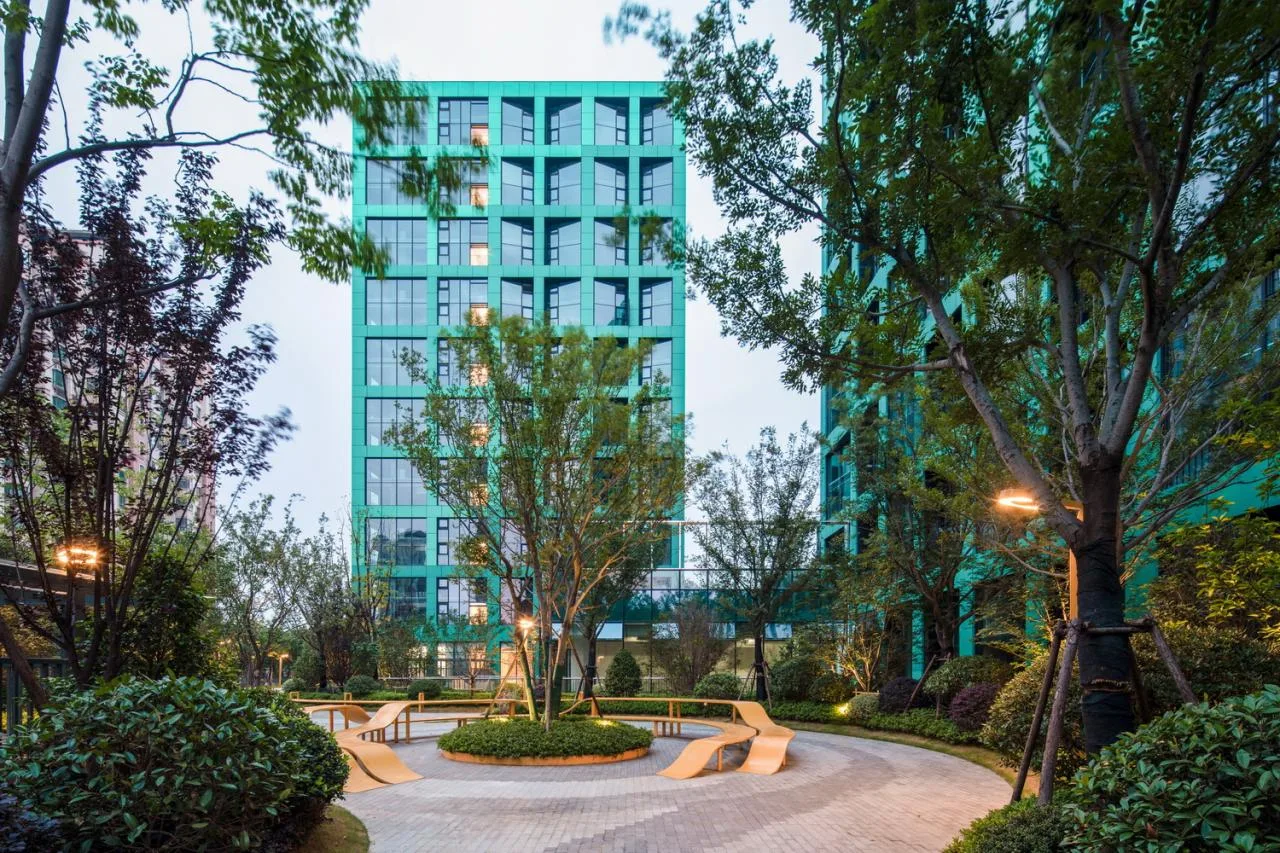
5. Centralized Social Hub: The Terminal Building
The social center is inspired by an international airport terminal, characterized by its suburban location, 24-hour service, and the emotional experience of arrivals and departures.
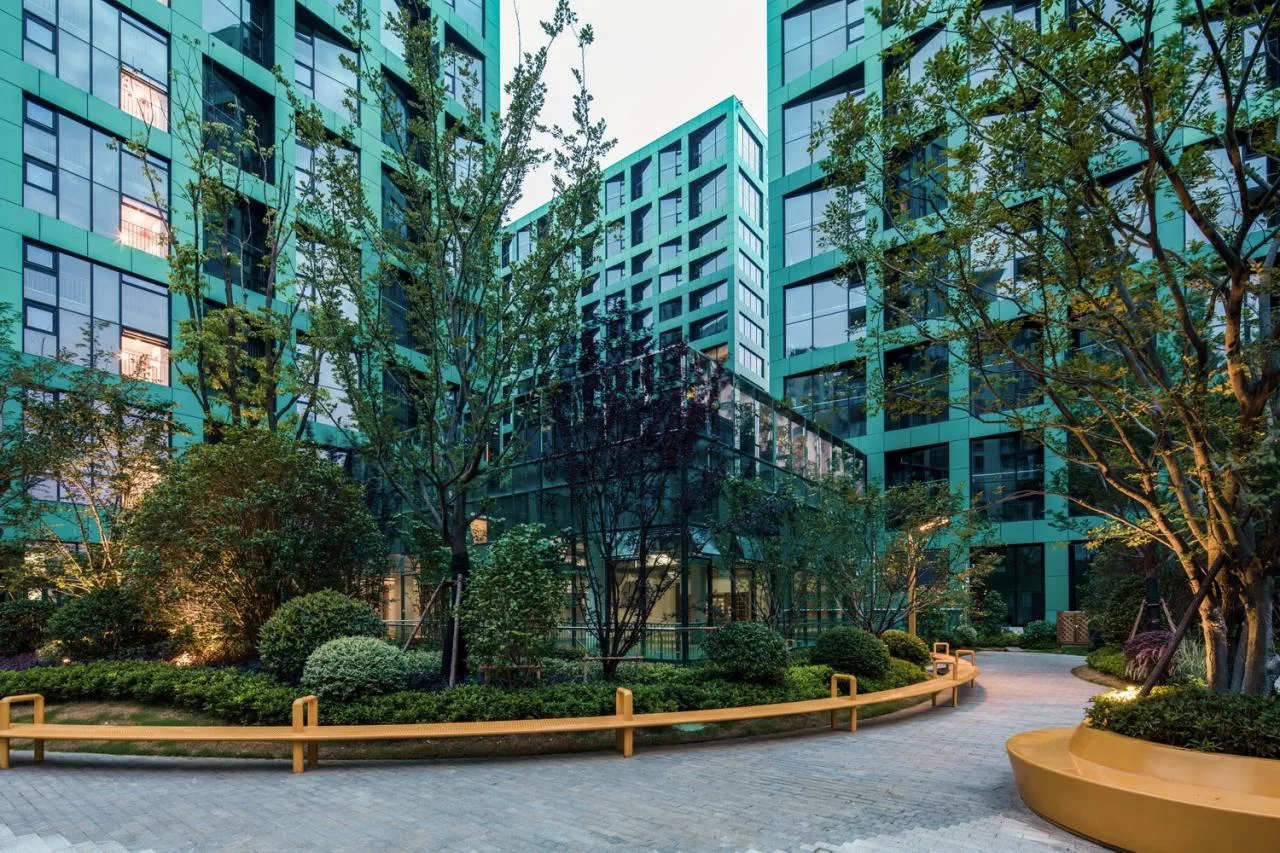
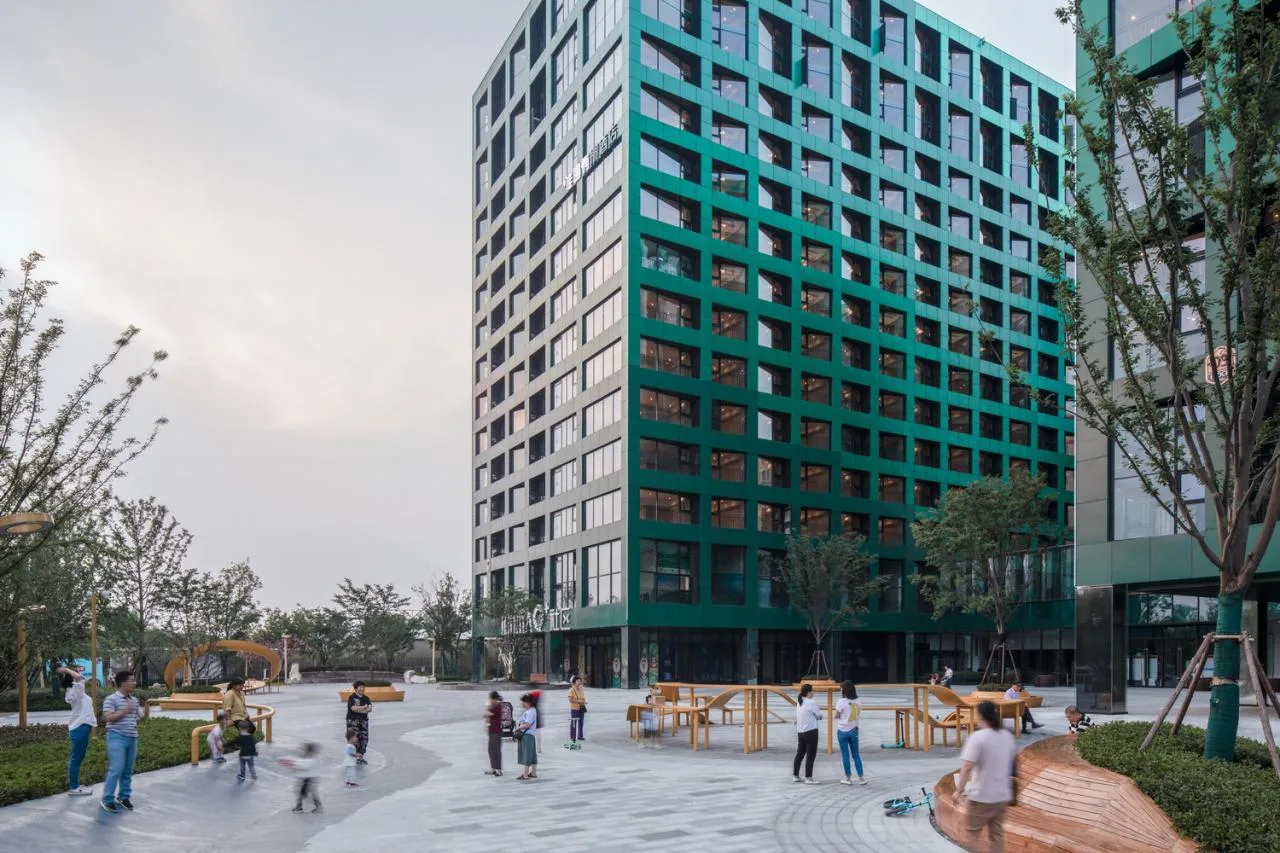
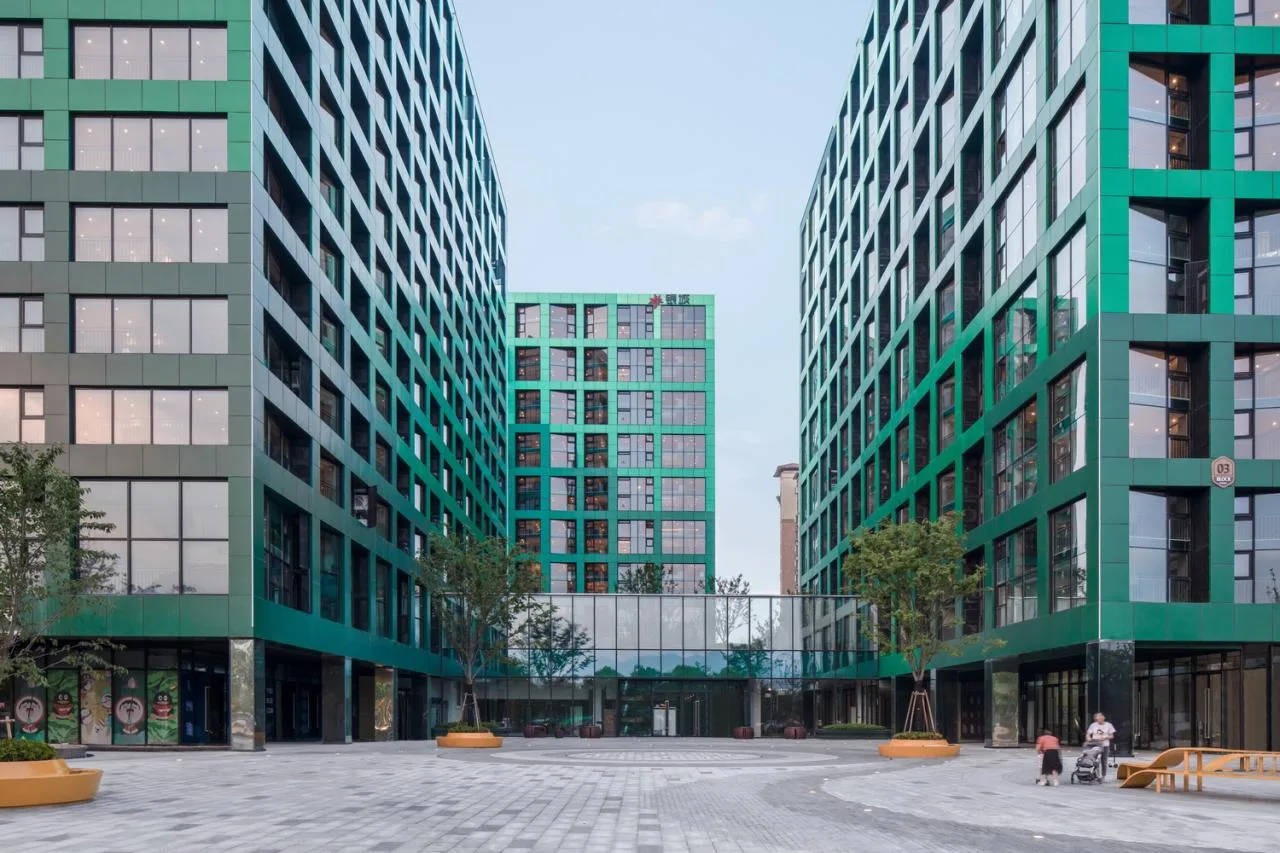
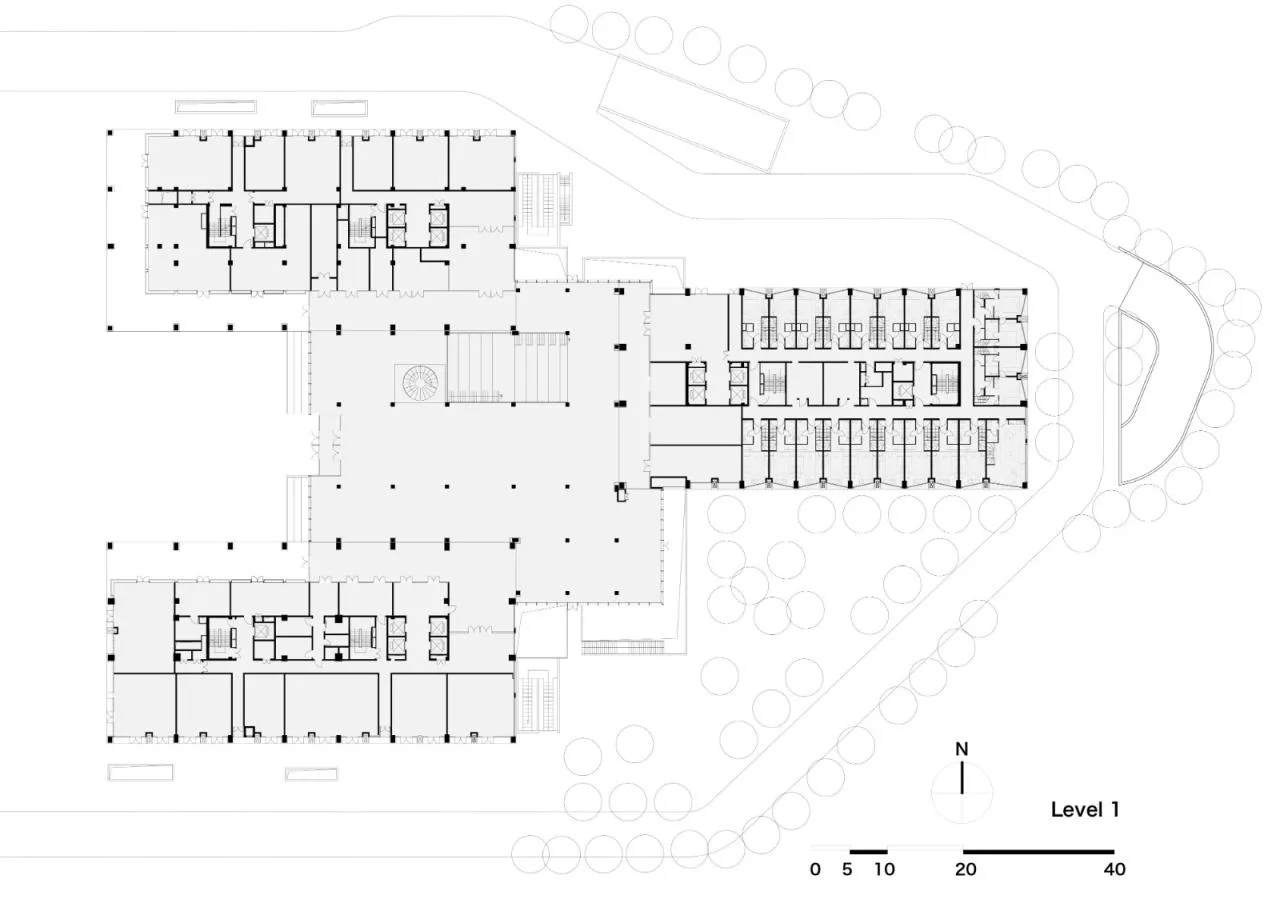
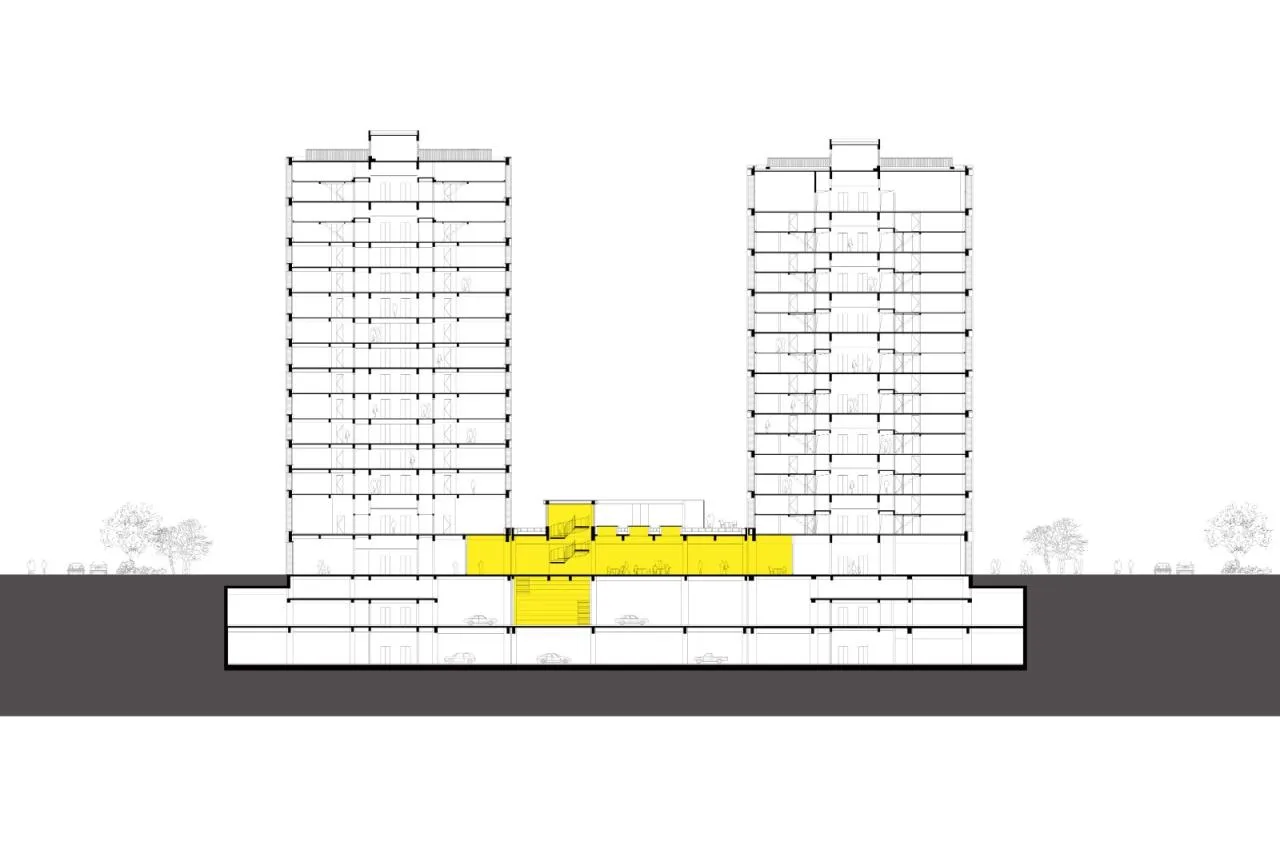
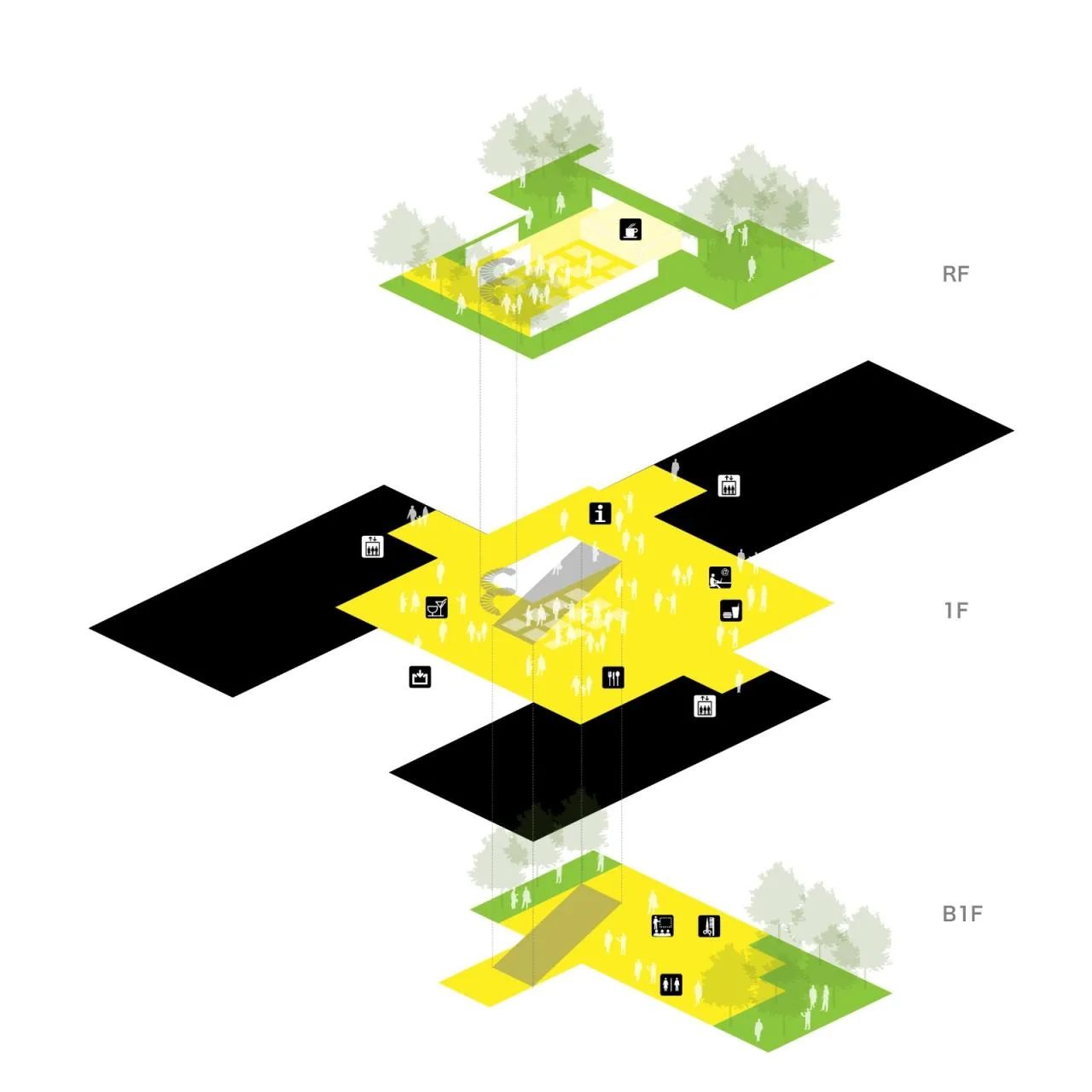
This social hub nestles between three towers and serves as the main entrance and public space across three levels: the “Departure Hall” on the ground floor, the “Arrival Hall” underground, and a rooftop terrace for outdoor leisure.
The “Departure Hall” features three “boarding gates” leading to the towers’ lobbies. It is a vibrant, spacious area offering WiFi, coffee, tea rooms, restaurants, and gift shops, creating a welcoming space for the community of 940 residents to gather.
The “Arrival Hall,” connected to the underground parking, includes two sunken green courtyards that bring natural light and fresh air below ground. Its core public space hosts a large staircase and multifunctional stage, serving as a lively meeting point for residents and visitors.
A spiral staircase leads from the Departure Hall to the rooftop terrace, which hosts an open-air bar. This terrace becomes a popular social spot on sunny days and cool evenings.
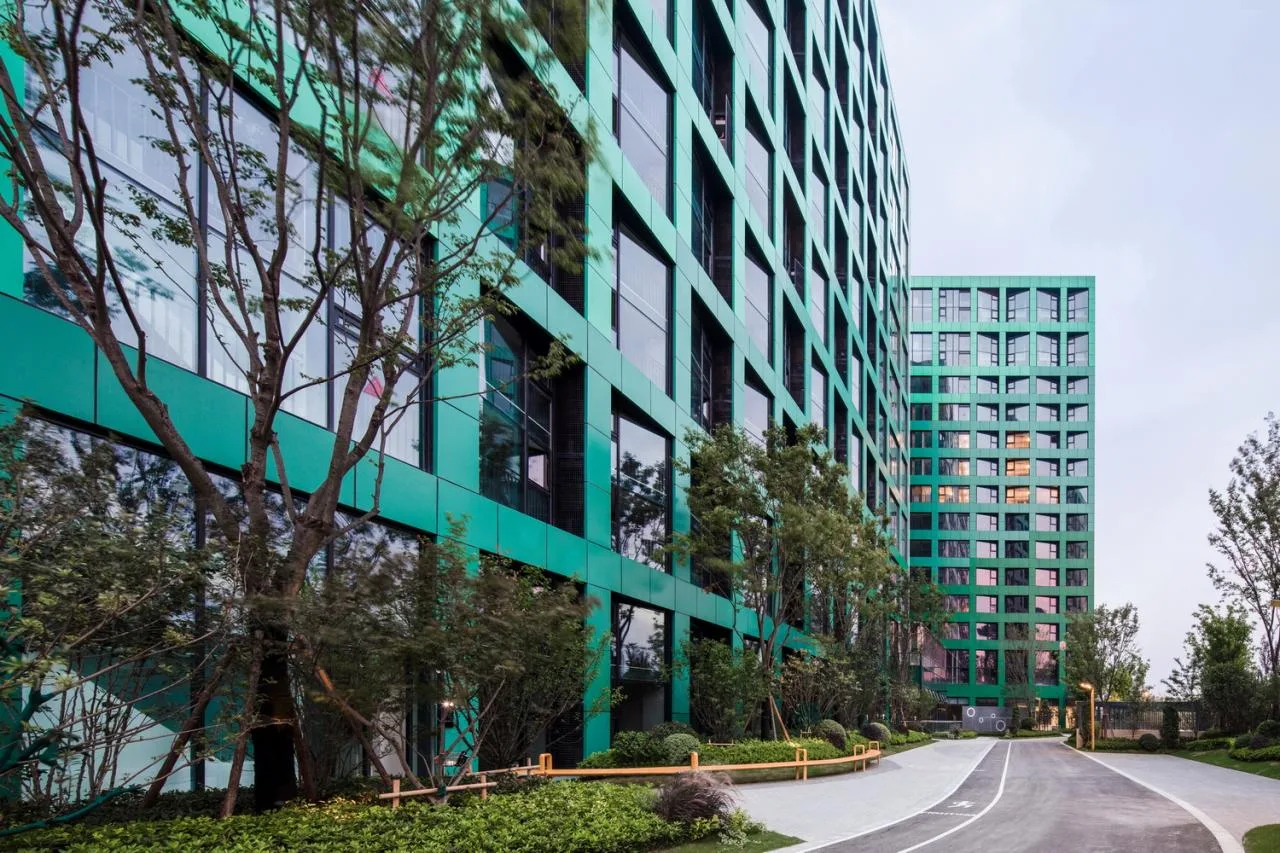
On this isolated suburban site, the social center creates warmth and daily interaction. Residents return home each night, friends meet and say goodbye here. It helps address challenges like loneliness and the need for friendship among young people, while supporting the building’s sustainable development through shared community resources.
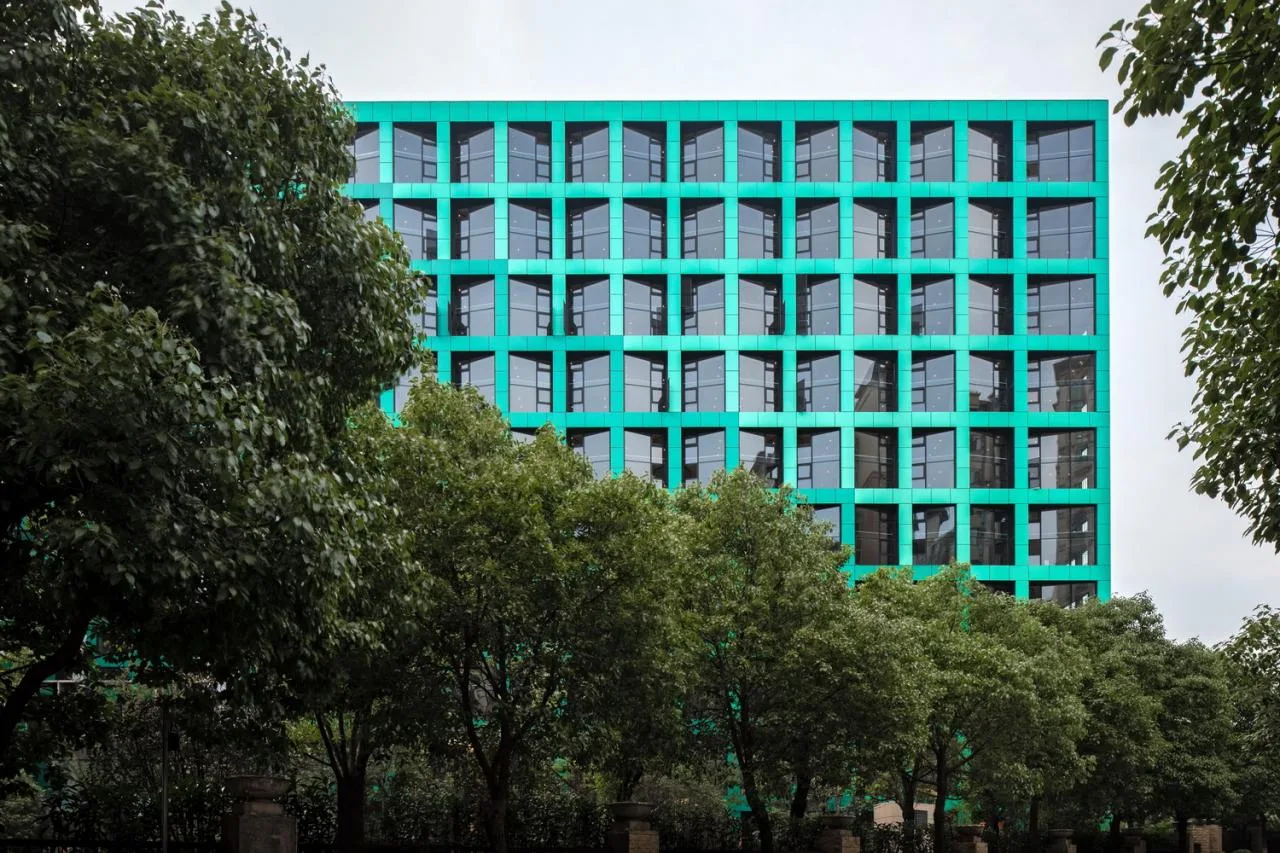
6. Minimalist Facade: Eliminating Unnecessary Elements
6.1 Strict Grid for Cohesion
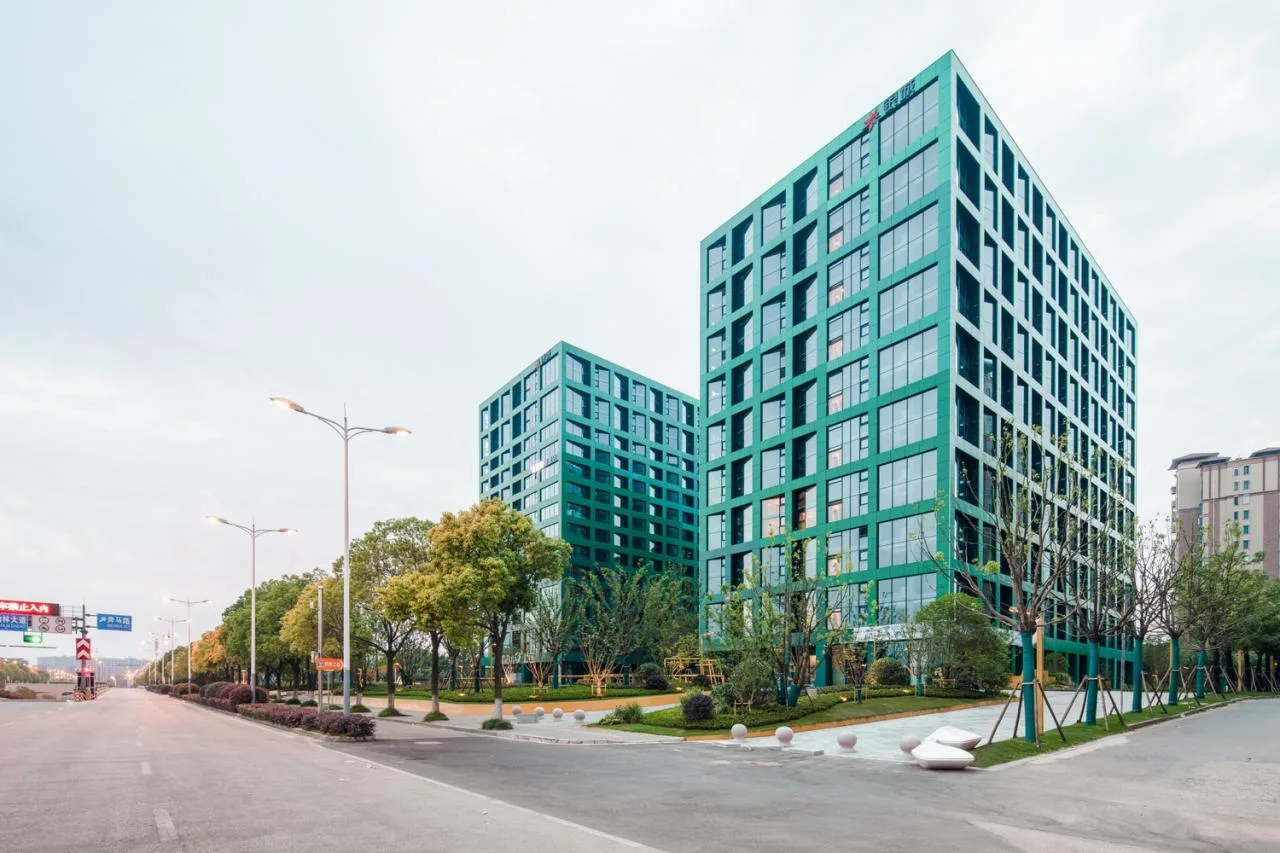
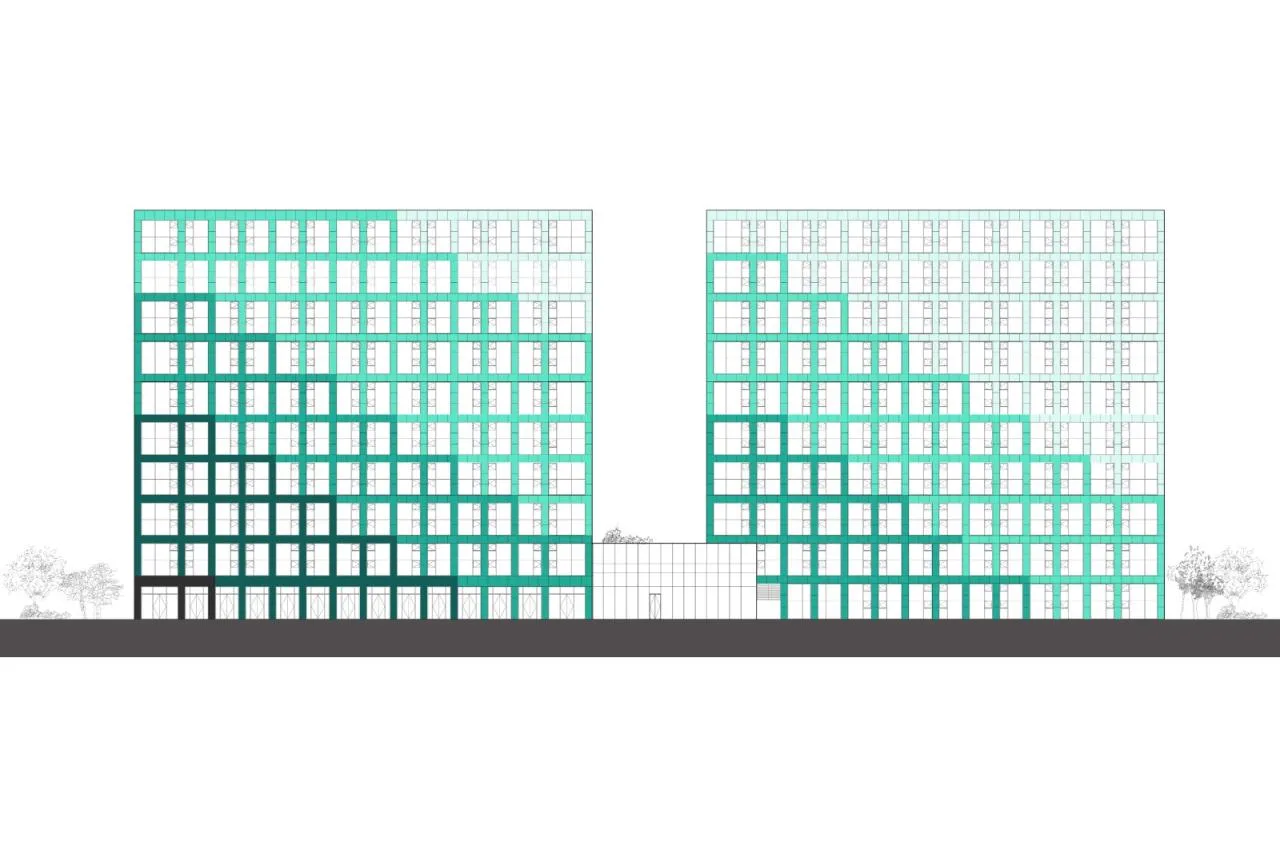
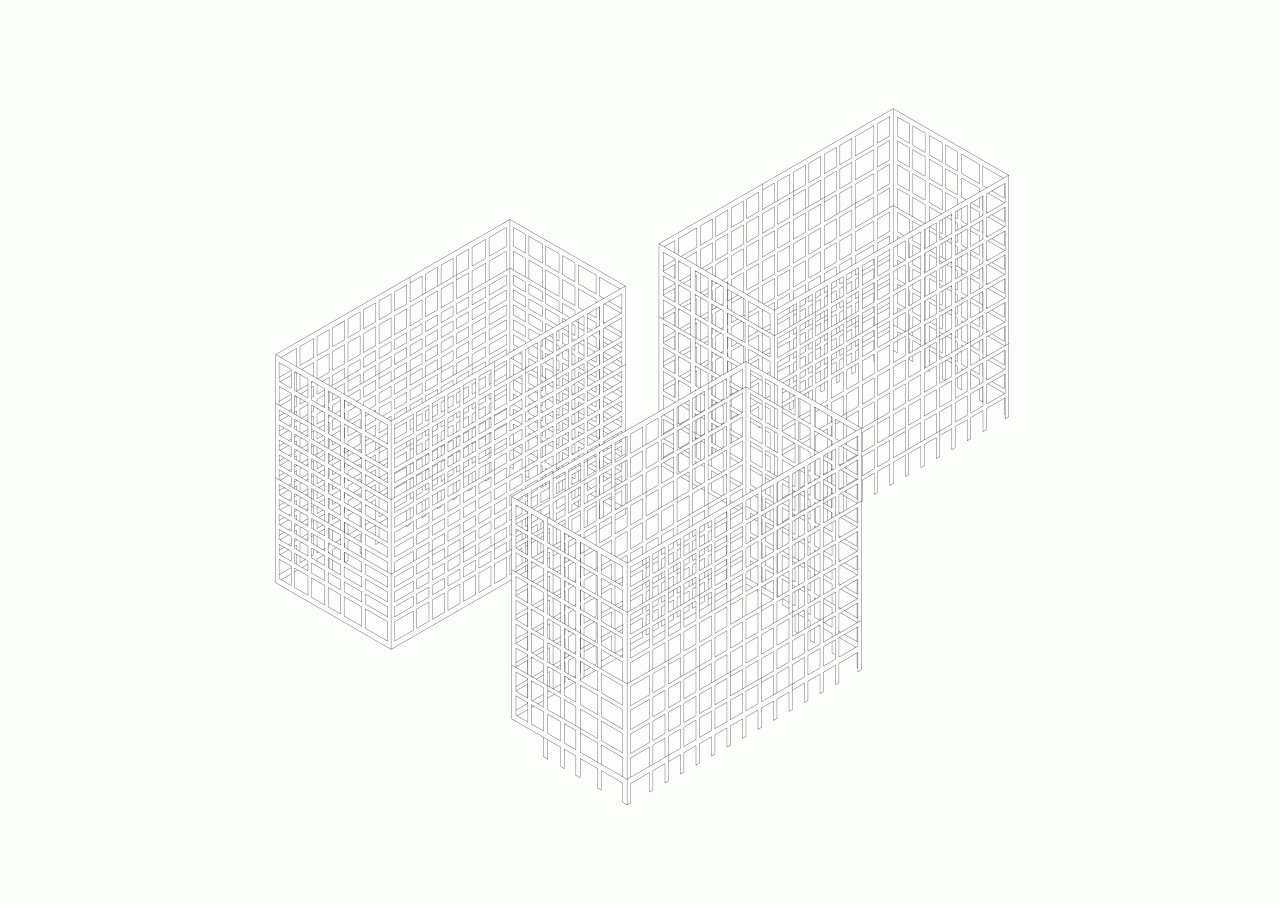
Rule 1: Except for beams and columns, all exterior wall surfaces are reserved for windows, establishing a rigorous orthogonal grid on the facade.
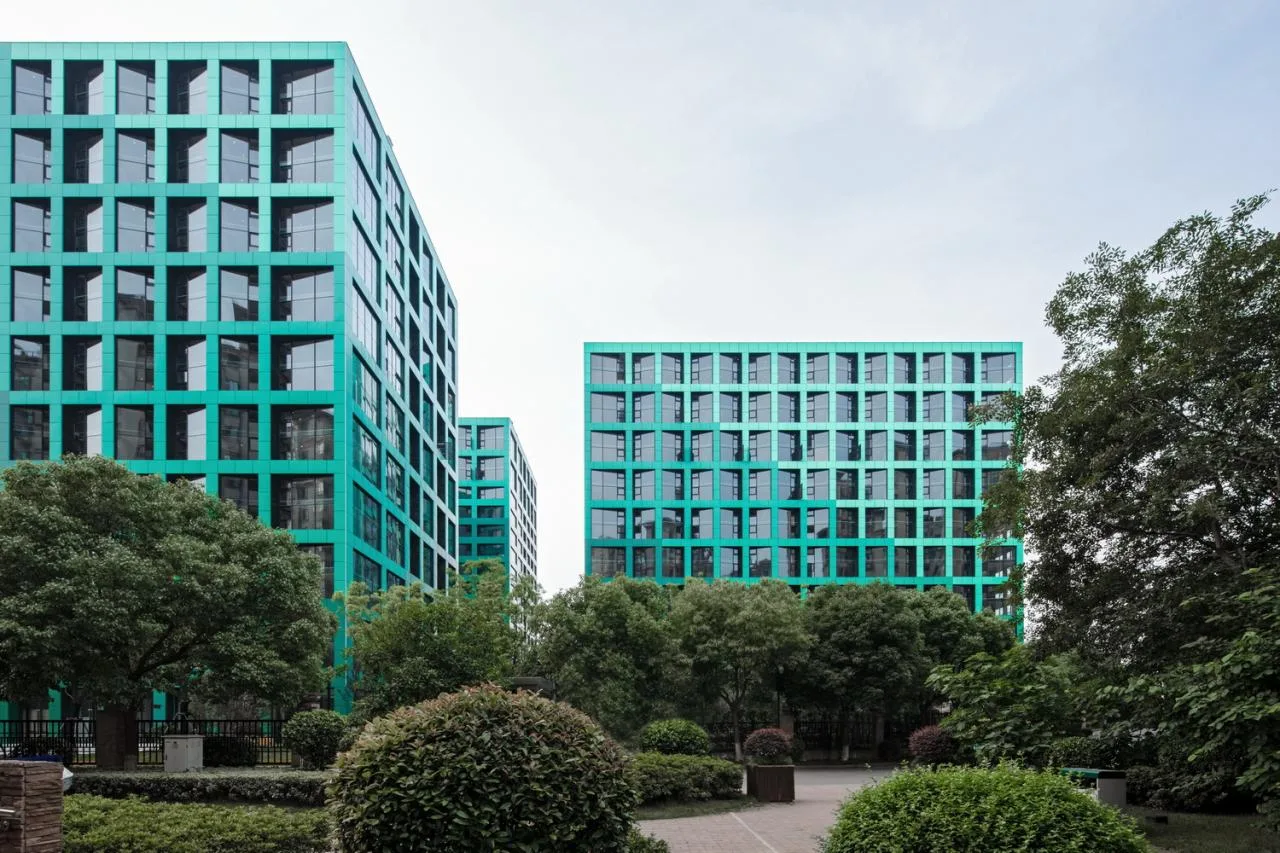
Rule 2: Maximize building height within zoning limits. Two towers have floor heights of 4.8 meters, while the third combines 4.8 and 3 meters, increasing usable space and adding subtle variation to the grid.
6.2 Unity Through Color and Material Gradients
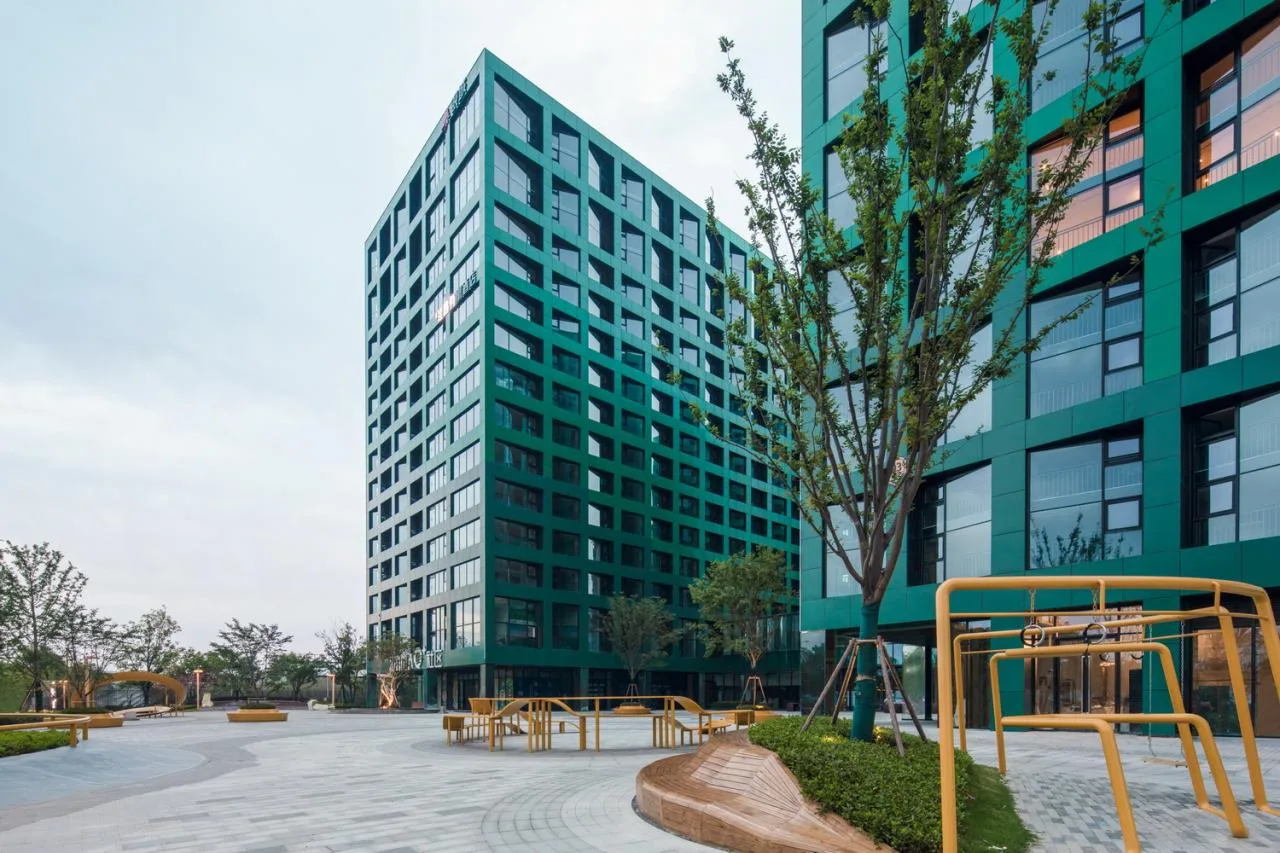
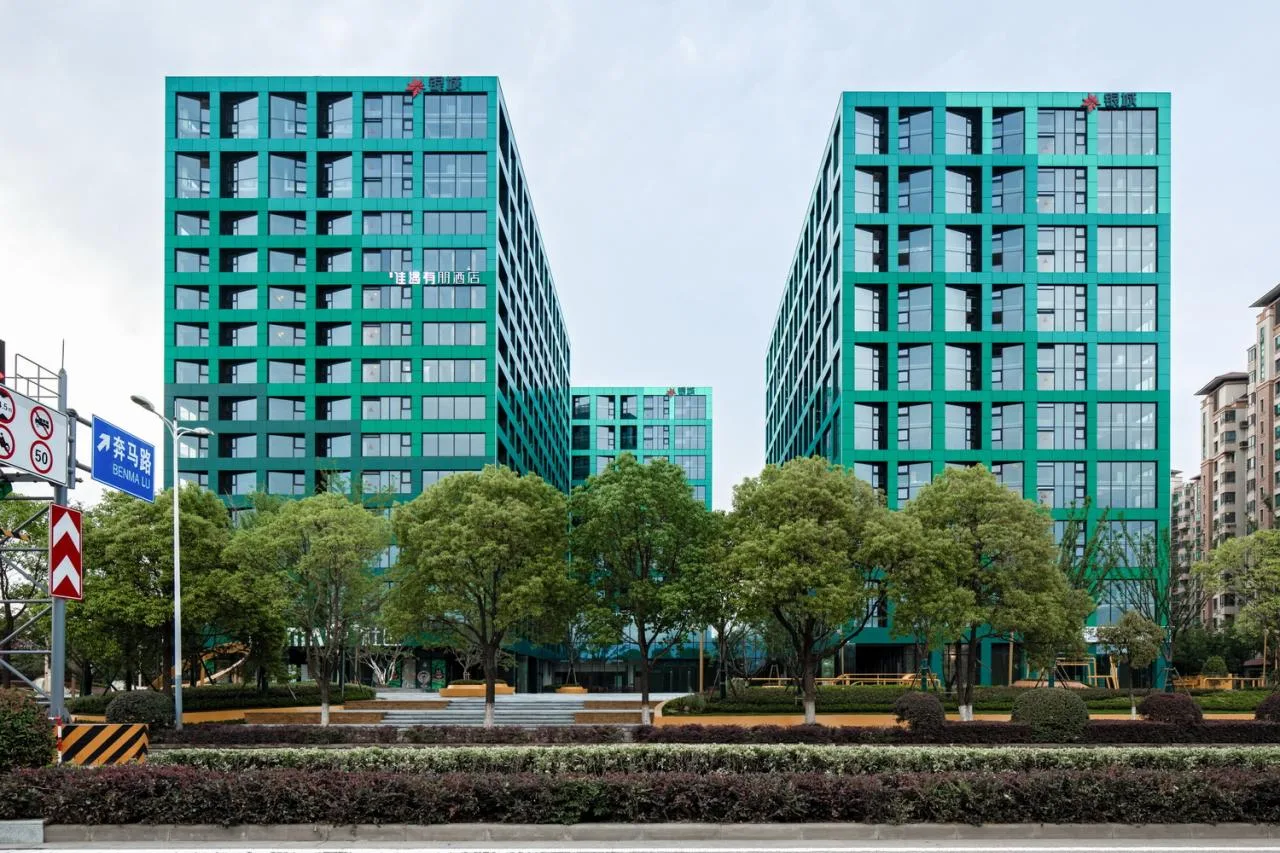
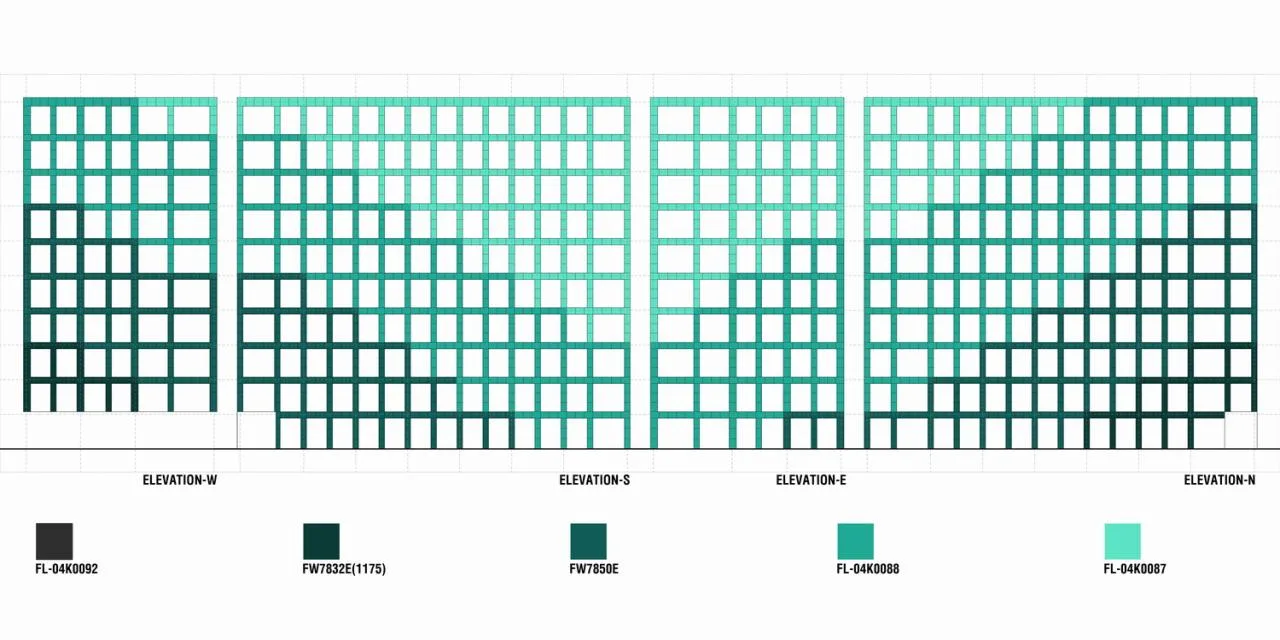
In the chaotic suburban environment, new buildings need clear, distinctive outlines. The three towers feature five shades of green aluminum panels arranged in a pixelated, fading pattern, creating a lively and cohesive appearance visible from the subway station or passing traffic.
Up close, the green aluminum grid contrasts with sloping glass that reflects the sky, giving a refined and sophisticated look.
6.3 Concealed Air Conditioning Units to Simplify the Facade
With 2,000 air conditioning units across the three towers, typical outdoor units obstruct light and disrupt the facade’s appearance. Traditional shading louvers exacerbate this issue.
At Yincheng Kinma Q+Community, the air conditioning units are rotated 90 degrees so the intake and exhaust louvers are placed on the sides of recessed window openings. Double-sided louvers provide efficient ventilation while reducing the front-facing area of the units by 12%, increasing natural light inside.
This design frees the facade from cluttered shading devices, enhancing the building’s solid and clean appearance.
7. Open-Ended Living: 940 Possibilities
So, what have we created on this isolated site in Qixia District, Nanjing, lacking support facilities and public spaces?
We designed 940 housing units that provide all essential urban living functions. A brightly lit 24-hour terminal and its associated facilities encourage residents to freely use their private spaces to pursue personal interests. This freedom is what empowers and inspires residents to move forward.
This reflects the core philosophy of design: the most important aspects of a building are not necessarily created by architects. Life’s diversity has always existed and will only disappear if stifled by poor design.
Architecture should not dictate life, interfere with daily routines, or limit possibilities. Instead, it should enhance freedom and flexibility. This is the fundamental purpose behind designing youth apartments in large cities.
Project Drawings
△ First Floor Plan
△ Standard Floor Plan
△ Elevation Drawing
△ Section Diagram
△ Facade Analysis Diagram
△ Central Public Space Analysis
△ Facade Research Analysis Diagram
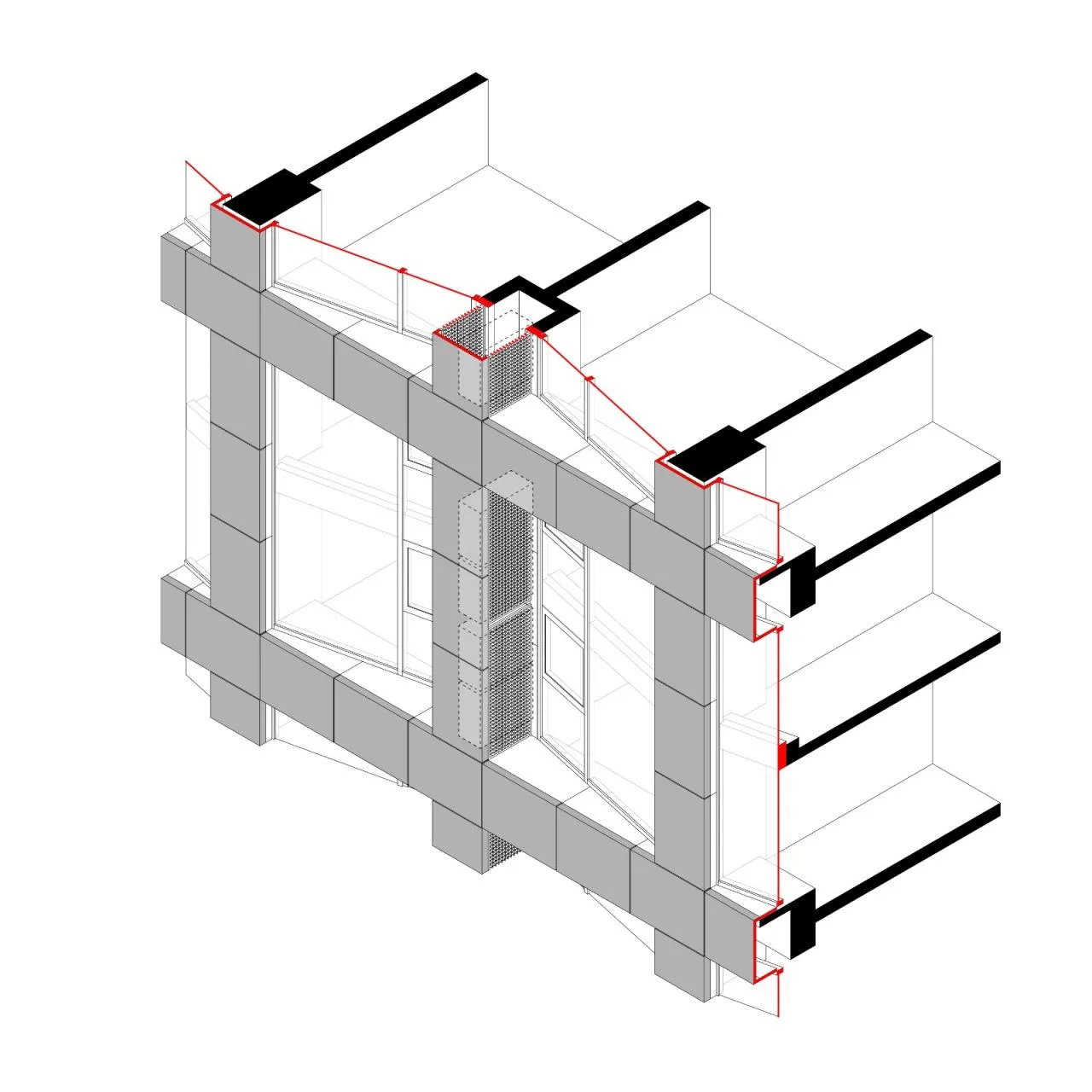
△ Curtain Wall Node Analysis Diagram
Project Information
Project Name: Nanjing Yincheng Kinma Q+Community
Design Competition: First Prize, 2016
Designers: Aimeo (Shanghai) Architectural Design Consulting Co., Ltd., Youyi Architectural Design (Shanghai) Co., Ltd.
Main Creators and Design Team: Wang Yunfeng, Chen Han, Geng Wenyi, Zhang Guisong, Chen Bin, Hu Chujun, Guan Jie
Contact Email: UNITARCHITECT@126.com
Project Duration: 2016–2019
Location: Jinma Road, Qixia District, Nanjing City, Jiangsu Province
Construction Drawings Partner: Nanjing Changjiang Urban Architectural Design Co., Ltd.
Client: Yincheng International
Photography Credit: Tian Fangfang
Total Construction Area: Approximately 77,000 square meters
Ground Area: Approximately 48,000 square meters
Underground Area: Approximately 29,000 square meters
Awards: First Prize in Architectural Design and Excellent Survey and Design Award for Urban and Rural Construction System in Jiangsu Province, 2020















Must log in before commenting!
Sign Up