
A Book That Fell from the Sky
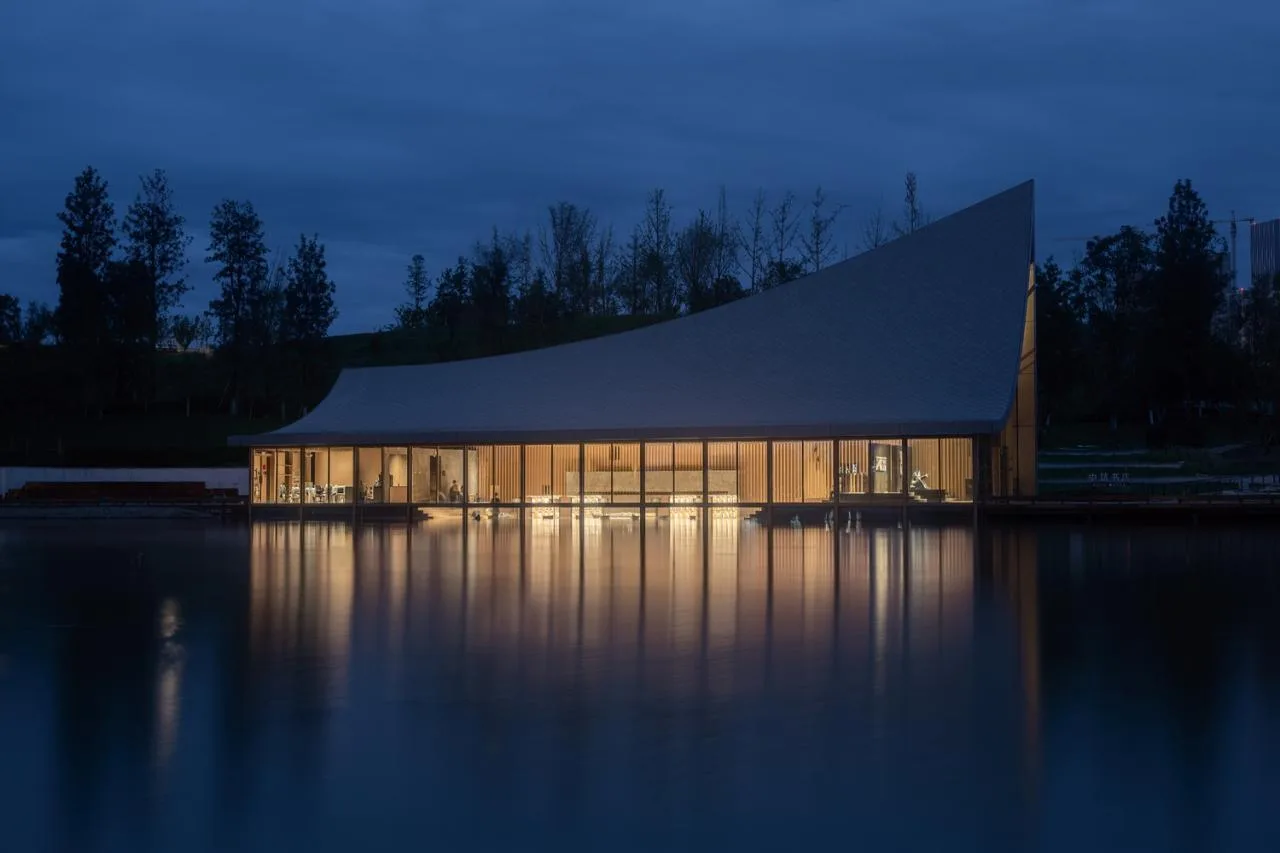
© Architectural Arch Exest
Form rises and falls; form is infinite.
Open and close with purpose, with abundant intent.
— Lu Yun, Founder of MUDA Architecture
© Architectural Arch Exest
Project Background
Between July and August 2018, the “Xinglong Lake Bookstore Architectural Creative Design Competition” was launched under the title “Chengdu’s Most Beautiful Bookstore.” The event was co-organized by Chengdu Tianfu New Area Investment Group Co., Ltd. and the China Southwest Architectural Design and Research Institute, with Yizhu Yishi as a co-organizer. A total of 486 participants registered, submitting 249 conceptual proposals for evaluation. MUDA Architecture was ultimately selected among the 20 finalists and awarded first place in this prestigious competition.
© Architectural Arch Exest
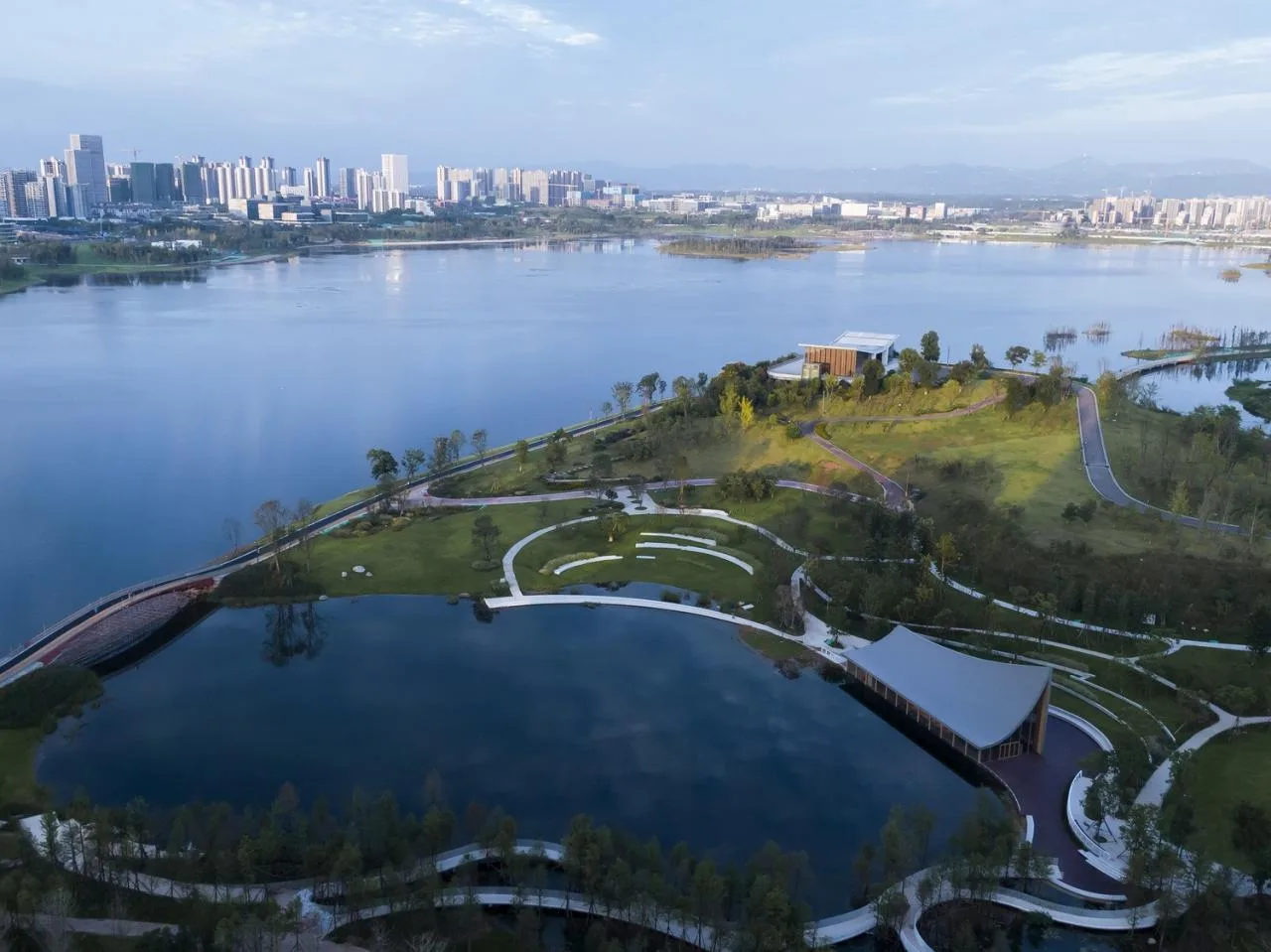
Chengdu Tianfu New Area serves as a key hub for the Belt and Road Initiative and the Yangtze River Economic Belt development. In February 2018, the concept of a “park city” was first introduced at Xinglong Lake. Against this backdrop, the competition’s primary goal was to connect ecological values with humanistic spirit through the concept of a “lakeside bookstore,” aiming to create an innovative cultural landmark for the city.
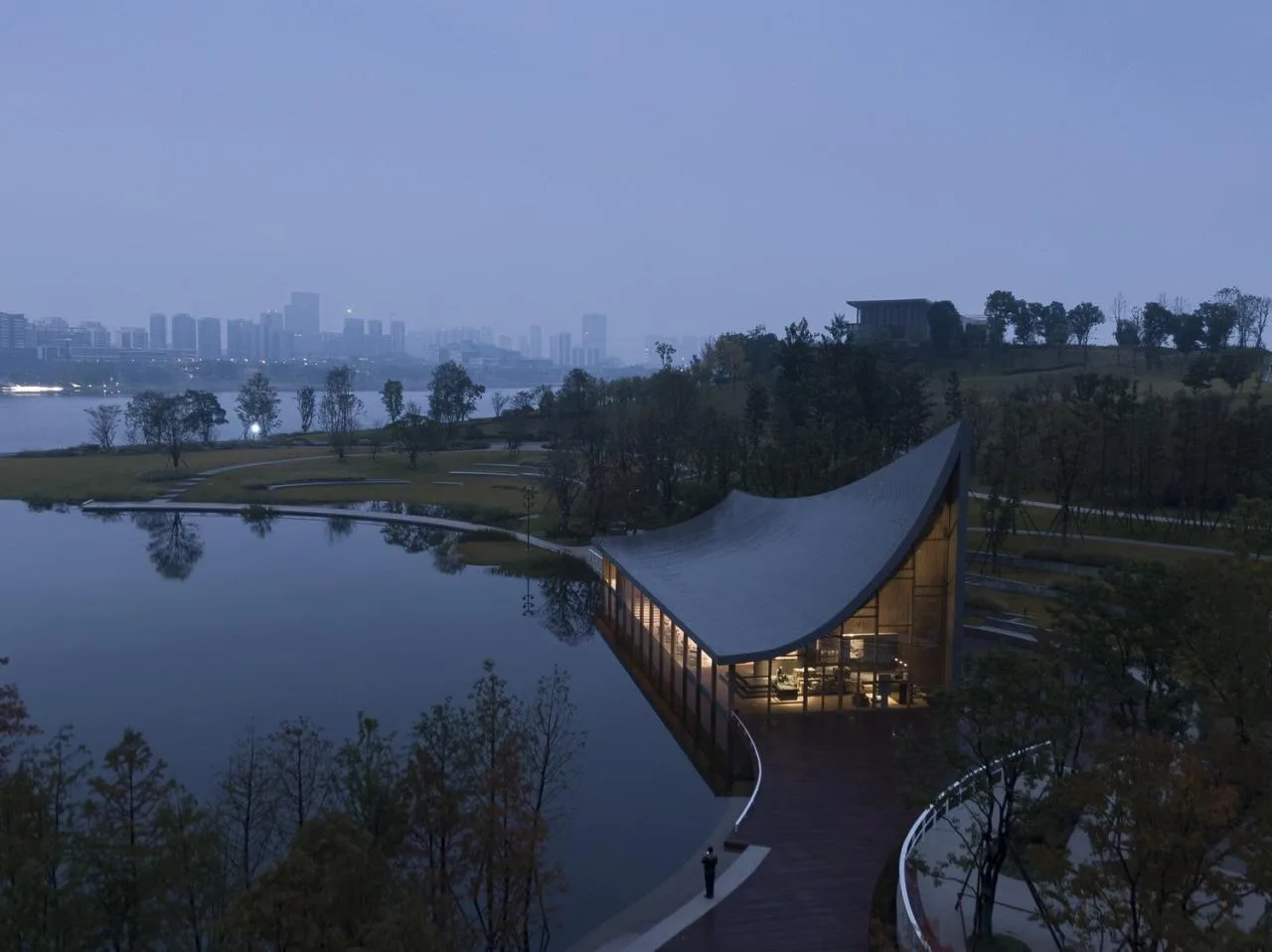
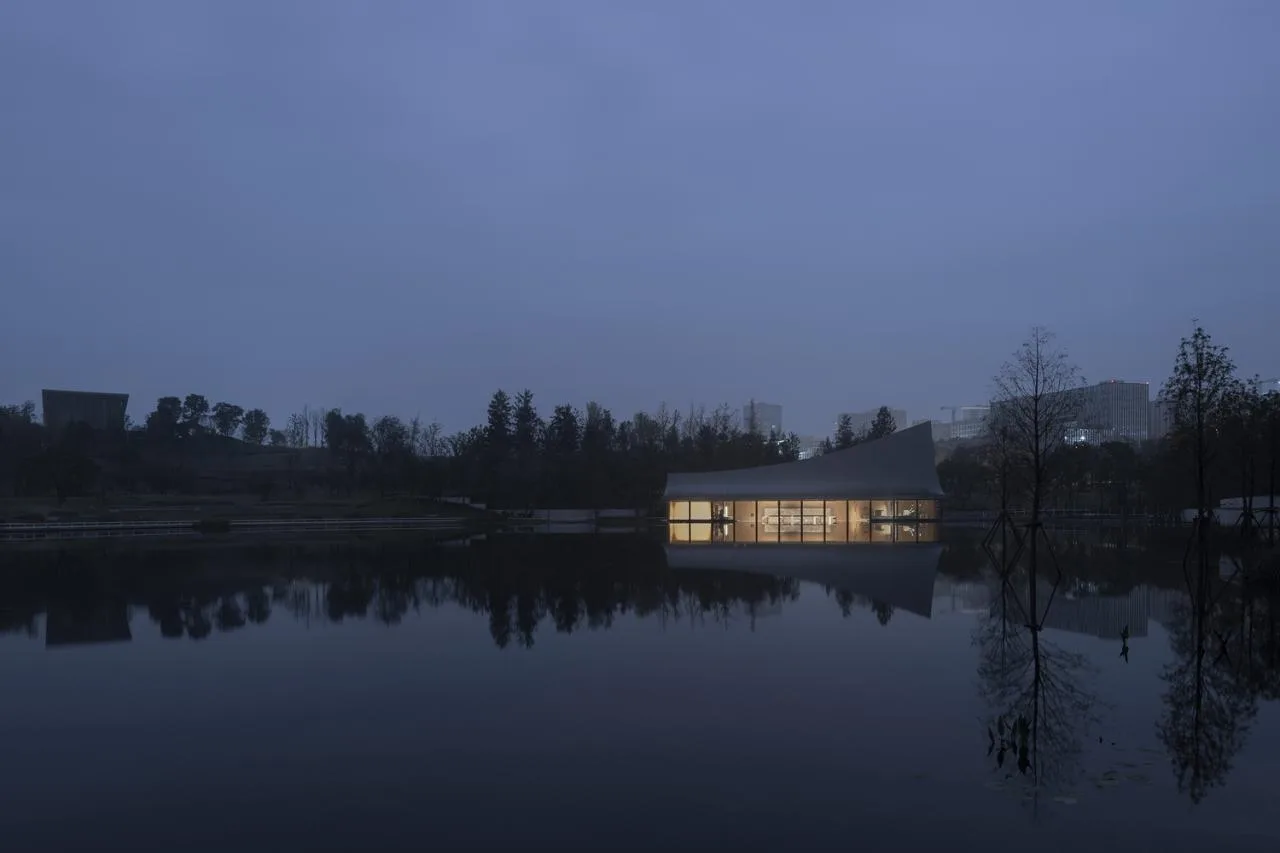
Seizing this opportunity, MUDA Architecture sought to reflect Chengdu’s distinctive urban temperament and lifestyle through the design of the lakeside bookstore. Emphasizing respect for Xinglong Lake’s natural environment, the project envisions an ecological blueprint where mountains and waters harmoniously integrate with the urban setting.
© Architectural Arch Exest
Design Concept
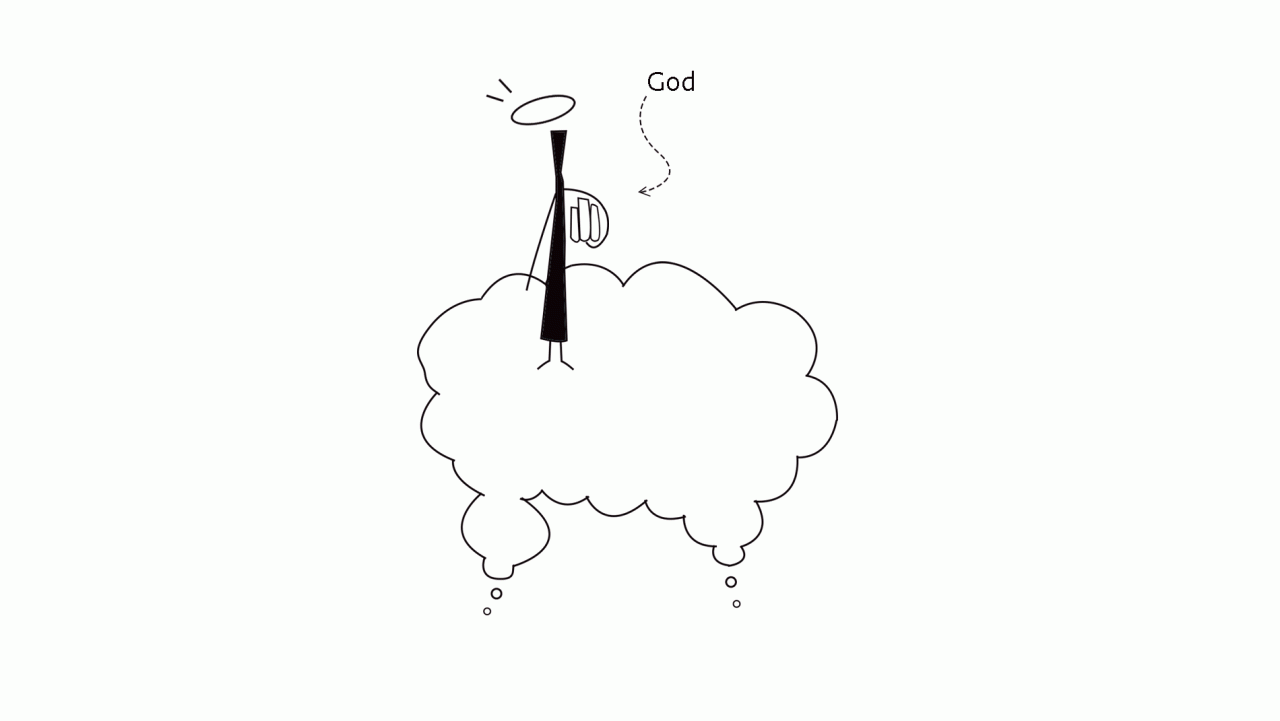
Inspired by the metaphor of “a book that fell from the sky,” MUDA Architecture designed the building’s form to evoke the shape of a book. This concept invites visitors to enter a serene architectural space where they can immerse themselves in tranquility, engage in self-reflection, and embark on a personal journey of discovery.
Design concept animation © MUDA Architecture
© Luyun
Venue and Environment
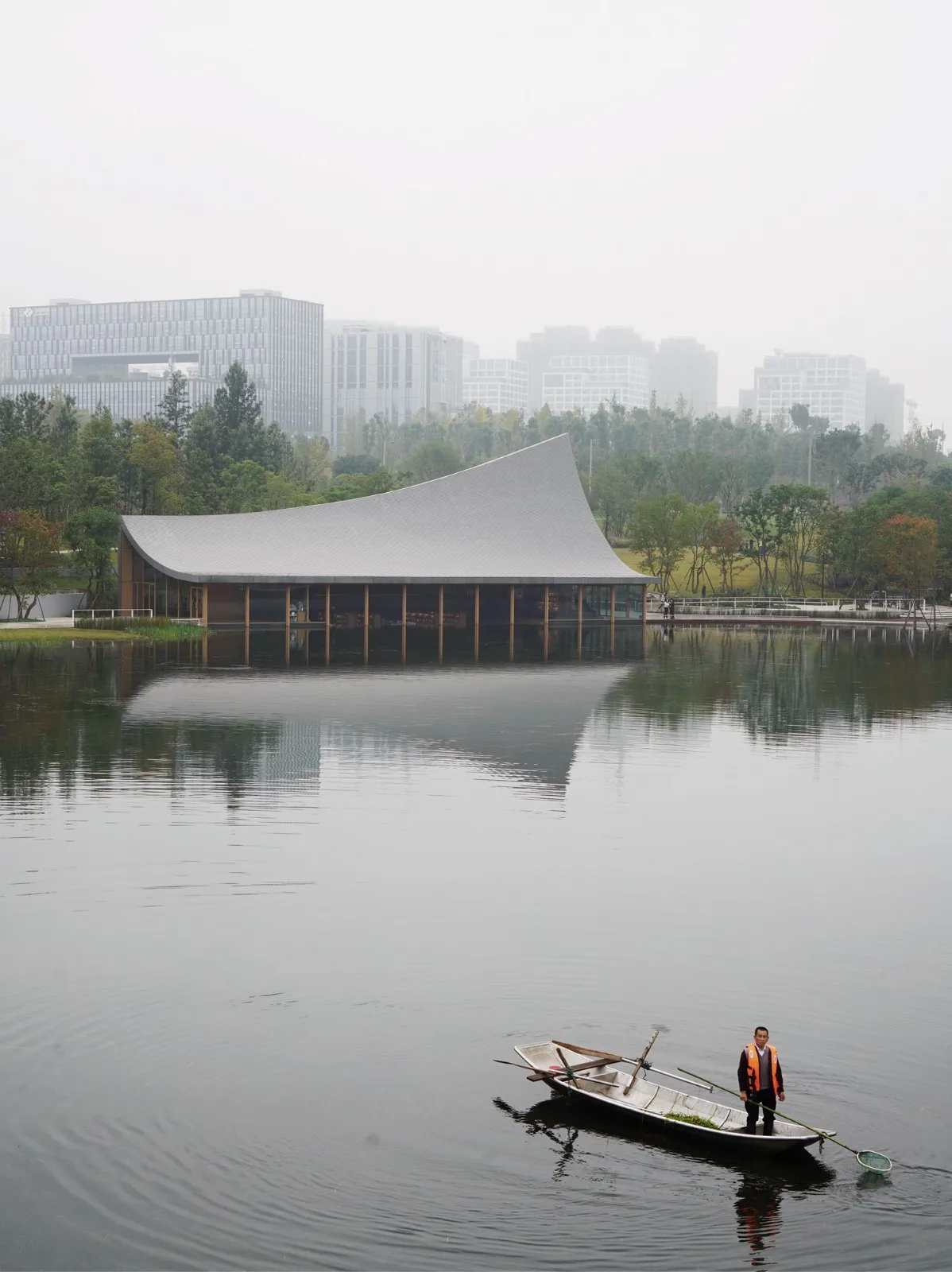
The project is situated on the east side of Xinglong Bay Area, occupying a rectangular footprint measuring 12m by 40m. This foundation creates a distinct indoor-outdoor waterfront space at the interface between the lake and its shore.
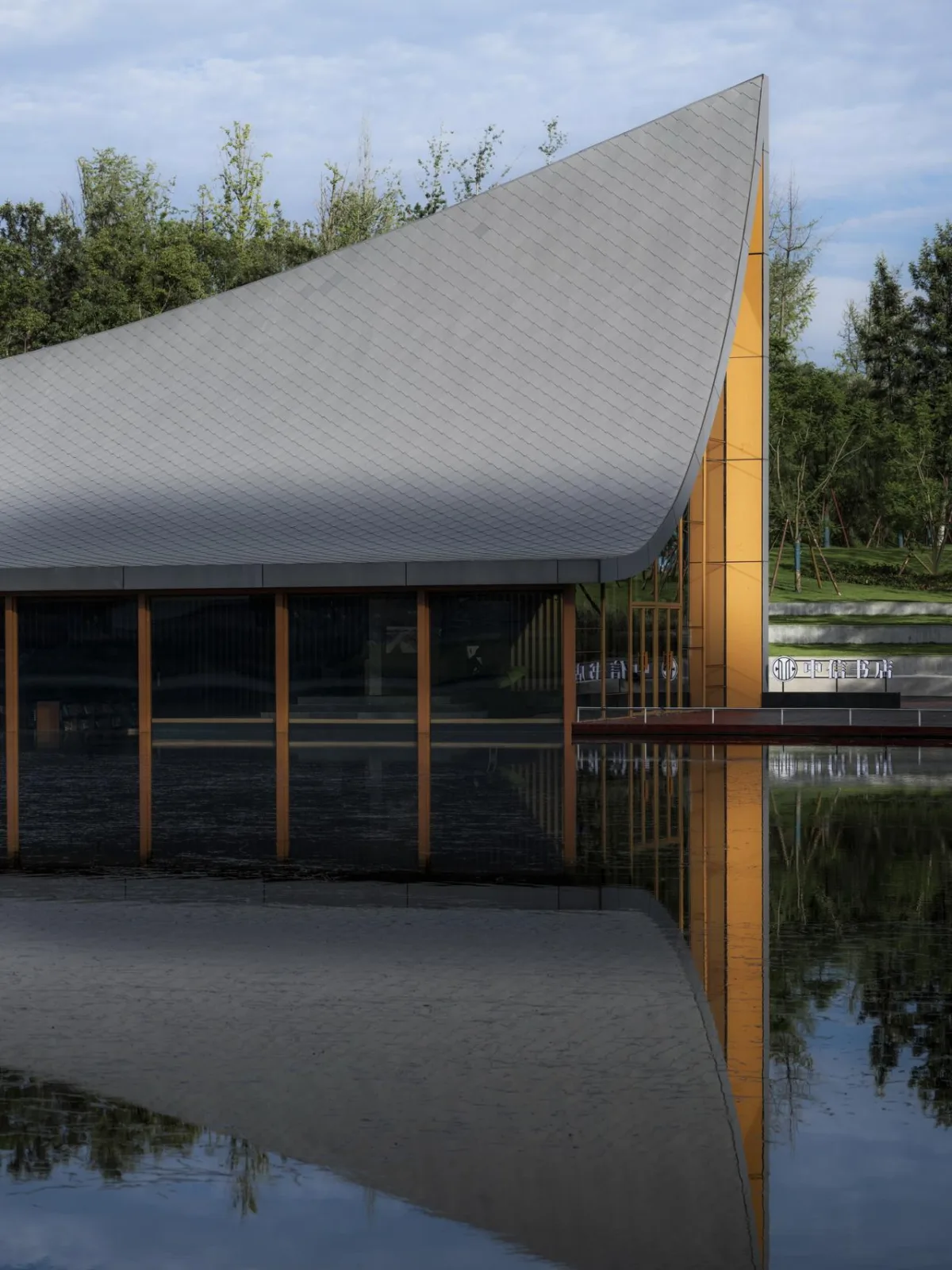
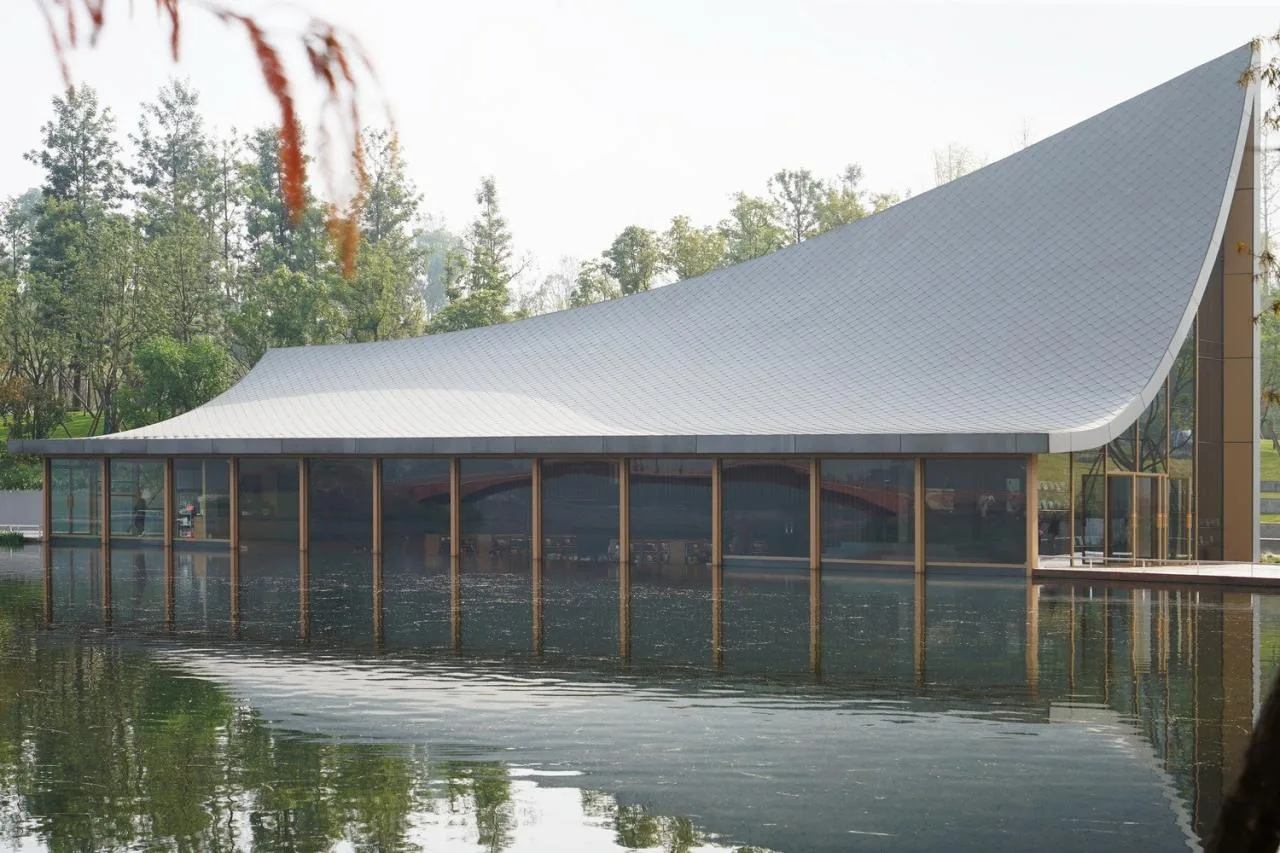
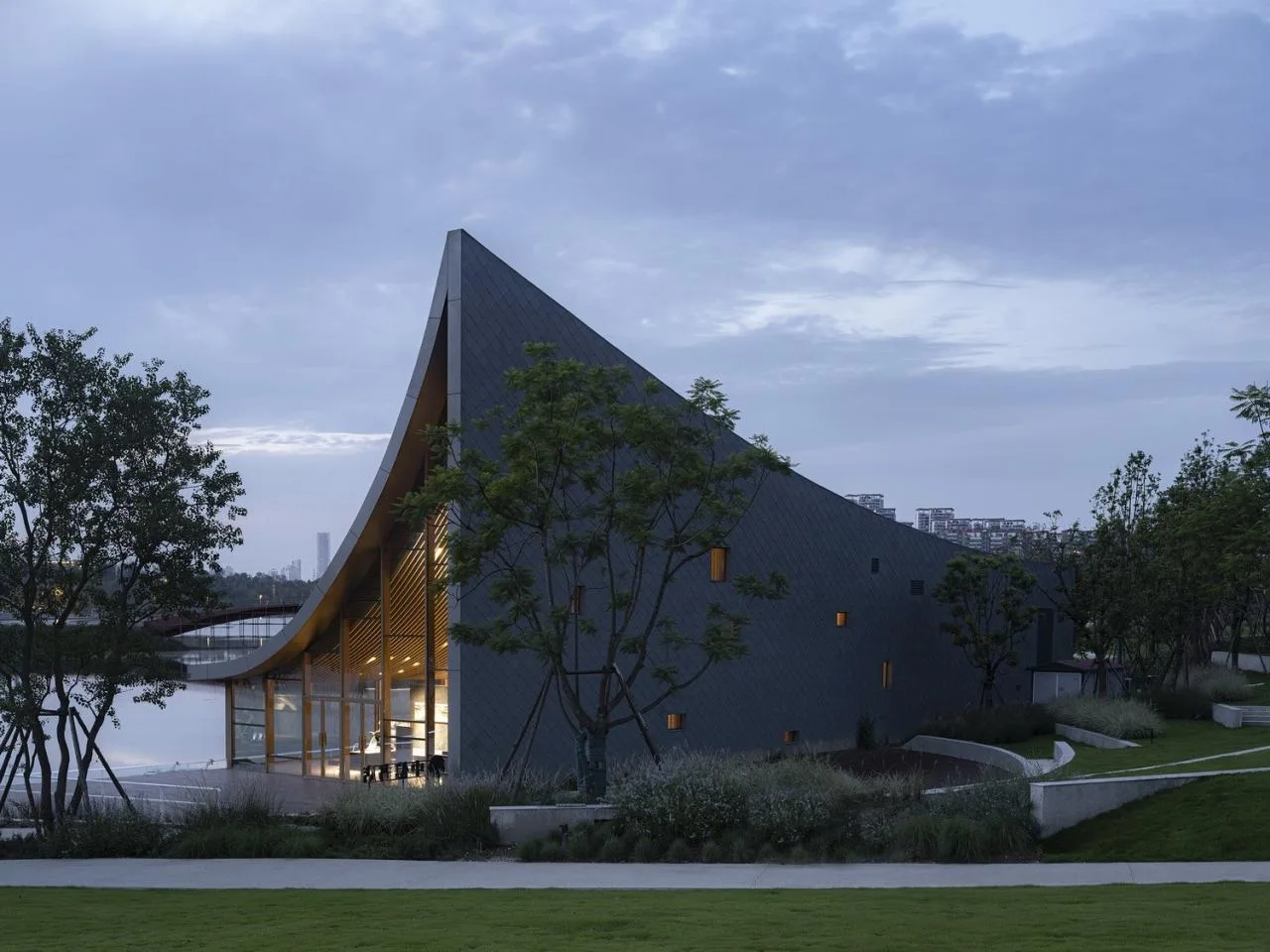
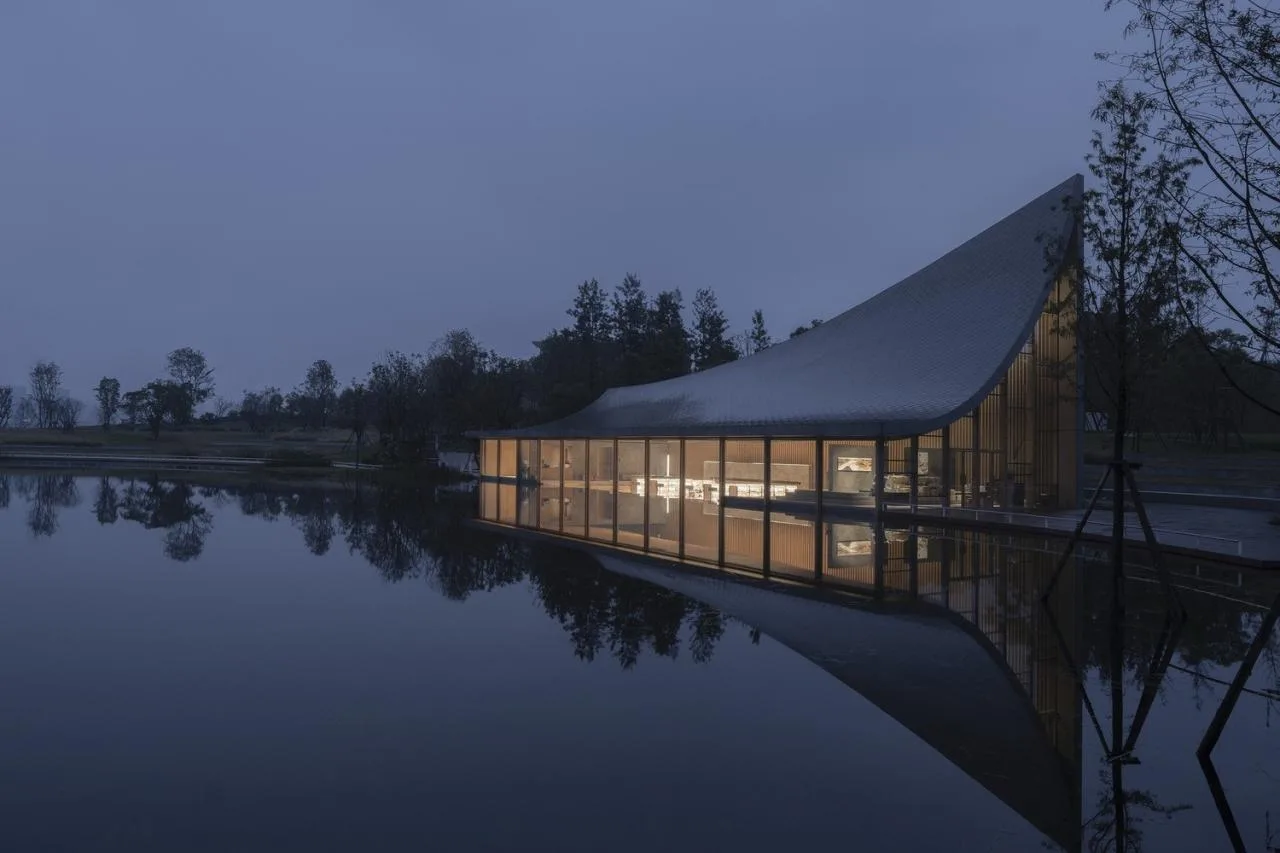
The building’s roof varies in height, with its lowest point at 3 meters. The southeast corner rises to 16 meters, while the northeast corner reaches 7.5 meters, forming a roof that carries symbolic spiritual significance. The gently curved, sloping roof design also pays homage to the traditional architectural vocabulary found in Western Sichuan’s residential buildings.
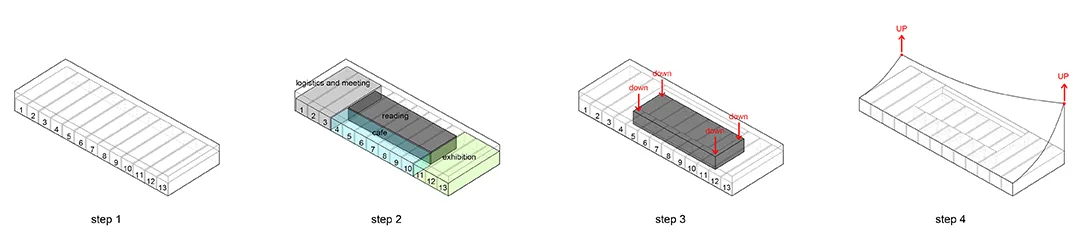
Building Form Generation © MUDA Architecture
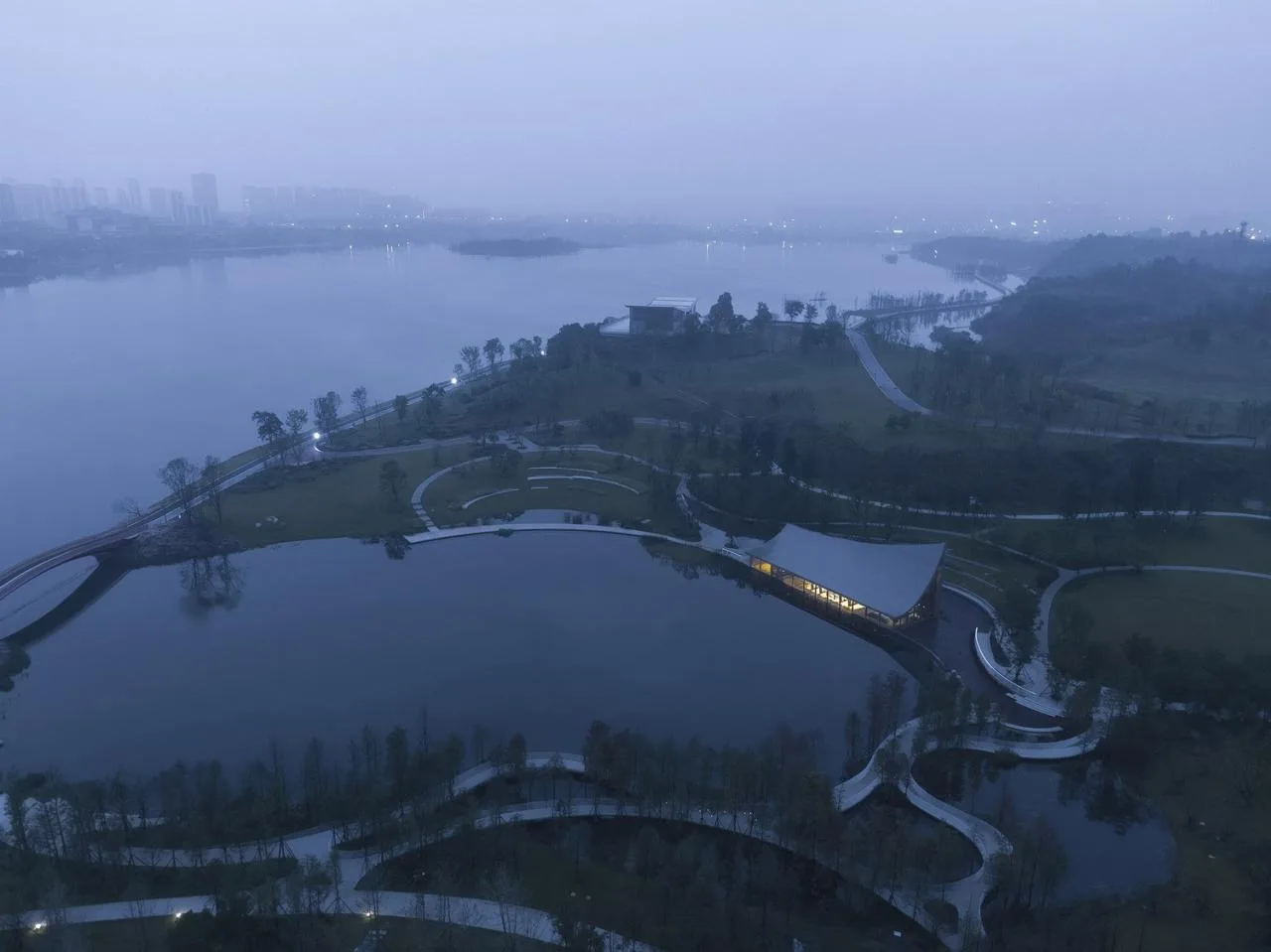
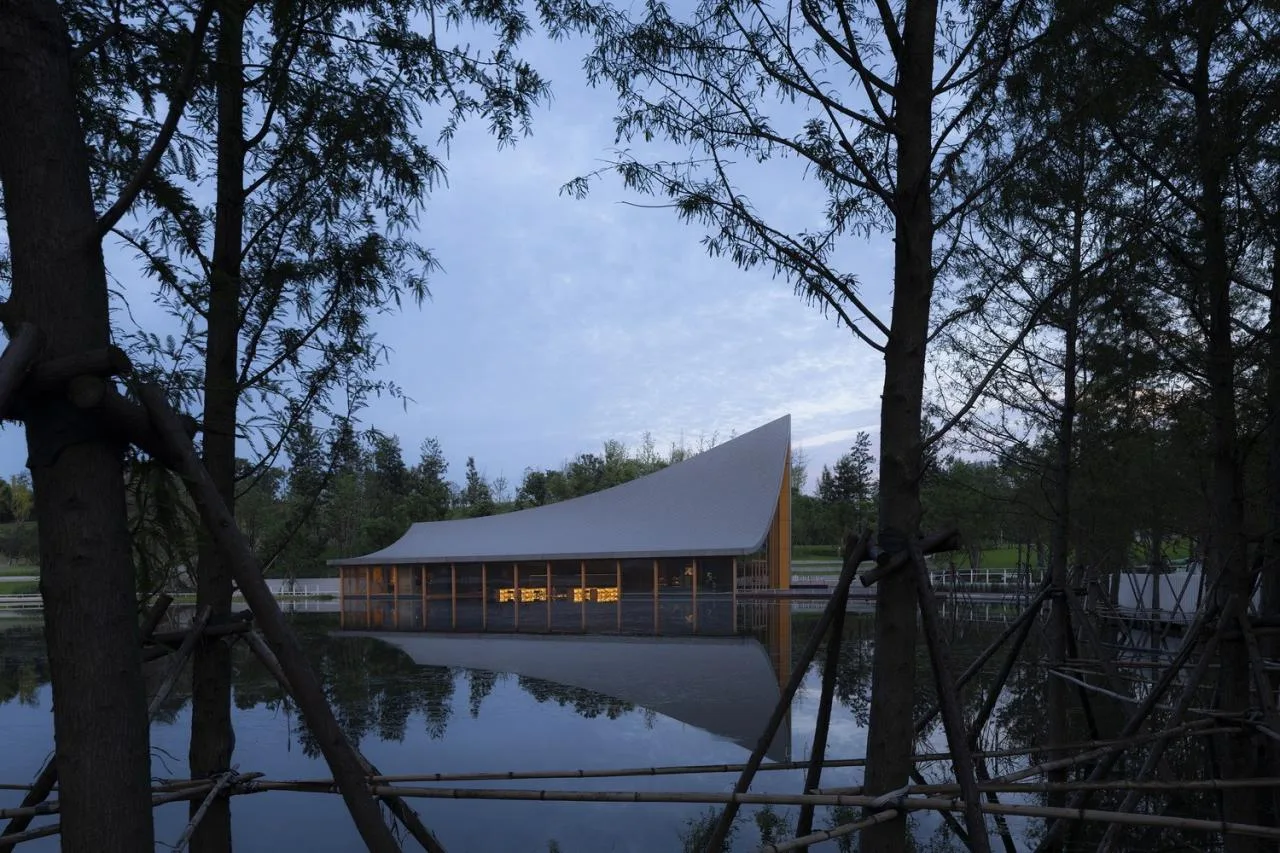
© Architectural Arch Exest
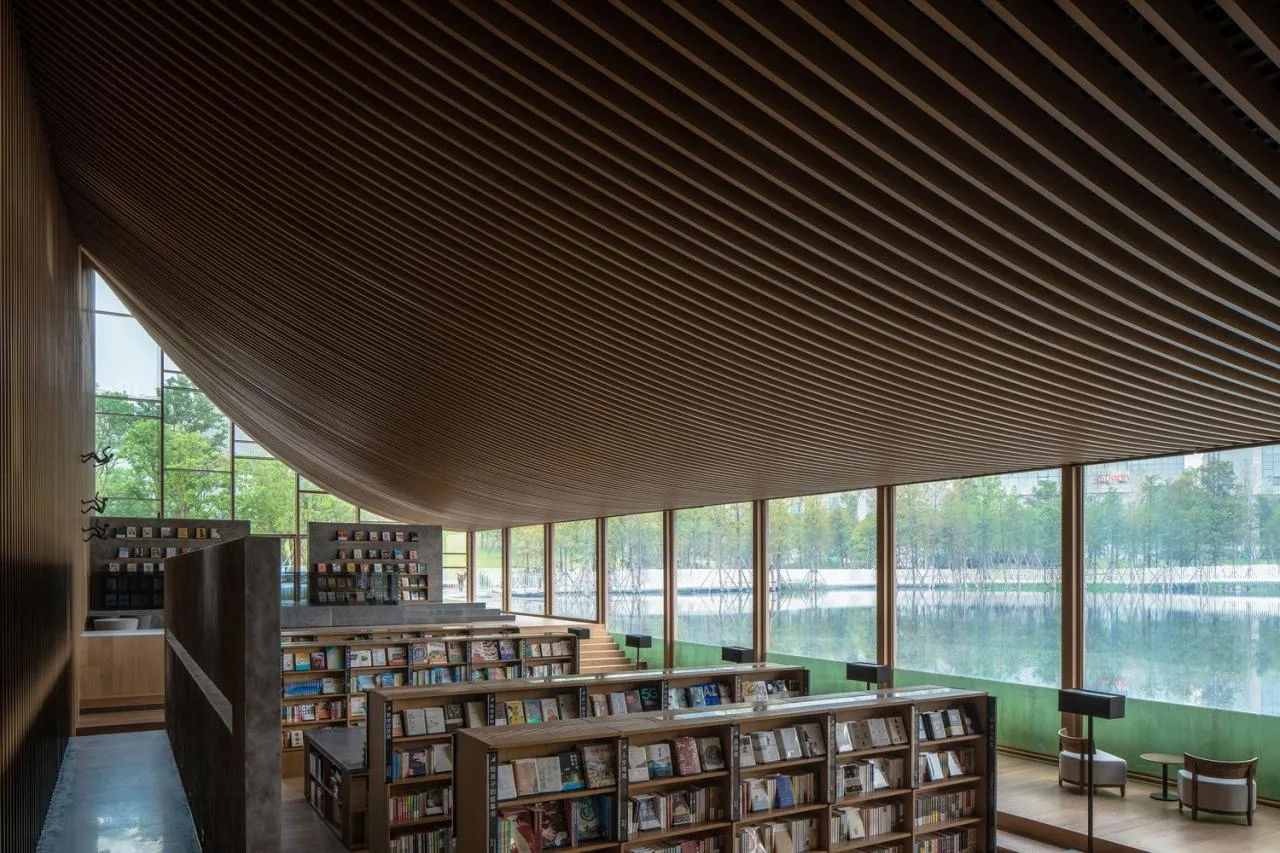
The curved roof surface echoes the rippling patterns on the lake’s surface. When a gentle breeze passes, the patterns on the water seem to extend seamlessly onto the roof, creating a lightweight canopy that harmonizes perfectly with the natural environment of Xinglong Lake Park.
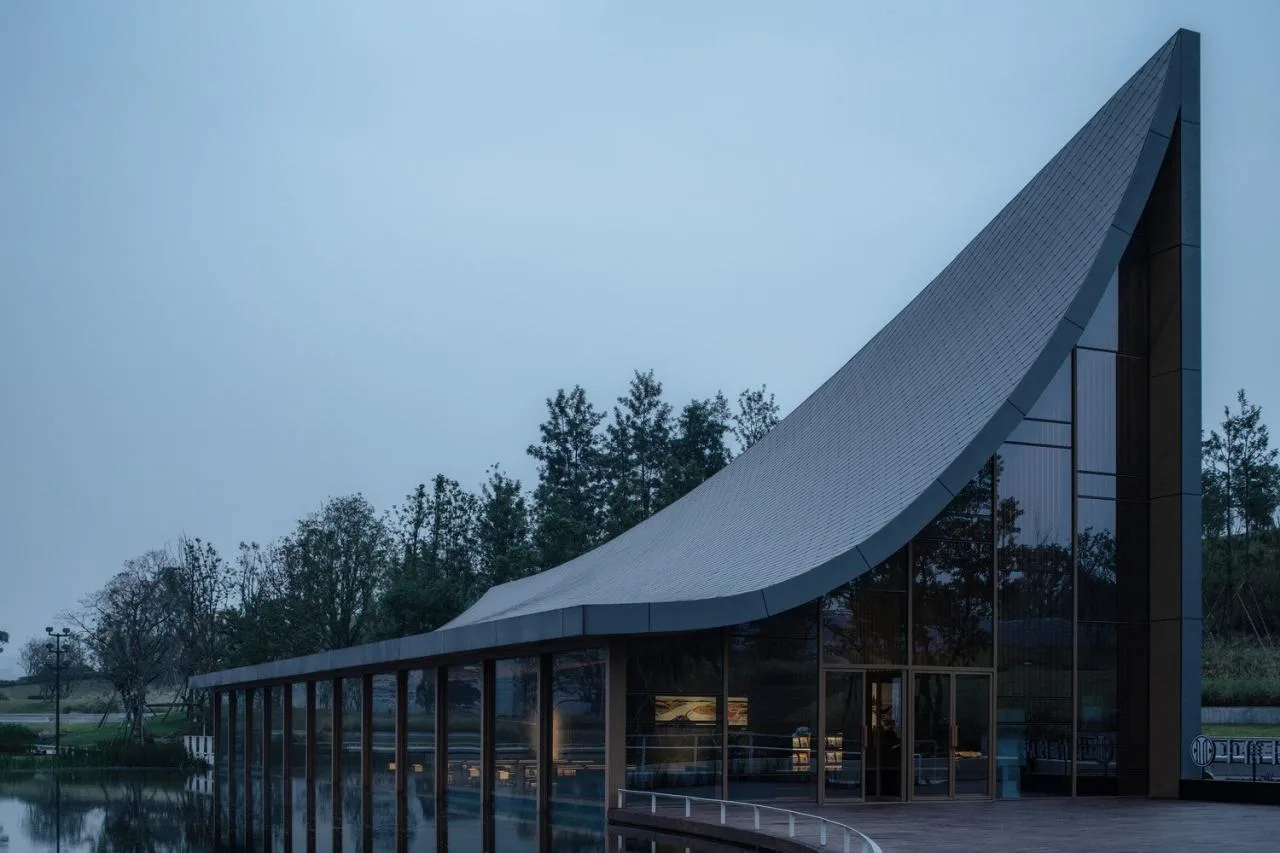
© Form in Photography HereSpace
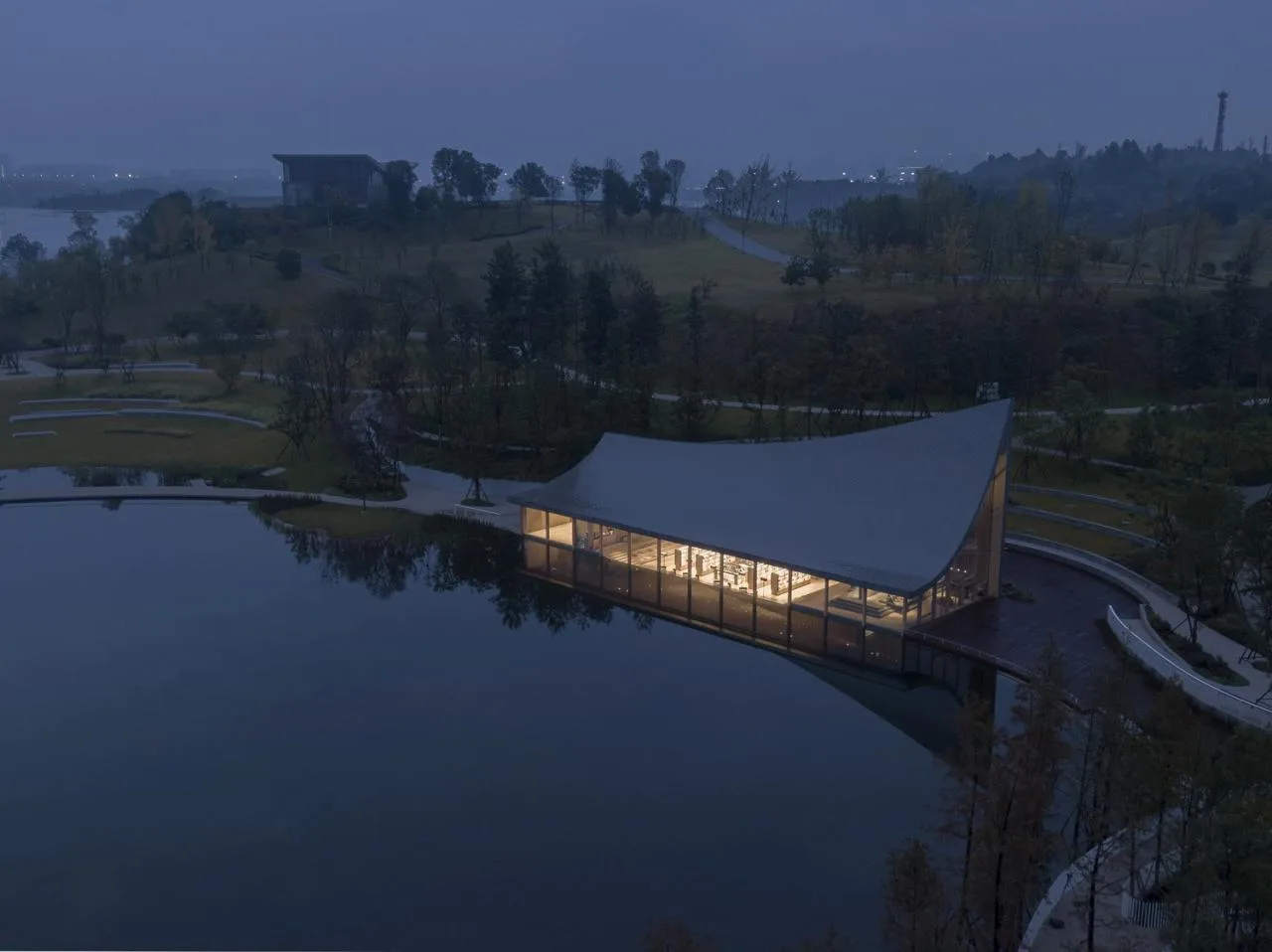
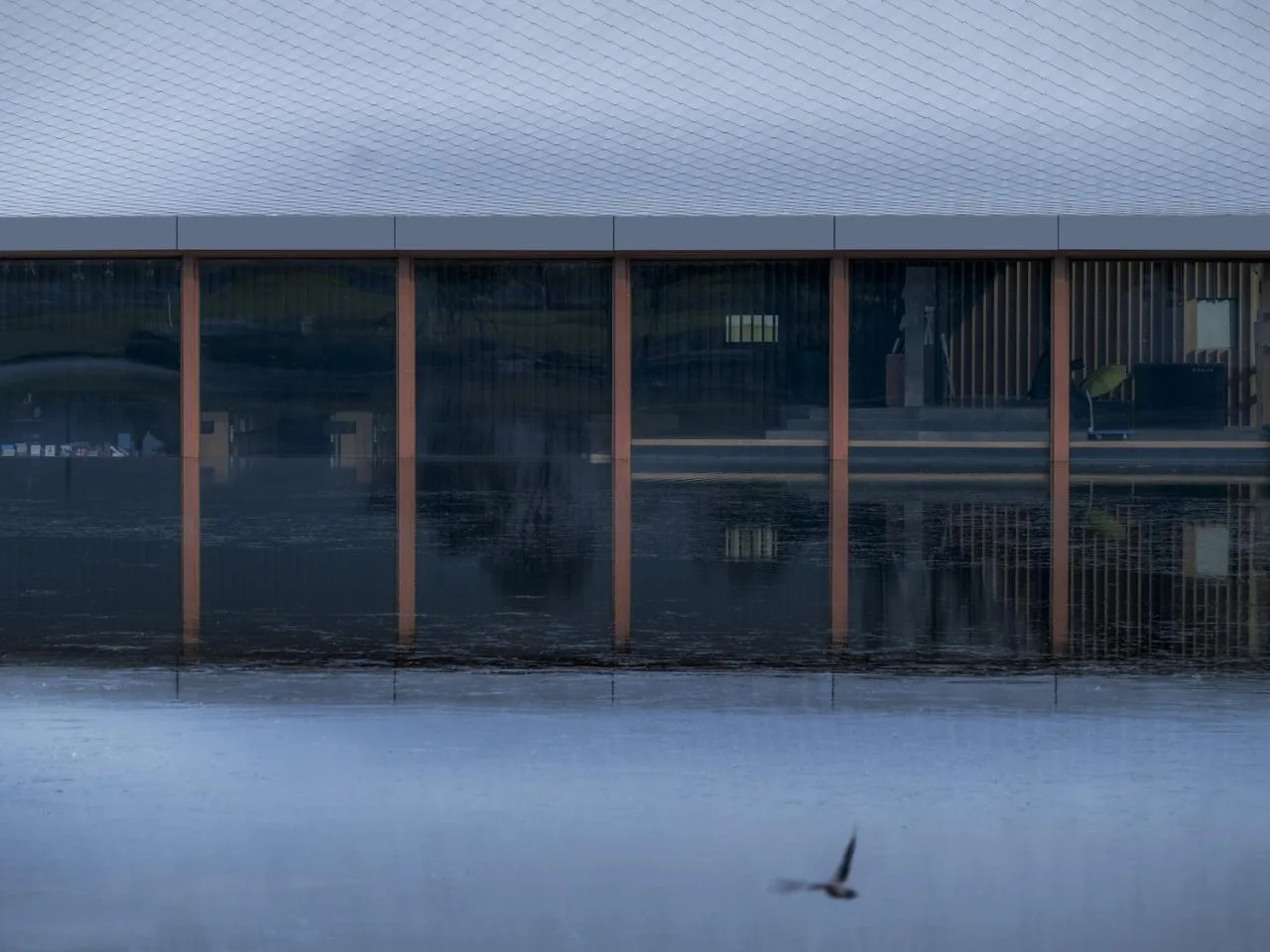
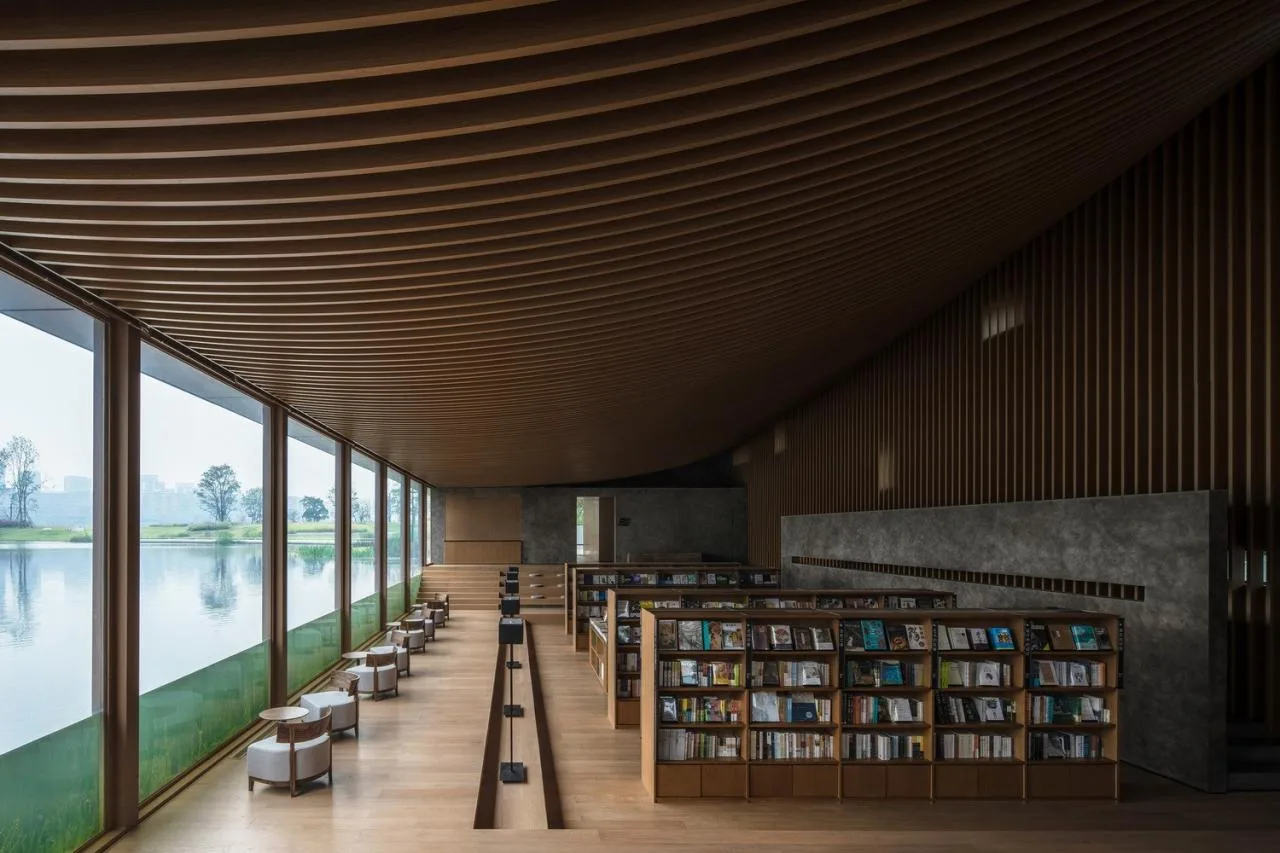
The building unfolds along the site’s natural contours, opening towards the lake. Its glass curtain wall extends underwater, allowing soft reflections of water light to fill the sunken reading space, fostering a peaceful and captivating ambiance.
The architectural space interacts naturally with its surroundings, blending with trees, grasslands, aquatic plants, and the vast lake surface in a way that feels almost “semi-transparent.” This design conveys a deep respect and reverence for nature.
© Architectural Arch Exest
Streamline and Space
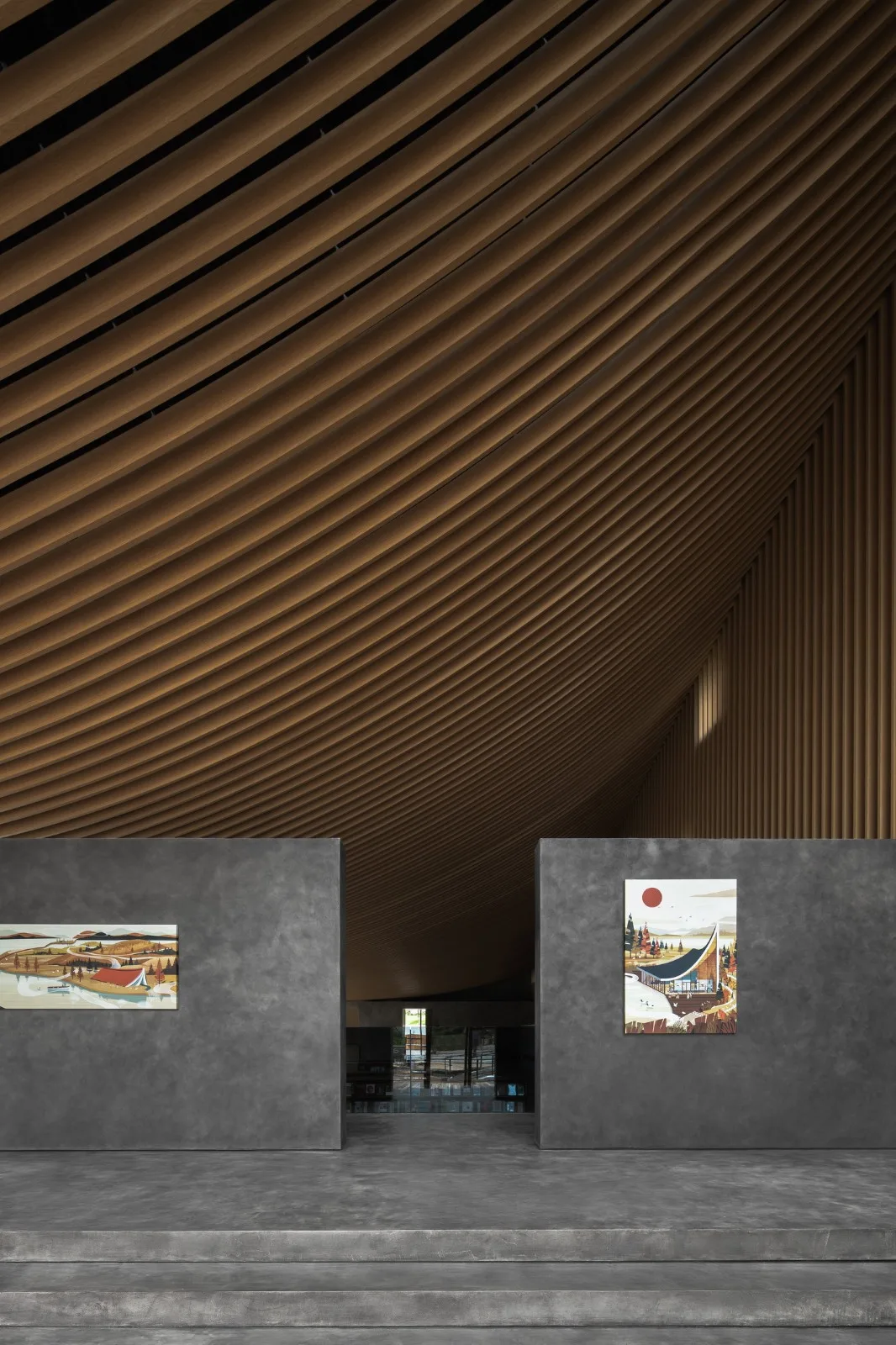
Upon entering the bookstore from the main southern entrance, visitors encounter a spatial sequence that unfolds gradually. The entrance features a well-proportioned front desk, a few steps, and two walls designated for art exhibitions, establishing a hierarchy of space.
Natural sunlight streams through the glass curtain wall to the left, infusing the interior with lake views. At this point, visitors only catch glimpses of the building’s core area, as the entrance functions as an art exhibition space designed to calm and center visitors. Ascending the stairs, visitors experience a gradual emotional transition, preparing them for the reading environment ahead.
© Form in Photography HereSpace
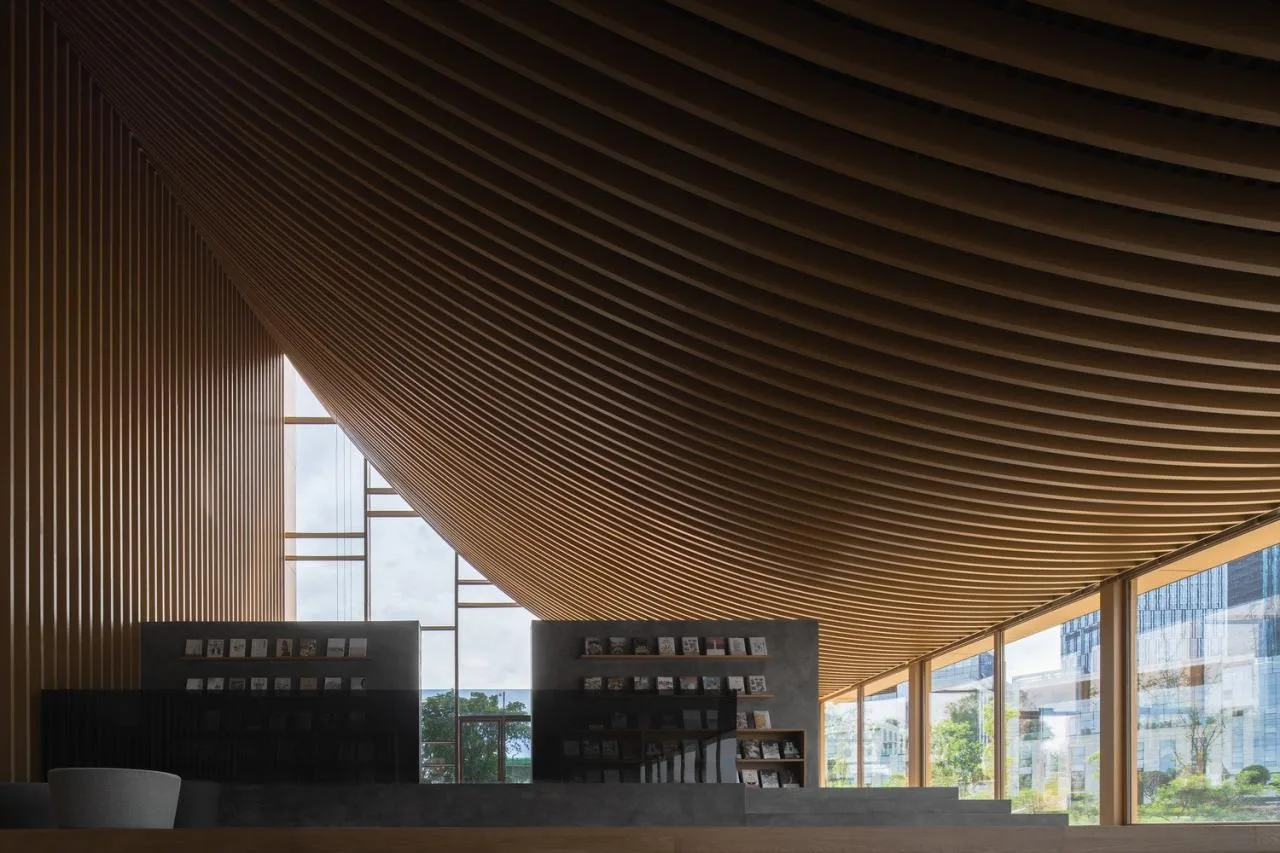
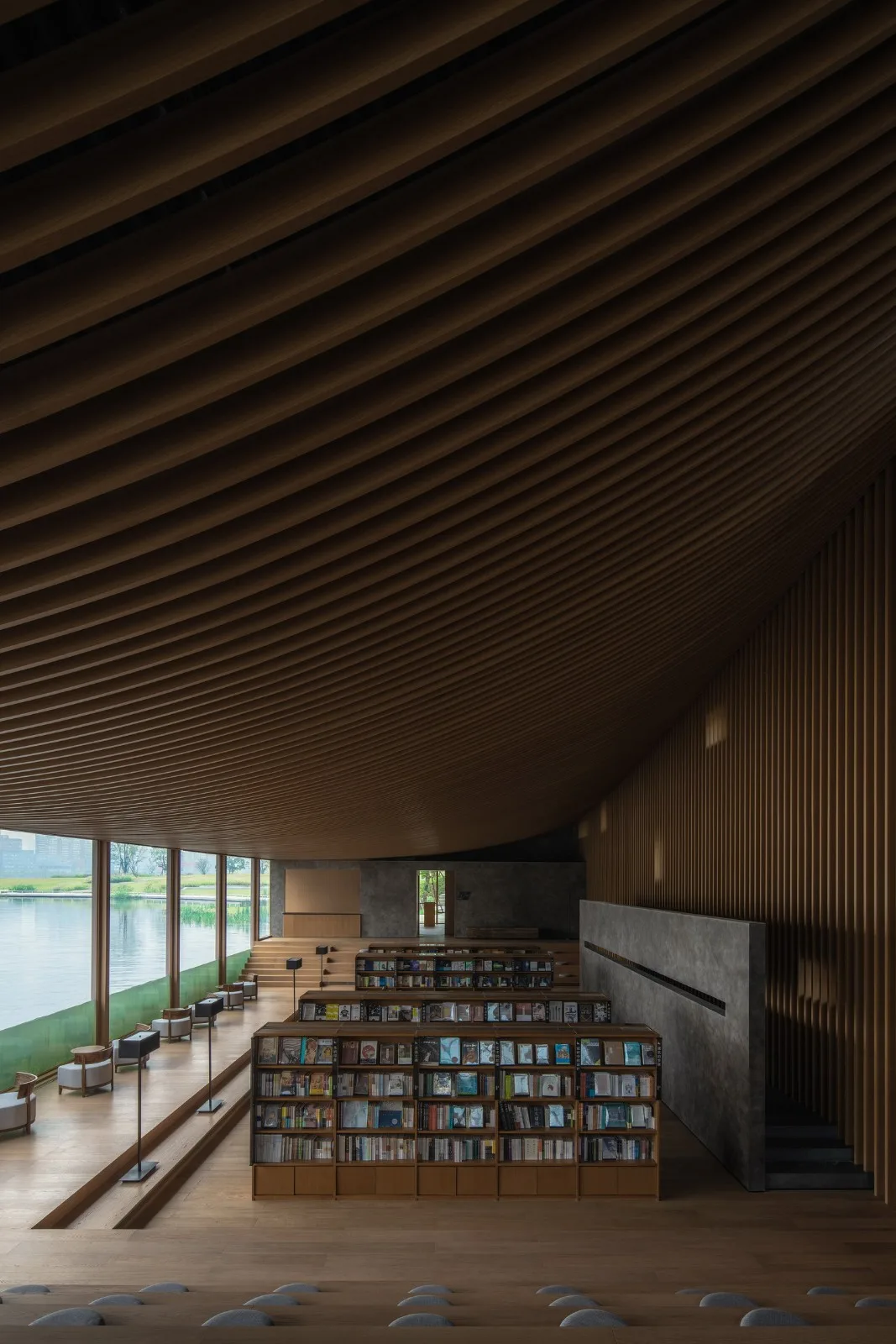
Beyond the entrance exhibition area, stepping down reveals a sunken reading area tucked behind an exhibition wall. Visitors can stand, lean, or sit freely on the steps, creating a relaxed and comfortable reading atmosphere.
The building’s structure is made entirely of steel. Steel columns are discreetly integrated within the curtain wall framework on the lake-facing side, while vertical steel columns at the rear are concealed within walls. As a result, the interior space remains open and column-free, enhancing the sense of openness.
© Form in Photography HereSpace
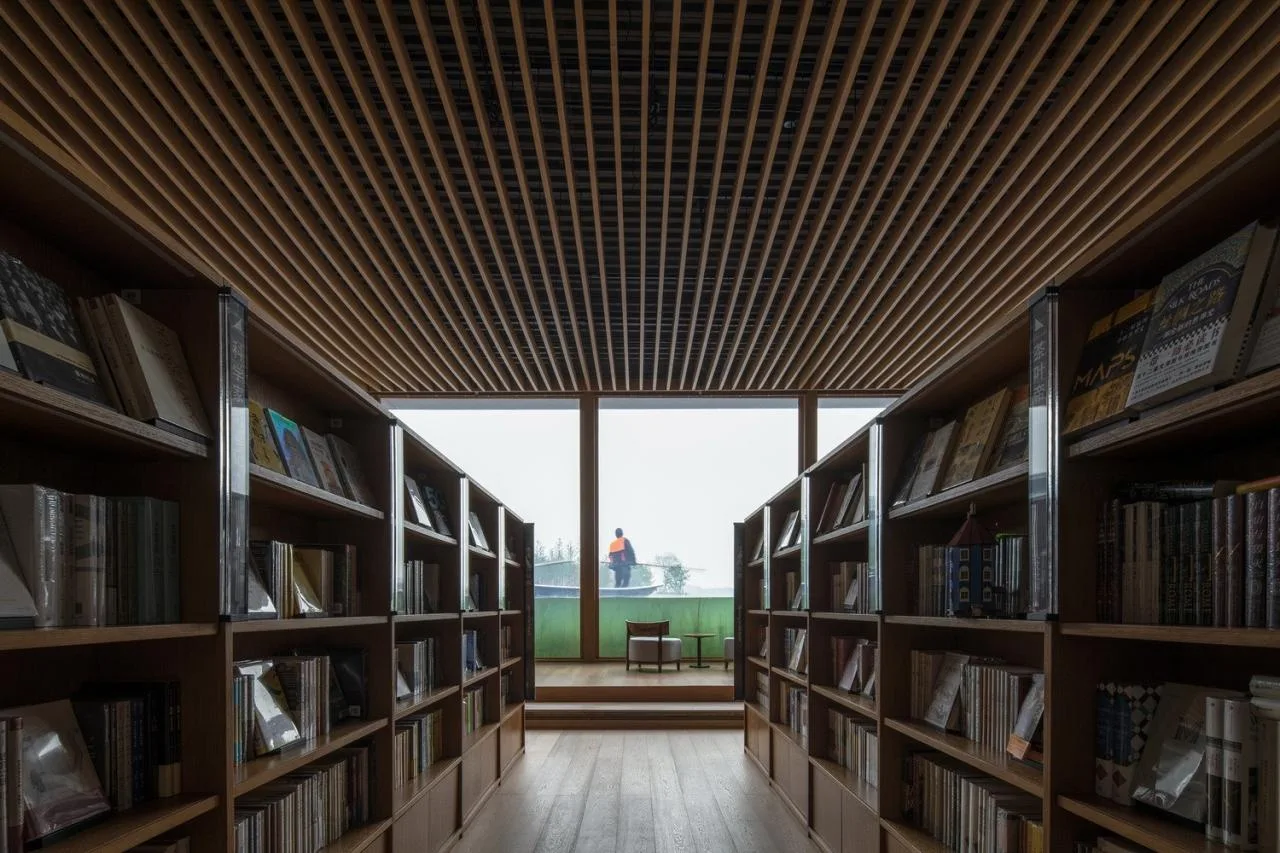
The glass curtain wall extends nearly one meter underwater, where the dynamic reflections and ripples of water enliven the interior. MUDA Architecture incorporates the language of water into the design, creating a spatial experience enclosed by water bodies and offering visitors a unique underwater reading environment.
© Form in Photography HereSpace
Along the glass curtain wall, a row of tables and chairs creates a cozy coffee and reading area. Visitors can enjoy the shifting light and shadows while observing the natural surroundings. The landscape design incorporates aquatic plants and algae beneath the waterline along the building’s facade, allowing fish to swim freely and interact with indoor occupants, creating a delightful contrast.
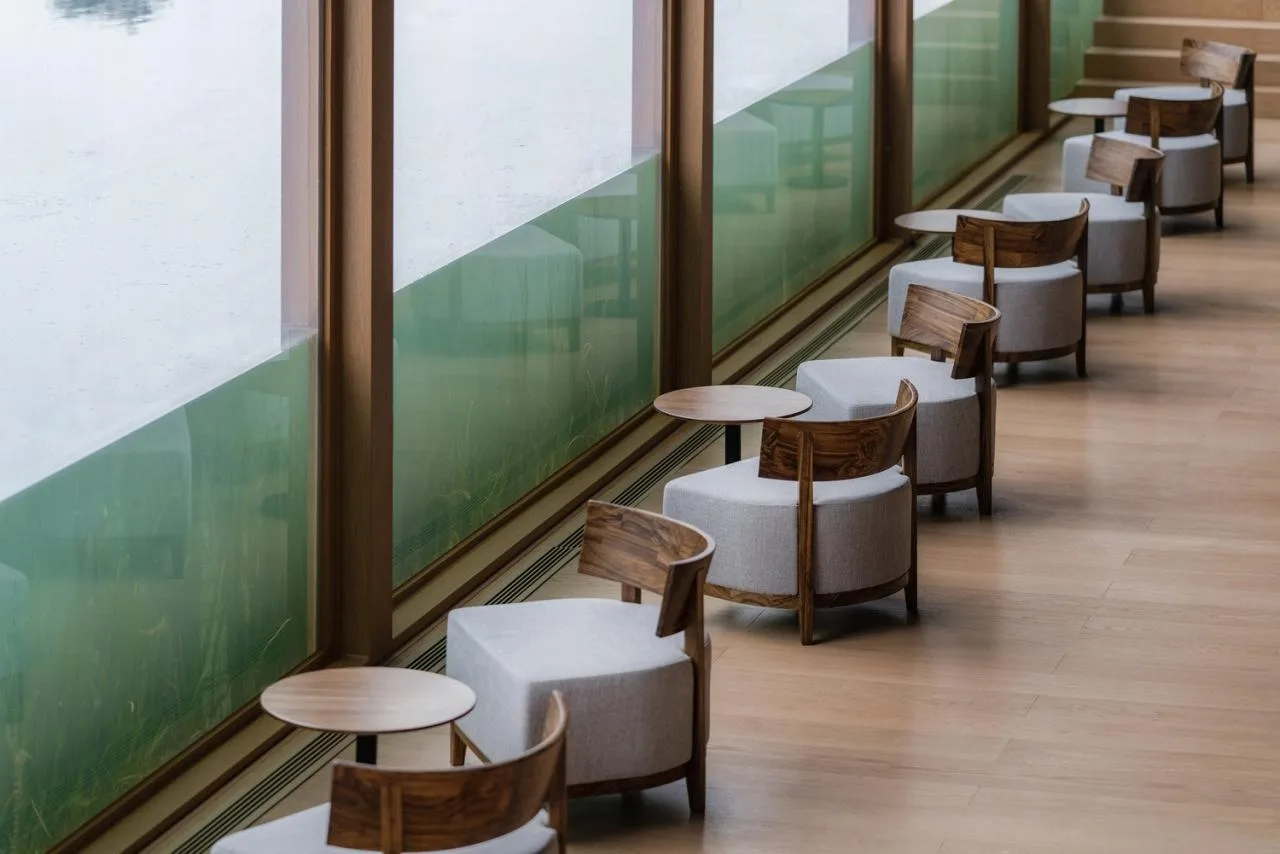
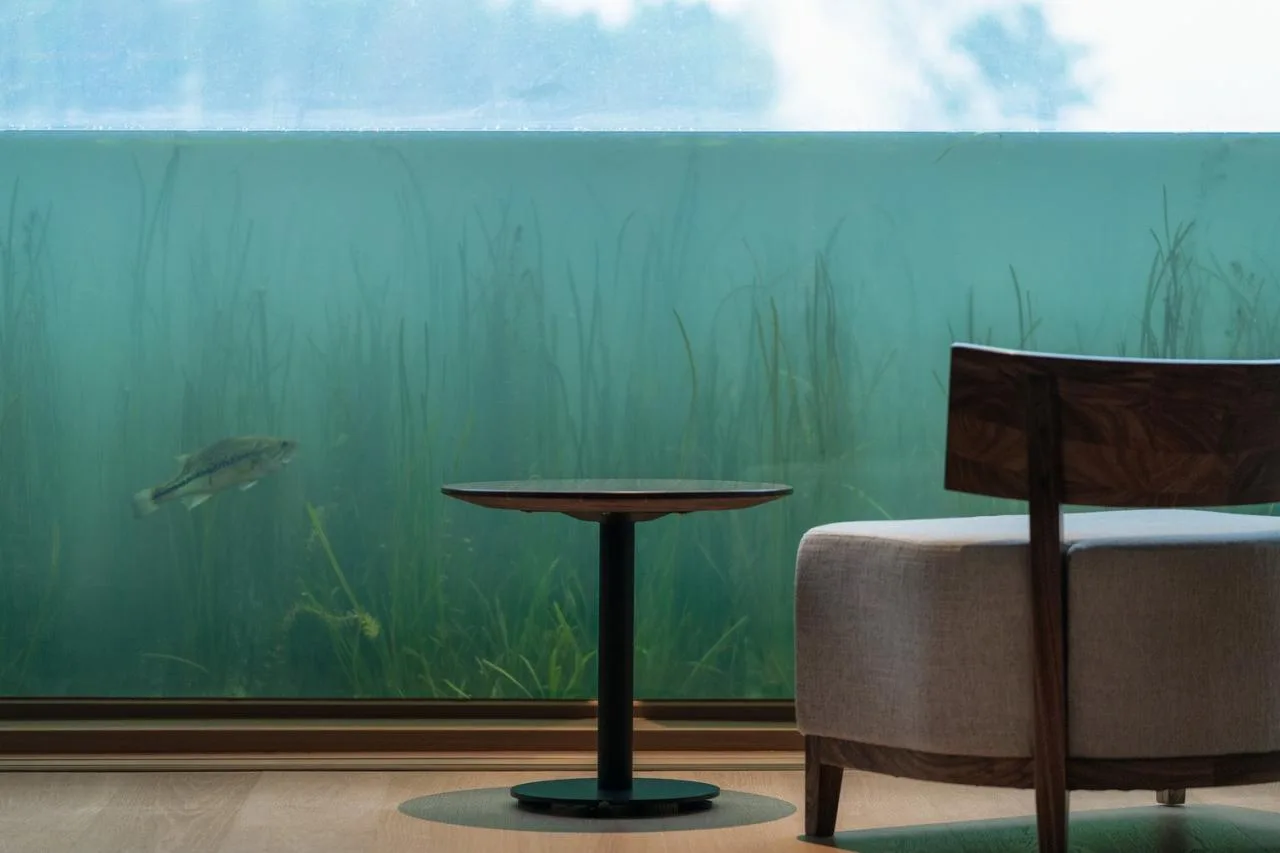
© Form in Photography HereSpace
The meditation areas inside the building thoughtfully cater to readers who seek quiet moments of self-dialogue. These narrow corridor-like spaces feature exterior walls with openings of varying sizes that invite natural light. The interplay of light and shadow allows users to sense the passage of time in an intimate way.
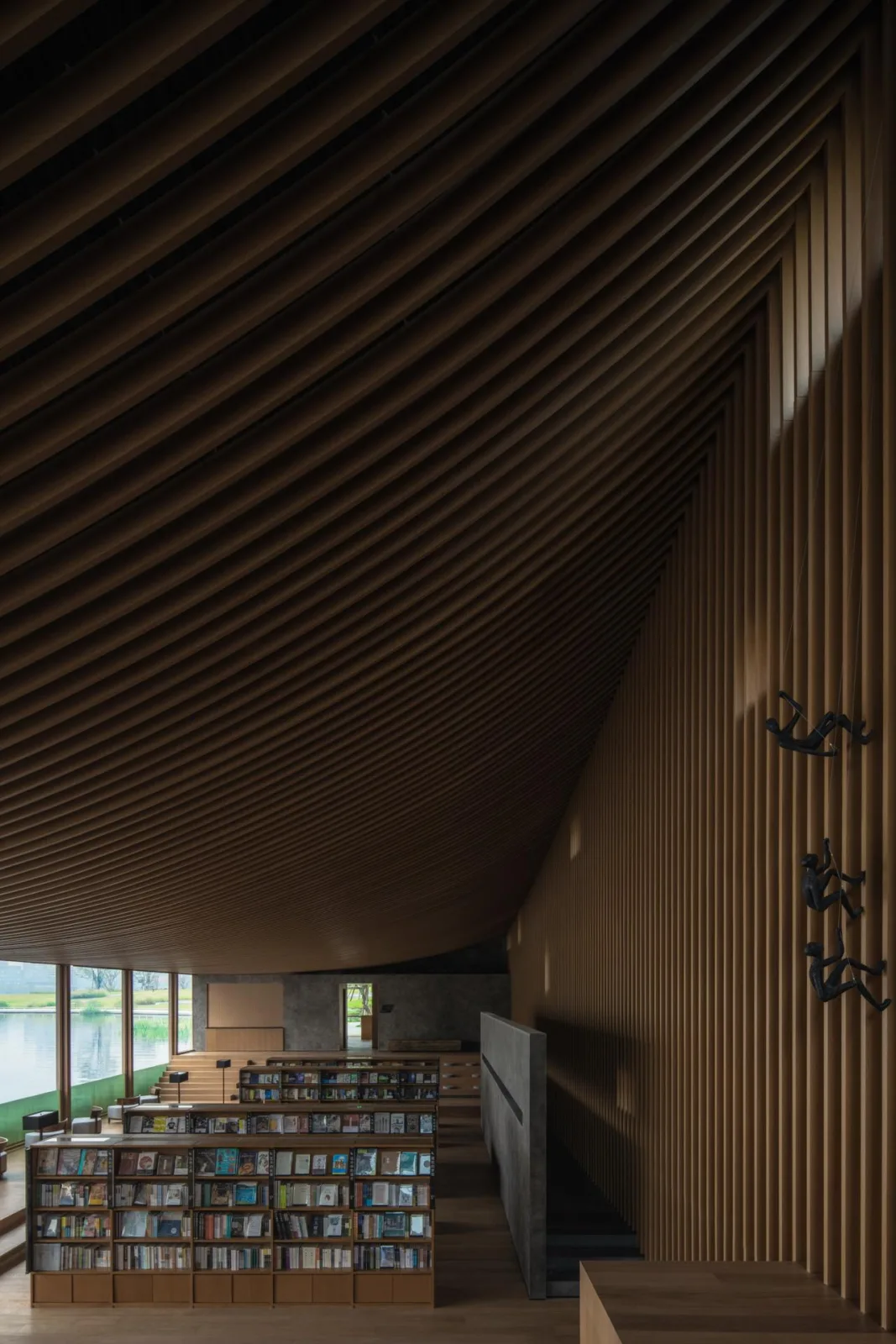
© Form in Photography HereSpace
On the opposite interior wall, a horizontal, eye-level opening creates the sensation of being hidden inside the meditation space, disconnected from the outside world yet able to glimpse it through the aperture. Here, readers engage in introspection and contemplate their connection to the broader world.
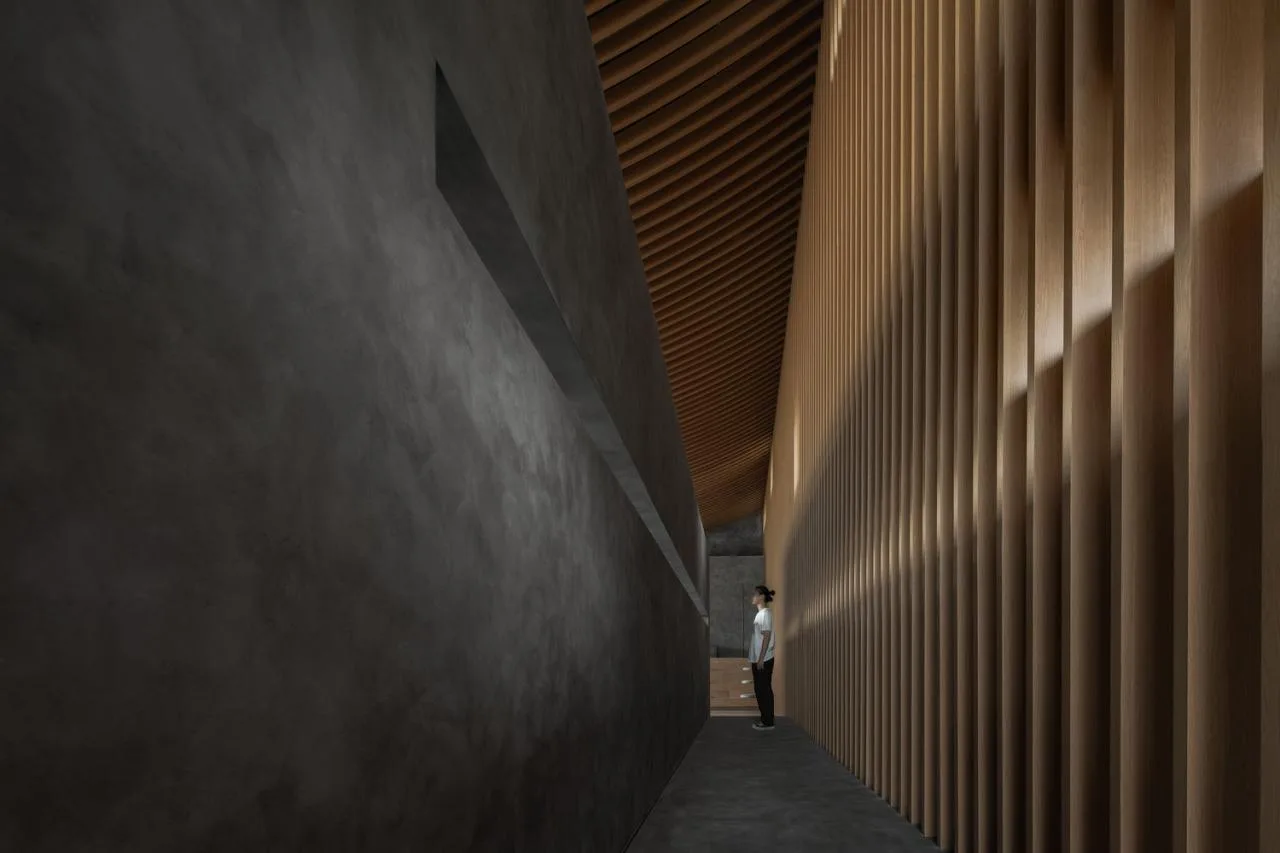
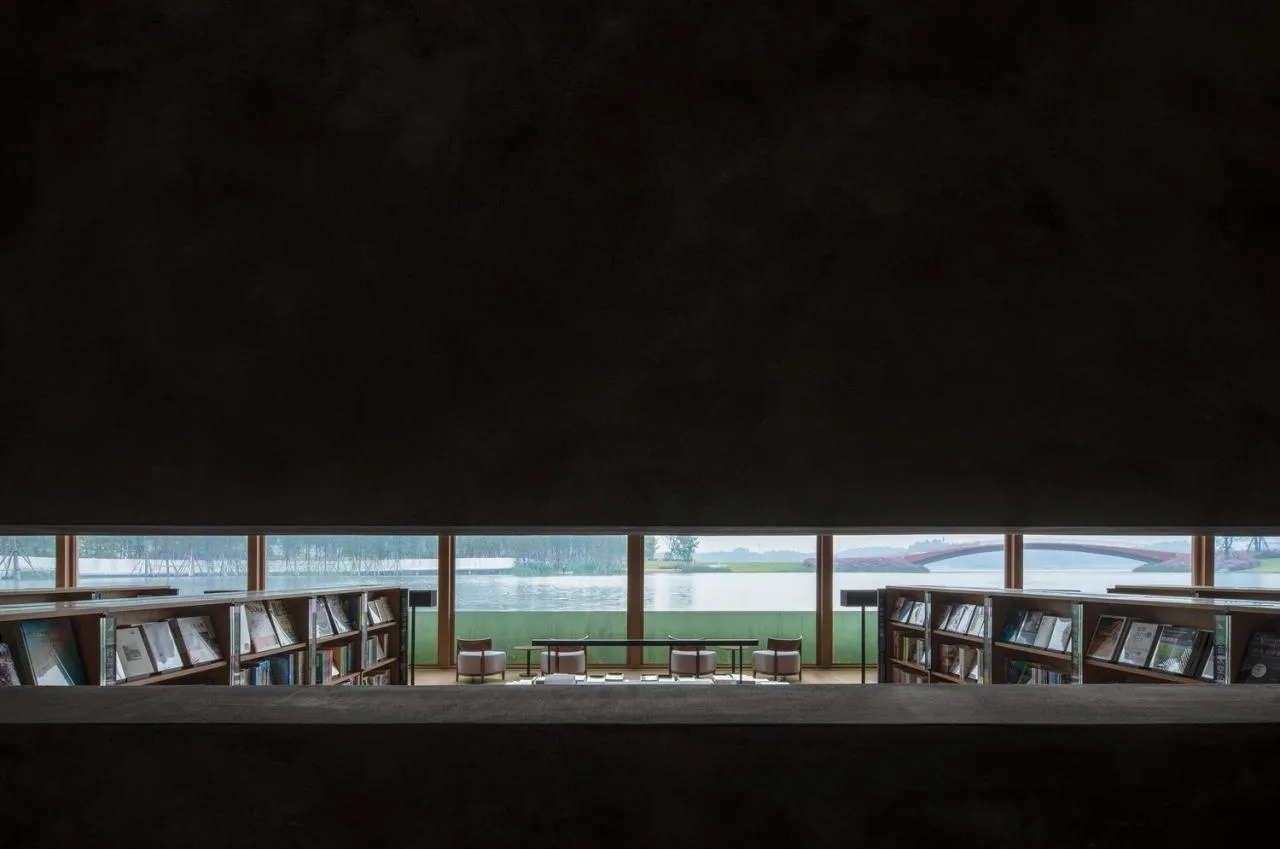
© Form in Photography HereSpace
The conference and logistics area is positioned at the end of the building’s circulation route and has a dedicated entrance from the building’s perimeter. This ensures convenient and private access without disturbing the reading areas.
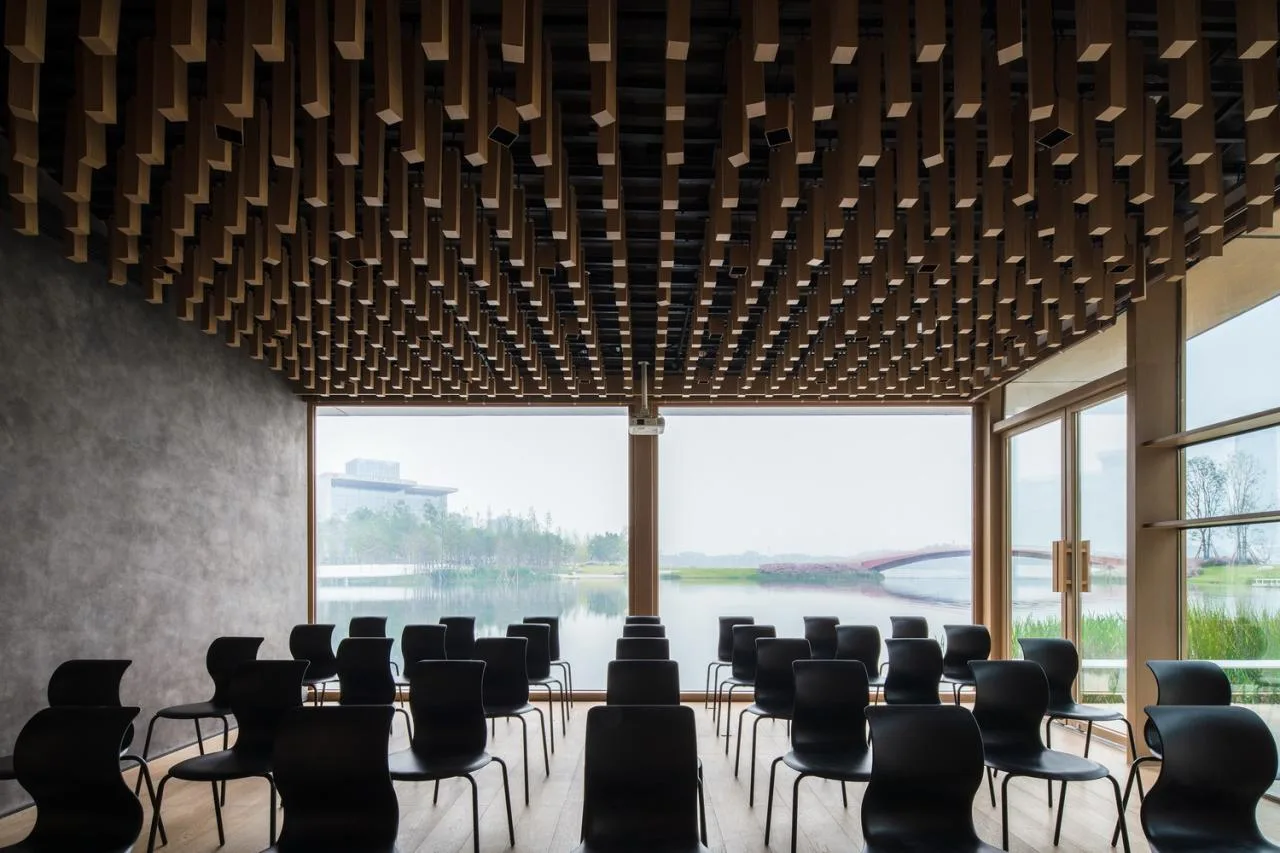
© Form in Photography HereSpace
The landscape design complements the bookstore’s architecture and maximizes respect for the natural site. The rear of the building restores the original slope contours, creating tiered grasslands enhanced by gently curved landscape walls.
Visitors can relax on the grass or on the landscape walls, fostering a harmonious relationship between people, nature, and architecture. Wooden platforms flank both sides of the building, providing outdoor recreational and lakeside spaces, as well as additional areas for bookstore activities.
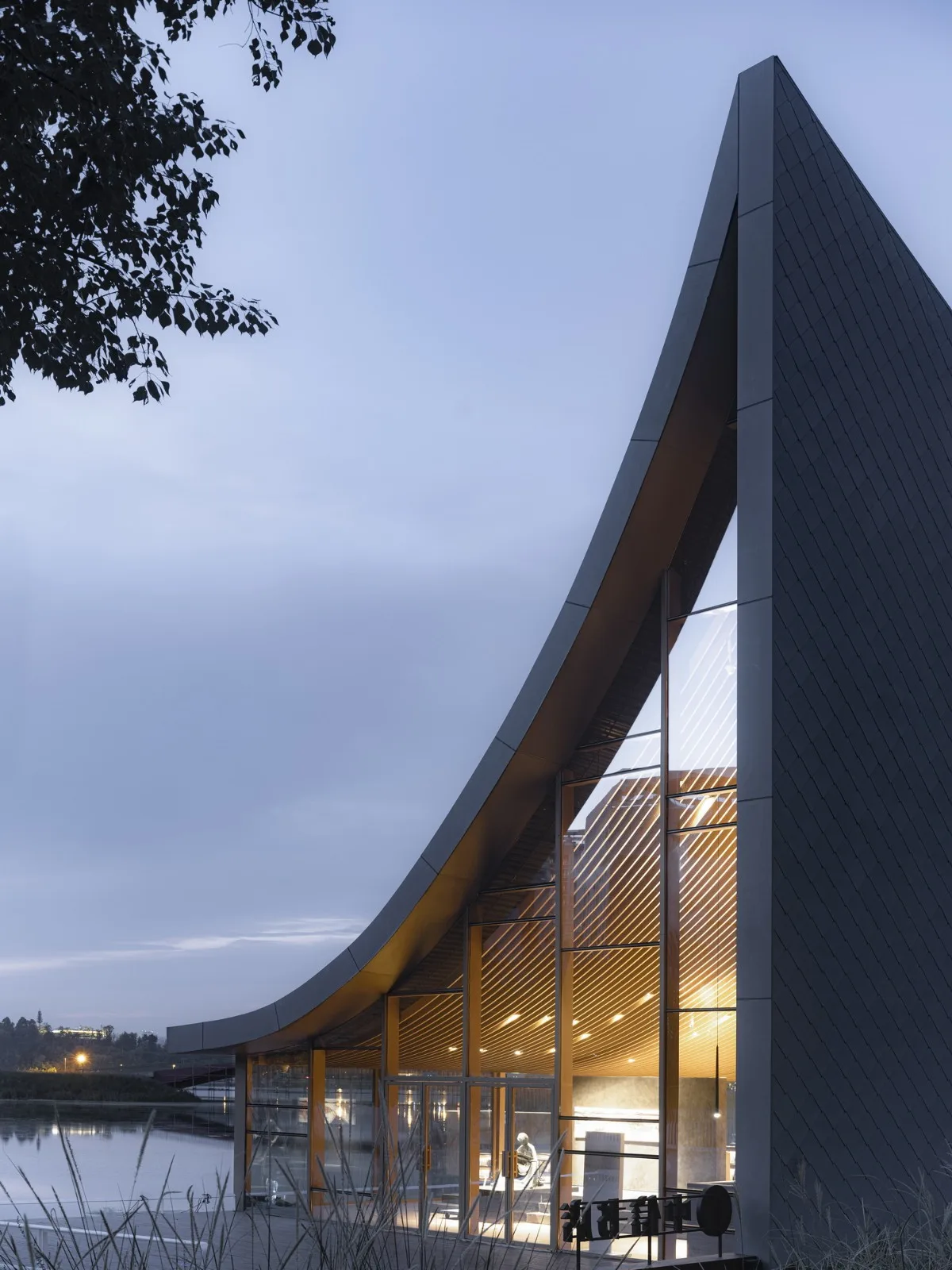
© Architectural Arch Exest
Details and Materials
The exterior cladding consists of imported titanium zinc panels arranged in a flat locking pattern that creates a distinctive “fish scale” texture, reflecting the shimmering surface of the water. The titanium zinc material also echoes the traditional tiled roofs typical of Western Sichuan architecture.
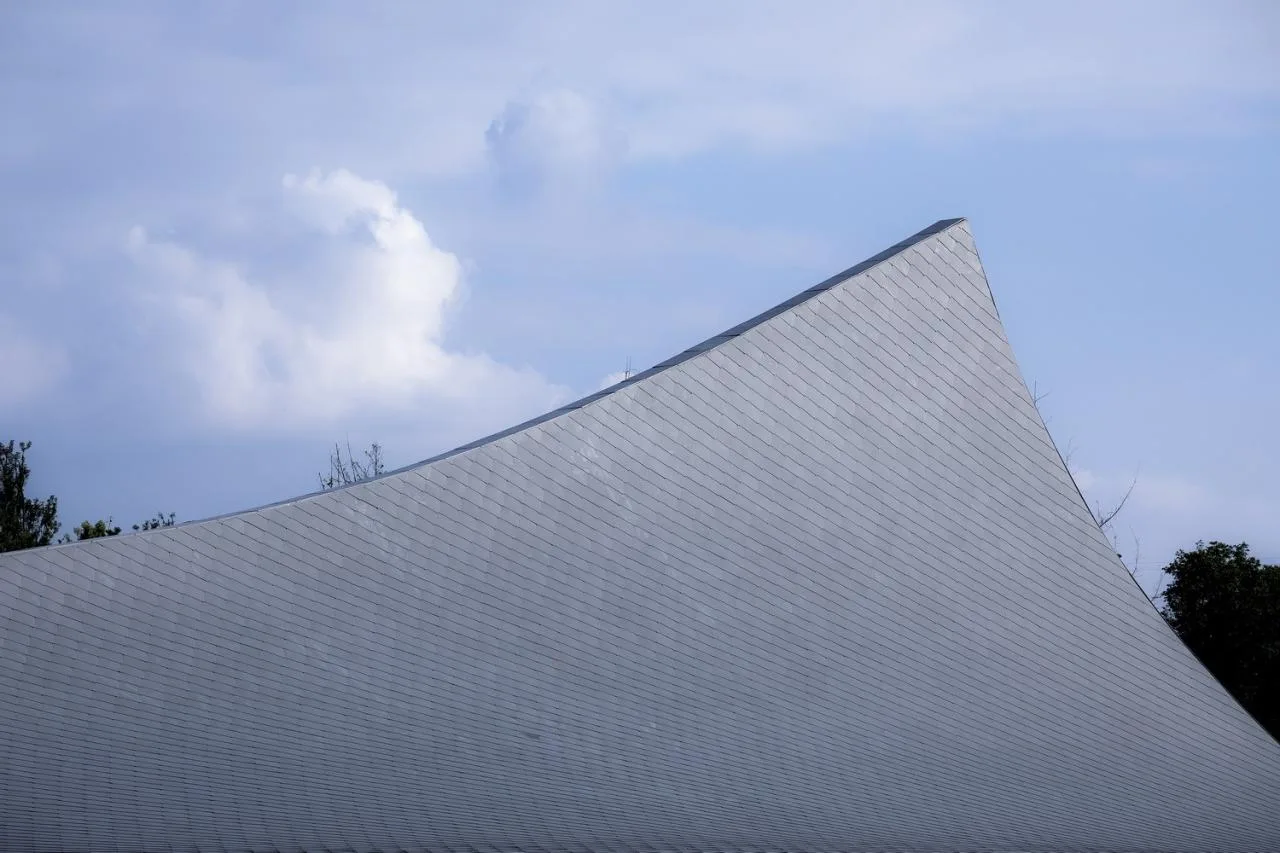
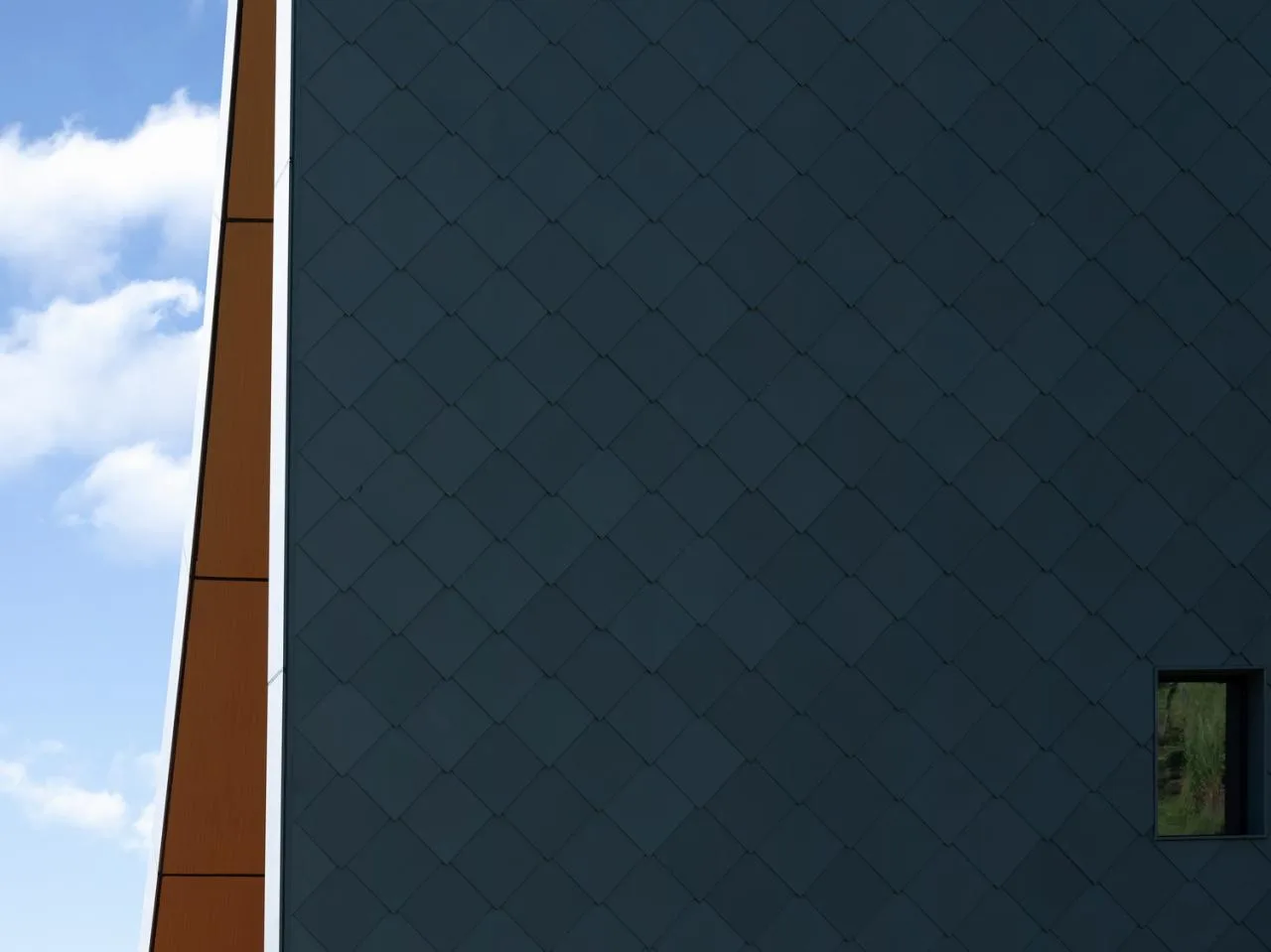
© Architectural Arch Exest
Titanium zinc panels possess exceptional self-healing properties, repairing minor scratches through oxidation. Over time, the surface oxide layer enhances the building’s skin with a unique, enduring patina.
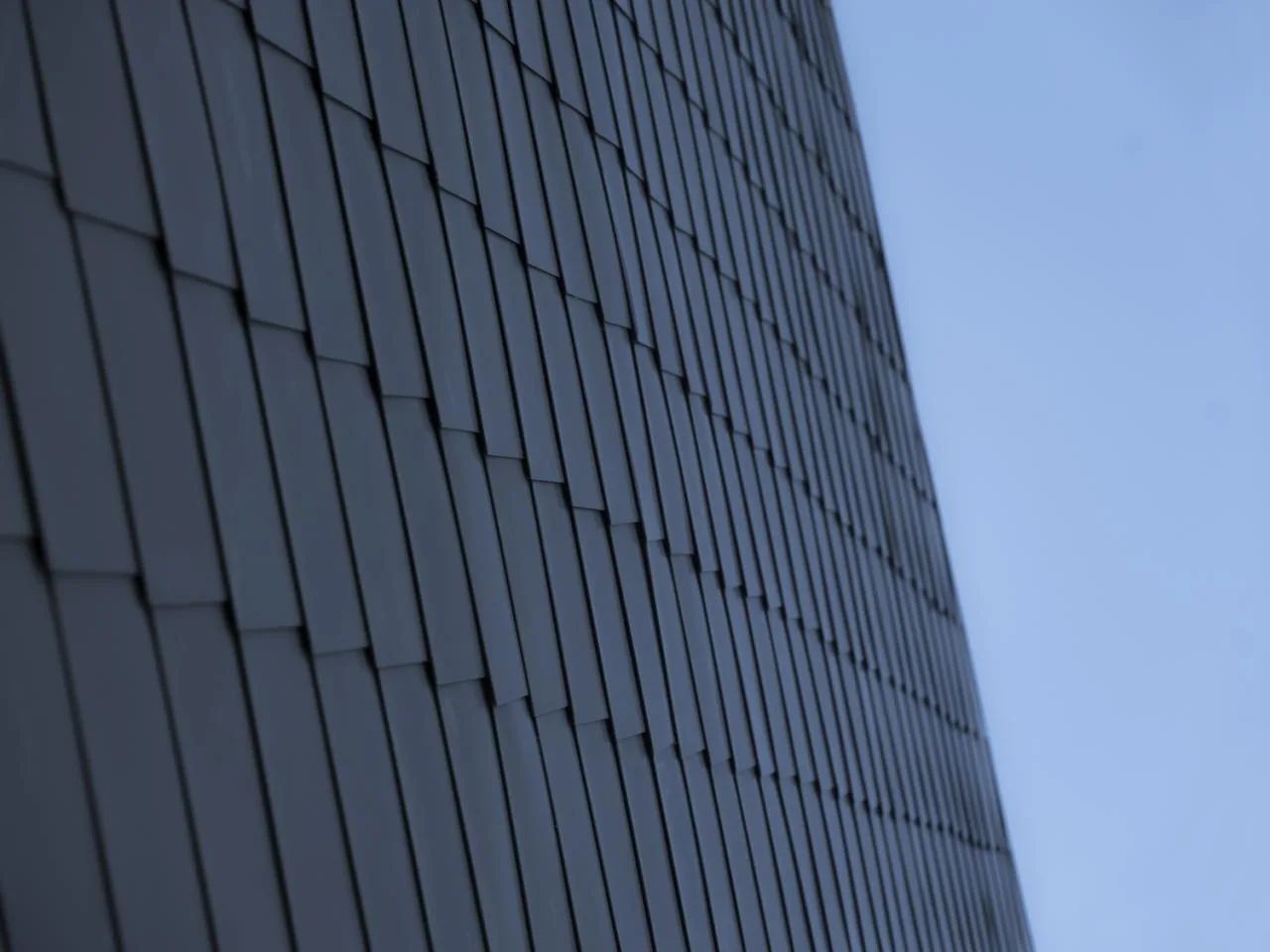
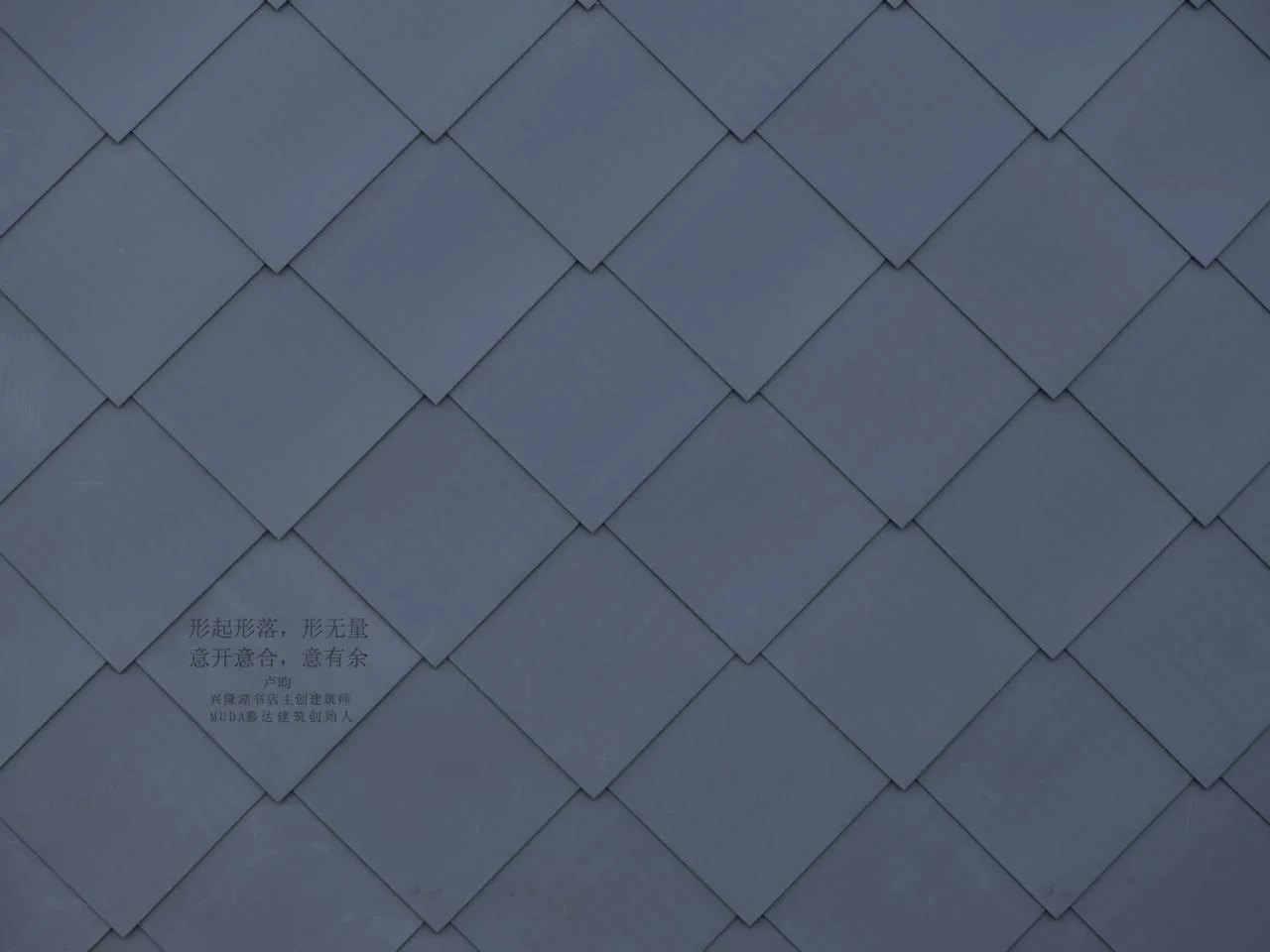
© Architectural Arch Exest
The ceiling design extends the hyperbolic roof form into the interior, using a continuous hyperbolic grid composed of over 700 wood-grain aluminum profiles with varying curvatures. These elements combine to form a smooth, three-dimensional curved surface. To maintain a clean and uncluttered interior, all mechanical, smoke exhaust, and lighting systems are concealed within the cavity between the ceiling grid and the steel roof structure.
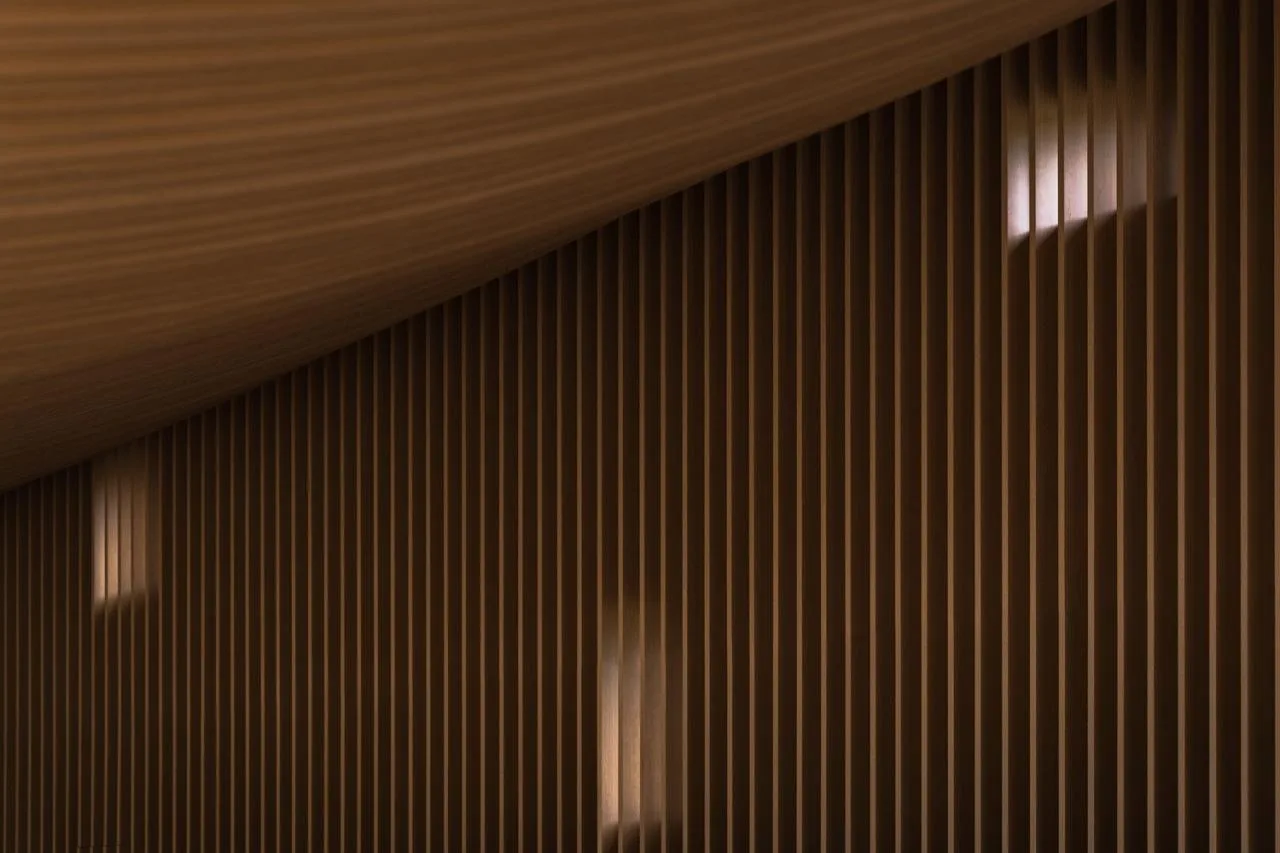
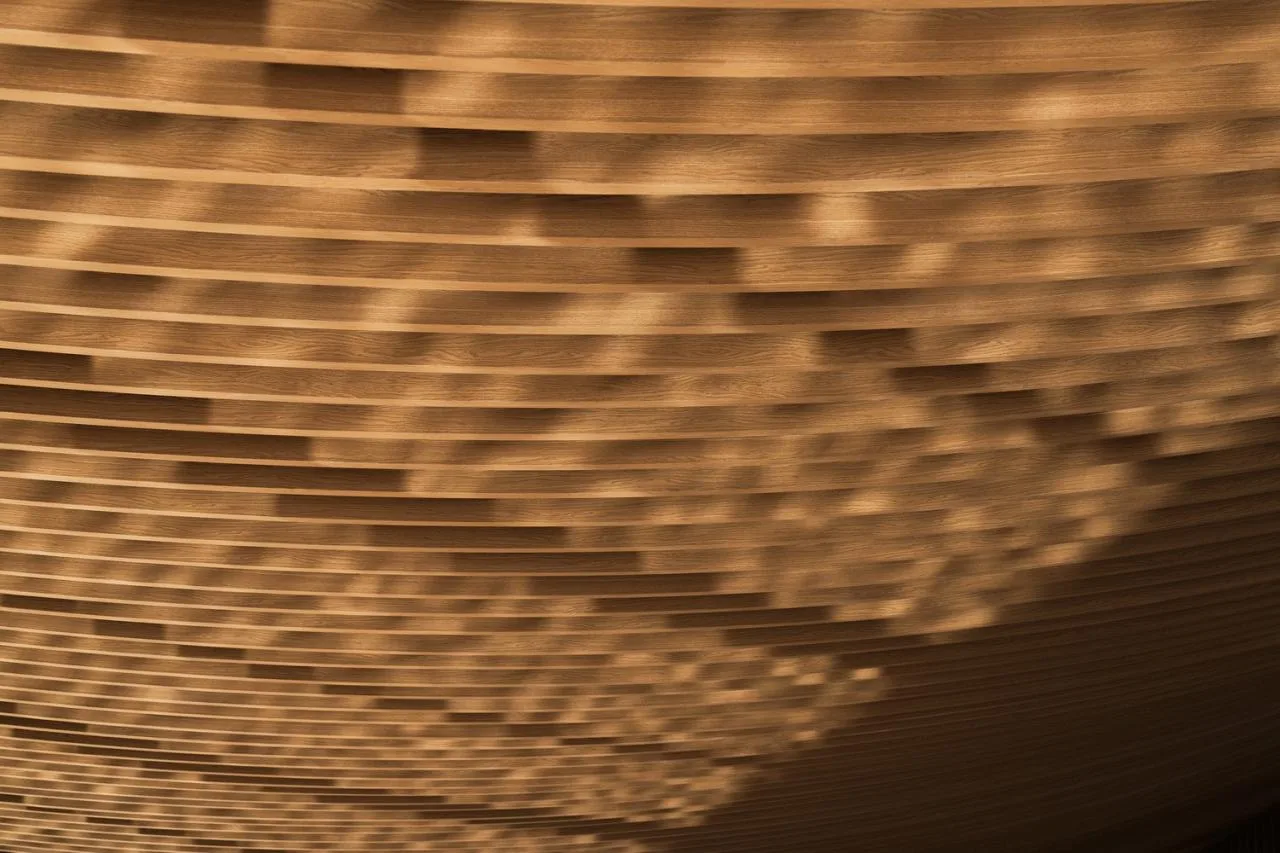
© Form in Photography HereSpace
The interior’s aesthetic is kept simple and pure, featuring wood grain and concrete textured paint as base colors. This approach minimizes decorative clutter and enhances visual comfort for visitors.
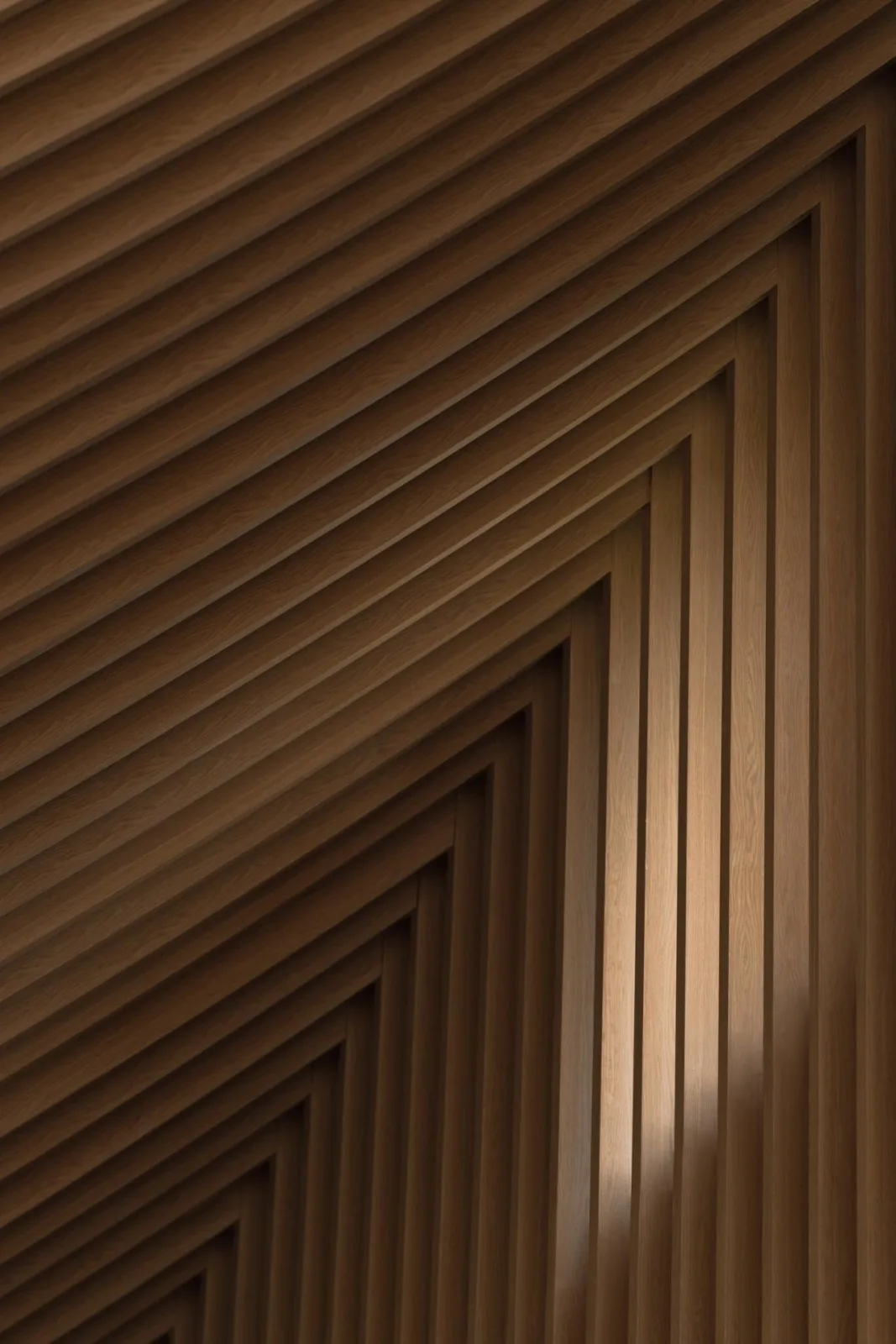
© Form in Photography HereSpace
The underwater glass curtain wall is engineered to withstand the highest water levels during flood season, ensuring durability against extreme water pressure. Multiple waterproofing tests were conducted during construction, focusing on reinforcing the glass’s water resistance and sealing gaps between curtain wall columns and glass panels. These measures minimize water contact with steel structures, preventing rust. The lake-facing glass panels measure 3.2m by 4m and consist of four layers of laminated ultra-clear tempered glass, providing outdoor water pressure resistance, indoor impact protection, thermal insulation, and energy efficiency.
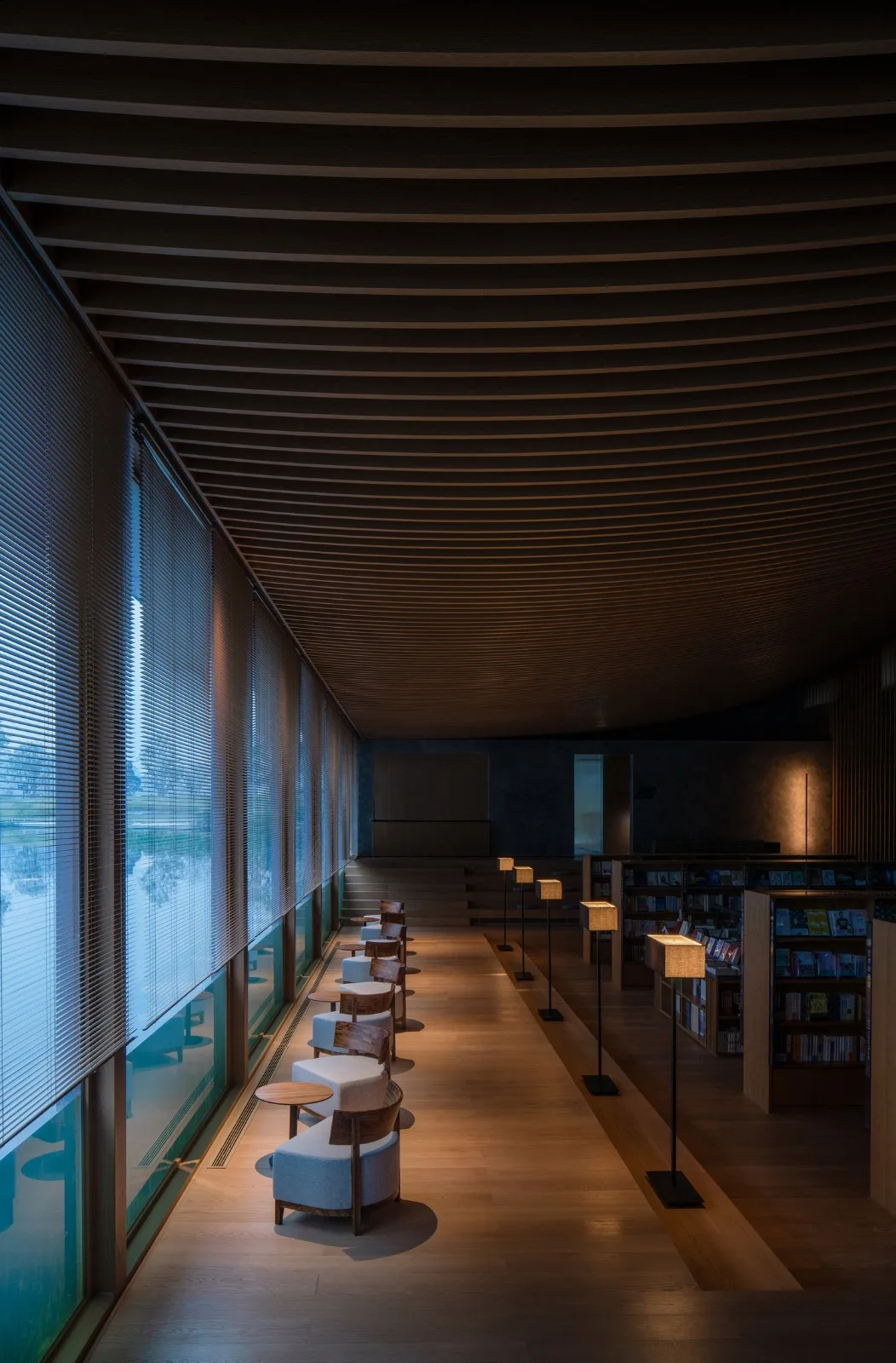
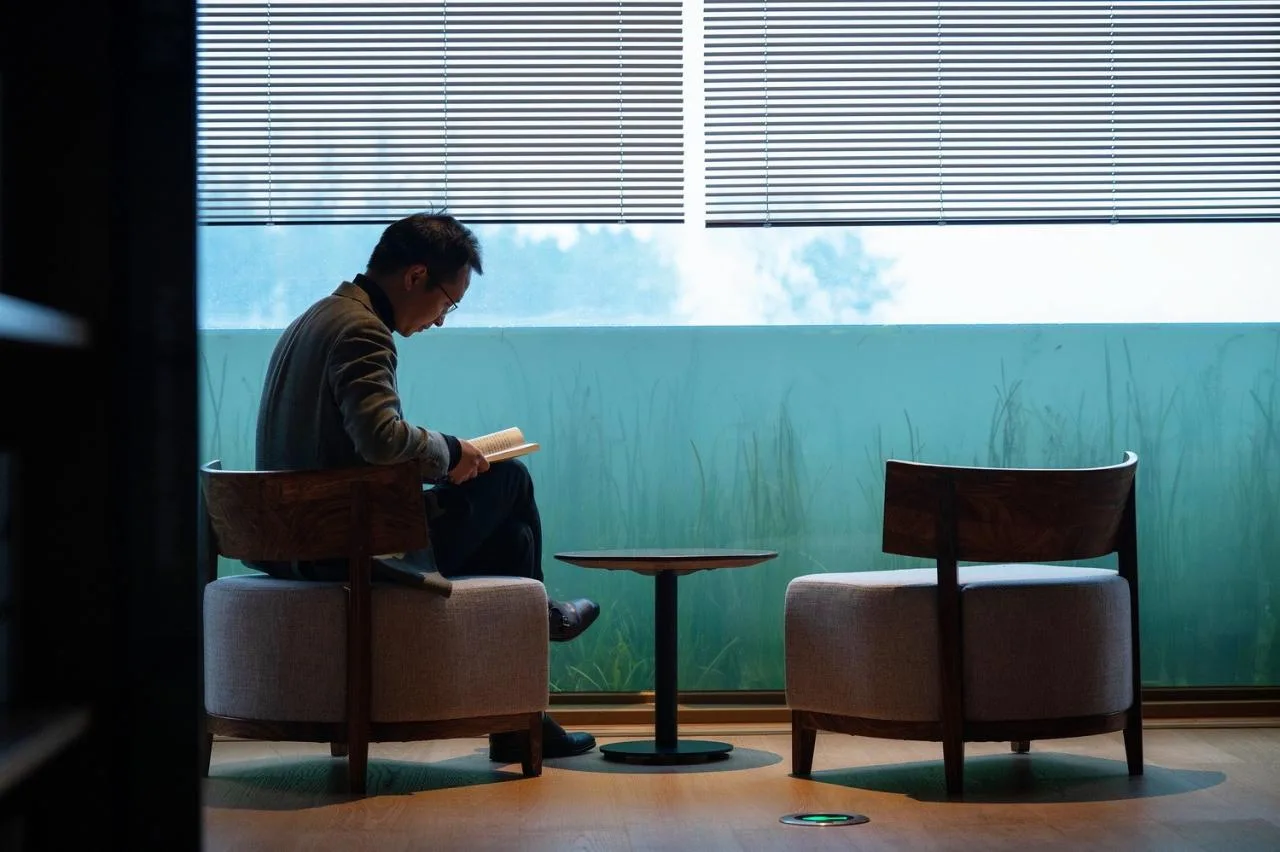
© Form in Photography HereSpace
Conclusion
The space avoids labyrinthine corridors or hidden corners, offering readers endless possibilities and a sense of both physical and mental freedom.
MUDA Architecture explores the relationships between people and books, people and nature, and people and space through architectural language. Here, mountains and rocks symbolize people and objects that coexist and forget each other, creating a unique charm. The building aims to awaken visitors’ original feelings toward themselves and restore their fading senses.
© Architectural Arch Exest
Project Drawings
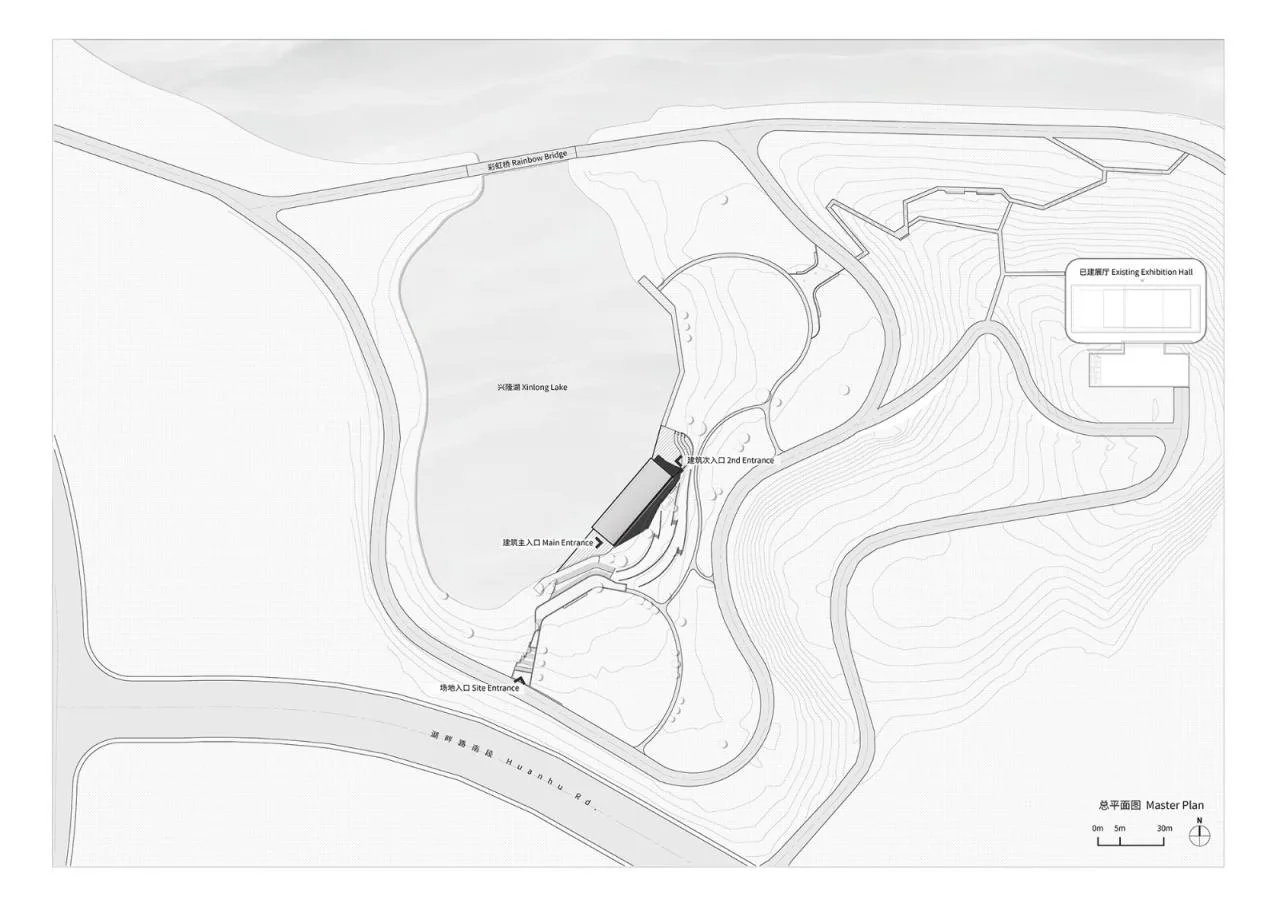
△ General layout plan
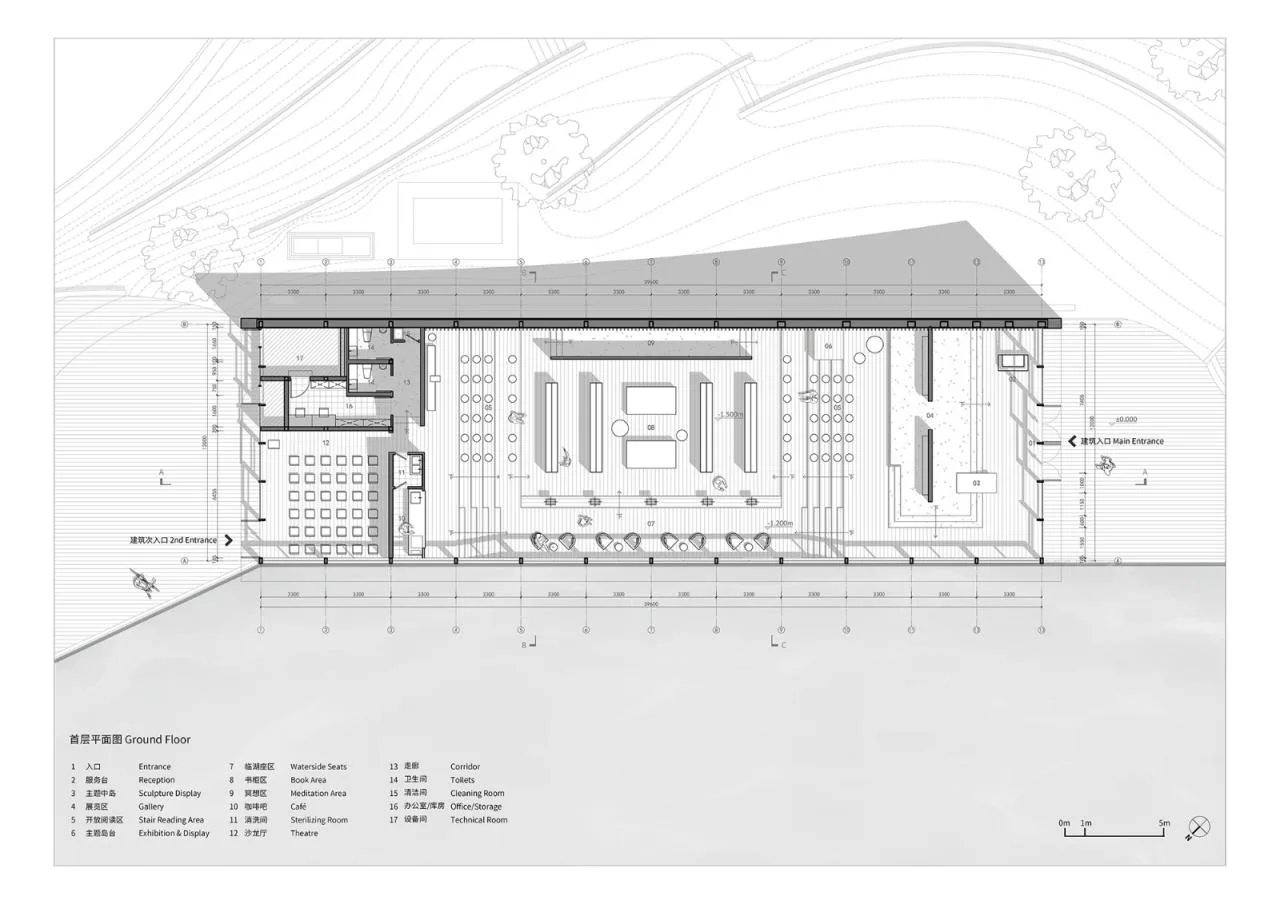
△ Plan view
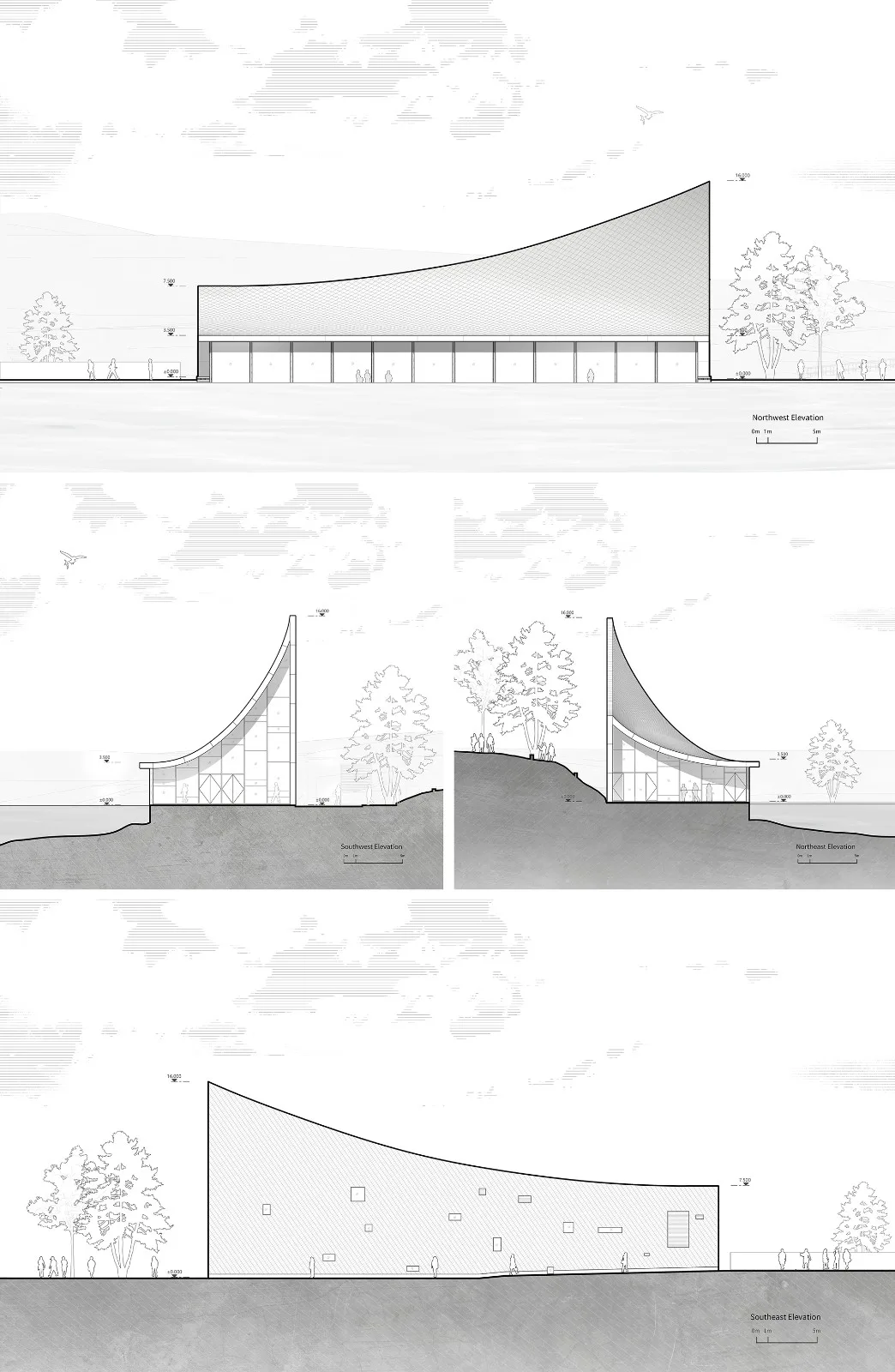
△ Elevation drawing
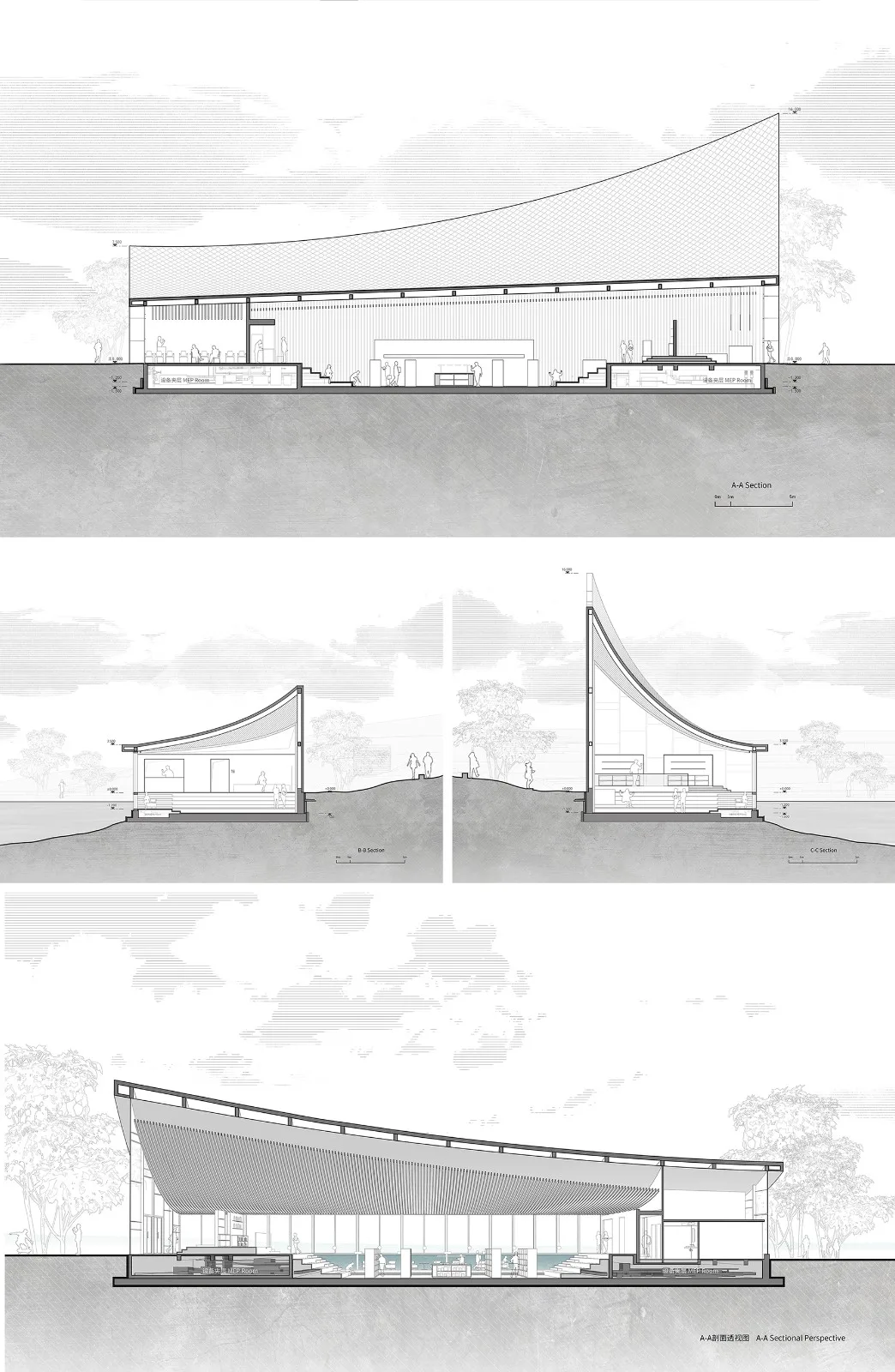
△ Section diagram
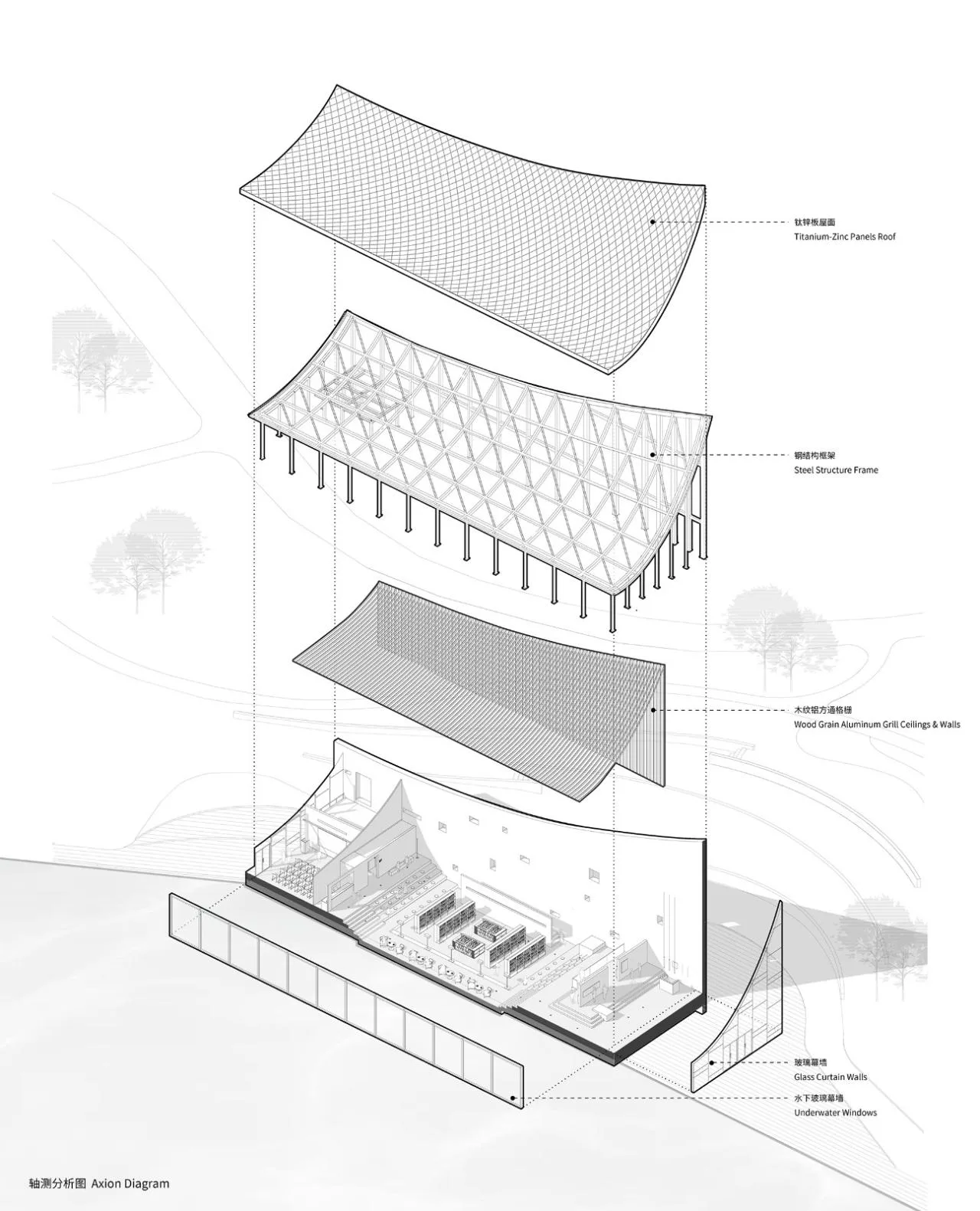
△ Axis side analysis diagram
Project Information
Project Name: Chengdu Xinglong Lake CITIC Bookstore
Project Type: Architectural Design, Interior Design, Soft Decoration Design
Location: Chengdu, China
Building Area: 500 square meters
Lead Architect and General Manager: Lu Yun
Competition Stage Design Team: Zhao Guojun, Ni Dan, Li Yue, Xie Jiayi, Liu Xiaoqiao, Li Rang, Liu Hanning
Deepening Stage Design Team: Xu Jiandan, Lv Chenyu, Rong Dian, Ni Dan, He Fan, Mei Yixuan, Zhan Ziqi, Liu Bin, Jia Shuran, Liu Jingyi, Fu Yao
Building Materials: Titanium zinc plate, wood grain honeycomb aluminum plate, wood grain aluminum grille, oak veneer, concrete texture paint
Owner: CITIC Chengkai
Lighting Design Consultant: BPI Lighting Design
Curtain Wall Design Consultant: Chengdu Jili Creative Curtain Wall
Structural Design Consultant: iStructure
Architectural Construction Drawing Design: China Construction Design Group Co., Ltd
Soft Decoration Procurement Cooperation: Van der Rohe
Shushuohu District Water Ecological Governance: Wanhua Qingyuan Water Environment
Bookstore Lake Landscape Team: Wanhua Landscape Center, Yudao Landscape
Photography: Arch Exist, Here Space, Luyun
Architectural Illustration: RUIS Ruixi Design
Article Editors: Lu Yun, Wang Peiting, Han Rong















Must log in before commenting!
Sign Up