
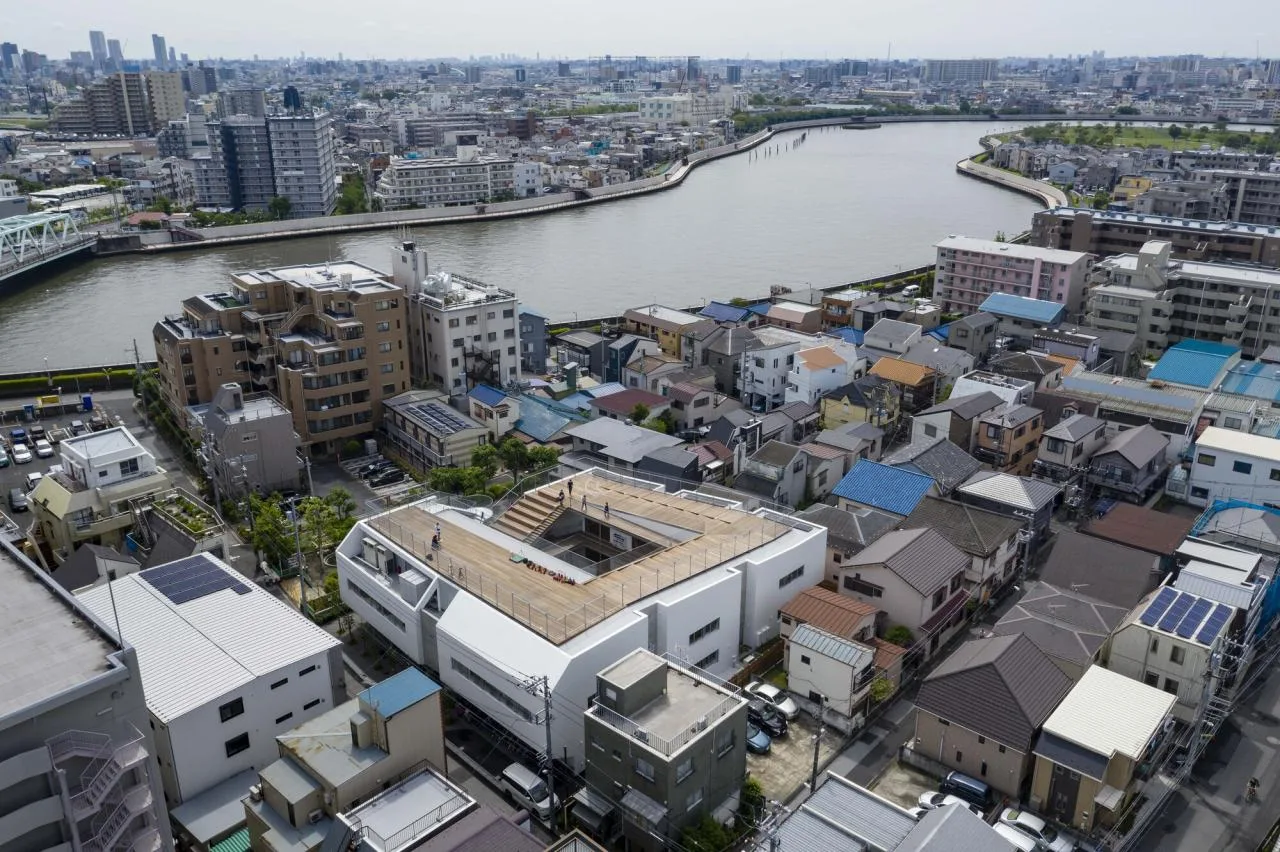
This daycare center is situated in a densely populated residential neighborhood in Katsushika Ward, Tokyo. The existing public daycare, which had fallen into disrepair, is being rebuilt and transitioned to private management through an architectural competition. Our proposal, submitted in collaboration with a company aiming to manage the facility, addresses the site’s history, environment, and the multifaceted demands of modern society.
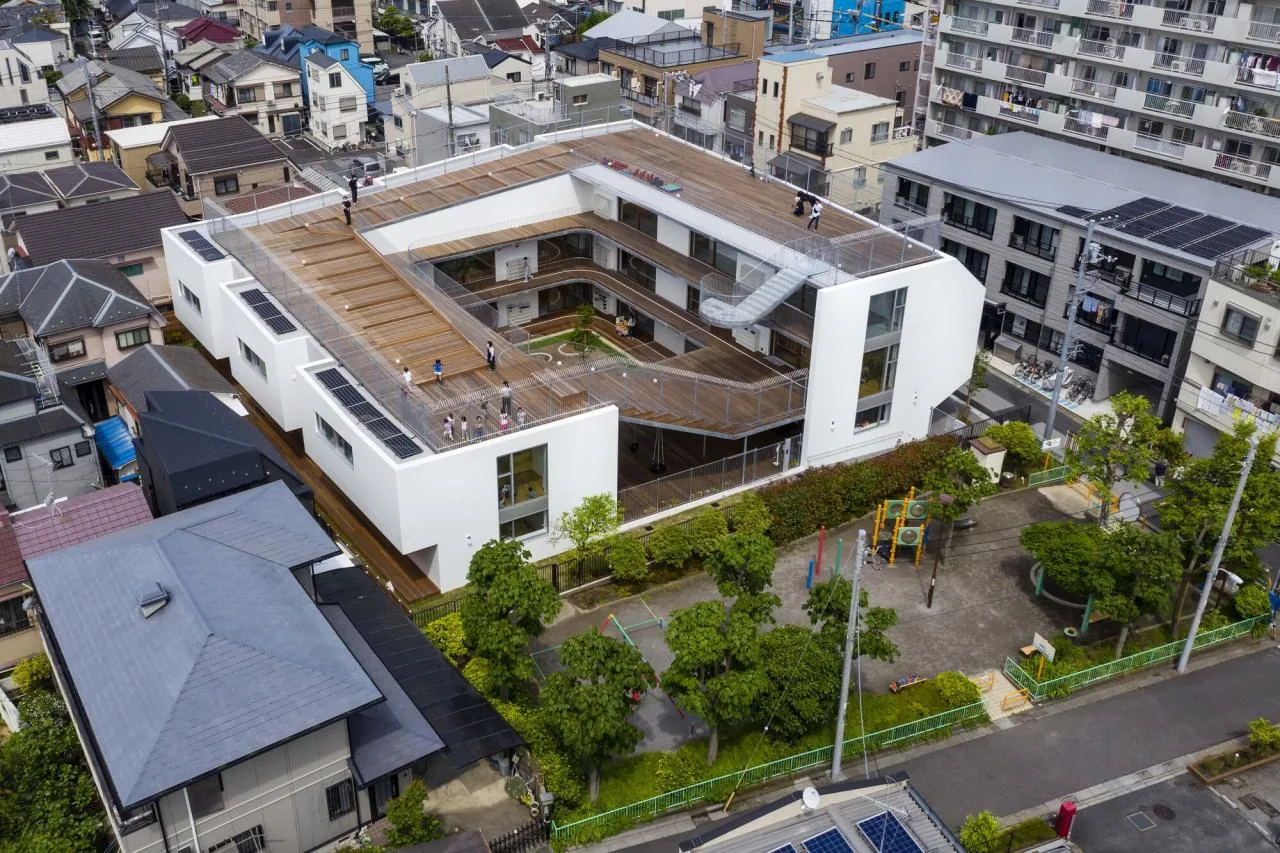
Our winning design fulfills these criteria and incorporates four overlapping features to ensure the facility remains cherished by the community for years to come:
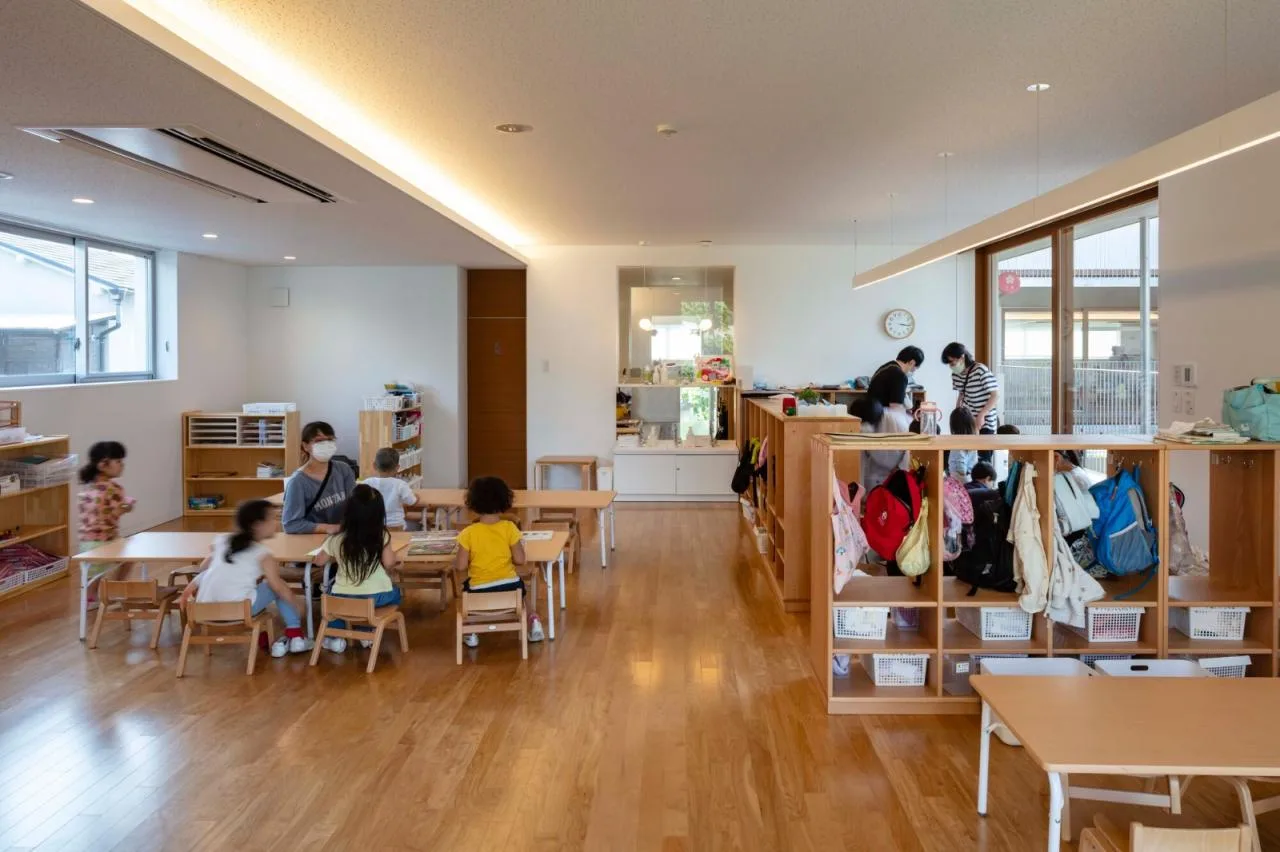
- A ‘home’ where children can play freely in a safe environment known and trusted by teachers and families;
- A ‘park’ offering space for all children to engage in physical activities and nurture their minds;
- A ‘school’ that fosters appreciation for life and food;
- A ‘fortress’ designed to protect the community during high tides and other river-related disasters.
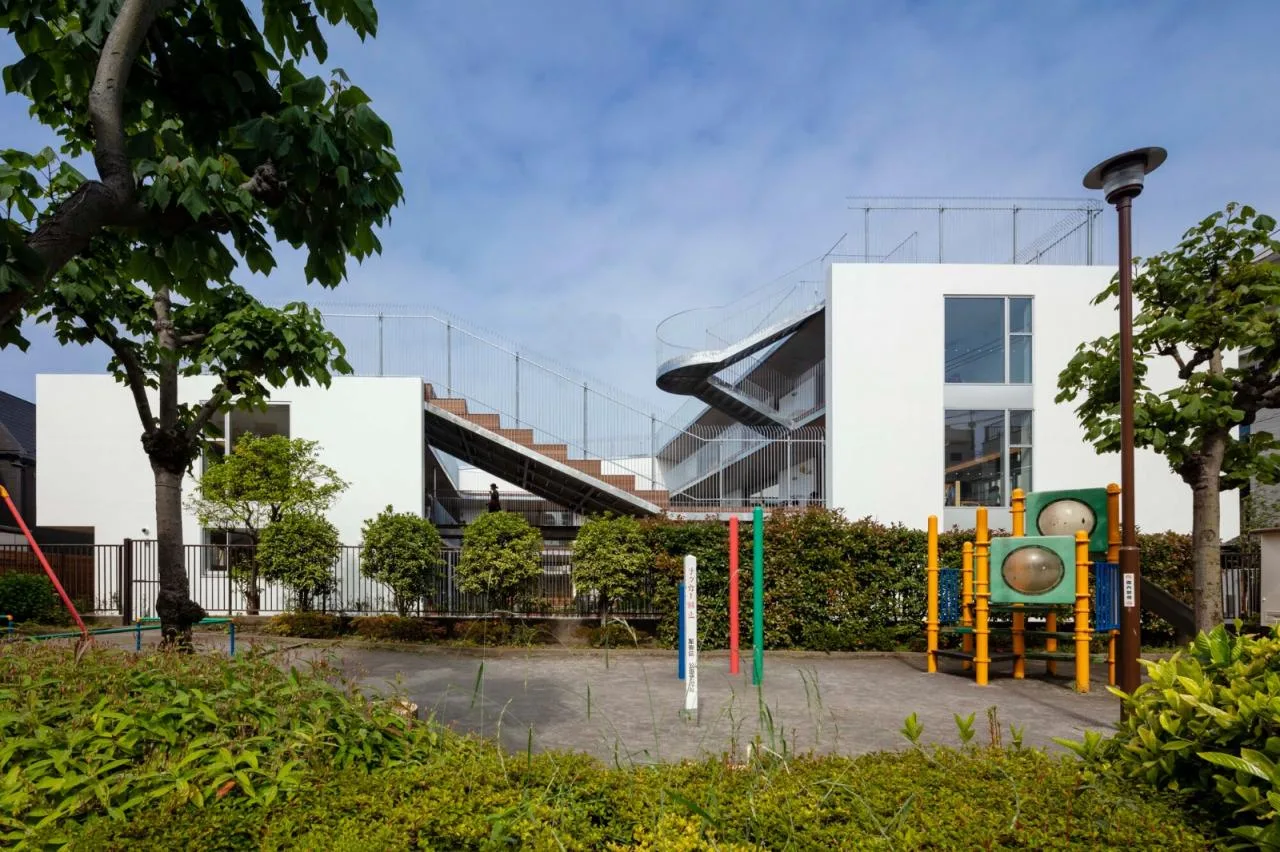
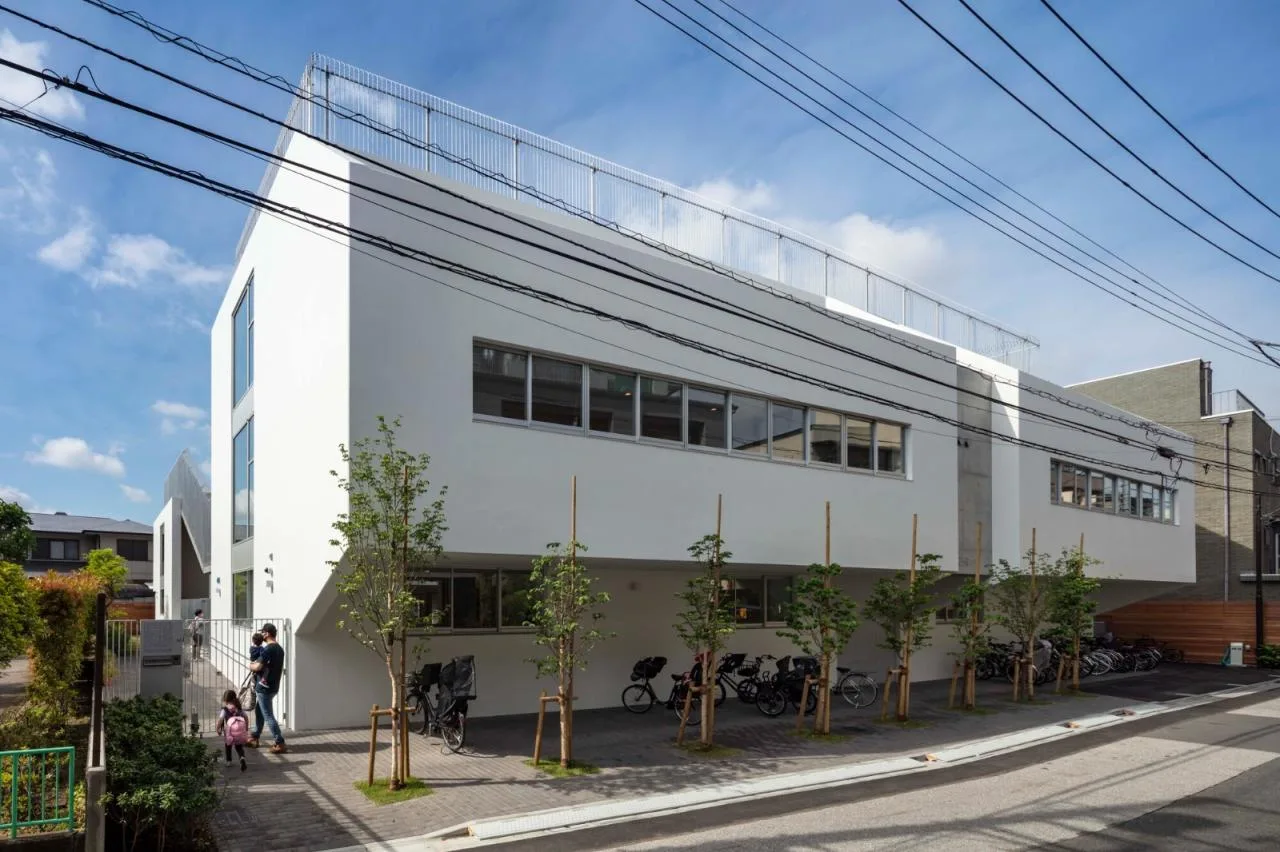
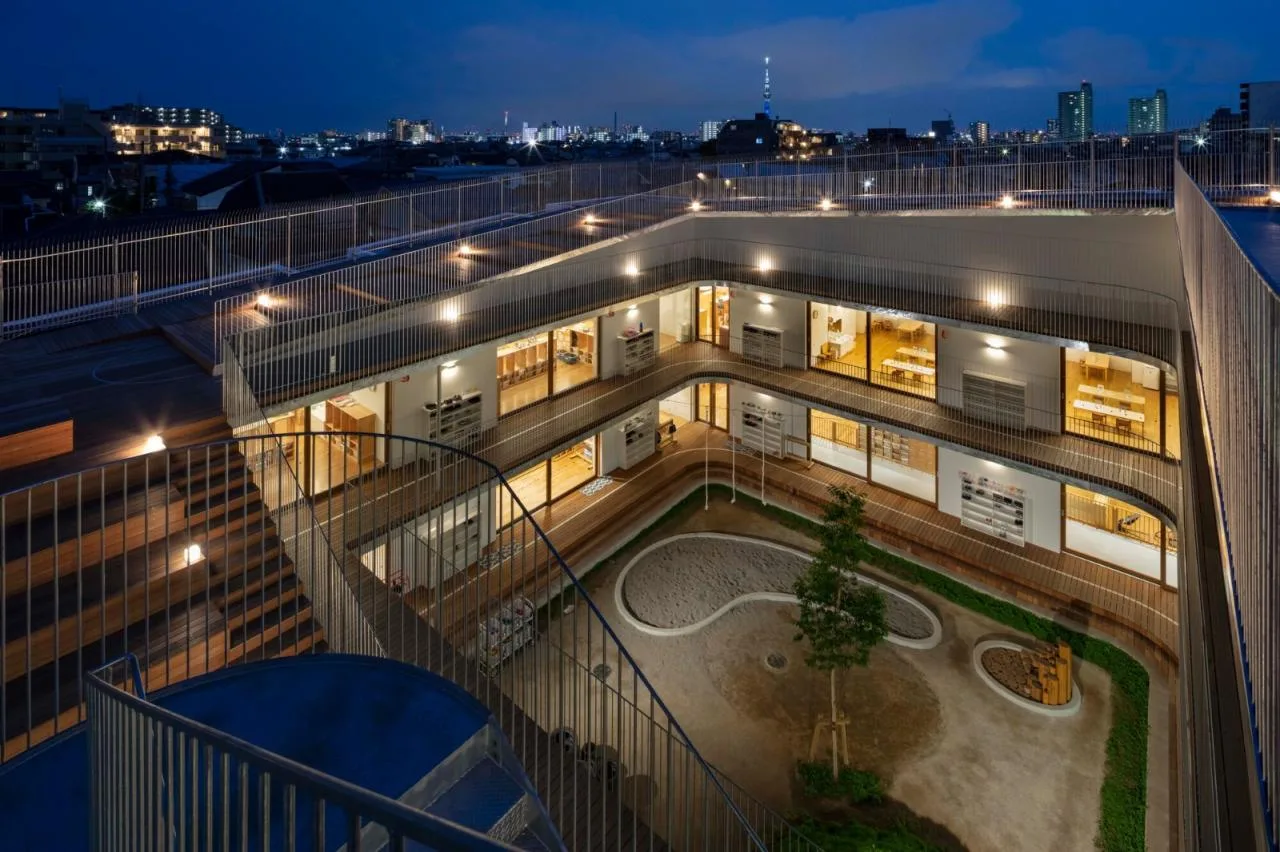
The structure is built using reinforced concrete slabs designed to withstand water pressure, supported by radiating wall columns. This three-story building stands ten meters tall, with most classrooms located on the second floor, elevated 3.7 meters above ground level to protect against flooding. To ensure privacy, reduce noise in the dense residential surroundings, and simplify maintenance, the building is enclosed on three sides around a central courtyard. The open fourth side faces an adjacent park, creating a seamless connection to the community.
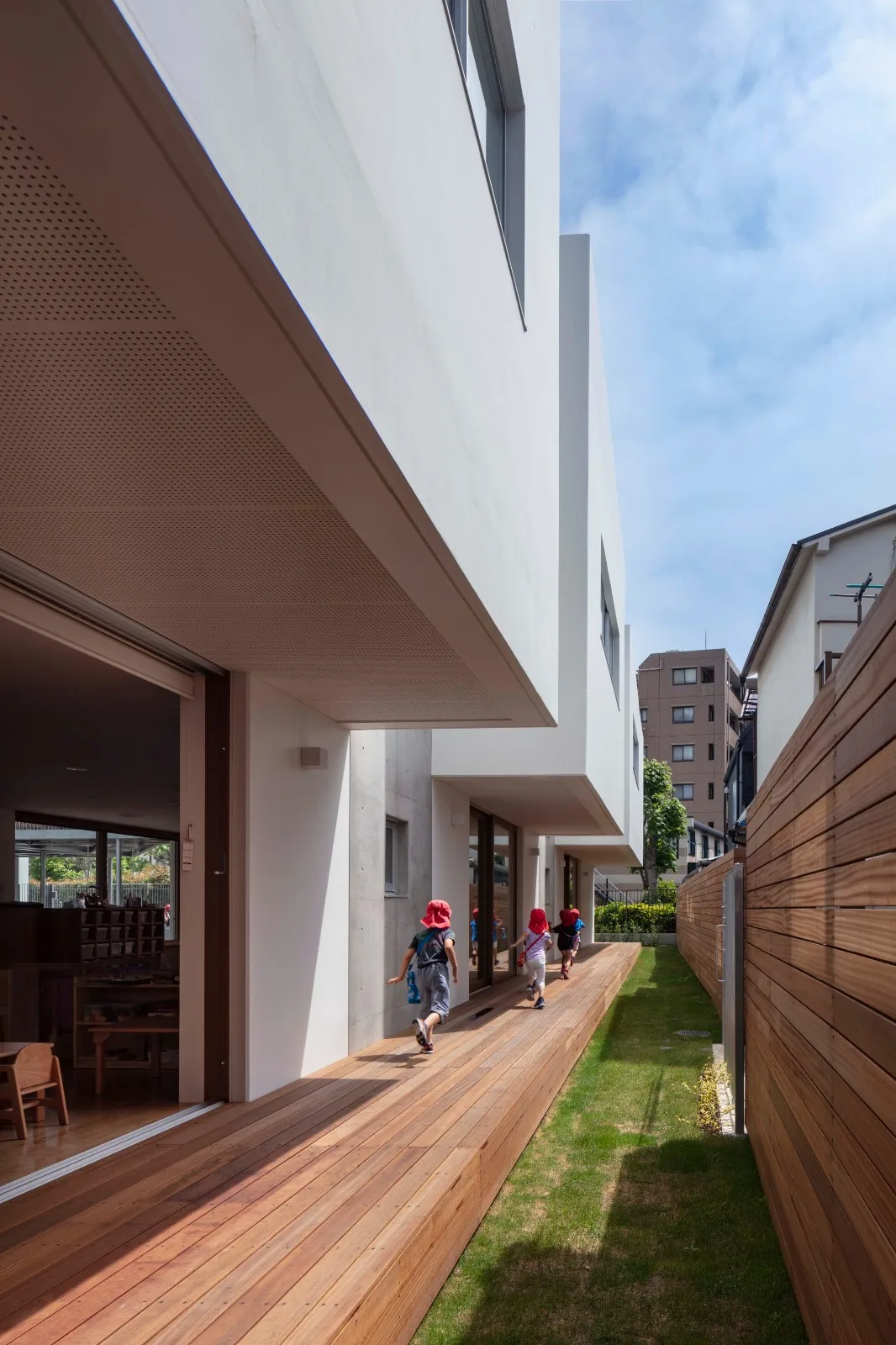
The facade is divided into segments that correspond with the scale of neighboring buildings. On the north side, the first floor recedes from a narrow street, widening the road to ease congestion and reduce the risk of accidents during peak times when children are dropped off or picked up by bicycles and cars.
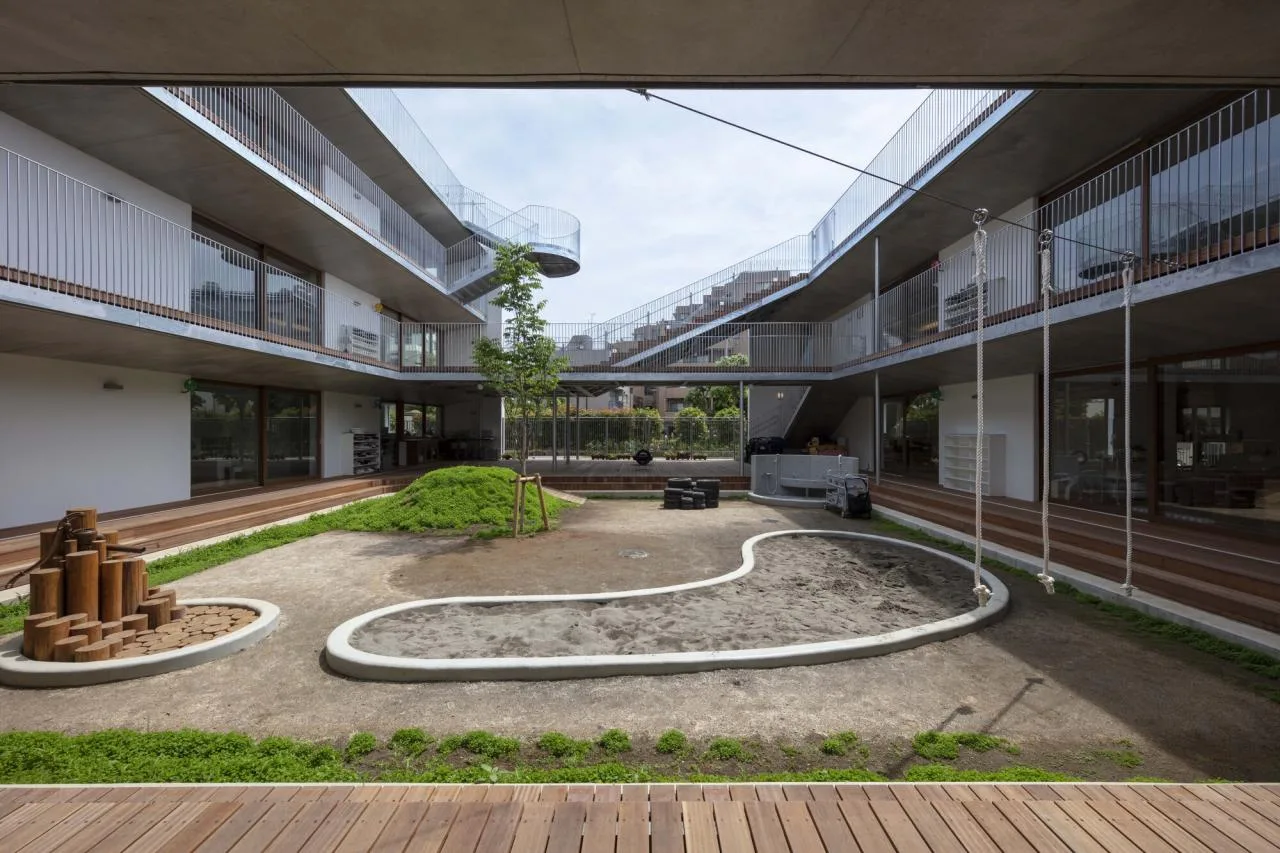
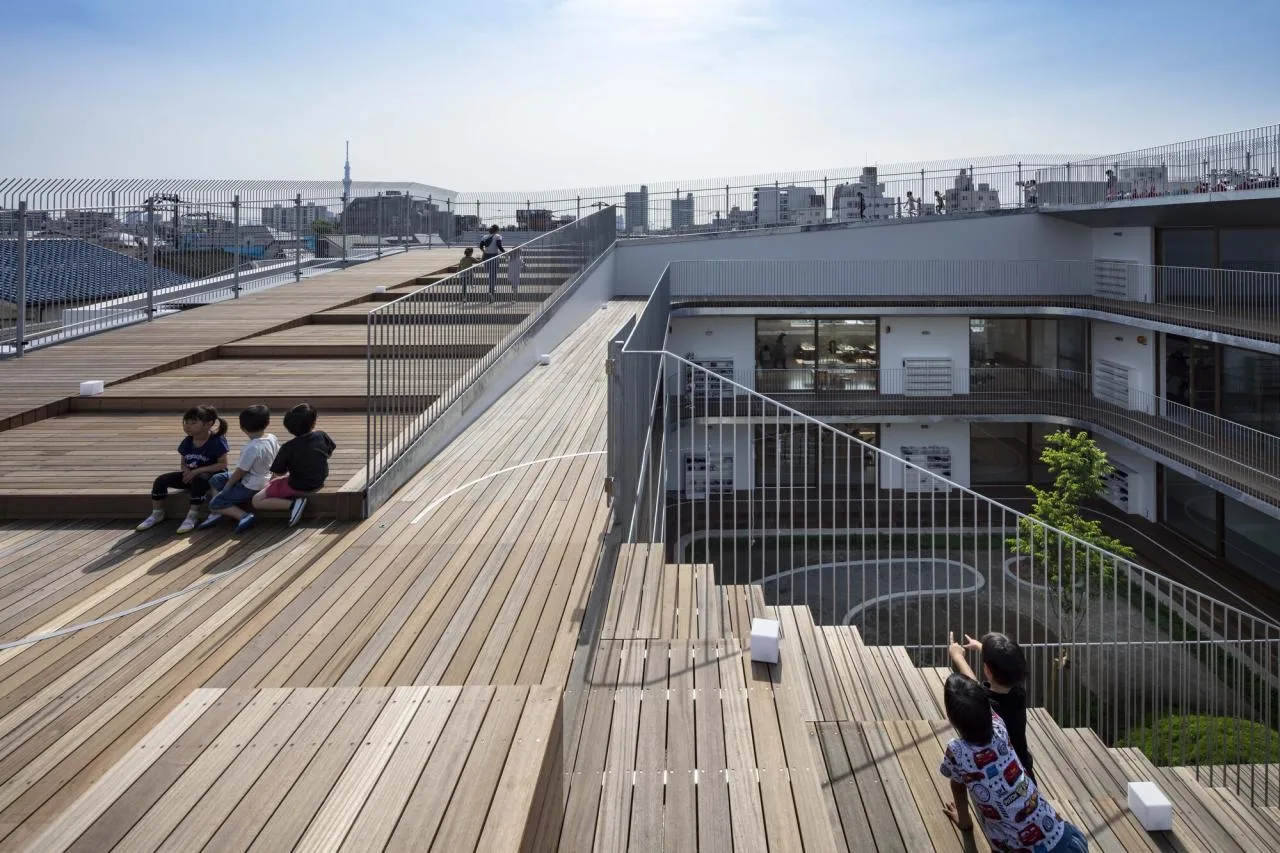
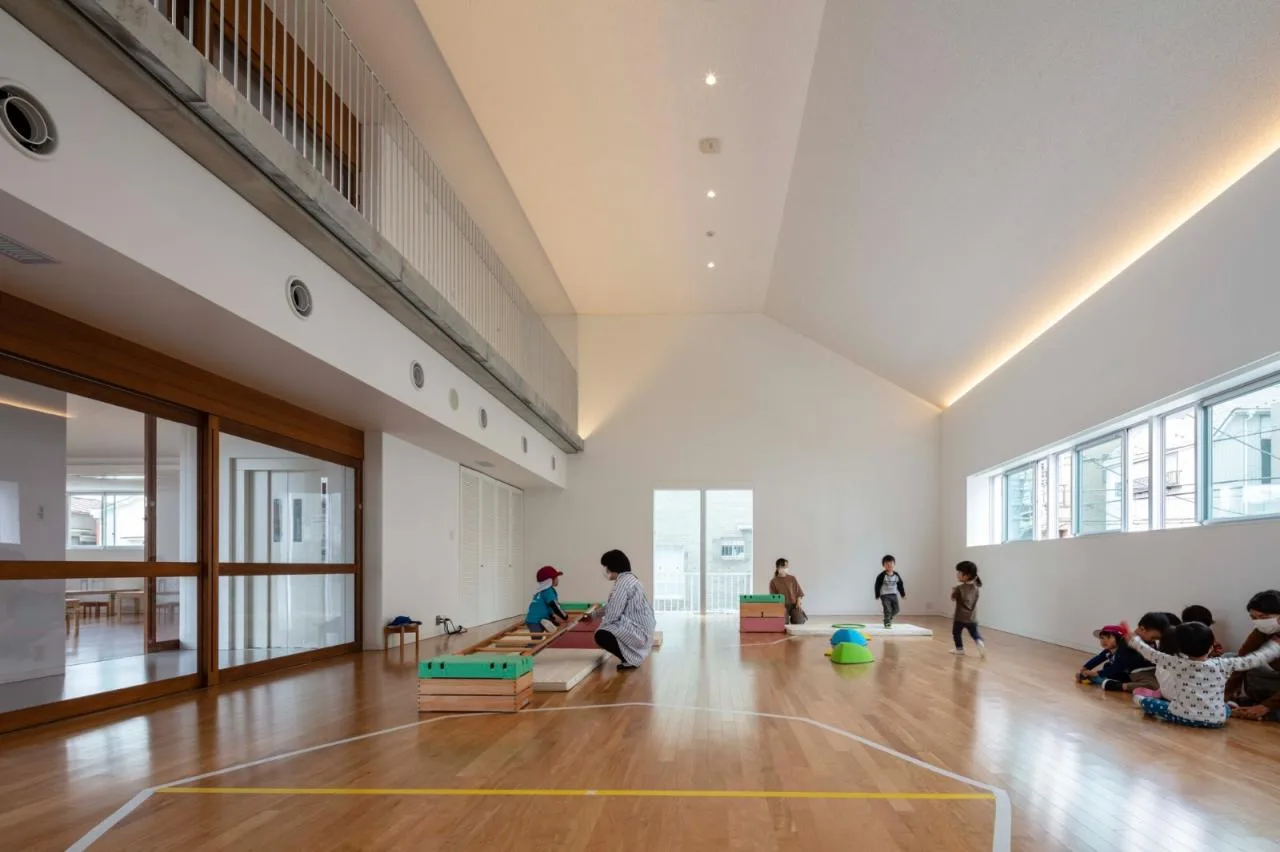
The design incorporates multiple circulation routes. Some paths form loops throughout the building, encouraging children to stay active during daily playtime. Vertical routes serve as emergency exits: they allow evacuation downward in case of fire and upward during floods. A spiral ramp leads all the way to the rooftop, while wide staircases include storage rooms for emergency equipment. The roof height is adjusted based on age groups, and the tiered seating on the second floor can accommodate 200 to 300 people during emergencies, including 165 students and staff, as well as community members awaiting assistance.
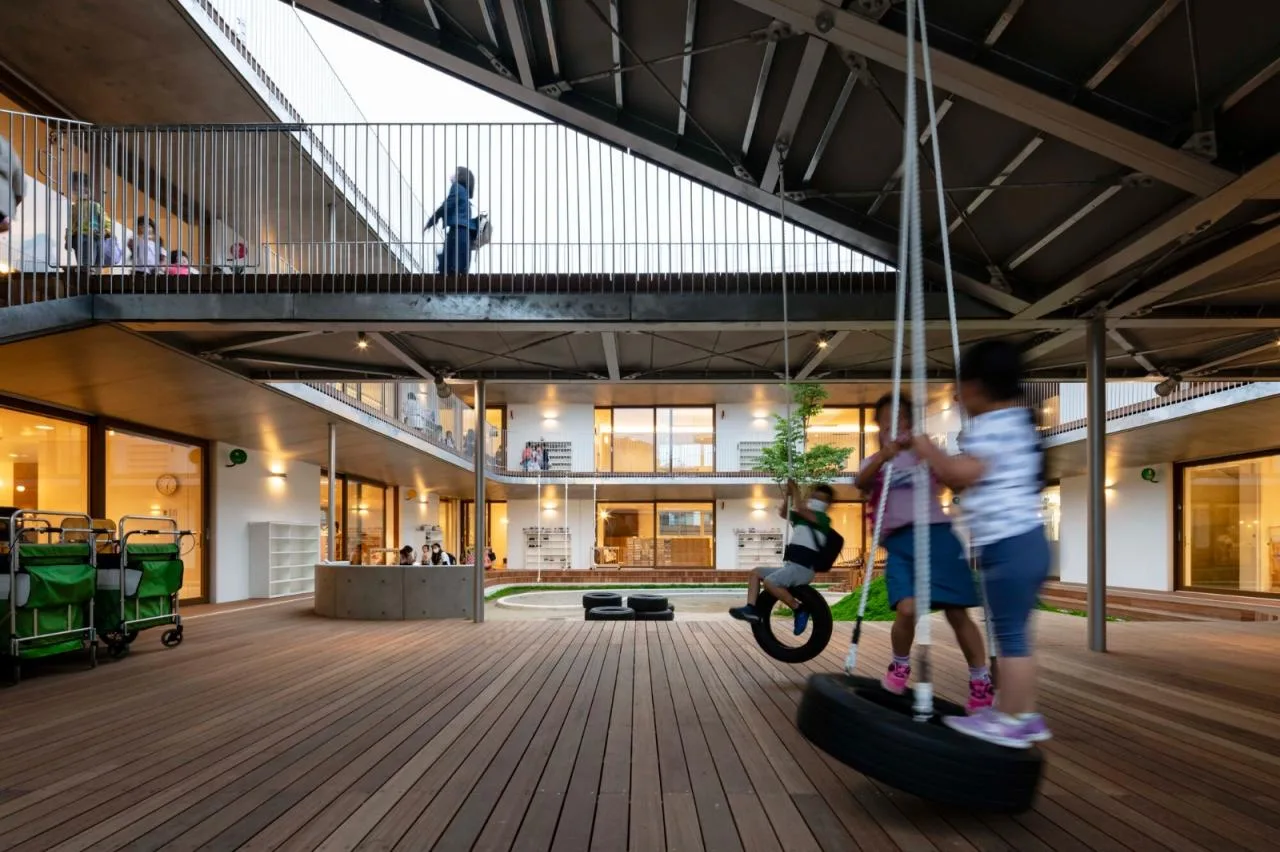
The challenge was to design a building that is both disaster-resistant and inviting, open to the community through the adjacent park while respecting neighbors and the streetscape. The goal was to balance multiple functions without making users constantly aware of how many roles the building fulfills — much like solving a complex equation with many variables.
Additionally, we aimed to balance form and color in the design, ensuring the building’s flexibility to adapt to disasters and long-term social changes. The appearance is appropriate for a daycare: sturdy and high-quality without being overly childish.
Project Drawings
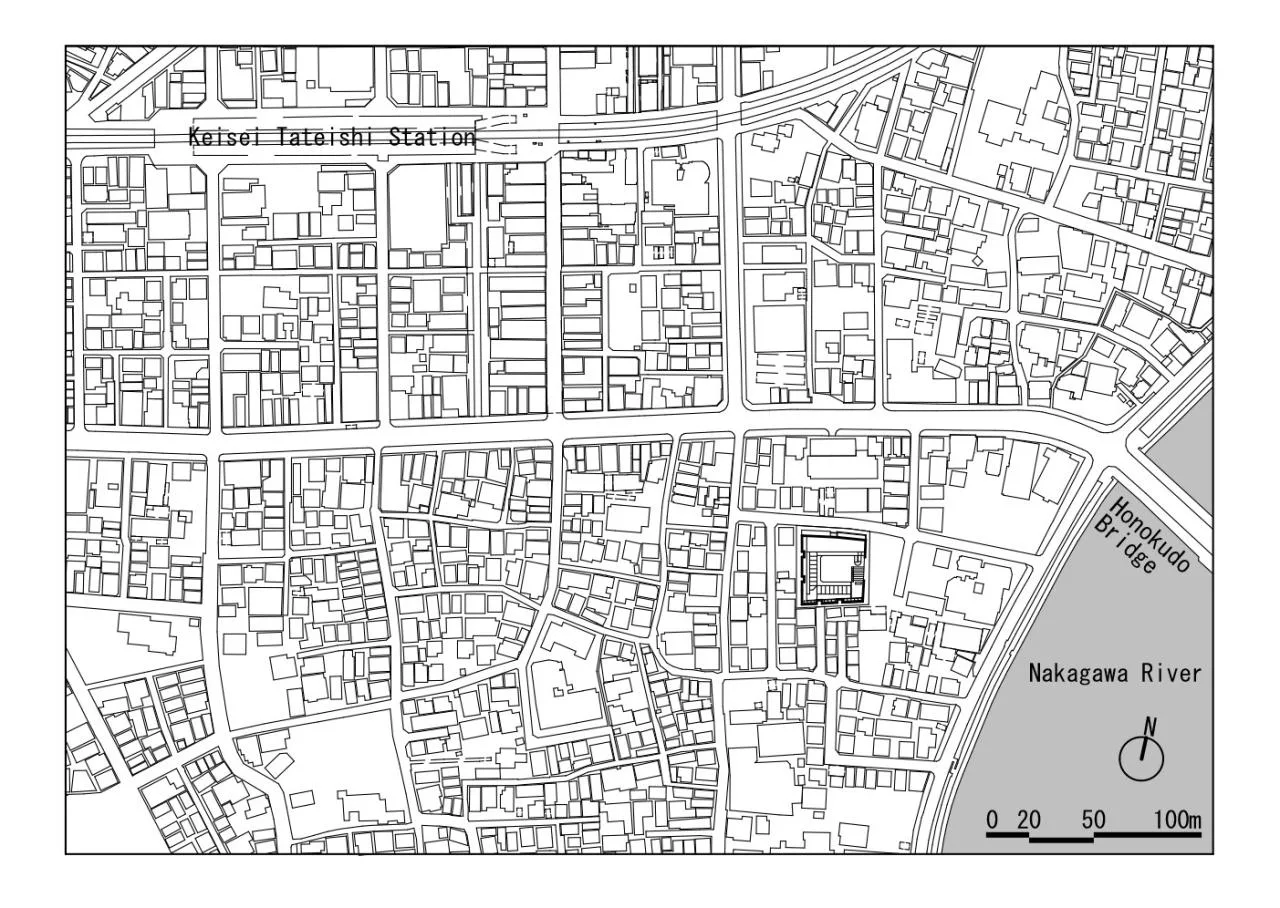
△ Base schematic diagram
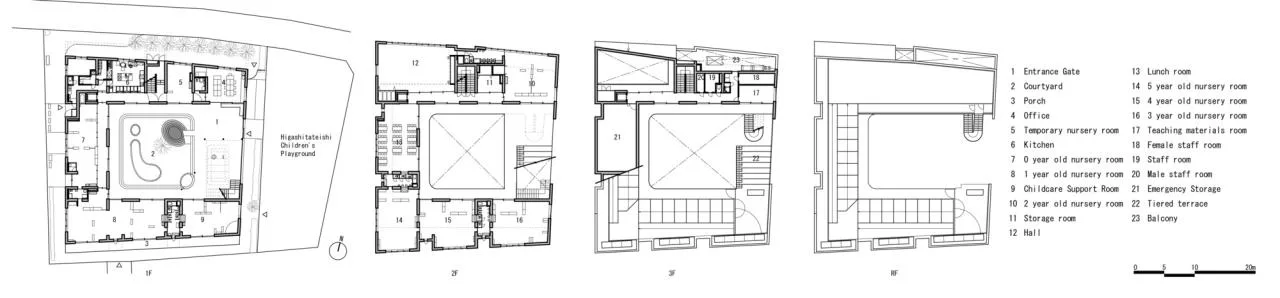
△ Plan view
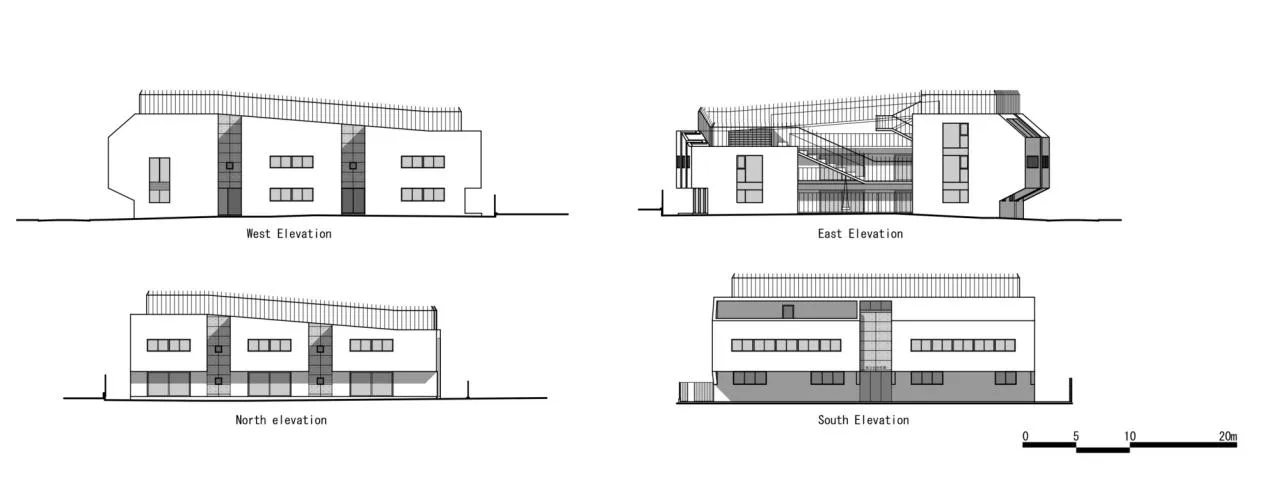
△ Elevation drawing
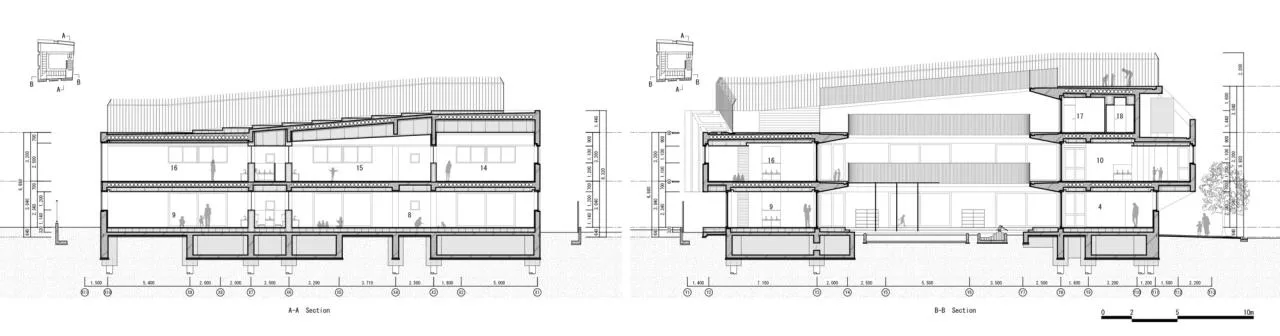
△ Section diagram
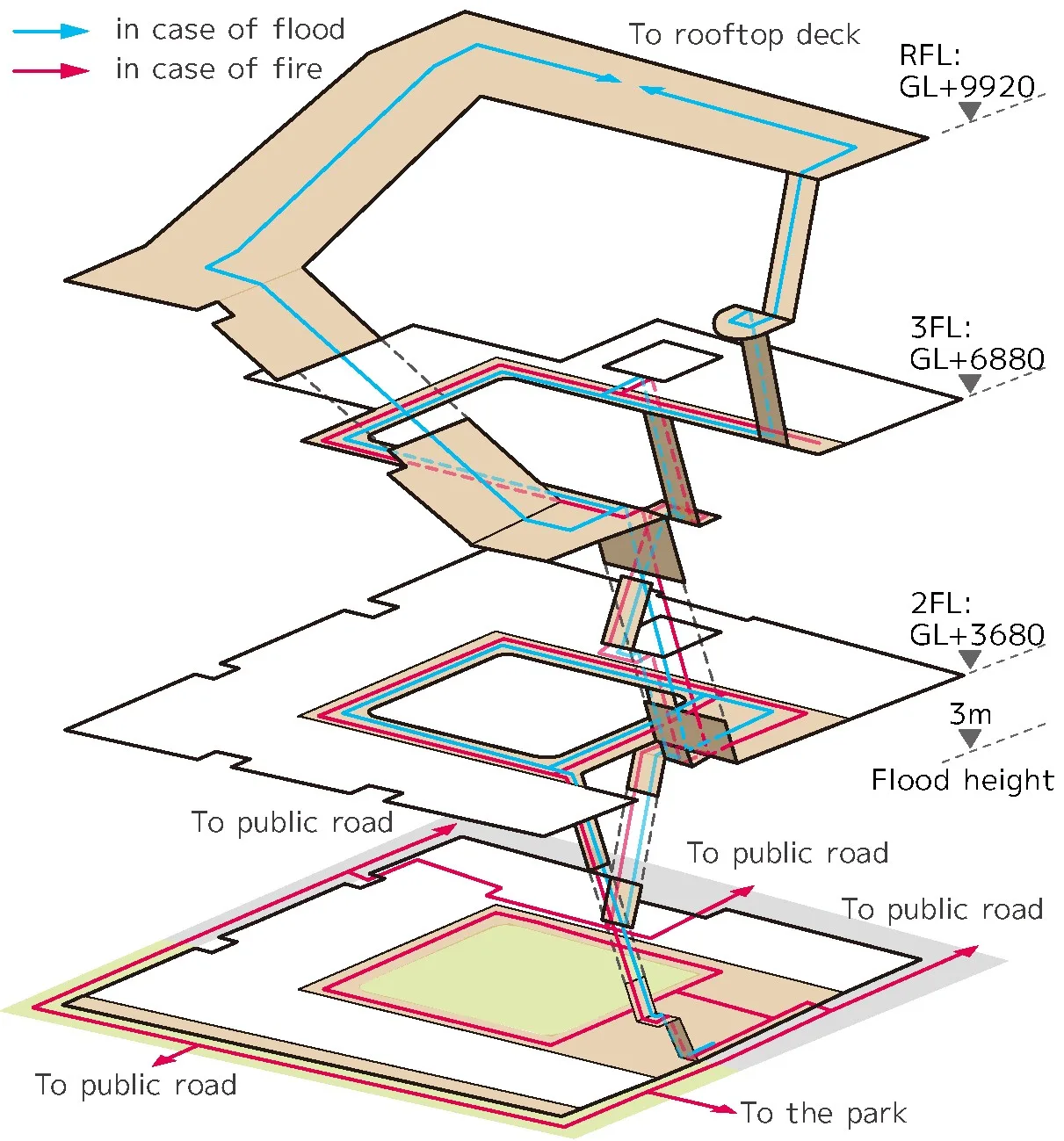
△ Traffic Flow Chart
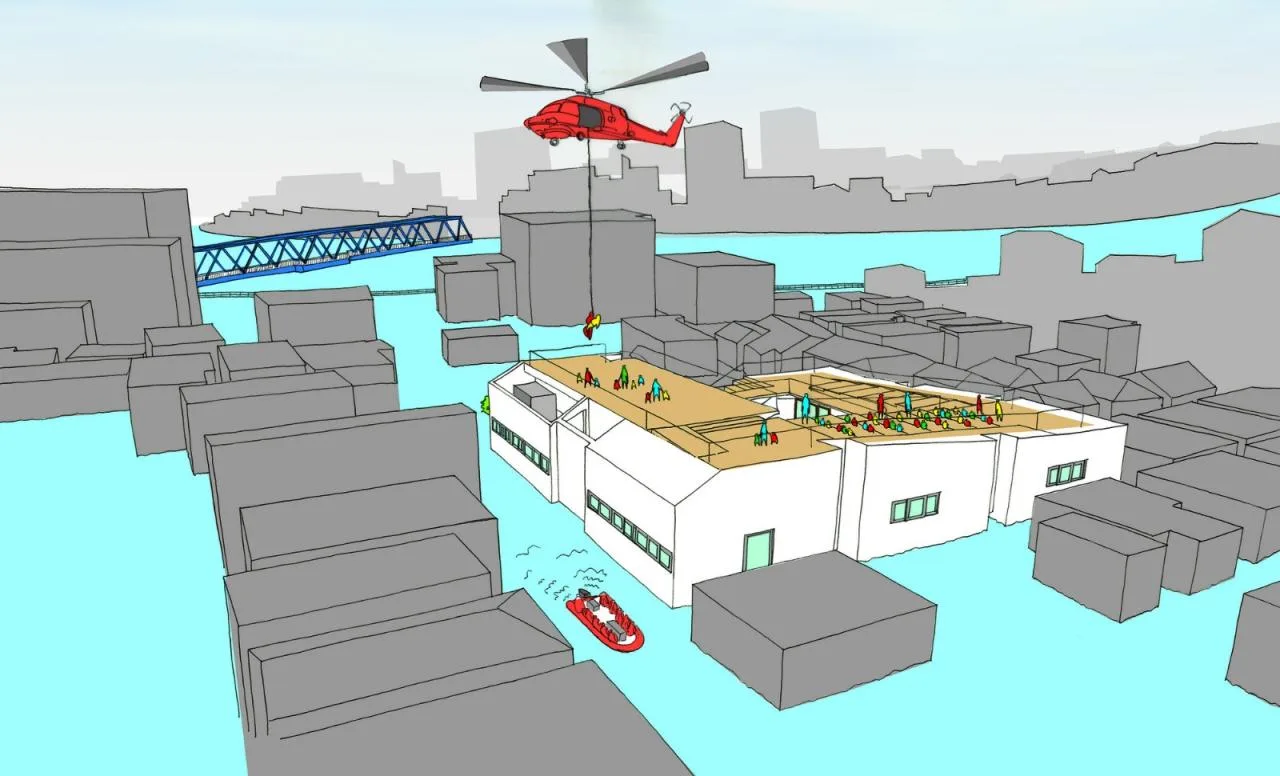
△ Disaster Relief Diagram
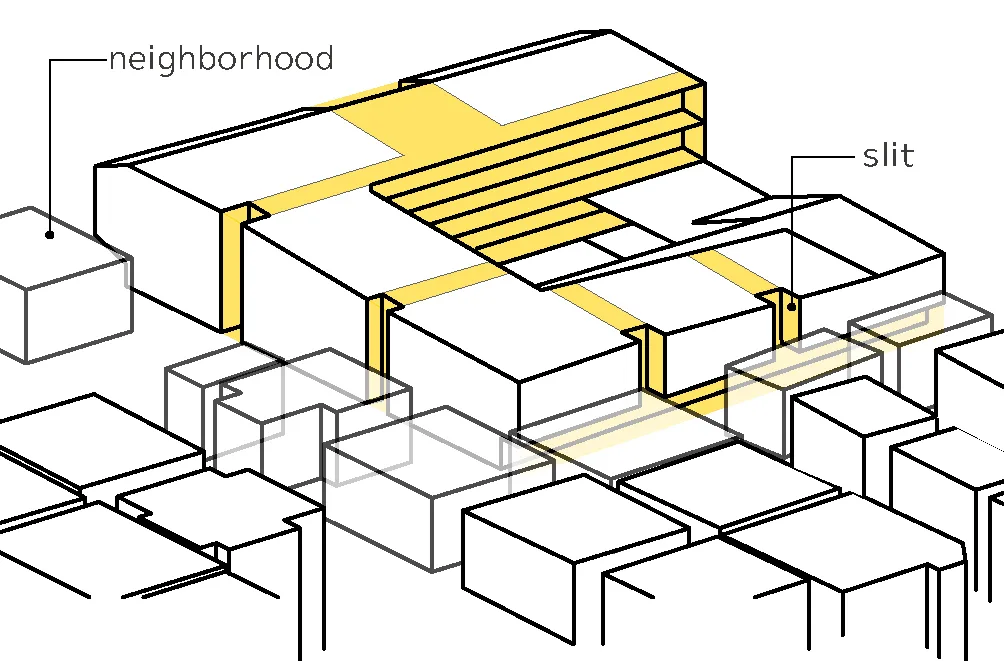
△ Analysis chart
Project Details
Architectural Design: Aisaka Architects’ Atelier
Area: 779 m²
Project Year: 2021
Photographer: Shigeo Ogawa
Location: Katsushika, Japan













Must log in before commenting!
Sign Up