
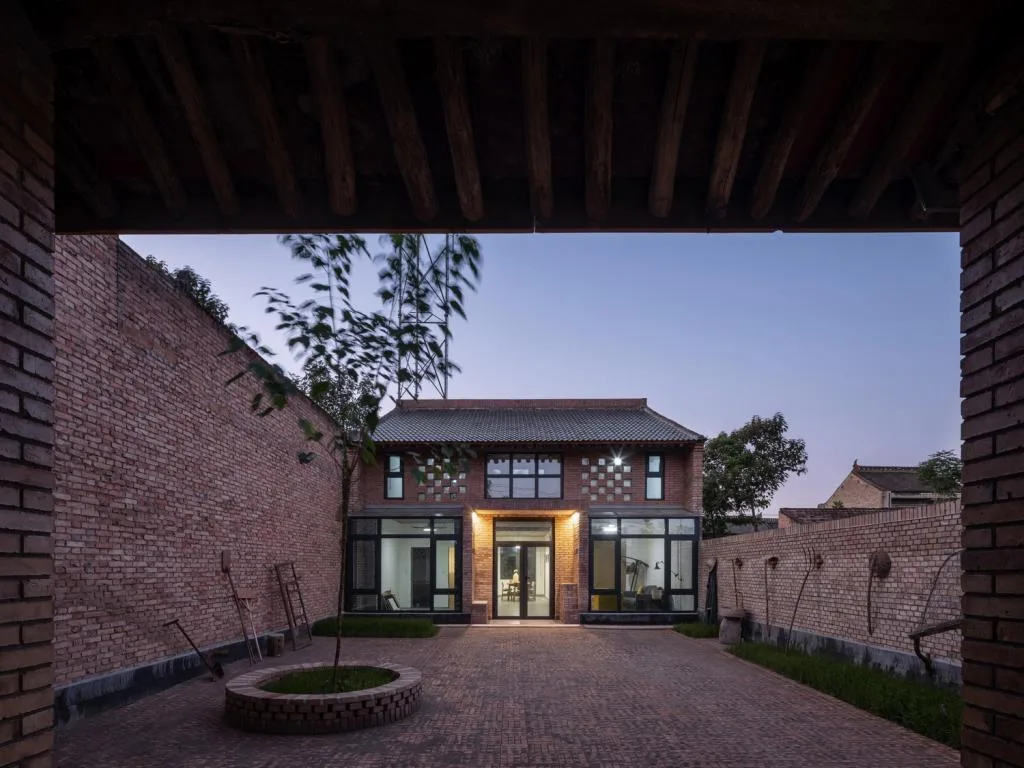
△ © Zhang Xiaoming
This project focuses on the renovation of numerous large-scale residential buildings in the Guanzhong region of Shaanxi Province, set against the backdrop of rural revitalization. The Red Brick House in Xianyang’s Gezi Village is developed under the Shaanxi Key Industry Innovation Chain (Group) Key R&D Plan titled “Key Technologies and Applications for Enhancing the Green Livability of Existing Rural Residences.” It also advances the 13th Five-Year Plan’s key R&D cooperative project, “Technology for Improving Functions of Characteristic Villages and Towns from the Perspective of Industrial Development Synergy.”
Rooted in local rural traditions, the design references traditional spatial models such as the narrow hall square house, along with technical elements like “closed roofs,” shared walls, and flush gable roof drainage systems. Modern technologies—including sunrooms, daylight ventilation shafts, internal wall insulation, solar photovoltaic systems, and three-chamber septic tanks—are seamlessly integrated. Utilizing local artisans, traditional materials, and craftsmanship, this project delivers affordable, culturally appropriate residences that meet contemporary living standards in Guanzhong.
The 14th Five-Year Plan emphasizes prioritizing rural infrastructure, improving housing quality, and enhancing rural living environments as critical components of socialist modernization. The Red Brick Houses in Ezi Village address common issues such as uncritical adoption of urban housing models that overlook local characteristics, and the absence of professional design leading to poor indoor environments and functionality. By combining local red brick materials and traditional craftsmanship with modern living needs, the project achieves an organic integration of environment, function, and green performance. This approach innovatively preserves the spatial and technical heritage of traditional Guanzhong houses while improving their sustainability and livability.
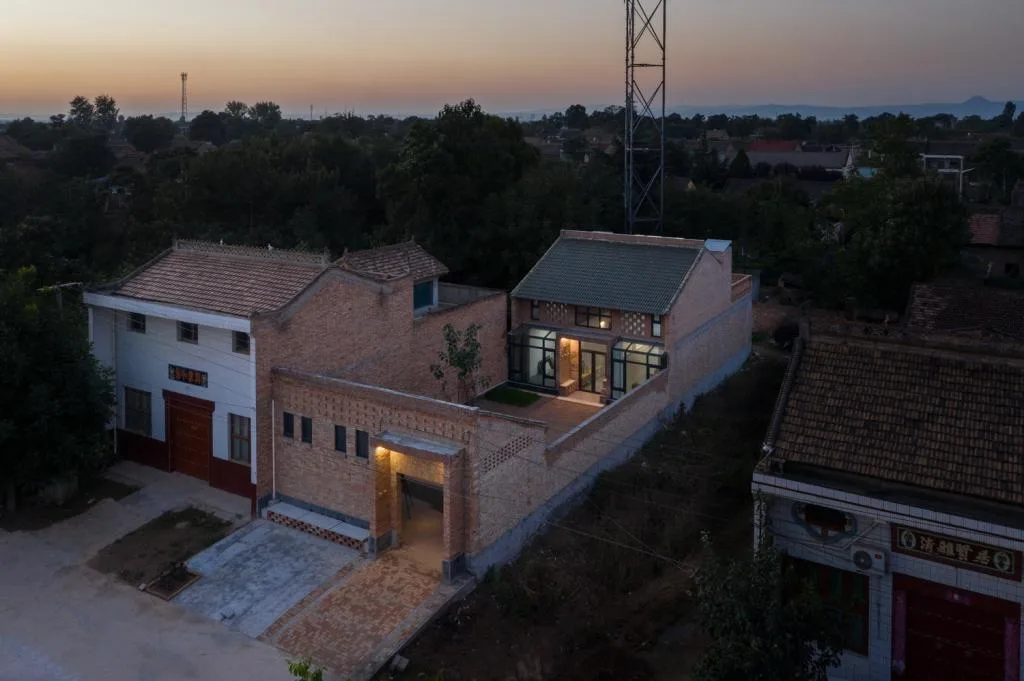
△ Night aerial view © Zhang Xiaoming
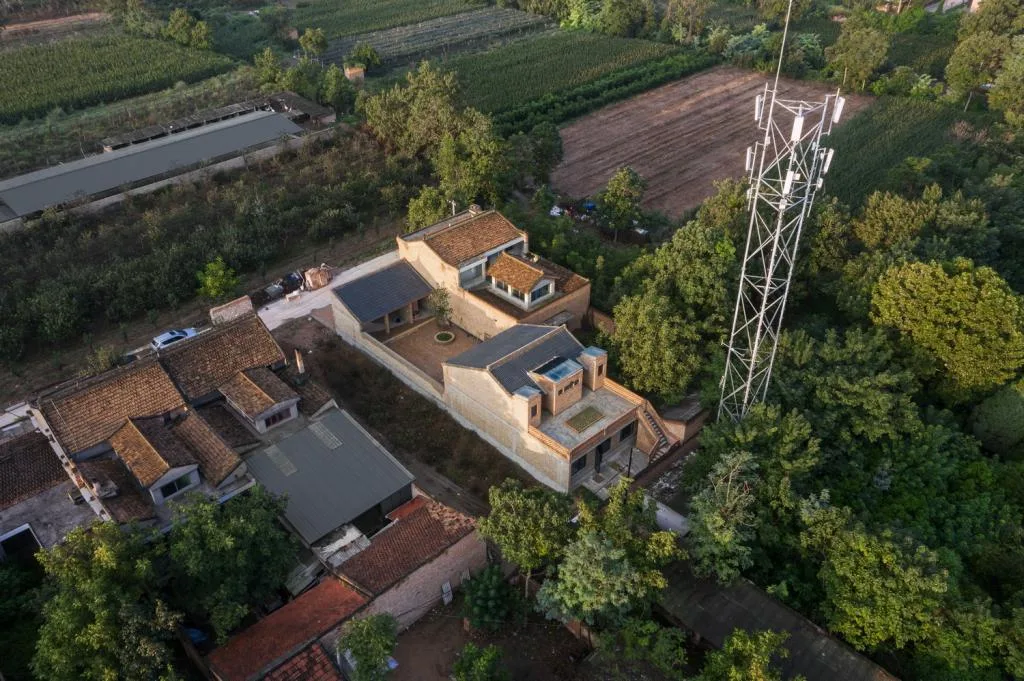
△ Panoramic aerial view © Zhang Xiaoming
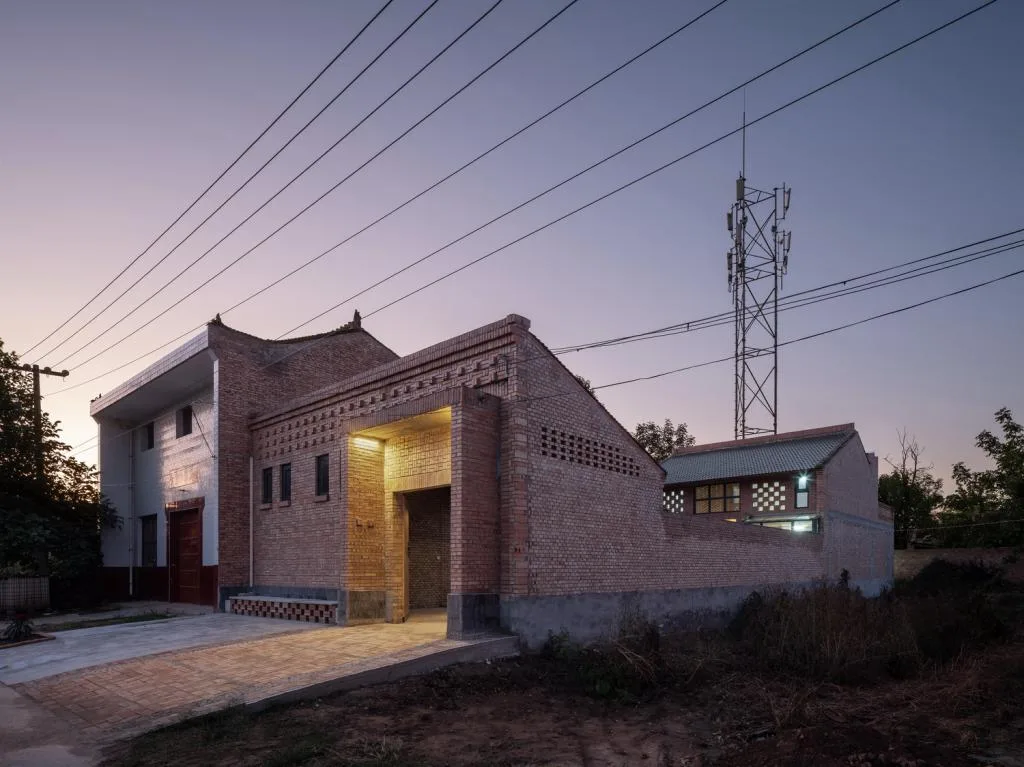
△ Night perspective © Zhang Xiaoming
Located in Ezi Village, Xianyang City, Shaanxi Province, the project sits on flat terrain. The homestead measures 35.1 meters north to south and 9 meters east to west. Its south side borders a village road and extensive farmland, while the east, west, and north sides are flanked by existing residences and planned homesteads.
The Red Brick House preserves the spatial layout and sloped roof design of traditional local narrow hall square houses, revitalizing regional pride through traditional architectural culture and evoking a sense of home. The entrance is positioned in the southeast corner, aligned with contemporary living patterns. The gatehouse is single-story, housing auxiliary functions such as bathrooms and storage. The main residence comprises two floors with a single ridge and dual slopes, arranged symmetrically along a central vertical axis with three open rooms. The entrance door is centrally located, flanked by sunrooms facing south. Bedrooms and living rooms are adjacent to the interior, while kitchens, dining rooms, and bathrooms are centrally located.
The narrow central living room spans the full height of the building and features an aerial corridor. A terrace on the second floor’s north side offers a multi-level spatial experience. The courtyard between the main house and gatehouse accommodates activities such as drying wheat and corn. The backyard, located north of the main residence, connects directly to the second-floor terrace via a staircase.
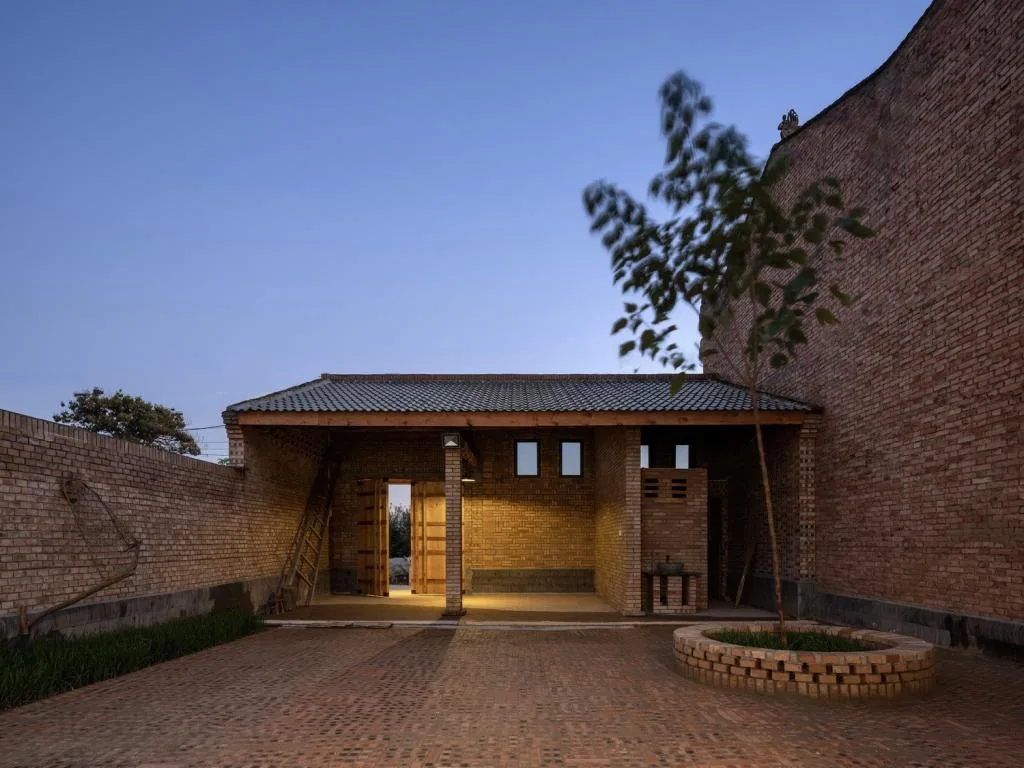
△ Gatehouse space © Zhang Xiaoming
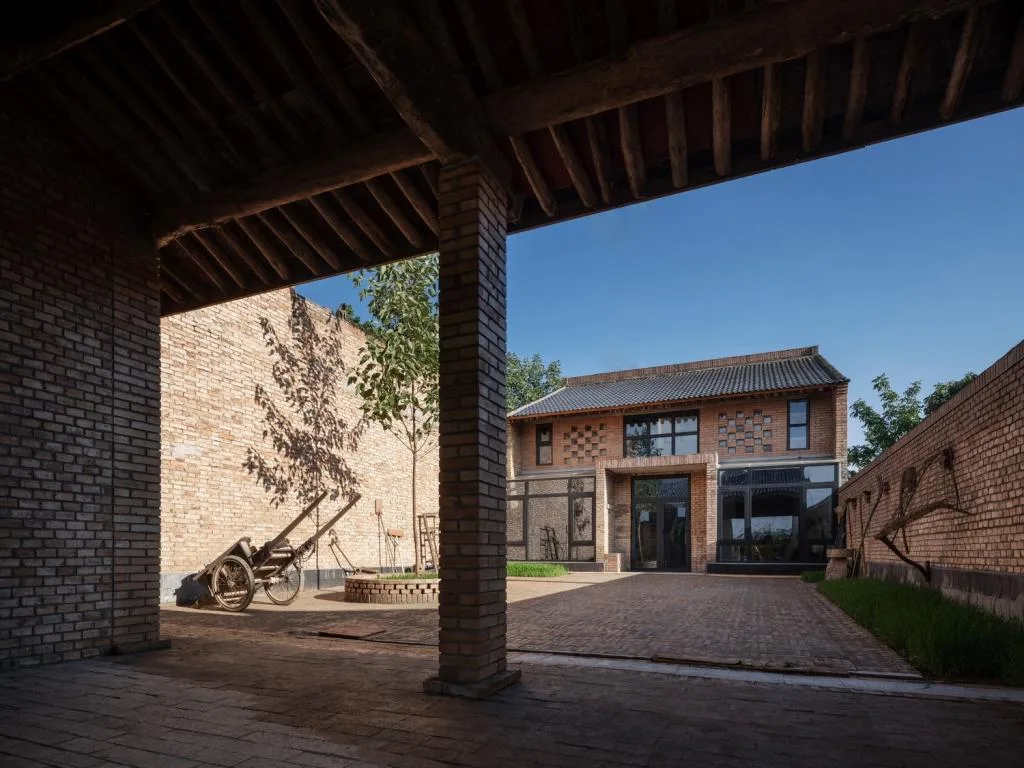
△ Residential space © Zhang Xiaoming
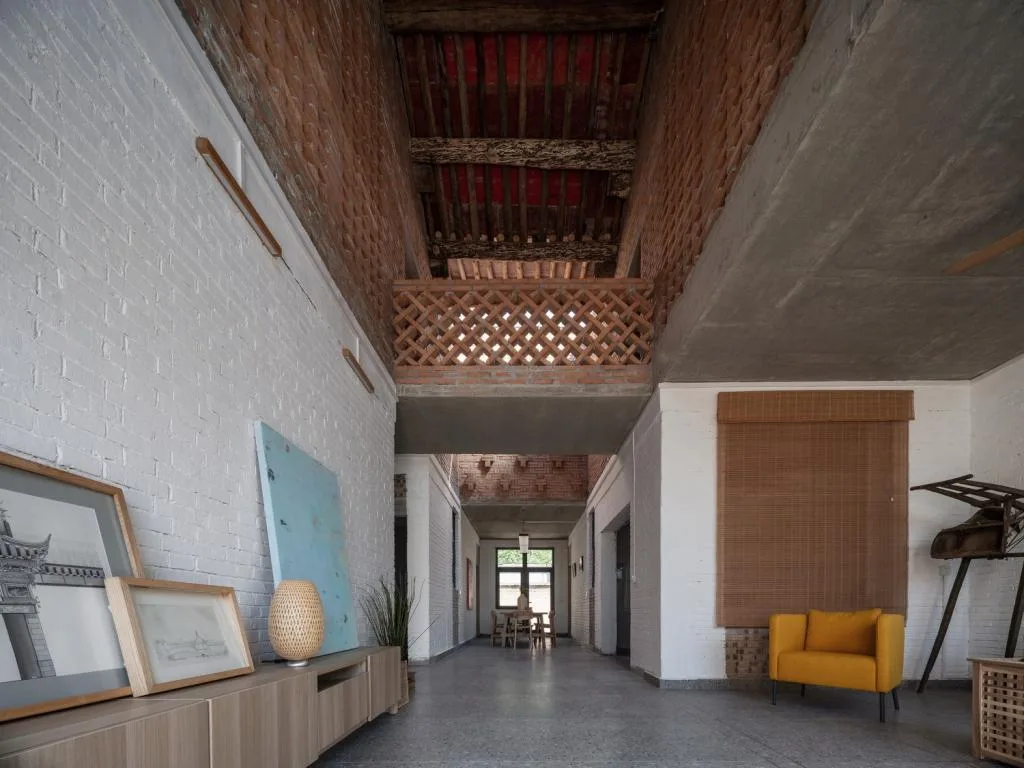
△ Indoor narrow living space © Zhang Xiaoming
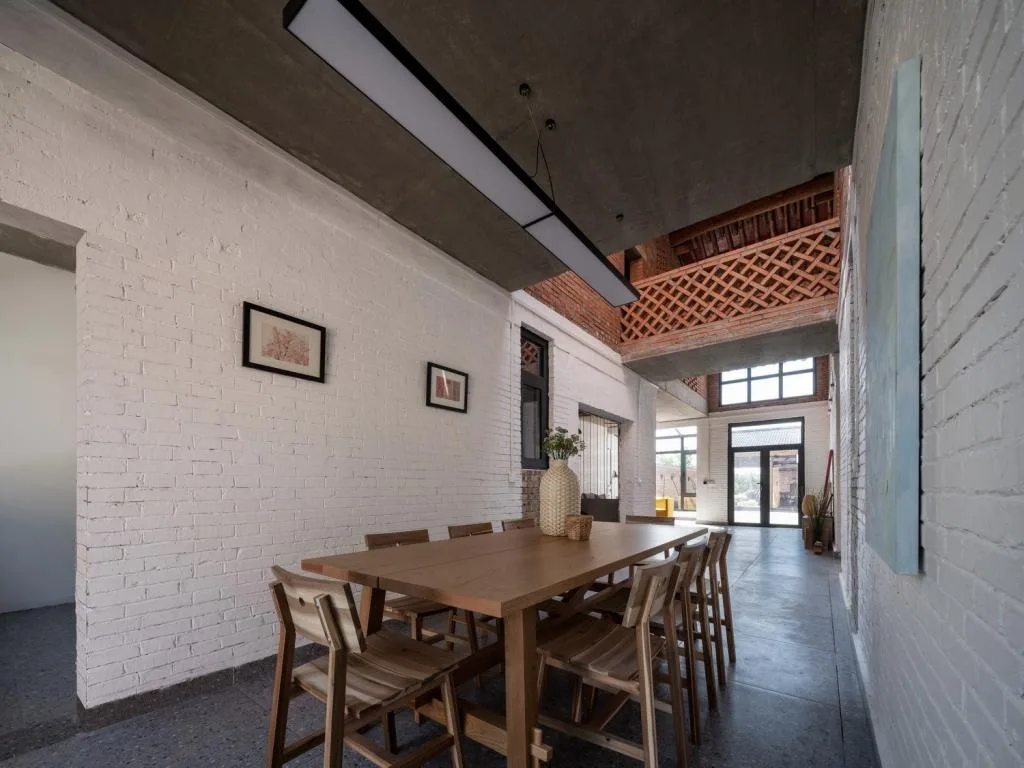
△ Restaurant space © Zhang Xiaoming
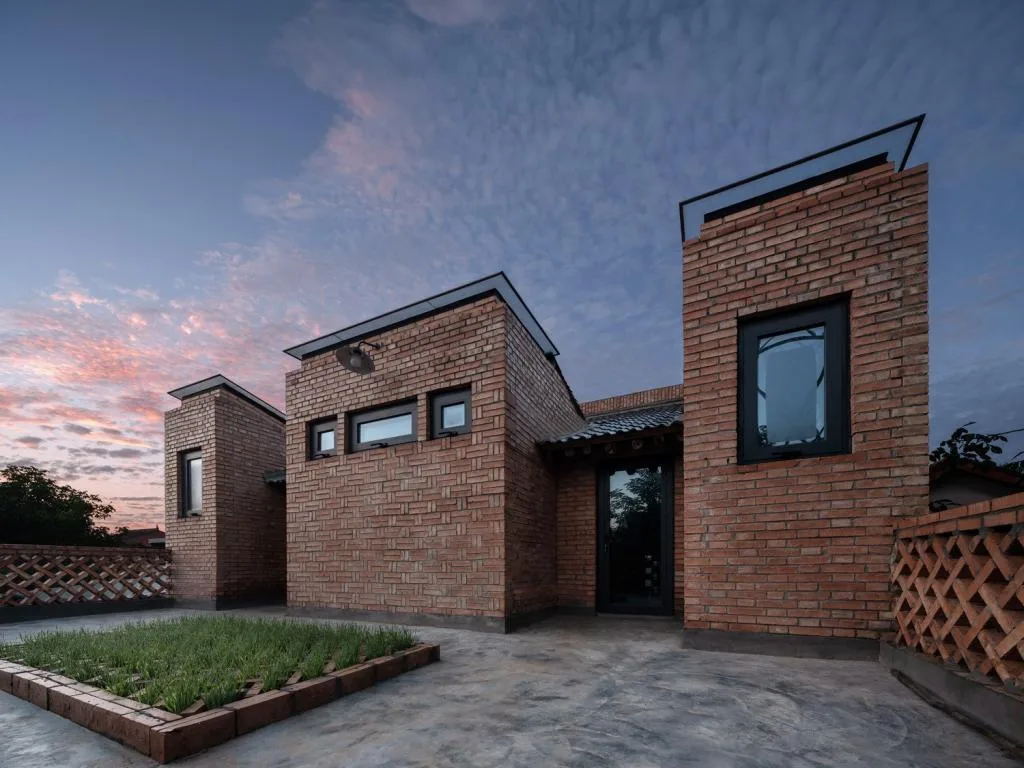
△ North-facing terrace space © Zhang Xiaoming
Ecology, environment, and residents’ quality of life are deeply interconnected. This project emphasizes researching and applying modern green and livable technologies tailored for rural residences, particularly considering local natural factors such as wind, sunlight, and water.
To adapt to seasonal climate variations, passive design strategies are employed, including ventilation, natural lighting, insulation, thermal protection, and separate rainwater and sewage systems, all aimed at enhancing indoor comfort.
Ventilation: The narrow hall runs from north to south, promoting wind pressure ventilation. Three elevated spaces above the kitchen, narrow hall, and bathroom create hot pressure ventilation, boosting air circulation and improving indoor air quality in the deeper parts of the residence.
Daylighting: Large windows and high side windows face south in the main rooms, combined with roof eaves to maximize daylight while minimizing summer solar radiation. The elevated spaces with skylights in the kitchen, living room, and bathroom enhance natural lighting, addressing the issue of dark service areas common in traditional homes.
Thermal Insulation: The traditional two-story attic (closed roof) serves as storage and free space year-round, acting as a thermal buffer during winter and summer, insulating key living areas like bedrooms and the living room. A passive sunroom on the south side provides further temperature buffering. Internal wall insulation preserves the exterior plain brick appearance while improving thermal performance.
Rainwater and Sewage Management: The bathroom is divided into two units: urine disposal located near the living room and feces disposal in the gatehouse’s west side. These connect via sewage pipes to an underground three-chamber septic tank outside the entrance courtyard, which is regularly maintained. Kitchen and shower wastewater flows into a backyard treatment tank before being discharged into infiltration wells through constructed wetlands. Rainwater from front and rear courtyards is collected and directed to the village’s stormwater system, effectively separating rainwater and sewage discharge.
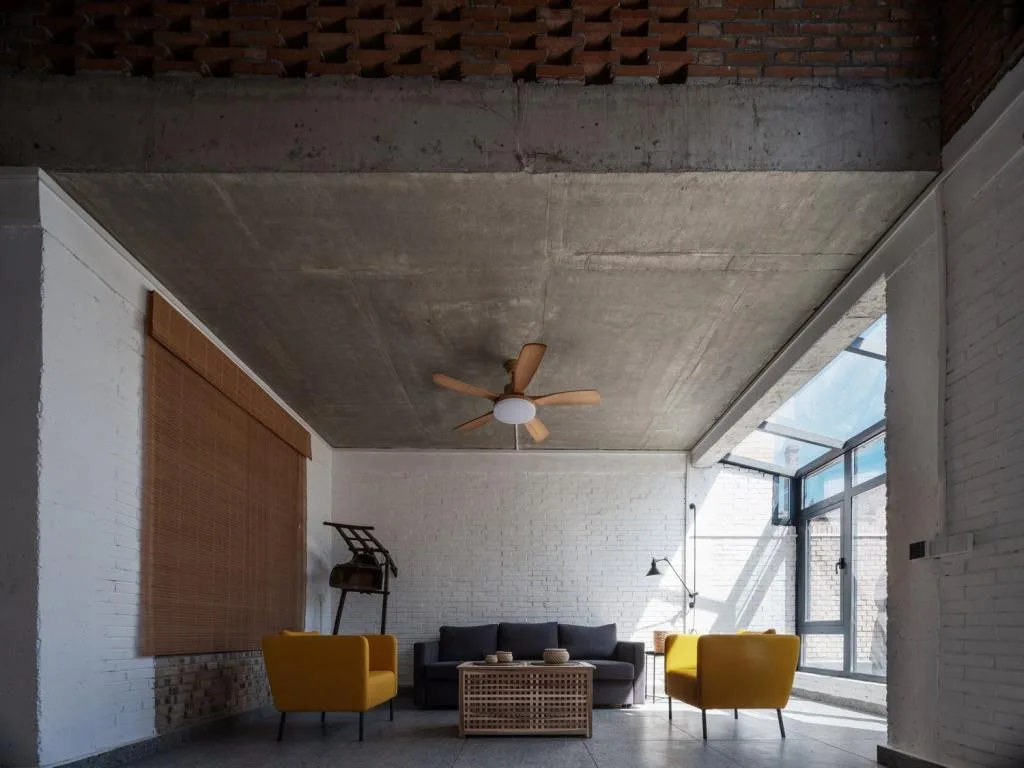
△ South-facing living room lighting © Zhang Xiaoming
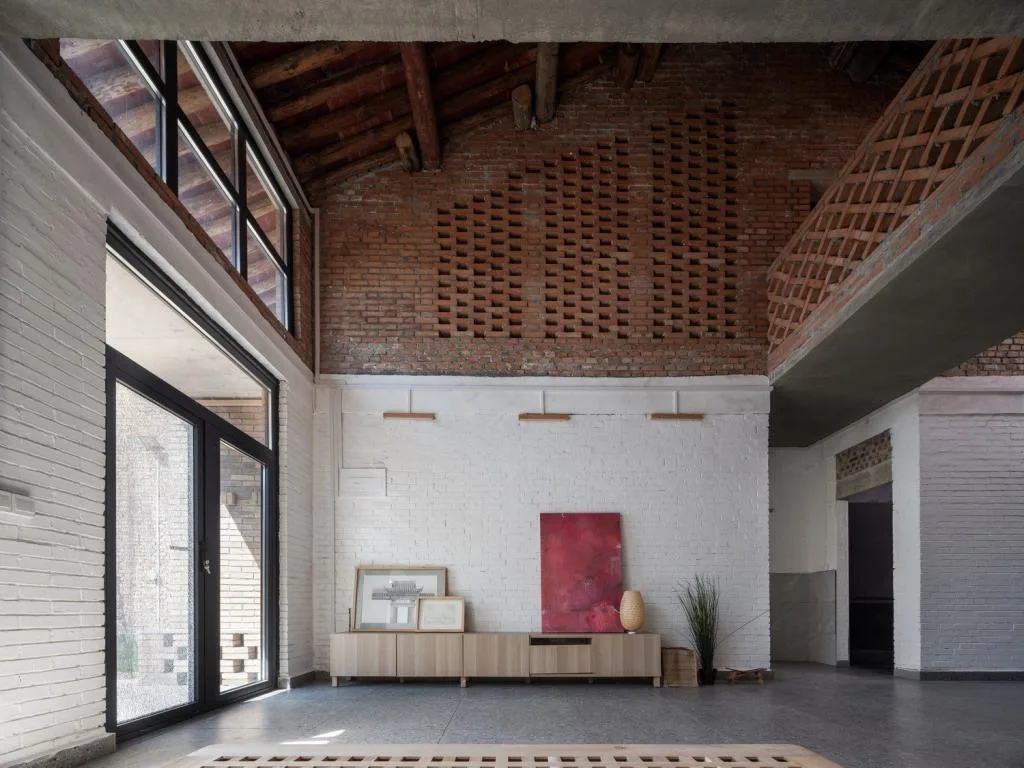
△ South-facing living room lighting © Zhang Xiaoming
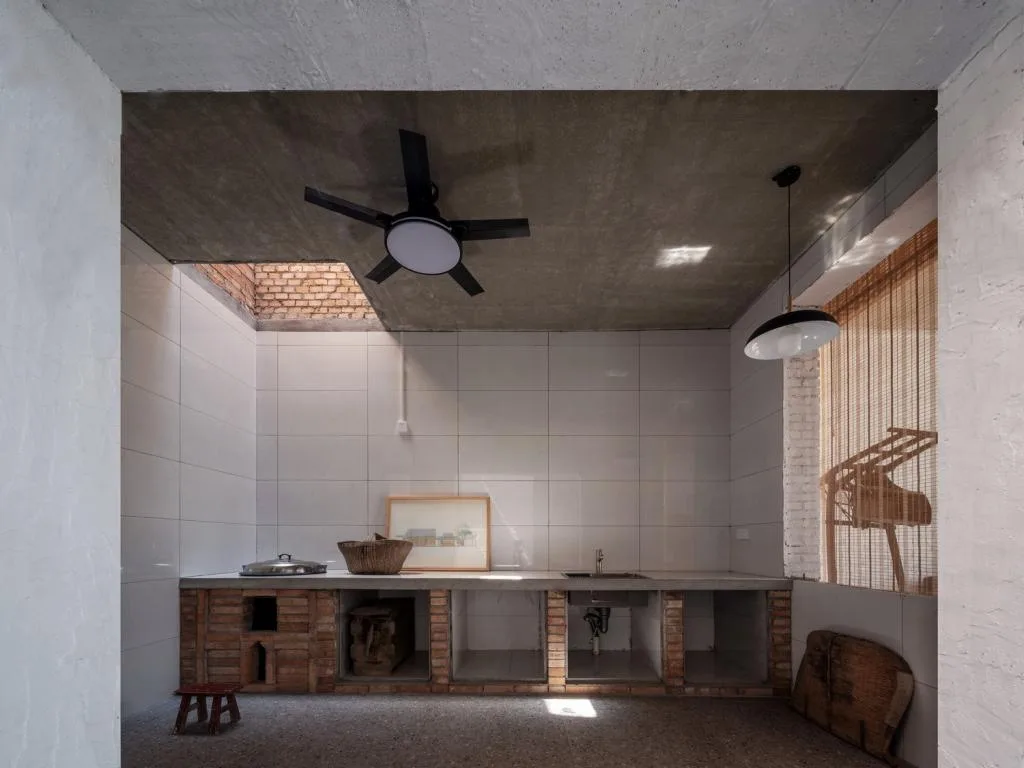
△ Kitchen lighting and ventilation shaft © Zhang Xiaoming
Rural society is characterized by close-knit social networks and traditions of self-governance, making residential design less susceptible to commercial influence or consumerism. Low-cost construction demands meticulous attention to detail and craftsmanship.
This project employs local artisans and materials, showcasing traditional masonry techniques such as cross-shaped brickwork, “plum blossom pile” patterns, and herringbone masonry. Courtyard pavements use dense strip paving with sand filling and wet joint methods, highlighting both functionality and the artistic qualities of red brick craftsmanship.
The wooden framework incorporates reclaimed timber from old houses, ensuring material stability and exposing structural elements, harmonizing with the red brickwork. To protect against rain erosion and alkali damage, real stone paint is applied to the surface of exposed brick walls. Cement mortar coatings are added atop courtyard walls and roof ridges to prevent cracking from freeze-thaw cycles, enhancing durability while respecting traditional materials and methods.
Enhancing living quality requires refined attention to daily life. The traditional residential gateway in Guanzhong features red brick benches integrated into the entrance wall to foster neighborly interaction and leisure. During busy farming seasons, the courtyard space beneath a tree serves as a resting area. The kitchen is equipped with brick stoves and integrated cabinetry, accommodating traditional wood-burning cooking and heating, with provisions for future upgrades to natural gas.
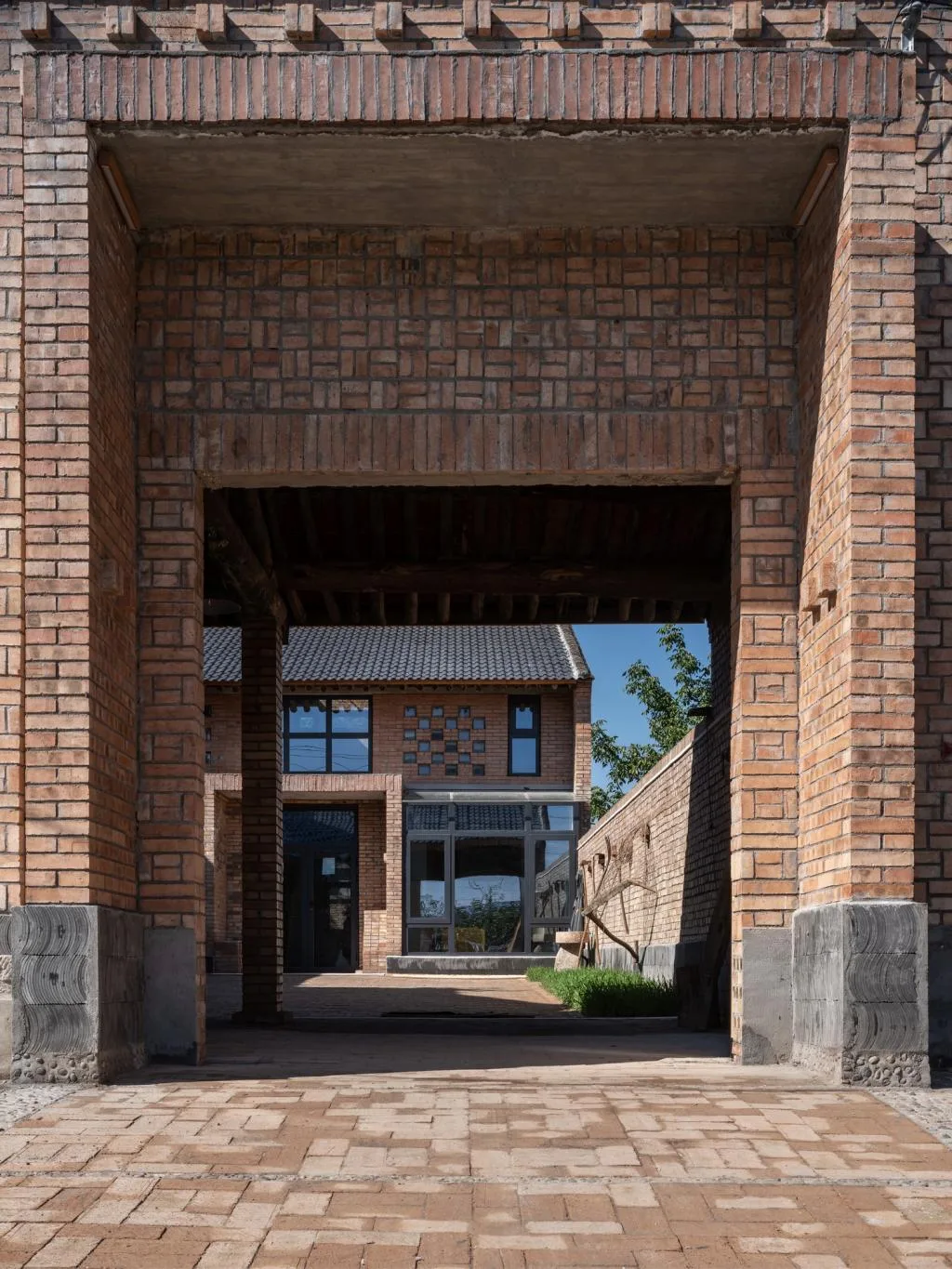
△ House door details © Zhang Xiaoming
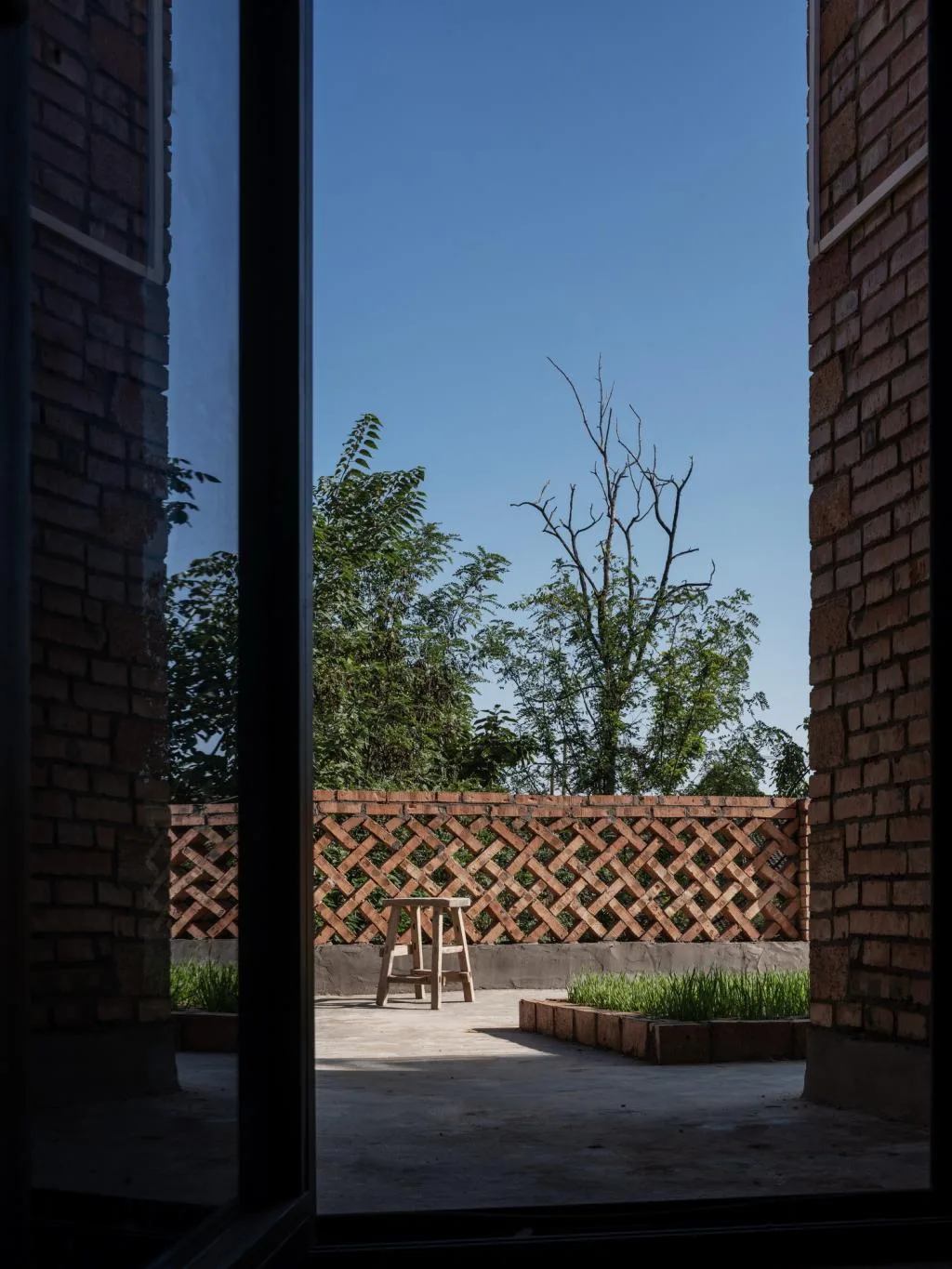
△ Terrace railing with herringbone masonry technique © Zhang Xiaoming
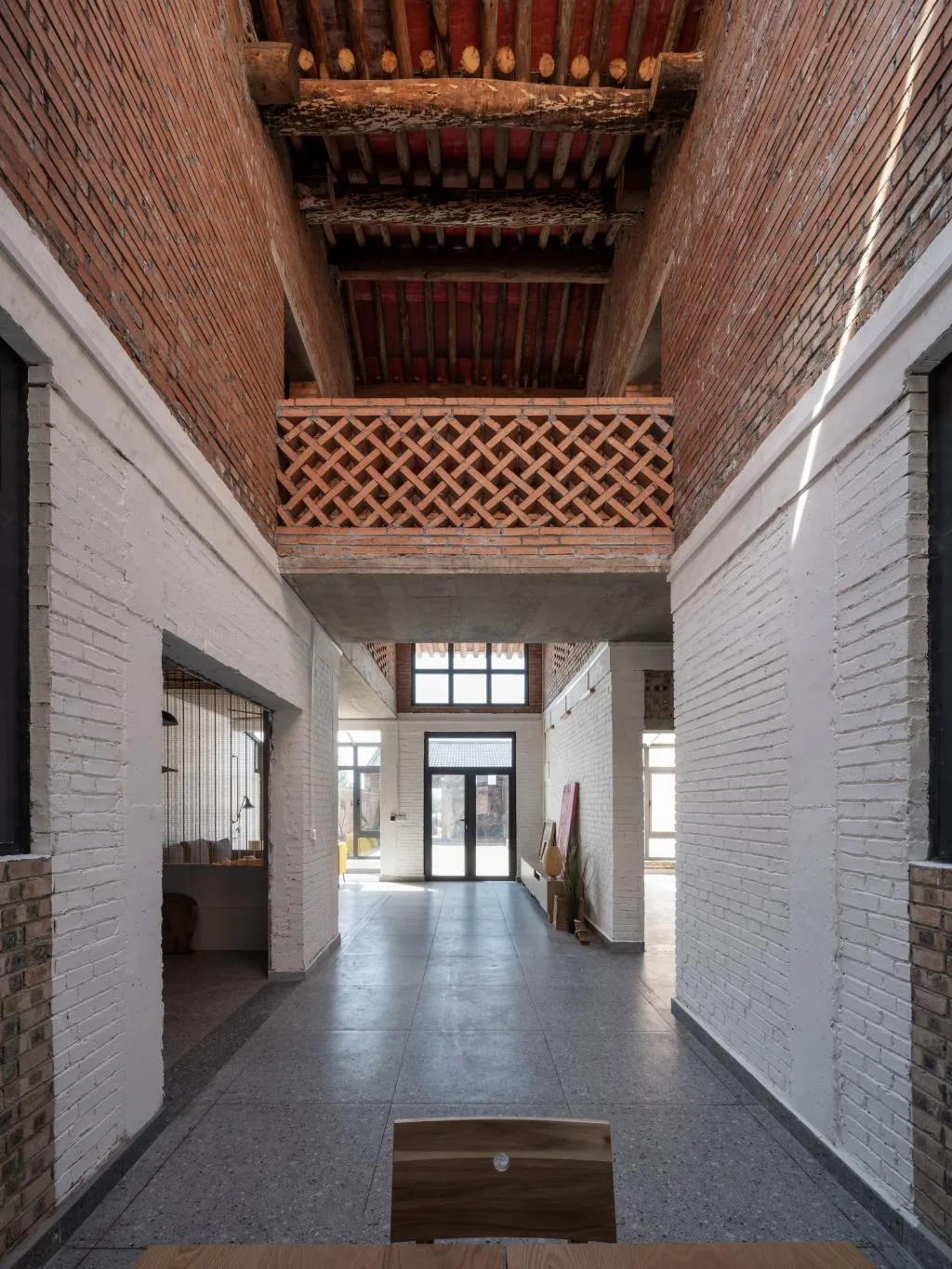
△ Herringbone masonry for corridor railings © Zhang Xiaoming
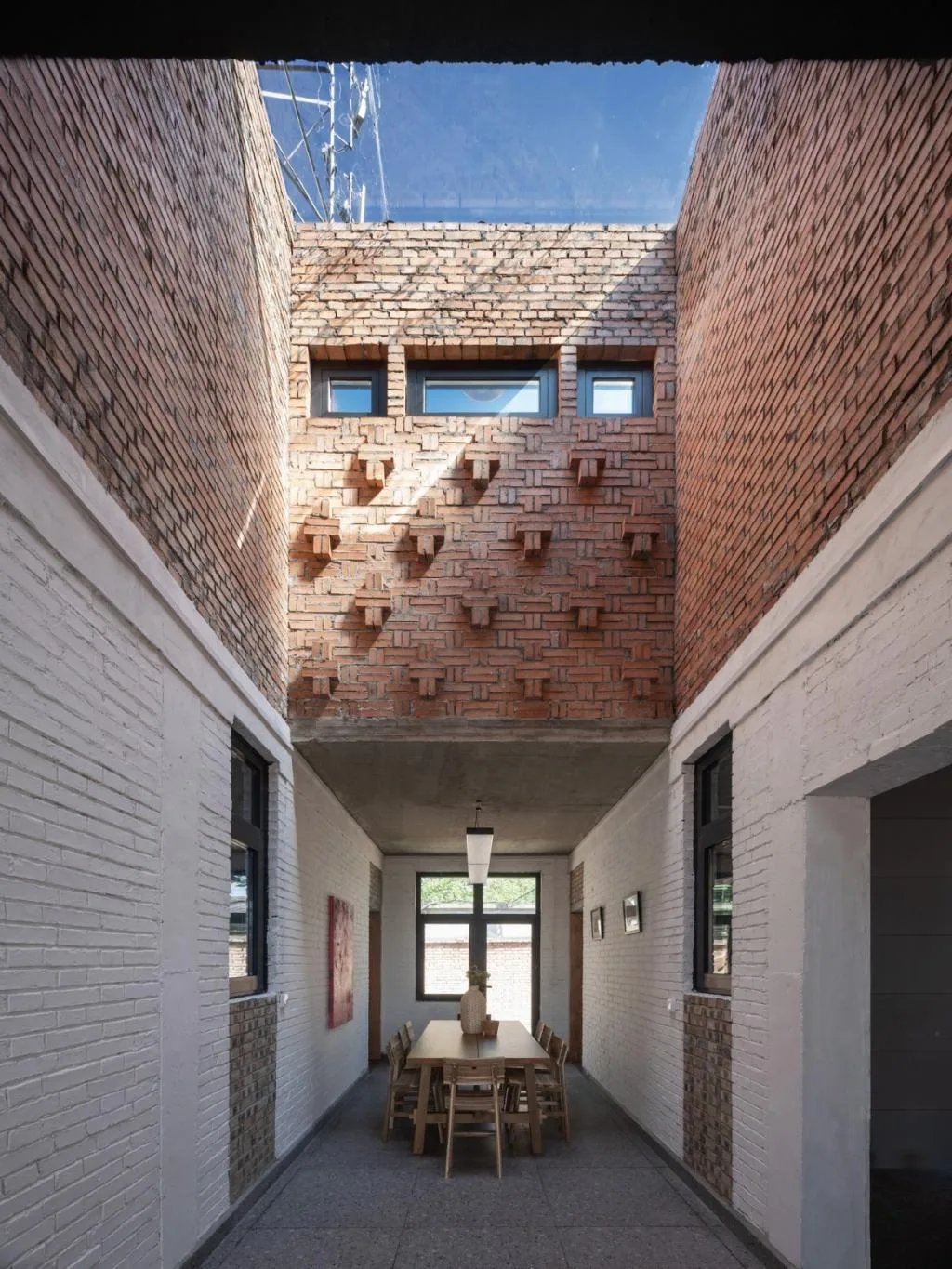
△ Cross-shaped masonry technique for brick walls © Zhang Xiaoming
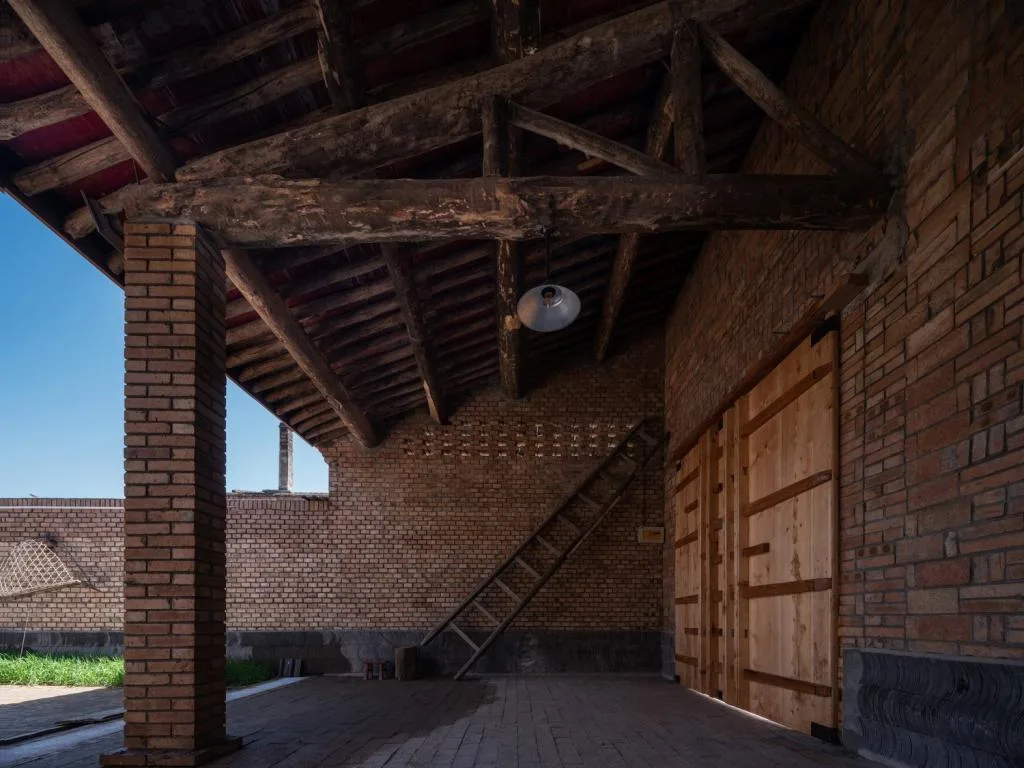
△ Wooden frame © Zhang Xiaoming
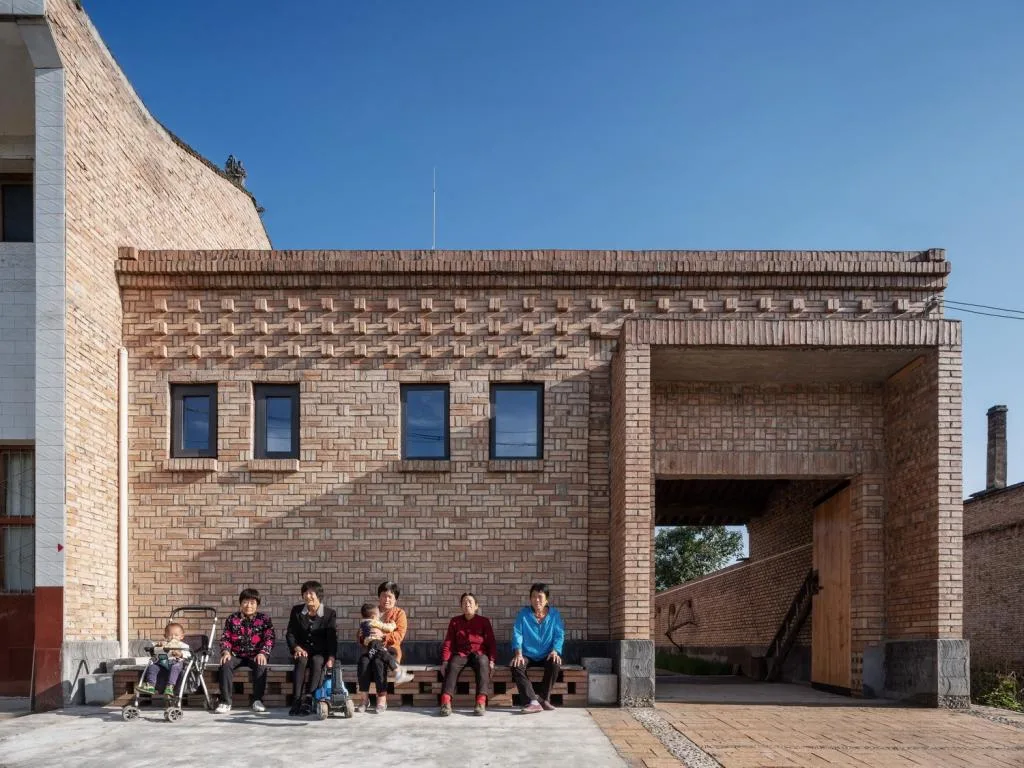
△ Leisure and communication space at the portal © Zhang Xiaoming
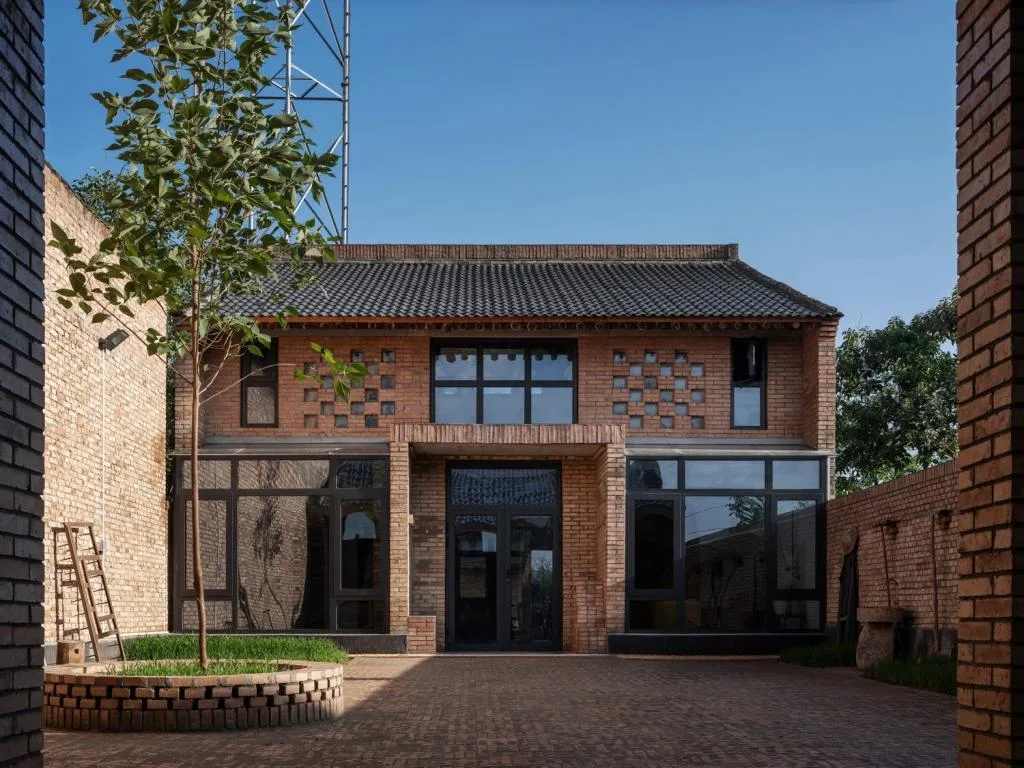
△ Internal courtyard space © Zhang Xiaoming
For local architecture to flourish, it must preserve its distinct identity and regional recognition, fostering diversity across areas. The Red Brick Houses in Ezi Village were constructed using a manual and semi-mechanized “rural infrastructure team” method, led by skilled craftsmen. The total project cost, excluding furniture and sanitary equipment, was approximately 312,000 yuan, averaging about 1,296.8 yuan per square meter.
This project rejects outdated trends and rural urbanization pressures, avoids excessive resource consumption, and emphasizes a construction approach that integrates cultural heritage with green principles. It pursues practical design goals, establishes a locally appropriate residential building system, and provides a valuable reference for new construction, renovation, and expansion of similar rural residences.
Project Drawings
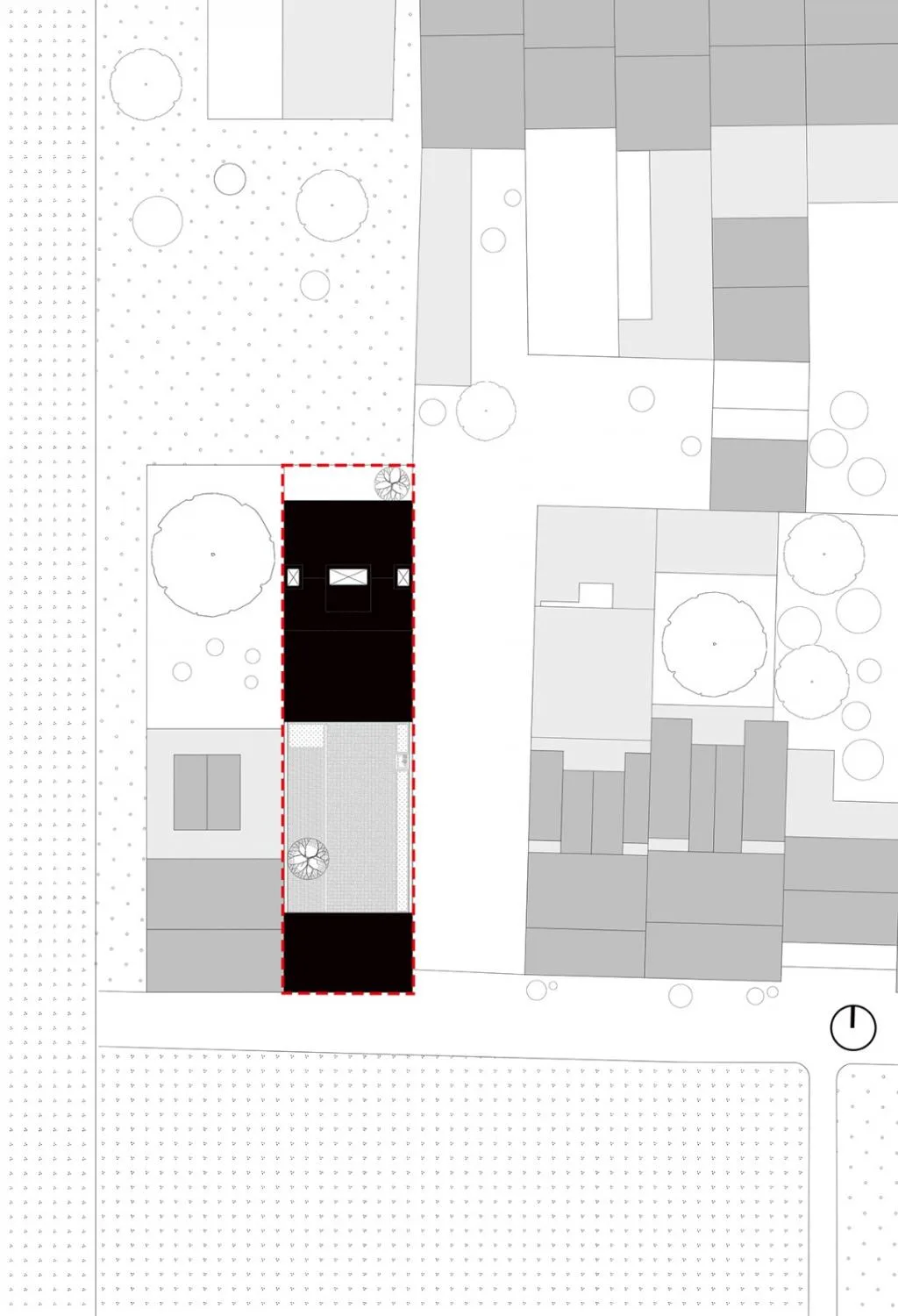
△ General layout plan
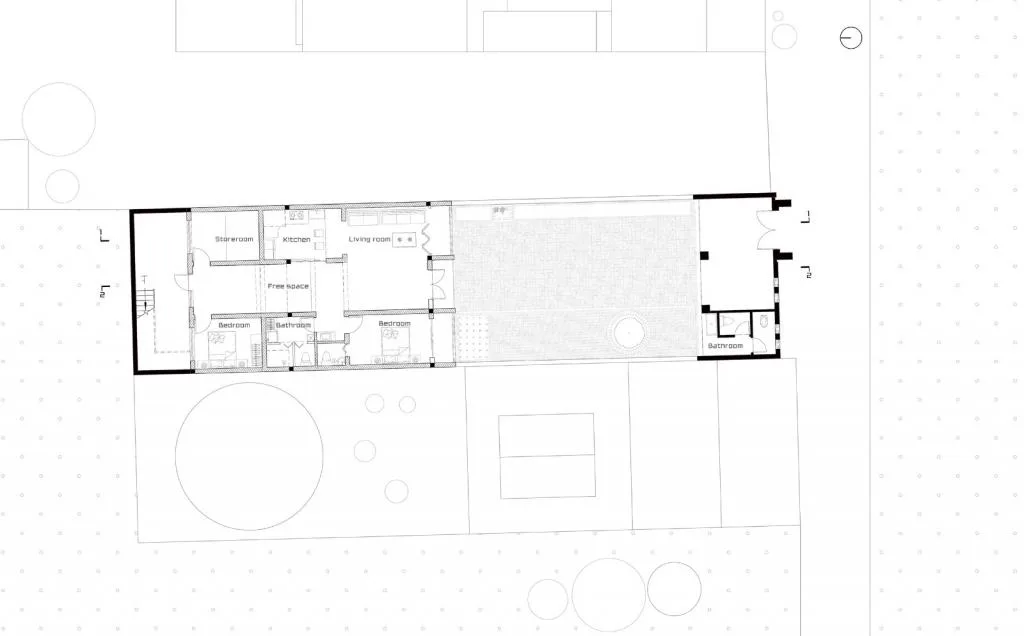
△ First floor plan
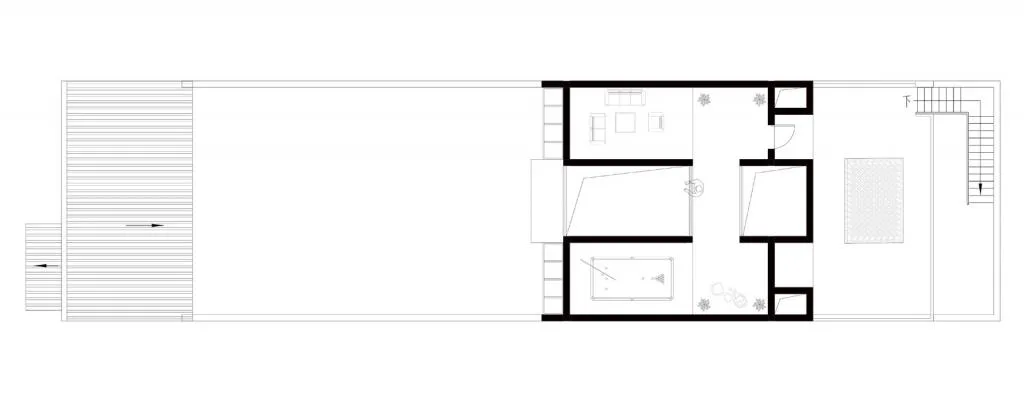
△ Second floor plan
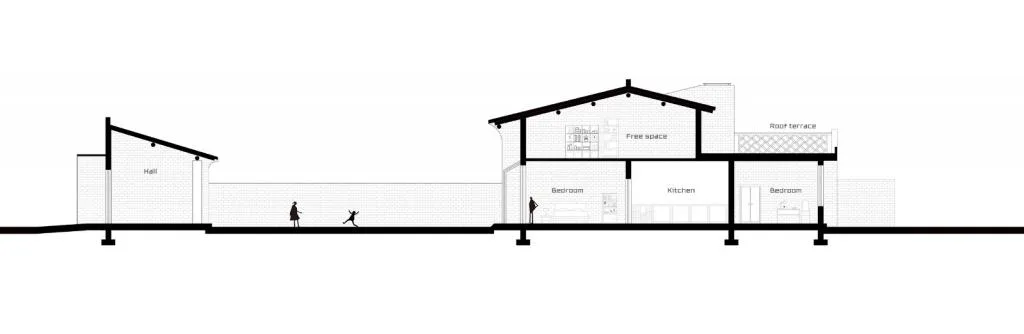
△ Section diagram
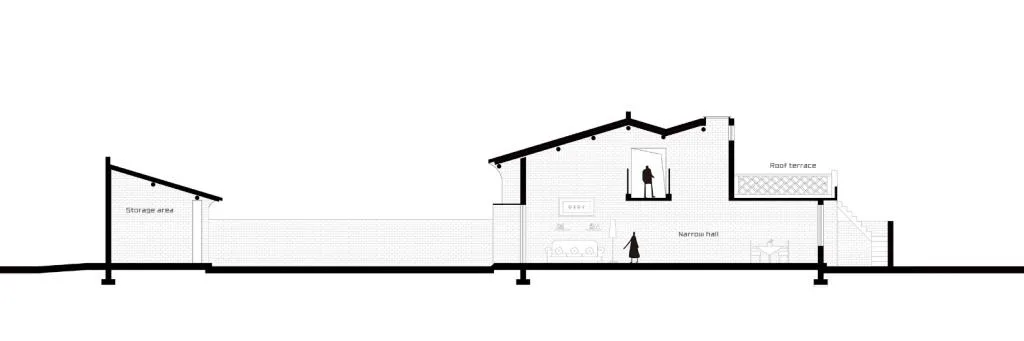
△ Section diagram
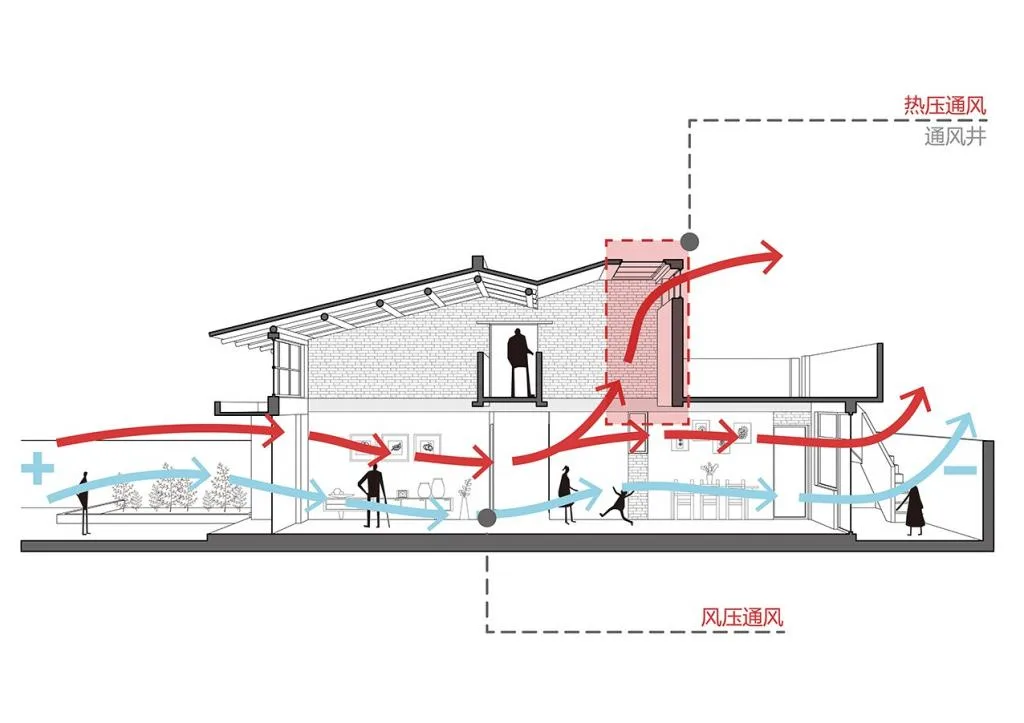
△ Ventilation schematic diagram
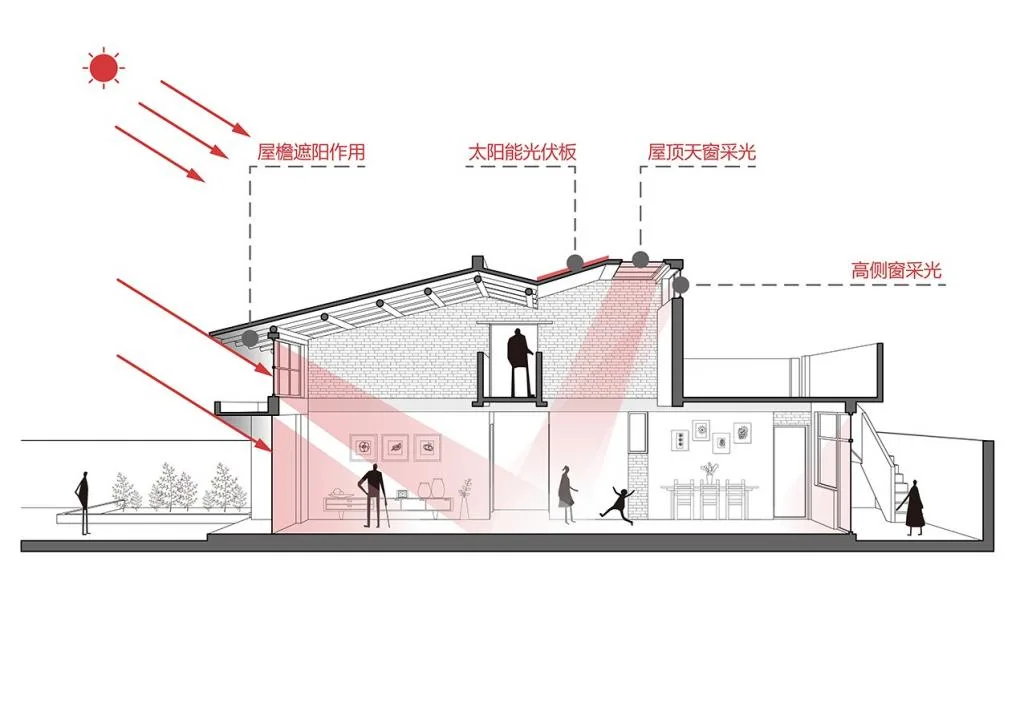
△ Lighting schematic diagram
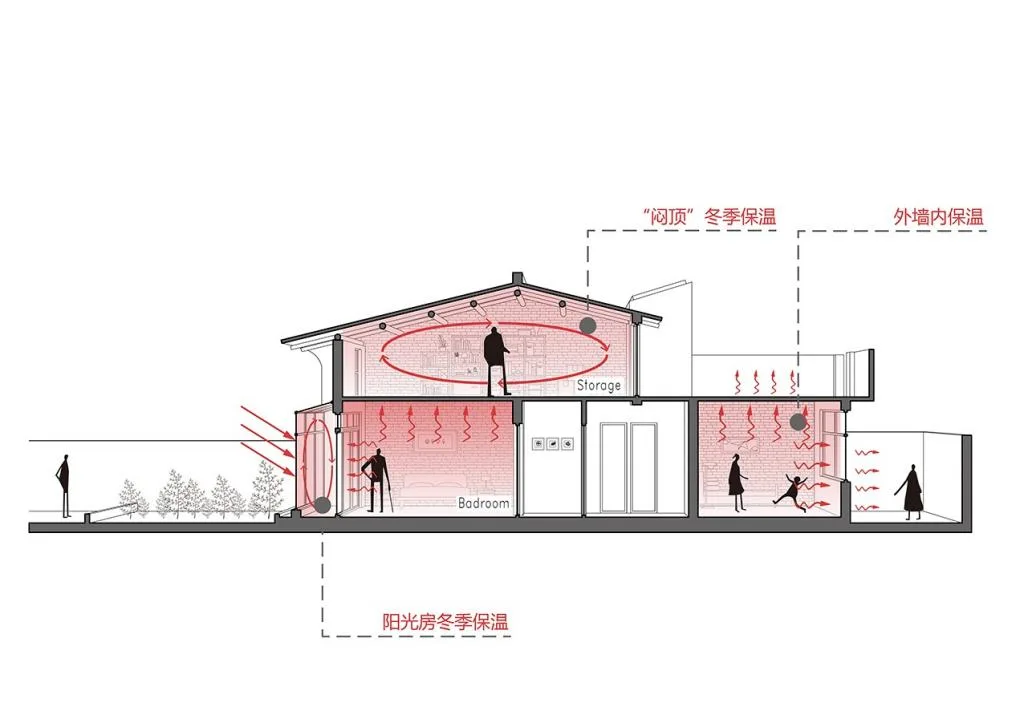
△ Winter insulation schematic
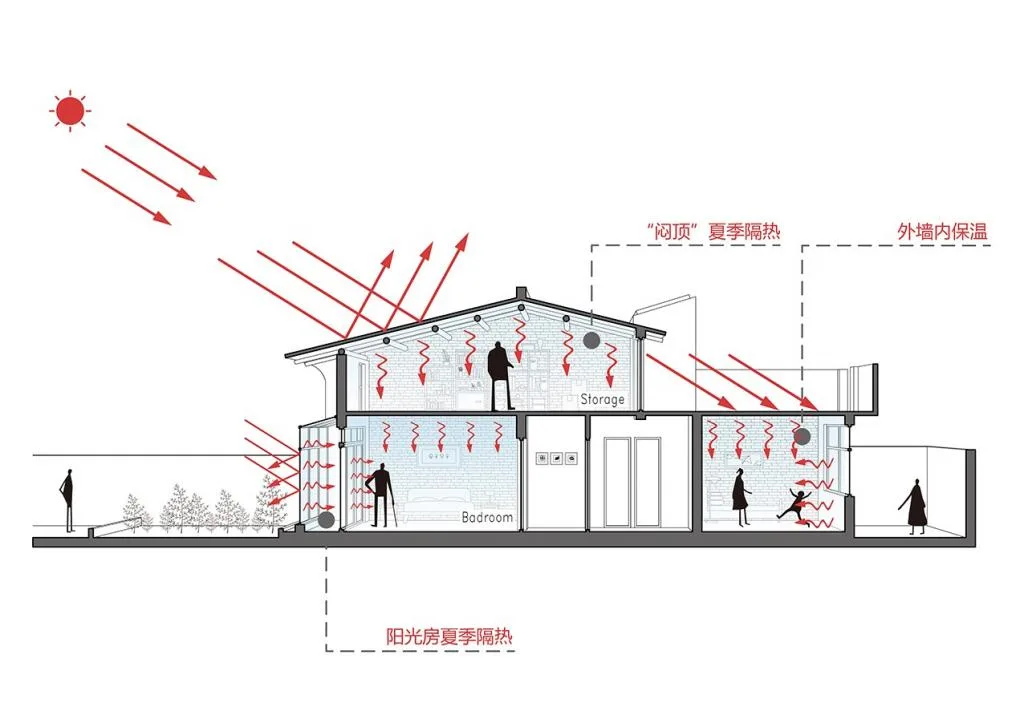
△ Summer insulation schematic
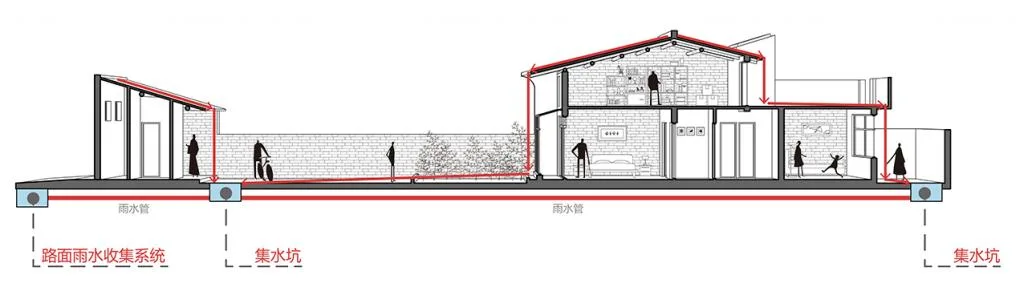
△ Rainwater drainage pipeline diagram
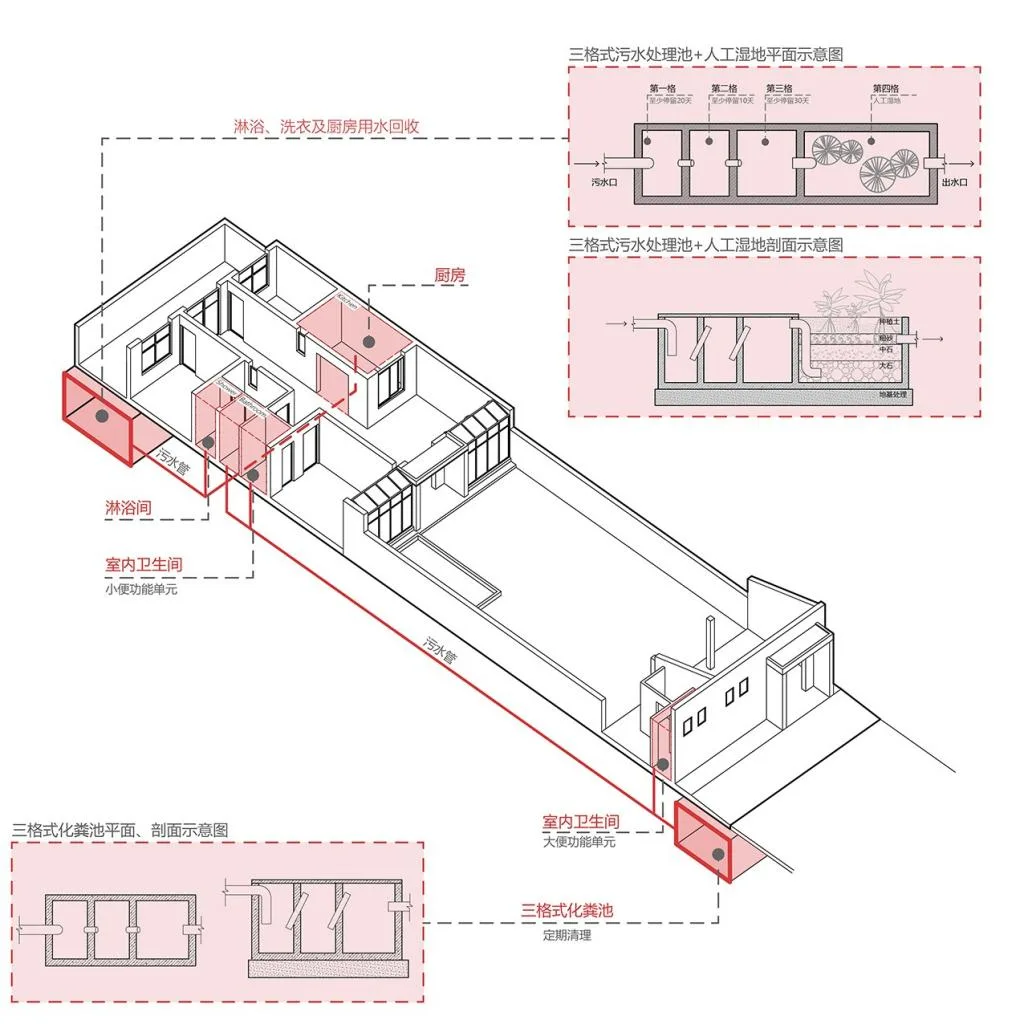
△ Sewage treatment pipeline diagram
Project Information
Project Name: Regeneration of Guanzhong Brick and Tile House: Xianyang Ezi Village Red Brick House
Designer: Xi’an University of Architecture and Technology Design and Research Institute
Design & Completion Year: February – April 2021 & July 2021
Main Creative and Design Team: Gao Bo, Li Zhimin, Jia Ku, Wang Xiaojing, Shang Luxuan, Xu Yi, Meng Qingmin, Xu Fangyuan, Zheng Yifan, Yang Zan, Yang Runpeng, Bi Xinya, He Sijing, Zhai Xin, Yang Mengjiao, Shi Chufan, Wang Yumeng, Xu Jinghua, Wang Xiaojie, Wang Zilun
Project Location: Ezi Village, Xianyang, Shaanxi Province
Building Area: 240.6 square meters
Photography Credit: Zhang Xiaoming
Brands: IKEA, Longyan Energy Technology (Hangzhou) Co., Ltd., Shaanxi Xiwang Aluminum Industry Co., Ltd.














Must log in before commenting!
Sign Up