
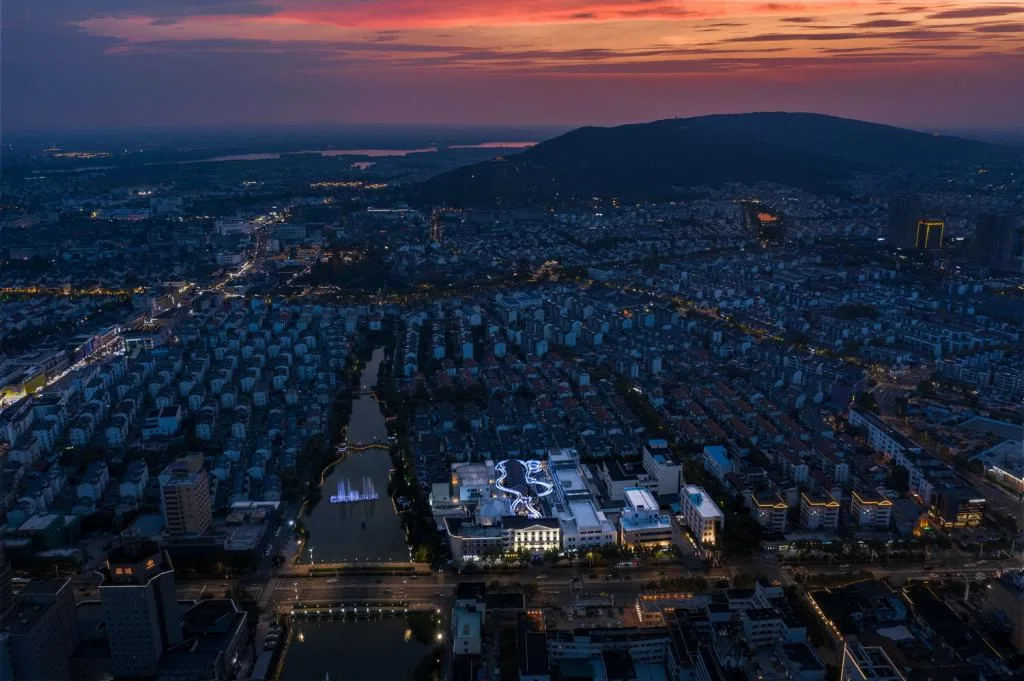
△ City bird’s-eye view © Wu Qingshan
Changshu, a key hub in China’s light textile industry, has seen light industrial factories, especially textile production facilities, define much of its urban development. Founded in 1979, the Changshu Embroidery Factory moved to No. 77 Haiyu South Road in 1989, marking a prosperous chapter in the city center. However, as China’s society rapidly evolved, production gradually gave way to consumption. This shift, along with sweeping changes in industry and urban landscapes over recent decades, has transformed the functions of many city buildings.
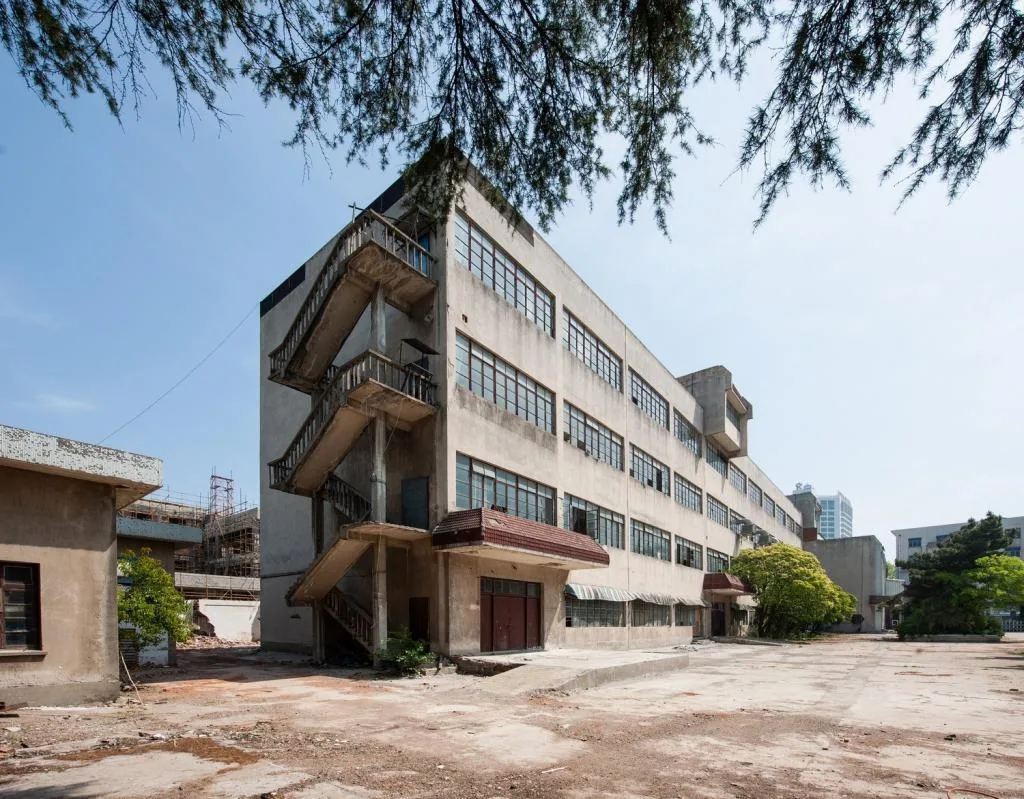
Before the renovation
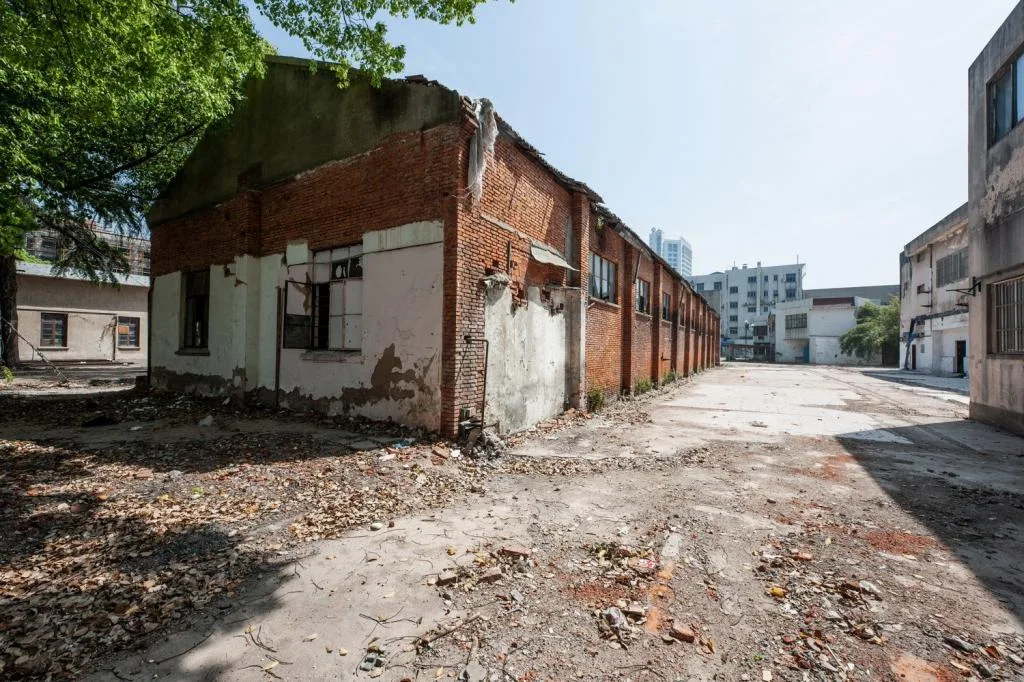
Before the renovation
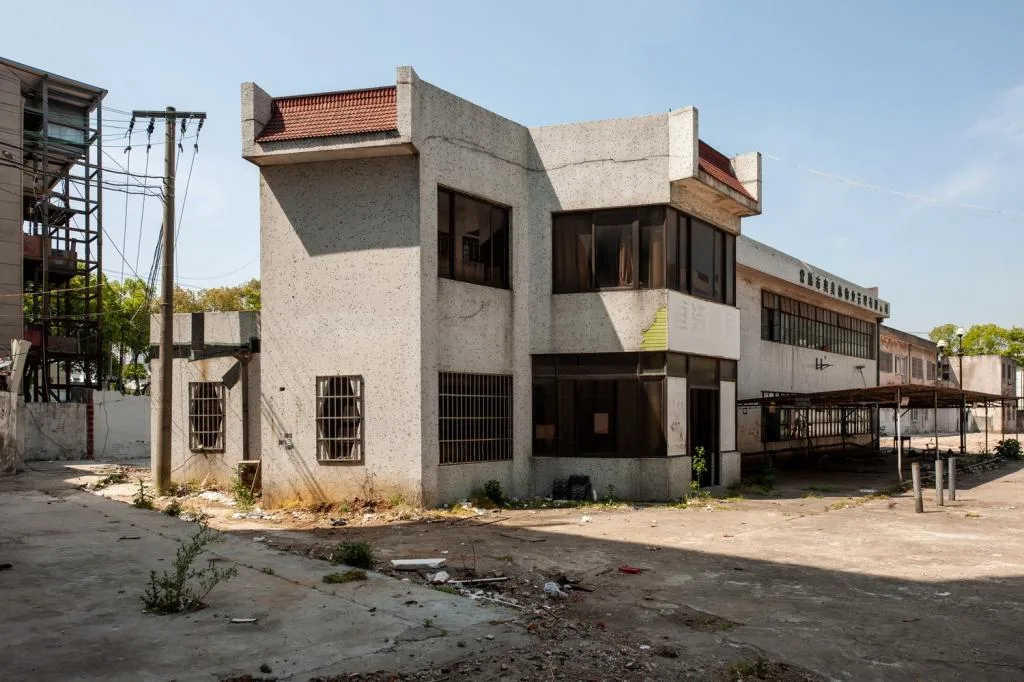
Before the renovation
Thanks to its prime location, the embroidery factory gradually transitioned from production to renting out factory spaces, keeping the buildings in active use. However, years of heavy use led to structural damage and outdated infrastructure, turning the complex into a neglected space amid the bustling city center. To restore its vitality and value, Changshu Jiangnan Group initiated renovation and refurbishment efforts in 2019, building on the existing foundation.
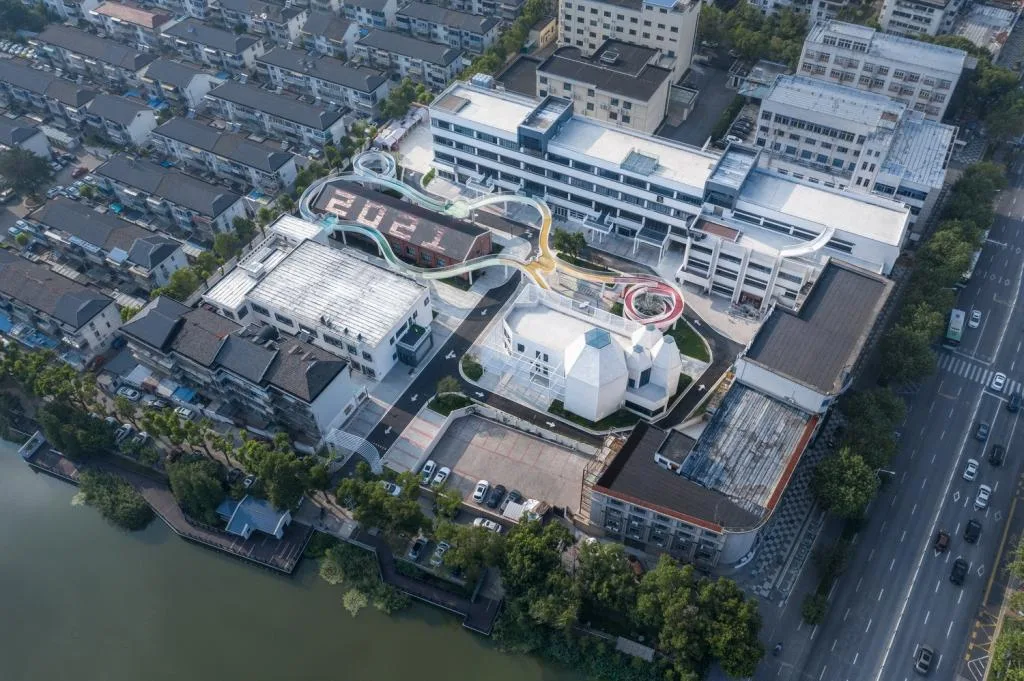
Overall bird’s-eye view © Wu Qingshan
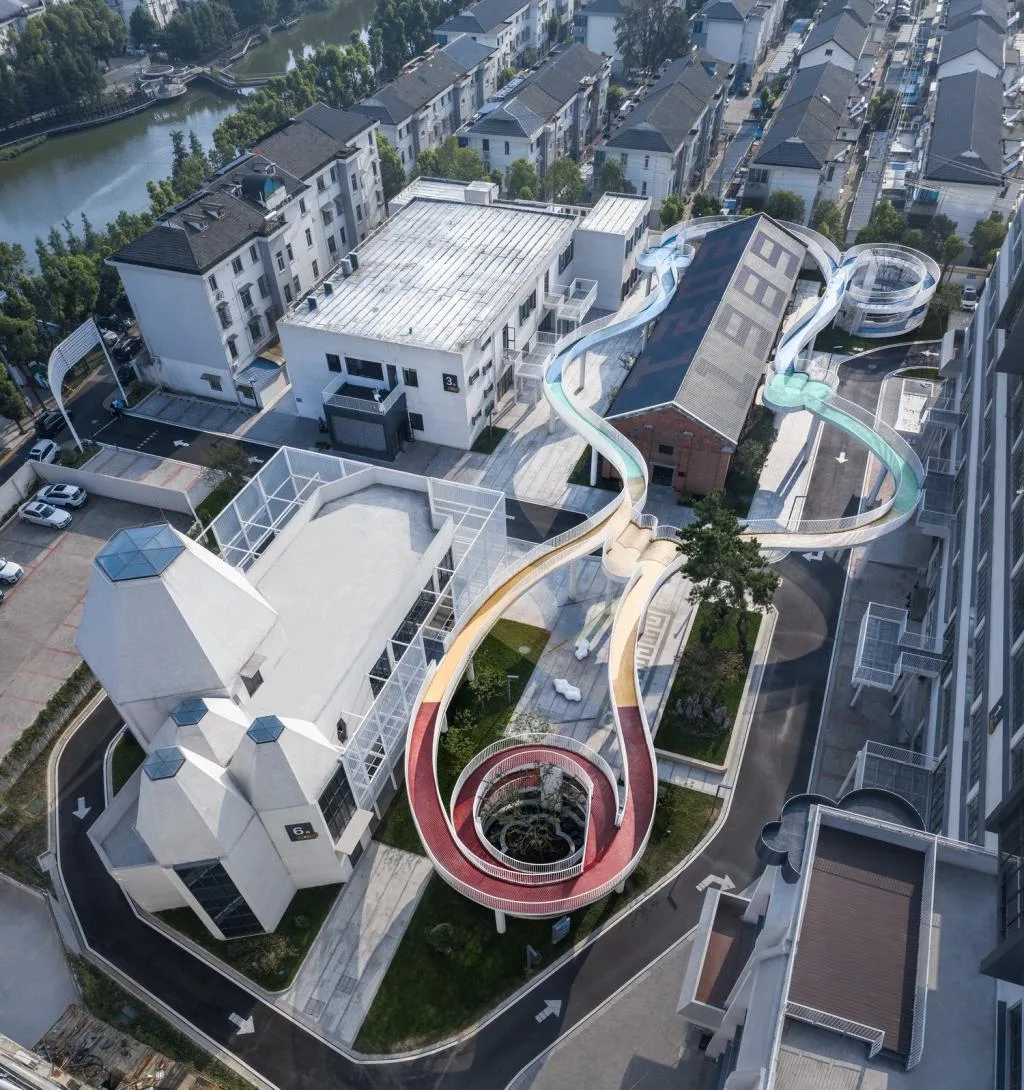
Overall bird’s-eye view © Wu Qingshan
The project includes four multi-story buildings spanning 10,000 square meters, with a total construction area of 9,726 square meters. Following a thorough on-site investigation and analysis, the design team, honoring both history and present conditions, chose to demolish and rebuild only one severely damaged brick raw material storage room. The remaining production workshops, office buildings, and dining halls were locally reinforced, preserving their original foundations.
The renovation’s key challenge was integrating new functional uses into these old buildings to create vibrant, dynamic spaces. For architecture in a city’s core, this means not only preserving urban memory but also adapting to contemporary development needs. The renovation embraces innovation, ensuring sustainable, organic transformation that respects the past without overshadowing it. Instead, this approach highlights the historical timeline, creating a visible narrative that meets modern urban functions while leaving a lasting impression.
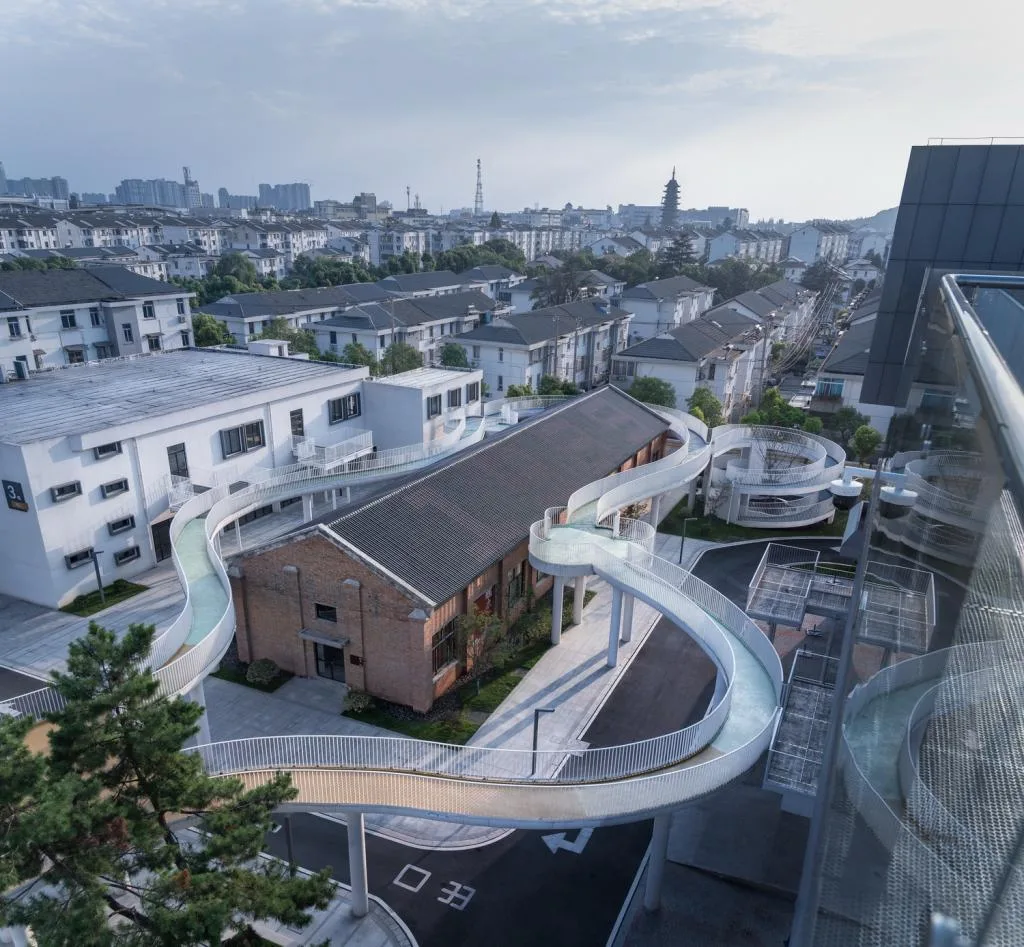
△ Aerial view of buildings © Wu Qingshan
By analyzing the relationships and future functions of the existing buildings, the design aimed to create an organic ecosystem among these diverse structures. The sensory experience between buildings and their surroundings shifts from a singular impression to a layered perception enriched by memory. Achieving this transformation requires strong innovative interventions on site—elements that both preserve the place’s history and introduce fresh energy. This duality creates a resonant dialogue with contemporary life, layering the project’s timeline to extend its cultural depth.
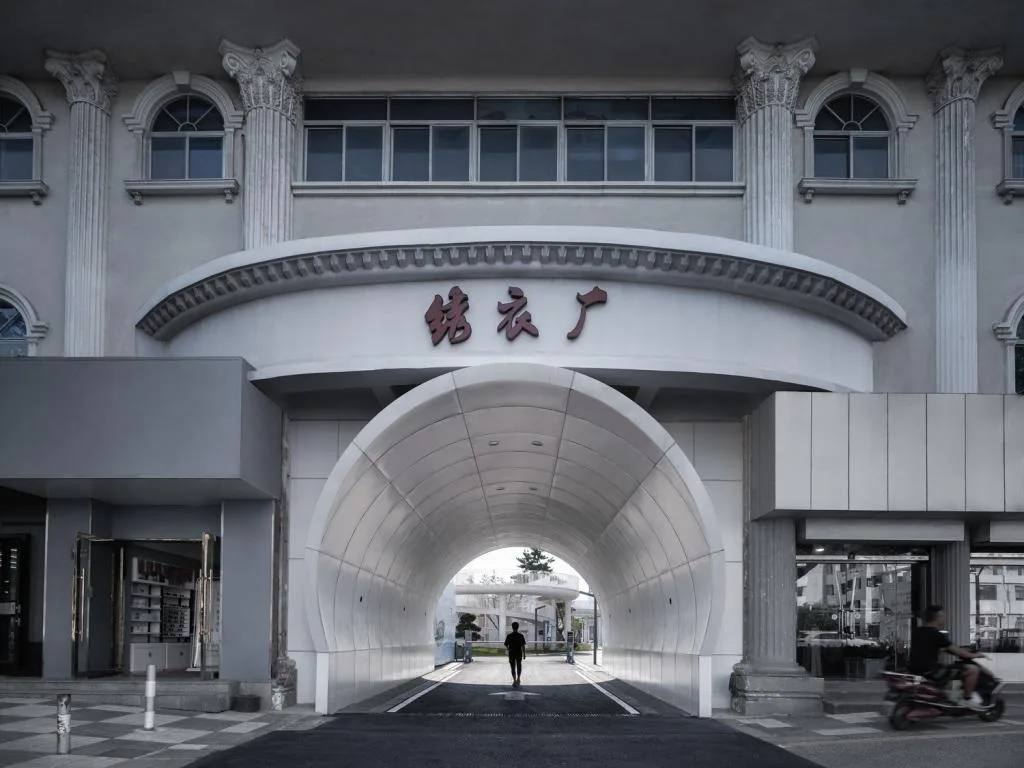
△ City entrance © Wu Qingshan
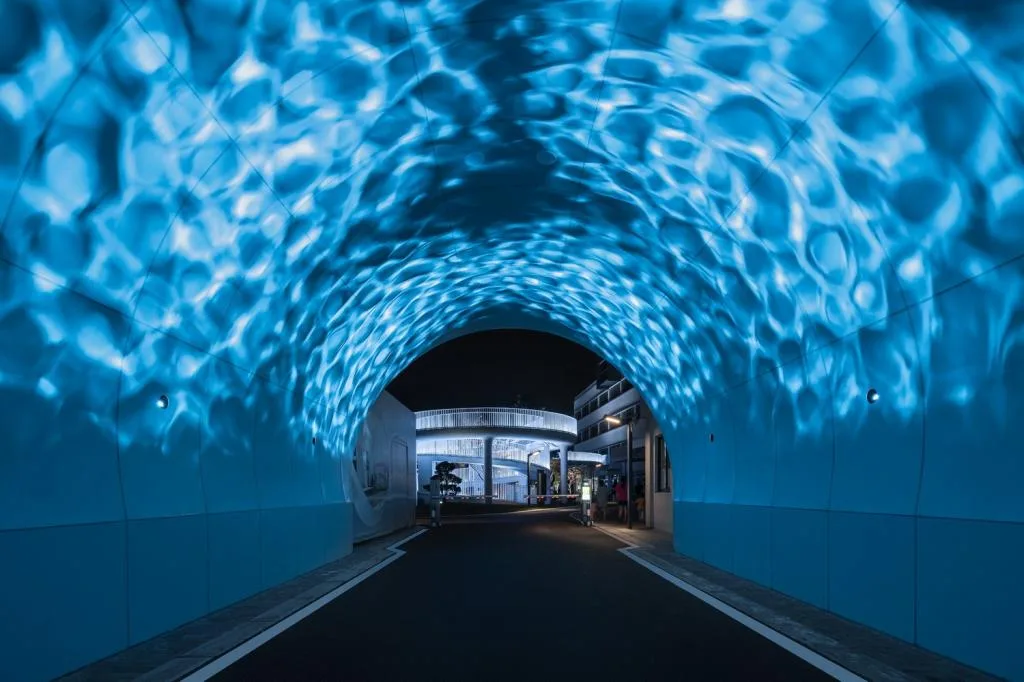
The Passage of Night © Wu Qingshan
In traditional Chinese landscape painting, clouds represent an abstract, free-flowing element. They divide steep mountains and peaks, conceal pavilions and towers, and invite the viewer’s imagination—offering an early form of spiritual interaction. Inspired by this, the project uses “clouds” as a design motif to craft a unique walking experience, blending graceful freedom with architectural interaction. This element bridges the architectural differences, transforming isolated structures into dynamic, expressive features on the site.
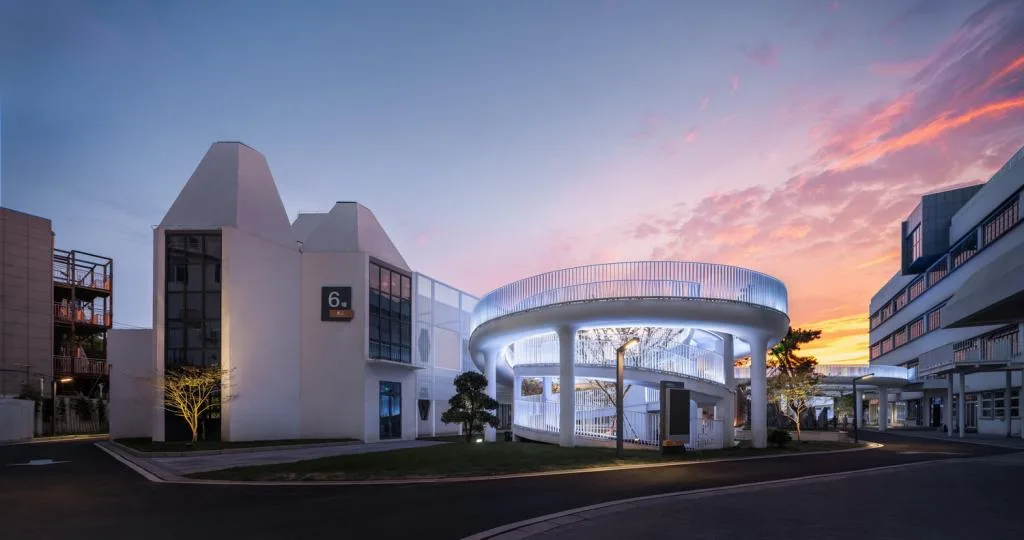
△ Coexistence of old and new © Wu Qingshan
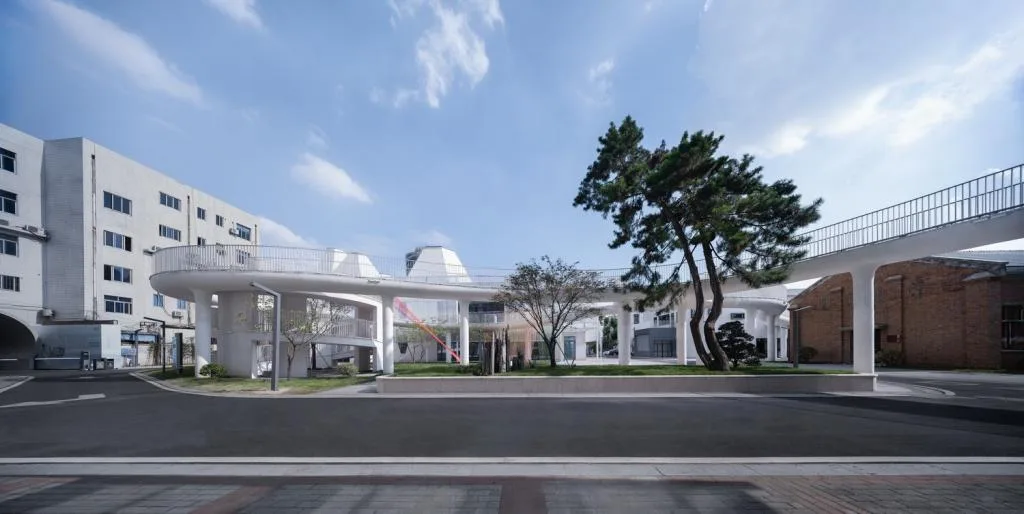
△ Cloud Corridor Ferry © Wu Qingshan
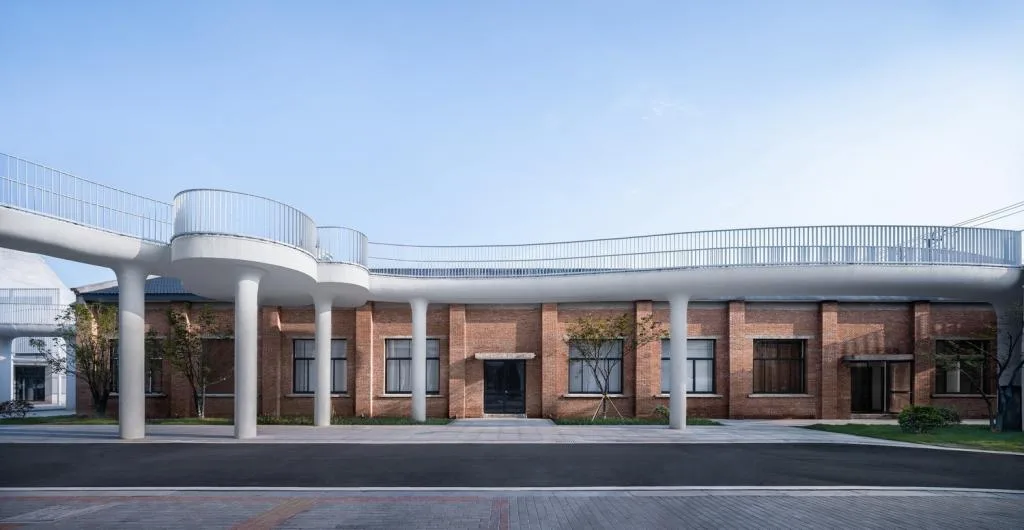
△ Red brick wall and corridor bridge © Wu Qingshan
The architectural “new” here poetically reorganizes the “old.” A floating, dynamic cloud corridor was inserted into the originally rigid and solemn buildings. This corridor bridges the structures, fills the gaps, and elevates visitors above the ground, inviting a poetic journey through time and space. What was once straightforward and dull now transforms, redefining spatial contours and dimensions. The cloud corridor gently shapes new forms on site, encouraging visitors to wander along its winding, undulating path.
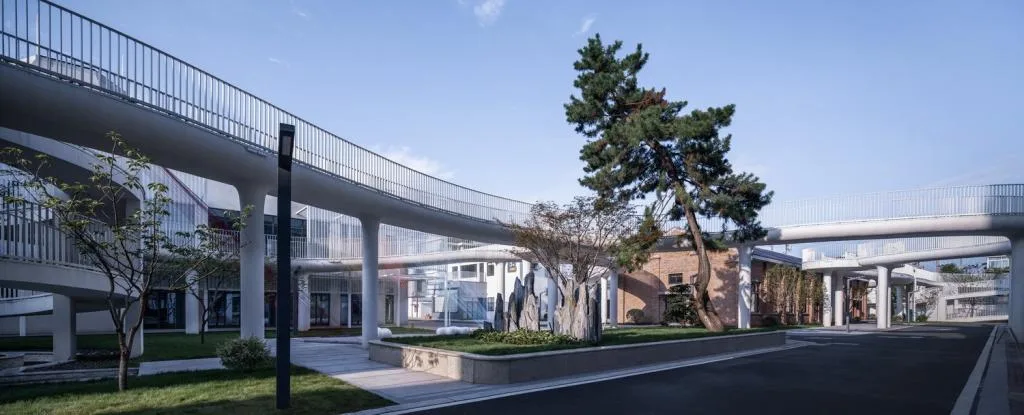
△ Cloud Corridor and Tree Shadows © Wu Qingshan
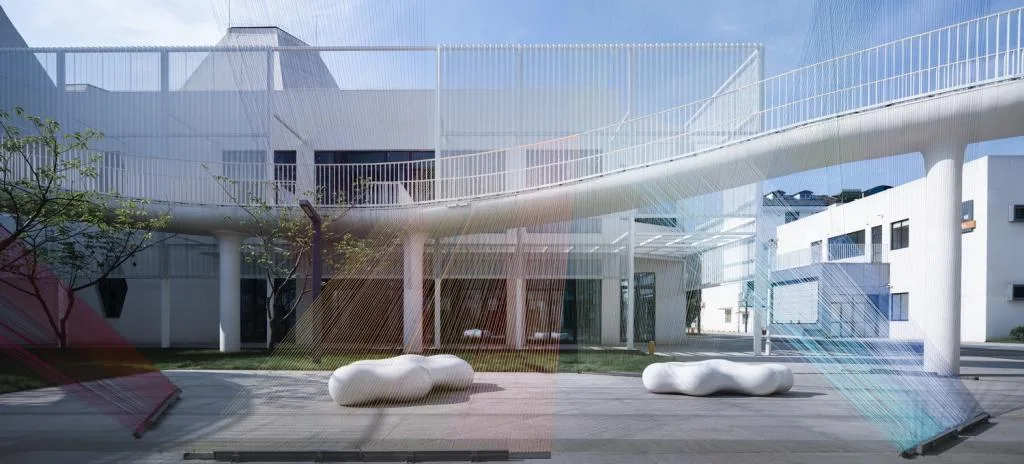
△ Rainbow between Clouds © Wu Qingshan
The renovation of existing buildings in China has evolved from widespread demolition and reconstruction to preservation and sensitive updating. Different methods suit different projects, but innovation-driven renovation is among the most effective for revitalizing buildings and aligning them with contemporary needs. The Jiangnan Embroidery Clothing Factory exemplifies this innovative approach. A building’s true value lies in its use, and through diverse users’ interactions, it can remain relevant, coexist with society, and serve as a living record of progress.
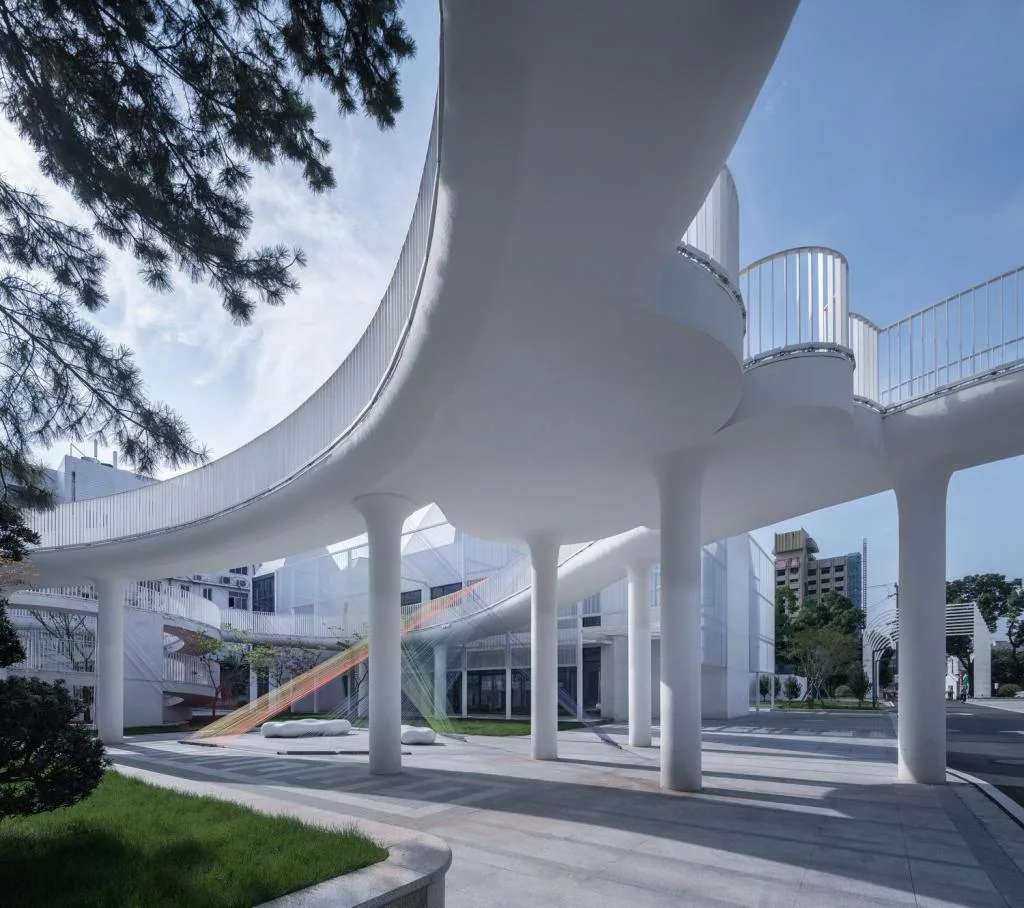
The scenery under the clouds © Wu Qingshan
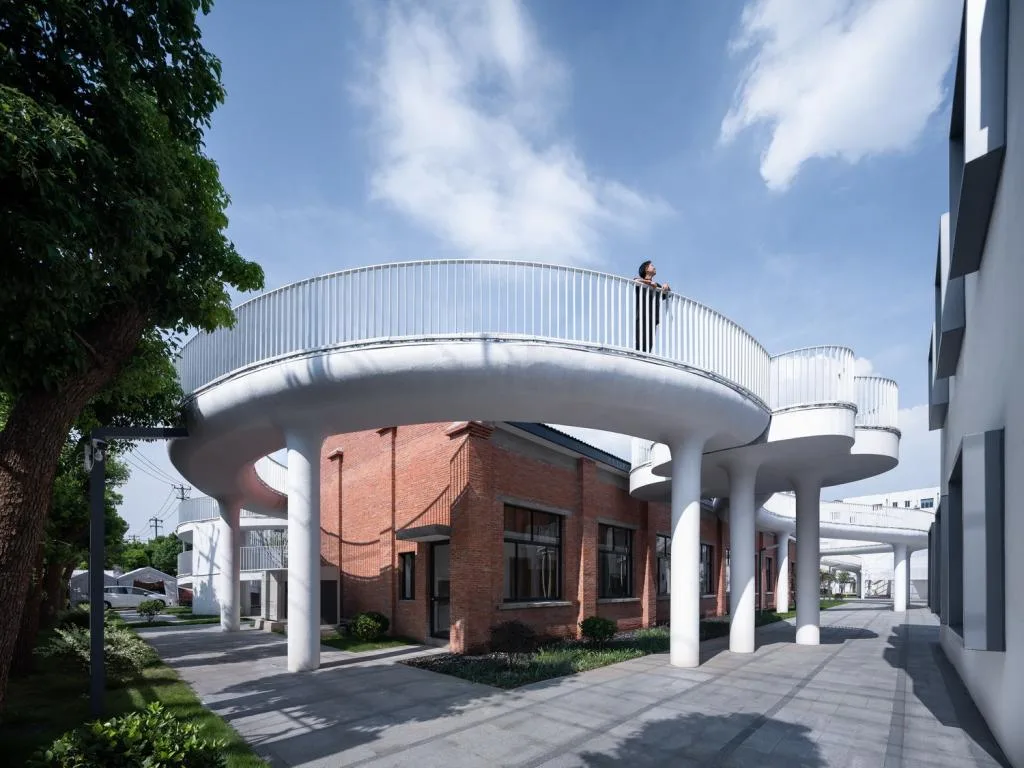
A cloud corridor surrounding old buildings © Wu Qingshan
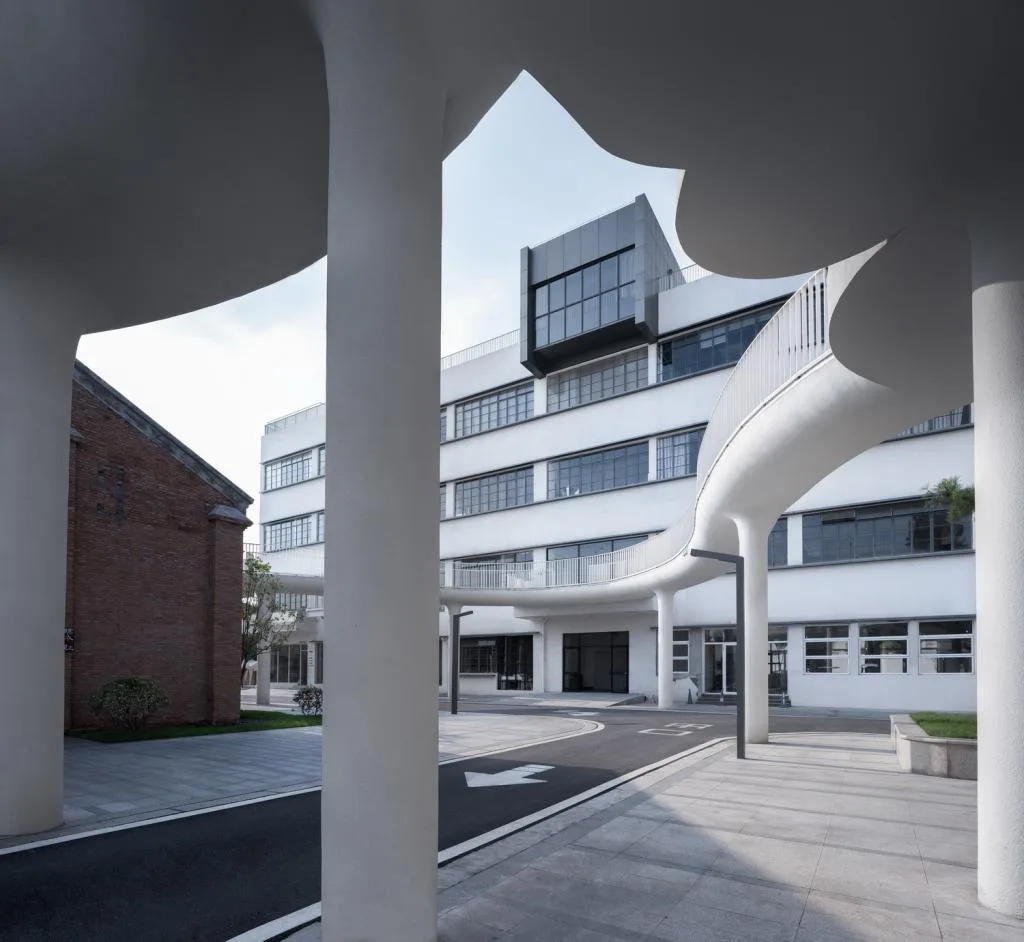
The poetic combination of old and new © Wu Qingshan
Looking again at the Jiangnan Embroidery Clothing Factory, it is no longer merely a former production site, nor just a cultural and creative park. It is a moment captured in time, bridging past and future. The preserved buildings and newly introduced cloud corridors remain a work in progress. Only when people stroll through these corridors, filling the space with laughter and joy, does the vision become complete. This echoes the lines from Bian Zhilin’s “Broken Chapters”:
You stand on the bridge and enjoy the scenery,
The person watching the scenery is upstairs watching you.
The bright moon decorates your window,
You decorate someone else’s dream.
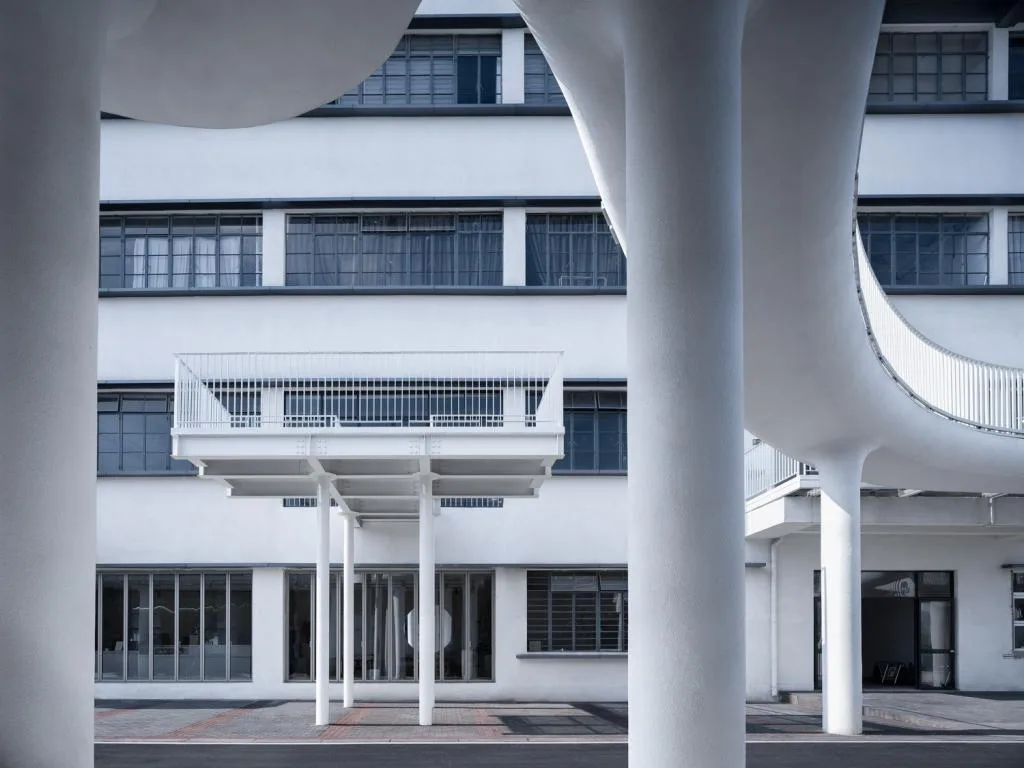
△ Connection and Refactoring © Wu Qingshan
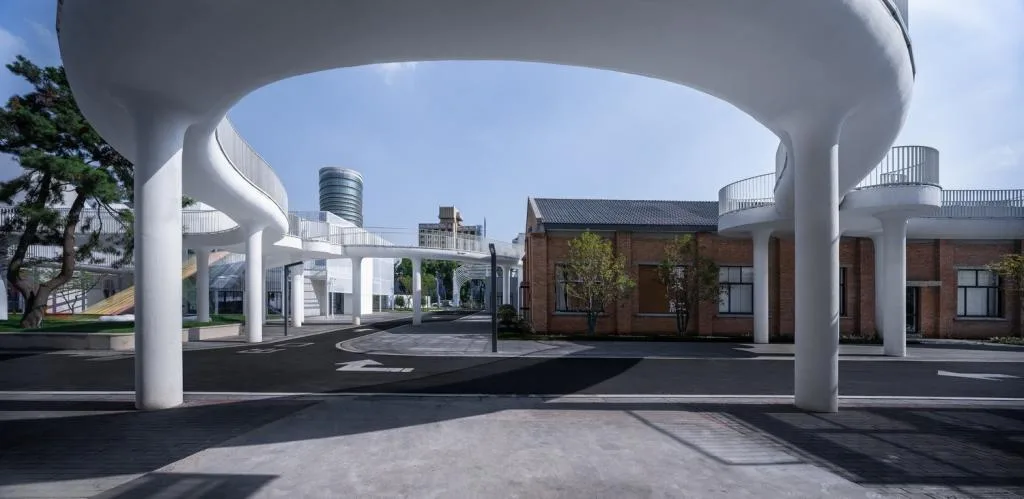
The cloud corridor outlines a new silhouette in the sky © Wu Qingshan
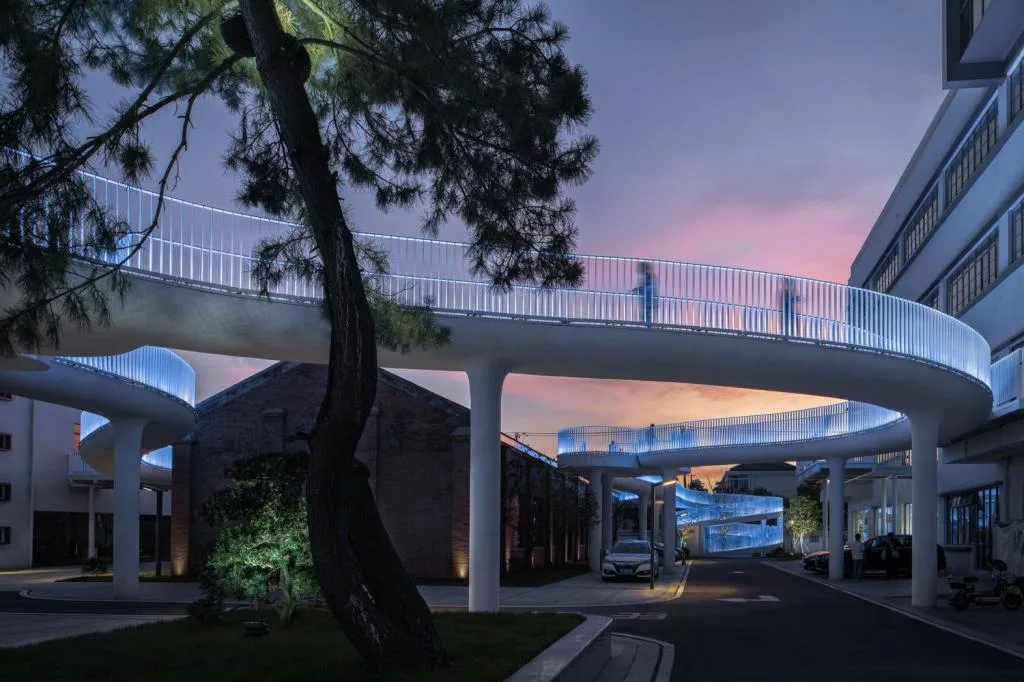
△ Clouds rise and rosy clouds shine © Wu Qingshan
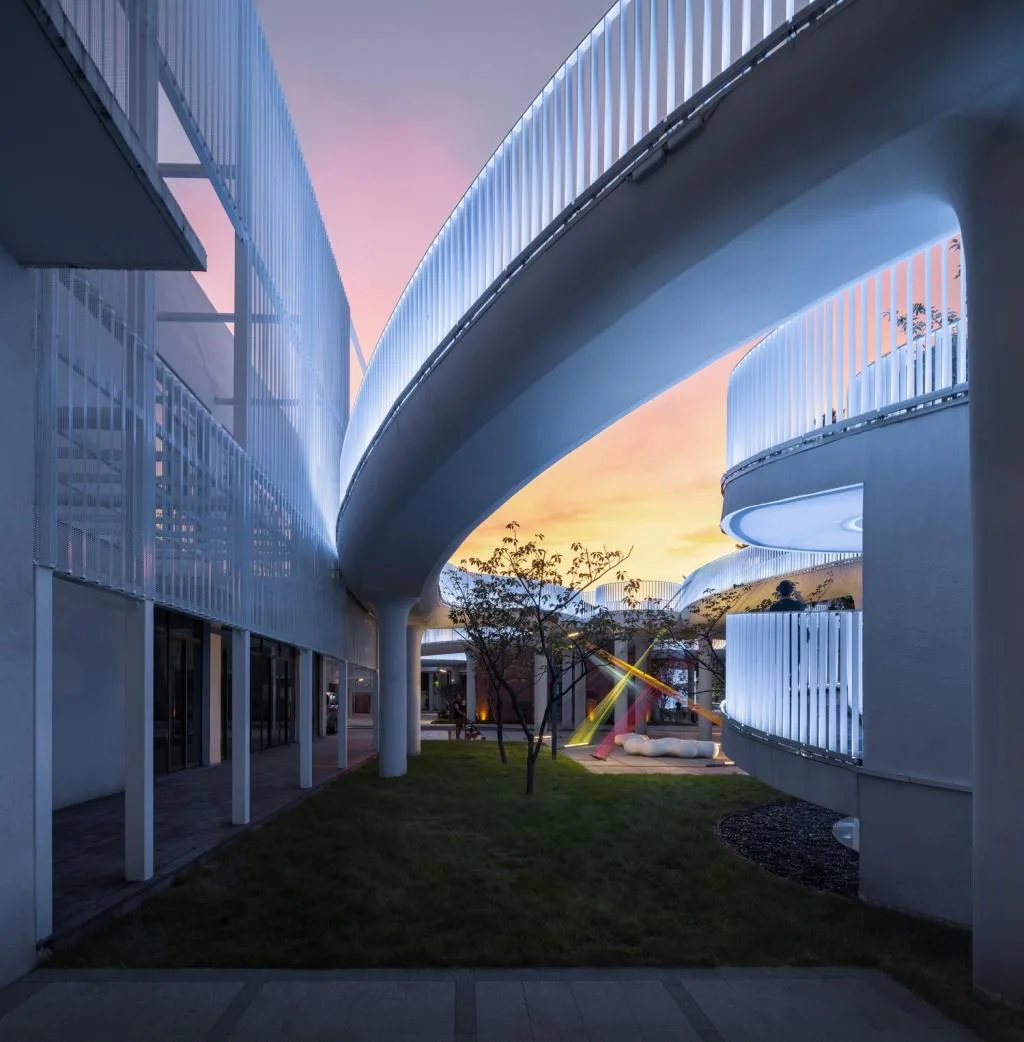
△ Clouds rise and rosy clouds shine © Wu Qingshan
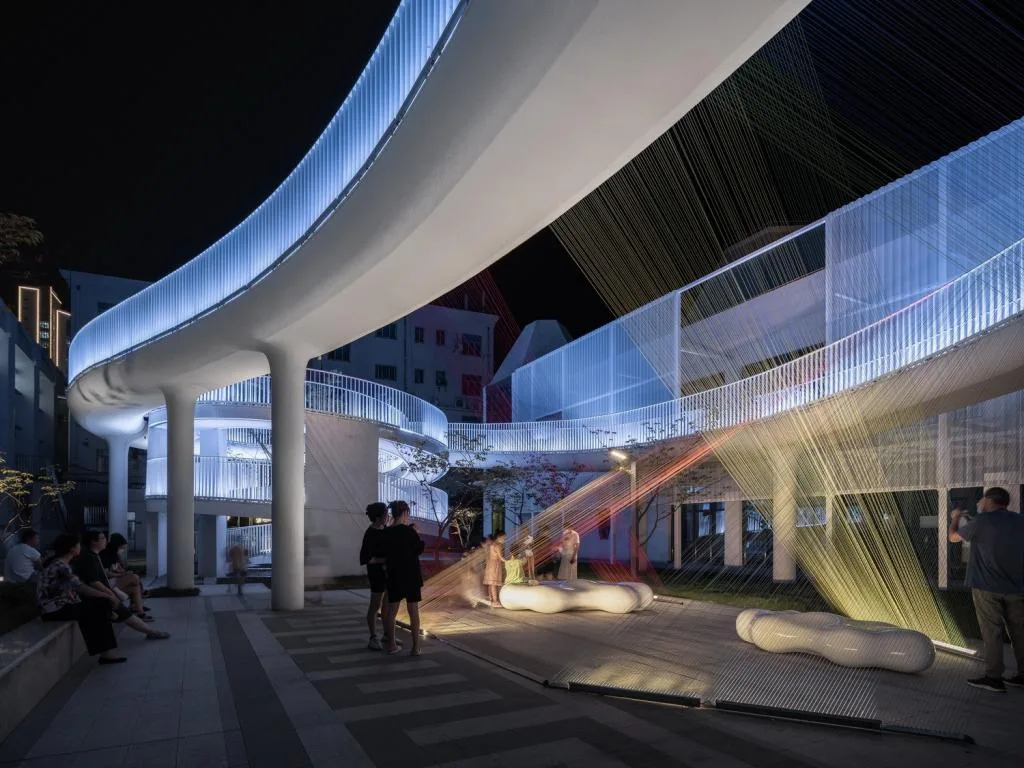
The cloud shadows under the night sky © Wu Qingshan
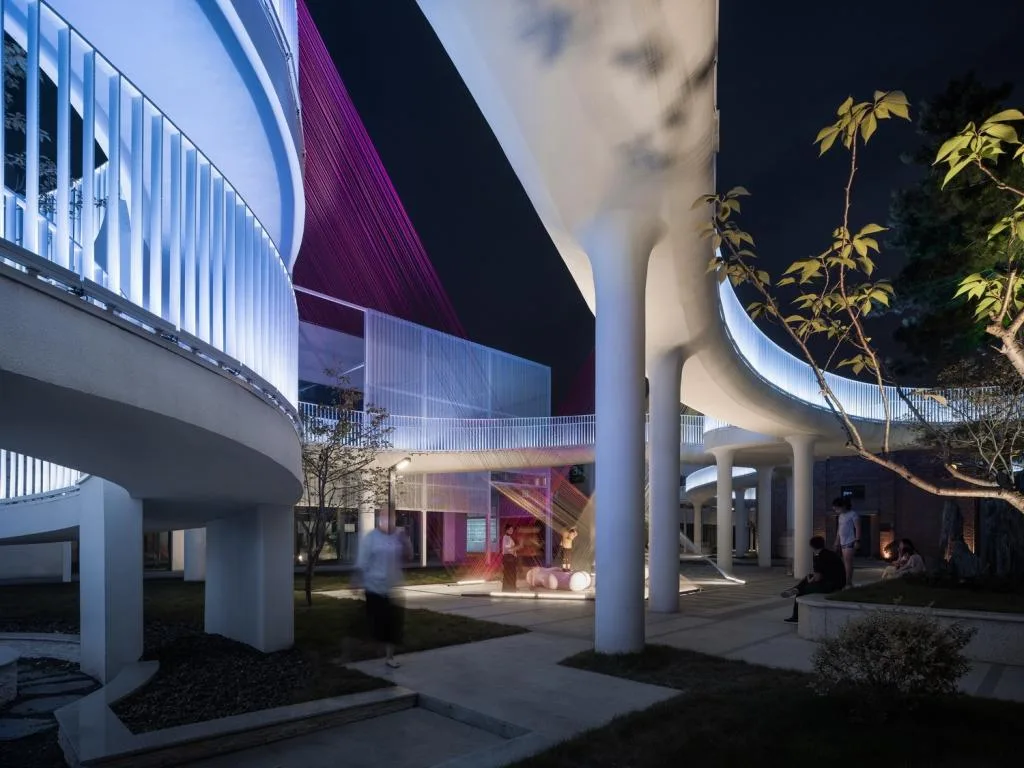
The cloud shadows under the night sky © Wu Qingshan
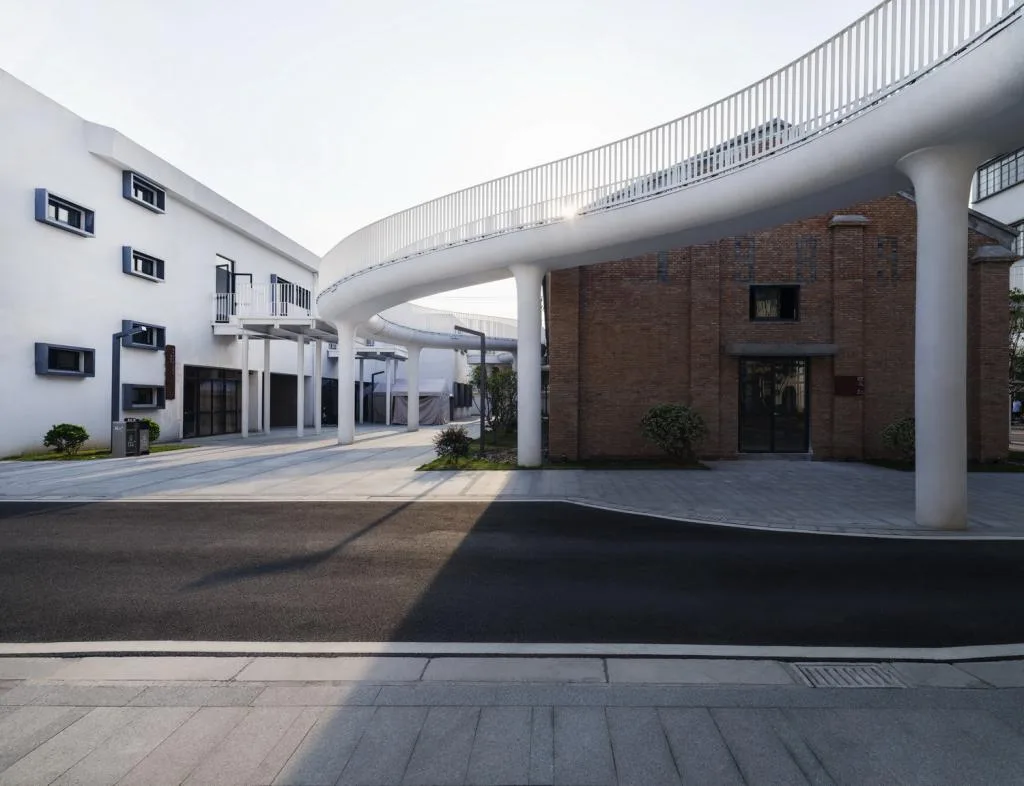
△ Crossing and Connection © Lu Zhigang
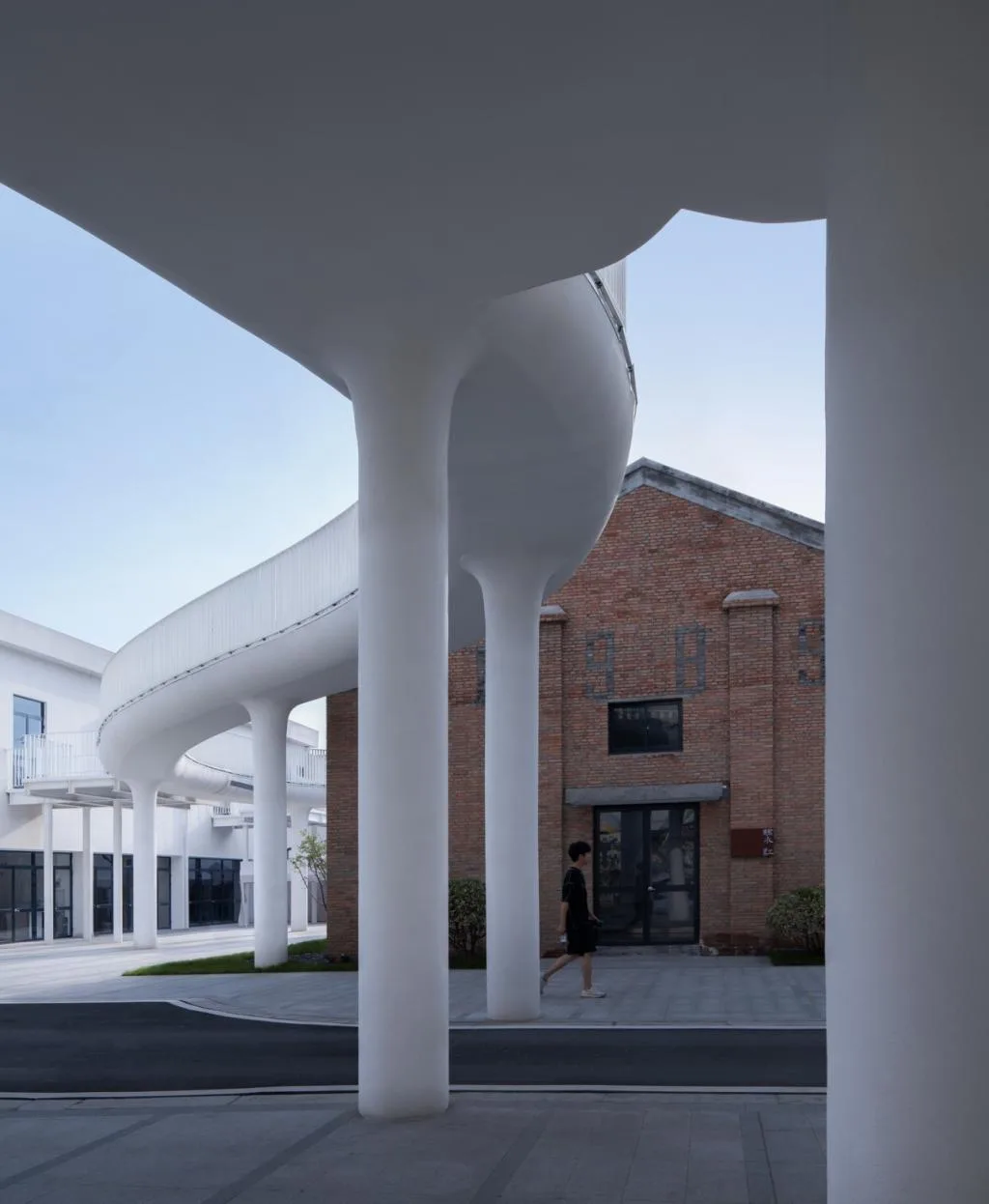
The New and Old Landscape © Wu Qingshan
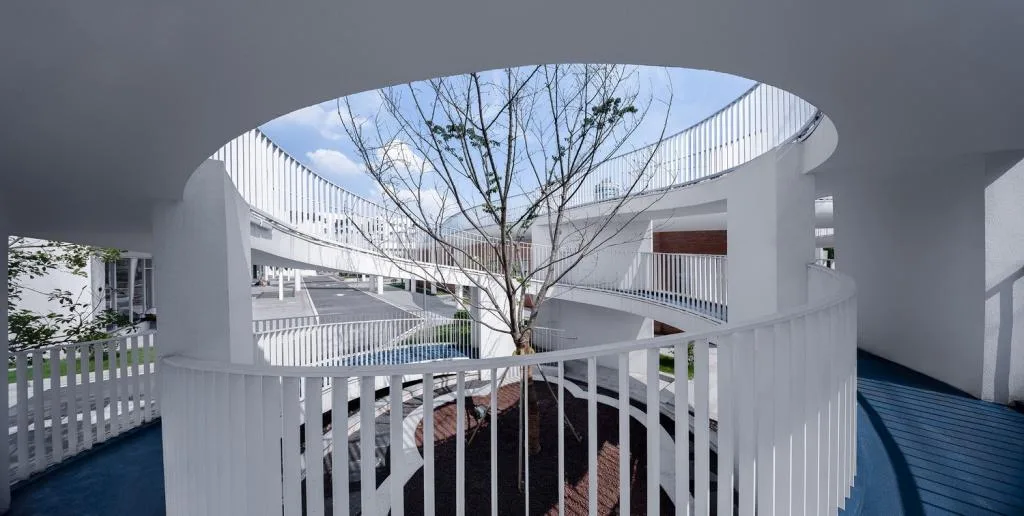
△ Ring corridor © Wu Qingshan
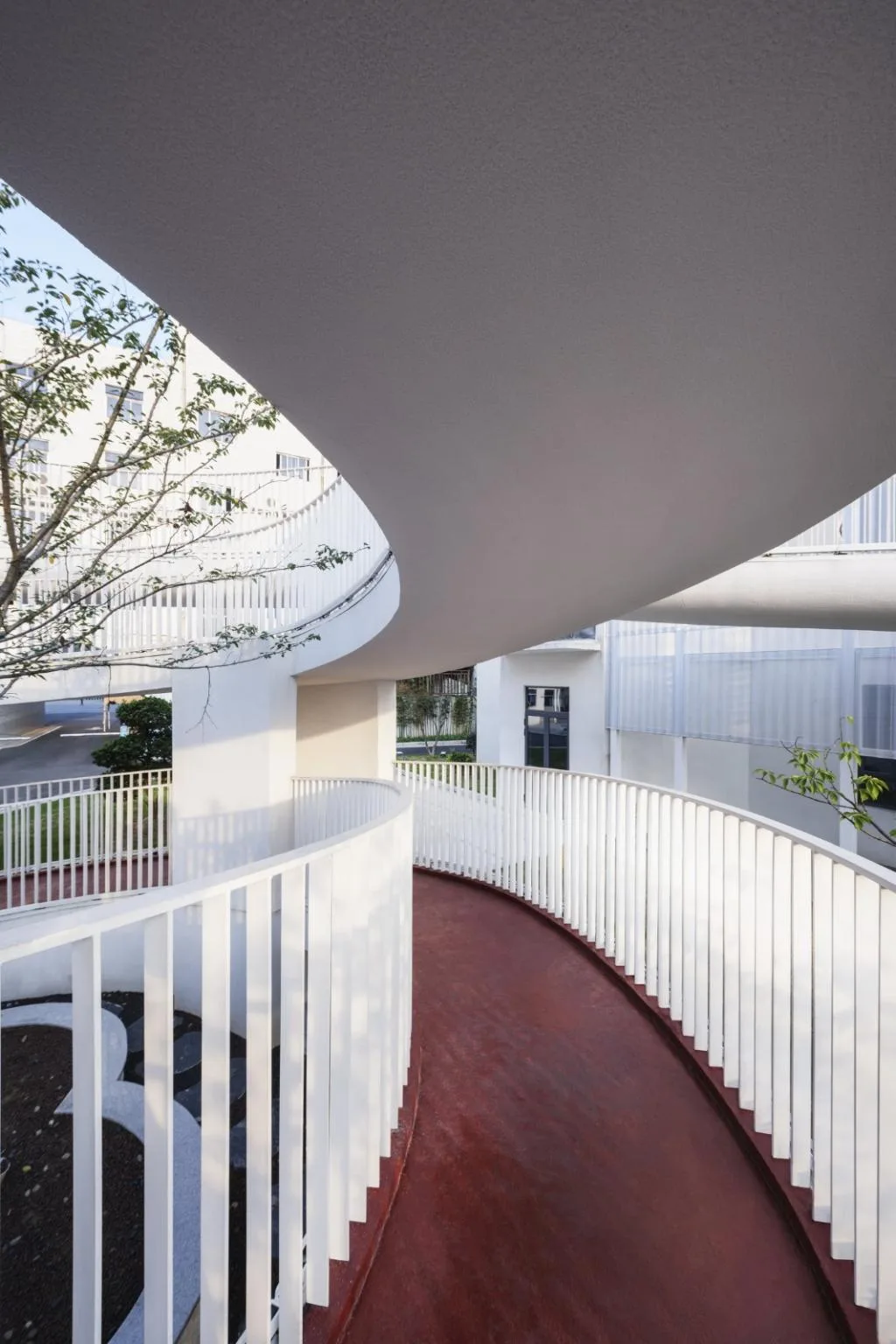
△ Ring corridor © Lu Zhigang
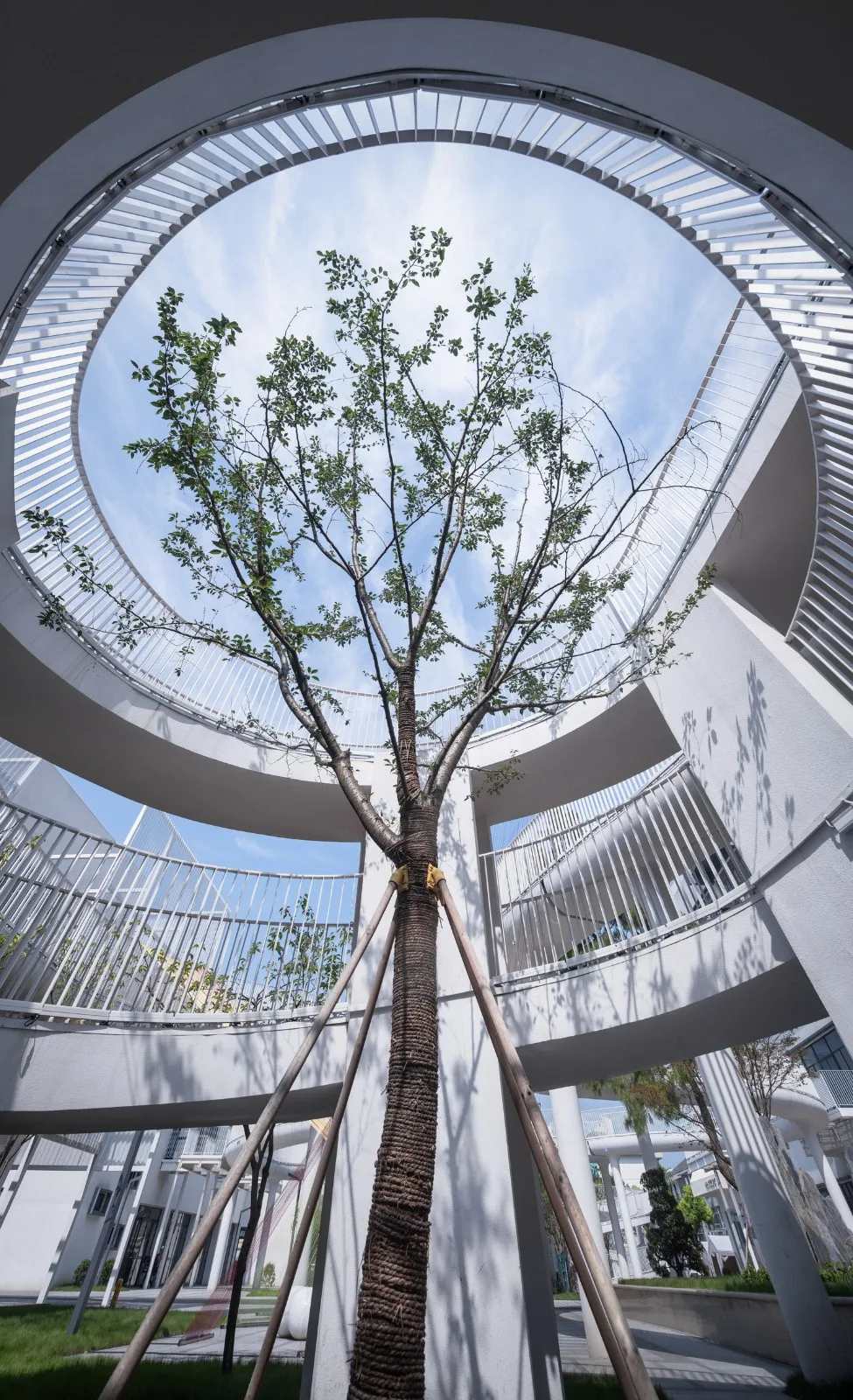
△ Corridor tree shadows © Wu Qingshan
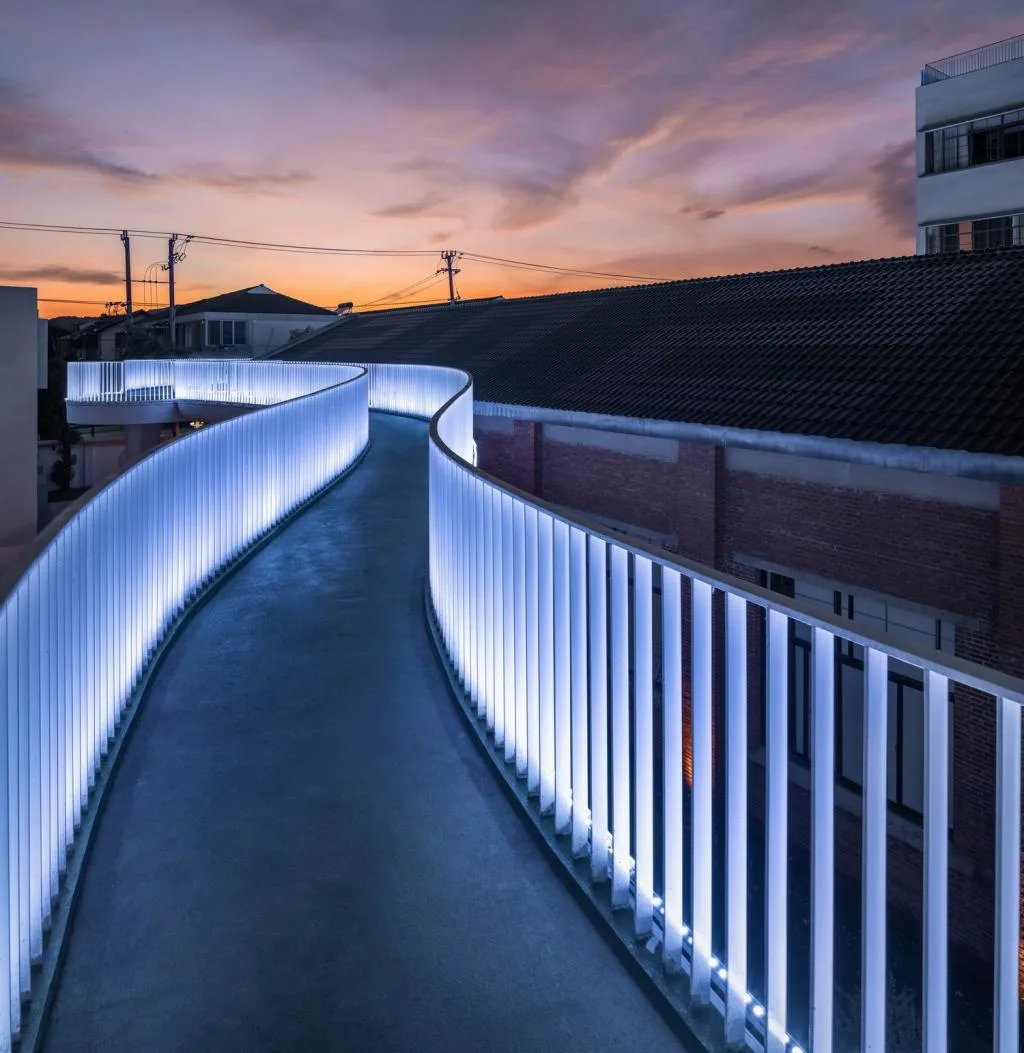
The Cloud Corridor at Night © Wu Qingshan
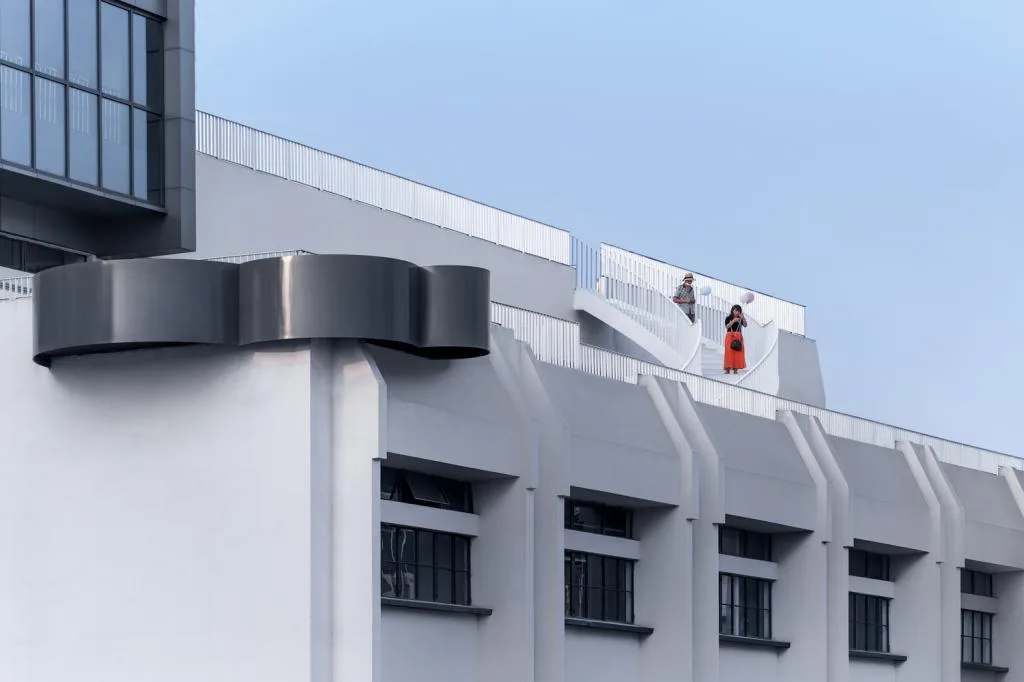
△ Cloud Shadow in the Sky © Wu Qingshan
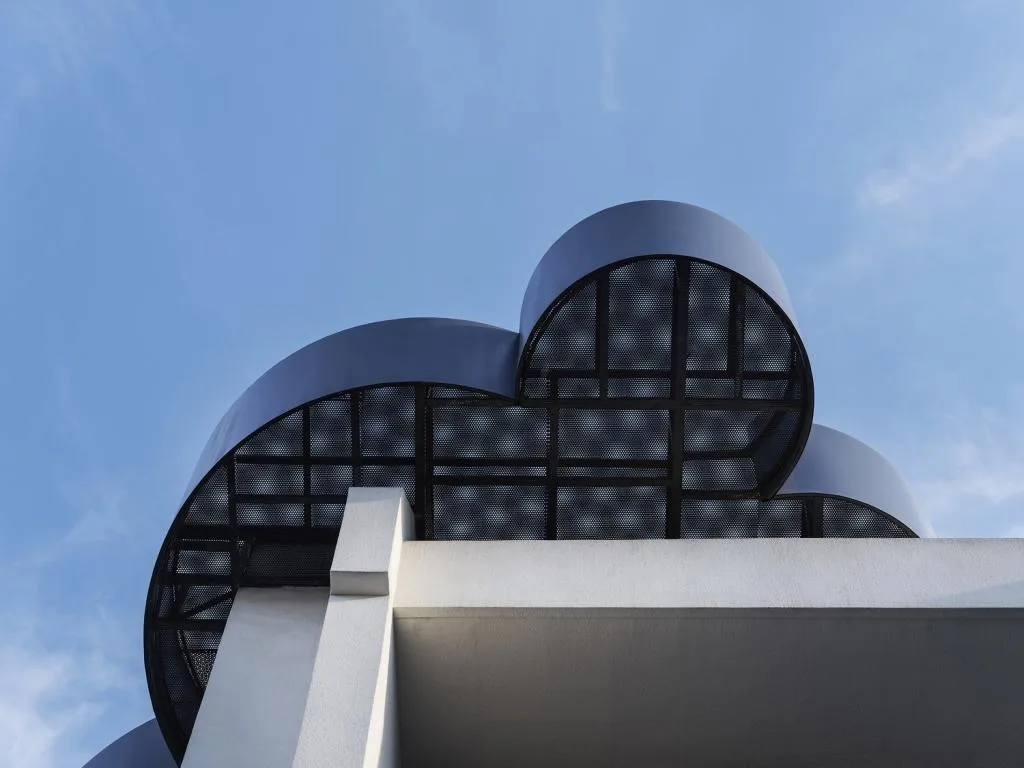
△ Cloud Shadow in the Sky © Lu Zhigang
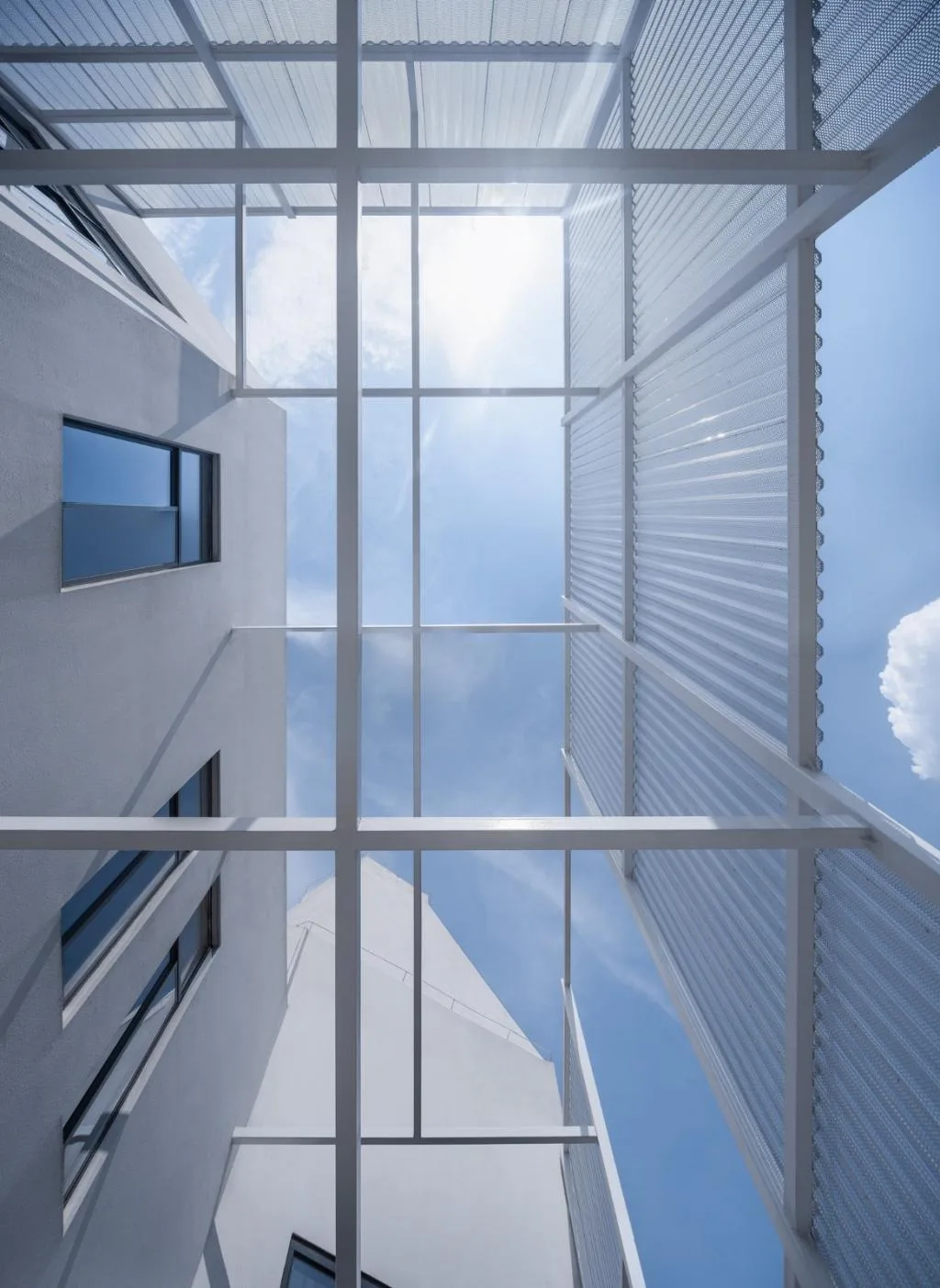
△ Cloud Shadow in the Sky © Wu Qingshan
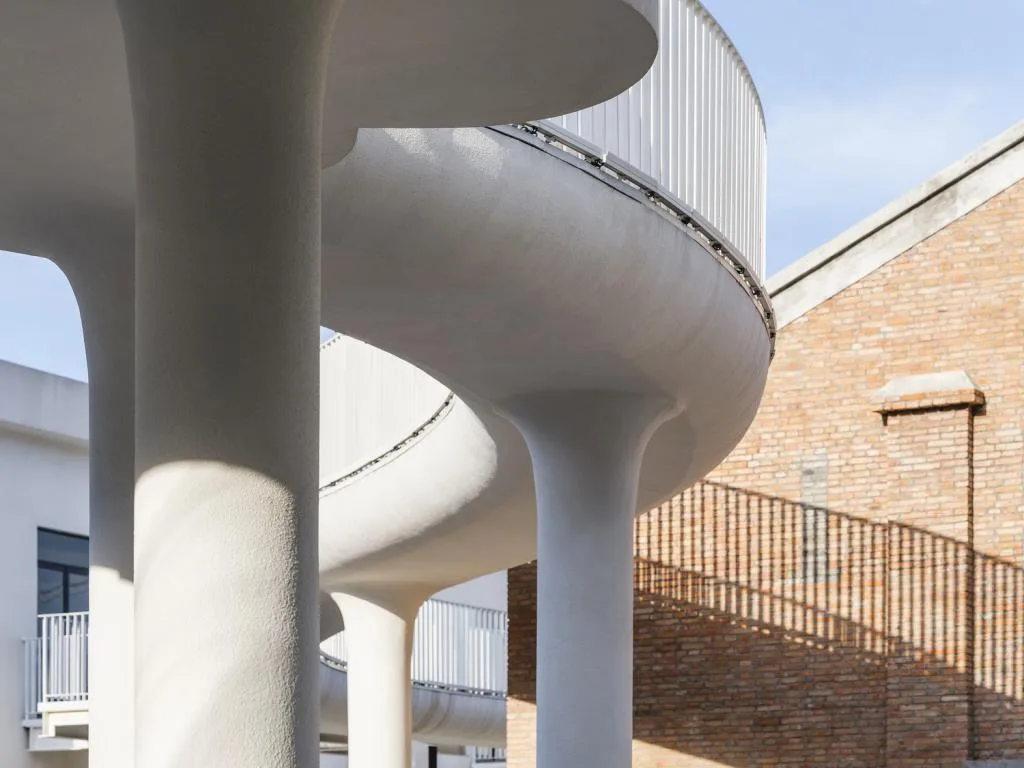
△ Cloud Over the Red Wall © Lu Zhigang
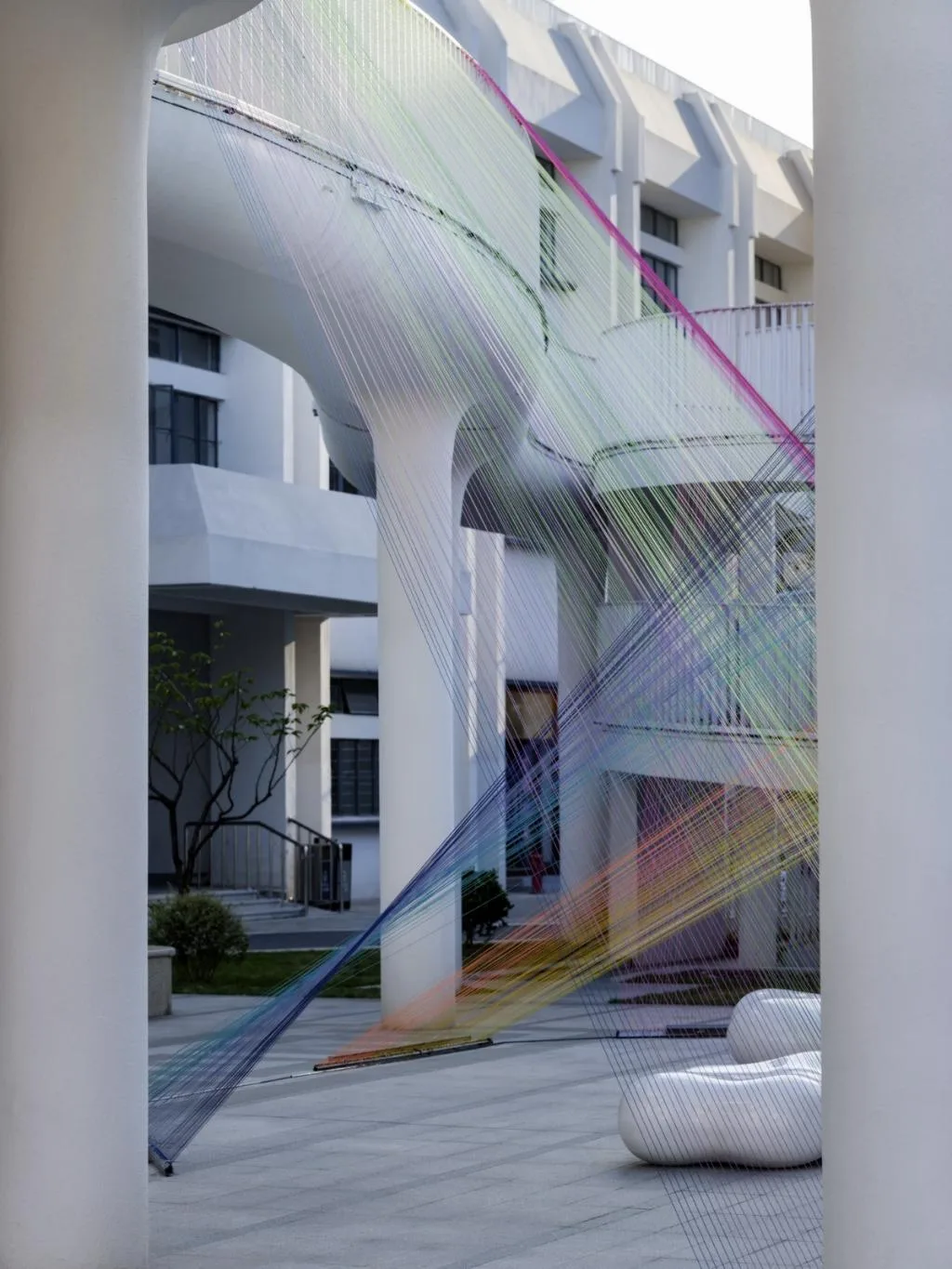
△ Rainbow between Clouds © Lu Zhigang
Project drawings
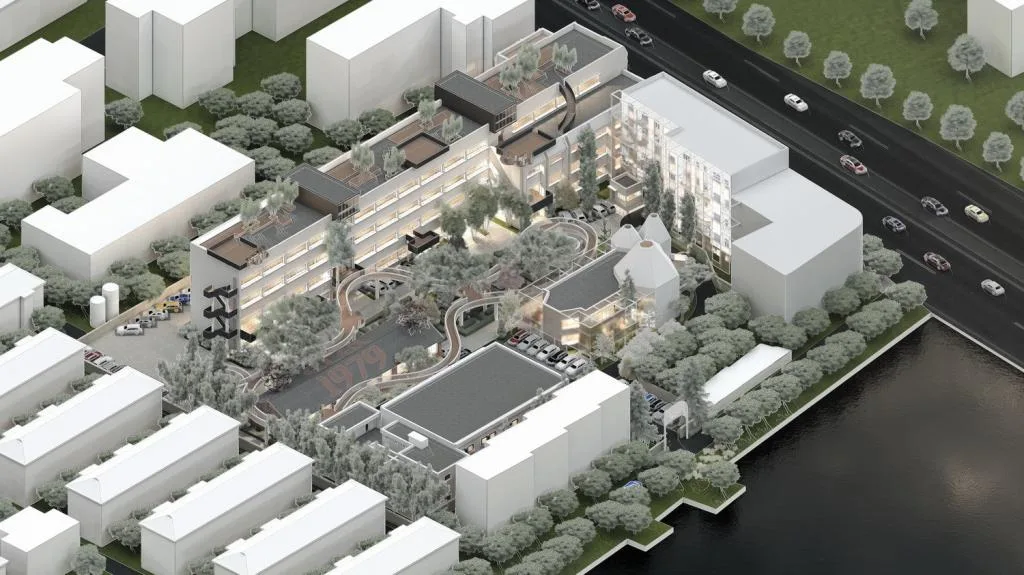
△ Overall axis side
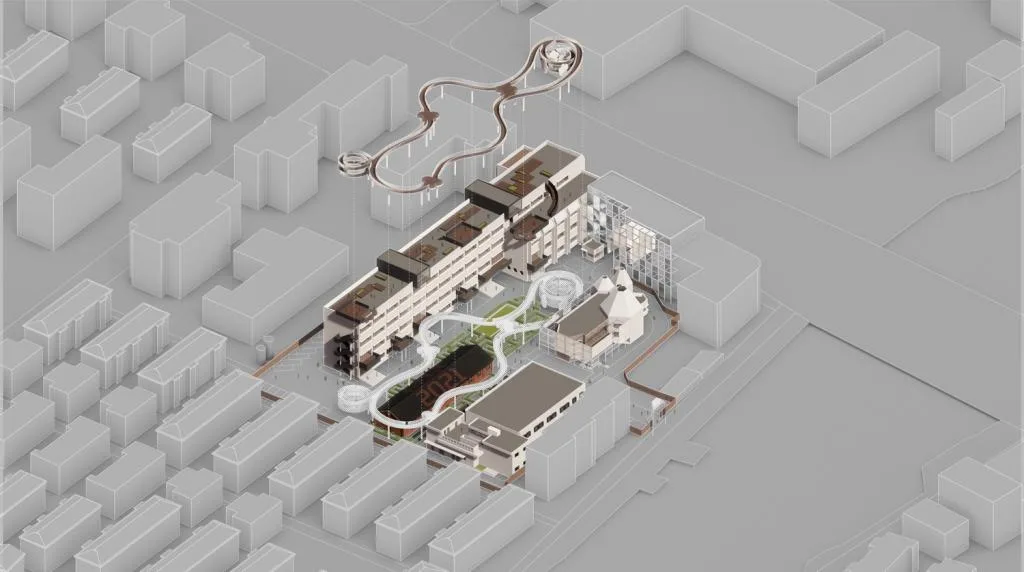
△ Composition analysis
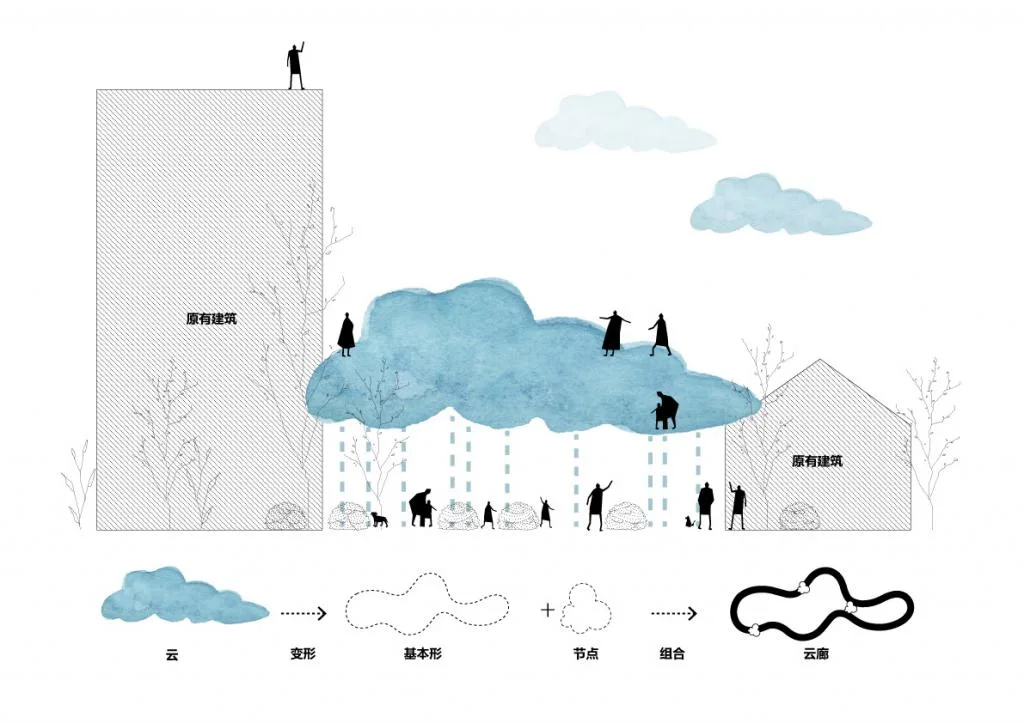
Concept analysis
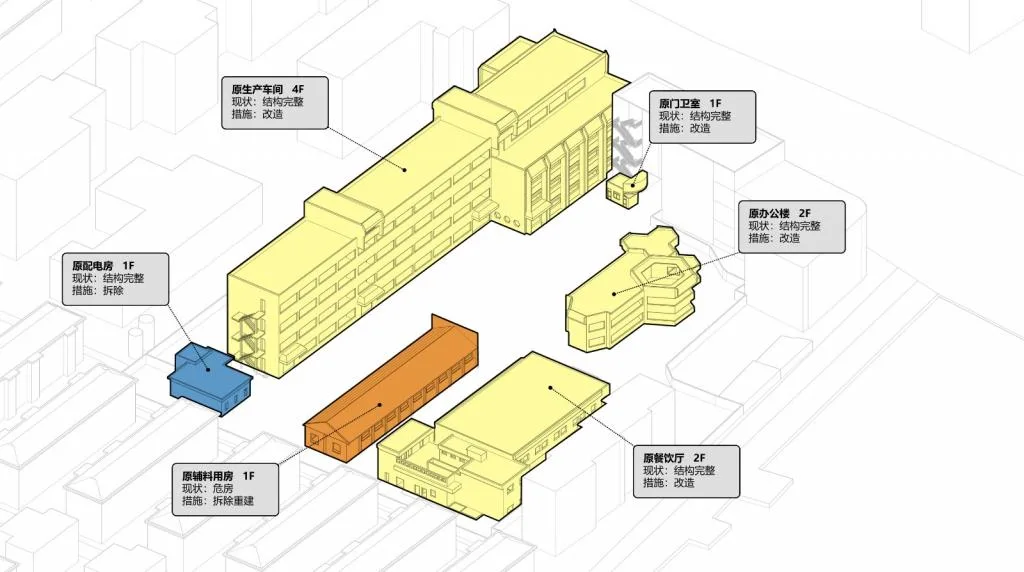
△ Current situation analysis
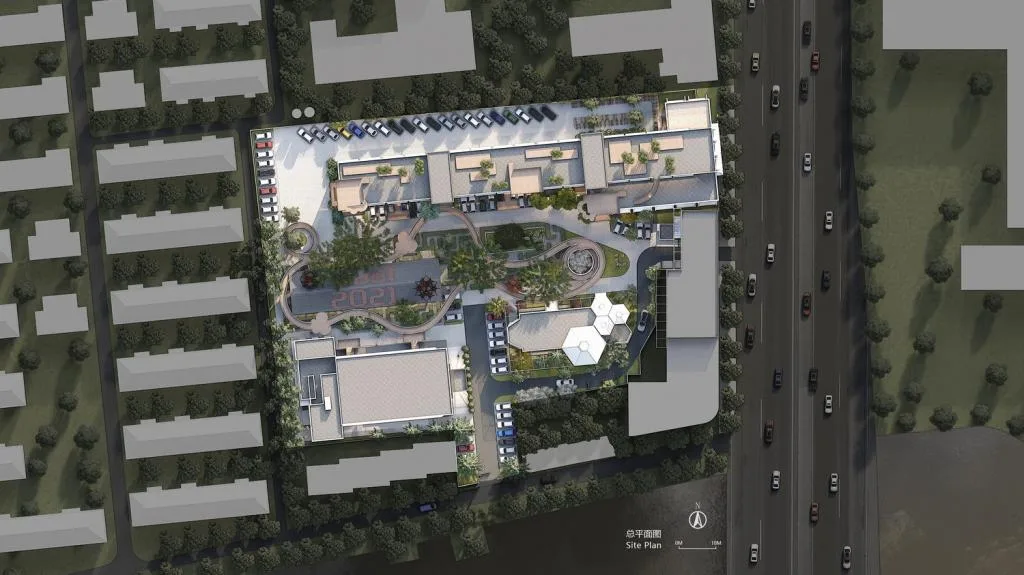
△ General layout plan
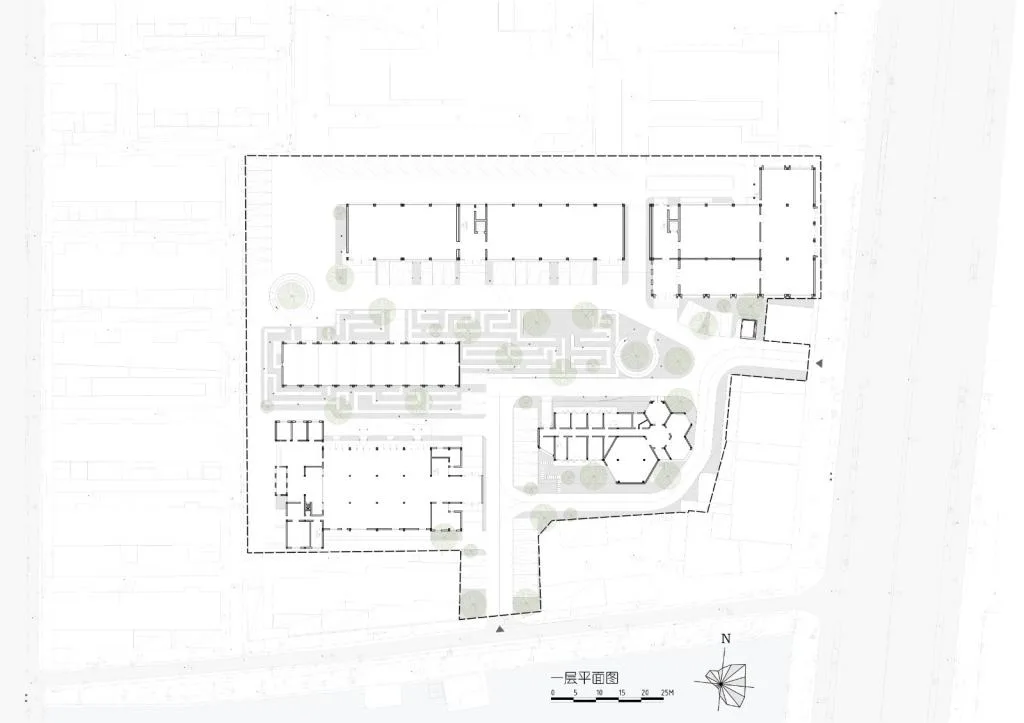
△ First floor plan
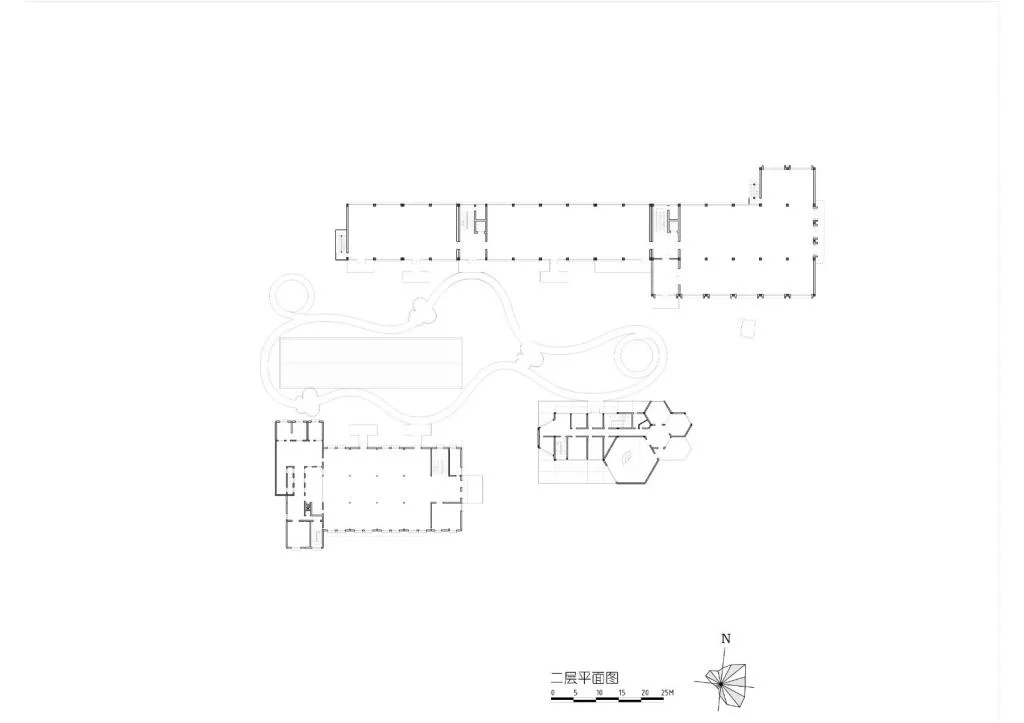
△ Second floor plan
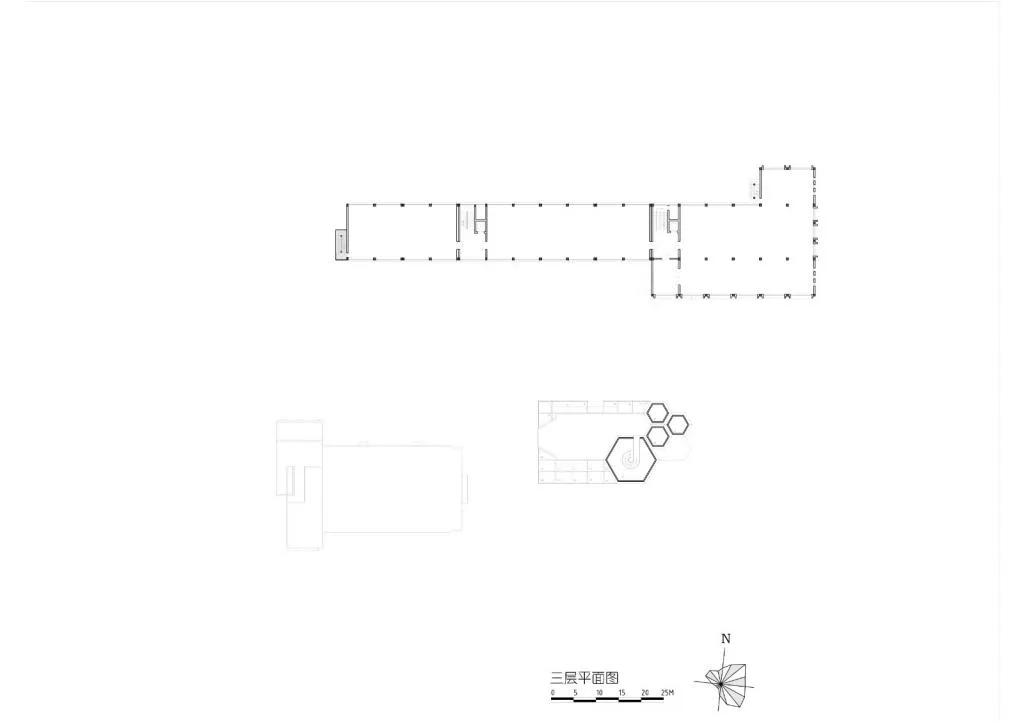
△ Third floor plan
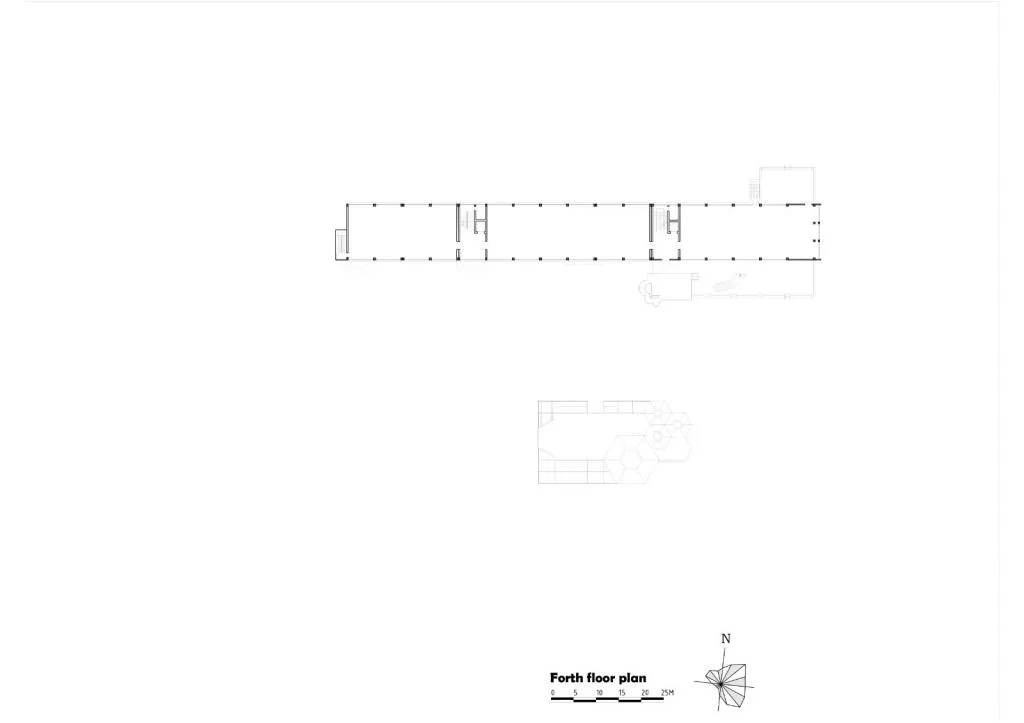
△ Fourth floor plan
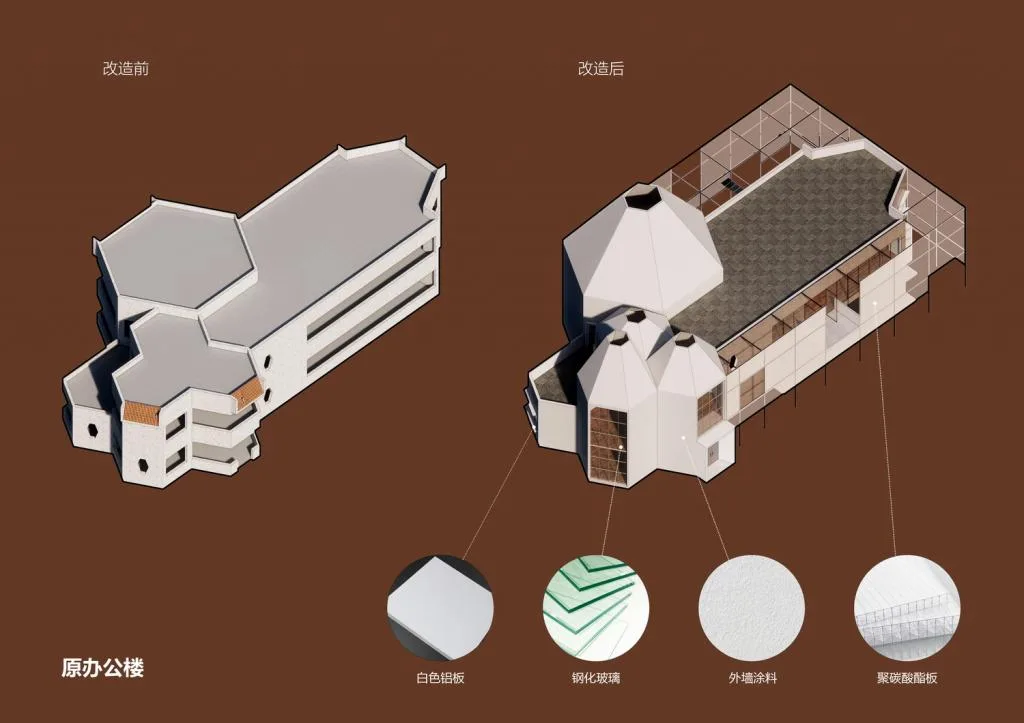
△ Comparison between old and new
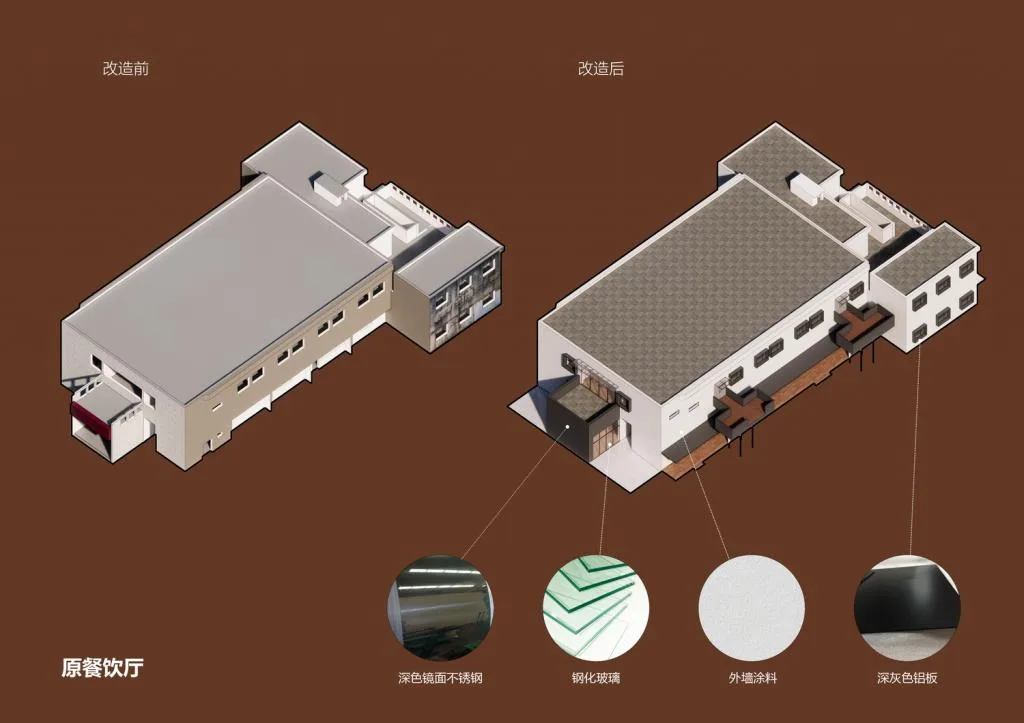
△ Comparison between old and new
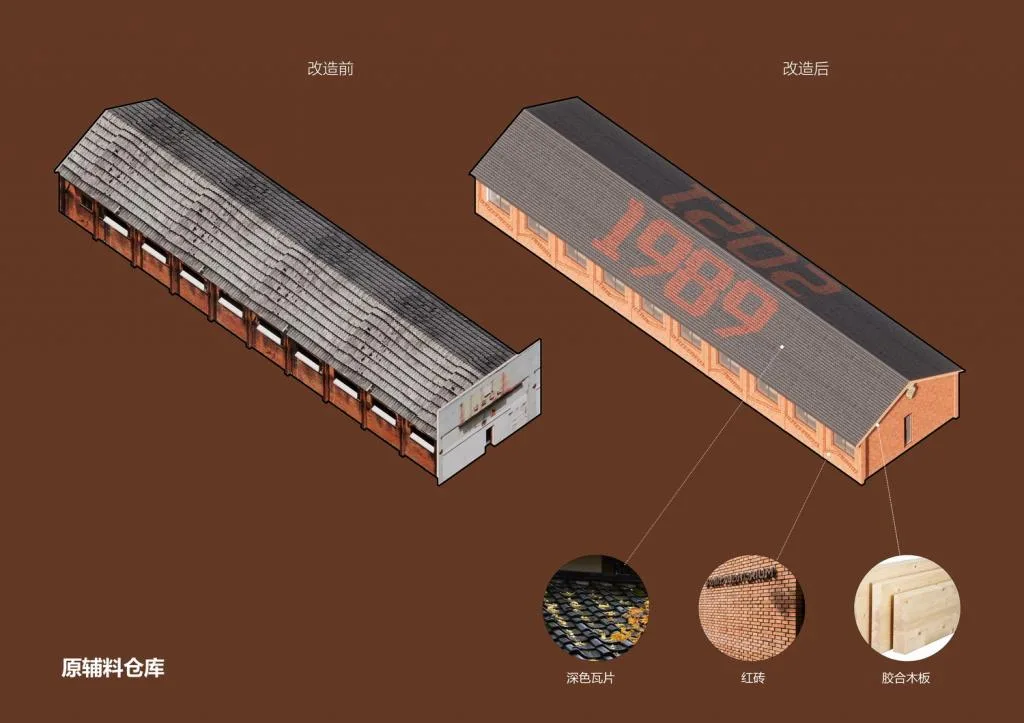
△ Comparison between old and new
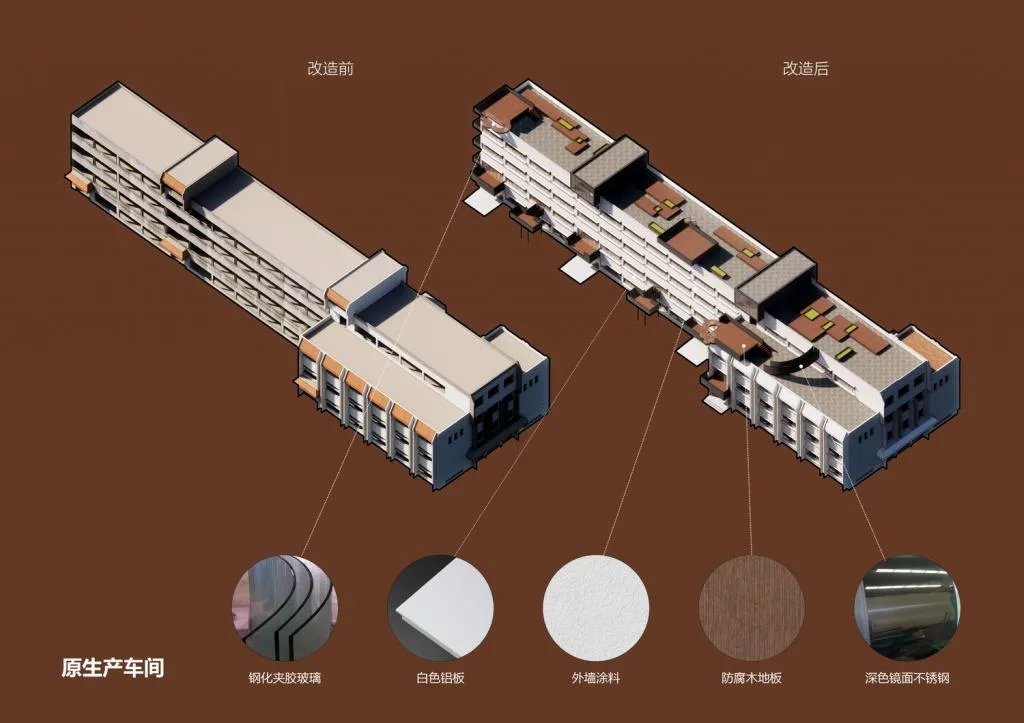
△ Comparison between old and new
Project Information
Architectural Design: Meter Sized Building
Area: 9,726 m²
Project Year: 2021
Photographers: Wu Qingshan, Lu Zhigang
Lead Architect: Lu Zhigang
Design Team: Huang Congyi, Liu Zhirui, Zhao Ruixue, Liu Chang
Structural Consultant: Suzhou Ansheng Architectural Design Co., Ltd
Owner: Jiangsu Jiangnan Trading Group Co., Ltd
Location: Changshu, China















Must log in before commenting!
Sign Up