
01 Preface: Renovating Old Factory Buildings as Part of Urban Renewal
In the context of China’s urbanization and industrial upgrading, traditional heavy industries are gradually retreating from the urban landscape. Aging industrial factories stand as direct witnesses to this historical shift, symbolizing the beauty of urban decay and evoking a collective nostalgia for a bygone era. These factories have become a central theme and emblem of contemporary urban renewal.
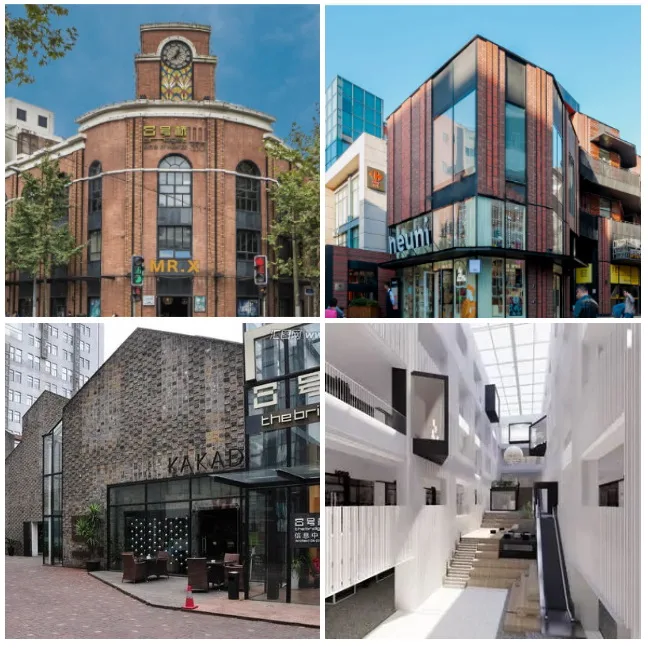
Regardless of their nature, these revitalization projects share a core principle: breathing new life into old spaces through creativity. Since 2004, Bridge No. 8, a specialist in old factory renovations, has transformed abandoned factories in Shanghai into cultural and creative office parks. Combining innovative space design with forward-thinking operational and service concepts, it has emerged as a pioneer in China’s cultural and creative office park development.
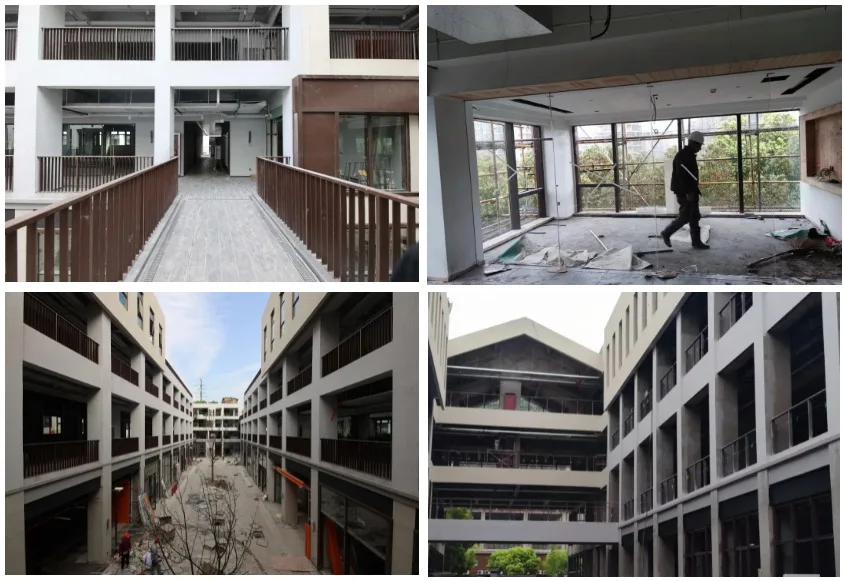
As Bridge No. 8 advances into its fifth phase, the cultural and creative office park’s scope continues to expand. In the Shenbanlu project in Hangzhou, it also embraces urban functions, fostering regional economic transformation by attracting innovative companies and cultural enterprises.
02 Background: Breaking Spatial Boundaries with Integrated Design
The project consolidates seven independent small factories, integrating diverse functions such as creative offices, brand showcases, and specialty retail. Yu She Yu Zhu led a comprehensive design encompassing interior, landscape, signage, and lighting, setting an industry benchmark for cultural and creative park renovations. Unlike many of our integrated renovations, architectural design for Shenbanlu Creative Industry Park was completed ahead of schedule.
This presented a challenge: ensuring that interior design, landscape, and architecture align under unified concepts and strategies, addressing architectural issues collaboratively from the outset.
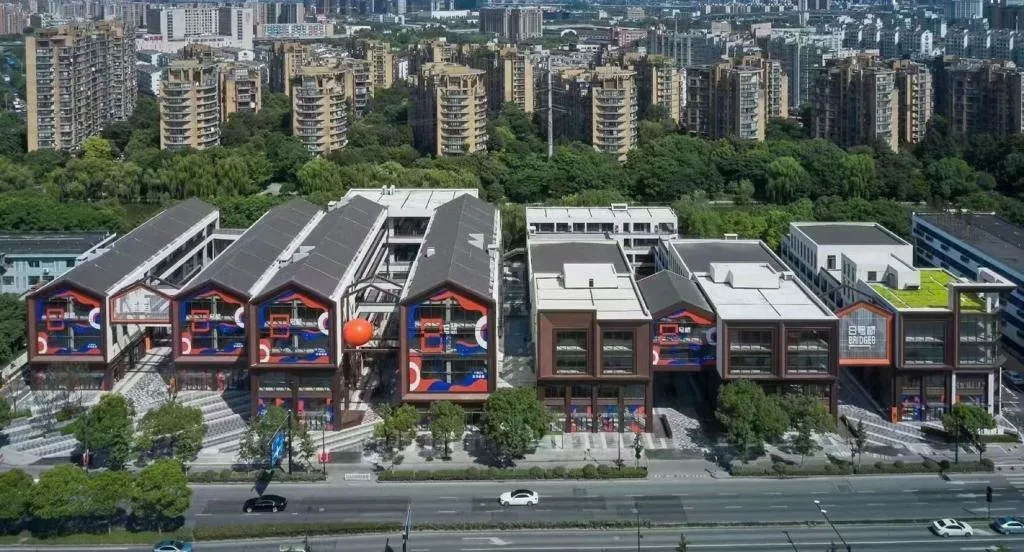
The interior design addresses the boundary between inside and outside through architectural thinking, while the landscape design acts as a “bridge” connecting people, the environment, and buildings. This softens boundaries and fosters a dialogue with the city. To ensure smooth project execution, the designer was stationed on site, coordinating multiple disciplines and resolving issues during construction. The collaboration and integration of diverse specialties within a single team broke down professional and spatial barriers, proving essential to the project’s success.
03 Design Concept: Brainstorming and Creative Circuits
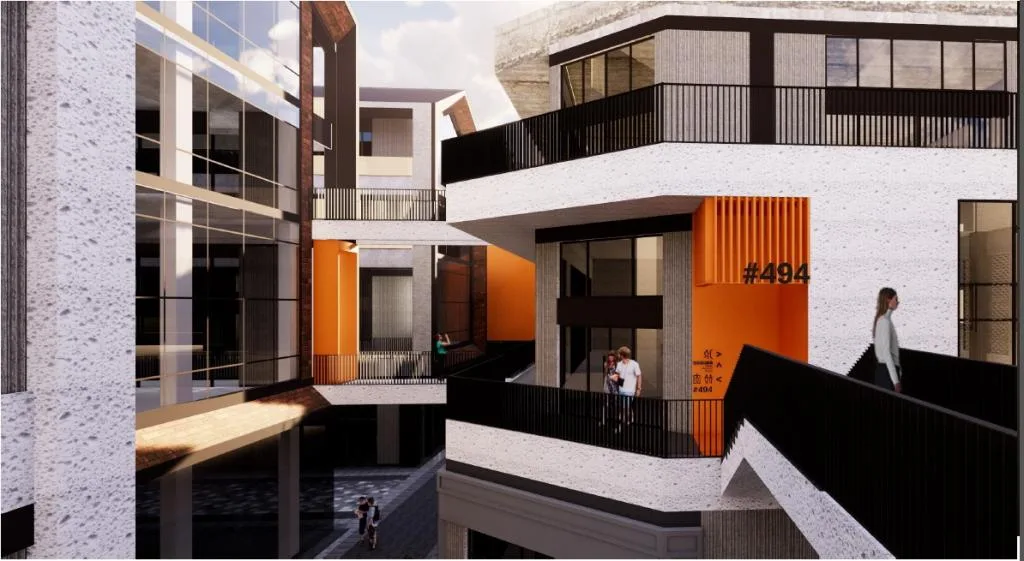
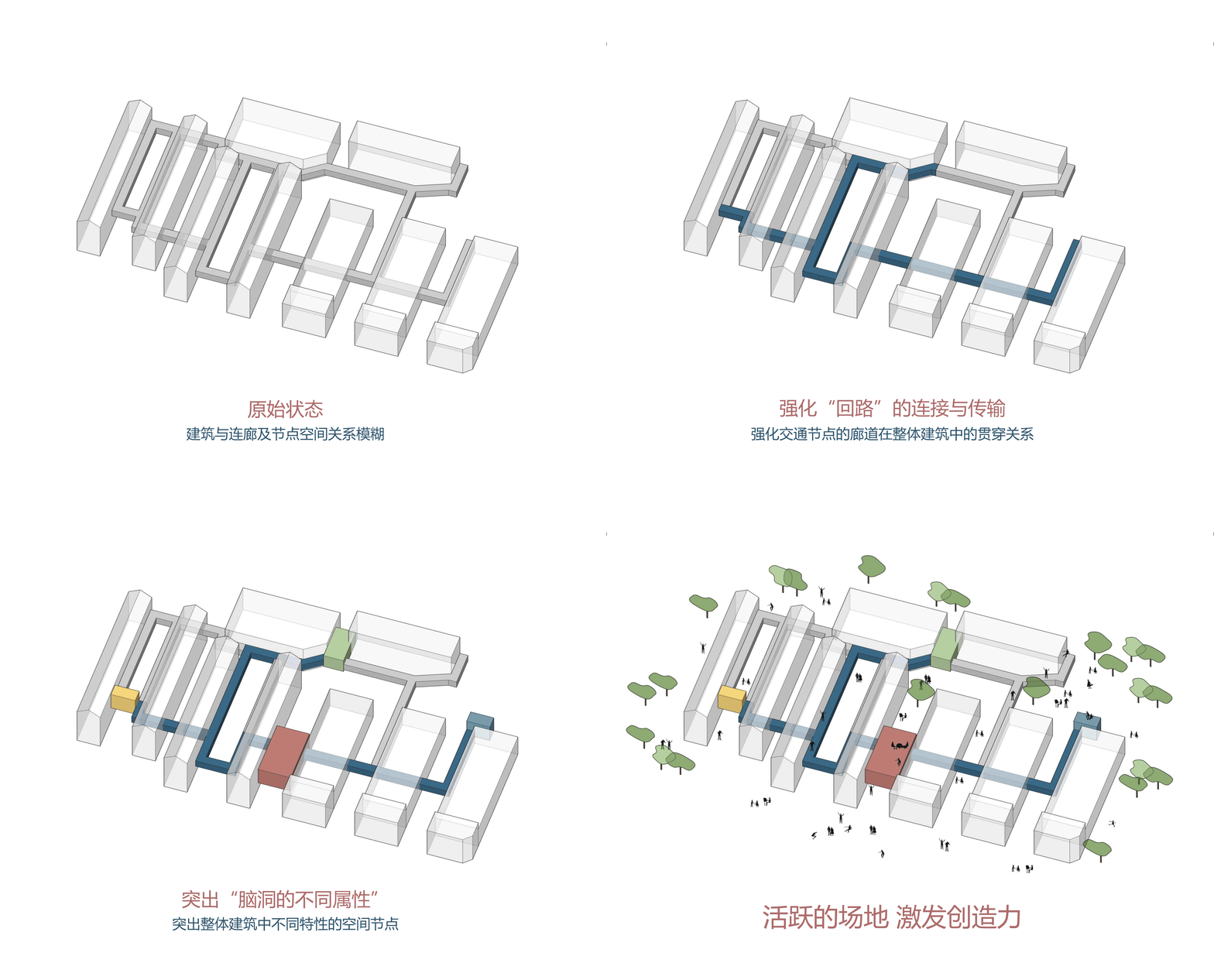
Envisioning the entire creative park as the mind of a creator, the corridors and nodes function like neurons transmitting inspiration and sparking creativity. The cultural and creative office park mainly serves creative and artistic professionals who thrive in an inspiring atmosphere.
To stimulate this, “neuron” elements are embedded at various nodes, representing the “eureka moments” that illuminate the entire space.
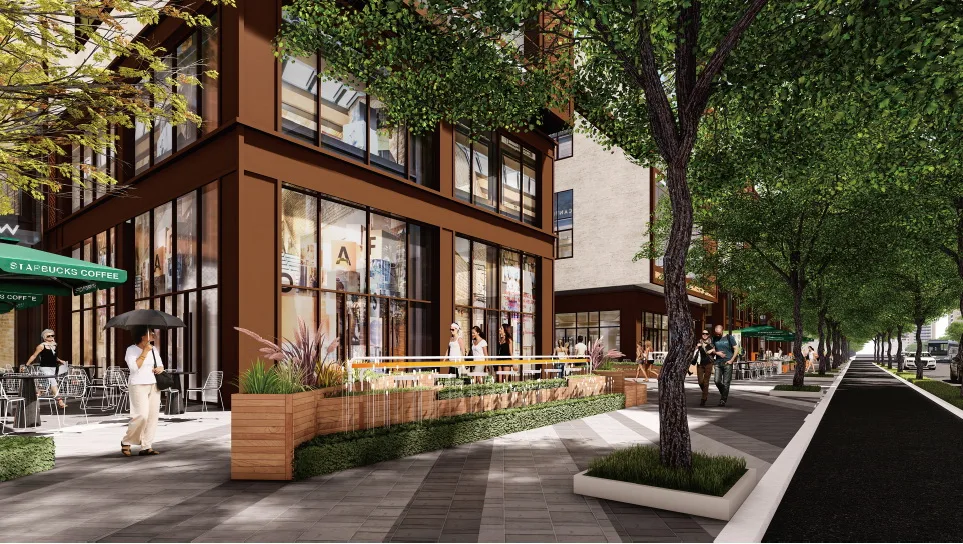
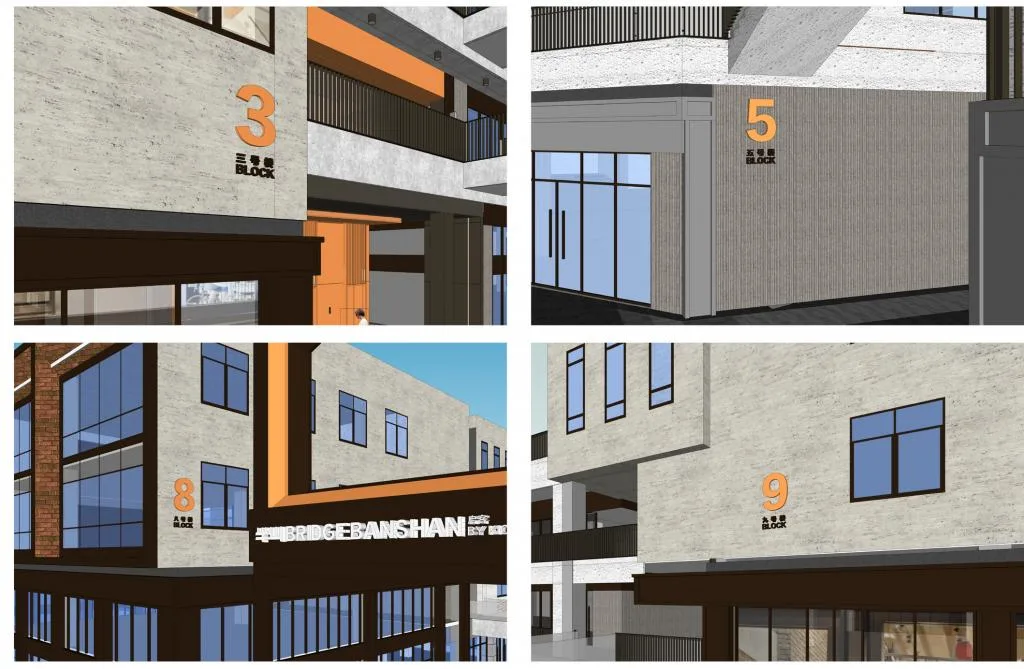
Architecturally, to avoid monotonous spatial layouts and enrich the walking experience, the design disperses the connections between building clusters. However, office spaces require clear wayfinding to enhance accessibility. The interior design clarifies the relationships among buildings, corridors, and key nodes, emphasizing corridors as primary circulation paths to effectively guide movement throughout the complex.
04 Interior Design: Defining the Boundary Between Inside and Outside
Throughout the design process, the relationship between “inside” and “outside” was carefully considered, especially the door’s symbolism as a point of entry. Historically, doors separate and connect spaces, embodying both internal and external qualities when opened or closed.
In this project, the door acts as an indicative symbol—more an invisible threshold than a physical barrier.
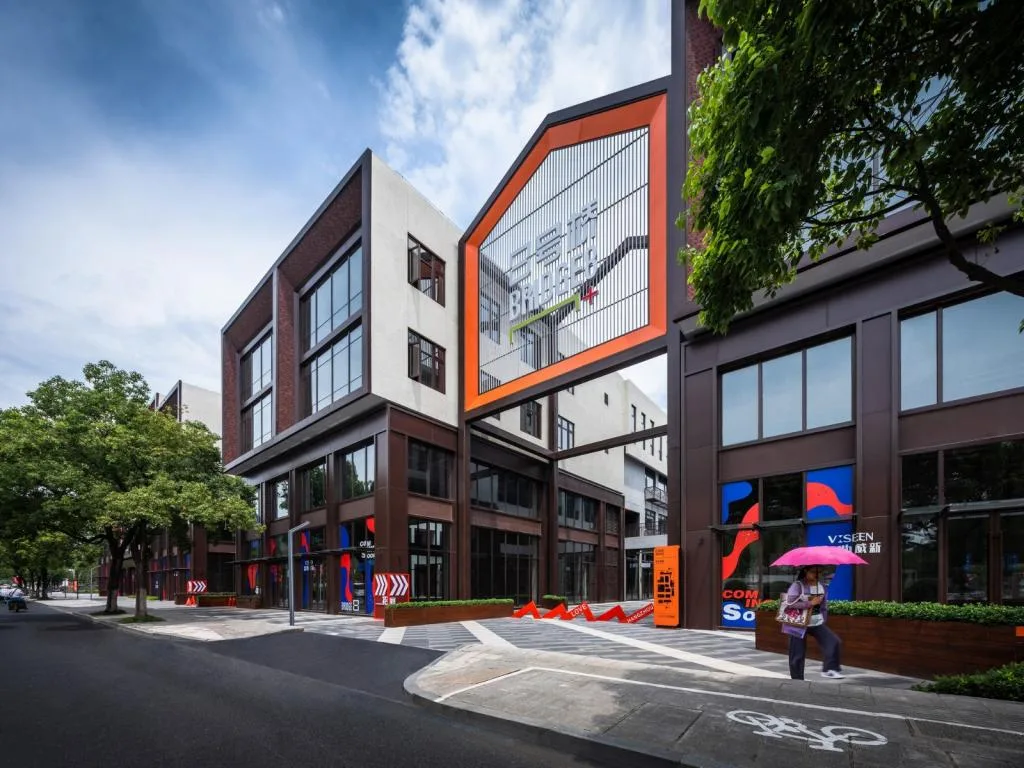
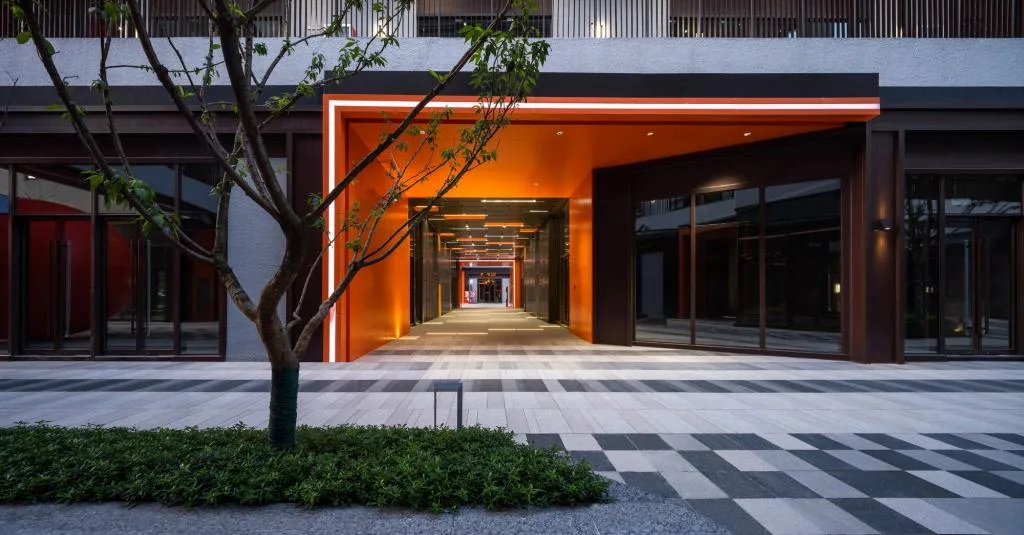
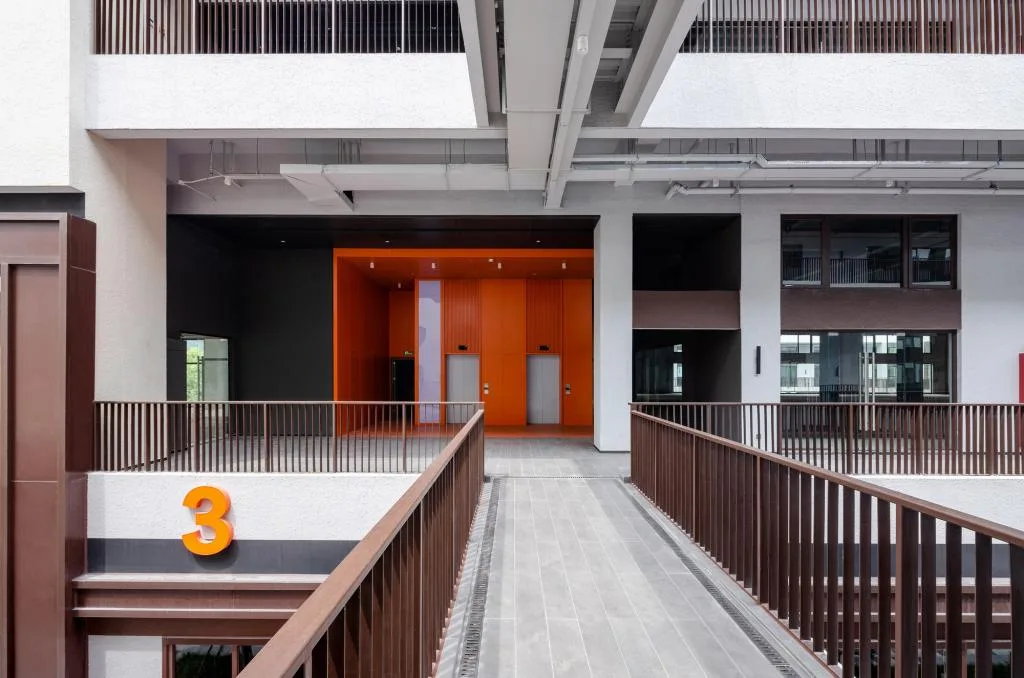
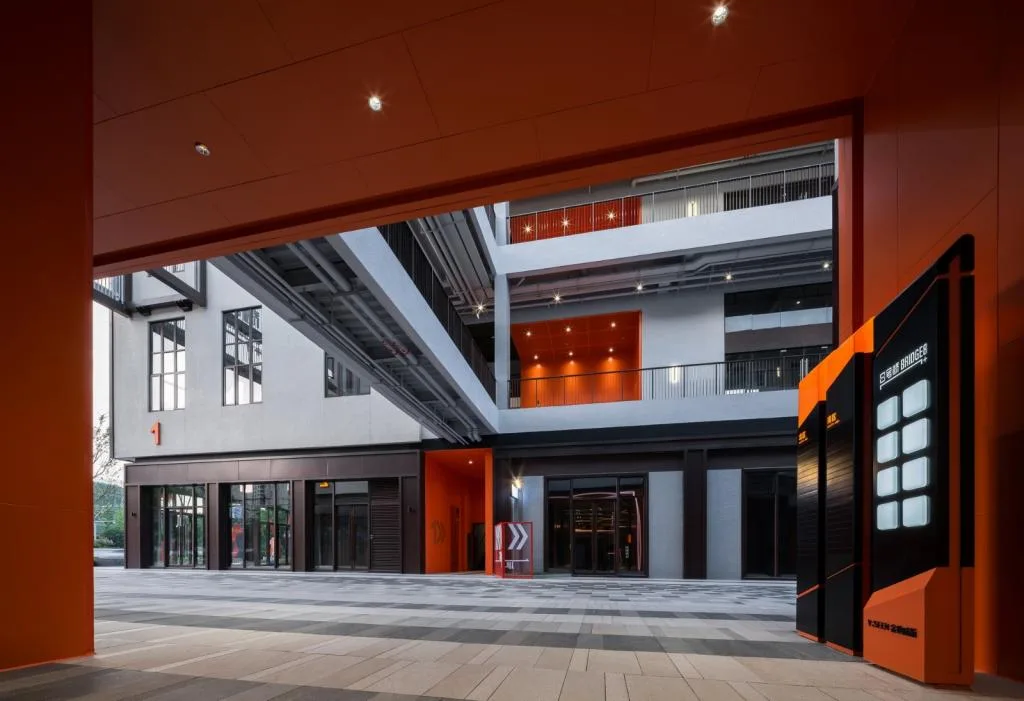
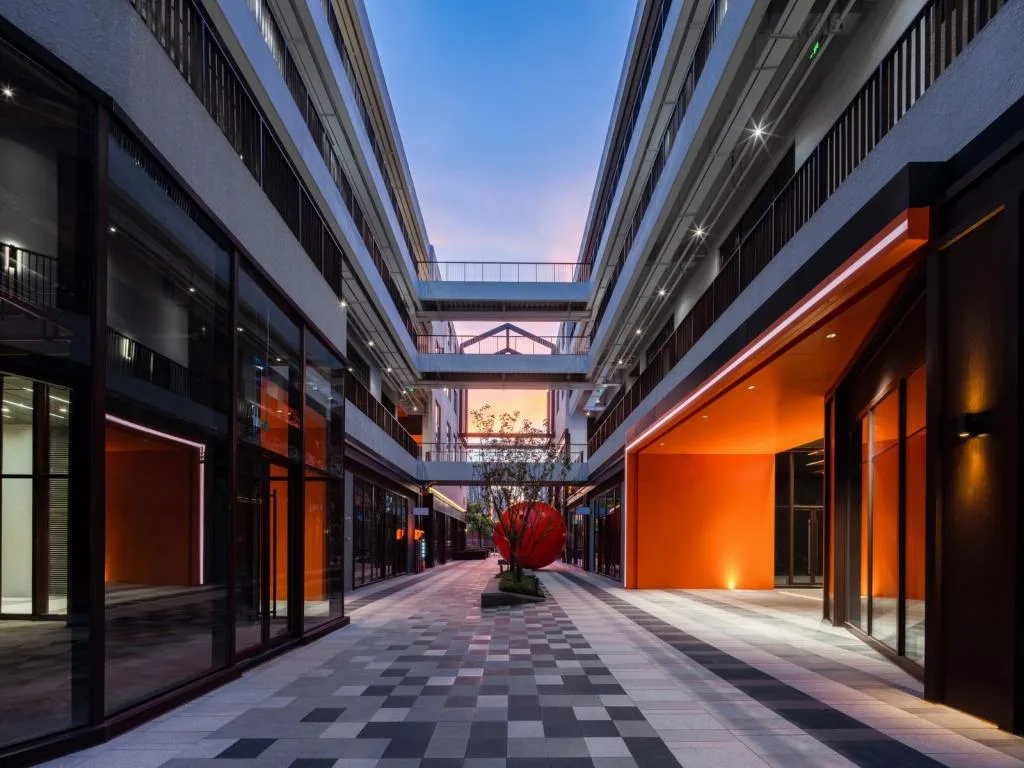
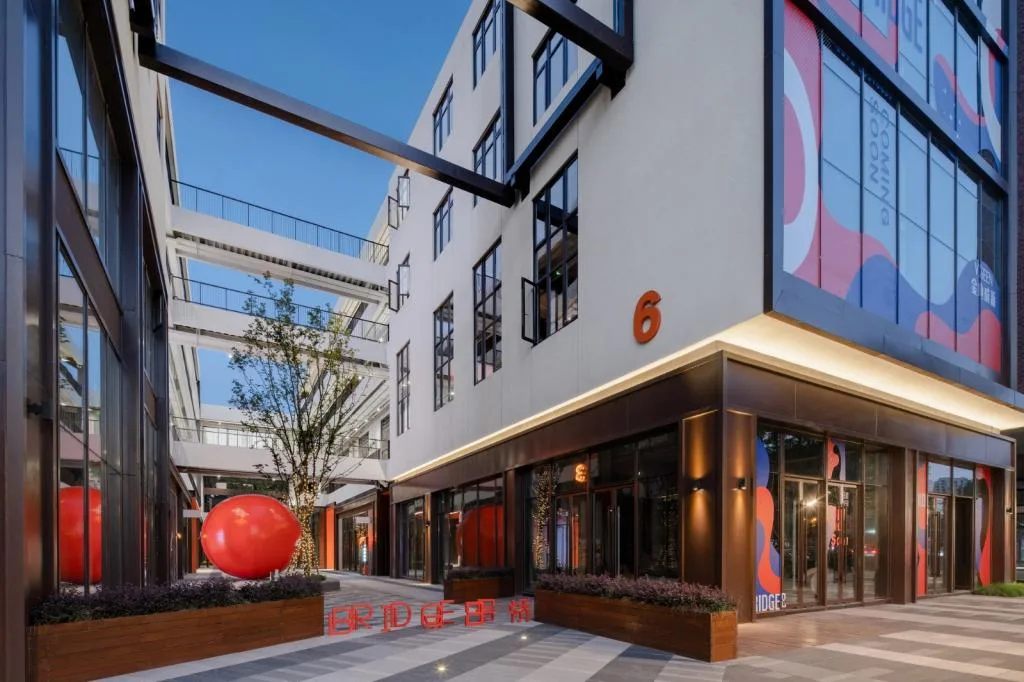
Inspired by the “neuron” concept, entrances are highlighted primarily in the dominant orange color of Jindi VI. Varied concave and convex forms adapt to different spatial scales, breaking façade uniformity while enhancing recognition and wayfinding. Painted metal panels and grilles mirror the building’s façade language, blurring the boundary between indoor and outdoor spaces.
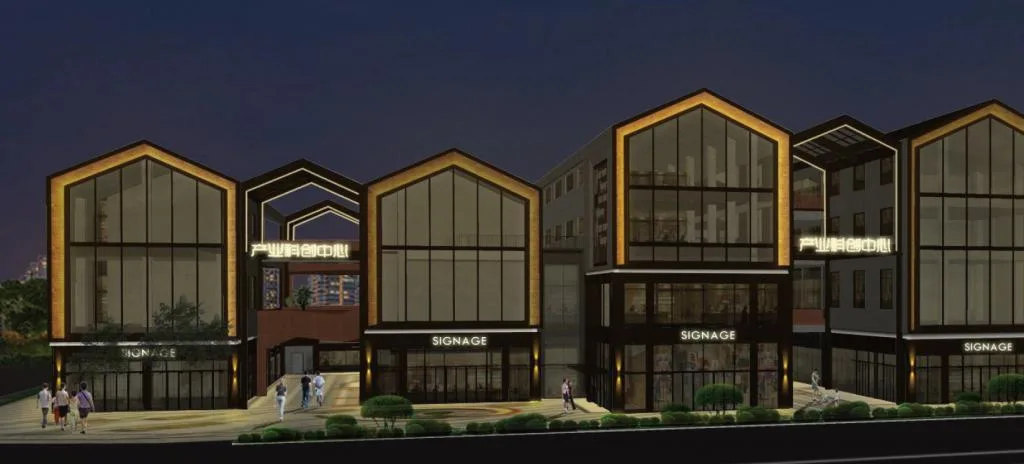
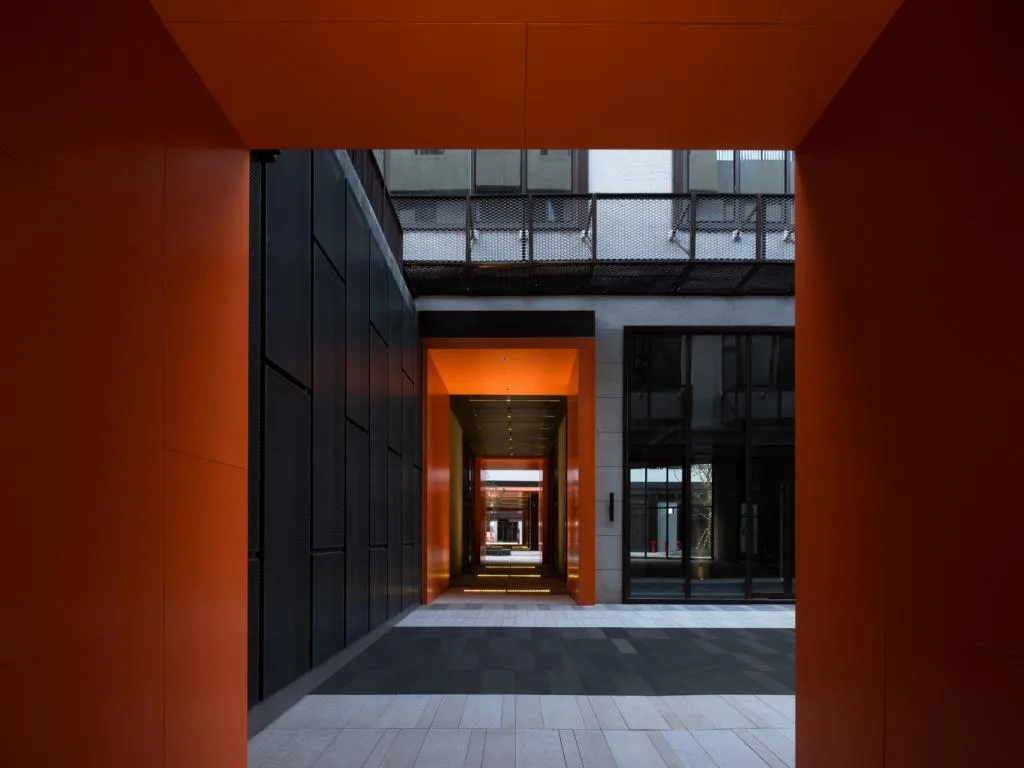
The door frames become significant framing elements throughout the complex and part of the landscape itself. Utilizing a “peephole effect” from the right distance, door frames and openings are trimmed and framed to enrich the spatial hierarchy and depth across the building clusters.
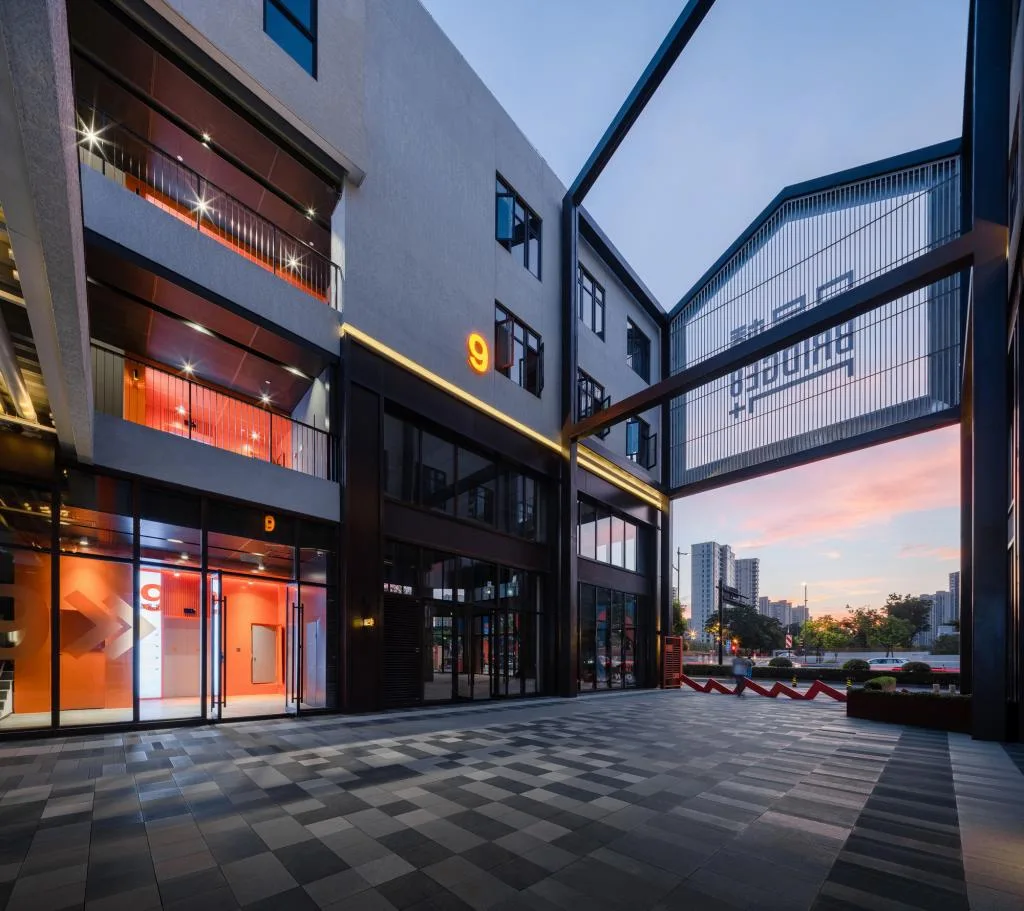
The challenge of irregular triangular spaces was cleverly turned into the entrances of commercial inner streets. Orange accents create engaging relationships between interiors and exteriors, set against gray and black tones that play with light and shadow.
05 Landscape Design: Softening Boundaries and Connecting with the City
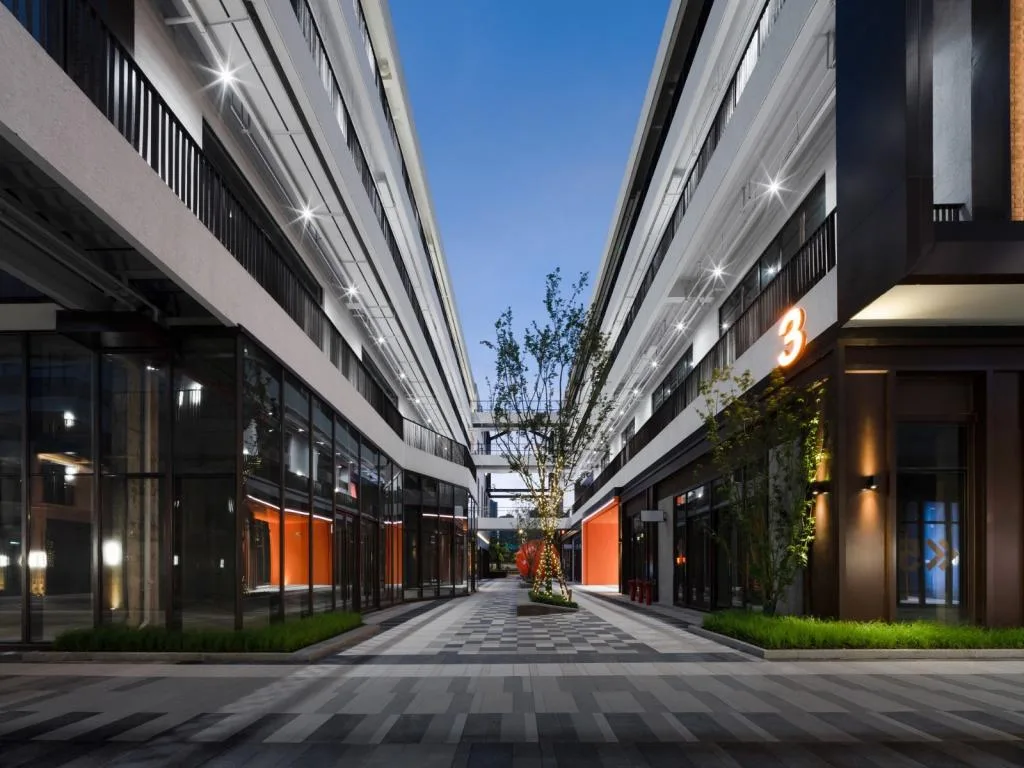
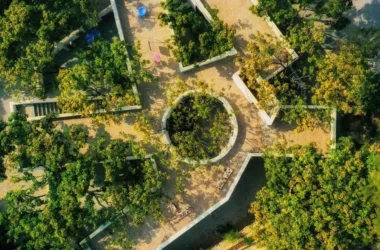
Unlike interior design, which emphasizes clear boundaries, the landscape design softens them. Subtle transformations reduce the buildings’ visual mass and soften their sharp corners. The interplay between building volumes and landscape structures evokes the image of a dense forest—buildings as sturdy “branches” and landscapes as delicate “leaves” scattered among them.
The main entrance features the “Forest Starlight” gradient paving, using 360mm by 300mm modules arranged radially to guide visitors. The combination of inner street landscaping and commercial outdoor displays activates the space with a local “greening” style, softening the industrial feel of the buildings. Ground-floor commercial spaces engage in active dialogue with the street and surroundings, fostering an urban, lifestyle-oriented office environment.
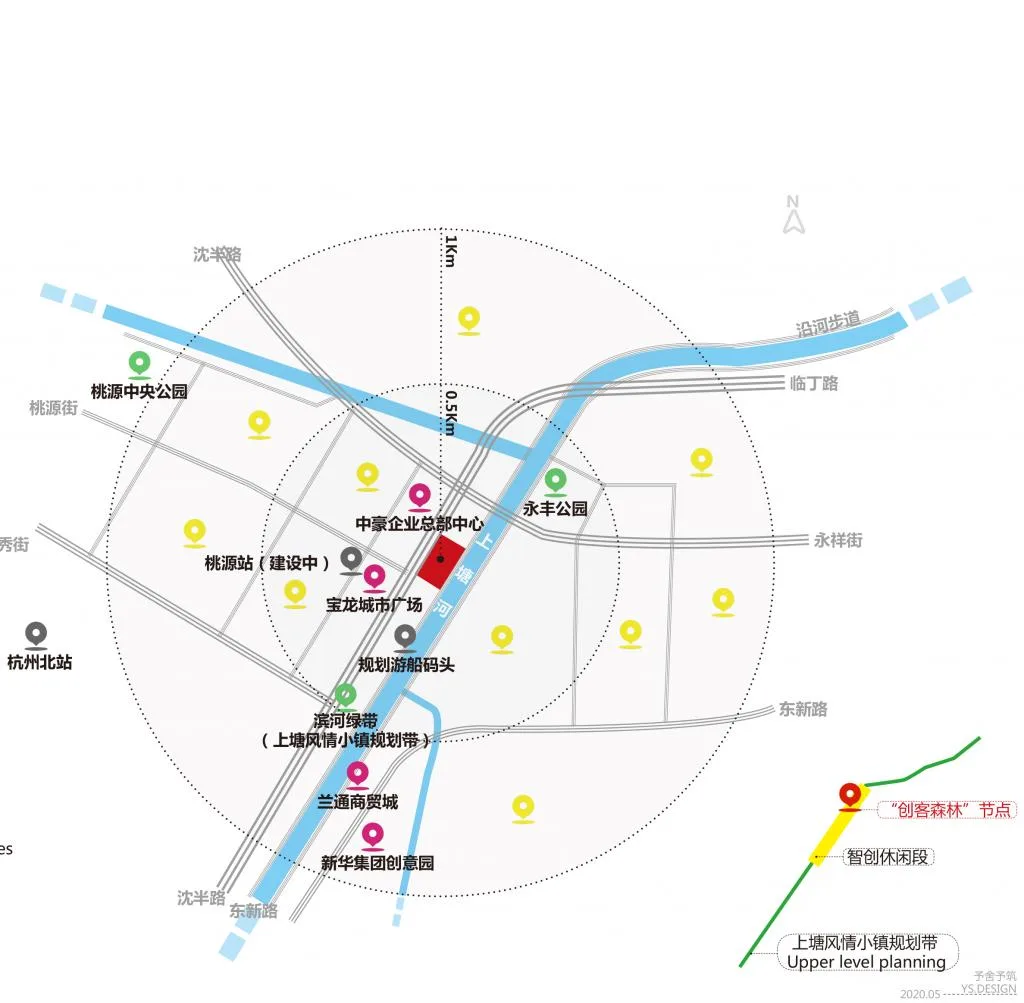
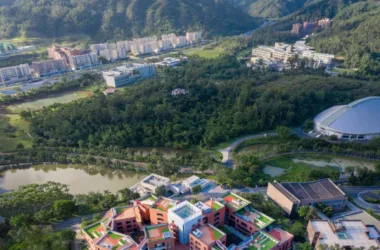
Unlike traditional office spaces, Shenbanlu Creative Park is the first project of Jindiwei New · Bridge No. 8 in a new first-tier city. It serves as a hub for “science and technology intelligent manufacturing” and “cultural and creative” industries in Hangzhou and the Yangtze River Delta. As the Shangtang River leisure tourism belt improves and regional industrial structure upgrades, Gongshu Banshan Office is poised to enter a new era.
Project Drawings
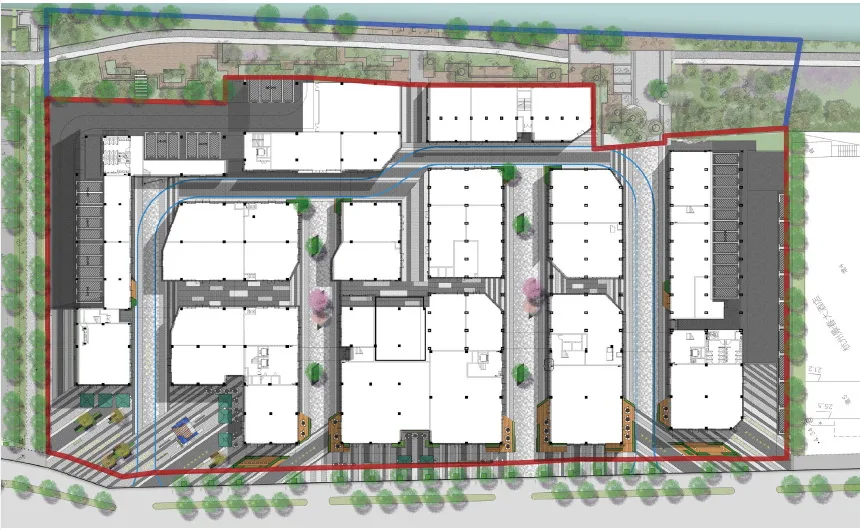
△ General layout plan
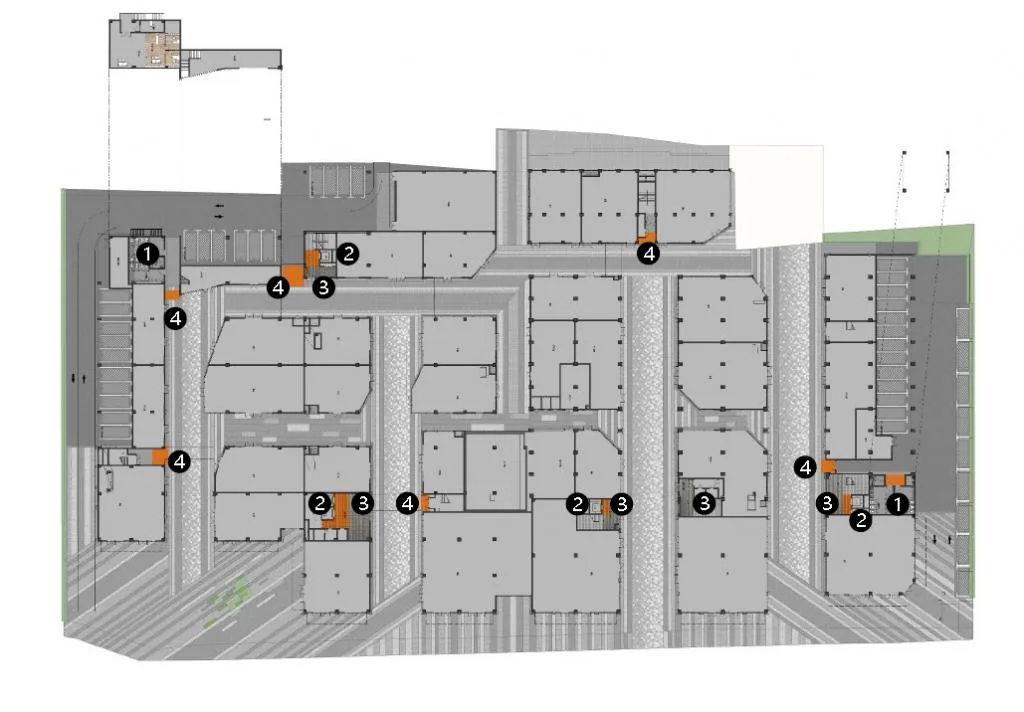
△ First floor plan
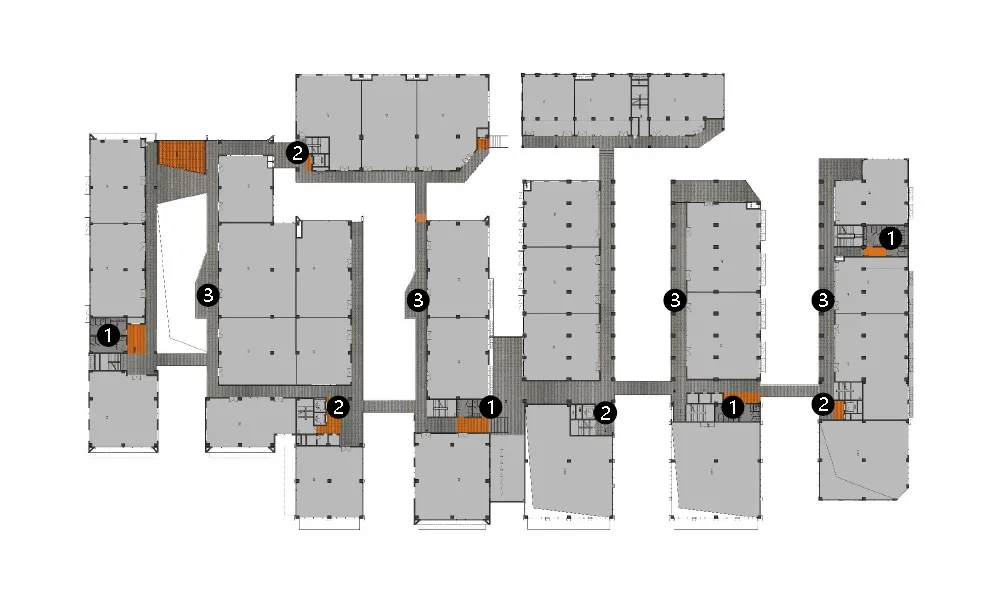
△ Second floor plan
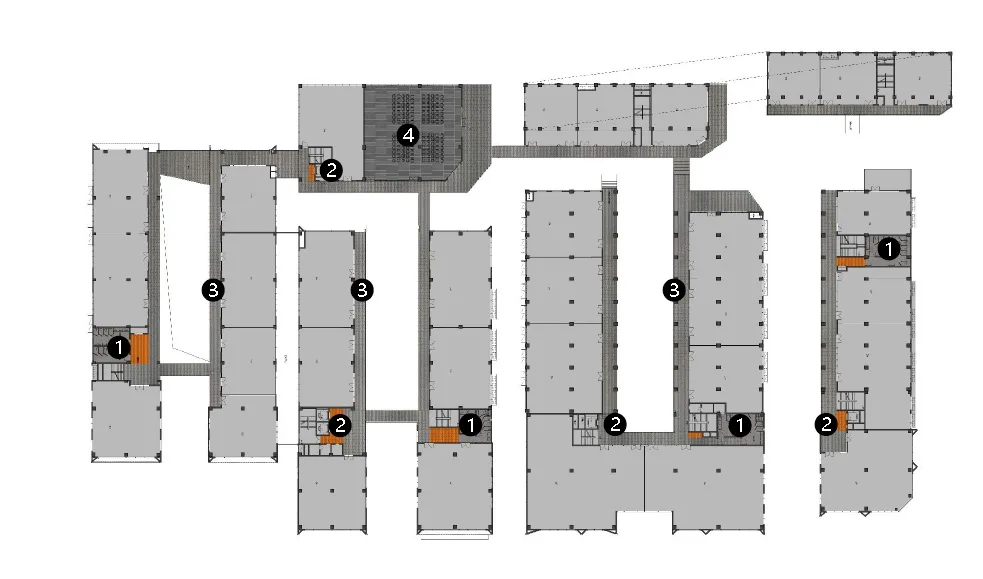
△ Third floor plan
Project Information
Project Name: Jindiwei New Bridge No.8 Shenbanlu Creative Park
Location: 498 Shenbanlu, Gongshu District, Hangzhou City, Zhejiang Province
Owner: Jindiweixin Bridge No.8
Design Firm: Yu She Yu Zhu
Design Directors: Chen Xiao, Li Zhiqiang, Xu Yi
Design Team: Pang Yu, Yu Haoyan, Zong Bang, Liu Yazhe, Zhu Mincheng, Zhao Liang, Zhou Xueying
Construction Drawing Consultant: Jianmeng Design Group Co., Ltd
Mechanical and Electrical Design Consultant: Sanjiang Mechanical and Electrical Design
Lighting Design Consultant: Stacked Hidden Lighting
Building Area: Approximately 8,000 square meters
Design Period: April 2020 to August 2020
Construction Period: August 2020 to June 2021
Photography: Fan Xi Visual












Must log in before commenting!
Sign Up