
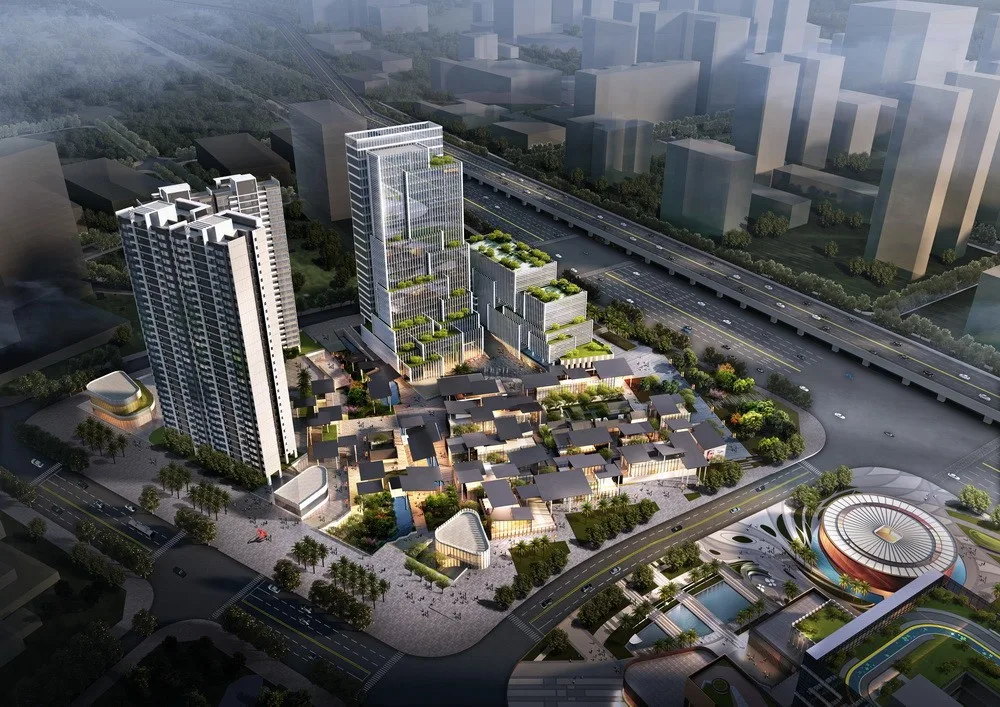
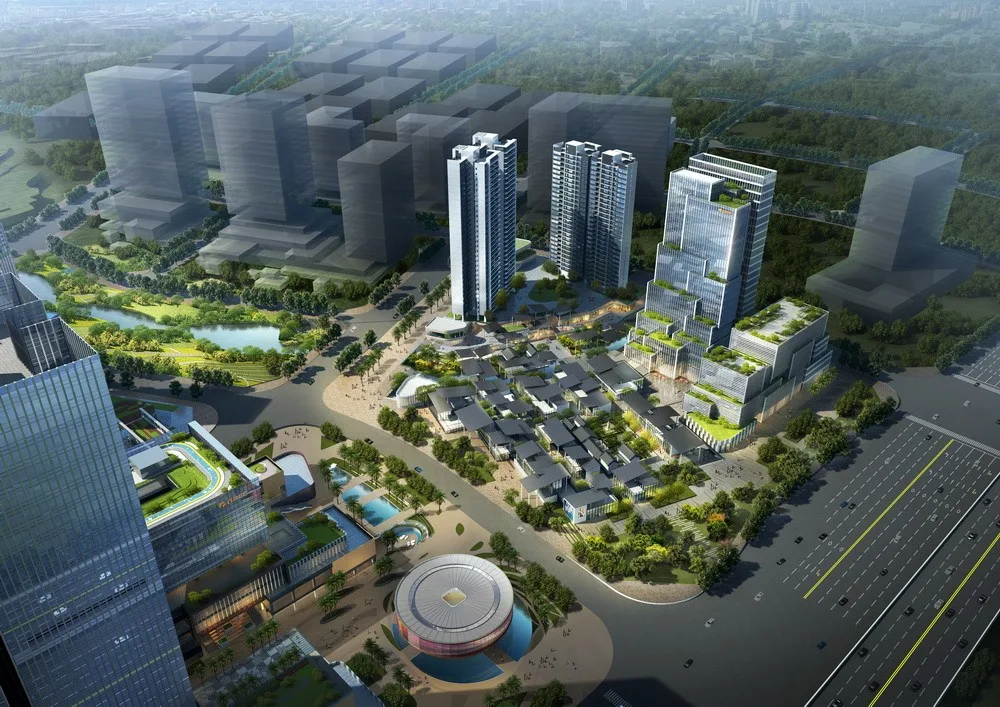
Aerial view of the project
Project Overview
The “Manshu Xili” project is situated in the startup zone of Sanxi Science and Technology Innovation Town, located in the Xiangzhou District of Zhuhai. The northwest side of the site contains the Gechuang Integrated S1, which serves as the initial development zone of the entire innovation town. This area aims to establish a benchmark for the integration of industry and urban life. Meanwhile, Gechuang Integrated S2 primarily focuses on fostering efficient industries alongside essential support facilities.
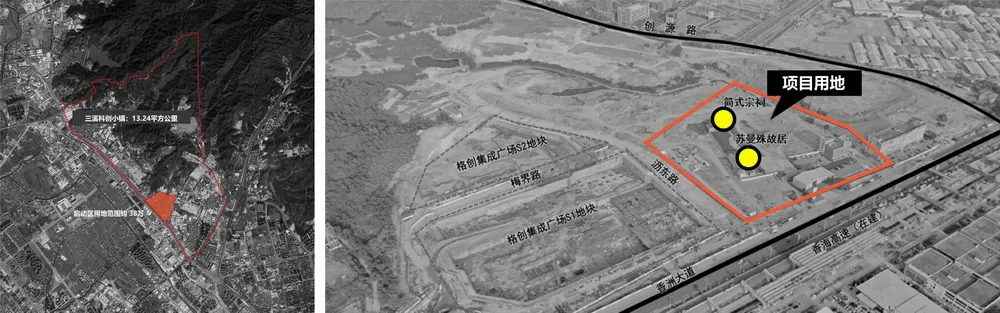
Project location
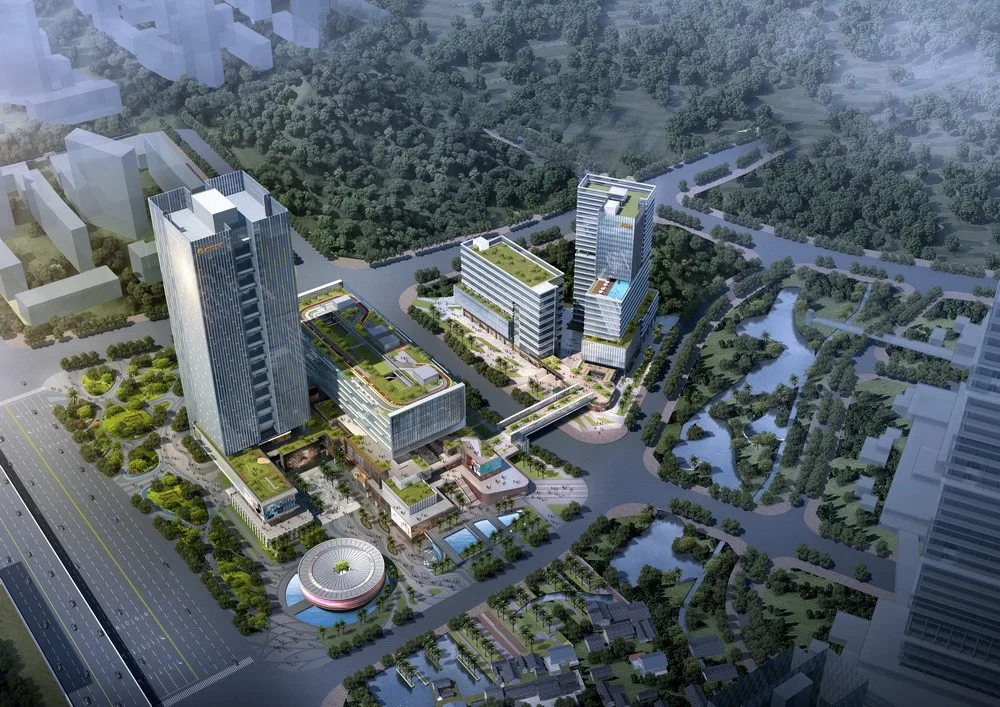
Bird’s-eye view of Gechuang Integrated S1 and S2
The site has a complex land-use profile, incorporating commercial, hotel, and residential functions, as well as preserving two cultural heritage sites. Due to preservation restrictions, building heights are limited, and there is roughly a 5-meter elevation difference across the site.
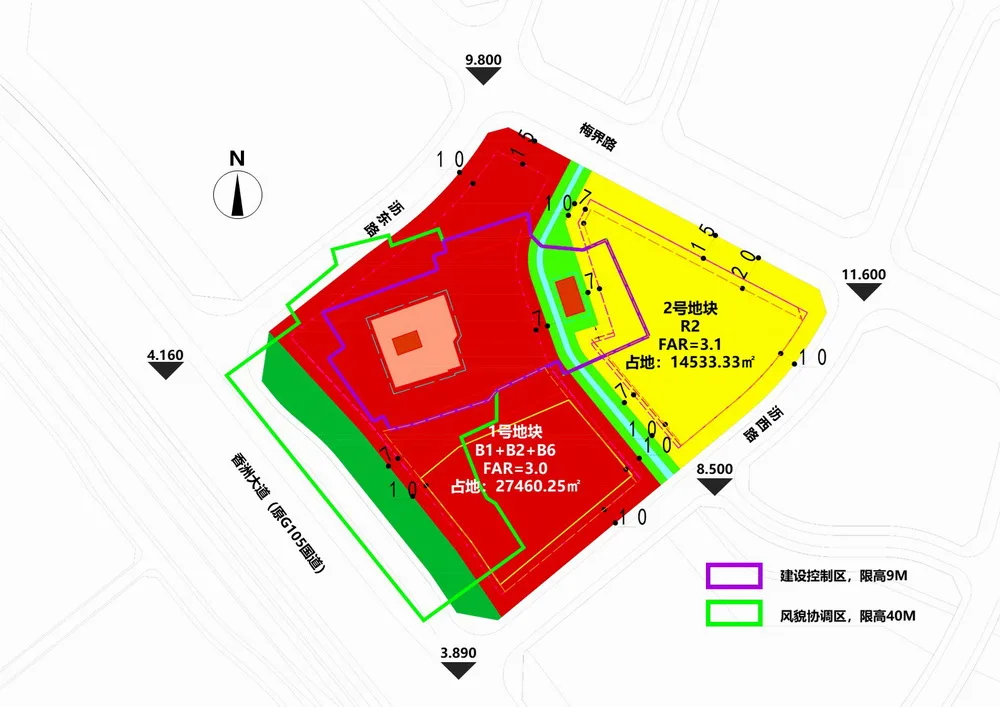
Land use attributes
Preserving Cultural Heritage
At the start of the bidding process, most of the original Lixi Village had been demolished, leaving only the former residence of Su Manshu—a provincial cultural heritage site—and the Jian Family Ancestral Hall, a municipal cultural heritage site. We urgently coordinated with the development team to salvage some old bricks and tiles. As architects, this loss is deeply felt. Lixi Village has sacrificed much in the course of urban development, and these two remaining relics appear solitary.
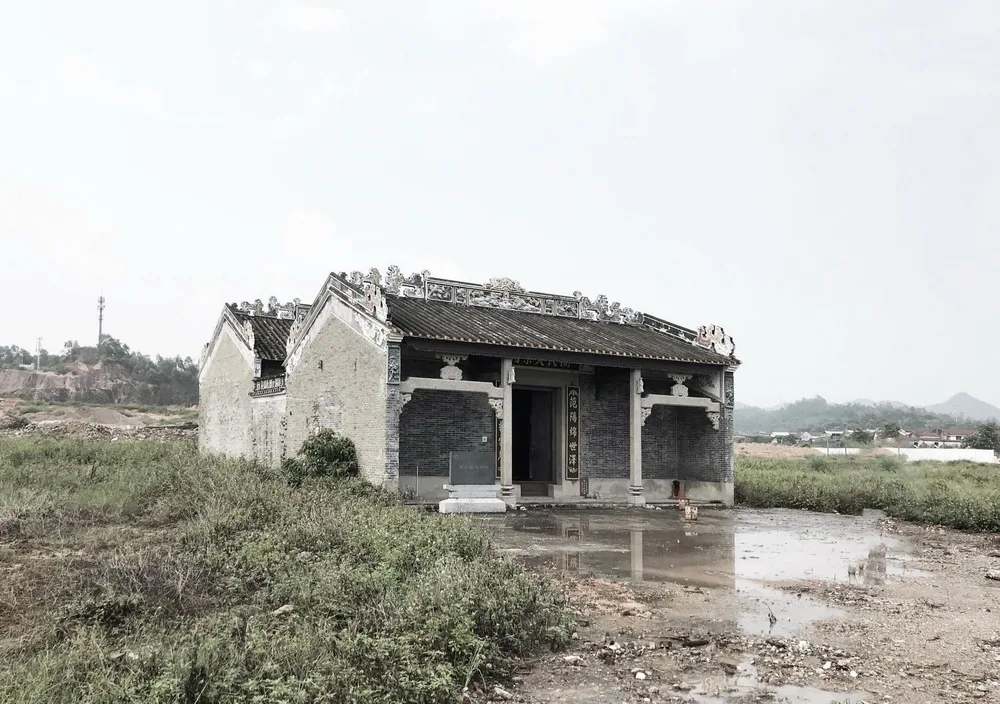
Jian Family Ancestral Hall
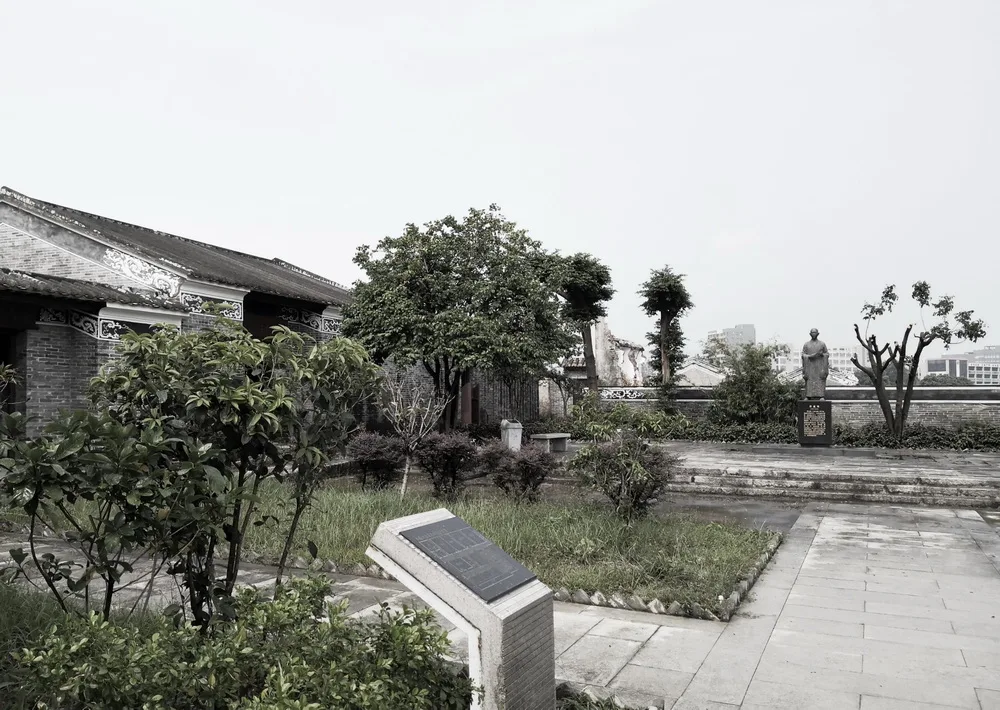
Former Residence of Su Manshu
Integrating with Heritage
To honor the project’s cultural significance, we aimed to preserve as many memories of Lixi Village as possible or evoke them through carefully designed scenes. We studied the original village’s dense settlement pattern filled with vibrant community life. The former residence of Su Manshu and the Jian Clan Ancestral Hall once thrived within this lively context.
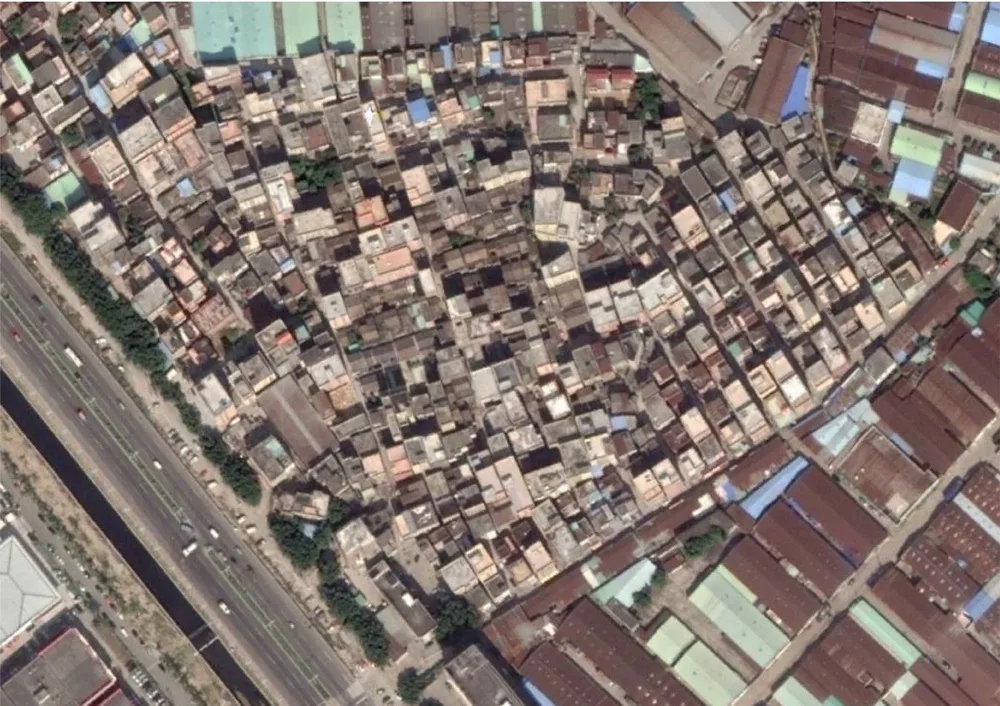
Original texture of Lixi Village
We sought to continue this spatial relationship where heritage sites coexist closely with homes of various sizes rather than being isolated. Drawing upon Lixi Village’s original patterns, we integrated and reshaped its texture, preserving street and alley names such as “Dayu Street,” “Subei Lane,” and “Baile Lane” to recreate a familiar atmosphere. Additionally, we designed streets like “Poetry Monk Street,” “Painting Monk Street,” “Sugar Monk Street,” and “Sanlang Street” inspired by Su Manshu’s life story.
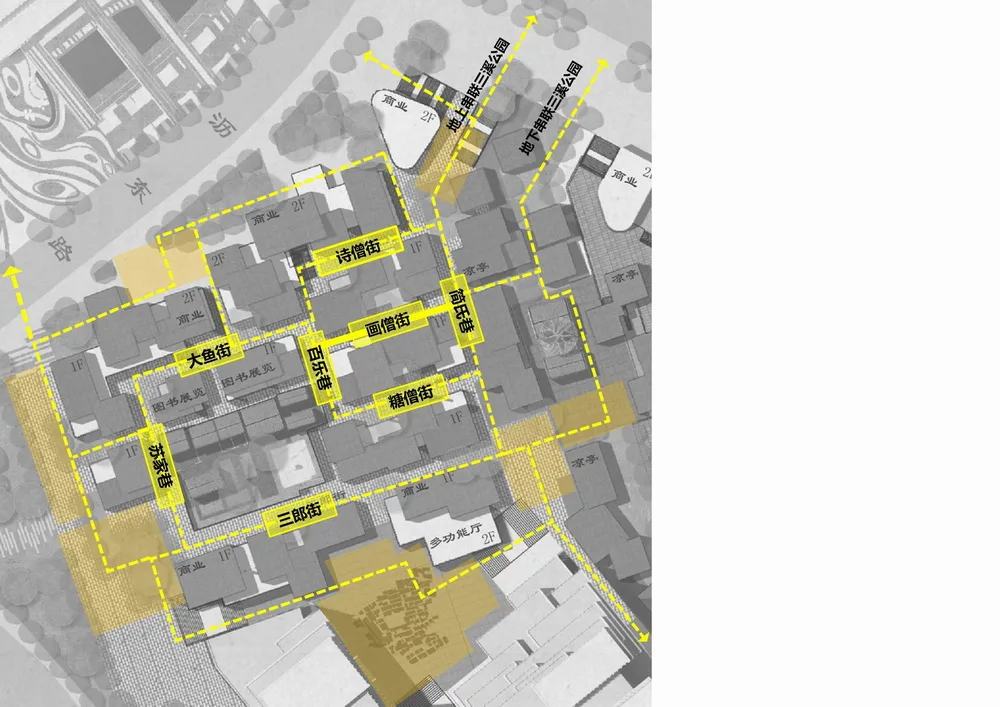
Street and alley names inspired by local heritage
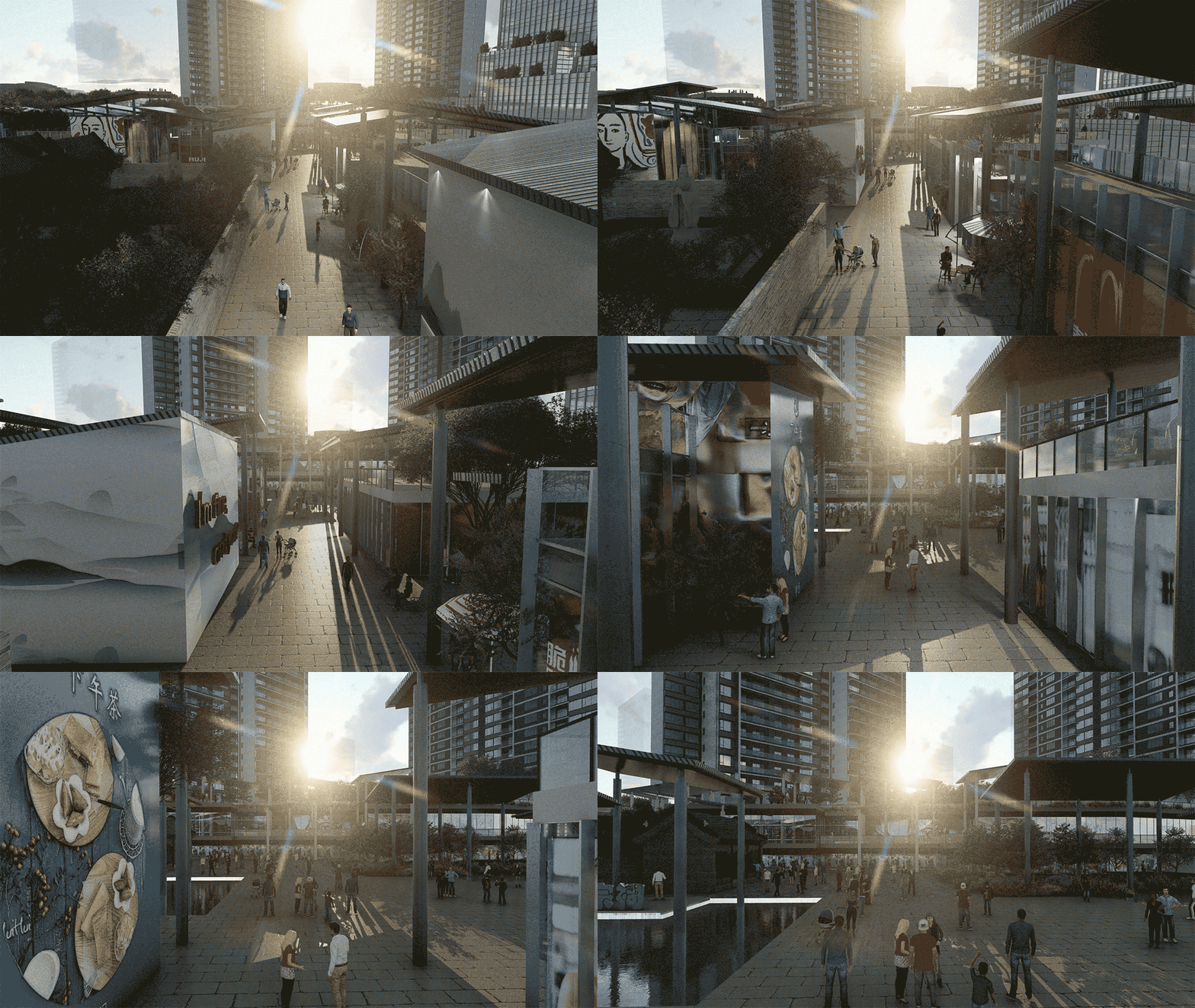
Sanlang Street leading to Jian’s Ancestral Hall
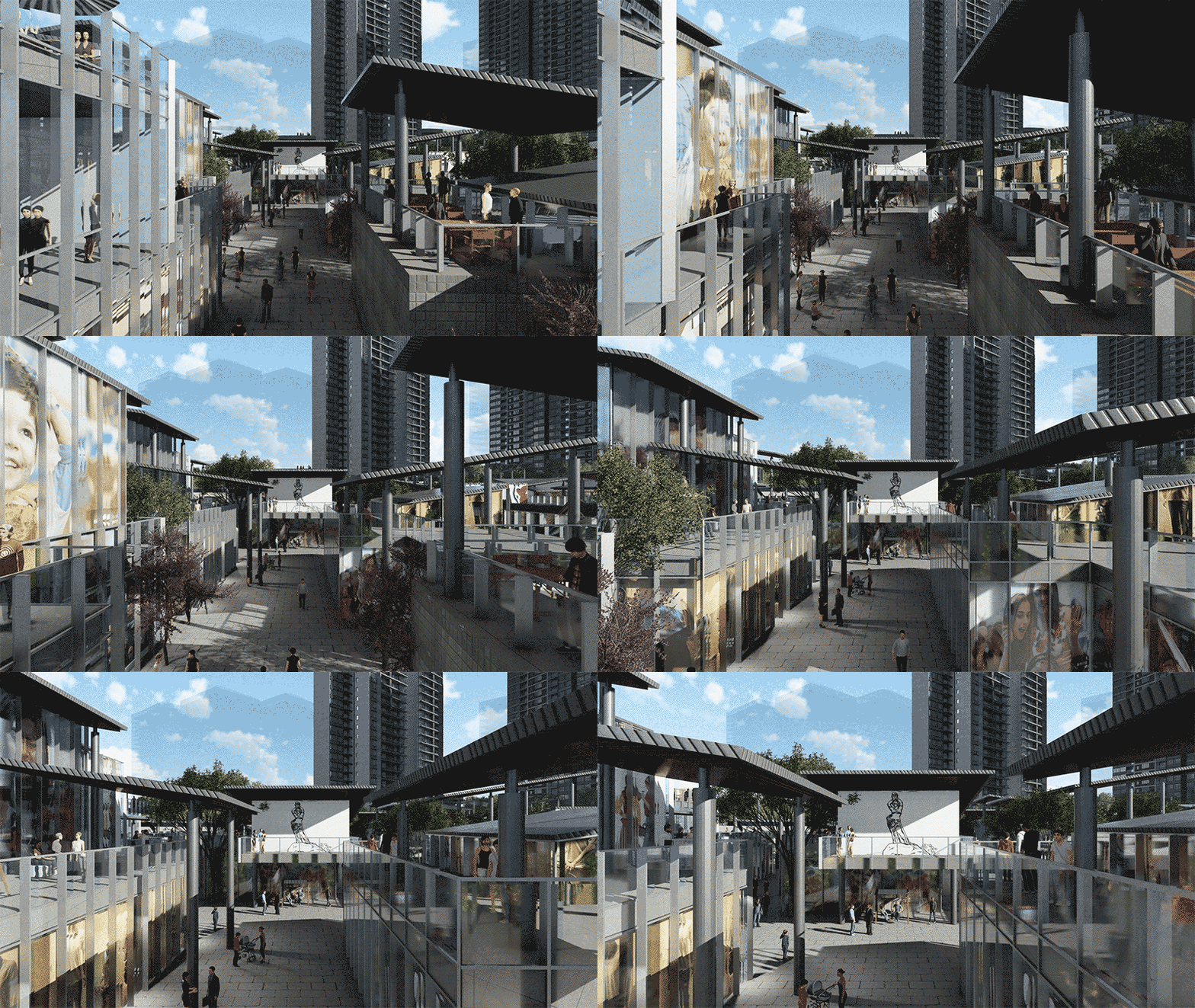
Big Fish Street
Authenticity of Cultural Relics
Another key challenge was preserving the authenticity of cultural relics. We drew inspiration from the concept of cultural relic supplementation, using real materials to bridge temporal and spatial gaps. This approach encouraged us to rethink revitalizing heritage architecture, connecting relics with contemporary life scenarios rather than recreating empty historical shells.

Roof form
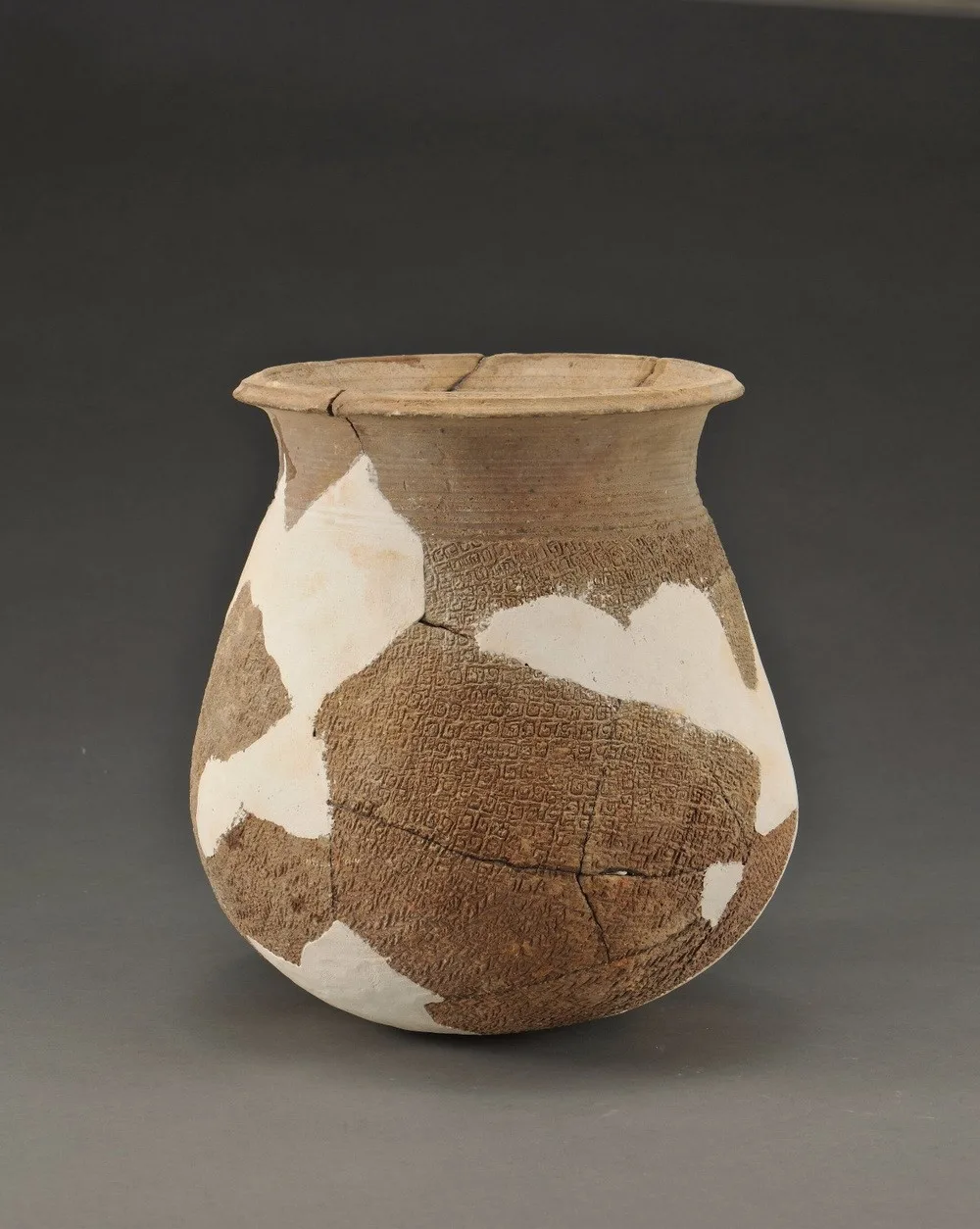
Supplementing cultural relics
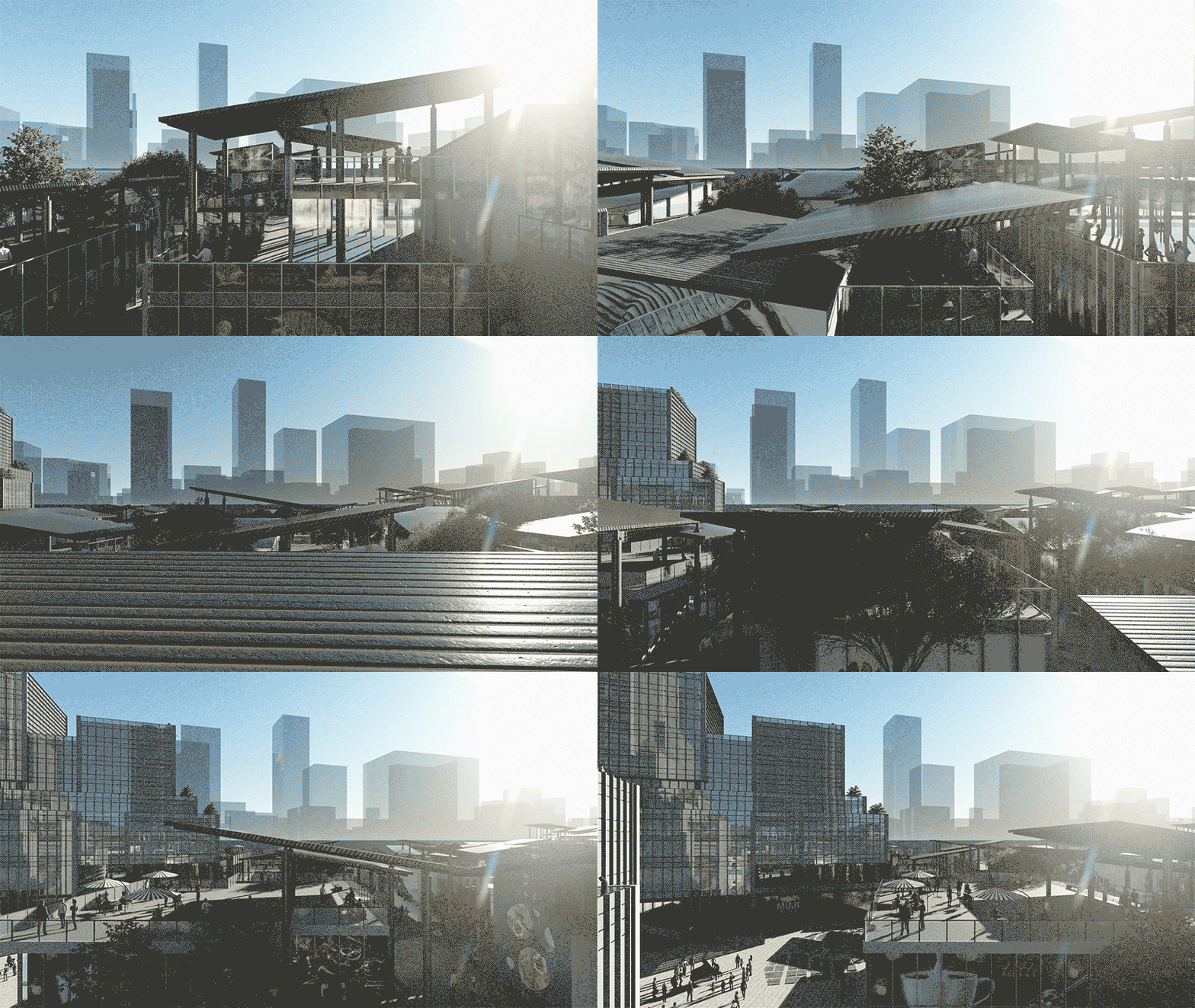
Roof activities
Height and Functional Integration
This project encompasses diverse functions: cultural heritage revitalization, commercial spaces, offices, hotels, and residences. Coordinating these functions poses significant challenges. To the west lies Gechuang Integrated S1, the first development area with a landmark skyscraper of 150 meters and a large industrial floor of 40 meters currently under construction.
Although office and hotel zones have a 150-meter height limit, we determined that constructing another super high-rise is unnecessary from both economic and spatial perspectives. From an operational standpoint, independent hotel and office buildings simplify management and reduce costs. Urbanistically, this approach preserves the landmark identity and creates a balanced skyline.
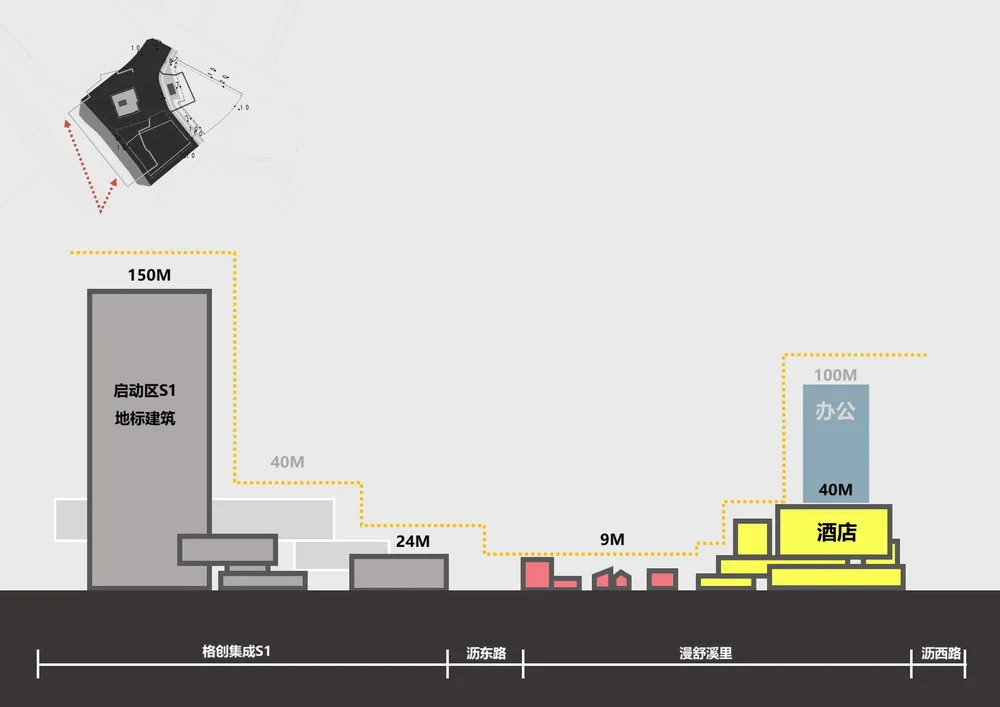
Height design strategy
For volume transition, we drew inspiration from Escher’s artworks, where architectural forms gradually simplify from detailed houses to basic cubes. Similarly, the office and hotel volumes facing the Su Manshu Former Residence gradually increase from minimal to full scale.
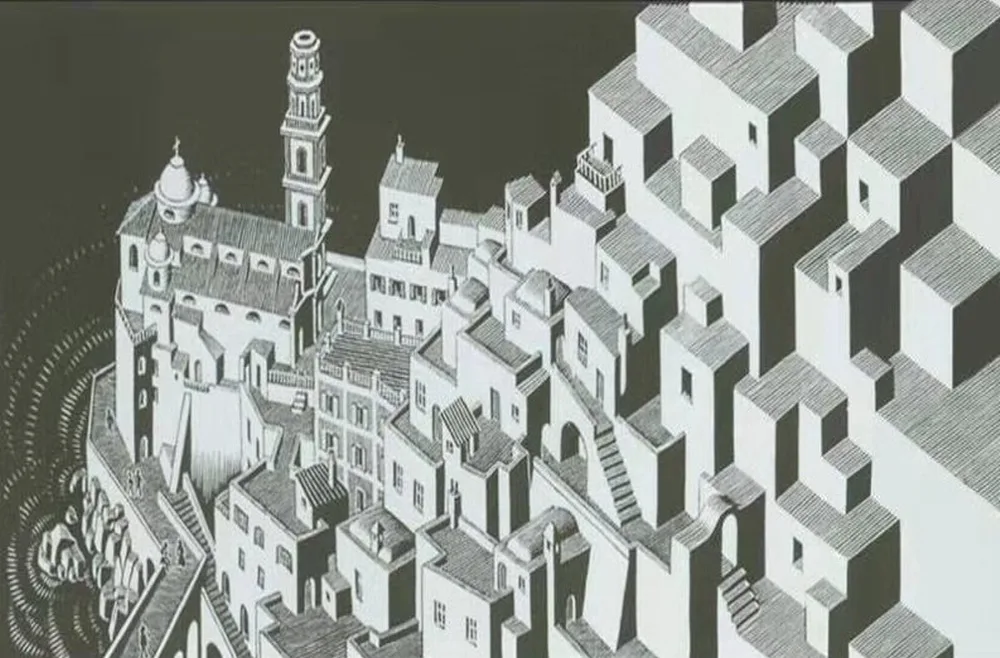
Escher’s paintings as inspiration
The sunken plaza connects these two spaces and serves as a gathering point. At its center, we embedded the salvaged old bricks and tiles, arranged to reflect the original map of Lixi Village.
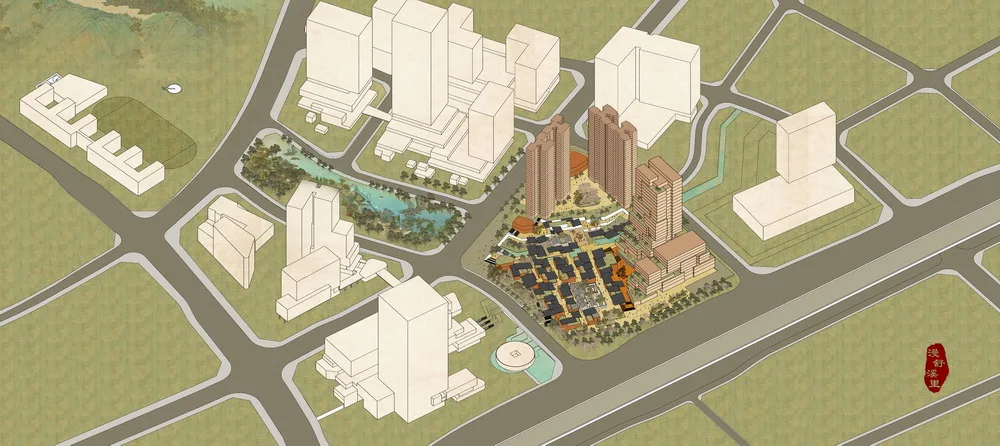
Overall bird’s-eye view of Manshu Creek
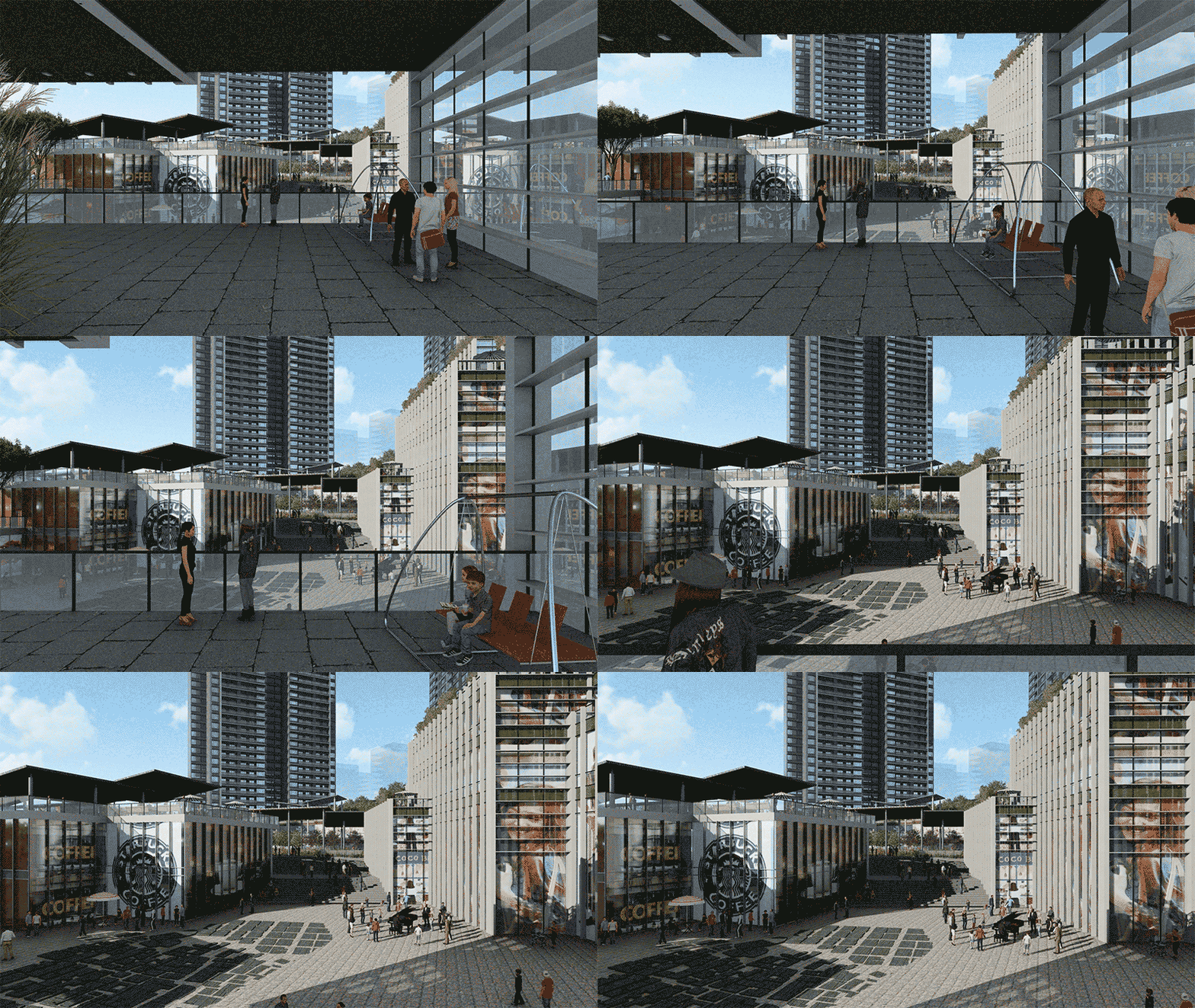
View towards the sunken square from the hotel
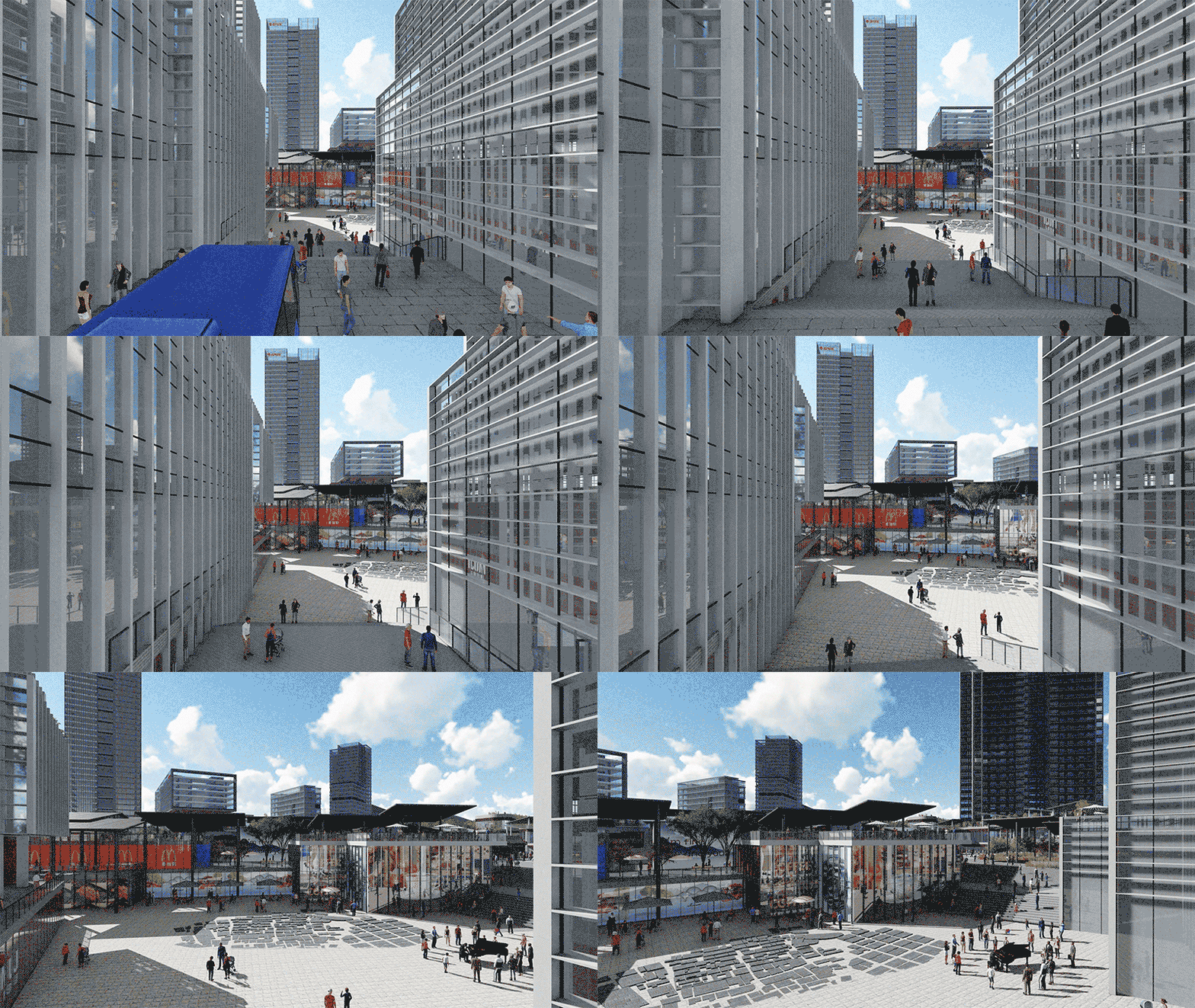
From the drop-off area to the sunken square
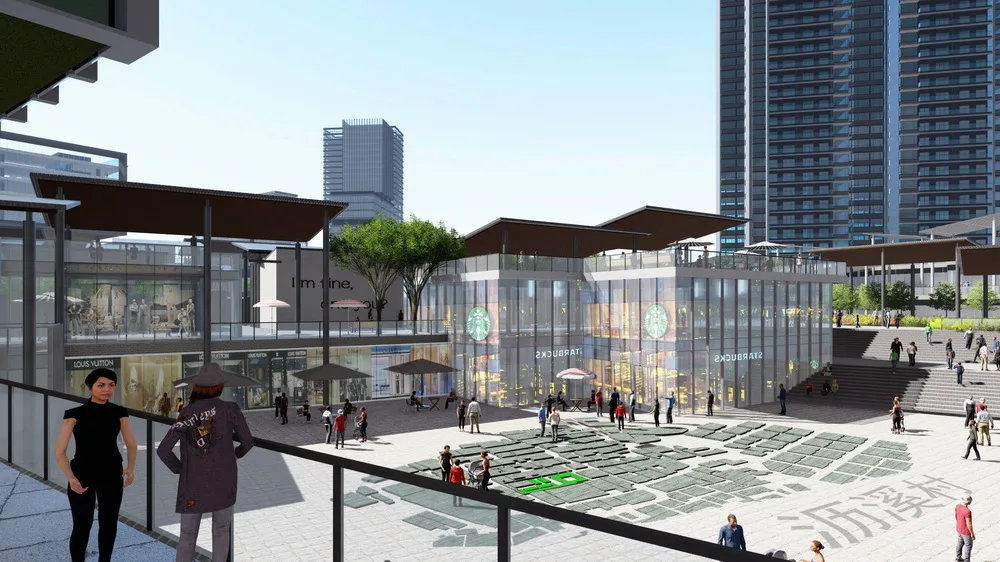
Map of Sunken Square and Lixi Village
Technical Drawings
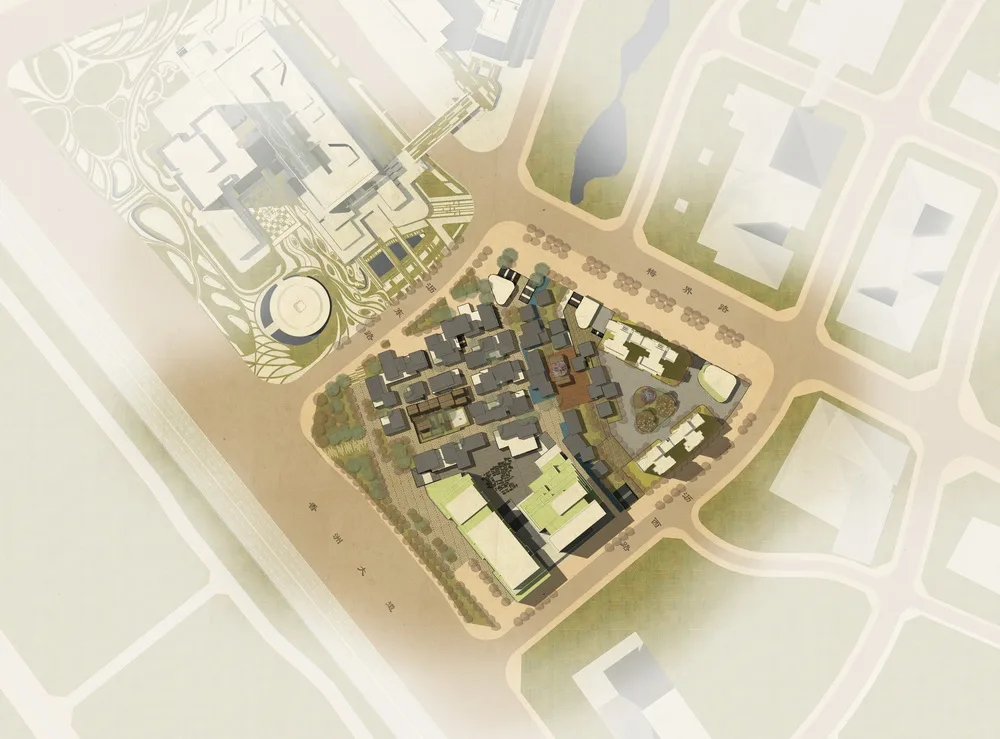
General layout plan
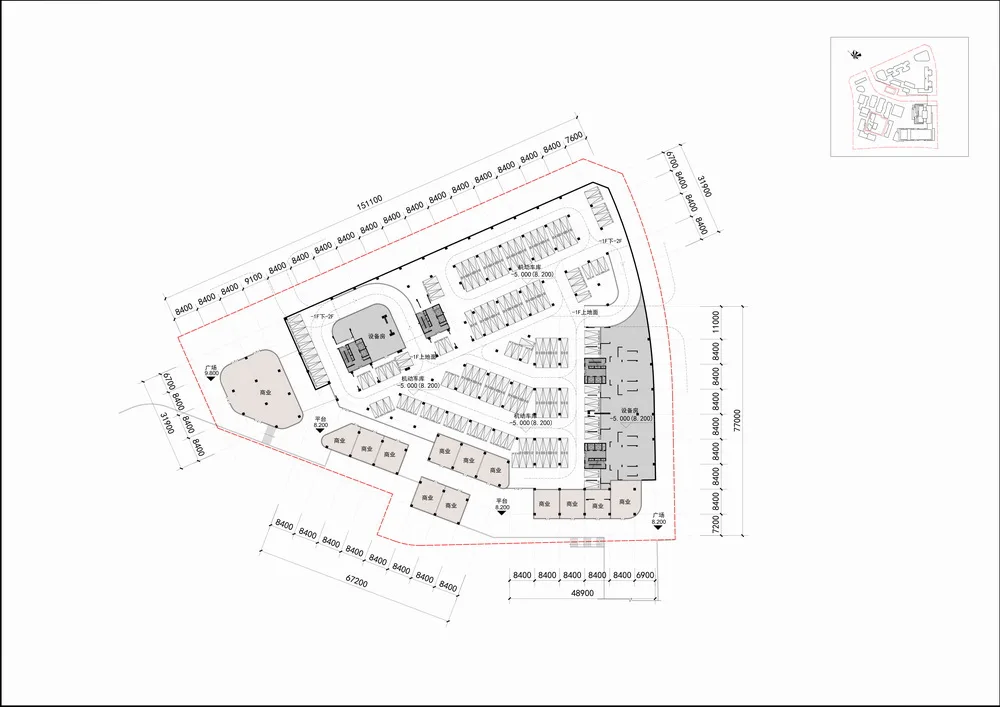
Residential underground floor plan
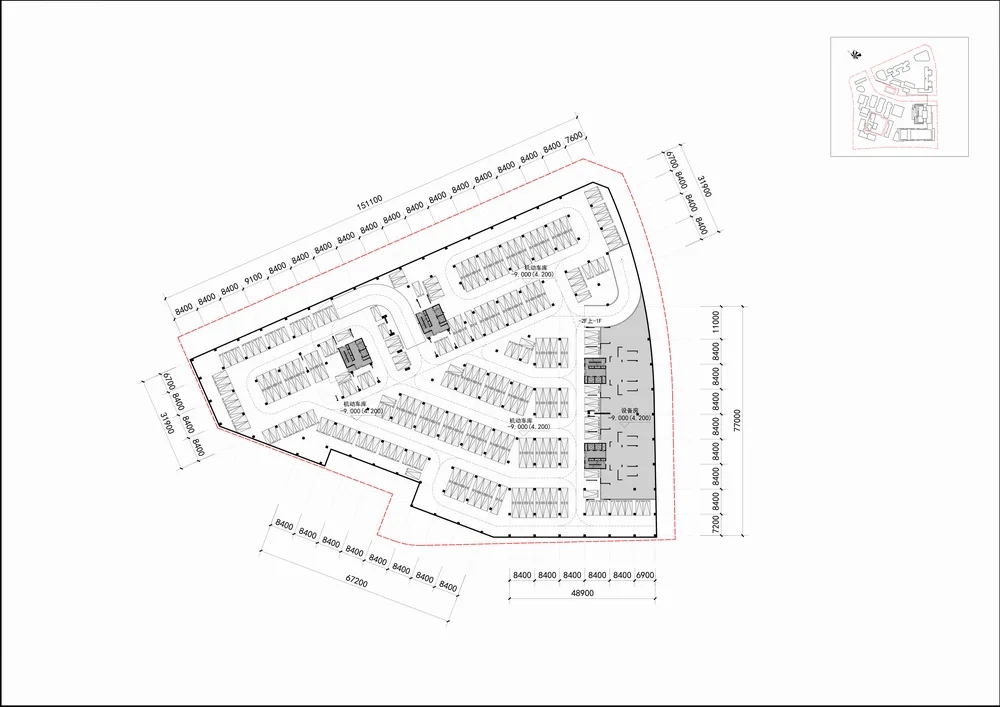
Residential underground second floor plan
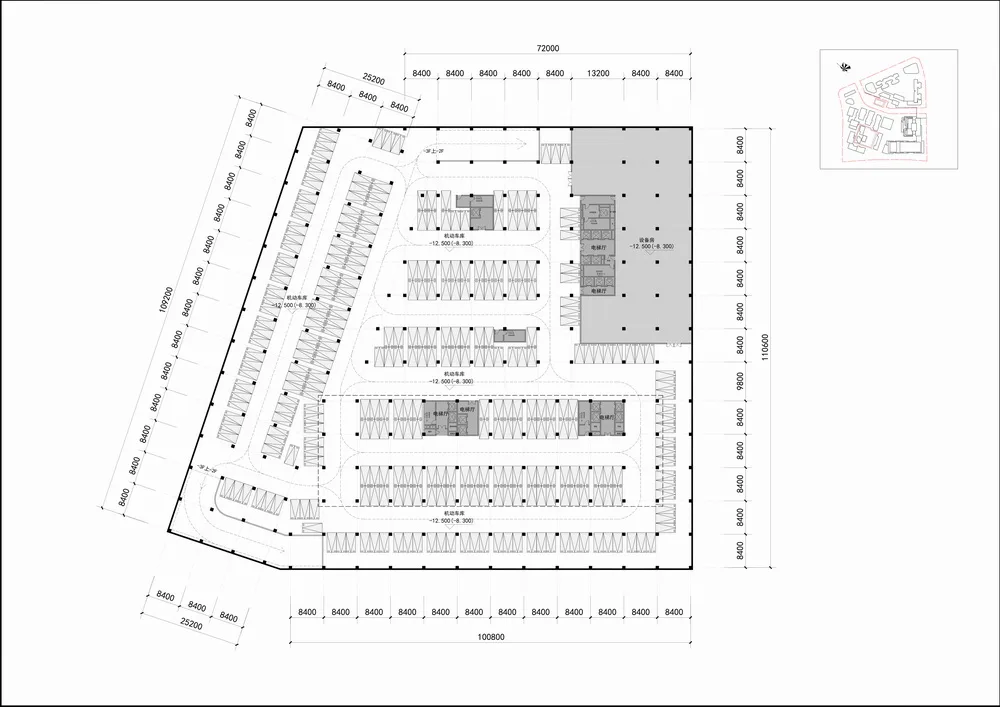
Hotel and office underground third floor plan
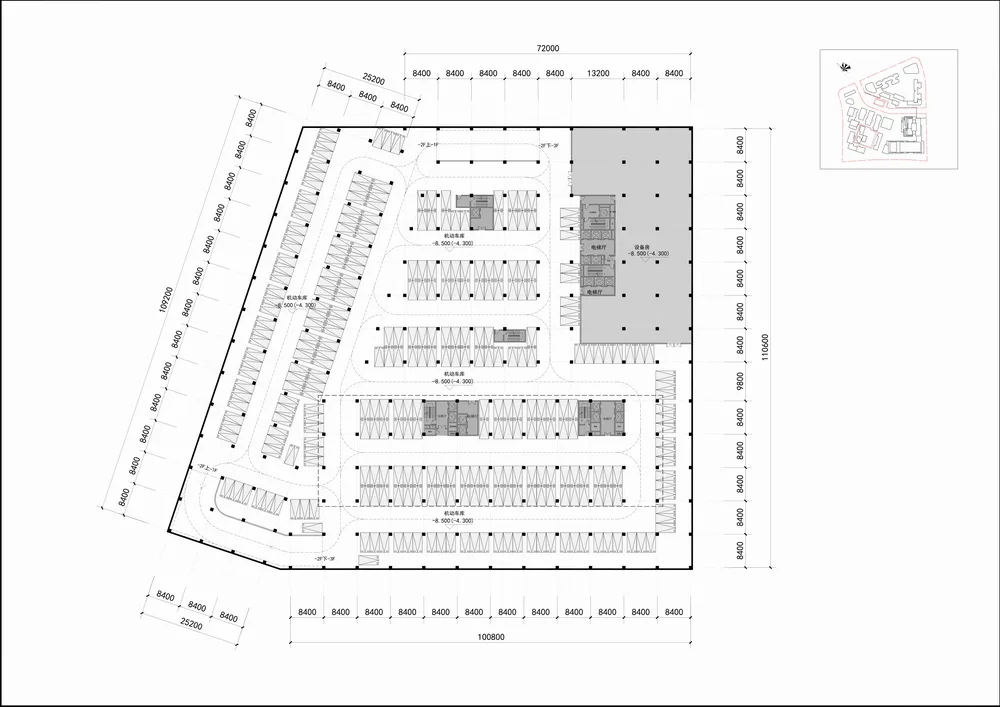
Hotel and office underground second floor plan
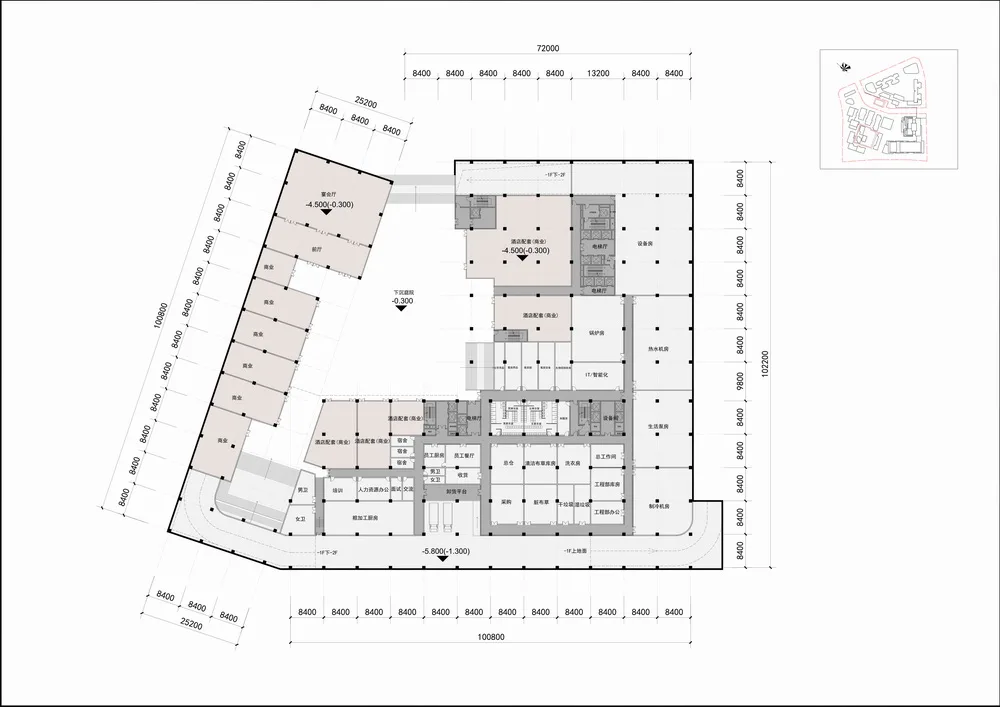
Hotel and office underground floor plan
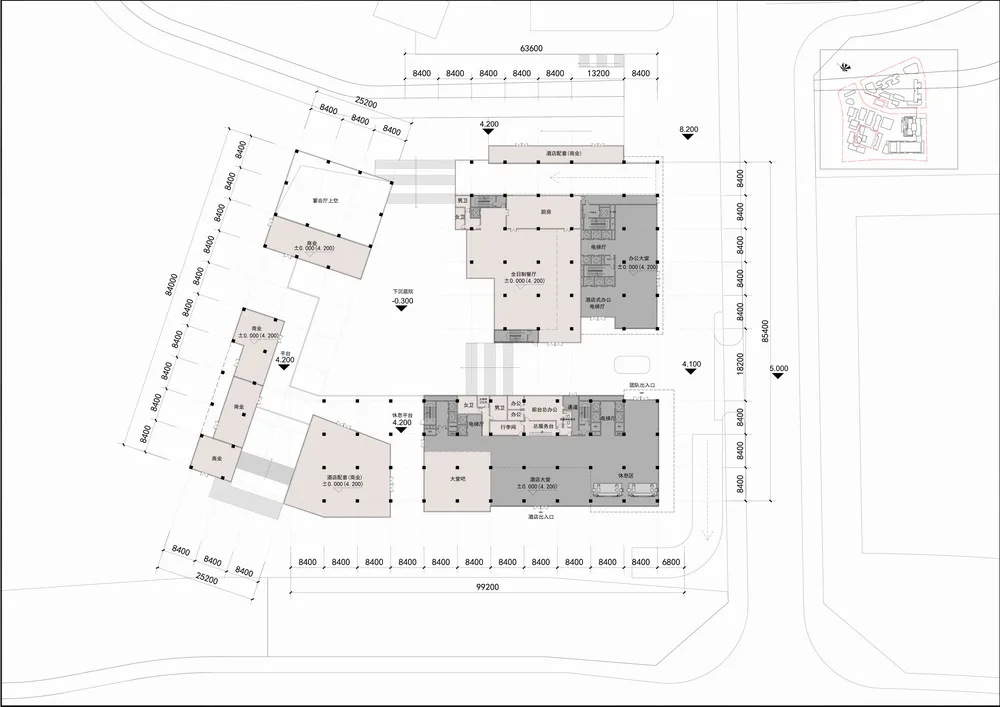
Hotel and office floor plan
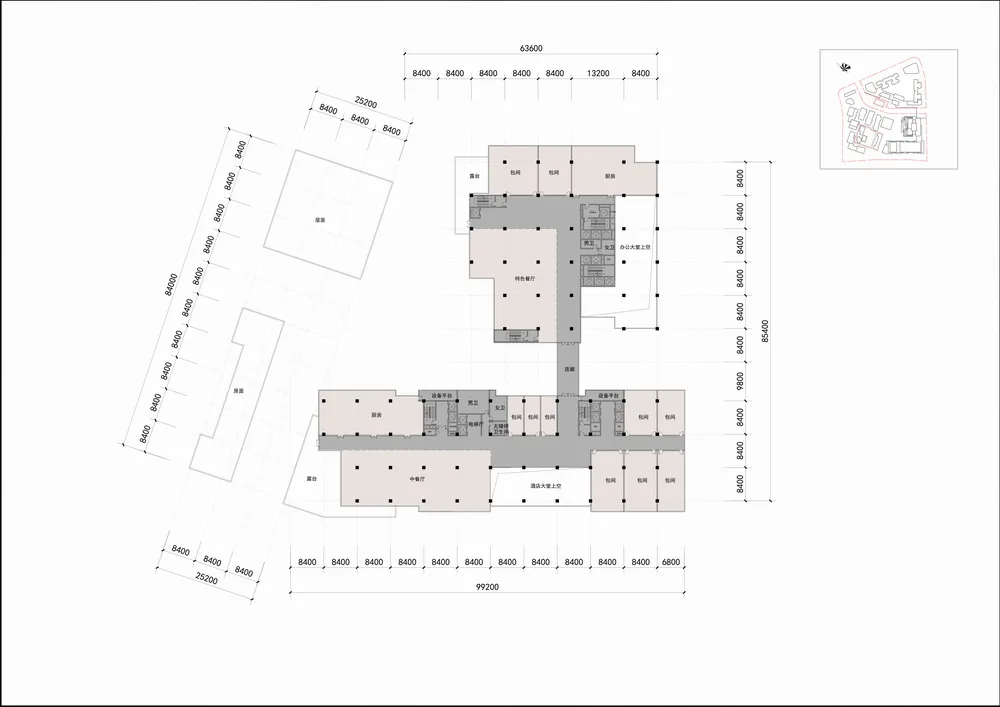
Hotel and office second floor plan
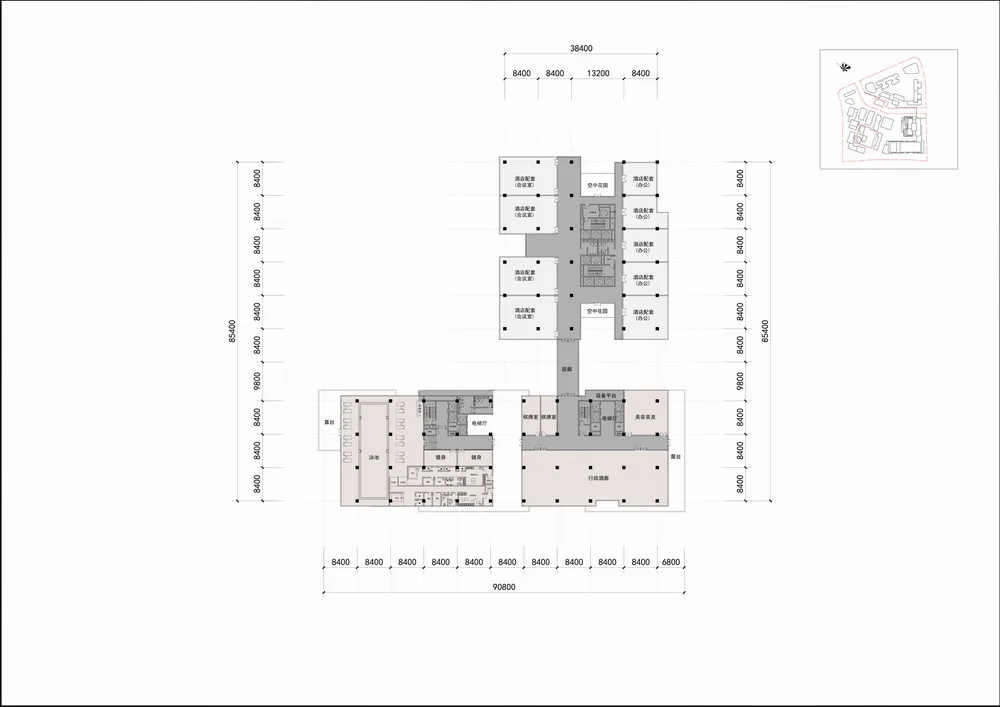
Hotel and office third floor plan
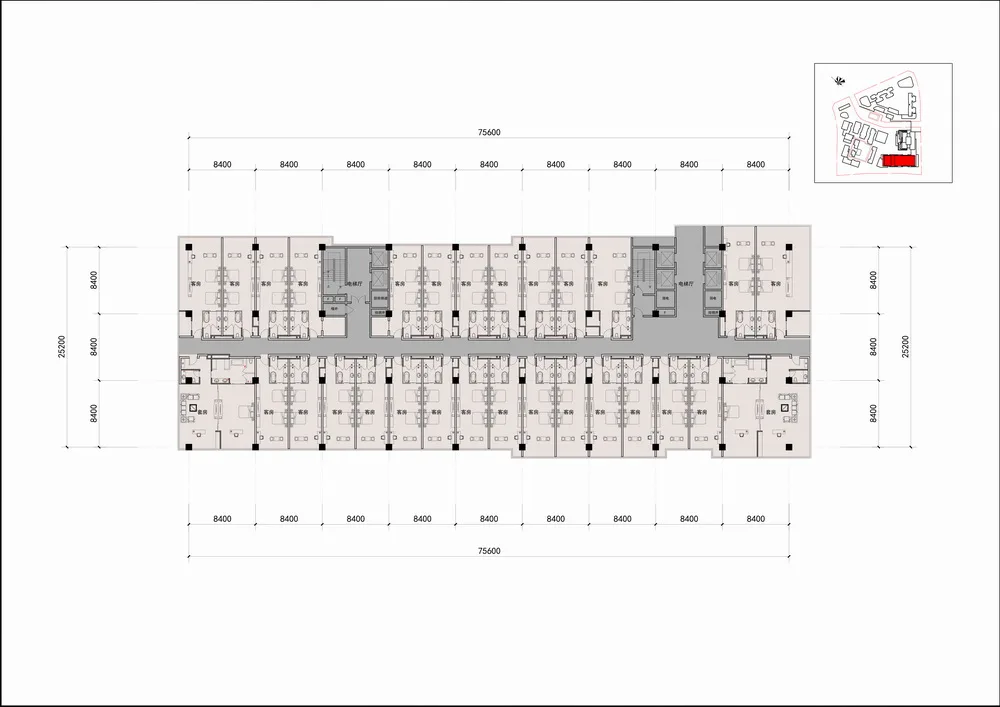
Hotel floors -4 to 10
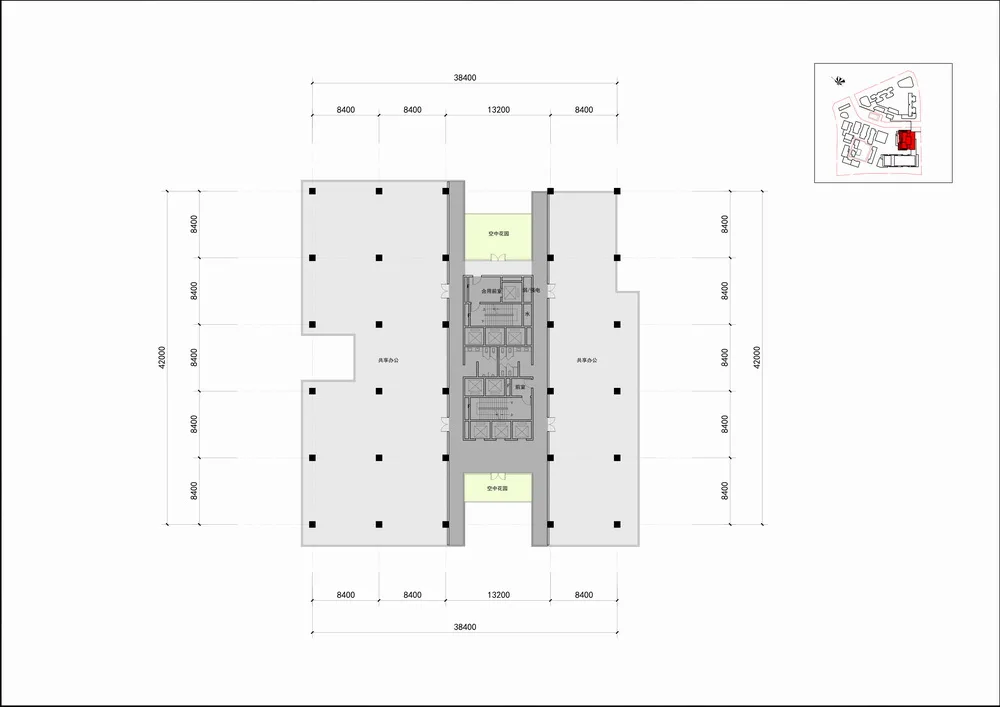
Shared office space on -4F
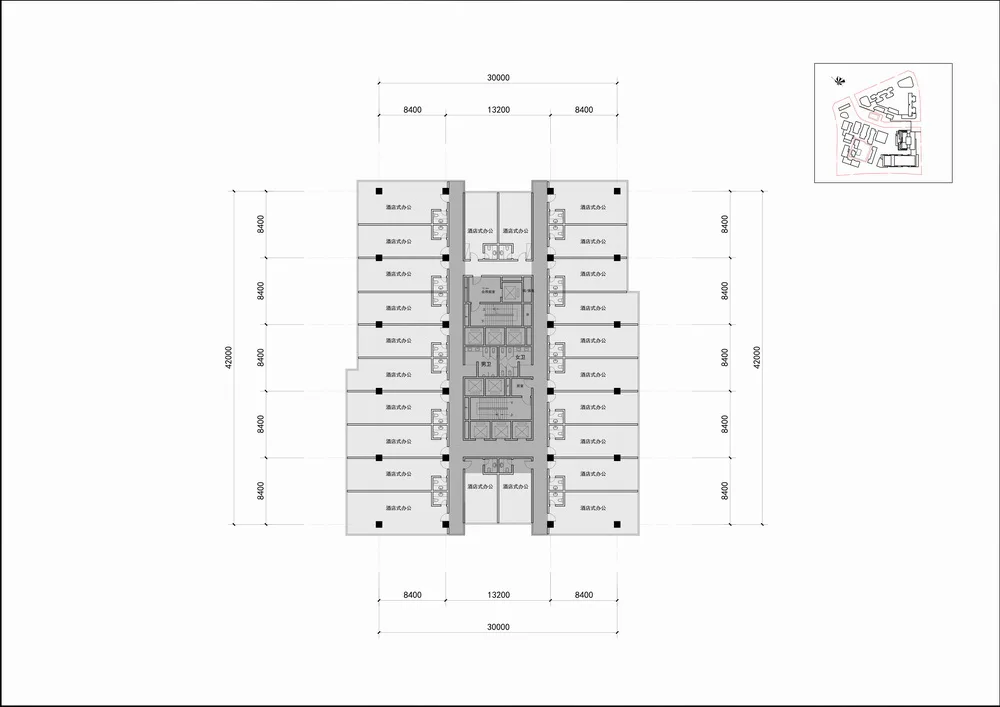
Hotel-style offices from -5F to 10F
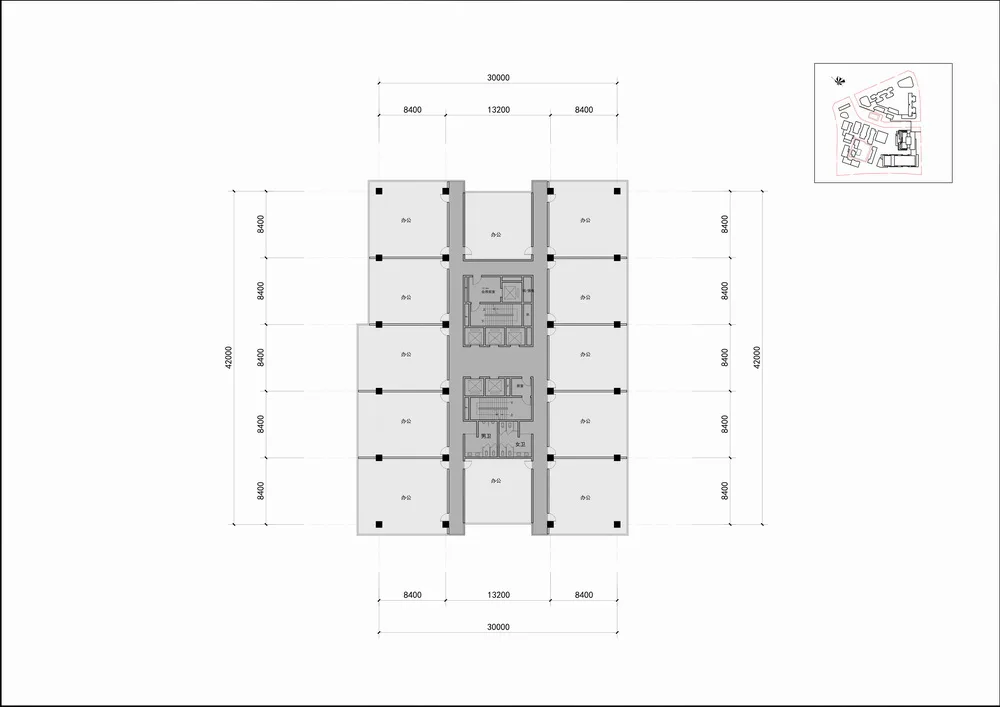
Offices from -11F to 23F
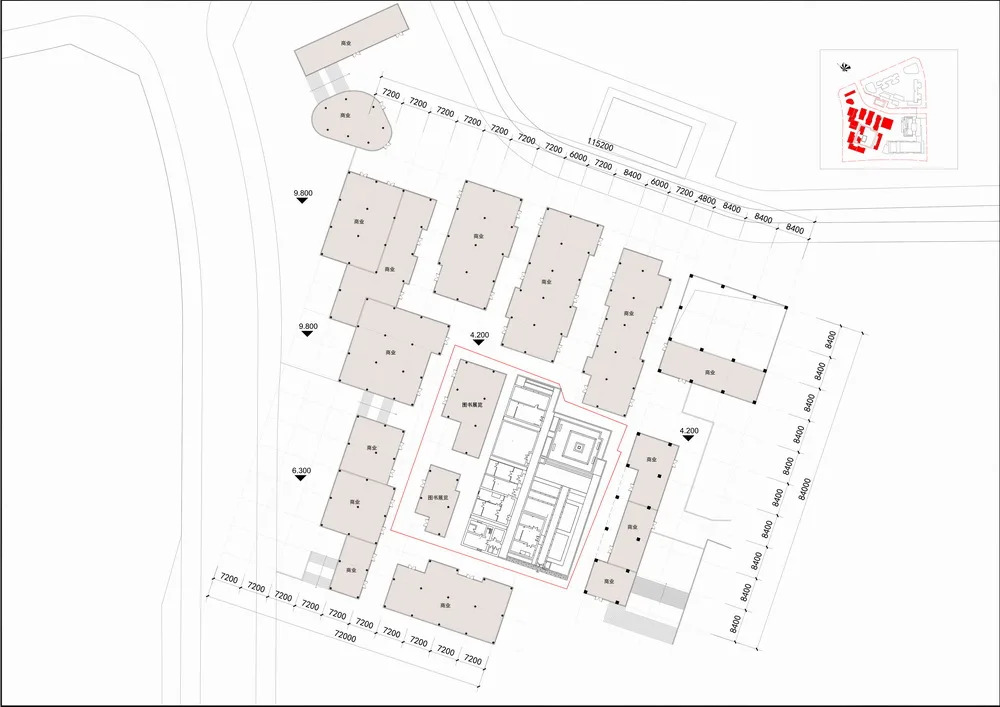
Commercial block plan
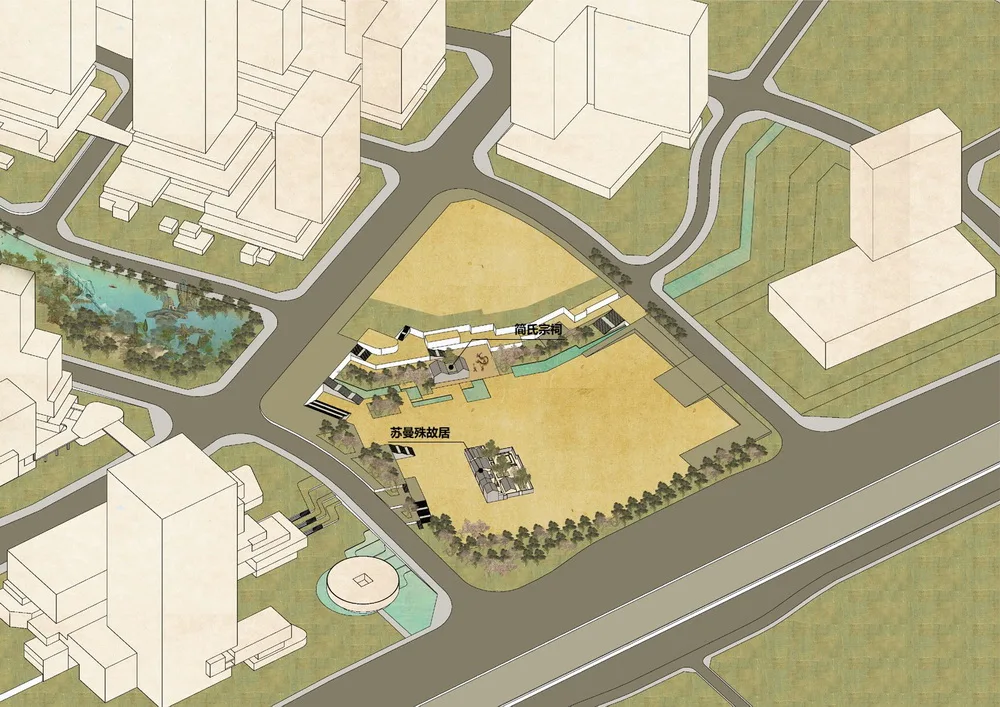
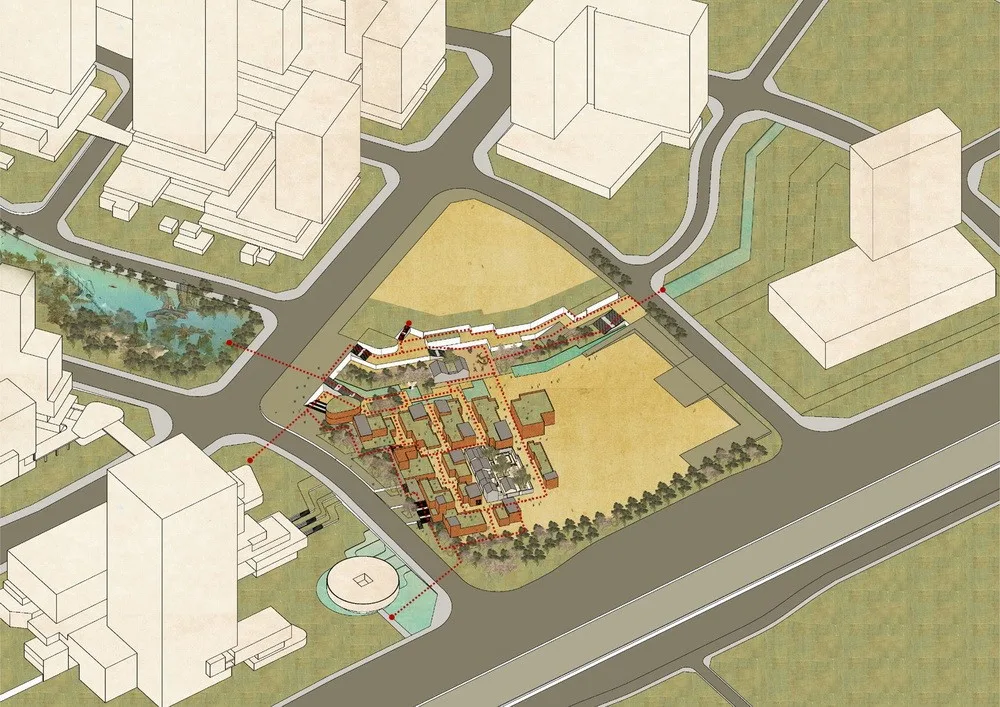
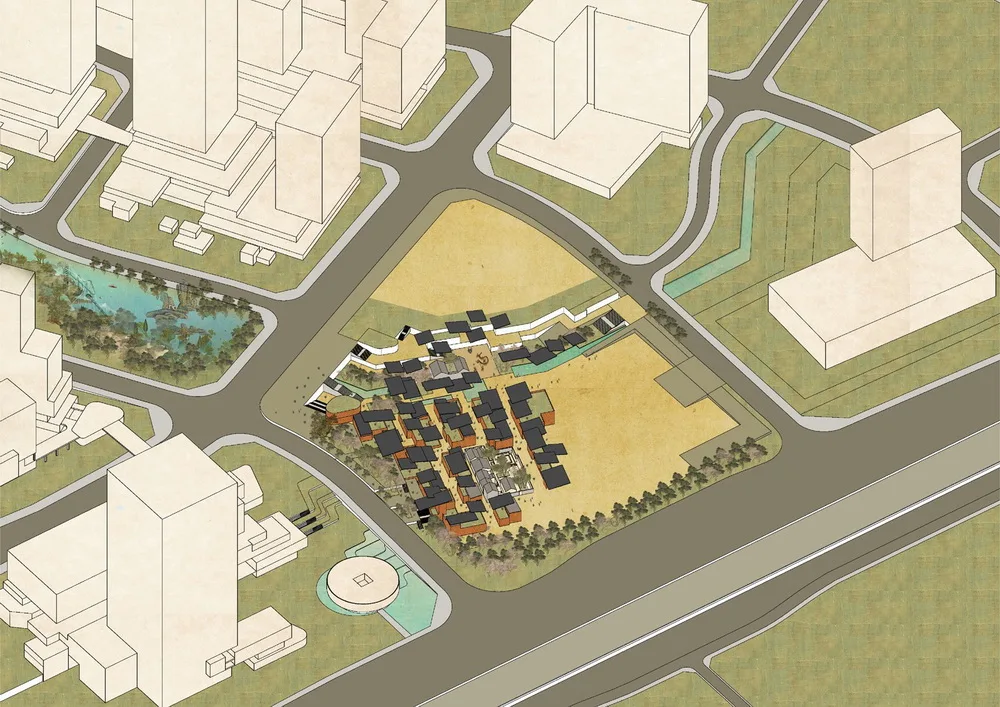
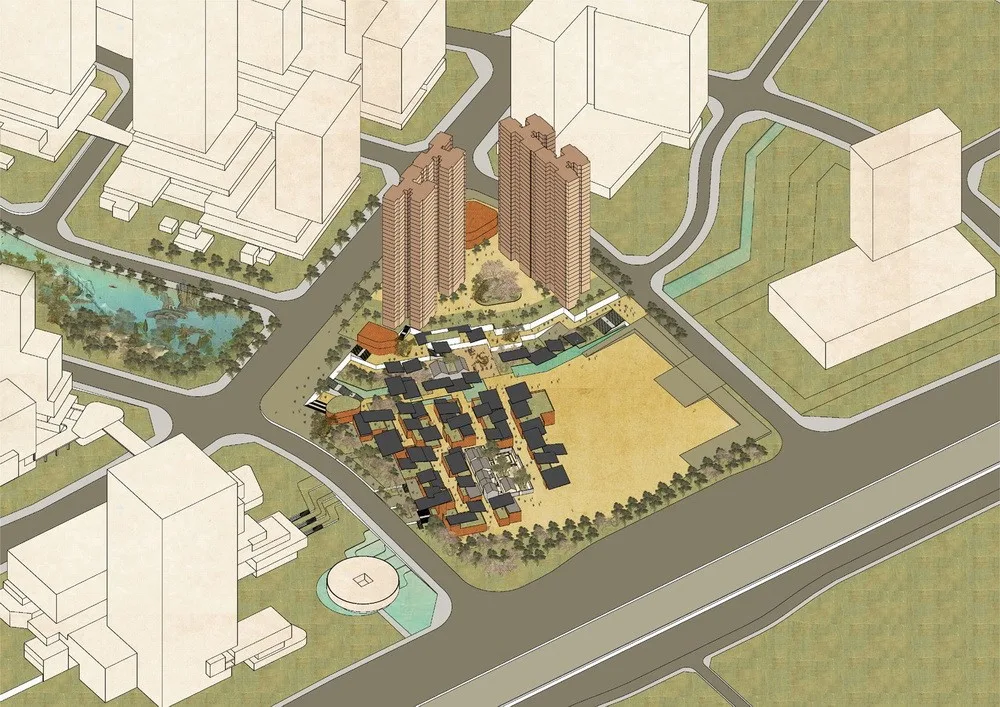
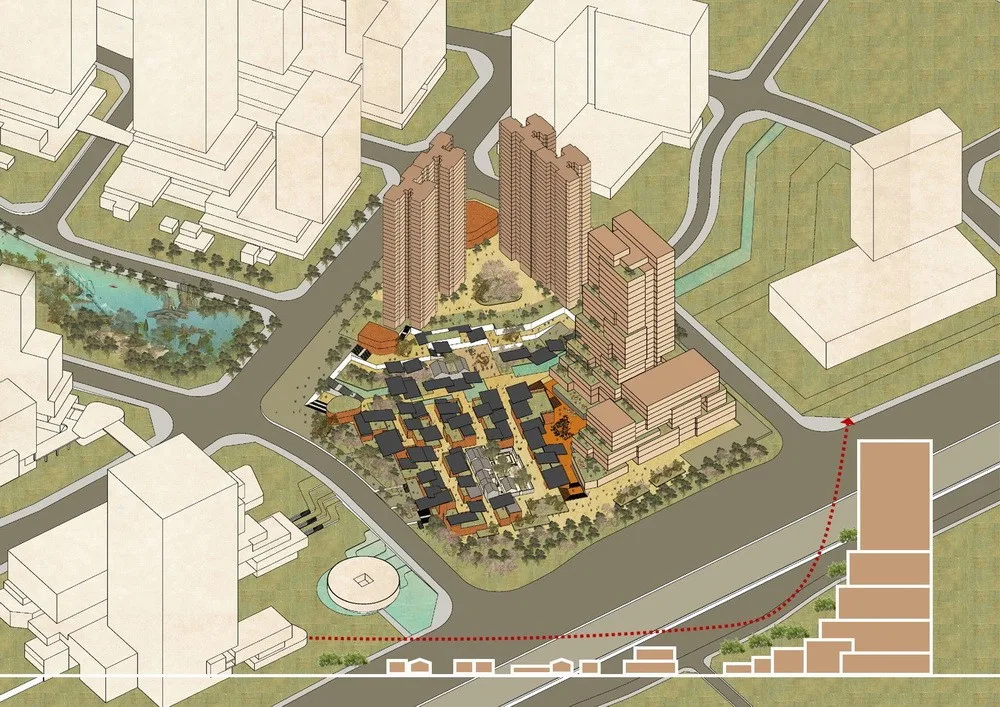
Design development process
Project Details
Project Name: “Manshu Xili” Conceptual Design
Project Type: Mixed-use (commercial, office, hotel, residential)
Status: Conceptual proposal bidding (2nd place)
Design Period: May 2021 to June 2021
Location: Zhuhai
Project Area: 108,080.75 square meters
Design Firm: Shenzhen Architectural Design and Research Institute Co., Ltd
Official Website: __AI_ST_URL_0__
Lead Architect: Chen Hui
Design Team: Zheng Yaohua, Qin Pengchong, Zheng Mianhui, Qin Keqi, He Guoshan, Guo Jiaxin, Meng Liucheng, Bao Qihan
Client: Zhuhai Gree Xiangxi Construction and Development Co., Ltd














Must log in before commenting!
Sign Up