
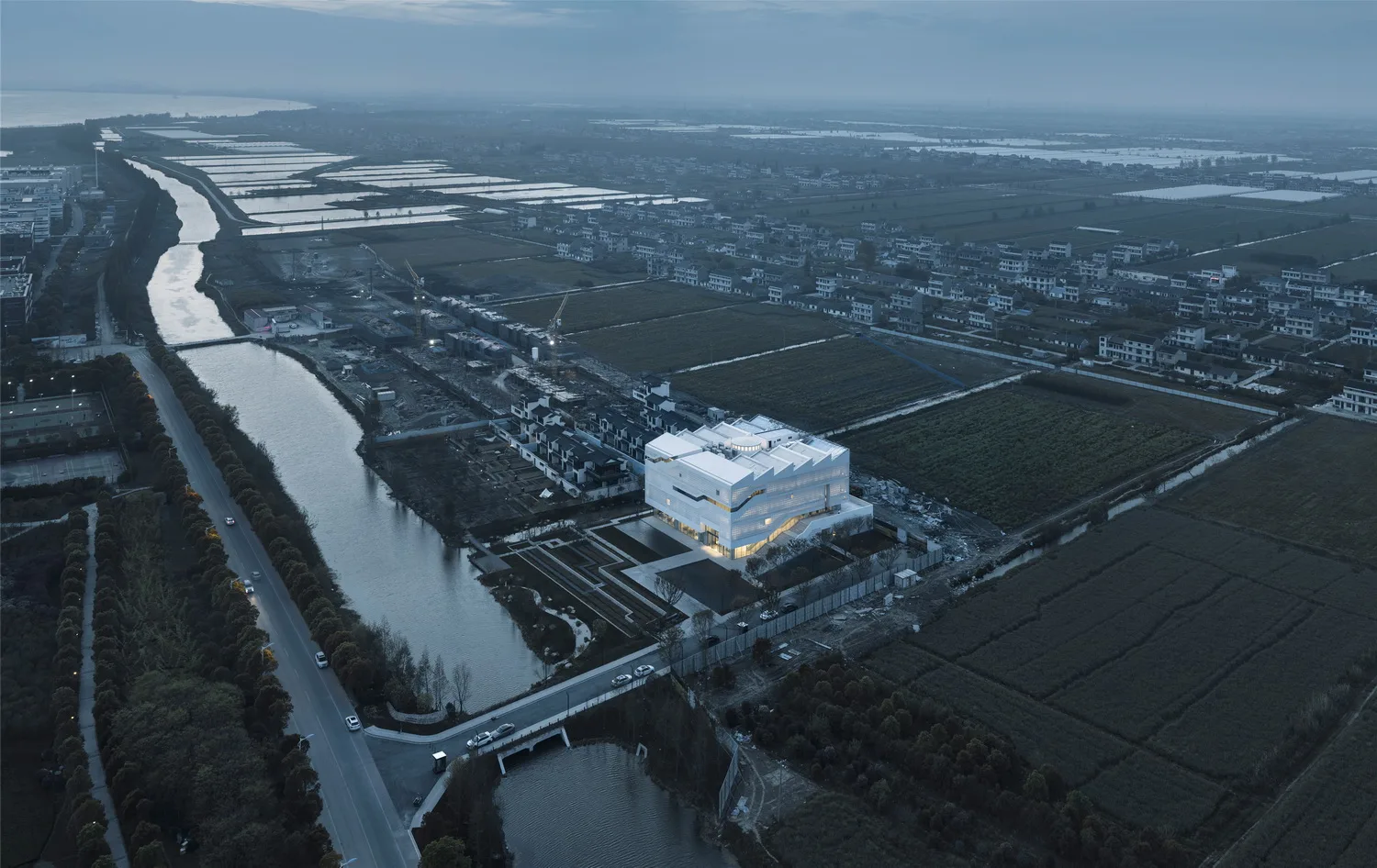
Haimen, located in Nantong City, Jiangsu Province, lies adjacent to the Yellow Sea to the east and the Yangtze River to the south, with Shanghai directly across the river. Known as the “Gateway to the River and Sea,” it is the heartland of Wu Yue culture and the birthplace of Chinese rice culture. The Haimen Yungu Agricultural Exhibition Hall is situated here. Reflecting the recent influx of investors and architects into rural areas, the project’s design team faces the historic challenge of balancing local heritage preservation with innovative exploration.
Intertextuality of Fangcang Yuanlin
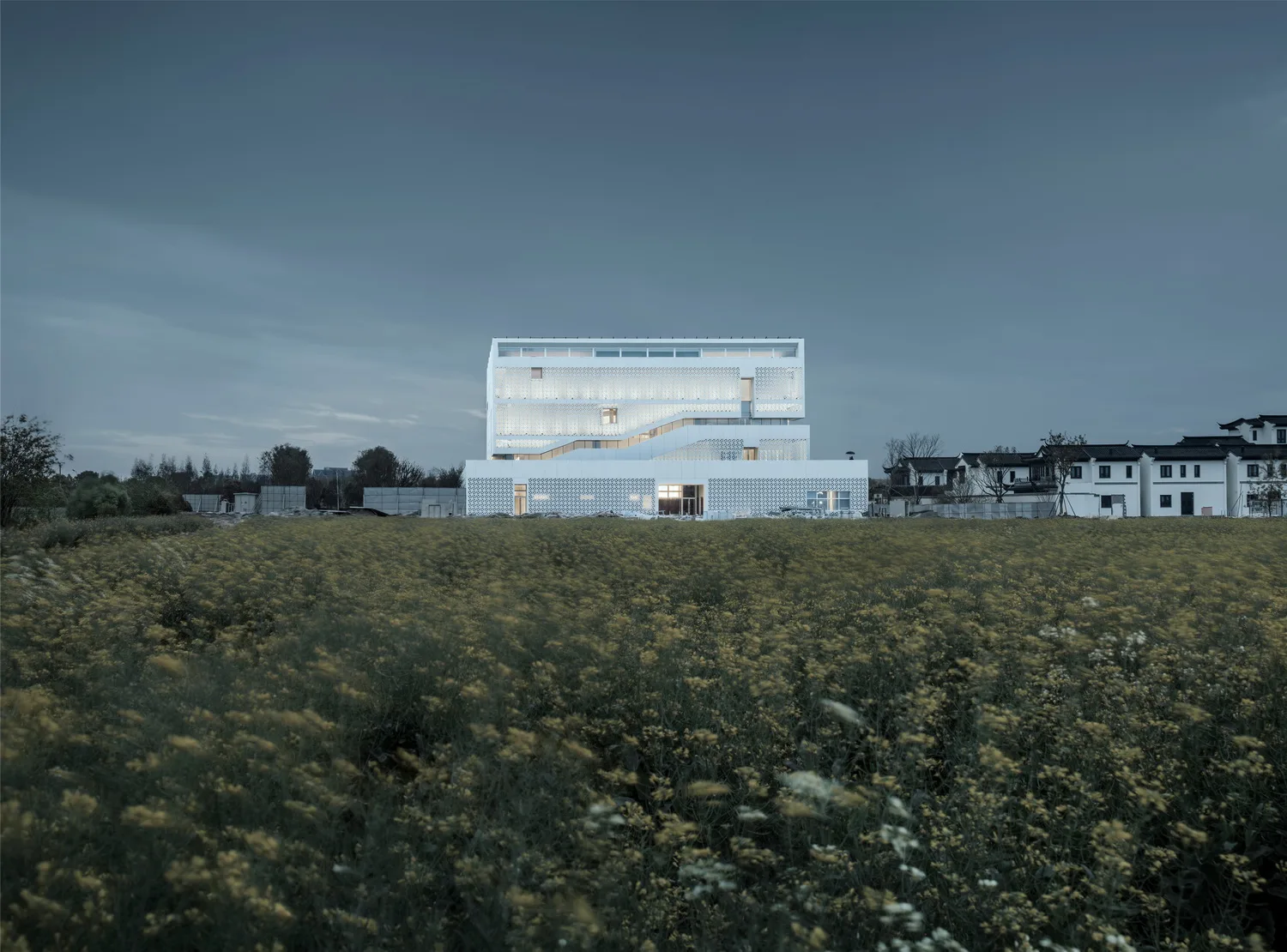
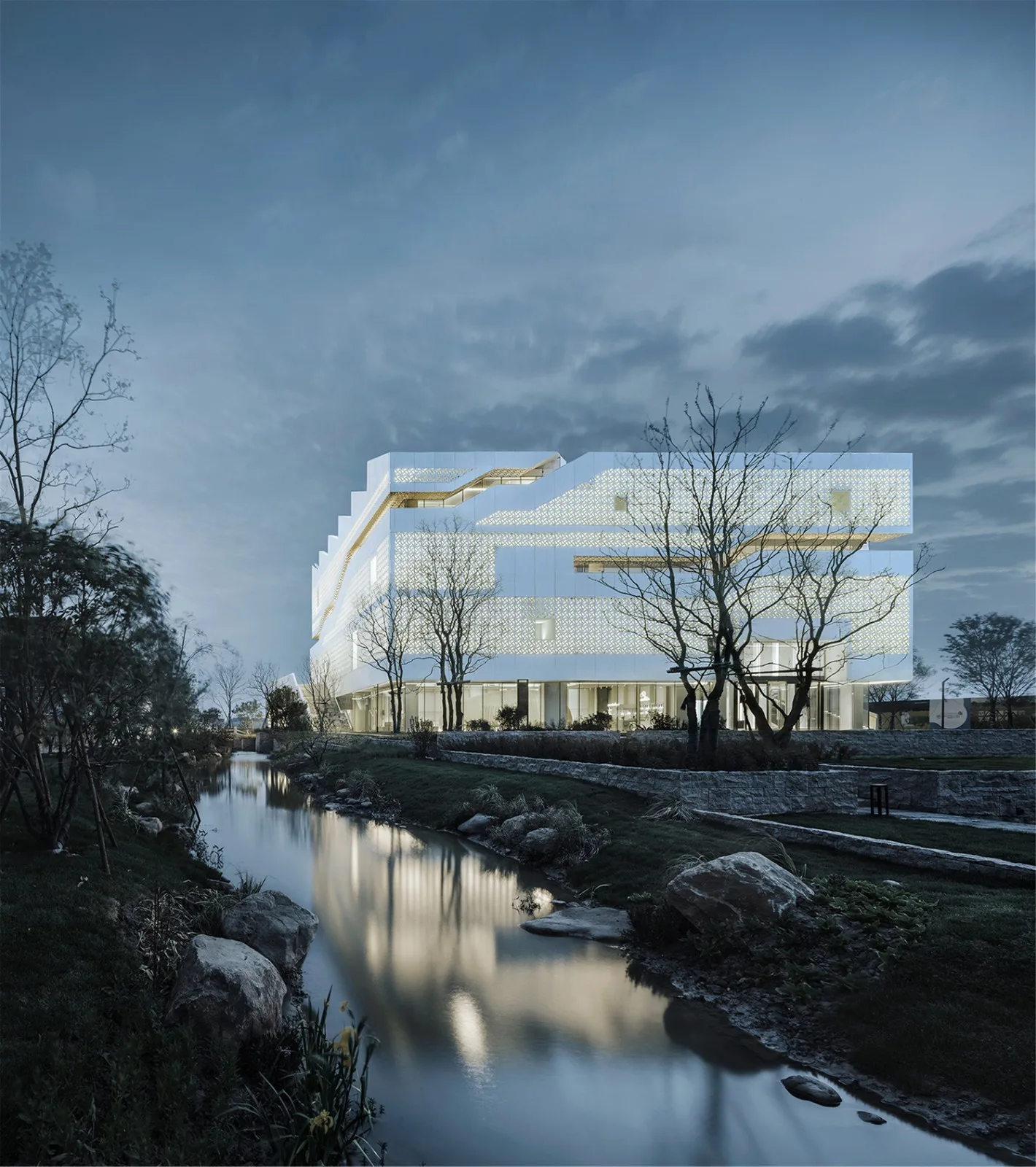
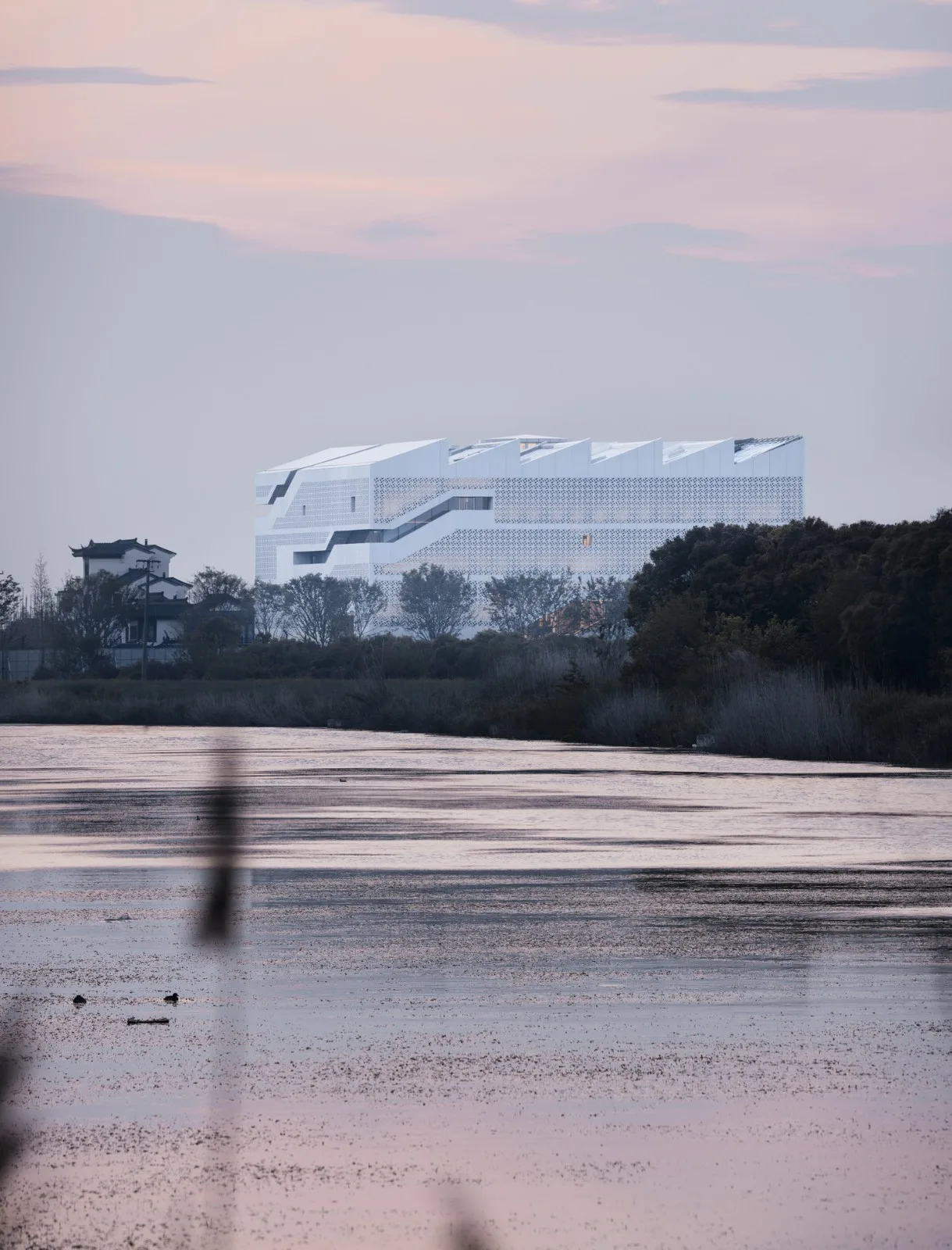
The Agricultural Exhibition Hall is located at the southernmost edge of Haimen Chunfeng Lantian Town, China’s first ecological farm. Surrounded by intersecting fields and an intricate network of waterways, the site boasts unique natural landscapes. As the flagship building and spiritual center of the town, the hall’s architectural theme draws inspiration from the traditional “granaries” of agricultural civilization. Its exterior resembles a quiet, simple square box nestled in the fields, embodying a sense of calm and dignity. At its core lies a circular silo symbolizing the concept of “square warehouse and round grain.”
This design not only reflects the Legalist philosophy of “knowing etiquette through solid granaries and understanding honor through sufficient food and clothing,” but also aligns with the goals of spiritual and cultural development in the modern era.
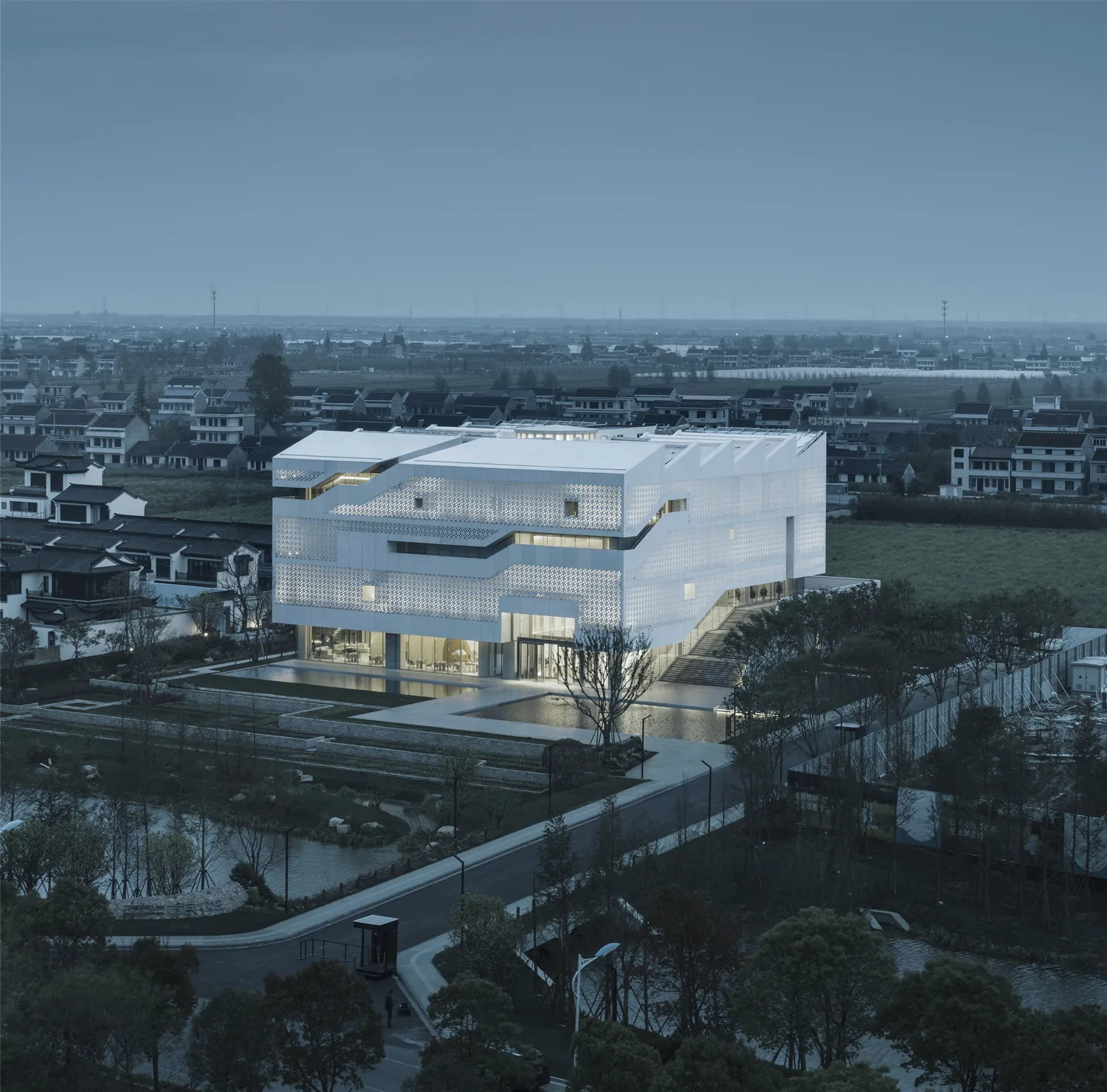
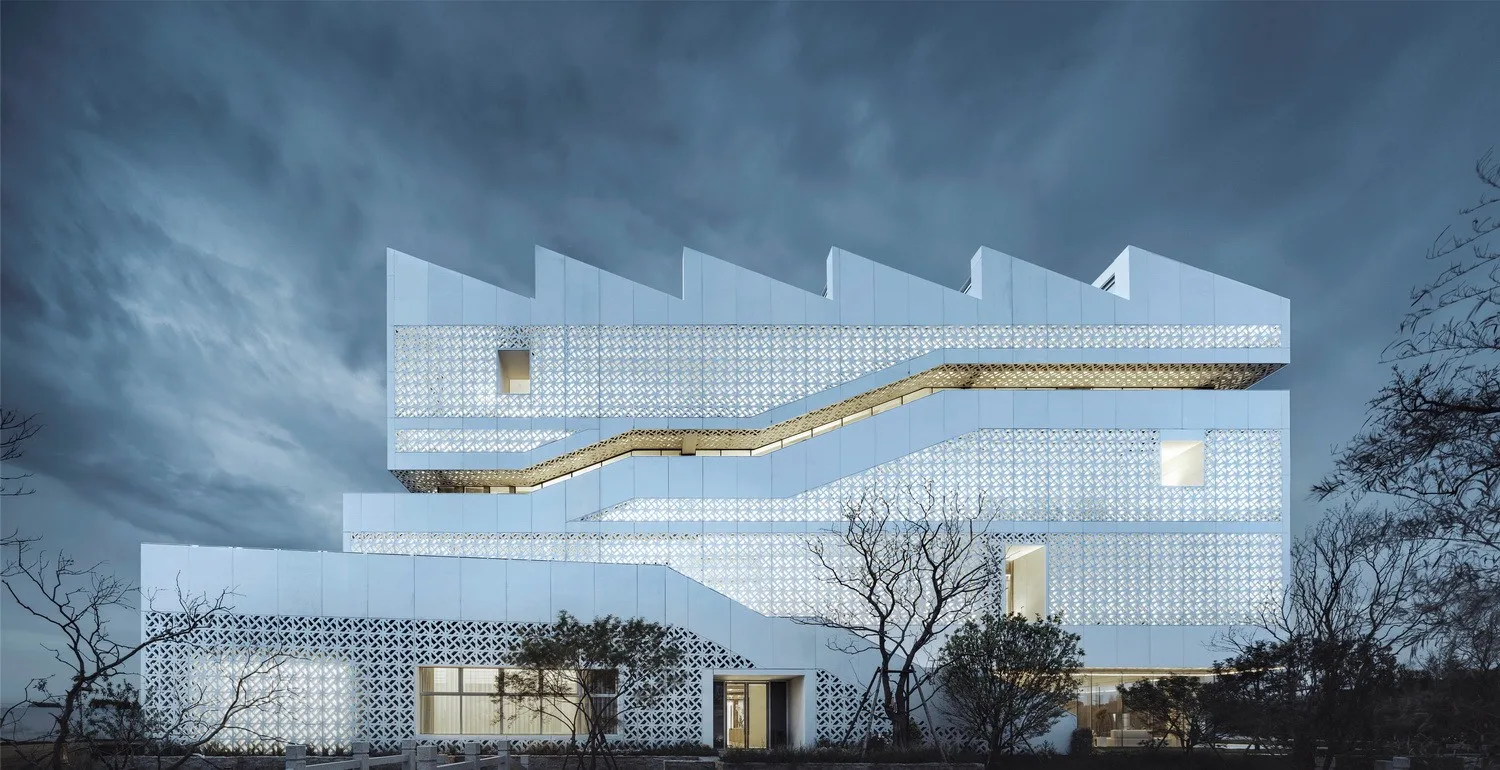
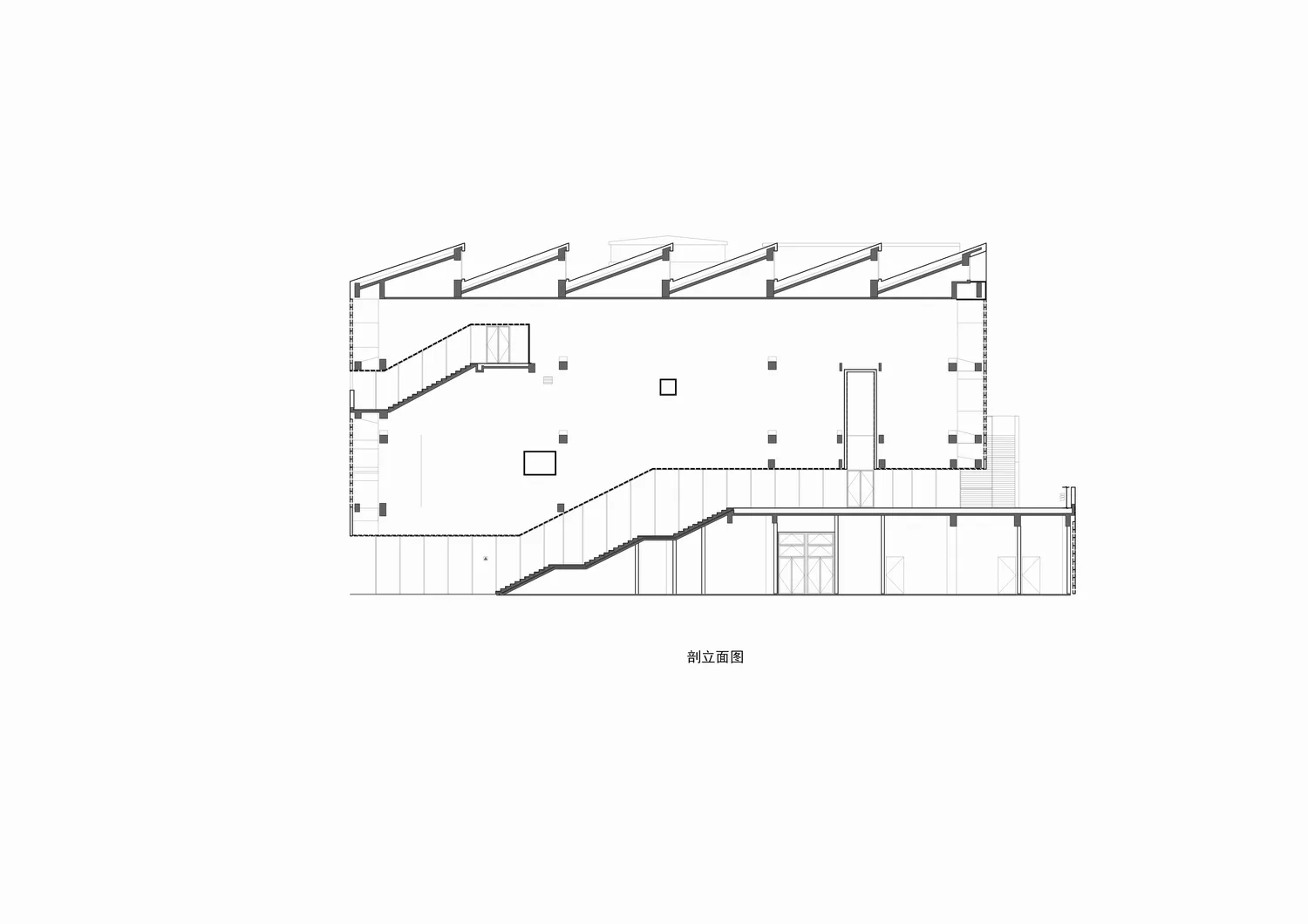
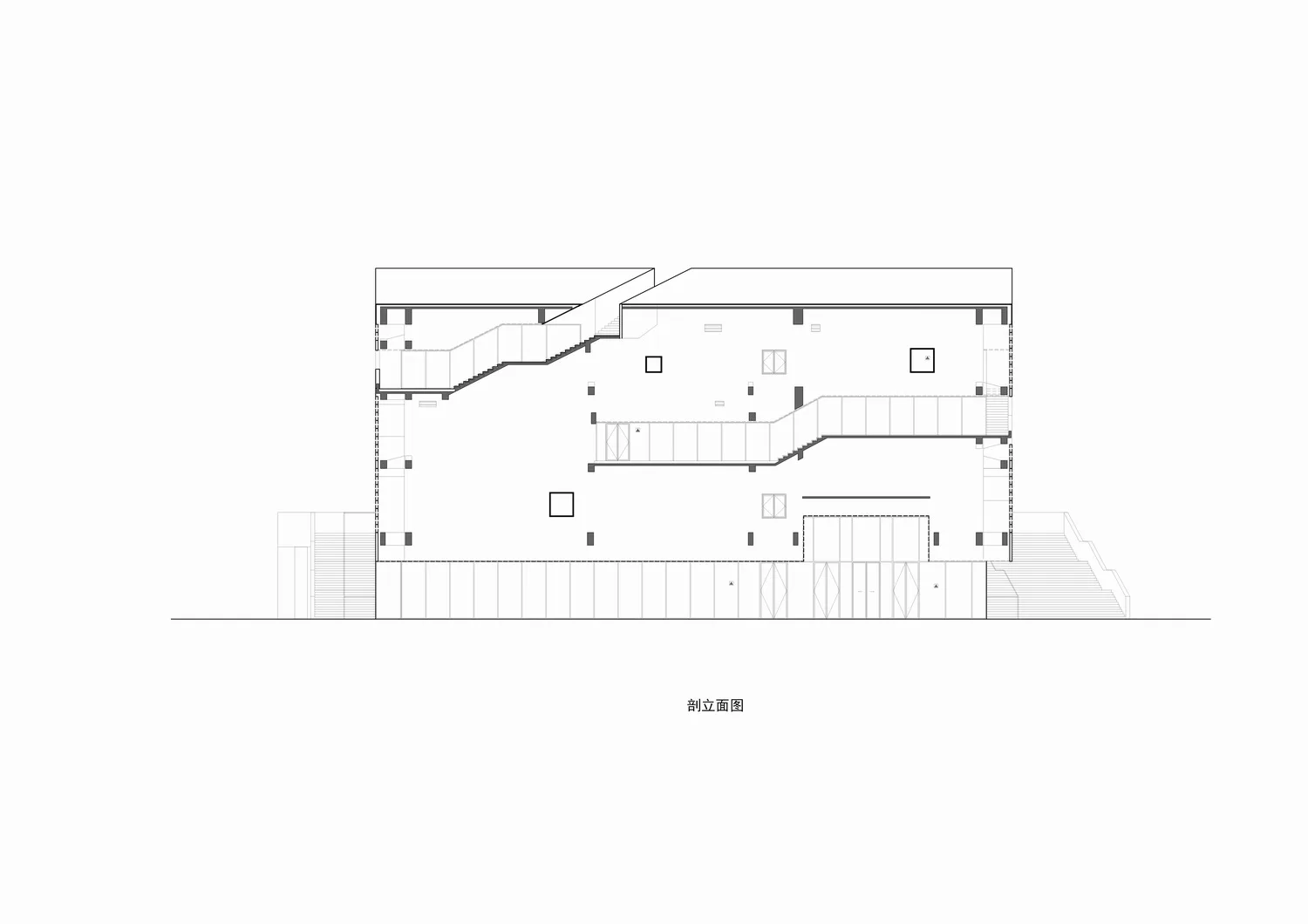
The building’s layout challenges conventional structural concepts. Four concrete square volumes spiral upward around an atrium, concealing the main load-bearing elements within this dynamic space. A folded roof panel creates expansive windows on the top floor, achieving architectural purity in both form and spatial experience. This design harmonizes traditional regional context with contemporary living.
Linking the Seed Journey
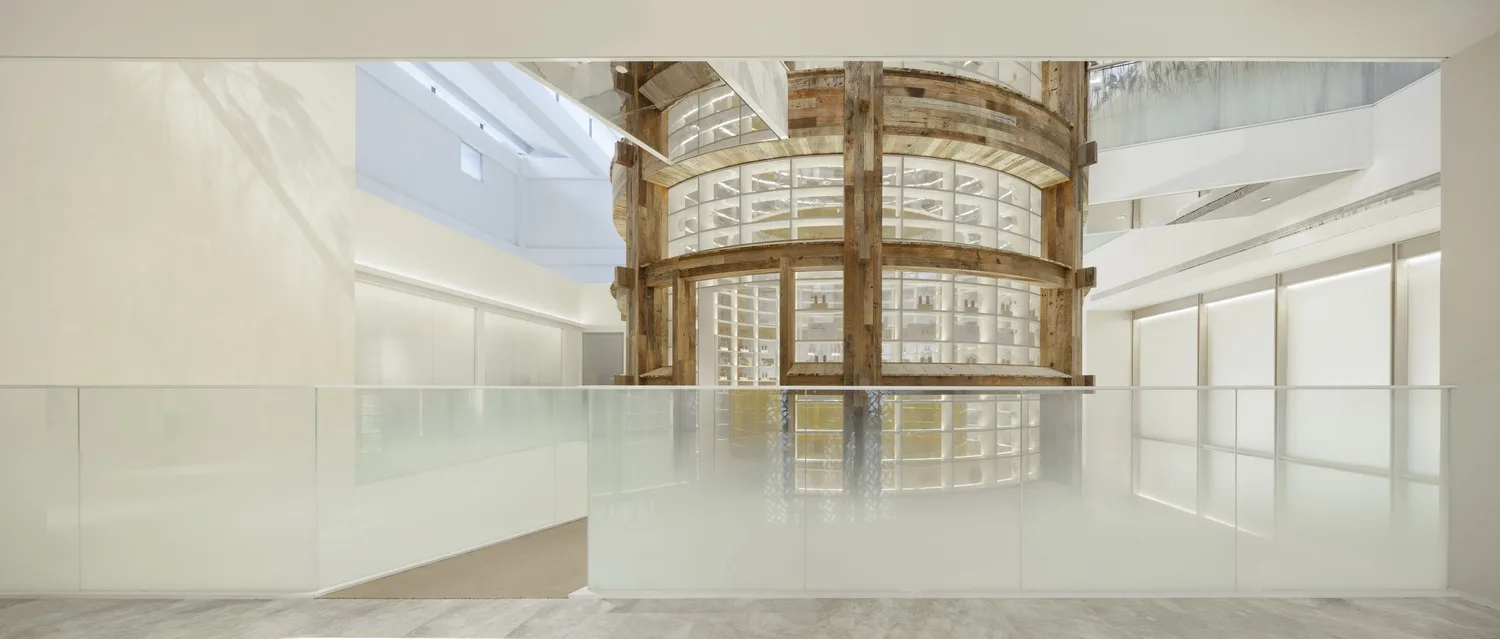
The design team sought to integrate the vastness of nature into the building’s heart. To achieve this, the plan maximizes the footprint of the “field barn” and excavates a four-story circular void at its center. This circular silo is naturally illuminated and ventilated, serving as a seed museum that functions as a public space for display, communication, and cultural exchange—becoming the spiritual core of the entire building.
Within the white square exterior, the mortise and tenon structure of the silo softens the space’s formality through the warm tones and textures of aged wood, making the barn feel inviting and accessible.
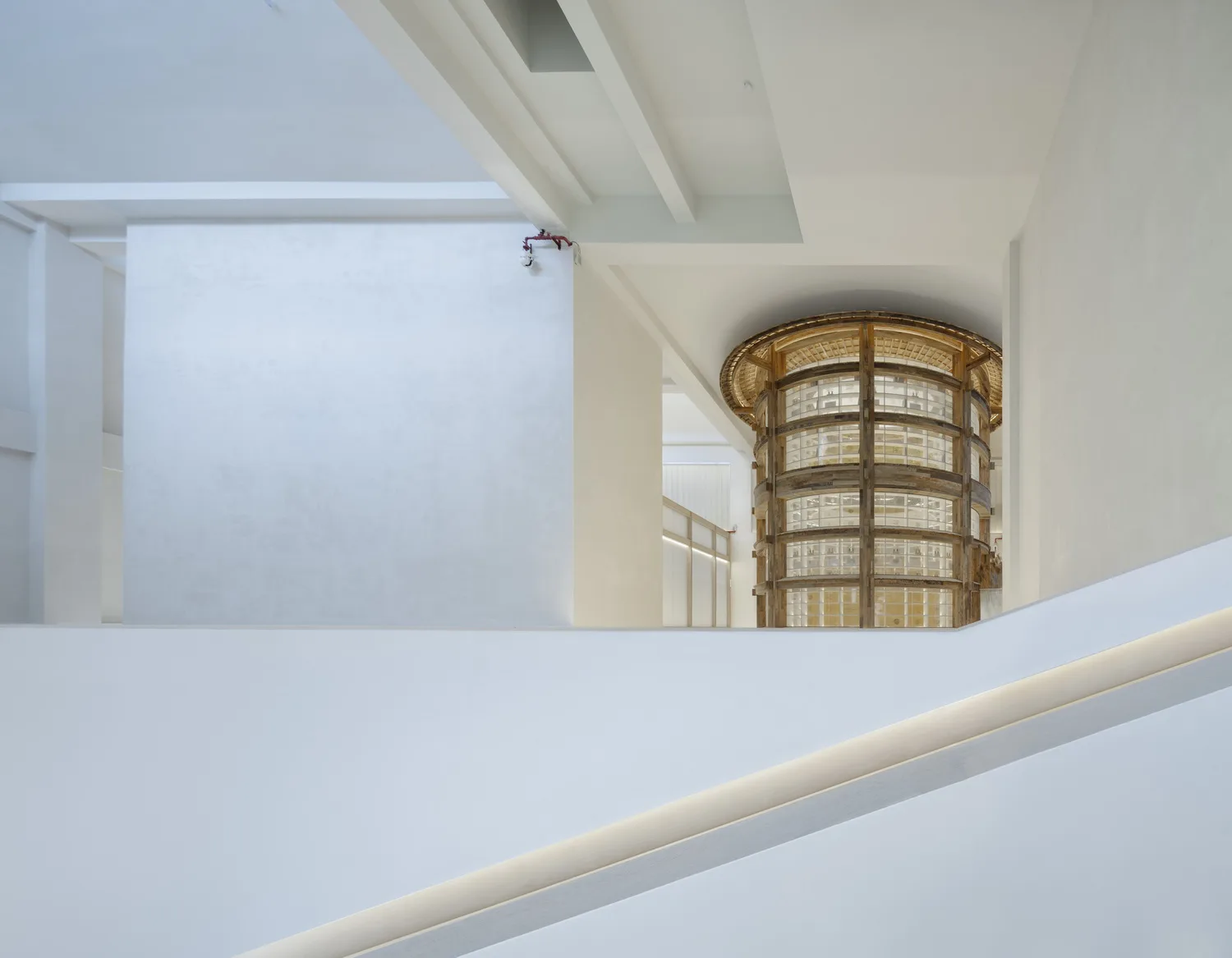
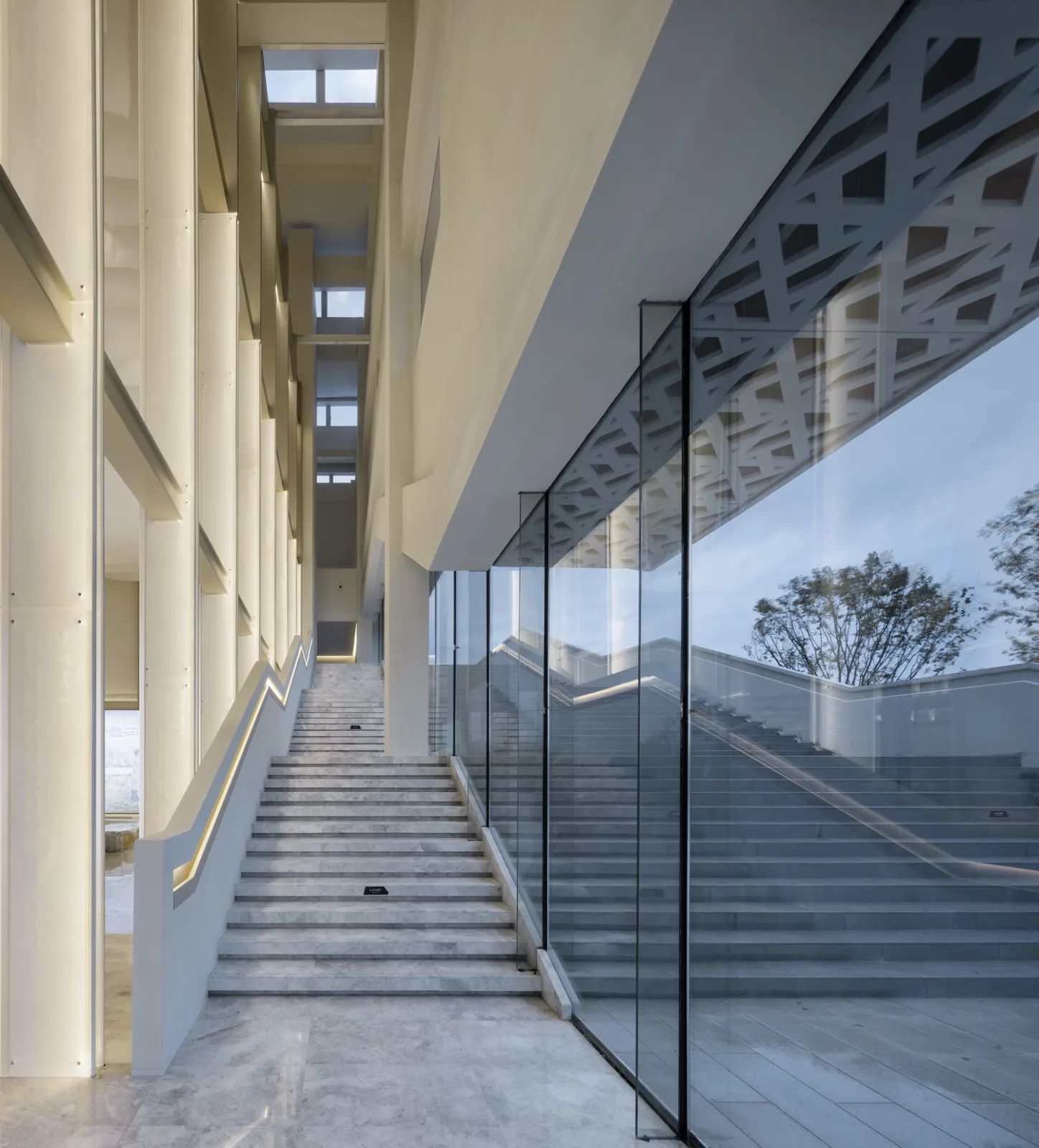
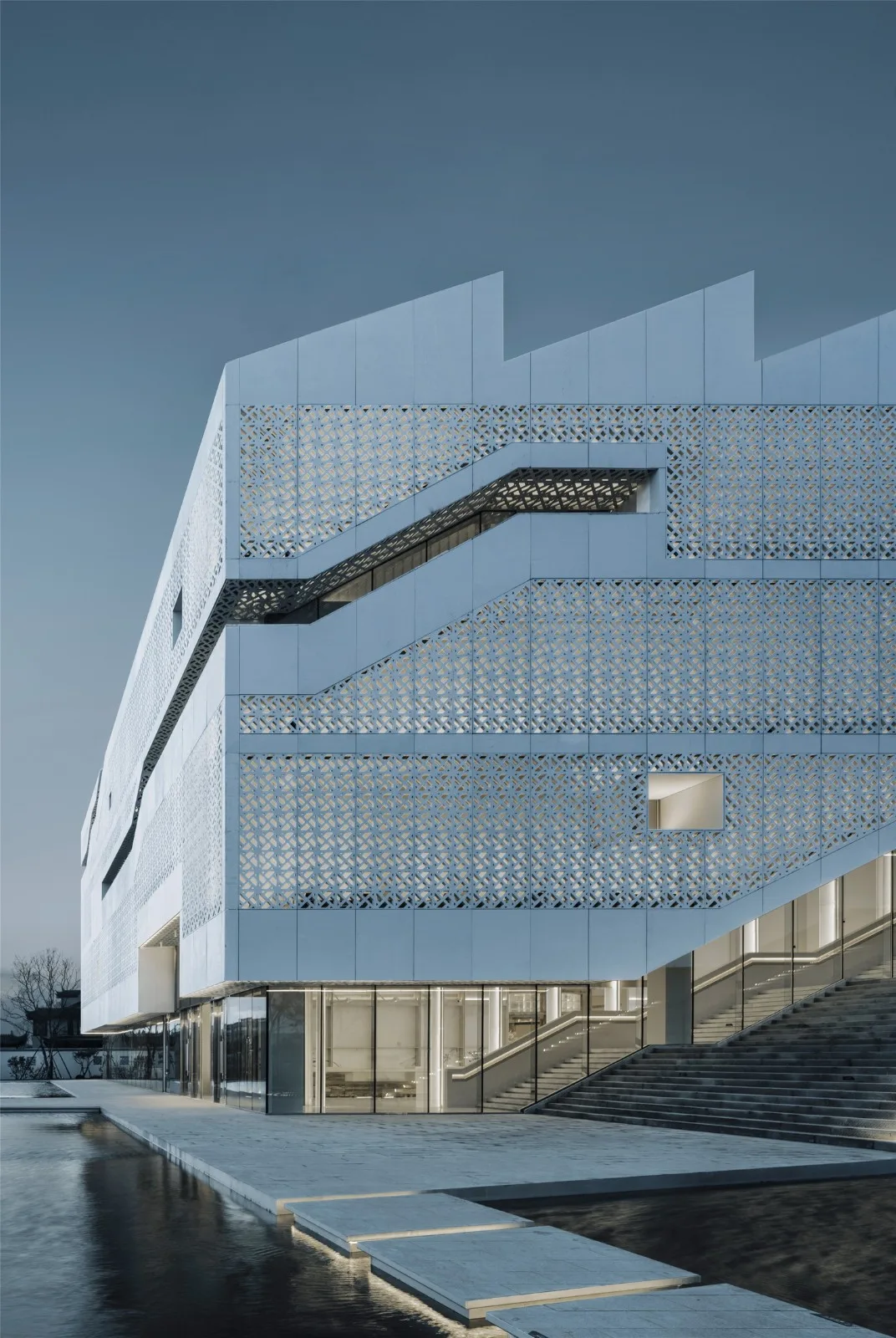
A spiraling open staircase links the building’s various functions vertically. Visitors ascend this staircase as if embarking on a carefully curated “seed journey,” continually awakening their curiosity and desire to explore. Parallel indoor and outdoor staircases provide multiple viewing paths. From the stair landings, visitors enjoy panoramic views of the rural landscape, nearby structures, and the exhibition hall’s internal activities.
Access to the town’s demonstration and agricultural exhibition areas is available via a landscape bridge crossing an artificial water system at the exhibition hall’s west exit. Additionally, visitors can reach the planned commercial street north of the hall through the second-floor platform, exemplifying the town’s “double first-floor” commercial street concept.
Balance Between Virtual and Real Spaces
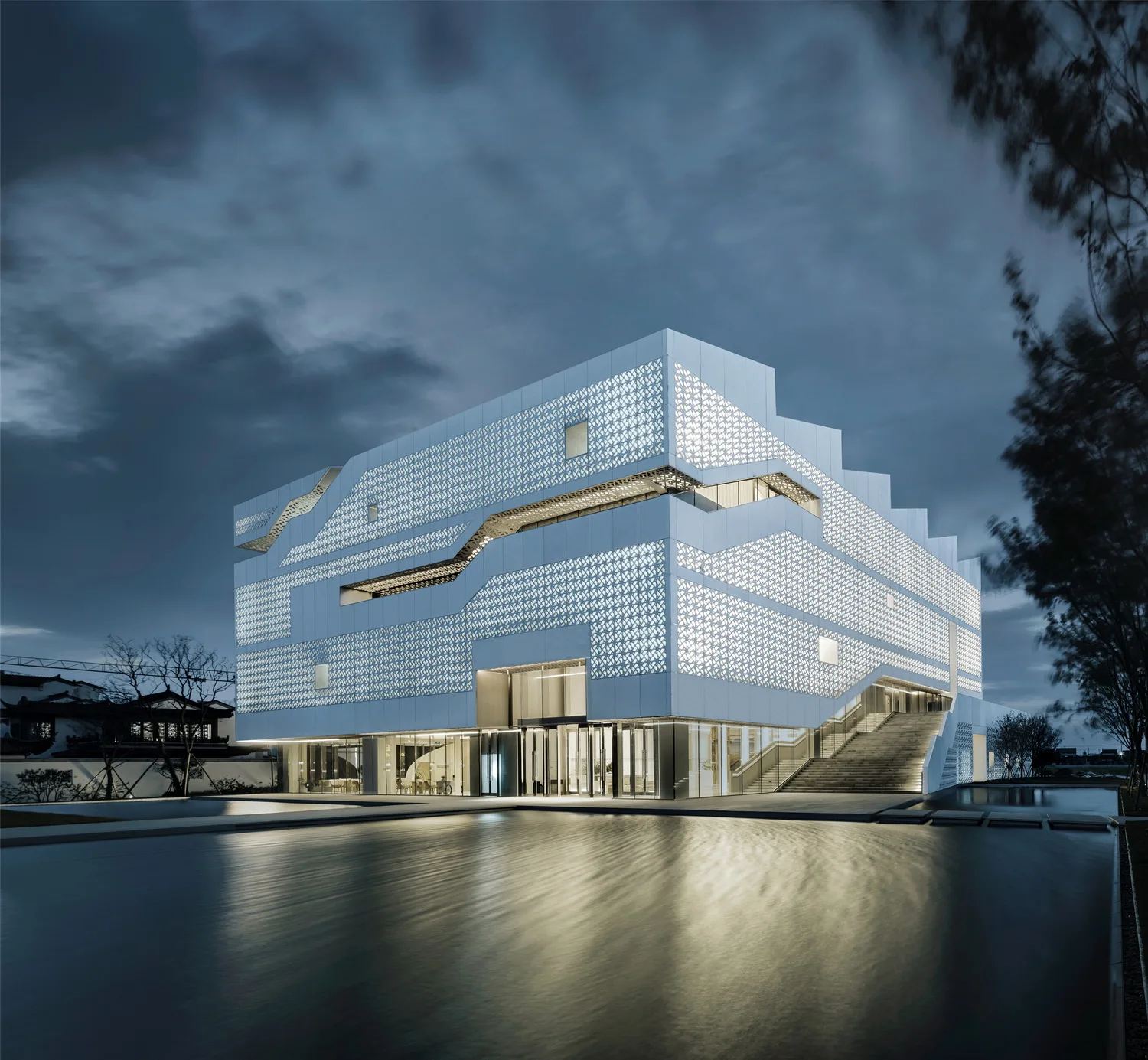
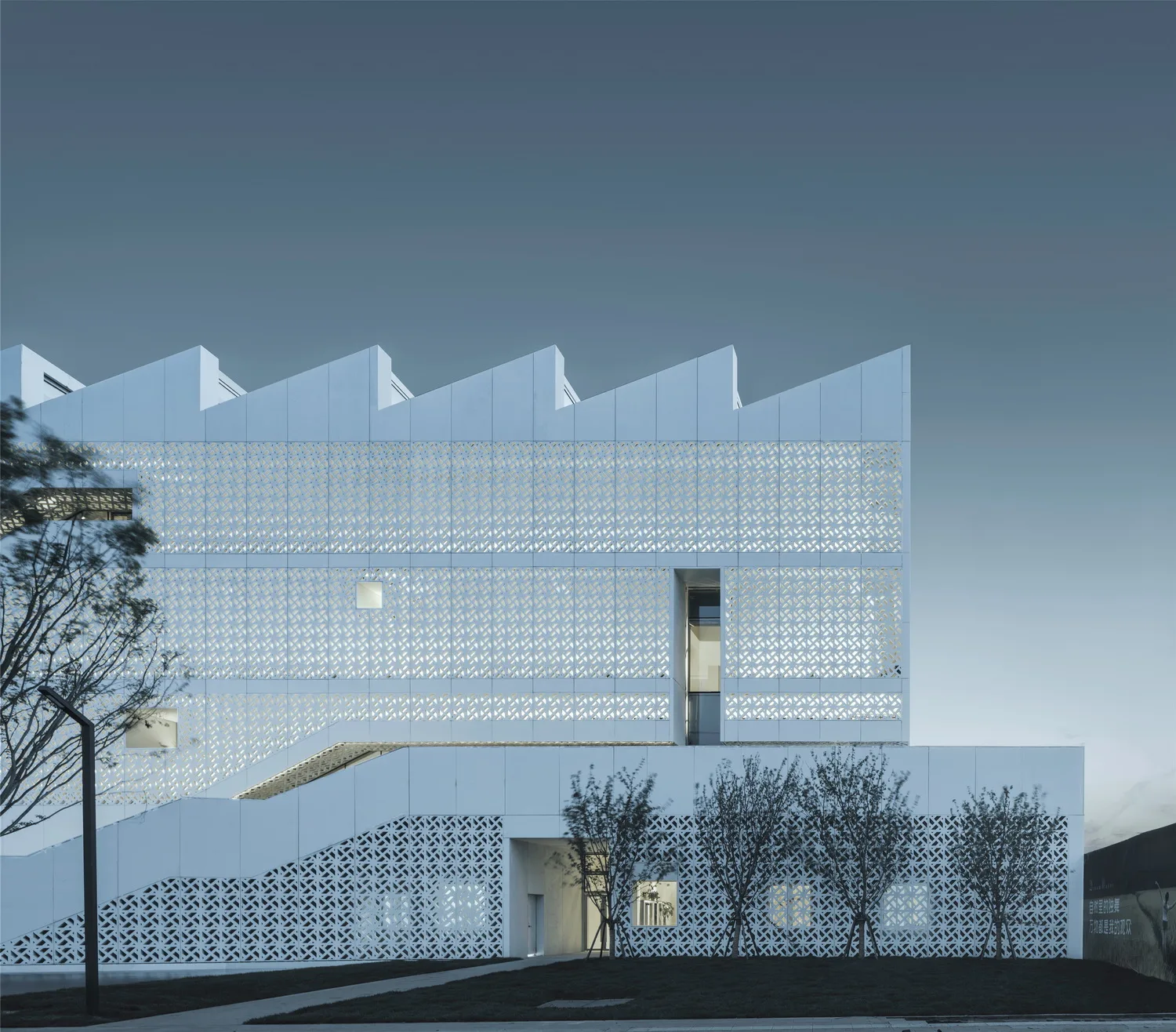
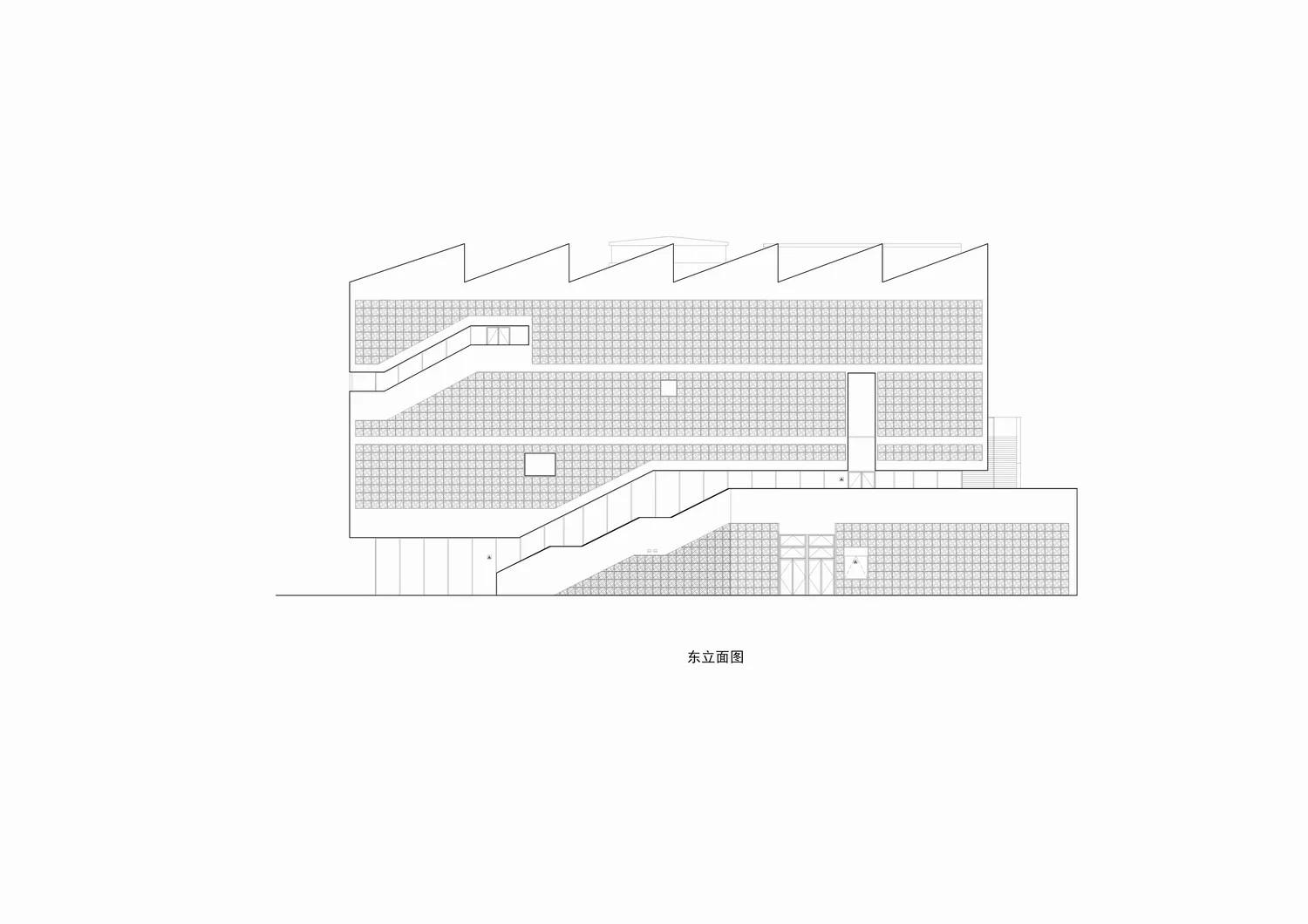
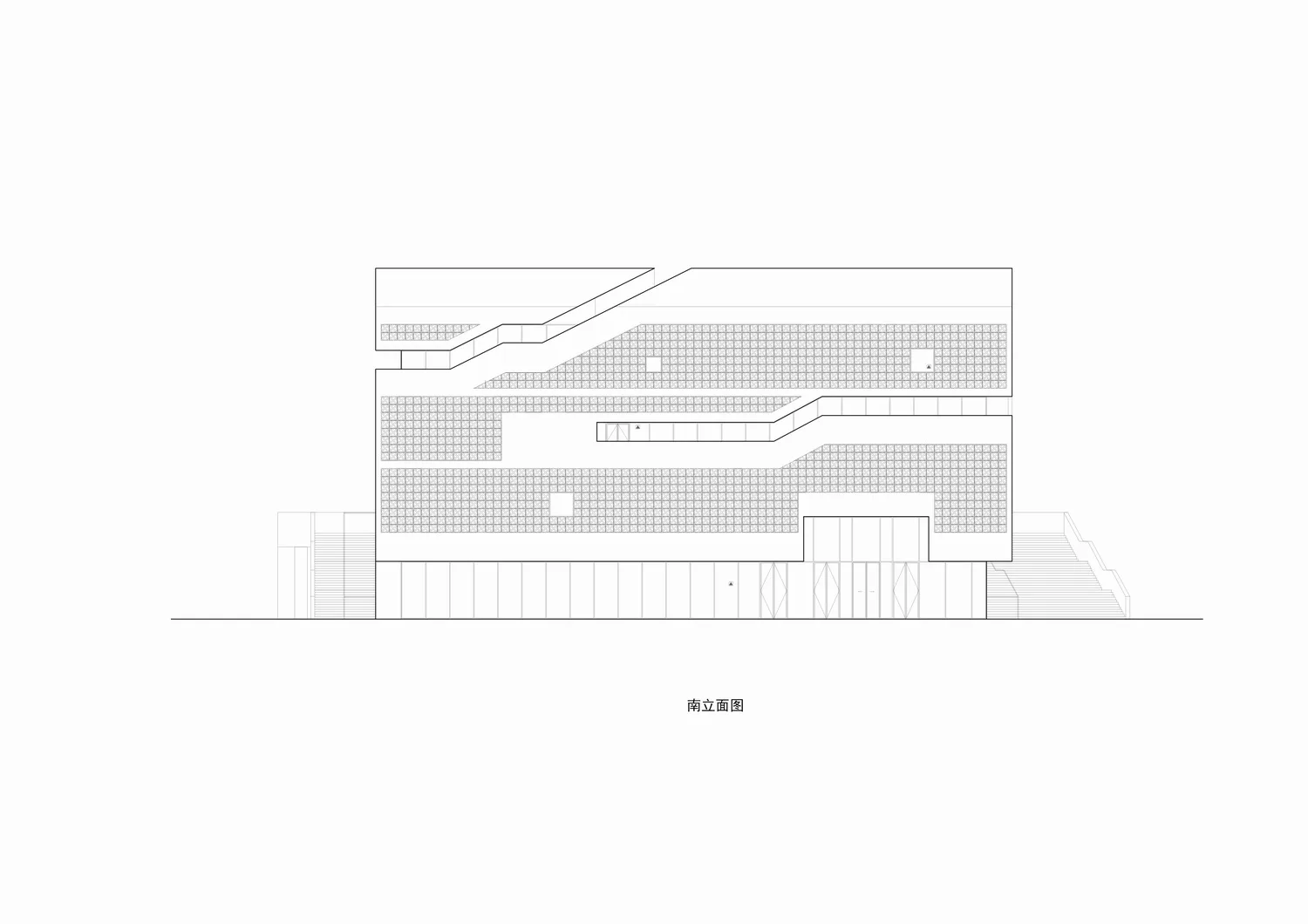
The building’s form is simple and elegant, featuring a lightweight façade. The base is composed of pure glass, while the outer skin is crafted from ultra-high-performance concrete (UHPC), known for its exceptional strength and durability. This low-porosity material has a warm, jade-like texture that highlights the building’s shape and lines.
Viewed from a distance, the edges appear sharp; up close, the surface reveals a soft, hazy quality. This subtle translucency blurs the boundary between the structure and its environment. The contrast between the opaque UHPC skin and the transparent glass curtain wall vividly expresses the dynamic between enclosure and openness, separation and connection.
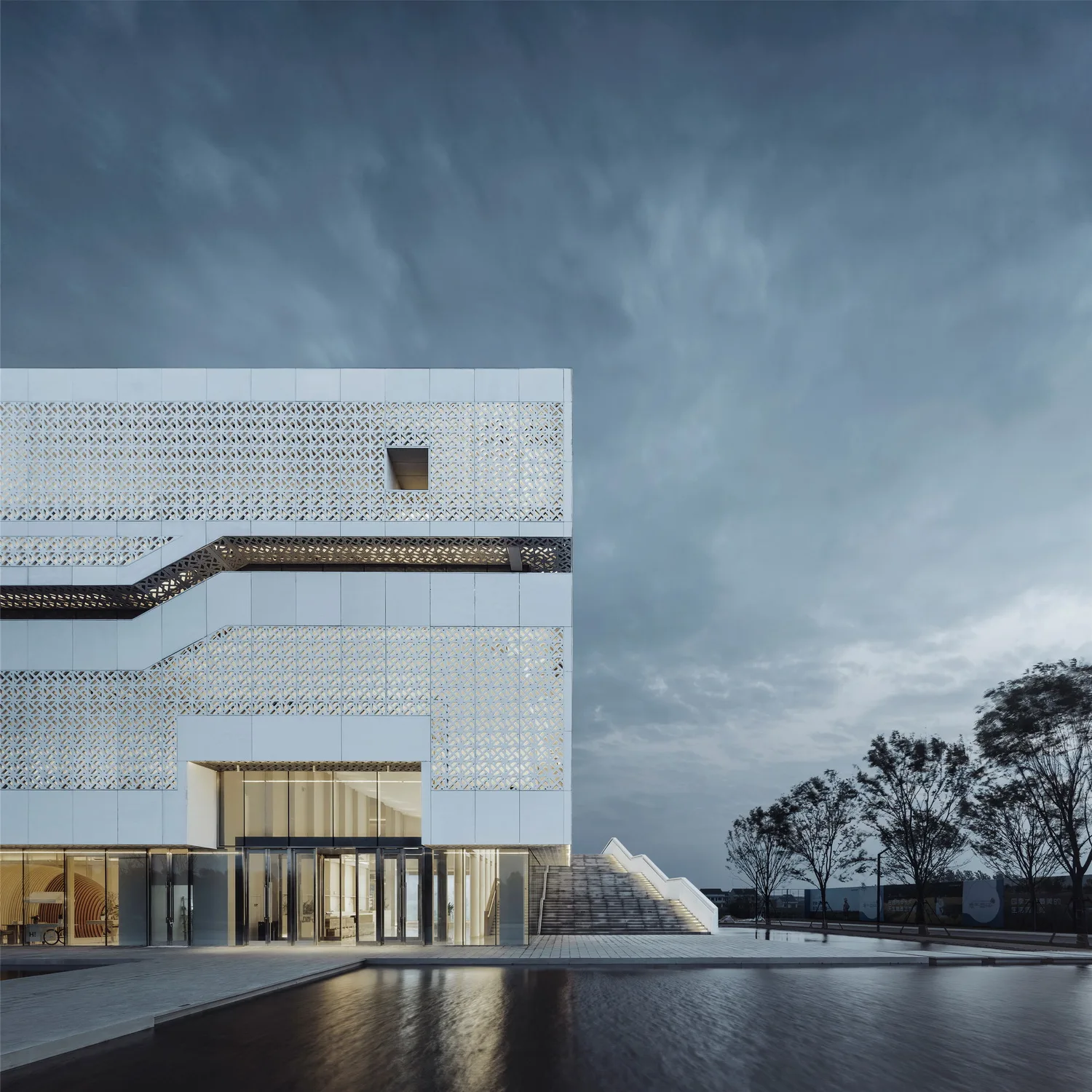
The façade features a woven pattern inspired by traditional banquet-style barns. The barn’s sloping roof is abstracted from classic forms, while the column grid layout evokes the imagery of wheat swaying in the wind. Carefully positioned window openings align with key interior spaces and face the most scenic outdoor views. The perforated skin and windows introduce dynamic light and shadow, enlivening the interior and expanding the building’s perceived space.
Although the building appears enclosed and introverted, it facilitates organic interaction between people and the environment through seamless indoor-outdoor connectivity.
Conclusion
In today’s era of cultural revival, the design team adopts a thoughtful and critical approach—avoiding narrow regionalism rooted in nostalgia as well as uncritical acceptance of globalization’s internationalism. Instead, they create a poetic dwelling within the fields, rediscovering the wisdom embedded in Wu Yue heritage and crafting a spiritual space to preserve culture, nurture emotions, and uphold values. This project epitomizes the practice of critical regionalism.
Project Drawings
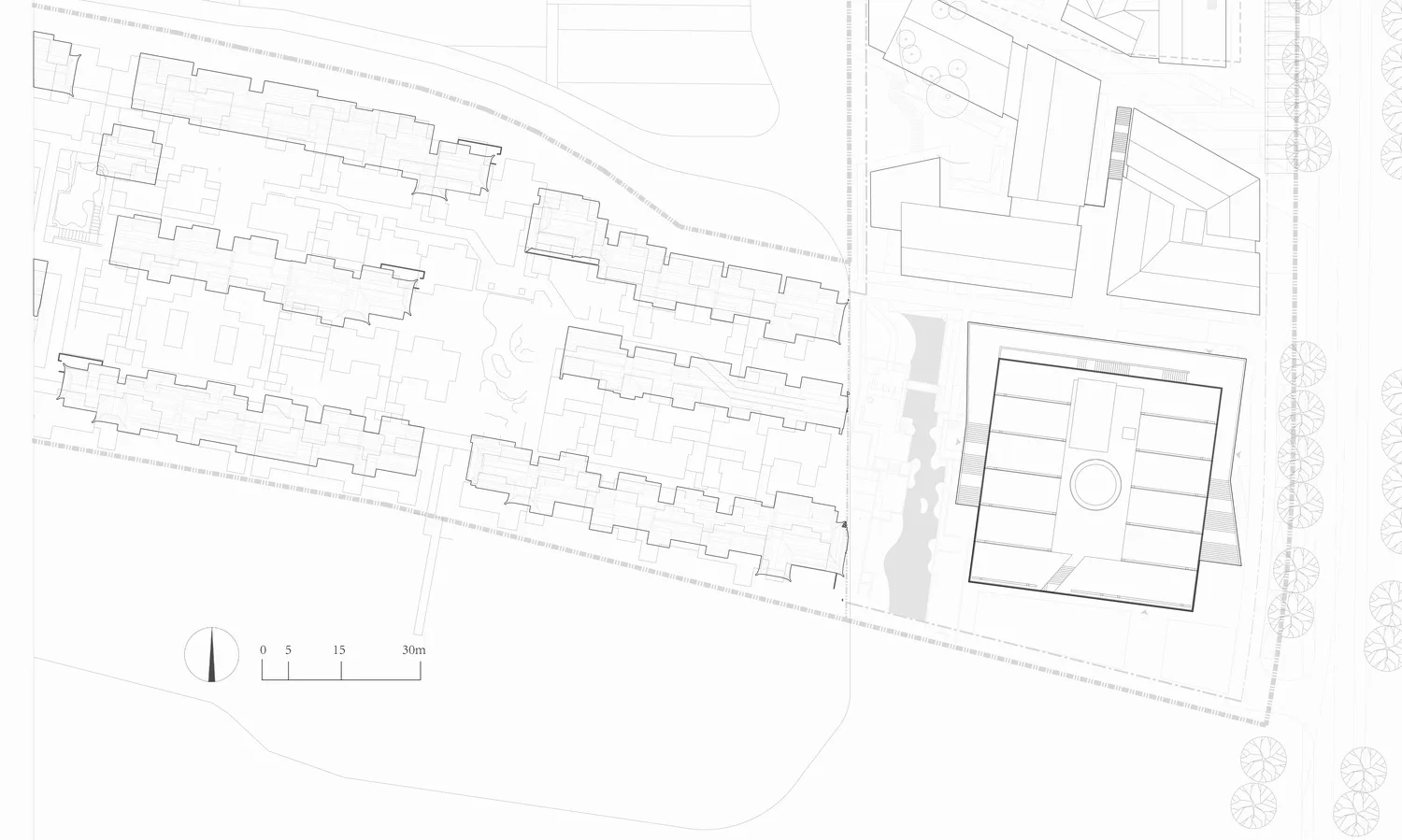
△ General layout plan
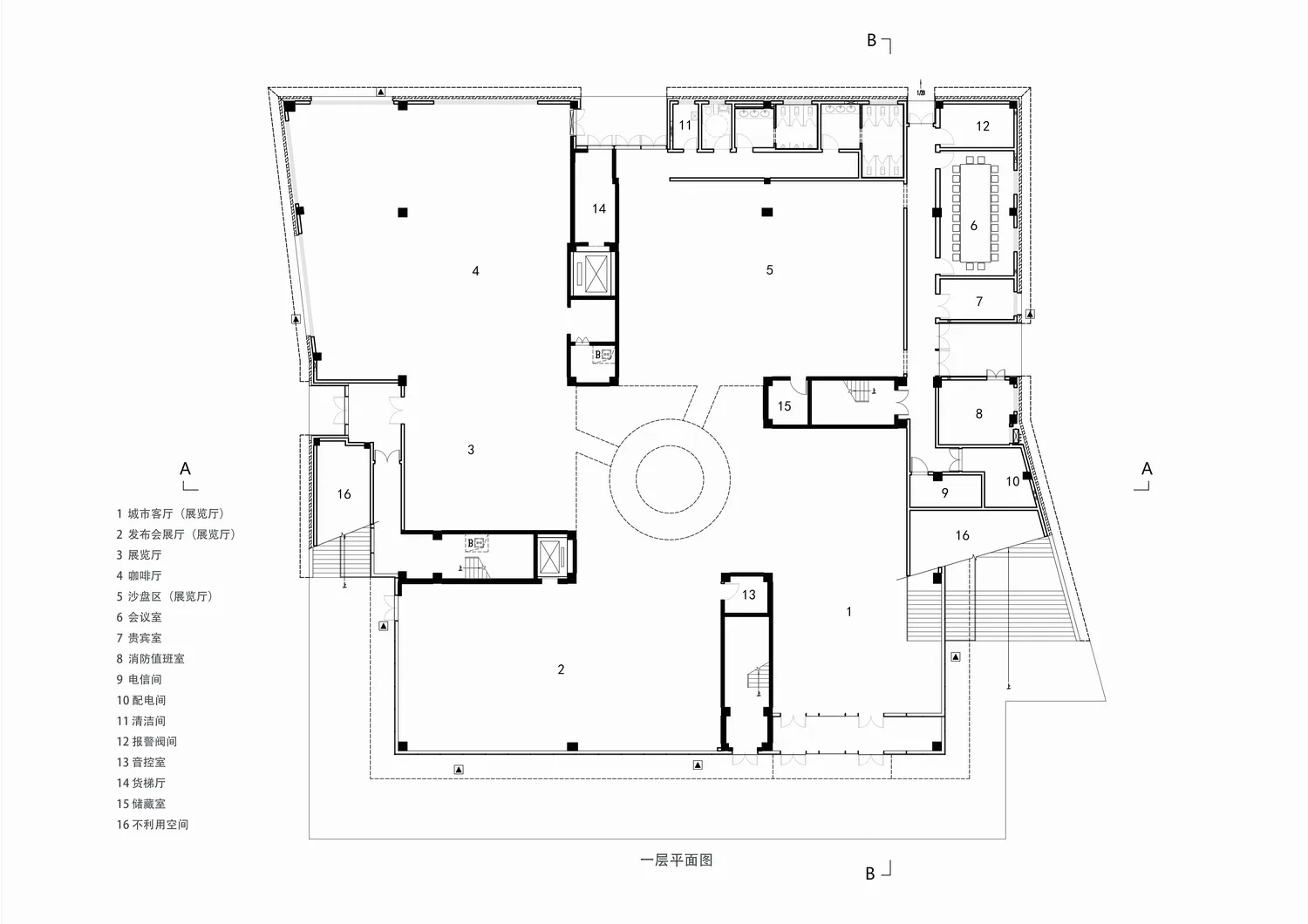
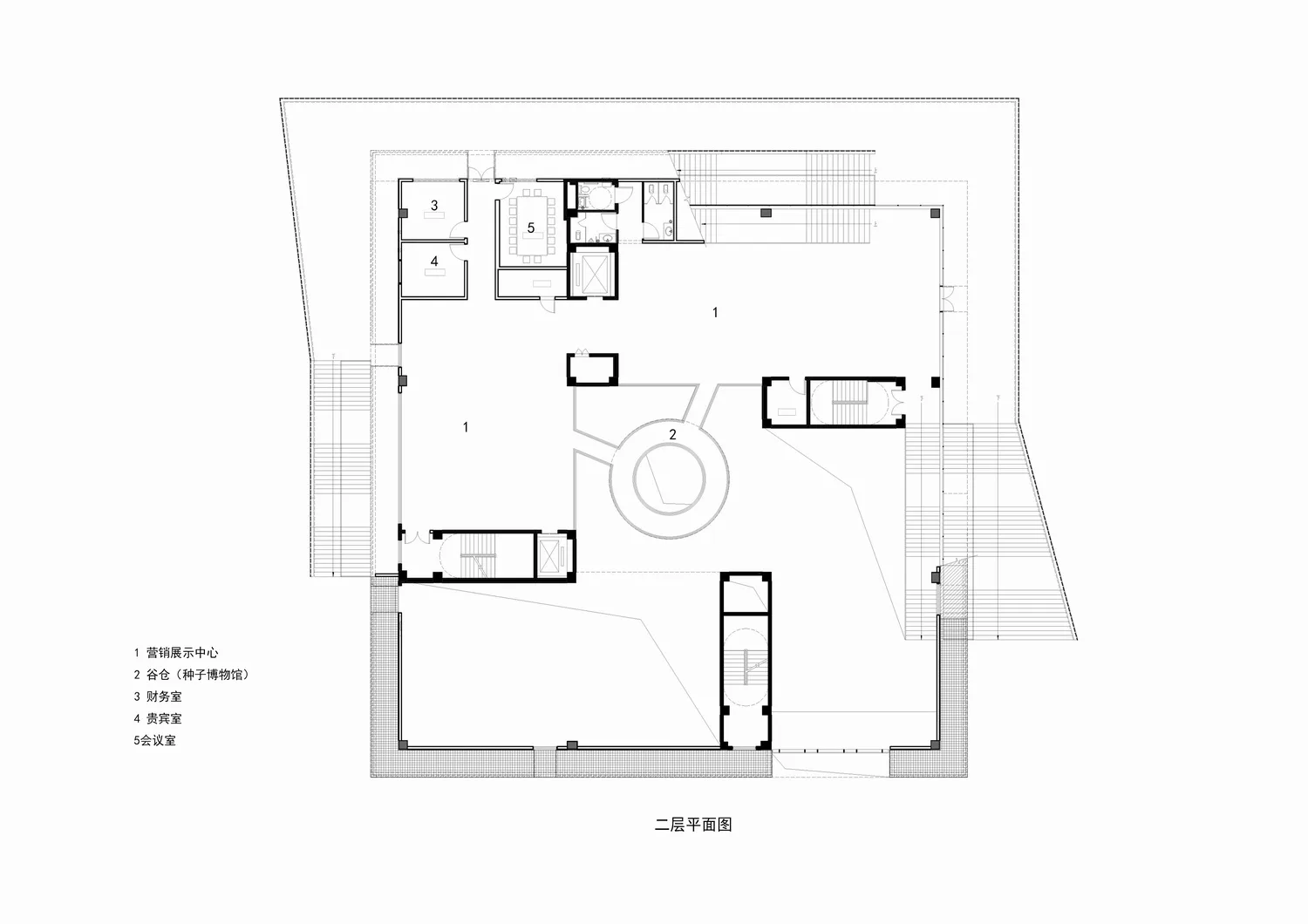
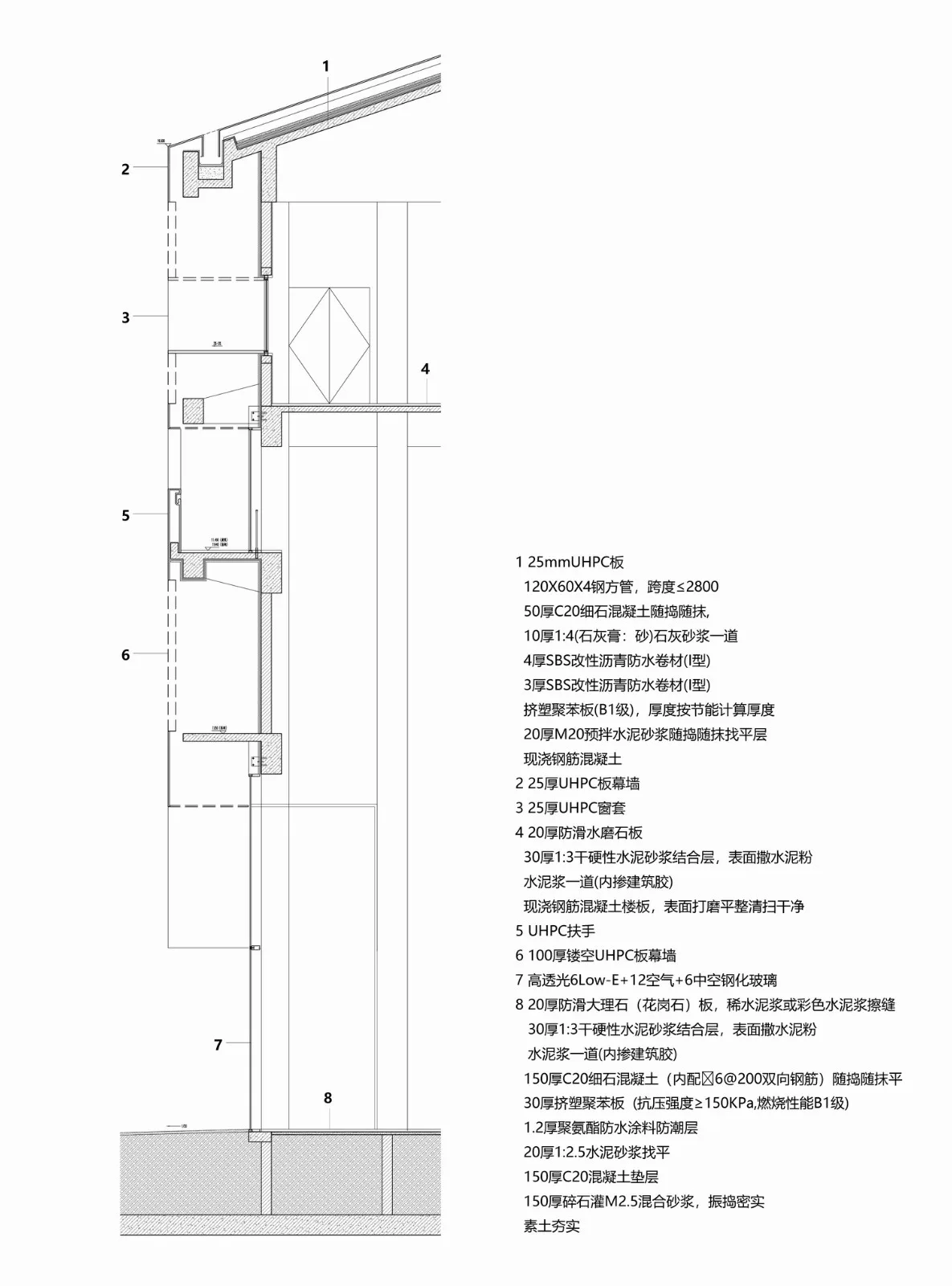
△ Node analysis
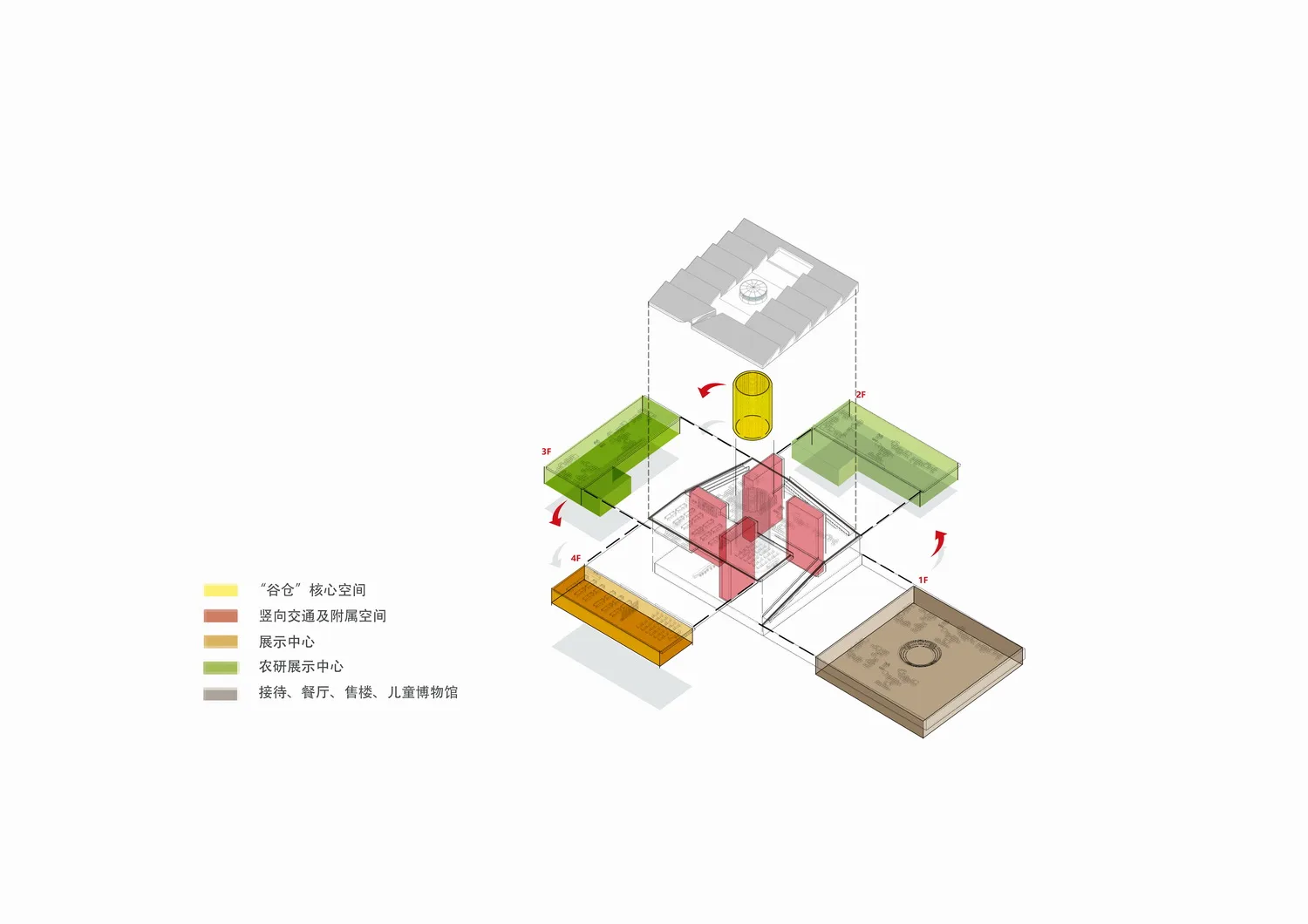
△ Spatial axonometric analysis
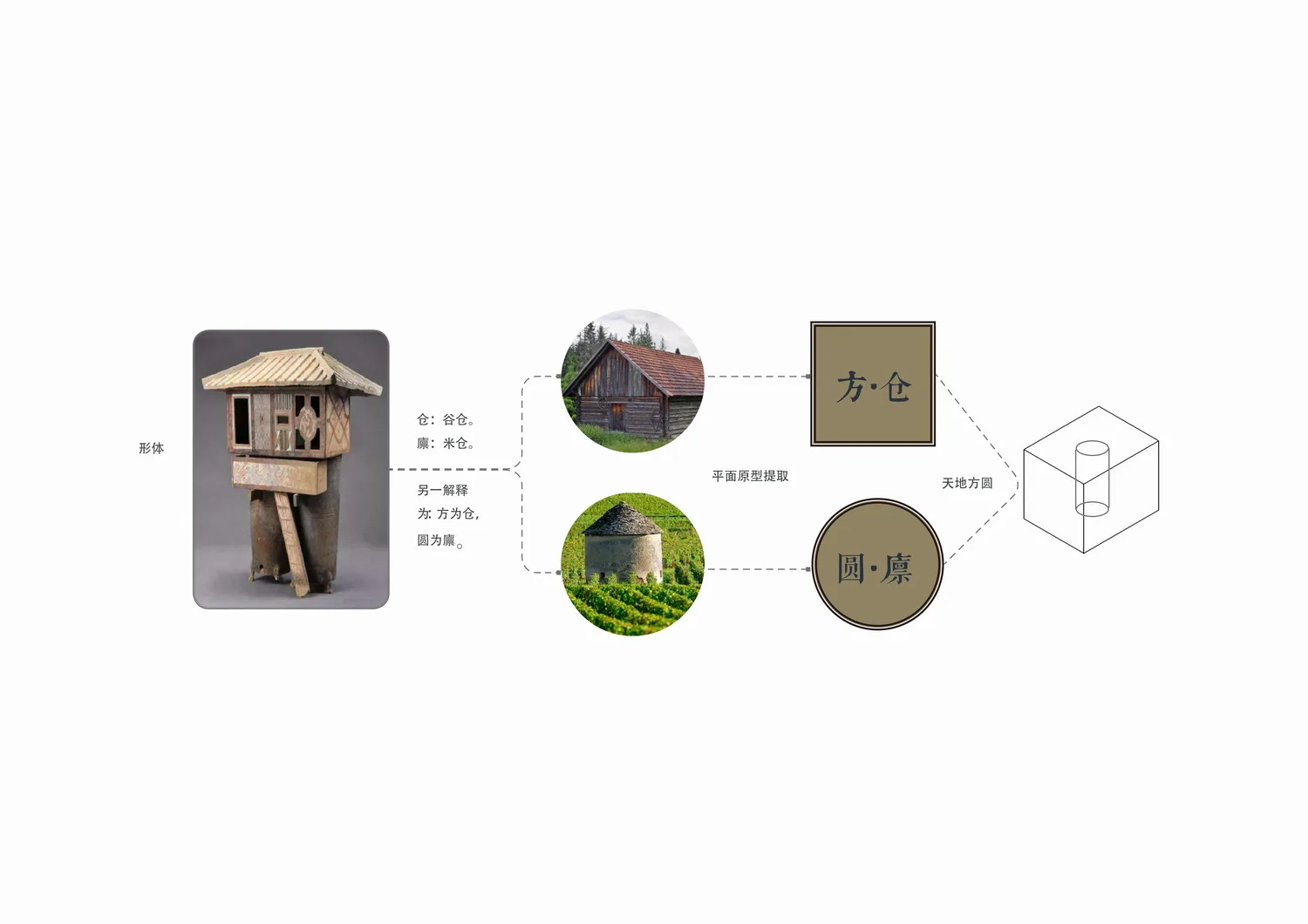
△ Shape analysis
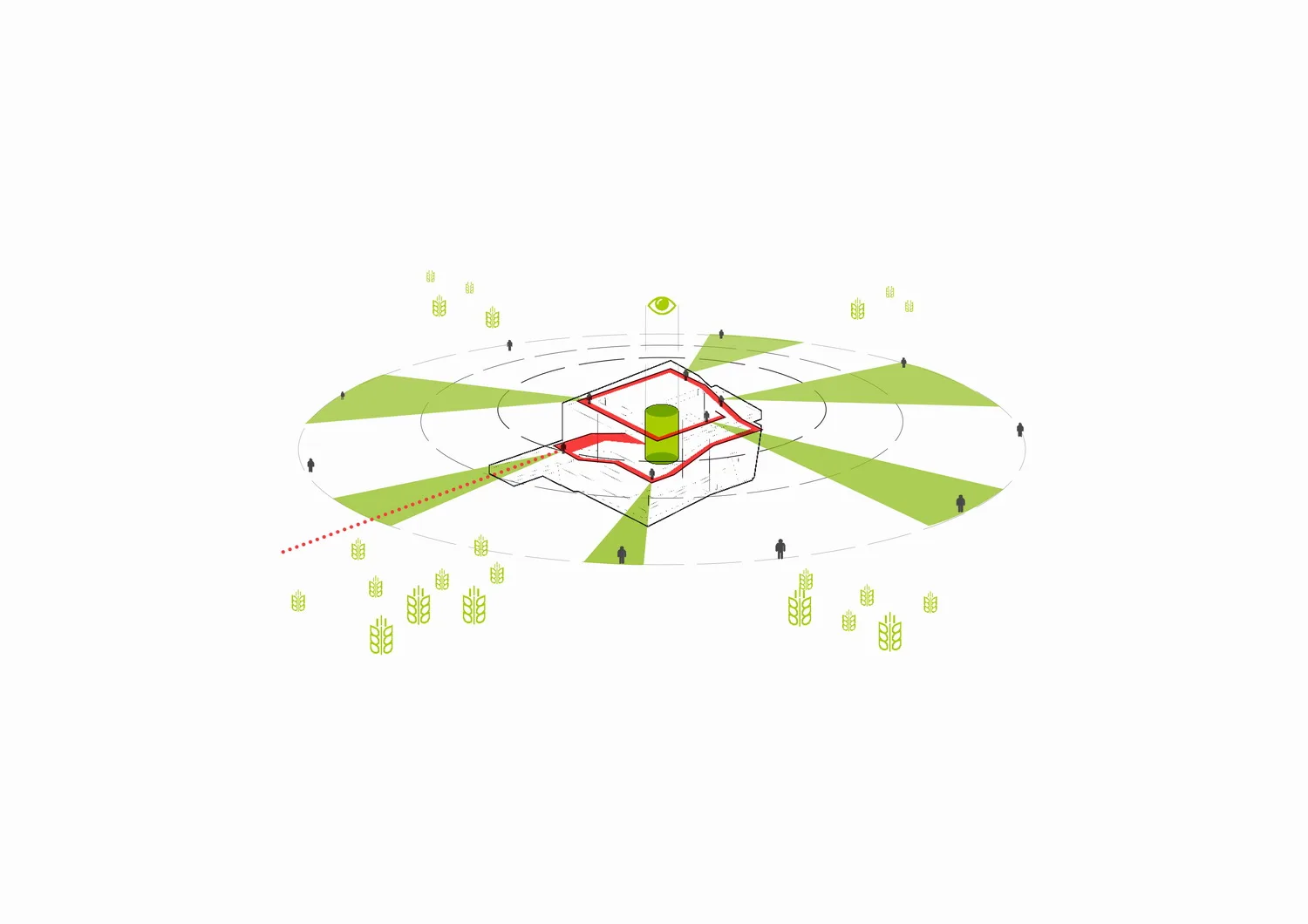
△ Streamline analysis
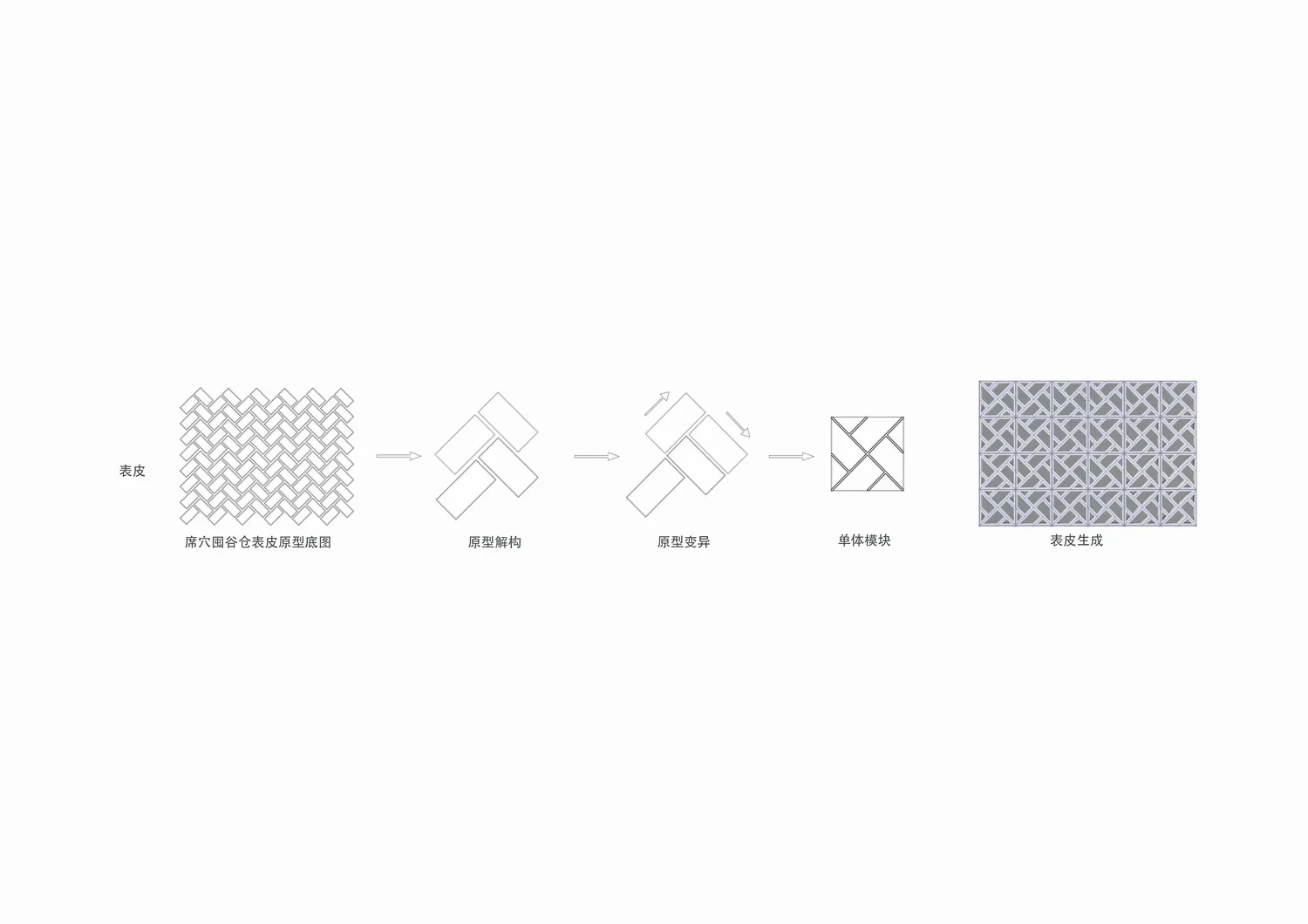
△ Epidermal analysis
Project Information
Project Name: Haimen Yungu Agricultural Exhibition Hall
Location: Nantong, Jiangsu Province
Address: Haichuang Road, Haimen District, Nantong City, Jiangsu Province
Project Type: Cultural Exhibition
Design Period: 2019–2020
Construction Start: April 2021
Project Size: 4,087 square meters
Design Firm: Gad Jiedi Design
Project Director: Zhang Wei
Key Team Members: Zhang Wei, Tang Fengqi, Xu Jie
Architects: Tang Fengqi, Xu Jie, Ni Zehui, Liu Yangyu, Jiang Zhengjie, Liu Shilong, Chu Jianzhou, Liu Yuan, Shi Jitao, Zhao Yantao
Structural Engineers: Yang Fan, Huang Yongchun
Water Supply and Drainage: Jiang Yunlong
HVAC Engineers: Liu Cheng
Electrical Engineers: Mu Weihao
BIM Specialist: Chi Chen
Interior Design: Interior Architecture Design Firm
Owner: Nantong Lancheng Citizen Real Estate Development Co., Ltd.
Photography: Architectural Translator Yao Li
Building Material: Ultra-High-Performance Concrete (UHPC)















Must log in before commenting!
Sign Up