
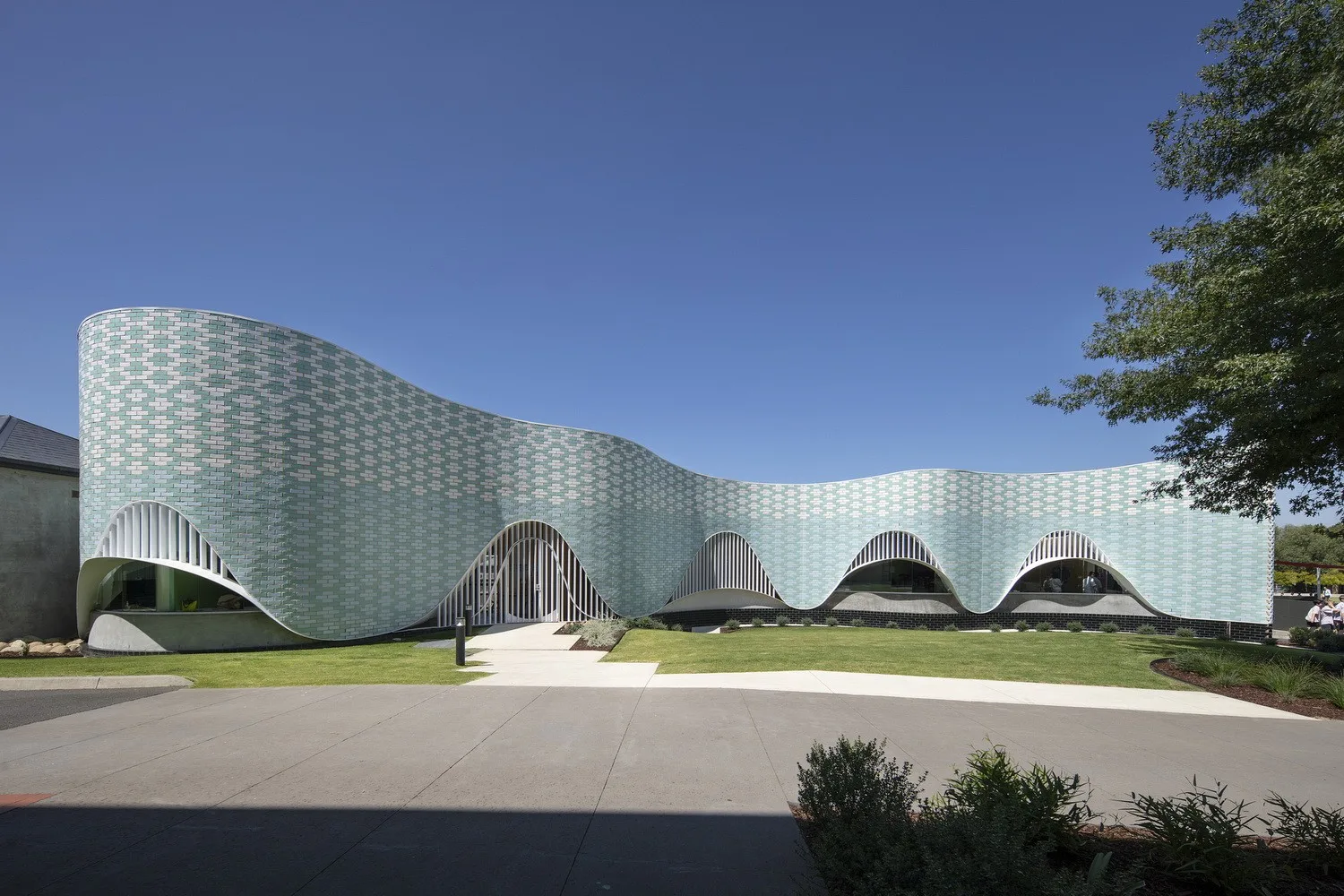
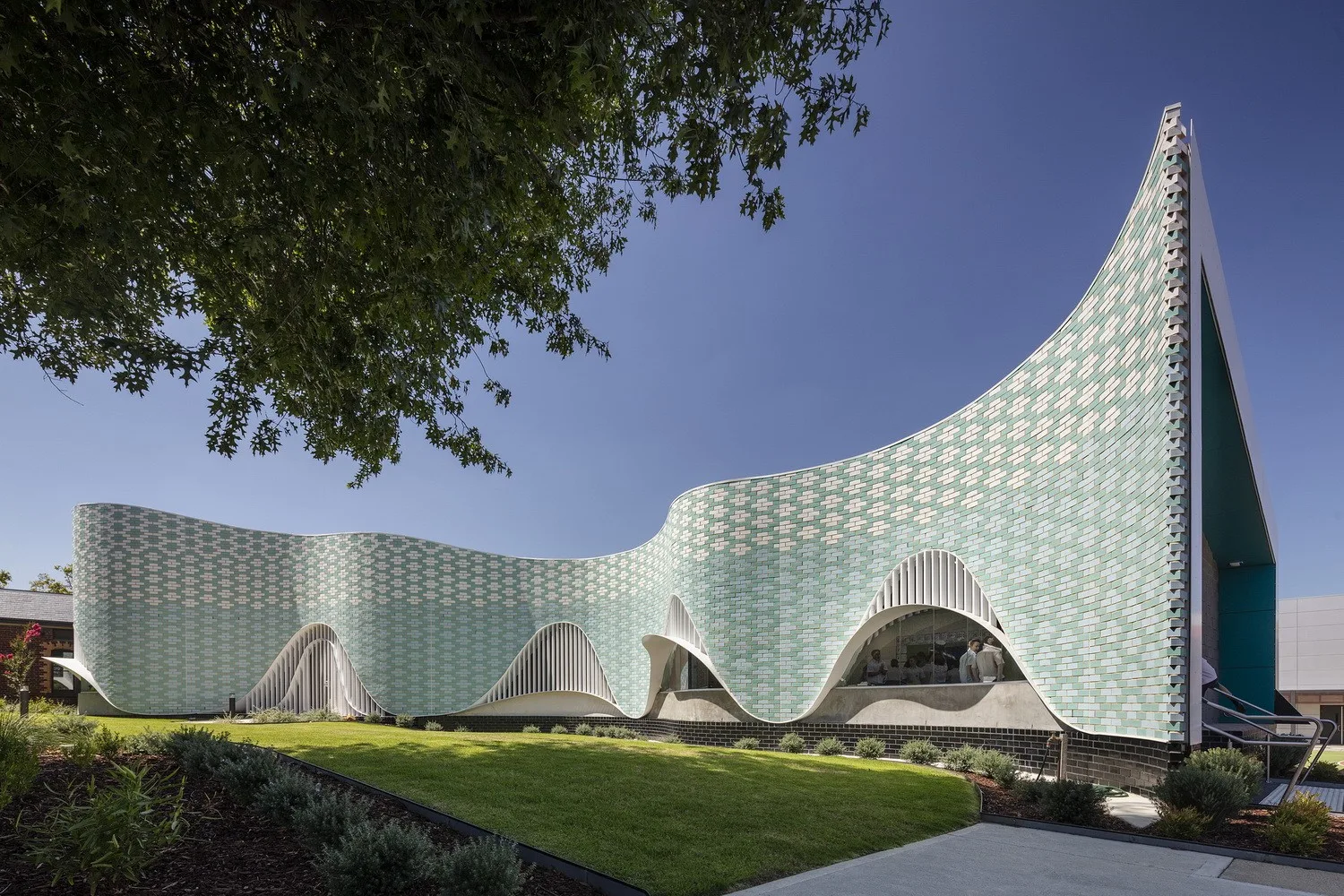
The Penleigh and Essendon Grammar School (PEGS) Music Centre, located in Melbourne, Australia, is the latest addition to a series of projects by McBride Charles Ryan (MCR) on the PEGS campus. The existing single-story Victorian-style “house” serves as the school’s music teaching facility. This new building complements MCR’s earliest project at PEGS—the fifth and sixth grade teaching buildings.
The design of the teaching spaces thoughtfully balances the relationship between the school and its suburban surroundings, while nurturing children’s imagination and cognitive development. The project focuses on renovating the historic Music House to enhance and expand the music education and performance areas.
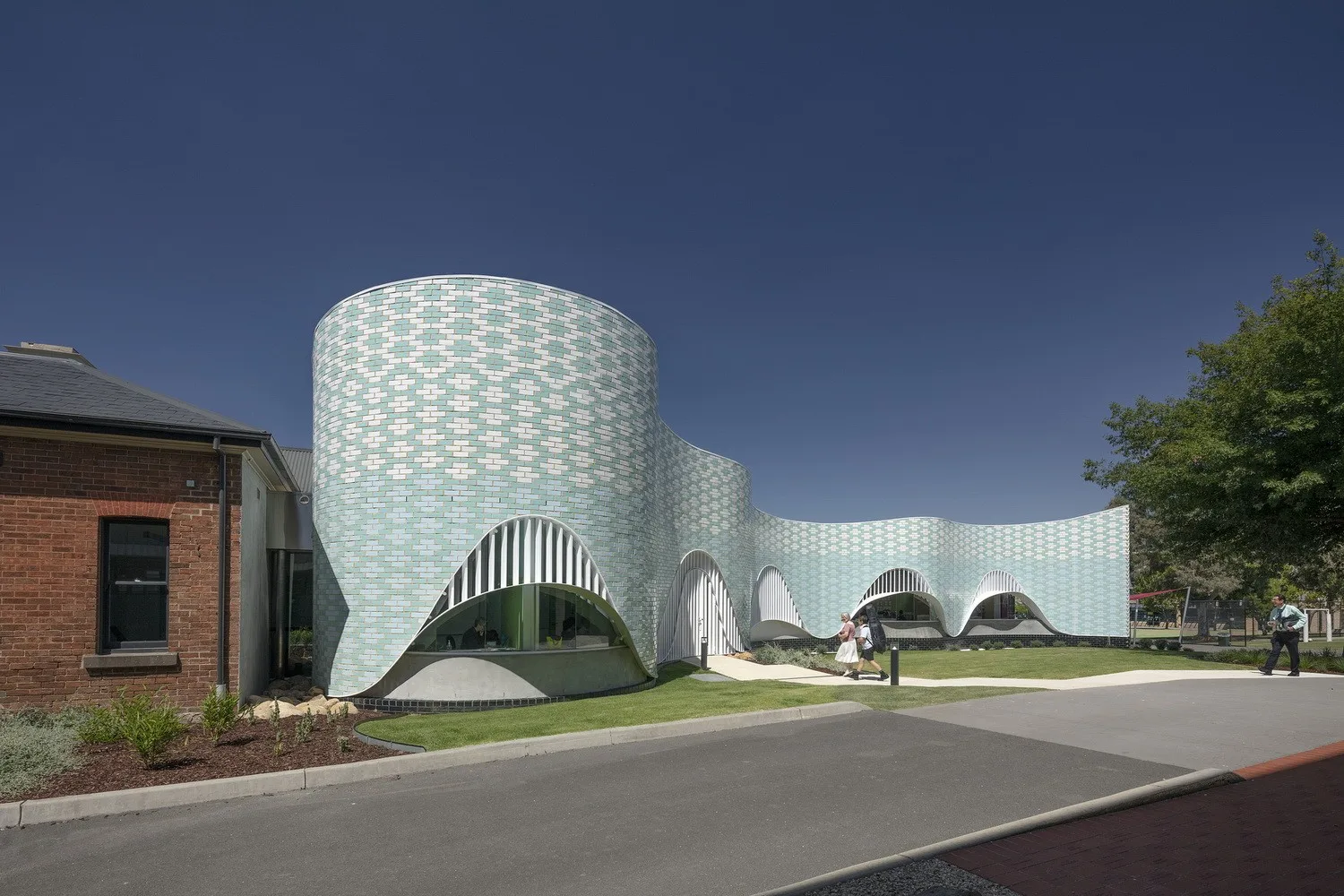
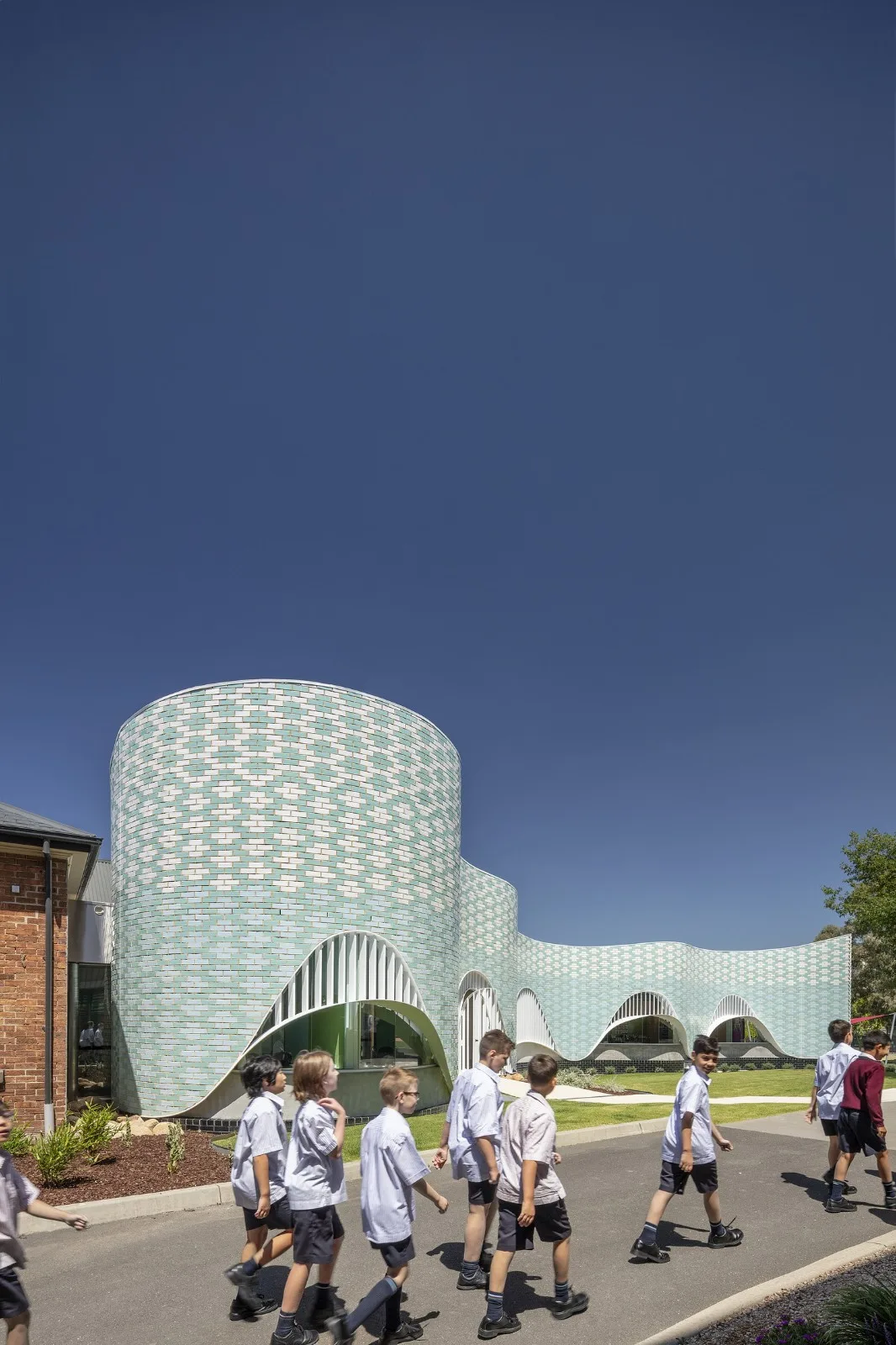
Combining these three buildings creates a synergy where the whole is greater than the sum of its parts. The addition of a fourth element—the courtyard—unites the structures, forming a small community atmosphere. The new music center bridges the stylistic gap between the 2009 architecture and the Victorian-style houses.
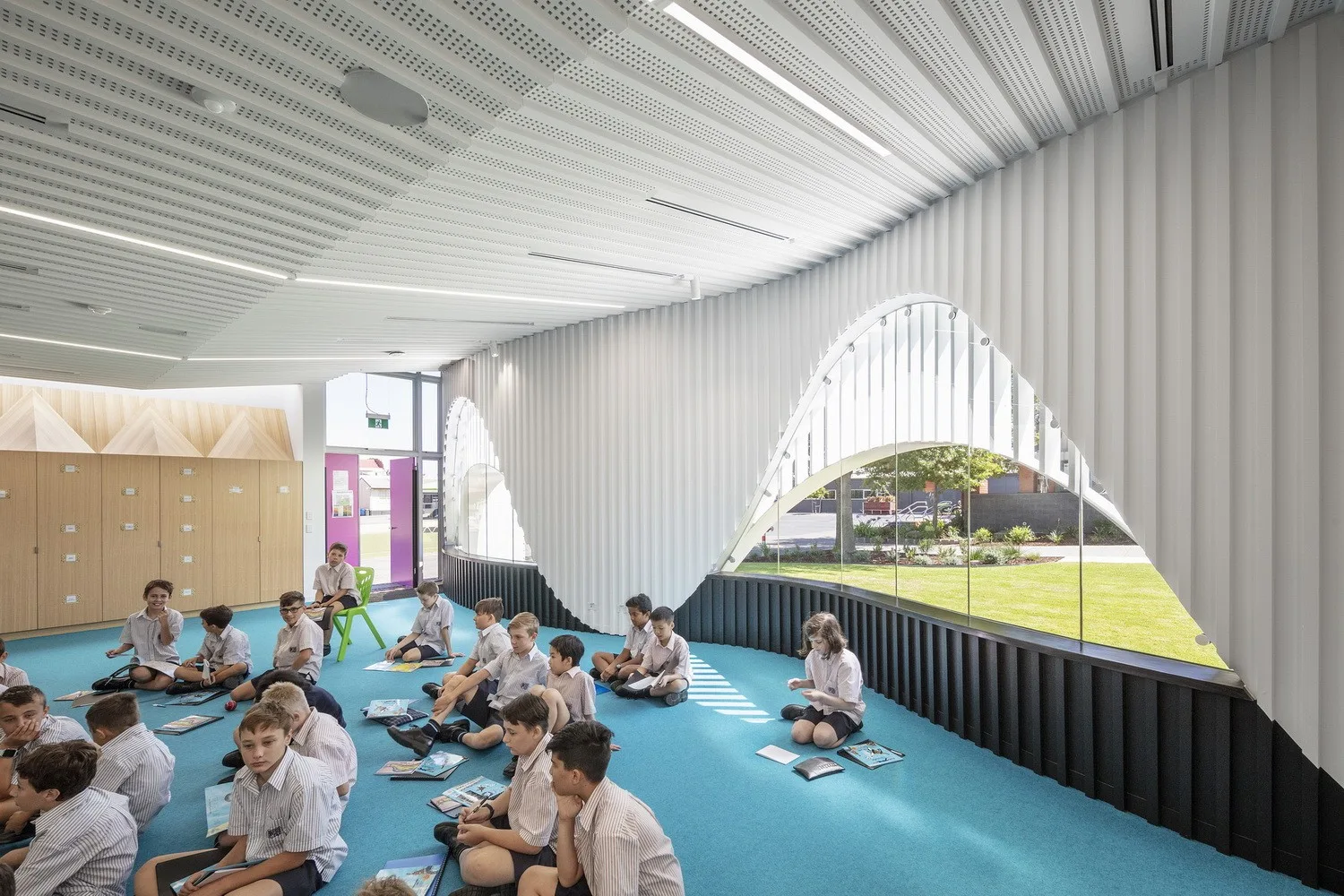
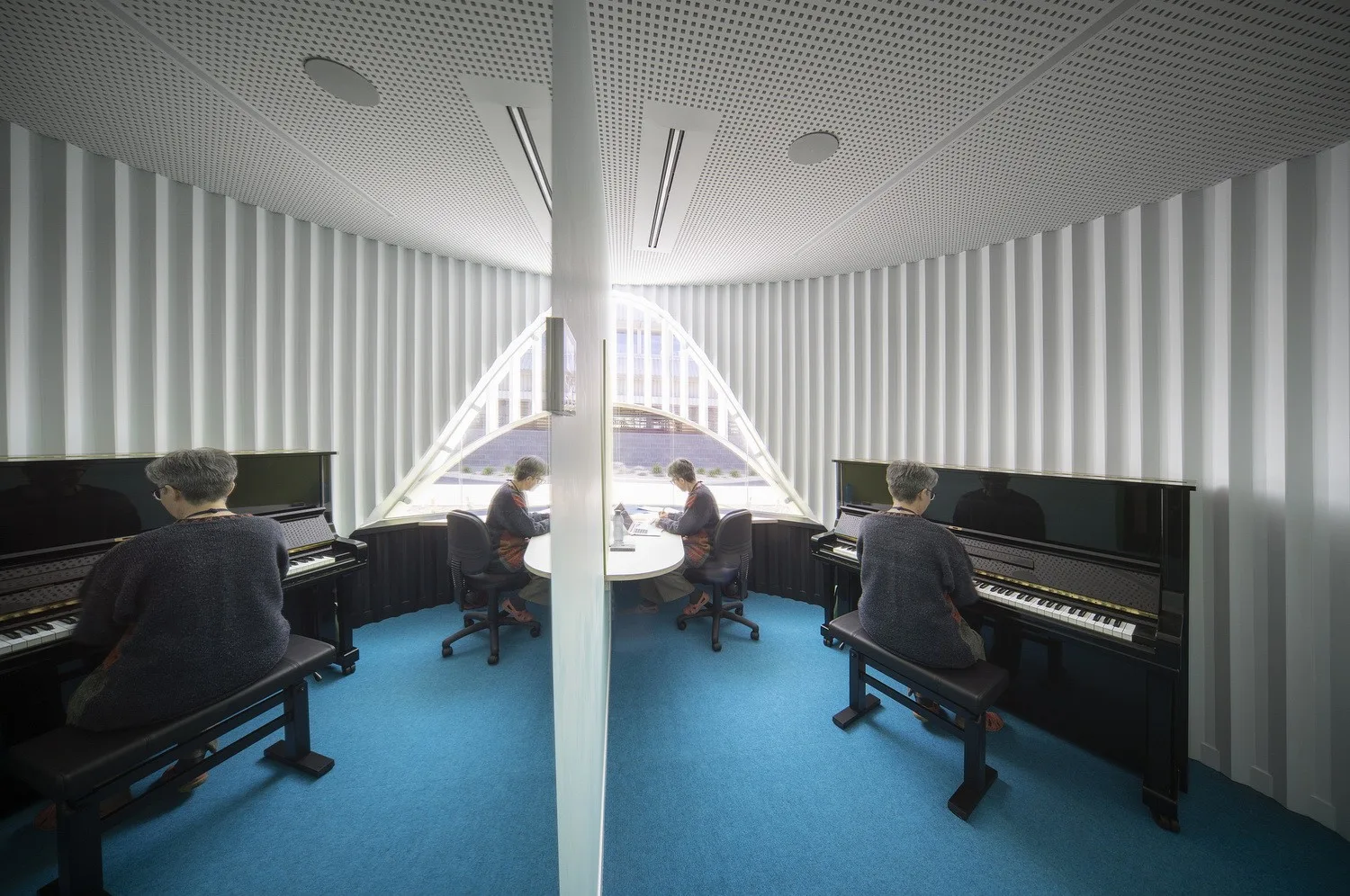
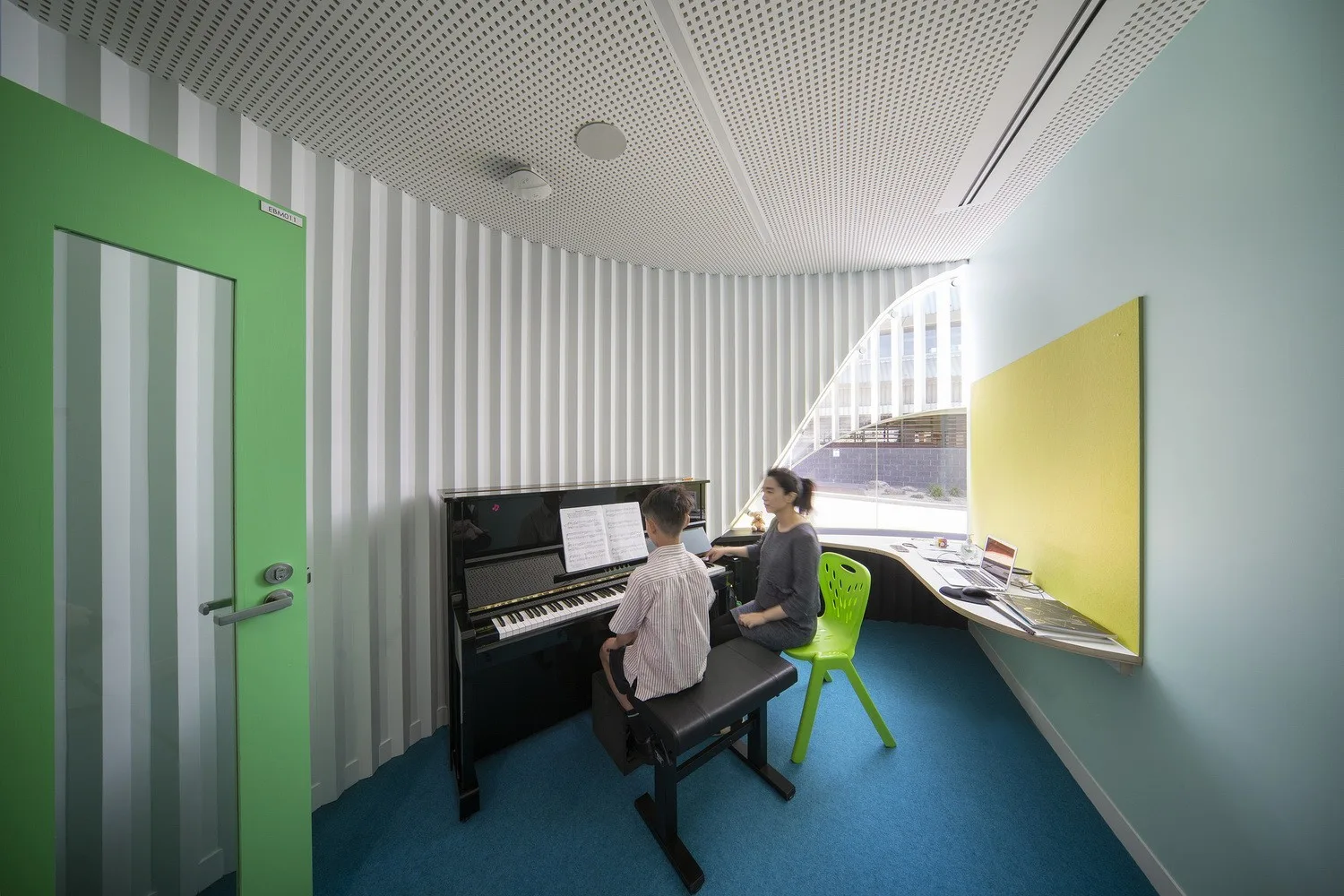
The building includes practice rooms of varying sizes, suitable for both individual lessons and group rehearsals. It also features a large classroom that serves as a learning space, teaching area, and a primary performance venue for students, parents, and visitors.
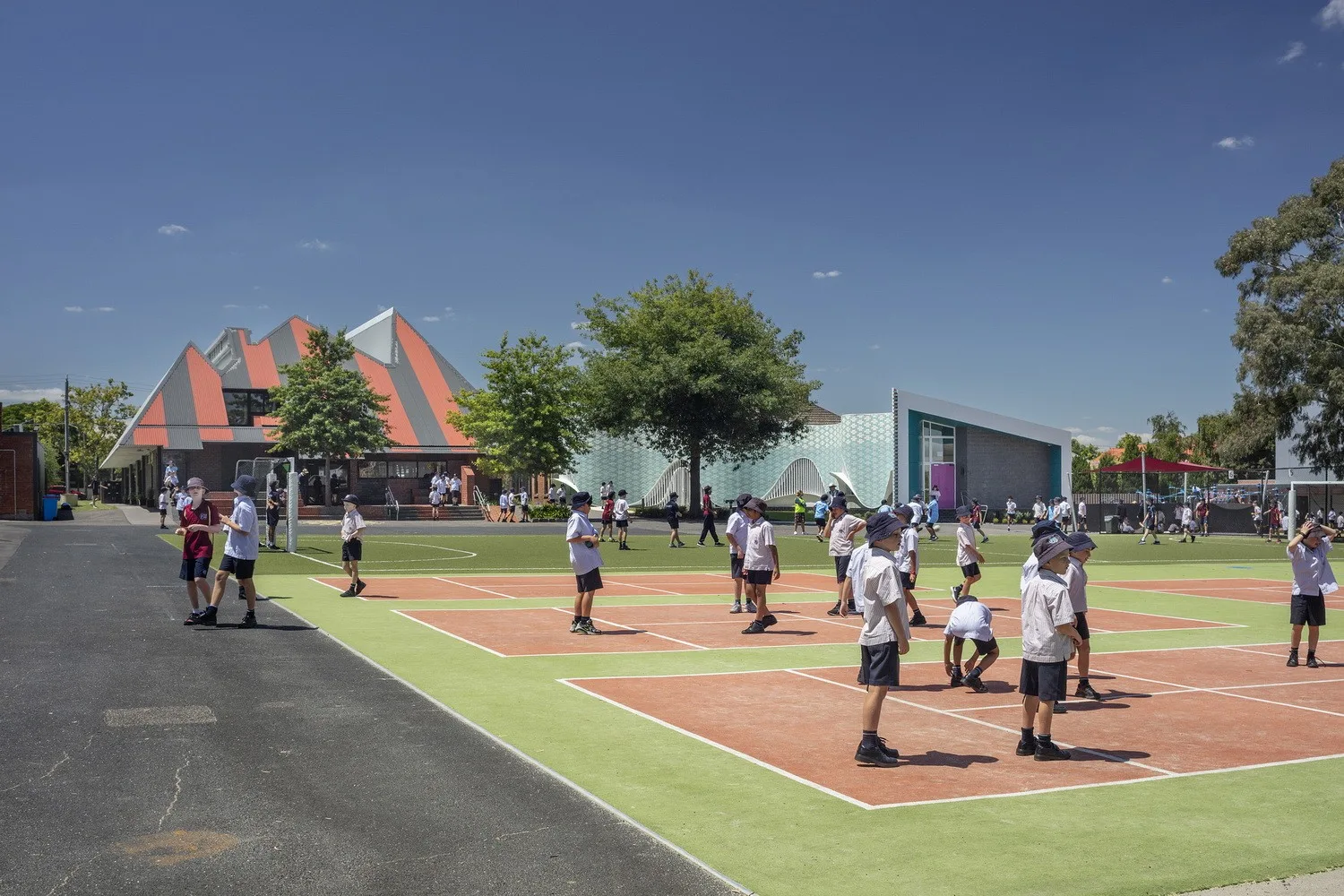
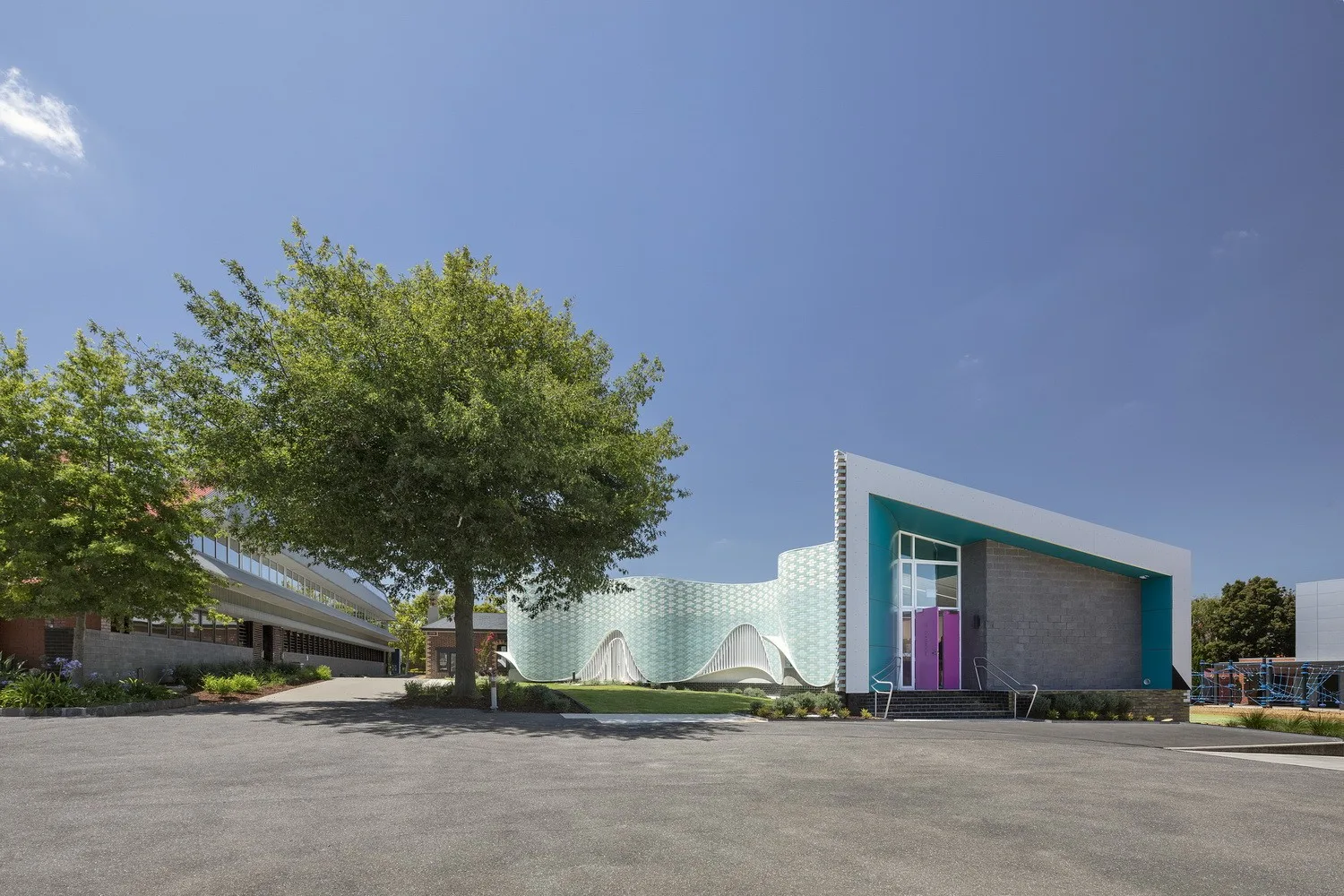
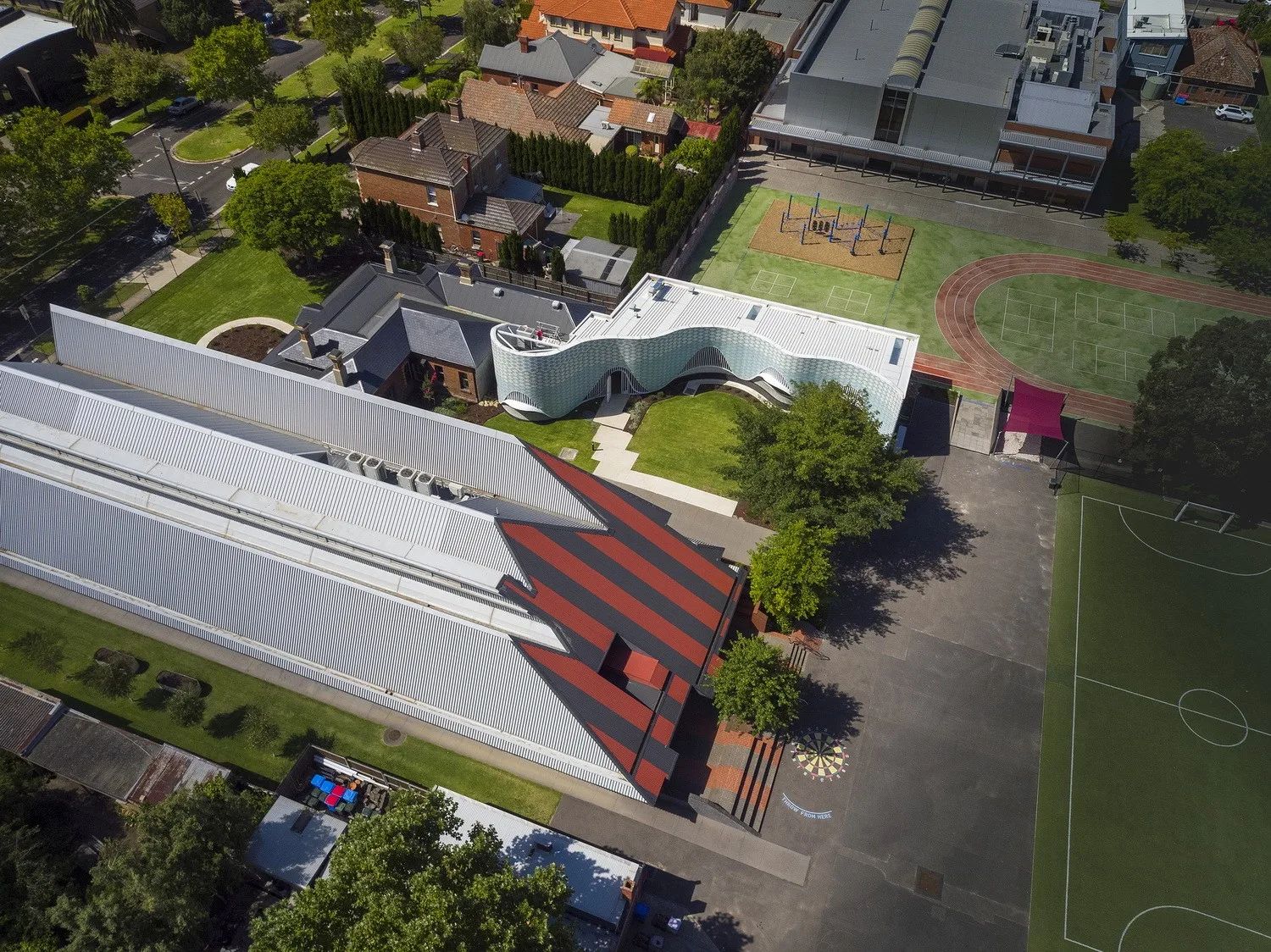
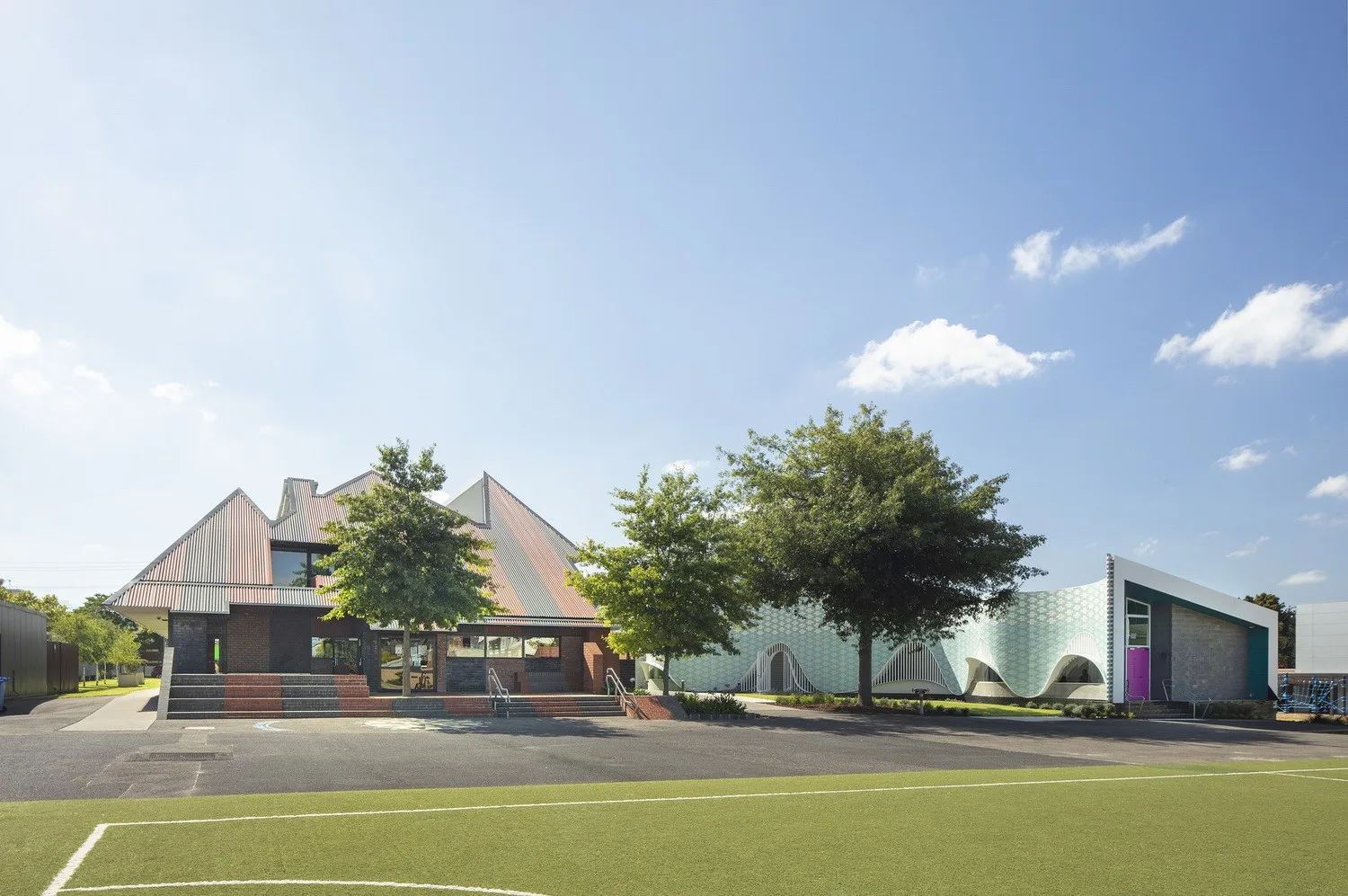
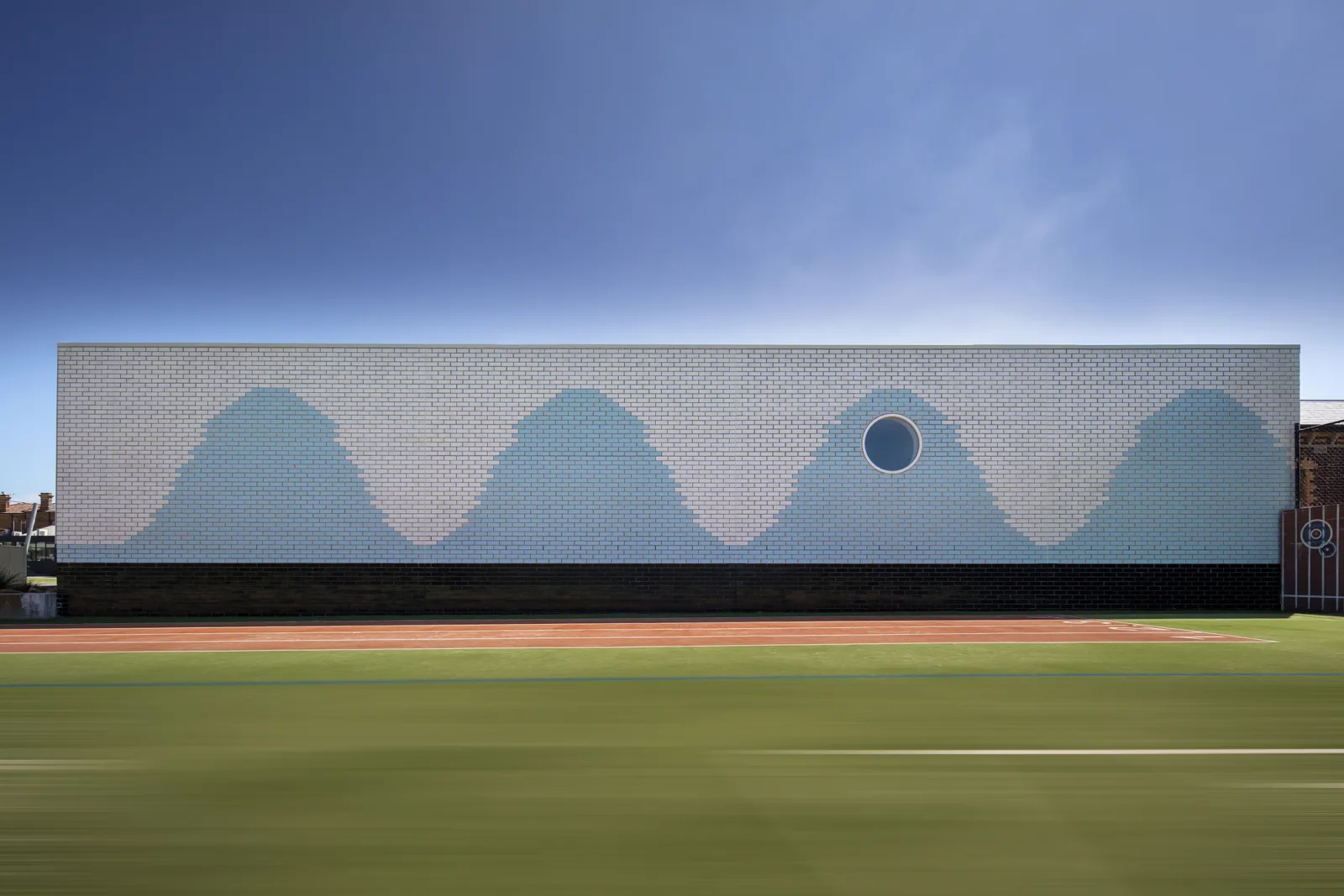
The new sections embody the characteristics of a “modernist” school building prototype and represent the later institutional types on the campus. Their functionalism and modernist style are inspired by the brick sloped-roof houses, which are integrated with more complex historic buildings featuring varied contours.
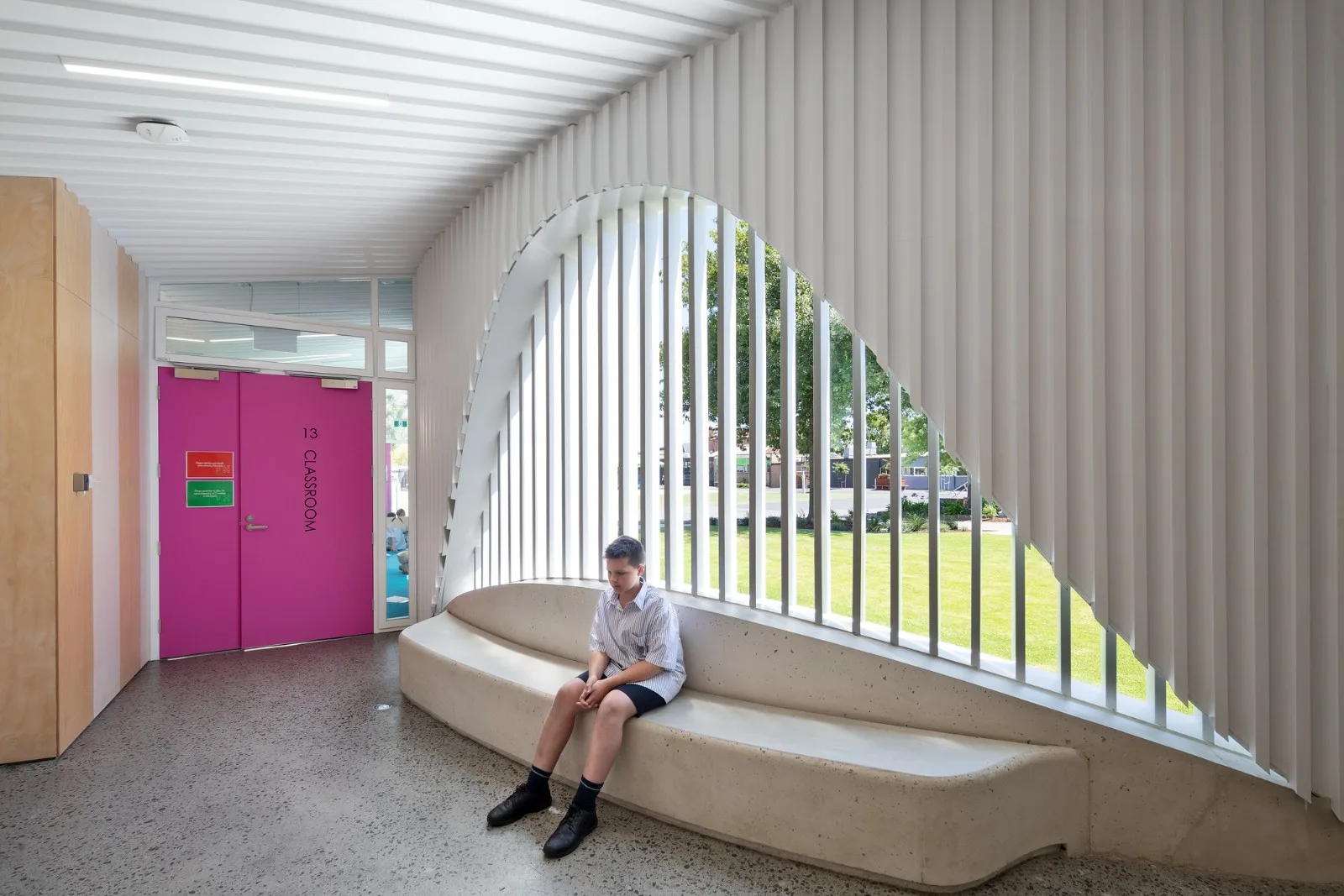
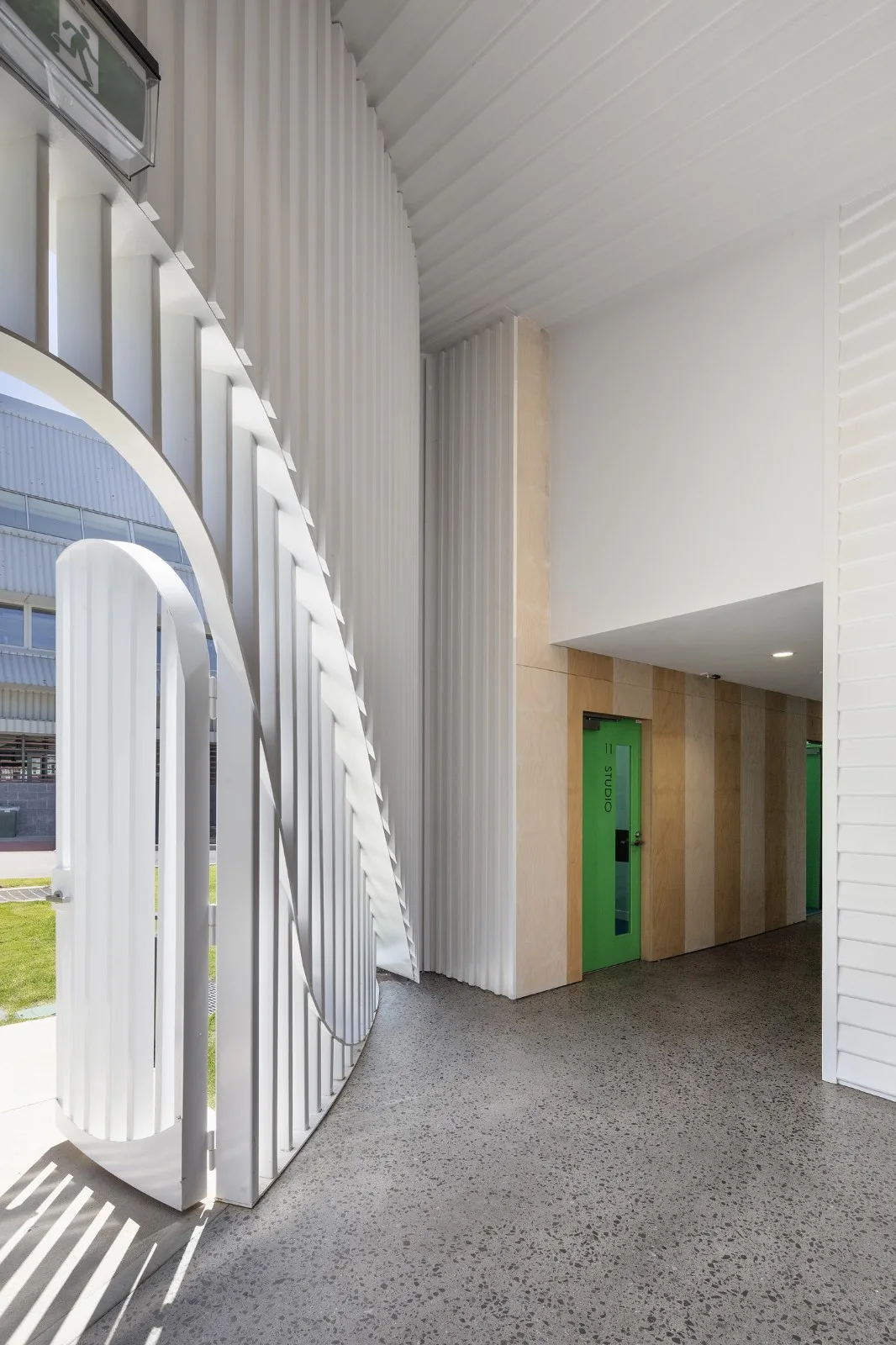
The framed entrances on the south and west facades highlight the origins of this architectural approach. The building employs a playful, lyrical design—its primary form resembling solidified sound waves flowing through the undulating north facade, expressing movement and framing new outdoor and performance spaces.
This project continues the architectural themes introduced in 2009, reflecting on the context, beauty, and imagination inherent in the design.
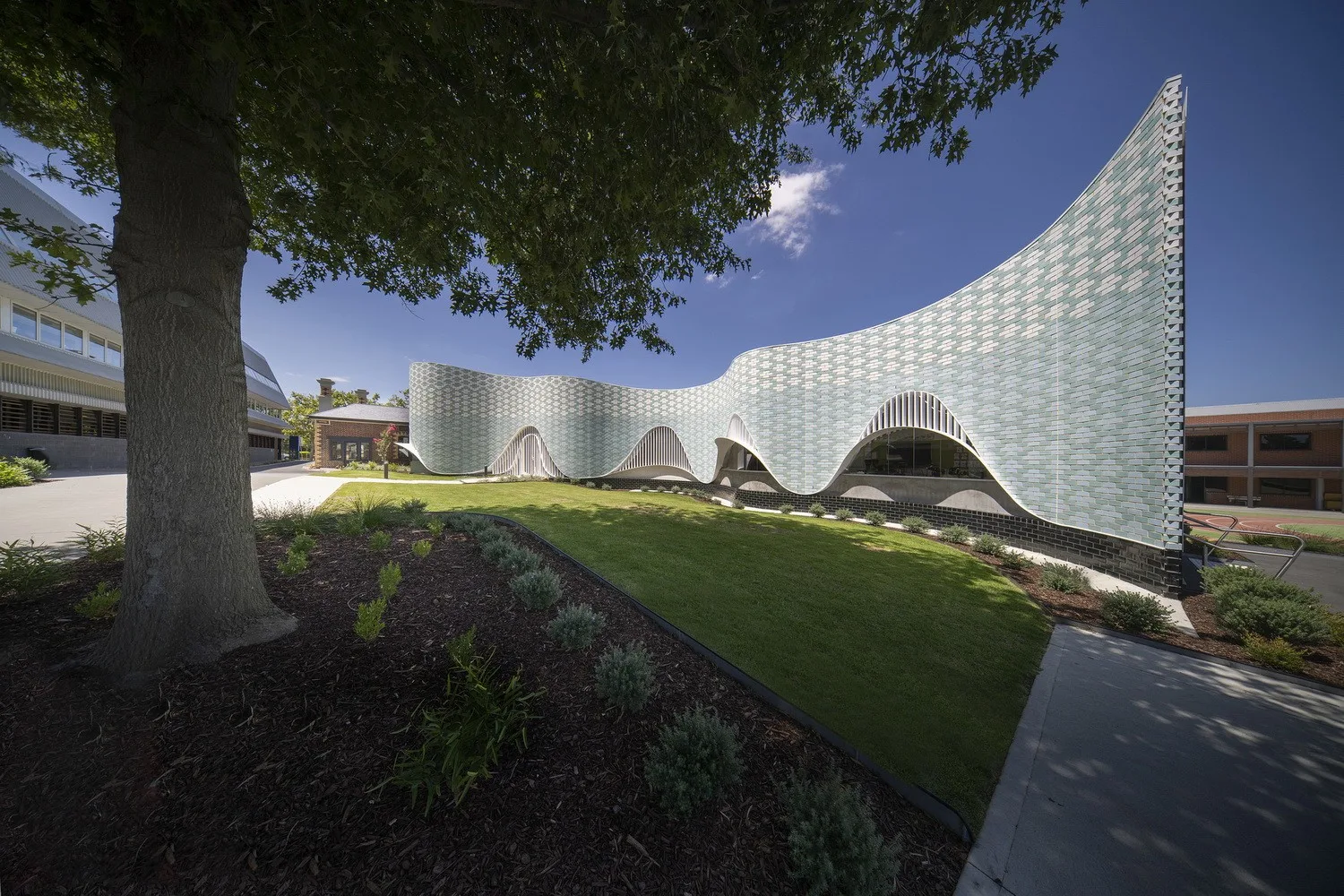
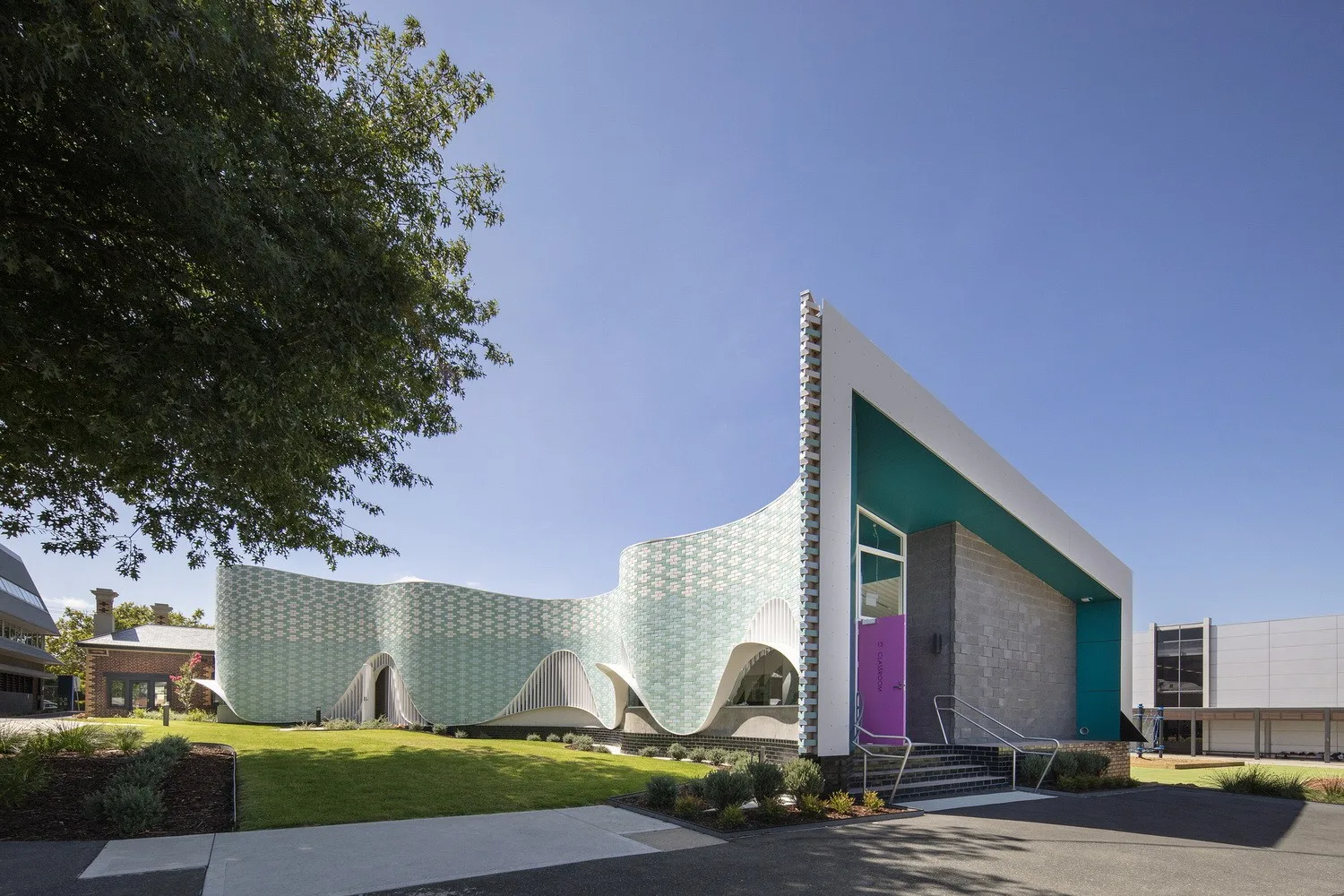
The building makes use of standard school components but presents them in an innovative form. The design aims to evoke happiness and beauty, going beyond mere technical functionality and materiality. Indeed, both beauty and music carry their own intrinsic benefits.
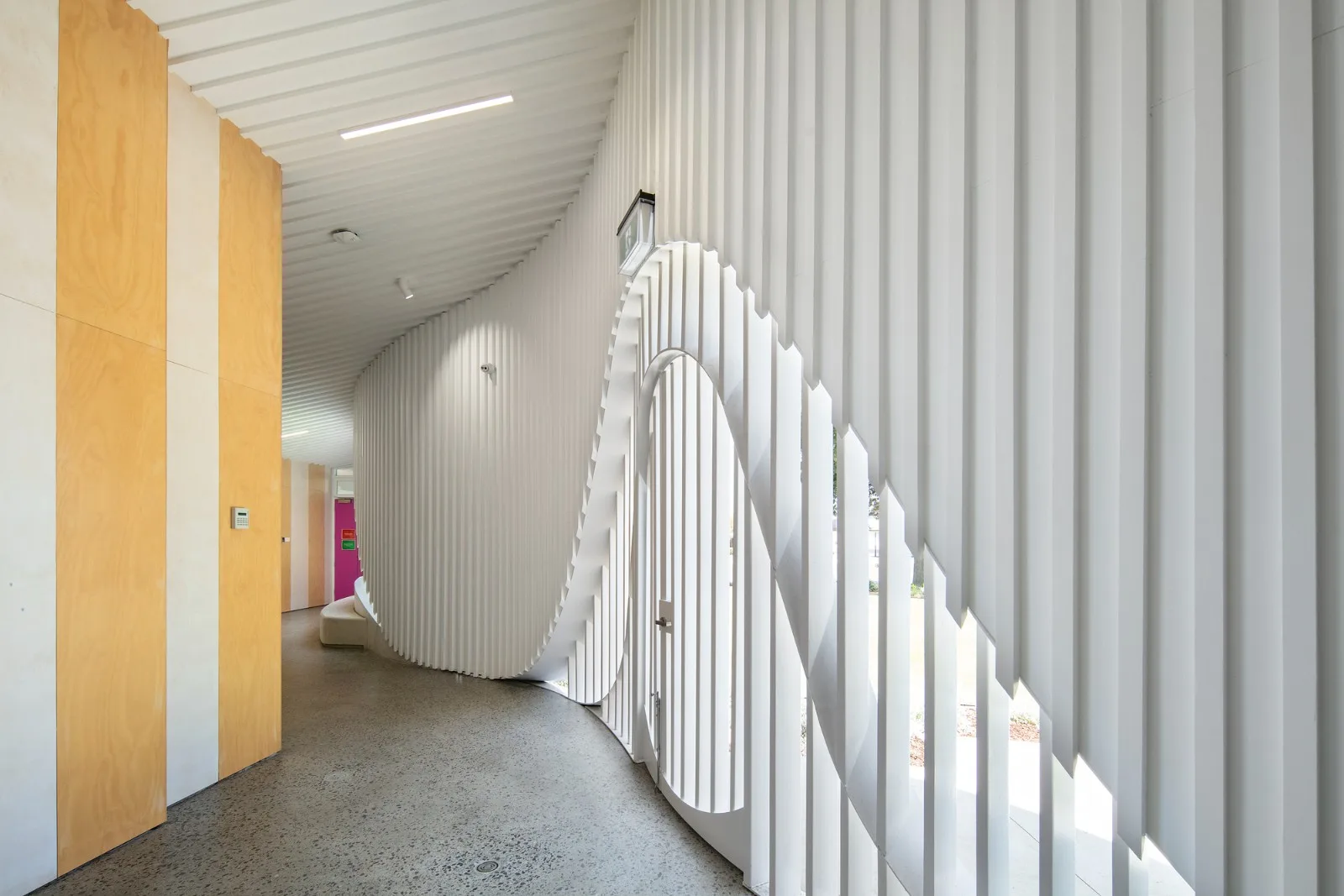
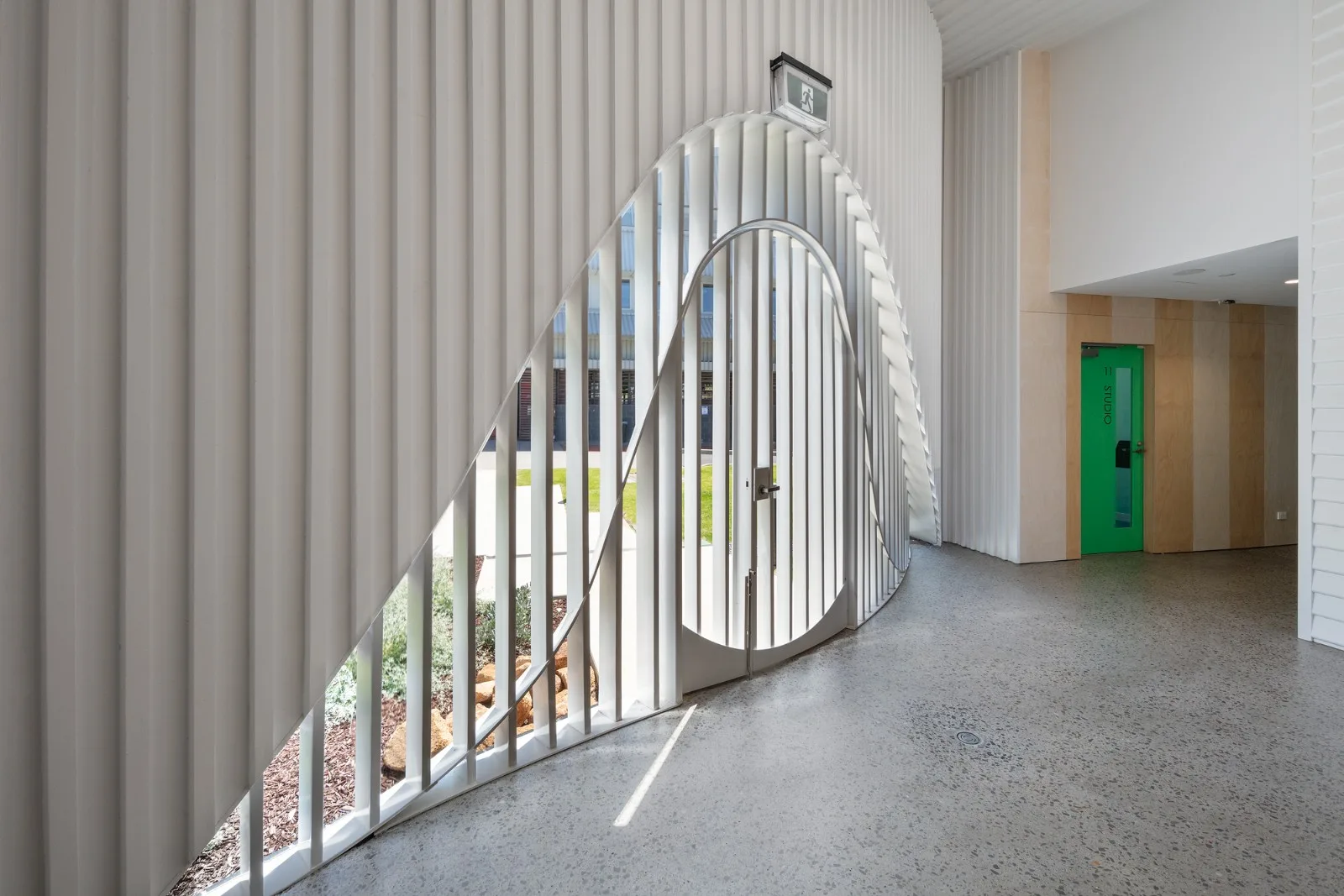
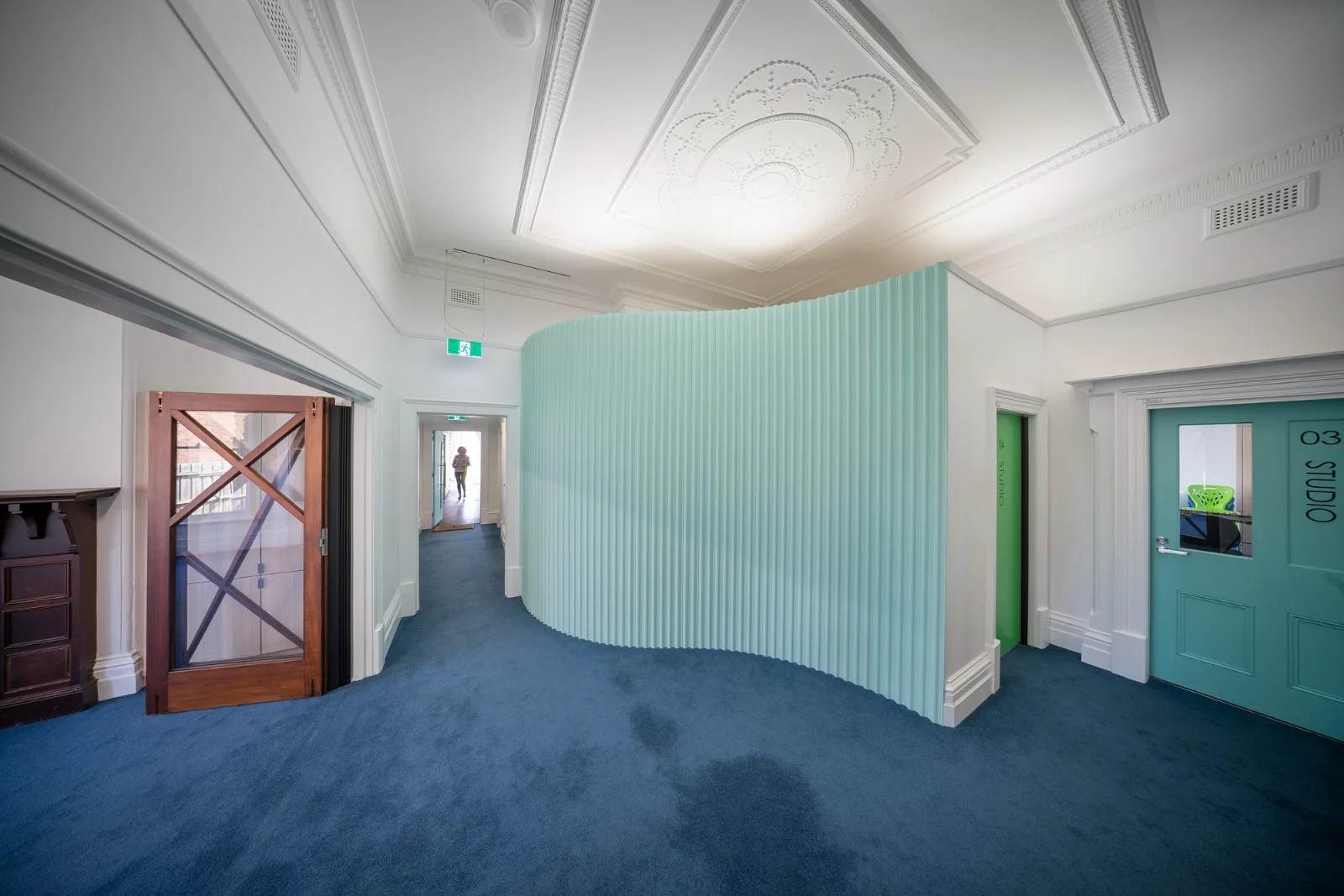
The dialogue between the annex and the original Victorian-style Music House creates a compelling architectural conversation, aiming to gracefully extend the historic building’s lifespan. The new building echoes the old brick patterns through similar motifs, while distinctively differentiating itself with color and texture.
The facade’s undulating form reflects the lyrical nature of music, which is the central theme of the design. The contrast between past and present is thoughtfully integrated, with smooth transitions and varying ceiling heights that blend thresholds and spaces.
Respect for heritage is evident in every detail, from contrasts in volume to the intersection of decorative eaves and the preservation of artistic doors. These elements enrich the narrative and enhance the building’s unique architectural identity.
Text description provided by the architect
Translation: Cao Zhong
Project Drawings
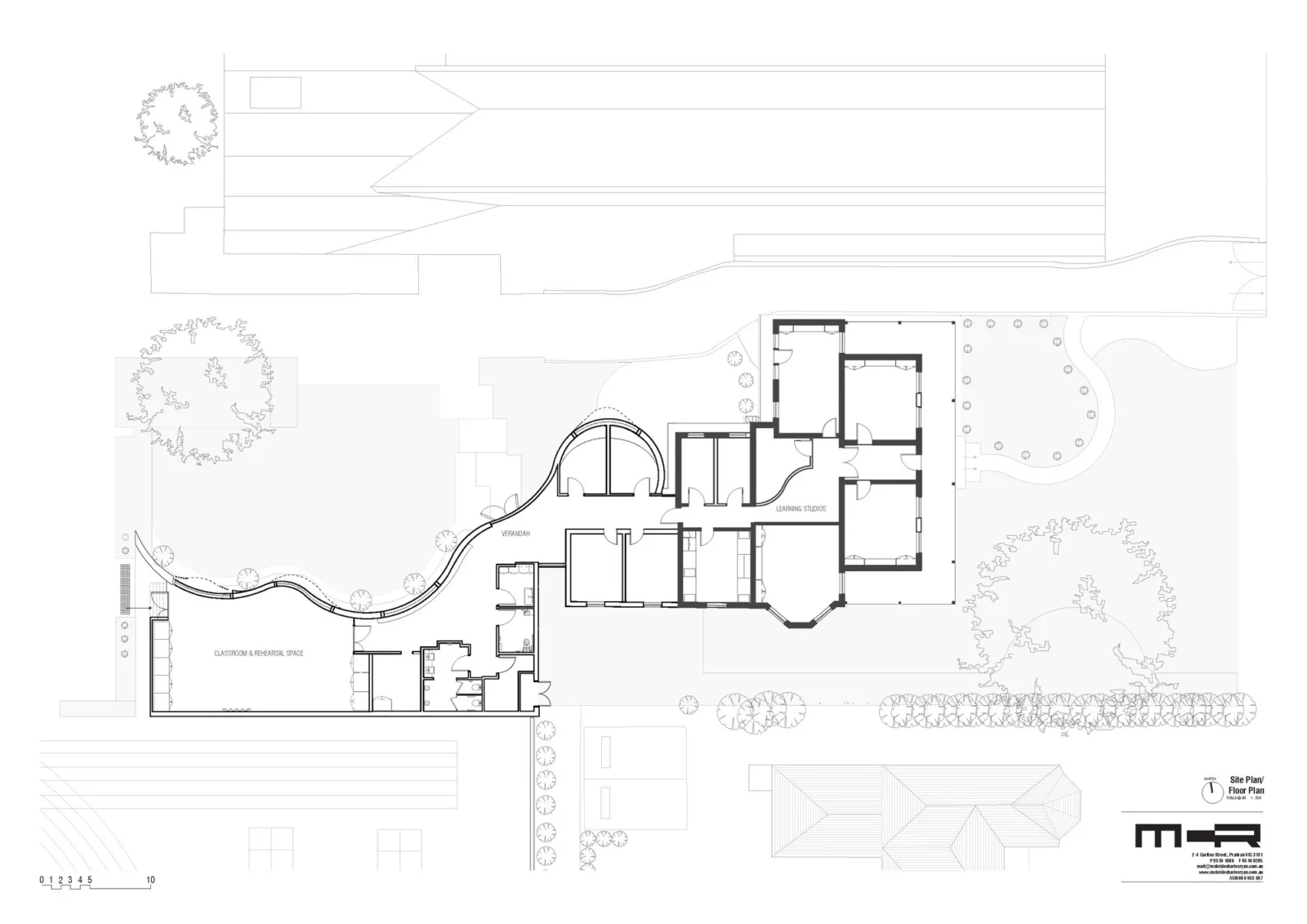
△ Plan View
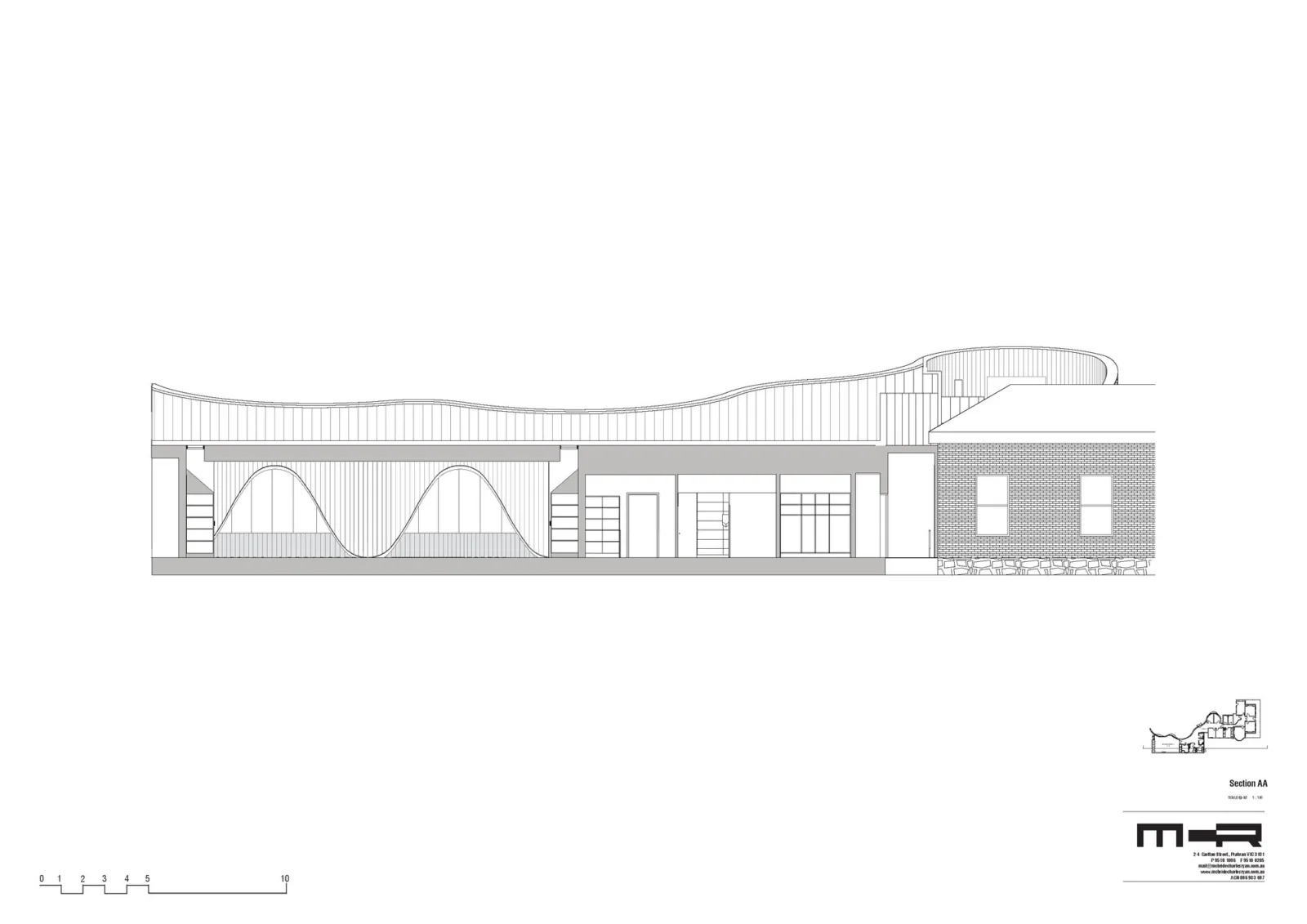
△ Section Diagram
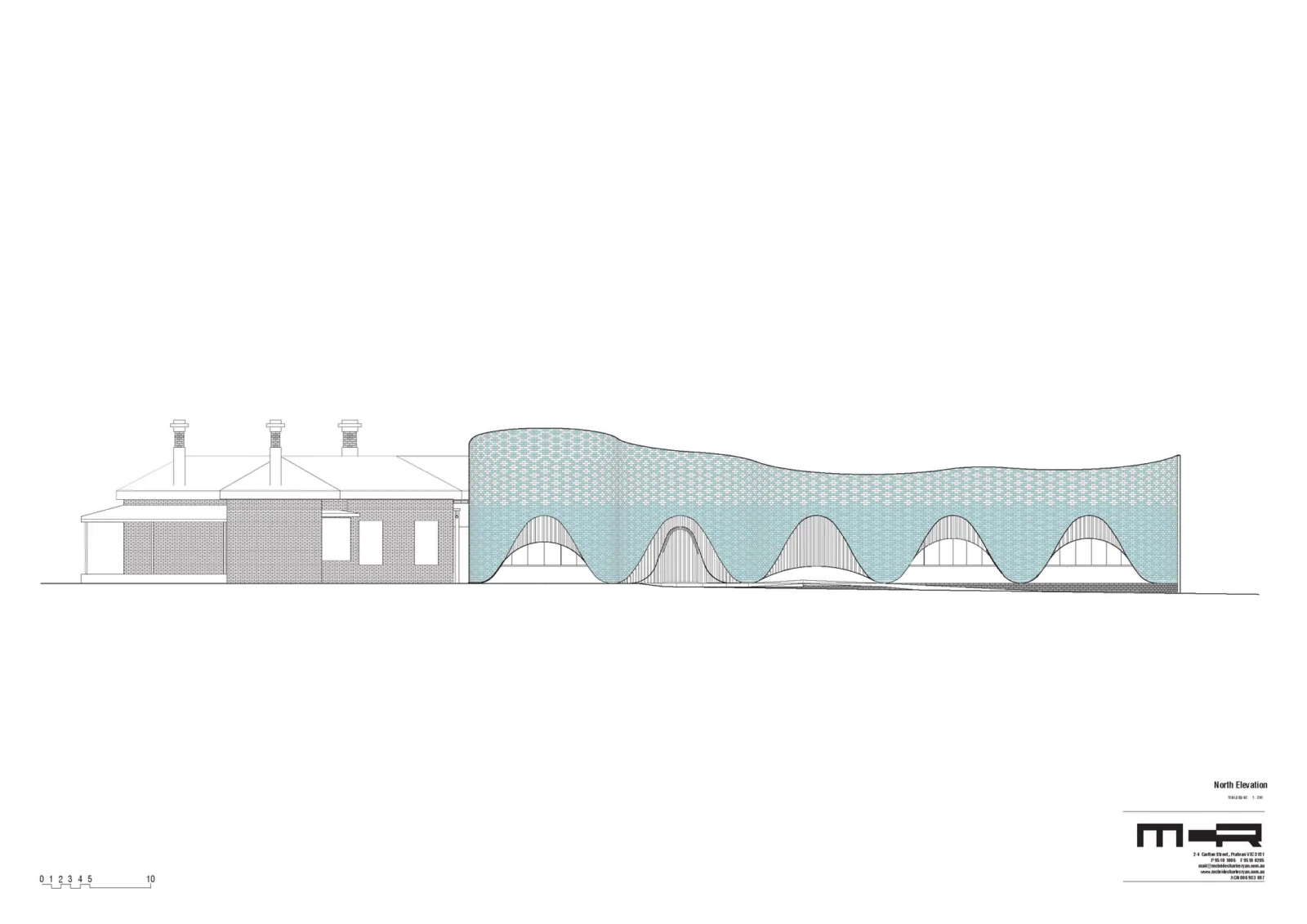
△ Elevation 1
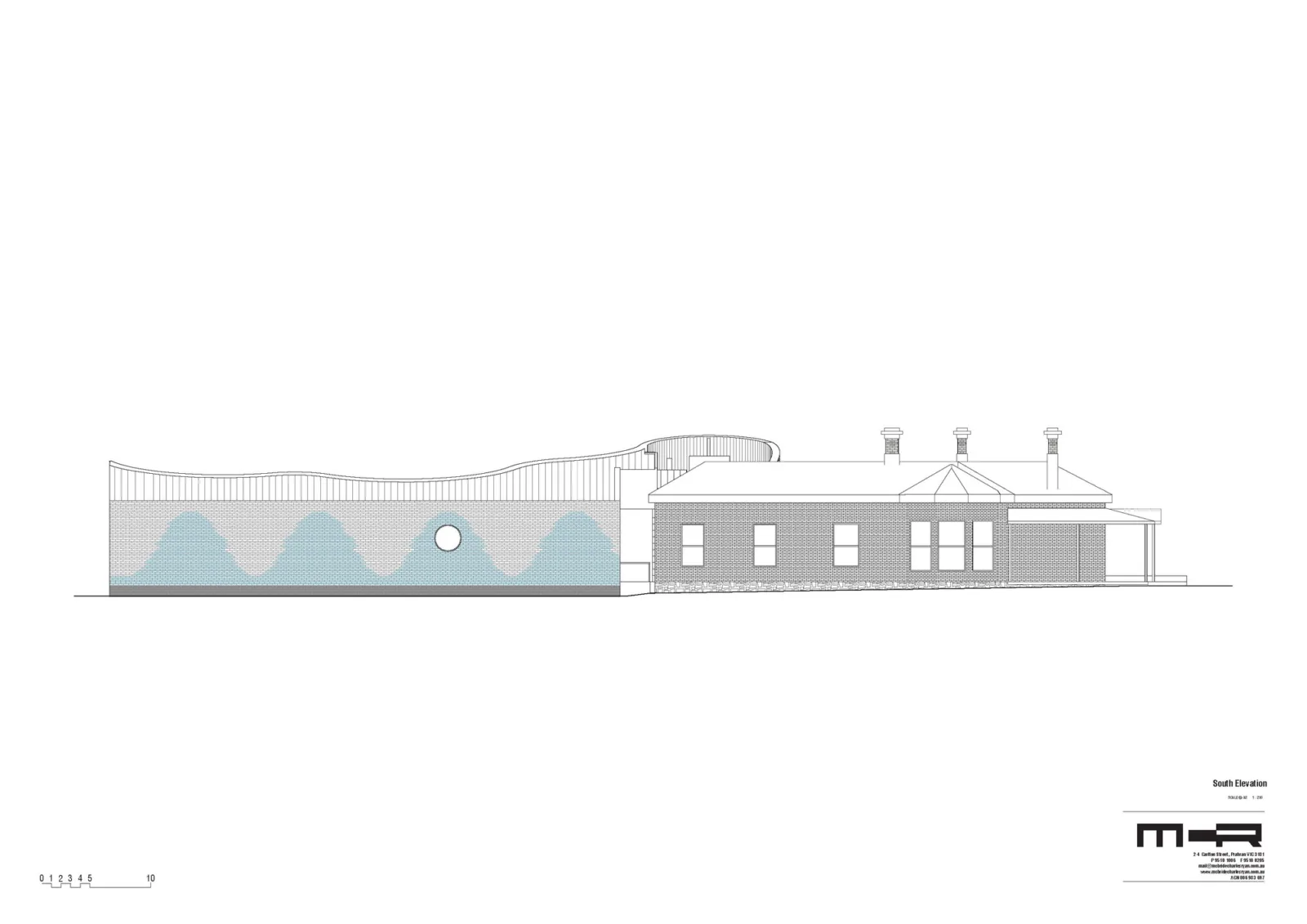
△ Elevation View 2
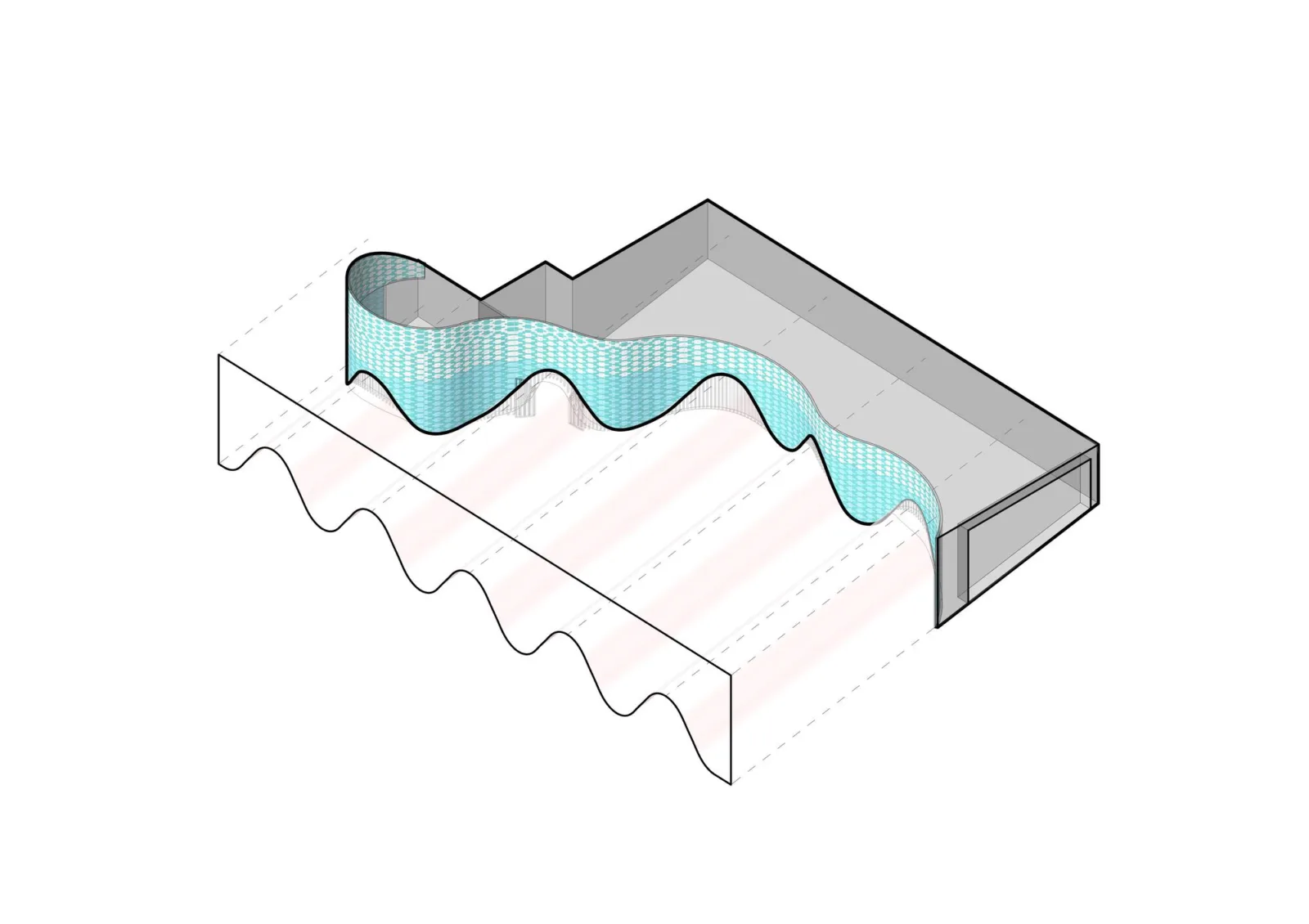
△ Analysis Chart
Project Information
Architectural Design: McBride Charles Ryan
Area: 520 square meters
Project Year: 2020
Photography: John Gollings Photography
Manufacturers: Euro Clay, Surteco
Design, Drawing, and Management: Debbie Ryan, Robert McBride, Manning McBride
Drawing and Management: Georgina Karavasil Papargiris
Drawing by: Matthew Tibbals
Location: Essendon, Australia












Must log in before commenting!
Sign Up