

Embracing the future with a transformative mindset is the only way to succeed in the face of sweeping change. — Baoneng · Future Space
Tracing Shanghai’s urban development trajectory—from Xuhui Binjiang to Minhang Xinzhuang, from the International Front Beach to the southern Binjiang—the city’s southward expansion is unstoppable. In August 2019, the plan for the new Shanghai Free Trade Zone was unveiled, marking a new phase of vigorous growth for Fengxian. Positioned as the core hub serving Shanghai’s southern Yangtze River Delta, Fengxian connects the Free Trade Zone to the west, the Yangtze River Delta Integration Pilot Zone to the east, and Hangzhou Bay along the north-south axis, establishing itself as a truly national strategic hub.
In this context, San Yi China partnered with Baoneng Group to develop an ecological, diverse, and vibrant next-generation smart science and technology innovation industrial park in Qingcun Town, Fengxian District.
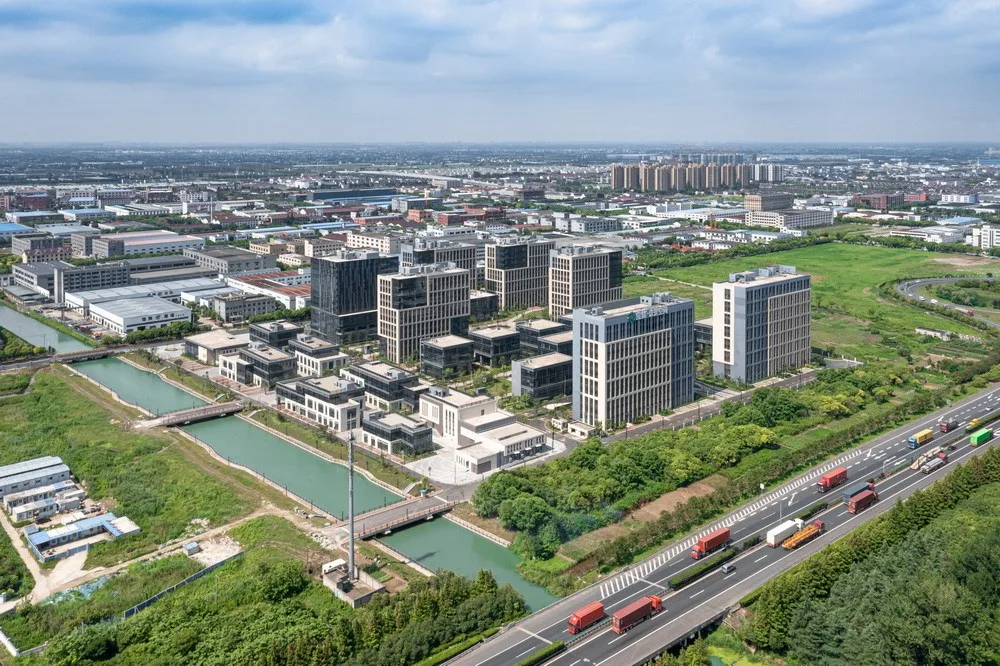
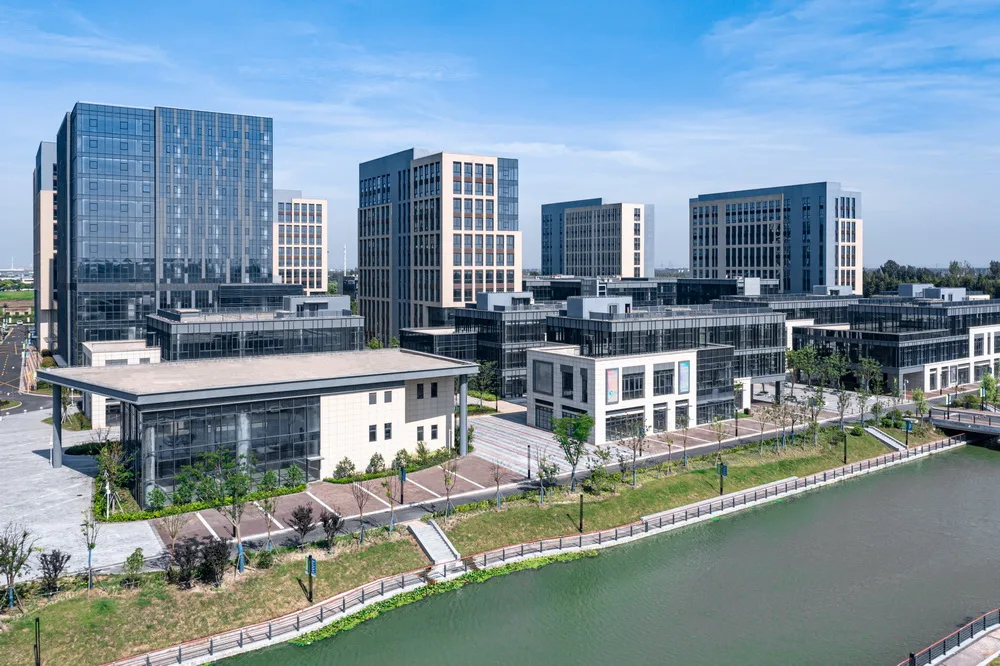
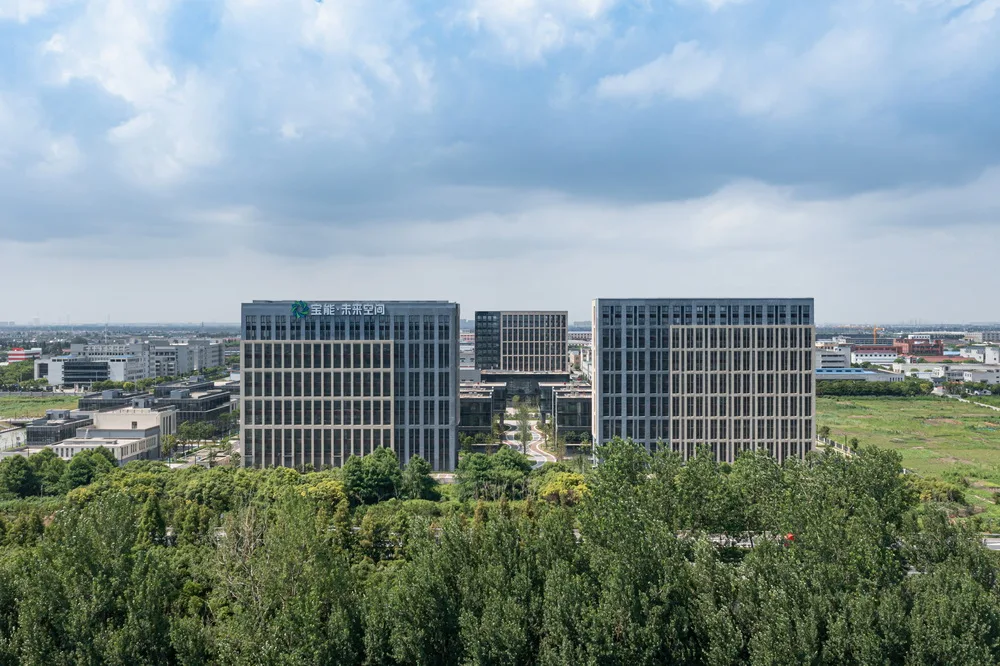
Overall Bird’s-eye View
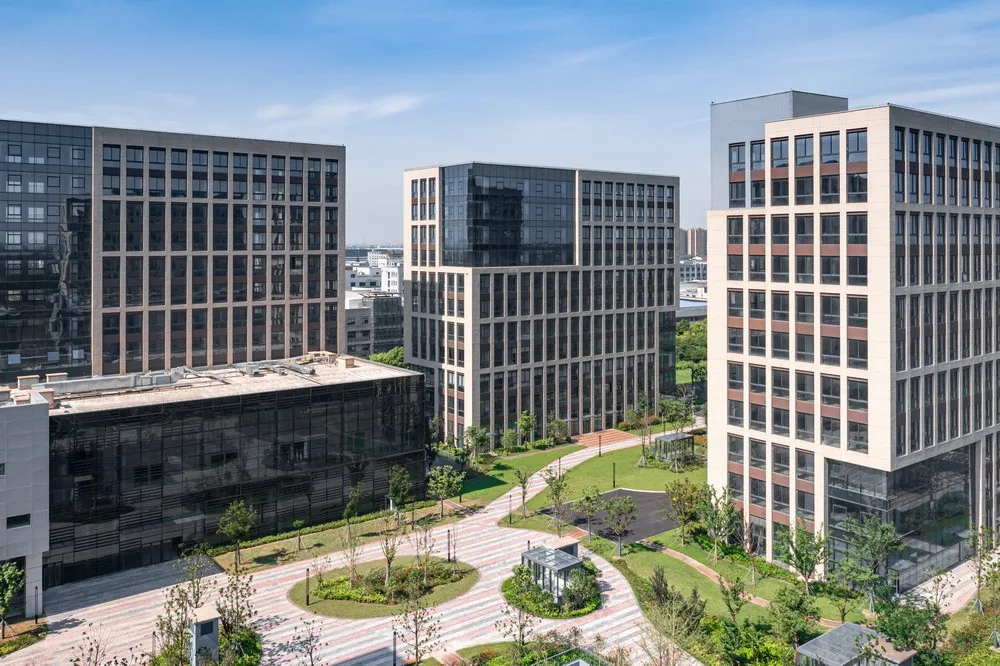
Partial Bird’s-eye View
As a pioneering project in future industrial parks, Baoneng Future Space integrates innovation, diversity, ecology, and flexibility. It offers a variety of industrial spaces complemented by multi-dimensional support services, establishing a new model for sustainable, circular operations within the park.
The park covers a total area of 109,600 square meters, with a building area of 279,700 square meters. The design fuses different functional layouts and architectural forms, incorporates multi-level landscaping, and creates a green, lush environment with a simple architectural style and a dynamic skyline. Baoneng Future Space sets a new regional benchmark for industrial parks.
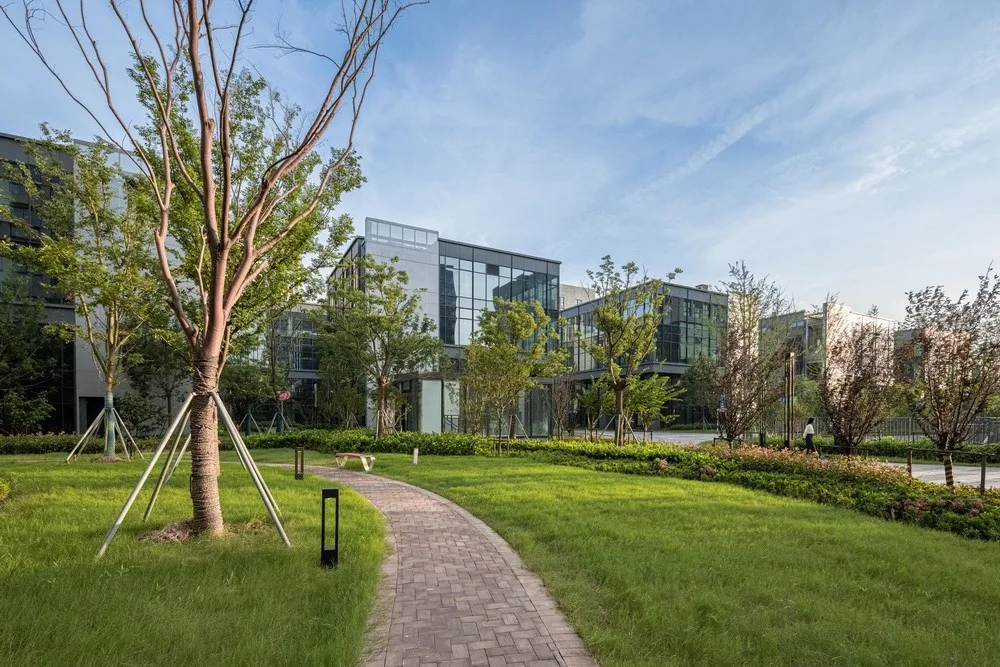
△ Green and lush park environment
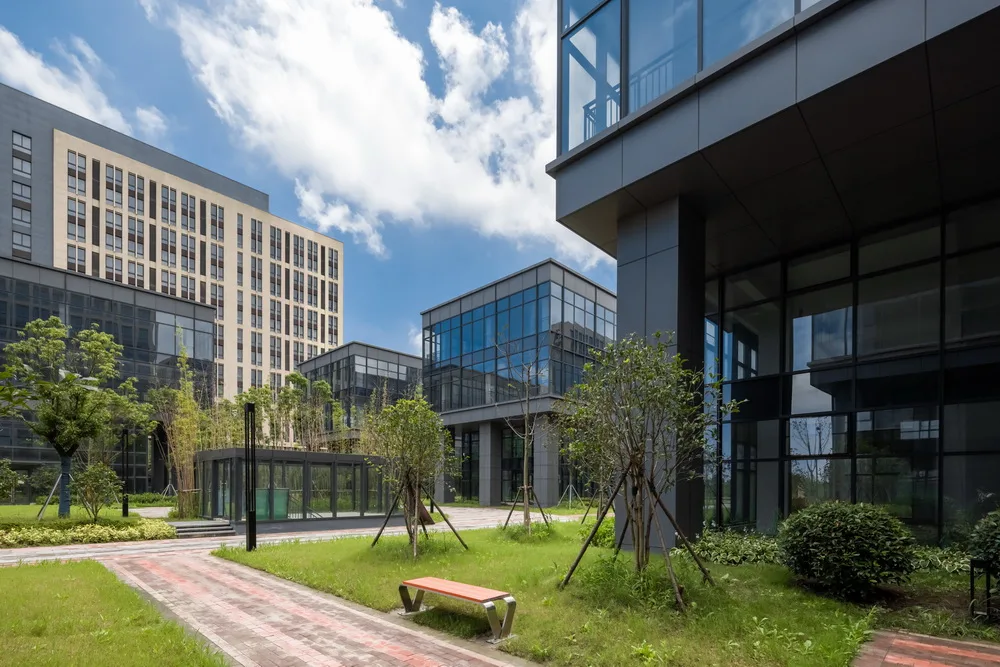
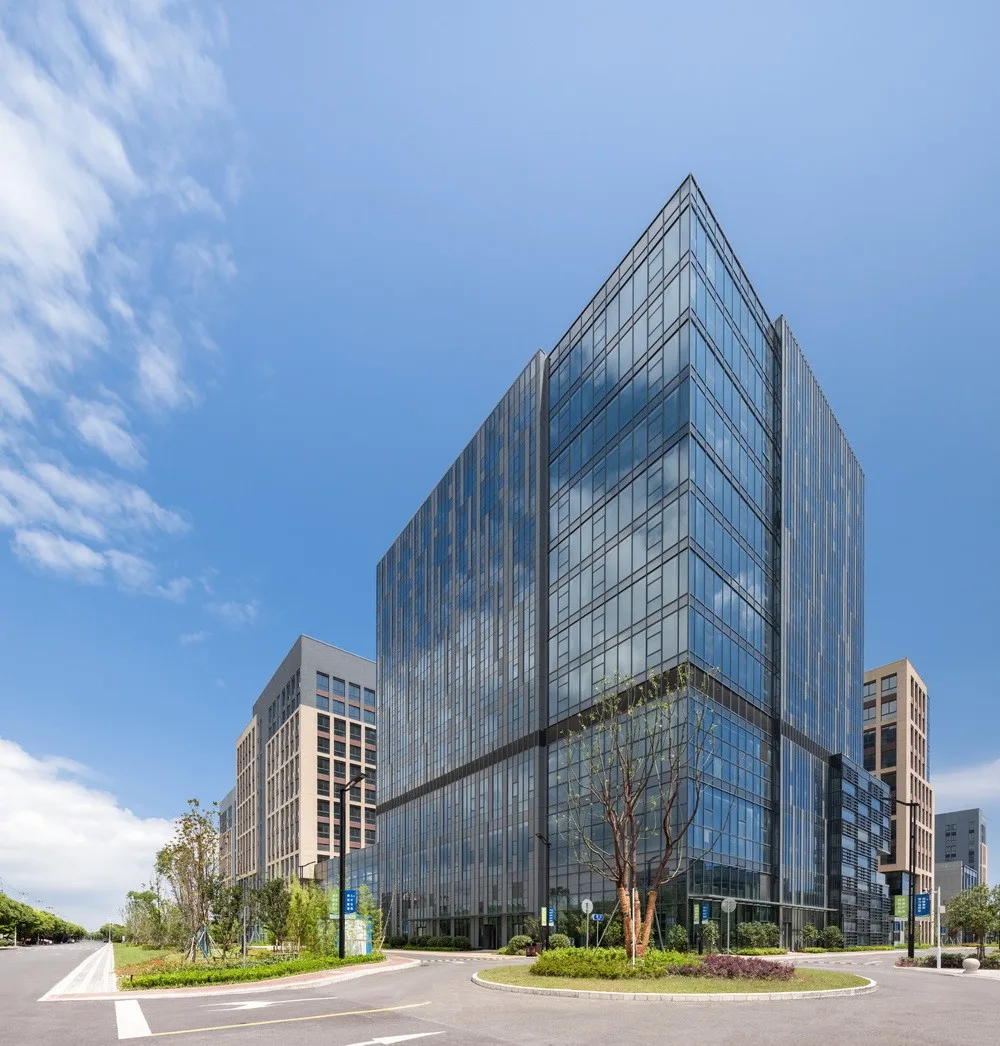
△ Simple facade and rich skyline
Diversified and Community-Oriented Park Ecology
New Directions for Future Industries
01 Organic Functional Layout: Building a Self-Sustaining Industrial Complex
As industrial models evolve and emerging industries diversify, the demands on industrial parks increase significantly. Baoneng Future Space adopts a “matrix” design concept, decomposing and reconstructing the base into a grid that supports diverse spatial combinations with logical rigor. This approach reflects industrial rationality while allowing adaptability for future changes.
Functions such as office, leisure, social interaction, and daily living are organically integrated within this matrix, creating a self-sustaining smart technology innovation complex.
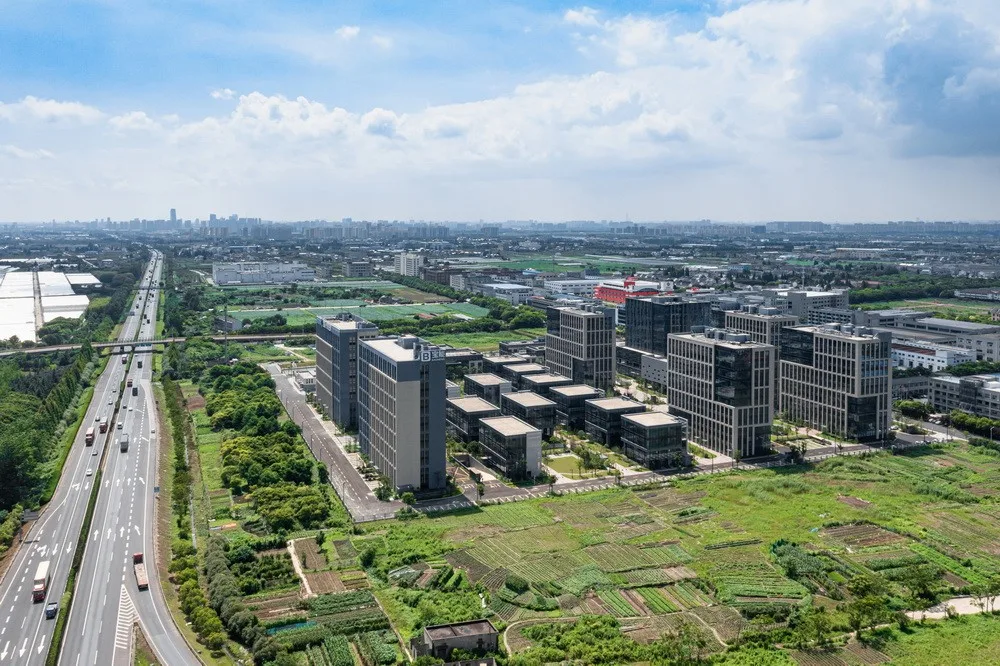
Overall Bird’s-eye View
The layout follows a framework of “one horizontal, two vertical, multiple centers,” where office and landscape spaces are intertwined, enriching architectural forms and spatial relations. The east-west central green belt connects parks on either side of Hutang Port, while a north-south landscape corridor along the river and a tree-lined avenue at the main entrance divide the park into three zones: intelligent manufacturing, living and service support, and smart office areas.
Commercial and hotel facilities are strategically located at the intersection of the main axes, turning each functional zone into independent clusters linked by an axis network, creating a dynamic whole.
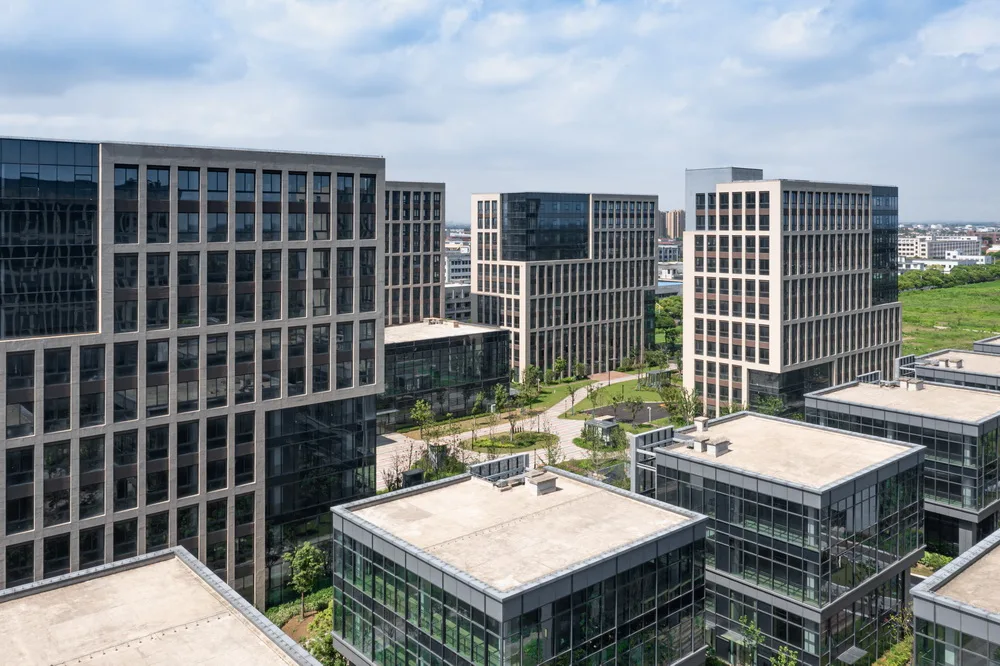
Partial Bird’s-eye View
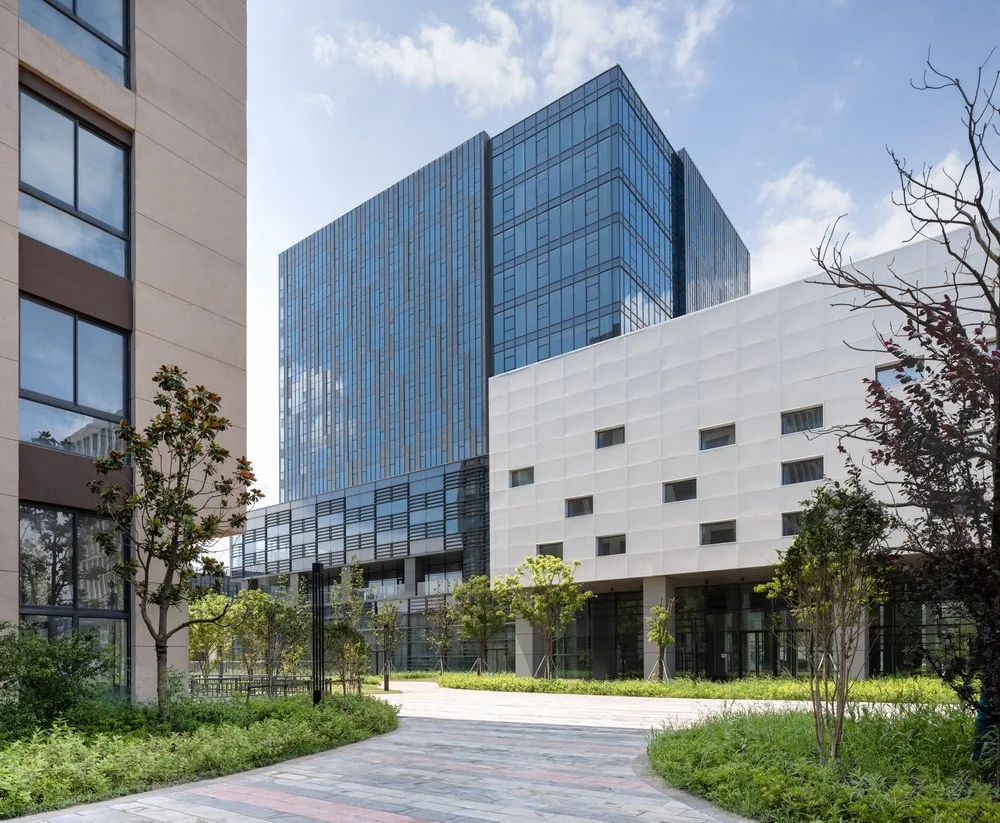
Rich Architectural Forms and Spatial Relationships
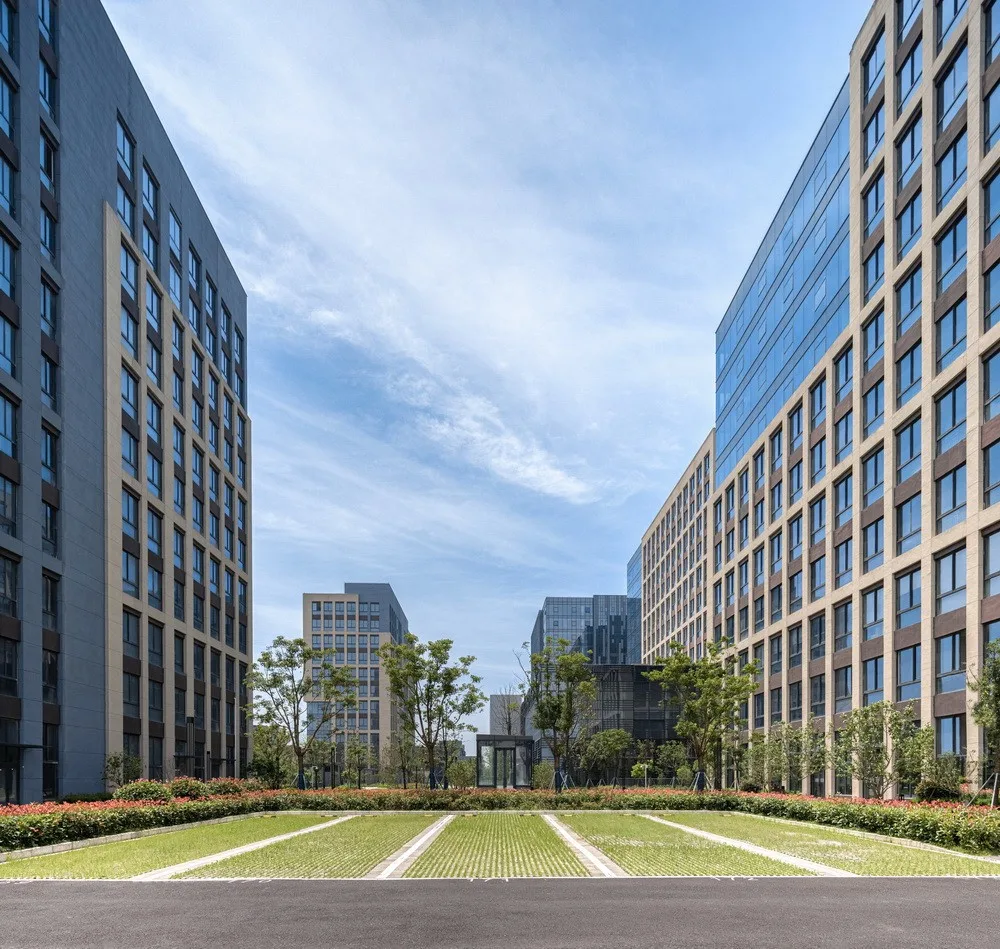
△ Smart Office Area
02 Diverse Product Offering: Creating a Vibrant 24/7 Operating Park
Baoneng Future Space features four core business formats: smart office spaces, standalone headquarters, talent apartments, and commercial support facilities. This diverse portfolio caters to various industrial needs, fostering a lively environment that operates around the clock.
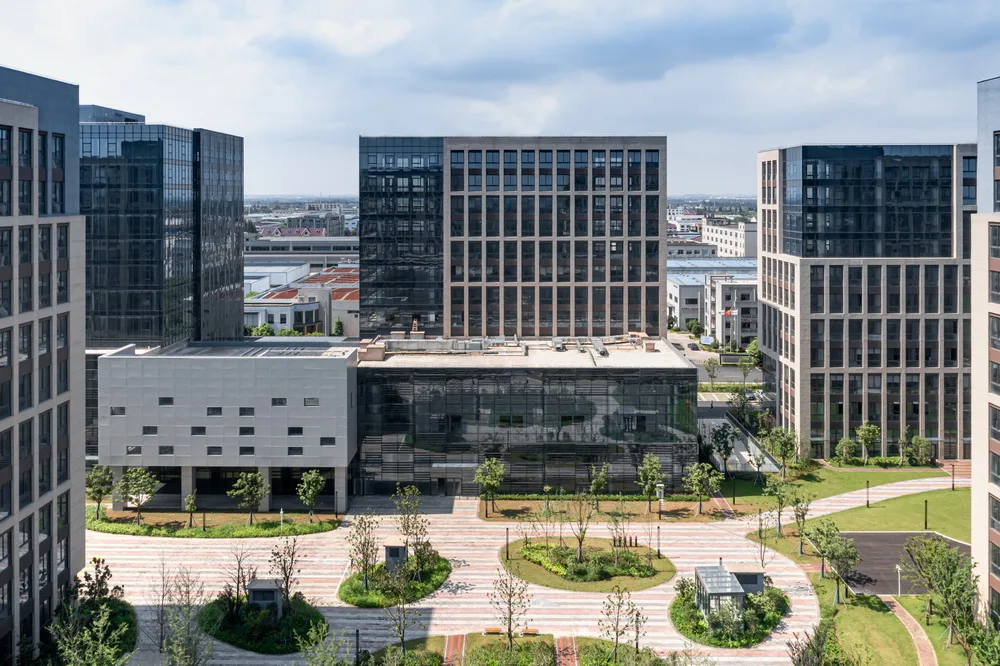
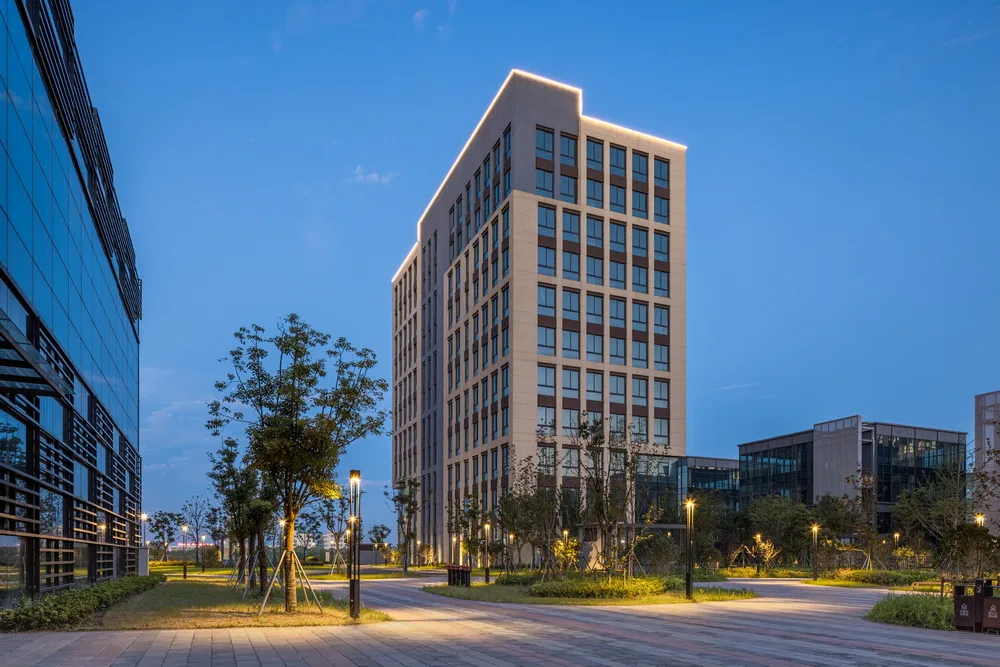
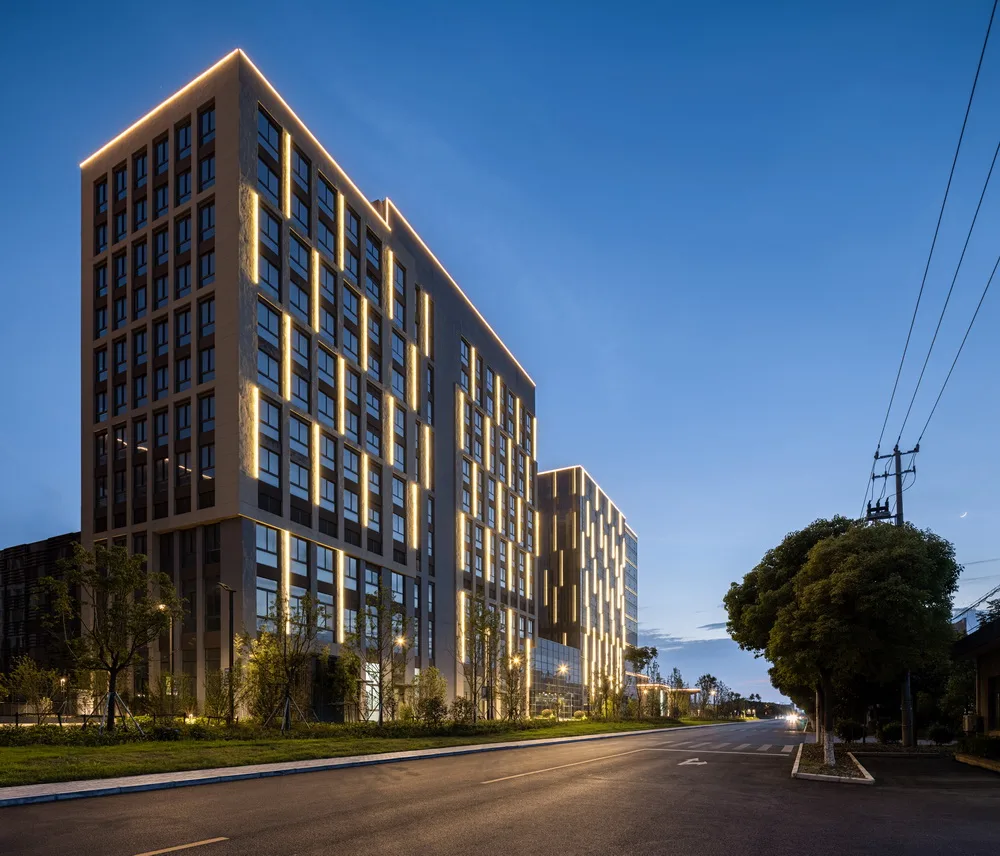
A vibrant park designed for continuous, sustainable operation.
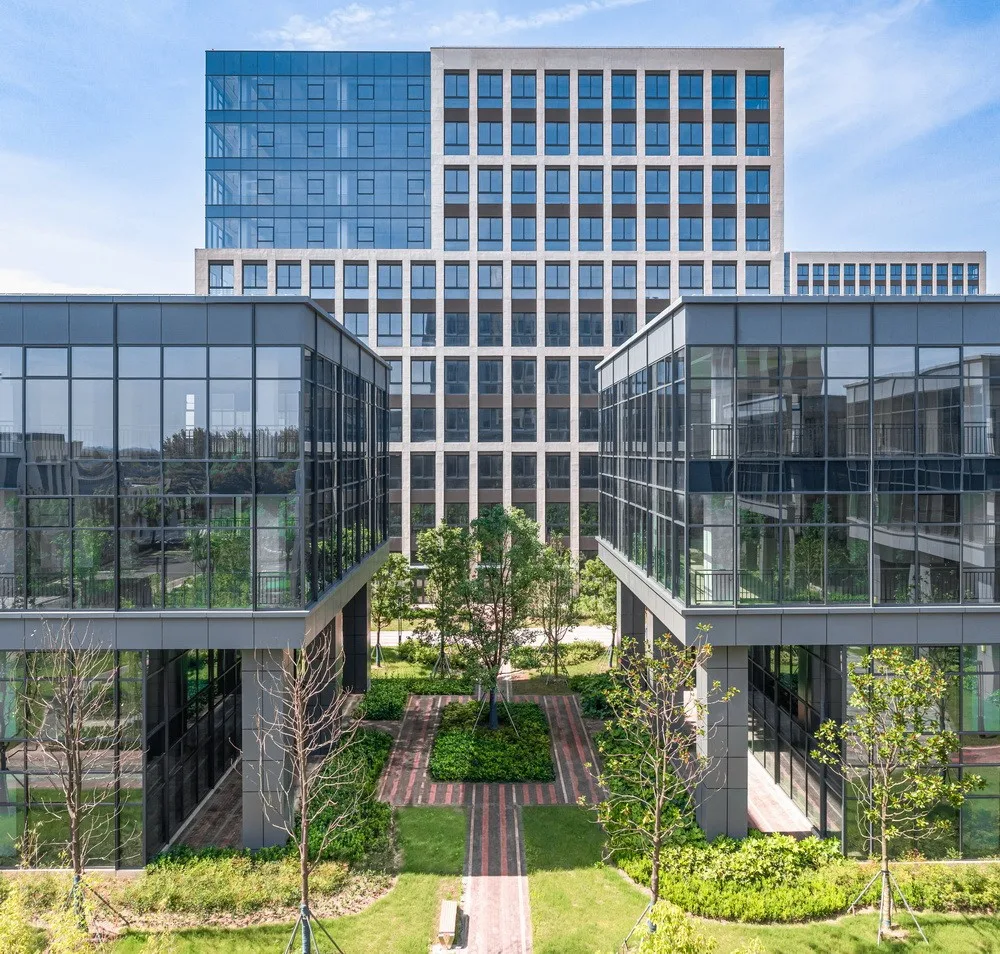
The smart office buildings are compact high-rises on the north side, tailored to open-plan offices and large R&D spaces. The standalone headquarters is situated on the south side, enclosing a central garden alongside the smart offices. This creates a harmonious relationship between taller northern buildings and lower southern ones, blending architecture with nature while maximizing green spaces and internal courtyards to offer a garden-style office environment.
Flexibility is key in the office design, allowing units to be divided or combined to accommodate various leasing and sales needs, meeting the personalized demands of different enterprises.
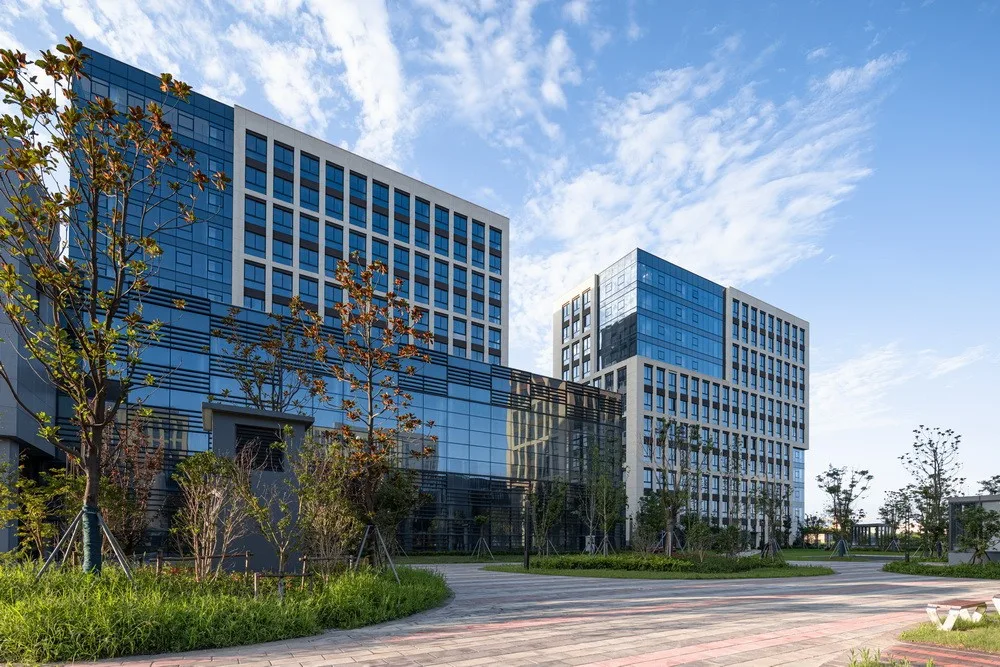
△ Smart Office
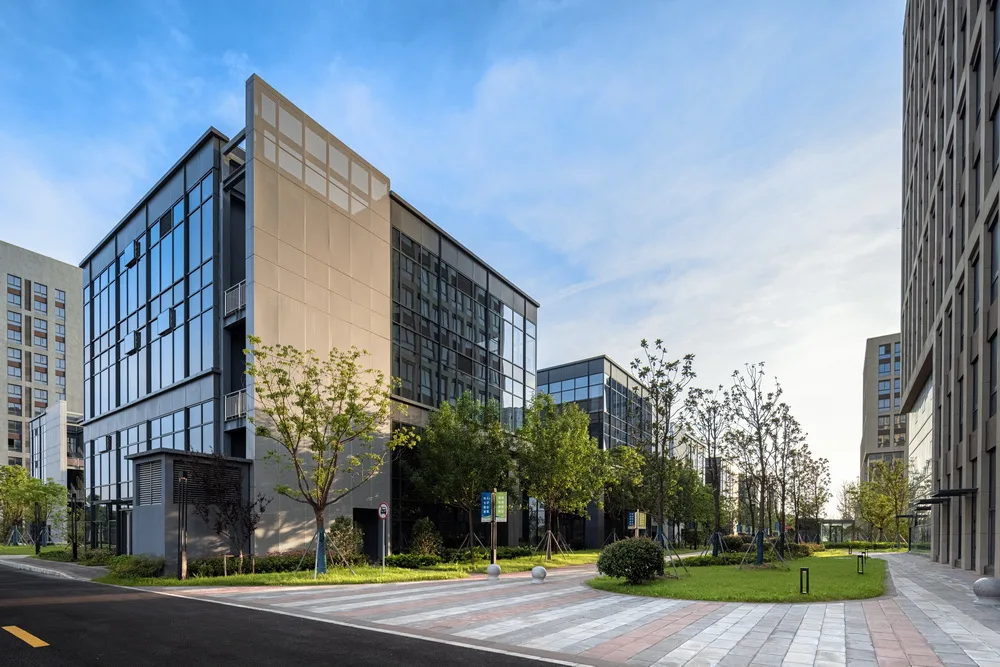
△ Standalone Headquarters Office
Talent apartments are designed to be comfortable and compact, addressing the diverse needs of college graduates, company staff, and senior talents. They include amenities such as laundry rooms, leisure spaces, and fitness areas, fostering high-quality living and a vibrant community.
Commercial support facilities combine leisure, entertainment, dining, and sports venues, sustaining the park’s vitality beyond standard working hours and supporting 24/7 functionality.
△ Commercial Support Facilities
Talent Apartments
By combining diverse formats and offerings, Baoneng Future Space fosters a vibrant community with complex urban functions, transcending the concept of a mere office park.
Ecological and Human-Centered Park Space
New Choice for Future Office
01 Green and Lush: Creating an Ecological Garden-Style Park
The landscape design features multi-level greenery, structured through horizontal green belts, vertical water systems, and a central garden formed by smart office and headquarters buildings. This creates an integrated first-level landscape coordinating the entire park.
Additional landscape elements such as cluster green spaces and riverside plazas activate each functional zone, enhancing the park’s vitality.
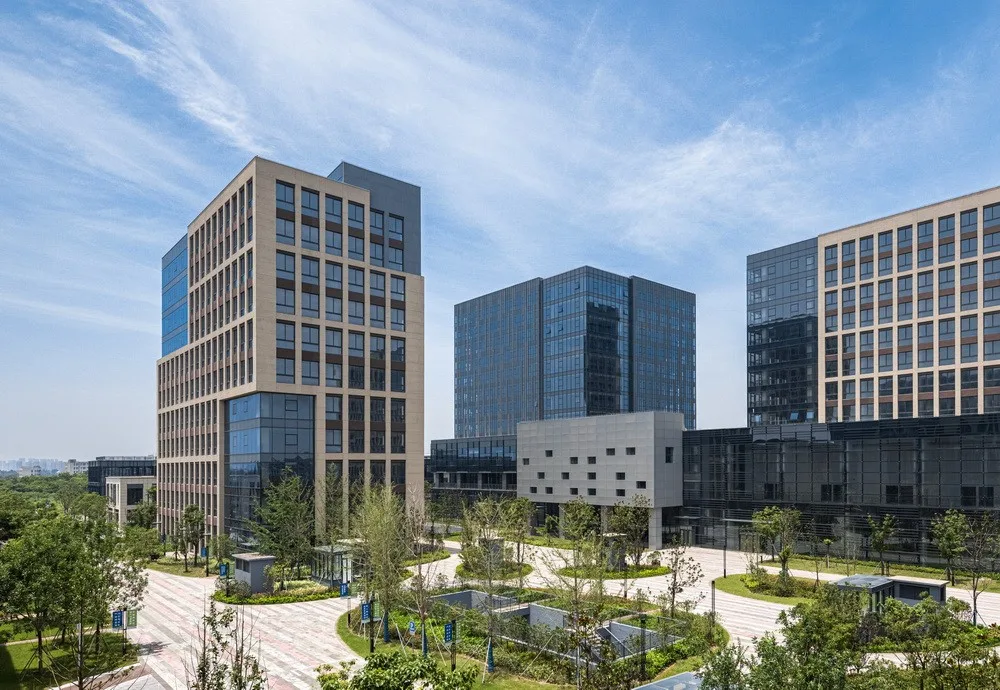
△ Central Garden
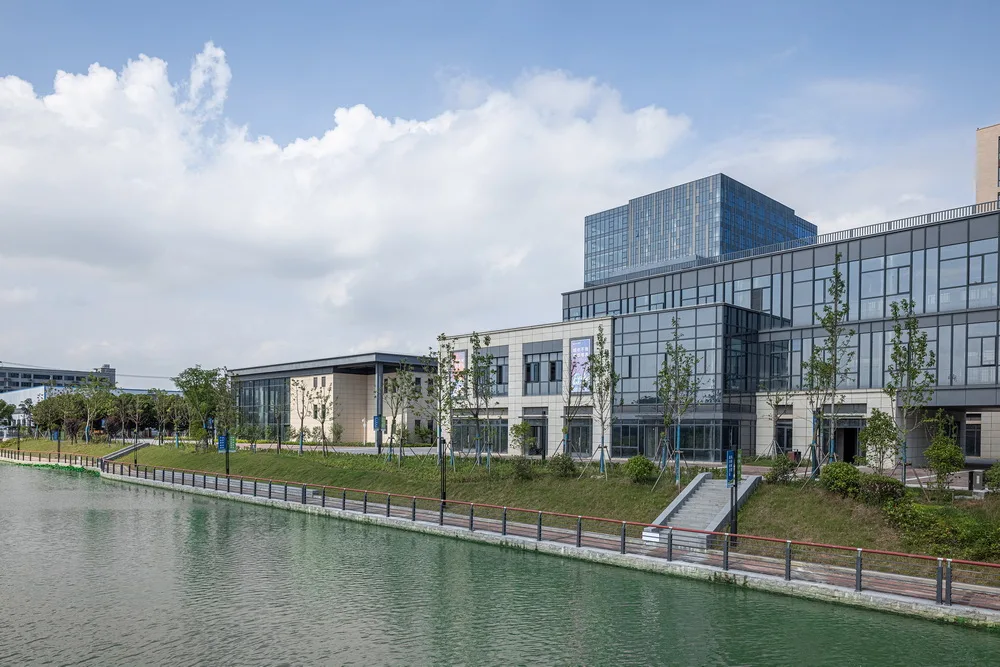
△ Riverside Green Space
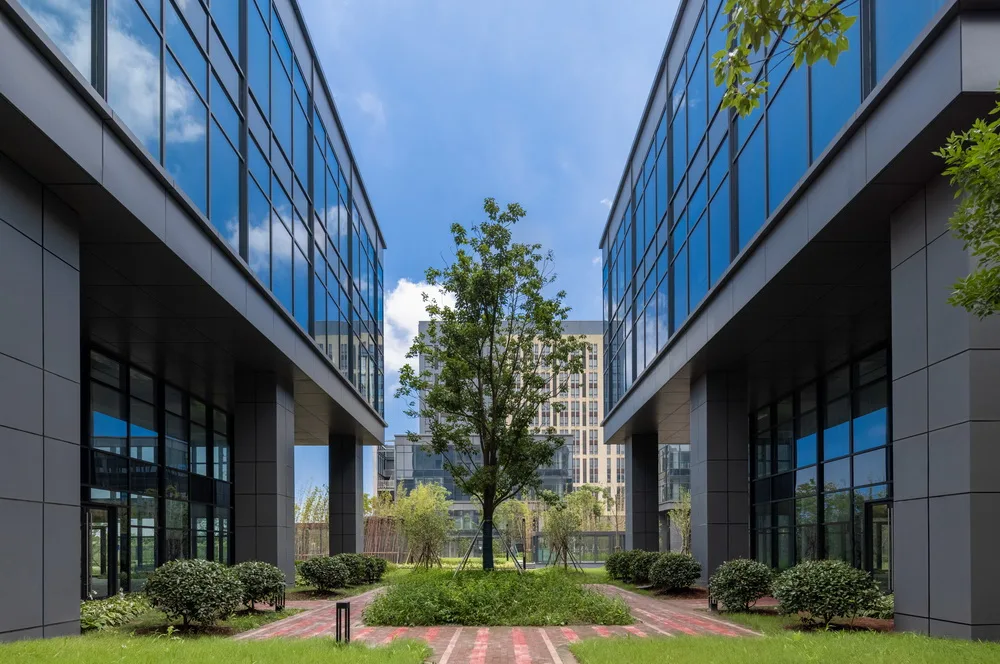
△ Architectural Cluster Green Space
Buildings incorporate multi-level setback and overhead systems on the first floor, creating three-dimensional green spaces that fully integrate greenery indoors. The blend of green landscaping and expansive architectural spaces results in a lush, garden-style park environment.
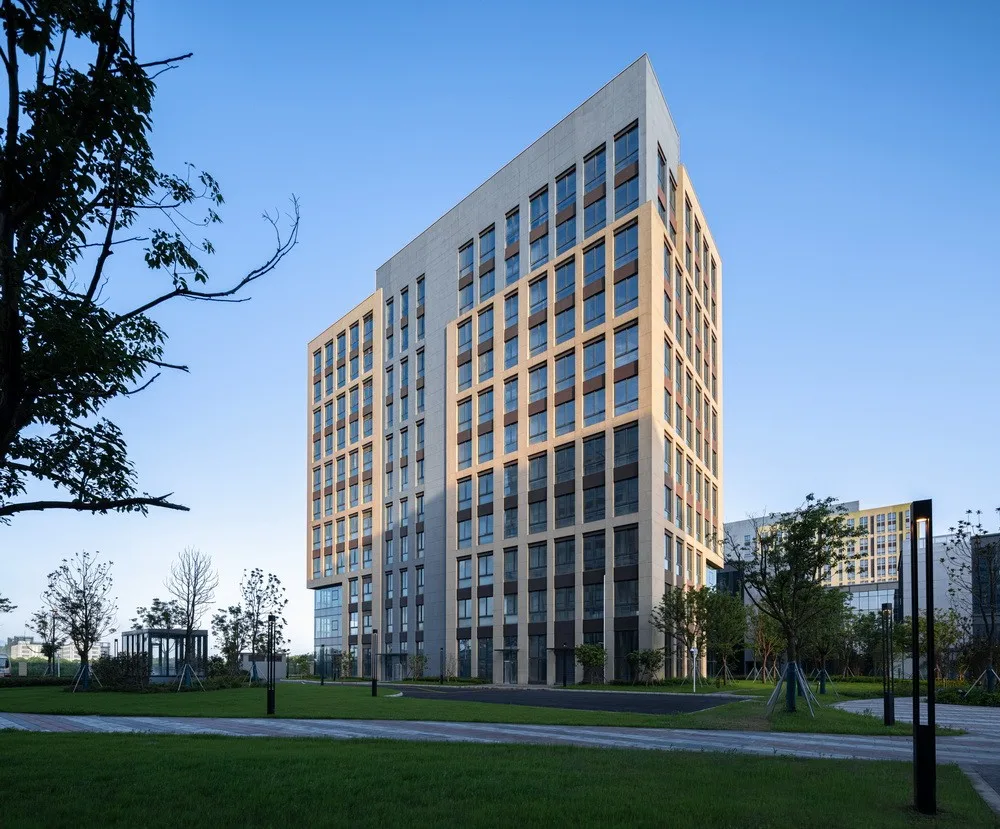
Green Square
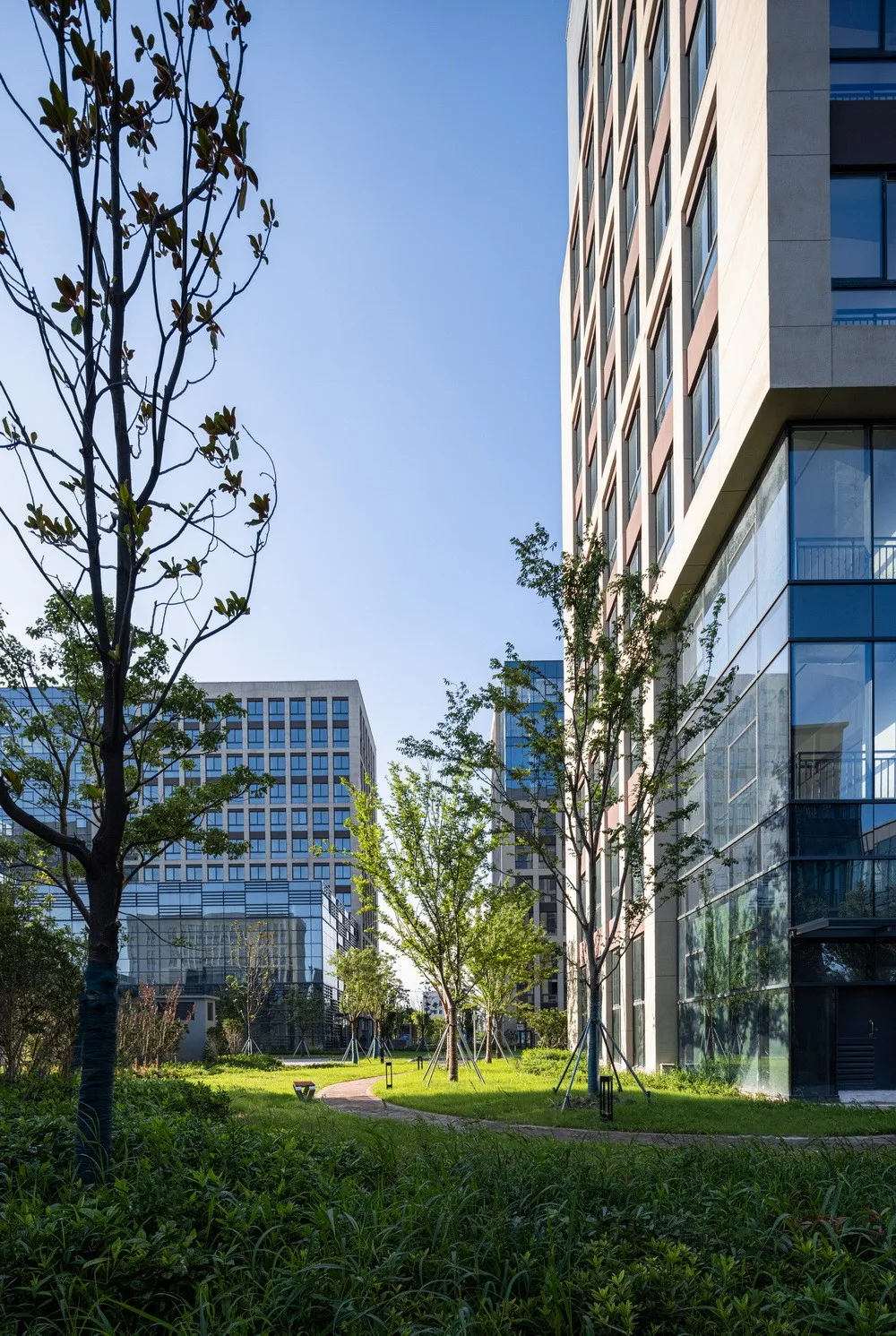
△ Green and Lush Park Environment
02 People-Oriented Design: Separate Pedestrian and Vehicle Flows
The park features three vehicle entrances and exits along the north side of Qinggao Road: a western access for the intelligent manufacturing area, a central access serving the entire park, and an eastern emergency fire entrance.
△ Park Car Entrances and Exits
The traffic system separates pedestrians and vehicles effectively. Main vehicle routes form a circular road around the site, with an inner ring road serving the small high-rise offices on the north and talent apartments on the south. The remainder of the park prioritizes pedestrian pathways, ensuring a high-quality landscape and a pleasant environment throughout.
The park’s remaining areas are primarily pedestrian zones.
Vehicle routes are located outside the main park areas.
03 Refined Architectural Texture: Shaping New Regional Landmarks
Low-density office parks typically feature a mix of building sizes. Baoneng Future Space balances “difference” and “unity” in facade design, achieving a cohesive large-scale appearance while offering medium-scale diversity that enriches the spatial experience, embodying “harmony in diversity.”
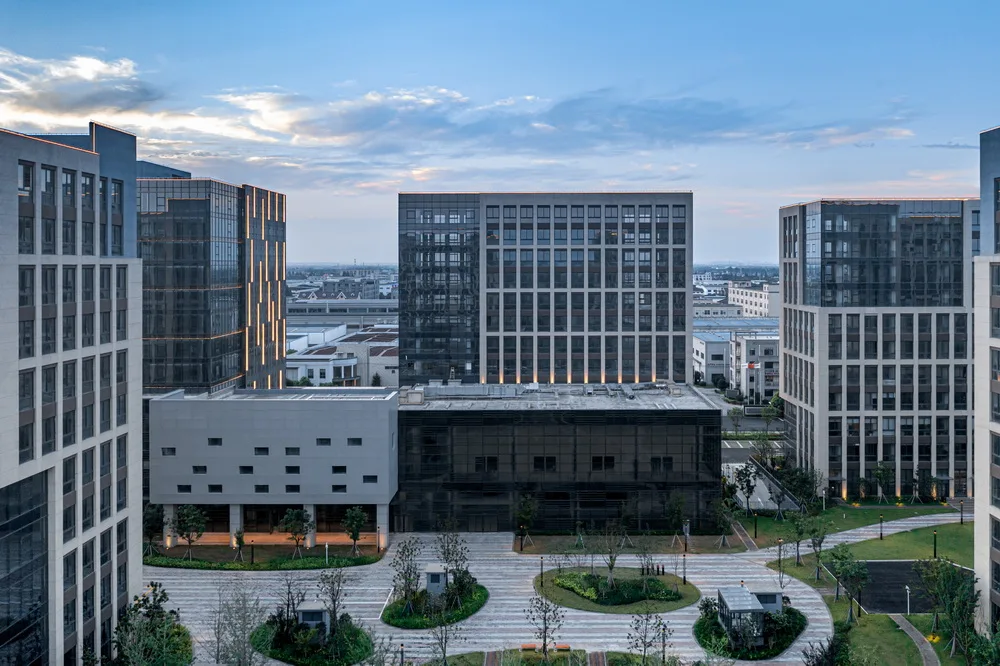
The spatial effect of ‘harmony in diversity’
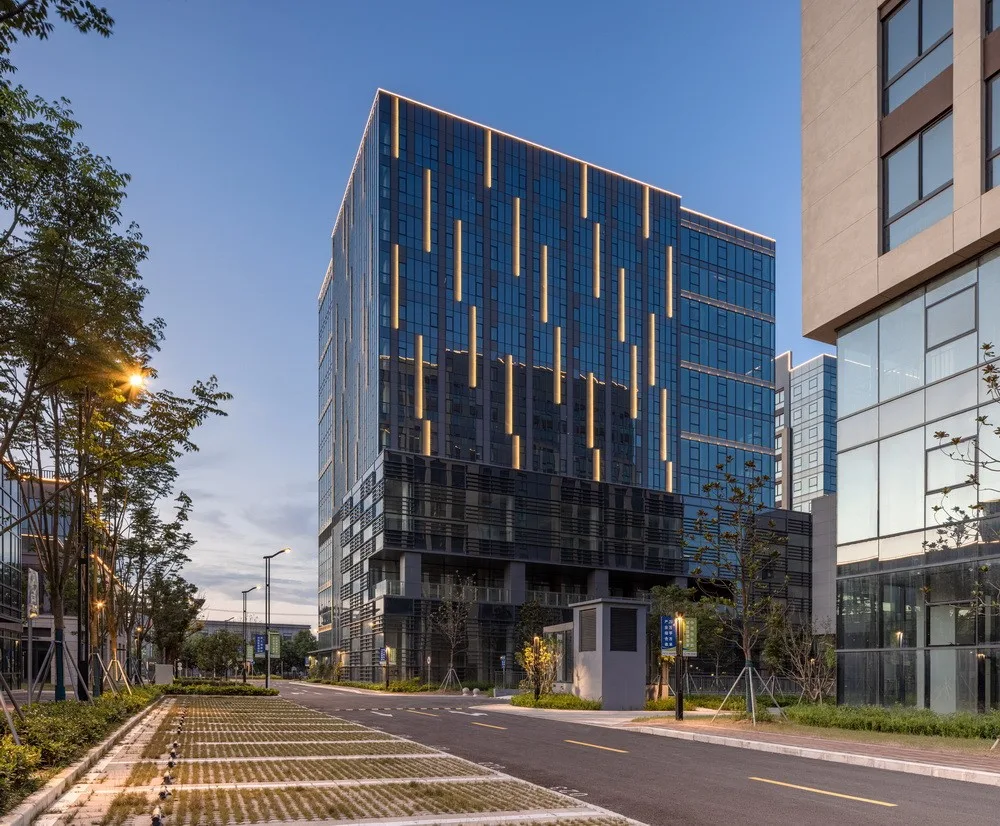
Small high-rise office buildings feature two contrasting skins that intertwine to form sculptural exteriors. Commercial service buildings emphasize individual scale with warm-colored stone, steel, and glass materials, maintaining harmony while expressing distinct character. Headquarters offices primarily use glass facades, enhancing transparency and visual connection with the landscape.
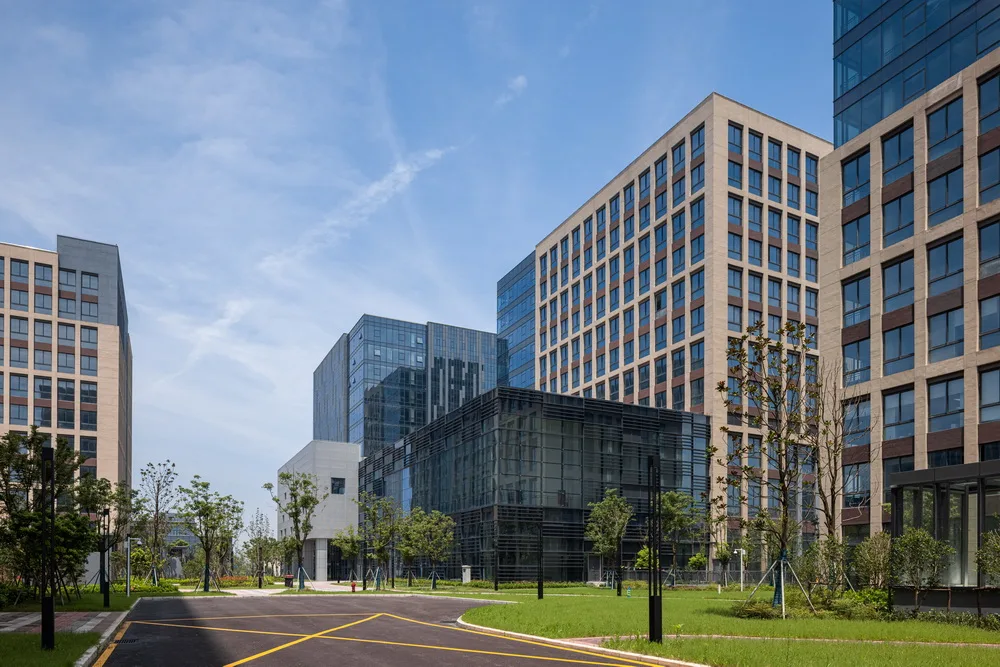
△ Small High-Rise Office
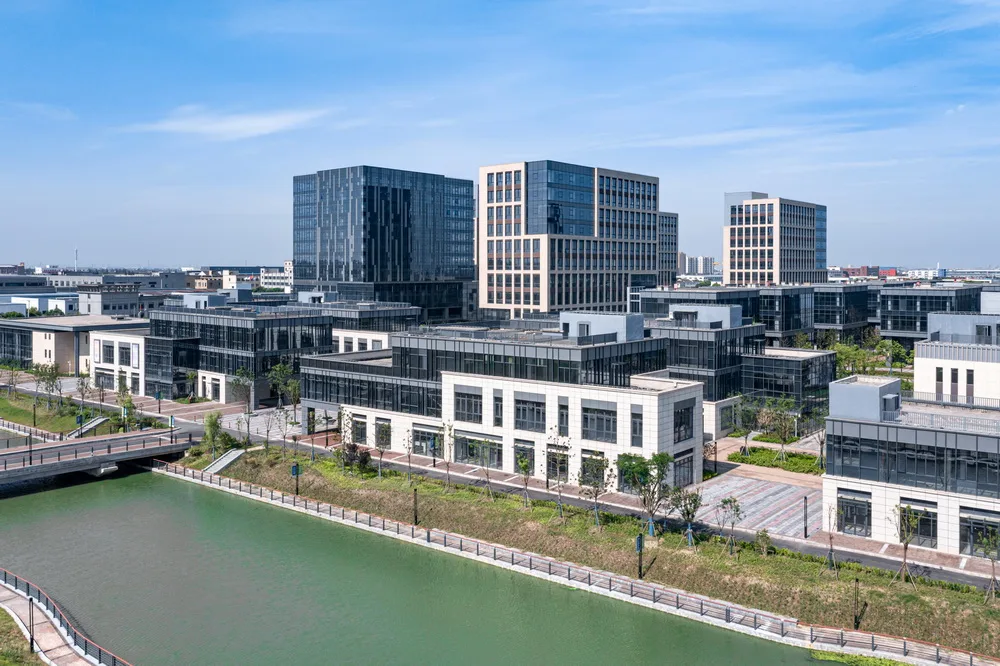
△ Commercial Service Support
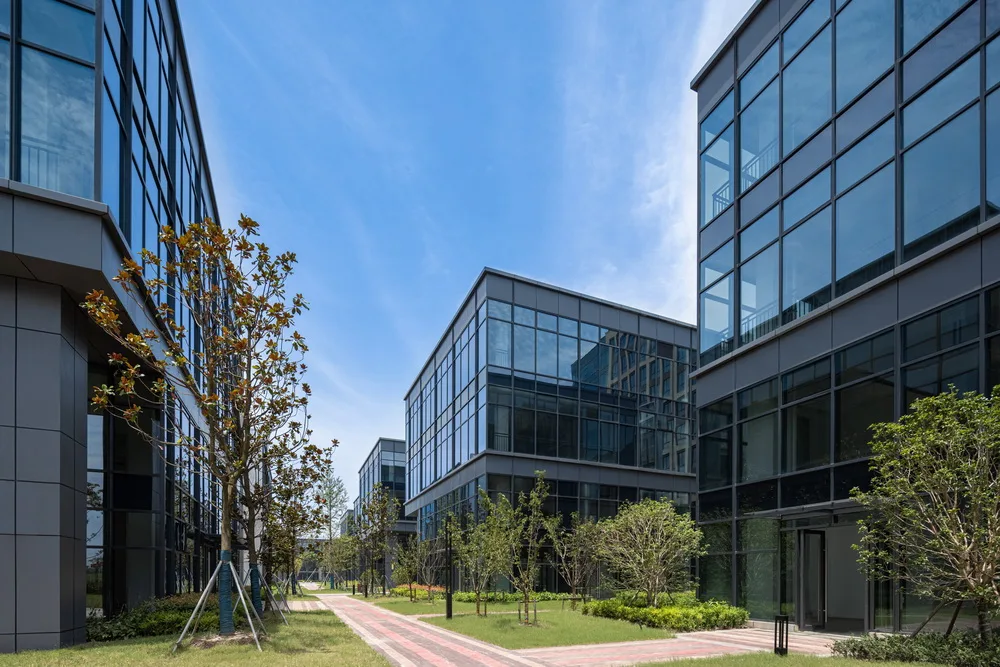
△ Headquarters Office
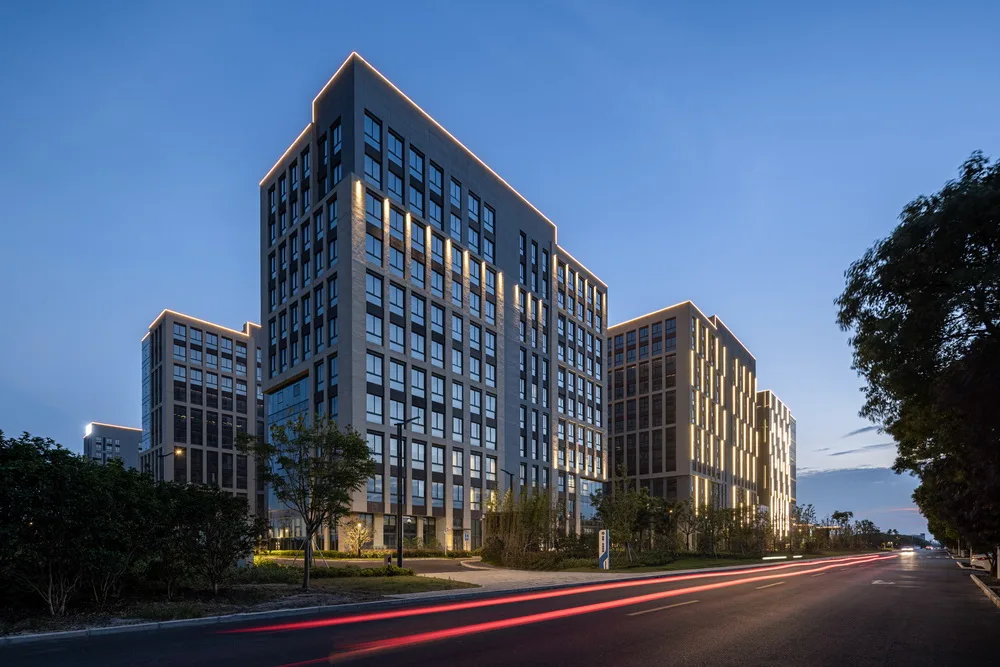
△ Night View of Street Facade
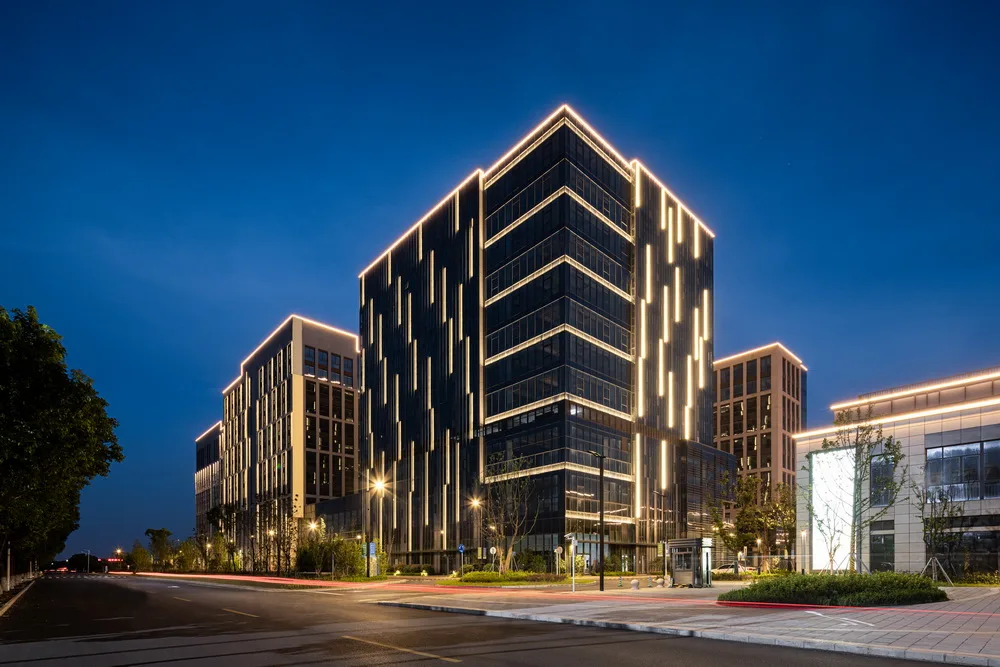
△ Night View of Park Entrance and Exit
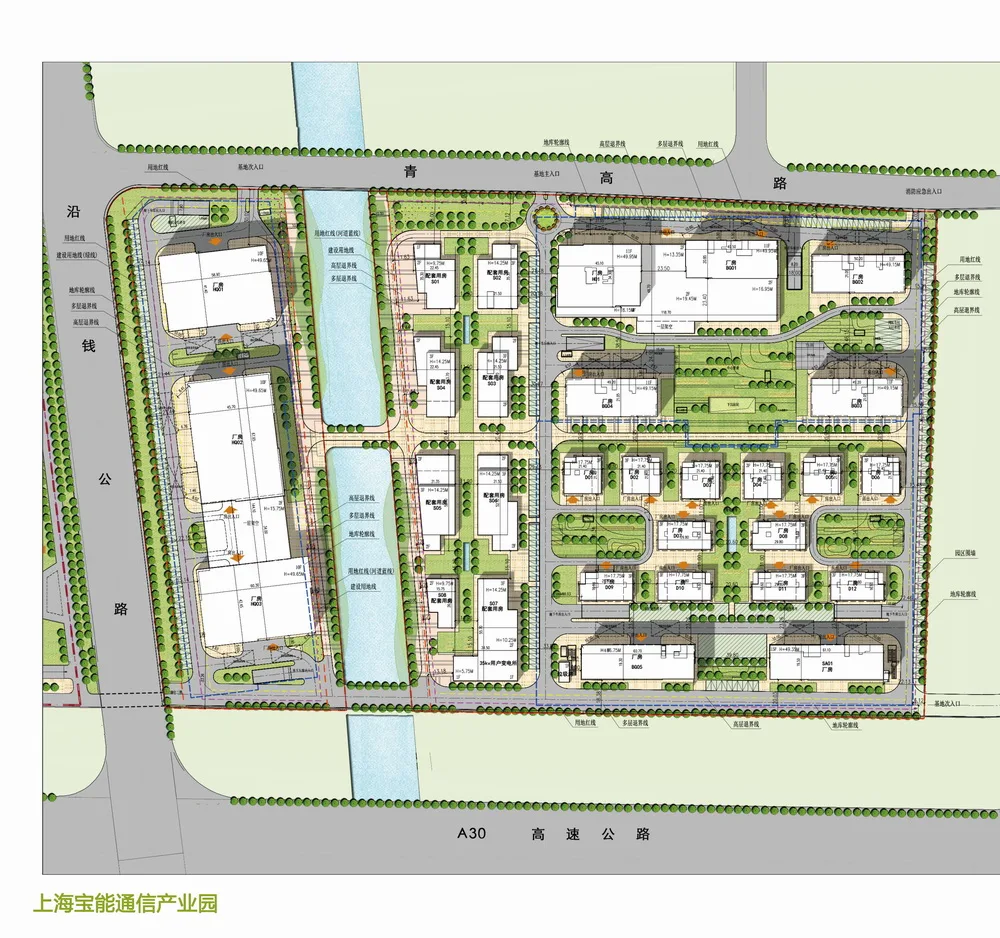
△ General Layout Plan
Project Information
- Project Name: Shanghai Baoneng Future Space
- Project Type: Industrial Park
- Project Address: 333 Qinggao Road, Fengxian District, Shanghai
- Base Area: 109,600 square meters
- Building Area: 279,700 square meters
- Floor Area Ratio: 2.0
- Design Period: March 2014 to August 2014
- Construction Start: March 2021
- Developer: Baoneng Holdings (China) Co., Ltd
- Design Firm: Shanghai Sanyi Architectural Design Co., Ltd
- Lead Architect: Zhan Sheng
- Scheme Design Team: Zhan Sheng, Shi Ming, Xie Wenbo, Shen Jingbo, Li Youjun, Zhang Hongmei, Cai Ying
- Architectural Design Team: Gao Shanjie, Guo Zhuhua, Hu Wenzhe, Chen Yang, Jiang Liqiu, Zhao Ning
- Structural Design: Wang Gang, Chen Song, Shao Hanyu, Pan Fangfang, Chen Can, Zhao Na, Wang Ben
- Water Supply and Drainage Design: Ye Lin, Jiang Xinhong, Chen Lei
- Electrical Design: Mao Yaqian, Chen Xuyan, Jin Congming, Li Lixian
- HVAC Design: Feng Xinzhou, Pujiang, Wang Yonggang
- Overall Design: Zhao Bin, Zhang Yanyan, Sun Xiaoli
- Landscape Design Partner: Shenzhen Beilin Garden Landscape and Architectural Planning and Design Institute Co., Ltd
- Curtain Wall Design Partner: Hai Rui Bai Architectural Exterior Wall Design Consulting Co., Ltd
- Lighting Design Partner: Shanghai Shenyu Lighting Design Co., Ltd
- Construction Contractor: Shenzhen Jianye Engineering Group Co., Ltd. (General Contractor)
- Architectural Photography: Liu Songkai















Must log in before commenting!
Sign Up