
Between what is finished and unfinished lies a balance.
“I will meet you in the middle ground between right and wrong.” – Rumi
Where should we position ourselves? How do you perceive this field? And how do you design a space that exists in between? The Indian mythological tale of Hiranyakashipu metaphorically captures this concept. It tells the story of a demon who cannot be killed by any absolute means—neither humans, animals, gods, demons, nor by day or night, yin or yang, heaven or earth. This story provokes a fundamental question: Is there a category that exists in a non-absolute sense, balancing two extremes? More importantly, can this middle ground be defined tangibly?
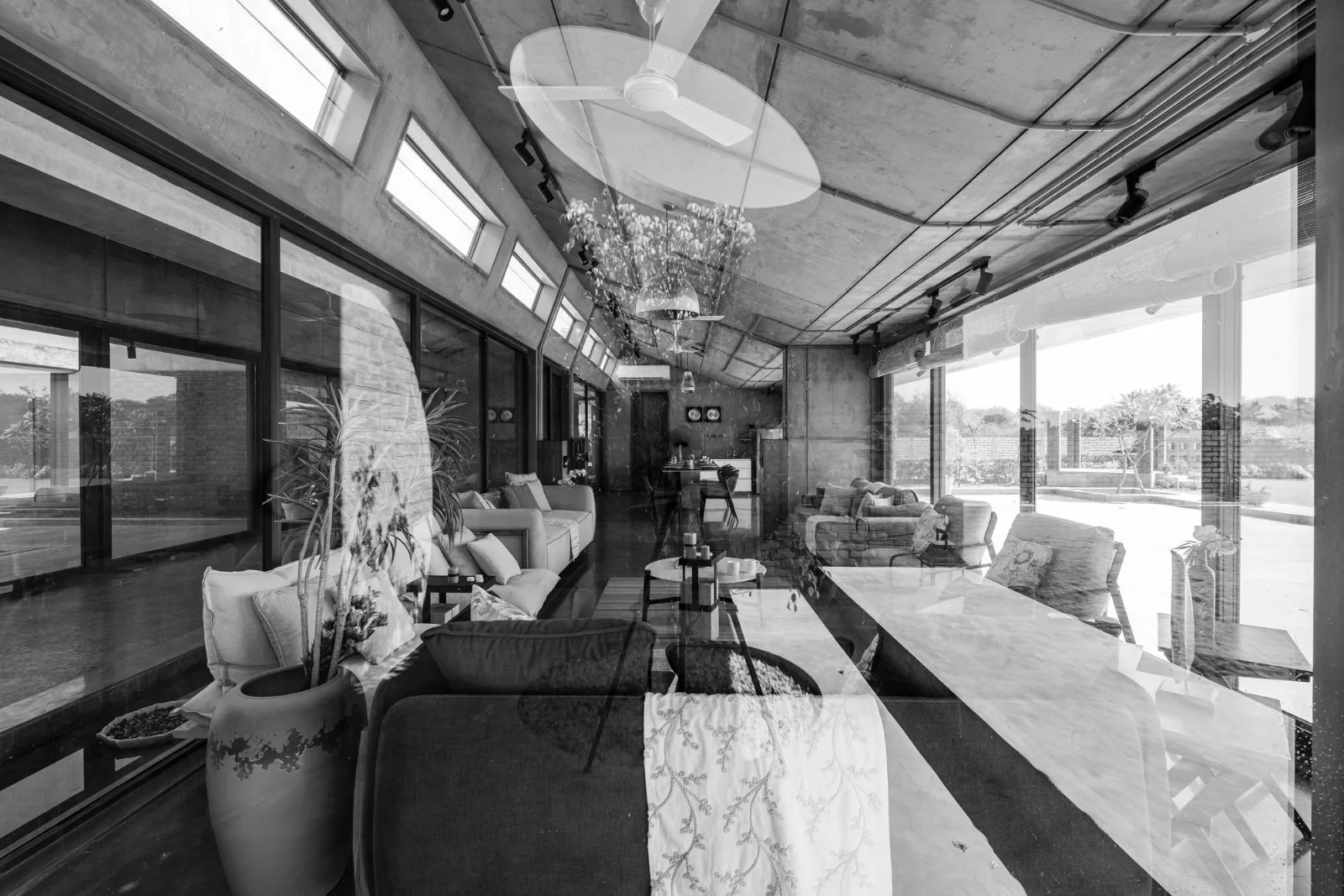
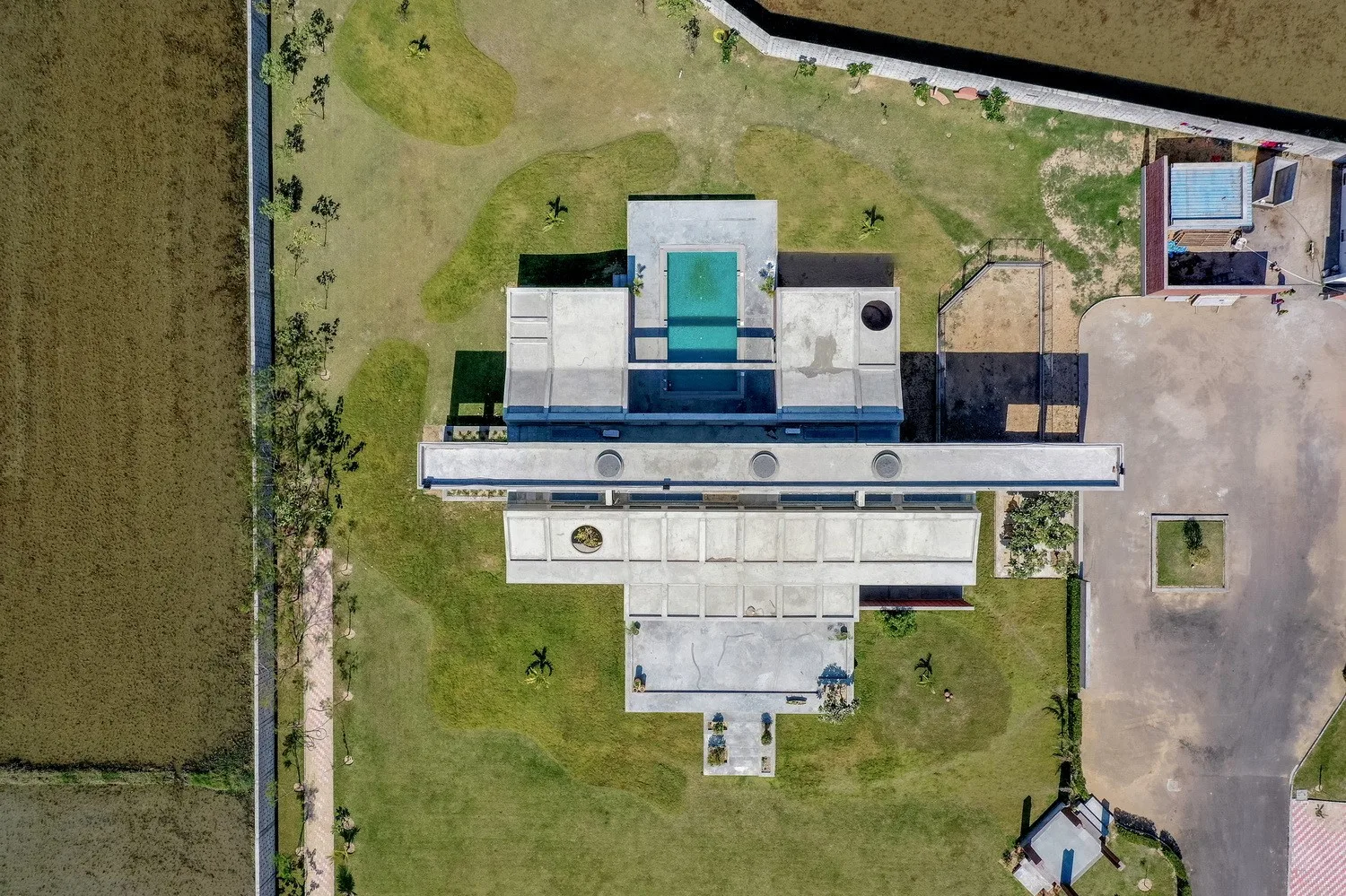
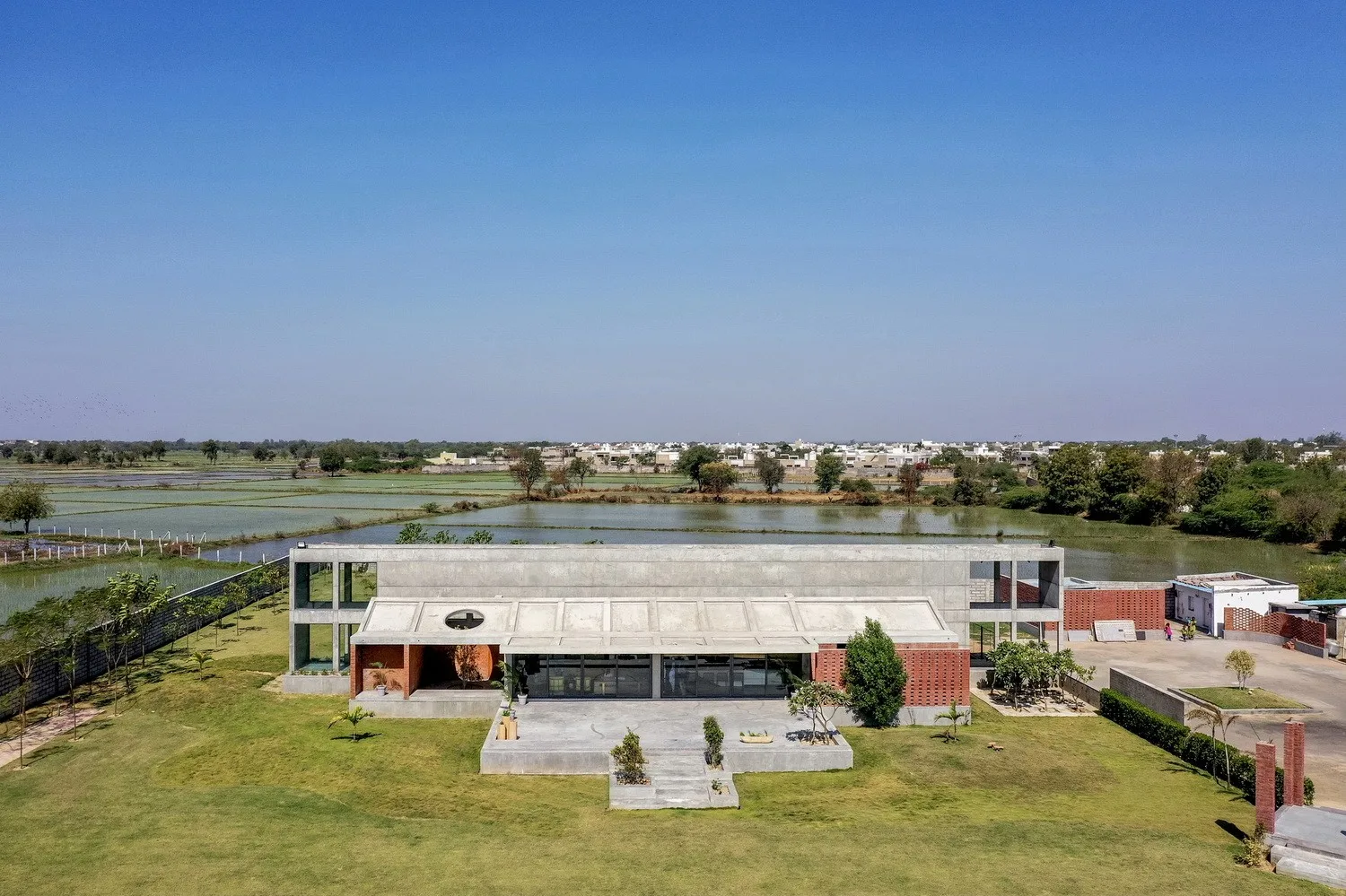
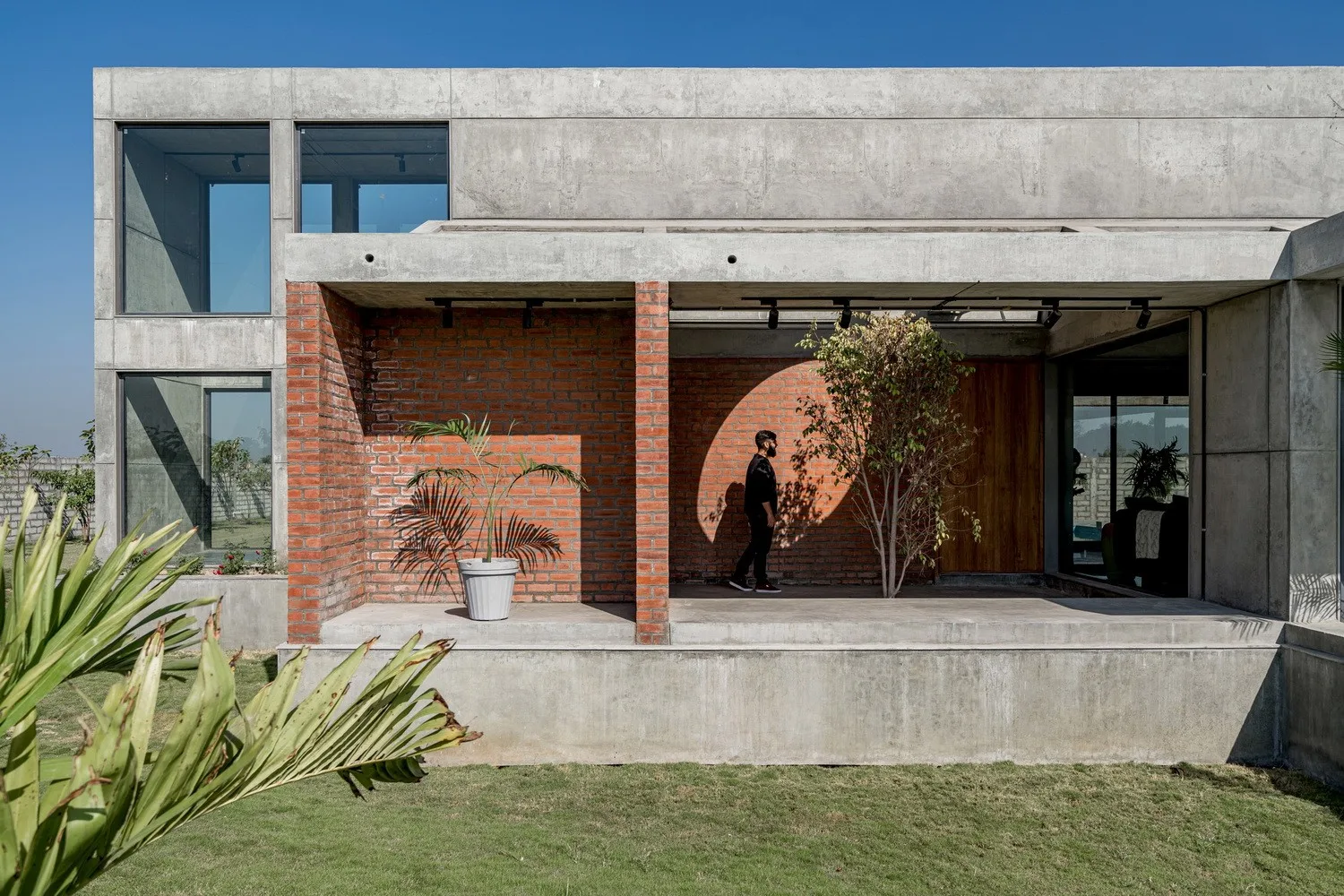
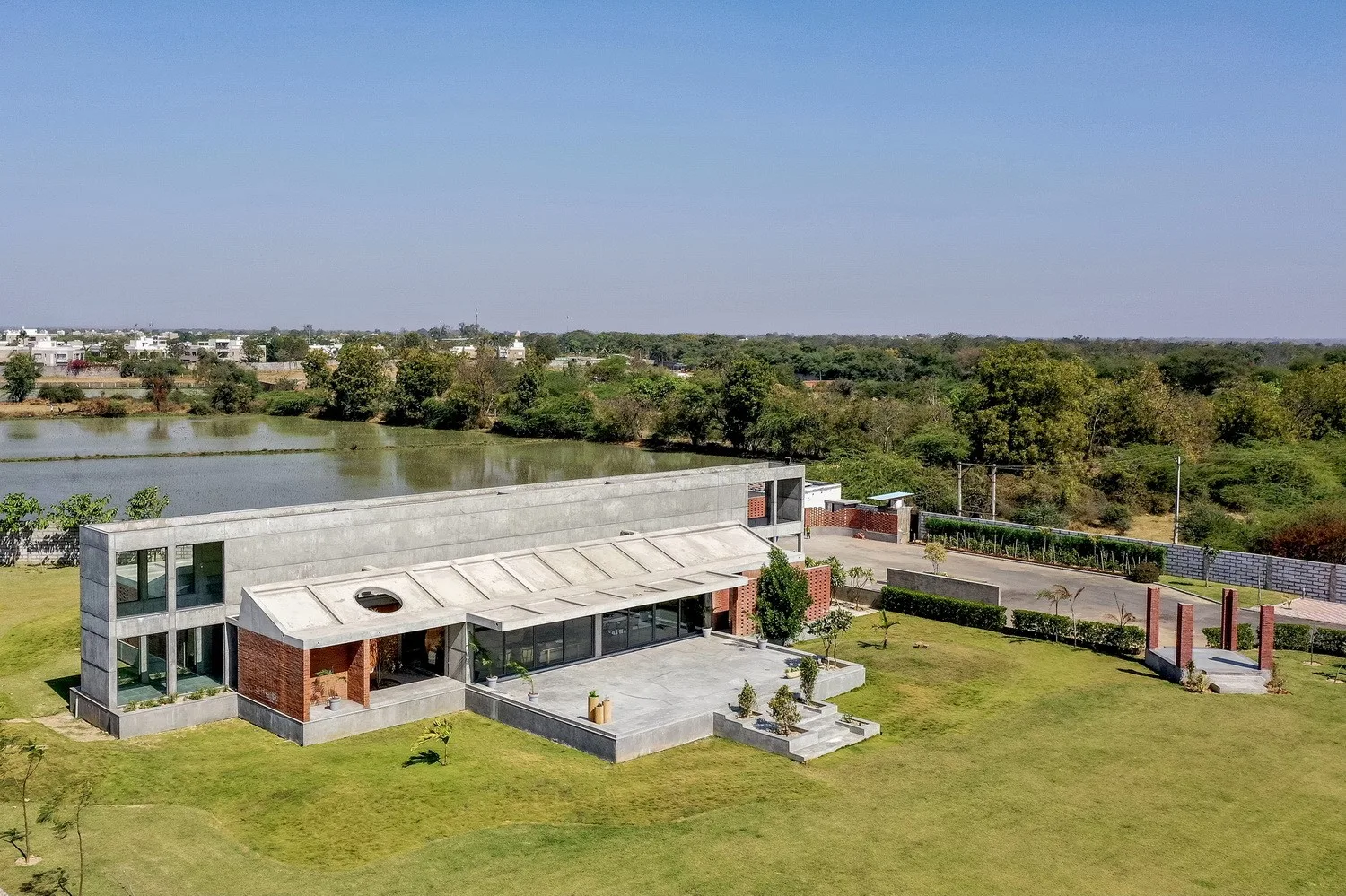
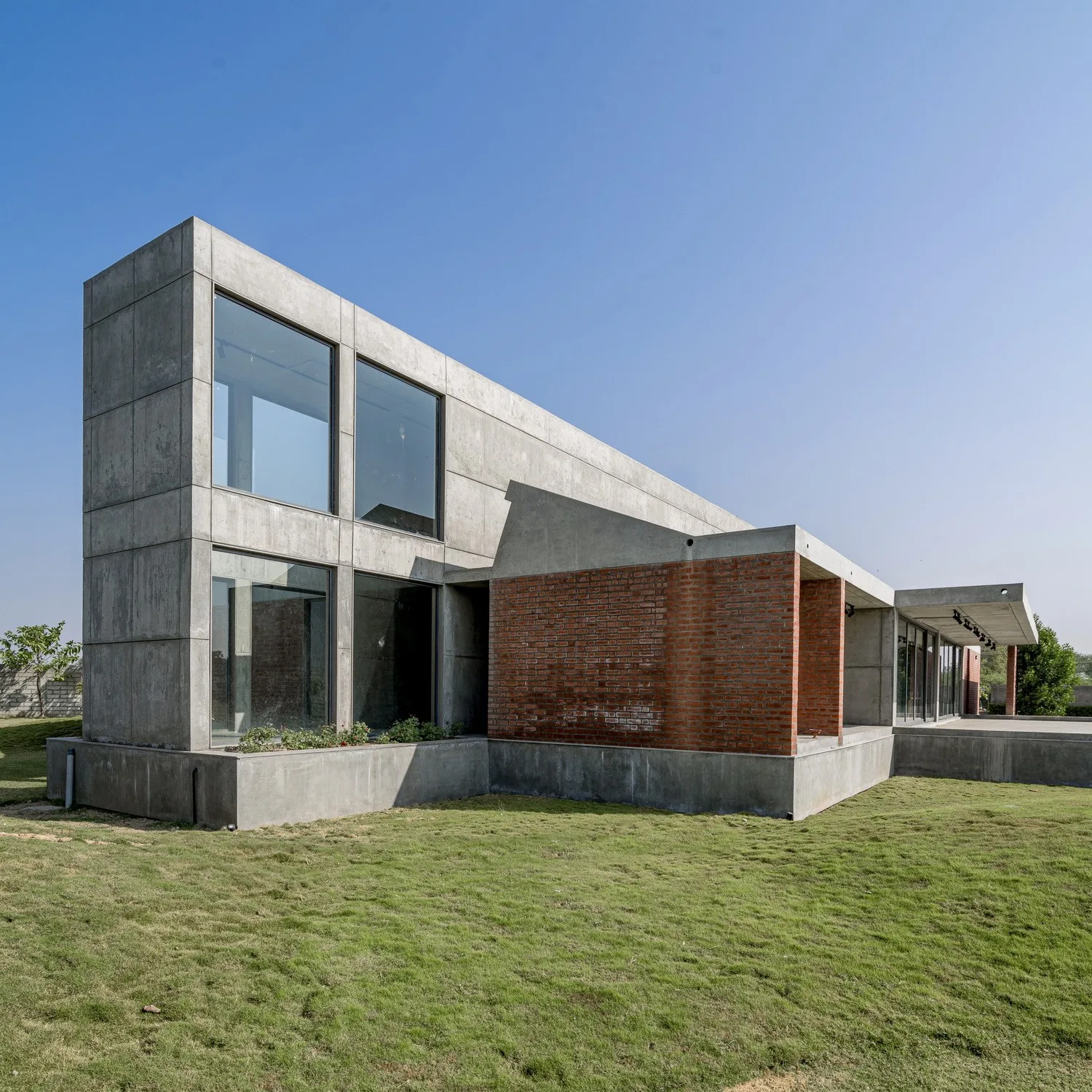
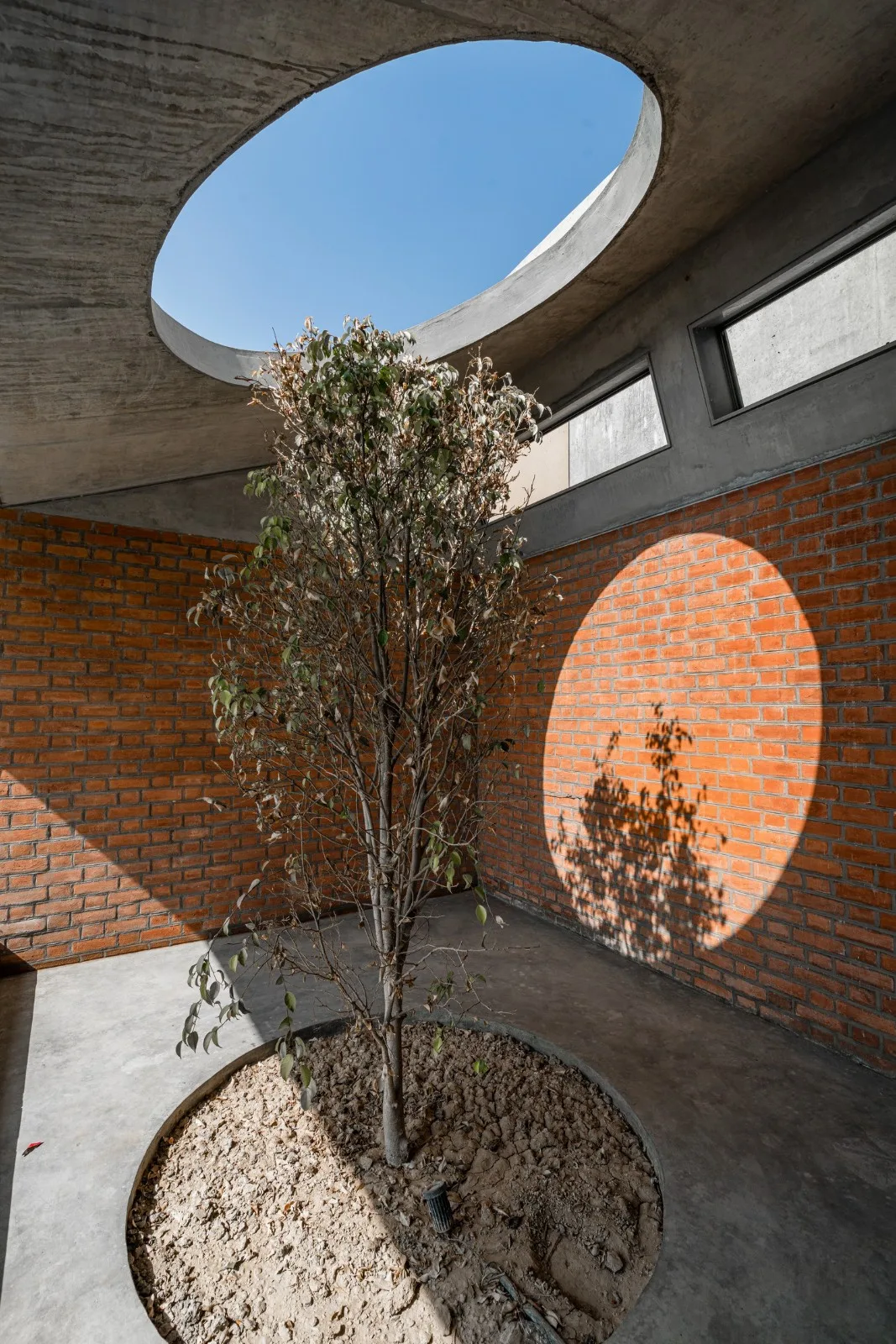
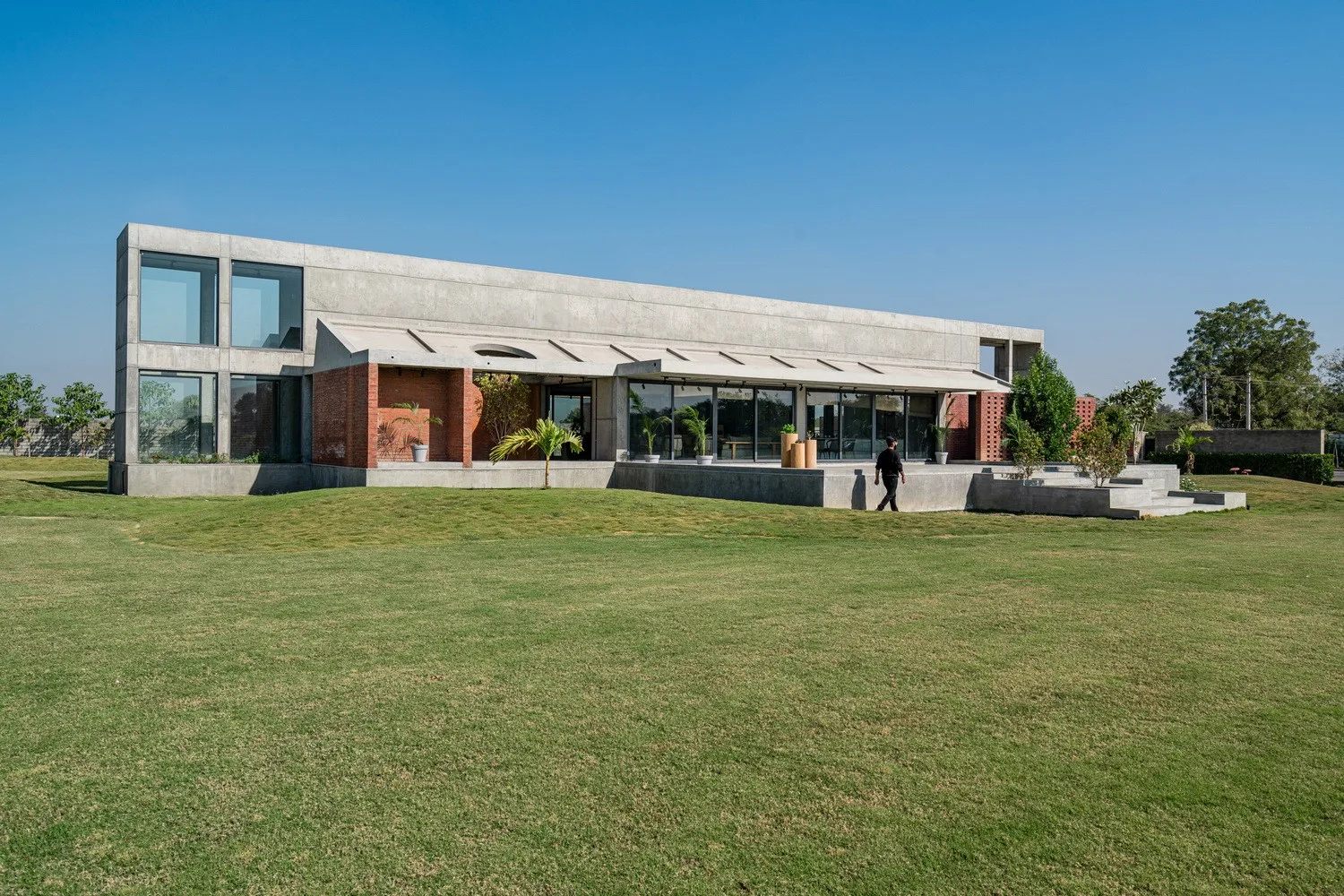
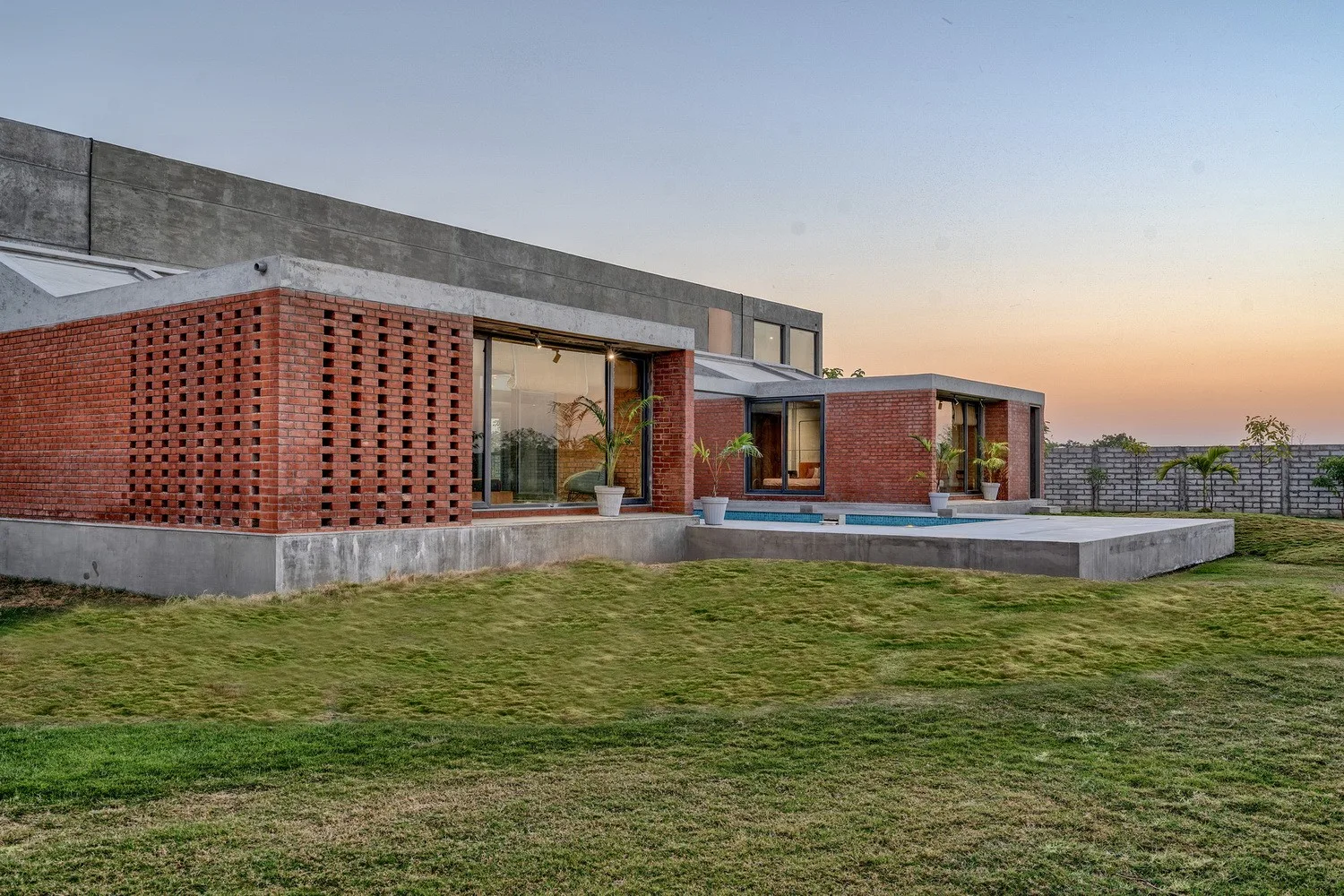
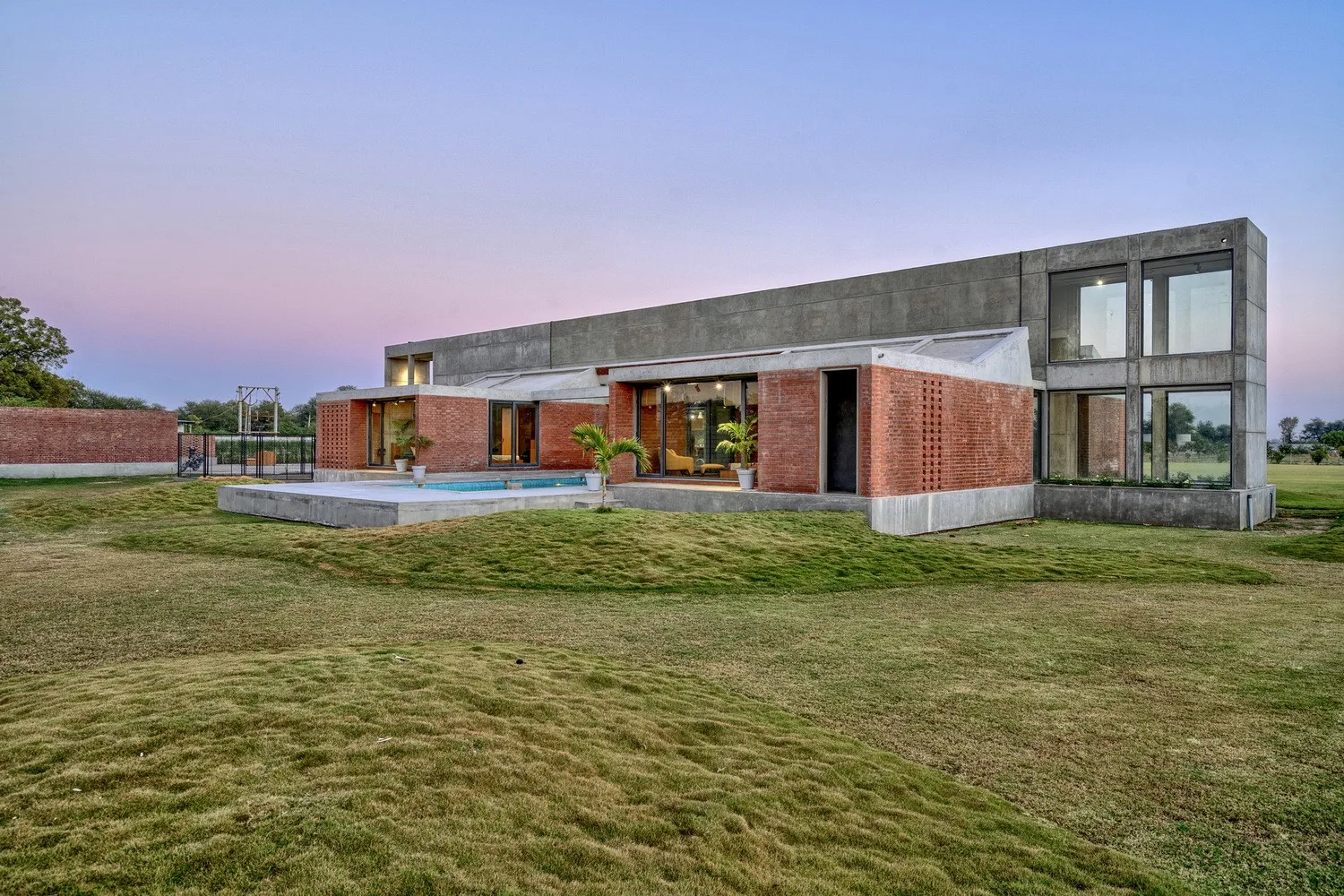
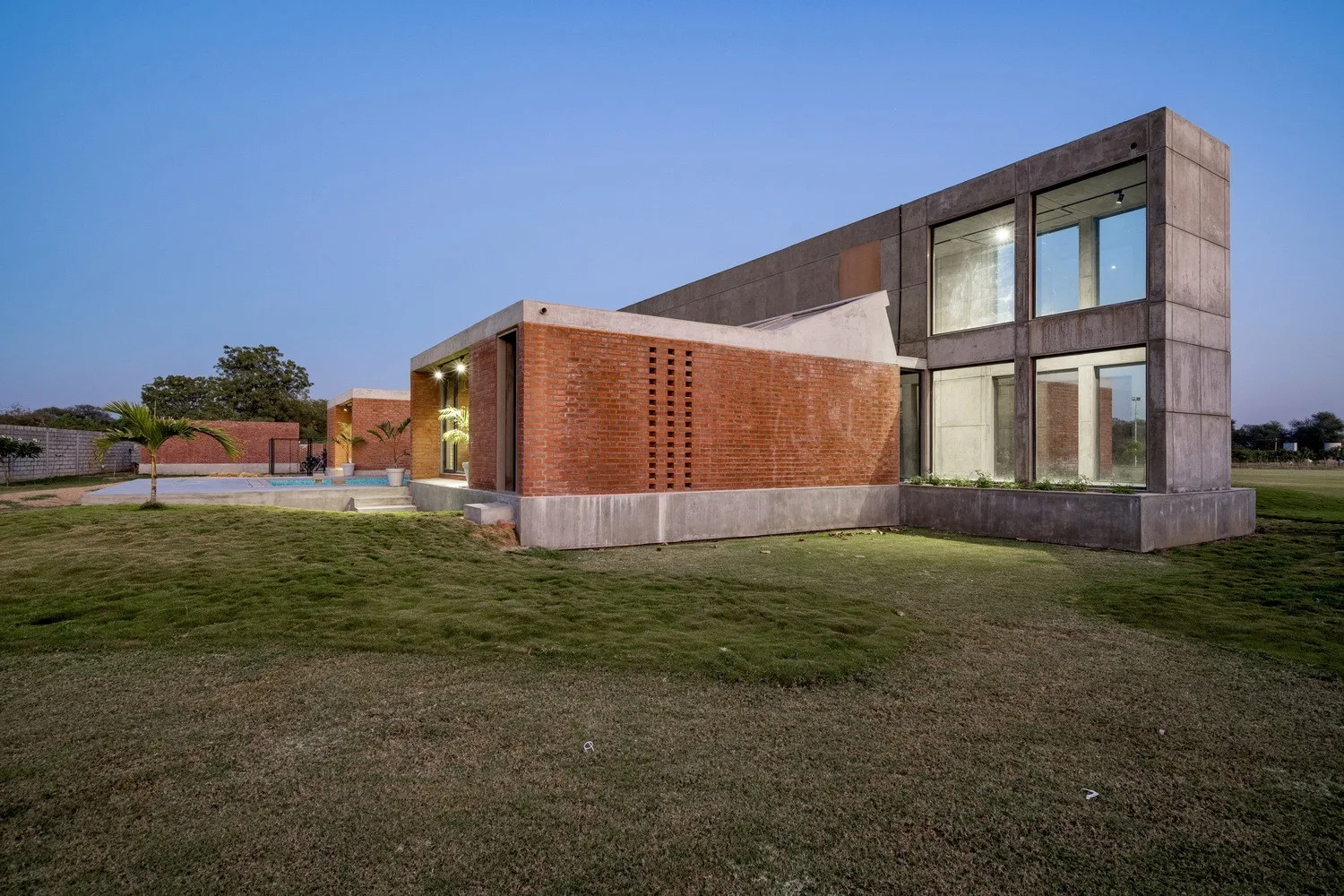
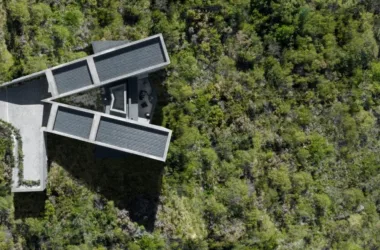
The Shuangwan Home truly embodies this philosophy. It blends internal and external elements, merges the virtual with the real, intertwines appearance and concealment, and transitions between growth and completion—all situated within the middle ground between opposing poles. At the heart of the building lies a central space around which the entire house is planned.
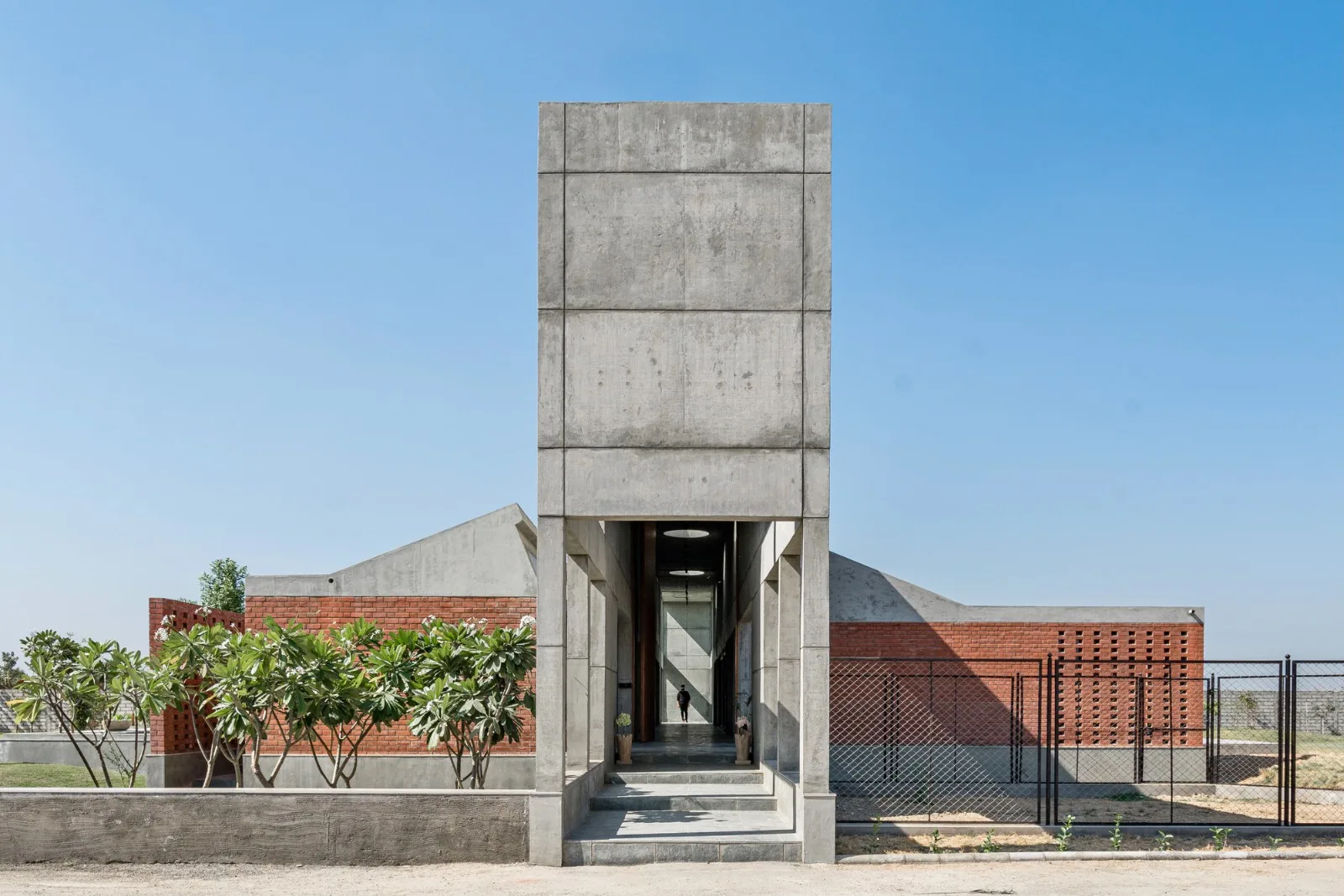
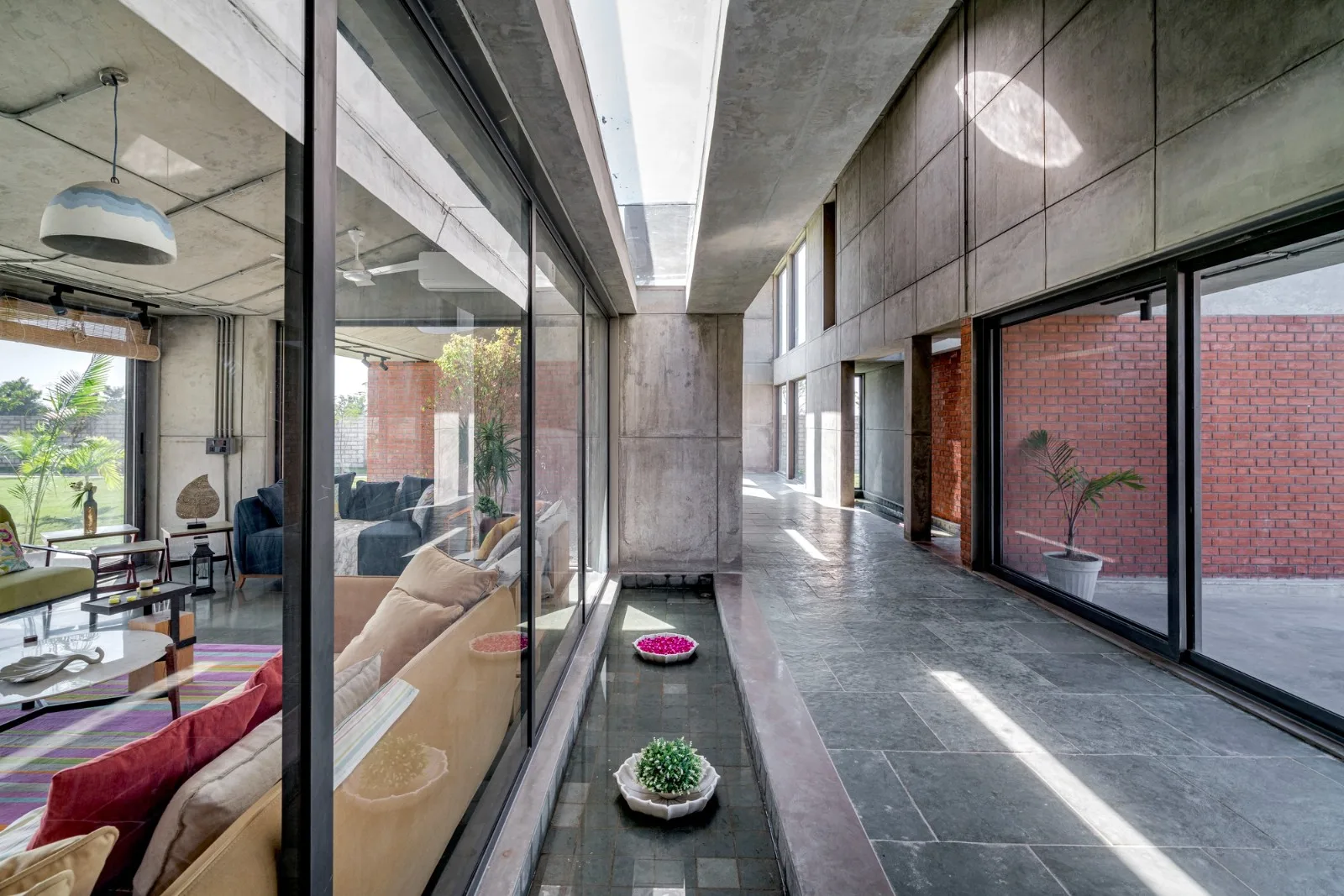
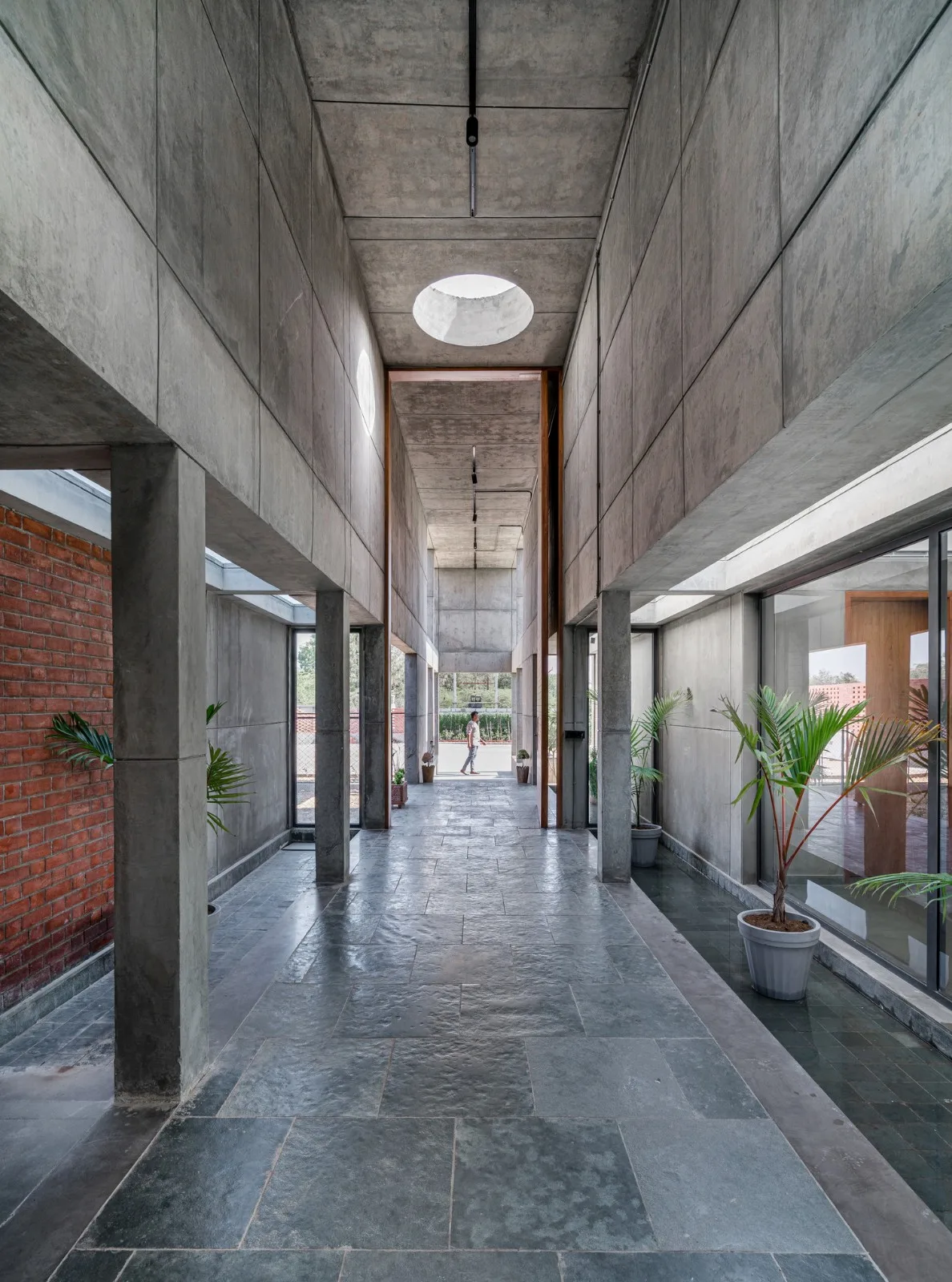
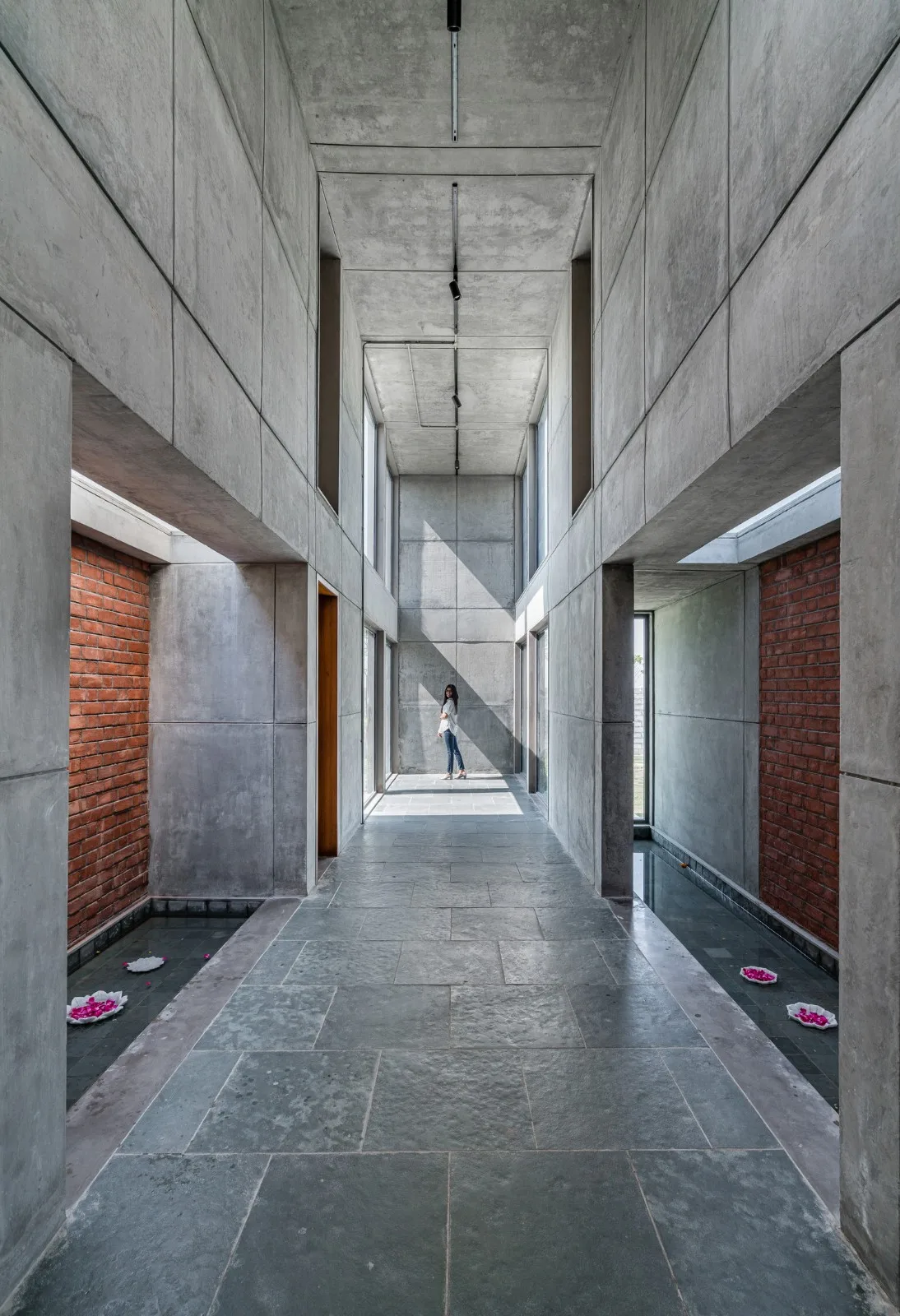
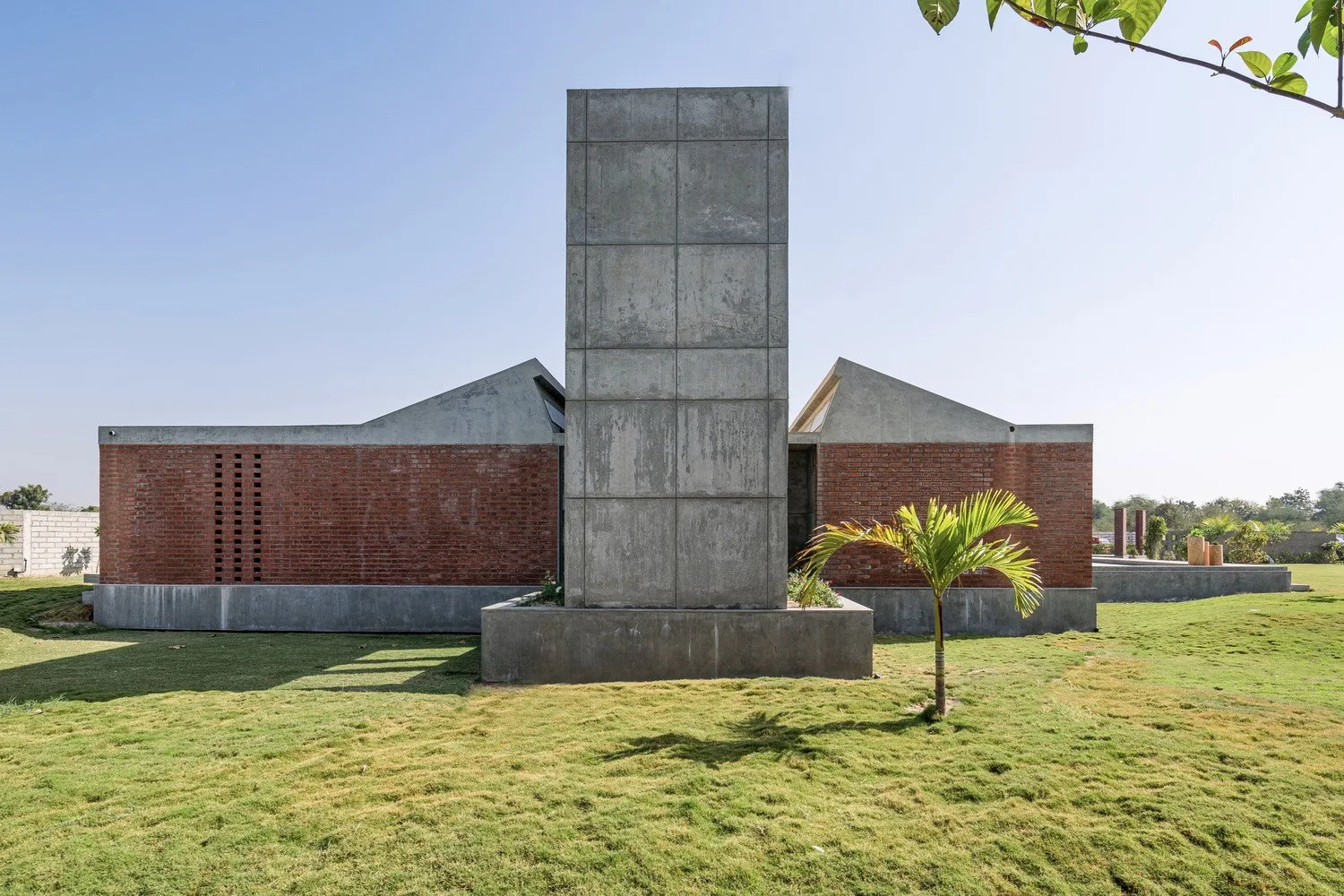
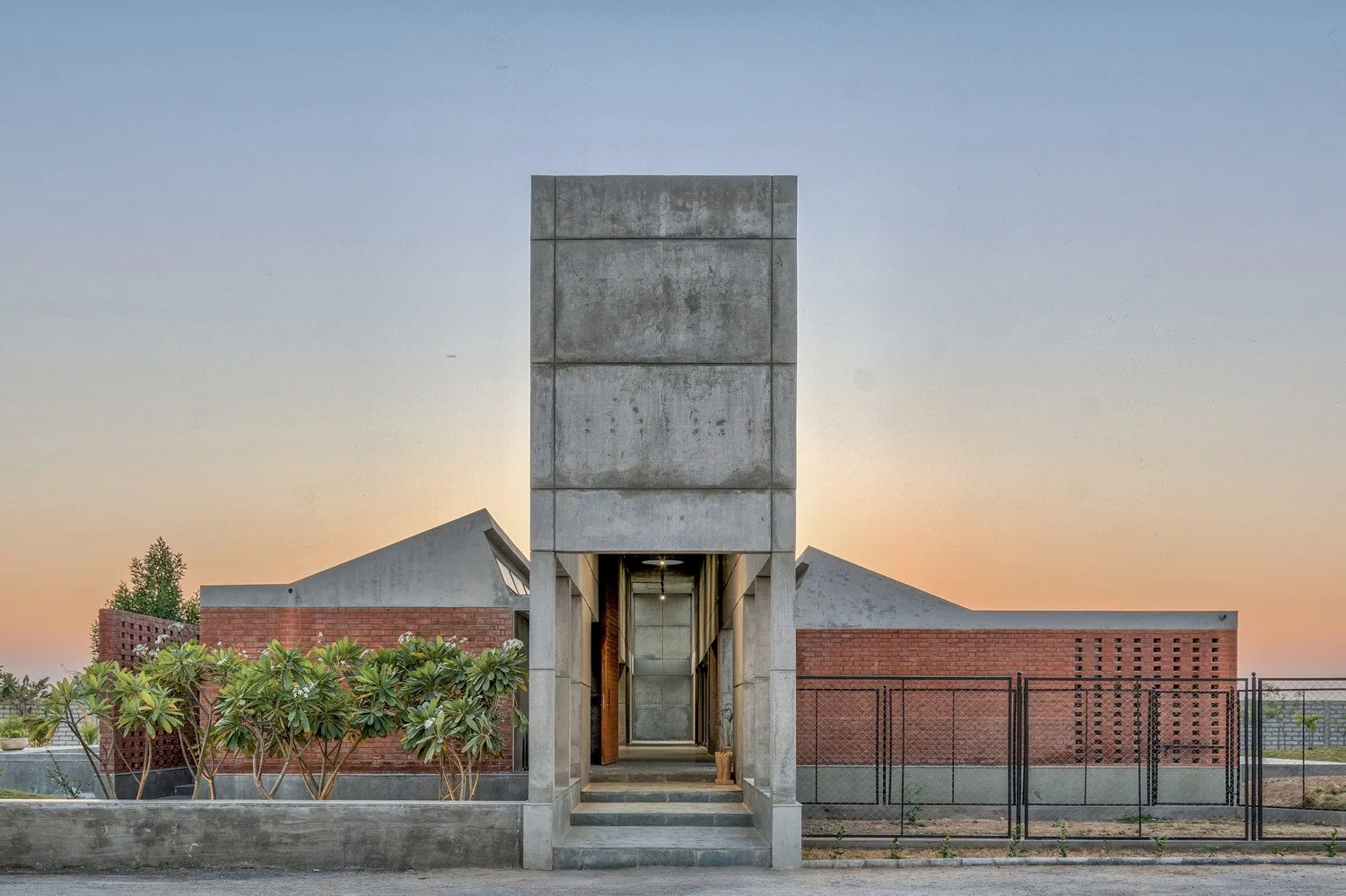
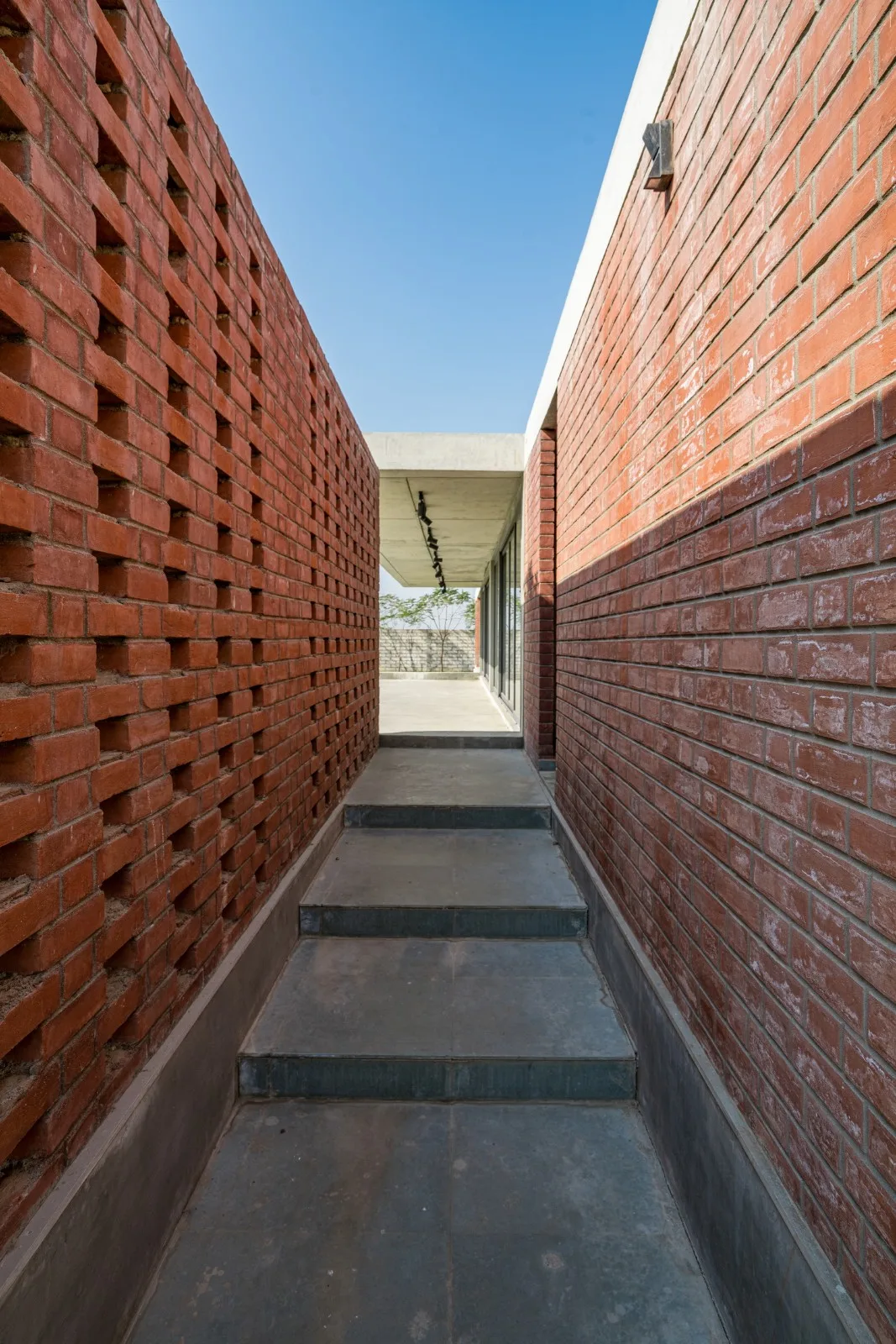
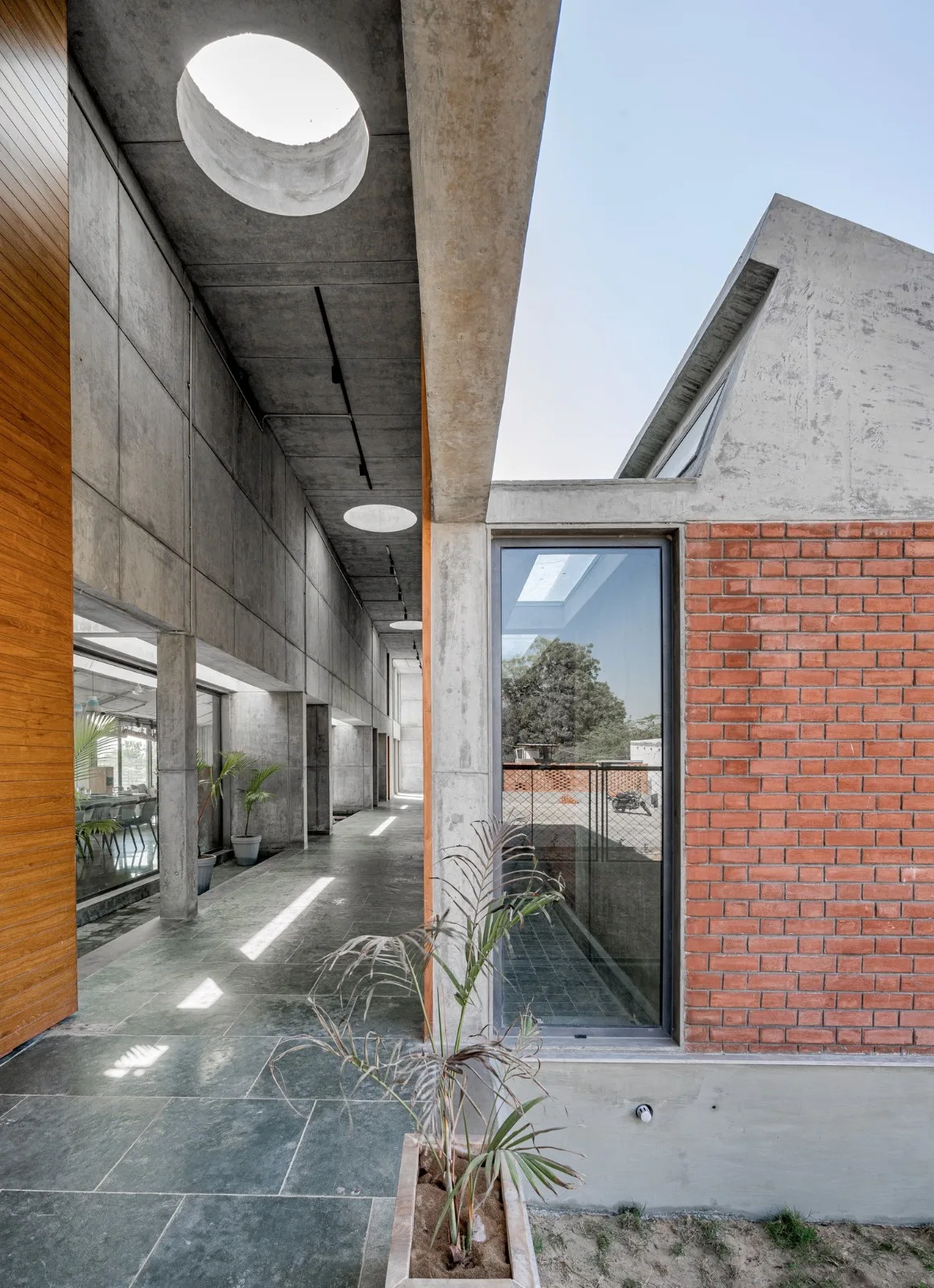
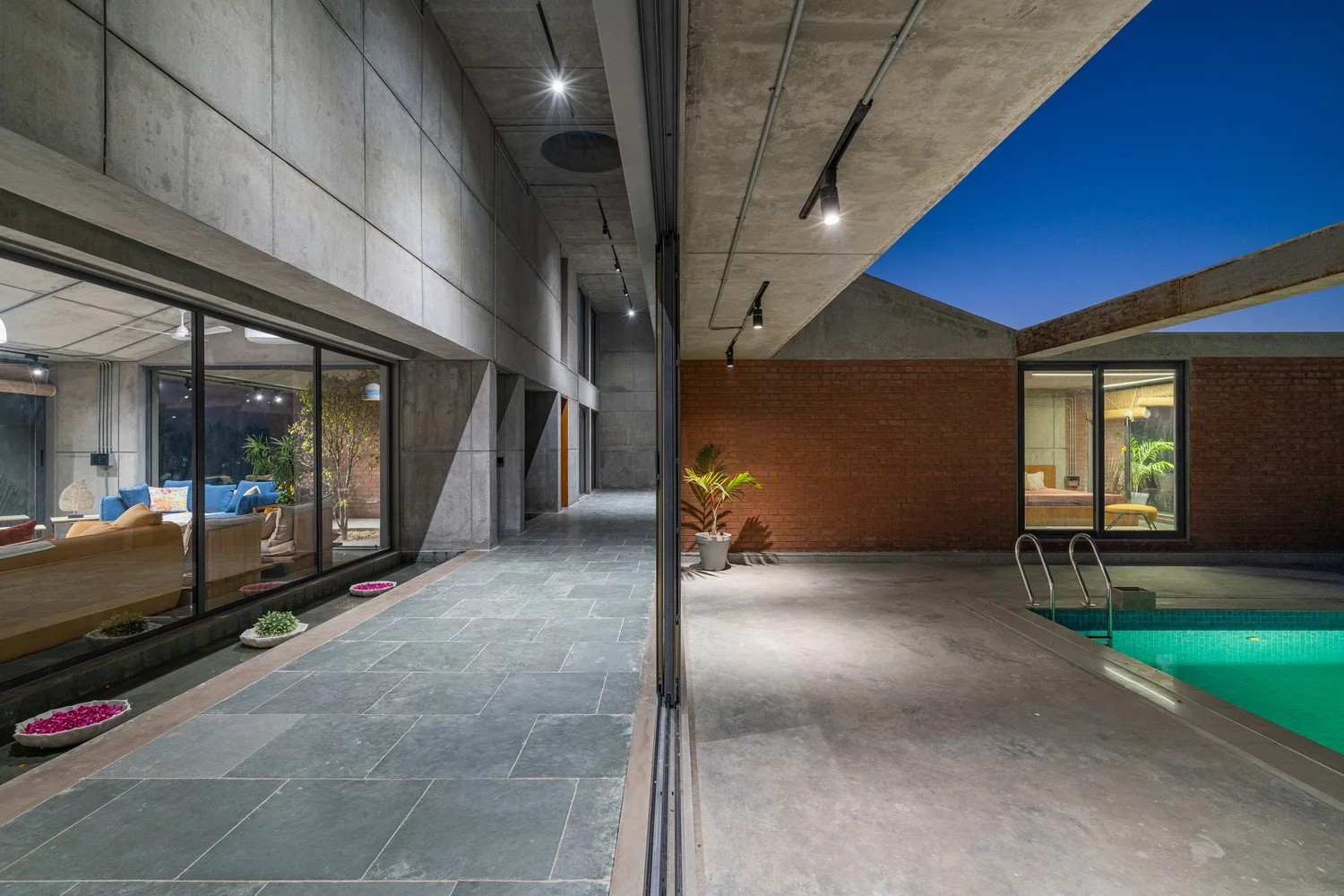
The corridor is unusually wide, designed to activate this central element. Upon entering, visitors are greeted by a double-height space that expresses the context and beauty of this area. Positioned strategically, the corridor allows free access to rooms on both sides while maintaining its own distinct character.
Three openings in the roof create a dynamic interplay of light and shadow. Their precise placement allows natural light to spotlight the interior as visitors enter through the wide threshold. On either side of the corridor, water channels collect rainwater during the wet season, serving as a buffer between nature and human activity.
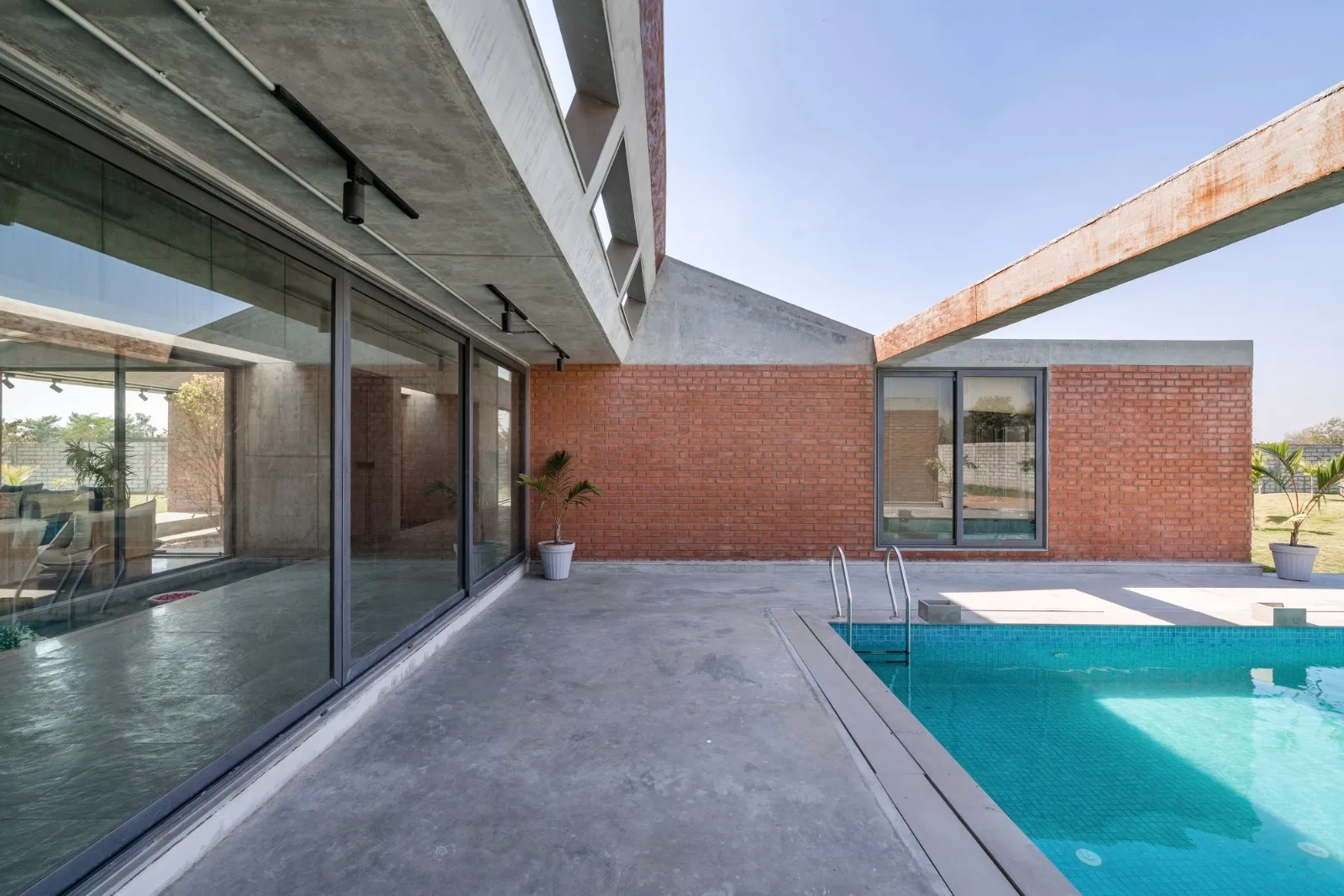
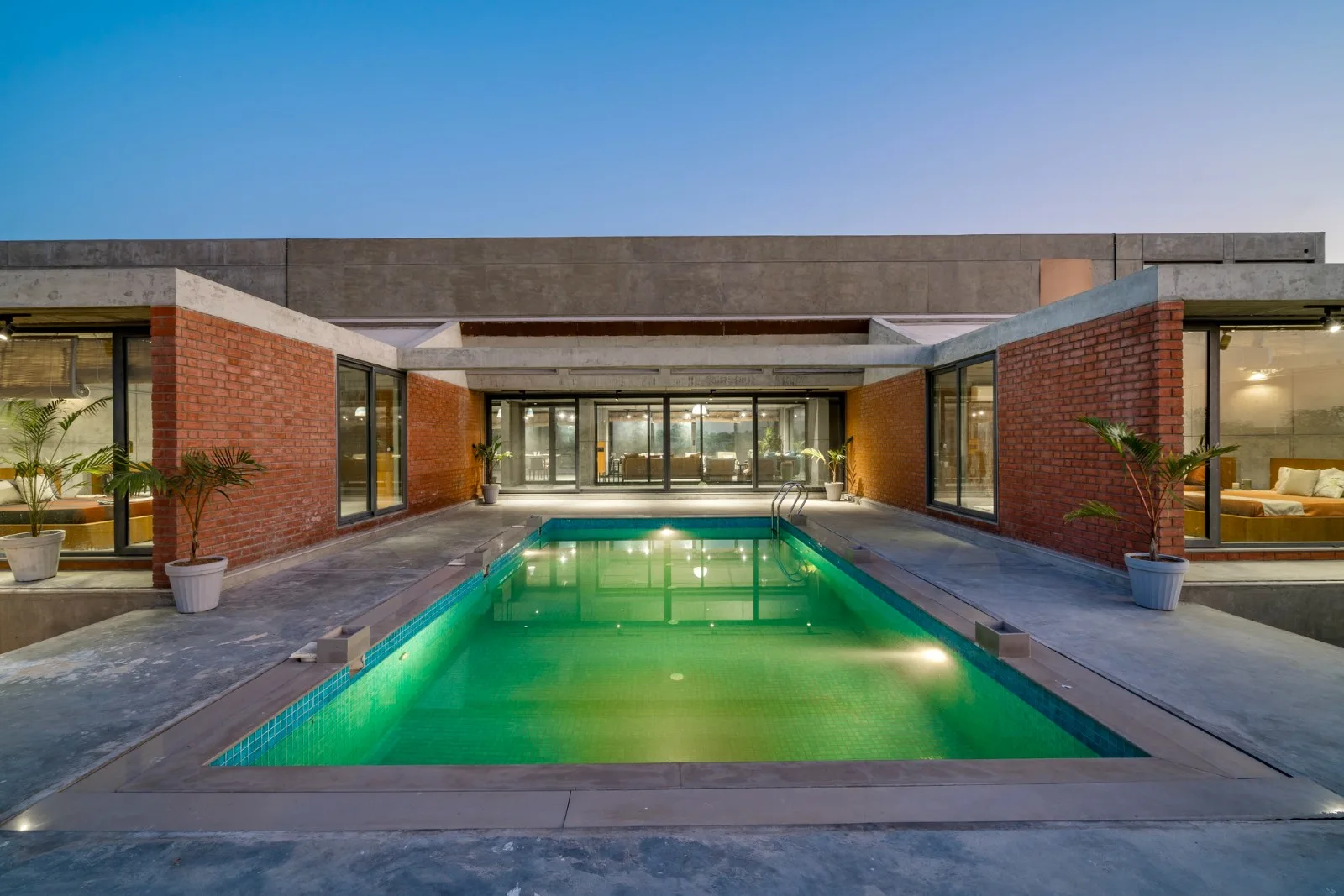
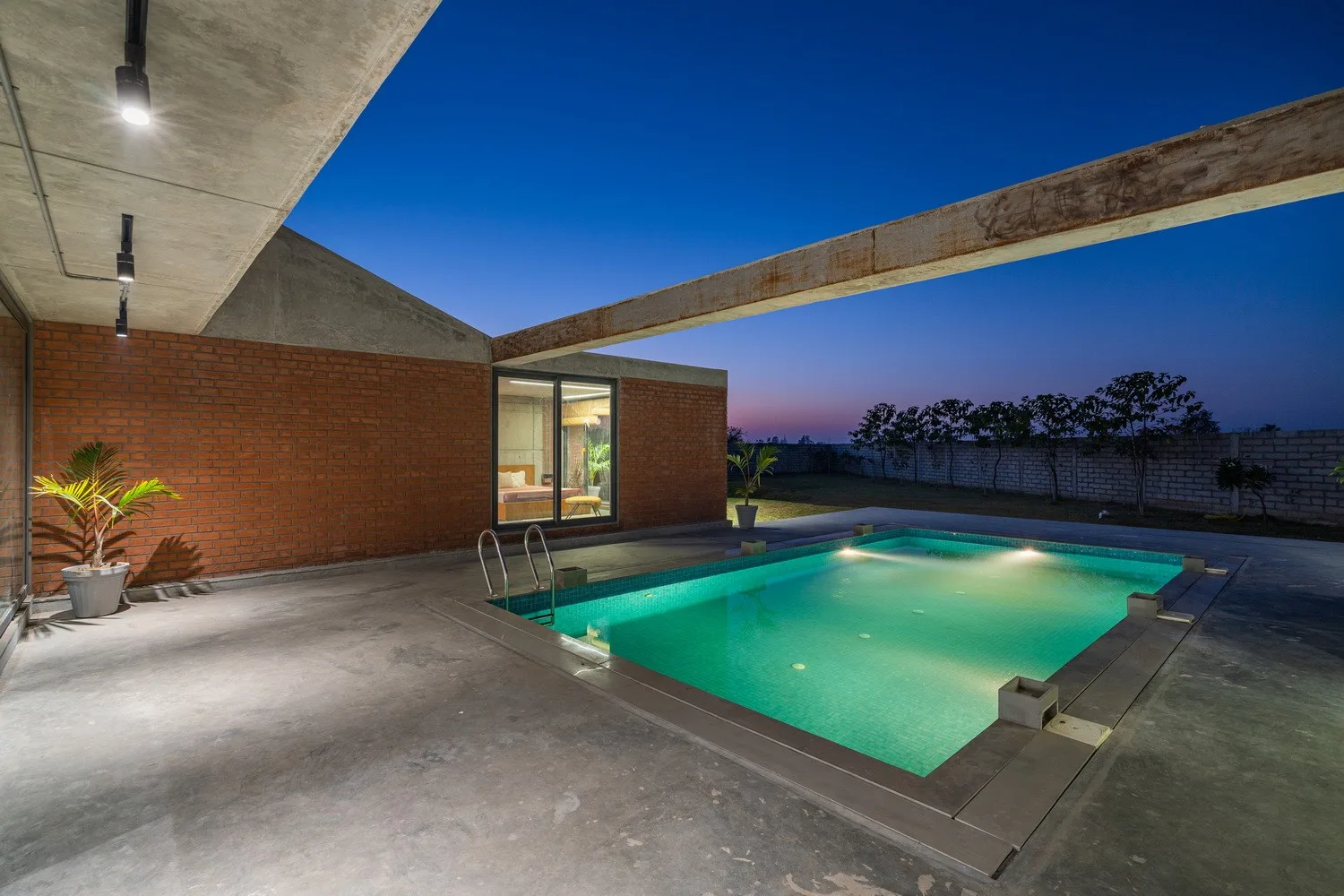
These channels separate the corridor from the living room, dining room, and kitchen on the left, and the swimming pool on the right. The entrances to these spaces act as bridges over the waterways. During festivals, residents personalize the water by placing oil lamps and flowers on its surface. This corridor is truly the soul of the building.
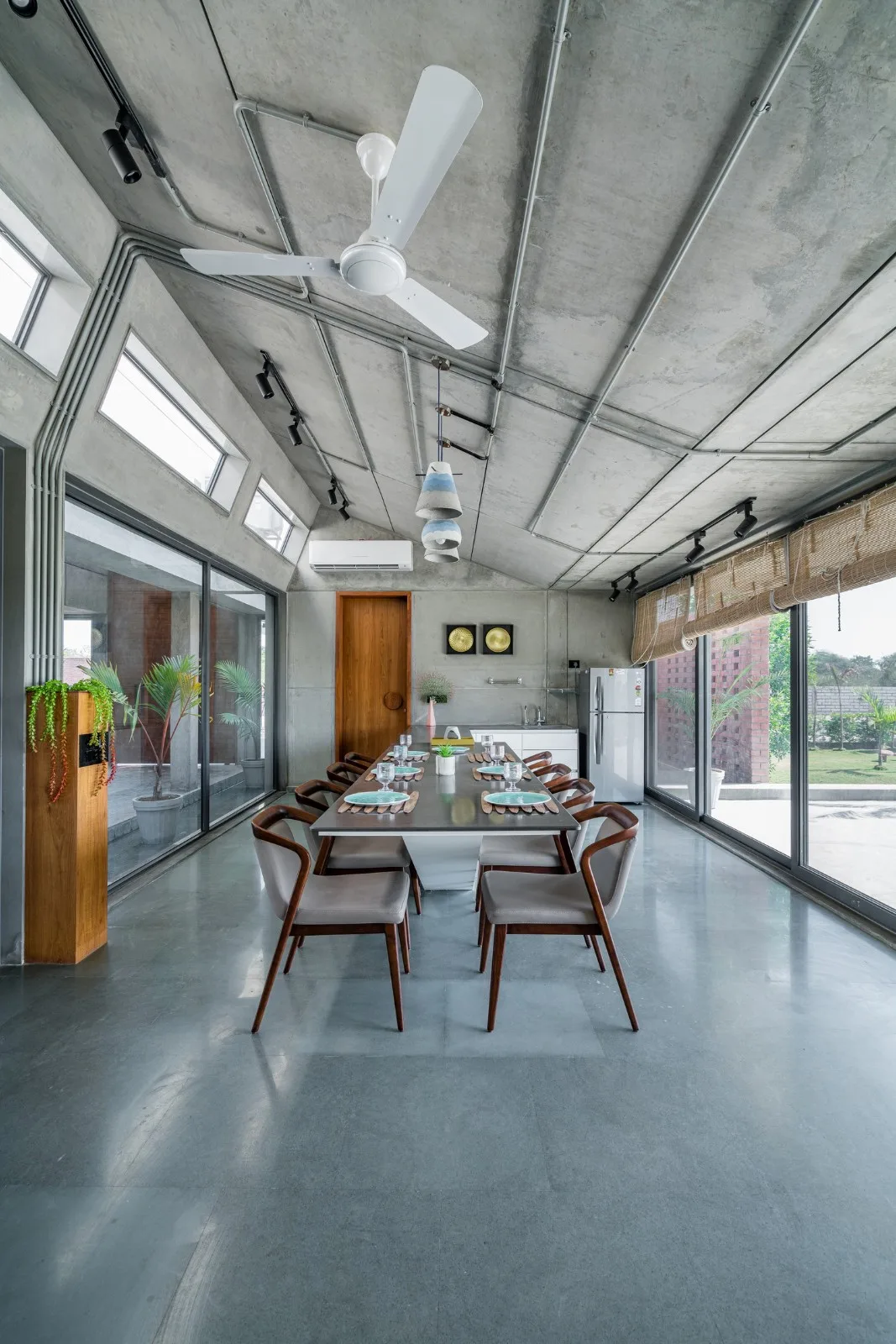
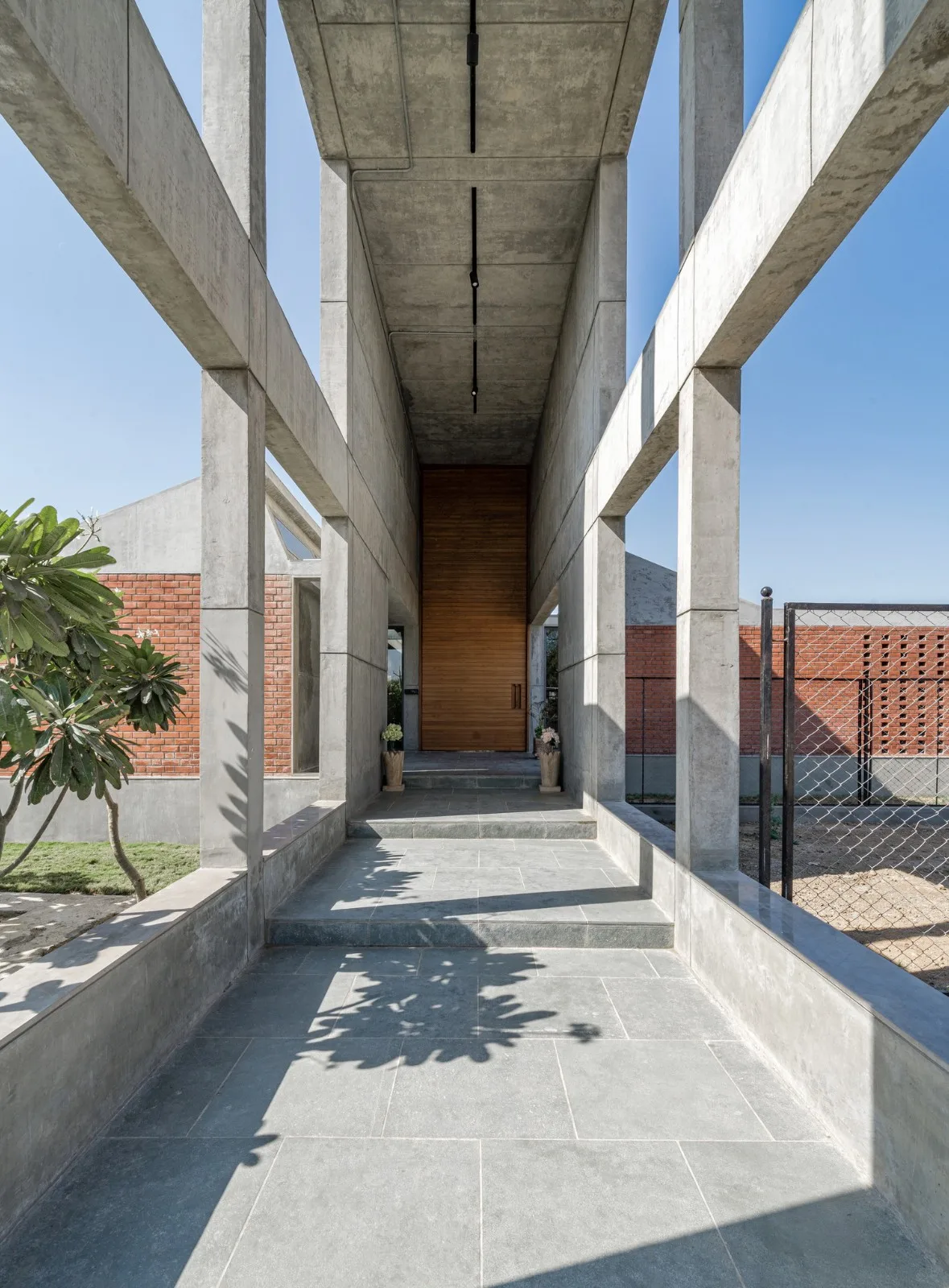
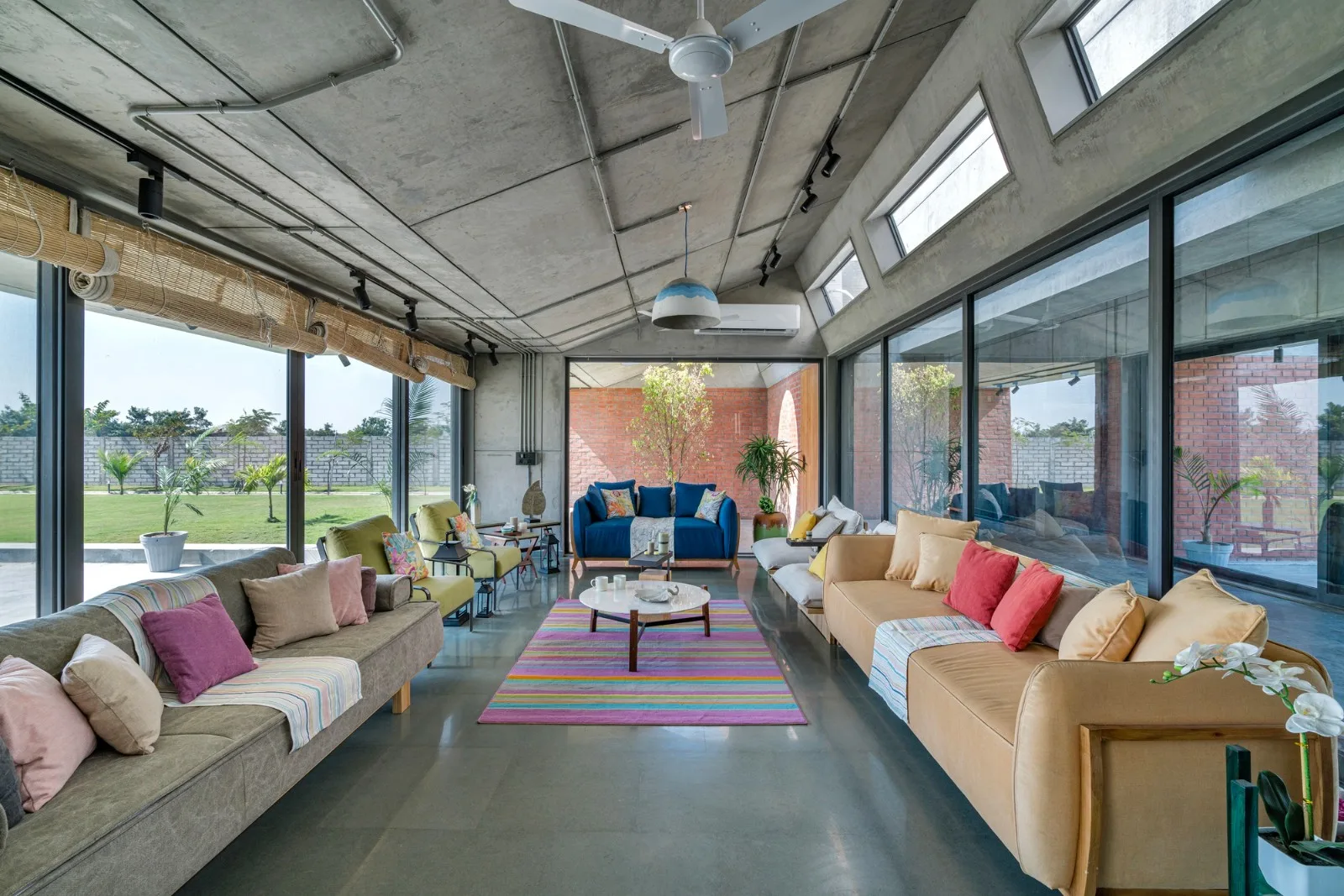
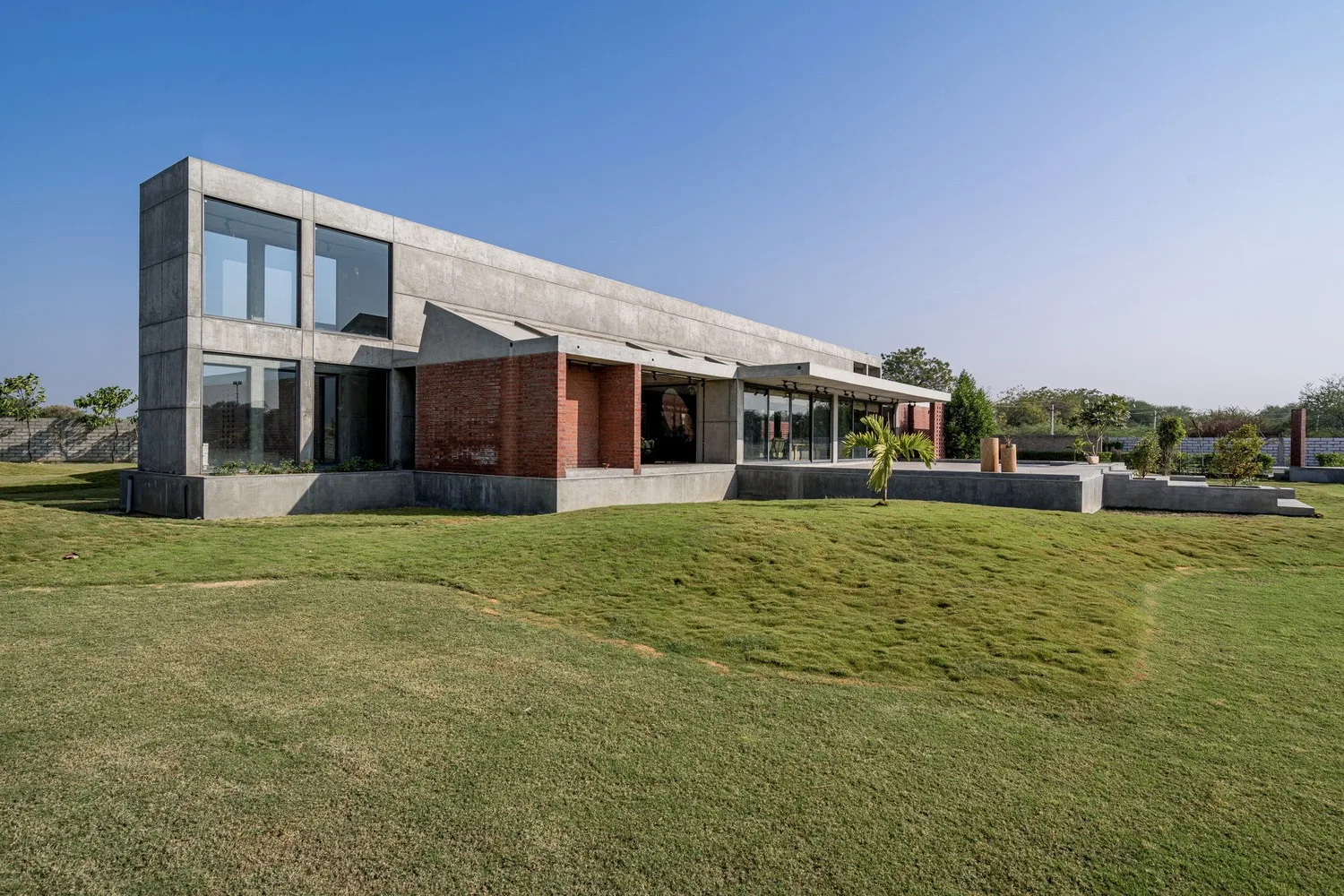
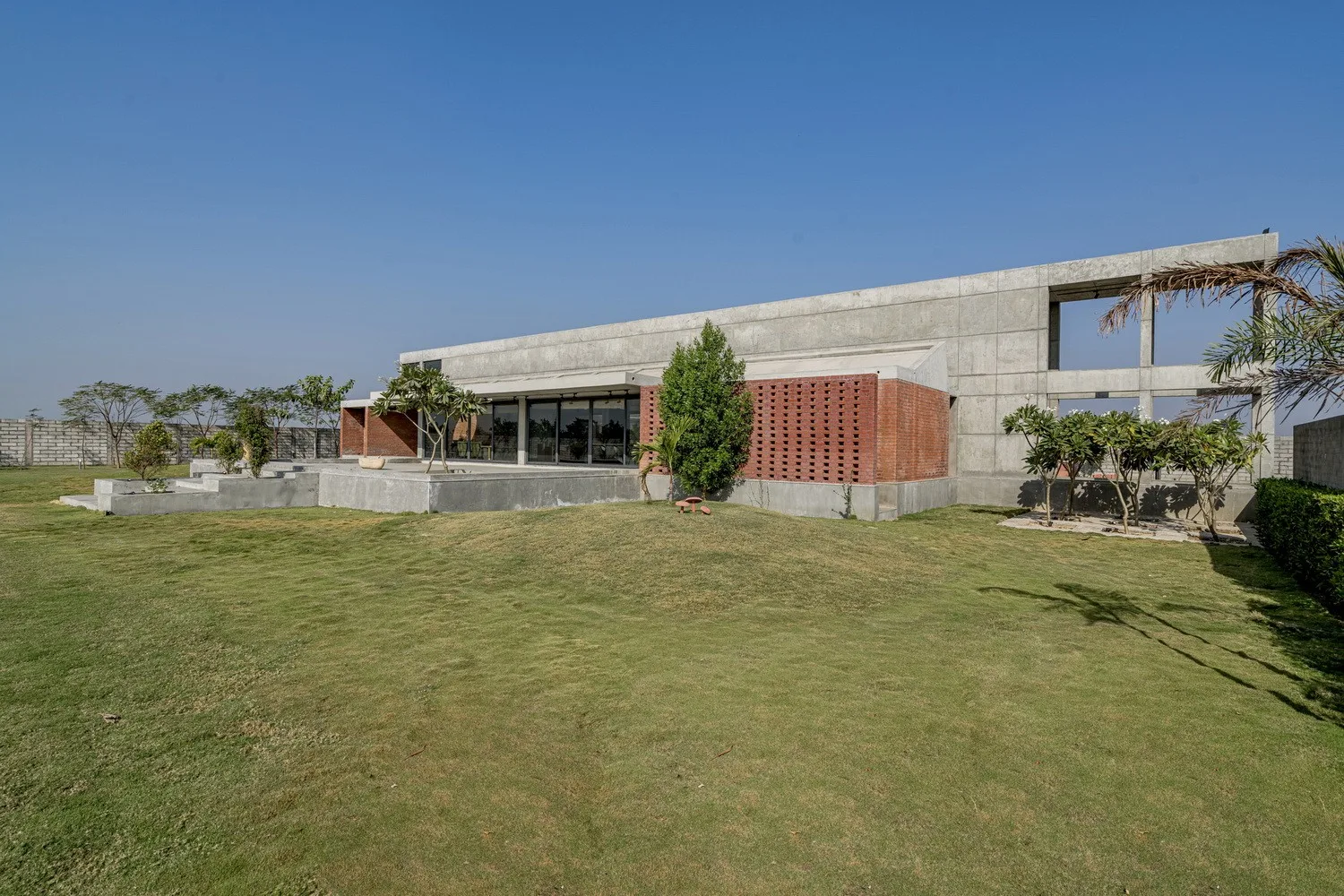
As you move around the building, the experience unfolds. The project features an open courtyard, with bedrooms opening to a private garden at the back. The dining room and kitchen form a continuous space, supported by load-bearing structures for durability and easy access.
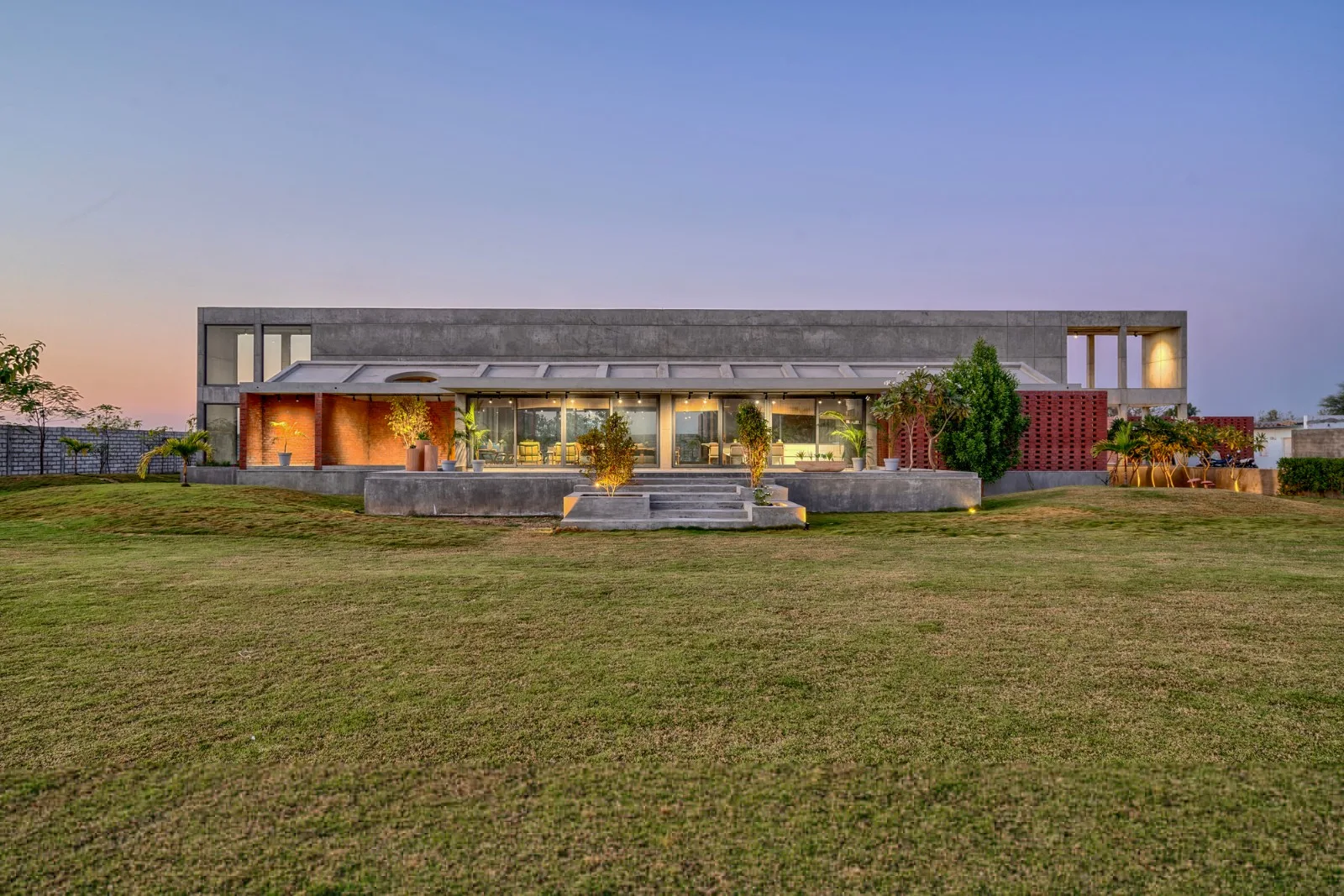
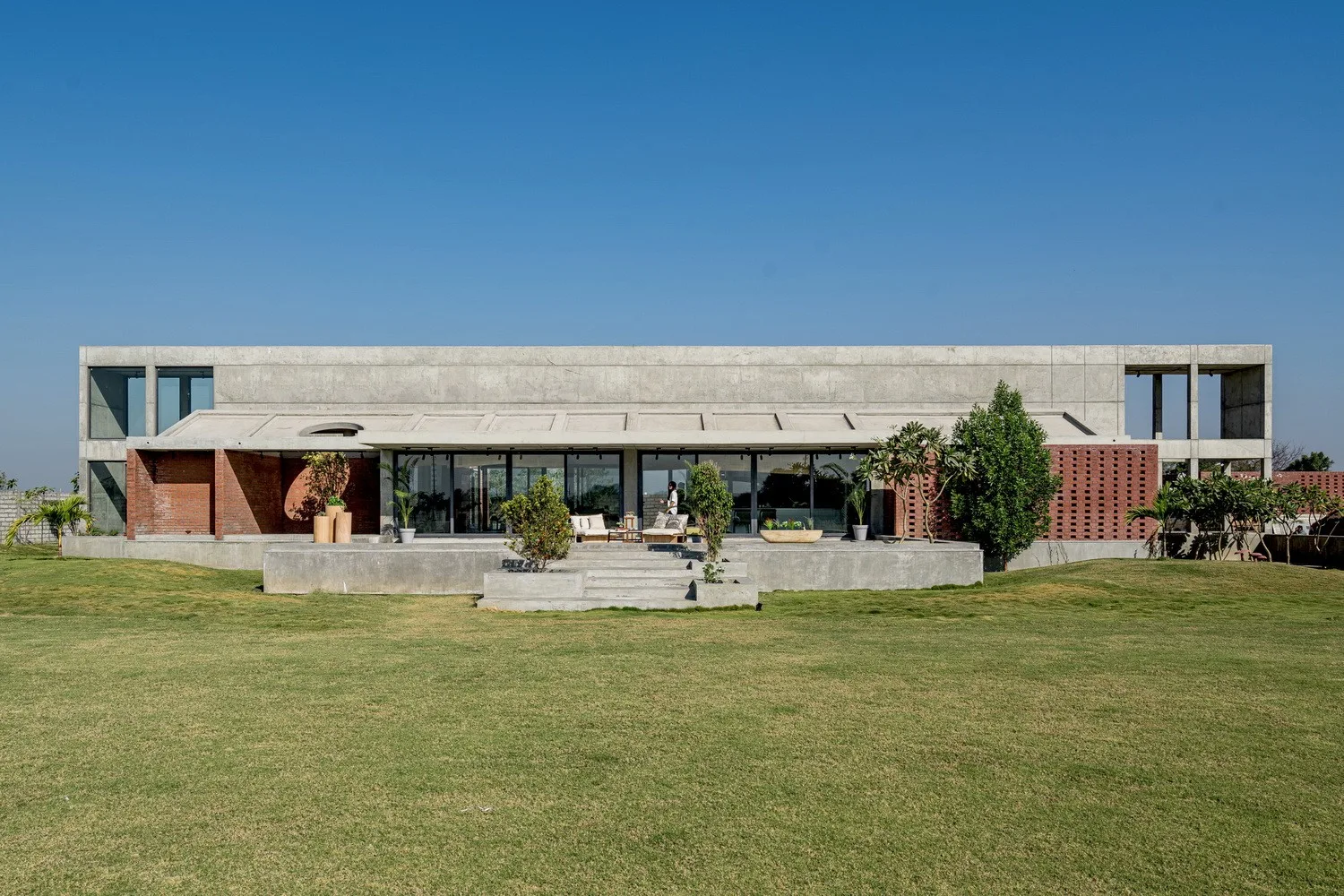
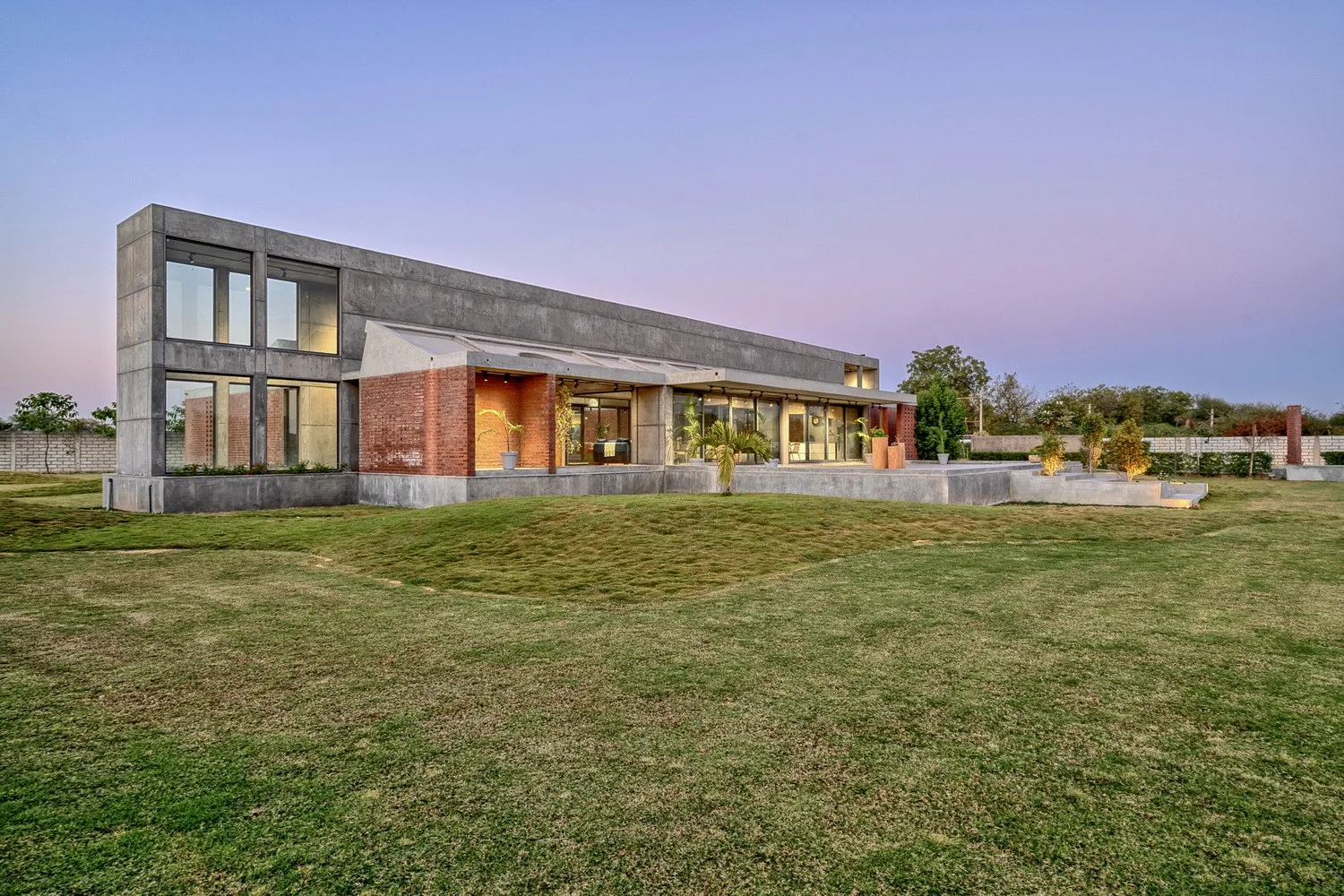
The living room’s large window acts like a giant screen, connecting to the theater space. This ground-floor platform extends outward, creating a transitional zone between openness and privacy. It serves as a stage for the expansive green landscape and surrounding natural scenery.
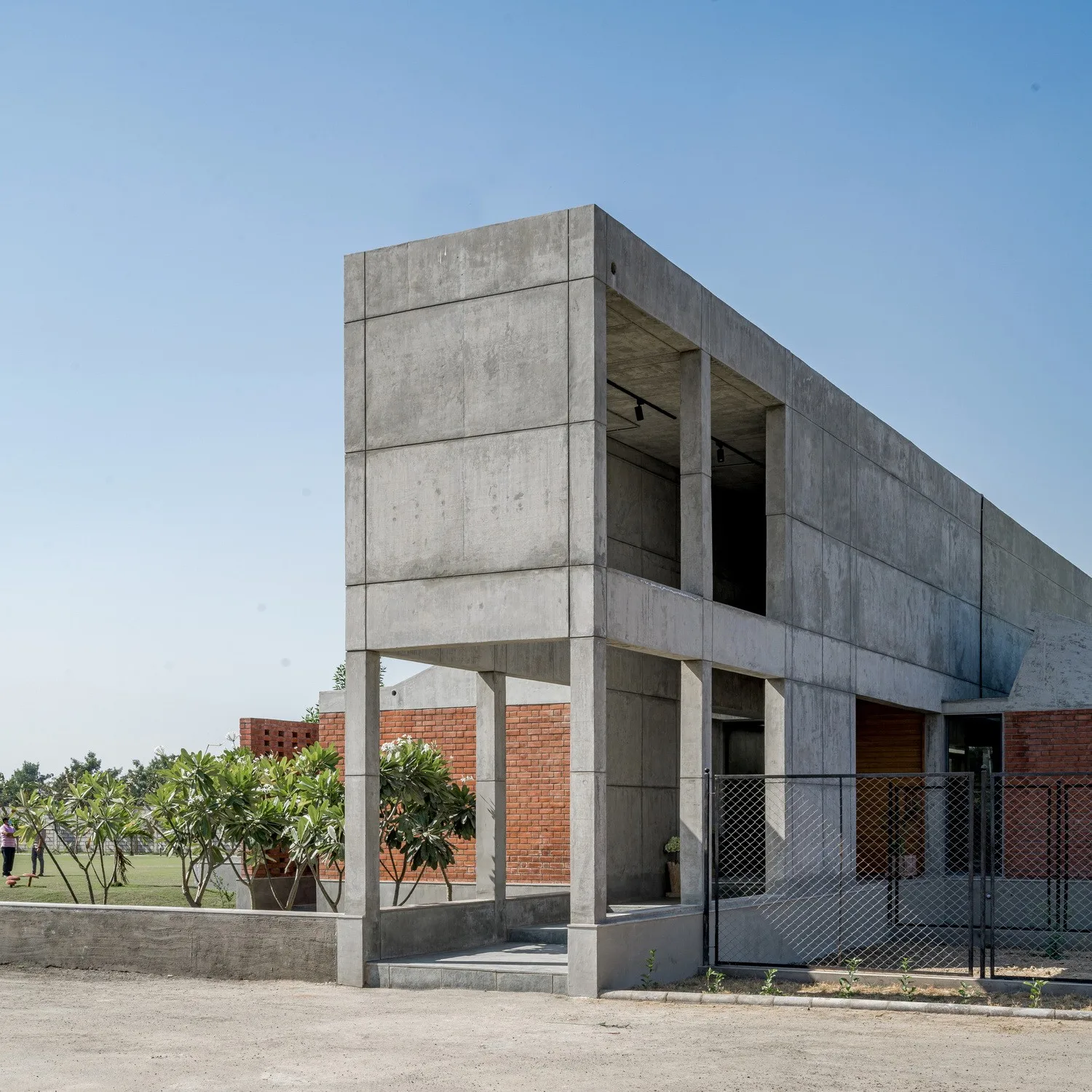
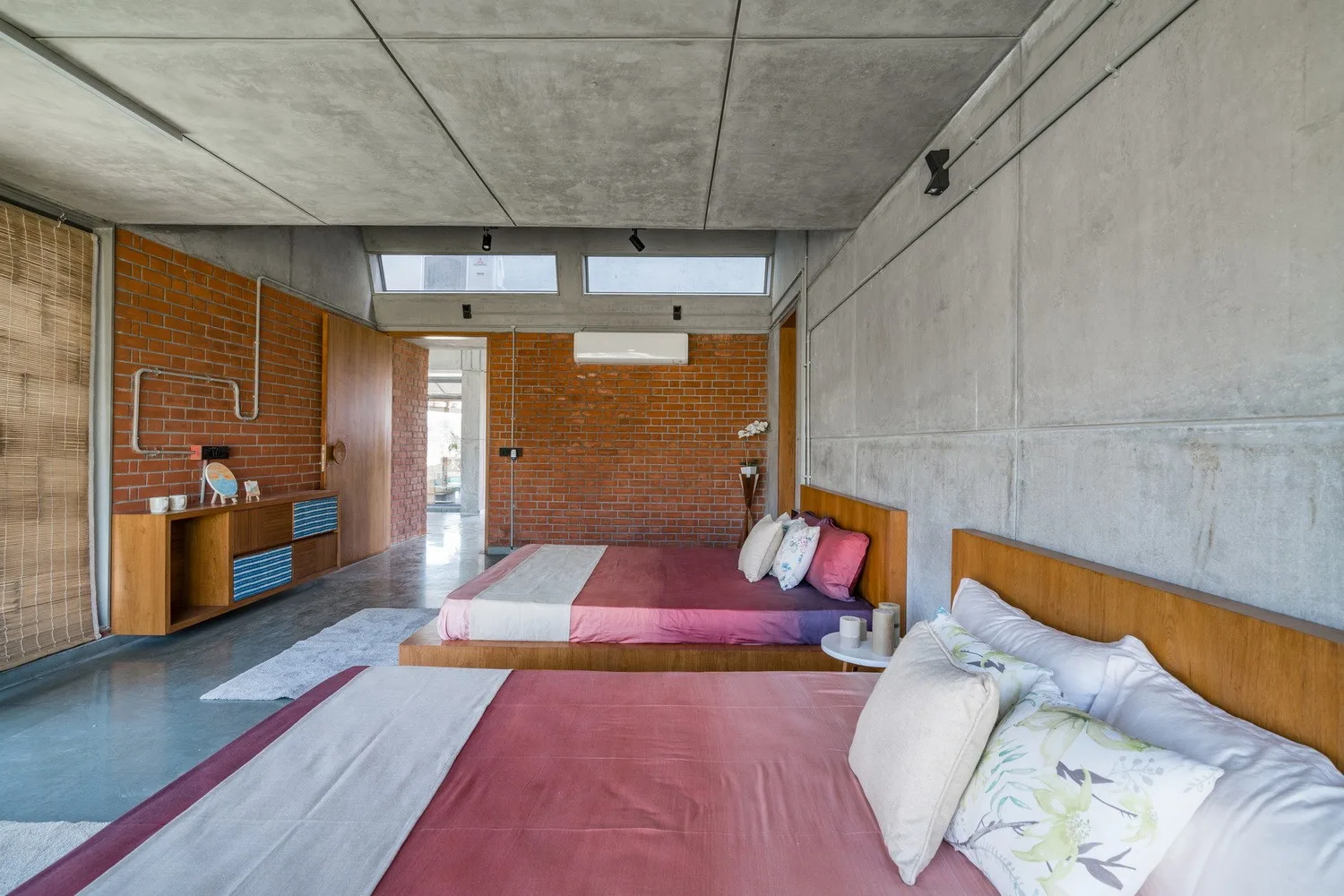
The landscape lining the lane acts as a natural barrier, preserving a strong sense of mystery before reaching the open green space. The building itself occupies only about 5% of the total plot, a deliberate choice reflecting the project’s vision for harmony with nature.
Project Drawings
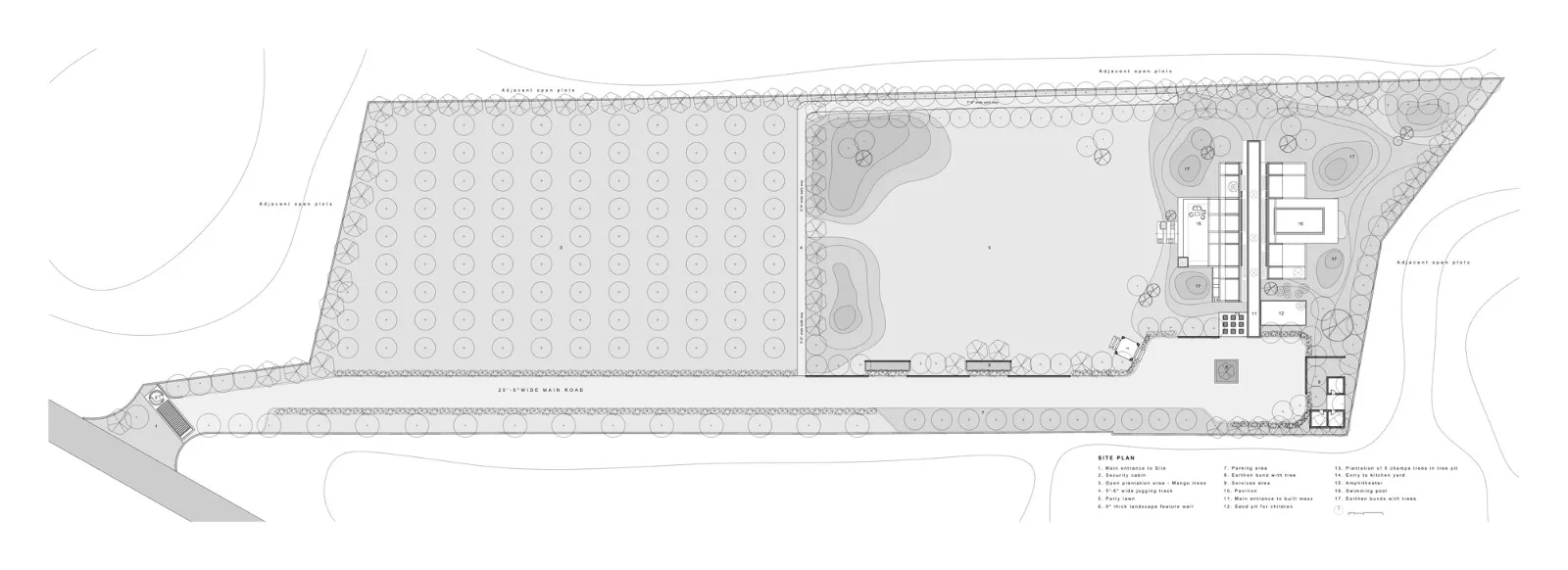
△ General Layout Plan
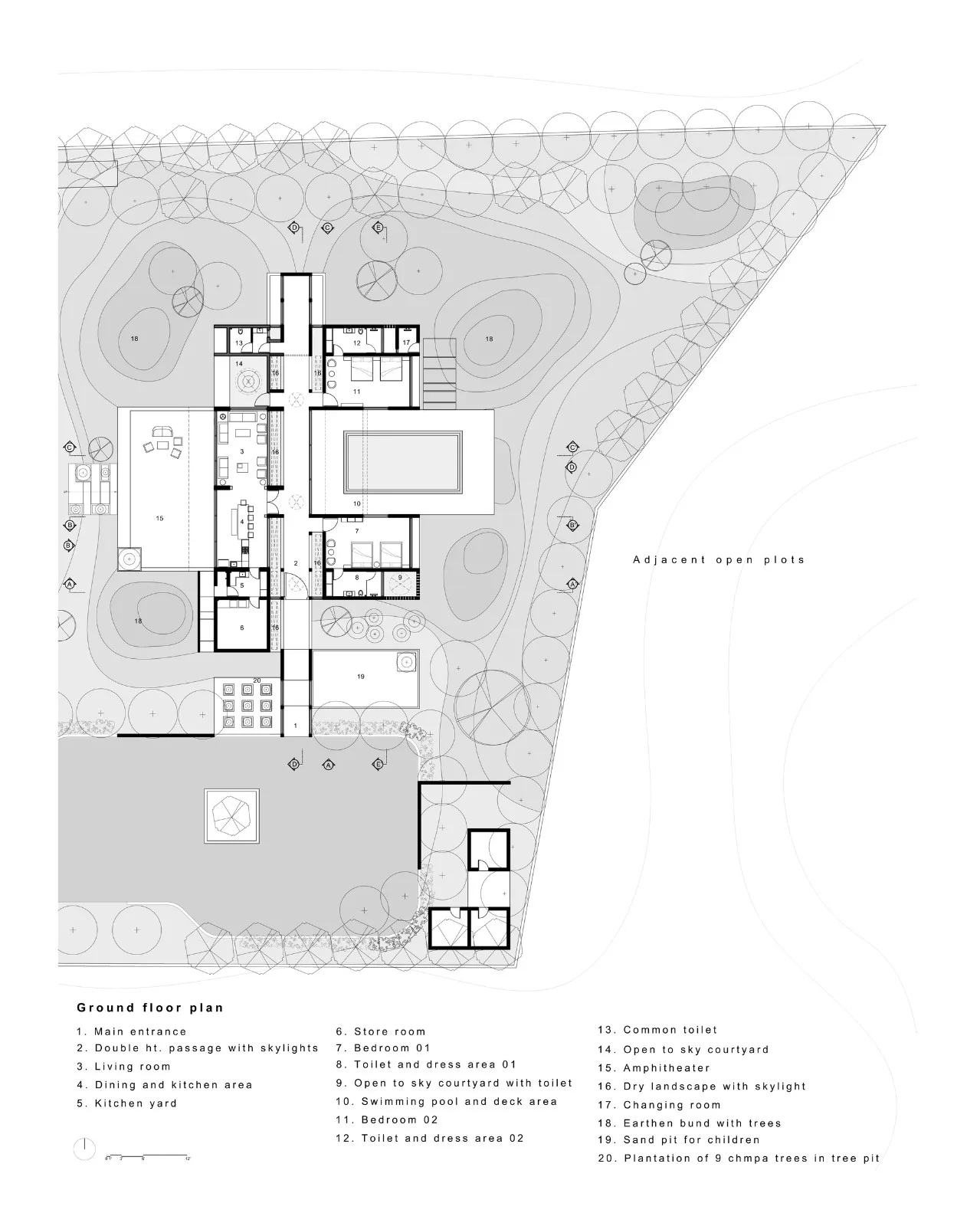
△ First Floor Plan
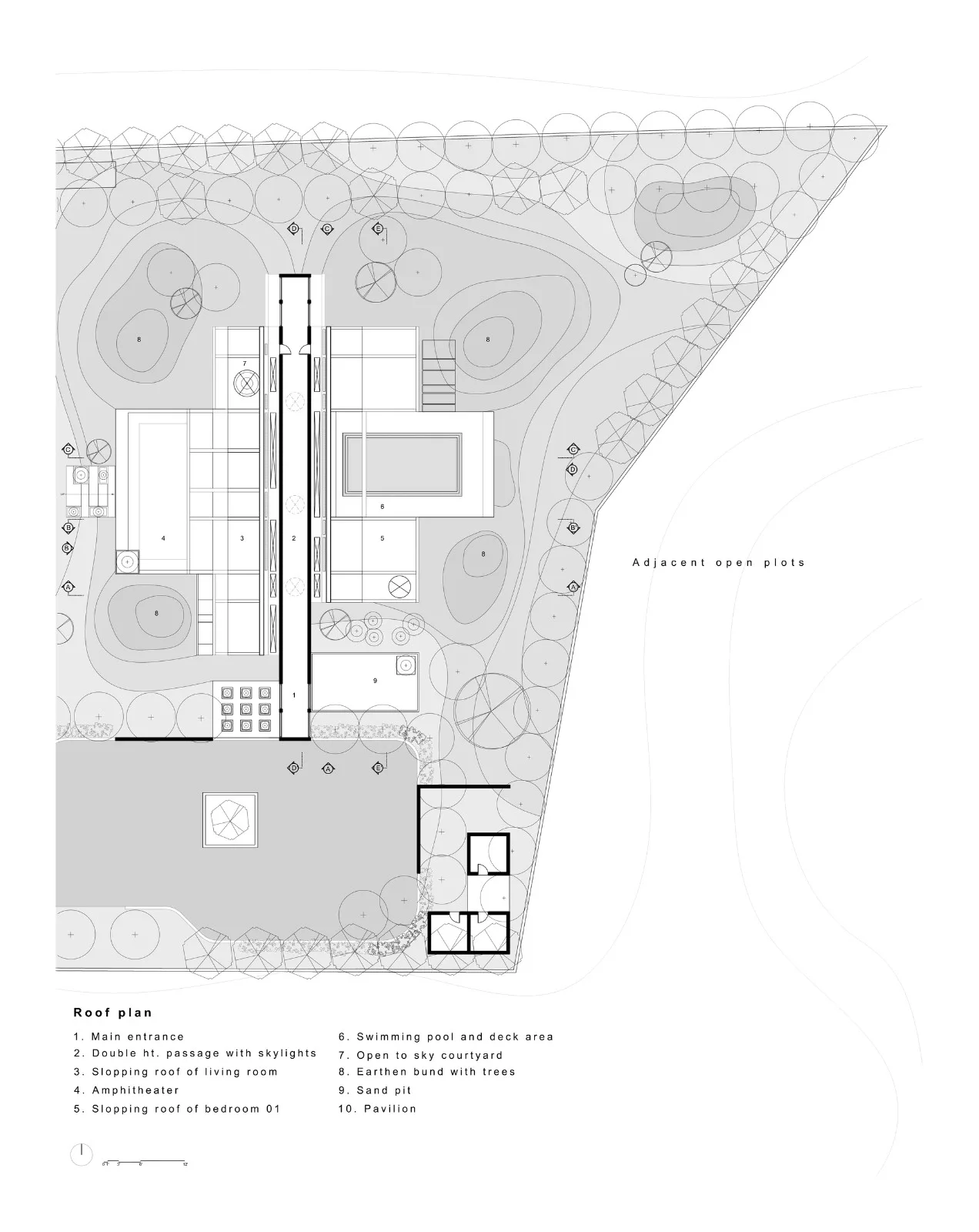
△ Roof Plan
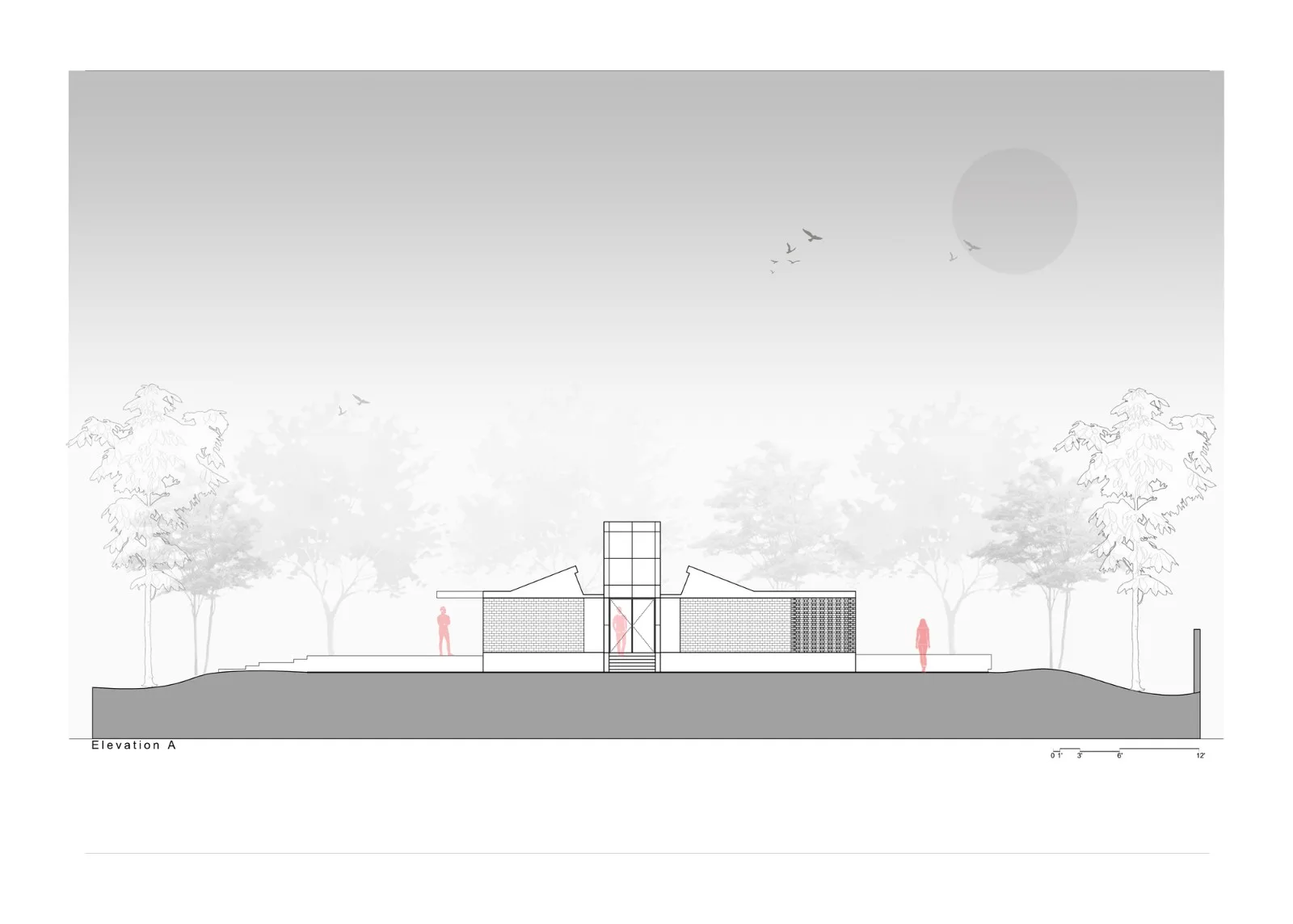
△ Elevation 1
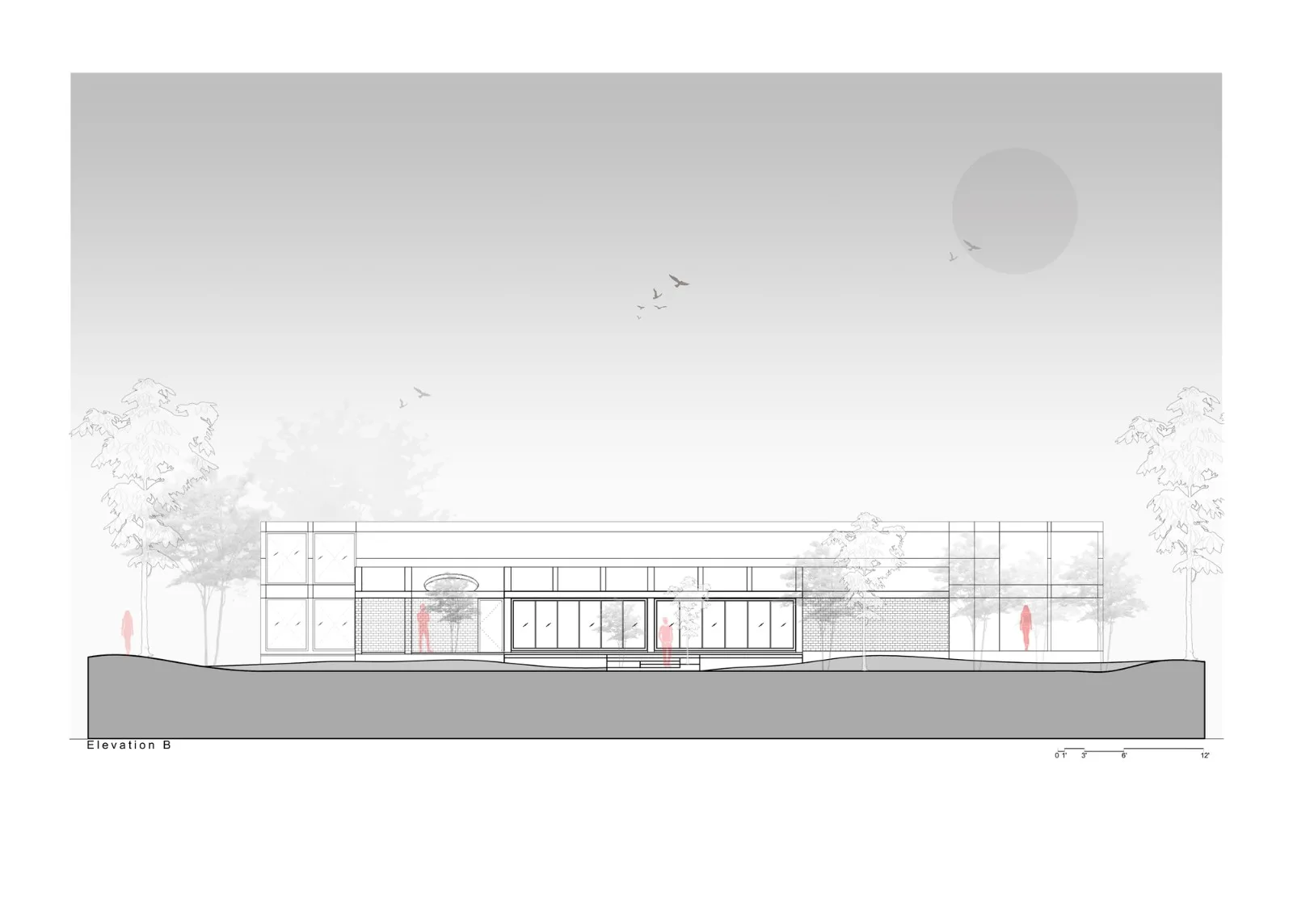
△ Elevation View 2
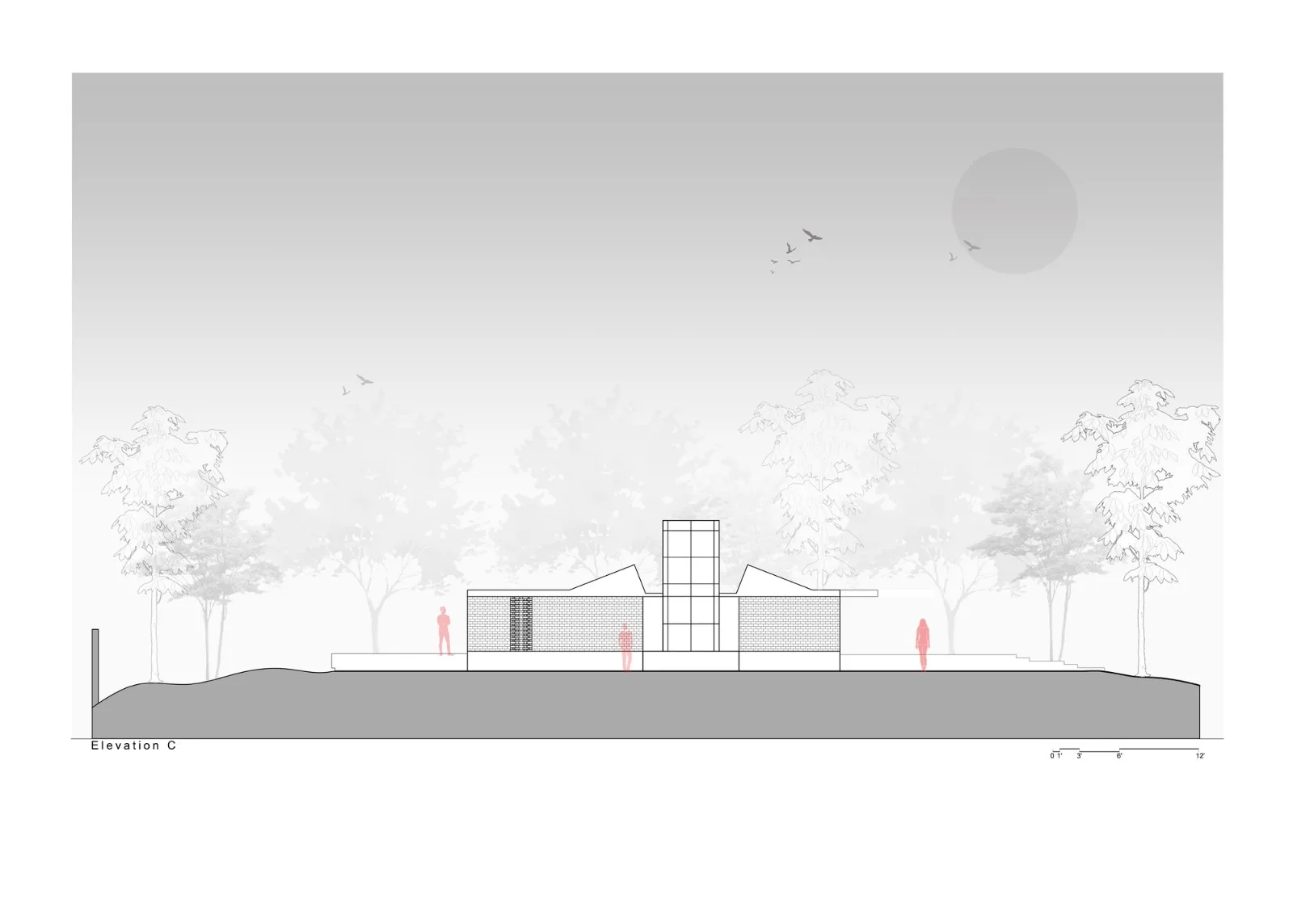
△ Elevation View 3
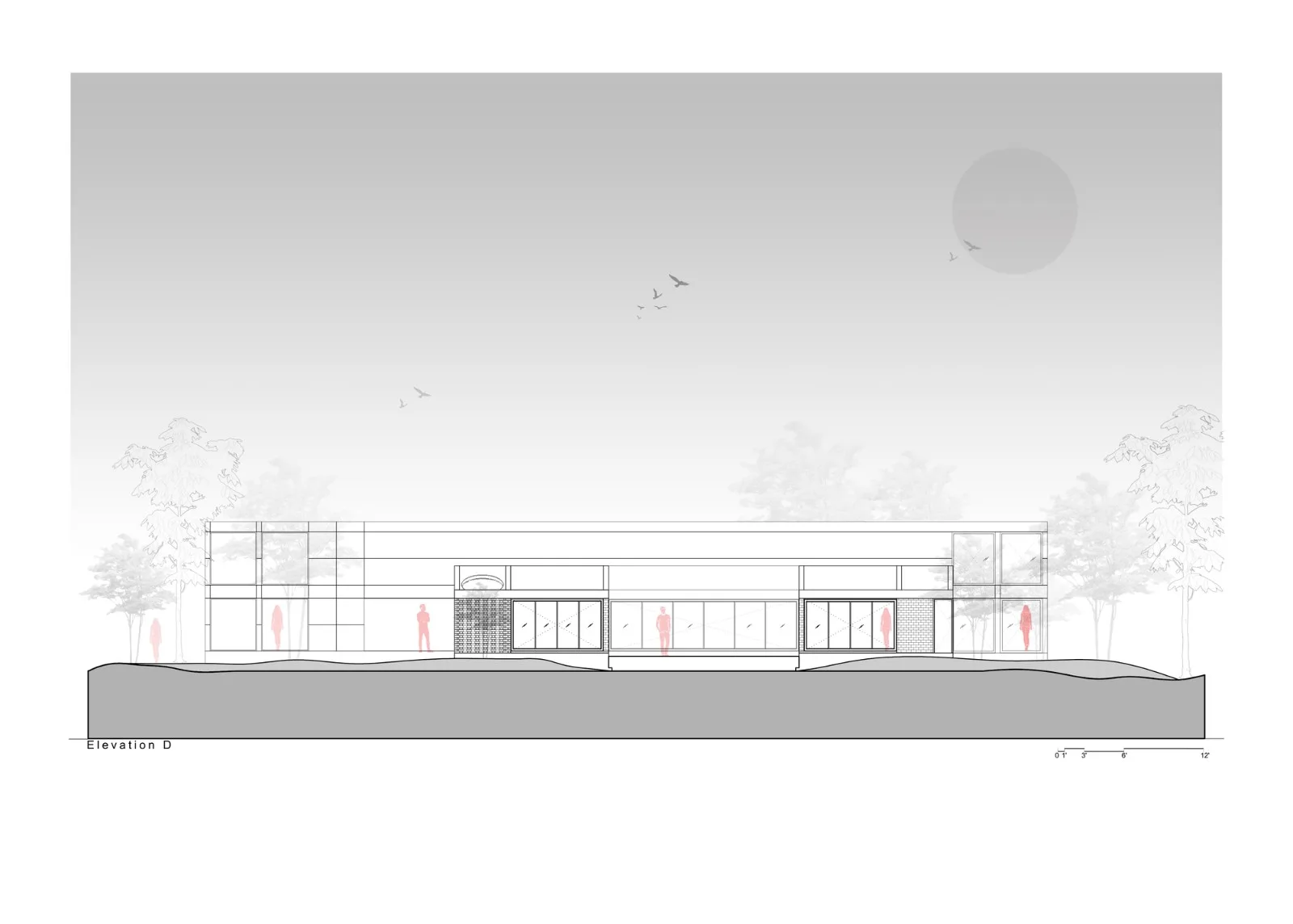
△ Elevation Drawing 4
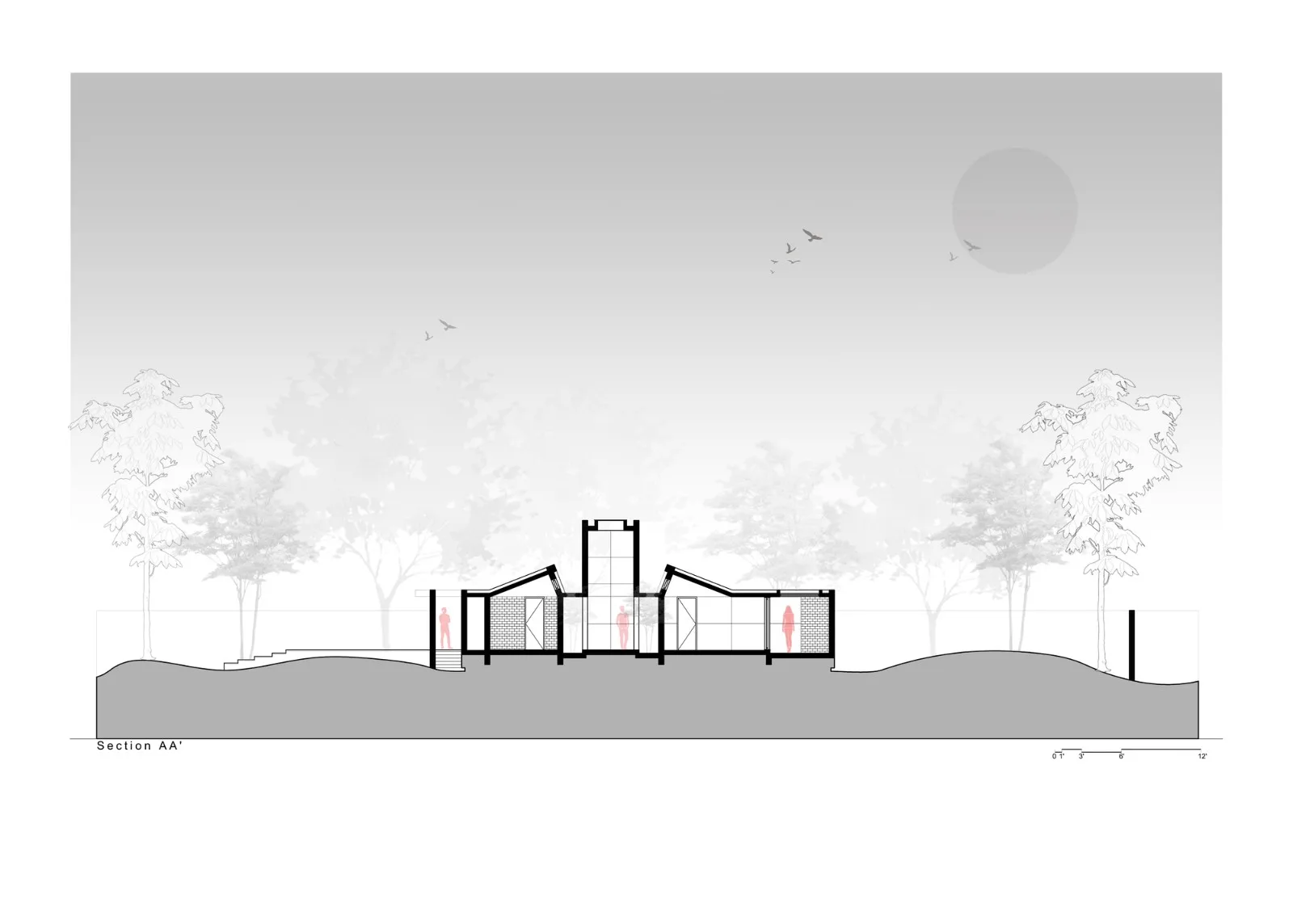
△ Section A
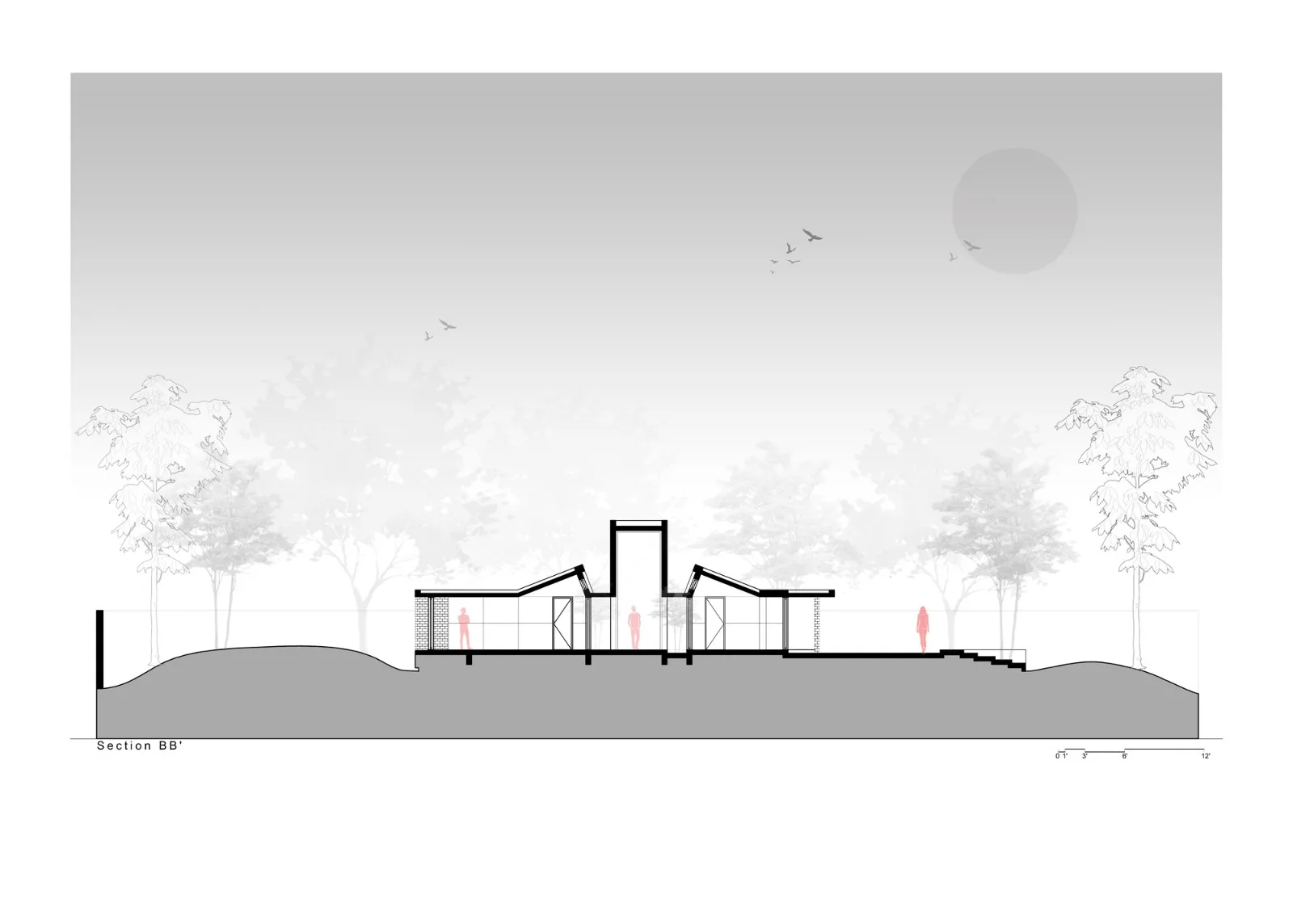
△ Section B
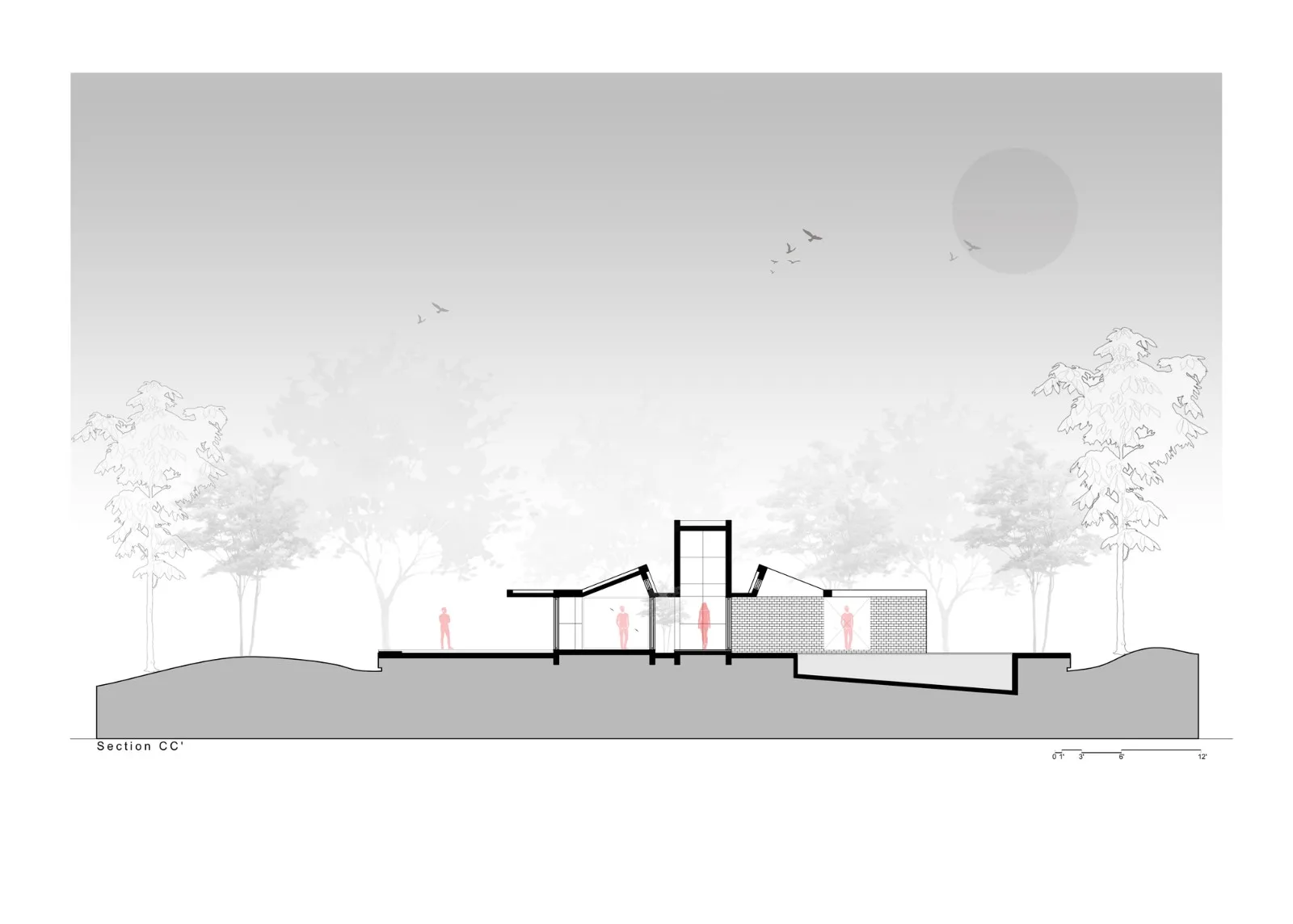
△ Section C
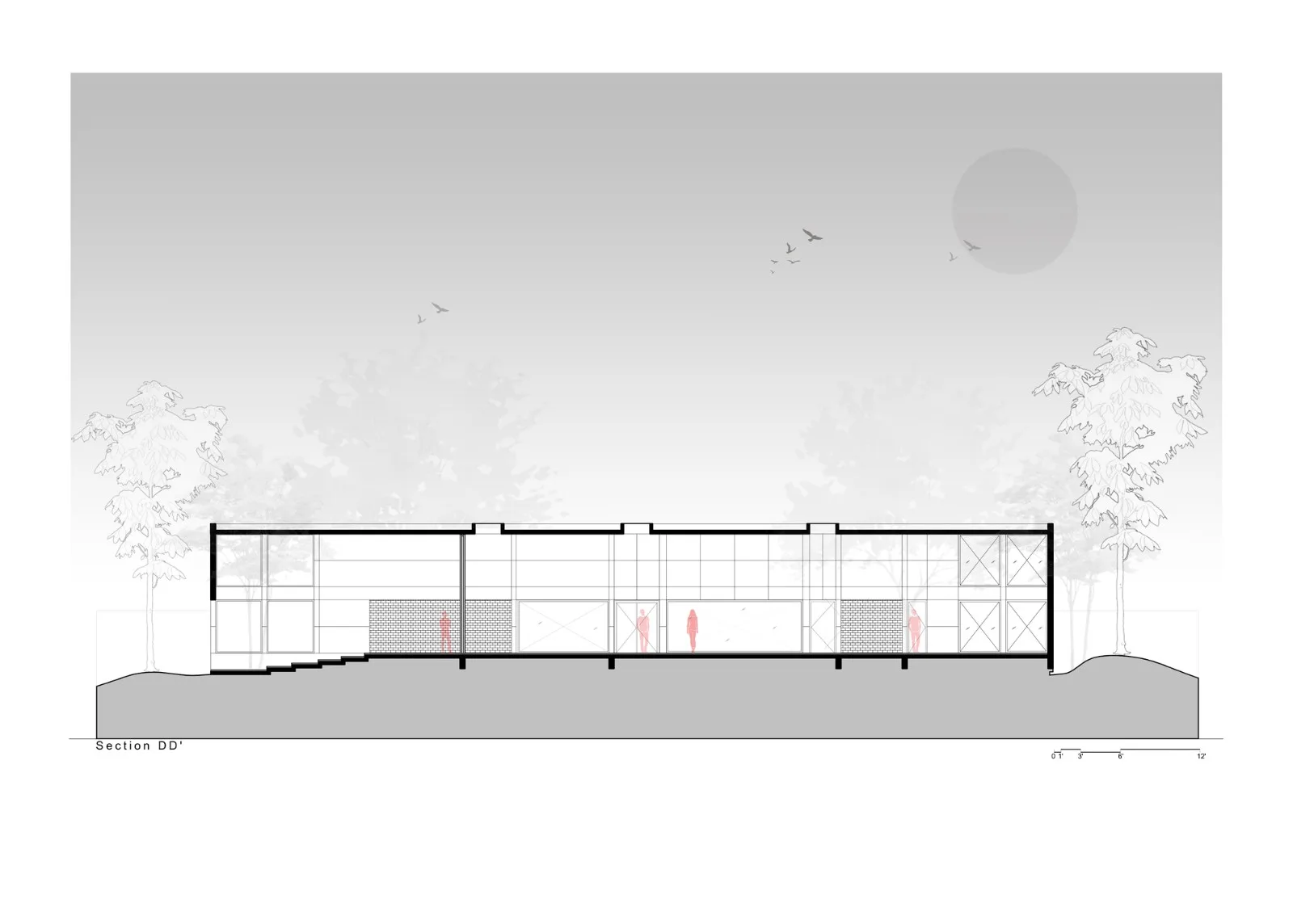
△ Section D
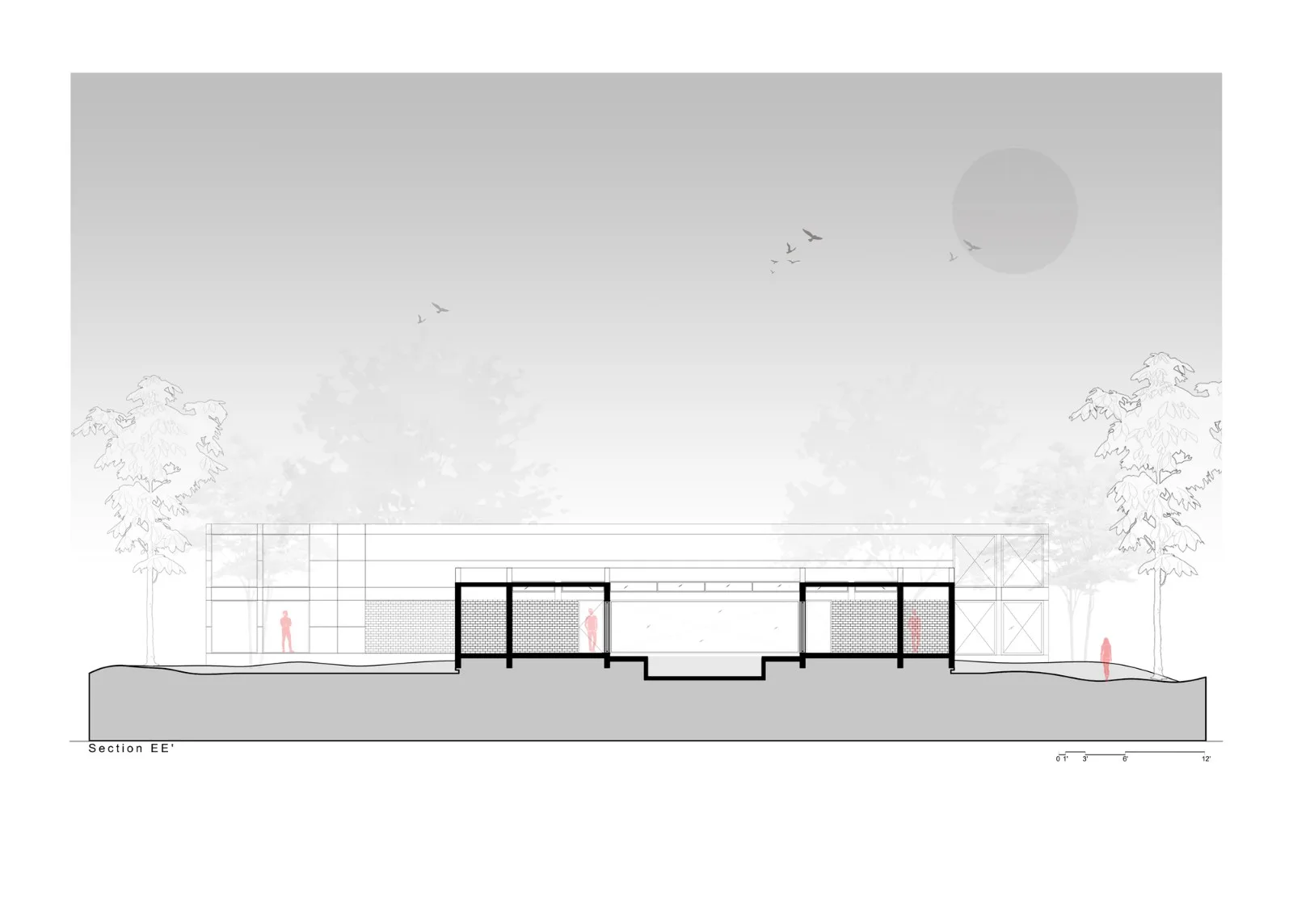
△ Section E
Project Information
Architectural Design: MISA Architects
Area: 180,000 ft²
Project Year: 2020
Photographer: Inclined Studio
Suppliers: Asian Paints, Caesar, Daikin, Indian Natural Stone, Jaguar, Saint-Gobain, TURAKHIA VENEER, Cera
Lead Architects: Kranti Desai, Anand Jasani, Vipul Jiyani, Tarun Patel
Overall Design and Client Coordination: Kranti Desai
On-site Supervision and Execution: Anand Jasani
Location: Chekhla, India












Must log in before commenting!
Sign Up