
Preface
This project represents a highly experimental historical interpretation with a forward-looking vision.
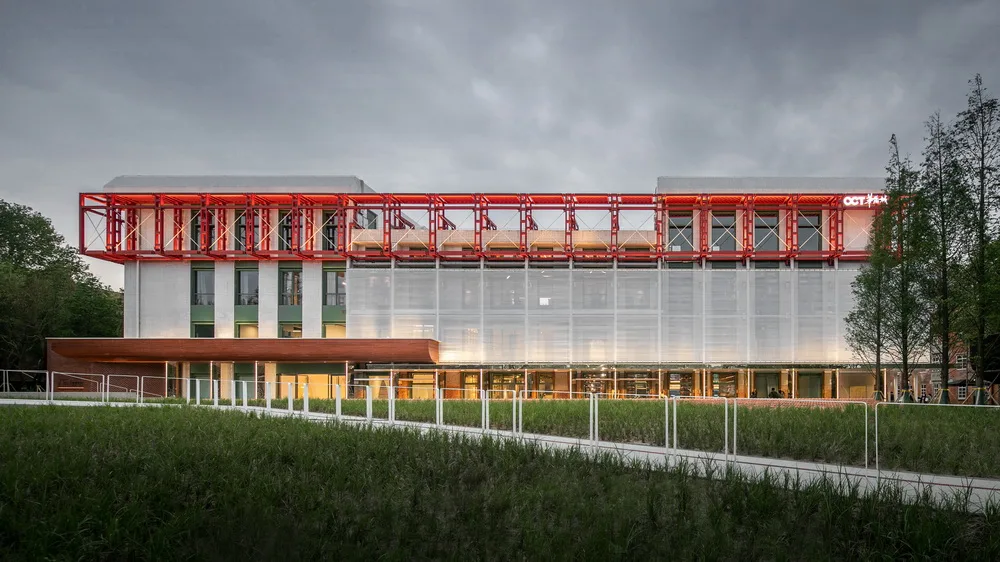
Seventy years ago, an army of 100,000 workers built the Wuhan Iron and Steel Corporation. To accommodate this massive workforce, Honggang City was created as a model example of a socialist, ideal living environment in New China. Today, seven decades later and in the wake of Wuhan’s resurgence post-pandemic, Gangcheng Third Primary School serves as the starting point for the revitalization of the Qingshan Honggang City area. This project explores and embodies the spirit of Wuhan Iron and Steel and the significance of Honggang through multiple dimensions, scales, and processes, setting a leading example with demonstrable impact.
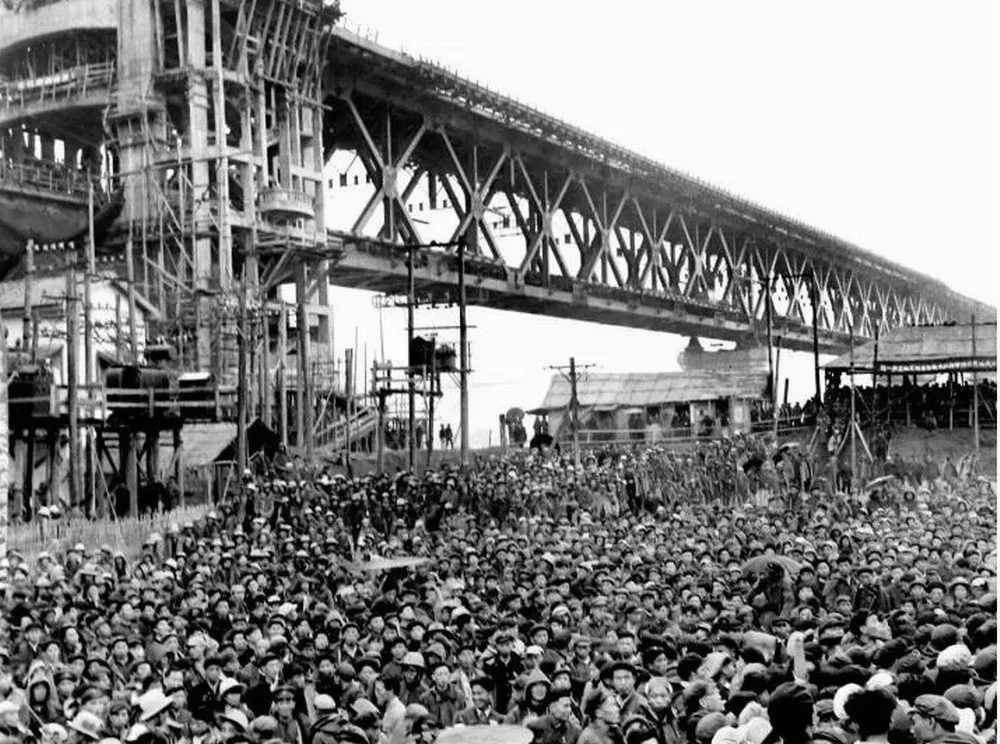
Historical photos of Wuhan Honggang City
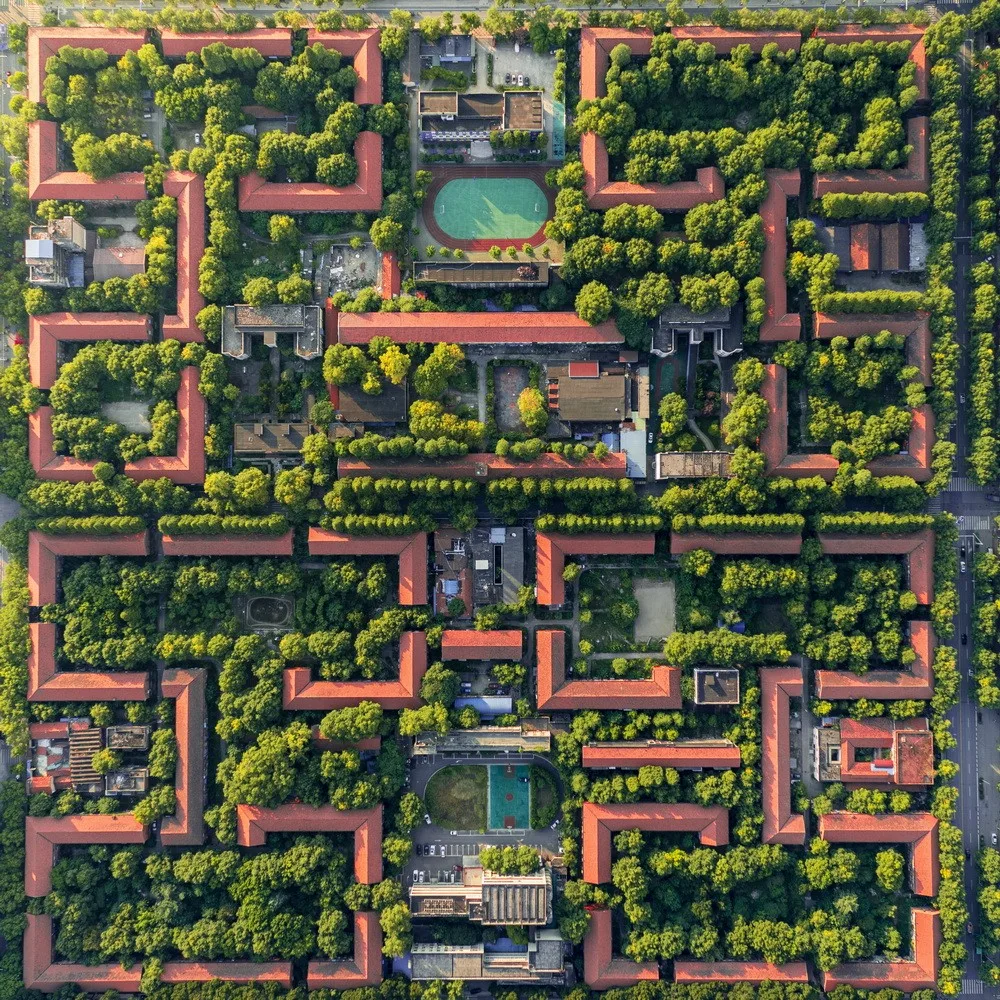
Red Steel City Community
Within this 4,700-square-meter building, we strive to convey an organic urban renewal perspective, presenting history as a prologue, reimagining vitality that requires resetting, and designing for architectural readability. This is achieved through a multidisciplinary approach including architecture, interior design, landscape, and exhibition elements.
Urban Perspective: Organic Renewal
Organic urban renewal is less about a new phase of city development and more about an evolved approach to development philosophy. While urban renewal has been ongoing—China’s rapid urban transformation being a prime example—viewing a city as a living organism means gradual, small-scale organic renewal is inevitable.
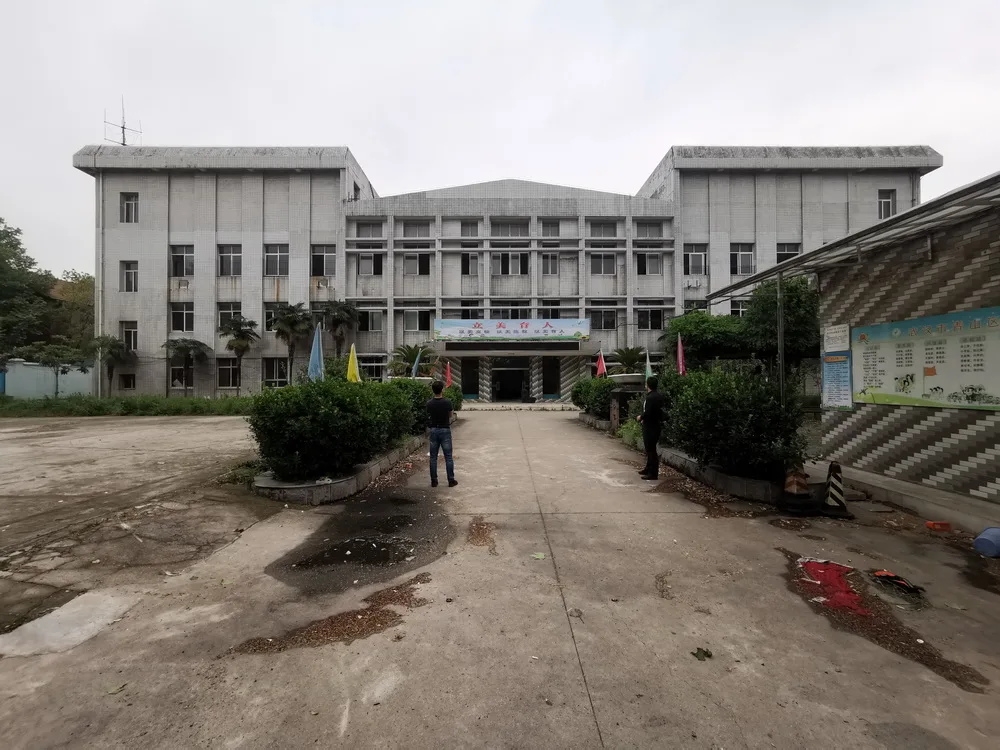
One of the project’s major successes is preserving the Red Steel Three Small Schools, which were initially slated for demolition but have been retained.
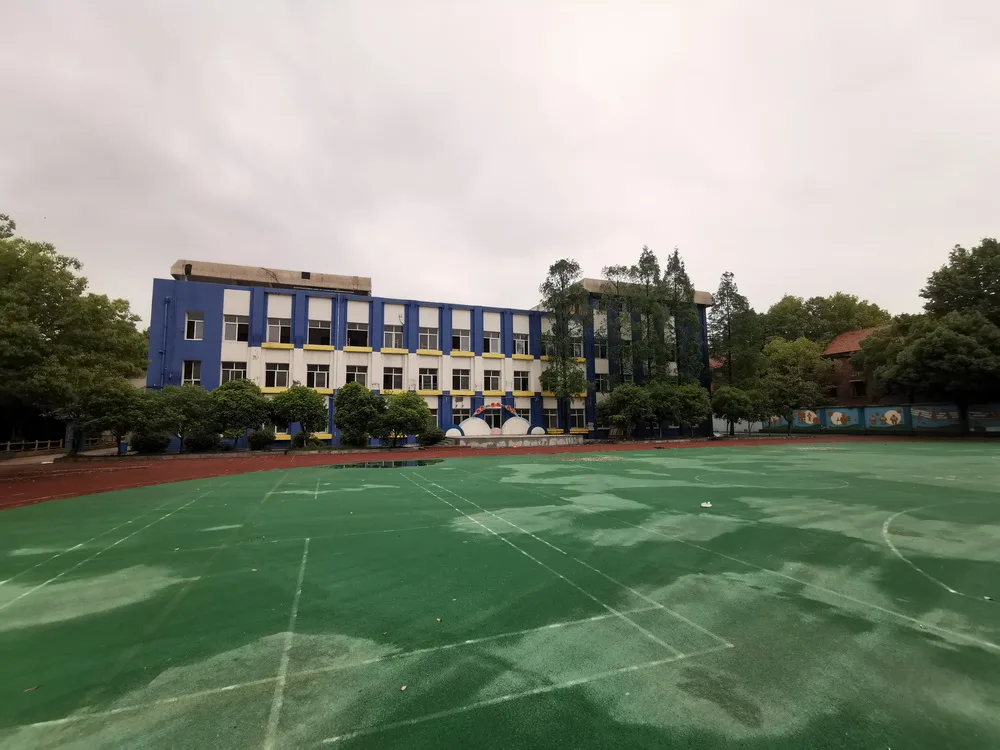
Red Steel Three Small South Facade
Red Steel Three Small North Facade
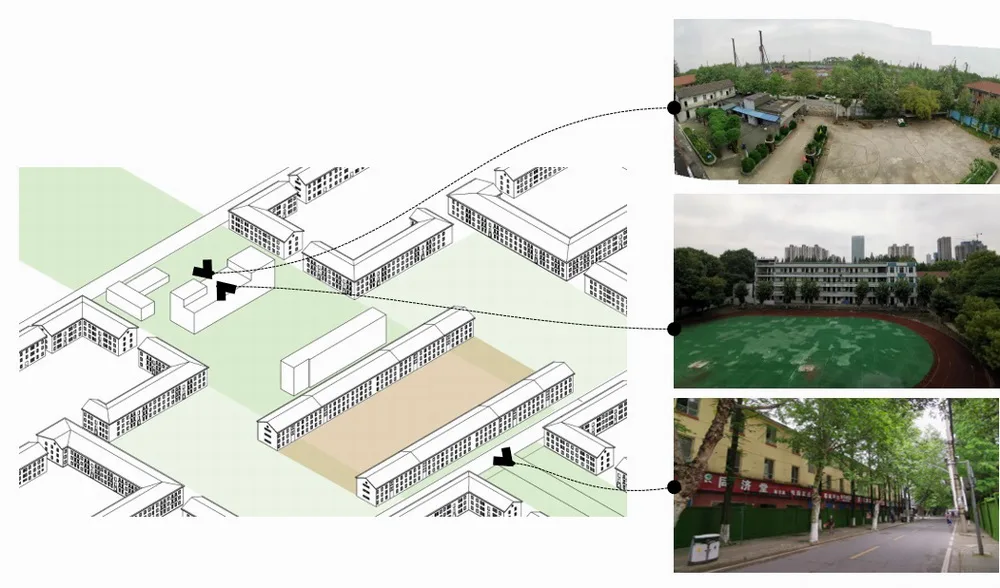
Additionally, this design extends beyond the three small buildings of Steel City. By mid-century, Wuhan aims to fully establish itself as a national central city, achieving comprehensive revitalization of Greater Wuhan.
The Red Steel City area at the first level is envisioned as a central urban activity zone comparable to landmarks like Xintiandi and Wuhan Optics Valley.
The central axis connecting Honggang City to the Yangtze River, home to the Steel City Three Primary Schools at the second level, is a cultural, ecological, and vibrant intersection.
Local spaces in Block 7 and Block 8 at the third level are planned to host community and city-level cultural facilities.
The fourth level, including Steel City Three Primary School and its surroundings, is positioned as the area’s vitality center and a reserved entrance for city-level cultural amenities.
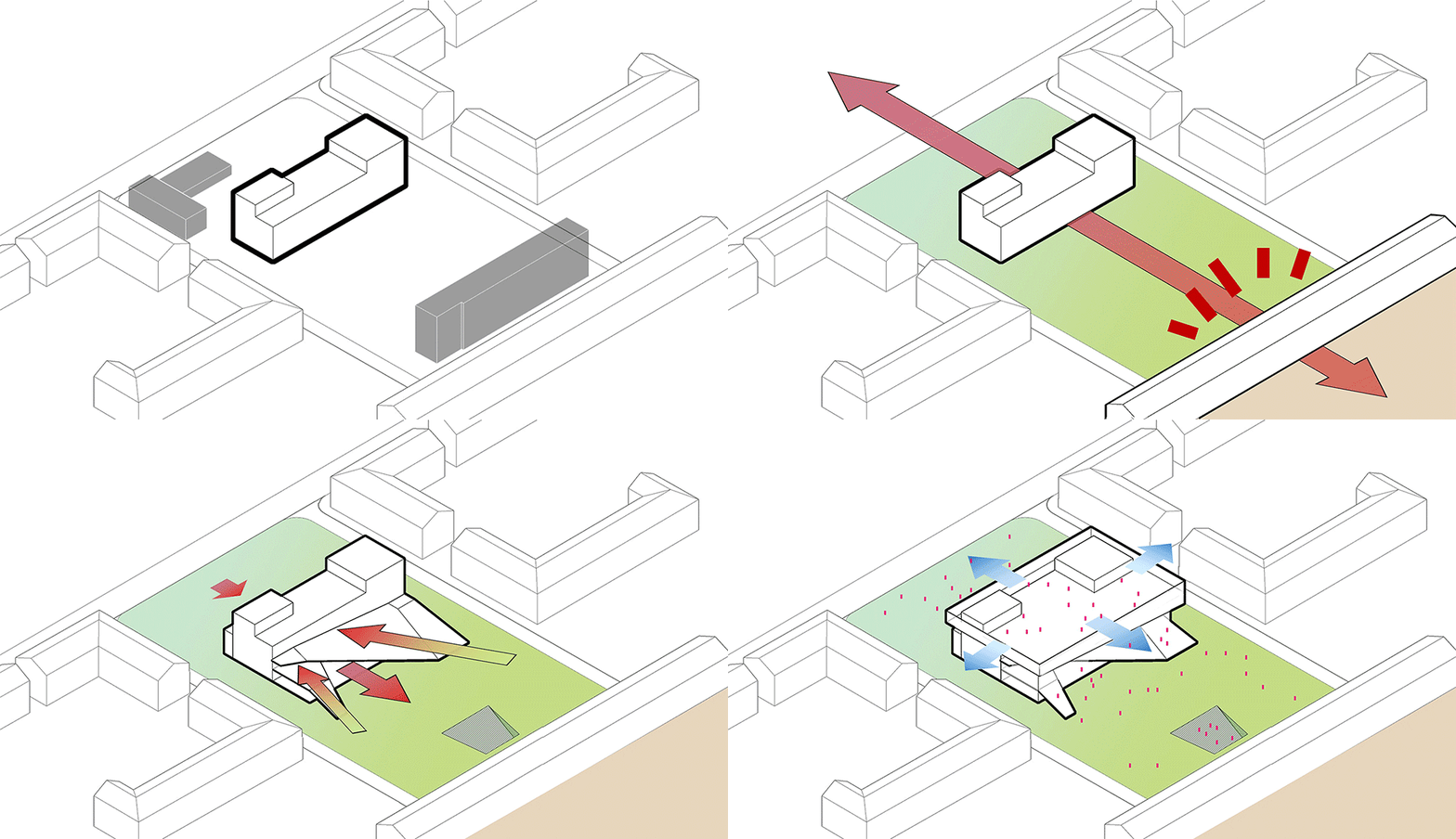
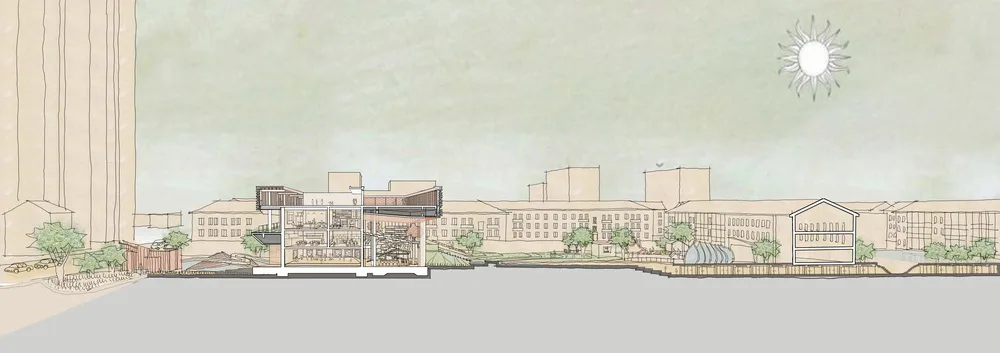
Based on this layered and scaled positioning, the design unlocks the largest public open space along the central axis, fully preserving the existing teaching building. It removes the playground and other structures within the site to reveal the complete southern historical facade. Employing the architectural technique of the “Red Steel Hill” landscape, it creates interactions with core urban facilities on the south and reserves the main entrance. The rooftop platform, named the “Red Steel Crown,” visually connects the northern Red Steel City area with the Yangtze River to the south.
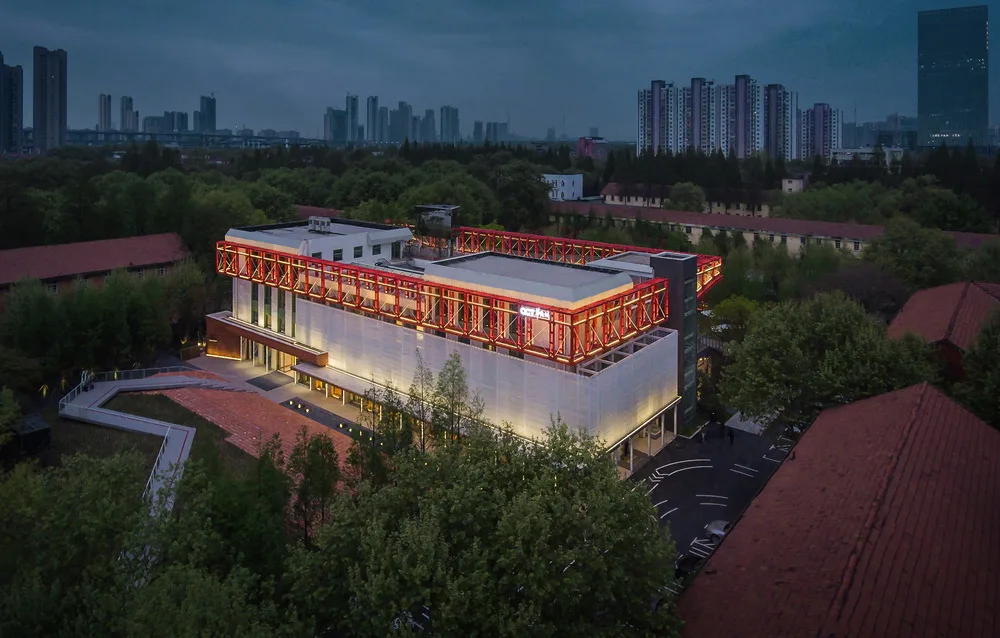
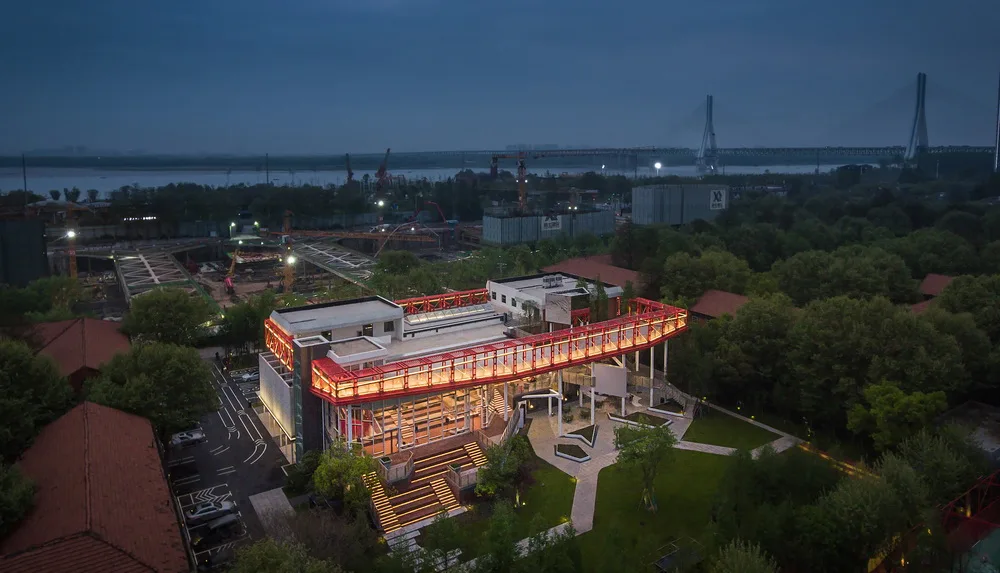
Historical Perspective: All the Past is a Prologue
The renovation of Gangcheng No. 3 Primary School is a continuation of history. It plays a vital role in Wuhan’s future development and acts as a prelude to the renewal of the Qingshan Honggang area.
Seventy years ago, industrial city development was central to New China’s growth. Honggang City stood as a model balancing work and housing during the era of heavy industry. The “production human city” model prioritized industry as the core, with the city serving as a supportive facility for the steel industry.
During the “Fifth Five-Year Plan,” the country laid the foundations for socialist industrialization, supported by 156 Soviet-backed projects. Wuhan Iron and Steel Corporation was among seven major steel projects. In 1954, under Chairman Mao’s approval, Wuhan Iron and Steel Company was established in Qingshan. Over 50,000 workers and 70,000 family members from across more than ten provinces gathered in Wuhan. To address housing needs, Wuhan Iron and Steel Group developed the Red House area, inspired by the Soviet industrial cluster residential model in Magnitogorsk.
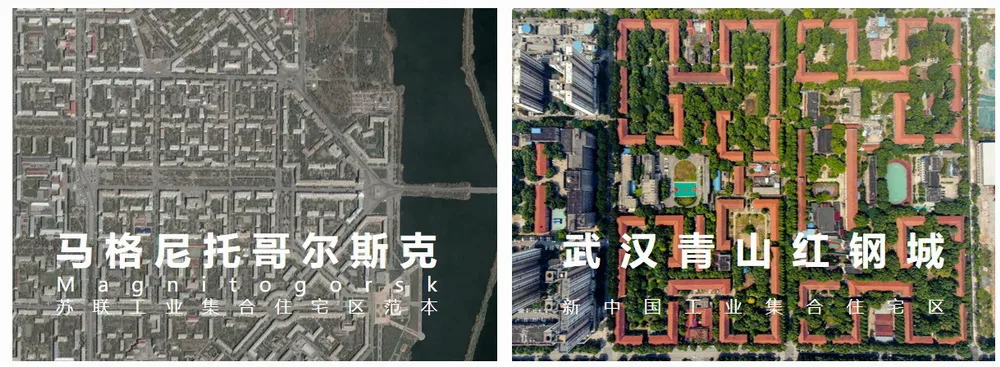
Model of Industrial Cluster Residential Areas in the Soviet Union – Magnitogorsk
In 1954, Huagang established a property group within the General Affairs Department. By August, it created an Administrative Welfare Department, which included Housing and Obstetrics. In 1956, the Wuhan Construction Committee’s design team reported on residential standards and neighborhood planning to Soviet expert Saryshev, hired by the National Construction Bureau.
The buildings retained Russian architectural style, with thick walls and window designs showing European influences. The segmented facades featured multi-layered eaves, symmetrical triangular pediments, and subtle relief decorations throughout. The design emphasized flat compositions, three-dimensional contours, and classical formalist techniques such as axis symmetry and scenic paths, typical of neighborhood-style residential areas.
According to records, the Red House was meticulously designed by Guan Liqing, who incorporated traditional Chinese patterns into the details. The nine neighborhoods form an overall structure shaped like the character “Xi” (喜), symbolizing “double happiness,” reflecting the traditional Chinese aspiration for harmonious living, aligning with the cultural meaning of “home.”
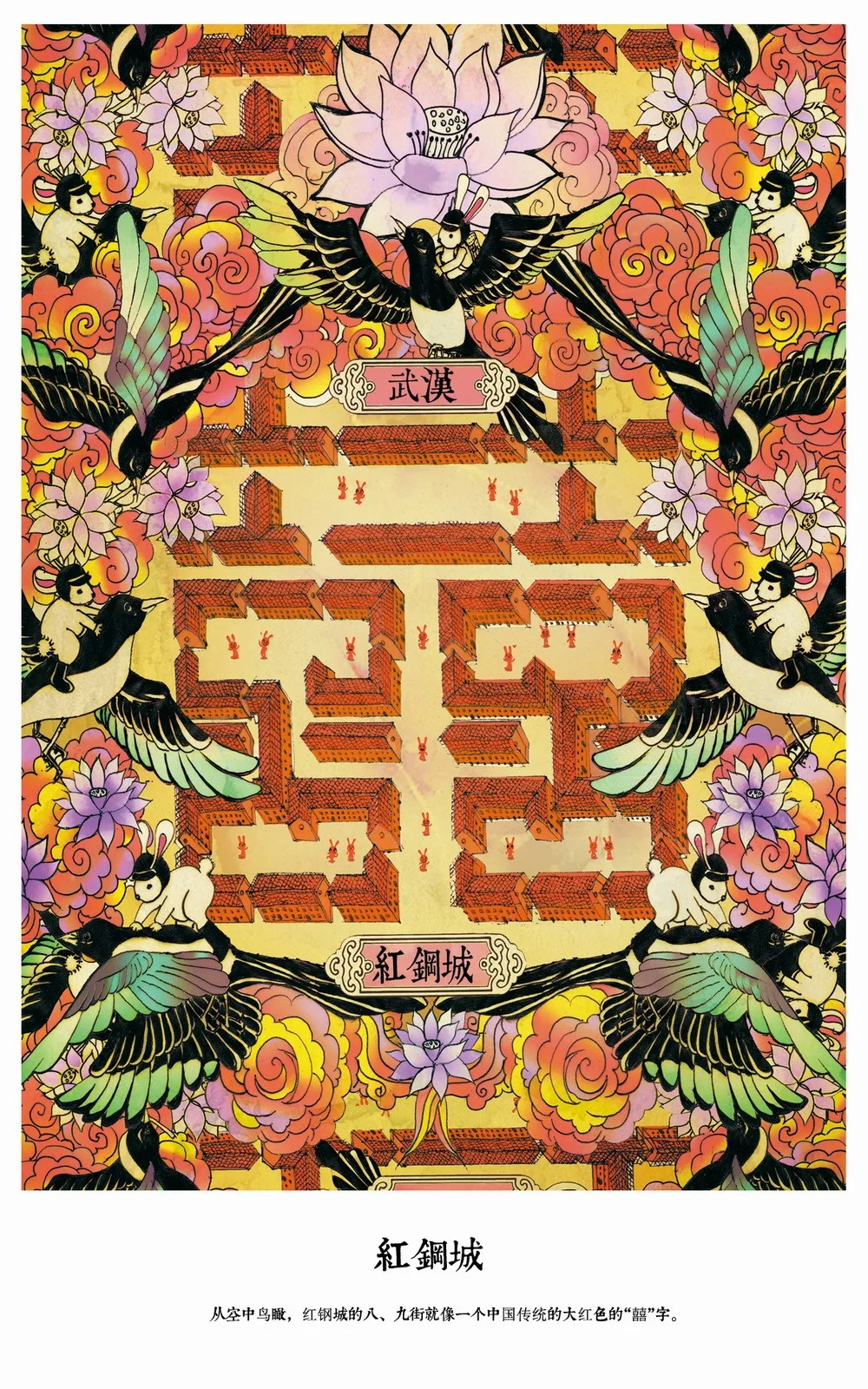
Overall Structural Layout in the Shape of the Character ‘△ Xi’
Seventy years later, Wuhan is focusing on urban cultural revitalization, positioning Honggang City as a model zone for cultural renewal and the northern gateway of the Yangtze River main axis. The updated “city people production” model places people at the core, with cities and industries serving their needs. This reflects a modern urban philosophy—building cities to create homes—and aims to establish a socialist model for a better life in the new era.
Renewal Perspective: Revitalizing Vitality
The size of residential areas often depends on the reach of supporting schools. In 1957, alongside Honggang City’s development, Wuhan Iron and Steel’s Education Department established its first primary school for workers’ children. In 1972, it was renamed Wuhan Iron and Steel Third Primary School, becoming not only the first primary school in Honggang City but also one of Wuhan’s initial exemplary education institutions. This school pioneered Wuhan Iron and Steel’s educational efforts. Preserving and updating it honors more than physical heritage—it safeguards a spirit of resilience.
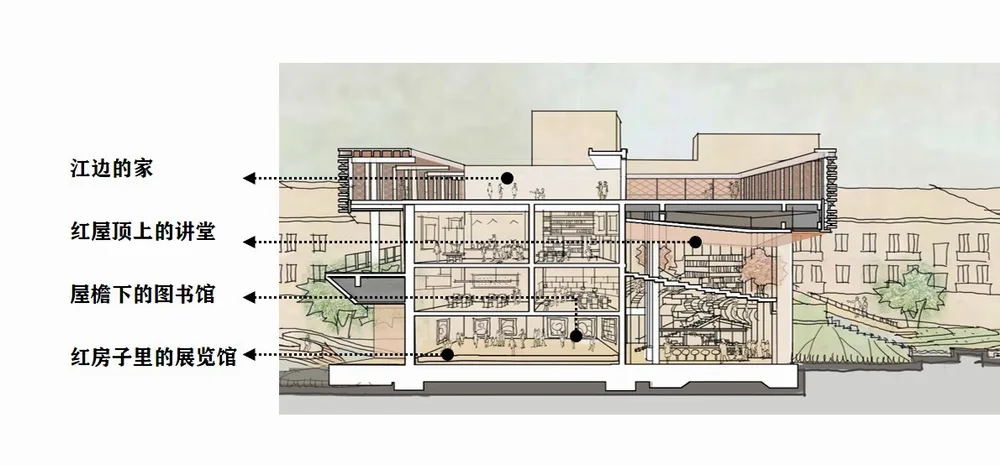
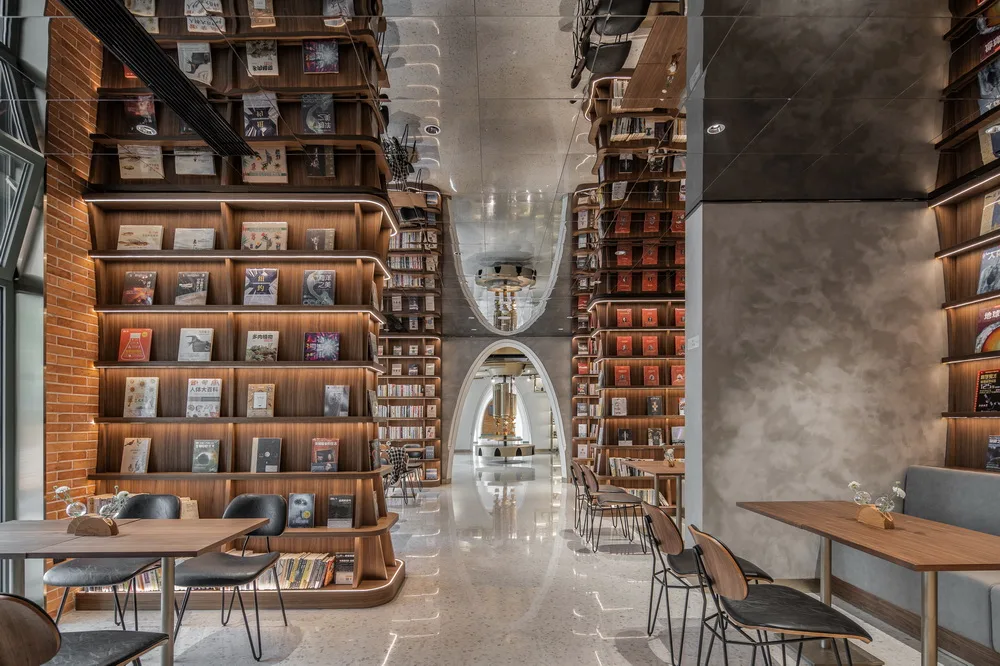
To align with the trends of organic urban renewal and comprehensive revitalization in Red Steel City, school functions have been reimagined. Positioned as the area’s vitality center, the school now integrates multifunctional spaces such as exhibition halls, libraries, art lecture rooms, a planetarium, and a life aesthetics museum. It is designed to host Wuhan’s city-level cultural events, transforming Steel City Third Primary School into a design and creative hub.
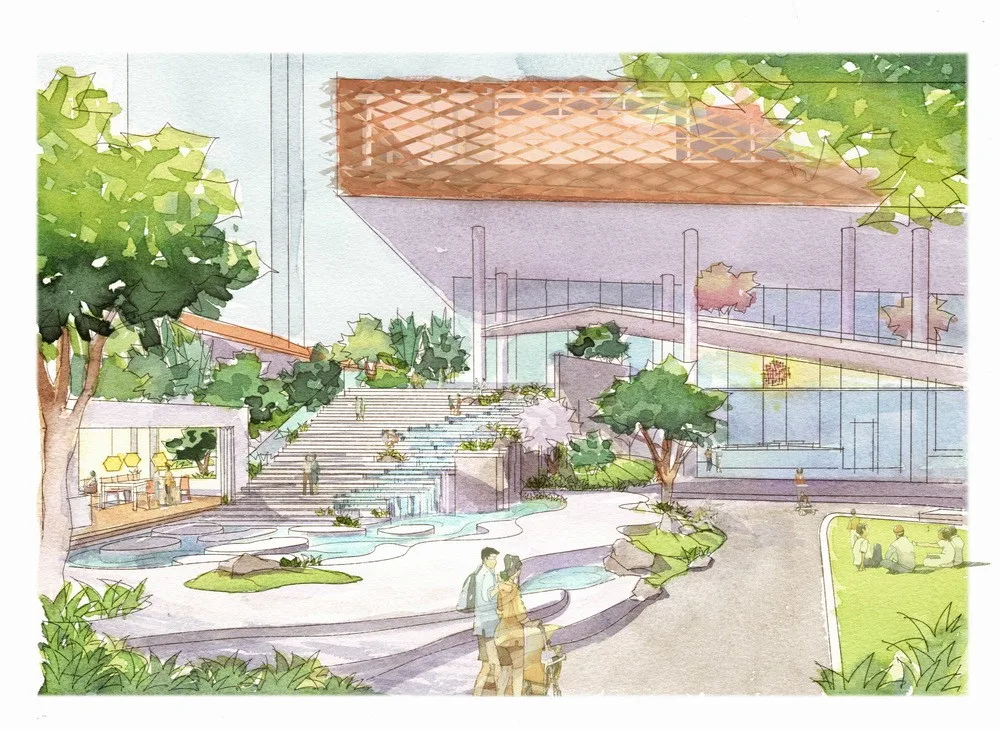
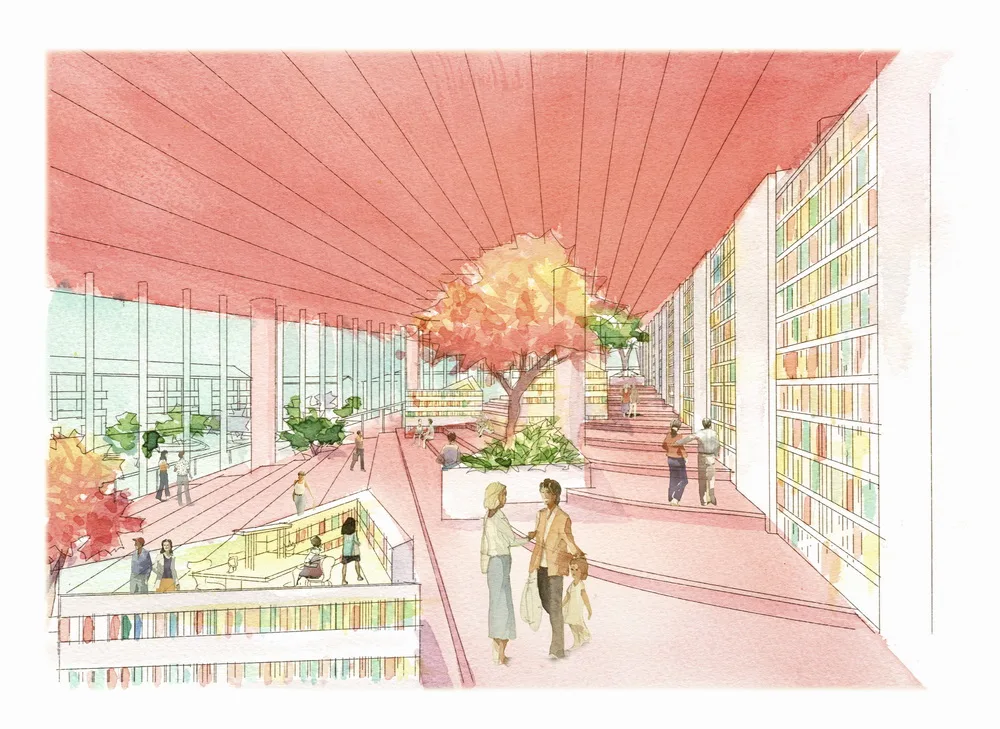
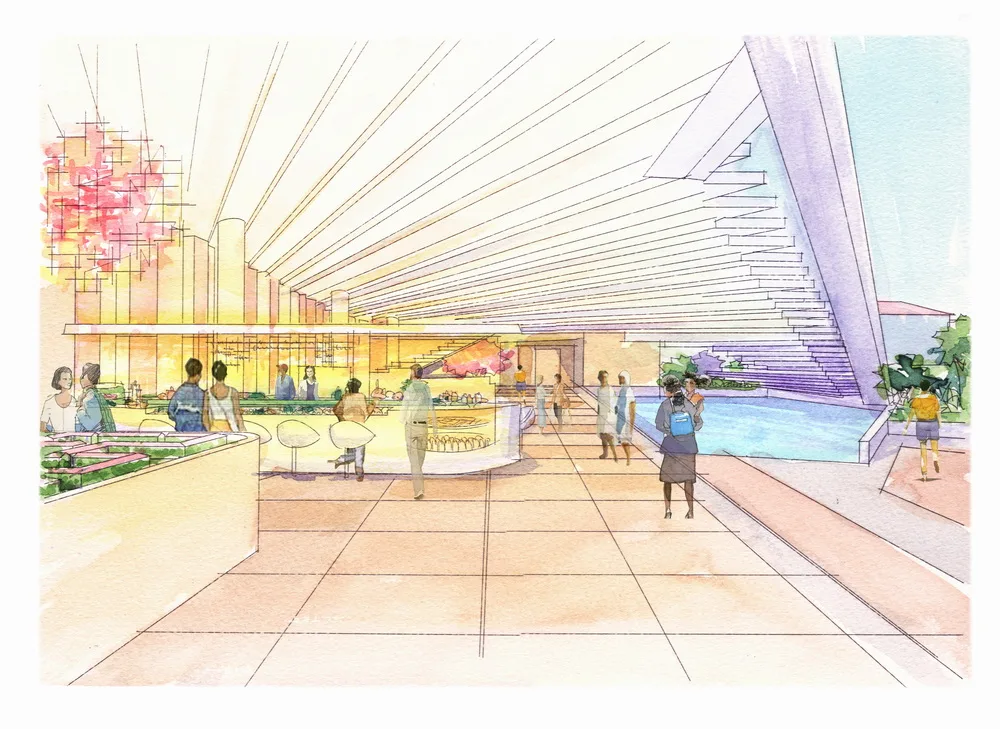
The key difference between new developments and existing stock lies in function. New projects define their function at the design stage, while existing spaces have predetermined uses that no longer meet current needs. True renewal requires revitalizing these spaces by attracting new users and injecting fresh energy.
Design Concept: Architecture as a Readable Language
Urban renewal extends beyond spatial design; it demands multidimensional thinking—urban, historical, and functional—that must be communicated through architectural language. This project explores a dialogue between history and the future, striving for architectural readability through diverse design expressions.
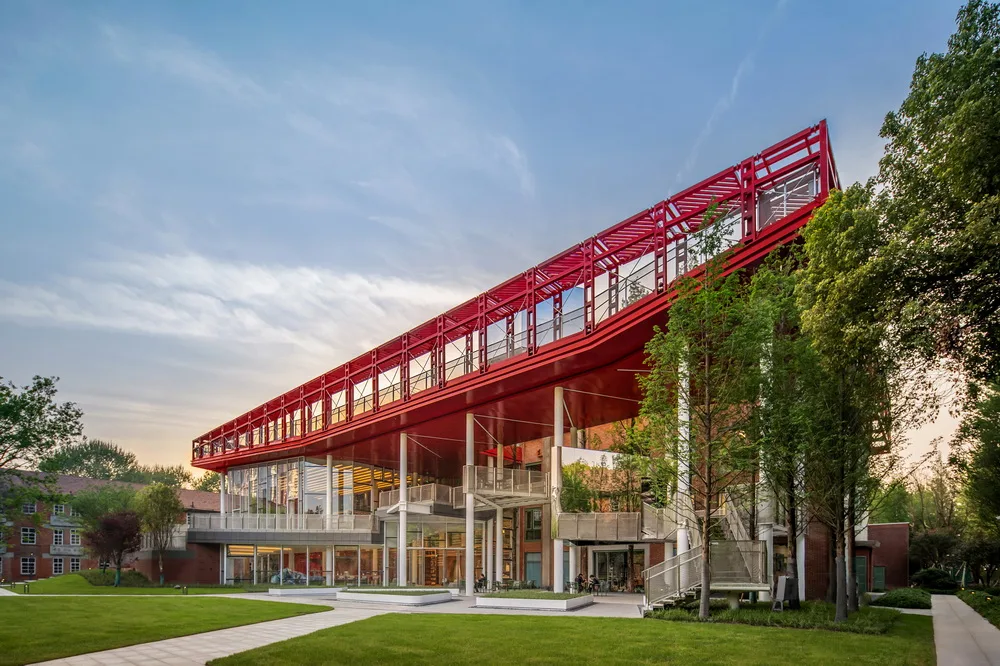
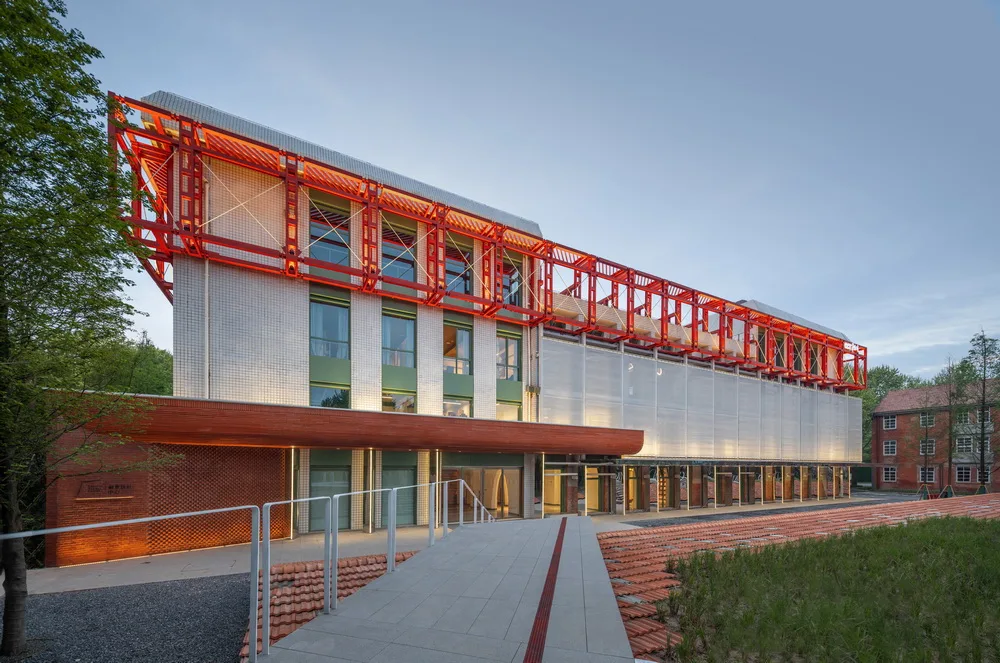
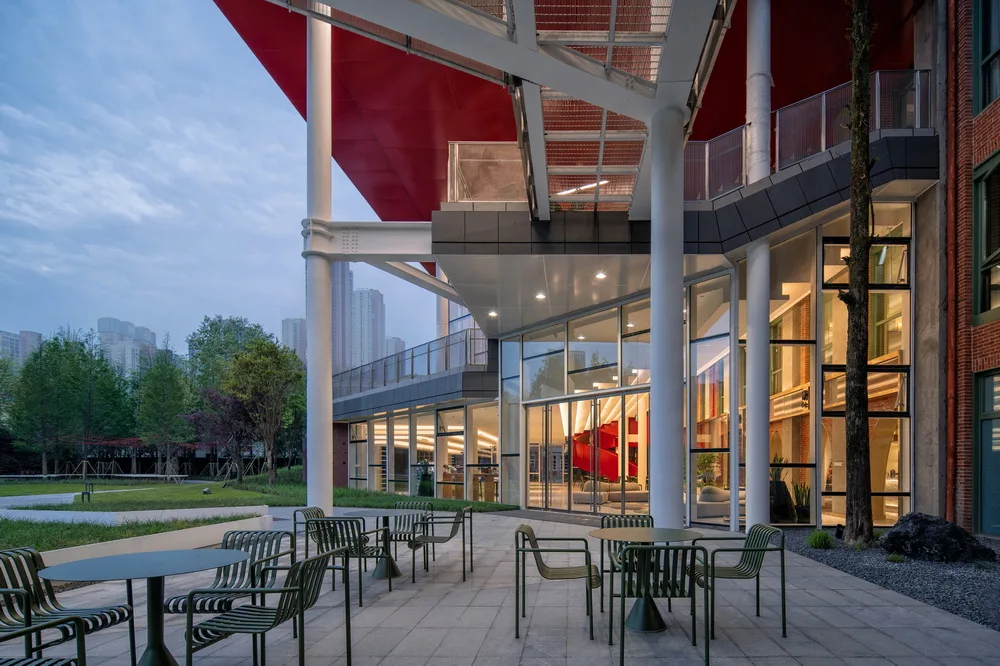
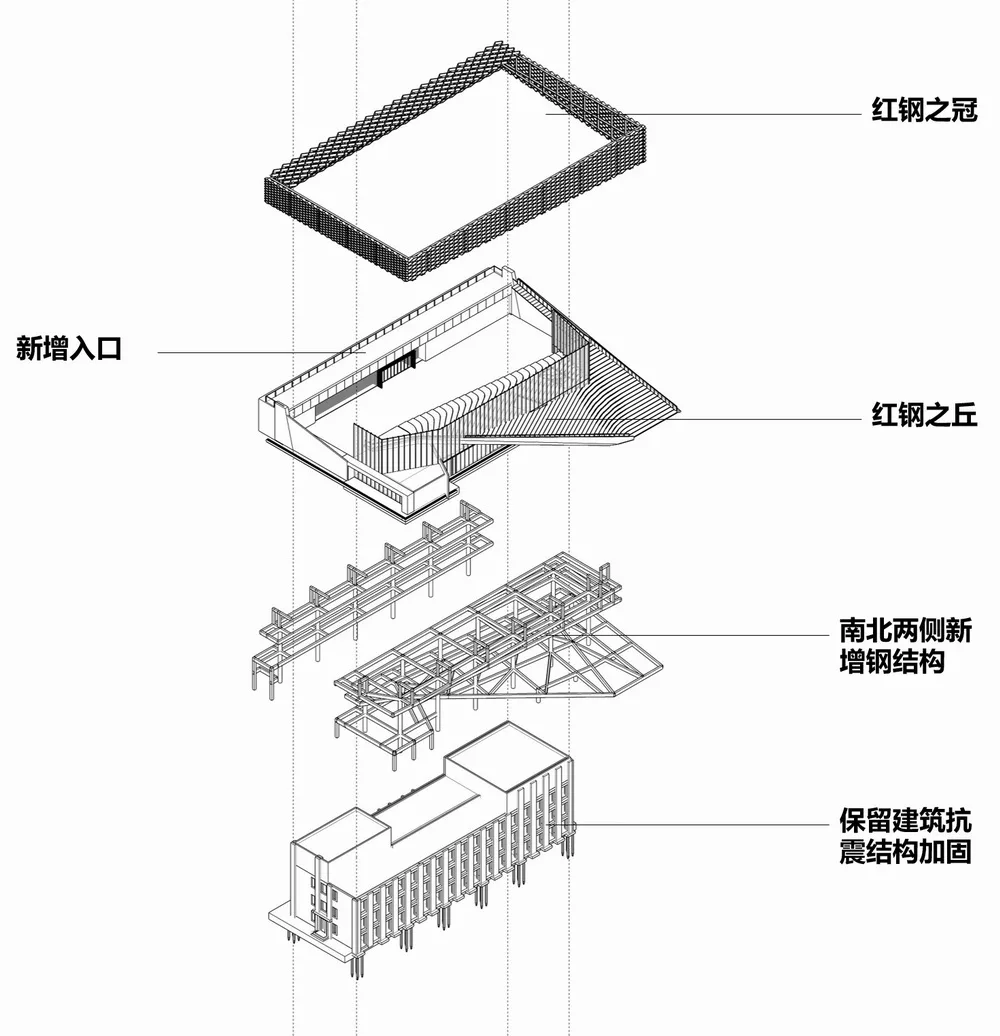
The architectural design clearly separates old and new structures, reinforcing the overall integrity of preserved buildings. Newly added parts are constructed using prefabricated steel assembly systems, reducing impact on existing structures, improving construction efficiency, and symbolizing the spirit of Wuhan Iron and Steel through design.
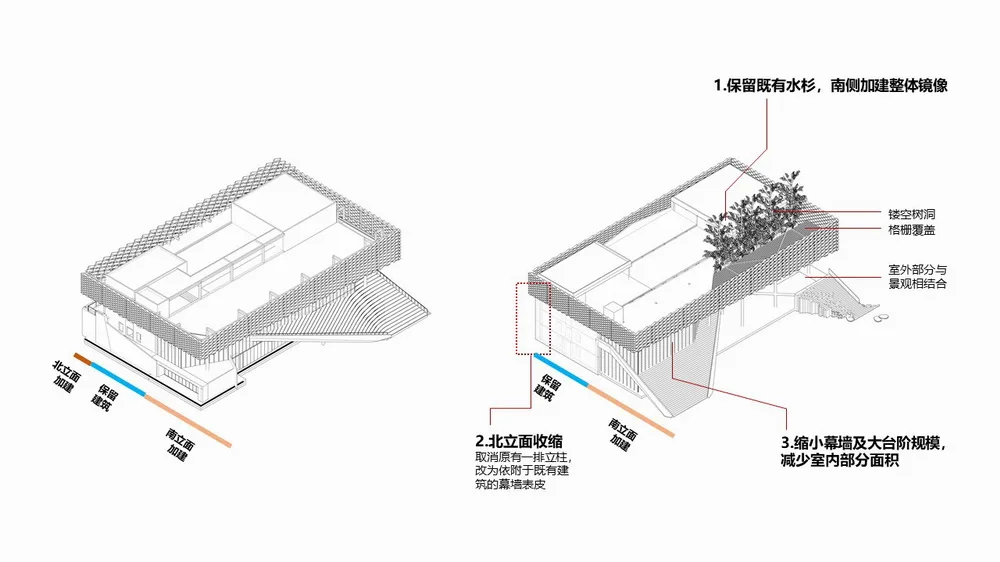
The north facade preserves the historical character, showcasing traces from different eras: red bricks from the 1950s, water-brushed stone from the 1970s, ceramic tiles from the 1990s, and contemporary steel wire mesh. The steel mesh functions like a “new garment” for the building, subtly revealing its past glory. In contrast, the south facade presents a completely new architectural identity through the “Red Steel Hill” and “Water Cedar Forest” design elements.
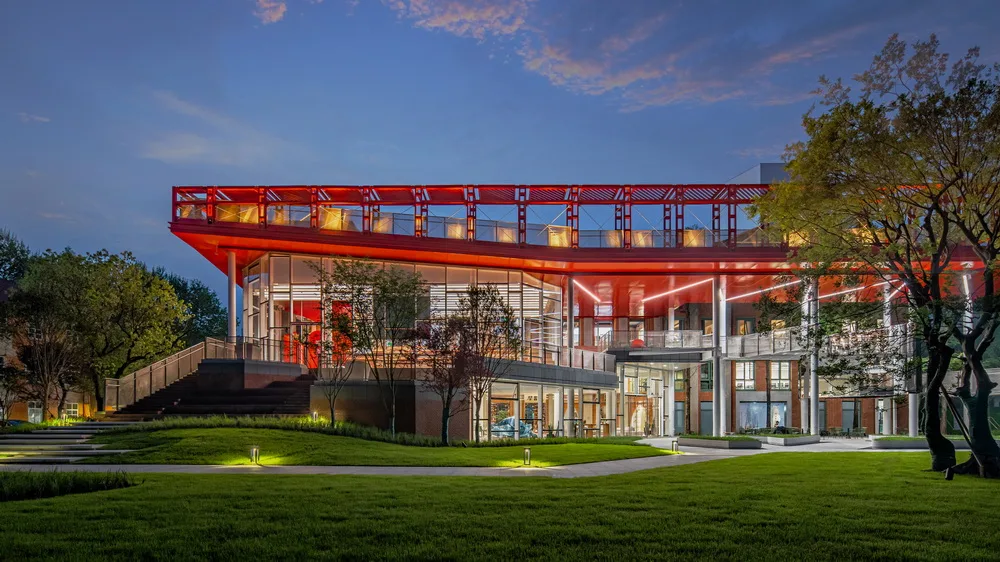
The iconic “Red Steel Crown” rooftop structure symbolizes the “red” of Red Steel City, pays tribute to Wuhan Iron and Steel Group’s landmark project 70 years ago—the Wuhan Yangtze River Bridge—and embodies the design philosophy of “structure as decoration.” This approach avoids excessive ornamentation while showcasing Wuhan’s precision manufacturing technology today.
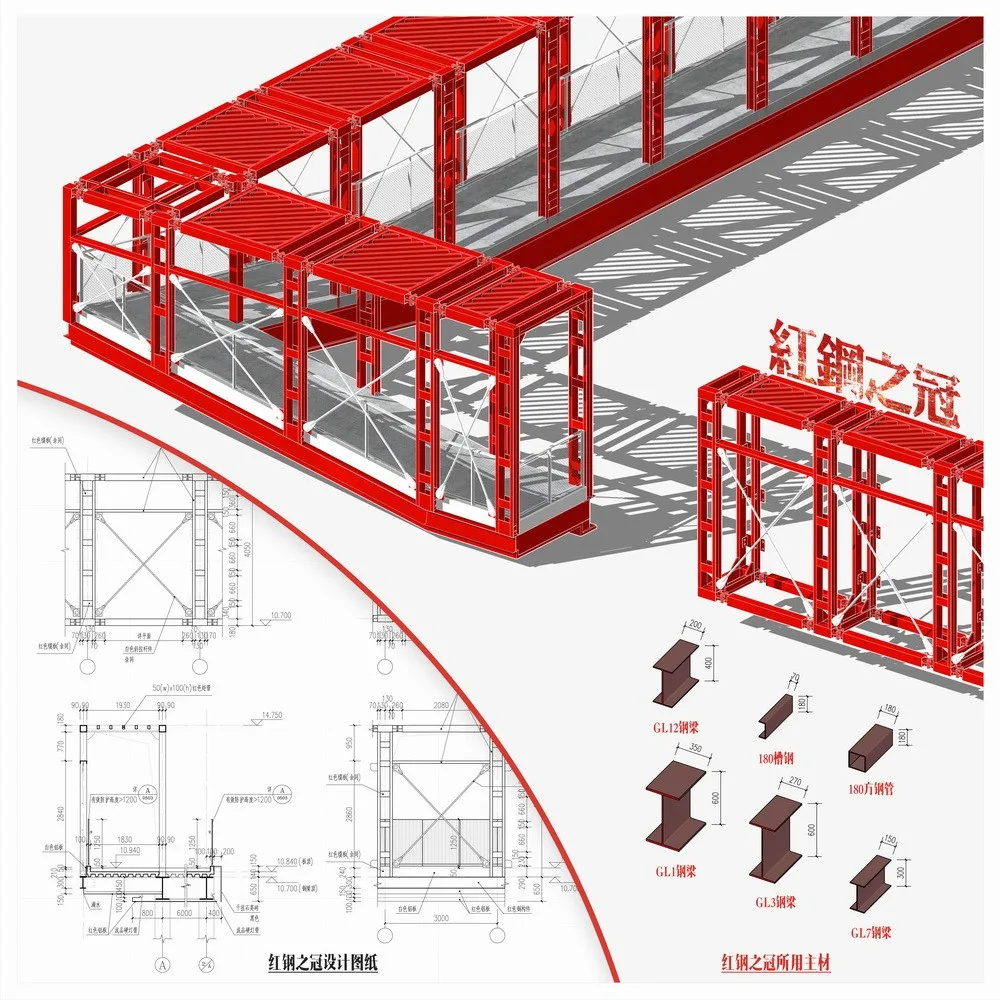
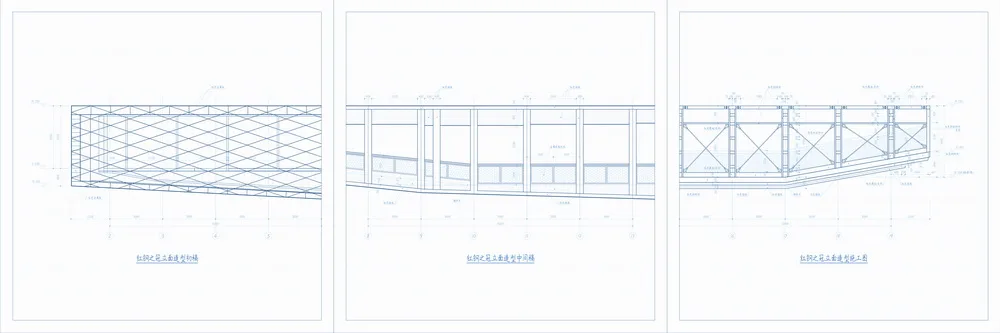
Red Steel Crown Design Development
Following the architectural principles, the project integrates landscape, architecture, interior, and exhibition design to create immersive scenes that make visitors feel as though they are opening a continuously updated storybook upon entering the building.
The entrance landscape begins understated before uplifting visitors with the theme “Yesterday’s Eaves.” It evokes childhood memories of playing on grassy fields with cats and clouds atop red roofs. Partially replaced glass tiles recall peeling roof tiles from childhood, uniquely enhanced with nighttime lighting.
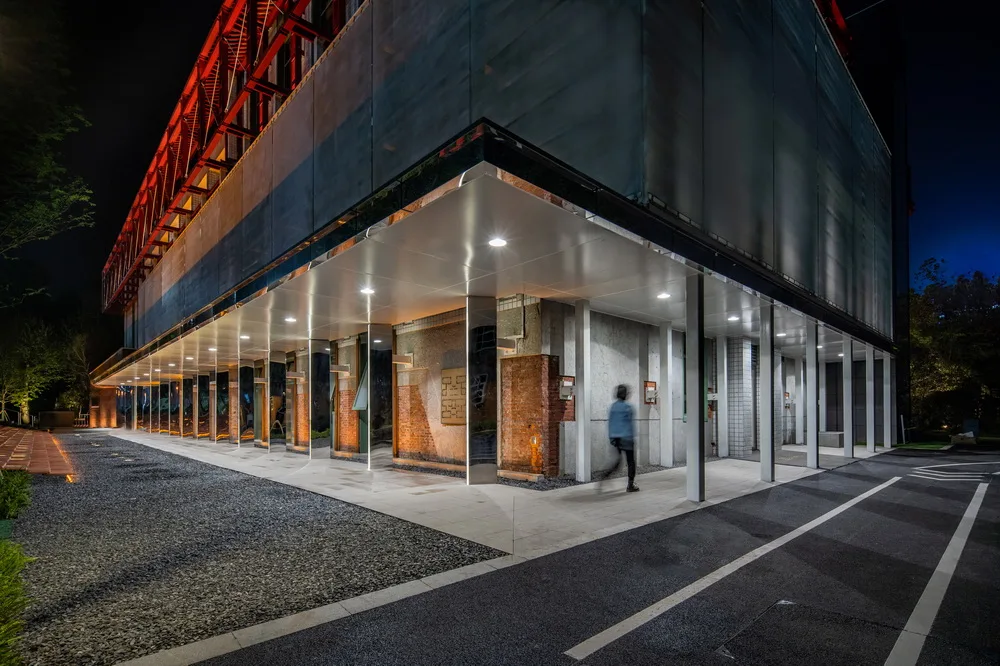
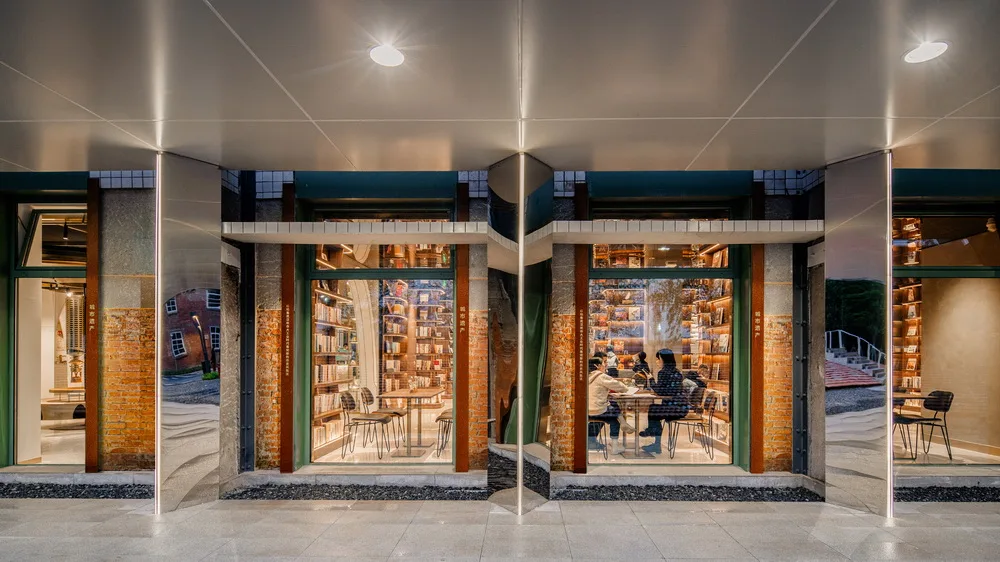
Beyond the entrance lies the Time Corridor, where materials narrate stories from different eras, and each framed view tells a tale. The reflective triangular colonnade allows visitors to experience a journey through time and space. Four water spruce trees on the building’s south side were preserved, and their arrangement, combined with reflective materials, creates a “water spruce forest” visual effect that conveys a deep ecological concept.
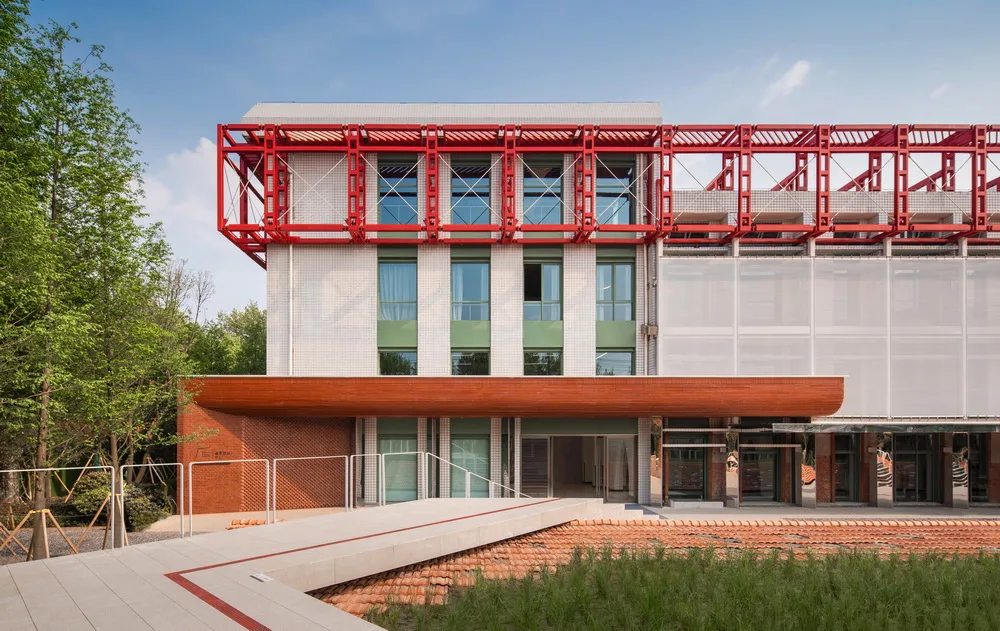
The building’s main entrance has been redesigned using red brick, blending historical warmth with contemporary design. Innovative bricklaying techniques, such as serrated bricks and curved canopies, conceal advanced architectural structures, enhancing the building’s unique character.
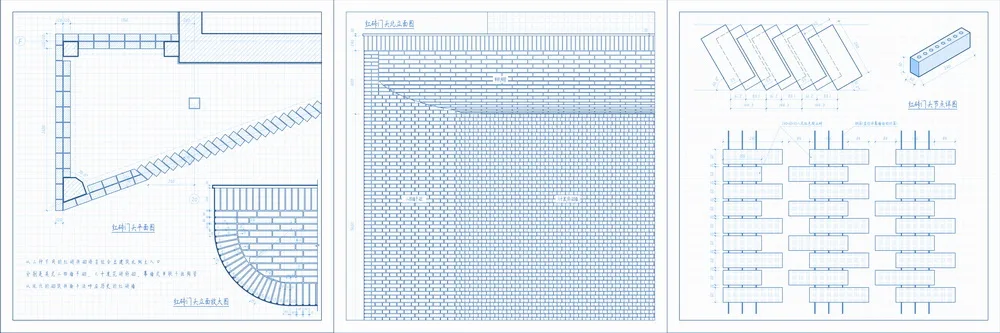
Red Steel Gate Design Drawing
Inside, visitors enter the restoration laboratory, which features three exhibition halls centered on city building, future visions, and architectural restoration. The displays combine modern expressions of two generations of urban design concepts and multimedia interactive future ideas. The exhibitions present a sweeping narrative of urban history alongside ten innovative restoration techniques.
Historical moments from different eras are showcased alongside comprehensive documentation of the current update. This space has become a favorite among teenagers, holding educational value and cultural significance. It allows Steel City Third Primary School to continue imparting educational concepts in a new form.
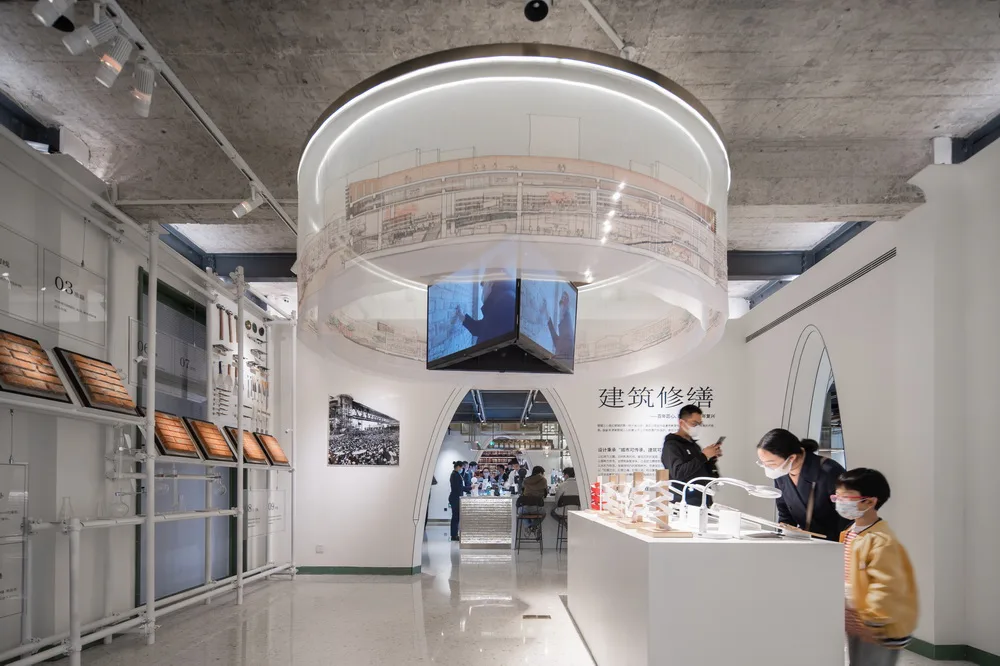
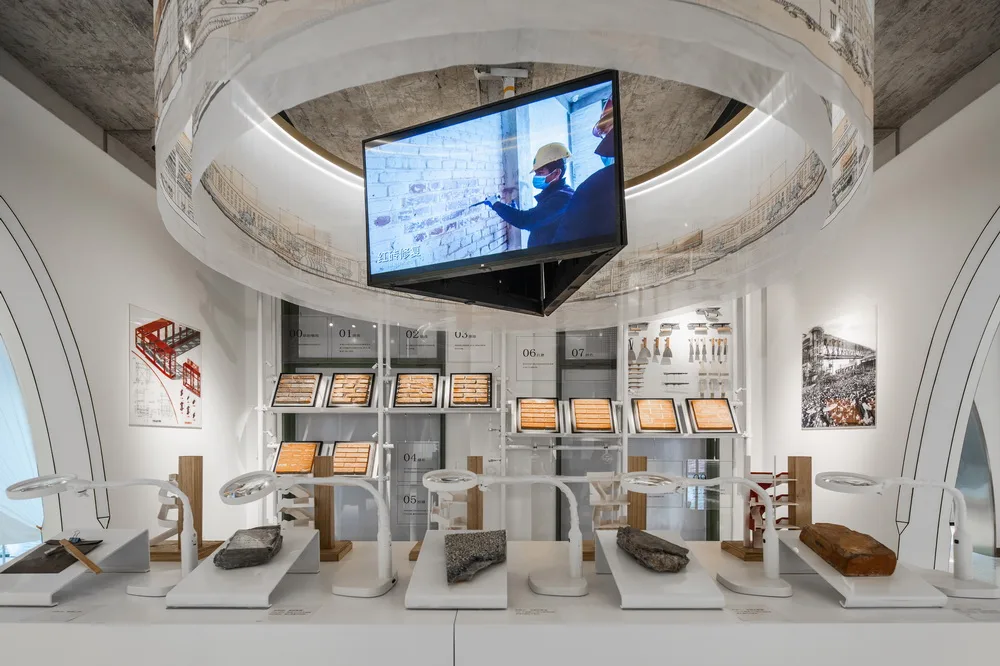
The interior design embraces the principle of “floor height equals net height” to preserve the original spatial scale. This required exacting electromechanical design standards. The overall style balances the roughness of history with contemporary fashion, creating a unique artistic tension.
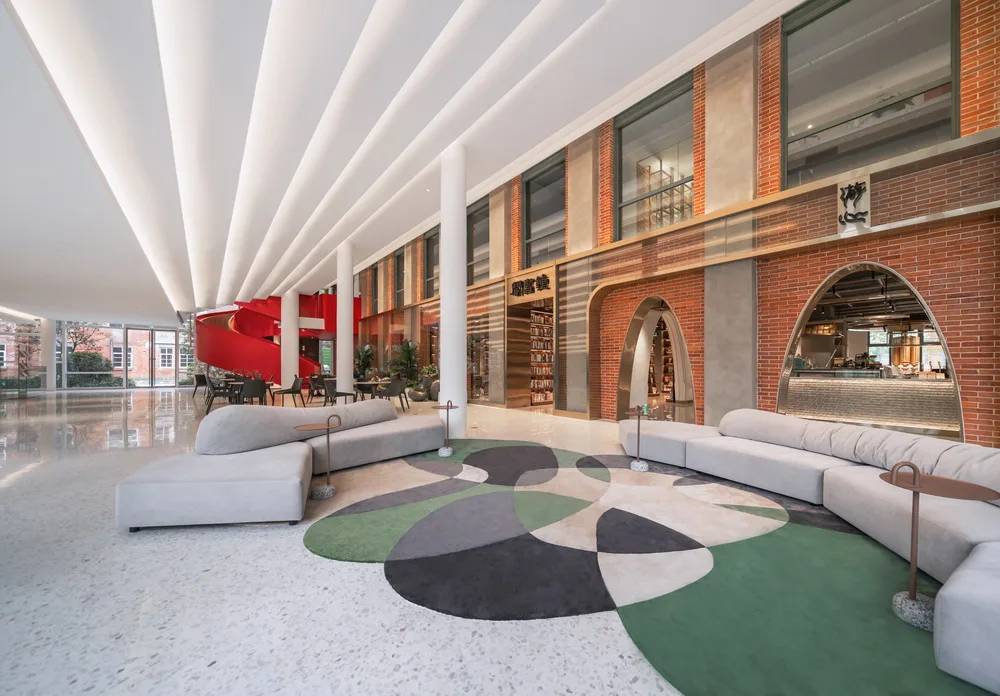
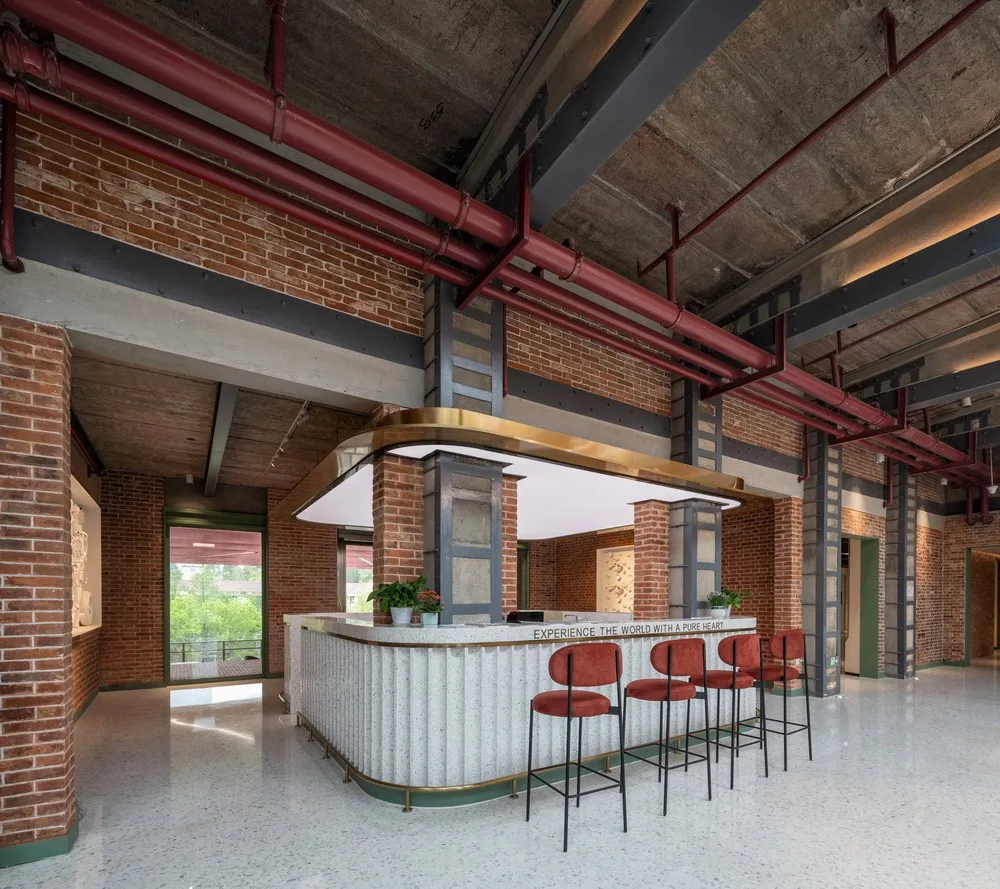
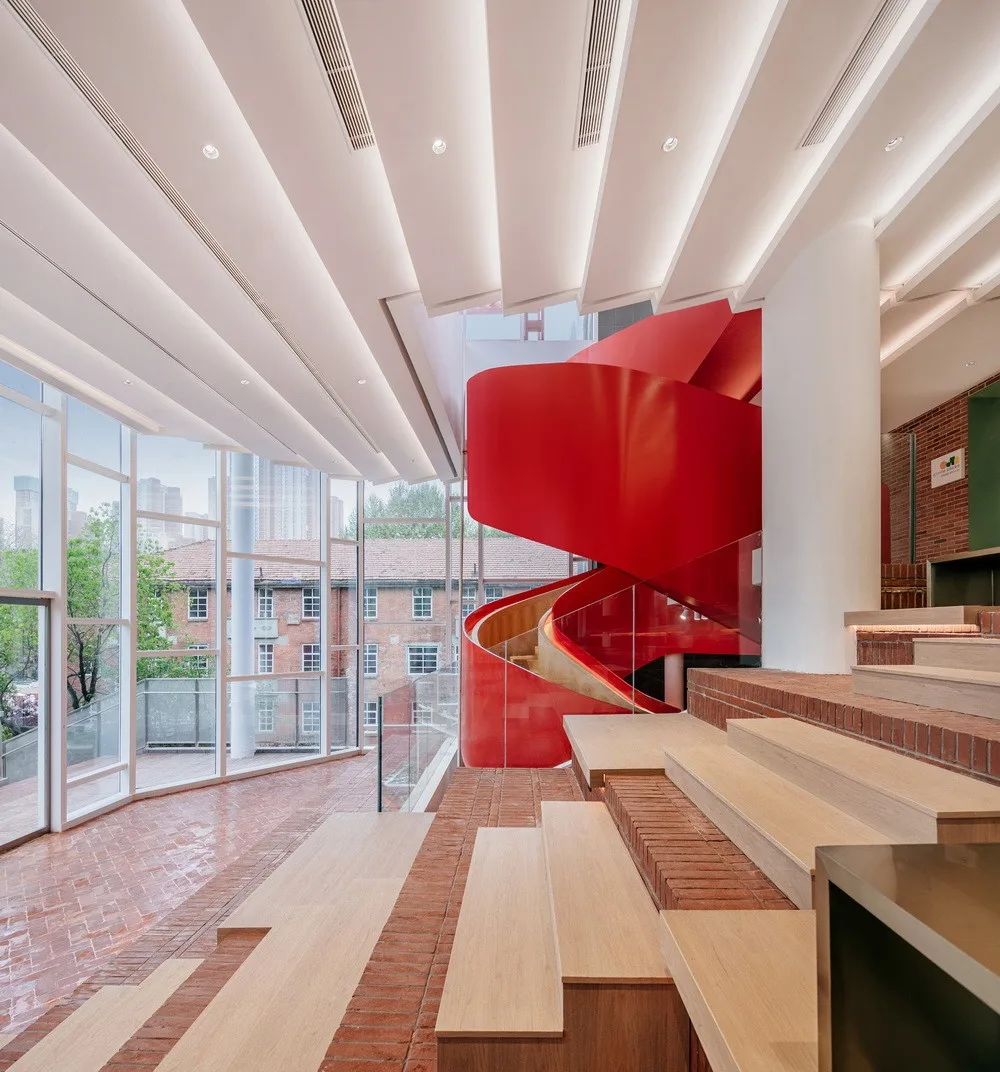
The indoor spiral staircase, themed “Soul of Red Steel,” serves as the architectural centerpiece and a popular spot for visitors. The vertical spiral staircase is wrapped in red steel plates, symbolizing the endless spirit of red steel. After four design revisions over two months, a new structural system was developed, achieving a smooth, coherent curve from top to bottom and presenting a dynamic embodiment of the Red Steel Soul.
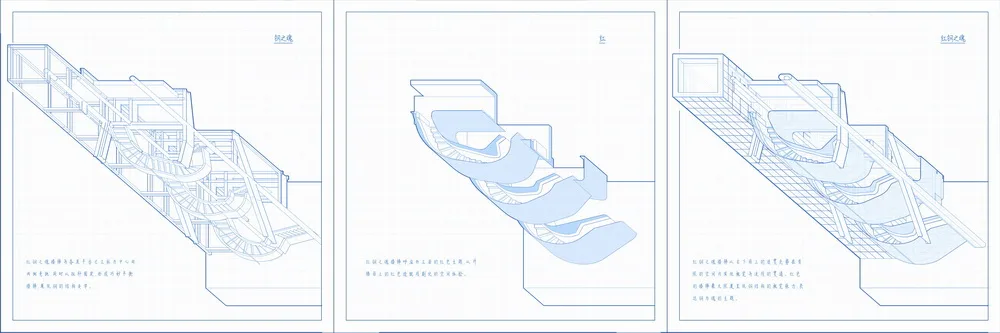
Red Steel Soul Staircase Design Development
In Conclusion
The entire project spanned 350 days from proposal to completion, with 244 days dedicated to construction. Throughout the process, 194 emails were exchanged, reflecting debates, conflicts, persistence, and compromises among the internal design team, developers, and partners. Though confined to a modest 4,700 square meters, this design conveys numerous ideas. These experimental concepts hold great value, particularly for guiding the future revival of the entire Red Steel City.
Interpreting a city through a single building is the heartfelt tribute from OCT and the entire design and construction team to Wuhan.
Project Drawings
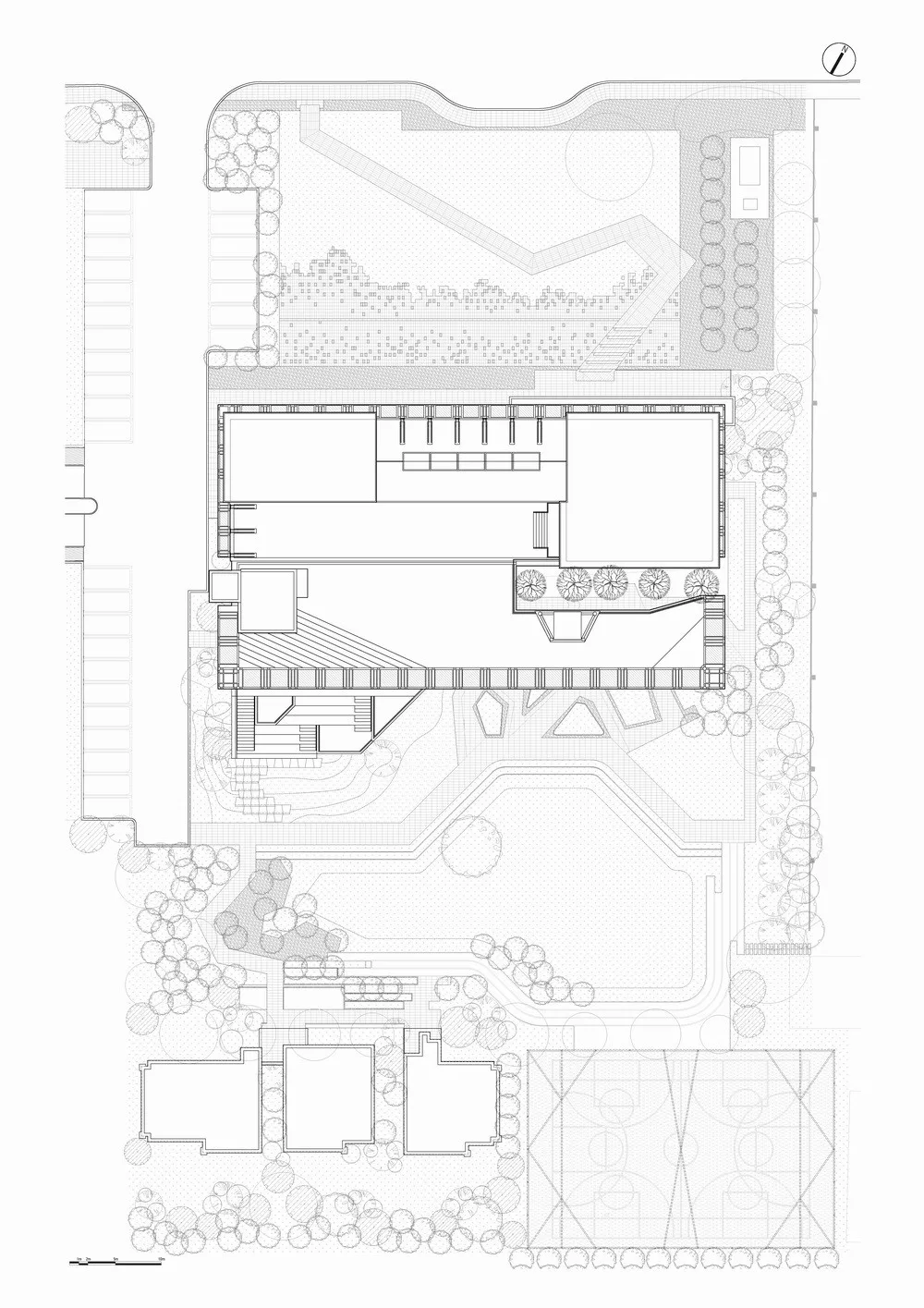
General Layout Plan
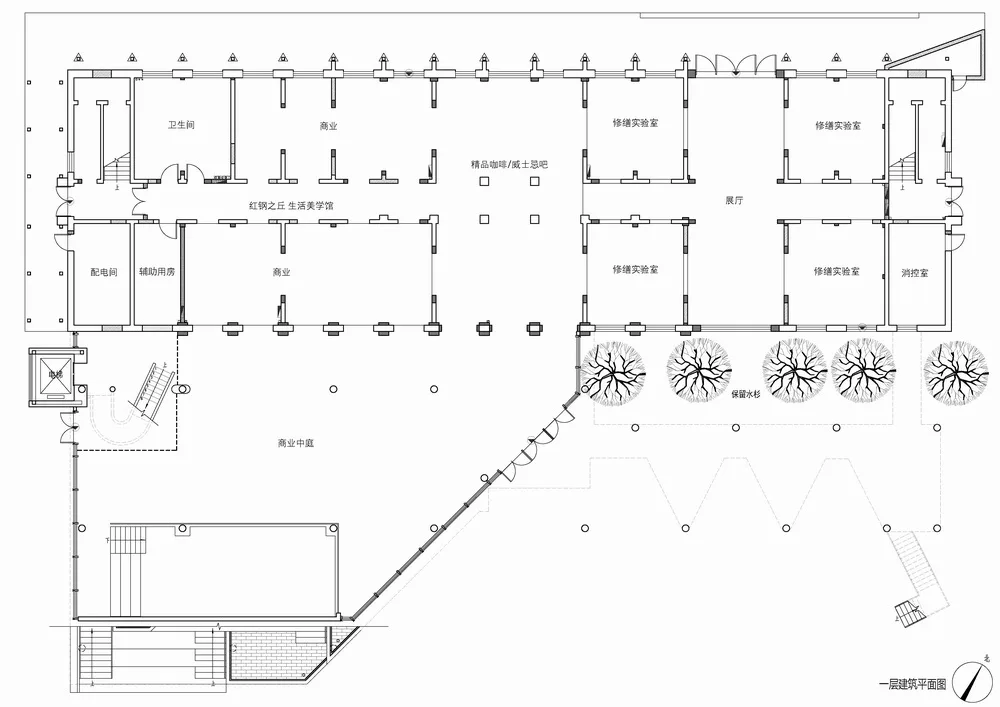
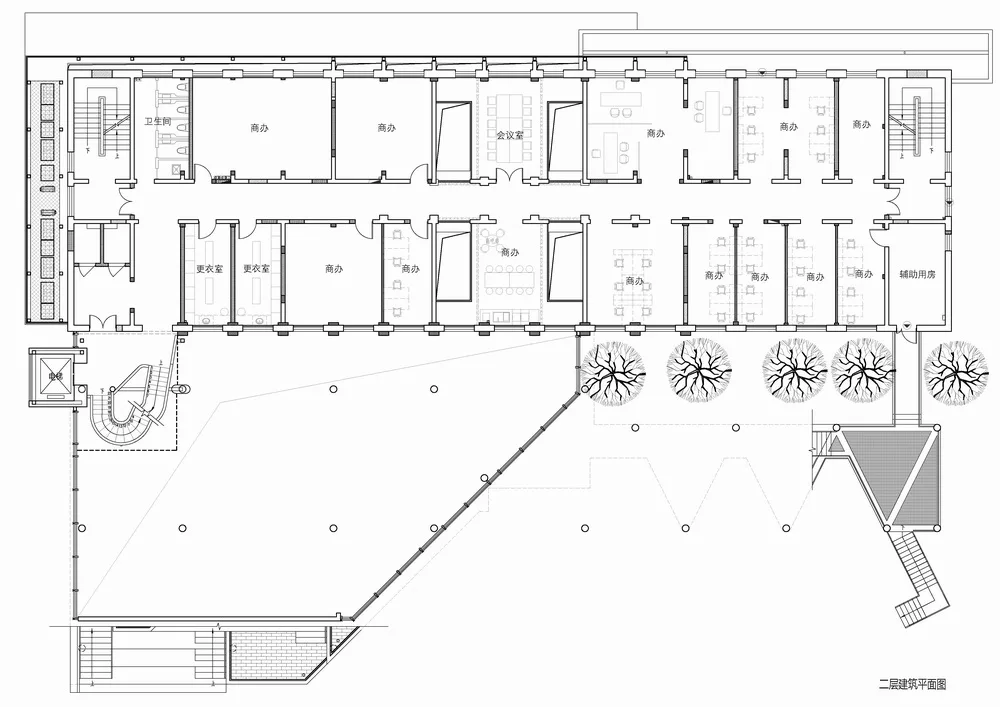
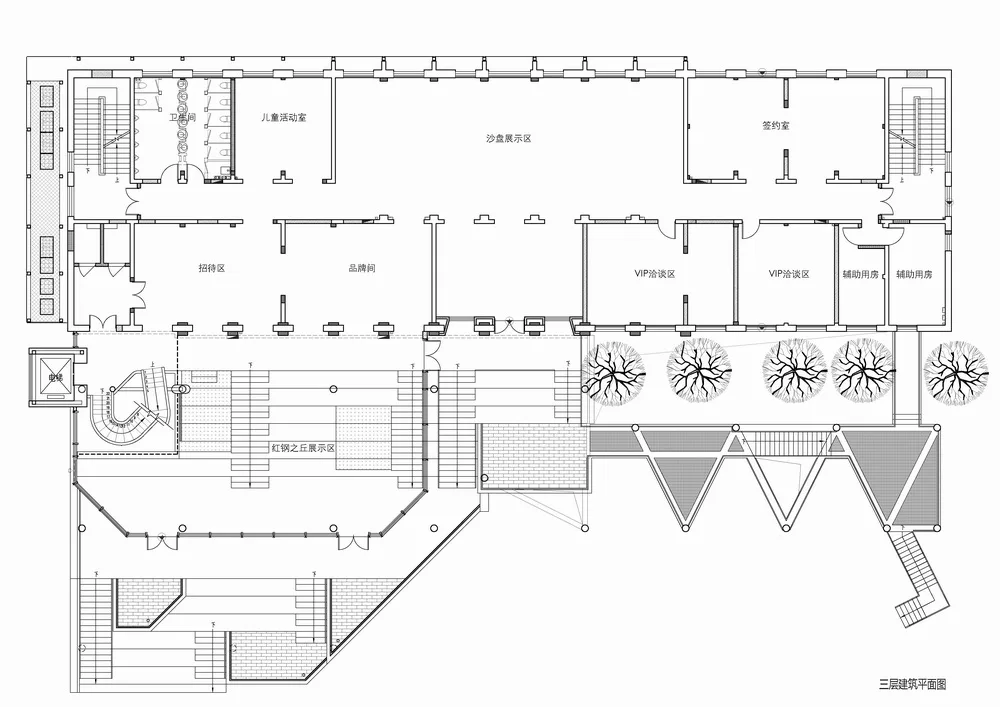
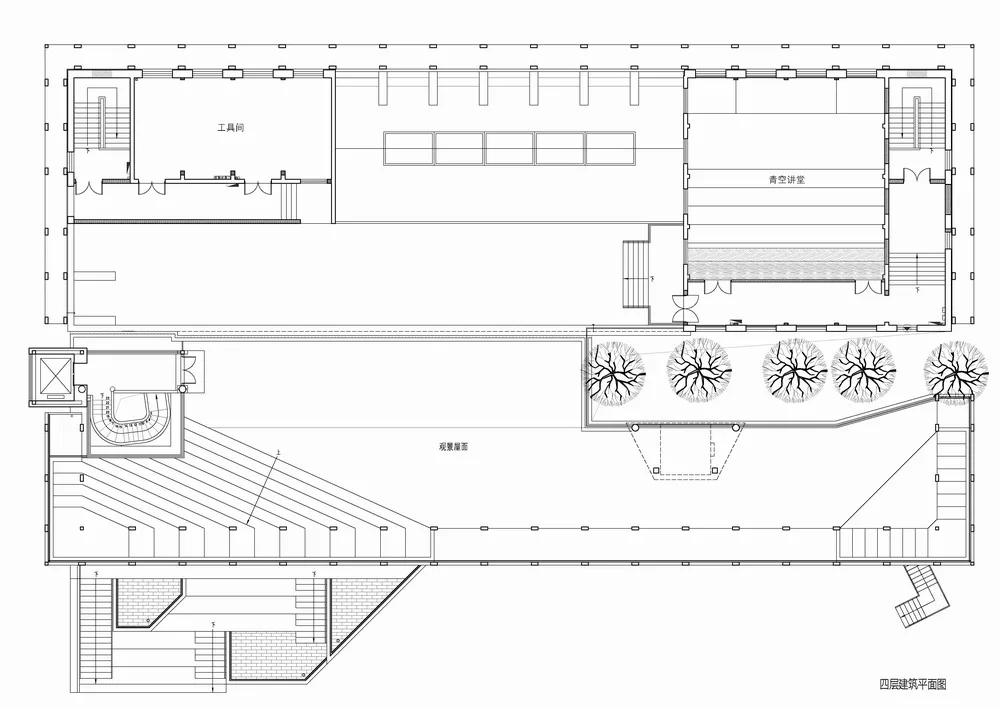
Plan View
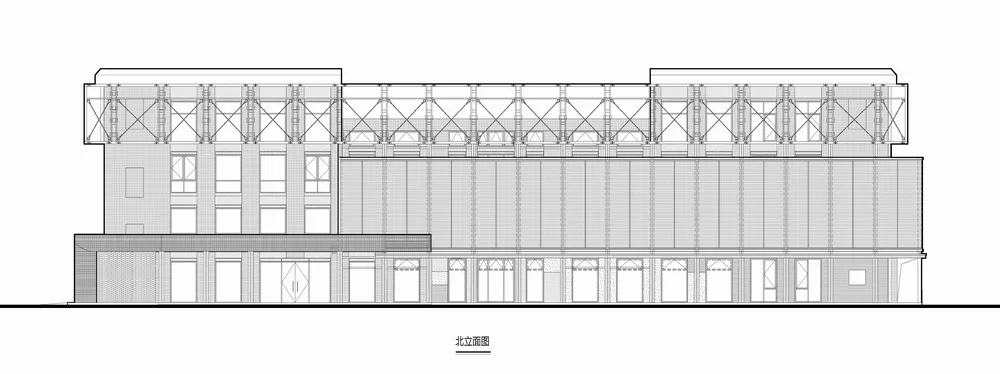
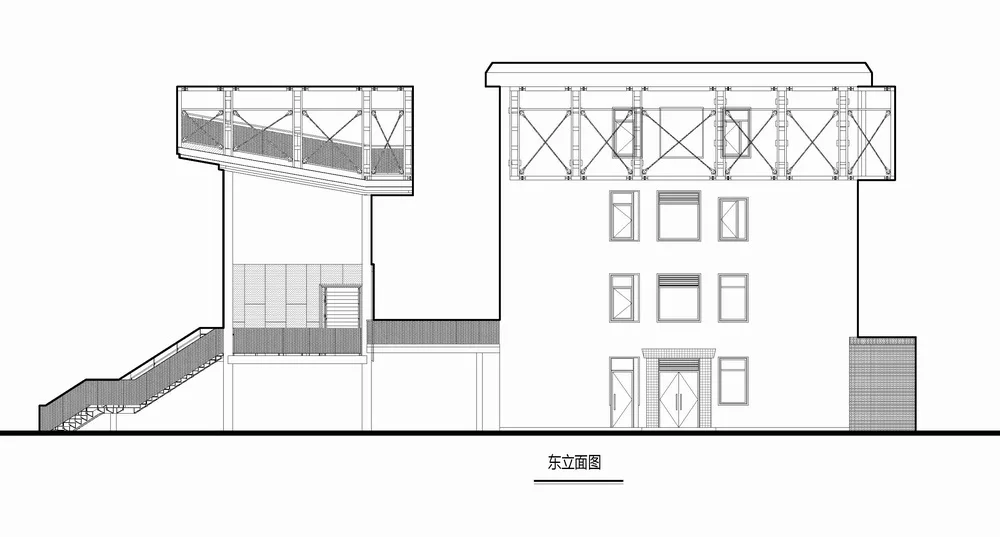
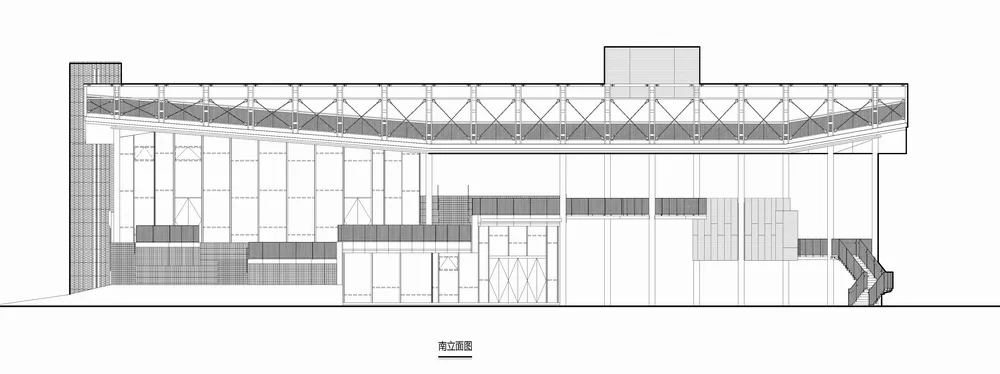
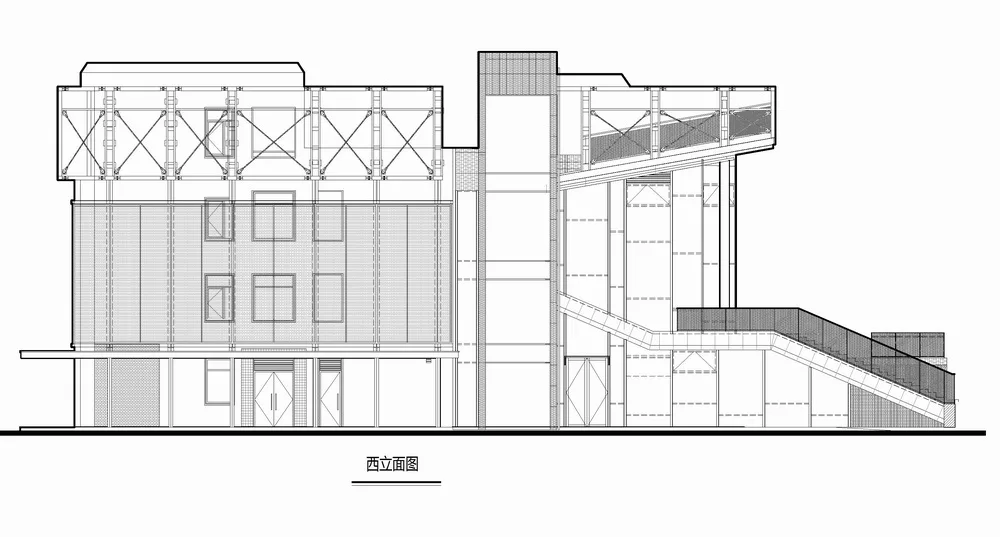
Elevation Drawing
Project Information
Project Name: Wuhan Honggang City Design and Creative Center
Location: Wuhan, Hubei
Owner: Wuhan Overseas Chinese Town Industrial Development Co., Ltd
Owner Team: Chu Yunhong, Dai Hongquan, Yang Xu, He Xin, Zhu Zehua, Chen Hua, Sun Hong, Lv Fei
Architectural Design: Shanghai Urban Recycling Industry Co., Ltd
Chief Architect: Ling Yingsong
Design Team: Ling Yingsong, Wang Kexiang, Gao Yibin, Huang Rui, Huang Longchen
Landscape Design: Shanghai Urban Regeneration Industry Co., Ltd
Interior Design: Shanghai Urban Regeneration Industry Co., Ltd
Soft Decoration Design: Liu Ronglu International Space Design · Jingdian Art Display
Building Area: 4,703 square meters
Architectural Photography: Four-Eyed Space Photography by Liu Anqi















Must log in before commenting!
Sign Up