
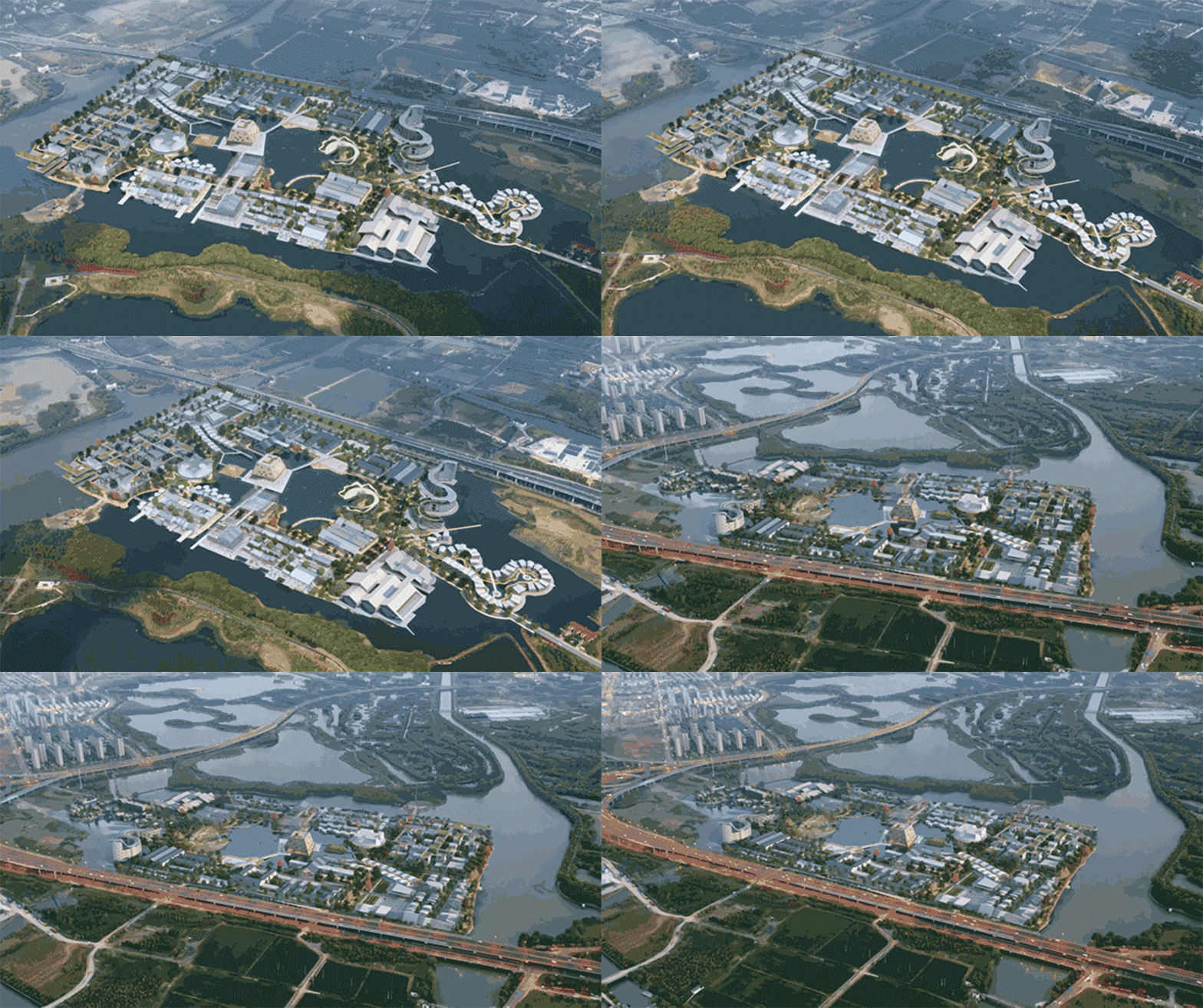
The Suzhou Qingtai Sino Japanese Industrial Design Village International Design Competition garnered significant attention since its global call for conceptual design proposals in January 2021. Nearly 50 renowned design firms from both domestic and international markets actively participated, submitting innovative concepts.
Recently, SPARK distinguished itself among several internationally acclaimed design firms and won the “Suzhou Qingtai Sino Japanese Industrial Design Village International Design Competition.” They were subsequently invited by the Suzhou local government to develop detailed design plans for the site.
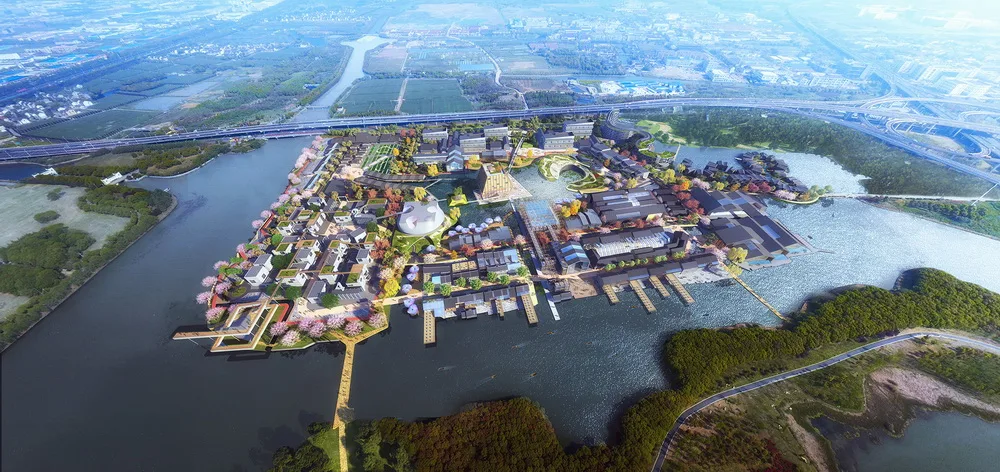
Overall Bird’s-Eye View © SPARK Sibang
Project Introduction
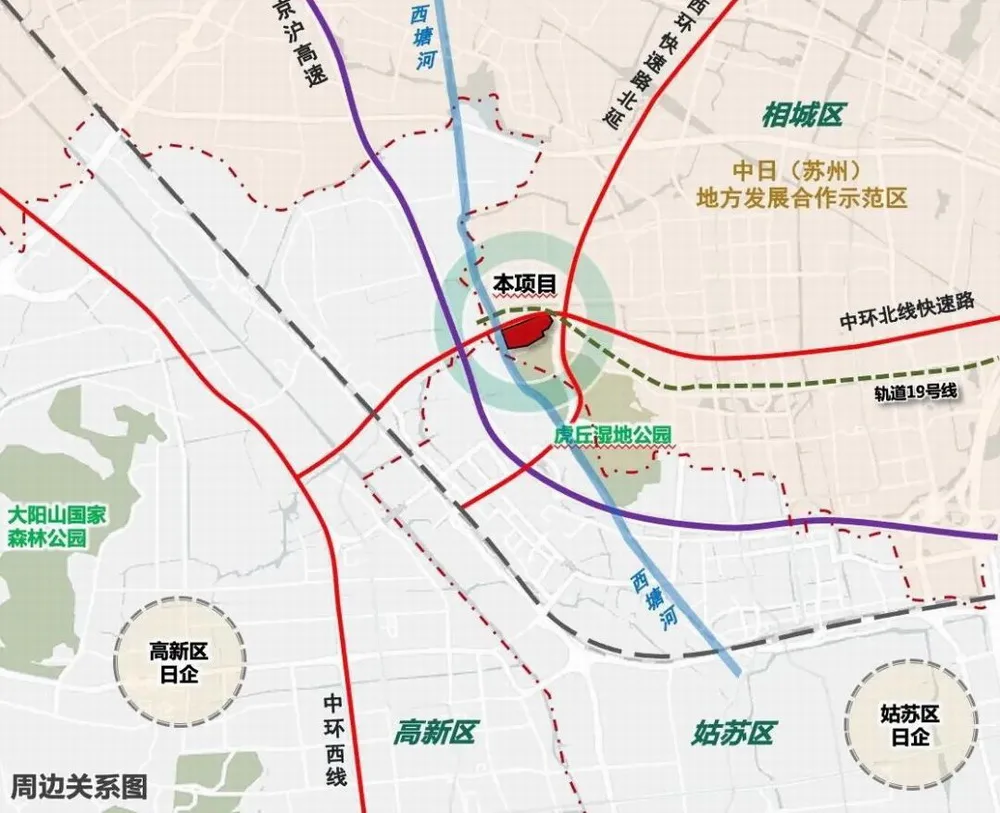
△ Project Location Map
The Qingtai Sino Japanese Industrial Design Village is situated within the Sino-Japanese Local Development Cooperation Zone in Xiangcheng District, Suzhou. This zone is one of only six designated demonstration areas for Sino-Japanese local cooperation in China and is the sole one in the southeastern coastal region outside Shanghai. Its goal is to become a national benchmark for collaboration with Japan.
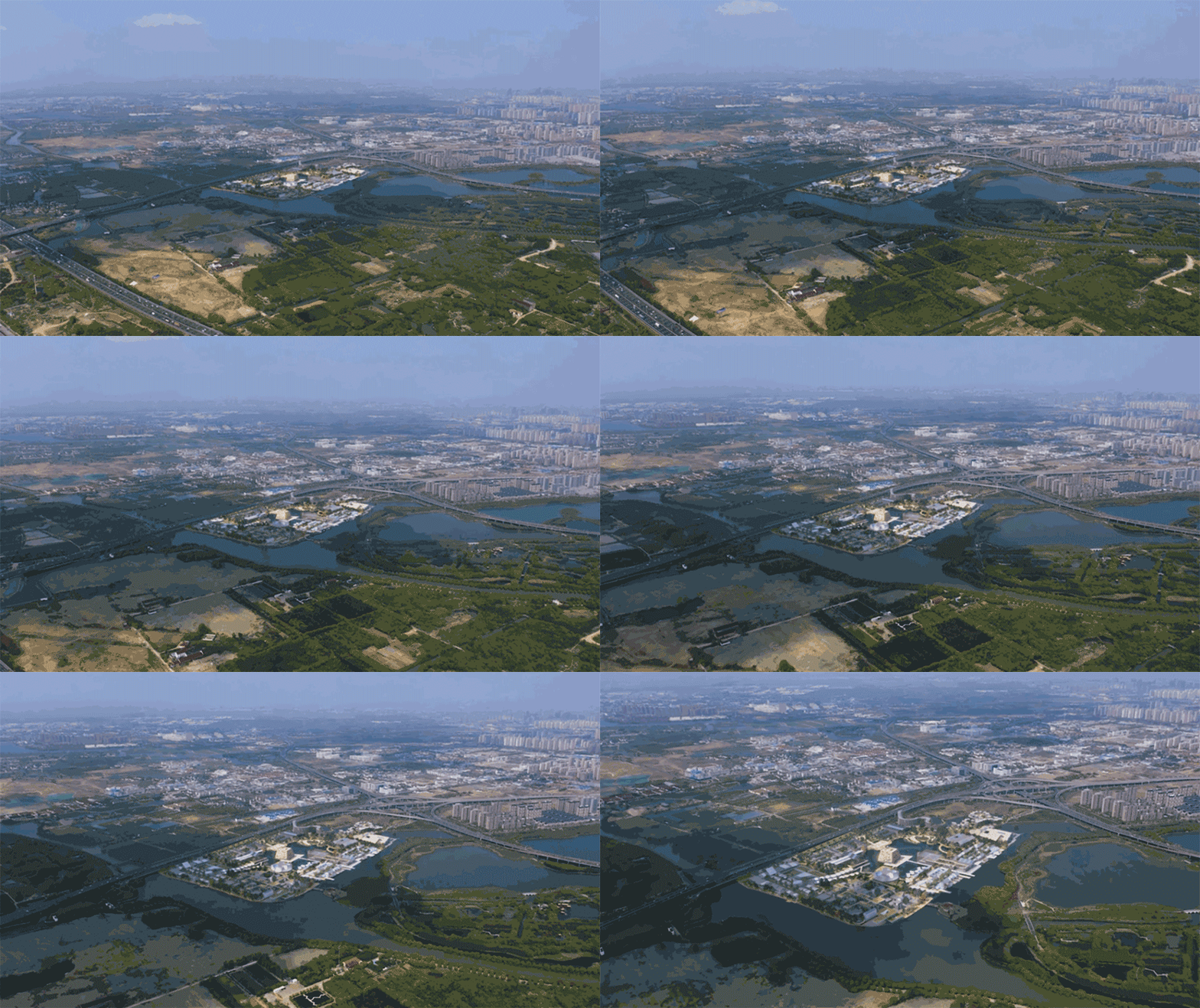
The site lies within this demonstration zone, featuring convenient transportation and flat village terrain. It is bordered by water on three sides and separated from the expansive Huqiu Wetland Park to the south by a river, offering outstanding natural ecological resources.
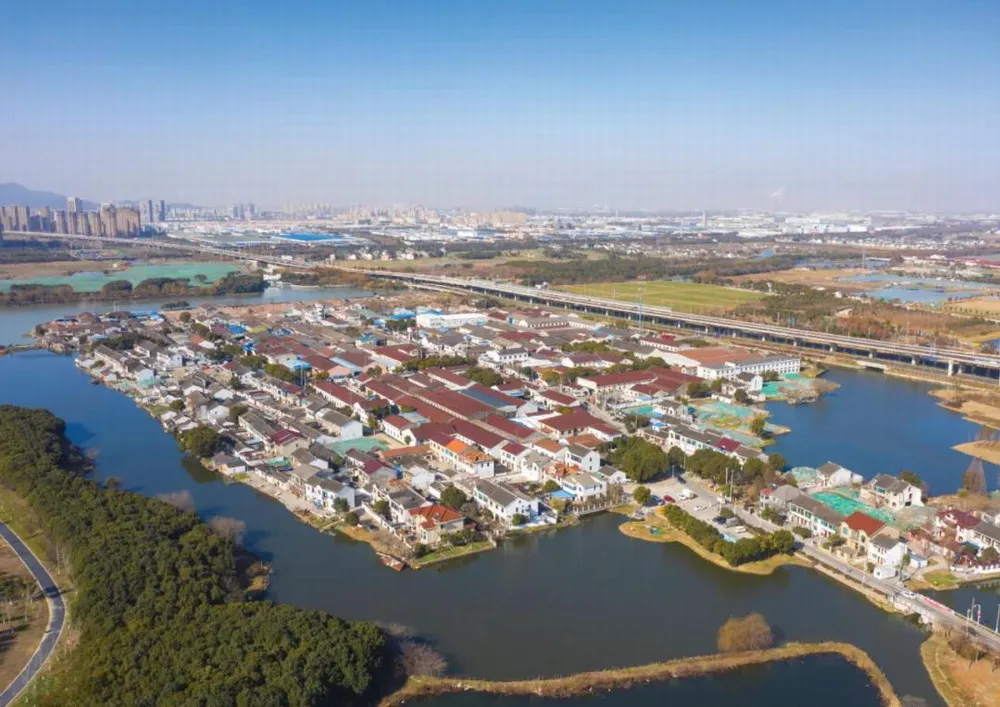
△ Tiger Hill Wetland to the South of the Site
The concept of the project is to invigorate commerce through culture, creating a powerful intellectual property brand that integrates cultural, commercial, and tourism industries, offering a fresh identity to the beautiful city of Suzhou.
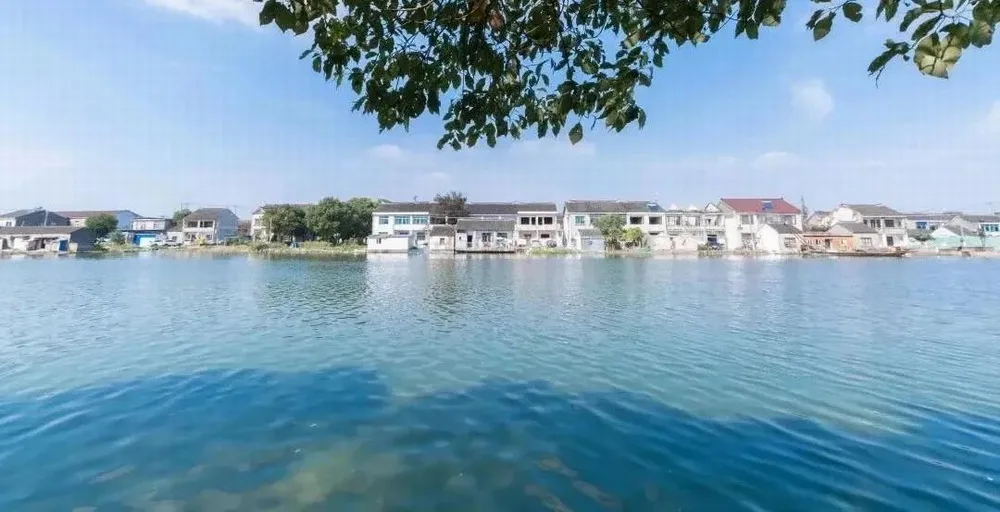
△ Current Site Photos
The development is planned in two phases: the first phase covers 200 acres, and the second covers 220 acres. The second phase will include a total commercial area of 170,000 square meters, encompassing offices and apartments.
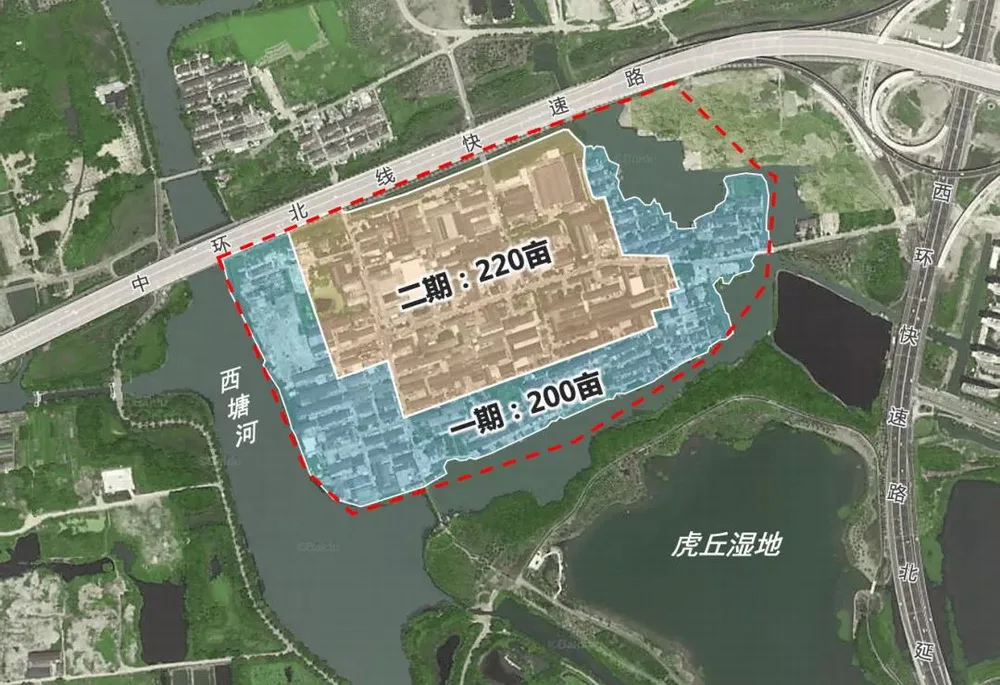
Phased Development Scope Overview
The first phase emphasizes the waterfront area, featuring a total built-up area of 67,000 square meters. It aims to support future commercial ventures such as cultural and creative industries, arts, markets, theaters, dining, trendy goods, and unique vacation experiences. This phase creates a vibrant business and tourism cultural complex centered around Suzhou and Japanese markets, 50 master studios, and cultural dining.
△ South Side Aerial View © SPARK Sibang
The second phase will feature a Sino-Japanese design industry complex characterized by an industrial style infused with rich cultural elements, covering over 70,000 square meters. It will include facilities such as the permanent venue for the International Design Award, boutique hotels, talent apartments, and creative offices. Employing internationally advanced industrial design standards, this phase aims to drive regional industrial upgrading.
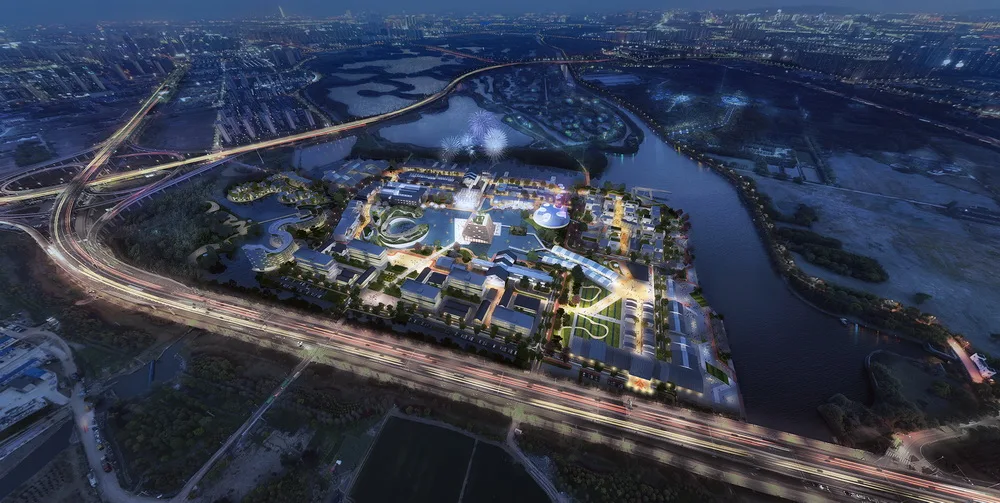
△ North Side Aerial View © SPARK Sibang
Design Inspiration
SPARK’s design vision is to create a world-class waterfront development that establishes a new international identity for the region. It aims to develop a vibrant cultural and commercial hub that draws tourists to engage in various dynamic programs and activities.
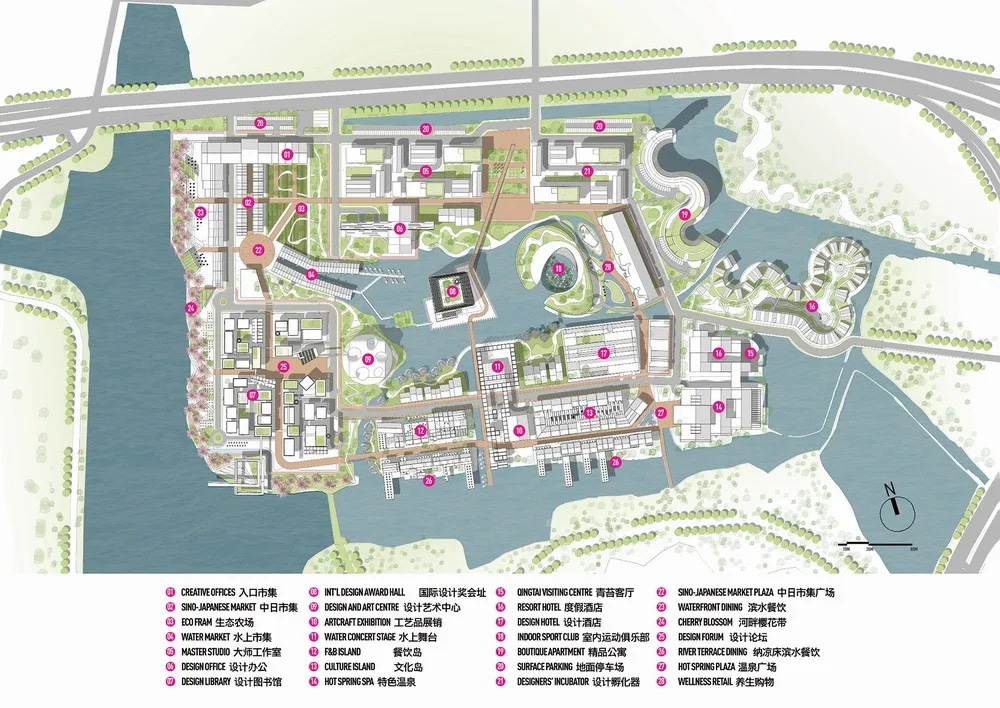
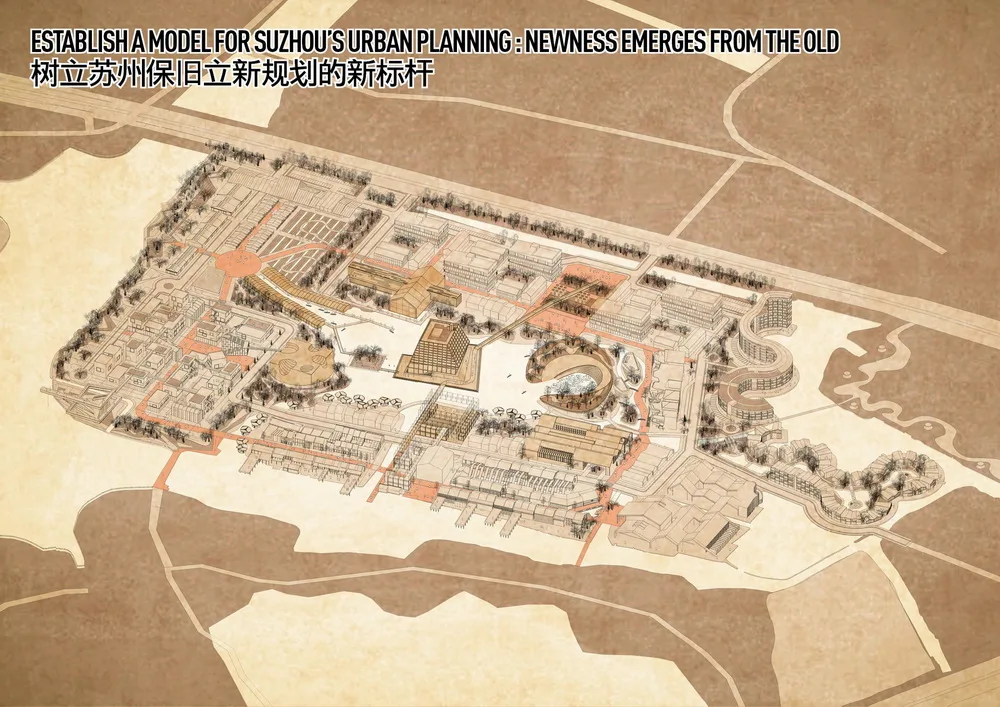
△ General Layout and Functional Distribution © SPARK Sibang
The design draws inspiration from the traditional garden design of Suzhou and the compositional principles of landscape painting. It aims to blend the timeless essence of Suzhou gardens with modern urban functions while incorporating the minimalist aesthetics of contemporary Japanese design to create a distinctive Sino-Japanese industrial design village.
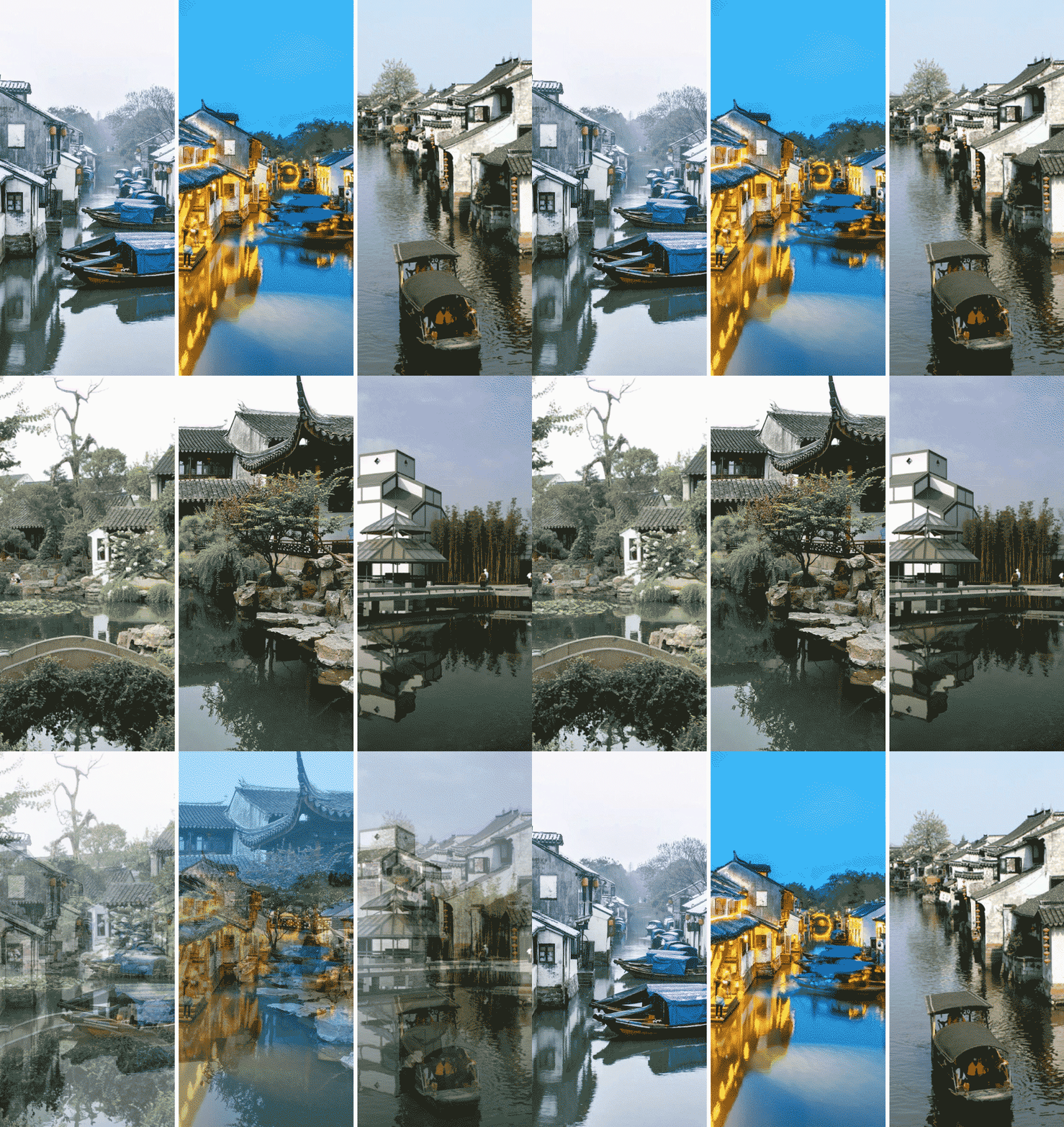
Traditional and Modern Landscape Architecture in Suzhou (sourced from the Internet)
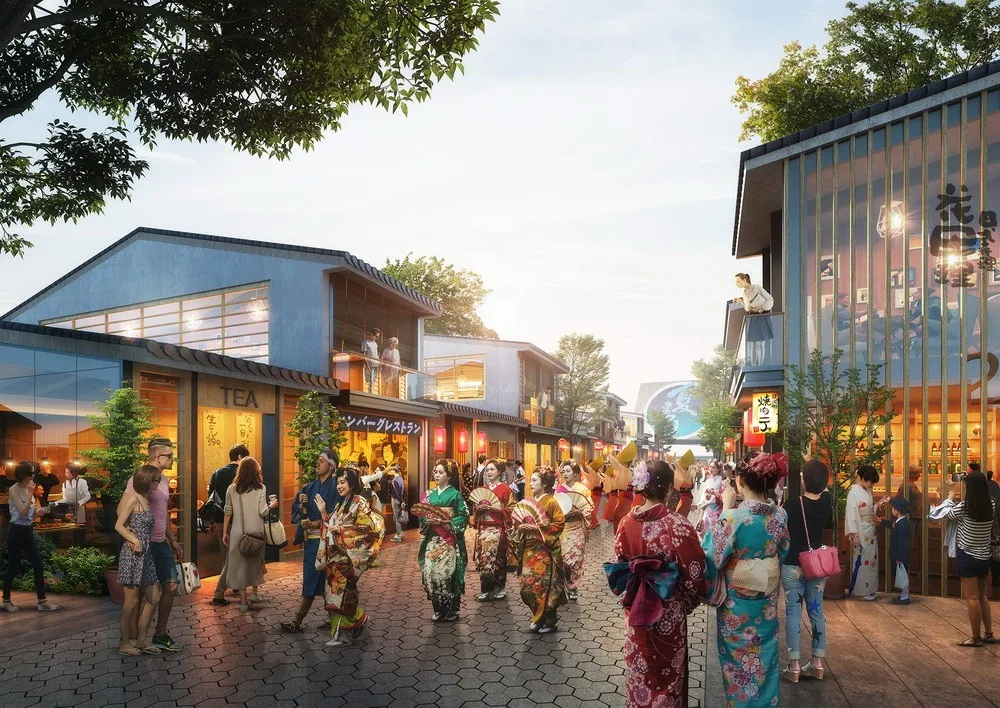
△ Suzhou, Japan Street © SPARK Sibang
Through careful analysis of the water transportation network and Suzhou garden layouts, the team integrated these strengths to inherit the culture of water towns, creating a contemporary waterfront space that harmoniously blends architecture, landscape, and culture.
A Picturesque ‘Social Painting’ © SPARK Sibang
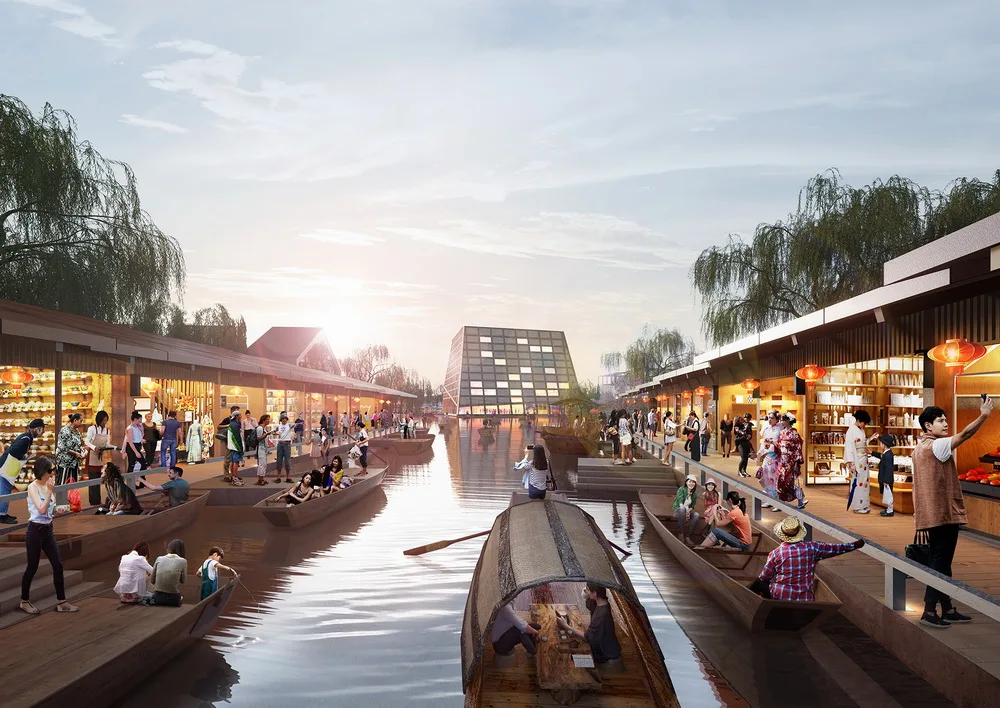
△ Suzhou Floating Market © SPARK Sibang
Core Planning Concepts
The project is guided by two core concepts: “Garden City” and “Tourism Environment,” together delivering a rich and immersive experience throughout the development.
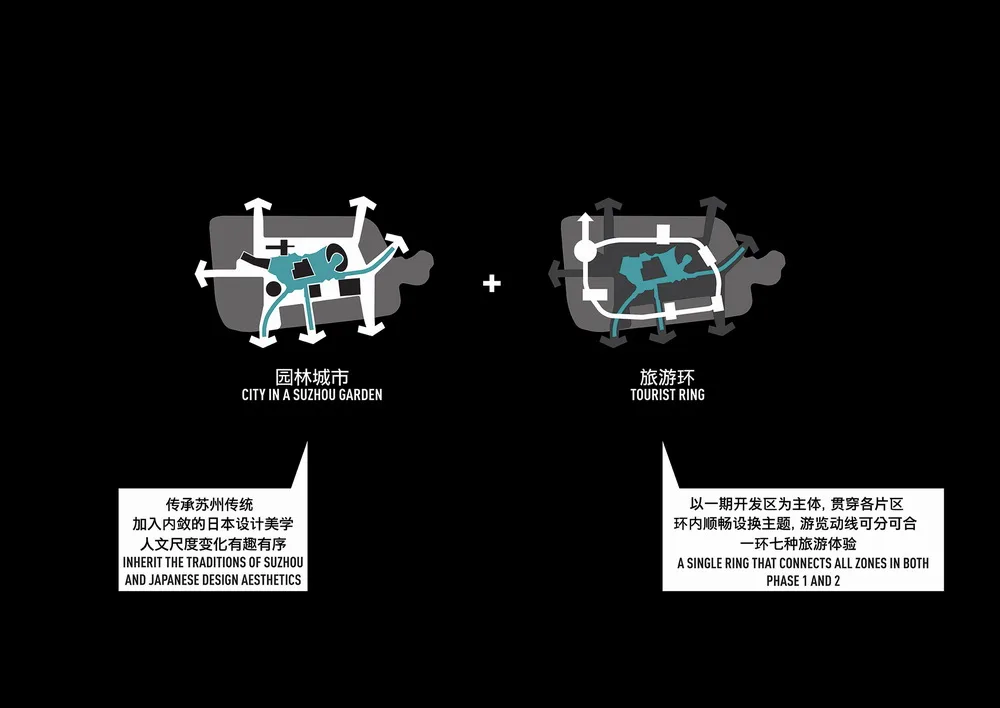
△ Two Core Concepts © SPARK Sibang
Concept 1: Garden City
Modern techniques reinterpret the traditional Suzhou garden experience.
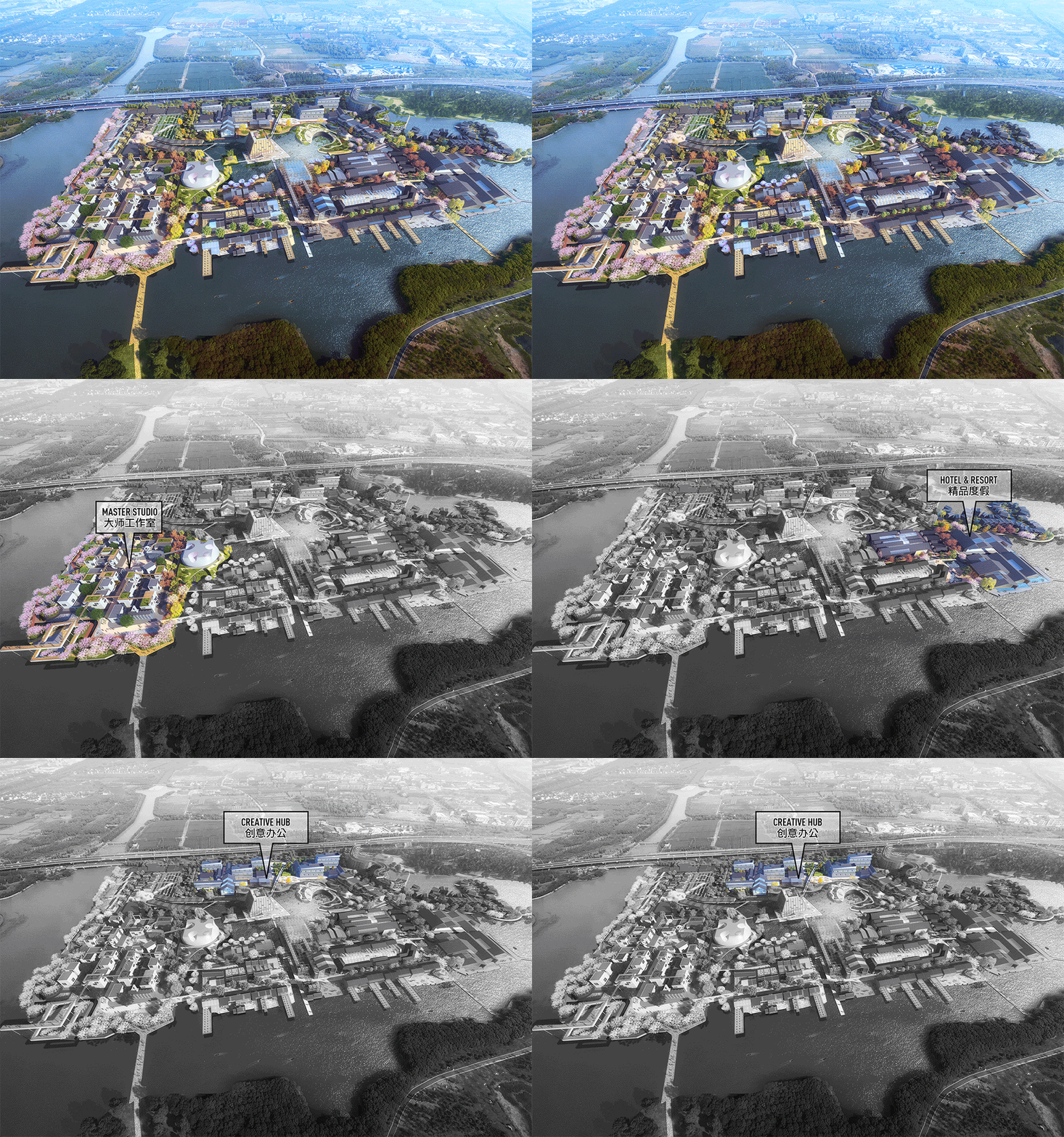
Central Suzhou Garden and Six Themed Areas © SPARK Sibang
The core area references the traditional layout of Suzhou gardens, positioning main buildings around a central water feature and surrounding functional zones, creating a cohesive core that enhances interaction between each area and the water.
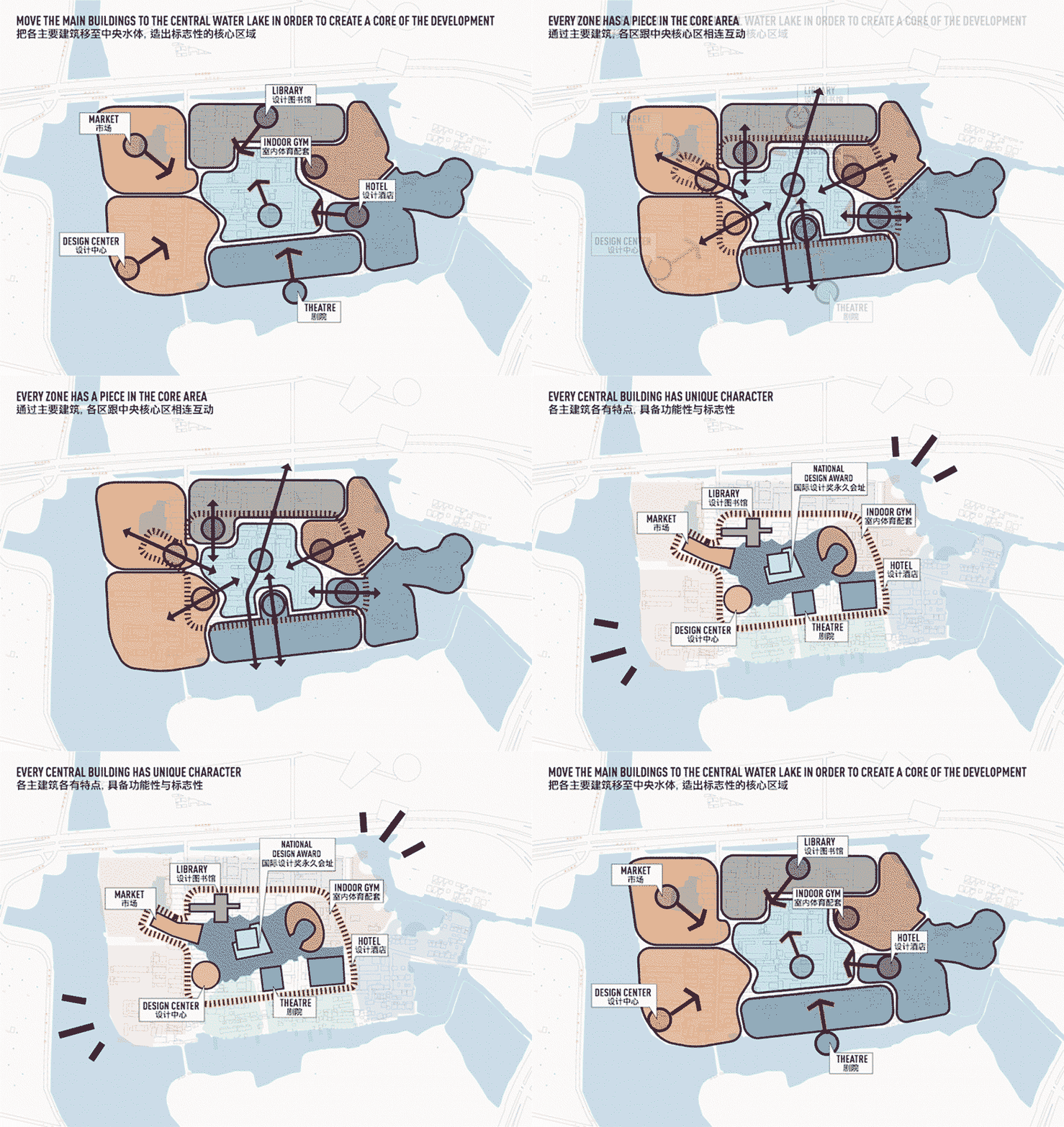
Main buildings are repositioned near the central water body © SPARK Sibang
The seven iconic structures around the Central Lake each possess a distinctive form. Careful visual analysis ensures that these buildings maintain subtle sightlines, creating a “look and be seen” dynamic.
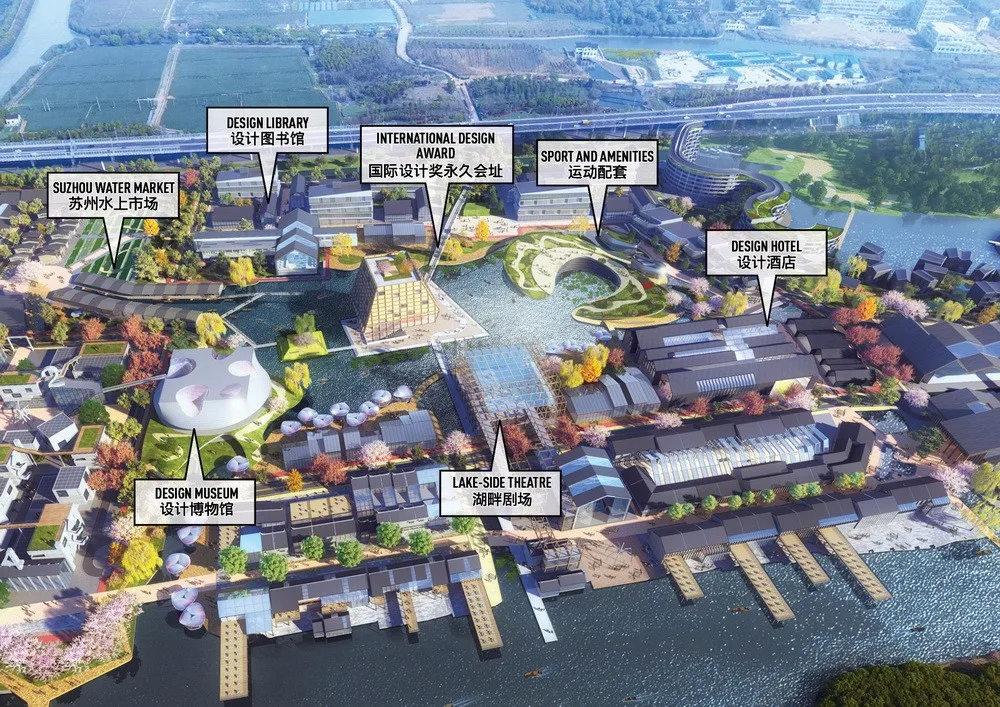
Seven Iconic Buildings © SPARK Sibang
The architectural style of each building draws from the simplicity and humanistic spirit of contemporary Japanese design. The restrained forms complement the garden, creating a picturesque viewing experience.
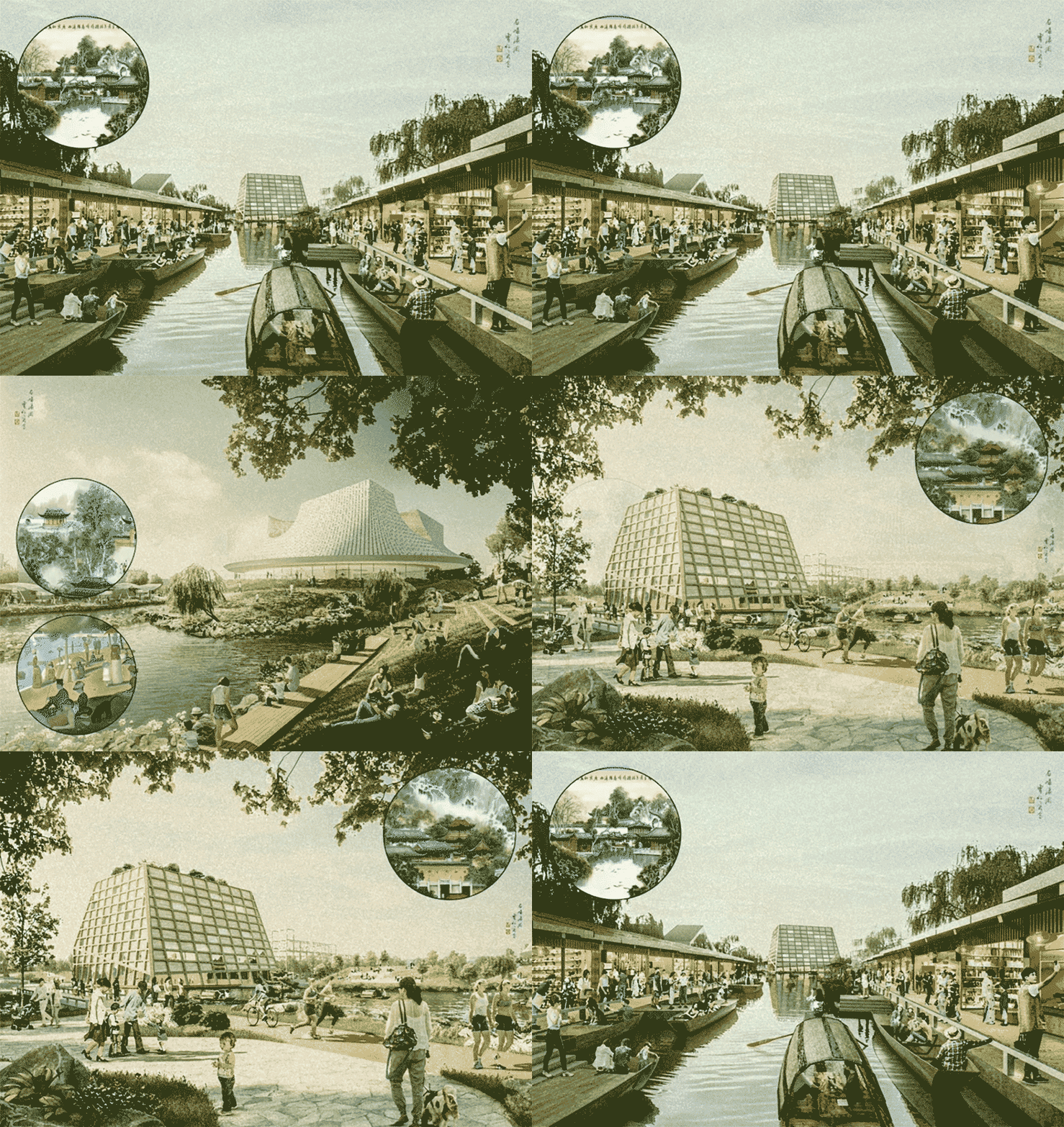
A Picturesque Garden Viewing Experience with Balanced Composition © SPARK Sibang
Building positions are organically connected to the surrounding visual layout, inspired by the Zen garden design of Kyoto’s Long’an Temple stone courtyard.
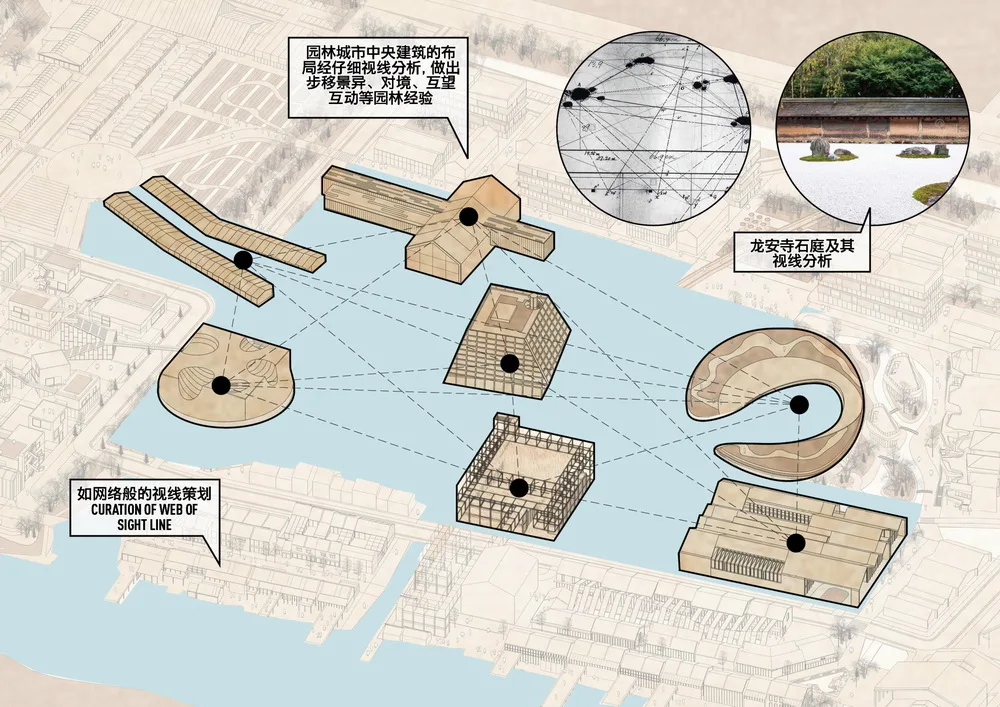
Central Building Layout Considerations © SPARK Sibang
Detailed visual analysis of the garden city’s central buildings informed a rich journey of discovery, featuring gradual changes in scenery and interactive sightlines.
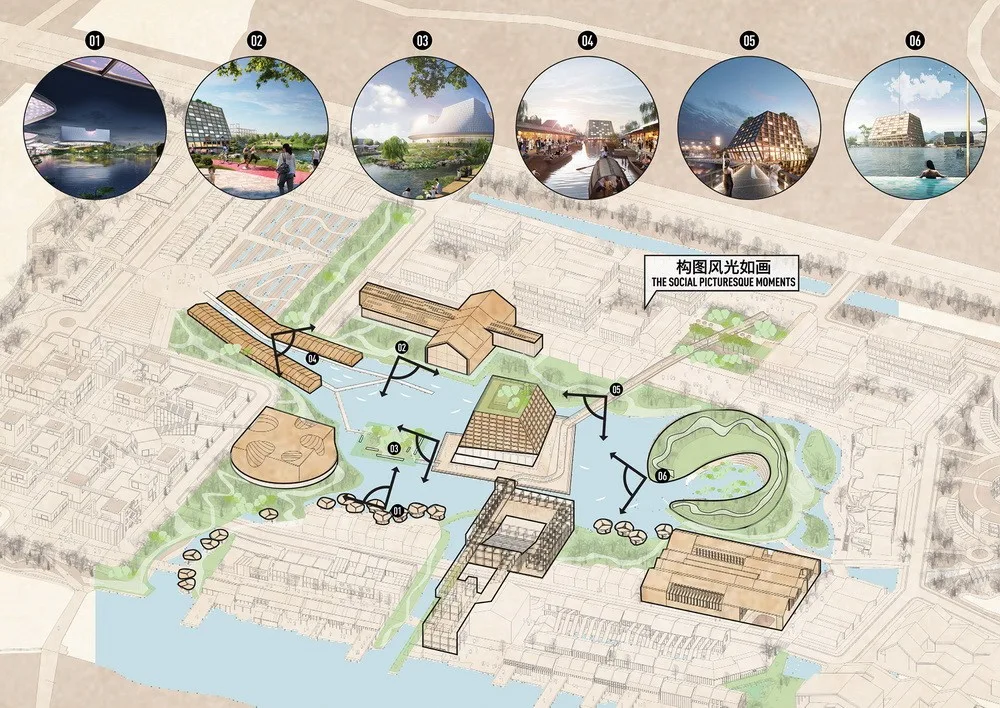
Visual Layout of Central Buildings © SPARK Sibang
The garden boundaries and pathways vary with smooth transitions, incorporating diverse greenery, waterfront steps, enclosed squares, bridges, and pavilions. These features align with the central building positions, guiding visitors from various park areas toward the lake’s center, creating a unique landscape experience.
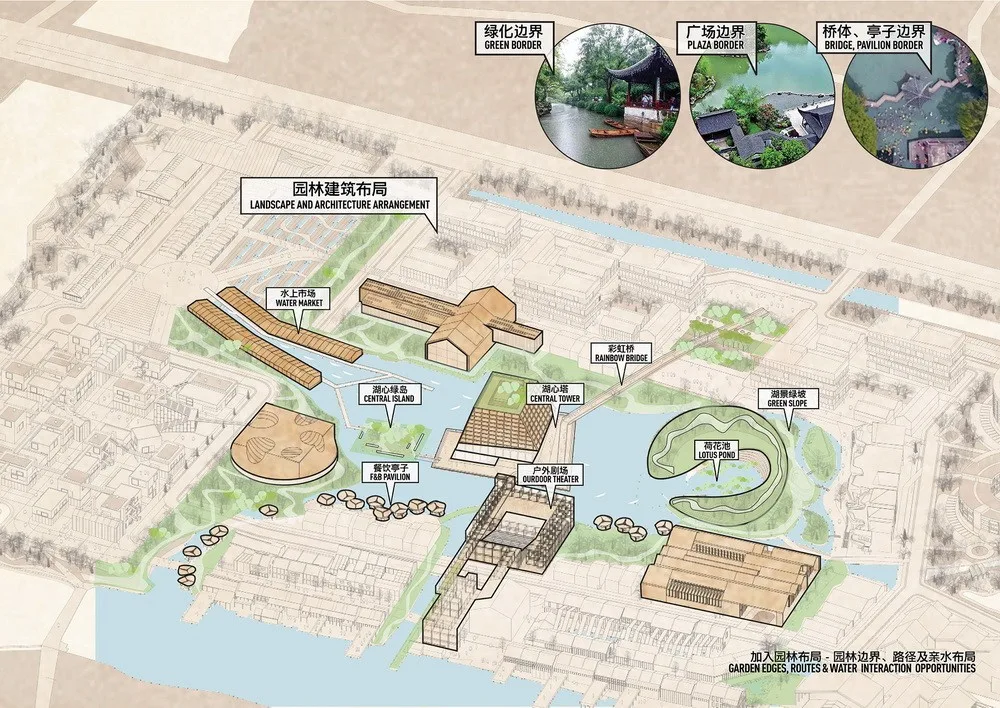
Landscape Layout of Central Buildings © SPARK Sibang
Concept 2: Tourism Environment
Connecting diverse functional areas to create seamless visitor experiences.
The tourism loop weaves through various parts of the village, starting at the northwest main entrance. This circular path follows the garden’s texture, linking multiple functional zones along the perimeter.
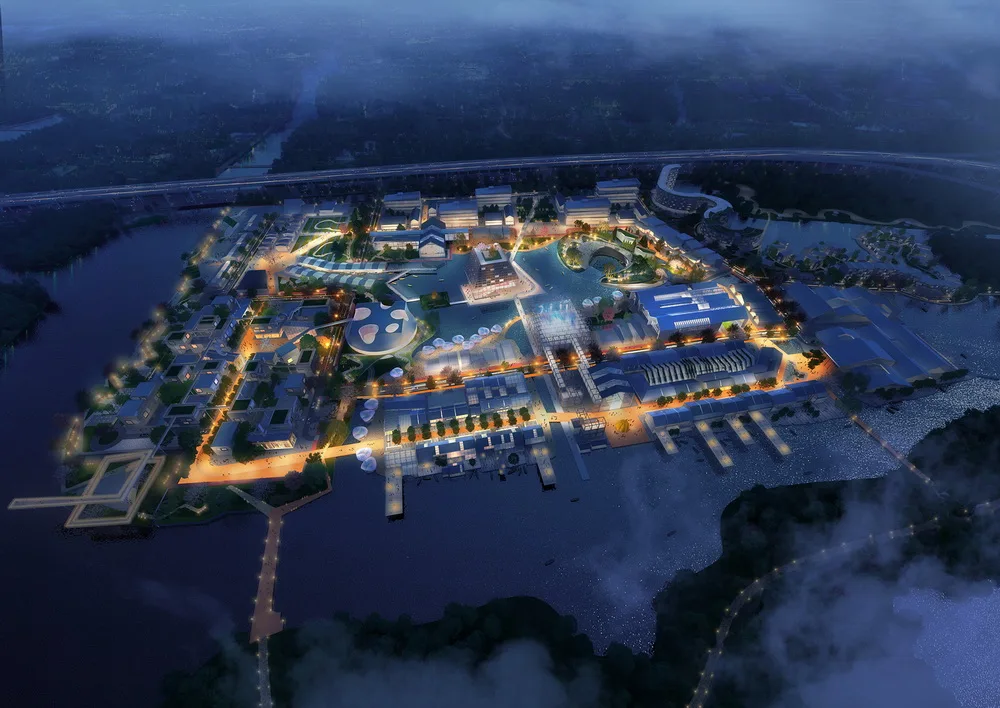
The Vibrant “Tourist Ring” Commercial Street at Night © SPARK Sibang
The development offers seven diverse tourism experiences, connecting themed attractions such as the Sino-Japanese market, Suzhou water market, cultural and creative commerce, dining island, cultural island, hot spring square, health district, and design flagship district.
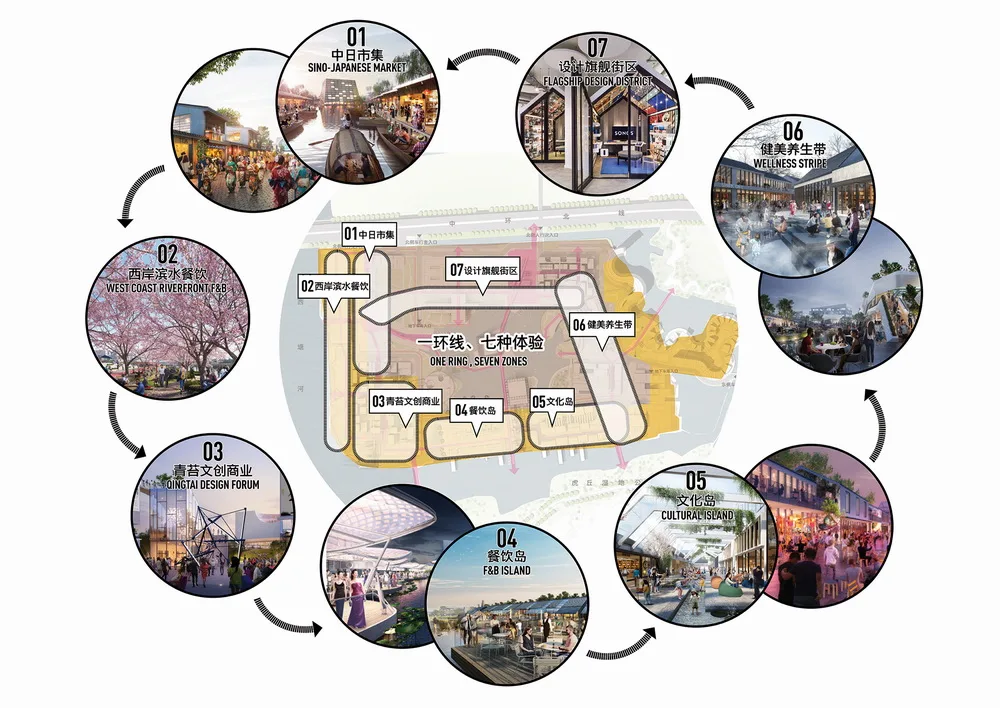
△ One Ring Road, Seven Experiences © SPARK Sibang
These neighborhoods smoothly transition in theme, allowing visitors to explore the entire area or focus on specific themes. The rich and diverse content makes this a unique destination in Suzhou and across China.
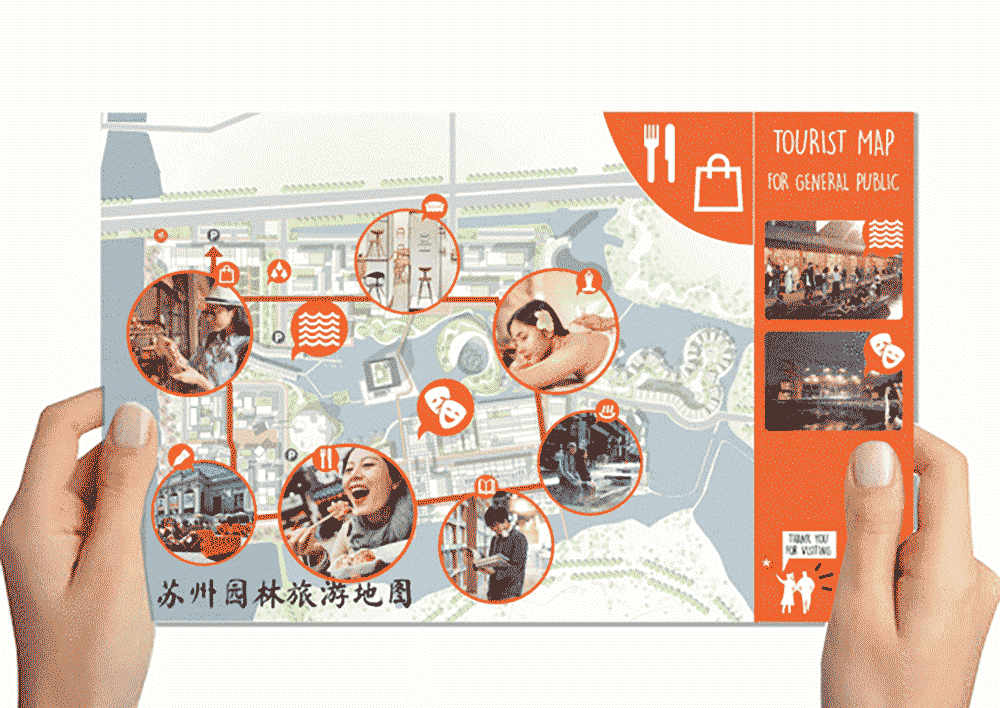
Rich Tourism Routes Catering to Diverse Groups © SPARK Sibang
The central lake area is pedestrian-friendly, while a peripheral vehicular ring road connects entrances on the east and north sides.
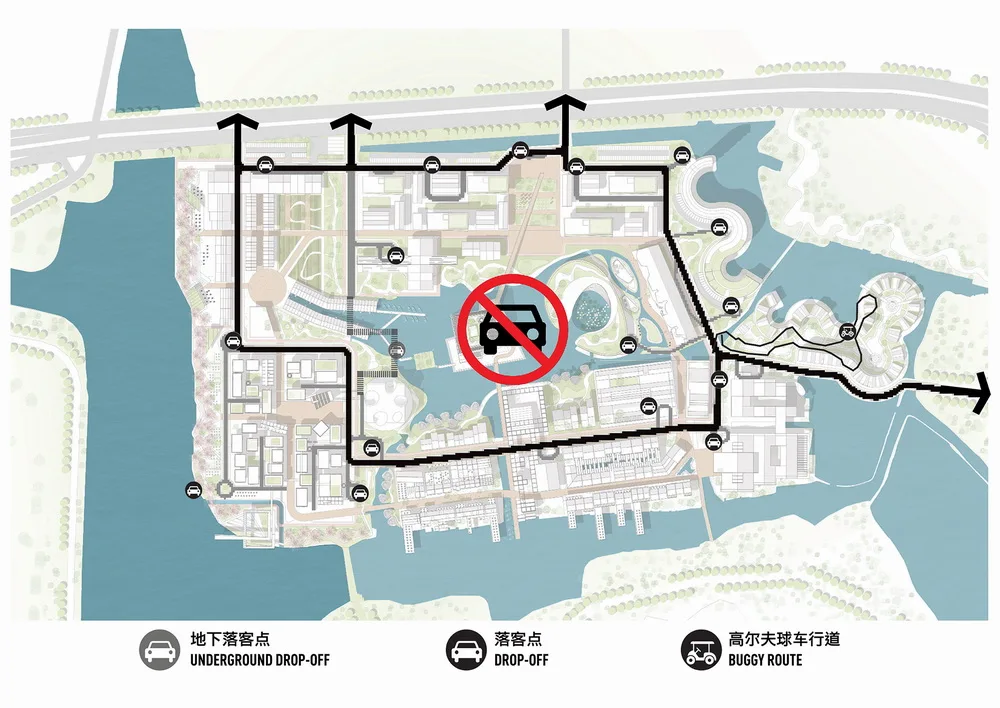
△ Vehicle Circulation on the Periphery © SPARK Sibang
Tour Route Highlights
What unique features arise from the fusion of Suzhou and Japanese design? Let’s explore together!
First Stop: Suzhou and Japanese Market
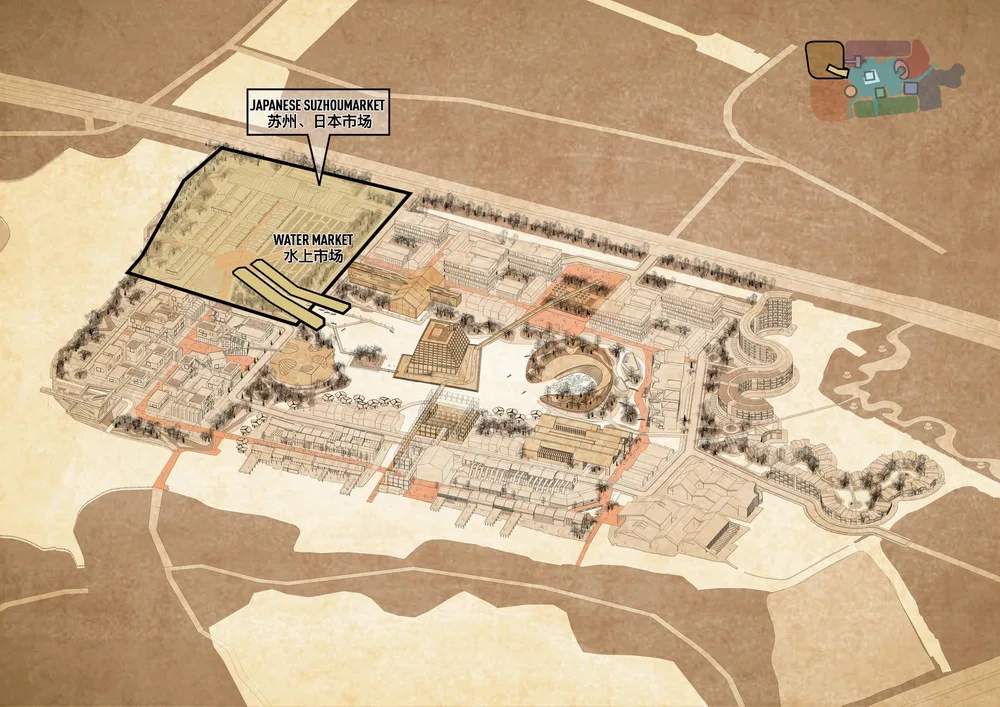
△ Suzhou and Japanese Markets © SPARK Sibang
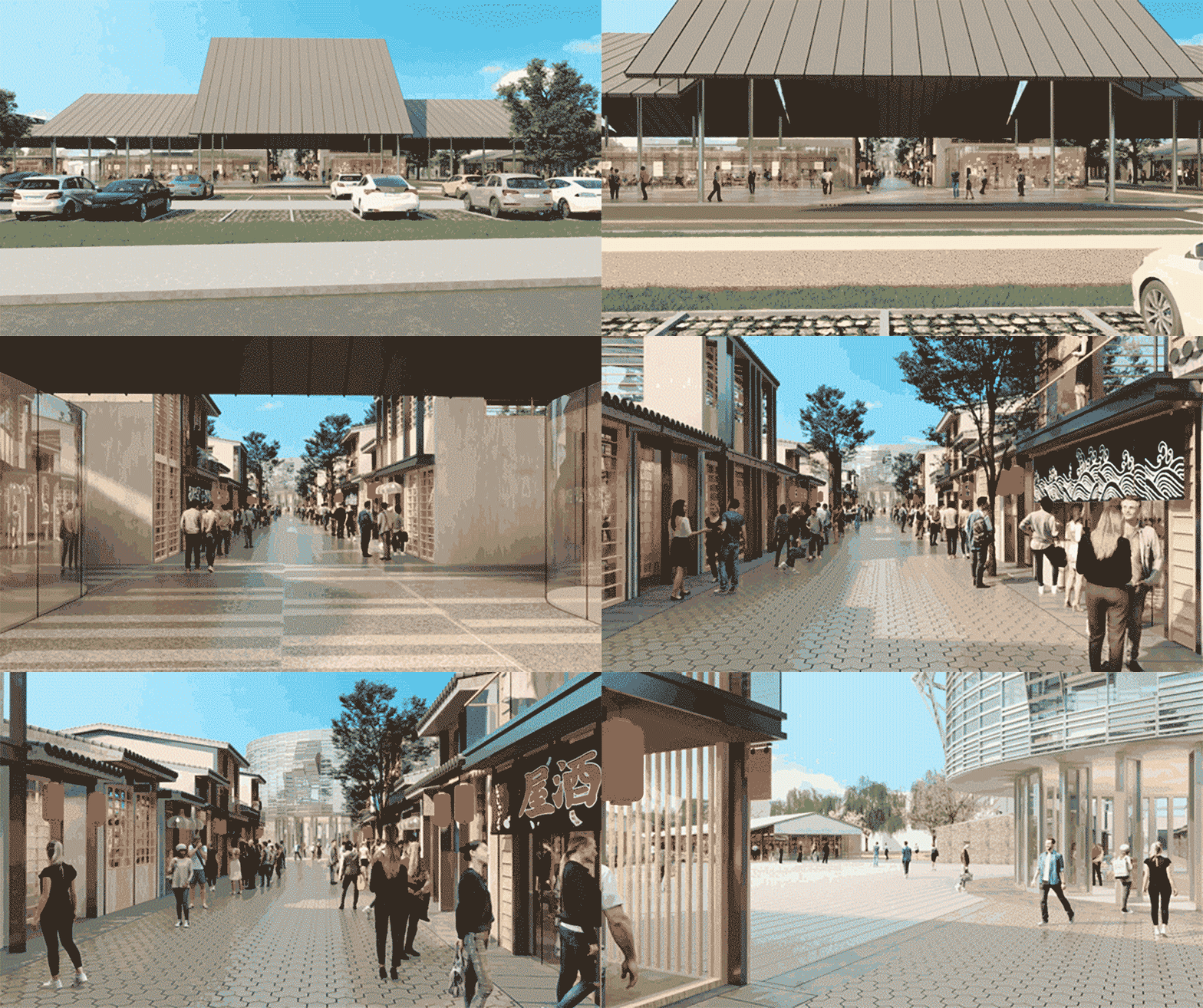
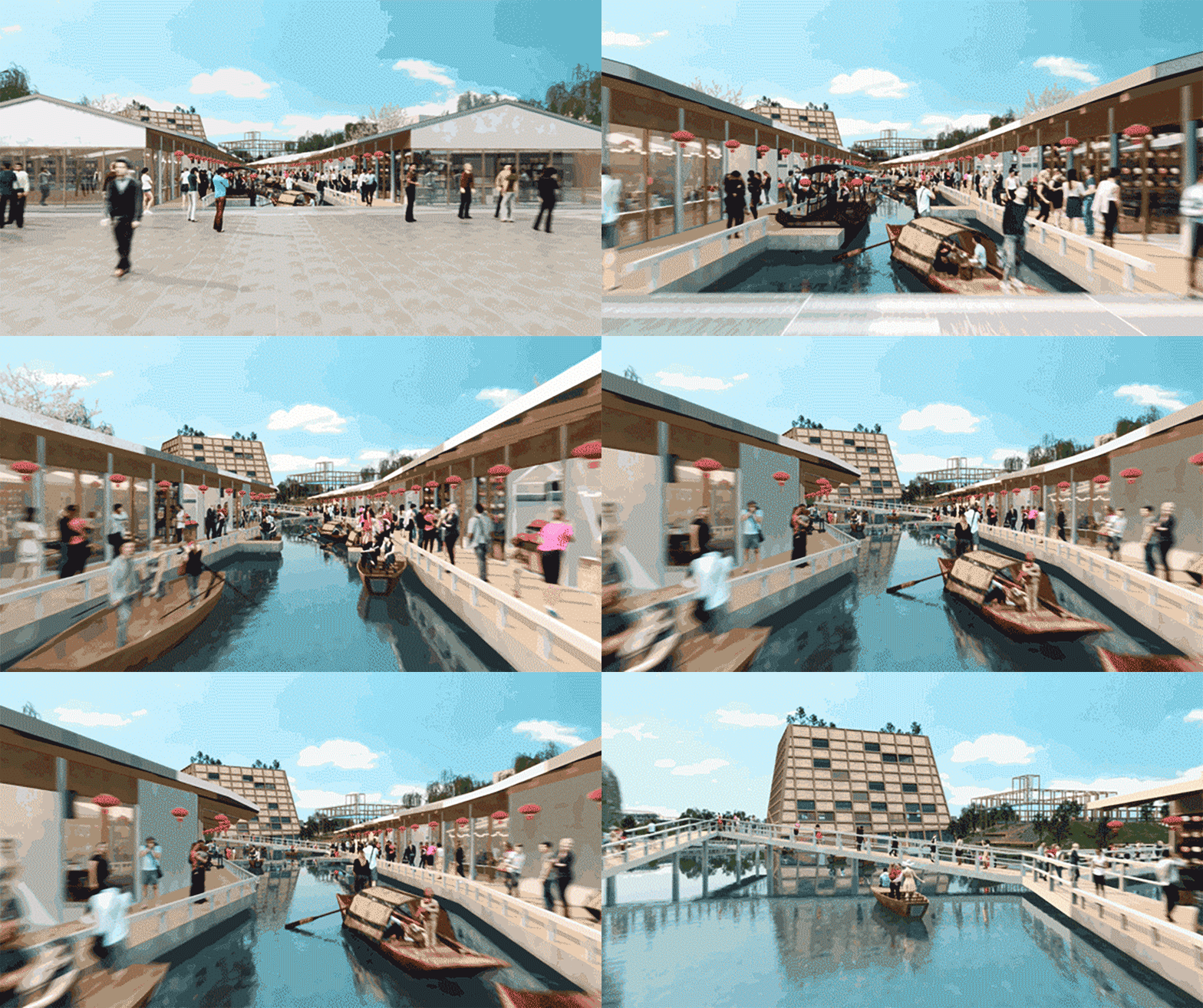
Entering through the iconic gateway, visitors first encounter the Suzhou and Japanese markets, where they can explore two distinct neighborhood styles sequentially.
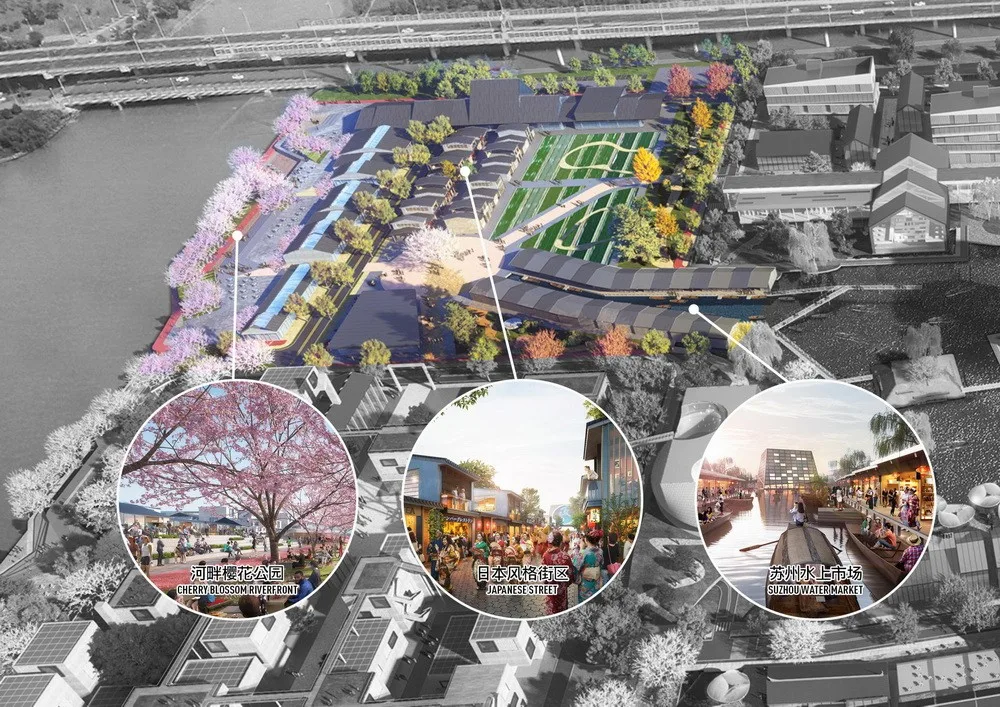
△ Suzhou and Japanese Markets © SPARK Sibang
Experience a unique, tranquil atmosphere in a simple and transparent Japanese-style neighborhood.
Experience the traditional Jiangnan water town scenery at the Suzhou Floating Market.
Enjoy lake views and witness cherry blossoms resembling snow at the Cherry Blossom Park on the river’s west bank.
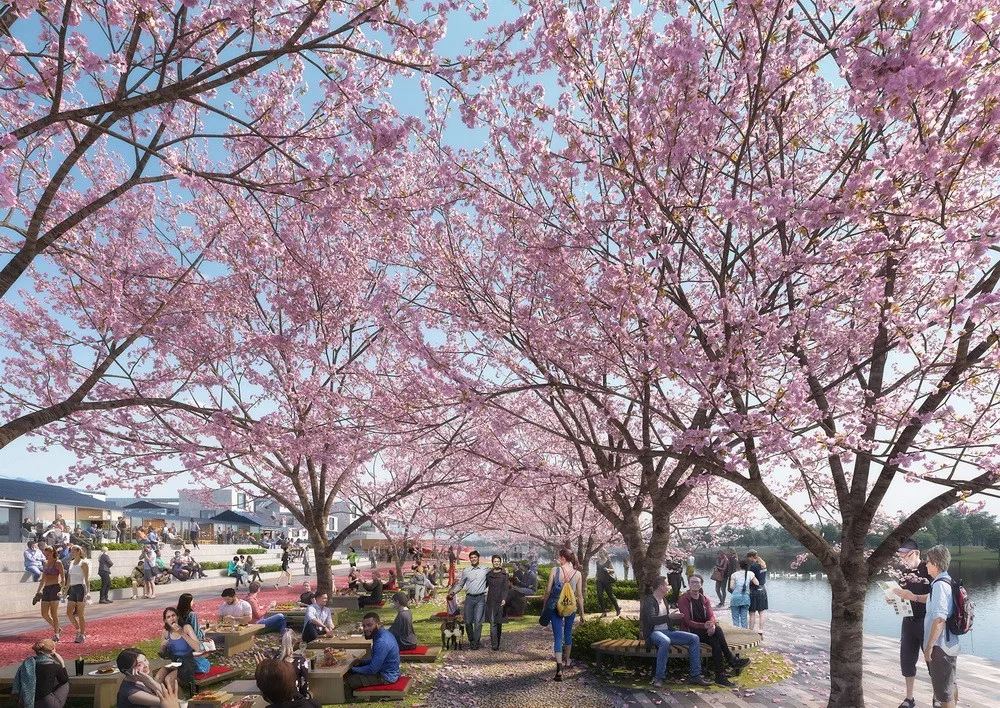
△ West Bank Riverside Cherry Blossom Park © SPARK Sibang
Second Stop: Master Studio
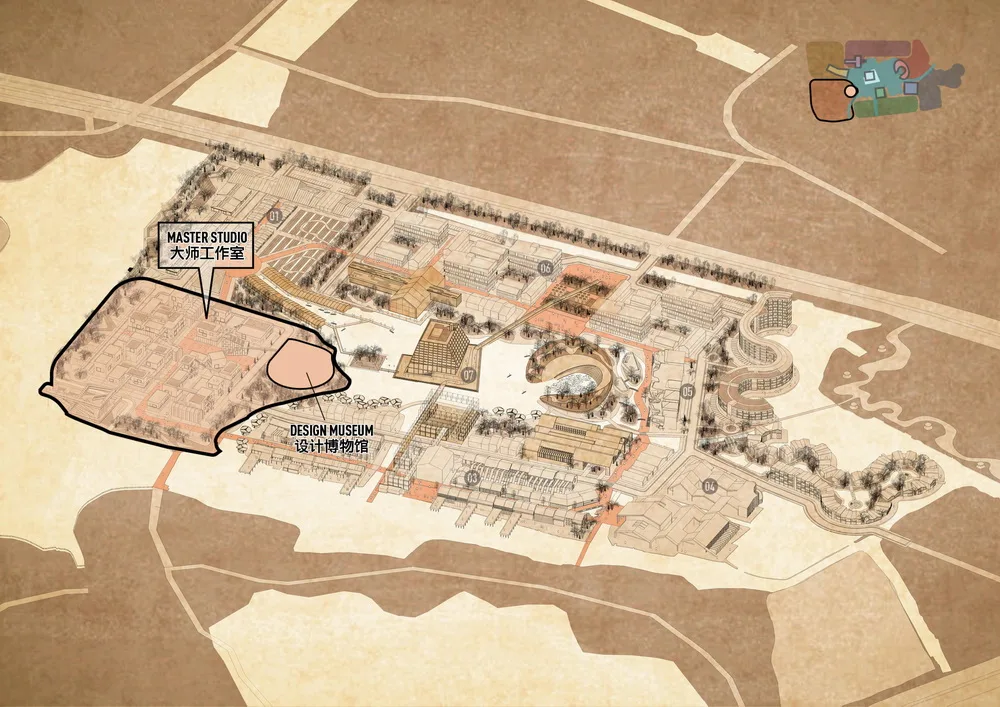
△ Master Studio © SPARK Sibang
The Master Studio area offers two distinct experiences. An elevated pedestrian walkway links the rooftops of various buildings—heading southwest leads to an observation deck, while going east takes you to the Design Museum.
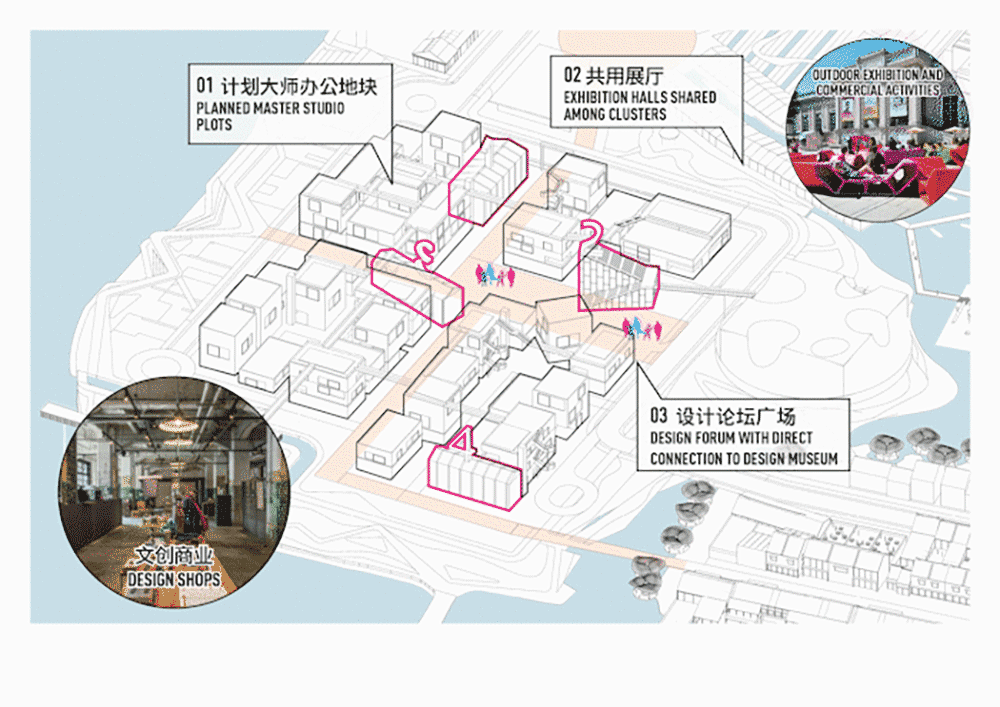
△ Master Studio Area Offering a Rich Experiential Journey © SPARK Sibang
Enter the Design Forum Square to immerse yourself in culture and discover inspiration among the master studios.
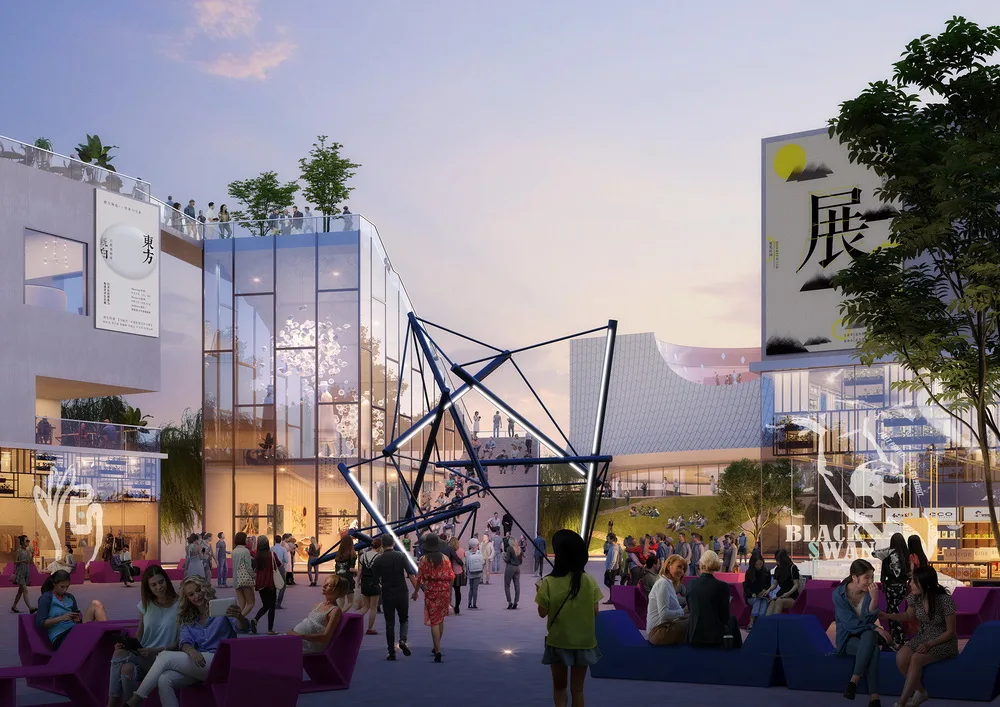
△ Design Forum Square © SPARK Sibang
The “Design Museum” stands as a landmark with its simple yet distinctive design, blending harmoniously with the surrounding landscape.
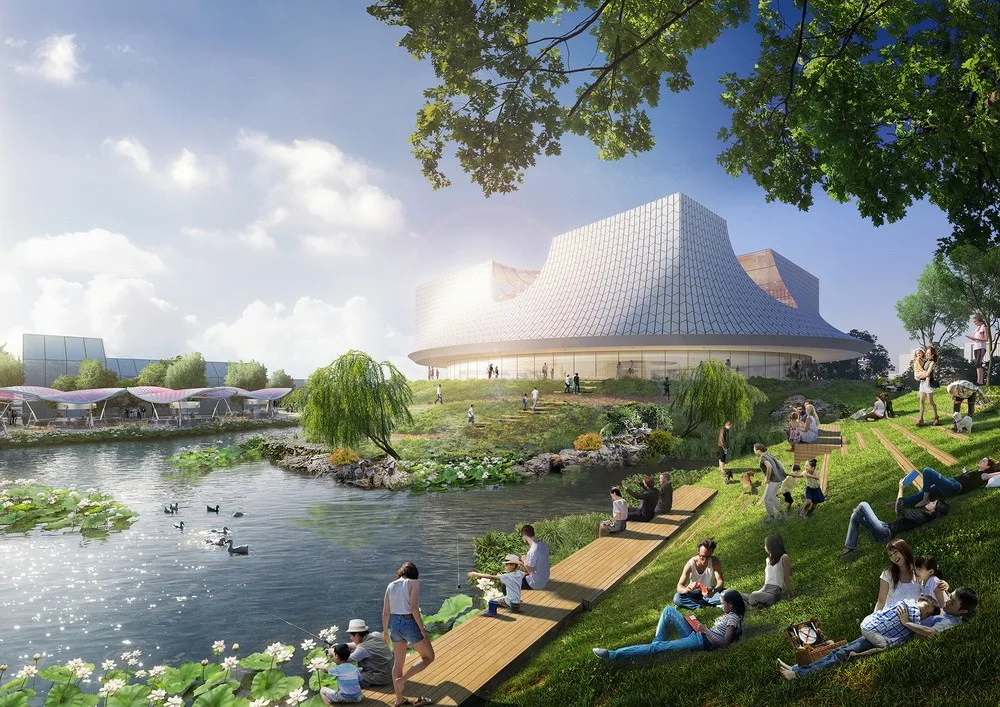
△ Design Museum © SPARK Sibang
Third Stop: Riverside Art Creation and Dining
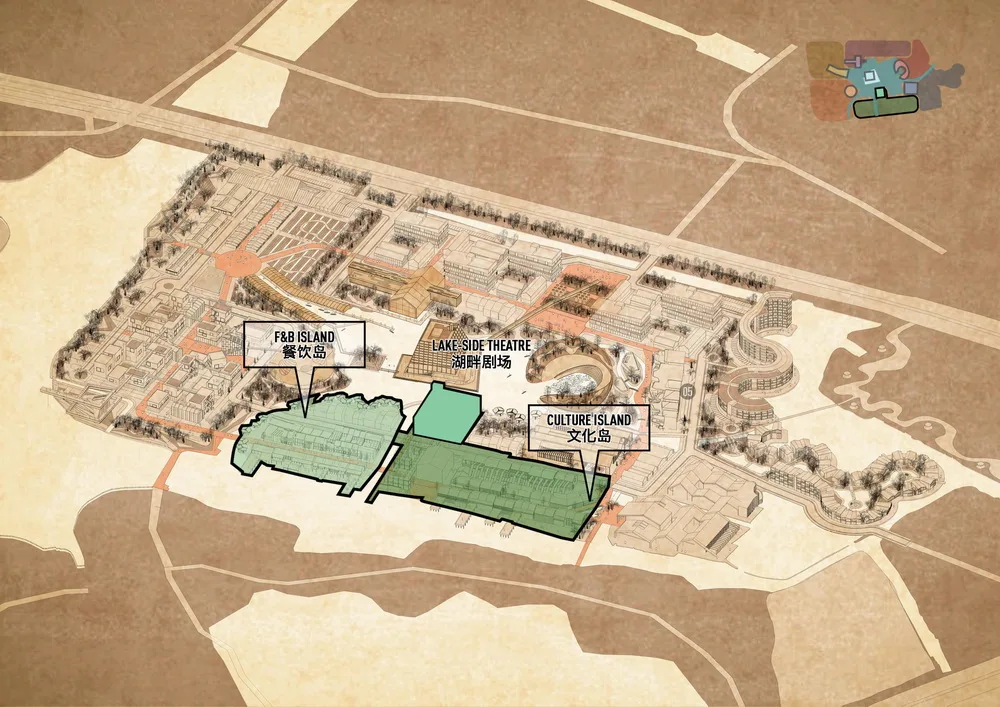
△ Dining Island, Cultural Island, and Lakeside Theater © SPARK Sibang
This area on the southern part of the project boasts the best waterfront scenery, directly opposite the Tiger Hill Wetland.
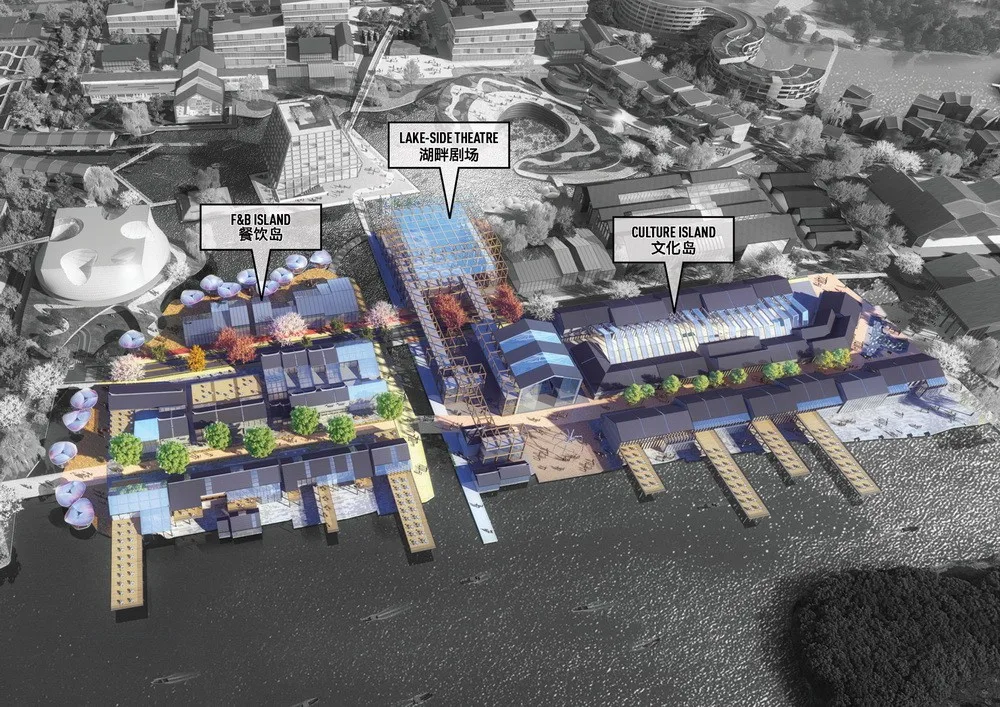
△ Dining Island, Cultural Island, and Lakeside Theater © SPARK Sibang
The dining island features three distinct dining experiences catering to diverse groups.
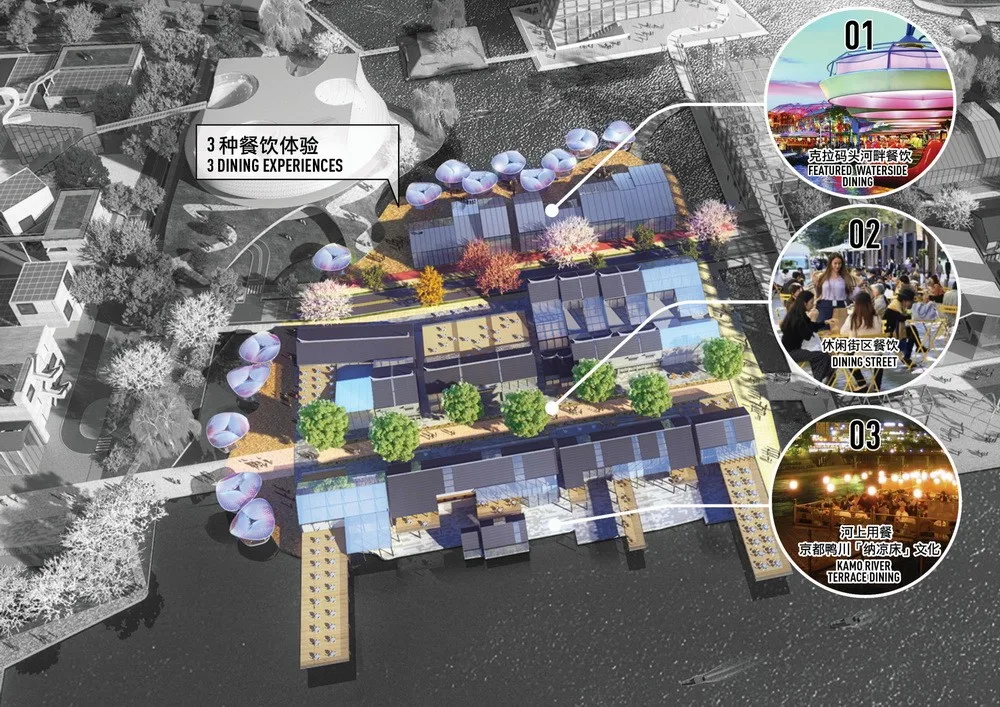
△ Dining Island © SPARK Sibang
Options include vibrant riverside restaurants like Kra Pier, casual street dining, and river dining inspired by Kyoto’s Duck River “cooling bed” culture, all surrounded by stunning lake views.
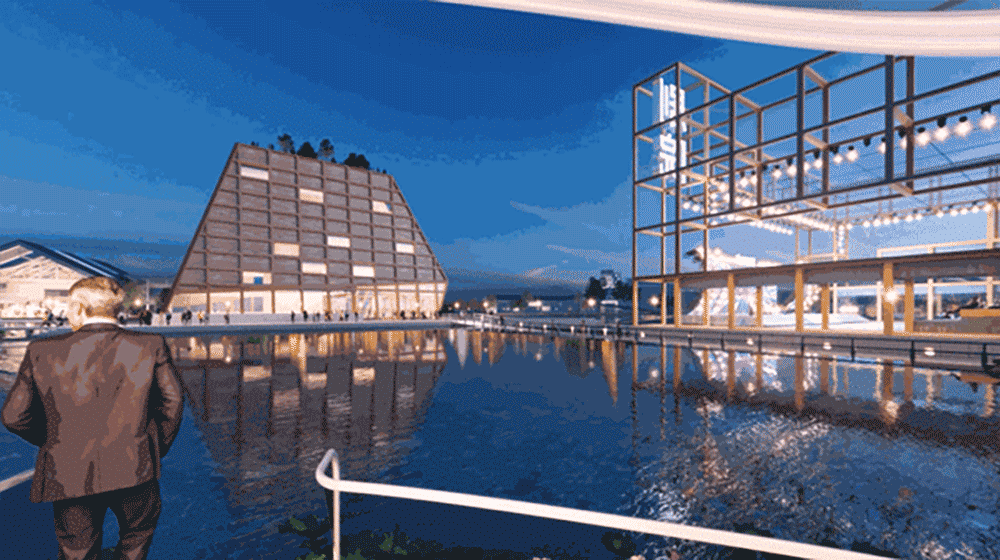
The cultural island offers lively entertainment and dining experiences.
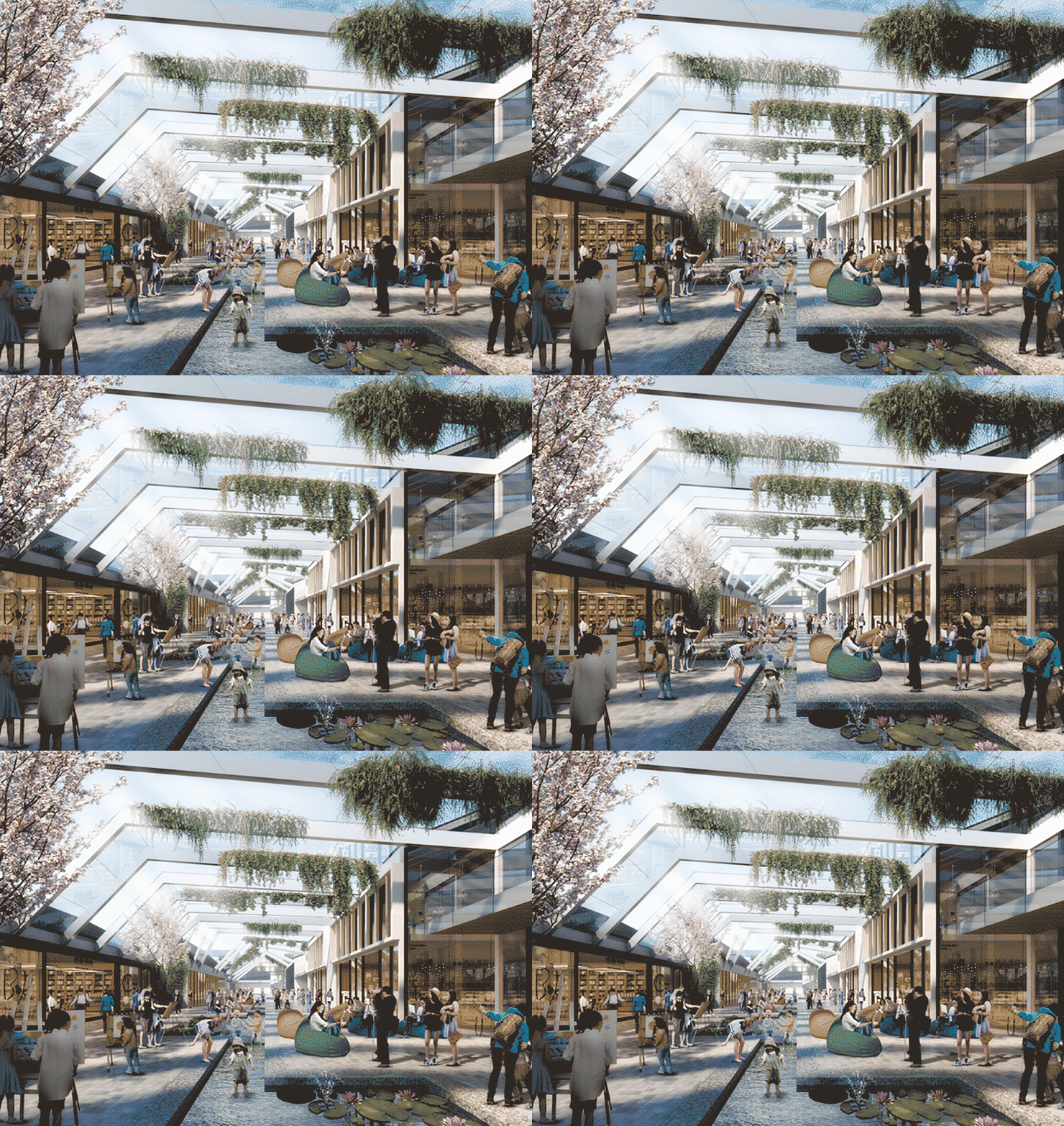
△ Cultural Sharing Courtyard and Japanese Food Street © SPARK Sibang
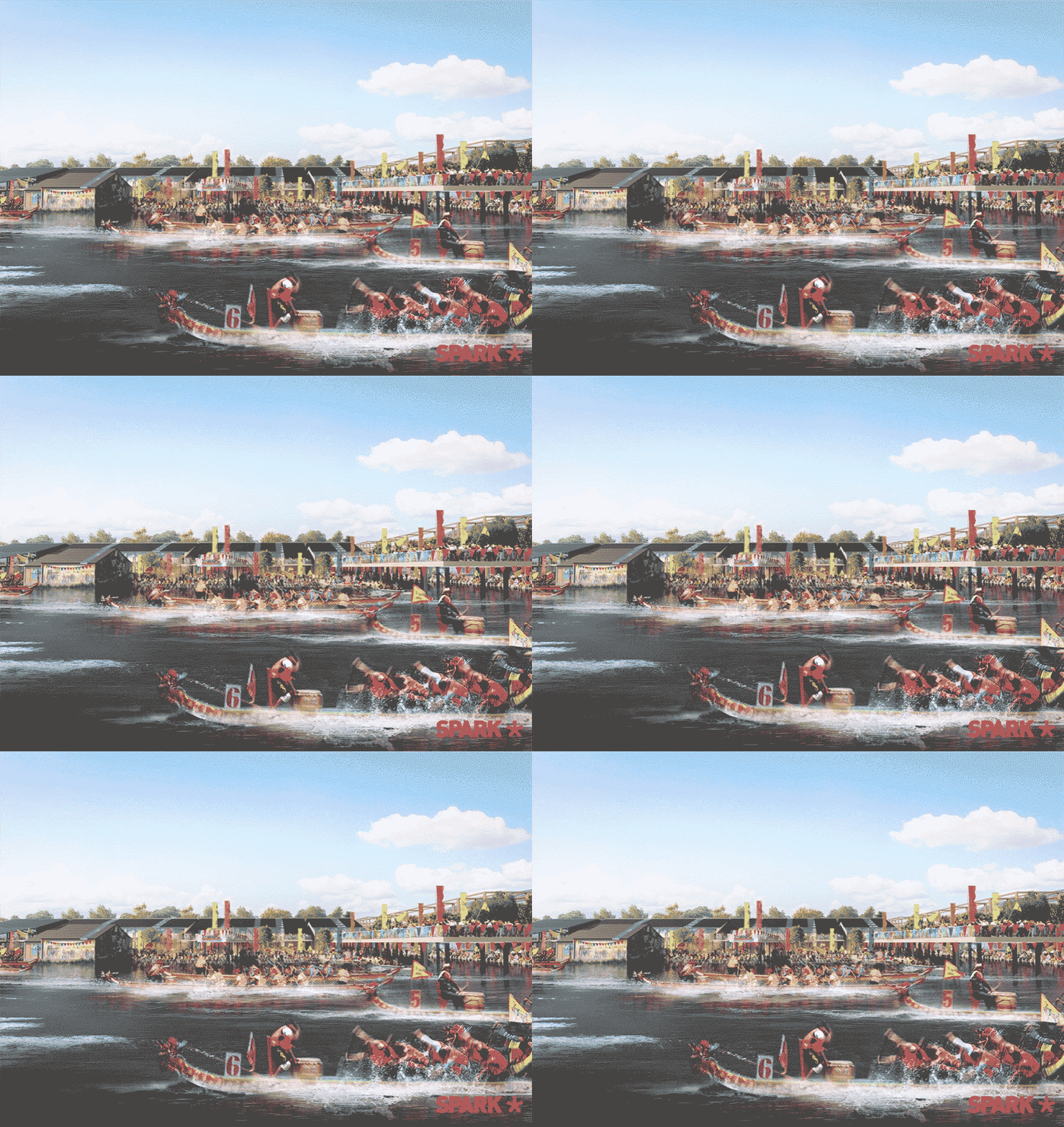
△ Visitors enjoying the Loong Boat Race from the dining platform during the Loong Boat Festival © SPARK Sibang
The lakeside theater provides a versatile venue for both outdoor and indoor cultural performances.
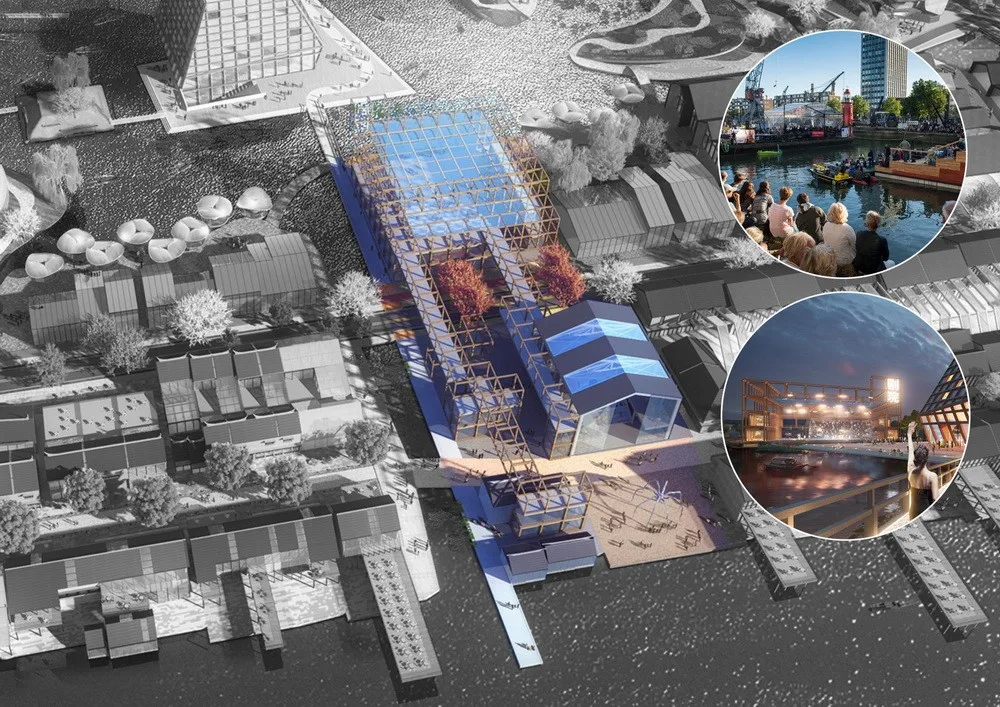
The Lakeside Theater includes both outdoor and indoor venues © SPARK Sibang
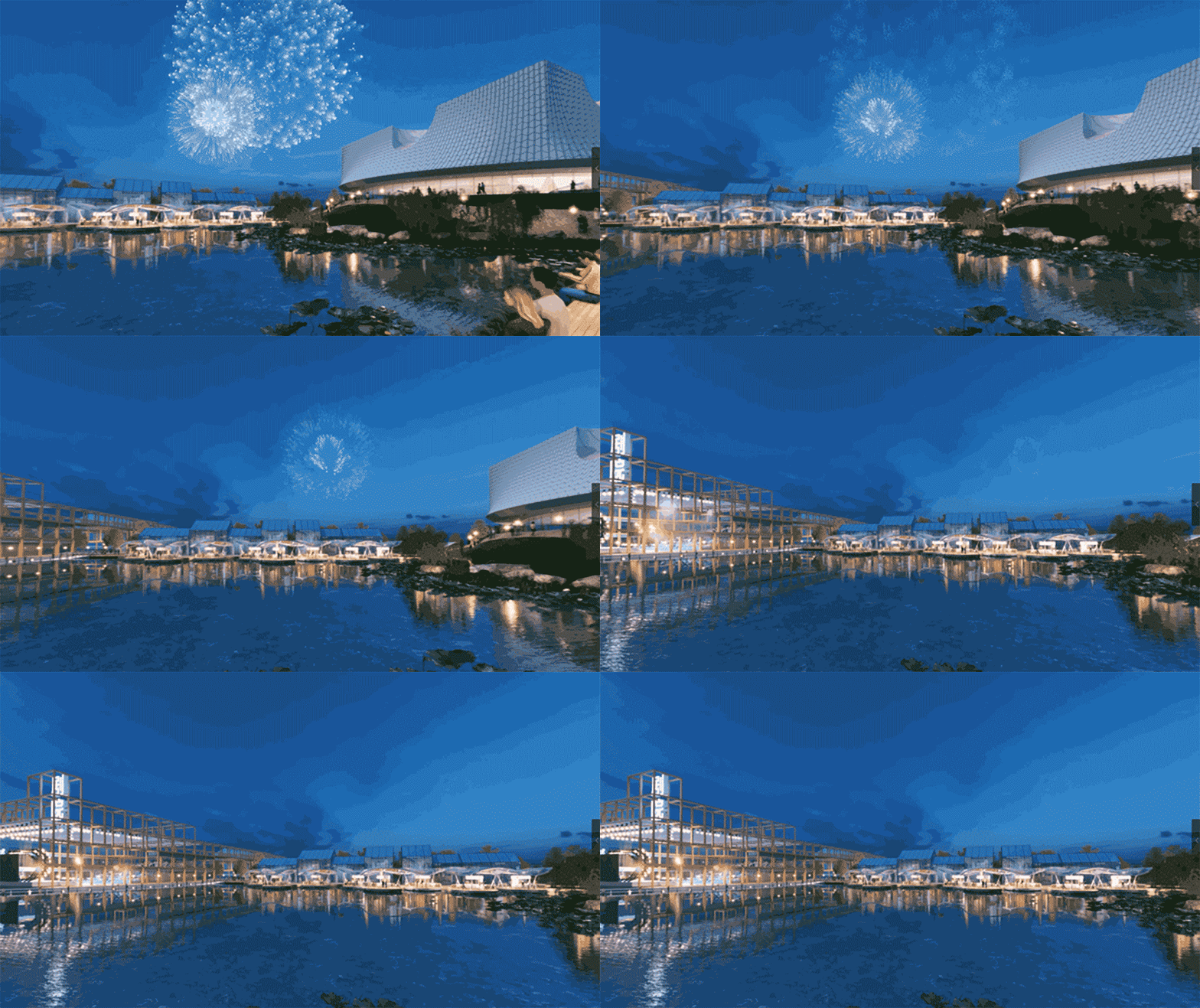
As night falls, the lakeside dining and theater areas come alive with bustling activity.
Fourth Stop: Boutique Vacation
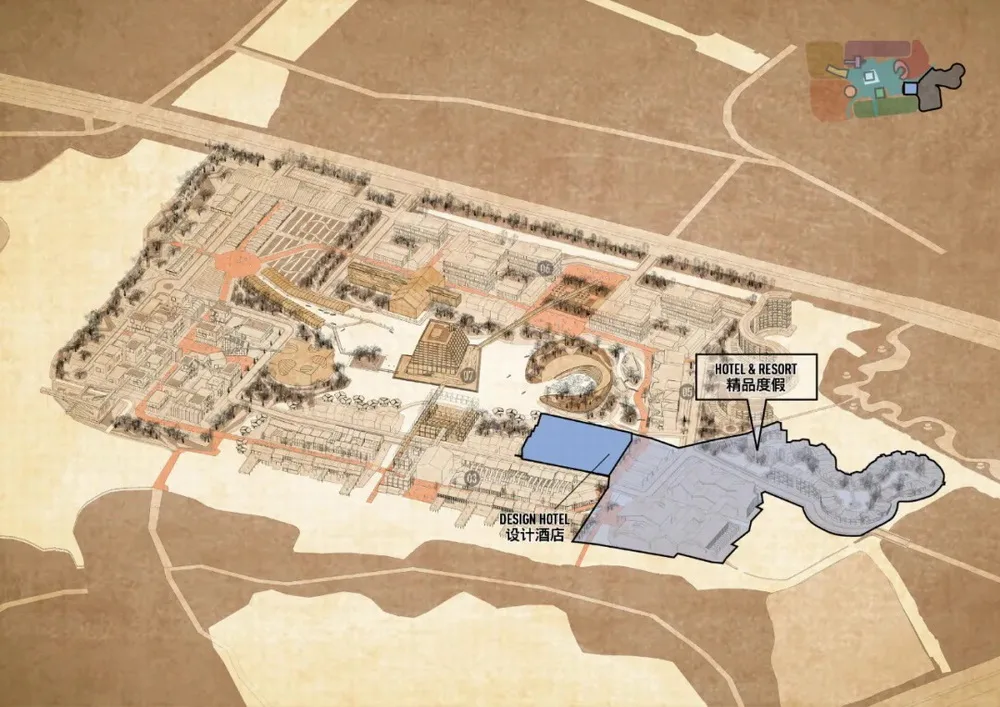
△ Boutique Resort Area © SPARK Sibang
This stop offers top-tier hotel and resort facilities, including relaxing hot springs designed to relieve fatigue. Hotels are tailored to meet personalized guest needs.
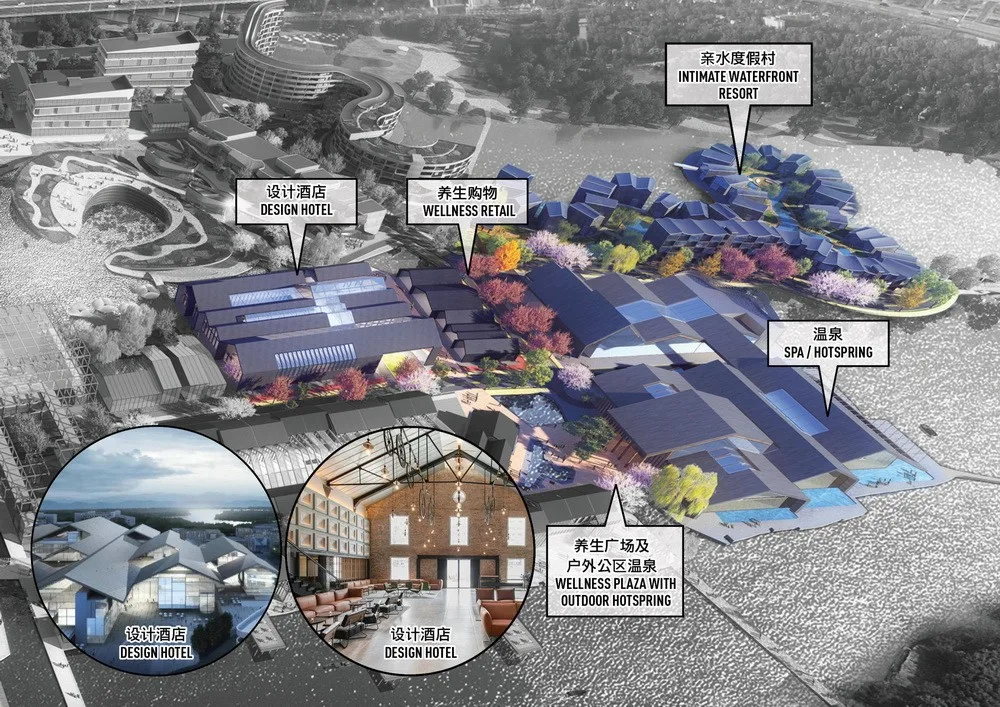
△ Boutique Resort Area © SPARK Sibang
The outdoor hot spring area is enveloped in misty vapor, promoting relaxation and social interaction.
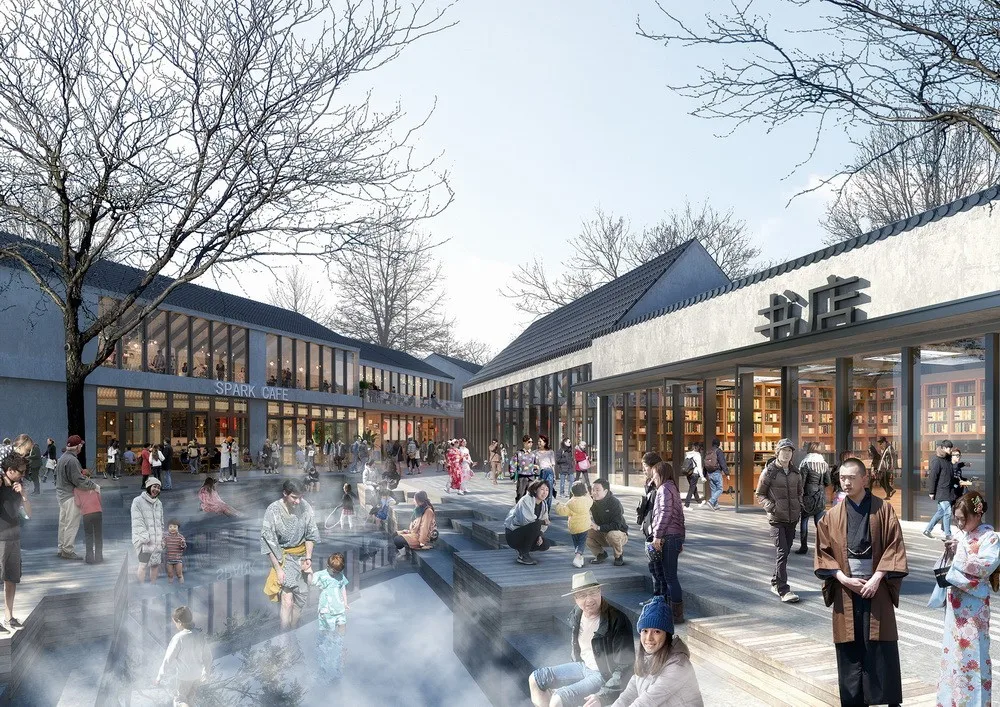
△ Outdoor Hot Spring Square © SPARK Sibang
Fifth Stop: Residential Design
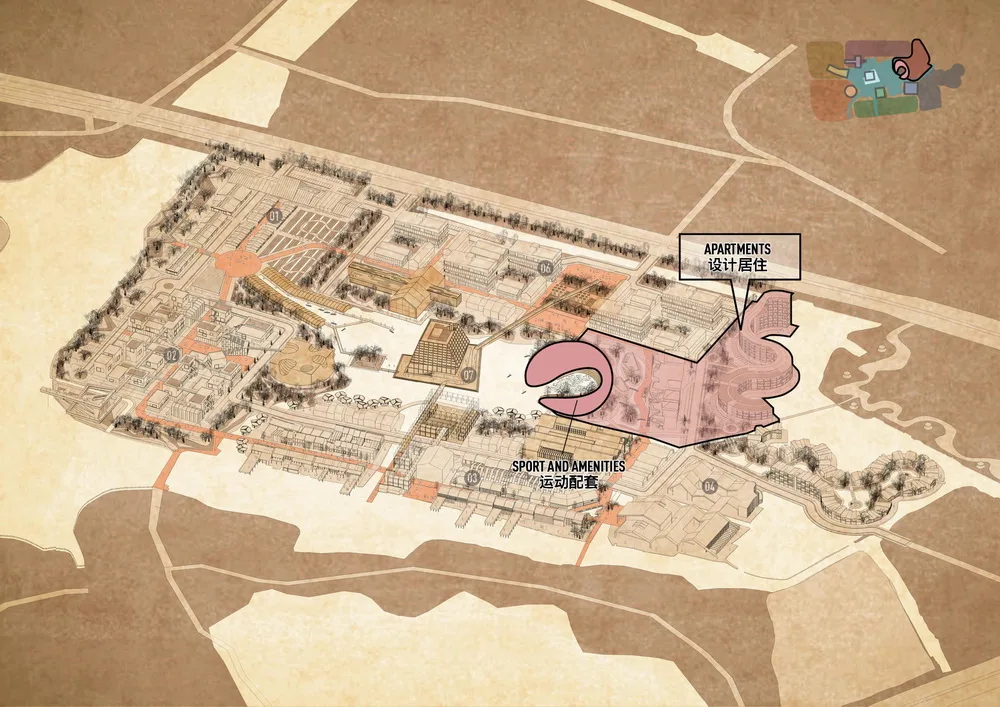
△ Design Residential Areas © SPARK Sibang
The residential district integrates supporting facilities promoting lifestyle, health, and fitness. The residential buildings are designed with a serpentine form to maximize waterfront views.
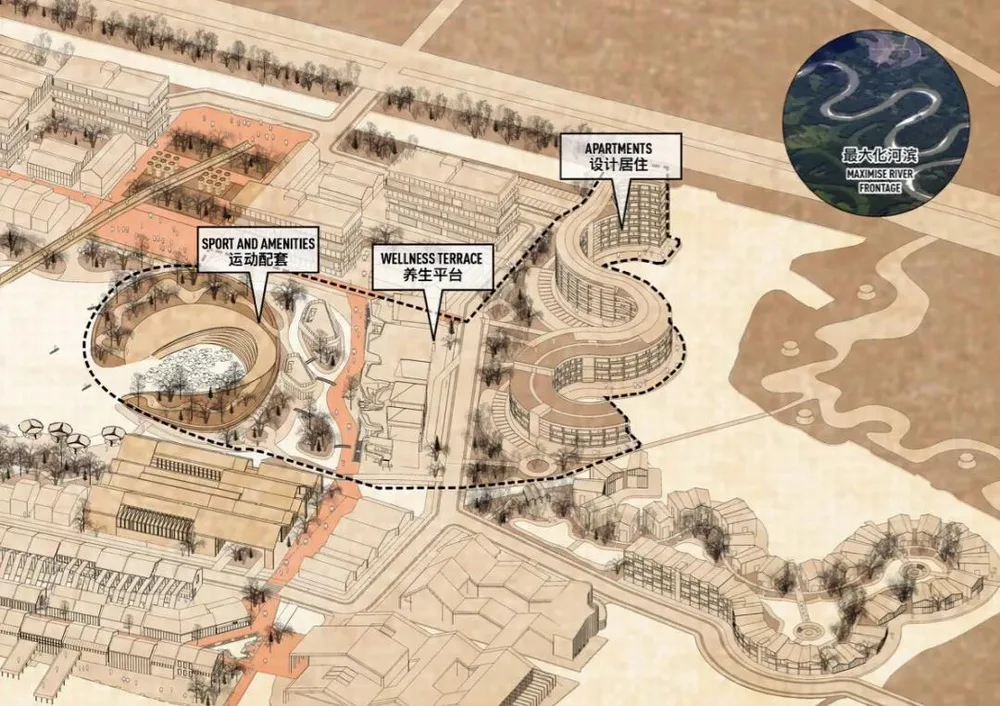
△ Design Residential Areas © SPARK Sibang
The sports facilities are designed with landscaping elements, featuring sloped roofs that descend toward the central lake, integrating harmoniously. Inside the building, a lotus pond provides a tranquil view during exercise, enhancing wellness.
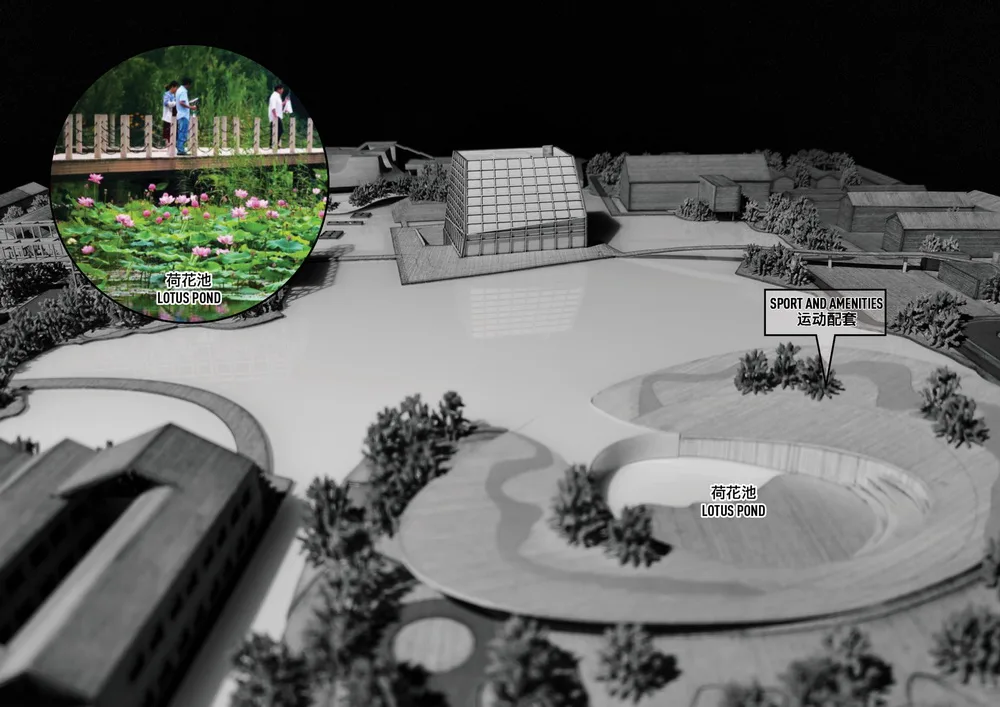
△ Sports Facilities © SPARK Sibang
An indoor infinity pool blends seamlessly with the surrounding environment, both inside and out.
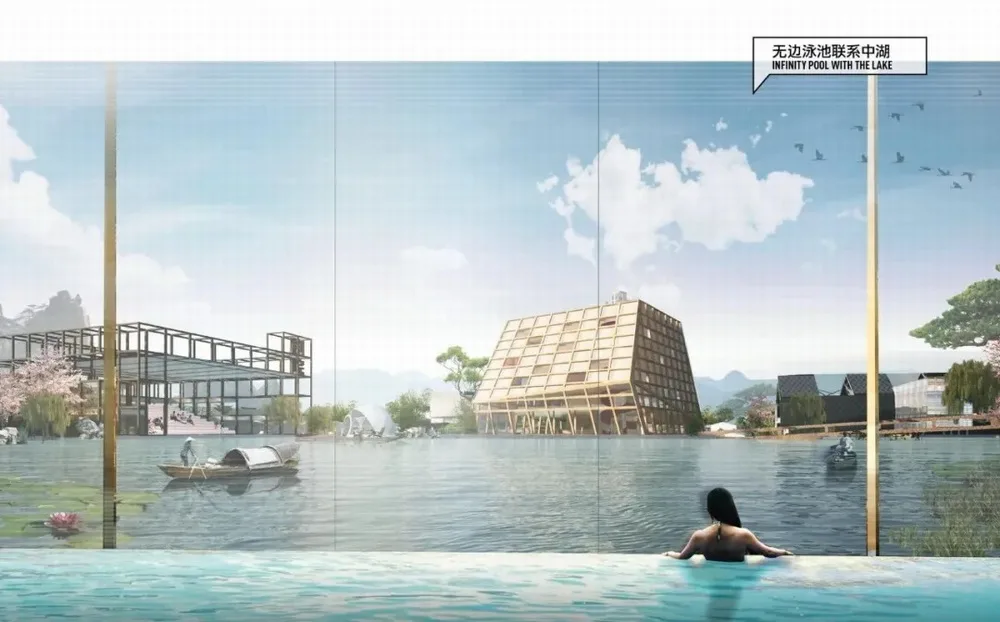
The Infinity Pool within the Sports Complex © SPARK Sibang
Sixth Stop: Creative Office
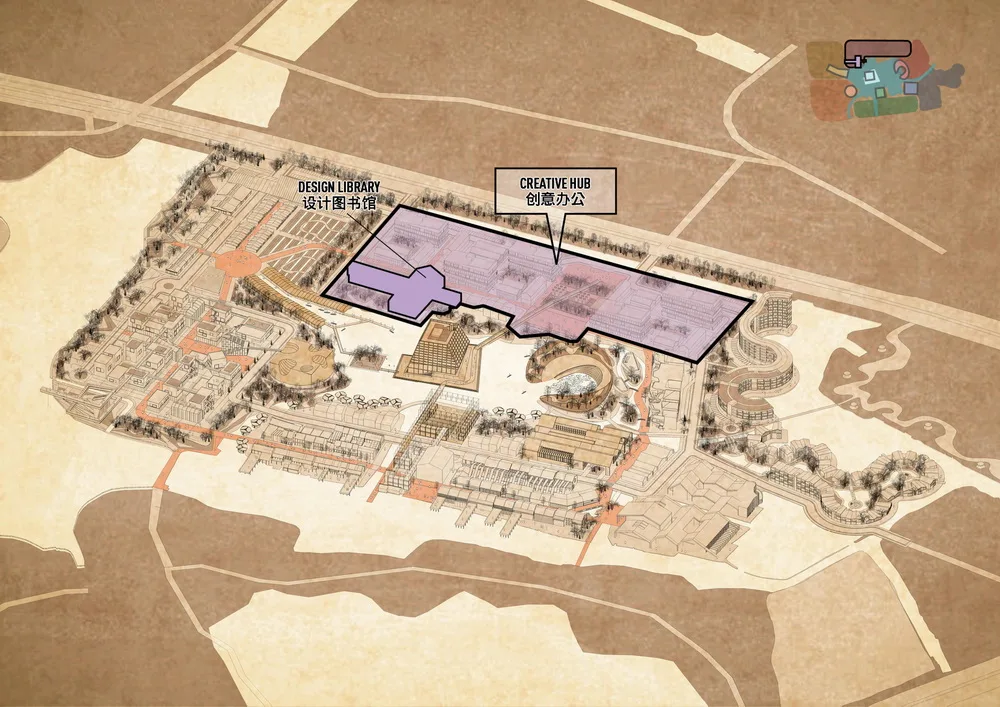
△ Creative Office Area © SPARK Sibang
This area serves as the primary office zone, featuring a green social courtyard within the office building and the main building—the “Design Library”—situated by the water.
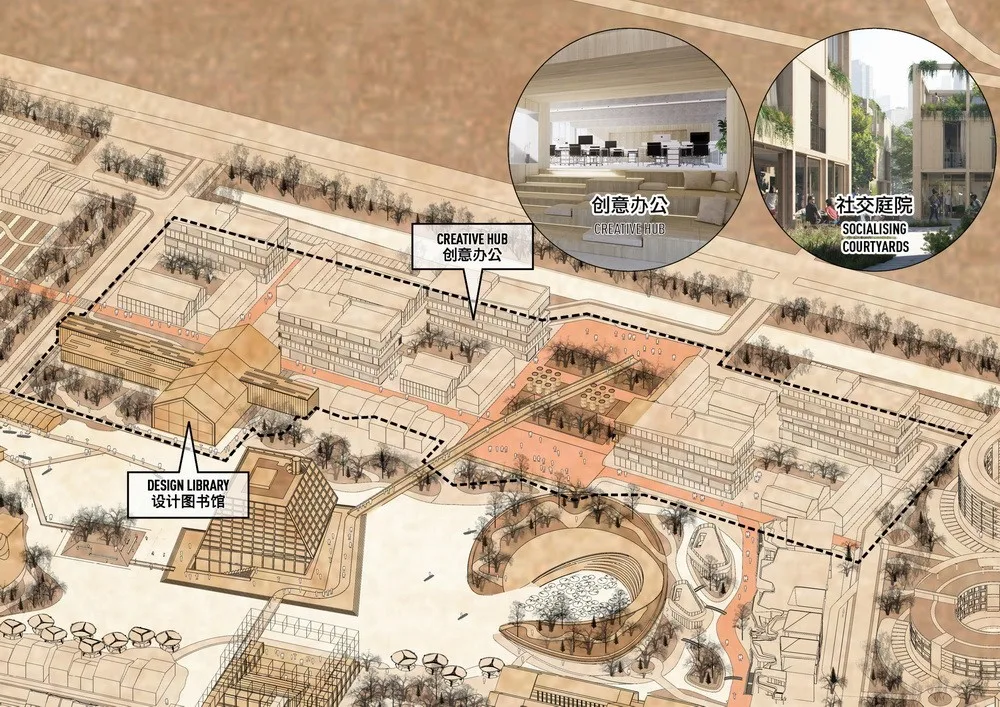
△ Creative Office Area © SPARK Sibang
The glass facades on both sides provide ample natural light and allow interesting visual interactions between interior and exterior spaces.
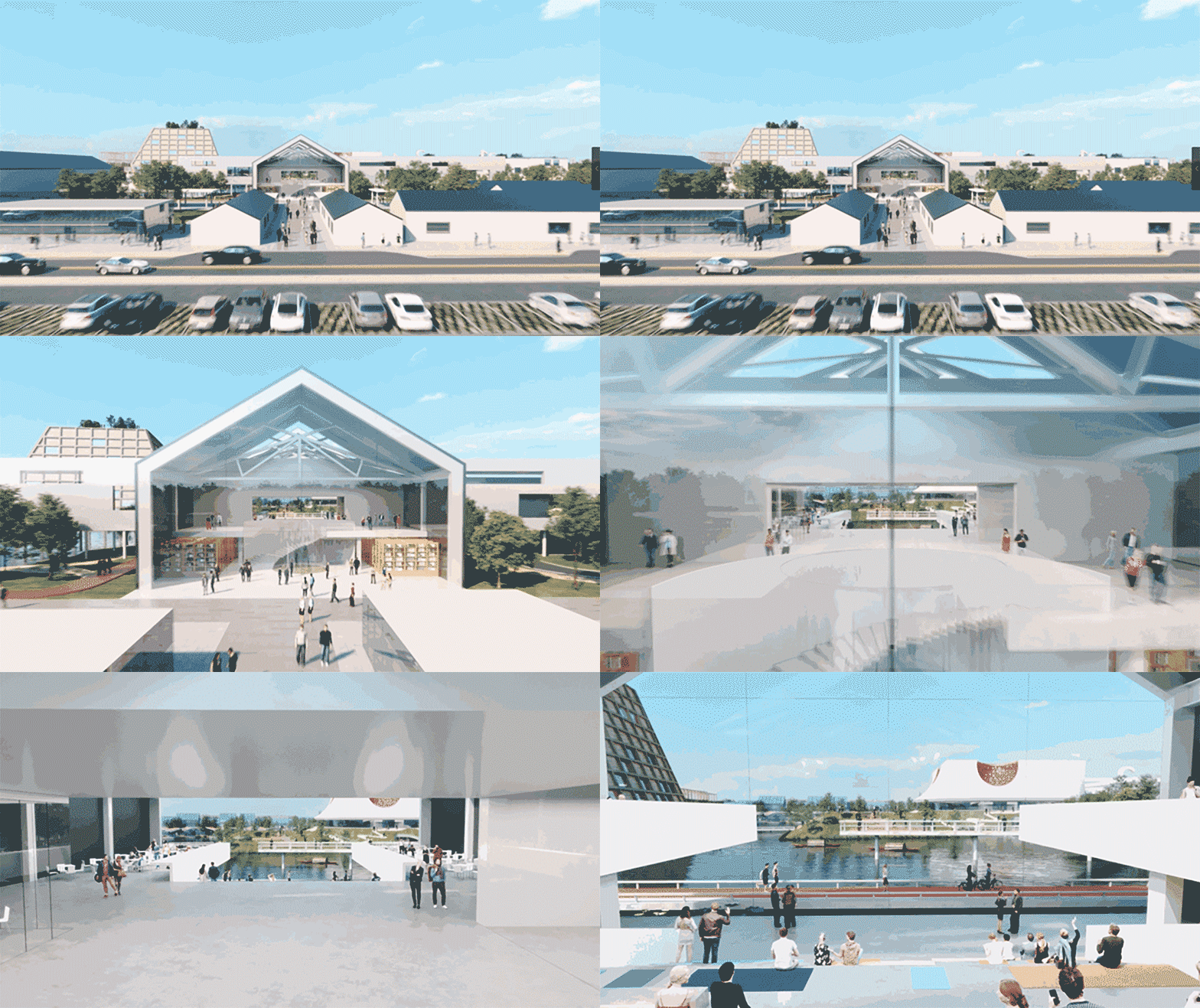
The Design Library faces the permanent site of the International Design Award across the lake.
Seventh Stop: Permanent Site of the International Design Award
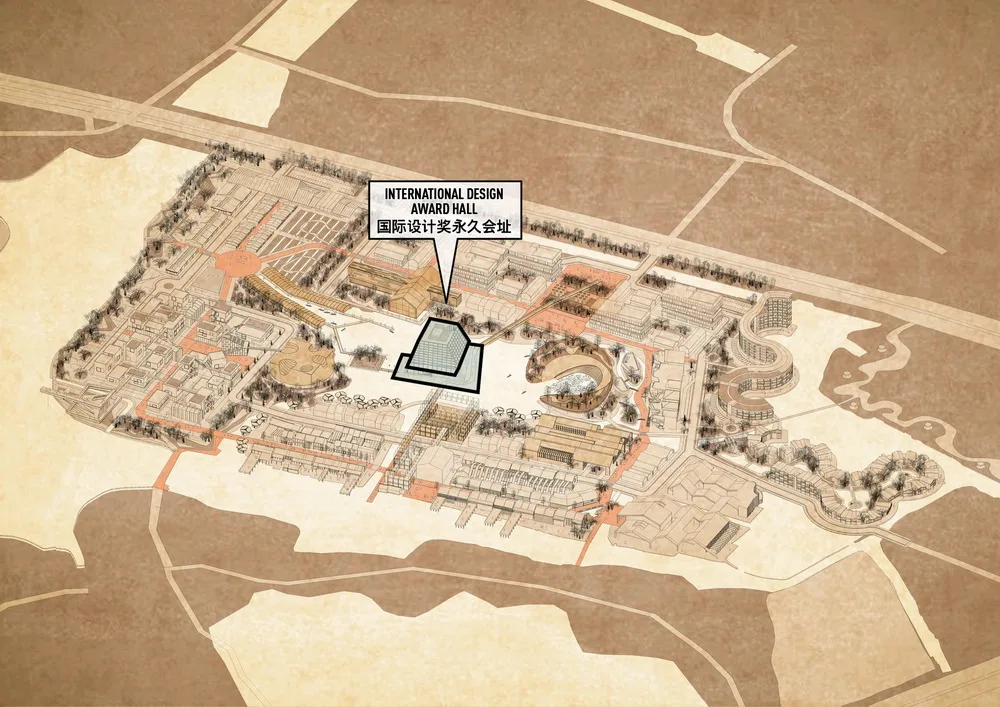
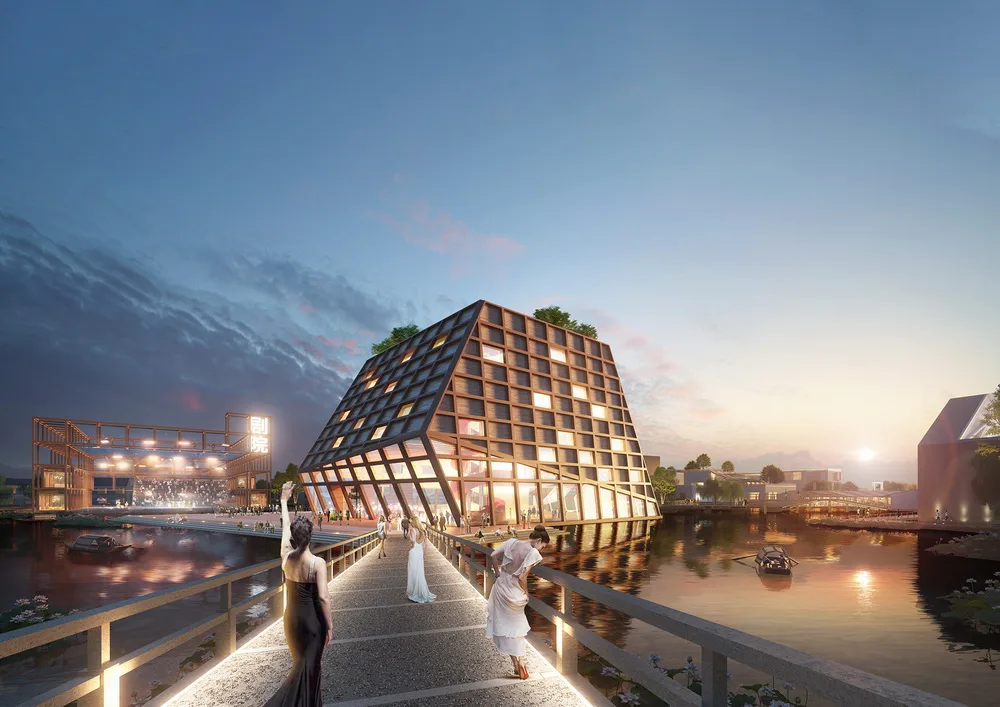
The permanent venue for the International Design Award is located at the center of the Central Lake and serves as a highlight of the entire project.
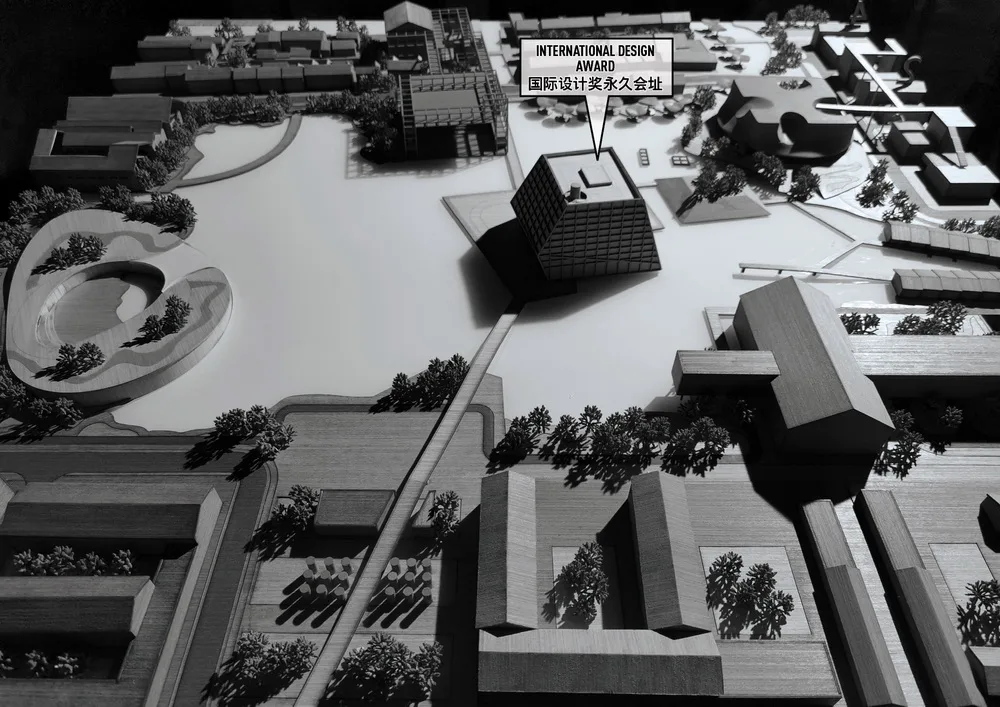
△ Architectural Model © SPARK Sibang
The building draws inspiration from the Wu School of Painting, emphasizing natural mountain forms, interpreted through abstract contemporary Japanese architectural techniques.
To achieve an appropriate architectural scale, the award hall is partially submerged underwater.
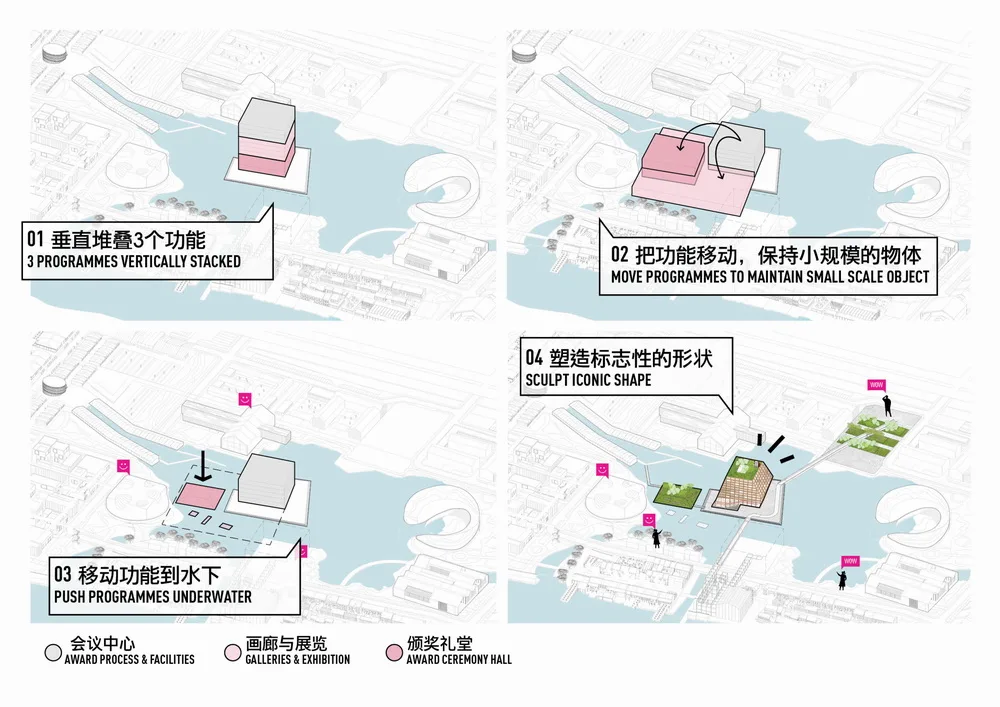
Conceptual Design of the Permanent Venue for the International Design Award © SPARK Sibang
Visitors approach the award venue from the North Square, crossing a rainbow bridge while the scenery gradually unfolds, creating a captivating experience.
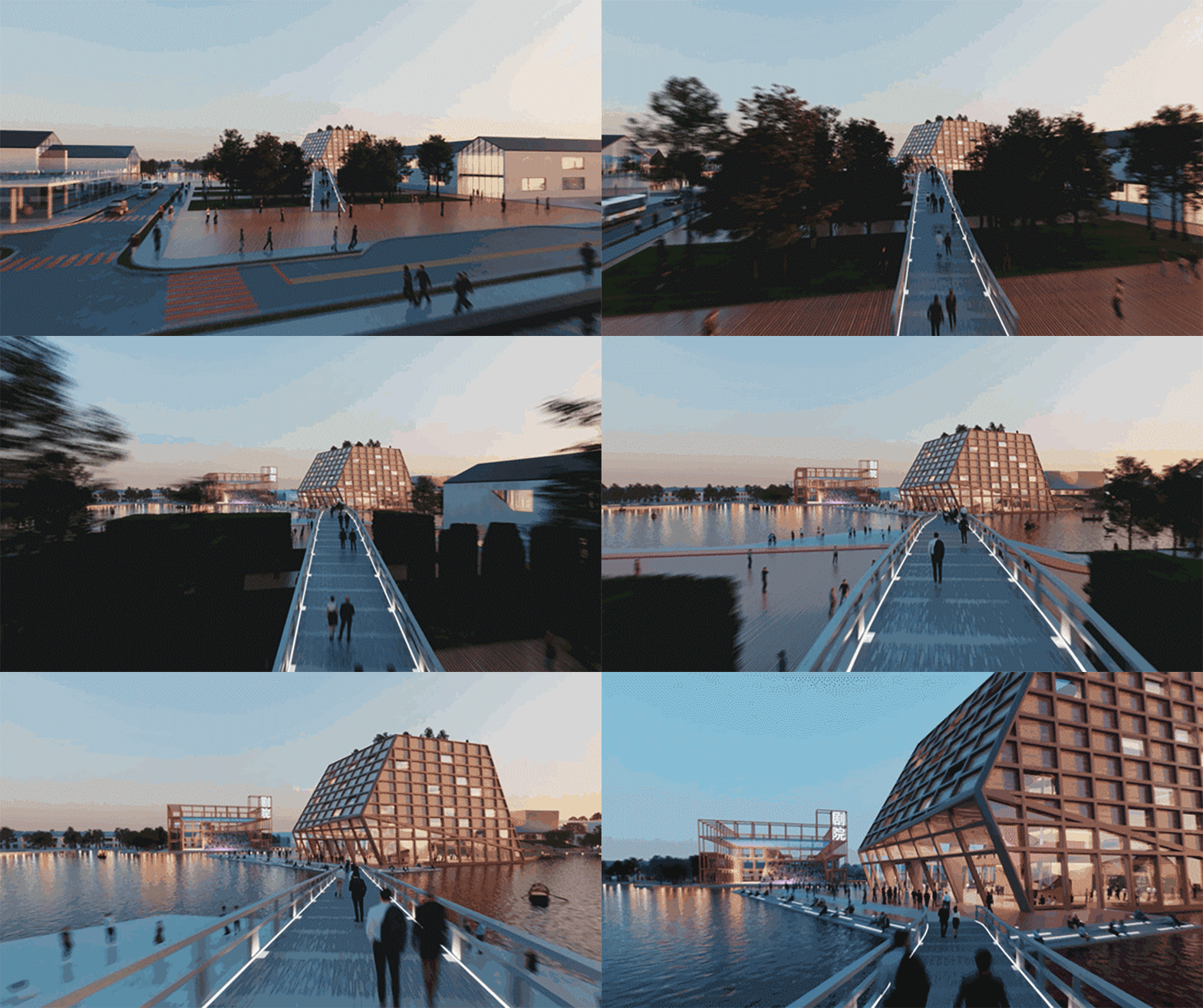
△ Approaching the Award Hall © SPARK Sibang
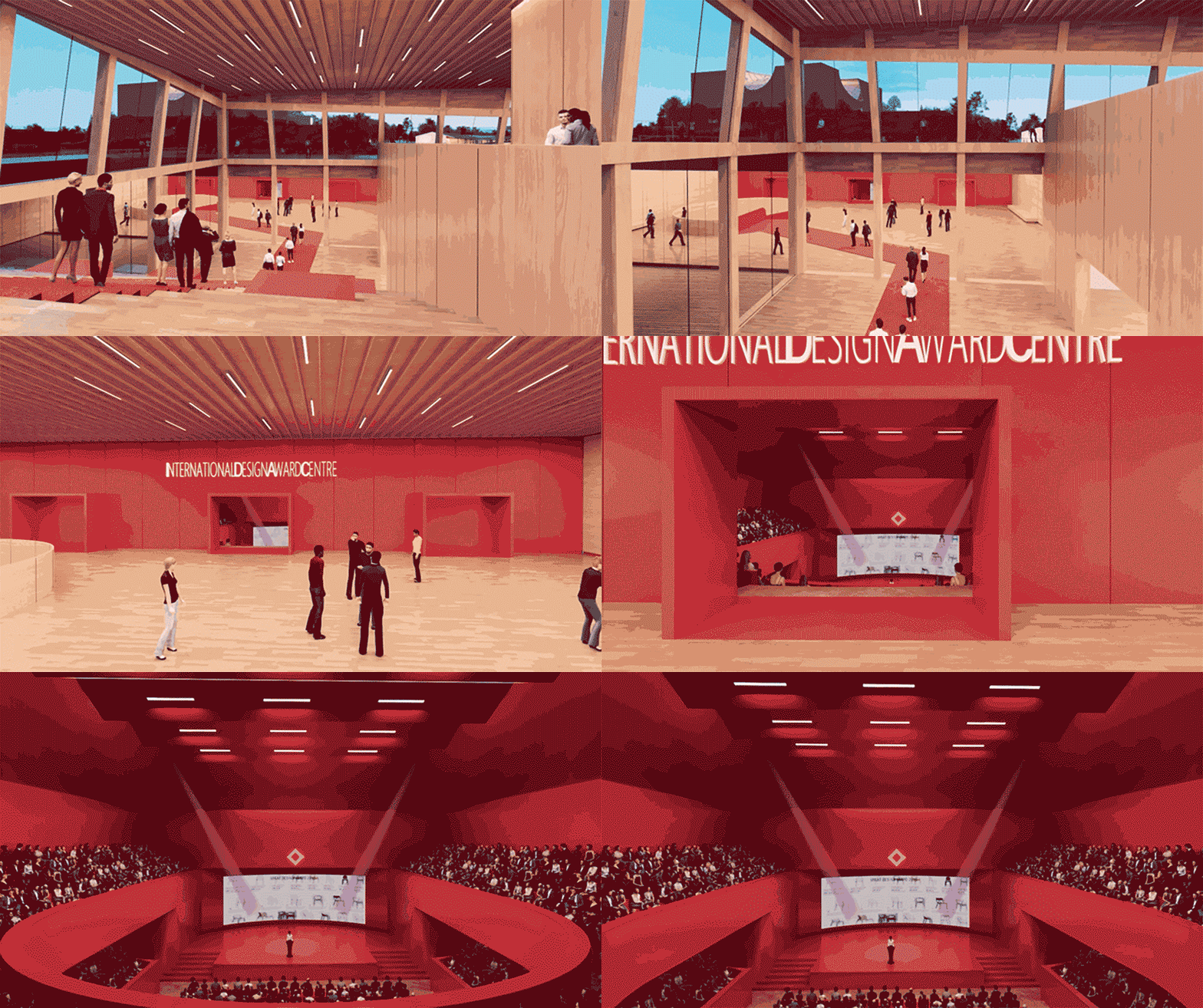
△ The Award Hall Situated Underwater © SPARK Sibang
Summary
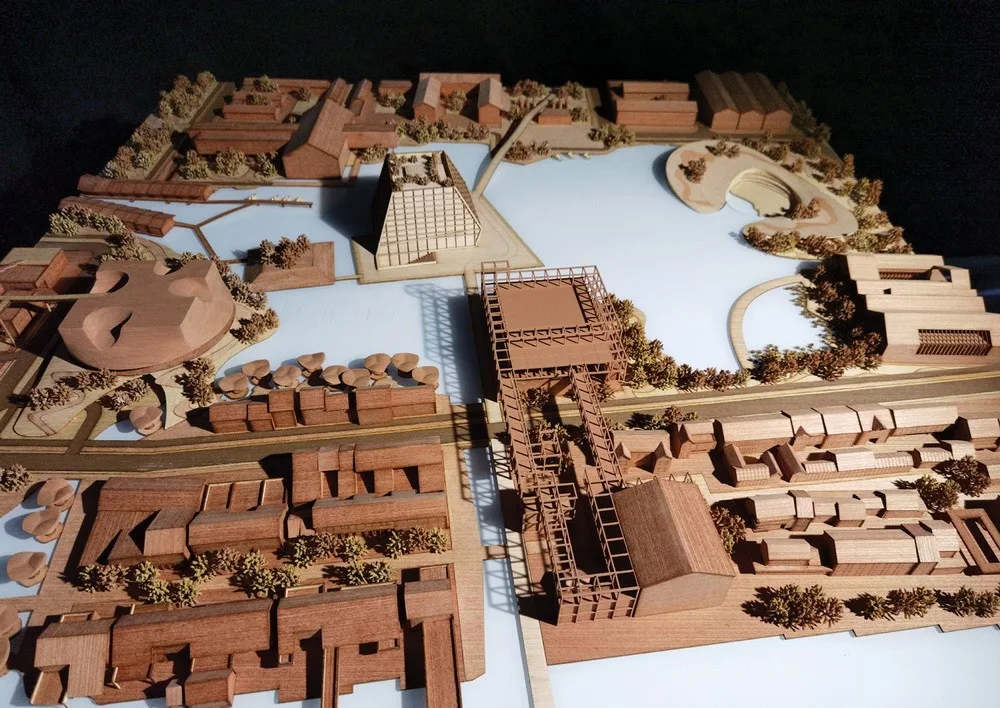
△ Architectural Model © SPARK Sibang
Social Painting Scroll: Unique Brands and Keys to Success
The centrally planned gardens and lake scenery establish an iconic identity grounded in Suzhou’s unique image. They offer open spaces for socializing, relaxation, entertainment, and exercise. The surrounding tourism loop connects diverse destinations, creating a complementary network. These are key factors for the future success of the Sino-Japanese Industrial Village in Qingtai.
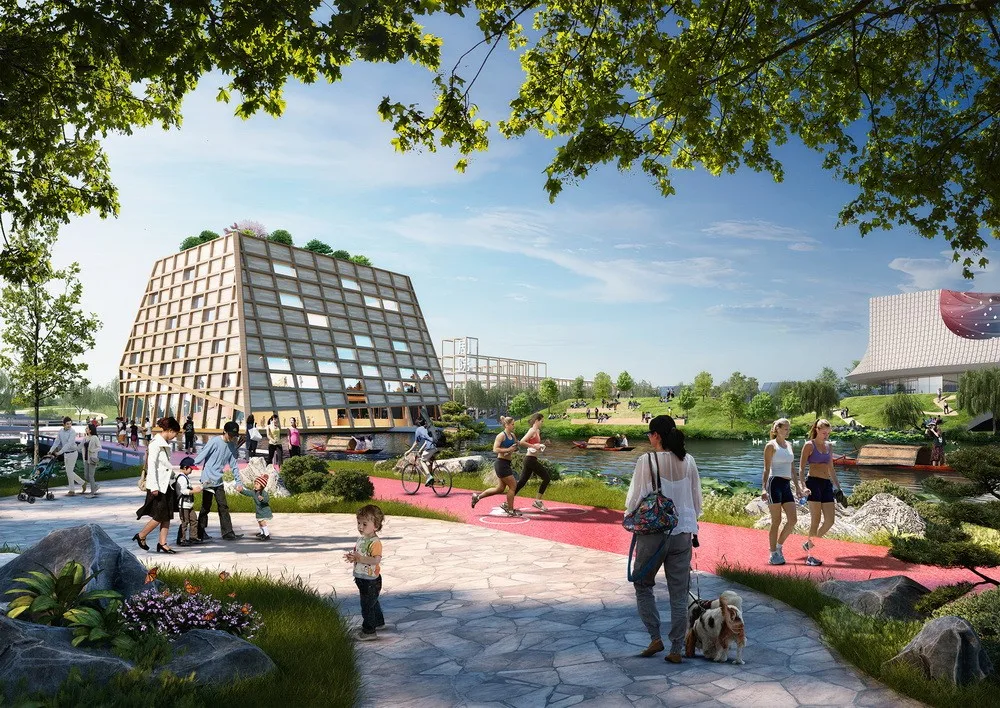
People Exercise and Enjoy the Central Lake Scenery © SPARK Sibang
With a full calendar of cultural events and diverse functional layouts, SPARK envisions transforming the Suzhou Sino-Japanese Moss Industrial Design Village into a world-class destination integrating culture, tourism, design, economy, and commerce.
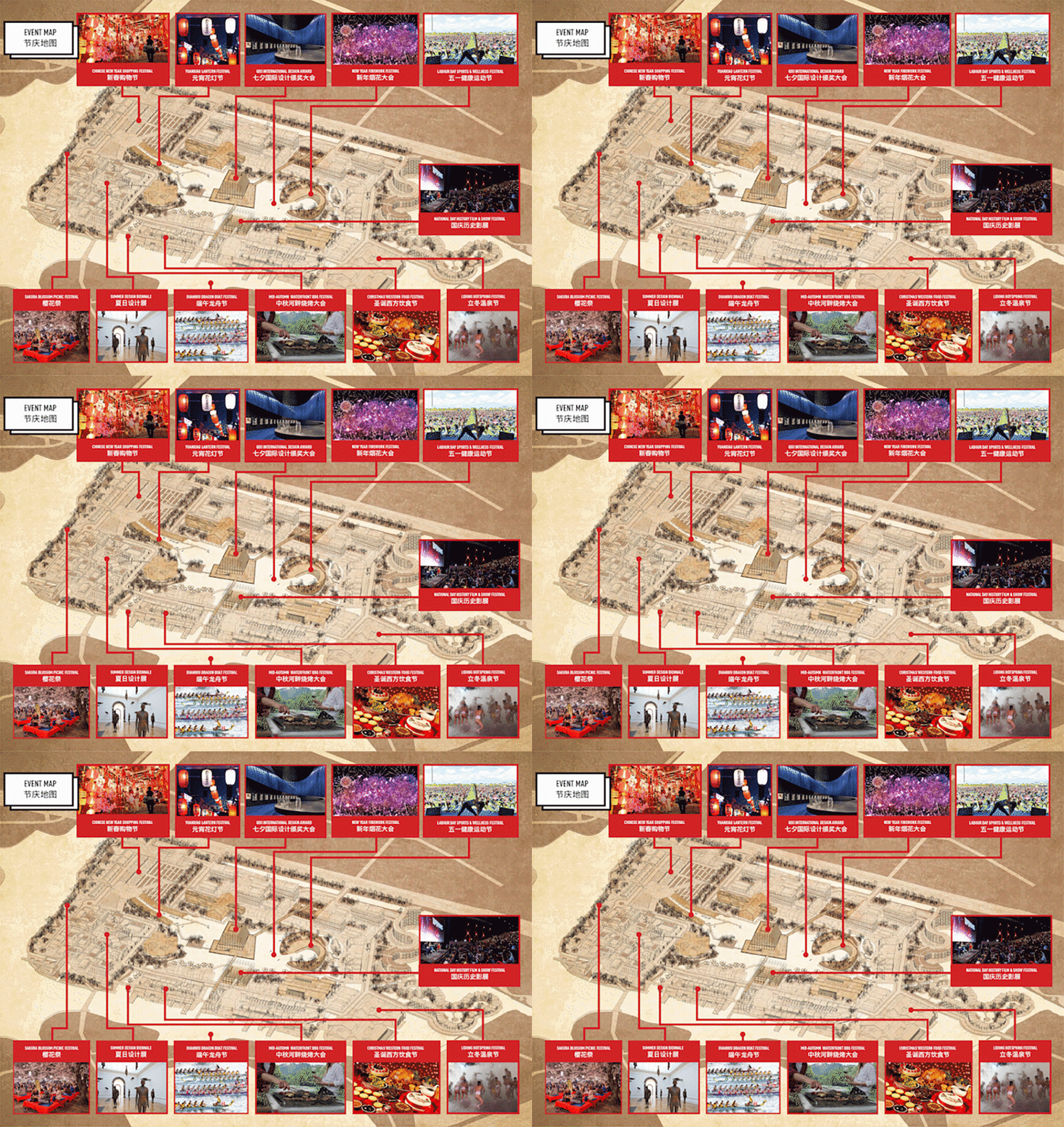
△ Festival Calendar and Map © SPARK Sibang
Project Rendering Video ▼
Project Information
CREDITS / Design Information
Project Name: Suzhou Qingtai Sino Japanese Industrial Design Village
Location: Xiangcheng District, Suzhou
Type: Urban Renewal, Waterfront Revitalization, Comprehensive Planning, Integrated Culture, Business, and Tourism
Floor Area: 270,000 square meters
Building Area: Approximately 170,000 square meters
Developer: Suzhou Qingtaizao Construction Management Co., Ltd.
Planning and Design: SPARK Sibang
Project Directors: Stephen Ping Bo Li, Stephen Pimbley, Min Wei
Project Vice Directors: Zhen Weirong, Yun Wai Wing
Competition Design Team: Jing Huairui, Mei Zhusong, Liliani Saputri, Javier Campoy, Regina Kartika, Palak Mandhana, Wengshern Poon, Ma Chaofan, Luca Maccarinelli
Design Period: 2021–Present















Must log in before commenting!
Sign Up