
At dusk in the ancient city of Linhai, Wengcheng transforms into a lively football field for children. The ball bounces off the historic city wall, and the kids cheer as they chase after it—likely unaware that the bricks they are striking date back to the Song Dynasty.
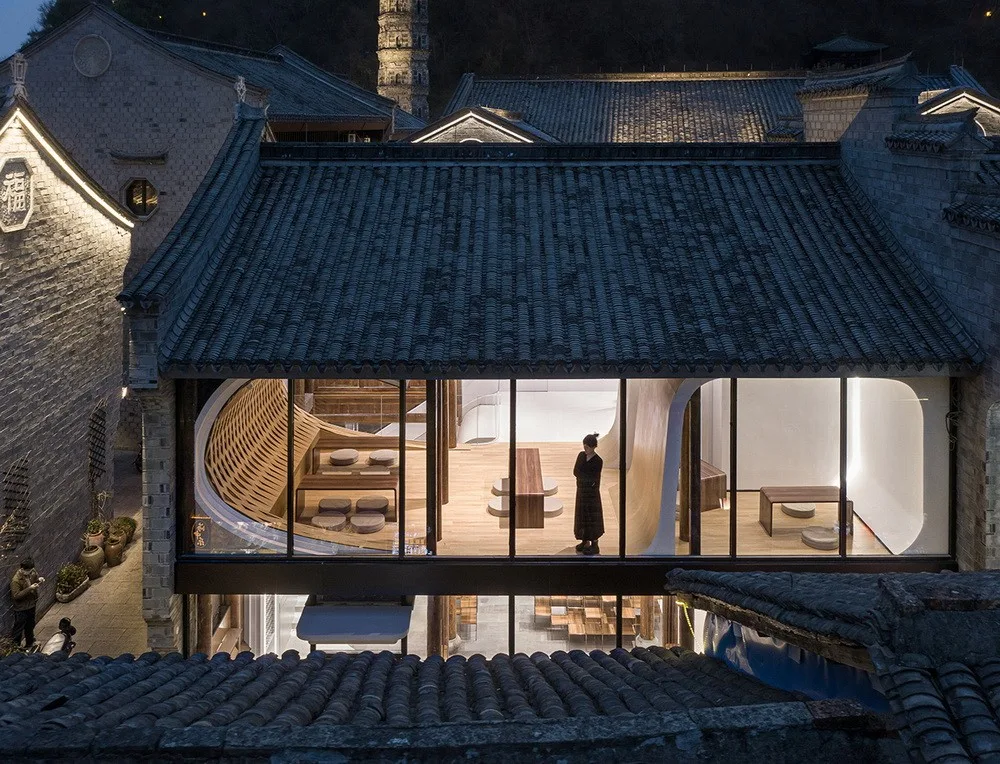
△ Aerial view
Linhai, located in Zhejiang province and boasting a history of over 1,600 years, is rich with heritage. Its origins trace back to the ancient city wall of Taizhou Prefecture constructed during the Jin Dynasty. The city is home to historic landmarks such as Longxing Temple—where Japanese monks once received ordination—the four pagodas from the Song, Yuan, Ming, and Qing dynasties on Mount Women, as well as Ziyang Street, Qi Jiguang Street, and Luo Binwang Temple. Recently, a small shop named Jiangnan Zan opened its doors on Ziyang Street.
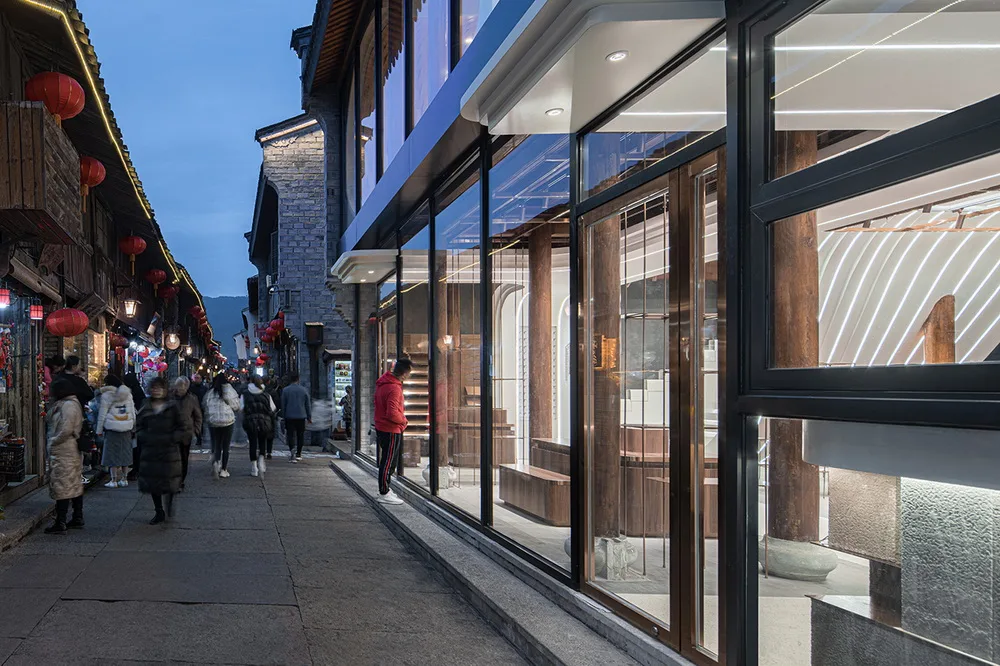
△ Street view
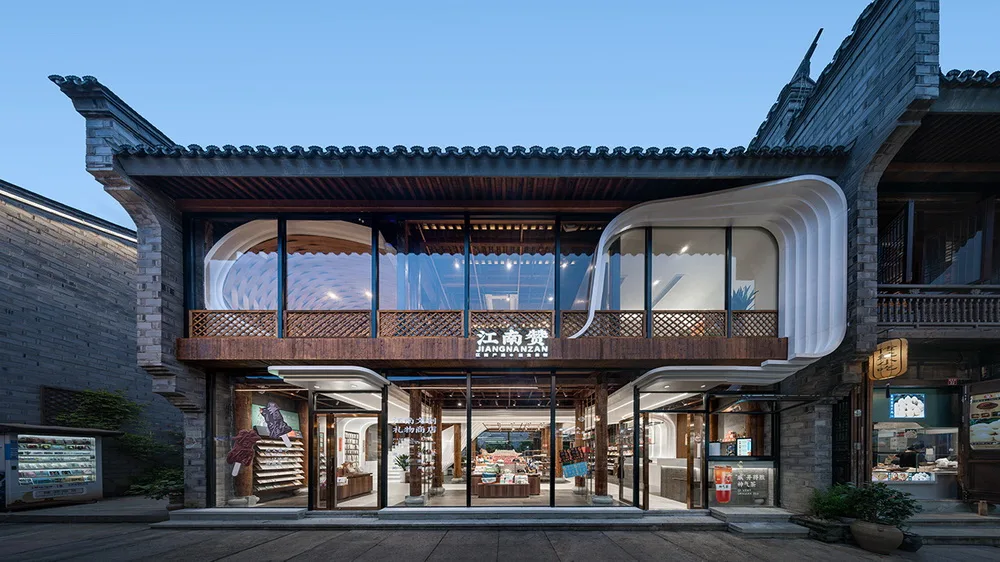
△ Front facade
Jiangnan Zan occupies a modest 200-square-meter space renovated from an old house. It represents the first store of the cultural and tourism IP “Poetry and Painting Jiangnan,” developed by Huaxu Culture—a key player in protecting and revitalizing ancient villages in Zhejiang Province and collaborating with the Palace Museum’s cultural and creative industry. The architecture, interior design, and soft furnishings were all crafted by Zero One City Architecture Office.
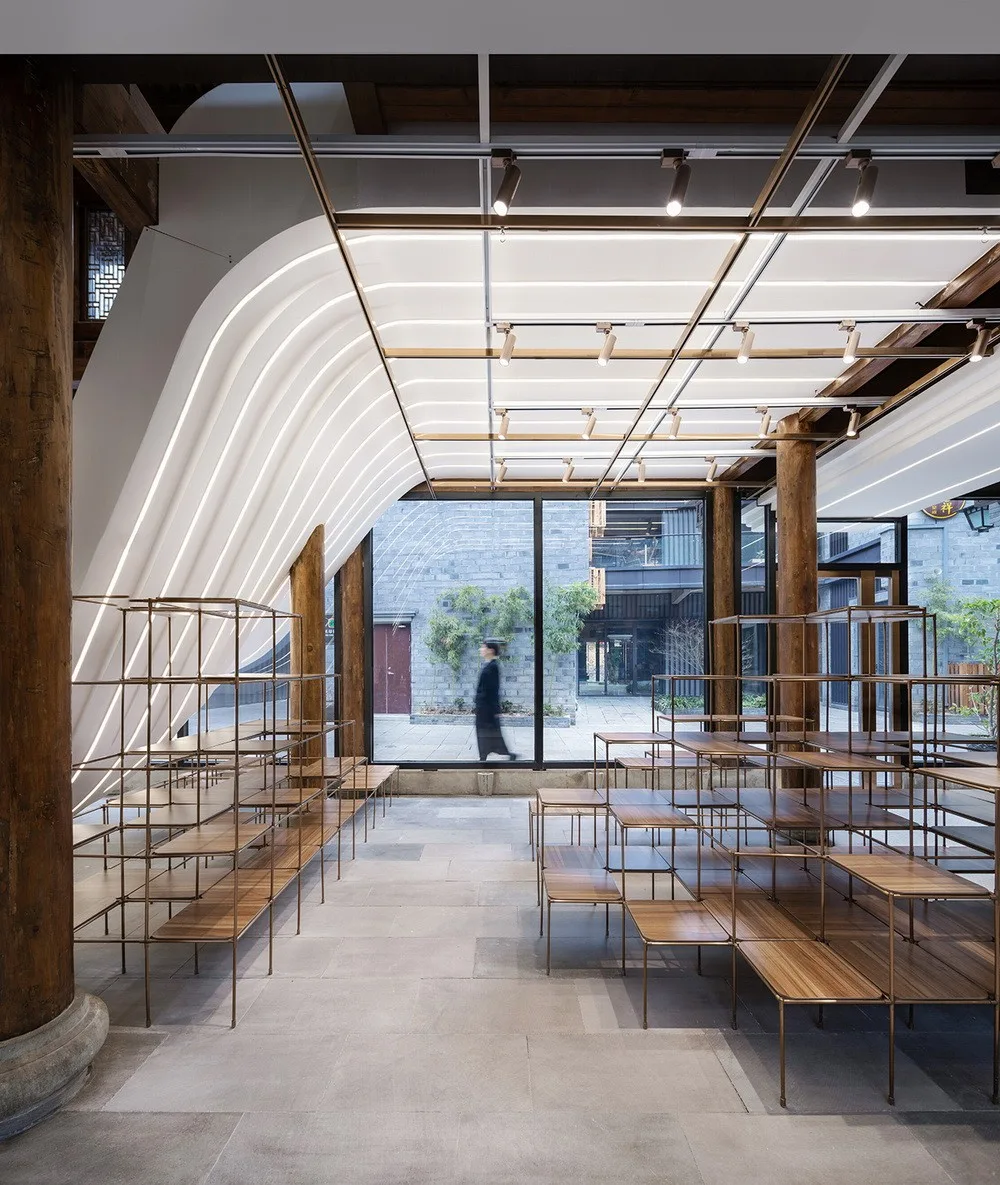
△ Trendy Products Exhibition Area
Ziyang Street retains the neighborhood layout from the Tang and Song dynasties. Historically a bustling commercial district near the sea, it remains home to many century-old shops. Yet, its narrow streets prevent vehicle traffic, and the historic buildings often seem outdated. Surrounded by a dazzling modern cityscape, this ancient street risks becoming increasingly desolate and forgotten.

△ Image source network
In 2014, the article “Yongzheng: Feeling Cute” went viral online. This blend of cultural IP and popular elements presented ancient history in a fresh, youthful way, revitalizing the 600-year-old Forbidden City. This sparked a nationwide wave of innovative cultural and creative ideas, inspiring the design team behind Jiangnan Zan.
The Waves Behind the Ancient City
The design team embraced the concept of “waves,” integrating abstract wave motifs into the old house to create a surreal contrast between tradition and modernity. This approach conveys a youthful spirit of navigating challenges and fosters a rich, dynamic, and engaging atmosphere.
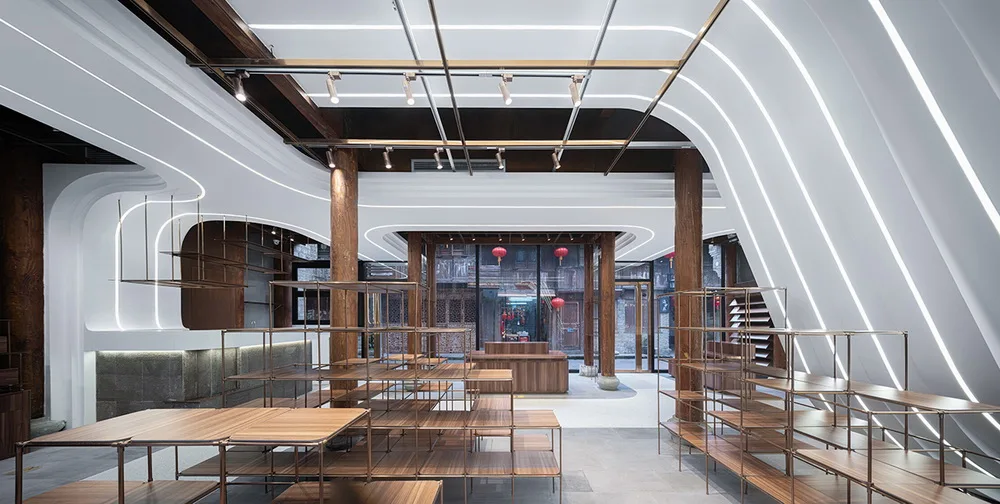
Continuous wave elements flow through the space
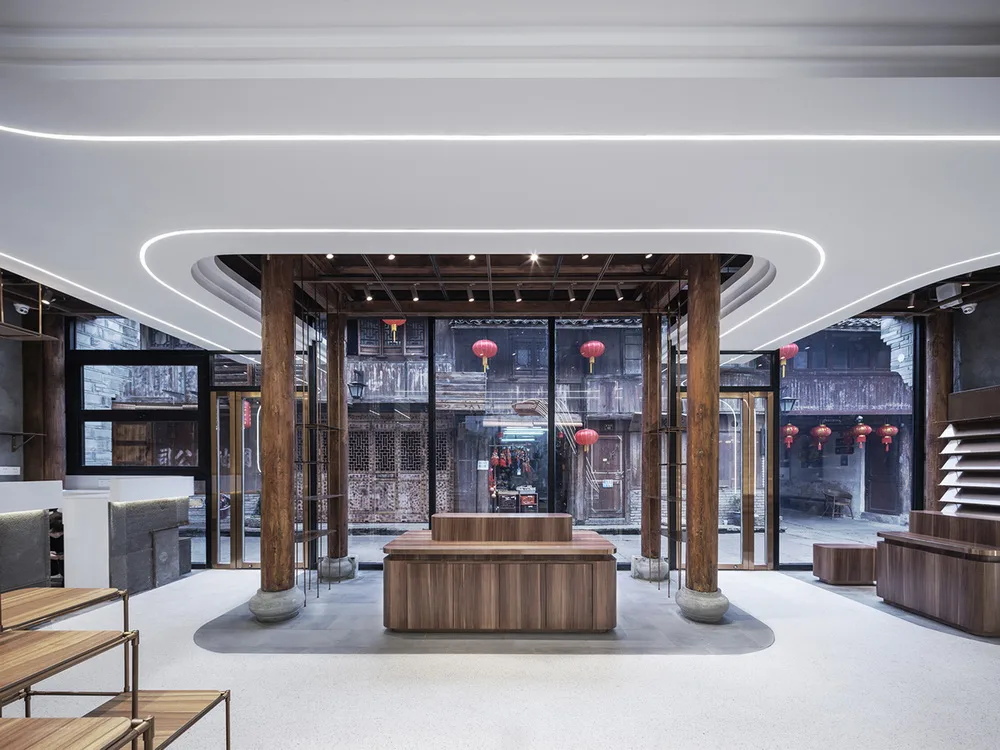
△ French window frames bring the old street view indoors
This wave concept also reflects the surging waters of the Lingjiang River outside Linhai. The river’s floods historically necessitated the construction of ancient city walls with flood control functions, allowing them to survive for thousands of years amid dense urban areas.
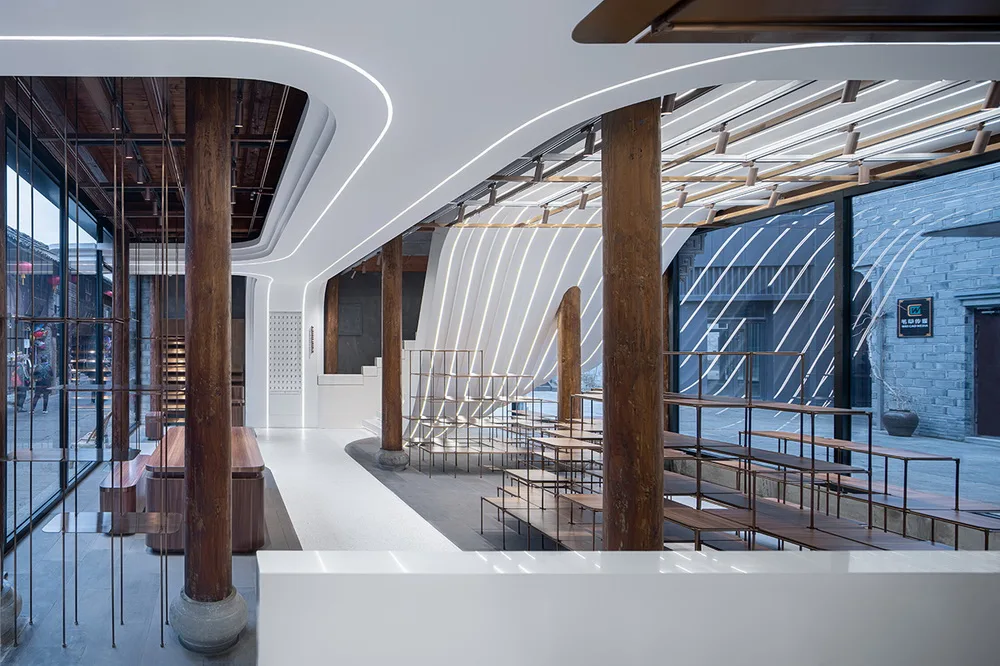
△ White surface elements extend down to the floor
Immersive Retail Experience
The wave design also addresses the challenge of maximizing retail space efficiency, a common concern for stores striving to optimize every square inch. By blurring the boundaries between walls, floors, and ceilings, the design breaks traditional spatial layers, transforming the two-story area into a continuous flow that mimics surfing on waves, delivering a captivating shopping journey.
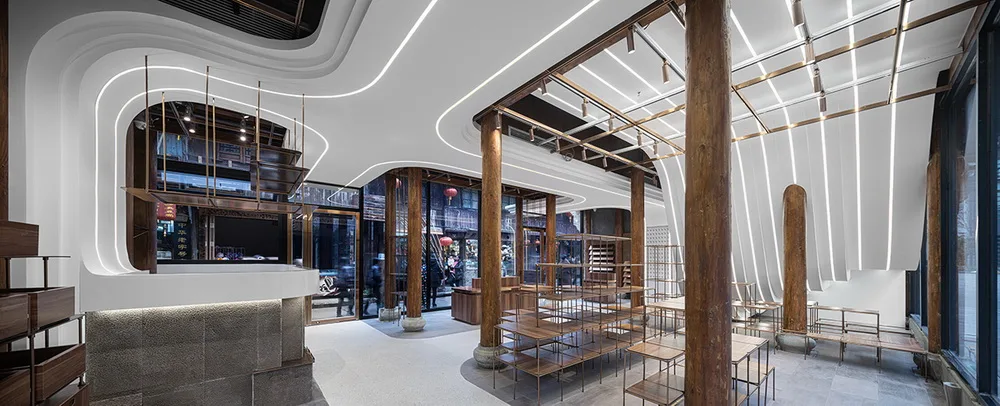
△ An immersive spatial experience resembling surfing massive waves
Redundant walls were removed to reveal the original wooden structures and wall materials. Between the beams and columns, a continuous white curved surface reminiscent of a leaping wave conceals equipment pipelines and electrical wiring, creating a clean and minimalist visible area.
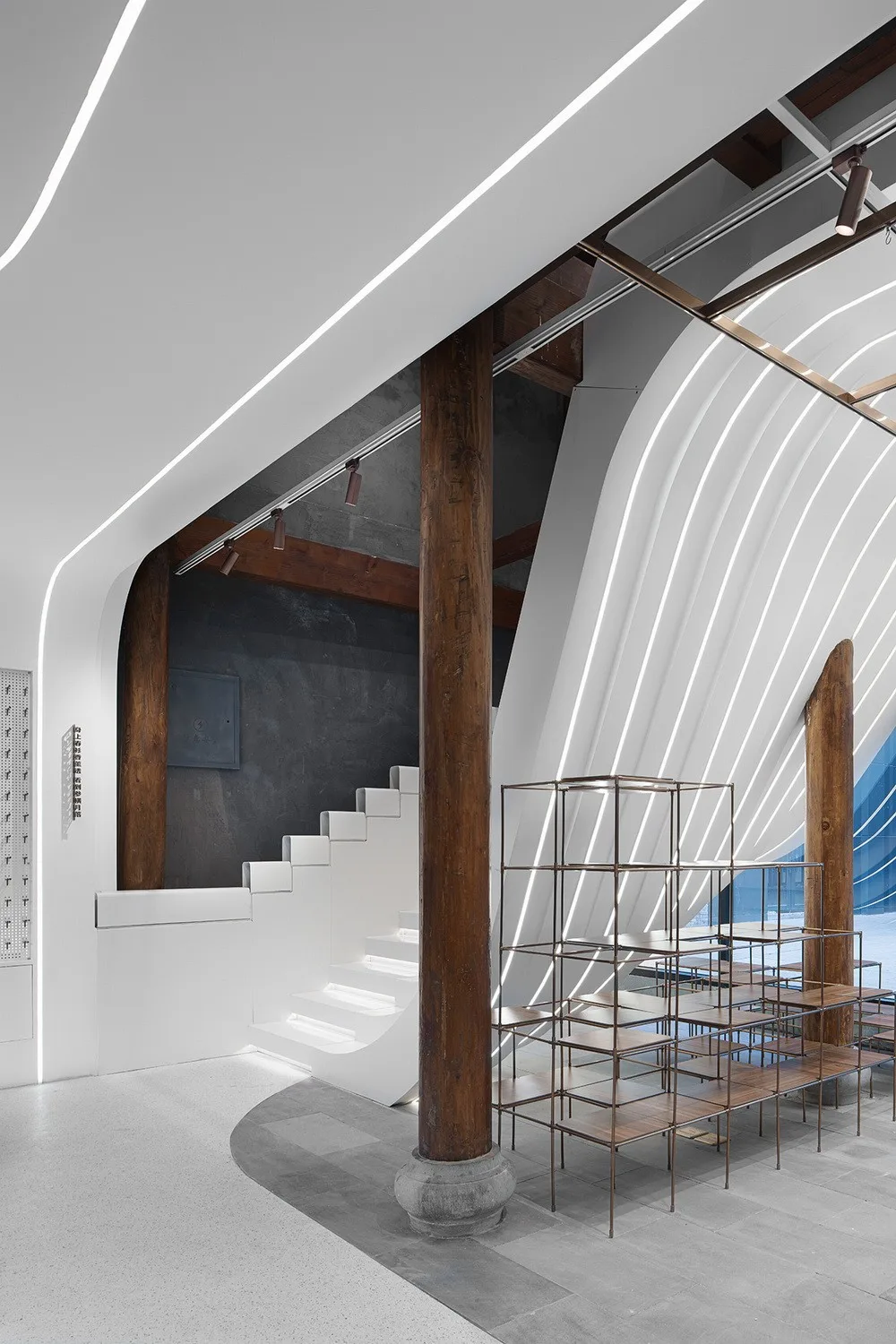
Exposed wooden structure and old walls
The curved surface’s edges feature layered contours that reduce bulkiness and enhance a sense of speed. Linear light strips accentuate these edges, illuminating the waves and wooden columns, creating a striking visual contrast. The fusion of old and new evokes a fresh collision of time and space.
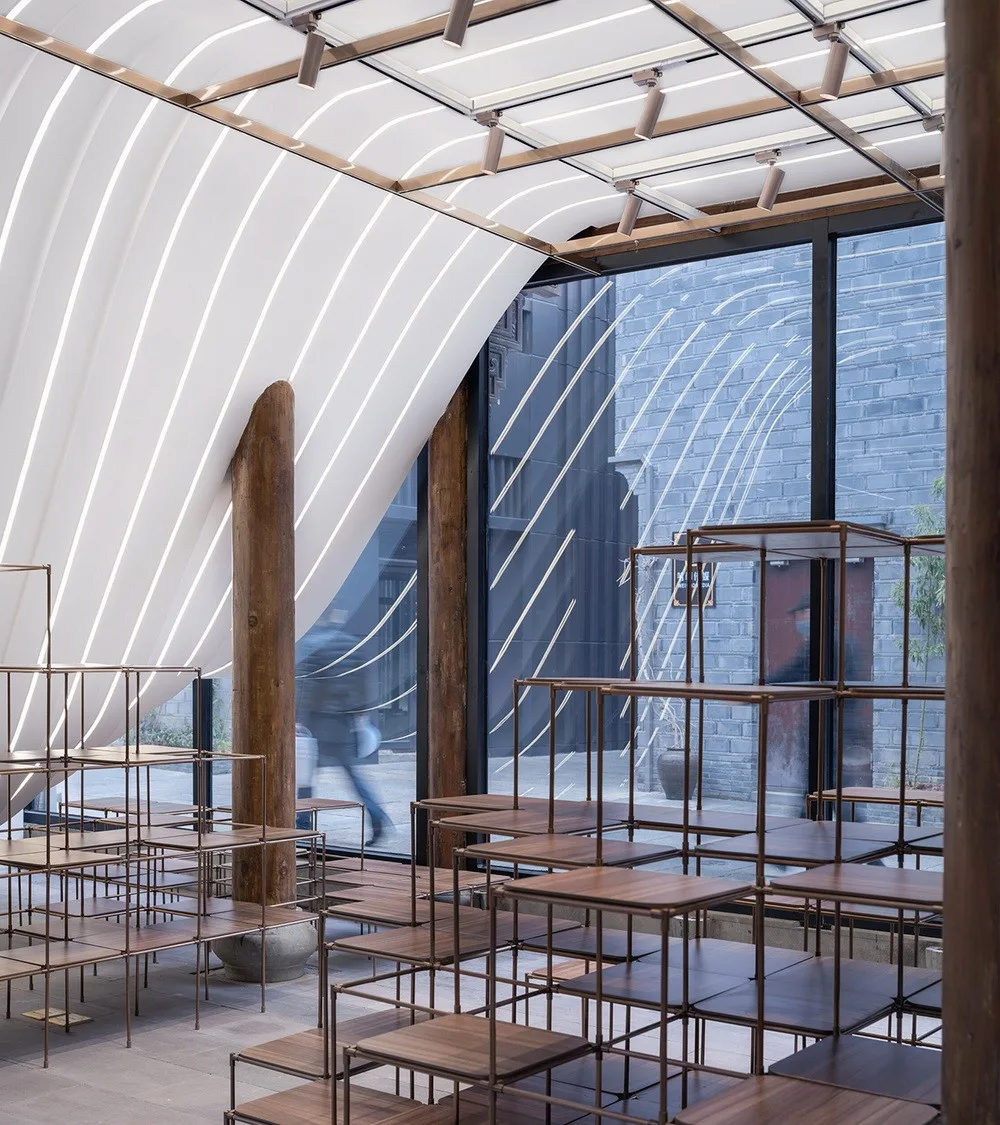
△ Layered design on the curved surface reduces visual weight
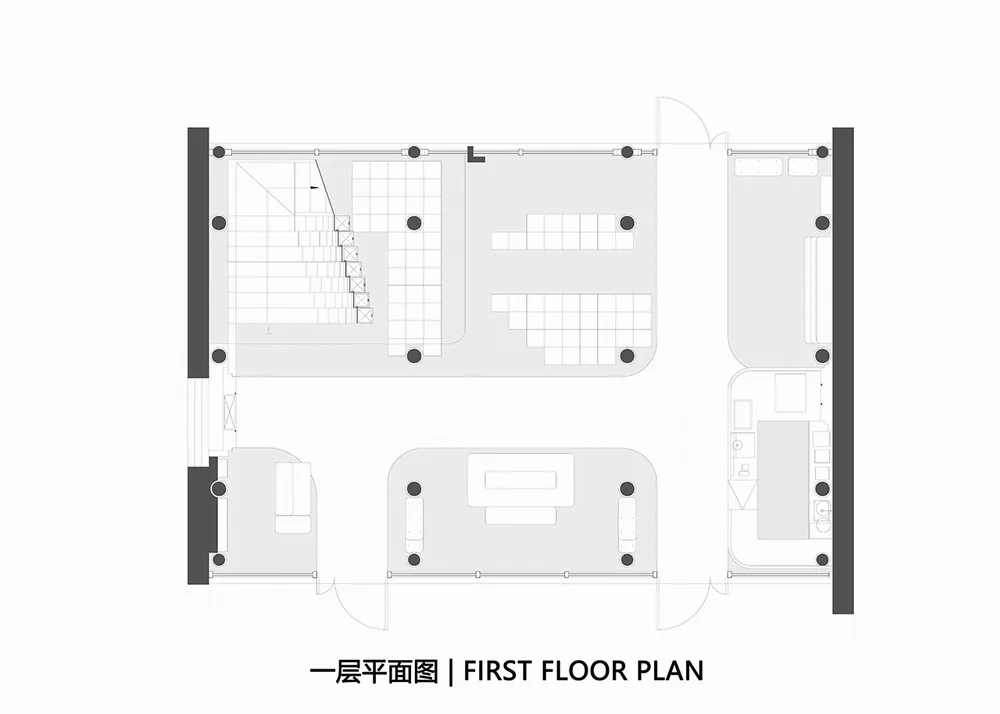
The design team sought to extend the wave motif to the floor. After testing metal and paint, they chose durable terrazzo to create a continuous spatial loop. The white elements naturally divide the store into eight distinct exhibition zones, each expressing a unique character.
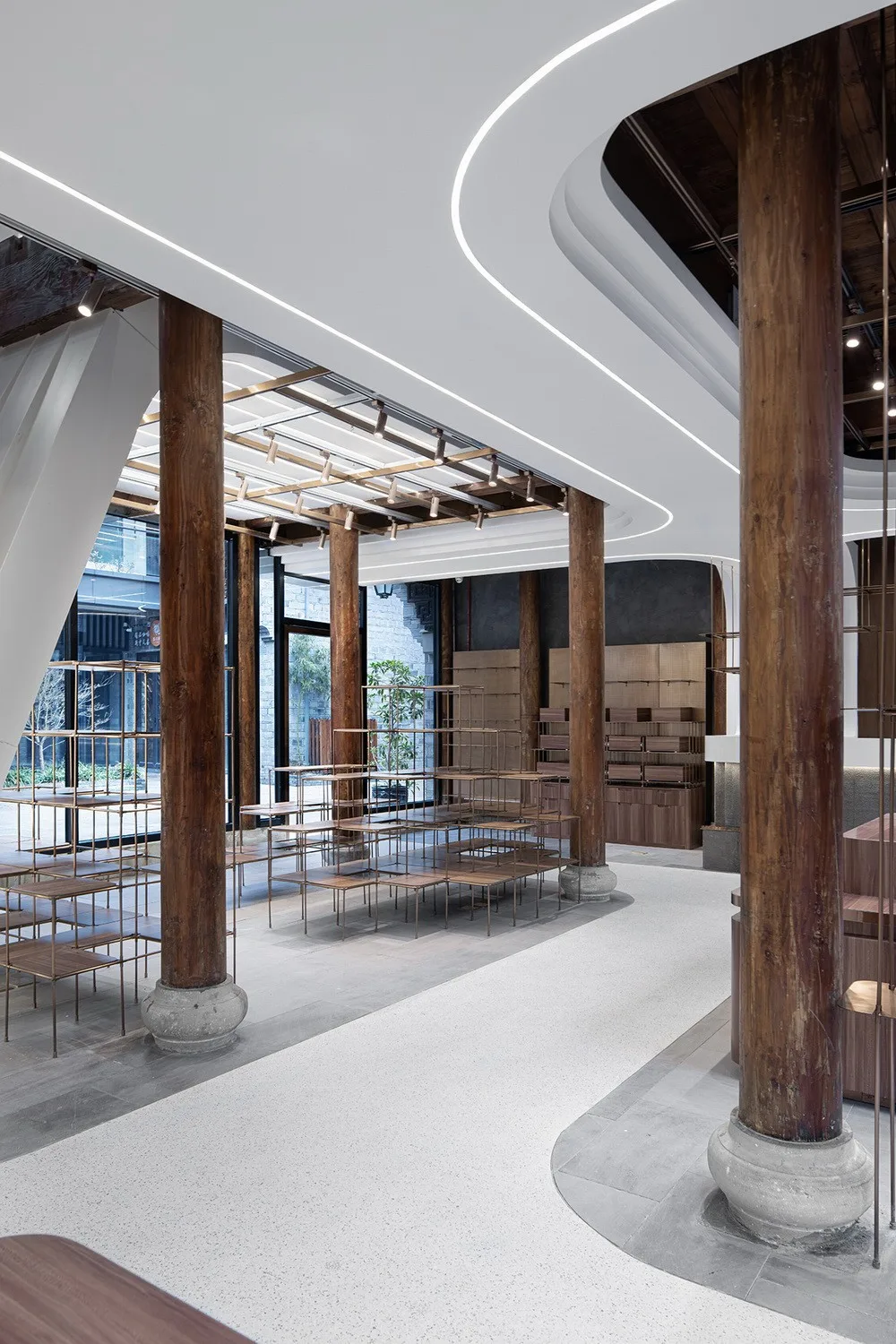
The wave design extends to the floor, creating a closed spatial loop
The eight exhibition zones were designed with wave-inspired elements using metal and wood veneer. Flexible features like adjustable partitions, movable brackets, and perforated panels allow the space to adapt to various retail needs and seasonal updates.
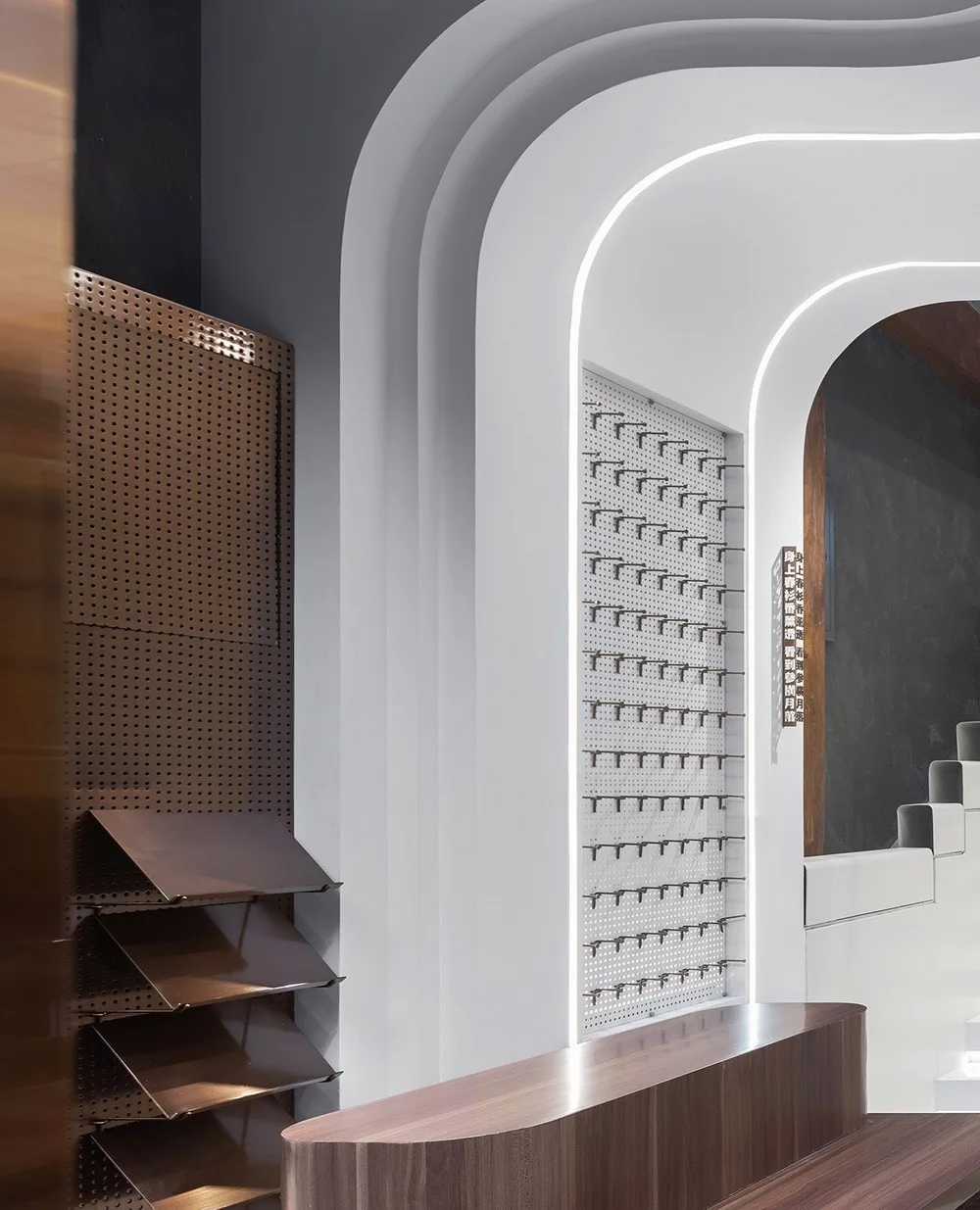
△ Detail highlights
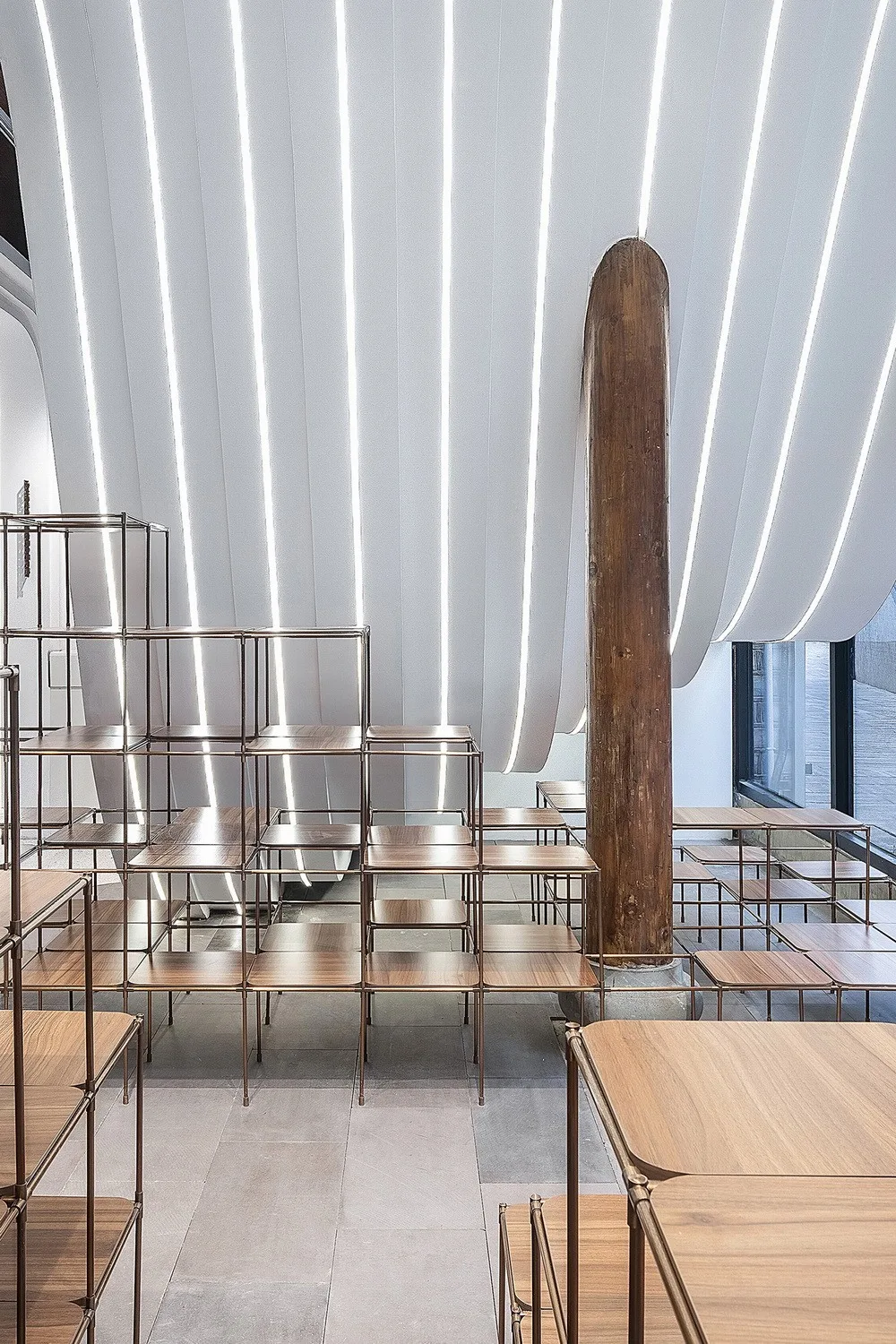
△ Detail highlights
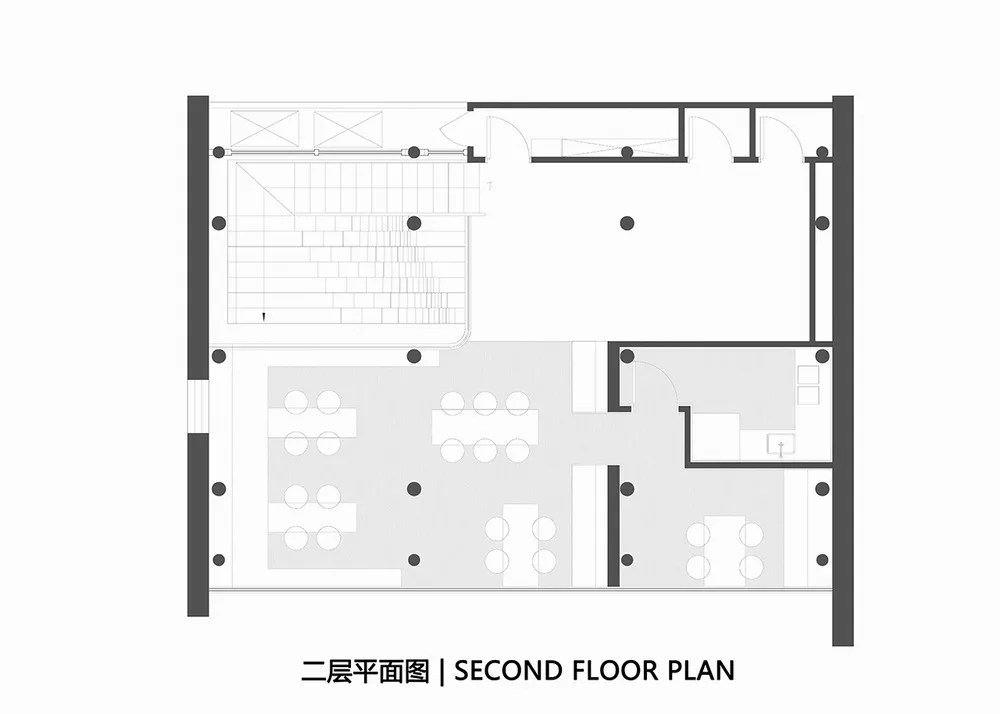
From the first to the second floor, the spatial experience evolves from walking beneath waves to riding on them. The design team strategically placed photo-friendly spots at this transition, naturally guiding visitors toward the tea house upstairs.
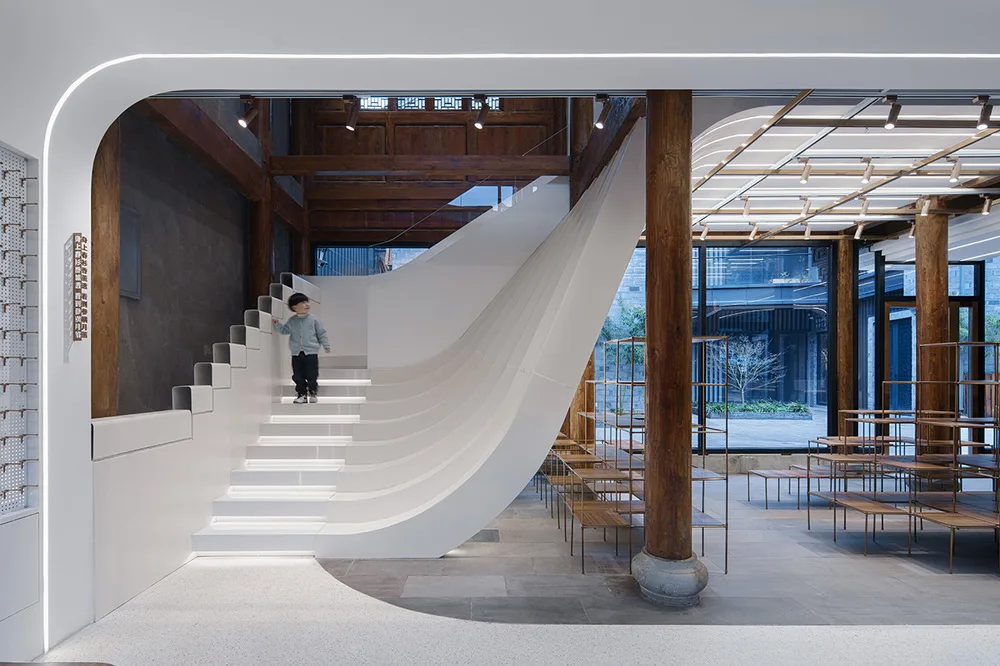
△ Staircase
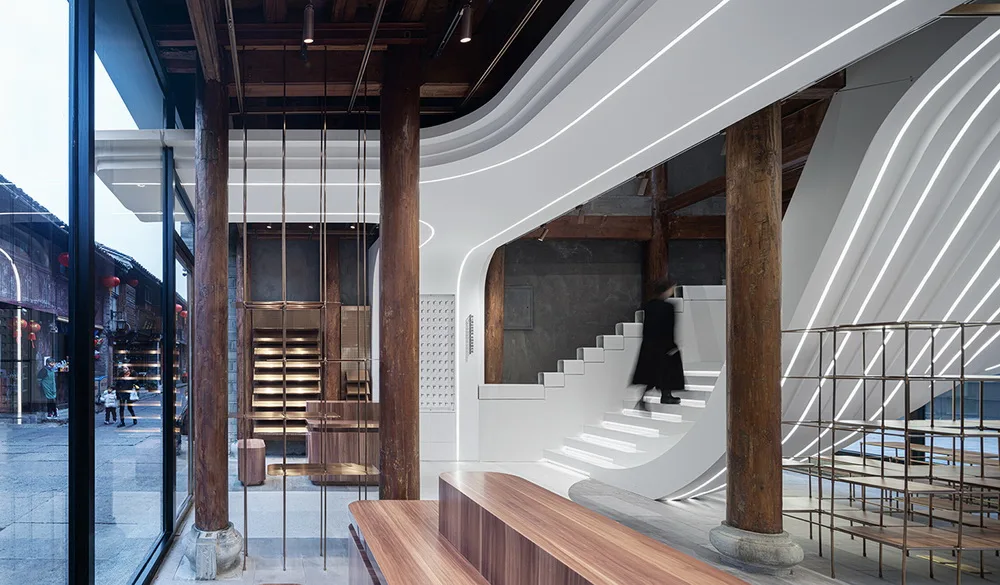
The smooth curves of the staircase guide visitors upward
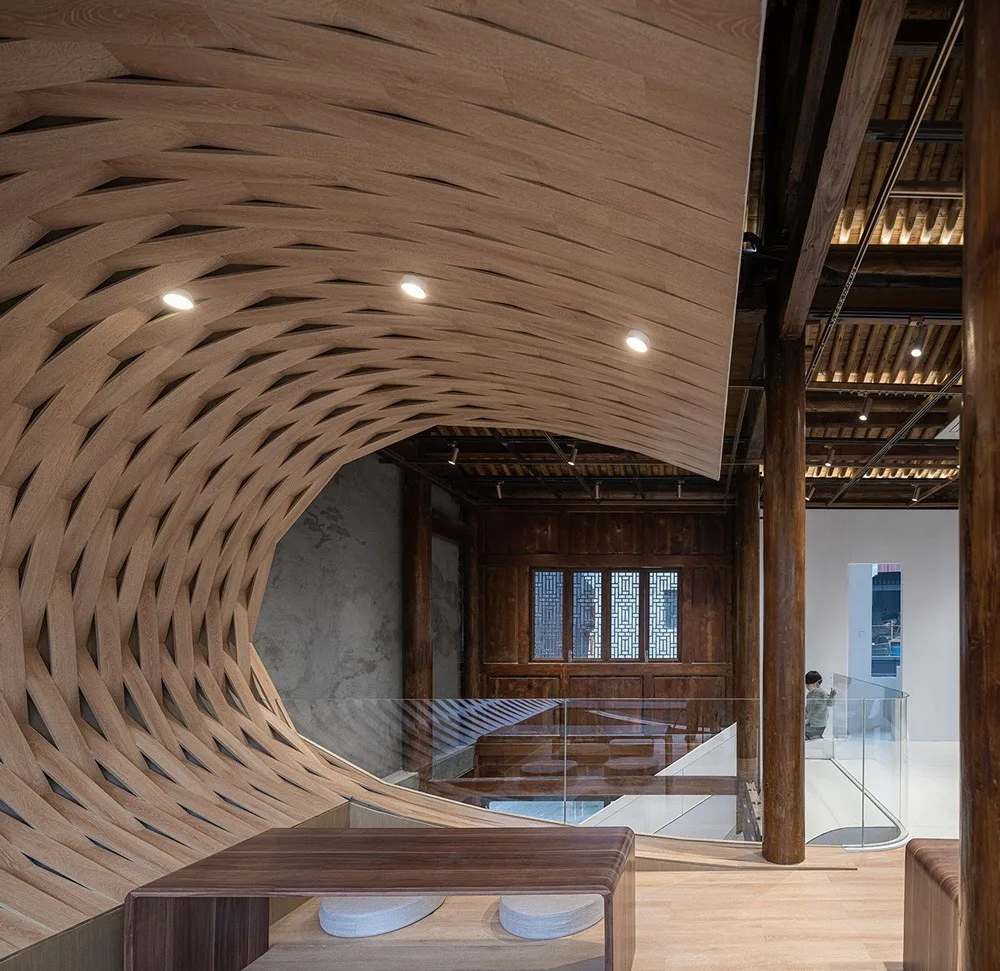
△ Tea break area
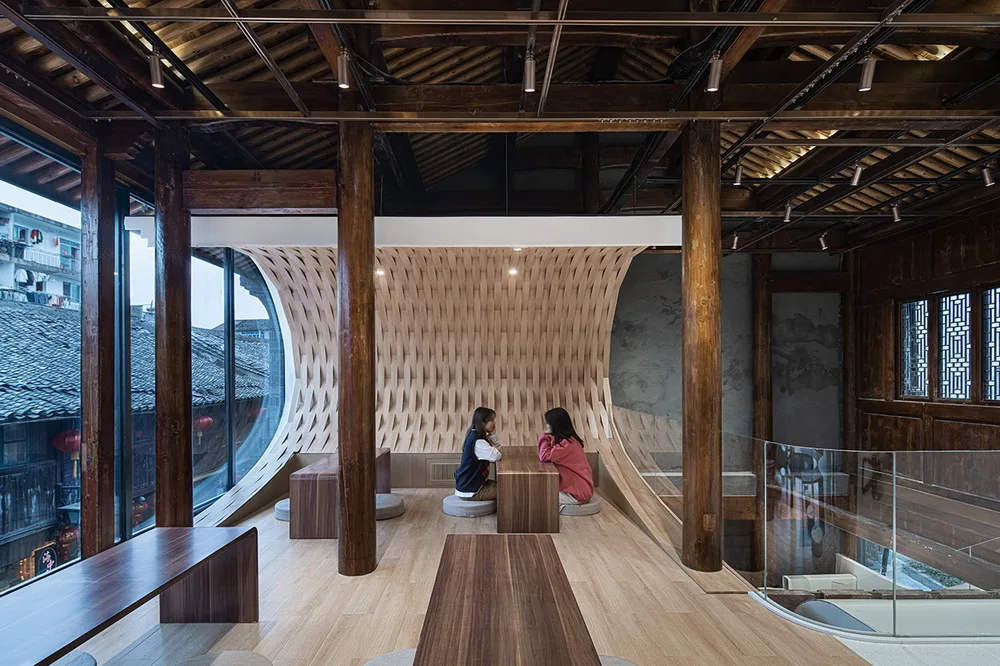
△ Tea break area
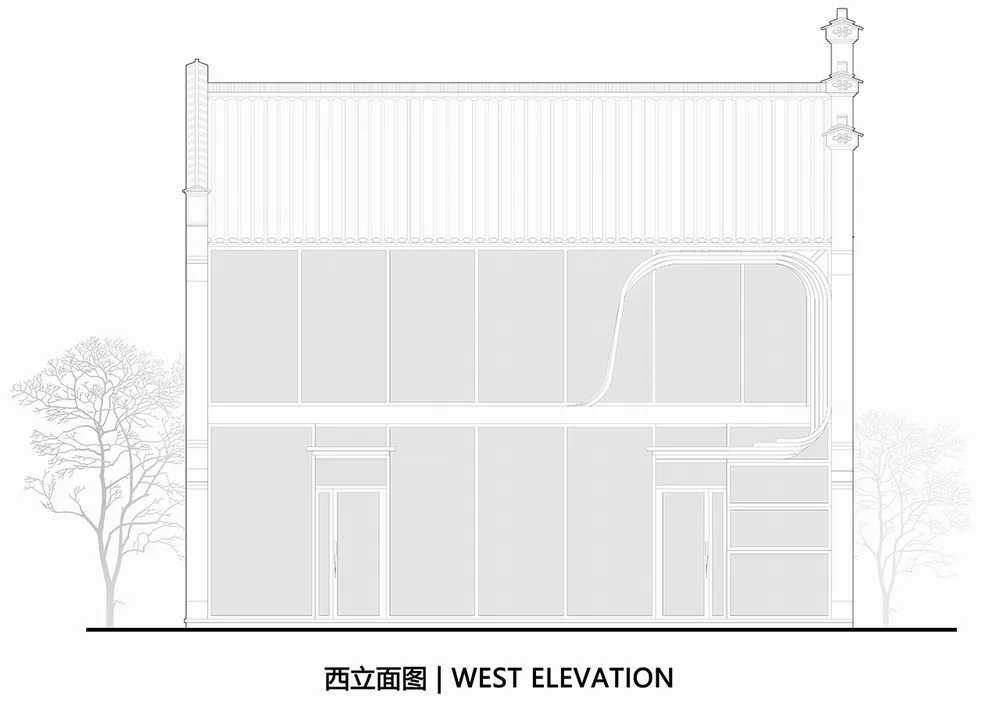
To brighten the originally dim and narrow space, all doors and windows facing the street were replaced with black stainless steel frames featuring large floor-to-ceiling glass panels. The waves burst forth from the second floor, injecting a modern vibe into the ancient street and making the store stand out along Ziyang Street.
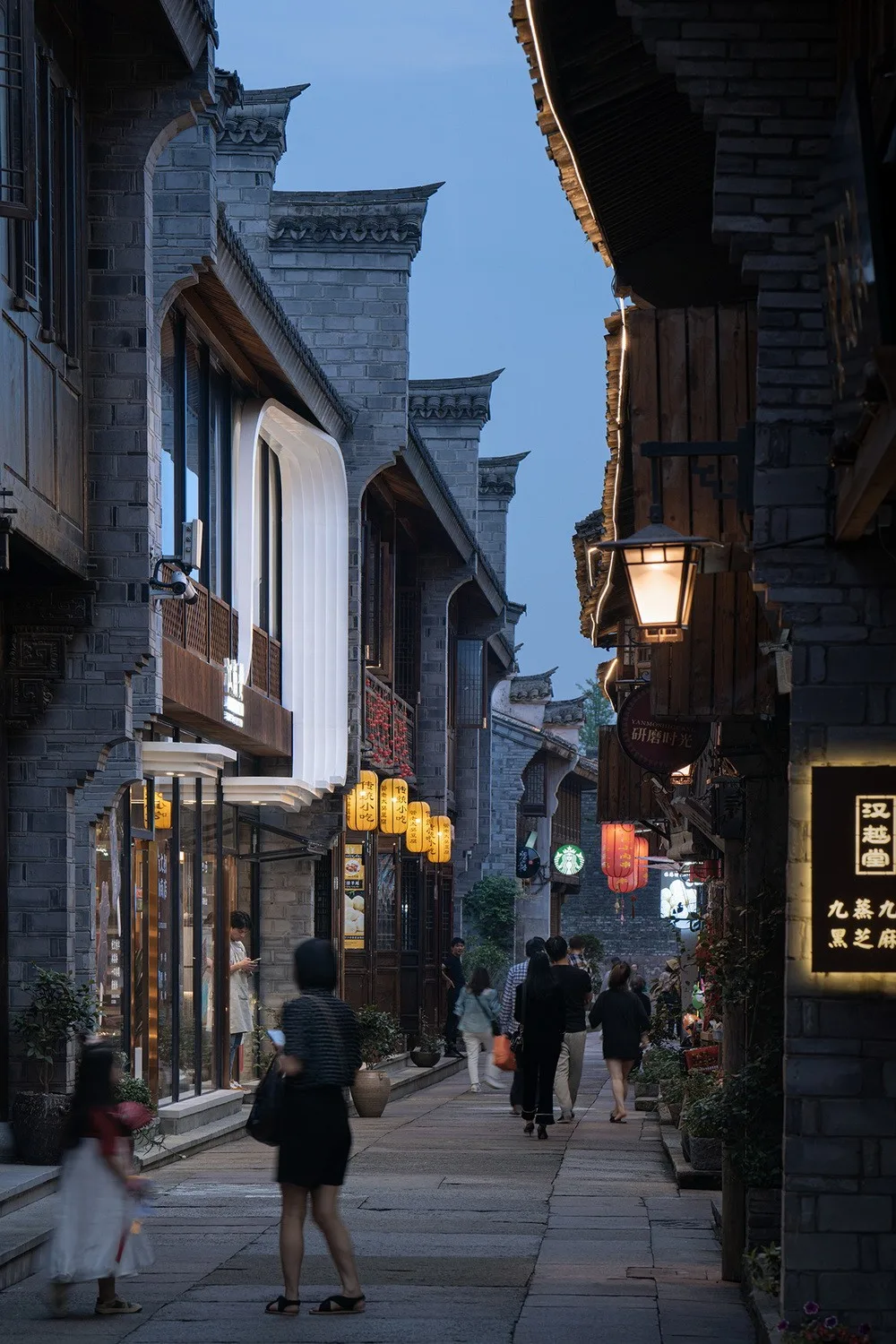
△ Street view
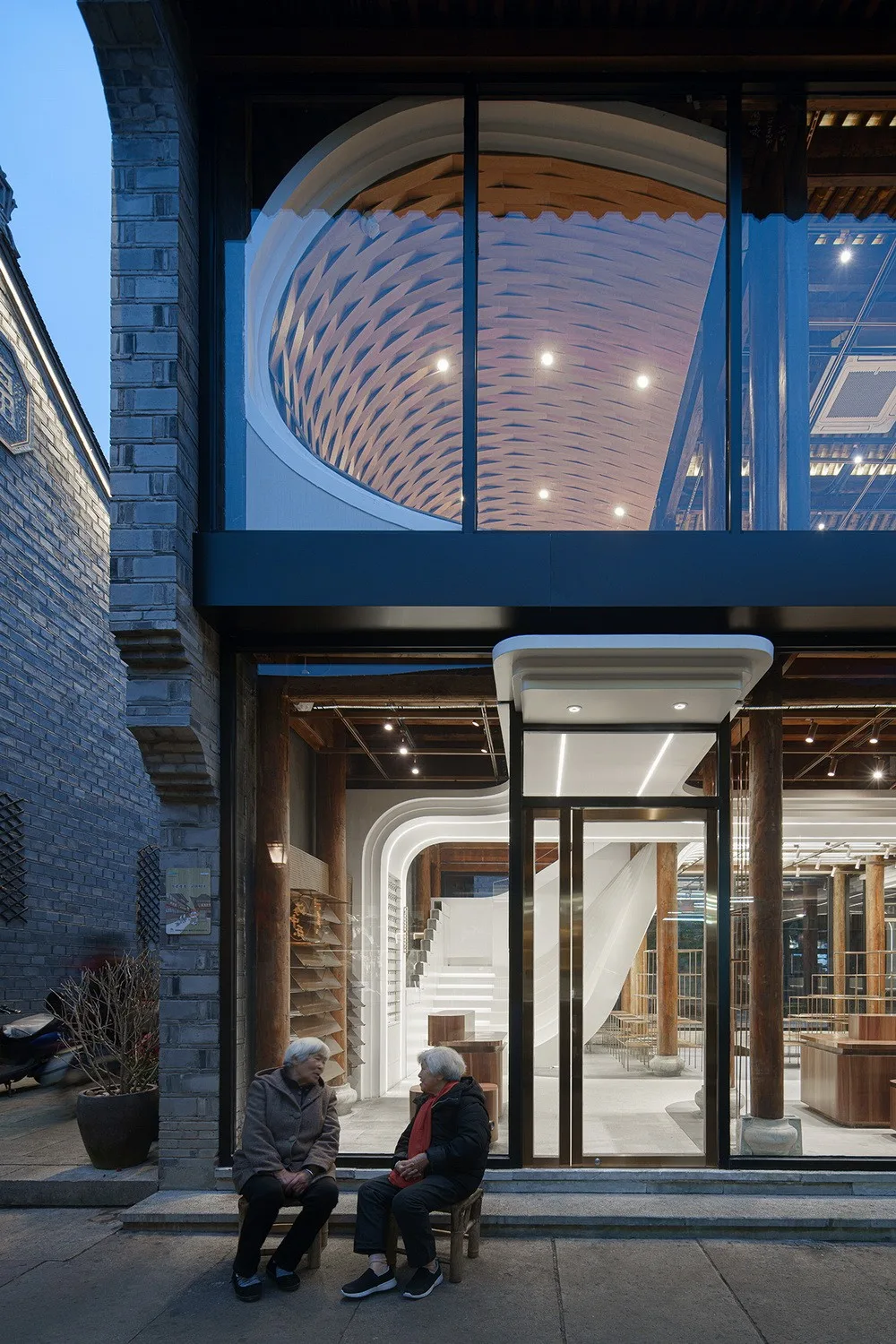
△ Street facade
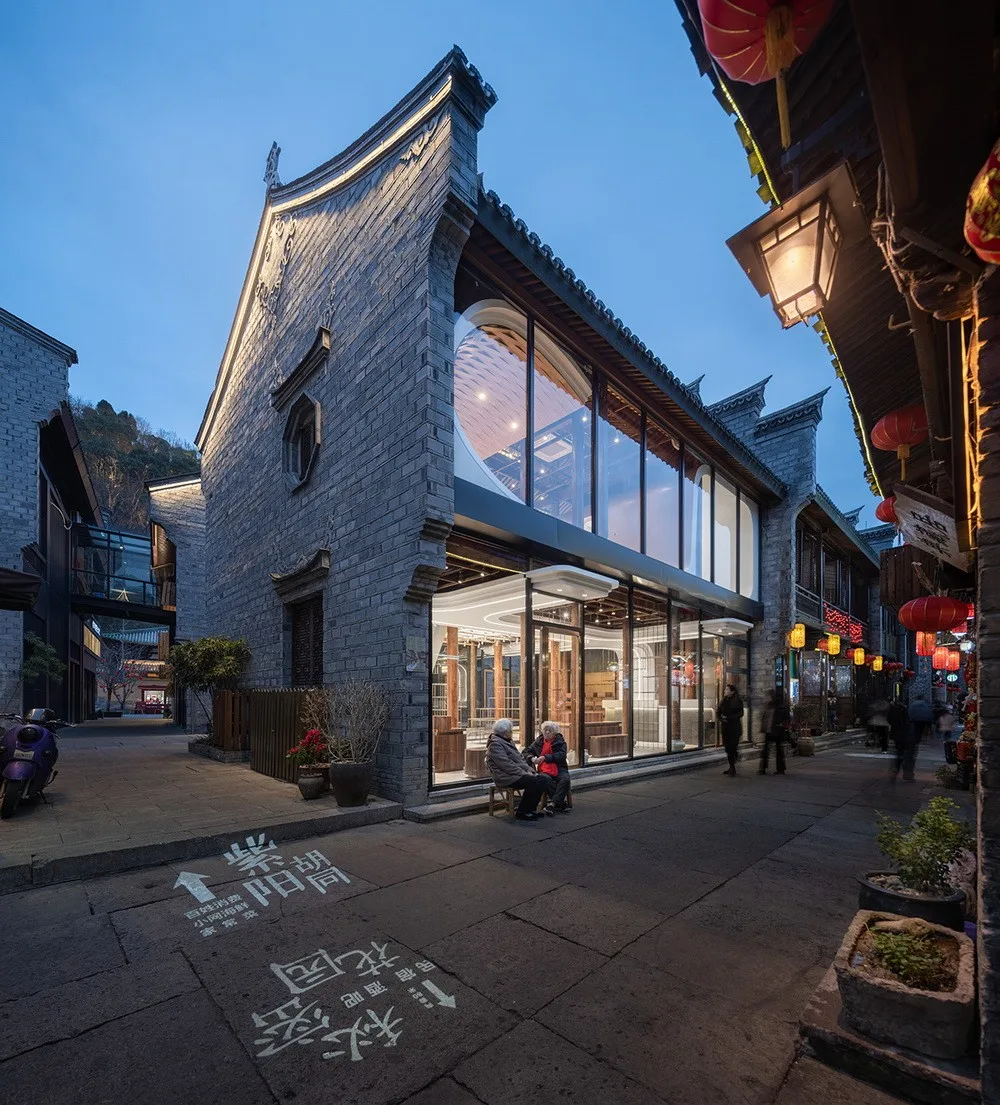
△ Street view
Conclusion
Jiangnan Zan is now open for business. The operations team has delved into the historical narratives of Ziyang Street and developed two product lines, “Qi Kai Desheng” and “Ziyang Zhenren,” reintroducing renowned figures such as Ziyang Zhenren and Qi Jiguang to the ancient city. Designed by Zero One City, the Houlang Jiangnan project has become a catalyst and platform for the new cultural and creative industries, attracting young people back to the old streets and breathing new life into Ziyang Ancient Street.
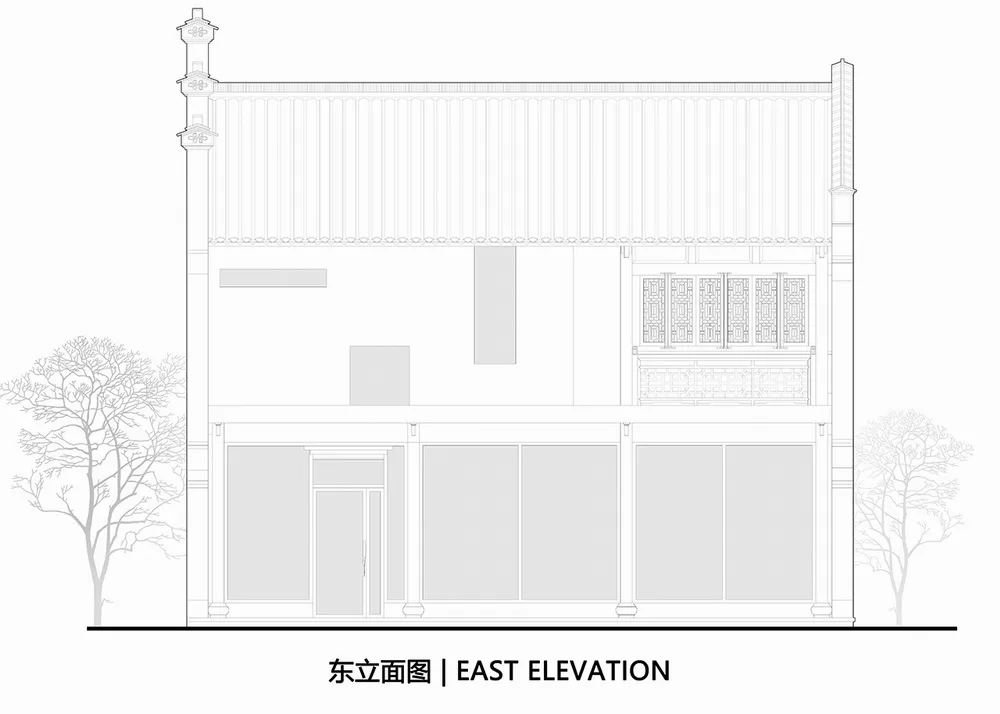
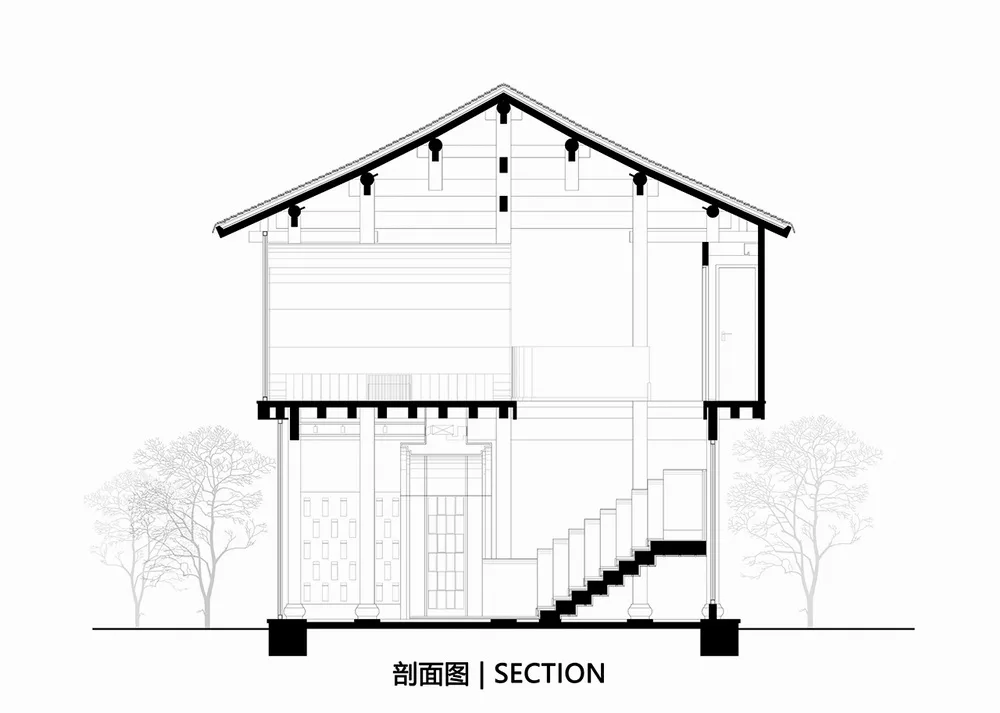
Technical Drawings
Project Information
Project Name: Jiangnan Zan
Project Owner: Beijing Huaxu Culture Investment Management Co., Ltd.
Location: Linhai, Taizhou, China
Building Area: 200 square meters
Project Timeline: 2021
Design Firm: Zero One City Architecture Firm (Architectural Design, Interior Design, Soft Decoration Design)
Photography and Videography: Wu Qingshan















Must log in before commenting!
Sign Up