
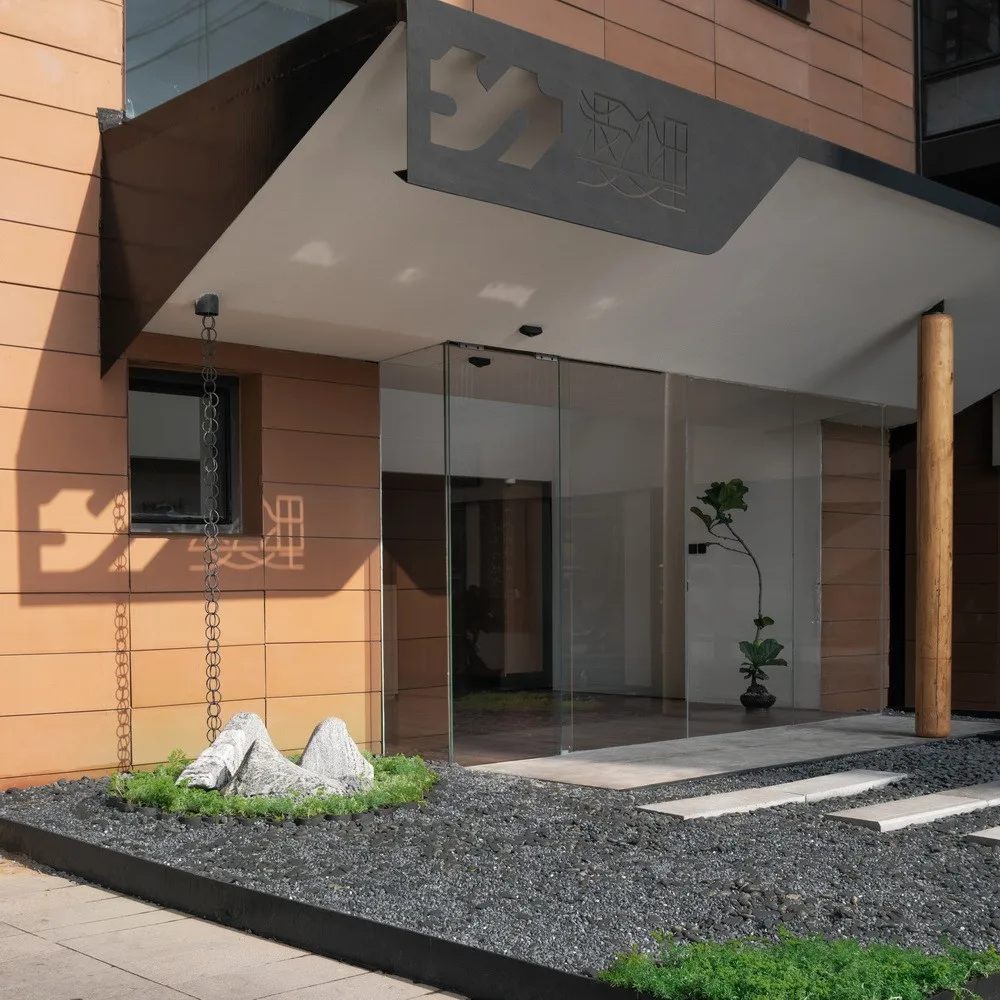
△ Entrance
Posali
Chinese gardens are realms of imagination. Their environment is a crafted fiction, their existence a philosophy, and their universe a dream. Only those isolated can truly find complete happiness within. In essence, Chinese gardens embody a dream.
—— Tong Jun, On the Garden
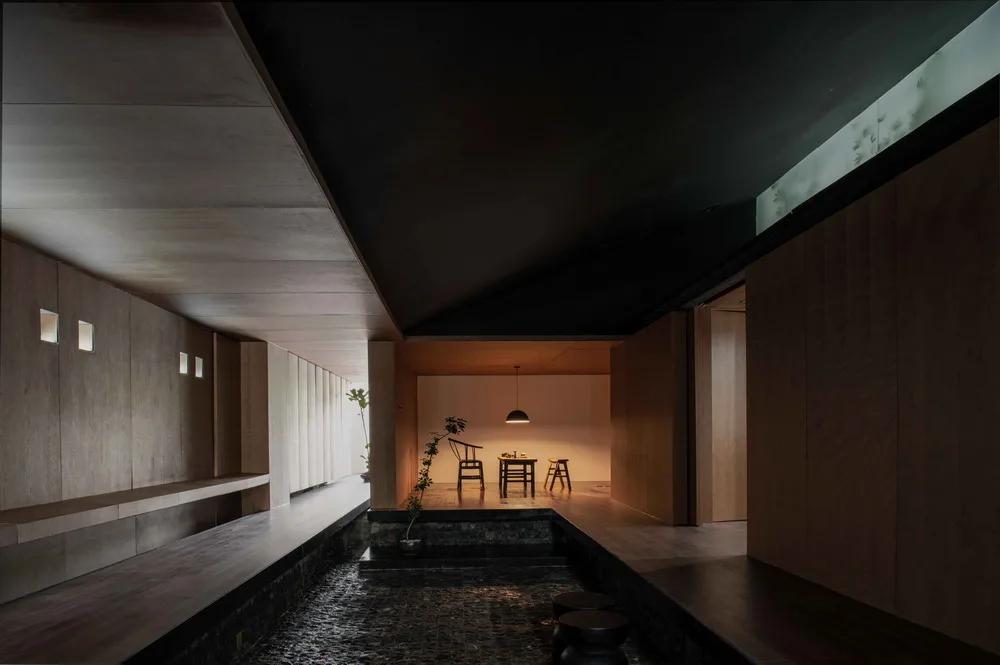
Located in the vibrant eastern district of Zhengzhou, this tea room occupies the podium of an office building. The space is narrow and elongated—8 meters wide by 31 meters long—resulting in an aspect ratio close to 4:1. Such depth often poses challenges for lighting, leaving the central area dim.
However, this slender layout sparked inspiration for us. We envisioned a tea room furnished with a dining table and various seating arrangements. Instead of fighting the dimness, why not embrace this moody atmosphere?
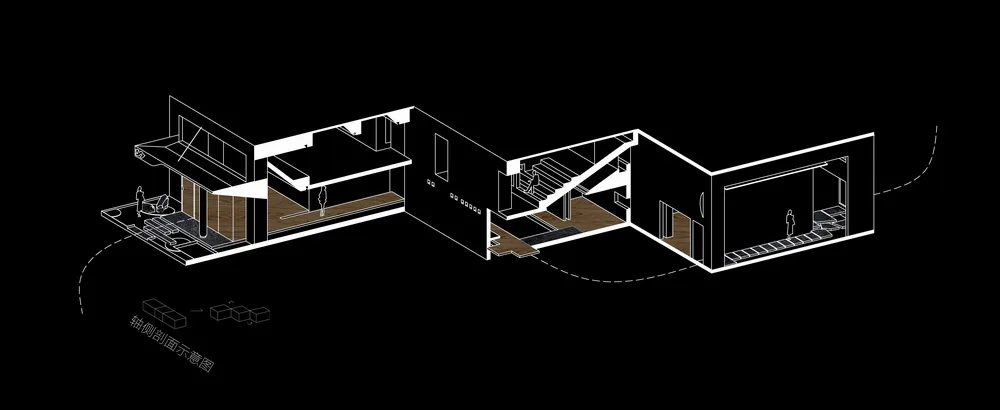
Axonometric schematic diagram
The Cloudy Courtyard: Serenity and Strength
The poem Praise of the Shadow beautifully captures the allure of Eastern dark spaces. Unlike the transparent, bright spaces typical in the West, the East celebrates subtle, diffuse light and shadow, creating an intoxicating depth. Stepping from the noisy city into this quiet teahouse space embodies this vision.
True silence isn’t absolute quiet; as the saying goes, “Cicadas chirp in the forest, birds sing softly in the mountains.” Warm sunlight adds gentle warmth and a poetic rhythm. This natural interplay invites a deeper appreciation of tranquility.
Inspired by Japanese tea rooms—which often avoid windows to preserve spiritual calm—we designed small, high windows that allow light to slip through gaps, casting soft shadows and dappled light across the Wabi Sabi textured walls. The faint sounds of birds and insects further enhance the expansive feeling within this confined space.
We also installed a wide, tall window on the side wall, reminiscent of Uncle Hasegawa’s “Pine and Bamboo Painting.” Behind the window, bamboo gently sways in the wind, offering a view of “nature” beyond the high walls. Though this scene is a carefully crafted illusion—concealing air vents and smoke ducts—the bamboo’s movement is controlled remotely via Bluetooth, blending technology with tradition.
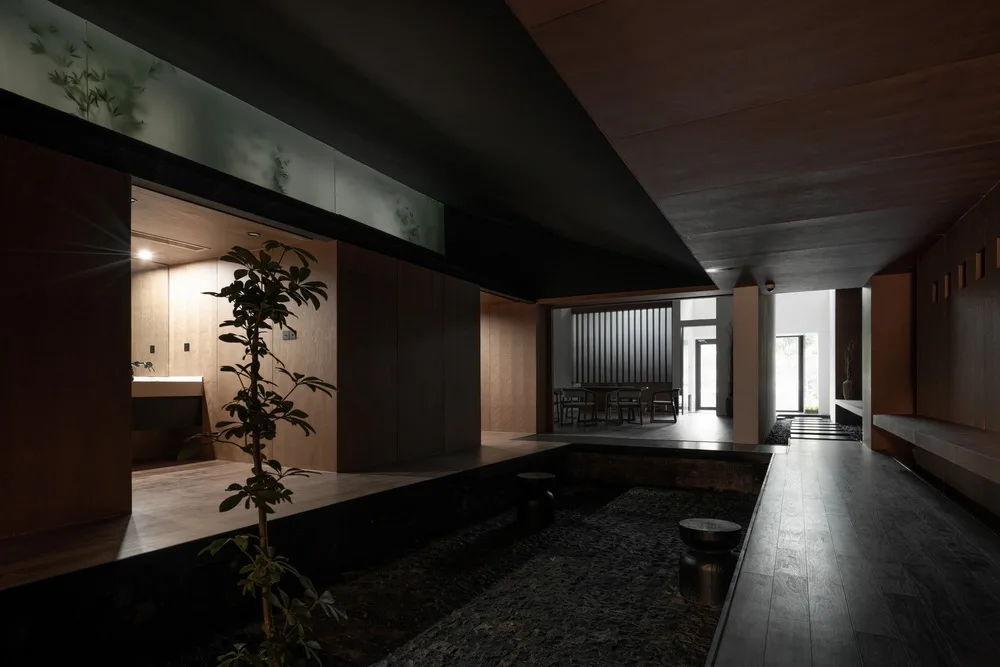
Looking up unexpectedly, one encounters “nature.”
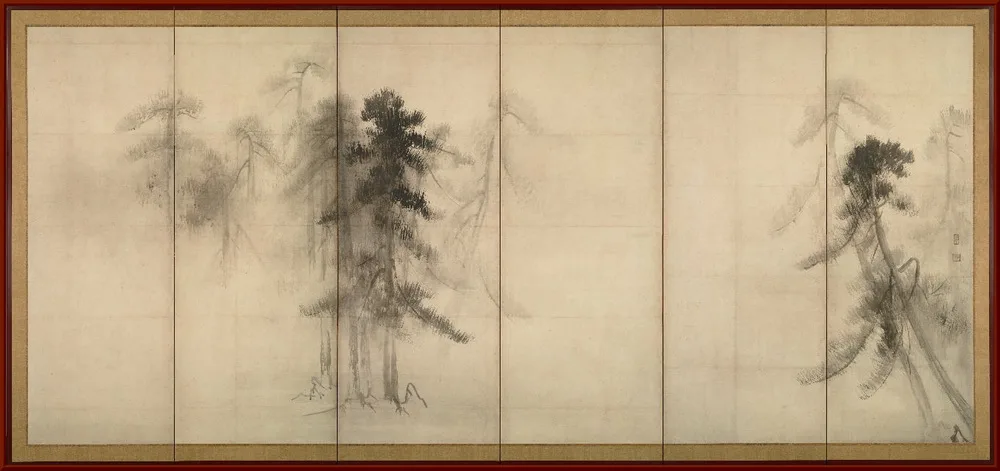
△ Hasegawa’s Bosulin forest, Tu’an Tutaoshan period
The entrance acts as a dark, sloping frame where light flows down, projecting on the courtyard floor. If the bamboo’s sway sounds like a cold flute, the rough ground stones resonate like wild drums—softness and strength in dynamic collision, glowing underfoot. This subtle light, though seemingly unvaried, carries a powerful purity—like the primal cry of life—evoking rituals of sacrifice, celebration, and battle.
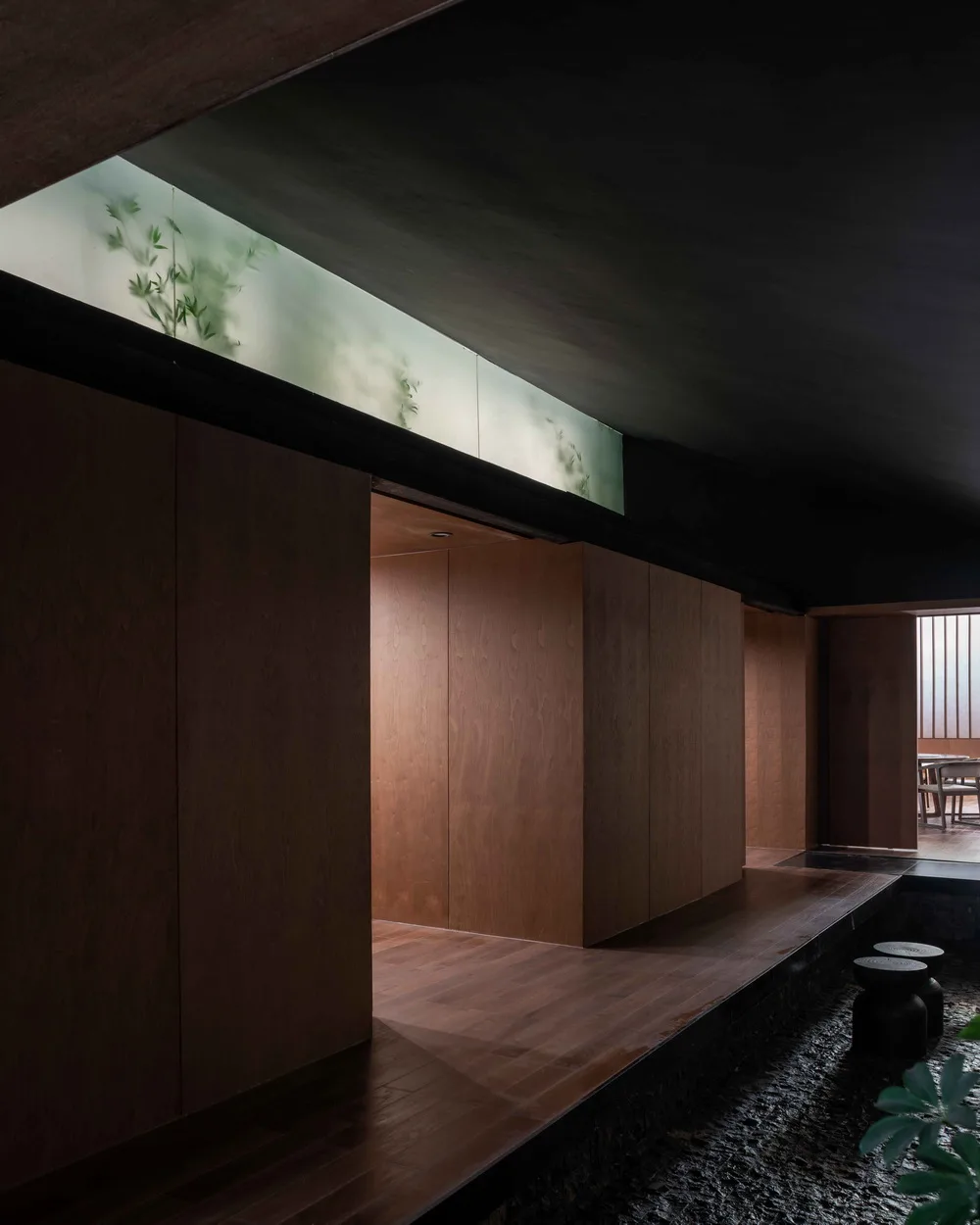
Bamboo shadows dance gracefully overhead while the ground’s texture softly diffuses the light beneath.
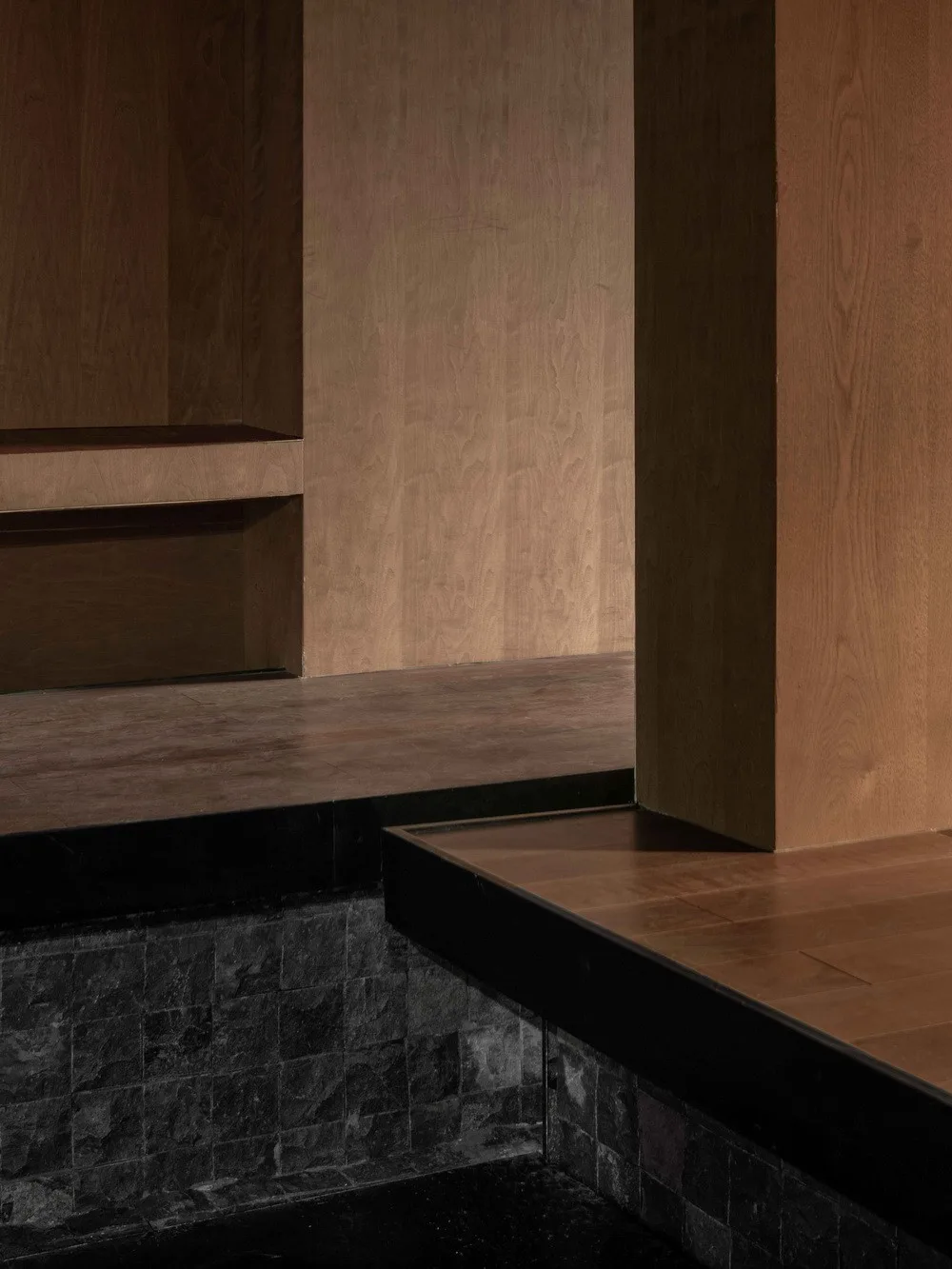
The interplay of smooth and rough textures, combined with geometric order, creates a tranquil space imbued with strength.
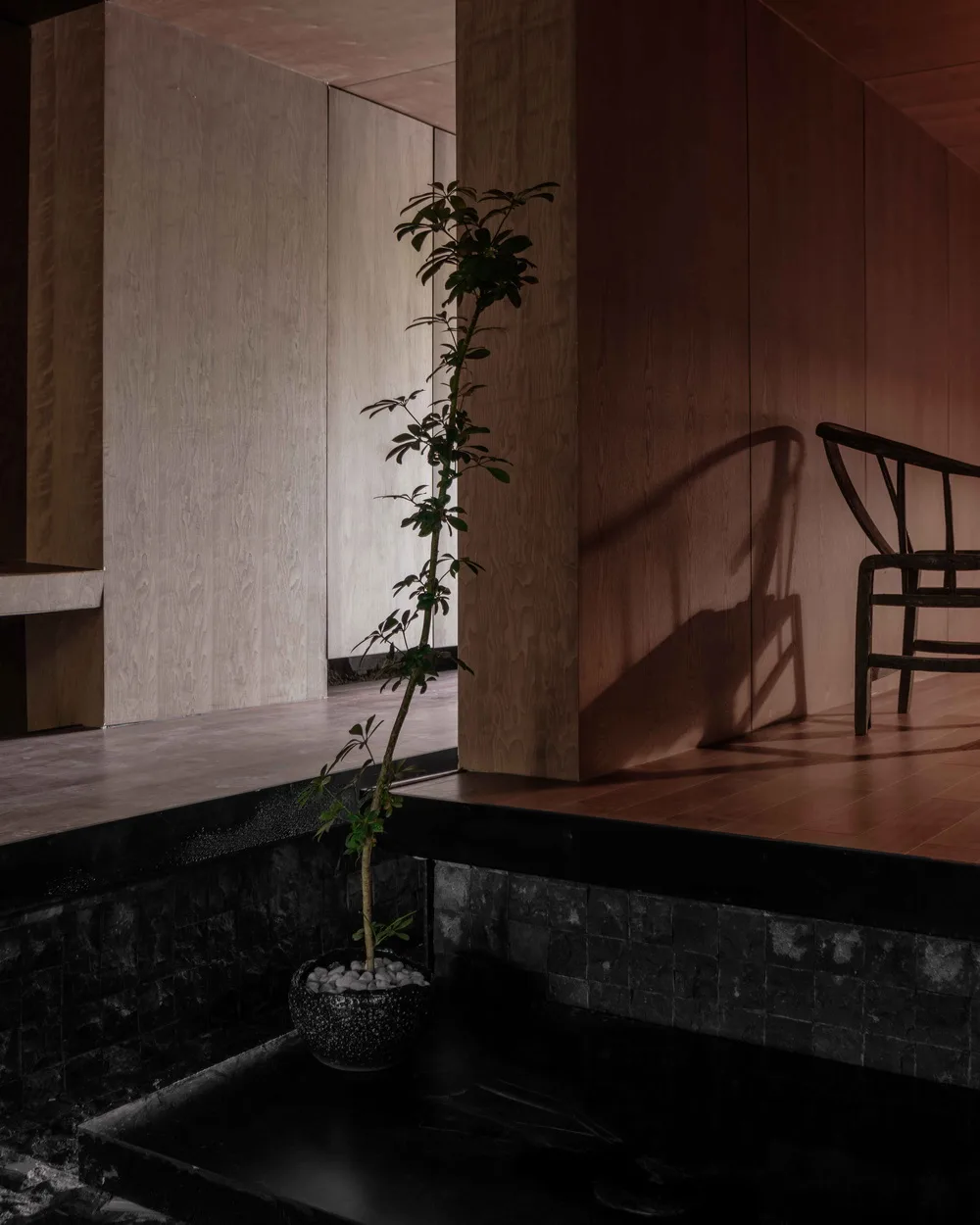
This tranquility carries deep tension; its fleeting nature evokes a subtle sadness.
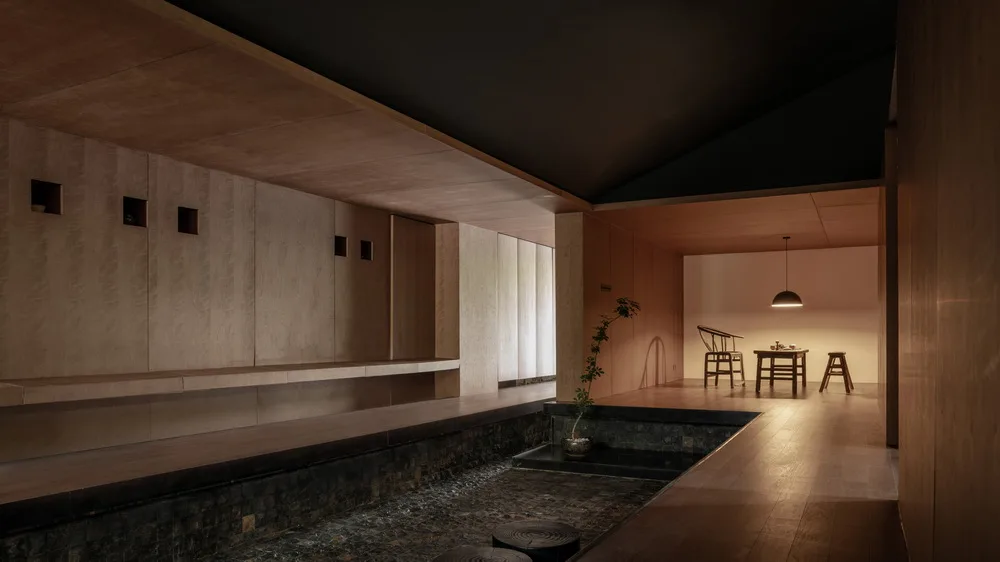
The courtyard remains enveloped in darkness, illuminated only by faint light.
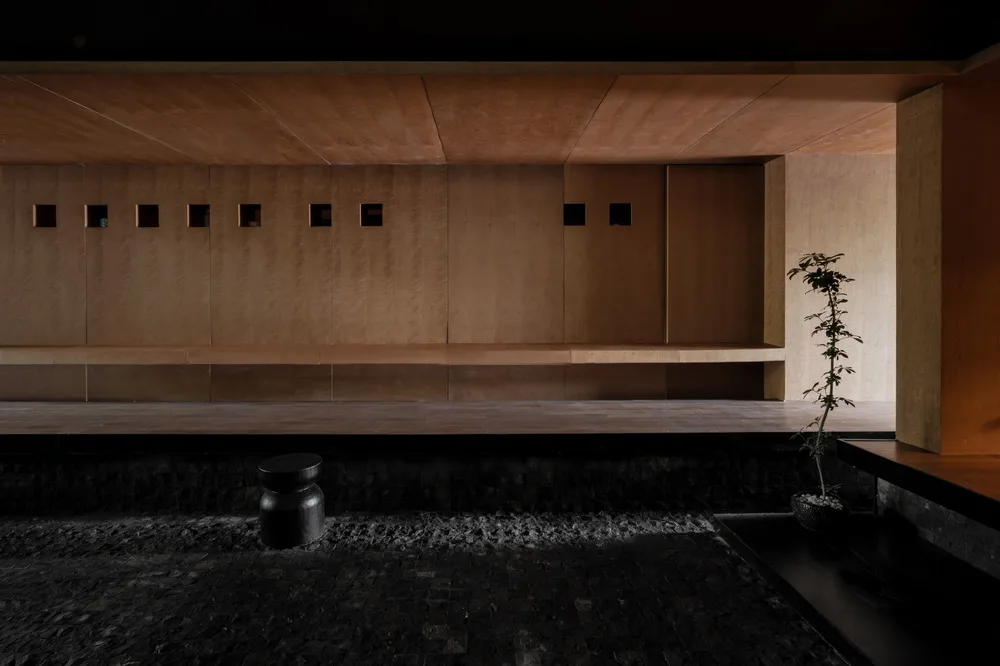
When passersby walk the path, they become part of the landscape.
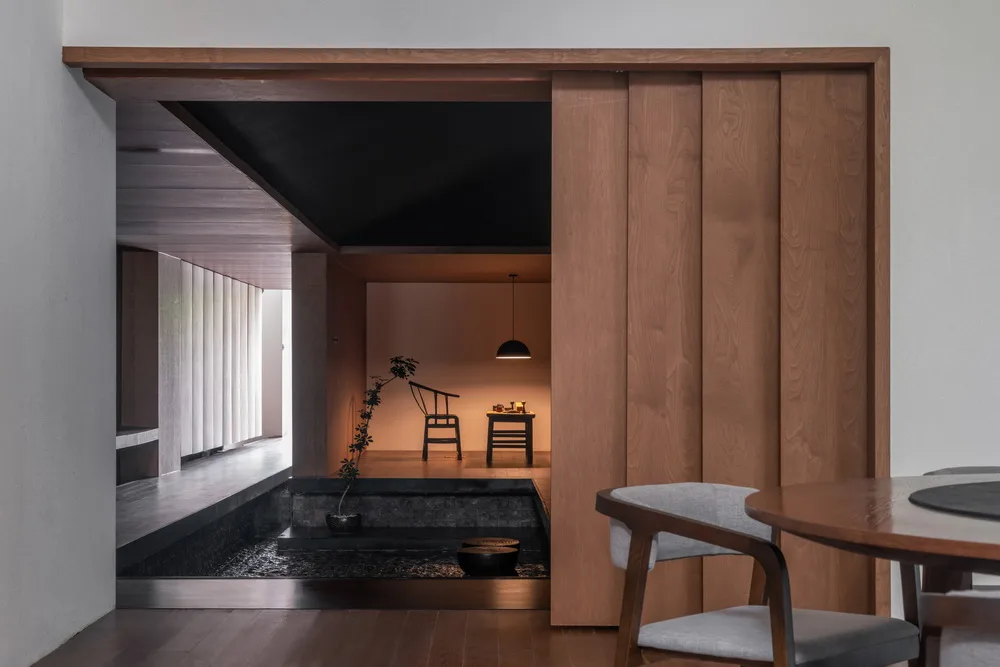
Leaning against the door and facing each other, nature becomes a canvas for imagination.
Tongyou Trail: Transition and Contrast
The narrow depth of this space evokes a sense of alleyways—common not only in misty Jiangnan but also in ancient villages and cities of the Central Plains, such as the Beida Temple settlement in Qinyang and the former riverside settlement in Guide Ancient City.
With a sunken, shaded courtyard at the center and high windows that create a “natural” ambiance, the design fosters a spiritual atmosphere full of ceremony. The transitional space before this “moment of enlightenment” is crucial—neither too direct nor too silent and reserved.
To maximize lighting, rooms on the east and west sides contrast with the central atrium, creating a “gray” zone balancing brightness, dryness, and humidity. Two secluded pathways invite visitors to explore through gradually dimming light, stirring curiosity and anticipation. At the climax, bamboo shadows gently sway overhead as “flowing water” trickles beneath. Here, one is invited to pause, enjoy tea, and savor a meal.
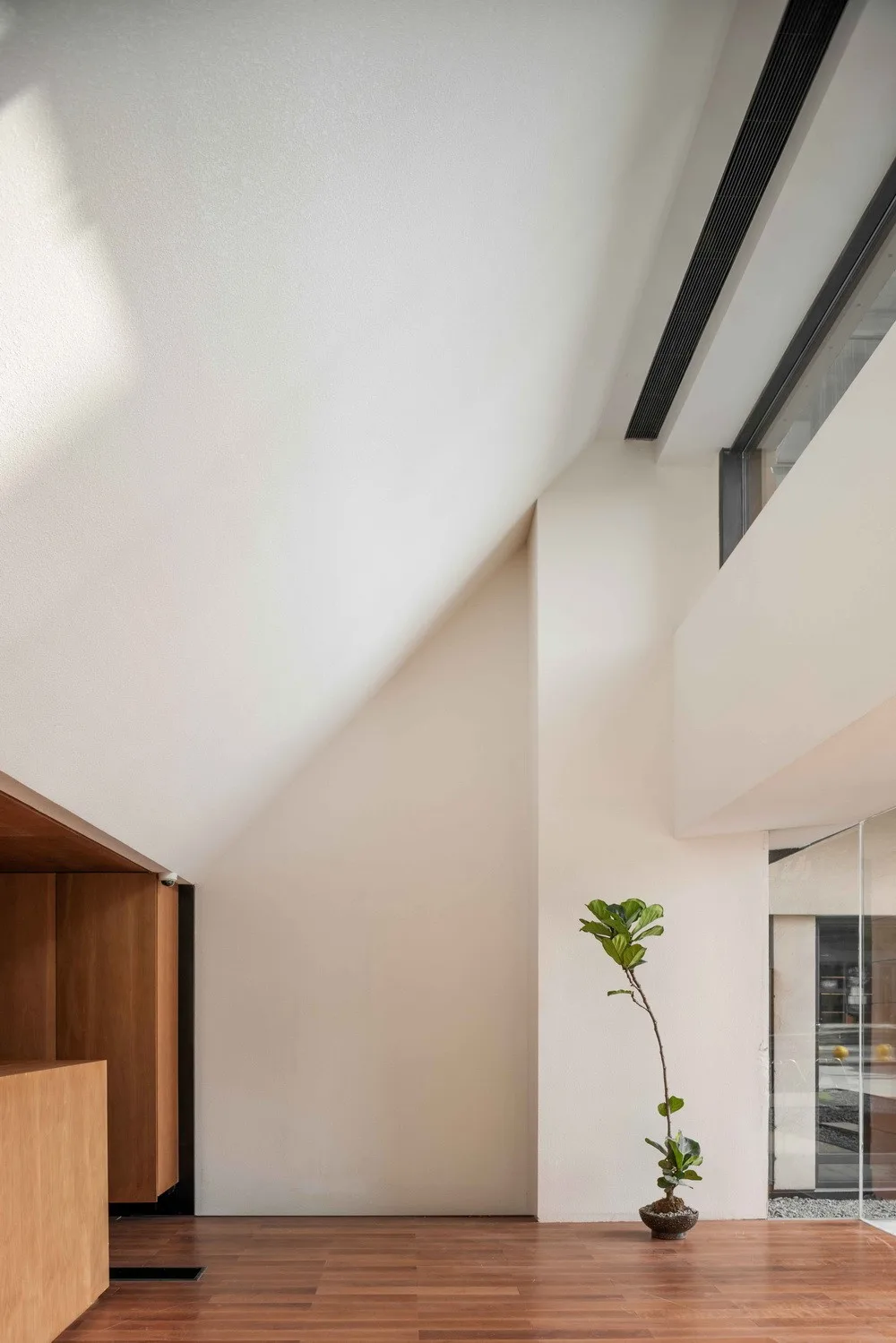
△ Simple and sculptural west front hall
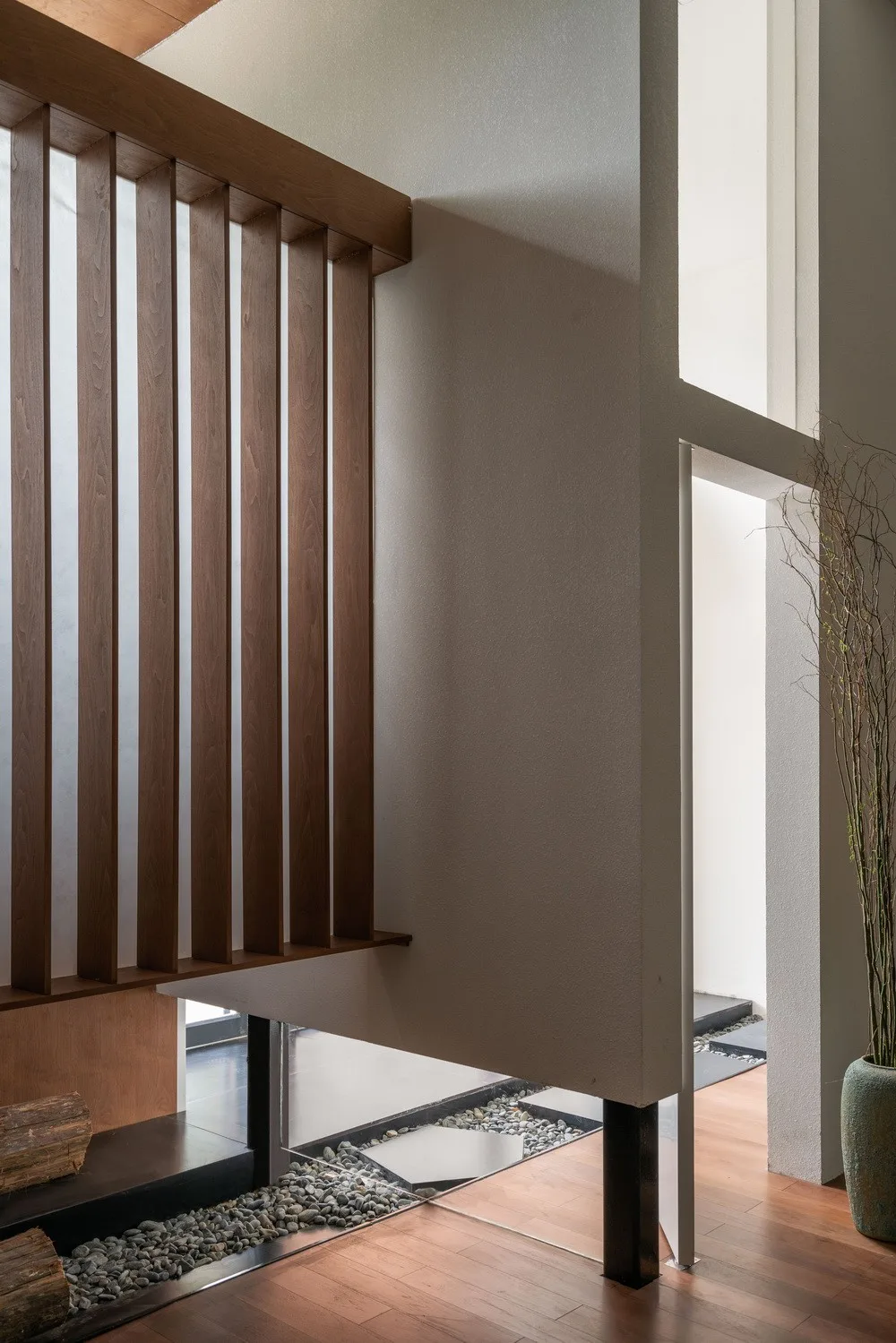
△ Entrance to the East restaurant, composed with thoughtful balance
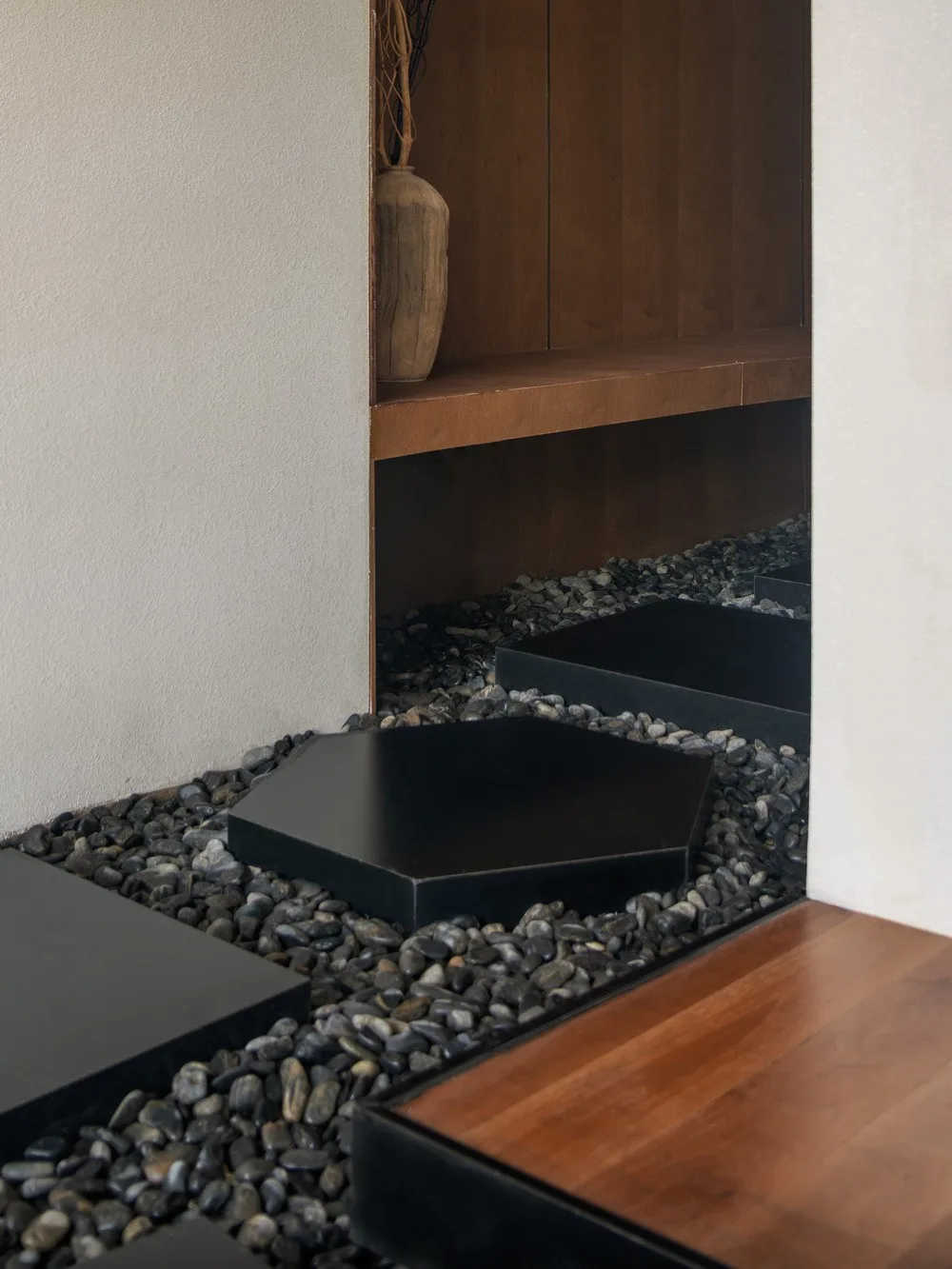
Stepping down stone stairs, the light transitions from bright to dark.
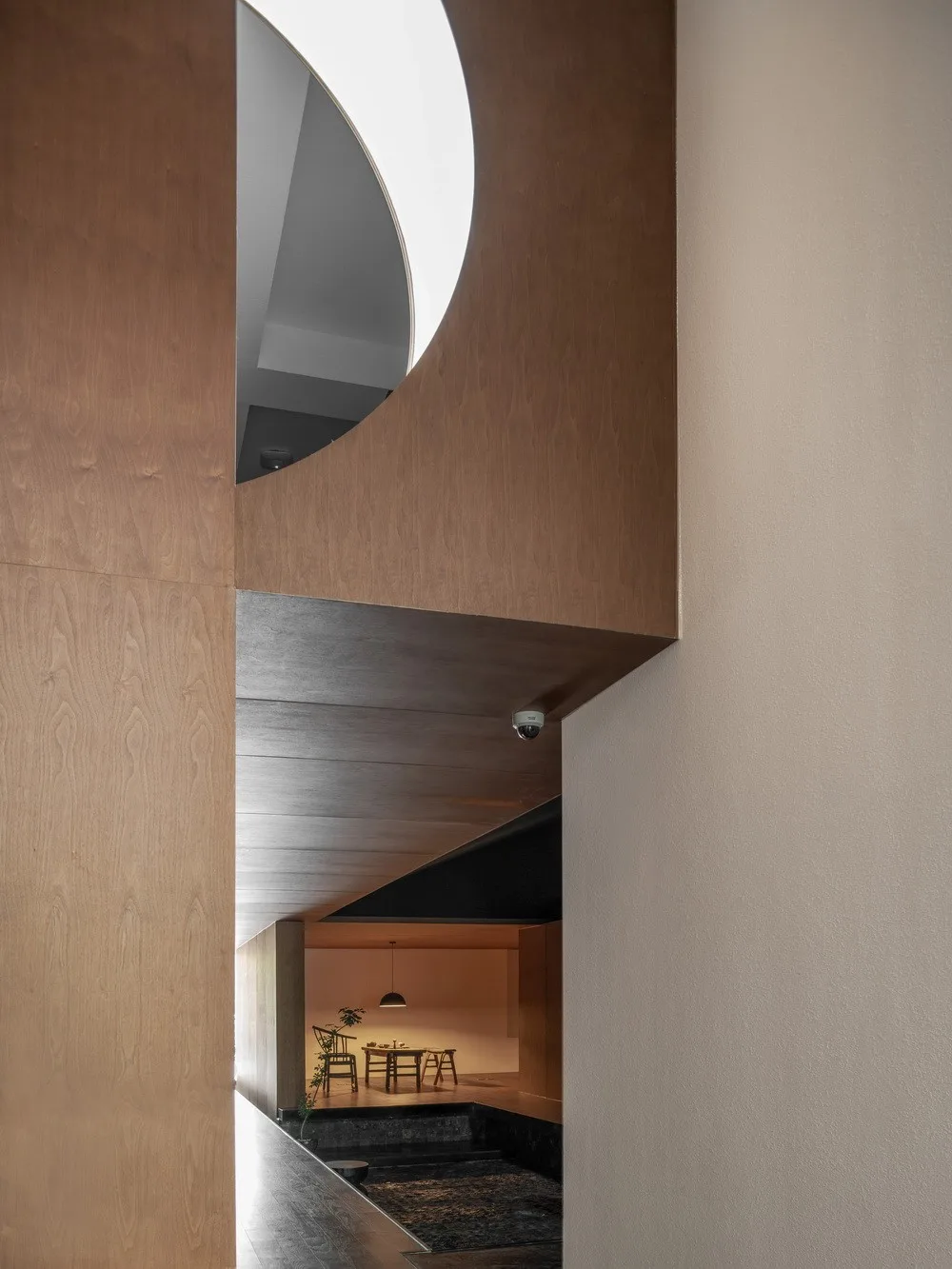
The eastern pathway becomes a gray space bridging black and white.
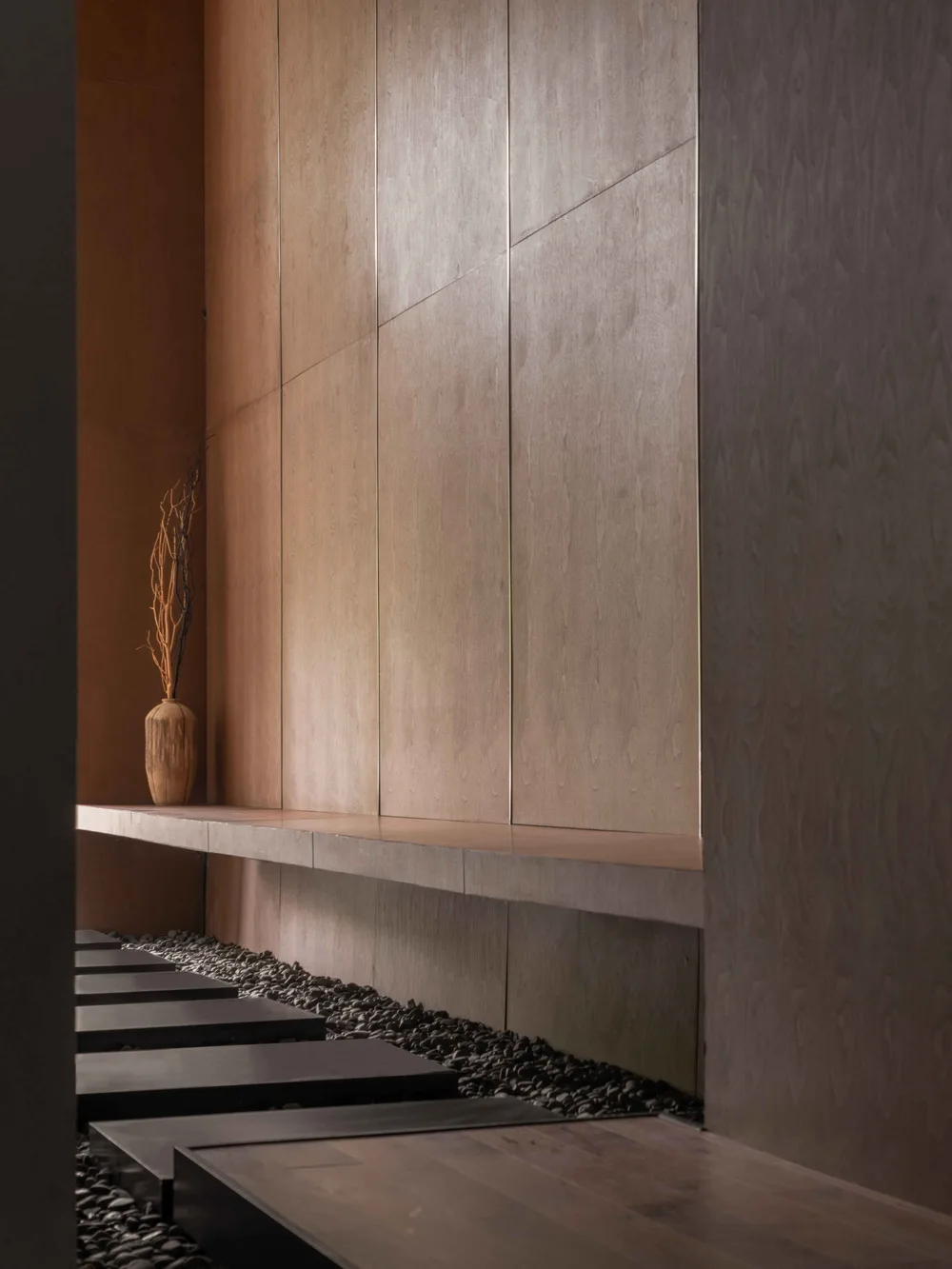
The long trail carries the anticipation of encounters.
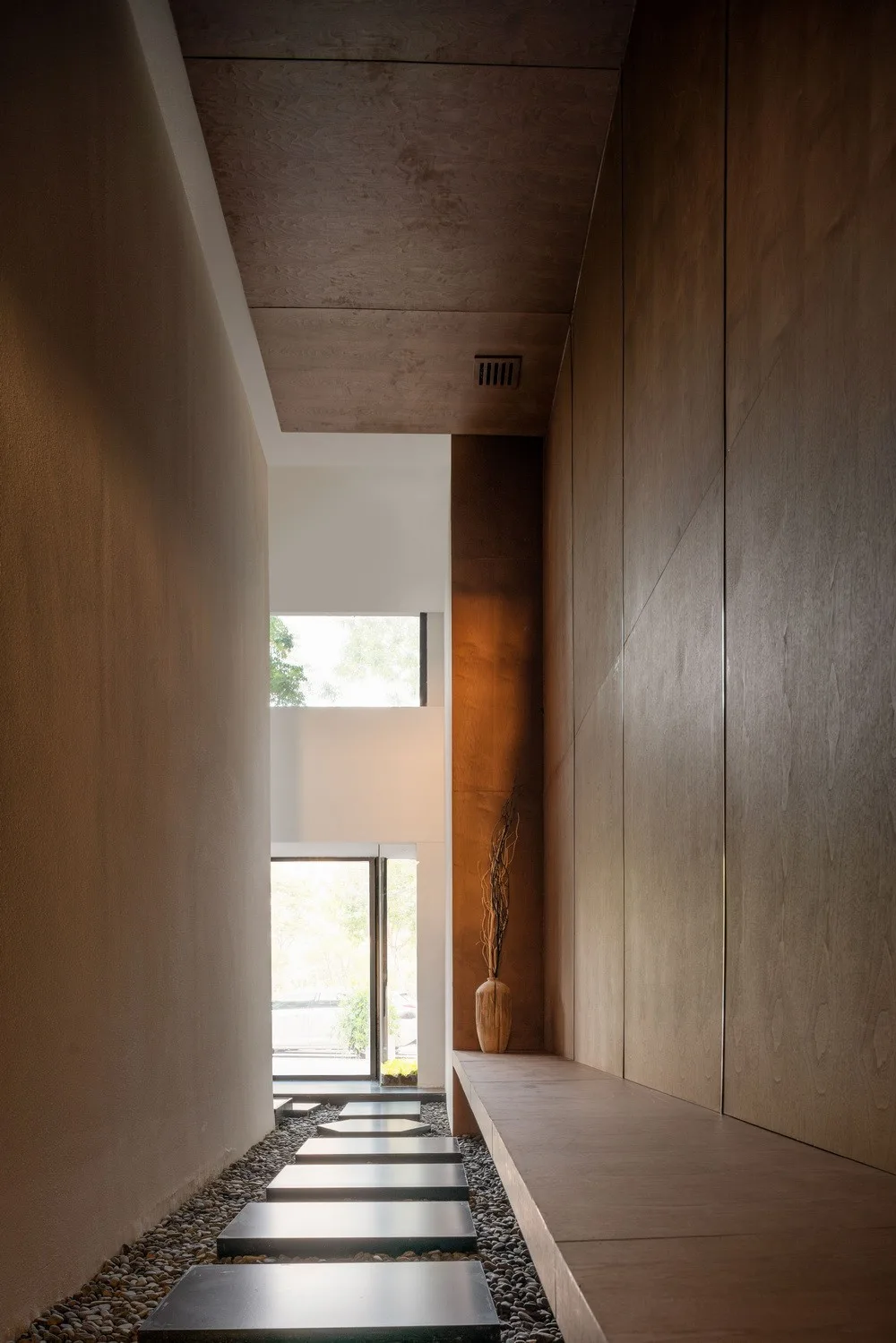
The sunset’s afterglow stretches along the path, casting long shadows.
Throughout this journey, indoor light gradually fades into shadow, ushering visitors into a spiritual realm. Light diffuses softly through frosted glass, while the plastered ceiling enhances tranquility. Tea cups, candlelight, and lacquerware complement this serene setting.
The spatial rhythm transitions smoothly through contrasts of black and white, while bamboo shadows flicker gently in the dim light. This secluded, swaying bamboo scenery inspired the name “Posali.”
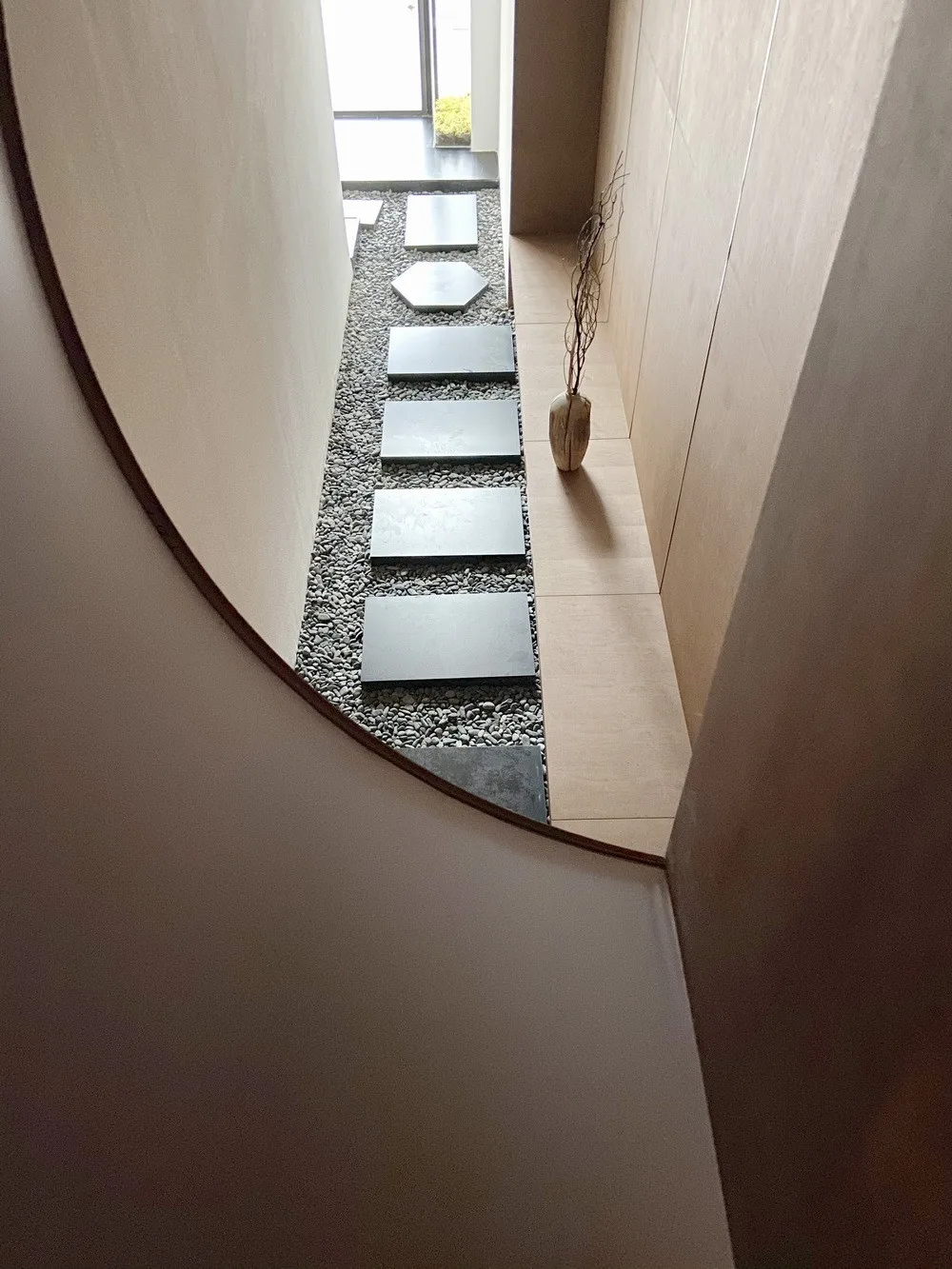
△ View of the eastern walkway from the mezzanine
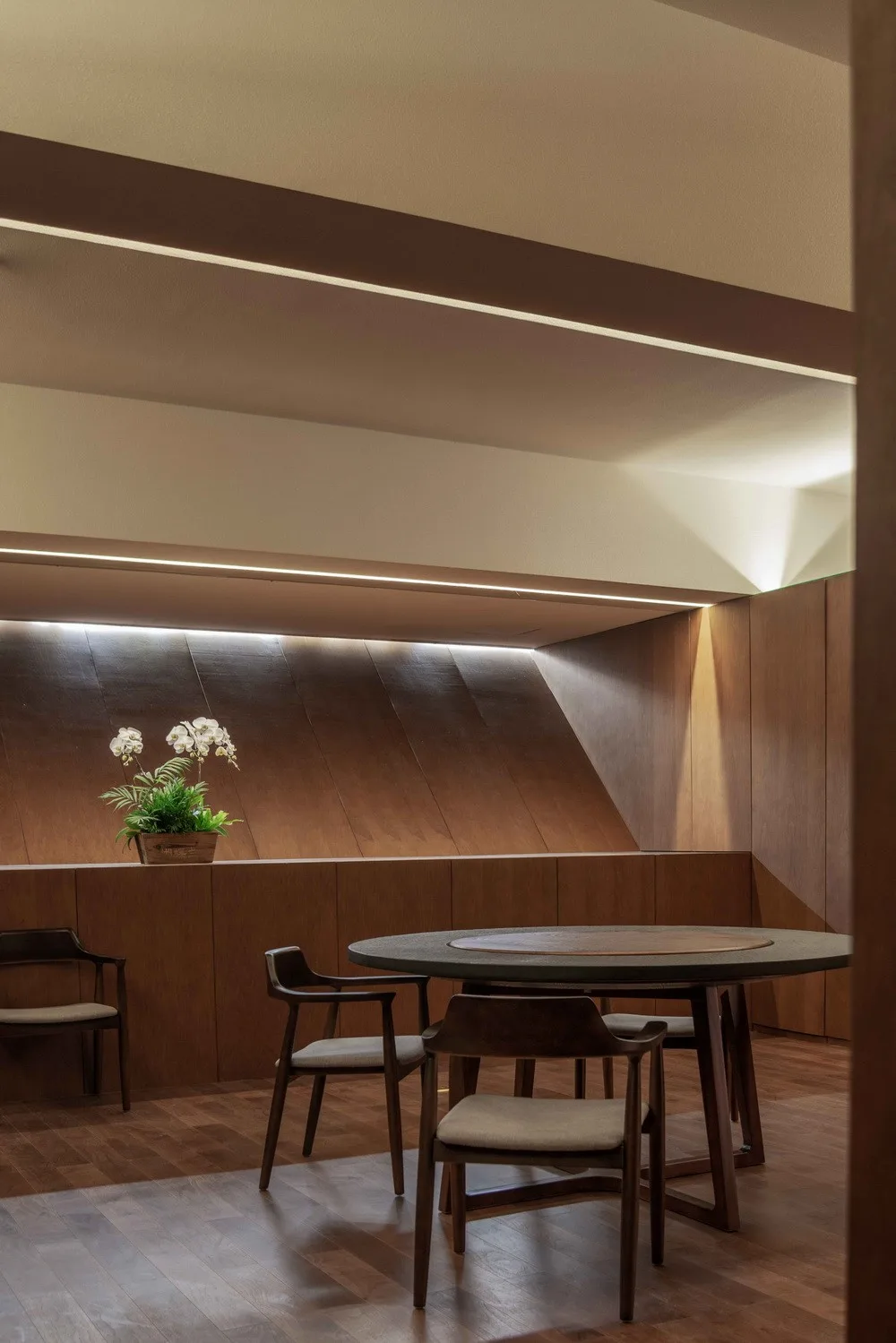
△ Mezzanine dining area
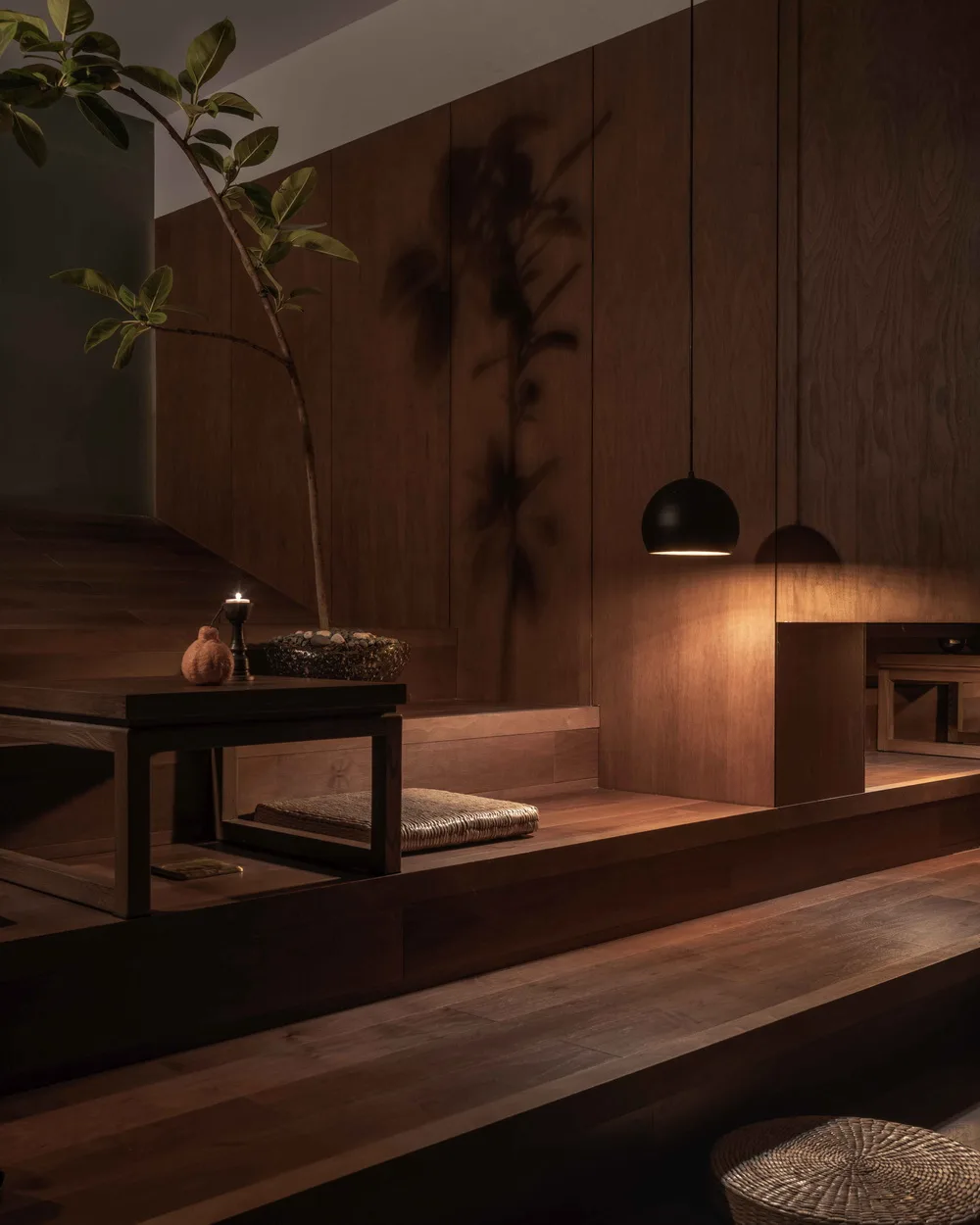
The stepped mezzanine tea room creates an intimate world bathed in warm light.
The Scenery of Captured Light: Movement and Stillness
Our goal was to merge natural impressions into the tea room, evoking emotion and memories. Sunlight spots recall the passage of time, while soft, filtered light symbolizes stillness, giving the scenery a dynamic and contemplative duality.
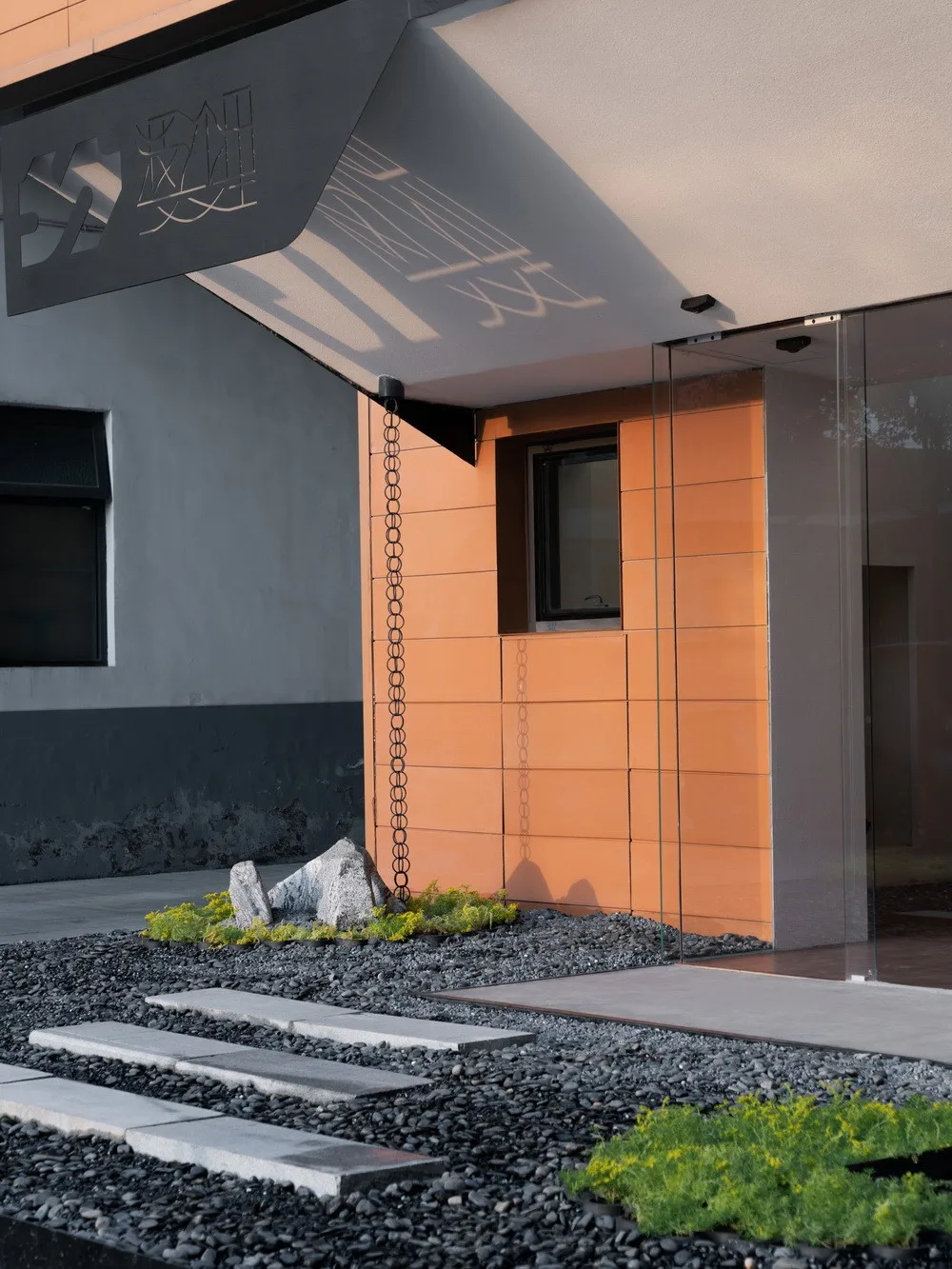
As dusk falls, the word “Posali” dissolves into light spots, their long shadows shifting and blending with mottled patterns.
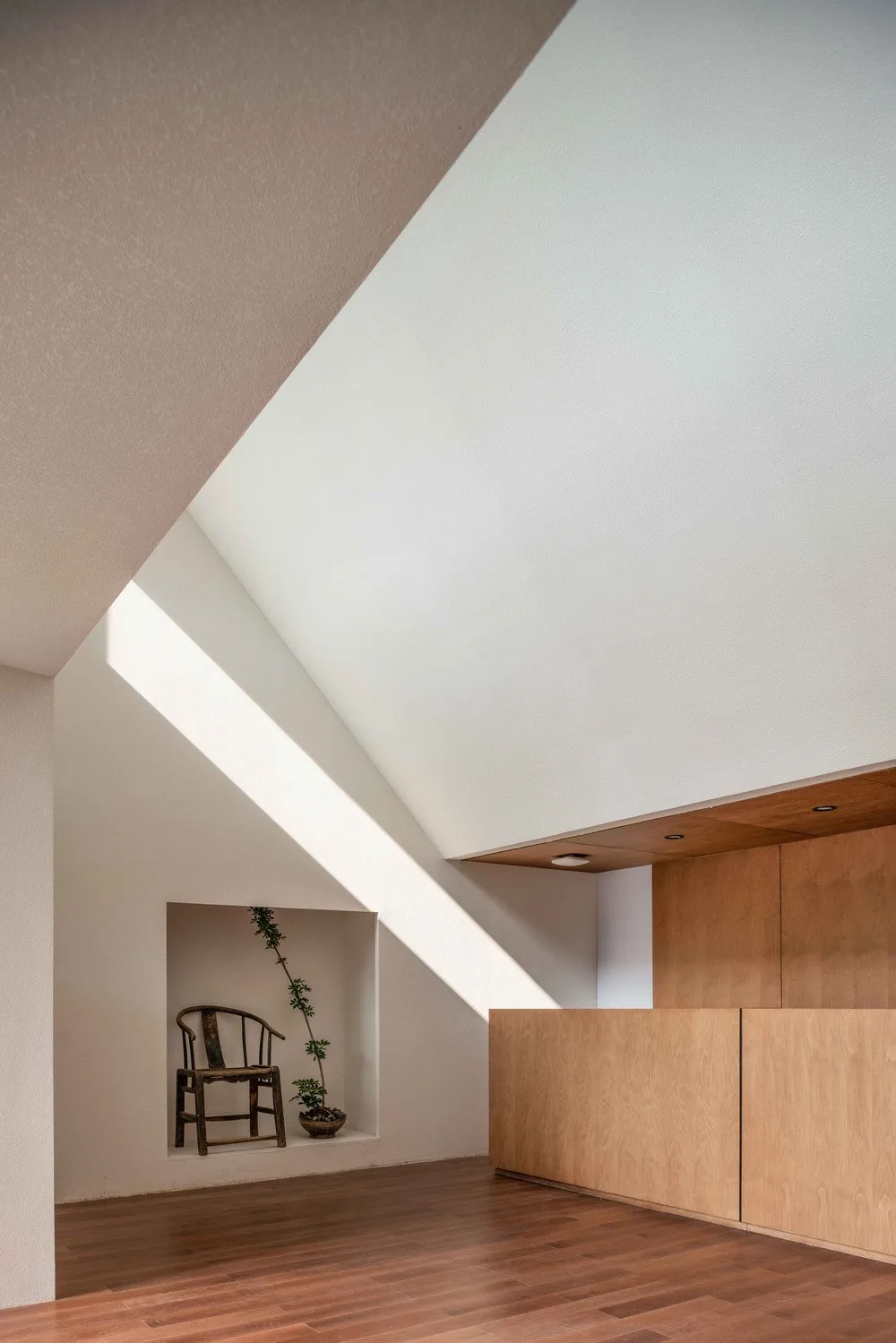
Time strides forward, allowing the space to capture the trajectory of light.
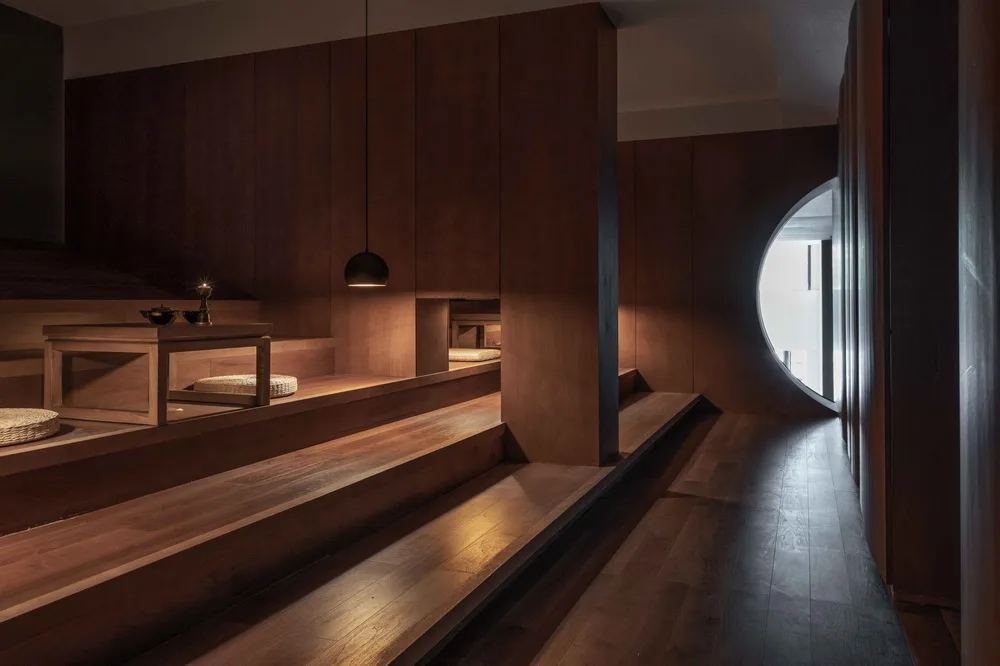
The tea room’s lowered lighting invites introspection—can you still recognize your own face in the shadows?
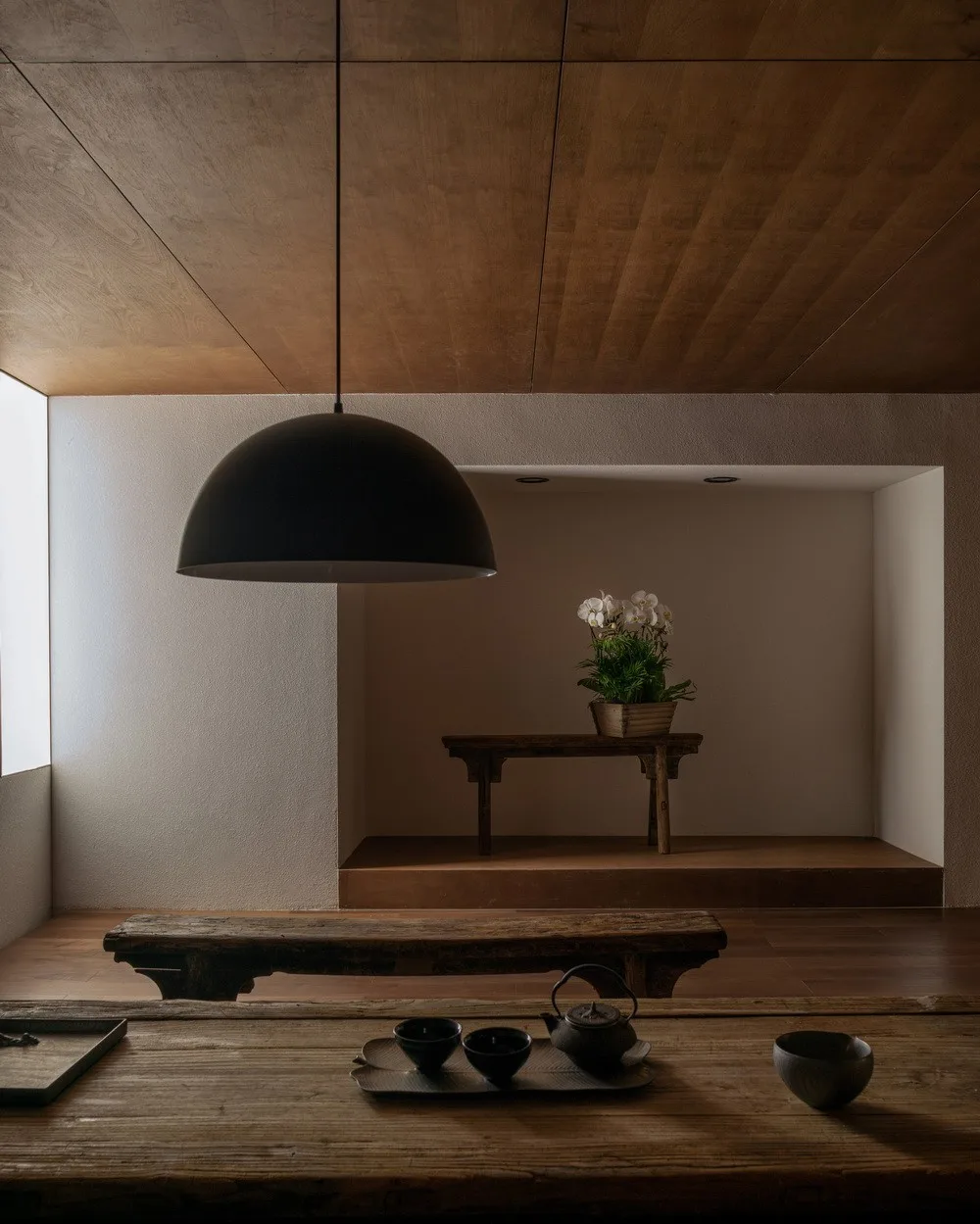
Within the tea room, a simulated sunlight entrance brightens the space.
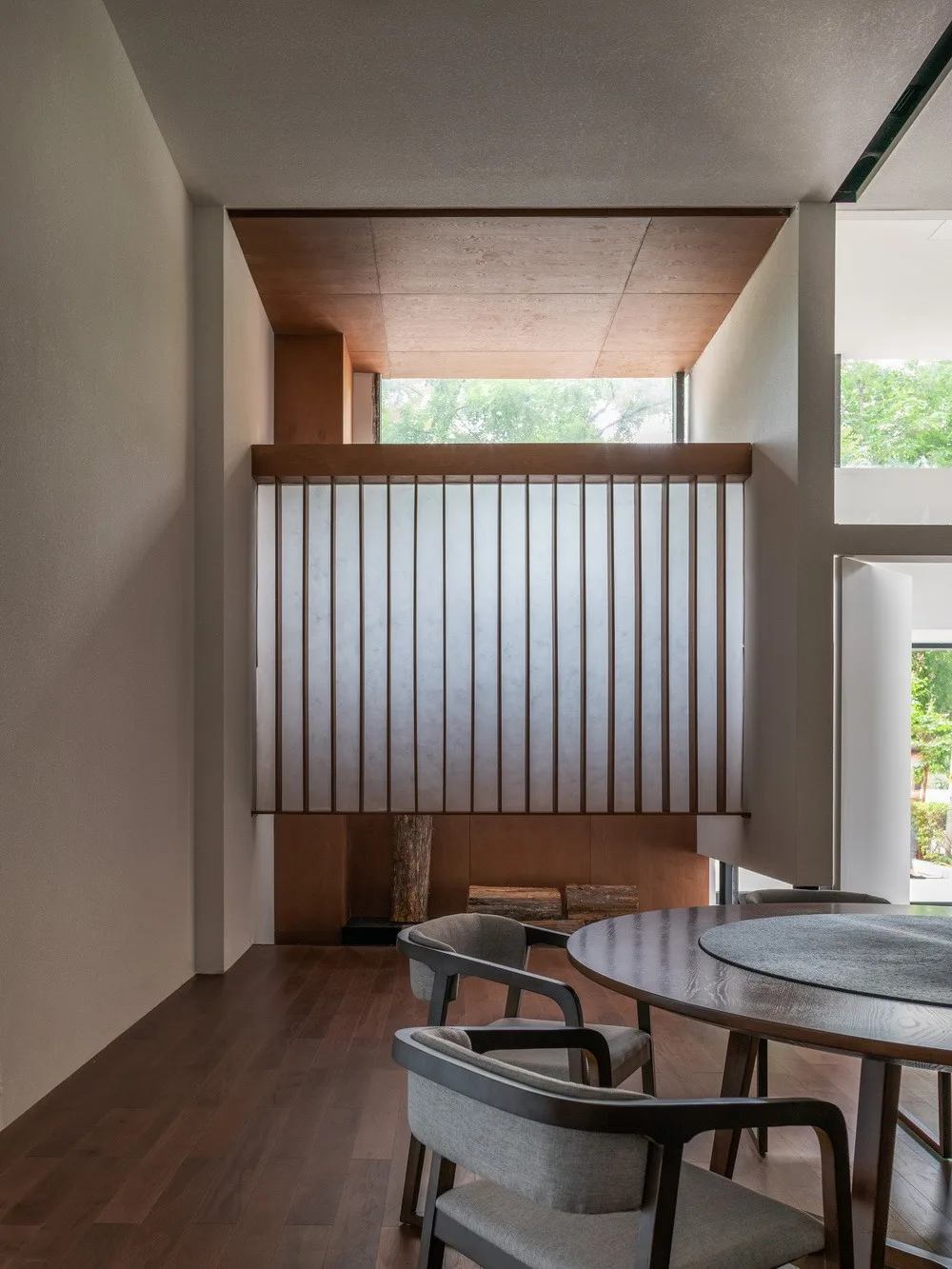
Light particles scatter softly, refreshing like a summer rain.
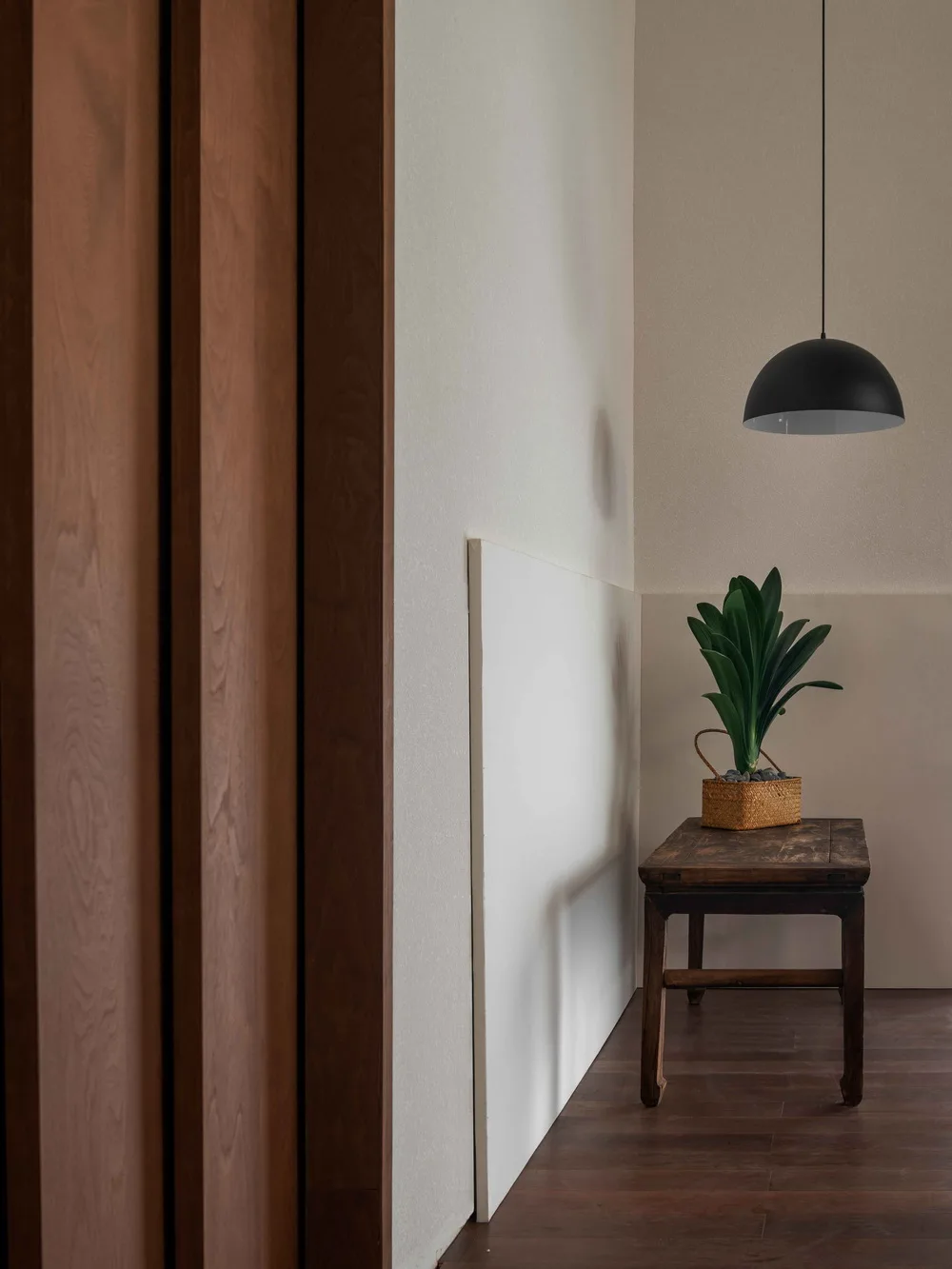
△ Layers of light and shadow envelop the space.
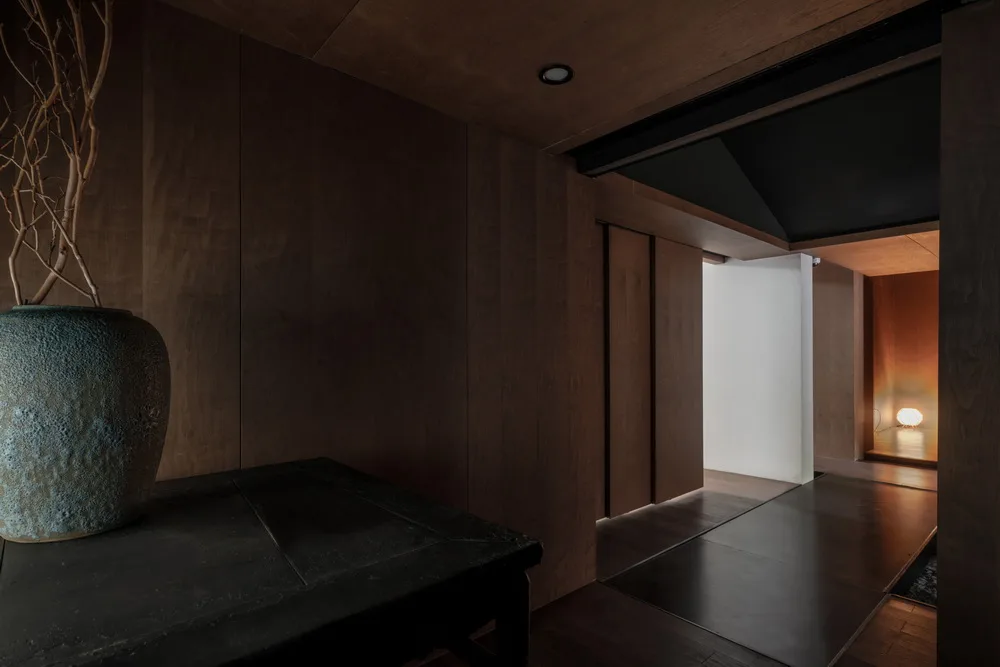
Wabi Sabi is expressed through the subtle, faint light touching the walls.
Technical Drawings
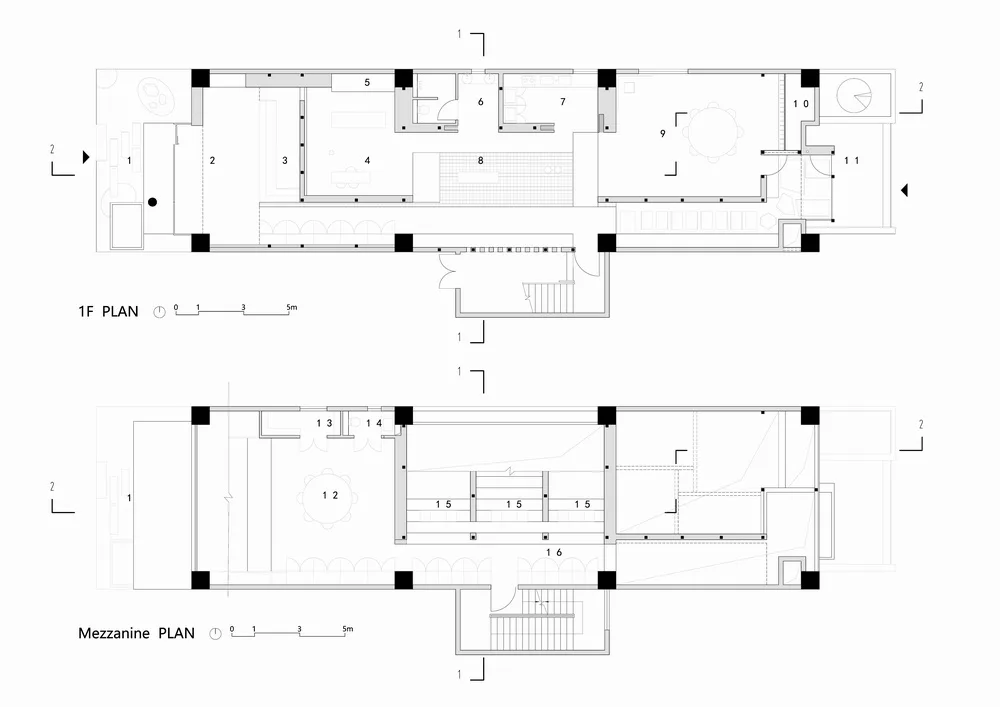
△ Floor plan
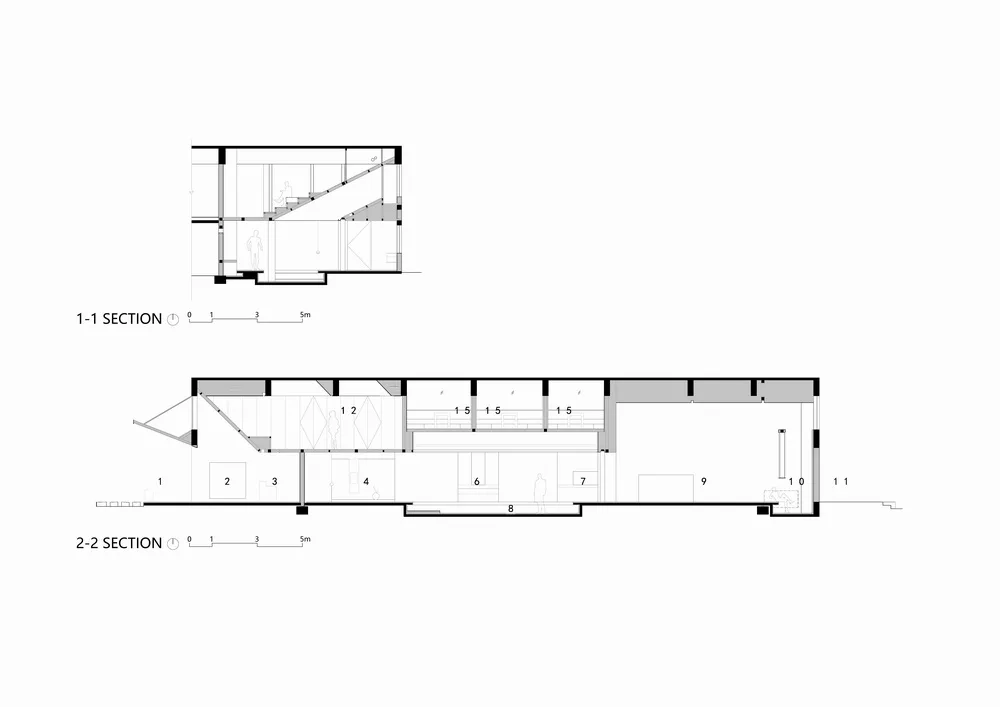
△ Section diagram
The conversion of the large slope on the first floor into a second-floor platform has been previously applied in Huxie and Luanxie projects, though each of these three dwellings expresses distinct spatial atmospheres.
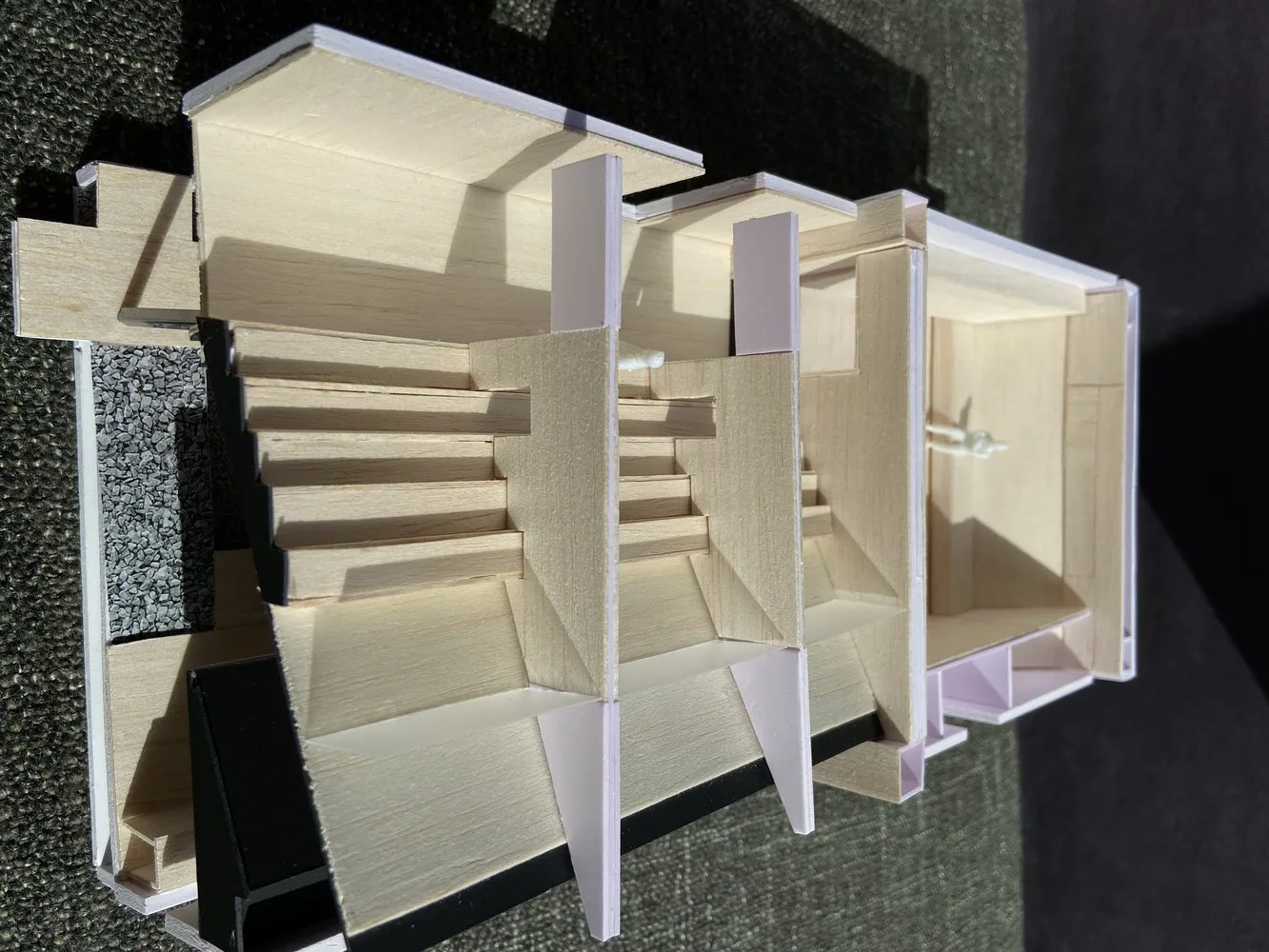
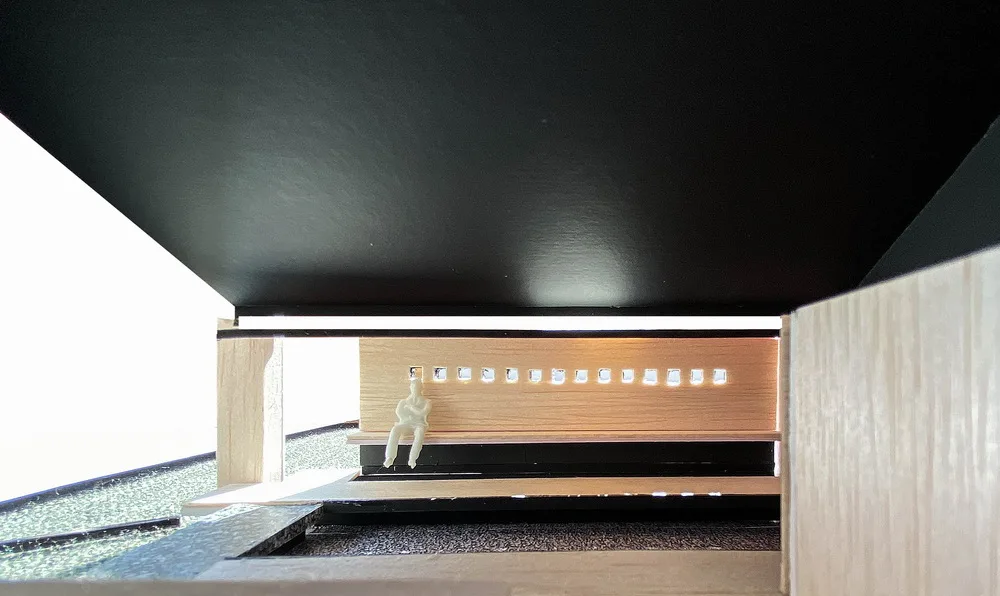
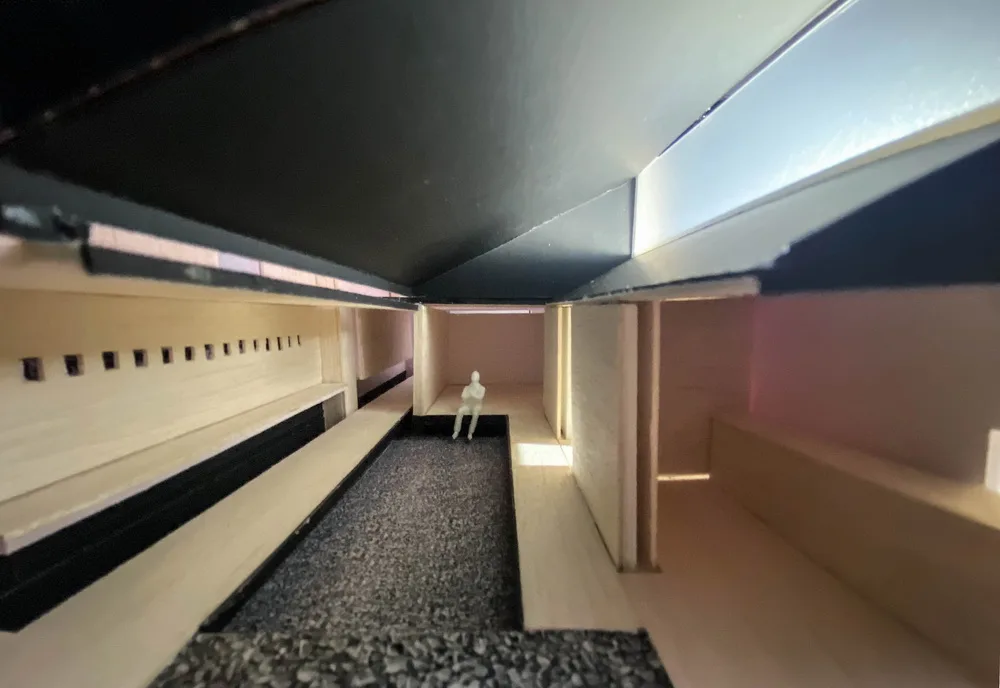
△ Working model
Project Information
Project Name: Posali Tea Room
Location: Zhengzhou, China
Completion Date: May 2021
Area: 300 square meters
Design: Wang Chong
Steel Structure Design: He Shangqing, Wang Chong
Technical Consultation: Zhang Dongguang
Planning: Wei Zijin
Construction: Henan Shuyuxuan Decoration Engineering Co., Ltd
Photography: Zhu Yumeng coppakstudio.com
Official Website: www.wonder-architectocs.com
Contact: office@wonder-architects.com / coopix1@gmail.com
















Must log in before commenting!
Sign Up