
The project is located on an old farm in Heli Village, Nanlang Town, Zhongshan City. It sits along a narrow end road about 5.5 meters wide, with its long side oriented north-south, nestled between two lakes. Two rows of pointed-leaf Duying trees, approximately five to six meters tall, stand tall yet shapeless. Looking through these tree trunks, the southern lake unfolds into an open view with distant mountains, while the northern lake, surrounded by dense trees, offers a quieter, more secluded atmosphere.
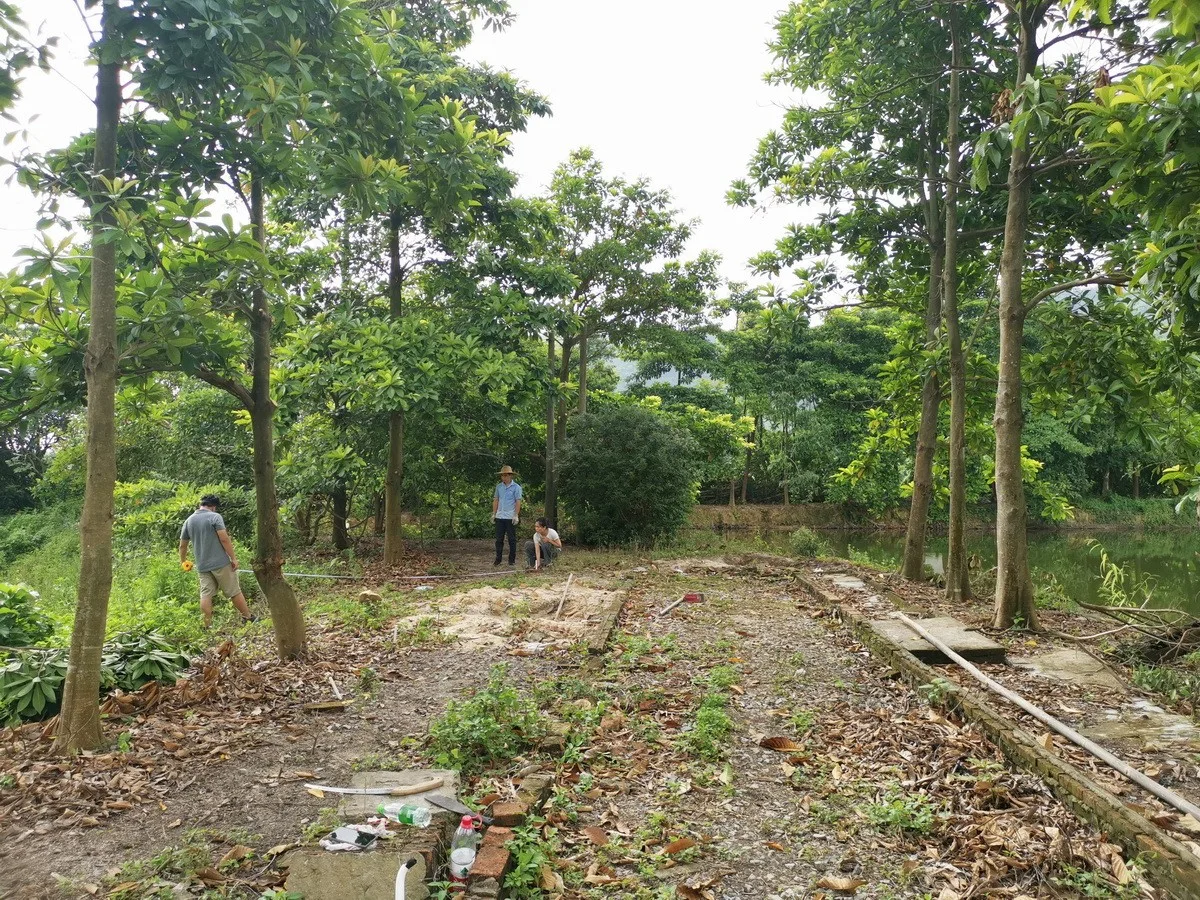
△ Current site condition: photo by Shen Lei
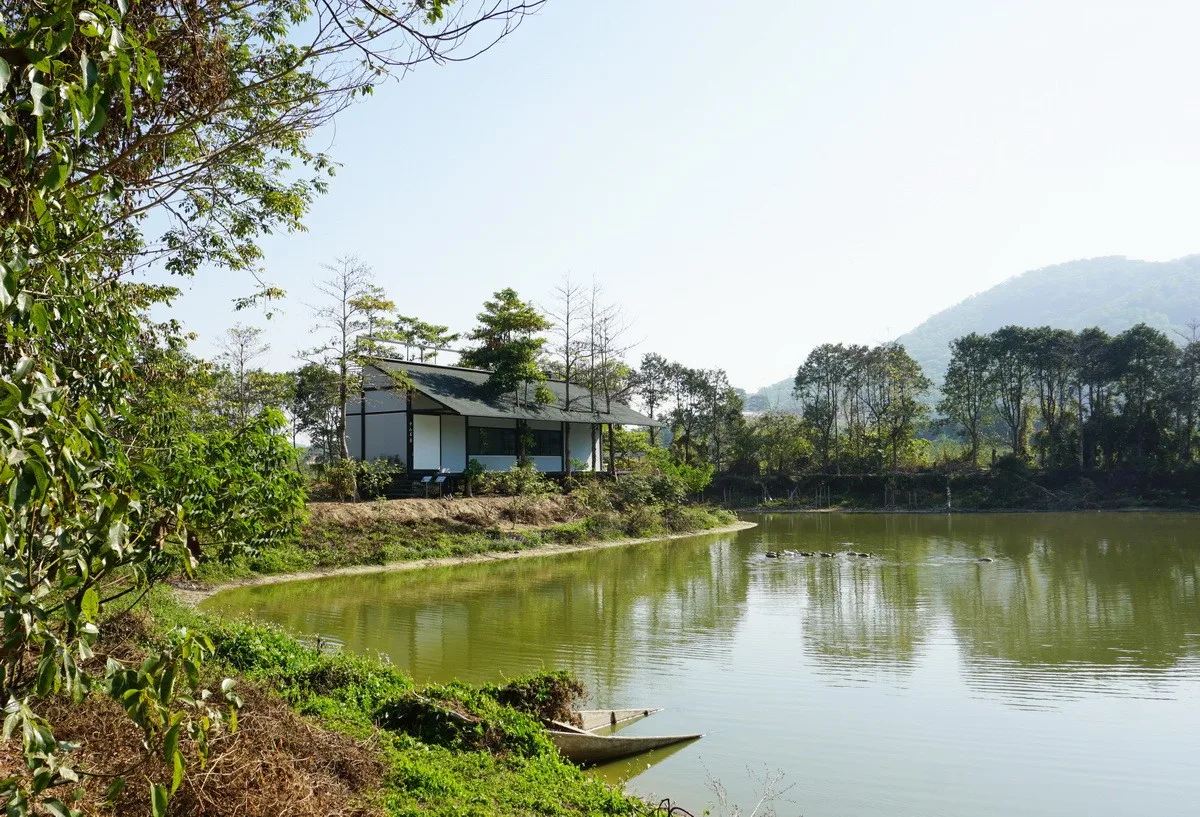
△ Side facade, photo by Zhang Bacon
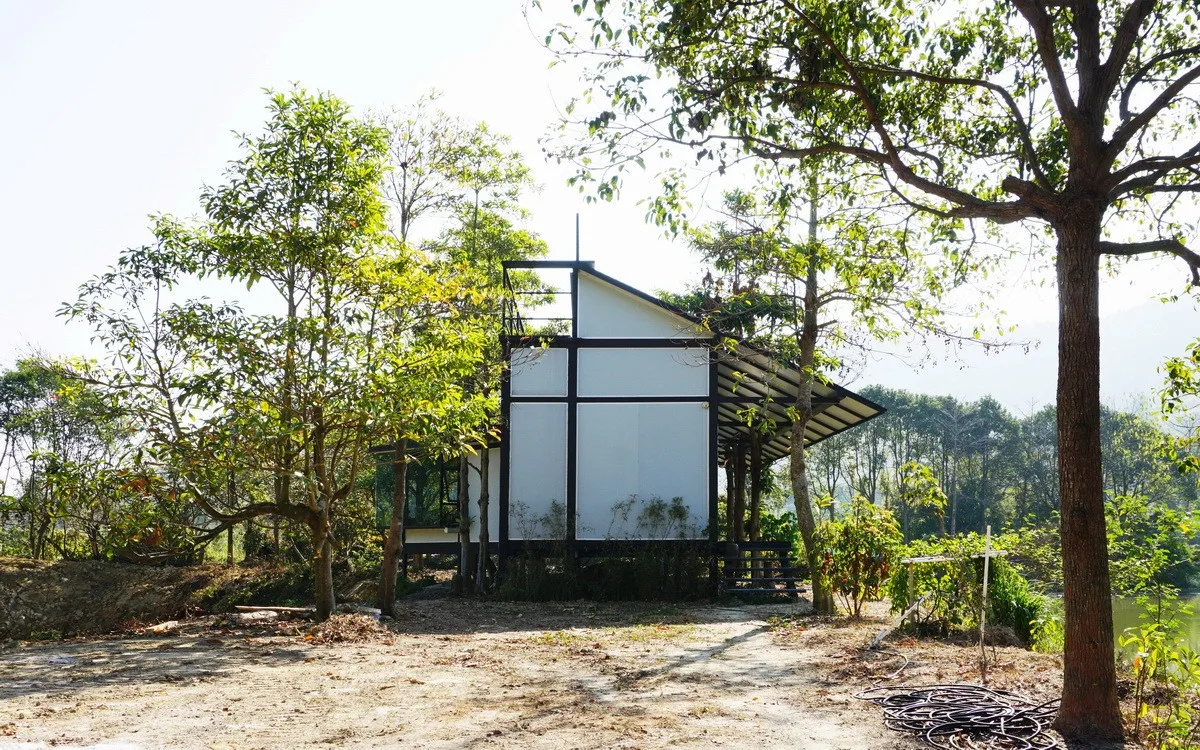
△ Side facade, photo by Zhang Bacon
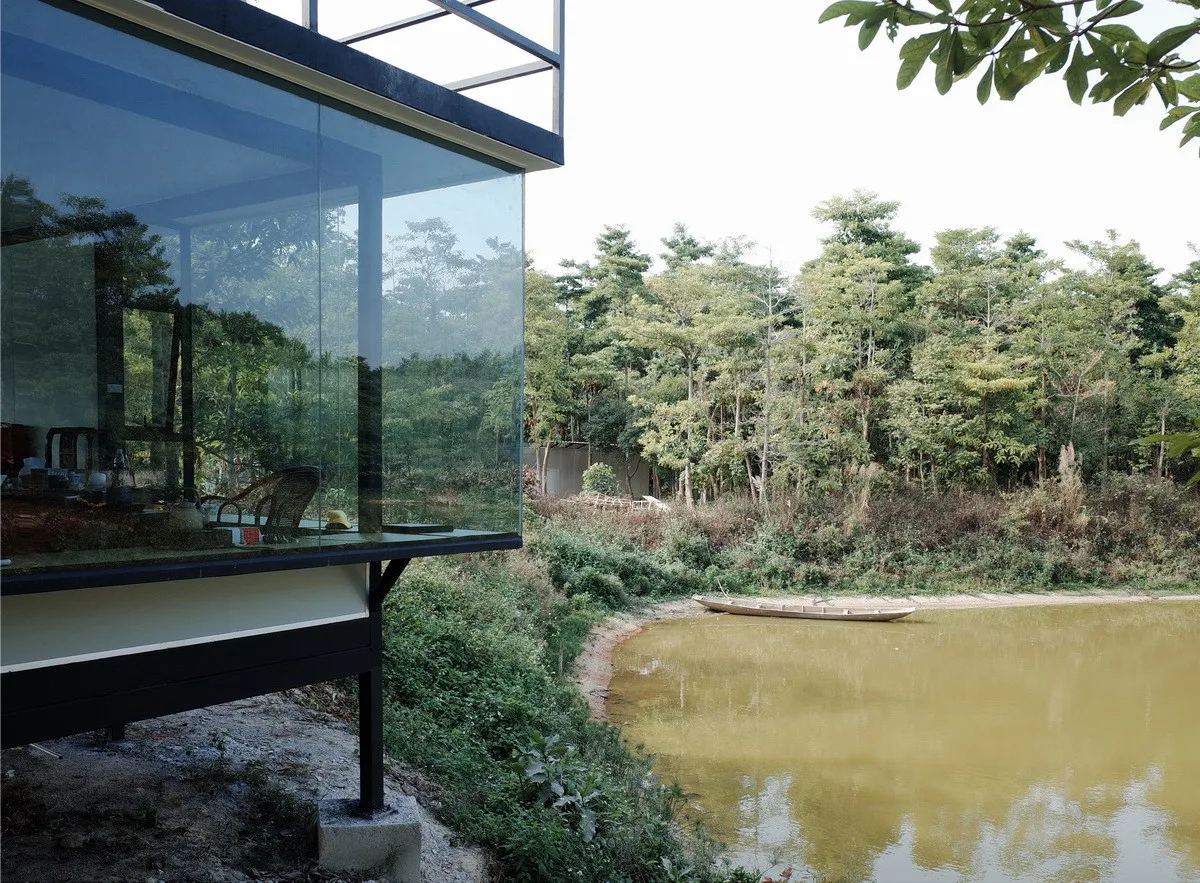
△ Tea room exterior, photo by Zhang Bacon
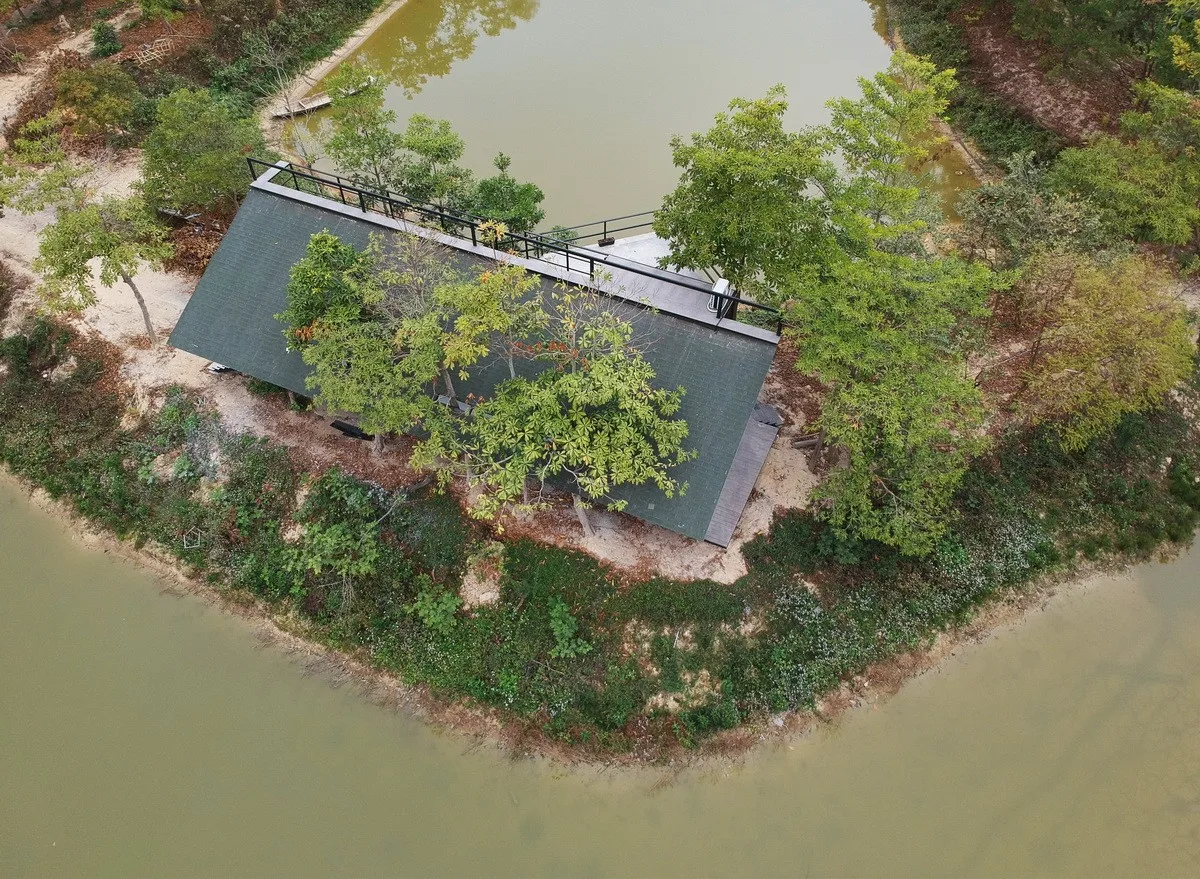
△ Aerial view of the architecture, photo by Shen Lei
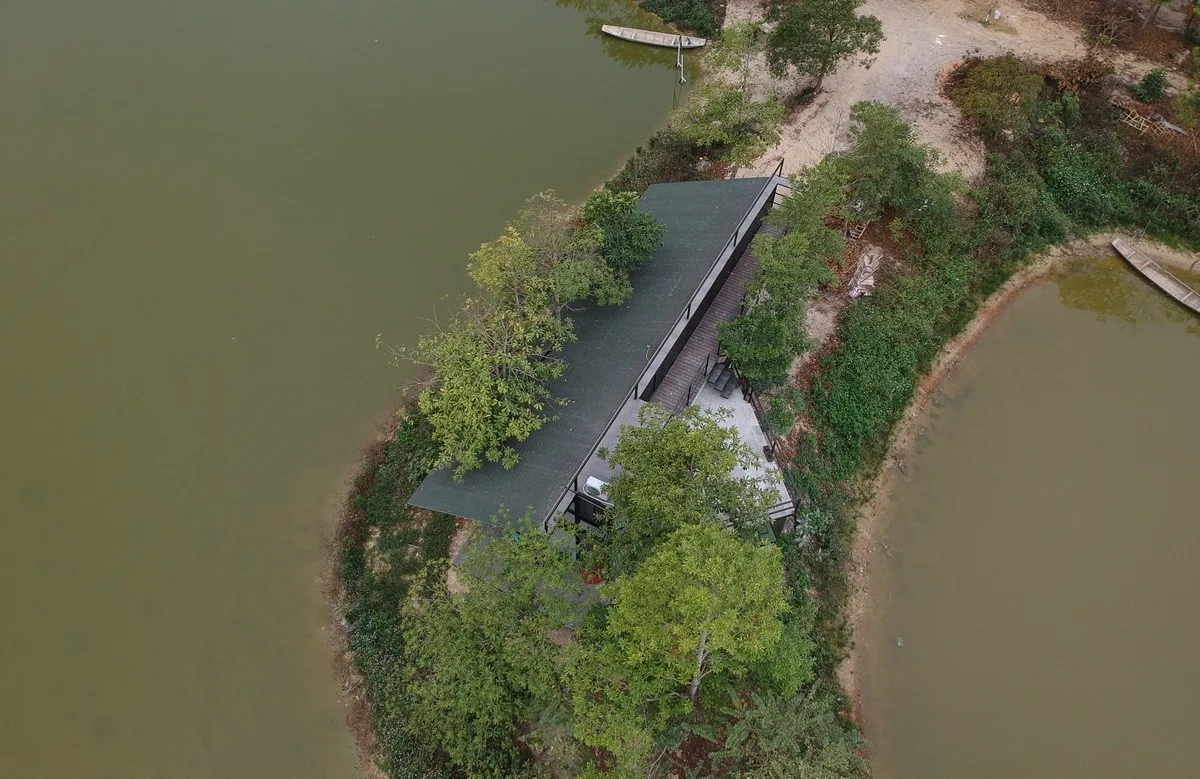
△ Aerial view of the architecture, photo by Shen Lei
The owner wishes for the building to maximize its footprint, fully utilizing its width. It should include an independent tea room and bathroom, with ample open space for future uses. Although the final function is not fixed, there is potential to add a lounge and storage room if space permits.
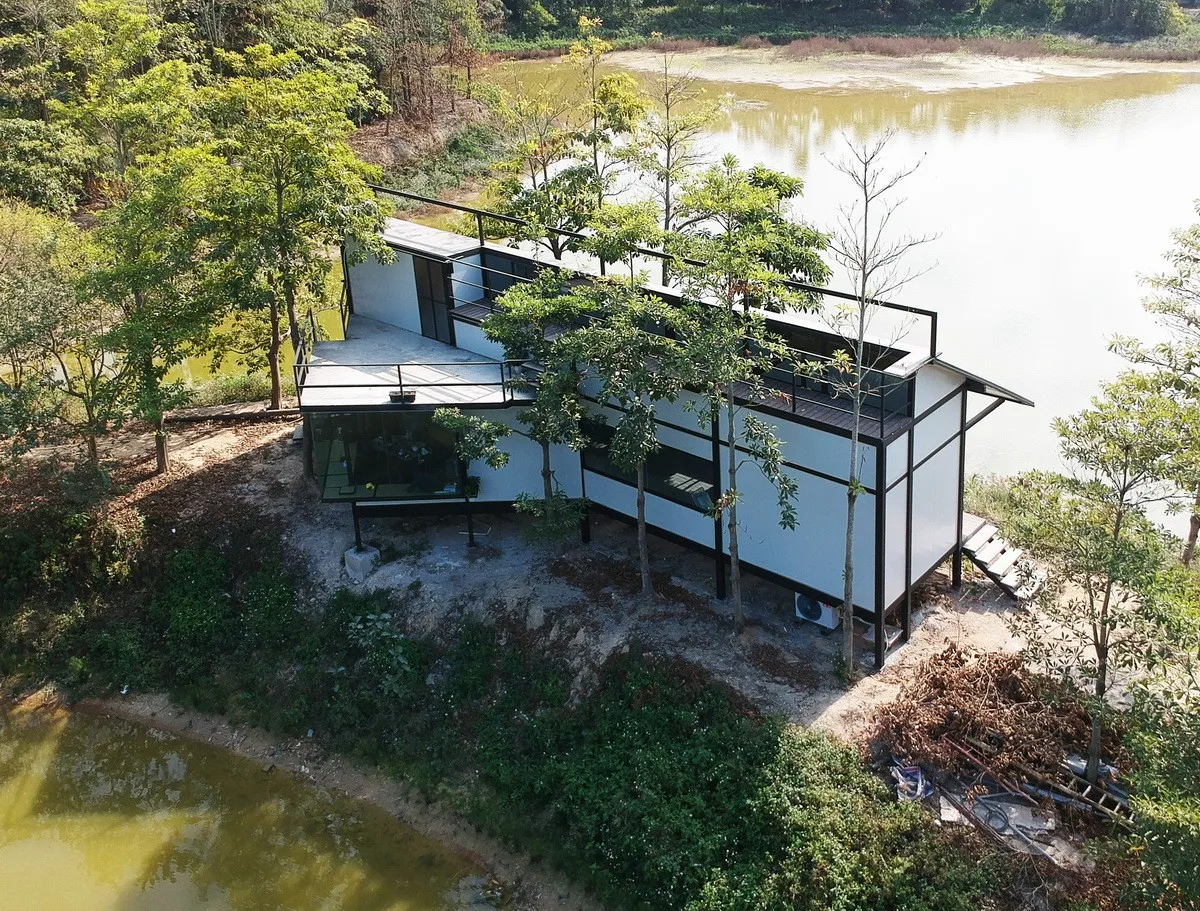
△ Bird’s-eye view of the architecture – North facade, photo by Shen Lei
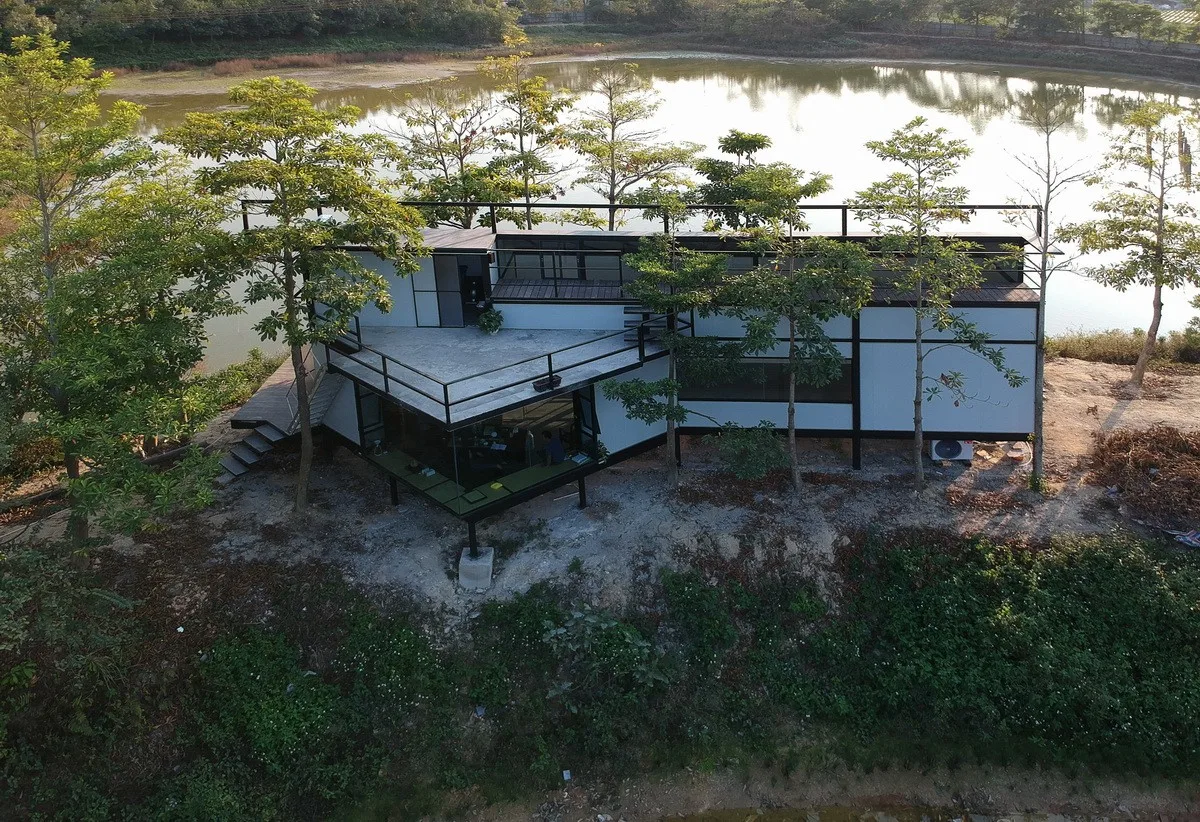
△ Bird’s-eye view of the architecture – North facade, photo by Shen Lei
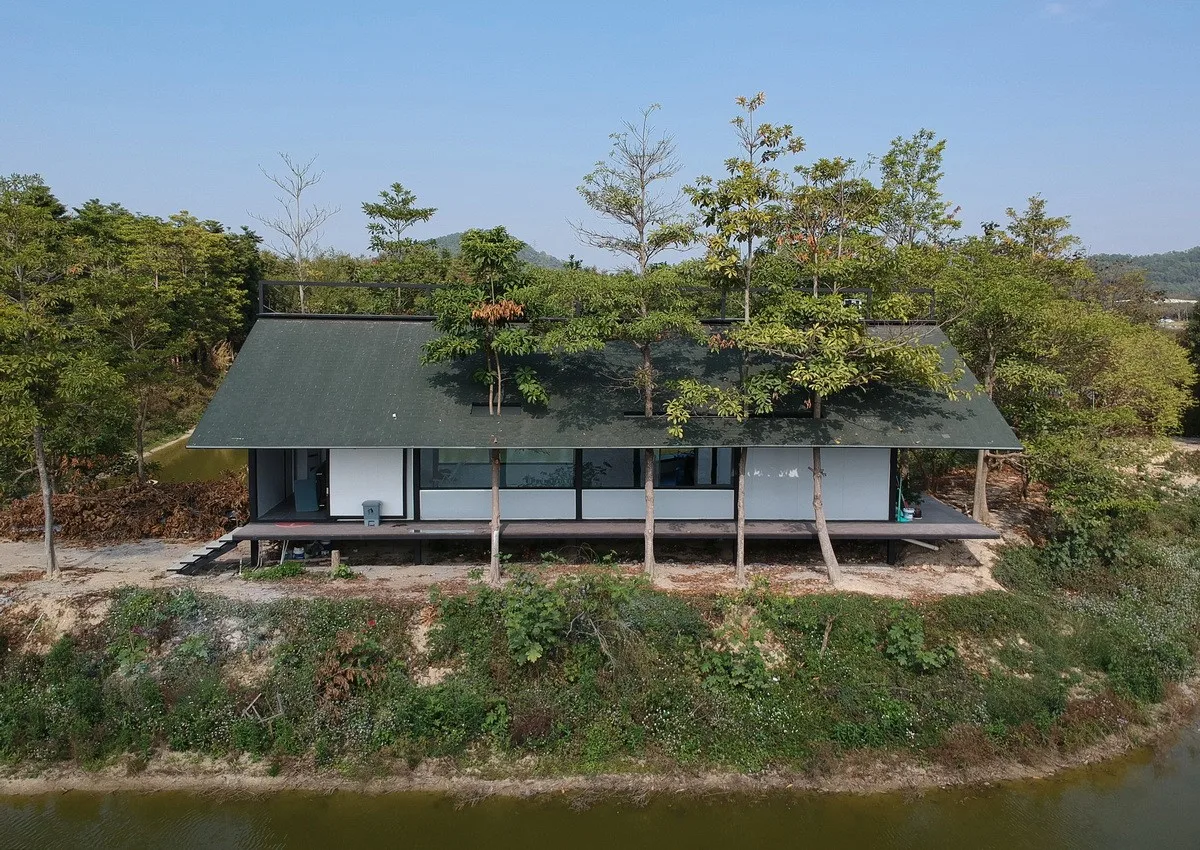
△ Bird’s-eye view of the architecture – South facade, photo by Shen Lei
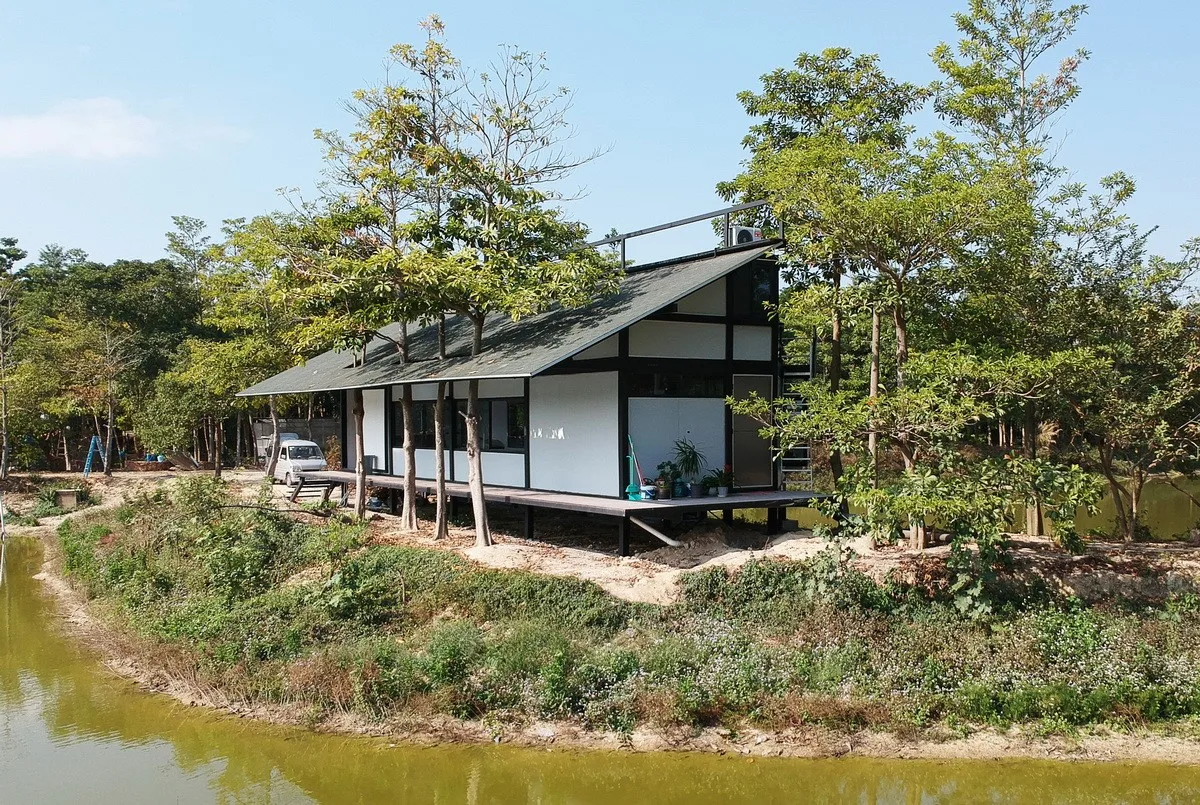
△ Architectural aerial view – South facade, photo by Zhang Bacon
The small building is named “Hujian Xie” for two reasons: firstly, “Hujian” references the building’s directional features; secondly, the homophone “jian” relates directly to the building’s intended location.
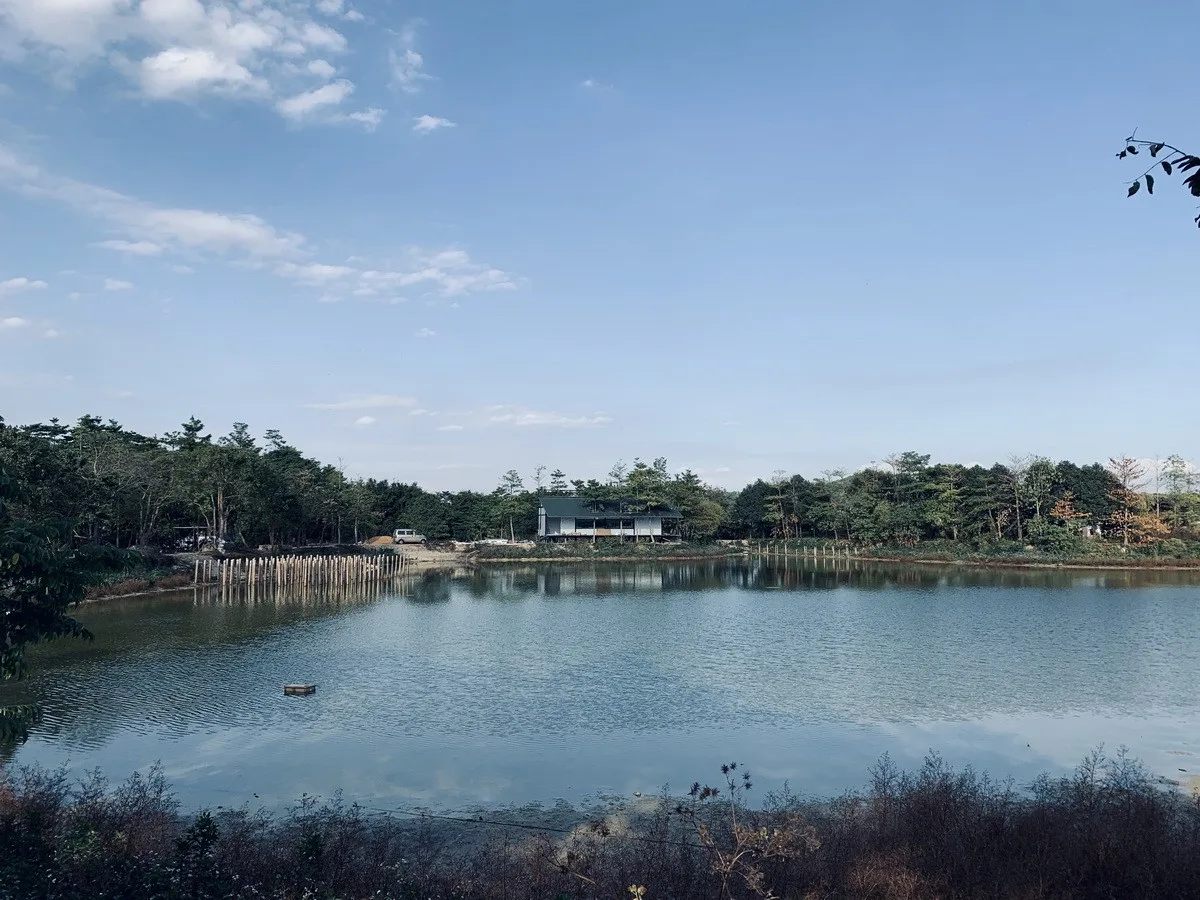
△ Exterior view, photo by Zhang Bacon
The design features a large, south-facing single-slope roof with a bay as wide as possible. To ensure sufficient eaves on the south side, the pointed-leaf Duying trees are incorporated through the roof, creating a colonnade-like effect under the eaves. This “rooftop tree” softens the mass of the large roof and reduces its visual impact on the lake surface.
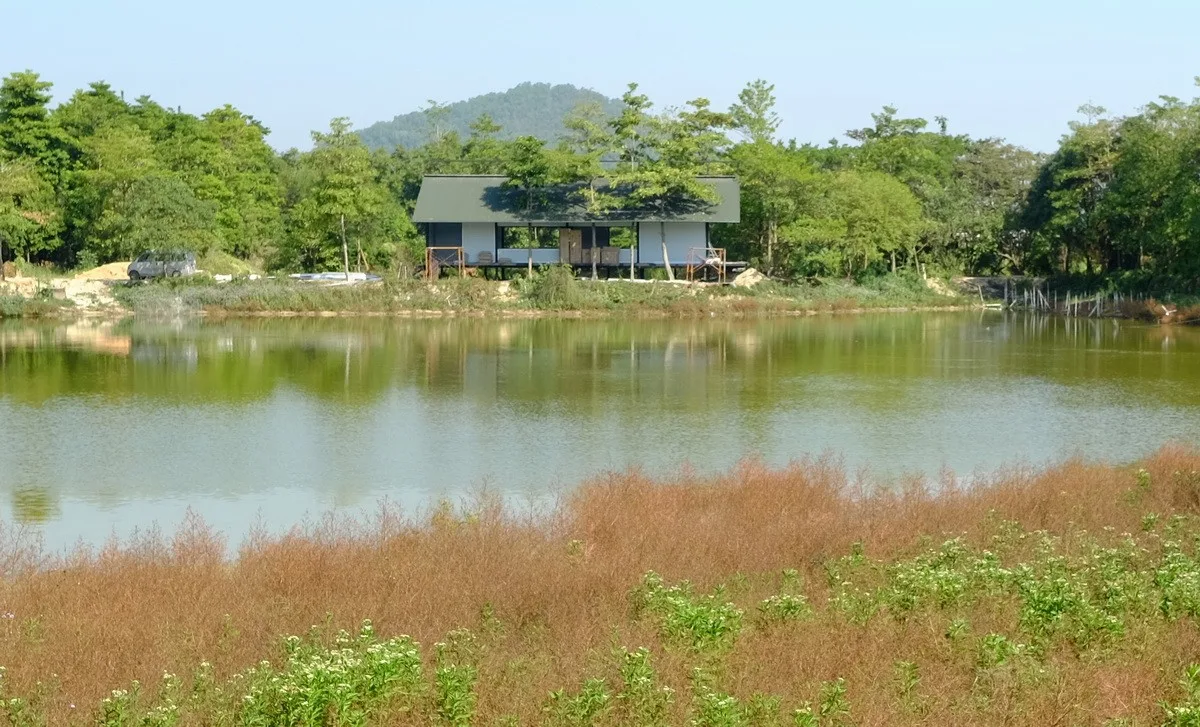
△ Front facade, photo by Shen Lei
The tea room is positioned on the north side, overlooking a quieter lake view. A square box is nestled between two trees, breaking the tree row boundary and opening up the view toward the lake. Unlike the framed scenery to the north, the tea room features bay windows and large glass panes without opening windows at its corners, enhancing the lake-facing experience.
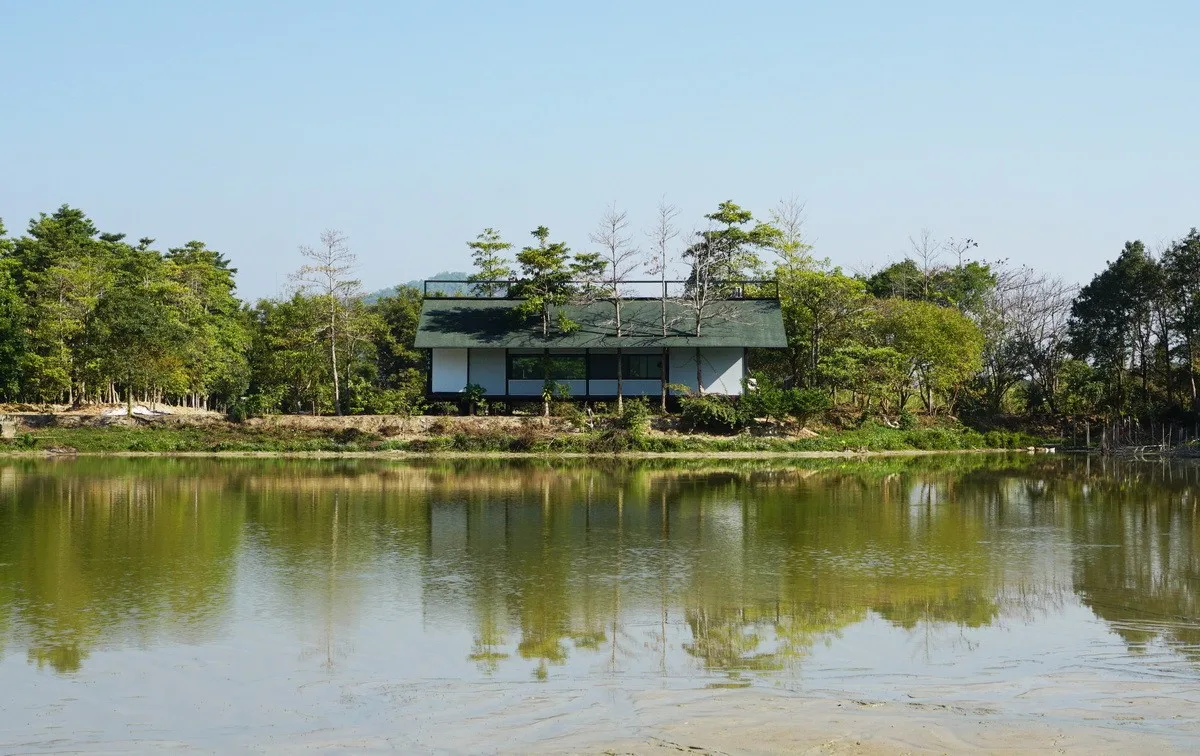
△ Facade, photo by Zhang Bacon
The triangular roof of the tea room serves as a mezzanine platform and links the roof corridors. This design solves the challenge of connecting the eastern staircase to the five-meter-high roof corridors. The rooftop triangular platform also functions as a balcony for the small lounge, offering views of the northern lake.
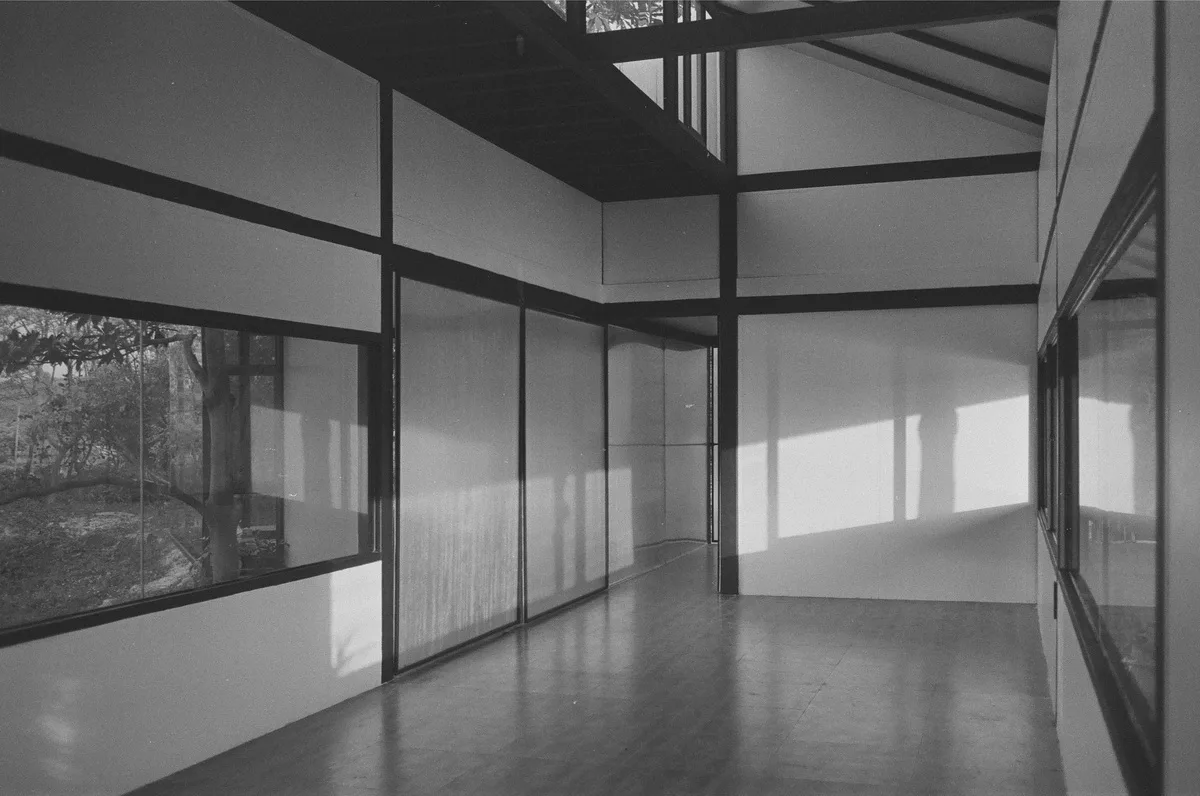
△ Interior hall, photo by Shen Lei
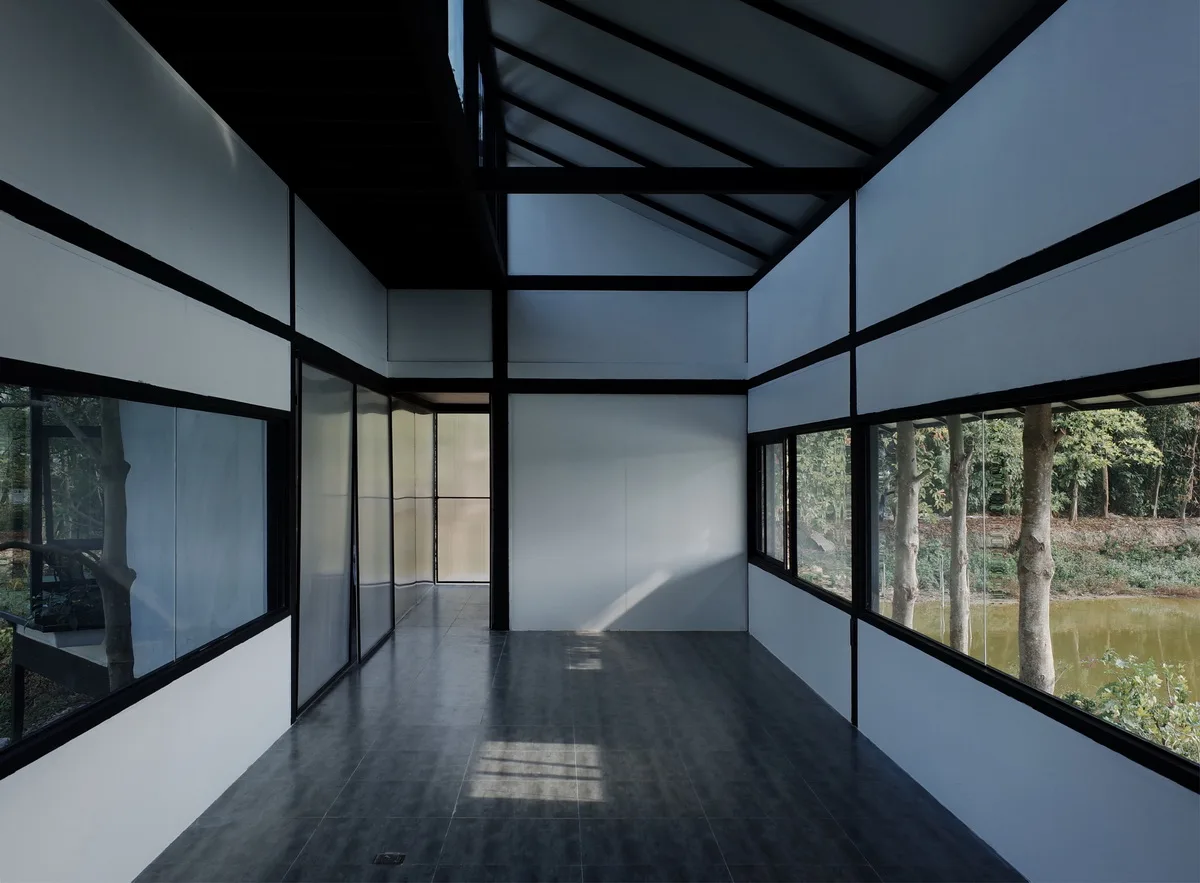
△ Interior hall – closed state, photo by Shen Lei
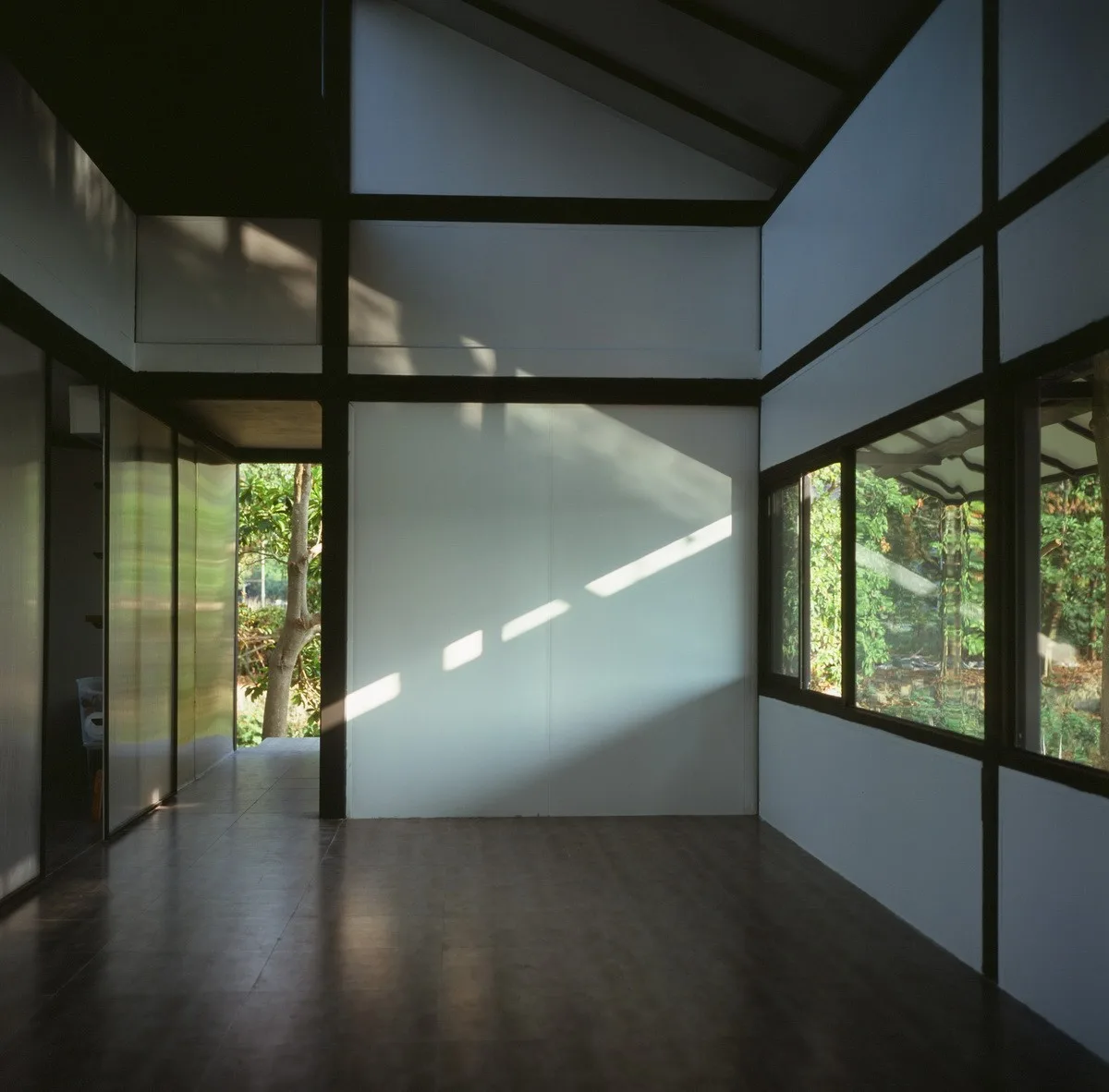
△ Interior hall – open state, photo by Shen Lei
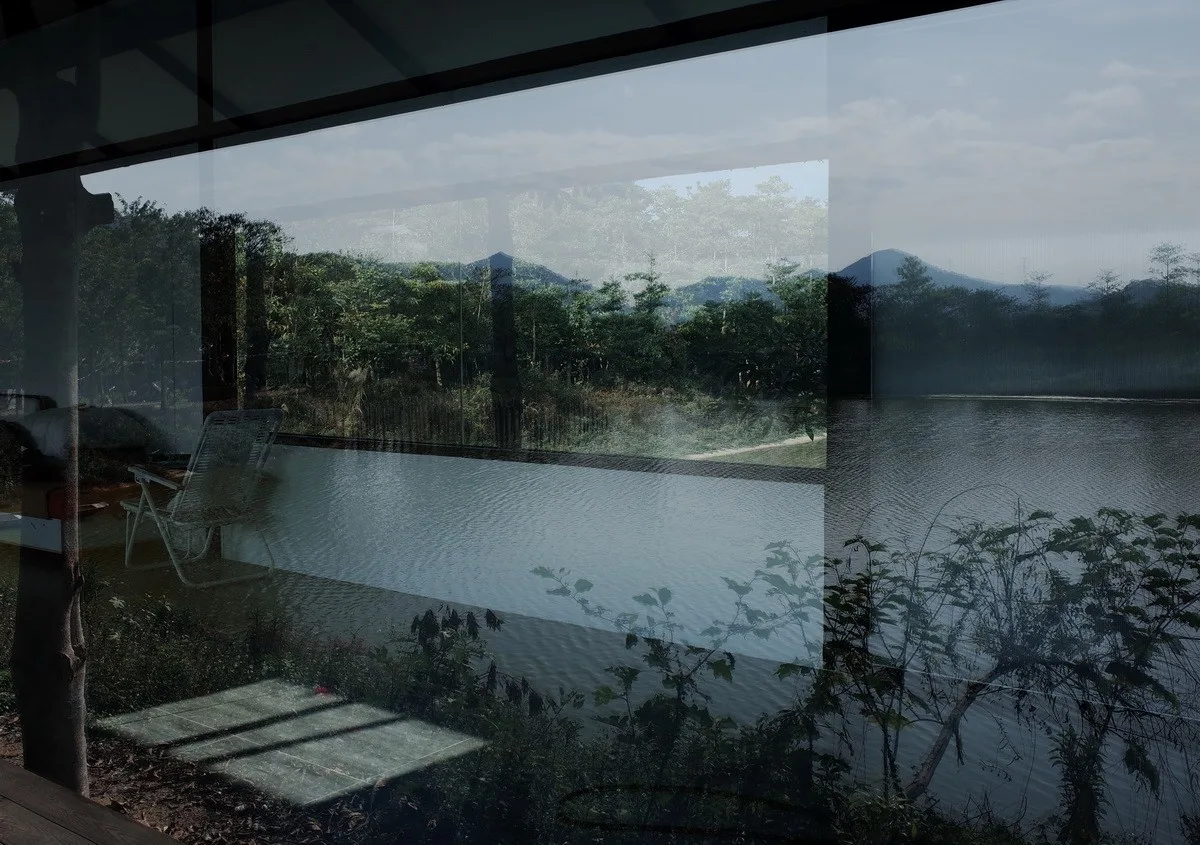
Interior view, photo by Shen Lei
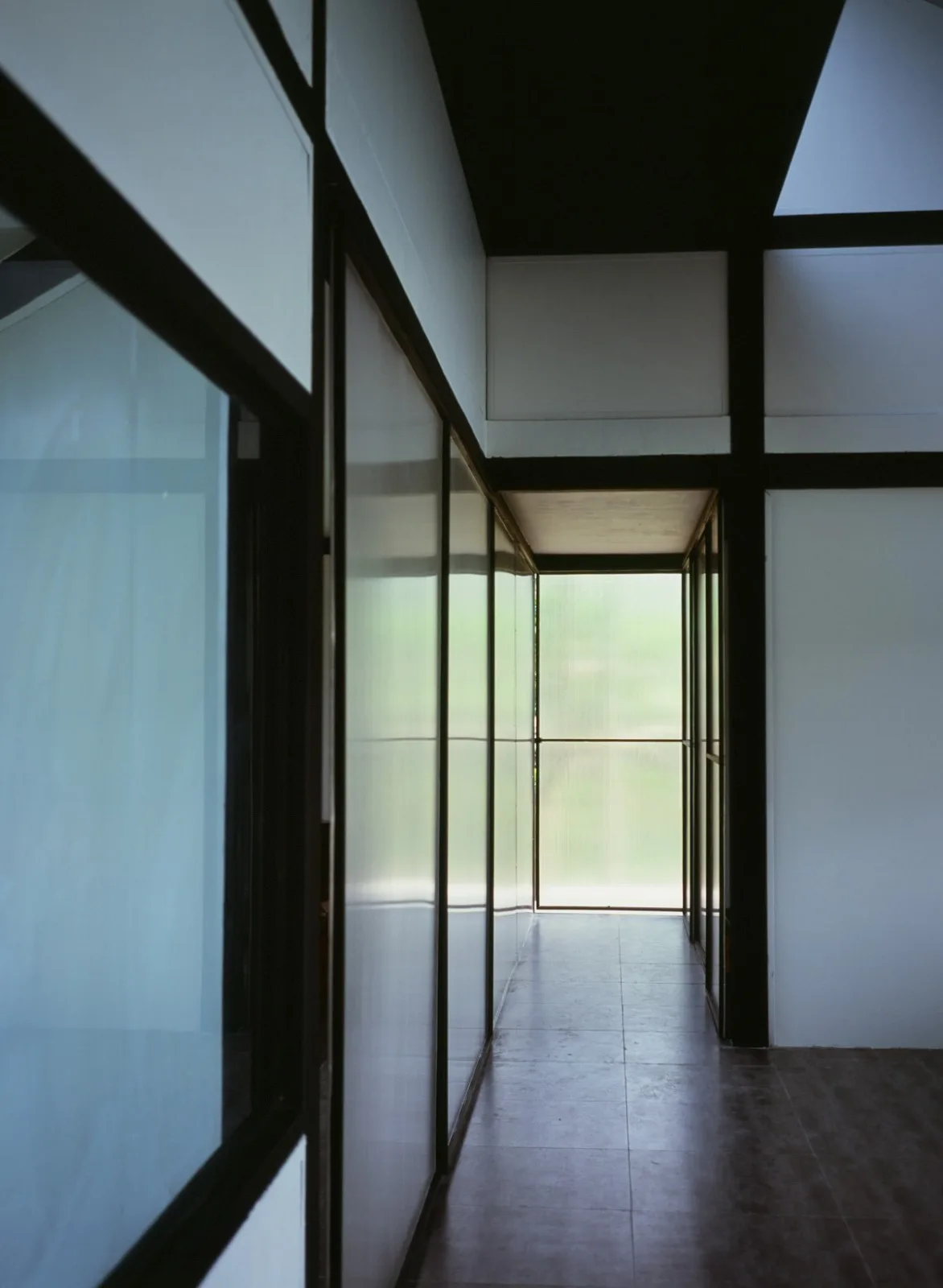
Interior view, photo by Shen Lei
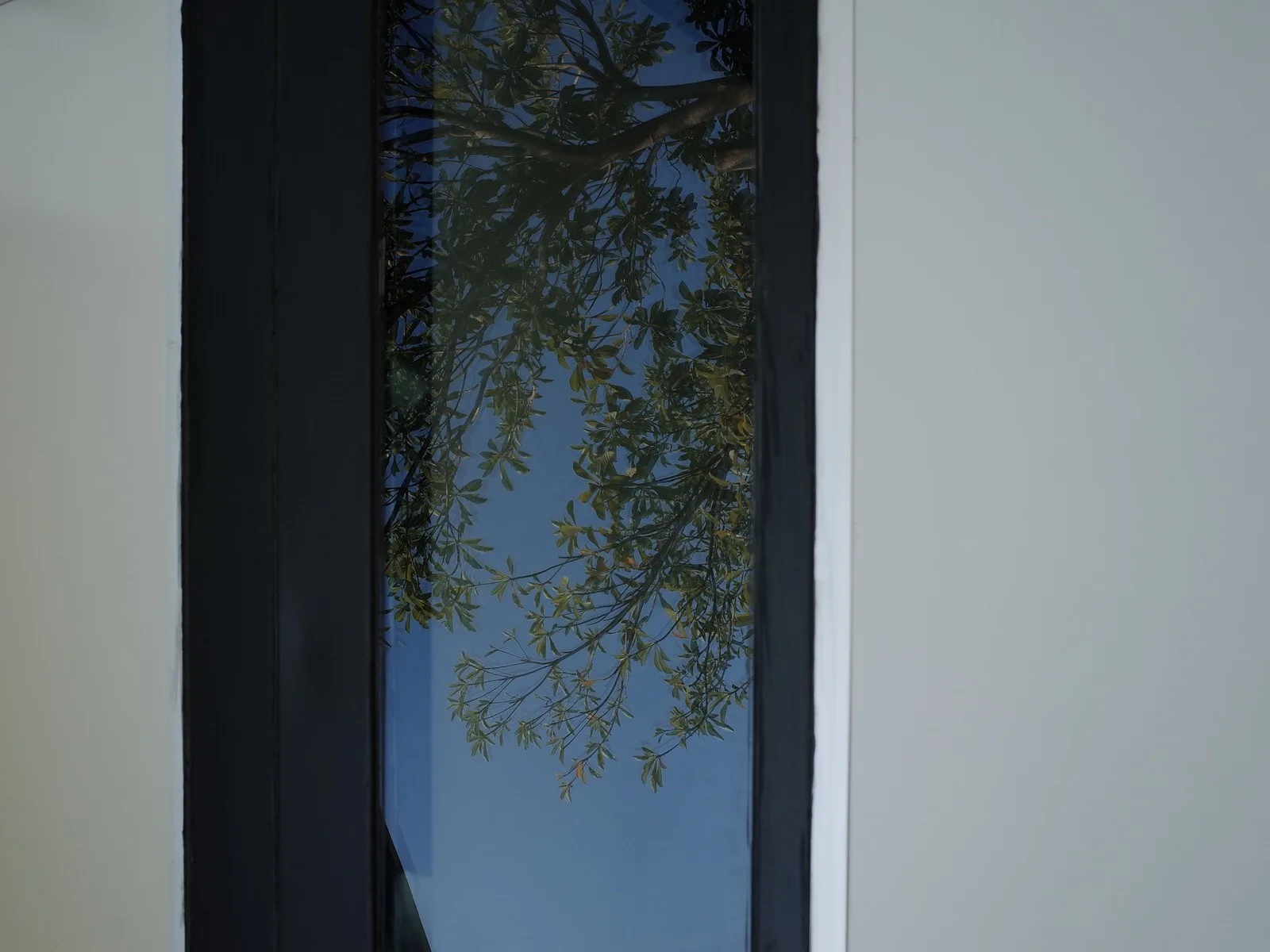
Interior glass details, photo by Zhang Bacon
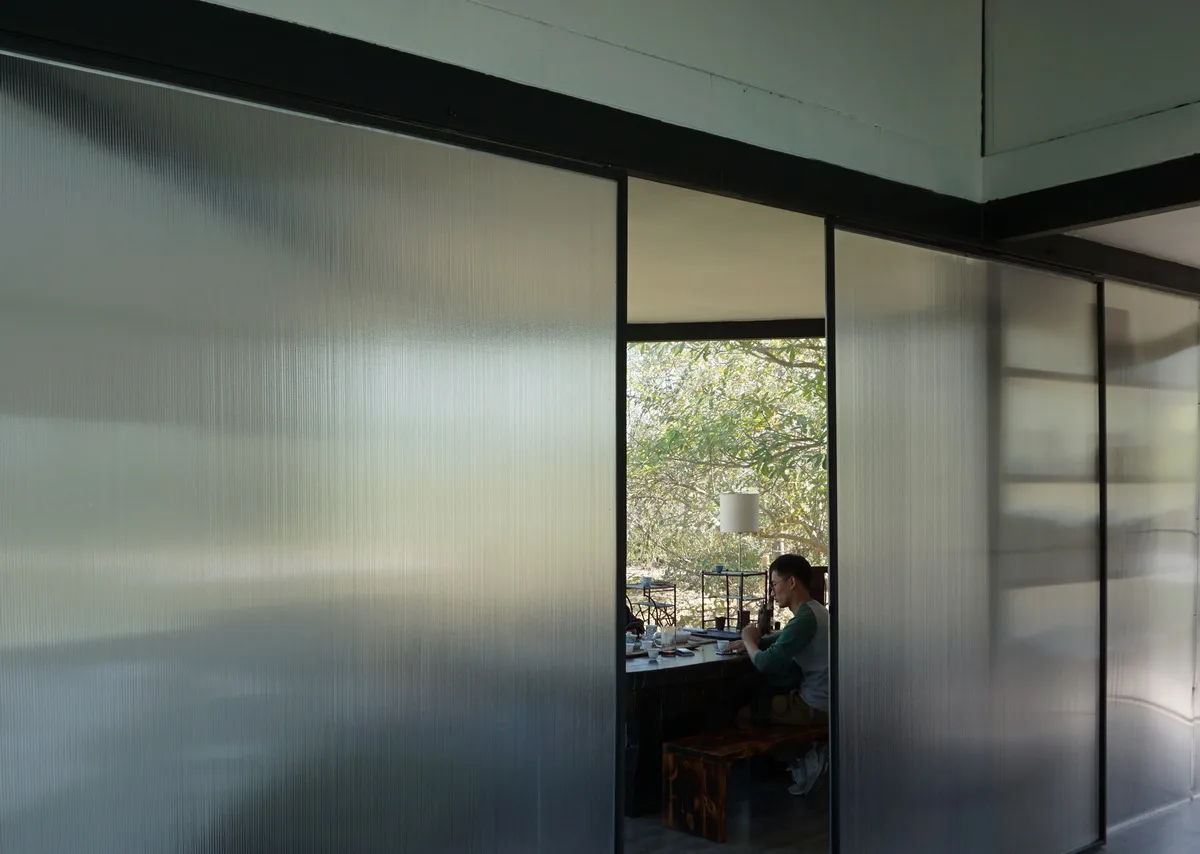
Tea room interior, photo by Zhang Bacon
The roof corridor railing height aligns with the top of the single-slope roof. A raised tabletop serves as a bar counter surface along the corridor and covers the roof structure joints, sealing the areas most prone to water leakage. Additionally, a skylight is installed on the south side of the rooftop corridor, providing an upward view of the interior space.
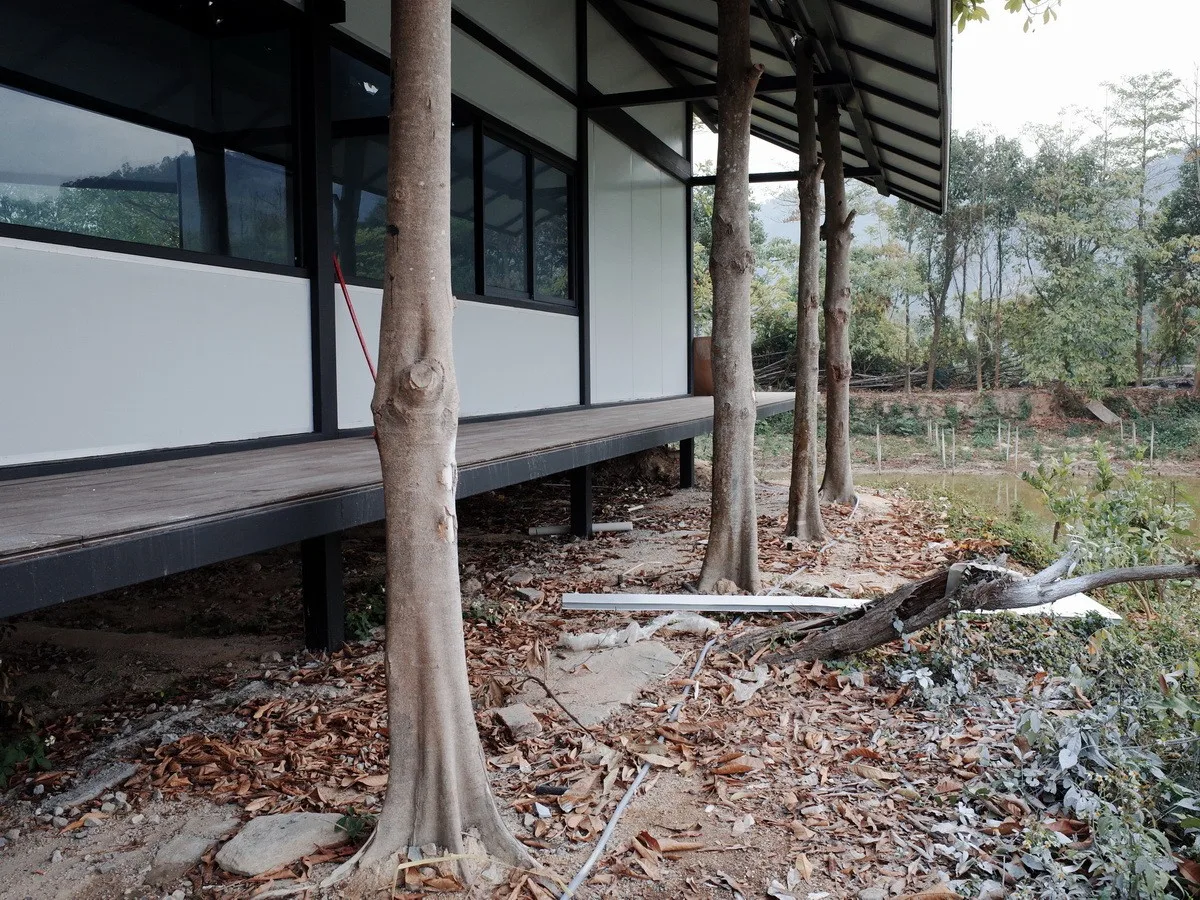
△ Exterior corridor view, photo by Shen Lei
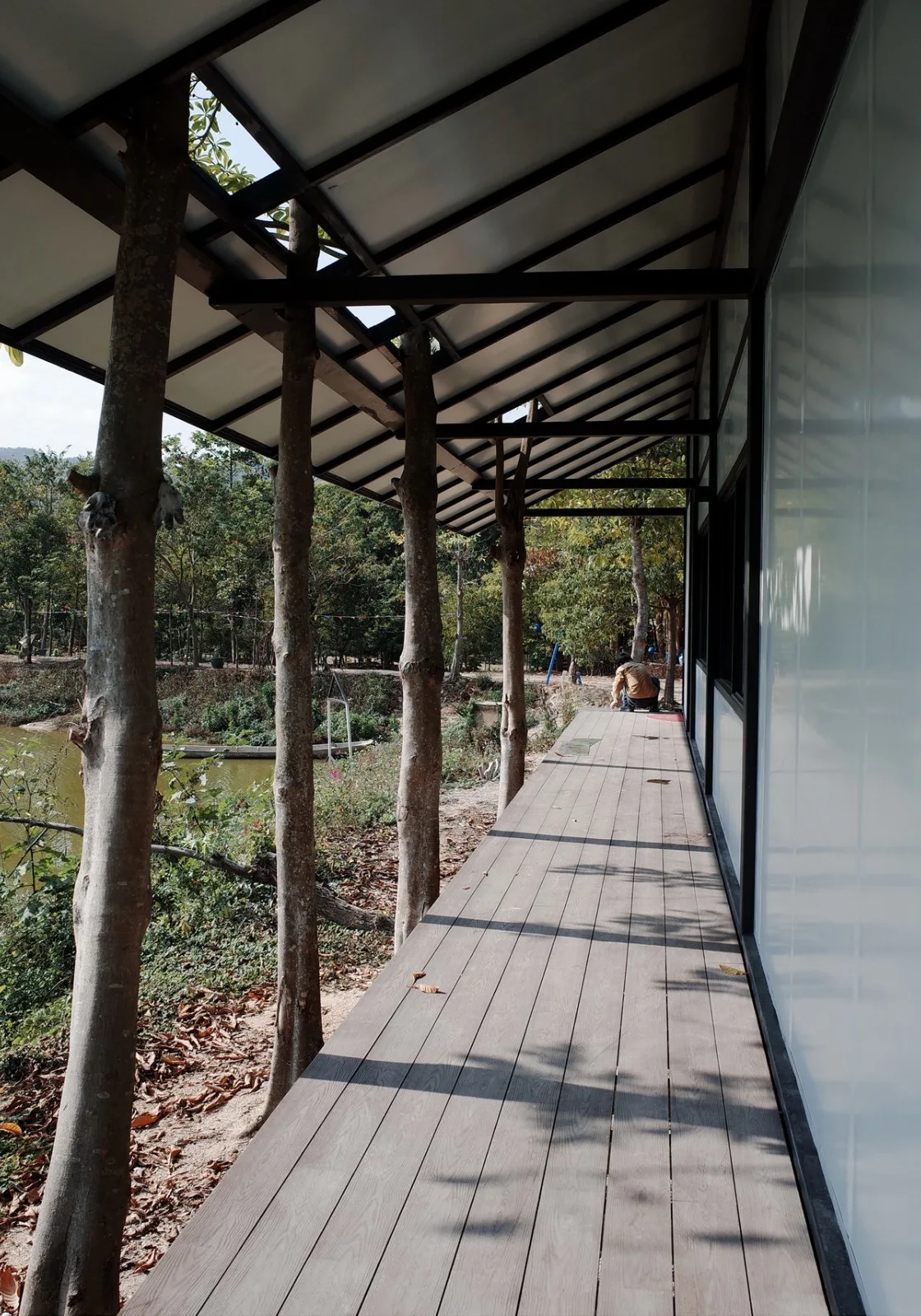
△ Exterior corridor view, photo by Shen Lei
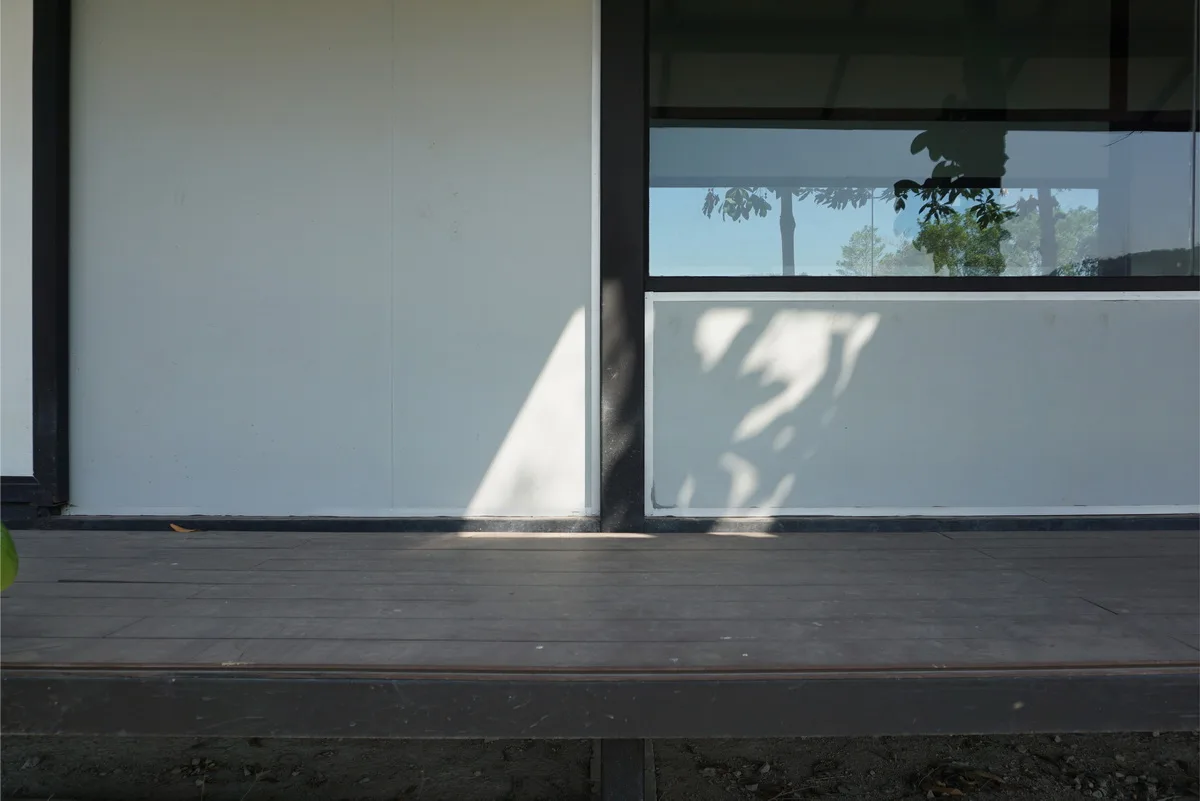
△ Outdoor corridor, photo by Zhang Bacon
Surprisingly, after completion, the building received widespread recognition for its “Japanese style.” Recently, I read Mr. Han Baode’s book “Architecture in Context,” which analyzes the “Japanese flavor” in architecture at Donghai University in three key points. First, the tea room exposes all steel frames painted in matte black, resembling dark wood. The walls use 80mm thick integrated insulation boards and are painted white inside without decorative elements, embodying what Mr. Han calls a “simple” approach. Second, to conserve materials, the roof is designed using six-meter square raw materials, creating a large, approximately 30-degree sloped roof. Third, the structure employs 50mm square beams supporting the integrated roof panels, consistent with characteristics of square rafters.
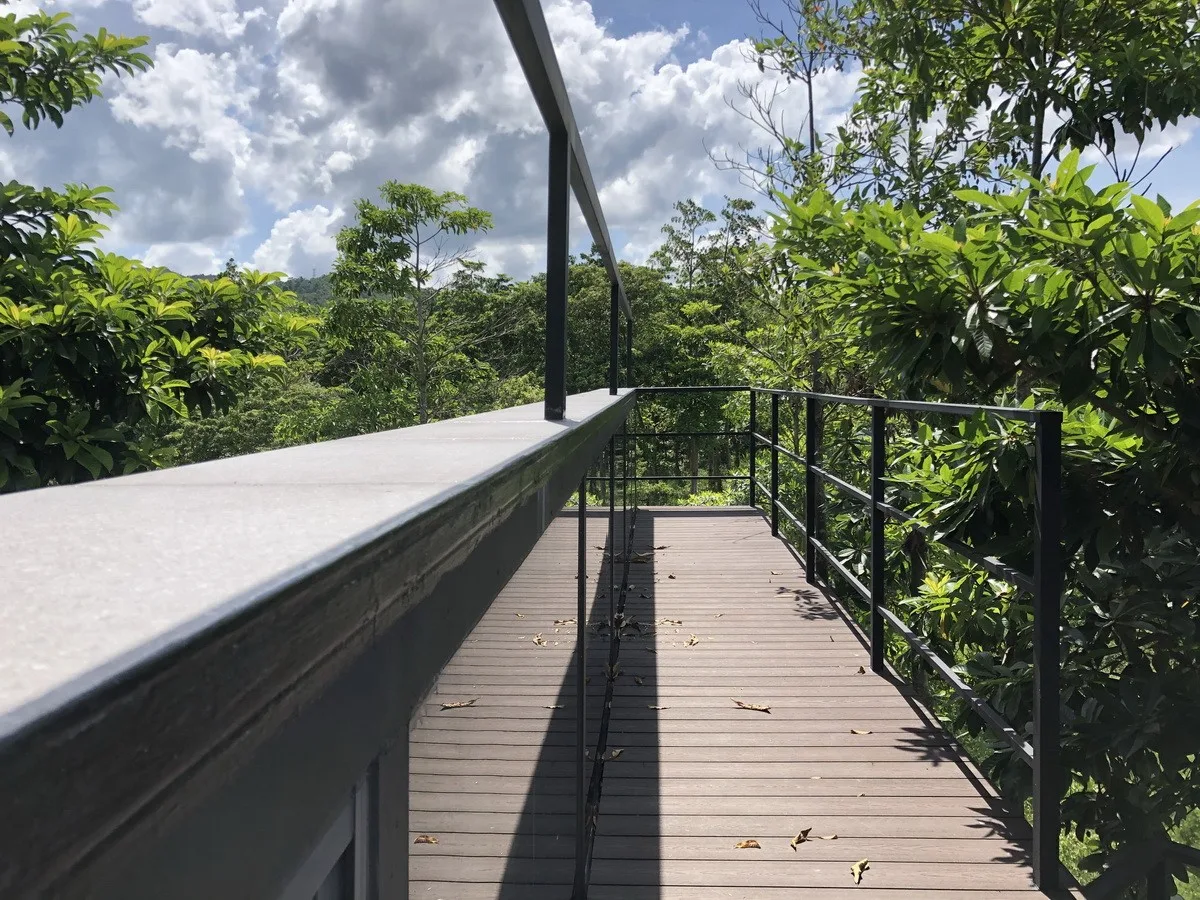
△ Roof bar detail, photo by Zhang Bacon
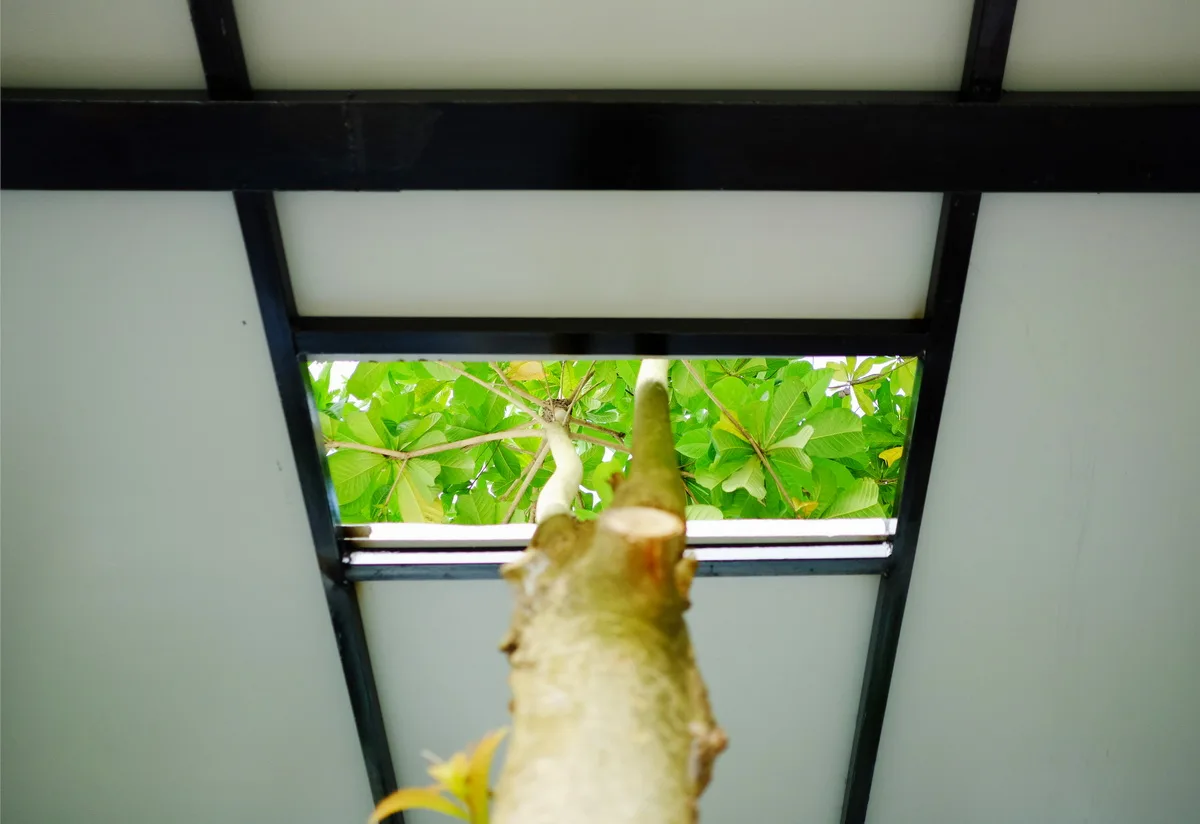
Roof opening detail, photo by Zhang Bacon
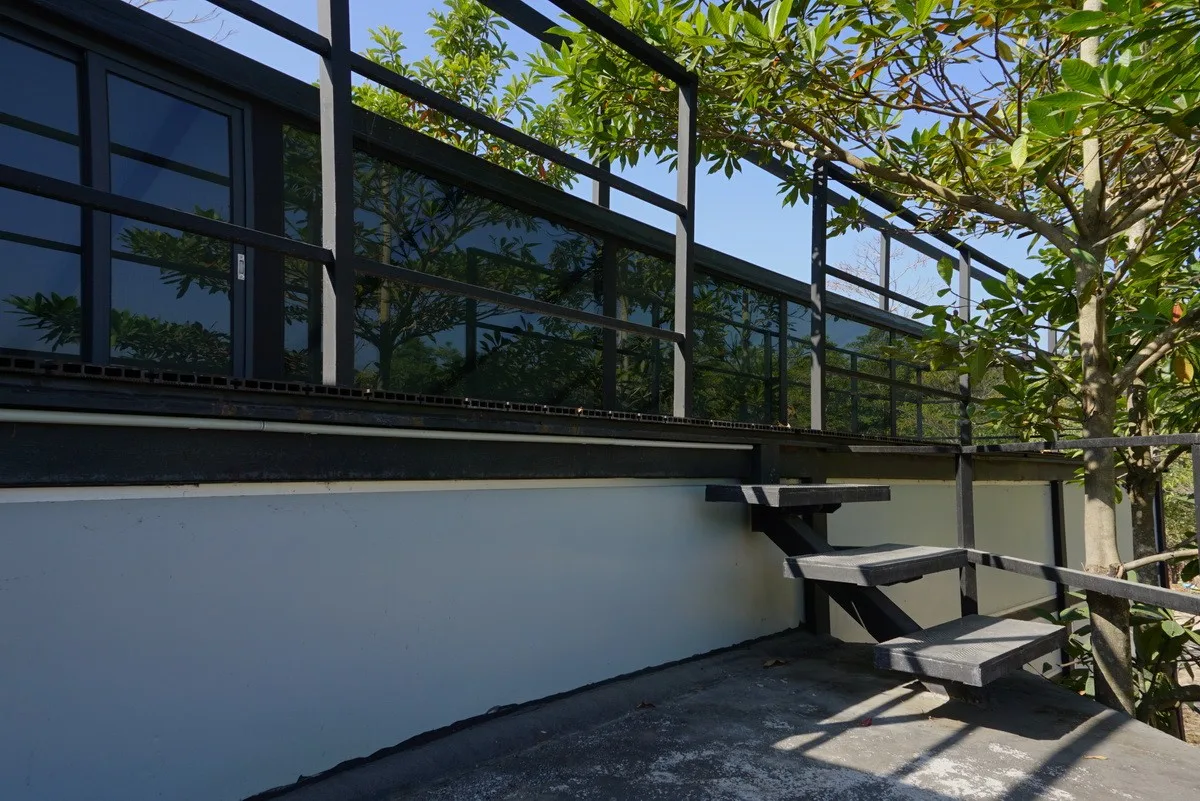
△ Roof staircase, photo by Zhang Bacon
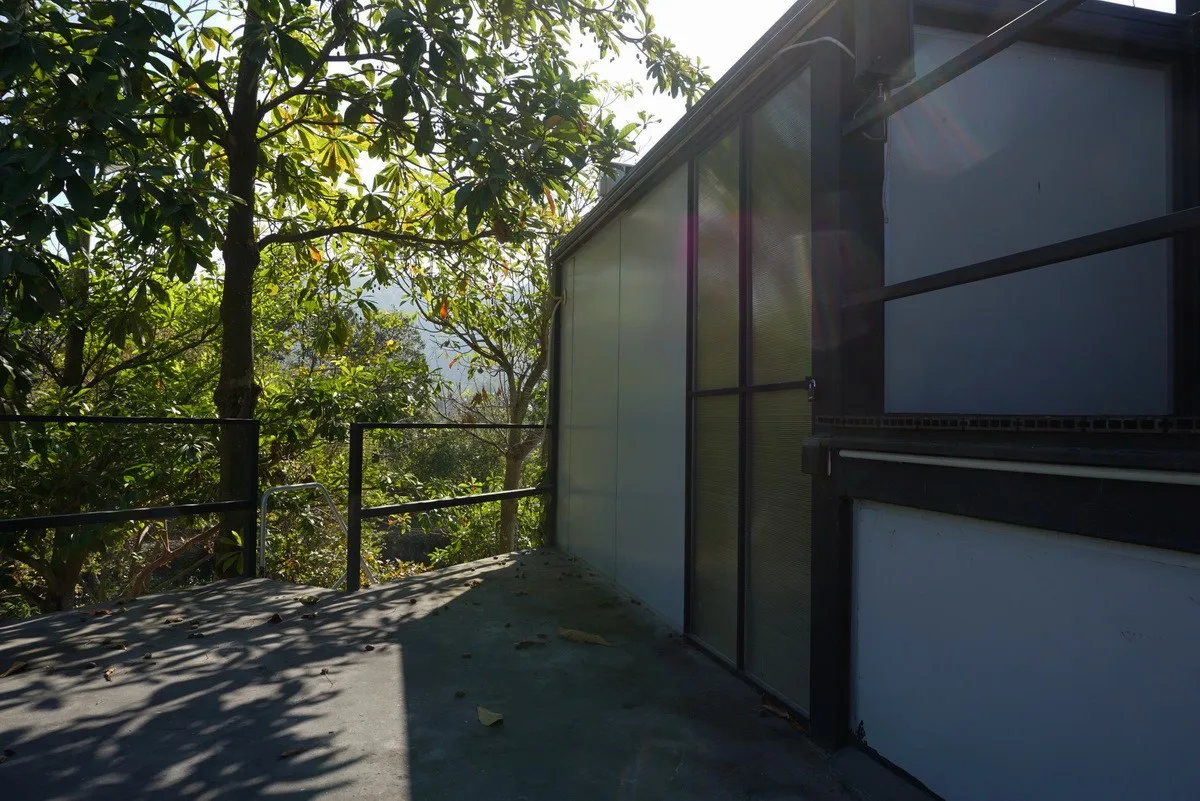
△ Triangular roof platform, photo by Zhang Bacon
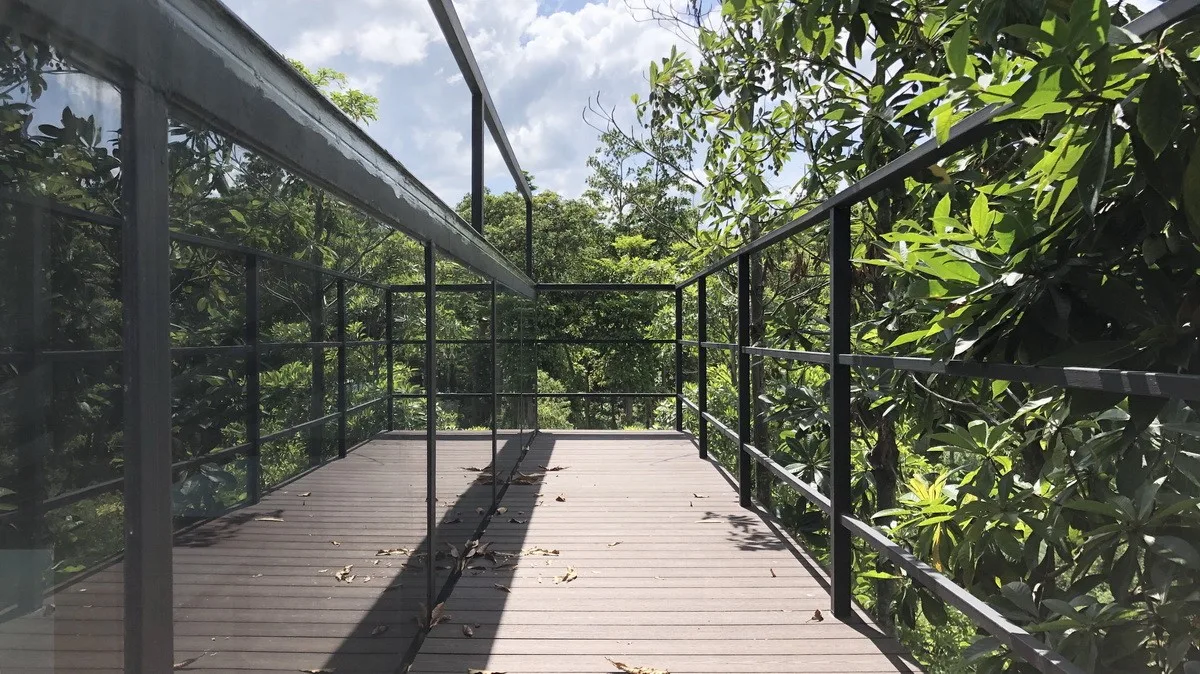
△ Roof corridor, photo by Zhang Bacon
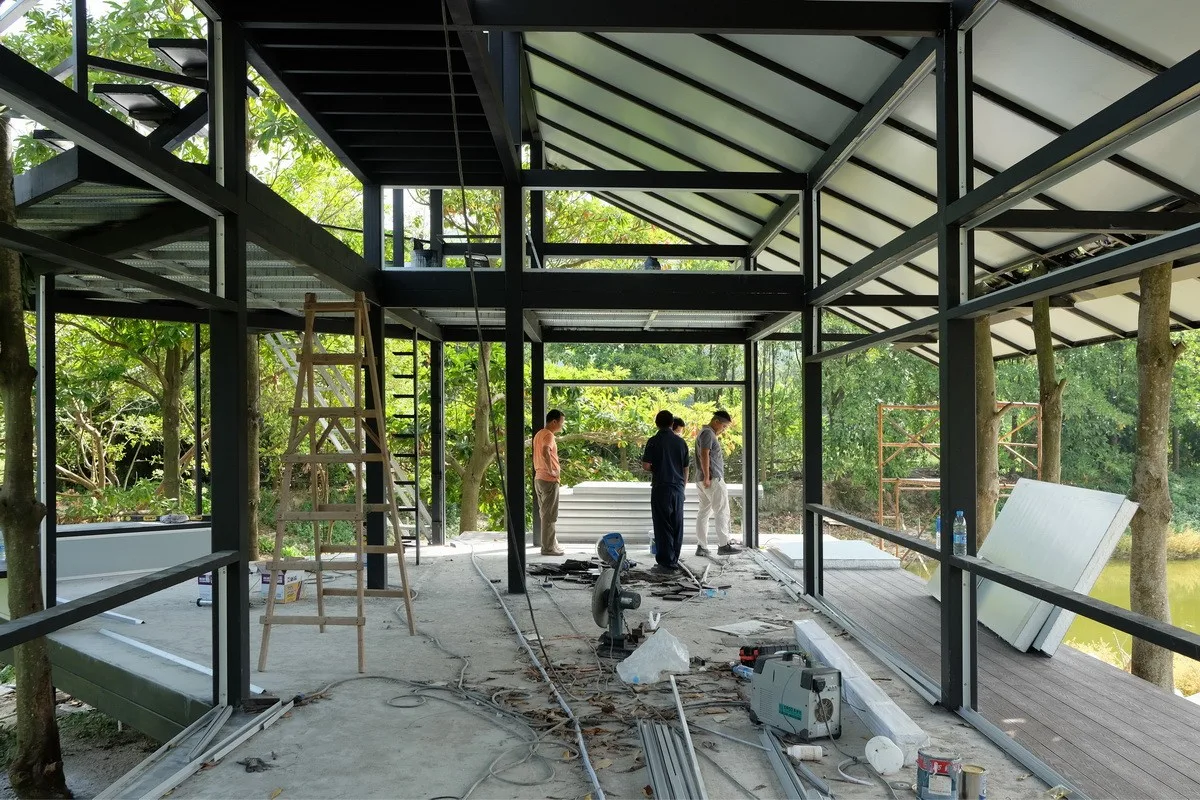
△ Construction process – internal framework, photo by Zhang Bacon
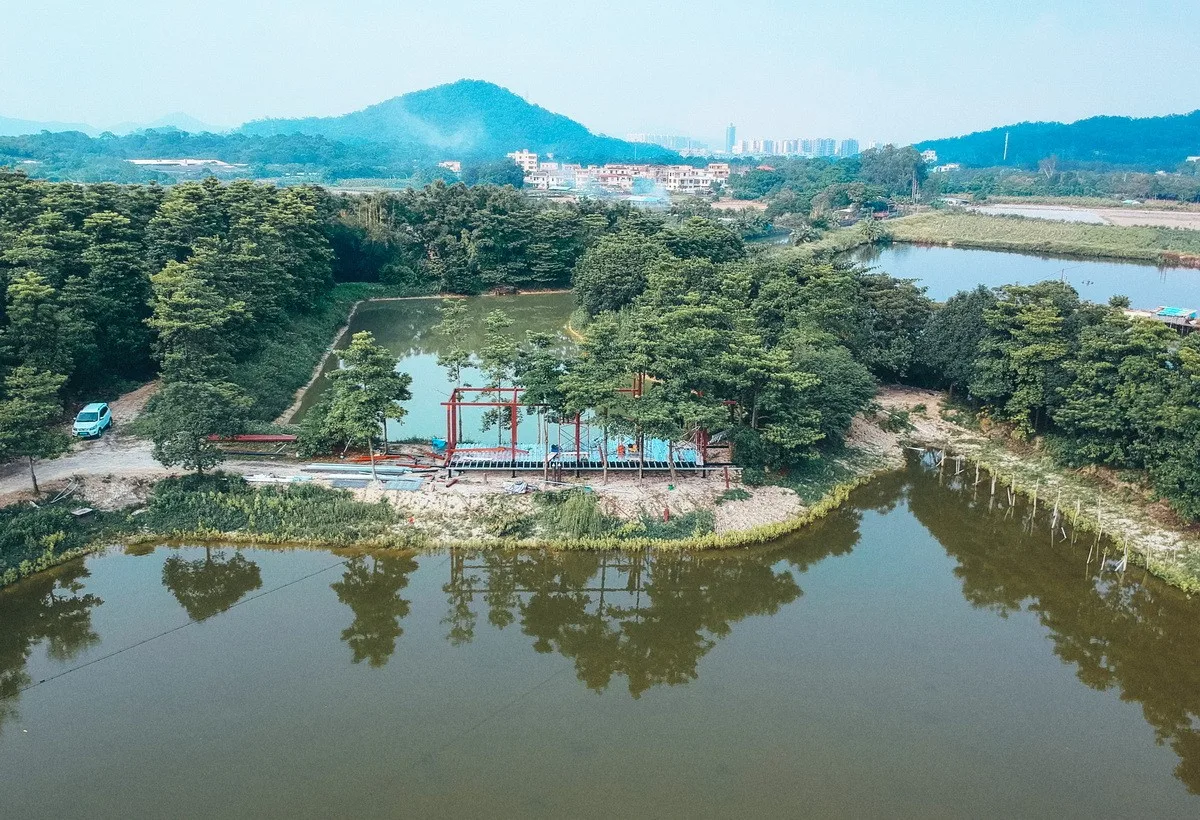
Bird’s-eye view of the building during construction, photo by Shen Lei
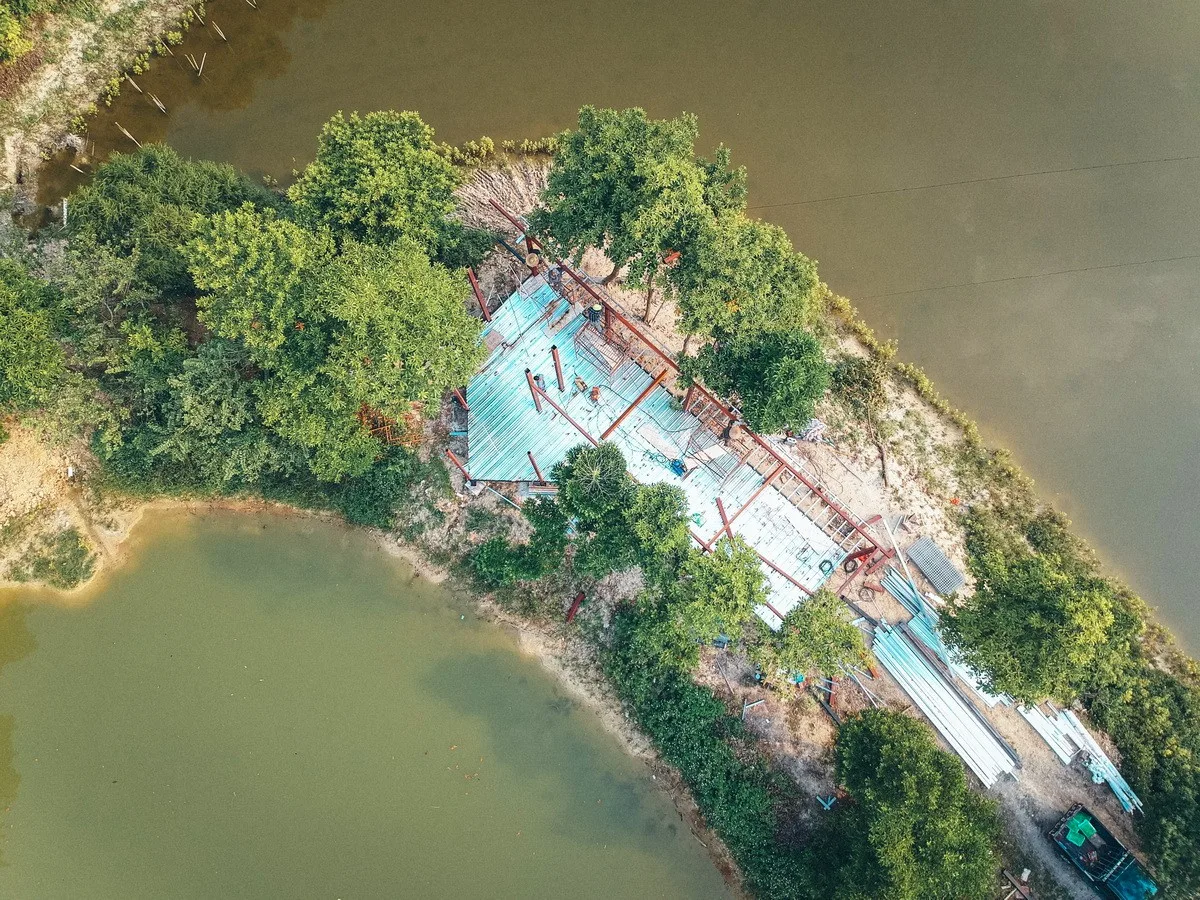
Bird’s-eye view of the building during construction, photo by Shen Lei
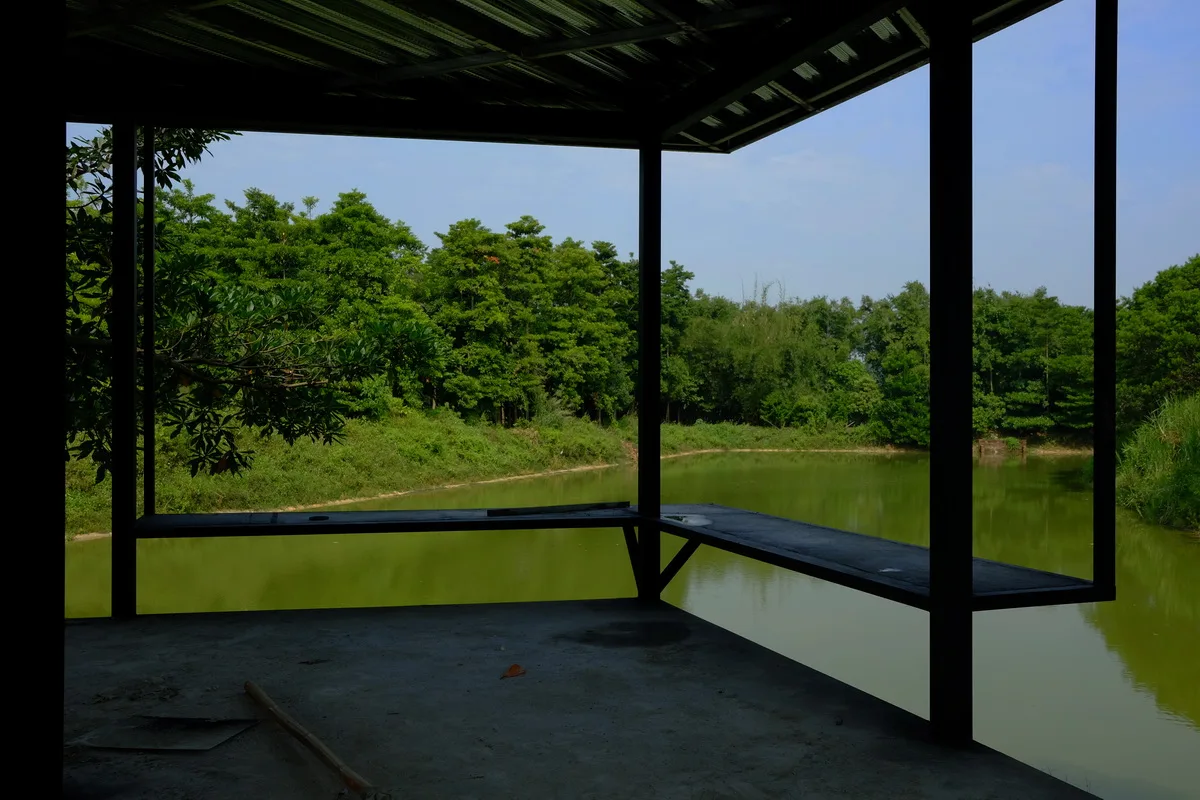
△ Bay window frame construction process, photo by Zhang Bacon
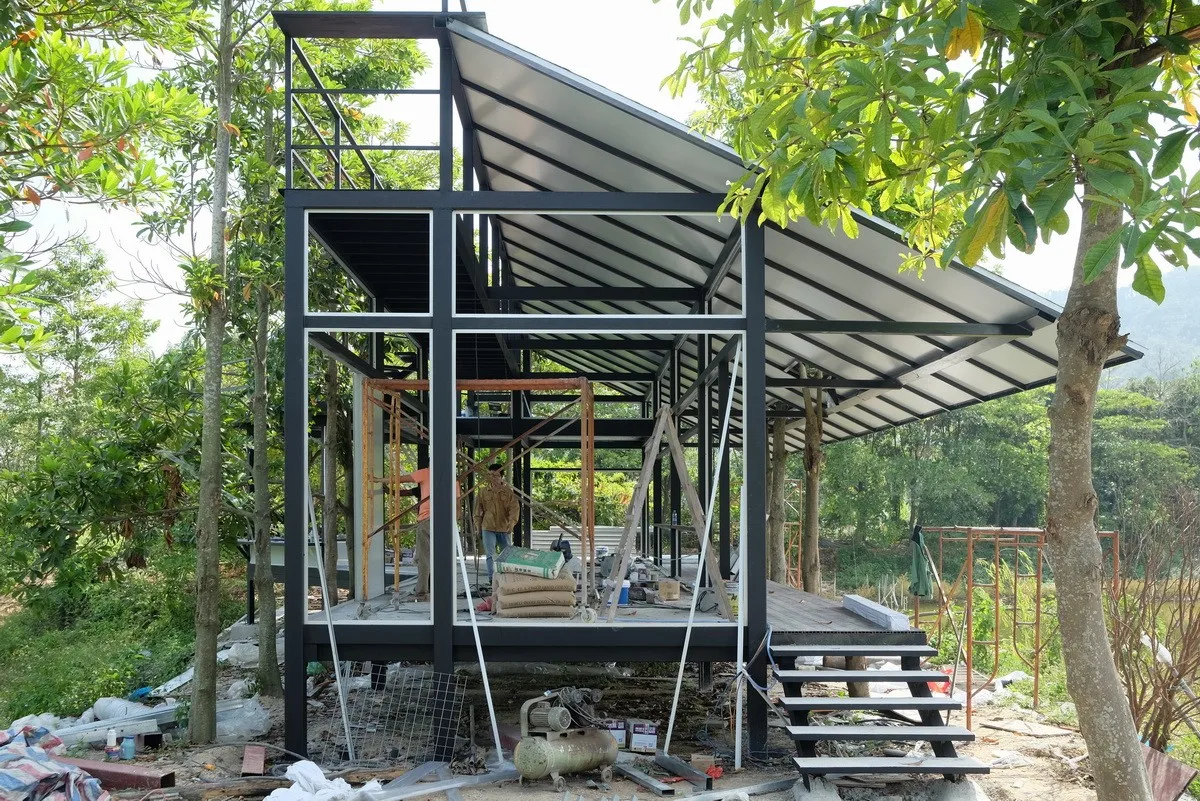
△ Construction process – external framework, photo by Zhang Bacon
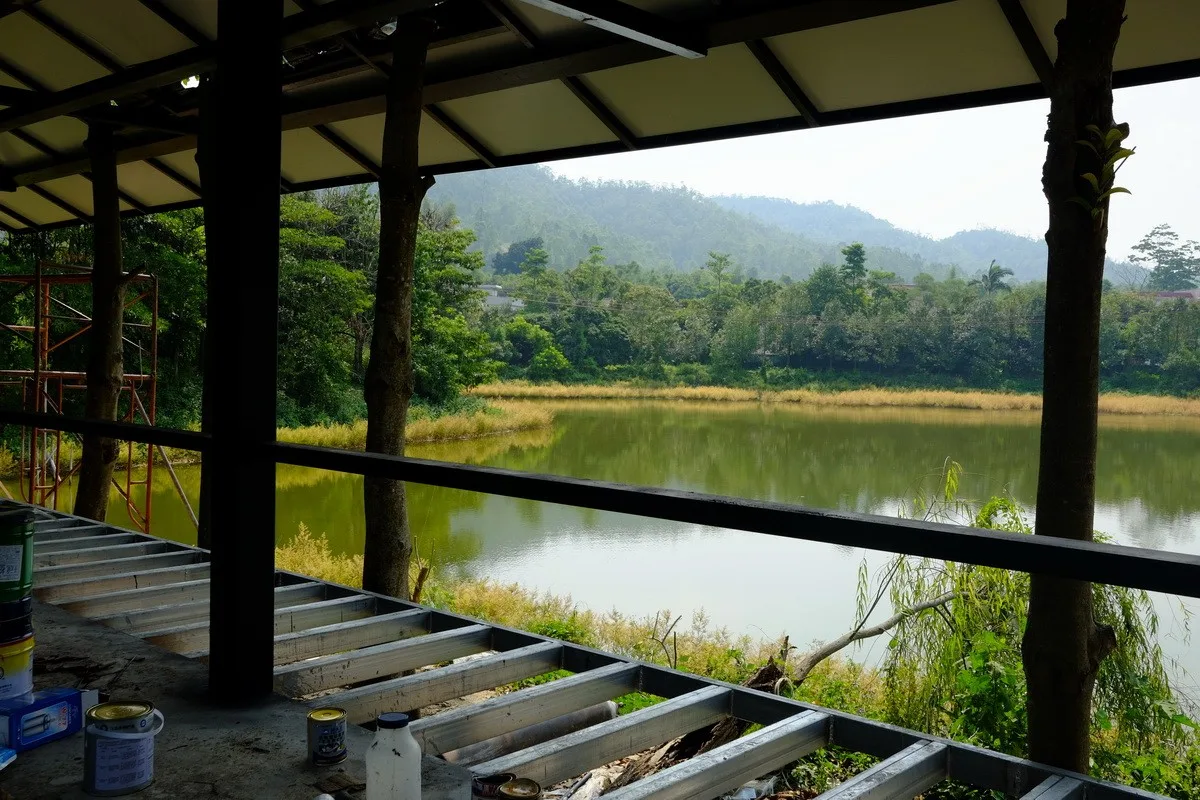
△ Construction process – cornice detail, photo by Zhang Bacon
On the other hand, the label “Japanese style” also has some justification.
Technical Drawings
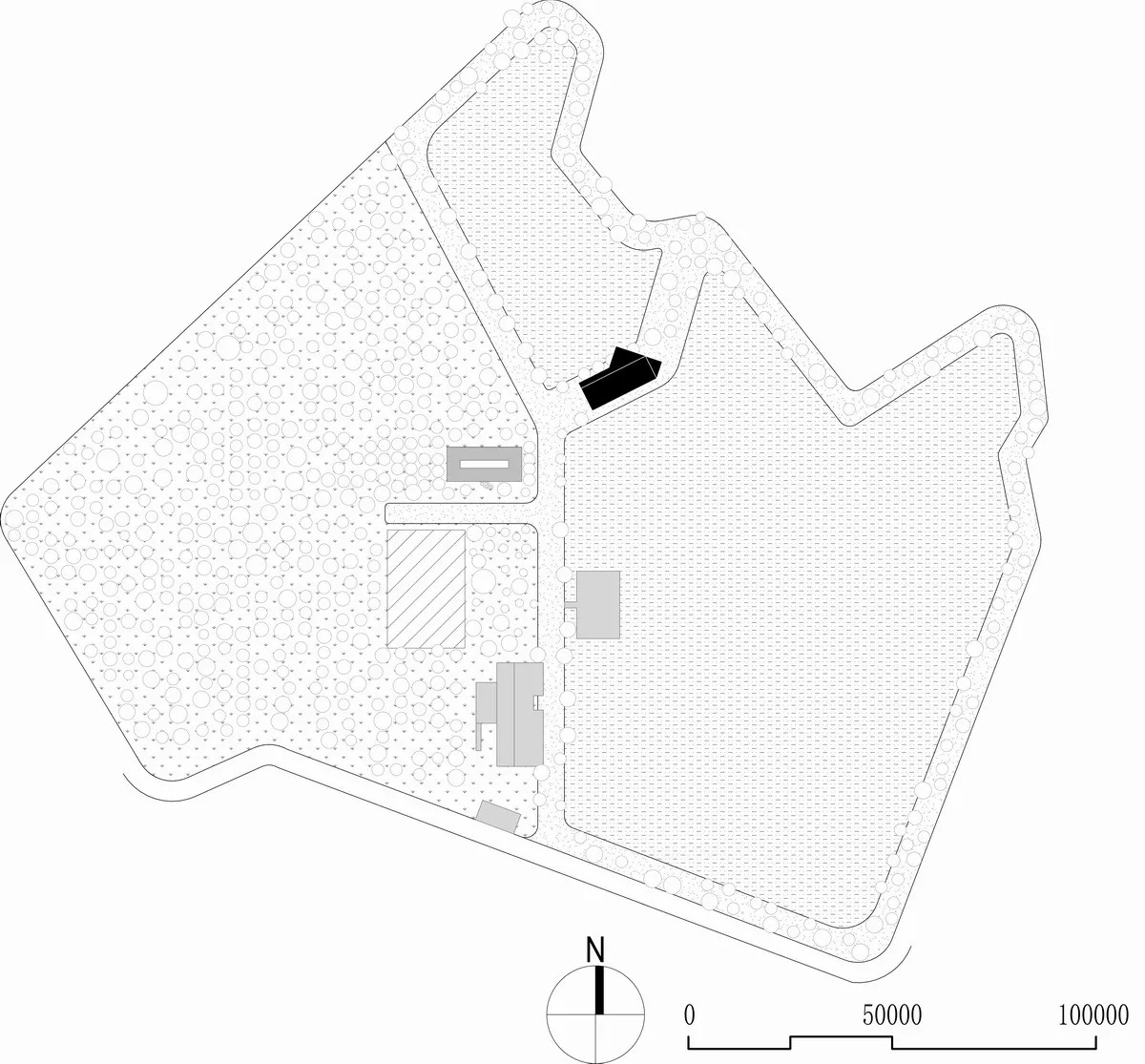
△ General layout plan
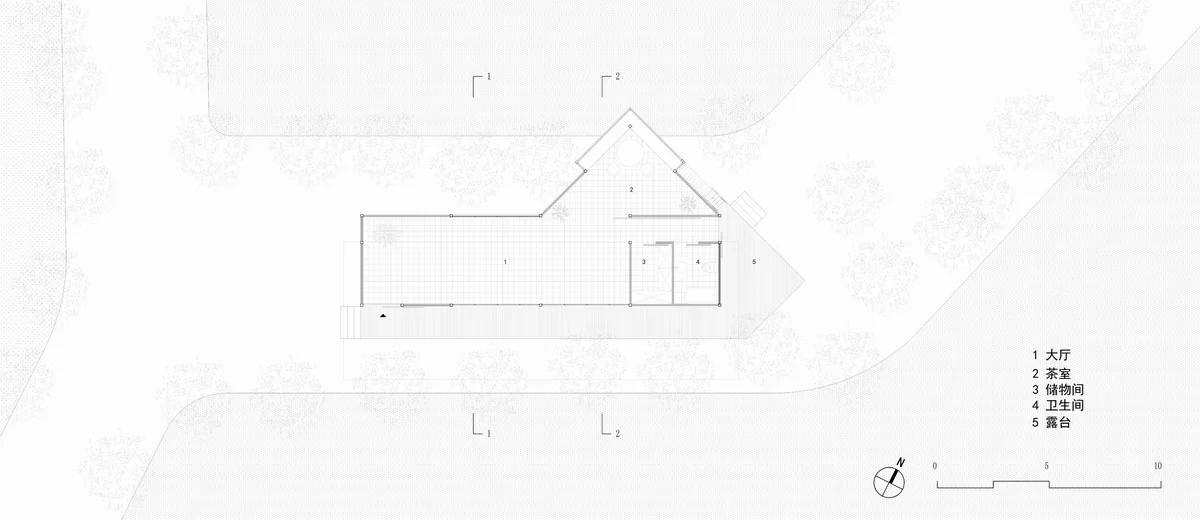
△ First floor plan
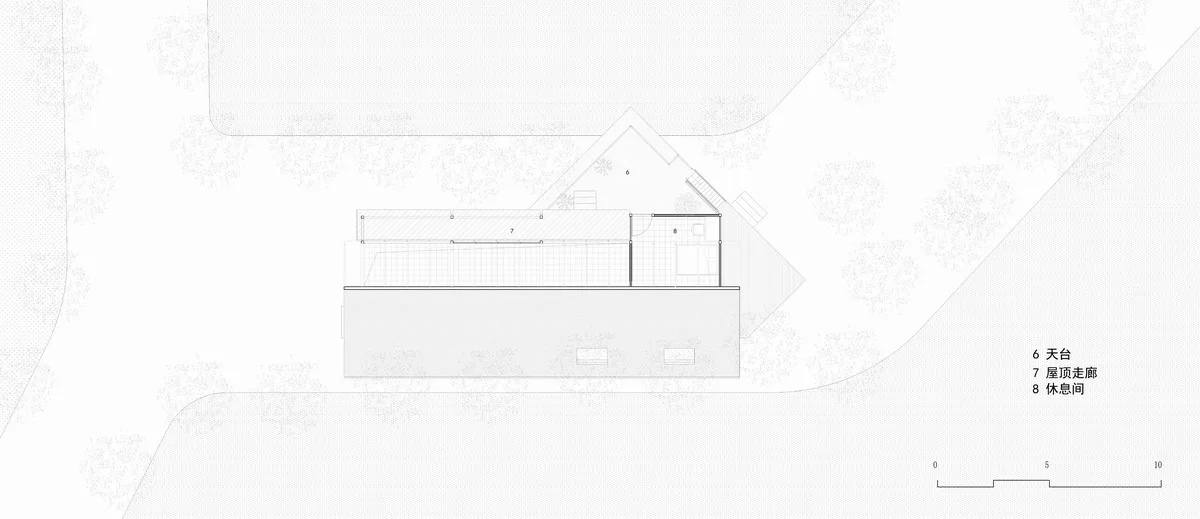
△ Second floor plan
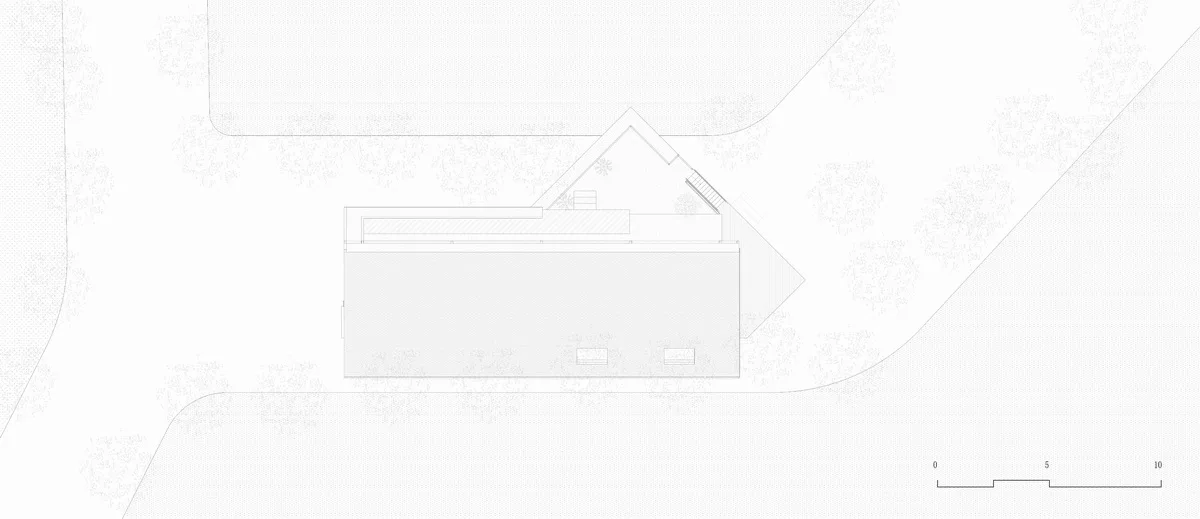
△ Roof plan
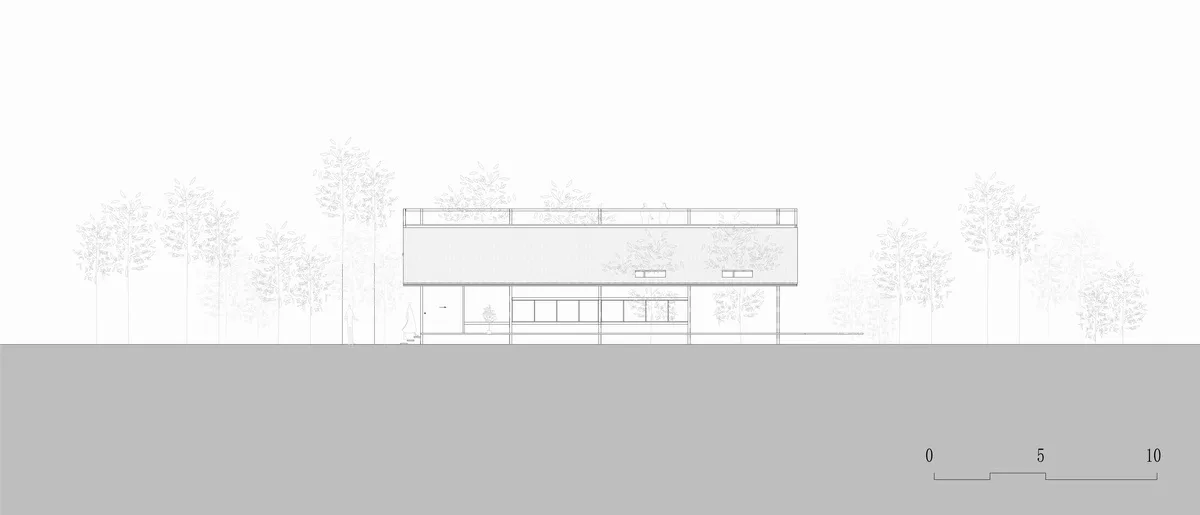
Southeast elevation view
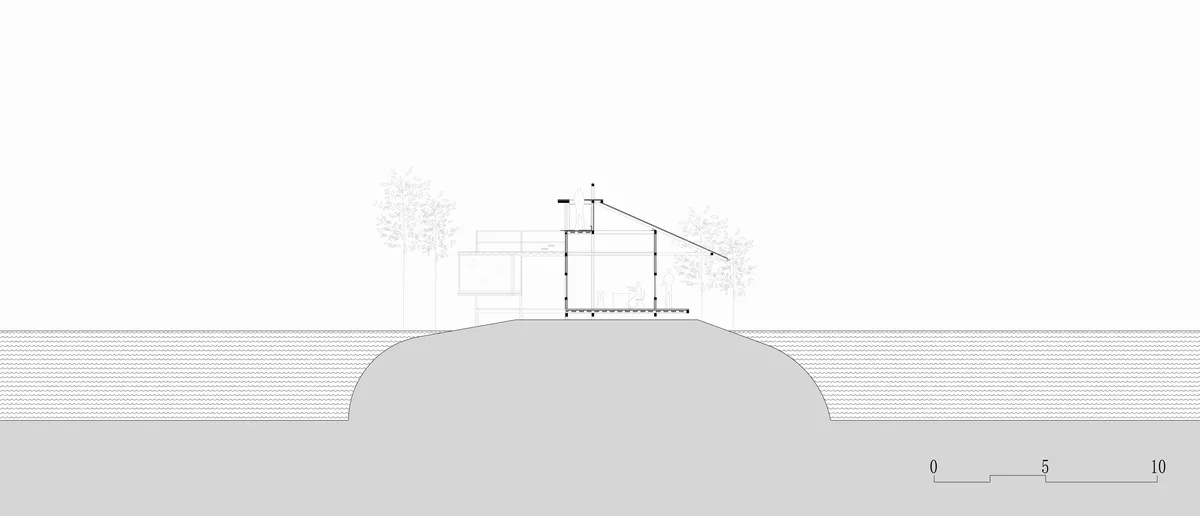
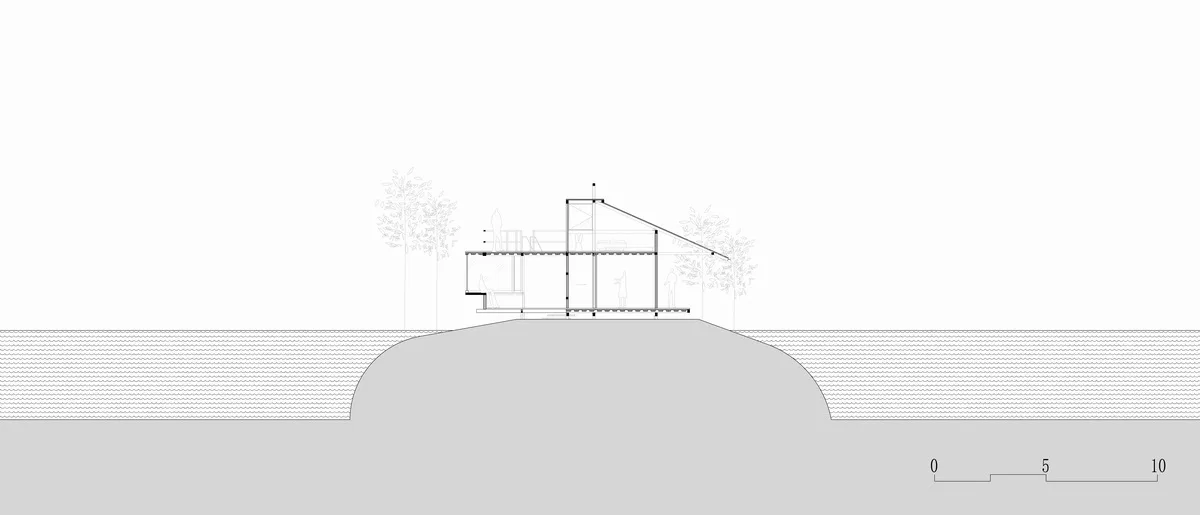
△ Section 1-1 view
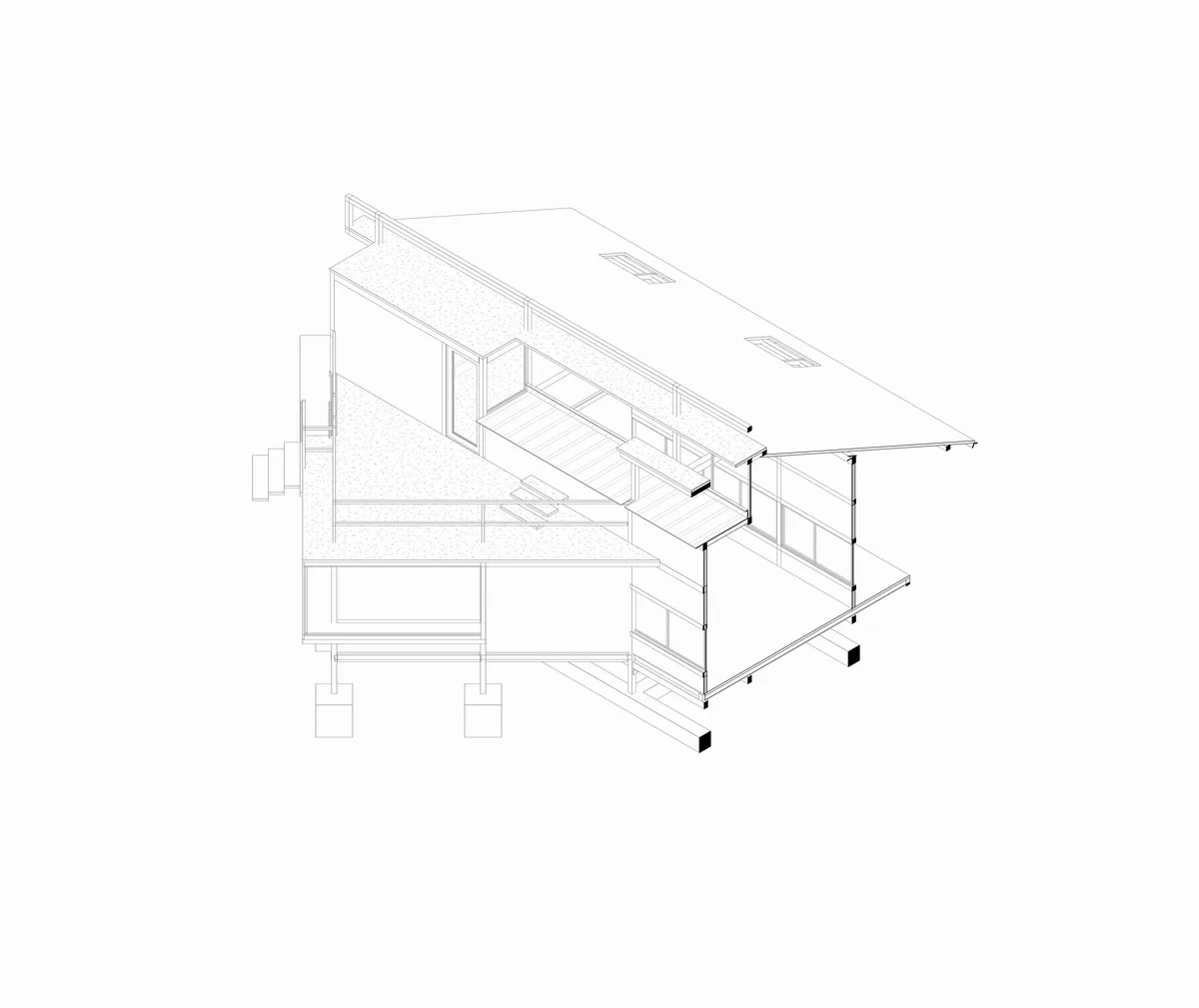
△ Section 1-1 side view
△ Section 2-2 view
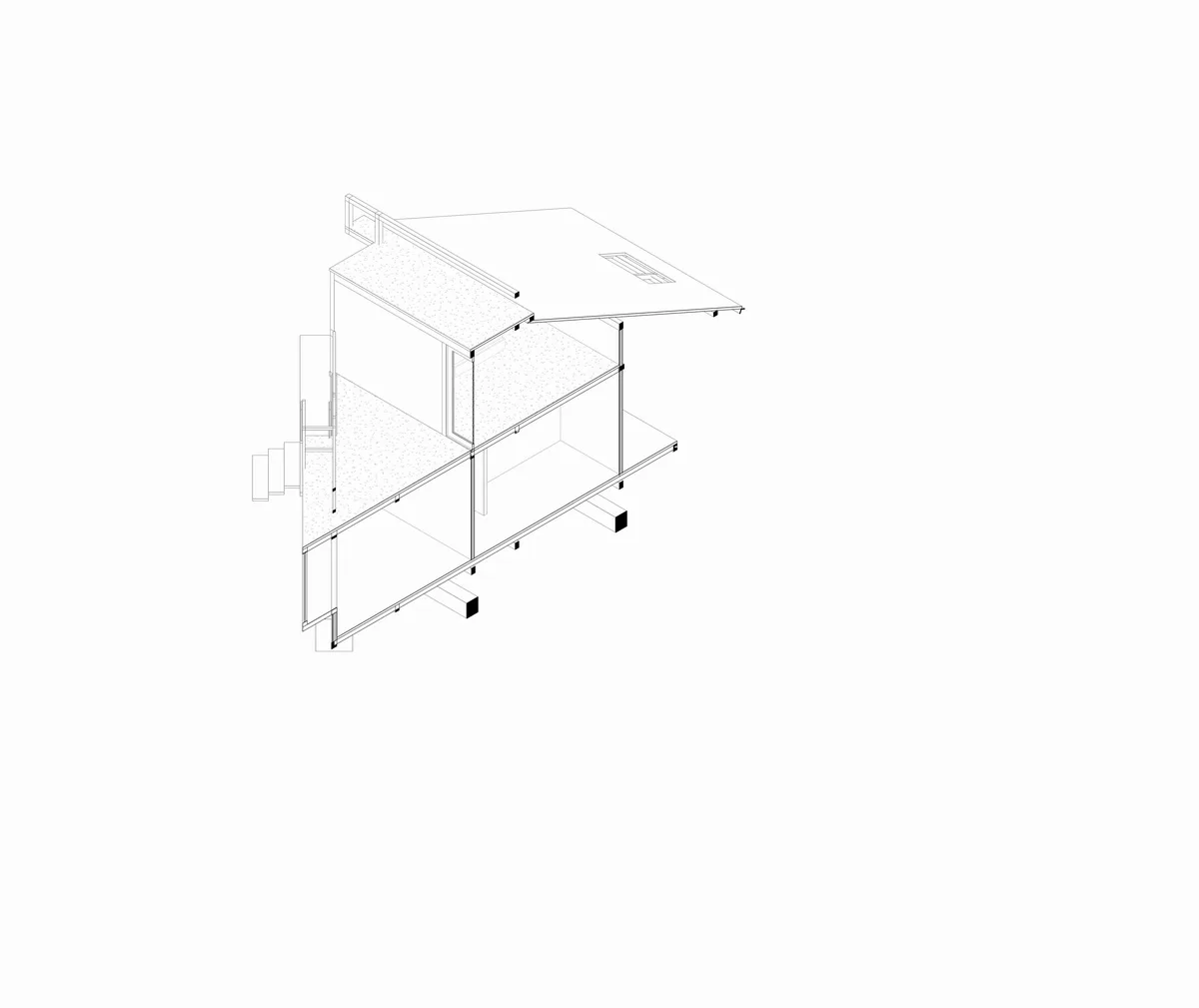
△ Section 2-2 side view
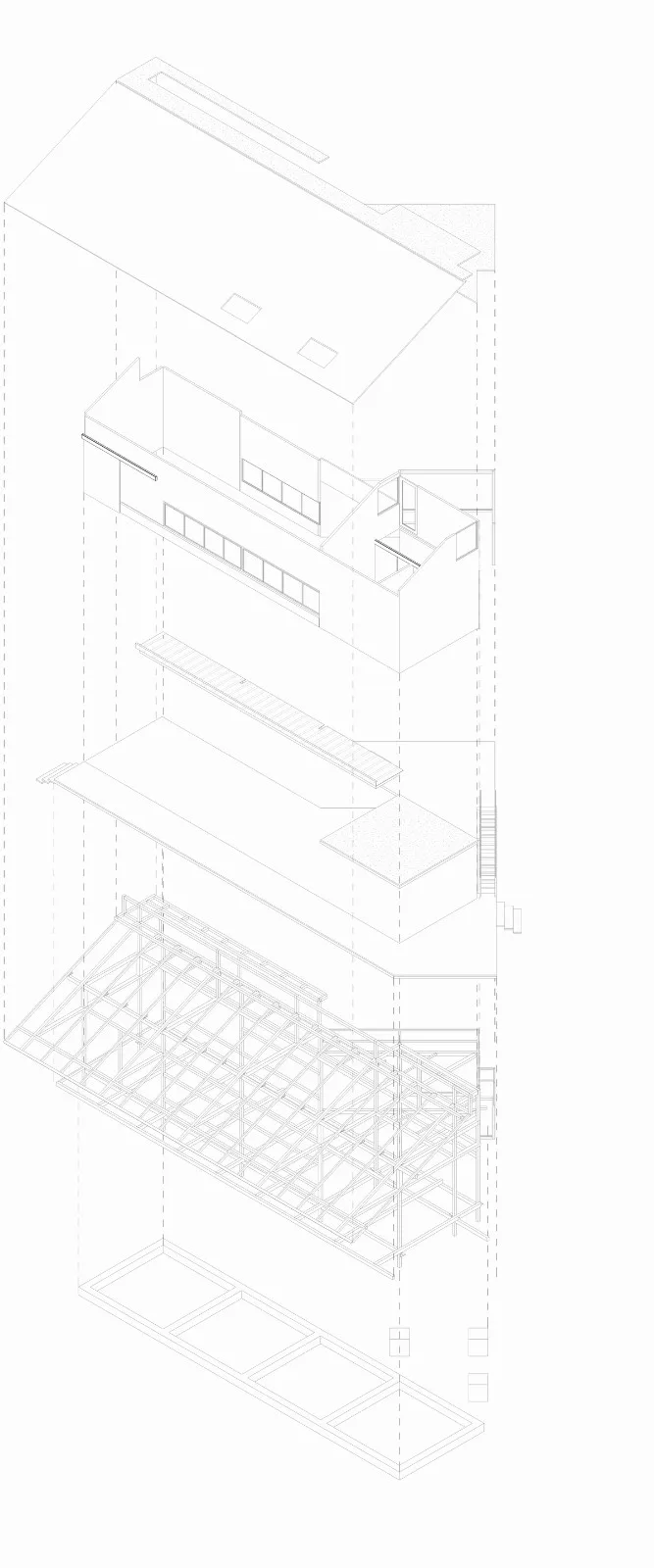
Explosion diagram of the △ axis side
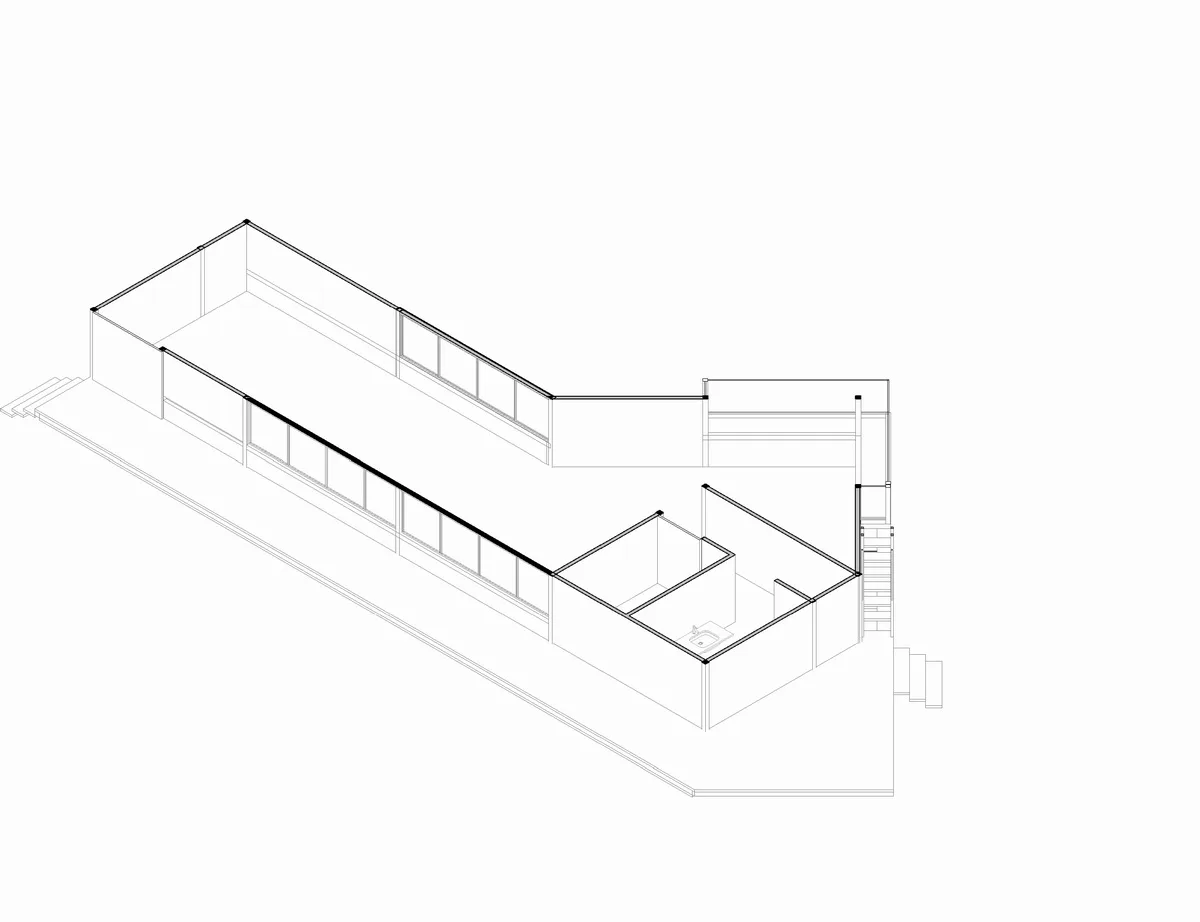
△ Axial side view 1
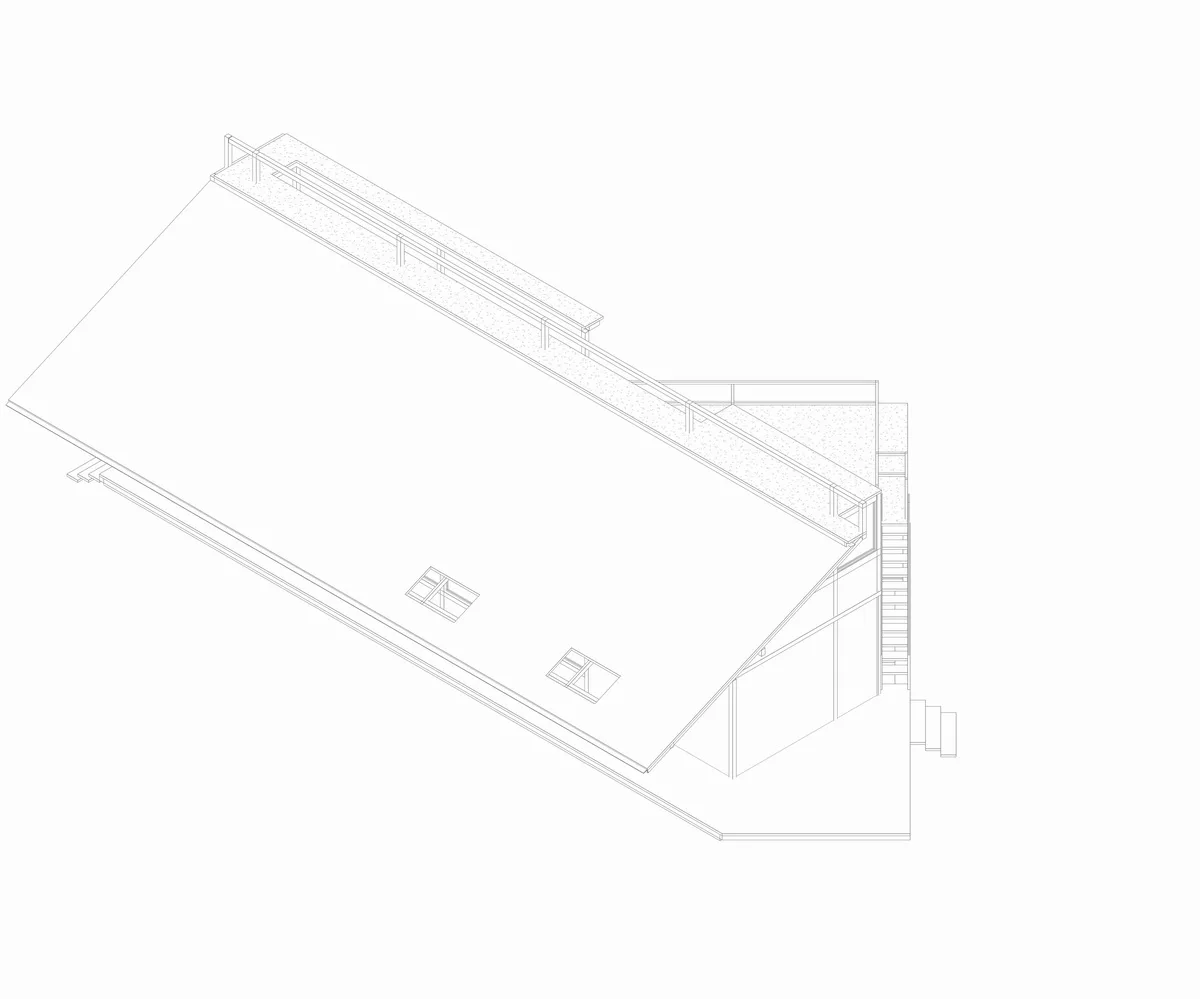
△ Axial side view 2
Project Information
Project Name: Hujian Pavilion
Project Type: Architecture
Location: Heli, Nanlang Town, Zhongshan City
Design Firm: Half Pine Garden Studio
Lead Architects: Zhang Bacon, Weng Zitian
Owner: Anshan Cultural Tourism Development (Zhongshan) Co., Ltd
Construction Cost: 320,000 yuan
Status: Completed
Design Period: April 2018
Construction Period: December 2019
Land Area: 120 square meters
Building Area: 100 square meters
Construction Team: Deng Fujian
Photographers: Shen Lei, Zhang Bacon















Must log in before commenting!
Sign Up