
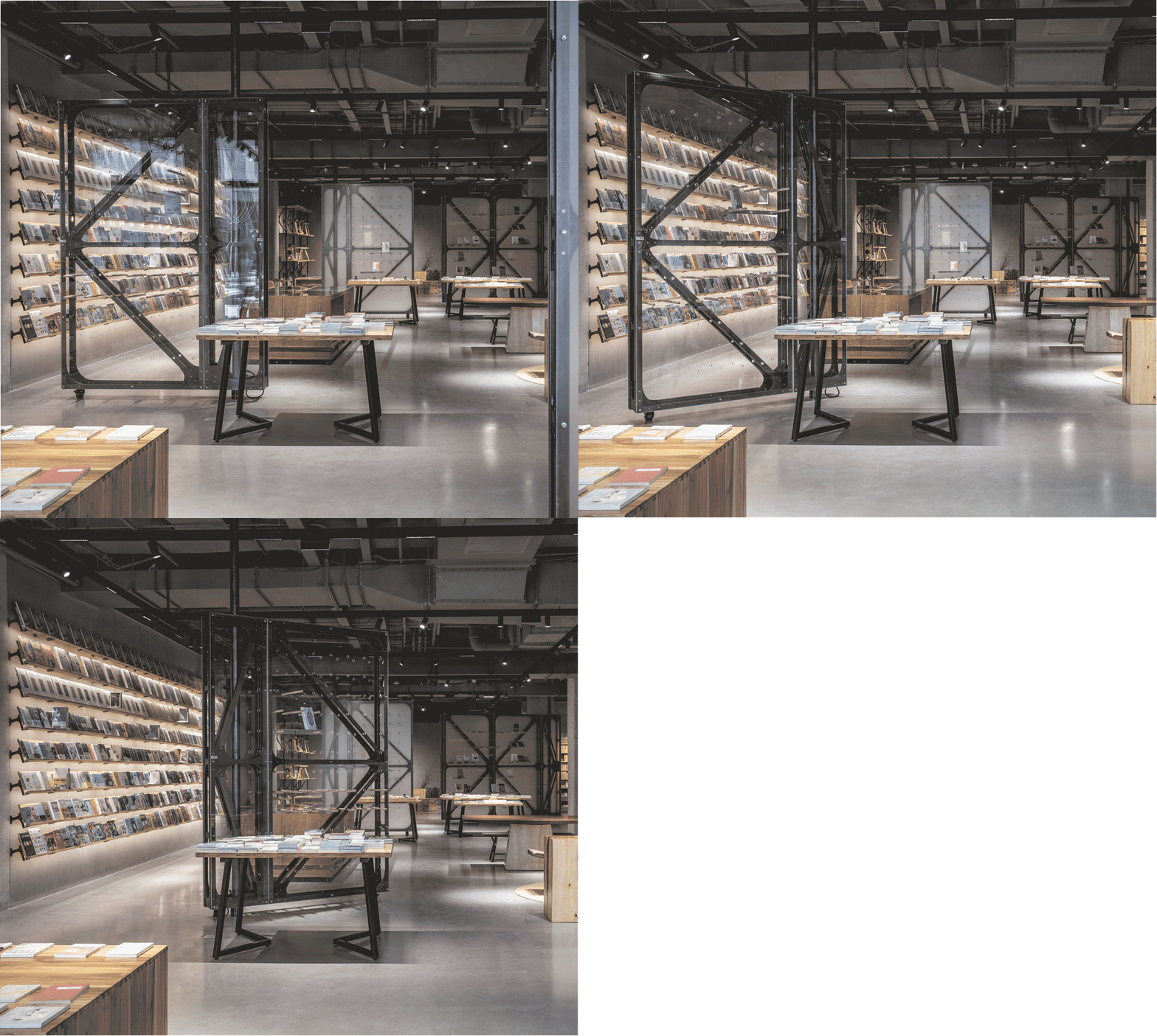
△ Rotation of Multi-sided Walls © Jin Weiqi
A rotatable long wall © Jin Weiqi
In many Chinese cities, large commercial buildings have been subdivided into spaces of various sizes to accommodate the diverse needs of different shops. This has resulted in fragmented walls and columns, creating a cluttered and disorganized layout. While underground spaces hold great potential for commercial use, they are often occupied by equipment rooms and densely packed pipelines. The compressed construction schedule has led to poorly coordinated pipeline installations with complex and uneven heights.
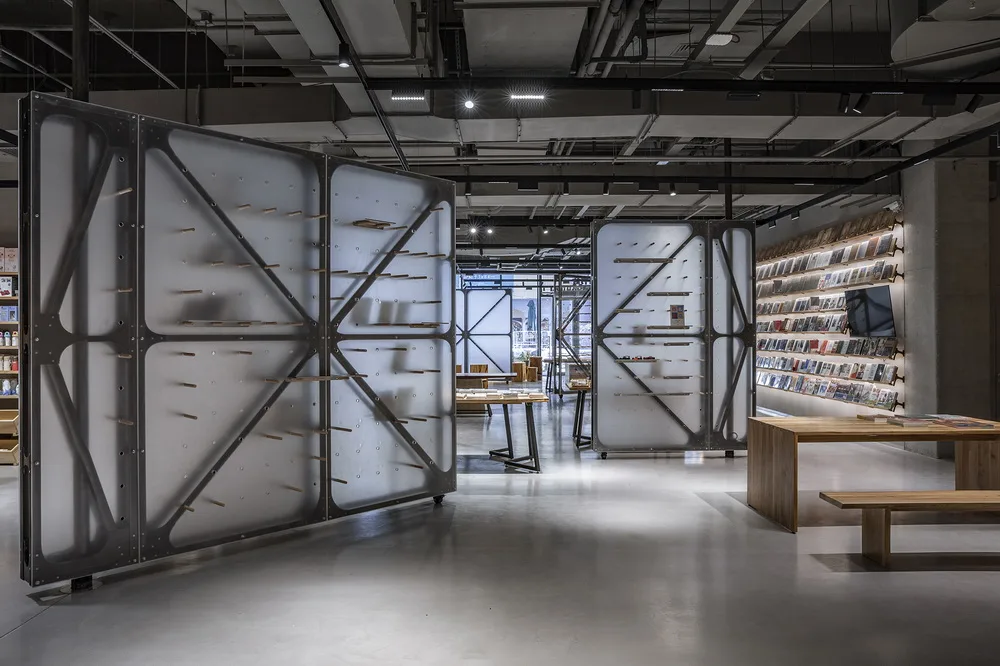
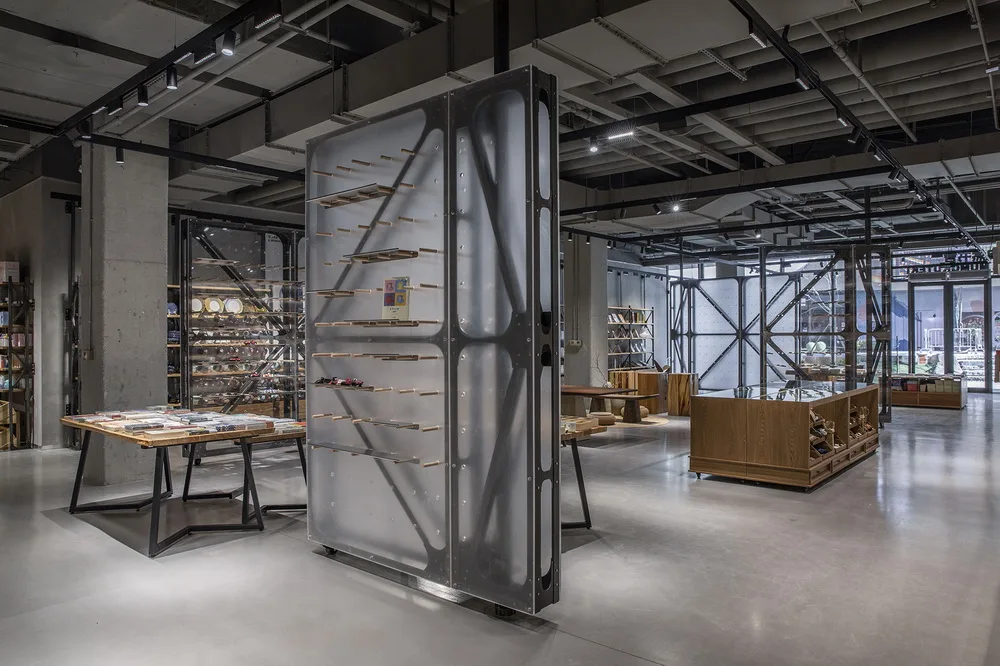
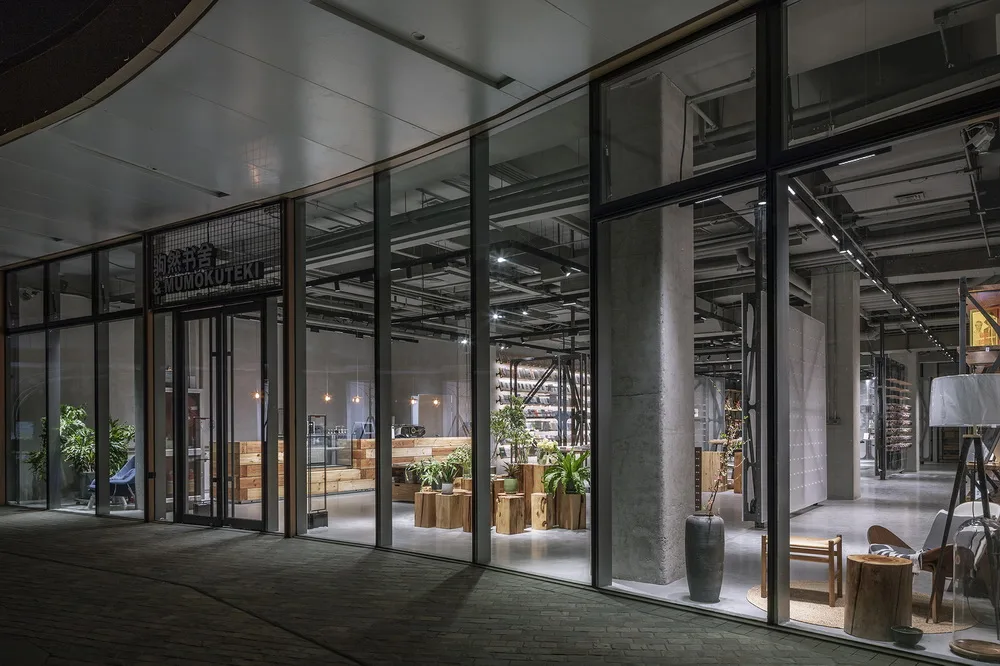
During interior construction, using conventional ceilings to conceal elements would make the originally low ceilings feel even more cramped. Instead of covering up this chaotic environment with decorative layers, the design approach focuses on revealing and shaping the original space.
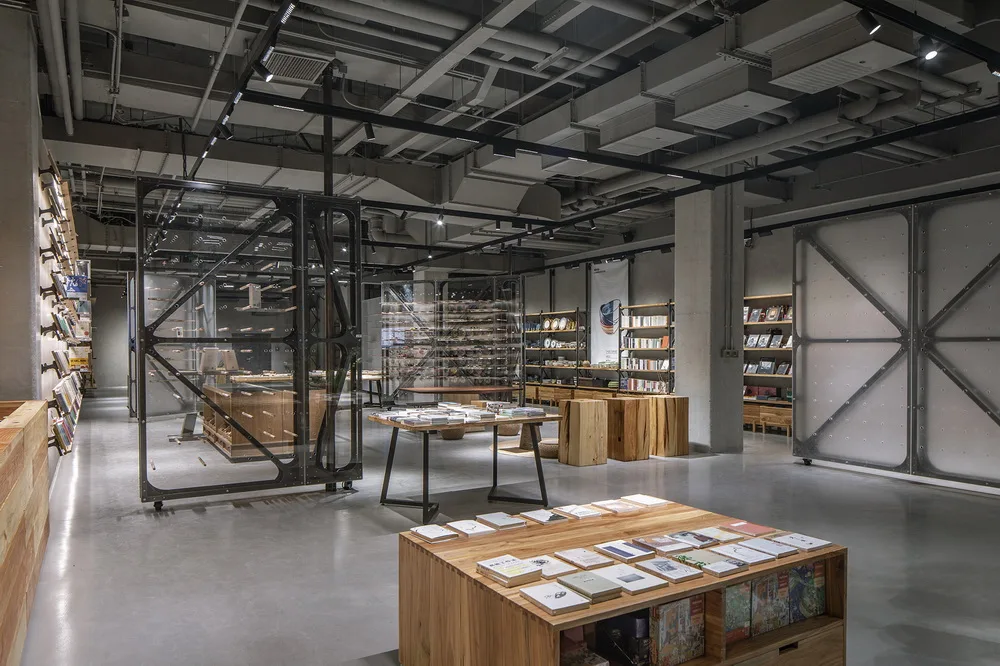
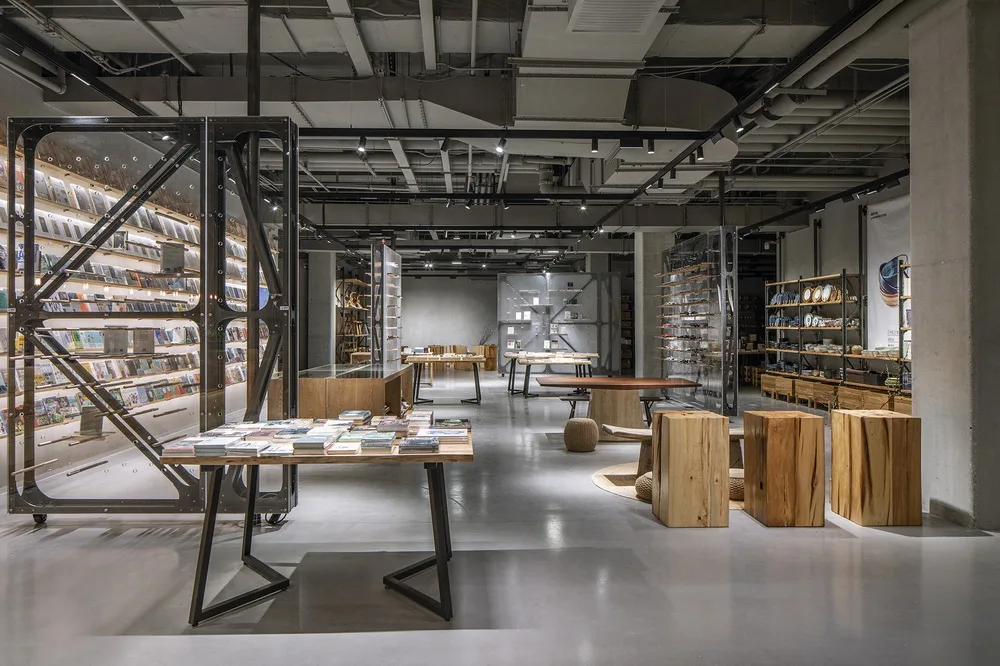
Returning inward to the building’s “essential” space
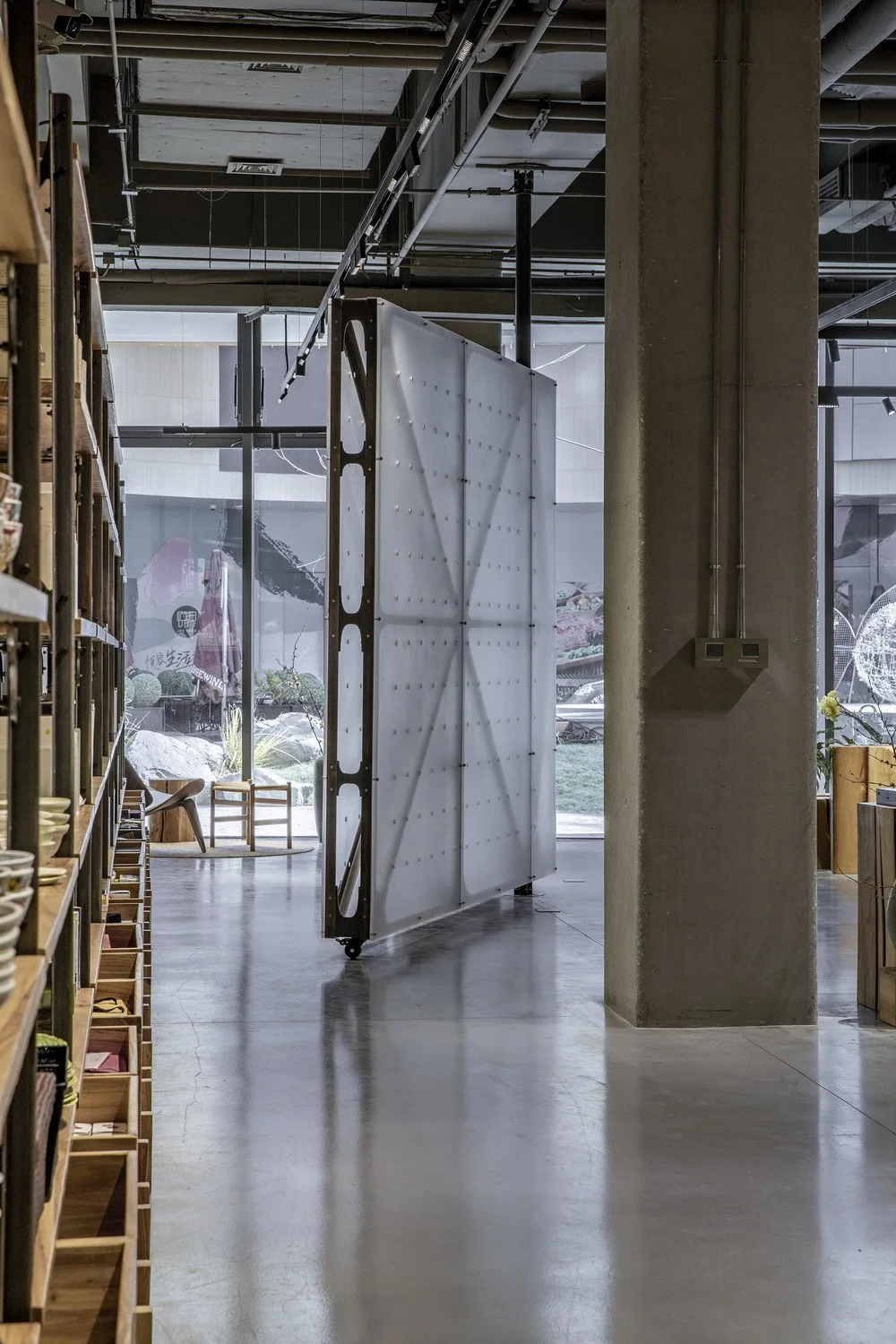
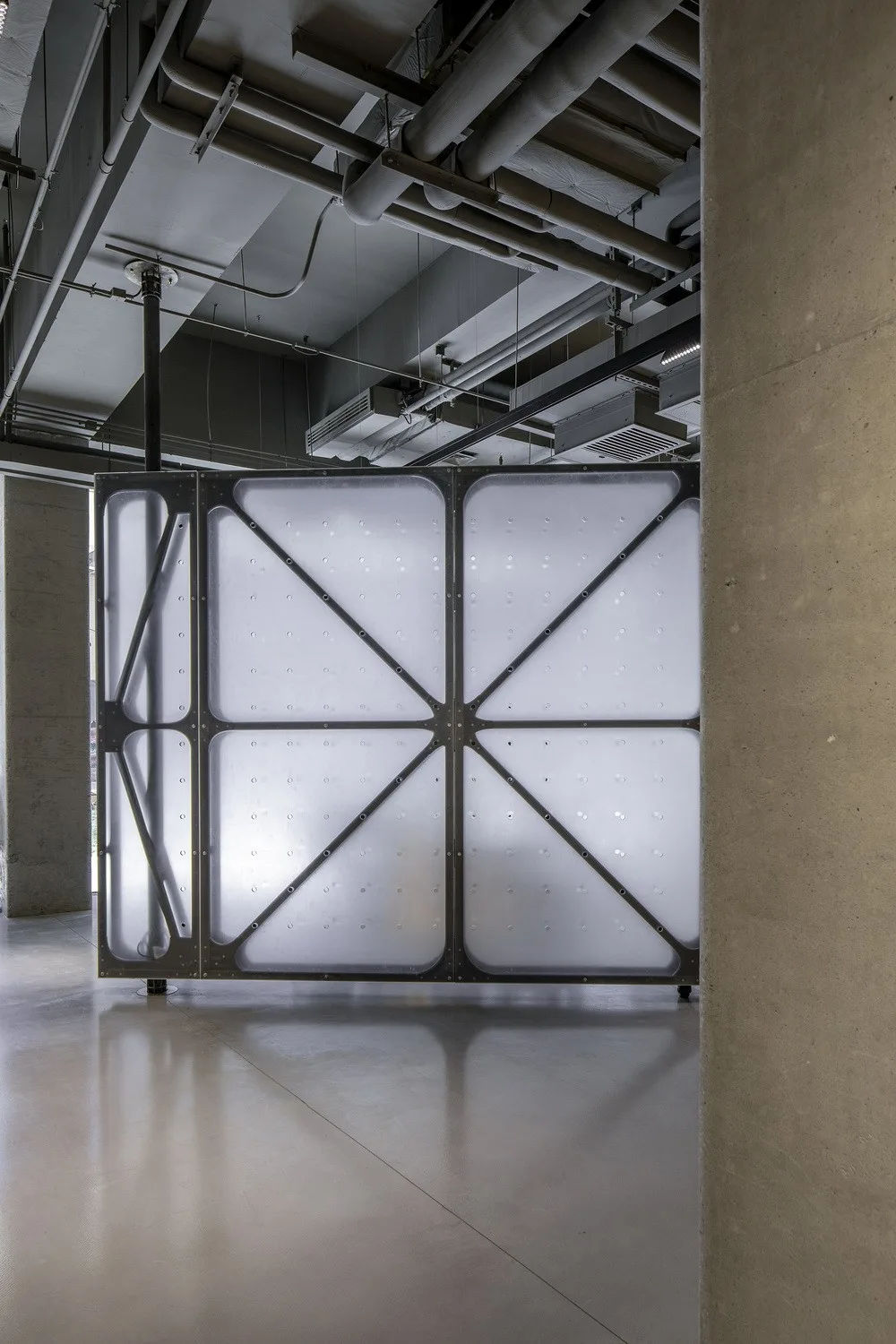
The design does not aim to disguise the tangled roof pipes or externally decorate the columns and walls. From a spatial ontology perspective, the current state of these elements is an inevitable outcome of urban spatial production. Columns and walls themselves do not inherently possess spatial qualities. When restored to their original state, their true texture and spatial character become evident.
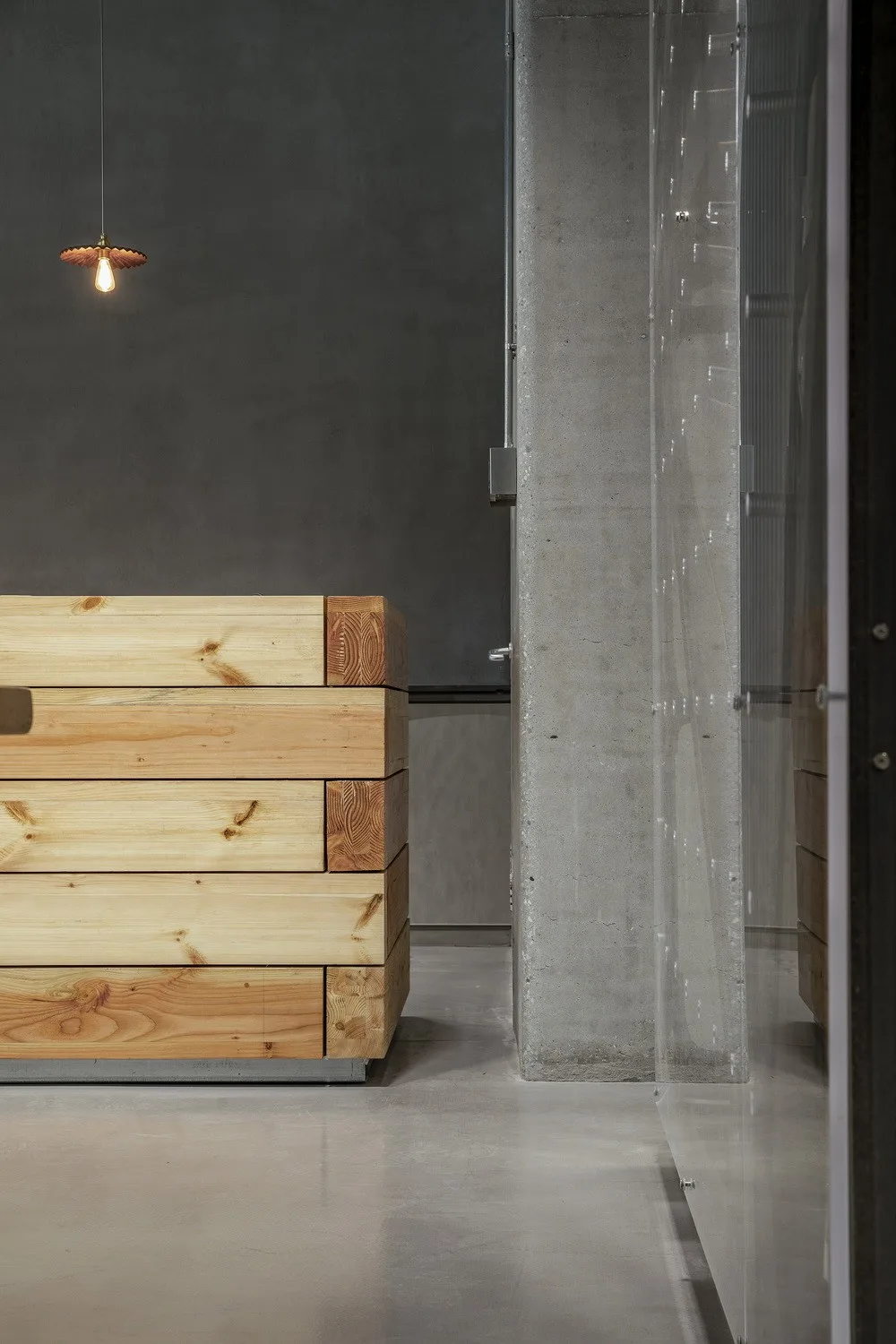
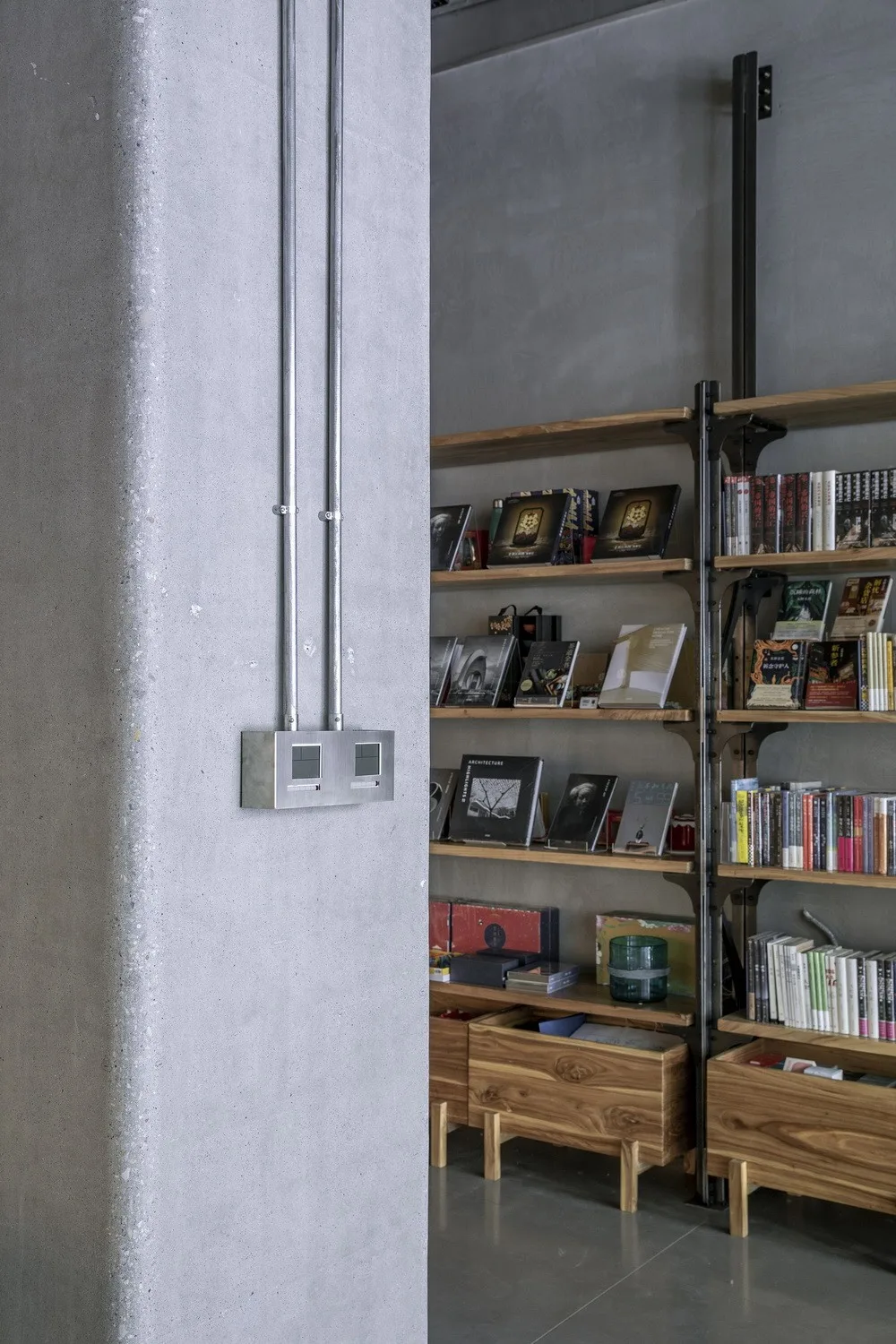
The outer white coating on the columns and walls was removed, and uneven corners were carefully polished to reveal the texture of the stone aggregates within the concrete columns. To complement the chaotic ceiling, a darker gray tone was applied as a background to blend the space. These interventions reshape the building’s basic structural components, exposing the true nature of the space.
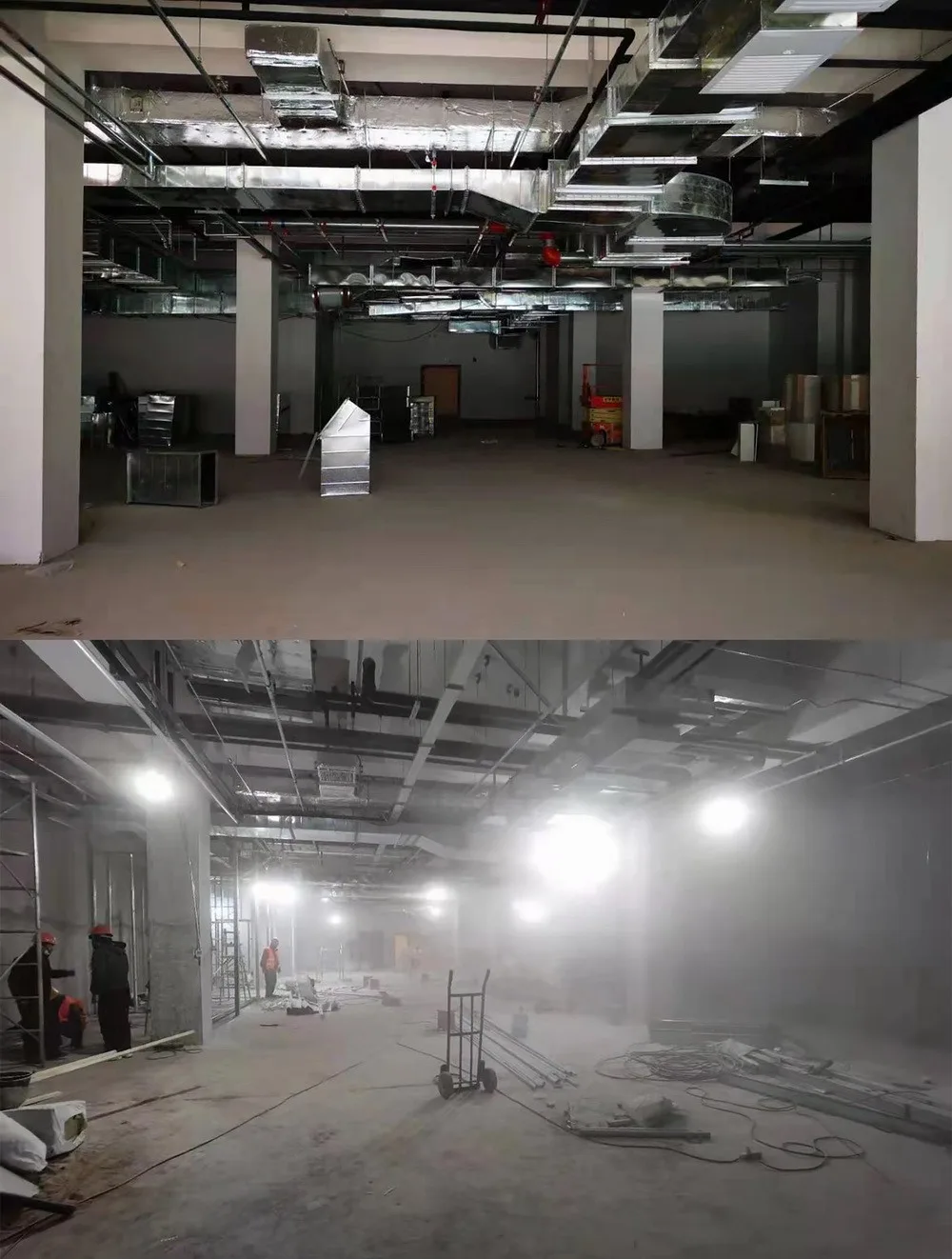
△ Existing condition before construction & surface polishing removal © LUO Studio
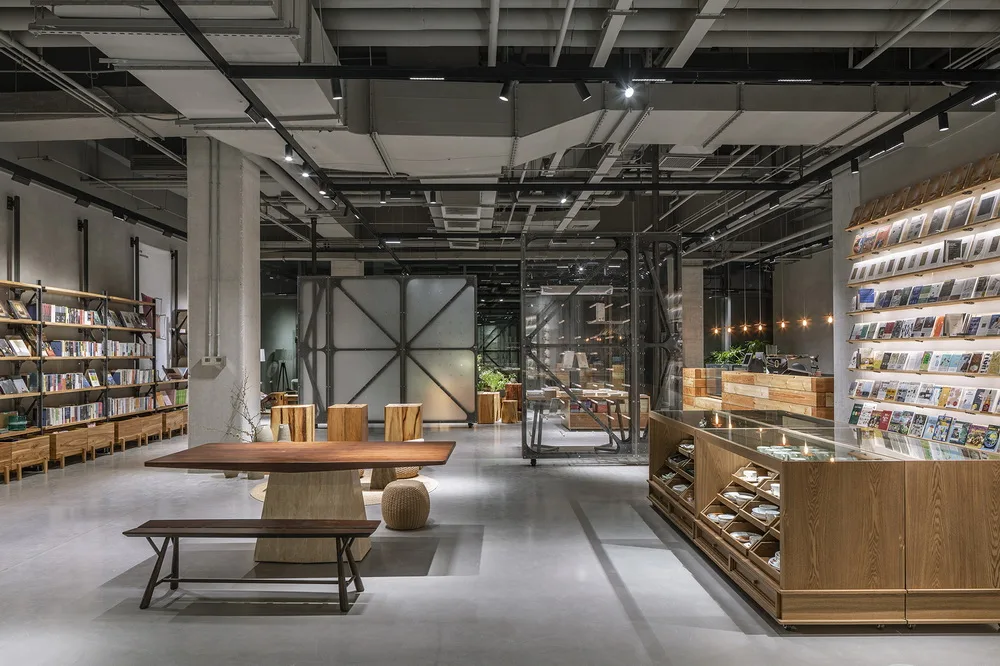
Moving forward, the focus is on the construction of “tools” within the space.
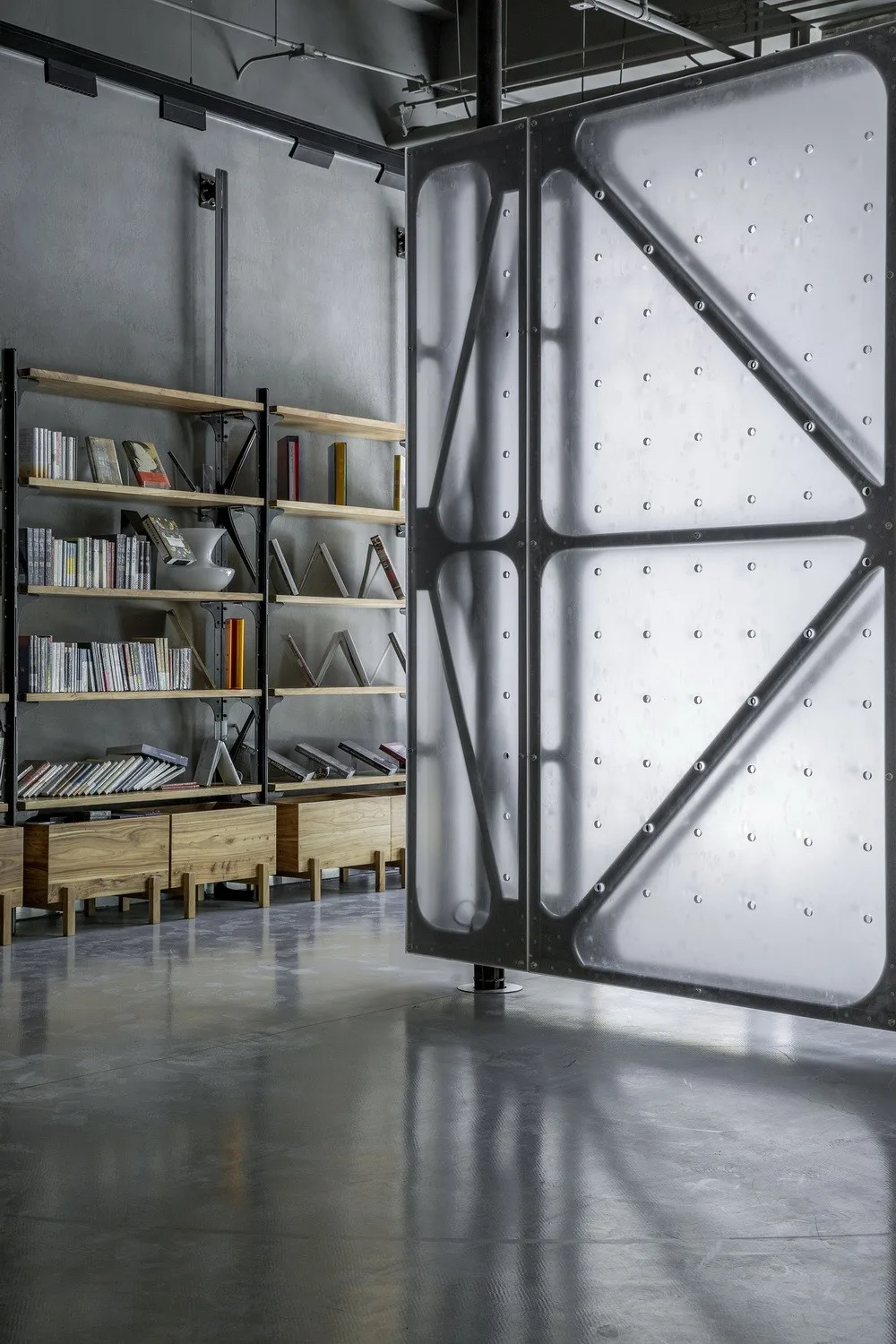
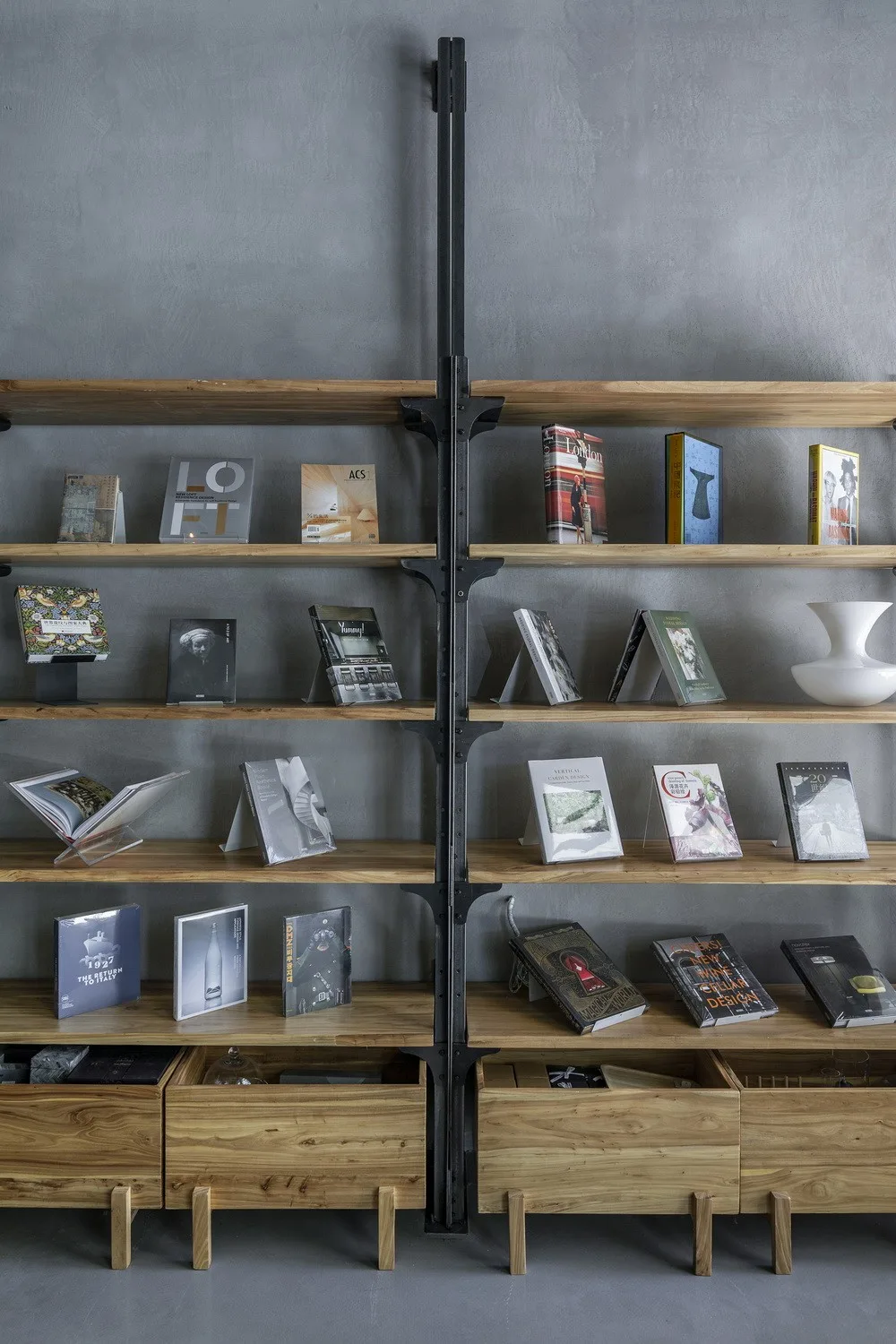
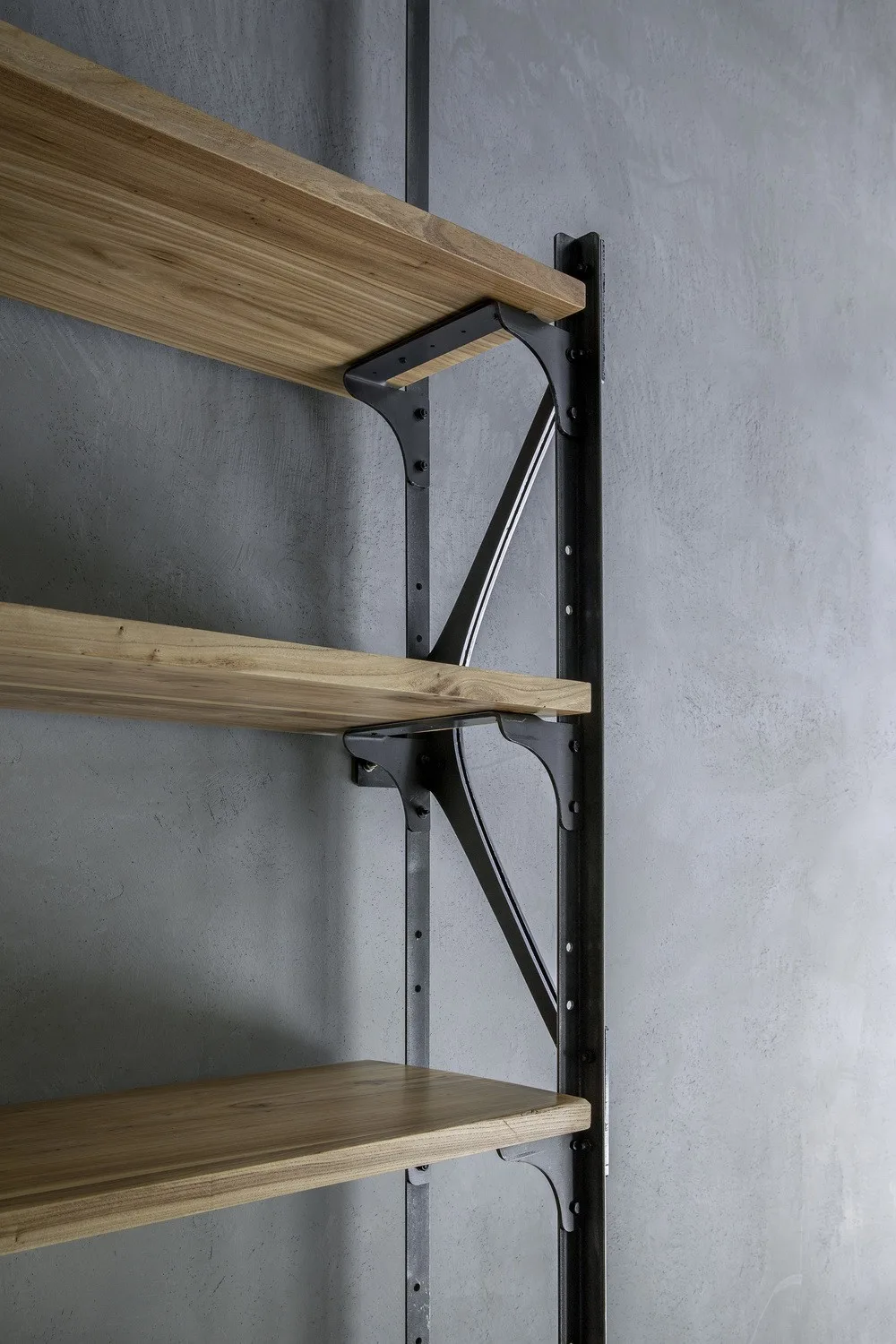
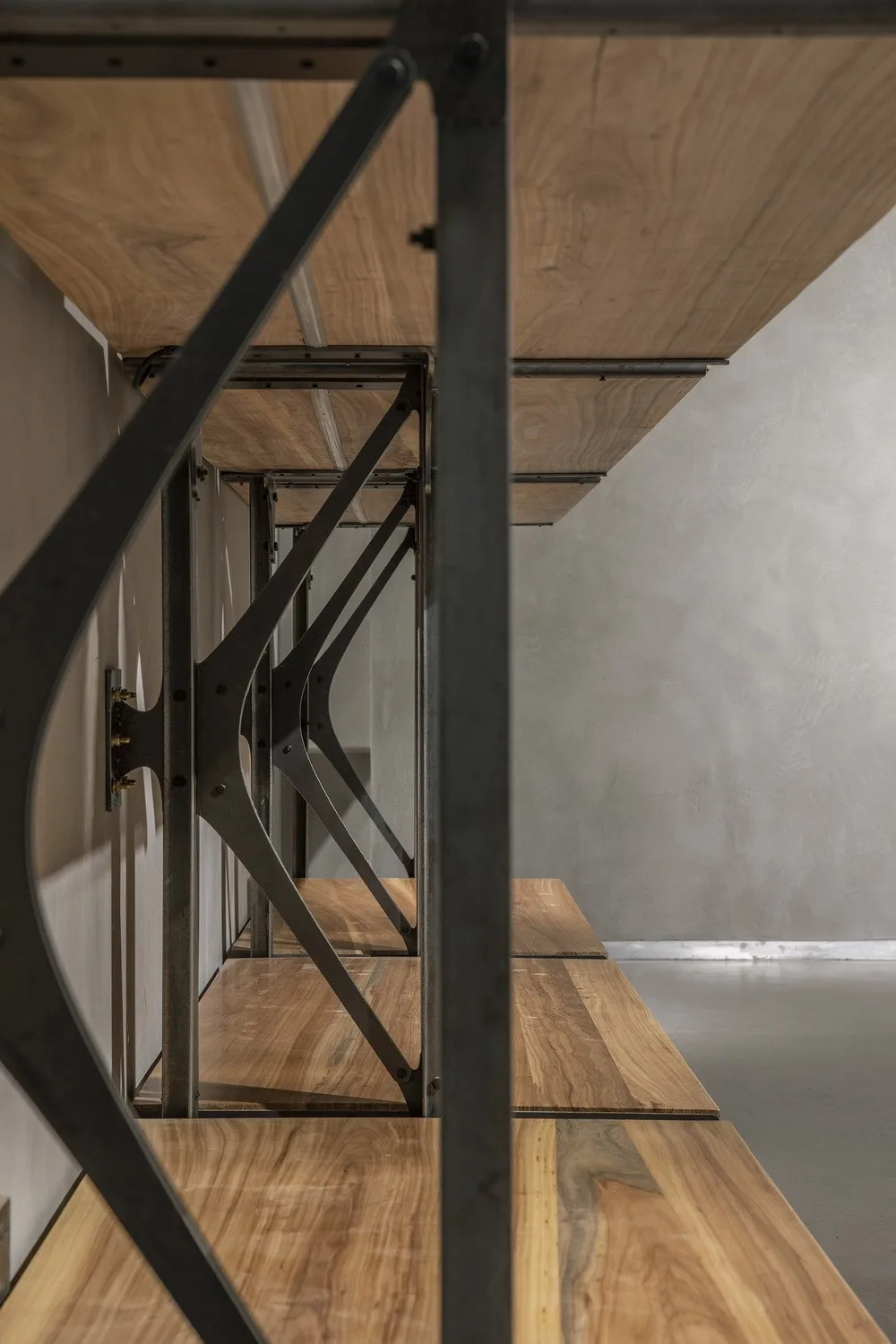
Based on the client’s needs, shelves were designed to be placed against the walls with adaptability for change. Considering the specific width and height requirements, and given that the walls are constructed from non-load-bearing hollow blocks, research was conducted on how to concentrate the shelf’s load on its base. This allowed the wall to act as auxiliary support, leading to the installation of metal shelves with wider, longer bases and additional wall support rivets.
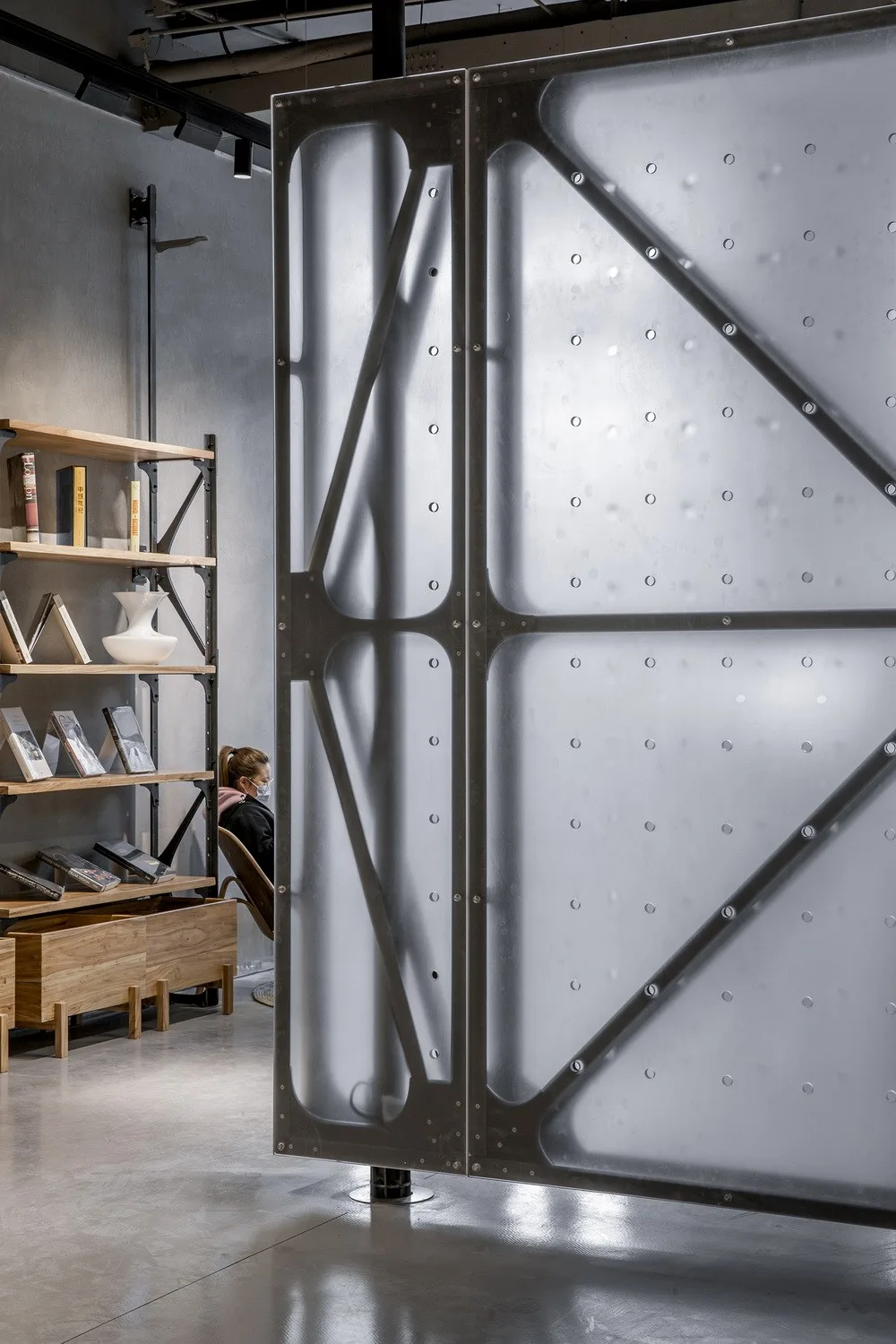
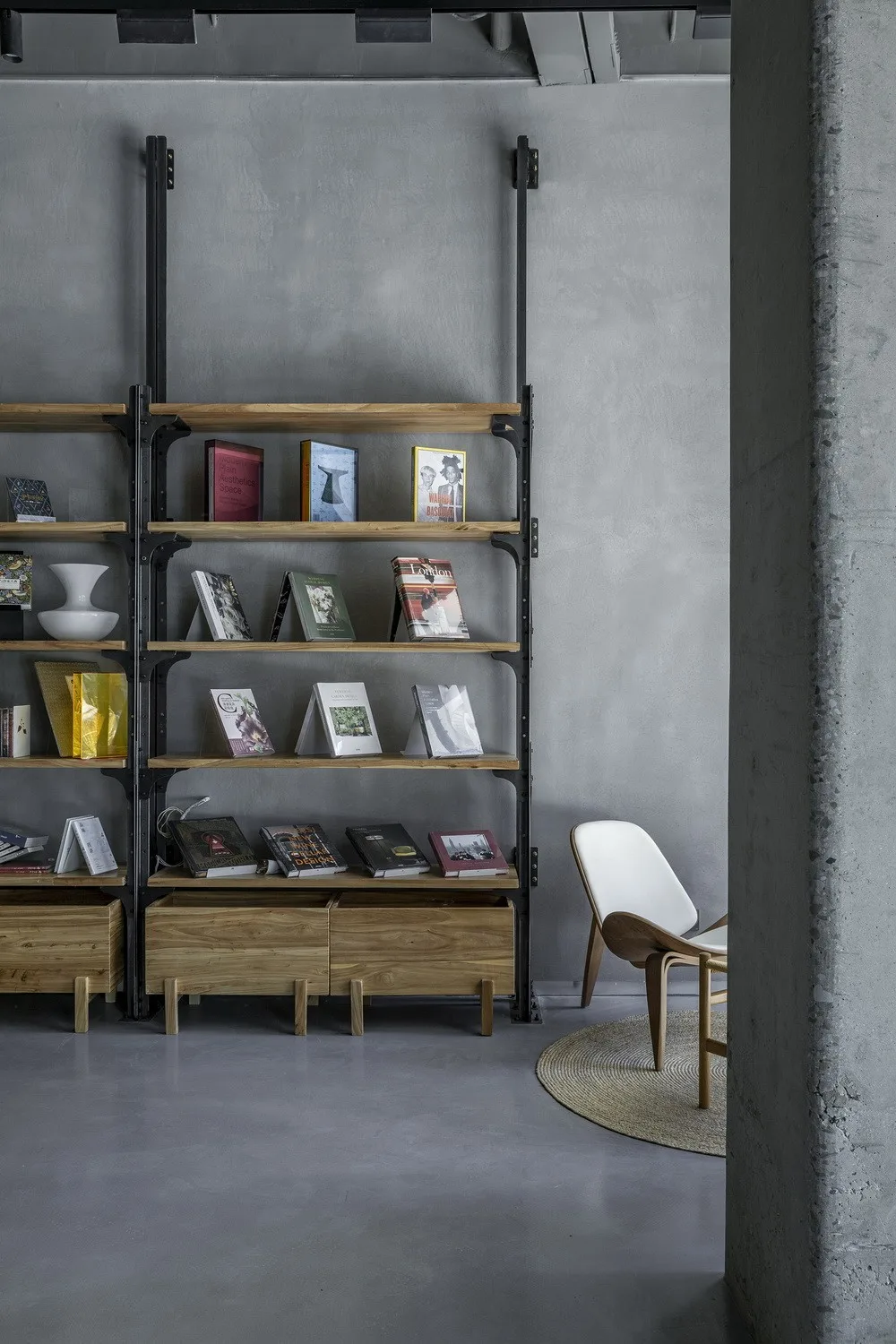
The metal shelving functions as structural furniture, serving as essential spatial partitions that enhance layout flexibility and adaptability. It is an embedded “structural appliance.”
Installing a rotating wall beneath the beam
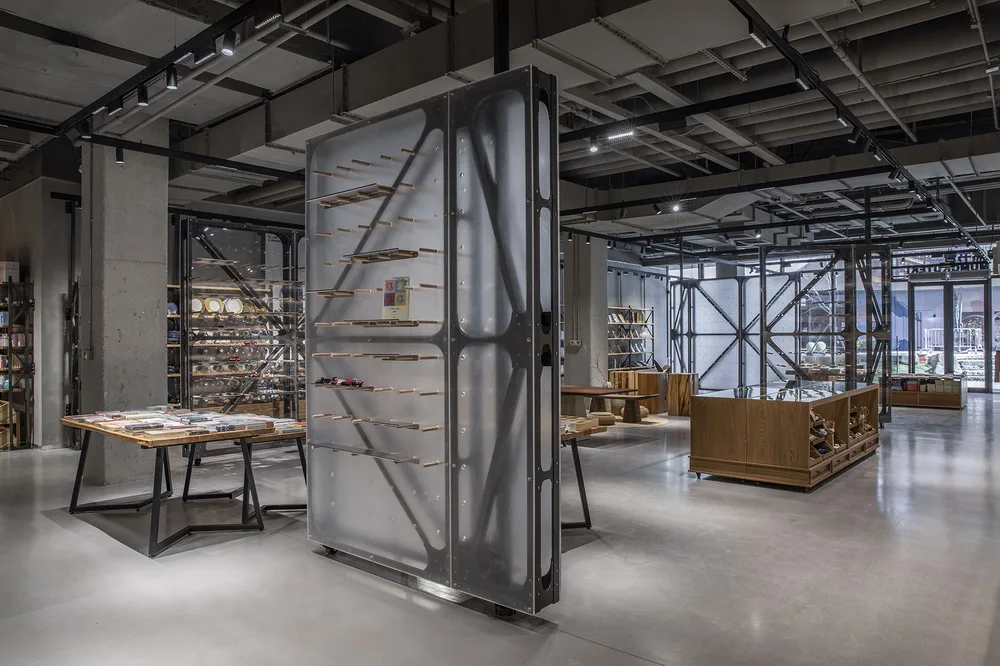
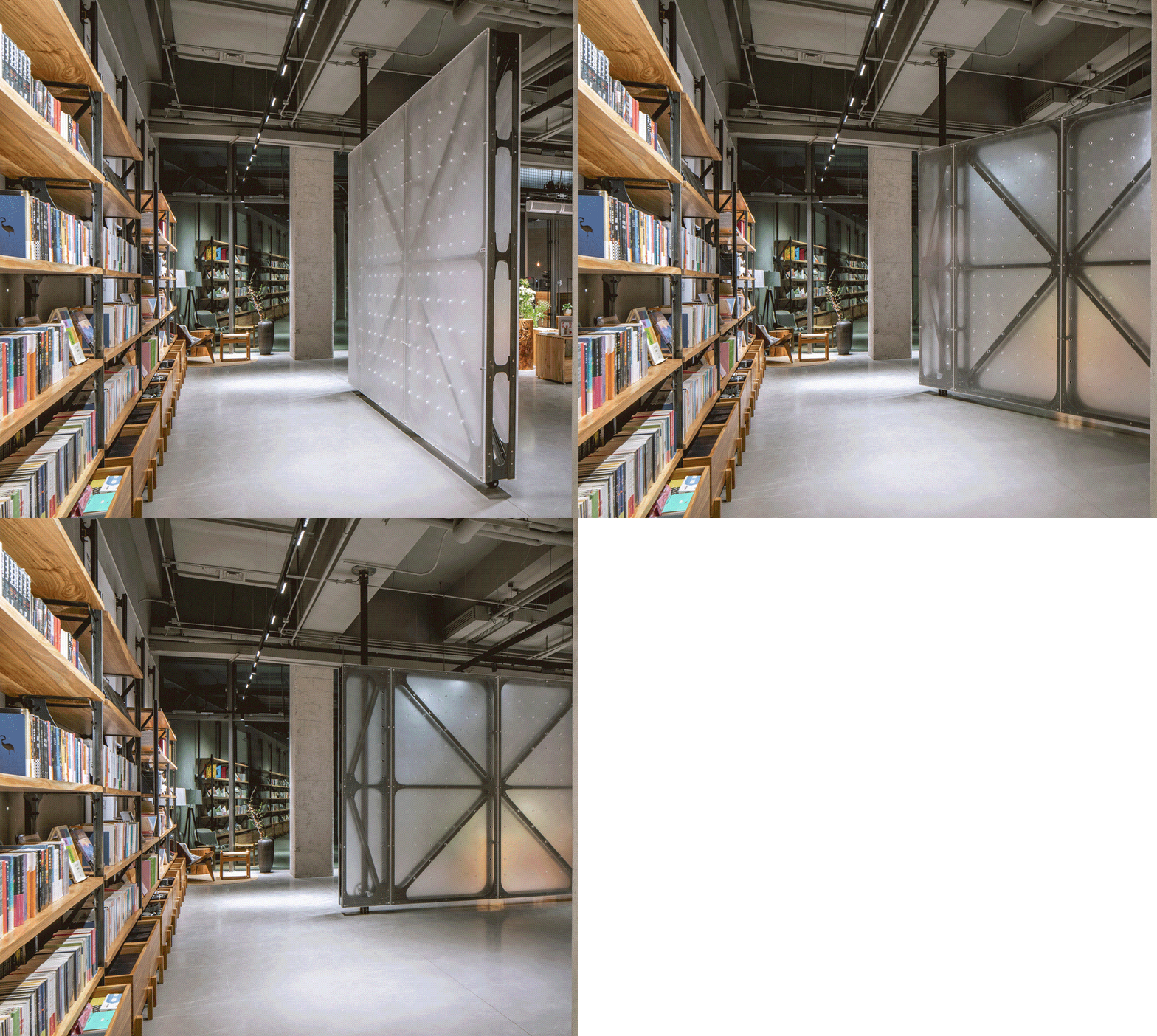
△ Rotating short wall © Jin Weiqi
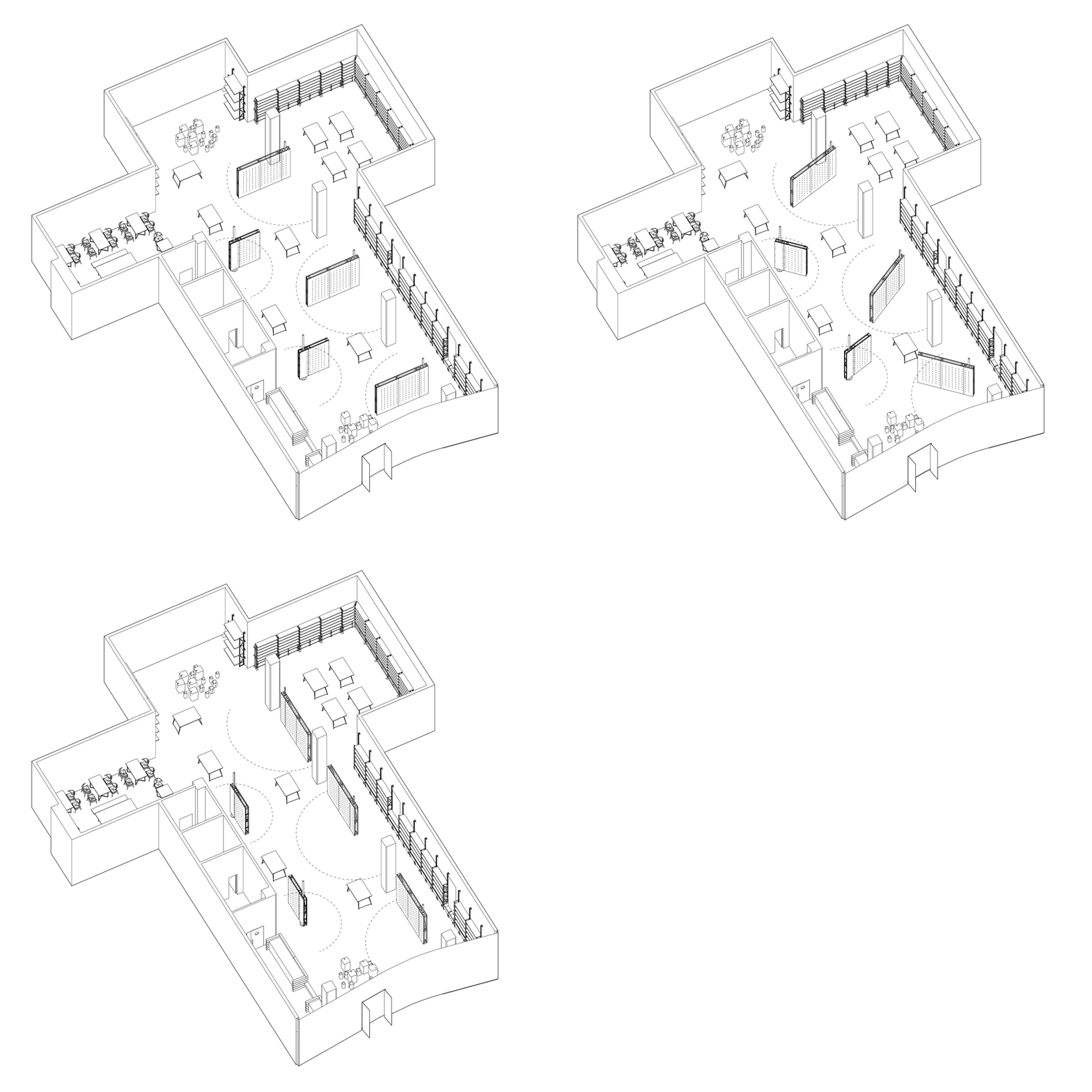
△ Juran Bookstore Gif © LUO Studio
The “Aimless Concept Bookstore” represents a free-form urban lifestyle envisioned by Haidian Juran Bookstore after years of operation and experience. It rejects fixed display patterns, embracing the possibility of versatile spaces that can also accommodate exhibitions.
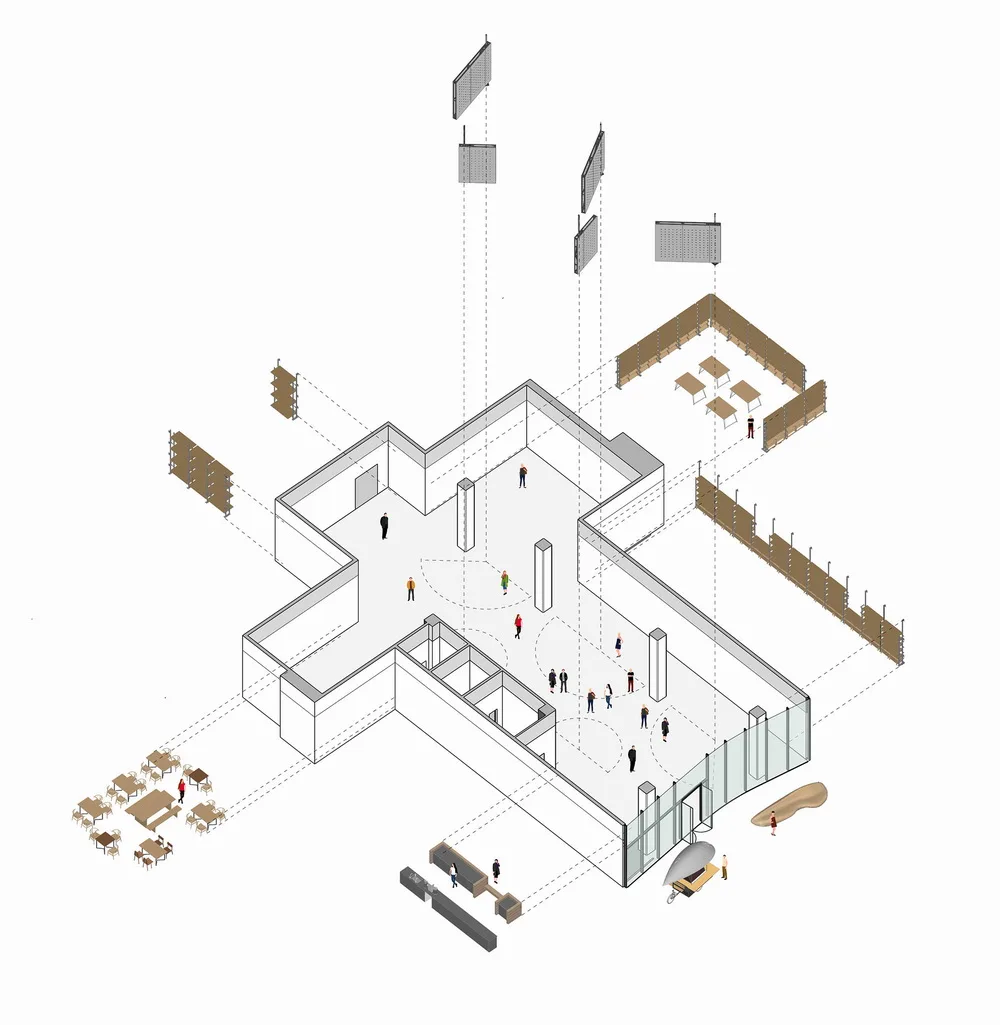
△ Overall decomposition analysis diagram © LUO Studio
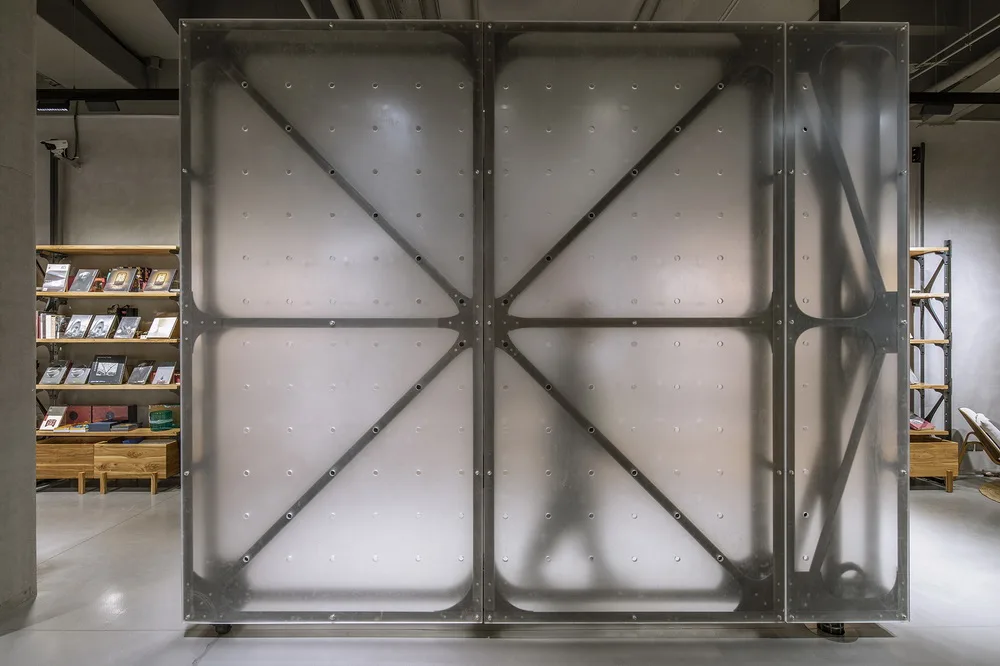
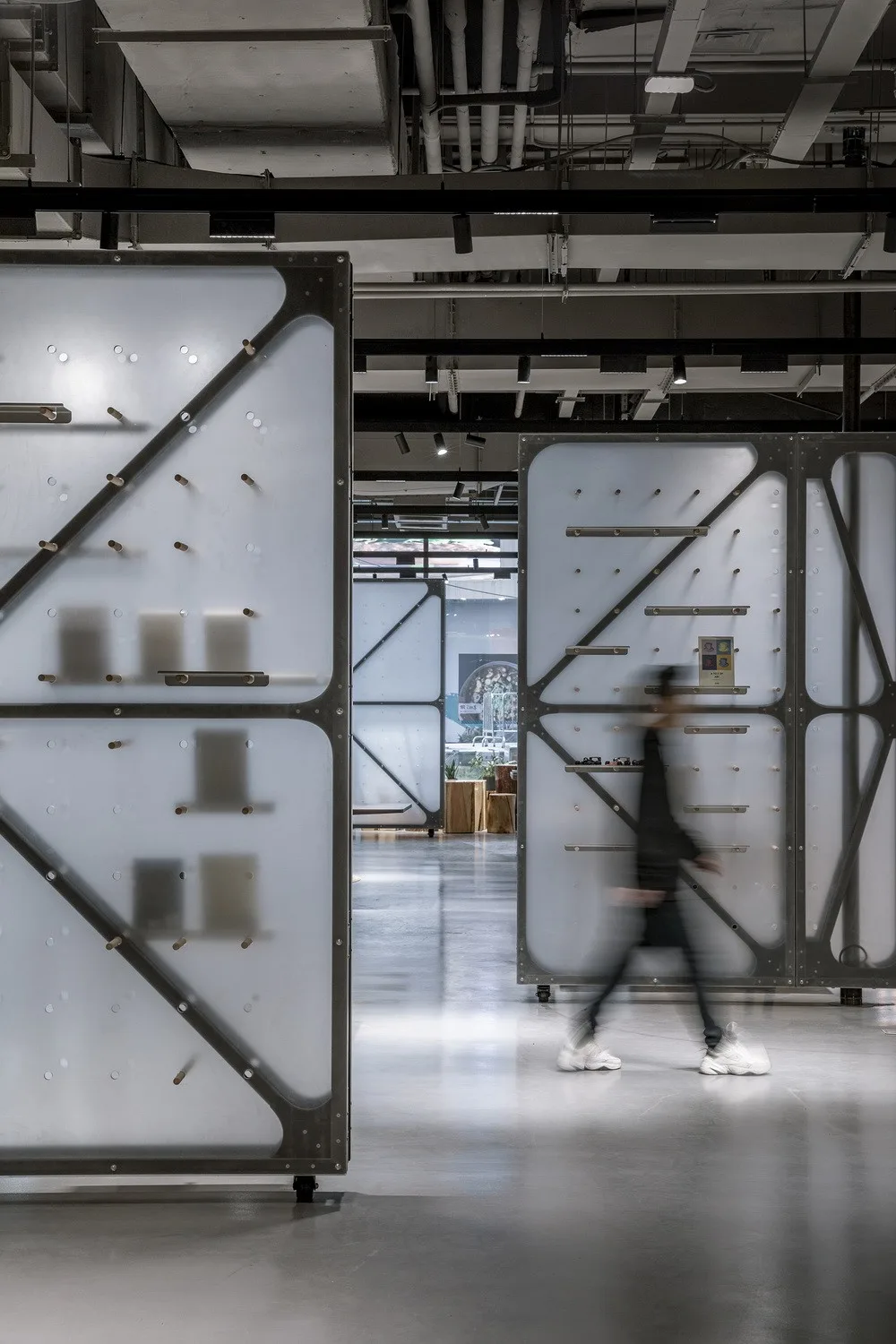
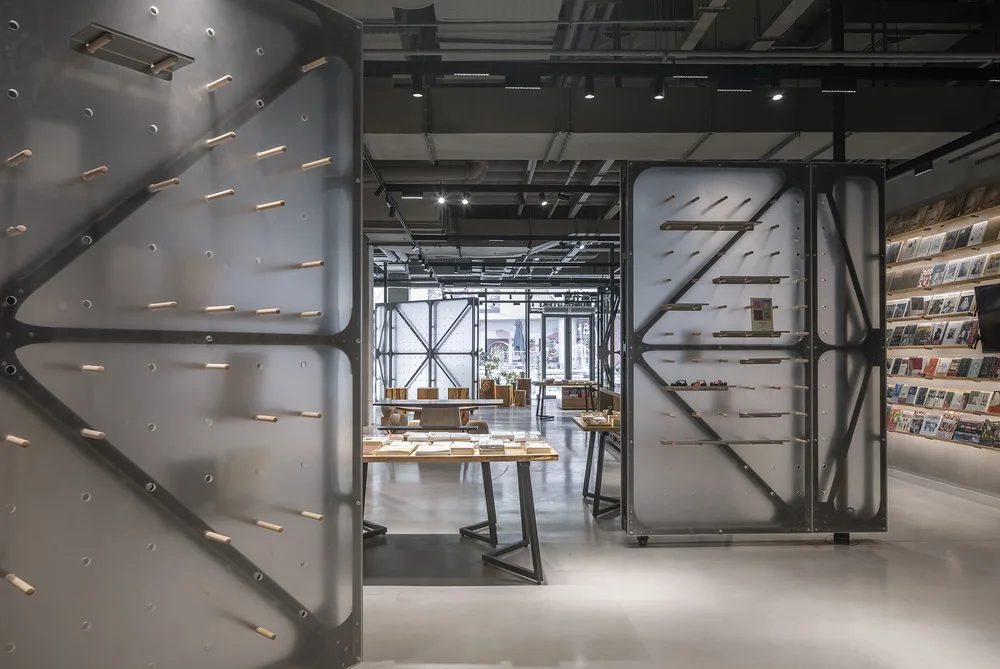
The secondary structural element under the main beam is the rotating wall. When positioned perpendicular to the entrance, it creates a transparent space. When parallel to the entrance, it divides the area into several progressive, continuous zones that increase spatial richness and hierarchy. These rotating walls can be freely adjusted and fixed to create a dynamic and diverse environment.
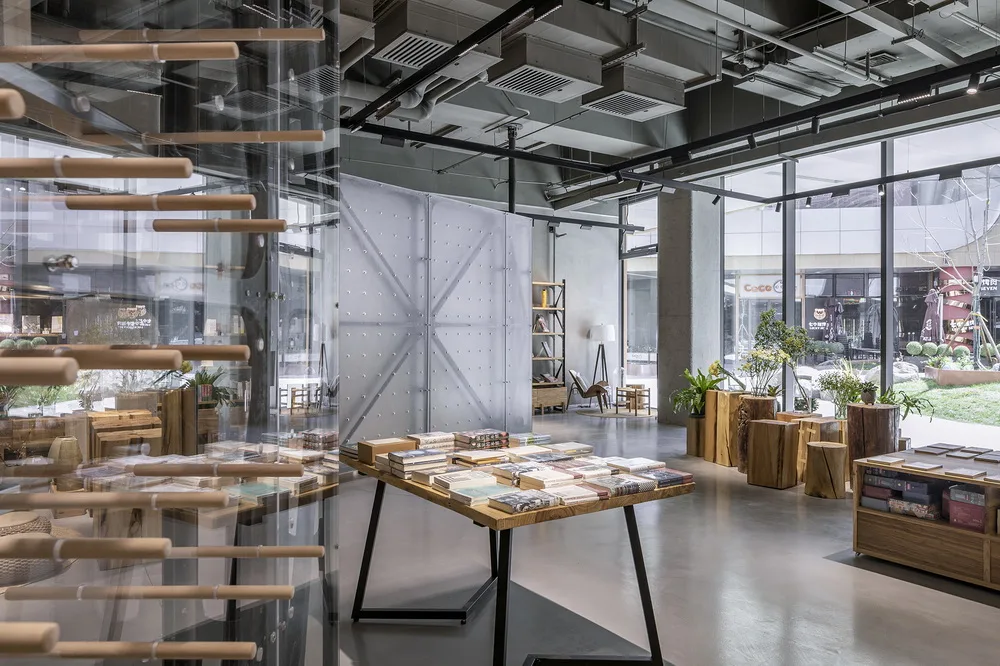
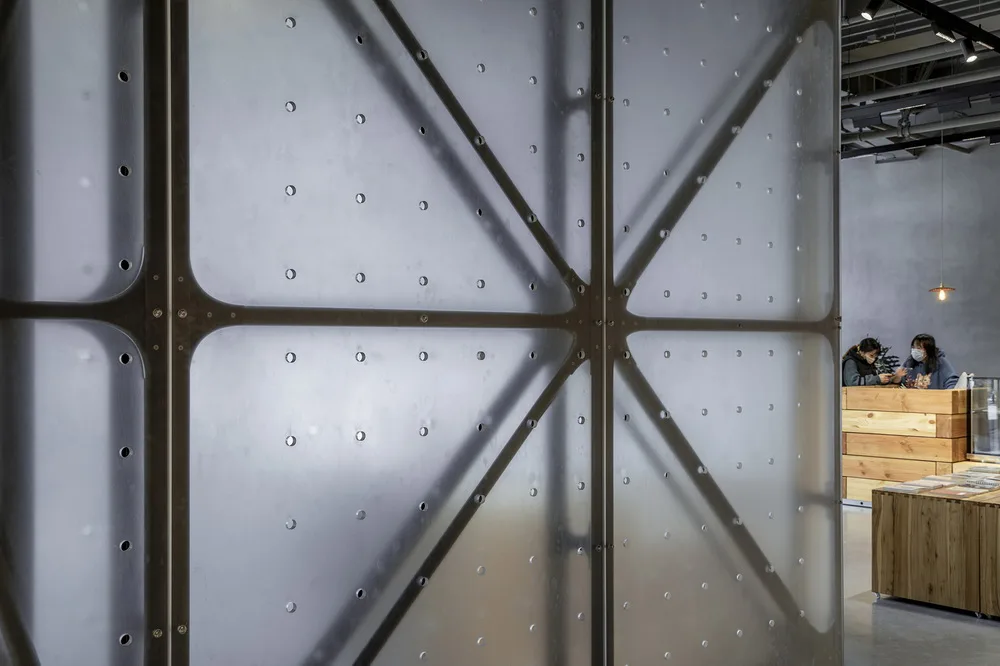
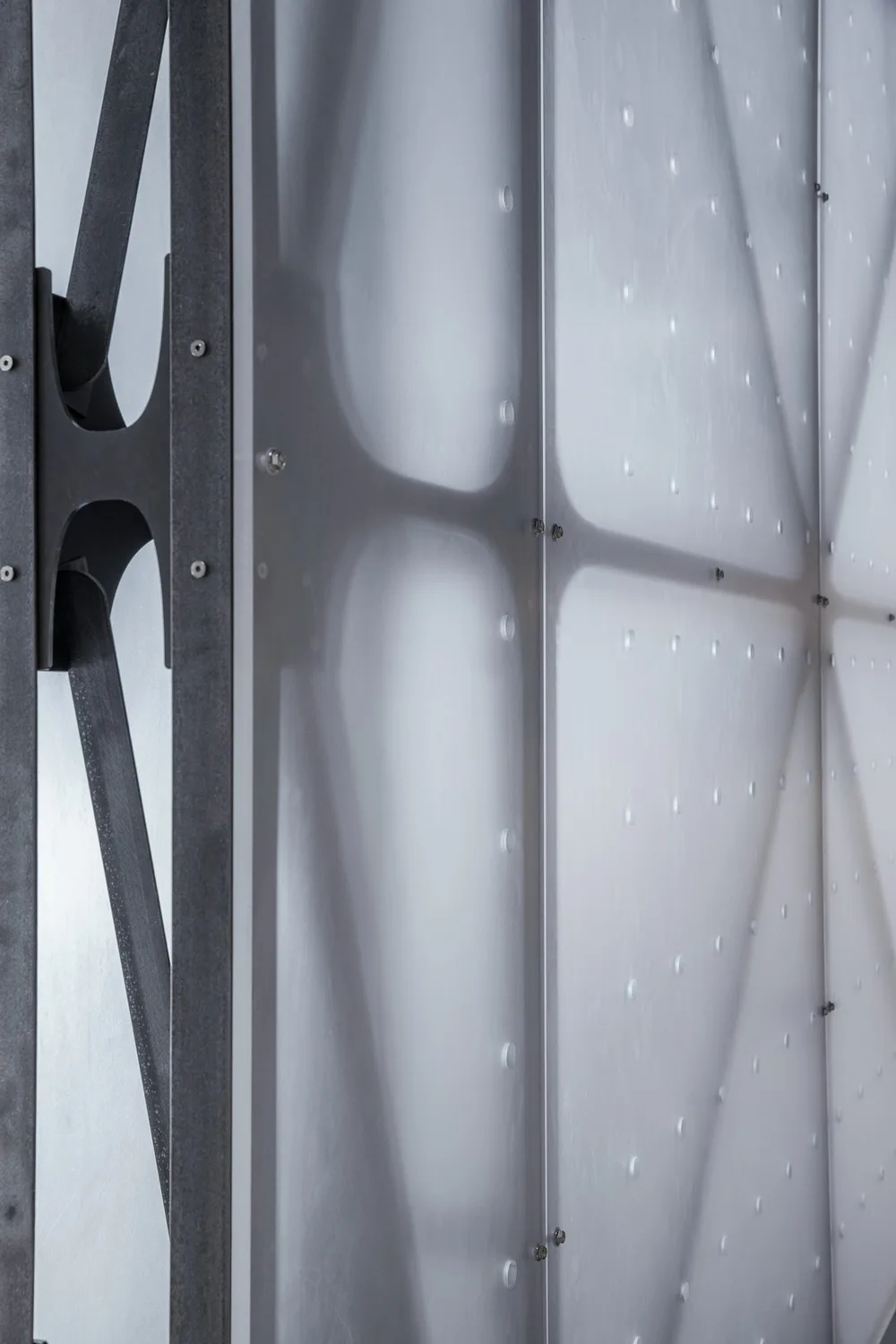
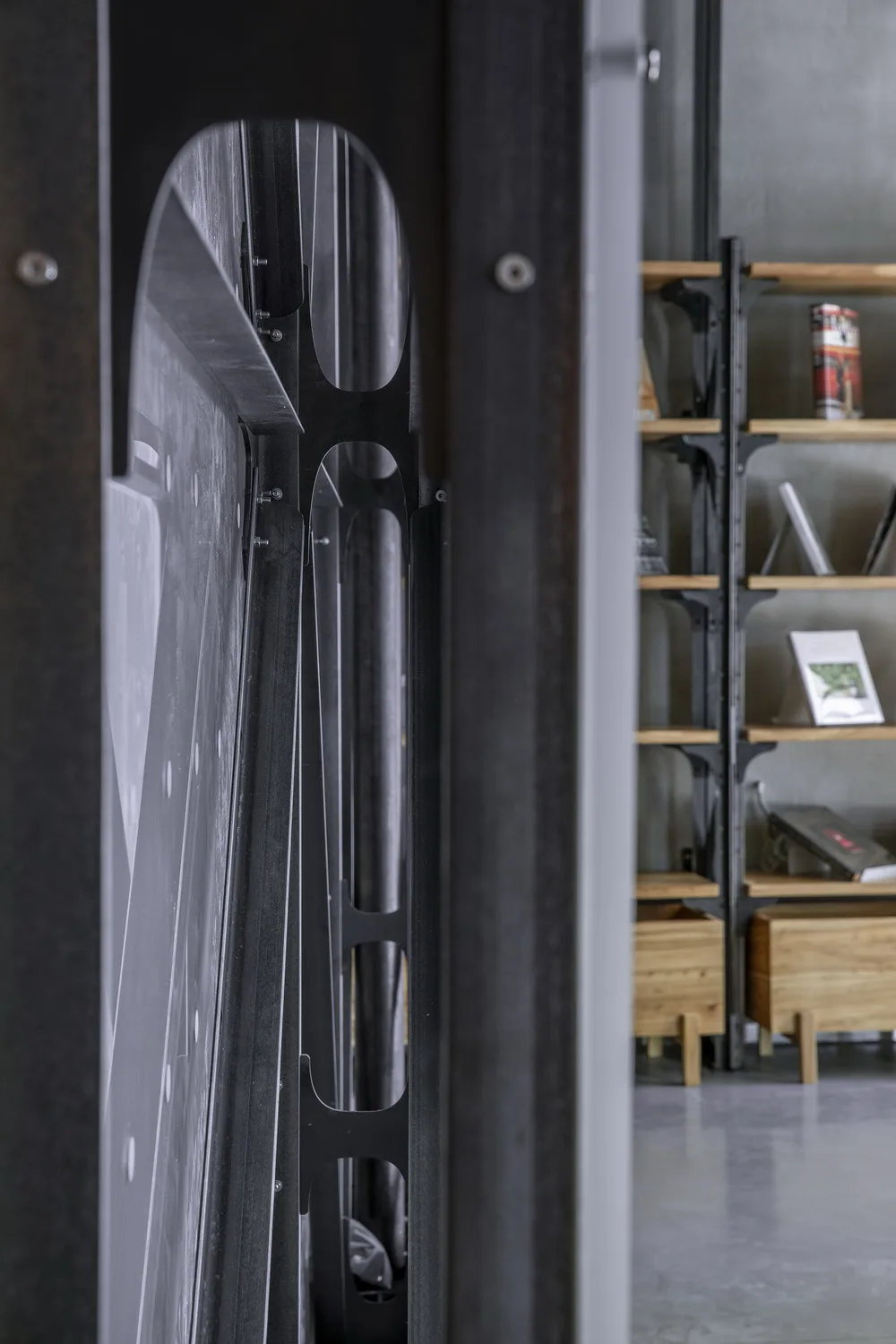
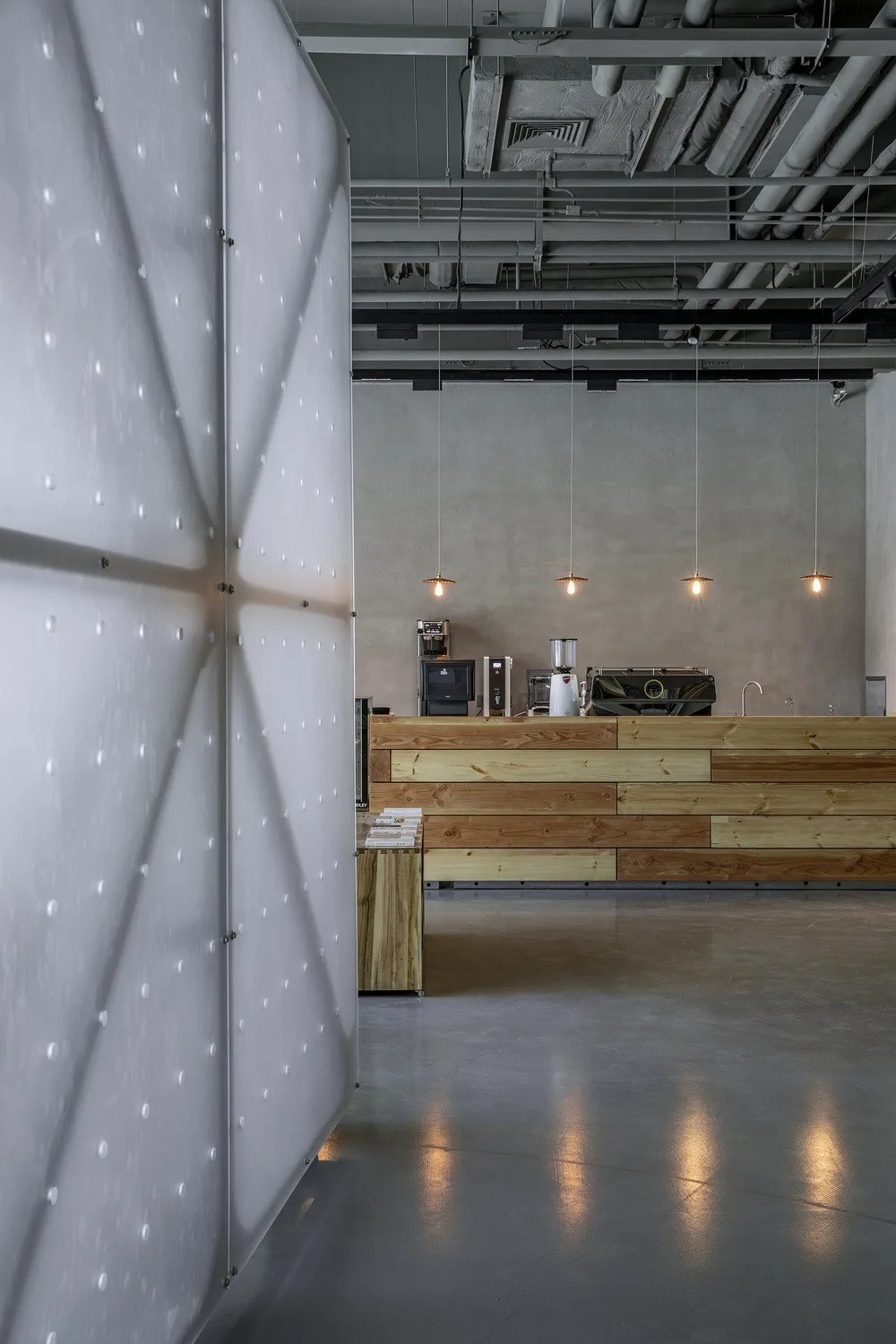
The rotating wall features a skeleton made of riveted angle steel profiles, covered on the outside with transparent and semi-transparent materials. The entrance and transition areas use transparent walls to maintain spatial continuity, while other sections use semi-transparent walls to enrich the spatial experience.
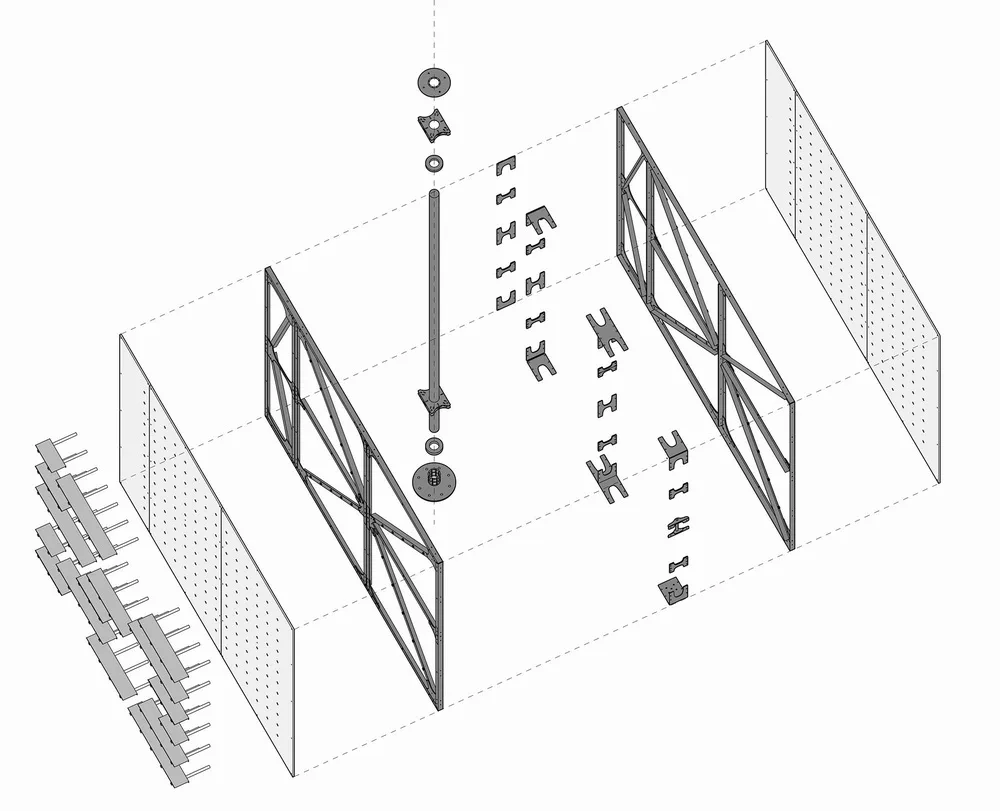
△ Wall decomposition © LUO Studio
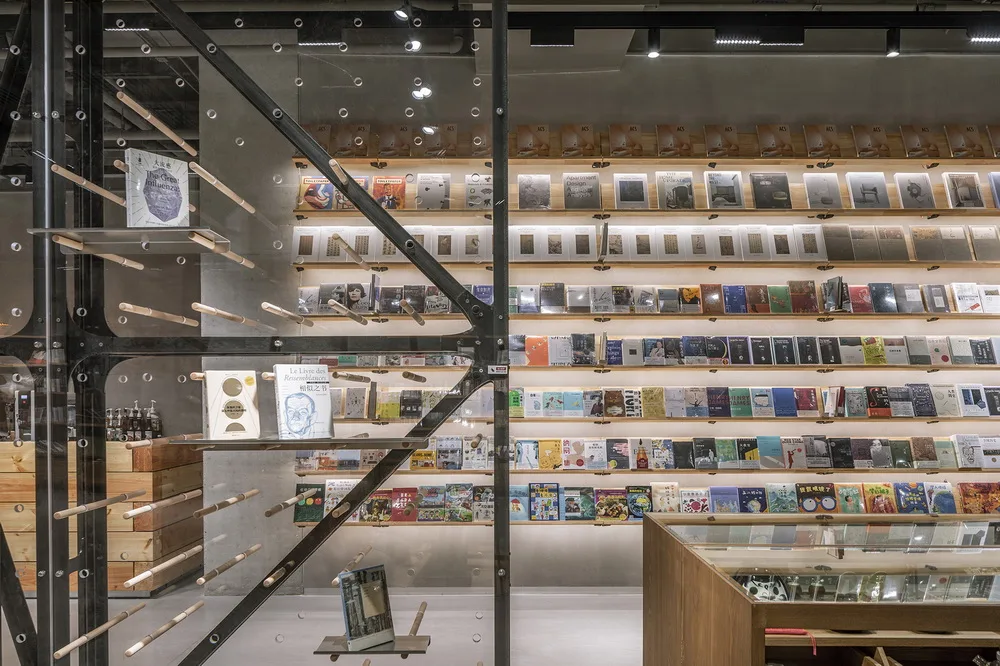
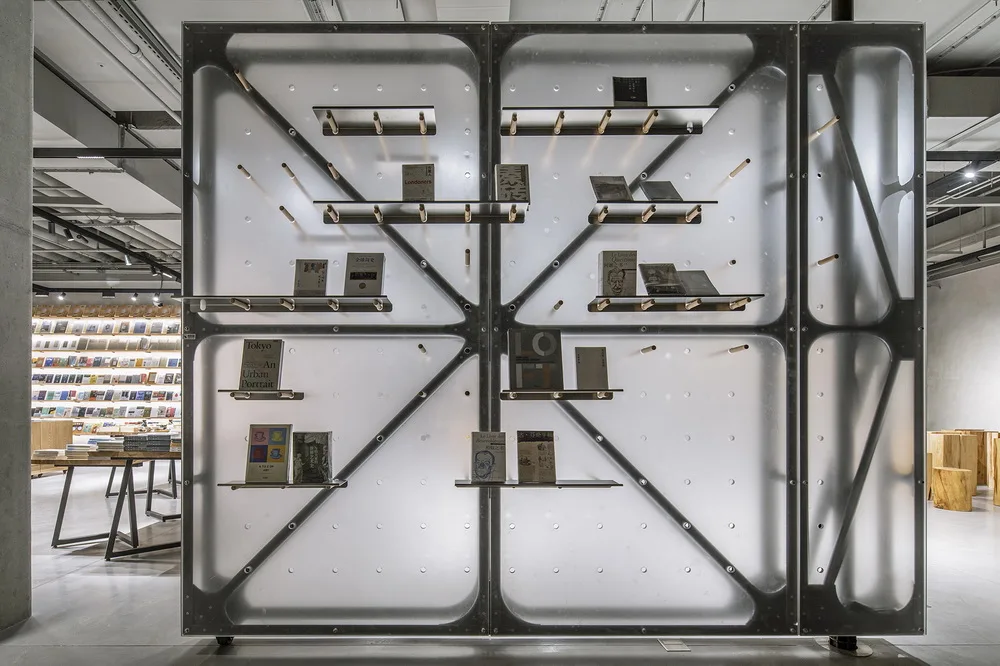
The walls feature holes designed to accommodate wooden rods according to a modular system. Metal partitions of two, three, or five sections are installed based on these holes. These rods and partitions serve practical purposes such as hanging items and displaying cultural and creative products and books.
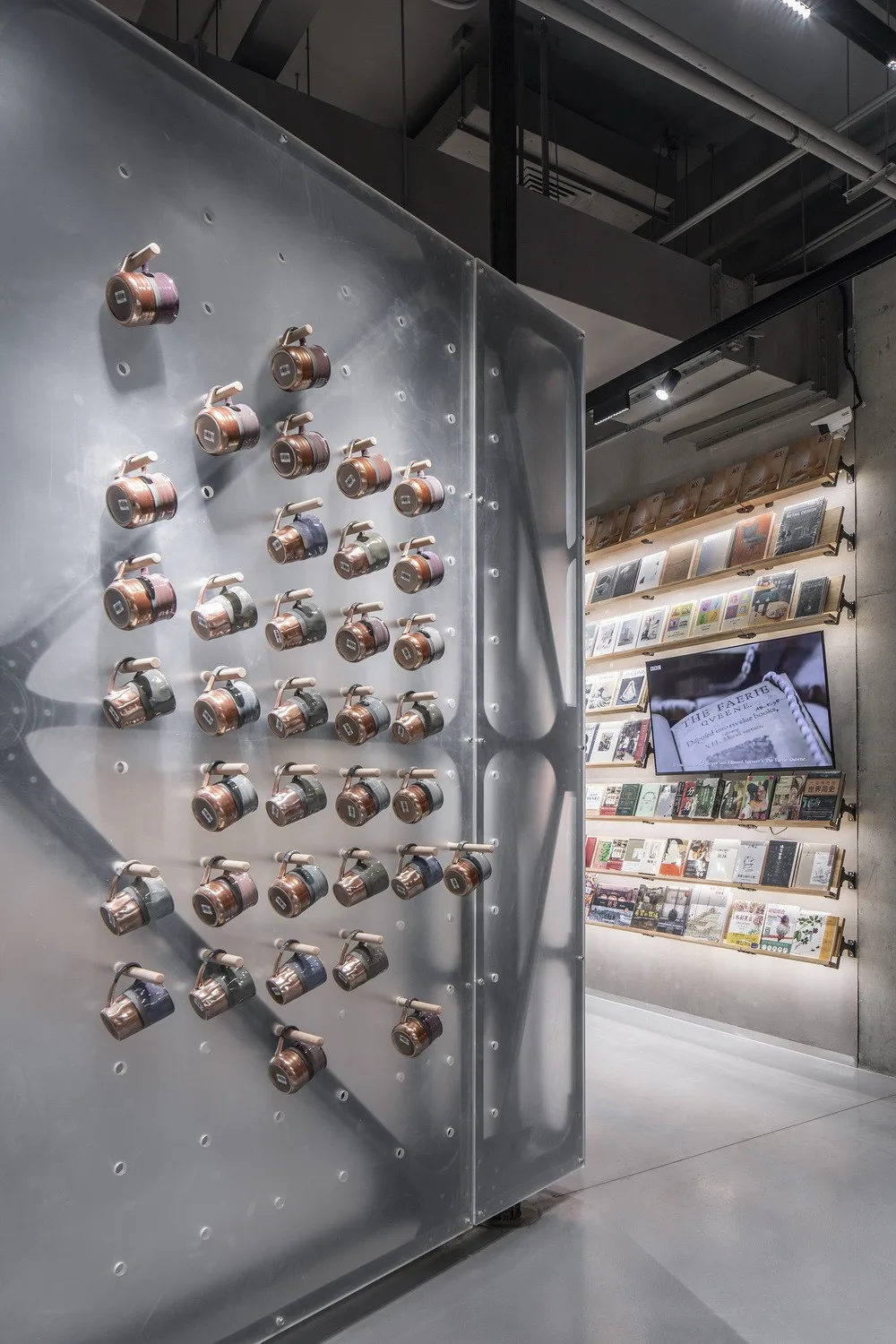
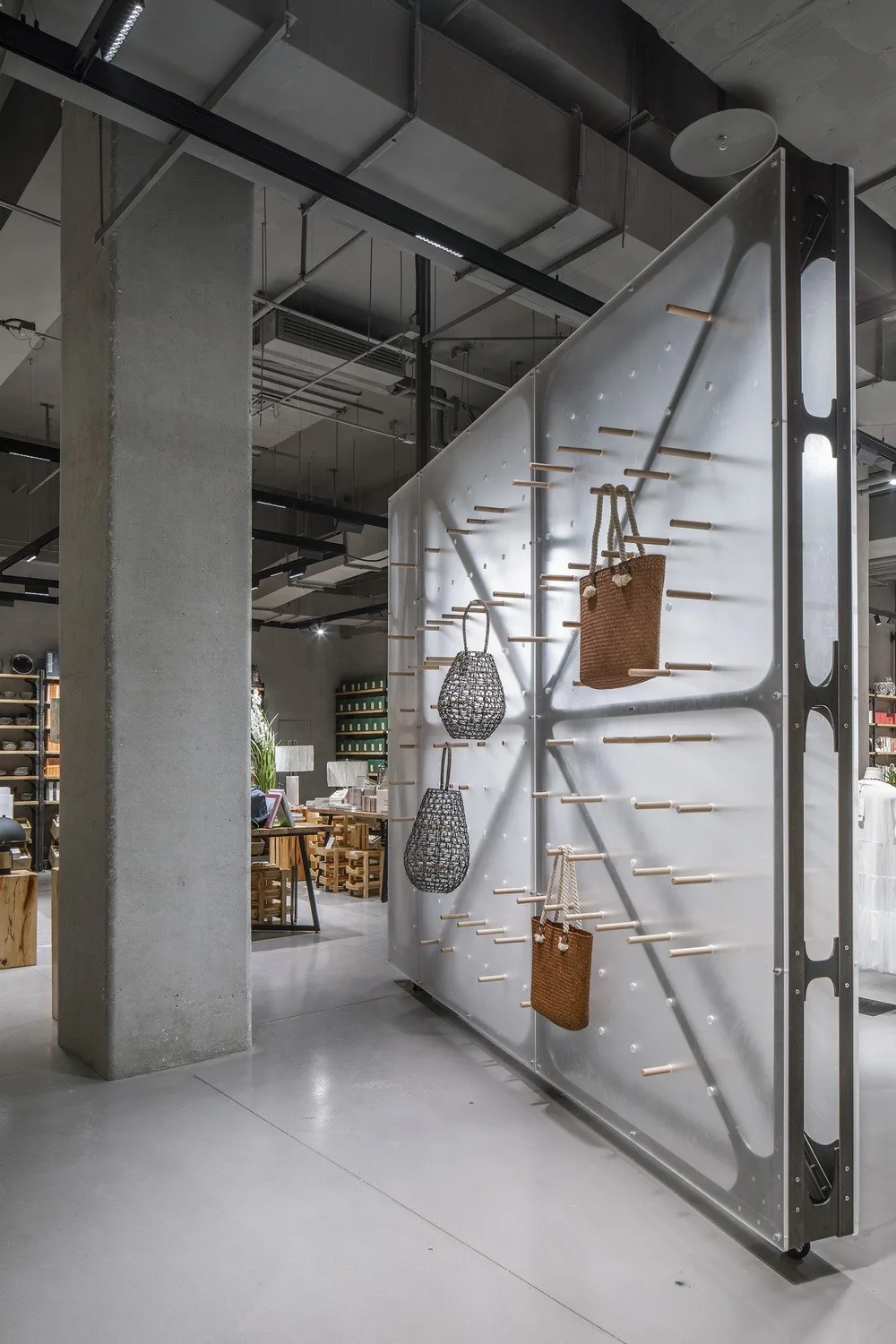
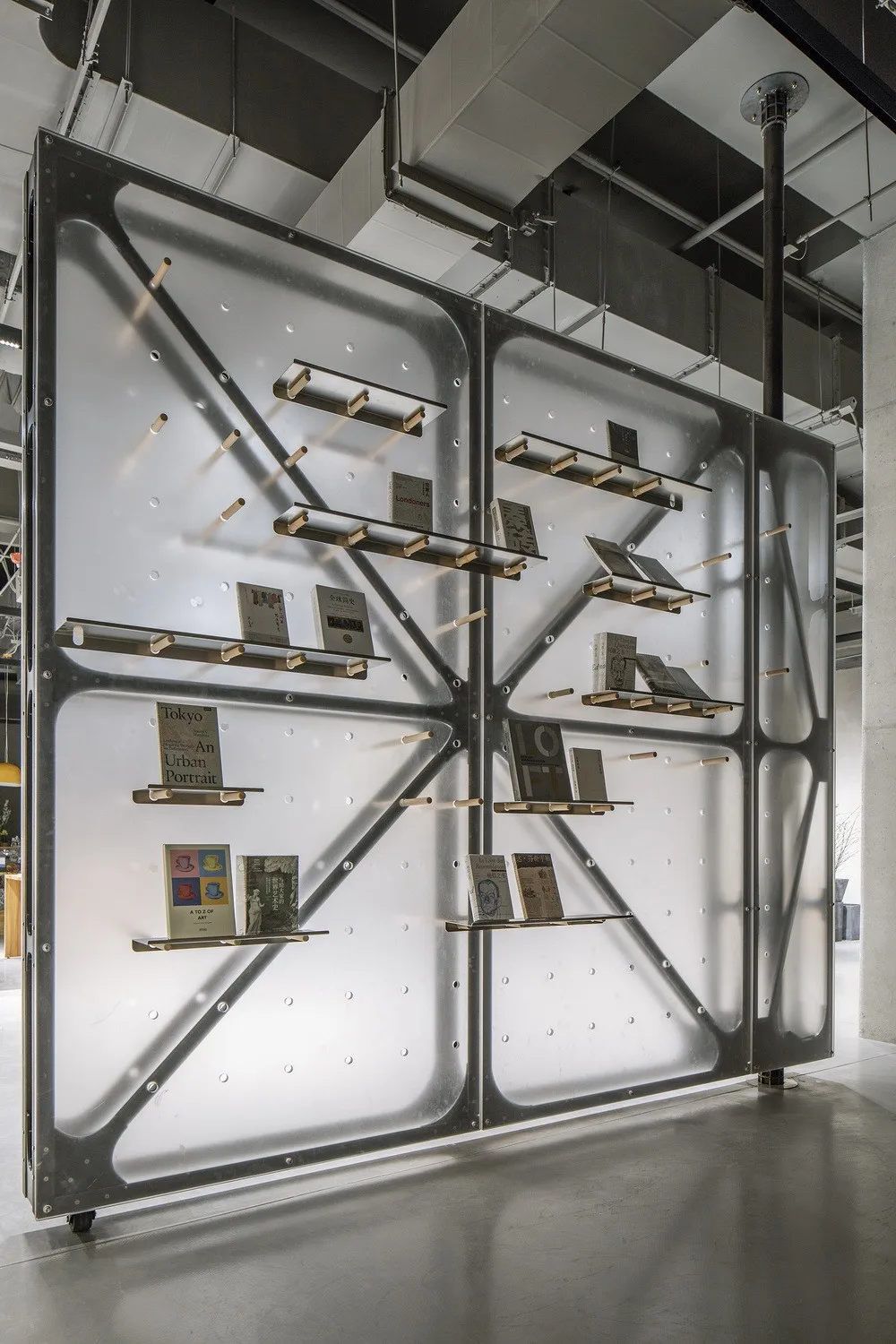
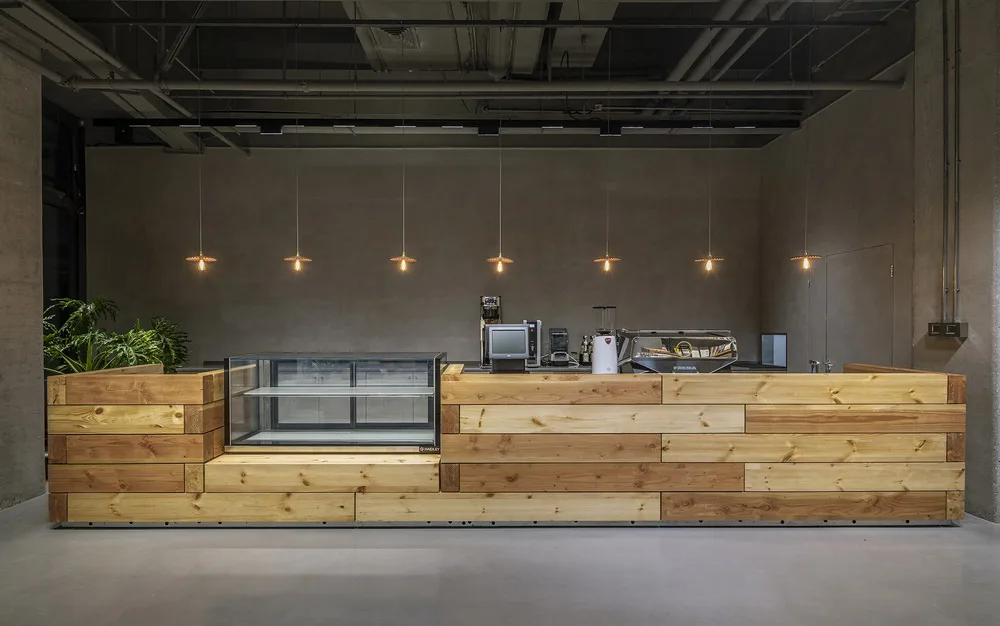
This project is not a conventional interior design. The process involves stripping back layers to reveal the building’s essence, creating and embedding structural furniture components. These alternative design strategies infuse the interior with a genuine sense of authenticity.
Technical Drawings
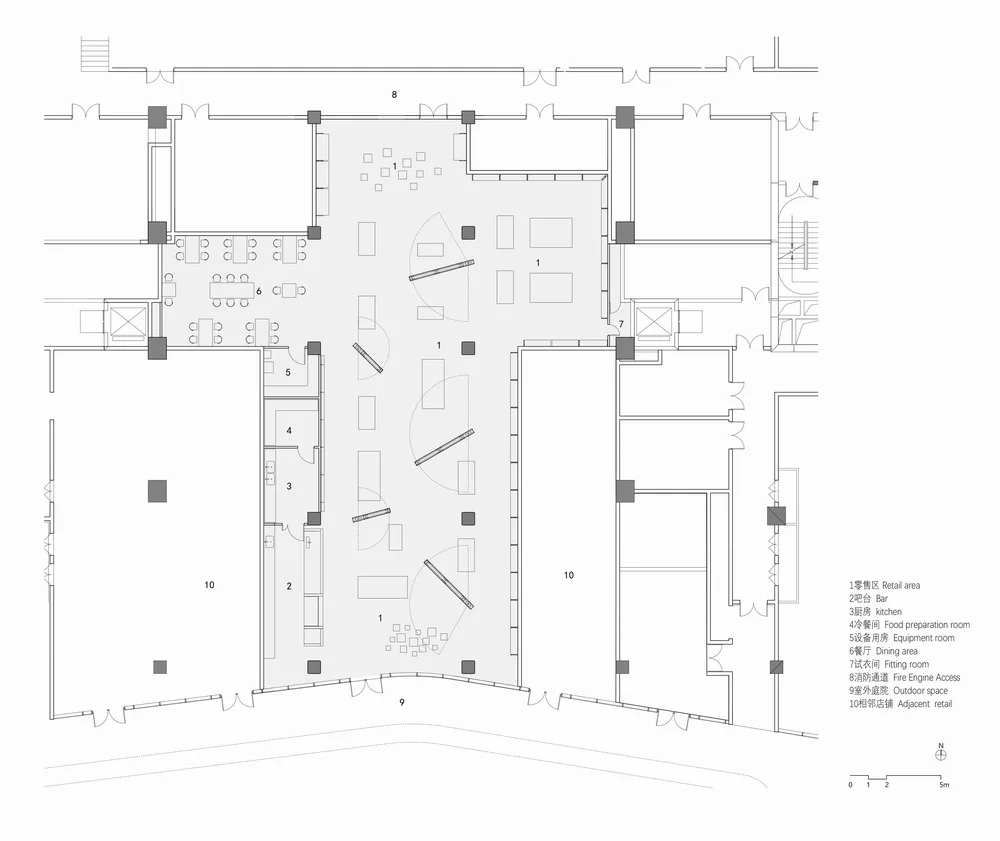
△ Plan View
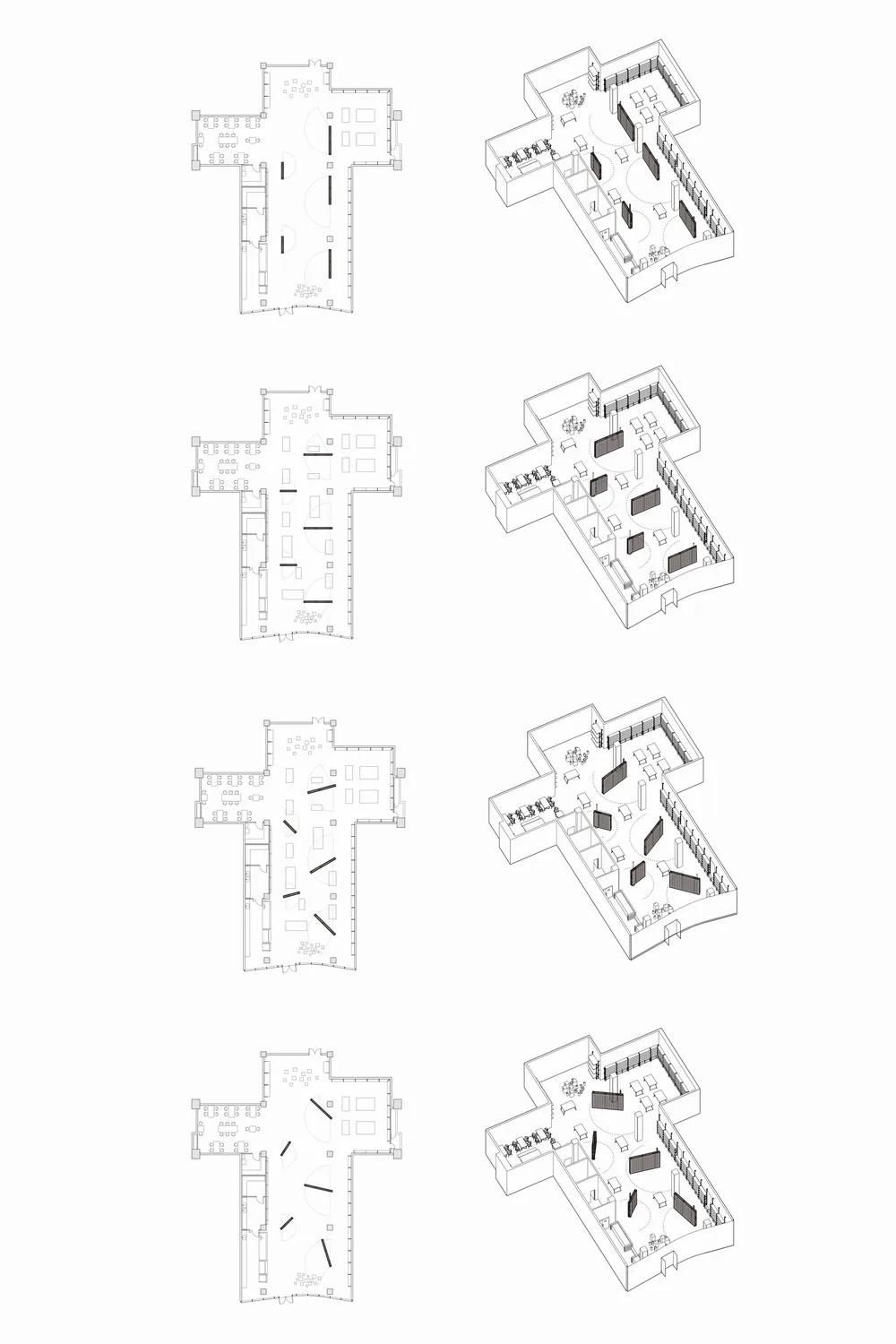
△ Floor Plan
Project Information
Design Team: LUO Studio │ Luo Yujie Studio (www.luostudio.cn)
Designers: Luo Yujie, Wang Beilei, Wang Zhenlu, Zhuojian, Huang Shangwan
Client: Juran Bookstore (Aimless Concept Store) of Beijing Wumu Di Culture and Technology Co., Ltd.
Construction Contractor: Shangmuzao (Beijing) Construction Technology Co., Ltd.
Interior Area: 479.1 square meters
Project Location: 104-03, 1st Floor, Building 5, No. 18 Yongrun Road, Haidian District, Beijing (Haidian Yuejie Theme Block)
Design Period: October 2020
Completion Date: April 2021
















Must log in before commenting!
Sign Up