
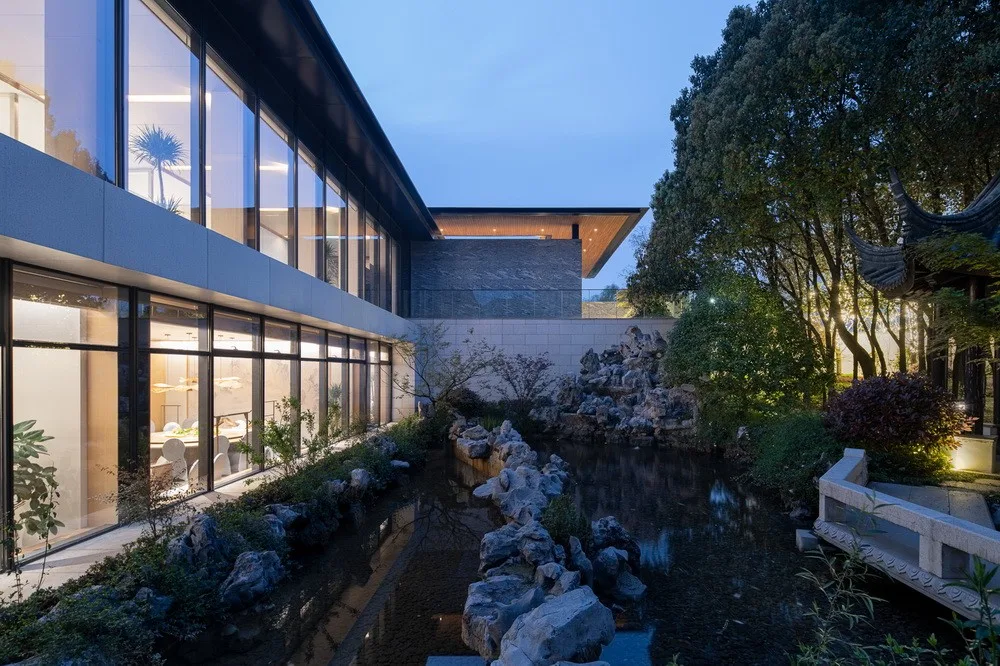
When introducing new buildings into historic urban areas, our goal is for them to adapt seamlessly across different scales. They should not only integrate with the existing city fabric but also breathe new life into its form. This project represents an open, low-density block that continues the repair and stitching of the fragmented old city texture, interpreting form and scale to create a complete, orderly, and vibrant new pattern for the historic city.
— Meng Fanhao
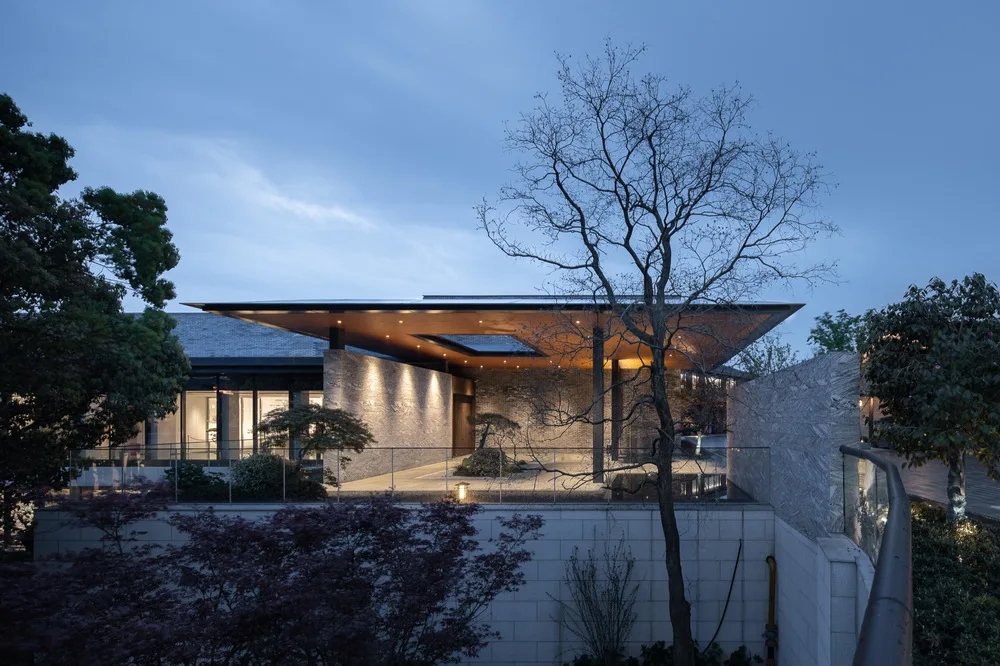
△ Nanjing Gucheng Bay Kaiyuan Resort Hotel
Gaochun, the ancient capital of Jinling and an internationally recognized slow city, serves as the backyard and southern gate of Nanjing. Situated in the western polder area, it is graced by two major lakes, Gucheng Lake and Shijiu Lake, which are interconnected by a dense water network. To the east, the remnants of Maoshan Mountain form continuous green hills. Culturally, Gaochun Old Town boasts a rich heritage, retaining the oldest Wu dialect and ancient streets and alleys that are thousands of years old. Notably, “Gaochun Old Street” is the best-preserved Ming and Qing Dynasty street in East China, with a history exceeding 900 years, and is the finest ancient architectural complex in Jiangsu Province.
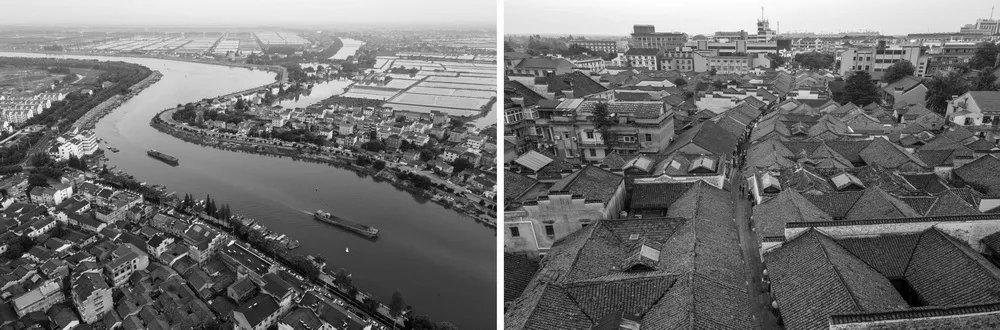
△ Nanjing Gaochun
In recent years, inspired by the global “slow city movement,” Gaochun has steadily developed its tourism and leisure industry while preserving its unique regional character, natural ecology, and traditional culture. Adjacent to Gaochun Old Street and Gucheng Lake, the Nanjing Gucheng Bay Scenic Area is a family vacation cultural and tourism complex. It was developed by Yada Group, operated by China Youth Travel Service, and designed by Line+. This area is a new living park, following the likes of Wuzhen and Gubei Water Town. The Nanjing Guchengwan Kaiyuan Resort Hotel and Tourist Center, located just outside the scenic area, serve as commercial support facilities and a transitional urban interface between the old and new neighborhoods.
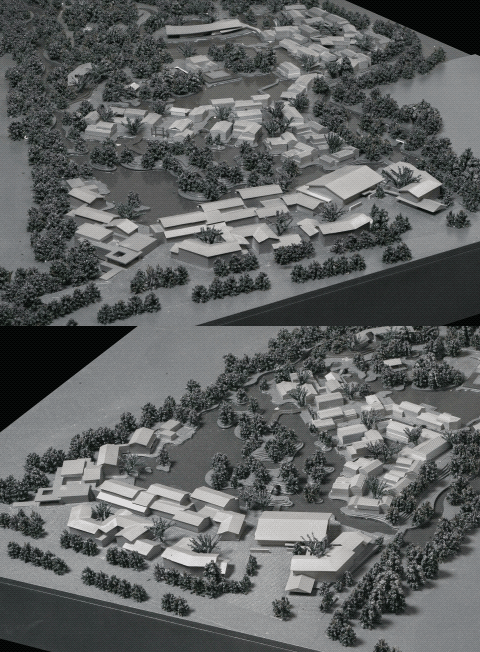
Model of Nanjing Gucheng Bay Scenic Area Project
As urbanization progresses, the tension between the historic fabric and cultural context of the old city and modern urban development becomes increasingly evident. The site’s western boundary is defined by the traditional Gaochun Old Street and its expanded commercial area, while the east borders a modern residential community and its commercial streets. Therefore, new buildings must not only connect and stitch the old city’s texture but also extend and transform the form of the evolving old city.
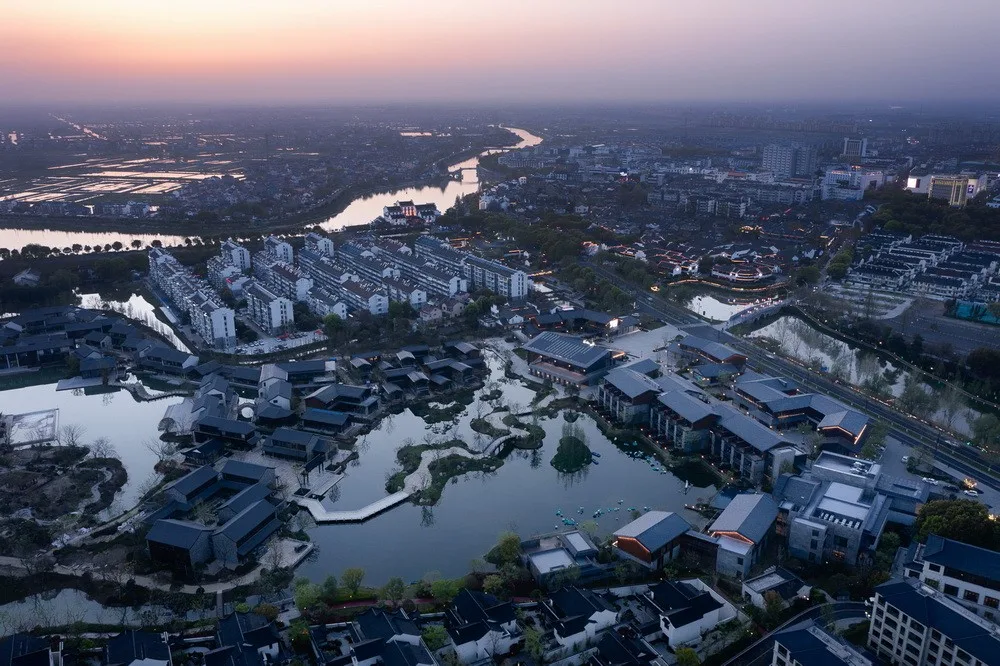
Overall bird’s-eye view of the project
01 Different and Appropriate Texture Scales
Before beginning design, we carefully analyzed the texture, scale, and spatial composition of the surrounding clusters, categorizing their influences into traditional and modern aspects.
The traditional influence mainly pertains to Gaochun Old Street on the west side of the site, which stretches approximately 800 meters in a linear “one”-shaped layout. The buildings are predominantly 1-2 story traditional residences, with a street width-to-building height ratio between 1:1 and 1:2. This creates a cohesive, stable, and inviting scale that is not overwhelming.
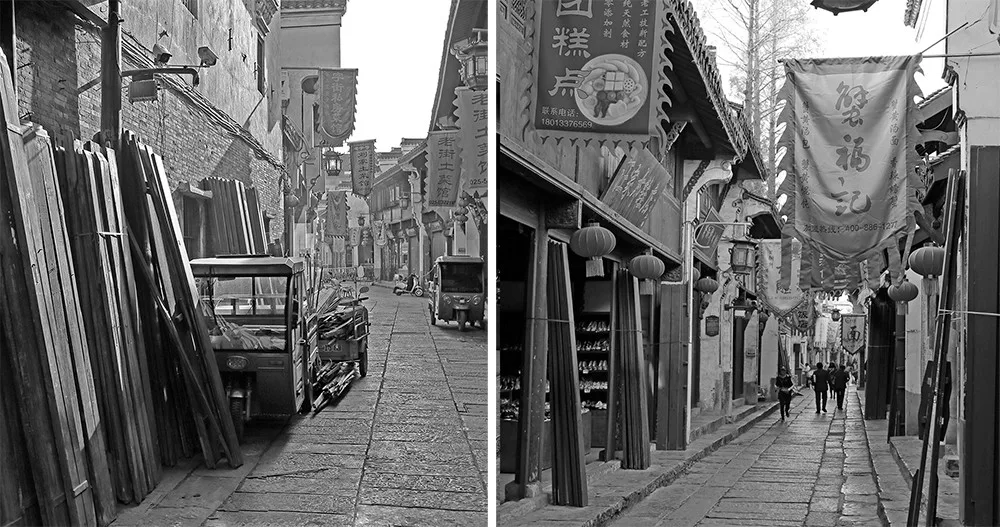
△ Realistic view of Gaochun Old Street
The modern influence arises from the expanded commercial districts surrounding the old street. These include Huizhou-style antique residences and brick buildings inspired by the Republican era. New constructions here are typically 2-3 stories tall, offering richer, more open spatial levels and larger scales than traditional homes. To the east, the site abuts a new residential cluster with a typical north-south linear texture, while the commercial streets supporting this community predominantly feature new Chinese-style buildings characterized by black tiles and white walls.
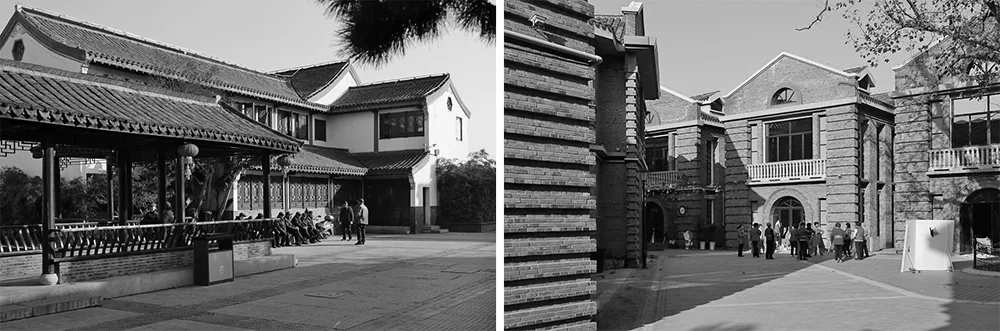
△ Huizhou-style antique residence (left), Republican-style brick building (right)
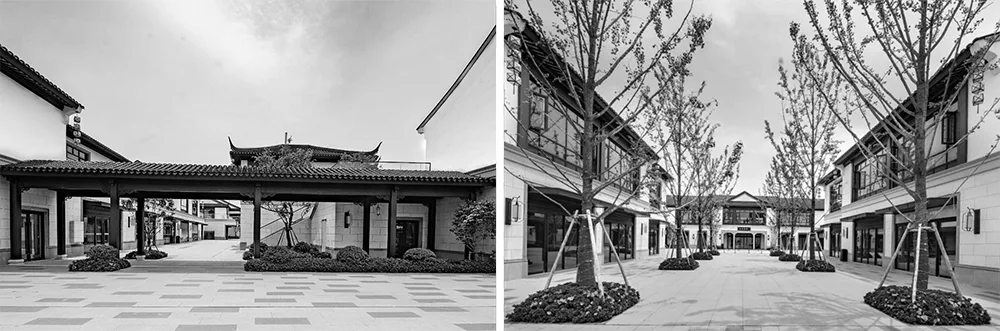
△ Urban community supporting commercial street
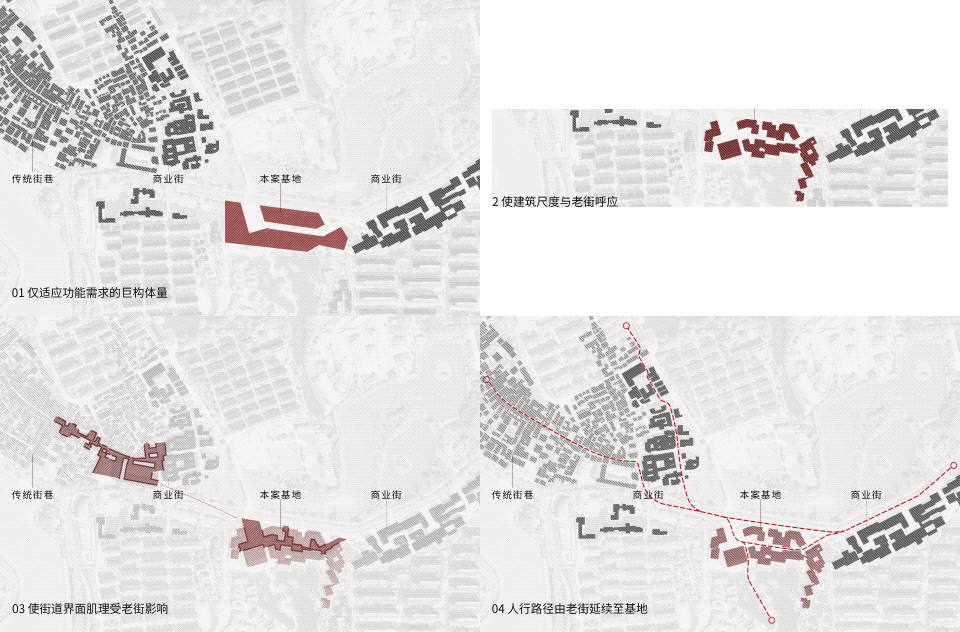
△ Texture generation map
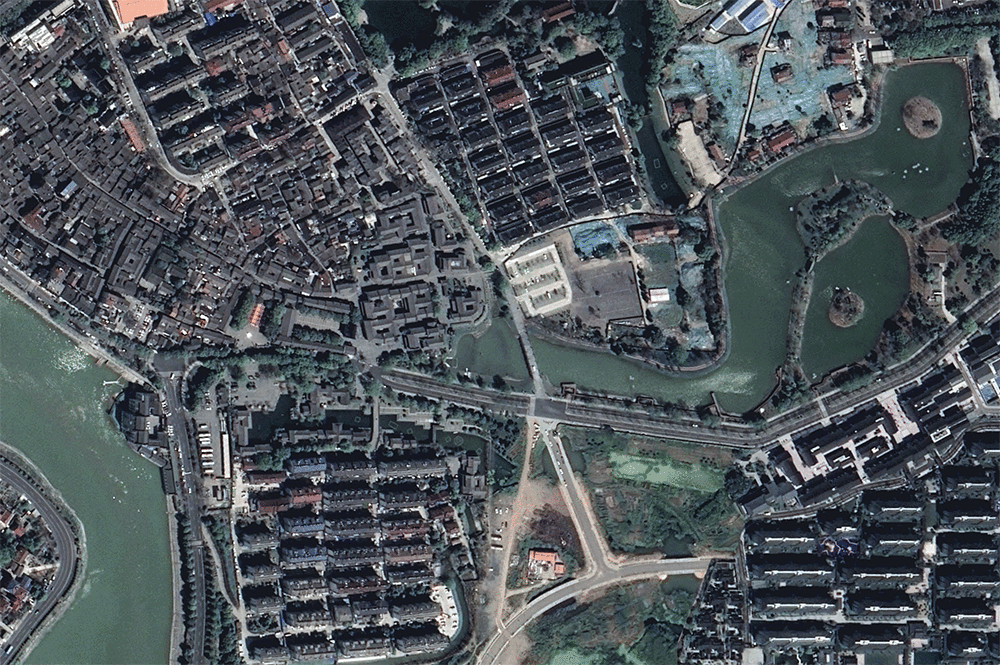
△ Comparison of site texture before and after
Scale is perceived differently based on environmental context, human reference, and building materials. It often highlights the contrasts between “traditional” and “modern” and is crucial to address in this design. Through typological analysis of neighboring clusters, we distilled two key design principles: first, to harmonize with traditional streets and alleys in texture scale and interface; second, to fulfill the spatial needs of contemporary tourists within.
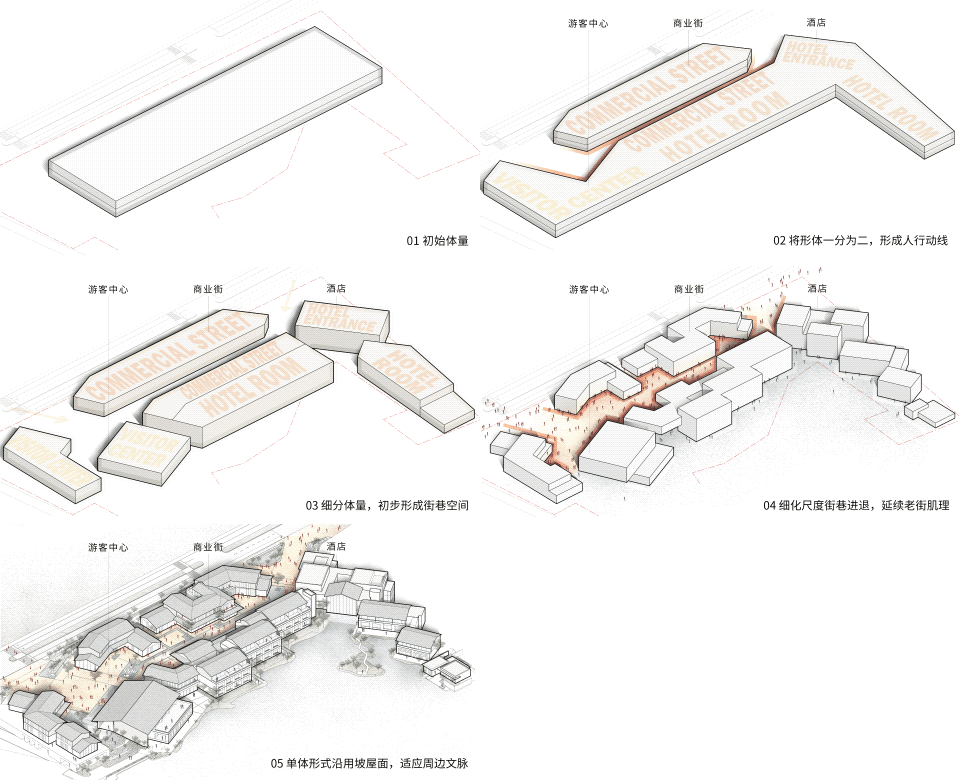
△ Street and lane space generation map
Given that the resort hotel and tourist center also serve urban functions—such as the entrance to the scenic area and commercial facilities—the design emphasizes openness and interactivity, offering leisure and entertainment spaces for local residents.
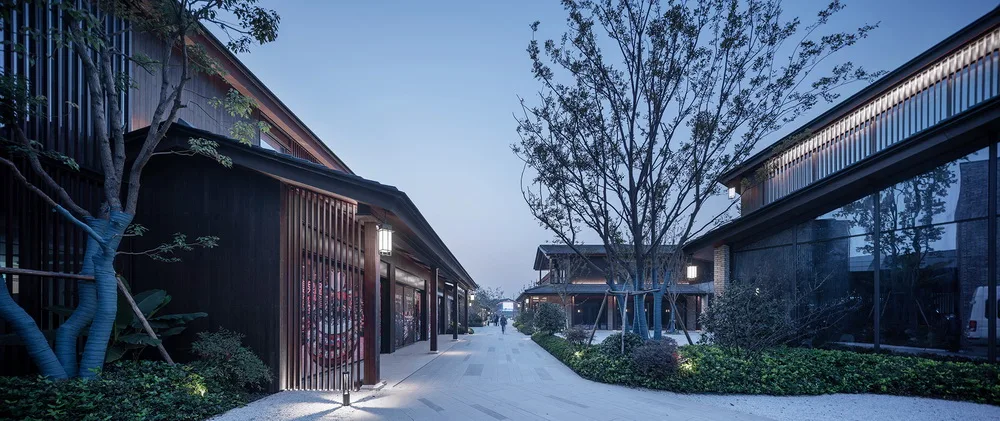
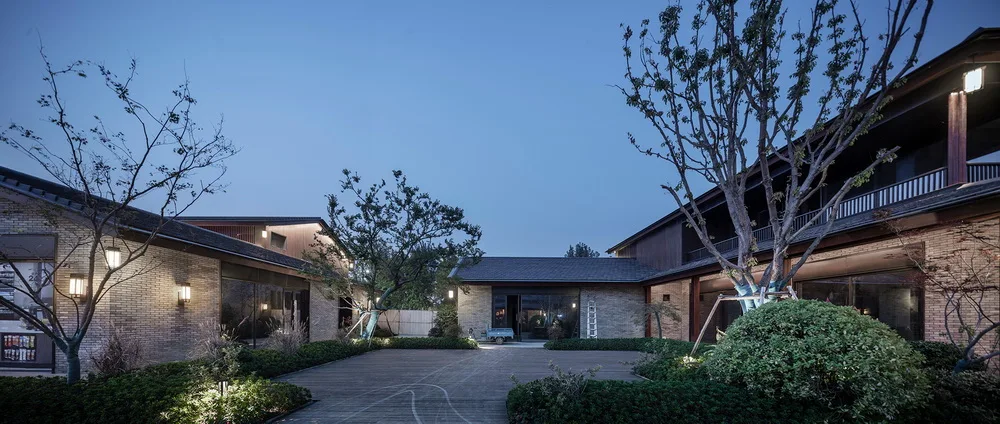
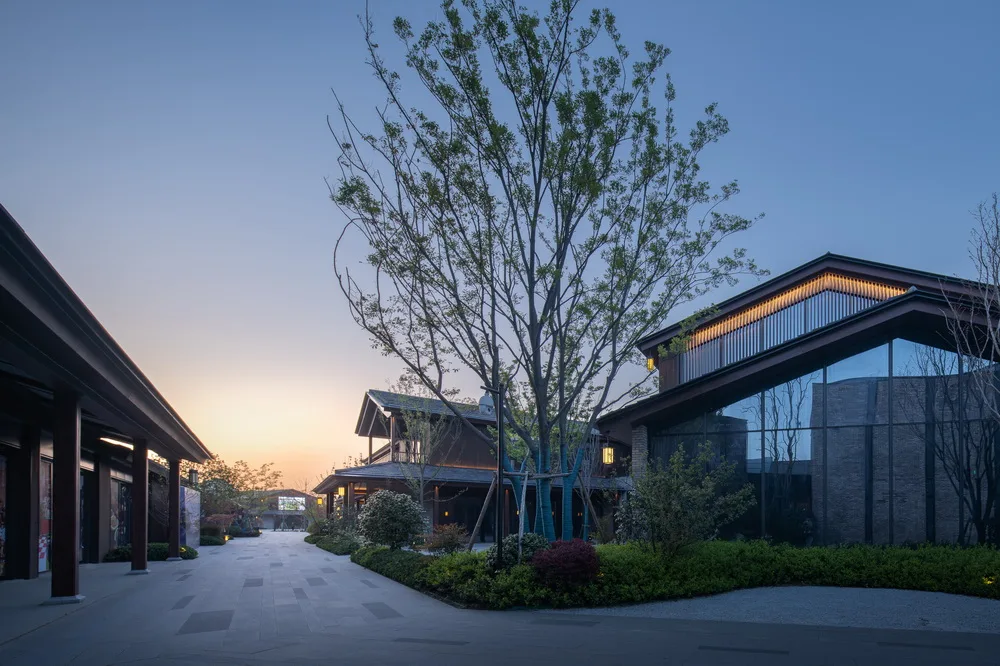
The internal and external qualities are expressed through a low-density street environment, with a scale balanced between traditional and modern. This approach resonates with the old street while creating a coherent, approachable urban interface. The new streets and alleys, with street width-to-building height ratios ranging from 1:1 to 2:1, form cohesive and intimate spaces that maintain a clear relationship between building facades and the overall structure.
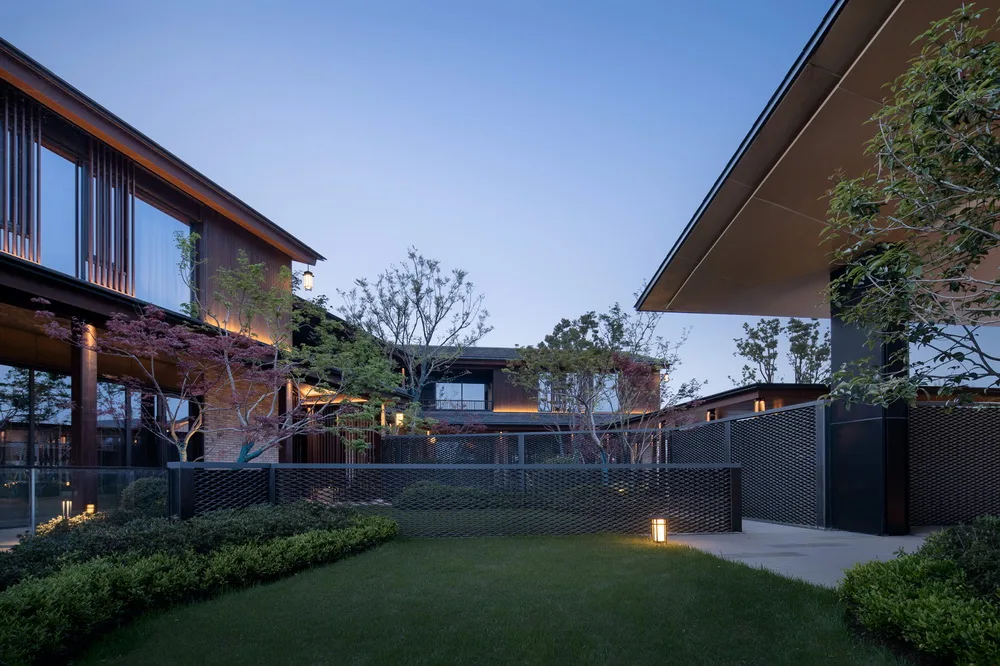
02 Compatible and Appropriate Formal Scale
The formal scale of the new buildings integrates traditional architectural characteristics while embracing modern abstract interpretations. This balance serves the functional needs of new construction and mediates stylistic differences between the old, image-driven buildings and the new, form-driven structures in the area.
Visitor Center
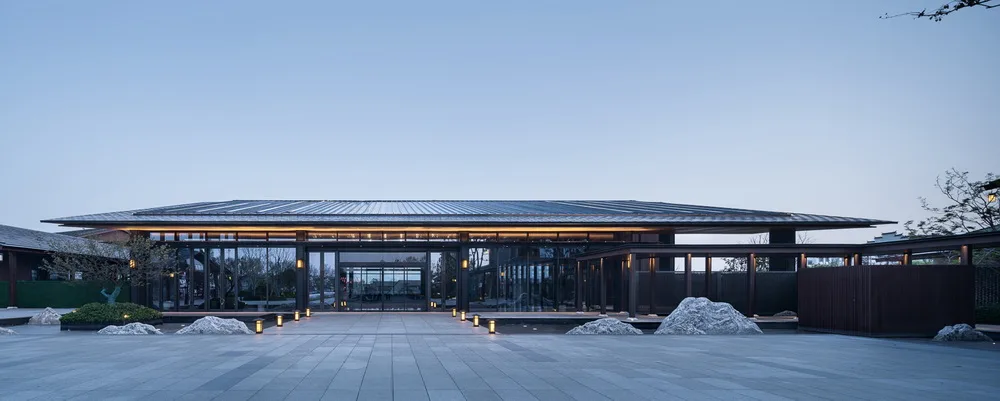
The tourist center, located on the west side of the street facing the entrance plaza, is the largest building in the complex. Serving as a vital spatial node linking old and new streets, it draws inspiration from Jiangnan architectural elements such as sloping roofs, eaves corridors, and door panels.
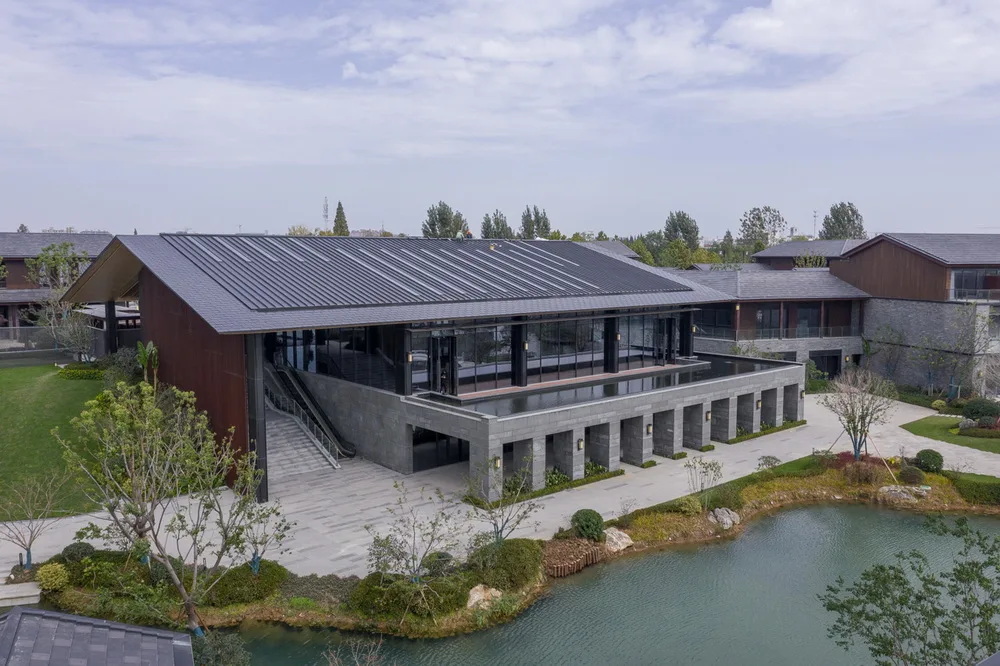
The center accommodates ticketing, entrance control, visitor flow management, dining reception, and souvenir retail. A rectangular volume housing these functions sits beneath a large sloping roof, guiding visitors through architectural cues.
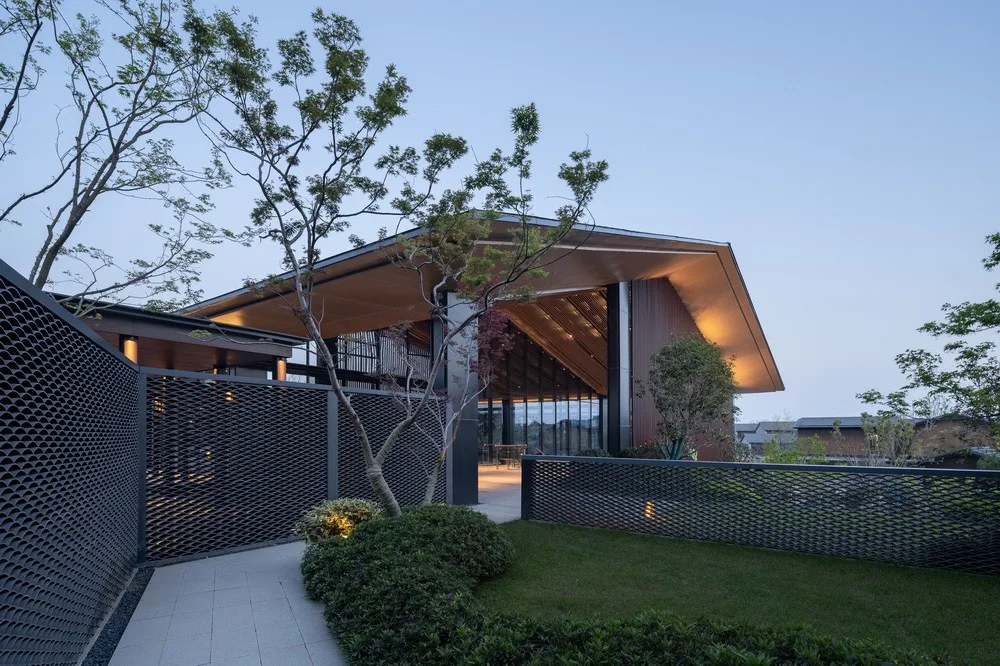
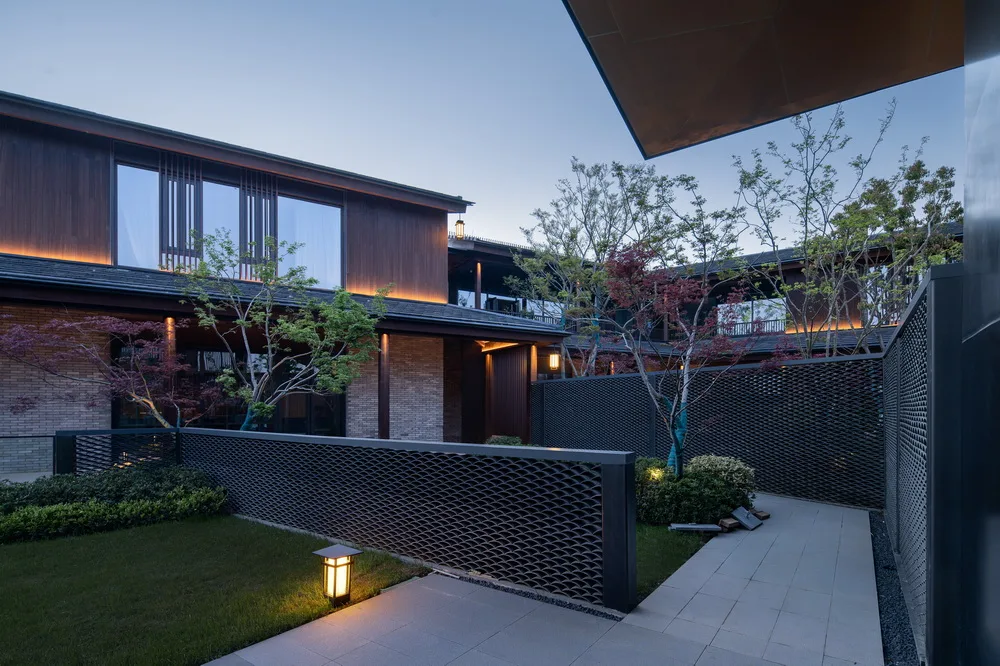
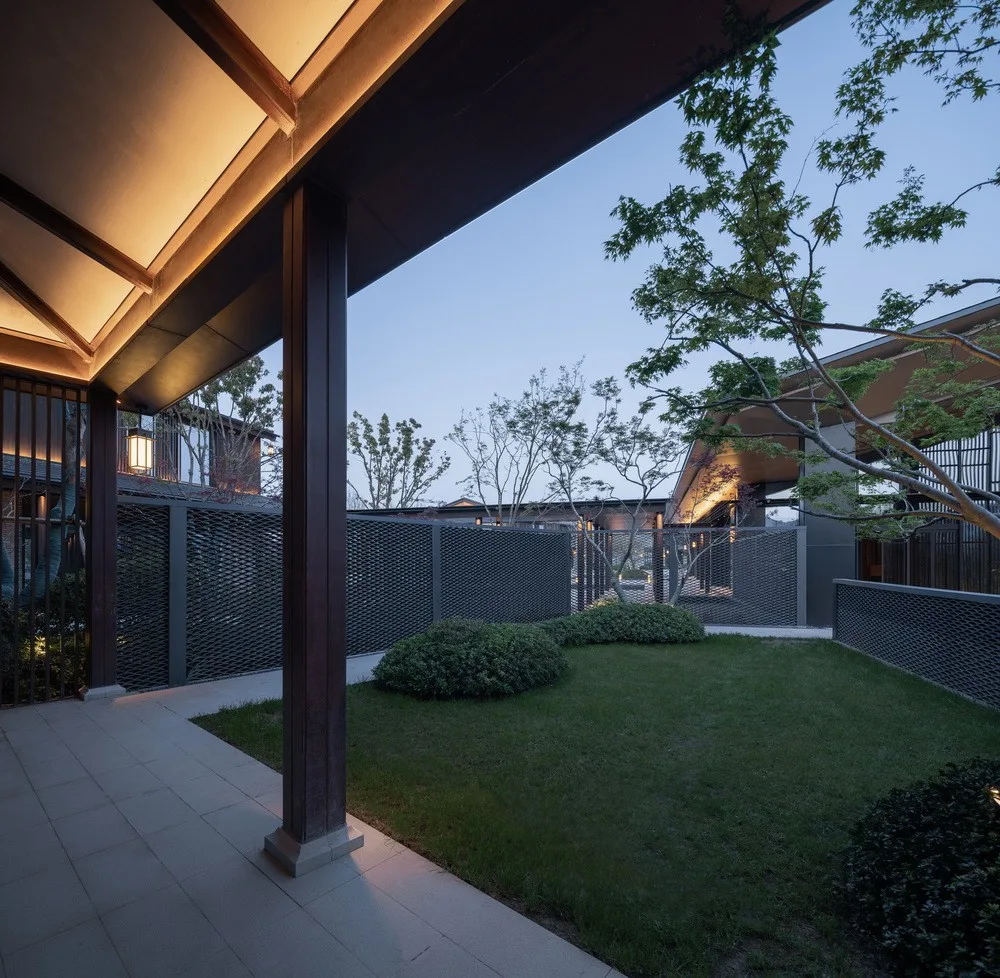
The first floor rests on a sturdy stone base, while the second floor is designed to be transparent and open with continuous fully operable glass doors and windows, reminiscent of Jiangnan partition windows. The water surface extending from the second floor serves as both a viewing platform and a colonnade over the lower-level commercial area, creating a sheltered space for rest and leisure.
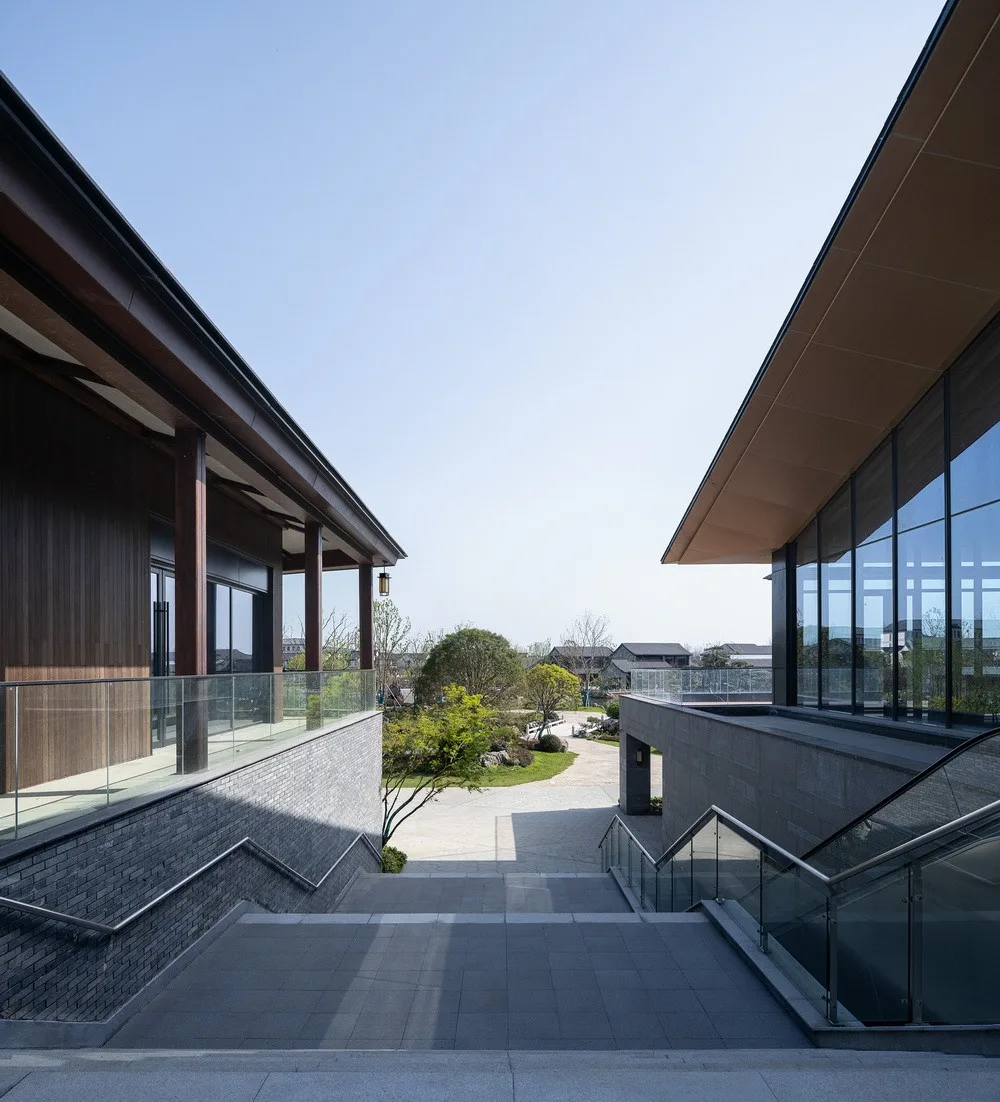
A large partition fan woven from imitation wood-grain metal wire is positioned on the building’s west side, creating a dynamic interface between transparency and opacity. Together with the gray space beneath the expansive roof, it forms a traffic and activity area similar to a traditional eaves corridor.
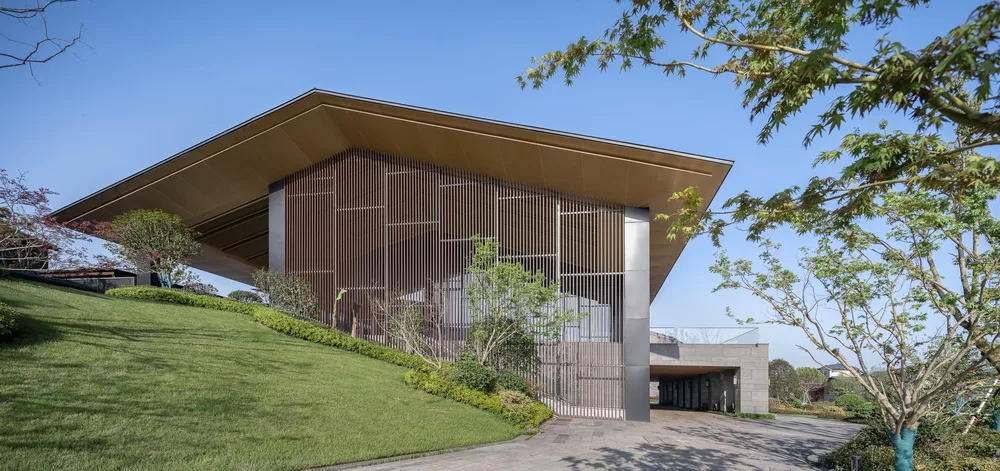
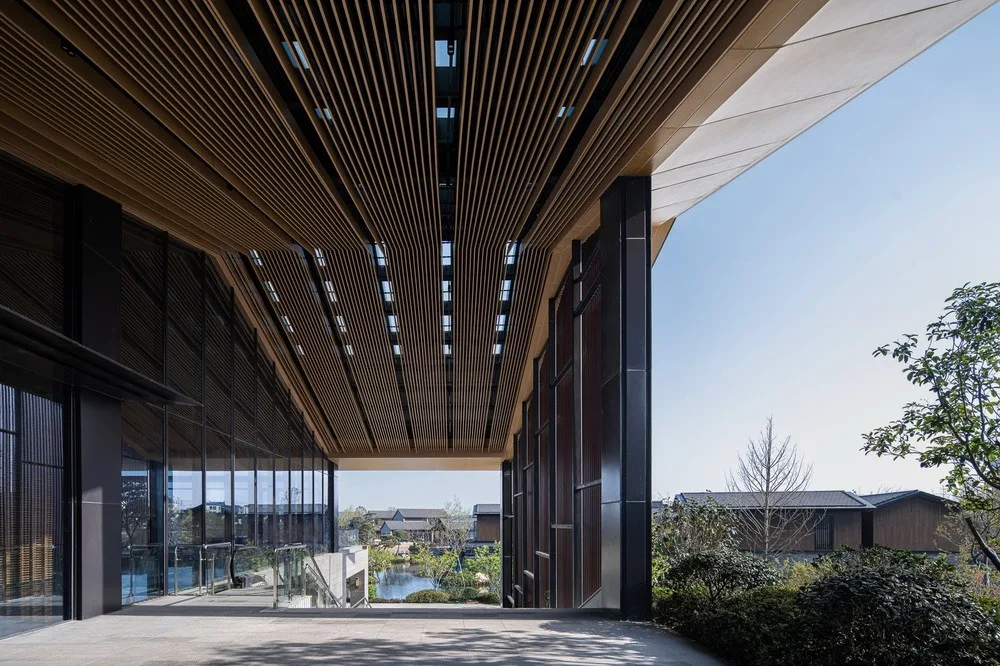
Gucheng Bay Kaiyuan Resort Hotel
The hotel entrance is discreetly positioned on the east side of the street, connected by a pavilion that ensures an immersive, tranquil vacation experience. The design minimizes external disturbances, dedicating the surrounding natural water landscapes entirely to guest room areas.
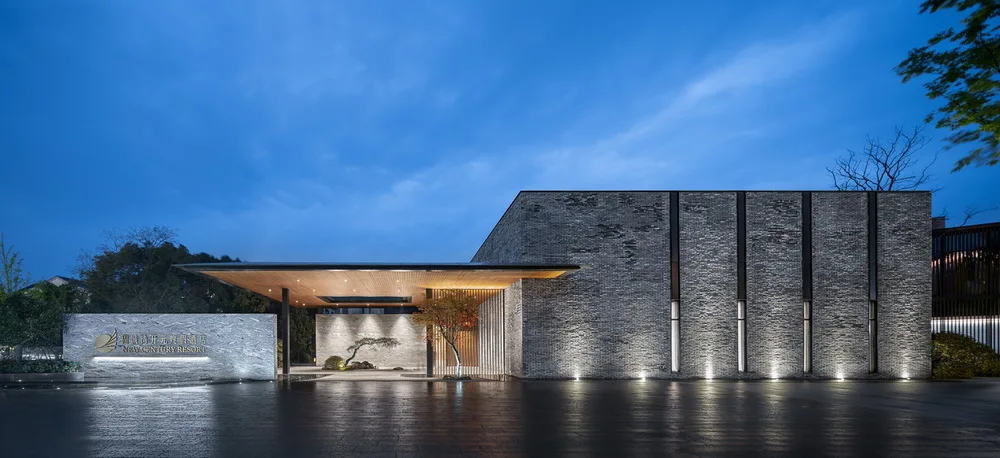
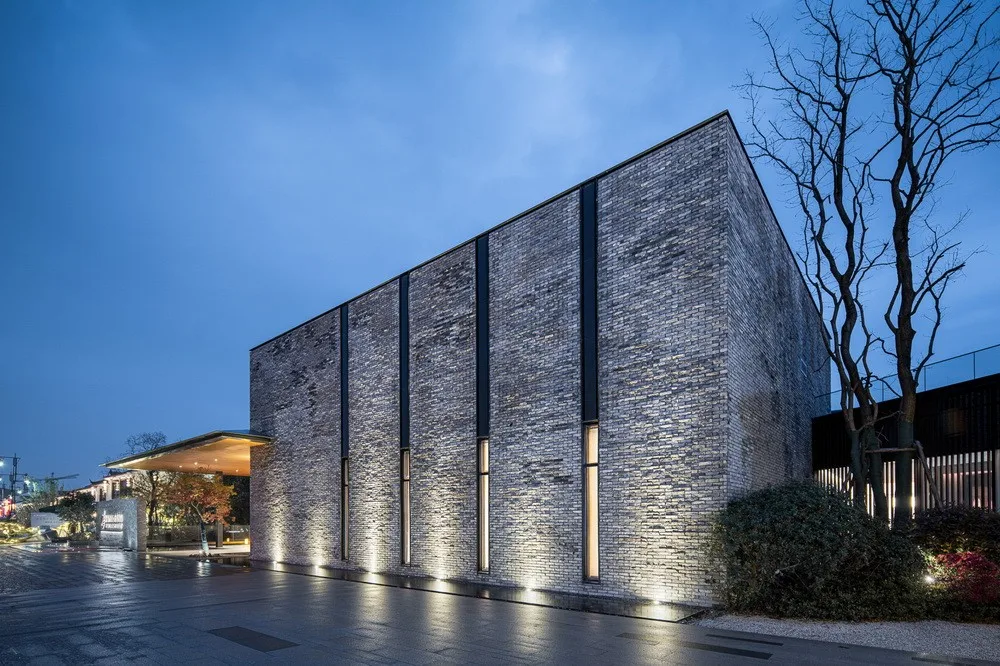
The hotel comprises 55 guest rooms, three specialty restaurants, three meeting rooms, two fitness centers, a bar, a book bar, and a children’s activity room. The layout divides the building into public areas, guest rooms, and logistics zones based on function.
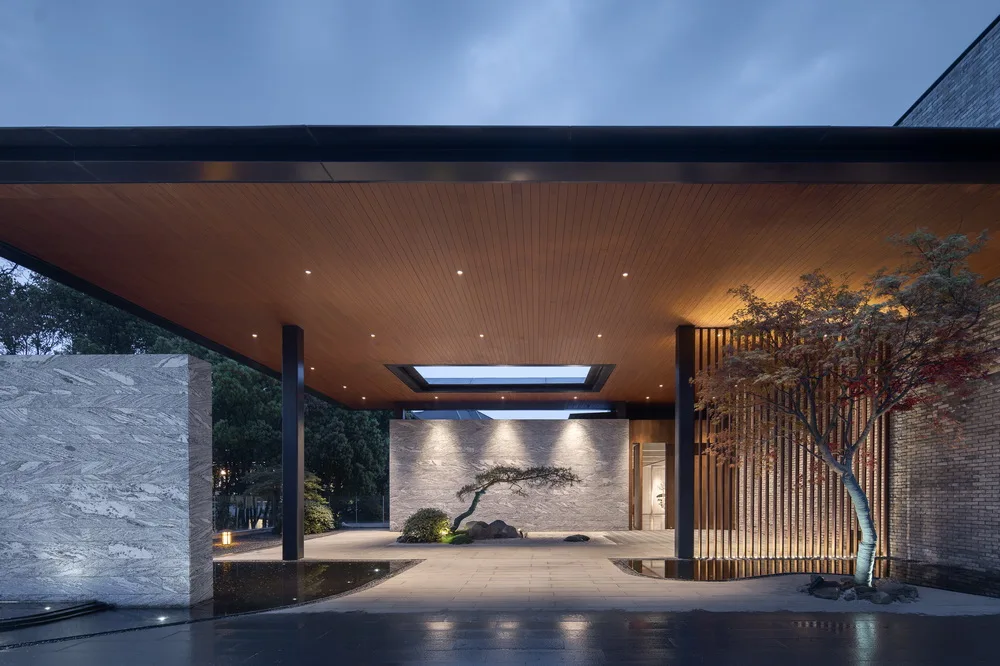
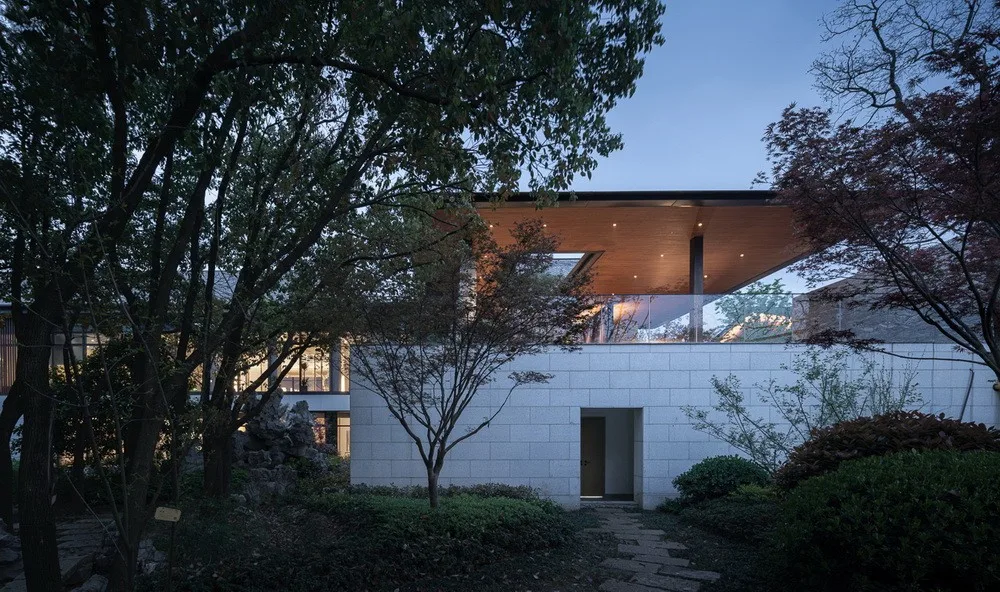
The public areas are arranged in larger, stepped-back rectangular volumes to meet functional requirements. Guest rooms maintain proportions and scales similar to traditional residential settlements, consisting mainly of low-rise buildings aligned along the water.
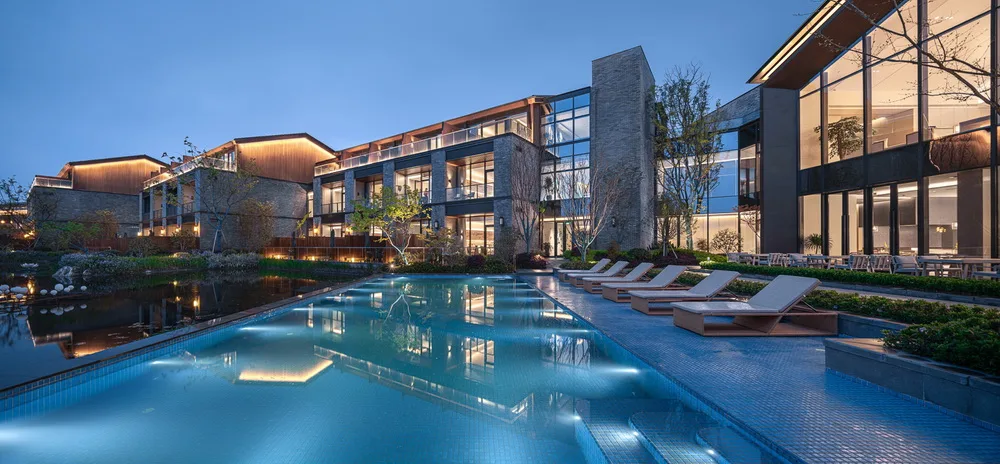
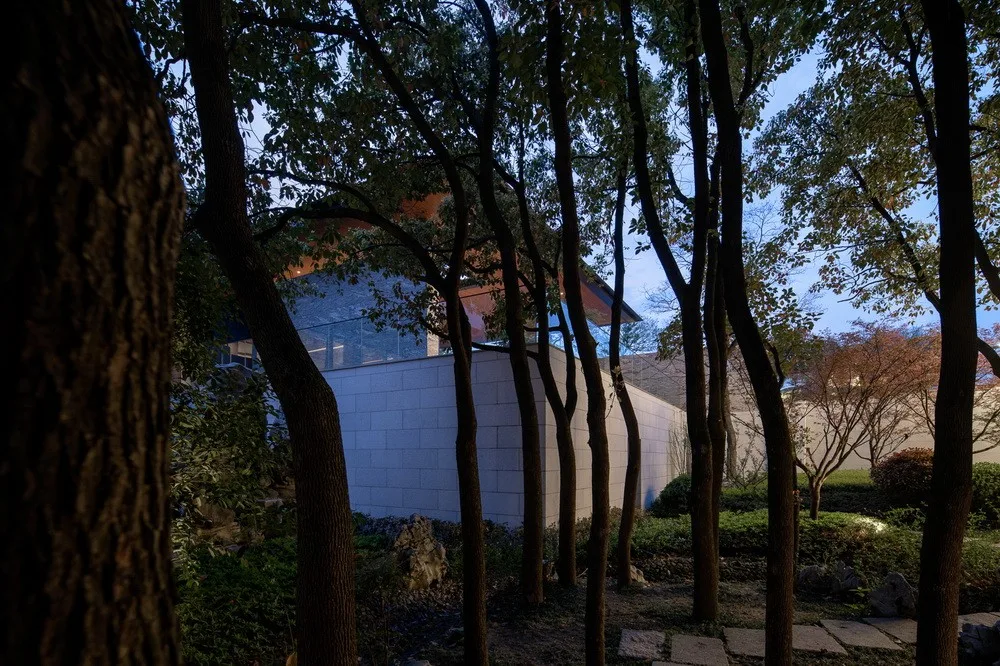
Vertically, the design leverages the terrain by sinking the restaurant floor to create a courtyard, while the second floor lobby connects directly to the main entrance. This sunken courtyard is enriched with Jiangnan garden elements such as pavilions, rocks, and hills, providing ample daylight, ventilation, and a scenic environment for the restaurant.
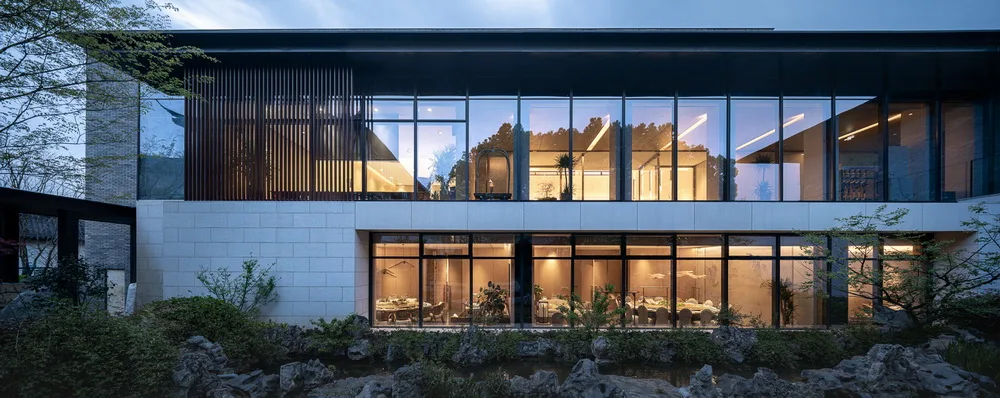
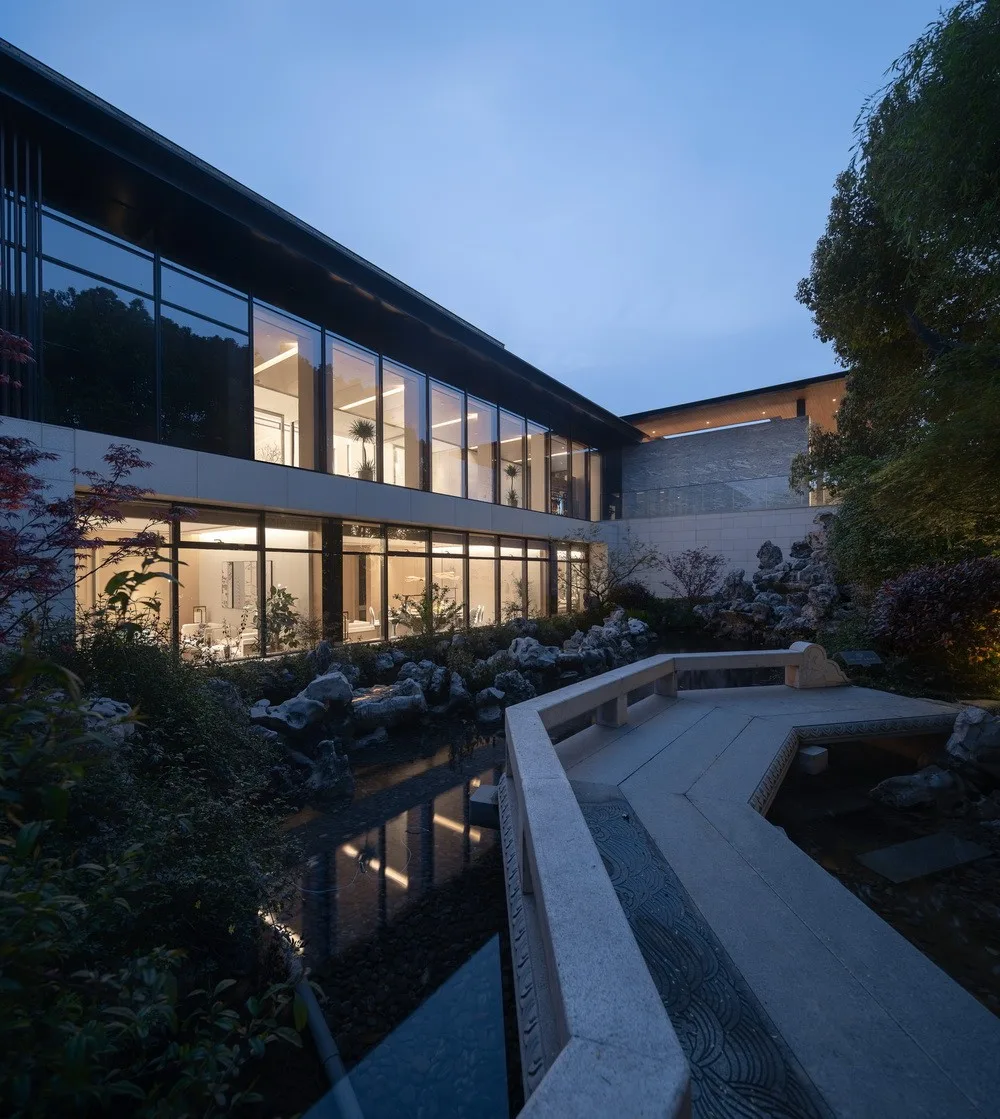
The lobby is a central focal point, positioned along the landscape axis. Its slightly elevated location offers expansive views and naturally emphasizes the axis featuring the lake, arch bridge, and pavilion.
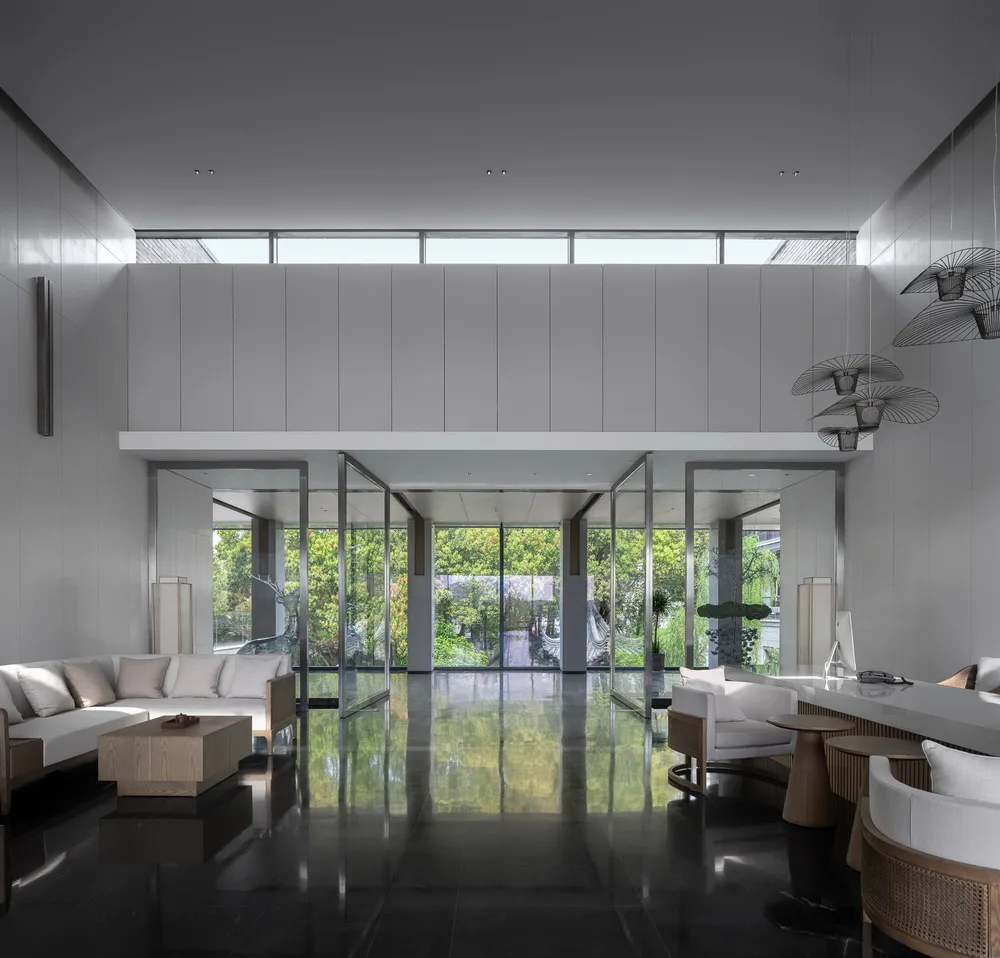
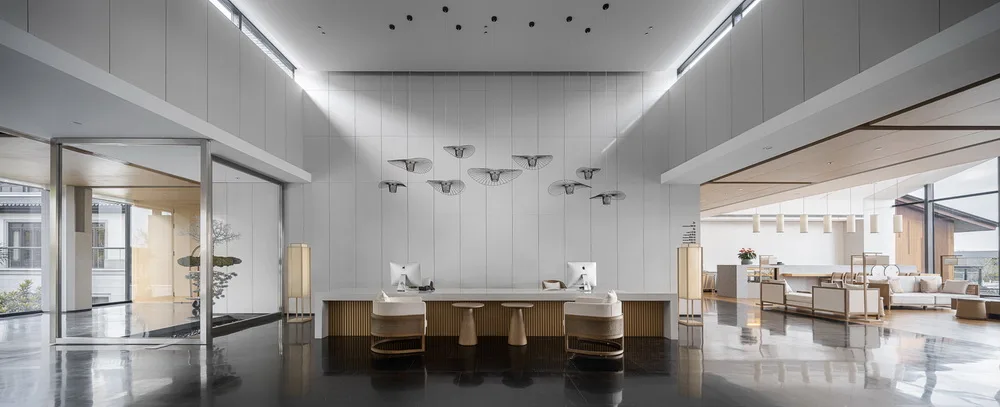
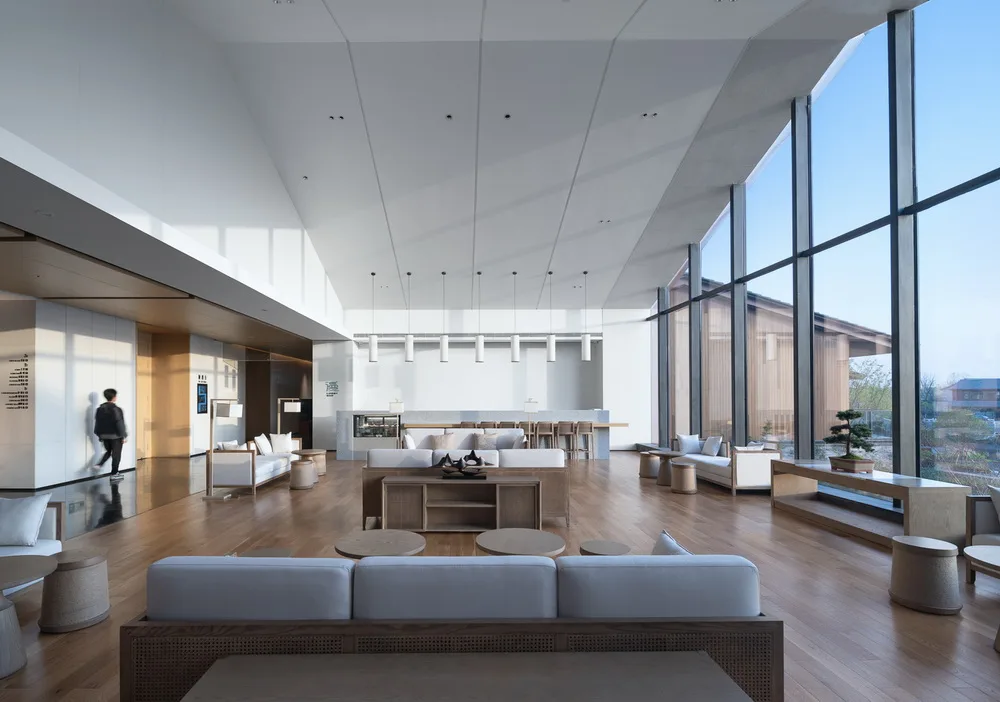
Horizontally, guest rooms are arranged in a staggered pattern, connected by glass corridors and bridges to maximize scenic views, while ensuring accessibility and privacy.
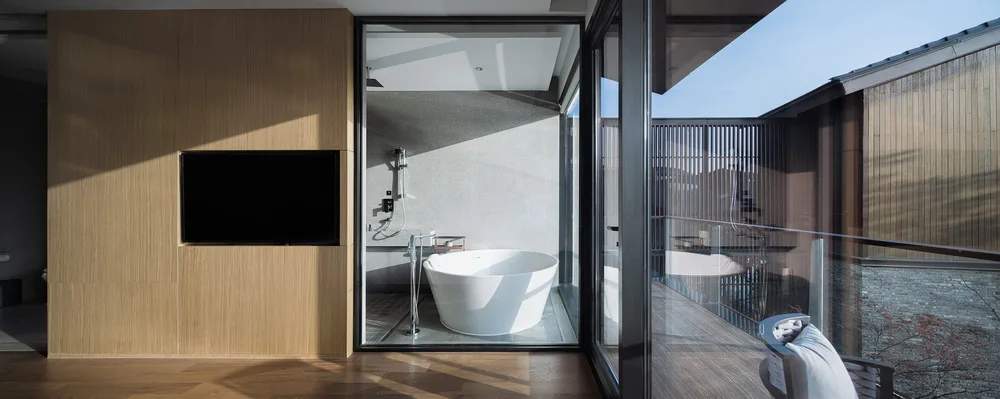
The interwoven guest room volumes create communal spaces such as courtyards and outdoor terraces.
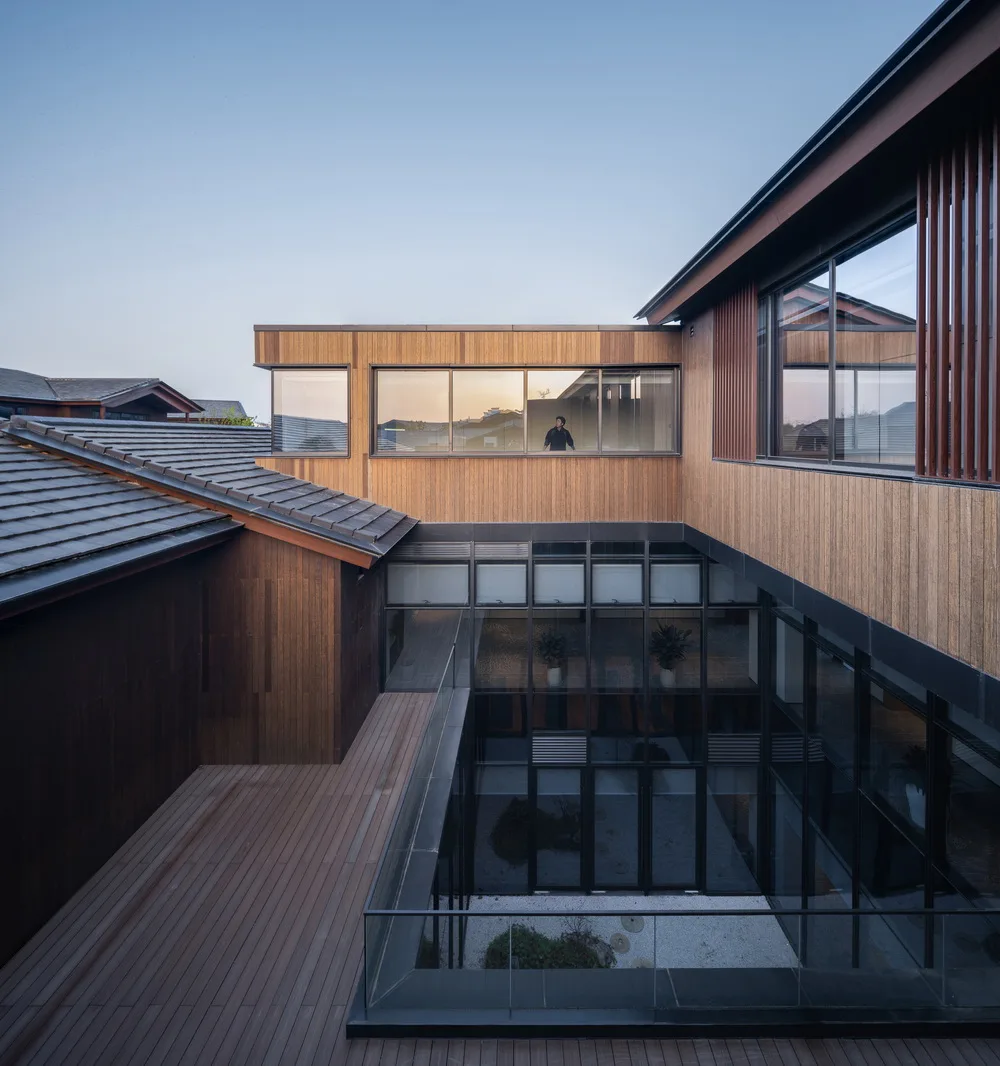
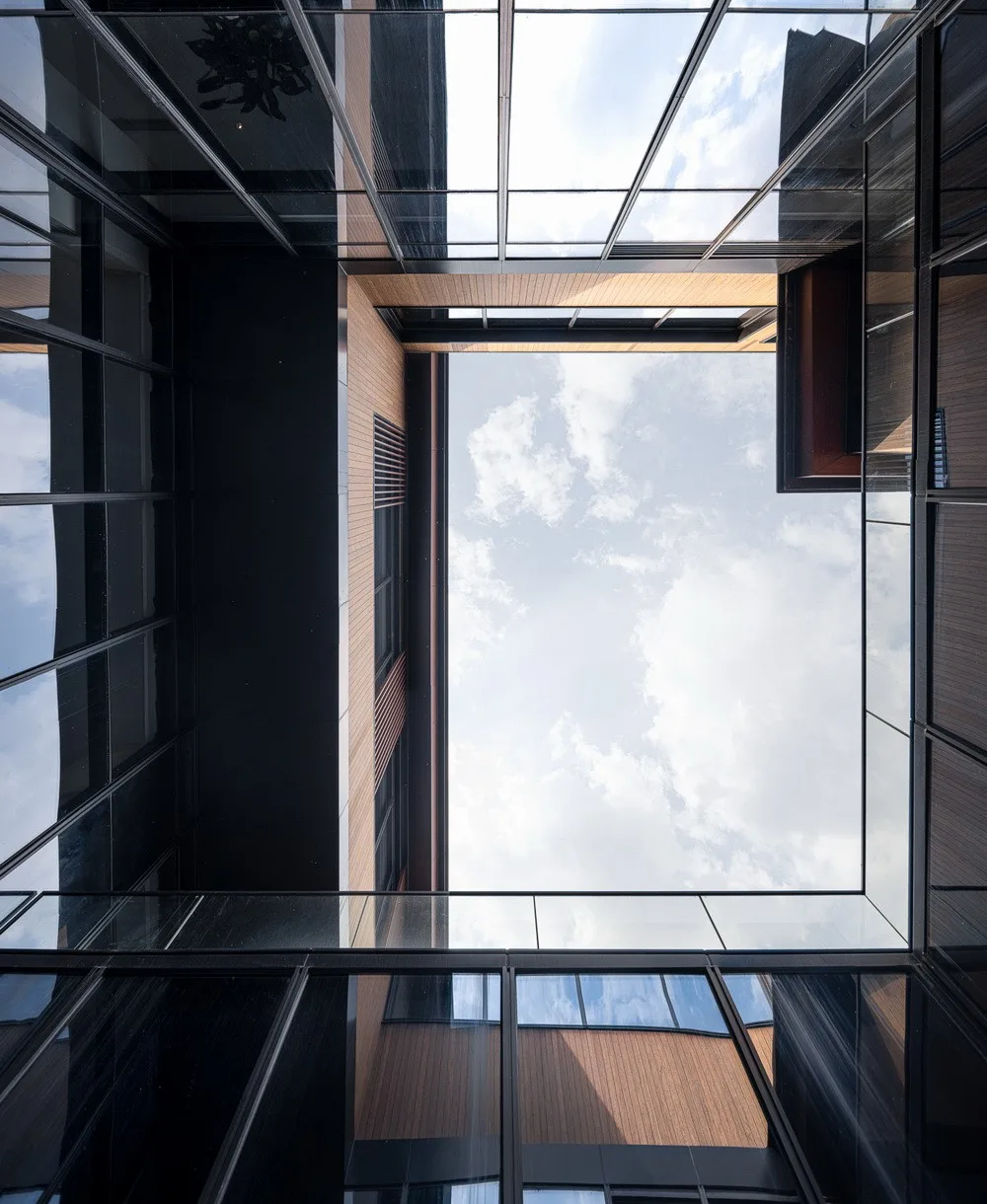
03 Form and Materials with Appropriate Texture
The design strategy of “suitable texture” aims to harmonize the new buildings with local architectural character and atmosphere, creating integration and resonance.
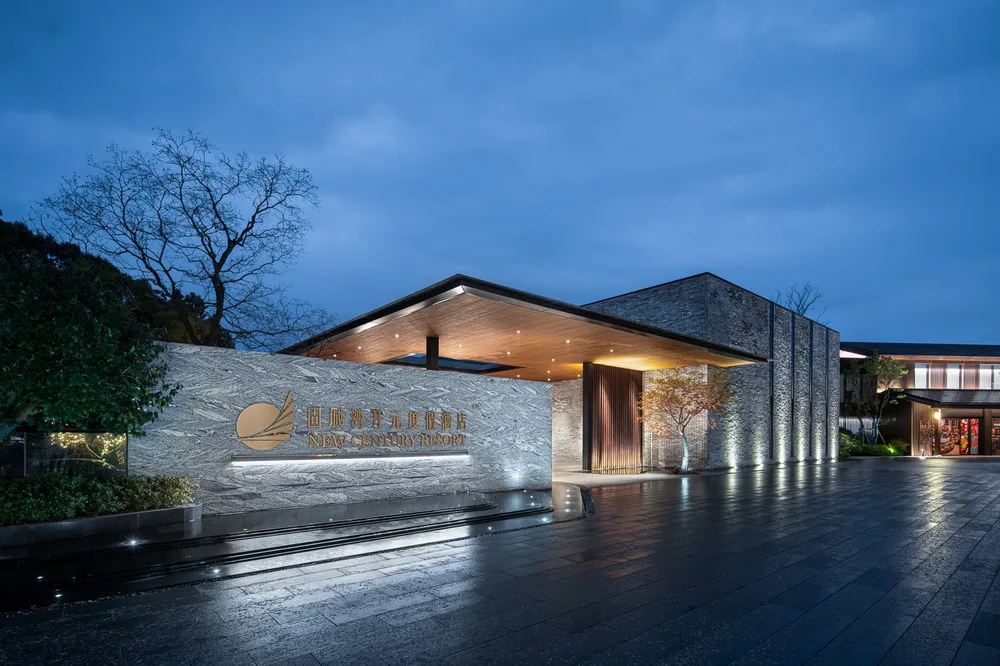
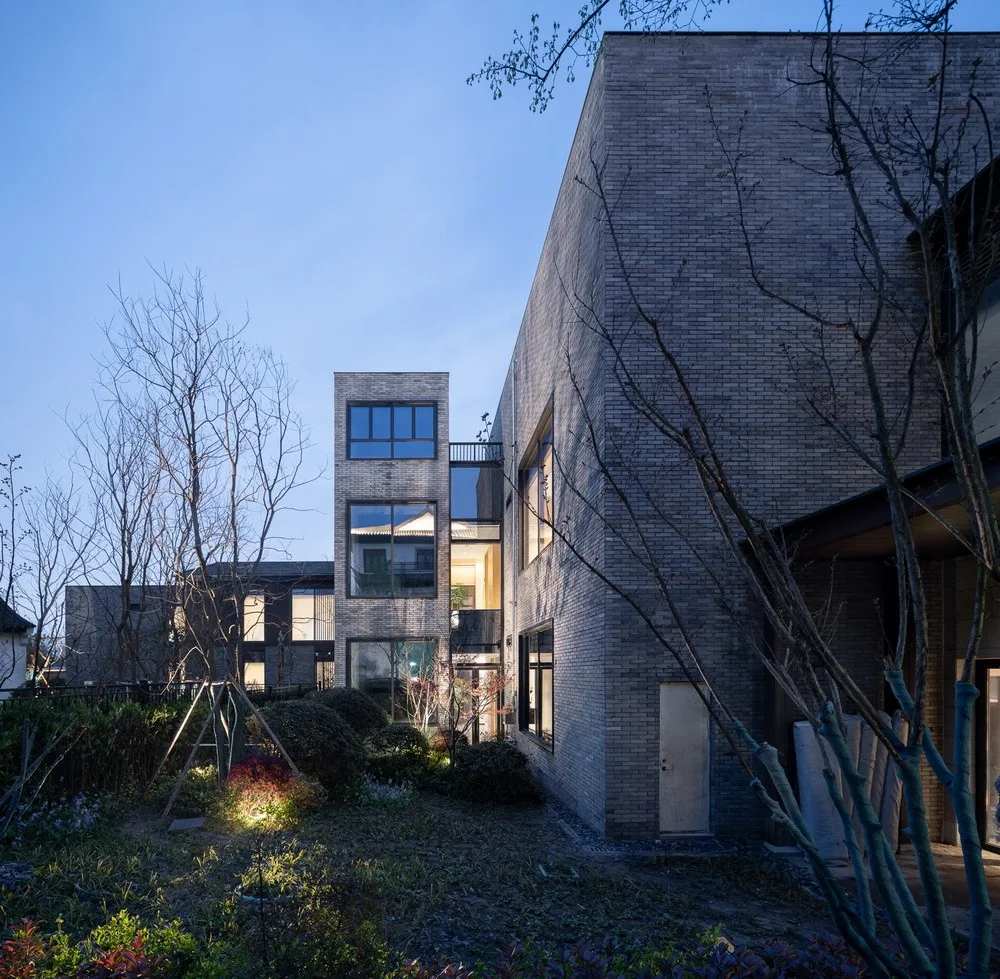
At the hotel entrance, gray brick walls embedded within cantilevered panels define a pure, sharp directional space. This abstract formal language expresses both ancient charm and modernity while allowing spatial openness.
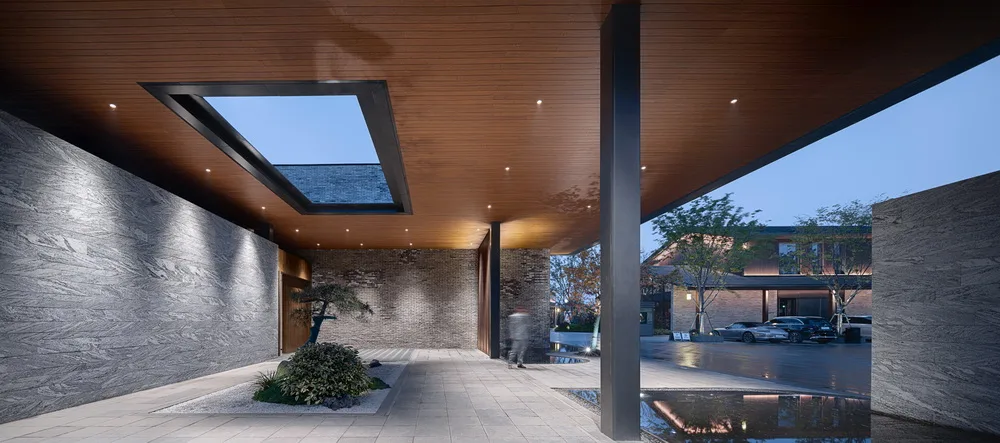
The green bricks used for the walls were sourced from the site, combining reused old bricks with glass openings to form a solid, authentic facade. This approach expresses the weighty rectangular volume while conveying a subtle, stable image. Compared to traditional sloping roofs, flat roofs better suit the form and functional scale requirements of the rectangular public areas.
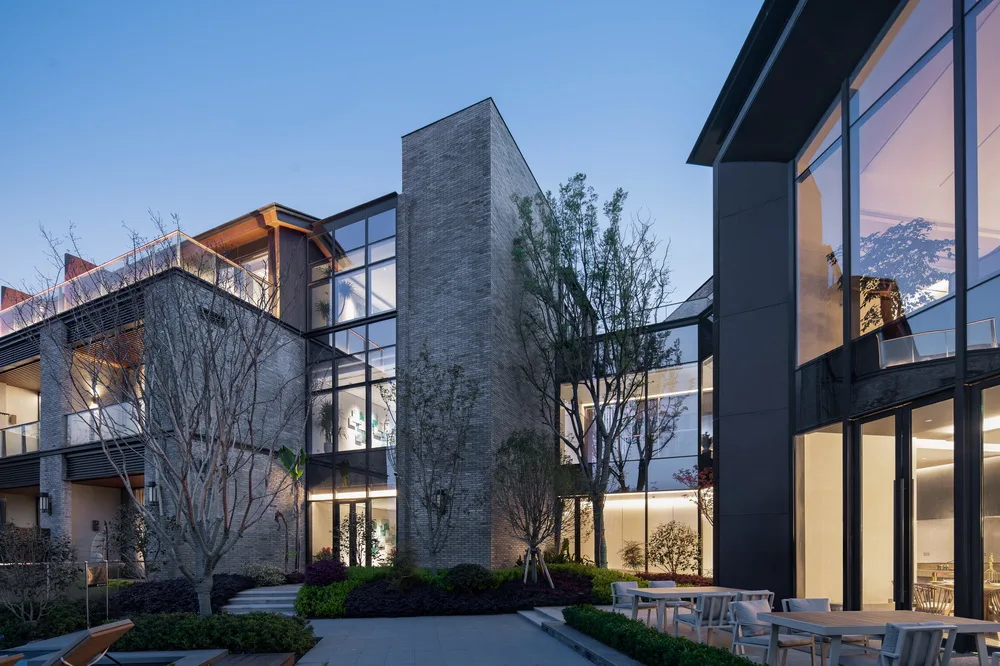
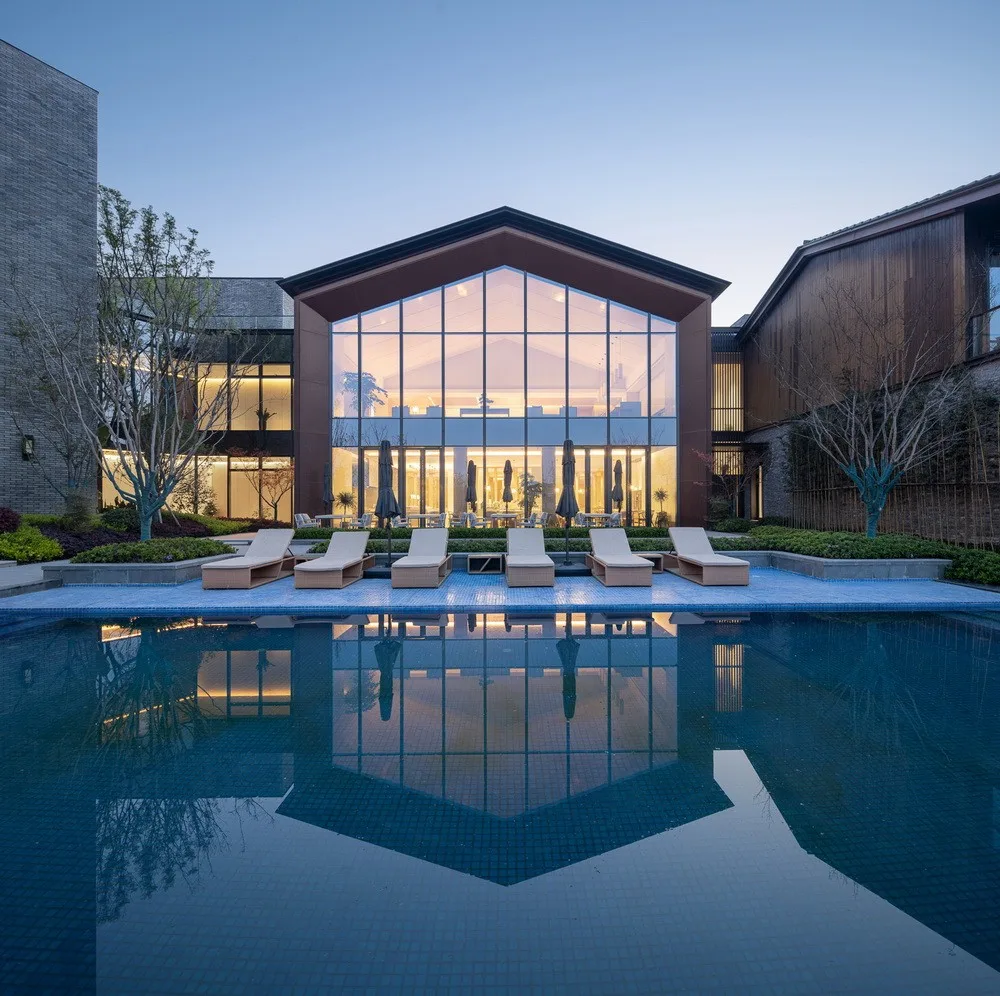
A sloping roof-style glass facade is cleverly embedded on the south side, offering unobstructed views for the restaurant and lobby while maintaining a unified appearance along the lakeside.
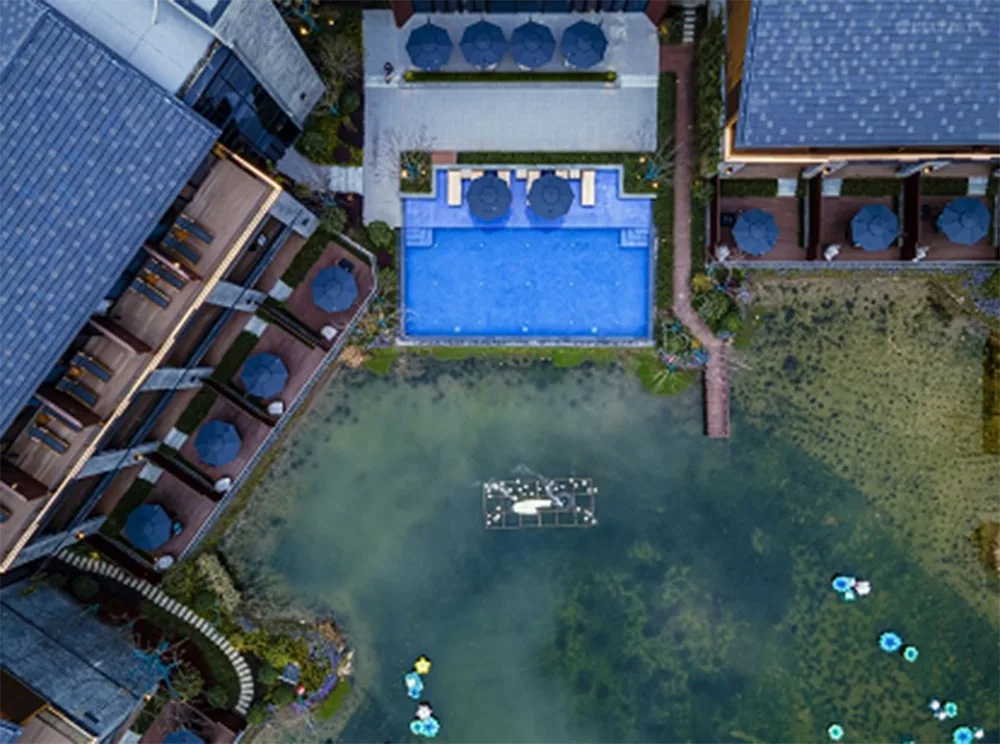
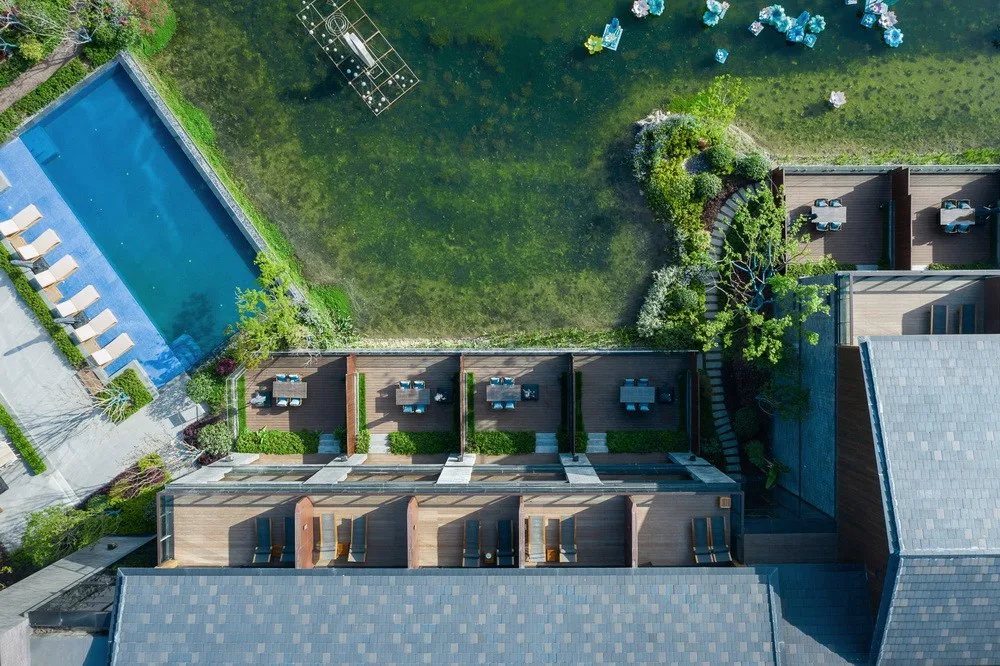
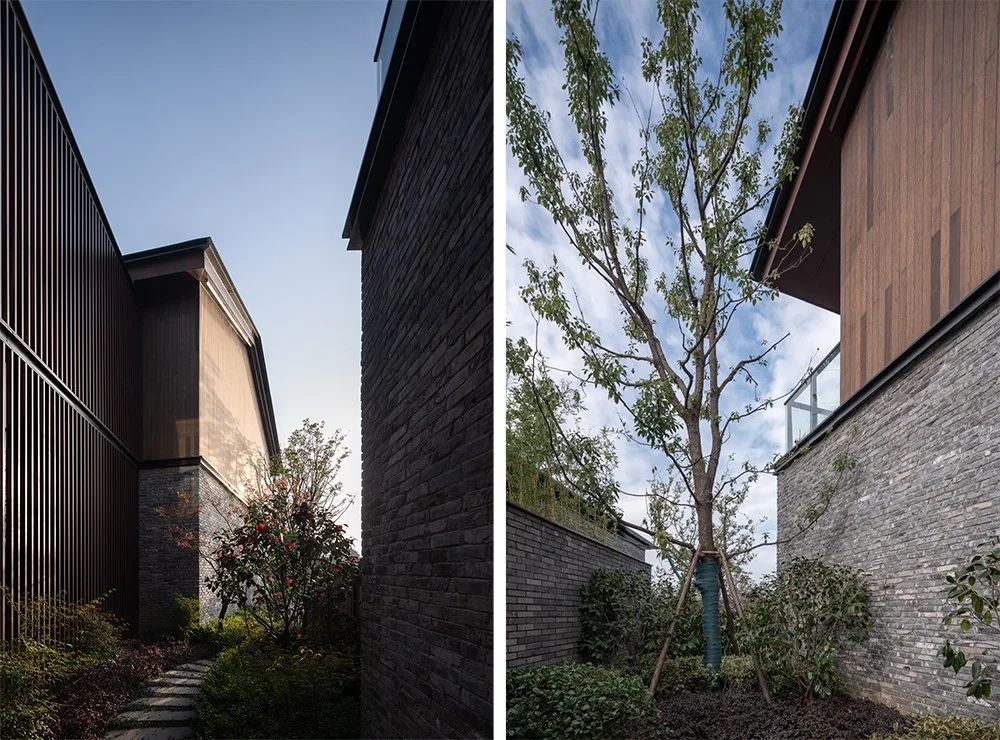
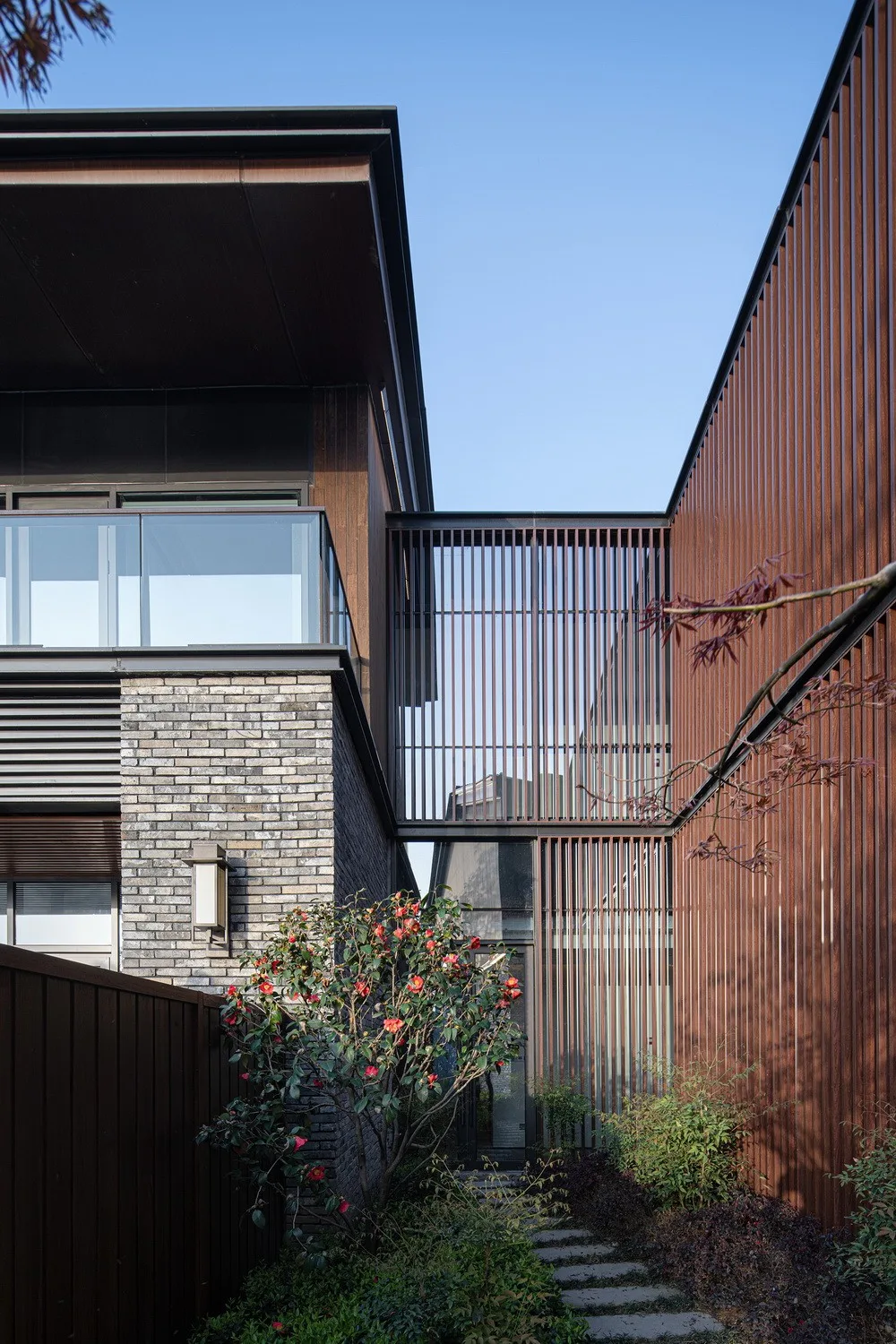
The guest rooms span three floors. The first and second floors feature traditional residential “brick” elements, primarily blue bricks. The third floor is designed as a retreat terrace, forming family suites and easing the visual impact of the three-story structure on the landscape. Bamboo and wooden boards are used extensively to connect and soften the transition to the sloping roof.
Wood-colored grilles and black metal mesh act as subtle visual cues connecting the interior and exterior. They reinterpret the semi-transparent qualities of traditional building doors, enriching spatial depth and interest.
Conclusion
To transform cities from traditional to creative, a shift in mindset is essential, creating conditions where everyone becomes a catalyst for change. The so-called creative atmosphere requires both “soft” and “hard” infrastructure to continuously inspire ideas and innovation.
— Charles Landry, The Creative City: A Toolkit for Urban Innovators
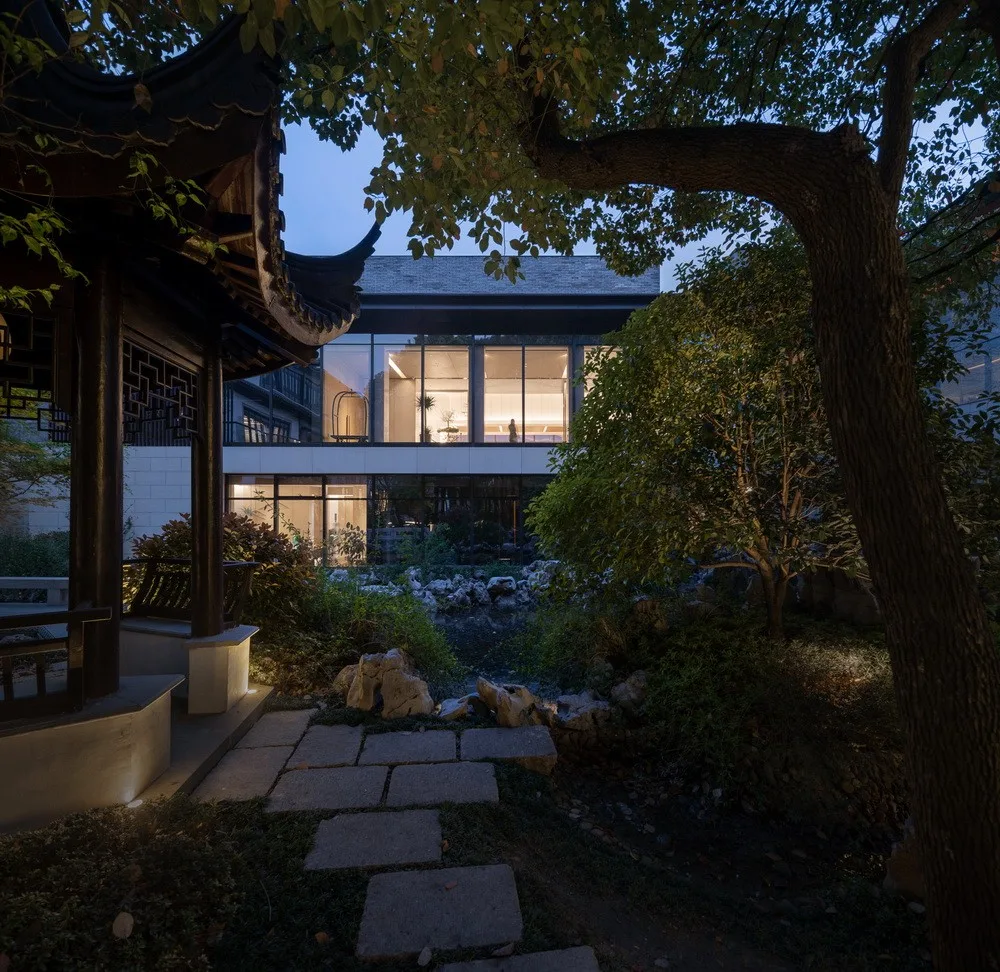
This open, low-density neighborhood lacks the heaviness of traditional architecture but is relaxed, comfortable, and thoughtfully designed. Lightweight modern materials such as glass, metal, brick, and wood convey traditional charm, harmoniously coexisting with the surrounding old buildings. It represents a continuation of repairing and stitching the fragmented old city texture and scale, creating a complete, continuous, and vibrant new pattern for the historic city.
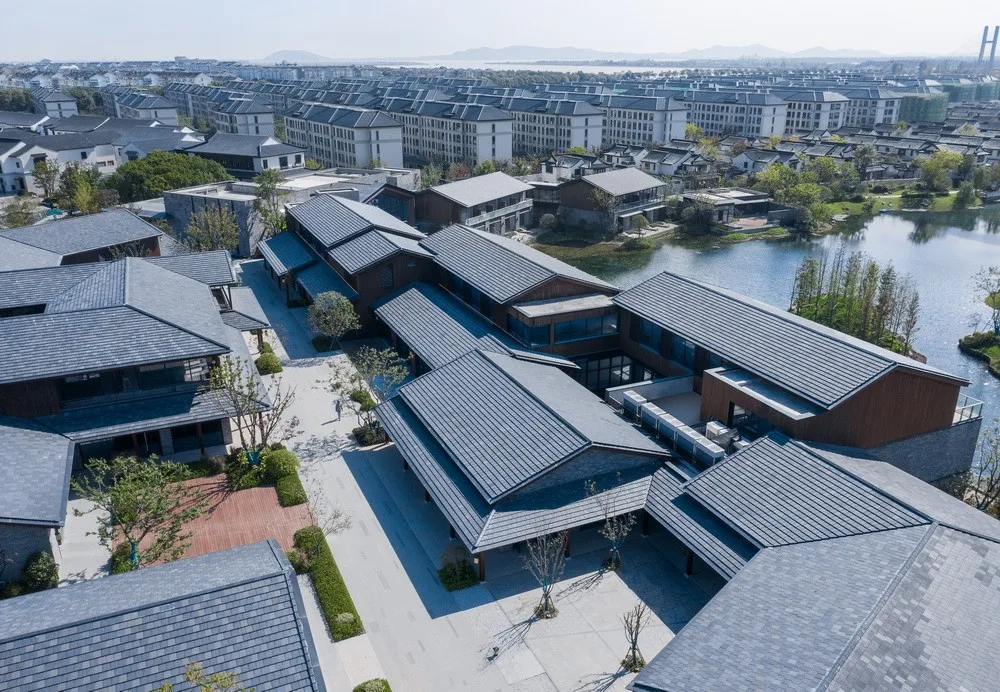
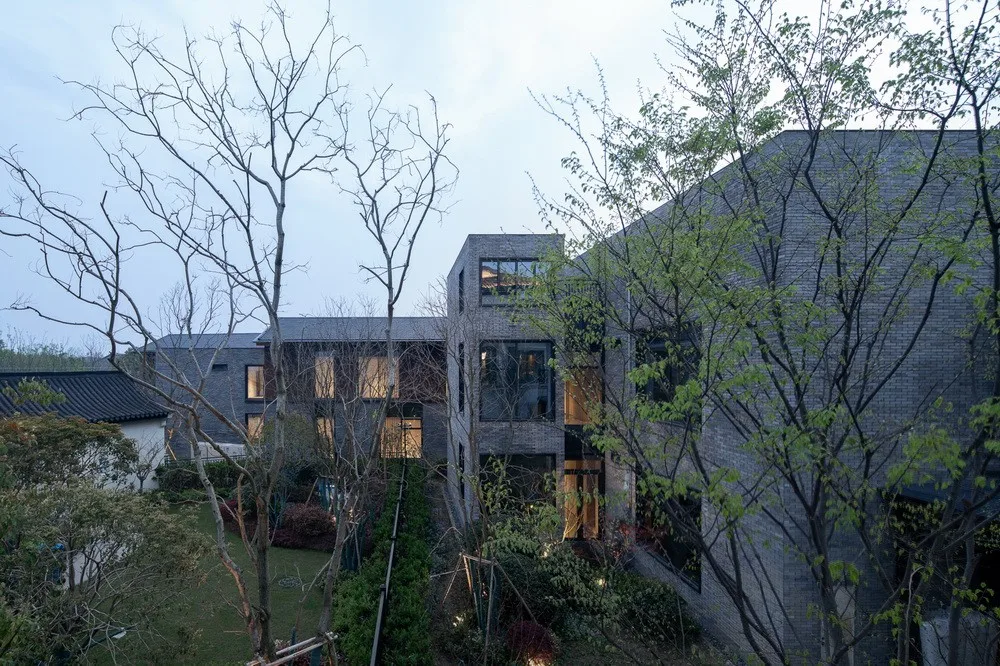
The Gucheng Bay Kaiyuan Resort Hotel is now open to the public. With its subtle and inviting atmosphere, it welcomes travelers from all directions, offering a vacation experience that blends traditional culture, natural scenery, and modern comfort. The tourist center and commercial street have also become communal living rooms for local residents, enriching and integrating urban life into the revitalized old city.
Technical Drawings
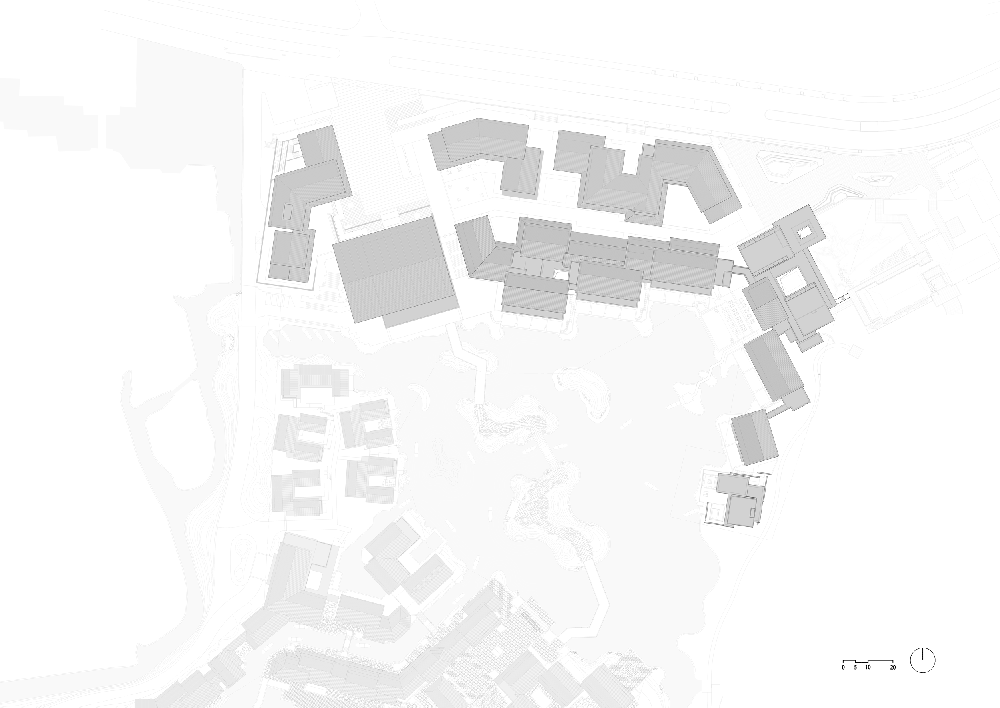
△ Overall Plan
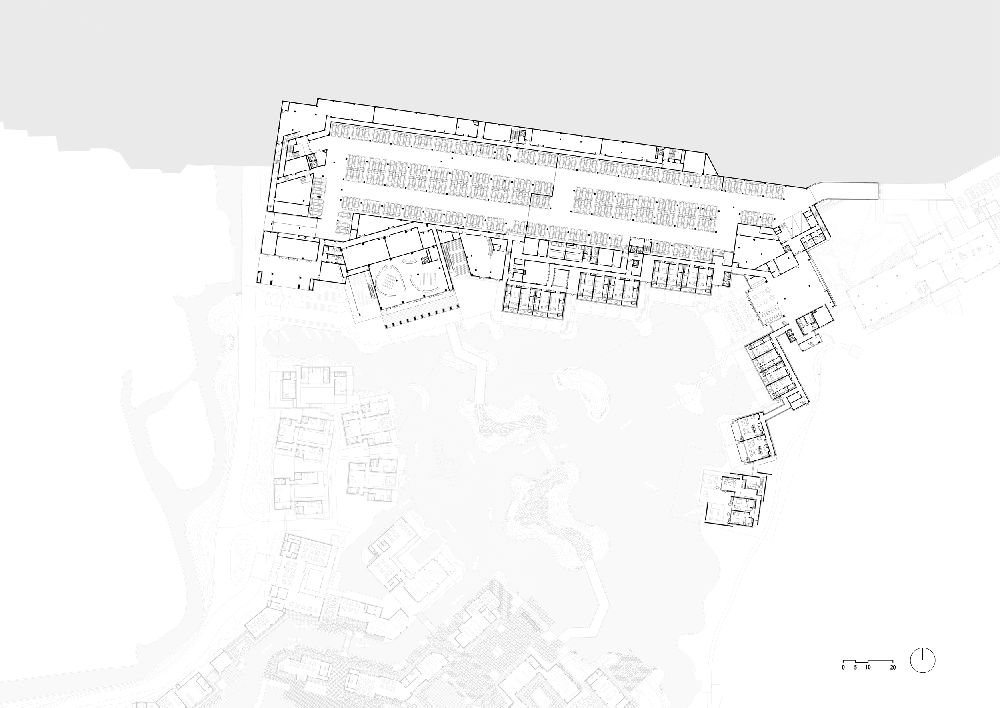
△ Negative Layer Plan
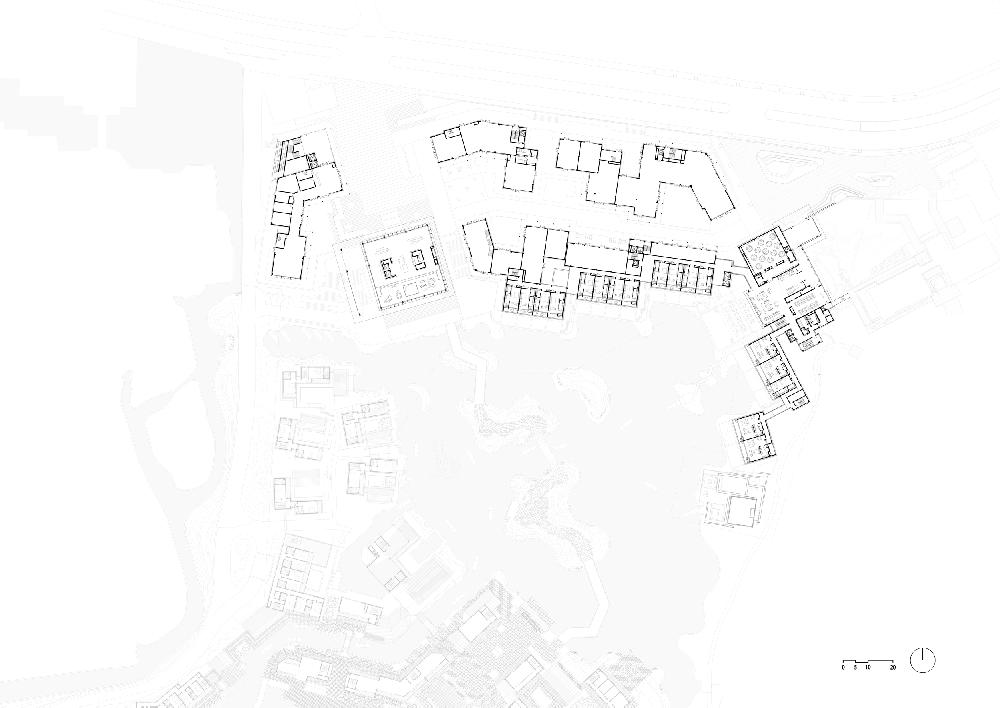
△ First Floor Plan
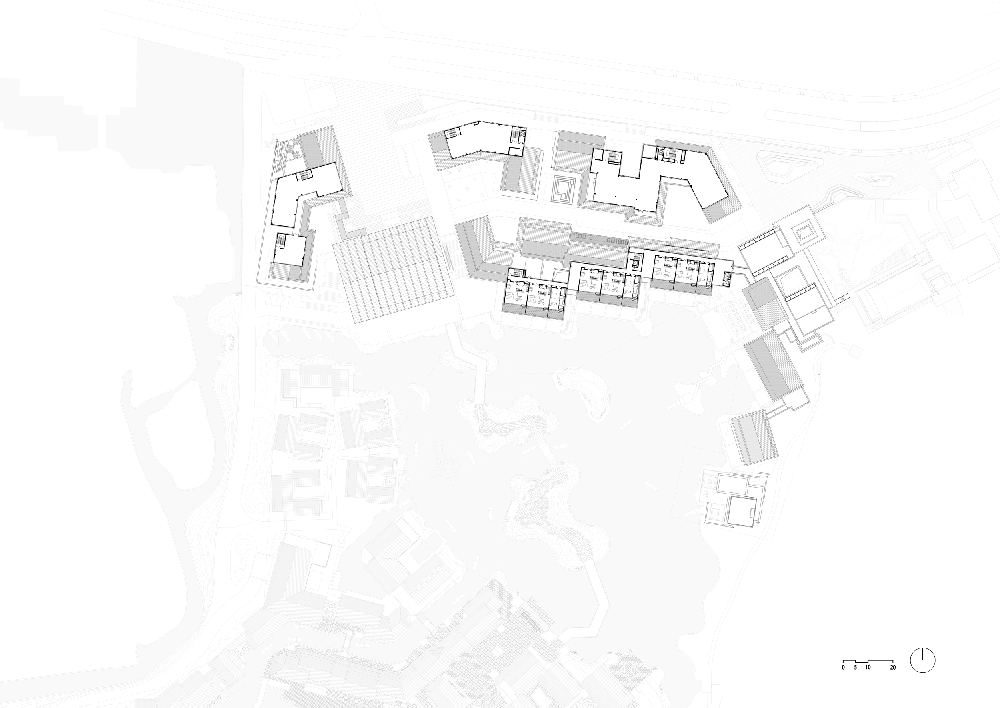
△ Second Floor Plan
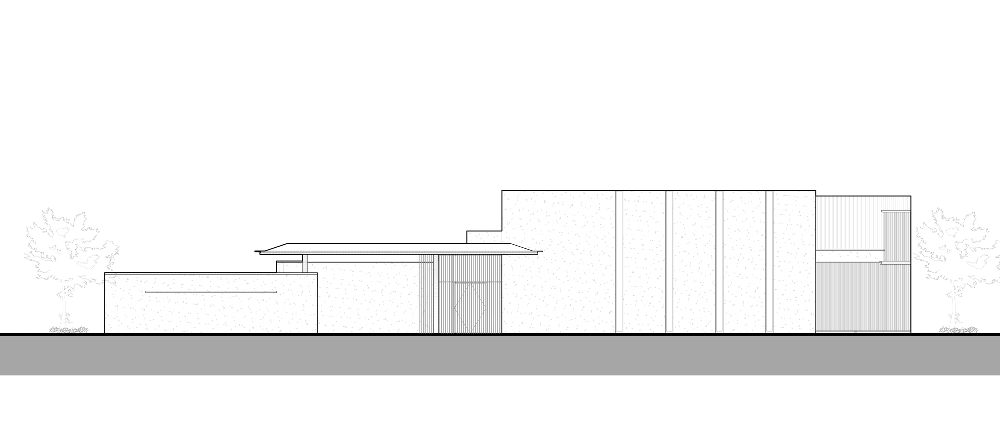
△ Hotel Entrance Facade
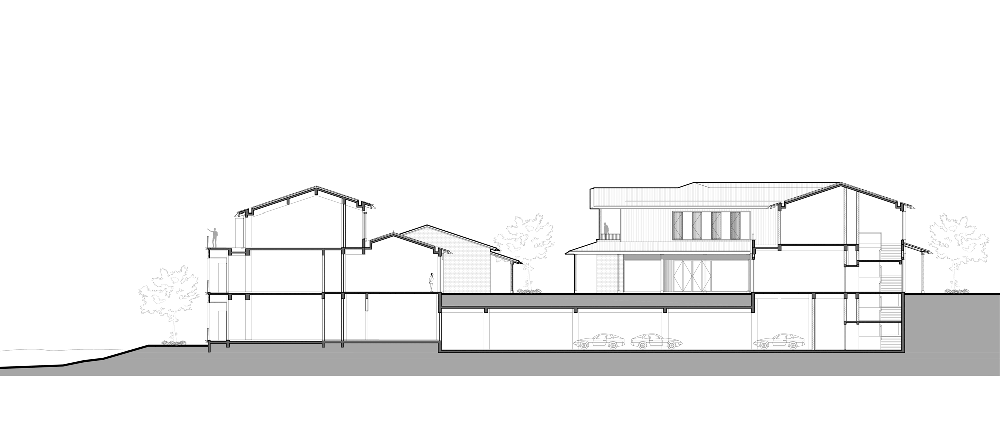
△ Hotel Profile
Project Information
Project Name: Nanjing Gucheng Bay Kaiyuan Resort Hotel
Location: Nanjing, Jiangsu
Design Unit: Gad × Line+
Lead Architect / Project Creator: Meng Fanhao
Website: www.lineplus.studio
Contact Email: pr@lineplus.studio
Design Team: Tao Tao, Huang Guangwei, Zhou Chao, Zhang Hanqi, Wan Yuncheng, Sun Yaxian, Zhang Daozheng
Building Area: 26,032.58 m² (Vacation Hotel: 8,028.32 m², Tourist Center: 4,218.39 m², Commercial Street: 4,568.87 m², Underground: 9,217 m²)
Design Period: February 2018 to November 2018
Construction Period: December 2018 to December 2020
Owner: Jiangsu Yada Real Estate Co., Ltd
Interior Design Unit (Resort Hotel): Yihe Space Design (Shenzhen) Co., Ltd
Interior Design Unit (Visitor Center): WJ STUDIO Wanjing Design
Landscape Design Unit: Zhejiang Lansong Landscape Design Group Co., Ltd
Construction Drawing Design Unit: Nanjing Architectural Design and Research Institute Co., Ltd
Structure: Reinforced concrete, steel structure
Materials: Blue brick, bamboo wood board, dark aluminum plate, bamboo wood grille, imitation wood grain aluminum plate
Photography: Wu Qingshan, Mountain Images















Must log in before commenting!
Sign Up