
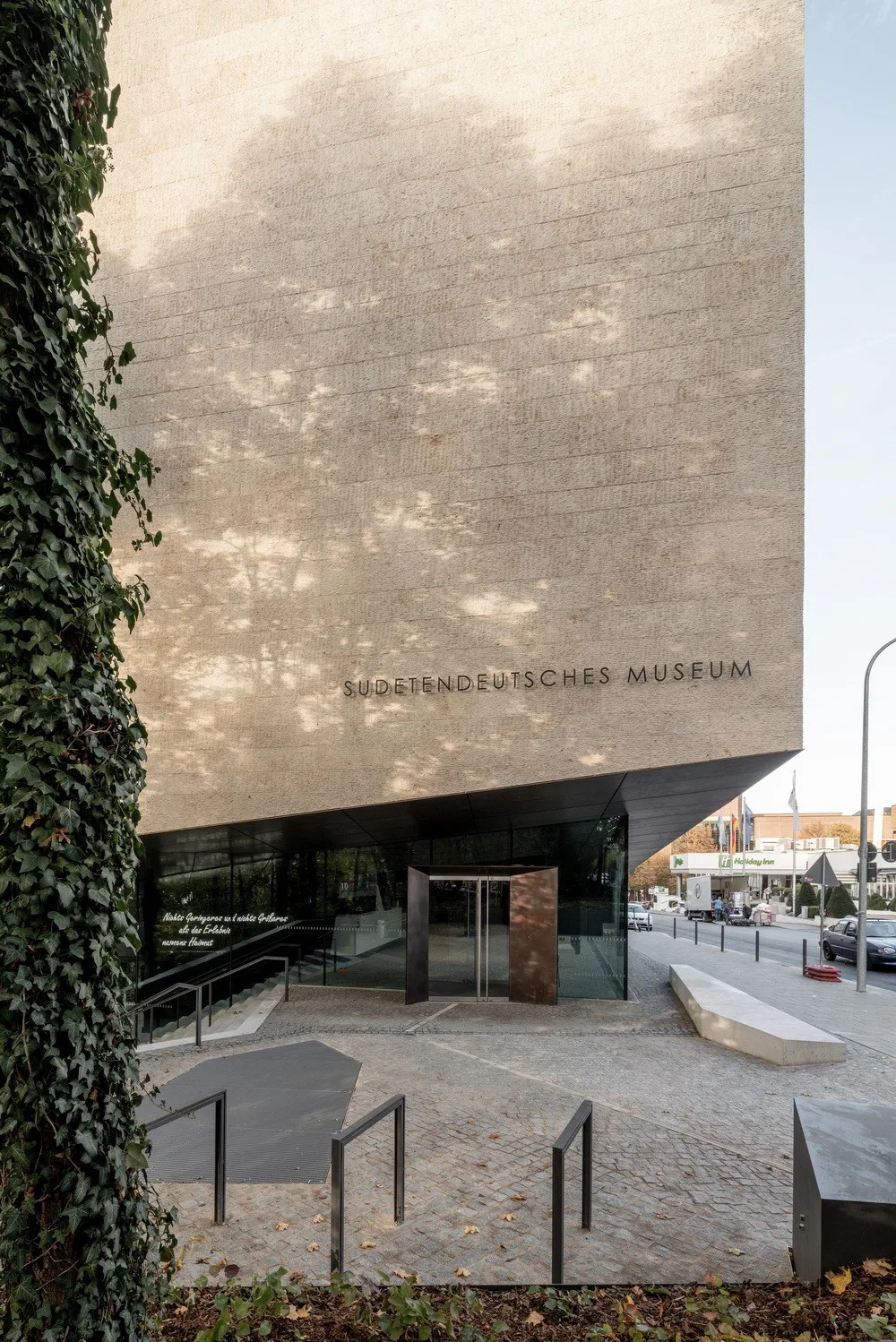
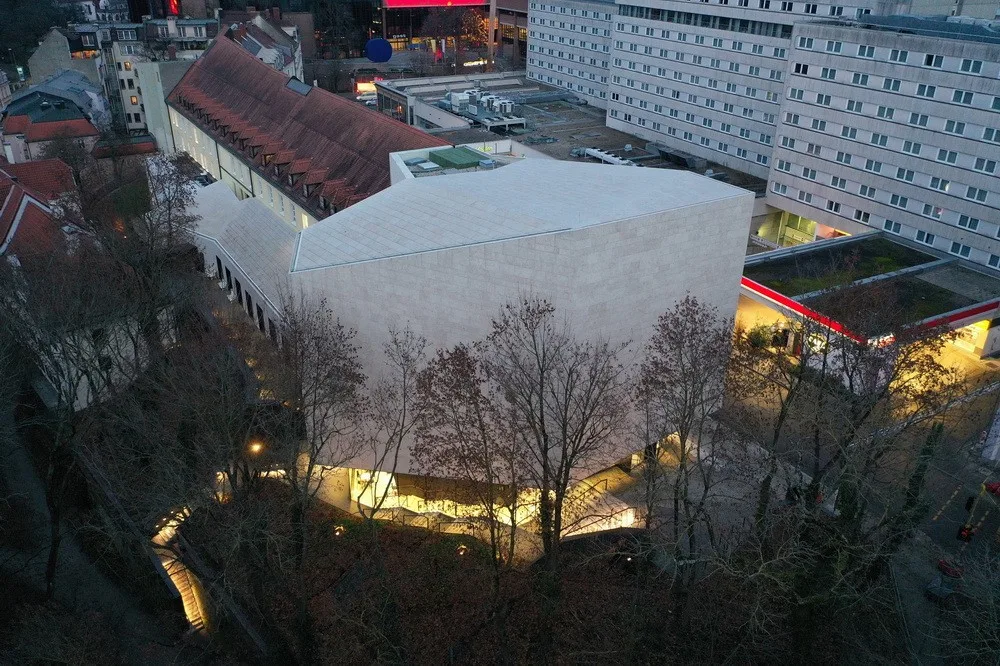
The design of this project is deeply rooted in the concept of “home,” aiming to establish a strong local identity. The site presents challenging conditions within a mixed urban context: across the street lies a gas station and a multi-story hotel, while on the opposite side, a steep 10-meter slope faces the Auer Mühlbach River. To the south, the site borders the Isar River Nature Reserve.
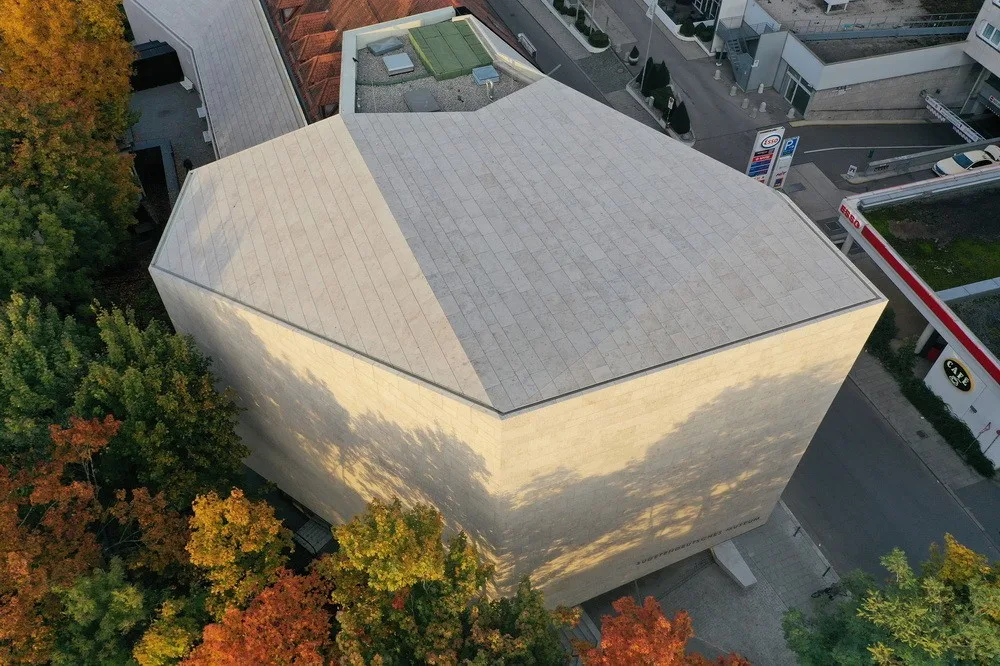
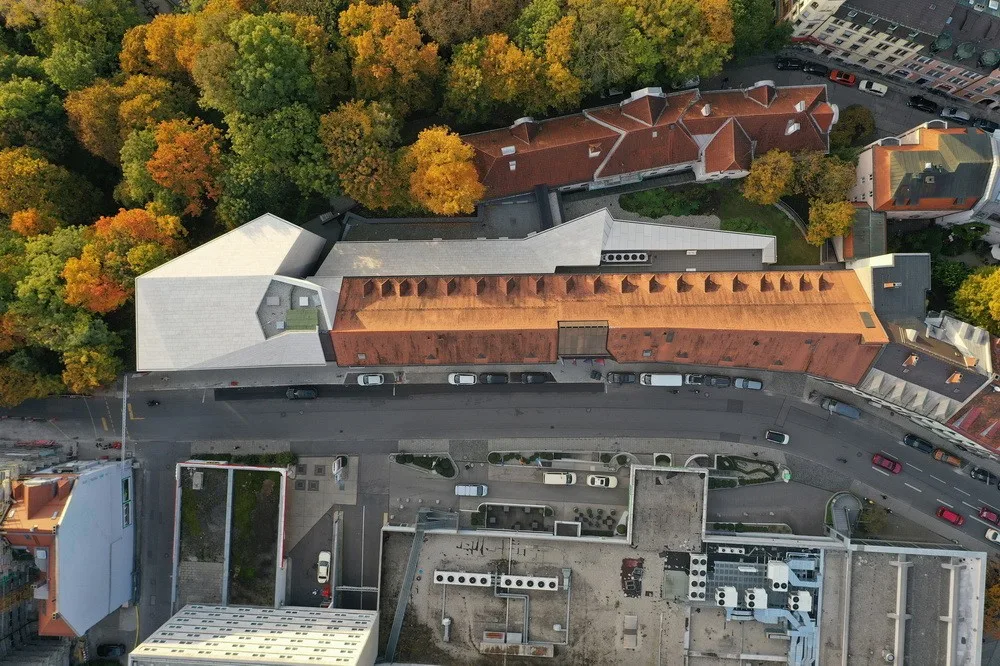
The building’s street-facing façade respects the architectural language of the neighborhood, continuing the eaves lines and ridge heights of adjacent structures. It also forms a distinct and dignified block oriented southward, creating a sense of separation from the surrounding buildings. The project adapts to the site’s topography with a relaxed layout: a five-story stepped design faces the green slope, optimizing the landscape experience.
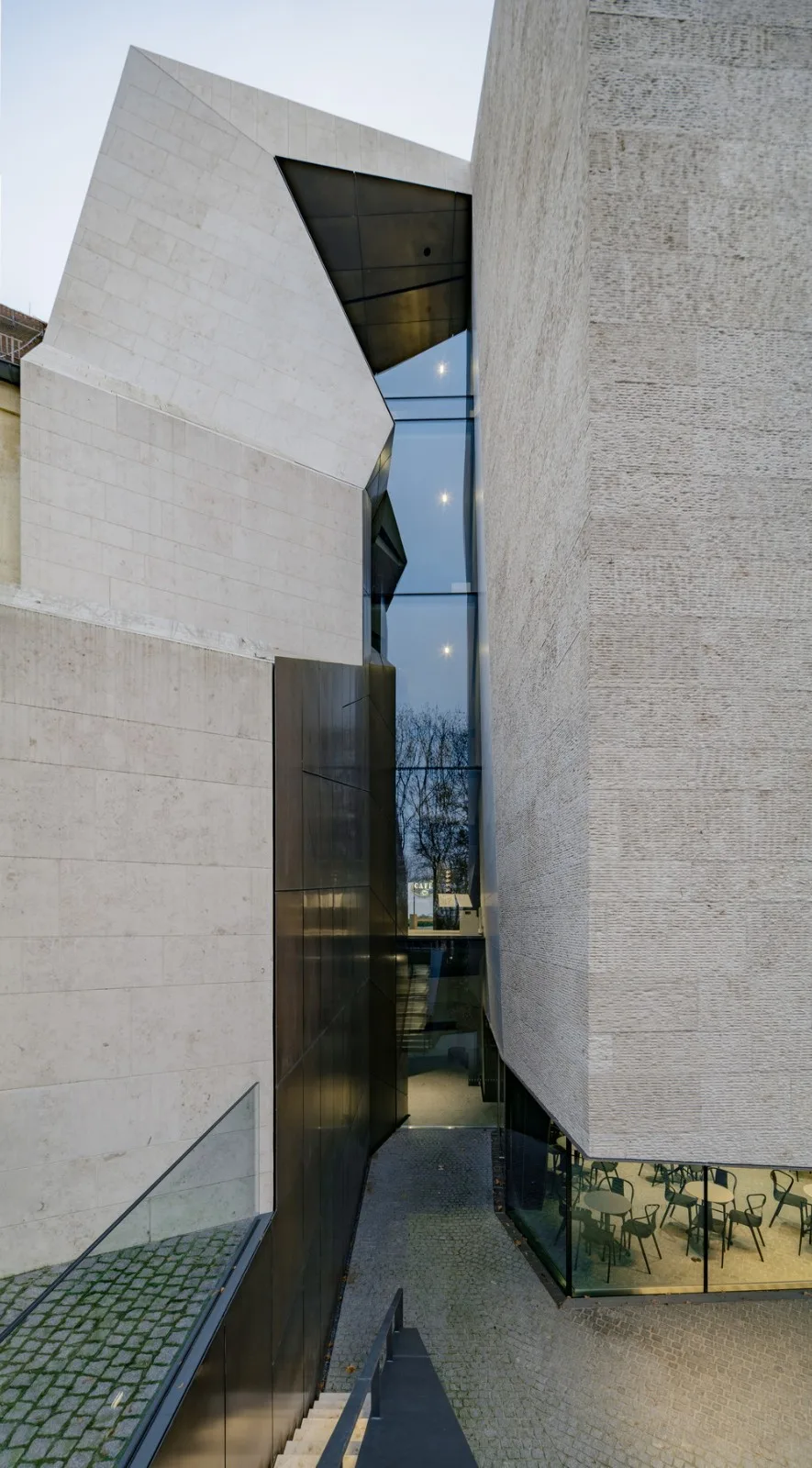
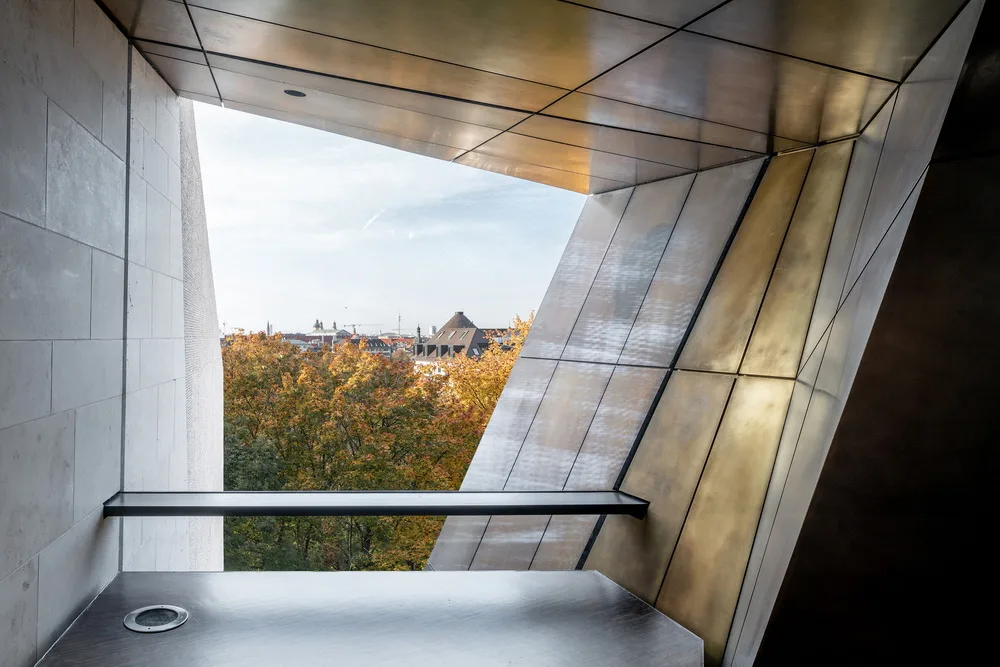
The exterior features solid natural stone cladding with handcrafted vertical surfaces that convey a rustic texture. The roof serves as the building’s fifth façade. Throughout the structure, brass elements are thoughtfully incorporated—from polished brass covering the bases of horizontal joints to decorative accents on the vertical façades—adding material continuity and warmth.
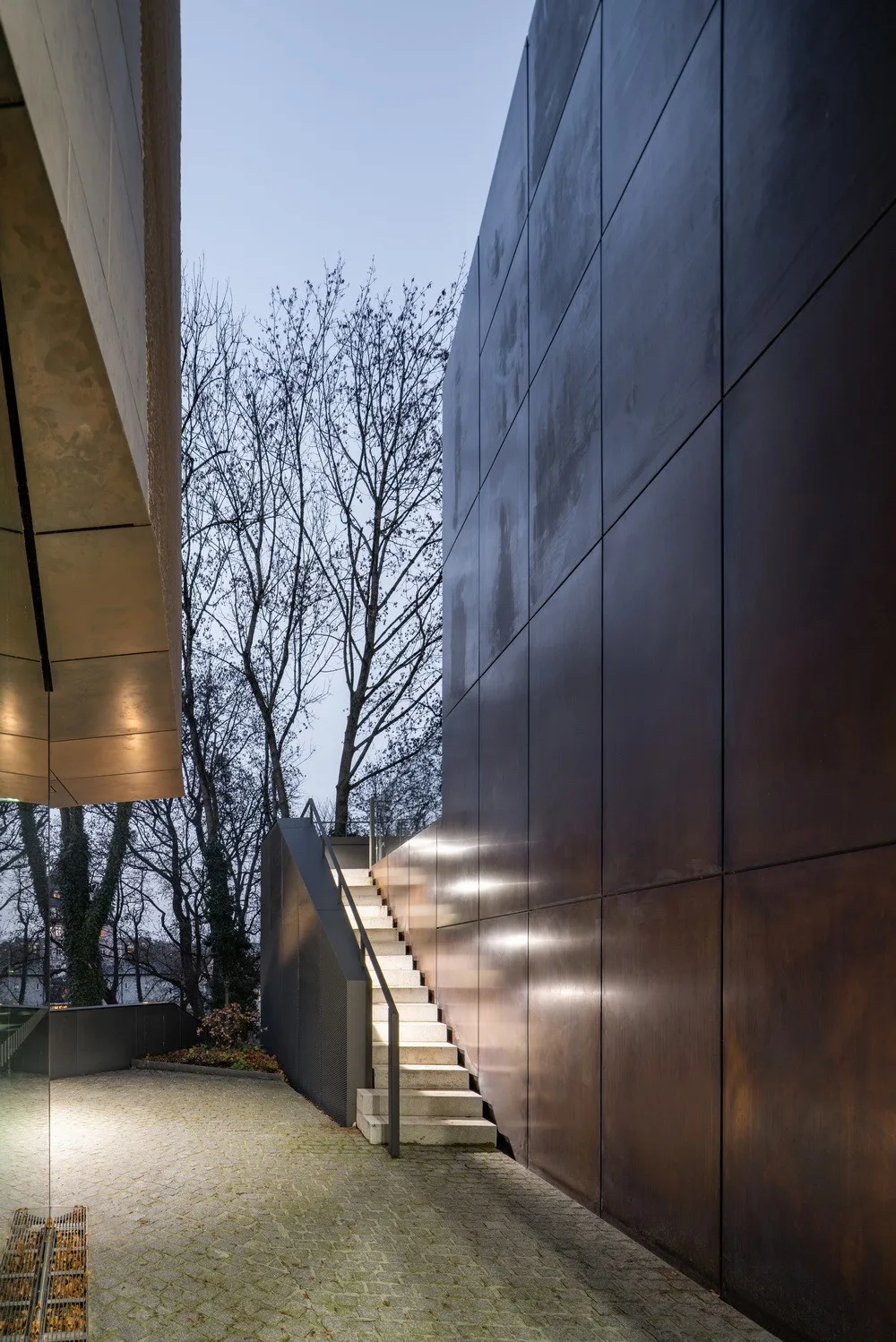
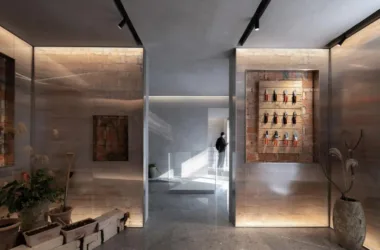
The building engages dynamically with the sloped terrain, creating a vibrant and lively atmosphere. This vitality extends indoors, especially through the use of brass elements that connect interior and exterior spaces on a tactile, material level.
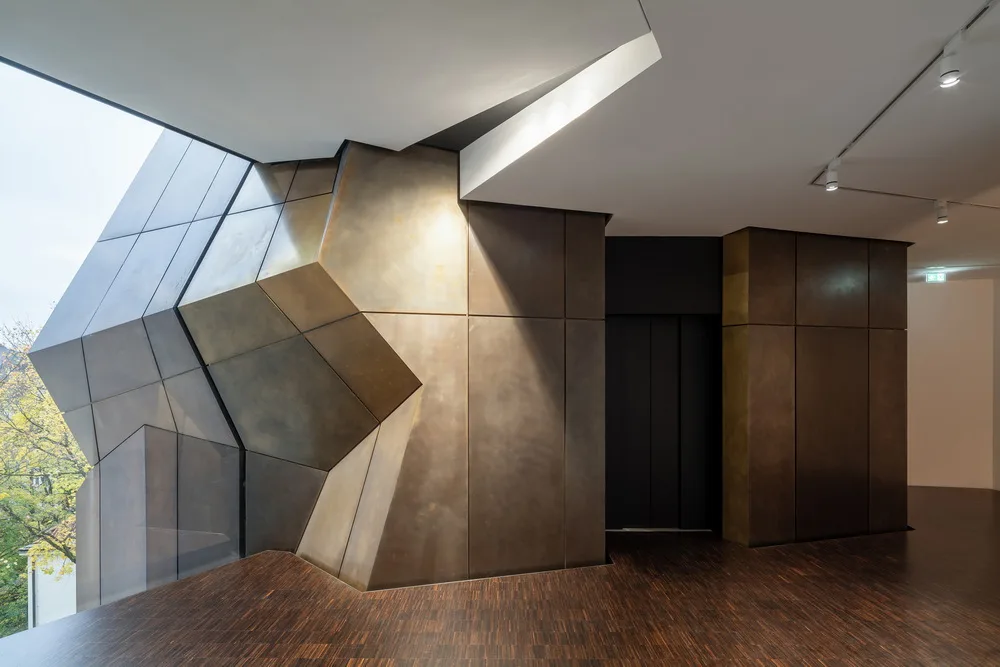
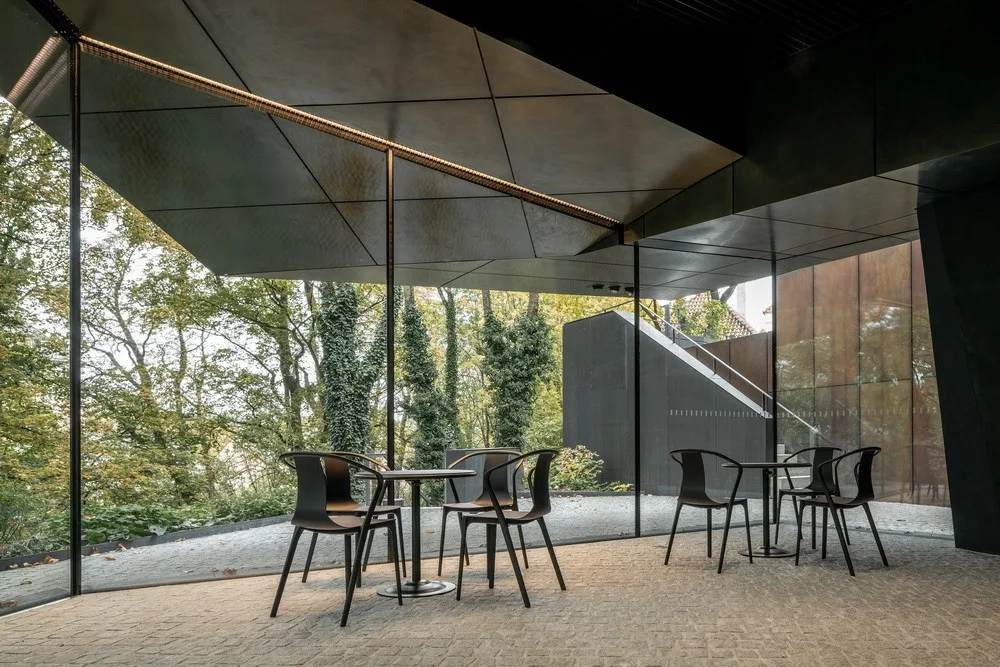
The museum’s interior offers a seamless and interconnected spatial experience. Visitors enter through a courtyard leading to the street-level lobby, from where a central staircase ascends to the exhibition floors. From higher levels, visitors can enjoy panoramic views of Munich’s city center and the museum district. The open staircase guides guests through five exhibition halls.
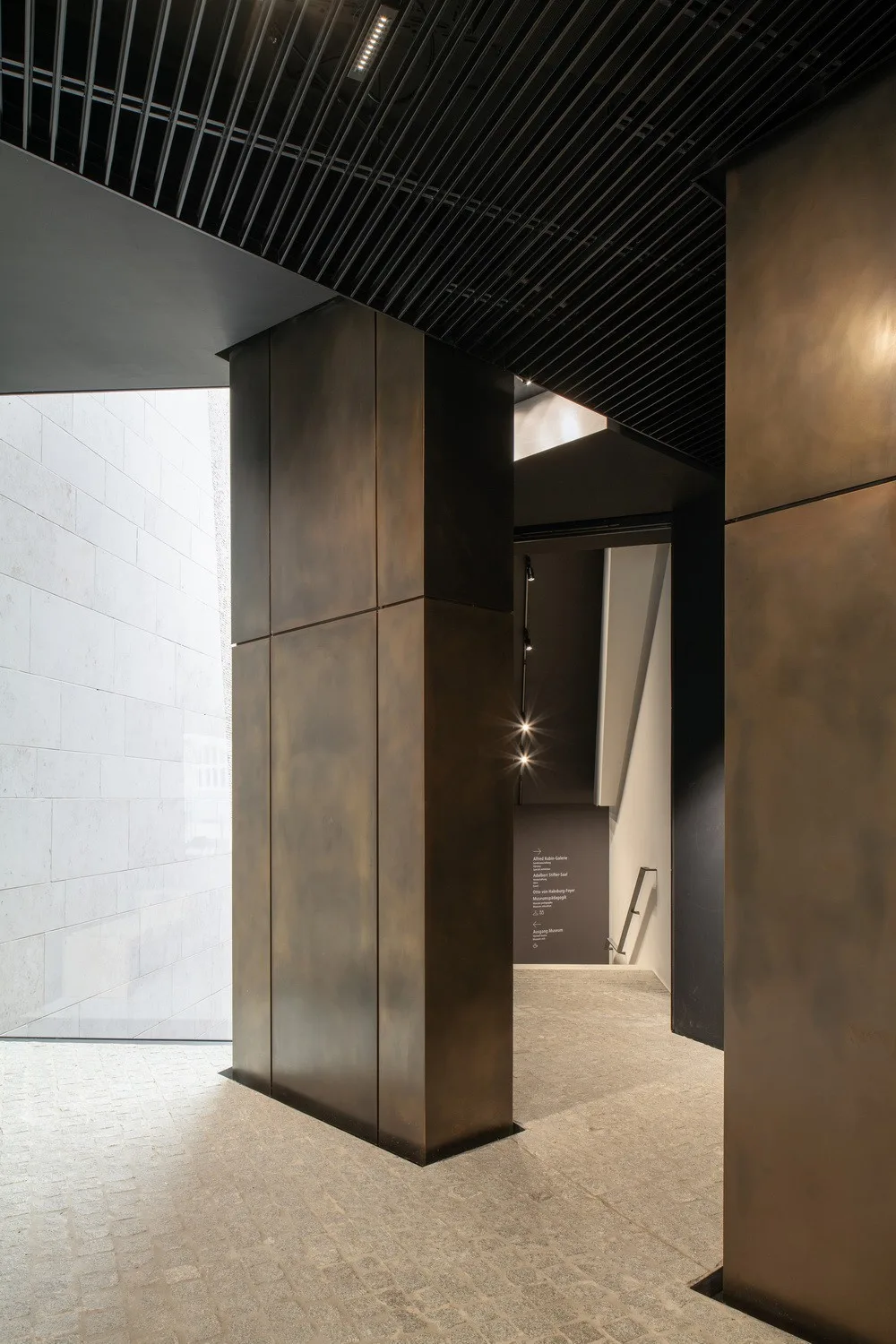
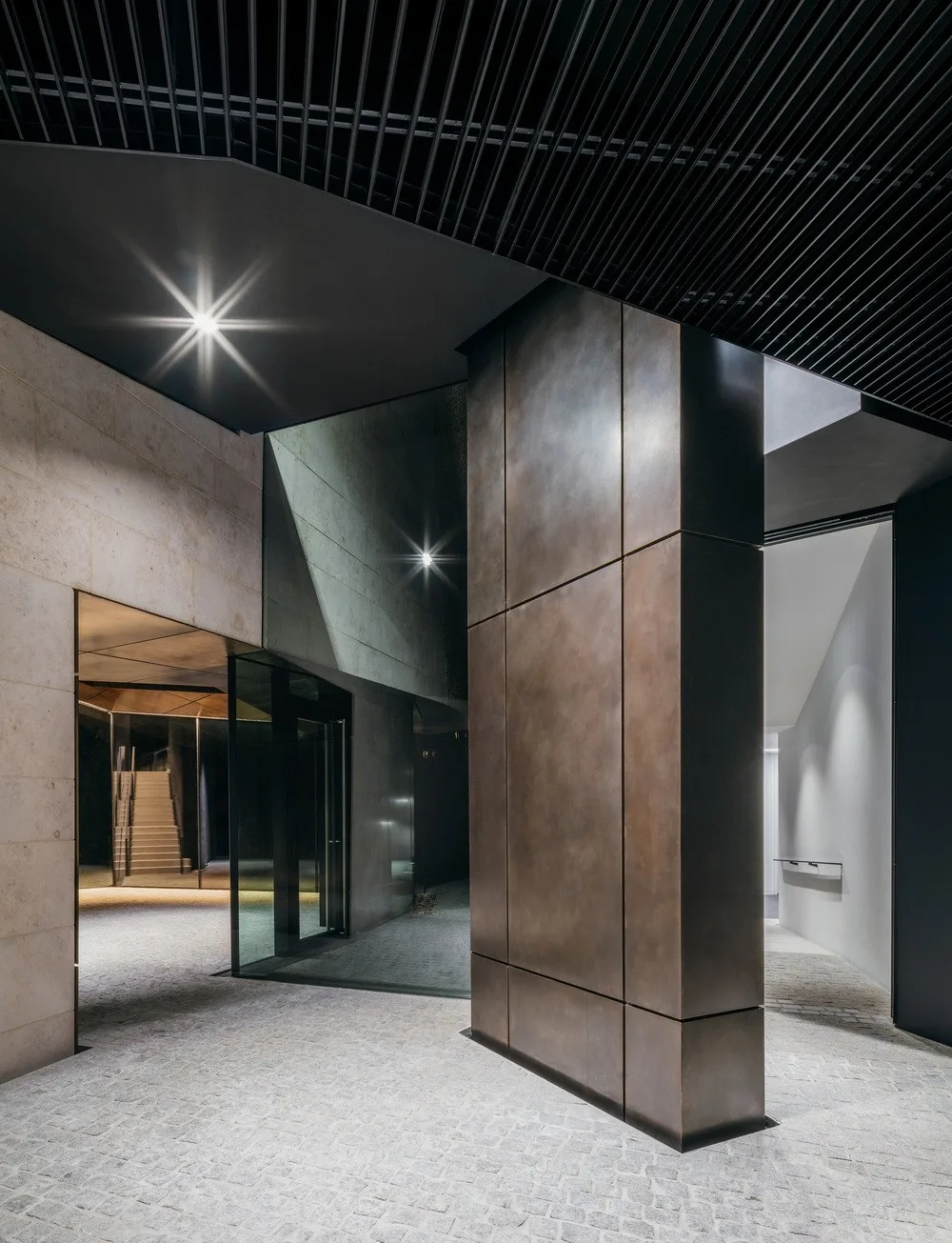
Upon completing their visit, guests return to the street-level entrance hall but exit through a different location, preventing interference with incoming visitors. The hillside side of the museum includes a café, exit, and gathering area, allowing visitors to move fluidly between outdoor steps and the entrance hall.
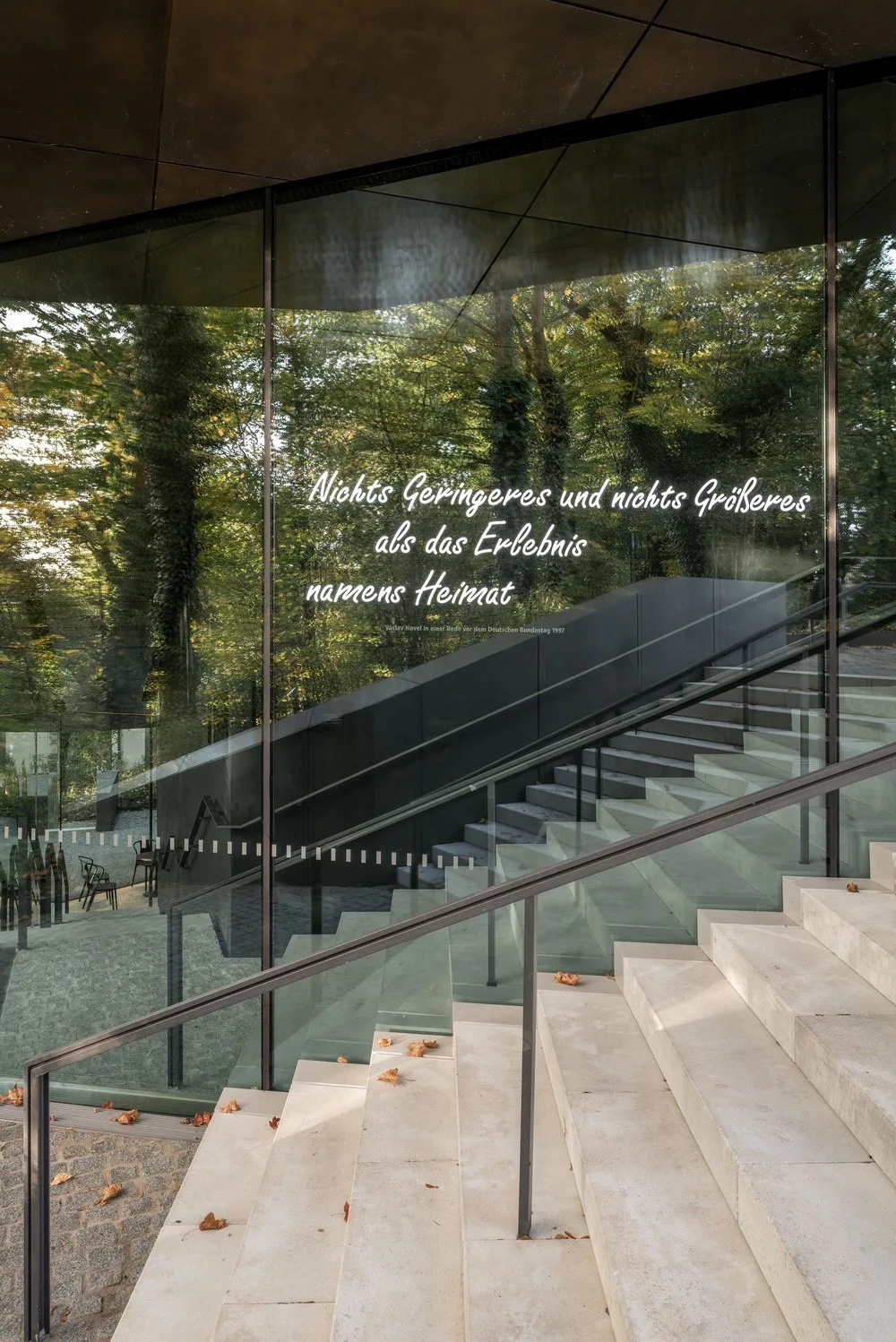
The outdoor areas connect to Lilienberg at street level through a series of steps, offering visitors the choice to visit the café or enter through the main entrance. Significantly, these steps also link the museum to the public walkways and cycling paths along the Isar River.
Technical Drawing
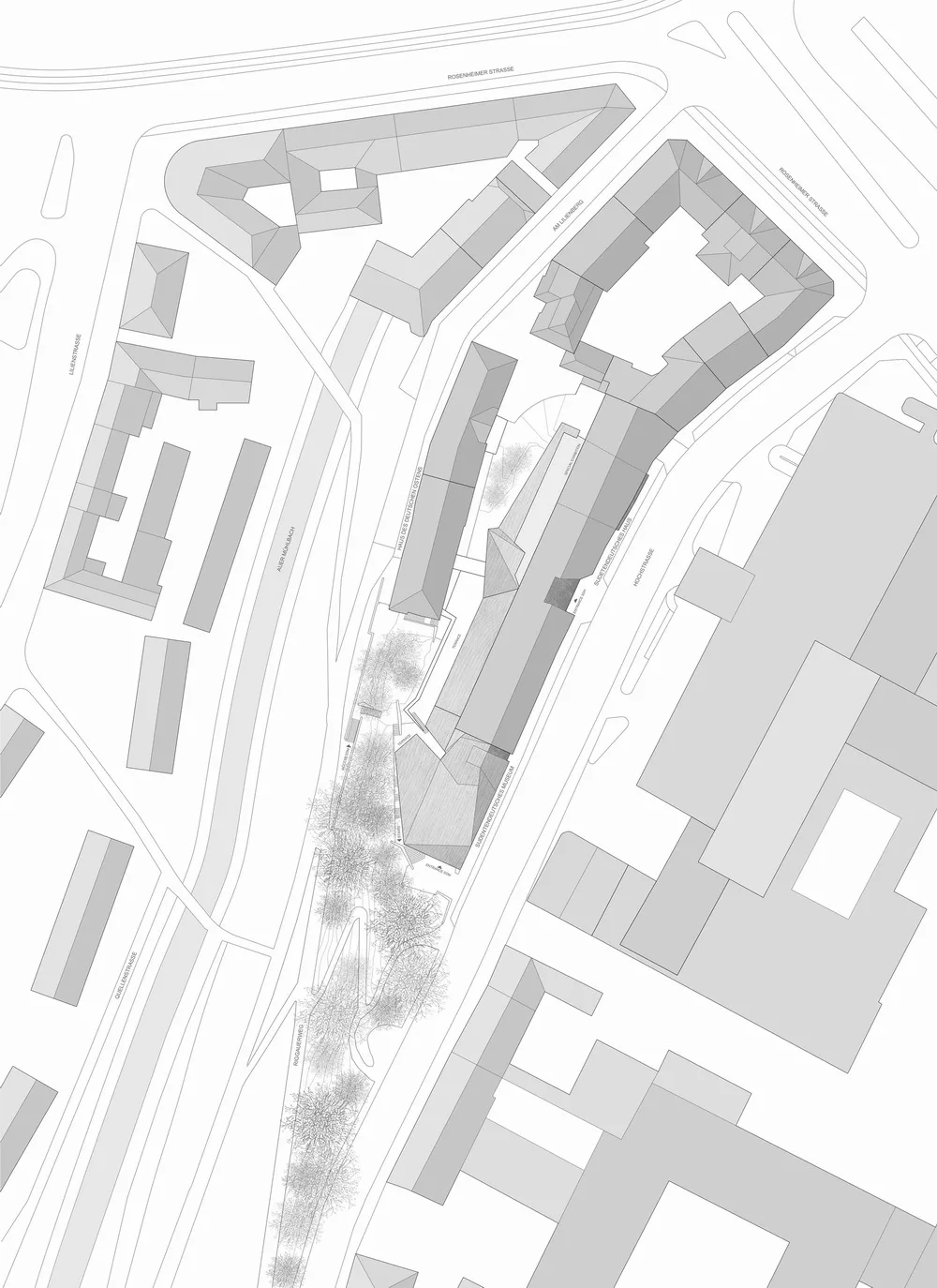
△ Site Planning Map
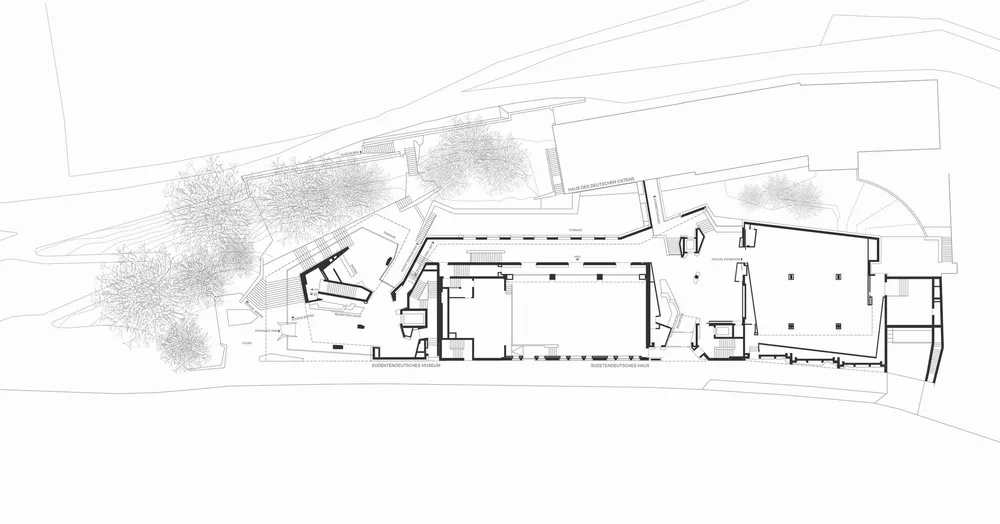
△ General Layout Plan
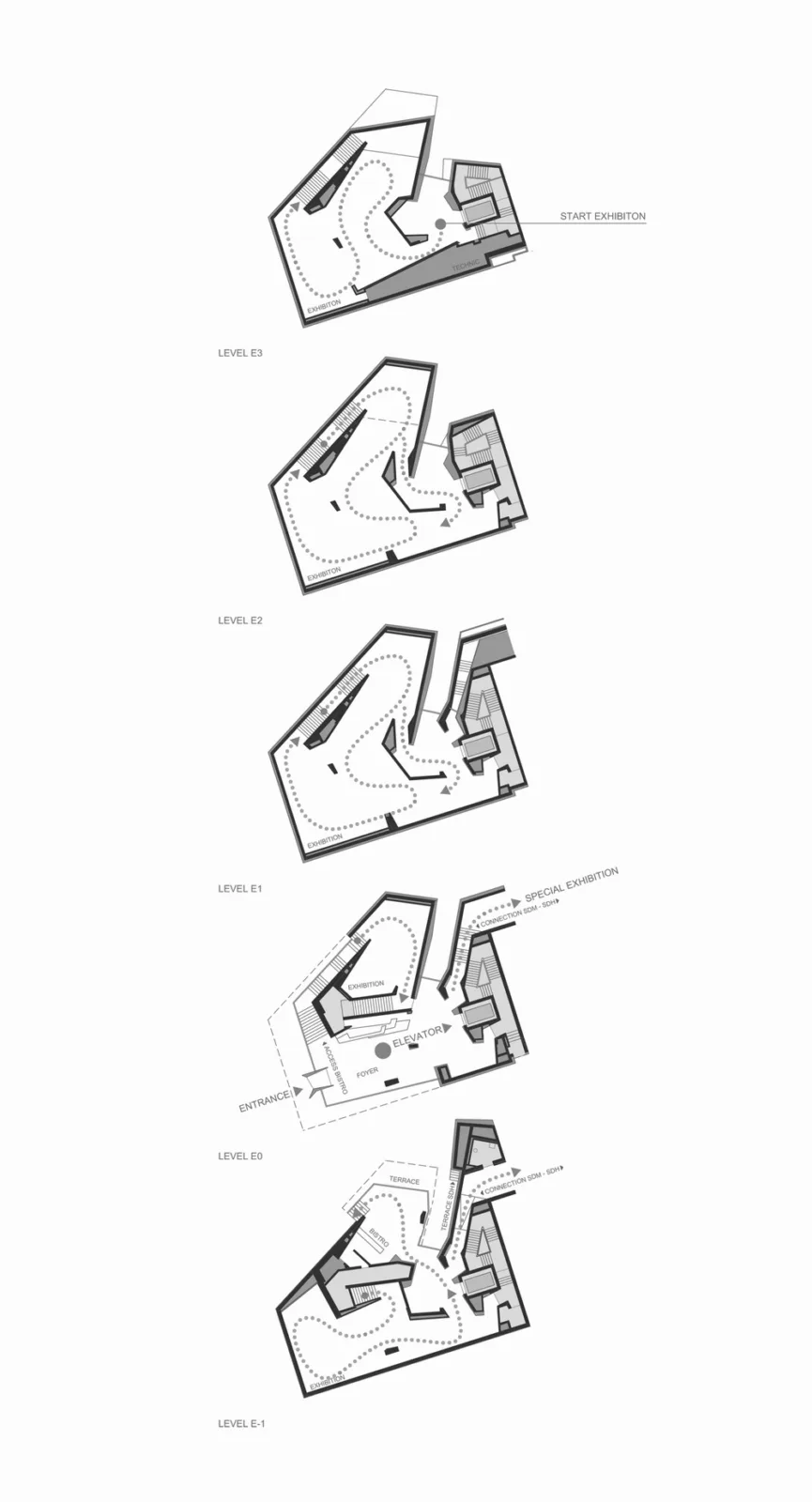
△ Plan View
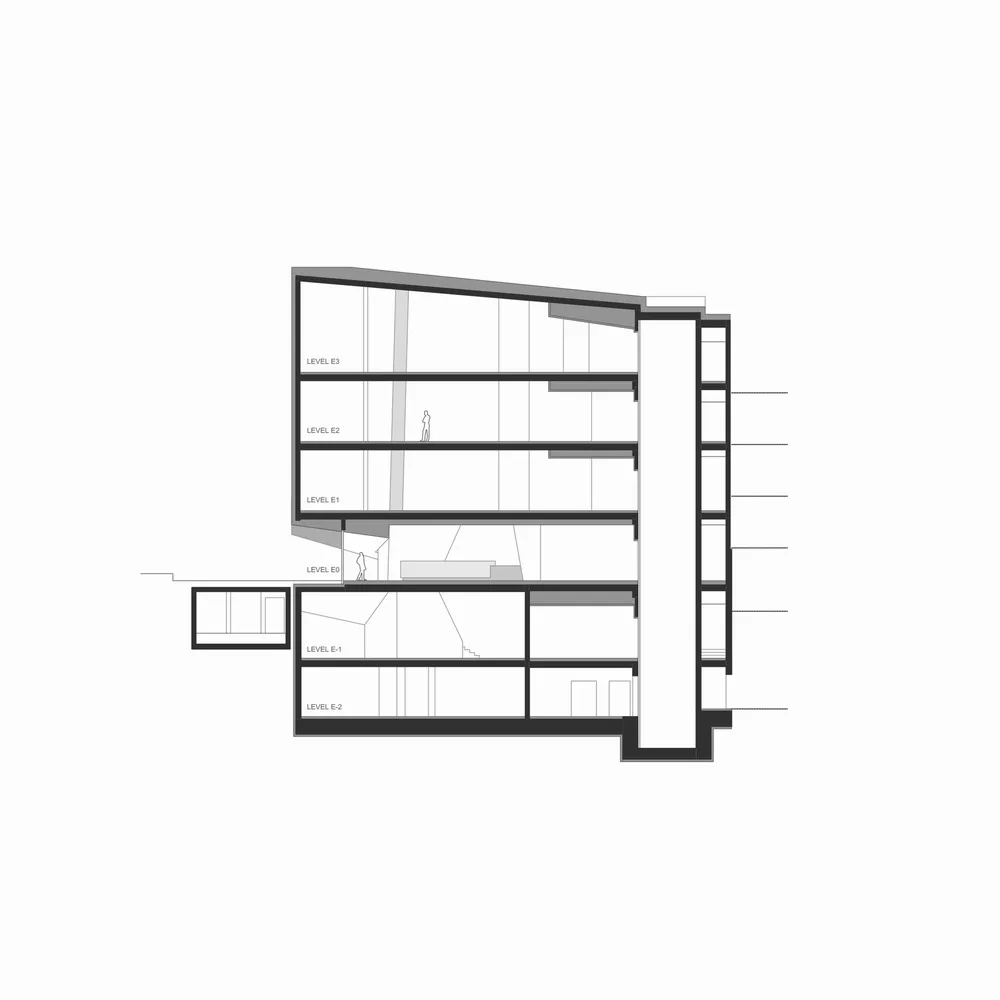
△ Section Diagram
Project Information
Architectural Design: PMP Architekten
Area: 11,830 m²
Project Year: 2020
Photographer: Simon Kramer
Manufacturers: Ardex, Bauder, Decozell, Deutsche FOAMGLAS®, EQUITONE, Fiandre, Franken-Schotter, Hormann, Isover, Knauf, Lindner, NE Metal Covers, Novoferm, RIGIPS, Schuco
Design Team: Andrei Capusan, Julia Fritzenwenger, Nelli Maier
Project Construction: Udo Lewerenz, Jessica Steckmann, Angelika Probst
Project Management: Julia Fritzenwenger, Udo Lewerenz, Michael Obal
Landscape Design: Johannes Probst, Angelika Probst
City: Munich
Country: Germany












Must log in before commenting!
Sign Up