
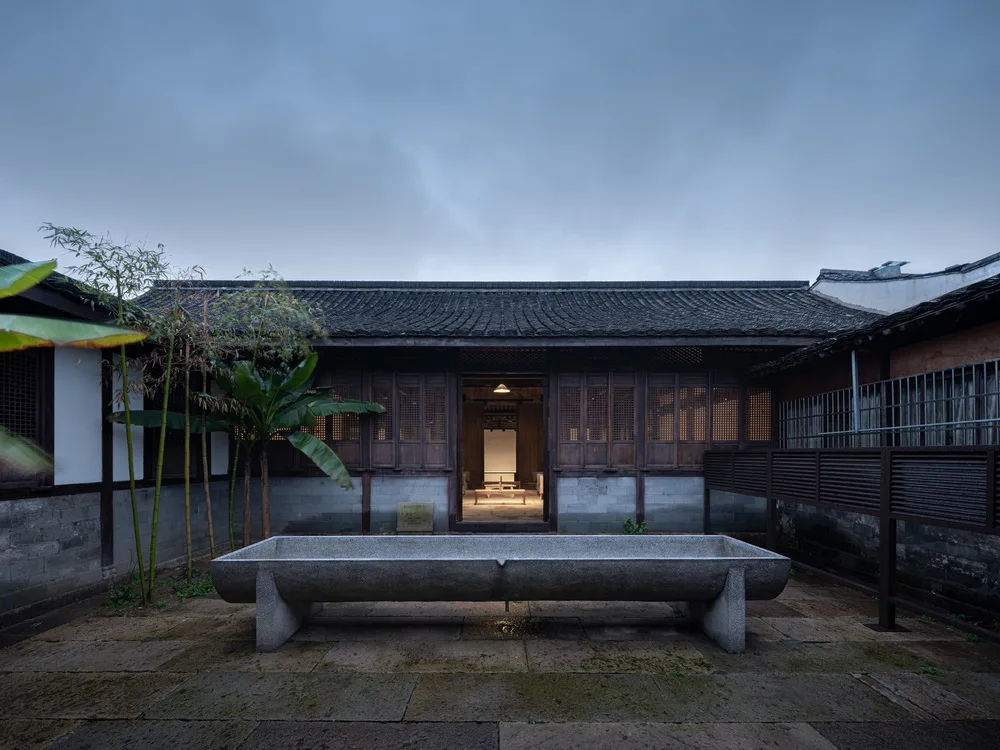
Gaojiatai Gate is situated along Beihai Bridge Straight Street, within Ying’en Gate of the ancient city of Shaoxing. This street’s main road connects directly to the Zhejiang East Canal, which serves as the busiest waterway in the northwest part of the old city. Since the Ming and Qing dynasties, Beihai Bridge Street has been a bustling hub for merchants, thanks to its convenient water network. The Gaojiatai Gate is discreetly located on the south side of Beihai Bridge Straight Street, just a short distance from the famous Yuan Dynasty Guangxiang Bridge.
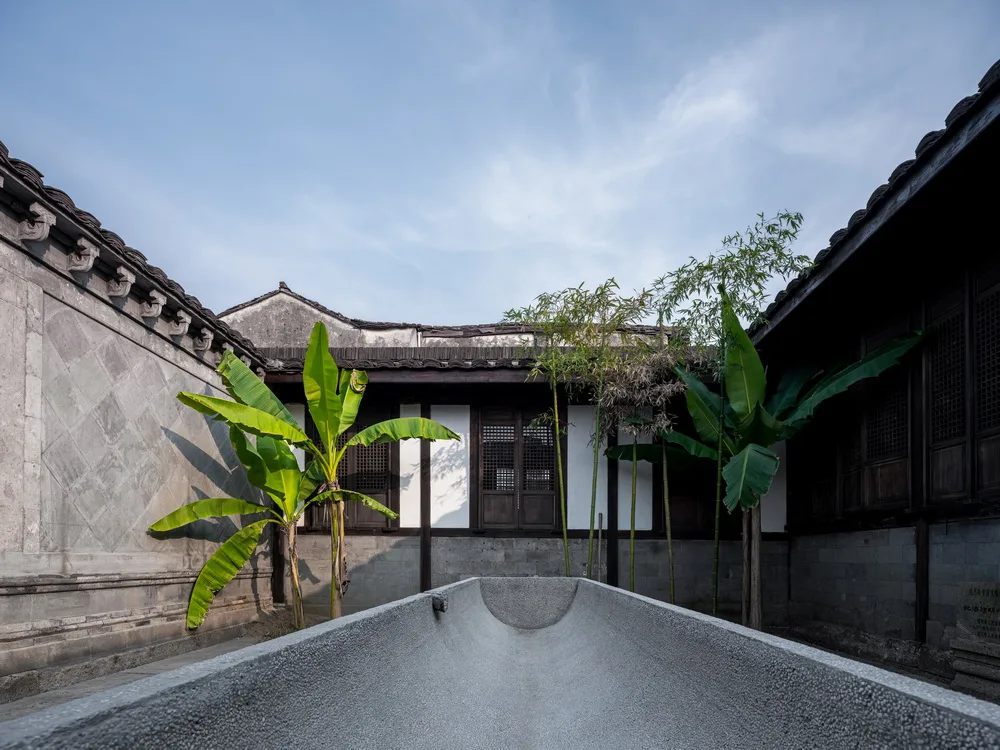
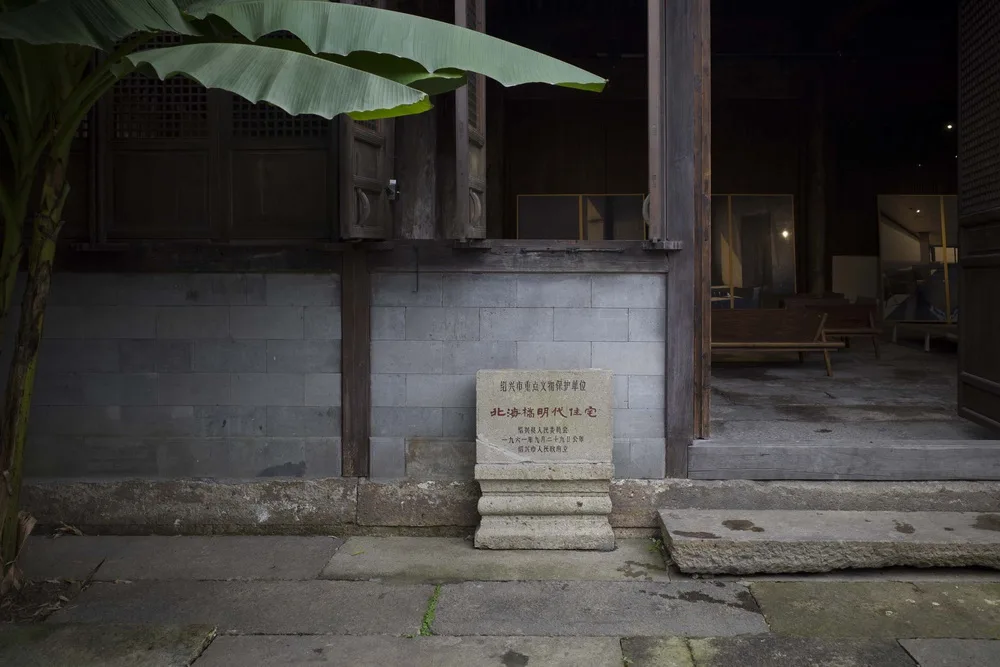
Taimen is the most distinctive residential district in Shaoxing. The term “Taimen” respectfully refers to residences of individuals with notable social status and identity. Gaojiatai Gate is one of several Tai Men dispersed throughout the ancient city like stars. According to the “Shaoxing Cultural Relics Chronicles,” the homeowner’s ancestor was Song Taiwei Gao Qiong. The 17th generation descendant of Gao Qiong relocated here from Qian Qing. The architecture dates back to the Ming Dynasty, characterized by wooden beams and frames crafted simply, without elaborate decoration, reflecting the modest style of Shaoxing’s Ming-era buildings.
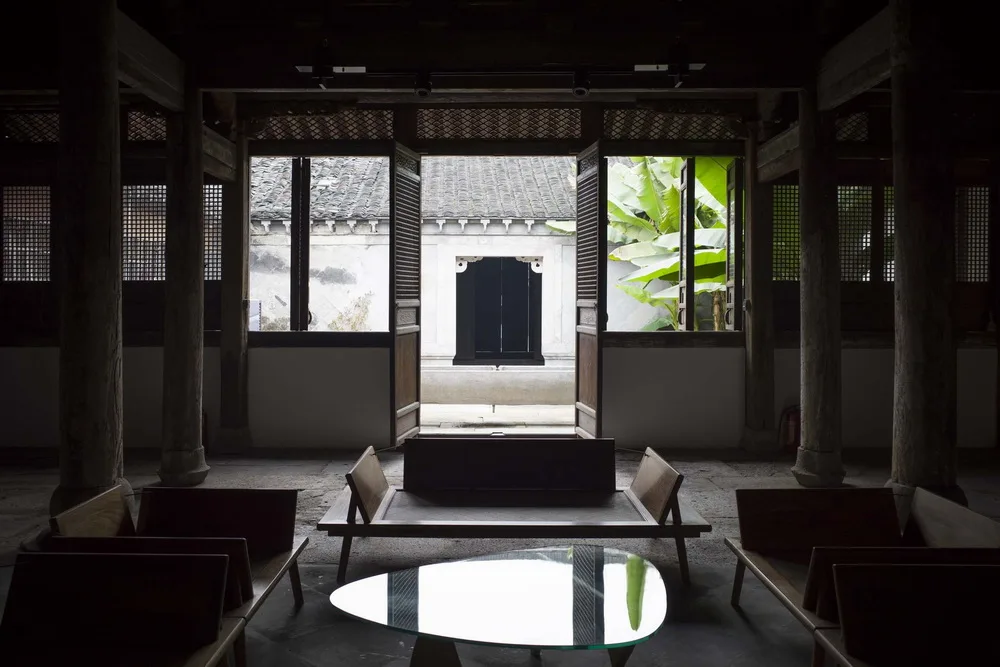
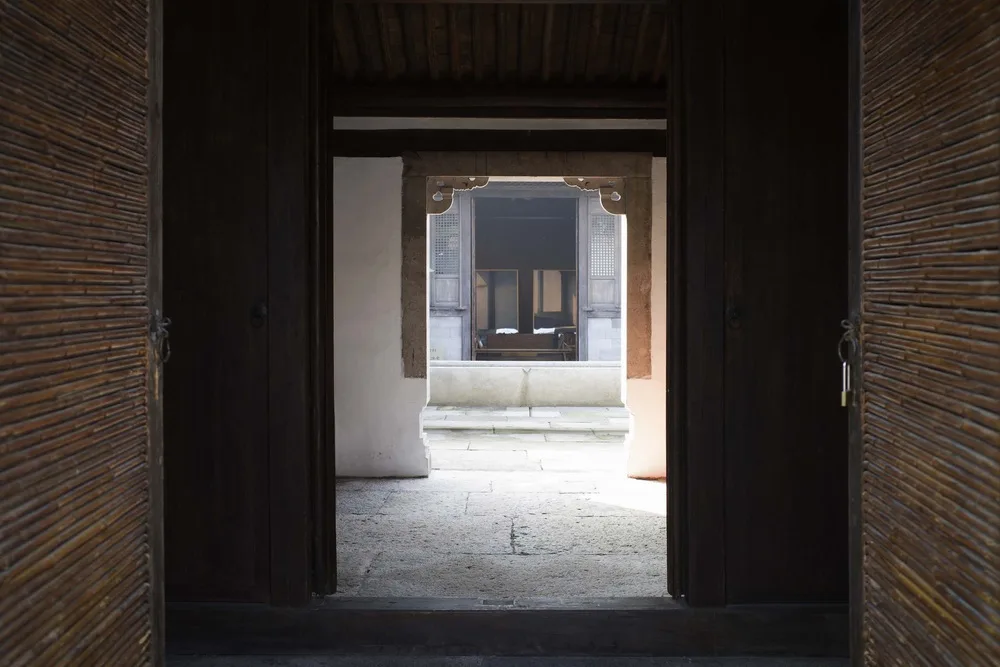
The structure is oriented south to north, facing Beihai Bridge Straight Street. Its layout consists of a single road with two entrances, featuring gatehouses, halls, and buildings arranged along the south-north axis. After centuries of exposure to the elements, the original building is now in a state of decay.
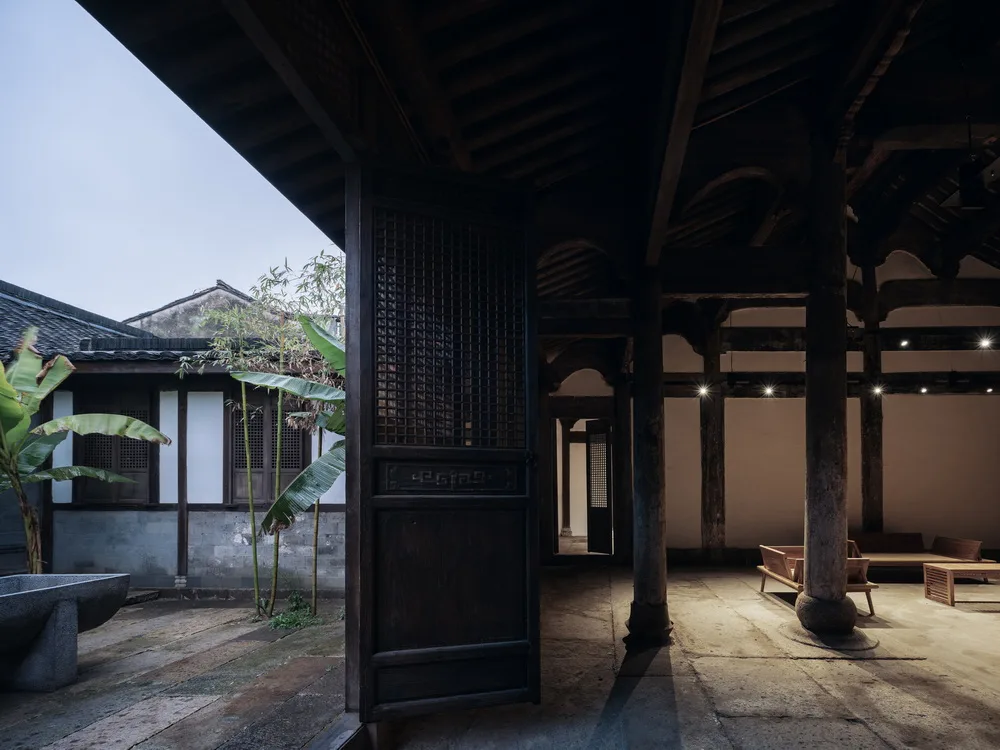
Building upon the original layout, we restored the gatehouse and main hall following cultural relic restoration standards. The restoration of this platform gate presented an opportunity to revitalize the space and transform it into an inviting urban public area along Beihai Bridge Straight Street. Through studying Shaoxing Ancient City’s urban public spaces and facilities, we aimed to introduce a new function as an urban museum.
The main exhibition is housed within the original hall, which features five rooms and nine rafters. On the southwest side of the main complex, a tea room was added on an existing vacant lot to serve visitors of the museum.
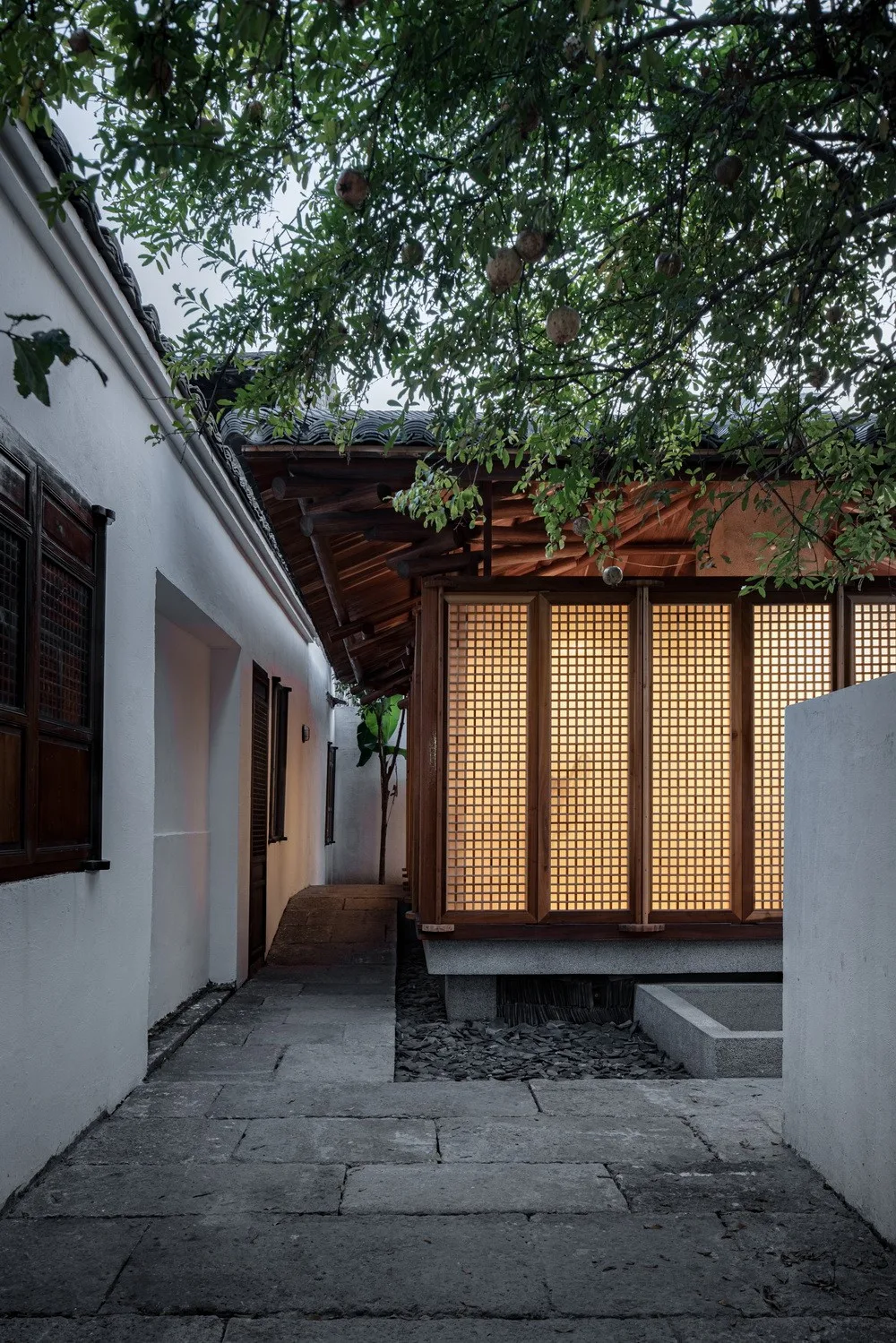
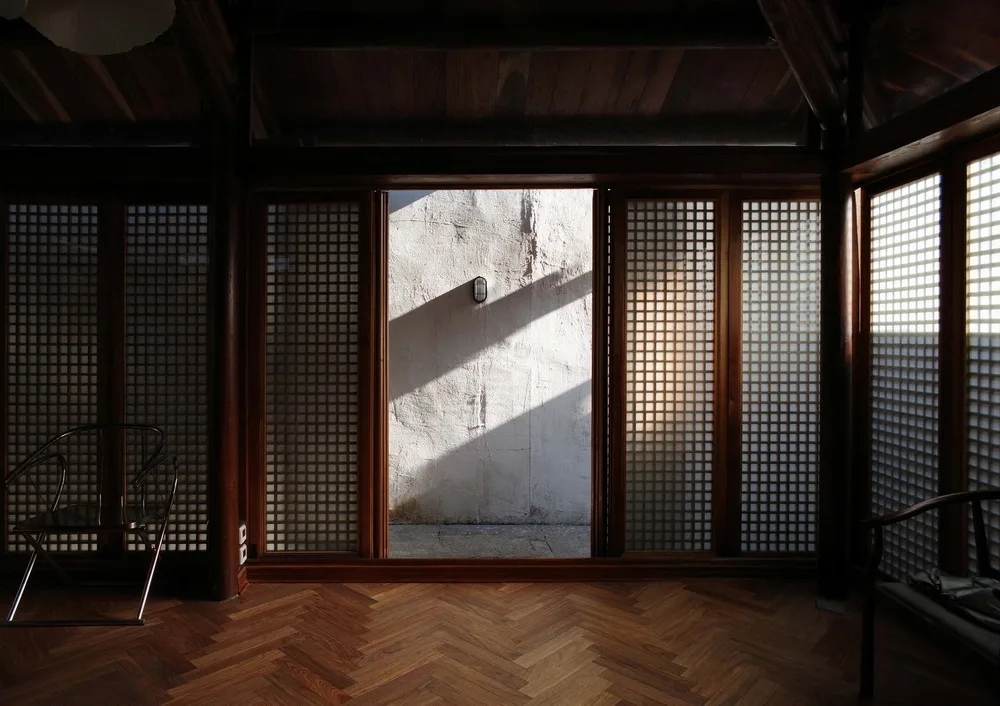
To reflect the regional characteristics of Shaoxing’s water town and create a more comfortable tea space, the tea room was designed as a four-sided hall standing on a pool. Wooden window sashes that open on all sides surround the structure. The building’s overall height is 0.6 meters, complemented by wide eaves, imparting a sense of lightness.
Although the pool itself was not realized, paving with broken tiles evokes the imagery of rippling water. The surrounding courtyards have also been renovated accordingly, giving the tea room a poetic atmosphere with banana-shaped windows, pomegranate-style doors, and green bamboo encircling the hall.
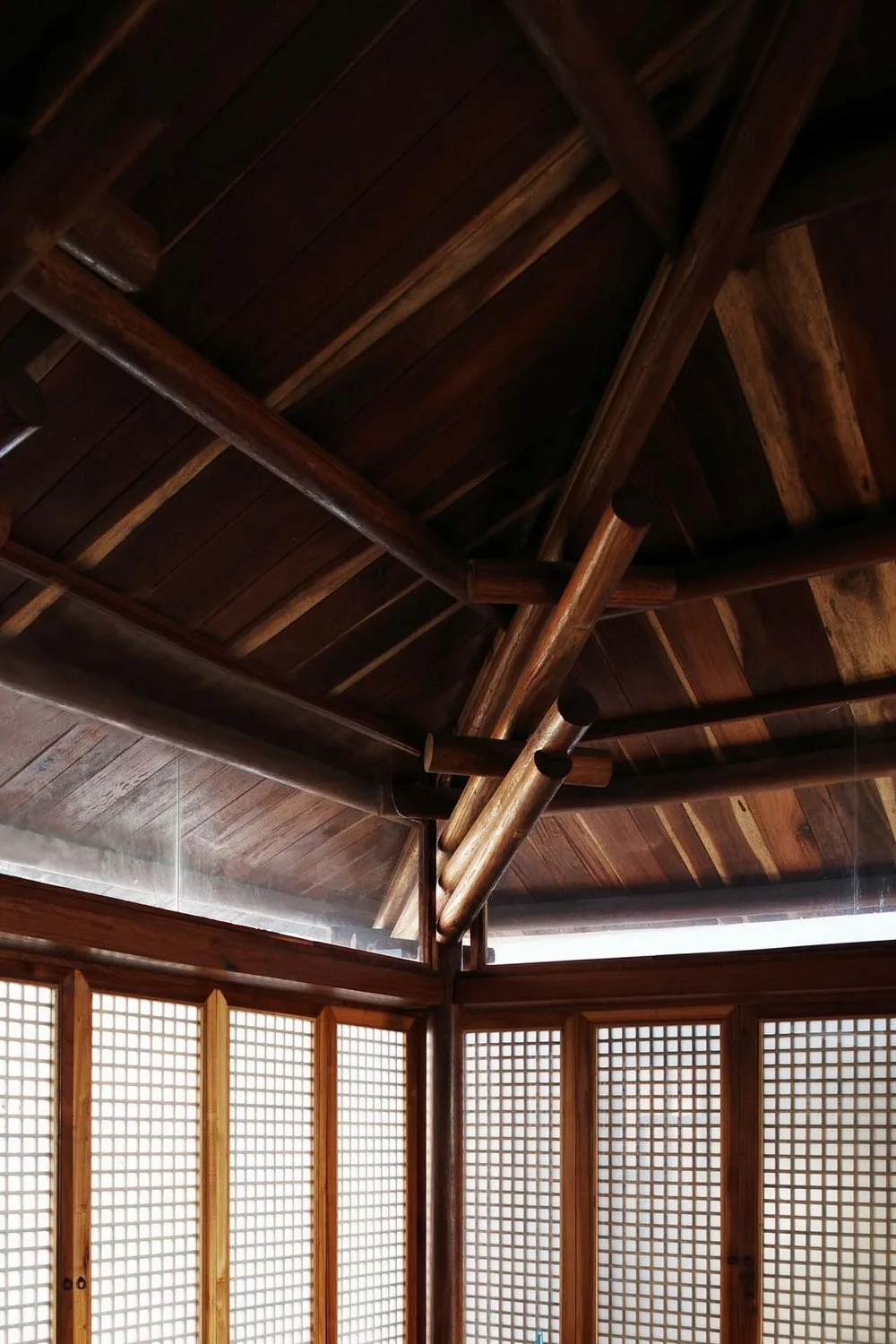
The tea room’s architectural structure continues the tradition of early large-scale wooden craftsmanship in Zhejiang. However, instead of merely replicating the past, we have incorporated modern abstractions and simplifications while retaining traditional woodworking techniques.
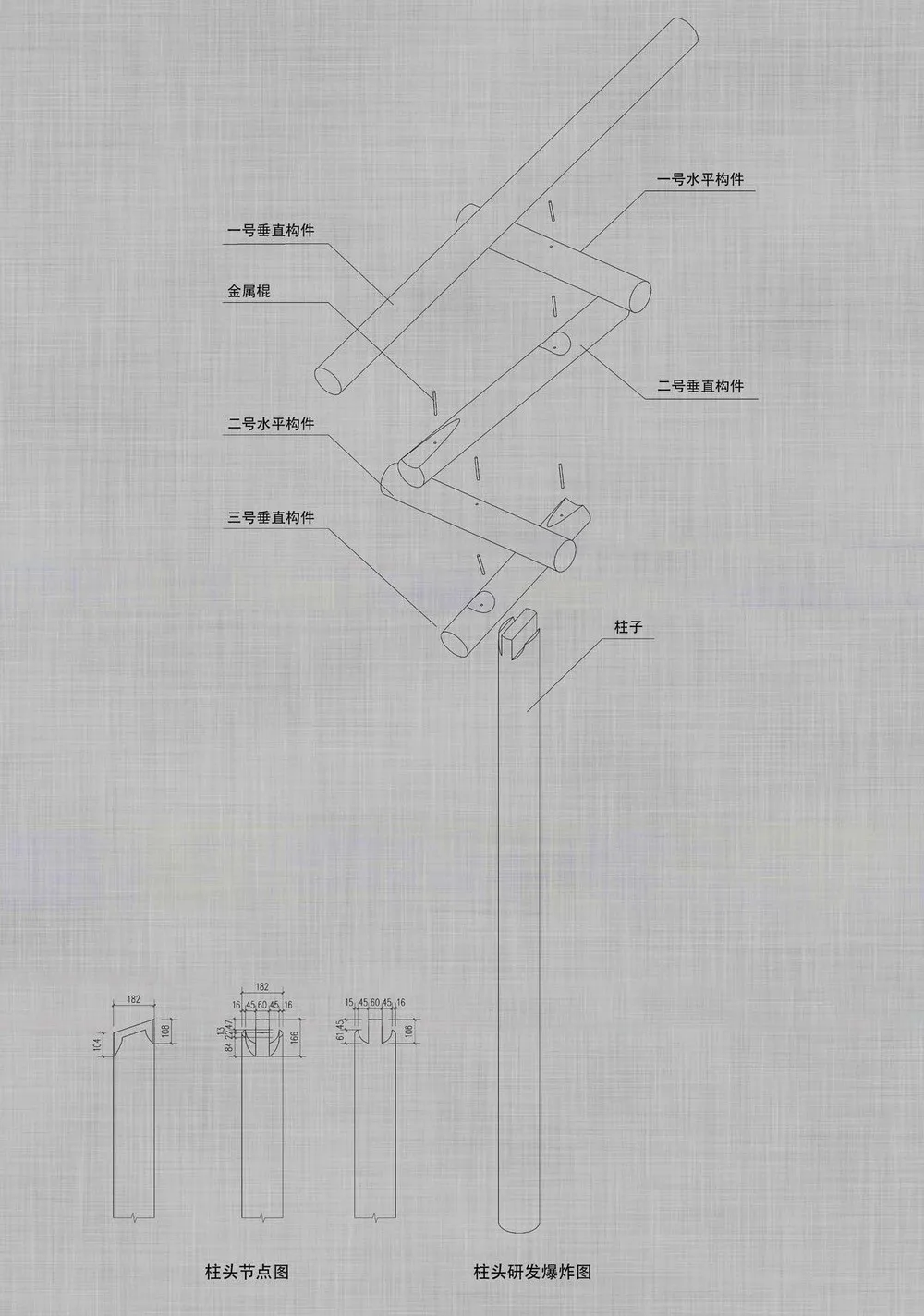
One notable technique is the “picking wos,” a common tiling method used in Song and Yuan Dynasty halls in Zhejiang province. The “Tiaowo” is a slanted long wooden beam that functions as a lifting mechanism, laid between and pressed under flat surfaces to create a raised tail. After analyzing the mechanical principles of the “Tiaowo” in the main hall of Tianning Temple in central Zhejiang, we discovered a multi-lever system where each layer interlocks to form a balanced force transition zone.
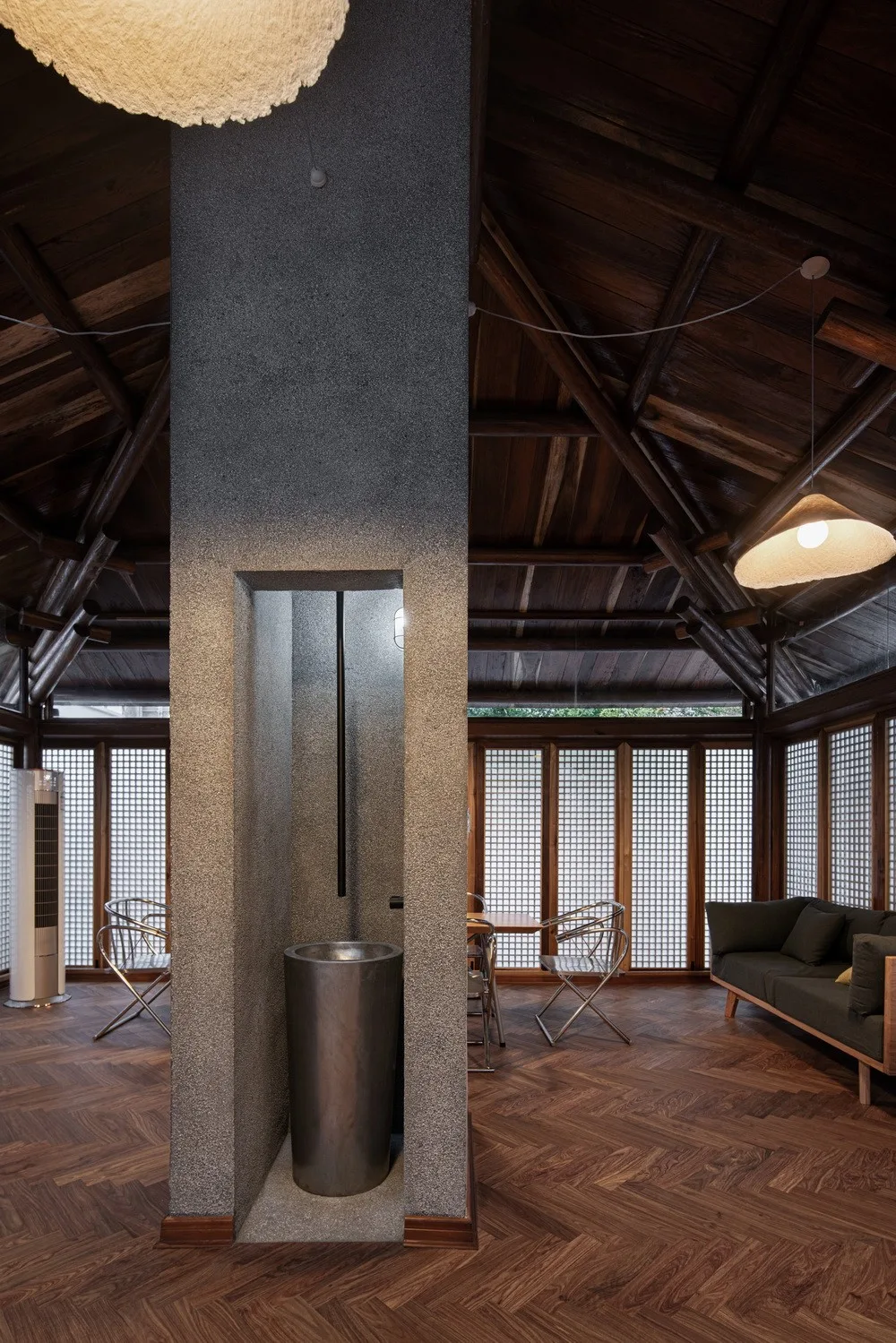
The roof load is transmitted stepwise to a single point using a bamboo bucket as a fulcrum. We abstracted this transmission method to invent a more concise style of large-scale woodworking. Complex traditional components such as flower arm, Cote Doo, and Ang have been replaced with simpler, more abstract round bars. We have discarded symbolic elements in traditional wooden structures, preserving only the original ingenious power transmission principles.
Due to the resemblance of this column head style to a crane’s beak, we named it the “Crane’s Mouth Column.”
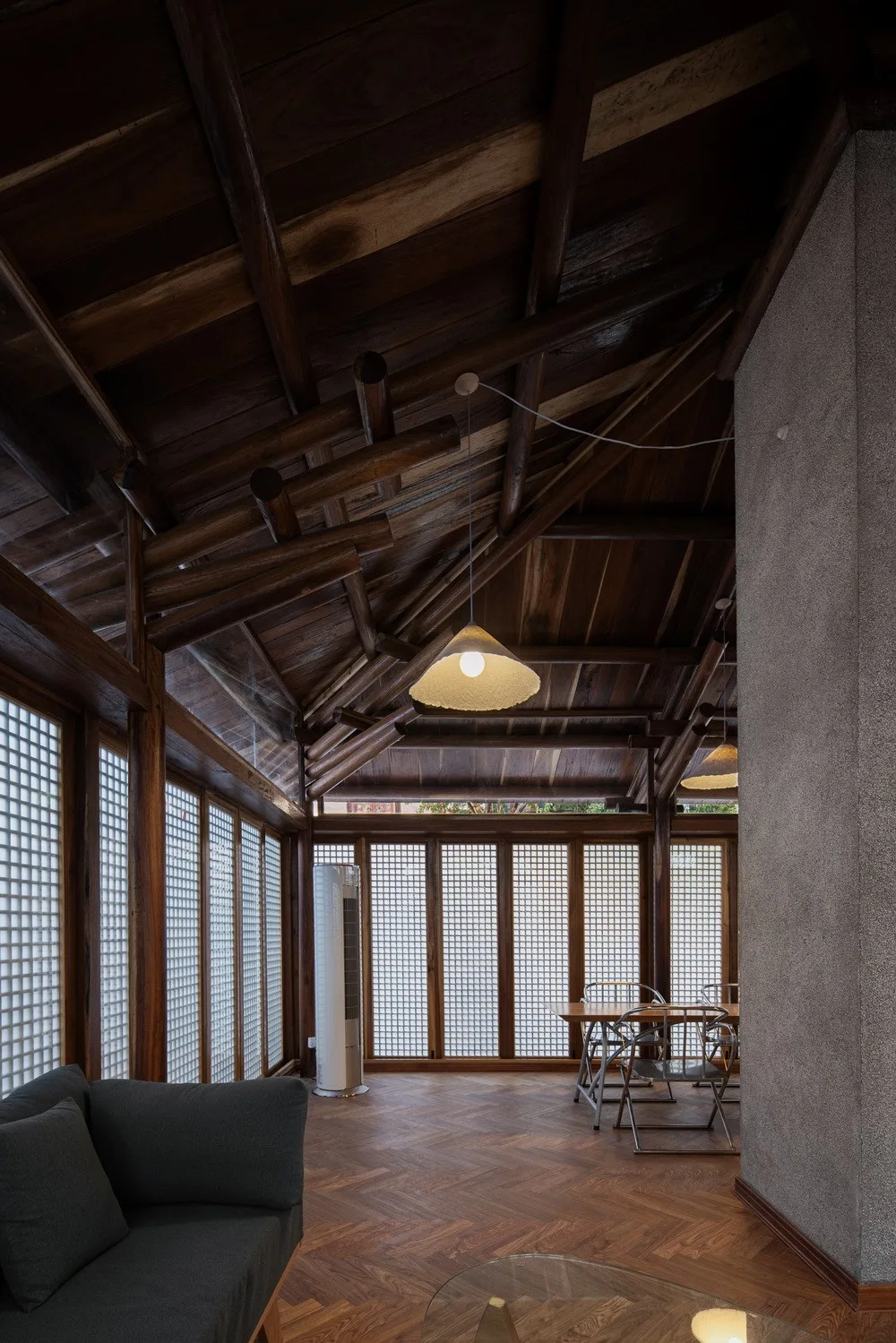
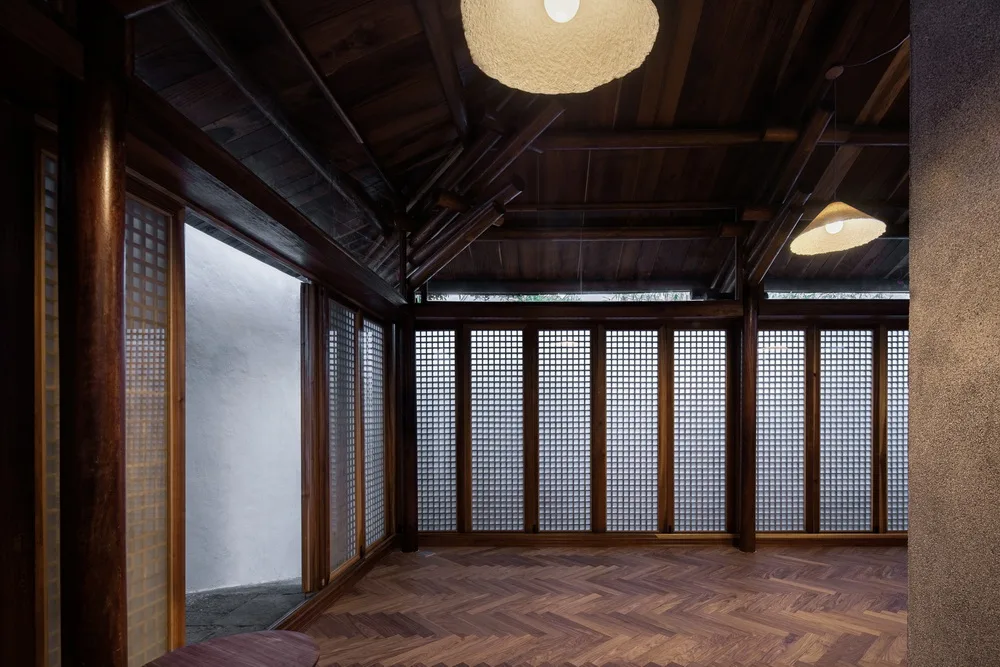
The building’s beam and column system not only supports the structure but also shapes the internal space. This insight was inspired by the hall space of Gaojiatai Gate and extended into the tea room design.
Eight Crane Mouth Columns converge towards the center of the tea room, intersecting on a hollow concrete wall pillar. A washbasin is integrated within this central pillar. Light filters down softly from the tall walls and columns, creating a gentle halo effect. Throughout the design, the structural elements cease to be obstacles and instead harmonize with the space, ultimately merging into a unified whole.
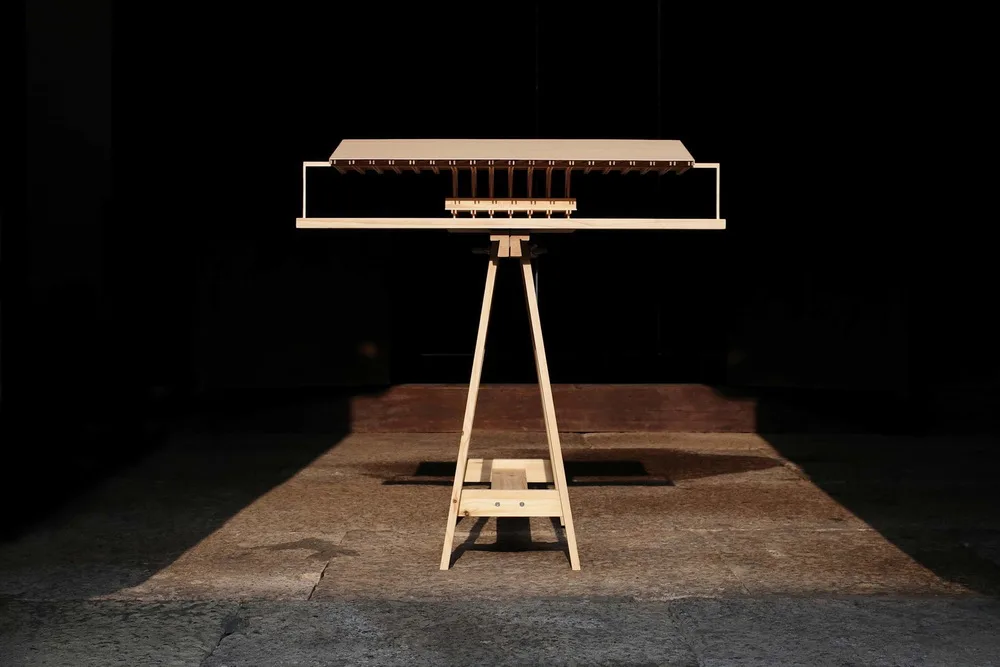
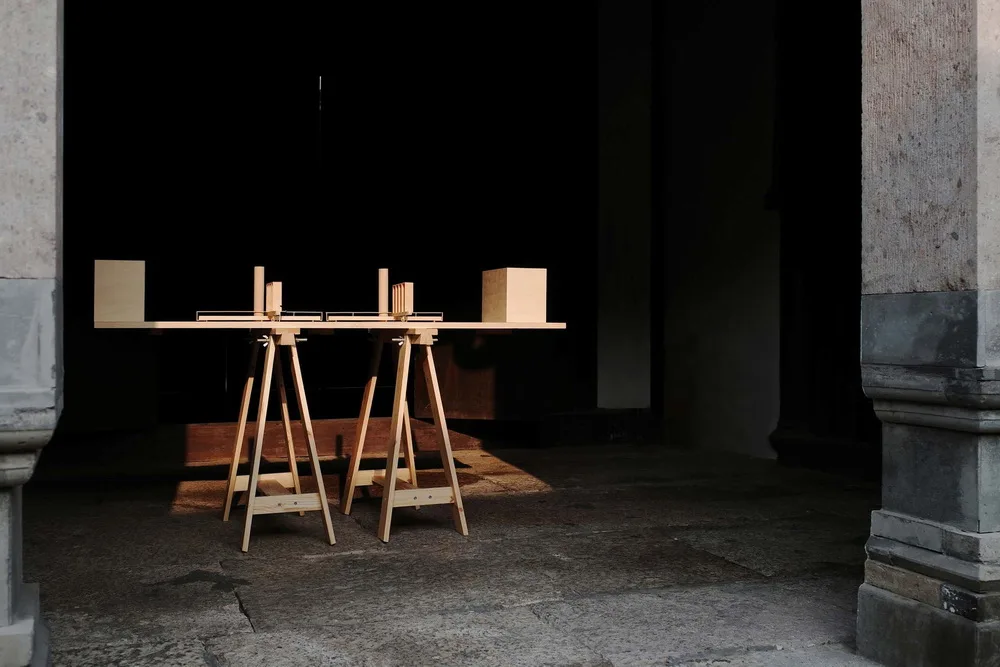
While setting up exhibitions within the hall featuring Ming Dynasty wooden pillars, great care was taken to avoid damaging these cultural relics. Exhibition frames are temporarily fixed to the white walls, and model display racks are placed directly on the floor.
In April 2020, a preview exhibition titled “Revival of K11 Wooden Structures” by an unknown creator was held in the entrance hall of this centuries-old platform. The traditional wooden hall framework was filled with modern reinterpretations of wooden structures, breathing new life into the space. This hall earned the nickname “Luban Hall” in a lighthearted tribute to the legendary Chinese carpenter Luban.
In December 2020, the exhibition “Spatial Memory” by Pan Hui Architectural Design Studio was showcased in the hall. The exhibits featured Pan Hui’s architectural designs since the start of his career, characterized by abstract and modern styles. The strong contrast between traditional architecture and contemporary design created a striking and unexpected effect.
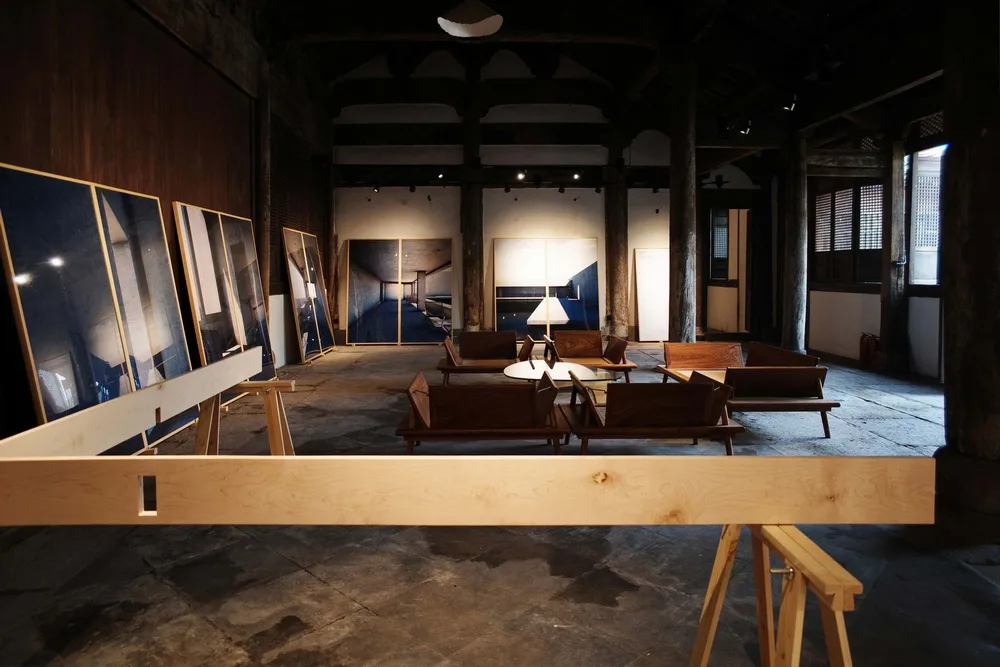
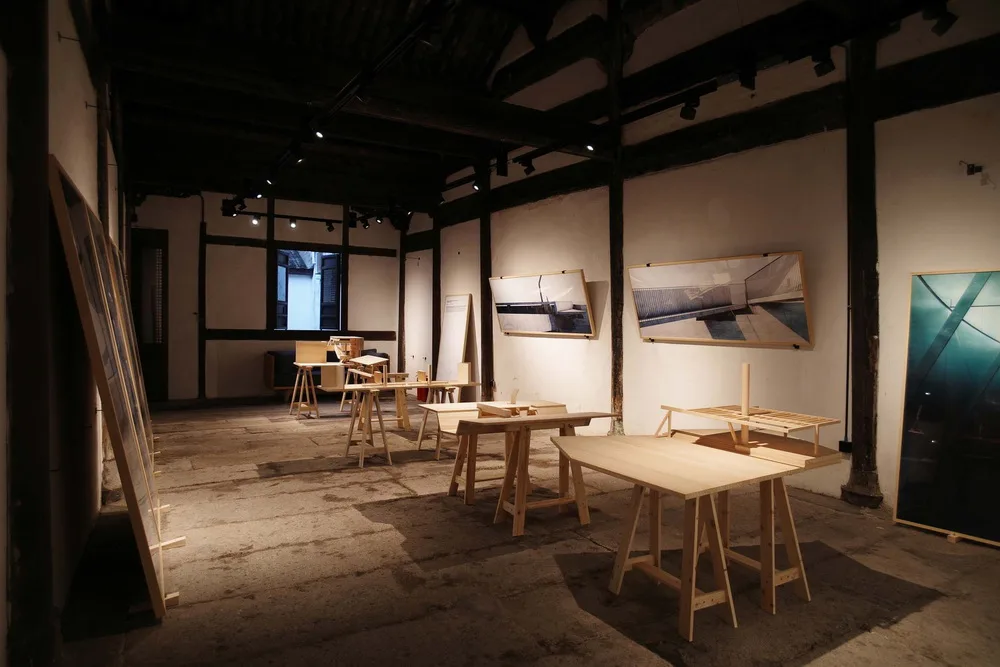
These two contrasting exhibitions demonstrate the wooden museum’s exceptional adaptability for diverse exhibits. The unique character of the museum, combined with its varied exhibition themes, has made it a highly attractive urban public museum in the Beihai Bridge area.
During exhibitions, many visitors from Shanghai, Hangzhou, and Nanjing traveled specifically to see the displays, signaling the museum’s growing reputation as a new cultural highlight in Shaoxing’s ancient city.
Technical Drawings
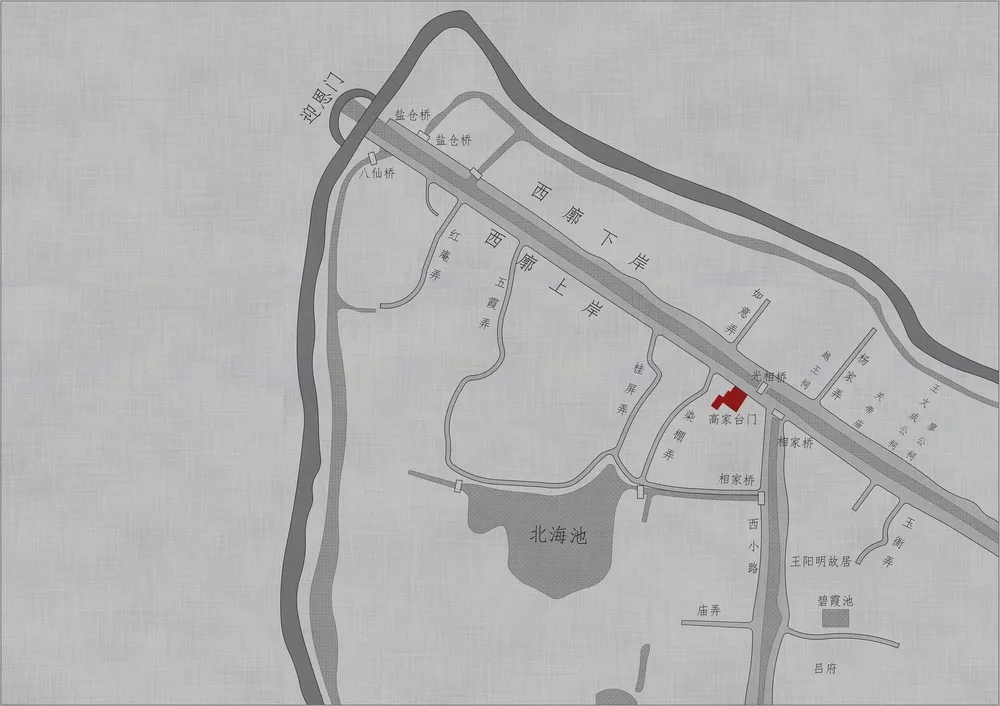
△ Location of the project on the Shaoxing Chengqu Road Map
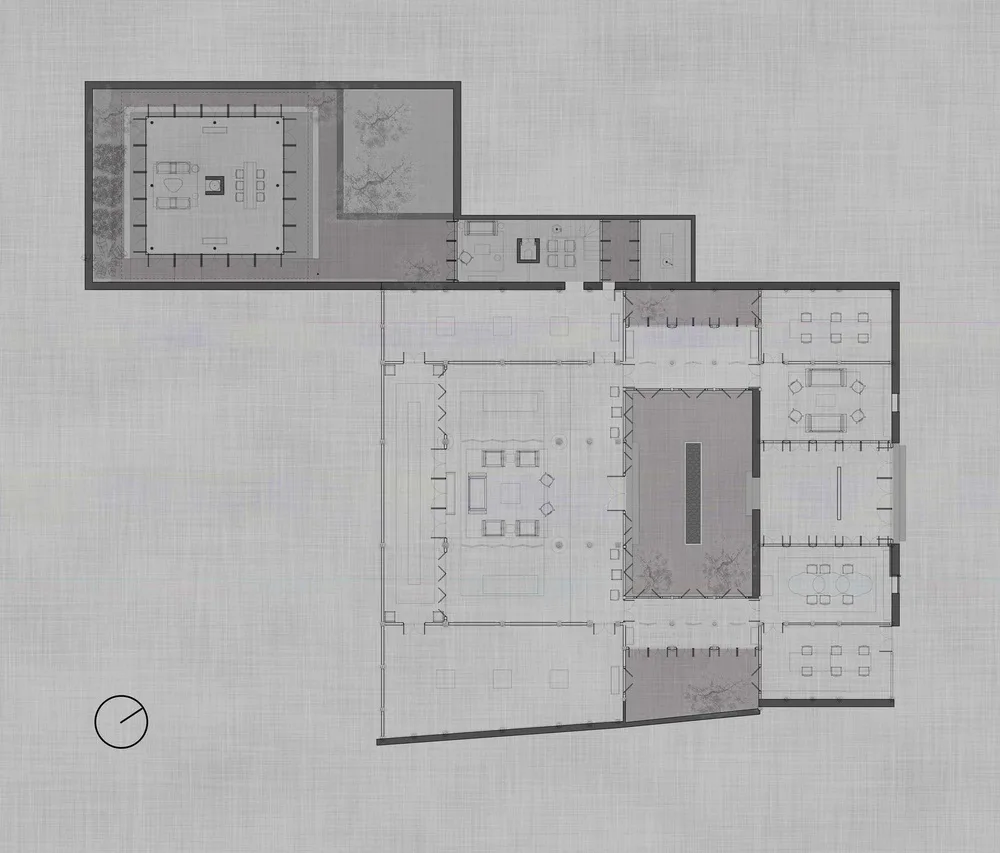
△ First Floor Plan
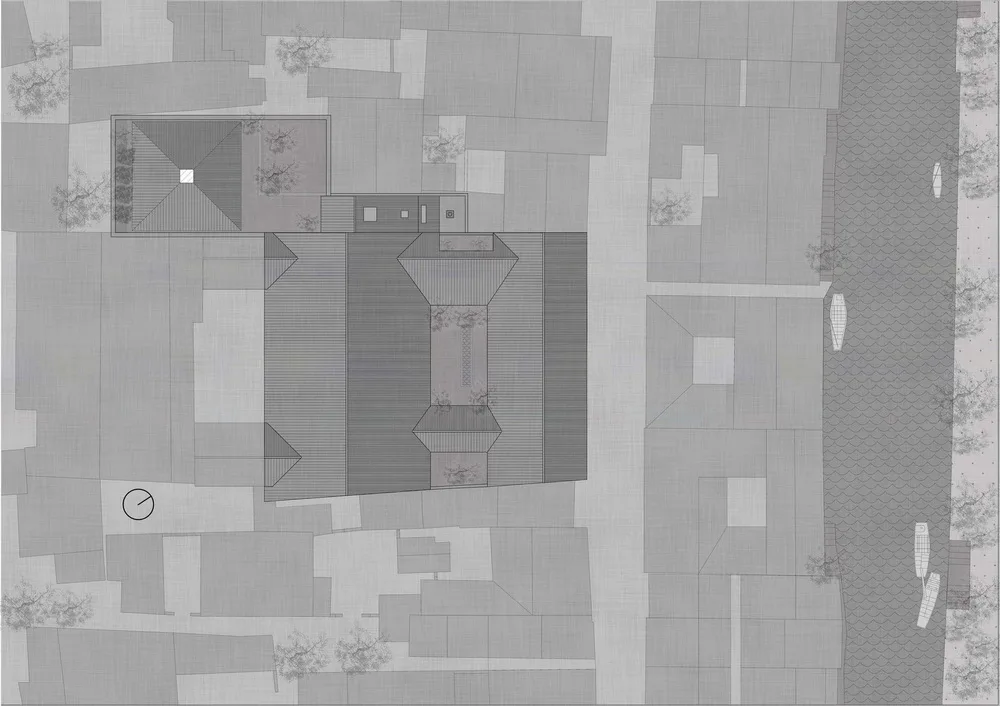
△ Roof Plan
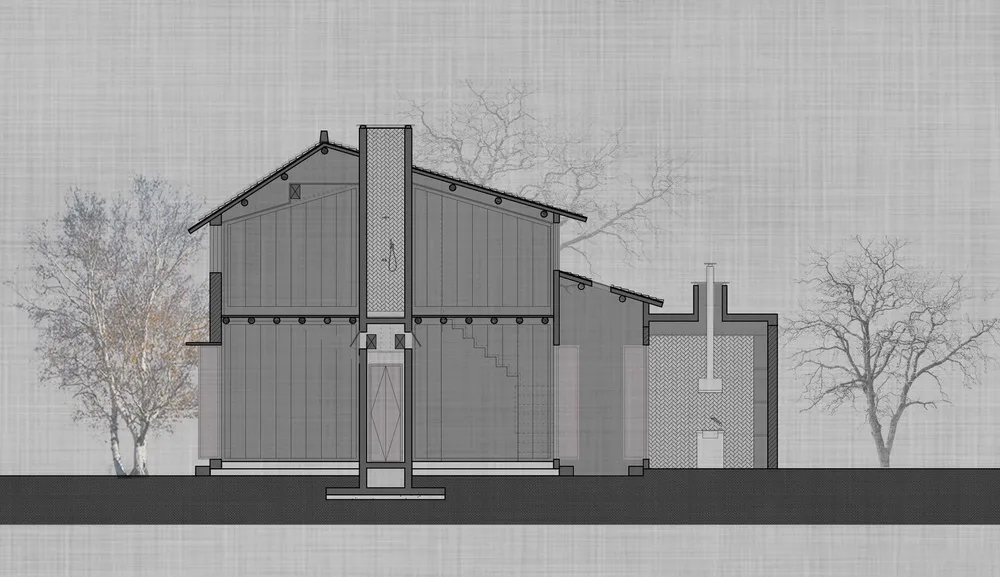
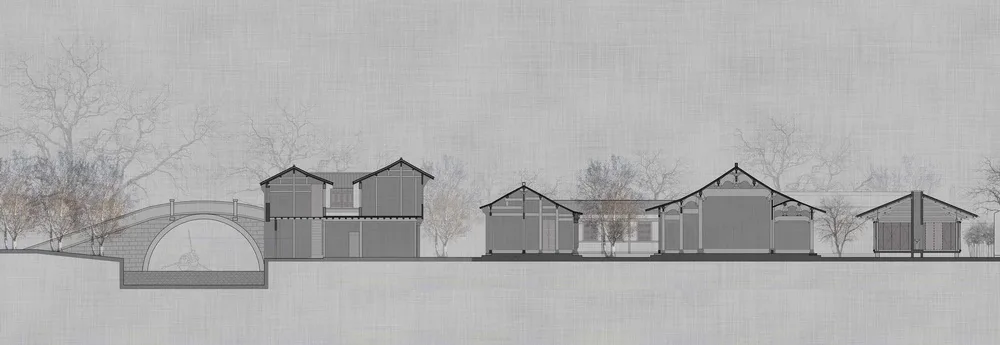
△ Section Diagram
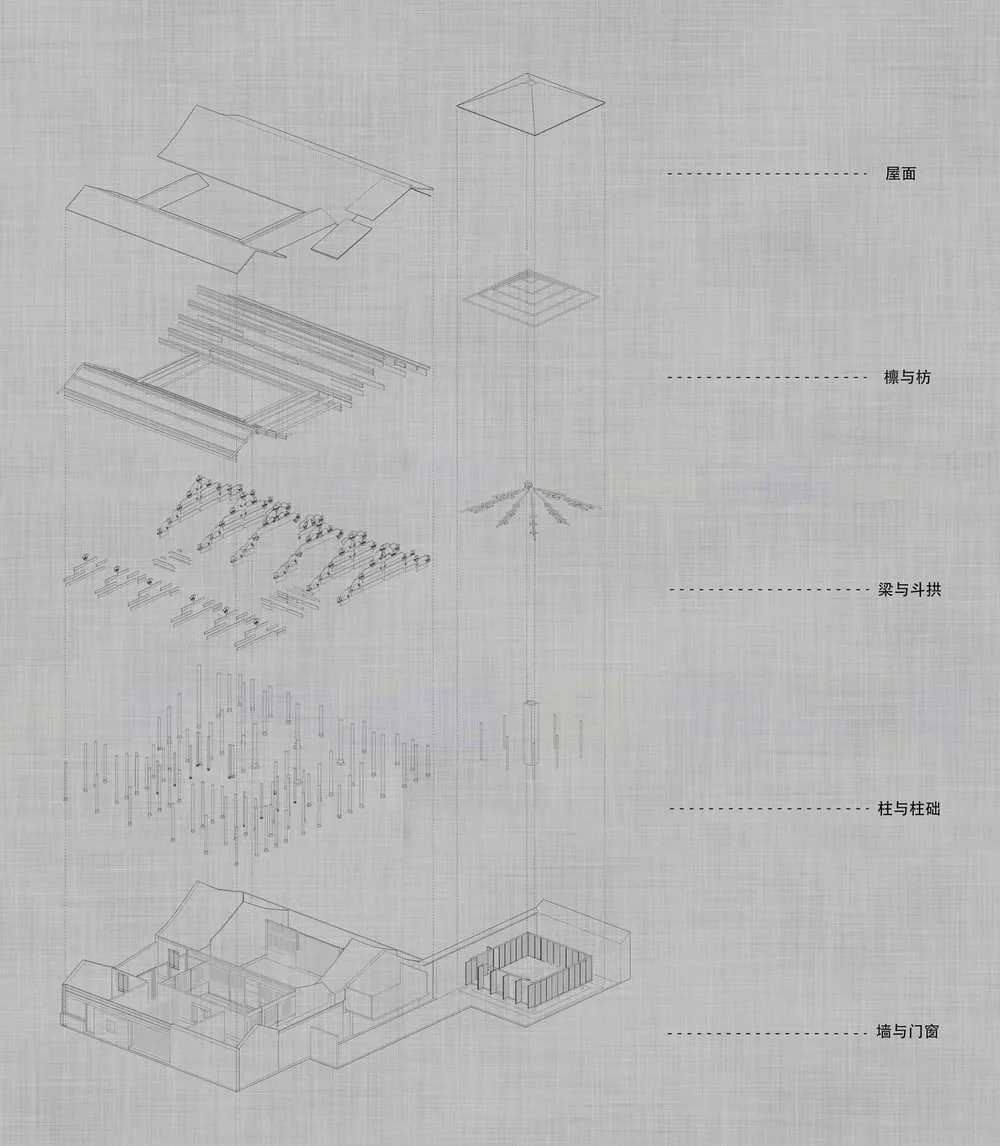
△ Building Axis Measurement
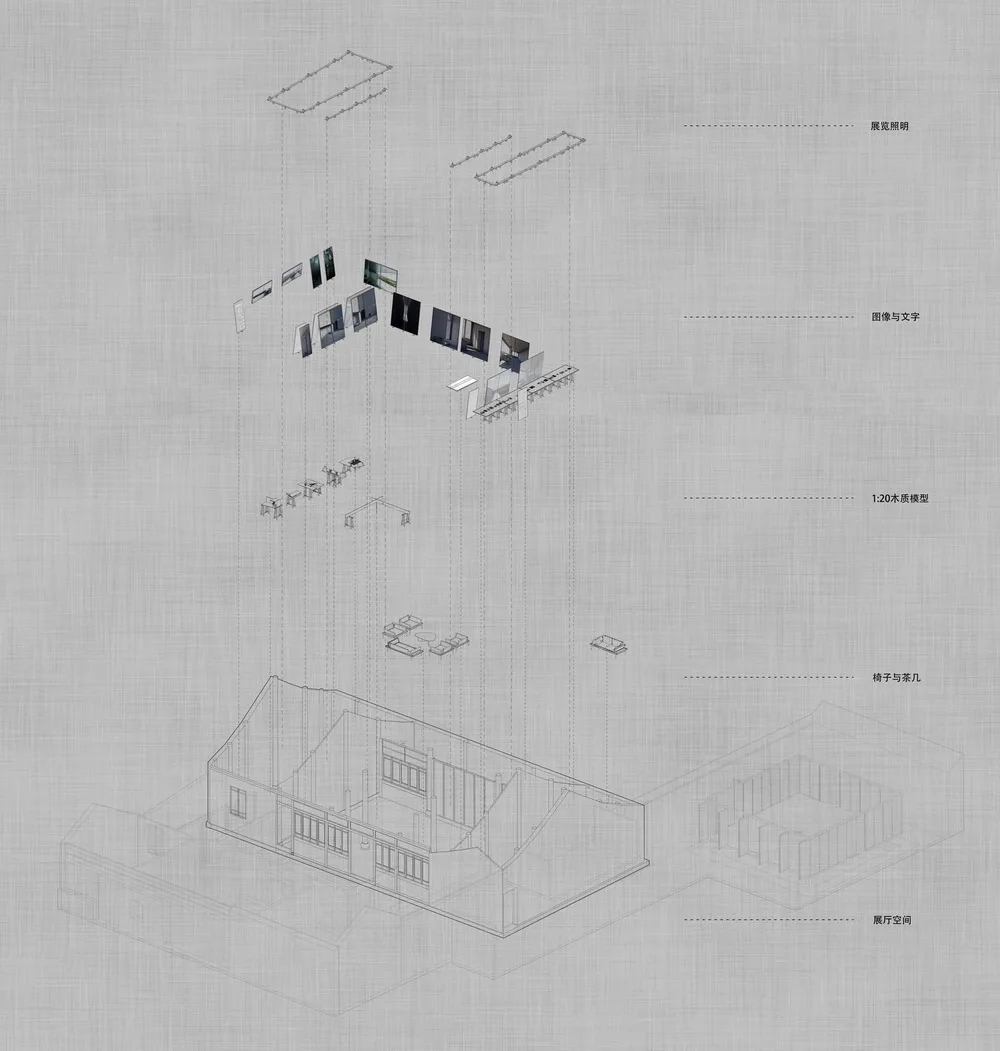
△ Exhibition Design Axis Measurement
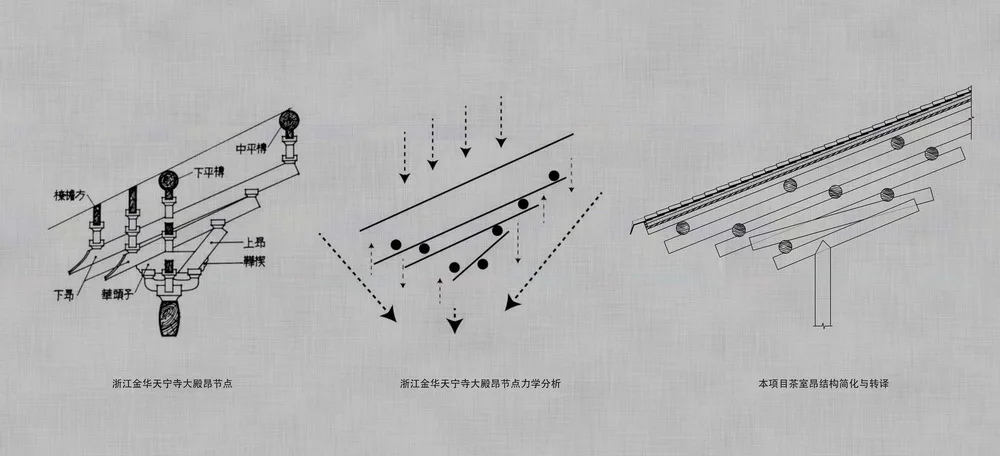
△ Node Evolution
Project Information
Architectural Design: Created by an Unknown Person
Area: 580 m²
Project Year: 2019
Photographers: Wu Qingshan, Pan Hui, Qiu Zhefeng
Lead Architect: Wang Hao
Design Team: Wang Hao, Zhang Junyu, Guo Qi
Curatorial Consultants: Qiu Zhefeng, Liu Xiu
Structural Design: Gong Jiahui, Song Wenchao
Construction Party: Li Xingliang
Construction Drawing Design: Tongchuang Engineering Design Co., Ltd
Curators: Zhejiang Yihe Baichuan Media Co., Ltd., Pan Hui Architectural Design Studio
Landscape Design: Created by an Unknown Person
City: Shaoxing
Country: China















Must log in before commenting!
Sign Up