
Editor’s Note: This project involves the renovation and enhancement of the canteen and employment guidance center at Tsinghua University’s South Campus. It represents both a restoration of the campus environment at the Tsinghua Center and a chance to honor the university’s century-old cultural heritage. Constructing a brick building on this historic campus offers a unique opportunity to reconnect with traditional materials and craftsmanship.
For more outstanding examples of domestic university architecture, see the Special Academy · 52nd Collection of Domestic University Architecture.
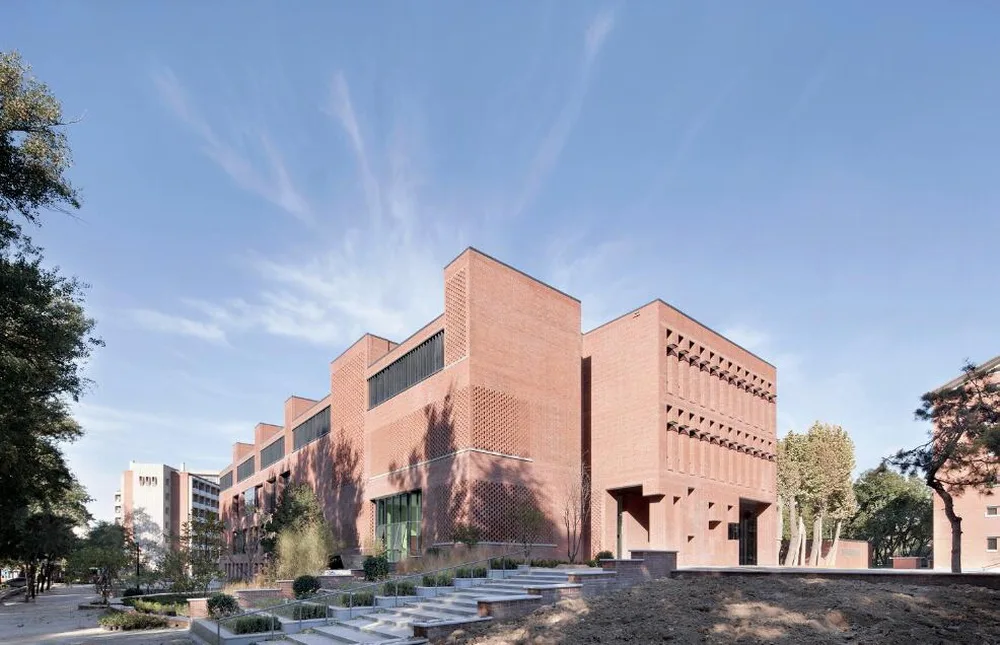
Open and Accessible Campus Spaces
The Tsinghua University South Campus Canteen and Career Guidance Center is situated at the intersection of Xuetang Road (running north-south) and Zhishan Road (running east-west). Surrounded by roads on three sides and adjacent to a square on the fourth, this site serves as a crucial public node in the campus core.
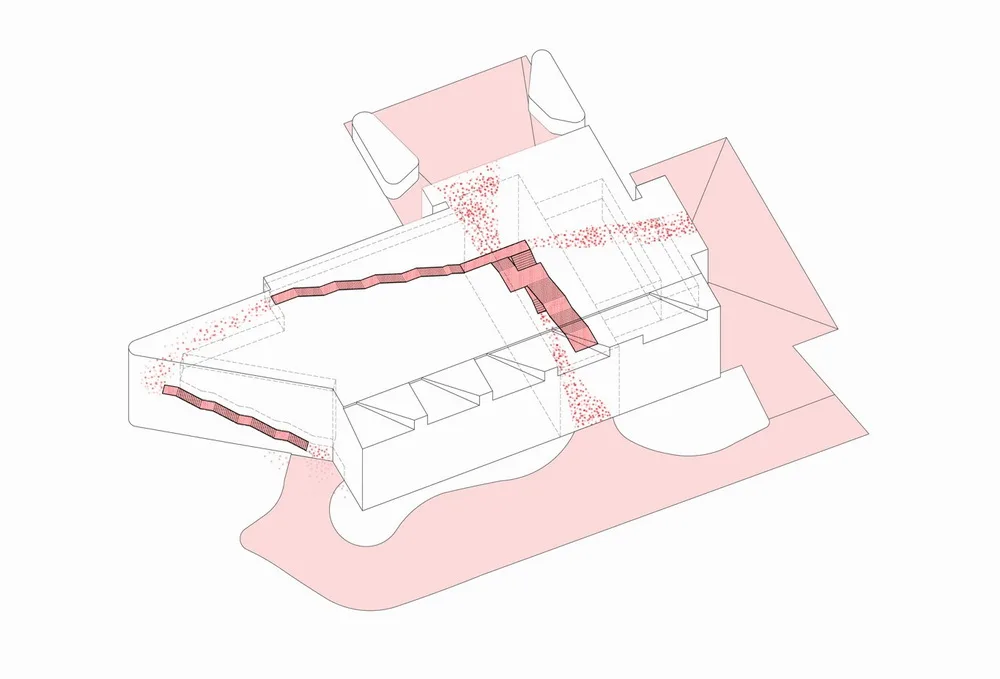
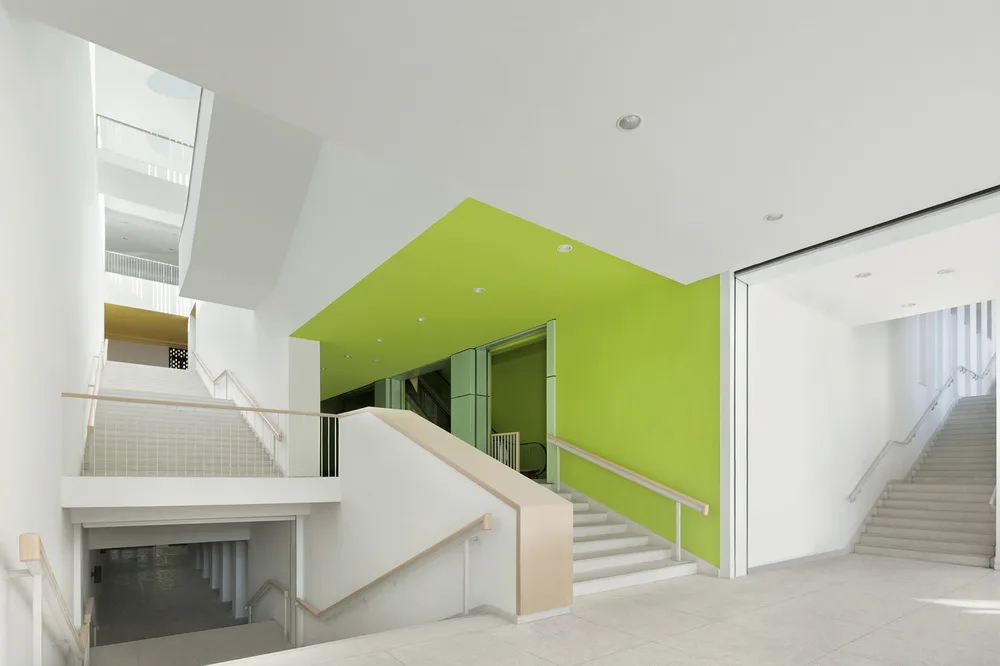
The design creatively uses the 2-meter elevation difference between the east and west terrain, forming an indoor three-dimensional street that resembles a traditional Chinese alleyway. This not only bridges the height gap but also creates accessible entrances at multiple building interfaces. The ground floor opens into a wall-defined public space that welcomes students and faculty from all directions, fostering vibrant campus activity.
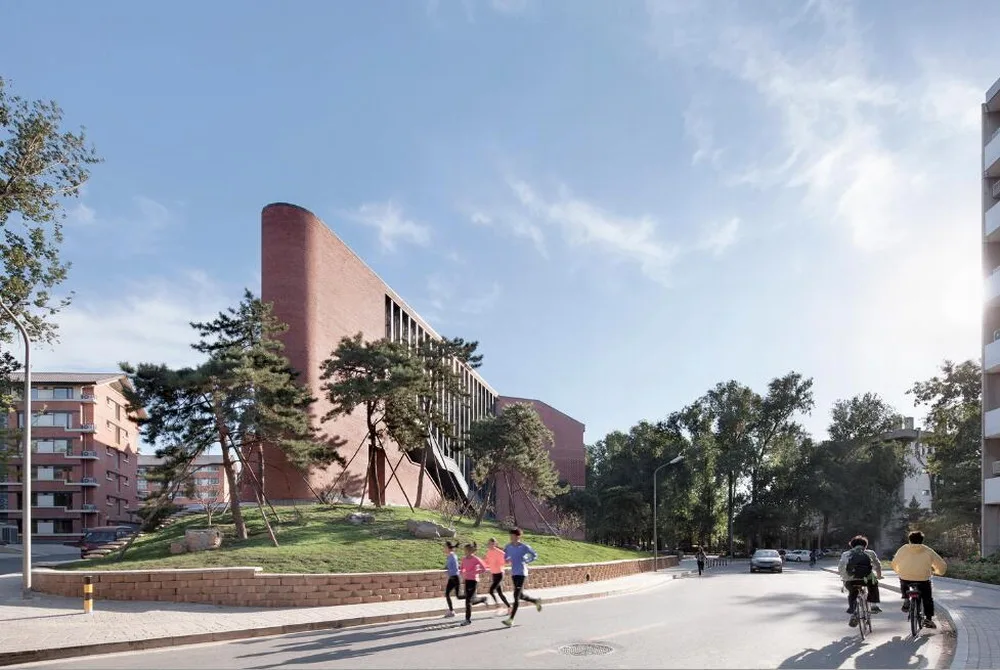
Respectful Integration of Landscape and Cultural Context
The original site’s natural topography—including iconic grassy slopes in the northwest and mature plane trees in the southeast—has been carefully preserved to maintain continuity with the campus’s cultural landscape. To protect the plane trees, the building incorporates setbacks, featuring a coffee terrace beneath the trees on the first floor and observation balconies on the second and third floors, allowing visitors to enjoy the tranquil greenery.
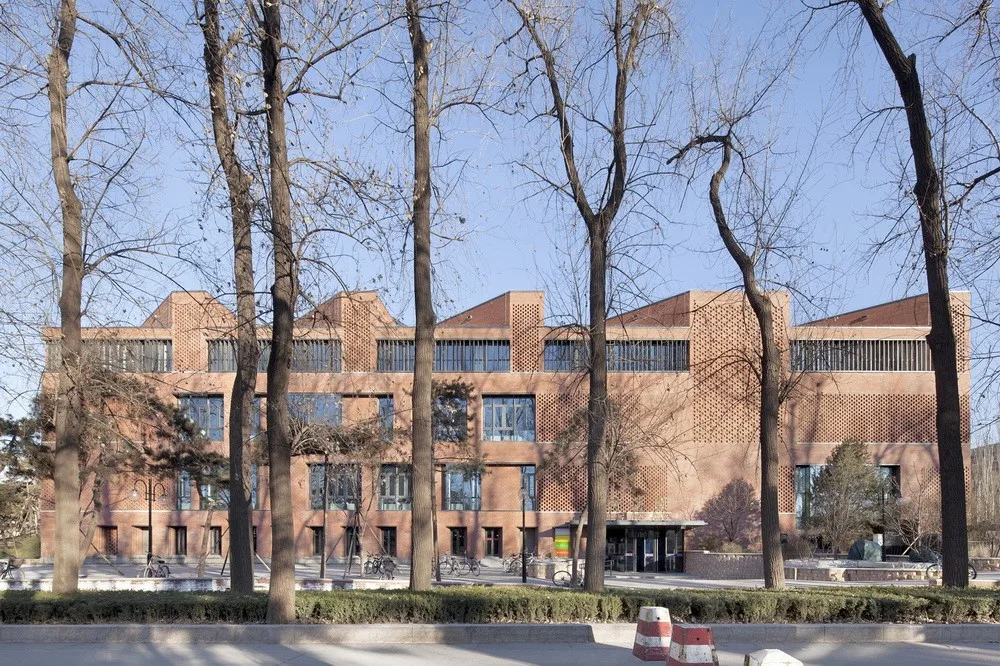
Sustainable Building Design
The project employs sustainable design strategies, particularly passive techniques integrated with the building layout. These ensure comfortable indoor environments while minimizing operational energy consumption and costs.
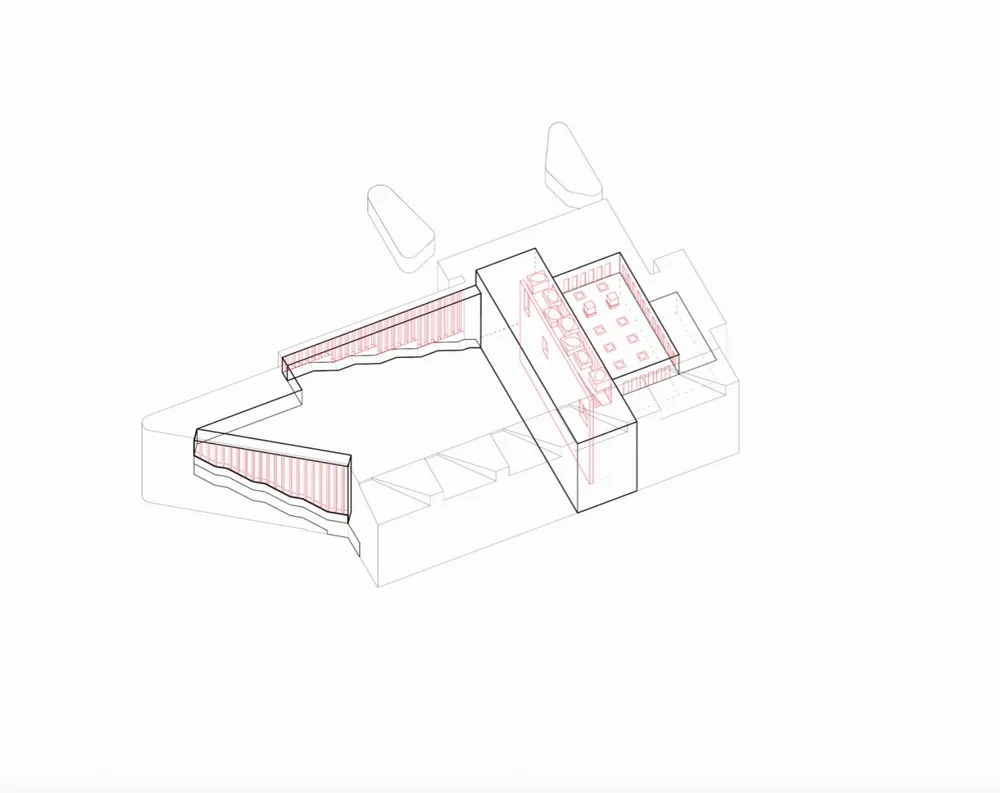
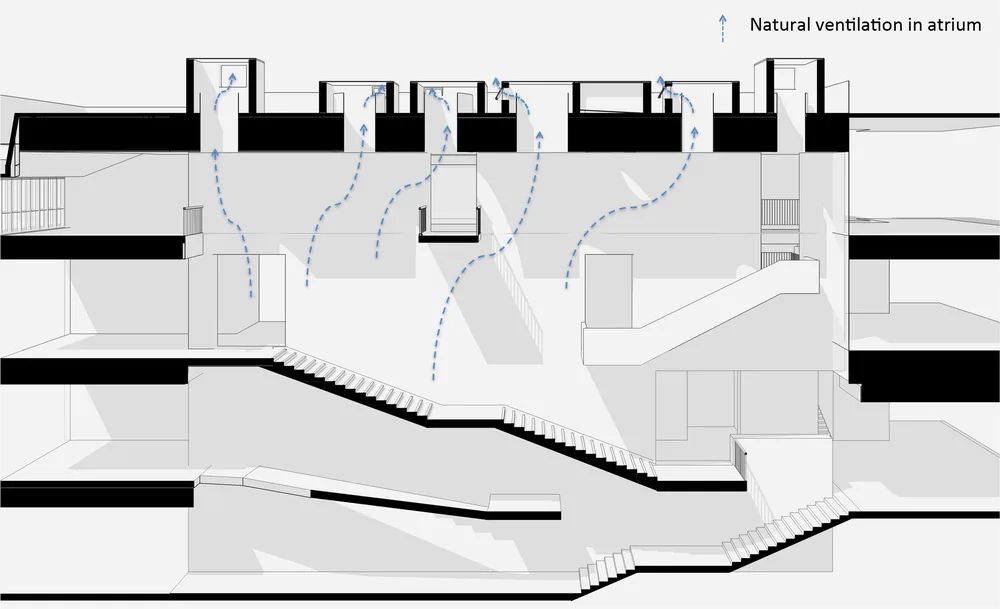
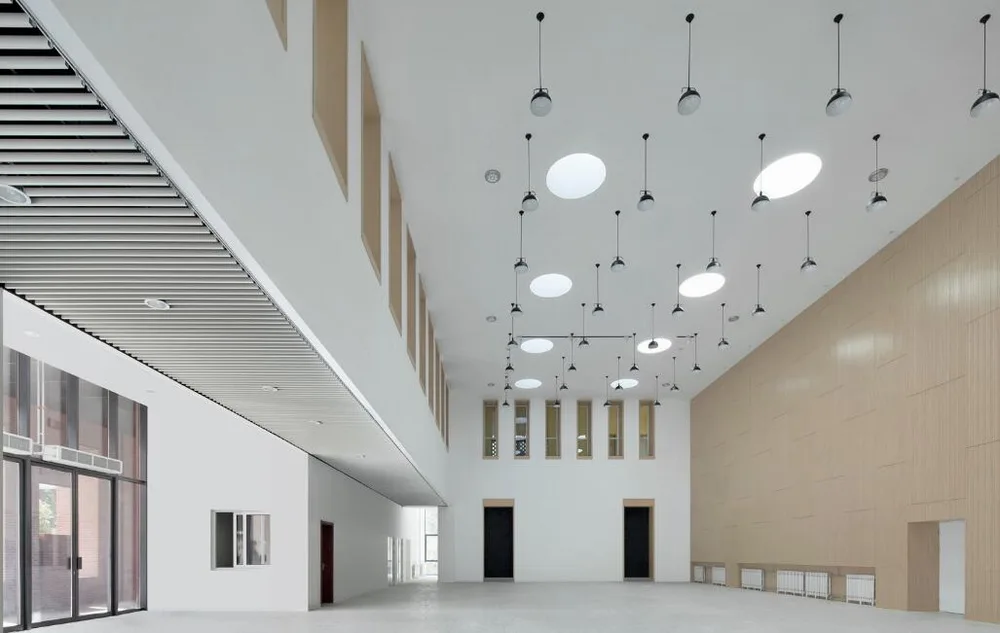
The building’s upper levels are divided into two independently operated areas—a restaurant and an employment guidance center—connected by a public atrium. This central courtyard functions as a shared space linking both functions vertically.
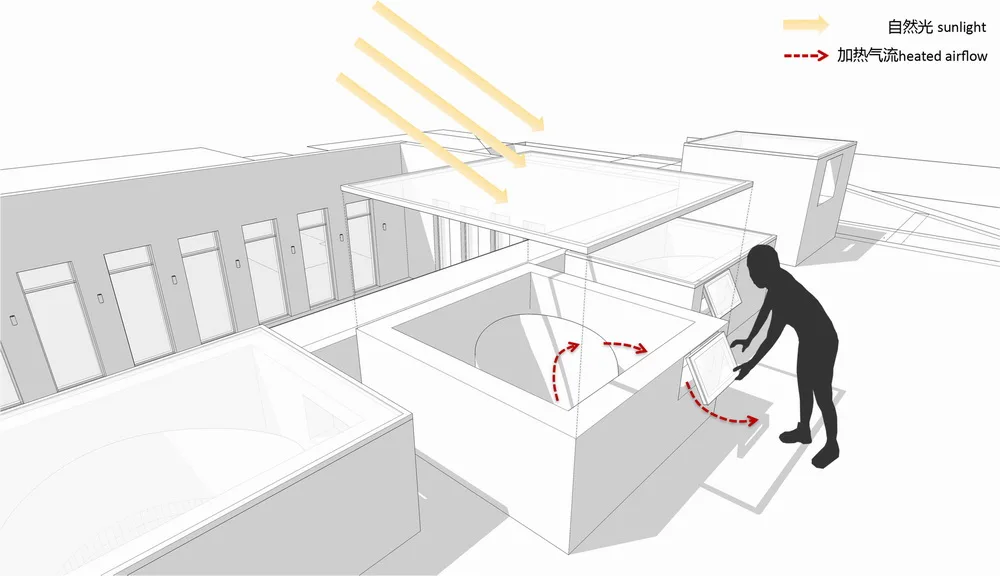
Seven egg-shaped skylights flood the atrium with natural light, each equipped with ventilation openings at the top to relieve summer heat and encourage air circulation, effectively balancing daylight and thermal comfort.
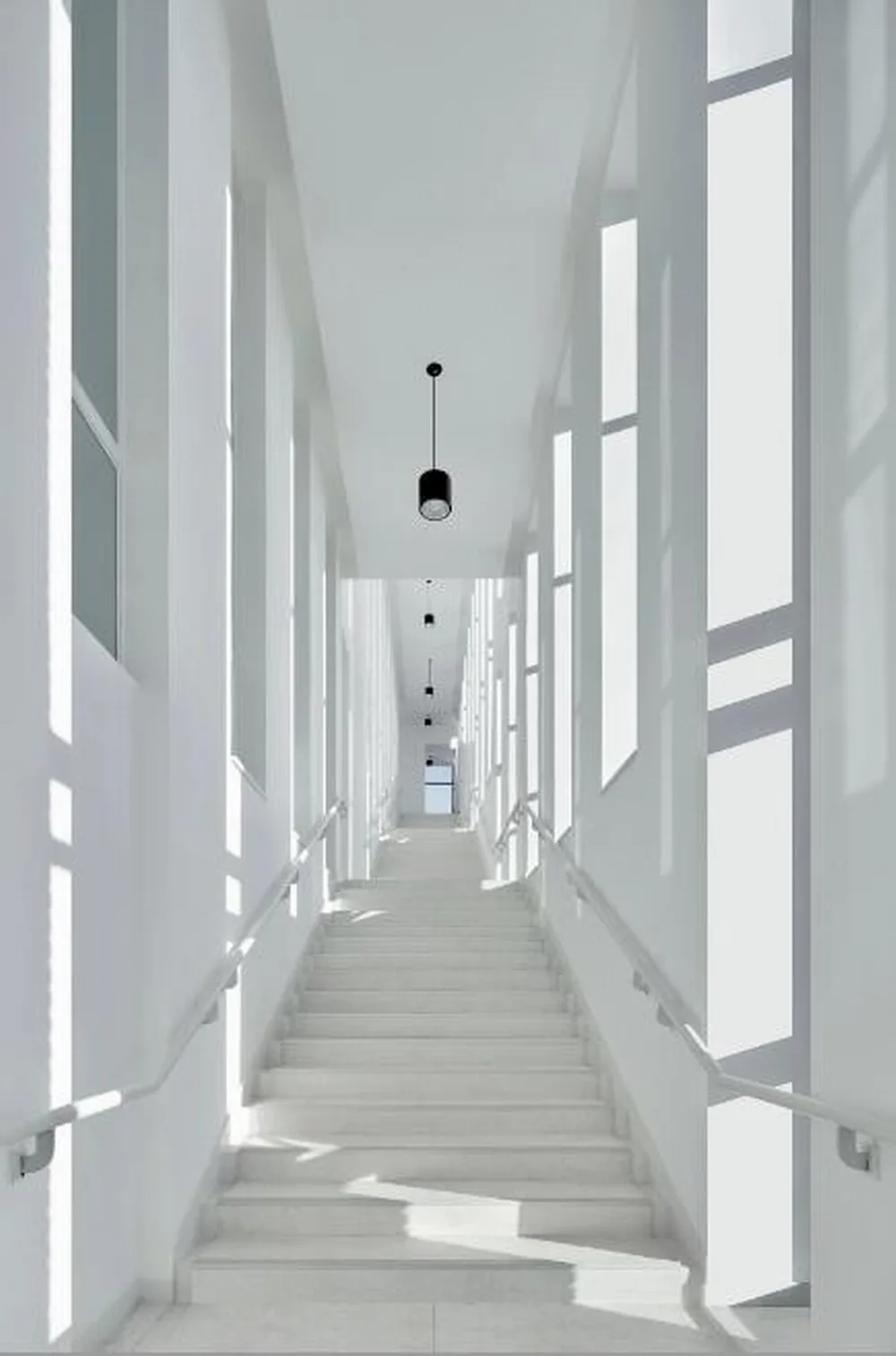
At 40 meters in east-west depth, the building includes a rooftop courtyard at the southern end to enhance natural lighting and ventilation for the public and office areas. Skylights flush with the courtyard floor channel sunlight deep into the auditorium below, improving daylight access and air quality.
Handcrafted Masonry Techniques Blending Tradition and Innovation
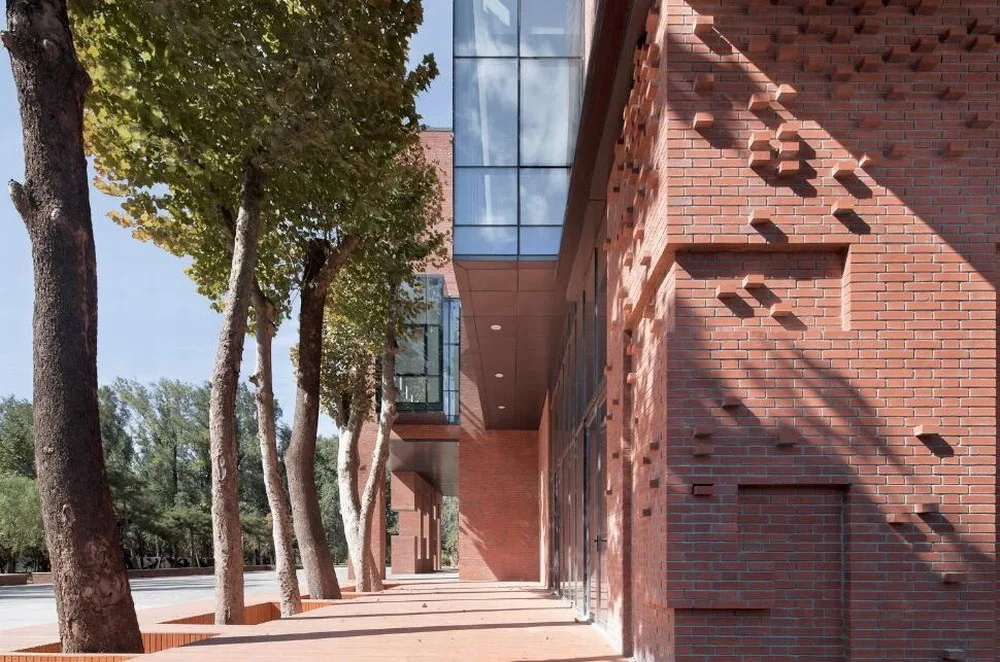
Early Tsinghua University buildings predominantly featured brick construction, using both gray and red bricks, which created a distinctive architectural character. This heritage has been increasingly valued over the past century as part of the campus identity.
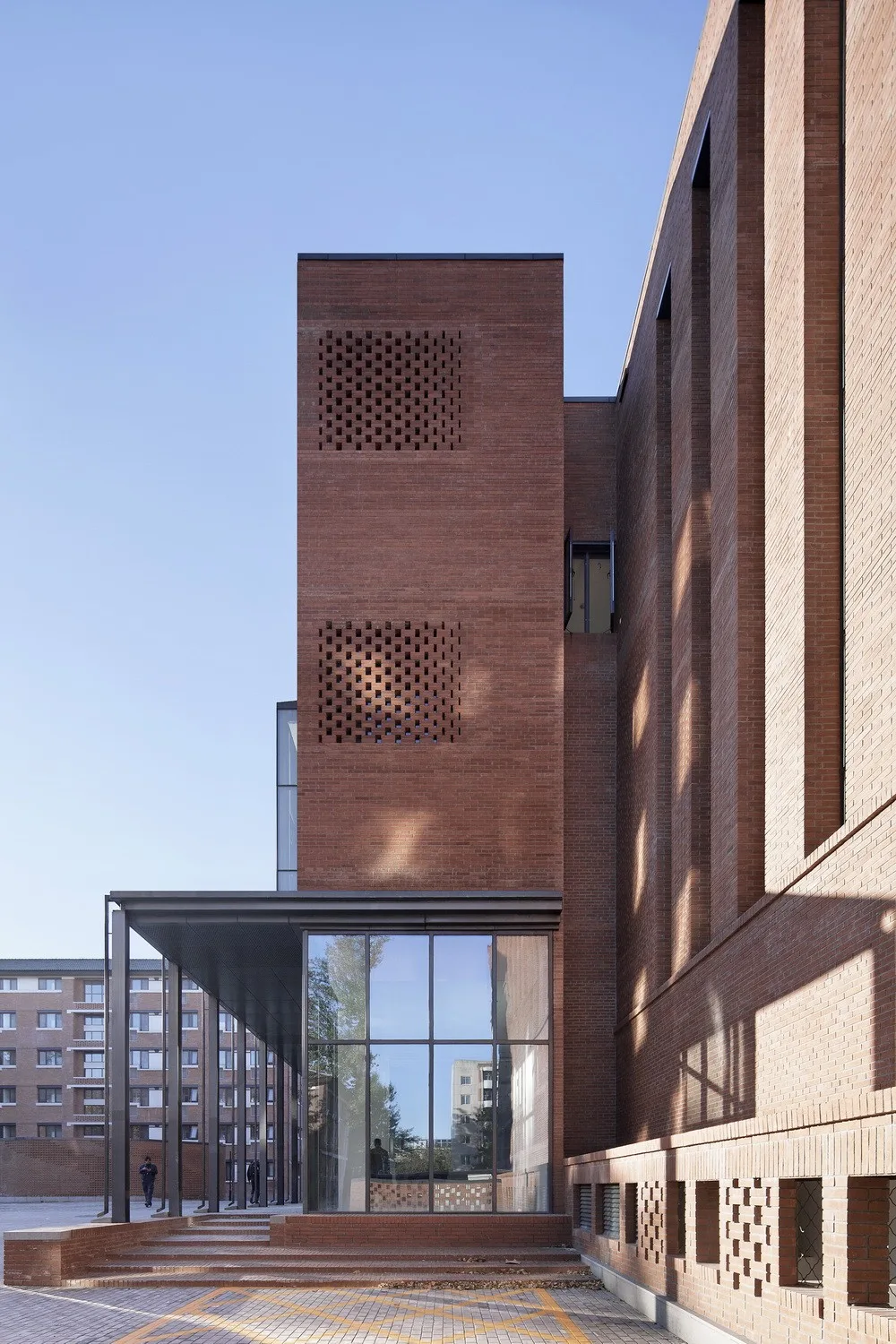
Building with brick today on this historic campus not only continues this legacy but also offers a chance to rediscover and reinterpret this traditional material through modern practice.
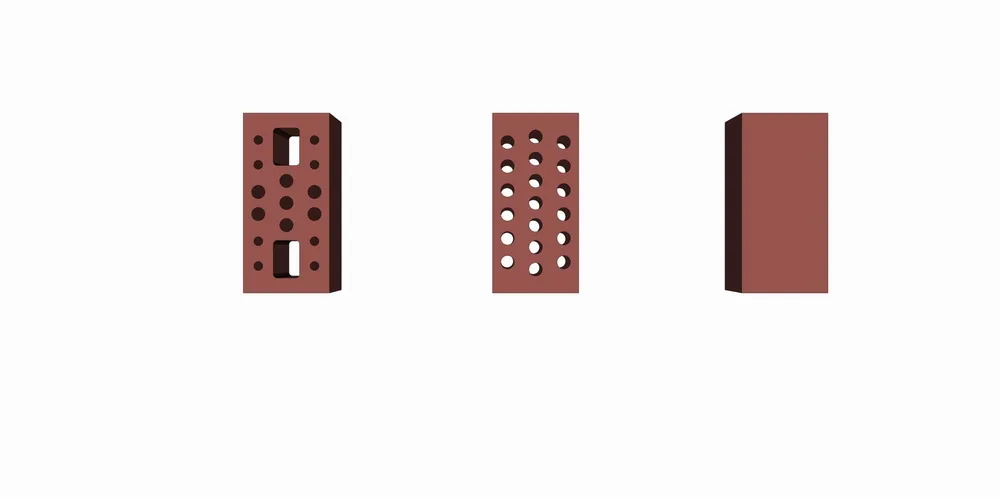
Modern bricks are more block-like compared to traditional clay bricks, presenting new challenges. Firstly, pure brick structures no longer satisfy the stringent seismic standards required in regions like Beijing. Even when used as non-structural elements, bricks must meet strict technical and regulatory demands.
Secondly, the primary material has shifted from traditional fired clay bricks to environmentally sustainable blocks that maintain the classic brick dimensions.
From a construction standpoint, the method of connecting bricks remains consistent, even with the integration of structural reinforcements like steel bars and plates.
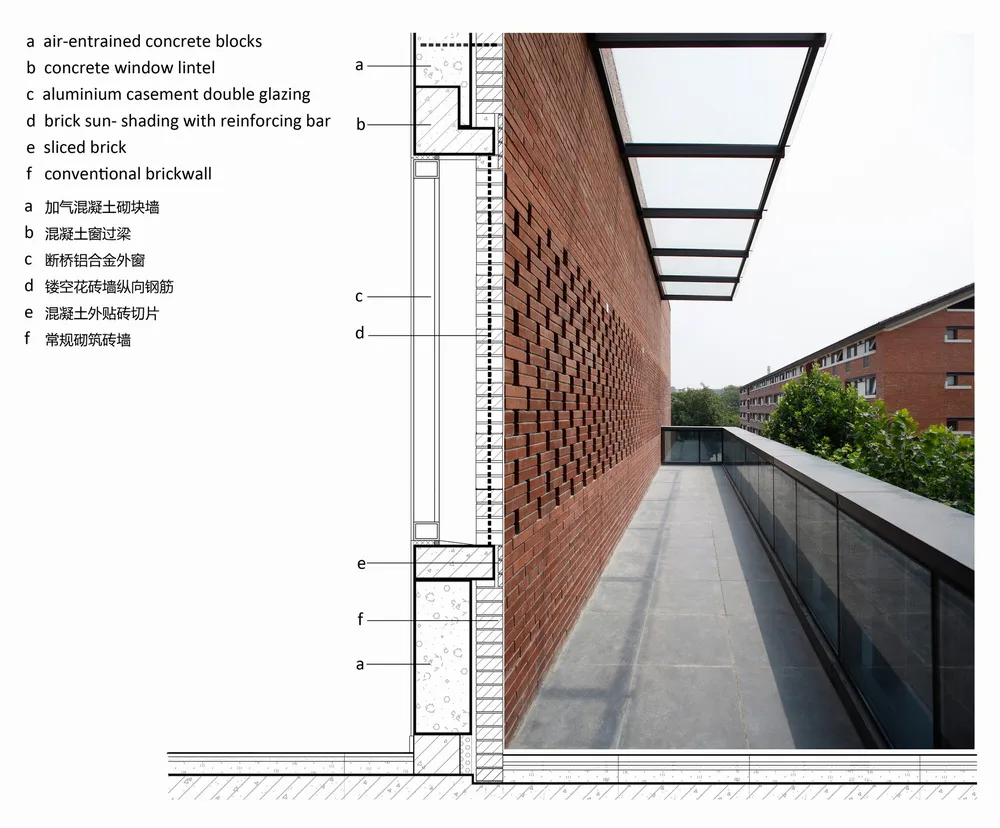
Despite these changes, the project preserves the historic and cultural narrative of Tsinghua’s brick architecture through traditional masonry techniques and detailed craftsmanship. At least five bricklaying methods are employed:
- Conventional masonry
- Flower brick grid masonry (for facade shading and ventilation)
- Concave brick flower wall masonry
- Convex brick flower wall masonry
- Tooth-shaped flower wall masonry
These techniques provide dynamic textures and adapt to various functional needs across the building’s exterior.
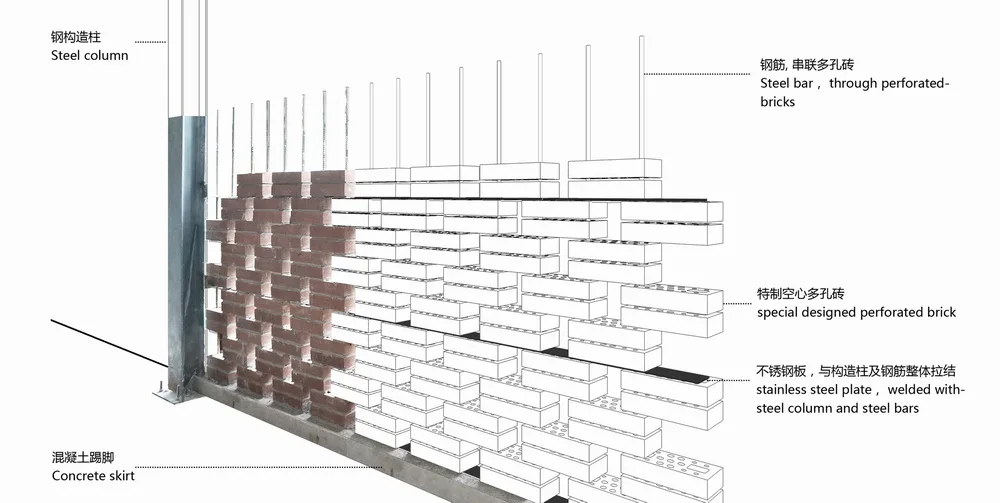
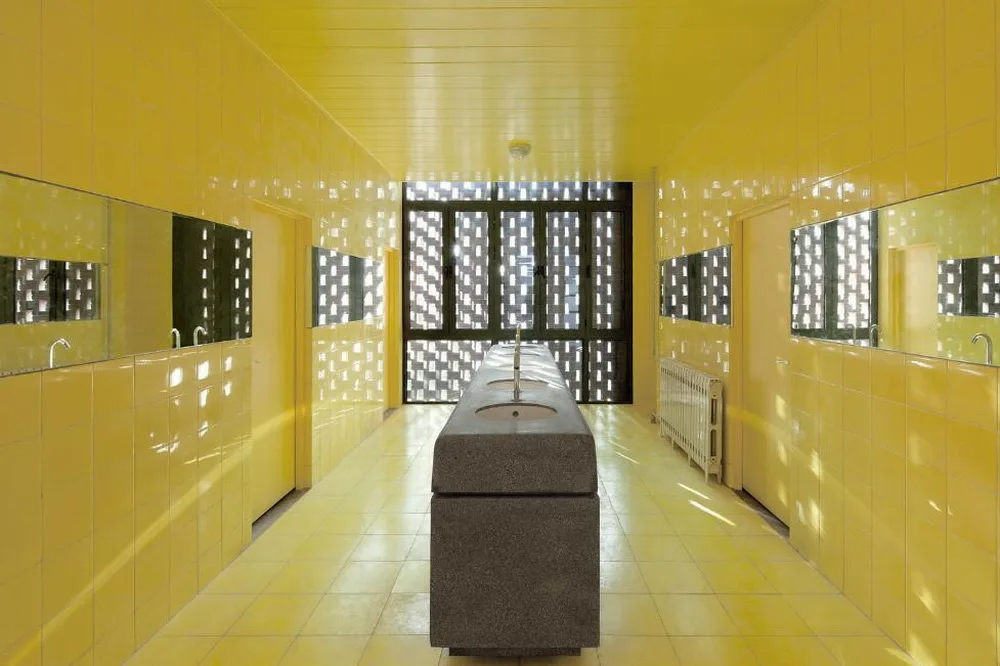
For instance, flower brick grilles are used in areas requiring ventilation and natural light. These bricks create openings that also serve as shading devices, contributing to sustainable design with low construction and operational costs. The artistic effect is enhanced by varying brick joint spacing. Craftsmen follow detailed layouts, secure welding bars on tie steel sheets, and lay bricks from the bottom up with precision.
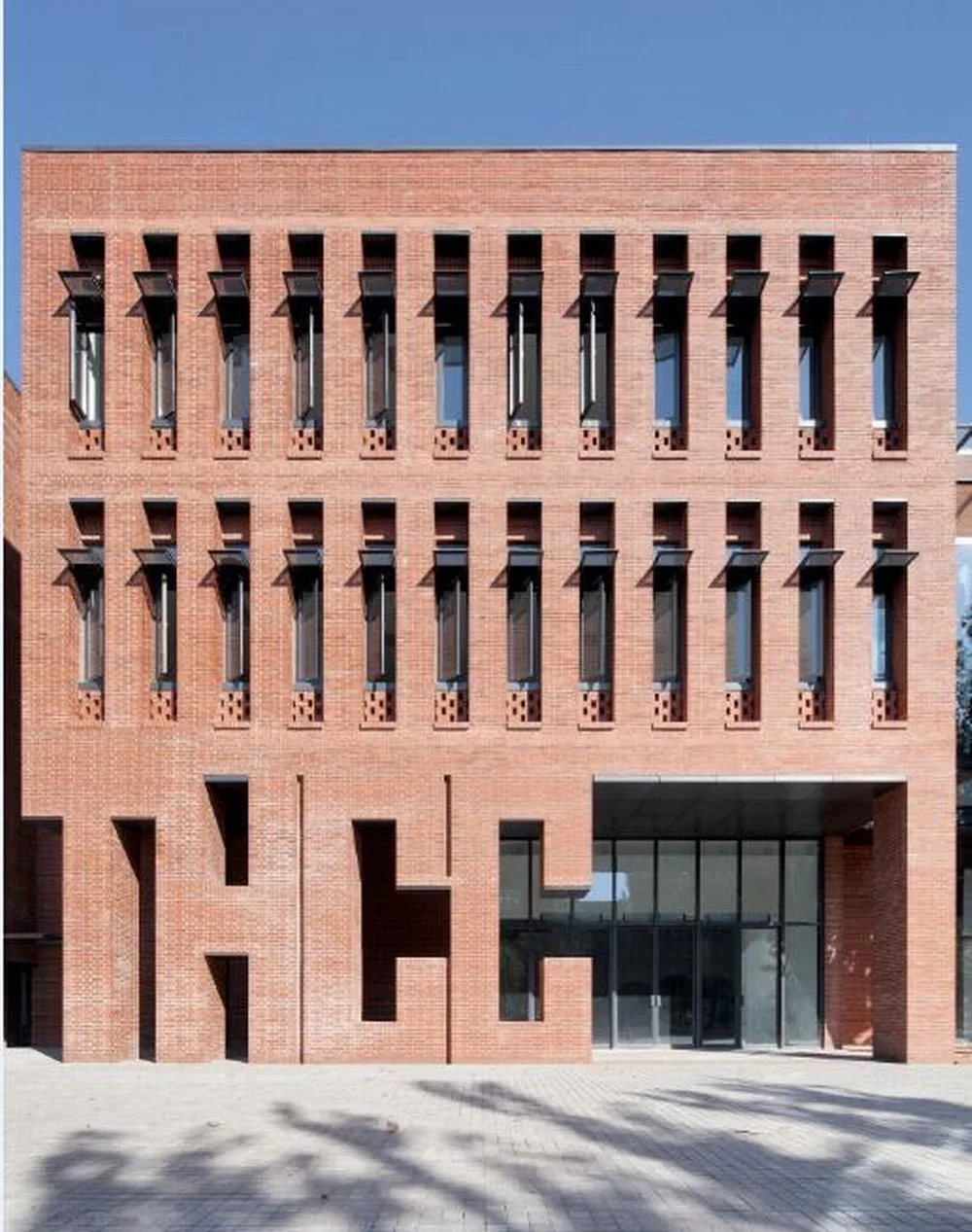
Concave brick flower walls serve as symbolic markers of special spaces, such as the outdoor staircase in the northwest corner. This area acts as a backdrop for group photos and encourages interaction with students. The 240mm thick concave wall is built entirely from bricks, with 160mm cut bricks forming the recesses, reviving traditional craftsmanship in a modern context.
Convex brick flower walls are located on the southeast facade corner and beneath the eastern corridor. This design reflects the integration of architecture and art, turning building elements into sculptural works crafted by skilled artisans. The placement of protruding bricks was refined through more than ten design iterations to form the word “TSINGHUA” alongside oversized brick masonry and a lattice of clear water bricks. Five bricks are wrapped with custom copper sleeves, inviting tactile interaction and strengthening the connection between people and the building.
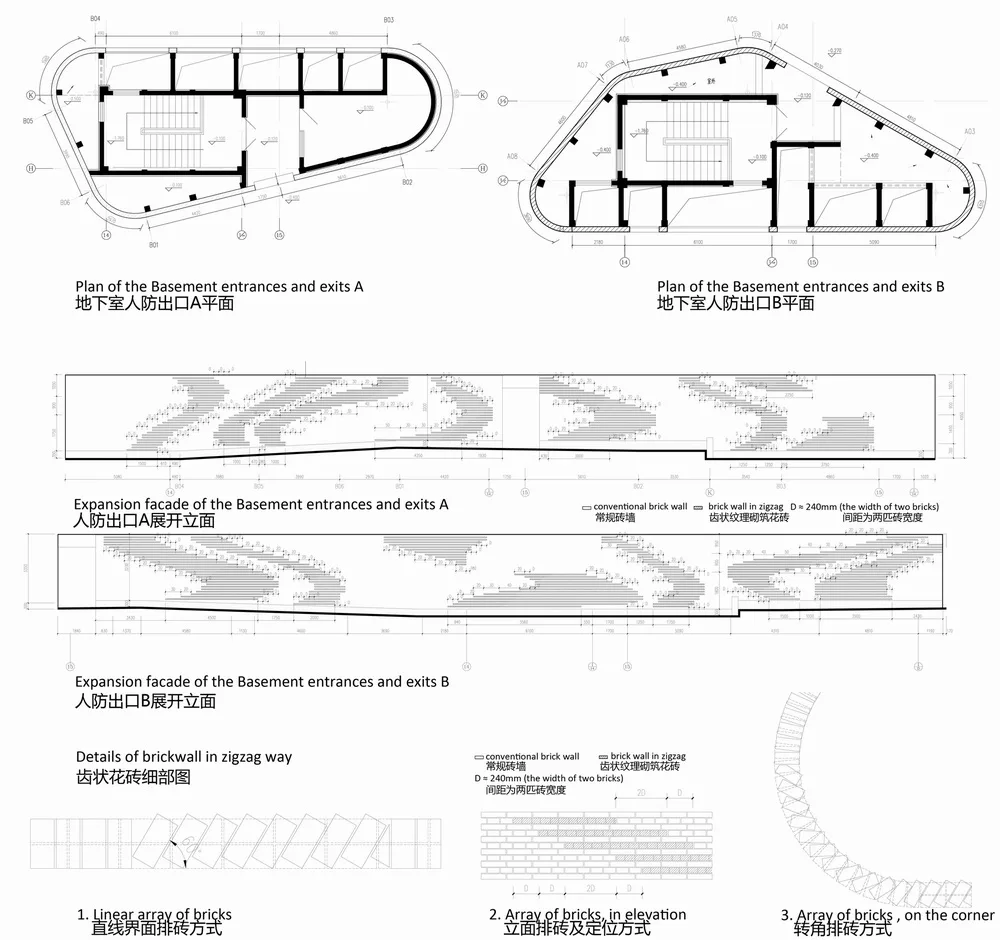
Tooth-shaped flower wall masonry is featured at the two entrances and exits of the east square. These technically complex curved brick walls create striking landscape features that define the space beneath the east square and porch.
Through this rich vocabulary of brickwork, the building’s various facades express a vivid and refined character. They also extend the atmosphere of surrounding public spaces and campus life, forging a continuous narrative across time.
Technical Drawings
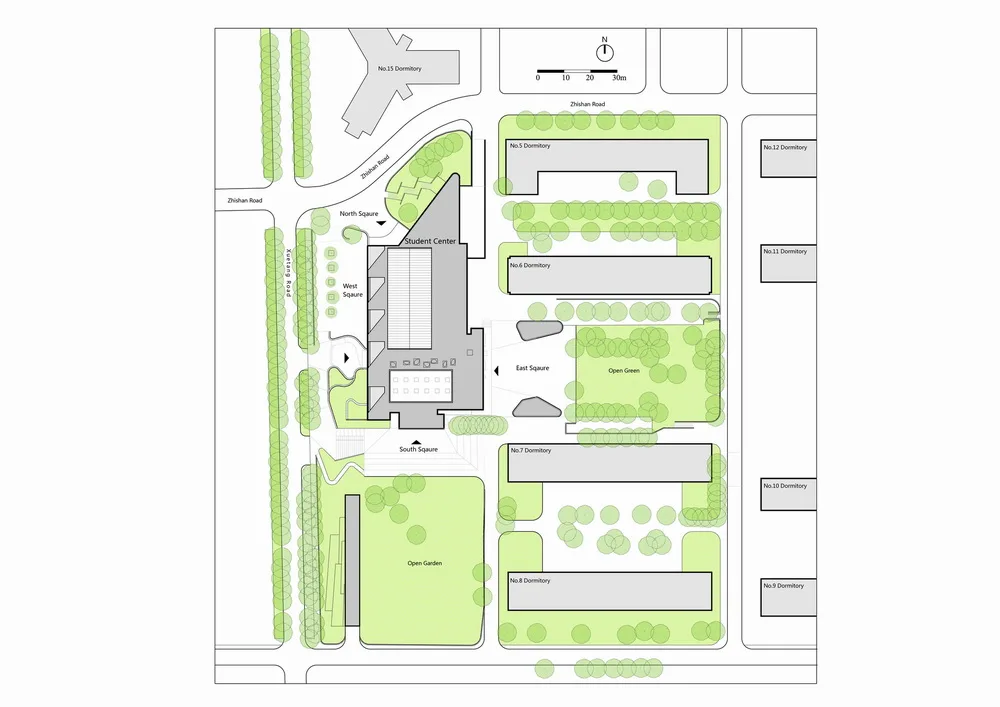
△ General Layout Plan
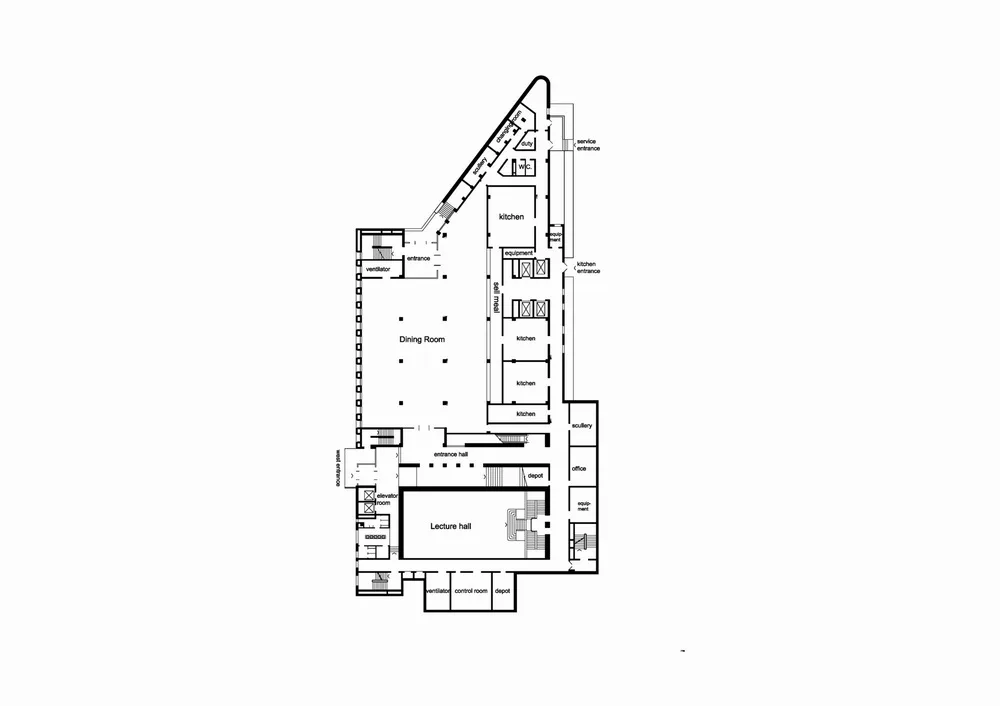
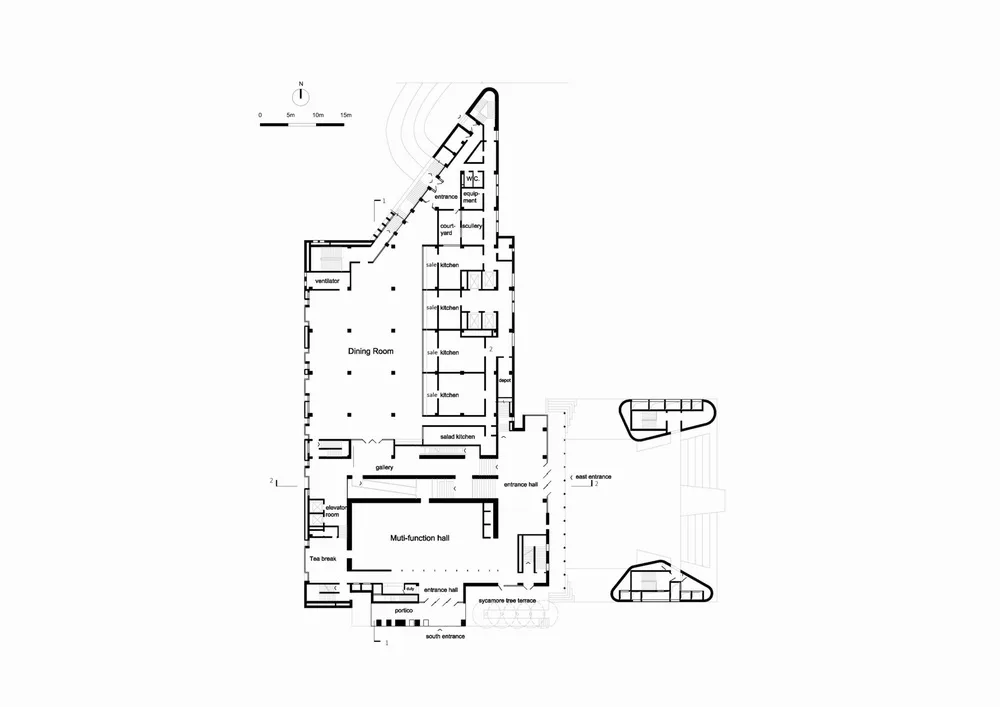
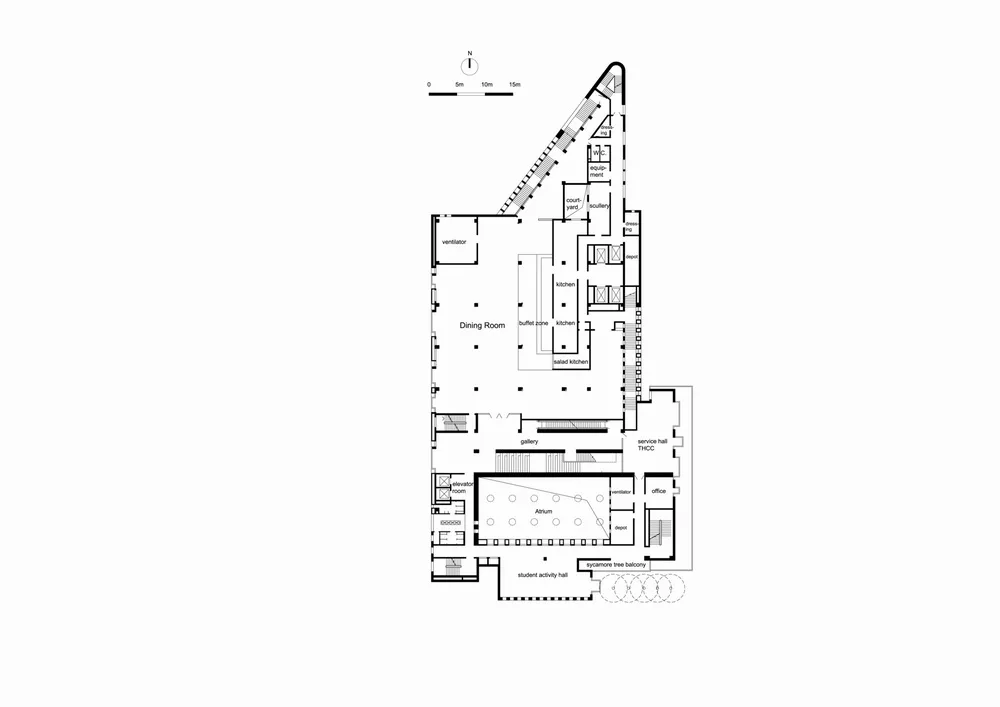
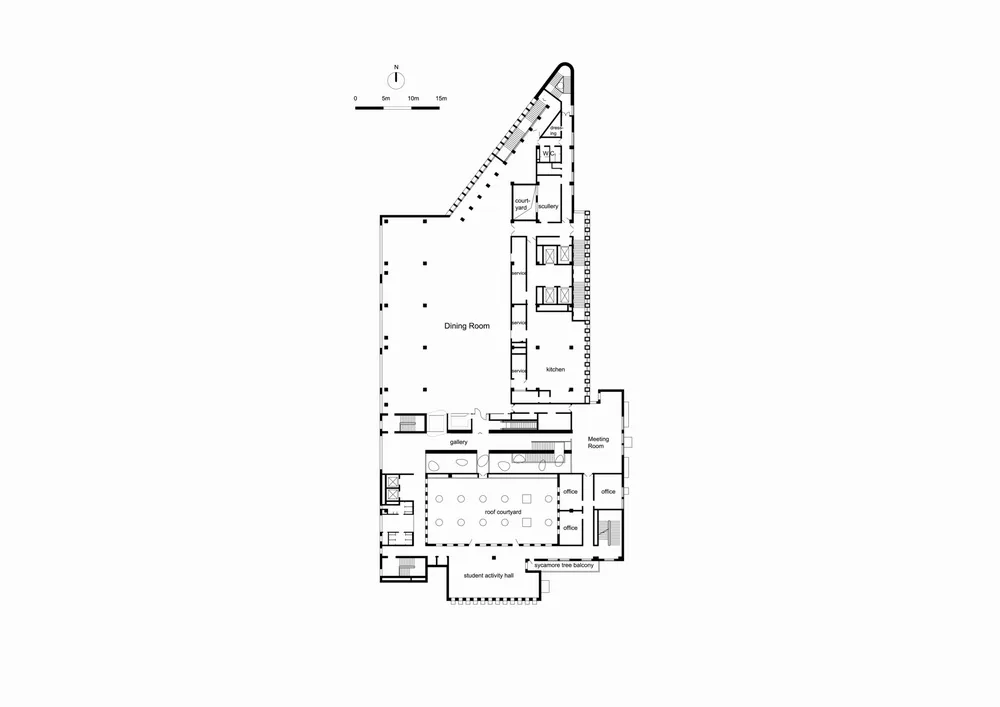
△ Plan View
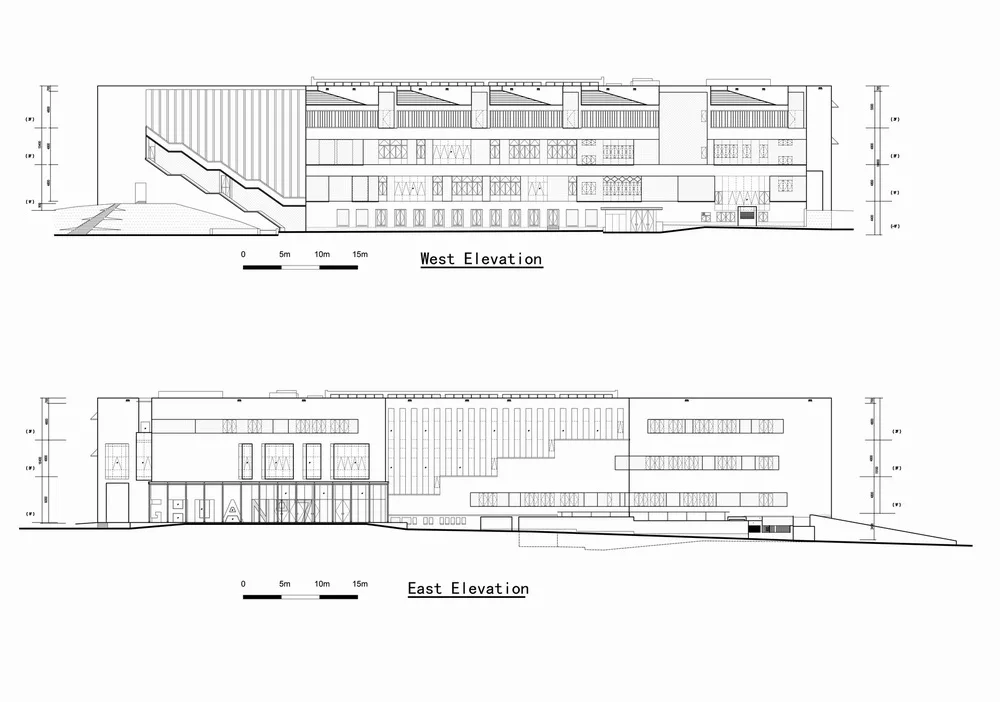
△ East-West Elevation
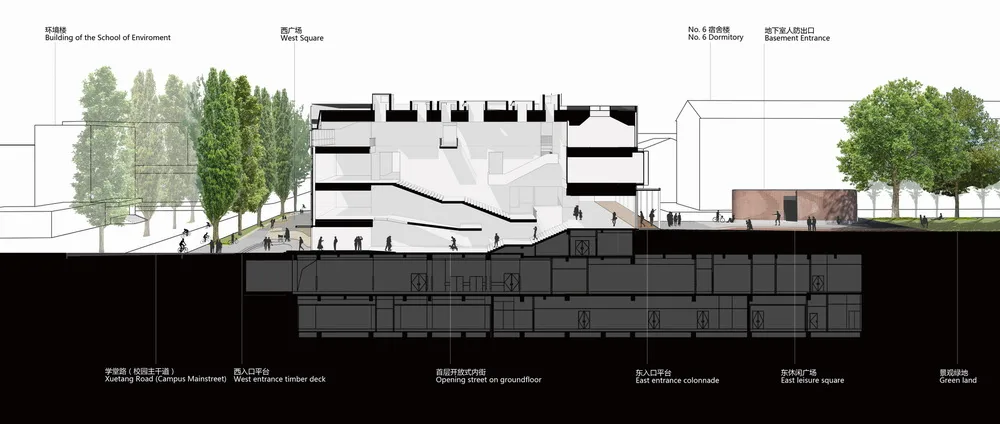
△ East-West Section
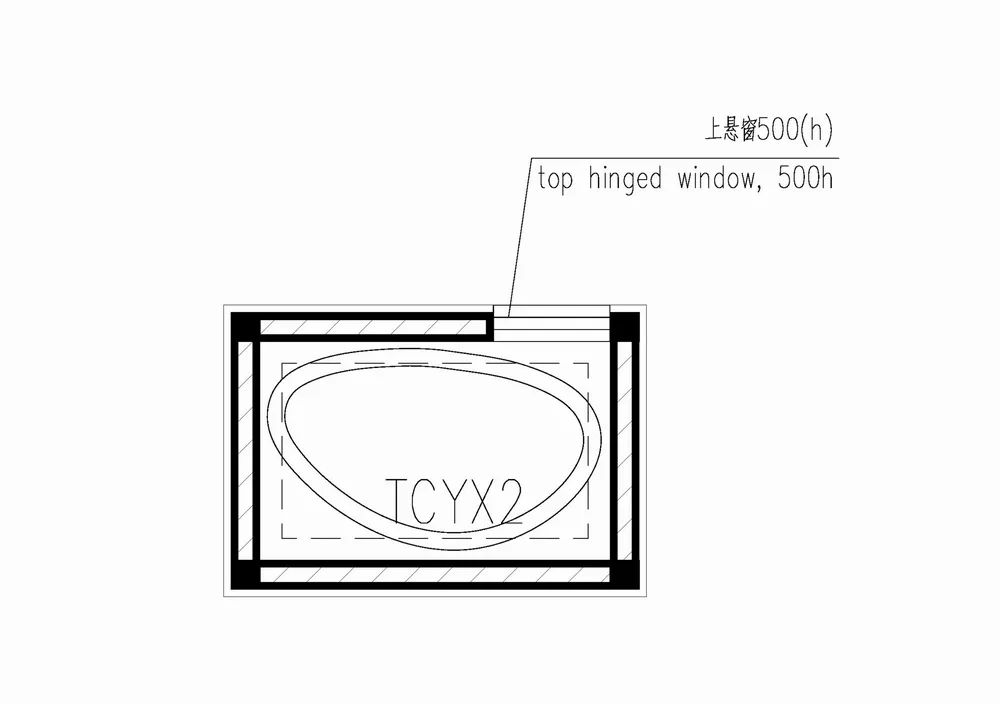
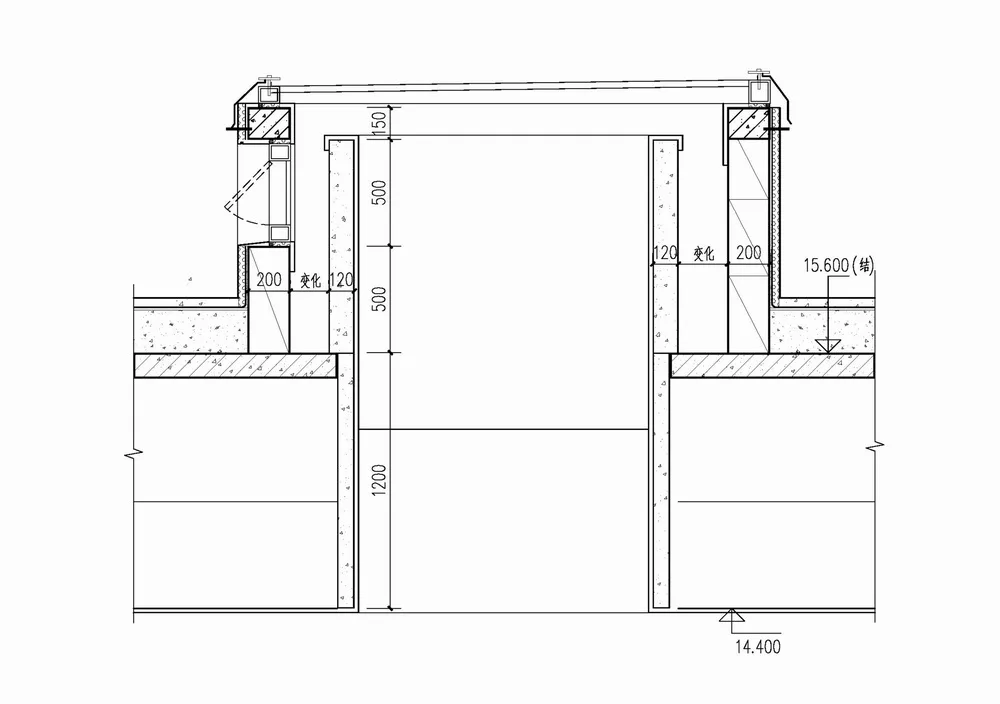
△ Skylight Detail
Project Information
Architect: Su Pu Architecture Studio, School of Architecture, Tsinghua University
Area: 21,000 m²
Project Year: 2015
Photographer: Summer Solstice















Must log in before commenting!
Sign Up