
Editor’s Note: This project involves the renovation of the Sea Ice Building at Nankai University. The vertical structure is built upon the existing old auditorium. Since the original building contains significant political and cultural history, the design team embraced a “preserve as much as possible” approach to retain historical elements within the new construction. Additionally, the design emphasizes seamless integration with the environment. The building’s volumes intertwine to create public spaces that foster student activities and communication. The transparent aerial exhibition gallery further dissolves the boundary between indoor and outdoor spaces.
Topic link: Special Academy · 52nd Collection of Domestic University Architecture — explore more outstanding university architecture cases from China.
The Sea Ice Building at Nankai University serves as a multifunctional cultural hub for gatherings, exhibitions, teaching, and training, catering to teachers, students, and alumni of the old Bali campus. The site is uniquely positioned between two lakes: Mati Lake to the east, which was the campus’s main axis during the Republic of China era, and Xinkai Lake to the west, built during the campus expansion after liberation. These manmade lakes, created in different periods, offer contrasting atmospheres, scales, vegetation, and lighting, embodying rich political and cultural narratives.
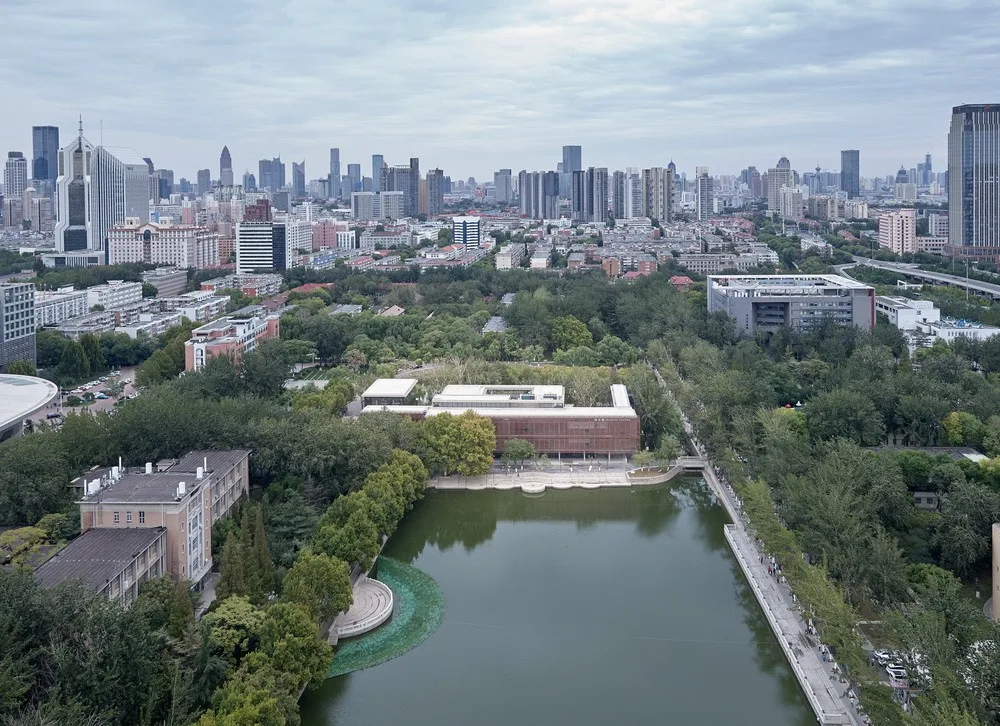
△ Aerial view © Chen Hao
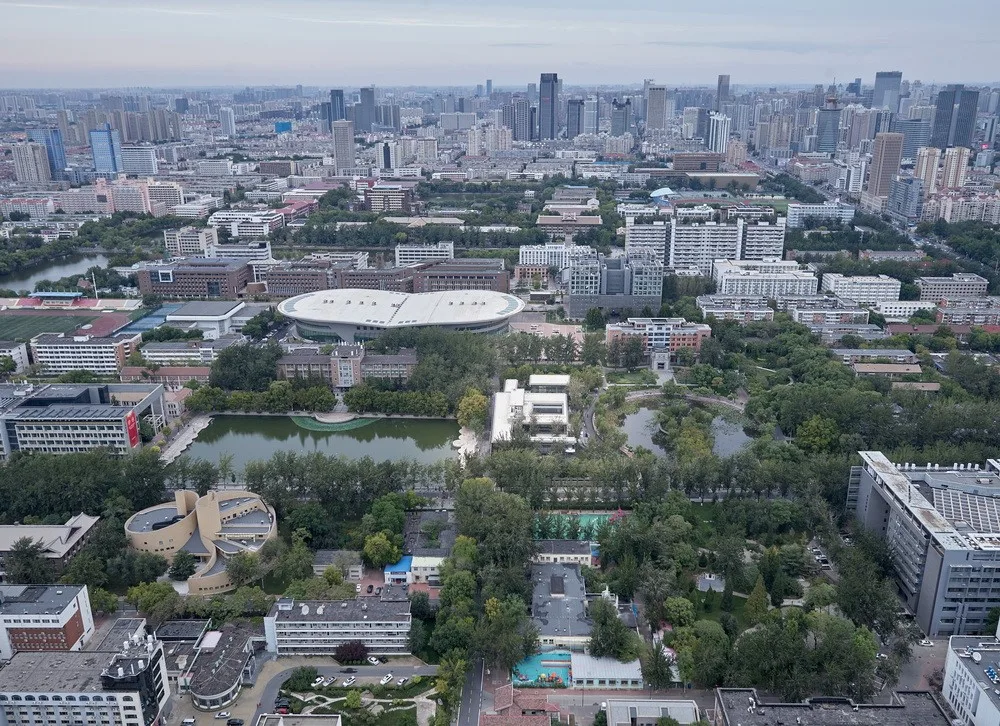
△ Aerial view © Chen Hao
The site is densely populated with trees both inside and around it, featuring a red brick auditorium with a shallow arched roof, originally built in 1952.
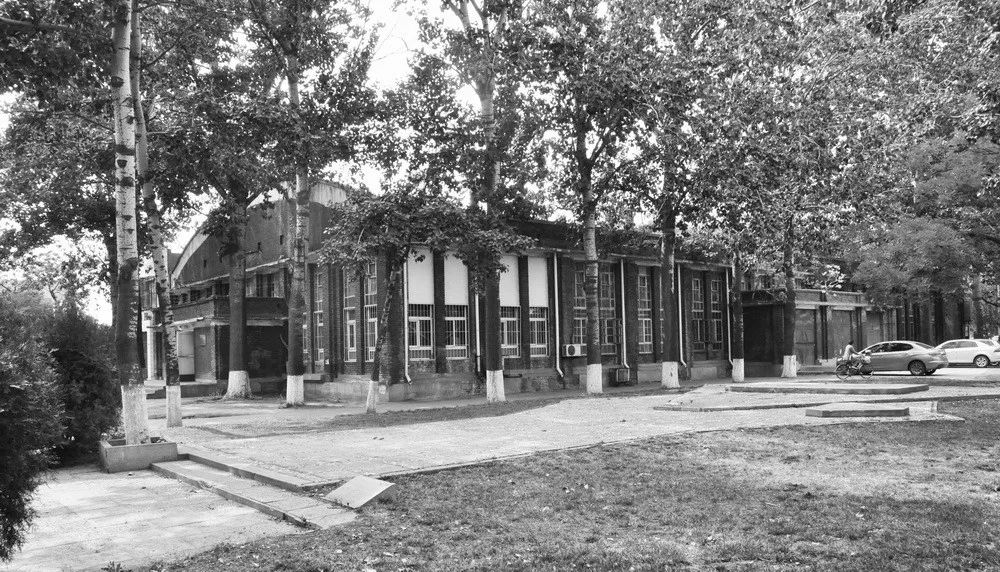
△ Grand Hall © Straight building
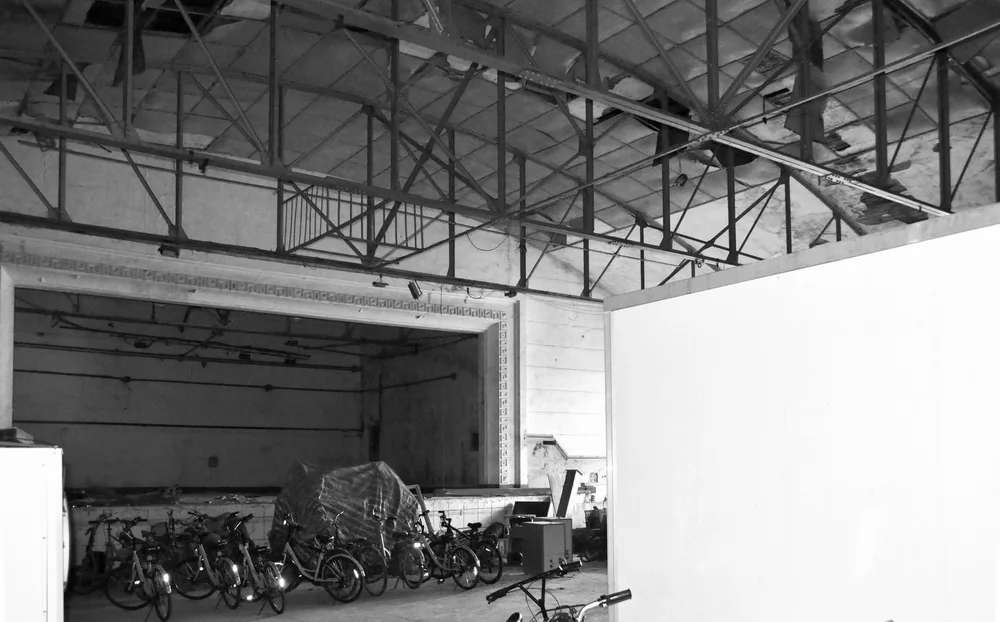
△ Interior view of abandoned auditorium © Straight building
Key design challenges included how the new building would relate to the two lakes, preserve the existing trees as much as possible, and integrate the old auditorium. Rather than opting for demolition or complete reconstruction, the team chose a hybrid method—”preserving as much as possible”—to maintain authentic historical elements on site.
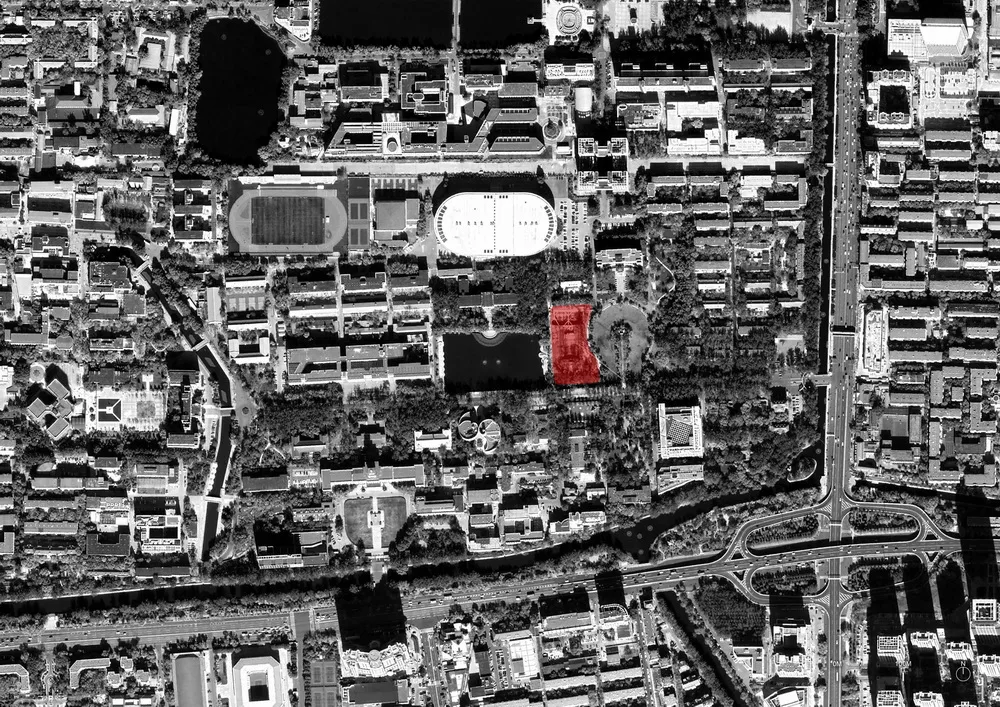
Location of the venue
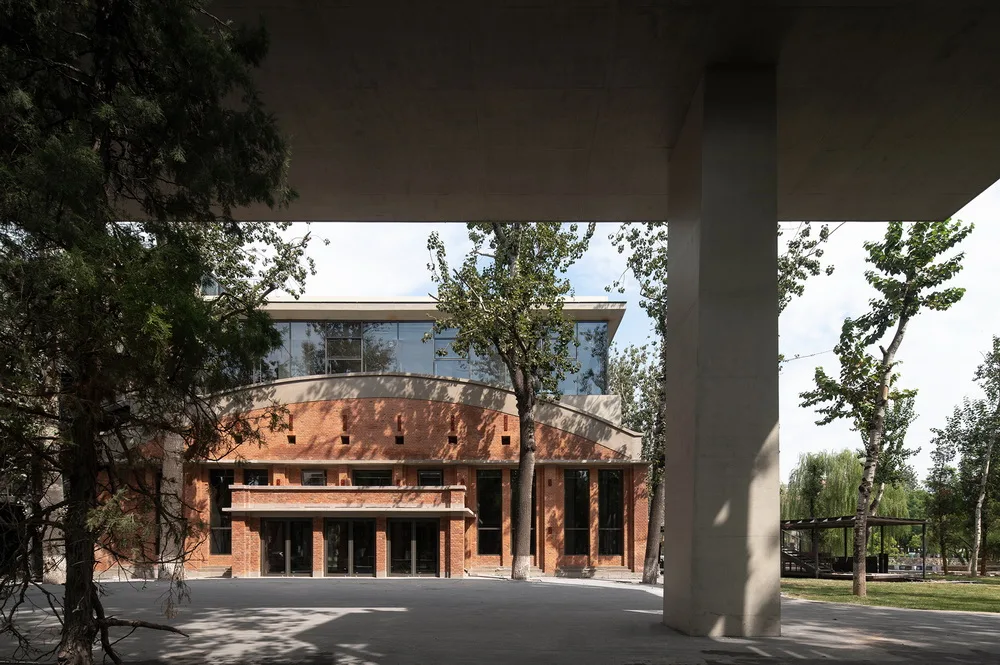
View of the south facade of the Sea Ice Tower from beneath the aerial gallery © Su Shengliang
Functionally, the original auditorium’s open space was repurposed into a grand hall and a thousand-seat auditorium. The Tonggao Hall stands as the tallest vertical space, featuring a 15-meter-high concrete roof supported by four massive columns. The slight vertical deformation of the columns reflects structural stress and spatial directionality at different heights. The hall has entrances and exits oriented east, west, and south, effectively connecting and organizing the site.
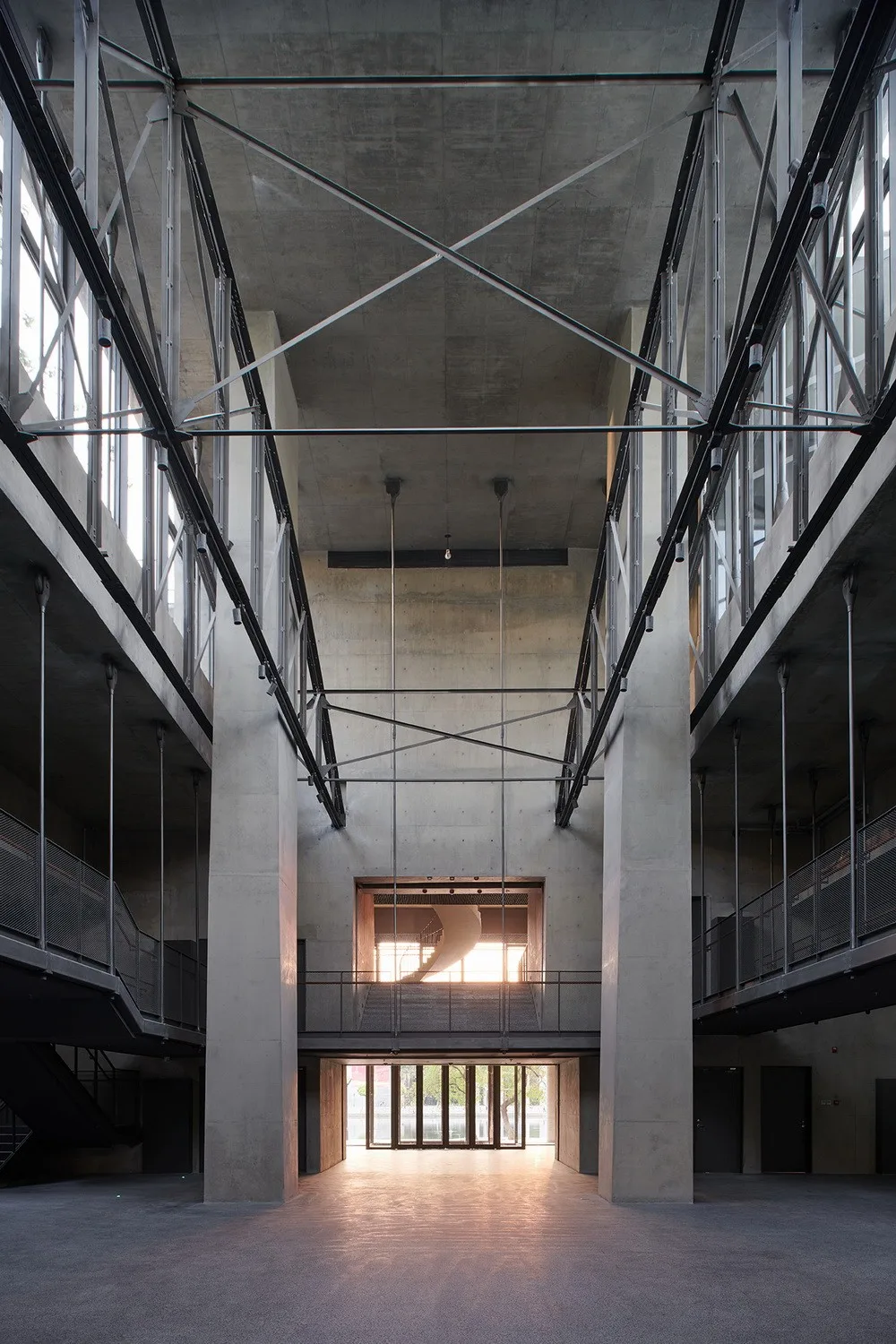
View towards Xinkai Lake from Tonggao Hall © Chen Hao
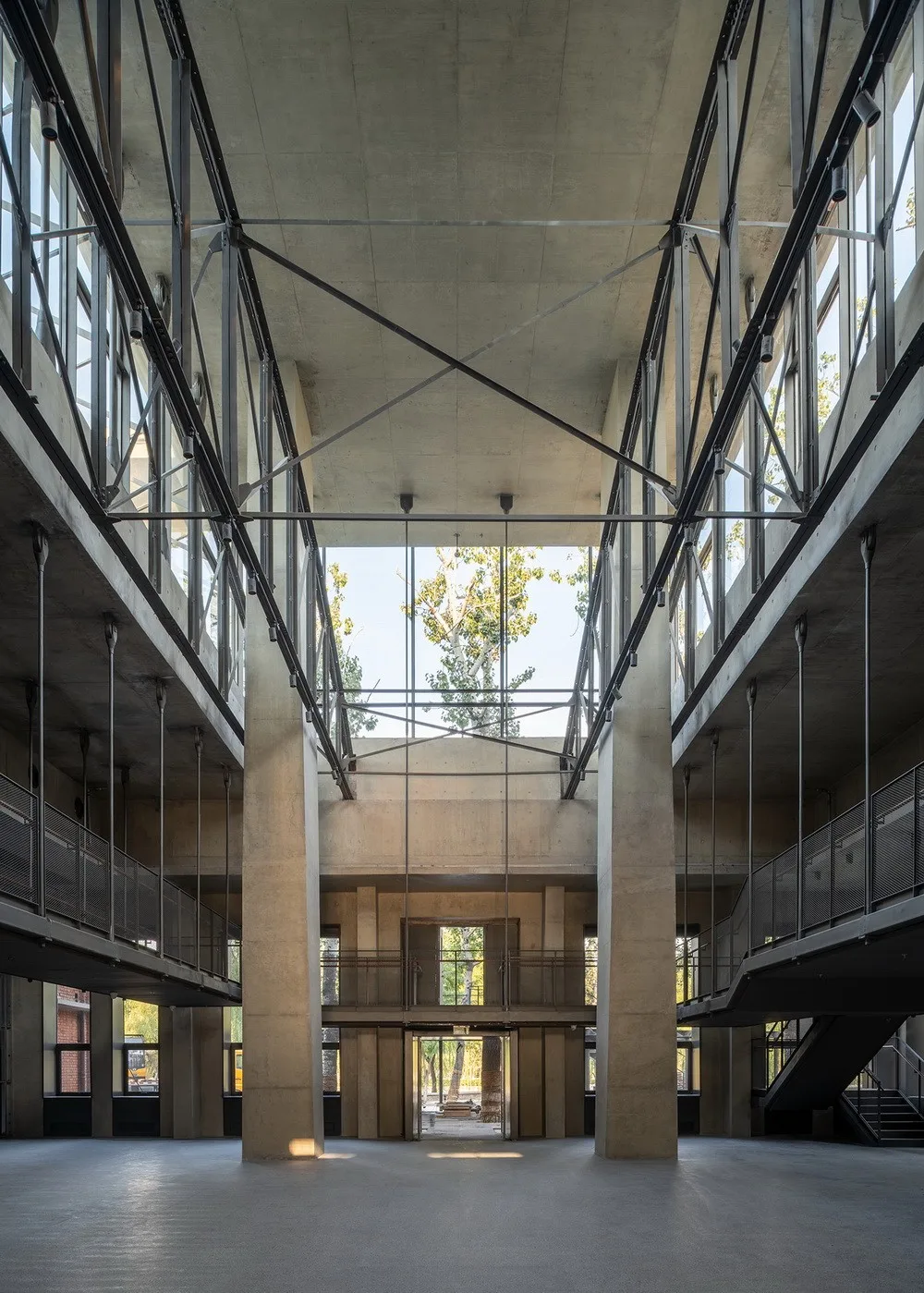
View towards Mati Lake from Tonggao Hall © Chen Hao
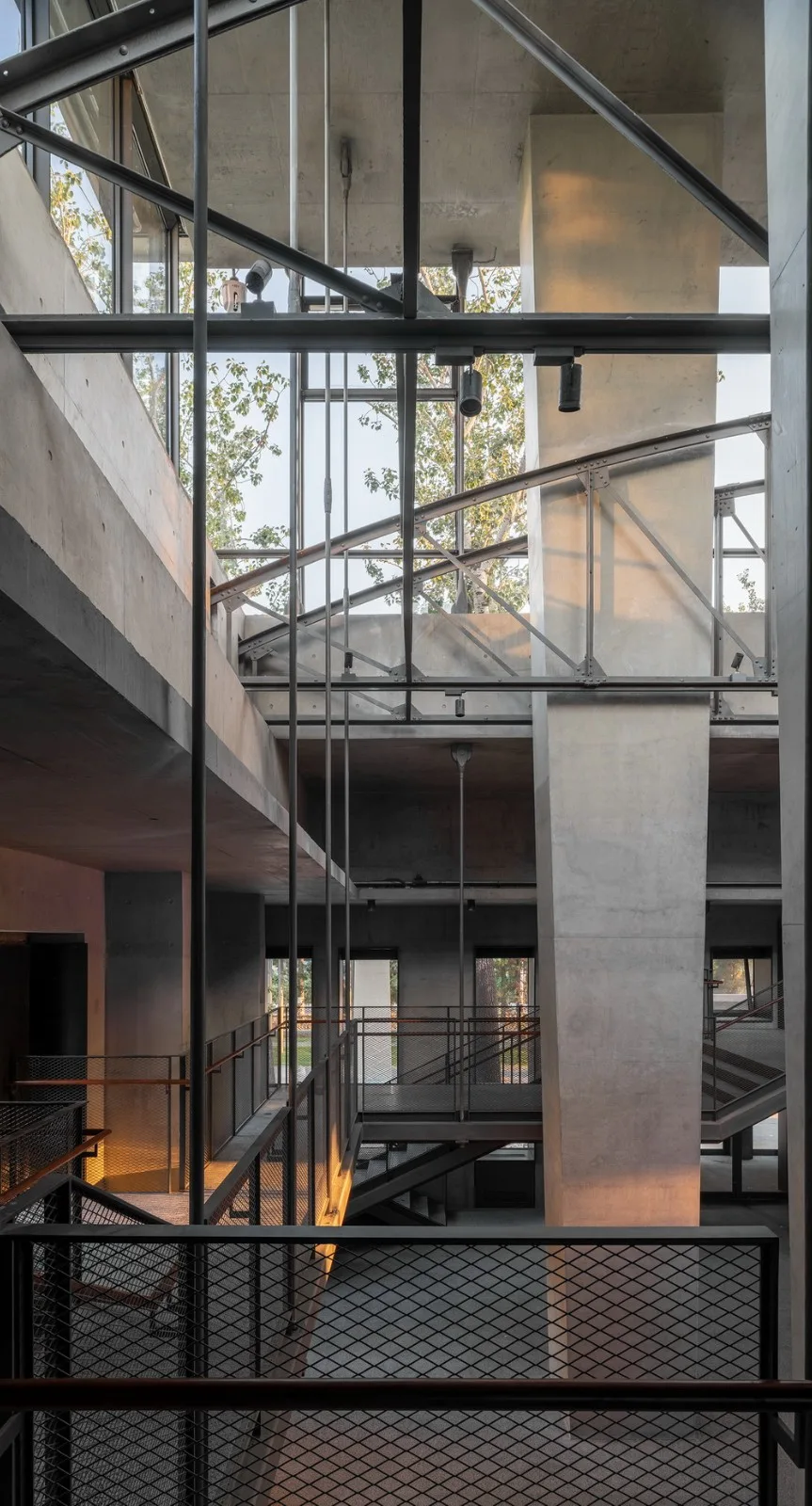
View of Tonggao Hall from Huima Corridor © Chen Hao
Outside Tonggao Hall’s southern entrance lies a small public square, enclosed on three sides and opening towards Mati Lake. The north-facing facade features the iconic preserved cafeteria. The west and south sides consist of new building volumes elevated at varying heights. These volumes establish visual and circulation links between Xinkai Lake and Dazhong Road, the main campus thoroughfare.
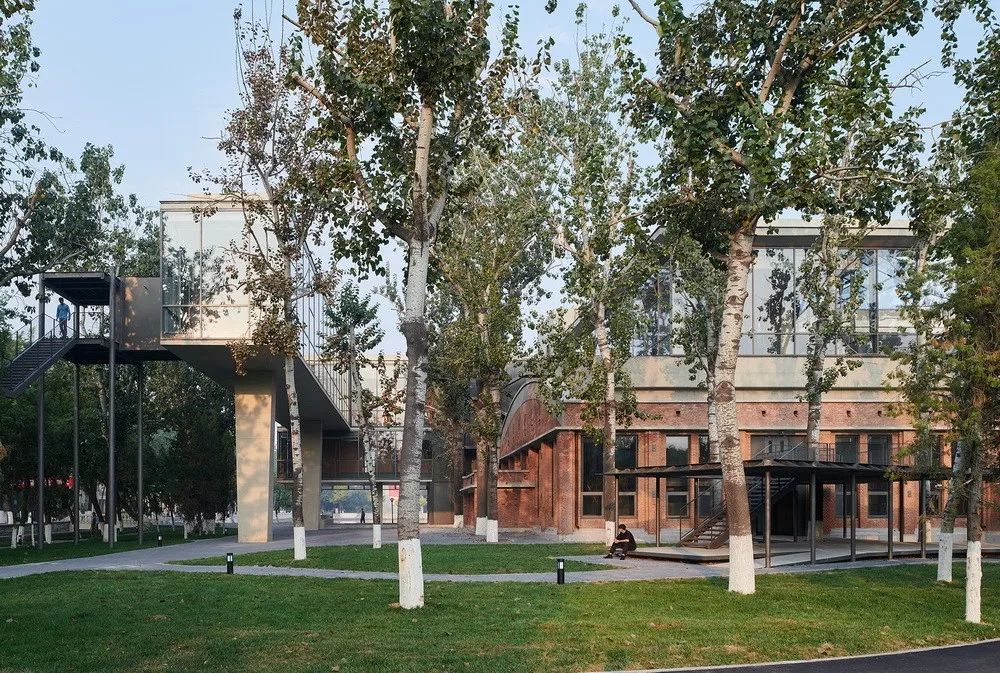
View of the southern square of the Sea Ice Tower from Mati Lake © Chen Hao
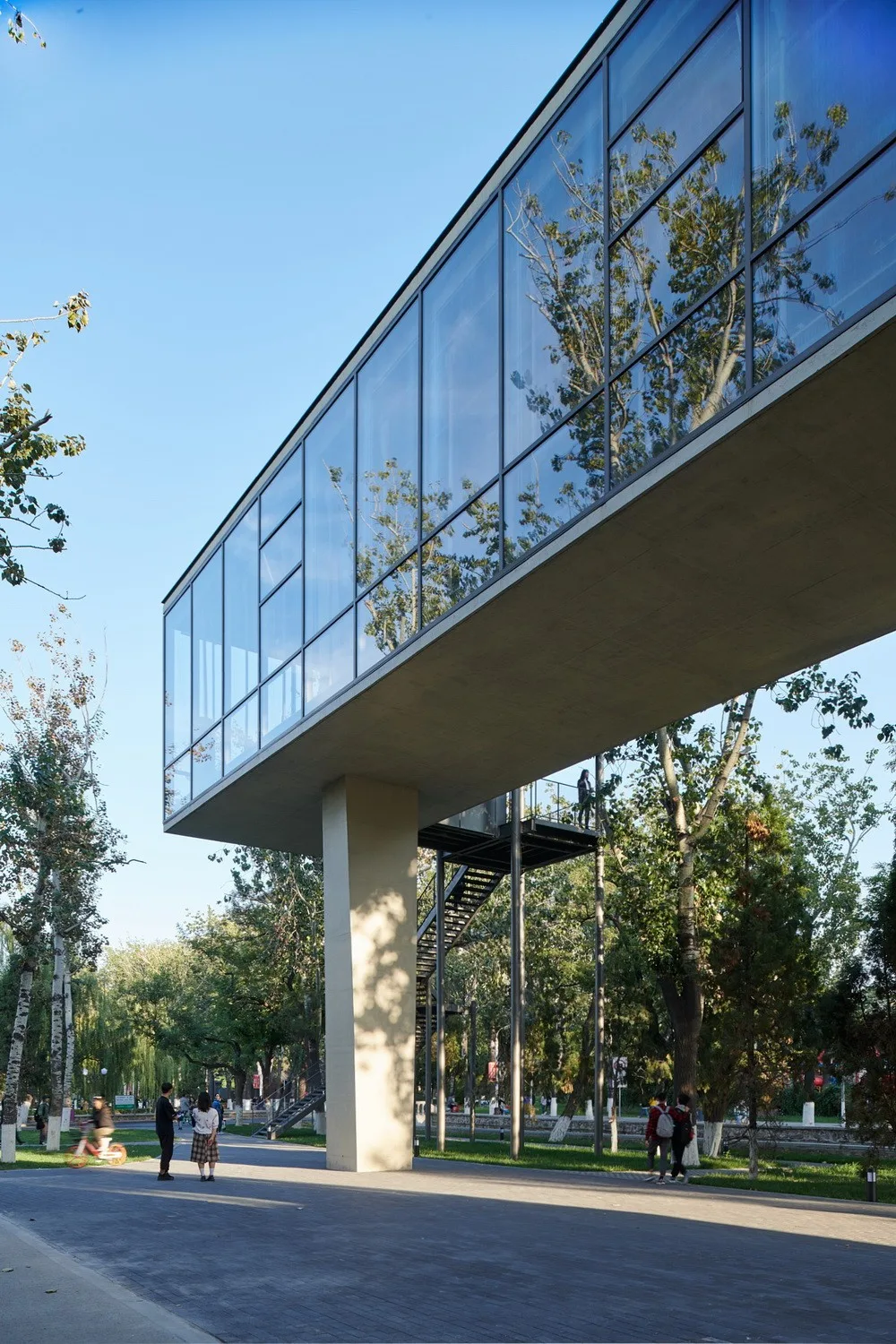
△ Aerial Gallery © Chen Hao
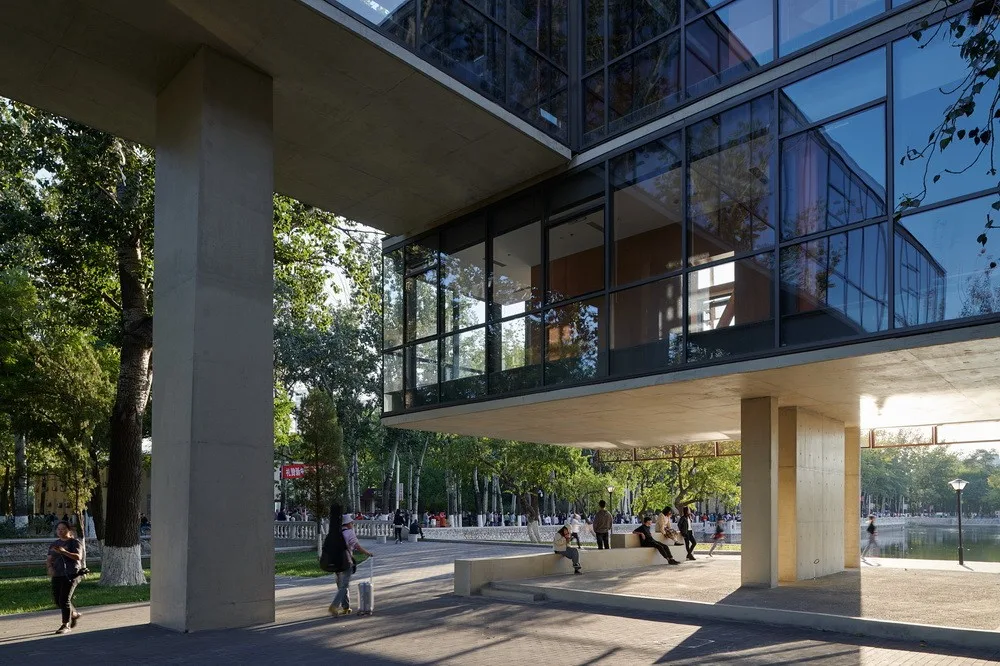
View towards Dazhong Road from the southern campus square © Chen Hao
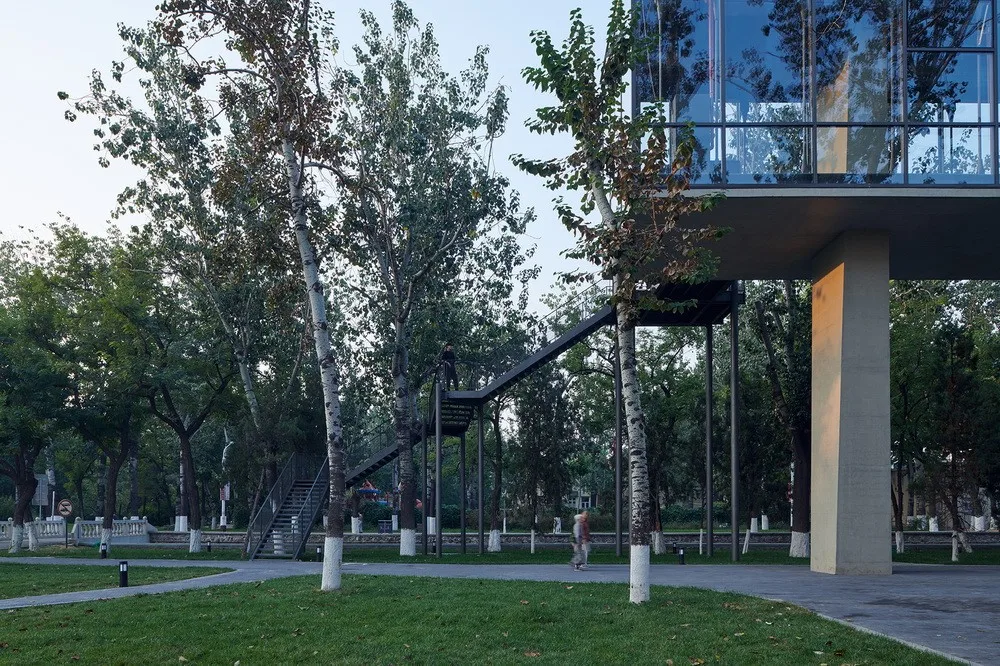
View towards Dazhong Road from Mati Lake © Chen Hao
On the west side of the newly created lake, the campus opens up with expansive views and open space. Responding to this, the building extends horizontally along the lakeshore. The ground floor forms a recessed colonnade, accommodating auxiliary functions such as classrooms, small to medium conference rooms, transportation hubs, and restrooms.
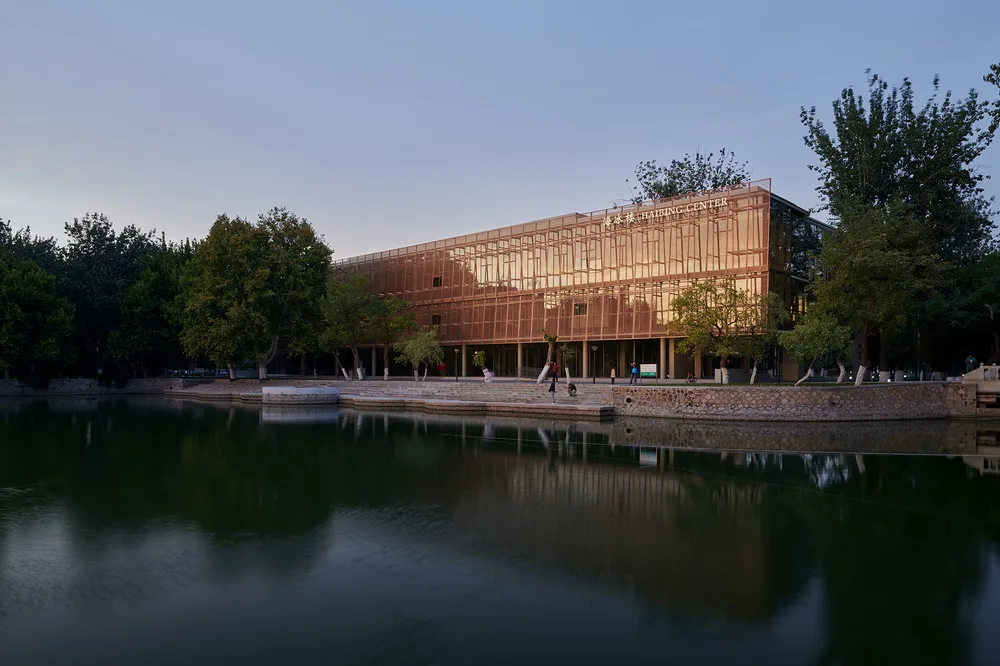
△ West facade and lakeside space © Chen Hao
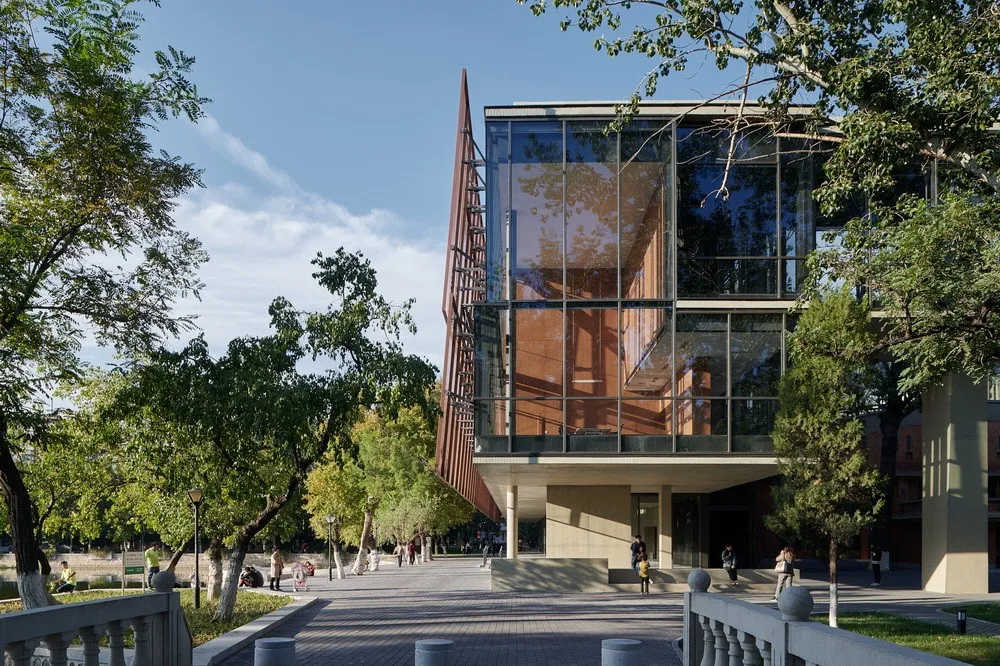
△ Open corridor at southern end of Xinkai Lake and lakeside space © Chen Hao
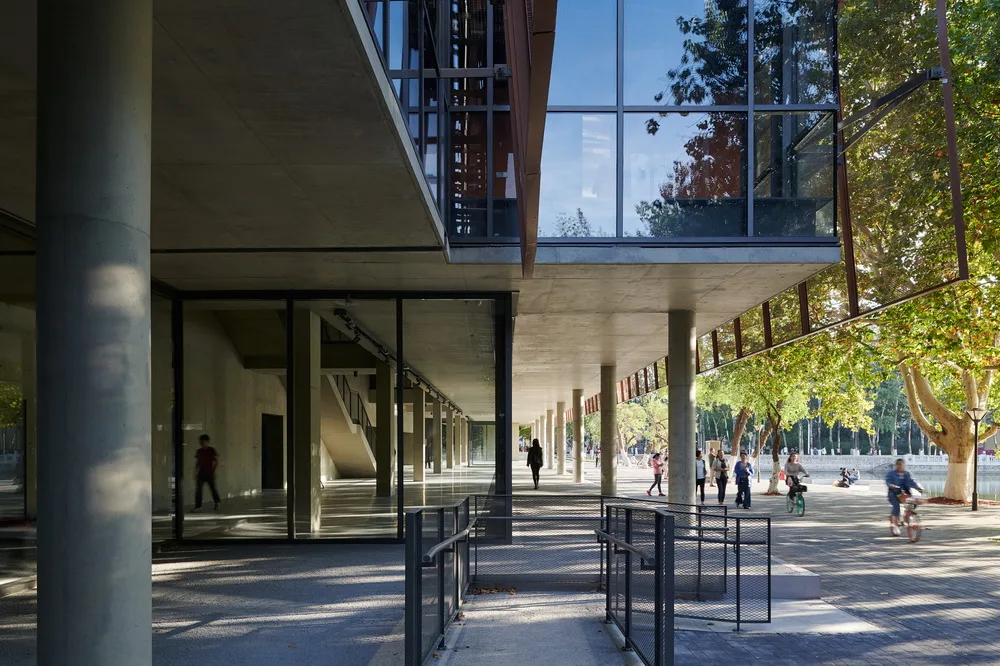
△ Newly opened lakeside corridor © Chen Hao
△ Relationship between Xinkai Lake and Mati Lake
At the junction with the auditorium’s original west wall, a narrow, tall “canyon” staircase connects the functional units vertically. While the volume facing Xinkai Lake is simple and uniform, the side facing Mati Lake is more fragmented and clustered, reflecting the campus’s more intimate scale and varied spatial hierarchy near Mati Lake.
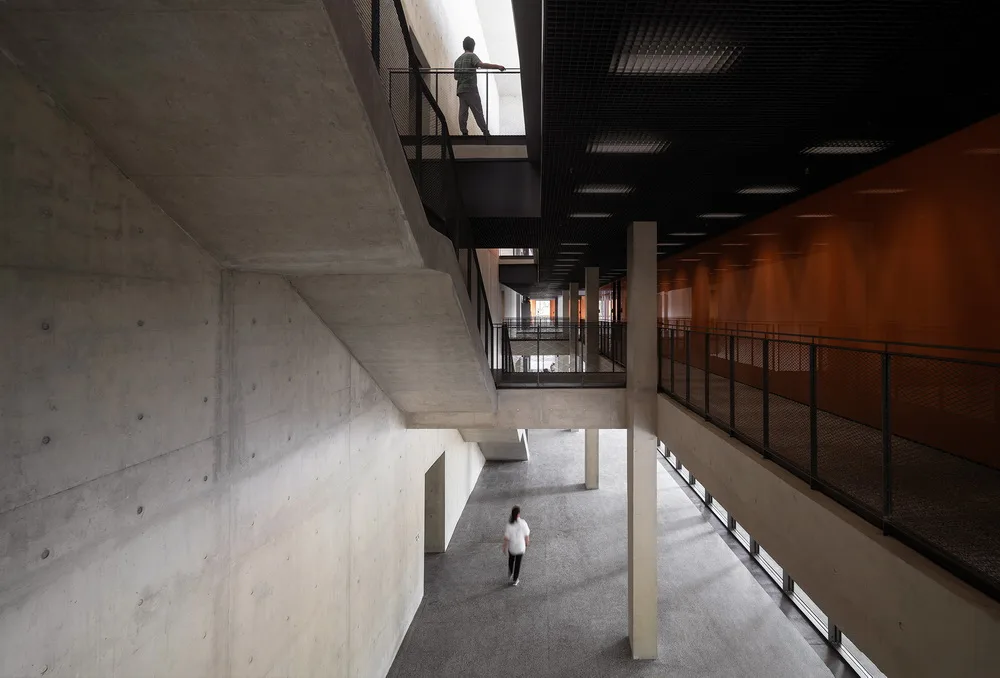
View of the “Canyon” space from the second-floor corridor © Su Shengliang
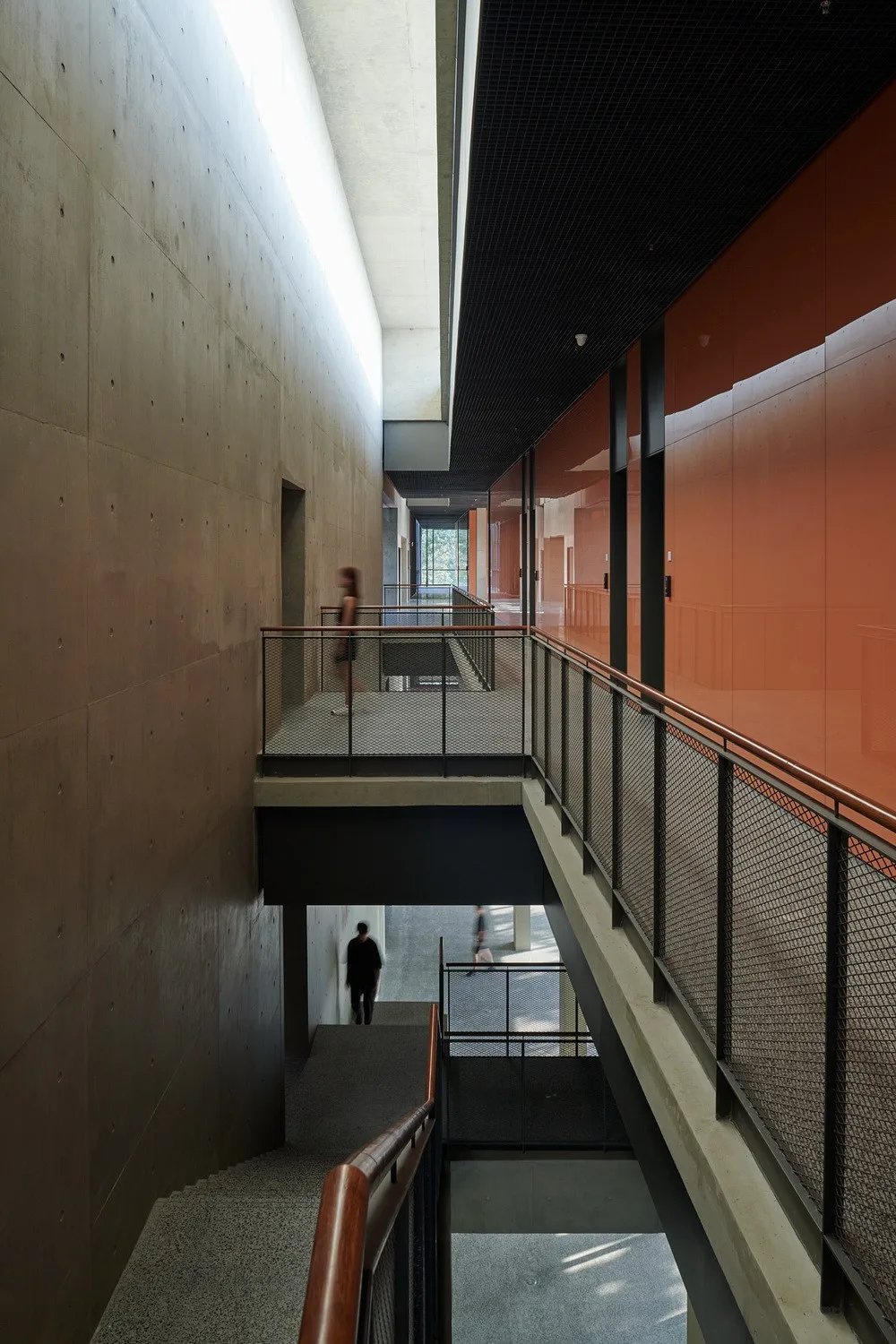
△ Third-floor corridor and “Canyon” space © Chen Hao
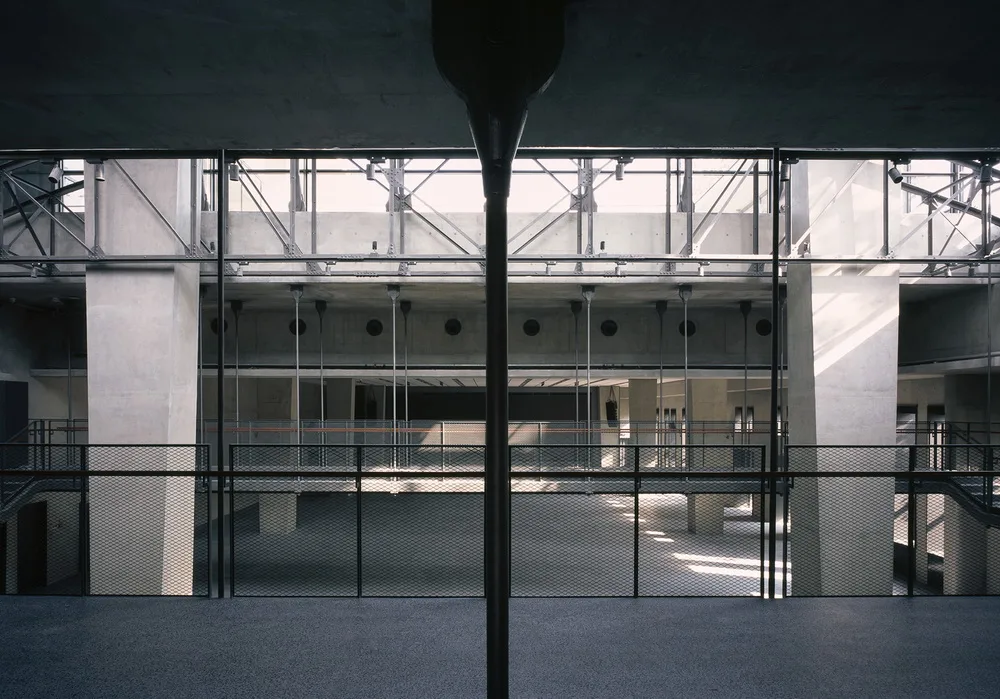
View towards the Thousand People Hall from Huima Corridor © Chen Hao
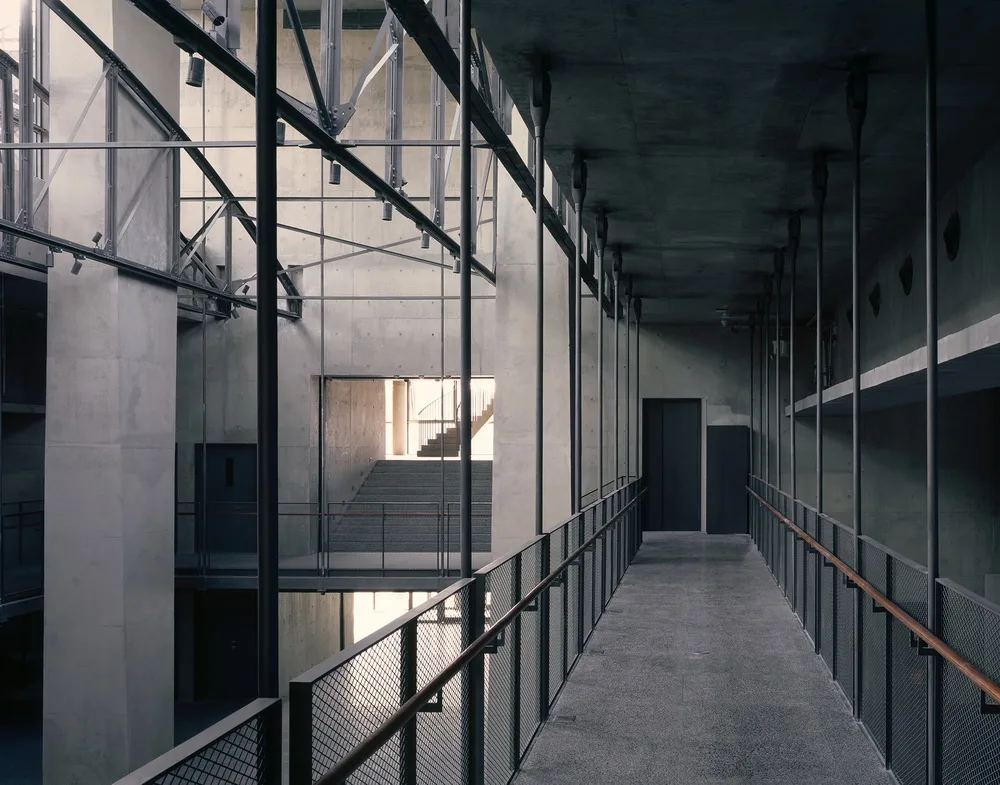
View westward from Huima Corridor © Chen Hao
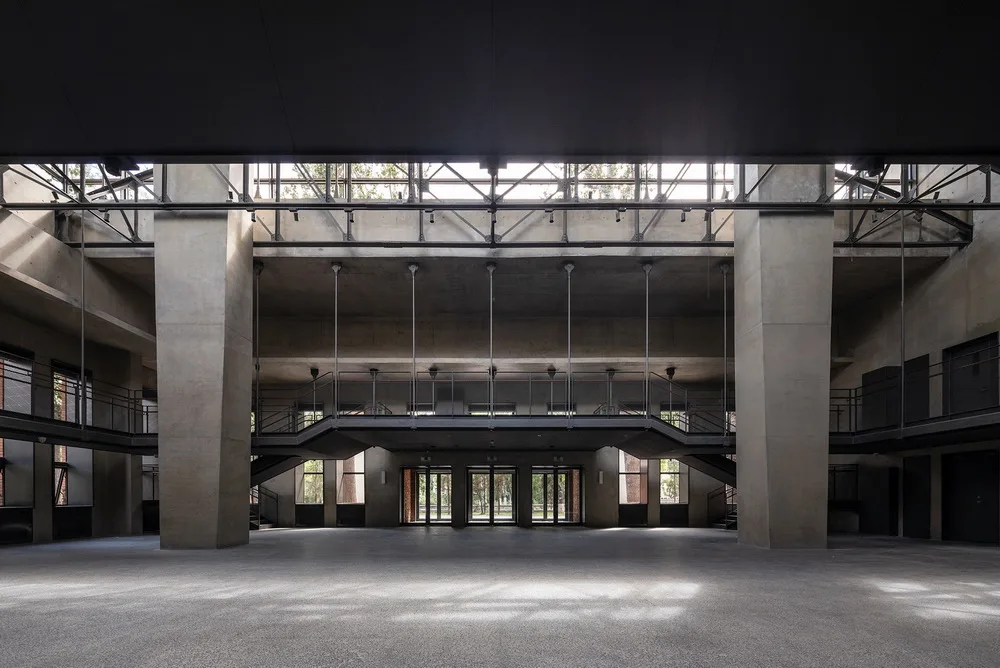
View towards the Thousand People Hall from Huima Corridor © Chen Hao
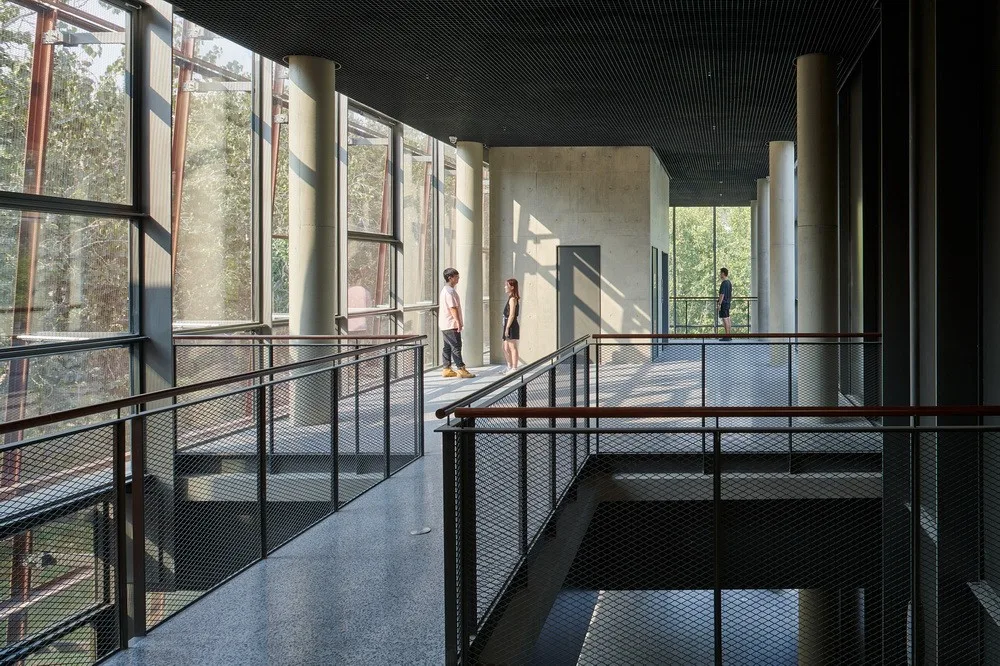
View of the elevated space from the third-floor corridor © Chen Hao
Surrounded by lush trees and boasting beautiful views, the Sea Ice Tower incorporates the auditorium’s original red brick walls alongside extensive transparent glass façades. To reduce energy consumption from direct sunlight, a copper-colored metal sunshade mesh was planned for all glass surfaces early in the design. However, due to construction time constraints, most sunshade installations were canceled except on the west side facing the newly opened lake, which remains a regrettable aspect.
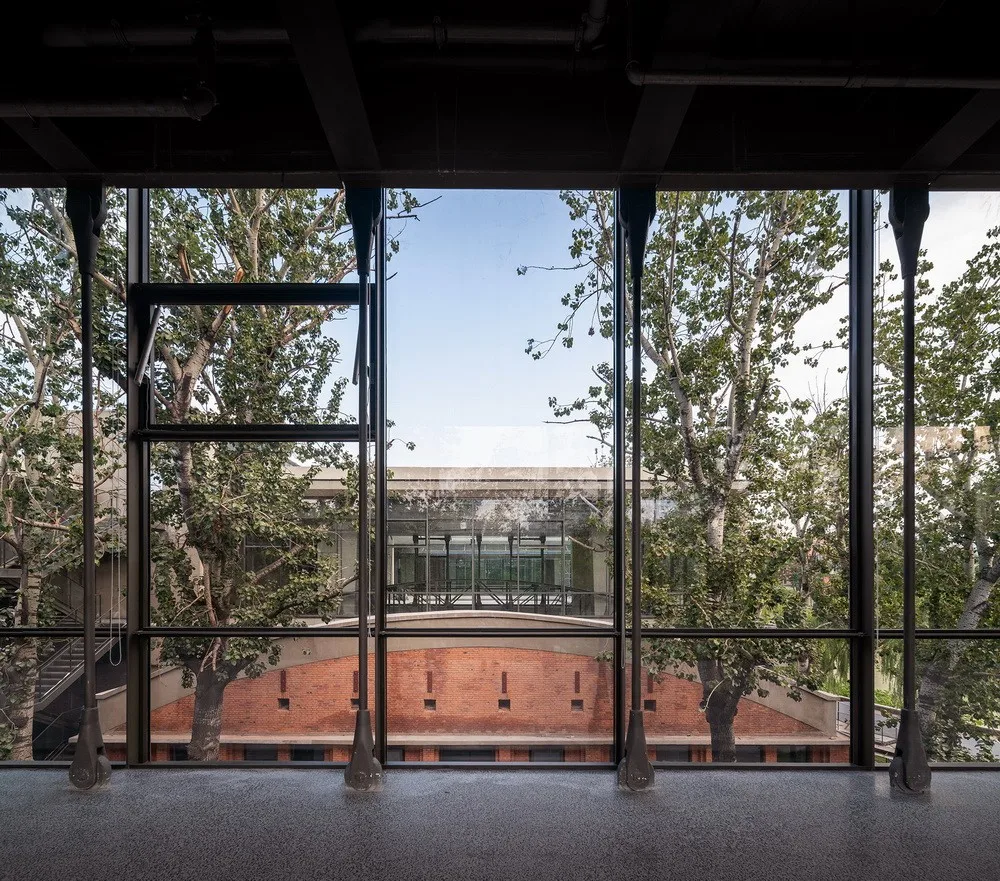
View of the curved wall of the Sea Ice Tower from the aerial gallery © Su Shengliang
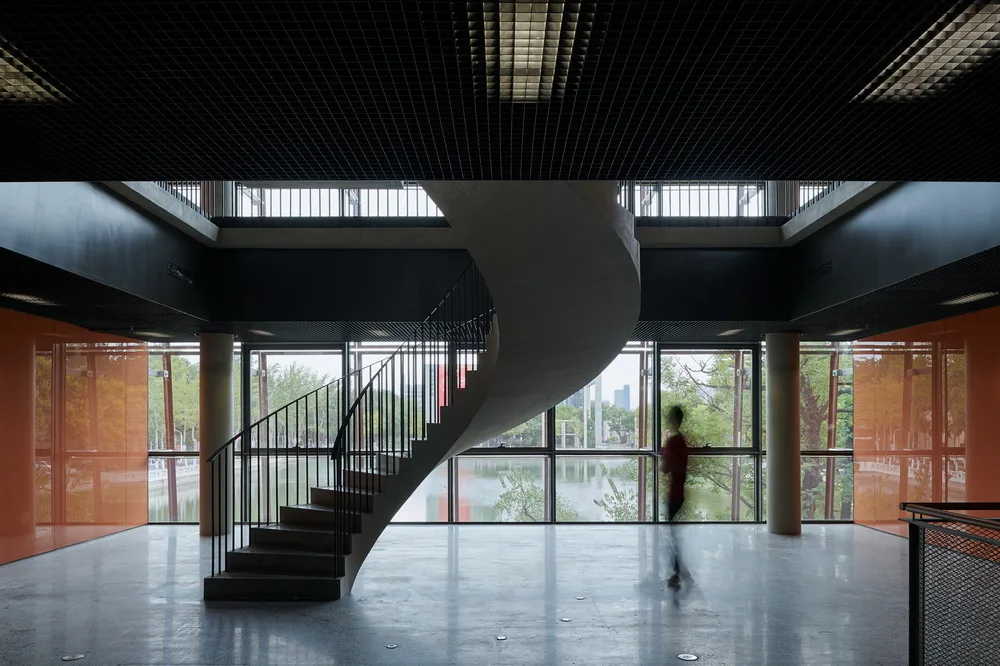
Rotating staircase and courtyard © Chen Hao
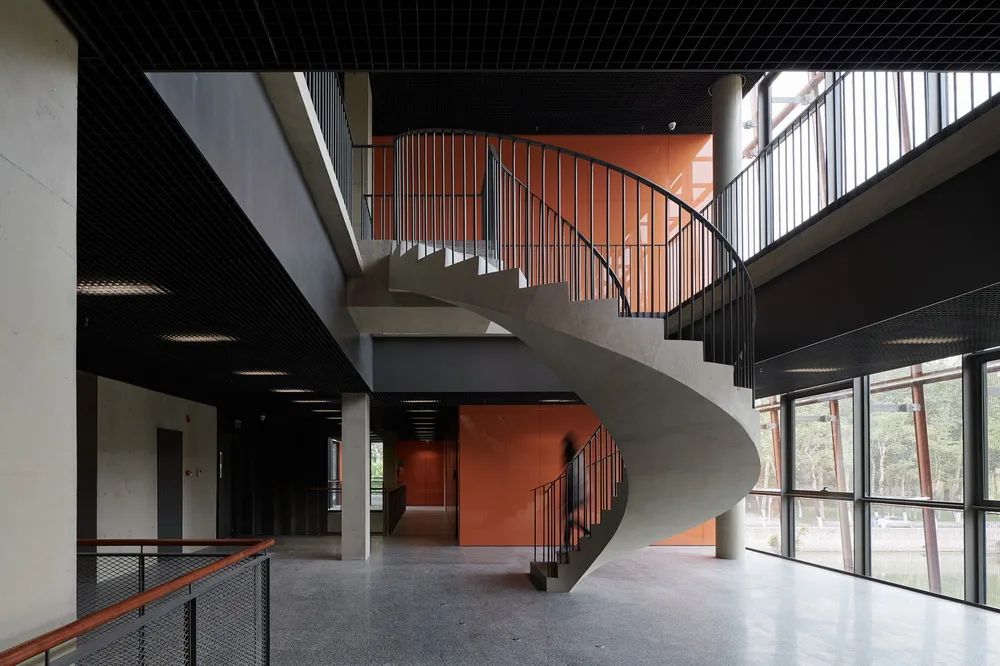
Rotating staircase and courtyard © Chen Hao
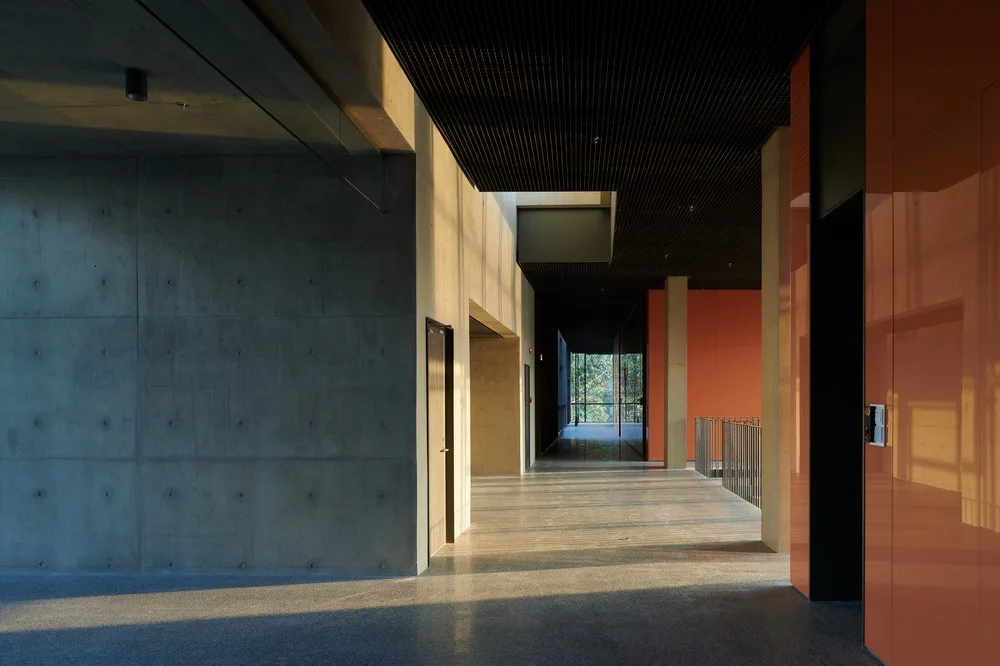
△ Third-floor corridor © Chen Hao
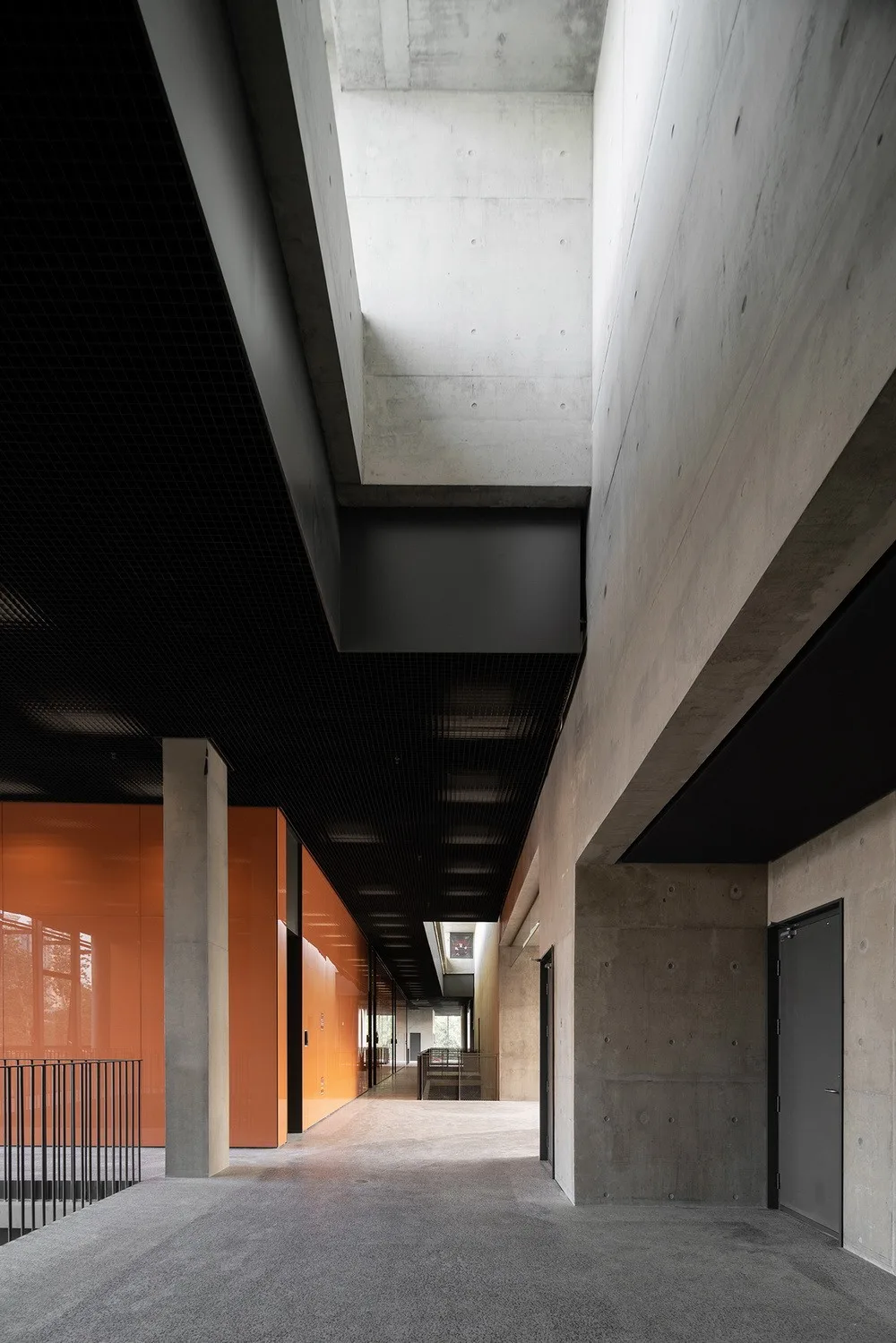
△ Third-floor public space and light well © Su Shengliang
For us, the Sea Ice Tower at Nankai University represents a site-specific spatial design experiment. Our goal is to foster a vibrant and high-quality contemporary campus life through the introduction of new spaces, while preserving the evolving texture of the old campus and respecting its natural environment.
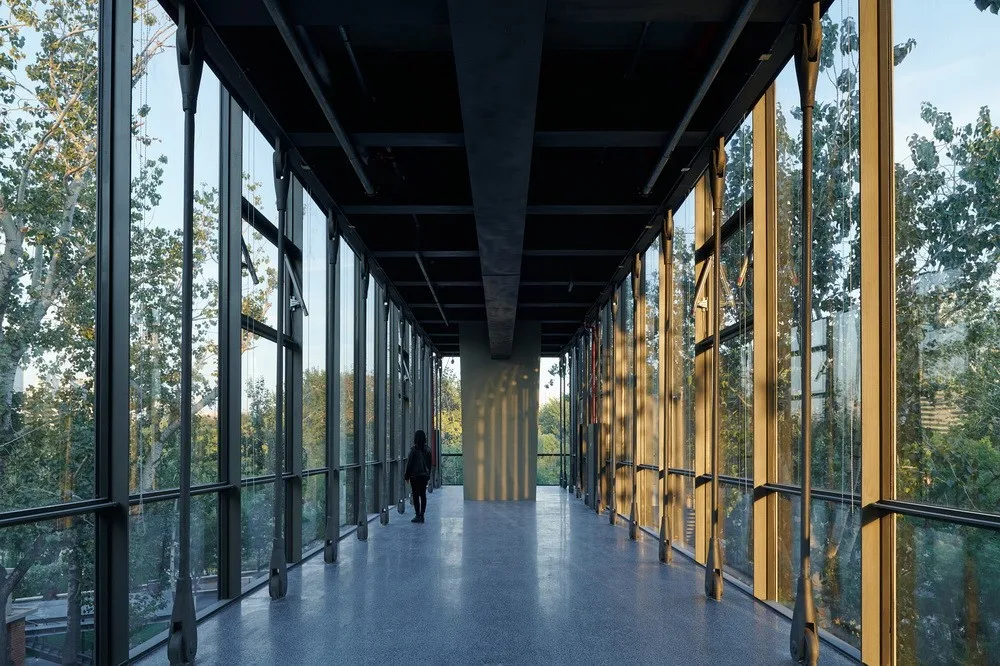
△ Interior view of the aerial gallery © Chen Hao
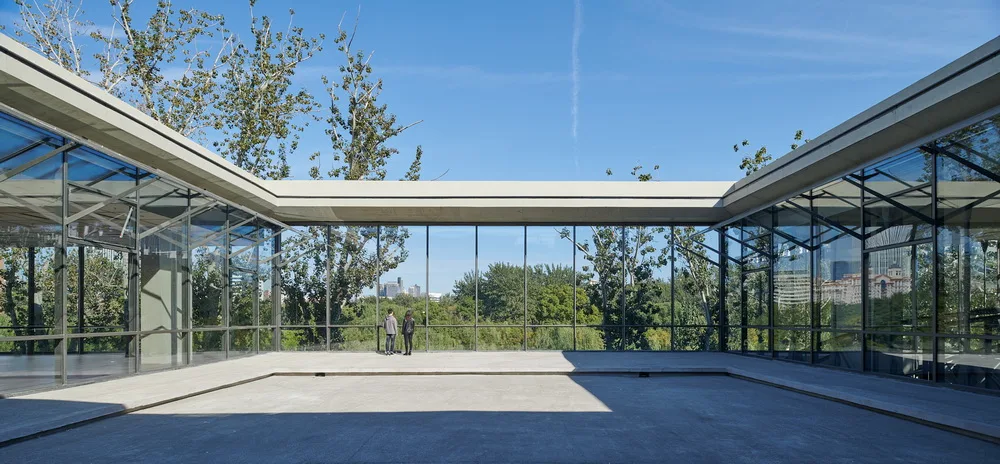
△ Roof Garden © Chen Hao
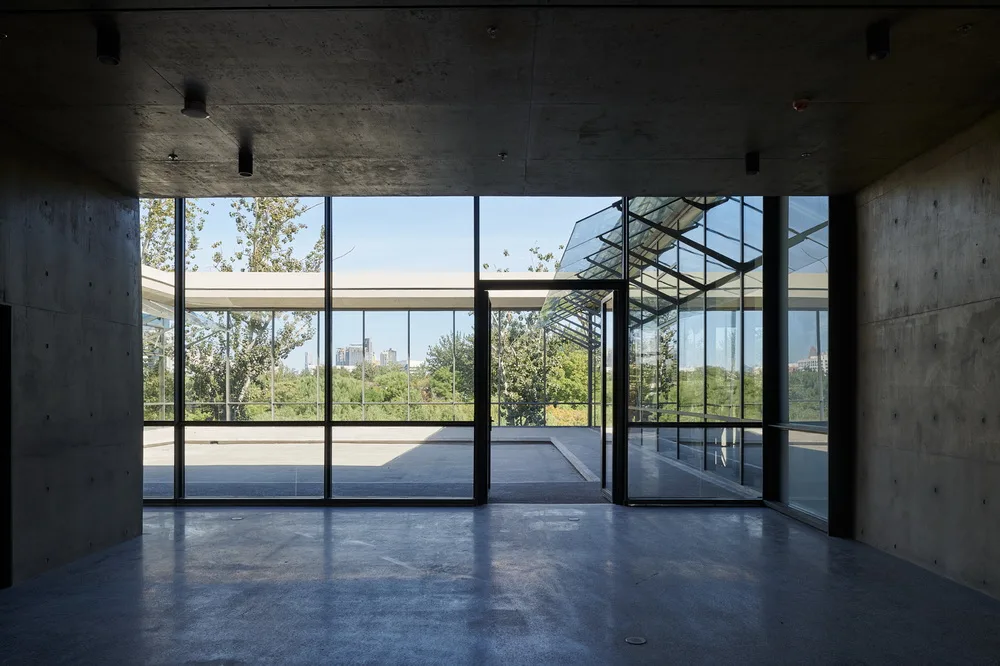
View of the rooftop garden from the elevator hall © Chen Hao
Technical Drawings
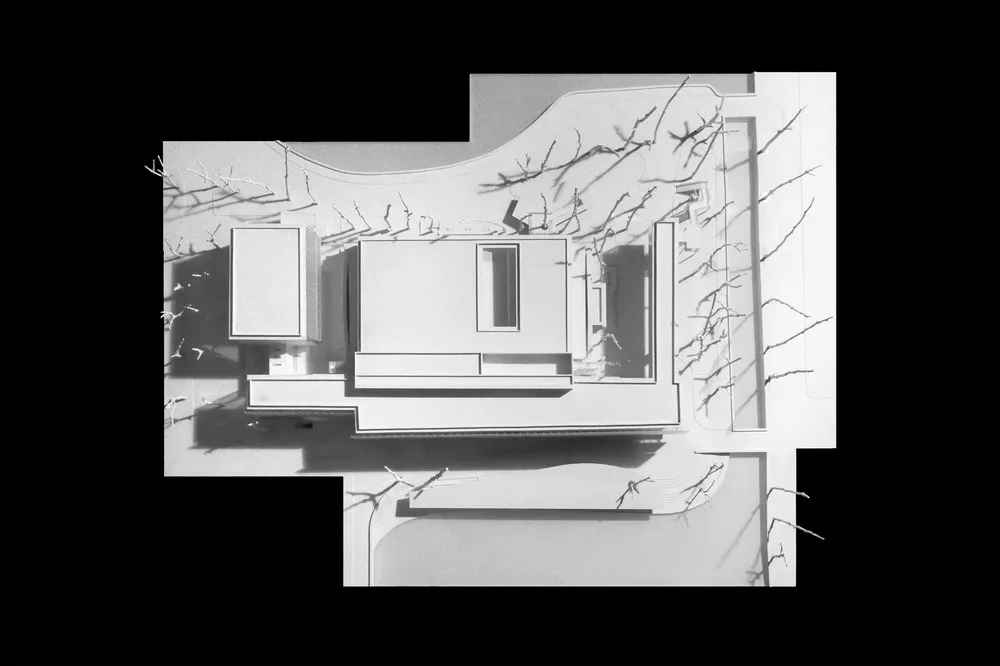
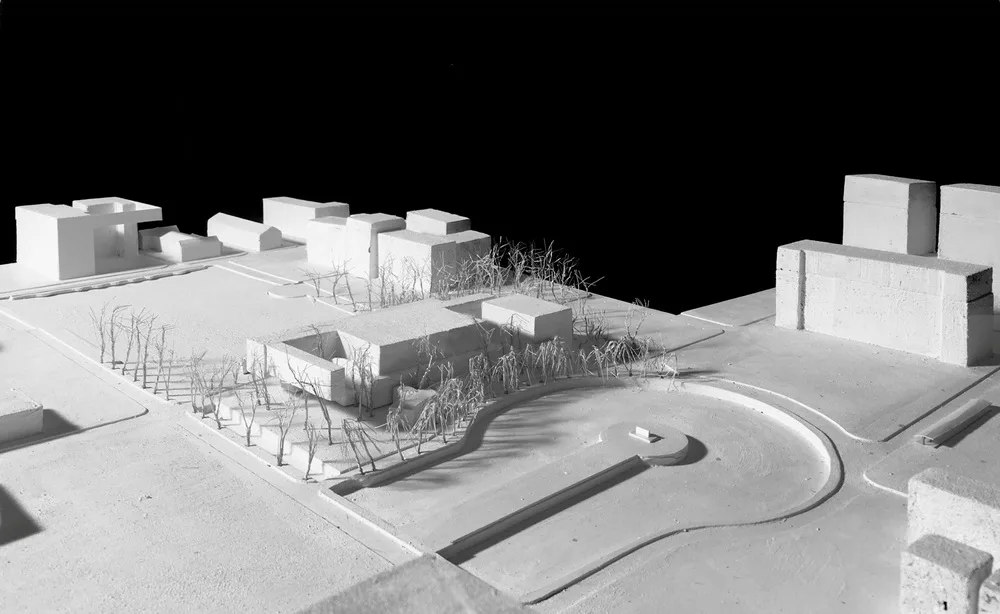
△ Project Model
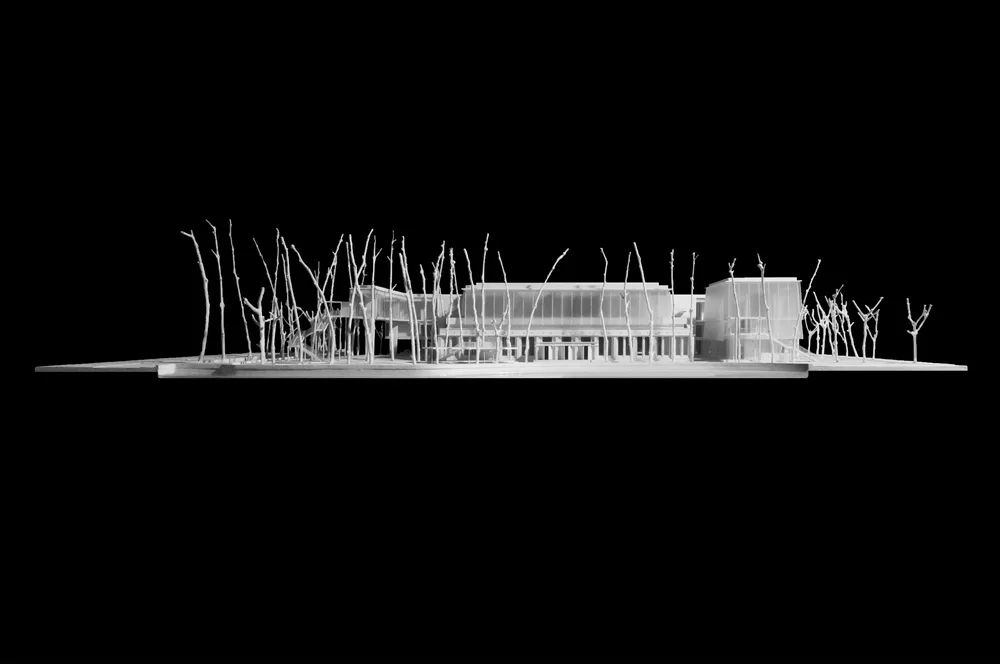
△ Project Model
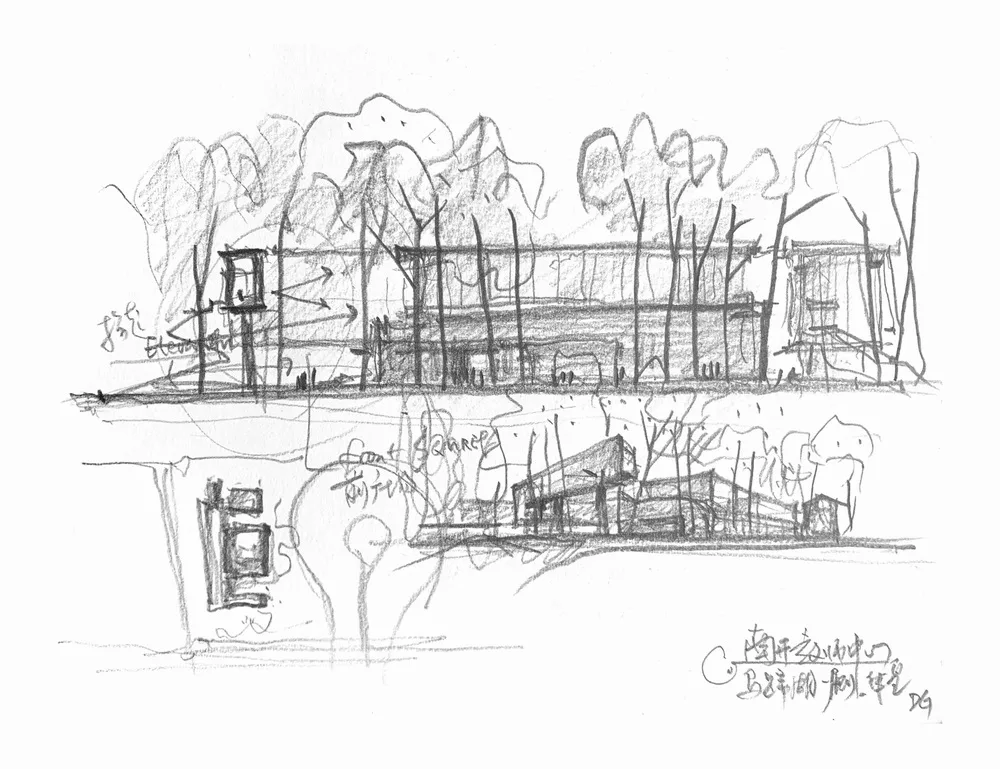
△ Design Sketch 01
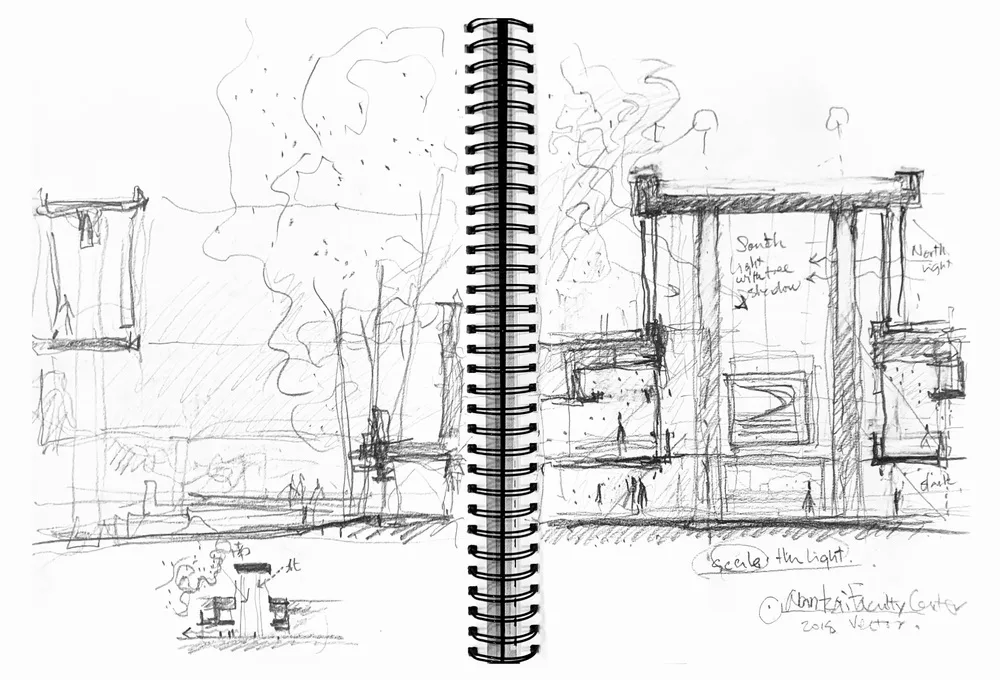
△ Design Sketch 02
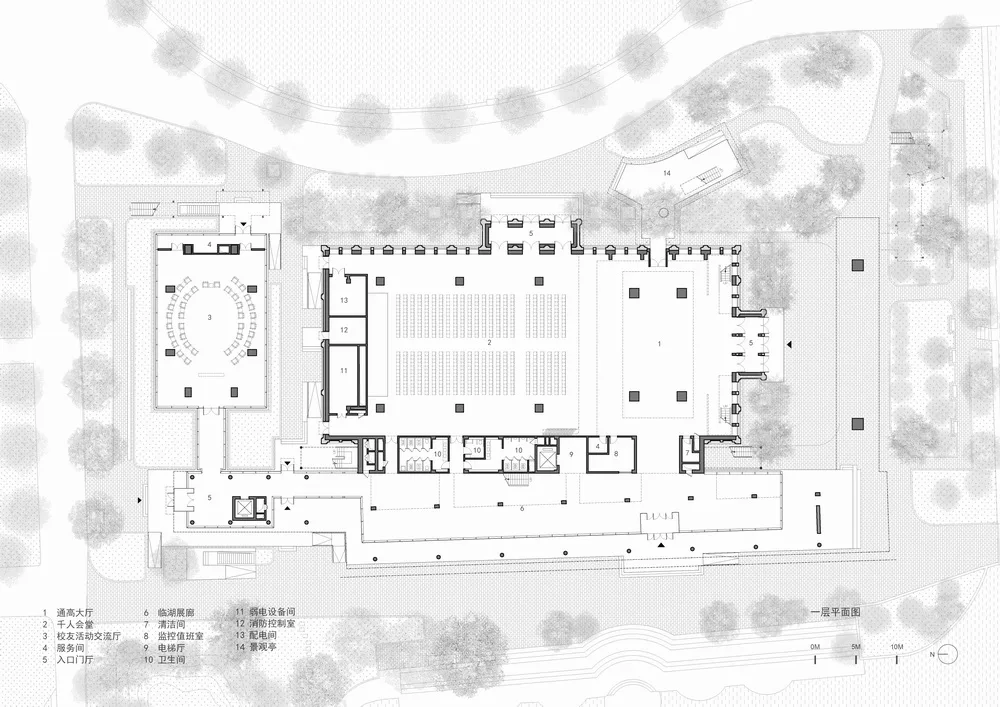
△ First floor plan
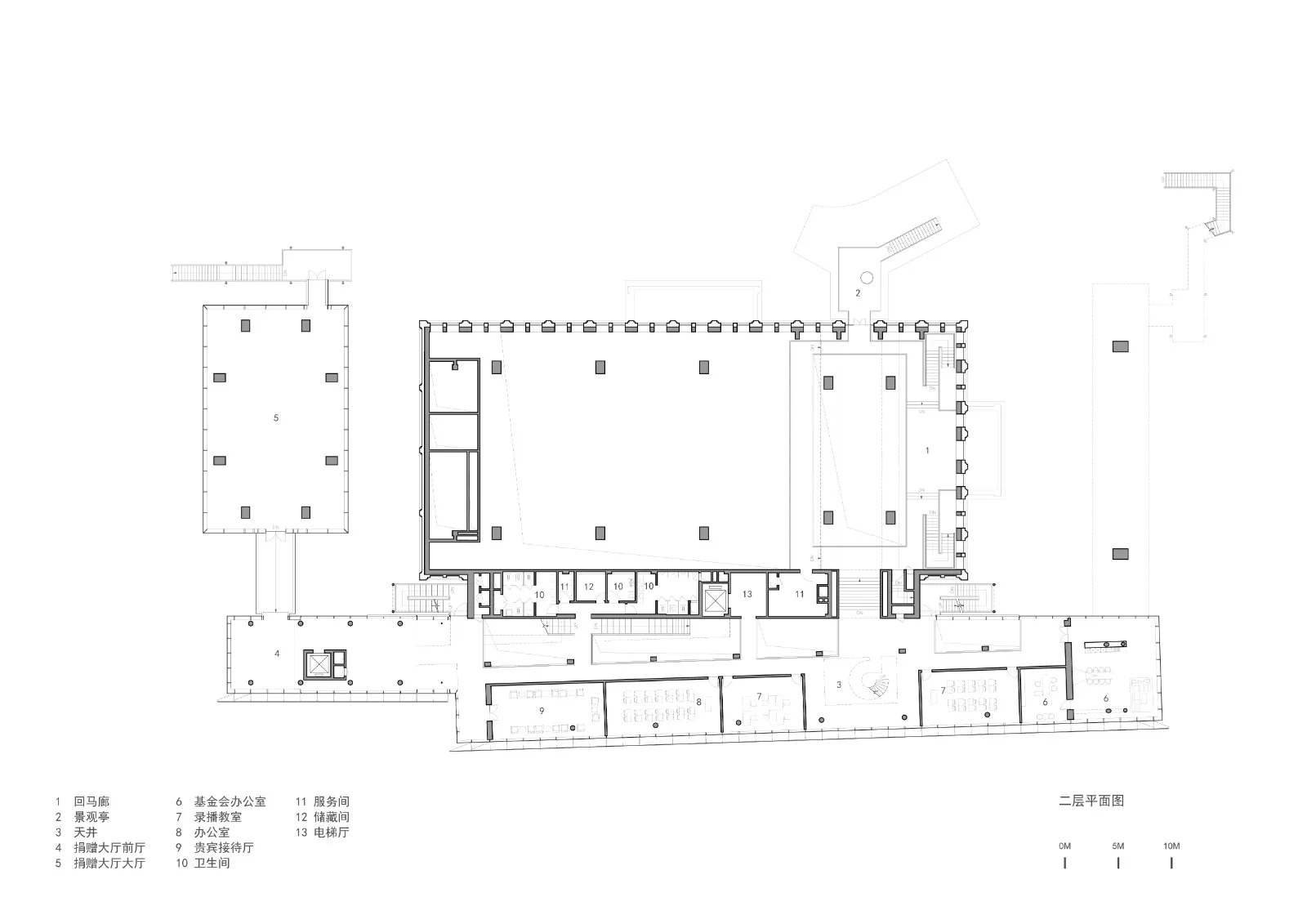
△ Second floor plan
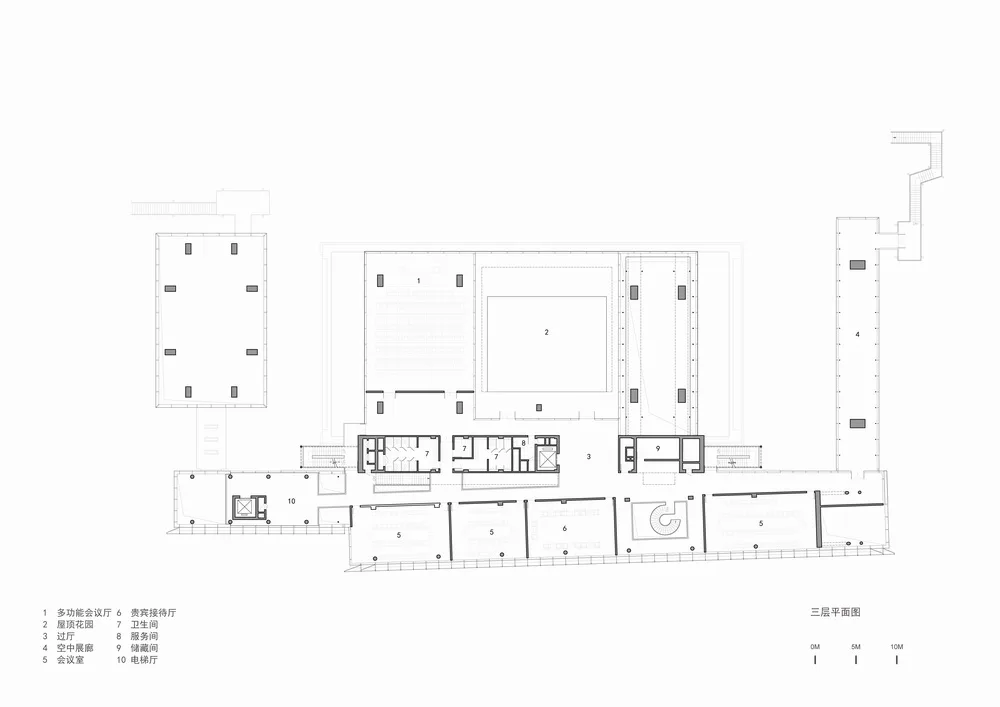
△ Third floor plan
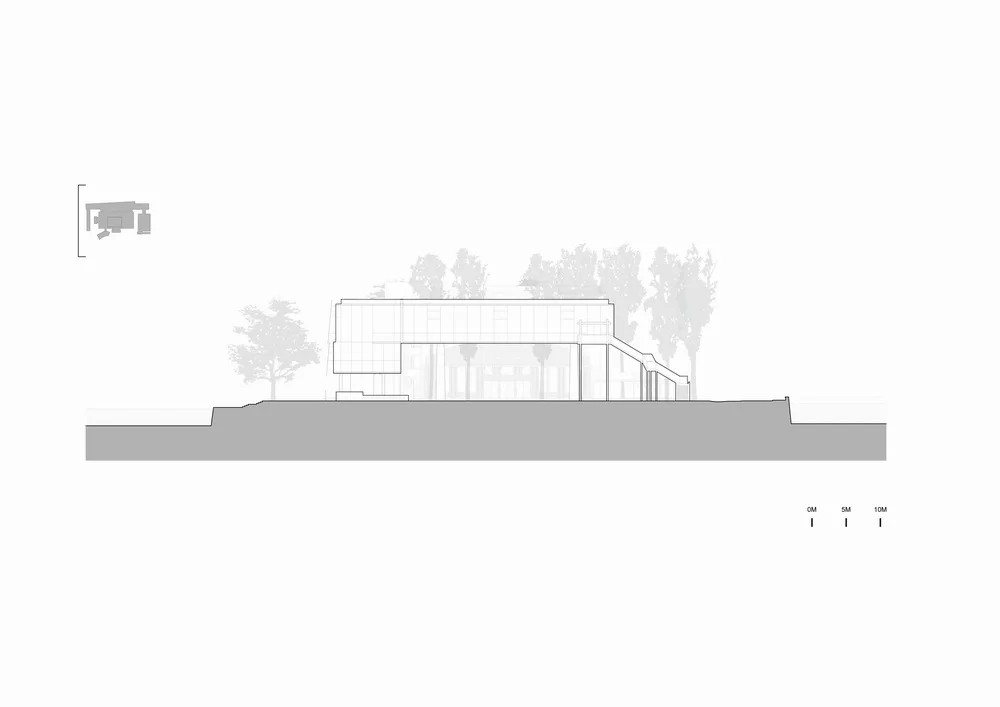
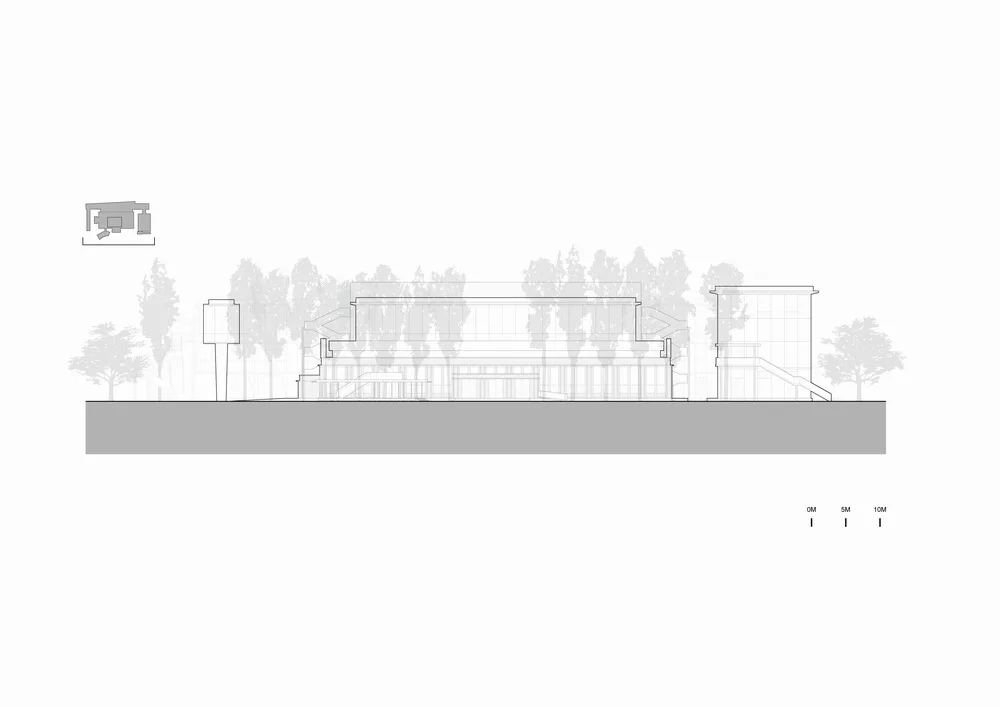
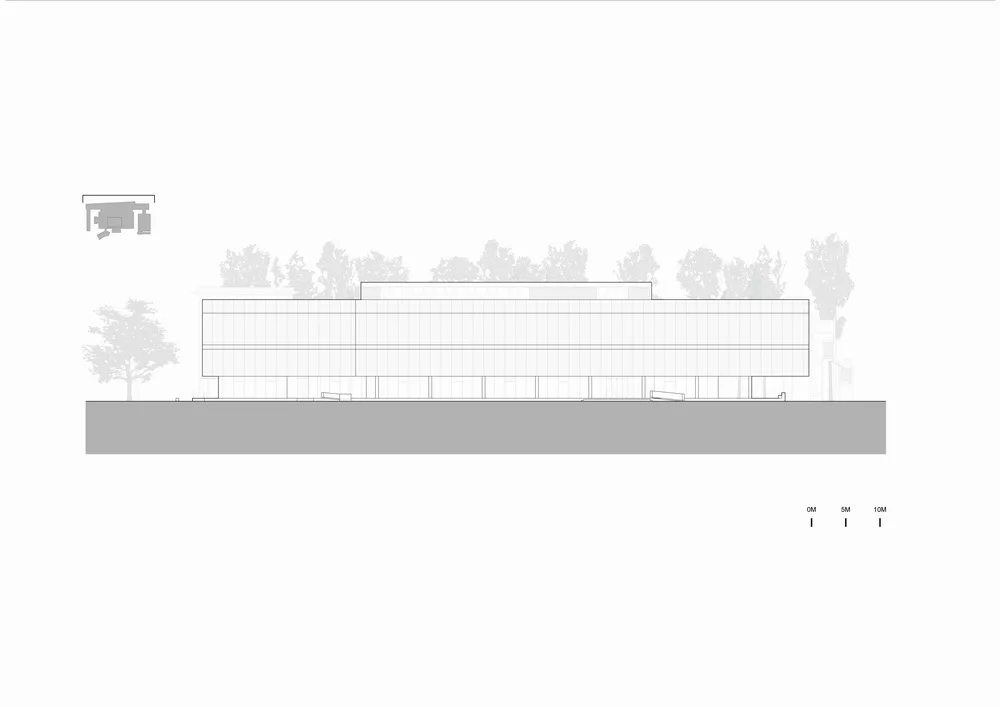
△ Elevation drawing
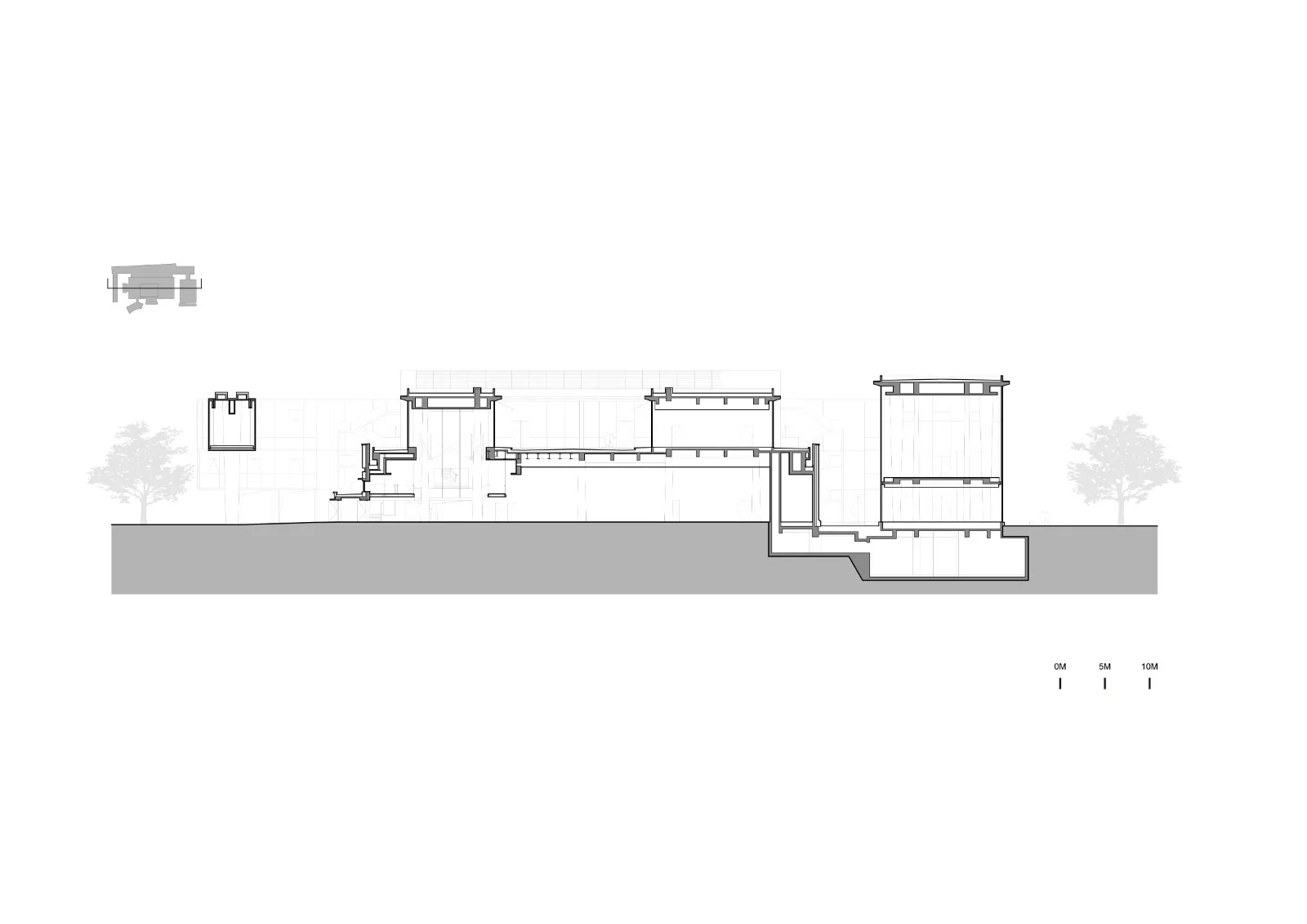
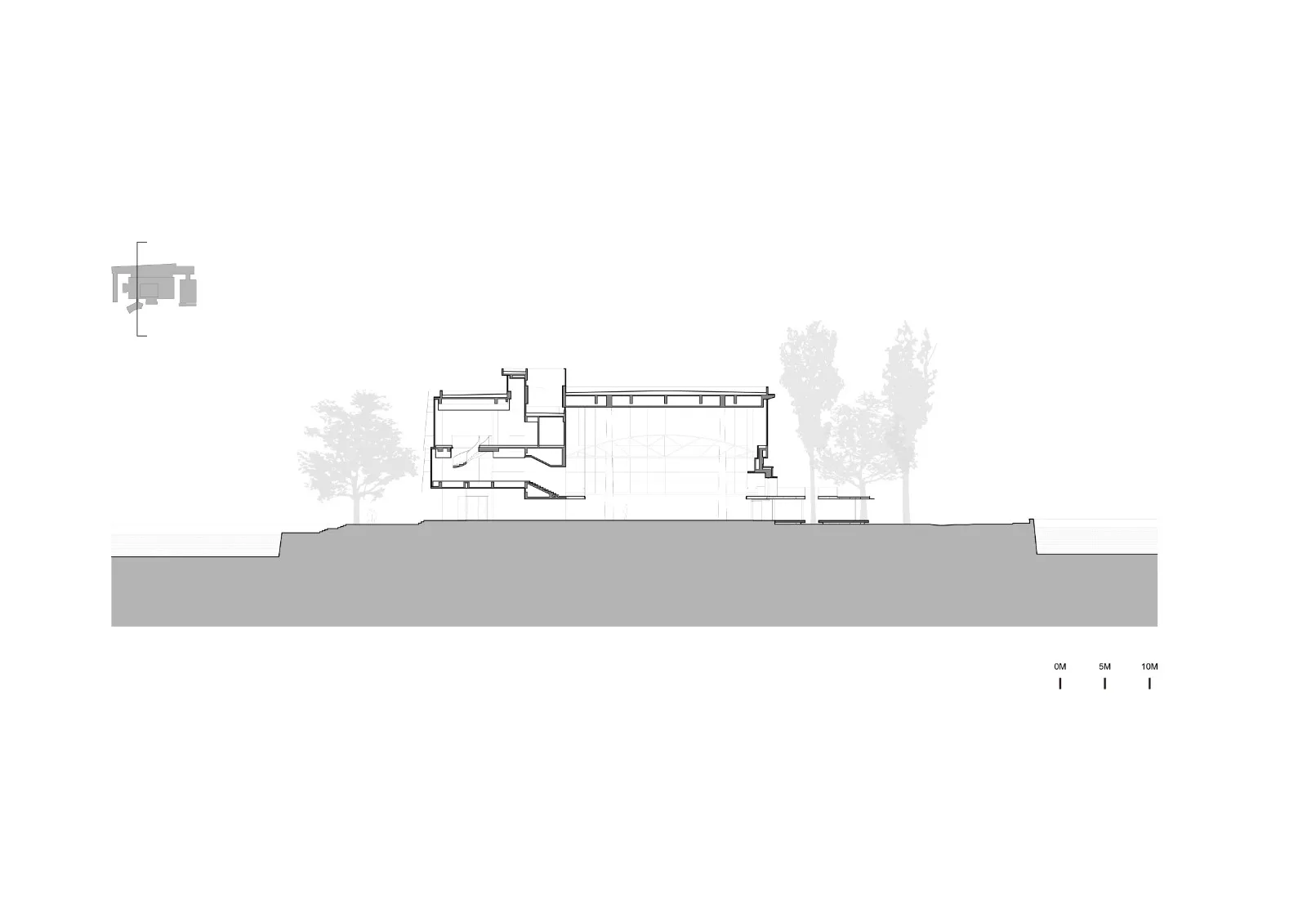
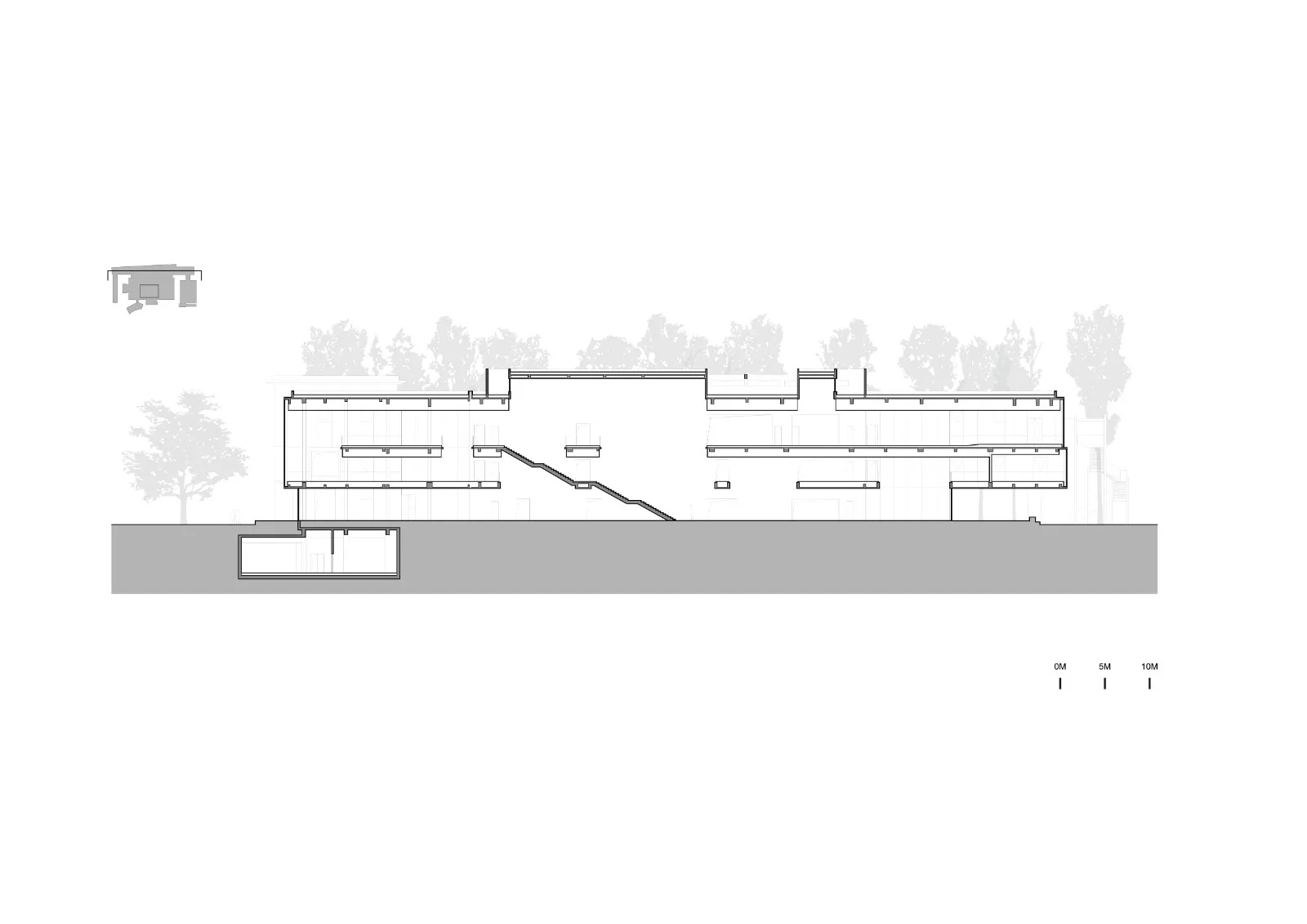
△ Section diagram
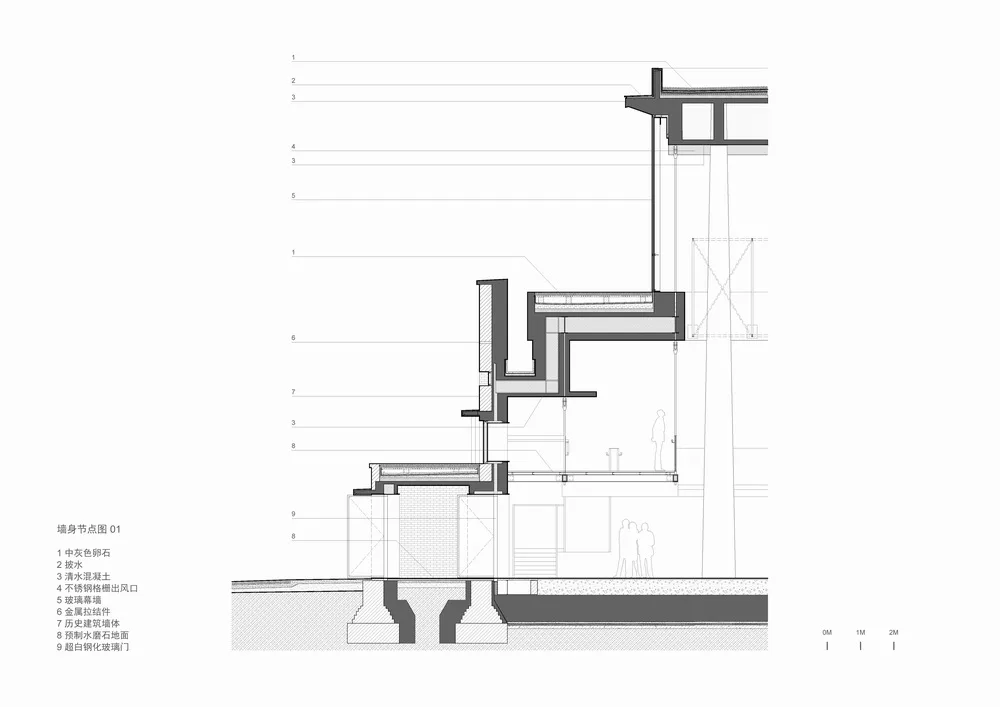
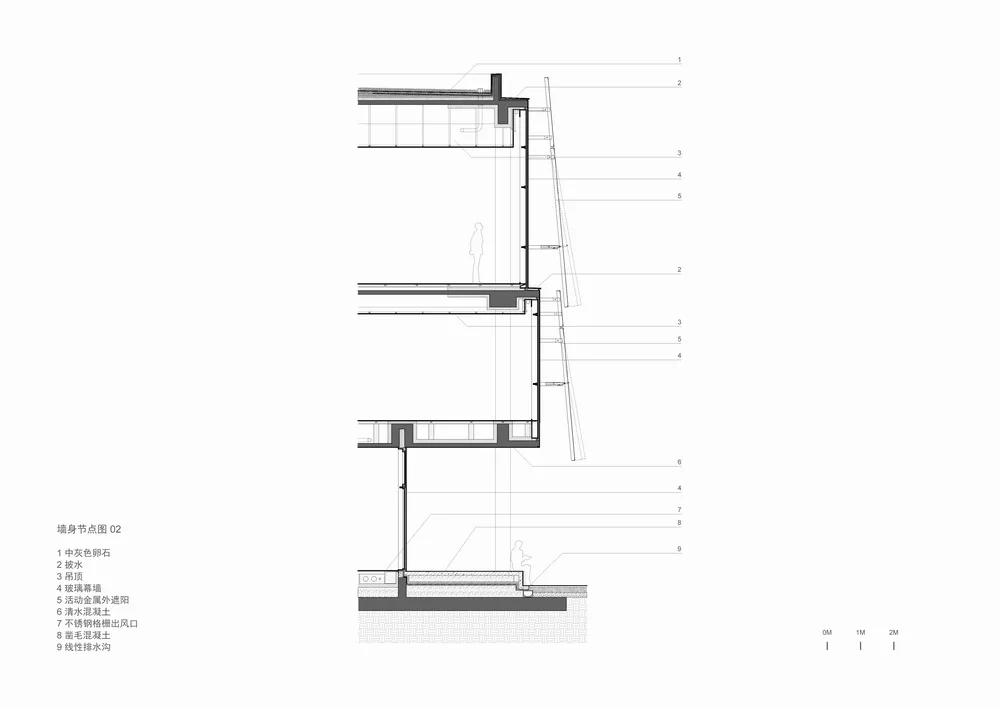
△ Wall Details
Project Information
Location: No. 94 Weijin Road, Nankai District, Tianjin, China
Architecture/Interior/Landscape Design: Vertical Architecture
Lead Architect: Dong Gong
Project Architect: Zhang Han
Collaborative Architect: Guo Liaohui
Resident Architects: Zhang Liwen, Li Jinteng
Project Members: Feng Chaoying, Tao Wei, Zhang Liwen, Li Jinteng, Ma Xiaokai, Zhao Liangliang, Chen Zhenqiang, Wang Jian, Zhang Yixiu, Chen Gong Edward Evva
Collaborative Design Institute: Jianyan Technology Co., Ltd
Collaborative Design Institute Project Architect: Yang Binglian
Architect of Collaborative Design Institute: Xu Wei
Structural Design: Xiao Congzhen, Chu Dewen, Mao Yanzhe, Zhao Shuang
Mechanical and Electrical Design: Zhang Peng (Water), Zhou Chuanyong (Heating), Li Xiaofei (Electric), Party Building (Electric)
Lighting Consultant: Dongliang International Lighting Design Center Co., Ltd
Curtain Wall Consultant: Yourong Sofun (Tianjin) Architectural Consulting Co., Ltd
Owners: Nankai University, Nankai University Zhide Fund
Structure Type: Frame shear wall structure, frame structure, steel frame structure
Building Materials: Plain concrete, steel, metal mesh, glass, brick
Building Area: 6,662 square meters (5,900 sqm above ground, 762 sqm underground)
Floor Area: 8,212 square meters
Design Period: July 2017 – November 2018
Construction Period: April 2018 – September 2019
Photography: Chen Hao, Su Shengliang















Must log in before commenting!
Sign Up