
Yuanjuesi Village, located in Jintang County to the northeast of Chengdu, sits at the source of the thousand-mile-long Tuo River. Zhao Town, the county seat, is renowned as one of the famous ancient towns in Sichuan. The project to transform the old Hejiayuan courtyard into a vibrant village center is set within this historic area.
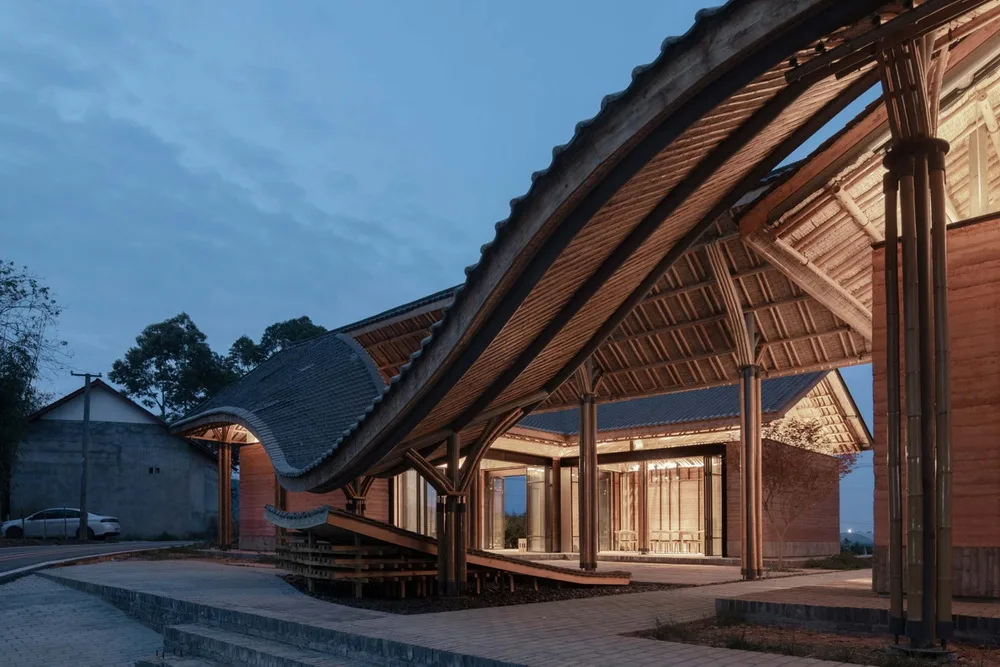
Drawing on the traditional rural architecture of Sichuan and inspired by courtyard houses harmonized with the natural environment, the design connects and reshapes two original buildings. This was achieved through a careful strategy involving “demolition, lifting, dismantling, transformation, breaking, and diversion.”
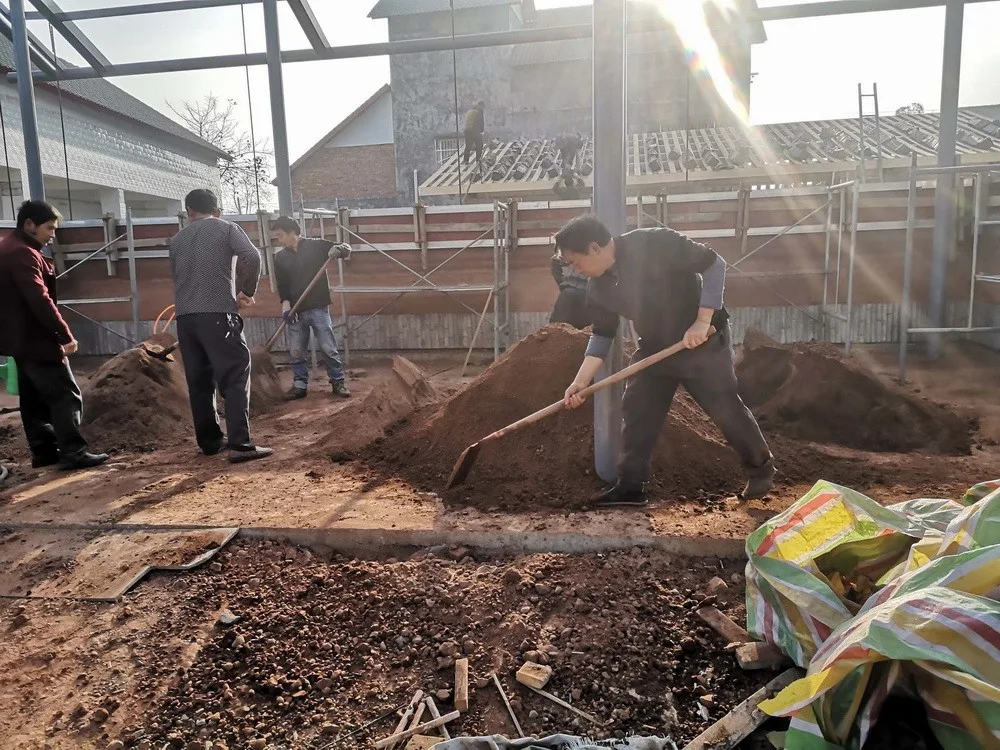
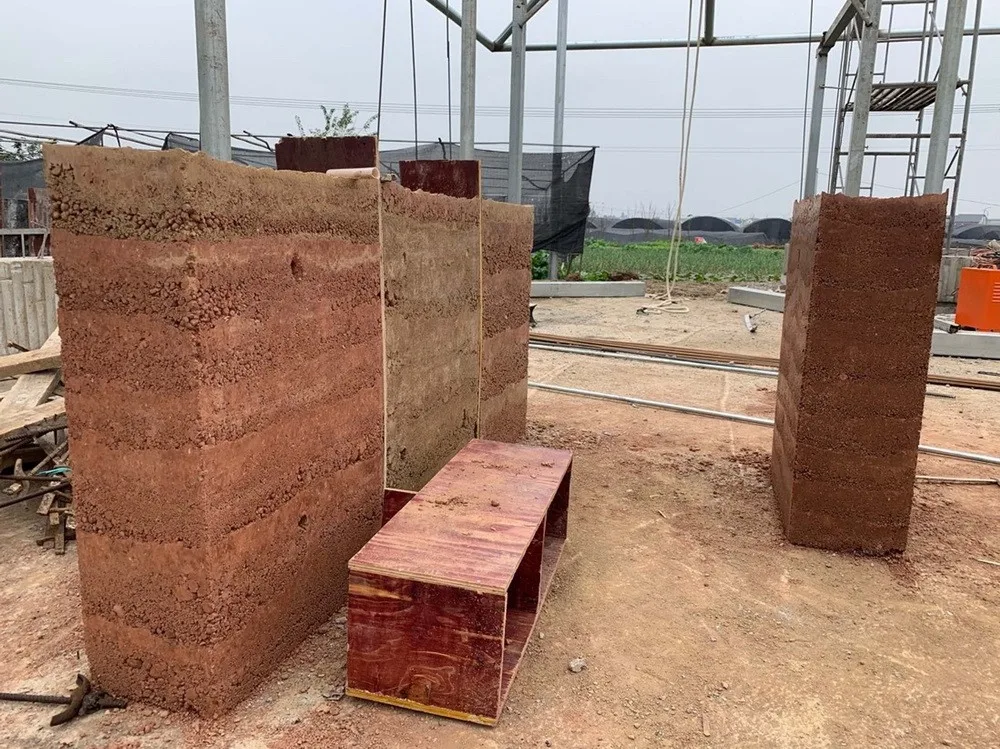
△ Construction site
The term “demolition” refers to removing damaged or later-added walls within the courtyard to restore its original structure.
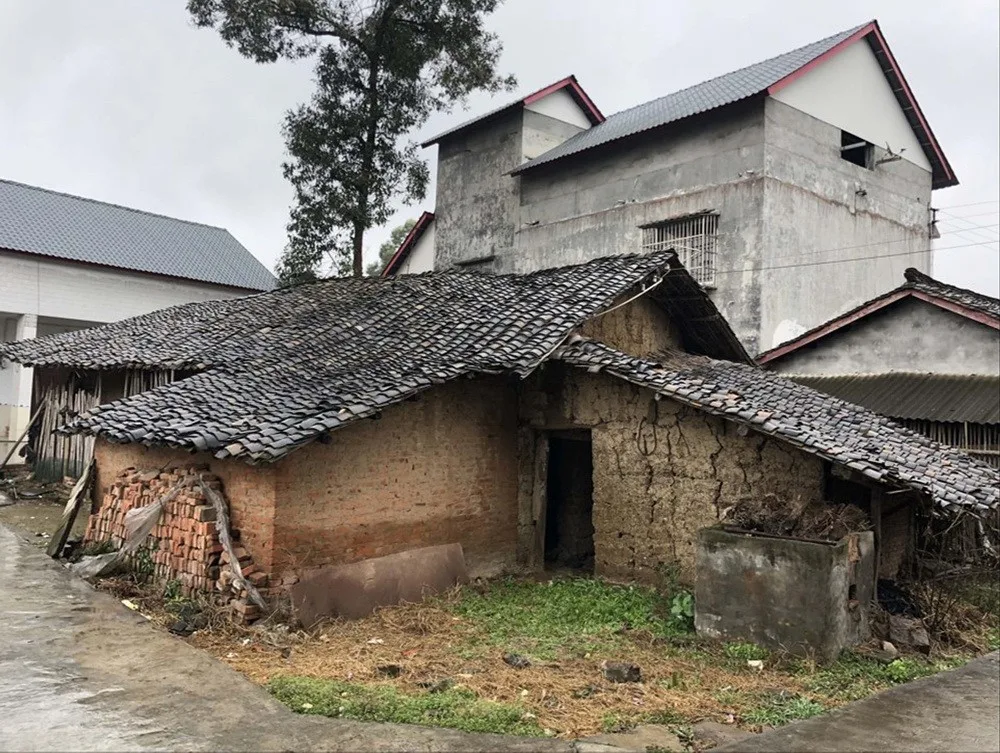
△ Condition of old buildings
“Lifting” involves raising the roof by 1.2 meters to enhance natural lighting inside and create a more comfortable spatial environment.
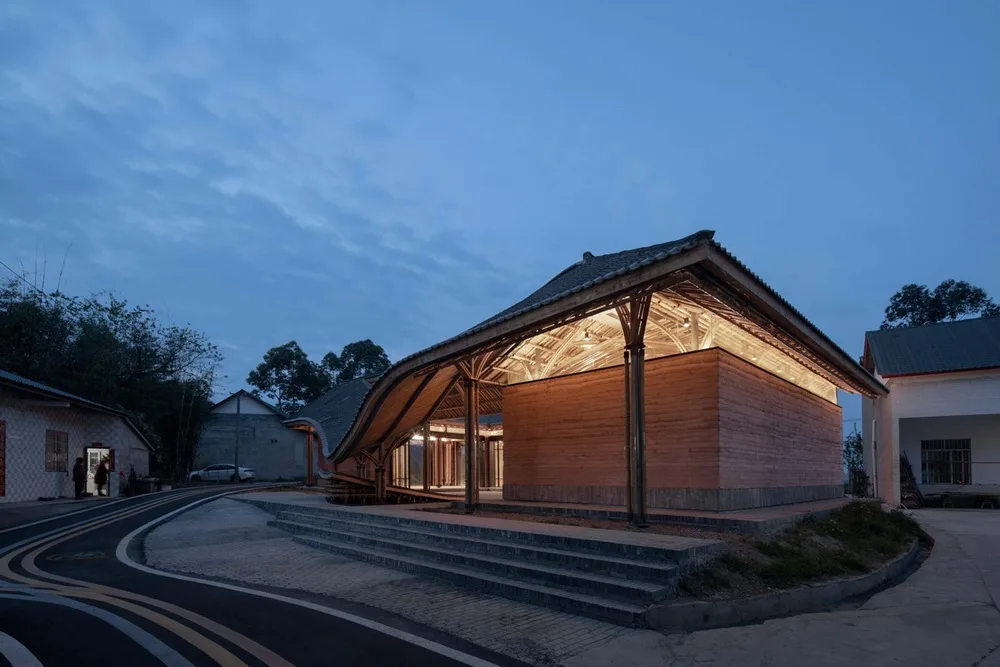
“Cuo” refers to two adjacent but relatively independent residual courtyards. To bring them closer, the technique of “Cuo porcelain” was introduced to connect the two separate roofs, redefining the spatial relationship between the courtyards.
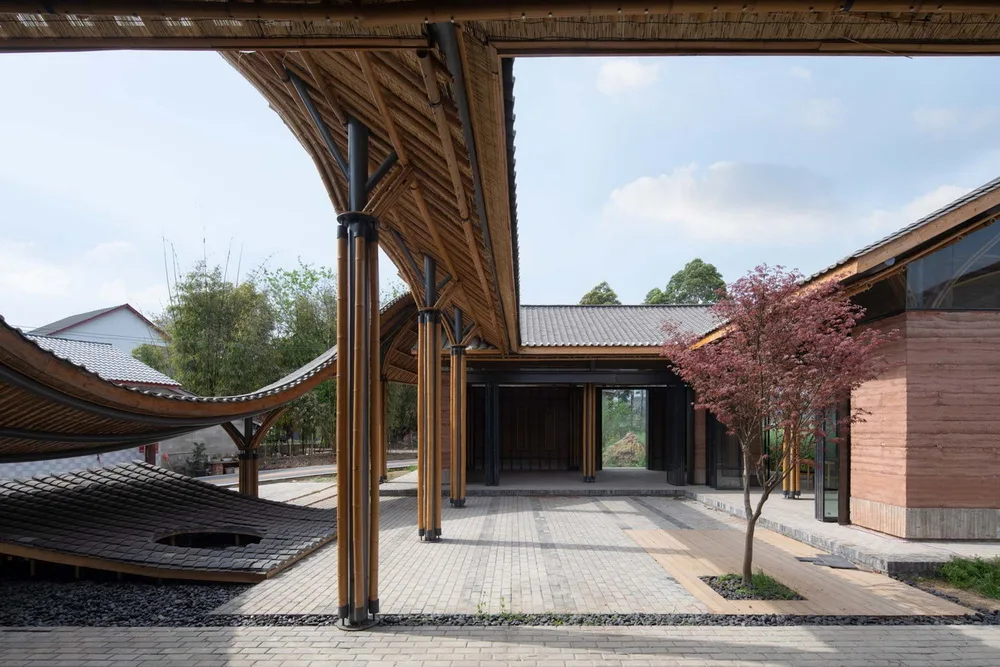
“Transformation” describes the process of extracting twin planes and lowering the ridge line in front to create a continuous curved surface that alternates spatially. This combines the traditional folding roof with a streamlined side design into a unified form.
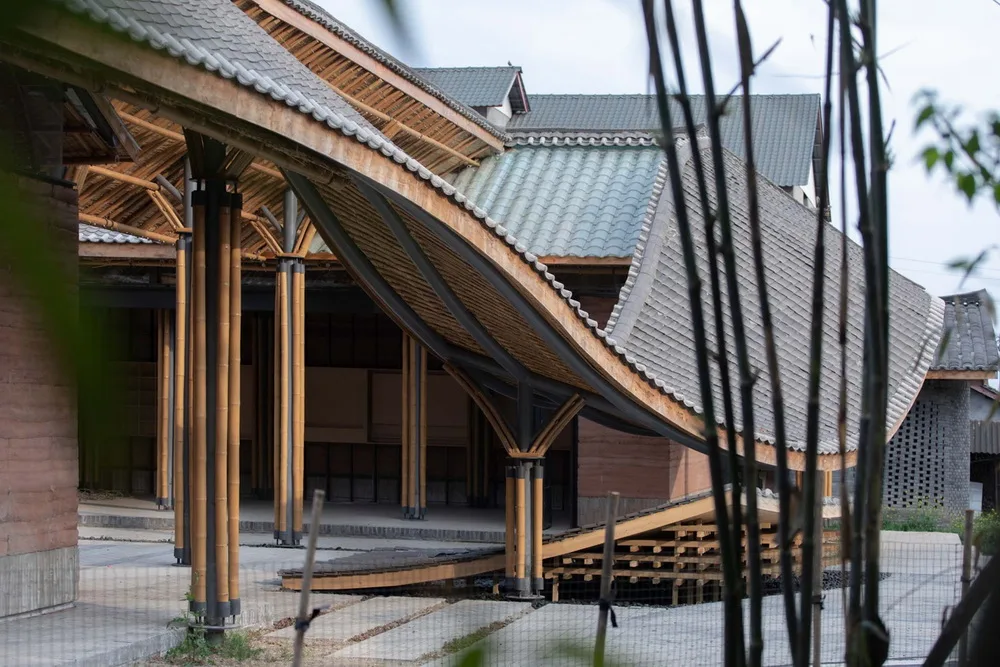
“Break” aims to enhance the courtyard’s atmosphere by artistically opening up the southern space of the remaining courtyard on the south side.
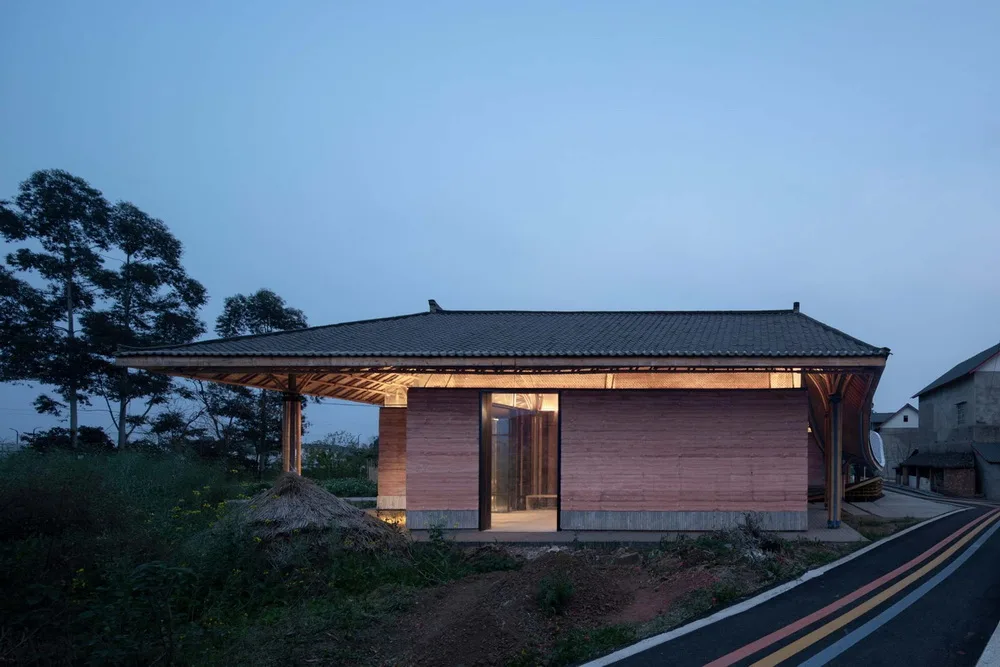
“Introduction” involves incorporating landscape space into the semi-open, sheltered area beneath the eaves. The spatial design reorganizes and extends previously enclosed areas, blending internal and external elements while preserving the building’s original appearance.
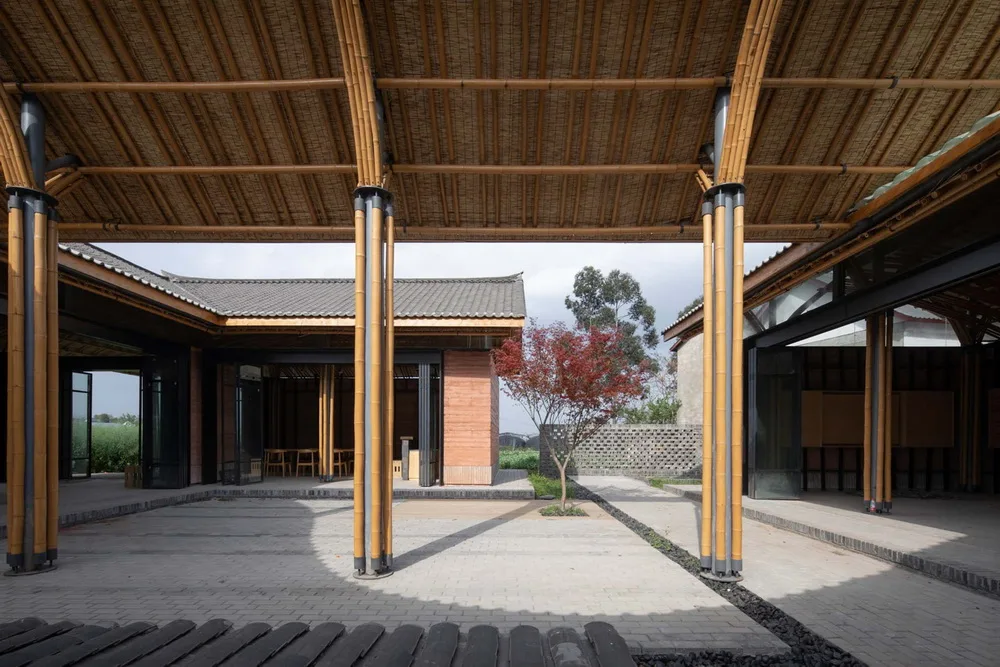
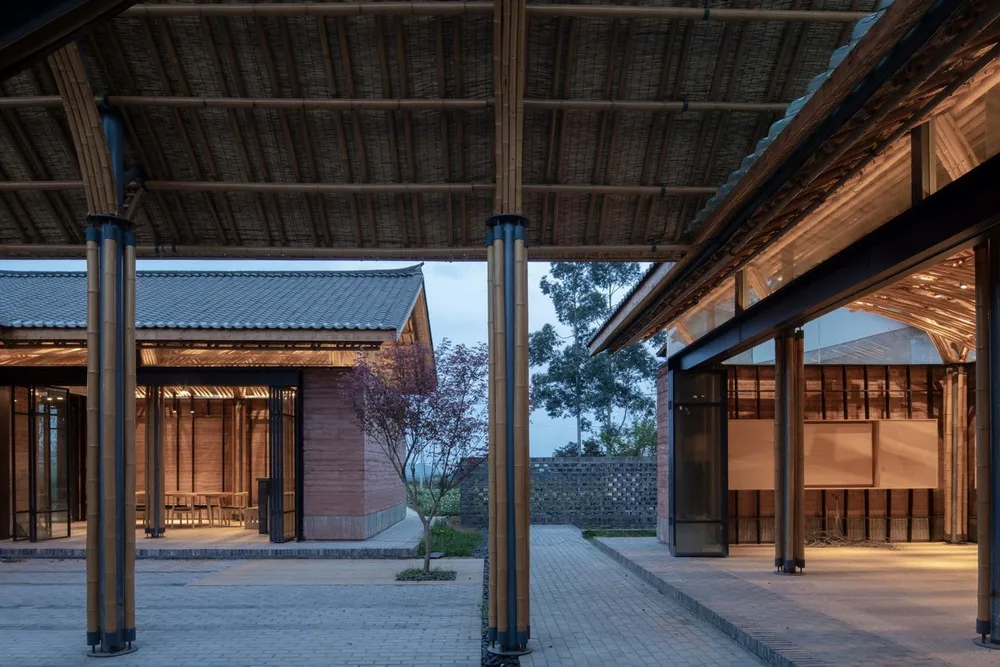
From a distance, passing through the lush plant landscape, the building’s coiling, dynamic roof and its naturally flowing lines come clearly into view.
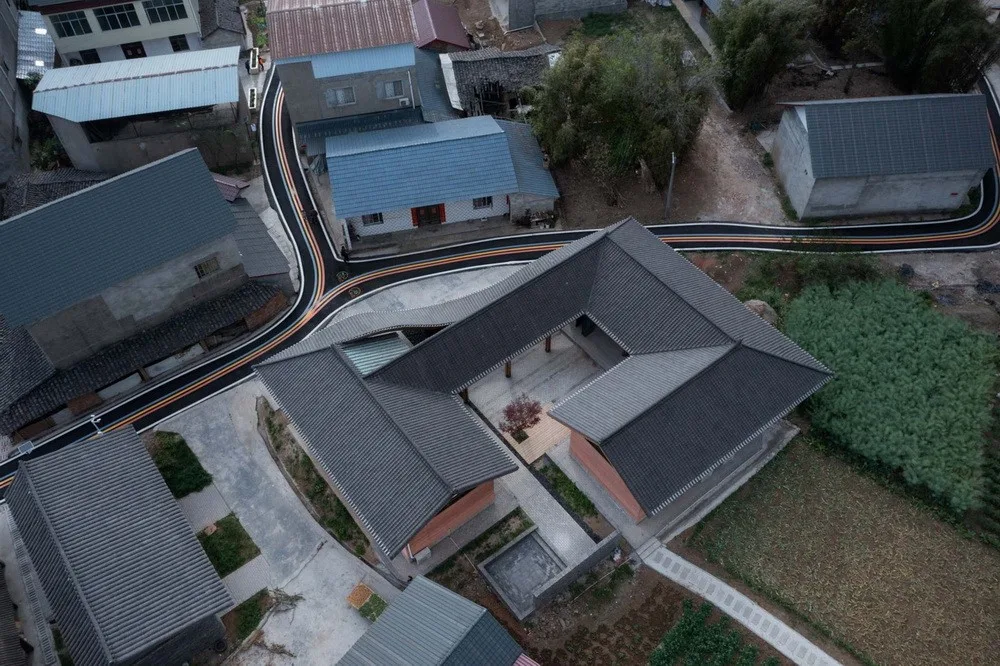
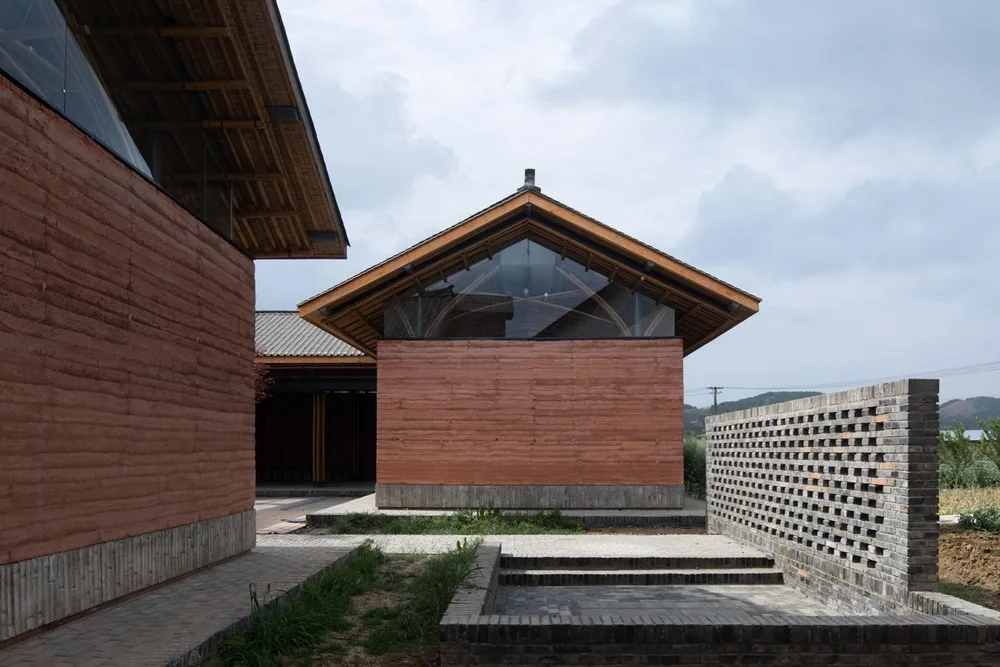
The exterior facade is constructed using rammed earth made from locally-sourced mud, sand, and gravel, offering a simple yet authentic finish. The combination of transparent glass tiles with traditional blue tiles creates a striking contrast between modern and classic elements.
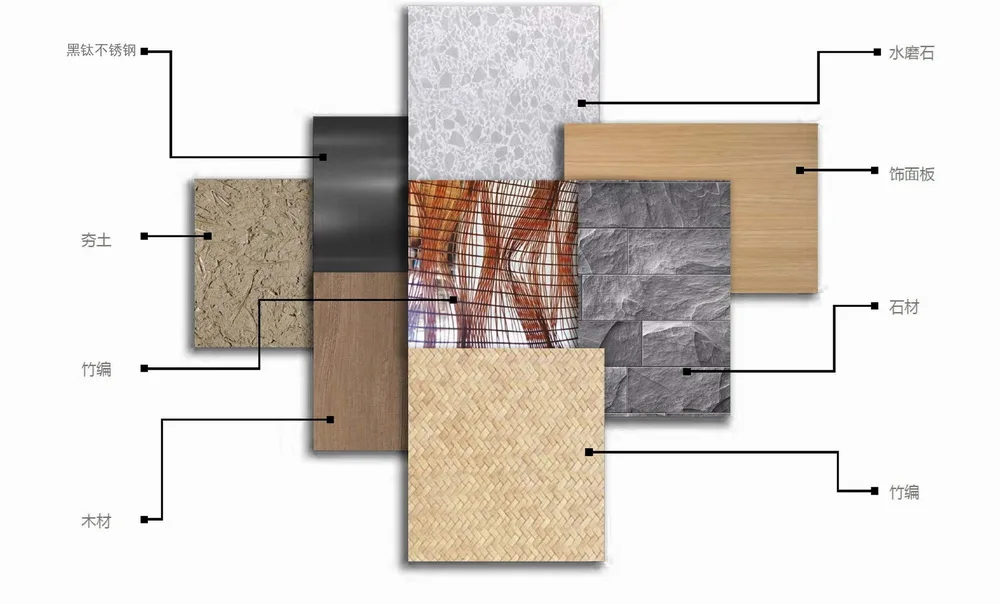
△ Material schematic diagram
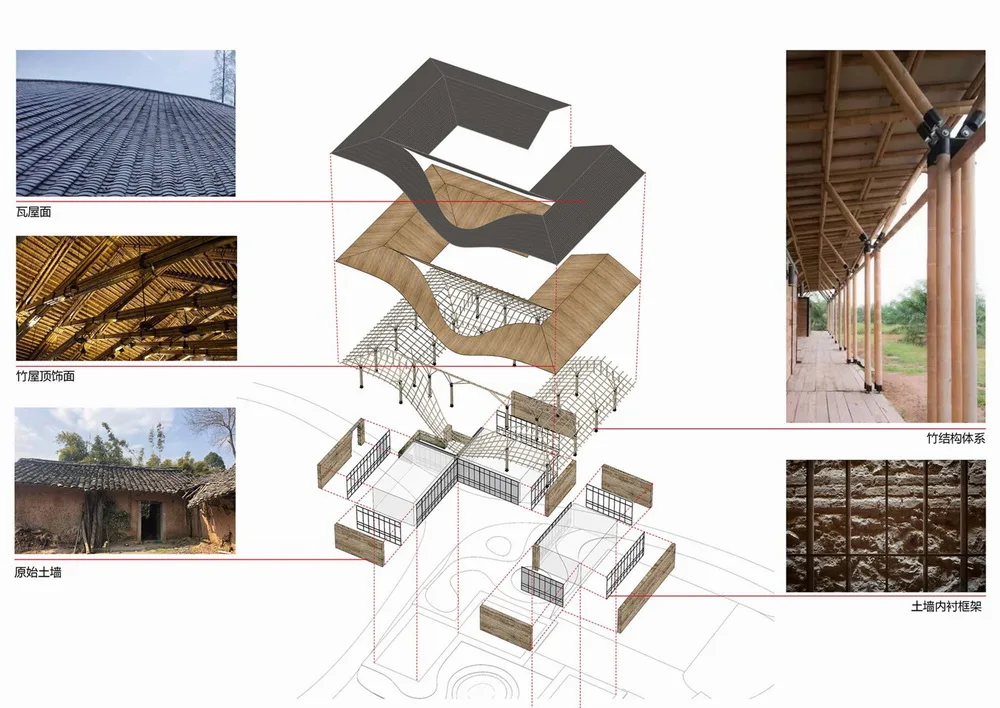
△ Axonometric diagram
Material Strategy
Rammed earth is a material deeply rooted in local tradition and history. In an era dominated by concrete, the designers aim to redefine rammed earth—not as a primary load-bearing element but as a supportive structure. Importantly, this “ramming” is authentic, not superficial, and meets modern functional requirements, including insulation. To achieve this, new technologies and experimental approaches have been applied to rammed earth construction.
Within the structural system, aside from the steel framework, bamboo is primarily used to decorate and support the indoor roof and facade.
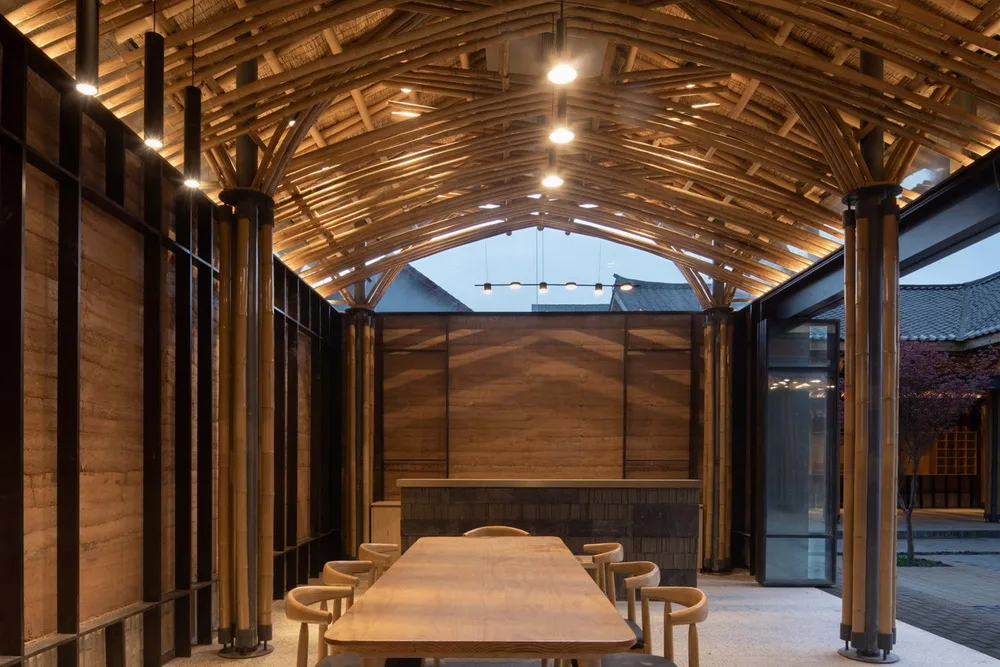
The use of bamboo here is unique—not merely decorative but integral to the structural system. Its natural flexibility and softness balance the hardness and coldness of the steel, representing a fresh exploration in material craftsmanship.
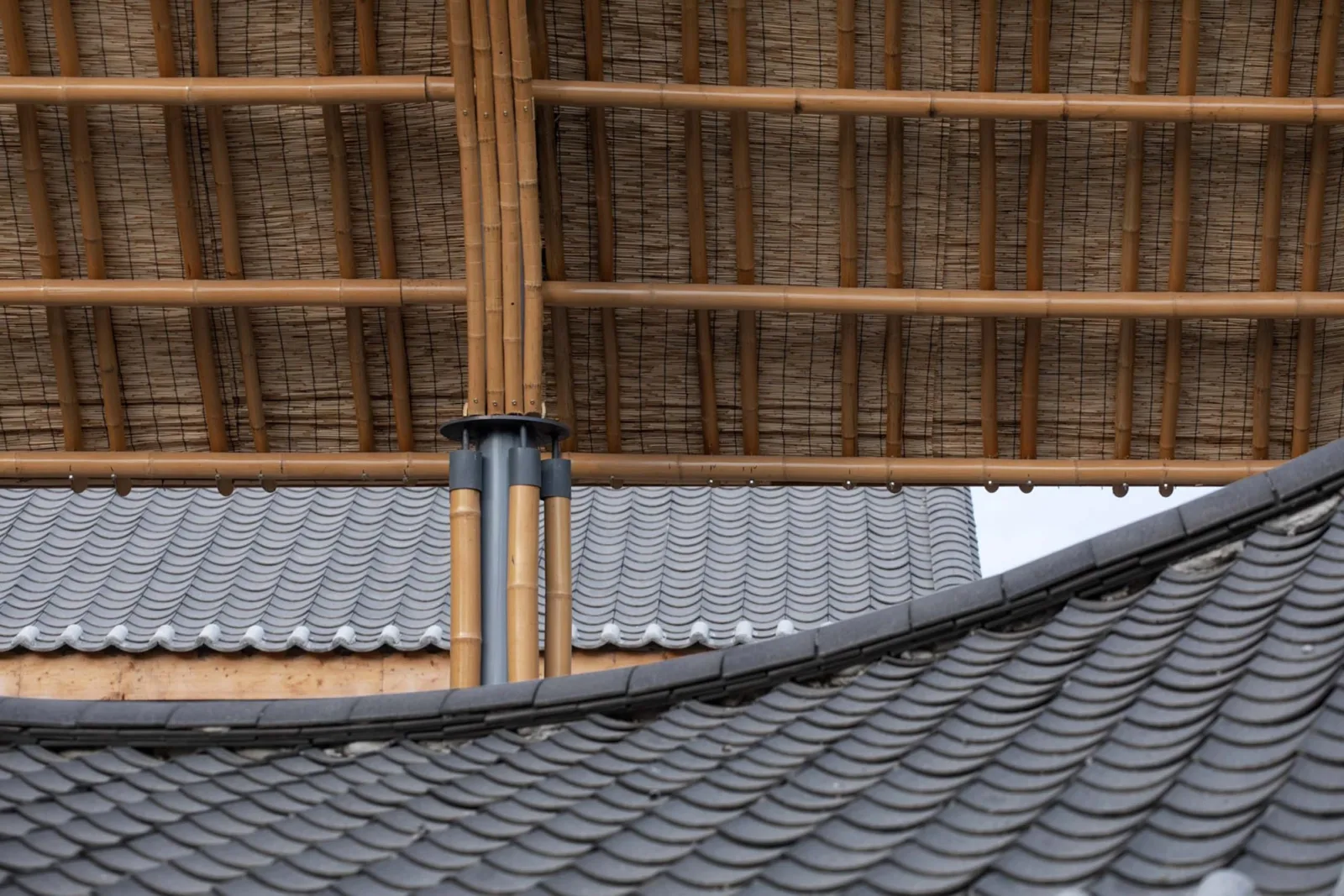
Technical drawing
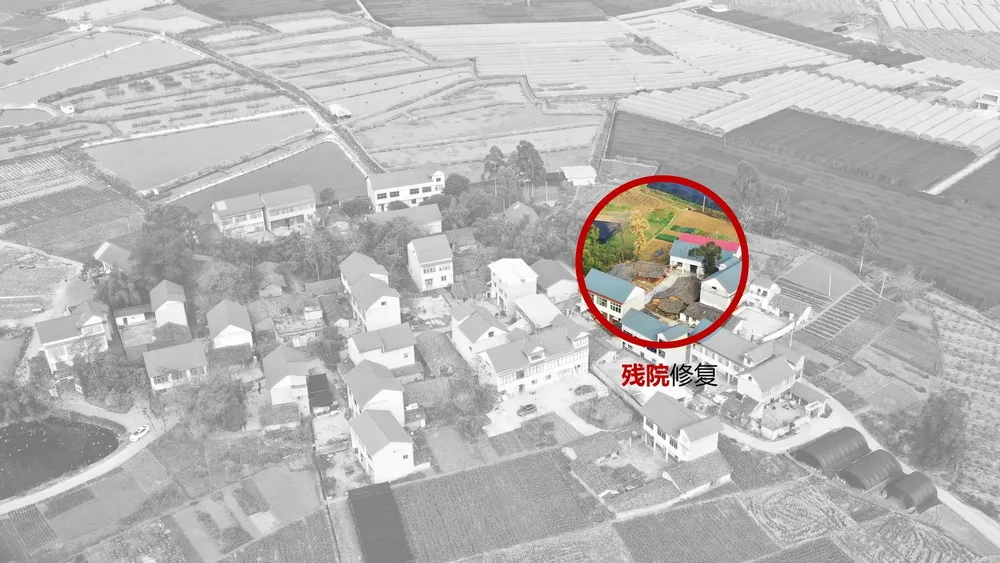
Surrounding venues
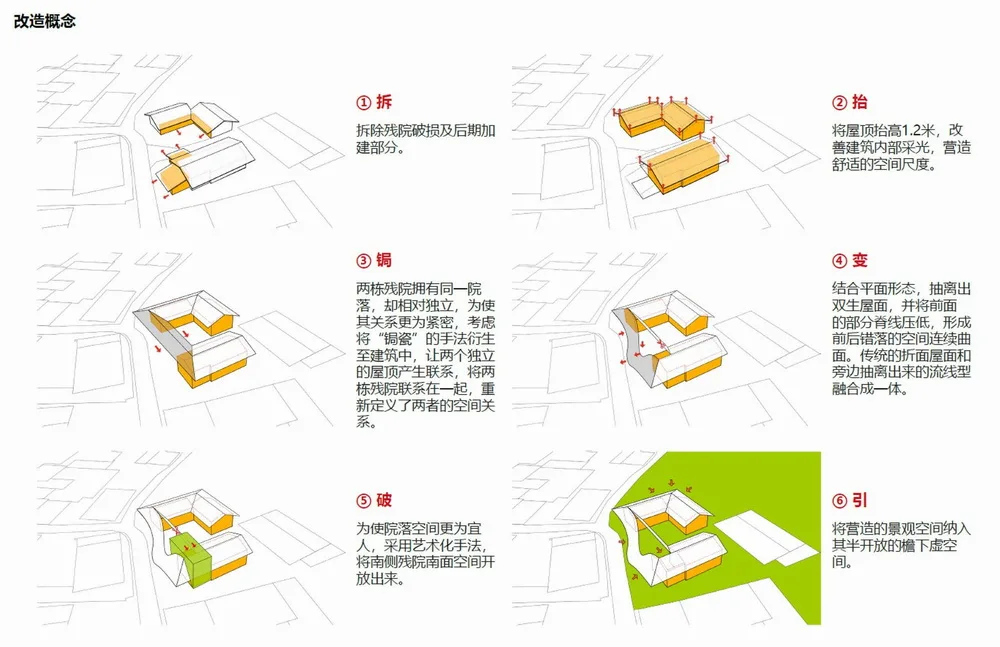
△ Concept generation diagram
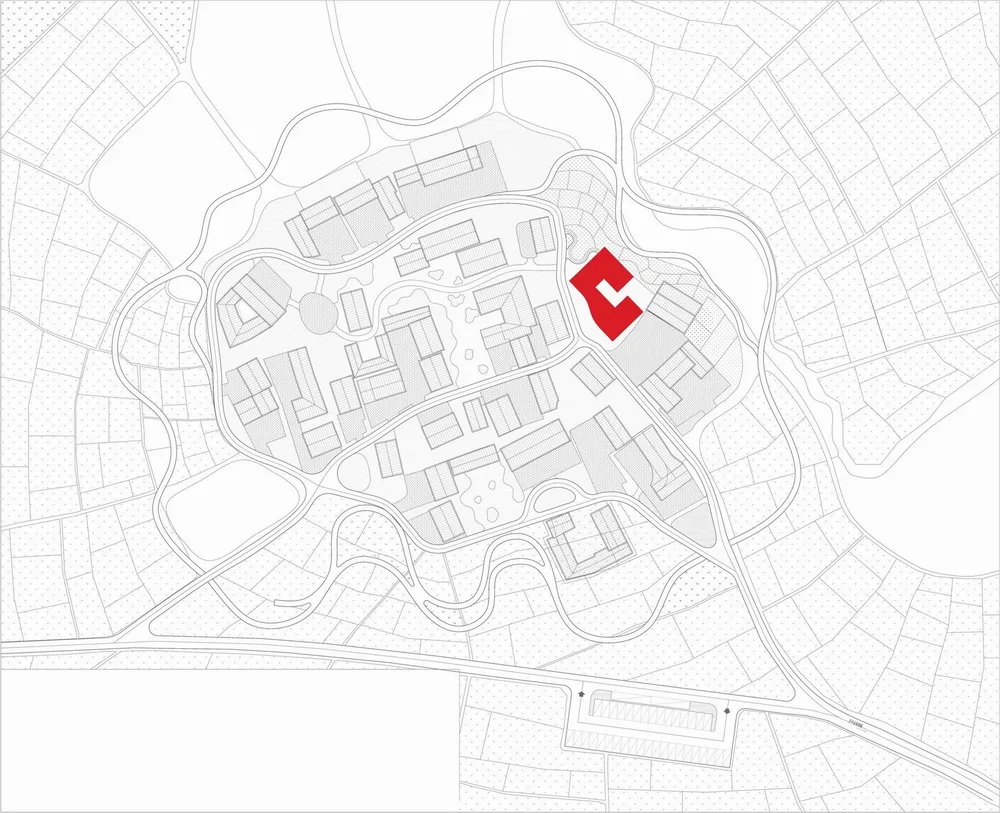
△ General layout plan
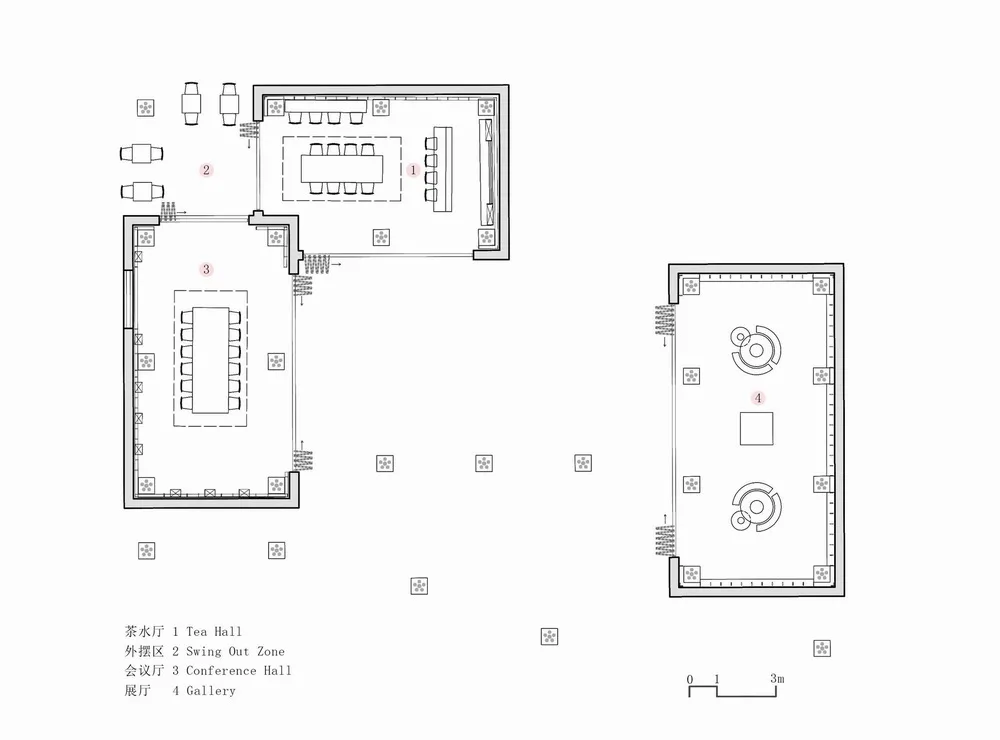
△ Plan view
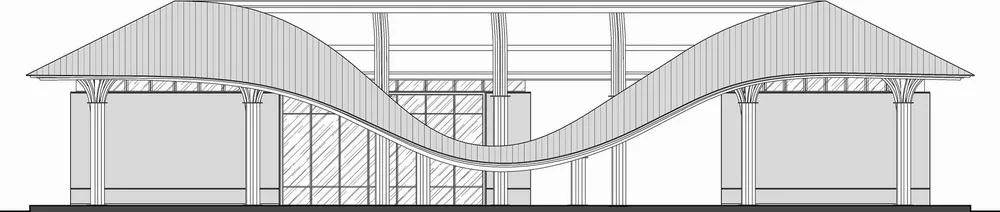
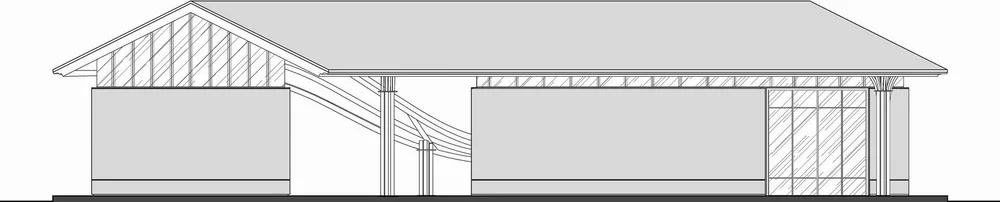
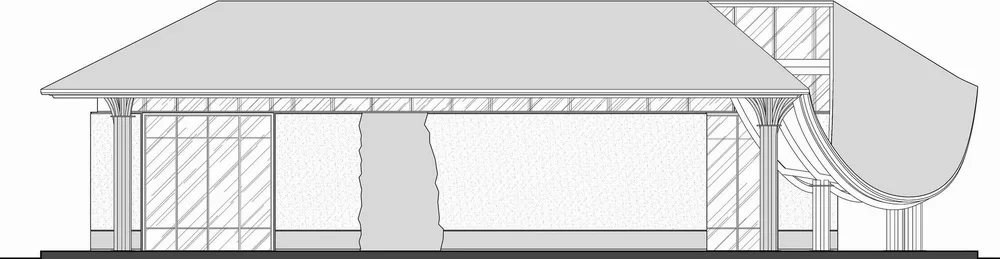
△ Elevation drawing
Project Information
Architectural Design: Proficient in Architecture
Area: 420 m²
Project Year: 2019
Photography: Existence of Architecture
Manufacturer: Ding Zhizhu Chengdu Cultural and Creative Co., Ltd.
Lead Architect: Wen Qinhao
Design Team: Li Xinbo, Deng Siyuan, Liu Zheng, Zhang Junwei, Xu Shiyong, Huang Ting, Li Chenggang, Song Bailin, Zhao Yaxian
On-site Technical Engineer: Wang Wang
Construction Unit: Yuanjuesi Village Committee, Jintang County, Chengdu
Collaborative Design Team: Shanghai Yuangui Architectural Structural Design Firm (Structural)
City: Chengdu
Country: China















Must log in before commenting!
Sign Up