
Editor’s Note: Recently, the School of Architecture curated and selected twelve outstanding university campus buildings. These will be featured on the School of Architecture website this week, offering readers a structured learning opportunity.
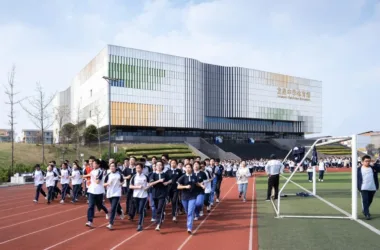
This project is located on the Zhuhai Campus of Sun Yat-sen University and involves the construction of a new sports hall within the campus.
Project Highlights:
1. Purpose: To host sports events and multifunctional activities, reducing the traditional focus on professional sports venues and emphasizing integration into campus life.
2. Openness: The building incorporates numerous transitional spaces such as elevated floors and grey areas, allowing for flexible use.
3. Landscape Integration: The structure is partially sunken by two floors to control its height, blending subtly into the campus environment and minimizing the imposing effect of a large volume.
The Zhuhai campus is situated in the Tangjiawan area of Zhuhai city. After over a decade of development, it has matured but still lacks a comprehensive facility for cultural and sports activities for faculty and students. There was an urgent need for a multifunctional gymnasium capable of hosting large gatherings, ball games, performances, conferences, and student activities, serving as a vital hub for campus culture. The gymnasium was thus developed to meet these needs.
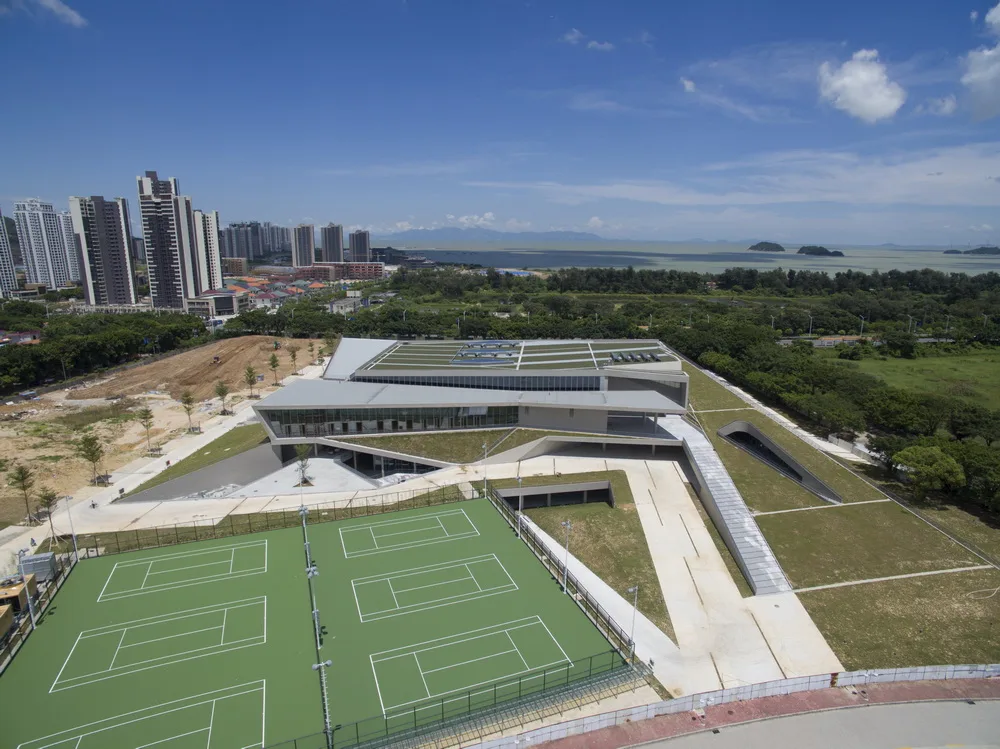
△ Aerial view of the west side
The building covers approximately 25,000 square meters, with a significant portion dedicated to elevated floors. It comprises three main floors with a height of 23.8 meters. The first floor houses indoor competition venues, multifunctional halls, sports classrooms, art activity rooms, and related facilities. The second floor includes spectator seating, art classrooms, and auxiliary rooms. All three floors feature sports classrooms.
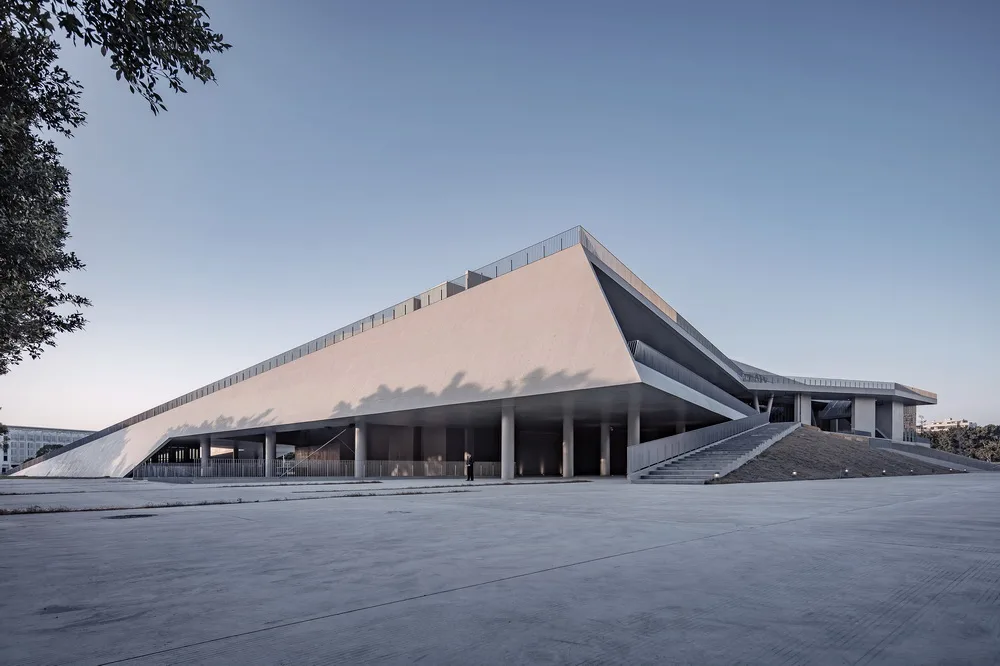
Southeast facade
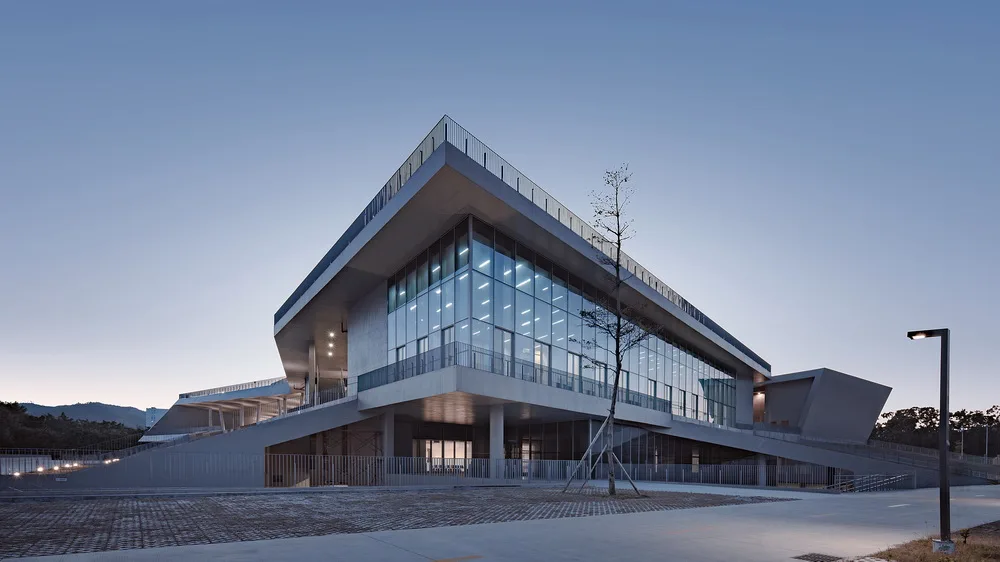
Northeast facade
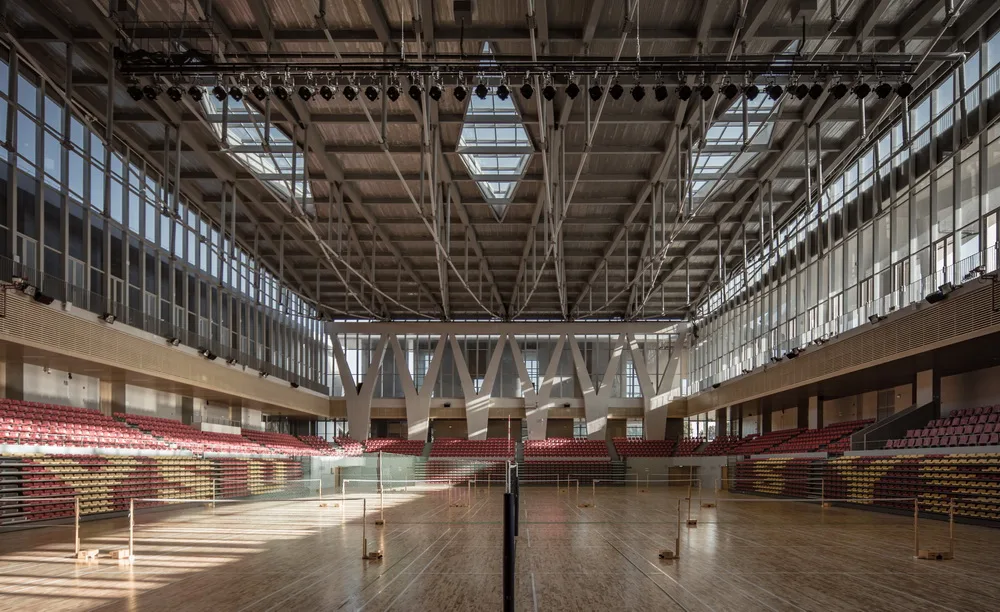
△ Main competition venue
The sports hall at Sun Yat-sen University Zhuhai Campus functions as a community-oriented sports center. The primary design goal was to better integrate the gymnasium into the unique university community. Unlike professional sports arenas, the design intentionally reduces the sense of professionalism, focusing instead on promoting the building as a cultural and recreational hub within the campus.
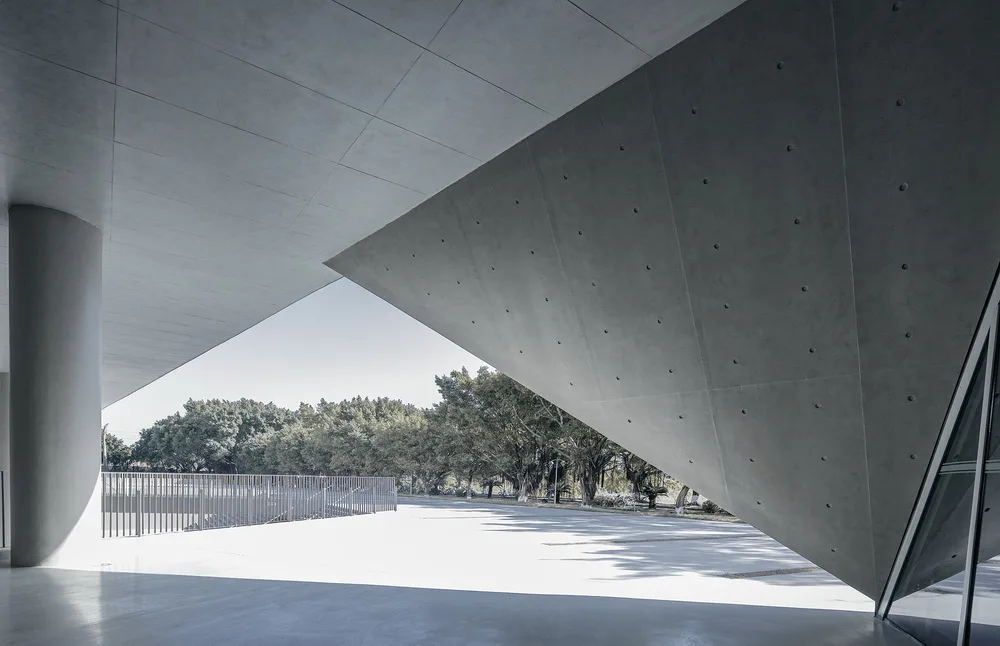
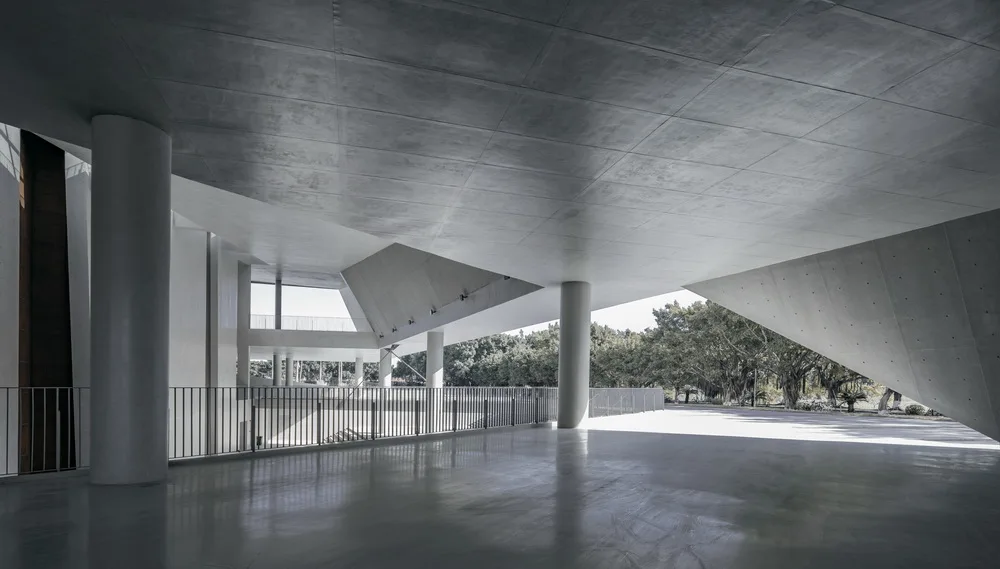
△ Entrance area on the elevated south level
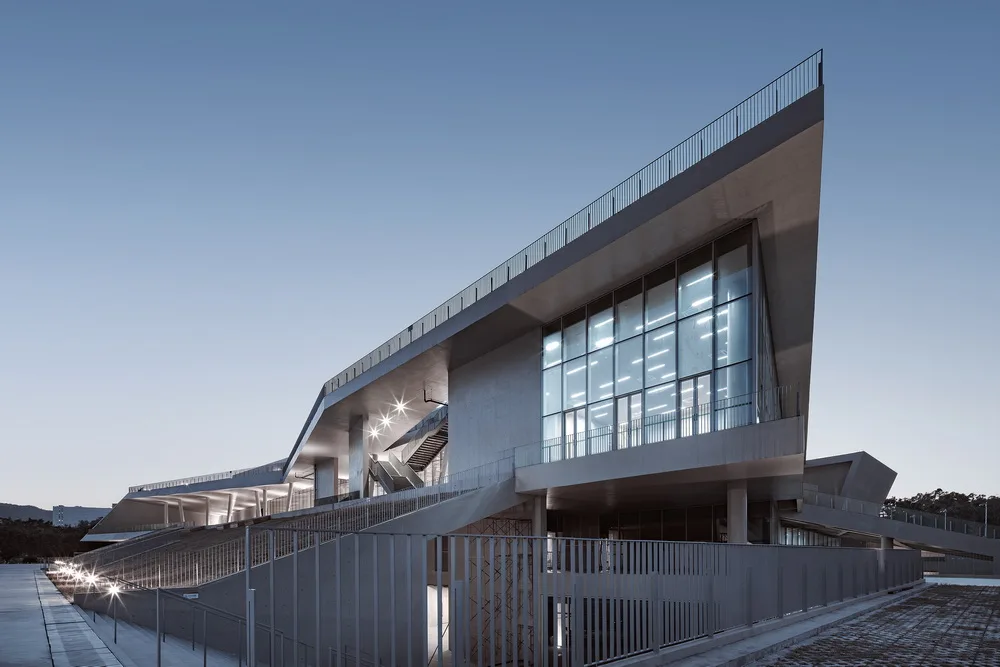
△ East facade
Architecturally, the building aims to present a more open and equal front to the campus community. Typically, sports arenas feature large volumes dictated by floor plan and height requirements, often focusing on exterior decoration rather than spatial experience. In contrast, this gymnasium arranges smaller-scale sports classrooms around the central competition field, creating a human-scale facade that reflects the building’s internal activities and breaks away from traditional bulky forms.
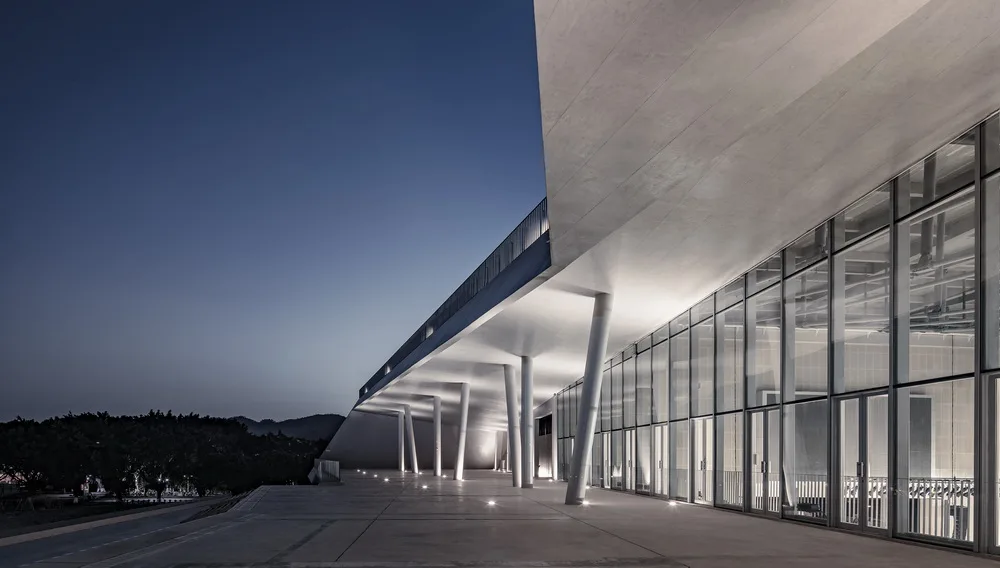
△ Three-level grey space
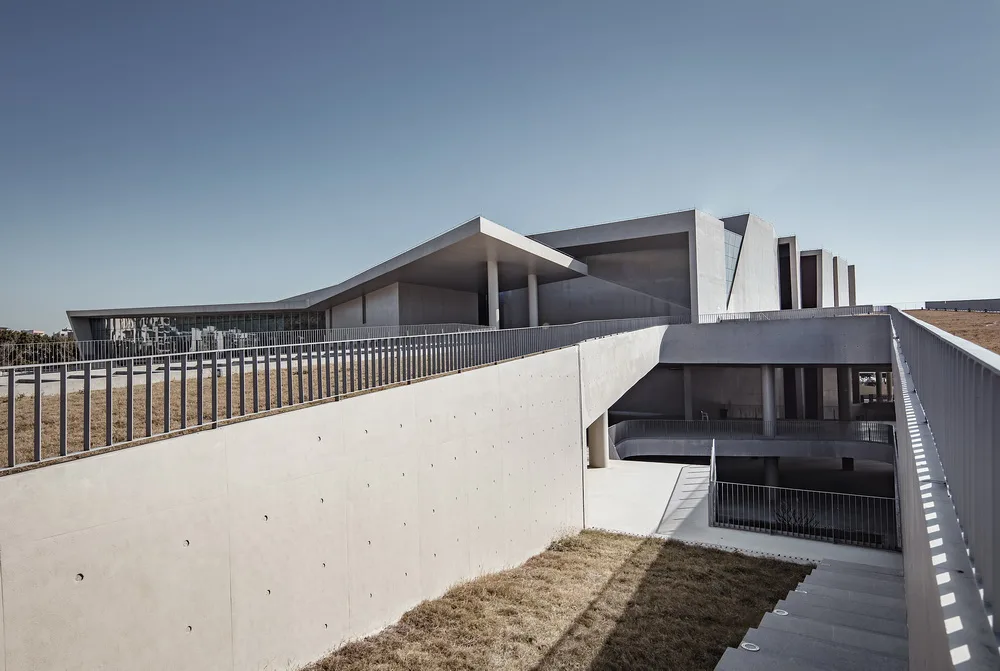
△ West entrance
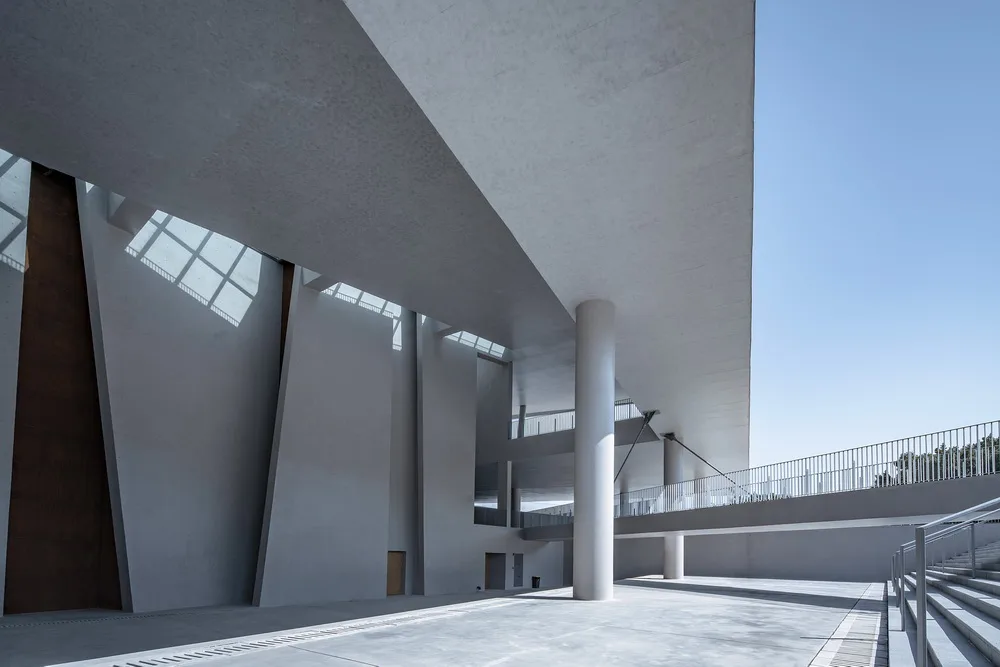
△ South elevated entrance space
To limit the building’s height, the first floor is sunken nearly 3 meters into the original terrain, utilizing a pond. This places the first floor 5 meters below road level, with only two floors rising above ground, softening the gymnasium’s mass and harmonizing it with the campus surroundings.
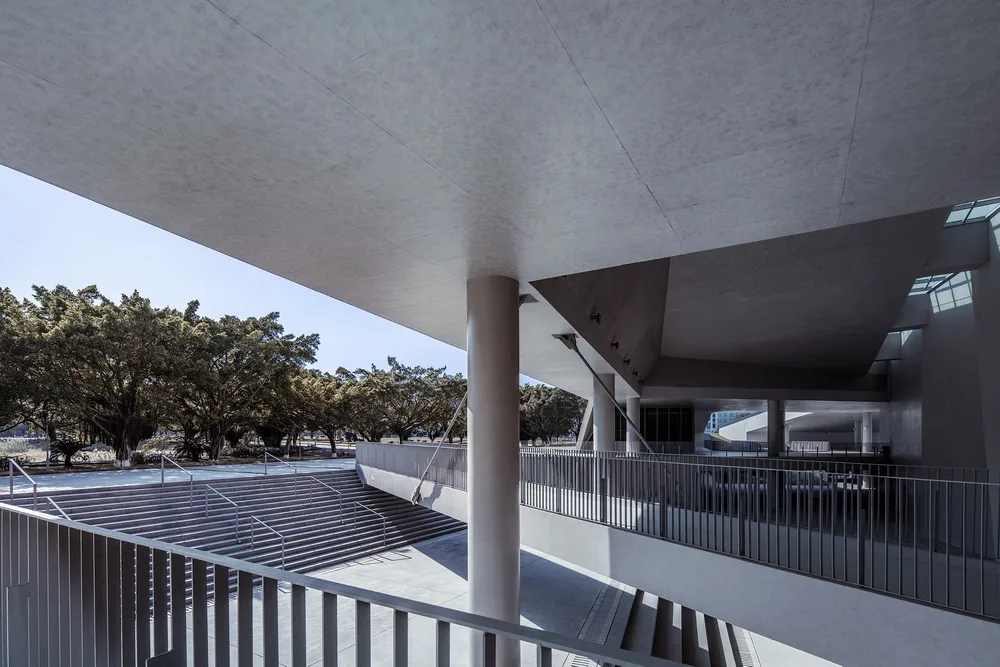
△ South elevated entrance space
The building’s height is designed with two graduated skylines: the first reaches 14 meters above the campus road, and the second extends to 18 meters. A green sloping roof continues the campus landscape axis from ground level to the third floor, incorporating greenery into the facade.
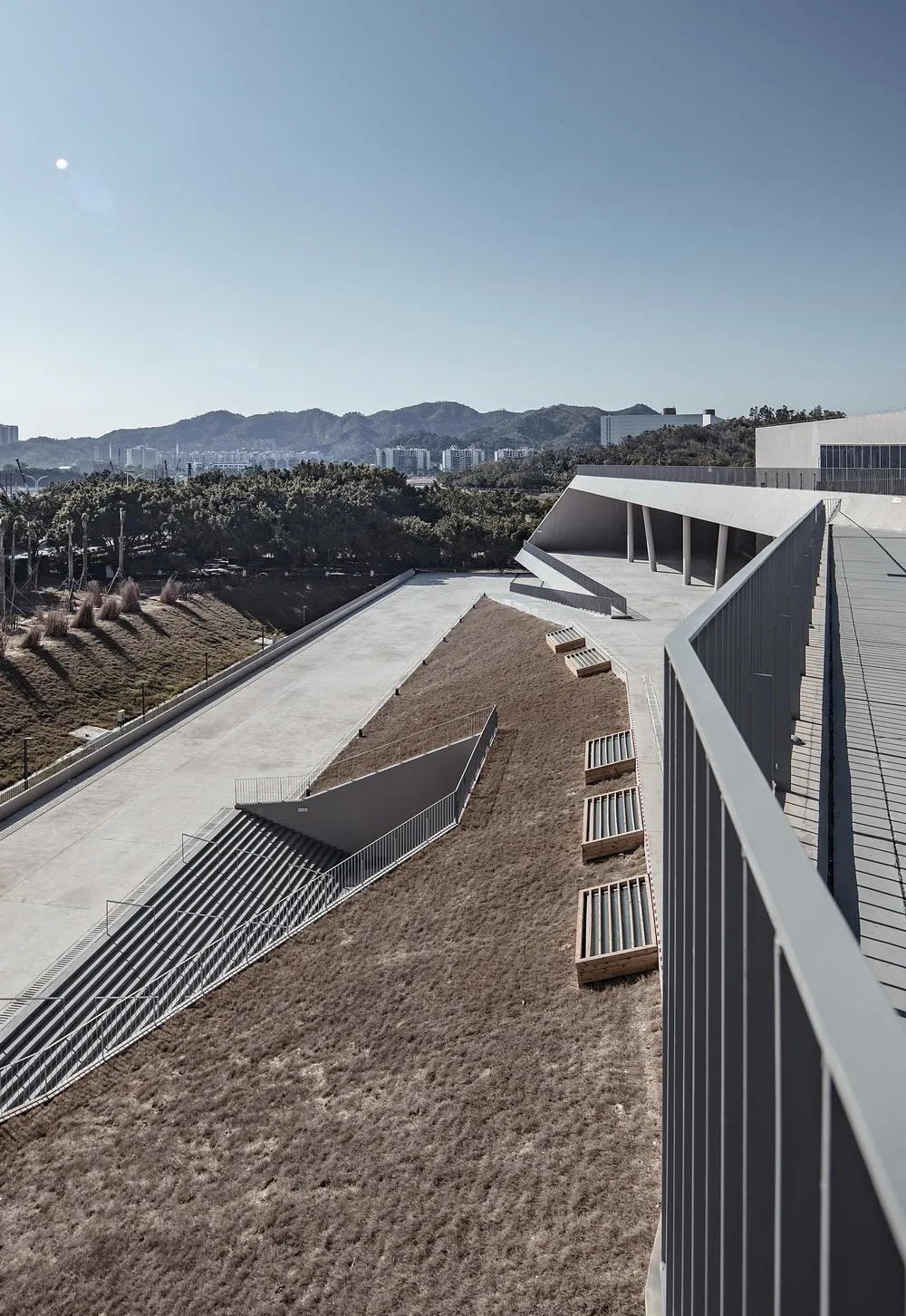
△ East grass slope
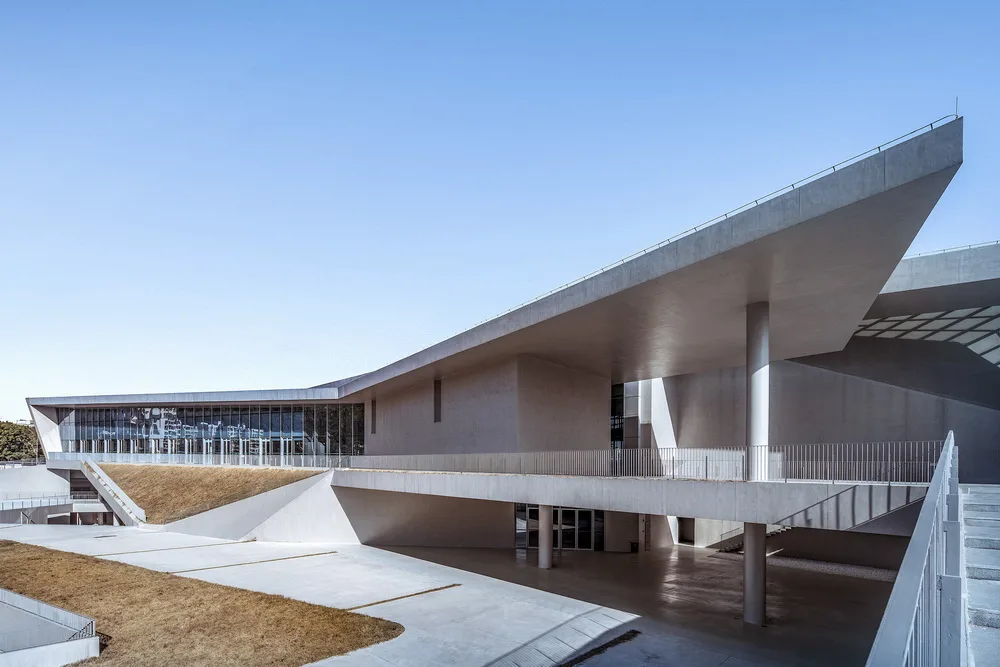
△ West third-floor entrance
The building layout favors decentralization, blurring boundaries and directly connecting primary spaces with the outdoors. This approach reduces the dominance of a central lobby and allows multiple entry points for faculty and students, fostering diverse functional flows and encouraging self-organization.
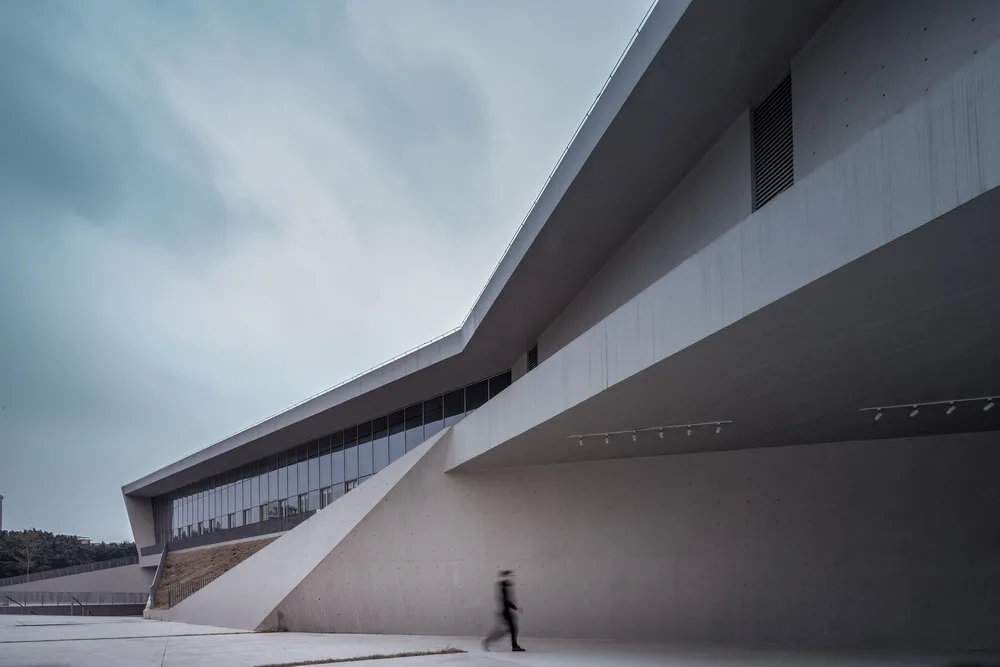
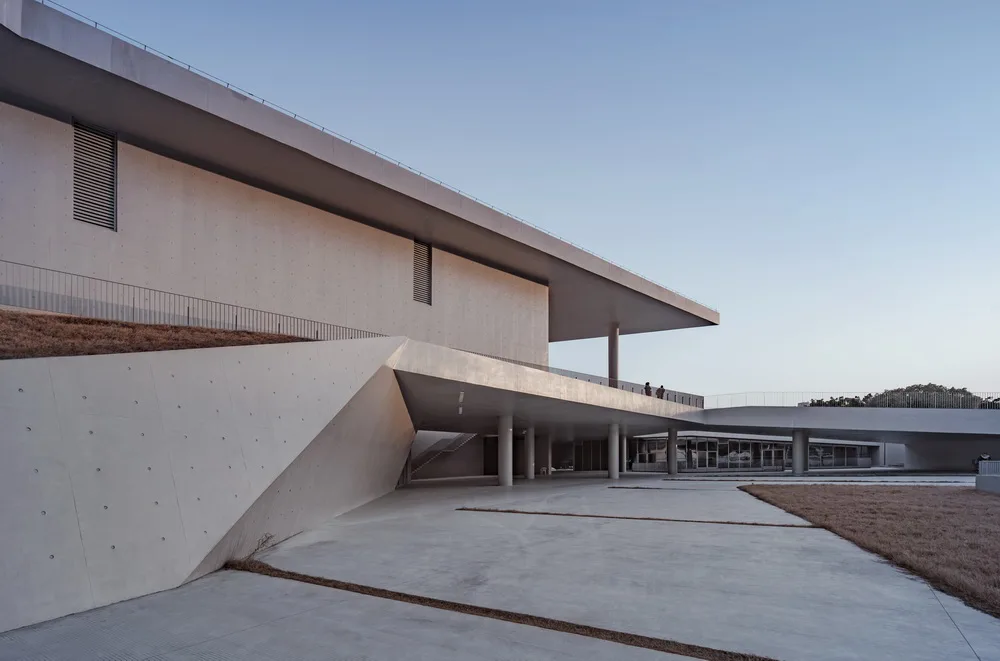
△ West main entrance
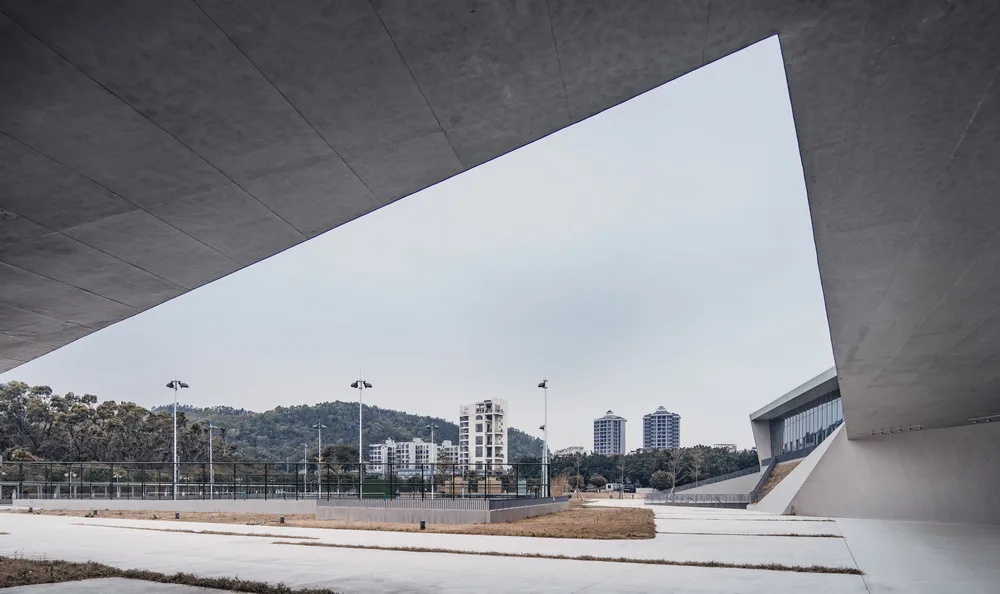
△ Roof boundary at the western entrance
The design employs elevated levels suited to the southern climate around the main competition venue, compressing the indoor space while shifting circulation and auxiliary areas into grey spaces accessible to all. This openness fosters a flexible and diverse environment where faculty and students actively shape the use and character of the space, rather than it being dictated solely by the architect.
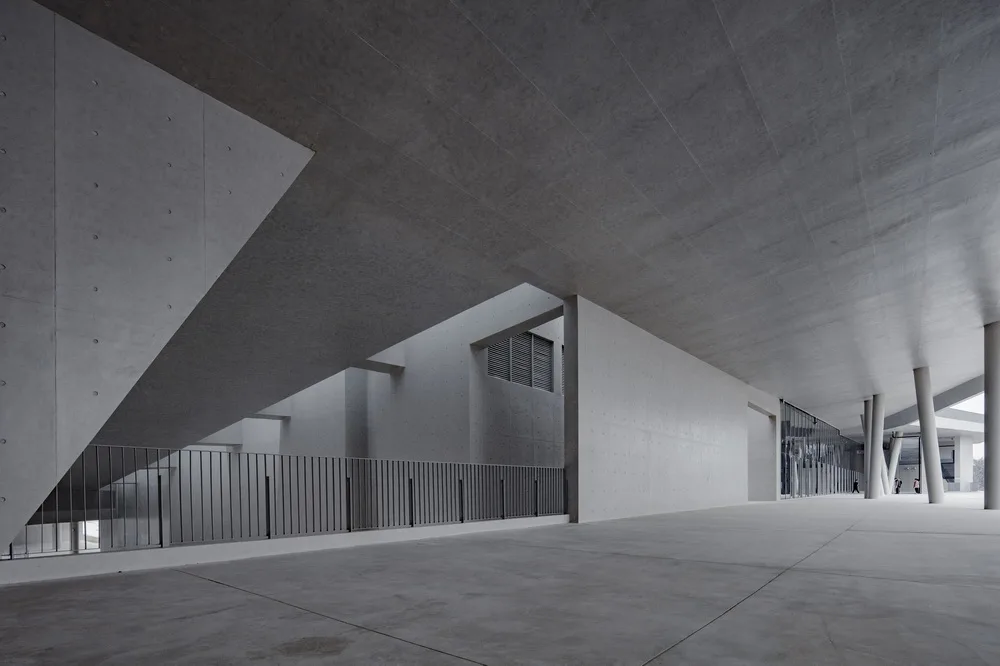
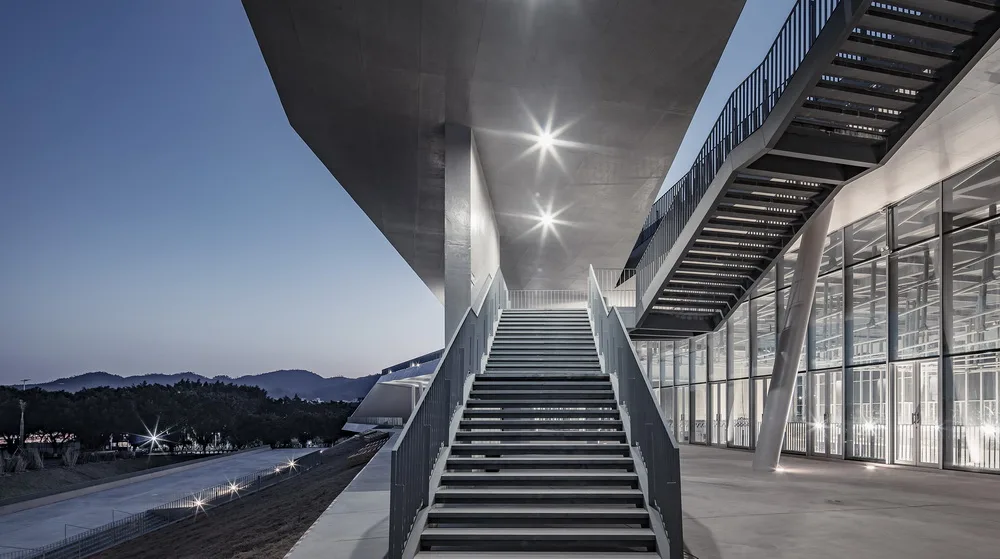
△ Three-level grey space
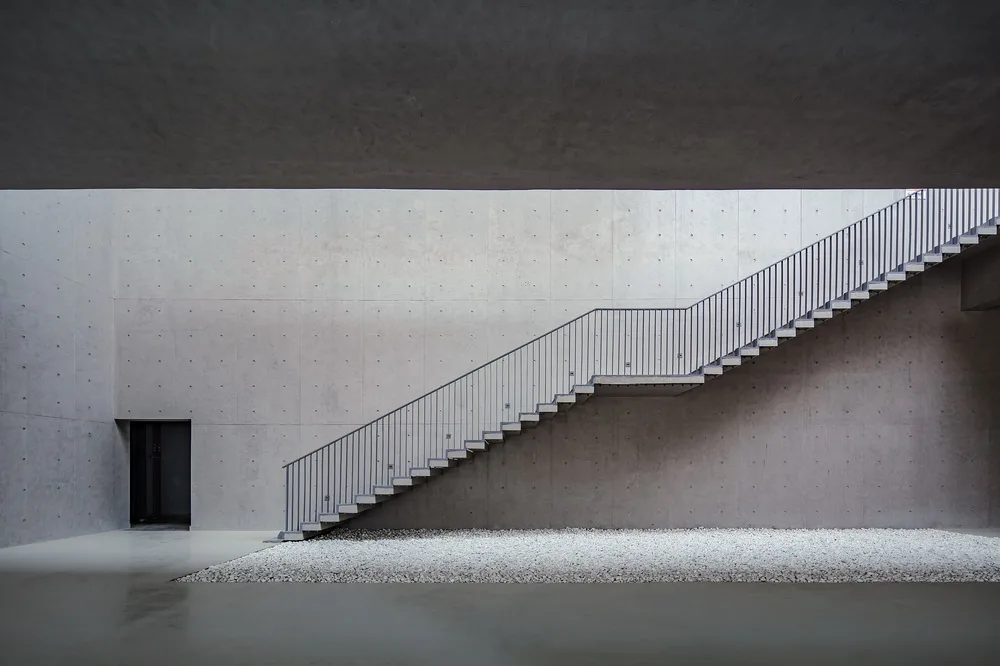
△ Staircase in the west entrance space
The multifunctional hall and the sports competition venue form the core of the floor plan. These spaces are arranged adjacent to each other and connected by an 8-meter-high, 16-meter-wide movable door. On regular days, the competition venue serves for badminton and volleyball training, while the multifunctional hall operates independently. However, during new school seasons or large-scale cultural events, opening the door merges the two spaces, transforming the hall into a stage and the entire gymnasium into a comprehensive performance venue.
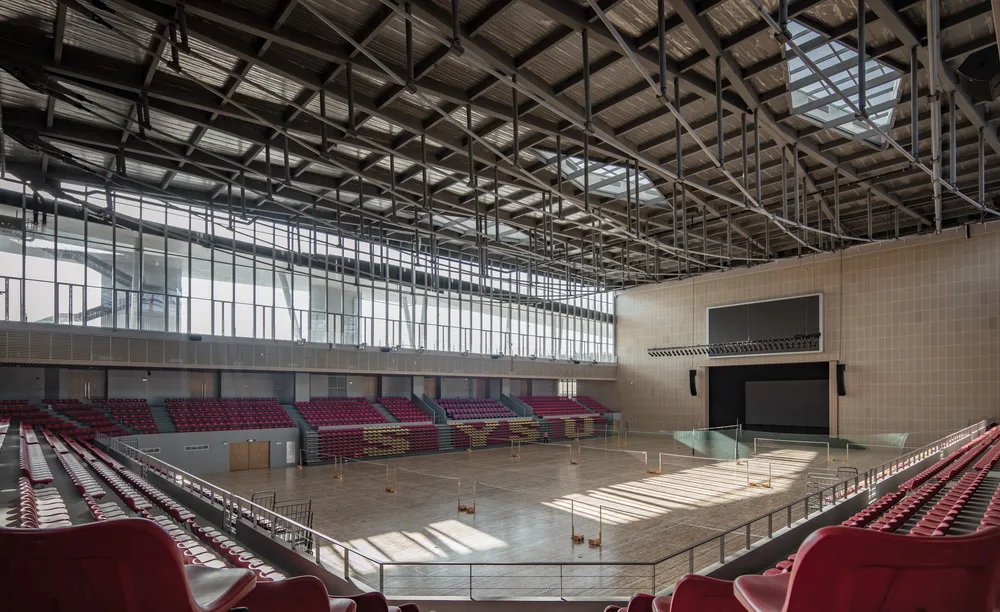
△ Main competition venue and stage in open configuration
The cultural activity zone is created by combining the multifunctional hall on the south side with the elevated floor, which extends the indoor activity space outdoors. Eight sports classrooms are positioned along the west and north sides, featuring transparent facades that allow students to engage visually with indoor activities.
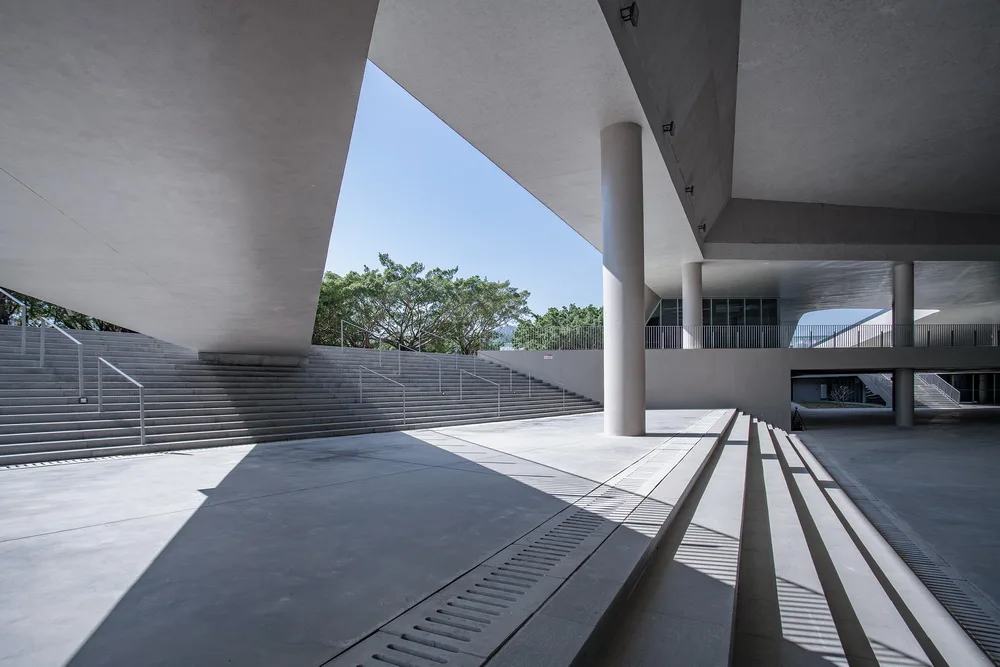
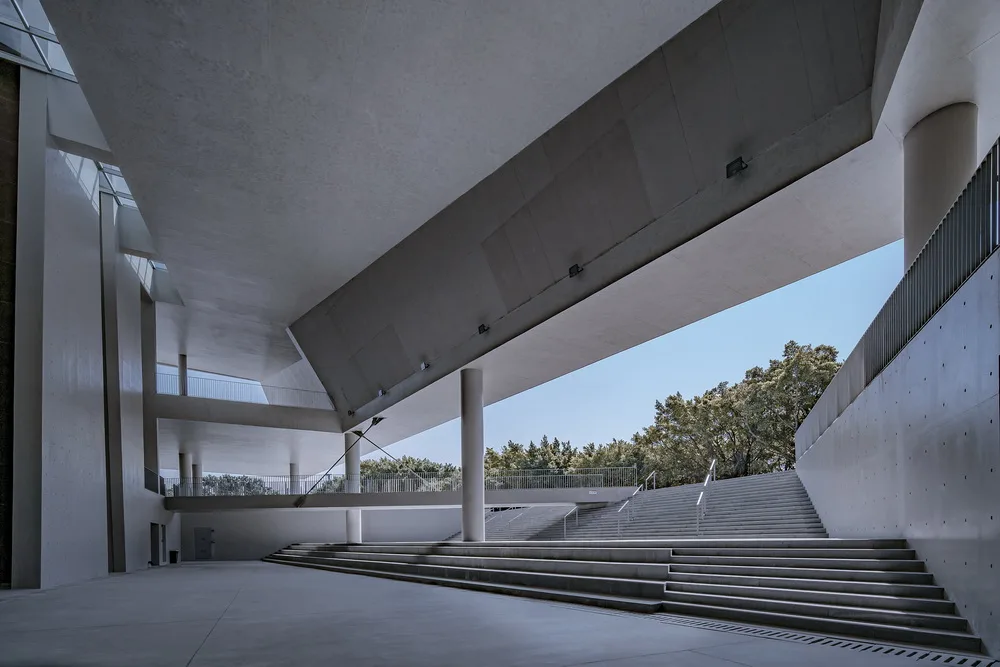
△ Outdoor performance space on the elevated south level
Positioned as a community sports center, the gymnasium allows for multifunctional integration. Adding various activity classrooms enables the building to serve as a stage, cultural activity rooms, and more. This transition turns the facility from a single-purpose sports center into a vibrant student activity hub, enhancing its role within the campus community.
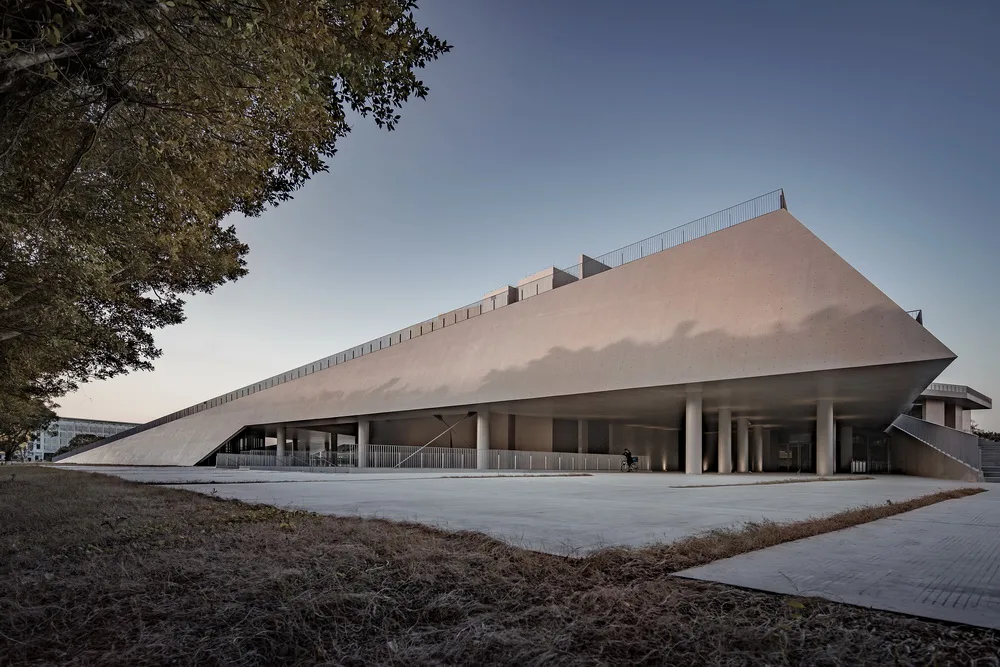
△ South facade
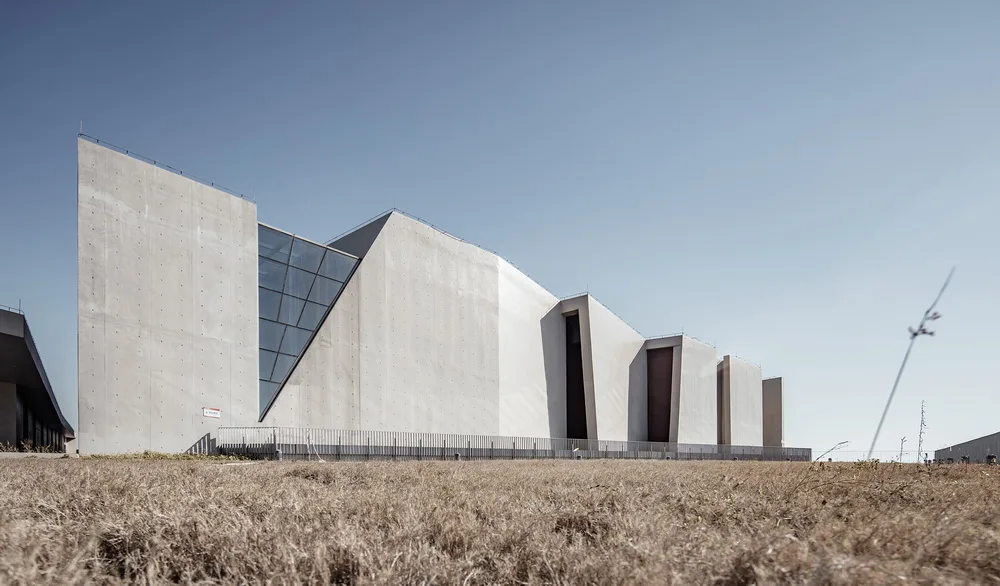
△ South side green roof
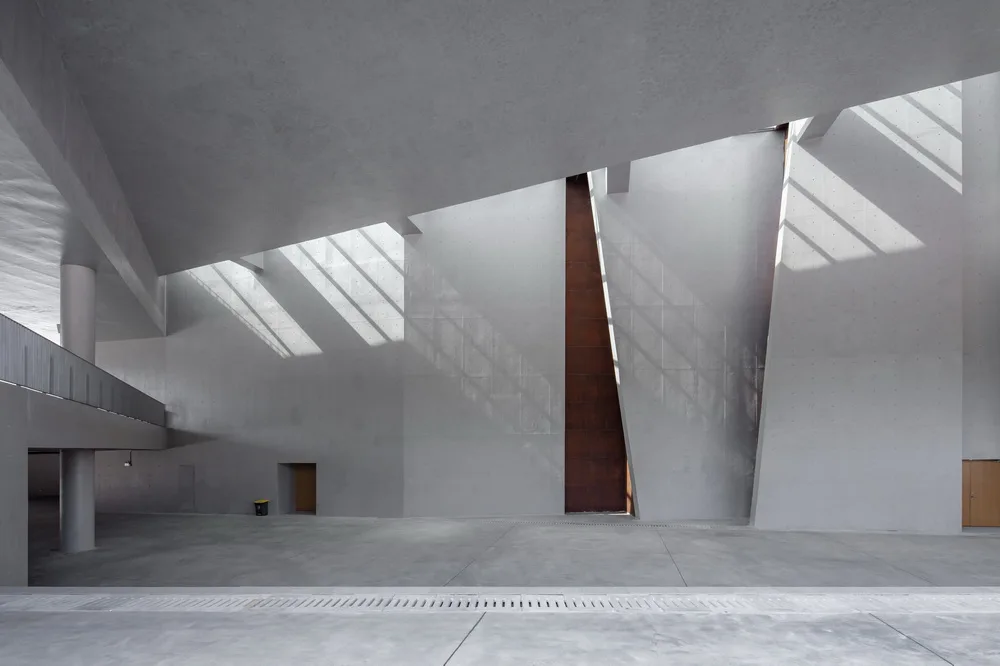
△ Exterior wall of the multifunctional hall on the elevated south side
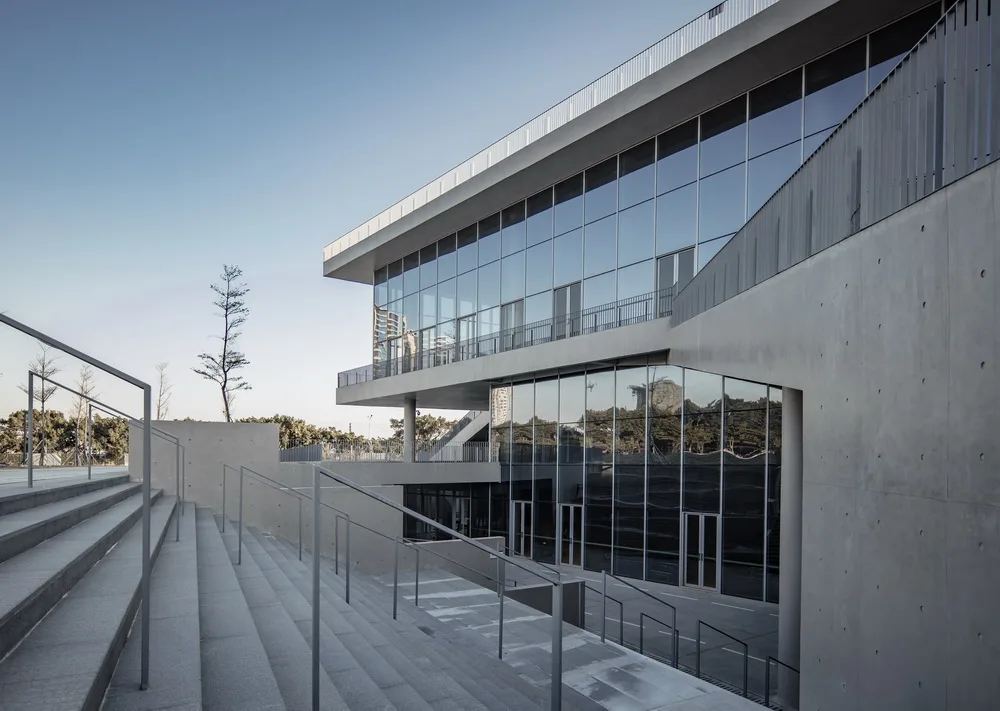
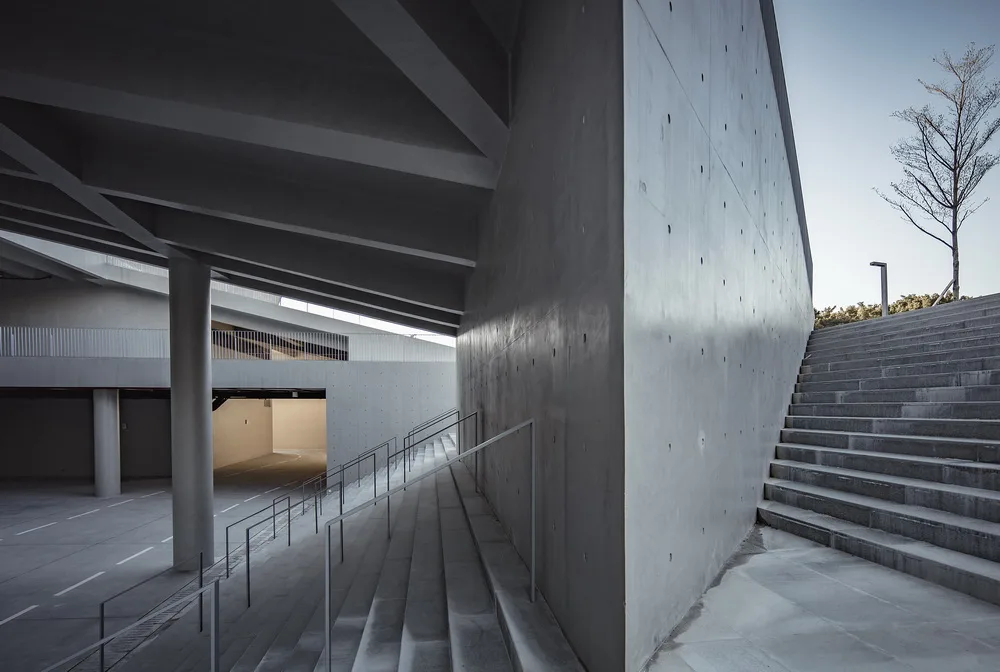
△ Outdoor staircase
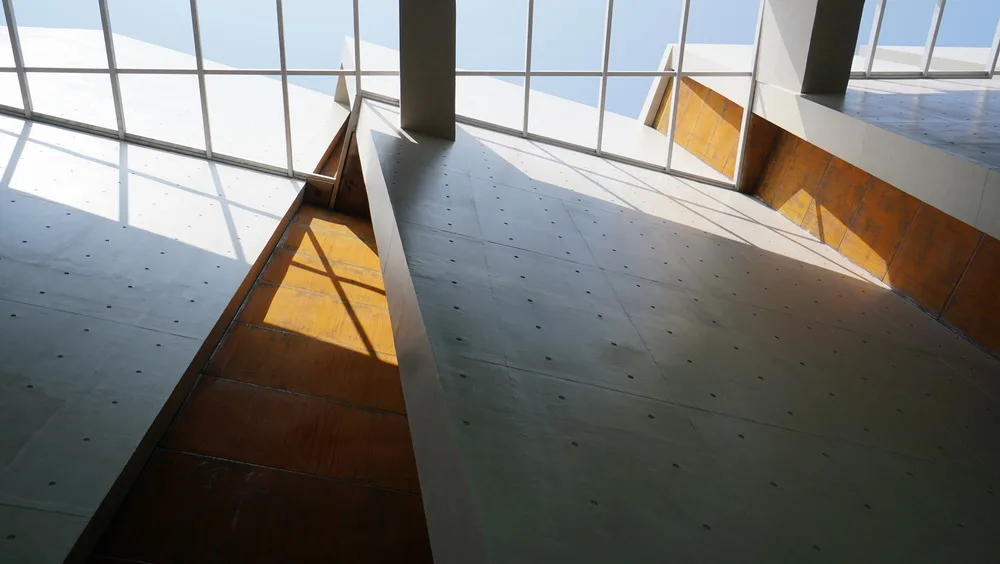
△ Architectural details
Technical Drawings
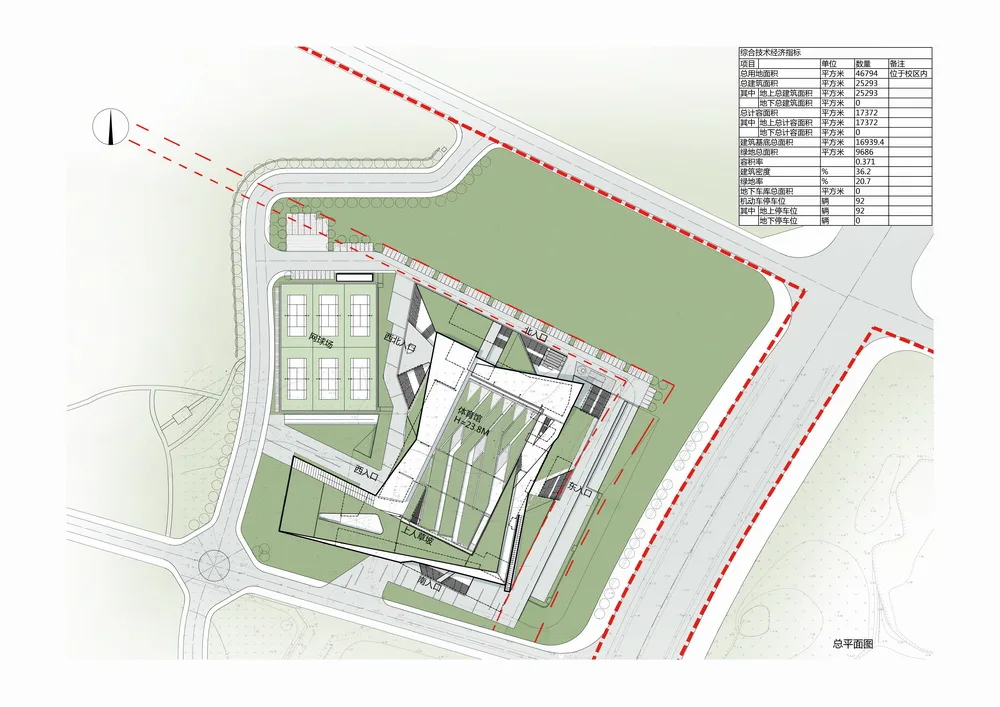
△ General layout plan
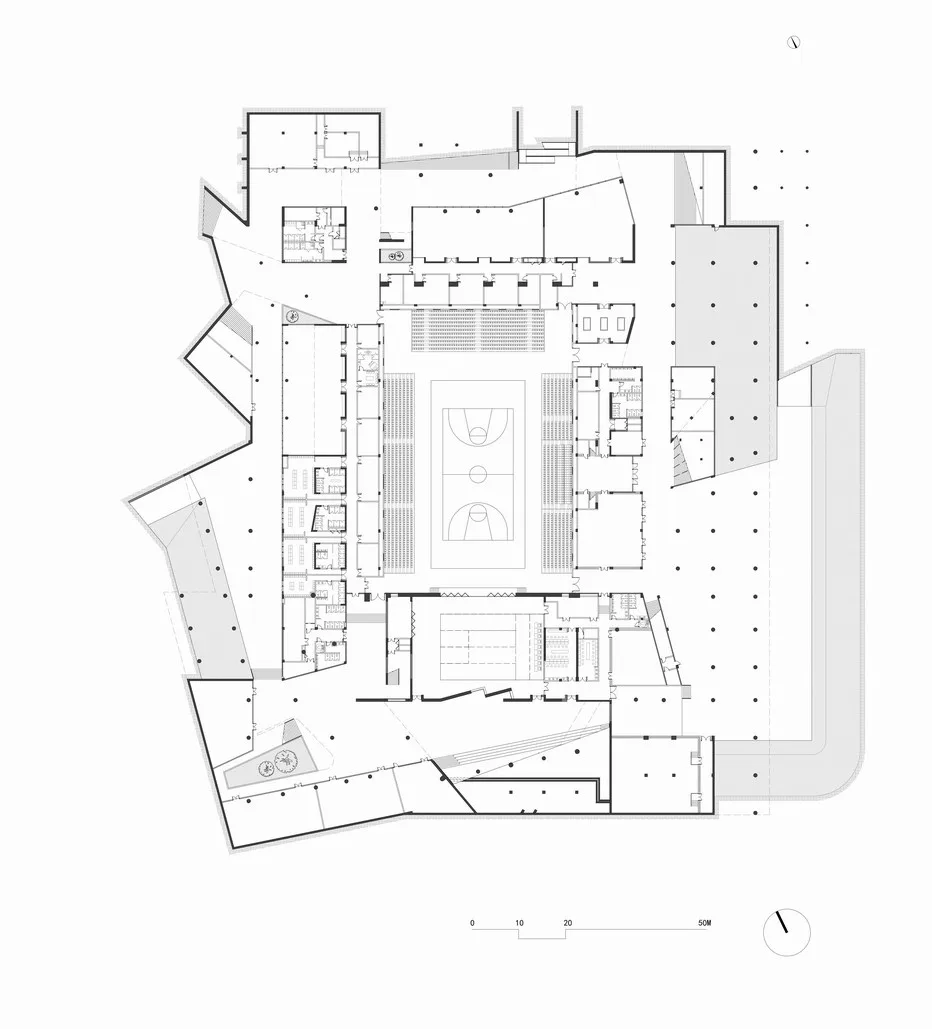
△ Ground floor plan
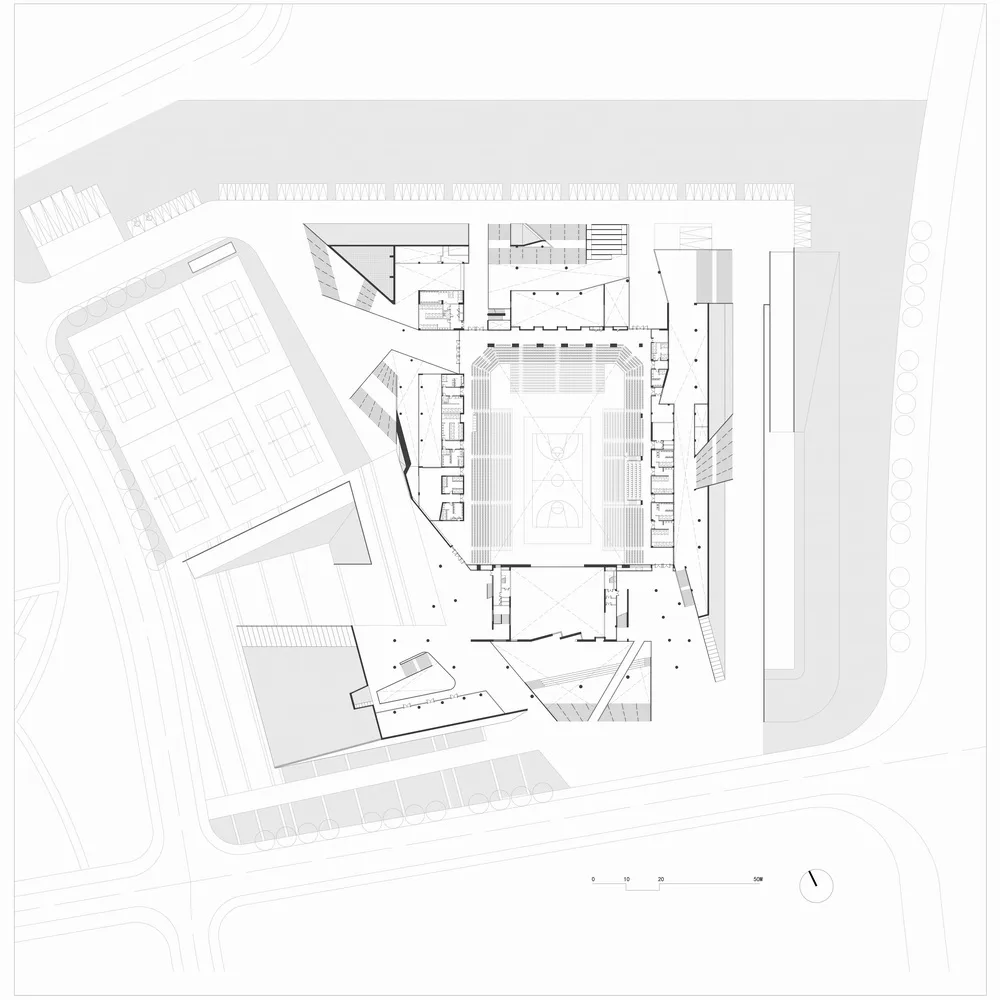
△ Second floor plan
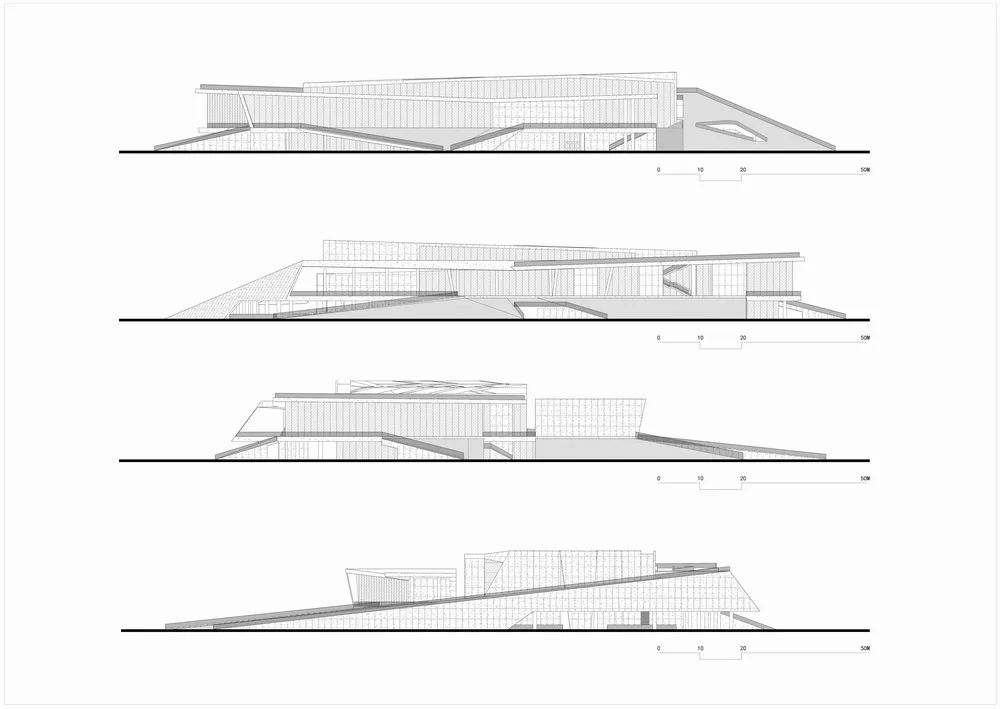
△ Elevation drawing
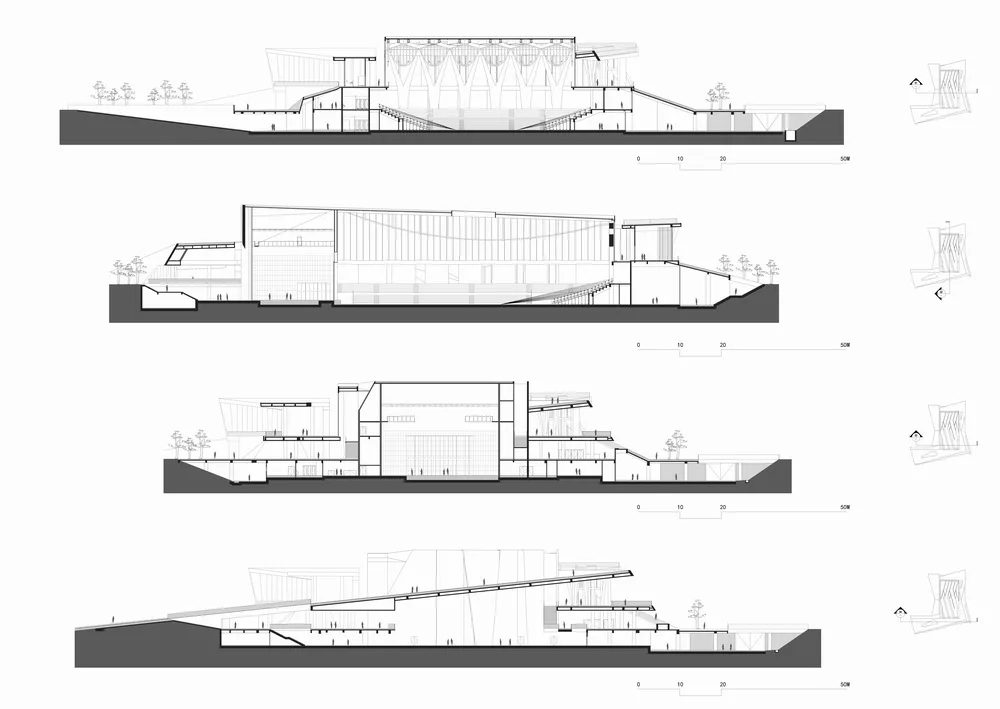
△ Section diagram
Project Information
Design Firm: South China Design Center, Beijing Architectural Design and Research Institute Co., Ltd.
Architects: Huang Haoshan, Huang Jie
Location: Zhuhai, Guangdong, China
Design Period: 2014–2015 | Completion: 2017
Client: Sun Yat-sen University
Design Team: Zhang Guiling, Pan Yuting, Liu Jia, Peng Xuefeng, Li Lixin, Huang Taiyun, Bian Jianfeng, Du Yuanzeng, Fu Jingming, Zhuang Xin, He Mingji, Li Weiyong, Chen Yingrui, Ye Jun, Hu Xueli, Zhang Shen, Zheng Zhuhua, Feng Shichen, Tian Xiaoting, Guo Shanshan
Site Area: 4.68 square meters
Building Area: 25,300 square meters
Structural System: Frame shear wall structure; main competition venue roof employs a beam-string structure.
Photography: Li Kaijian, Chen Yifei












Must log in before commenting!
Sign Up