
Editor’s Note: Recently, the School of Architecture curated a selection of twelve outstanding university campus buildings. These will be featured on the School of Architecture website this week, offering readers a structured learning experience.
This featured project is situated within East China University of Science and Technology. It involves the renovation of an existing campus building, demonstrating how such projects can bridge history with the present while integrating seamlessly into campus life.
Project Highlights:
1. Purpose: Renovate old buildings and enhance engagement within campus public spaces.
2. Light Application: Employ various techniques blending real and virtual light and shadow to deepen visual connections between indoor and outdoor spaces.
3. Materials: Use of diverse transparent materials, including double-layer U-shaped glass and frosted acrylic panels, to increase spatial transparency.
4. Window Design: Varied window sizes and shapes, including an outdoor window seat at the street corner, fostering interaction between interior and exterior environments.
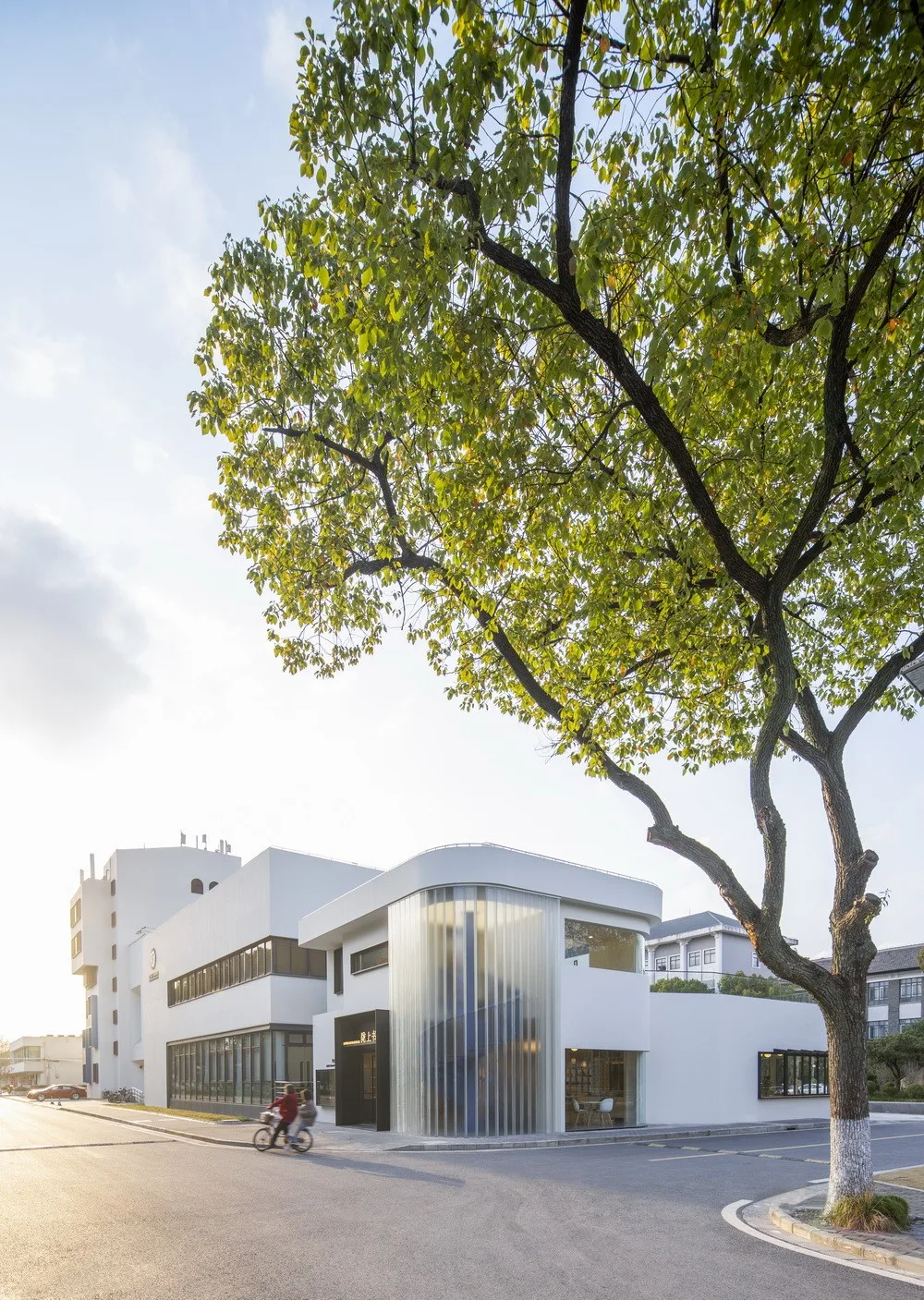
△ New students at Longshang © WDi
01 Project Origin
Located along the Qingchun River within the Xuhui campus of East China University of Science and Technology, this project sits at the intersection of a river, bridge, and road. The Chenyuan (School of Arts and Media) and the library lie northwest of each other. The original structure was a two-story, four-slope old building.
As a key landmark in the campus’s historical environment—where sightlines and pedestrian flow converge—the university aimed to transform it into a multifunctional public space. Now named “Longshang Bookstore” (Morning Garden Store), it combines a bookstore, café, cultural and creative areas, and a salon.
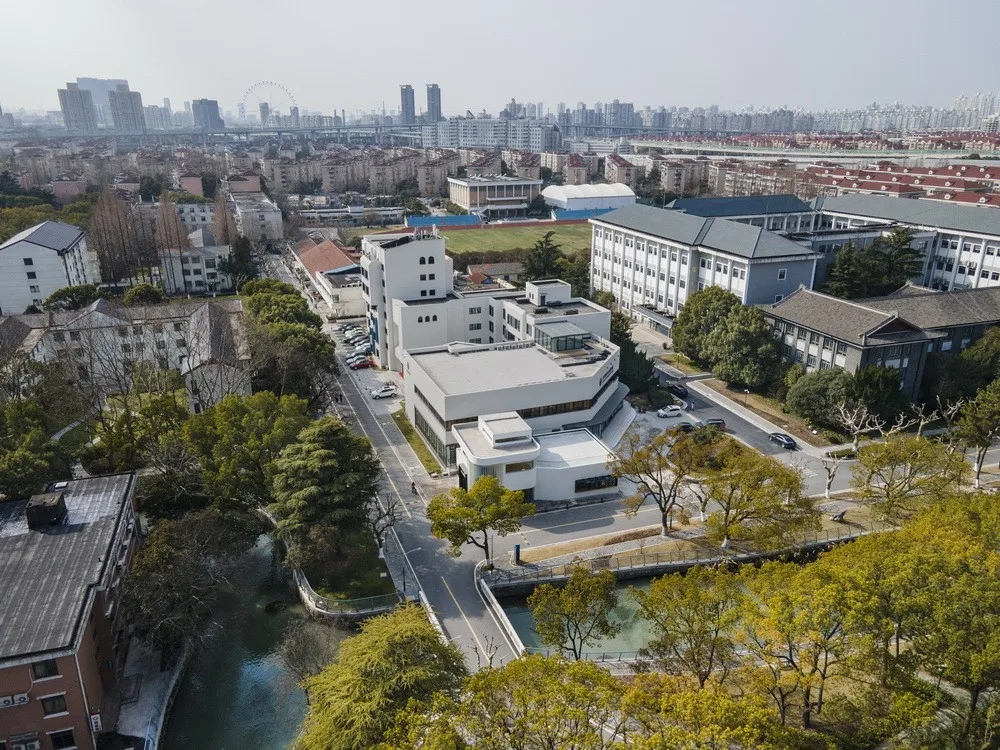
Longshang Bookstore faces the river on two sides and the street on three sides, illuminating the campus © WDi
02 Challenges of Campus Renewal
In updating a campus’s historic environment, style unity and functionality alone do not satisfy future spatial needs. As educators and designers, we sought to create a future-oriented campus that embraces openness, sharing, and diversity. Our goal is to promote integration between science and art within a composite campus environment that also supports environmental education.
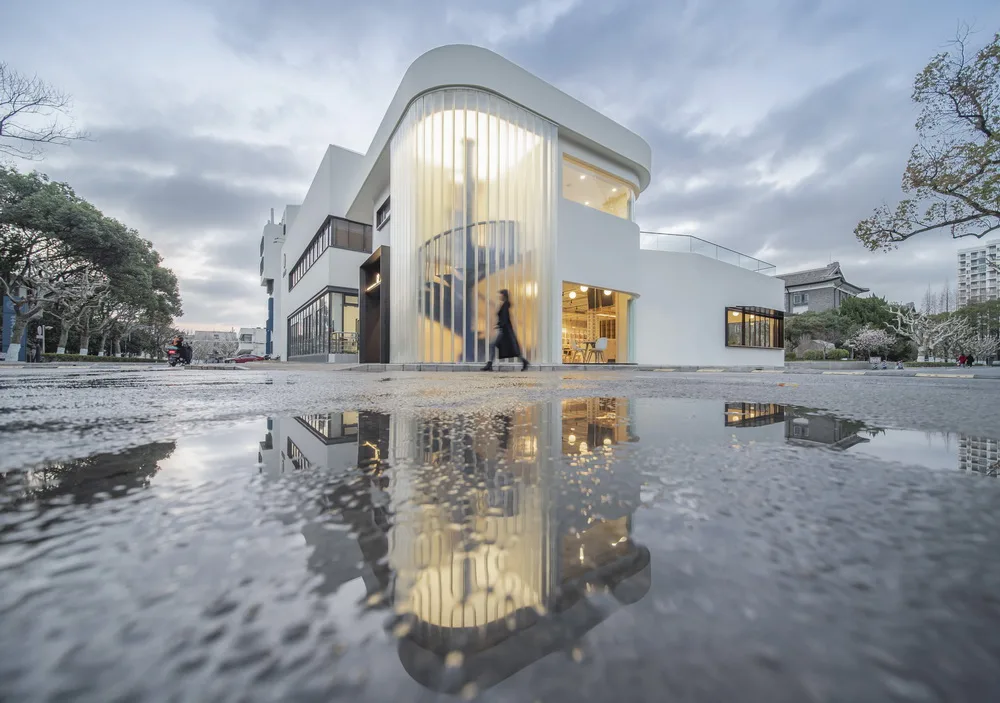
△ Artistic atmosphere infused into the science and technology campus © WDi
Transforming educational public spaces demands sensitivity to perception and artistry. Building on the site’s potential, we preserved memories of the place, crafting a spatial container embodying art, culture, and memory within a creative framework.
The result is a borderless, informal learning environment for communication and interaction. We explored how the building integrates with campus texture, how its interfaces engage with the outdoor environment in multiple ways, and how it inspires vitality within the university community.
03 Venue Memory
Upon first entering, the dilapidated spiral staircase stood out as a ritualistic feature. Positioned at the street corner overlooking the Youth River, it embodied two decades of collective memory. However, few ventured upstairs; the metal slope of the original building was low and structurally compromised, used only as storage.
The first floor was fragmented by partition walls and poorly lit. To improve spatial quality and structure, we used light as a medium to reshape memory.
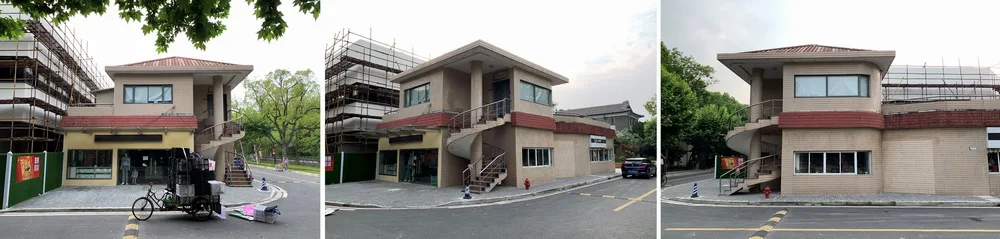
△ Building facade before renovation © WDi
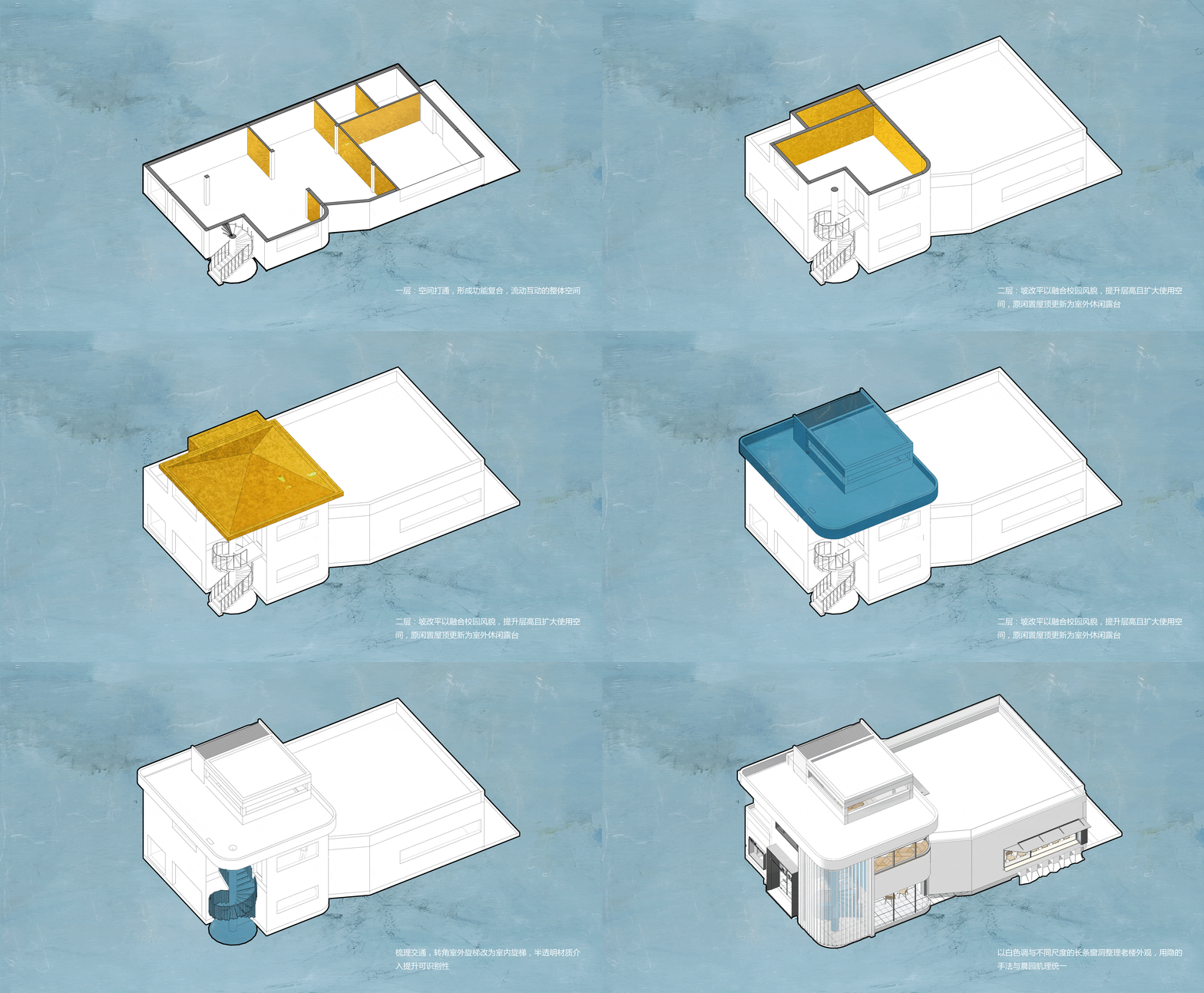
△ Transformation strategy © 畎 Mu Architecture
04 Container of Light
Architecture captures light much like an instrument captures music. Basic elements—stairs, walls, roofs, and windows—serve here as mediums, translating spatial art installations between inside and outside. Playful, artistic elements invite the interaction of light and shadow, blurring the line between reality and illusion.
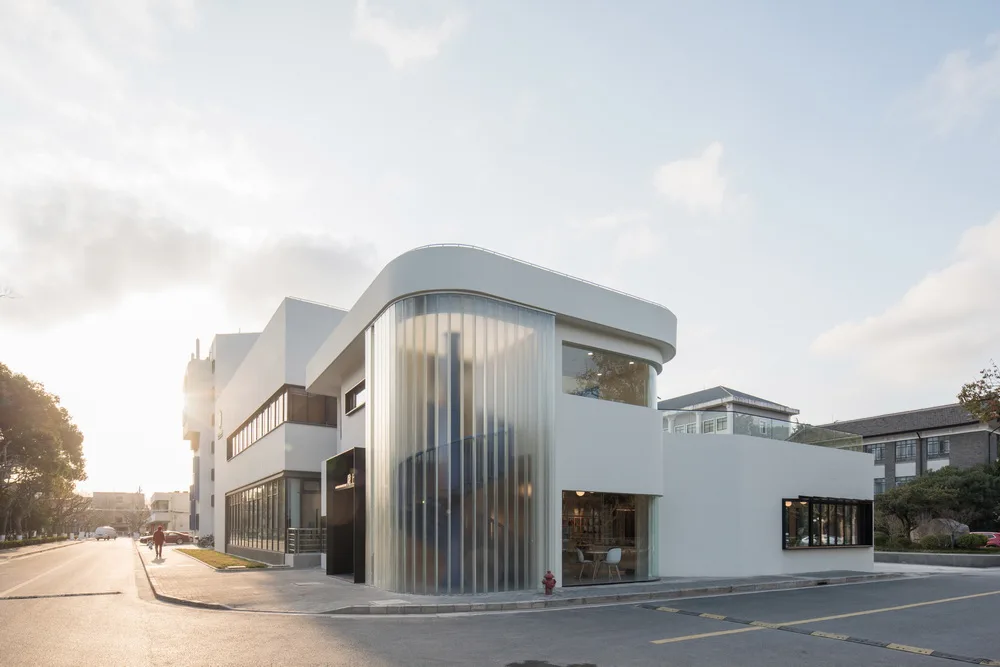
△ The building as a container for capturing light © WDi
Ladder – Light Enveloping the Body
The original concrete spiral staircase, though dilapidated, was a sculptural emblem of collective memory at the river and road corner. We streamlined and reshaped it into an indoor steel staircase, painted in “Huali Blue”. The outer interface features a lightweight, semi-transparent double-layer U-shaped glass.
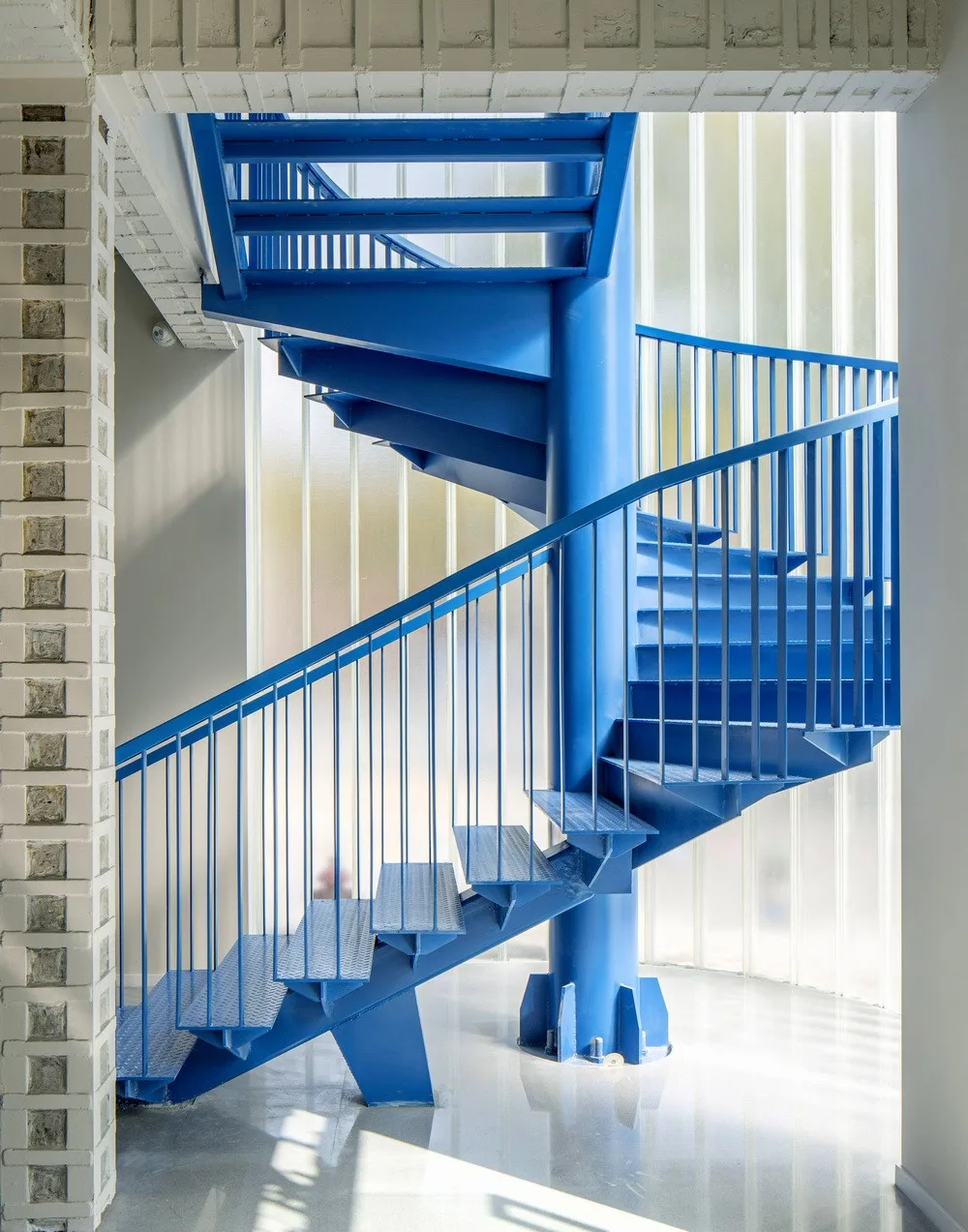
△ Lightweight U-shaped glass, industrial steel stairs, and handcrafted beams and columns © WDi
Inside, the U-glass material nearly disappears, leaving only the light’s play. Ascending the stairs, the gentle, time-shifting light envelops visitors, evoking a ritualistic sensation akin to bathing in sacred light en route to the second-floor salon.
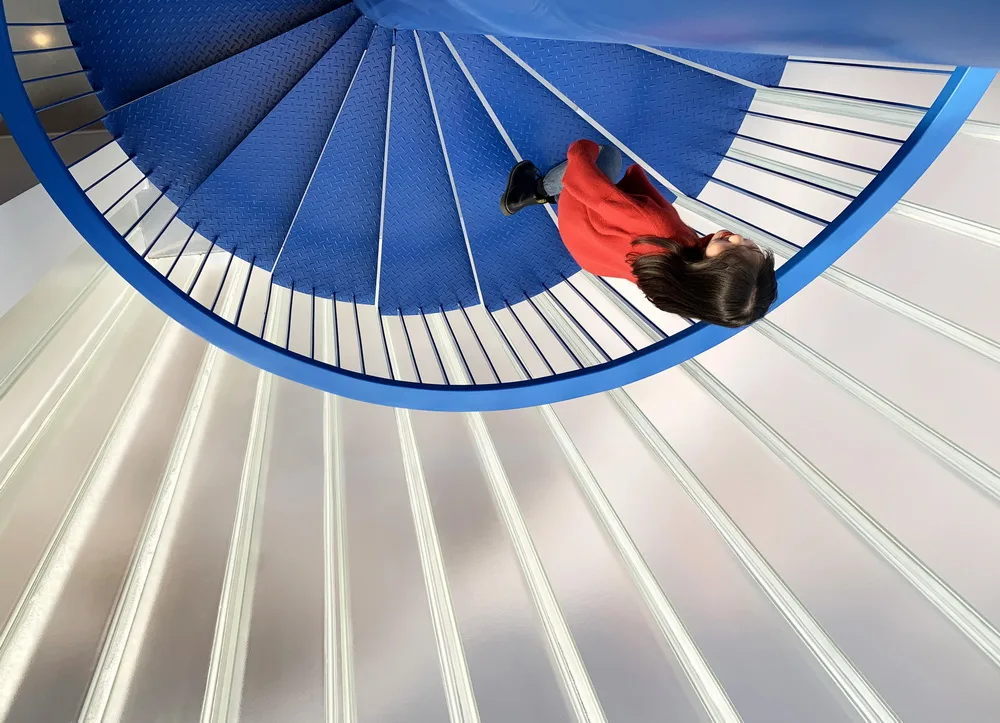
The light captured by the U-glass gently wraps around the body © WDi
From afar, the soft reflections create a hazy blue texture around the spiral stairs. Figures moving on the staircase appear blurred and ethereal, evolving into an interactive art installation that redefines the visual focus of “seeing and being seen”. The memory of campus spaces is revitalized, elevating a functional staircase into a metaphysical, spiritual realm.
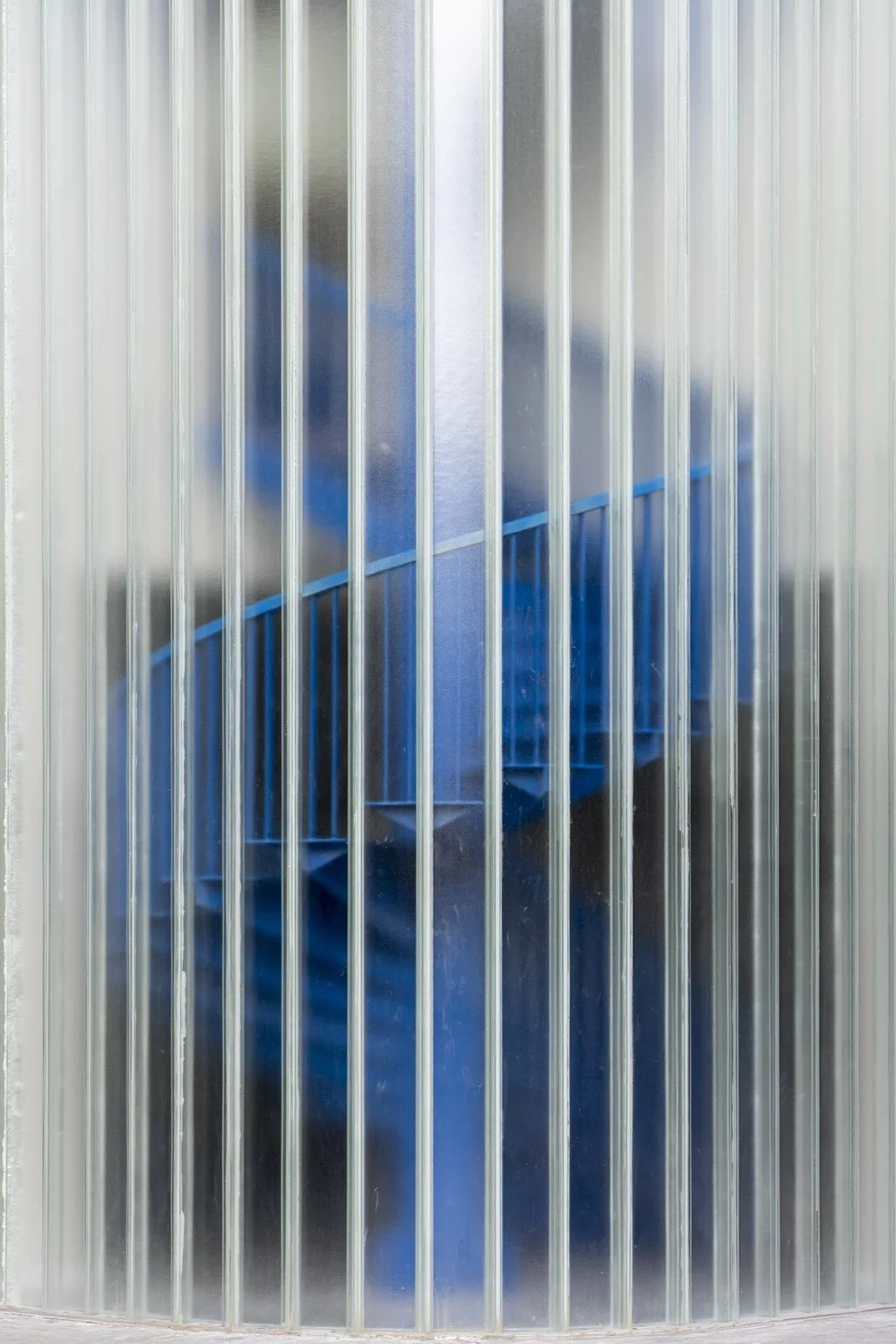
Under the U-glass, the ambiguous image of the spiral staircase © WDi
In 1912, Marcel Duchamp attempted to express time in his painting The Naked Woman Descending the Staircase. Similarly, the refraction of light and shadow through U-glass here extends time within space.
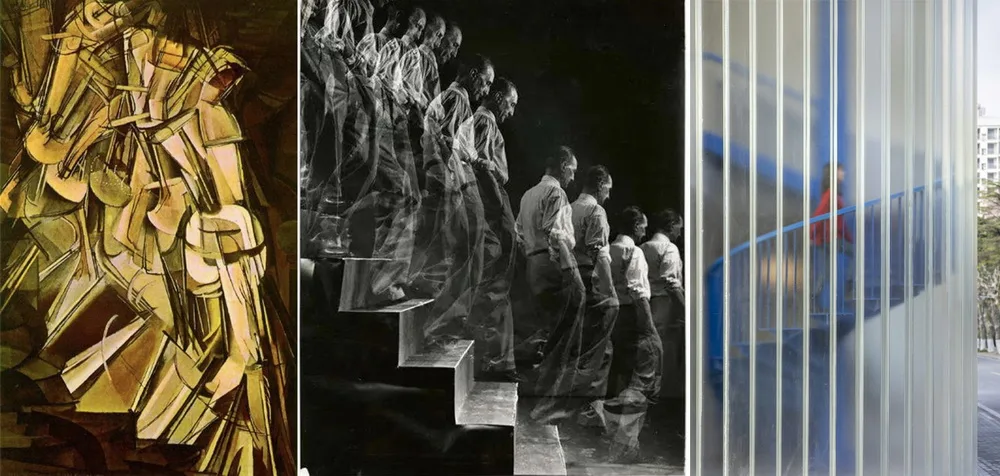
The Naked Woman Descending the Staircase; image sourced from the internet
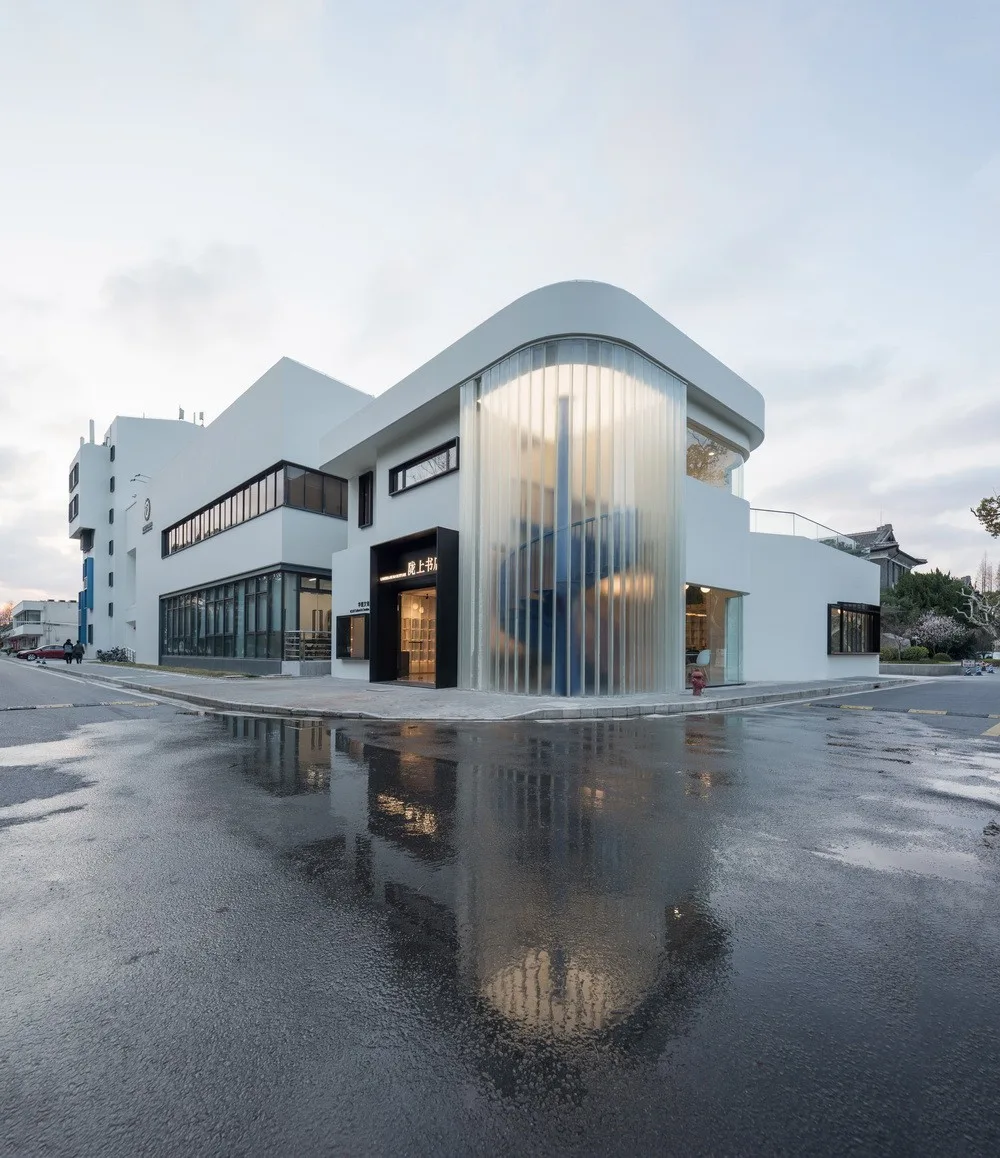
At the street corner, the architecture becomes the focal point of “seeing and being seen” © WDi
Wall – Interface for Capturing Light
A narrow two-meter gap separates the bookstore’s west wall from the Morning Garden, reminiscent of the narrow courtyards typical of classical Jiangnan gardens. To capture the sky light in this space, the solid wall was replaced with multiple layers of continuous semi-transparent materials, including polycarbonate and frosted acrylic boards, forming a “four-sided hall” dominated by subtle shading.
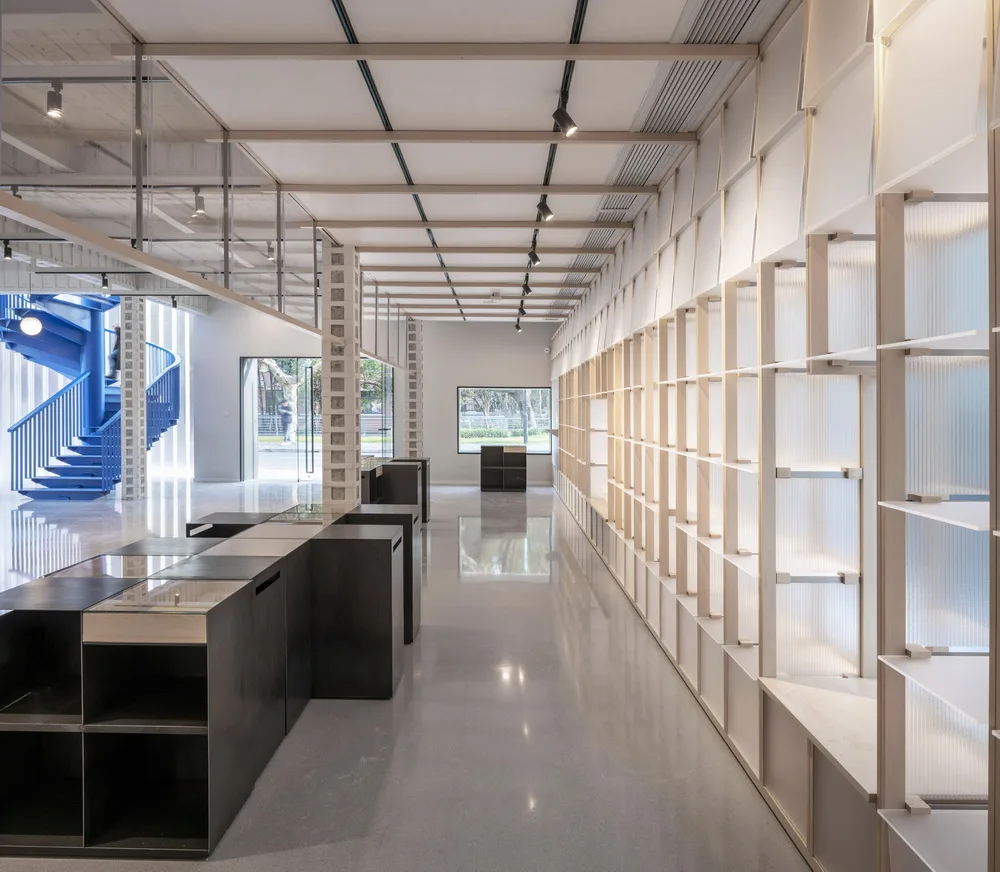
The semi-transparent wall creates an immersive space filled with shifting light and shadows © WDi
A 14-meter-long semi-transparent display cabinet runs along this interface, constructed from wooden frames joined with mortise and tenon joints, integrated with polycarbonate and frosted acrylic panels.
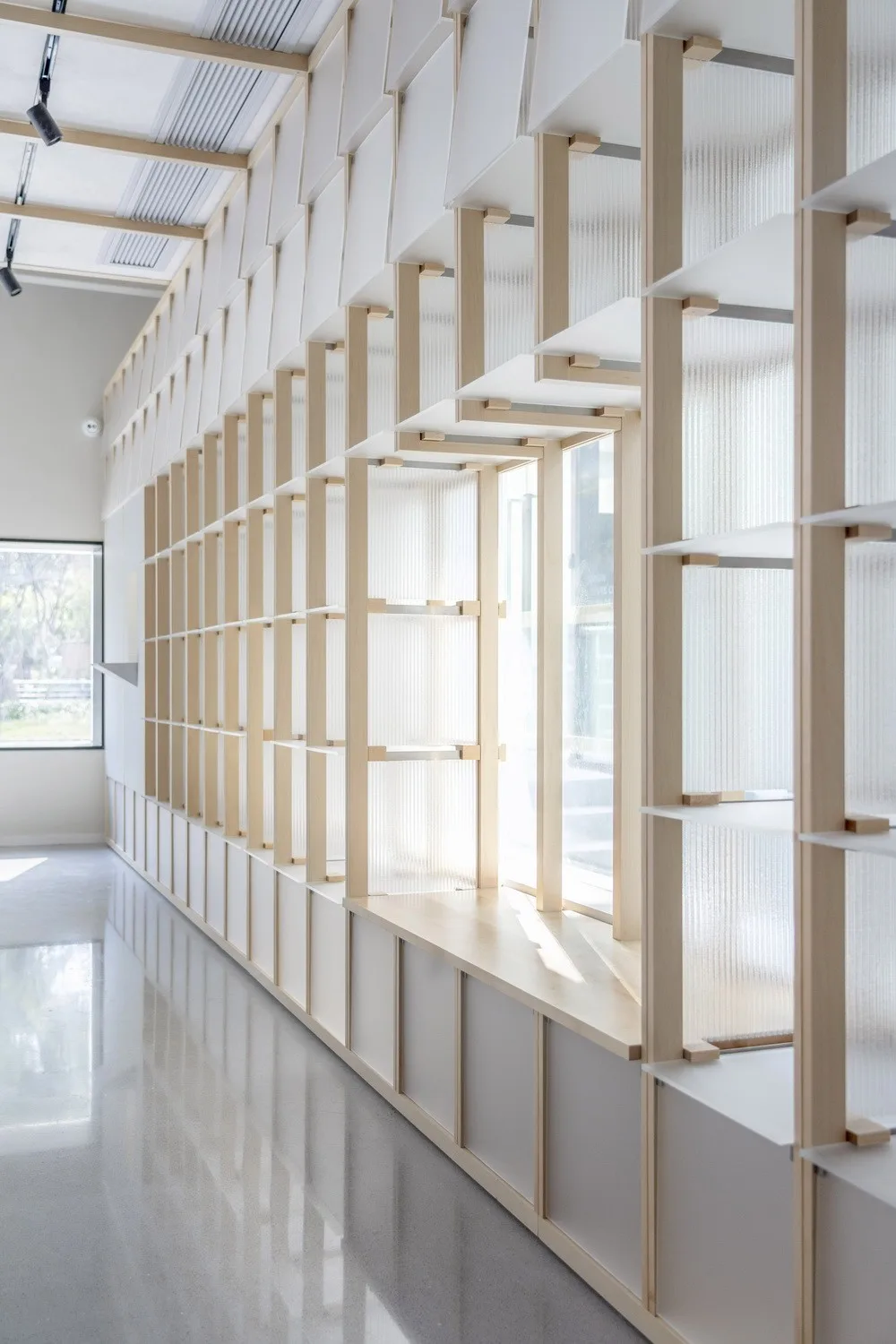
Half-transparent cabinets with mortise and tenon joints create a rhythmic play of light and shadow © WDi
Varying sizes of transparent openings are incorporated into cabinets of different transparency levels. This subtle gradation captures and releases dynamic light and shadow patterns. The gradually transparent grid windows invite curiosity, encouraging onlookers to peek into the art laboratory across the way, sparking occasional interactions.
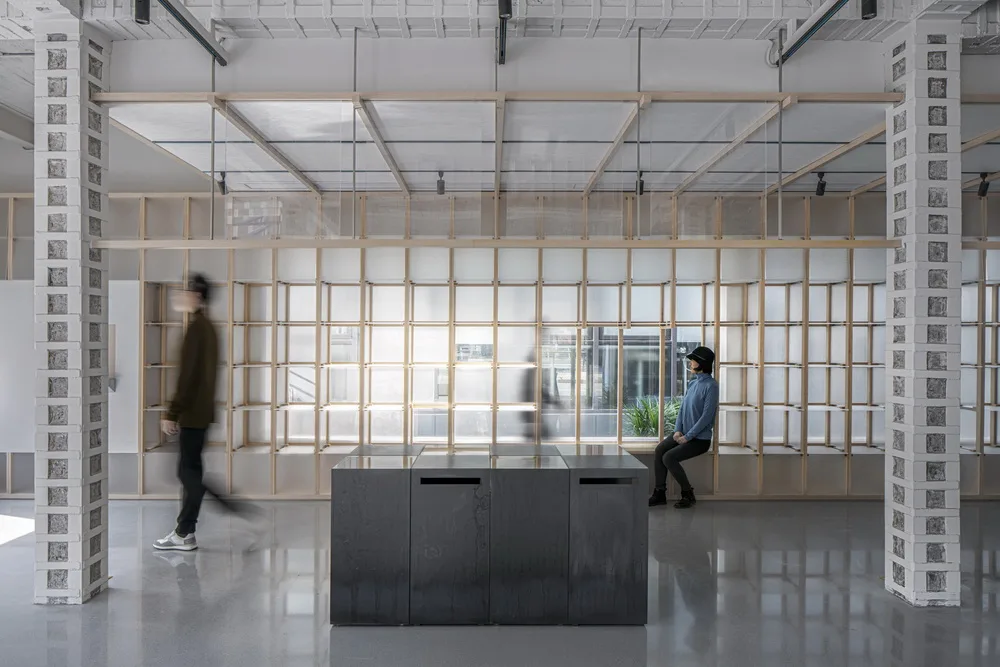
The semi-transparent cabinet wall encourages interaction through peeking and engagement © WDi
Inside the bookstore, these semi-transparent cabinets serve as partitions, enhancing the overall space’s openness. Sightlines weave through the area, blending moving figures and layered book stacks in a seamless flow.
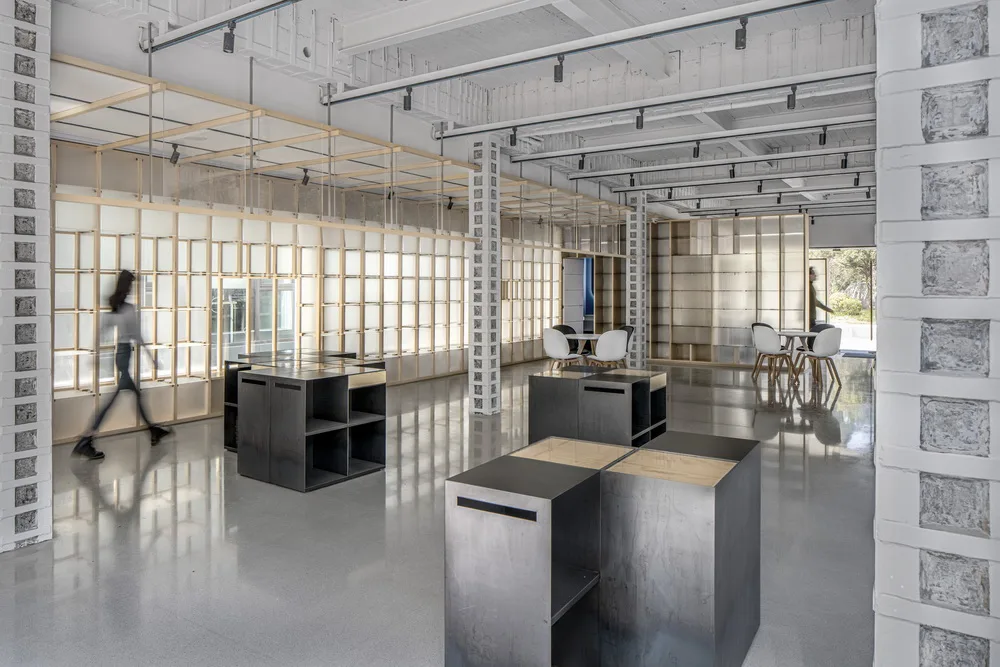
The semi-transparent cabinet walls and partitions harmonize to create a cohesive, flowing space © WDi
Top – Light Pouring Device
The original building’s four sloping roofs made the second floor cramped and dim, with serious structural damage. To accommodate functions like party meetings and academic salons, some roofs were raised, and high side windows installed on three sides to bring in abundant light, crafting a slightly elevated, inward-focused space.
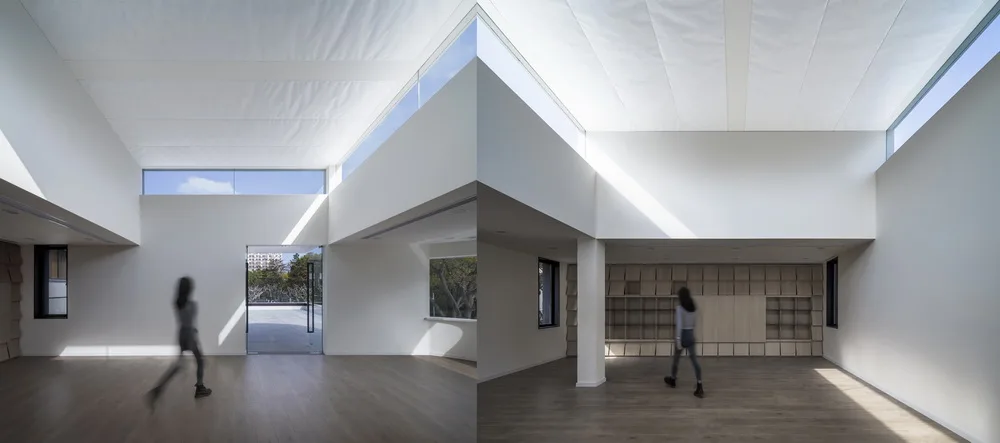
The power of light imparts nobility to the space; wandering light breathes life into the environment © WDi
Throughout the day, sharp light and shadows move like a clock, cutting across space at different angles and sparking dialogue between architecture and occupants. The luminous ceiling features DuPont paper instead of traditional lamp film to preserve spatial integrity. The tension wrinkles of the DuPont paper create a hand-crafted texture that glows beautifully at night.
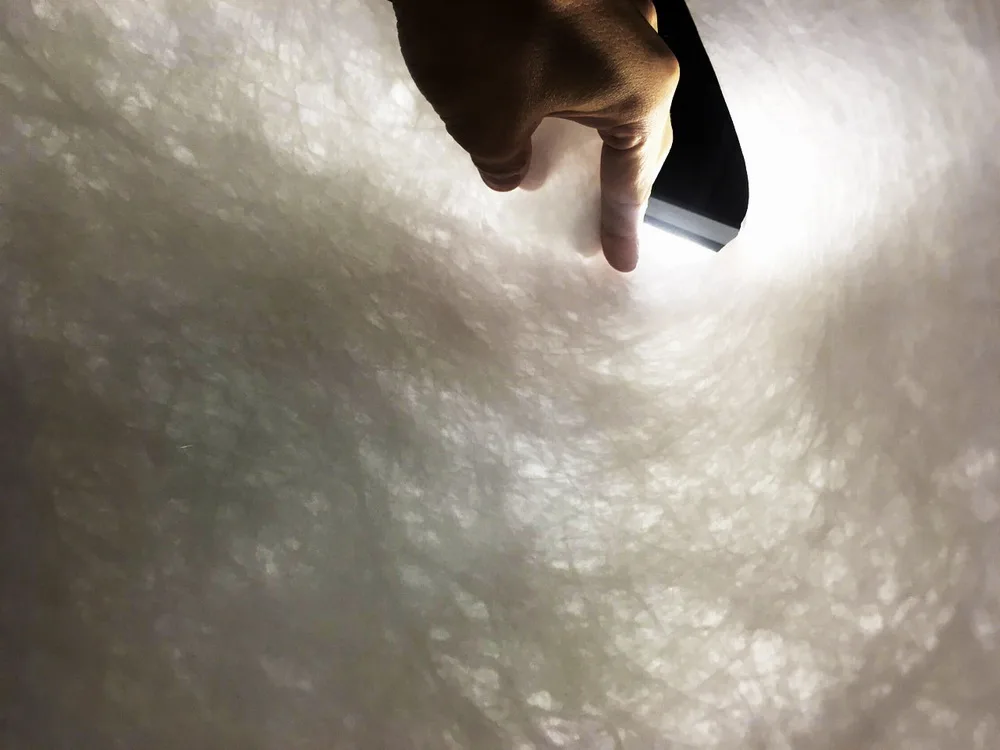
The texture of DuPont paper revealed under light © WDi
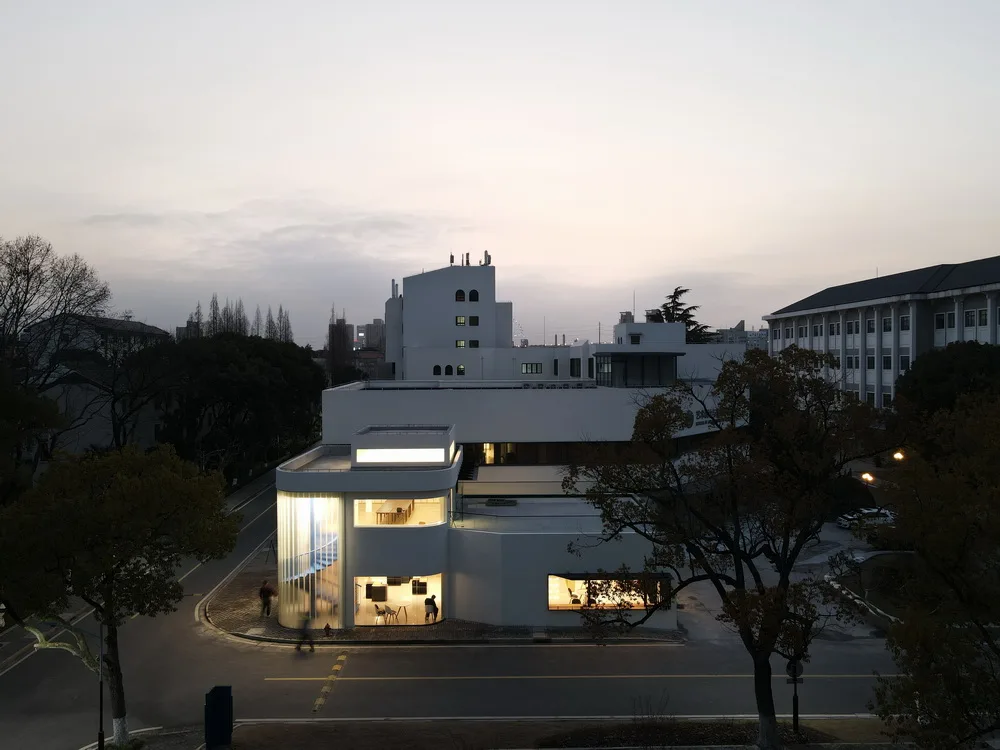
The building’s exterior emits light under the night sky, with light overflowing from the top © WDi
Window – A Poetic Connection
Windows poetically connect people, streets, and nature. We carefully analyzed each window’s role in linking interior and exterior spaces, considering size, shape, and whether they open or remain fixed.
We also designed specific seating and viewing arrangements, creating a language of windows: face-to-face seating, back-facing seats, French windows, peeping windows, corner arc windows, and high side windows.
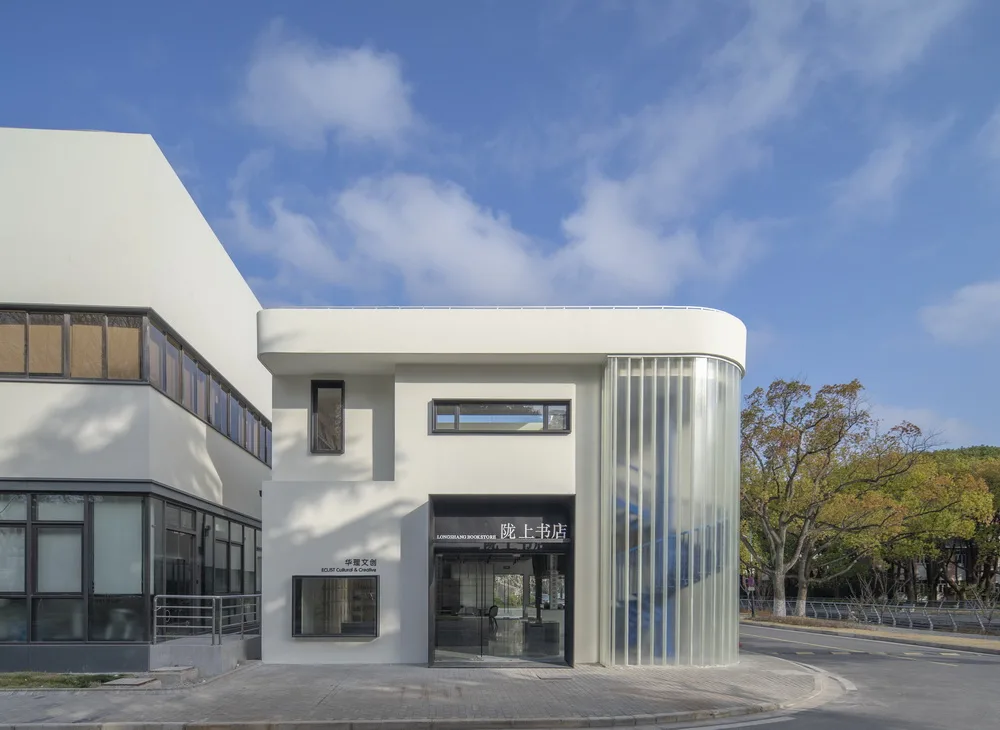
Windows and stairs under light and shadow © WDi
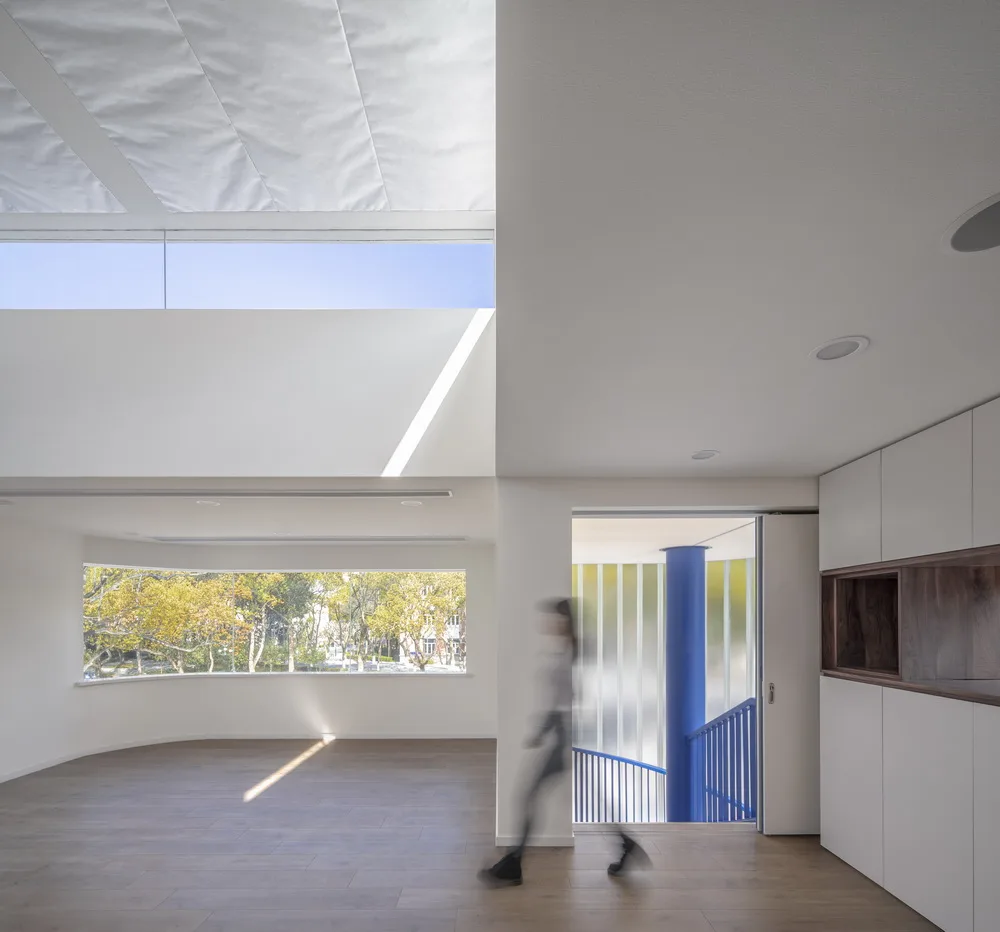
Tree shadows through curved windows, sky views from side high windows, and the soft ambiance of U-glass © WDi
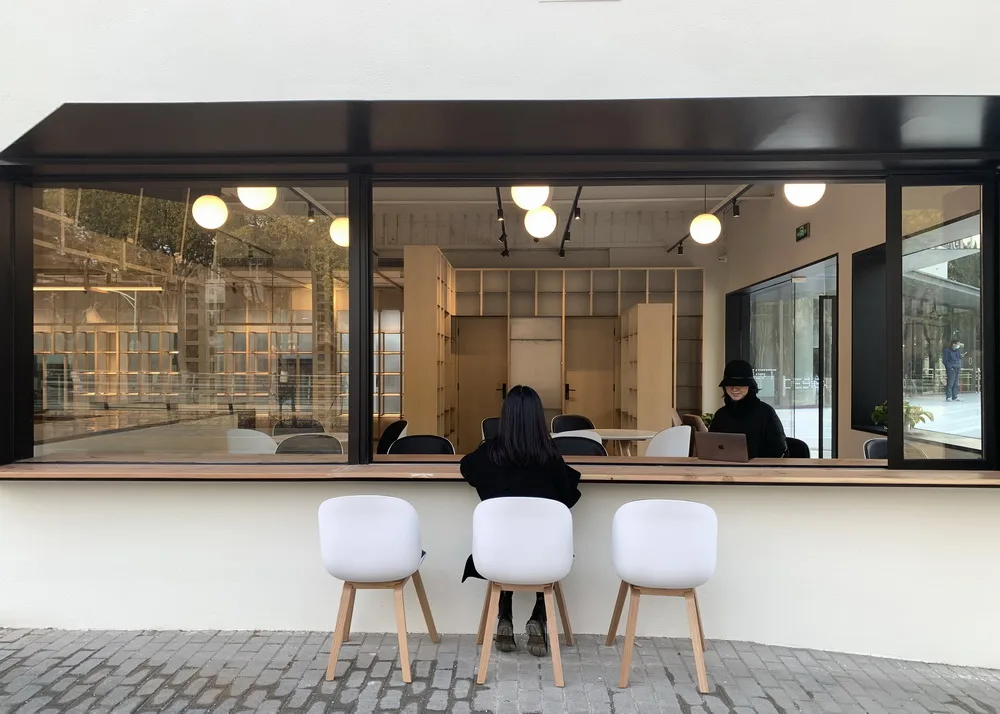
△ Folding windows encourage interaction between inside and outside © 畎 Mu Architecture
The varying window designs adjust sightlines, light, and activities. Narrow windows face the noisy Yingbin Road to the south, while open, transparent windows overlook the Qingchun River to the east.
An outdoor window seat between the north side and Chenyuan brings the vibrancy of urban street life into the campus. These windows frame views of green shadows, blue skies, flying birds, and bustling waterways, while also inviting hidden exploration, street observation, and spontaneous interaction.
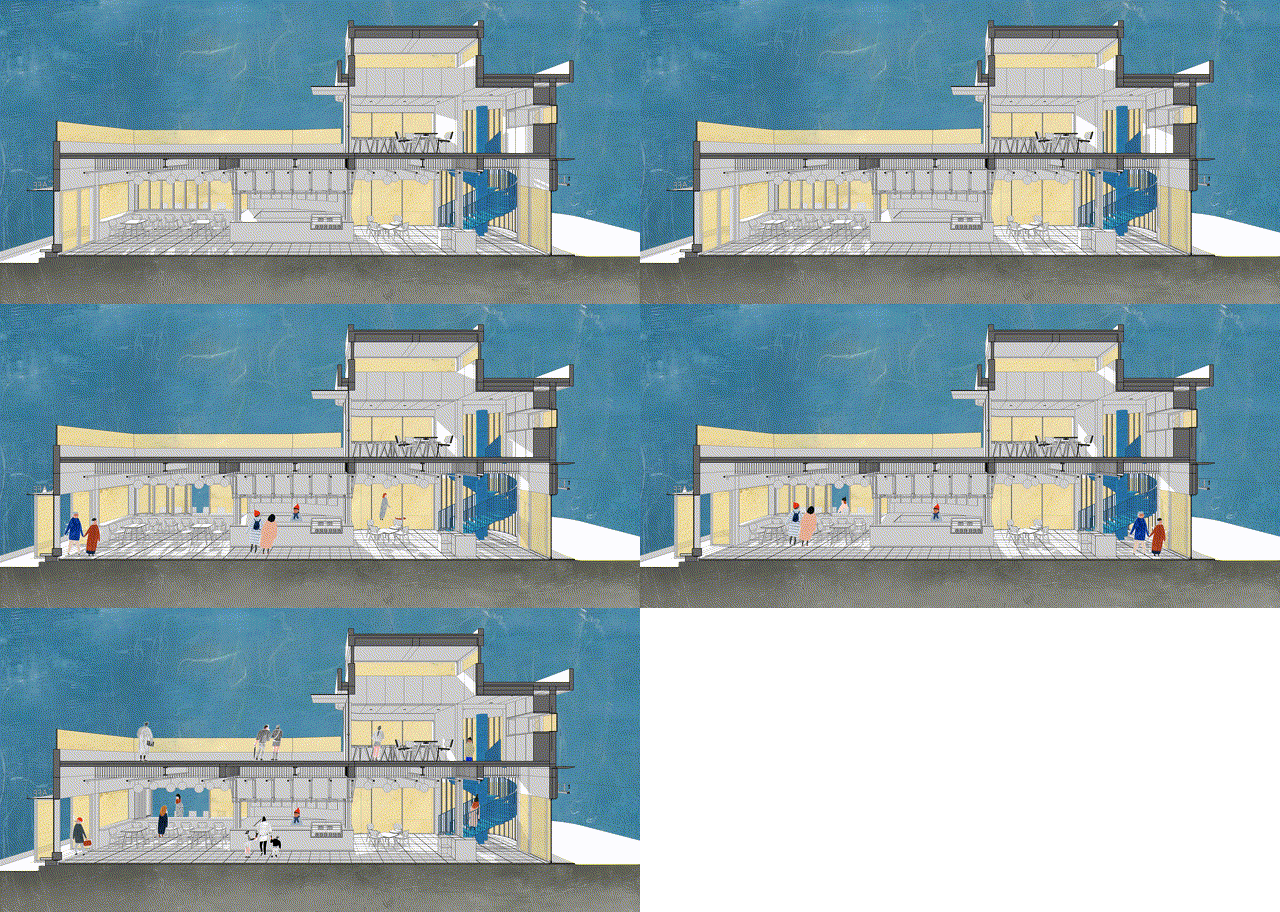
△ Light and shadow interplay in window openings, enhancing indoor-outdoor interaction © 畎 Mu Architecture
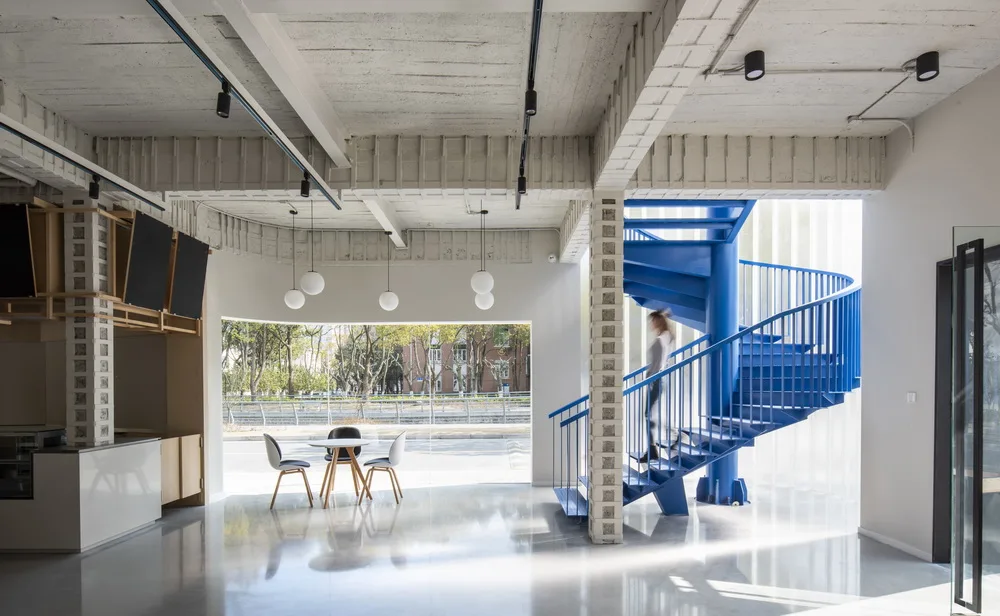
△ Riverside view through the arched French window; handcrafted details on ceiling, beams, and columns © WDi
05 Place Memory – The Art of Handmade Construction
During construction, removal of the old suspended ceiling revealed the uneven texture of the original wooden formwork concrete. After reinforcing the structure, we were struck by the craftsmanship of the steel-wrapped beams and columns and their striking contrast with the concrete textures.
We chose to preserve these construction marks—both the original concrete work and the 1990s structural reinforcement—on site.
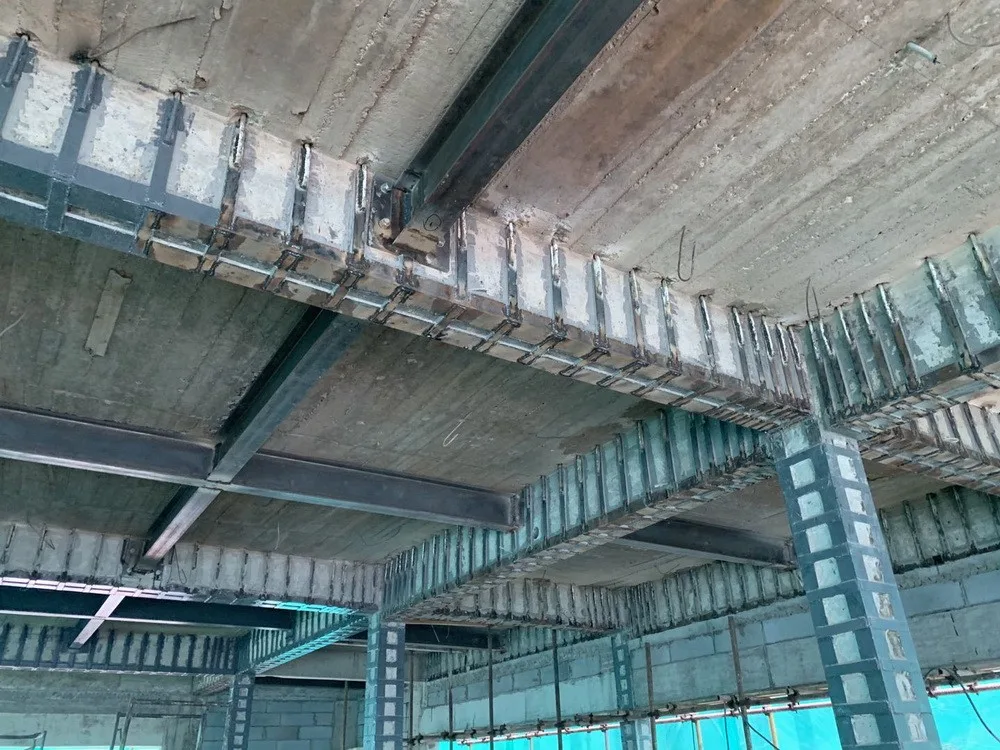
During construction: suspended ceiling removal and steel structure reinforcement © 畎 Mu Architecture
Instead of leaving these raw surfaces exposed, we coated the ceiling and steel with delicate warm white paint, creating a unified, soft atmosphere. This contrasts with the rough texture of the exposed concrete columns, whose raw surfaces extend spatially to create dramatic visual impact.
The layering of manual traces, the juxtaposition of old and new, visible and concealed, narrate the building’s history and generate renewed spatial energy.
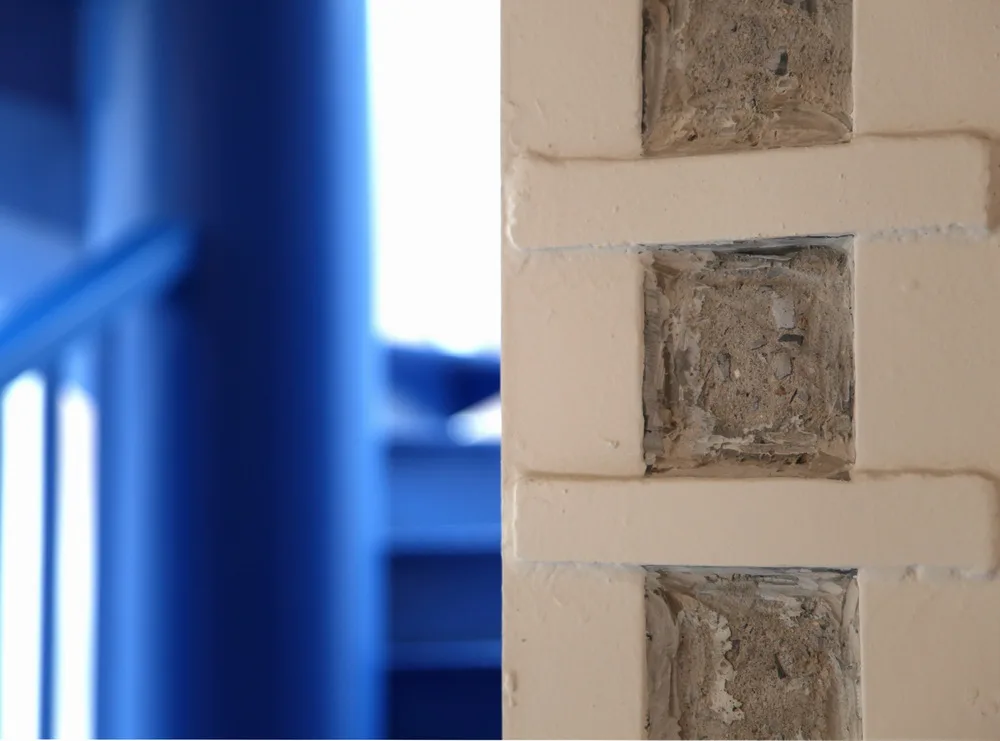
White-painted steel and rough concrete create striking visual contrast © 畎 Mu Architecture
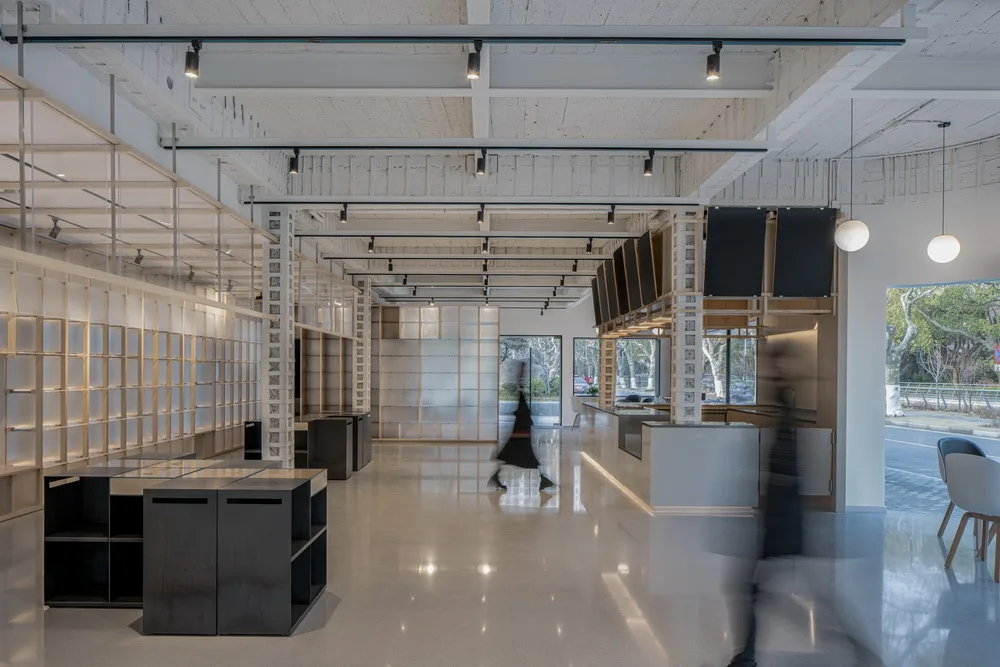
Walking through the transparent, flowing space evokes a journey through construction and memory © WDi
06 Active Integration of Art and Activities
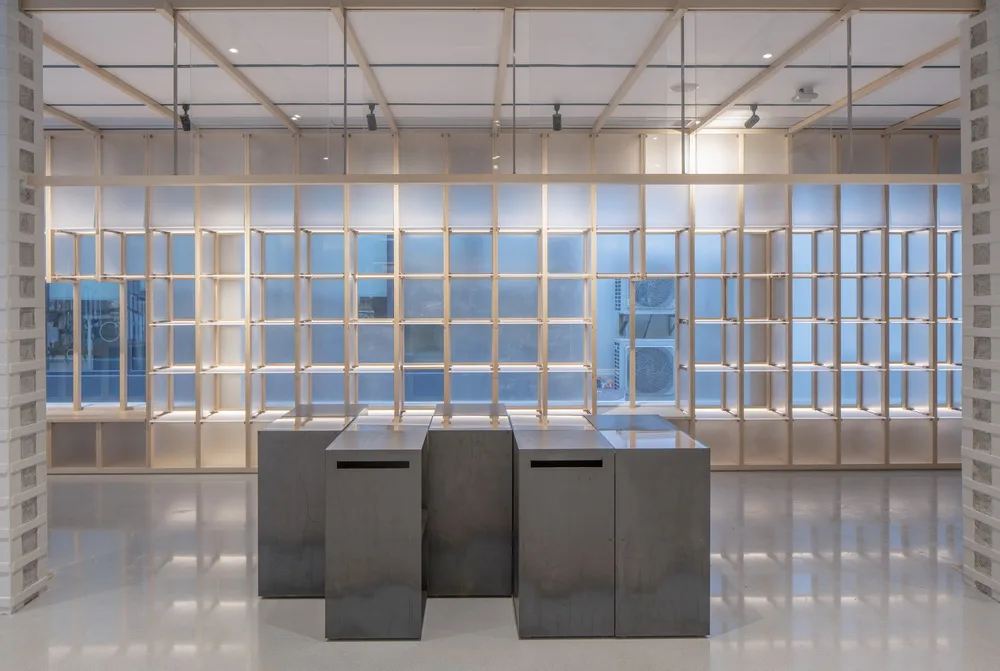
To maintain spatial fluidity, we designed movable furniture: weather-resistant steel display cabinets mounted on single-sided rollers. These can be flexibly combined to showcase cultural and creative products or arranged to create distinct exhibition spaces.
The flexible layout encourages spontaneous viewing and interaction. The weathered steel’s gradient texture adds a casual yet artistic character, energizing the space.
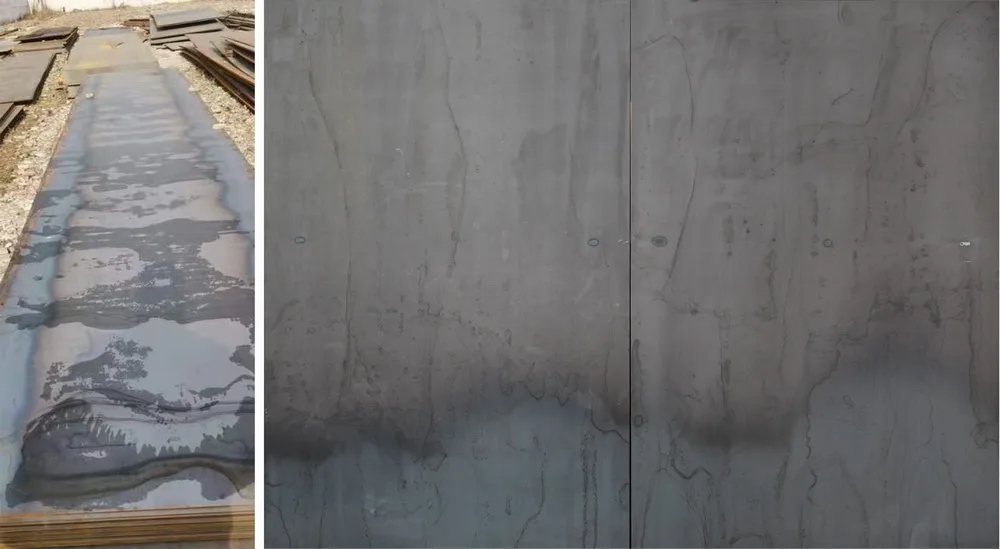
The texture of quenched weathering steel © 畎 Mu Architecture
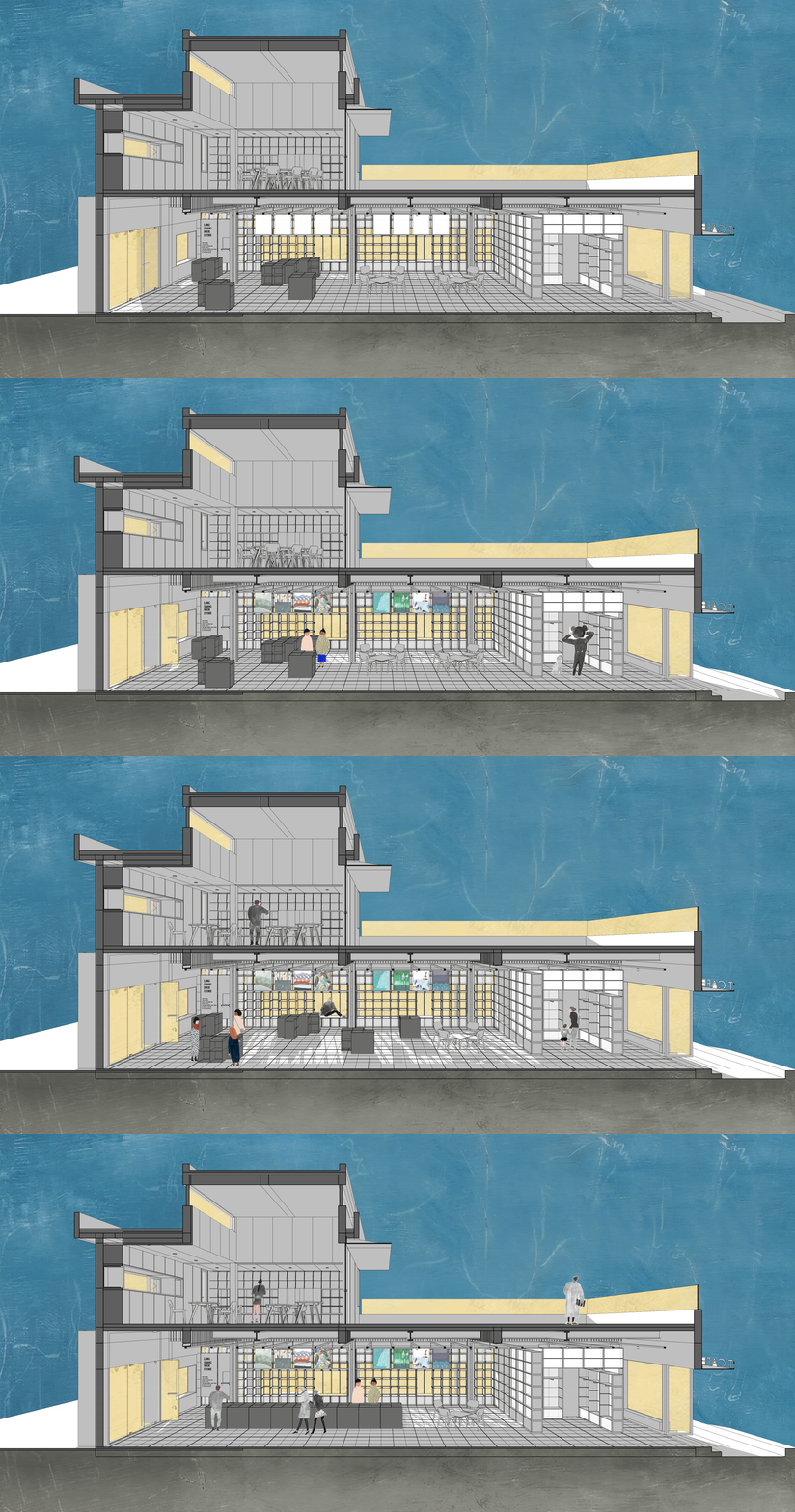
△ Dynamic light and shadow play on semi-transparent surfaces and flexible display spaces © 畎 Mu Architecture
For bookstore information display, we extended the wooden grid system encompassing the ceiling storage, bridge frame, and lighting track. Blackboards are installed above the coffee area and a double-layer acrylic poster board on the opposite side.
These detachable elements allow for easy content updates, supporting collaboration with faculty and students from the School of Arts and Media for artistic presentations or literary exhibitions—an experimental integration of industry, academia, and research.
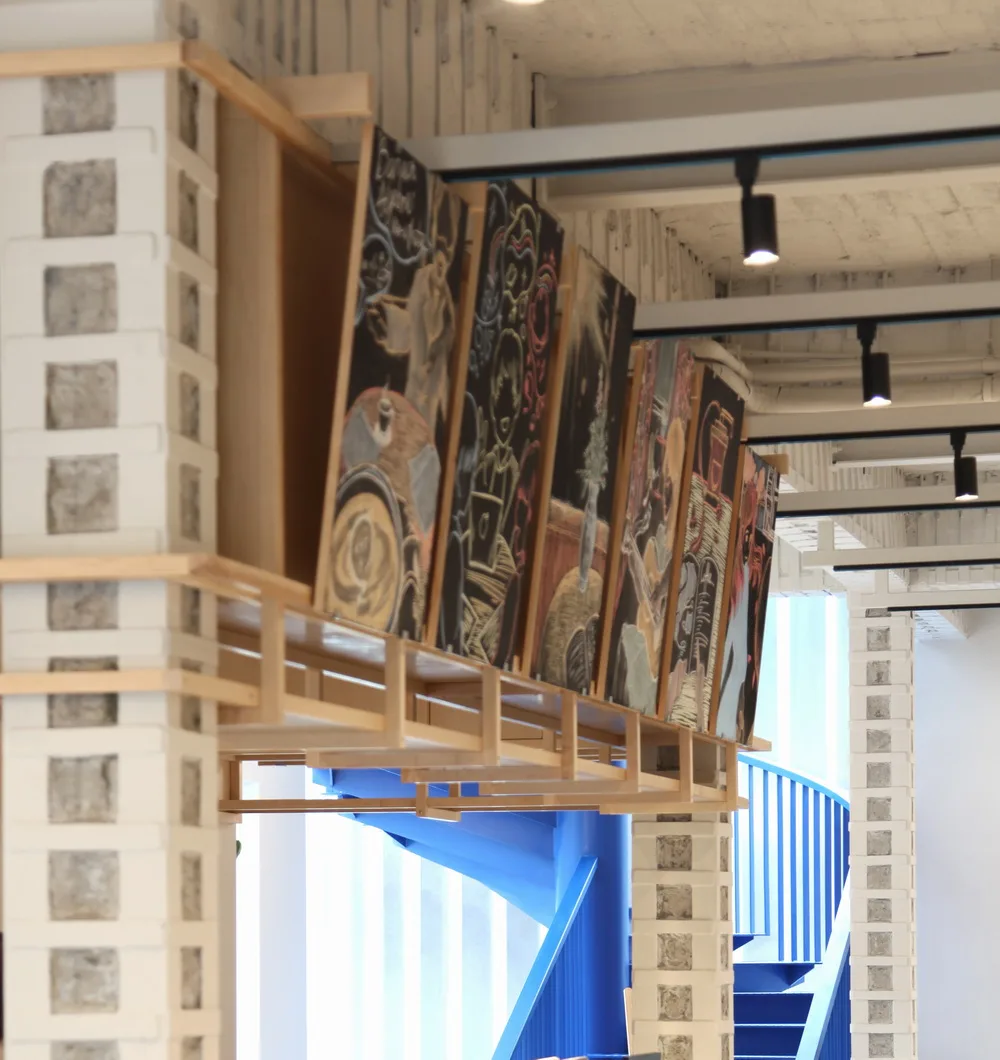
The blackboard art created in collaboration with the School of Arts and Media enlivens the space © 畎 Mu Architecture
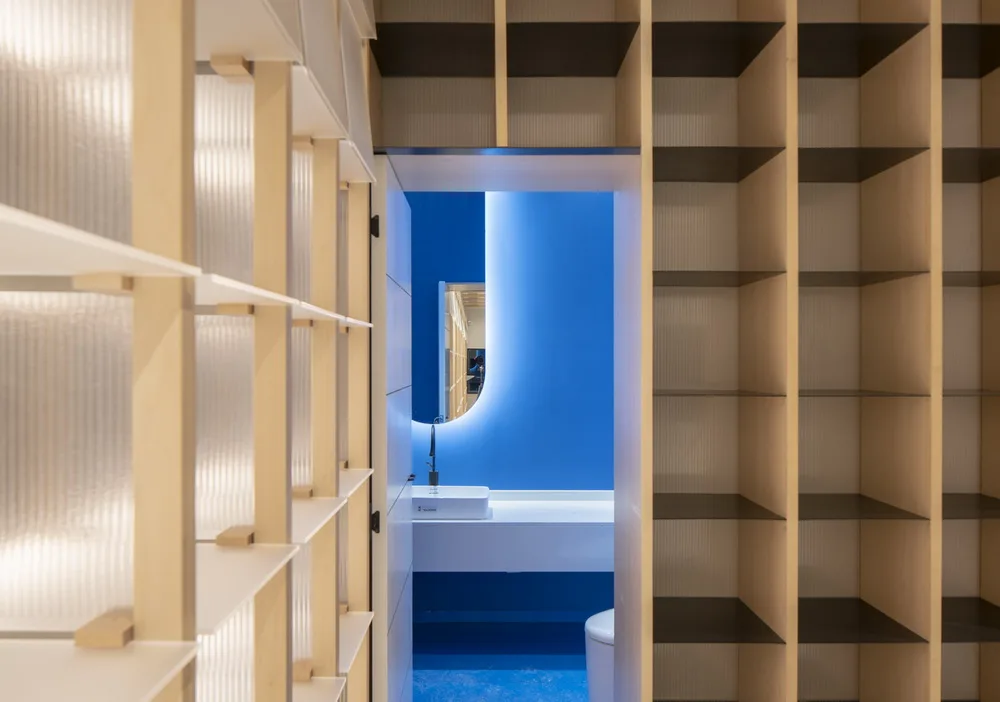
△ Hidden restroom located behind a semi-transparent display cabinet © WDi
07 Vision for Evolution: Huali Future Campus Space Regeneration Plan
Longshang Bookstore has become an integral part of campus life, featuring a street-facing interface parallel to Chenyuan. It serves as a conduit for the daily flow of art and culture, permeating surrounding campus spaces.
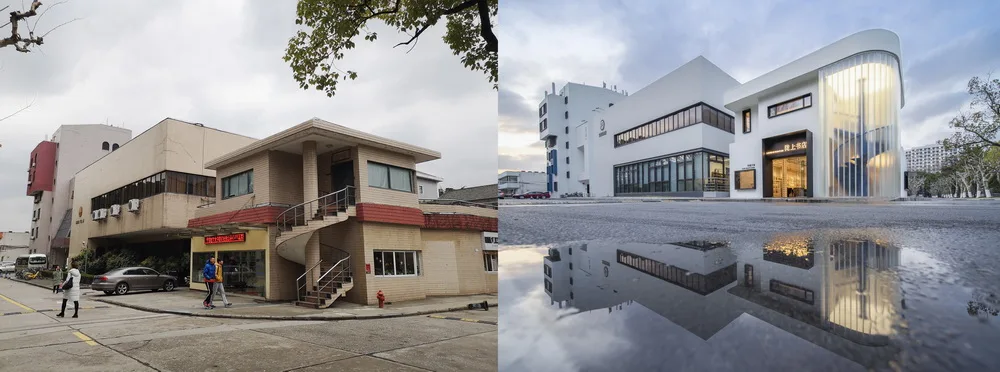
△ Buildings and Morning Gardens before renovation © 畎 Mu Architecture & after renovation: Longshang Bookstore and Chenyuan © WDi
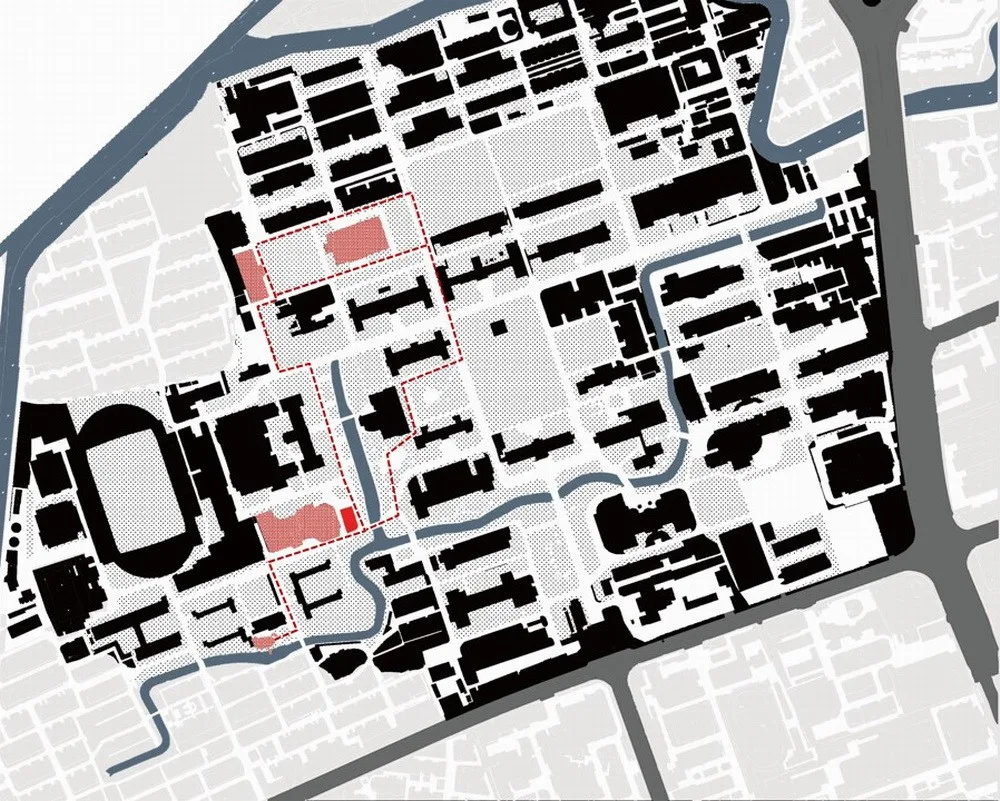
Huali Future Campus Space Regeneration Plan © 畎 Mu Architecture
Technical Drawings
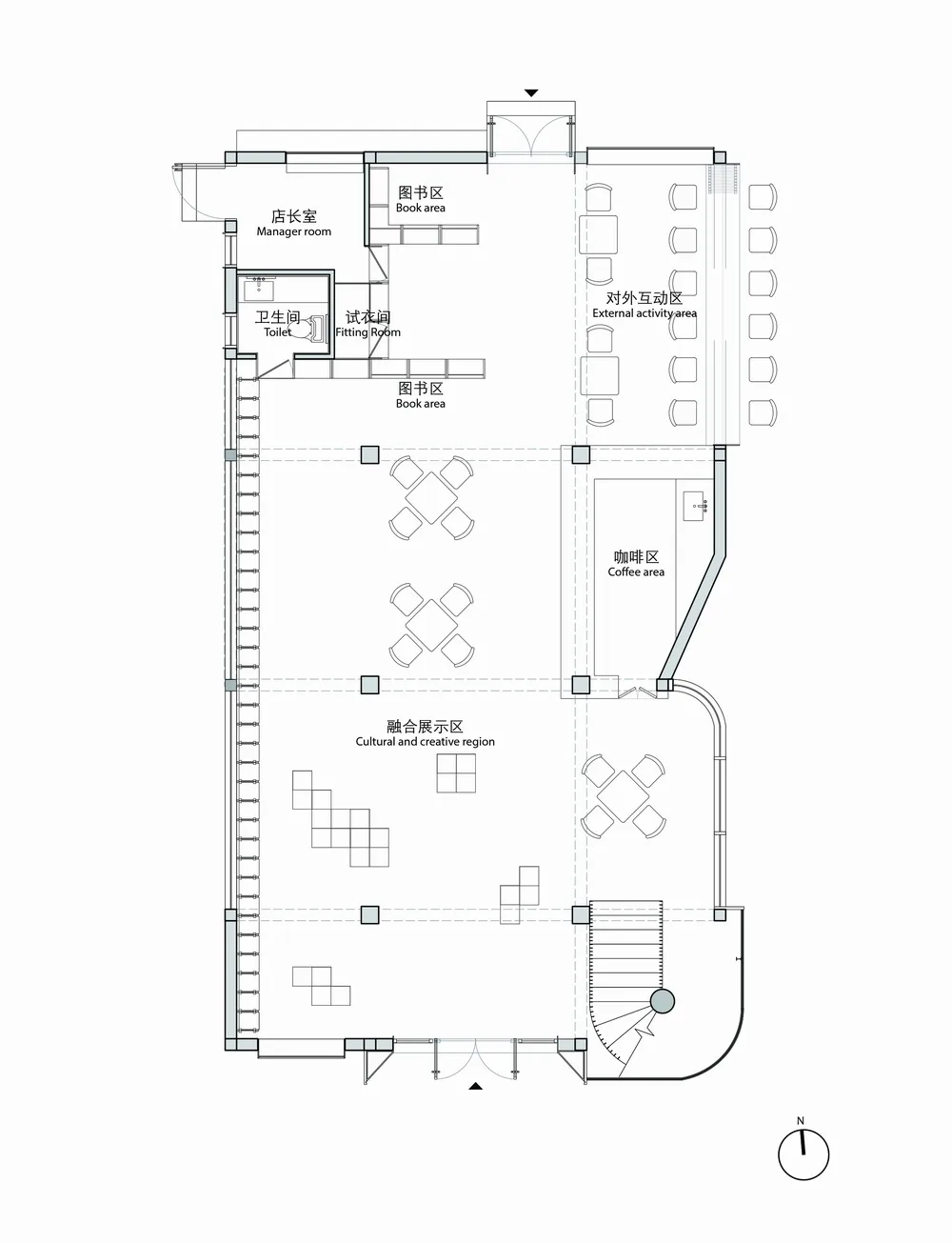
△ First floor plan © 畎 Mu Architecture
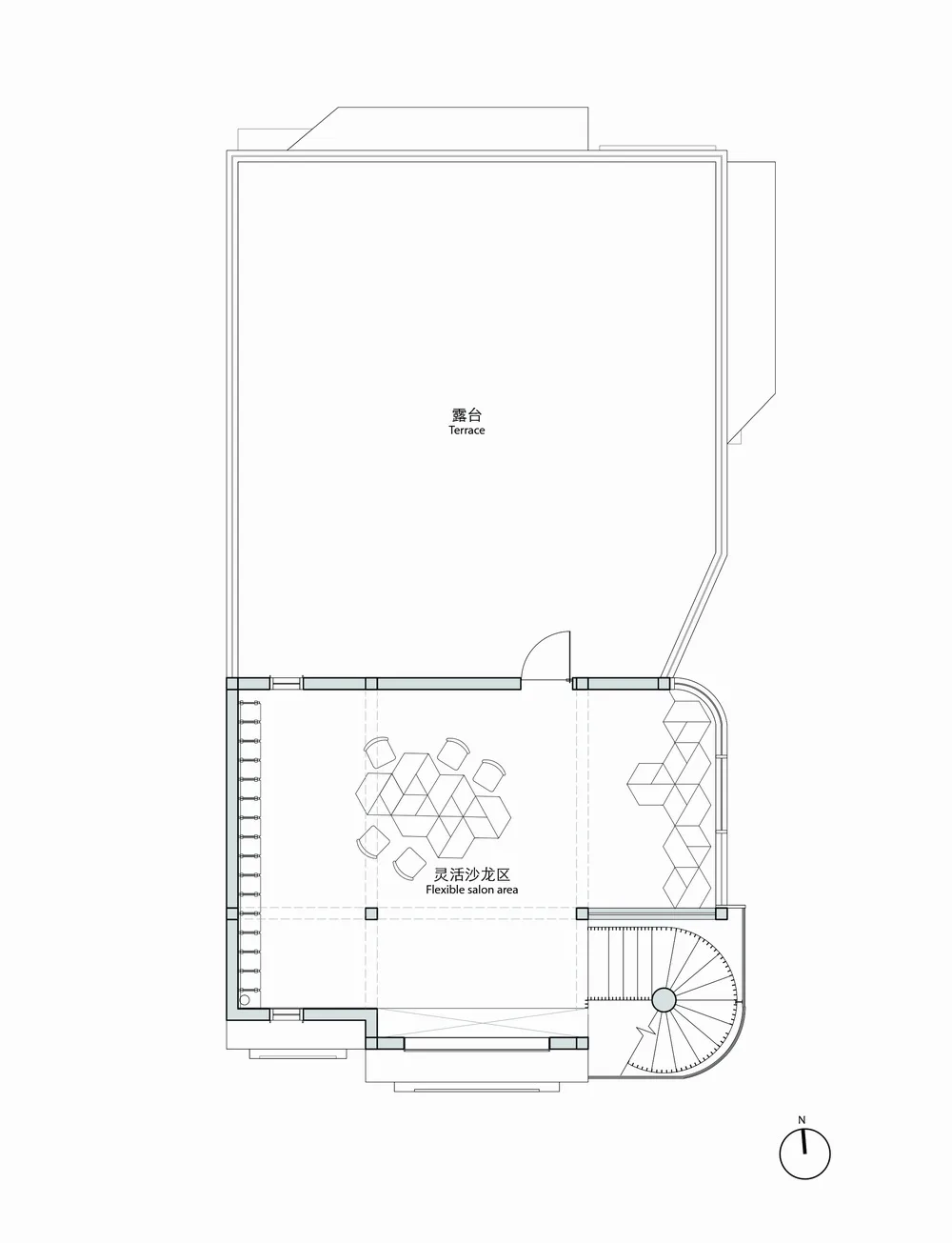
△ Second floor plan © 畎 Mu Architecture
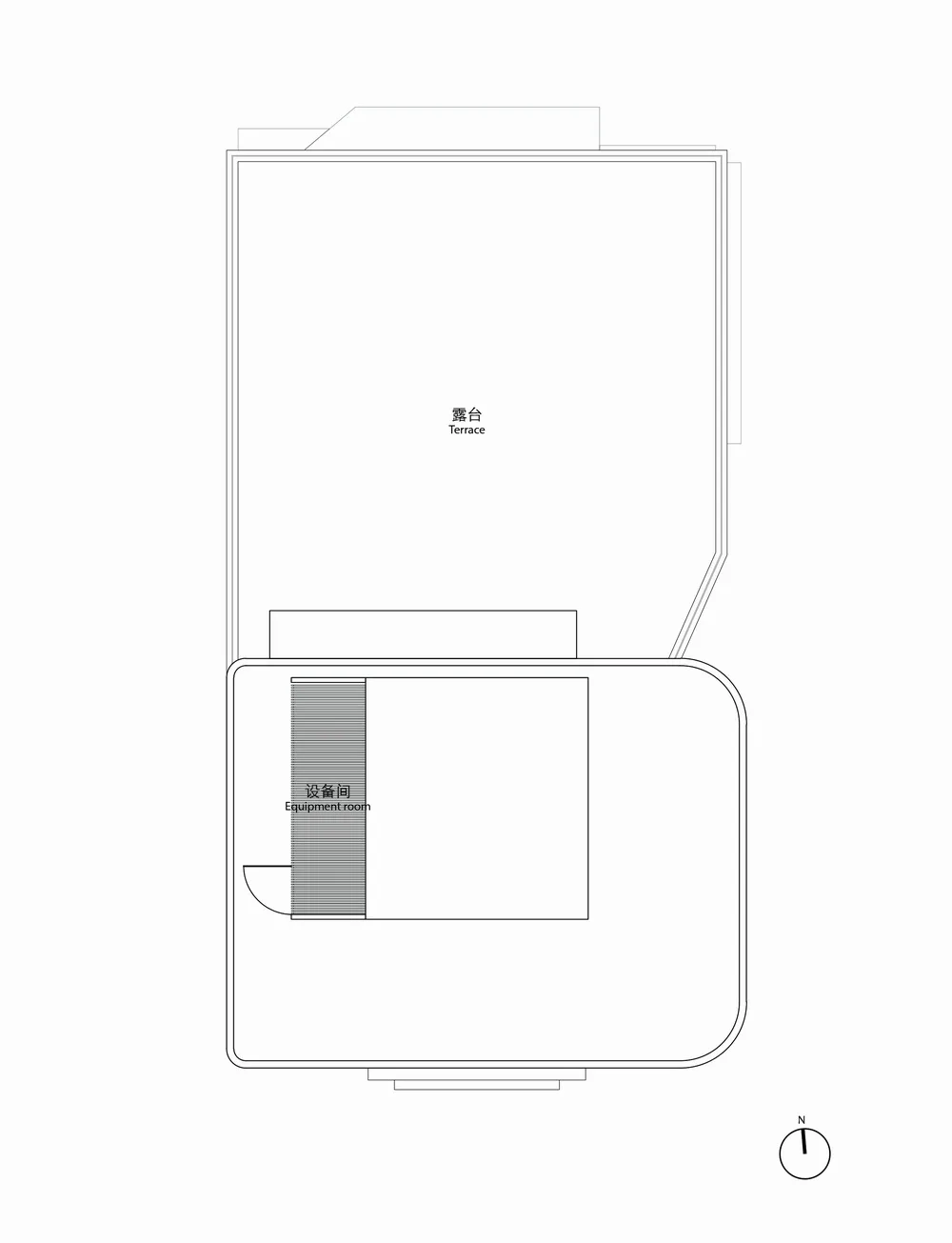
△ Roof plan © 畎 Mu Architecture
Project Information
Project Name: Longshang Bookstore
Architectural Firm: A.C.R.E Atelier, specializing in architectural design
Website:
Contact Email: yinshun.caup@foxmail.com
Location: Xuhui, Shanghai
Completion Date: April 2021
Building Area: 260 square meters
Project Address: Xuhui Campus, East China University of Science and Technology, No. 130 Meilong Road, Xuhui District, Shanghai
Lead Architect: Yin Shun
Principal Architect Email: yinshun.caup@foxmail.com
Photographer: WDi
Photographer Website:
Photographer Email: w_dimension@163.com
Design Team: Yin Shun, Shi Qi, Lu Xinhe, Zhu Siyi, Xu Shuang
Client: East China University of Science and Technology Press
Lighting Design: Yang Xiu
Construction: Zhu’an Group












Must log in before commenting!
Sign Up