
In the development of new urban public cultural facilities in small and medium-sized cities across China, constraints such as land costs, capital investment, and construction timelines have made the “multi-venue integration” approach increasingly common. This method involves the centralized layout of multiple functional spaces, including exhibition halls, museums, libraries, archives, and entertainment venues. Such composite cultural centers efficiently utilize social resources, boost venue utilization rates, and contribute positively to enhancing urban functions, advancing cultural development, and driving city growth.
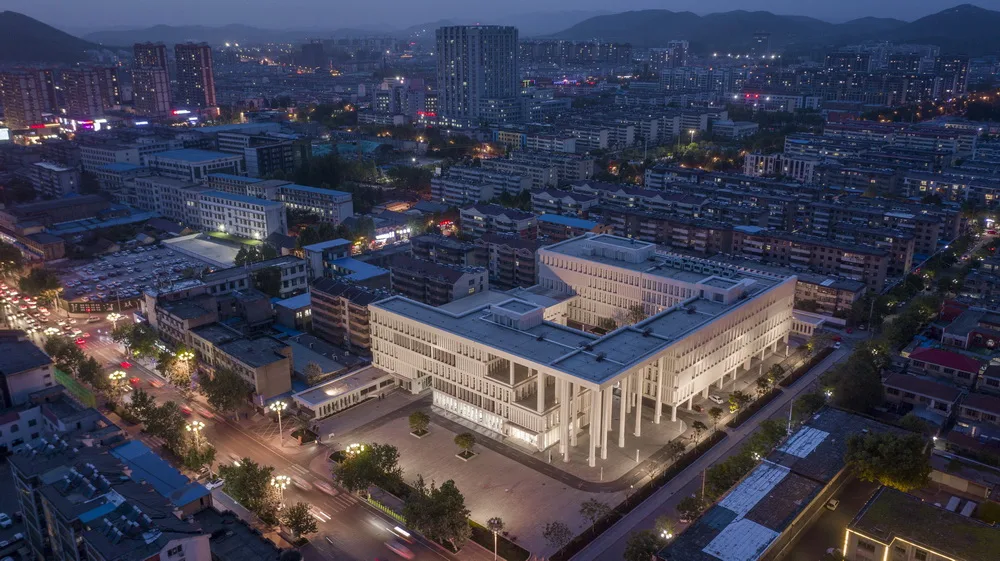
△ Aerial Night View of the Project
Recently, with Yinan’s rapid economic growth, the demand for cultural and spiritual resources has risen significantly. The original library no longer meets the community’s needs. To promote spiritual civilization, foster a cultural atmosphere, and strengthen public cultural influence, the Yinan County Party Committee and Government initiated the construction of the Yinan Library and Archives. This facility, encompassing the library, archives, local chronicles, and party history, aligns with directives to enhance county-level libraries. The project aims to meet the growing cultural demands of the public and act as a catalyst for improving Yinan’s urban infrastructure and accelerating city renewal.
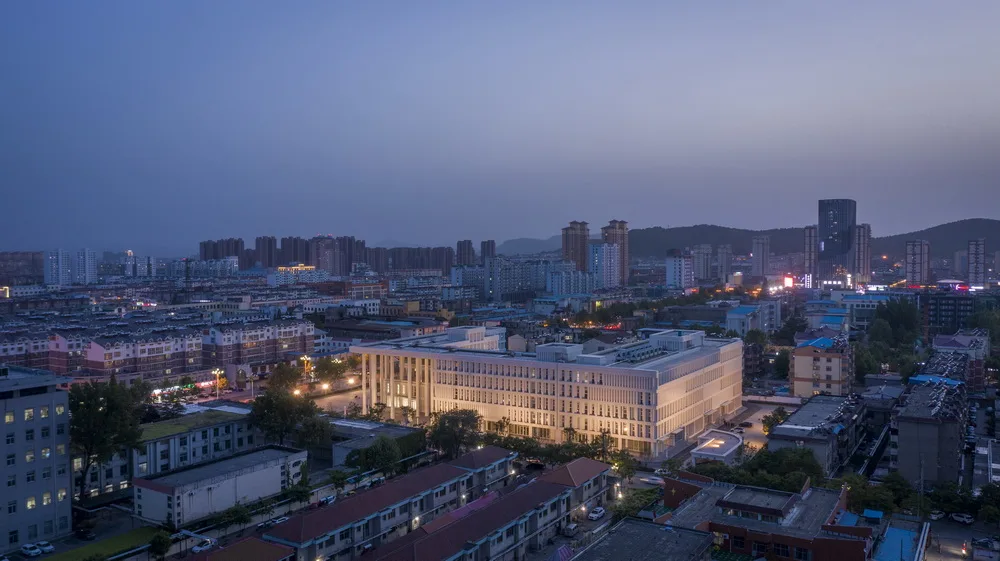
△ Aerial Night View of the Project
The concept of “urbanity” in architecture refers to the capacity of a building to influence the character and quality of surrounding urban public spaces. The strength of this “urbanization” depends not only on the building itself but also on external factors such as policies and the surrounding environment. The Yinan Library and Archives site is centrally located in Yinan County, adjacent to the county government and surrounded by a diverse mix of old residential areas, shopping centers, schools, and city squares, creating a complex social and natural setting.
Considering the project’s functional needs, “urbanization” has become the guiding design principle. The library and archives are designed to be closely integrated, offering rich public spaces that serve the community and enhance urban life.
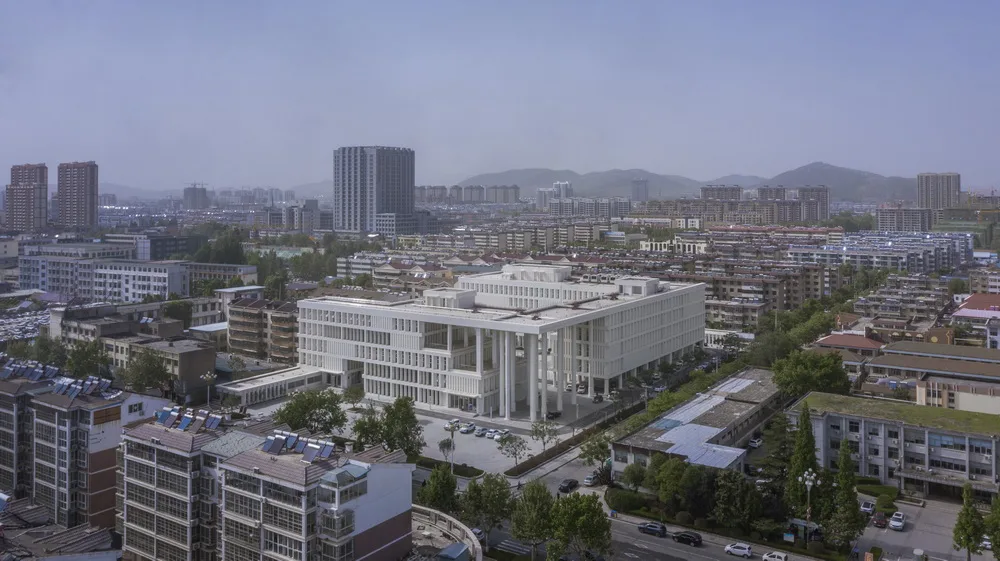
Panoramic bird’s-eye view of the project and its surroundings
Due to the existing U-shaped layout of the Zhongyuan Guesthouse building and conference center on the site, which faces south, the project adopts a courtyard-style design. This approach allows selective preservation of original trees, maintaining the site’s historical context and memory. It also maximizes natural sunlight and ventilation, creating a green and healthy working environment.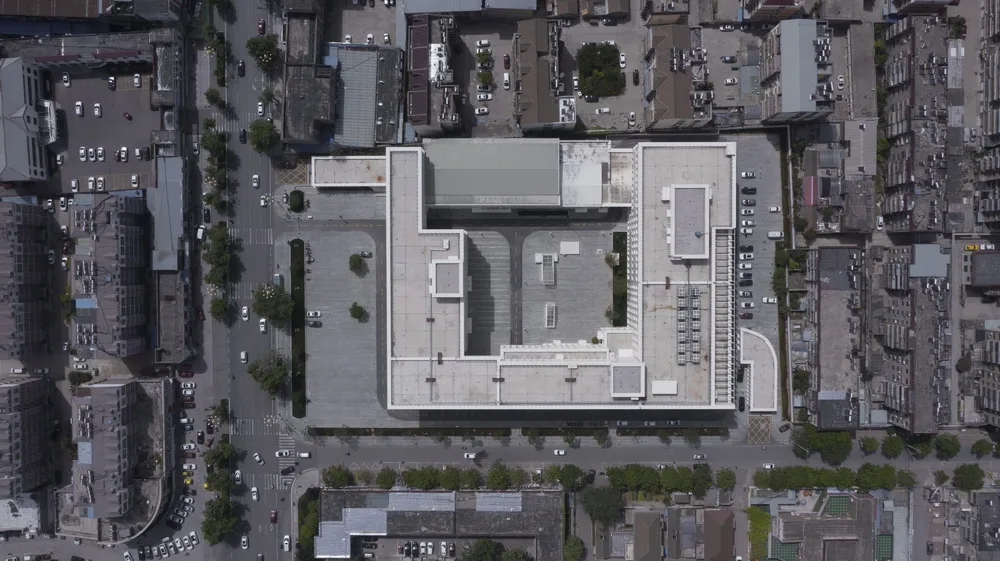
Top view of the roof
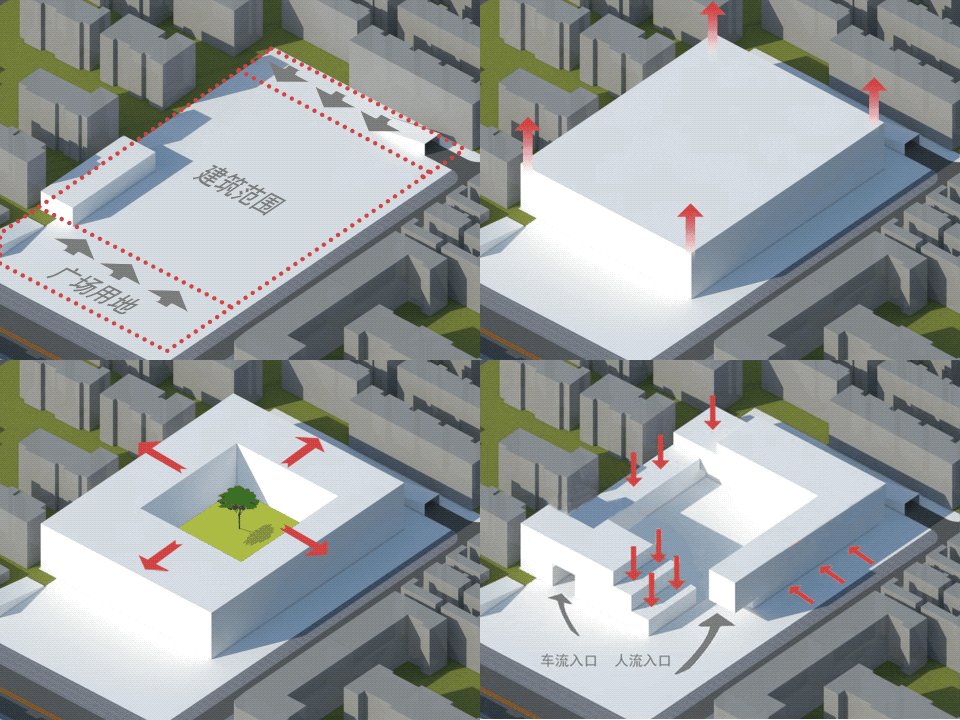
△ Block generation
The design creates an overall circular enclosed space, presenting a cohesive architectural image externally while accommodating diverse functional needs internally through well-organized spatial clusters. Courtyards and gray spaces serve as transitional connectors, creating a layered spatial system and a unified architectural form.
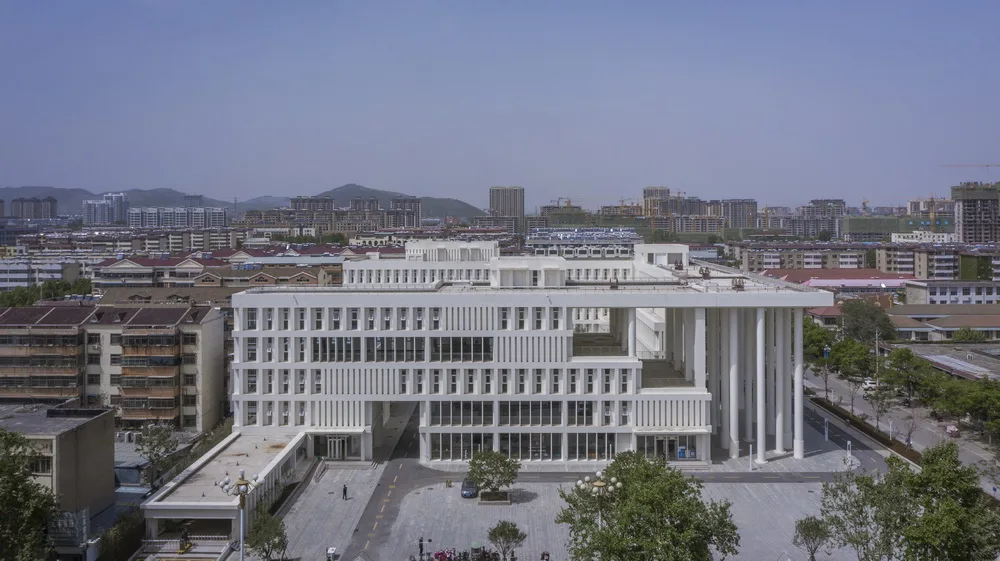
△ South facade bird’s-eye view
Additionally, considering transportation needs, an entrance is positioned at the southeast corner. This creates an organic connection between the urban space and the courtyard, integrating public urban areas into the building’s interior. The design blurs the boundaries between inside and outside, allowing spaces to permeate and interact, giving the building a striking presence.
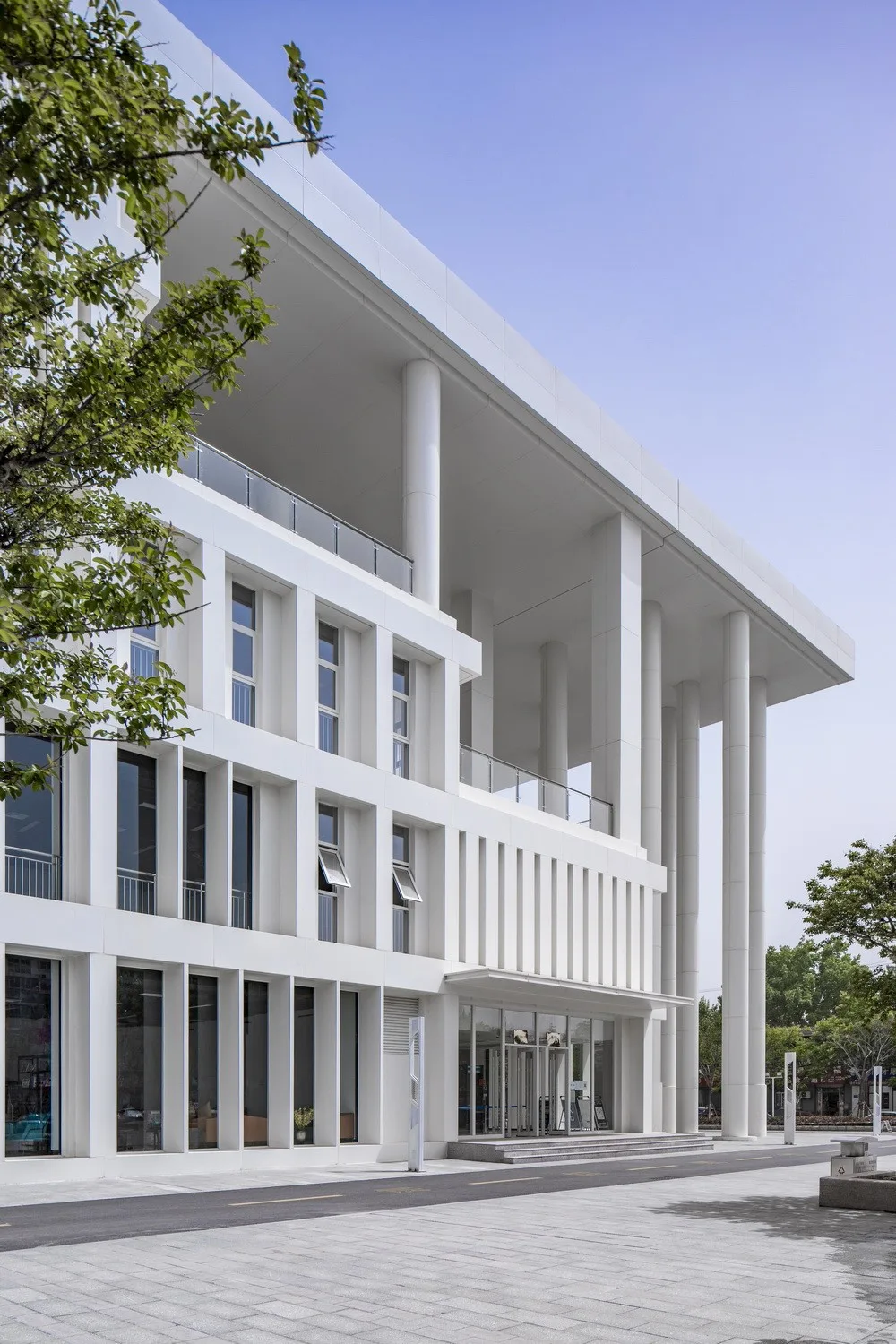
△ Southeast corner main entrance (2)
The design carefully separates different functions, such as active and quiet spaces, public and private areas, through orderly spatial organization and simple, clear facades. The library’s stepped volume, combined with the entrance on the southeast side and the courtyard access, forms a high-columned entrance hall. This blend of tangible and intangible elements creates a solemn yet engaging gray space at the urban interface, fostering spatial interest through “harmony in diversity.”
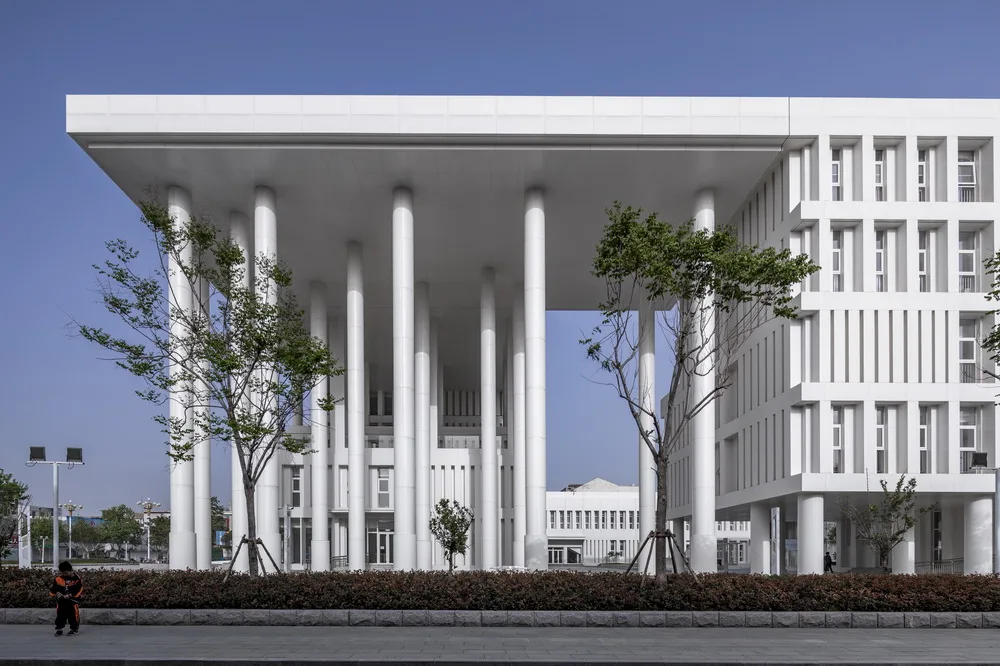
△ Main entrance column (2)
The courtyard functions as a transitional space linking the urban environment outside with the architectural interior, emphasizing the harmonious and inseparable relationship between humans and nature. Similarly, the relationship between the Yinan Library and Archives building and Yinan County itself is integrative and symbiotic.
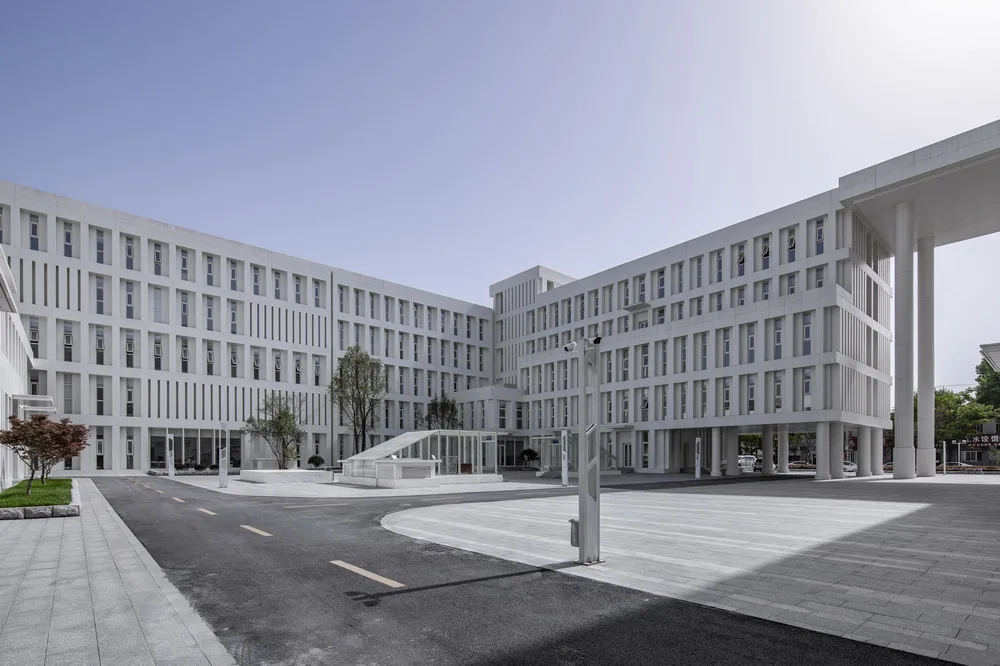
View of the northeast corner from the courtyard
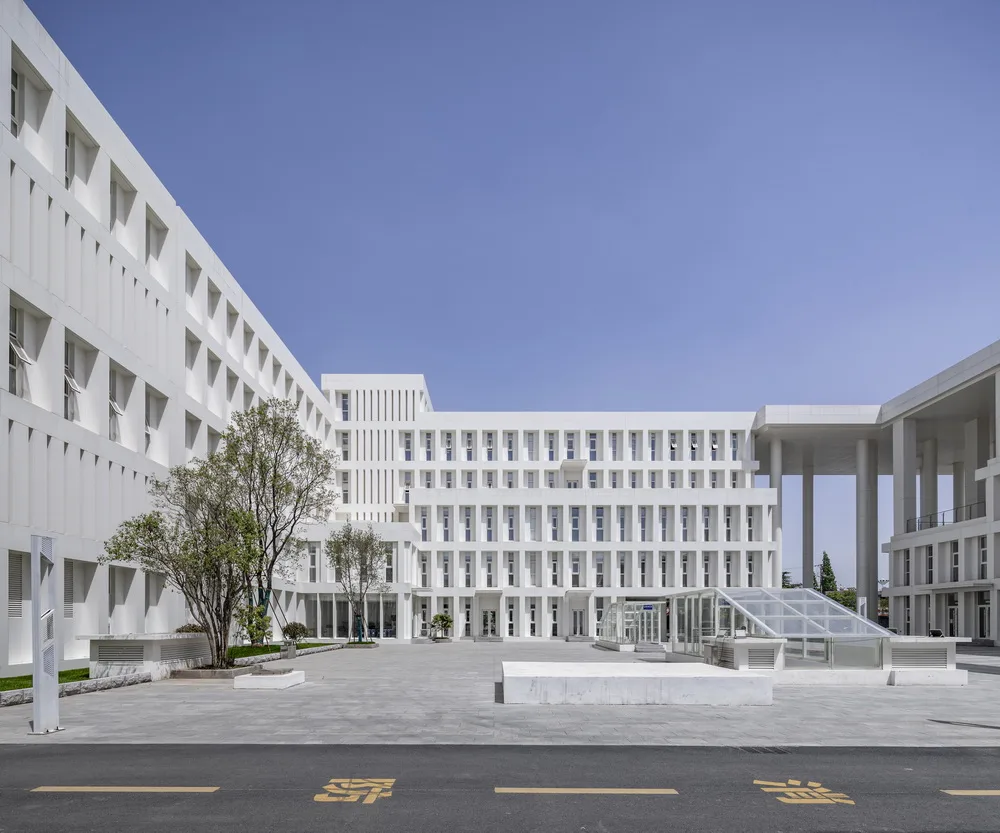
View of the east side from the courtyard
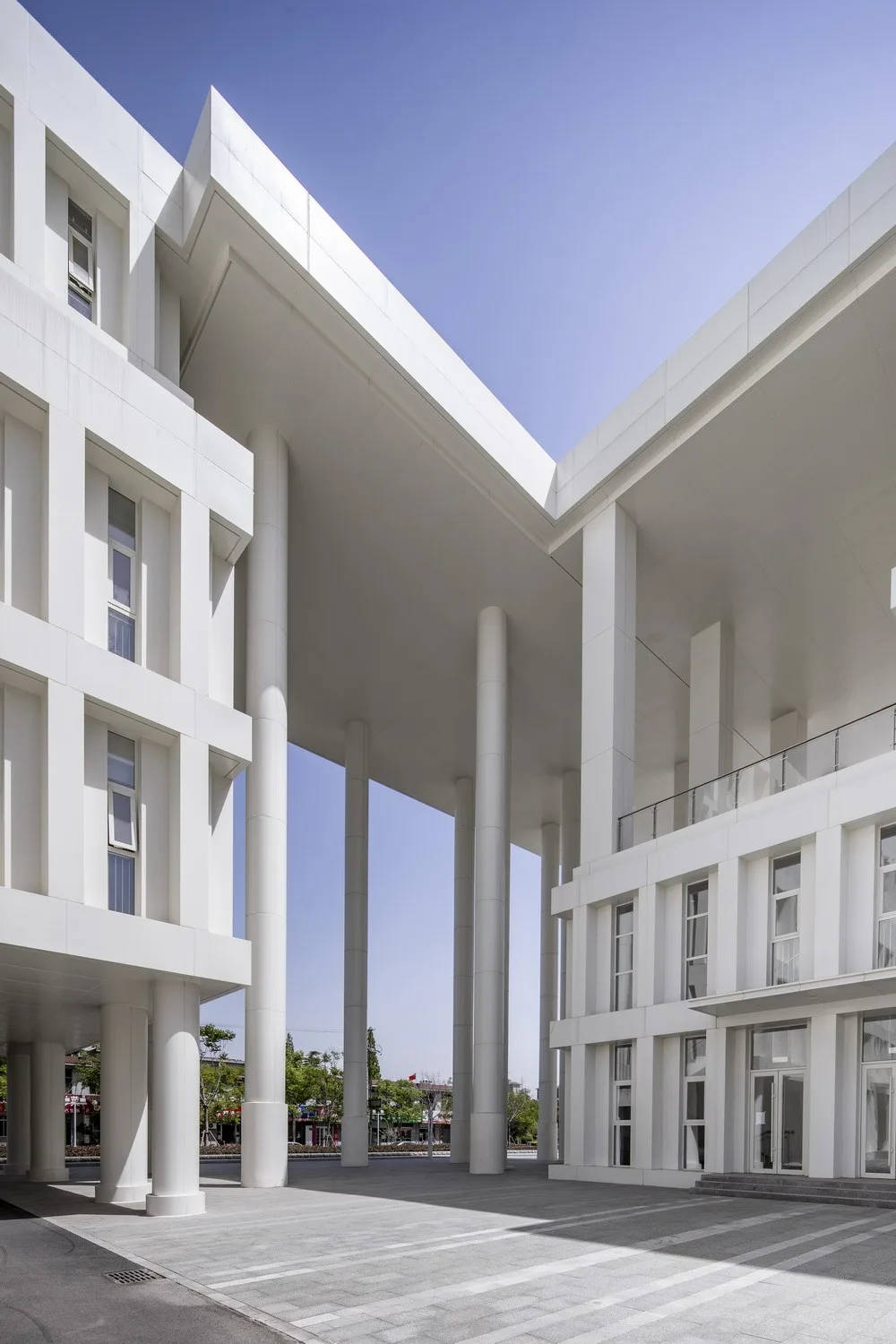
△ View of the entrance from the courtyard
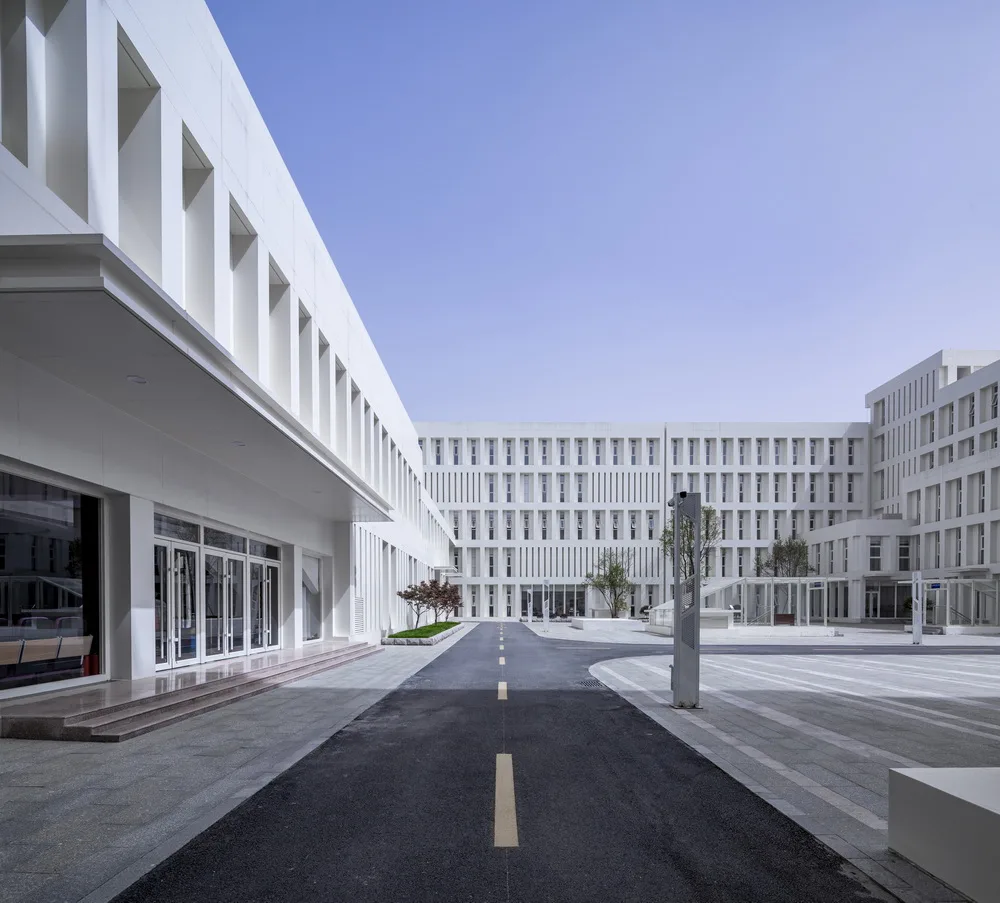
△ Entering the courtyard from the southwest entrance near the car dealership
The open square on the project’s south side includes both above-ground and underground parking facilities to accommodate citizen parking needs and enhance the urban functionality of the surrounding area. Additionally, space has been reserved to allow for future expansion and renovation of Renmin Road to the south.
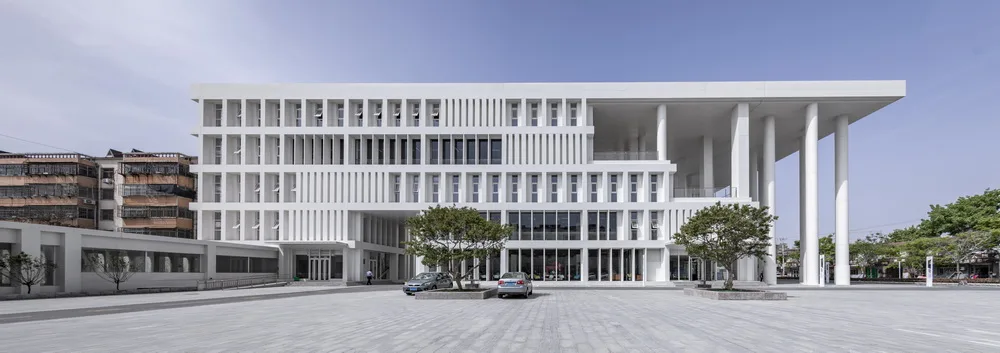
△ South facade
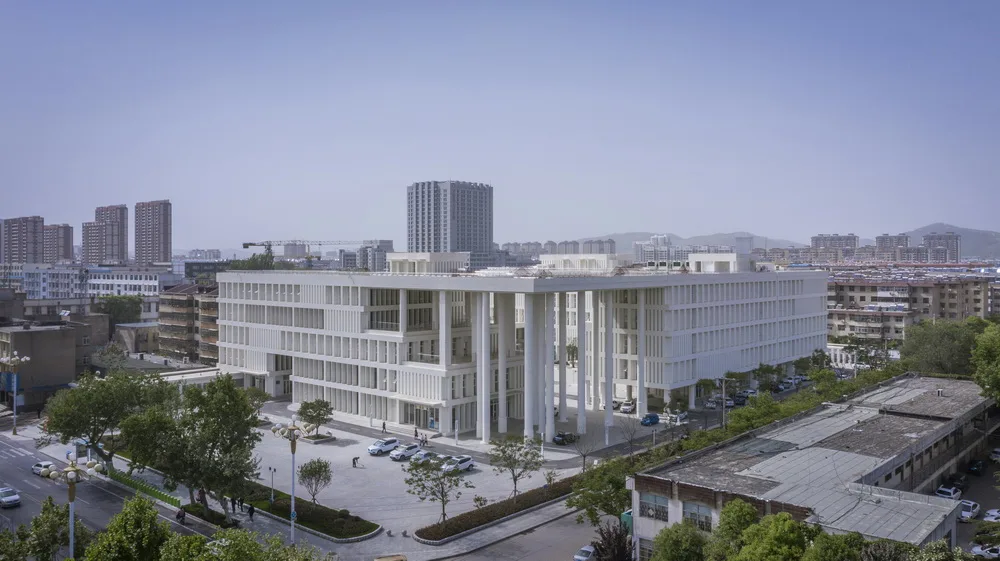
△ Aerial view of the main entrance
The project’s overall building volume is substantial, yet the narrow road on the east side could create spatial pressure if not carefully addressed. To mitigate this, the building’s east facade on the first floor is recessed, and dense facade elements combined with the entrance space help reduce the visual and spatial impact on the street.
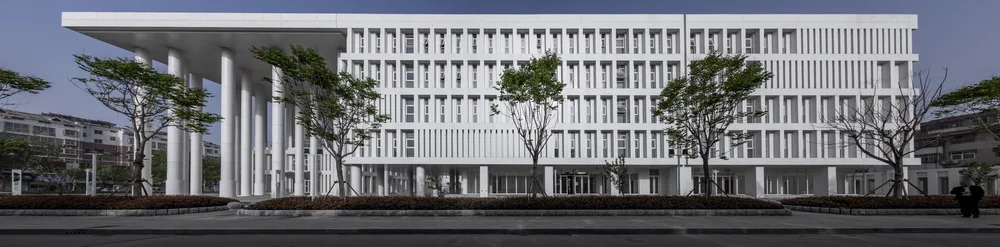
△ East facade
To the west and north of the project are completed residential buildings. Considering sunlight exposure and structural factors, building height is controlled relative to the preserved conference center on the west side and sunlight requirements on the north side. The main building height is capped at 21 meters.
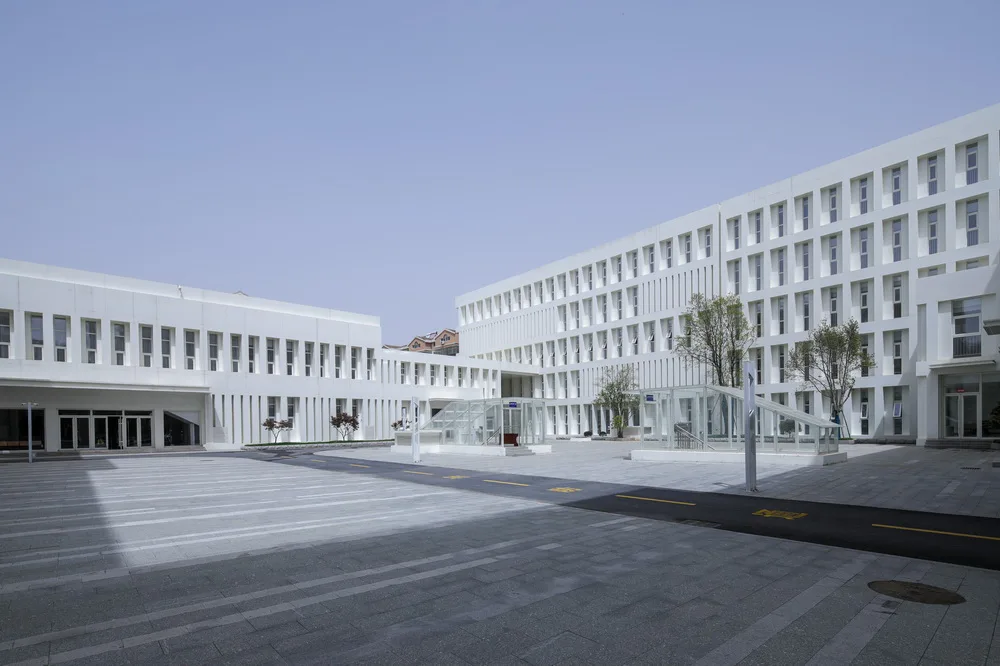
View of the northwest corner from the courtyard
The design of the Yinan Library and Archives aims to provide an energetic cultural hub for Yinan residents, reflecting the city’s cultural character and promoting its cultural spirit. It emphasizes seamless connection and integration within the building, while effectively linking to the city’s external spaces. This creates a “city reception room” that serves the public and acts as a cultural ambassador for Yinan.
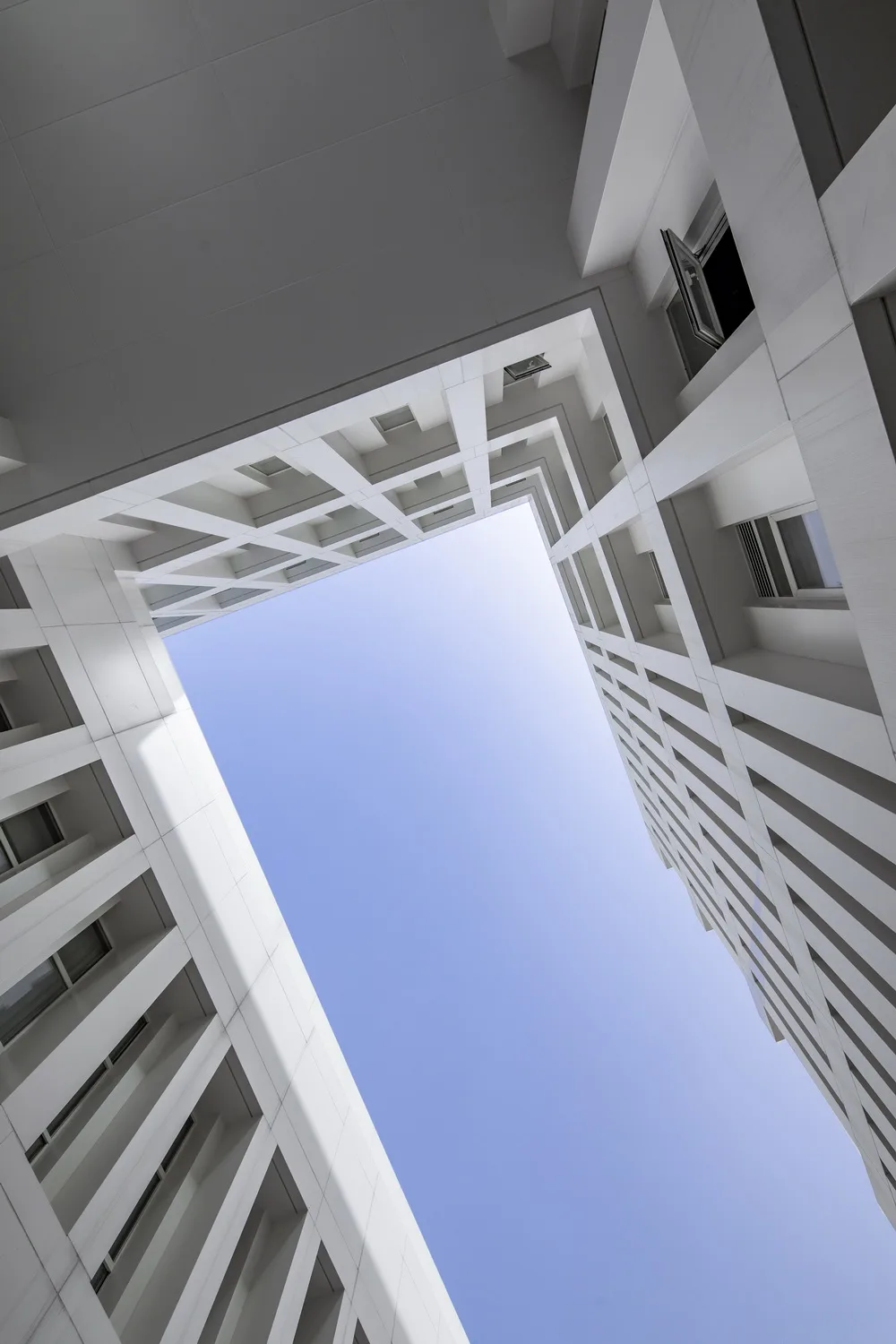
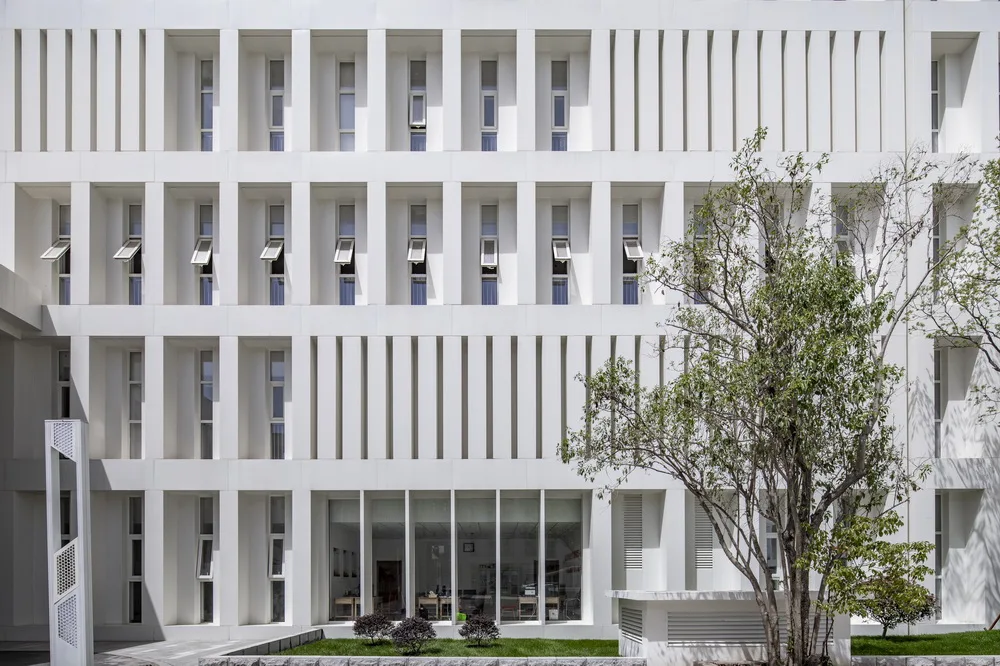
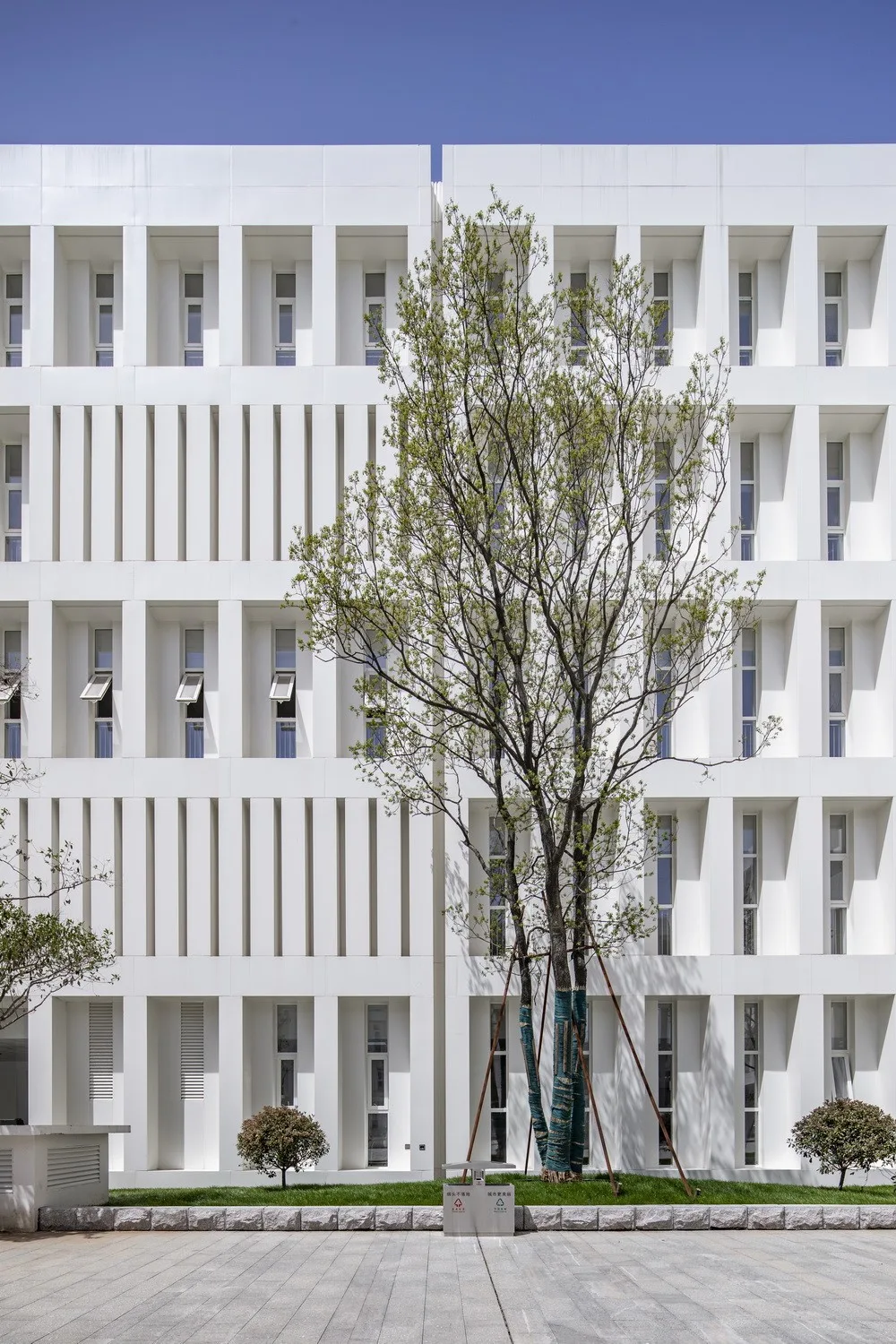
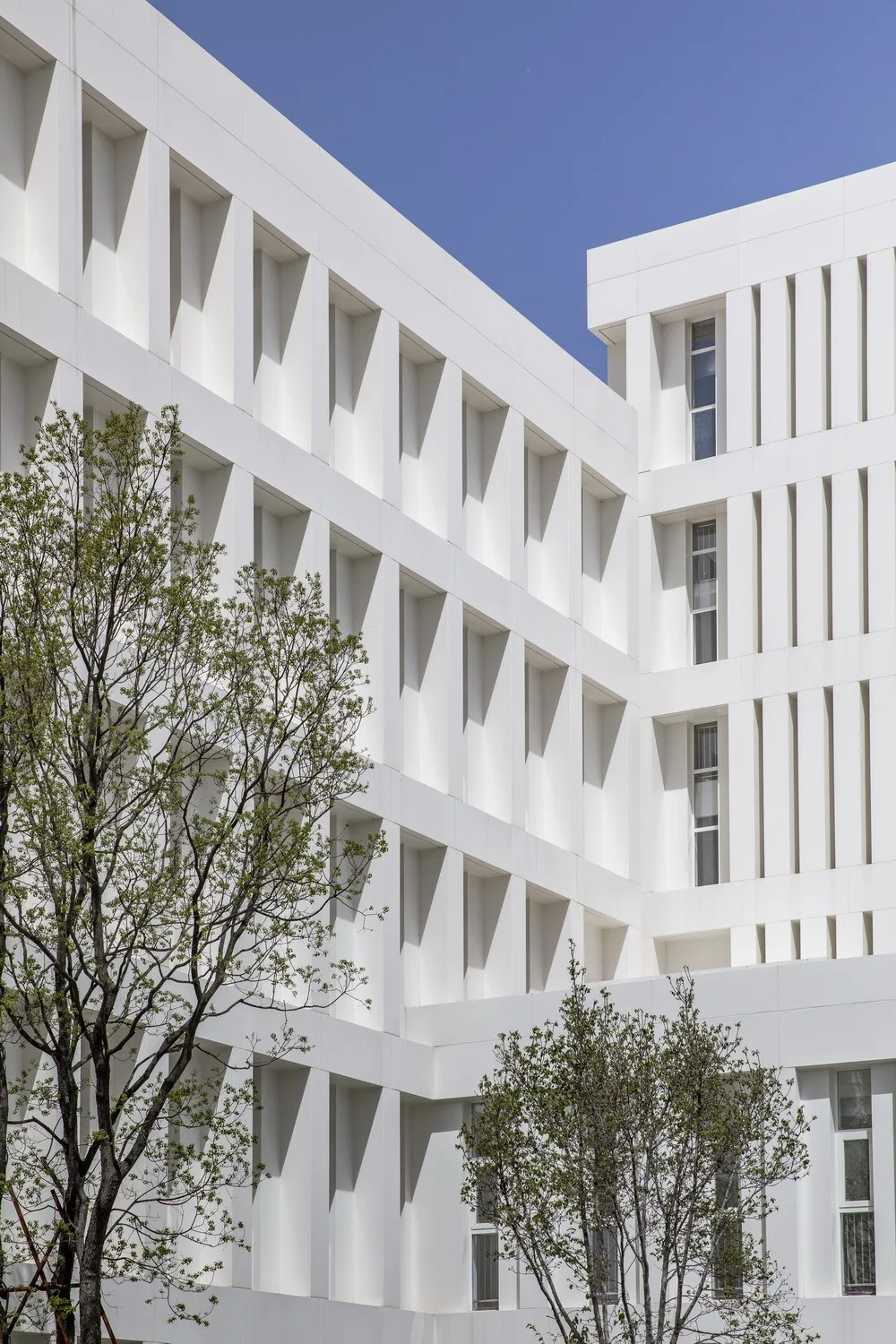
△ Building Components
Technical Drawings
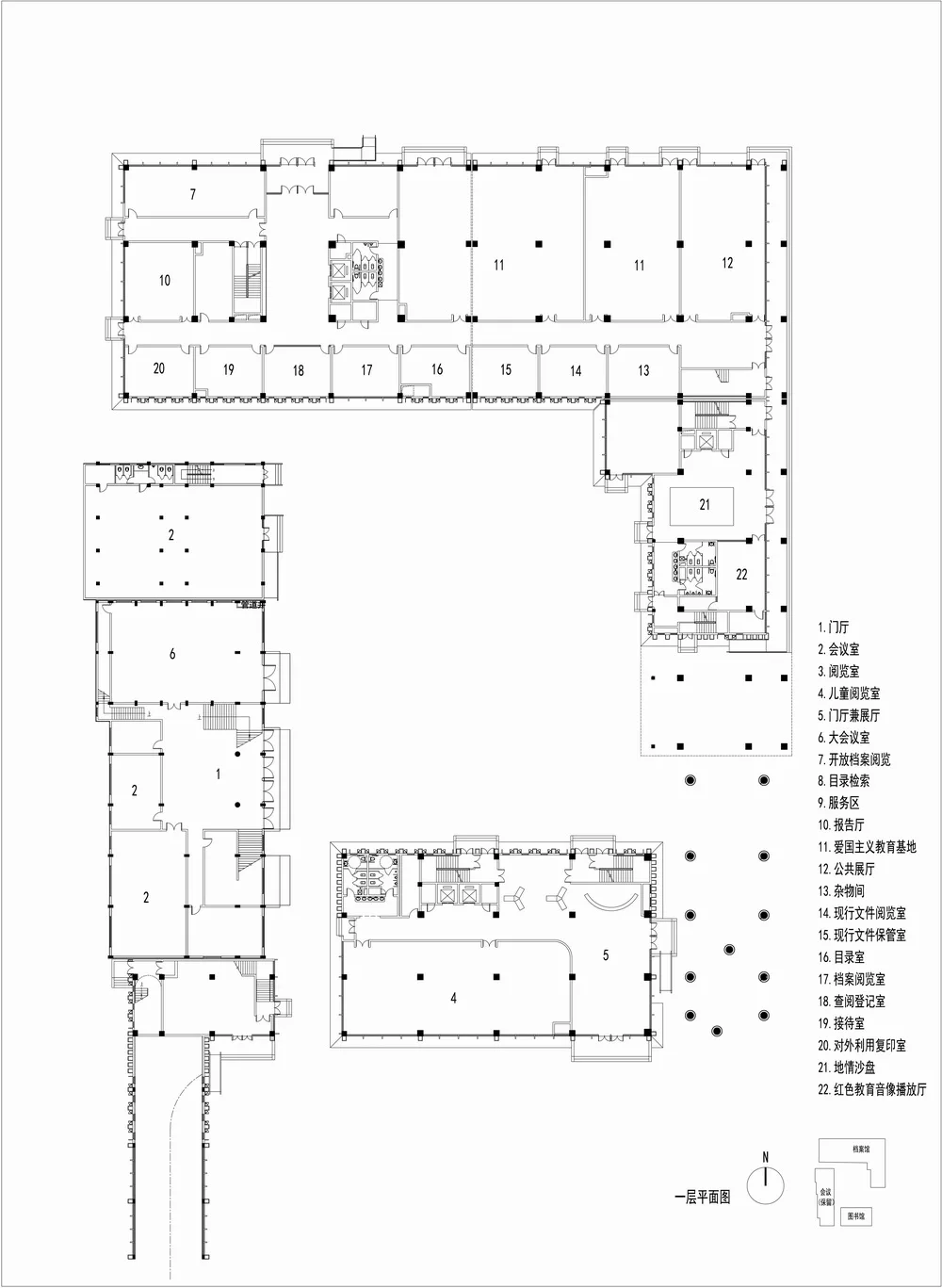
△ First Floor Plan
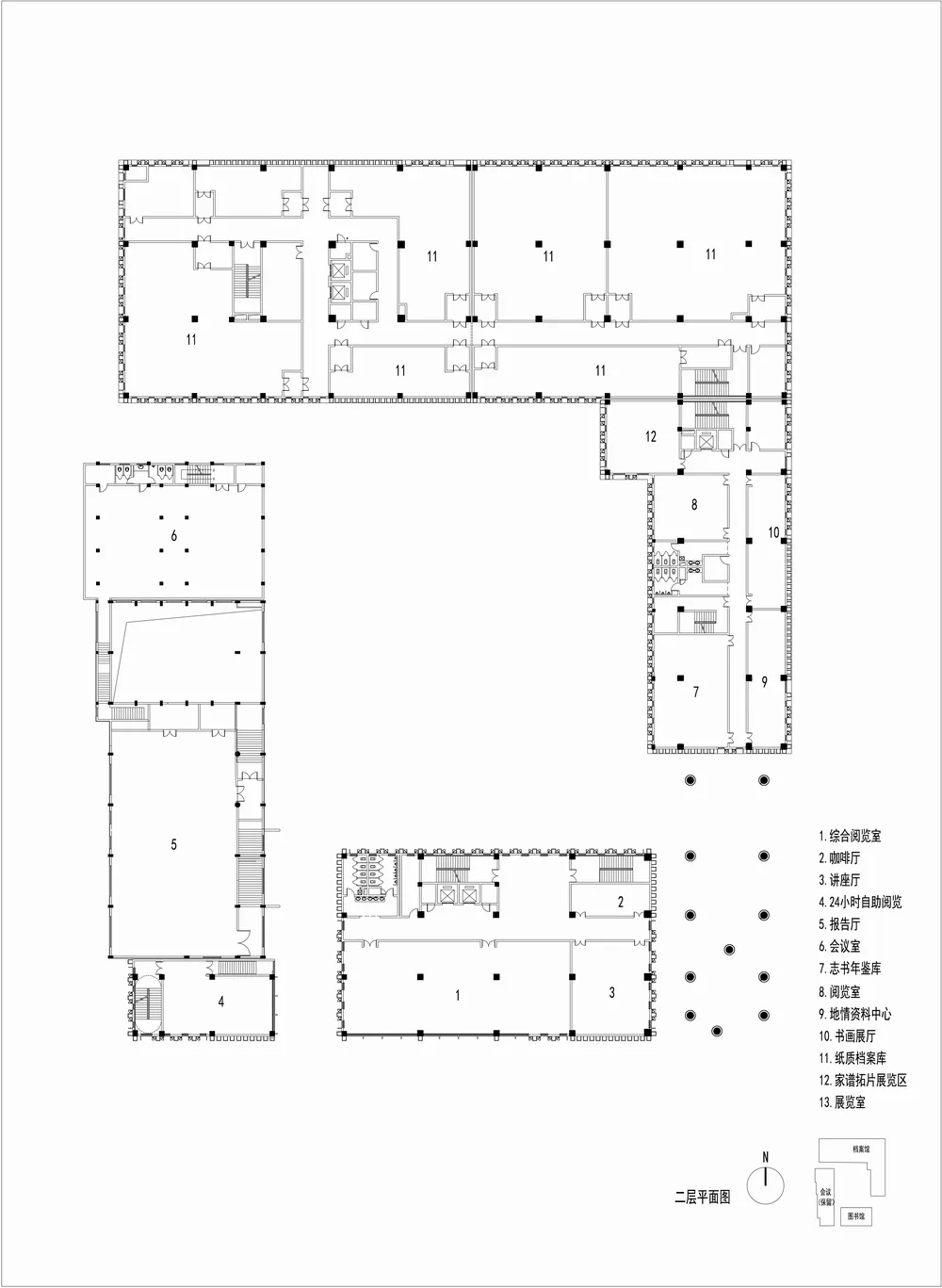
△ Second Floor Plan
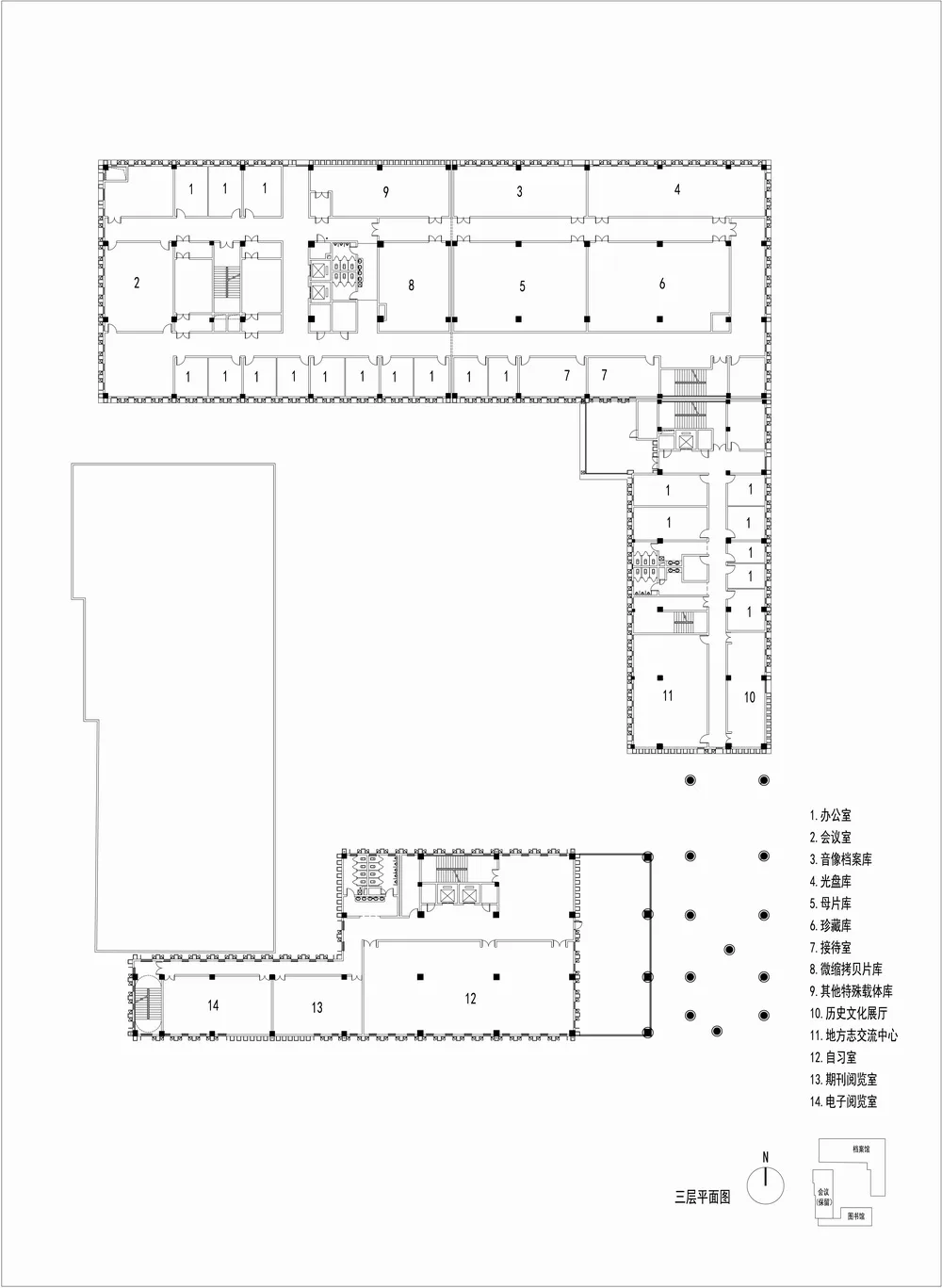
△ Third Floor Plan
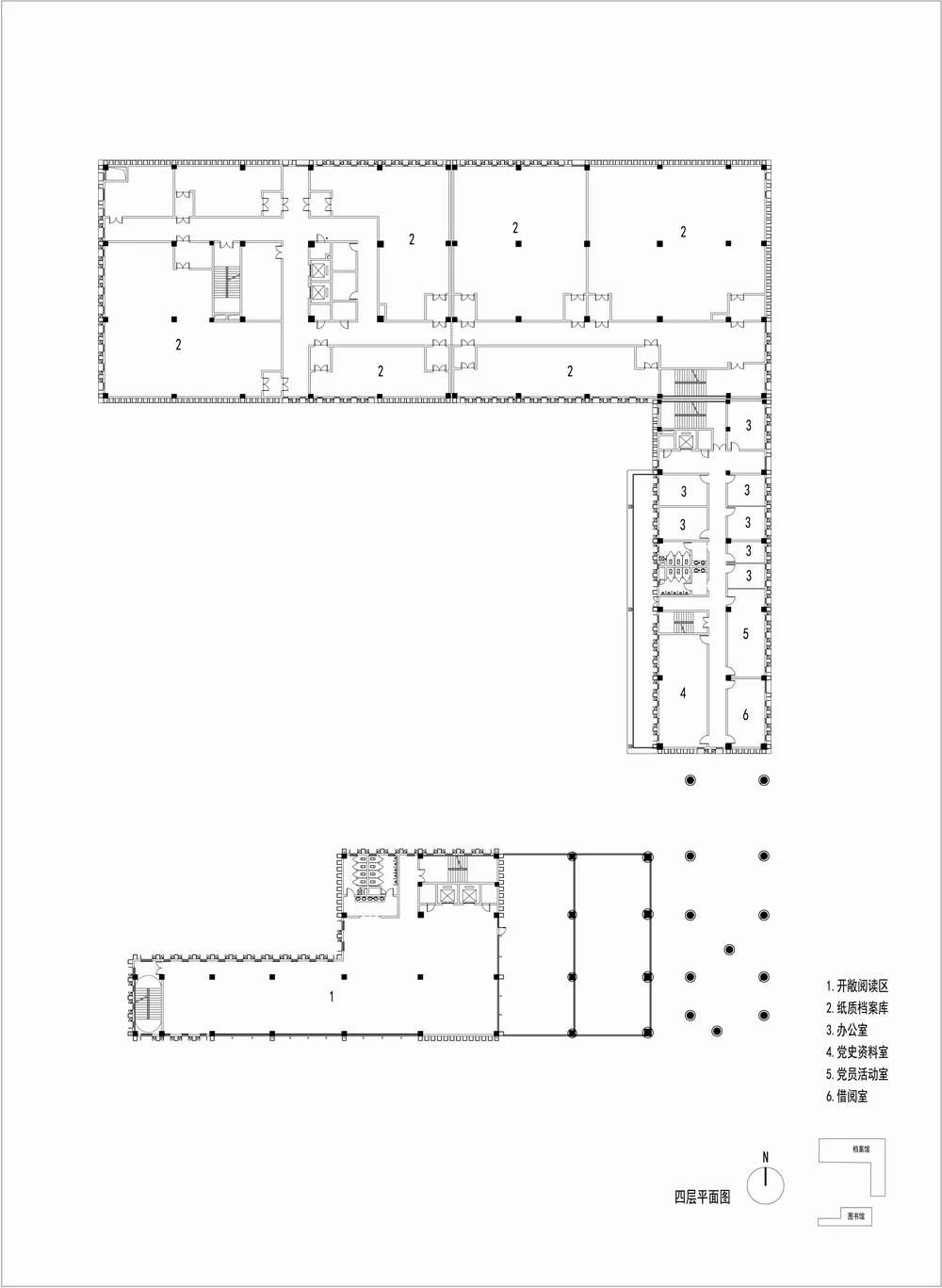
△ Fourth Floor Plan
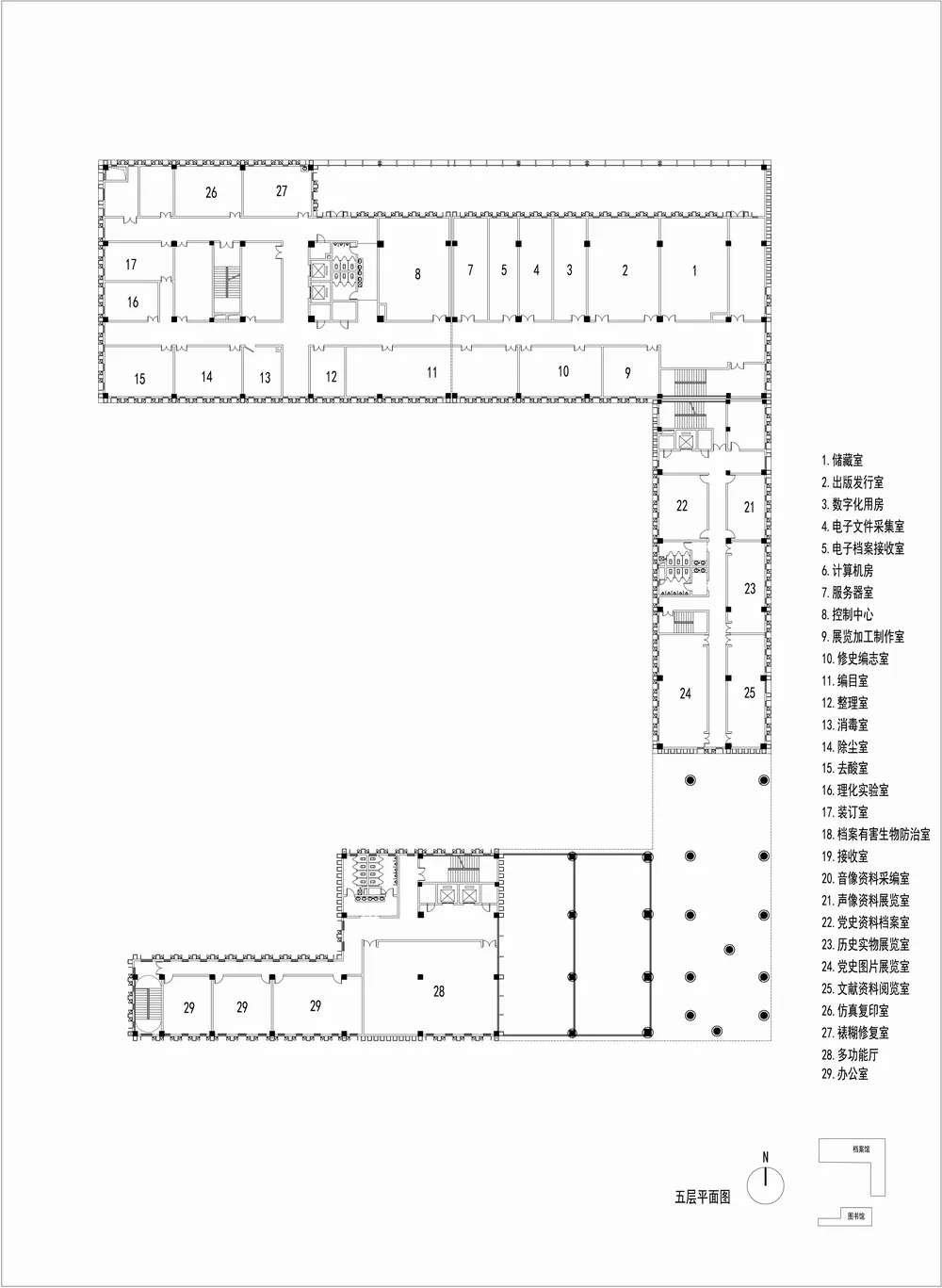
△ Fifth Floor Plan
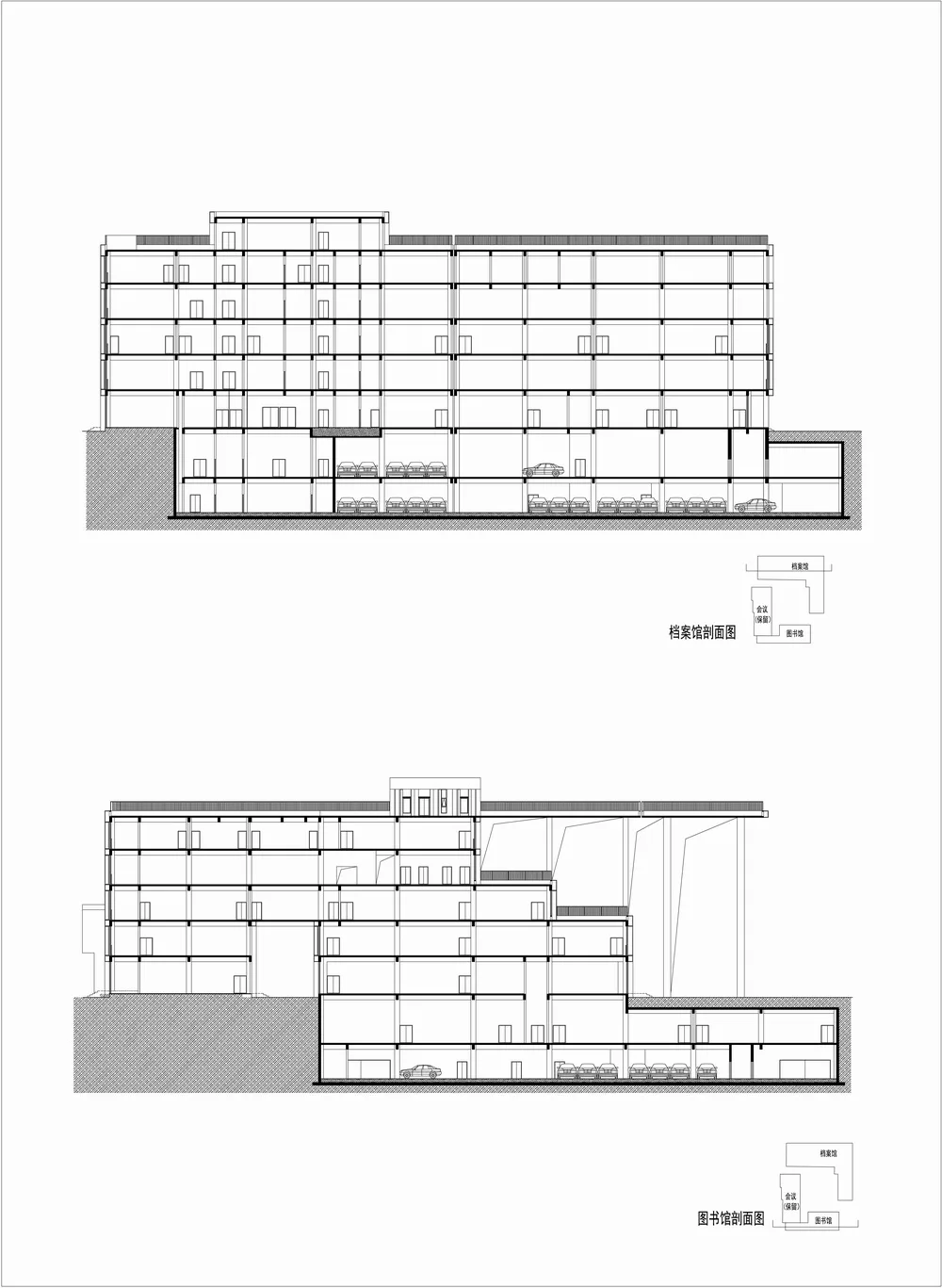
△ Section Diagram
Project Information
Project Name: Yinan Library and Archives
Designer: Architecture Studio 7, Central Academy of Fine Arts (Park Yoo Urban Architecture Design Studio)
Contact Email: 348144671@qq.com
Design & Completion: November 2017 – December 2020
Project Lead: Yu Dapeng
Design Team: Meng Dan, Zhang Ningrui, Zhao Tong, Fu Weiwei, Yue Hongfei, Li Huanhao, Zhang Zhiqian, Ji Xiaosong, Su Jia
Project Location: Yinan County, Shandong Province
Building Area: 37,200 square meters
Photography Credit: Jin Weiqi
Collaborative Design: Shandong Tongcheng Architectural Design Consulting Co., Ltd
Collaborative Team: Liu Zongqi, Liu Zhining, Li Xiaoming, Xuan Ran, Wang Xiaodong (structure), Wang Meng (structure), Sun Chao (structure), Chen Wei (electrical), Chen Jingxiang (HVAC), Zhu Chongle (water supply and drainage)
Client: Yinan County Archives Bureau












Must log in before commenting!
Sign Up