
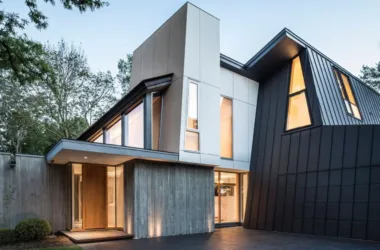
This project is situated in the Tianmu Mountain Scenic Area of Liyang and involves transforming a standalone villa. Beyond serving traditional functions for gatherings and entertainment, the design integrates nature into the space. The client, a lifestyle enthusiast passionate about nature and socializing, commissioned Muxin Design with the goal of breaking away from the coldness of urban social interactions and creating a harmonious connection between social and natural environments. This vision inspired the design of Hengba Hall.
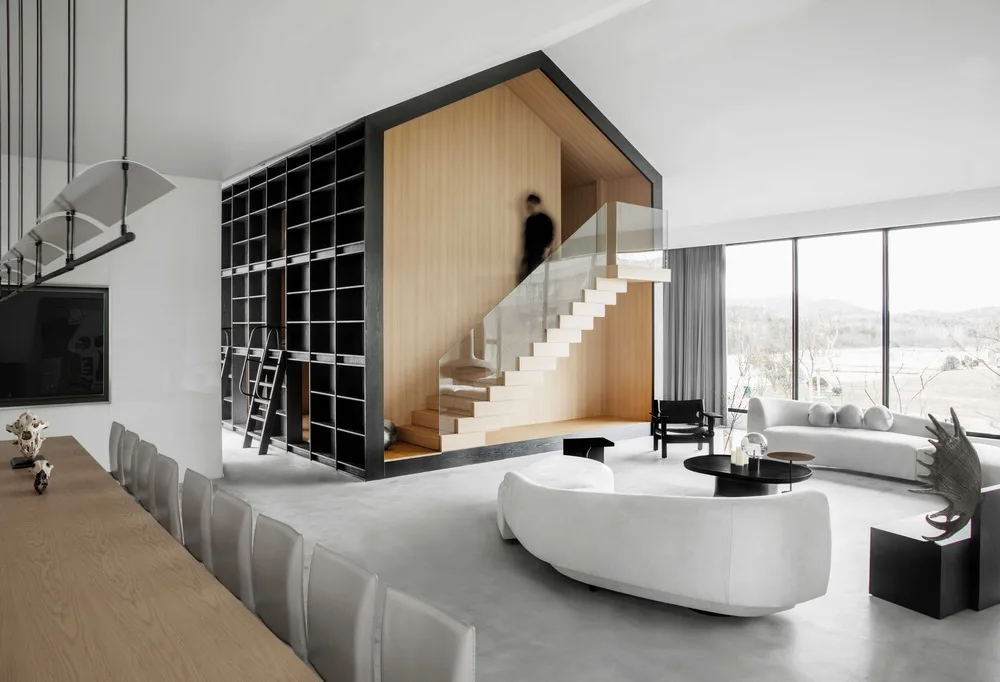
The Interaction Between Space and Nature
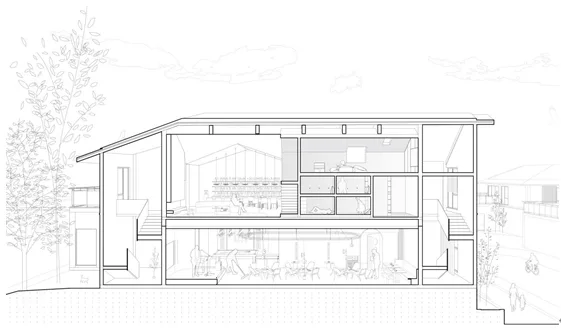
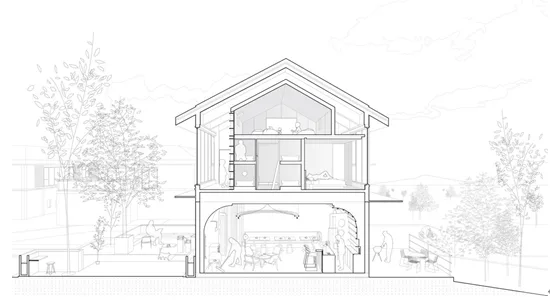
Muxin Design conceptualizes spatial communication in three forms: between people and space, space and space, and space and nature. The design aims to dissolve distances in communication across spaces, transforming weak connections into strong, voluntary social bonds rather than forced encounters. Inspired by the sloping roof of the project’s second floor, the architect introduced the “HOUSE IN HOUSE” treehouse concept. This breaks conventional residential layouts, creating rich spatial layers and offering diverse “relationship” options through the interconnection and complexity of nested spaces.
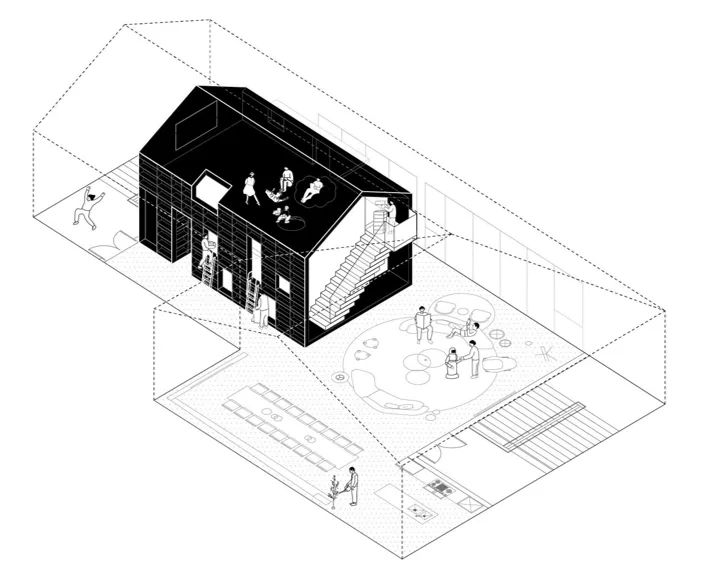
△ Design Concept
The “HOUSE IN HOUSE” concept embodies a clear architectural logic combined with outdoor spaces, naturally forming a three-layer nested structure where the interior resembles the exterior and vice versa. Ideal architecture, therefore, blurs the line between inside and outside, focusing on creating dynamic spaces that exist between the two.
This nested structure offers varied spatial experiences, with different densities and engaging internal-external relationships. It encourages people to overcome social distance through spatial design, emphasizing the “sense of boundaries” in interpersonal communication. More importantly, it promotes “selectivity” in space usage, removing the restrictive barriers that buildings often impose, allowing users to find their own place within the environment.
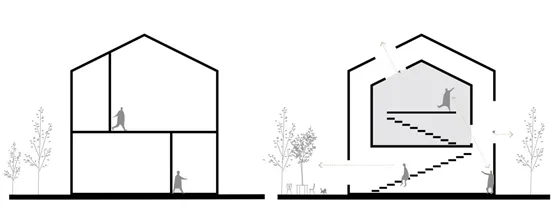
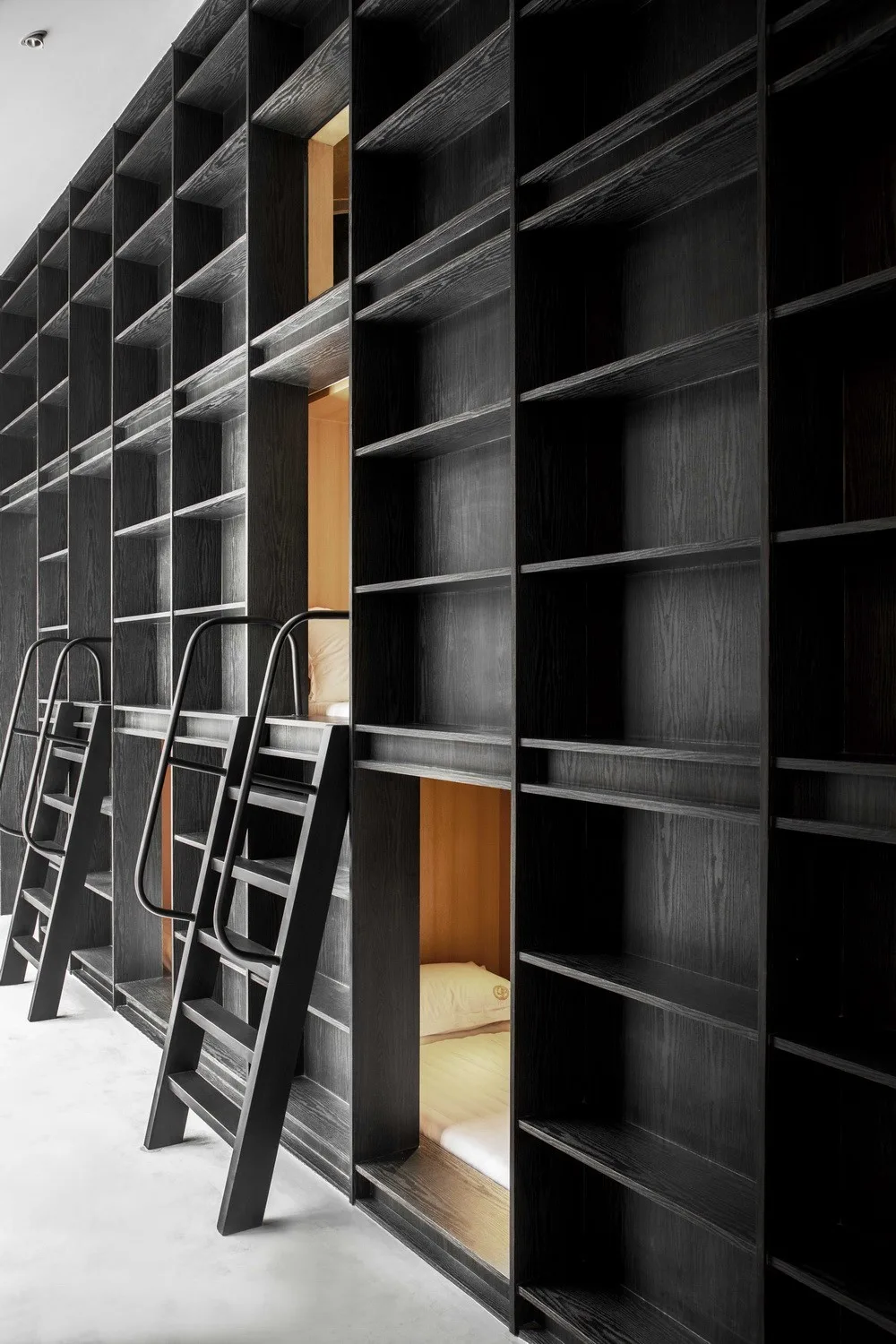
Inside the building, there is a hidden 2.5-story structure. This nested space within nested space invites reflection on parallels between cities, buildings, floors, and rooms—different expressions of similar relationships. Within this area, features include a capsule sleeping compartment integrated with a bookshelf, a calm dark grey standard room, and a cozy lounge area with scenic views.
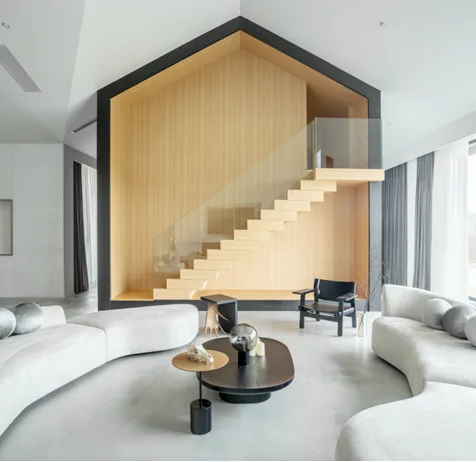
△ Multi-layered three-dimensional spatial experience
Through flexible, multi-layered, and well-defined spatial design, the interconnected two-story buildings unlock the potential of “grey space,” fostering diverse spatial connections. This approach dissolves barriers between private zones, allowing for adjustable privacy levels across different areas. Users can choose between open social spaces or more secluded areas without forced interaction, enriching the gradient of spatial openness. The architects skillfully embed varying privacy levels within nested spaces, crafting multiple layers of boundaries that progressively increase in privacy.
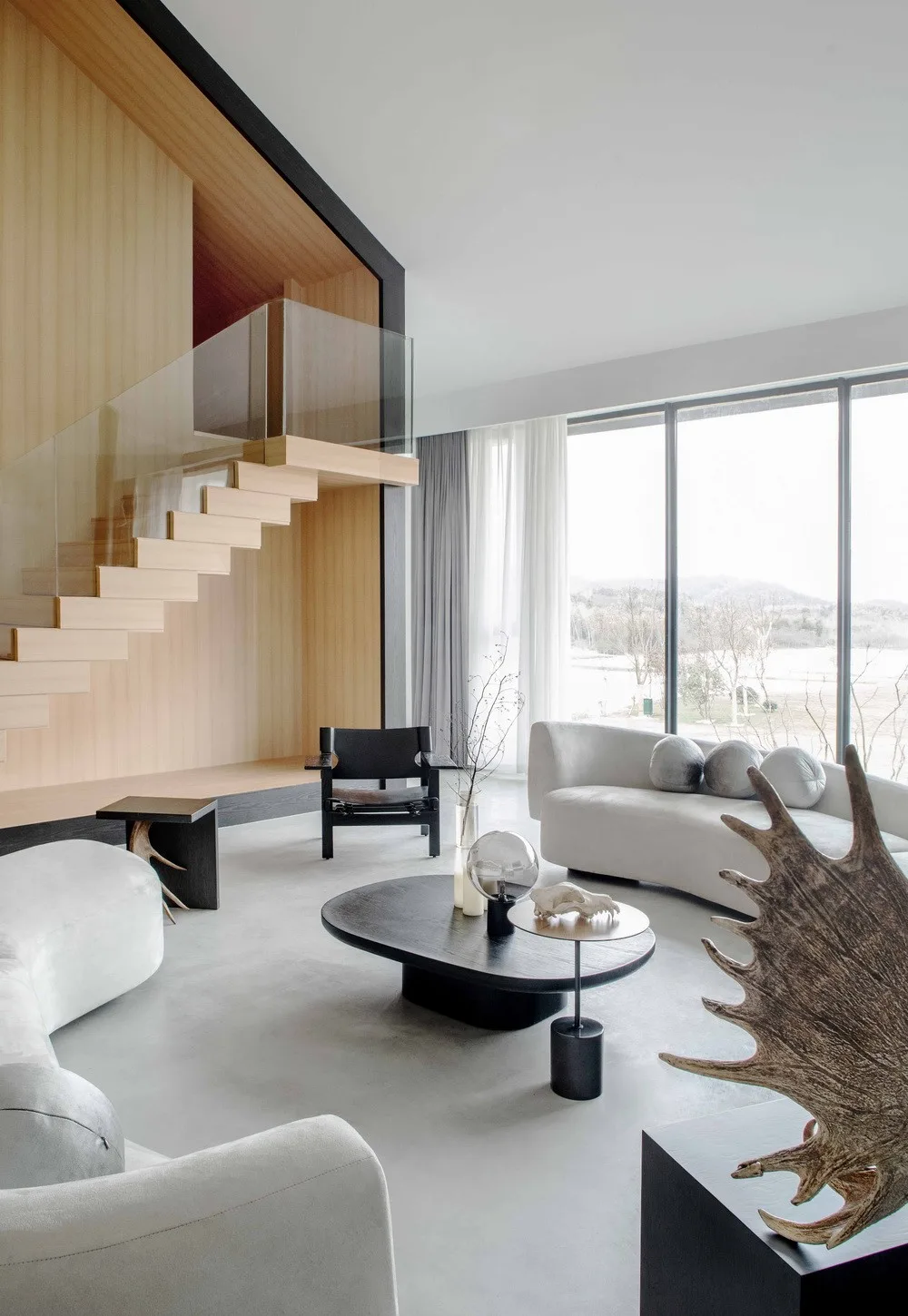
Maximizing the Integration of Natural Landscapes
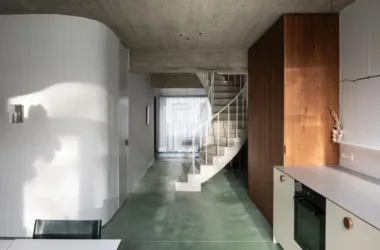
This generously open white space connects the natural scenery outside the window with the dark interior, creating a transitional zone reminiscent of a semi-outdoor courtyard. It blurs the boundary between inside and outside, enhancing the feeling that the interior extends outward. The cohesive design of the inner space and the extended staircase reinforces this intention to merge interior and exterior environments.
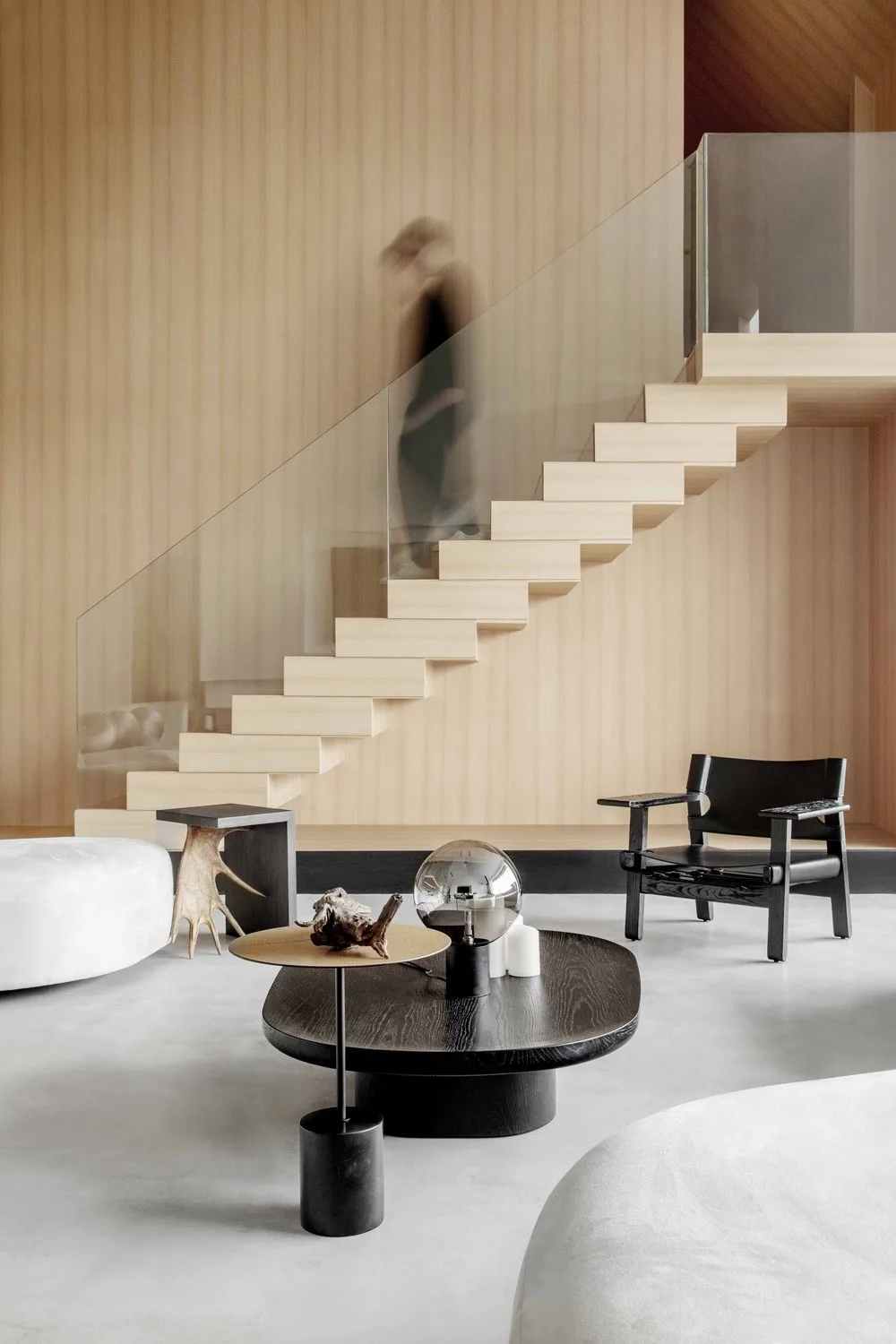
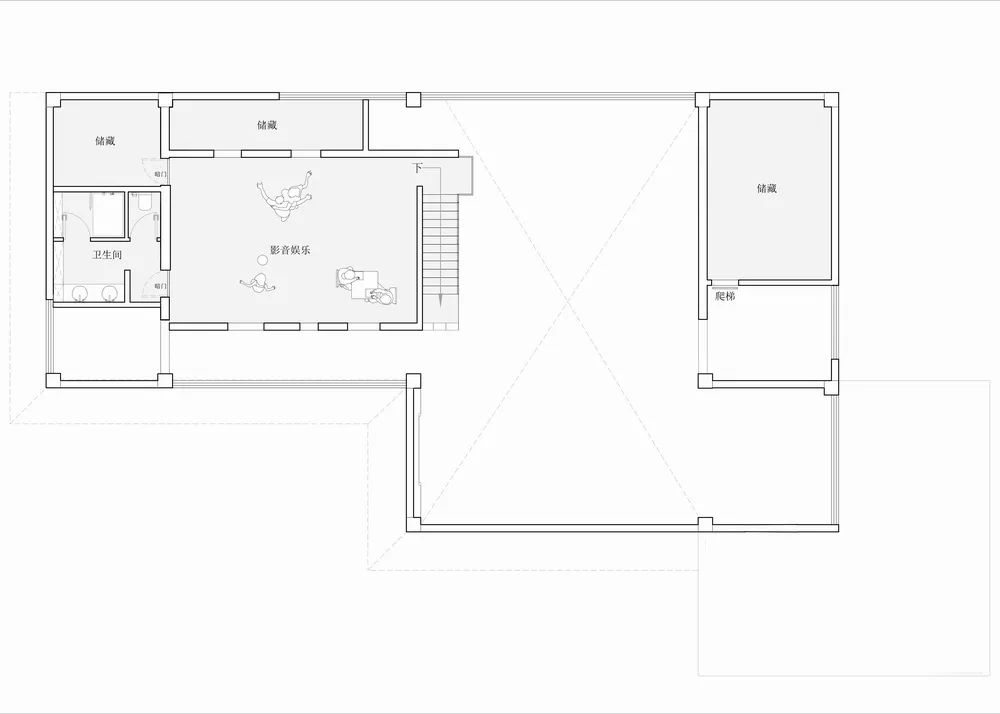
The staircase leads to the audiovisual room.
The designers focus on how people experience and connect with nature within the space, using blurred boundaries between indoors and outdoors to integrate architecture and landscape seamlessly. The spacious outdoor courtyard on the first and second floors serves as a relaxing area that fosters a connection between humans and nature. The three-tier privacy hierarchy reflects the designers’ attention to users’ comfort and privacy within the party hall.
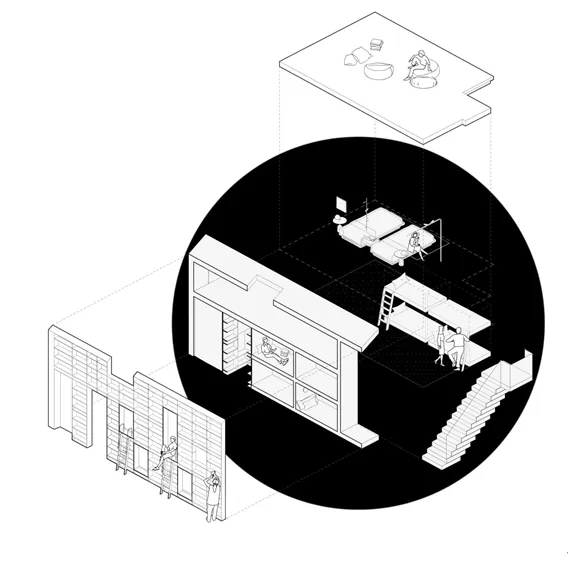
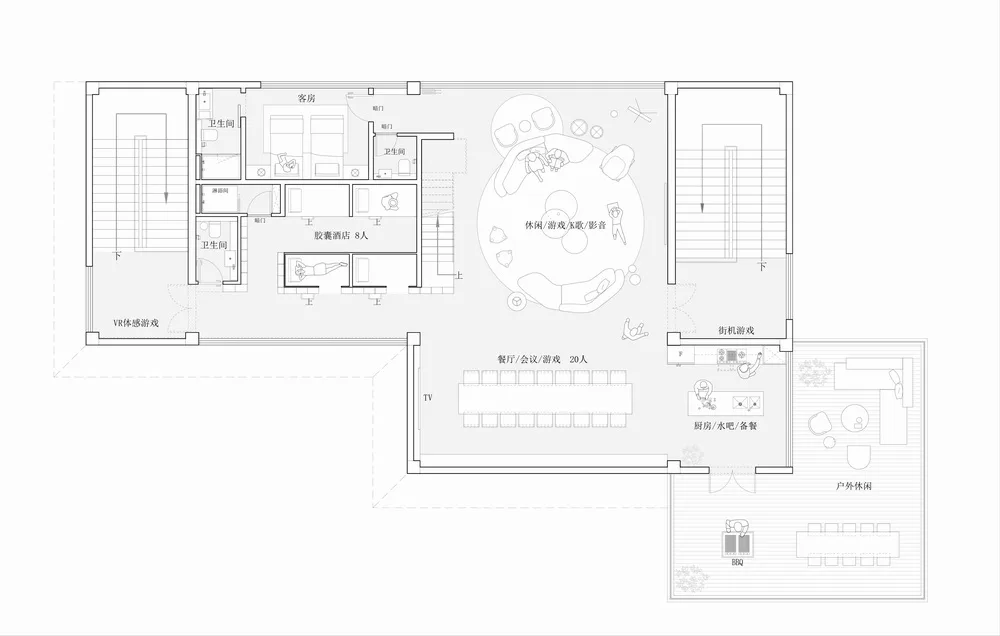
△ Second Floor Layout
The functional layout reveals that the dark inner space accommodates complex and dense activities, while a large volume is dedicated to the outer space. Physical separations such as walls and corridors distinguish spacious public areas from smaller, quieter private zones. Varied window openings create dynamic relationships between these spaces. The contrasts between large and small, light and dark, sparse and dense, open and enclosed generate a unique spatial rhythm throughout.
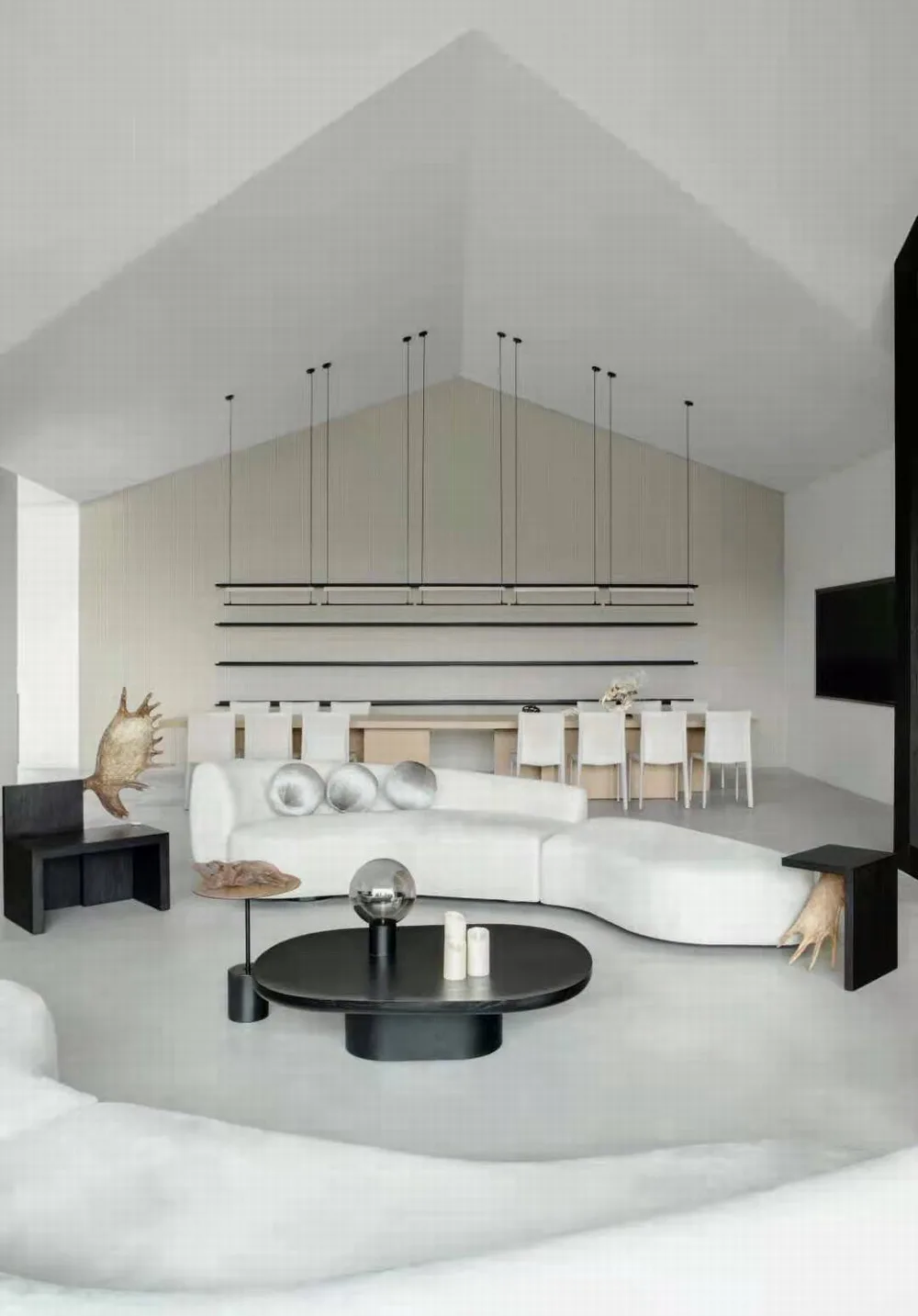
Large-Scale Activity Space
The outer space is ideal for more outgoing individuals to engage in group activities. Guests can raise a toast or exchange ideas at the dining table, share whispers in smaller groups on the sofa, or even dance in the open area. Compared to the public bar on the first floor, this “public” and “collective” space offers a more introverted and secure atmosphere.
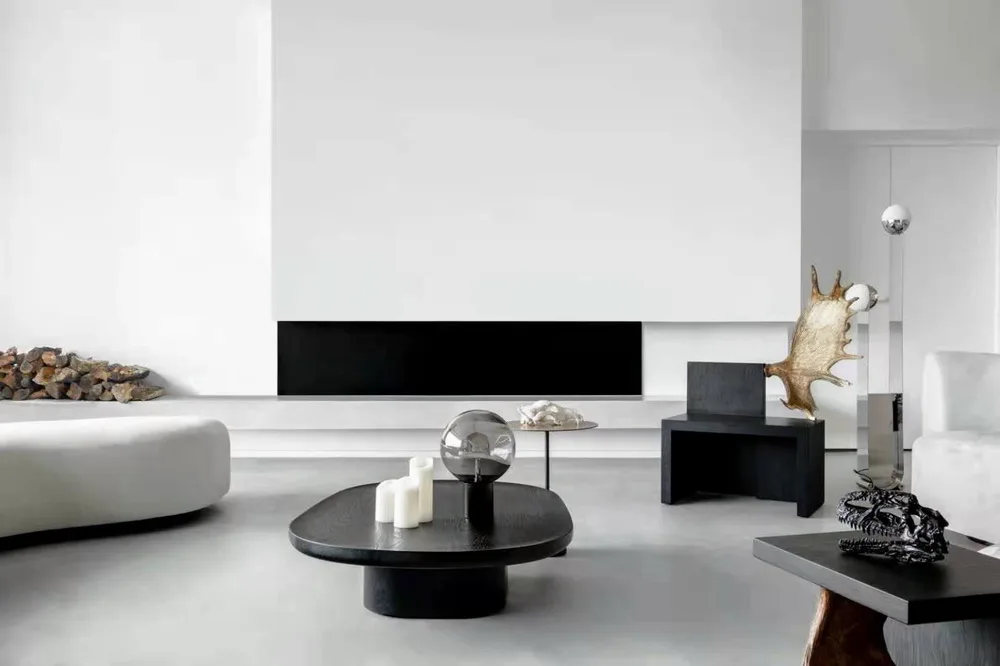
△ Multi-functional Entertainment Space
The outer space features double-sided continuous French windows and is centered around two curved divans, creating a relaxed party atmosphere. A geometrically segmented fireplace wall serves as a projection surface for communal activities like gaming, movie watching, or karaoke. A long side table accommodates group gatherings or meetings, adjacent to a kitchen with a standalone island platform.
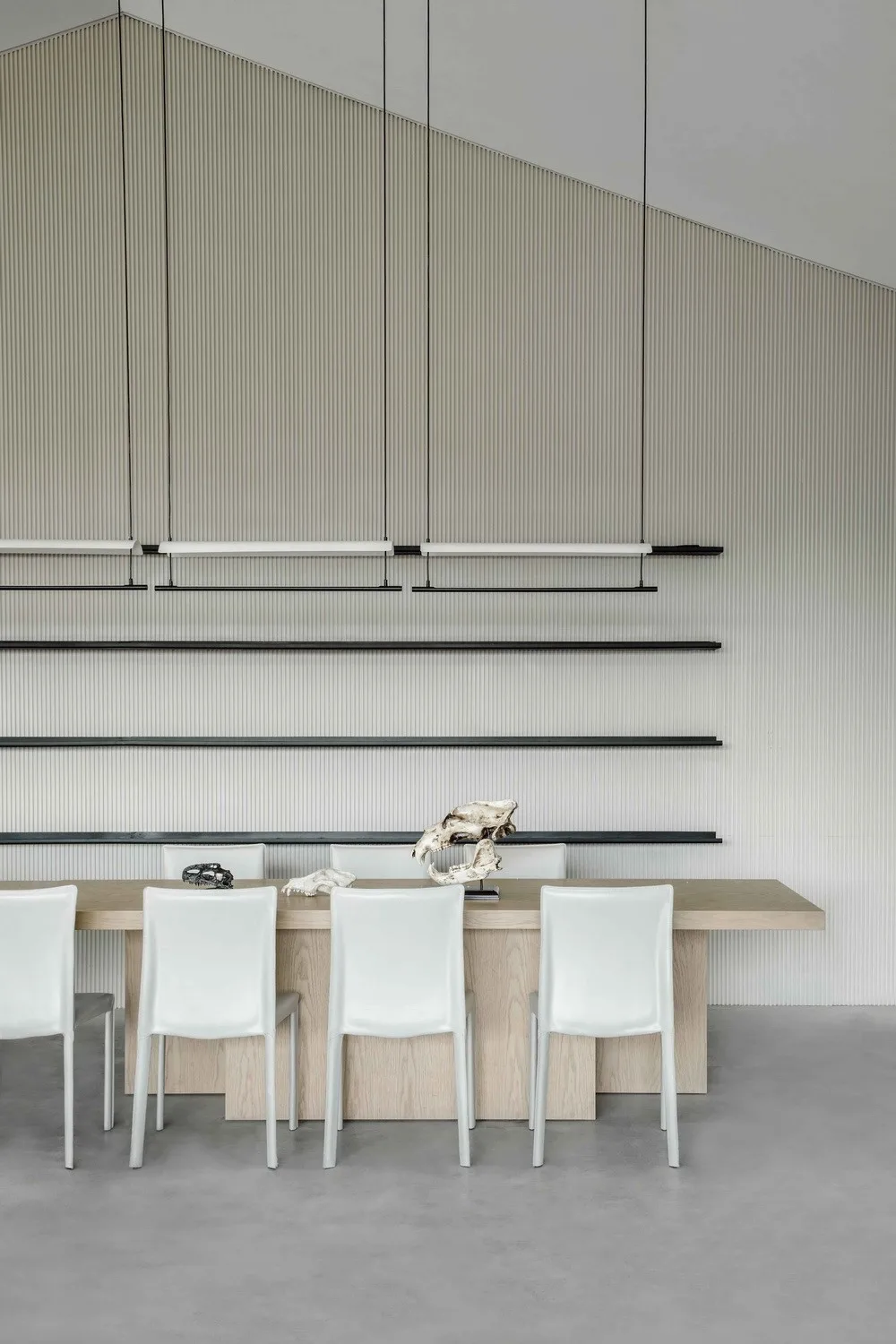
△ Meeting & Dining Space
Whether for parties, team-building events, or vacations, having the freedom to choose a comfortable space is paramount. There is no pressure to socialize or awkward refusal. The architects thoughtfully incorporate varying privacy levels within nested spaces, crafting layered boundaries that accommodate different personalities and needs. This flexibility supports diverse activities including Chinese and Western dining, hot pot meals, and conference discussions.
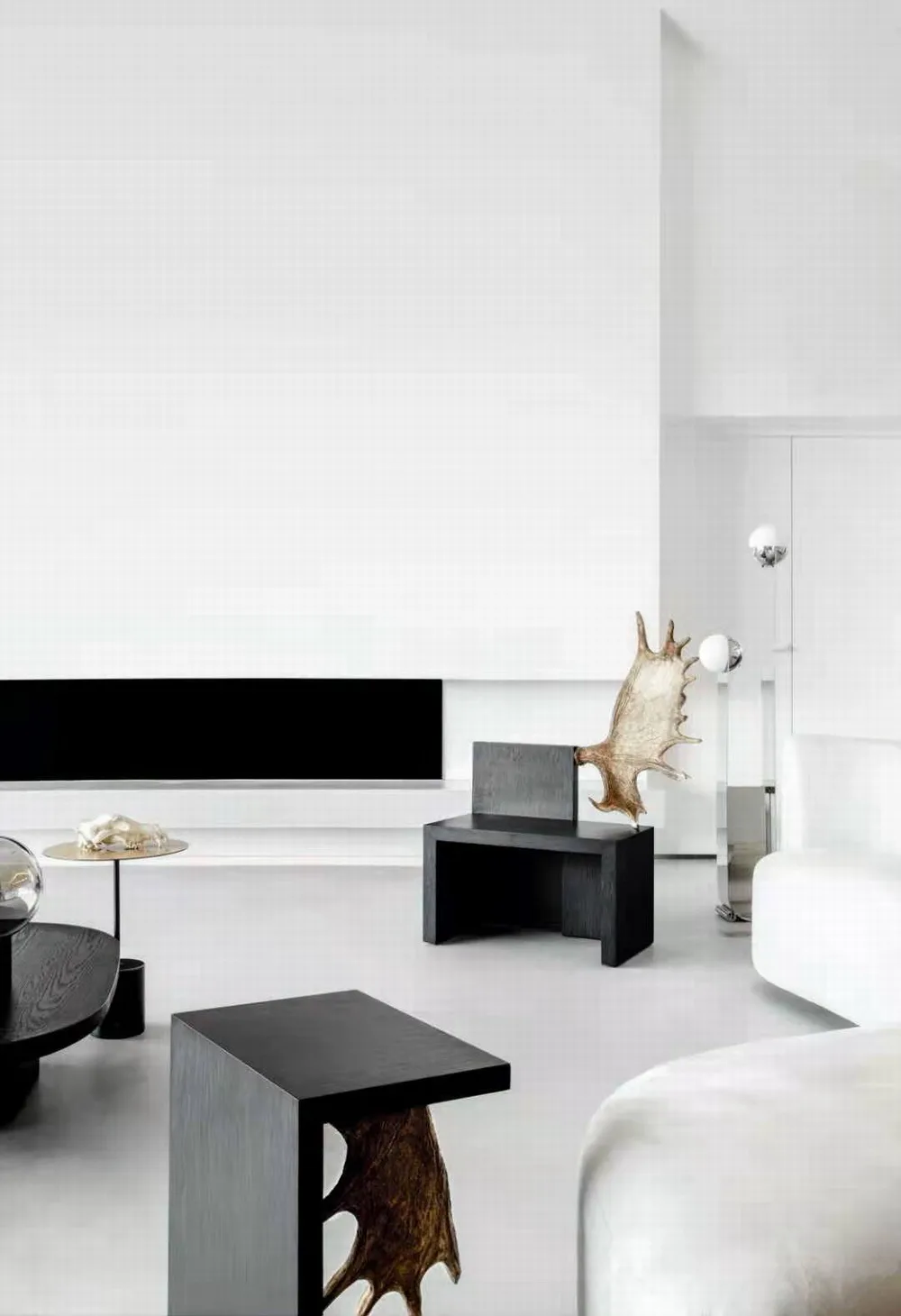
Privacy acts as a personal control mechanism for exchanging information with others and the external environment, fulfilling fundamental behavioral and psychological needs. The three-layer nested structure divides privacy into three levels. Ideal architecture balances external and internal spaces, focusing on creating rich environments between the two rather than strictly inside or outside.
△ Meeting & Dining Space
On one side of the interior, the “outer facade” is expressed as a dense grid symbolizing separation and distance, doubling as a long corridor bookshelf that connects to the outer space. The inner facade features a warm, natural wood tone, creating a friendly atmosphere. Beyond the bookshelf, the nested space concept peaks with a two-layered capsule sleeping chamber, where the compressed sleeping space is essentially the bed itself. This small inner space challenges, overturns, and reimagines the concept of residential space.
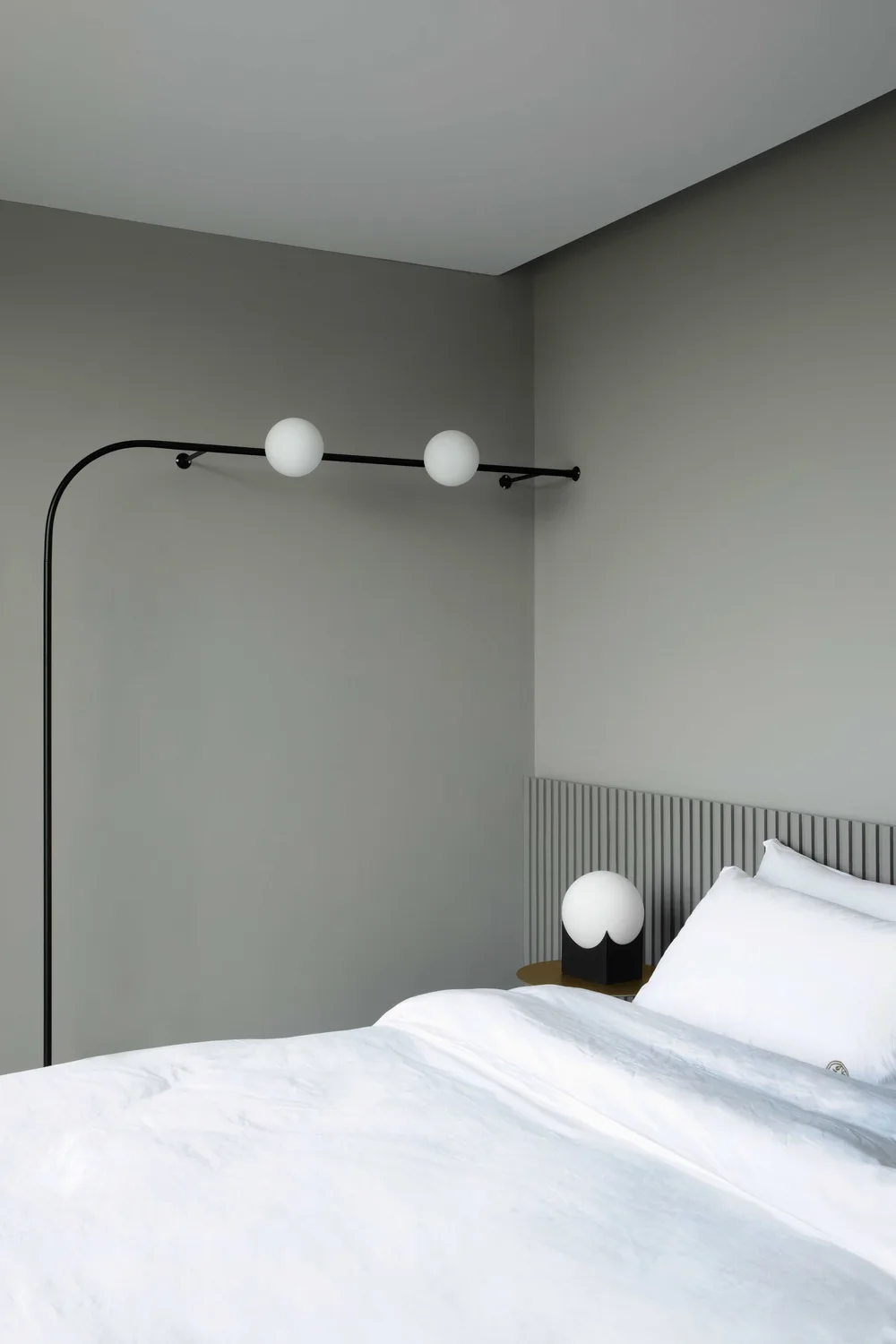
Warm and Comfortable Resting Area
The rest area’s design aims to offer visitors a sense of simplicity and closeness to nature. It provides a sanctuary for those facing the fast pace and stress of urban life—a place to relax, recharge, and find joy for both body and mind.
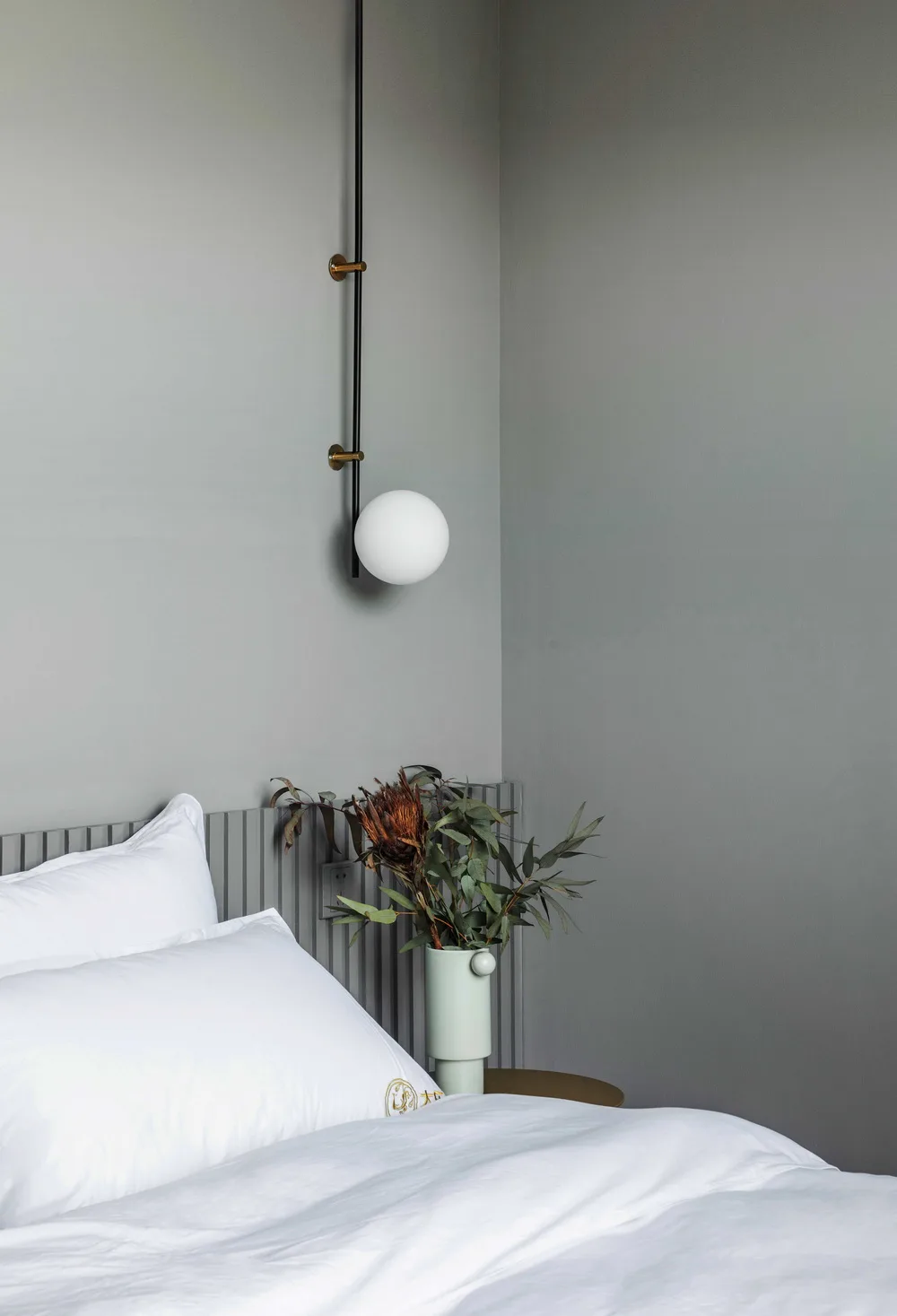
Guest Room Details
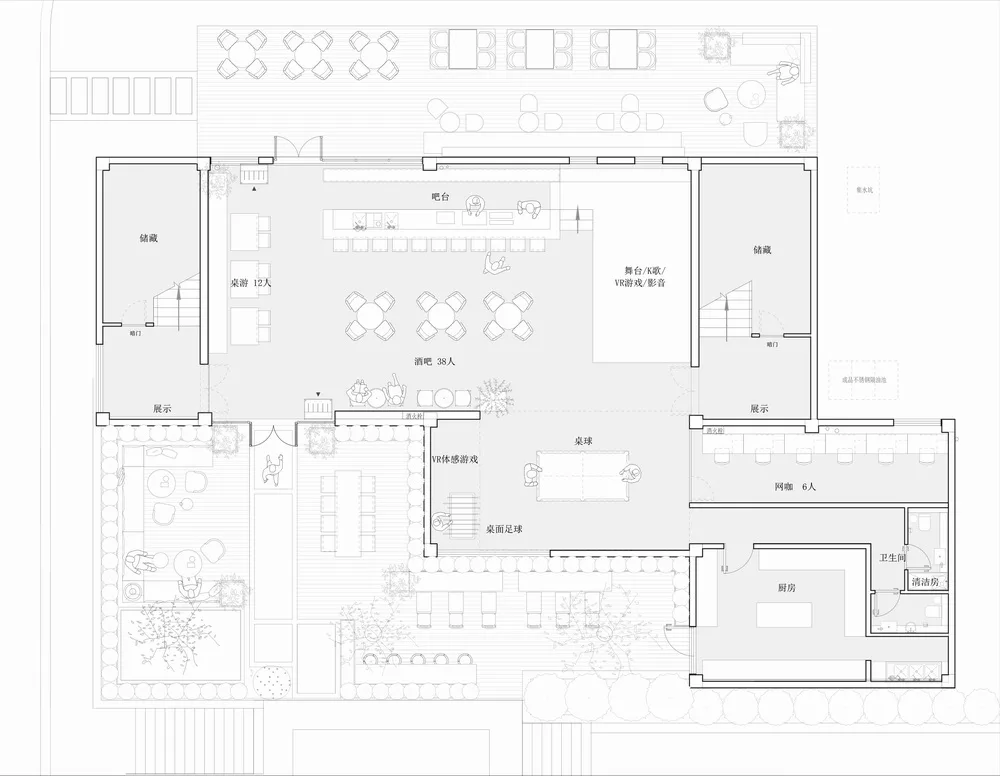
Beyond the “HOUSE IN HOUSE” space on the second floor, the lively, dimly lit first floor is equipped with entertainment facilities such as a bar, mini stage, table tennis area, and an internet cafe.
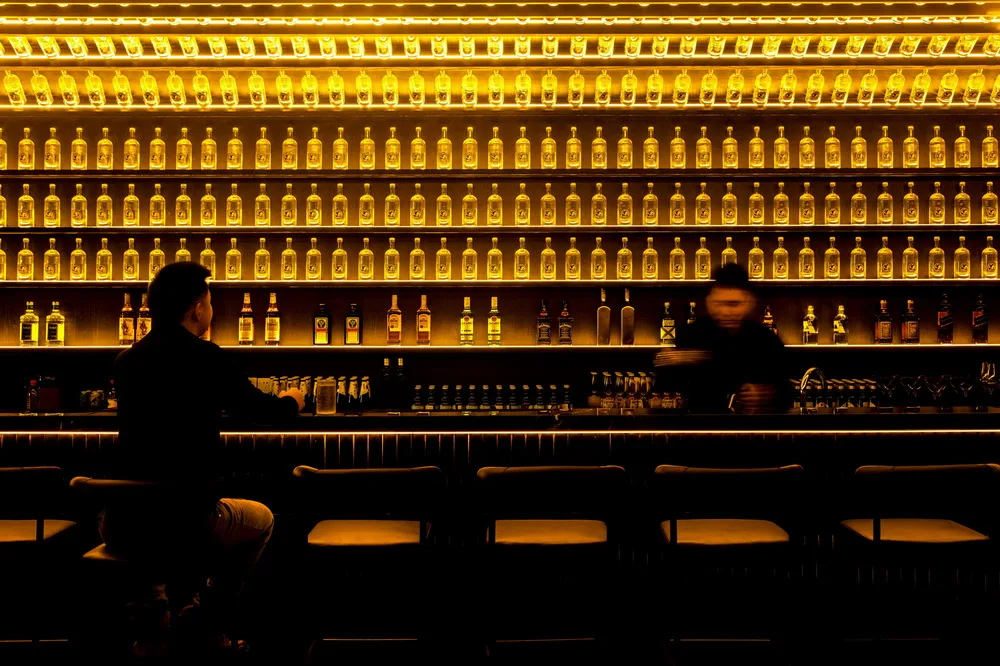
△ A wine cabinet arranged with precise sequence
The architects use restrained colors and forms to create a cohesive atmosphere: neatly organized wine cabinets stretch along a curved wall to the ceiling, while a pendant light coils above the bar area, blending nostalgia with a futuristic touch.
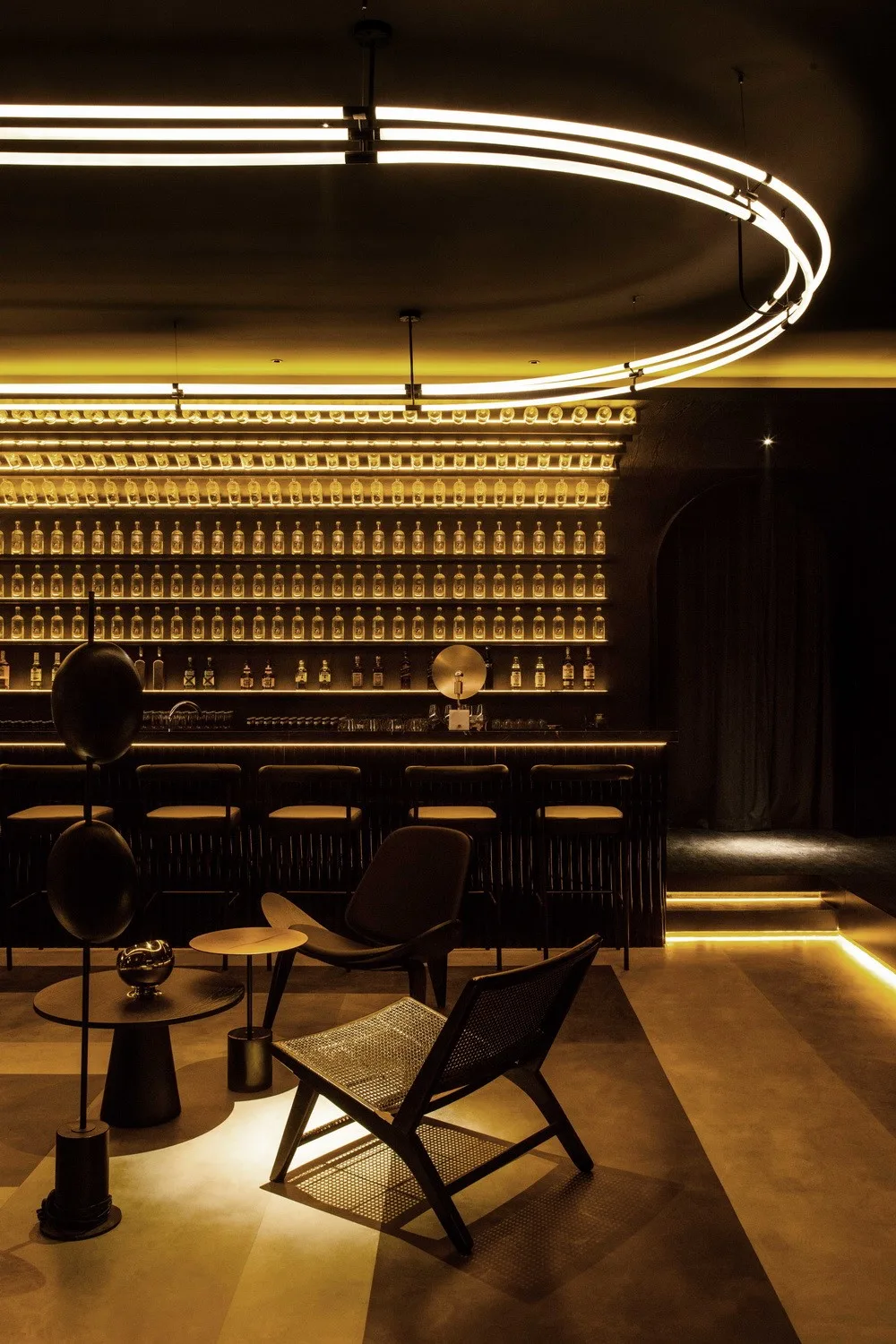
△ Curved Pendant Light
Technical Drawings
Project Information
Address: Tianmu Lake Scenic Area, Liyang City
Project Type: Hengpu Homestay
Design Scope: Interior Design
Building Area: 650 square meters
Design Period: September 2019 – November 2019
Construction Period: November 2019 – March 2020
Design Team: Muxin Design Research Laboratory
Team Members: Zhang Lei, Sun Haochen, Li Xuan, Zhang Dandan
Photography: Jun Wen












Must log in before commenting!
Sign Up