
Countless nodes here simultaneously belong to two systems, overlapping, intertwining, and interweaving with one another. This inevitably creates a transparent spatial organization, marking the transformation of space.
– Colin Lowe, Transparency
Mountains, Stones, and Fields
PUJU Puju Design and Research Studio designed a temporary exhibition hall of over 300 square meters for its imported rock slab brand. The raw materials are sourced from natural mountain stones, and the design draws inspiration from the stone’s birthplace — the quarry.
In the documentary “II Capo,” the world-renowned Carrara quarry in Italy—the birthplace of fish belly white marble—is depicted as magnificent and picturesque. The massive mountain is sliced vertically and horizontally, with stone dust filling the air. The entire site shines as white as jade, resembling a vast mountain stage.
Additionally, Chanel chose the limestone quarry in Provence as the runway for last year’s product launch. Models dressed in glamorous attire walked through the quarry, where the cut rocks formed an abstract, aesthetically striking backdrop—a fusion of fashion, nature, and human artifice.
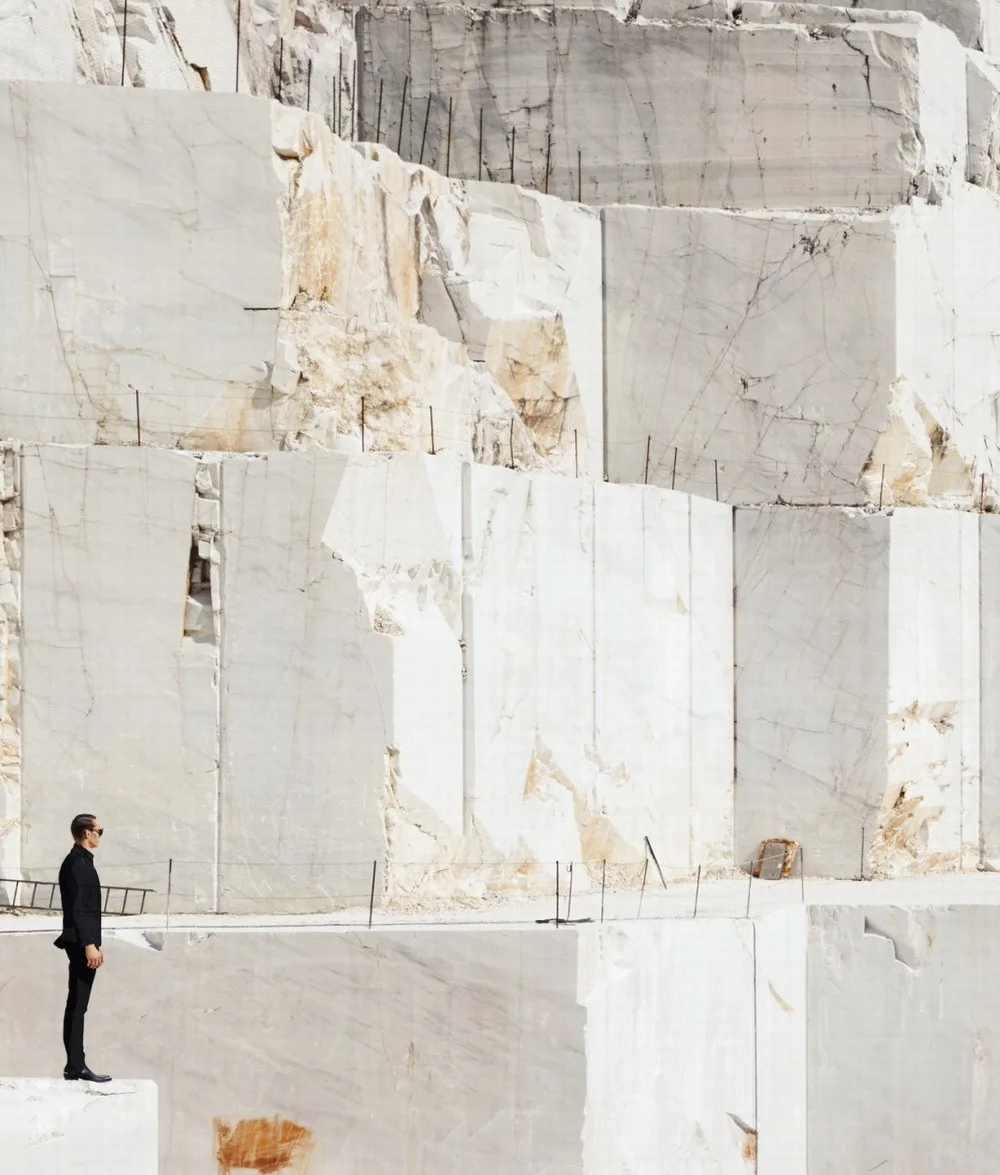
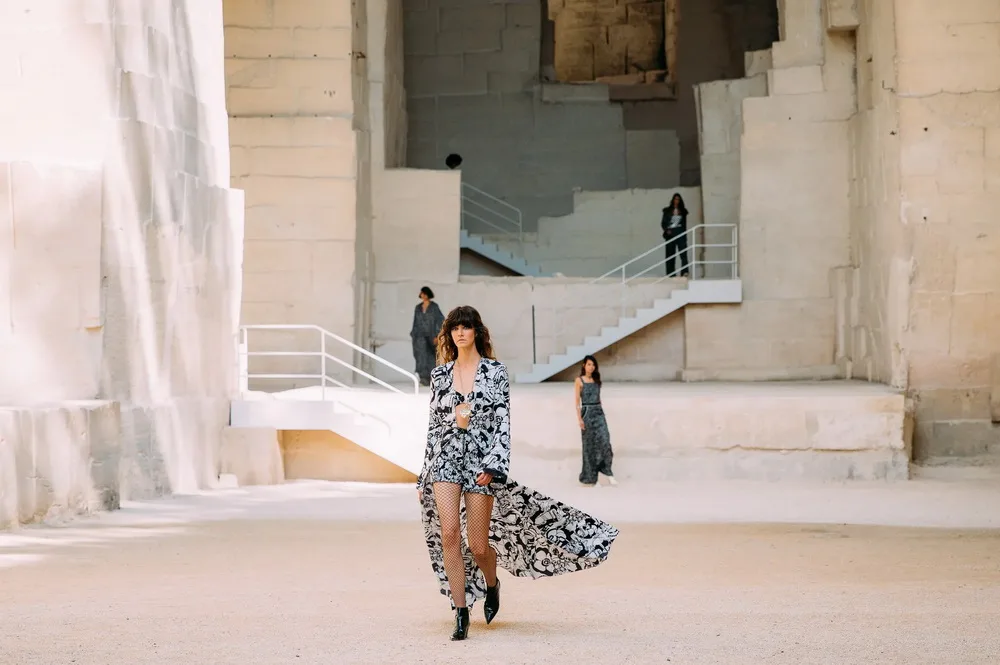
The quarry holds a distinct aesthetic character. The geometry of the mountain cuts evokes Malevich’s suprematist paintings. Imagine the colored blocks in his paintings as cut stones—floating, overlapping, or scattered—and the flat canvas suddenly gains a three-dimensional dimension. This emotional energy has the power to translate into three-dimensional space.
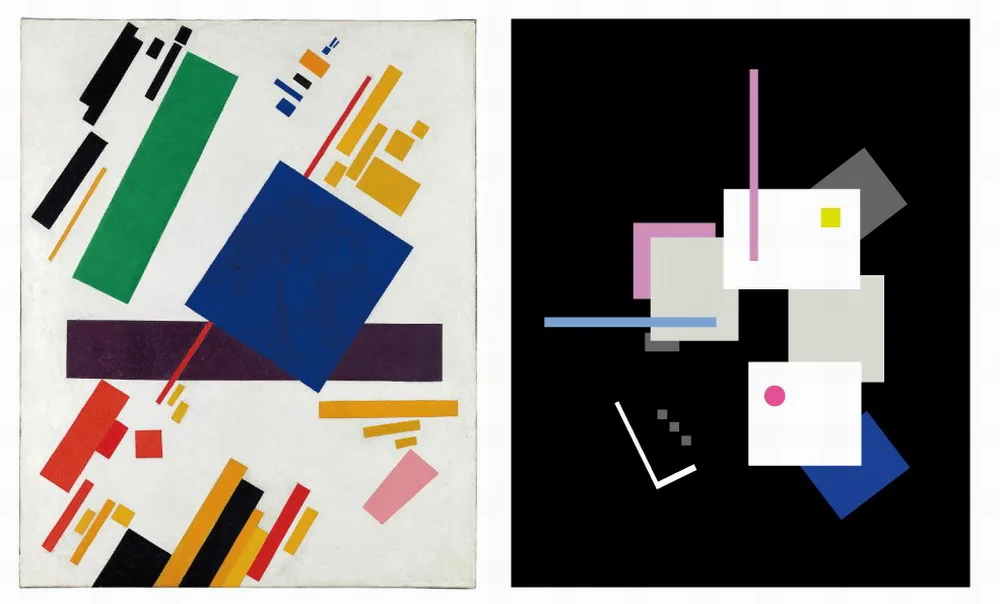
In our vision, “mountains, stones, and fields” serve as the foundational inspiration for the formal design through suprematist abstraction and passion. We transform functional requirements into a series of abstract boulders, creating a temporary “mountain, stone, and field” within the site. This approach not only aligns with the essence of the exhibited products but also reflects our ongoing exploration of minimalist abstract aesthetics.
Living Among Mountains and Rocks
Beyond aesthetics, the concept of living within mountains and rocks represents a primal model of human habitation across cultures. Ensemble Studio transformed an abandoned quarry into an experimental residence using minimal elements such as mattresses, curtains, and tables. Stepping out of the glass boxes of modern cities, people return to the mountains and rocks, where civilization’s history is reversed and architecture reconnects to its origins.
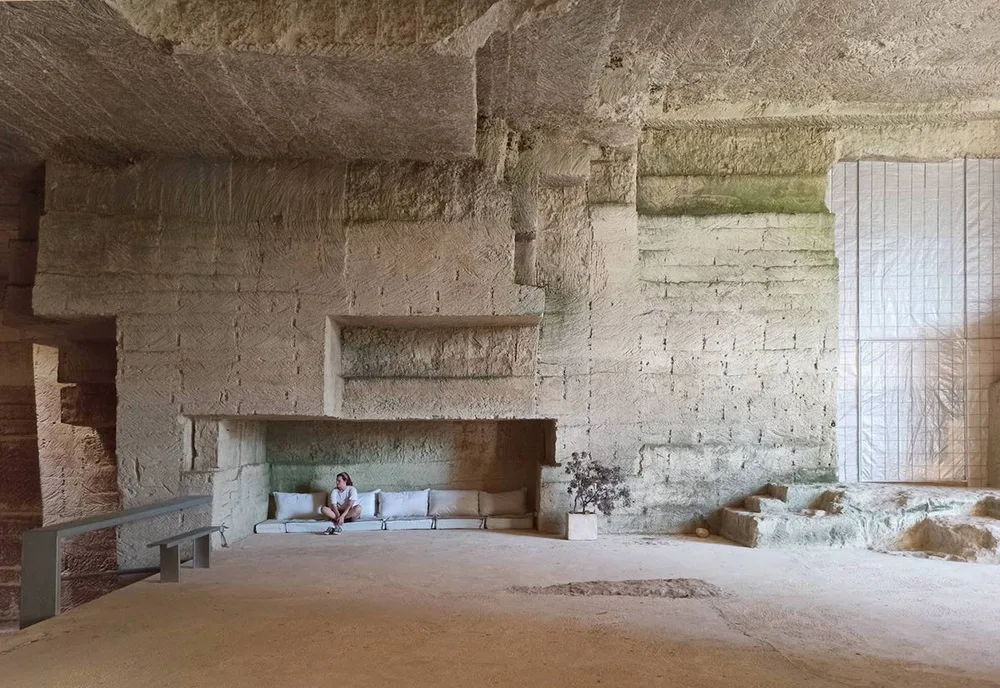
According to Jin Qiuye, Adolph Loos’s Raumplan design technique resonates with Chinese garden design, serving as a form of “indoor mountain building.” Although Ensemble Studio’s project is located on the island of Menorca, Spain, it shares similarities with traditional gardens in how it shapes the relationship between stones and people. These stones are natural but scaled to the human body, inviting interaction—roaming, observing, reclining, or leaning—while remaining connected to surrounding mountains and forests. This embodies human imagination of the broader natural world.
This interpretation guided the exhibition hall’s design, aiming to create a stone cluster that is both livable and inviting for visitors.
Layered Rock Shadows
The design balances rigorous structural logic and functional layout with the aesthetic of abstract mountains and stones, evoking the humanistic imagination of living among them.
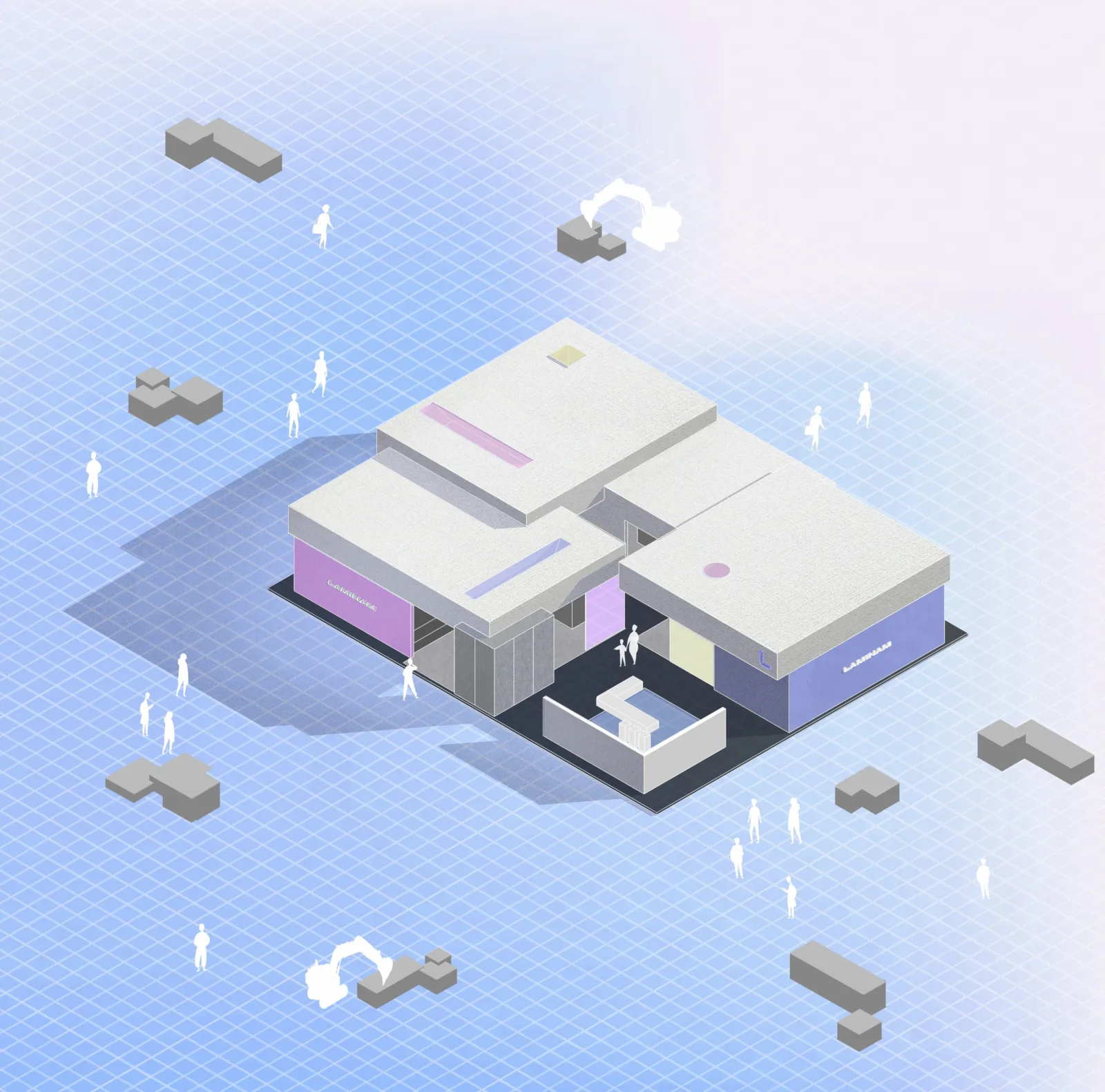
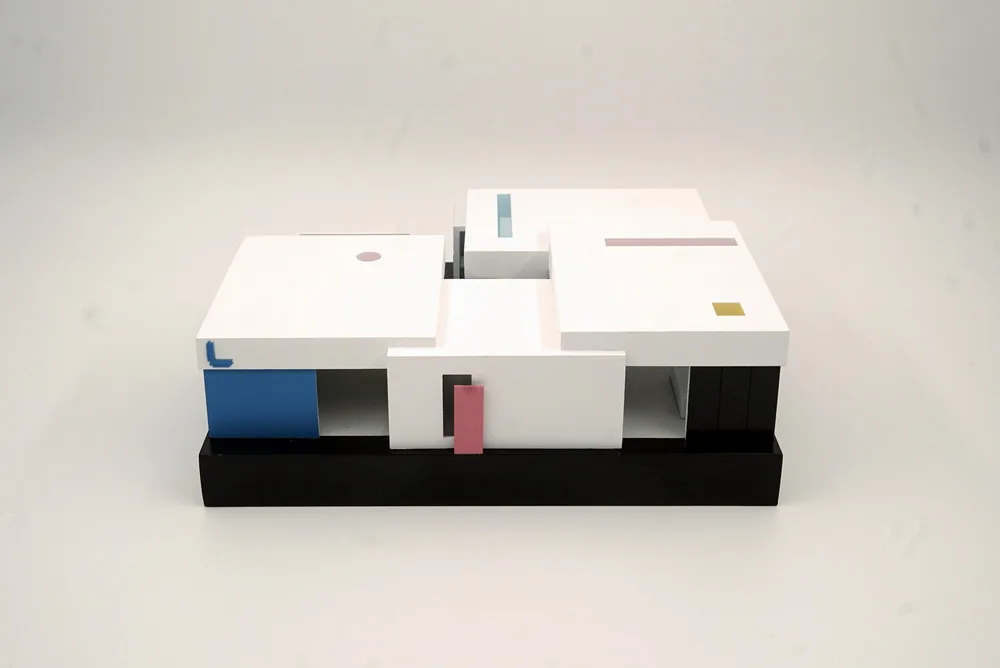
The venue is composed of four exhibition halls and a front yard. Each hall corresponds to a distinct display theme and is defined by four white boulders.
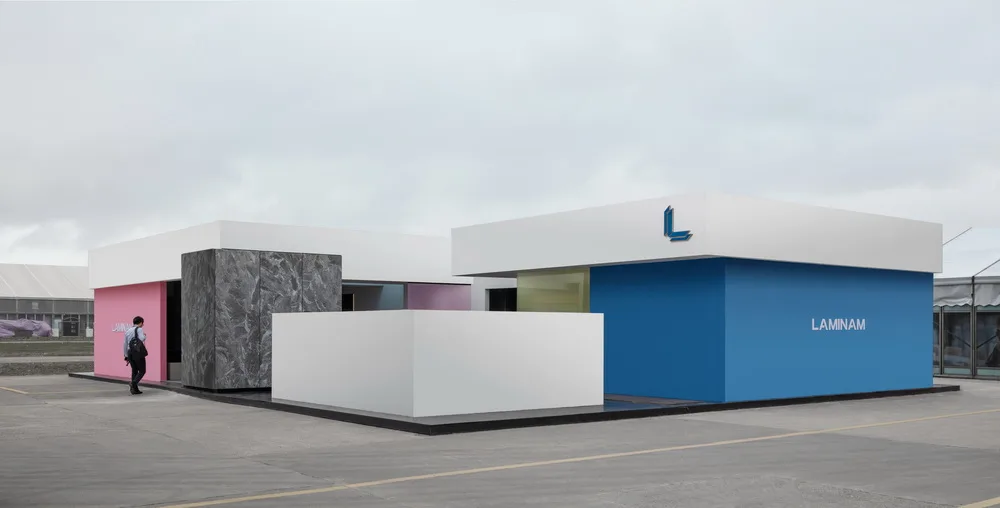
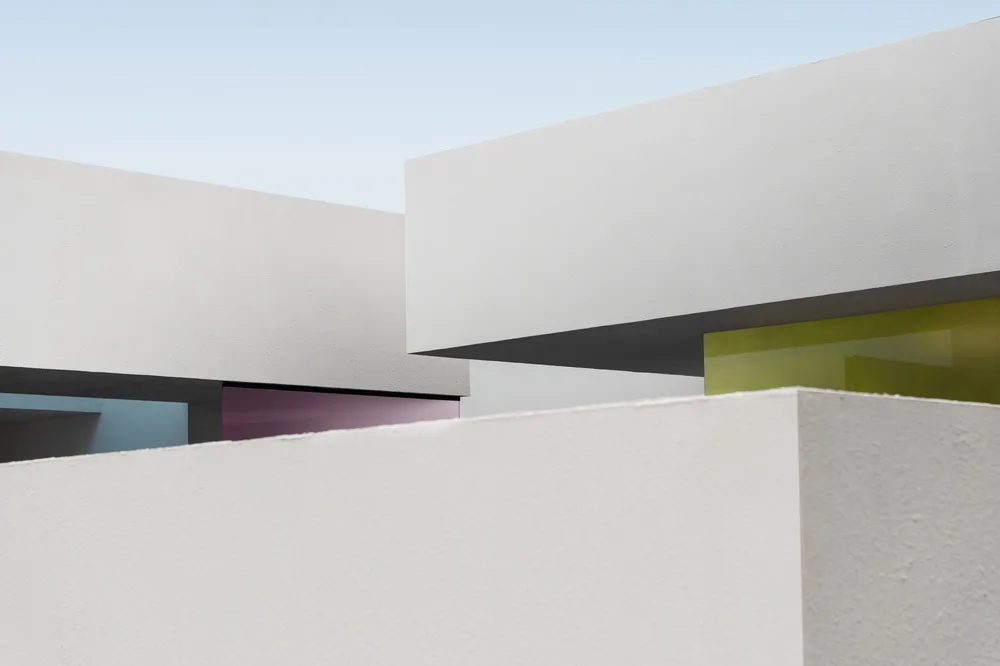
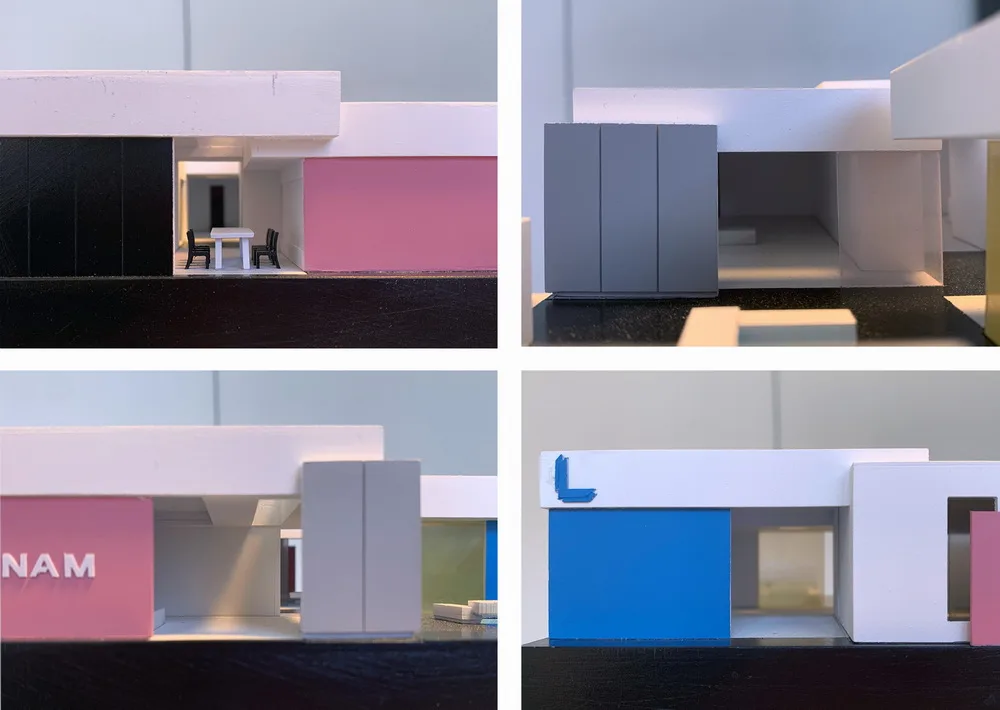
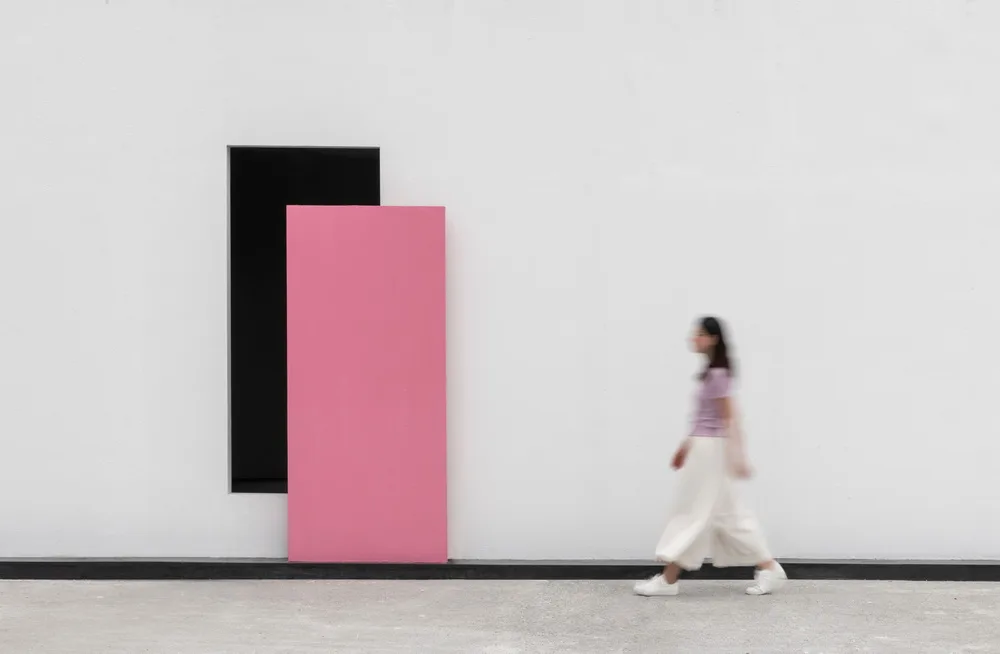
Some white boulders rest on the ground, while others are supported by colored boulders overlapping each other. This interplay creates a strong compositional presence on the facade and establishes dynamic spatial relationships.
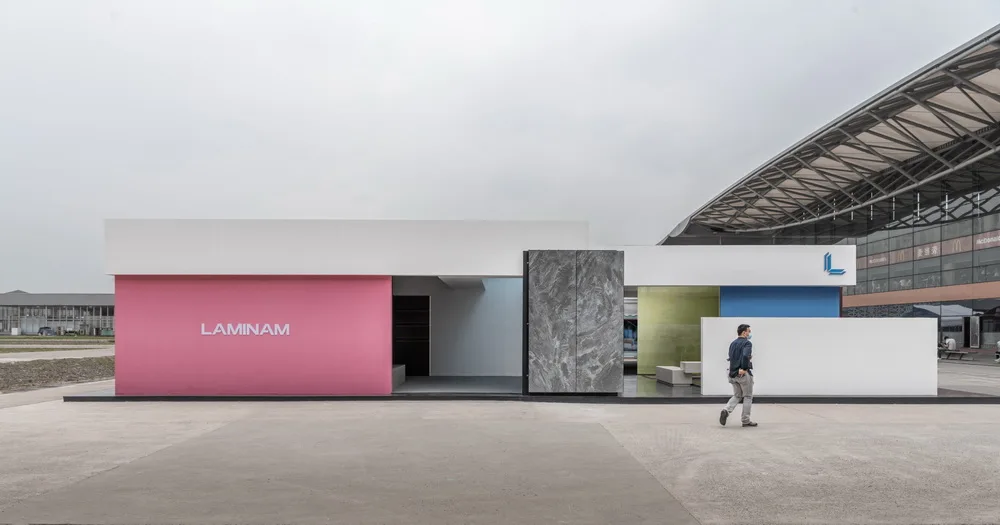
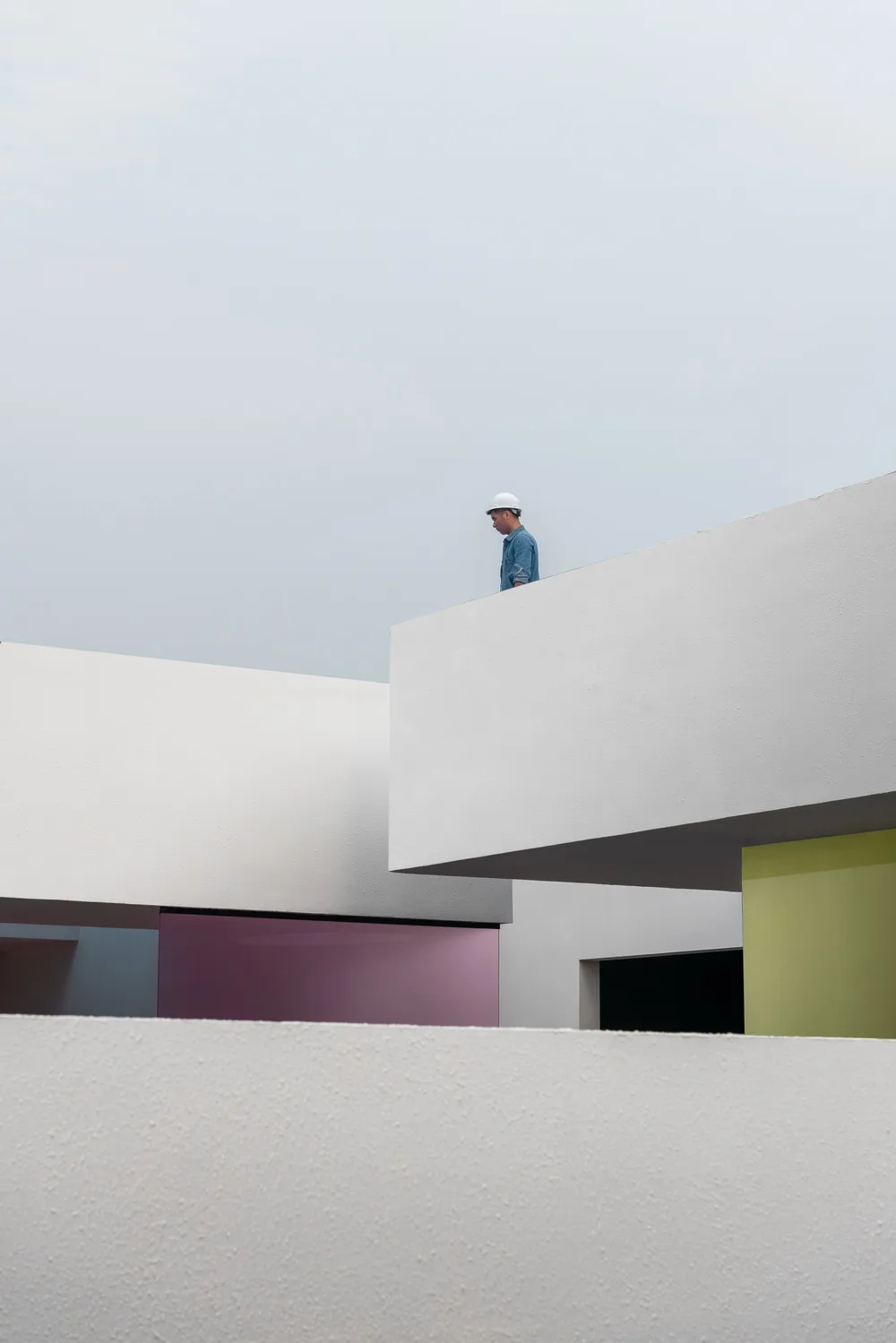
The entrance features a landscape with a pool and small stones, echoing the overall spatial concept and serving as an introduction to the space.
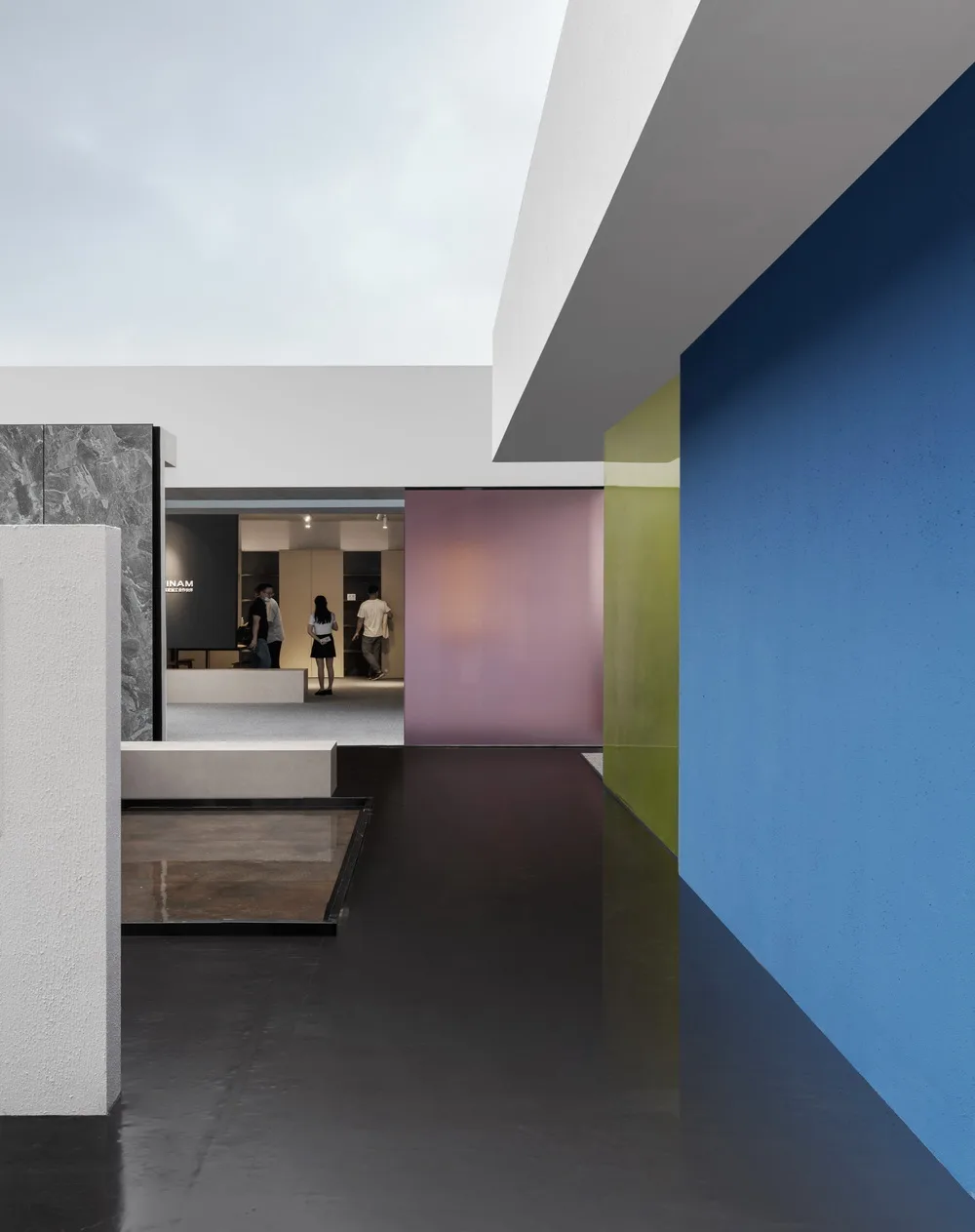
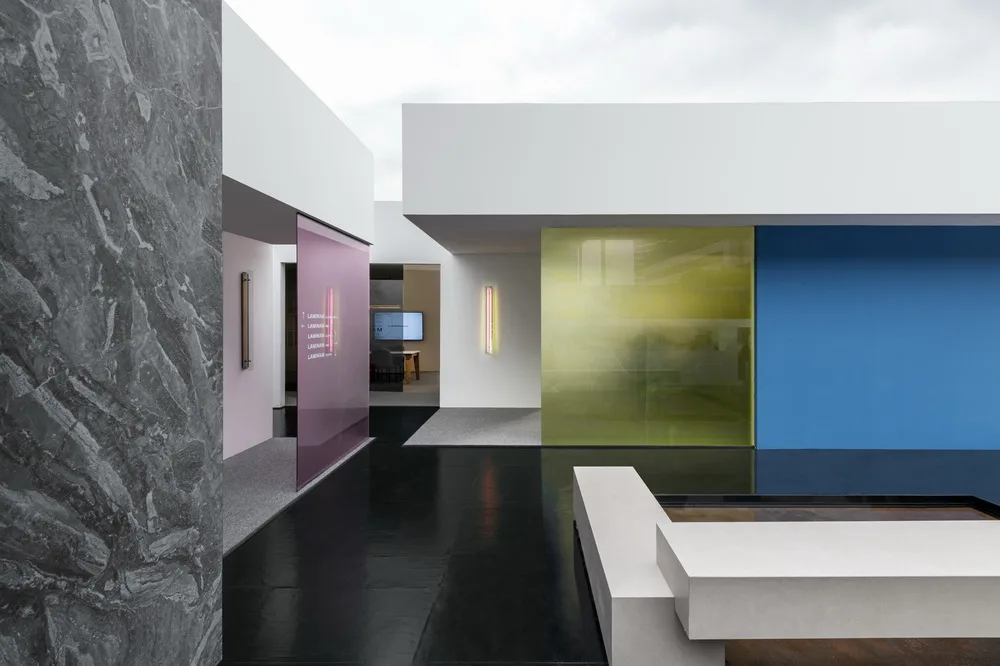
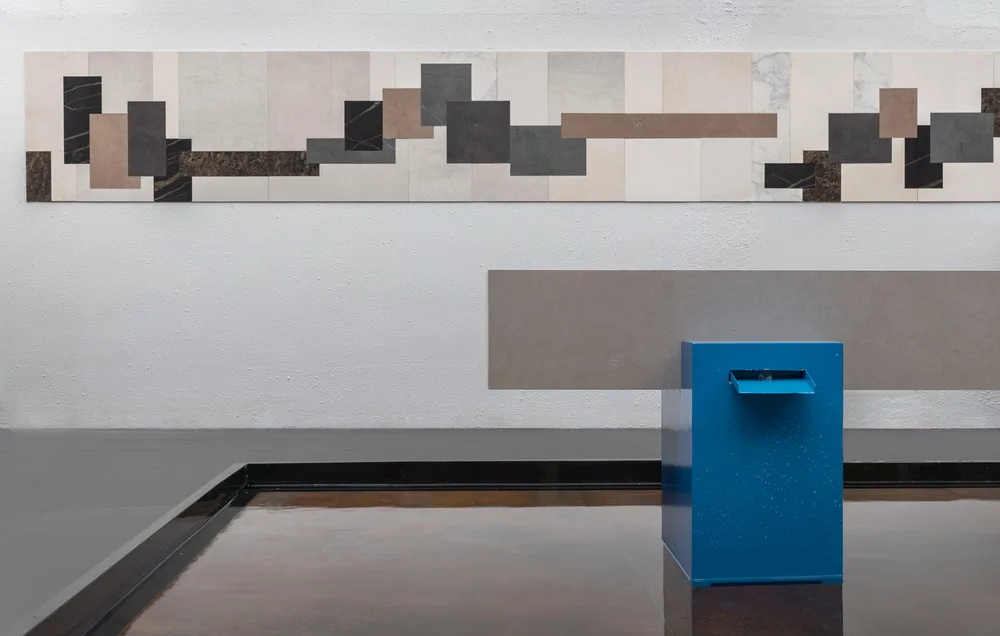
Inside, the space flows seamlessly. Different rooms, combined with openings in the roof and walls, create views that face and penetrate each other, offering shifting perspectives from various angles.
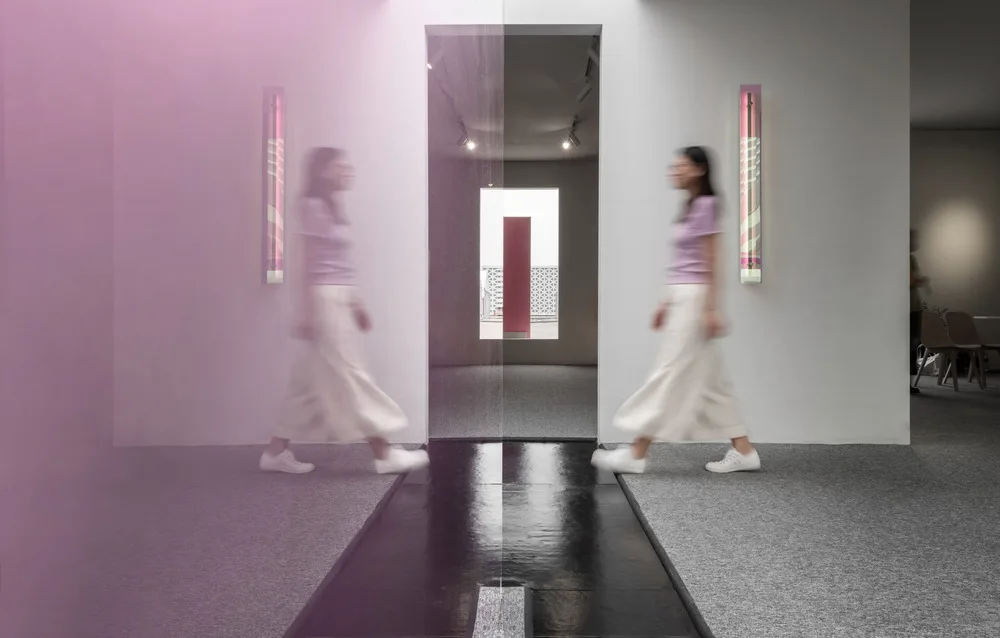
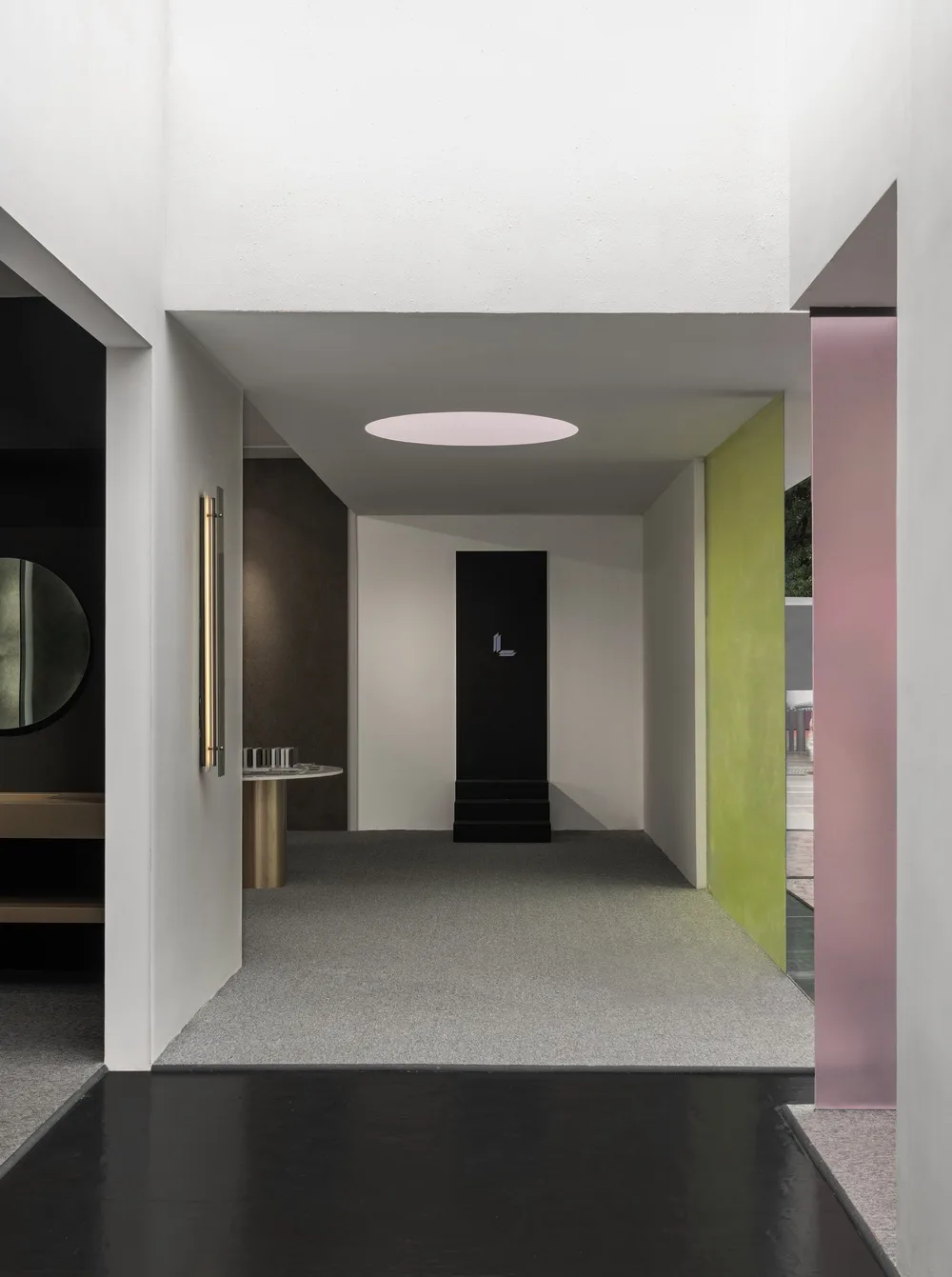
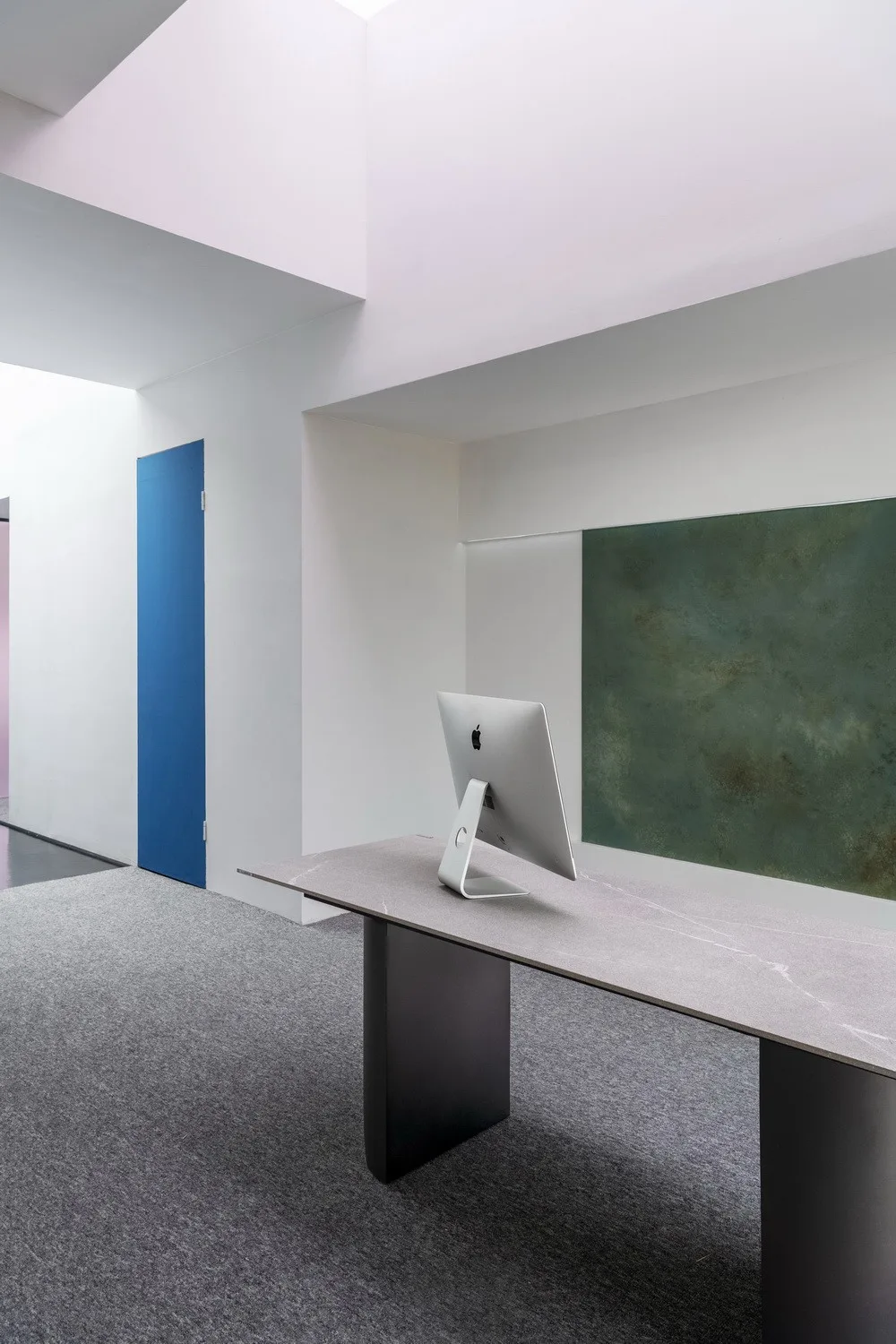
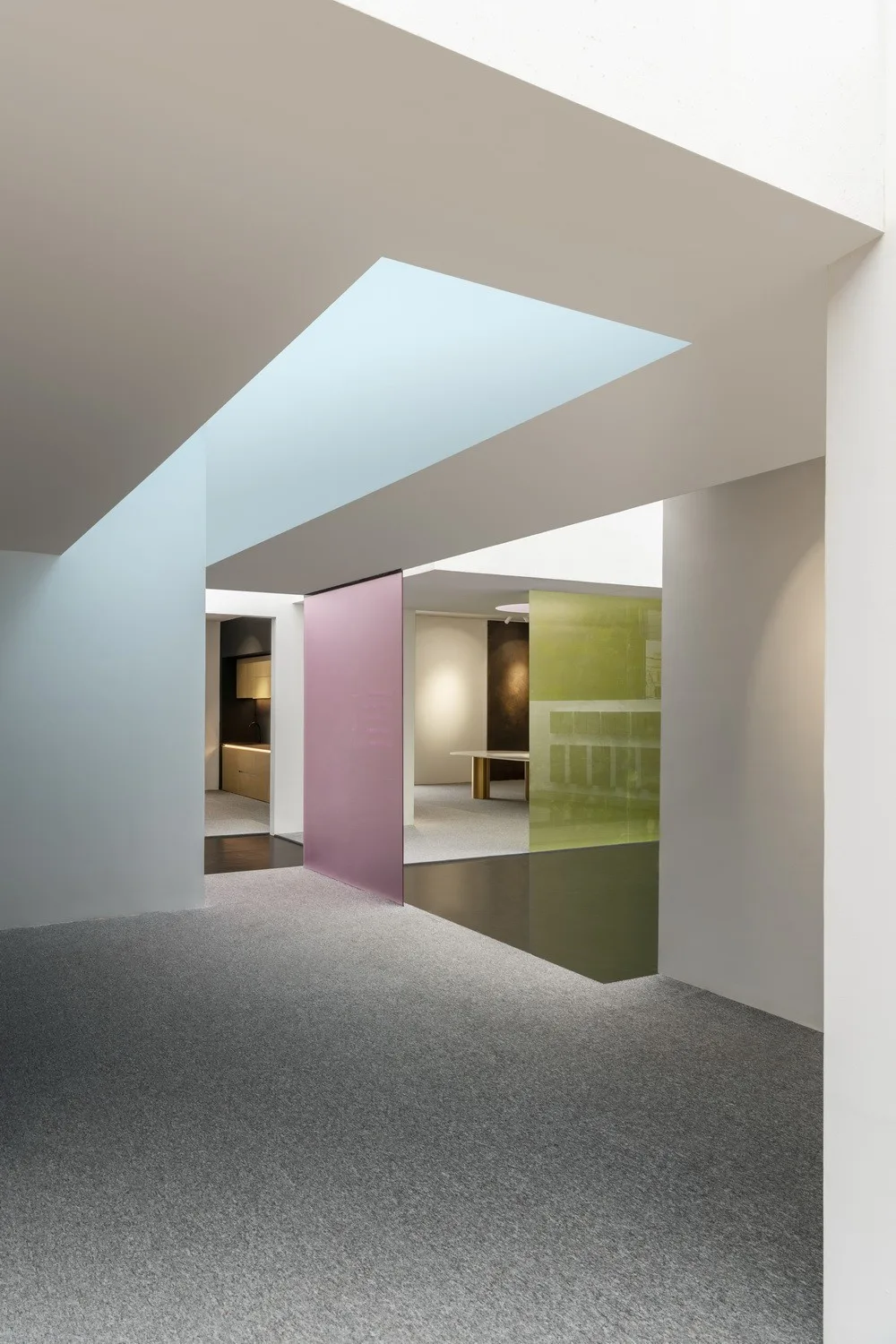
The overlapping and penetrating forms create a rich internal spatial experience. Colored glass and walls act as spatial markers, enhancing this immersive environment.
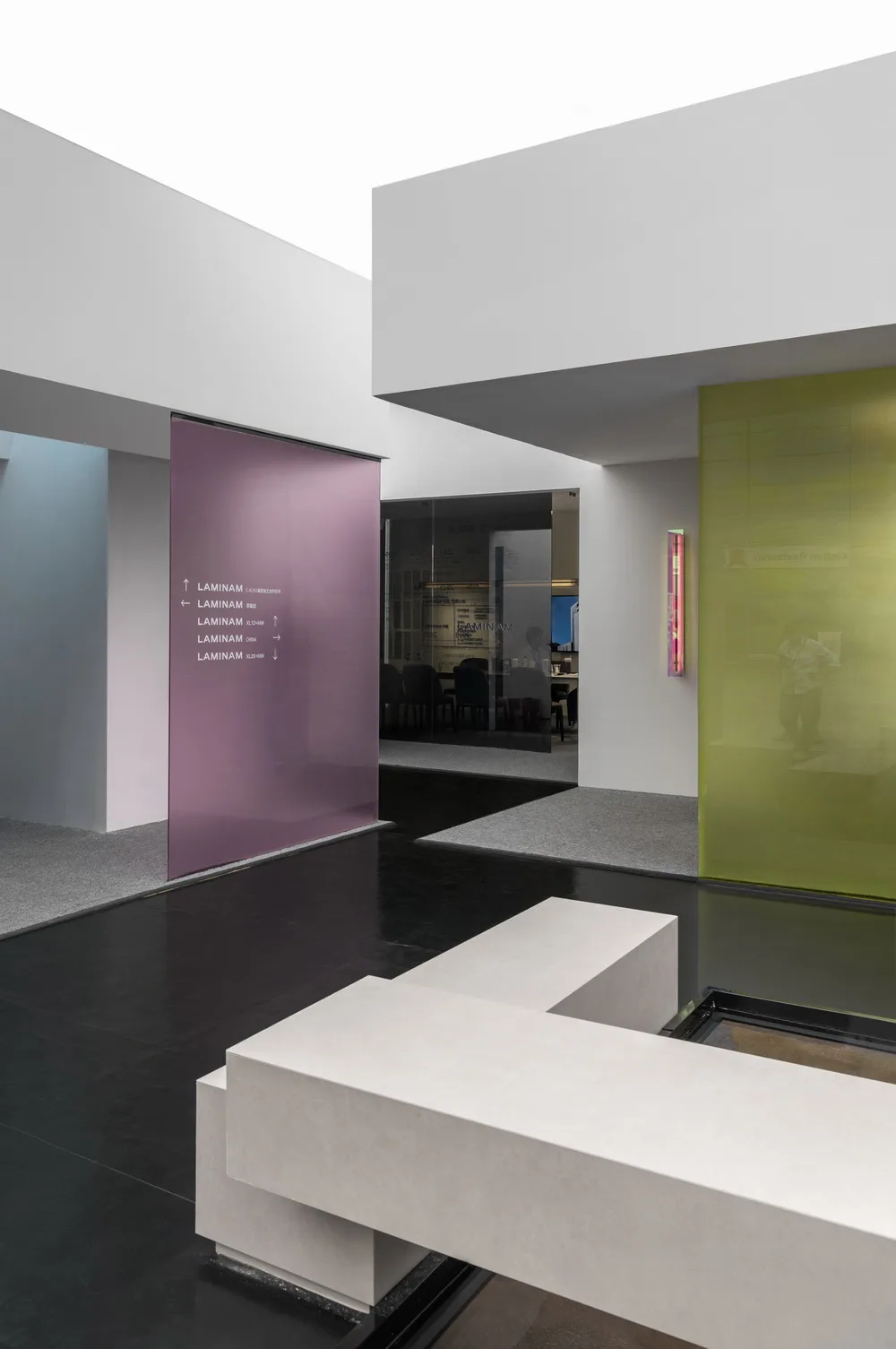
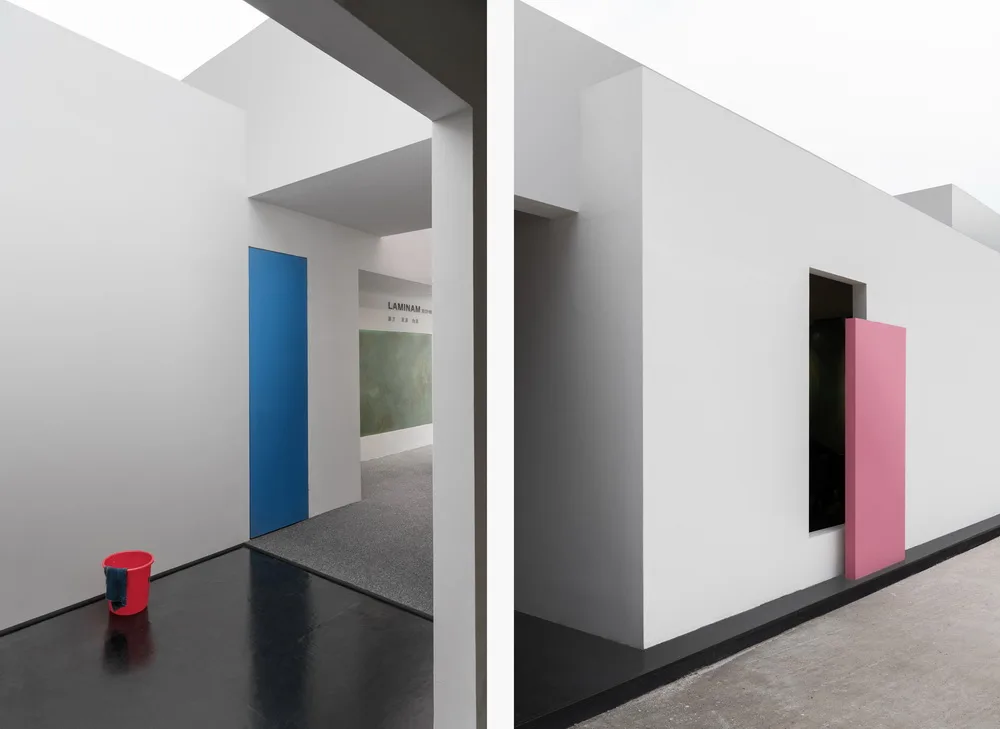
Custom rock panel lighting fixtures cast a subtle glow on the walls, sandwiched between ultra-white glass, rock panels, and white textured painted walls. This creates a micro-scale aesthetic of “layered rock shadows.”
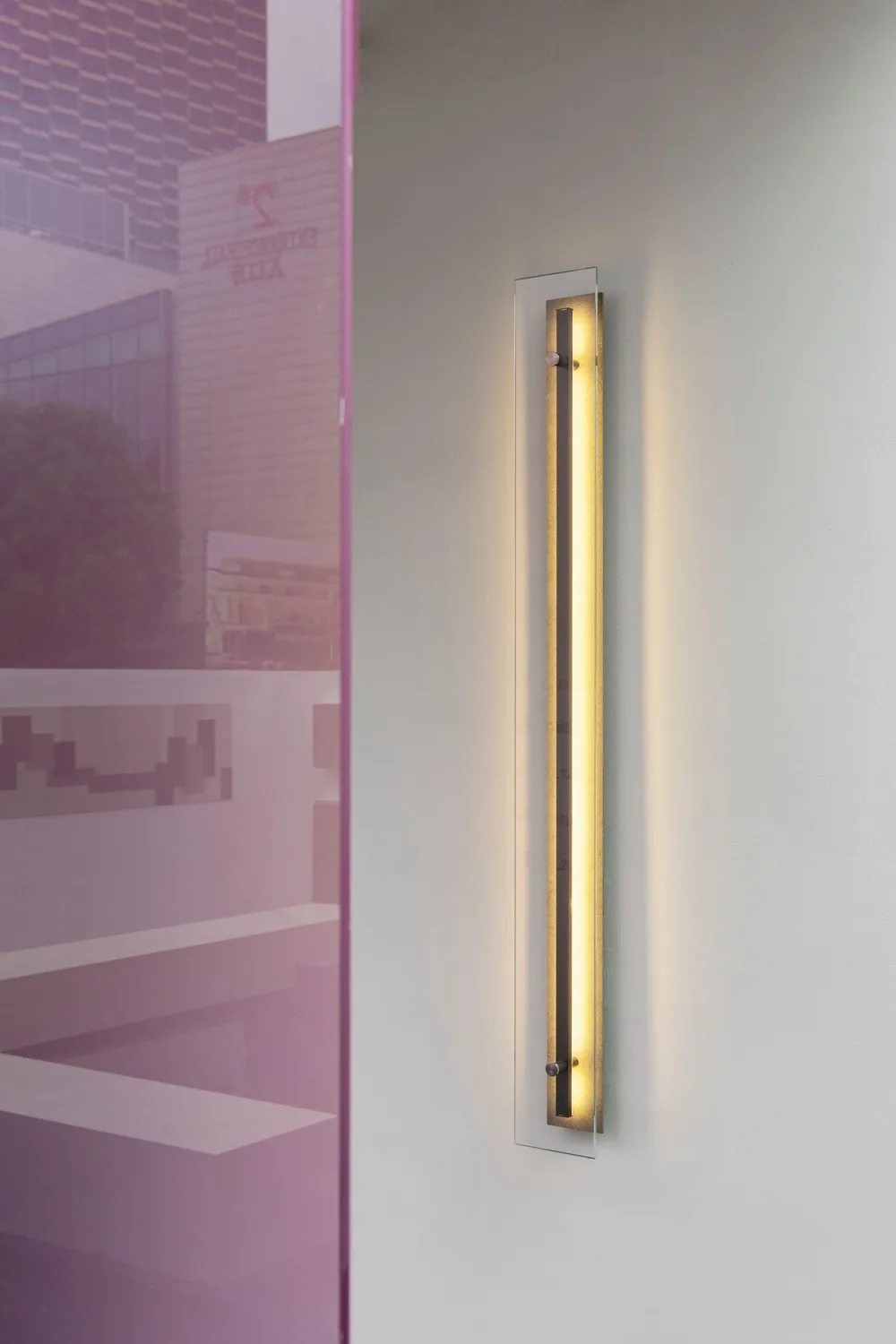
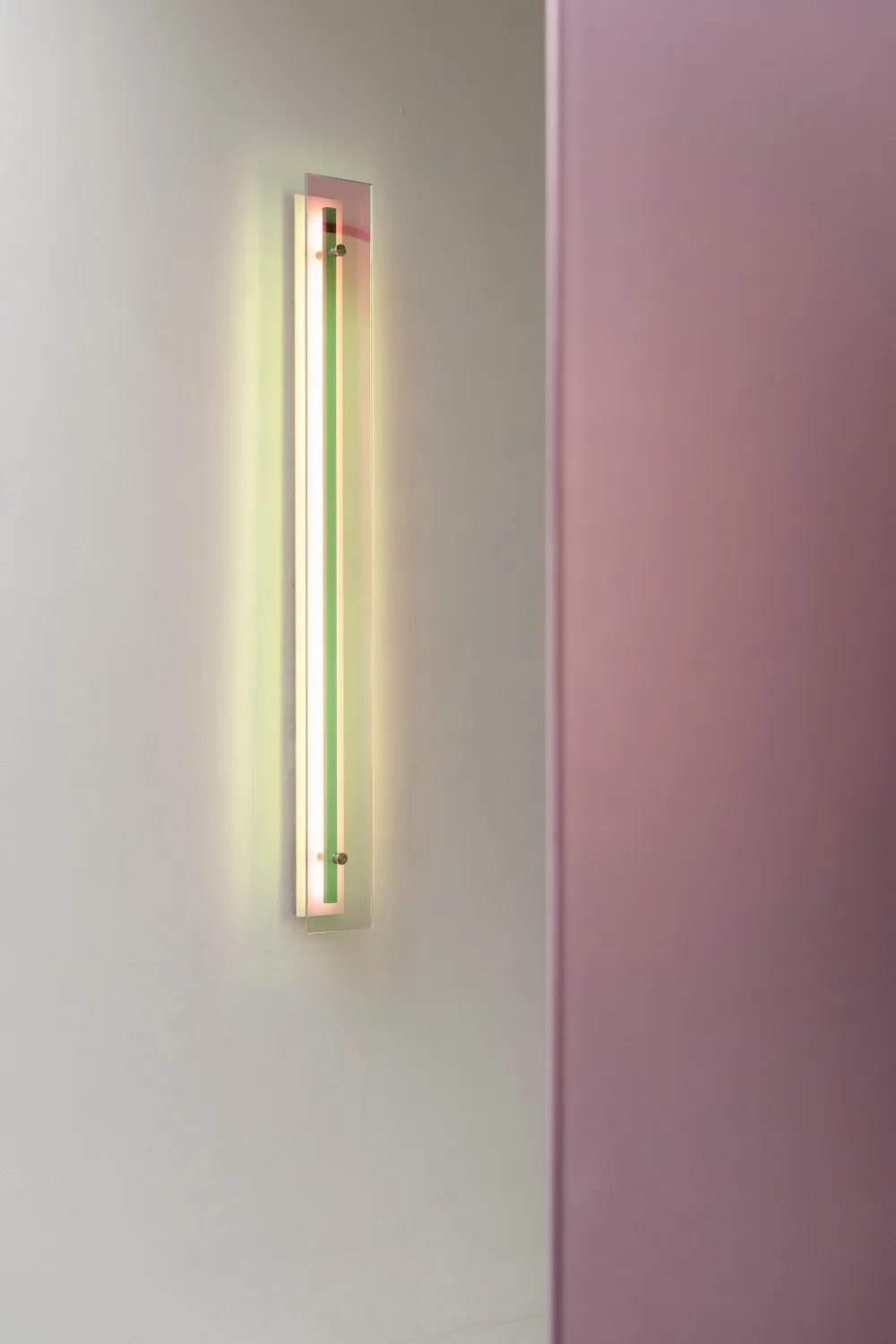
The concept of “layered rocks and overlapping shadows” originates from blending the natural beauty of rocks with abstraction, embodying the poetic imagination that rocks inspire. Due to practical constraints, this exhibition hall is realized only on the first-floor plan, leaving room for future exploration of vertical spatial layering.
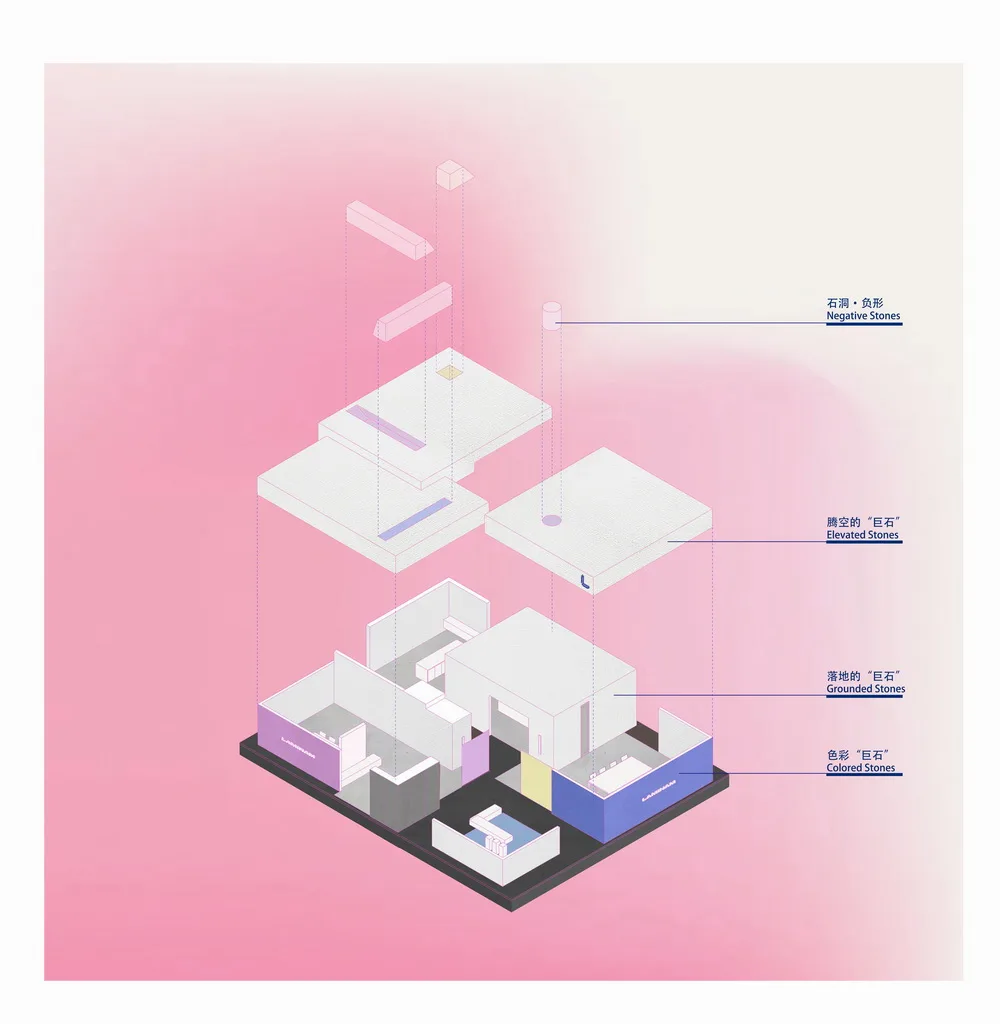
△ Axonometric Diagram
Technical Drawing
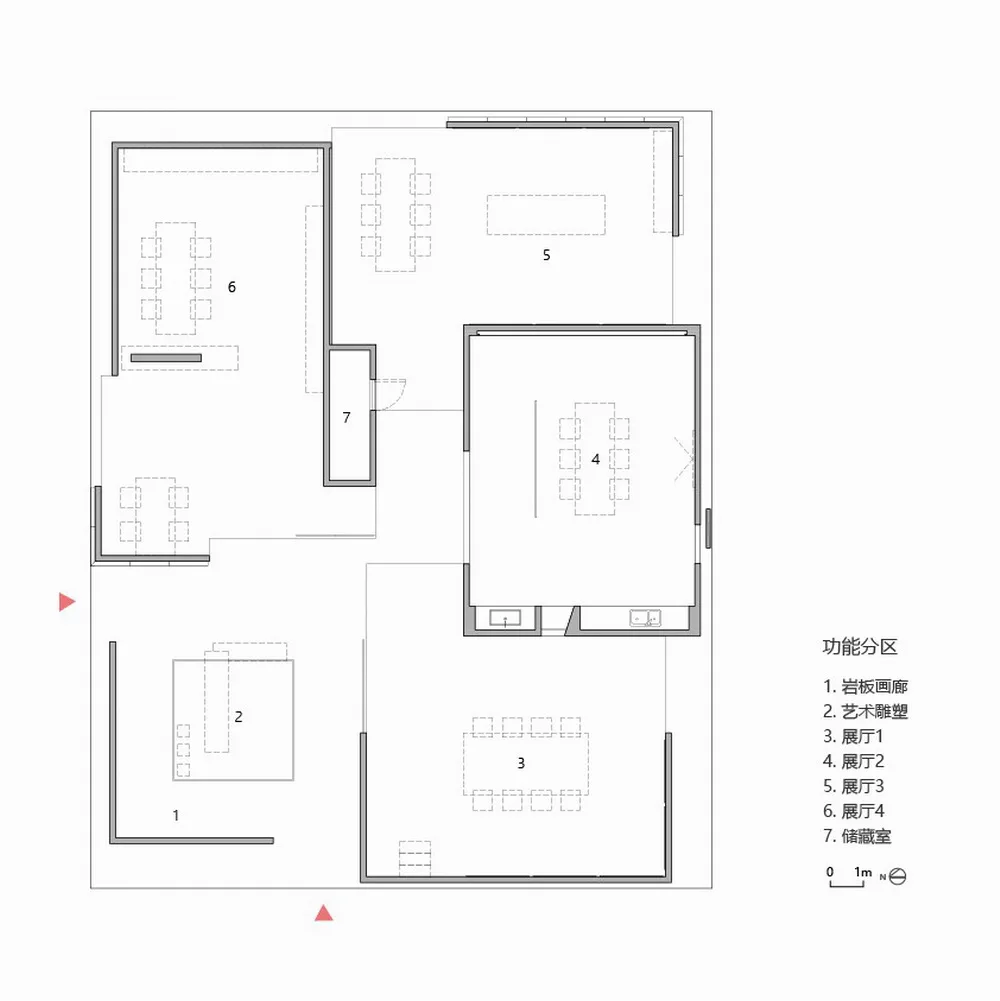
△ Plan View
Project Information
Project Name: Layered Rock Stacking Shadow
Design Firm: Puju Design Research Office (PUJU)
Location: Shanghai New International Expo Center
Building Area: 320 square meters
Creative Design: Remote Thousand Zhang Runze Renzo
Design Team: Li Shinan, Lexi Ruby, Wang Jixia, Qingya
Design Period: February – June 2021
Photography: Guo Jing
Text/Translation: Renzo
Studio Website: www.pujudesign.com
Email: renzo@pujudesign.com













Must log in before commenting!
Sign Up