
The COVID-19 pandemic that impacted the world in 2020 has inspired a shift in architectural and interior design priorities. Designs now emphasize healthier environments that adapt to changing living conditions and promote both physical and mental well-being. Since 2016, Dieshu has prioritized indoor health in its projects, such as Asia’s first residential laboratory building and the 26,000-square-meter office building in Shunyi, Beijing.
South facade featuring a canopy and rotatable laboratory.
The WELL Living Laboratory Building is a collaborative project developed by Delos, the founder of the WELL Building Health Standards in the United States, Ocean Group as the developer, and the international research organization Mayo Medical Research. Together, they created Asia’s first scientific research center integrating architectural science, behavioral science, and health science.
This laboratory offers adjustable and controllable indoor environments to simulate real building conditions. Research activities involving human participants aim to improve the effects of indoor environments on health, comfort, and overall physical and mental wellness.
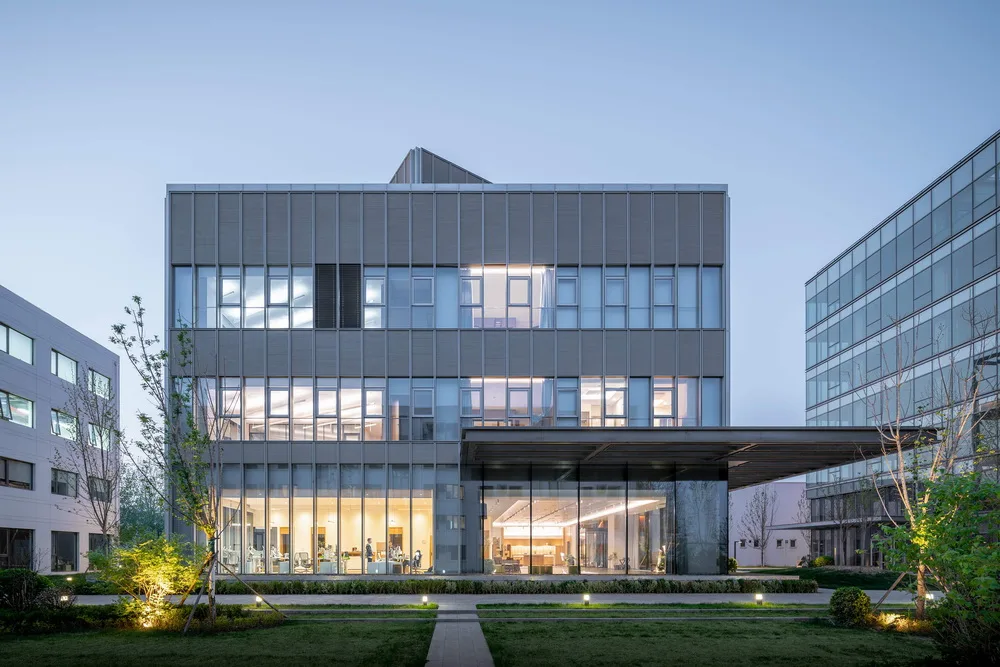
South facade with canopy and rotatable laboratory.
The stacking technique was used to create a WELL and LEED certified building using low-tech solutions that provide a flexible laboratory environment to support various research activities. To maximize sunlight and create an open, adaptable floor plan for different experiments, escape stairs and core tubes are positioned on the building’s north side.
Distinct design elements such as the first-floor canopy and a rotatable rooftop laboratory embody the concept of a “plug-in” volume.
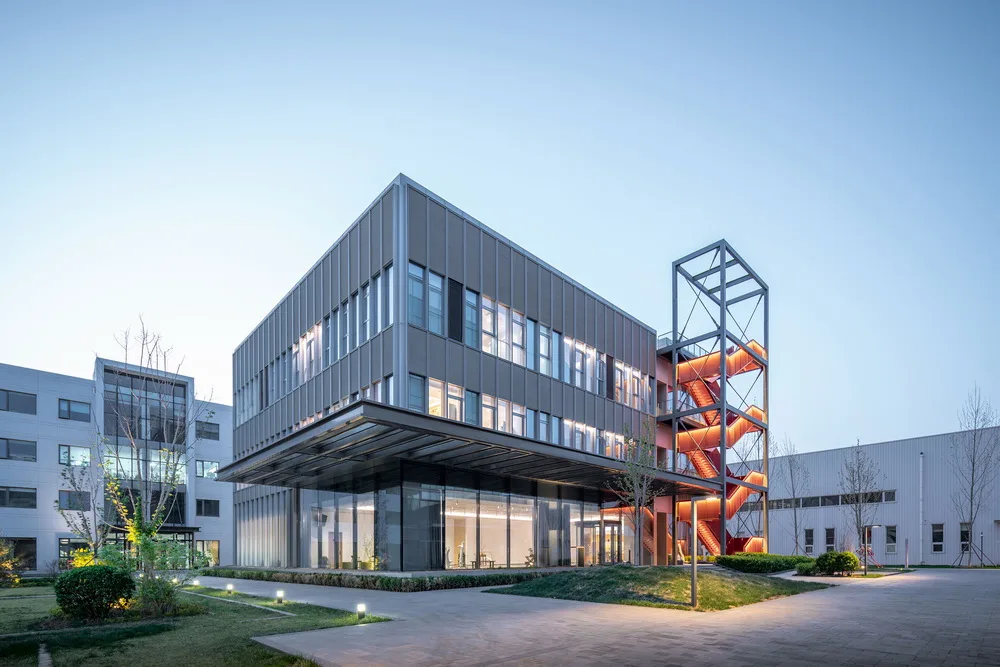
△ Main entrance perspective
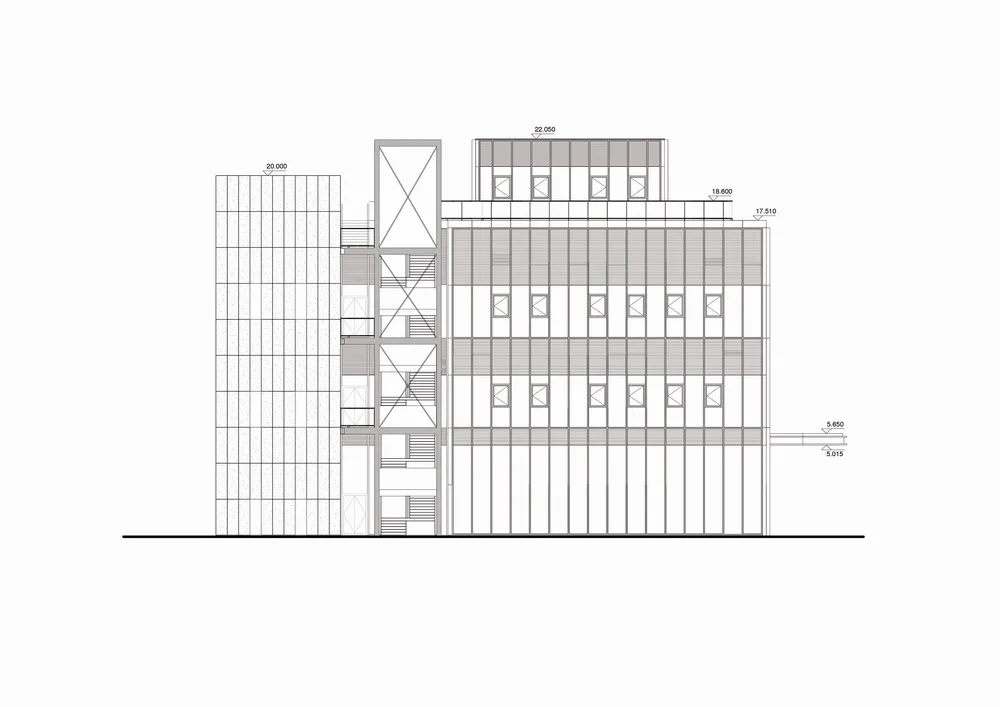
△ West side elevation view
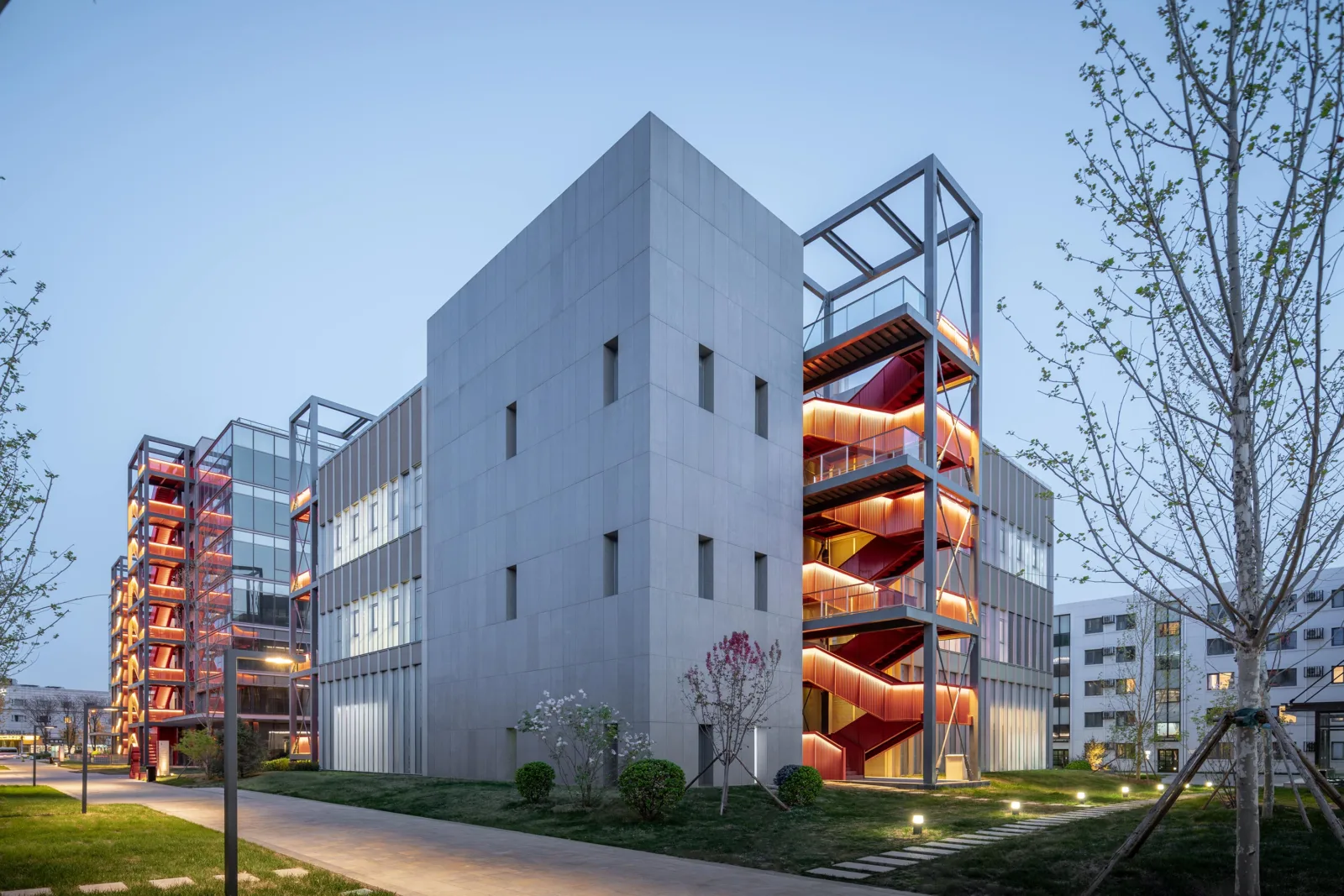
The building’s core houses mechanical and electrical systems, vertical shafts, and bathrooms, all designed to receive natural light. Elevators are discreetly concealed and are not the primary means of vertical transportation; instead, the escape stairs — typically dark and hidden in most buildings — are highlighted in bright red, encouraging physical activity and social interaction.
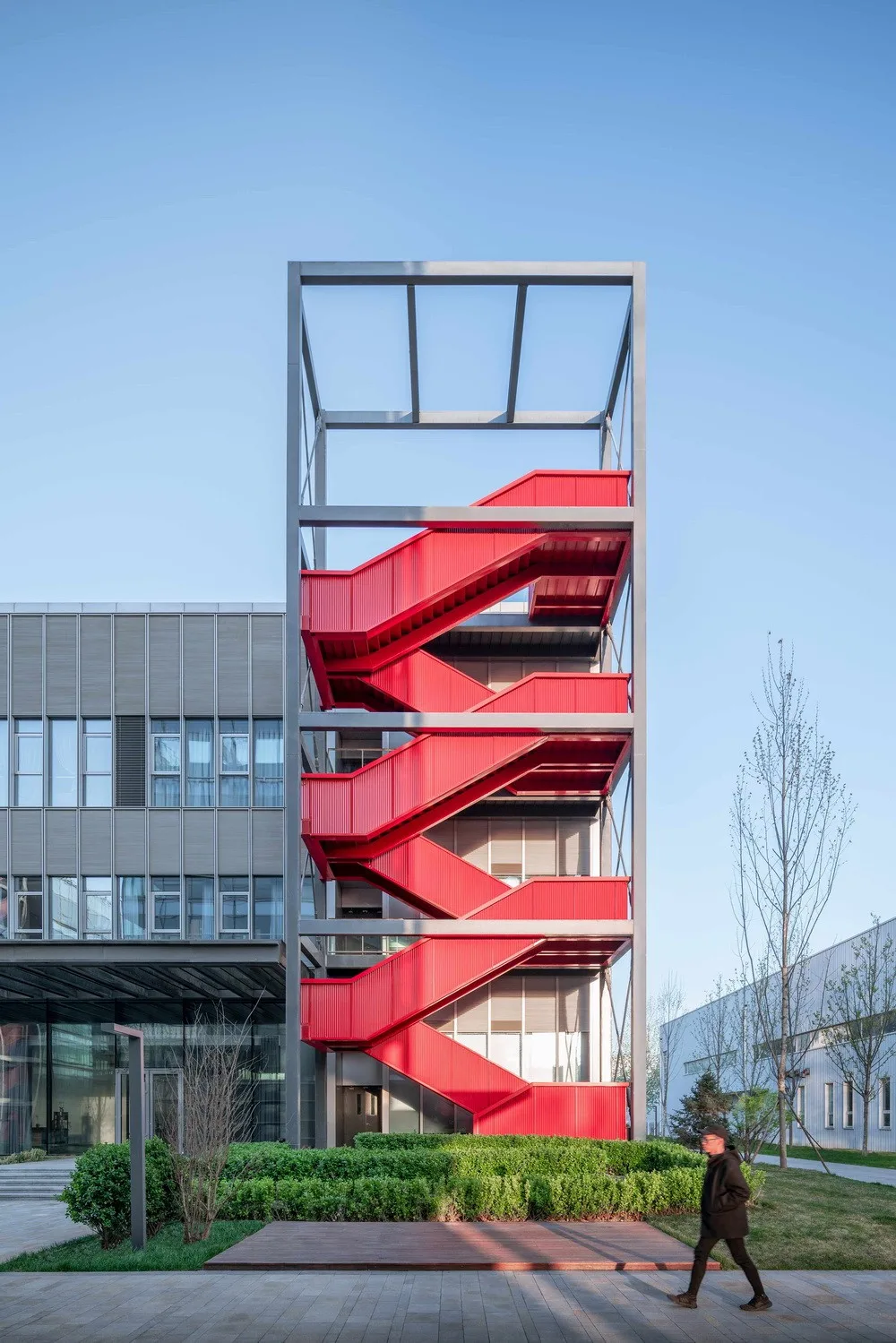
The east staircase located next to the main entrance.
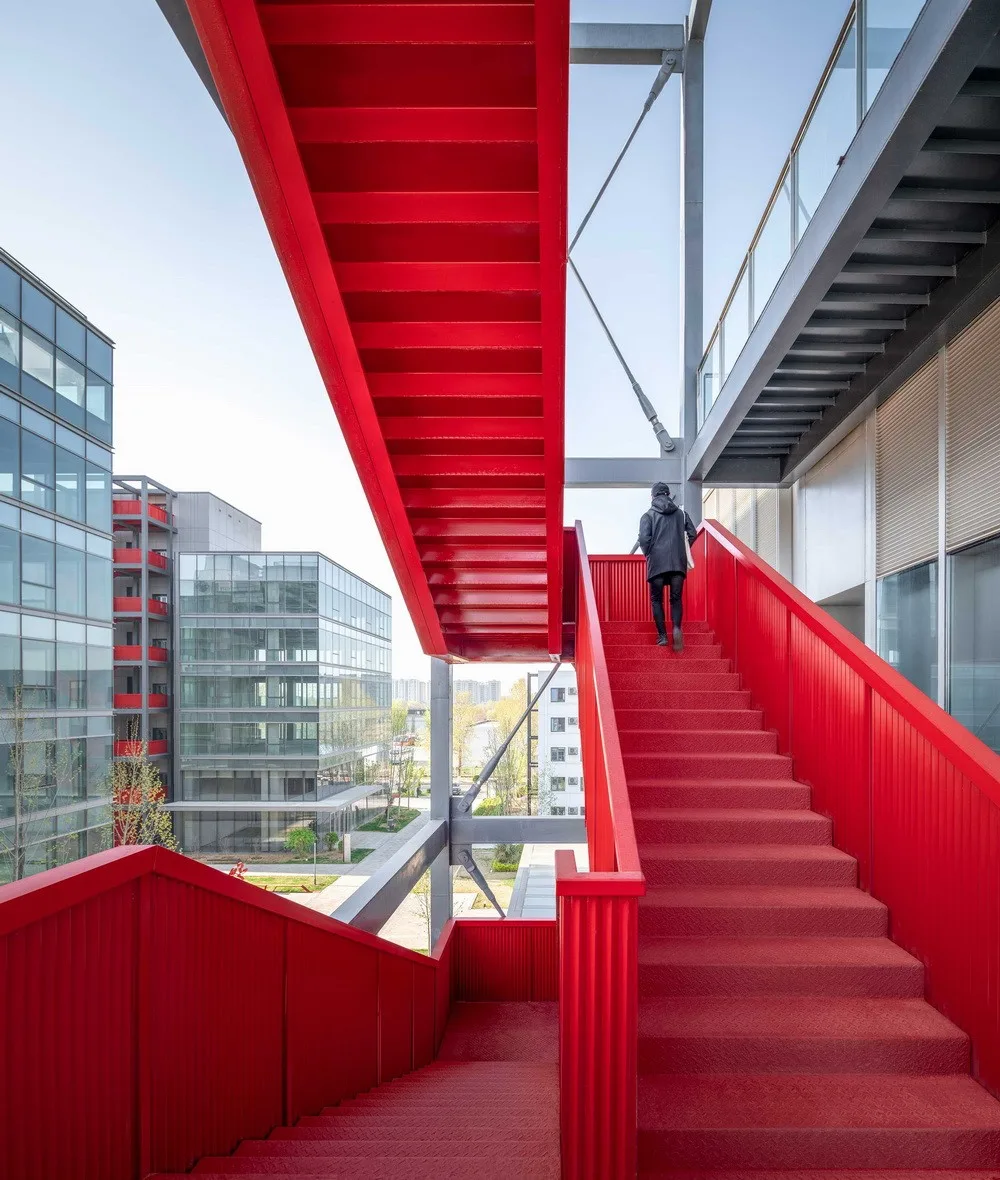
Close-up of the east staircase.
The stacking technique designs the building facade as a modular box system, enhancing both diversity and functionality. This approach maintains distinctive architectural features while integrating seamlessly into Shunyi’s industrial environment.
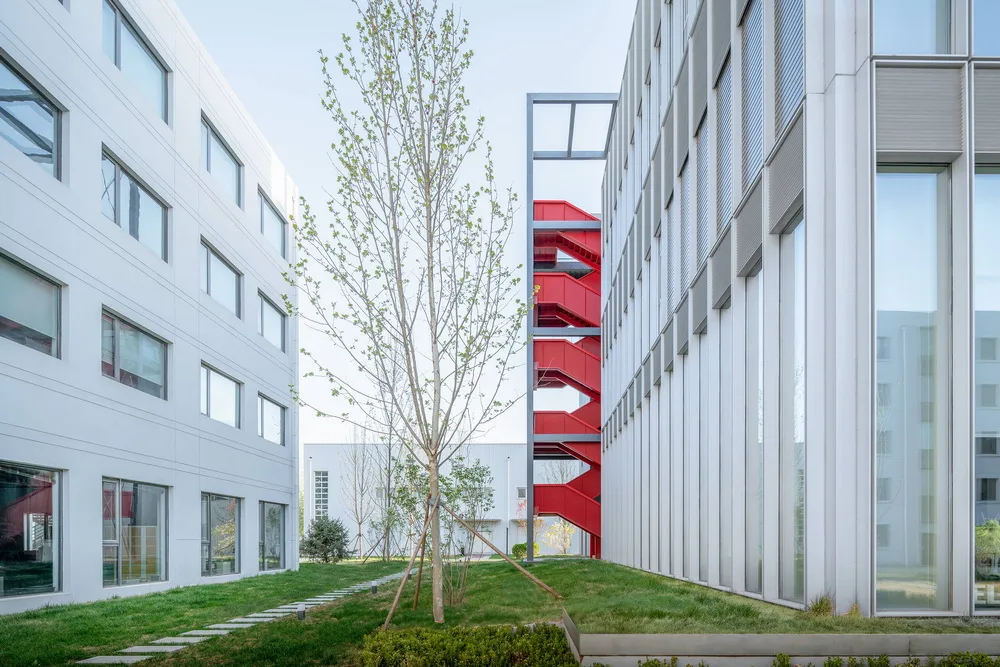
△ Plug-ins and stairs on the west facade.
Indoor blinds, exterior motorized curtains, and color-changing glass are integrated into a modular facade system.
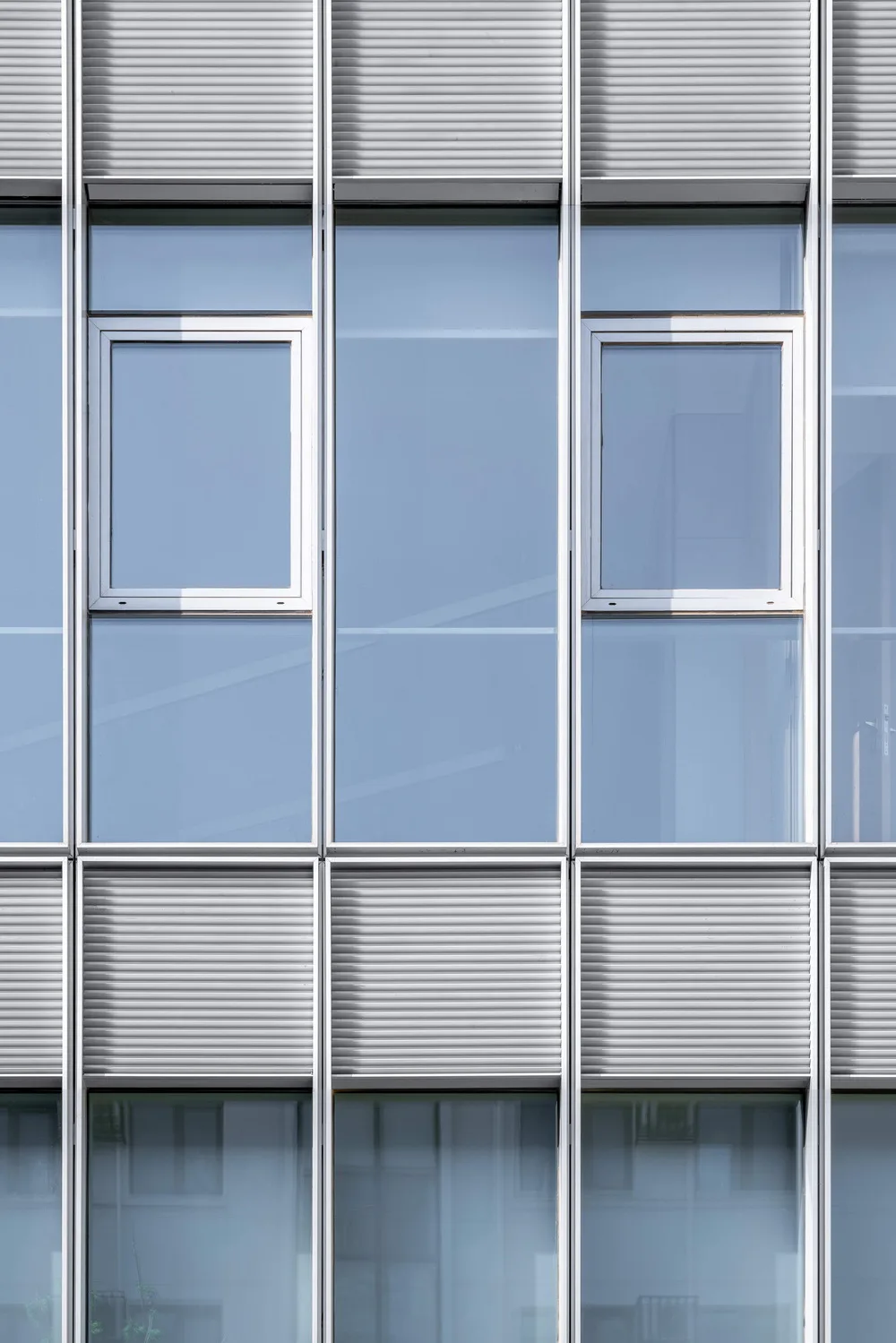
Close-up of the south facade.
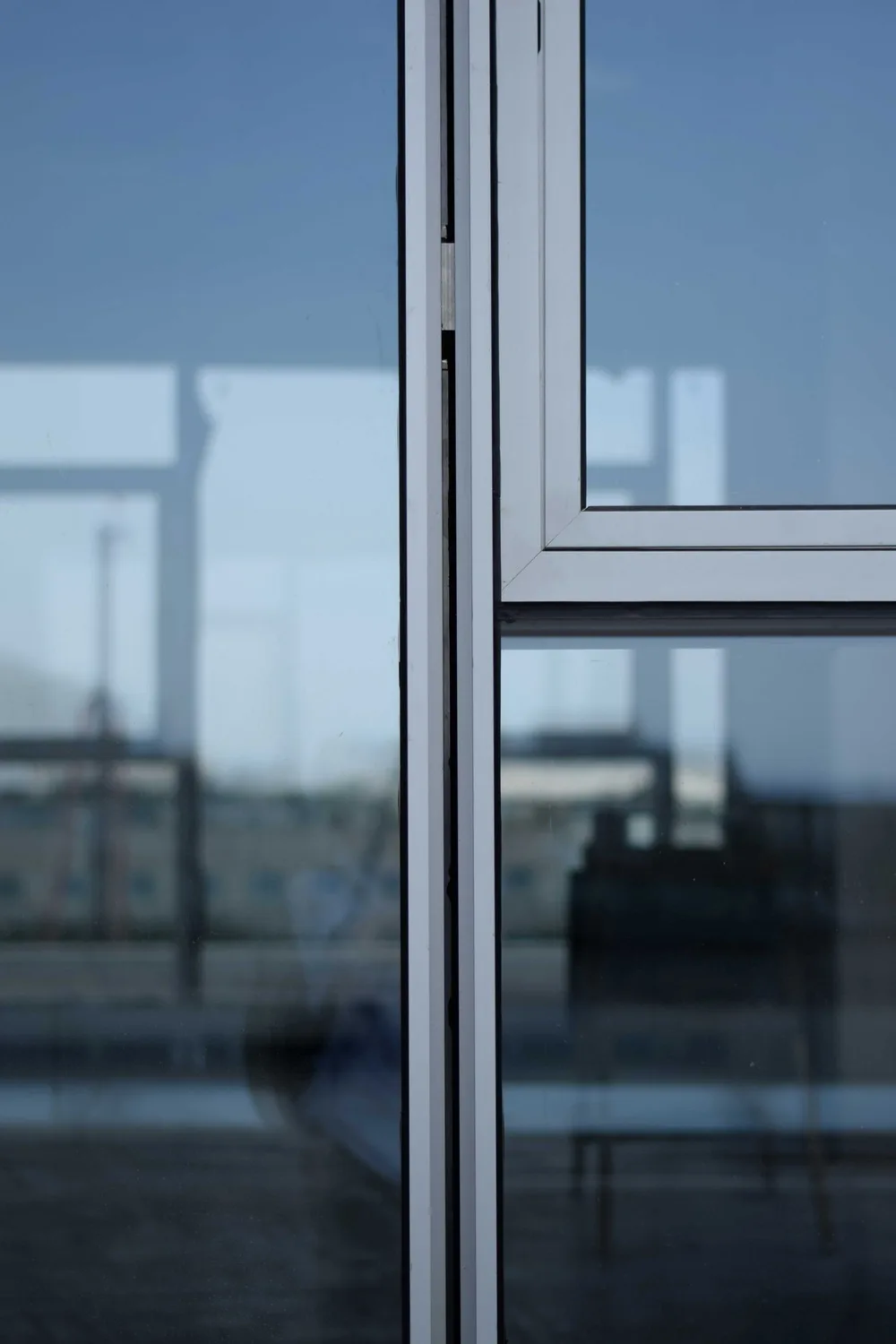
Close-up of the unit glass facade system.
The entrance canopy functions as both a welcoming feature and a protective shelter. It connects directly to the outdoor staircase while allowing maximum sunlight on the first floor.
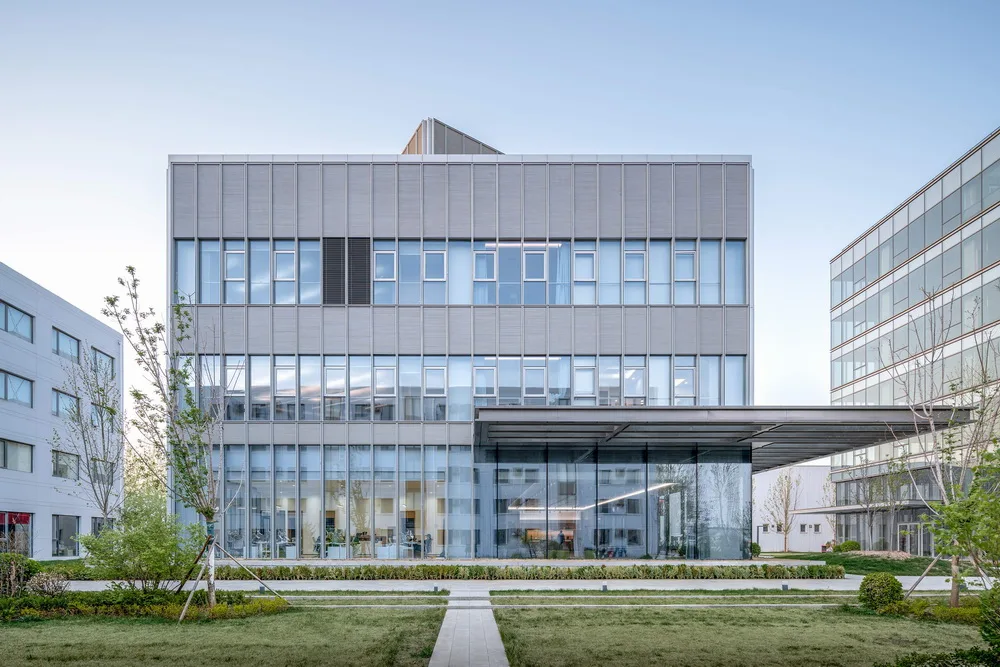
During daytime, the south main facade extends outward with a canopy.
The rooftop features a rotating laboratory designed for in-depth research on indoor environments under sunlight exposure. Additionally, a rooftop farm provides fresh produce and fosters community engagement.
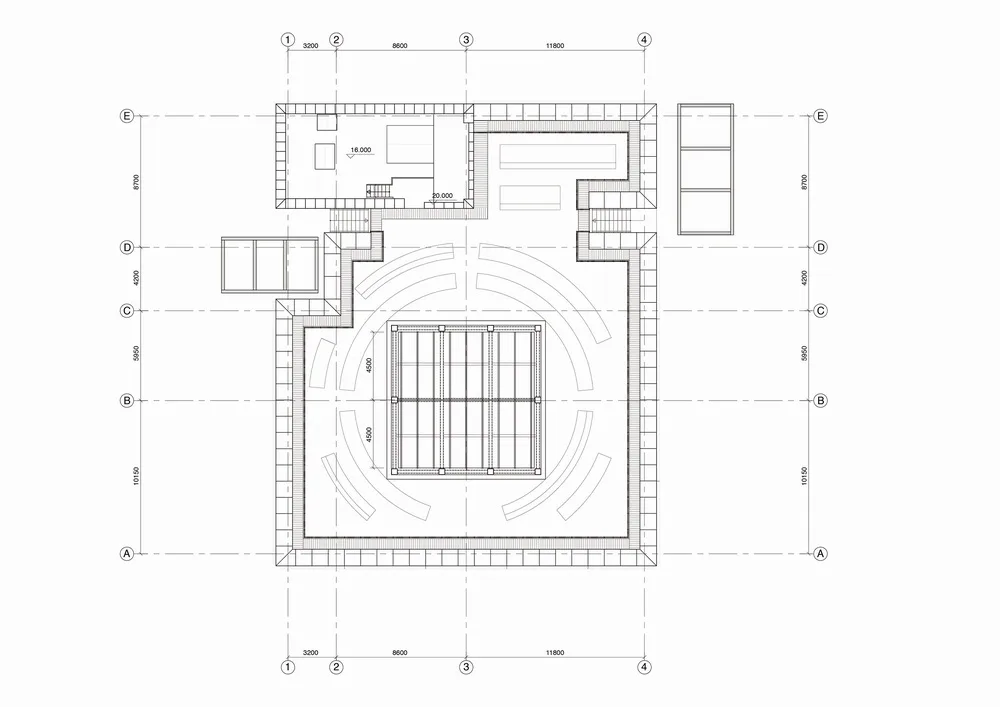
△ Roof plan.
Stacking technology delivers the WELL Living Lab in a simple yet highly effective manner, satisfying WELL standards and tenant requirements. Through the WELL Habitat Laboratory project, Dieshu aims to enhance and promote healthier office and living environments in China and globally.
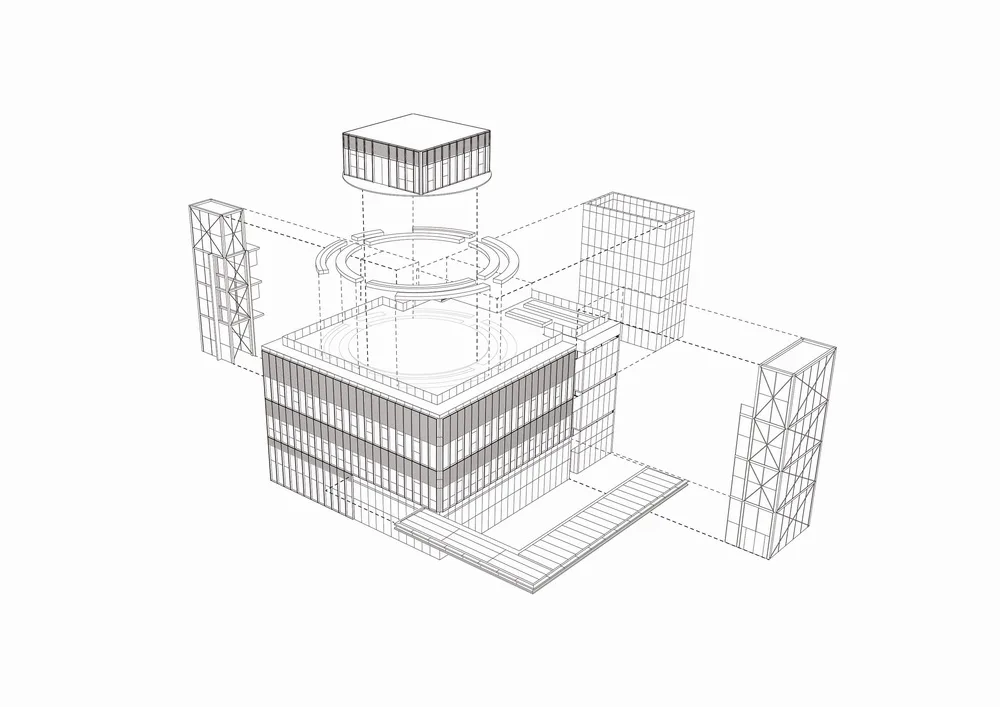
△ Axonometric diagram.
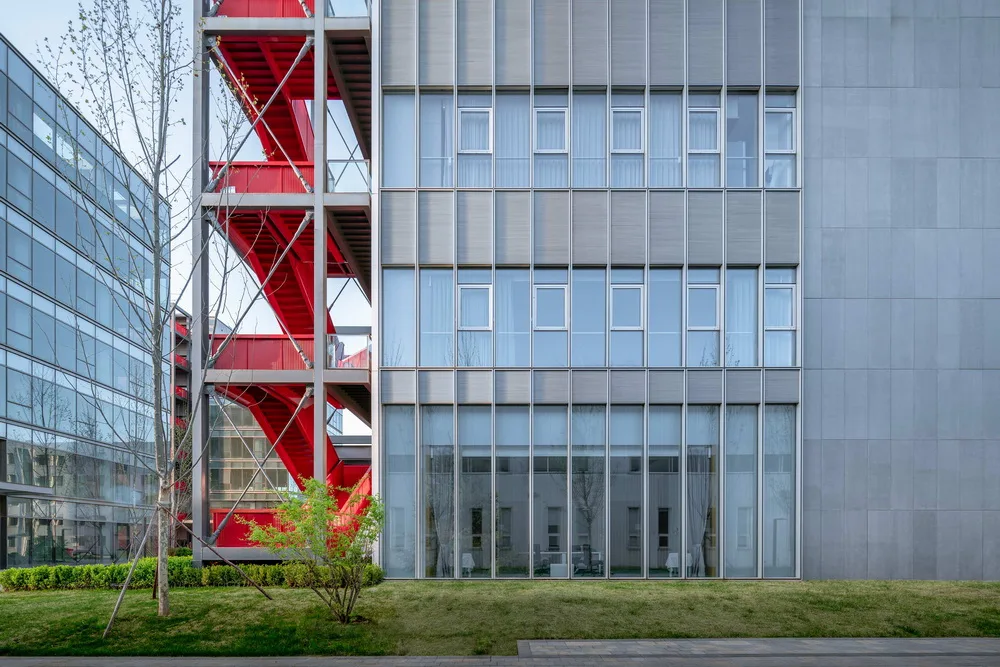
△ North facade.
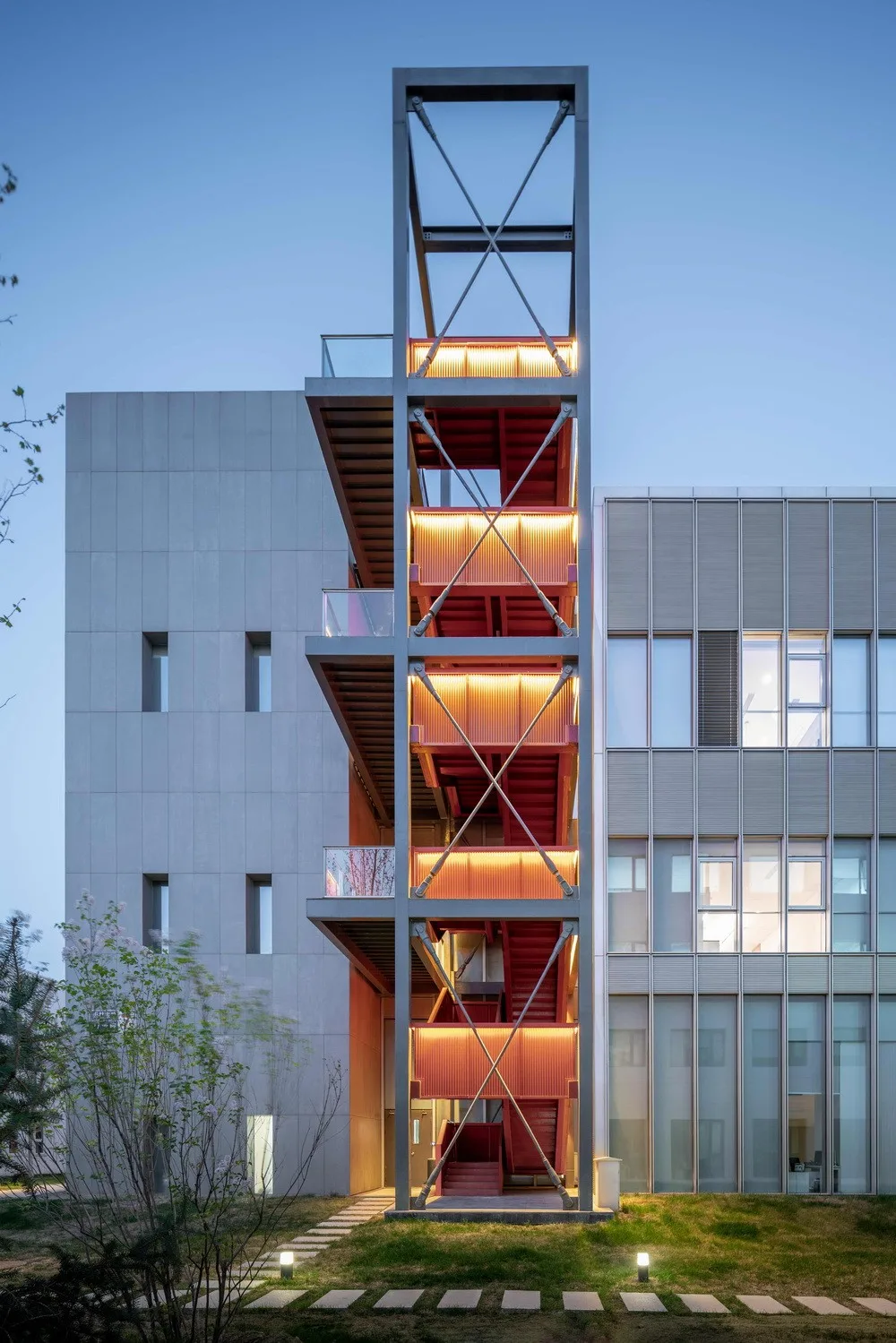
△ West facade staircase.
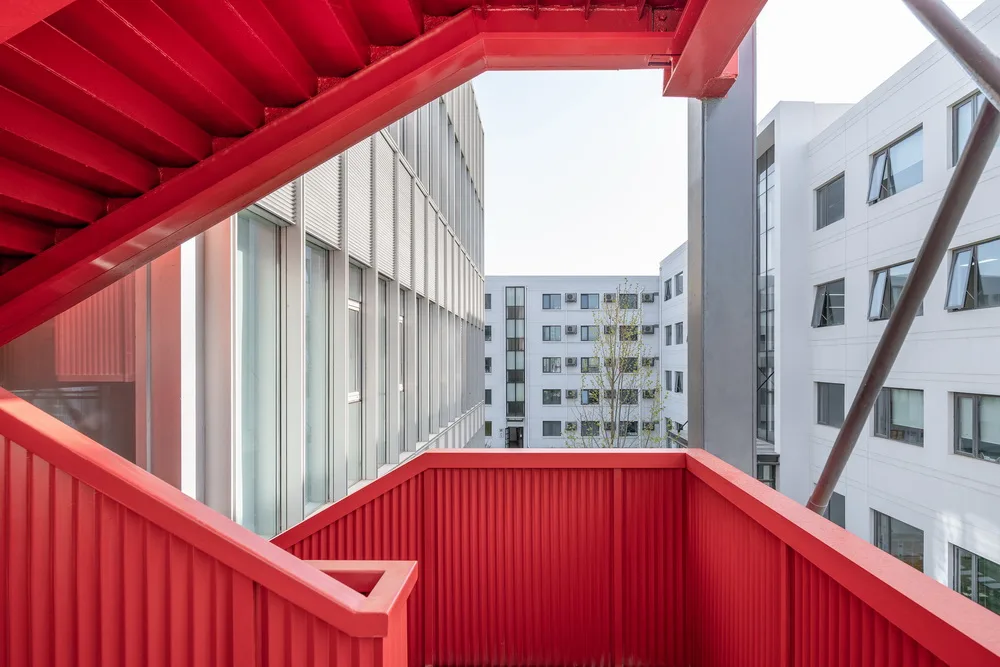
Close-up of the west staircase.
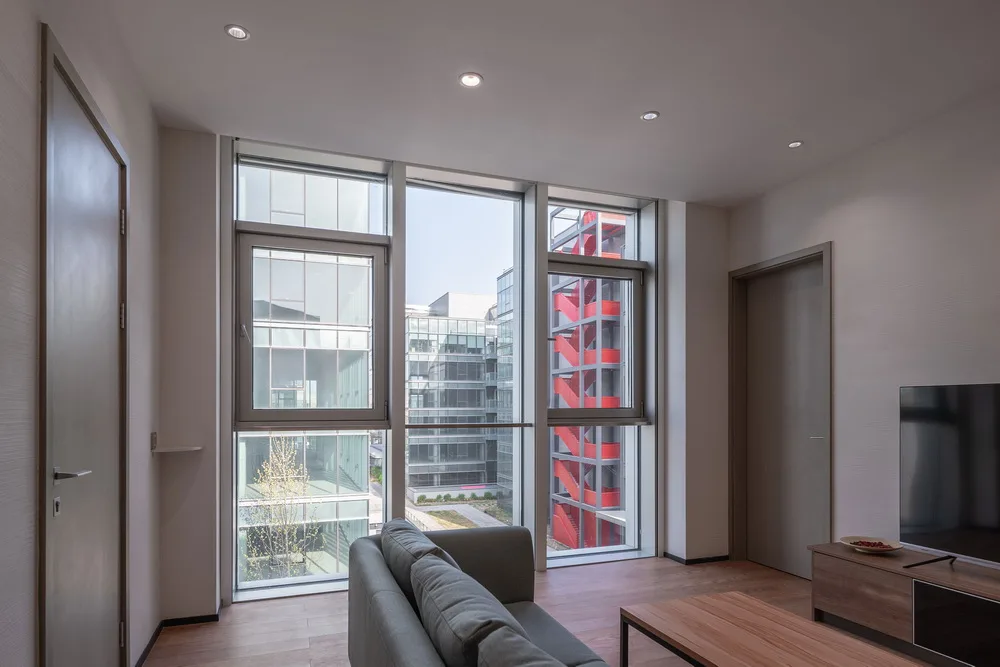
△ Interior perspective of a residential unit laboratory.
Technical Drawings
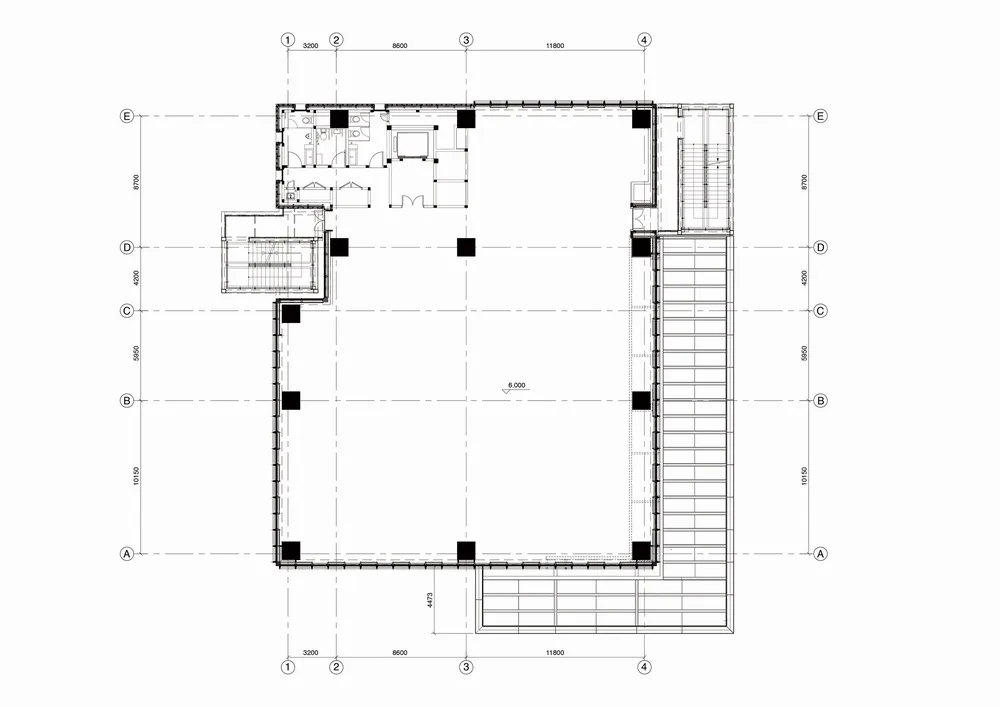
△ Second floor plan.
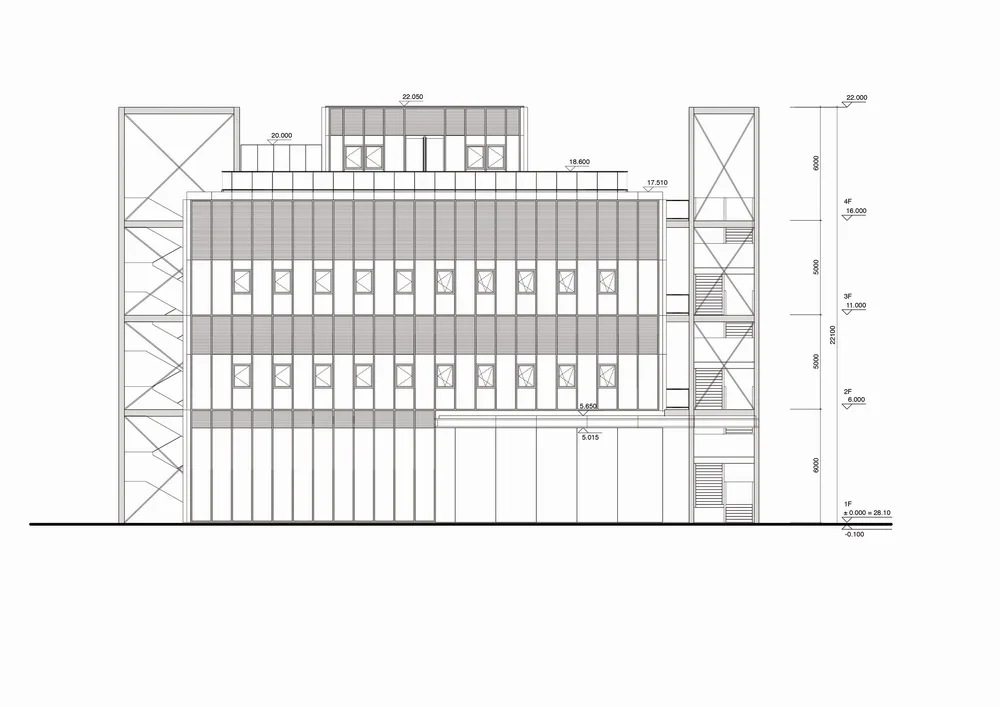
△ South elevation view.
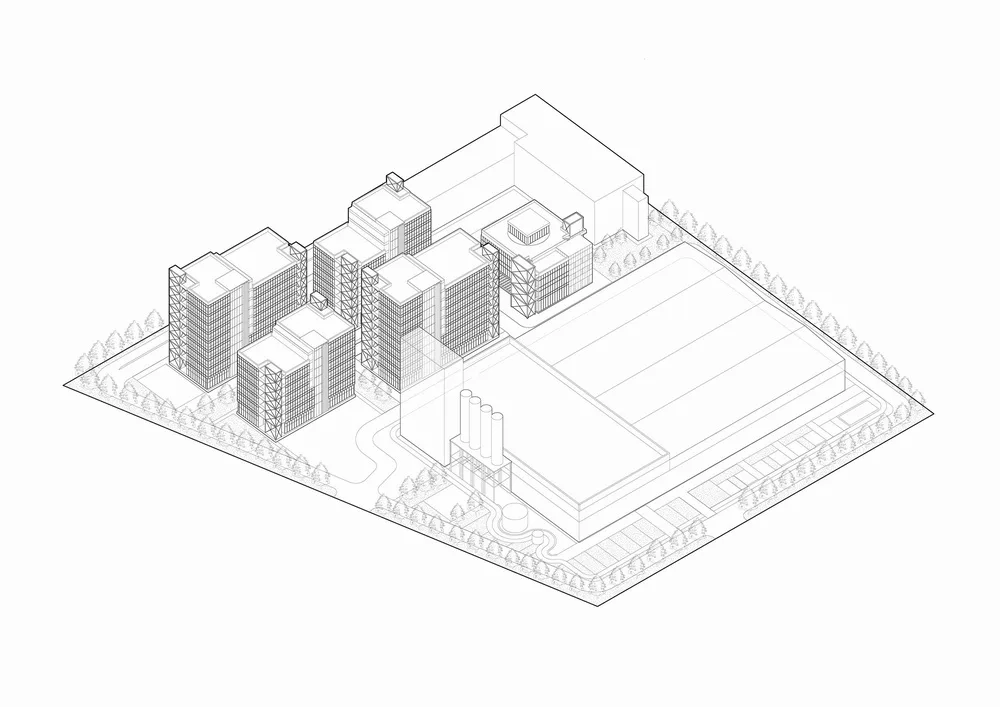
△ Axonometric diagram.
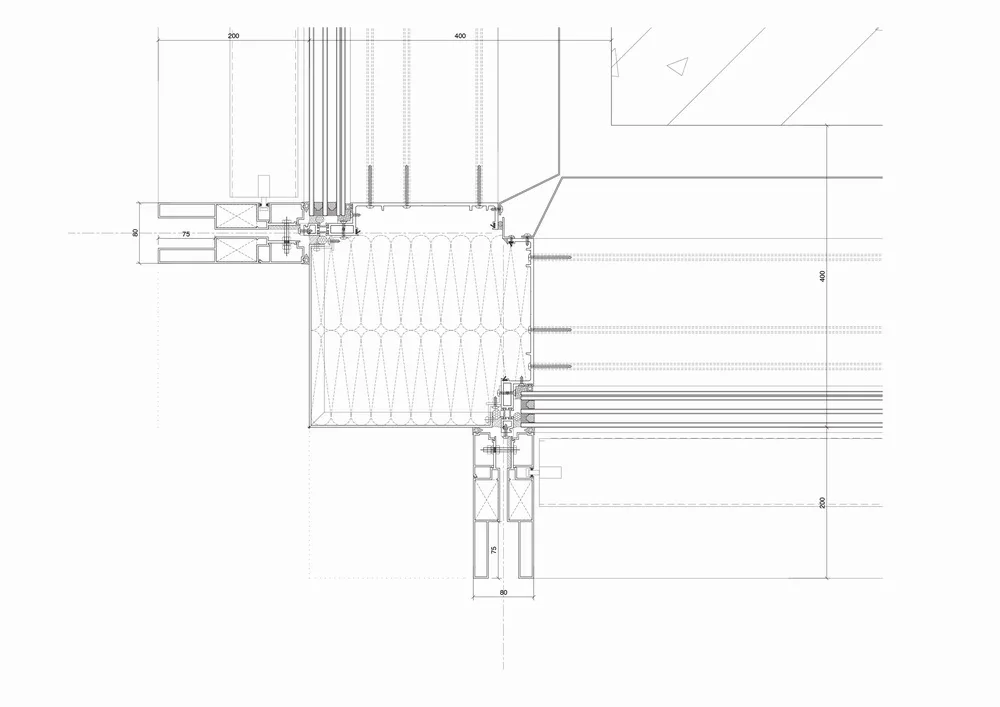
△ Detailed structural views.
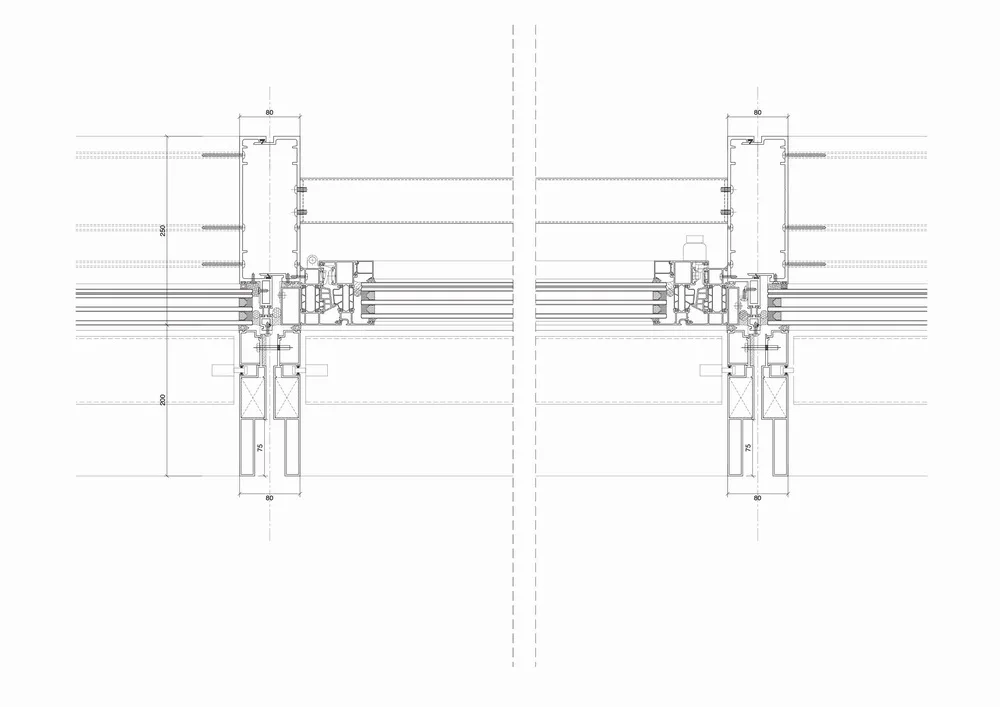
△ Detailed structural views.
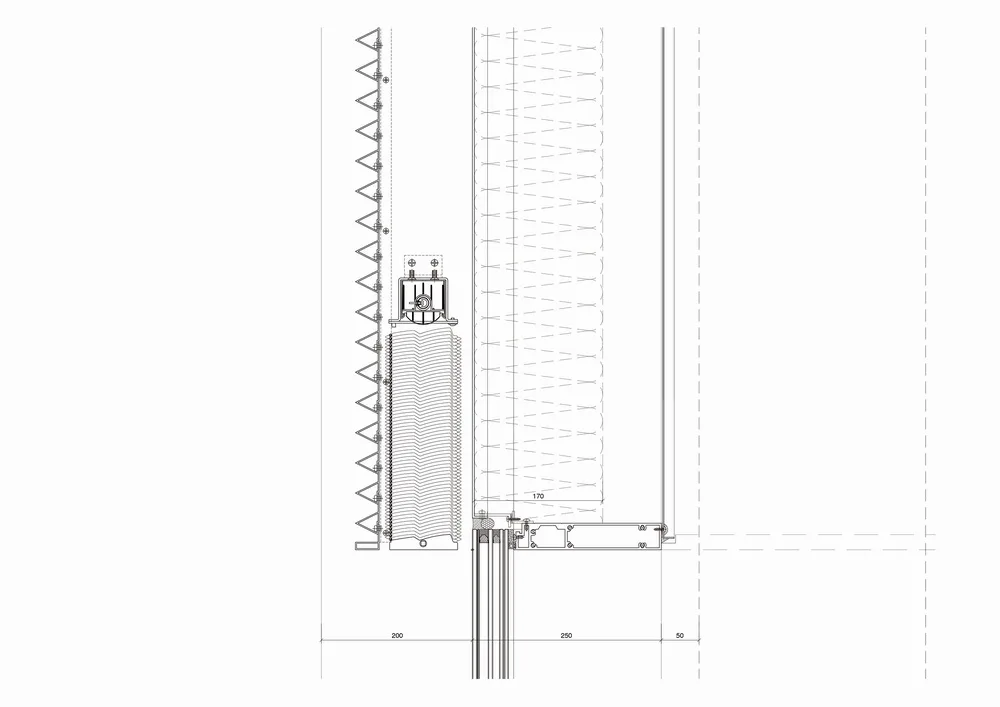
△ Detailed structural views.
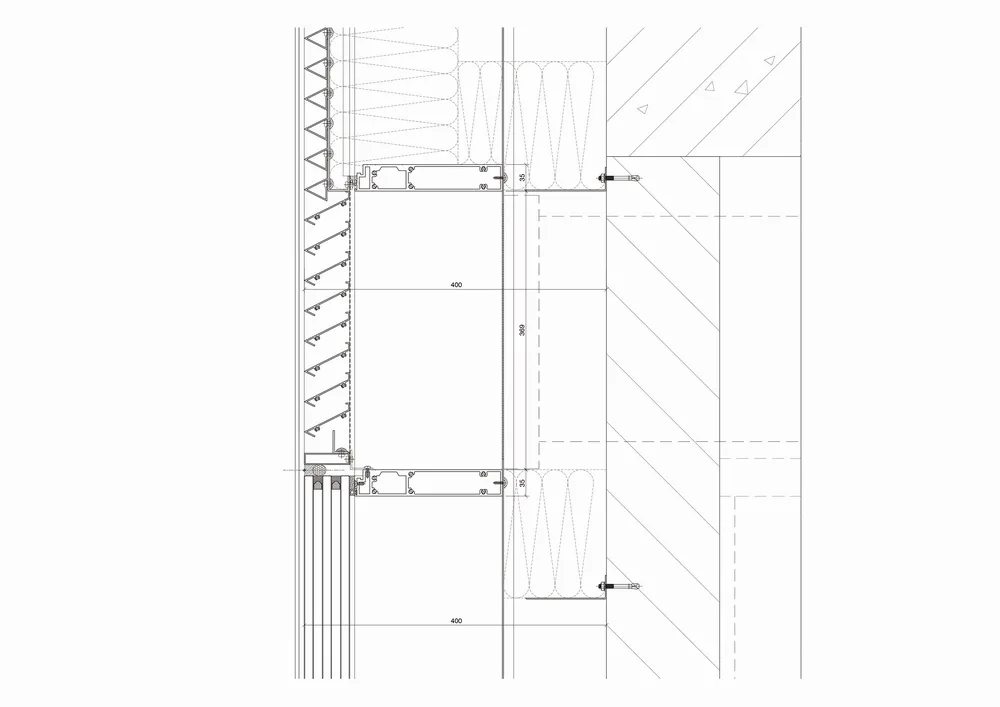
△ Detailed structural views.
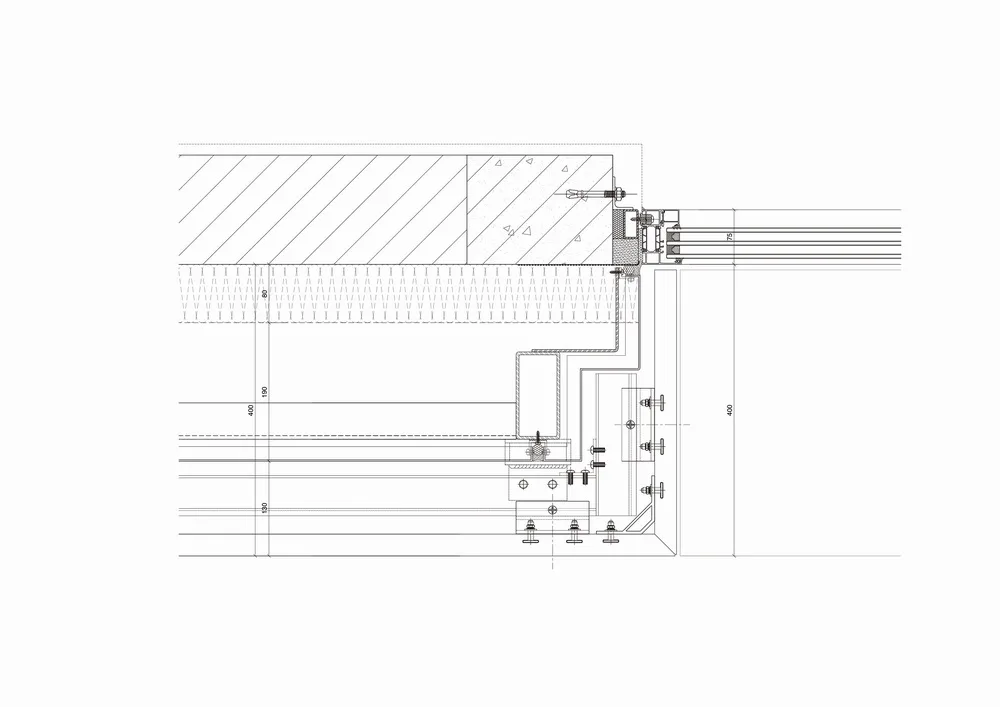
△ Detailed structural views.
Project Information
Project Name: Asia’s First WELL Habitat Laboratory
Scope: Architectural Design
Function: Laboratory, Office
Total Planning Area: 26,123 square meters
Architectural Design Area: 2,400 square meters
Location: Shunyi, Beijing, China
Status: Completed in 2021
Certifications: LEED Gold (core tube and facade design), WELL HSR, WELL Performance Validation
Owner: Ocean Shipping Group
Tenant: Delos
Design Team: Ruben Bergambagt, Carolyn Leung, Ben De Lange, Xuan Wang, Xie Huimin, Pablo Gonzalez Gonzalez, Xu Xiaoyu, Casper Kraai
Photography: CreatAR & Valentín Račko
Design Institute: Beijing Architectural Design and Research Institute Co., Ltd












Must log in before commenting!
Sign Up