
Editor’s Note: With rapid urban expansion in India, suburban communities are gradually losing their original urban character. In response, this community center has been developed to serve multiple purposes, including a multifunctional auditorium, library, and open-air theater. Constructed with cost efficiency in mind, the building uses red bricks, honoring local traditions while showcasing rich textural variations. It stands as the only structure in the community not covered in cement, earning it the name “Red Oasis.”
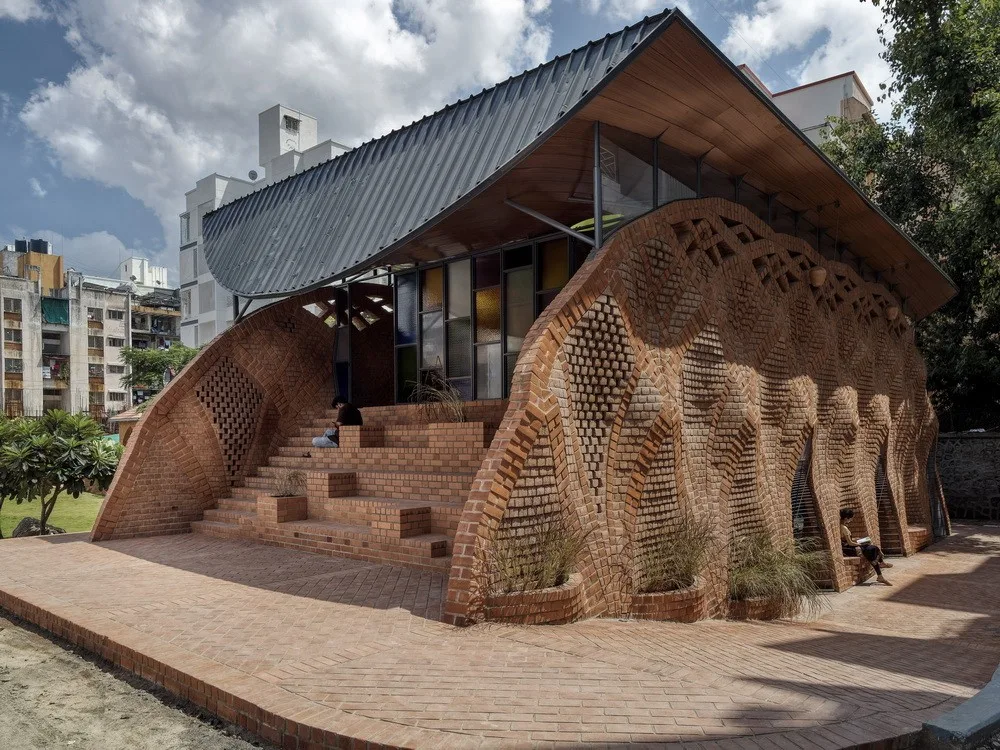
Like humans, architecture carries its own personality and tells the story of time.
India’s rapid urban growth has placed suburban development at the forefront. These areas are densely populated with residential buildings that often meet only the most basic housing needs. The resulting uniformity among homes leads to a gradual loss of original architectural styles and urban textures in these communities.
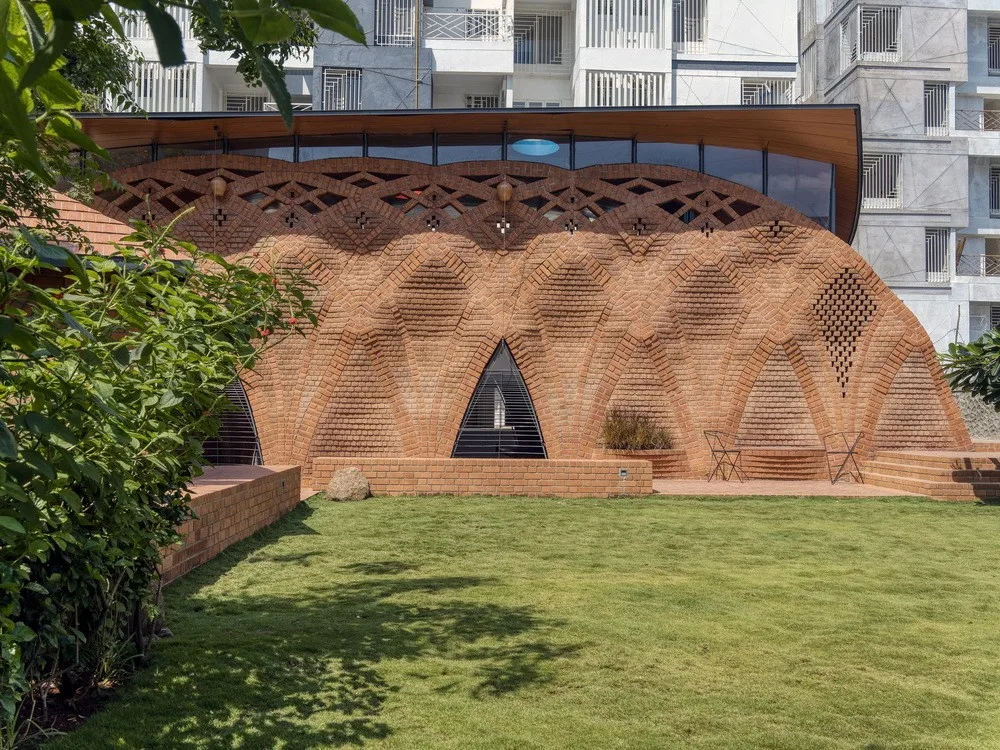
In a Pune community, the client envisioned a planned and cohesive residential development centered around a community hub. Covering 715 square meters, this project site is the only plot in the entire neighborhood left uncovered by cement and open to the outside environment. The design focuses on enabling high-density living patterns.
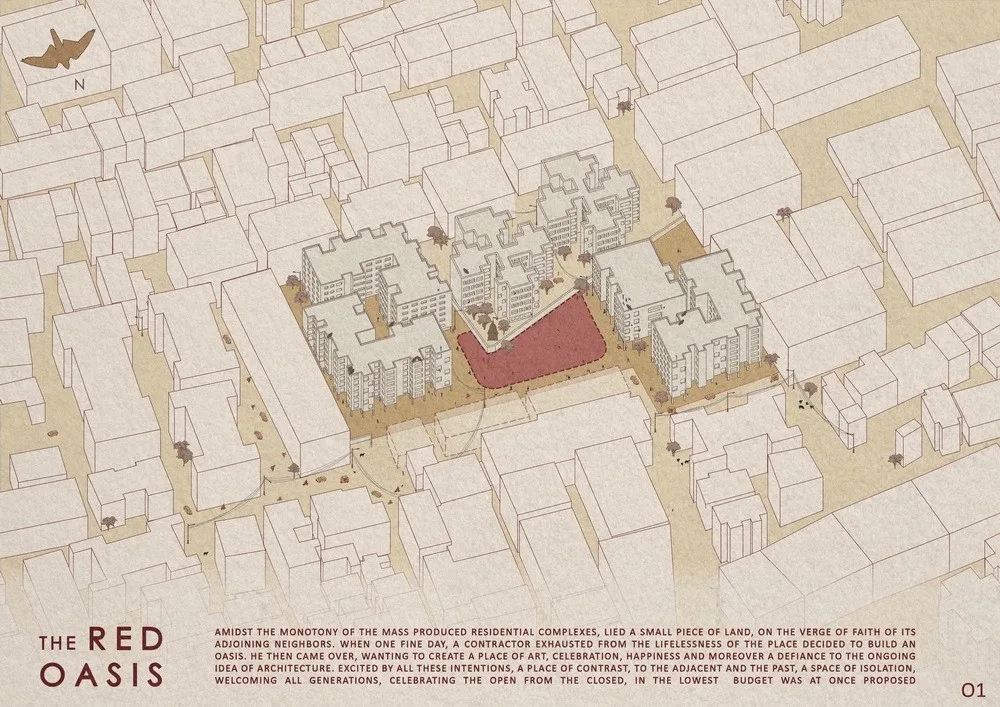
△ Overall Planning Map
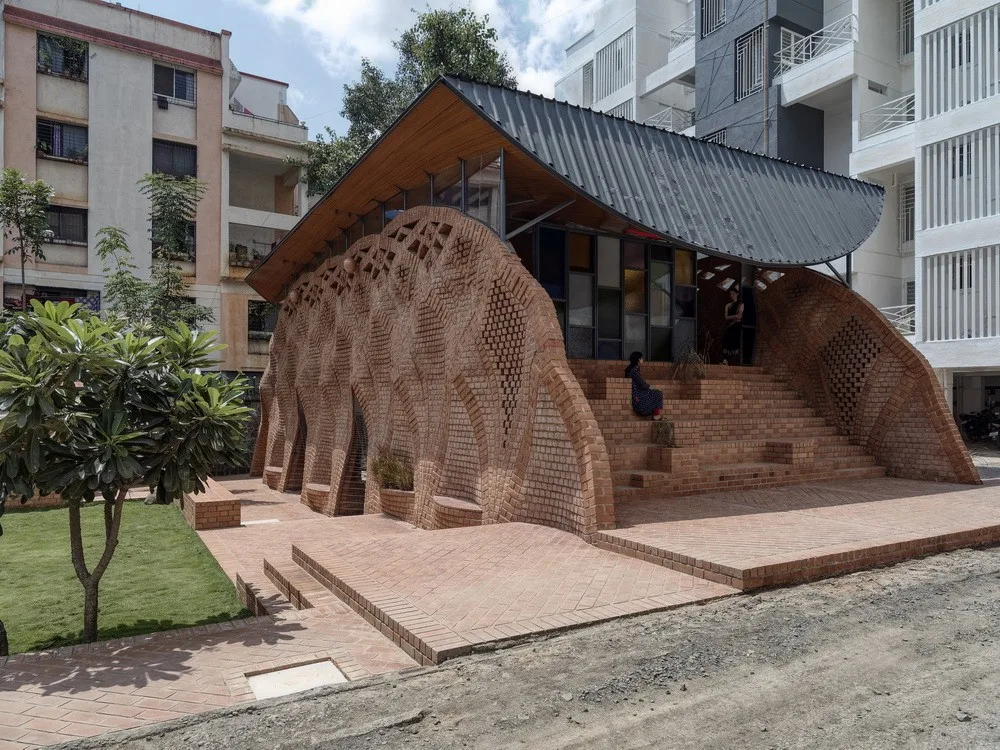
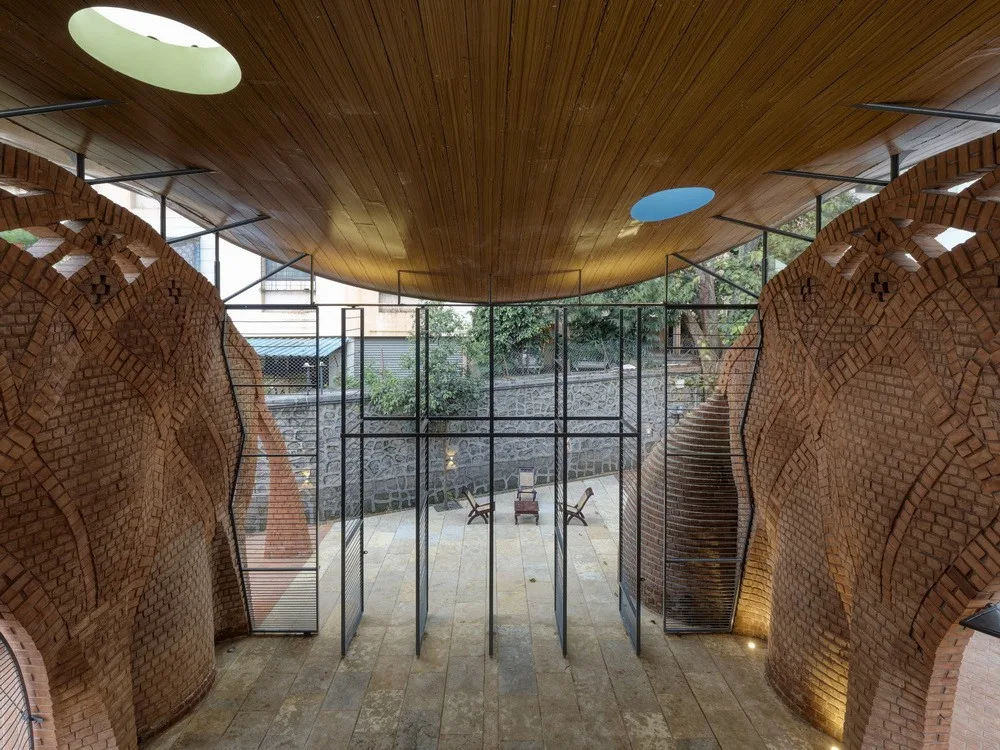
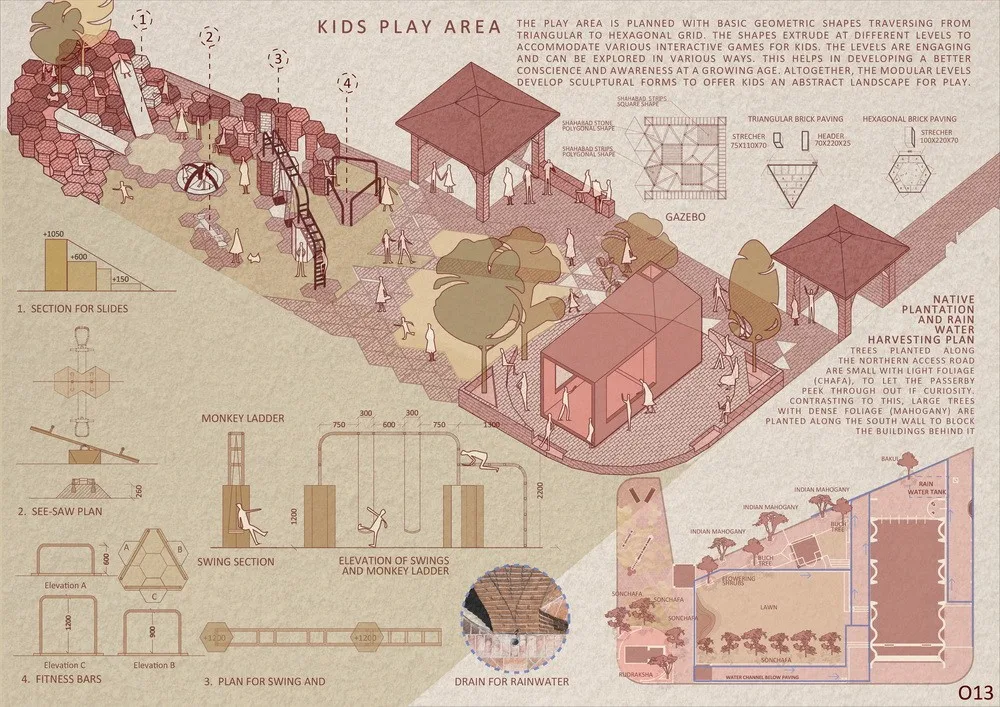
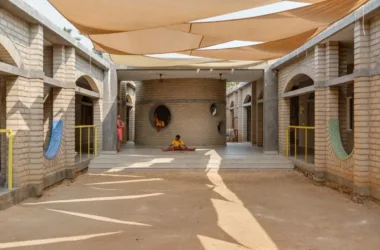
The project centers around an interactive public space that includes a multifunctional auditorium, playground, library, seating areas, walkways, an open-air circular theater, and a temple. The design unfolds from the site boundaries inward, carefully planning functional zones while preserving a central open space. The auditorium serves dual purposes: a versatile ground-floor area and a library above.
△ Axonometric Diagram
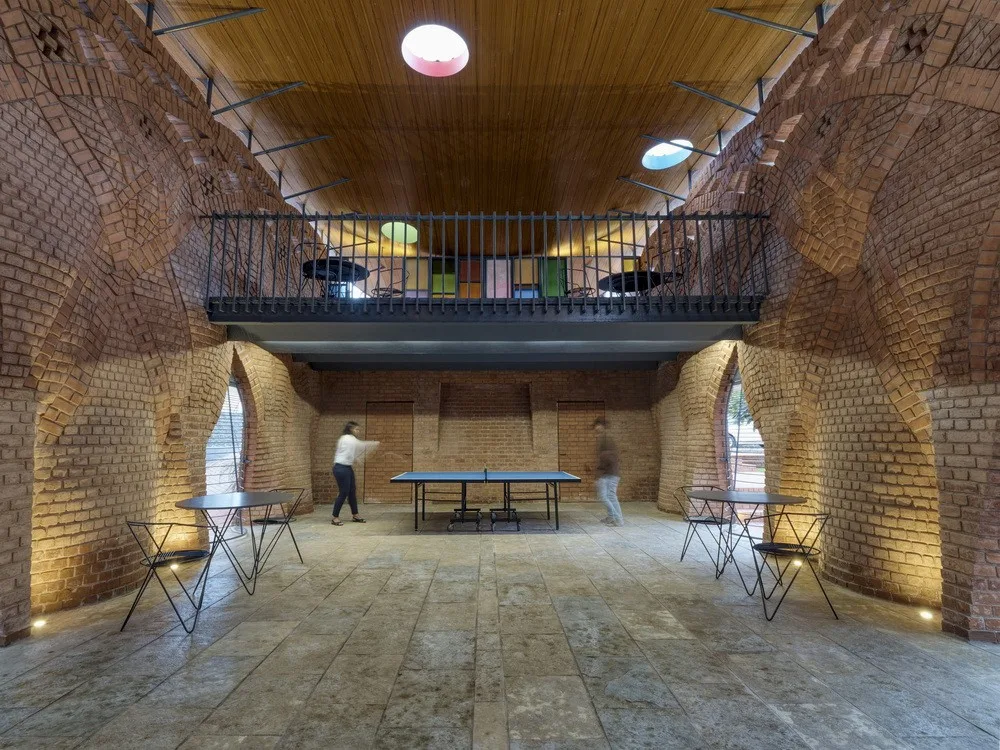
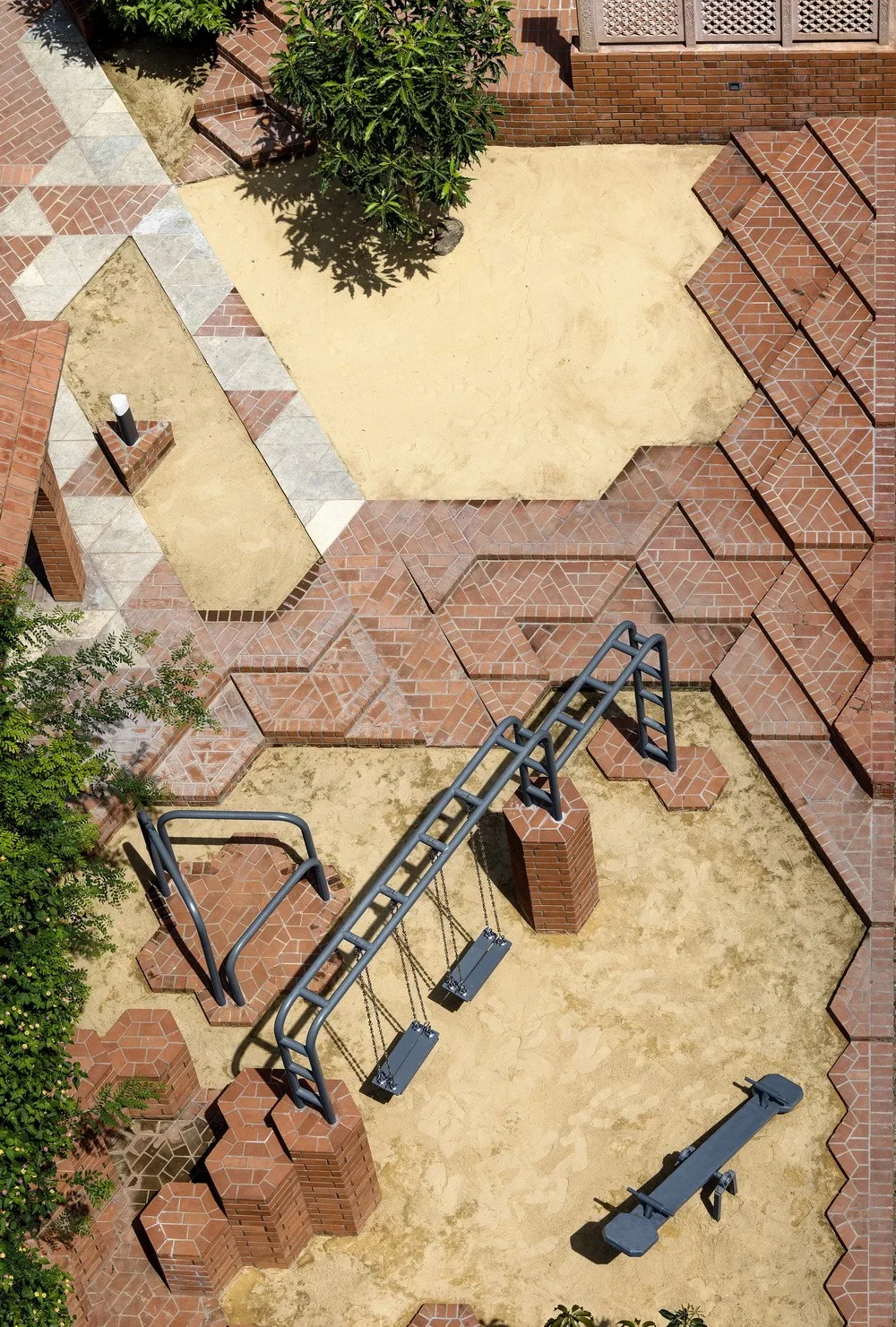
The building features a sunken design, creating a distinct environment that is separated from the surrounding complex urban setting.
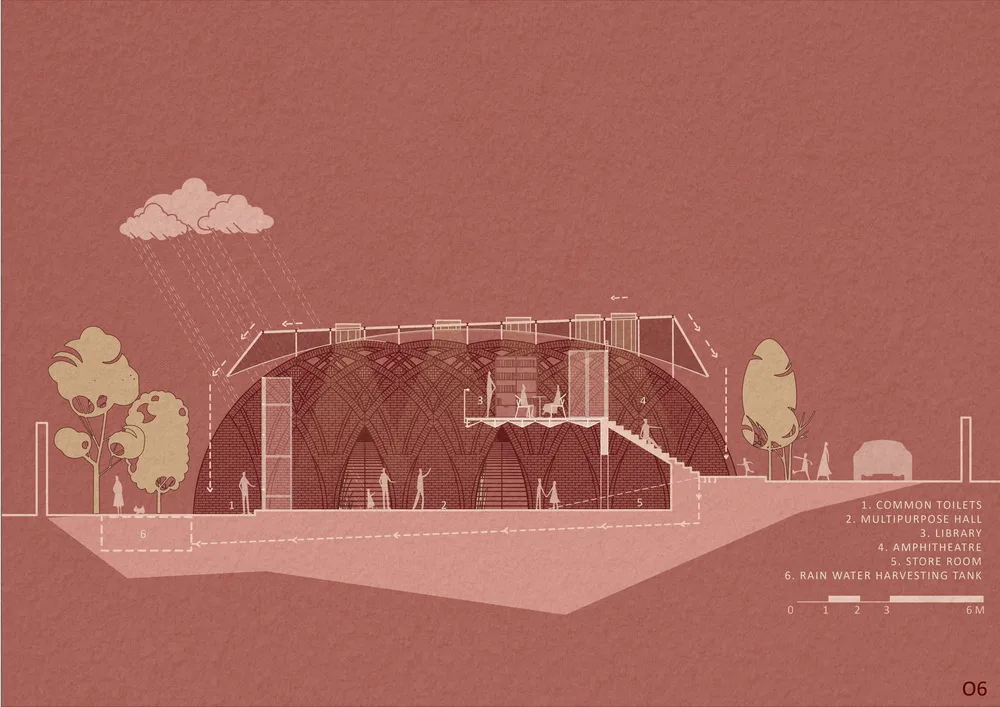
△ Section Diagram
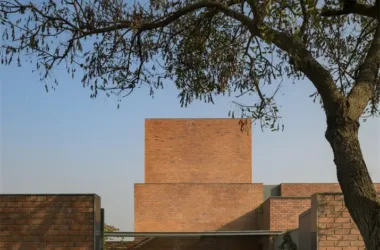
Considering supply, cost, and functionality, bricks and stones were chosen as the primary construction materials. Honoring local traditional masonry, the load-bearing techniques were improved and adapted while maintaining their essence.
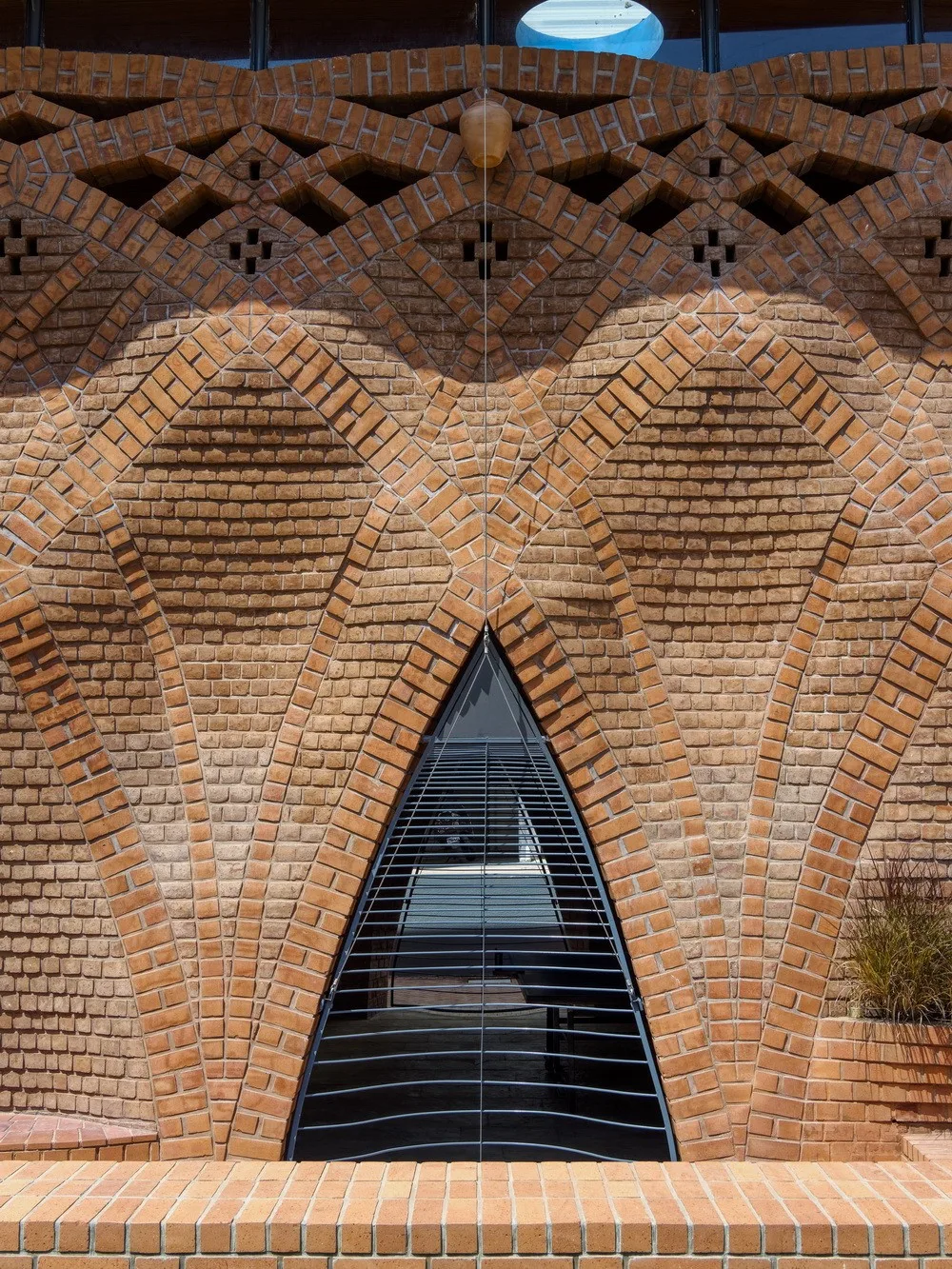
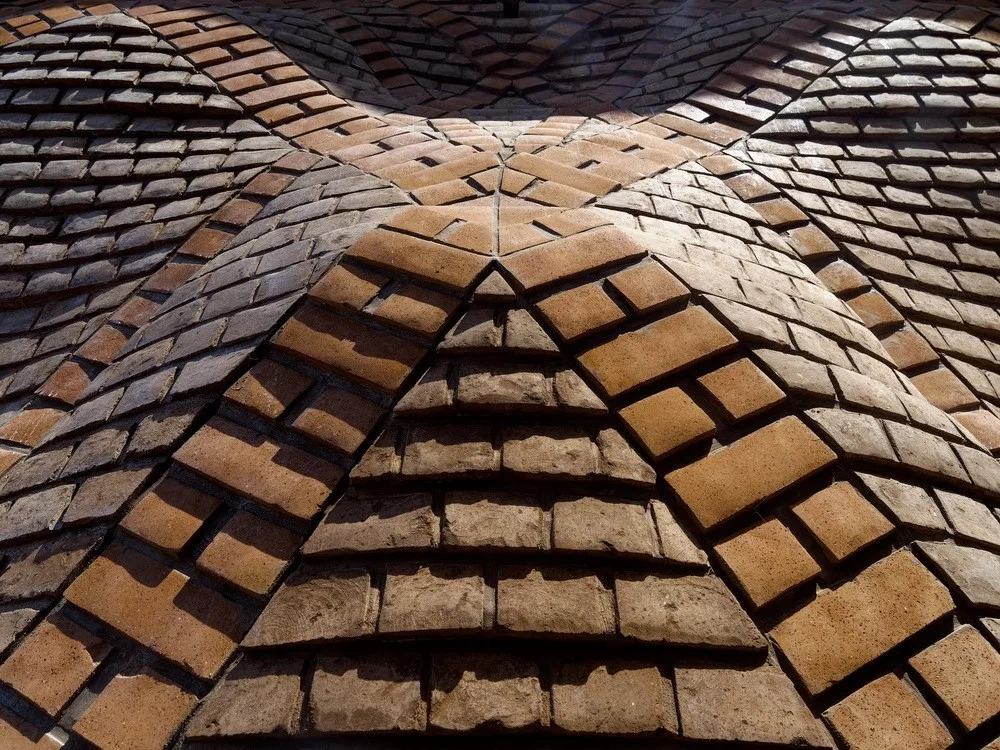
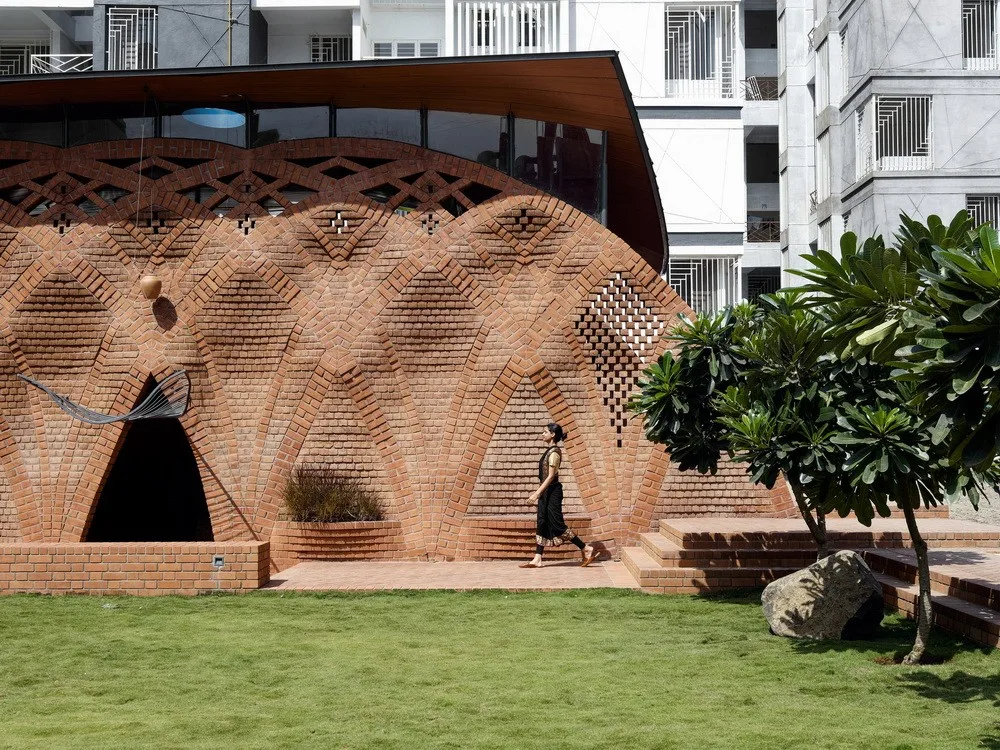
To avoid overly thick walls in the auditorium, 9-inch bricks were bent into hyperbolic shapes, enhancing their load-bearing capacity and structural stability.
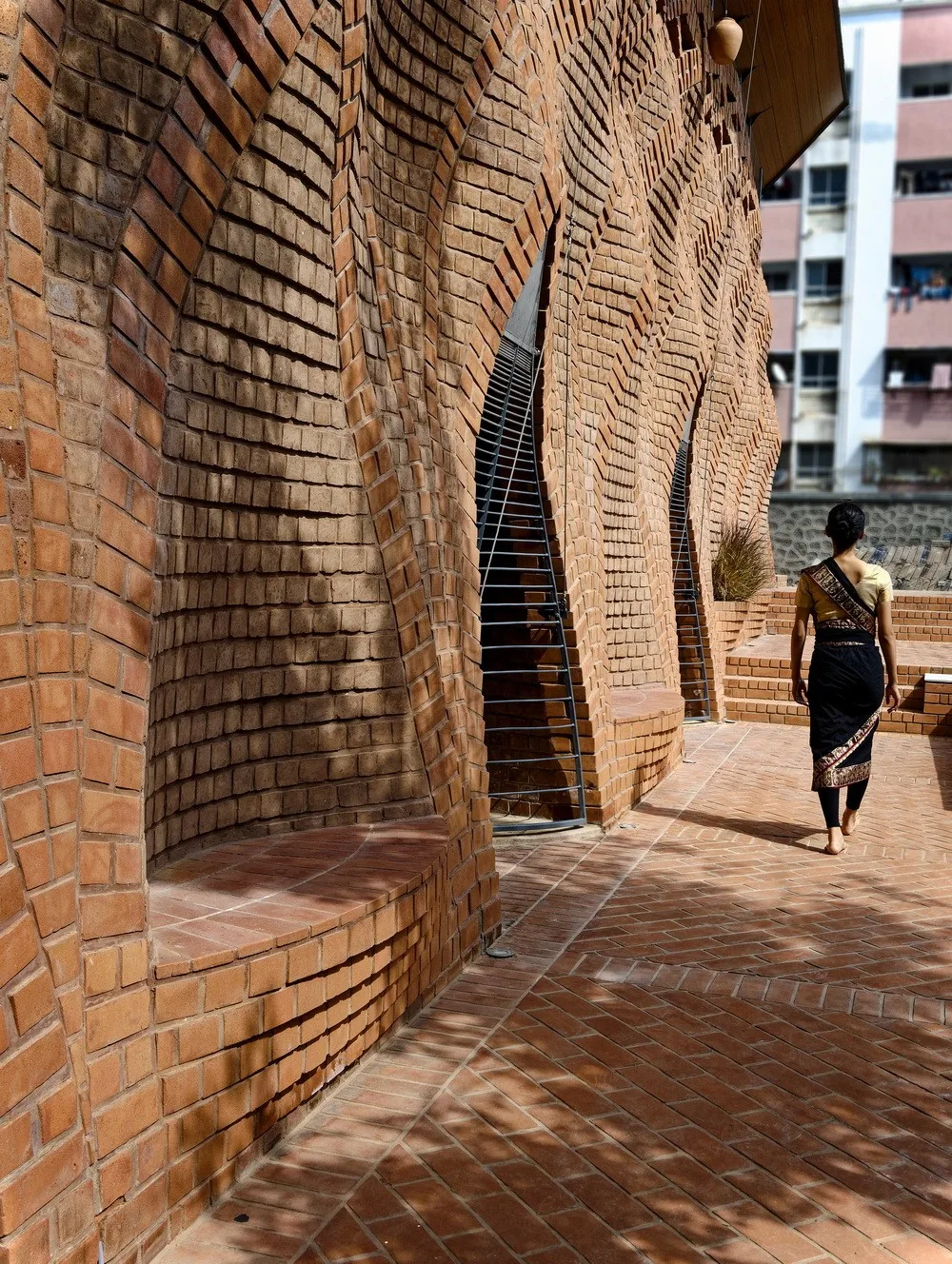
A series of reinforced arches further support the walls. Each arch is anchored to the ground with a supporting wall and transitions into seating at the base. This technique reduces material use and lightens the building’s overall structure.
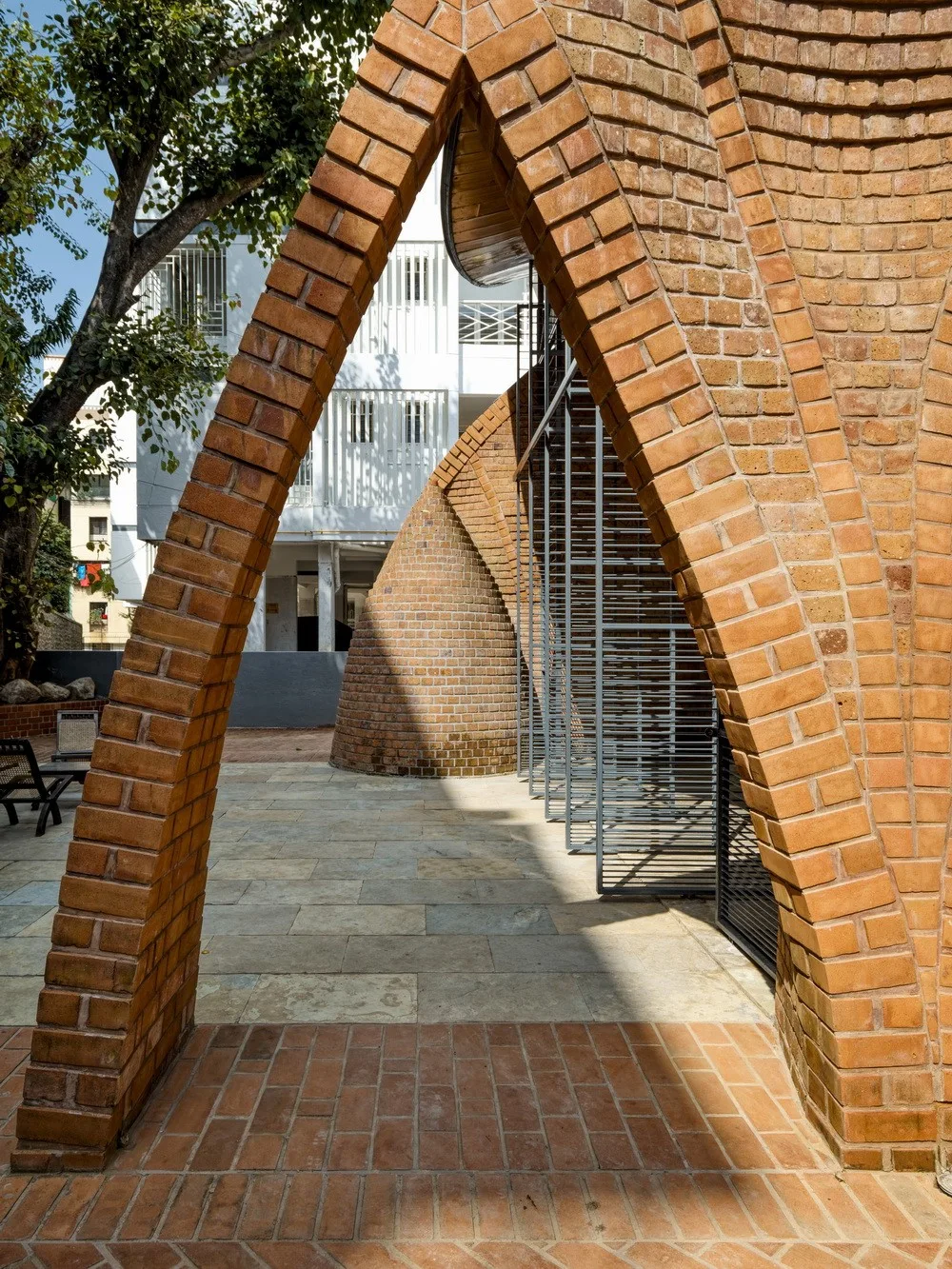
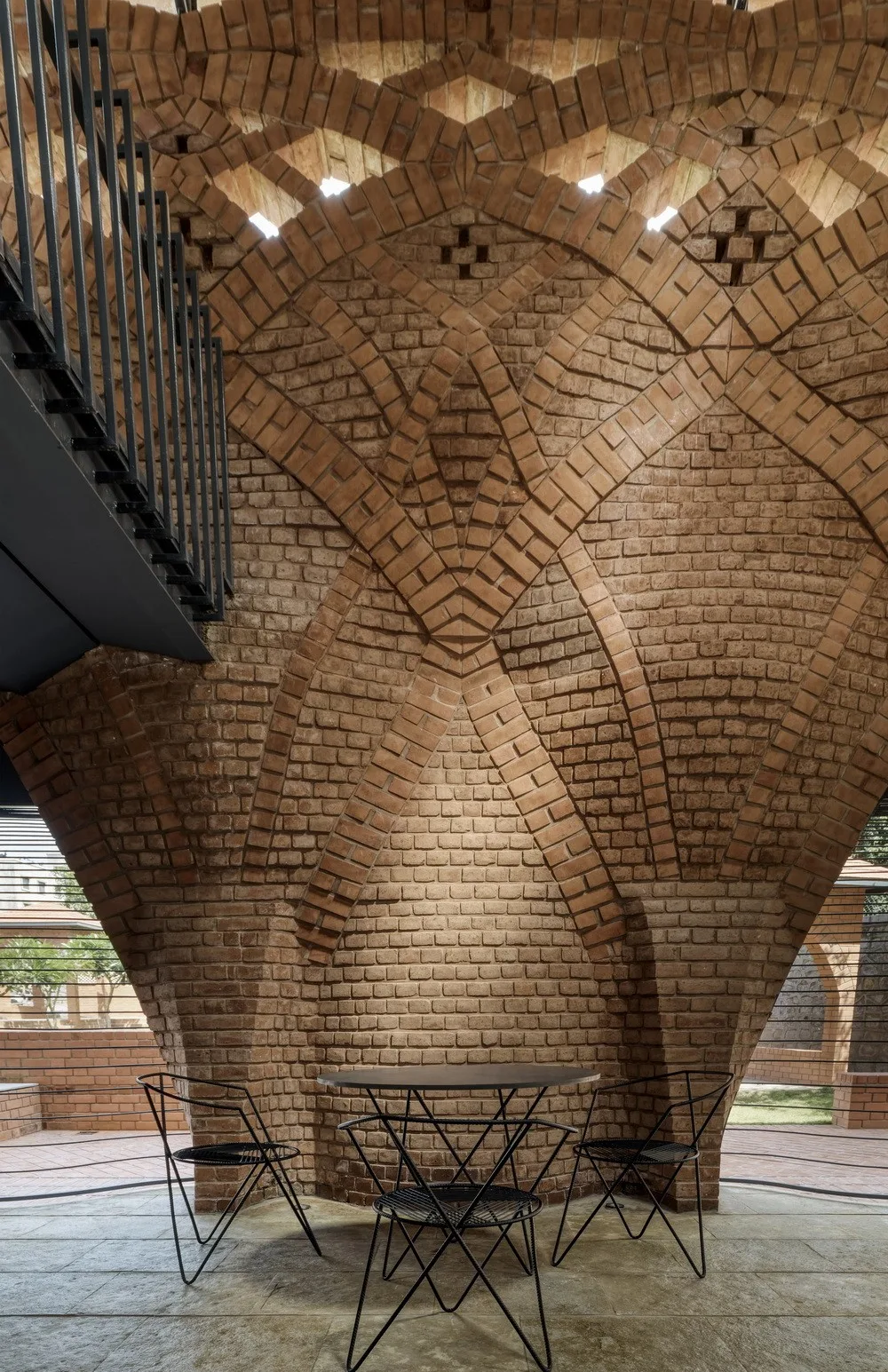
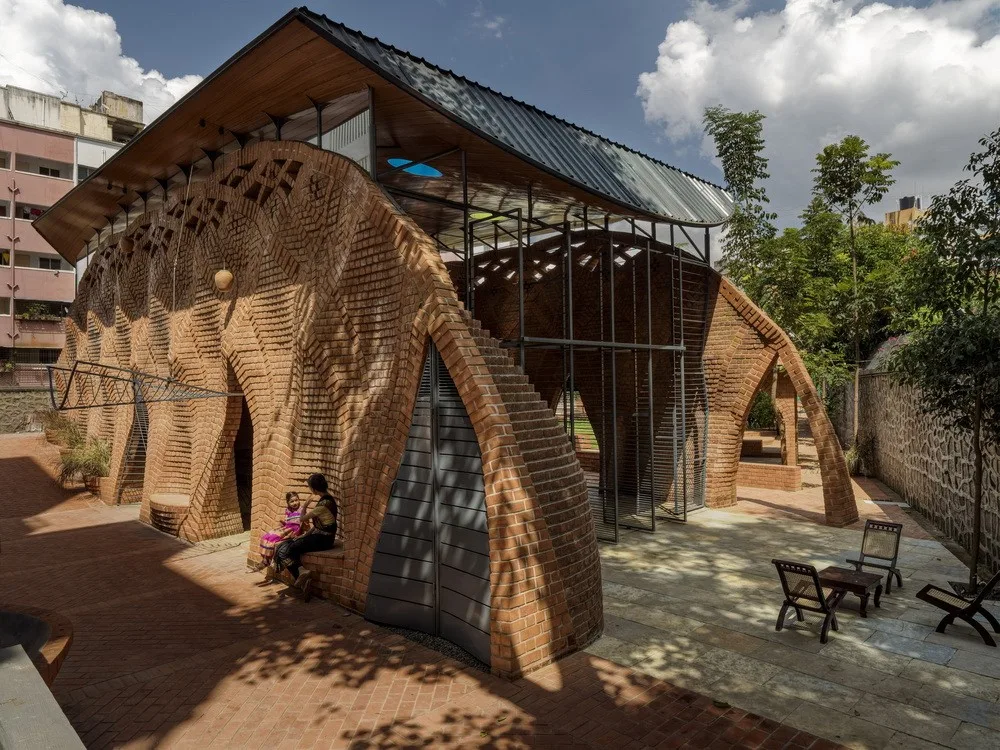
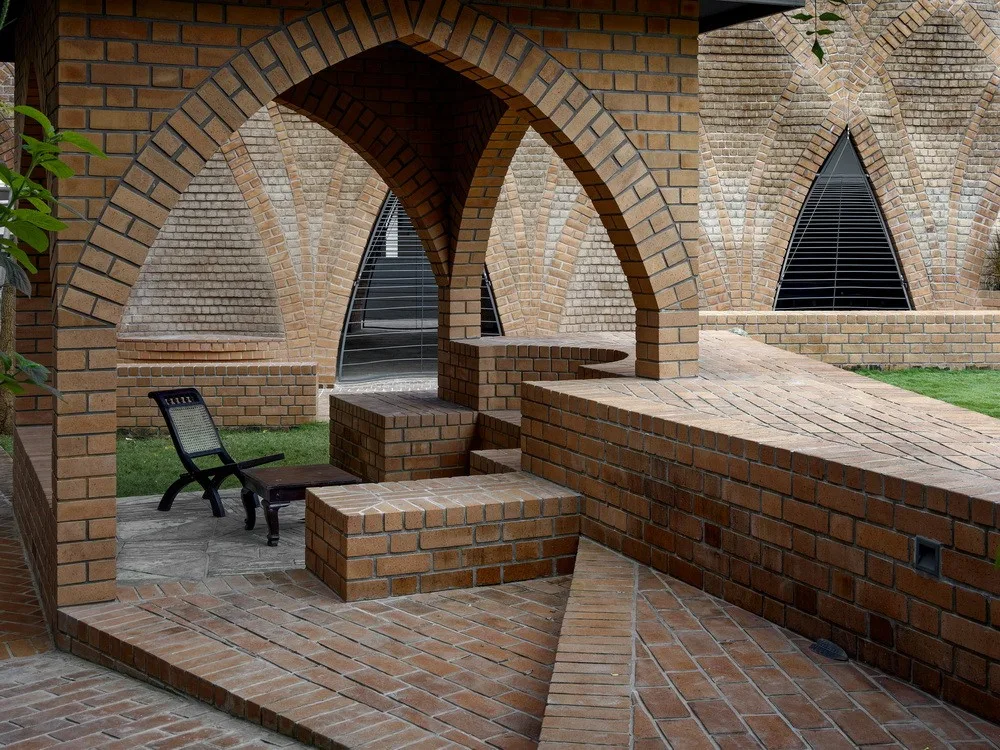
From a cost perspective, the project relied heavily on local materials and labor. The exposed brick walls exhibit subtle textural variations, giving the building a unique character that complements the surrounding areas. The brickwork incorporates the traditional “jaali” pattern, adding visual interest and a sense of lightness to the structure.
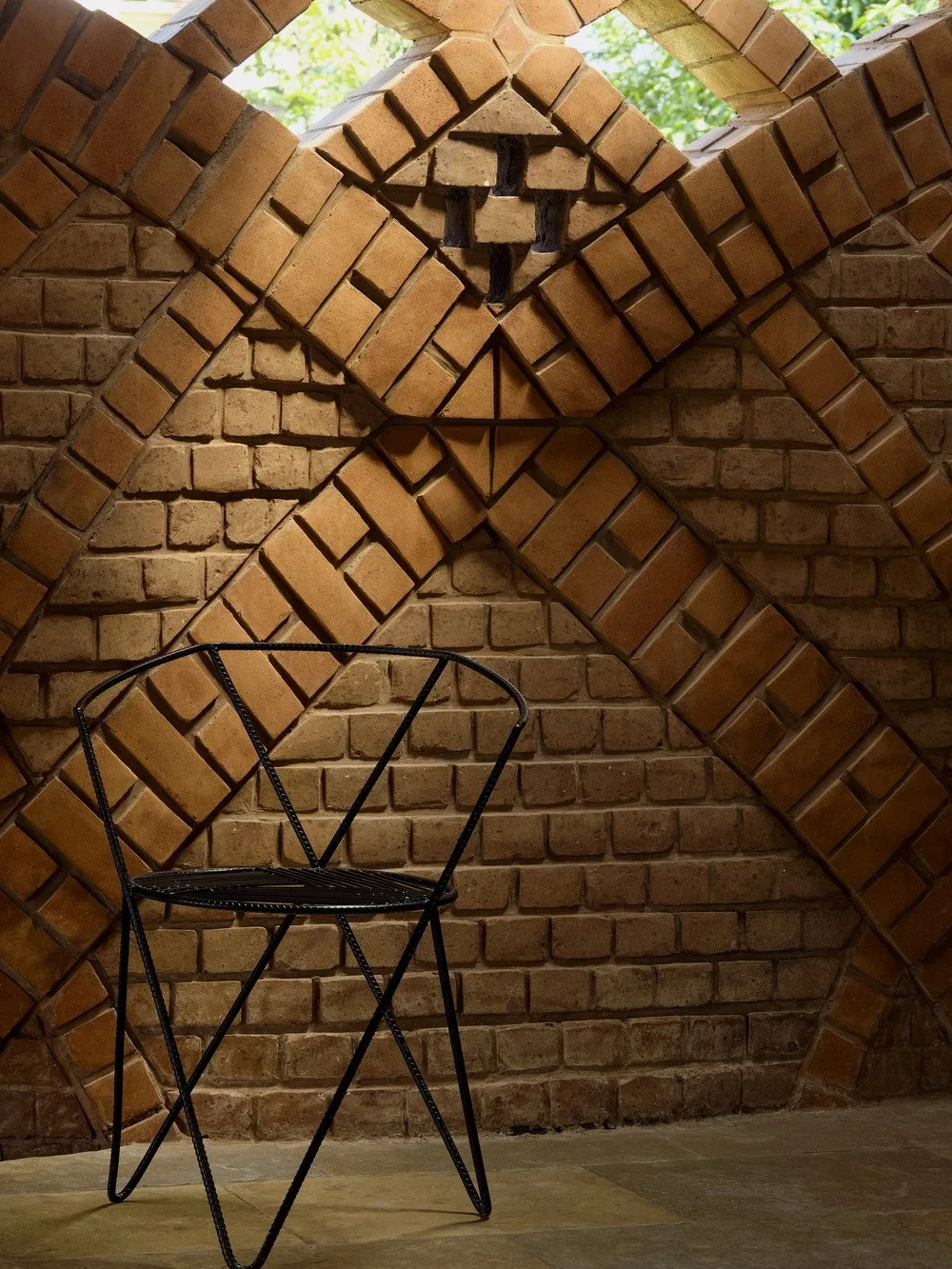
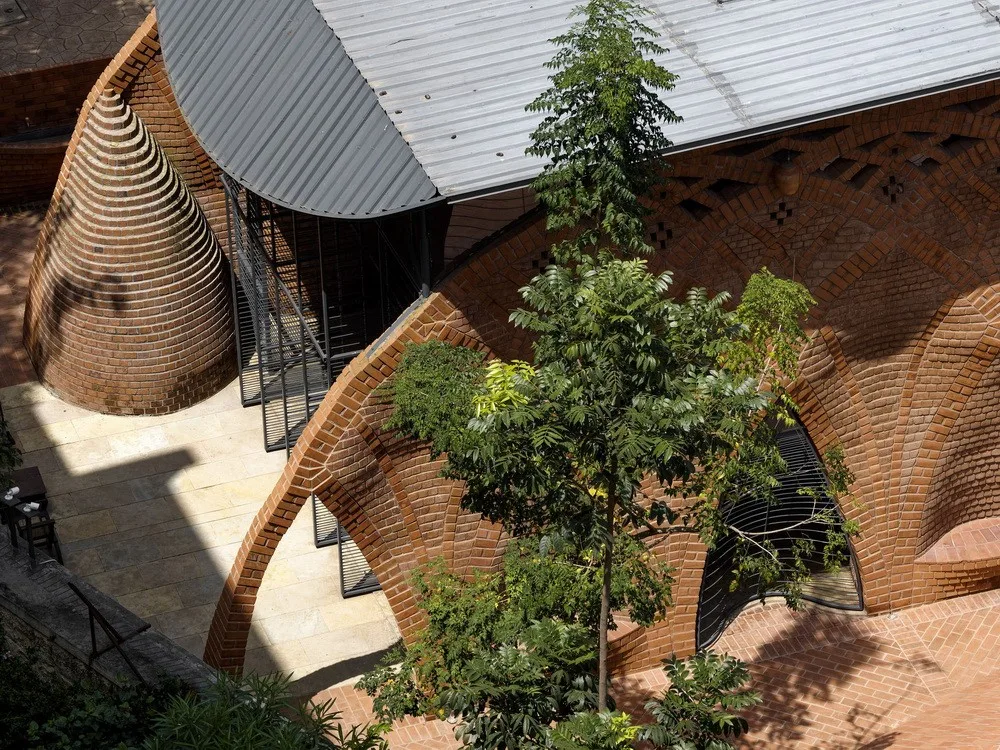
In summary, the architectural structure itself plays a key role in the artistic design through bold brickwork. Beyond the community hall, brick and stone materials extend to the ground, steps, seating, flower beds, and other elements, all carefully integrated to create a warm, inviting atmosphere.
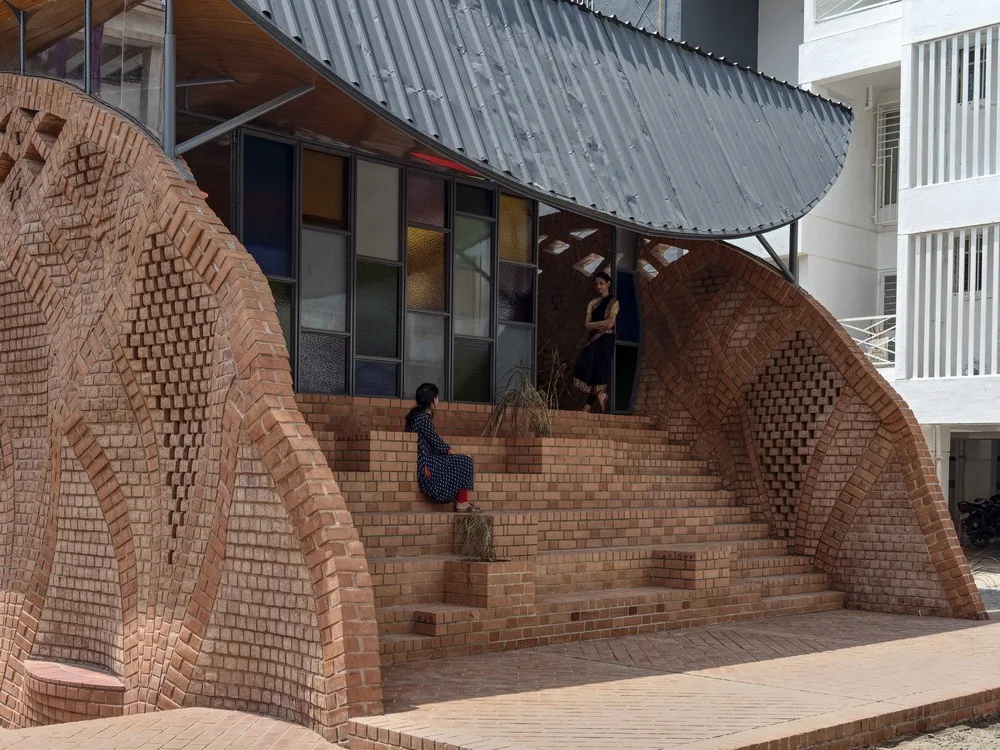
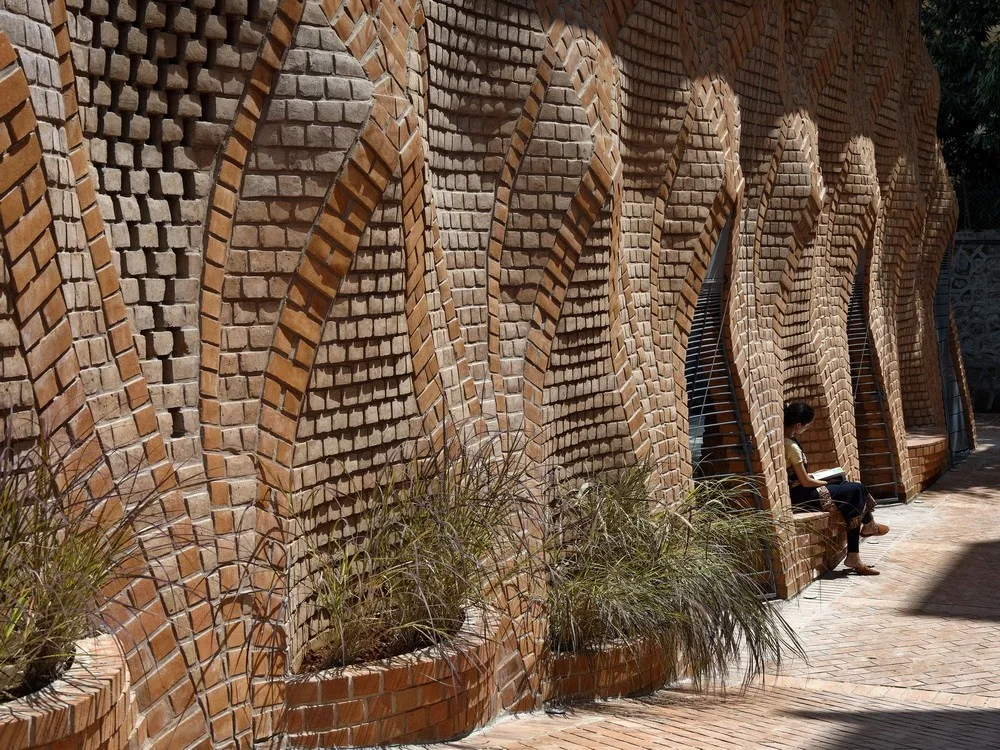
The project stands in stark contrast to the surrounding concrete community, appearing as a distinct imprint on the land. The “Red Oasis” employs a rich combination of brick and stone materials to address functional requirements, forming an organic space that respects the community’s form while showcasing its unique identity.
Technical Drawings
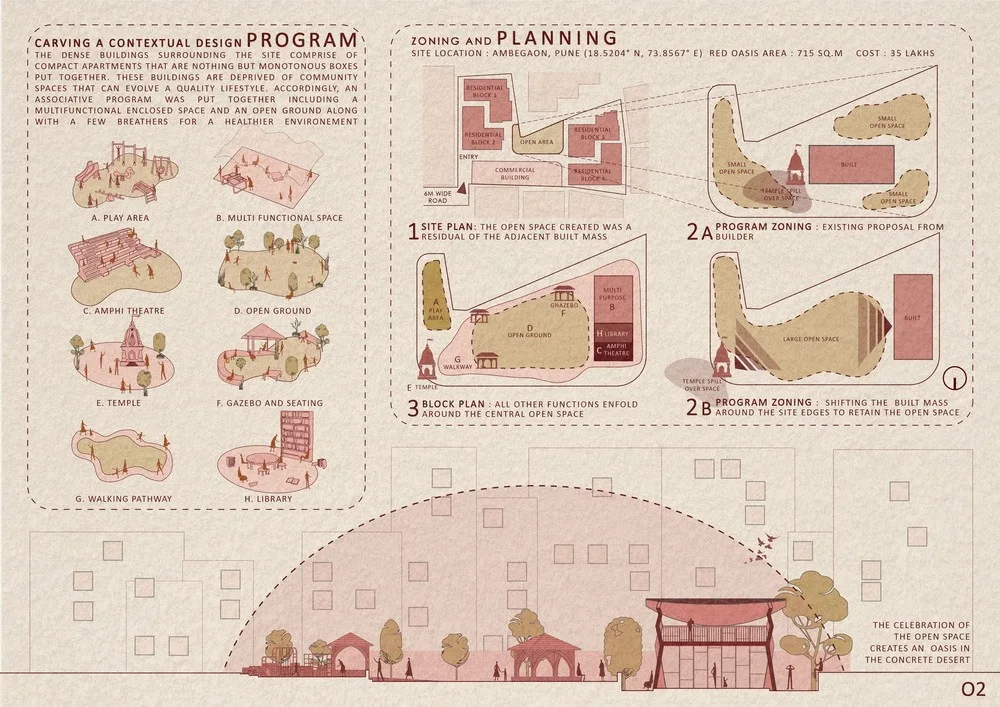
△ Function Analysis Diagram
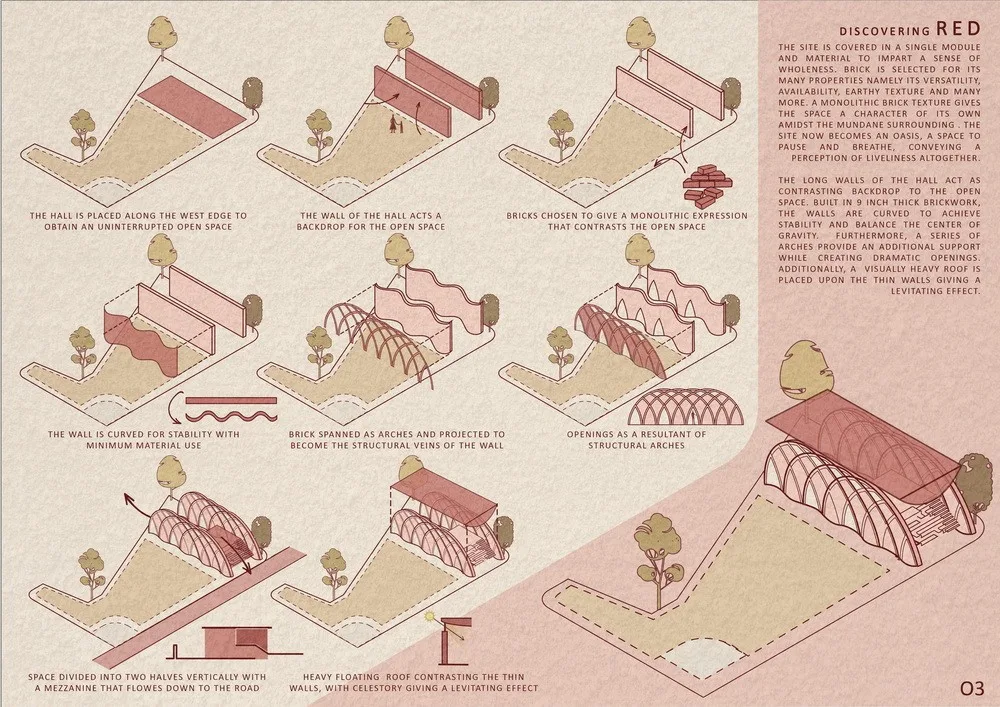
△ Structural Analysis Diagram
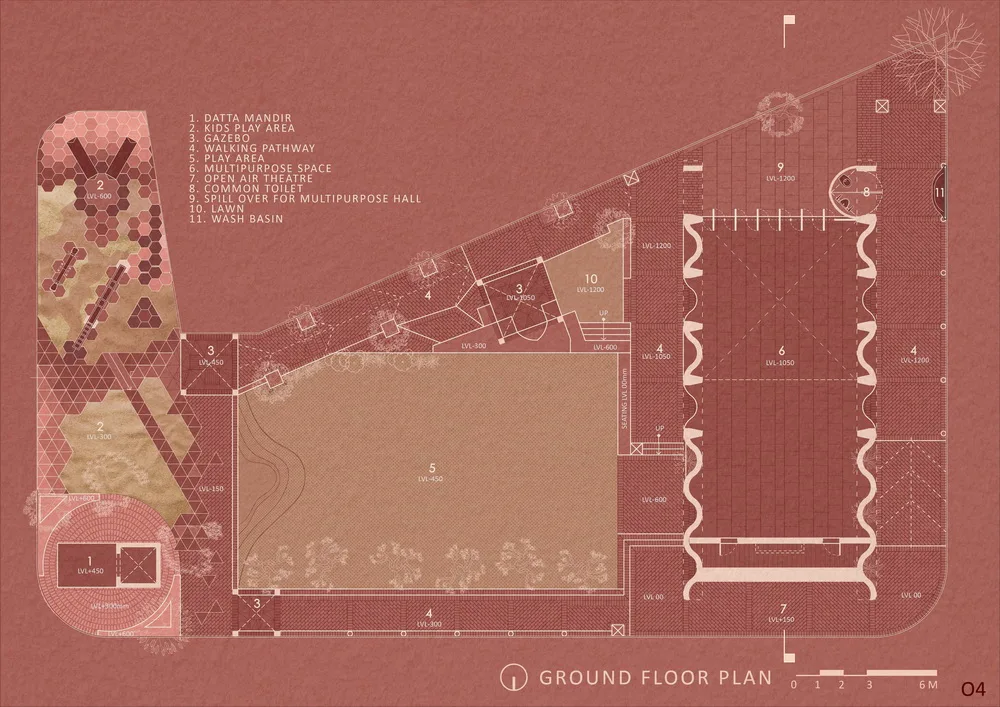
△ Ground Floor Plan
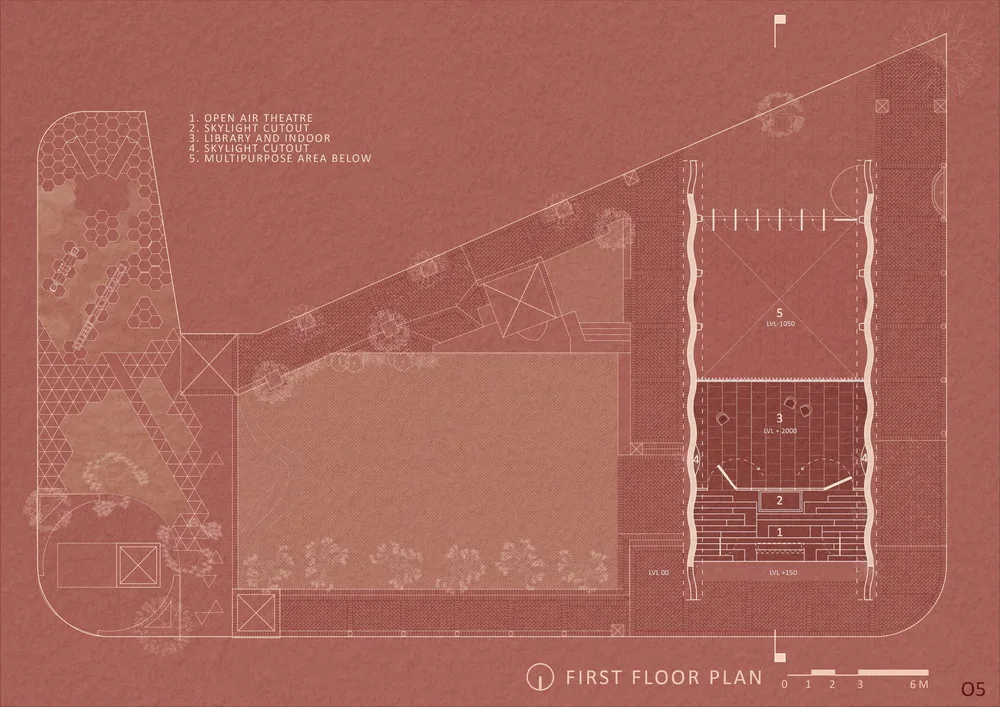
△ First Floor Plan
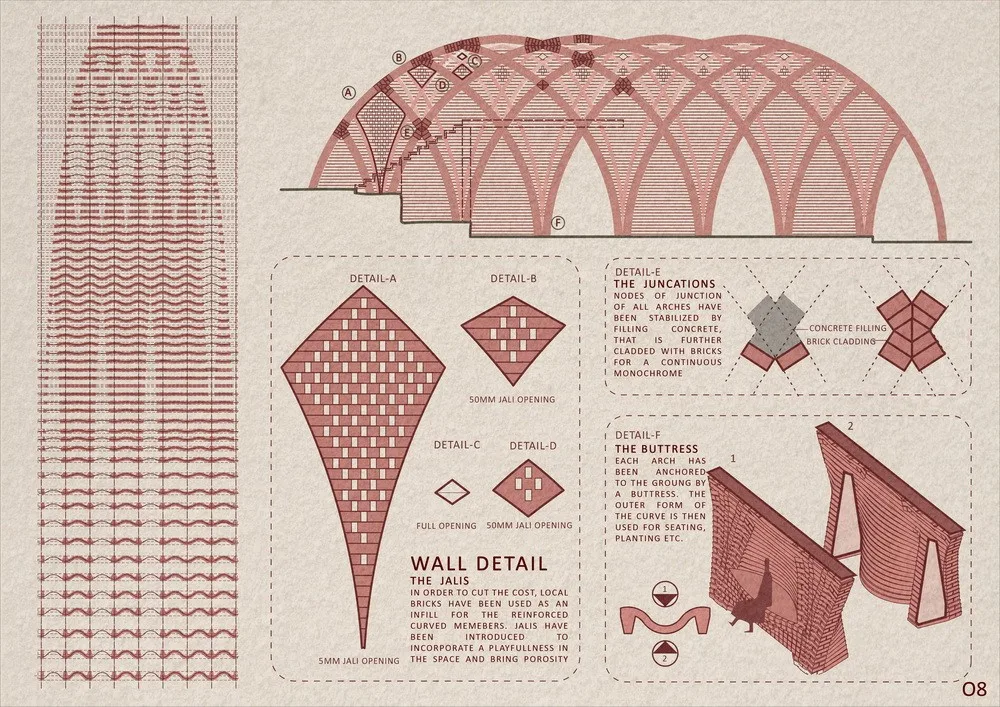
△ Wall Structure
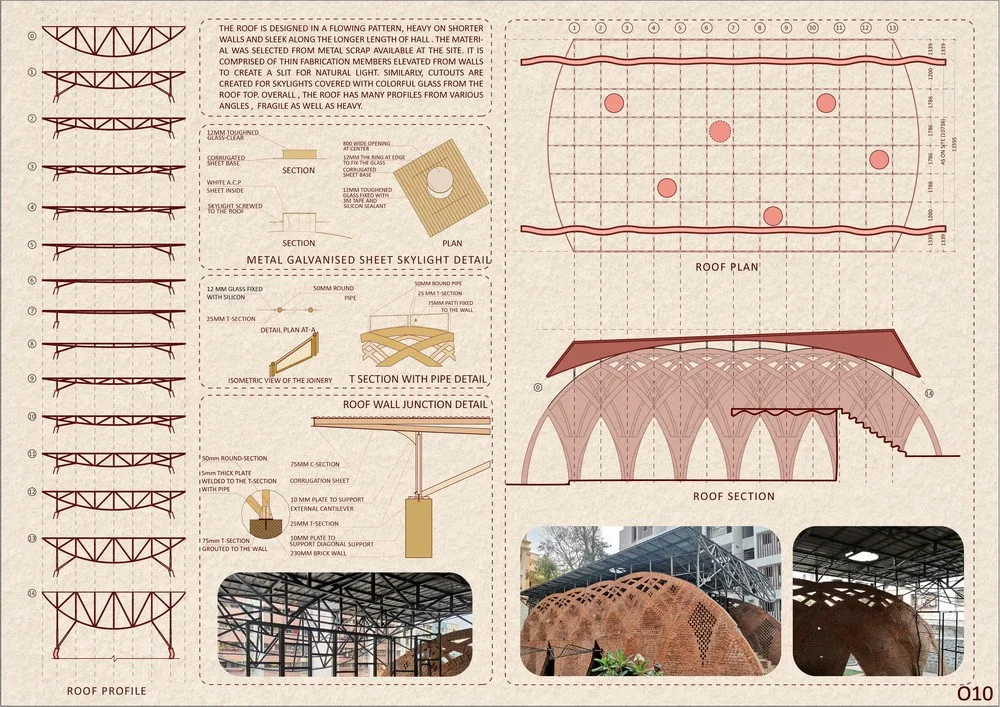
△ Structural Schematic Diagram
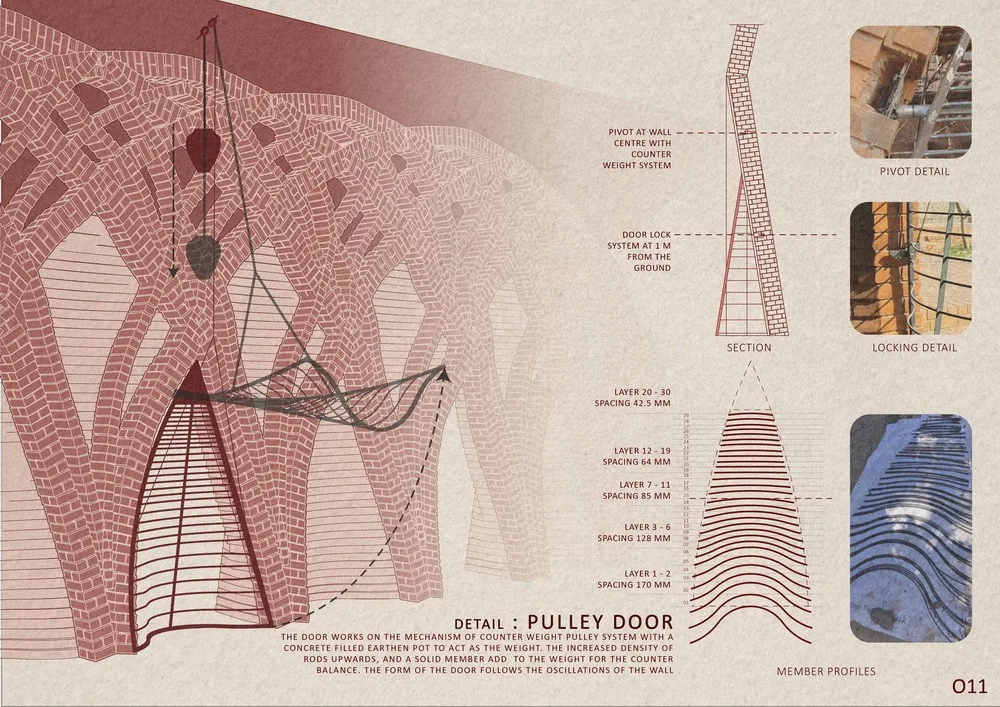
△ Entrance Diagram
Project Information
Architectural Design: PMA Madhushala
Area: 150 m²
Year: 2020
Photographer: Hemant Patil
Design Team: Naresh Shivakoti, Prasanna Morey
Client: Ankit Soni
Location: Pune, India












Must log in before commenting!
Sign Up