
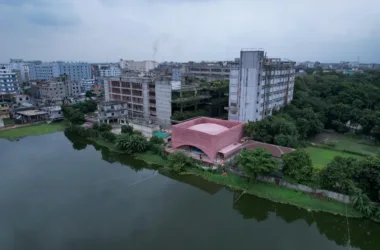
The sewage treatment plant is part of a garment factory complex located on a brownfield site along the banks of the Stalakaya River. Muslin Cotton Mills, a state-owned enterprise established in the 1950s, was auctioned off to a private industrialist in 2013 for redevelopment.
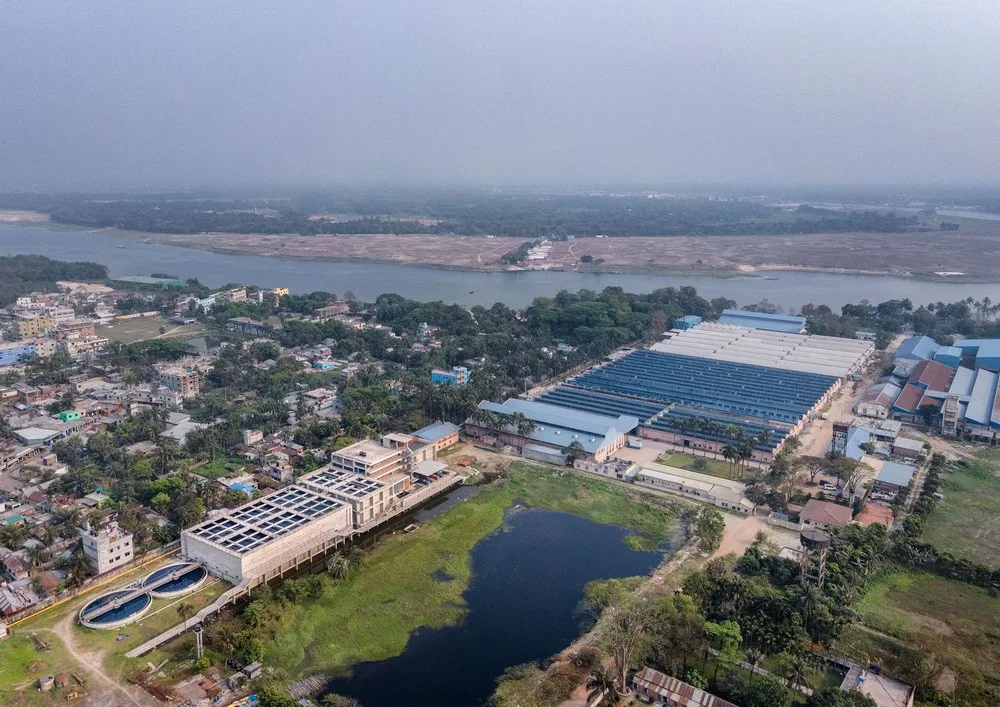
The area has suffered from severe groundwater depletion due to the old industry, and uncontrolled sewage discharge has polluted the river. Traditionally, sewage treatment plants are associated with unpleasant sights and odors, leading to the perception that they are unsightly structures. For this reason, the owner initially intended to place the plant by the river and keep it hidden.
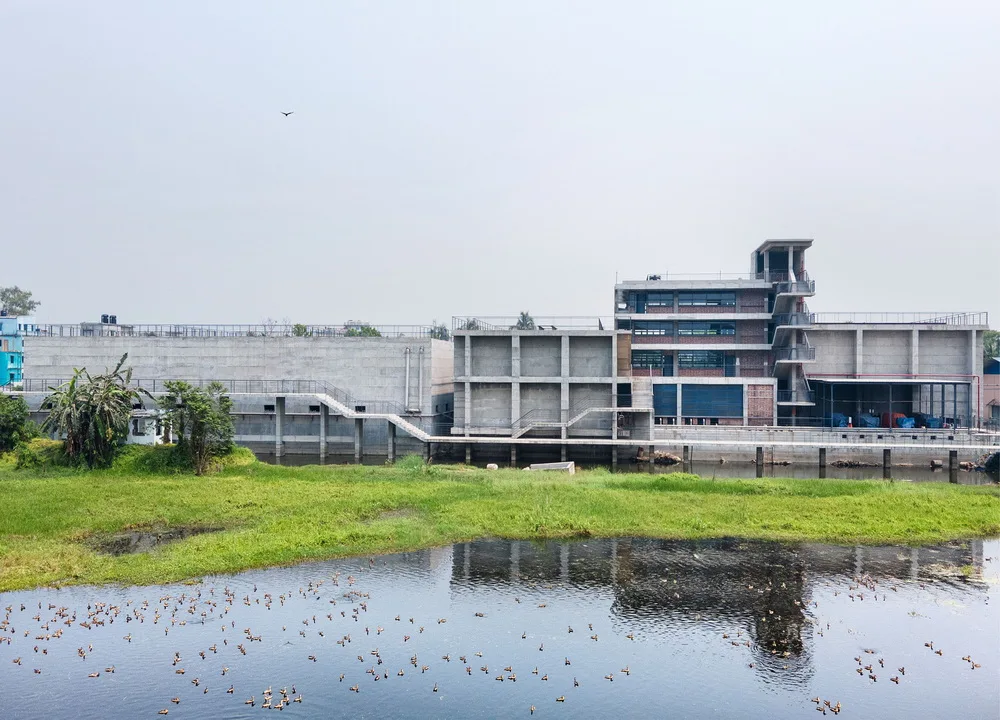
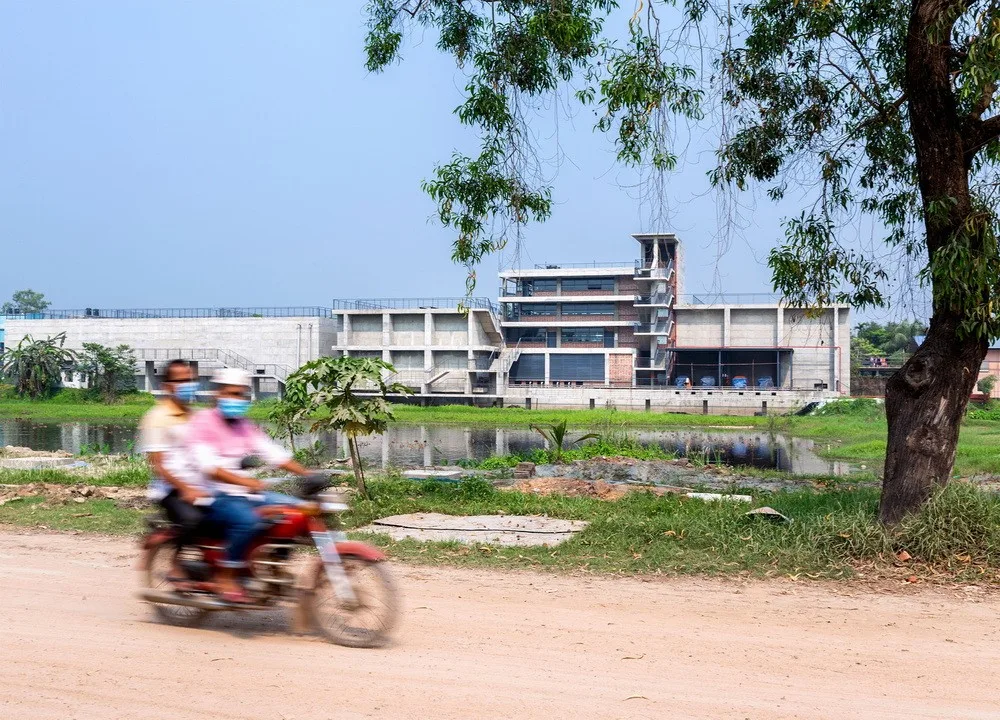
The main challenge was that the plant’s original design was purely functional, resulting in a necessary but unattractive facility. After extensive discussions with the owner, the architect chose to make the sewage treatment plant a prominent and integral part of the complex.
The architects aimed to reverse the original water cycle to reduce groundwater dependence. Collaborating with pipeline and hydrology experts, the design team developed a comprehensive system that collects water from the river and rain, naturally storing and filtering it within the site for use in production. They also restored a depleted water channel and introduced a restricted forest strip to promote natural filtration and help restore the area’s ecological balance.
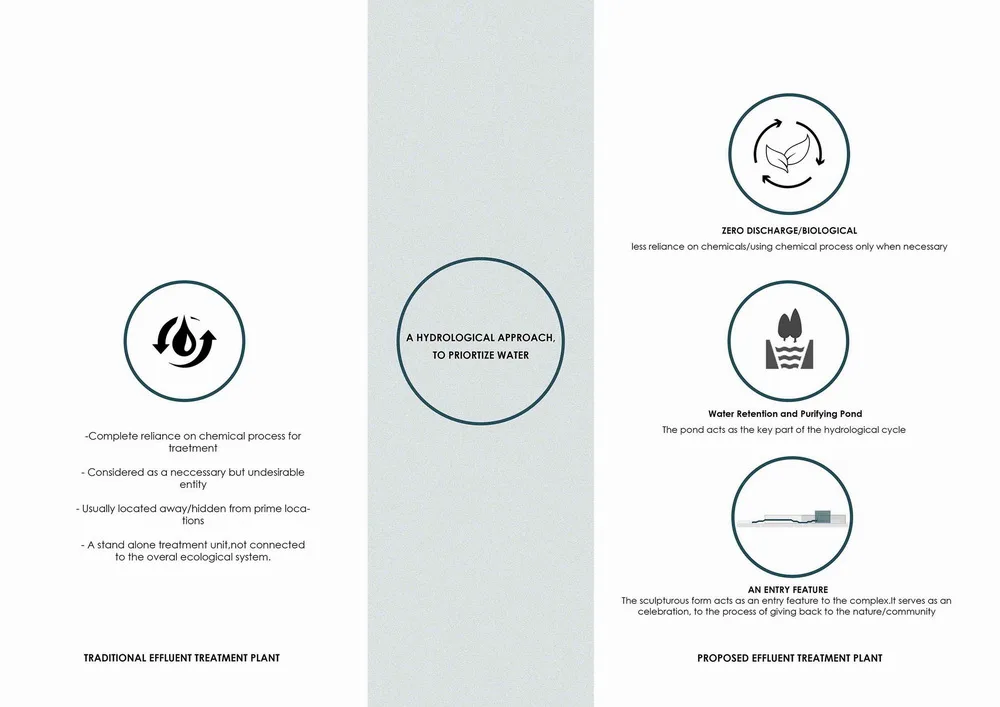
△ Water Resources Priority Treatment Arrangement Diagram
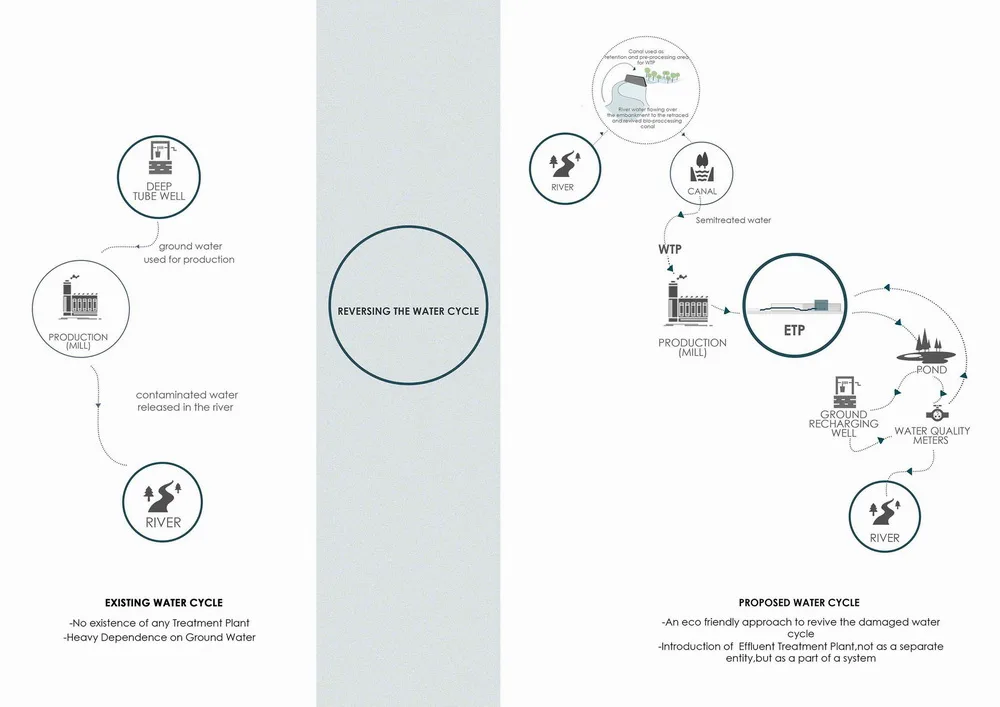
△ Water Cycle Analysis Diagram
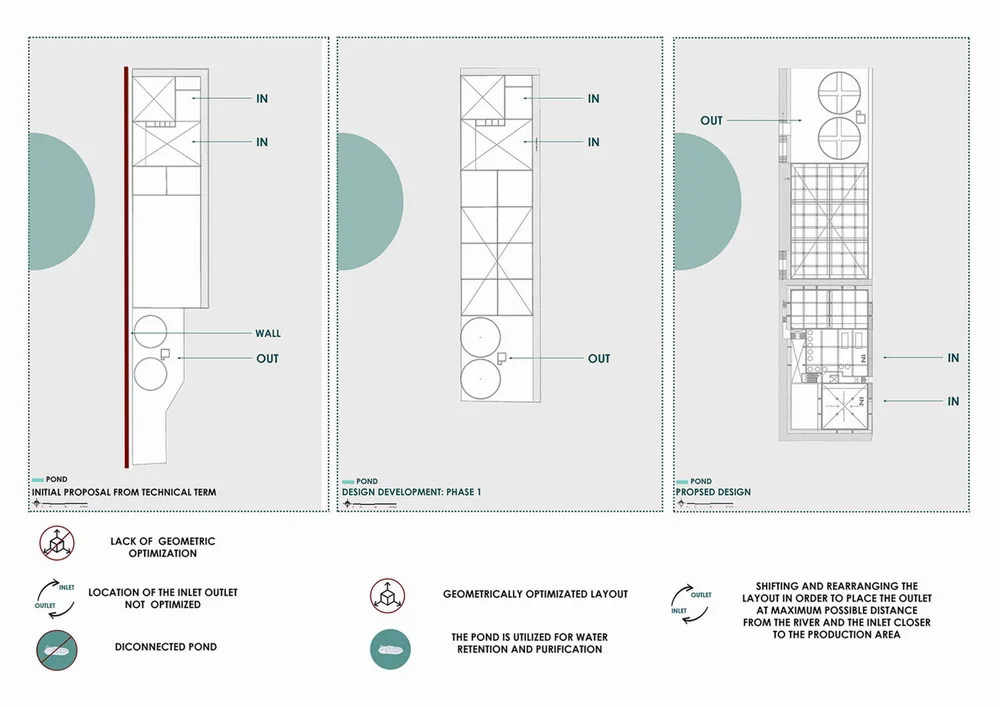
△ Structural Optimization Analysis Diagram
Wastewater generated during production is treated at the plant. To ensure treated water meets quality standards, it is stored and naturally filtered in a retention tank before being discharged back into the river through a monitored connection point.
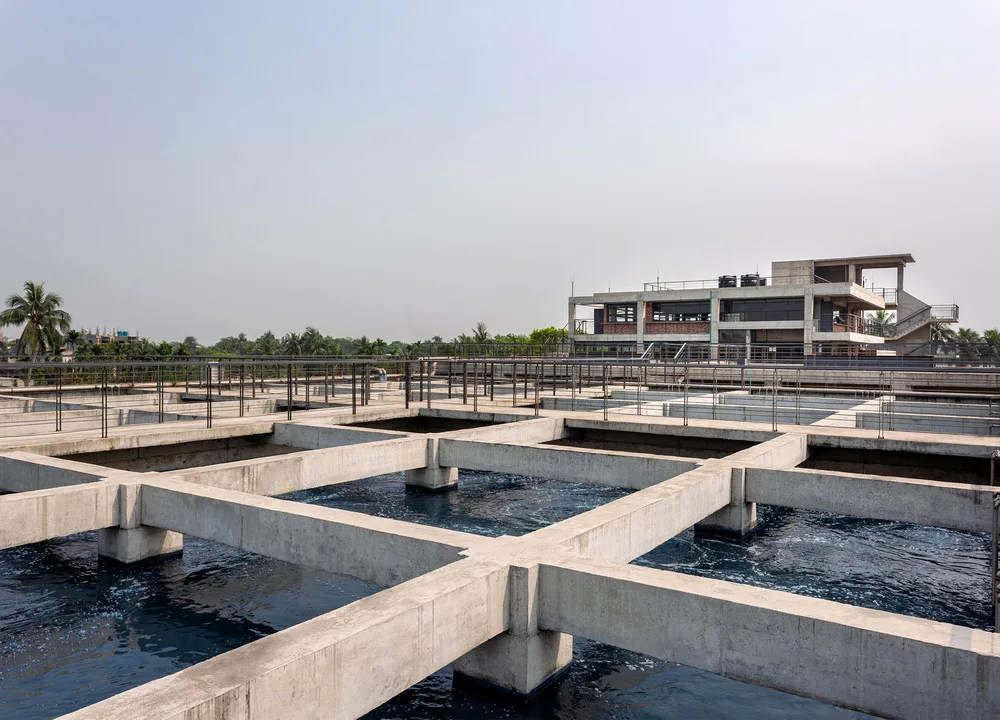
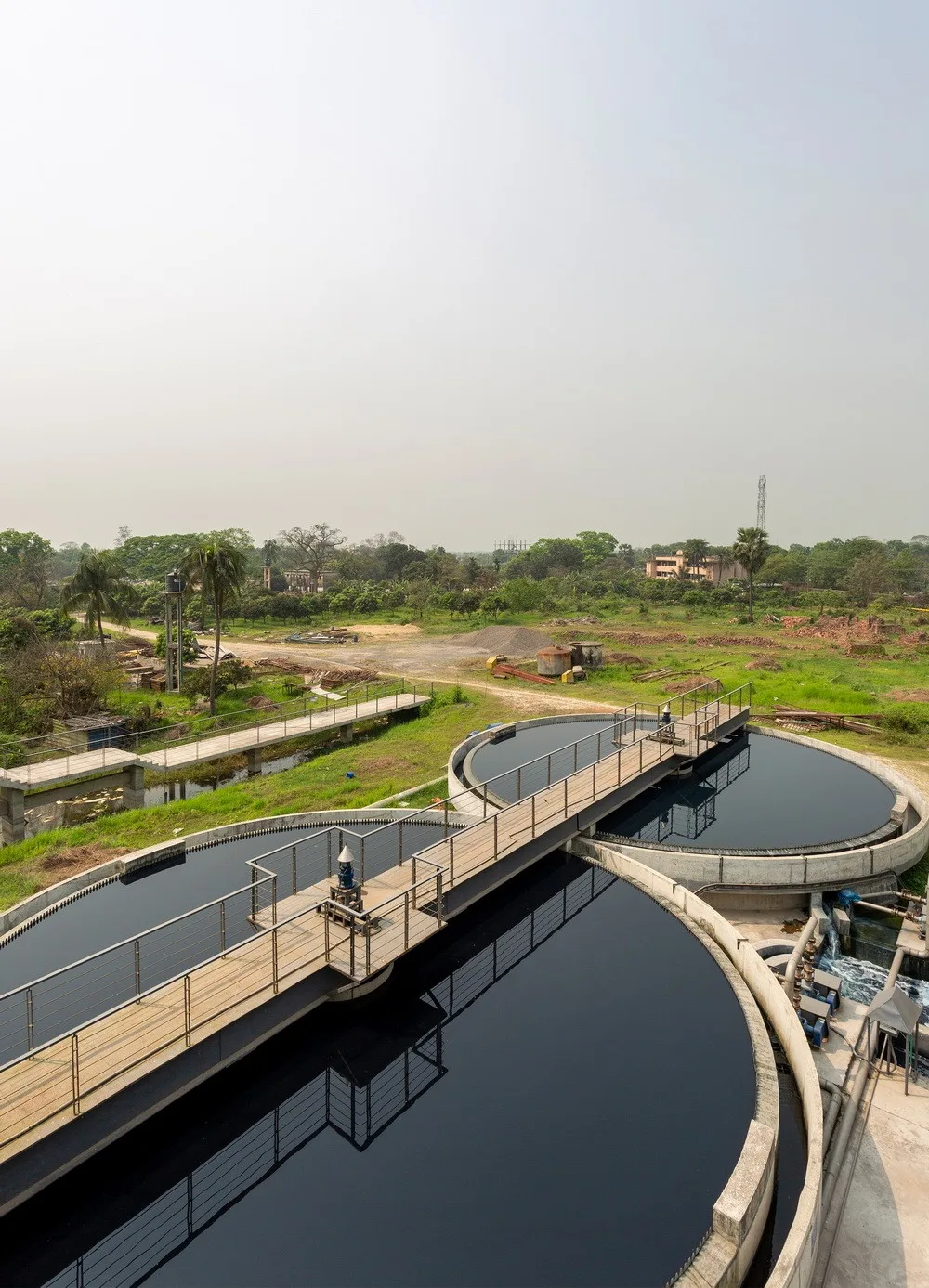
The 400m³ capacity sewage treatment plant is prominently visible and accessible from the site entrance, highlighting its significance in the industrial and ecological cycle. The architect and technical consultant collaborated closely to optimize the four-story structure’s geometric design, creating a compact and efficient layout.
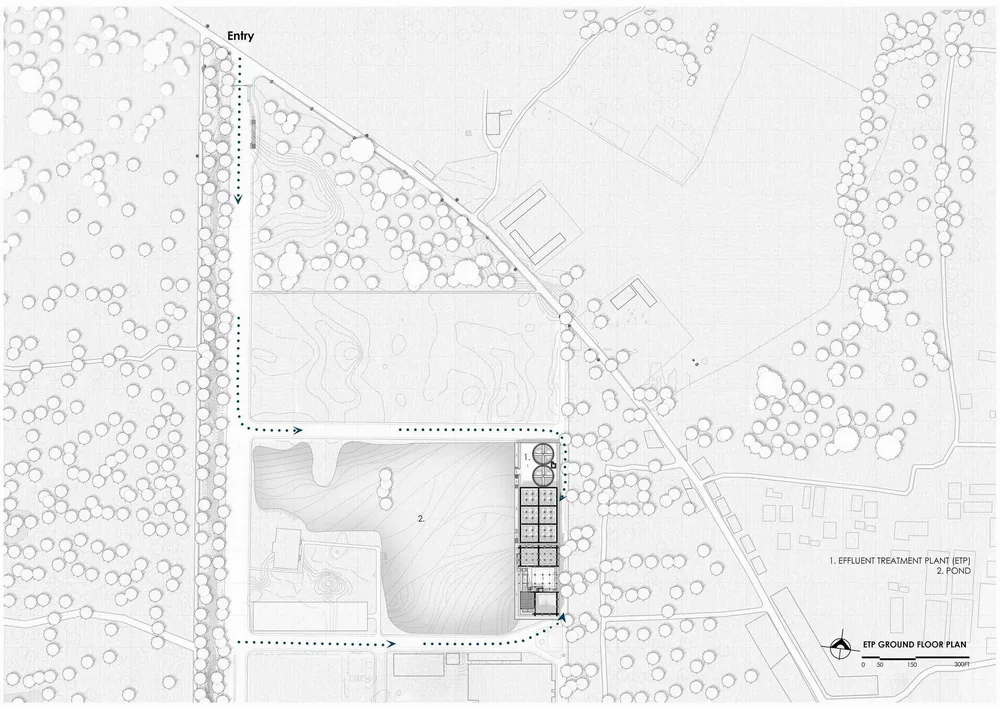
△ Flow Diagram
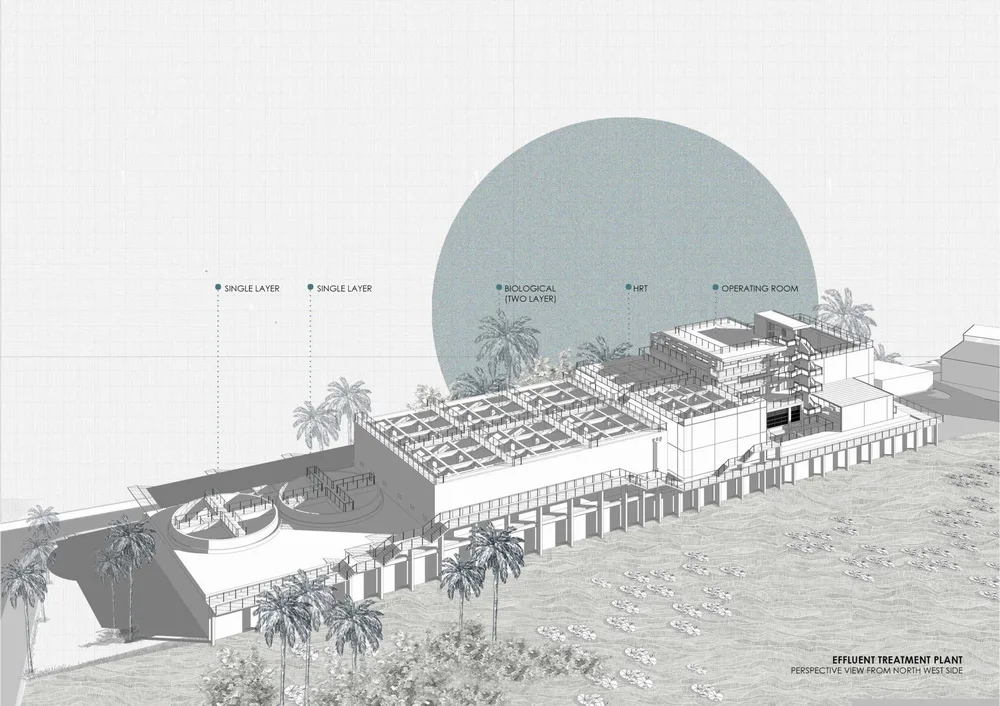
△ Axonometric Diagram
The building’s formal design emphasizes the importance of the sewage treatment plant. Inspired by the original industrial machinery, the architect transformed it into a sculptural form. The reservoir in front not only filters and stores water but also enhances the visual impact of the design.
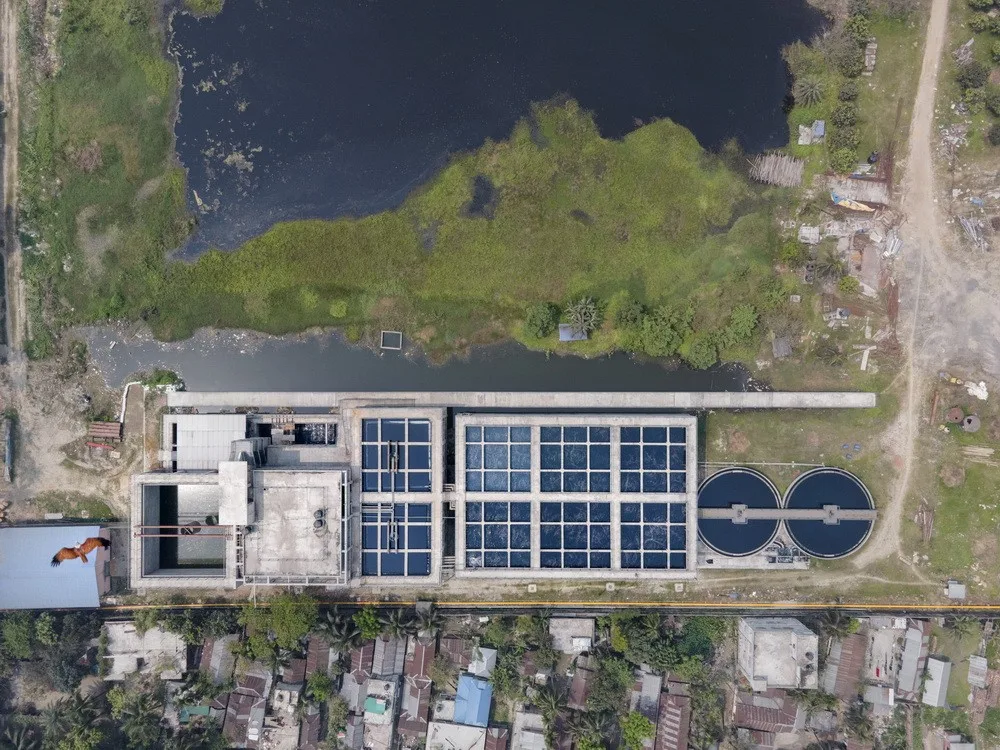
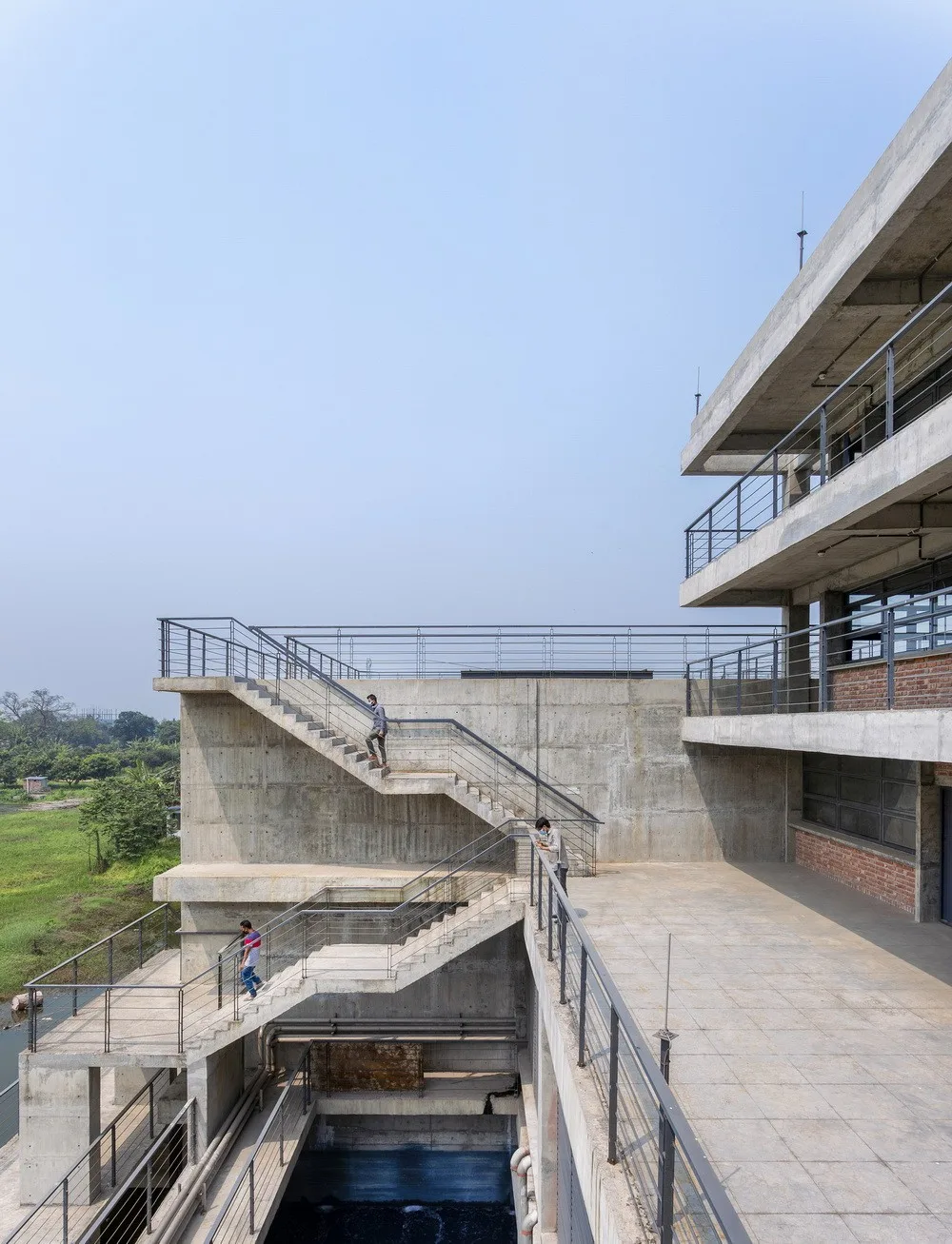
During construction, the design team prioritized reusable and salvaged materials. Crushed stones from demolished buildings were reused as concrete aggregates for the plant.
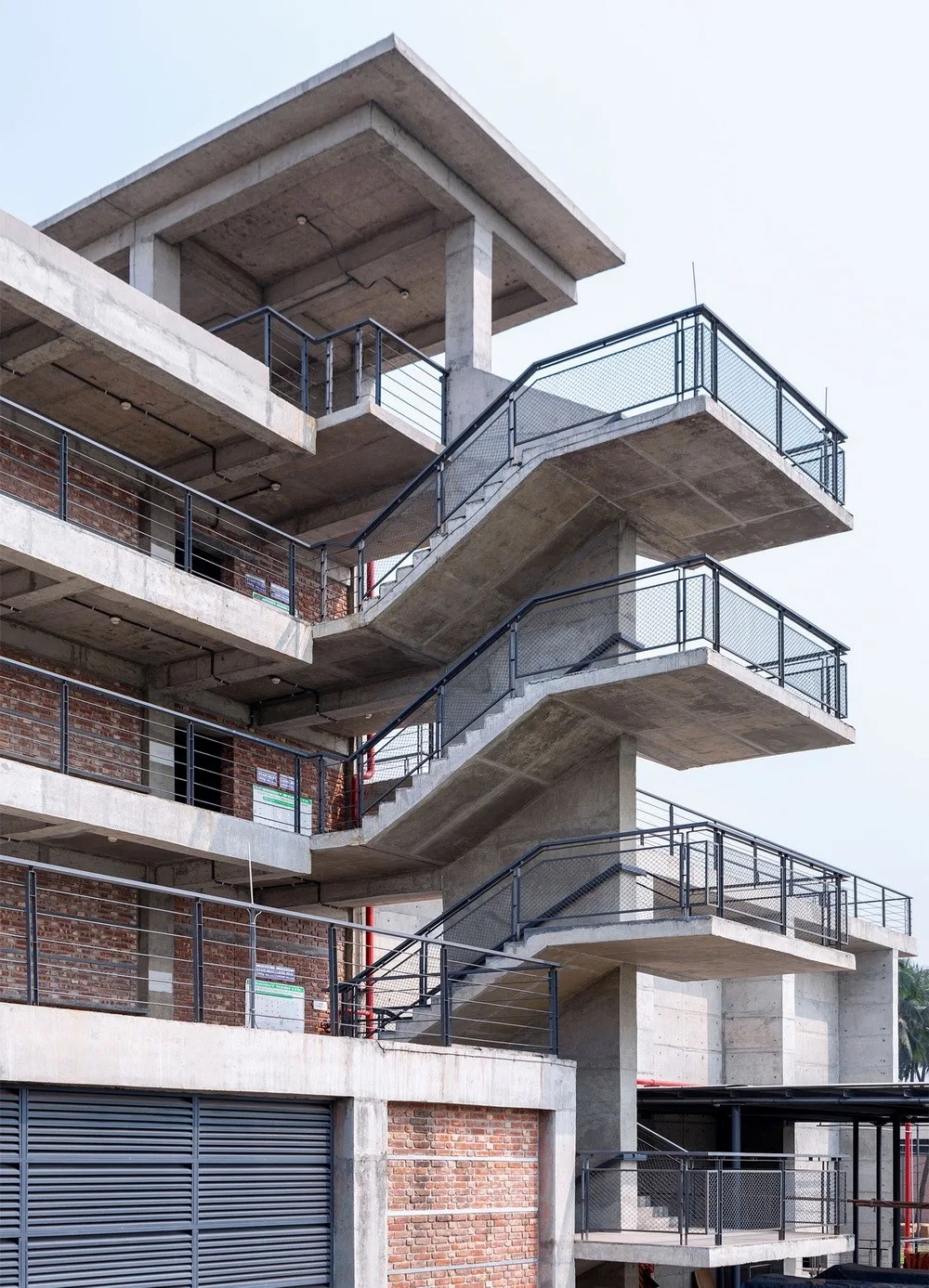
Metal components such as railings and window frames were designed to maximize the use of recycled mild steel from old structures. Additionally, recycled steel from local rolling mills was used to meet metal material demands.
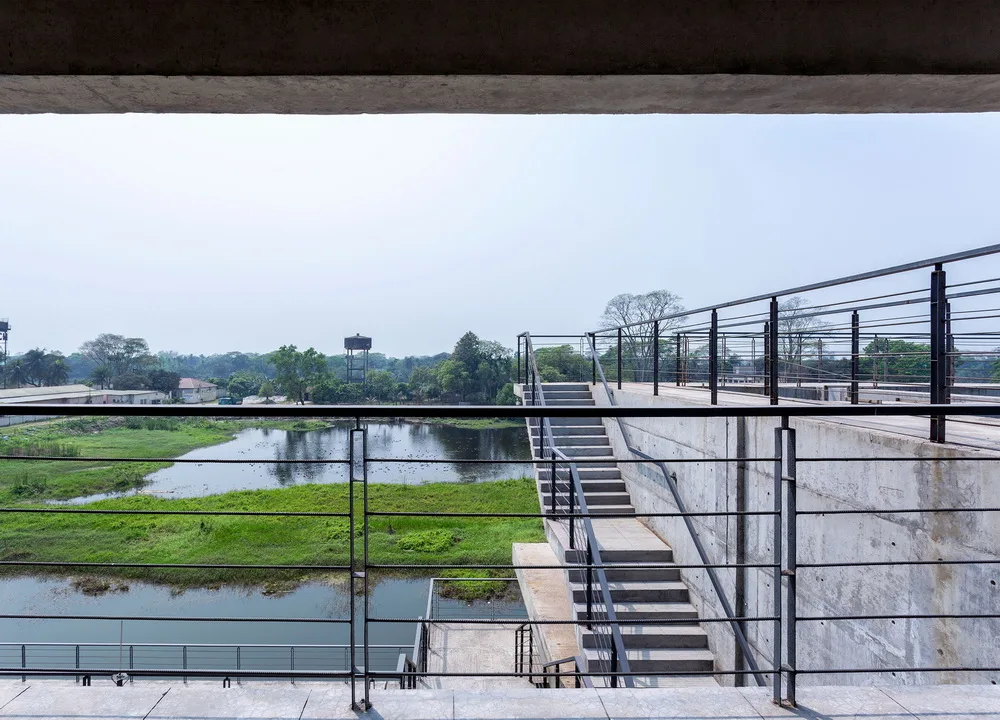
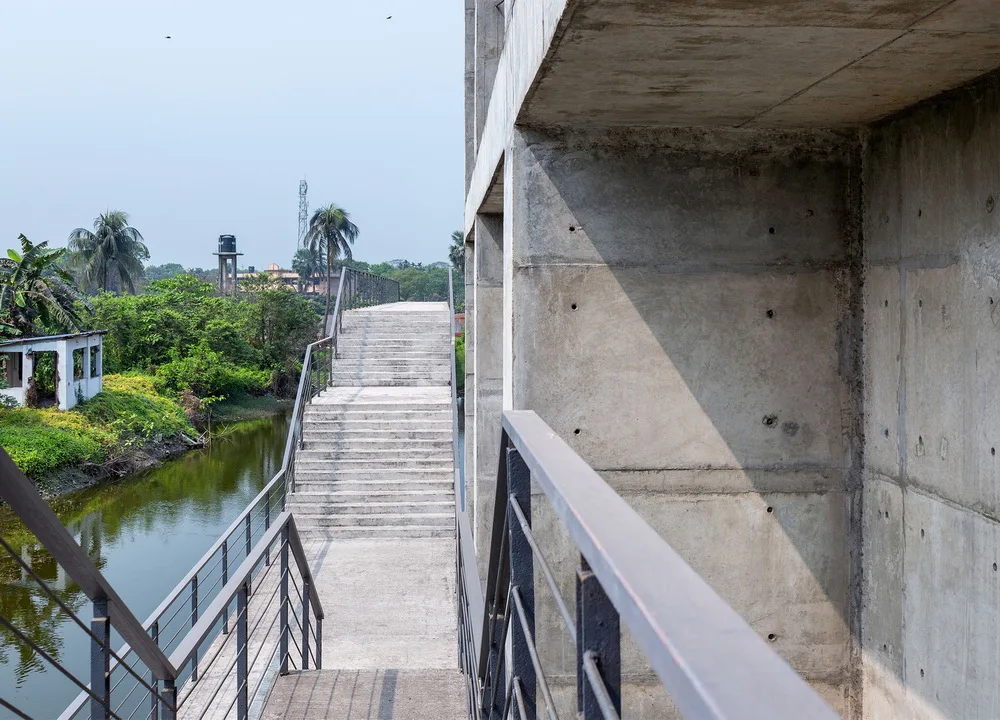
From site placement to architectural expression, the sewage treatment plant has been carefully designed and optimized to meet water quality standards on every floor while also serving as a sculptural gateway to the entire complex.
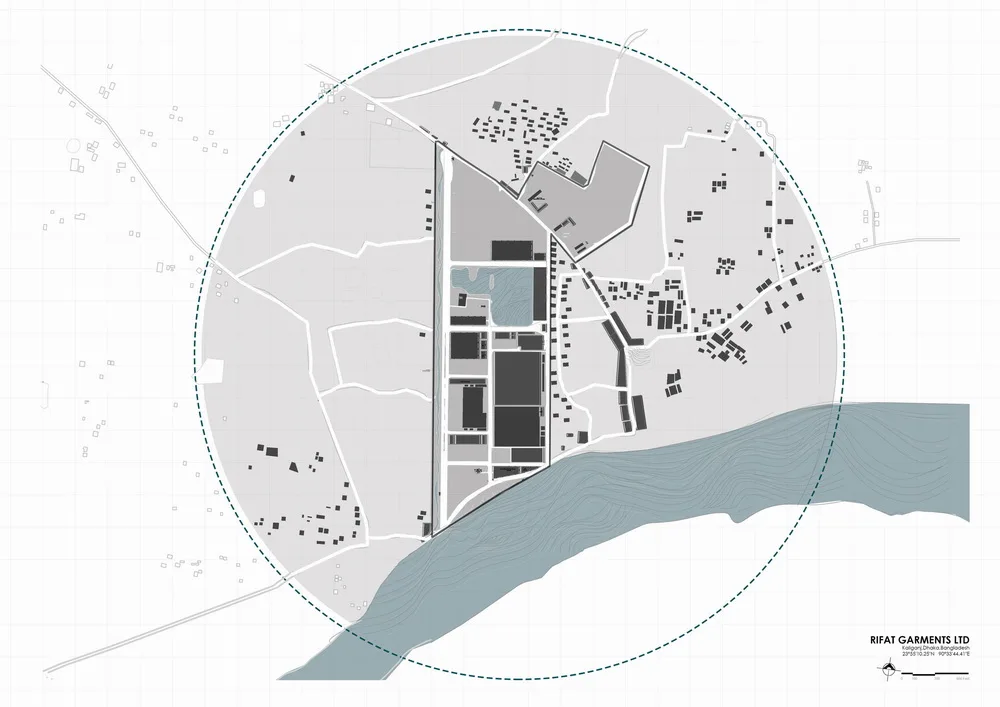
△ General Layout Plan
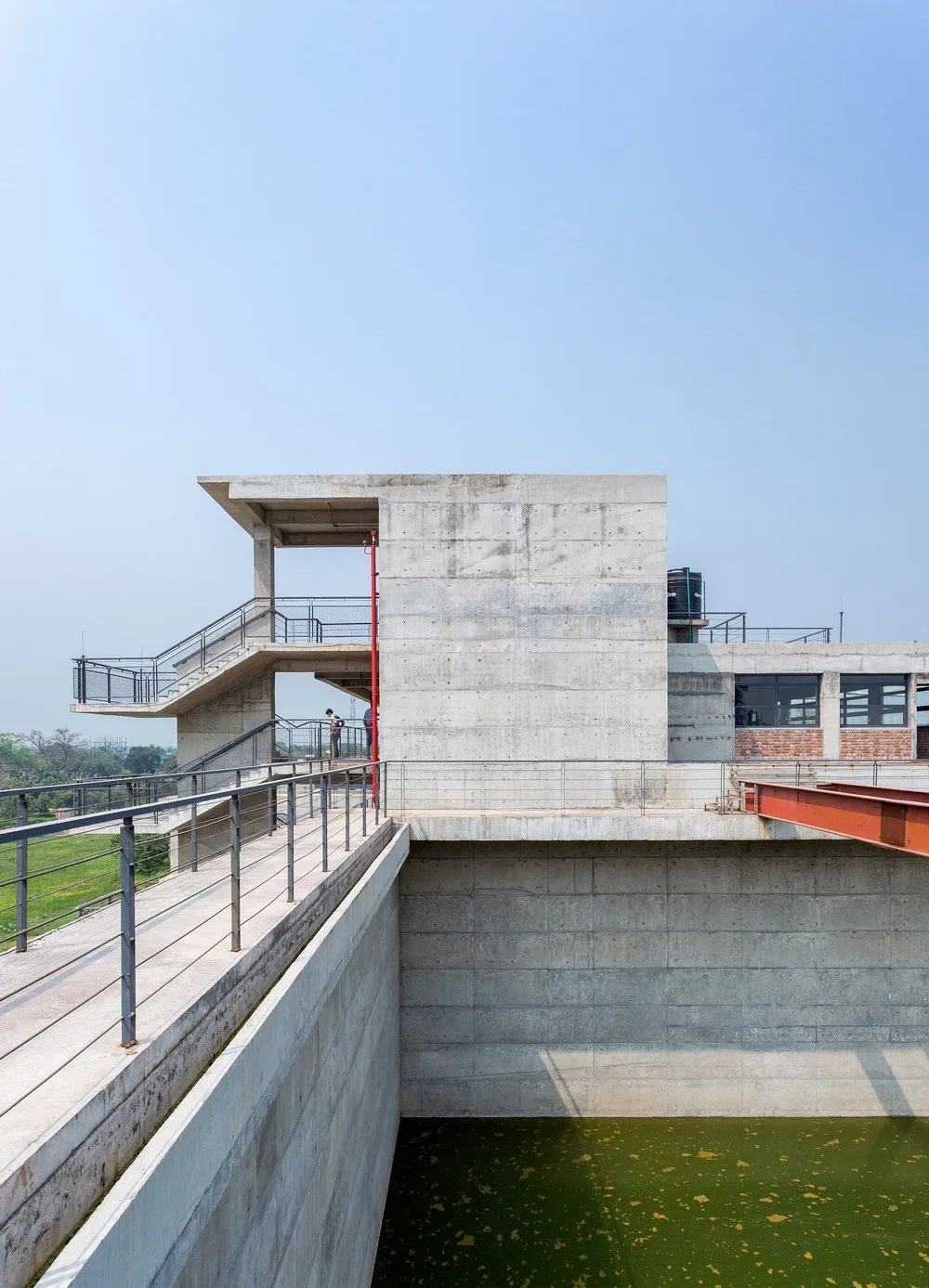
The sewage treatment plant and its surrounding landscape interventions have become vital components in restoring ecological balance, rather than remaining an isolated building within the factory complex.
Technical Drawings
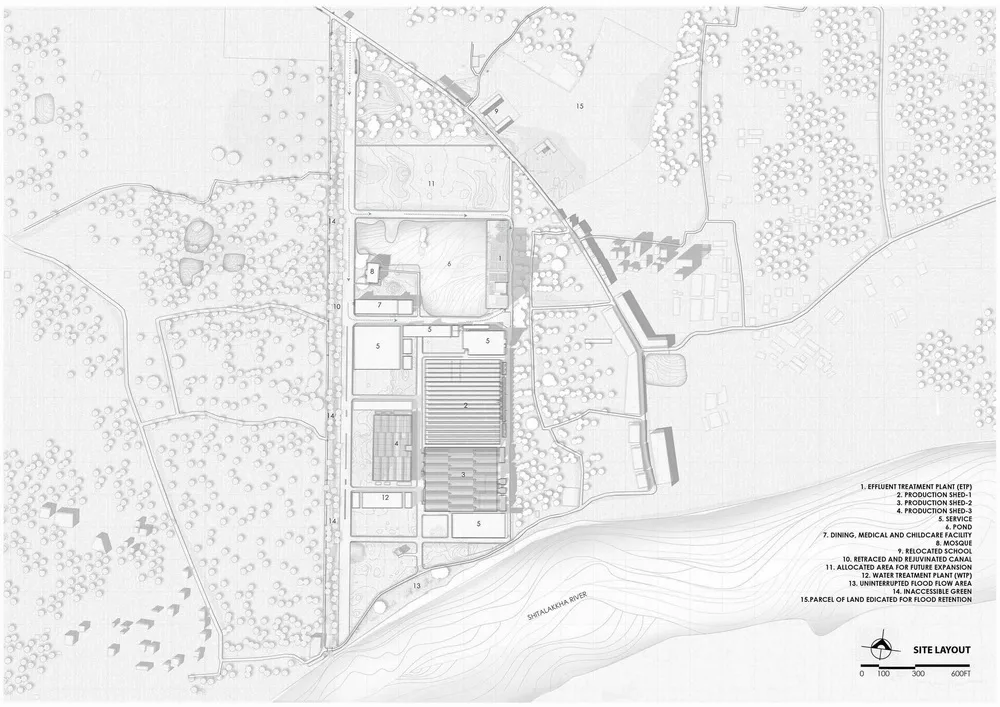
△ Block Plan
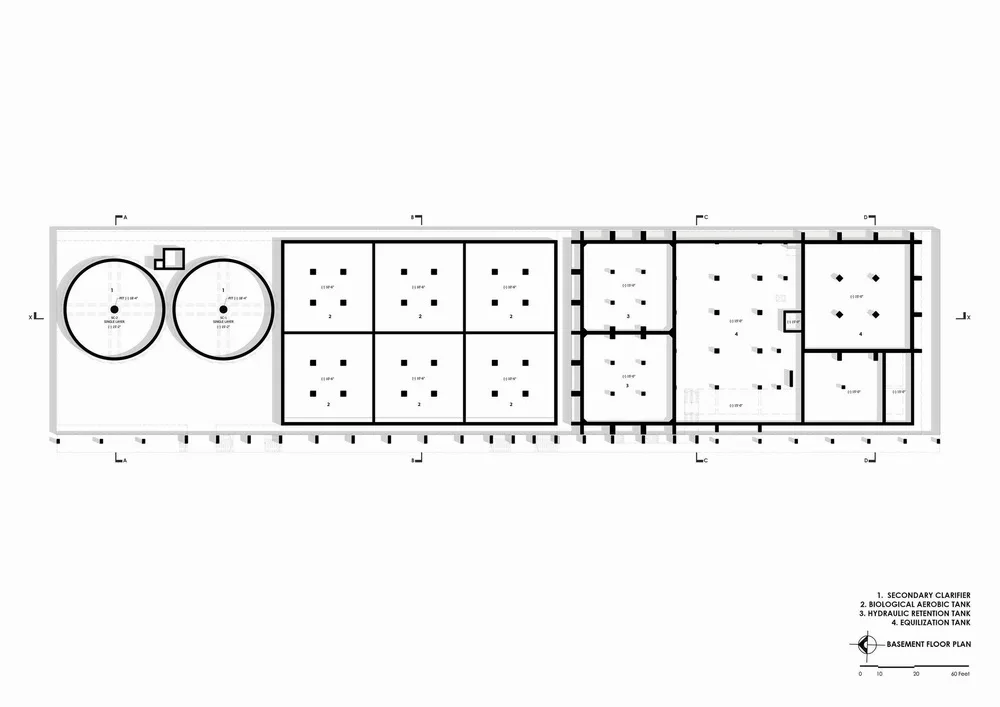
△ Basement Plan
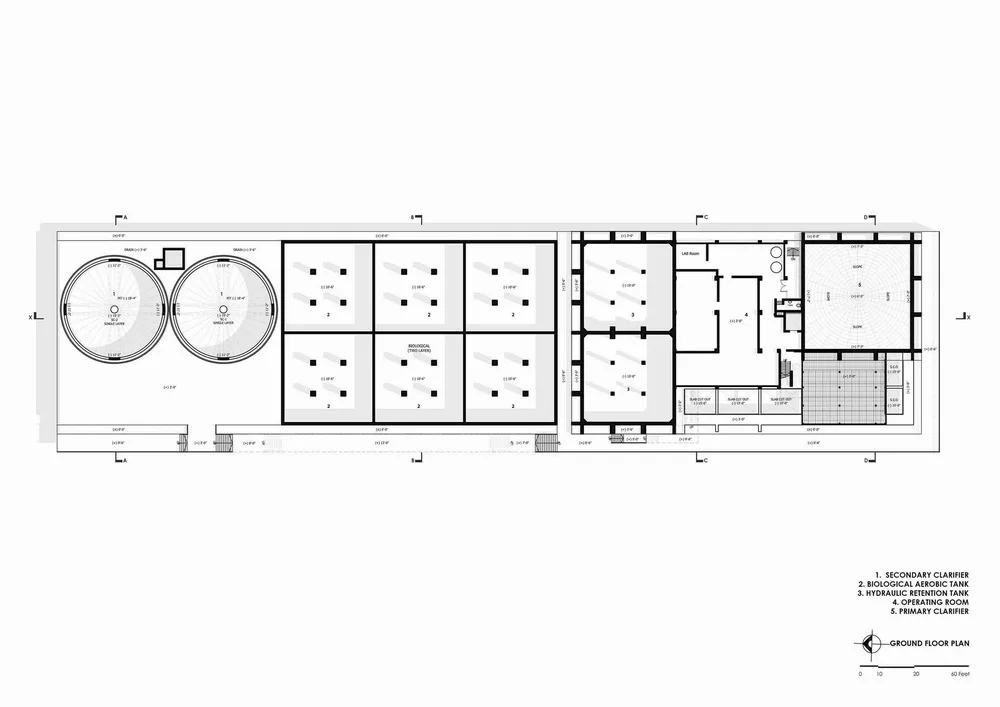
△ Bottom Floor Plan
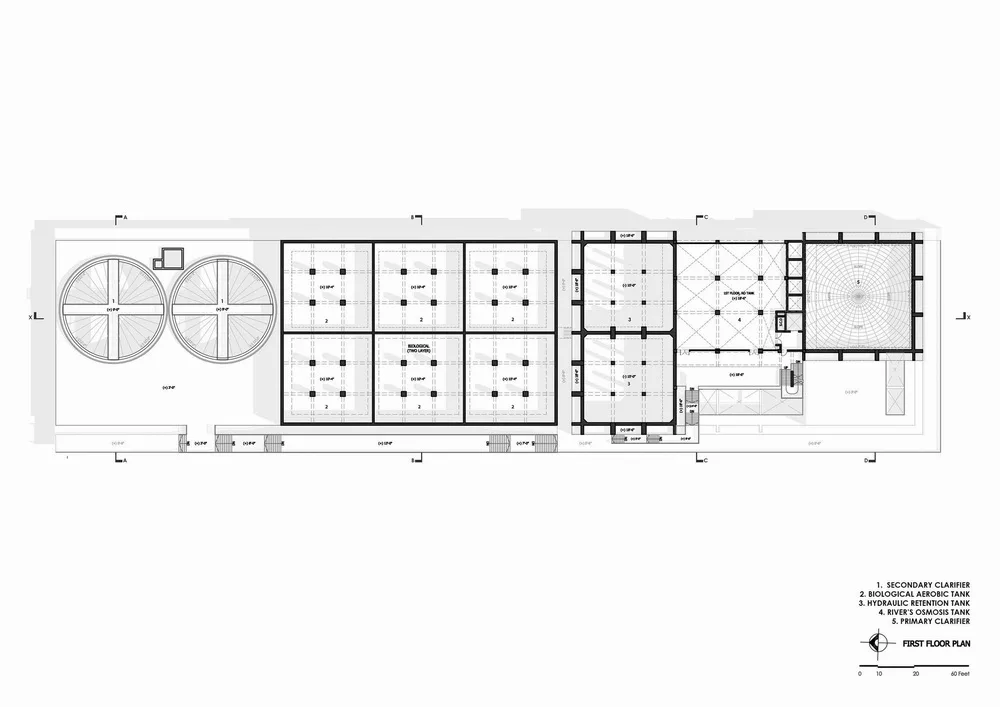
△ First Floor Plan
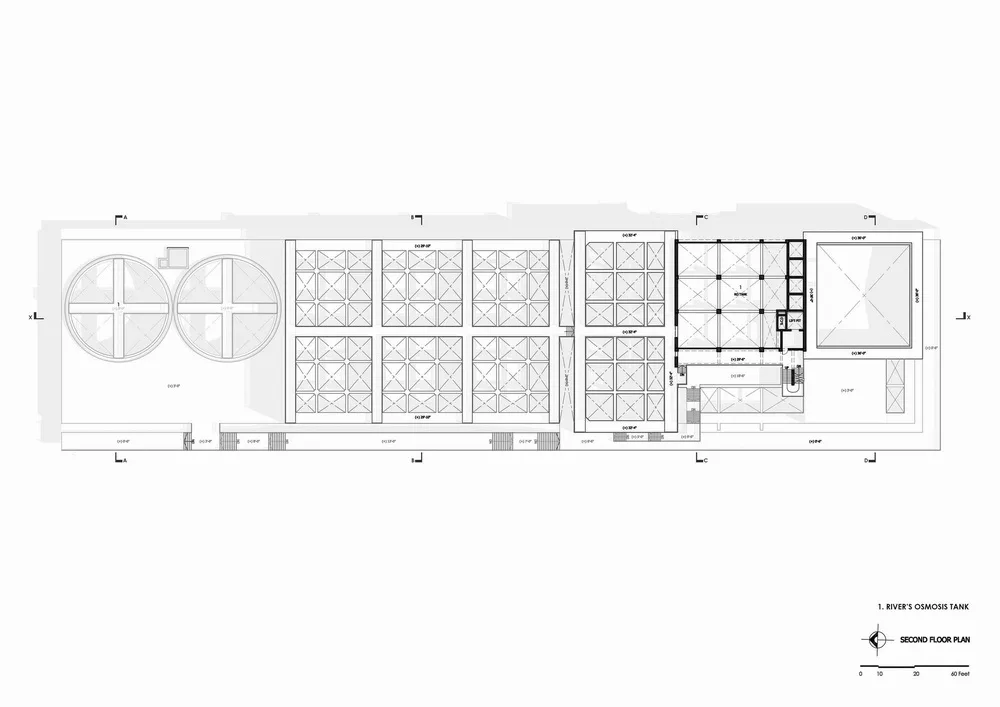
△ Second Floor Plan
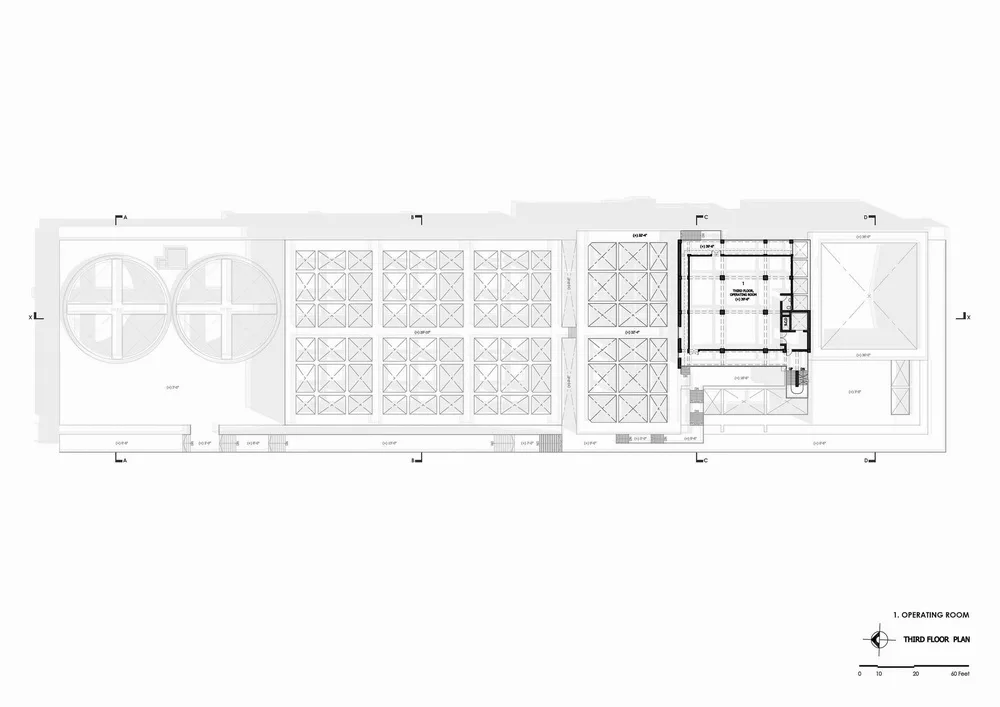
△ Third Floor Plan
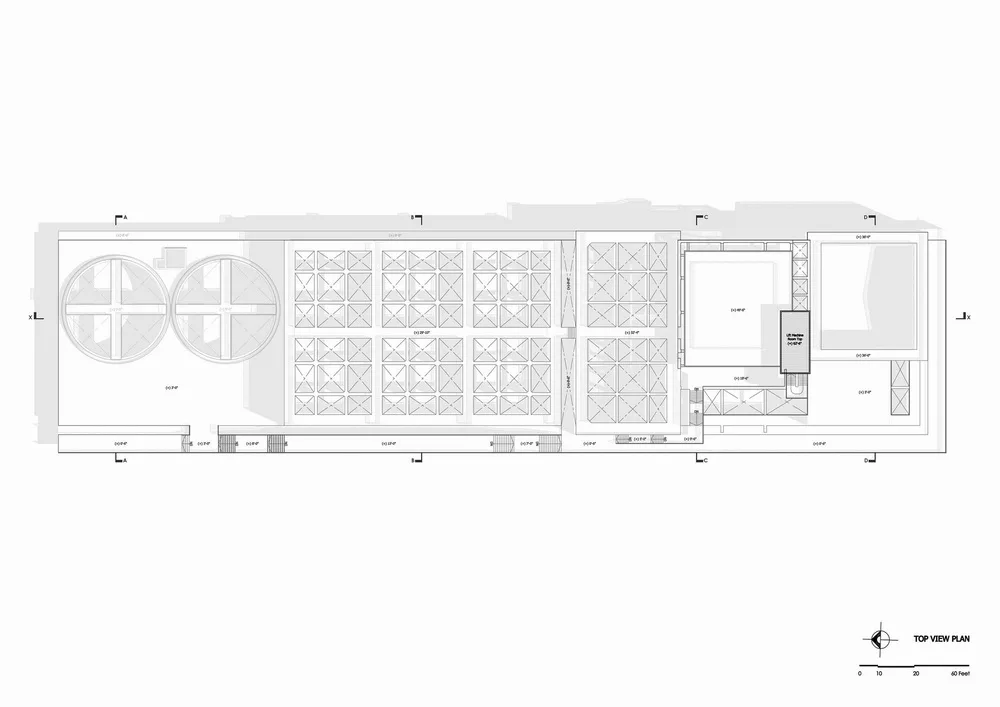
△ Aerial View
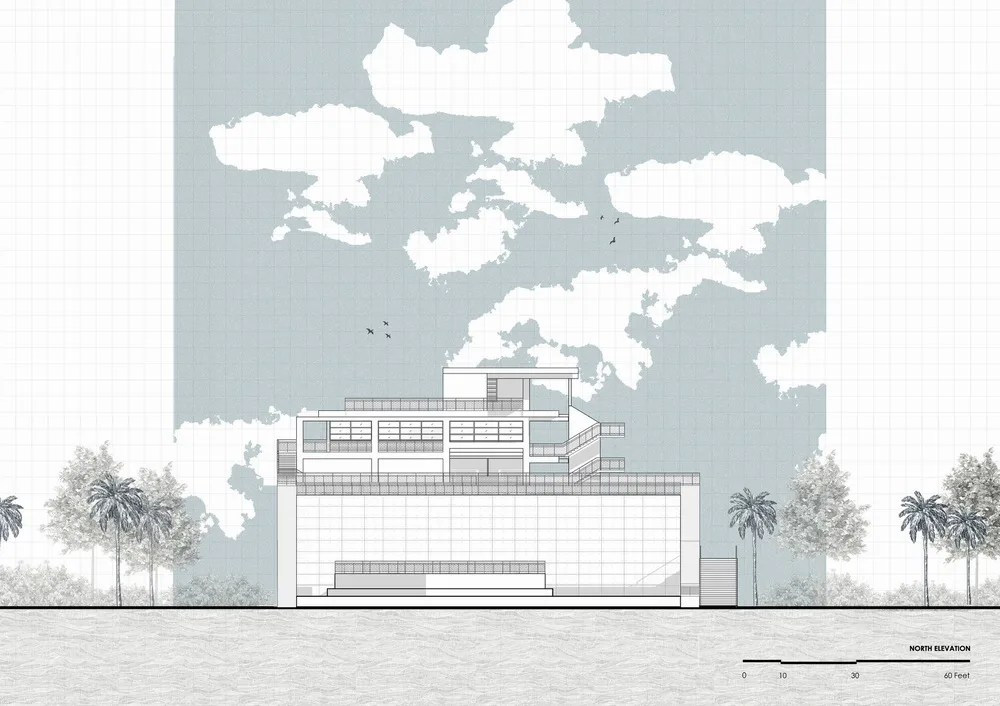
△ North Facade
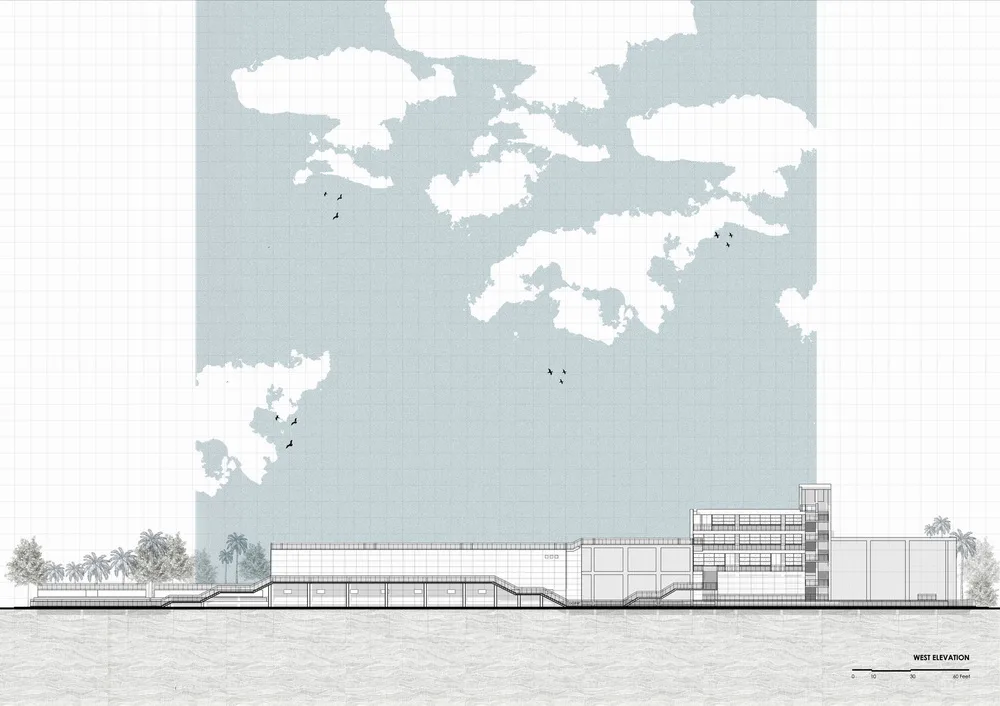
△ West Facade
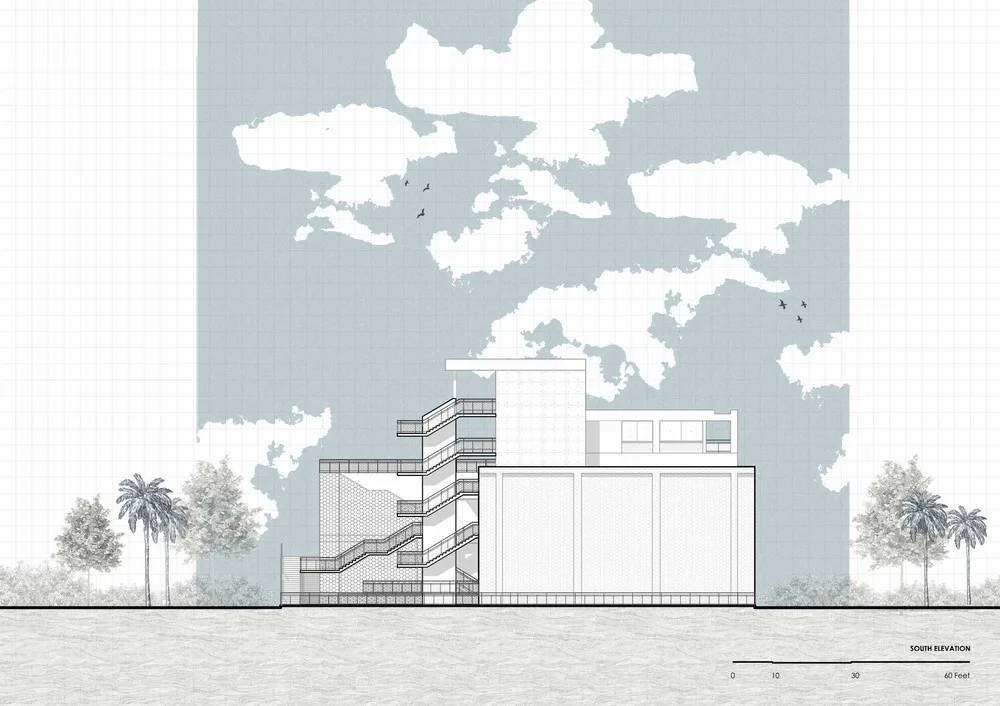
△ South Facade
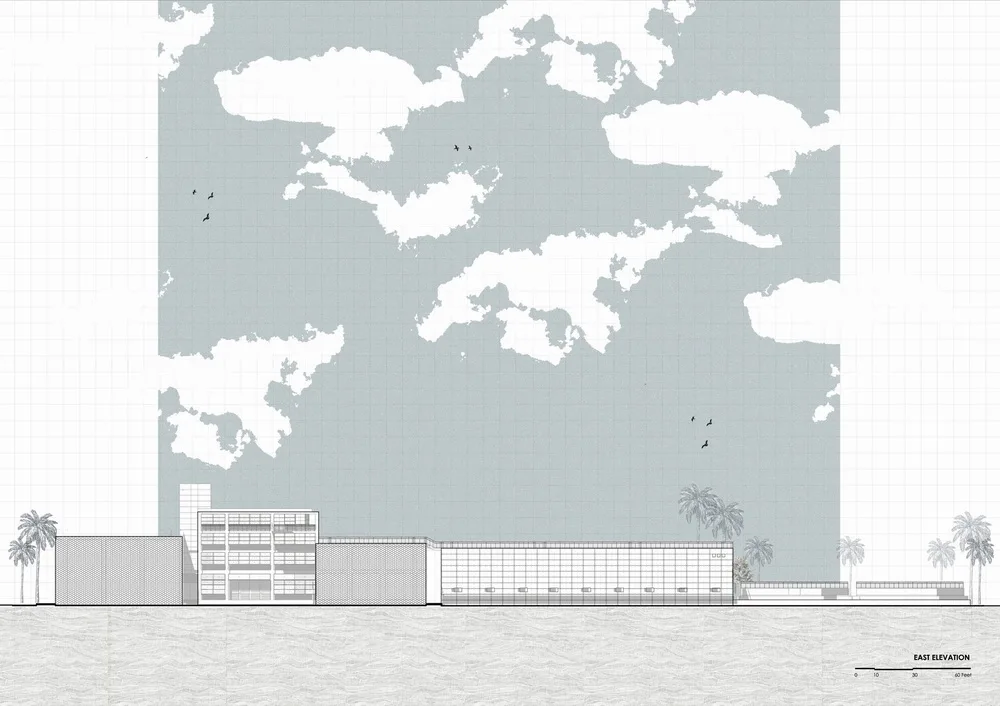
△ East Facade
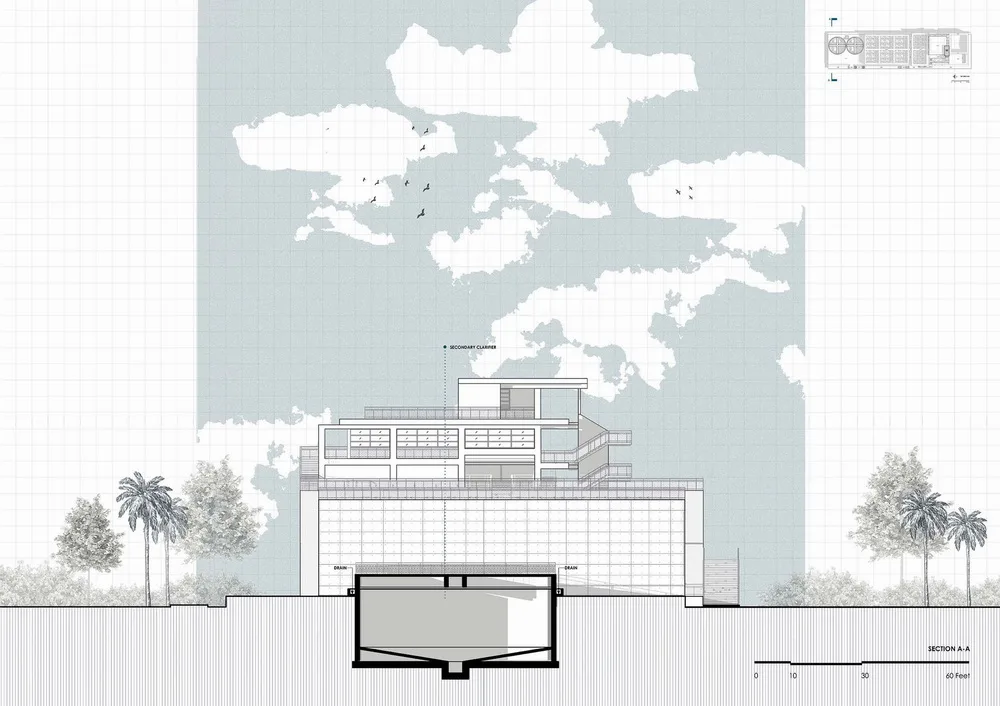
△ Section Diagram
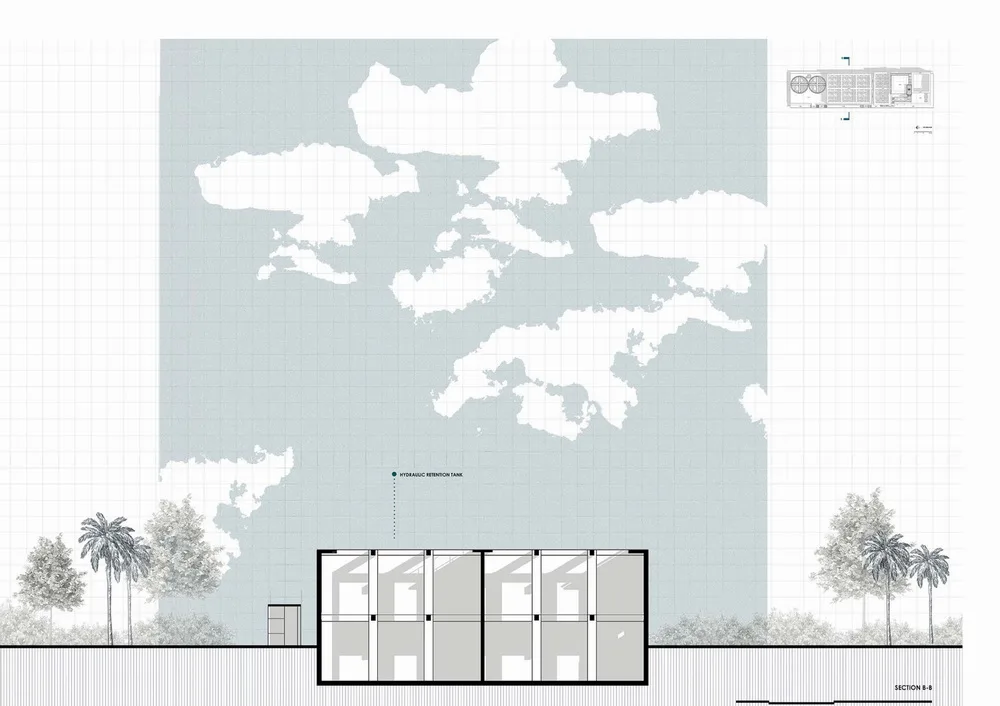
△ Section Diagram
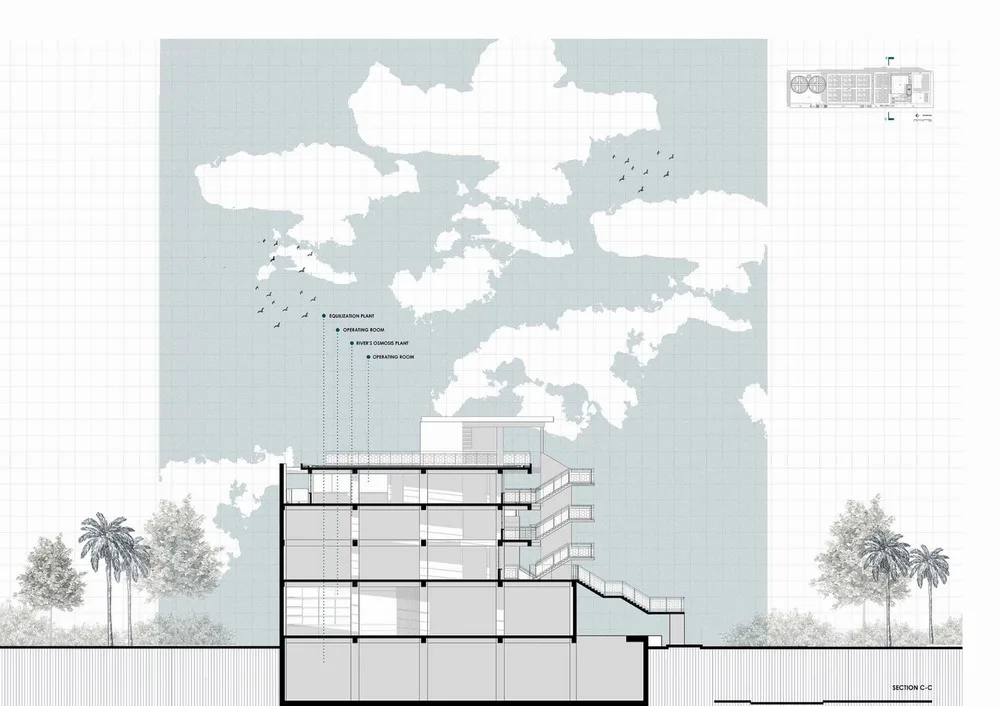
△ Section Diagram
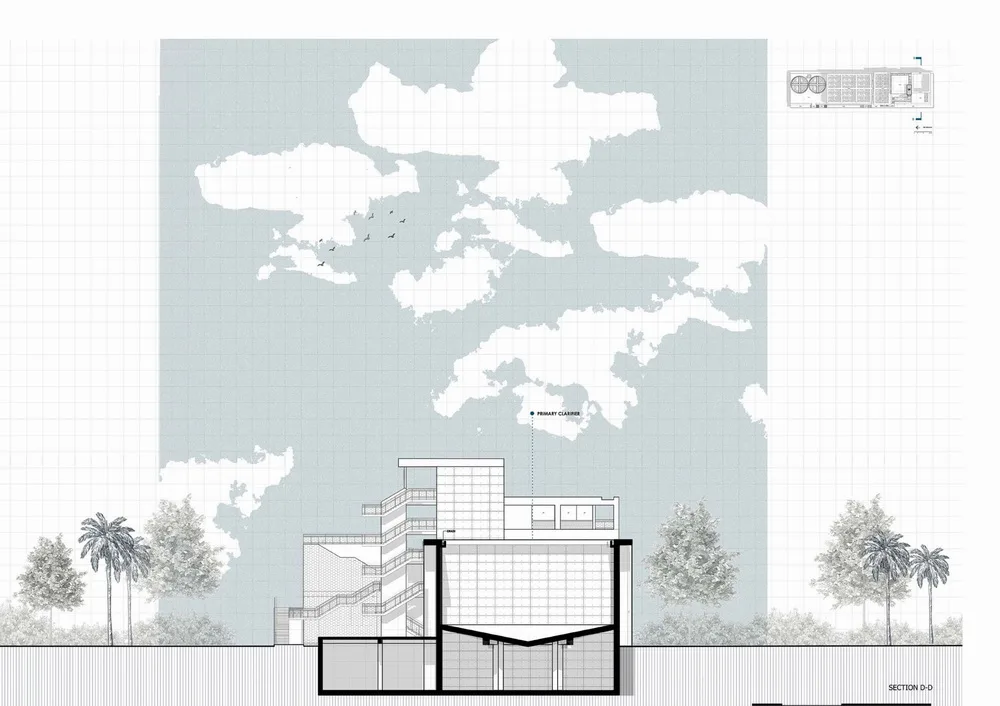
△ Section Diagram
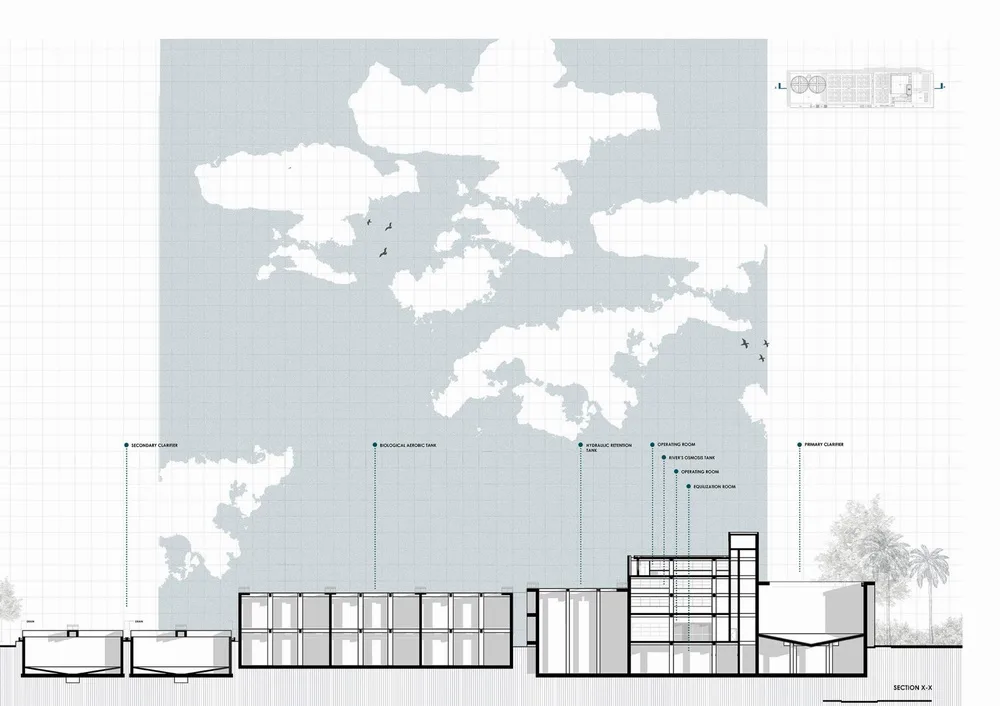
△ Section Diagram
Project Information
Architectural Design: SILT
Area: 7,153 m²
Project Year: 2019
Photographer: Noufel Sharif Sojol
Manufacturer: Shah Cement
Lead Architect: Razib Hassan Chowdhury
Project Architect: Sumayia Binte Samad
Landscape Architect: Naheen Nuruddin
Wastewater Treatment Consultant: Akmol Hossein
Structural Engineer: Syied Mahbub Morshed
Construction: Acme Construction
Location: Kaliganj, Bangladesh












Must log in before commenting!
Sign Up