
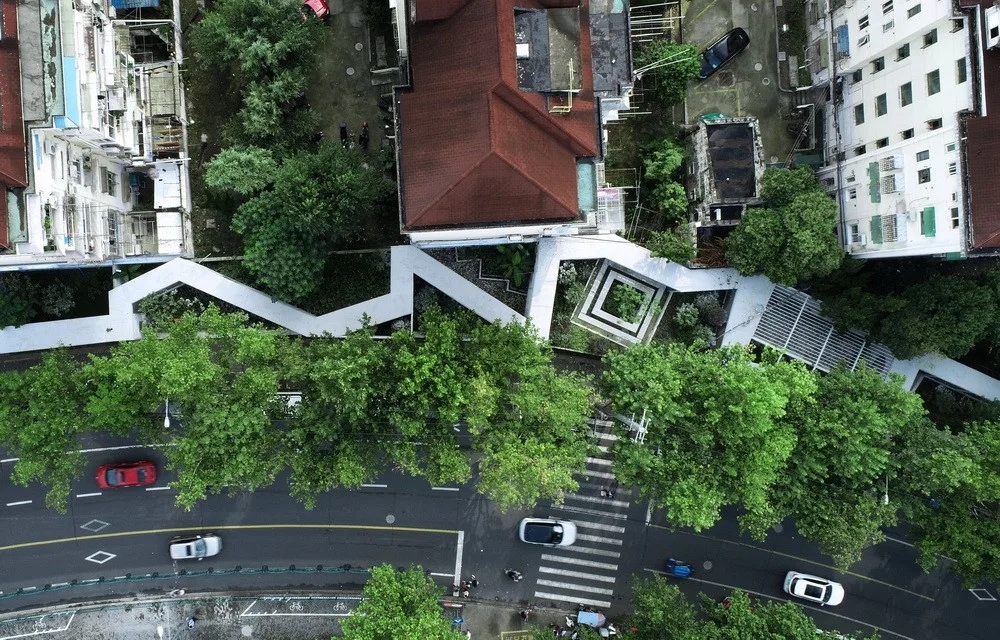
Zhoujiadu Street, located south of the World Expo Park, is a densely populated residential area featuring numerous large housing complexes. The semi-circular South Wharf Road cuts through this neighborhood. In 2018, a demolition and revitalization project cleared the noisy, disorganized commercial shops along the east side of Nanmatou Road. This left behind a curved green wall stretching over 350 meters along the boundary of Changwu Community, creating a monotonous and lengthy urban edge. Inside the community, there remain barren, enclosed, and overgrown plots of land. The challenge was to reshape this city boundary and rejuvenate street life, making it a pressing issue for the project.
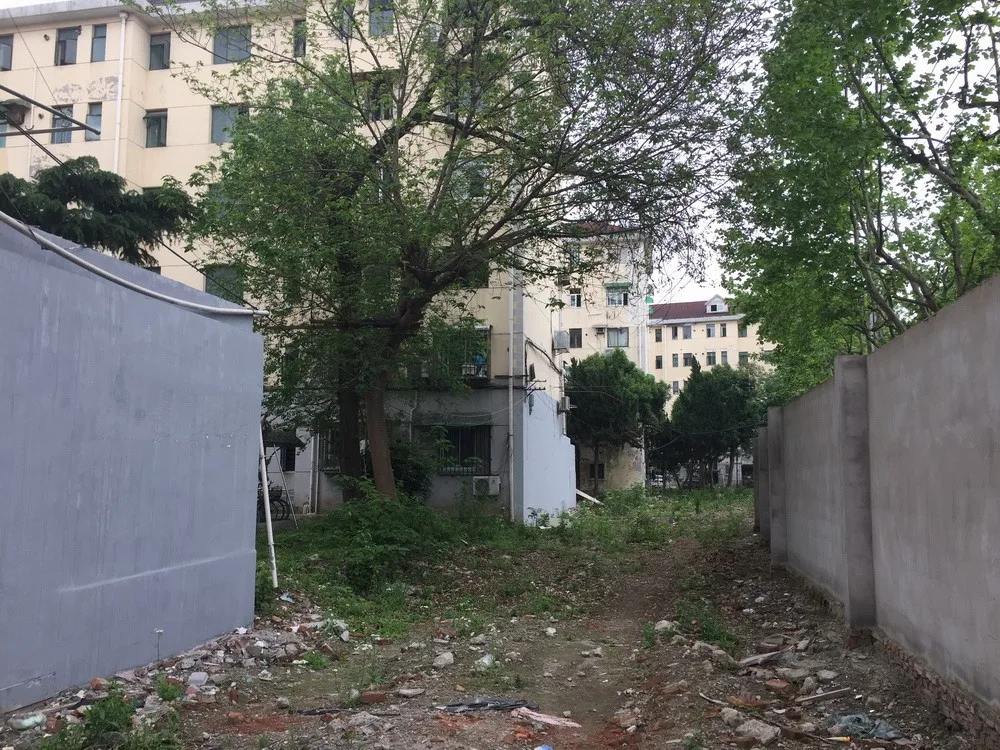
View of the original site, showing the inner courtyard behind the fence.
Changwu Community, built in the 1990s, is a high-density residential area with limited green space. Most of the green areas between buildings have been converted into parking spots, leaving little room for community activities. Residents have virtually no accessible spaces for daily leisure.
This project aims to restore and enhance the community’s public environment by renovating the community wall.
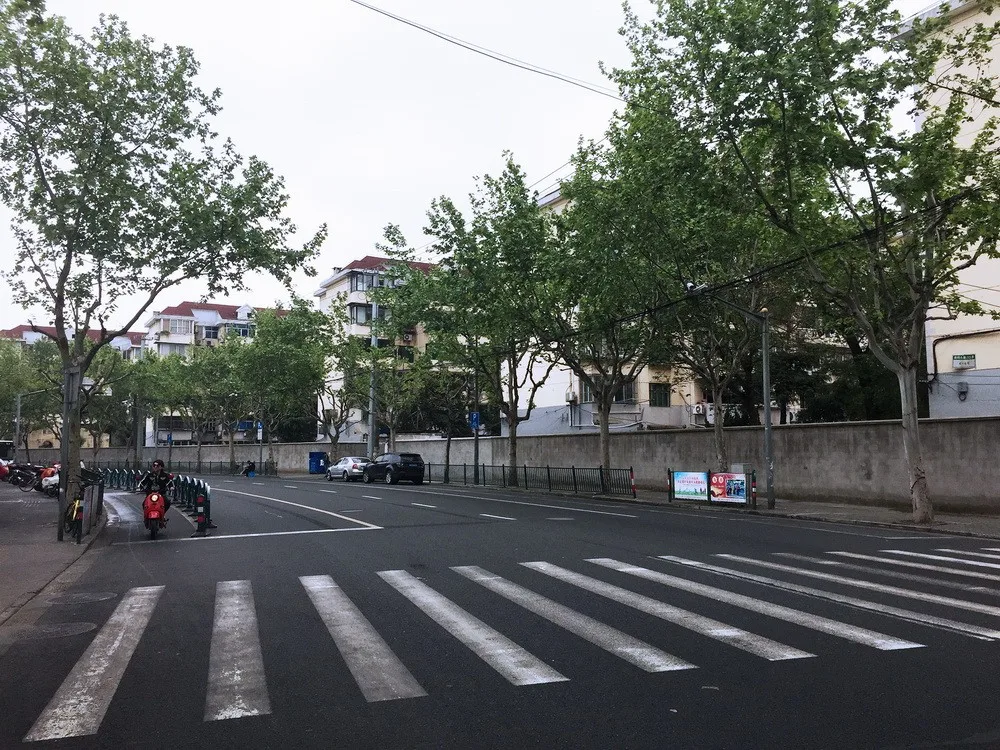
Original site condition showing street views both inside and outside the walls.
For inspiration, the project references Suzhou gardens. For example, the urban interface at Fengxi features the lively Canglang Pavilion, animated by a complex corridor wall. Similarly, the undulating waveform corridor in the east courtyard of the Humble Administrator’s Garden has become a stunning close-up landscape element.
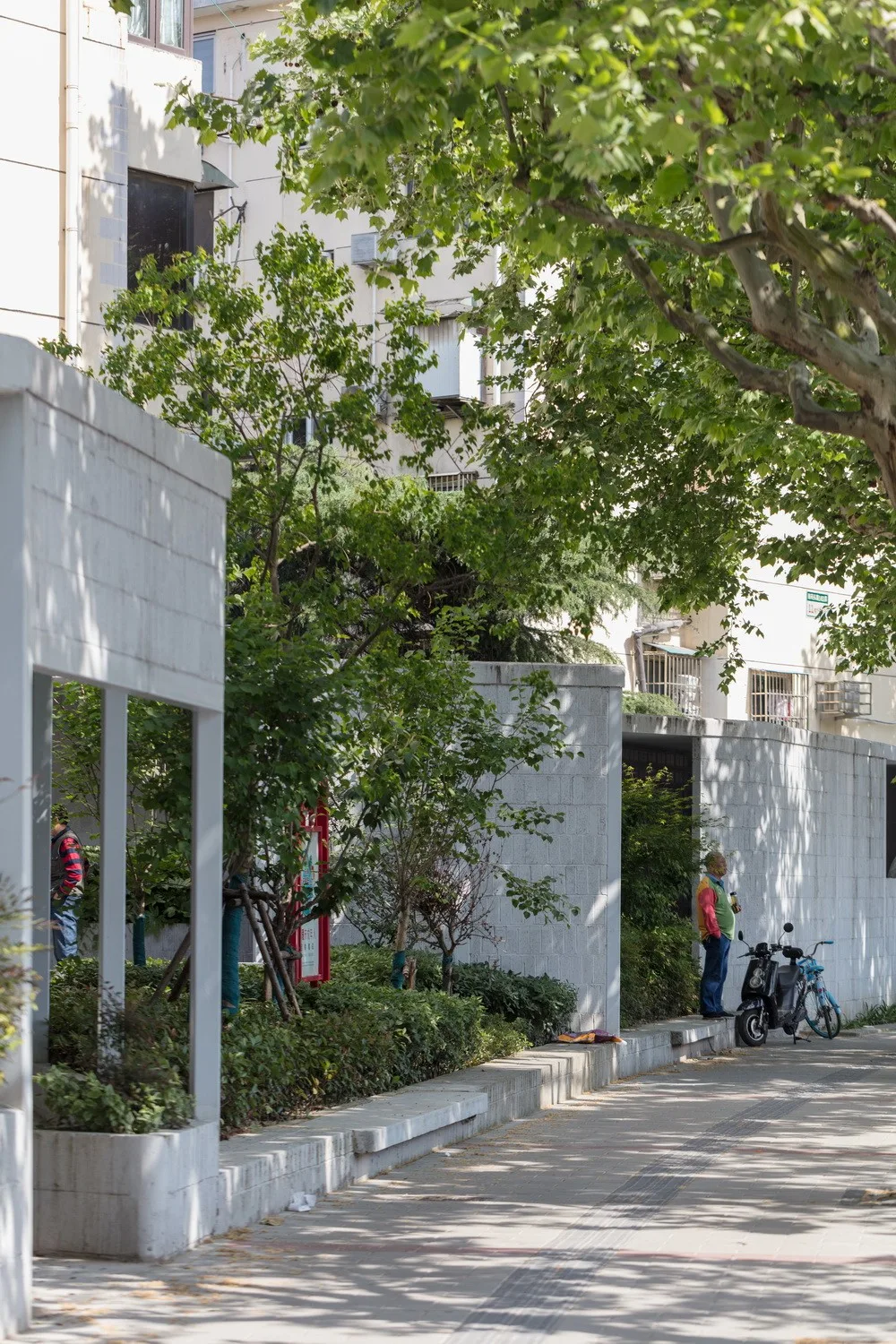
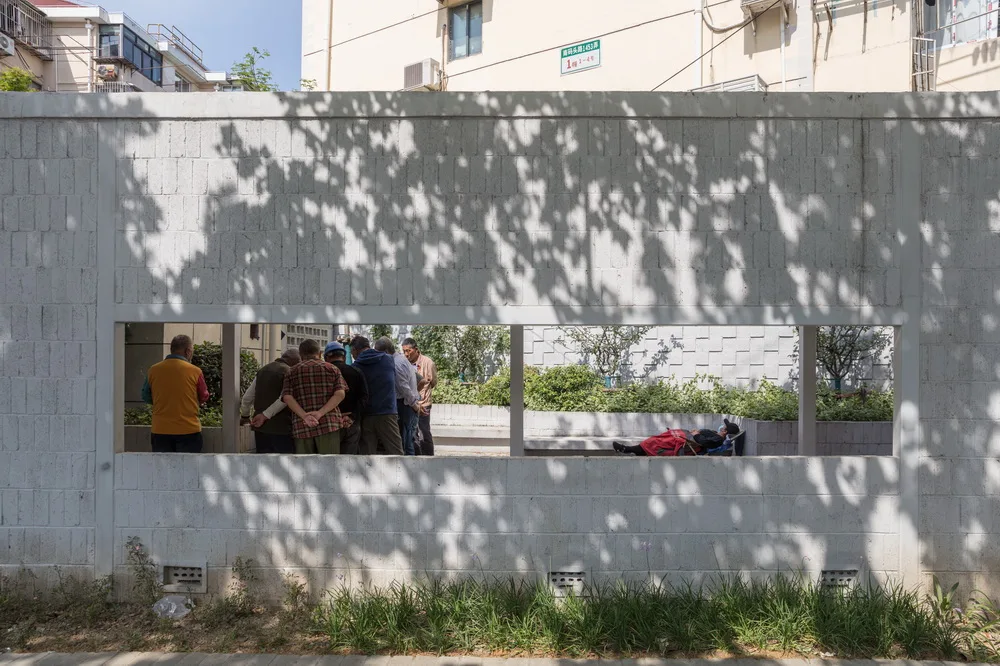
This approach gives Changwu Community’s city boundary wall the chance to become a vibrant linear garden. The 6 to 8-meter-wide strip between the community’s edge and its central garden is transformed into a lively and engaging space.
△ Design Process Analysis Diagram
Following the removal of storefronts, which created a dual interface between the inside and outside, the redesigned winding boundary integrates the site with both the internal community spaces and the external street. The boundary is adjusted based on specific site conditions, evolving into a walking route that defines the final plan.
Node Transformation Diagram: North Section
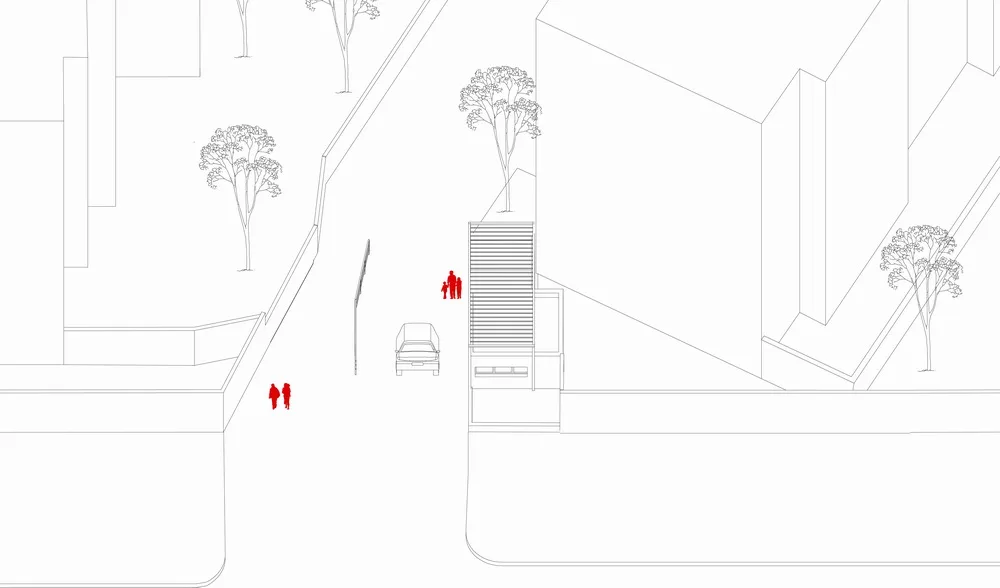
Before renovation, the community exit featured a watchtower and a corridor separated by a metal railing dividing vehicles and pedestrians.
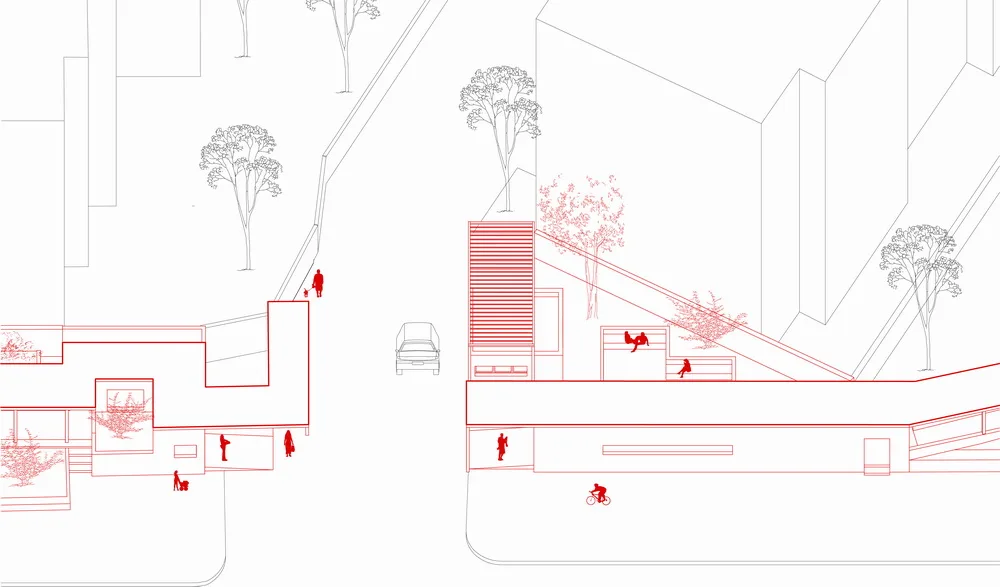
△ Transformation strategy
The watchtower and pergola were incorporated into the newly constructed corridor to form a unified courtyard boundary. The west-side turning corridor at the entrance was converted into a pedestrian walkway, replacing the original metal railing.
Node Transformation Diagram: Middle Section 1
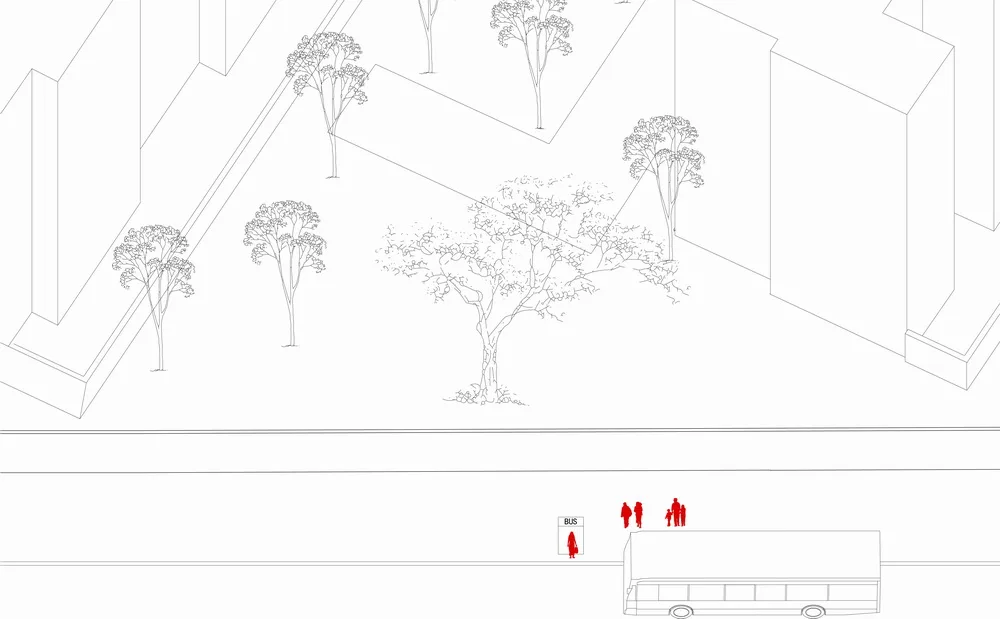
△ Original condition
A large tree once stood inside the wall, its canopy providing dense shade, while a bus stop was located near the sidewalk outside the fence.
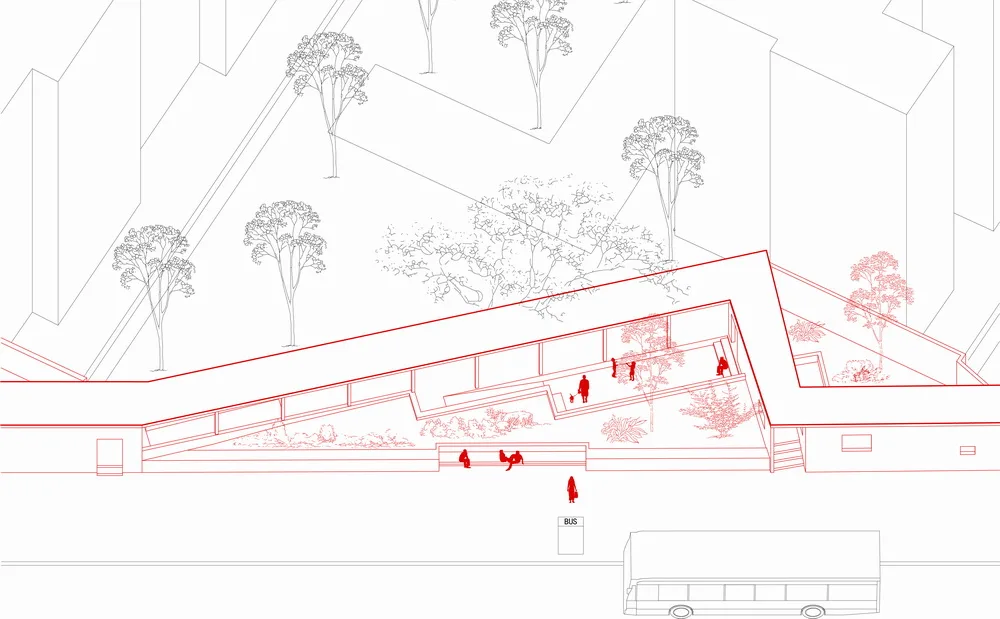
△ Construction plan
The zigzag corridor creates a sunken courtyard shaded by green trees, while a bus waiting area is integrated into a flower bed along the sidewalk. This preserves original functions and landscape elements, embedding them into vibrant street life.
Node Transformation Diagram: Middle Section 2
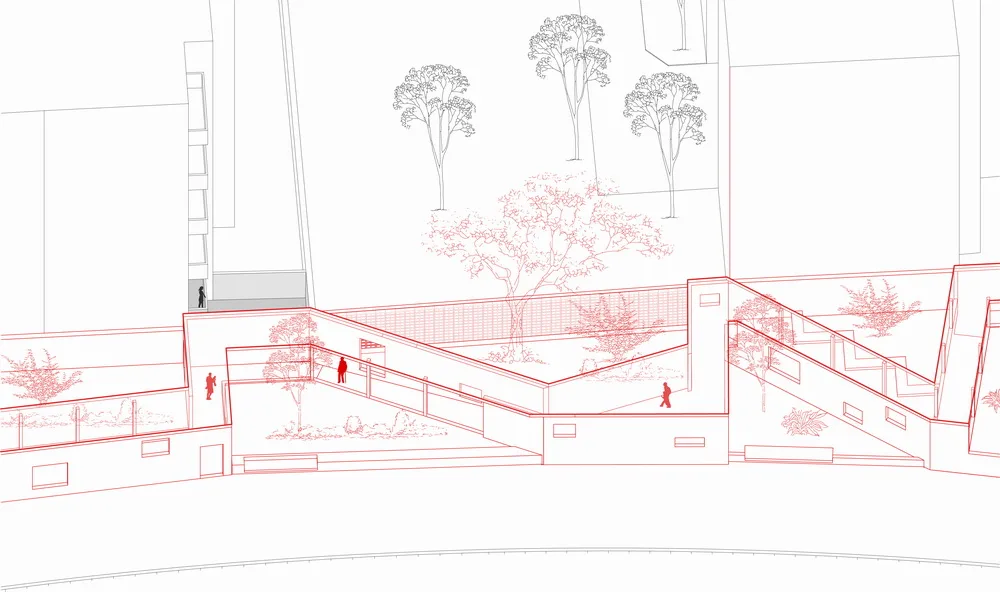
△ Original design proposal
The initial plan featured a folded corridor courtyard opening outward near the residential wall and a trapezoidal courtyard opening inward between buildings. Hollow porous brick walls separated the community’s interior and exterior.
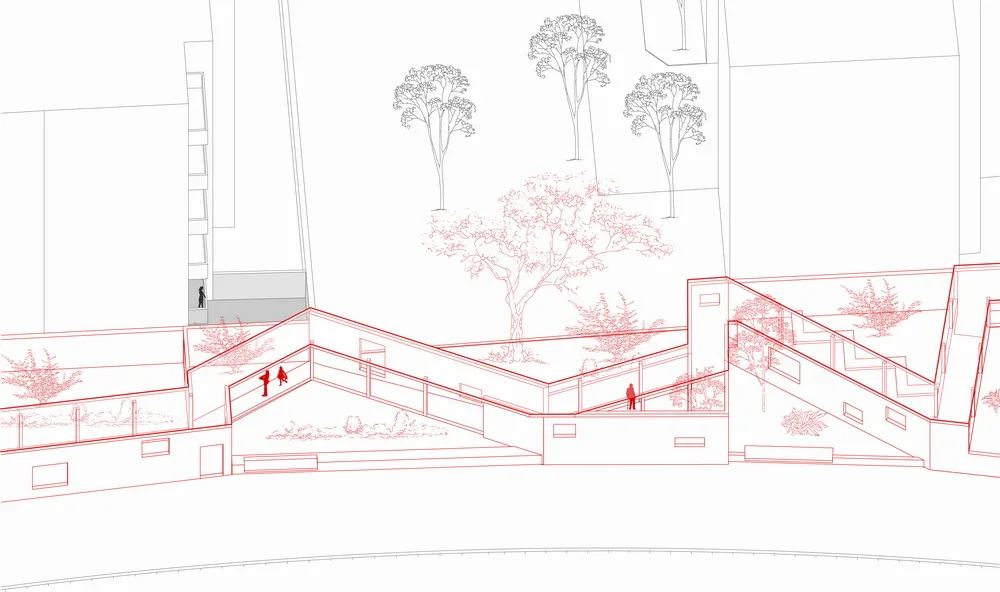
△ Implementation plan
Residents on the second floor raised safety concerns about the folding corridor’s proximity to their balconies. Meanwhile, first-floor residents noted that the hollow porous brick wall’s acute angle with the courtyard limited natural light. In response, the revised plan set aside a triangular courtyard near second-floor balconies, removed the original brick wall, replaced the community’s closed boundary with a folded corridor, and added a triangular inner courtyard within the trapezoidal corridor. This enriched the corridor’s landscape while addressing residents’ needs.
Node Transformation Diagram: South Section
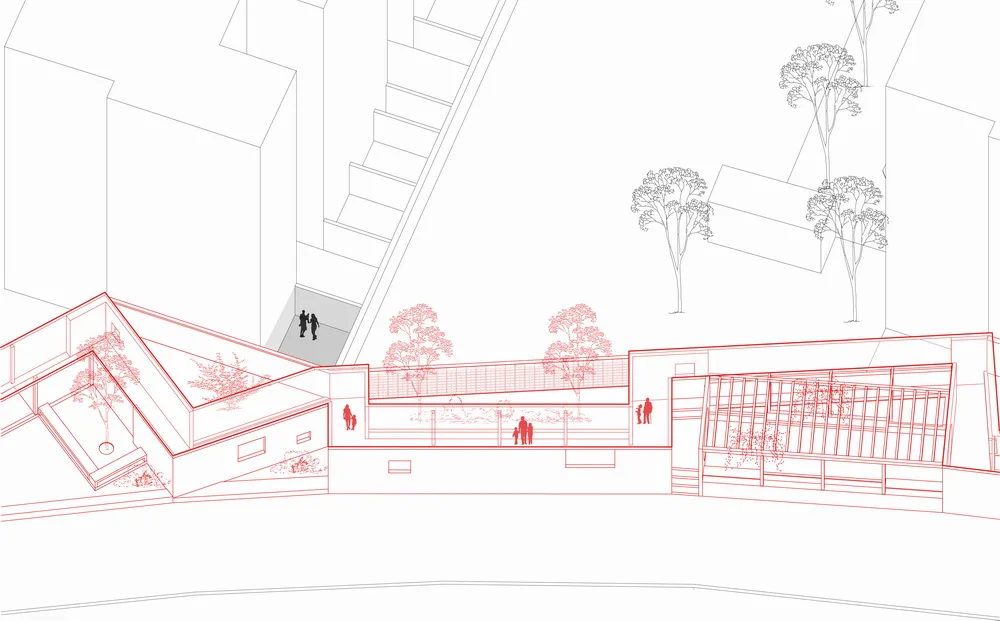
△ Original design proposal
The original plan featured a concave corridor courtyard between buildings, opening inward and separated from the community’s interior and exterior by hollow porous brick walls.
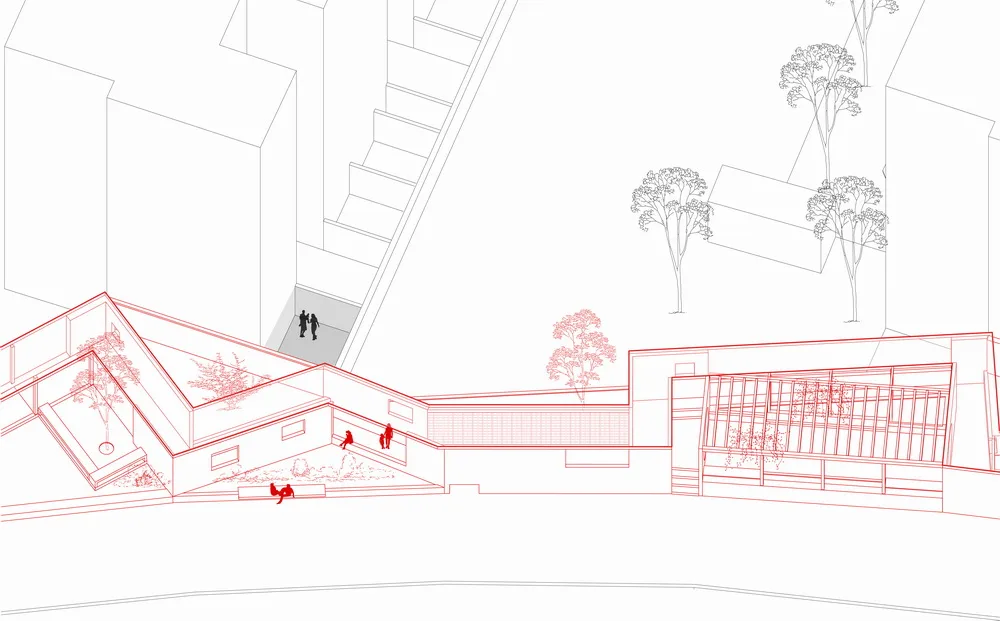
△ Implementation plan
First-floor residents expressed concerns that the folding corridor’s hollow porous brick wall formed an acute angle with the courtyard, impairing daylight. The revised plan adjusted the corridor’s direction near these courtyards, removed the original brick wall, and redefined the community boundary along the folding corridor. The corridor space was transformed from an inward-facing courtyard into an open pavilion facing the street.
The renovation began by establishing a zigzag park path. Taking into account residential building layout, tree environments inside and outside the wall, and street functions, the corridor’s direction alternates concave and convex shapes. This approach complements the community’s internal environment, broadens sightlines, and creates expandable pocket spaces for the street.
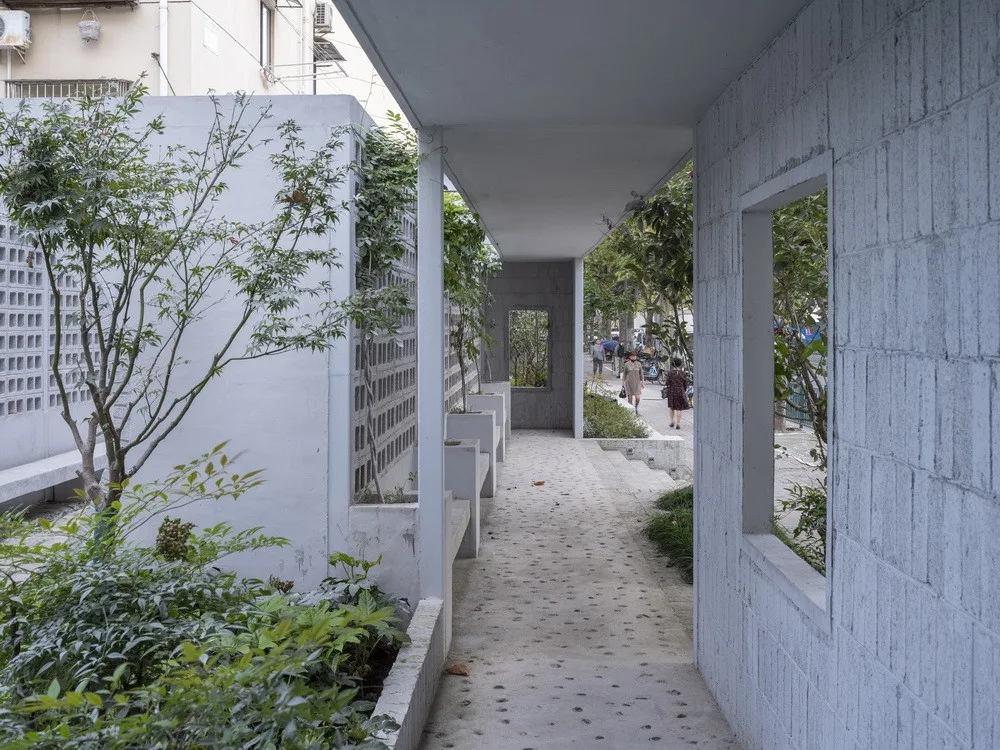
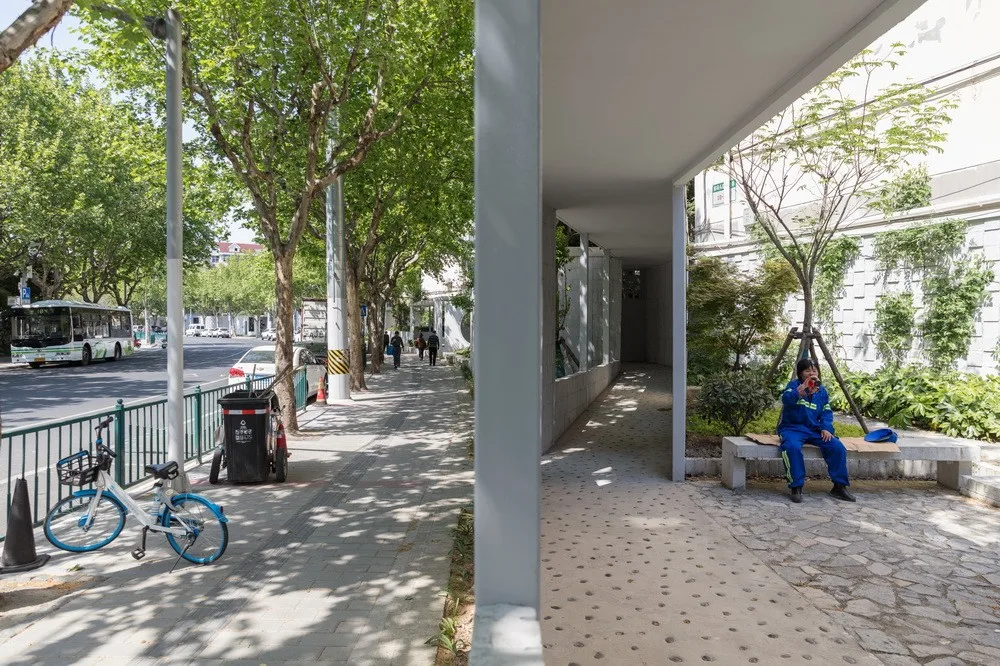
This design not only adds functionality to each segment of space but also blurs the division between inside and outside the community. It transforms the fence garden into a central place where both residents and street visitors can feel engaged and connected.
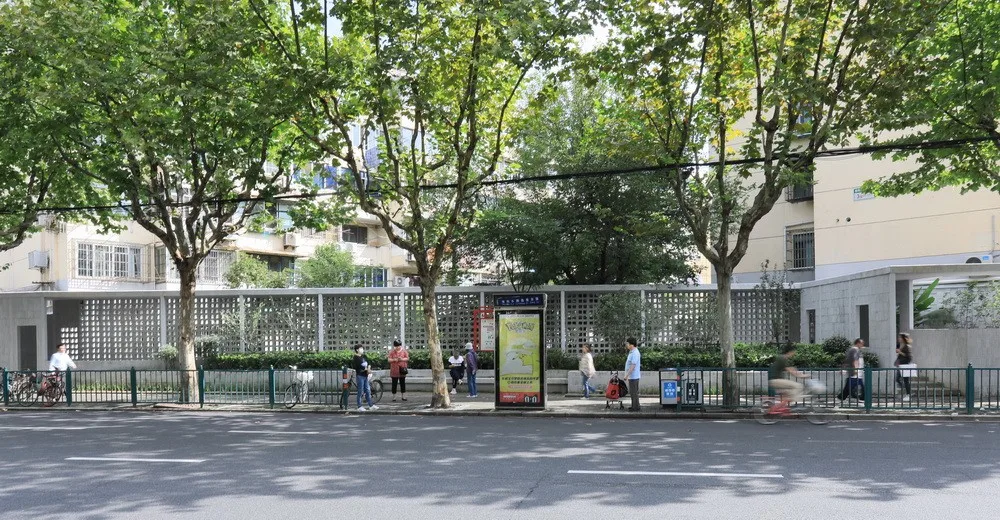
The winding corridors accommodate diverse nodes tailored to local needs: open corridors for residents to rest while shopping, buffer zones at community entrances, reading courtyards for children after school, and welcoming spaces for elderly residents to gather and socialize.
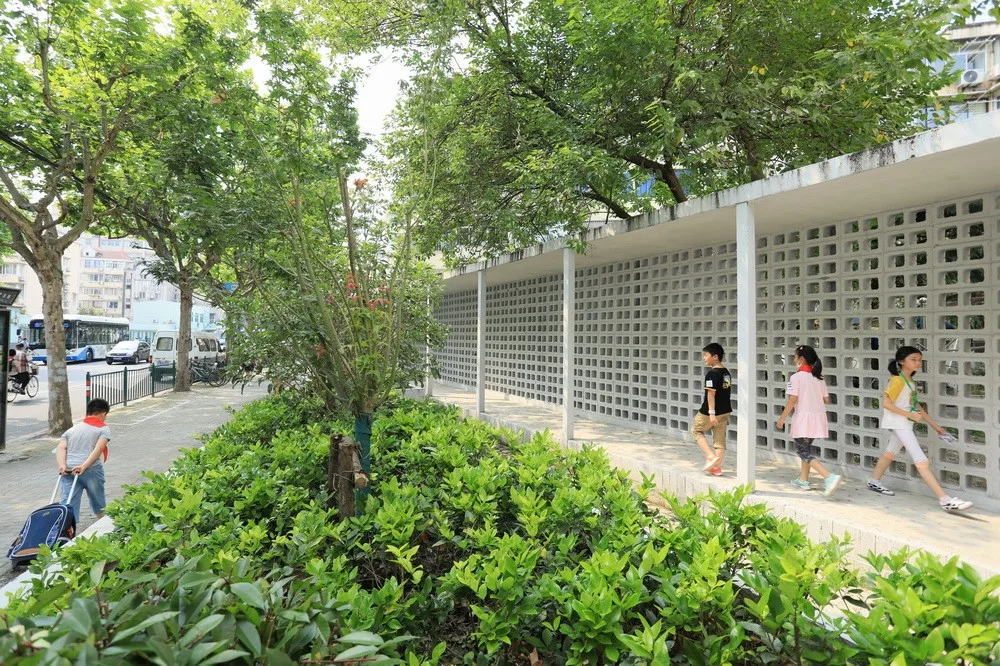
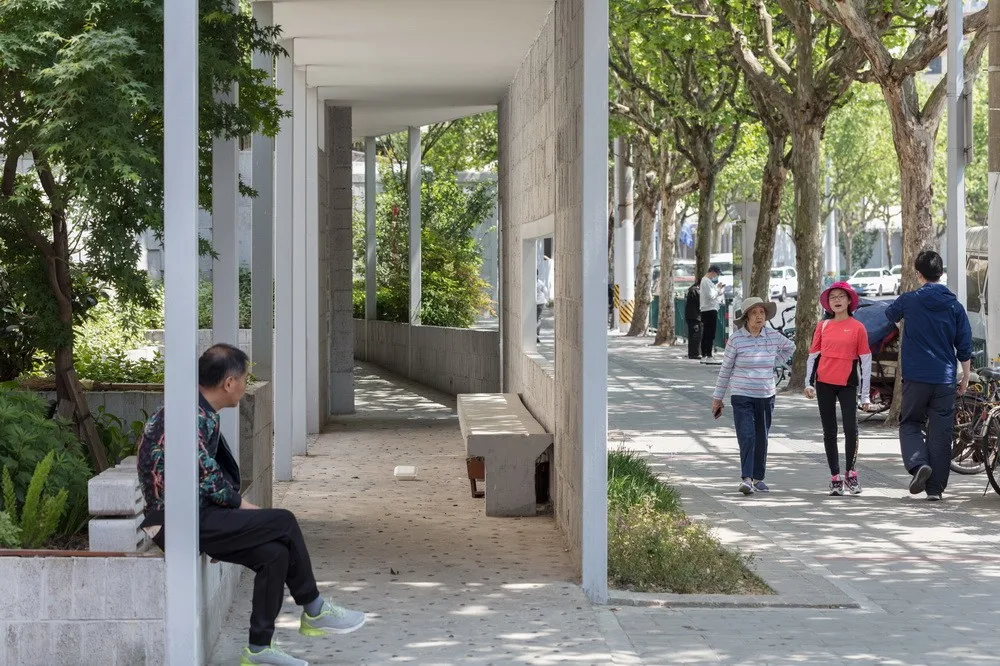
The flexible approach, adapting to local conditions and incorporating garden-inspired colors, helps the project address the uncertainties inherent in community work. This method allowed Changliyuan to adjust actively based on residents’ feedback during implementation and to seamlessly integrate elements like bus stop waiting areas—while preserving the original garden charm.
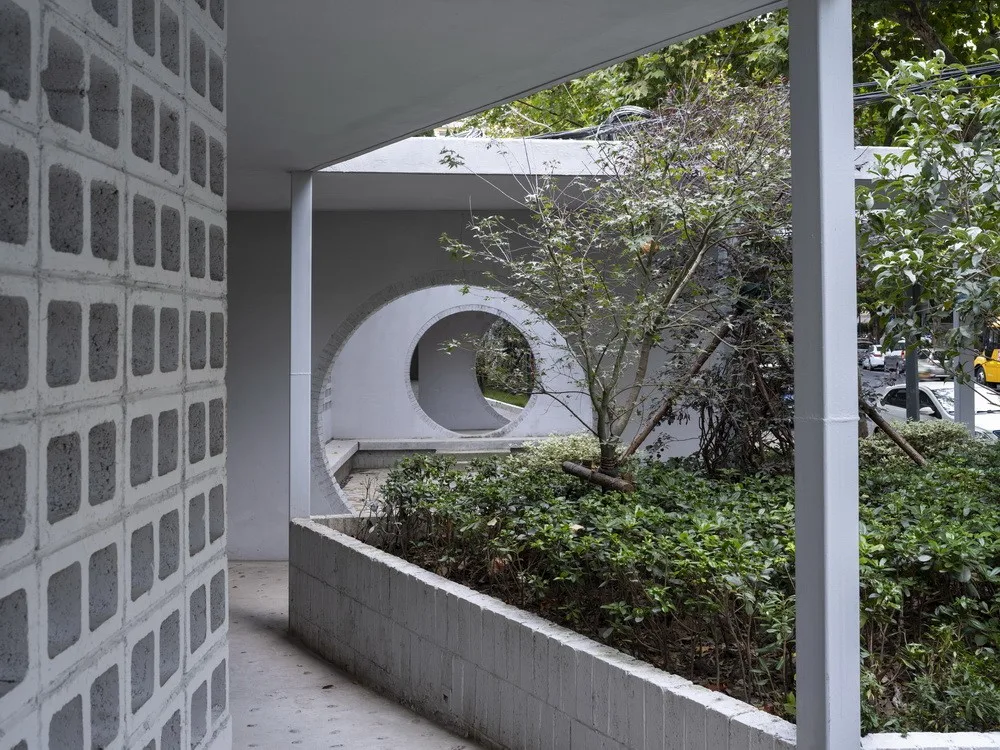
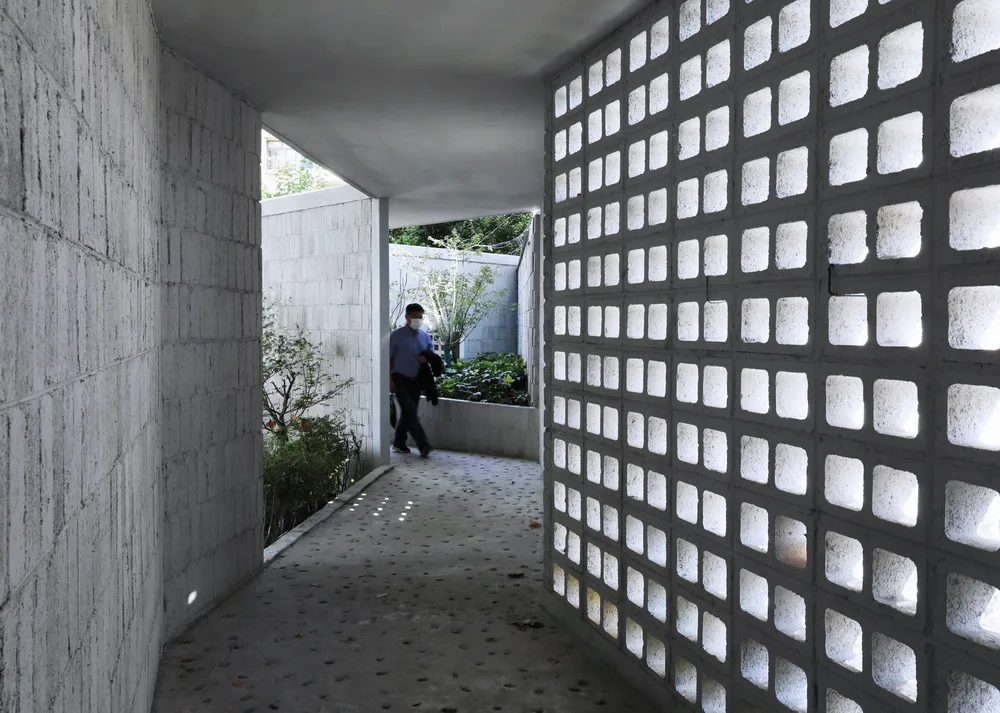
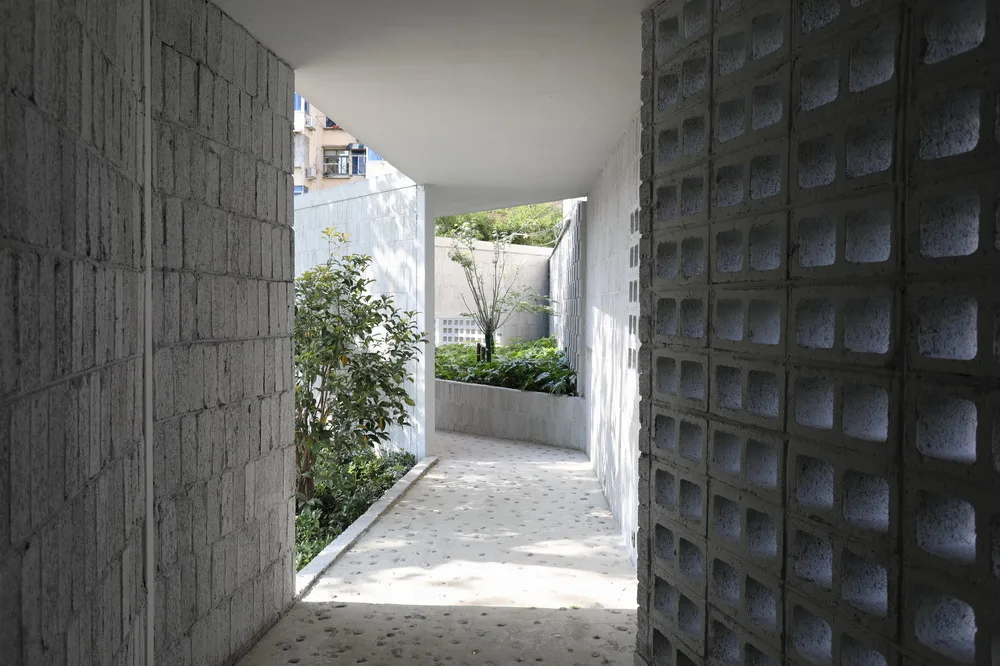
As a garden-inspired strategy blending visionary design and flexible execution, Changliyuan has proven its effectiveness in practice. It not only integrates diverse elements into a harmonious landscape but also lays the groundwork for greater social integration and community development by encouraging resident participation.
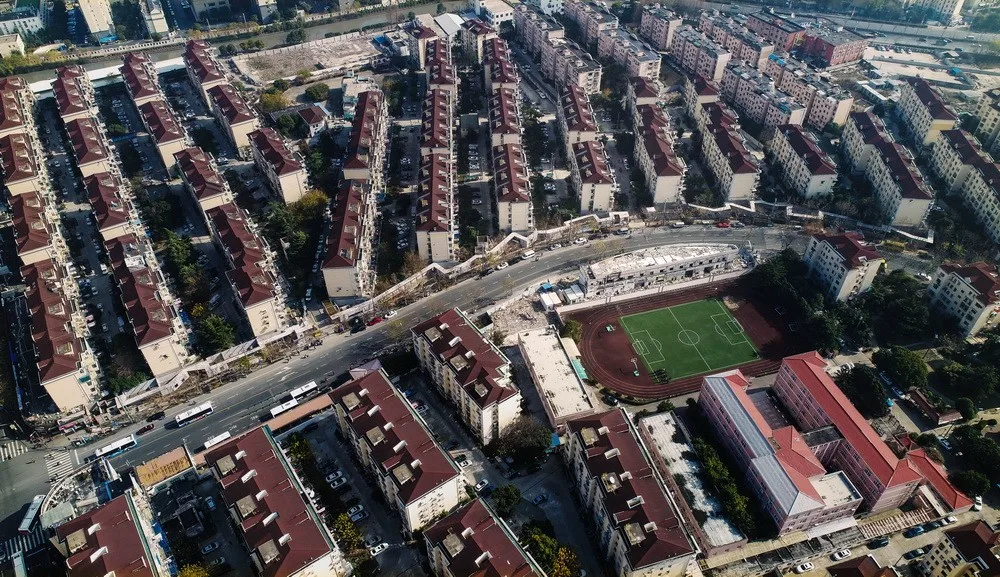
An aerial view during construction reveals how the corridor’s shape was carefully designed through dialogue with existing site elements. It avoids and integrates trees, utility facilities like pump rooms and distribution boxes, while providing resting seats for bus stops and recreational areas for pedestrians. The corridor itself has become a popular walking path for residents.
Technical Drawings
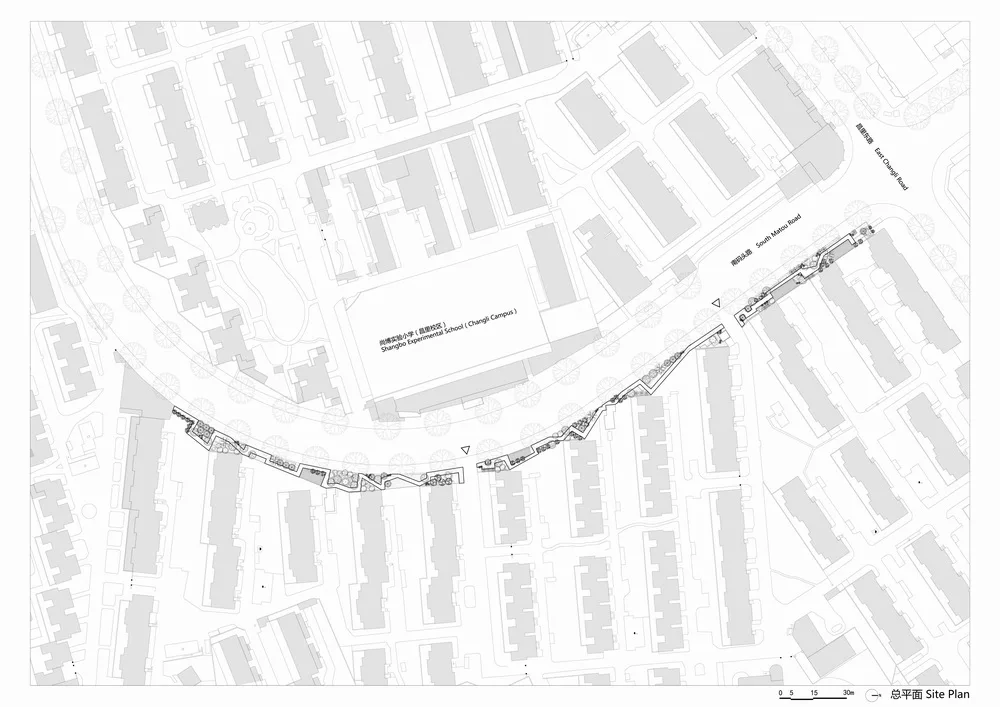
△ General layout plan
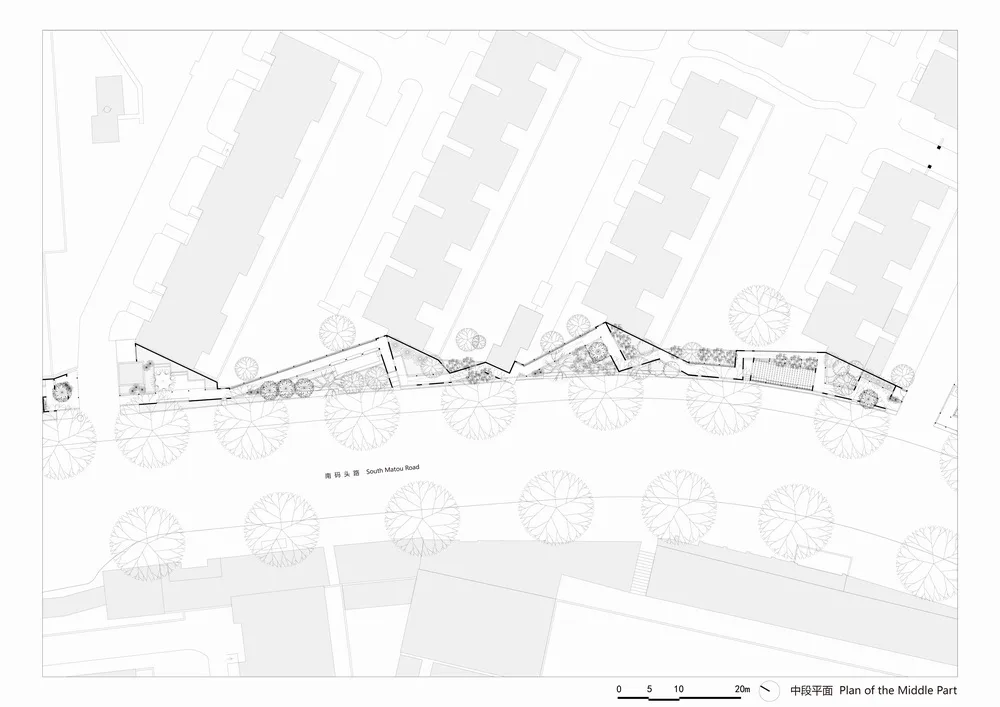
△ Mid-section plan
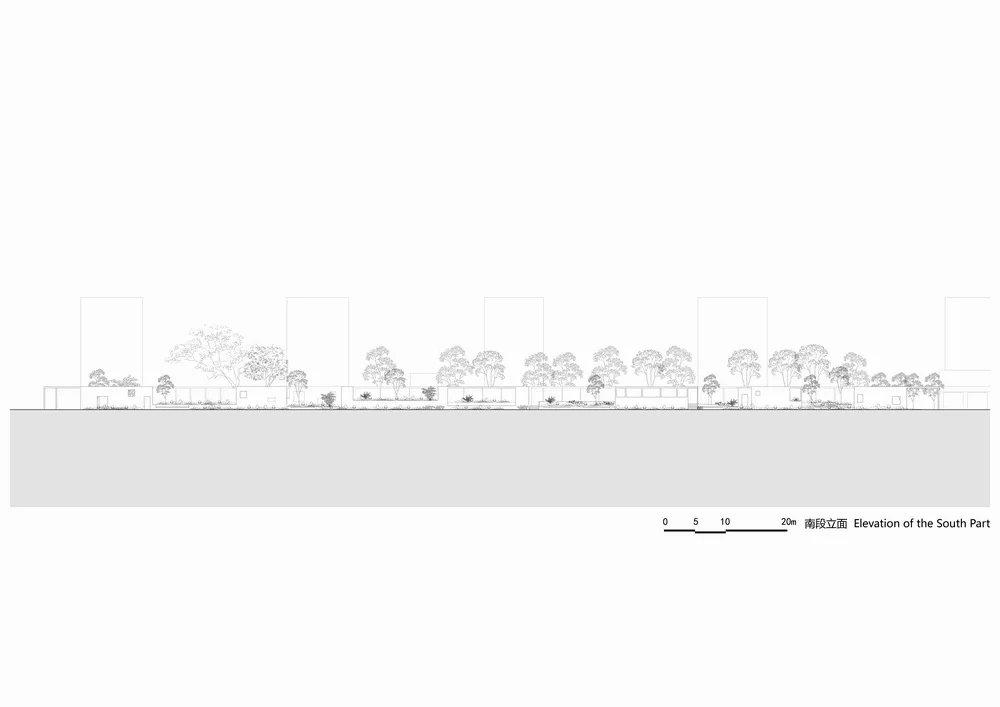
△ Southern facade
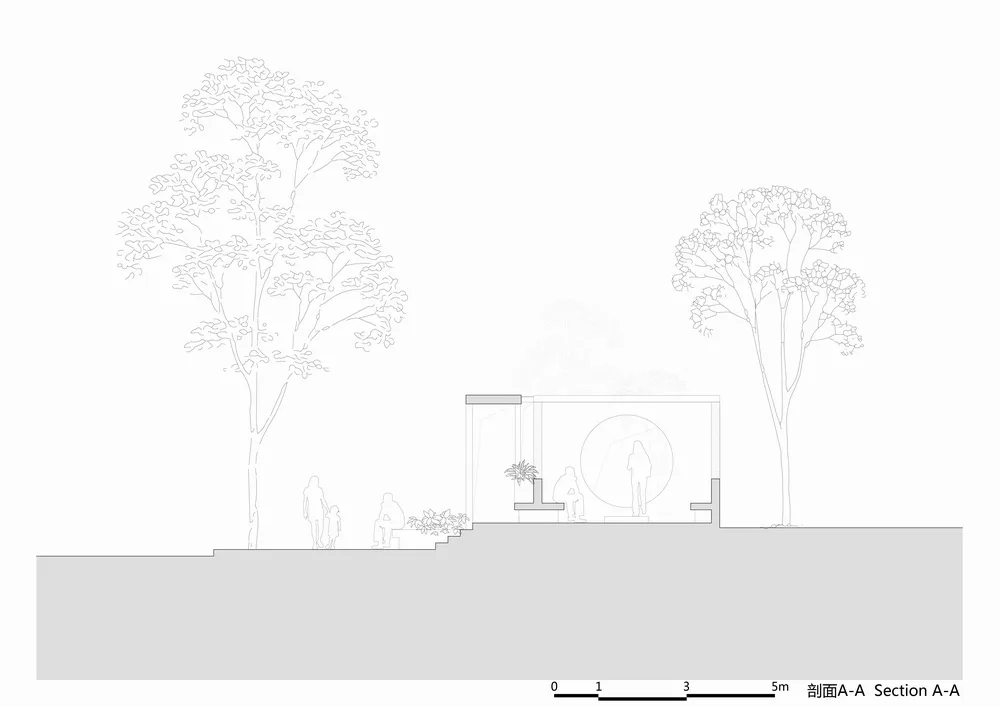
△ Section diagram
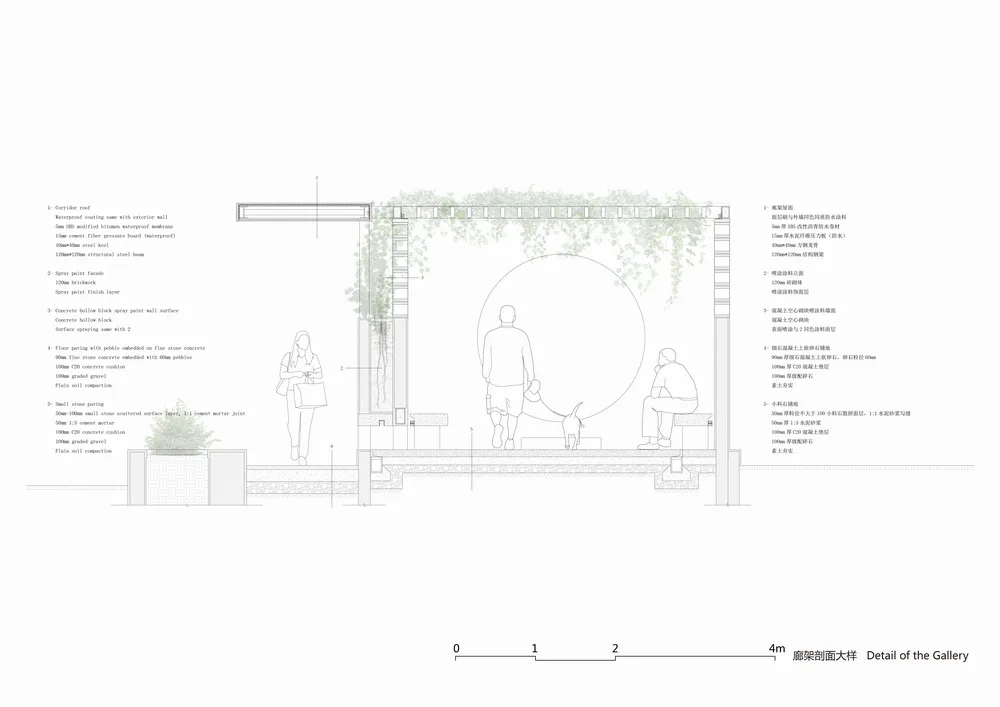
△ Gallery section sample
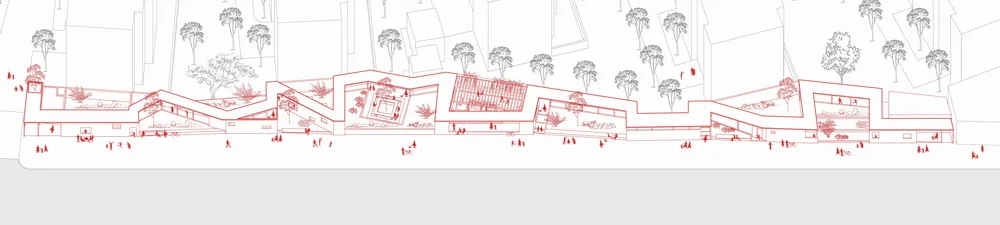
△ Long roll axonometric drawing – South section
Project Information
Project Name: Changliyuan
Architectural Firm: TM Studio, Ziyunzhai Architecture
Lead Architects: Tong Ming, Ren Guang
Design Team: Guo Hongqu, Yang Liuxin, Xie Chao
Project Location: South Matou Road, Pudong New Area, Shanghai
Landscape Area: 2,100 square meters
Owner: People’s Government of Zhoujiadu Street, Pudong New Area, Shanghai
Construction Team: Shanghai Pudong New Area Sanlin Urban and Rural Construction Development Co., Ltd
Project Collaboration: Shanghai Pudong New Area Planning and Architectural Design Co., Ltd
Design Period: April – September 2019
Construction Period: October 2019 – May 2020
Building Area: 790 square meters of landscape structures
Structure Type: Steel frame structure












Must log in before commenting!
Sign Up