
Originally, the architect was tasked with designing a 300 square meter cultural building in Xiuwu County, Henan Province, aimed at enhancing the aesthetic and cultural awareness of the rural community. Given the expansive 630 square kilometer area of the county and its widely dispersed villages, the architect proposed dividing this cultural building into a series of smaller structures. This approach allows the facilities to better serve children and community activities throughout the region.
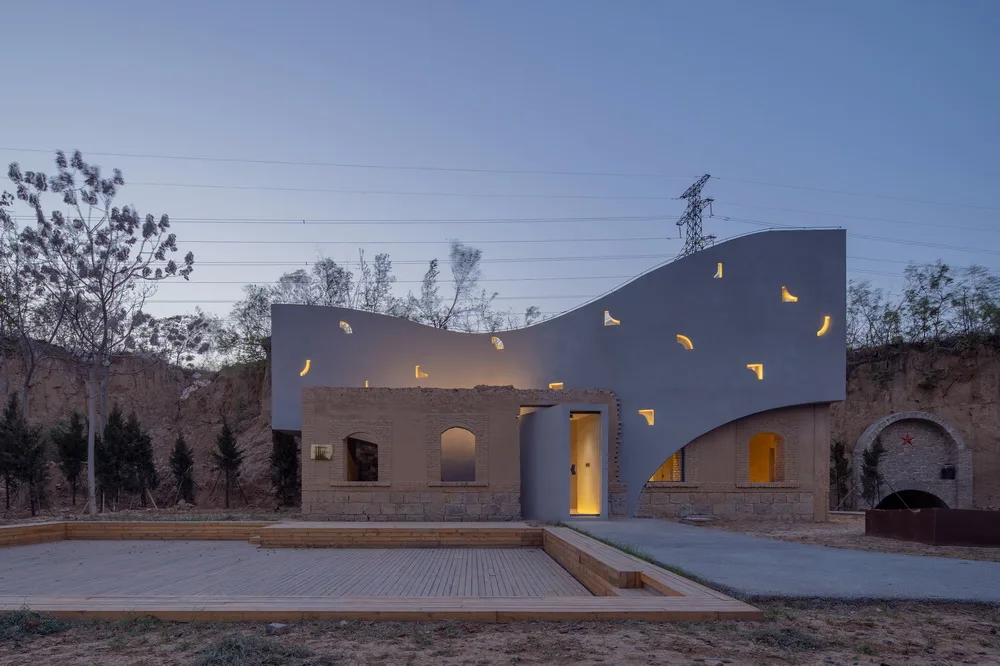
These compact concrete buildings are designed as a series of tentacle-like, tree-inspired spaces that reach upwards, capturing dynamic light and shadow. Some are nestled in fields, others within forests; some emerge from abandoned village walls, while others create floating theaters on ponds. Following the first micro building “Taowu,” the second, named “Ruins Bookstore,” is situated within the ruins of an adobe house in Sunyao Old Village, located 20 kilometers away.
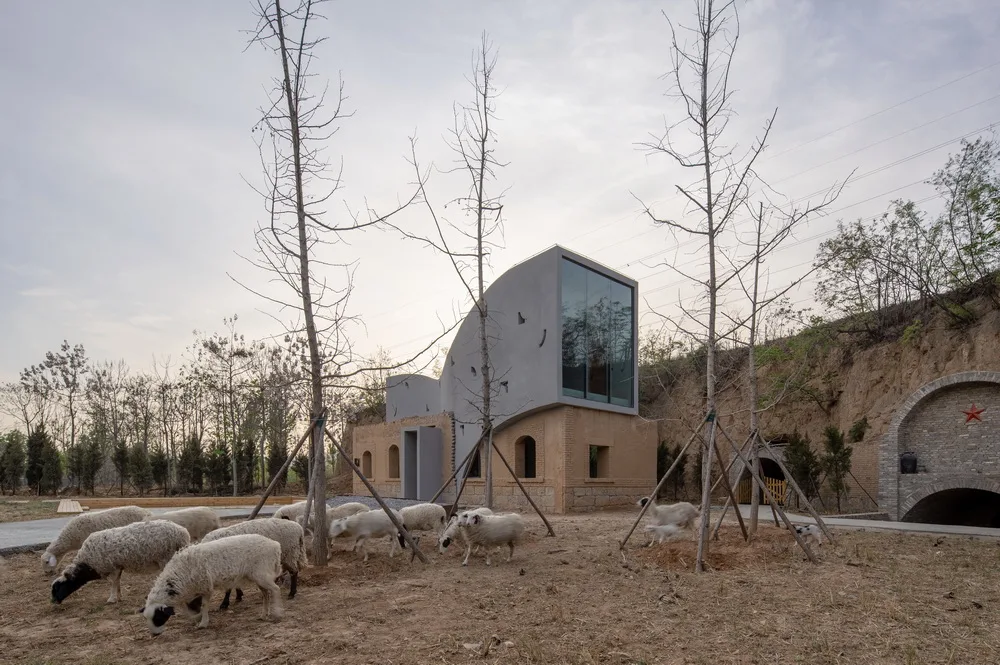
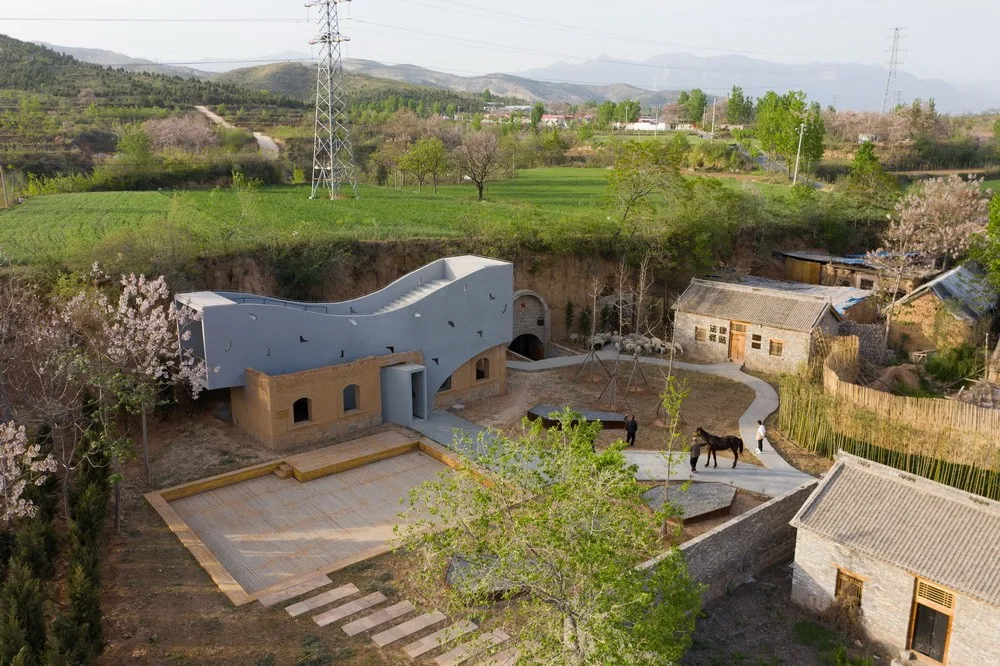
Sunyao Old Village lies in a mountainous area far from the town center. Since 1996, villagers have gradually relocated to newer brick and concrete houses nearby, leaving many adobe dwellings and cave homes abandoned and dilapidated. The surrounding rolling mountains, exposed barren cliffs nearby, and expansive fields atop the cliffs create a rich, layered terrain that defines the site’s unique character.
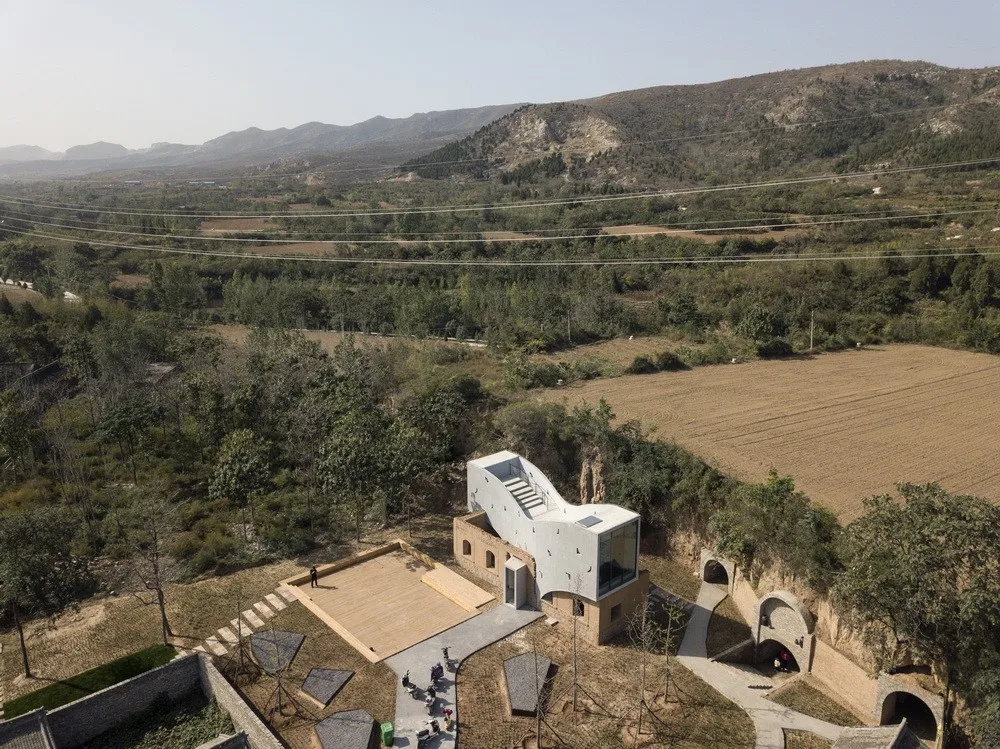
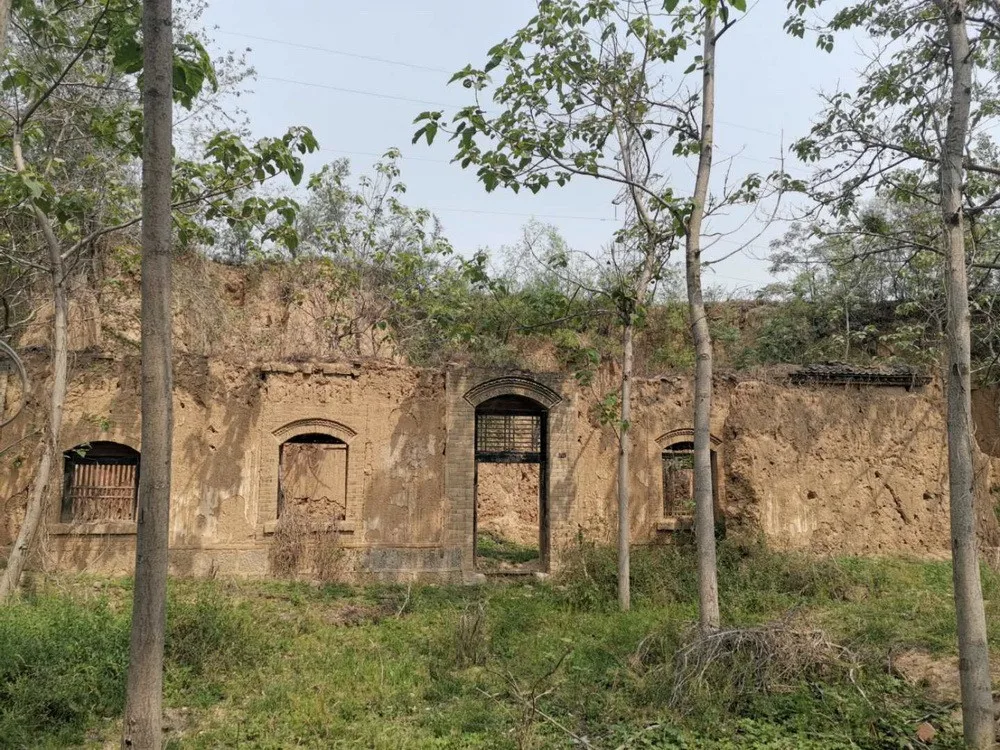
△ Original site location
The village proposed to build within the ruins of an adobe wall inside the original homestead area. However, after searching for local craftsmen, no one skilled in the traditional rammed earth technique could be found.
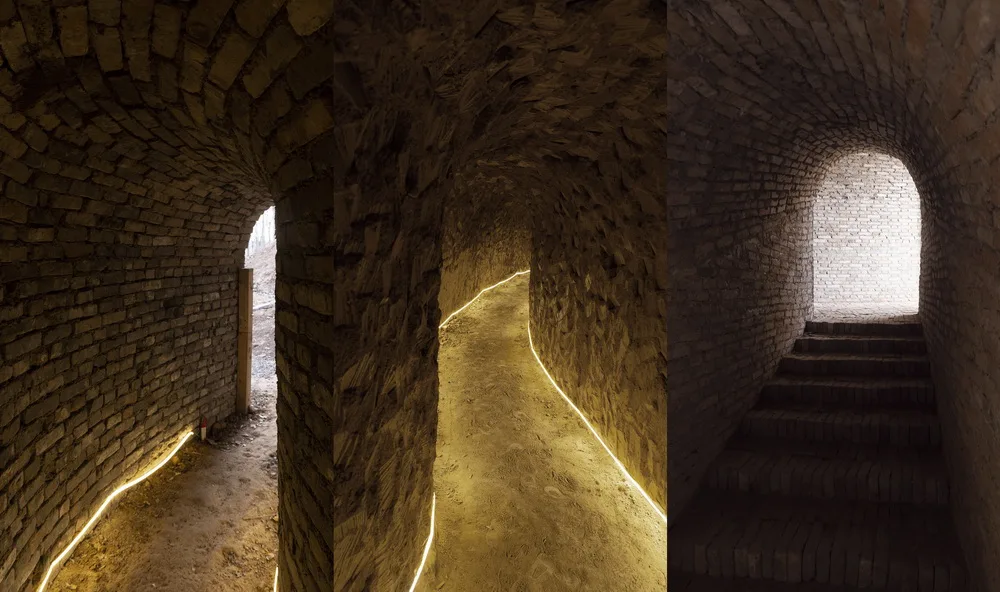
Nearby cave dwellings
Consequently, the architect suggested using modern construction techniques to build within the ruins. This approach allows a new structure to emerge from the remnants, creating a spatial container that invites visitors to enter the ruins, overlook the old houses, and appreciate the surrounding villages, fields, and distant mountains.
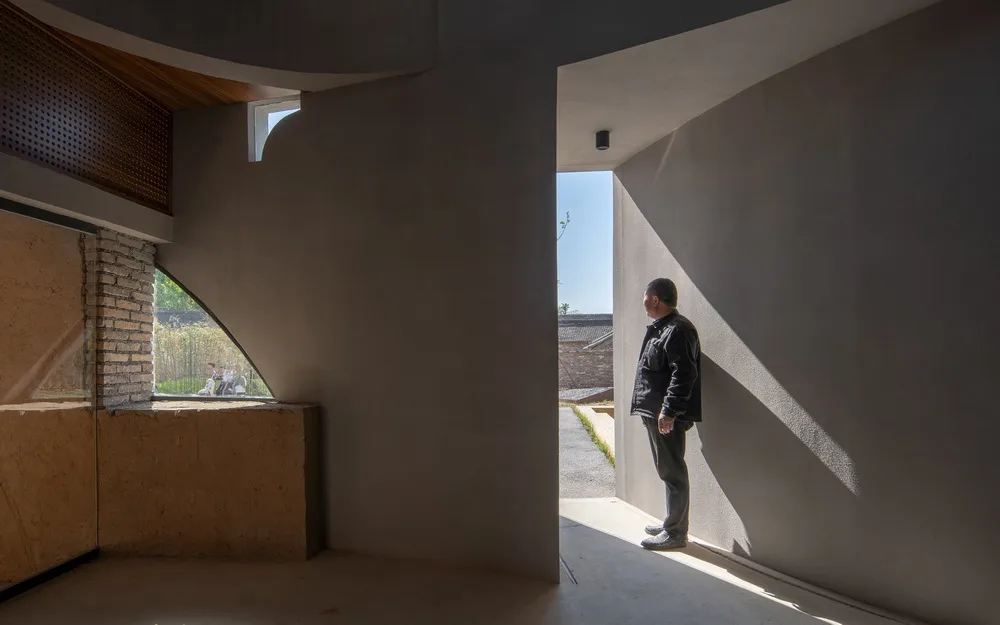
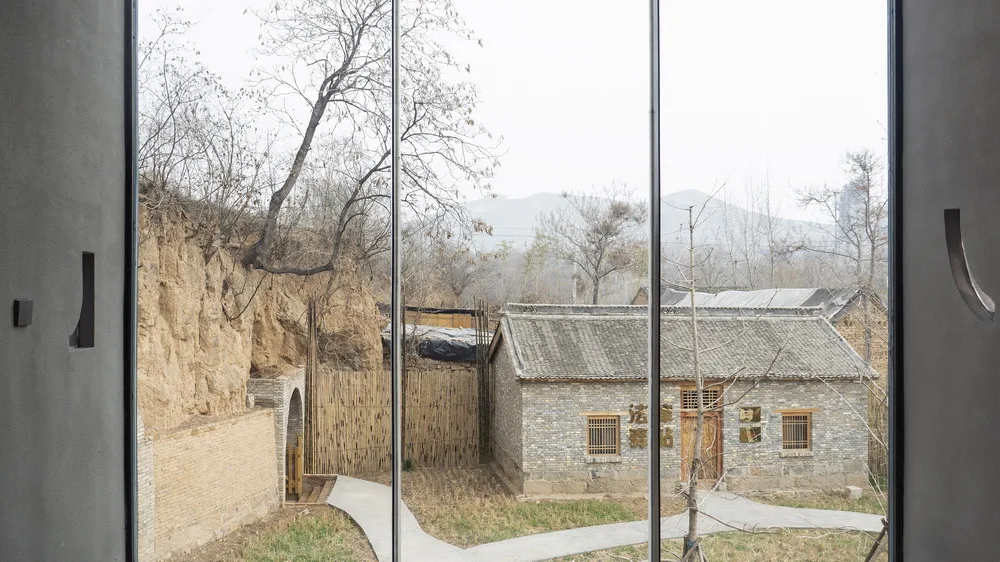
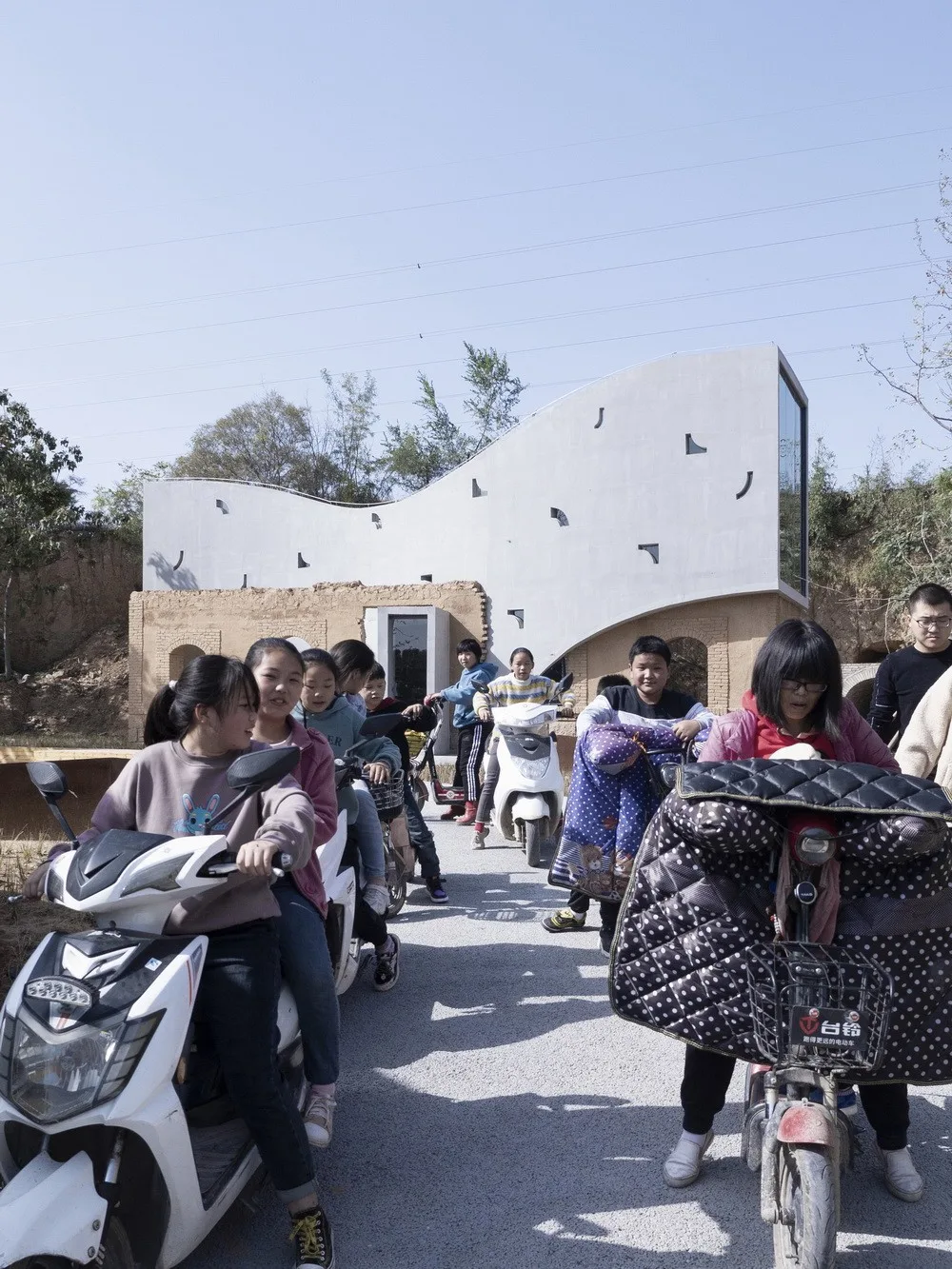
The architect aimed to express two intertwined memories within the Sun Kiln Bookstore. On one hand, it connects the cave dwellings, barren mountains, and remaining walls — elements rich in texture and history. On the other, it continues the form language of the microarchitecture series, adapting to the site and evolving into a sculptural space rising organically from the landscape.
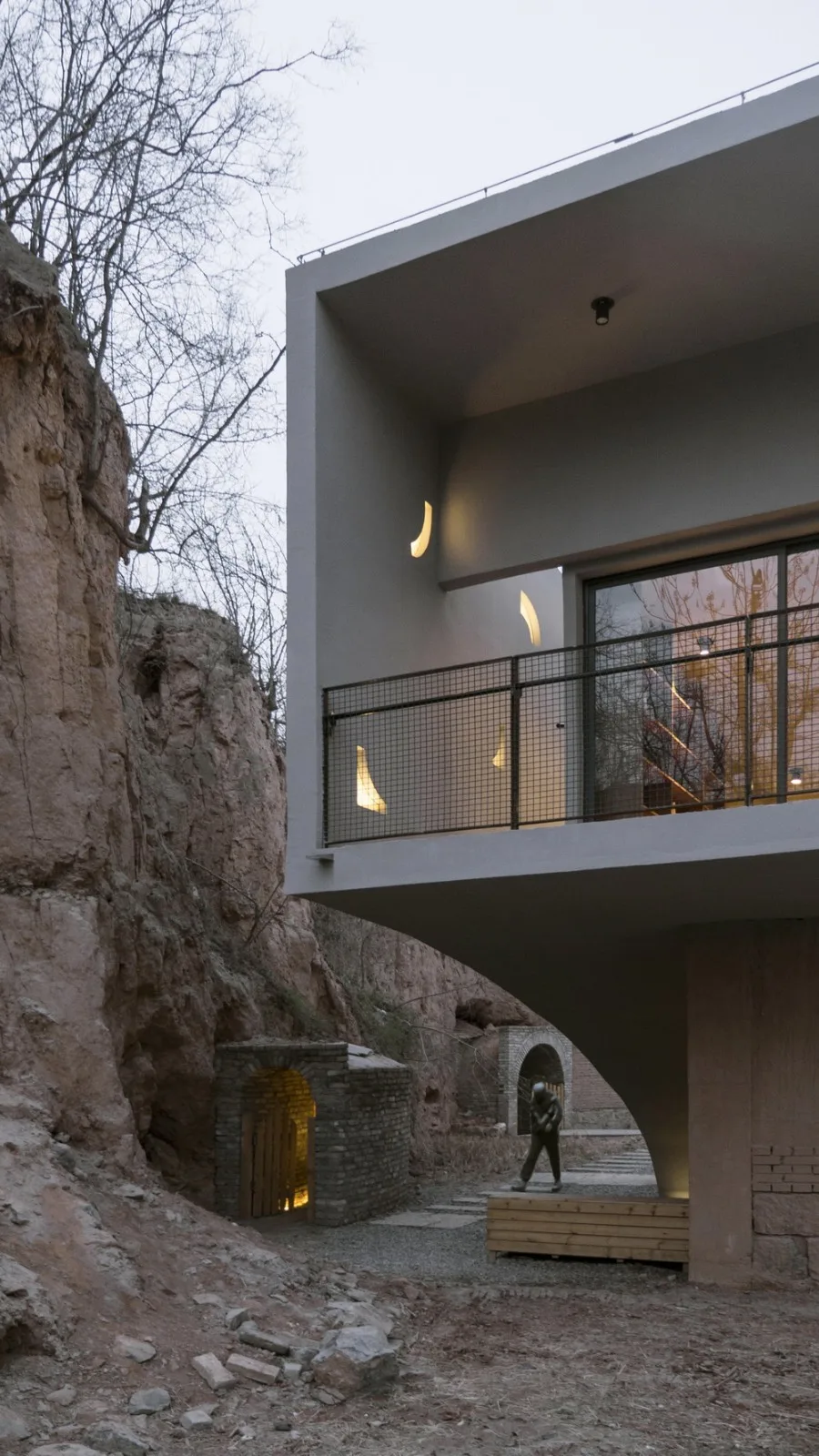
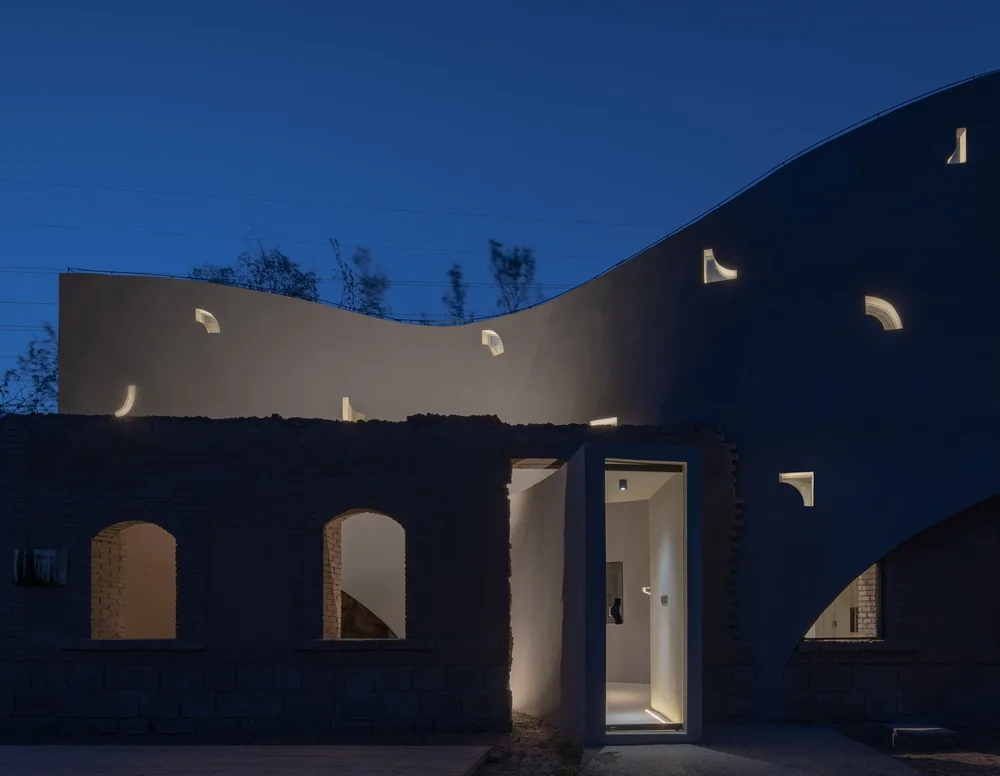
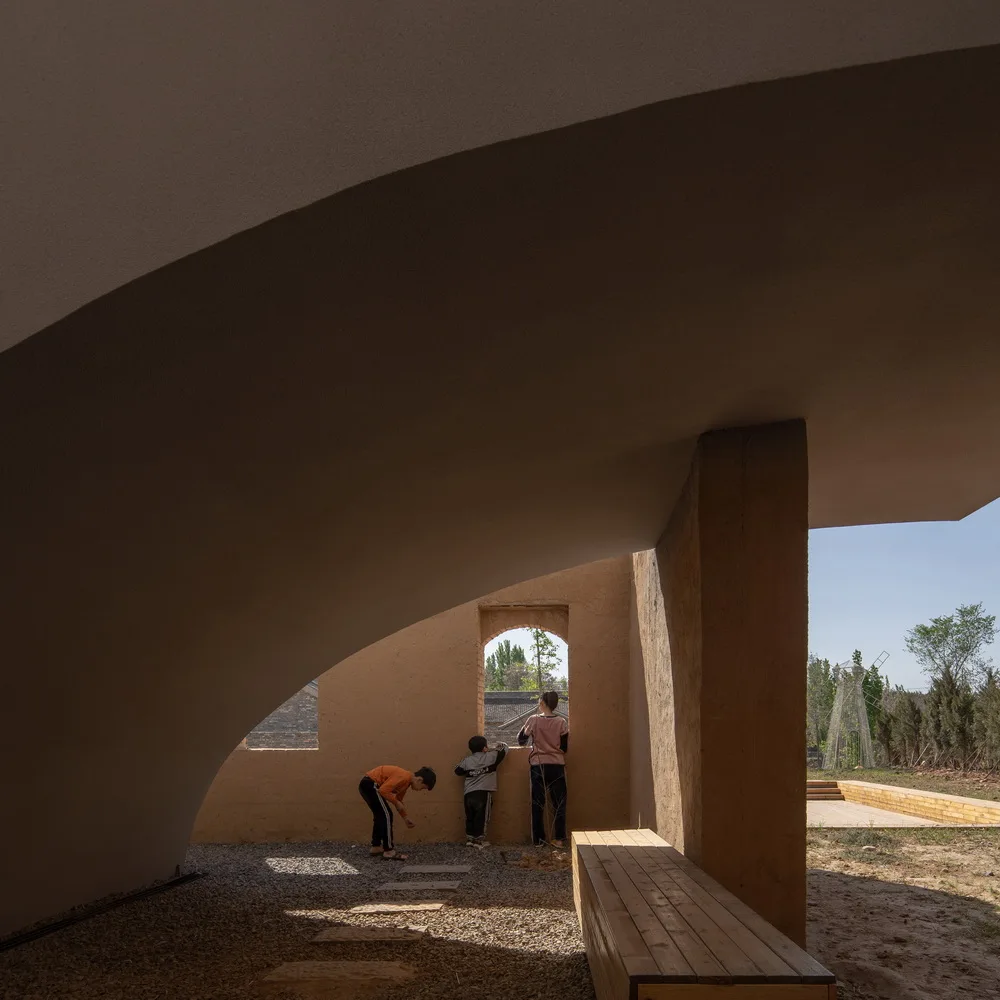
Two narratives merge: a concrete entrance extends through the original doorway in the wall, welcoming visitors inside. Once inside, a corner of the remaining wall stretches into the interior, guiding visitors along the ruins to explore the cave dwellings and rugged mountain cliffs beyond. Old wooden doors set into the concrete backyard walls serve as constant reminders of the dialogue between the new space and the relics of the past.
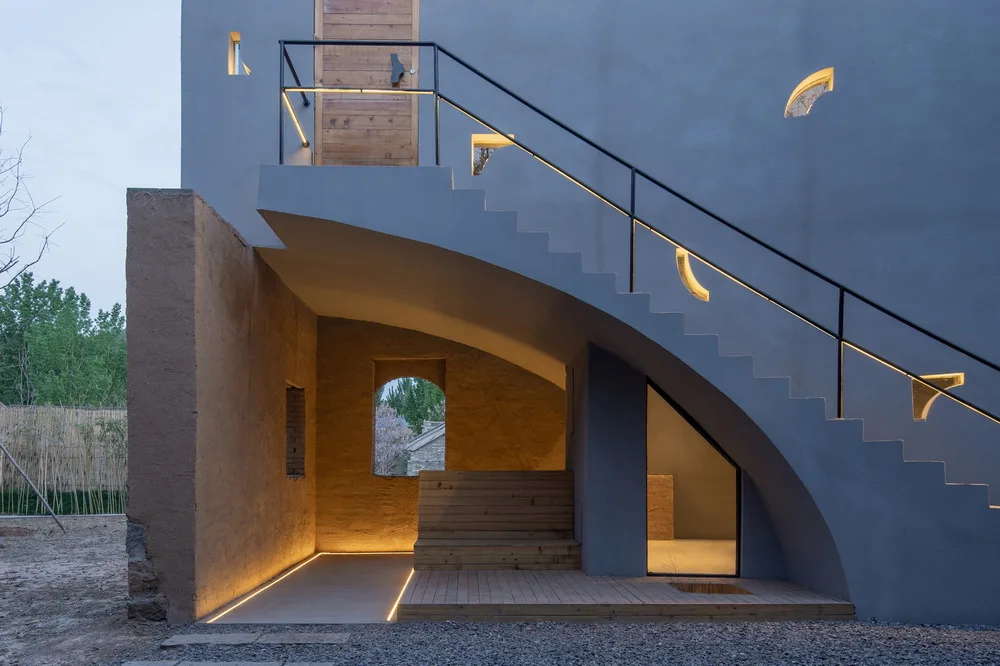
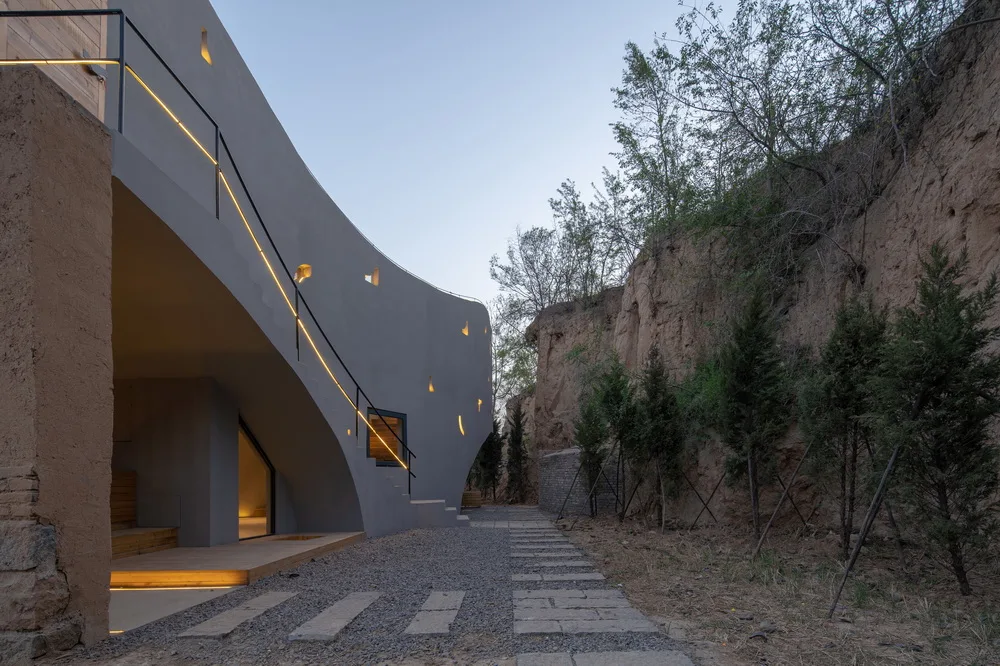
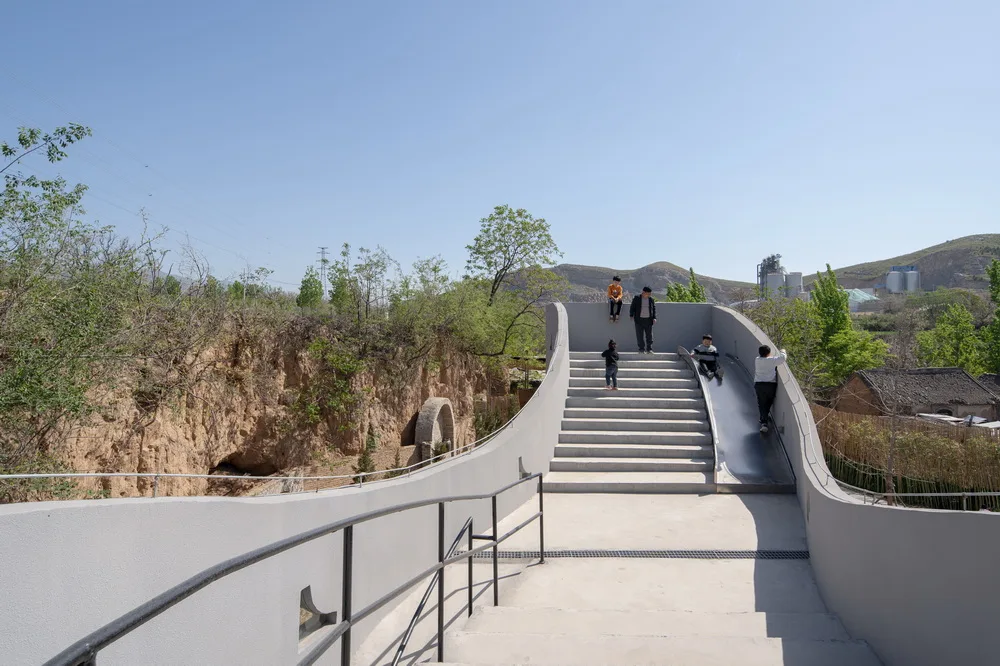
The building’s interior and exterior unfold seamlessly with the landscape. The roof mirrors the undulating contours of the terrain and distant mountains, while the curved ground naturally forms an outdoor staircase and slide on the roof. This curved section, which spans over the old house, connects the first-floor entrance, the second-floor balcony, and the roof terrace.
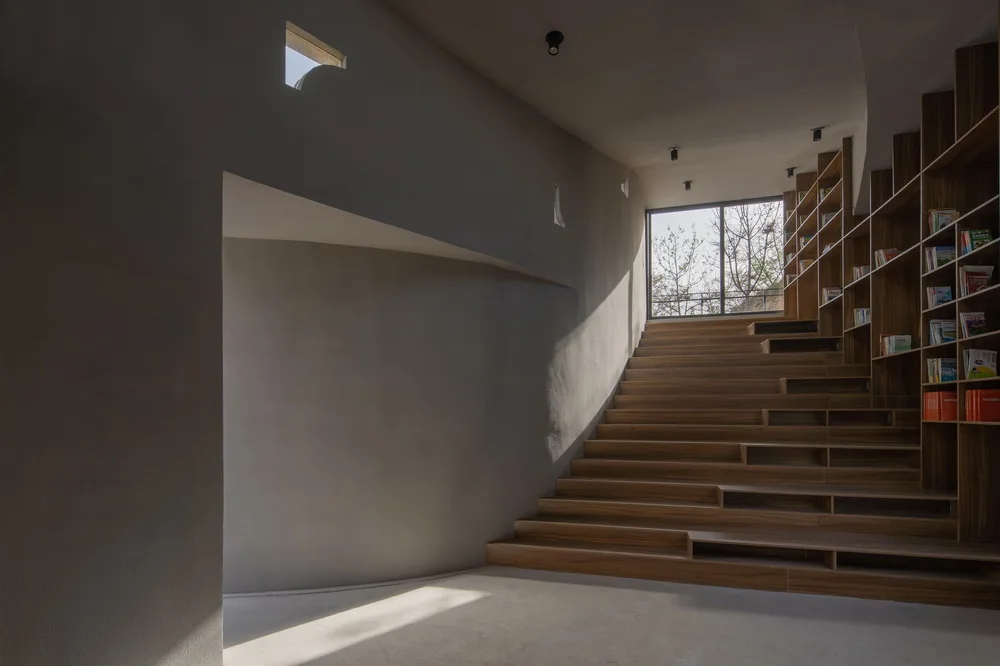
The indoor space functions as a stairway library that doubles as a small forum and screening room. The building’s winding layout and surrounding pathways extend the maze-like cave system found nearby.
The bookstore is nestled among village buildings and trees, surrounded by dense forests and pastoral landscapes visible through large windows on both sides. Numerous irregular small window openings on the north and south facades echo the microarchitecture series’ distinctive form, aiming to breathe new life into the quiet mountain village with unusual shapes and light — casting mysterious shadows by day and glowing brightly at night.
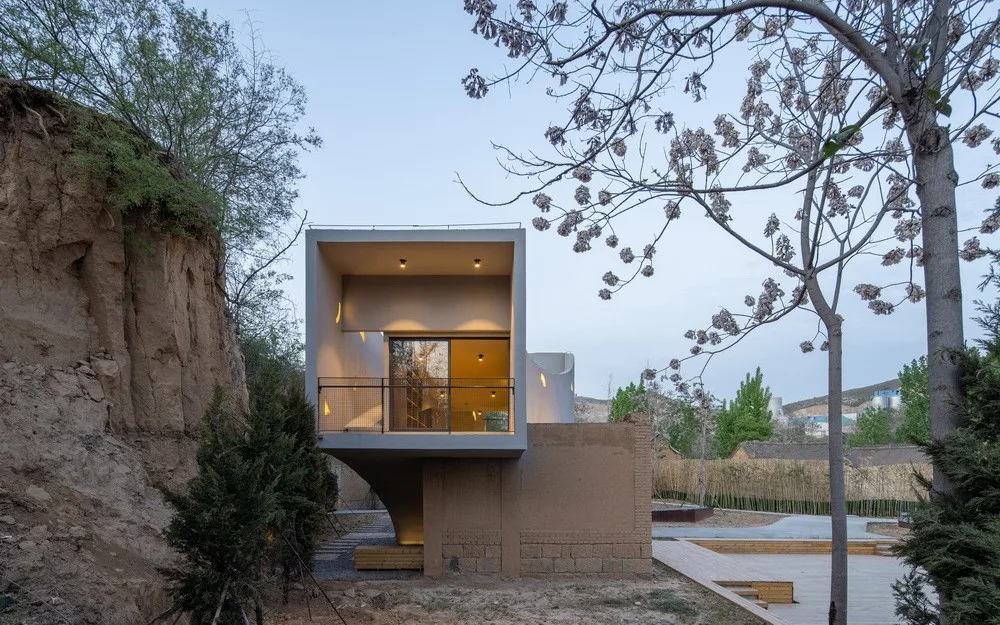
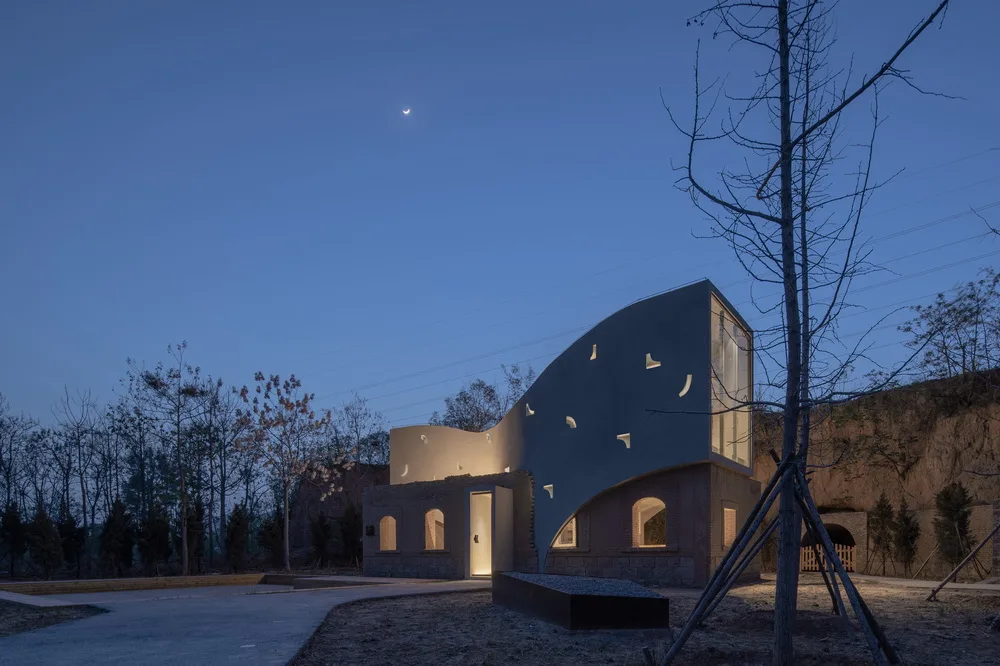
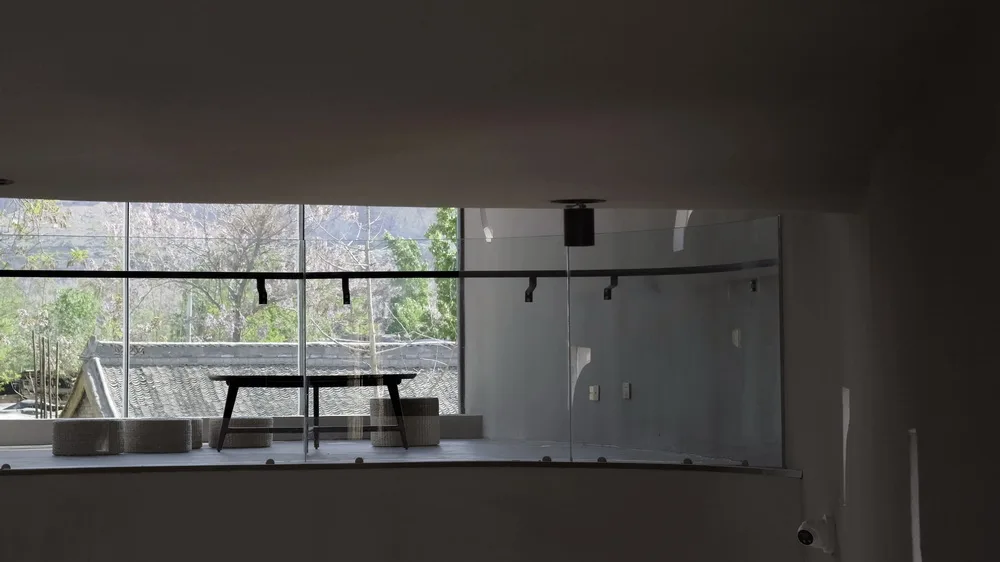
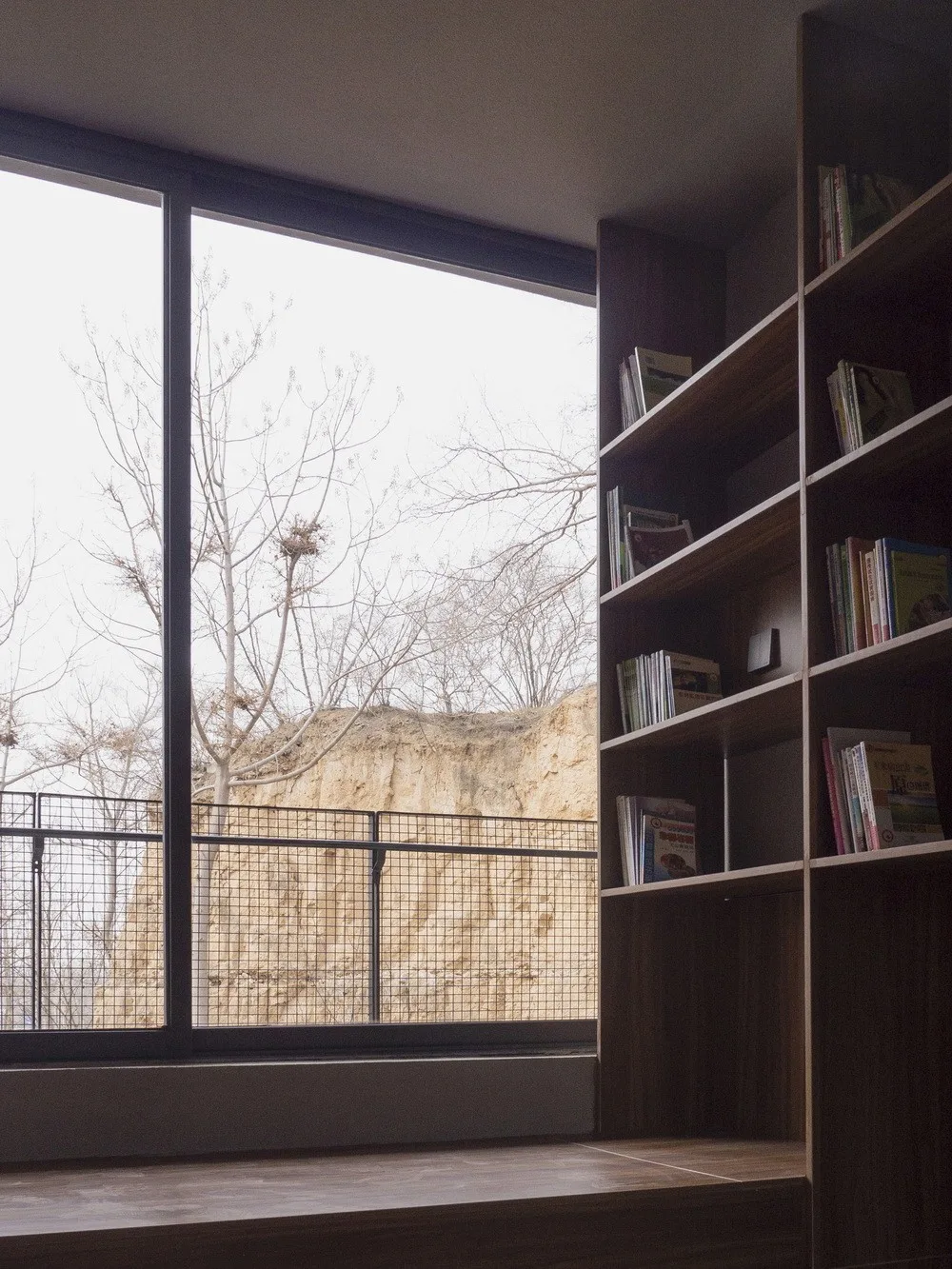
Since its completion in September 2020, the library has become a popular spot for villagers and children to read, relax, and socialize. It has also attracted visitors from neighboring counties and cities. The small plaza at the bookstore’s entrance hosts regular community events such as village meetings and rural discussions. It served as a sub-venue for the 2020 Autumn National Rural Revitalization Forum and Xiuwu Summit, welcoming rural development professionals nationwide. Additionally, Sunyao Old Village has drawn live streaming companies from Shanghai and Zhengzhou, who have helped renovate old houses, operate homestays, and develop online platforms to connect the village with the wider world.
Technical Drawings
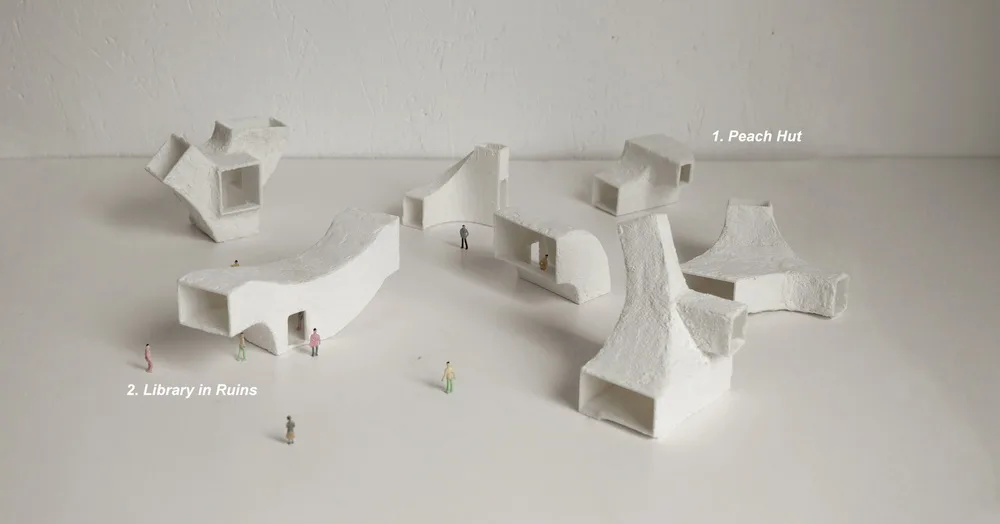
△ Conceptual Model
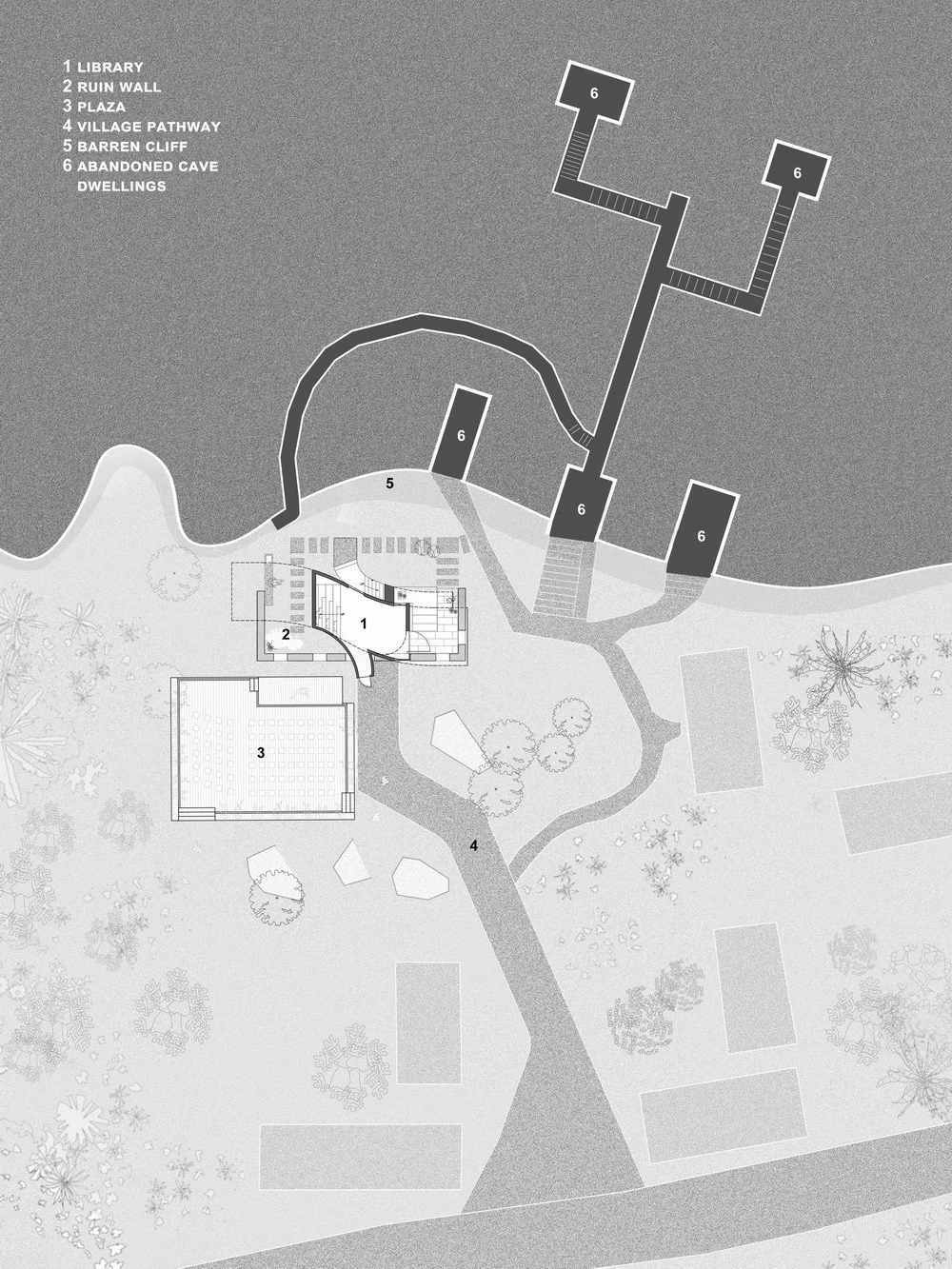
△ Overall Site Plan
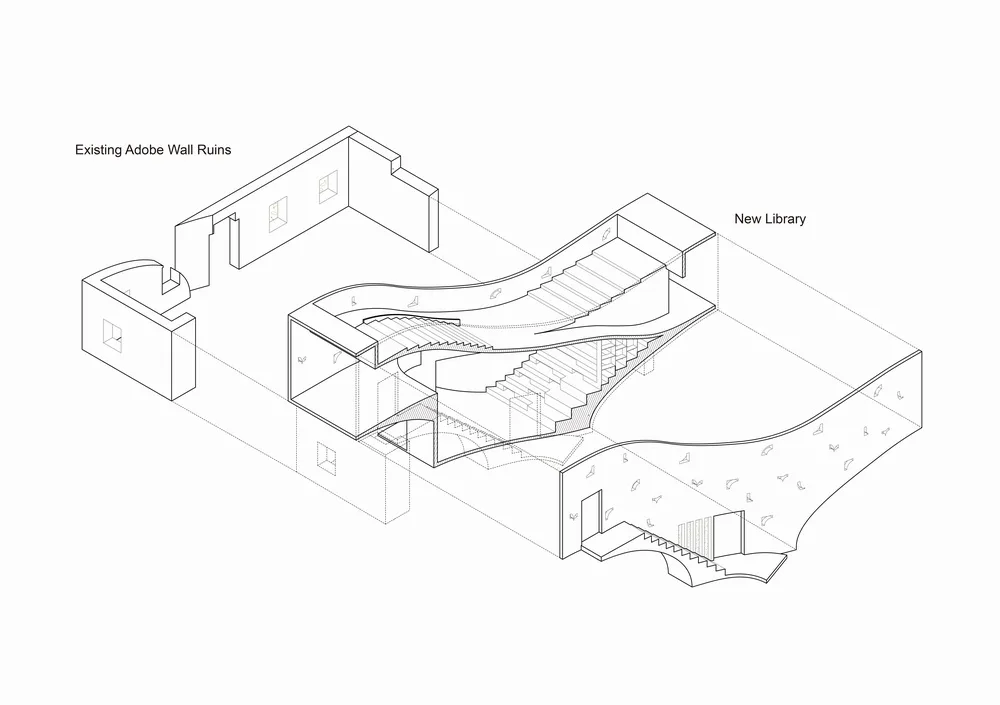
△ Axonometric Diagram
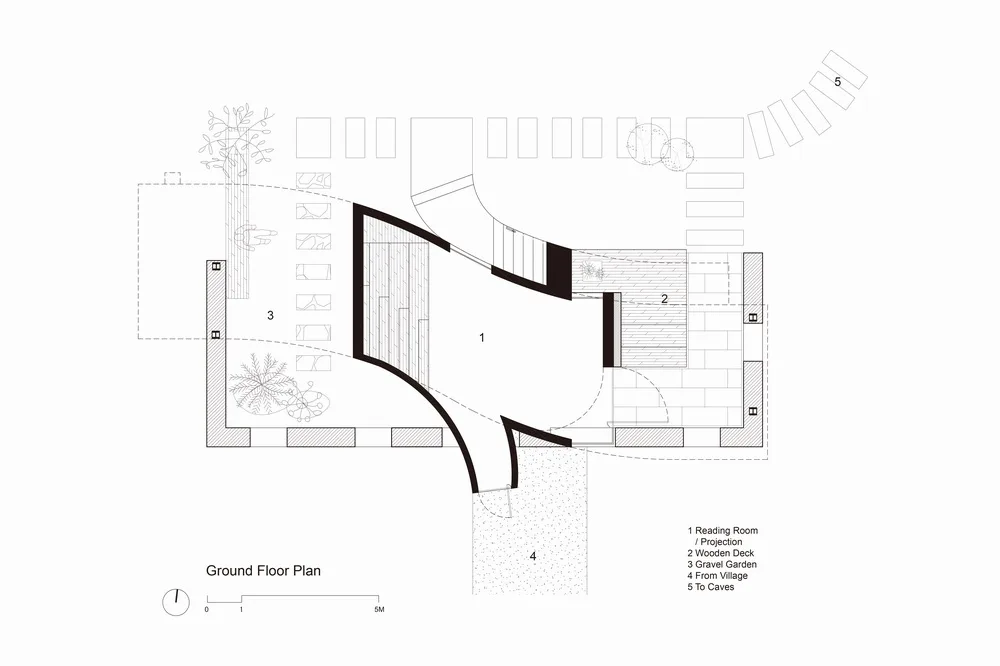
△ First Floor Plan
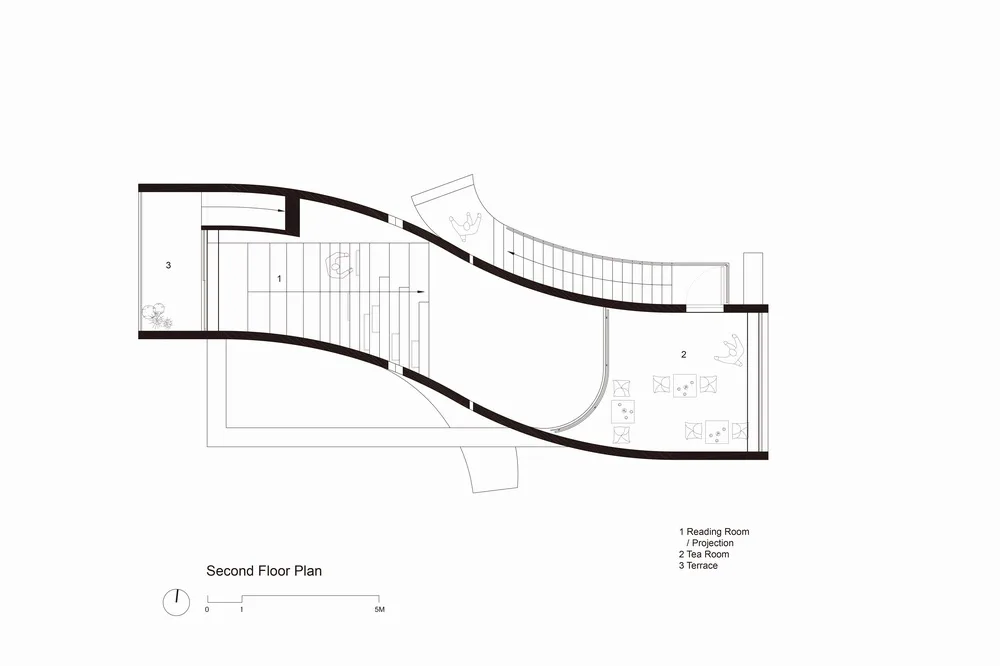
△ Second Floor Plan
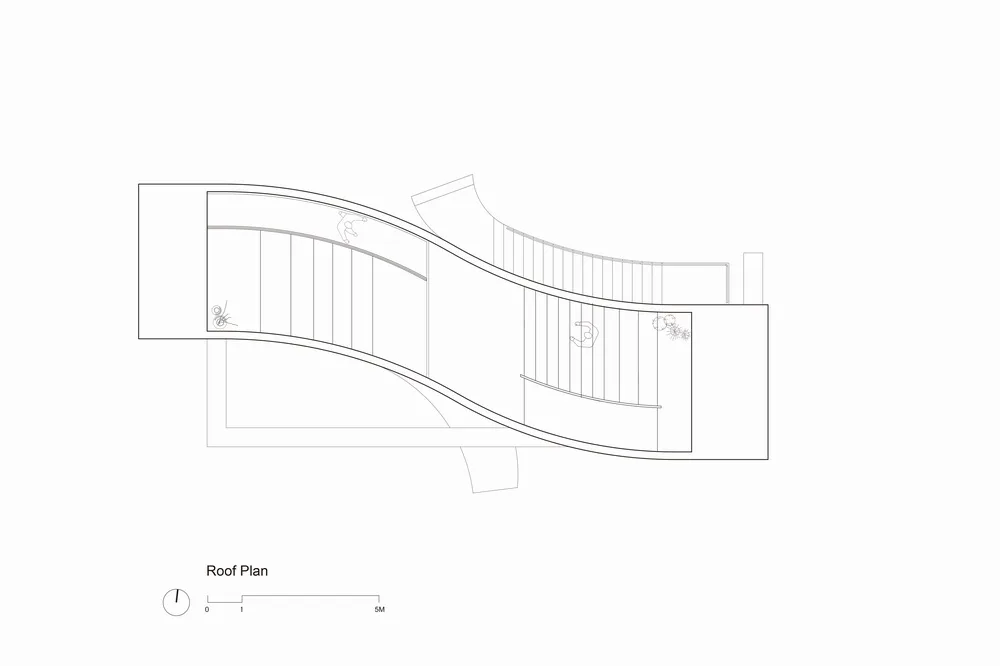
△ Roof Plan
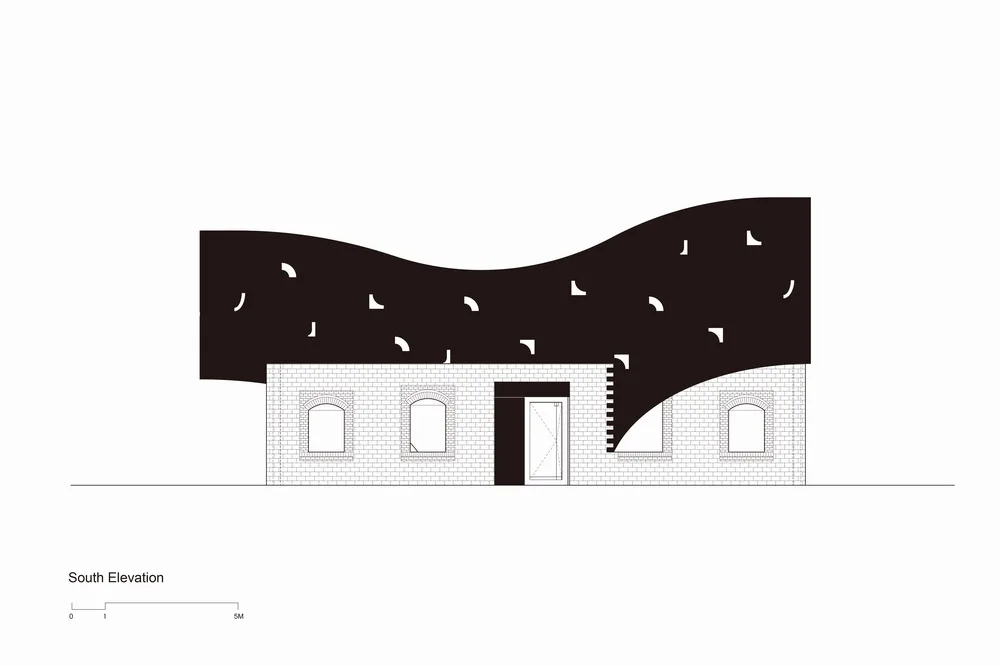
△ South Elevation
△ Horizontal Section
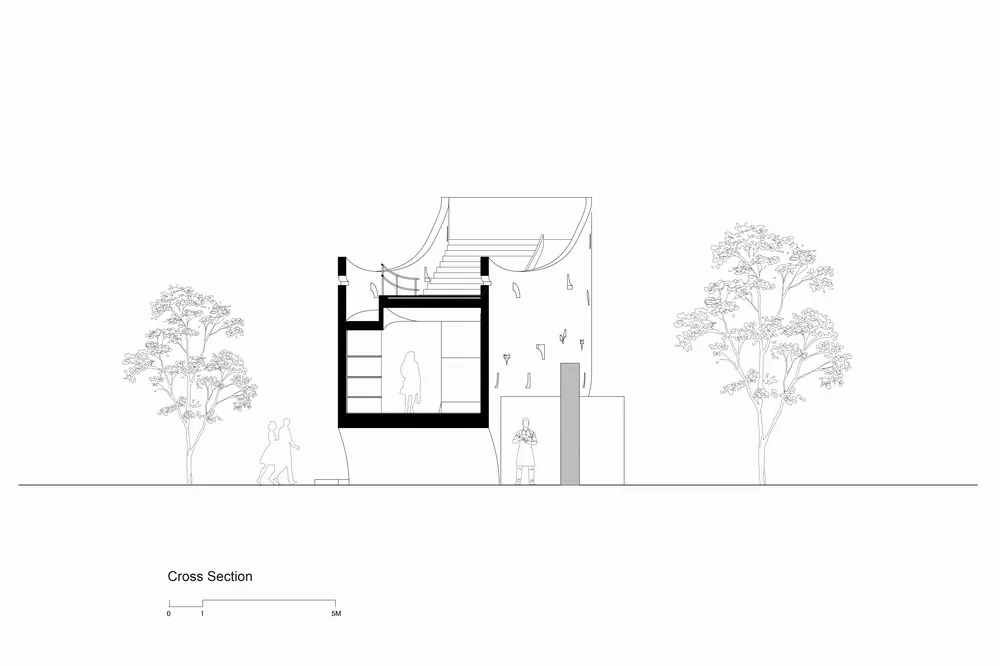
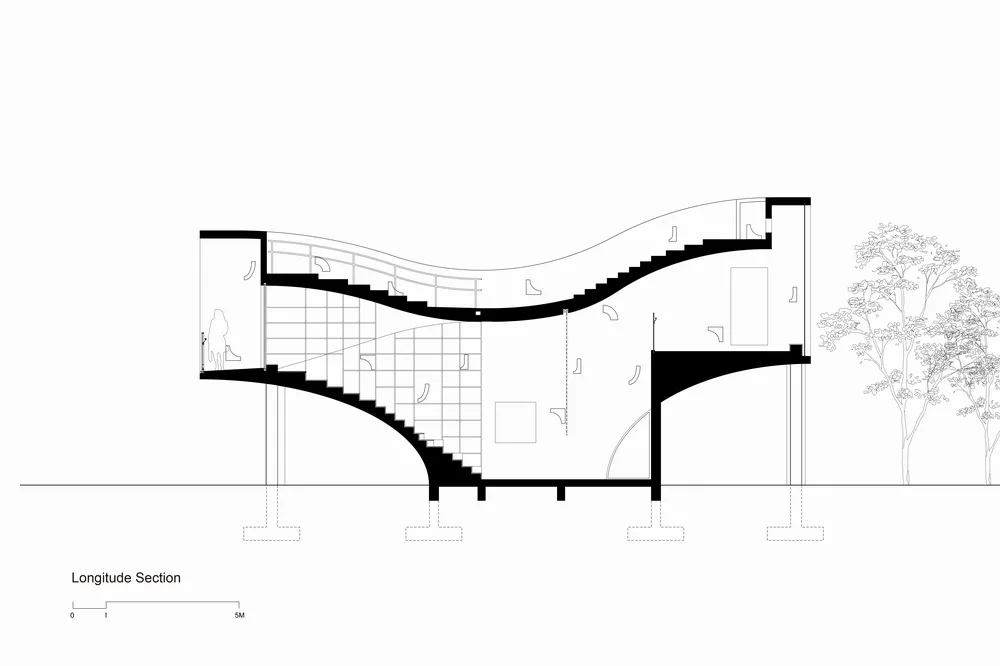
△ Longitudinal Section
Project Information
Project Name: Micro Architecture Series II – Ruins Book House
Construction Date: October 2020
Building Area: 66 square meters
Location: Sunyao Village, Qixian Town, Xiuwu County, Henan Province
Client: Xiuwu County Government
Design Team: Yishu Architecture Studio
Website: www.atelierbi.com
Contact Email: cx@atelierxi.com
Company Address: Shenzhen, China
Lead Architect: Chen Xi
Design Team Members: Zhu Jing, Tian Di, Huang Jiajie, Wang Xingyao, Xu Lubao, Wang Weiguo, Wen Weijian, Cao Suying
Construction Drawing Design: Li Jianhui (Architecture), Su Zhimeng, Huang Xiaolong (Structure), Gan Bin, Xiao Liangmin (Equipment)
Lighting Design: Guangzhou Maijing Lighting Design Co., Ltd
Construction Team: Henan Yuantuo Construction Engineering Co., Ltd. and Xiuwu County Construction Company
Photographer: Zhang Chao, Atelier Xi
Photographer Website: __AI_ST_URL_0__
Photographer Email: Chaos_Zhang@foxmail.com












Must log in before commenting!
Sign Up