
Exciting Opening Picture
▼
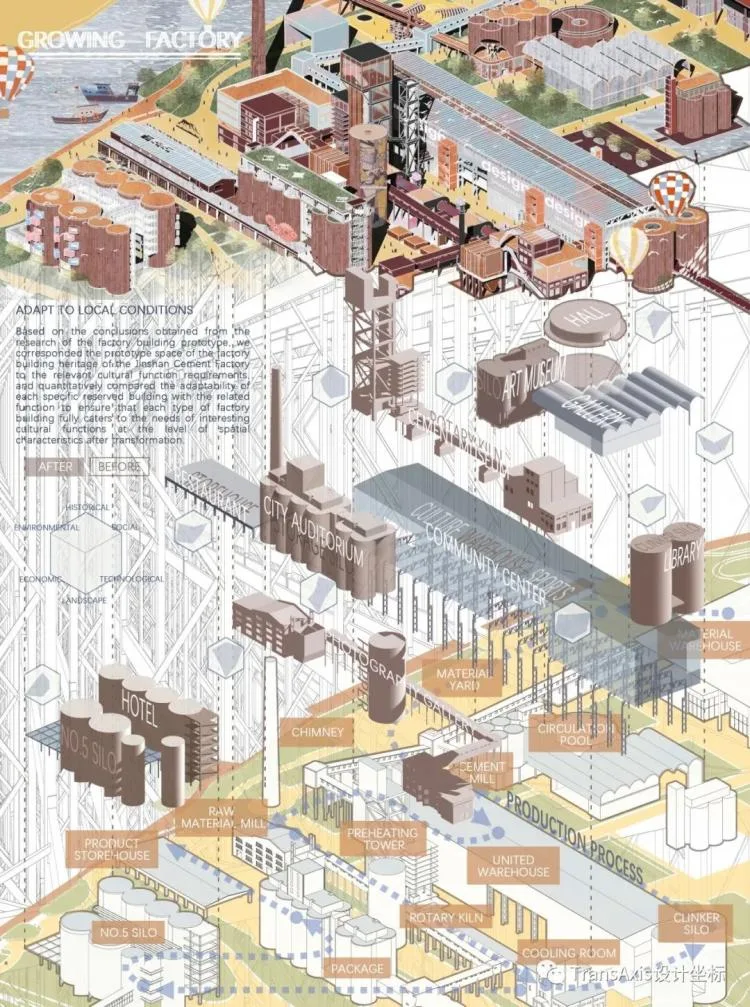
Please rotate your phone 90 degrees to fully appreciate the explosive beauty of this image.
▼
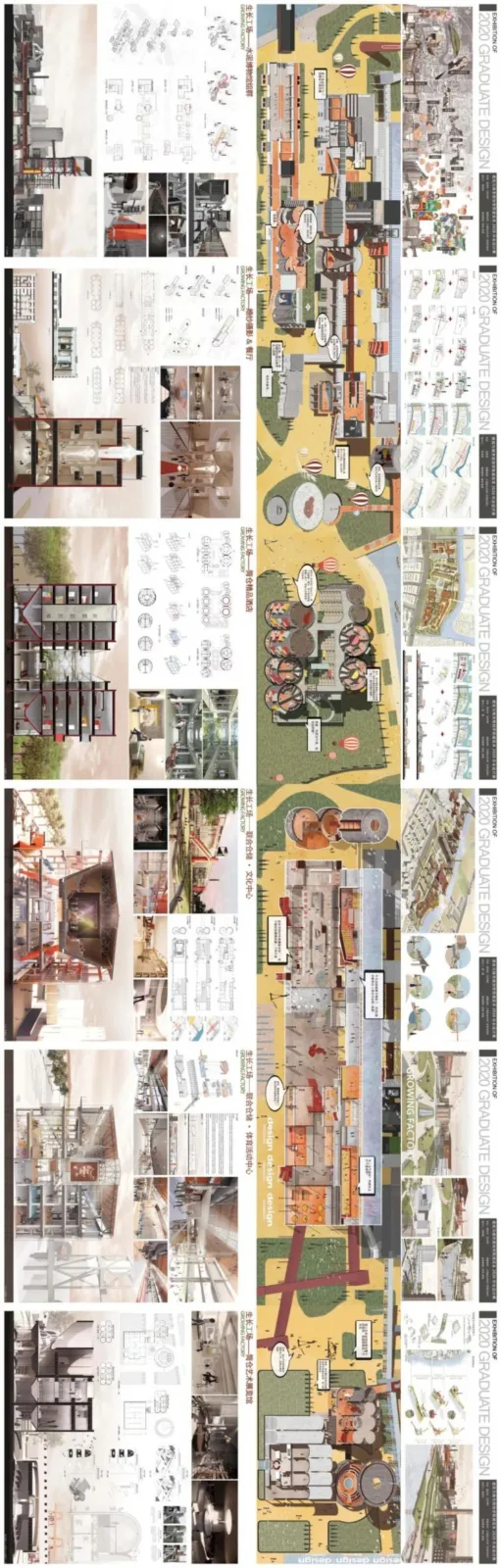
Please rotate your phone 90 degrees to fully appreciate the explosive beauty of this image.
▼
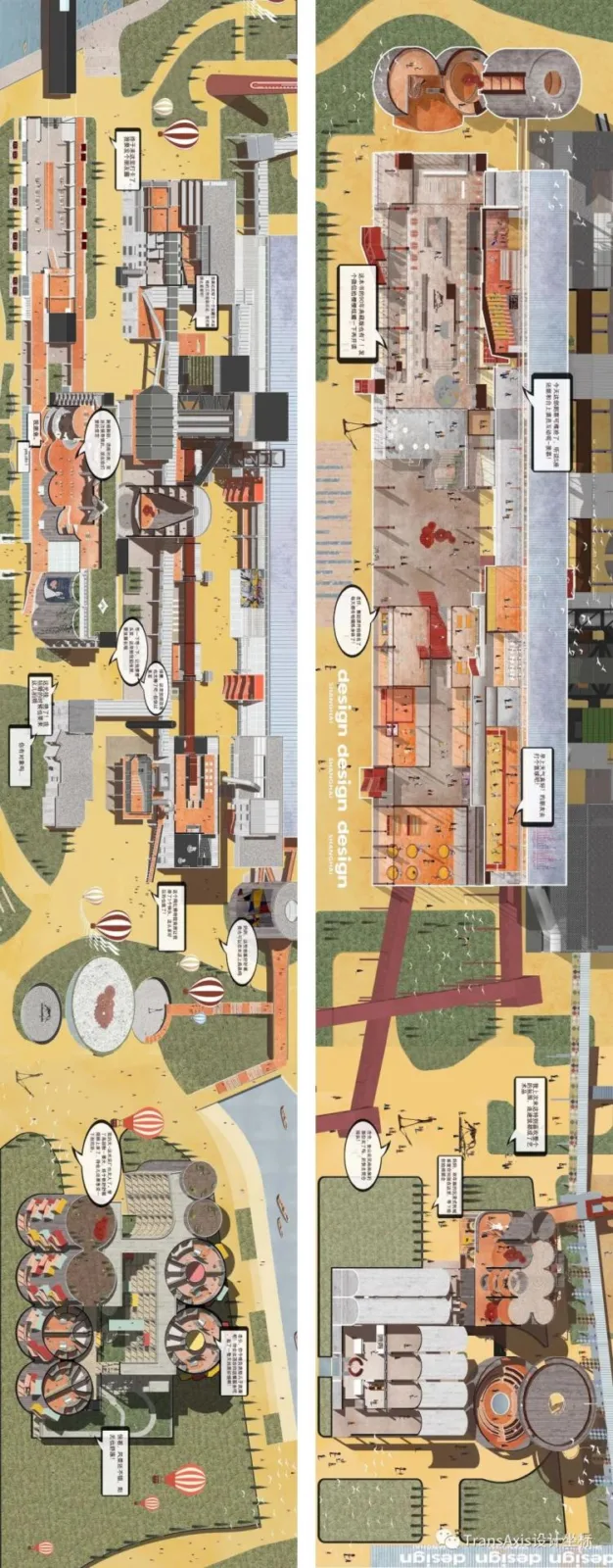
Hello everyone! In this issue, we present the 2020 Undergraduate Graduation Project from Tongji University’s Department of Architecture: Renewal Design of Shanghai Jinshan Cement Plant Area.
This research group immediately captures attention with their grand and impressive long scroll presentation, which highlights the unique features of each individual design while maintaining a strong overall coherence. Their comprehensive and systematic urban design approach—covering history, ecology, culture, community, and industry—lays a solid foundation for renovating individual buildings.
The once “gloomy” factory area is now revitalized, better integrated into the urban context. These updates and transformations are firmly grounded in reality, thanks to the project’s emphasis on “real questions and practical work.”
Despite the sudden shift to online teaching throughout the process, which posed significant challenges to this project requiring extensive on-site research, the students overcame obstacles by fully leveraging online exhibitions to showcase their innovative ideas through videos. (Each proposal is accompanied by exquisite videos—feel free to click and watch!)
Next, please enjoy the “transformation stories” of various silos, joint storage plants, preheating towers, converters, and cooling machine rooms!
Shanghai Jinshan Cement Factory Renovation Design
Supervisors: Chen Qiang, Chen Yong
Project Stakeholders: Hu Honglin, Chu Yinfei
Assistants: Zhou Yiwen and Zeng Wenjing
Design Team Members:
Group A – Bai Ying, Fu Zheyuan, Li Jiazhen, Yu Jie, Zhang Pingping, Zhao Zihan
Group B – Dai Xiaoning, Gu Jiahao, Liu Lei, Xue Siyuan, Xu Wenhao, Xu Yihao
(Listed in Pinyin order)
The following text mainly introduces the works of Group A students.
Growing Factory
(Written by student Zhao Zihan)
Chapter 0
Special Projects During the Pandemic
At the end of 2019, as we finalized our graduation topics, we eagerly planned our last winter vacation as college students. For many of us, this was the final opportunity to travel together over a long break. Our two supervisors, Chen Qiang and Chen Yong, added us to a WeChat group and assigned research and reading tasks for the winter vacation. After a brief chat, we all dove into our winter break, awaiting the new semester.
However, in late January, the COVID-19 outbreak erupted. With Wuhan’s lockdown announced, our travel plans were canceled, and we quarantined at home. As the new semester approached, we learned that all courses would be delivered online. This came as a surprise, especially since design courses traditionally depend on close collaboration and on-site drawing. Quickly, we had to adapt to this new mode of online teaching.
Thus, in the quiet spring of 2020, this unique graduation project began.
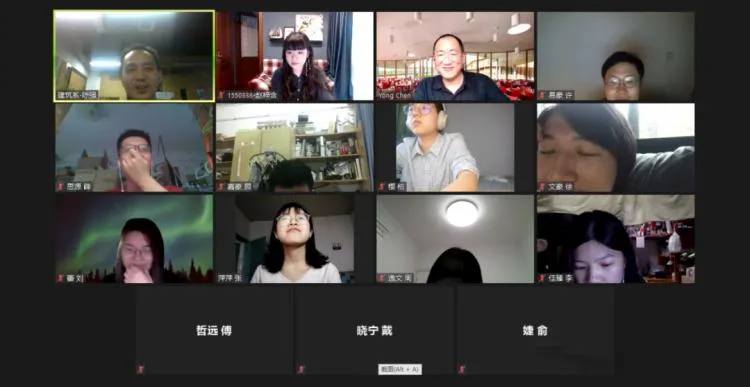
Our project involved 12 students under the guidance of professors Chen Qiang and Chen Yong. Here is a snapshot of our break time.
The Jinshan Cement Plant is situated in Zhujing Town, Jinshan District, Shanghai. Zhujing Town lies at the midpoint of the “One City, One Belt, One Circle” Tingfeng Development Belt in Jinshan District. The Wan’an Cement Plant (formerly Jinshan Cement Plant) is located in the northern core of Luozhao Bay, spanning 16.1 hectares. It borders Zhuping Highway and Huahua Marine Ecological Park to the west and overlooks the scenic Luozhao Bay River to the north.
Having operated for over 60 years, the plant has witnessed Shanghai’s urban development and transformation. However, as China’s economy advanced, the Jinshan Cement Plant ceased its original production role. Now recognized as an urban industrial heritage site, it requires renewal and adaptive reuse to meet modern needs.
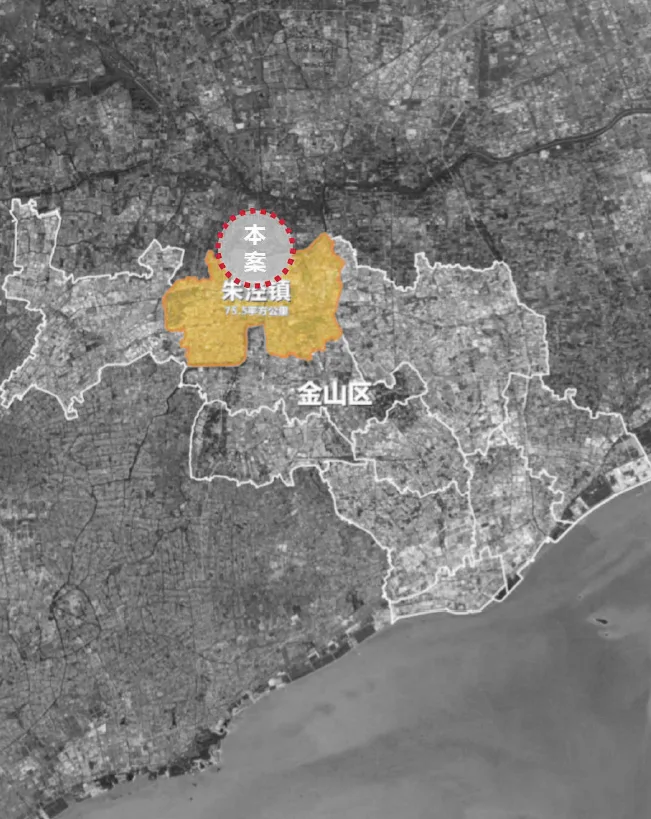
Map showing the relationship between the project site, Zhujing Town, and the greater Jinshan area.
This graduation project focuses on the Jinshan Cement Plant, continuing the site’s industrial context and development trajectory by integrating public cultural activities, introducing emerging creative industries, and exploring interactive regeneration mechanisms involving space, culture, economics, and ecological transformation.
The design thoroughly considers the unique spatial characteristics and structural types of cement plant buildings. It proposes innovative adaptive reuse schemes tailored to different industrial buildings and facilities, preserving the cultural vitality of industrial heritage. The aim is to revitalize the once isolated cement plant into a multifunctional urban block, weaving it into the historical fabric of Zhujing Old Town’s revitalization.
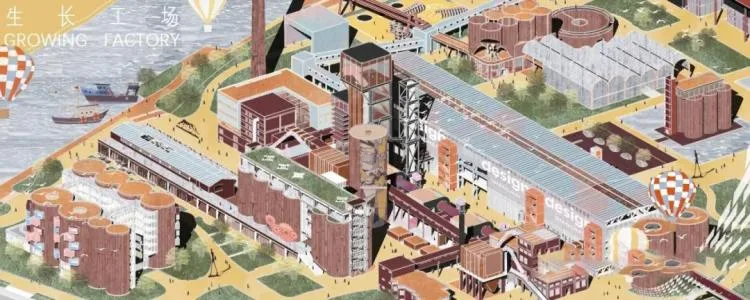
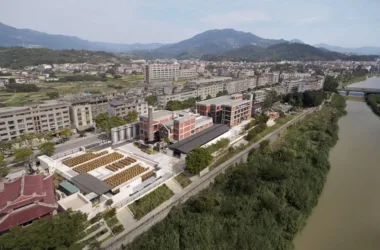
Panoramic view of the renovated factory ruins park area.
Before starting this project, none of the 12 students had significant experience with industrial building design or renovation. Our initial impressions of factory sites included complex steel frameworks, rusted metal surfaces, massive concrete chimneys, stacked colorful containers beneath cranes, and pervasive dust and smoke blurring building profiles. Compared to familiar urban environments, these suburban factory areas presented a refreshing novelty and challenge during initial research.
The idle factory, ceased operations, resembled an abandoned urban sanctuary—rough yet orderly, with a unique beauty emerging from the wasteland.
Undeniably, the pandemic added further challenges to our site research, already limited by unfamiliarity with industrial buildings. Early design stages involved students doing their best to understand this unfamiliar site remotely, without on-site visits. Fortunately, a few Shanghai-based students conducted limited on-site research after pandemic controls eased, sharing live video updates. Throughout, online communication platforms facilitated remote collaboration, leading to many interesting experiences.
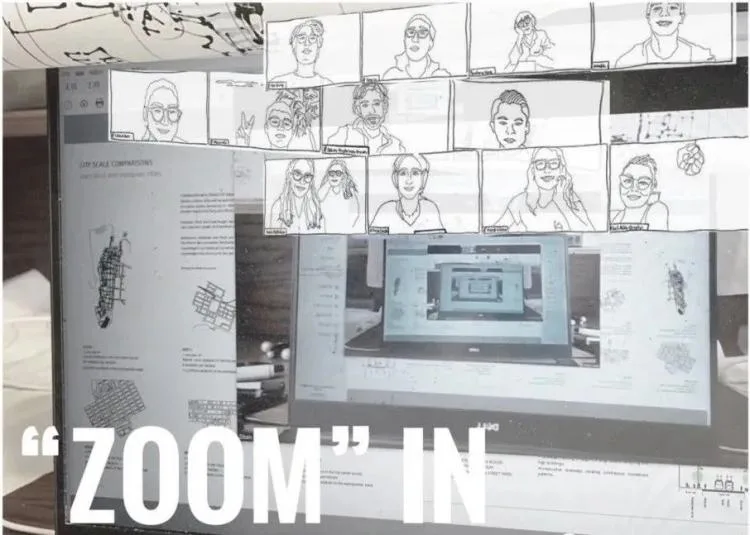
During the pandemic, online classes and group discussions created a unique atmosphere for design education.
The project was divided into two main stages over about three months:
- Before the mid-term evaluation: Urban design phase. The group split into two teams (A and B). They proposed preliminary urban design strategies and developed detailed urban plans for the factory area.
- After the mid-term evaluation: Six-person teams divided into individual assignments, each responsible for renovating a preserved factory building. Architectural renovation designs were developed based on their urban design strategies.
This project challenged us comprehensively: from large-scale urban planning to architectural details, and from teamwork in groups of 12, then 6, and finally individual work. It was a fitting finale to our undergraduate architecture studies.
Moreover, the project followed a “real questions and practical work” principle. The Jinshan Cement Factory itself is a park slated for renovation, and teachers from Shanghai Real Estate Group’s Planning and Design Department participated in evaluations and shared existing research materials.
Everything about this project felt special. Thus, our Jinshan Cement Plant renovation workshop officially kicked off in a small online conference room.
Chapter 1
3 weeks, 12 people: Preliminary research divided into four groups of three
During winter break, all 12 students began basic site research. Thanks to support from teaching assistants who provided POI data, Dianping reviews, and Shanghai OSM road network information, we applied GIS for site analysis for the first time. This gave us a reliable basis for identifying functional deficiencies and informed our later urban design.
Project teachers also supplied detailed photos of the site and surroundings, historical materials tracing back to the Qing Dynasty, and reports on functional positioning for Luozhao Bay’s core area, easing our remote research.
Given the project’s geographic scope, from Luozhao Bay’s northern area to factory building systems, we split into four teams of three, each focusing on:
- Public resources and environmental systems around the base.
- Historical context and culture of the town’s factory area.
- Industrial building value assessment.
- Characteristics of industrial building spaces and structural systems.
This division enabled efficient organization and presentation of complex base information.
01 Base Survival Issues Analysis
Fragmentation and Connection
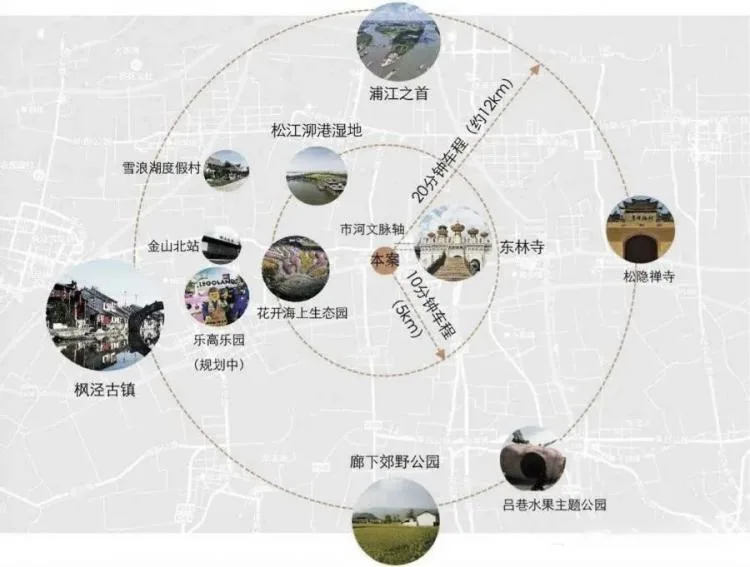
Research on Surrounding Resources at the Township Scale
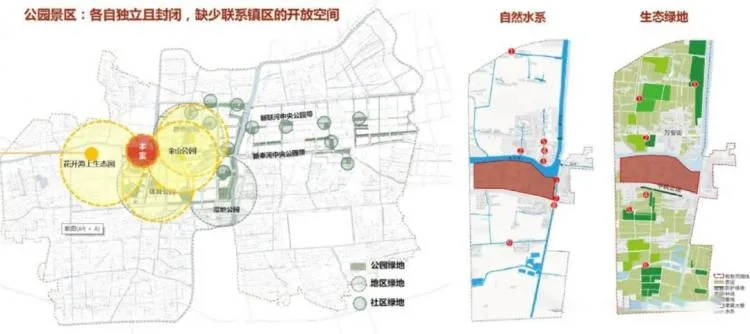
Fragmented public green spaces, natural water systems, and green resources around the base
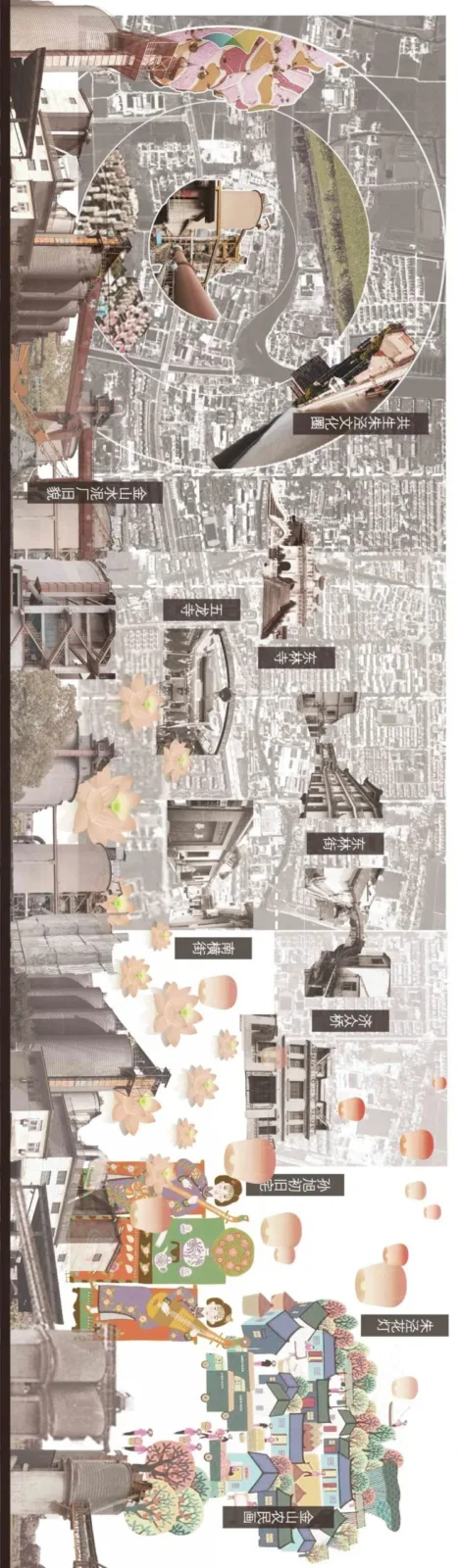
△ Natural resources and cultural status collage around the base
From a town and regional perspective, the Jinshan Cement Plant faces diverse ecological conditions north and south of the site. Culturally, the surroundings exhibit a patchwork of fragmented elements in all directions. These issues arise mainly due to rich historical urban heritage but vague cultural identity. Park-type scenic spots are isolated and enclosed, lacking open connections to the town. Ecological green spaces lack integration and connectivity; water networks are broken, and cultural resonance is missing.
These fragmentation challenges highlight the need for our design to act as a connector and bridge to unify the town’s fractured functions.
Waste Recycling
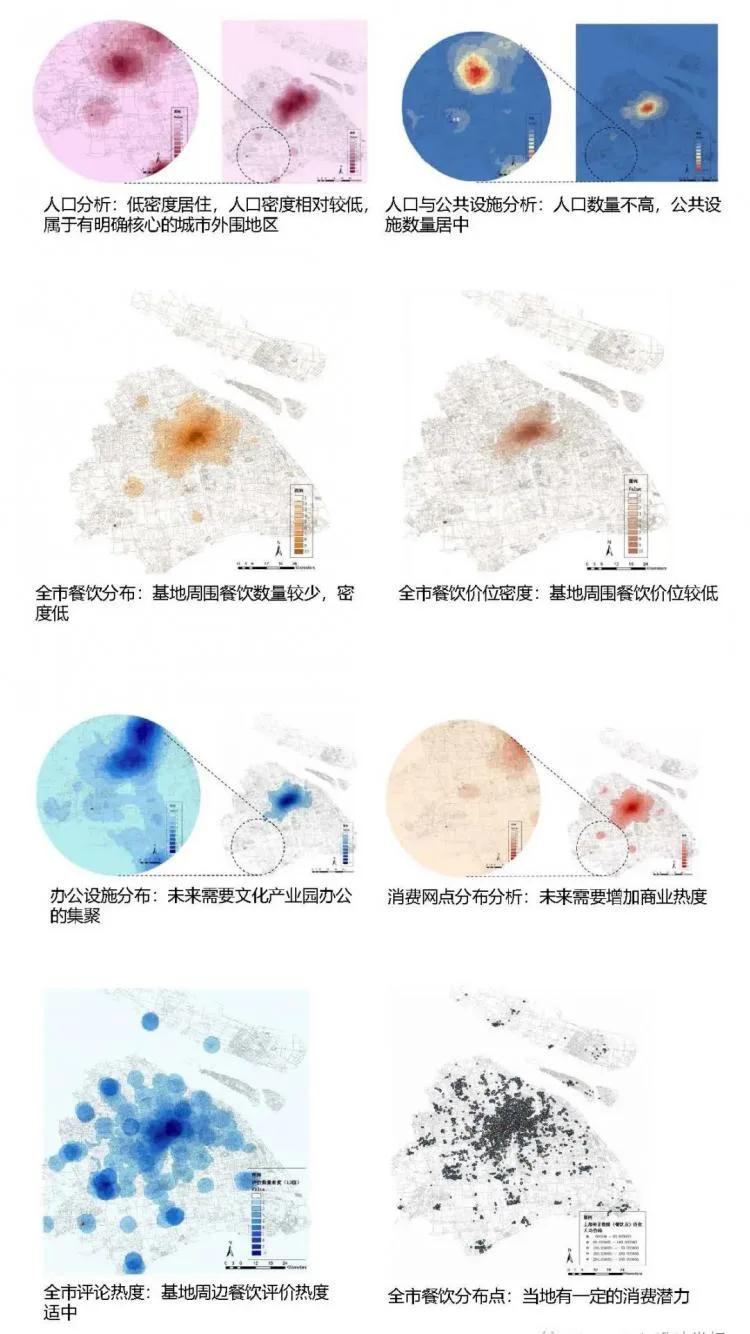
△ Peripheral functional analysis based on data (Image credit: Xu Yihao, Group B)
GIS data analysis revealed that the old town suffers from outdated public facilities, insufficient employment support, and unclear cultural identity. Office facilities are scattered and lack concentration. The industrial structure is outdated, employment attractiveness is weak, and commuter rates are high, causing an imbalance between work and residence.
However, food and beverage review data indicates a certain level of local consumption. This suggests that with thoughtful renovation and introduction of centralized office and commercial functions, the Jinshan Cement Plant site could attract urban tourists, stimulating local economic potential.
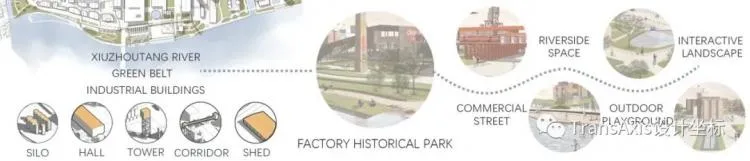
△ Preservation system + functional introduction + landscape shaping: Creating a factory ruins park landscape
Building on this research, we established the base’s functional positioning during the urban design phase. Combining office, commercial, cultural, and tourism functions, we considered the needs of residents and visitors alike, enhancing public service facilities, introducing cultural industries, and achieving integration of ecology, life, and production.
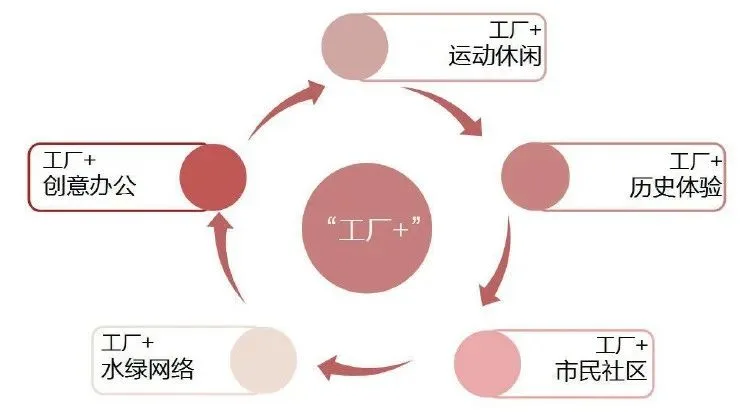
Factory+ functional positioning
Post-renovation, the Jinshan Cement Plant will operate under a “Factory+” model, resolving alienation and fragmentation in the town area by integrating and utilizing surrounding resources.
Below is a summary of the current condition and surrounding buildings:
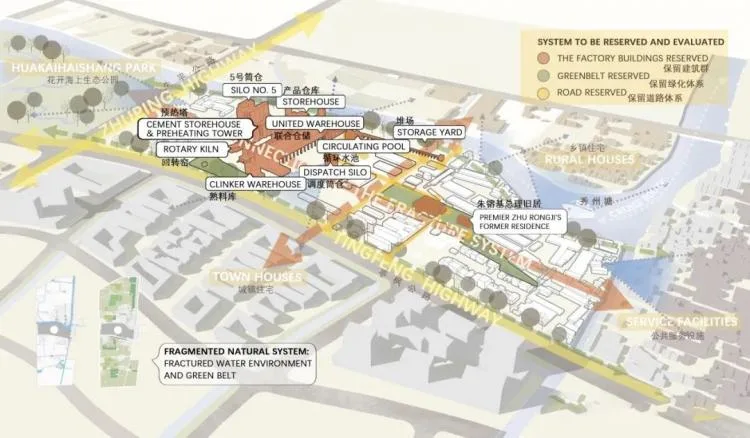
Location relationships between Xiuzhou Pond, the base, surrounding towns, greenery, and original base functional zoning.
02 Building Retention Assessment
We carefully evaluated all factory buildings, residential structures, and auxiliary facilities on site. We avoided wholesale demolition, especially preserving factory buildings with industrial architectural features, sound structural conditions, and cultural significance.
Each building was assessed using 16 indicators across four categories: economy, culture, environmental protection, and entertainment. This comprehensive evaluation identified which original factory buildings should be preserved for systematic renovation.
The table below summarizes building cluster evaluations by functional type. Assessed buildings include: No.5 silo, preheating tower, finished product storage, rotary kiln, clinker warehouse, joint storage, circulating water tank, storage yard, dispatch silo, former prime minister’s residence, living facilities, and service buildings—12 clusters in total. Criteria covered employment, riverbank space, safety, public corridors, entertainment, cultural continuity, water quality, and residential space creation.
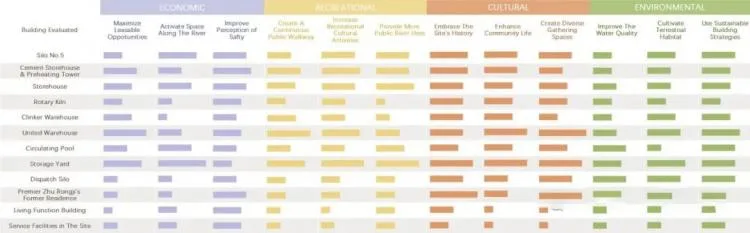
△ Comprehensive evaluation table for preserved base buildings
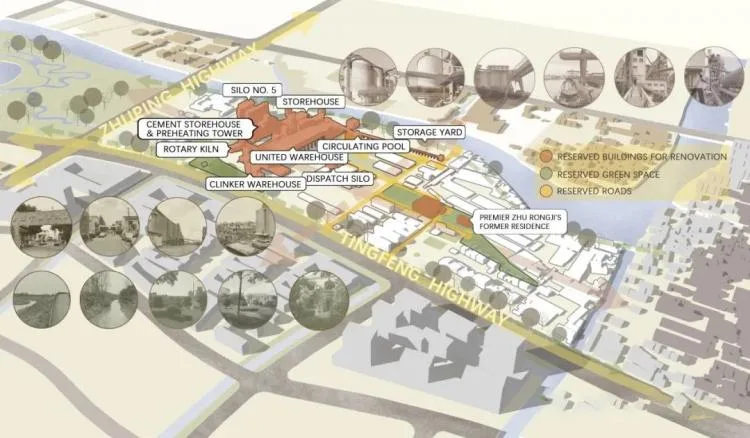
This image shows the locations, volumes, and current photos of all preserved buildings, roads, and greenery.
With preliminary research complete, we immediately began urban transformation strategy discussions in six-person groups.
Chapter 2
5.5 weeks: Urban design phase with two groups of six
Our 12-person research group split into two teams (Group A and B), each developing refined urban design strategies. I was part of Group A.
Between mid-March and April, before the midterm defense, we first collaborated on main strategies, then each took responsibility for designing a functional block.
Our approach was straightforward—even simplistic at first. We questioned whether it was too rough, yet sometimes the simplest solutions offer the most effective urban renewal strategies:
Since the system is broken, we will connect it.
Since the context is fragmented, we will unify it.
We explored two main directions for reconnecting fractured systems around the base during early sketches.
Option 1
Axis Path: Grid Layout
The first option proposed a grid-like network of pathways within the base, integrated with existing preserved paths to form a new tourist route grid. This organically connects from south to north (entrance to riverbank) and east to west (town area to Flower Sea Park).
This plan’s core principle is the “axis path,” leveraging clear north-south and east-west lines to systematically organize the concept of “connection.” Newly added central axes—the “Cultural Tourism Axis” and “Riverside Landscape Axis”—blend the factory ruins park’s landscape with the river’s natural scenery.
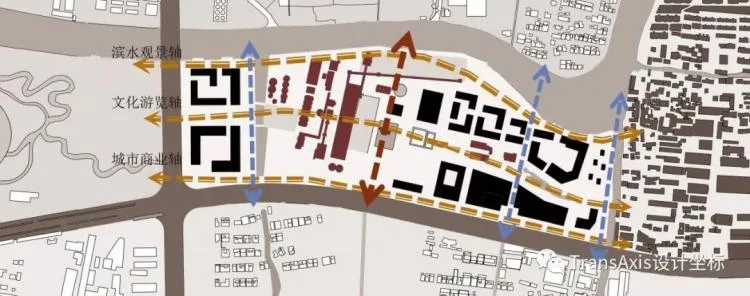
△ New axis placement
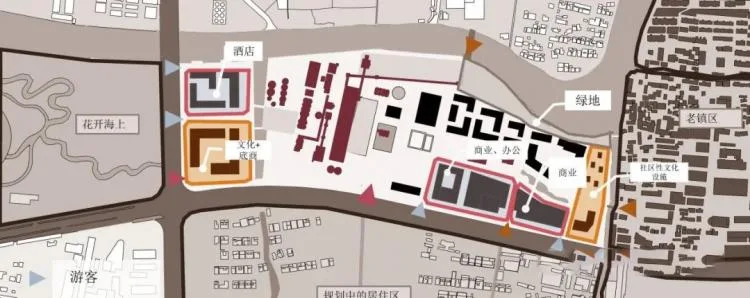
△ Option 1: Rough functional zoning
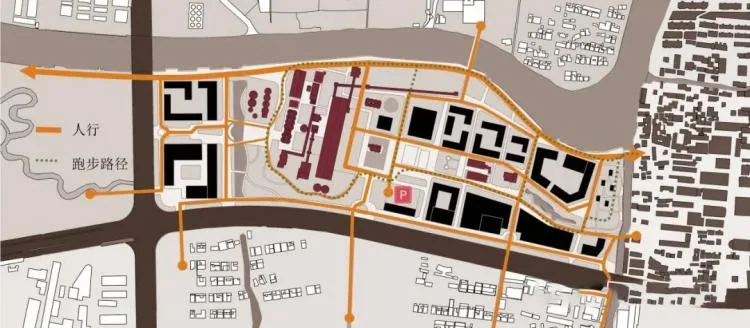
△ Main tourist routes combining new and old road systems
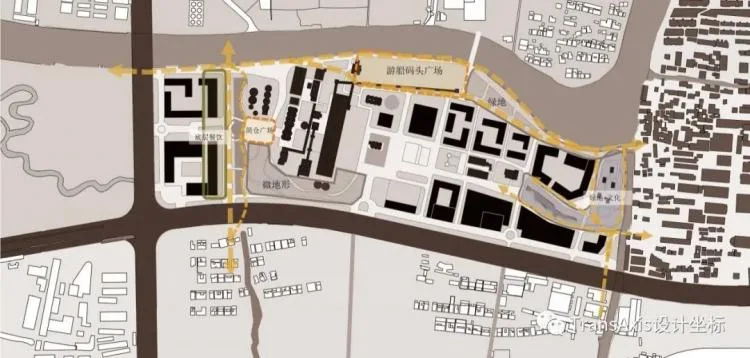
New water landscapes and green tourism system
Option 2
“Path Axis”: Connecting Points of Interest within Architectural Complexes
During our case study, instructors envisioned that post-renovation, the factory would become a new tourist hotspot in Jinshan District. Thus, Option 2 focused on creating distinctive landscape nodes first, then organically connecting these points to form tourist paths.
This plan emphasizes key scenic spots’ locations, balancing unique tourism experiences for both the waterfront and factory buildings, avoiding artificial axes that might diminish the vibrancy of authentic “check-in points.”
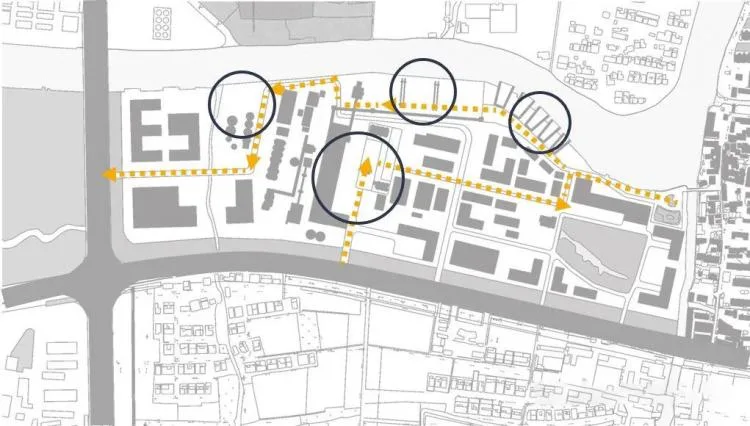
△ Option 2 logic: Create key landscapes first, then connect pathways
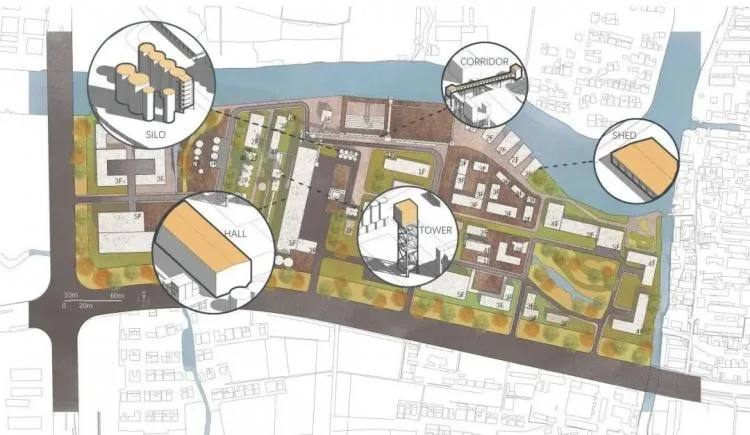
Factory building prototypes combined with points of interest determine key landscape area selection and direction.
Option 2 fills the gaps left by Option 1, while Option 1 supplements key landscape areas missing in Option 2.
Option 3
Combination of Plans 1 and 2
During the sketch phase, our six-person group split into two teams of three, each exploring opposing urban design strategies. Both plans received affirmation from instructors and team members. Therefore, after regrouping, we combined the strongest elements of both to form the final urban design strategy.
The earliest strategy established a cultural axis running east-west, intersected by a main entrance axis running south-north through the base center. This newly introduced cross-axis, combined with preserved axes, creates a grid system partitioning the base into distinct functional zones. The riverbank commercial area and heritage park are connected by an axis.
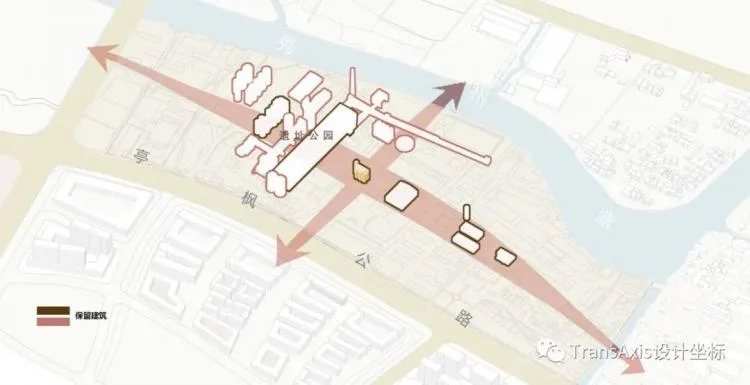
△ Newly added cross axes
These intersecting axes are the main paths connecting the entrance to the riverbank and the east bank to the west bank. They also serve as critical links connecting all preserved buildings, forming a complete “heritage park” and “waterfront promenade.”
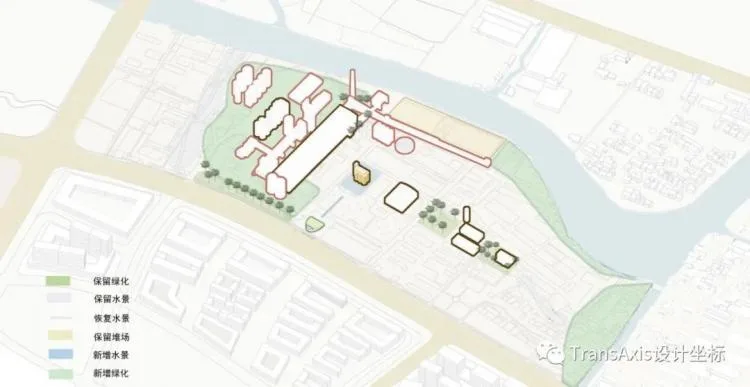
△ Integration of preserved systems
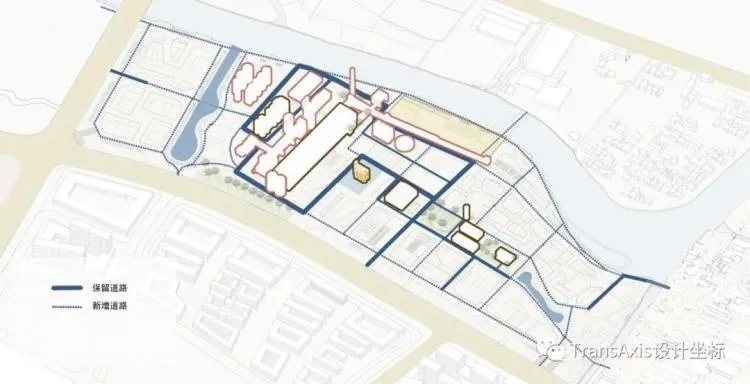
△ Road system organization
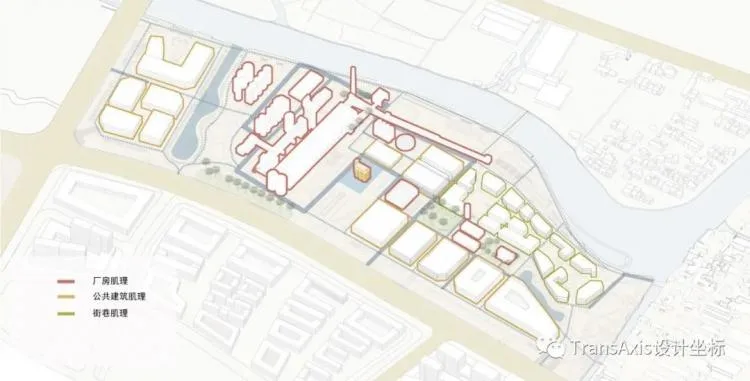
The architectural texture of the new park after system integration.
The renovated functional zones are arranged from west to east: star-rated hotels, centralized headquarters offices, factory ruins park, riverside commercial streets, commercial complexes, theaters, and exhibition halls. These diverse functions are interspersed with two east-west tourist axes for visitor enjoyment.
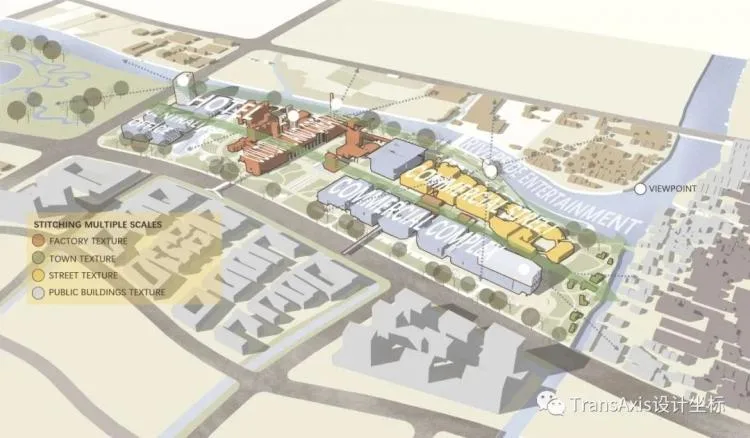
△ Functional zoning and cultural axis placement post-renovation
Our subsequent work focused on three key areas:
- A. Creating a tourism atmosphere along two main axes: the riverside landscape axis and the central cultural axis.
- B. Refining the centralized office and hotel area in the west and the commercial and cultural district in the east.
- C. Preserving and shaping the factory building areas’ appearance and landscape.
Throughout refinement, we merged plans and models twice weekly to prevent divergence from our collective urban renewal strategy. This six-person collaboration was our first such experience, guided carefully by our instructors who provided detailed optimization suggestions at every step. As a result, we completed a solid urban design before the midterm.
From a tourist’s perspective, we emphasized creating an undulating landscape profile, enhancing sightseeing enjoyment and rhythmic variation. The factory site park features flexible boundaries, encouraging exploration among the factory buildings. In contrast, the commercial district’s landscape axis has clearer boundaries, aiding tourists in locating points of interest and destinations. A two-story tour system, incorporating legacy industrial conveyor belts and rotary kilns, adds a novel walking experience.
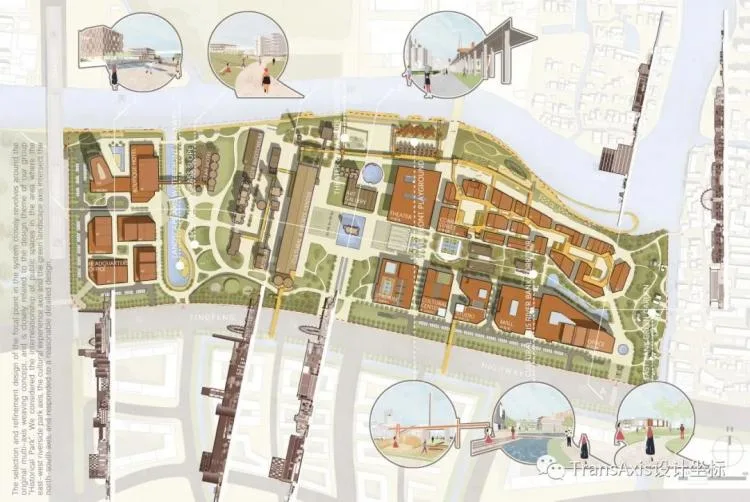
△ General layout, representative section axis, and detailed landscape node atmospheres
Vertically, structures like the east-side Ferris wheel, water tower, west-side chimney, gantry crane, and cooling tower create a rich factory skyline, offering tourists appealing vantage points.
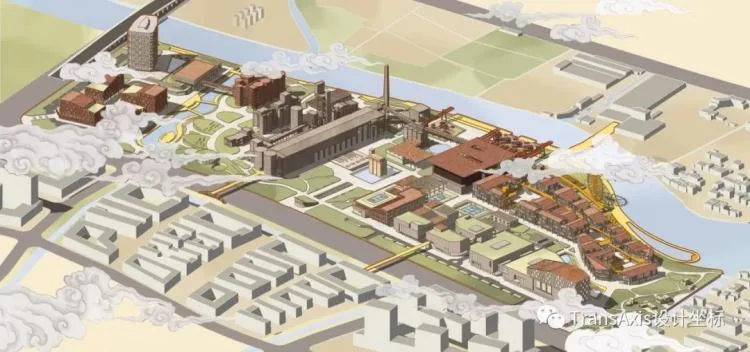
Pre-midterm aerial view of the new Jinshan factory area: west entrance axis boundary, flexible paths in the factory building complex, logical arrangement of commercial and cultural areas to the east, and continuous, hierarchical tourist paths along Xiuzhou Pond.
The riverside landscape and cultural tourism axes connect and weave all functional building areas within the site. Students responsible for shaping these axes regularly communicated their models and drawings with those handling each functional area, a strong test of our collaboration skills.
Our goal was to create a “Factory Site Park” — a city park blending industrial and natural beauty for Jinshan Cement Factory. Visitors strolling through can enjoy Xiuzhou Pond’s natural scenery, explore Shanghai’s industrial history, and experience cultural buildings repurposed from industrial structures.
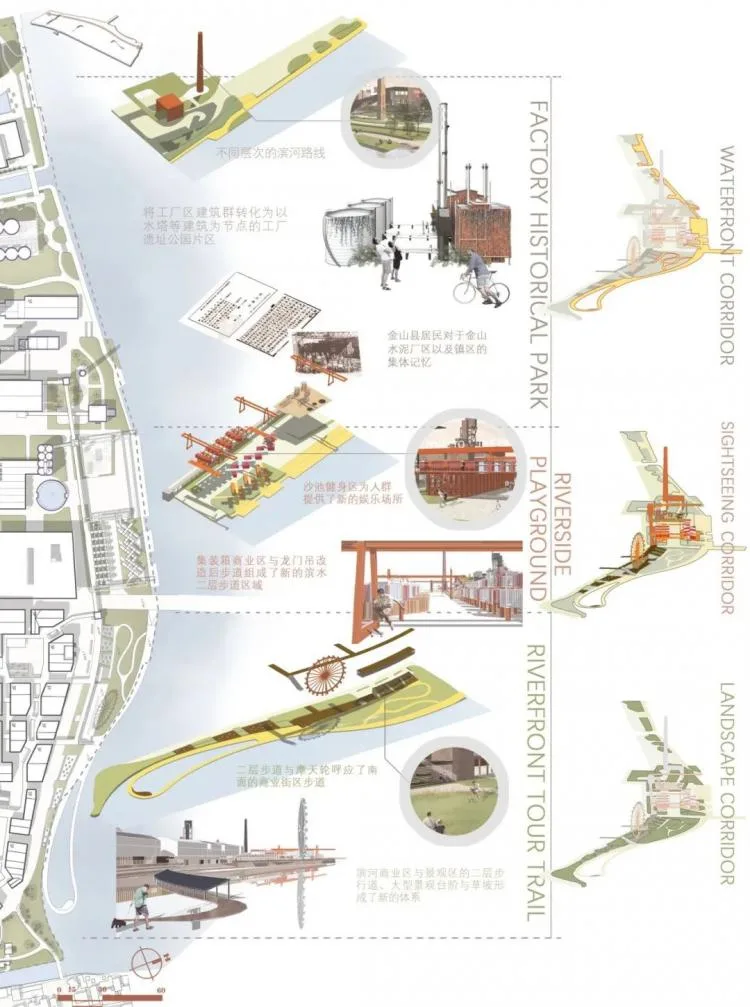
The riverside tourism axis is divided into three sections from east to west: riverside landscape, waterfront amusement park, and heritage park with landscape shaping.
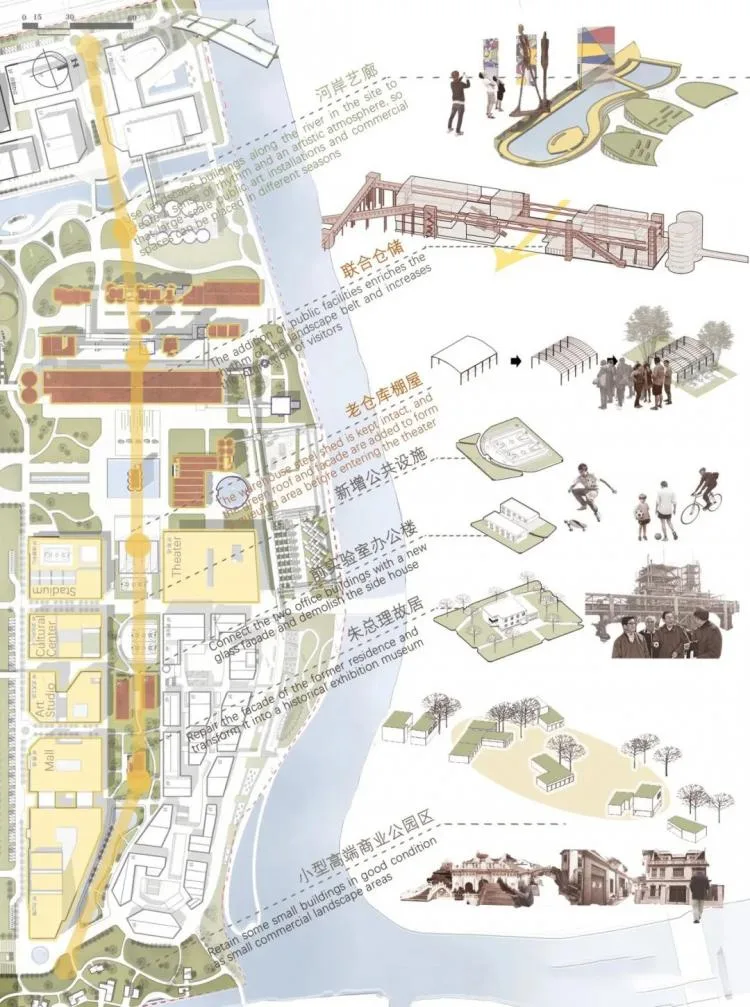
Tourism Axis Transformation — We connected the preserved joint storage middle section east-west to create a continuous tourism axis with landscape development on historic building nodes.
Details of renovations include:
- The easternmost small commercial district, harmonizing with Dong’an Township’s small-scale architecture and landscape to form an elegant commercial area.
- The former residence of Premier Zhu renovated into a cultural exhibition hall.
- The former laboratory office building’s facade repaired and connected by a glass corridor as a landscape node.
- Public service facilities such as sports venues added along the cultural axis.
- Joint warehousing transformed into a community cultural and sports center, ensuring axis continuity by connecting the middle section.
- Western base water scenery converted into an art water gallery and public installation space.
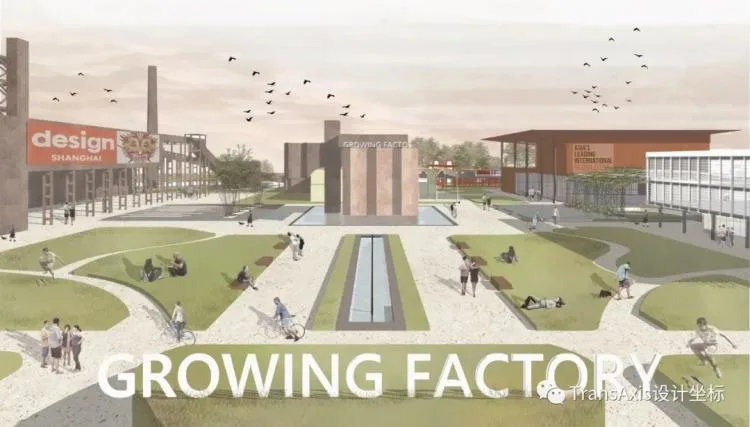
For the new “Growth Factory” Park, we integrated cultural, artistic, and humanistic atmospheres with natural landscapes at scenic spots worth exploring.
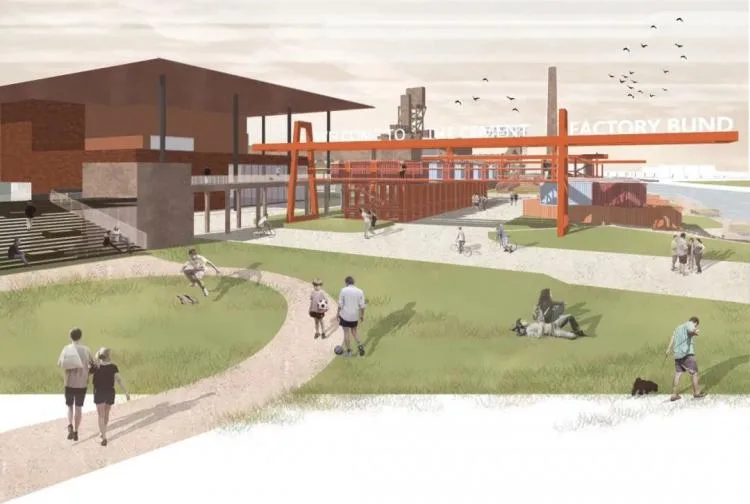
Entering the ‘Growth Factory,’ visitors first encounter the main southern entrance: on the left, the joint warehouse transformed into a community cultural and sports center; on the right, newly added theater and cultural facilities. A structurally intact silo is preserved along the central axis as a commemorative landmark.
On the eastern section of the Binhe Landscape Axis, a large grassy slope invites relaxation and scenic enjoyment. Landscape steps connect it southward to the commercial street. The preserved Longmen Hanging View Tower and Container Commercial Area in Binhe Amusement Park blend industrial and natural landscapes harmoniously.
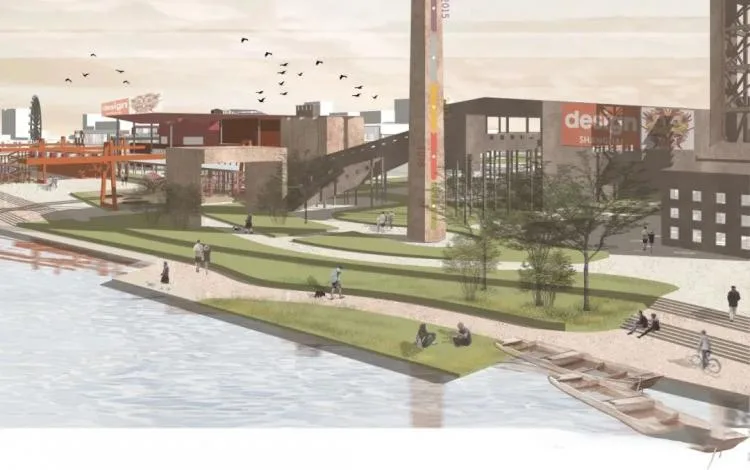
A cruise ship slowly passes Xiuzhou Pond beside the renovated park. Tourists onboard can enjoy the two-level waterfront walkway, enriching the waterfront landscape experience.
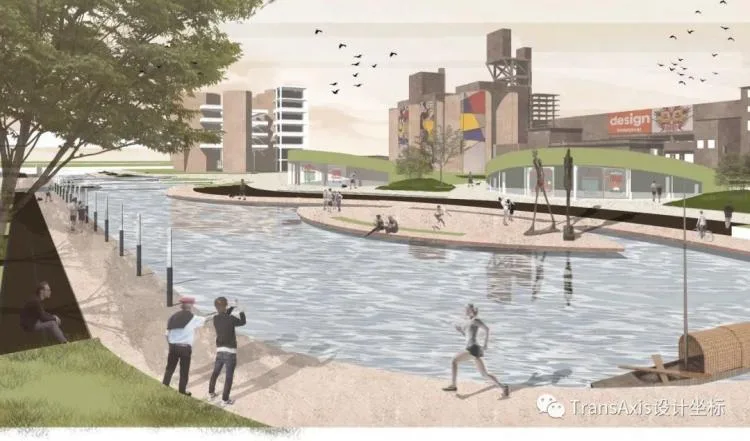
On the site’s west side, the original waterway has been widened into a scenic river, with vibrant art and commercial corridors along both banks. A preserved steel tower is visible from the riverbank to the east.
The mid-term online evaluation concluded successfully, marking the start of approximately six weeks of architectural renovation design.
Chapter 3
6 weeks: Individual architectural renovation design (2 groups, 6 people each)
Building on the mid-term urban design, we began individual building renovation designs. Our first task was studying the spatial characteristics of industrial heritage buildings, ensuring compatibility between preserved industrial features and new functions to facilitate smooth design division.
We identified four spatial prototypes for industrial buildings: Shed, Tower, Cylinder, and Corridor. Various industrial structures—silos, joint storage, gantry cranes, etc.—were mapped to one or more prototypes.
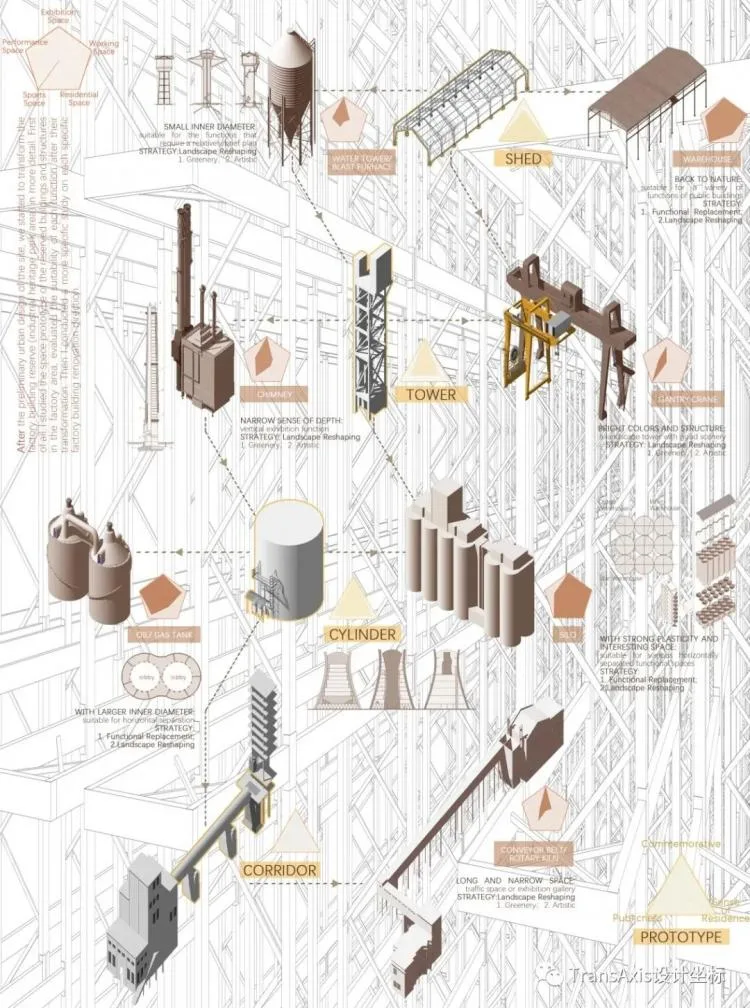
Our evaluation system for architectural prototypes considered three indicators: commemorative value, public accessibility, and user presence. For buildings and structures, we assessed spatial characteristics and adaptability for public, performance, exhibition, residential, and sports uses, visualizing data with area charts.
Main renovation strategies included: 1. Landscape reshaping; 2. Coexistence of functional replacement and landscape reshaping.
Thus, we carefully determined transformation directions for “Site Park” areas based on spatial features and functions.
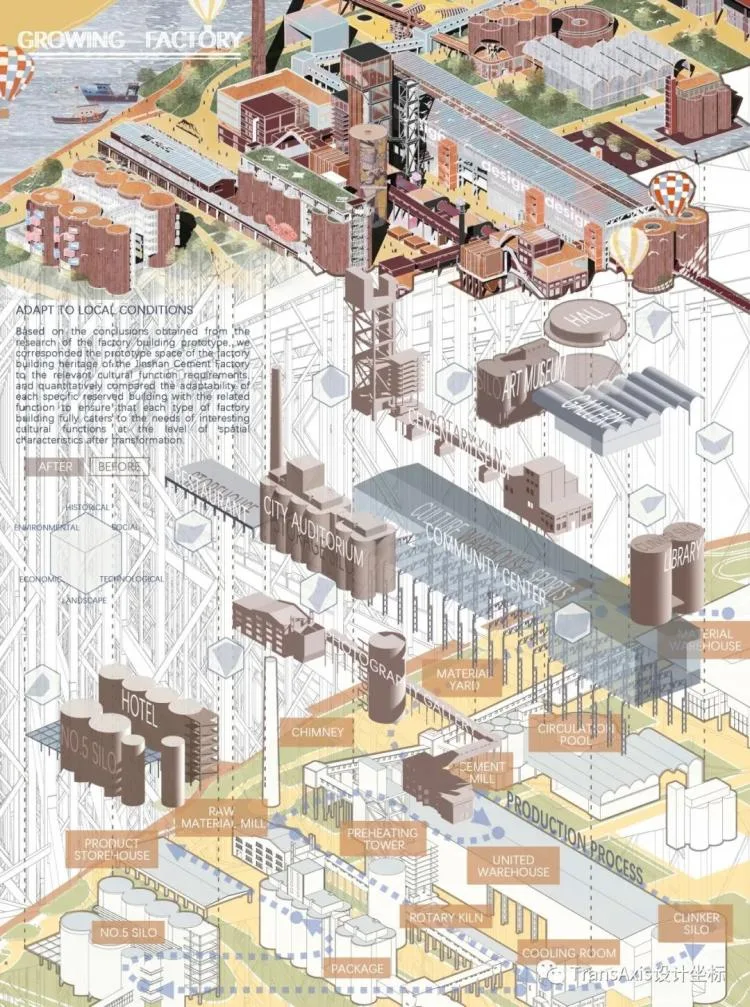
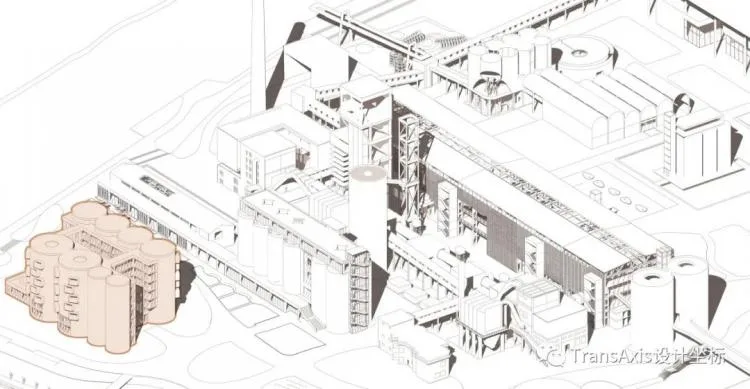
The six group members each claimed renovation of a building space they were passionate about. From east to west, the area originally included East No.4 large silo and circulating water tank, joint storage, preheating tower, rotary furnace, cooling machine room, packaging silo, and No.5 silo.
After studying spatial features, these were planned for transformation into a silo art exhibition hall, cultural and sports center, cement museum, urban auditorium, and silo-themed hotel. Due to its size, joint warehouse renovation was divided between two students.
The division of labor within the group is illustrated below:
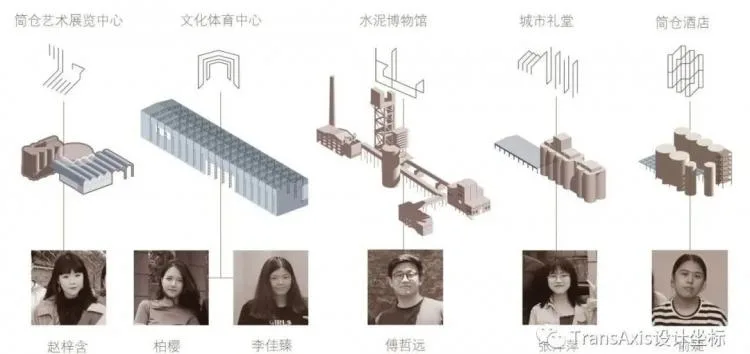
(Bai Ying is responsible for the cultural center, Li Jiazhen for the sports center in the joint warehouse.)
Here is an introduction to our individual building renovation strategies, ordered east to west.
Silo Art Exhibition Center
Zhao Zihan
Video Appreciation
▼
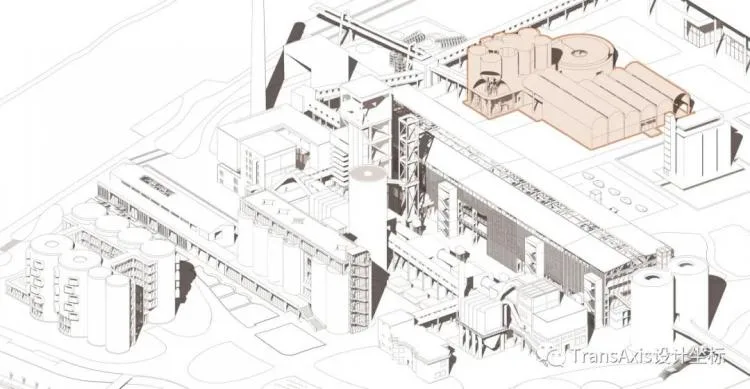
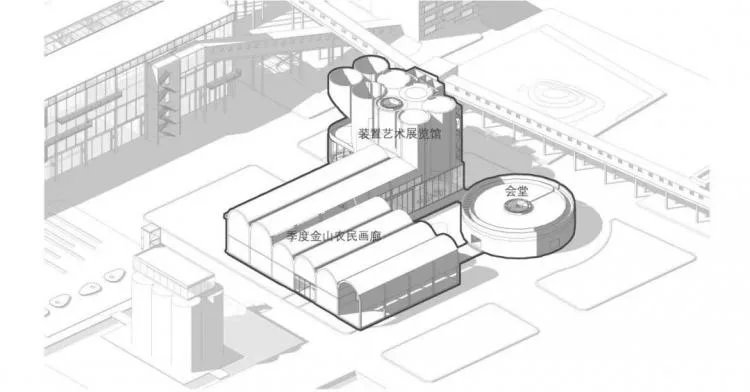
The original silo at the easternmost renovation area will become an art exhibition hall. Besides exhibition functions, it organizes silos and reservoirs and addresses the entrance’s central axis. The axis perception and exhibition needs inspired a new architectural volume with a formal language harmonizing with the original silo.
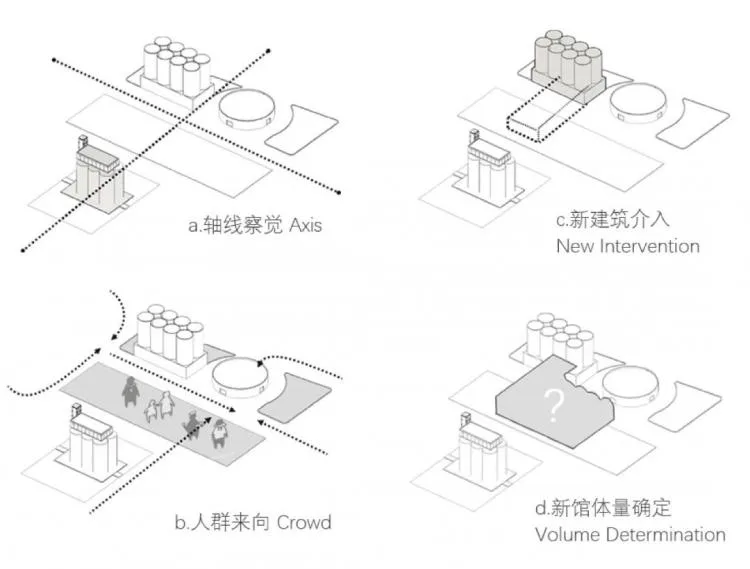
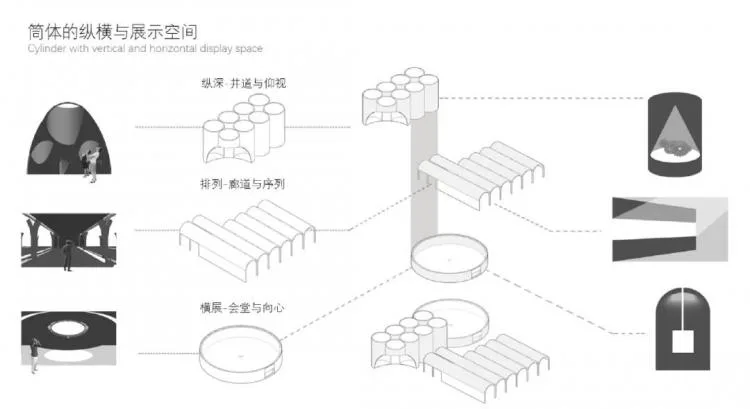
The silo is a vertical sequence of cylinders; the reservoir is a flat prototype space. Flipping the silo reveals an “arch”.
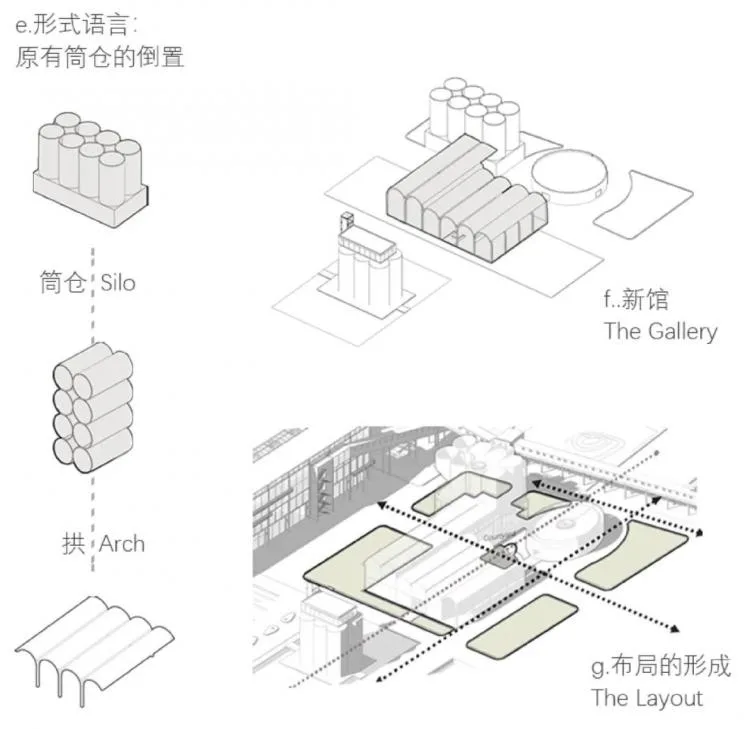
The exhibition flow line formed by arranged arches recalls the Königsberg Art Museum and Renzo Piano’s Kinbell Art Museum plan. After defining the new building form, I spent time drawing inspiration from these cases.
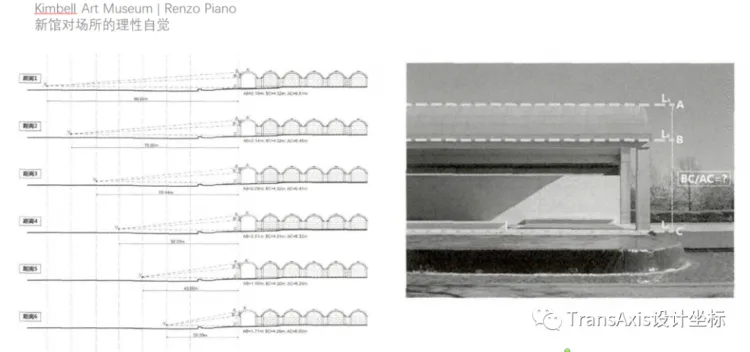
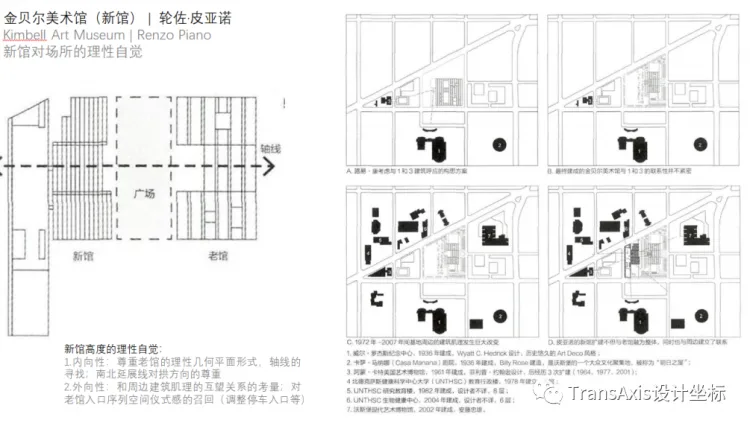
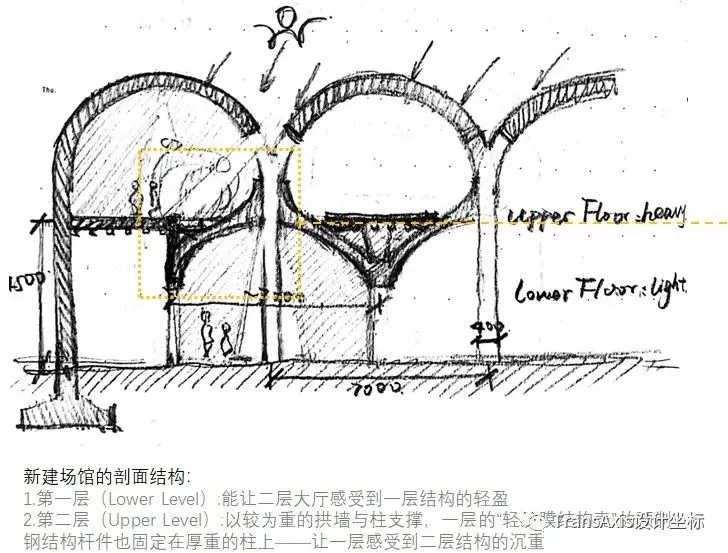
Early case studies and my design notes recorded strategic thinking during initial planning.
Atmosphere is created using natural and artificial lighting tailored to exhibition functions and visitor flow.
The Silo Exhibition Hall, Quarter Gallery, and Hall are independent yet connected on the first and second floors. Public areas include book bars, reception, and shops adapted to the cylindrical industrial space. The design encourages visitor exploration of the curved spaces during exhibitions.
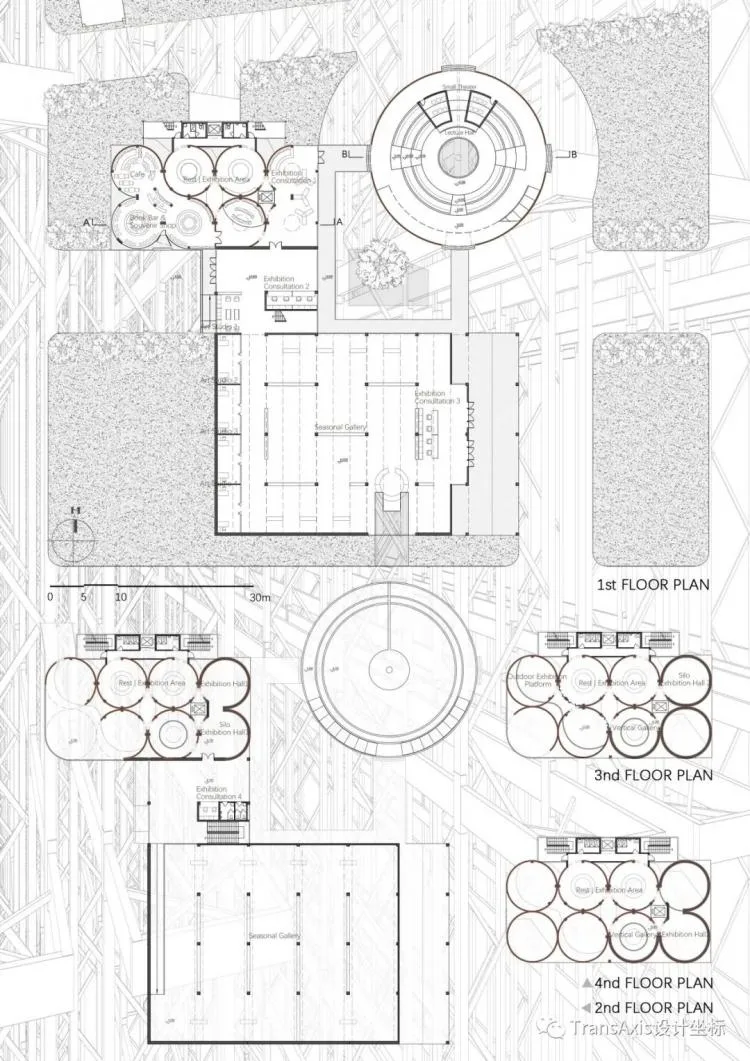
Group-wide, we standardized floor plans by marking preserved original structures in brown and red.
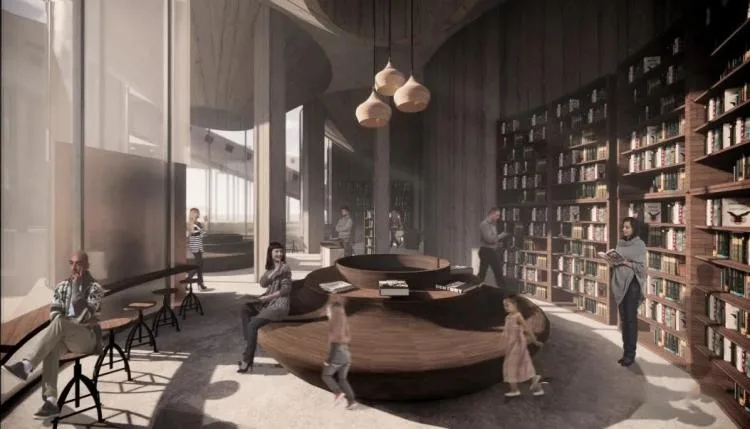
The book bar on the first floor of the silo exhibition hall reveals the inverted bucket preserved on the ceiling.
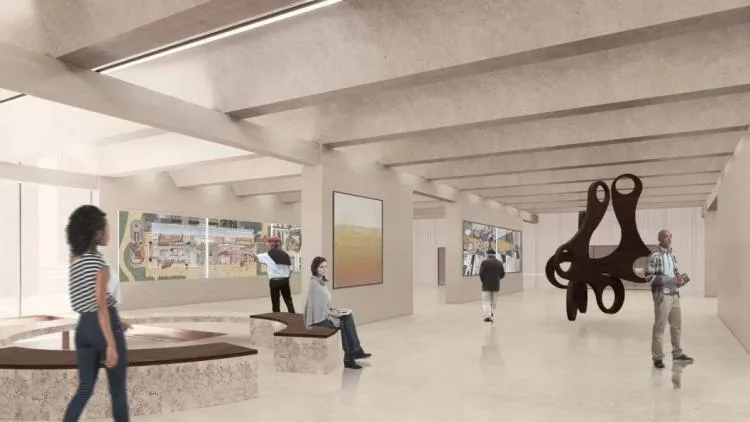
The first floor auditorium entrance contrasts with the silo in material, lighting, and atmosphere.
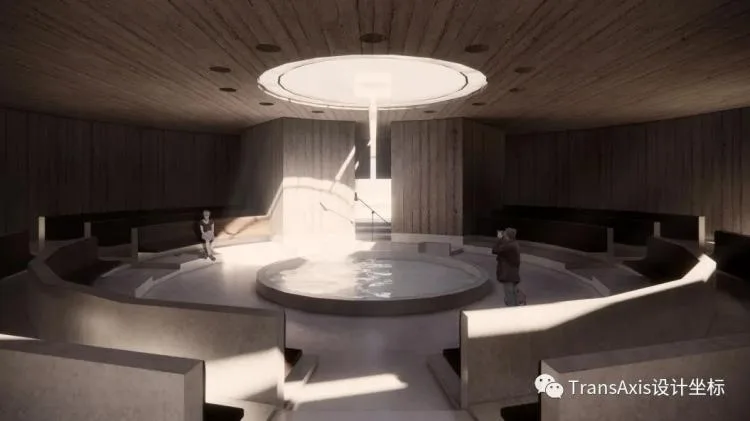
△ Auditorium entrance space
Light shapes the internal atmosphere, exemplified by the hall space.
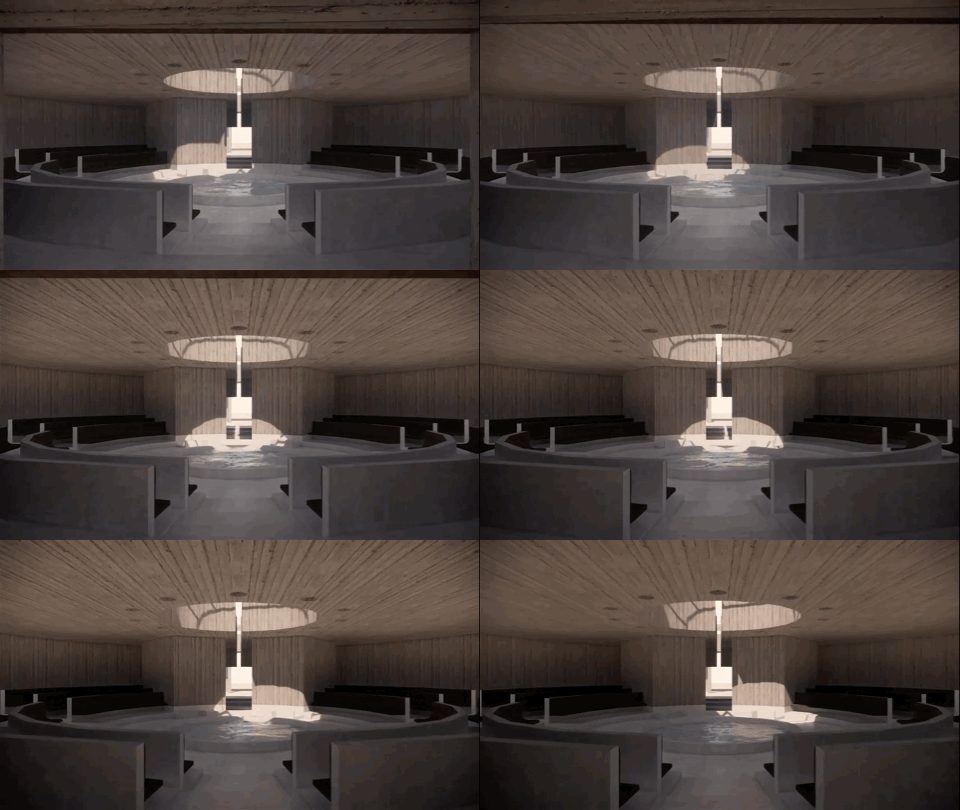
Sunlight changes throughout the day create dynamic lighting in the auditorium space.
The interior design of the hall focuses attention centrally. Upon entering from the south, visitors’ eyes are drawn to the central pool and skylight along the axis. During meditation or lectures, the audience experiences time’s passage via slowly shifting skylight illumination, resembling a pendulum swinging with sunlight.
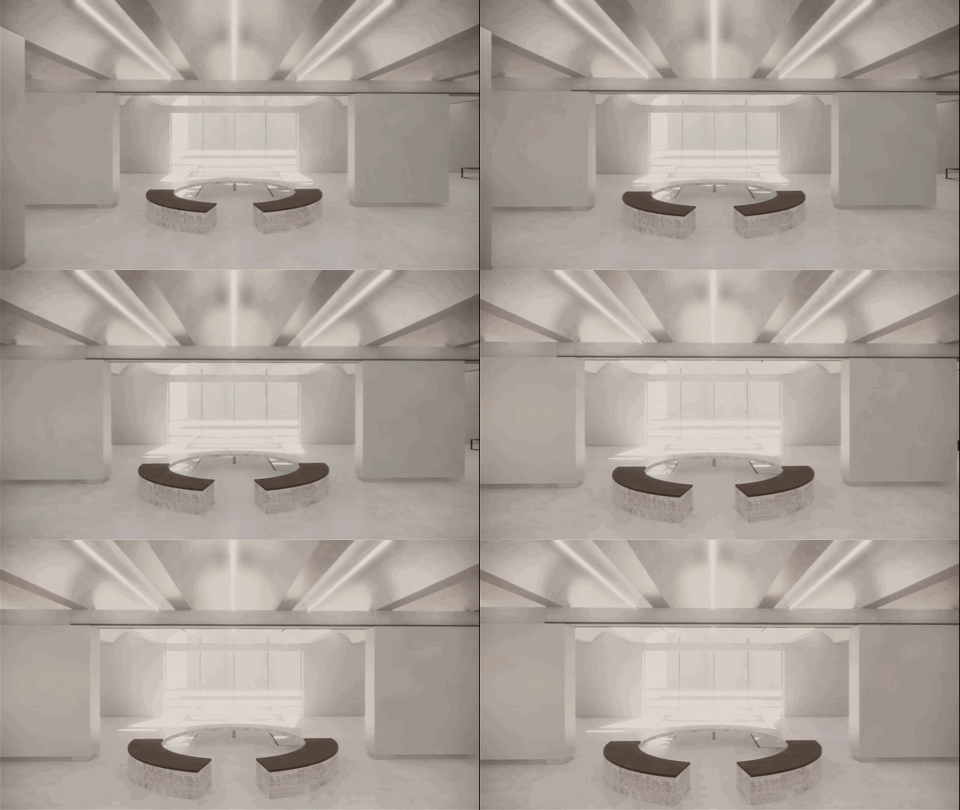
△ Interior lighting in the quarterly gallery of the new museum
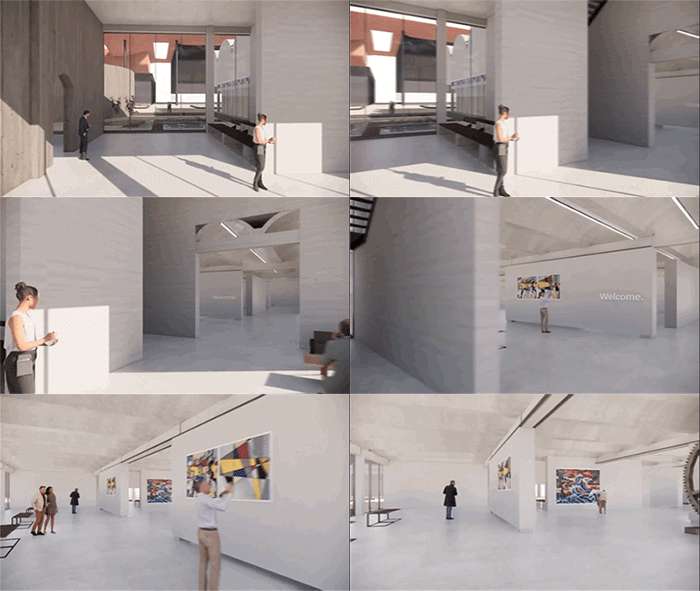
Entrance to the quarterly gallery features a transparent foyer. To the left is the Silo Exhibition Hall; to the right, the New Gallery.
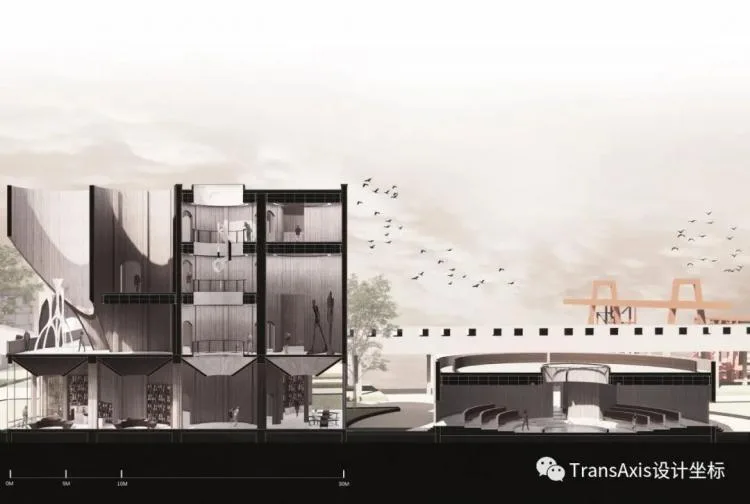
From the main cross-section, visitors perceive different lighting atmospheres in each exhibition space.
Final display board of the Silo Art Exhibition Hall:
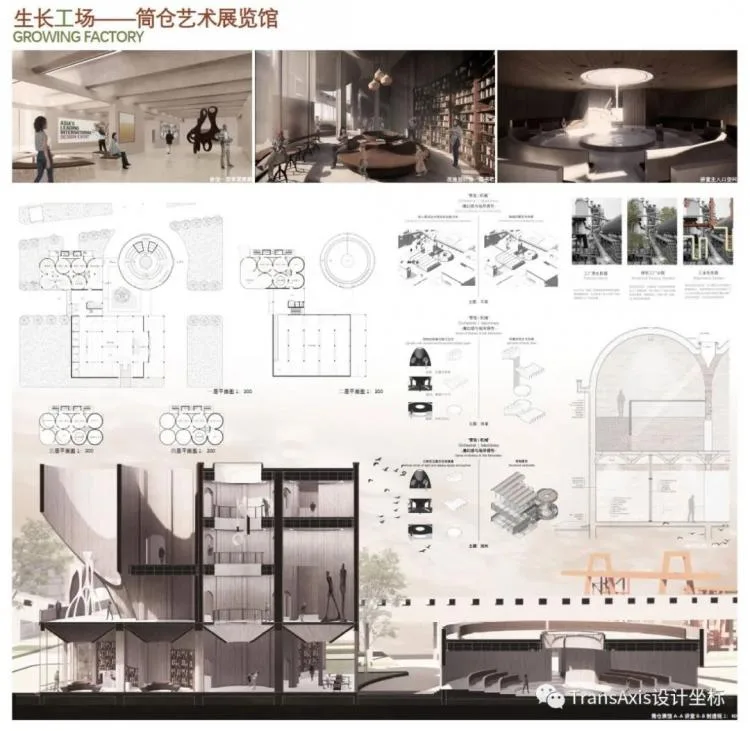
Joint Warehouse Cultural and Sports Center
Bai Ying, Li Jiazhen
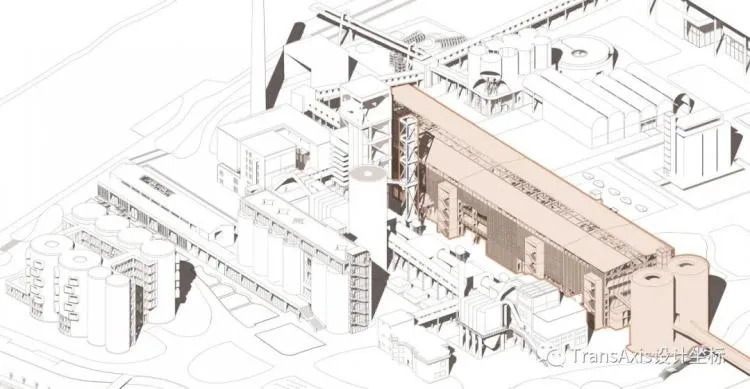
Video Appreciation
▼
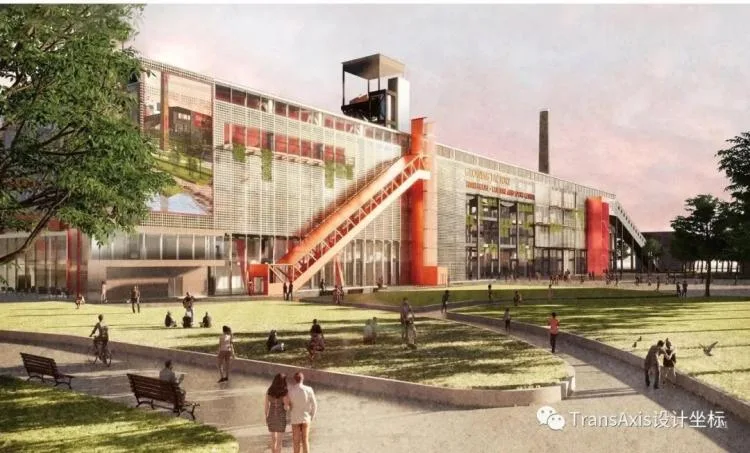
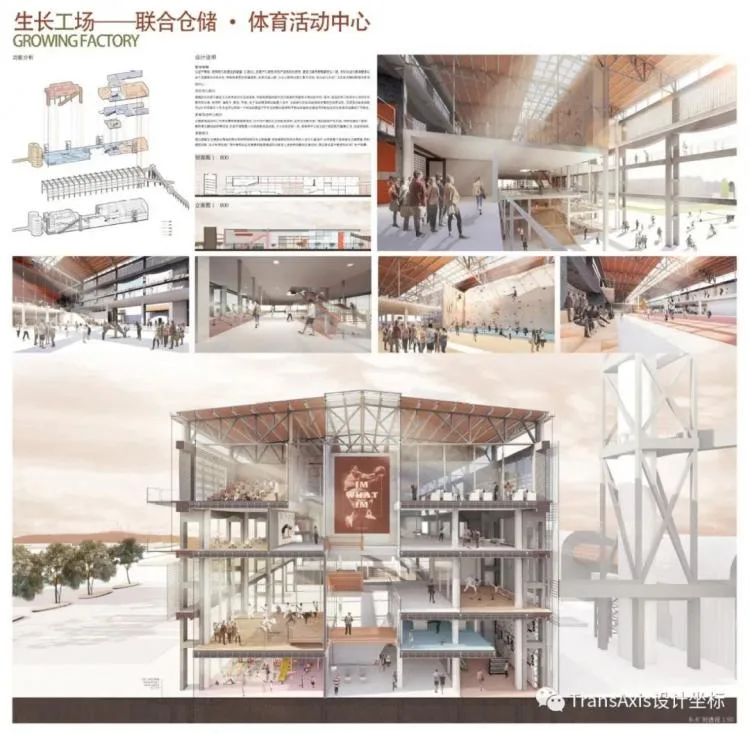
The joint warehouse is the largest building in the site park and plays a vital urban design role as an east-west connector. Initially, the two students divided the project into north and south parts:
- South: Cultural center with book bar, community library, and small theater.
- North: Sports center featuring table tennis, fencing, rock climbing, basketball, and more.
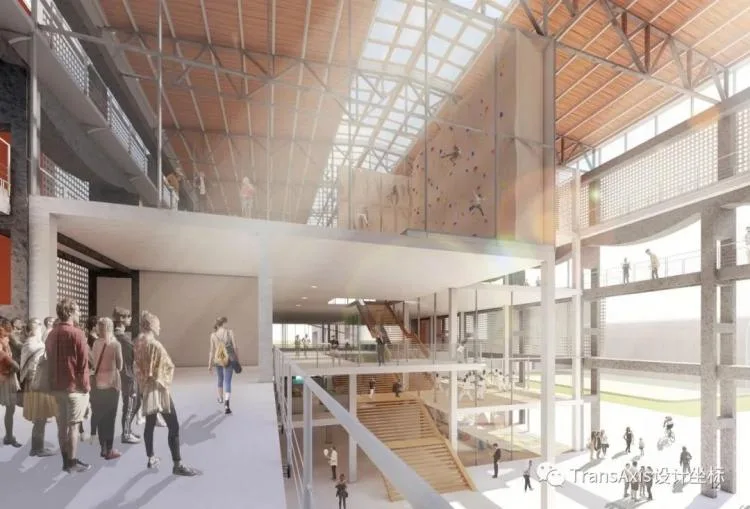
The central section serves as a transparent traffic courtyard, enlivening the joint warehouse’s atmosphere.
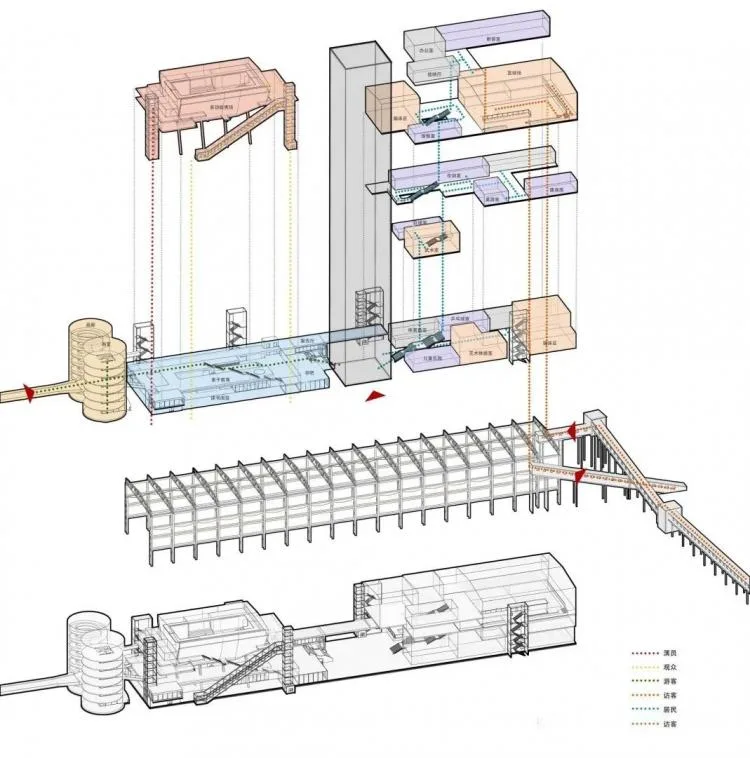
Functional block composition analysis △
The original joint storage structure was intact, so preservation was prioritized. After defining cultural and sports spaces, profile designs were developed following structural logic. The theater space presented structural complexities, while the sports center’s rooftop basketball court was a highlight. The structure also incorporated new vertical external circulation.
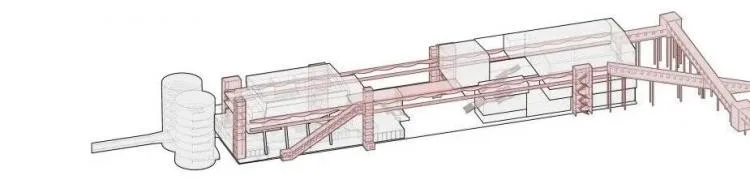
△ Relationship between added circulation spaces and structure
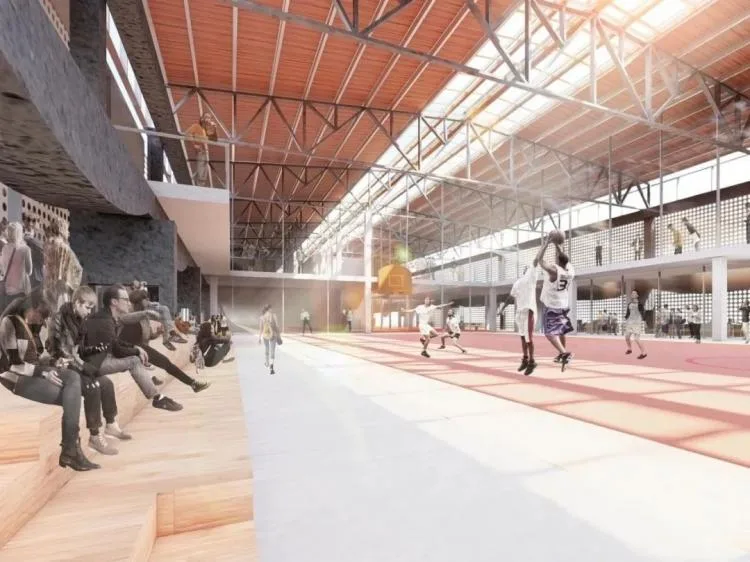
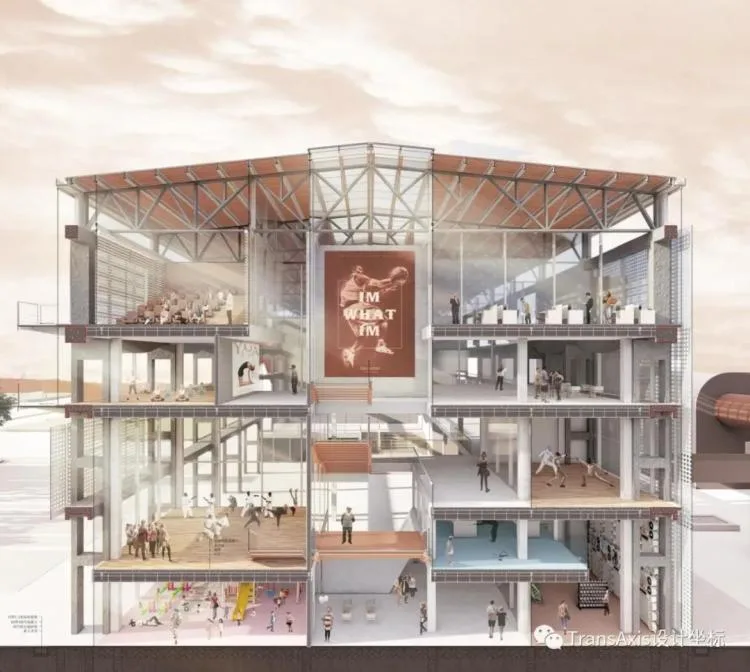
We then focused on activating the cultural and sports center interiors. The space includes a theater, book bar, skylit basketball court, and central resting courtyard. This comprehensive building vibrantly serves community life. Reflecting on our earlier urban design, we successfully integrated residents’ daily lives with tourism through joint warehouse transformation, energizing the heritage park’s core.
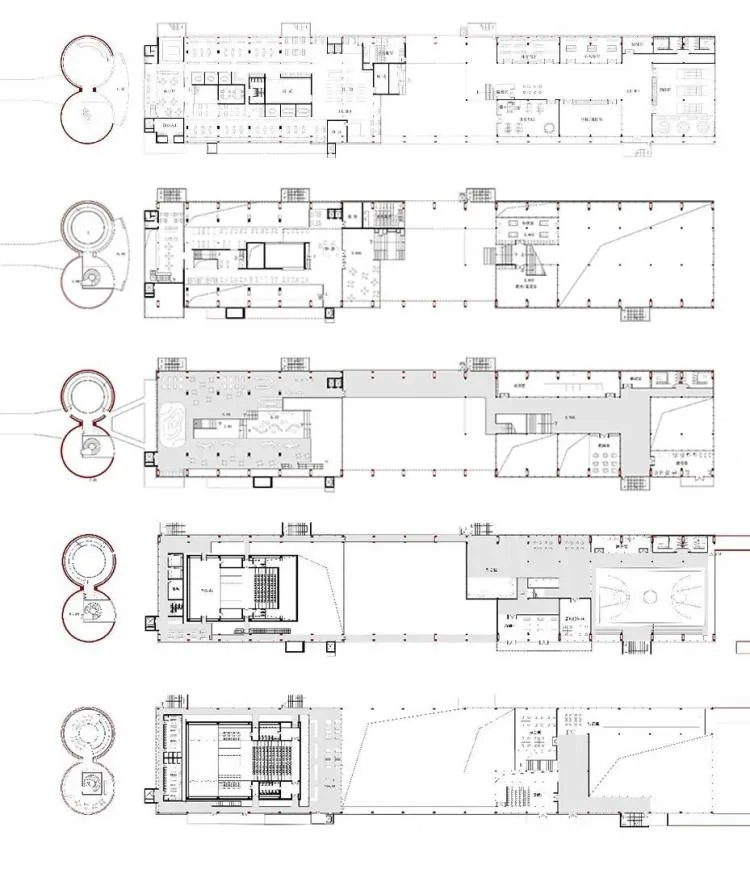
The cultural and sports centers interact vertically at different levels and heights.
The open east-west leisure hall in the joint warehouse’s middle section offers clear views, bridging the active north sports and south cultural centers.
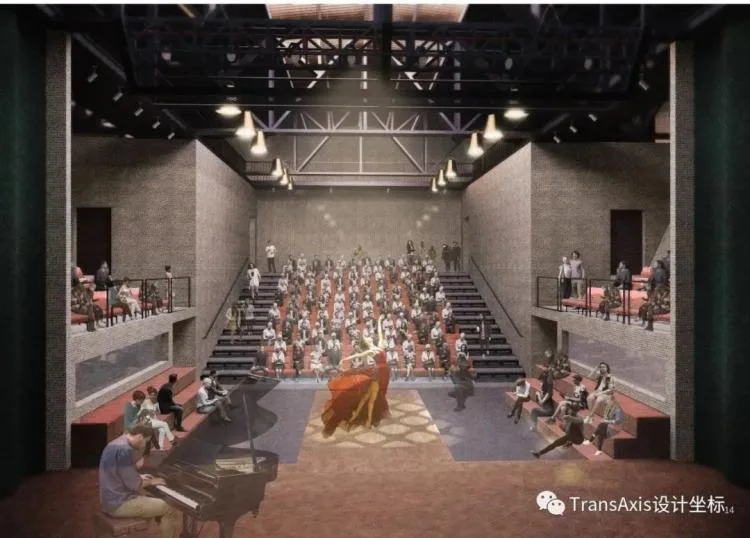
The theater regularly hosts small and medium performances, enriching local residents’ cultural life.
The rooftop basketball court provides a new community leisure venue.
The theater structure is a newly added element, distinct from the original and thoughtfully placed.
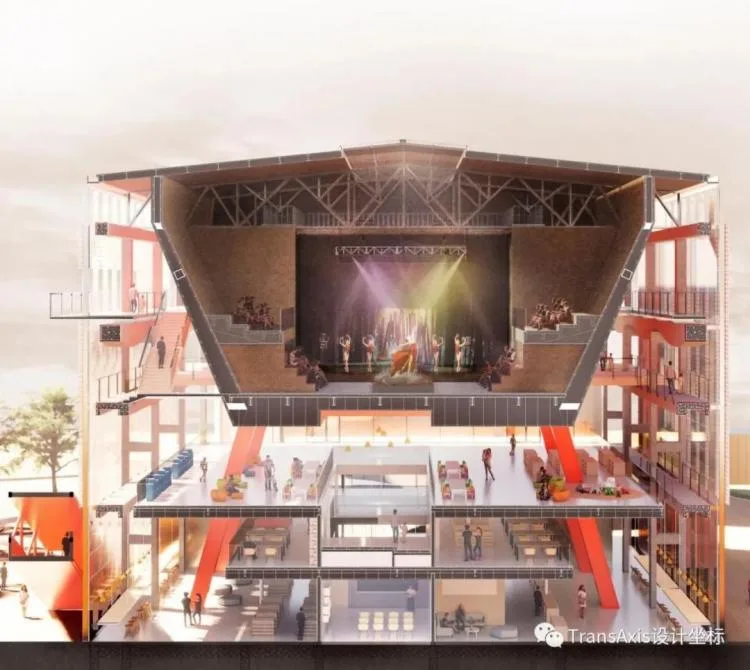
Activity rooms vary in elevation and height, creating diverse viewing experiences.
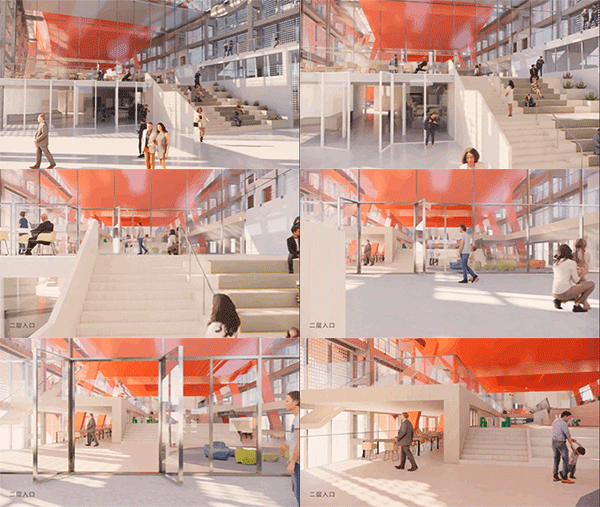
Accessing the cultural center through outdoor-connected public space, the theater’s bright new structure contrasts with the preserved joint storage framework.
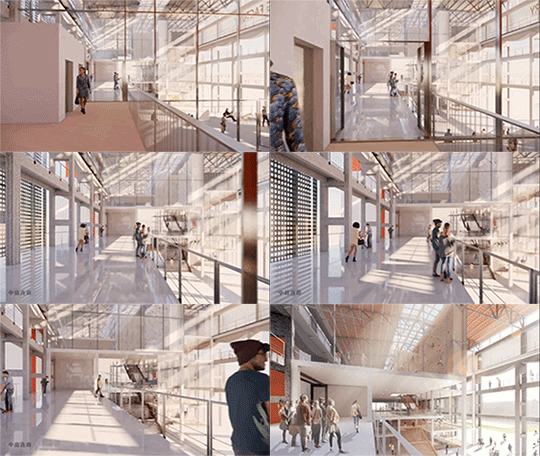
Crossing the transparent atrium corridor from the cultural center’s second floor towards the sports center, one feels the active sports atmosphere.
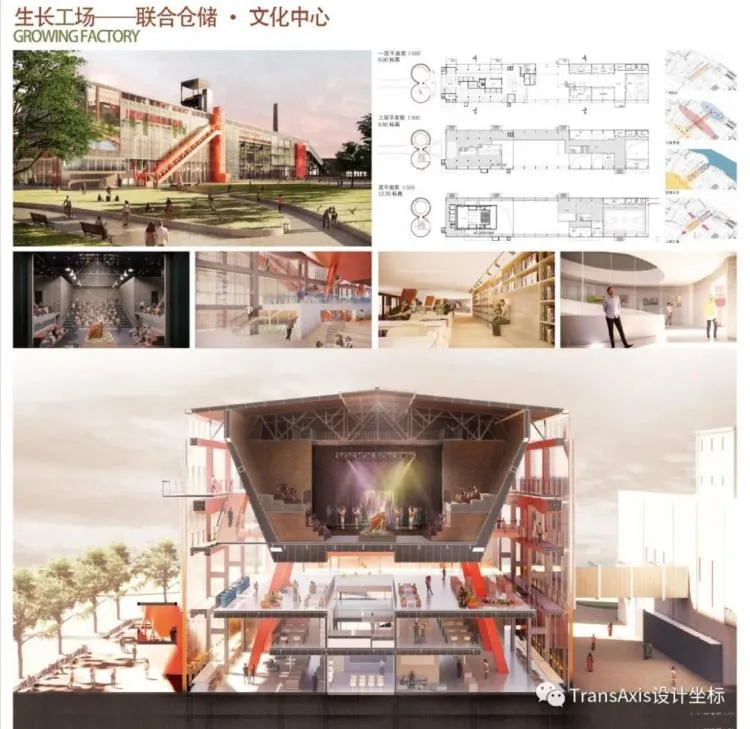
Exhibition board: Joint Warehousing Cultural and Sports Center
Cement Museum
Fu Zheyuan
Video Appreciation
▼
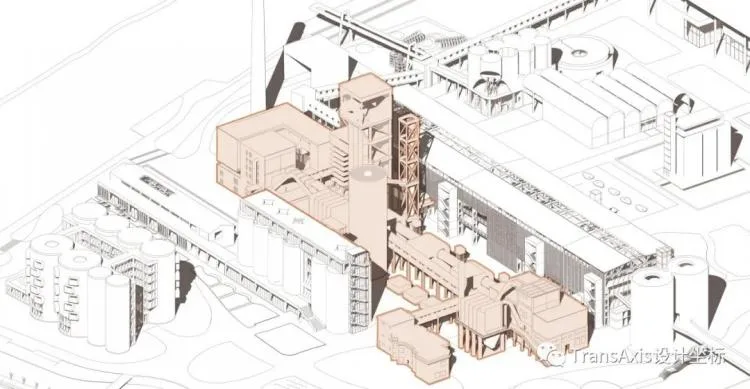
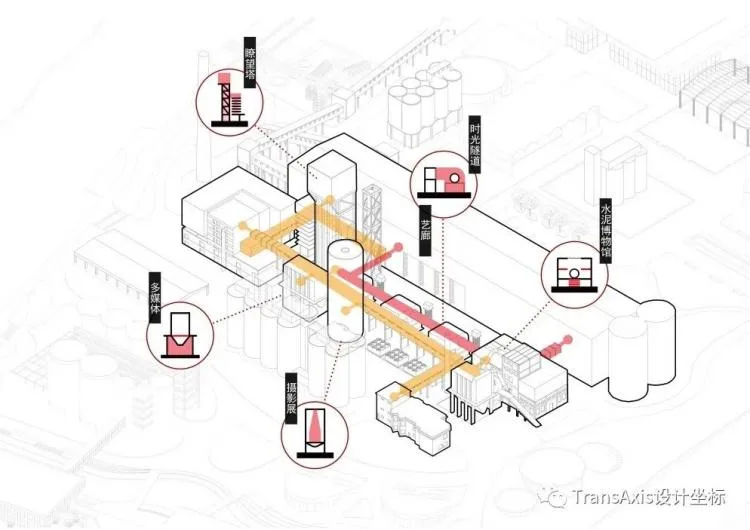
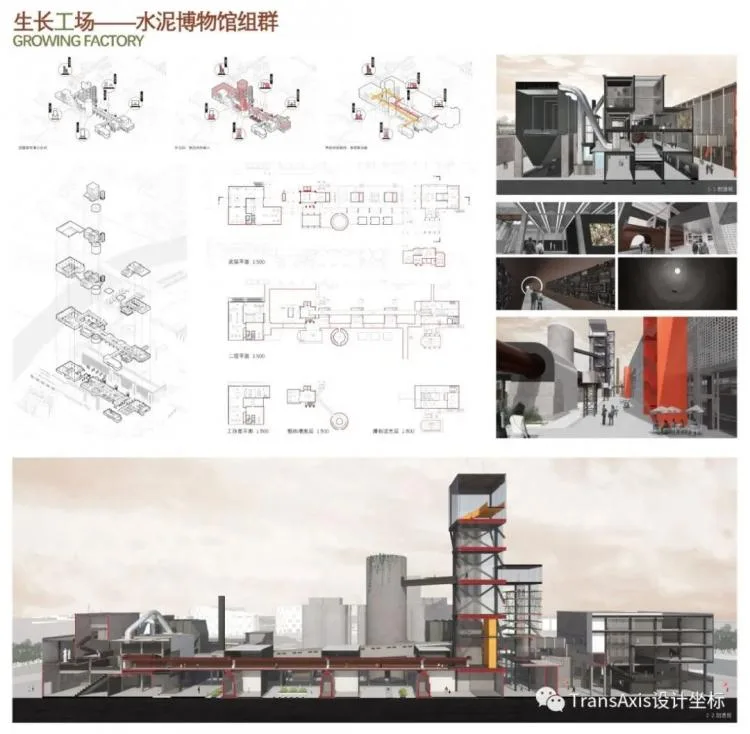
The Cement Museum stands out among renovation buildings as an “industrial jungle” composed of scattered industrial structures rather than a single building. For this project, Fu Zheyuan designed viewing paths organizing these structures into a complete museum tour.
Visitors on these paths experience the unique structural beauty of industrial forms while learning about Jinshan Cement Plant’s historical significance in Shanghai’s development.
New and renovated exhibition and circulation spaces were added to integrate diverse industrial structures.
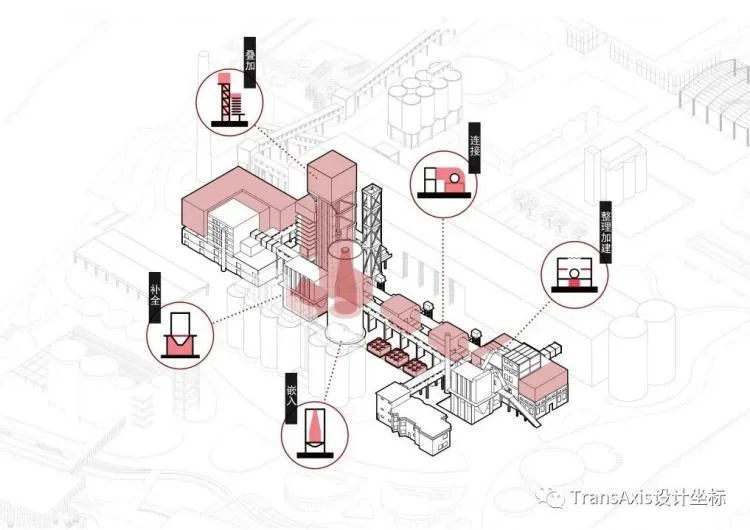
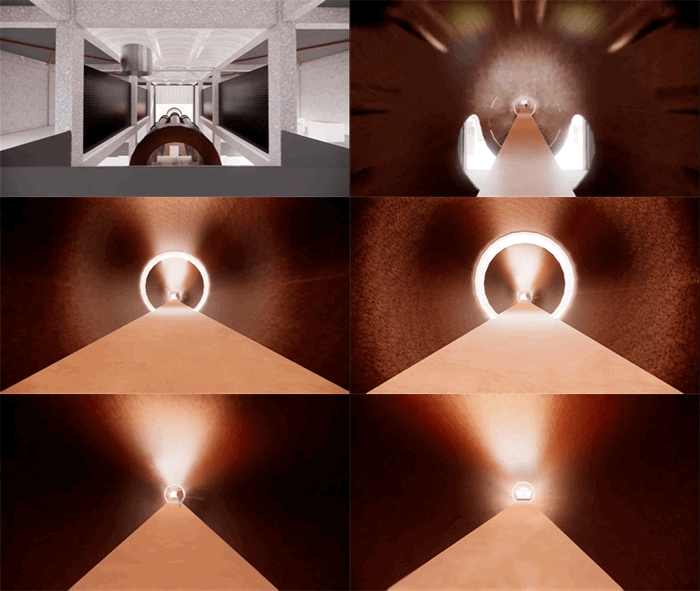
The original cylindrical rotary kiln was transformed into a distinctive “Time and Space Tunnel” transportation space within the museum.
Below is a representative floor plan connecting the joint storage and urban auditorium along the east-west corridor, attracting visitors from multiple directions.
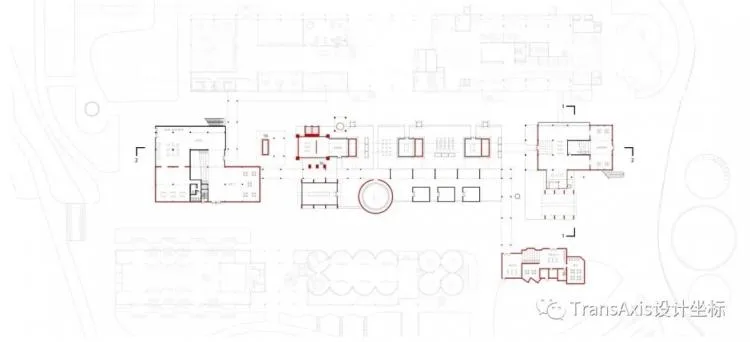
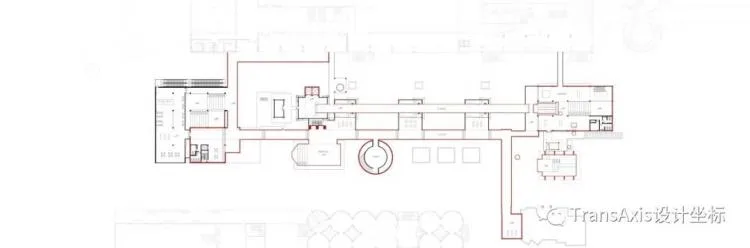
The dense trusses, pipelines, beams, and columns create a compelling industrial landscape for visitors.
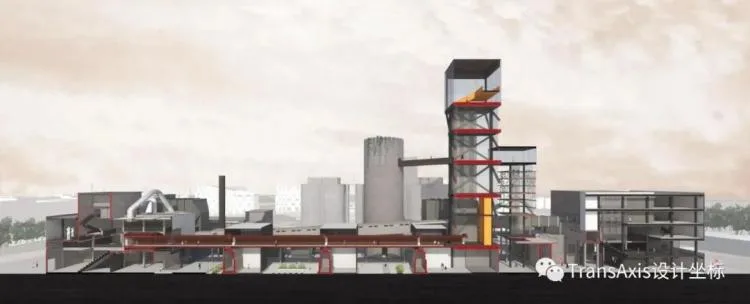
Visiting the “Industrial Jungle” of the Cement Museum reveals exhibition halls with varying materials and structural features.
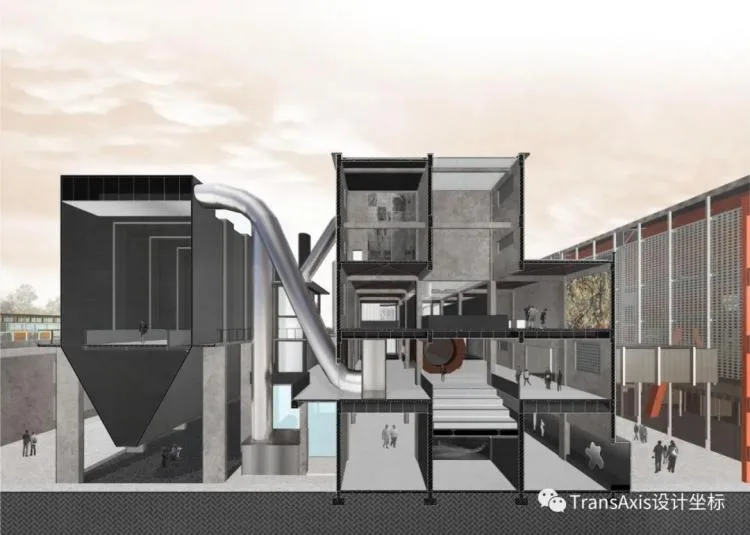
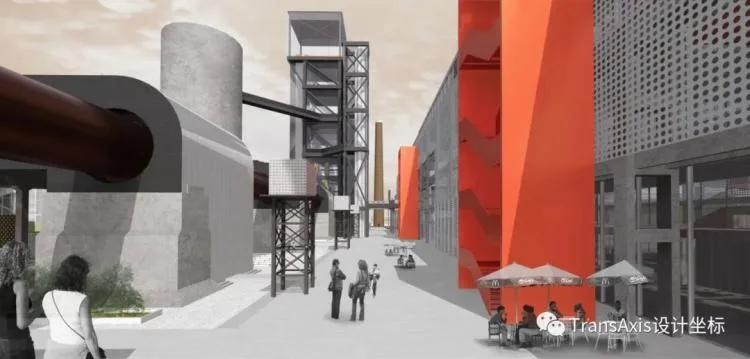
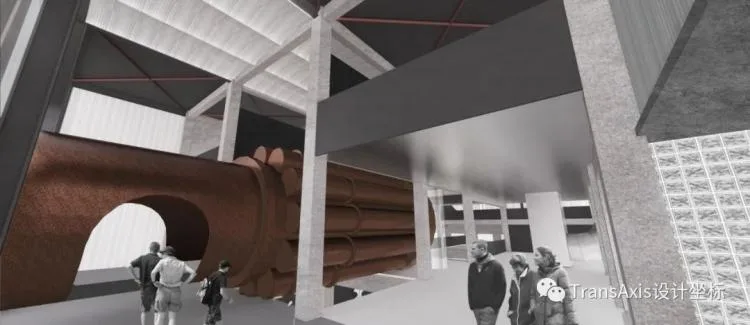
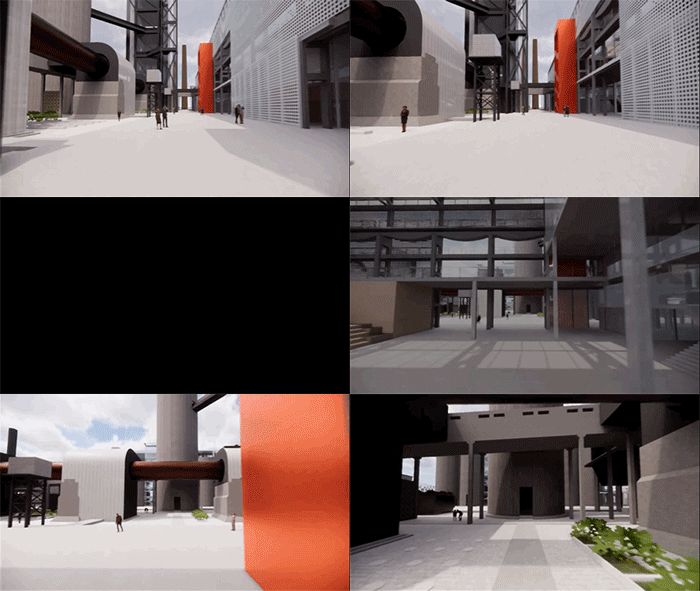
Park Tour:
The “Time and Space Tunnel,” transformed from a rotary kiln, narrates Jinshan Cement Plant’s history.
Cement Museum building complex exhibition boards:
Silo Wedding Photography Studio and City Auditorium
Zhang Pingping
Video Appreciation
▼
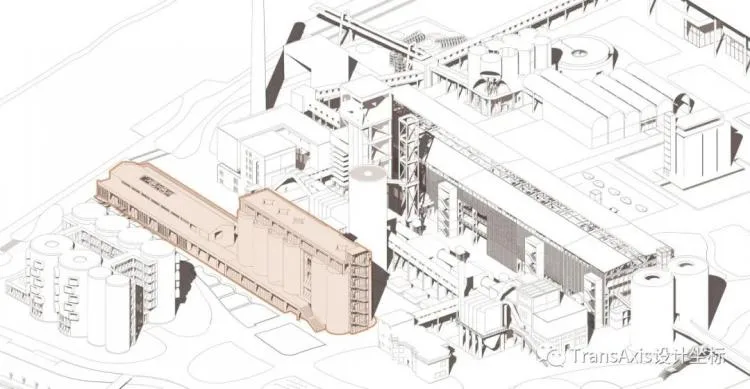
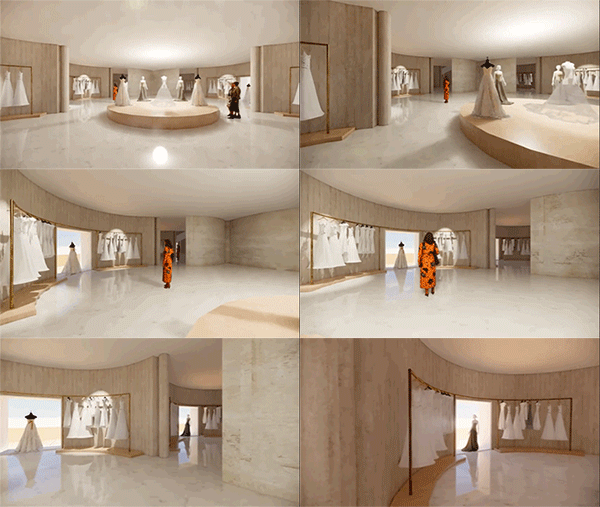
The silo’s curved walls evoke a strong sense of exploration and ceremony. Given this, silos suit ceremonial functions such as wedding chapels, photography studios, and large landscape restaurants. This silo and adjacent northern factory, formerly used for packaging, inspired a wedding-related renovation concept.
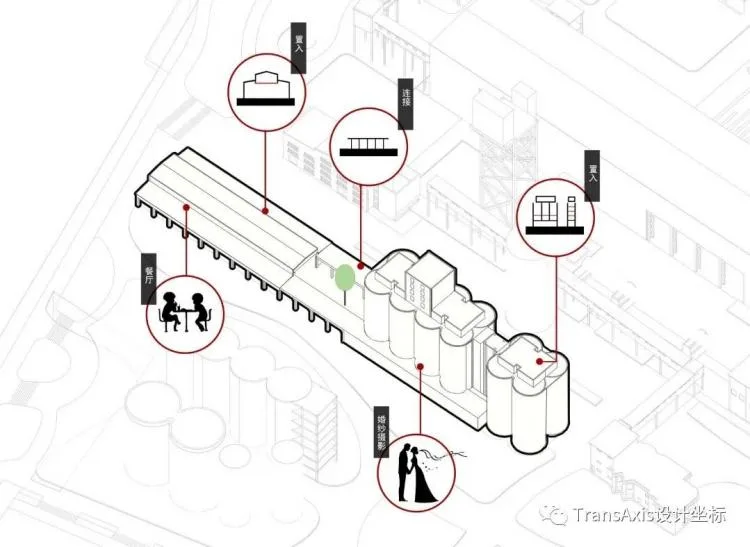
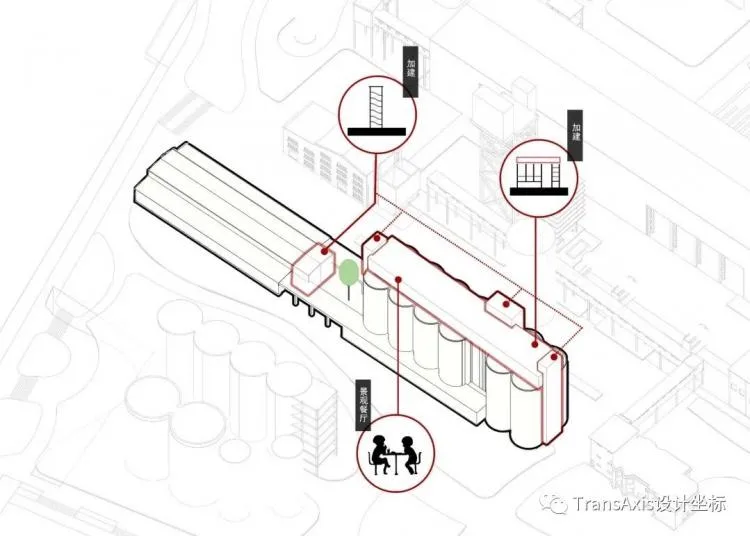
To accommodate wedding photography, ceremonies, and dining sequentially, we connected the northern factory sheds with southern silos.
Design focused on spaces rich in storytelling and atmosphere, such as the chapel and landscape restaurant.
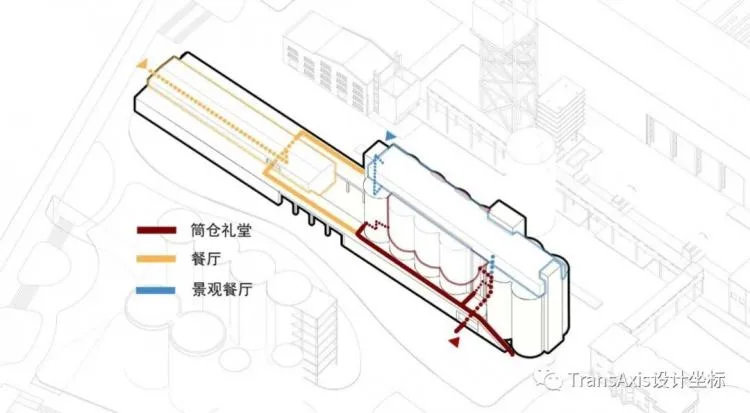
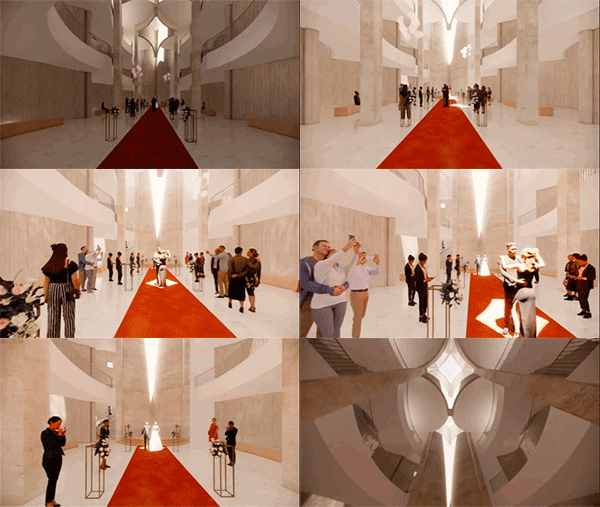
When designing the chapel, daylight was paramount. By sculpting a central space within eight complete silo cylinders, rhythmic curved walls and sky projections create a unique wedding hall, offering an innovative business model for Jinshan Cement Plant.
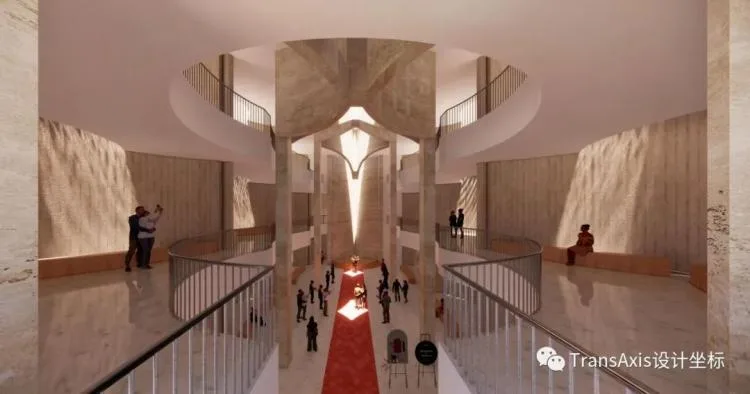
This wedding chapel space features a ceremonial scene framed by sky and wedding stage. Guests witness the sacred ceremony from various stand heights.
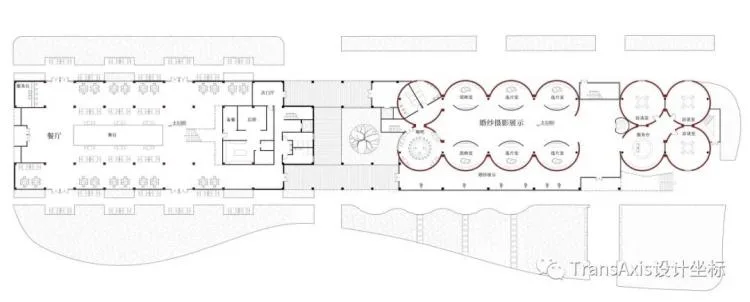
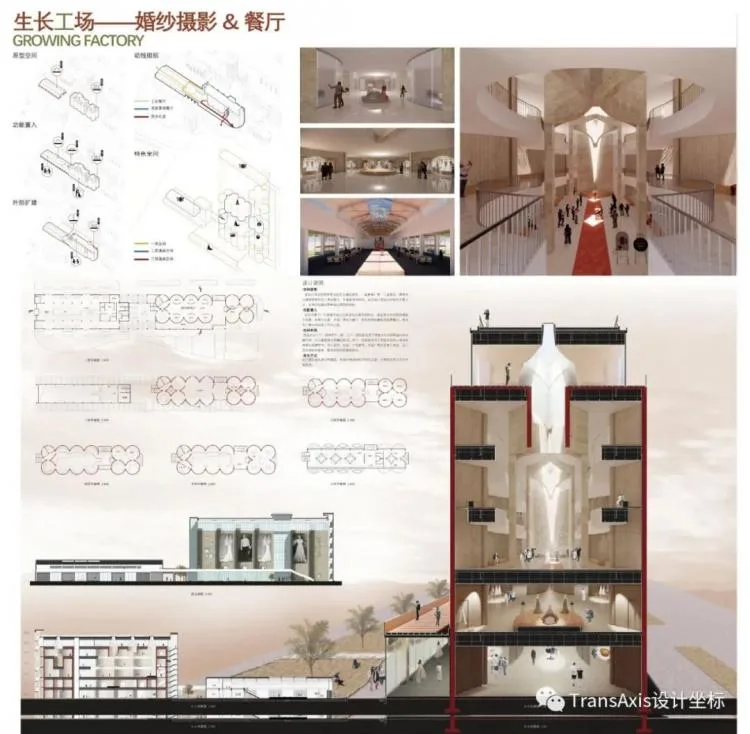
The plan shows the connection between the northern restaurant and southern silo auditorium clearly.

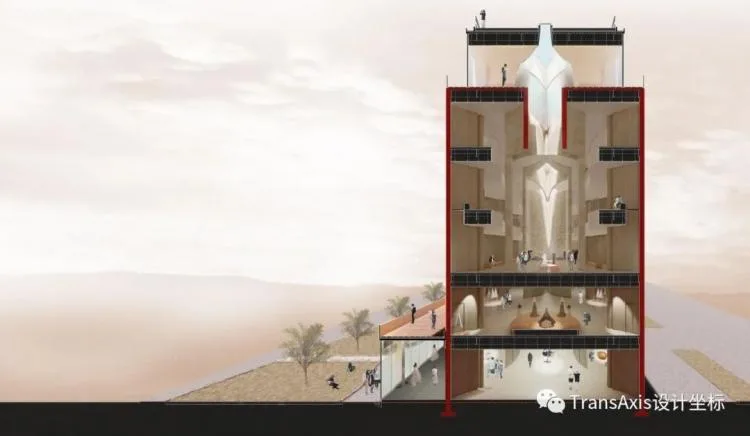
Profile view illustrates skylight construction techniques.
The second floor wedding photography gallery accommodates different consumer groups across silo units.
The three-story silo church, with its curved walls, creates a unique skylight and indoor atmosphere.
Wedding Photography Gallery exhibition board:
Silo-Themed Hotel
Yu Jie
Video Appreciation
▼
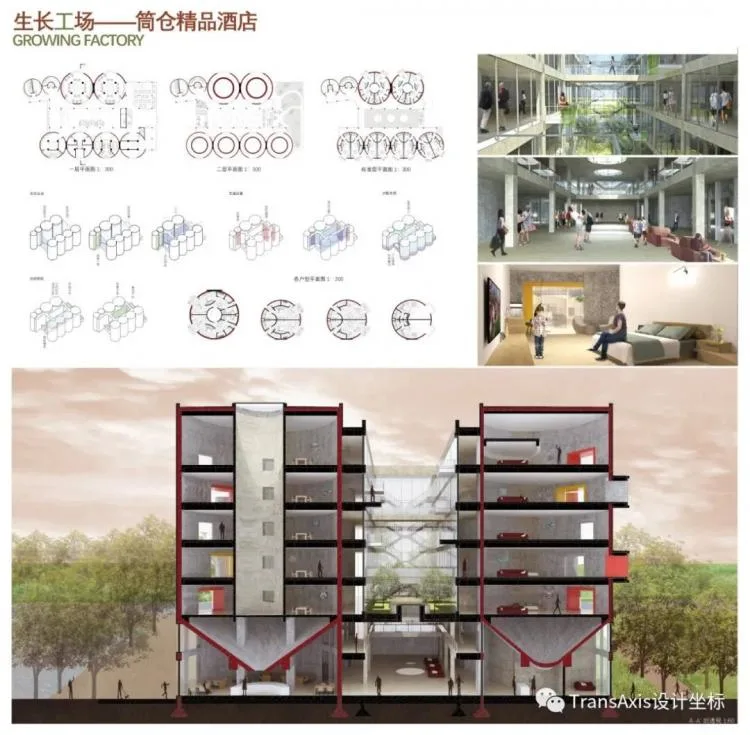
In recent years, homestays have gained popularity as a tourism accommodation mode because of their distinctive local architectural style and unique charm. As a distinctive residential space, homestays influence architectural renovation trends, prompting traditional hotels to innovate in appearance and interior design.
The westernmost fifth silo in the industrial heritage park, connected for spatial continuity, was selected by Yu Jie for transformation into a distinctive silo hotel.
The first step was creating a connecting platform between cylindrical buildings with scenic views; the central space serves as the hotel lobby and circulation area.
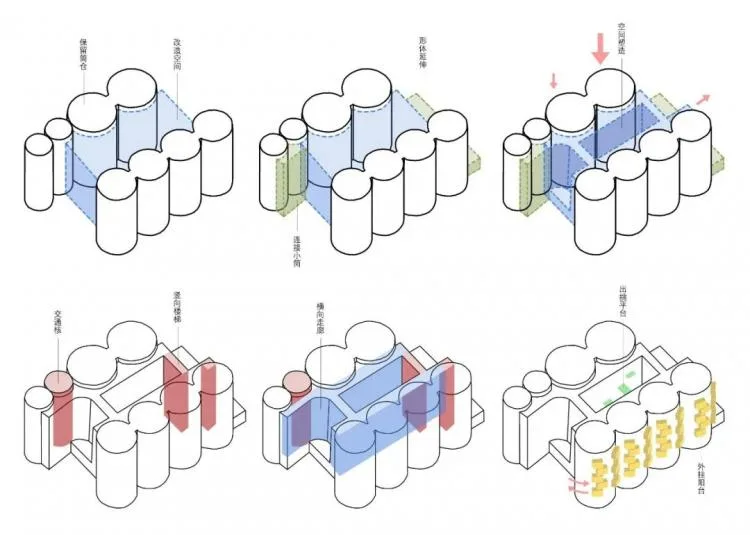
Room types are organized according to cylinder sizes: large suites, small standard rooms, and circulation spaces.
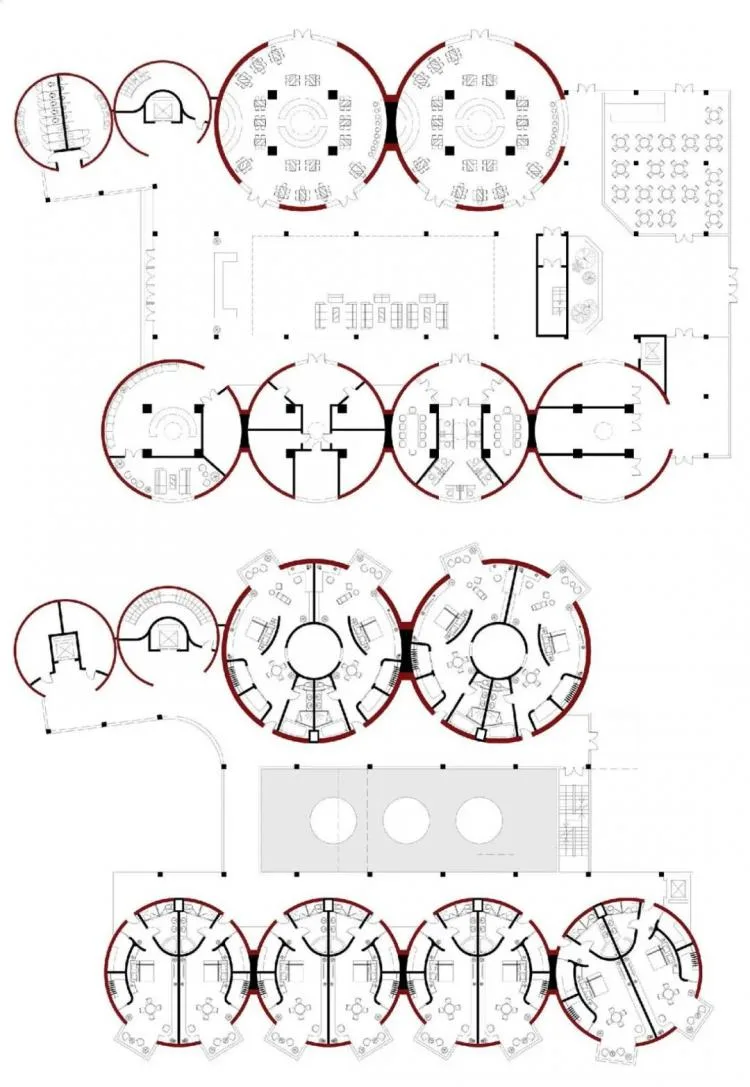
△ Standard floor plans show varied room layouts and circulation space relationships.
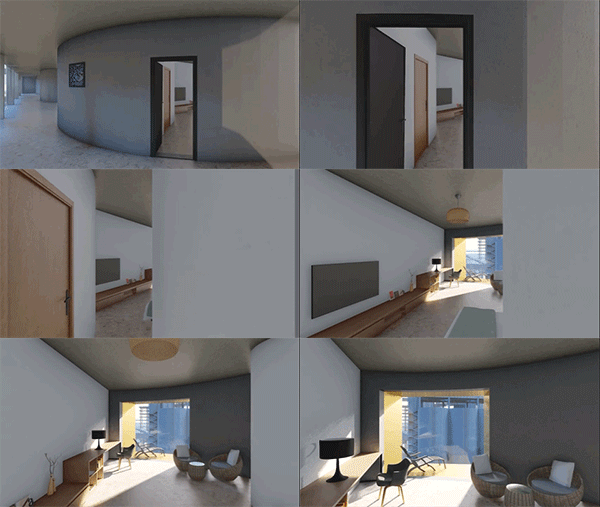
The cylindrical buildings create diverse spatial atmospheres within the silo hotel. East-facing windows offer guests panoramic views of the renovated industrial park.
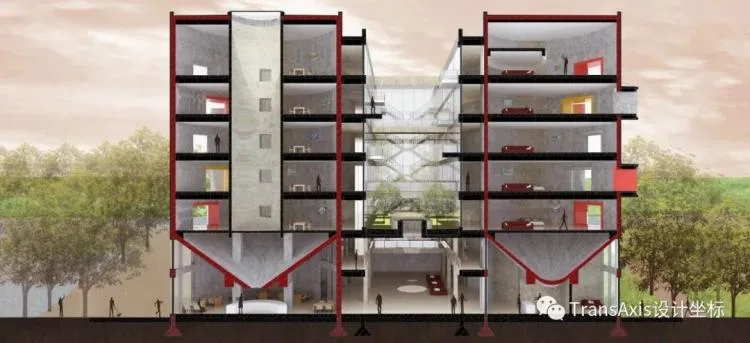
A transparent glass corridor connects large and medium silos.
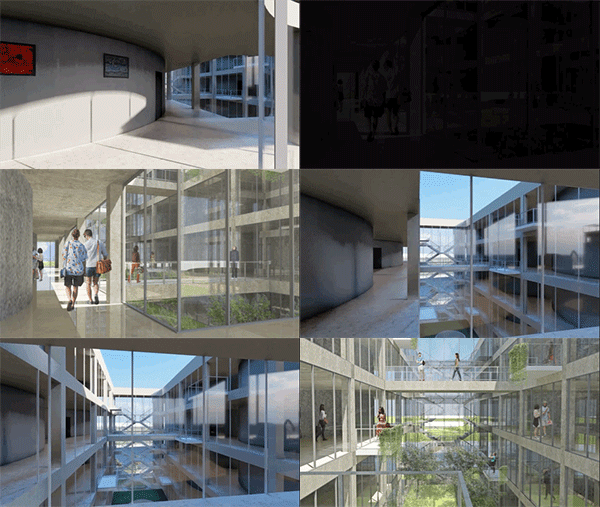
The Silo Hotel’s east-facing landscape window offers panoramic views of the industrial heritage park.
Silo Hotel display board:
The ‘Back to the Future’ Factory
Transformation by Six People and Six Colors
Building Scroll – The Renovated Cement Factory Area
Please rotate your screen to view~
▼


From art museums and sports centers to cultural hubs, exhibitions, commercial spaces, residences, and entertainment venues, our six-person group, guided by two professors, transformed abandoned industrial buildings into a vibrant heritage park for both residents and tourists.
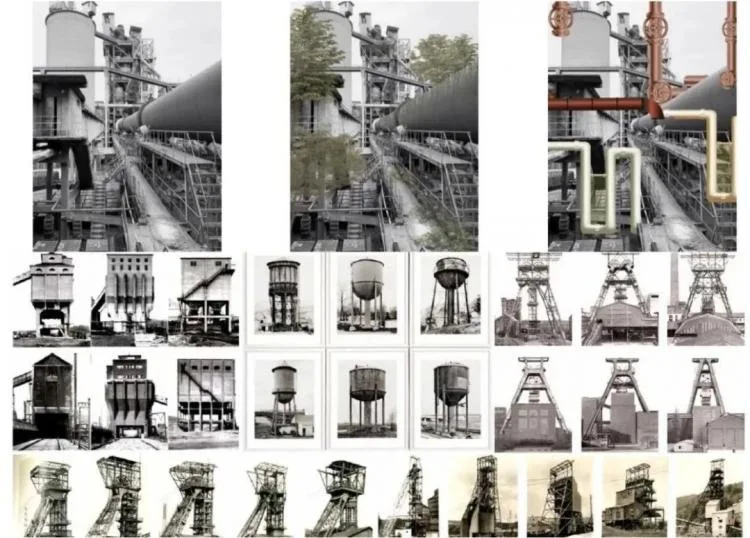
△ Top: Core spiritual strategy – “Site Park”; Bottom: Excerpts from the Béchet couple’s photography series “Nameless Buildings”
For over a century, industrial buildings were often overlooked or abandoned by mainstream architecture. Through over forty years of photography, the Béchet couple shifted Western architectural perspectives, gradually recognizing industrial architecture as social and cultural heritage.
Industrial architecture memory plays a vital role in urban industrial history. Losing it is as irreversible as demolishing buildings or disappearing industries. As architects, while preserving history, we must also envision industrial buildings’ future roles, ensuring they remain part of collective memory and heritage.
Chapter 4
Graduation Project Drawing Evaluation
In early June, we quickly prepared for an online review. This unique year led Tongji University to design a “cyber style” graduation project poster.
As 2020 graduates in this “Cyber Evaluation Year,” we finally met our group members offline after completing mandatory city-based health checks and attending an in-person graduation ceremony. Meeting instructors Chen Qiang and Chen Yong in person was special. Despite months apart, shared memories instantly bonded us.
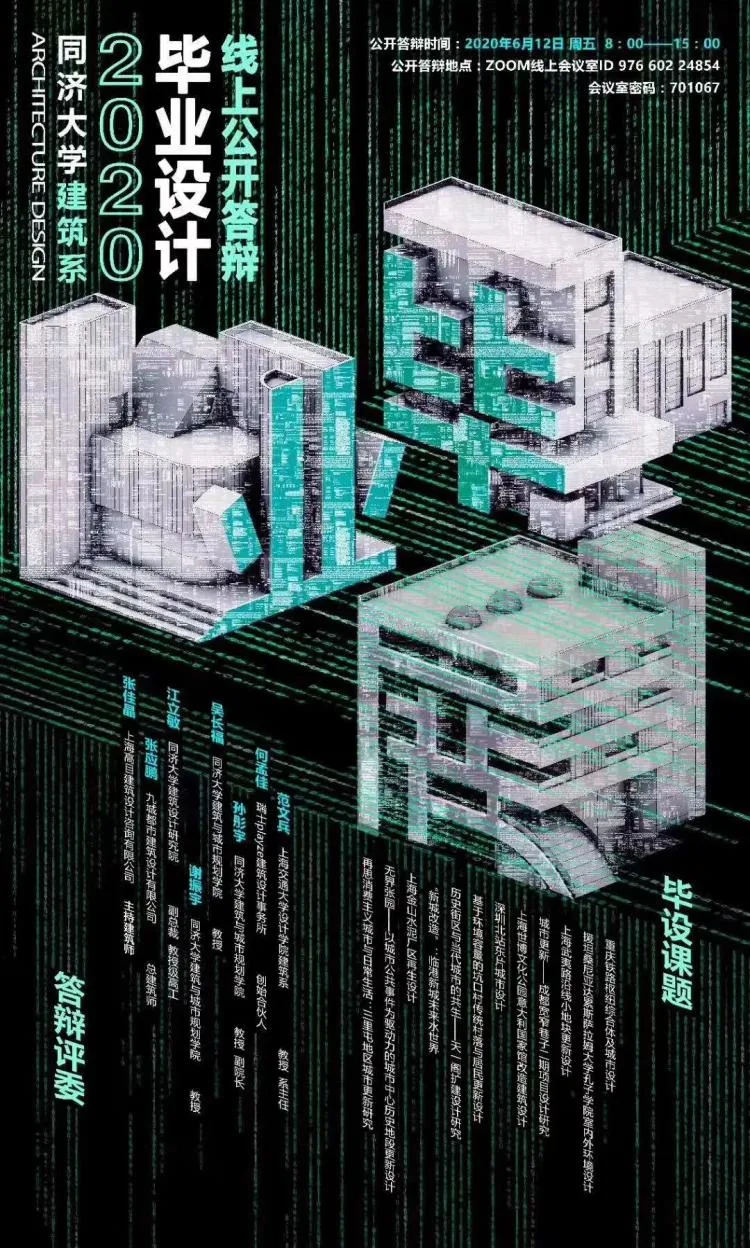
The online public defense poster for the graduation project had no auditorium capacity limits; at peak times, thousands watched simultaneously.
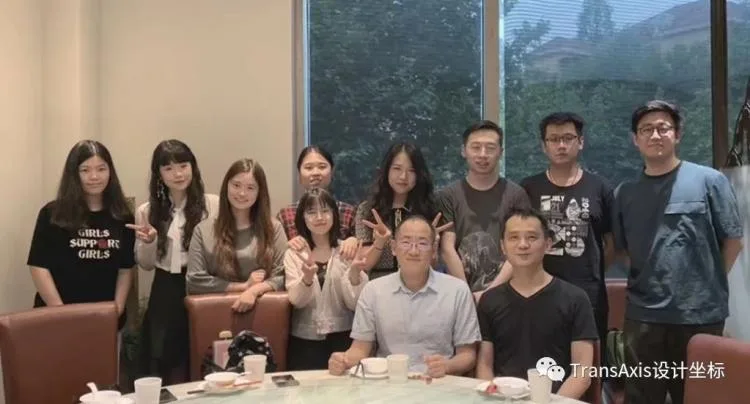
Teachers and classmates reunited offline.
Due to online classes, physical model making was impractical, which might have been a regret. Instead, we embraced video production to showcase spatial atmospheres inside buildings. Students paid tribute to favorite movies’ editing and music techniques, embedding “Easter eggs” like previous architectural drawings and models—gifts marking our final undergraduate works.
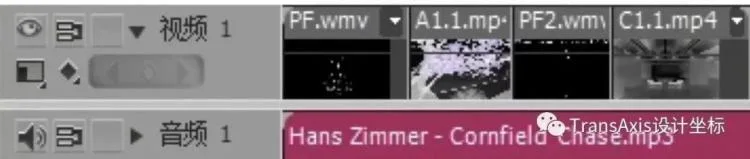
Personally, this was my first experience with video editing software.
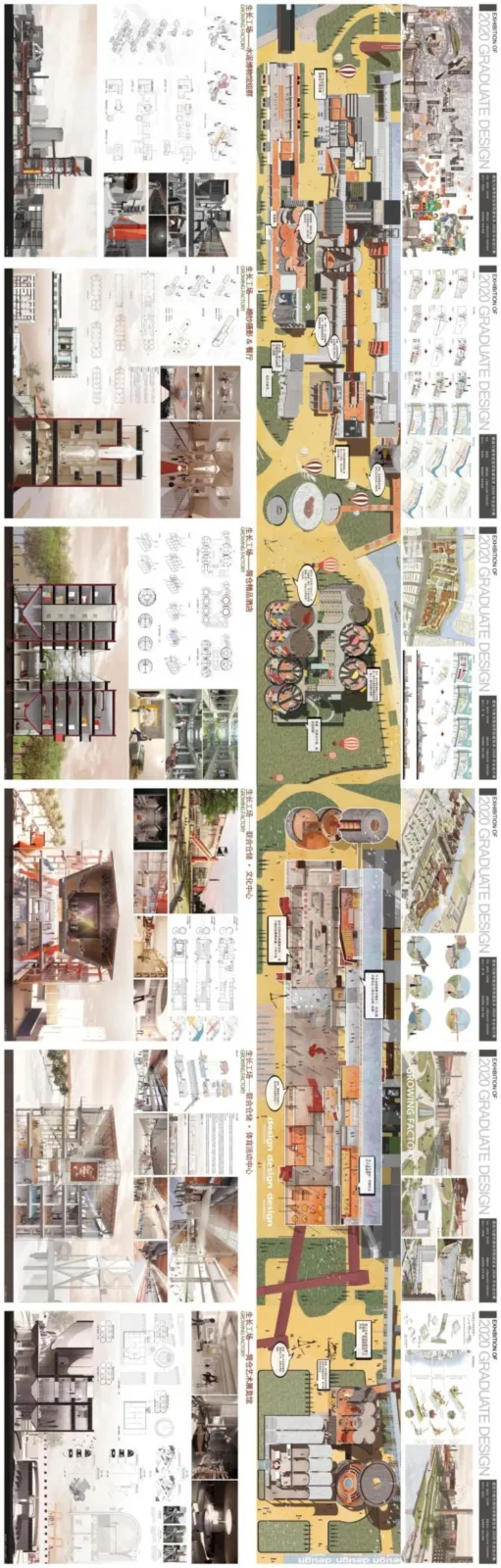
This year’s exhibition boards lost the chance for physical display in Building C’s first-floor halls, but we integrated the six-person group’s boards into a connected whole.
Chapter 5
Afterword: Written for 2021
Zhao Zihan
Graduate of Tongji University, 2020
Growing up in Chongqing, I carry a punk city spirit. The dense urban environment and post-industrial heritage architecture naturally attract me. Choosing this graduation project team was no hesitation. I am grateful to conclude my undergraduate architecture journey with Professors Chen and a talented group of classmates. The pandemic altered all plans in 2020 but opened unexpected opportunities.

Bai Ying
Graduate of Tongji University, 2020
Though we all face challenges, hope, faith in life’s value, and our efforts keep us afloat.

Li Jiazhen
Graduate of Tongji University, 2020
A photographer who cannot pose is not a good architect.

Zhang Pingping
Graduate of Tongji University, 2020
A TV drama enthusiast and workplace novice. Graduation was invaluable. Although inexperienced with weddings, I started a wedding photography studio, often humorously mentioned by my mentor. There were breakthroughs and shortcomings, but no matter my future field, I will cherish architecture’s impact on me.

Fu Zheyuan
Graduate of Tongji University, 2020
Tech enthusiast and anime fan. As my time in academia ends, I face the colorful world. The pandemic changed all perspectives. Together with teachers and friends, we completed this unforgettable graduation project.

Yu Jie
Graduate of Tongji University, 2020
A humble construction worker, honored to participate in the Jinshan Cement Plant project and to have designed the silo hotel.
2020 was extraordinary for most. I have revisited this unique project multiple times through various opportunities. Our renovation plan has deepened with each review, revealing new insights. I also thank the official account for inviting this draft, giving us another chance to re-examine this plan we developed “on, off, and on” together.
Initial difficulties and regrets were resolved through various means. Despite temporary disconnections, we will reunite.
This article was written at 2020’s end. I hope everyone bids farewell to this special year without regret and steps bravely and easily into 2021.
Author: Zhao Zihan
Editor: Hou Miaomiao

Follow TransAxis Design Coordinates












Must log in before commenting!
Sign Up