
Project Background:
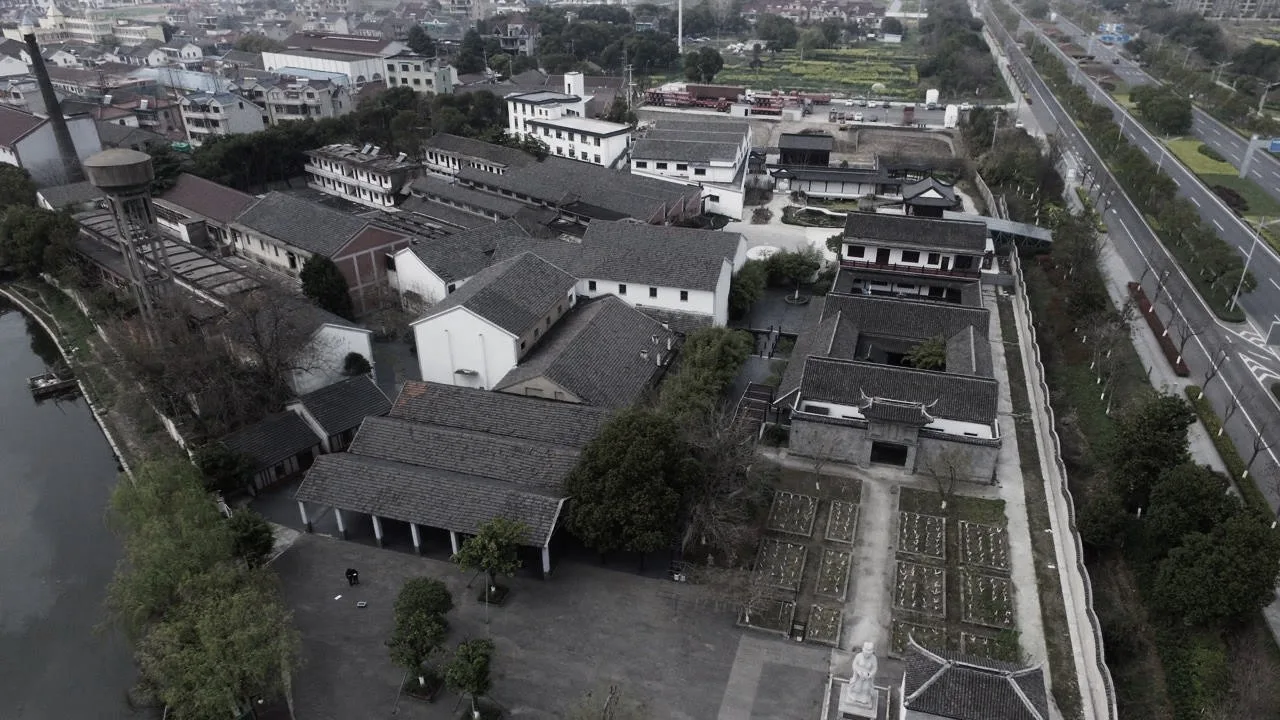
△ Tanqiu Silk Spinning Factory design by Pingjie before renovation
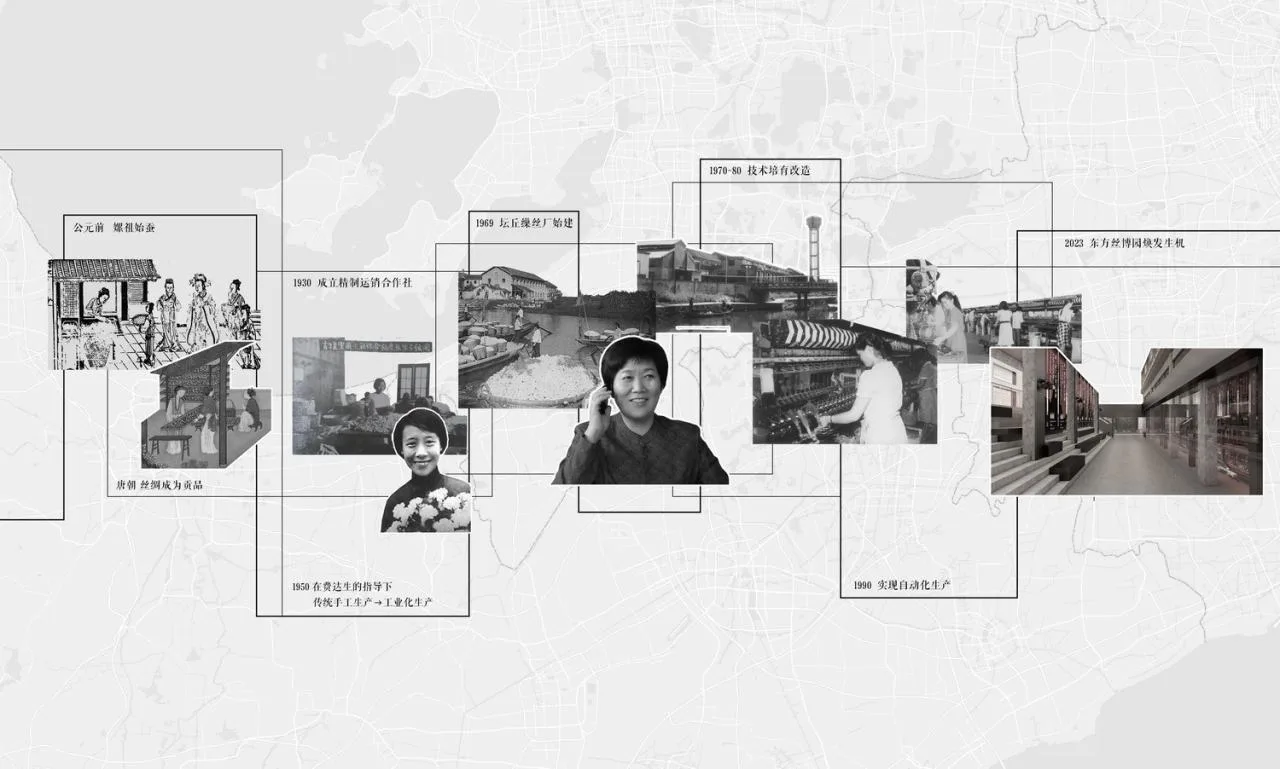
△ Historical background provided by Heisuke Design
Silk production and trade in Shengze, Suzhou, boast a rich history dating back to ancient times, including mulberry cultivation, silkworm farming, silk spinning, and weaving. From the prosperous Tang Dynasty’s tribute to the flourishing silk industry of the Ming and Qing Dynasties, Shengze silk has been renowned across China. After liberation, Shengze evolved from traditional handmade methods to industrial silk production. Established in 1969, the Tanqiu Silk Spinning Factory became a pioneering symbol of this industrialization. However, with technological progress and societal changes, the factory gradually ceased operations.
Recently, Shengze has experienced rapid economic growth and silk industry upgrades, fueled by the Yangtze River Delta integration. Supported by urban renewal policies, the Tanqiu Silk Spinning Factory is undergoing transformation and modernization.
The Silk Road Shengze Digital Culture Industry Park is a joint venture between Jiangsu Yuanjian Culture and Tourism Holdings Group and Shengze Town Government. This project revitalizes the former silk factory site to create a digital culture industry park. The design focuses on aesthetic living, industrial office spaces, and industrial services, forming an innovative demonstration zone that combines consumption, experience, and industrialization.
Far Sighted Culture and Tourism leverages industrial relics, following the principle of “urban micro-renovation as old.” Through exhibition halls, it recreates the vibrant silk textile industry scene of the late 1960s. Simultaneously, factory spaces are renovated into a contemporary center for Shengze silk aesthetics, cultural performances, and tourism. By incorporating digital cultural assets (IP) and adopting the “culture + industry + tourism” model, the project establishes a new landmark in silk cultural tourism.
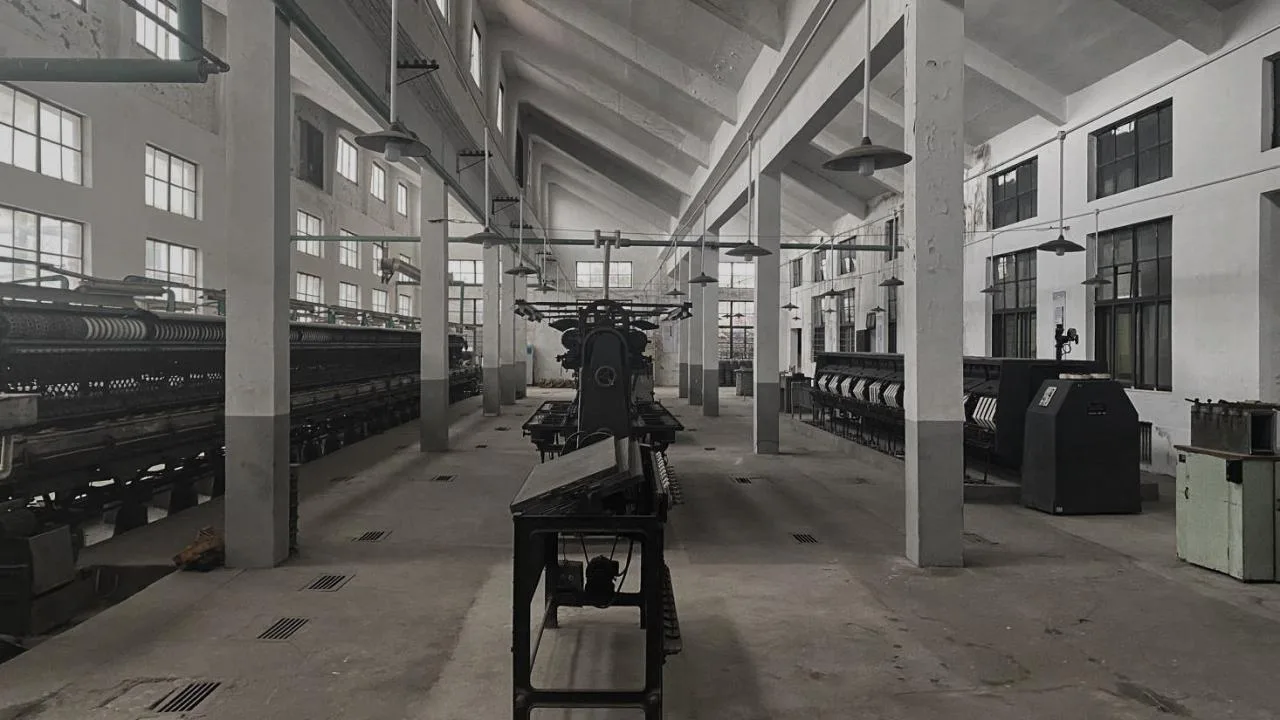
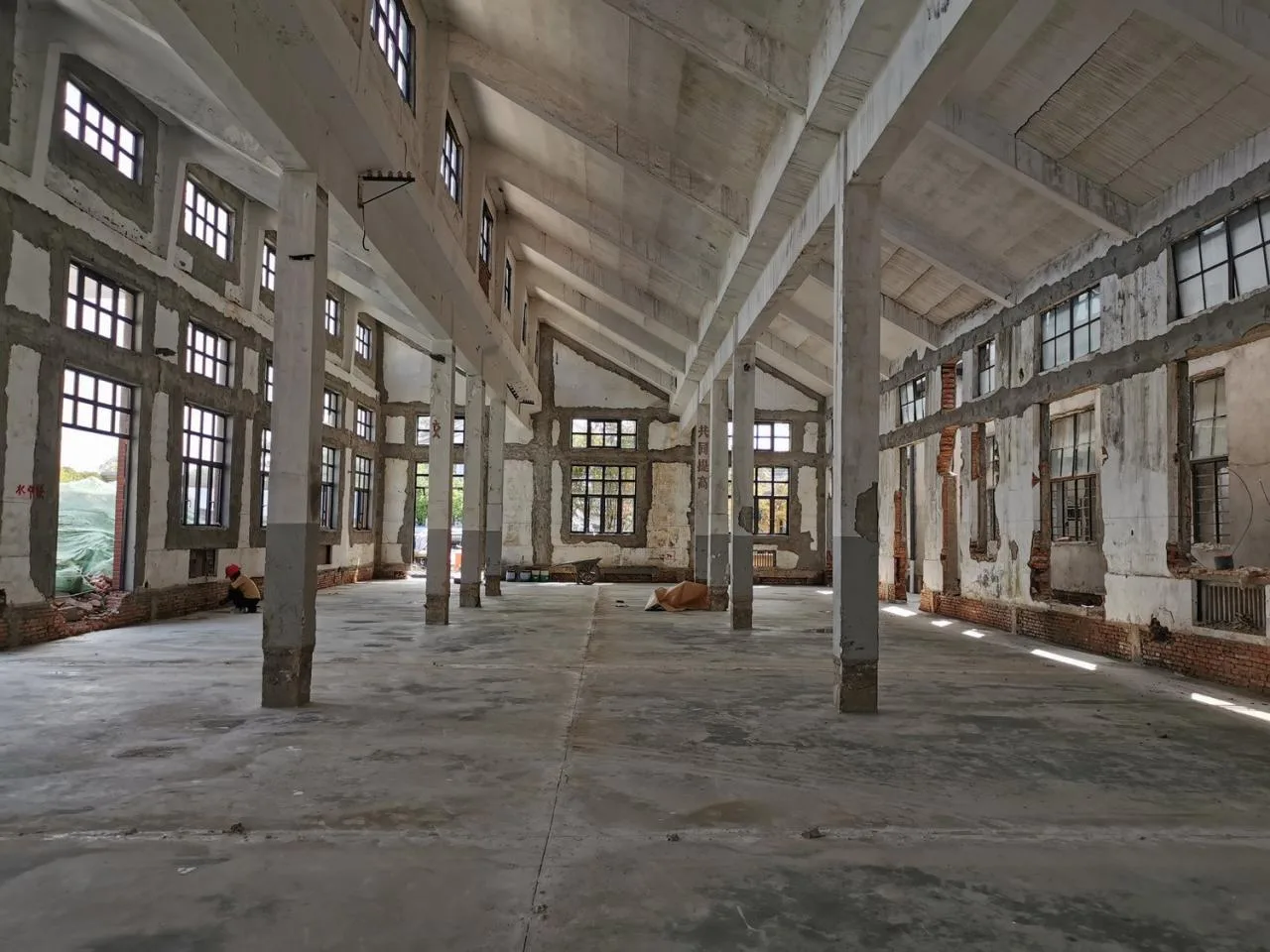
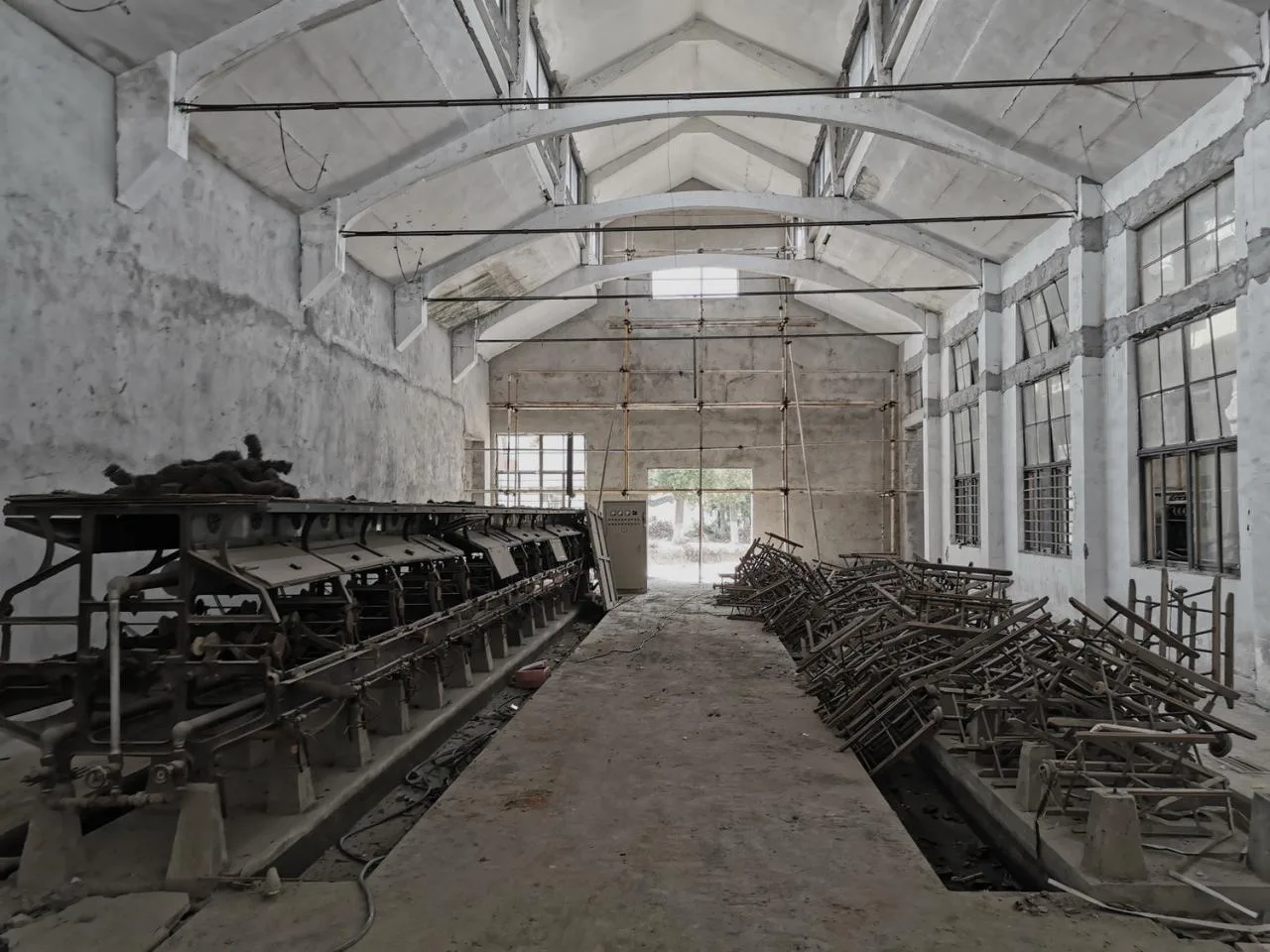
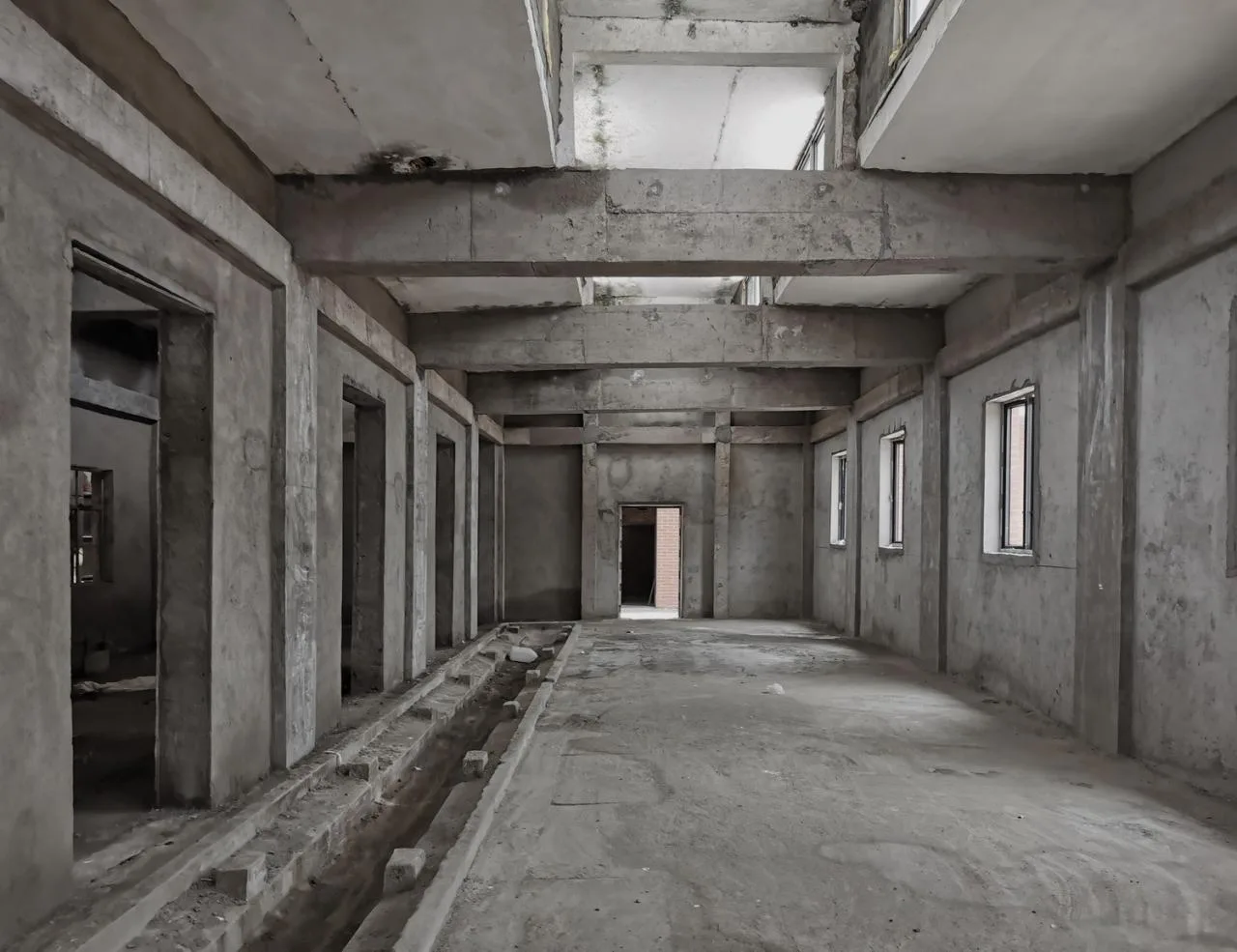
△ Original condition of various spaces by Pingjie Design
Located in Shengze Ancient Town along the Grand Canal in Suzhou, the Tanqiu Silk Spinning Factory preserves a relatively intact production building and an array of machinery. The factory showcases typical Jiangnan textile industrial architecture from China’s modernization era and serves as an important landmark and industrial heritage site reflecting local economic and industrial development. It represents both the “city card” and “collective memory” of Shengze, as well as a vital carrier for preserving Chinese silk culture.
Design Task:
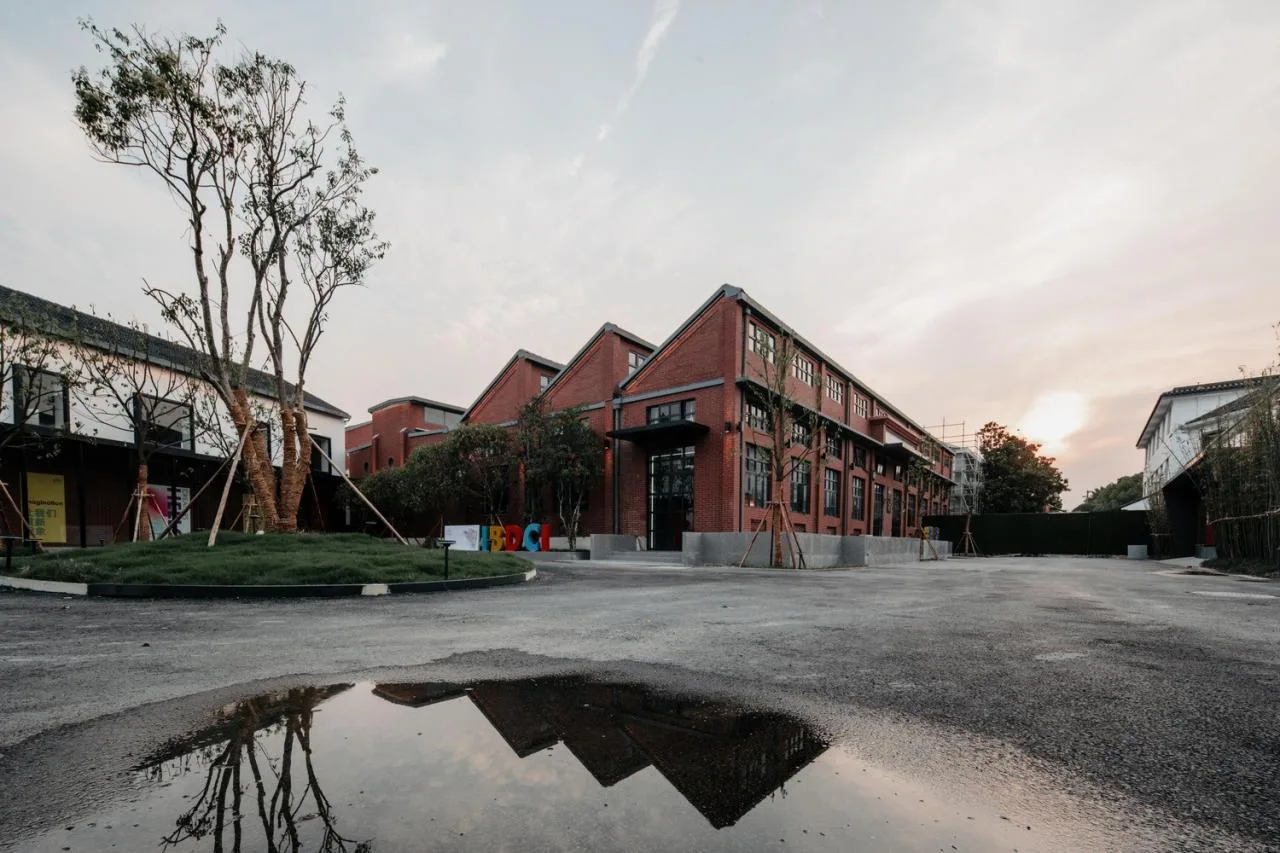
△ Architectural landscape photo by Xu Yingda
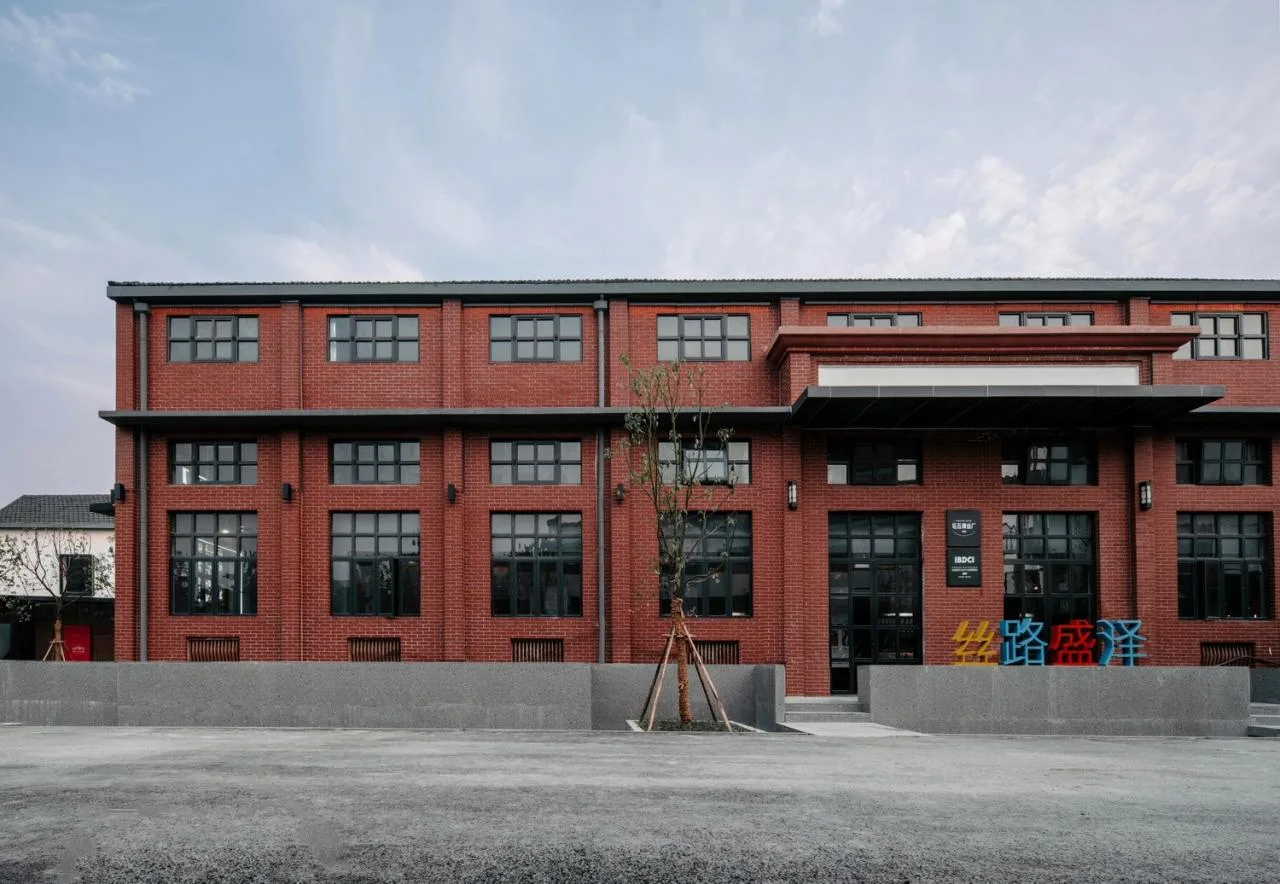
△ North facade exterior by Xu Yingda
This renovation cluster serves as a demonstration site offering renovation concepts for the broader industrial park redevelopment. It includes core factory buildings such as the cocoon selection and peeling room, cocoon steaming workshop, cocoon boiling workshop, re-shaking workshop, and silk reeling workshop. The property owner aims to preserve the potential for repurposing these industrial heritage buildings while accommodating current cultural exhibitions and industrial office needs.
Design Strategy:
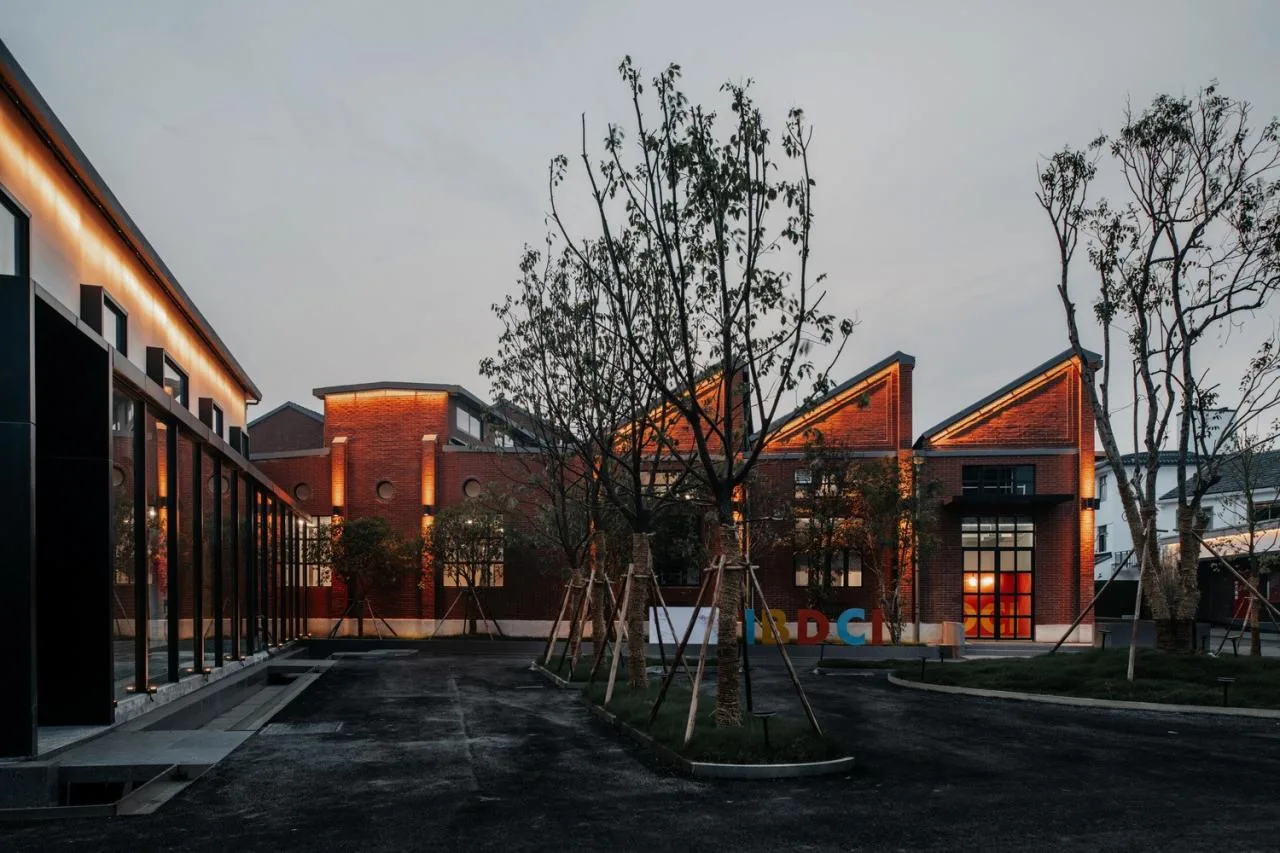
△ Entrance night scene by Xu Yingda
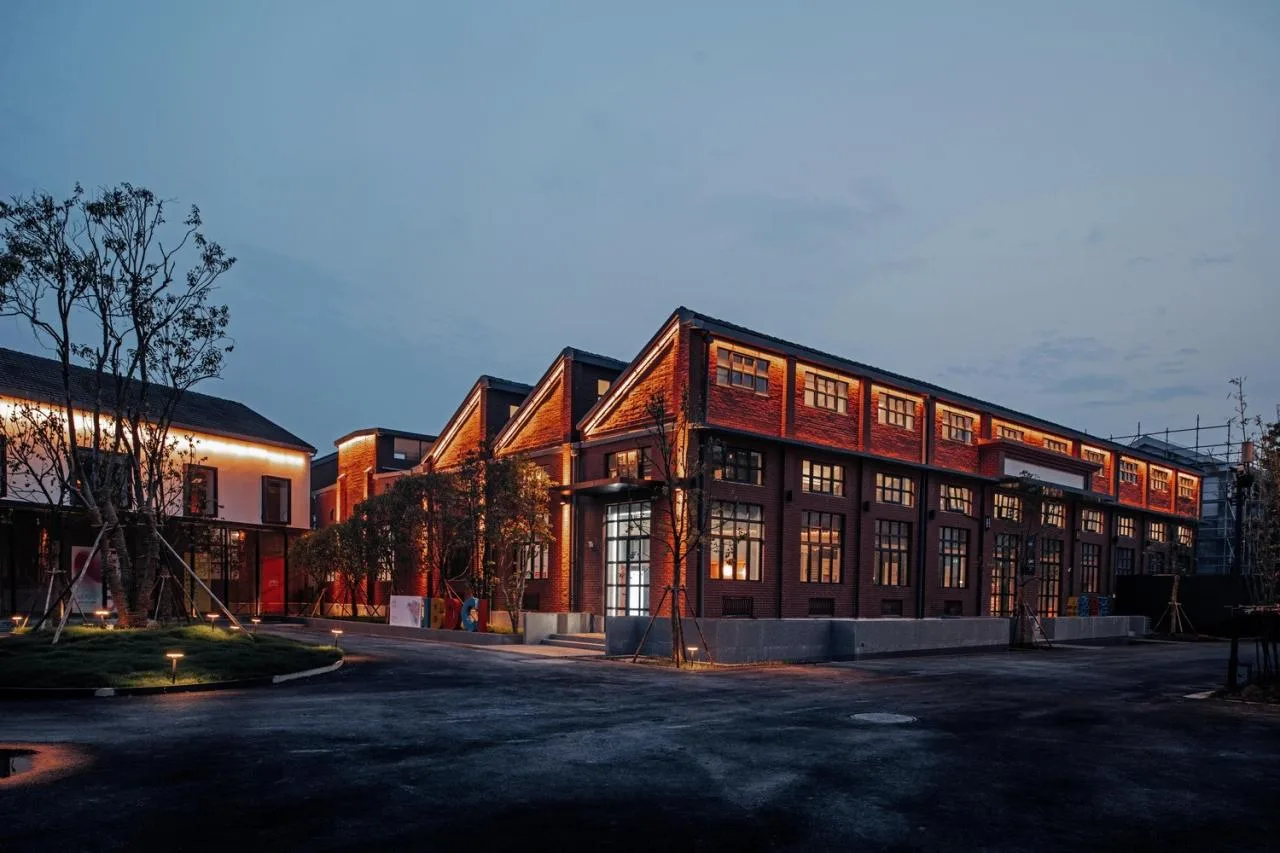
△ Architectural night scene by Xu Yingda
The original building cluster was designed as a large-scale row production workshop. Its varied rooflines and unique structural forms reflect the simple aesthetic and historical imprint of industrial architecture. The distinctive high side windows allow bright interiors. Remaining large-scale production machinery and red slogans narrate the site’s unique history.
To respect this non-renewable industrial heritage, the renovation follows a “light-touch” approach, minimizing demolition and preserving original architectural features. The western corridor was removed due to safety concerns, leaving only the row production workshop. A new public corridor was constructed on the west side to reconnect isolated workshops, facilitating internal circulation and management.
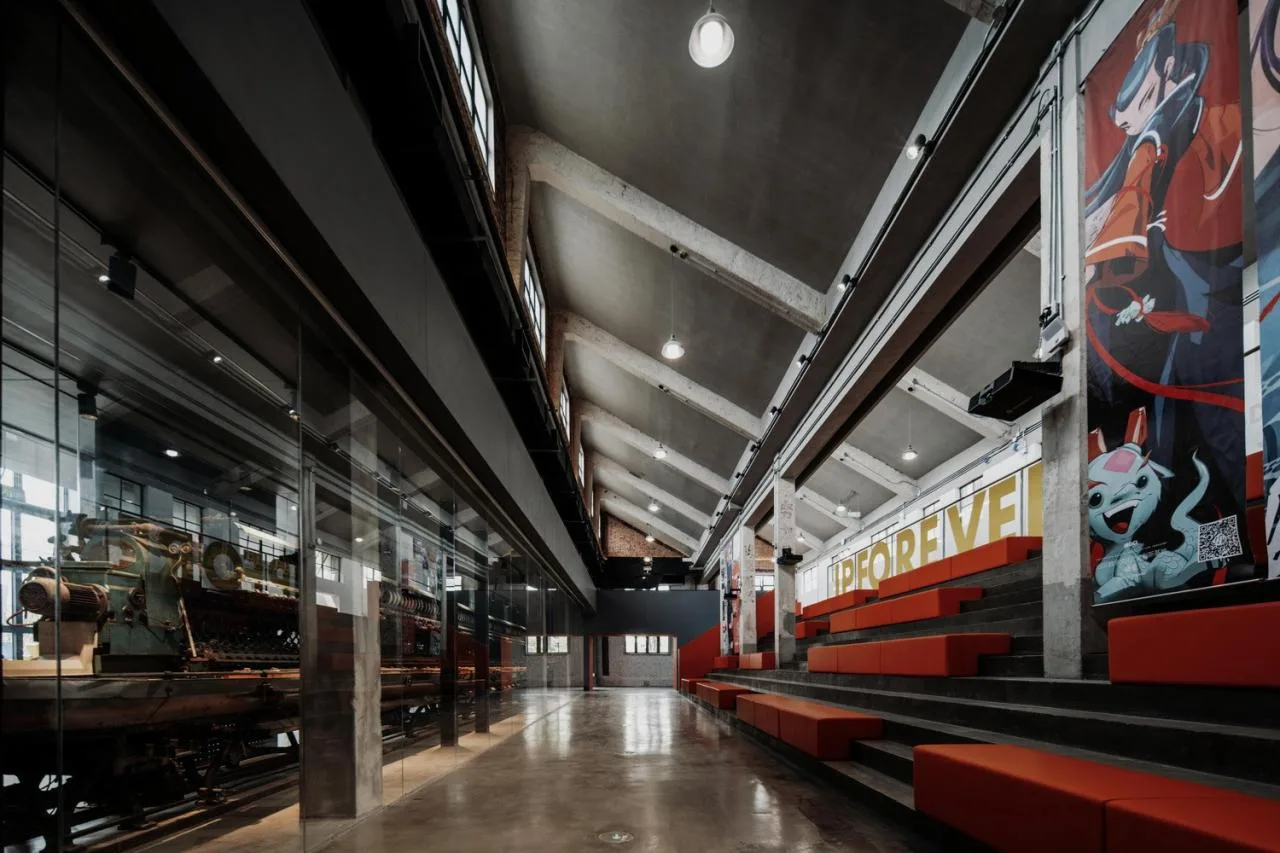
△ Silk reeling workshop hall after renovation by Xu Yingda
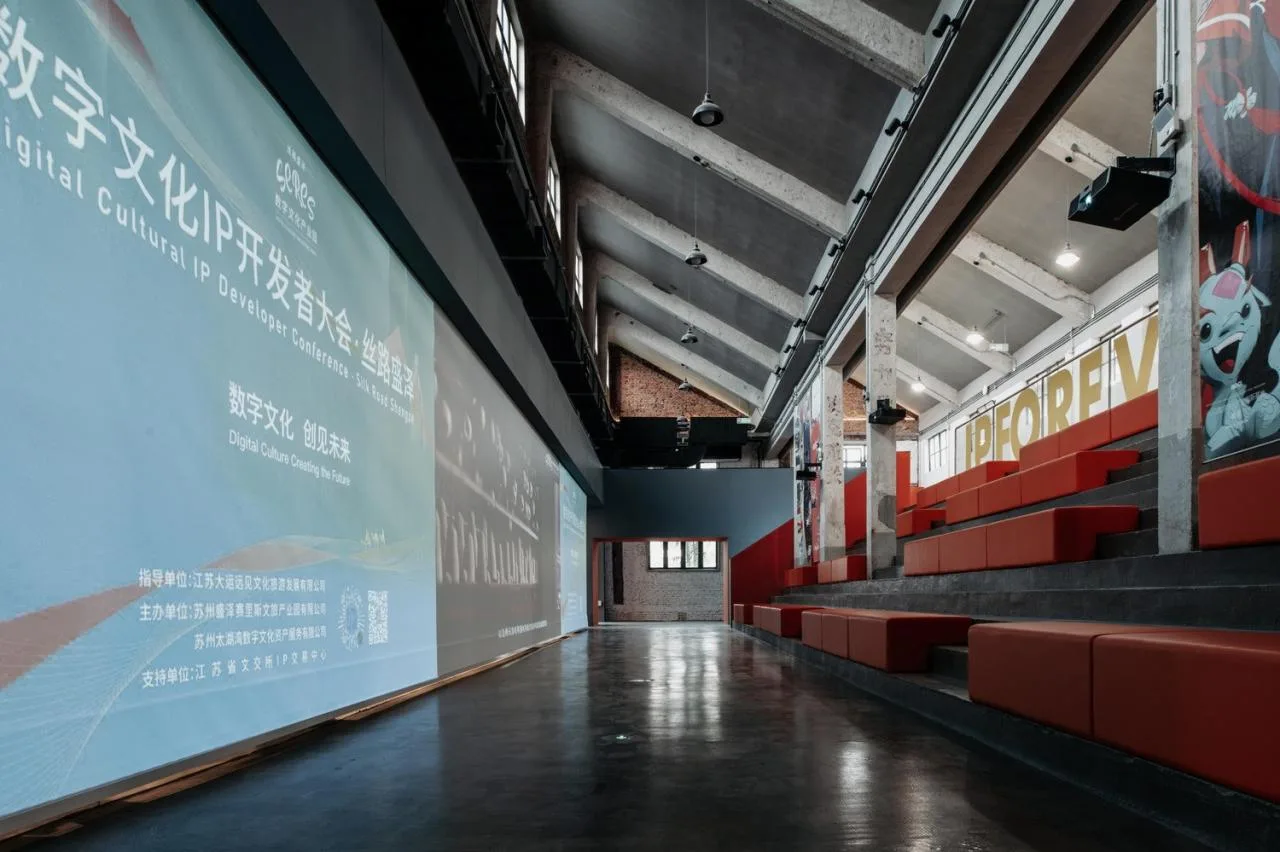
△ Conference hall setup by Xu Yingda
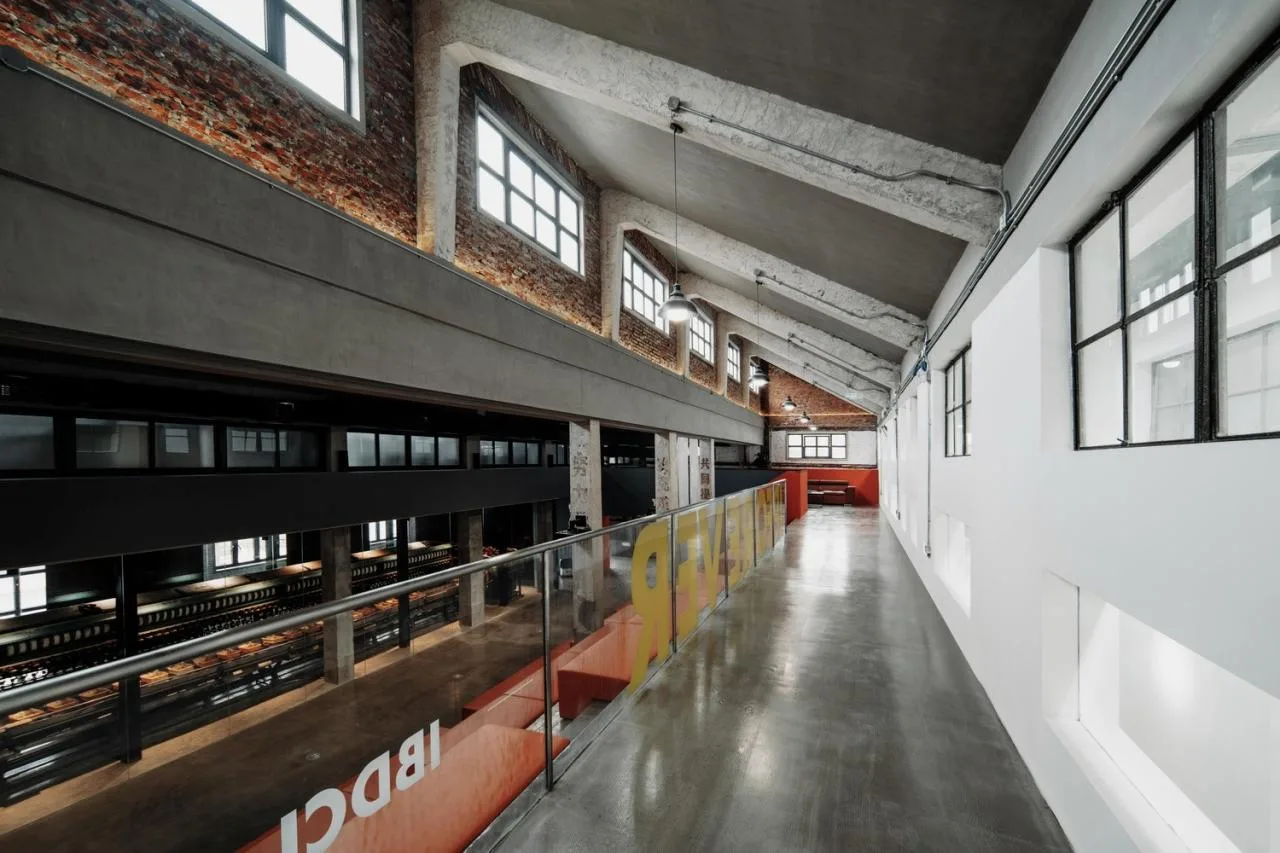
△ Hall staircase mezzanine by Xu Yingda
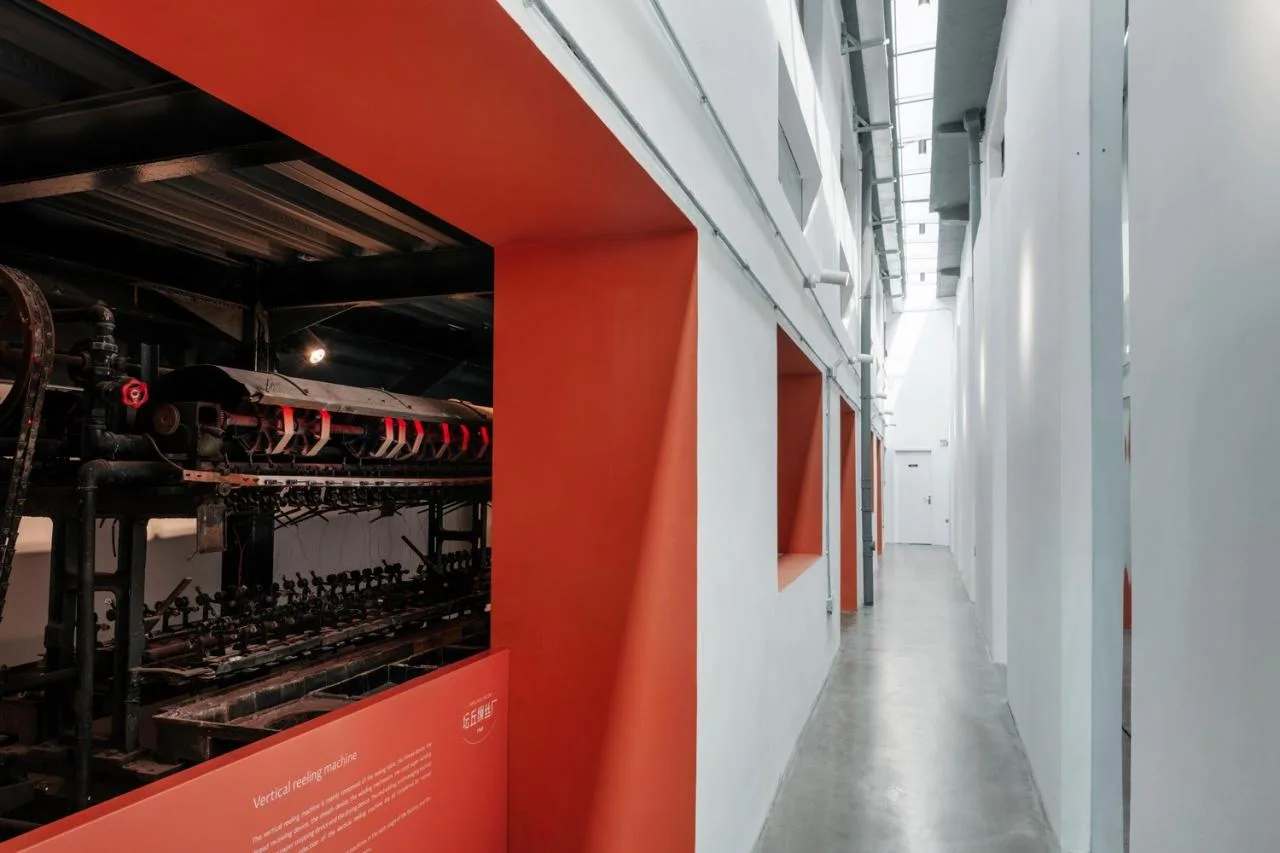
△ Silk spinning workshop courtyard gallery by Xu Yingda
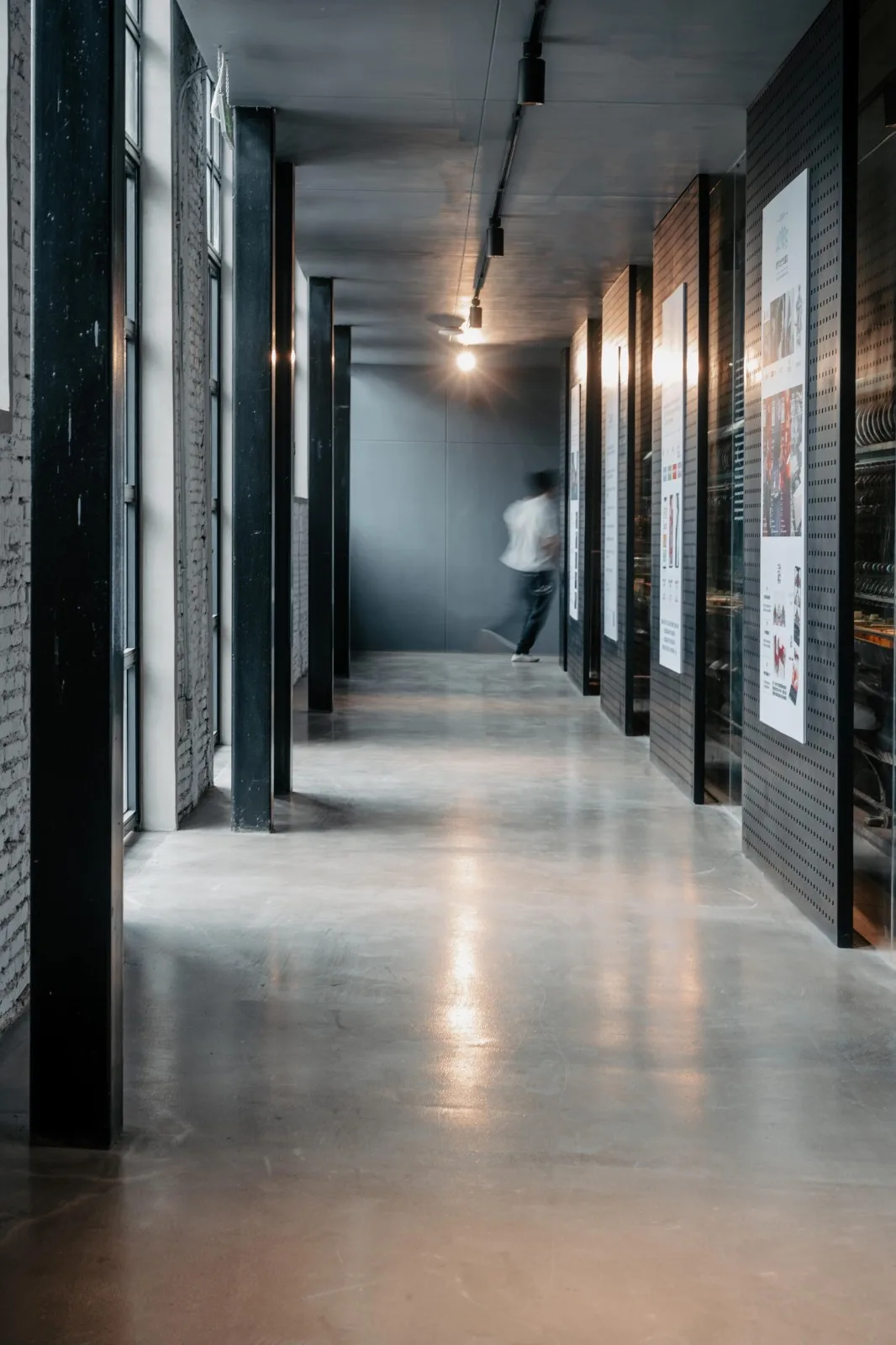
△ Hall gallery by Xu Yingda
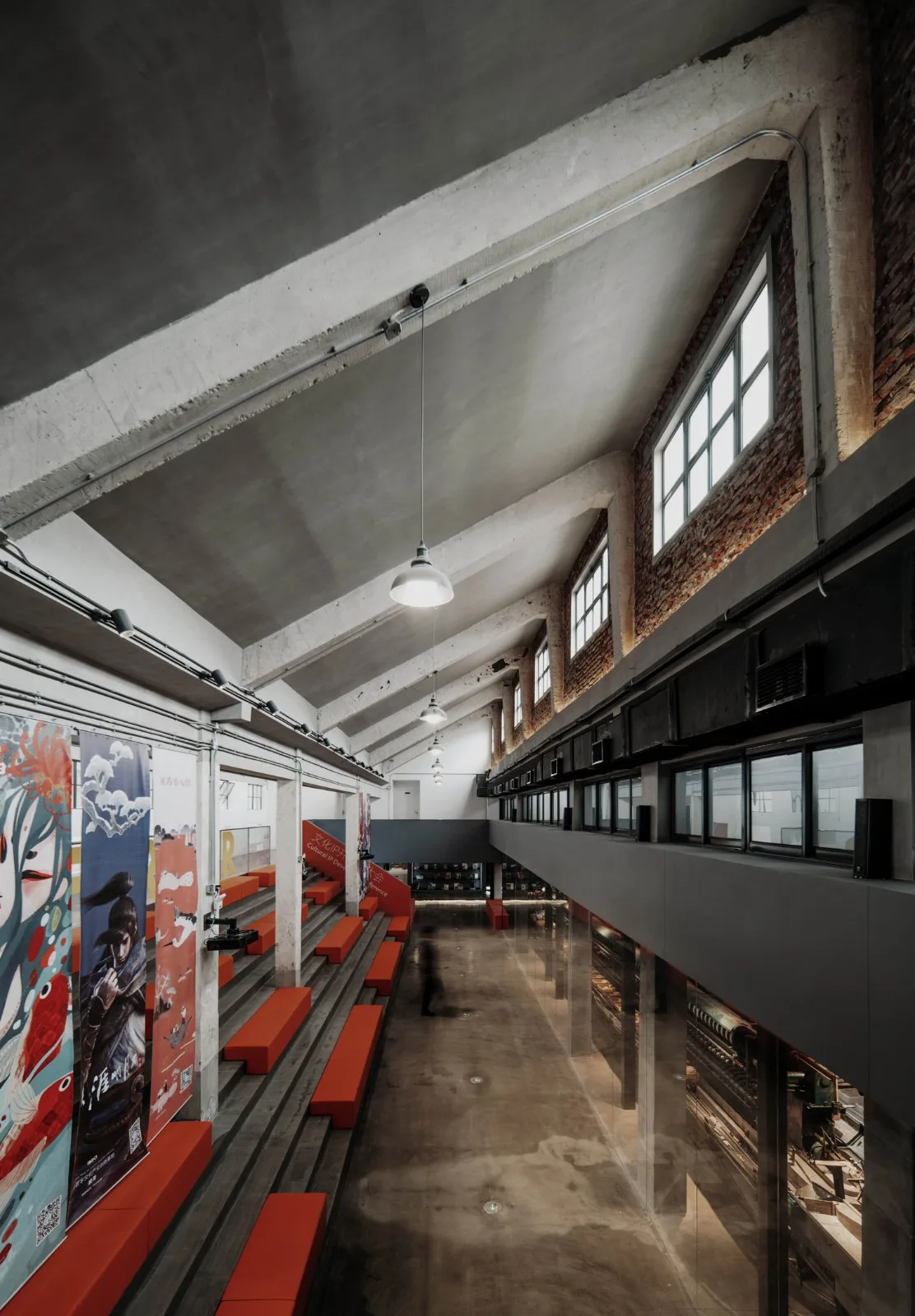
△ Hall activity steps by Xu Yingda
The original silk spinning workshop is now a multifunctional space combining exhibitions with self-sustaining offices. Existing large-scale production machinery is preserved as artistic installations to evoke memories of the past. The layout centers on a massive mechanical structure, creating three circular flow paths on the main floor. The first floor serves as an exhibition area featuring the U·Talk lecture hall, runway, coffee shop, and auxiliary functions. The second floor houses partner center offices and conference rooms. A large modular staircase connects both floors and serves as seating for the lecture hall and runway audience.
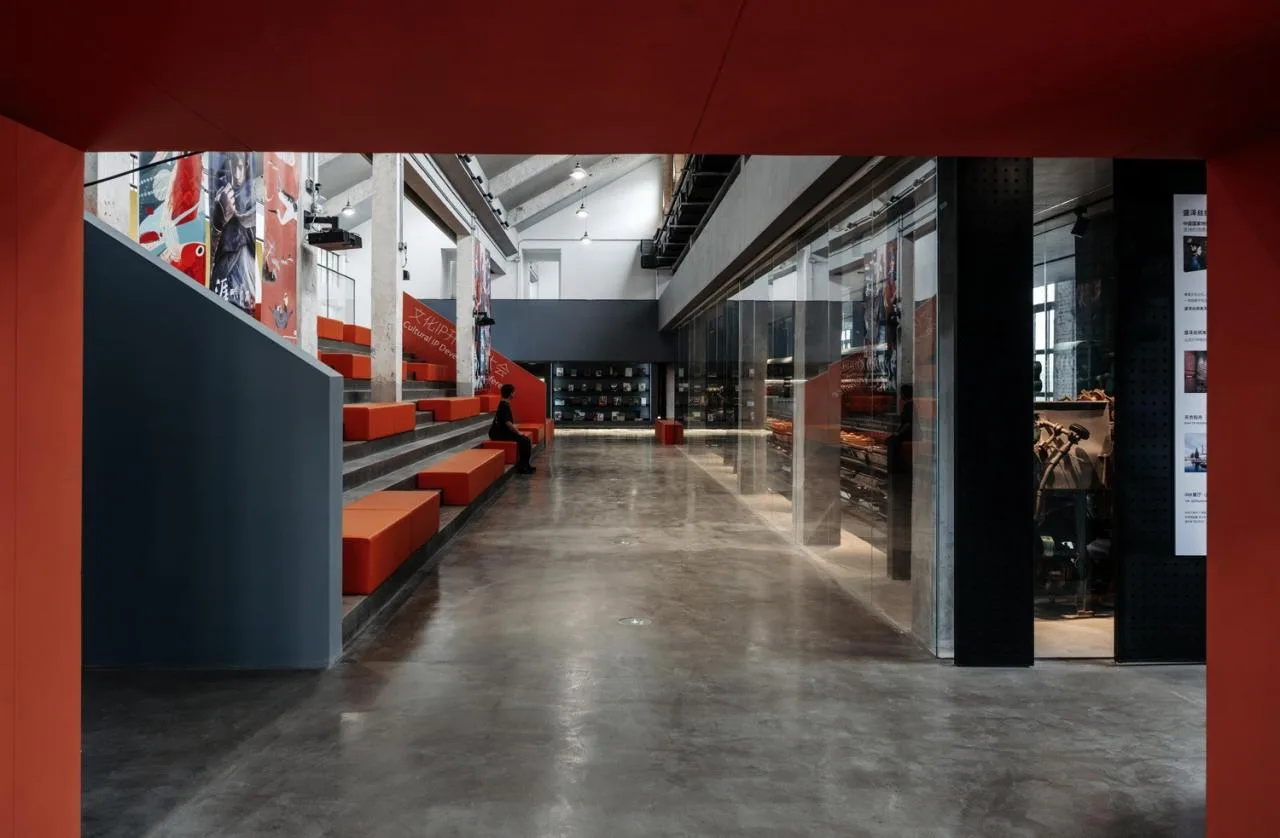
△ Hall entrance perspective by Xu Yingda
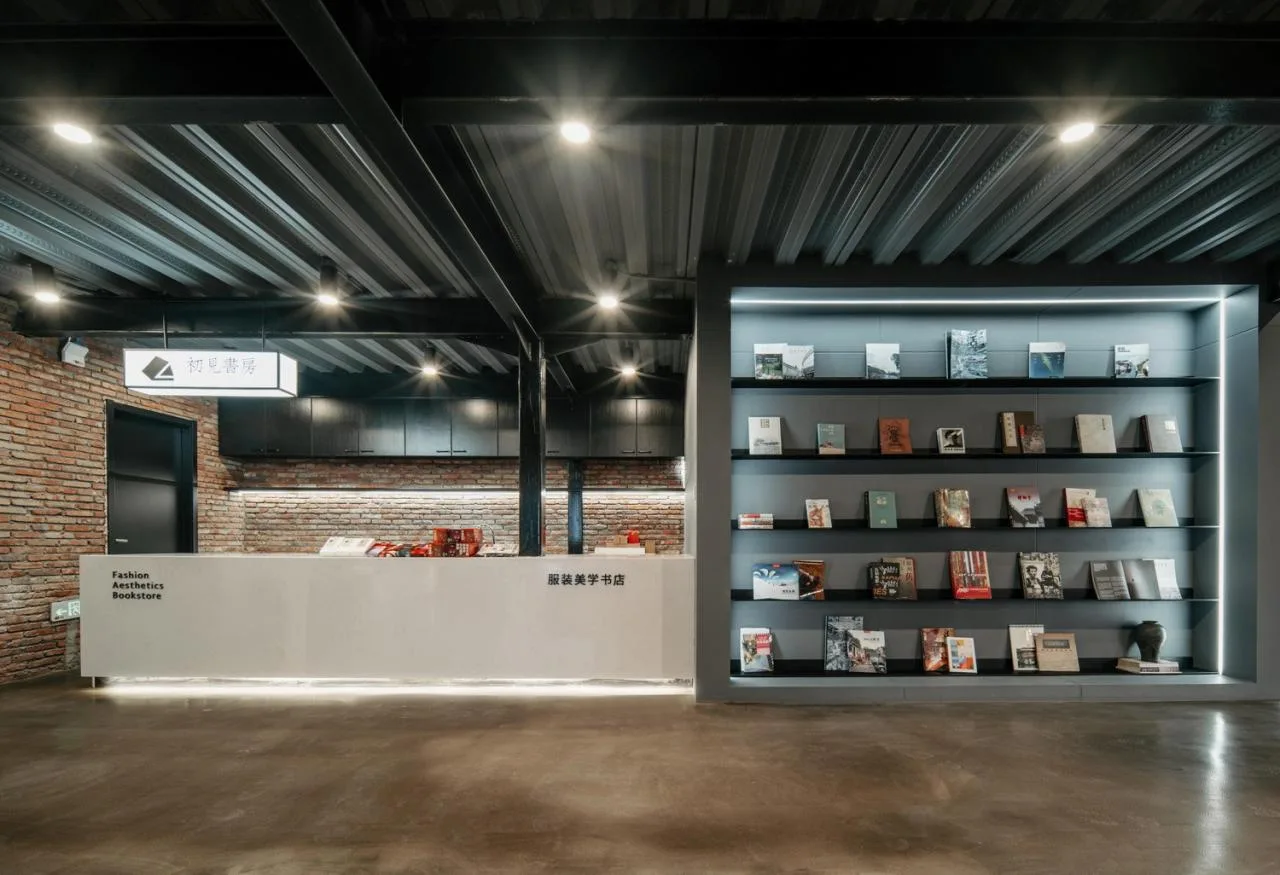
△ Hall water bar and book bar by Xu Yingda
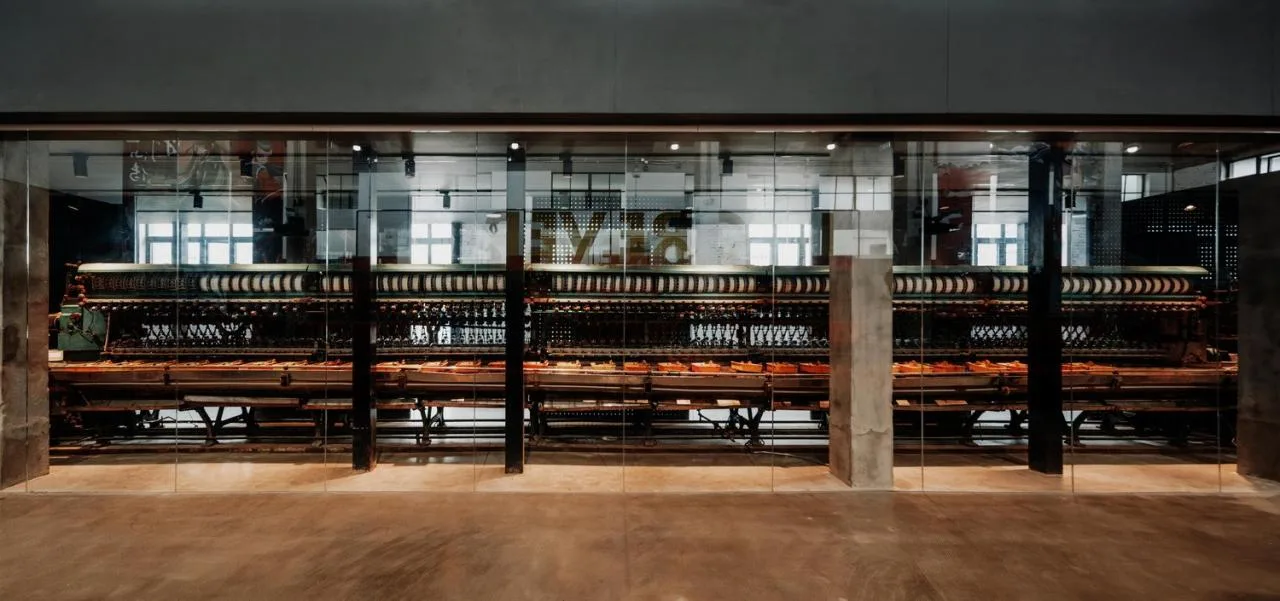
△ Fully preserved silk reeling machine by Xu Yingda
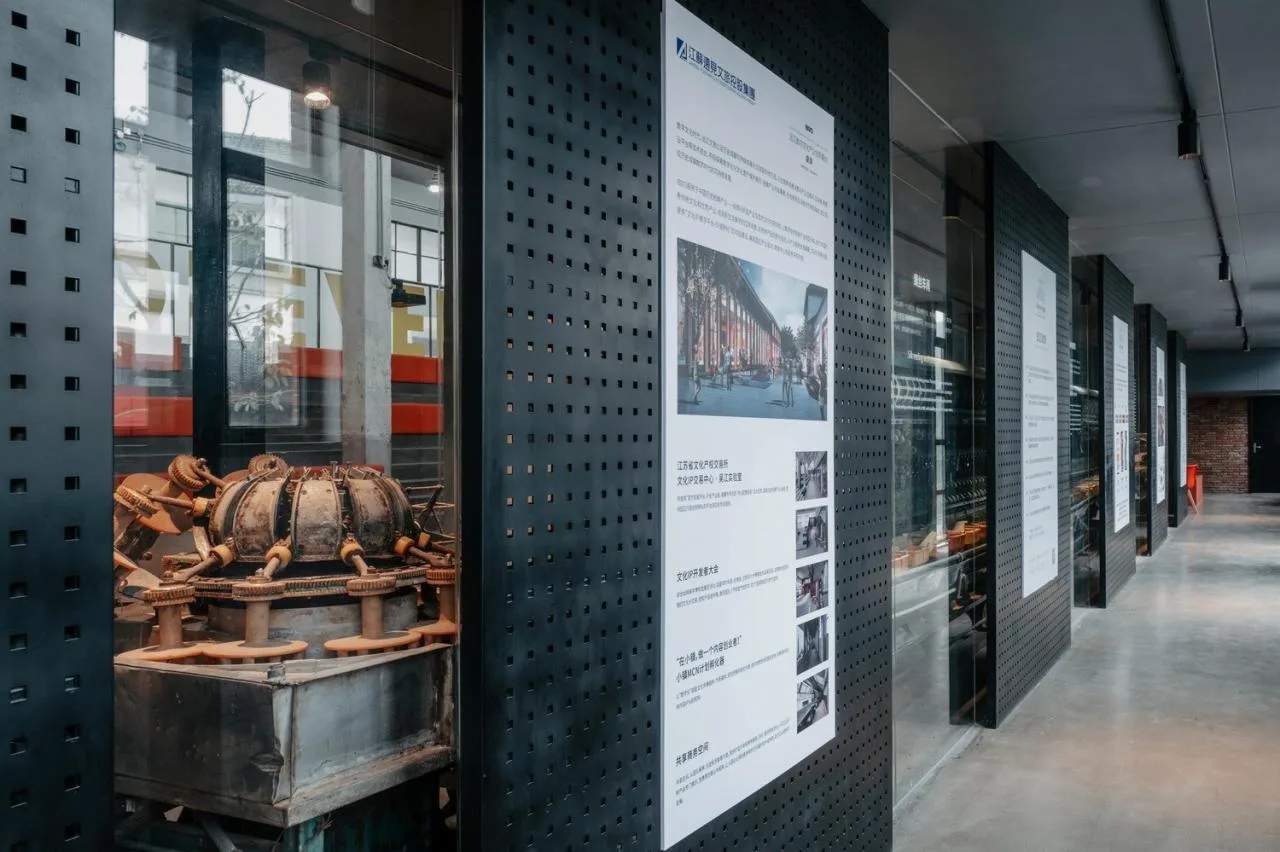
Exhibition gallery of silk spinning workshop by Xu Yingda
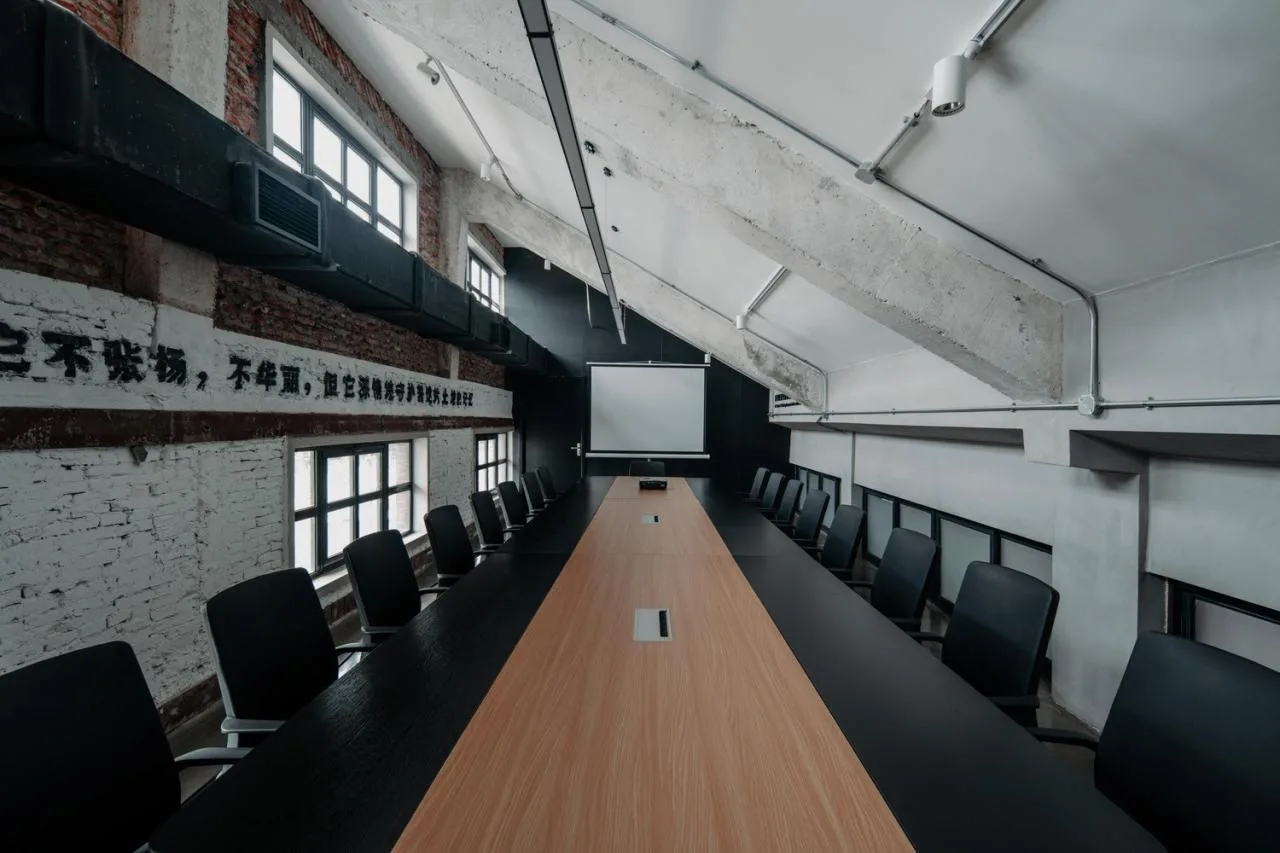
△ Silk reeling workshop mezzanine conference room by Xu Yingda
Below the staircase, a cocoon boiling machine and a shaking machine are displayed in the south gallery, accessible to visitors. Opposite the staircase, an 18-meter-long vertical reel machine is preserved as a backdrop for the U·Talk lecture hall and runway, also guiding the circular flow of the runway. Due to height restrictions from a large concrete crossbeam, two transverse corridors are essential for connecting the second-floor spaces. The partner center forms a private volume, contrasting with the open exhibition areas through a series of low French windows.
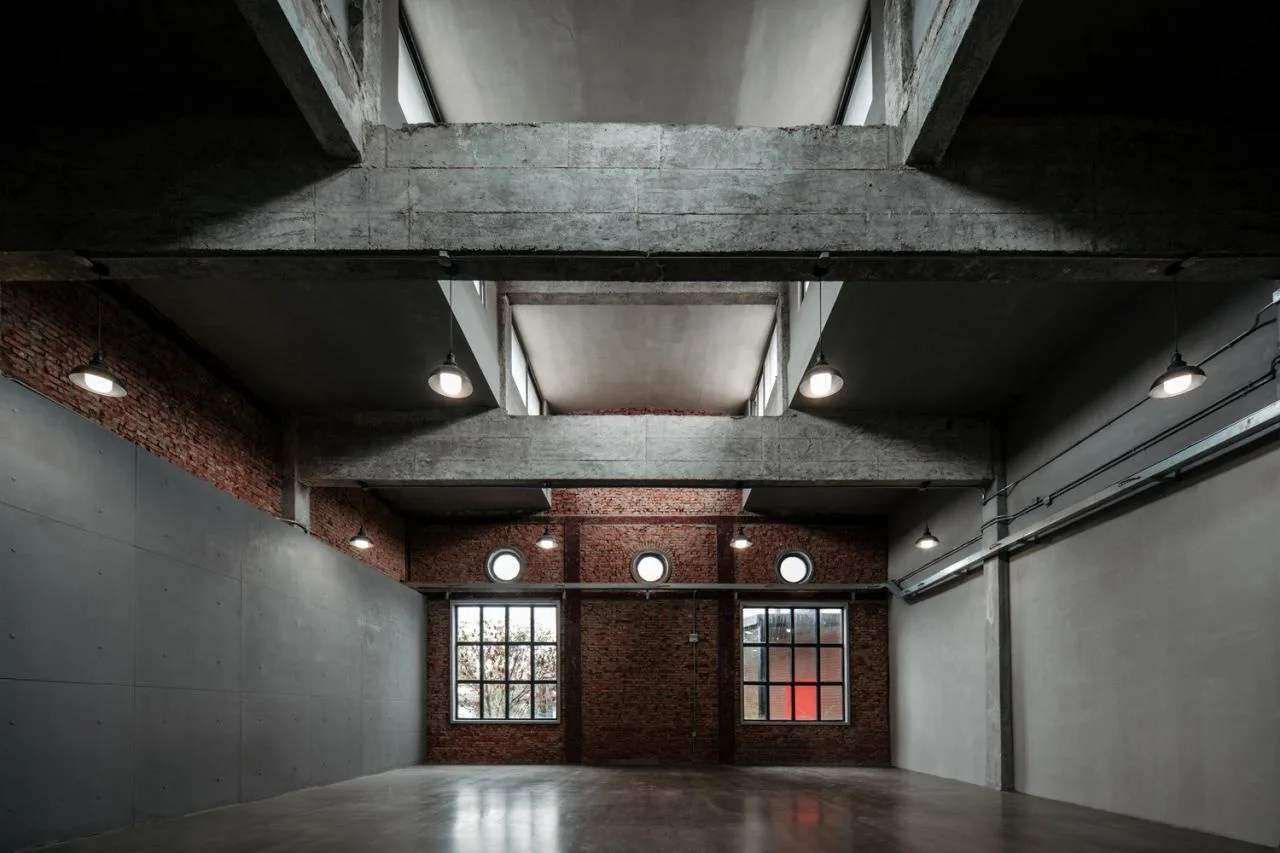
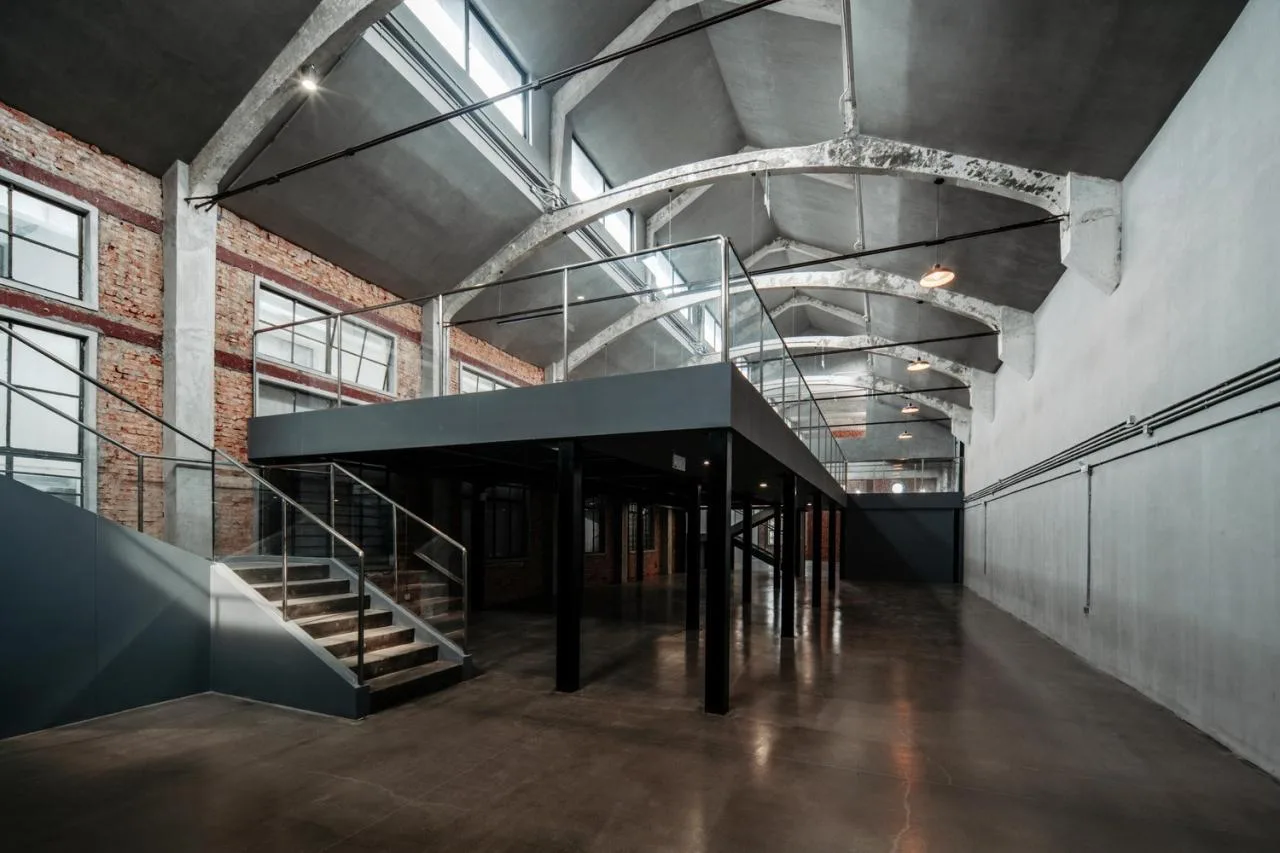
△ Renovated shaking workshop by Xu Yingda
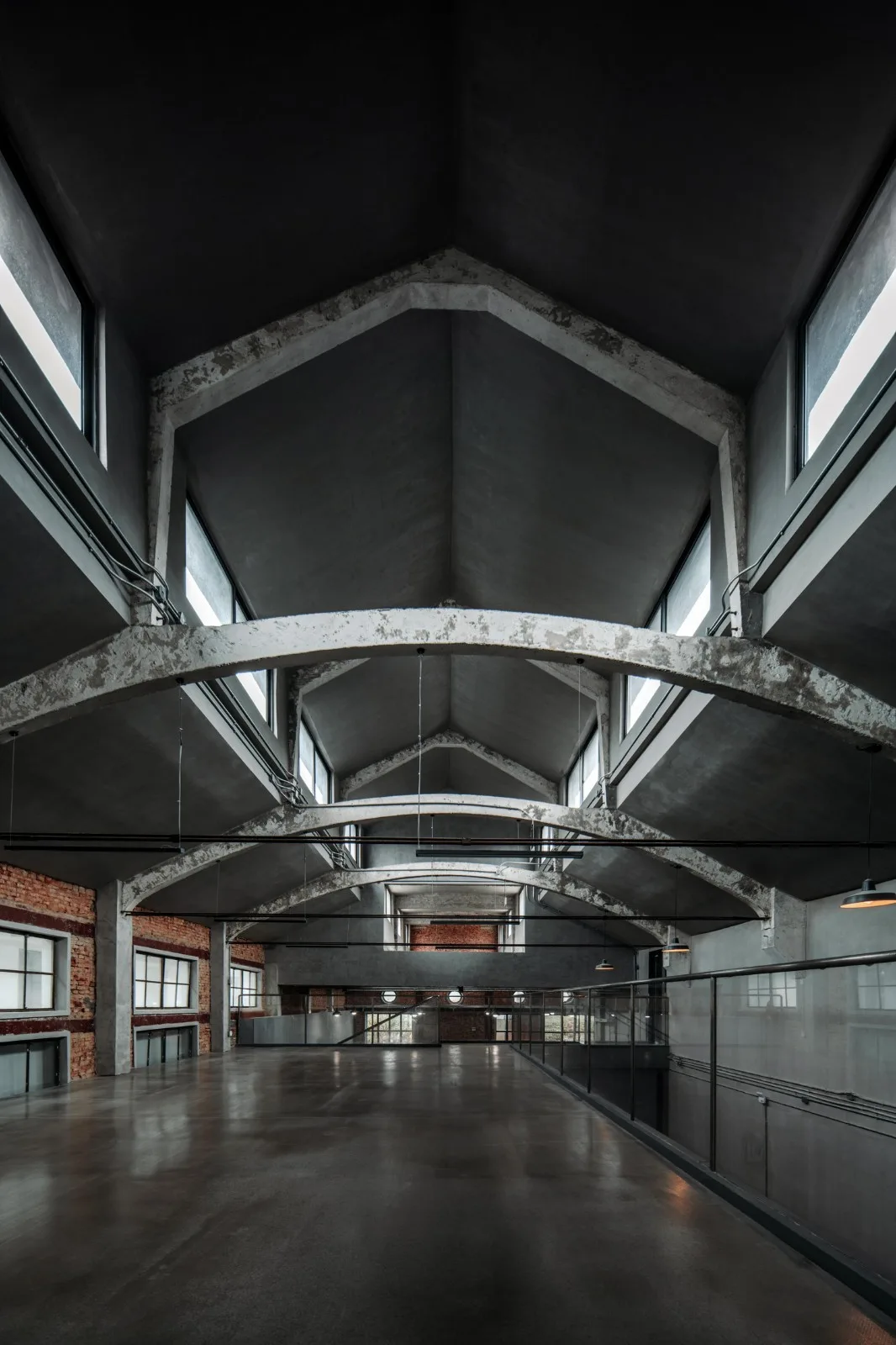
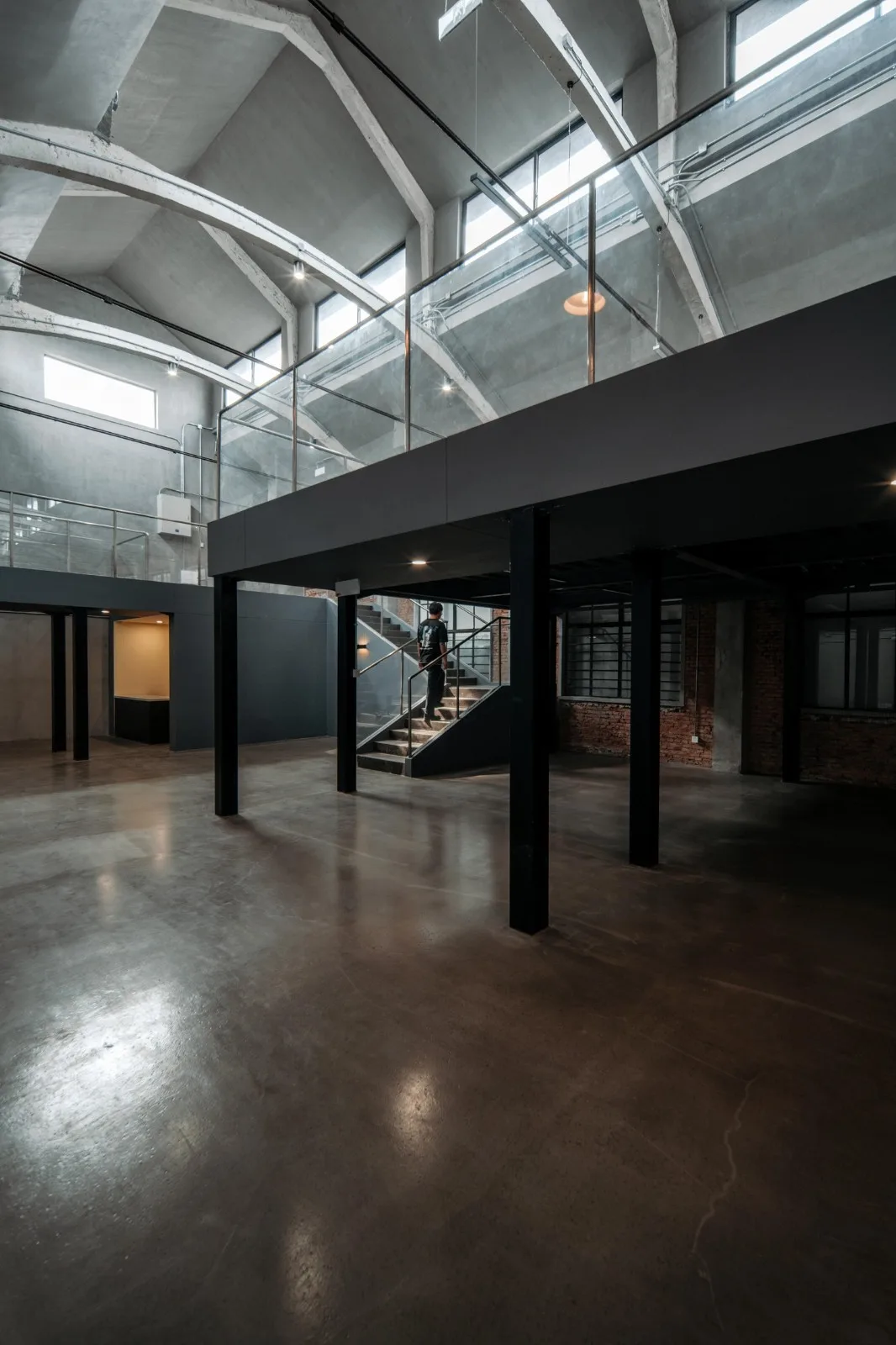
△ Renovated shaking workshop by Xu Yingda
The original shaking workshop, cocoon cooking, steaming, and selection workshops have been repurposed as cultural and creative office spaces available for public lease. The shaking workshop features two compartments of different sizes, with roofs supported by arch beams and bright high side windows. By excavating below the steel cables of the original structure, a mezzanine was added to increase office space. The large open area creates vertical visual connections, retaining the scale of the original production workshop and fostering a dialogue between old and new. The smaller room brings the arch beam sequence closer through layered treatments, enhancing spatial experience.
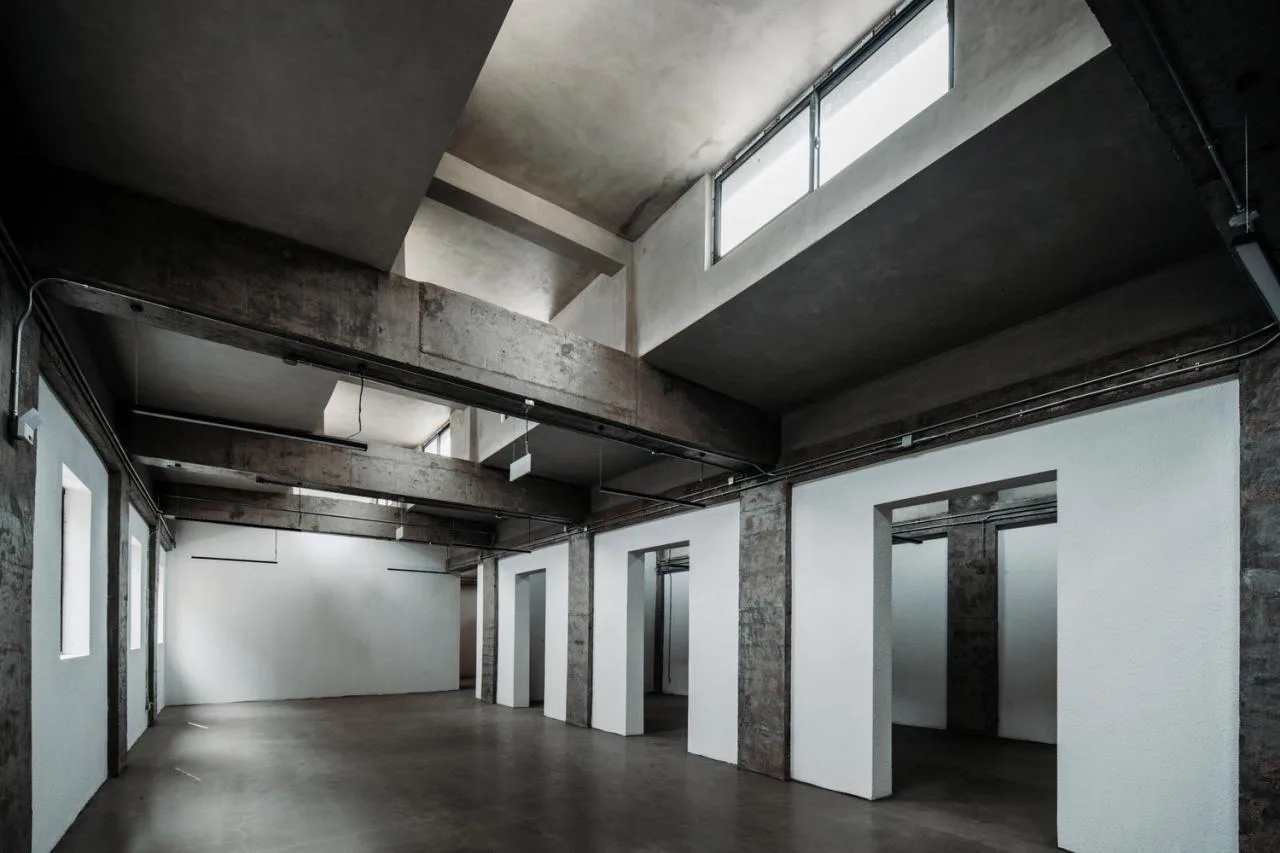
△ Renovated cocoon cooking workshop by Xu Yingda
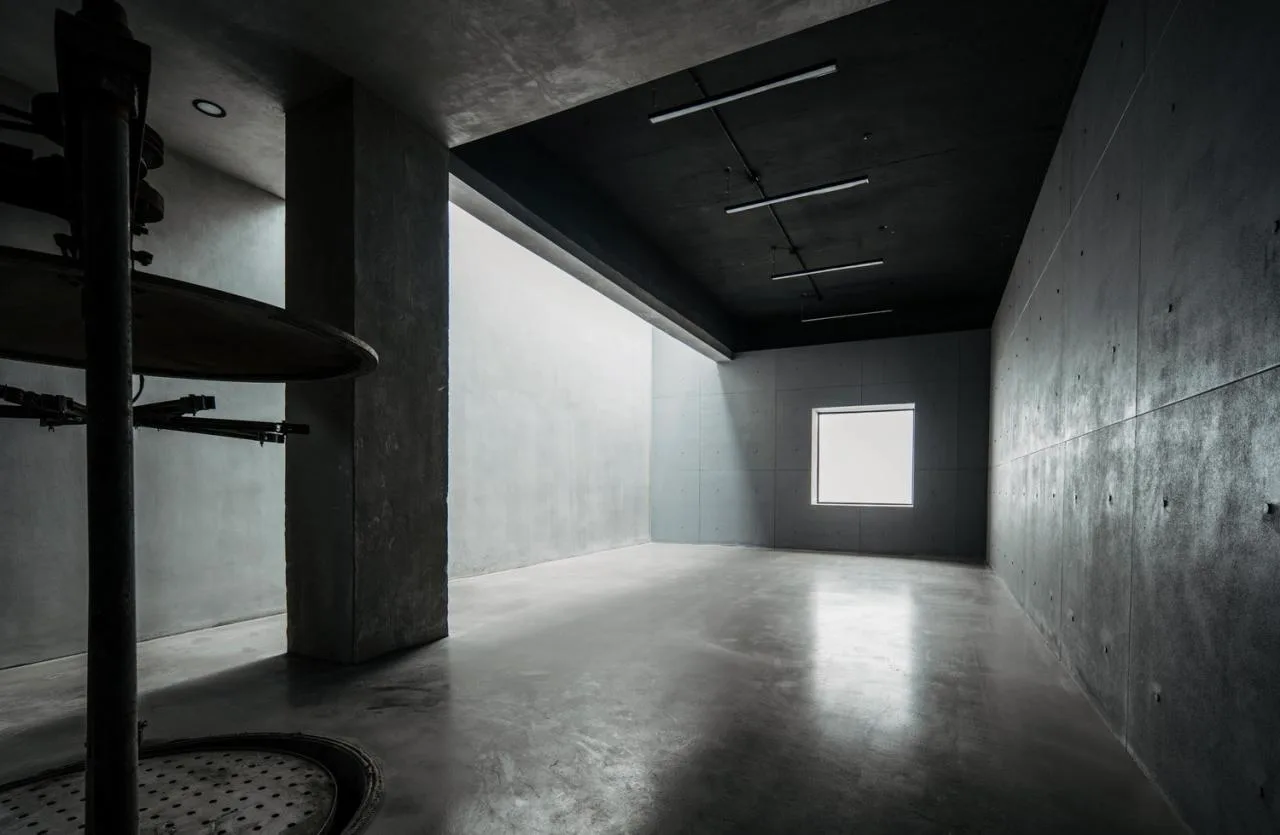
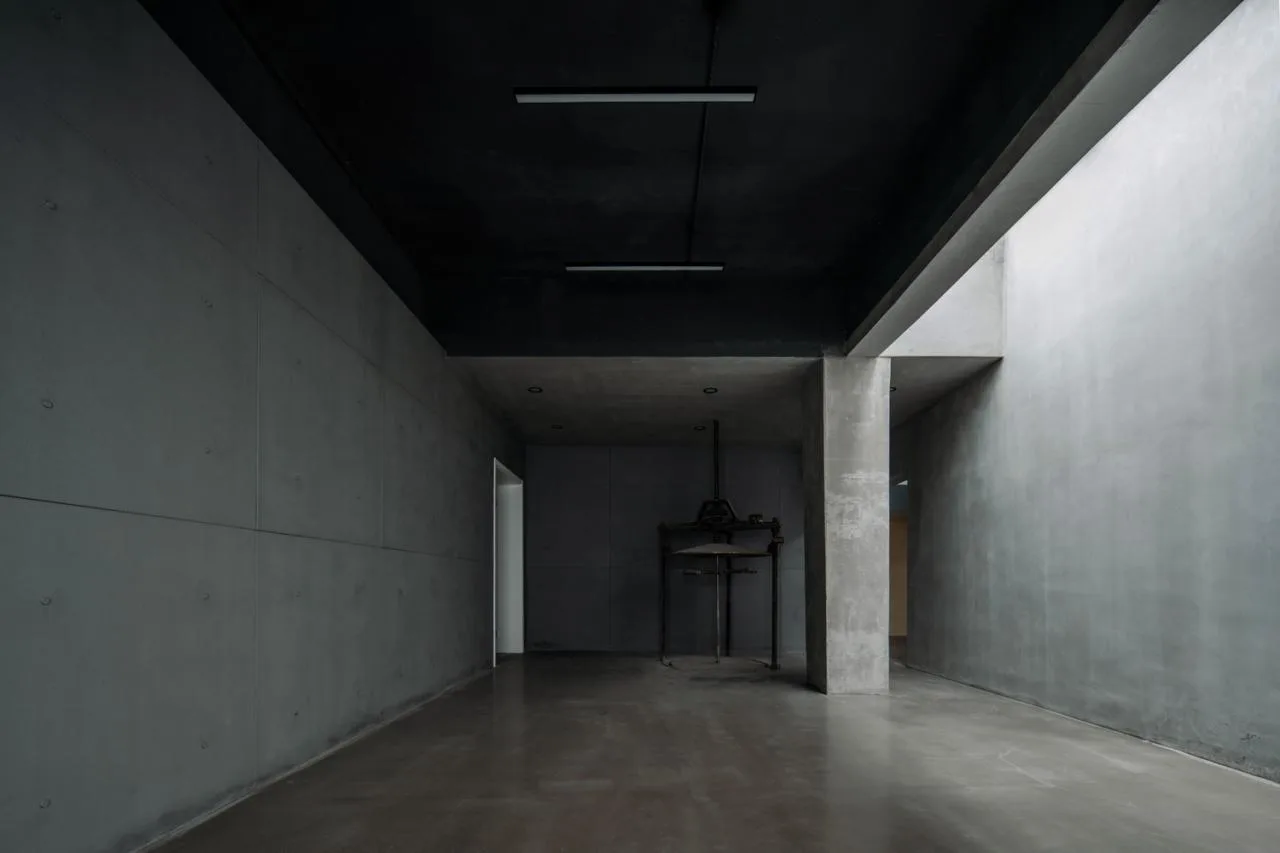
△ Conference room reserved for distillation equipment by Xu Yingda
After reinforcing the original cocoon cooking workshop, structural columns are exposed on interior walls, emphasizing the clear structural system. Except for two functional modules at the entrance, only material treatments were applied to walls and ceilings to strengthen the connection with the original structure. The cocoon steaming workshop, originally enclosed, now features skylights introducing natural light while retaining original machinery. The cocoon workshop is a two-story, double-slope building with a roof supported by triangular trusses; vertical access was improved by adding a spiral staircase through a floor slab gap. The large cocoon selection machine is preserved and intended for use as office furniture.
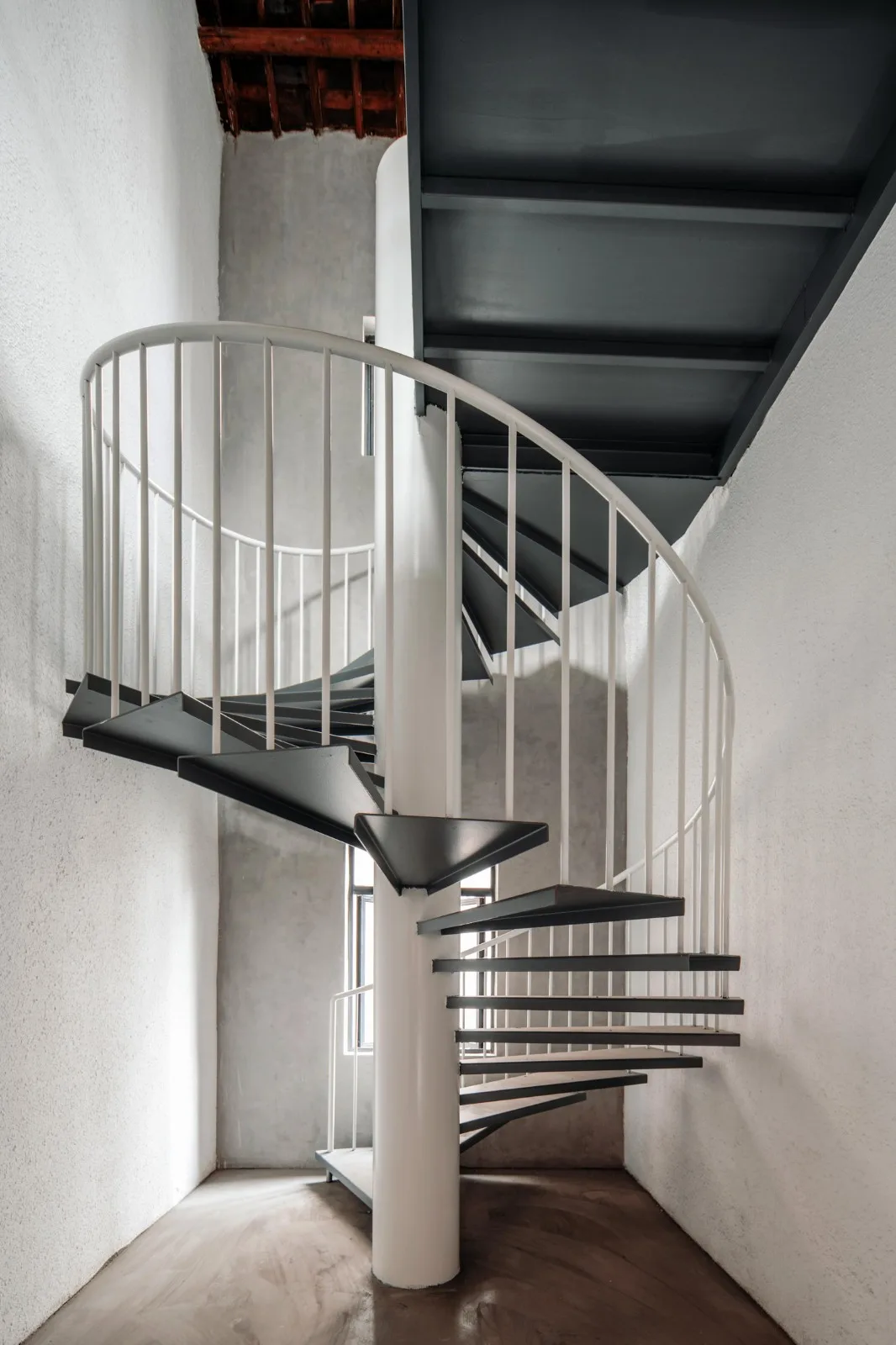
△ Added spiral staircase by Xu Yingda
The Tanqiu Silk Spinning Factory has undergone multiple renovations; this project aims to remove decorative elements added during past repairs to restore its historical character. Facing chaotic interfaces from previous interventions, the strategy is to preserve the structural “skeleton” and reshape the “block surface.” Surface layers of beams and columns are stripped to highlight raw concrete texture; some plaster is removed to reveal original red brickwork; reinforced steel plates covered with cement mortar patches are re-exposed to show previous reinforcements.
Technical Approach:
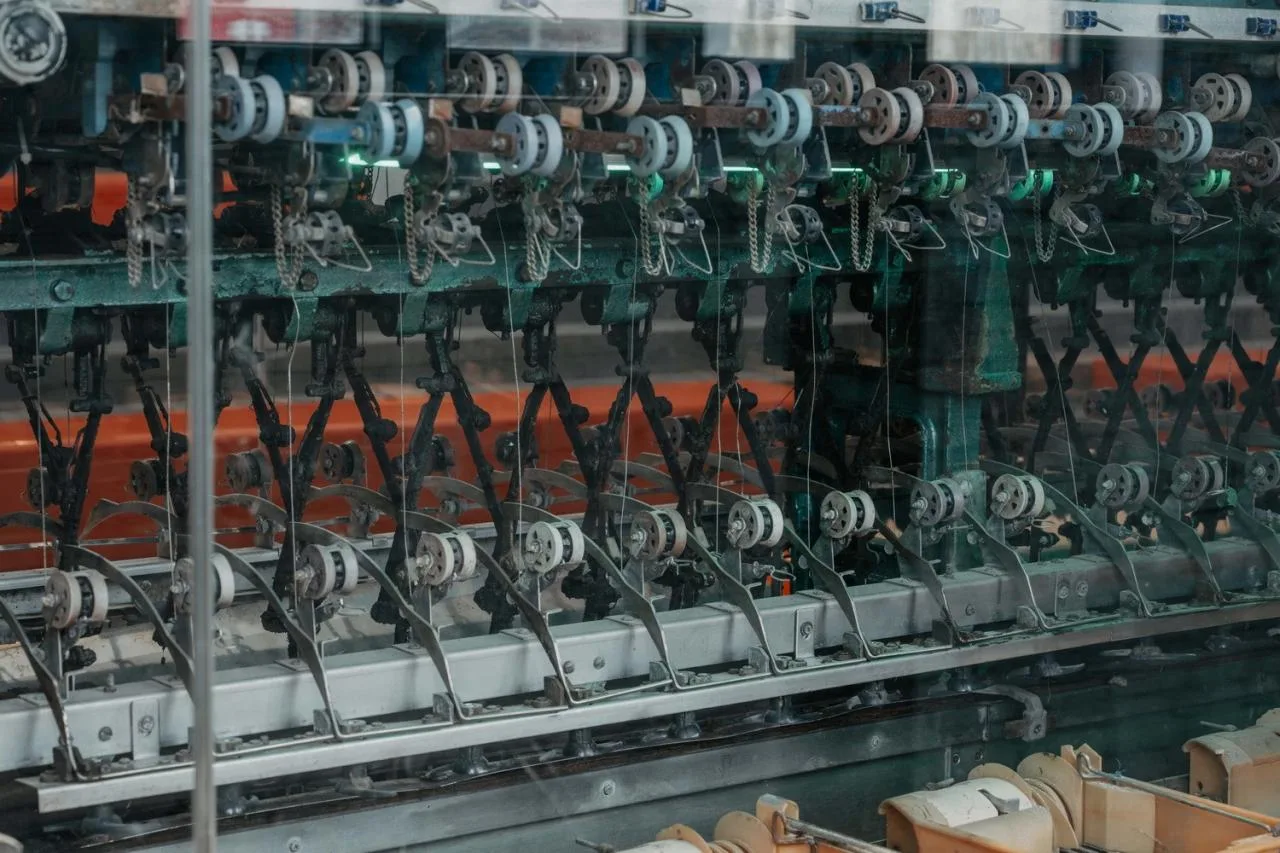
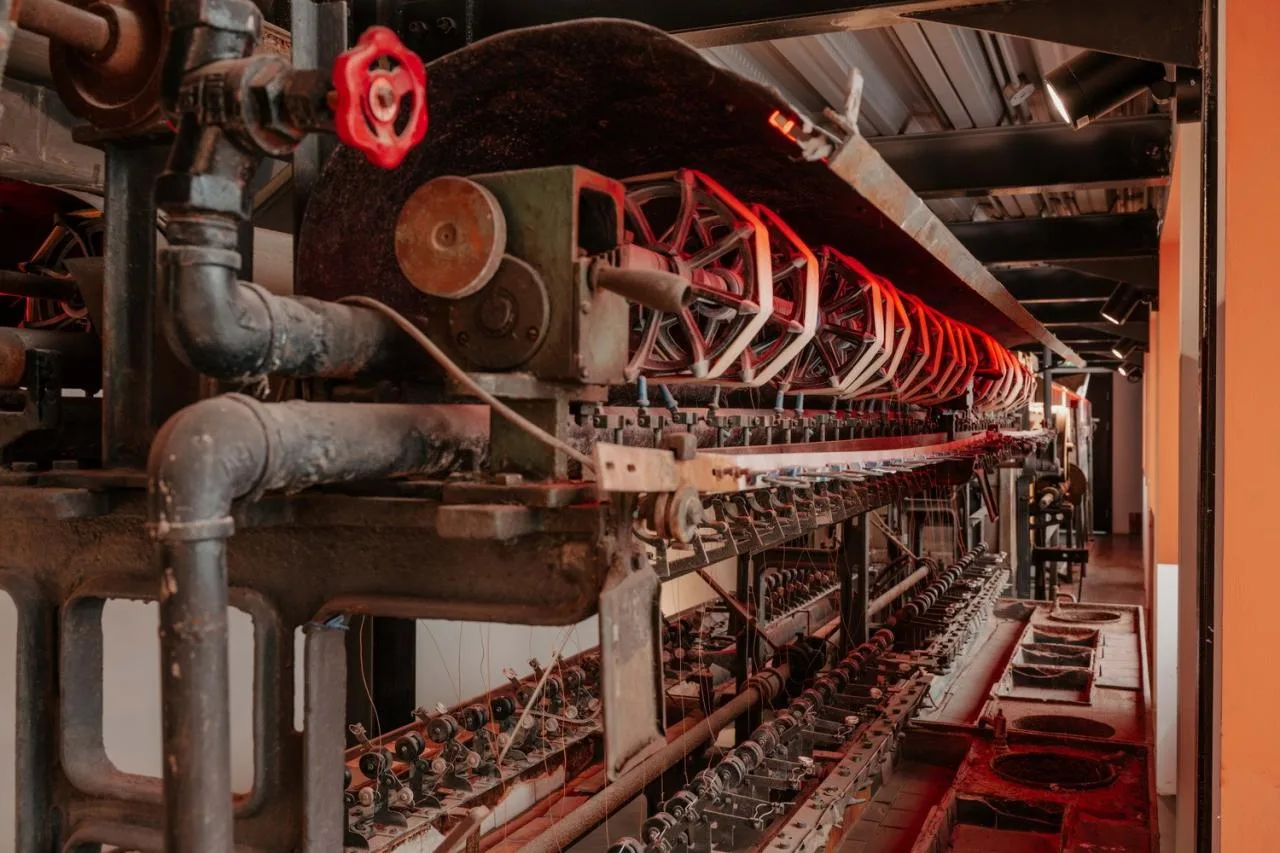
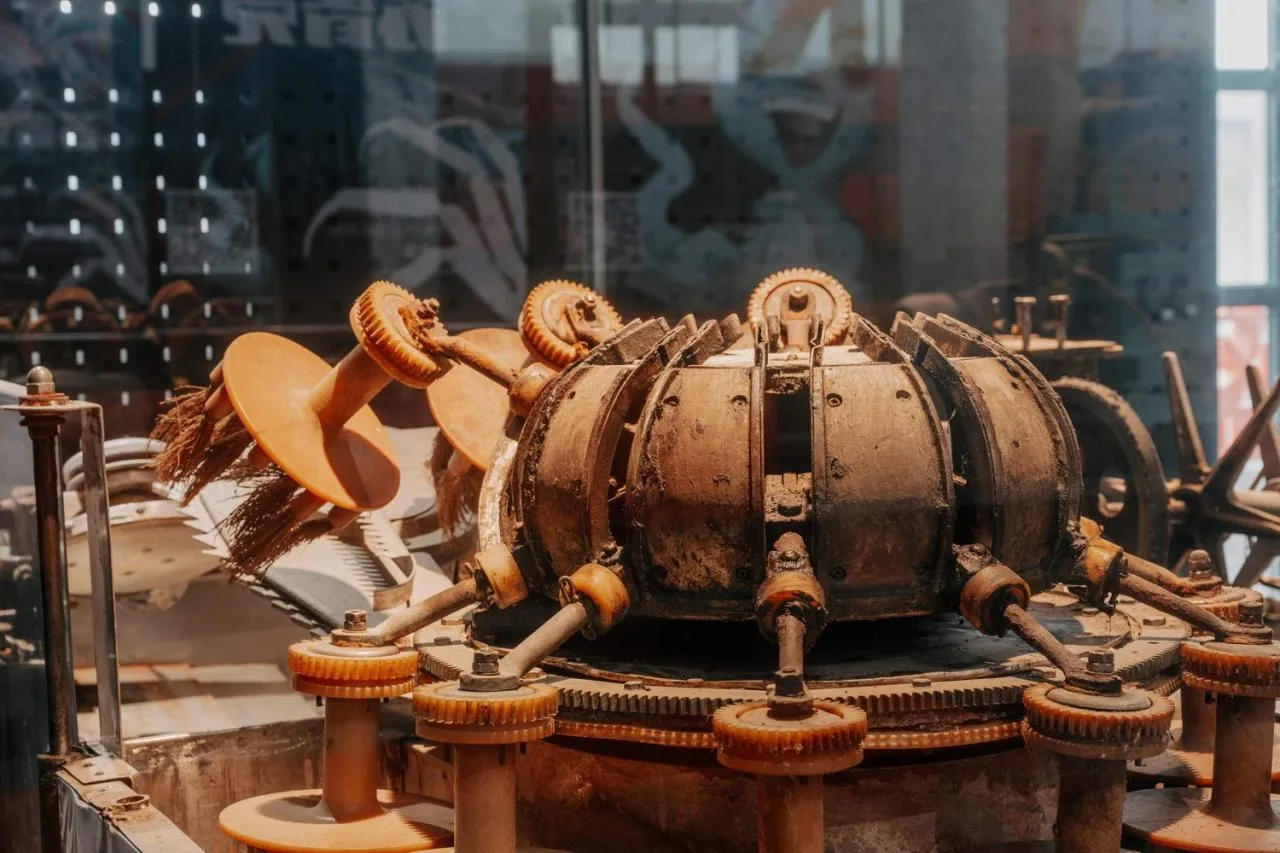
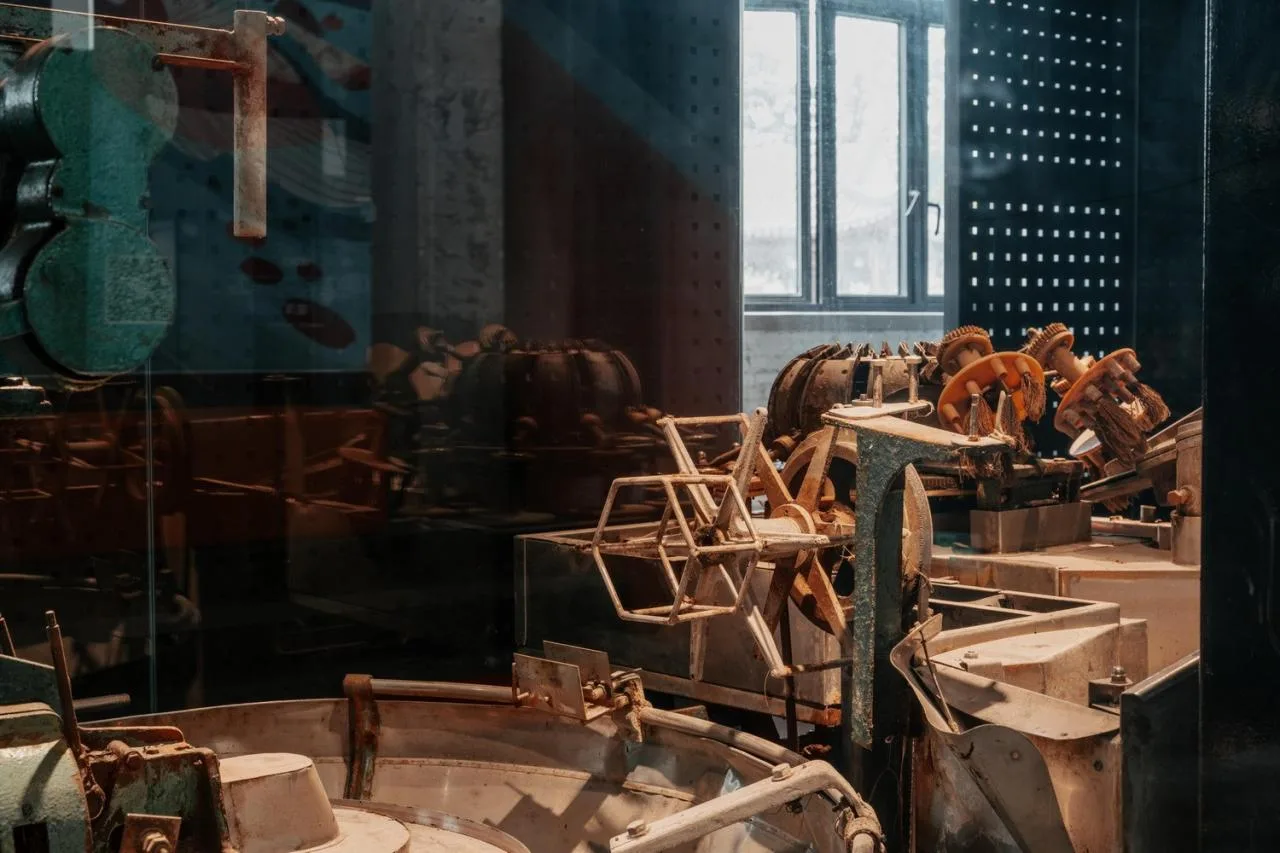
Details of old machinery by Xu Yingda
Structure: The original building features a complex structure from a special historical period and has been reinforced. During interior construction, an independent steel structure system was implemented, avoiding foundations of original columns and exterior walls to prevent damage. This strategy preserves flexibility for future repurposing.
Materials: Stripped wall and beam surfaces were treated with water-based paint to maintain rough textures. Cement paint was used to address roof cracks, preserving the industrial atmosphere. Red bricks salvaged from demolition of unsafe buildings were reused to link old and new in the new west corridor. Industrial building characteristics are echoed with materials like metal mesh and steel railings.
Equipment: To maintain the original beam and roof aesthetics, all equipment is mounted on walls or beams with pipes painted to match wall and roof materials.
Renovation Inspiration:
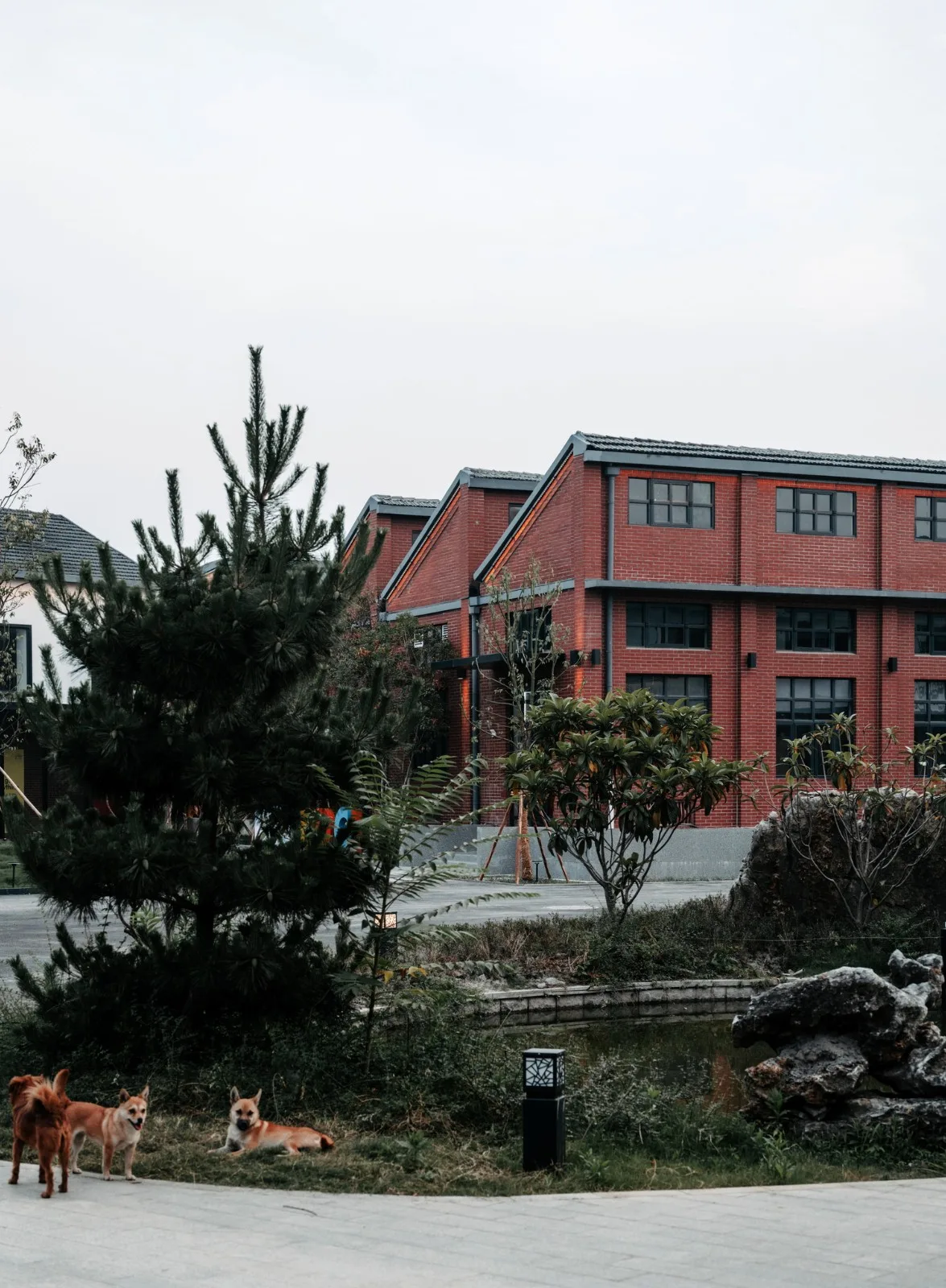
△ Viewing architecture at Sibo Garden by Xu Yingda
Renovating industrial heritage is essentially a dialogue with history. Balancing preservation of historical traces and accommodating future modifications is crucial. While functional uses may be driven by government or business plans, preserving historic imprints relies heavily on design strategy. Preservation is not simply restoring old buildings, as they evolve over time. This project adopts a “light-touch” approach, aiming to transform a microcosm of an era’s character and livelihood into an innovative cultural and creative park to stimulate local development.
Project Drawings:
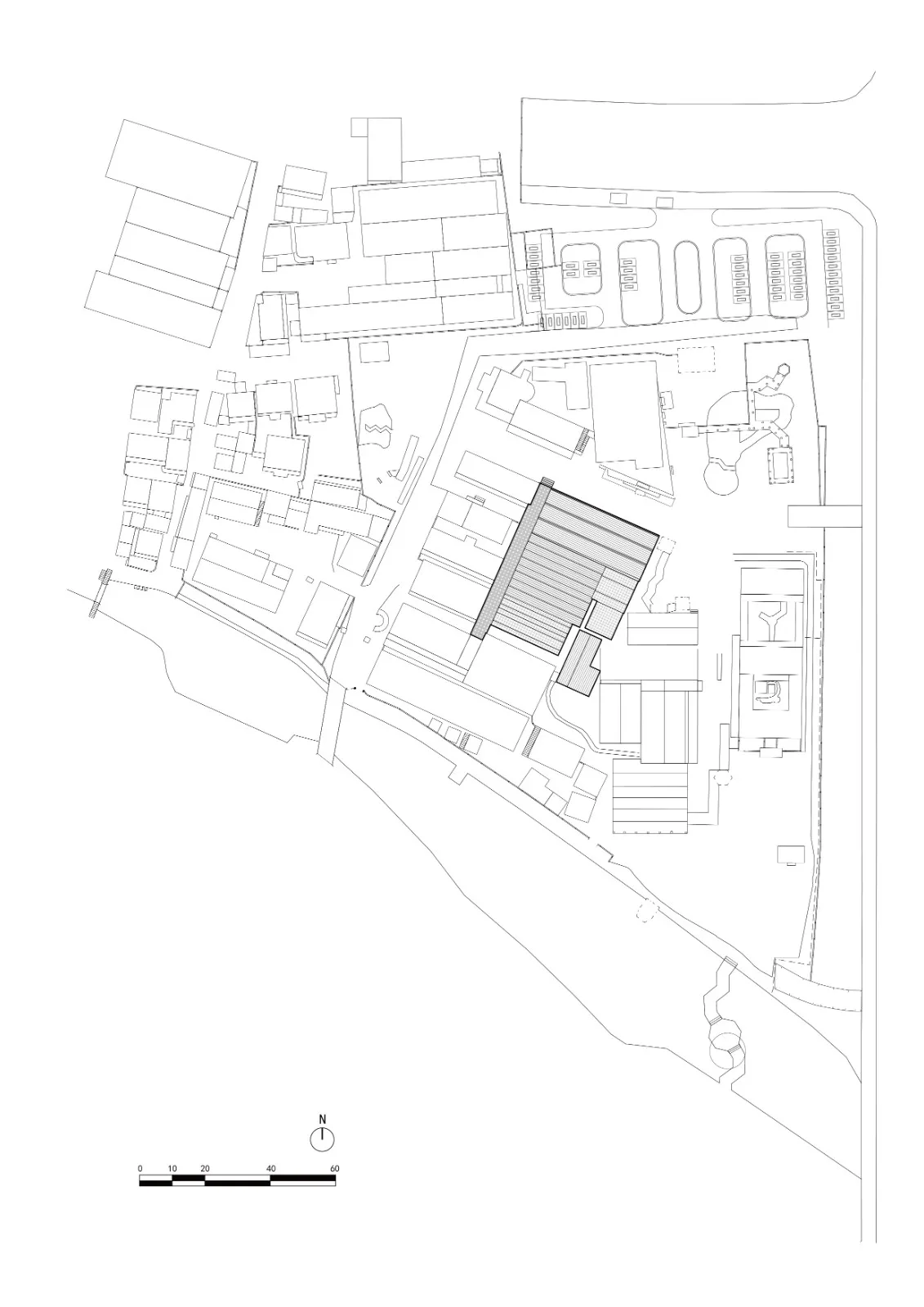
△ General layout plan
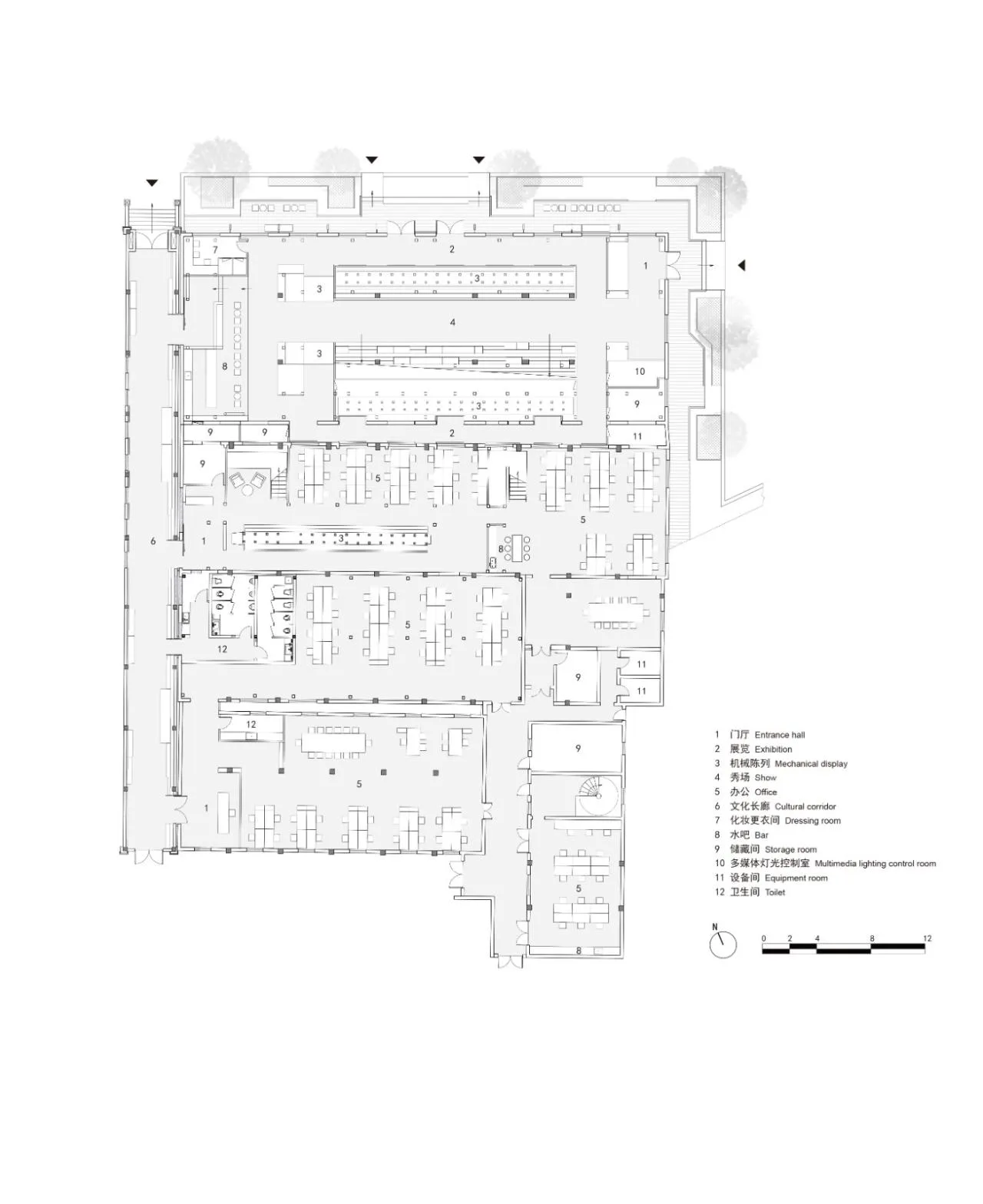
△ First floor plan
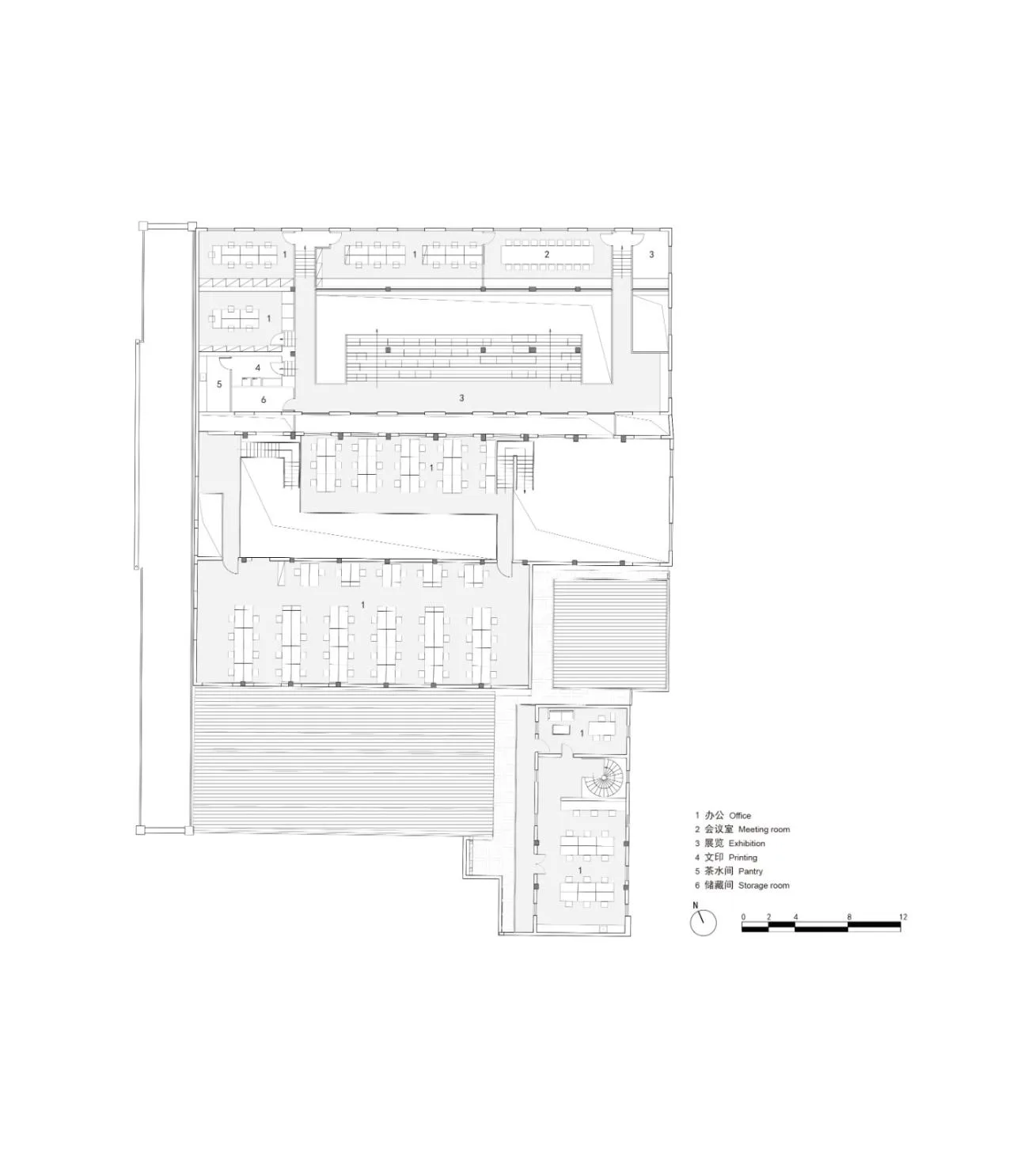
△ Second floor plan
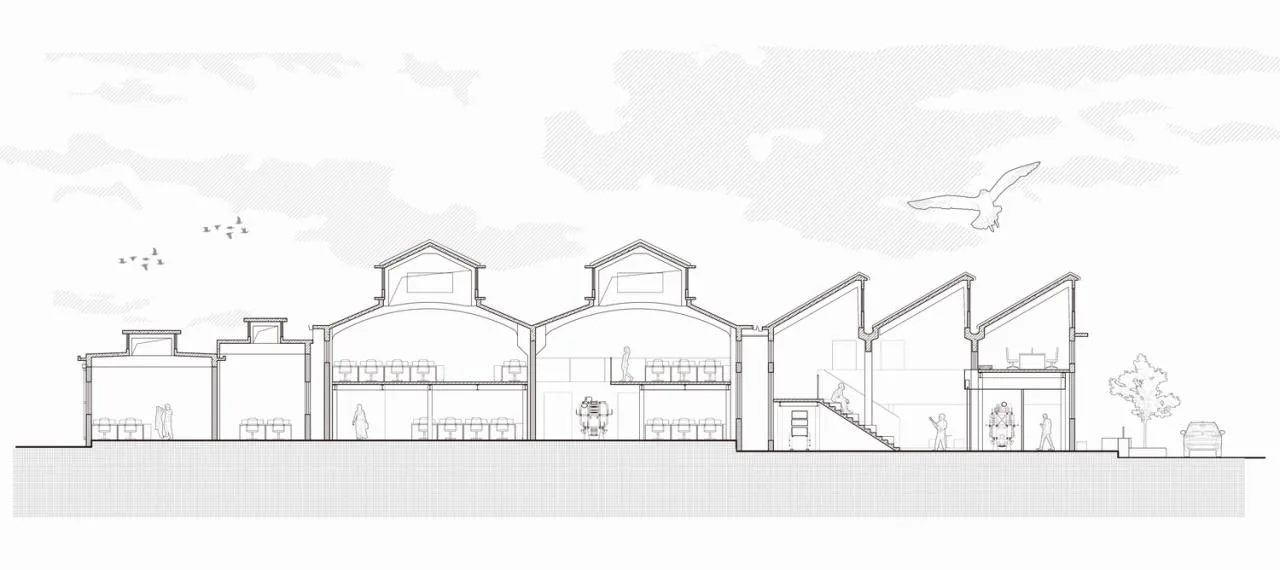
△ Section diagram
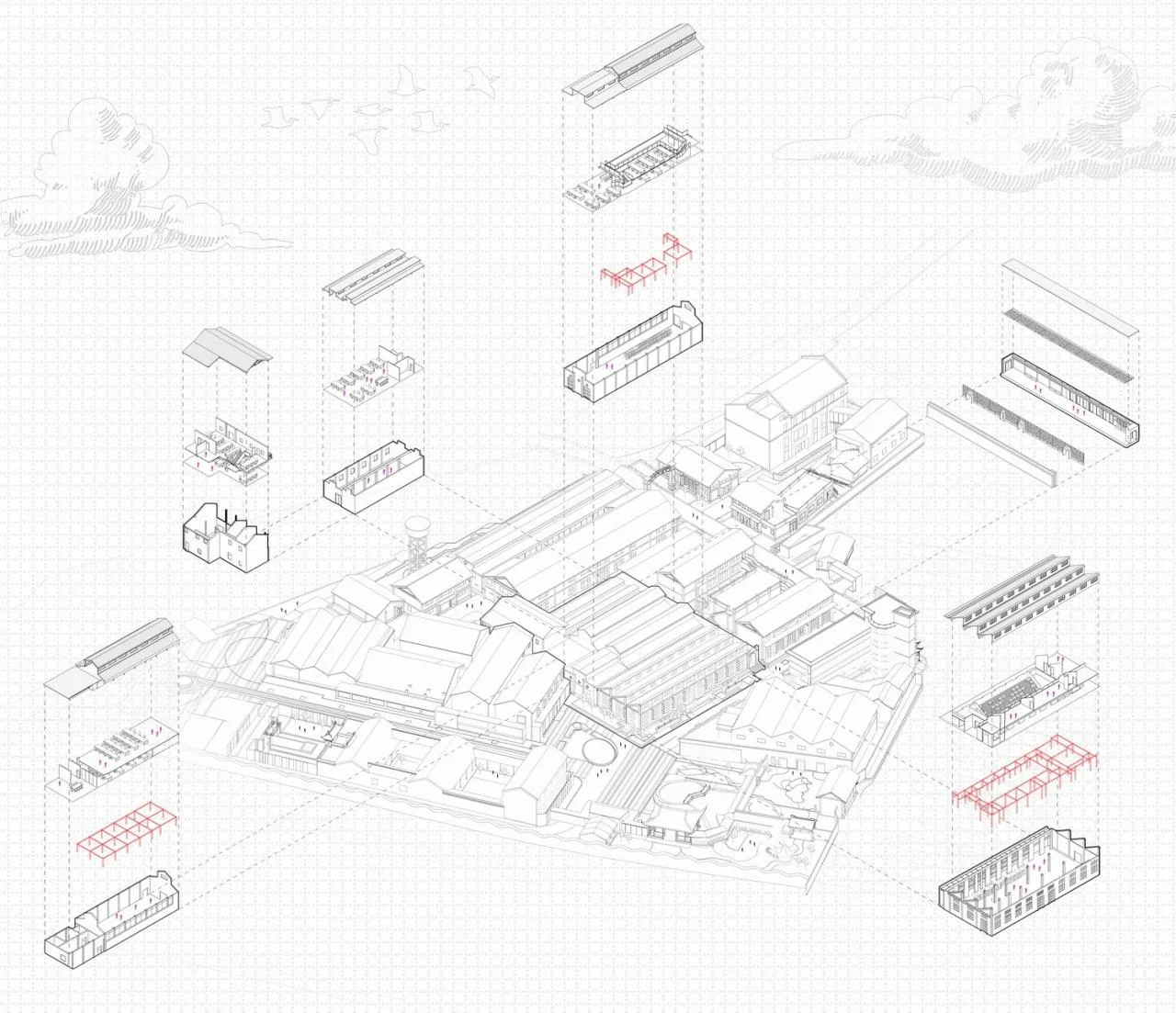
△ Axis side exploded view
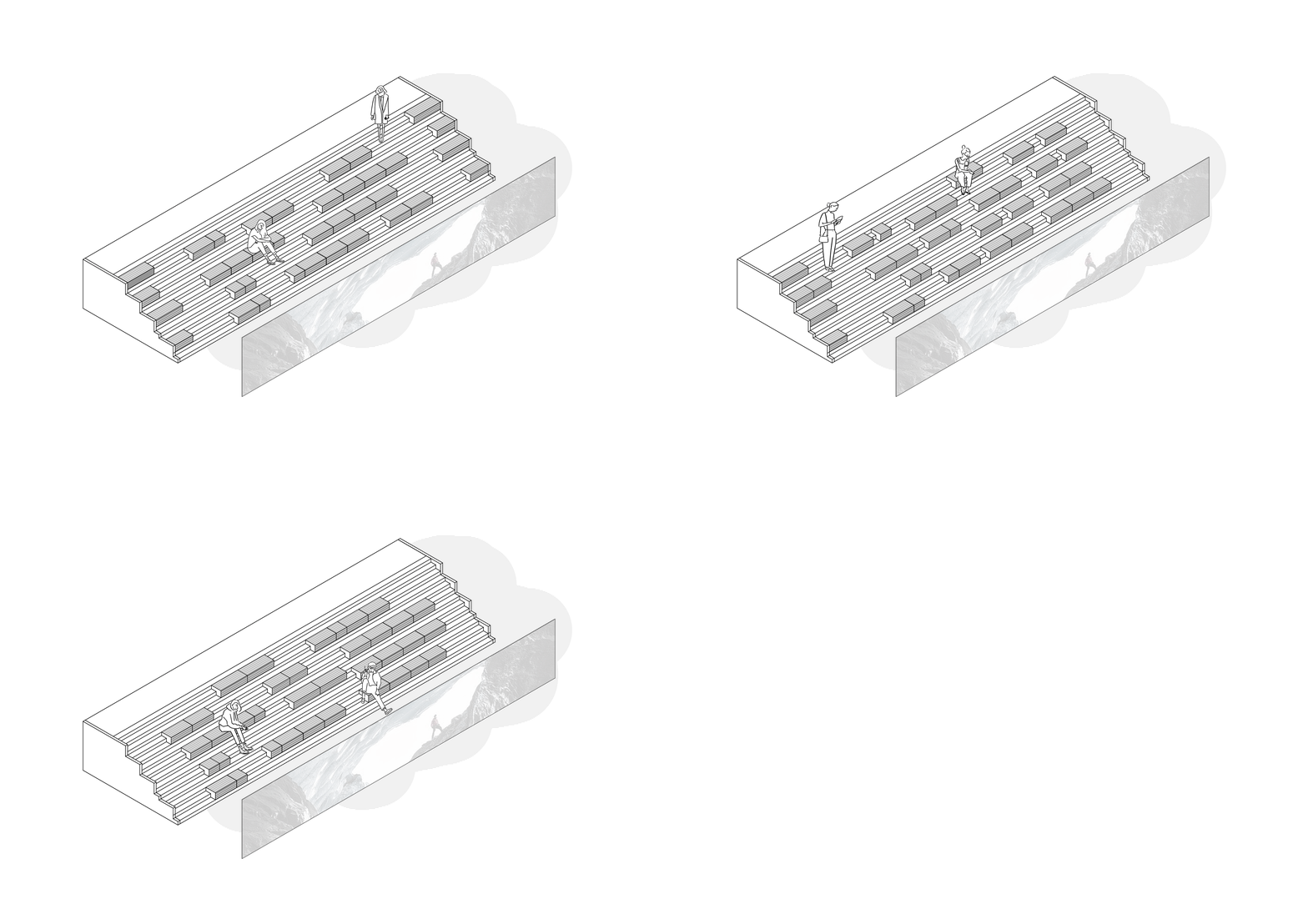
Schematic diagram of modular staircase
Project Information
Project Name: Silk Road Shengze Digital Culture Industry Park Demonstration Zone: Shengze Tanqiu Silk Spinning Factory Renovation
Strategic Guidance: Cheng Hong (Far Sighted Culture and Tourism)
Business Planning: Jiangsu Yuanjian Culture and Tourism Holdings Group
Design Units: Pingjie Design, Far Sighted Culture and Tourism
Building Area: 2,300 square meters
Project Design & Completion Year: 2022–2023
Design Team: Wang Haidong, Li Wenjing, Yang Nan, Gu Wangxi, Kong Xiangpeng
Structural & Hydroelectric Design: Shanghai Hengtai Architectural Design Consulting Co., Ltd
Photography Copyright: Xu Yingda
Owner: Jiangsu Yuanjian Culture and Tourism Holdings Group
Project Location: No. 12 Tanqiu Silk Factory Road, Shengze Town, Wujiang District, Suzhou City, Jiangsu Province, China














Must log in before commenting!
Sign Up