
“I am willing to deeply immerse myself in life, to extract its very essence, live authentically and simply, eliminate all that does not belong, push life to its limits, and embrace the simplest form — simple, simpler, simplest.” – Thoreau, Walden
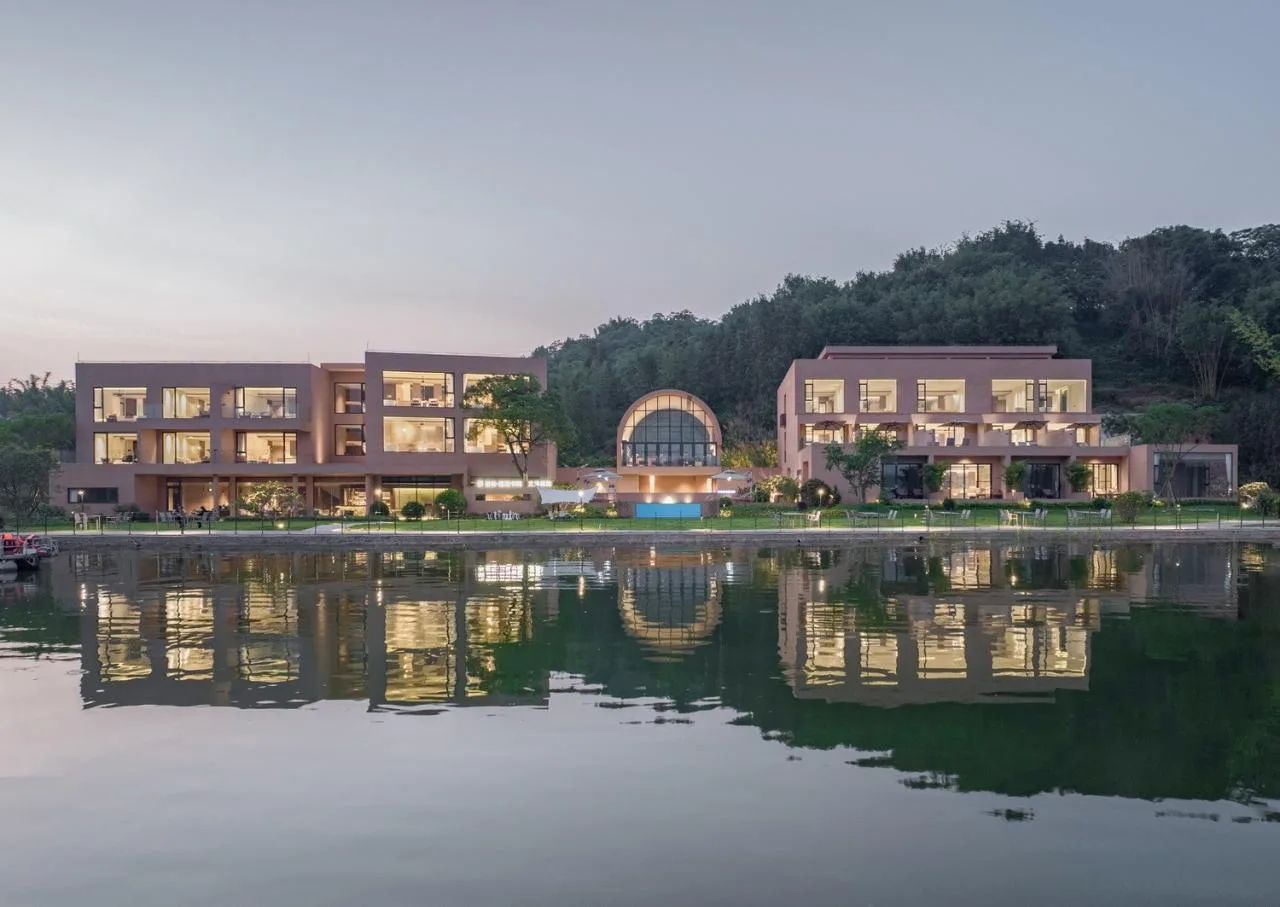
View of the Academy from across the lake © Wu Siming
Exploring the site’s origins through Cihu Lake, ancient temples, and isolated islands
Cihu Academy is nestled on a secluded island within Cihu Lake, Qingyuan, Guangdong. Adjacent to the thousand-year-old Fengsheng Ancient Temple, it is accessible only by boat. Gazing upon the endless expanse of Cihu Lake and rolling hills from the boat, after numerous turns, we finally arrive at the opposite shore. This experience evokes Su Shi’s poem on the Red Cliff: “The vastness is like Feng Xu’s wind; I do not know where it ends, floating like an independent world.”
Upon arrival, I toured the ancient temple, which harmoniously follows the mountain’s terrain with staggered and varied elevations—distinctly different from the symmetrical layouts of traditional temples. The temple, courtyard, and platforms create a dynamic space filled with light and shadow. This initial encounter quietly inspired the design concept for Cihu Academy.
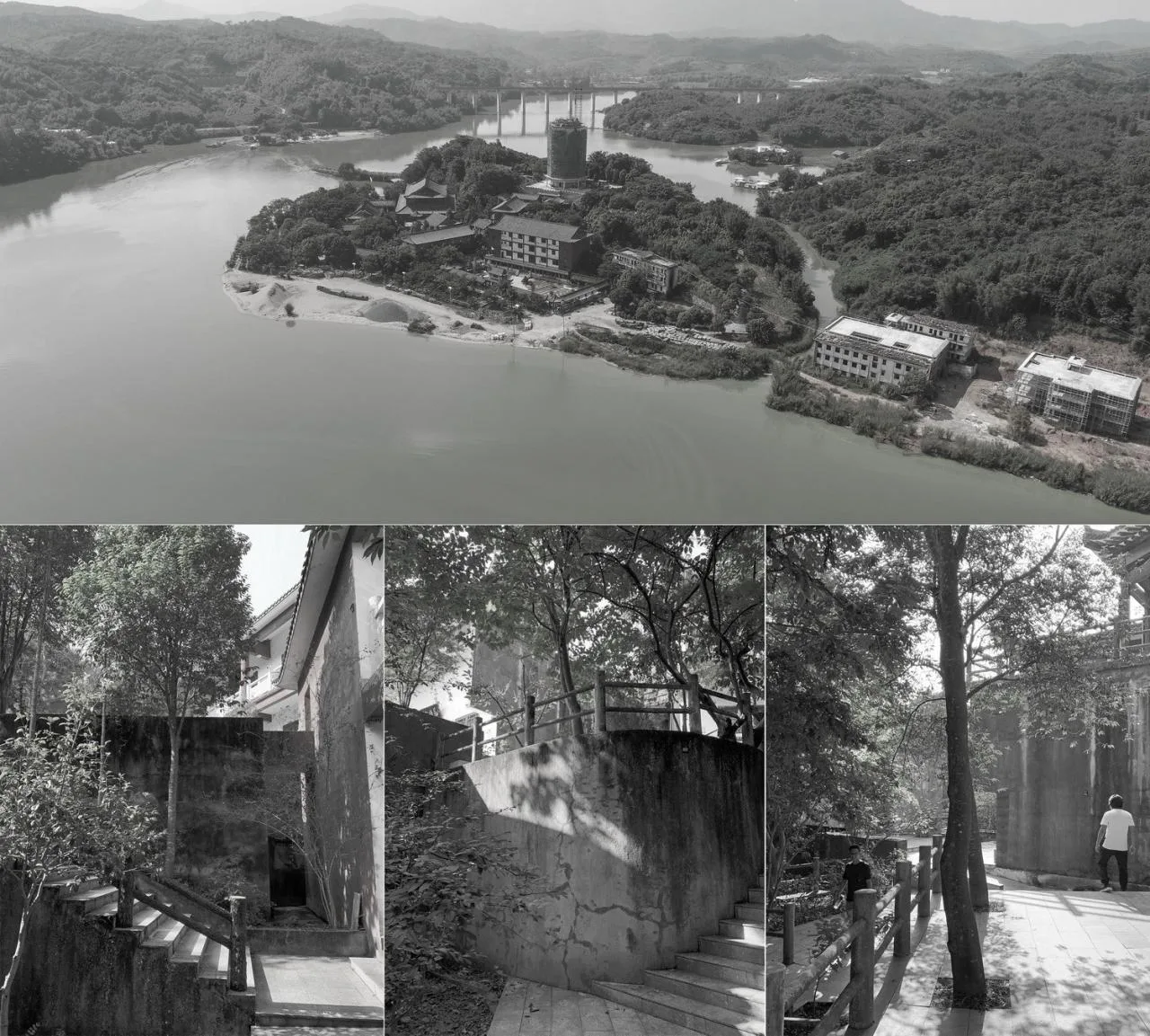
The ancient temple’s layout with staggered stairs, terraces, and platforms on the island © Buildings Outside the City
The site originally housed two schools and dormitories built in the 1990s, some of which have been demolished and rebuilt, alongside a newly constructed three-story villa with only a concrete frame. Standing in an original classroom and looking out onto the vast Cihu Lake, the water seemed almost still, disturbed only by subtle ripples. Here, time appeared to flow differently, stirring a profound sense of solitude. It reminded me of Thomas Mann’s depiction of the sanatorium in the misty mountains in The Magic Mountain. This fleeting thought sparked a desire to engage in a dialogue with the site through architecture.
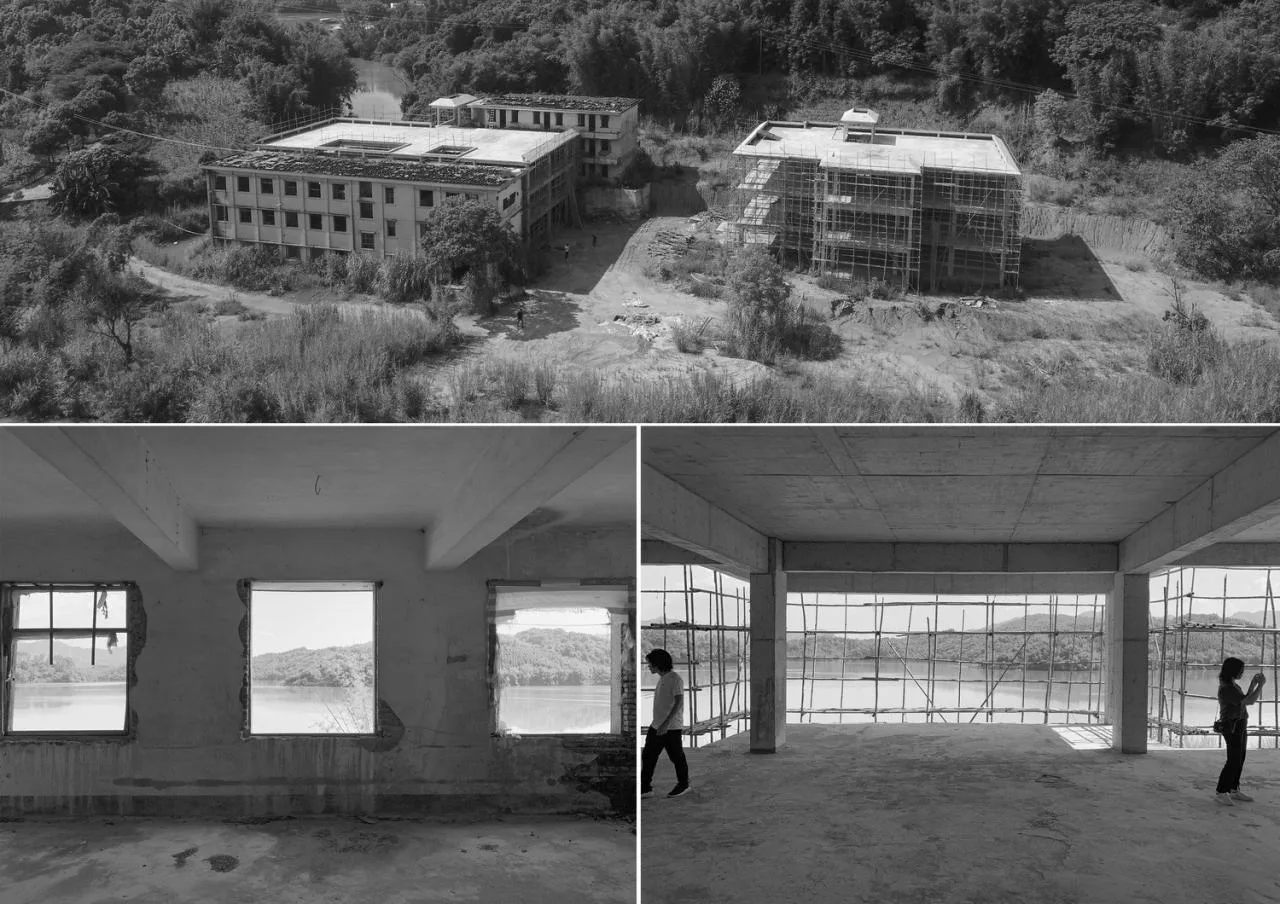
The original campus space and concrete frame structure © Buildings Outside the City
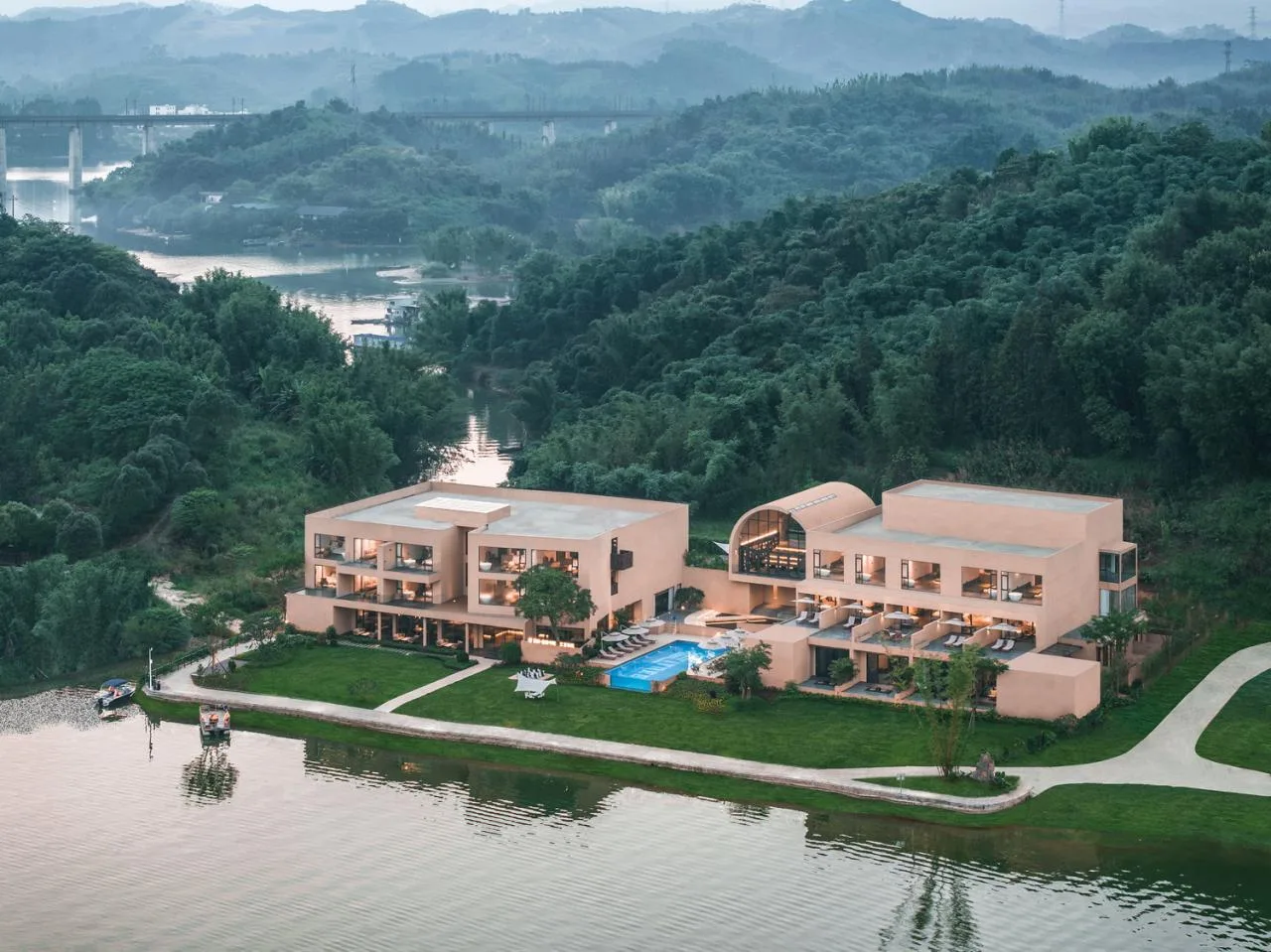
△ Aerial view © Wu Siming
Engaging the Site through Geometric Dialogue
Faced with this isolated island, cut off from the world like a timeless lake, the land scattered with sand, stones, and overgrown with weeds and trees, how should architecture respond? Our focus turned to the millennium-old Cihu Shengjing Fengsheng Ancient Temple nearby. Originating in the Northern Song Dynasty, this temple follows the island’s contour lines with overlapping axes. Its rectangular and semi-circular terraces twist and stagger with the terrain, rising and falling amid lush vegetation, exuding a sense of wildness — yet we sought to go further.
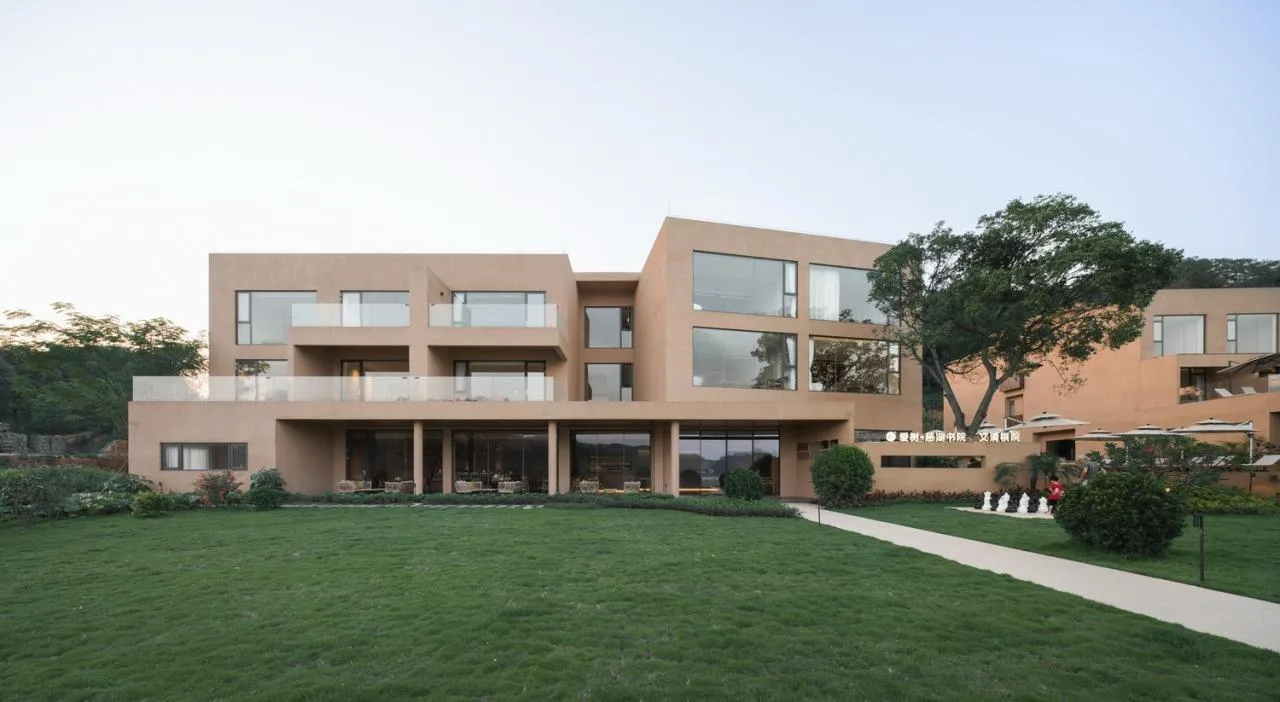
Geometric volumes occupying the site © Wu Siming
Inspired by the ancient temple’s layout, the design respects the site’s mountainous and watery backdrop and tree orientations. The building rises as multi-level terraces that twist, stagger, and undulate, forming simple yet powerful geometric blocks. The exterior is unified by the site’s natural yellow-brown earth tones, giving the appearance that the structure has grown organically from the land. Positioned on an isolated island backed by mountains and facing Cihu Lake, the academy nestles into the landscape, creating a dialogue between past and future.
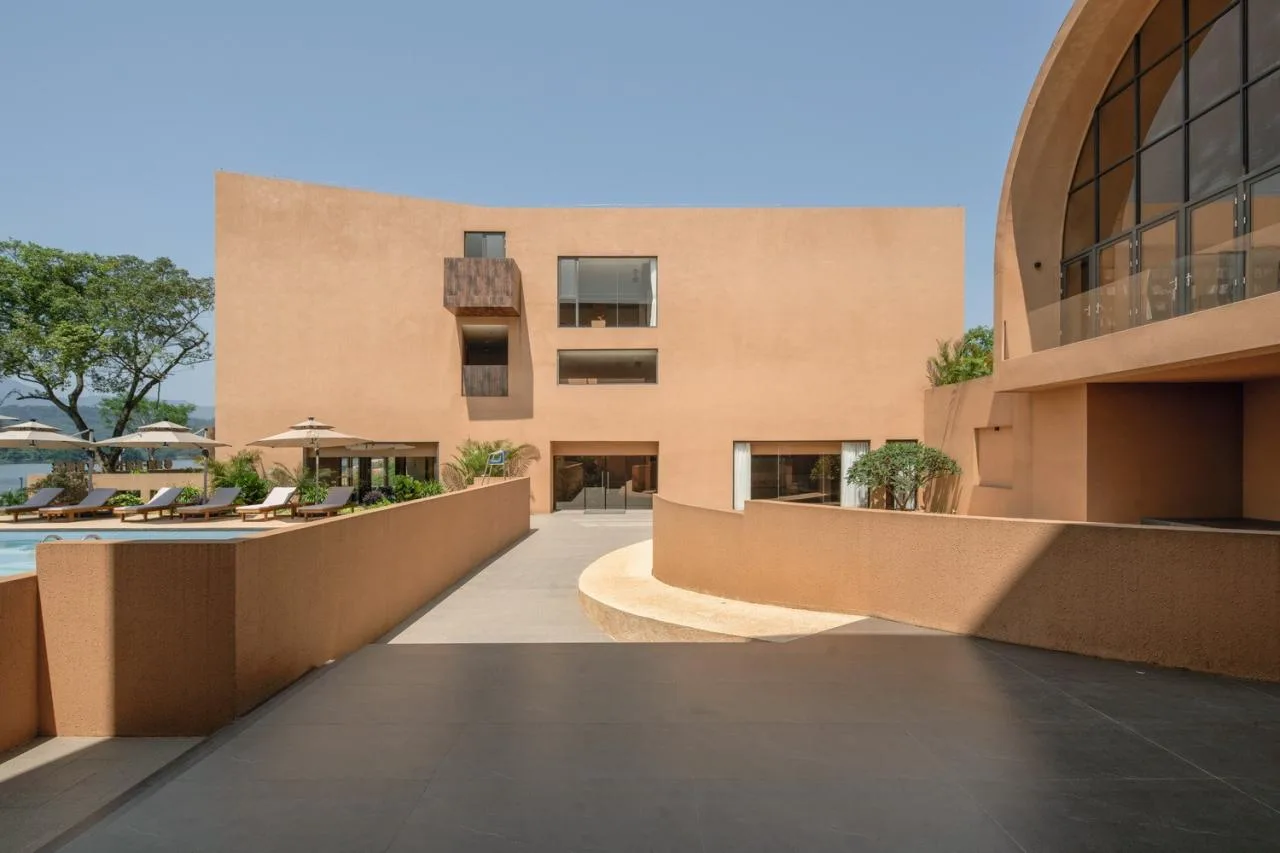
△ Square courtyard paved with interlocking cobblestones © Wu Siming
The “Canyon” Light Courtyard
The original school building on the west side no longer met current functional needs and was slated for demolition and reconstruction. The existing concrete frame has been repurposed into a three-story building with an atrium — an empty transitional space between old and new. The first floor serves as a continuous large public hall featuring a bar, restaurant, and lounge area overlooking the lake. Surrounding the central courtyard are building blocks from different periods, connected by steps and ramps that spiral up the walls like hiking trails through a canyon, guiding visitors to guest rooms and rooftop terraces on the upper floors. This ascent from low to high reveals shifting light and shadow from morning to evening.
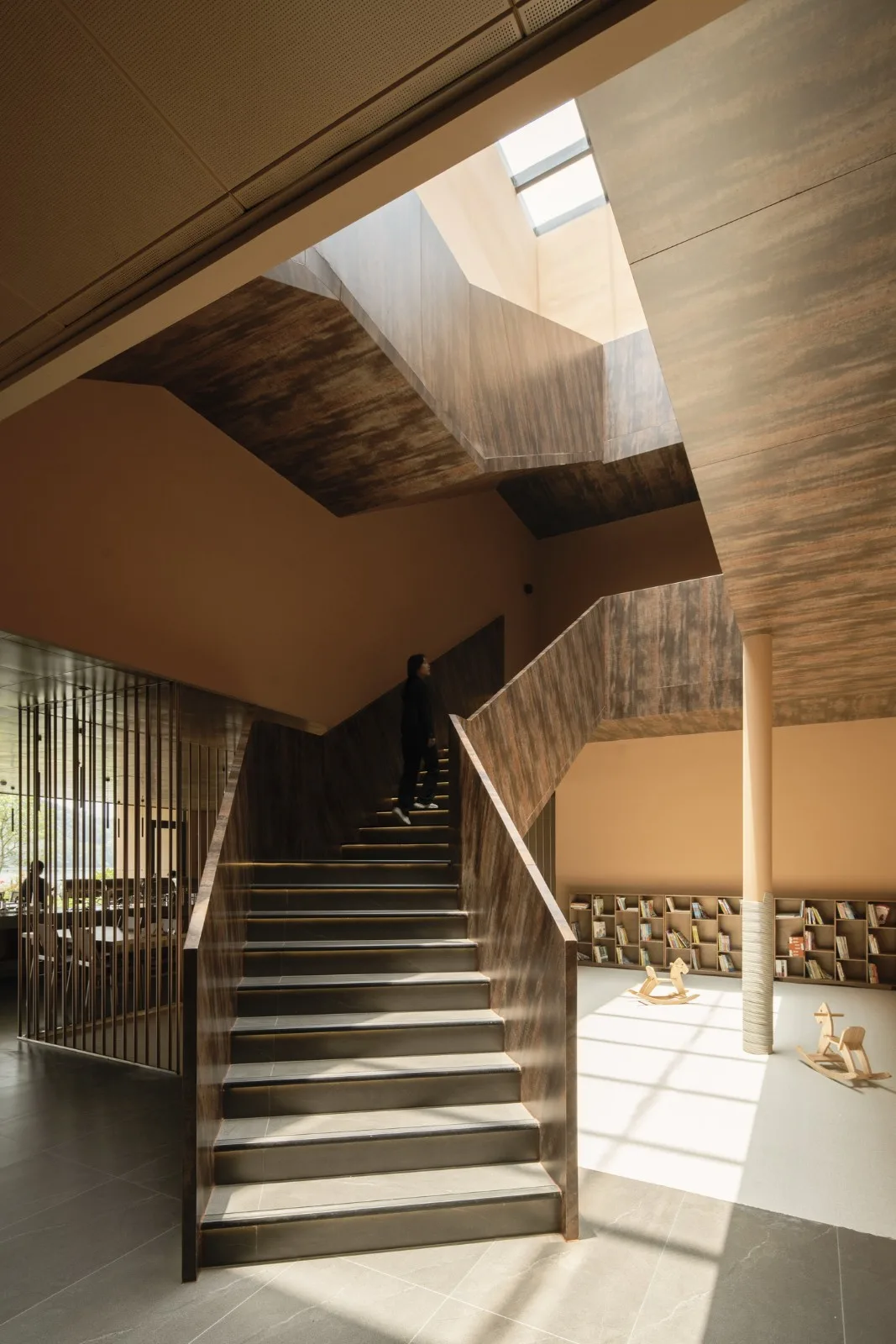
△ Walking up the ramp clinging to the wall © Wu Siming
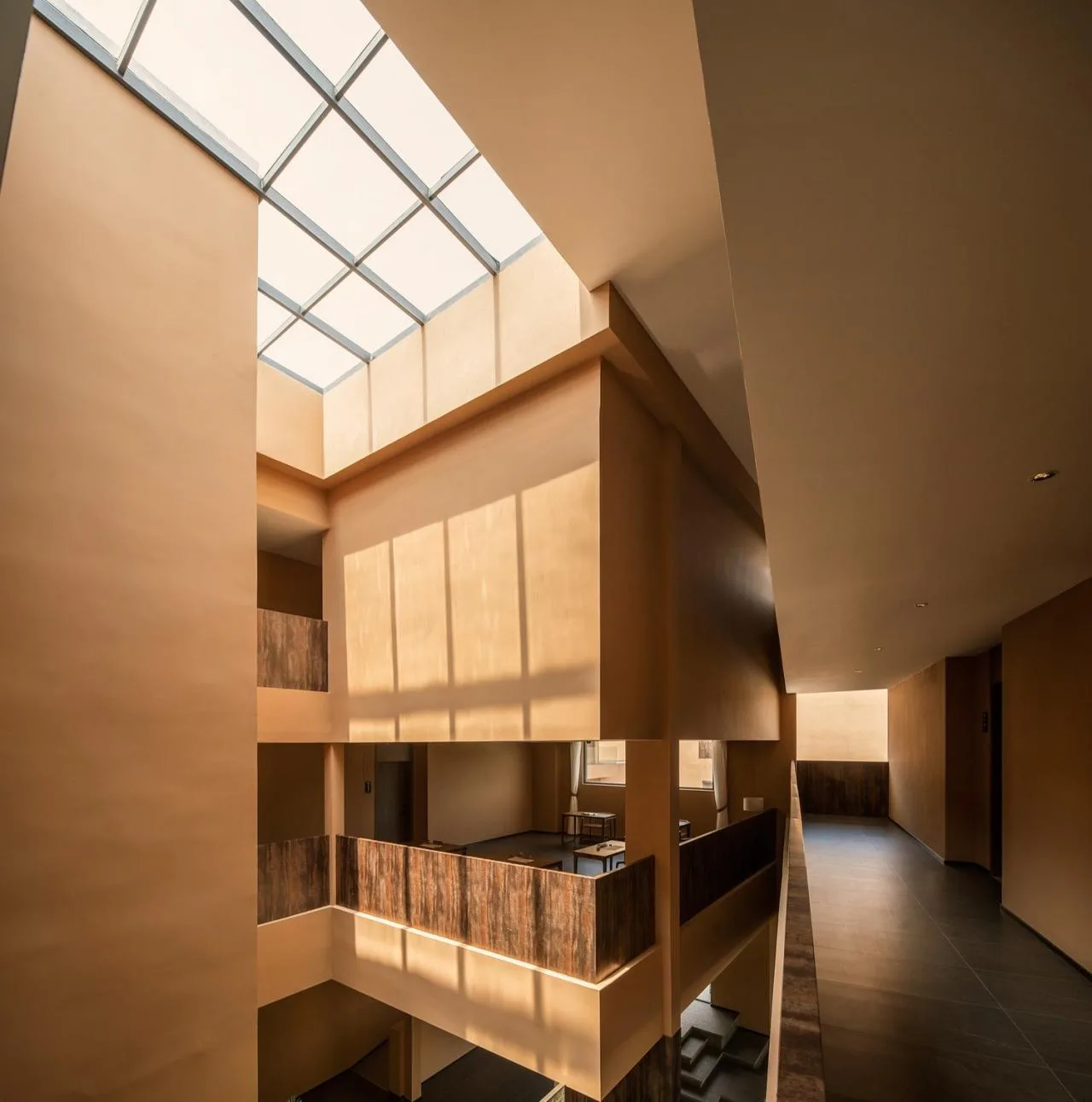
△ Canyon-like space © Wu Siming
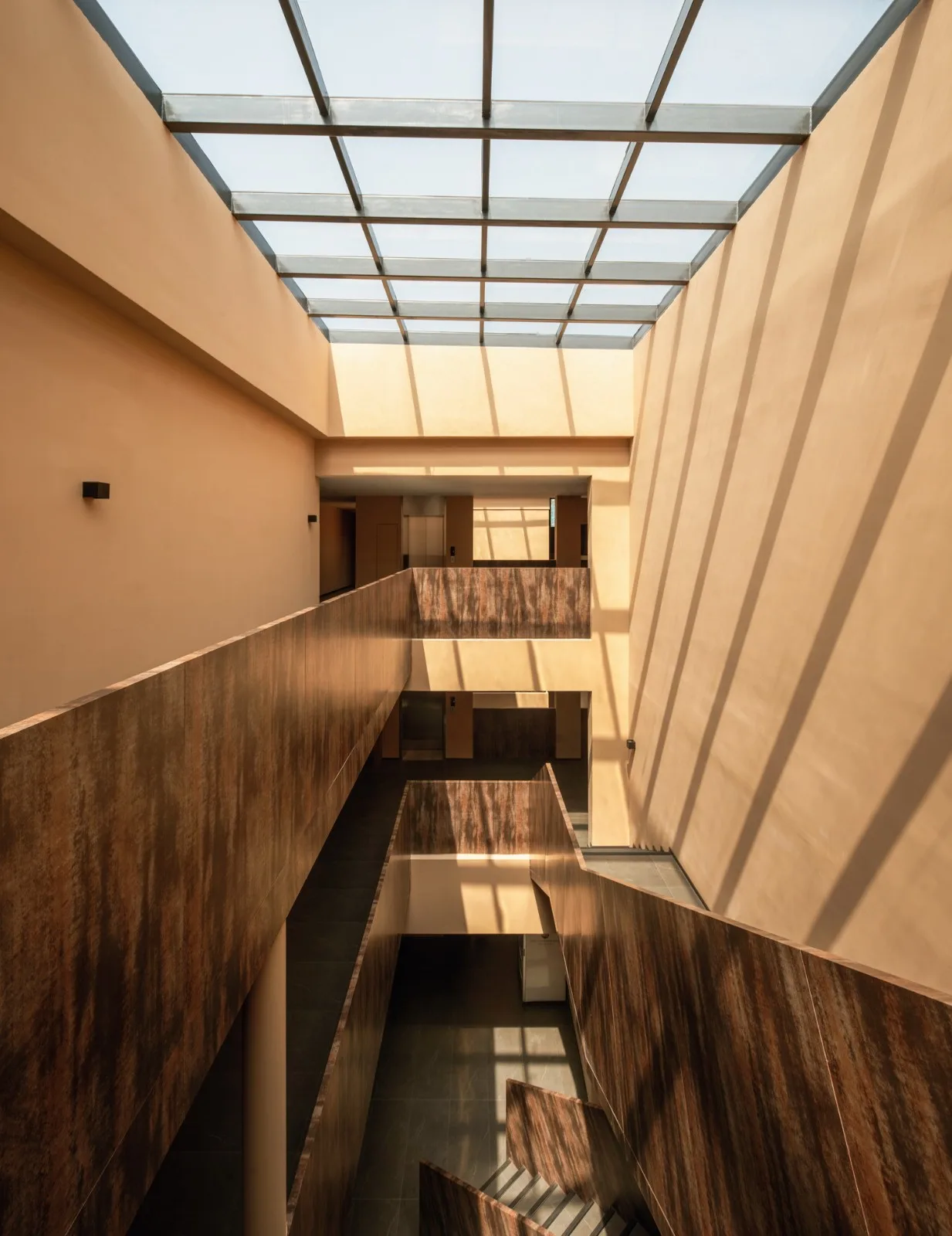
△ Guangting (a pavilion) © Wu Siming
The original elevation difference between building floors on the east and west sides was 1.5 meters. The design adjusted the courtyard floor to 0.75 meters following the terrain and integrated ramps and steps to create a seamless walking experience and spatial flow—evoking the sensation of wandering through an ancient temple. This sequence of diverse spaces allows visitors to engage in a dialogue with nature, architecture, and themselves.
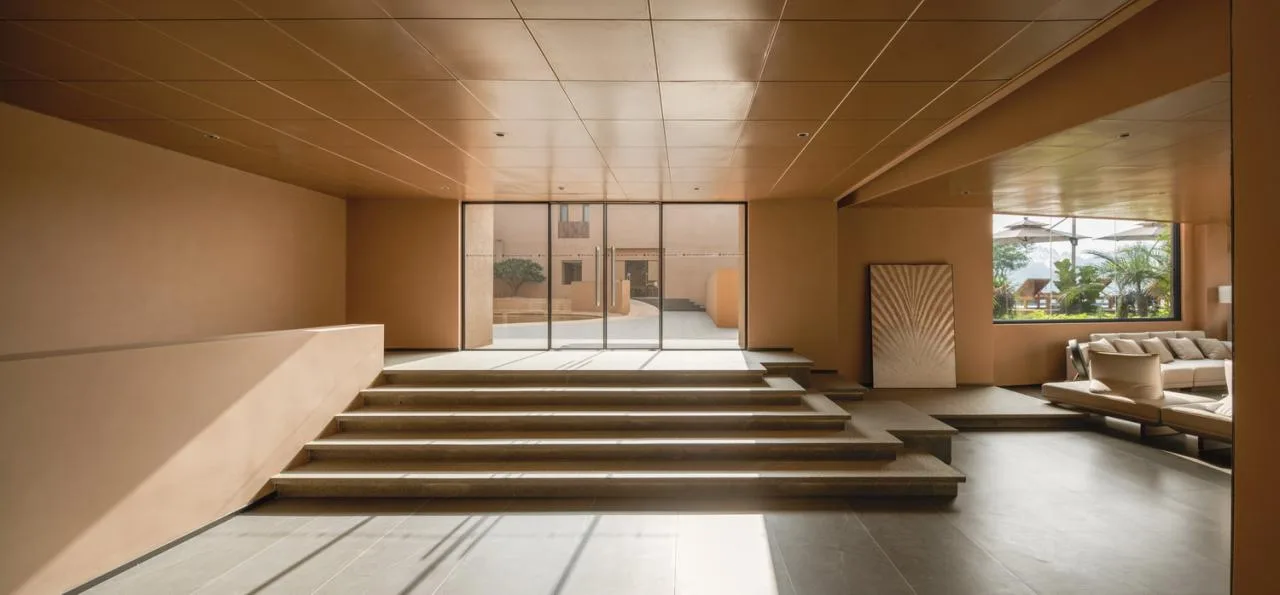
△ View of the frame facing the atrium, suggesting spatial transformation © Wu Siming
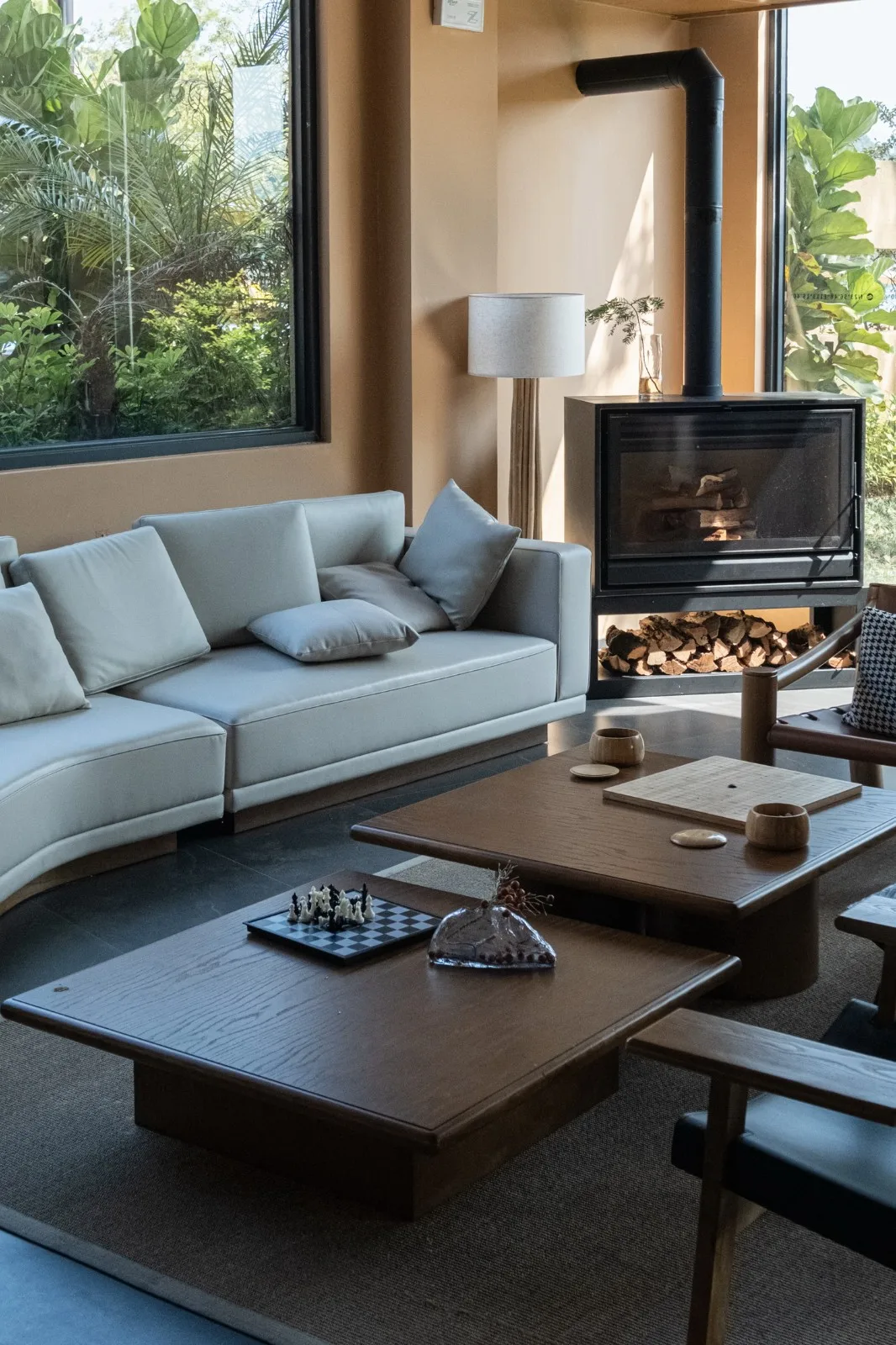
△ Public rest area © Buildings Outside the City
Continuous walking experience and spatial flow © Buildings Outside the City
Courtyard Space
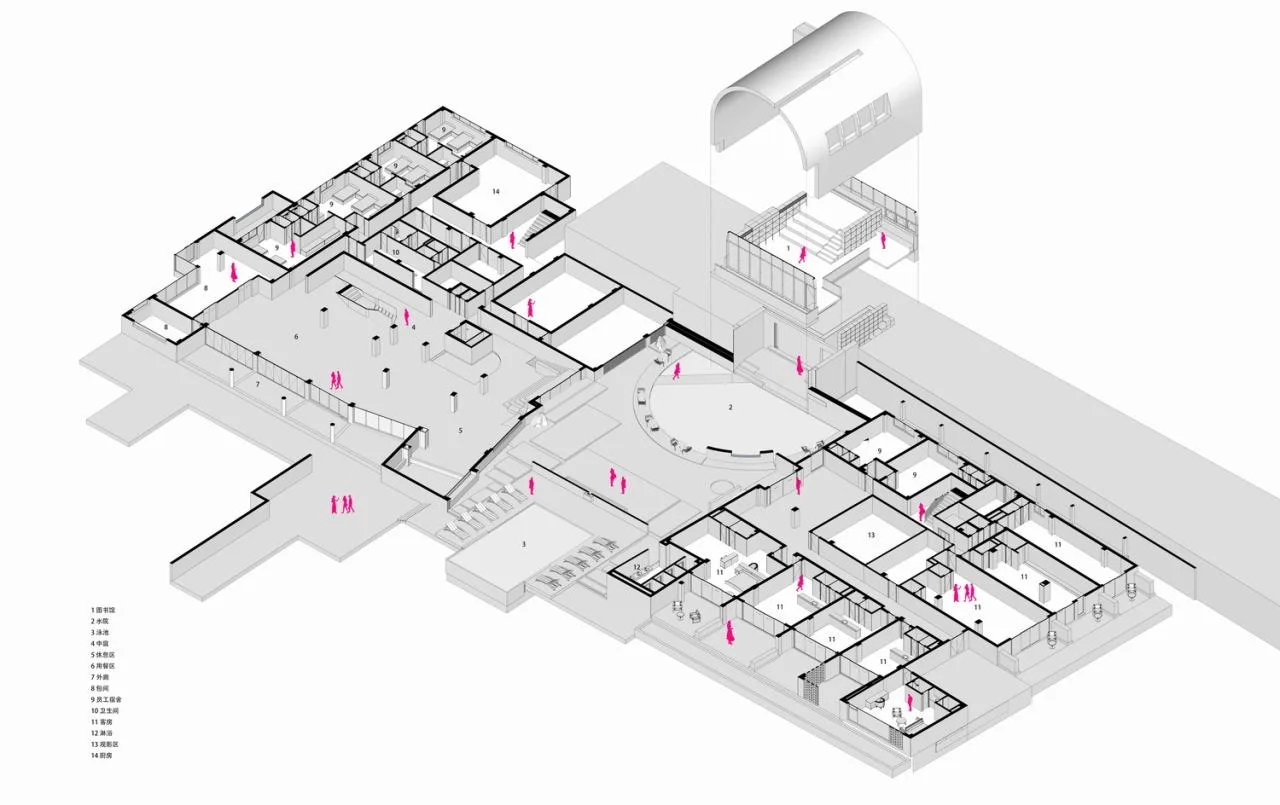
The atrium is the centerpiece of the design. The original two buildings on the site were aligned east-west with a gap between them that disrupted spatial flow and functional continuity. To bridge this, a transitional space was introduced—an ambiguous, catalyst-like zone between indoor and outdoor areas that fosters spatial interaction throughout the complex. This gave birth to a soft architectural form: the cylindrical library and the semi-circular water courtyard, acting as seamless transitional elements.
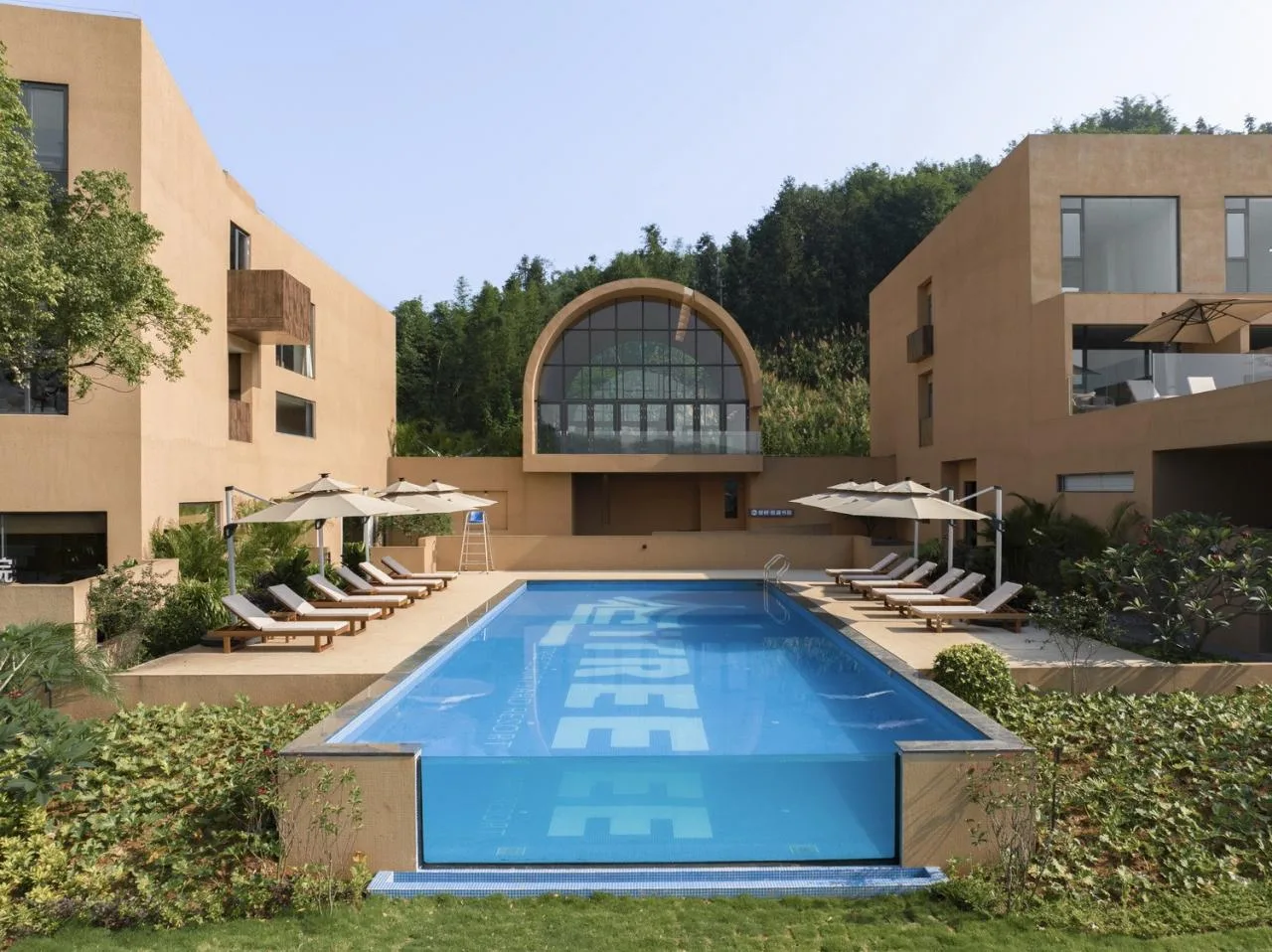
View of the library and back mountain from the lakeside © Wu Siming
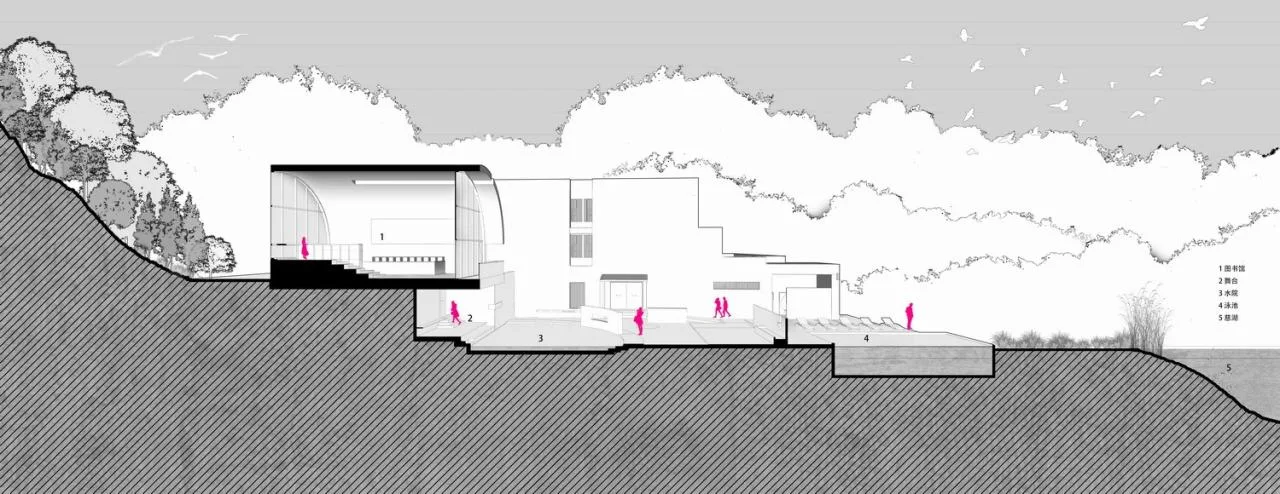
Diagram illustrating the relationship between the atrium, mountain, library, water courtyard, and lake © Buildings Outside the City
The atrium’s central axis runs north to south, featuring a bamboo forest slope, cylindrical library, semi-circular pool, long swimming pool, and grassy incline. Functionally, it separates active and quiet zones: the library, requiring silence, nestles toward the mountain, while the swimming pool faces the lake. Elevations gradually overlap, following the site’s original terrain. The courtyard feels embedded within the earth, with views extending through mountains, forests, and the lake. Curved walls at varying heights manage visual connections and enclosures between platforms, enriching the experience of movement and creating dynamic relationships of visibility and privacy.
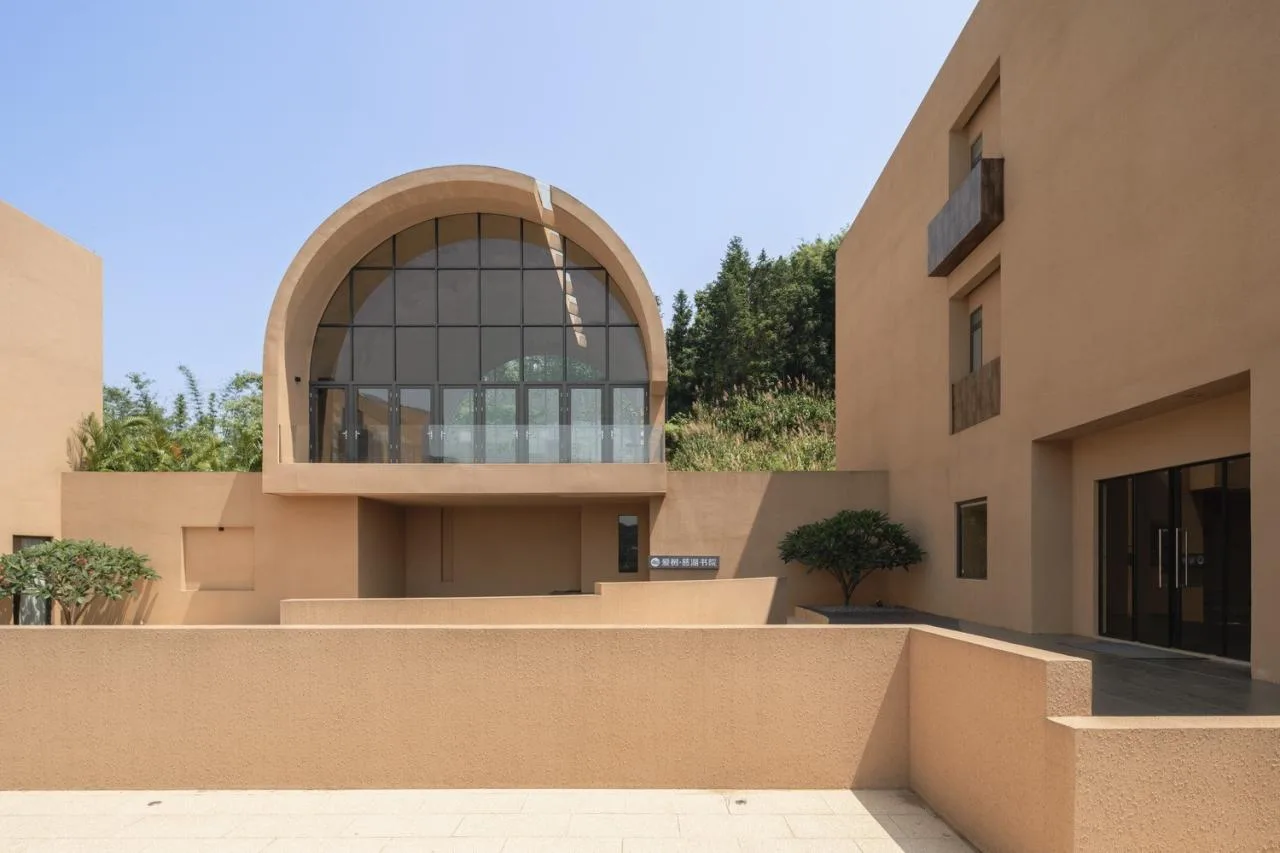
Overlapping walls and the floating cylindrical book space © Wu Siming
Library
Perched on a hillside, the main building follows the natural terrain. Its first floor is a concrete retaining wall base, while the second floor curves into an arch supported by a lightweight steel truss frame, creating a striking contrast between solidity and lightness. Upon completion, gazing through the hidden grid in the thick concrete at the sky and mountain beyond evoked a surreal sensation.
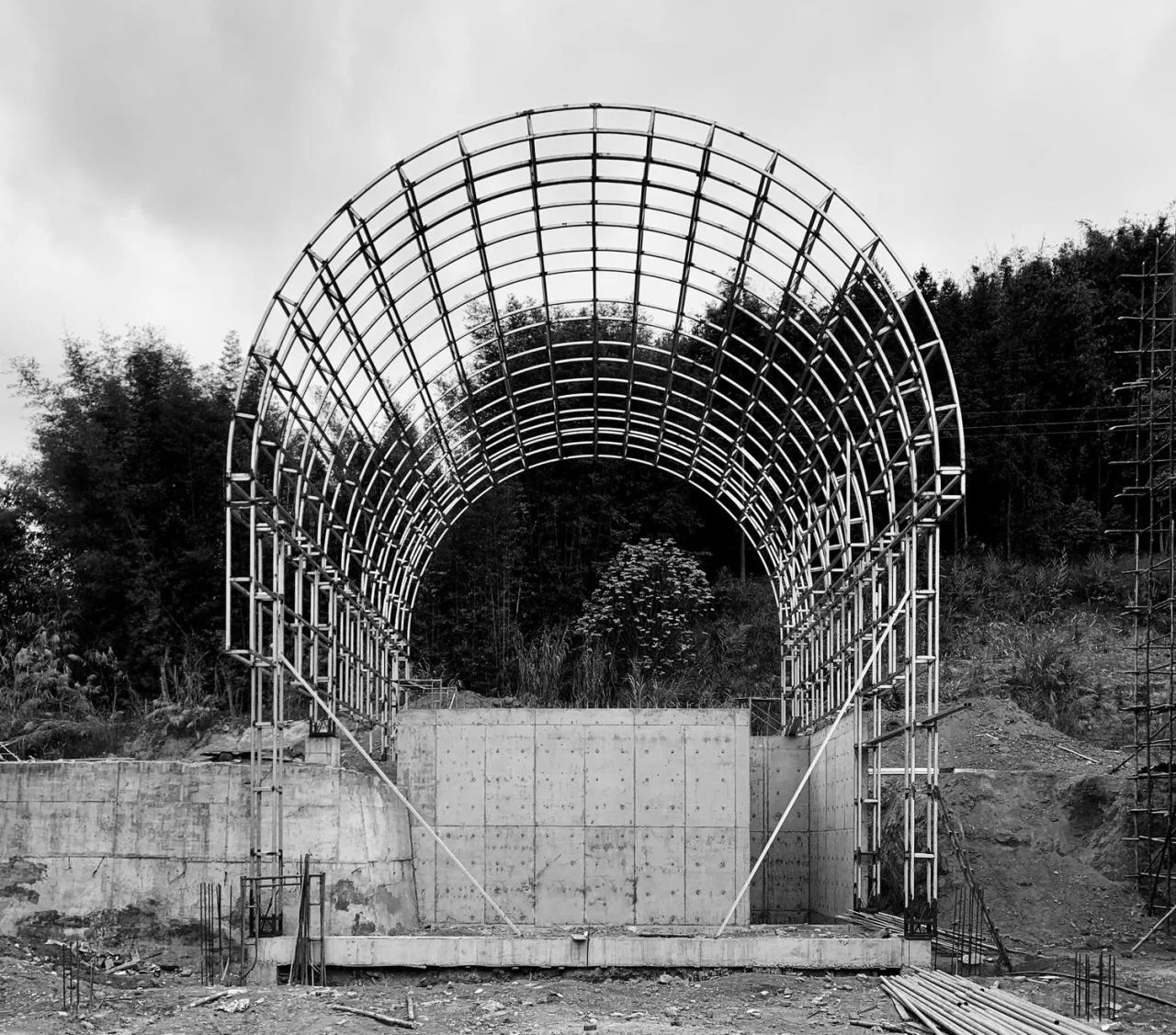
△ Structural form of the library: solid base below, light arch above © Buildings Outside the City
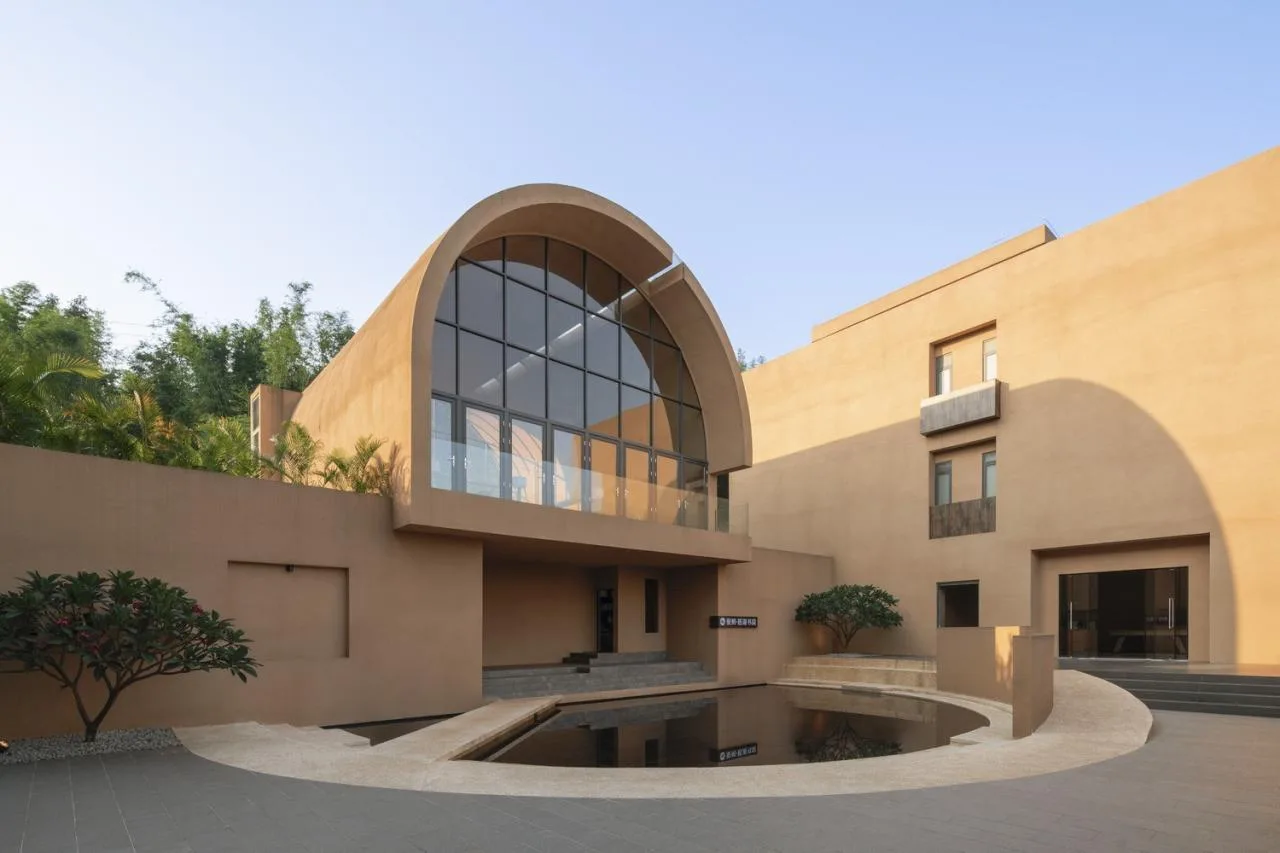
The semi-circular pool and cylindrical book space form a dual relationship © Wu Siming
The semi-circular water courtyard complements the cylindrical library, while the curved wall adjacent to the water courtyard and the disconnected cylindrical roof of the library create another duality. Semi-circular sunken steps and the concave space beneath the library enclose a shared area facing each other across the water. A sloping bridge leads inside, where visitors crossing become part of the scenery—everyone becomes a performer on this communal stage.
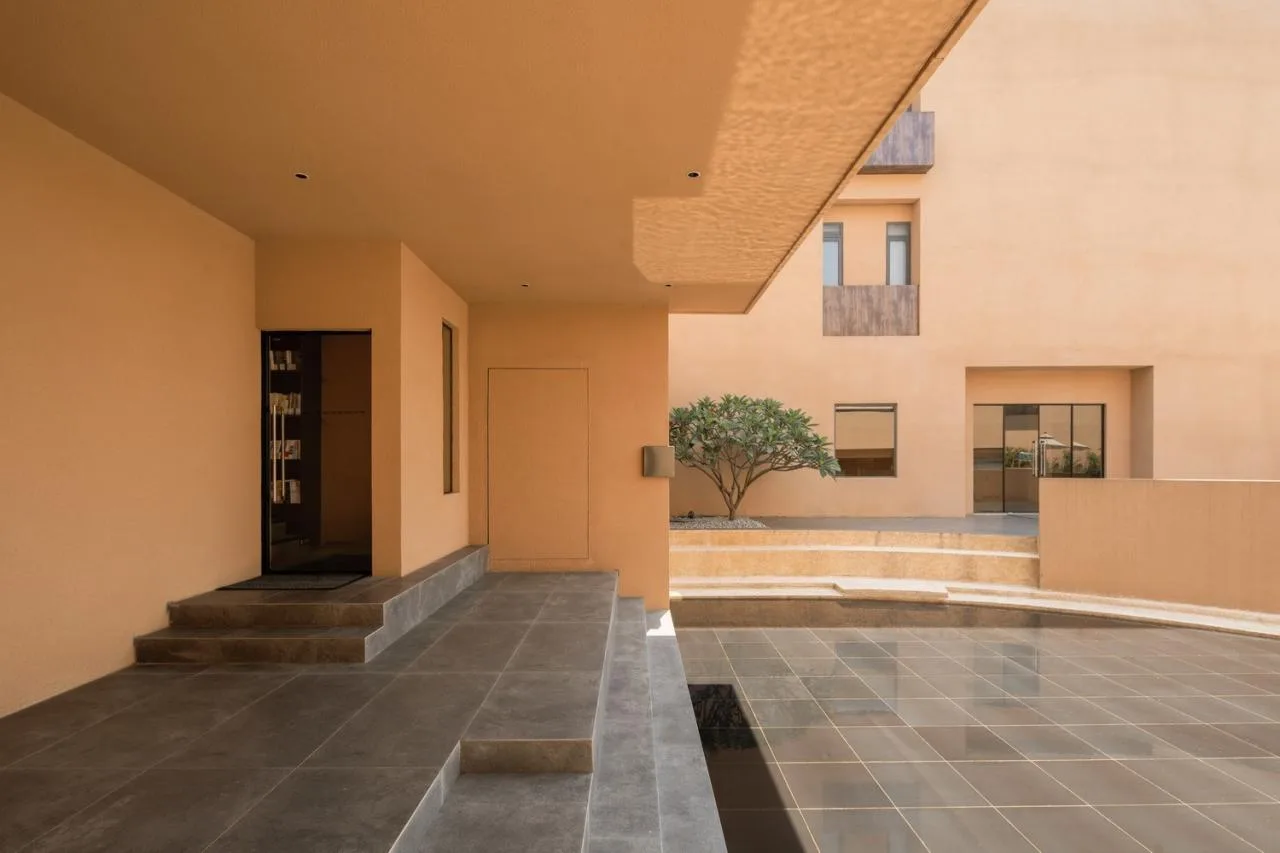
△ Stage at the base of the library © Wu Siming
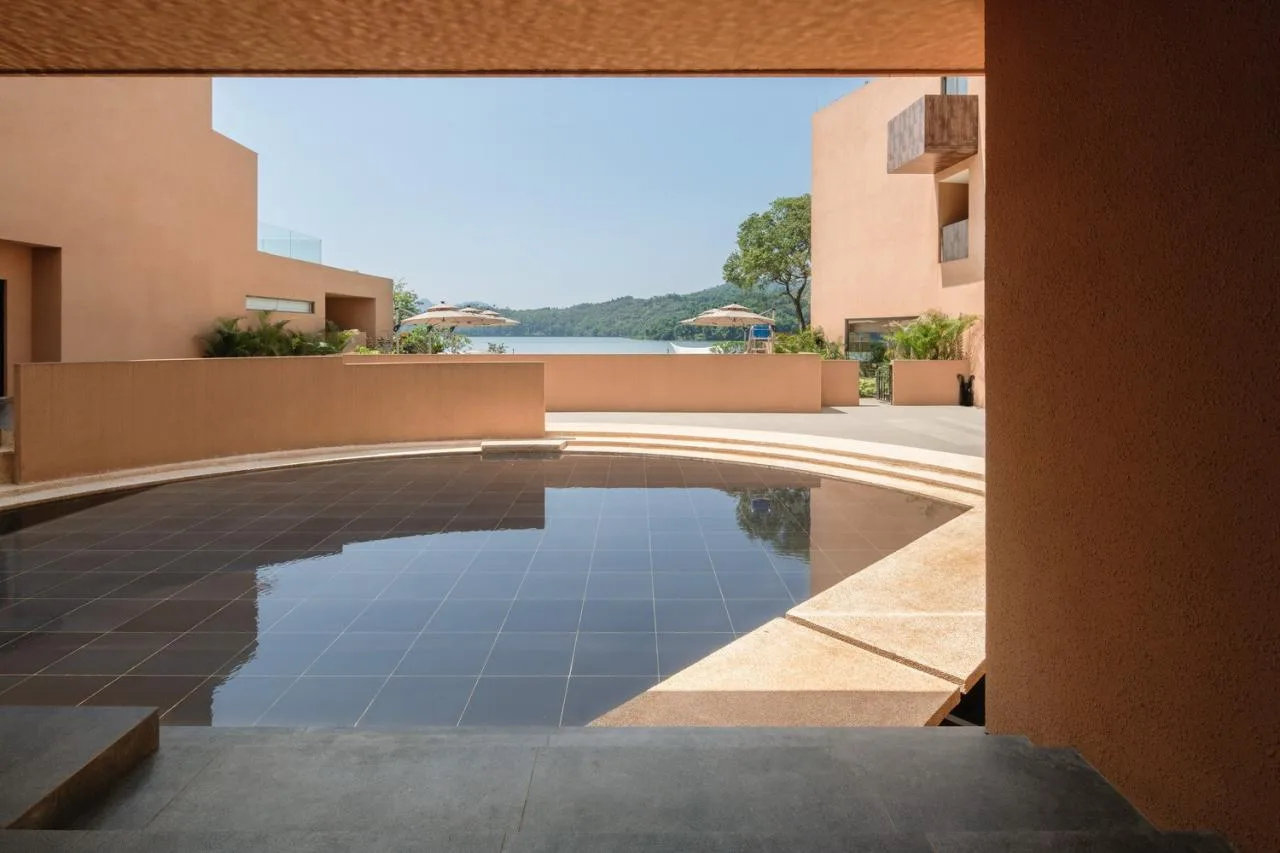
View toward Shuiyuan and Yuanshan from the stage © Wu Siming
The side door opens to stairs leading up to the second-floor library. Sunlight pours in, reflecting off the tall bookshelf wall. Ascending, the treetops fade into the distance, beckoning from the back mountain.
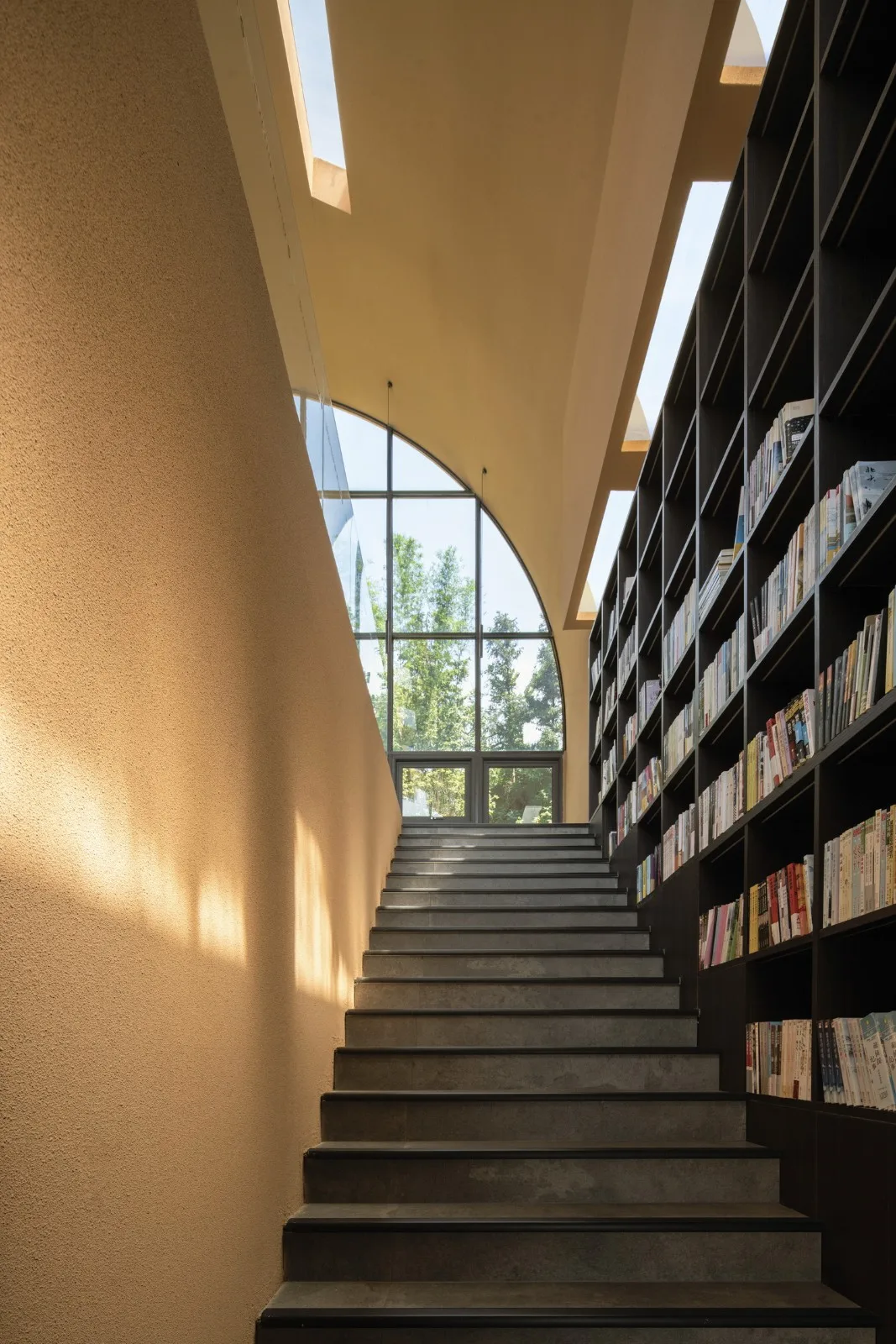
Stairs leading to the library and the back mountain © Wu Siming
The library’s interior and exterior merge into an integrated architectural space—a complete cylindrical volume embracing sunlight, lake views, mountains, and books. Light, shadow, and sound interweave with visitors’ movements. The interior is divided into three areas: a lakeside viewing spot by the window, a reading staircase at the center, and a writing area facing the back mountain. The varying heights allow everyone to enjoy the lake views while immersed in reading.
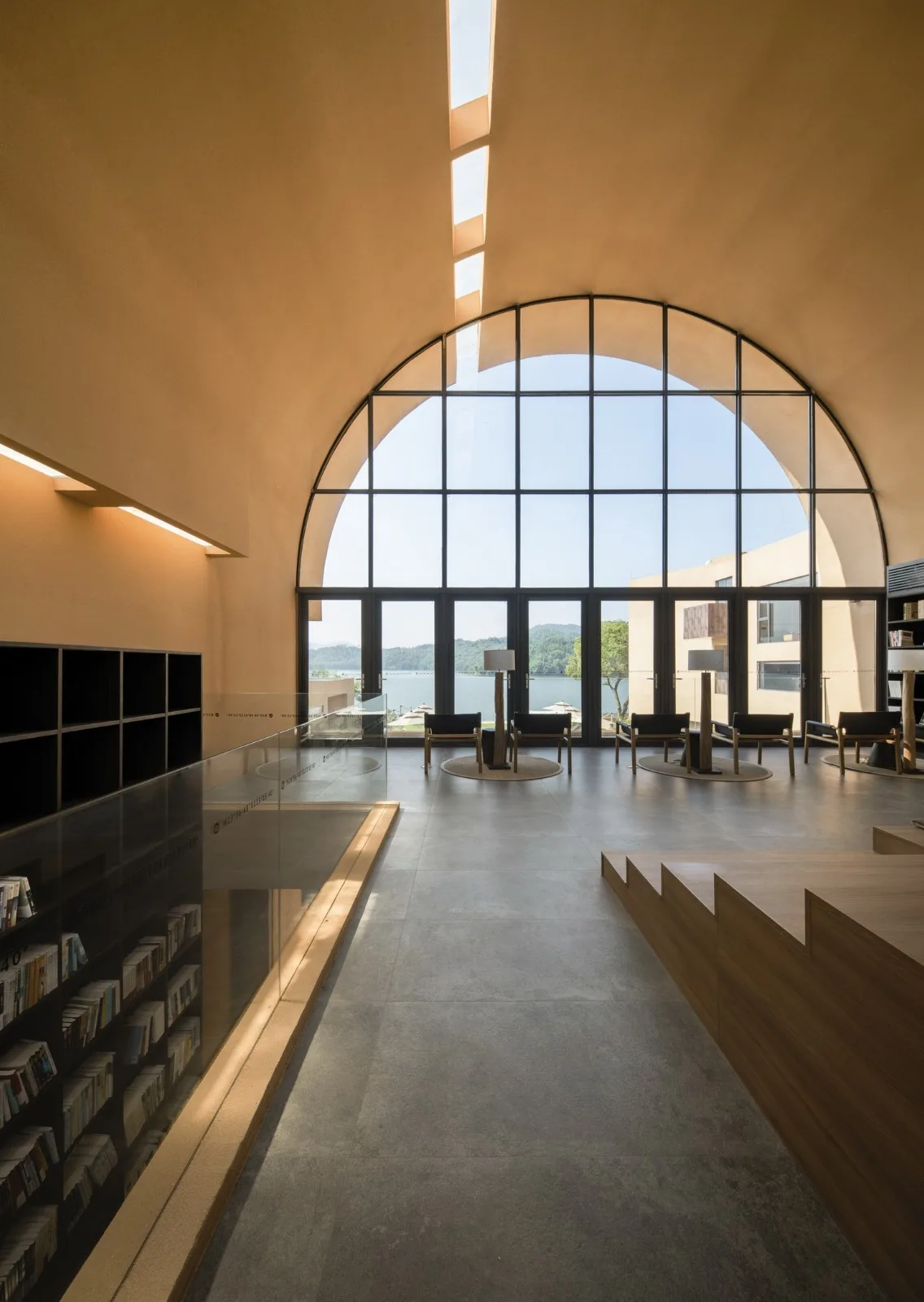
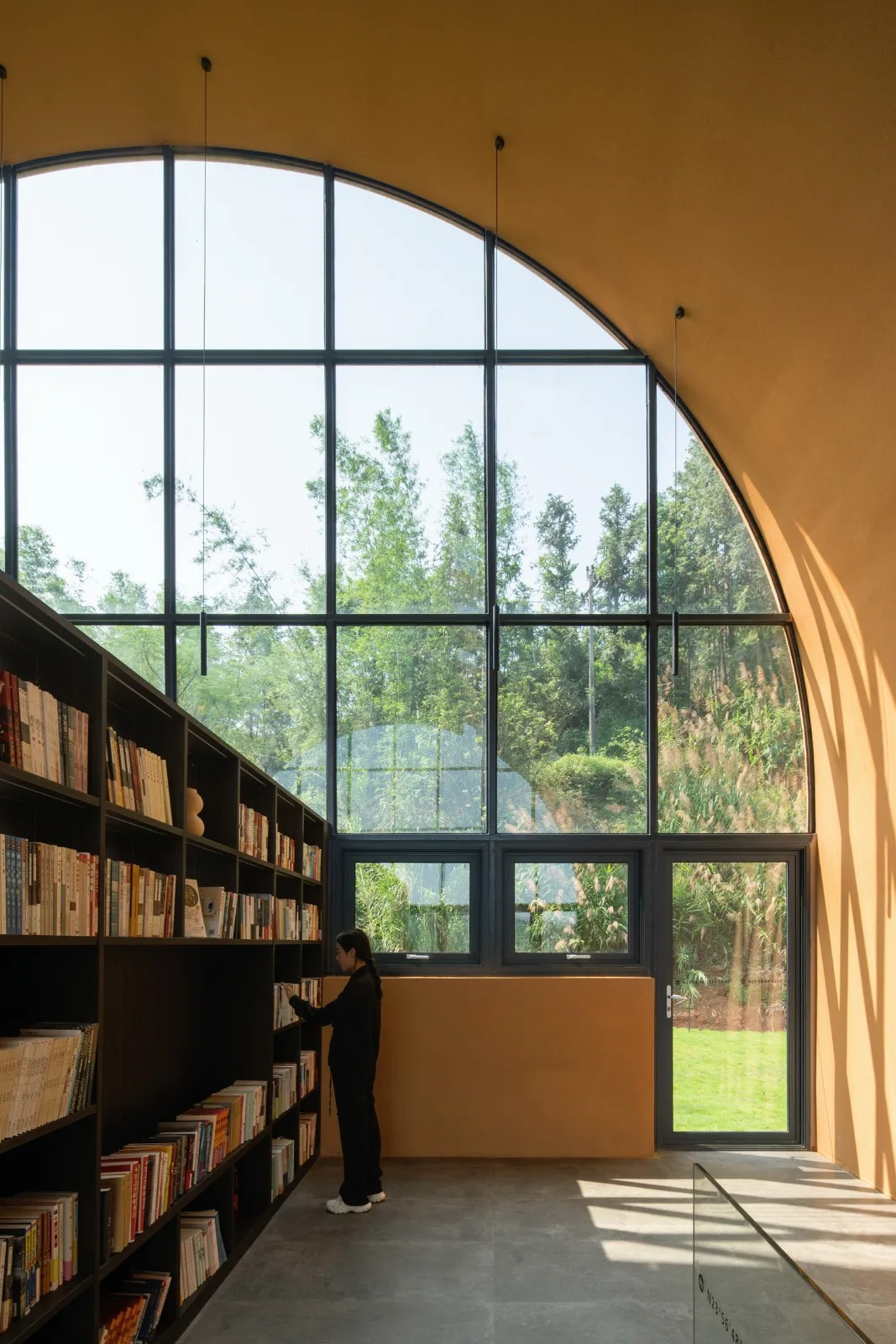
△ Interior space with flowing light and shadow © Wu Siming
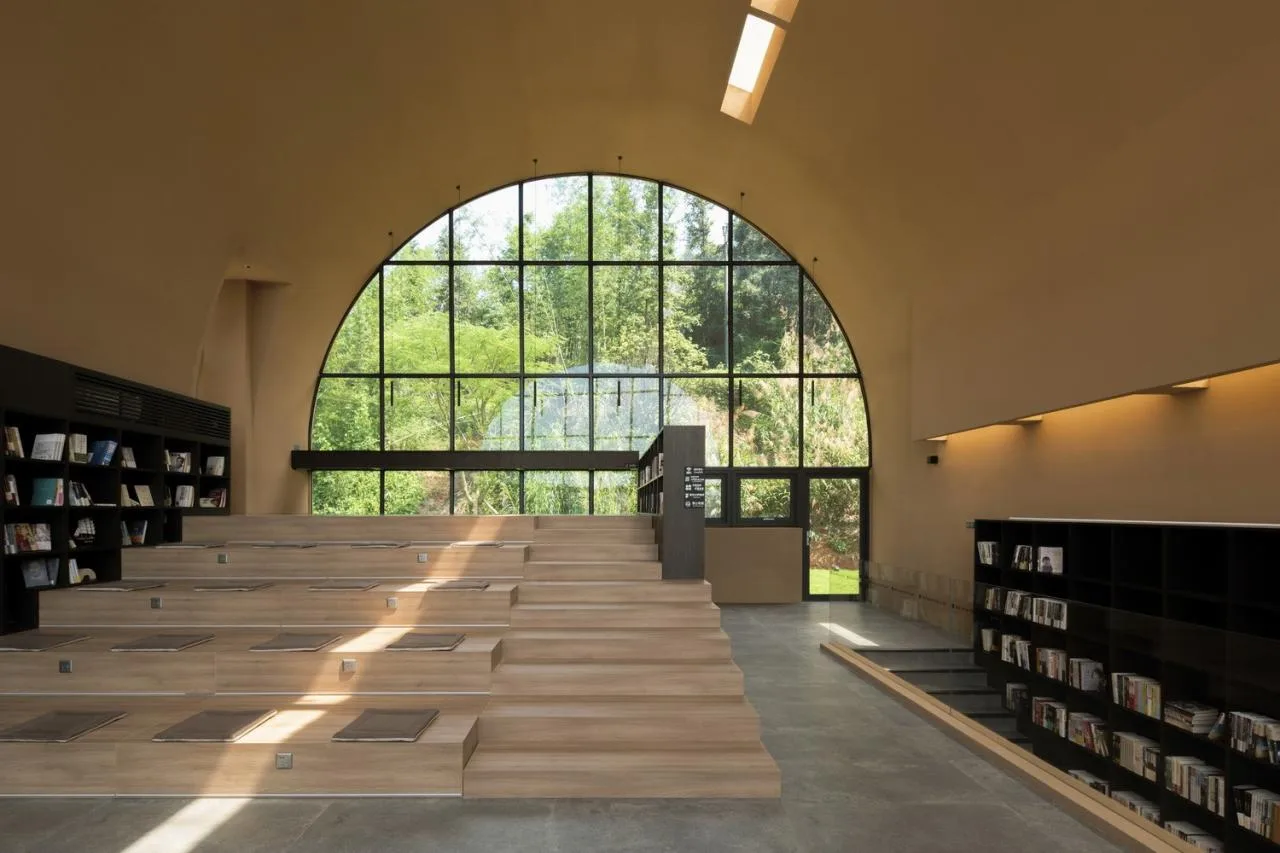
The sky’s reflection on the ground marks the passage of time © Wu Siming
The gradual change in ground elevation enhances the spatial experience. At the highest step, facing lush greenery of the back mountain, one can glance back at Cihu Lake and the blue sky, and through a side window, glimpse the ancient temple tower atop a distant peak. In this quiet moment, sunlight filters down, casting gentle patterns on the ground—inviting reflection.
Is it about nature, the past, the self, or simply imagination?
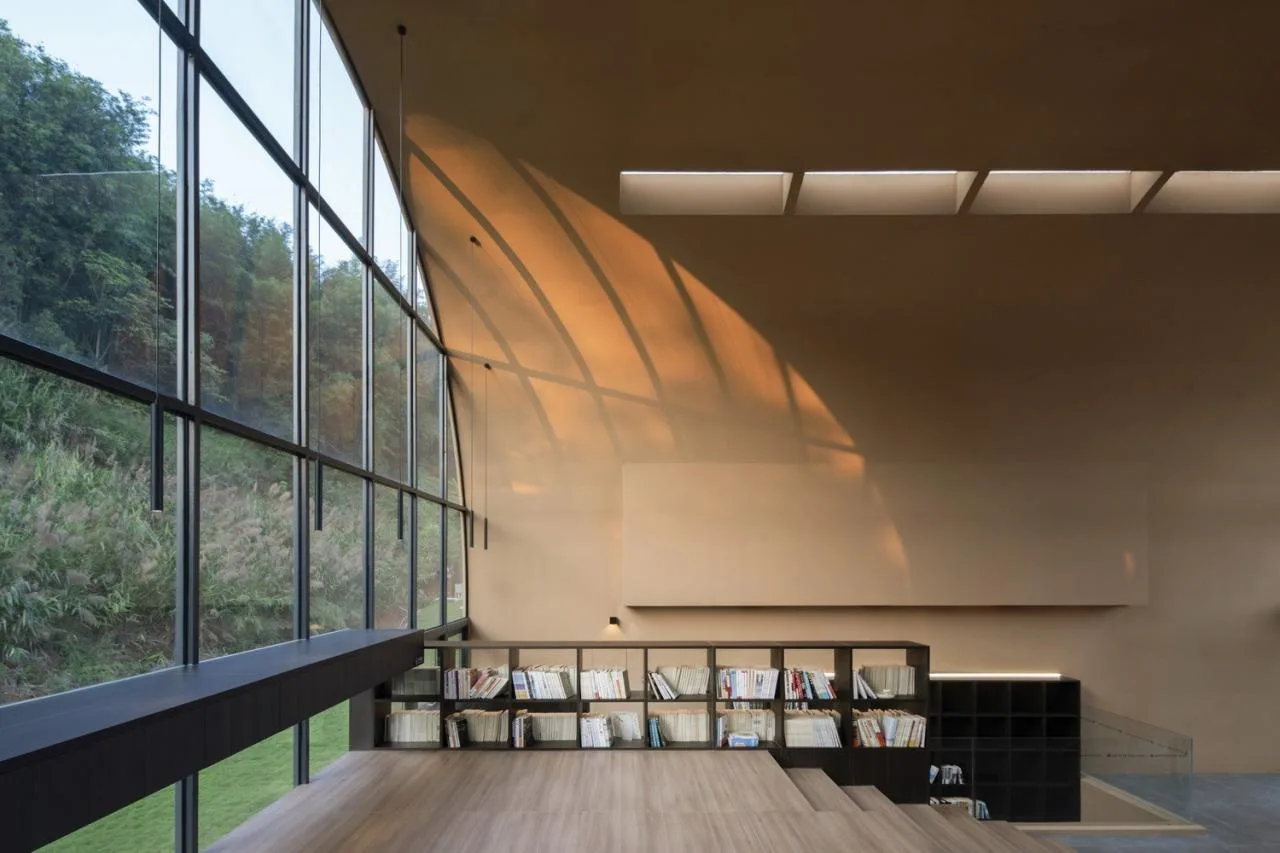
△ Highest point in the space — writing area facing the back mountain © Wu Siming
A Spiritual Retreat for Self-Discovery
Ultimately, the arched library, continuous public spaces, canyon-like courtyards, and layered terraces compose an artificial geometric island. Here, visitors can wander, linger, read, converse, daydream, dine, and rest. Scenes unfold like an endless scroll. Cihu Academy is more than a homestay; it is a spiritual island for all—a humanistic residence for exploring the self.
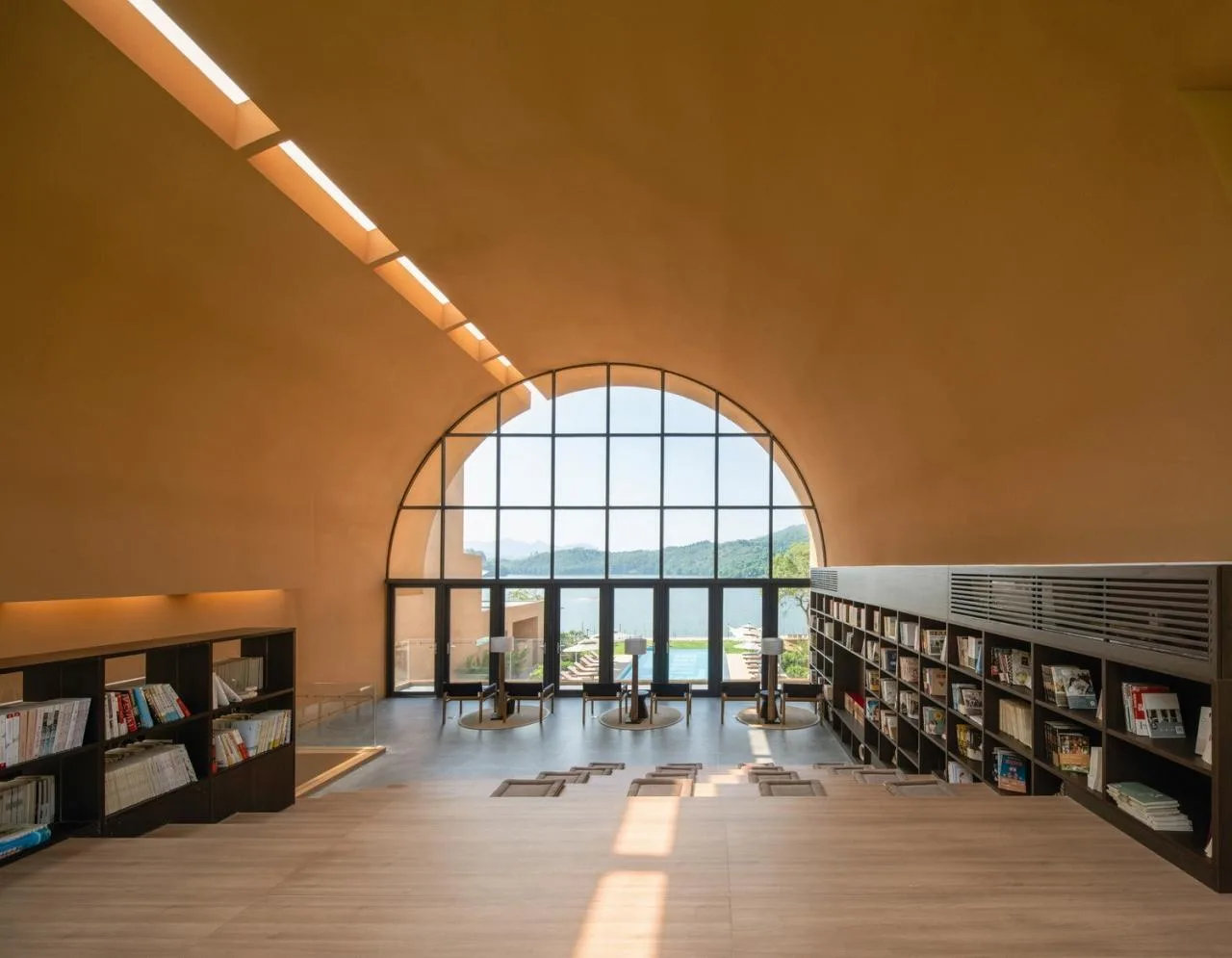
View looking back at Tianguang Lake © Wu Siming
Project Drawings
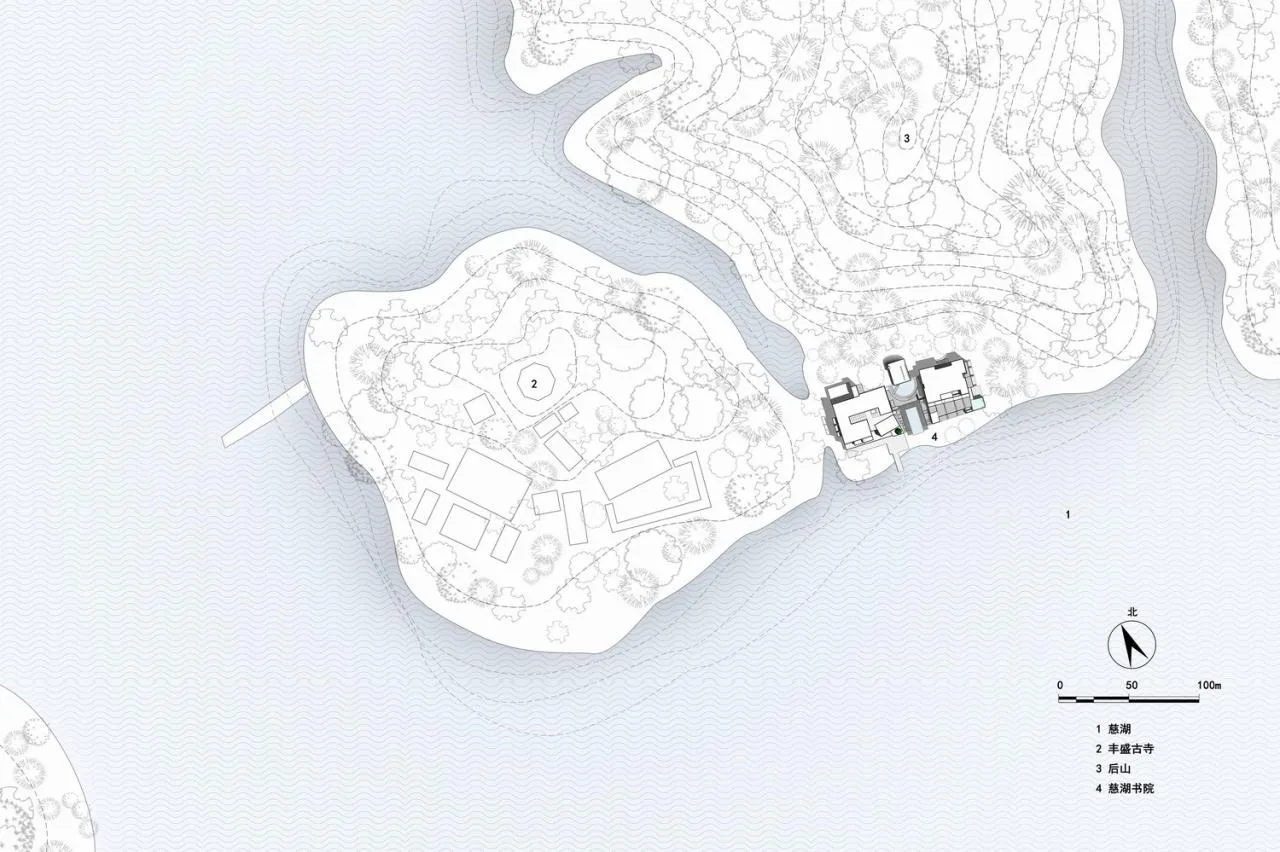
△ General layout plan © Buildings Outside the City
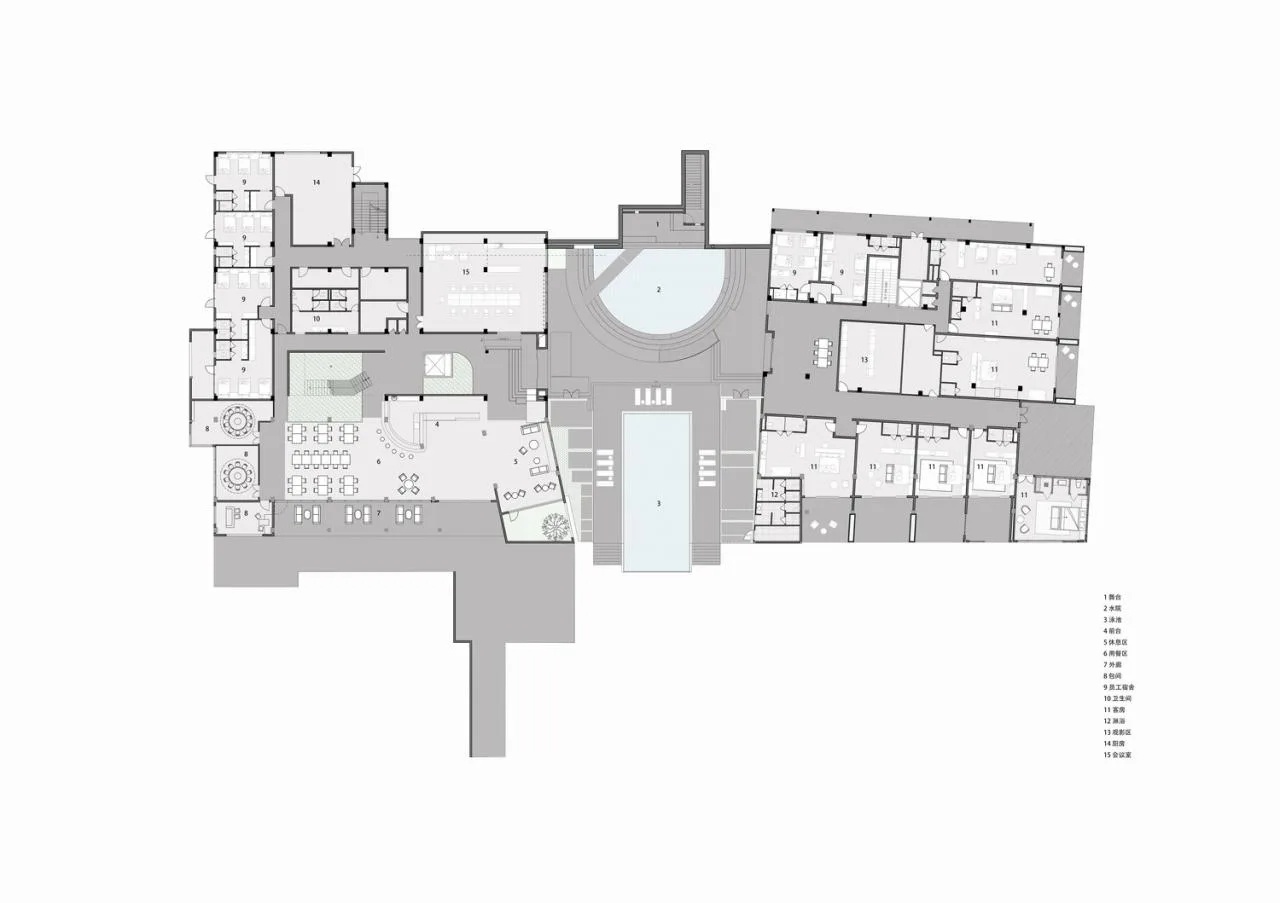
△ First floor plan © Buildings Outside the City
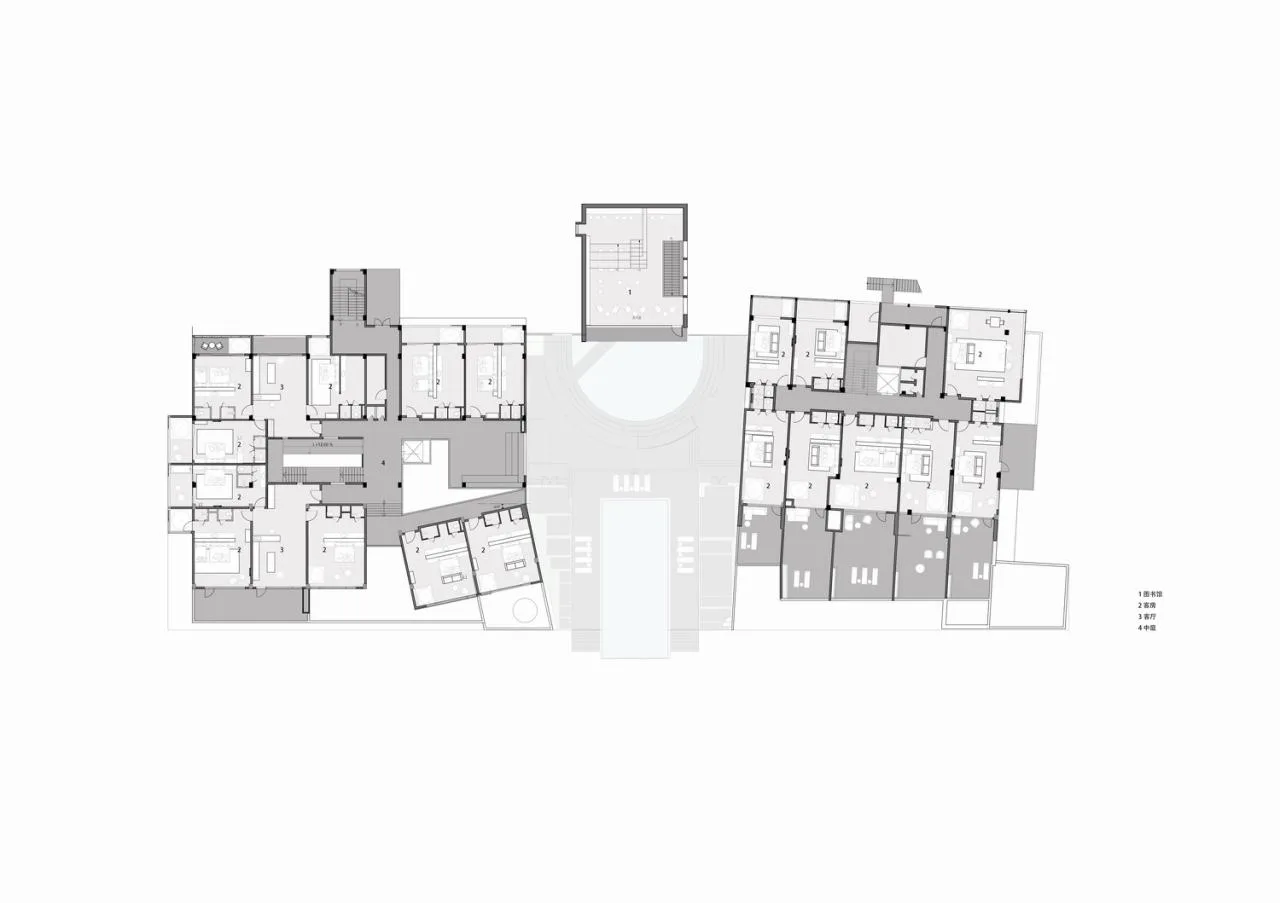
△ Second floor plan © Buildings Outside the City
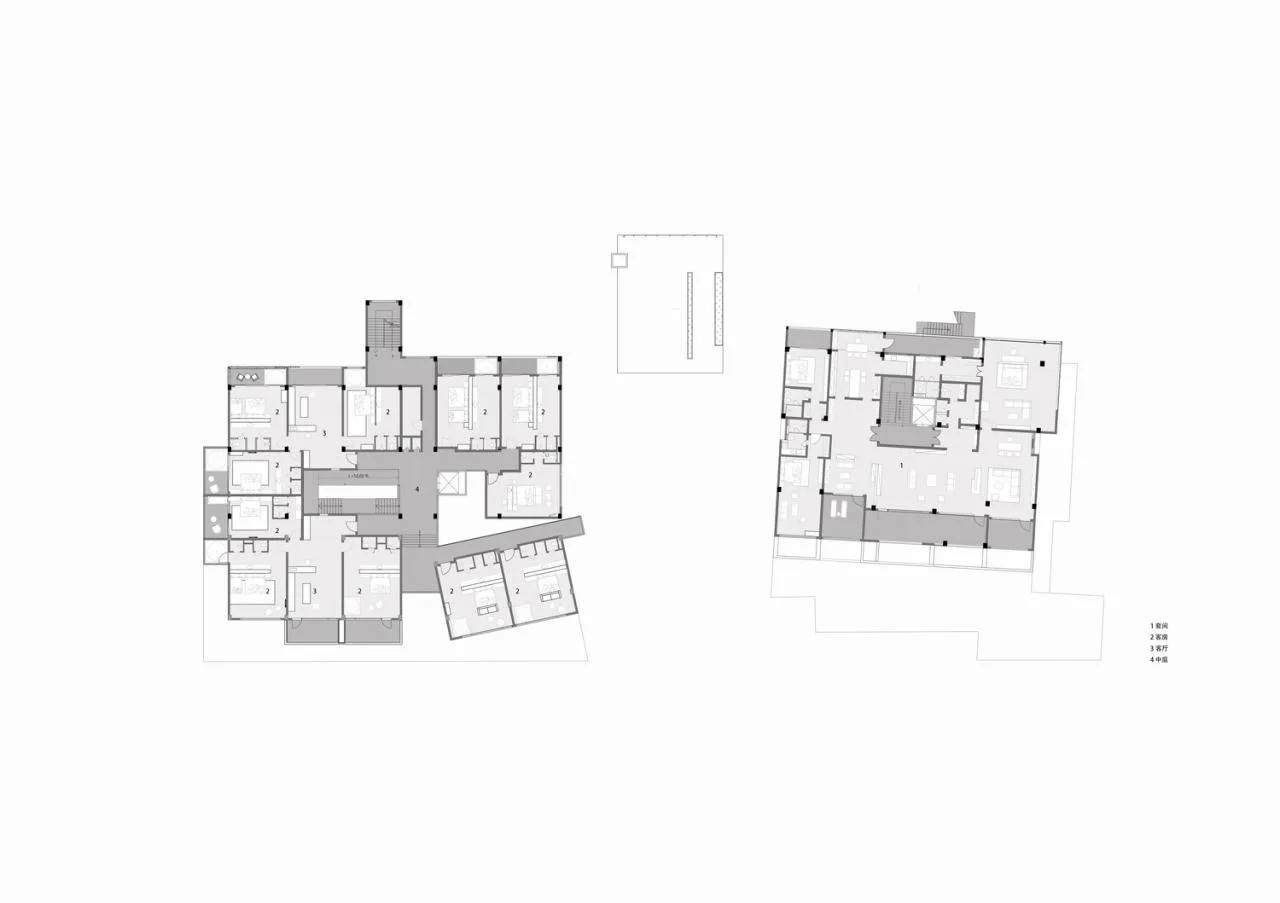
△ Third floor plan © Buildings Outside the City
Project Information
Project Name: Aishu Cihu Academy
Designer: Guangzhou Outer City Architectural Design Co., Ltd
Main Creative Team: Chen Jieqi, Lin Wangming, Shen Yingying
Design Team: Xie Jinping, Lin Jiashan, Xie Yongbin
Design & Completion Time: September 2021 to May 2023
Project Location: Yingde City, Qingyuan City, Guangdong Province
Building Area: 3,945 square meters
Land Area: 8,500 square meters
Photography Credits: Wu Siming















Must log in before commenting!
Sign Up