
Located to the north of the project is the bustling commercial alley known as West Polishing Factory Pedestrian Street, while to the south lies the residential Luanqing Hutong, a classic small courtyard neighborhood that was traditionally suitable for living.
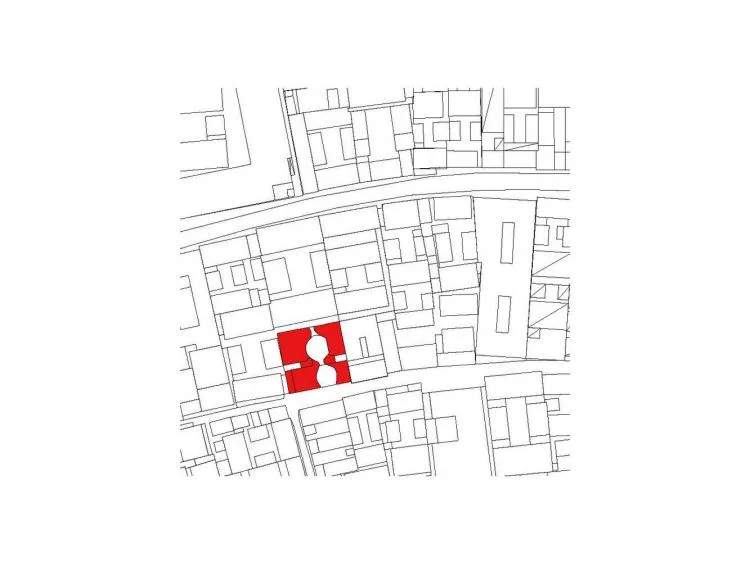
△ Project Location
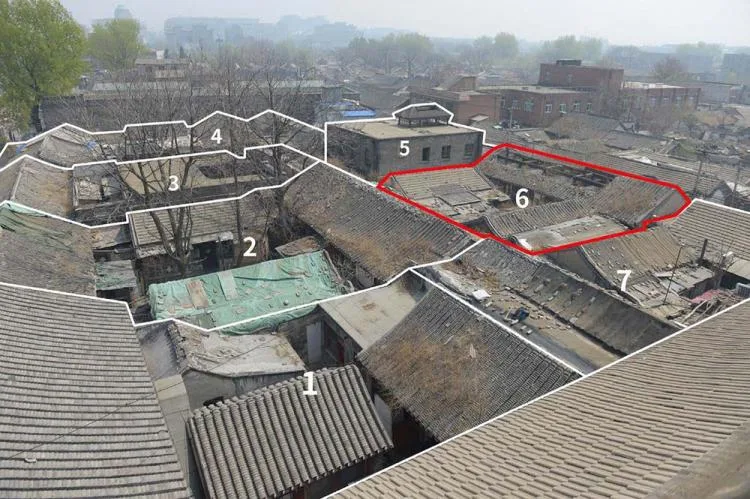
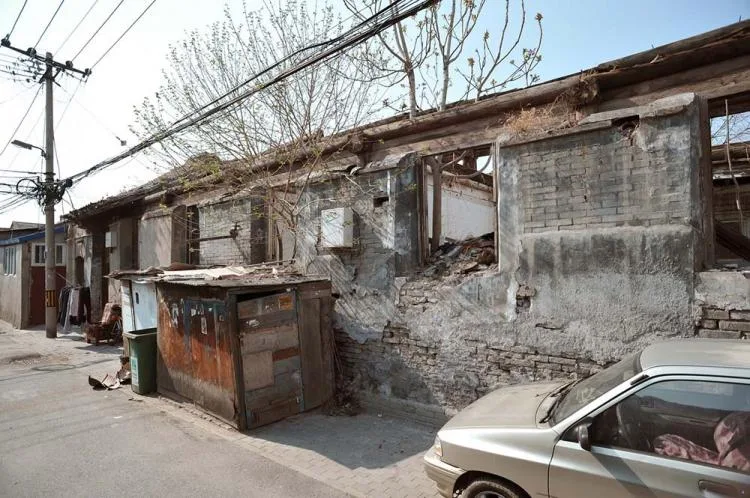
△ Original Condition of the Site
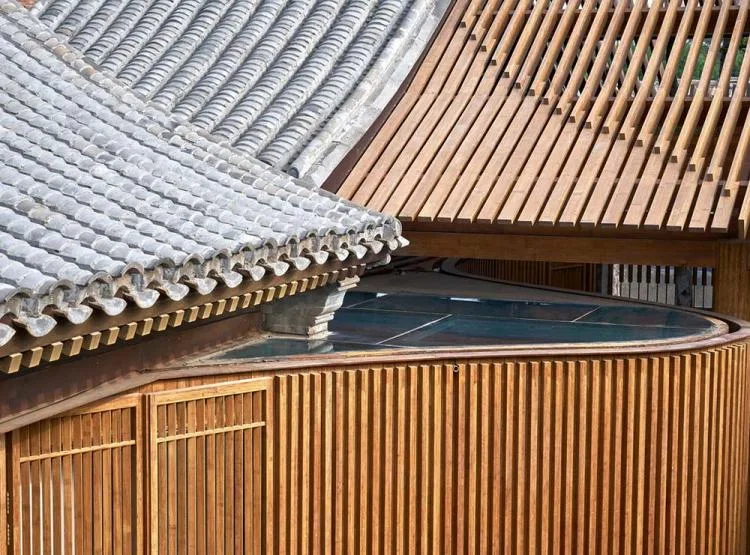
The house had suffered significant damage over time; its roof, doors, and windows had long since disappeared. Two trees had grown within the premises, which were preserved to create a “courtyard within the house.” The central roof is constructed with overlapping bamboo-steel beams that match the size of the original wooden frame, while the rafters are made from cross-shaped bamboo-steel components. This transparent bamboo-steel plate roof not only reflects the scale of the original roof tiles but also introduces ample sunlight into the central courtyard, promoting tree growth and providing a more open, airy atmosphere. The roofs on either side were restored following traditional methods.
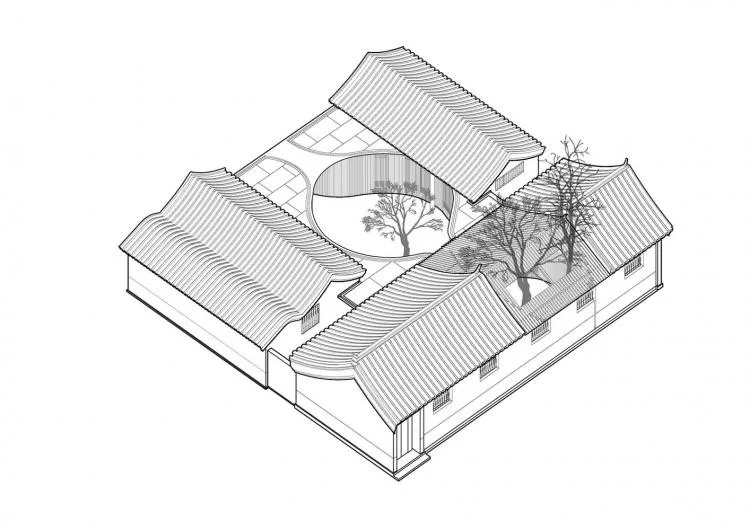
△ Overall Axonometric Diagram
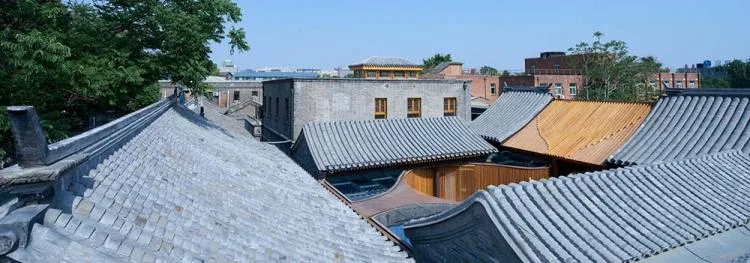
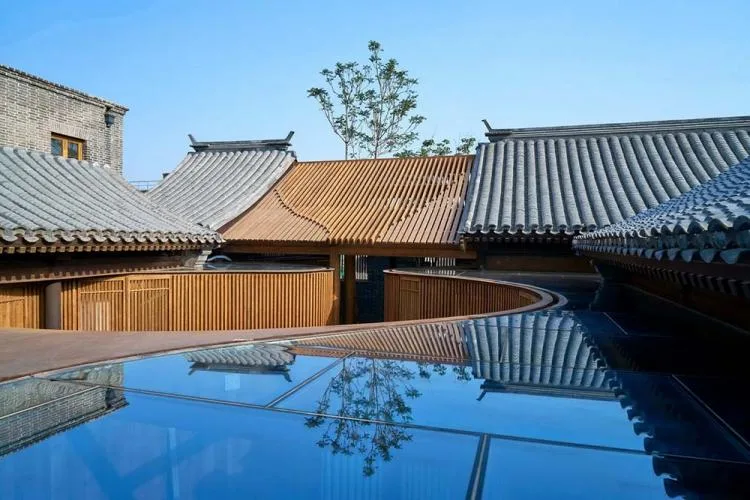
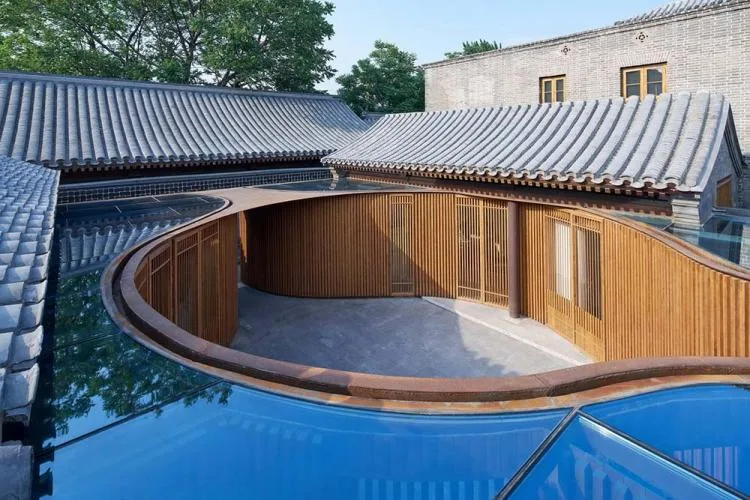
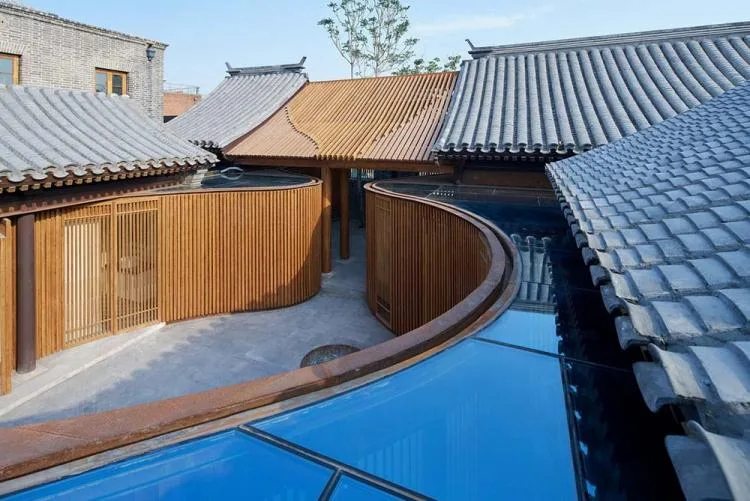
To maintain the original building area, we slightly expanded the size of the side rooms facing the courtyard, creating a gourd-shaped courtyard at the center. Additionally, the north entrance porch was intentionally reduced in size, resulting in a distinctive “gourd courtyard” pattern with two connected spaces.
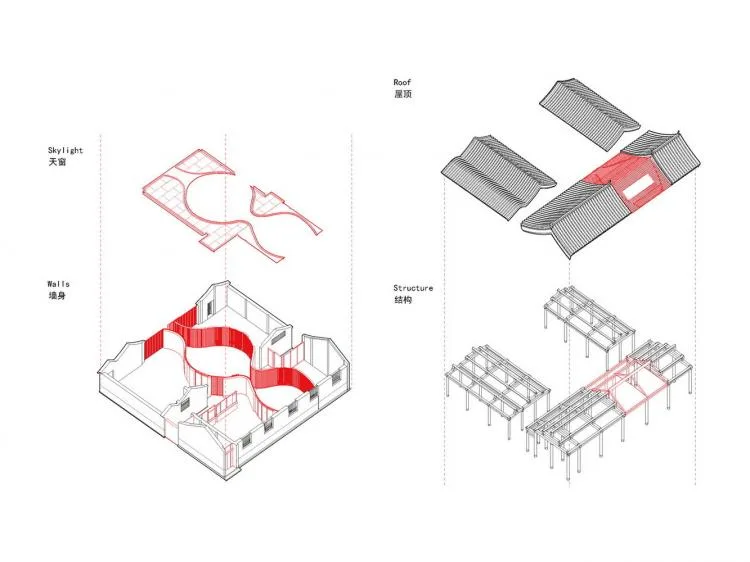
△ Exploded Axonometric Diagram
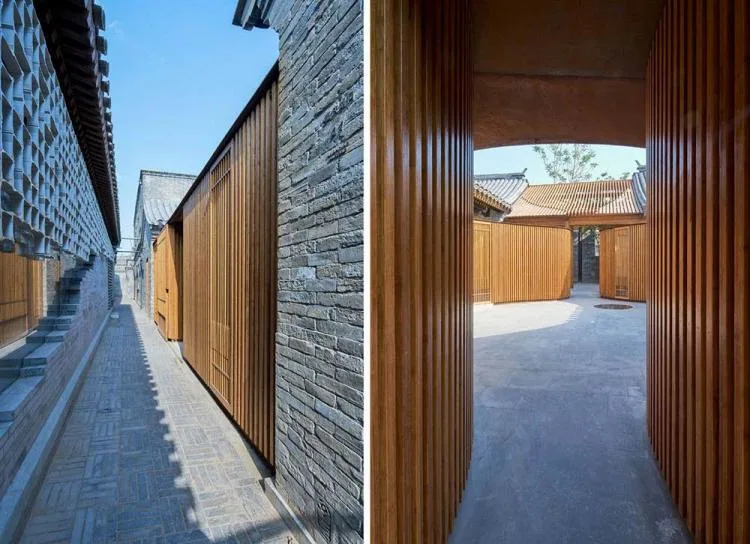
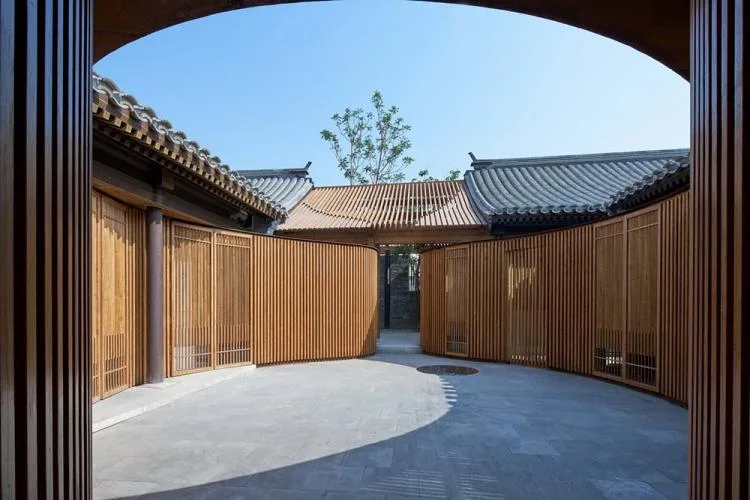
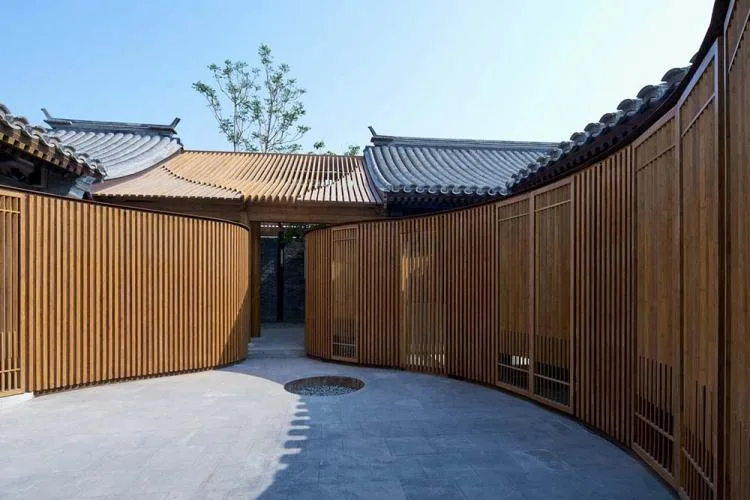
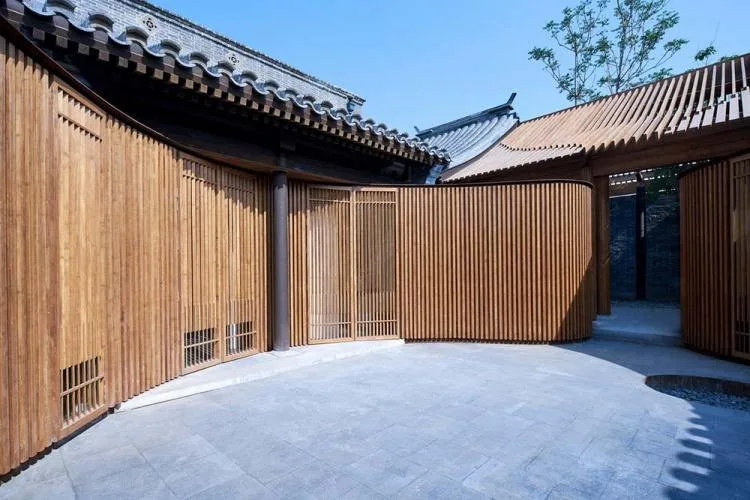
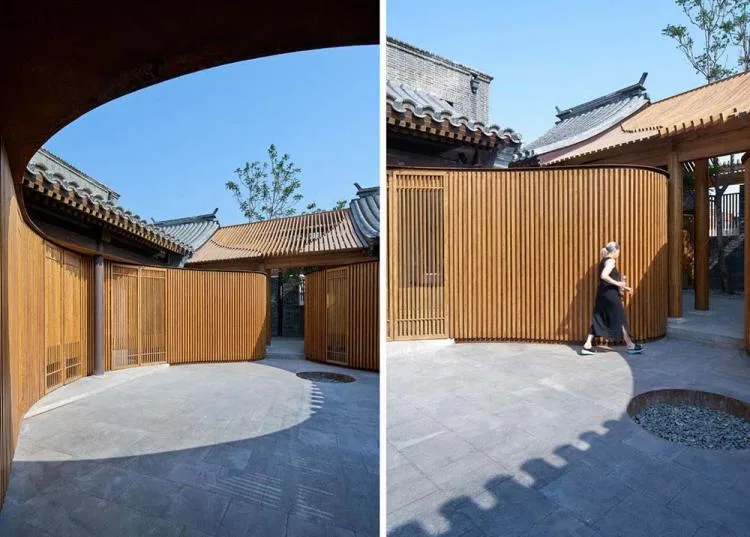
The continuous vertical barriers create a curved wall that flows like dragons and snakes within the orderly courtyard, dividing the space into flexible, leisurely areas. This curved wall features a series of bamboo and steel screen doors that can be opened or closed, with skylights positioned between the wall and the original building. The screens filter the strong sunlight entering the courtyard, providing a relatively private interior space. The indoor areas are open to the sky but enclosed from the courtyard, enhancing the courtyard’s inward-focused and spiritual quality.
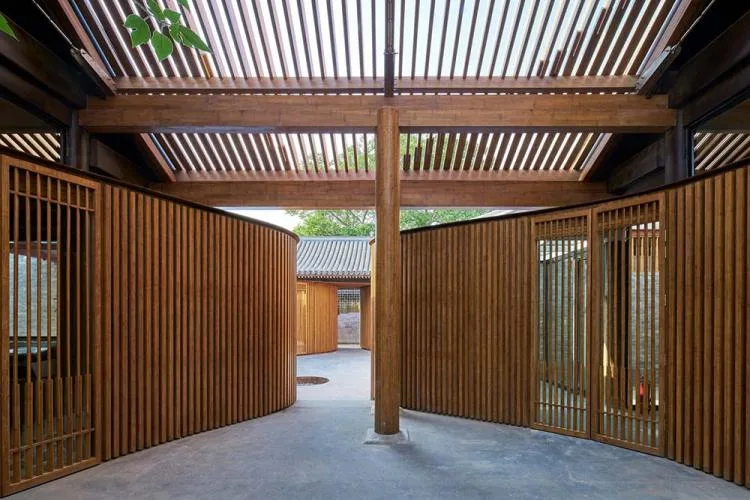
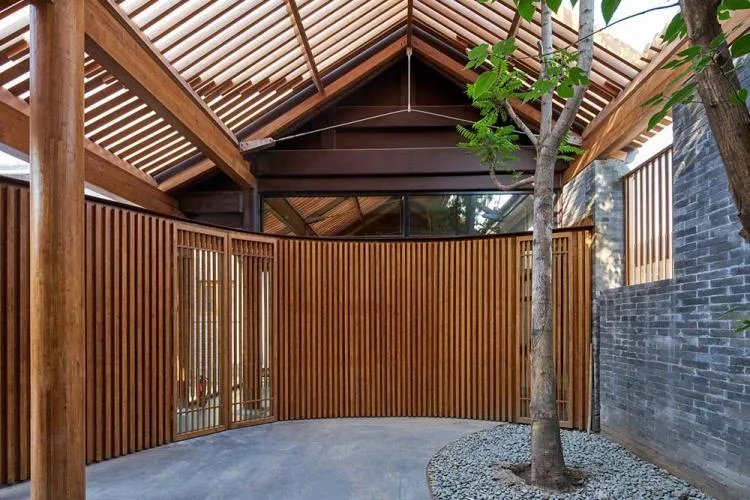
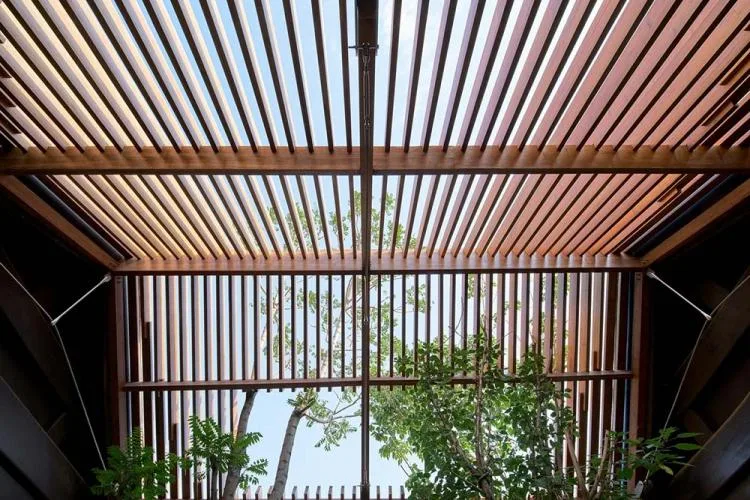
The small courtyard is functionally divided into three units. The east wing and the southeast corner room form a complete small loft apartment suitable for living, while the southwest corner serves as a two-bay office space. The deep western wing is designed for exhibitions and events, which can be divided or combined as needed. Additionally, the two entrances located on the north and south sides can be used independently.
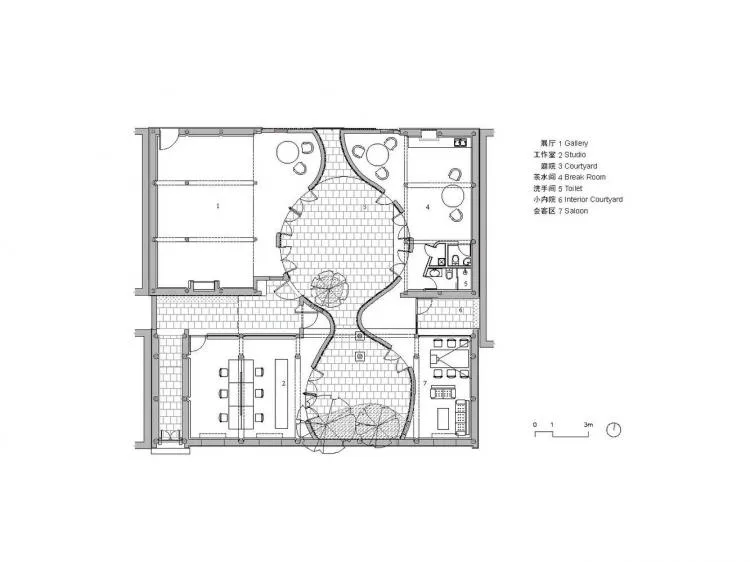
△ First Floor Plan
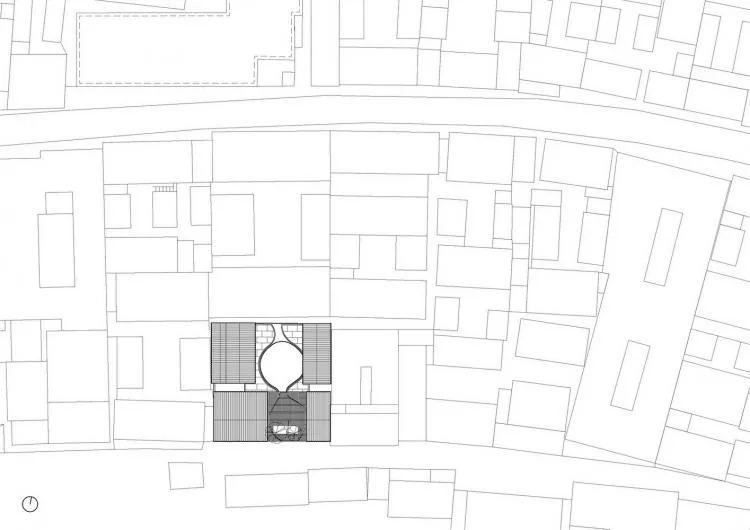
△ Roof Plan
This design preserves the original courtyard’s texture while restoring the traditional layout and historical appearance on the exterior. Inside, it creates a unique spatial experience, offering an inward-looking world that reflects both external and internal qualities. The goal is to rebuild a sense of inner peace amid the city’s hustle and bustle, thereby establishing a universal spatial model for urban regeneration.
Project Information
Project Type: Renovation Project
Architectural Design: URBANUS Urban Practice
Area: 234 m²
Project Year: 2017
Photographer: Chaoying Yang
Lead Architect: Mengyan
Project General Manager: Li Yali
Technical Director: Yao Yongmei
Project Architects: Li Jing, Li Yongcai
Project Team: Fang Xue, Lu Jing, Liu Yu, Bernat Riera, Jin Chenjia (scheme design); Li Yongcai, Wang Zhe (construction drawings); Zhang Yuanyuan, Cui Yi, Wang Sijie (equipment construction drawings)
Client: Beijing Tianjie Group Co., Ltd
Collaborative Design: Hejie Architectural Consultant (Beijing) Co., Ltd. / H&J International, PC (Structural Engineering)
Construction Drawing Design: Mutual Alliance Architectural Design (Beijing) Co., Ltd












Must log in before commenting!
Sign Up