
1. Project Overview
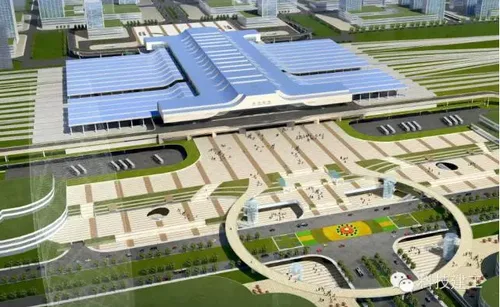
Lanzhou West Station is situated in Qilihe District, in the heart of Lanzhou City. The station is bordered by Xijin West Road to the north, a major urban thoroughfare, and Jianxi West Road to the south. Subway Lines 1 and 2 run underground through the station area. The station building features a floor plan measuring 370 meters by 260 meters, with a maximum span of 66 meters and a maximum height of 39.55 meters. The total area covers 117,854 square meters, including a canopy coverage of 102,000 square meters.
2. Main BIM Application Achievements
2.1 Schedule Control Using BIM Technology
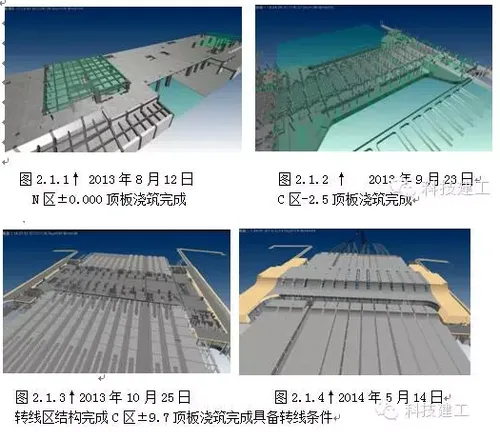
During the structural construction phase, a four-dimensional (4D) simulation was created by integrating a three-dimensional (3D) model with the project timeline. This approach transforms traditional two-dimensional schedules into a visual, 3D format, enabling management to identify and address potential issues early. This allows for schedule optimization and ensures accurate planning and execution. The close integration of 4D simulation with on-site construction activities helped ensure timely project completion.
2.2 Construction Plan Simulation and Optimization with BIM
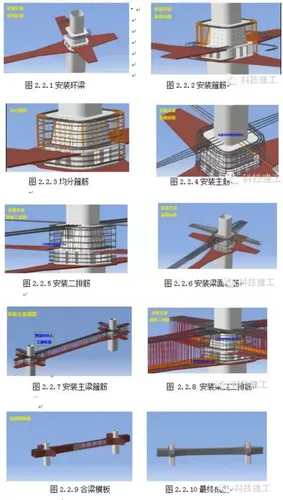
The connection nodes between steel pipe columns and concrete beams at a height of 9.45 meters were particularly complex. BIM technology allowed precise modeling of these nodes, accurately depicting steel bars and sleeves. Using Delmia software for process simulation, adjustments were made to the connection method—changing from sleeve connections to ring plate welding—to better accommodate operating space and steel bar arrangement. This change significantly reduced construction time while maintaining quality. The node acceptance rate achieved was 100%.
2.3 Visual Communication Enhanced by BIM
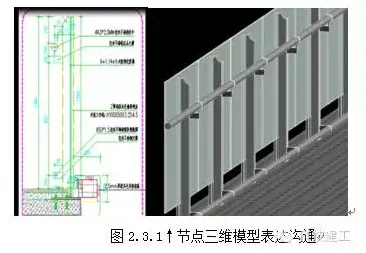
At the project’s outset, the BIM strengthening plan addressed communication challenges between the construction and design teams. By supplementing traditional 2D drawings with 3D models, technical concepts were conveyed more effectively, accelerating decision-making processes.
Before steel structure assembly, lifting operations were simulated, incorporating site conditions and obstacles to optimize lifting routes and sequences. This simulation ensured the feasibility and safety of the lifting plan.
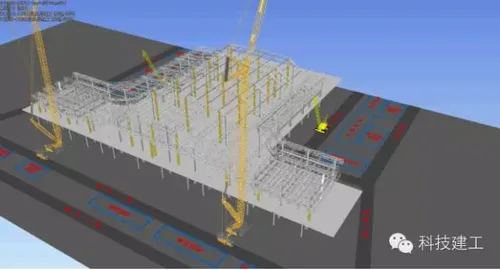
Figure 2.3.2 ↑ Steel Structure Lifting Simulation
2.4 Mechanical, Electrical, Fine Decoration, and Curtain Wall Deepening Design Using BIM
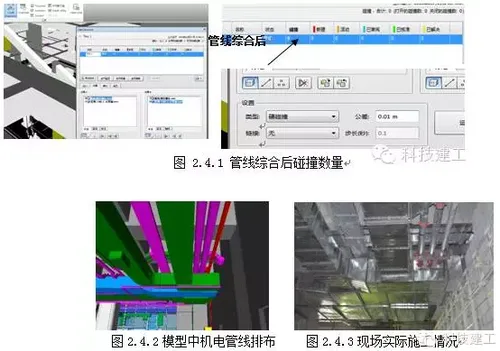
Lanzhou West Station, as a large-scale railway hub, incorporates over 20 mechanical and electrical systems, including power, water supply, drainage, ventilation, and air conditioning. BIM was employed for detailed design and integration of these systems within a 3D model, achieving a mechanical and electrical installation pass rate exceeding 90% on the first attempt. Coordination with architectural and structural models ensured pre-planning of reserved openings to avoid misalignments or clashes during construction.
For key fine decoration areas, Revit was used to create detailed models, dividing and representing modular units. Renderings were generated to allow management to control wall, ceiling, and floor modules, ensuring the desired decoration outcome.
A representative curtain wall section in the northwest corner was modeled in detail. Structural columns and embedded components were reserved in advance, and conflicts with mechanical, electrical, and structural elements were resolved to guarantee smooth curtain wall installation.
2.5 Cost Control Using BIM
By importing initial construction drawings into Revit and using its built-in scheduling functions, project quantities were directly extracted from the model. Following design changes and pipeline integration, the finalized model provided accurate quantities for materials such as concrete volume and pipeline length. This data served as a reference for budgeting and engineering quantity calculations. Material procurement was also monitored based on the model quantities to prevent over-ordering or shortages, effectively controlling costs.
2.6 Construction Safety Management Using BIM
Given the proximity to existing railway lines and their transfer, Lanzhou West Station faced significant safety challenges. BIM-based simulations, combined with on-site safety controls, guided the implementation of protective measures such as double-row vertical enclosed nets and isolation channels around adjacent lines. These steps ensured that construction activities posed no risk to railway operations during the transition period. Additionally, dynamic simulations of tower crane operations prevented collisions, safeguarding the safety of tower crane groups.
2.7 Document Management Using BIM 3D Models
Lanzhou West Station fully leveraged BIM’s information integration capabilities by associating process data and construction photos with corresponding 3D models on a software platform. This system allowed supervision and construction teams to monitor material status and site conditions in real time, while also providing access to original documentation. This ensured reliable data archiving for the project.
3. Summary
As the Railway Corporation’s first BIM pilot project, Lanzhou West Station successfully addressed numerous construction challenges across the entire project lifecycle through comprehensive BIM application. This approach ensured the project timeline was met and established a unique site management model centered on BIM-enabled data, cost, and safety control. The project received widespread acclaim from the construction teams and laid a strong foundation for the station’s successful opening and operation.












Must log in before commenting!
Sign Up