
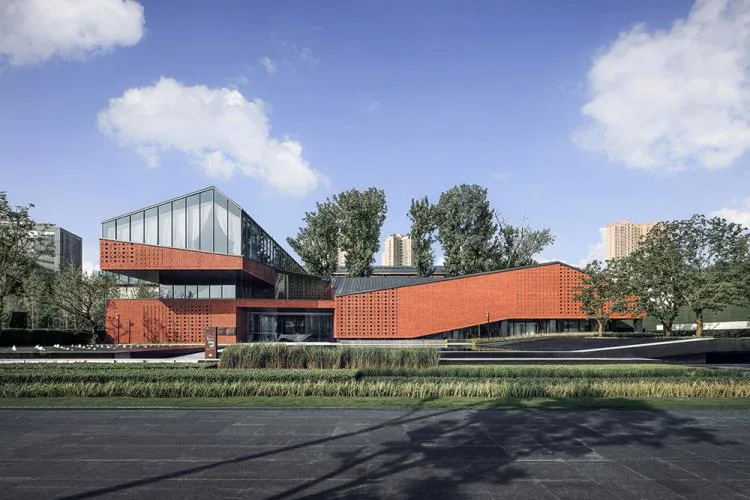
There Is Only One 1890 in Wuhan
Wuhan Hanyang Iron Works was established in 1890 by Zhang Zhidong, a distinguished minister during the late Qing Dynasty. It stands as the first large-scale steel joint venture in modern China, and even in Asia. This milestone marked the dawn of China’s steel industry and has been recognized by the West as a symbol of China’s awakening.
In 1938, the Japanese army invaded Wuhan, forcing the relocation of the Hanyang Iron Factory to Dadukou, Chongqing, while the remaining factories were destroyed by bombing. After the founding of the People’s Republic of China, the Hanyang Iron Factory was rebuilt on the site of the original Hanyang Gunpowder Factory. In 2007, the factory relocated once again, ceasing production at the old site. Following urban redevelopment, the remnants of the factory buildings and machinery from the last century across the southern area of the ironworks have been meticulously preserved.
This pioneering state-owned steel enterprise has experienced both glory and decline, reflecting the resilience and challenges faced by modern national industries. The historical relics on this site bear witness to the struggles and transformations of Chinese enterprises, composing a poignant narrative of their journey.
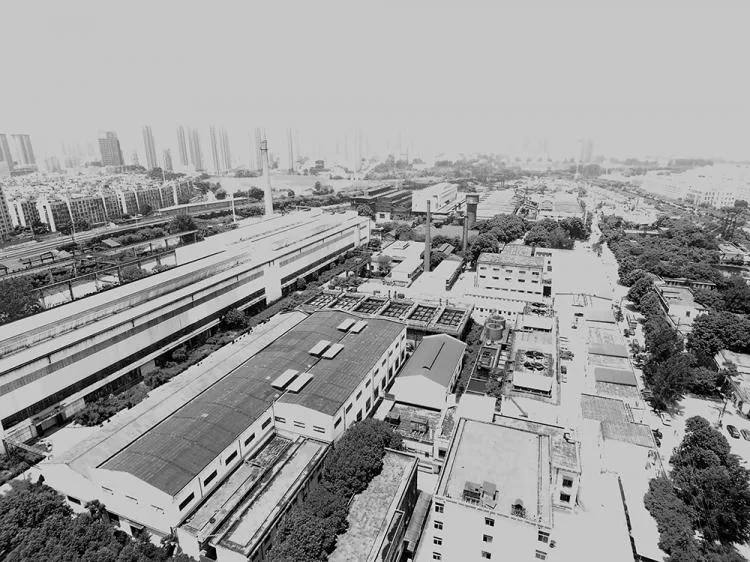
△ Historic photos of the factory area (Image courtesy of the owner)
The factory site is situated south of Qintai Avenue, north of Handan Railway, and southwest of Yuehu Lake, spanning 40 hectares and resembling the shape of a warship. At the stern of the site stands the Zhang Zhidong Museum, designed by world-renowned architect Daniel Libeskind, which opened in 2018.
The Hanyang Iron Factory Industrial Site serves as a significant spatial carrier for the development of ethnic industry and modern industrial culture in Wuhan and forms a vital part of the “Ten Mile Industrial Corridor” along the Yangtze River. In 2017, the Ministry of Industry and Information Technology designated the Hanyang Iron Works as part of the first batch of national industrial heritage sites and identified core elements for protection. It remains the only industrial site on the list in Wuhan and the largest cluster of industrial heritage in the city.
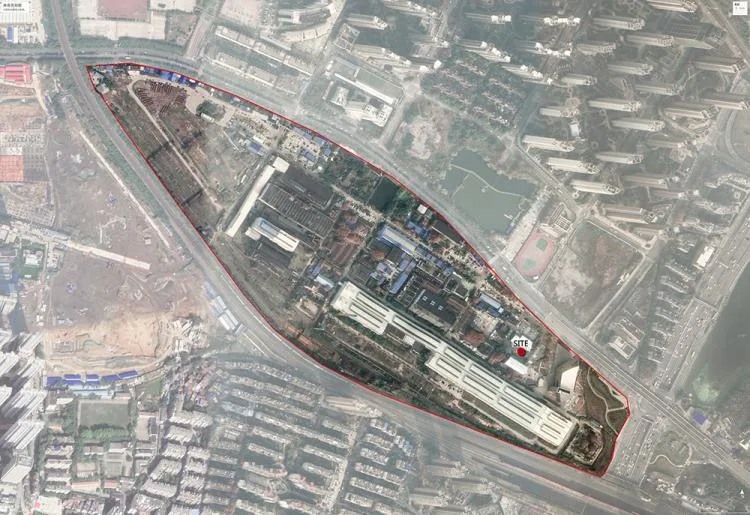
△ Overall layout of the factory site
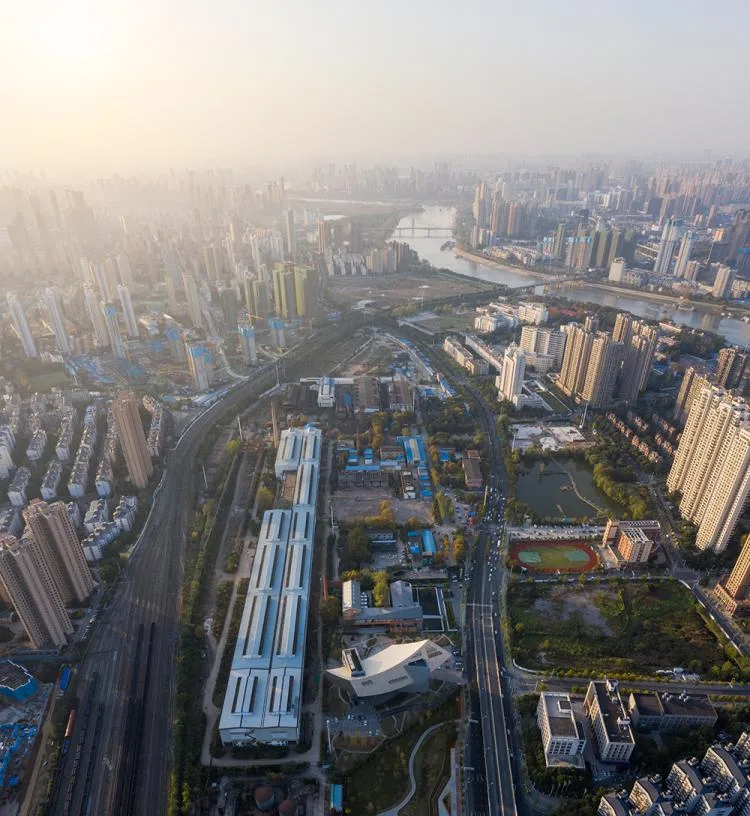
Bird’s-eye view of the factory complex
Preservation or Demolition?
Since the 1980s, China’s rapid urban development has triggered a wave of “renovation fever,” leading to the replacement of many outdated and low-quality buildings. Structures from the 1980s and 1990s struggled to keep pace with swift economic growth, necessitating extensive renovations to accommodate new functions. Additionally, as China shifted away from heavy industry, much industrial land was abandoned. Internationally, there has been growing recognition of the value in repurposing industrial land, a trend now embraced by the Chinese government and developers who see its potential.
The factory buildings, with their distinctive scale and historical significance, carry deep memories for former workers and local residents. Renovating and revitalizing these old structures to bridge past and present, and to reinvigorate the spirit of the surrounding area, is a responsibility that developers and architects shoulder in honoring local history and culture.
The pilot zone’s predecessor consisted of two factories facing the Zhang Zhidong Museum: a one-story factory building used as an oxygen installation station built post-1980s, later converted into a temporary badminton court and classified as a third-level industrial heritage site; and a two-story oxygen production workshop built in 1968, providing oxygen and compressed air for steelmaking, classified as a second-level industrial heritage site. The latter is well preserved, featuring red brick exterior walls covered with ivy that has flourished for decades, and spacious, intact interiors.
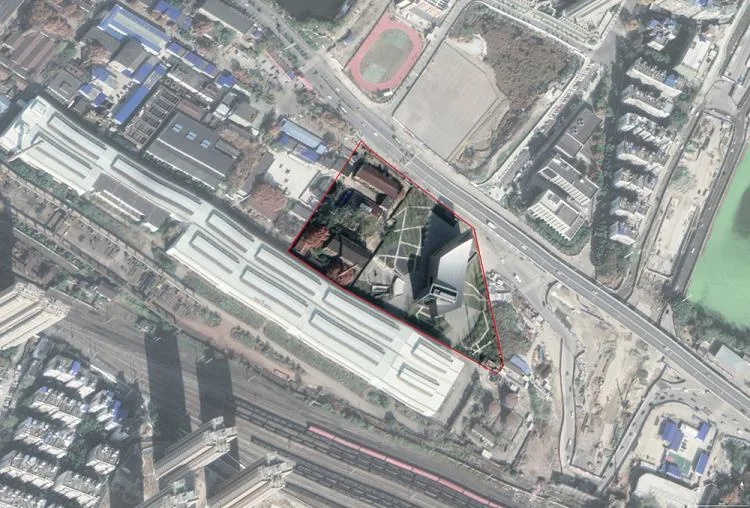
△ Site selection for the pilot zone
Following multiple on-site surveys, the design team mapped the exact locations of the old factory buildings and preserved trees. The plan involves demolishing buildings constructed after 2000 that lack heritage status. Trees with a diameter greater than 50cm will remain in place, while smaller trees will be transplanted nearby. All chimneys on site will be fully preserved.
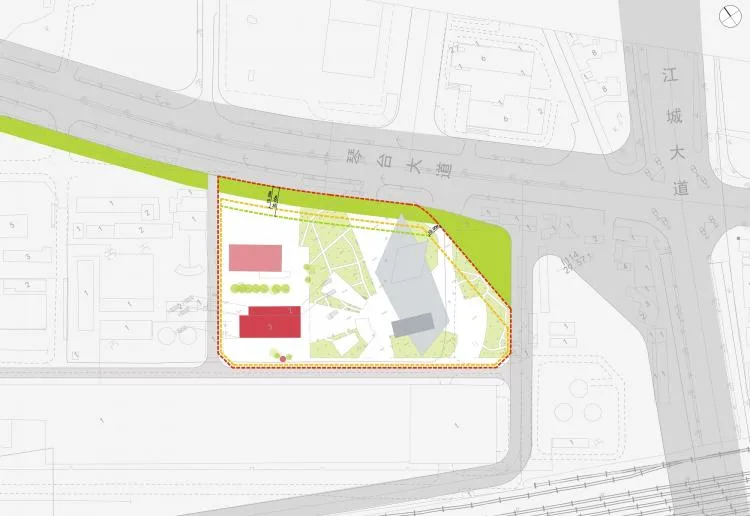
Current overview of the pilot area: third-level industrial heritage factory to the north, second-level industrial heritage factory to the south, and Zhang Zhidong Museum to the east
The Hanyang District planning department in Wuhan has cataloged and classified industrial sites throughout the area and proposed detailed guidelines for renovating industrial heritage buildings. The protection and utilization principles differ slightly between third and second-level industrial heritage sites.
For the third-level industrial heritage factory, the approach is to reinforce the structural integrity, redesign exterior walls, and introduce industrial-style curtain walls and steel structures. The second-level industrial heritage site focuses on conservation, repairing exterior walls to maintain their original appearance and repurposing the interior space.
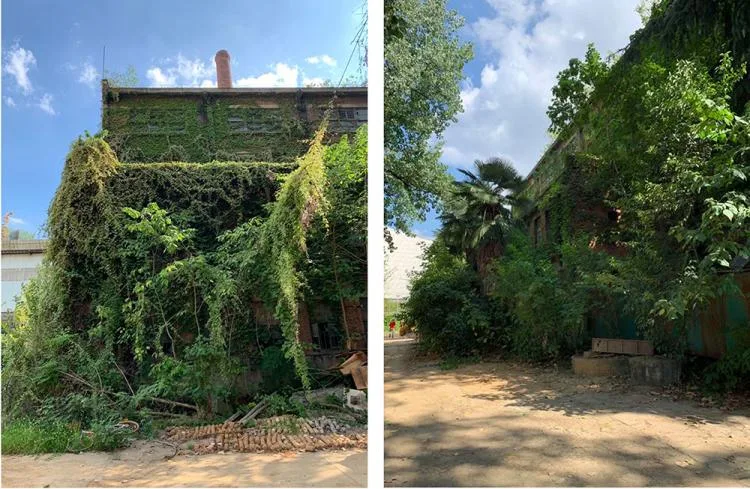
Before renovation of the second-level industrial heritage factory building
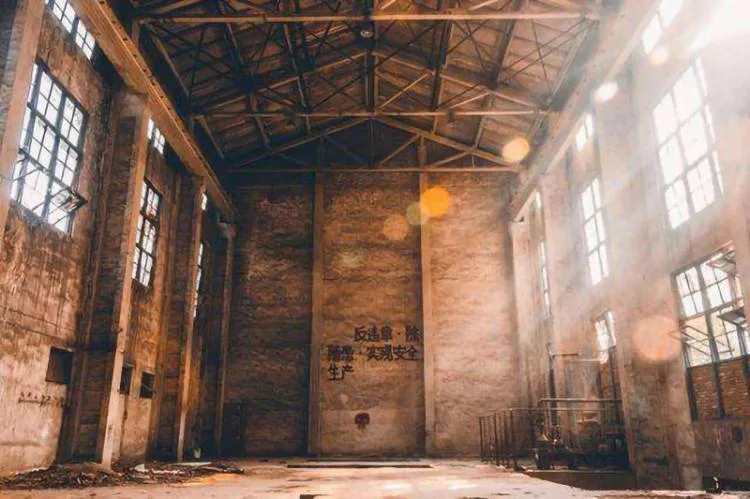
Interior view before renovation (Image source: Internet)
Bridging History and Modernity
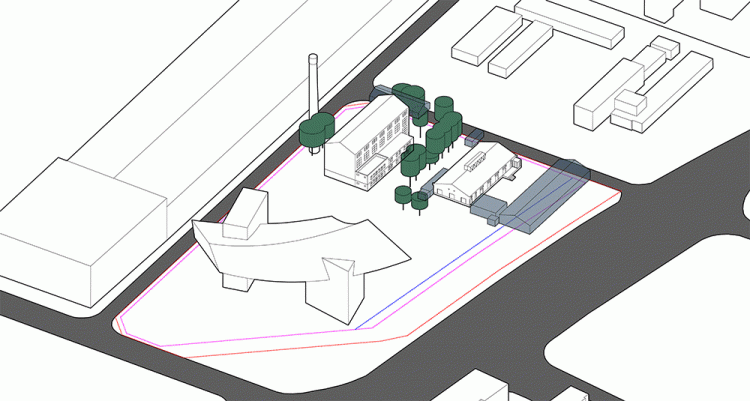
△ Design concept diagram
The design preserves the original building structure and spatial relationships, respecting the volume of the remaining factory buildings. A cantilevered horizontal structure connects the two factories, introducing new functions and circulation paths. This composition encloses a modestly sized, inward-facing courtyard that is both independent and connected to the fully open entrance square of the Zhang Zhidong Museum to the east.
The new roof system extends from the original factory buildings, breathing fresh life into the historic structures while integrating them with contemporary architecture.
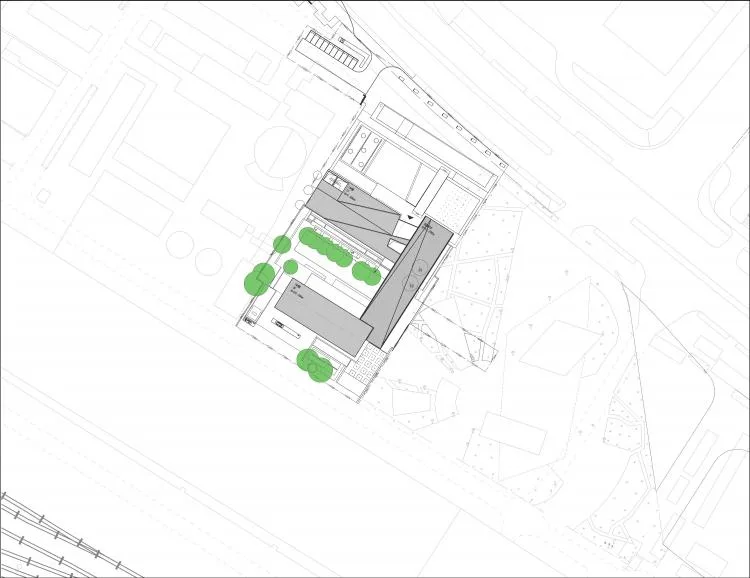
△ Overall plan after renovation
By applying varying levels of preservation and renewal to buildings of different heritage classifications, the two factories form a cohesive architectural ensemble. The bold, contemporary structures stand prominently along Qintai Avenue, with a spacious forecourt offering an excellent display area.
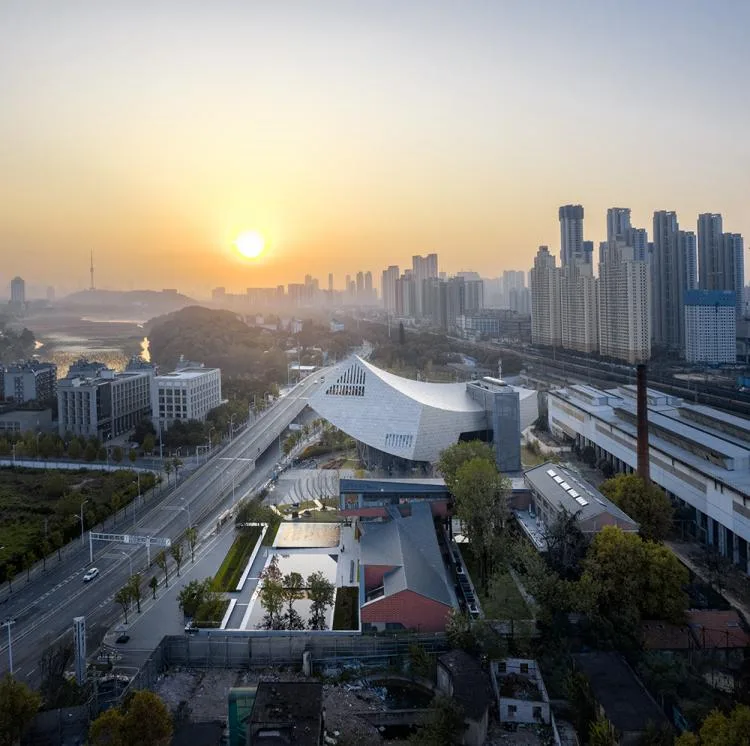
△ Realistic view after renovation
The design initiates a dialogue between the original architecture and the newly introduced functional spaces. The rectangular structure suspended between the two preserved buildings extends above ground until they intersect, forming a central public courtyard. This intervention not only adds a new floor but also creates a cohesive heart for the building where visitors can stroll, relax, or host markets and performances.
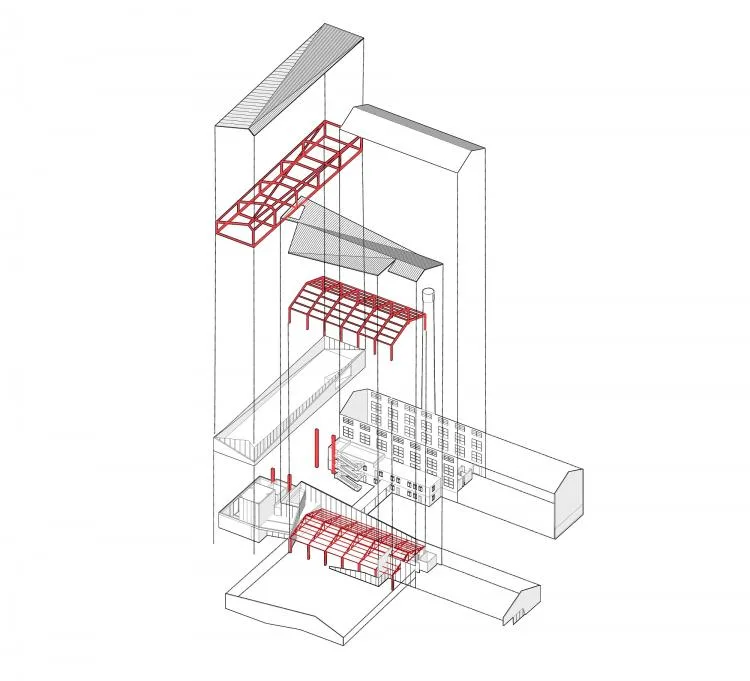
△ Axis analysis diagram
Reconstruction and Heritage
While the intrinsic value of the Hanyang Iron Factory remains significant, much of its original material was destroyed during wartime. The existing industrial site primarily consists of architecture from the period of China’s 15th Five-Year Plan after the founding of the People’s Republic.
Hence, the core design goal is to restore and transmit the cultural and spiritual essence of the Hanyang Iron Factory.
The third-level protected oxygen installation station near Qintai Avenue has an indistinct exterior and relatively low protection status. The design strategy involves reconstructing its exterior while selectively preserving internal structures. Portions of the building will be removed and replaced with modular frameworks to accommodate new spatial functions.
The façade will be reshaped using ceramic brick curtain walls and glass, topped by an irregular titanium zinc sheet metal roof that adds a dynamic fifth façade, complementing the grandeur of the adjacent Zhang Zhidong Museum.
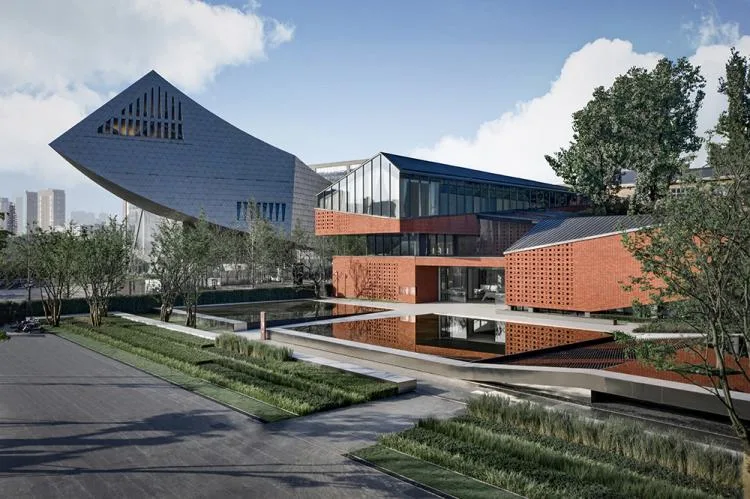
△ Main entrance © Qiwen Images
The project introduces an innovative brick pattern featuring a cross motif inspired by the brickwork of the factory’s only first-class protected building, the converter workshop. Designed by renowned Chinese architect Zhang Lianggao, the workshop’s diamond-shaped brick pattern serves as a reference.
This project uses a ceramic brick dry-hanging curtain wall system arranged with internal keels of varying lengths, creating a distinctive cross pattern. Echoing the bold design of the Zhang Zhidong Museum to the east, the brick walls are suspended lightly like curtains. The 100,000 bricks use only four basic modules organized into three different patterns, forming a unique architectural language as the fifth façade undulates dynamically.
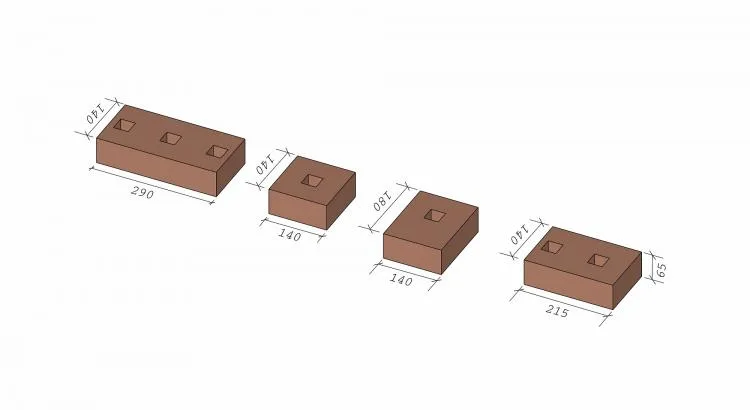
Four types of customized modular ceramic tiles
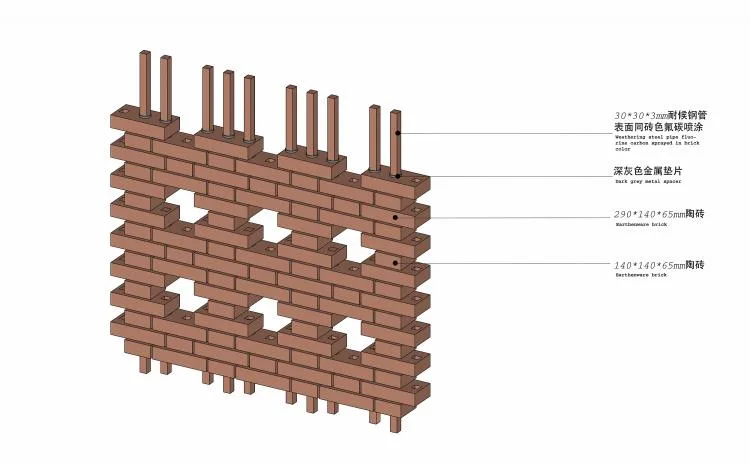
△ Cross-shaped curtain wall schematic
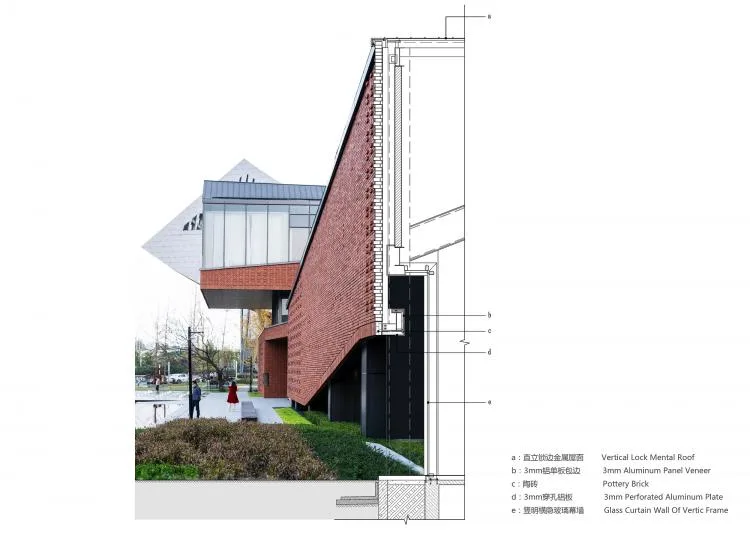
△ Detailed drawing of ceramic brick curtain wall
Inside the third-level protected building, several courtyards have been designed: fully enclosed courtyards improve lighting and ventilation, while semi-open courtyards on the outer side create private shared spaces enclosed by ceramic brick curtain walls.
These courtyards not only enrich visitor circulation for early exhibitions but also provide ideal spatial qualities for future shared office use.
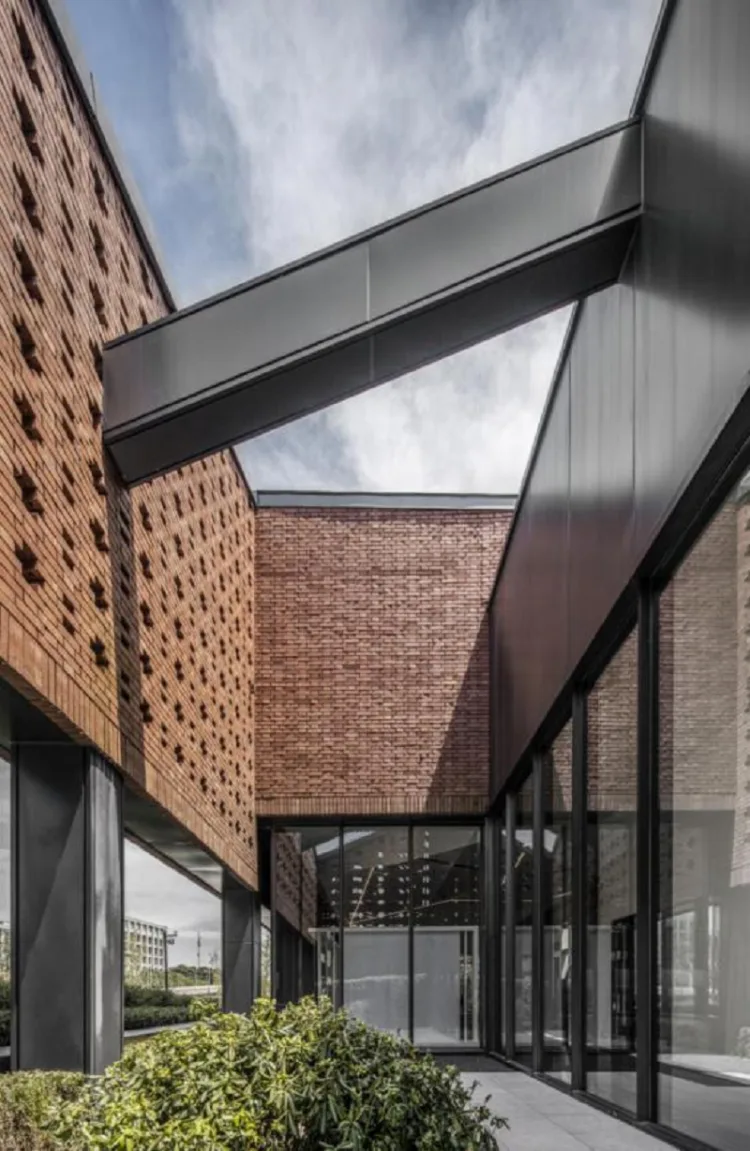
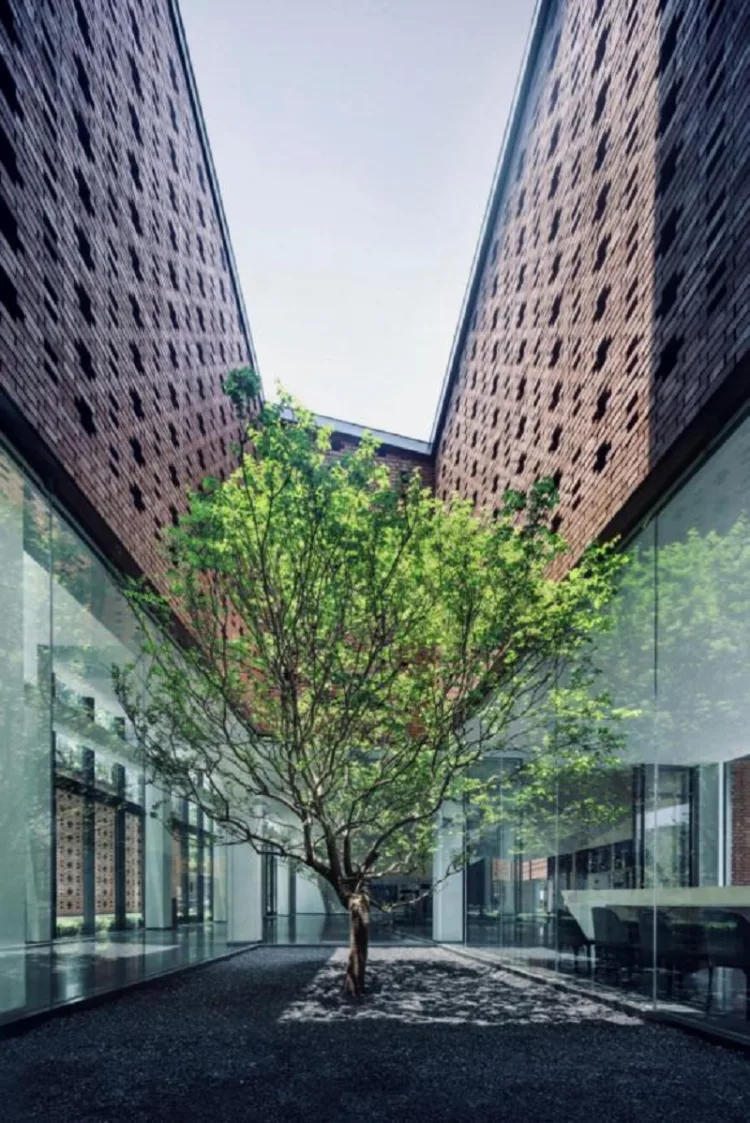
△ Daylighting courtyard in third-level protected building (Image courtesy of owner)
The oxygen production workshop, a two-story brick and concrete structure classified as second-level heritage, features a north-side two-story annex with varying height. Its red brick exterior, square windows, and polished cement mortar beams and columns remain well preserved.
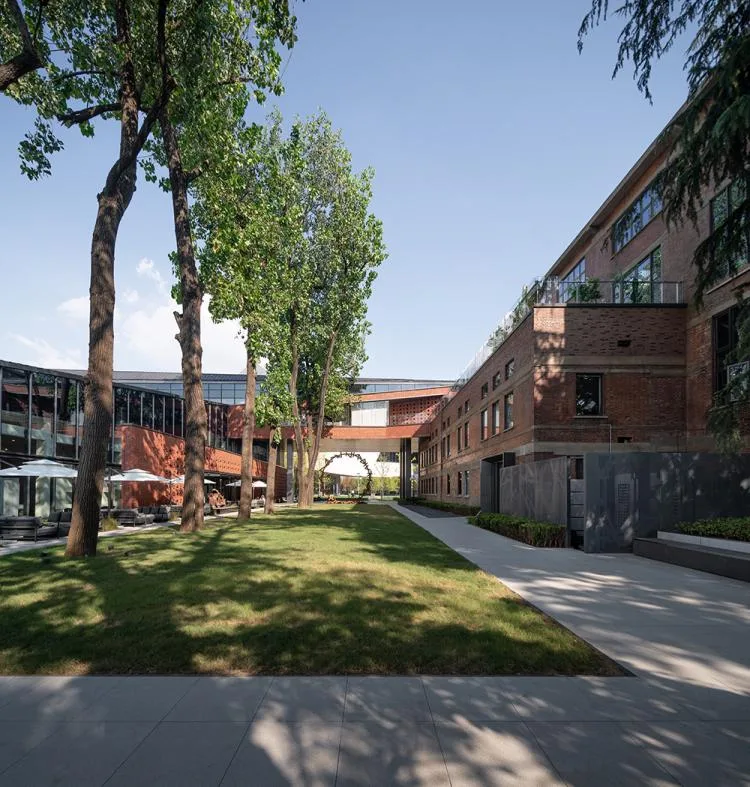
△ Interior courtyard
Within the courtyard, the second-level heritage façade is fully preserved. The annexes, originally varying in height, have been structurally repaired to form a continuous roof connected to an aerial corridor, creating a rooftop terrace for relaxation.
Standing at the courtyard’s center, visitors experience a juxtaposition of a modern building reflective of contemporary times and the “old factory building” carrying emotional and historical significance. Trees that have thrived for over 50 years continue to enrich the space.
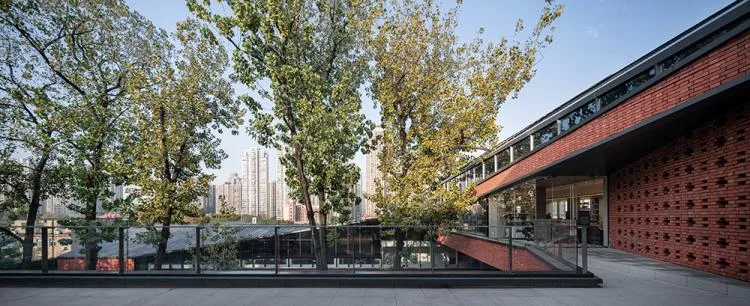
△ Aerial platform
Owners remarked that renovating one building proved more challenging than constructing ten new ones. The constrained interior space allowed only one vehicle at a time for clearing foundations of outdated industrial assembly lines. The renovation enhanced waterproofing and insulation through foundation reconstruction, strengthened old structures and walls to accommodate new uses, and introduced new floors detached from the main structure.
The traditional factory was transformed into a modern public building, meeting updated fire safety, smoke exhaust, and energy-saving lighting requirements. The original roof was removed and replaced with a new metal roof.
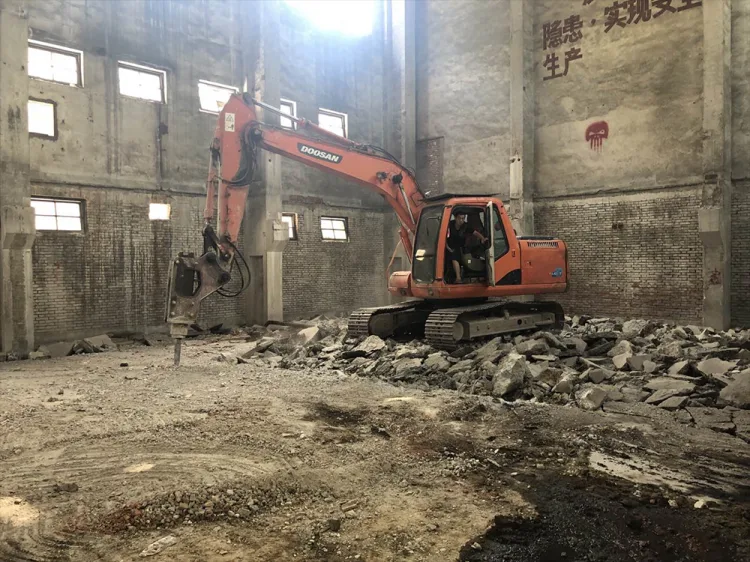
△ Construction site
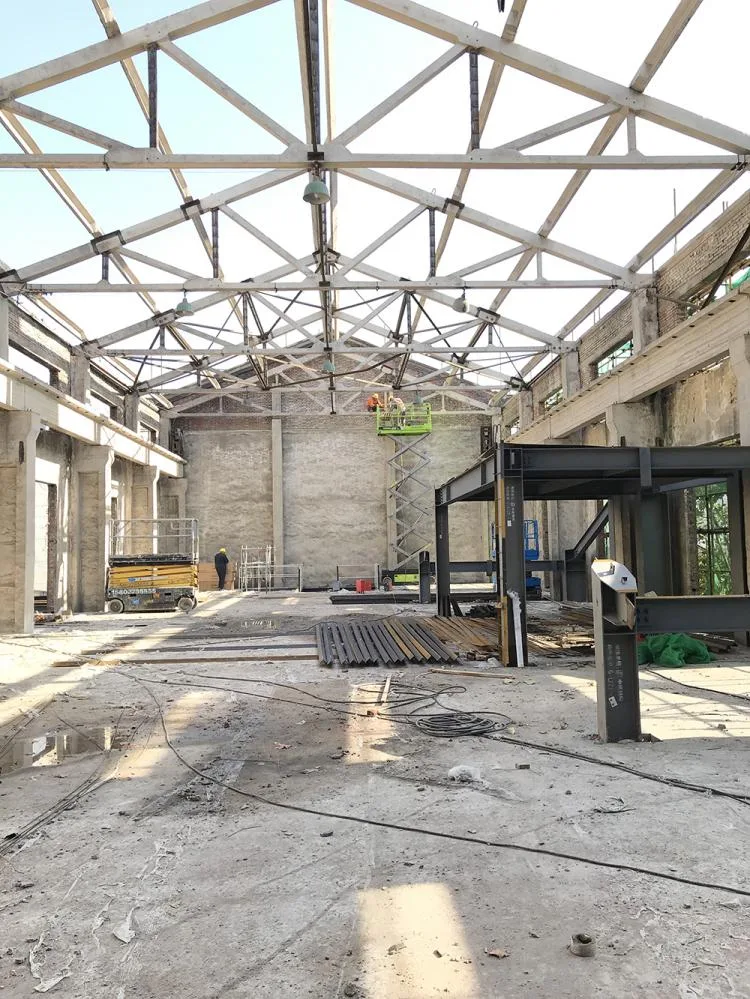
△ Roof demolition in progress
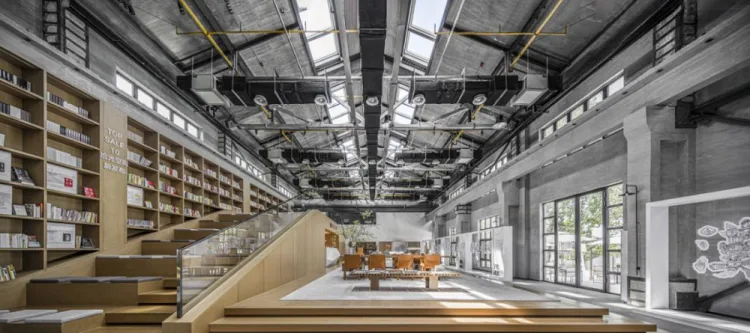
△ Newly renovated reading area
During construction, six façade restoration strategies were employed to repair the exterior of the second-level heritage building:
- Cleaning existing walls and joints, then applying a transparent, breathable waterproof protective coating
- Repairing damaged walls and restoring exterior color to match surrounding walls
- On-site plastering of new walls with a 10mm thickness, coated with artistic mortar matching surrounding colors
- Updating door and window openings
- Repairing and repainting outdoor pipelines with rust removal and dark gray anti-rust coating
- Repairing and repainting base lines
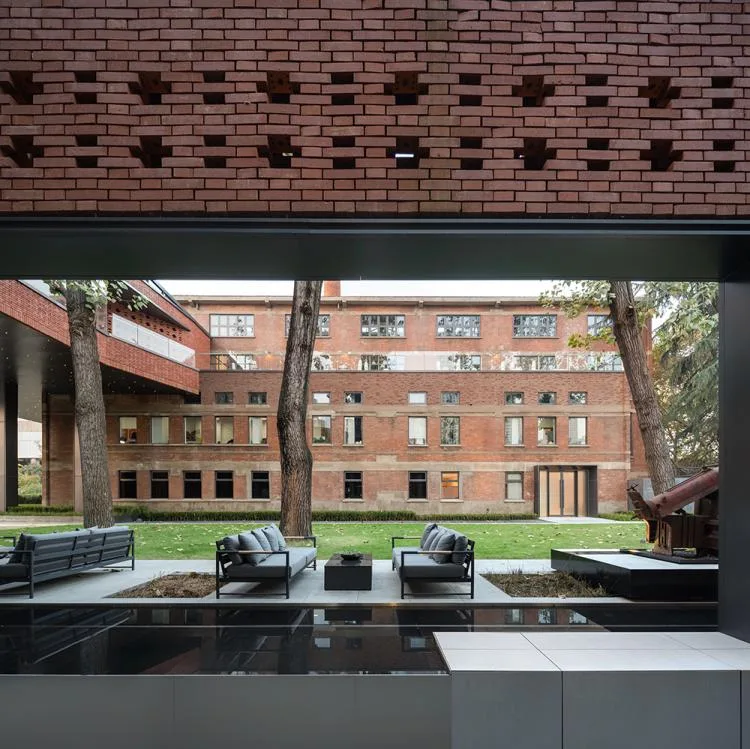
△ Façade restoration of second-level heritage building
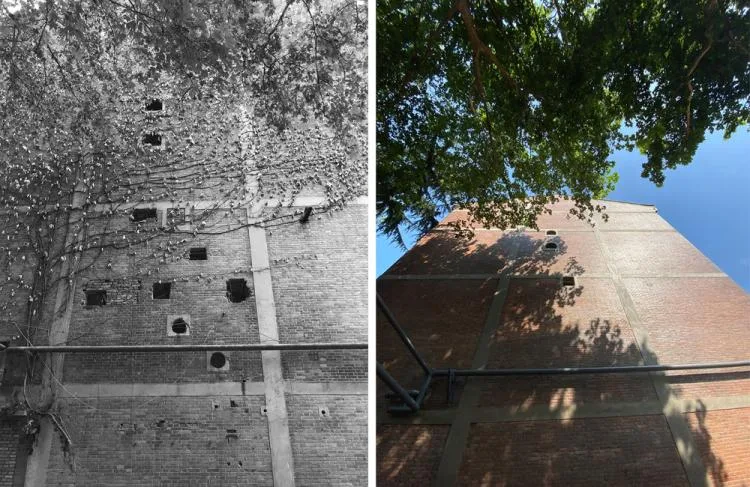
Before and after comparison of exterior wall repairs on Grade II protected buildings
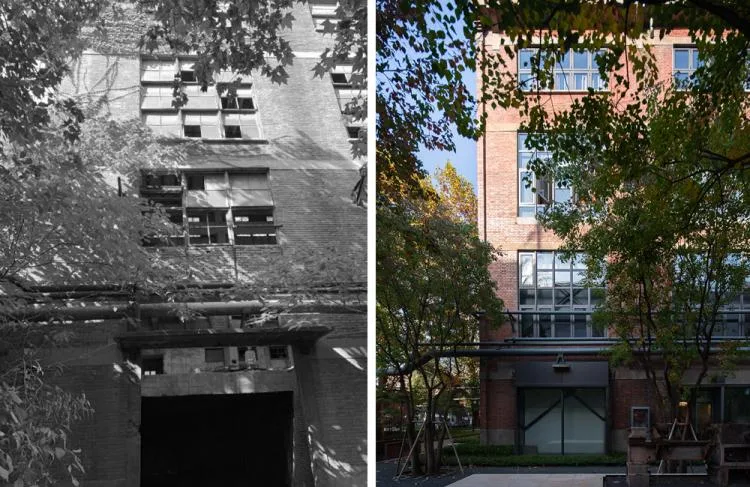
Comparison of door and wall repairs before and after restoration of second-level heritage buildings
Honoring History in Our Own Way
Today, renovating old buildings often carries commercial appeal, with many drawn to trendy shops housed in historic structures. However, this superficial approach to preservation is controversial.
Architectural heritage protection has undergone centuries of debate and evolution in the West, including the rise and rejection of stylistic restoration during the 19th century. International standards now emphasize authenticity, integrity, reversibility, and recognizability.
Restoration aims to extend the life of buildings without reverting them to a youthful state. For structures unable to meet modern needs, the approach here is to repair and preserve as they are, rather than demolish and replace.
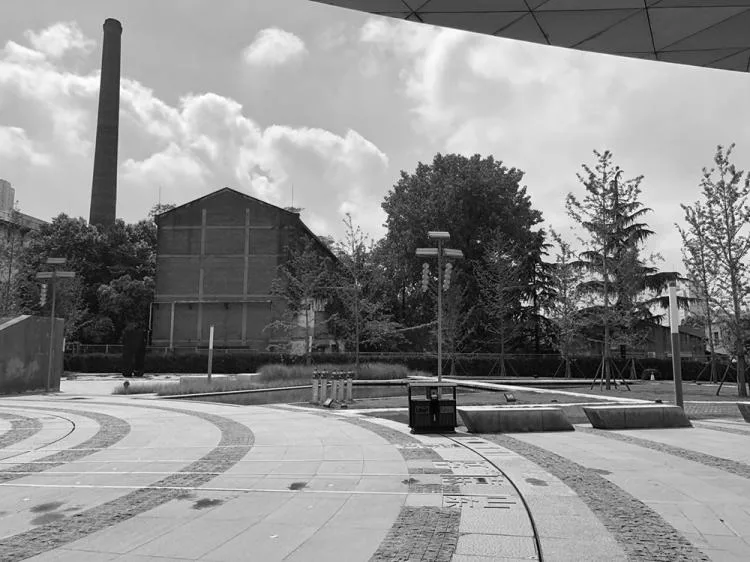
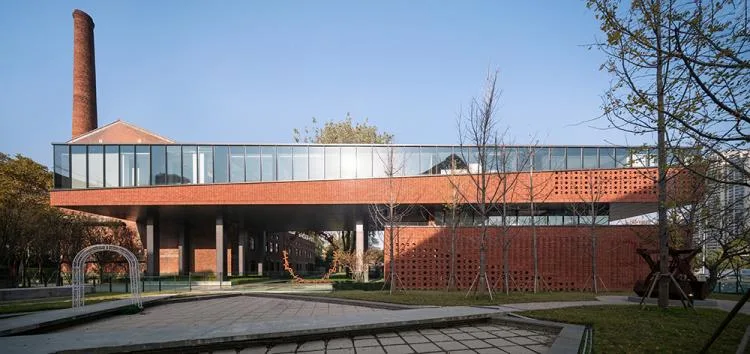
△ Before and after renovation comparison
The contrast between old and new highlights architecture’s temporal nature; today’s new buildings will become tomorrow’s history. Thus, new constructions should reflect their contemporary context.
While adjacent to historic buildings, echoing their forms, materials, or details can better express modern technological and material advancements.
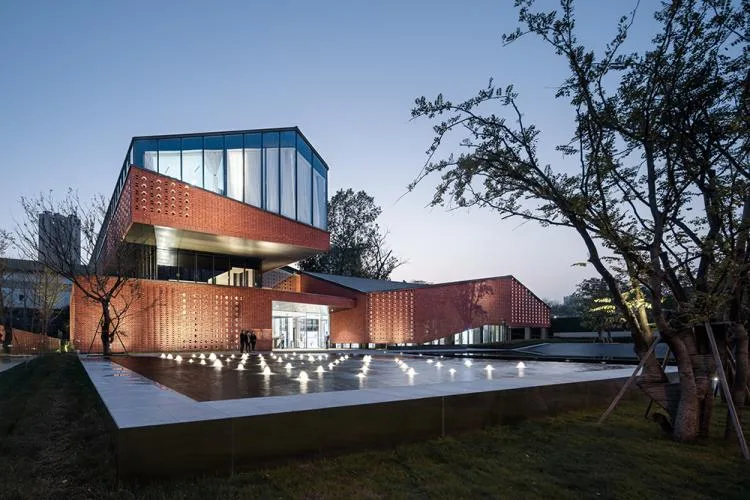
△ Realistic photos
Using contemporary architectural language that resonates with today’s audiences injects new vitality into old buildings, fostering a sense of familiarity and connection.
While allowing visitors to experience historical transformations, these new buildings pay tribute to the past in their own way.
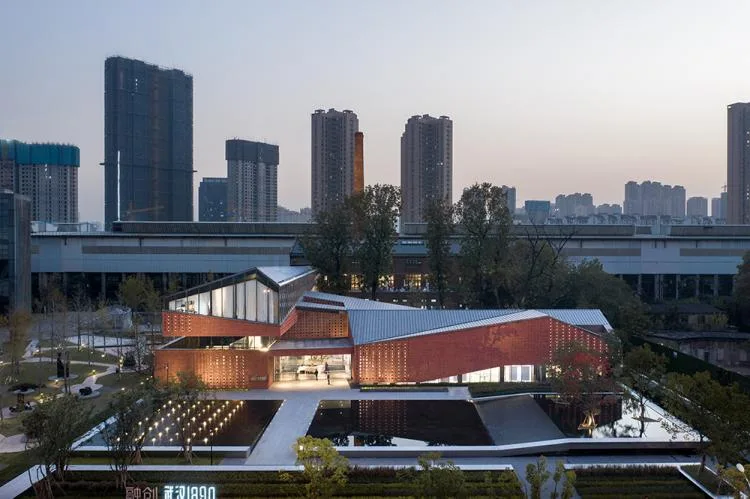
△ Realistic photos
This project is currently included in the “National Industrial Heritage List – Hubei Volume”.
Technical Drawings
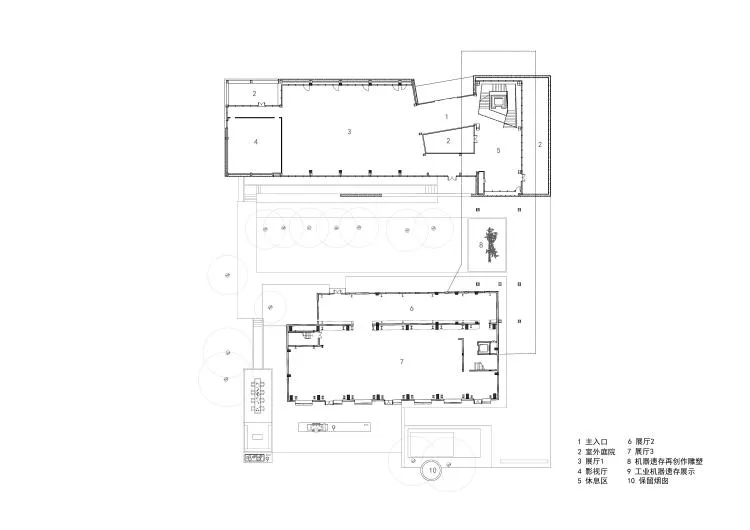
△ First-floor plan
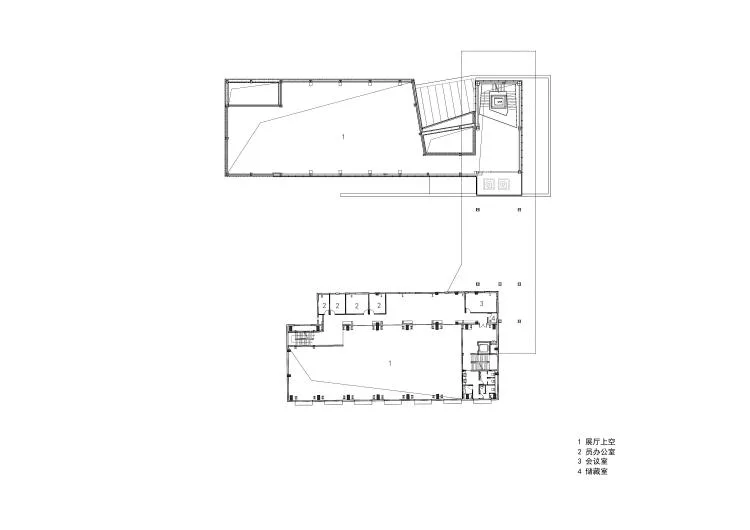
△ Second-floor plan
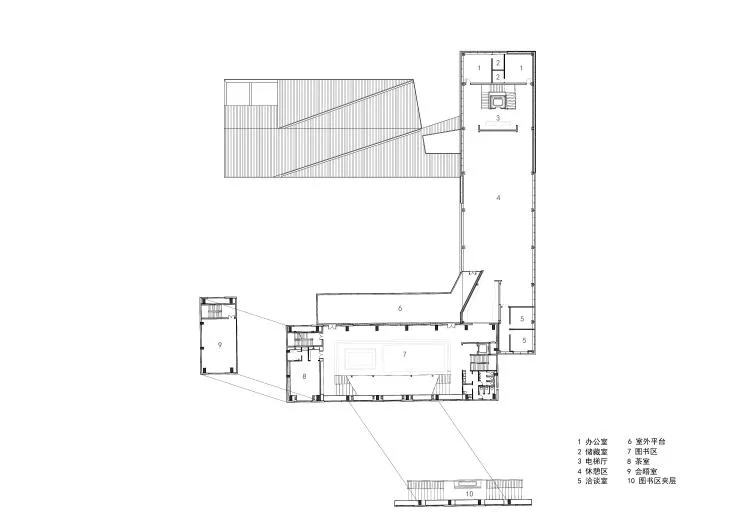
△ Third-floor plan
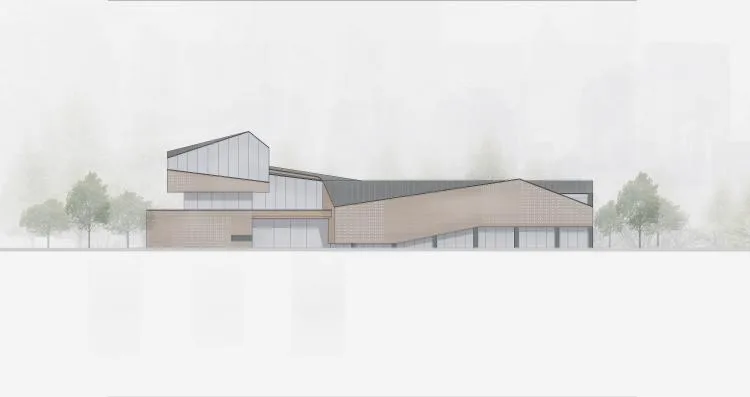
△ Elevation 1
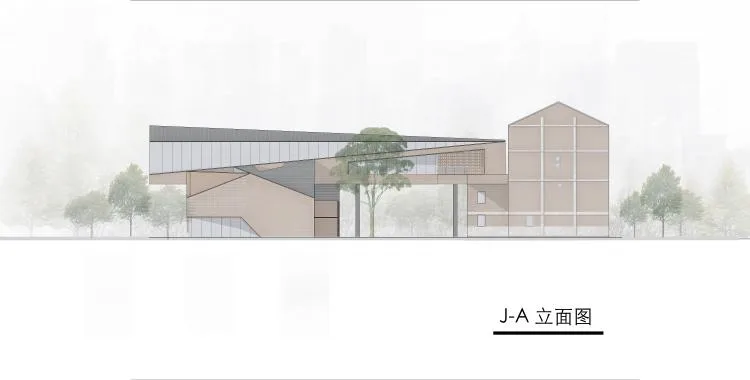
△ Elevation 2
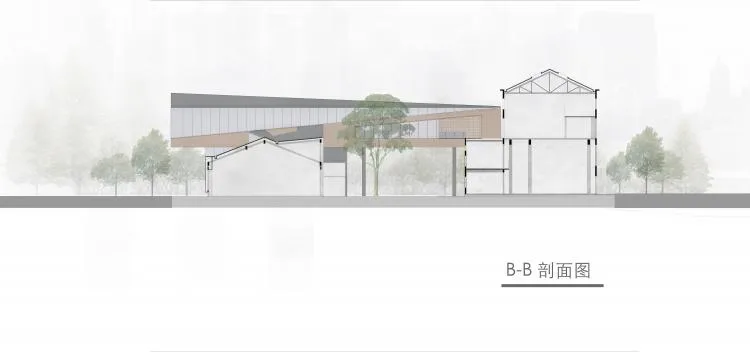
△ Section diagram
Project Information
Project Name: Rongchuang 1890
Location: 170 Qintai Avenue, Wuhan City
Function: Factory renovation
Floor Area: 4,112.97㎡
Design & Construction Period: June 2019 – June 2020
Design Firm: Shanghai Riqing Architectural Design Co., Ltd
Owner: Wuhan Rongjing Zhenyuan Real Estate Development Co., Ltd
Construction Drawing Design: China Light Industry Wuhan Design Engineering Co., Ltd
Curtain Wall Consultant: Shanghai Anxin Exterior Wall Engineering Design Co., Ltd
Interior Design: Zhao Muhuan Interior Design Research Studio
Landscape Design: Shenzhen Yi’an Design Consulting Co., Ltd
Soft Decoration: LSD Soft Decoration Division
Lighting Design: BPI
Landscape Construction: Zhejiang Hengchun Municipal Landscape Engineering Co., Ltd
General Contractor: China Construction Seventh Engineering Bureau
Curtain Wall Contractor: Zhongjian Curtain Wall
Material & Equipment Suppliers:
Titanium Zinc Sheet Metal Roof: Wagandang Building Decoration Engineering Technology Co., Ltd
Ceramic Brick Curtain Wall: Futaoke Ceramics Co., Ltd
Chief Architect: Song Zhaoqing
Design Team: Wei Wenyuan, Li Sheng, Dan You, Zhang Tao
Owner Team: Luo Liyong, Ge Huaijing, Huang Ting, Zhang Xiaoliang, Chen Siyu, Huang Xiaohe, Lin Huimin, Yu Xiang
Professional Photography: Mountain Imagery












Must log in before commenting!
Sign Up