
Sinopec No.1 Gas Station is situated along the scenic riverside belt of the Suzhou River, near where it meets the Huangpu River.
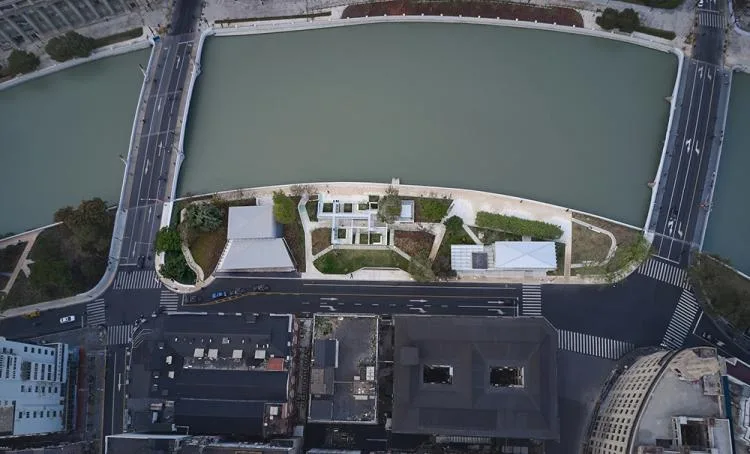
The site originally hosted China’s first state-owned gas station, built in 1948. Its design was a classic supermarket-office style with a steel canopy, lacking public accessibility and transparency. The original layout failed to separate vehicle refueling traffic from pedestrian flow, limiting functionality. Despite its prime location with excellent landscape resources, the site was underutilized, serving only as a supermarket and refueling station. Additionally, the cultural significance of the area was not reflected in the standardized station design. Our design approach focuses on breaking away from this traditional model, creating a transparent, publicly accessible, and functionally diverse gas station that harmonizes with the contemporary urban context.
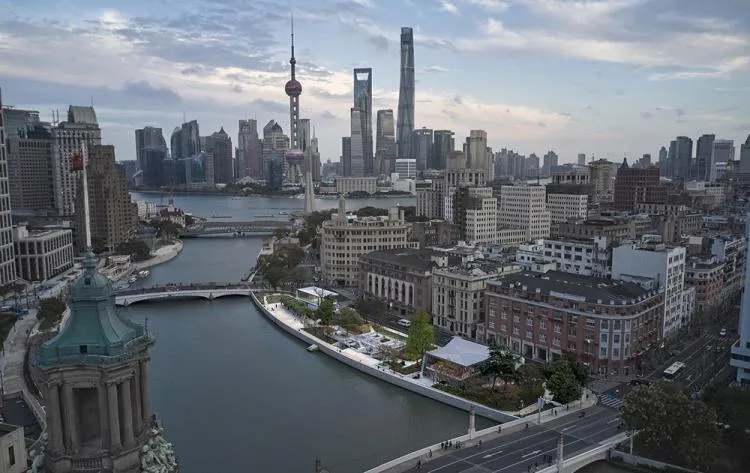
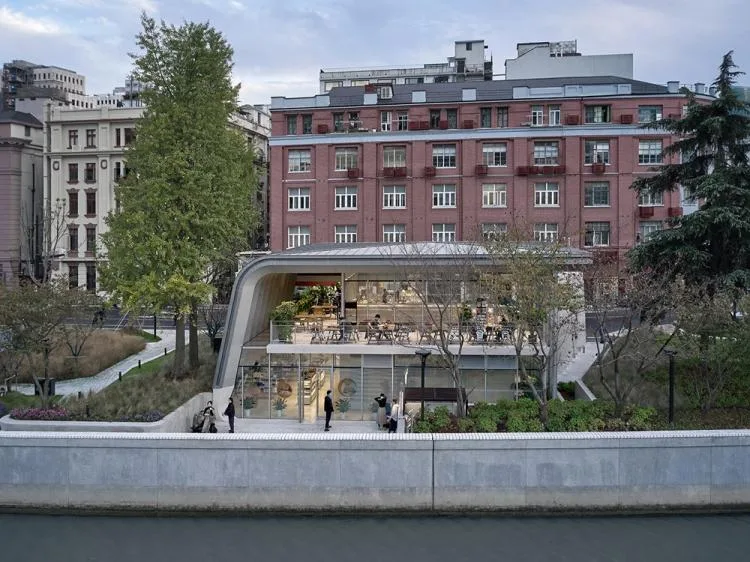
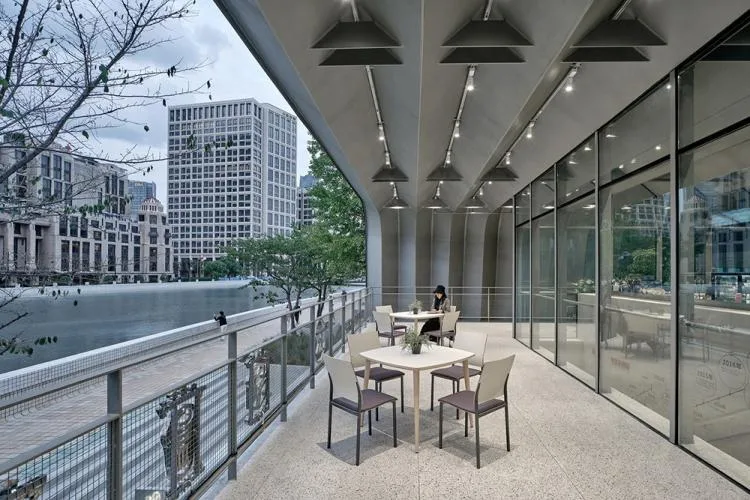
The design process began by reorganizing the riverside landscape belt, splitting the original mixed southbound traffic flow into two separate north-south flows. Pedestrians now bypass the gas station on the north side near the river, while vehicles enter and exit from the south. This separation shifts the station’s public access from the south to both the north and south sides, aligning with the city’s desire for transparency along the riverfront. This strategy guided the creation of a north-south oriented, transparent building that minimizes obstruction of the riverside views.
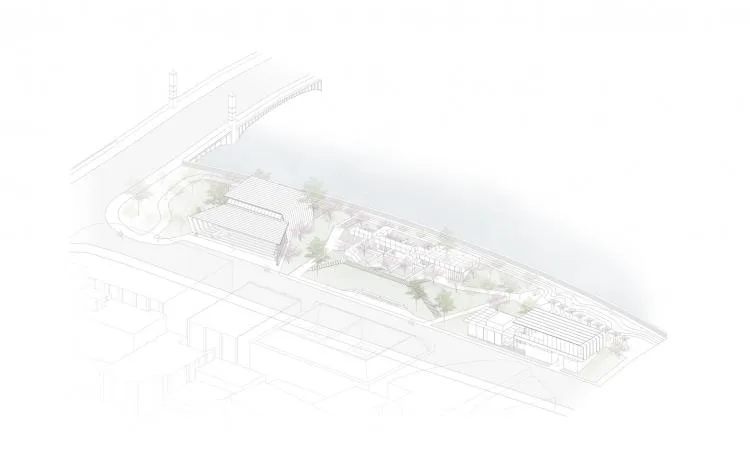
△ Axonometric diagram
The gas station consists of two main volumes: one virtual and one physical. The virtual volume is the refueling canopy frame, while the physical volume is the station building itself. Unlike previous designs that treated these as two separate functional elements, this project aims to unify them into a cohesive architectural form.
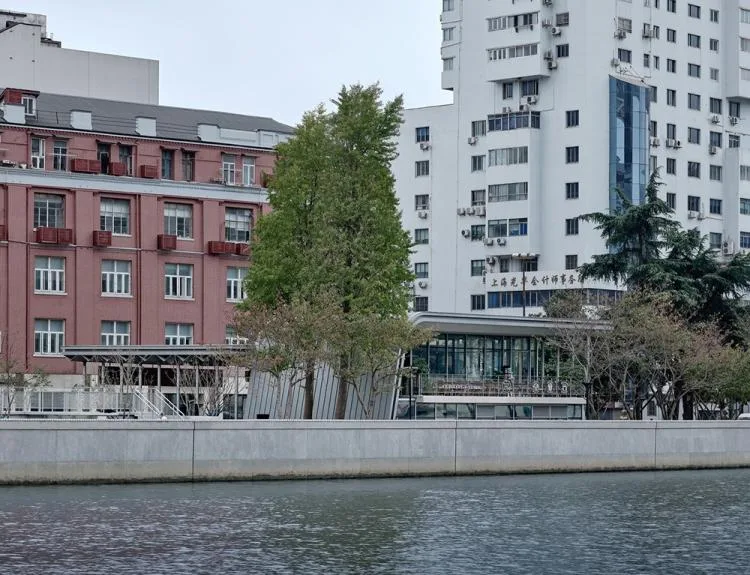
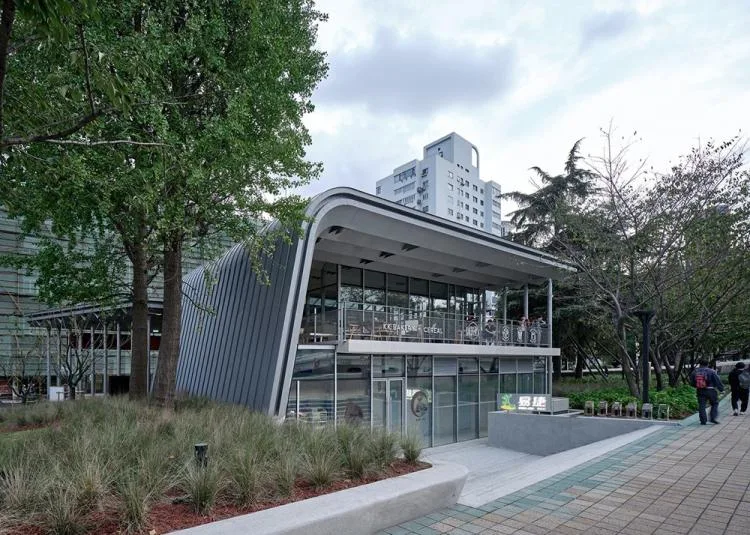
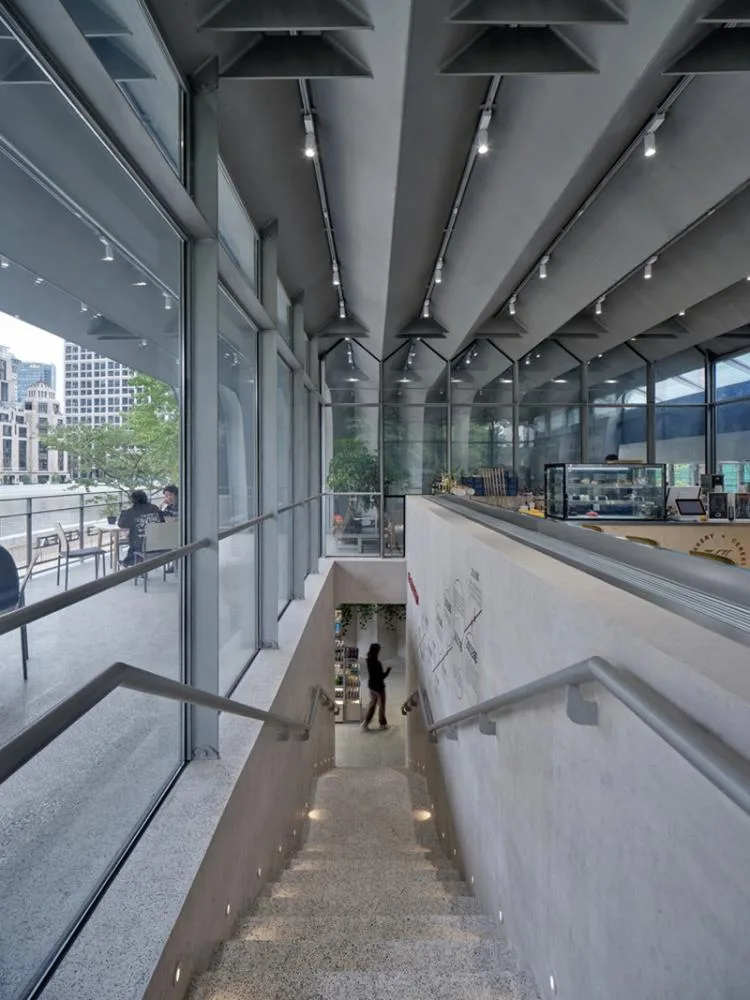
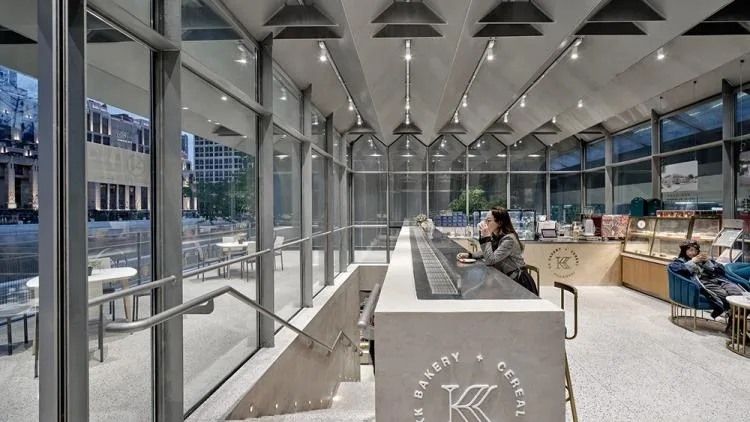
To meet the span requirements of the refueling area, the canopy is designed using folded plate structures, which enhance both structural efficiency and visual integration. The building features two sets of folded plates rising from the ground—one taller and one shorter. The taller set houses a two-story station building, with a supermarket on the first floor and a coffee shop on the second, while the shorter set covers the refueling canopy.
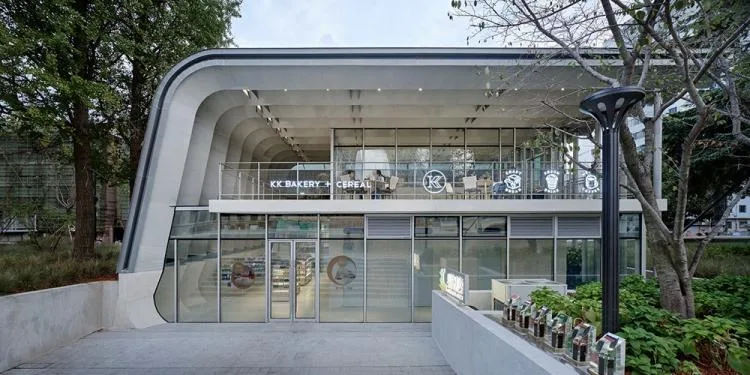
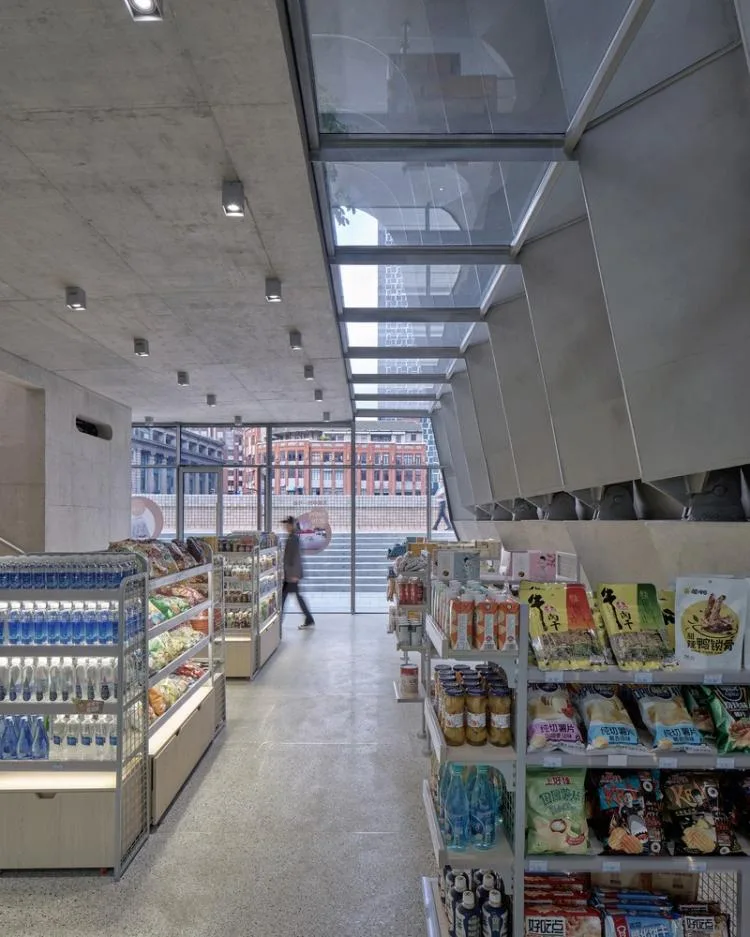
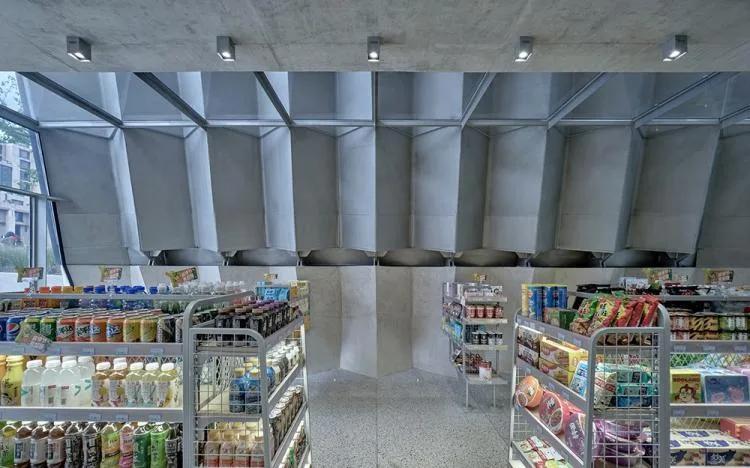
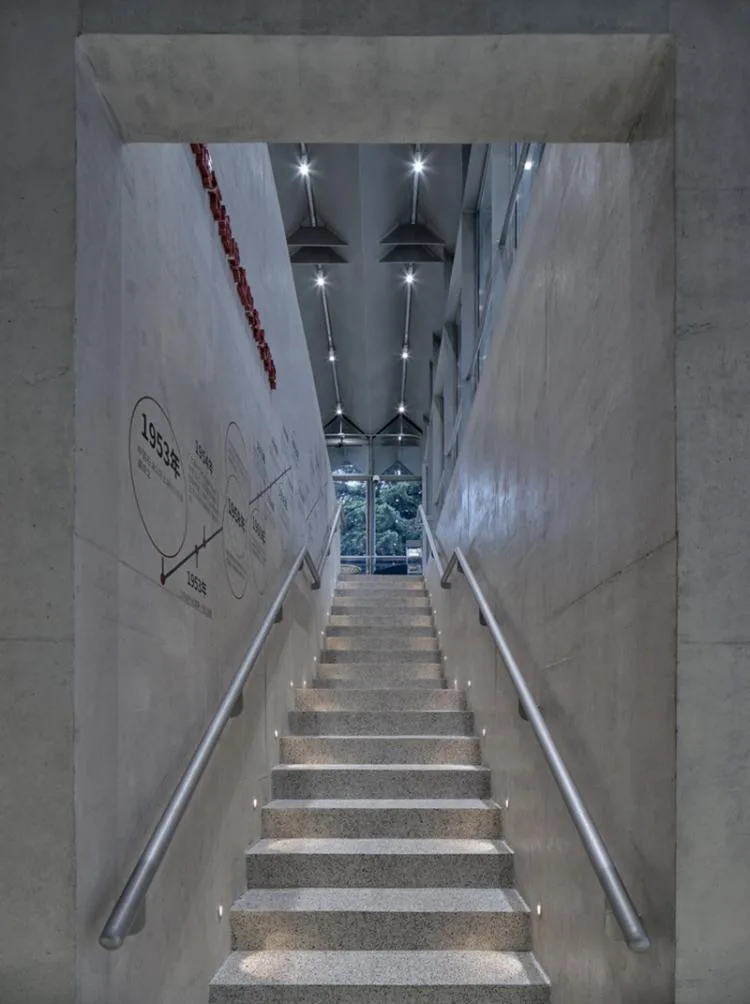
Each folded plate extends smoothly to the ground on one end while being supported by slender columns on the other, emphasizing the distinctive folded geometry. Initially, the folded plates were planned as steel structures, but to prevent rust from ground contact, the base material was changed to plain concrete. This resulted in a hybrid structure combining steel folded plates anchored to concrete bases via exposed hinge points, enhancing the structural clarity.
The columns connect to the folded plates at these hinges, ensuring they mainly bear axial loads. This reduces the column diameter and preserves the purity of the folded form. The steel structure appears light and simple, contrasting with the solid, floor-to-ceiling concrete walls that convey strength and refinement.
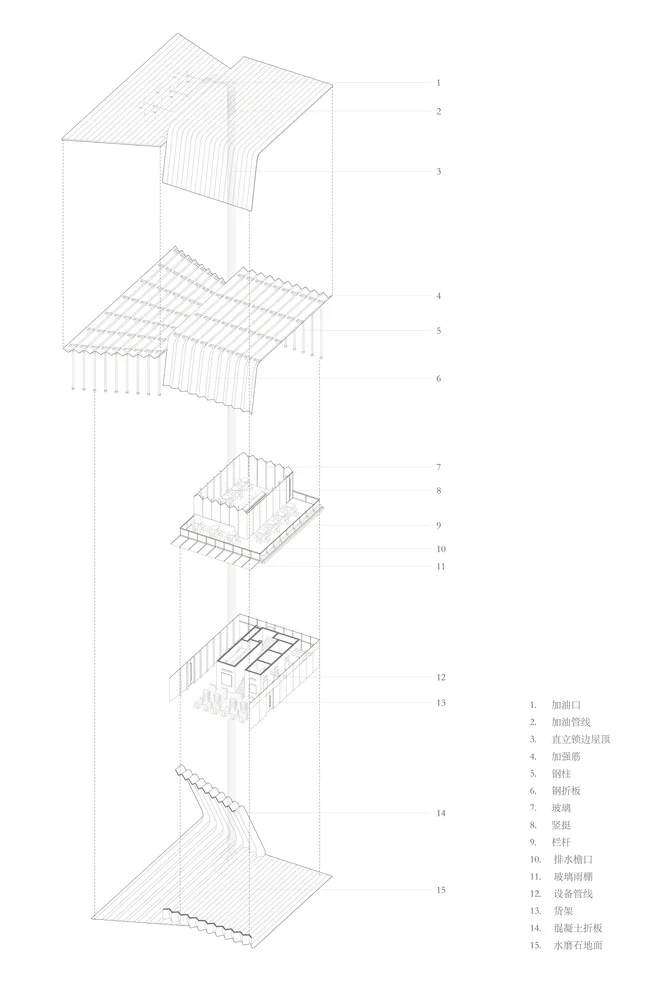
△ Exploded diagram
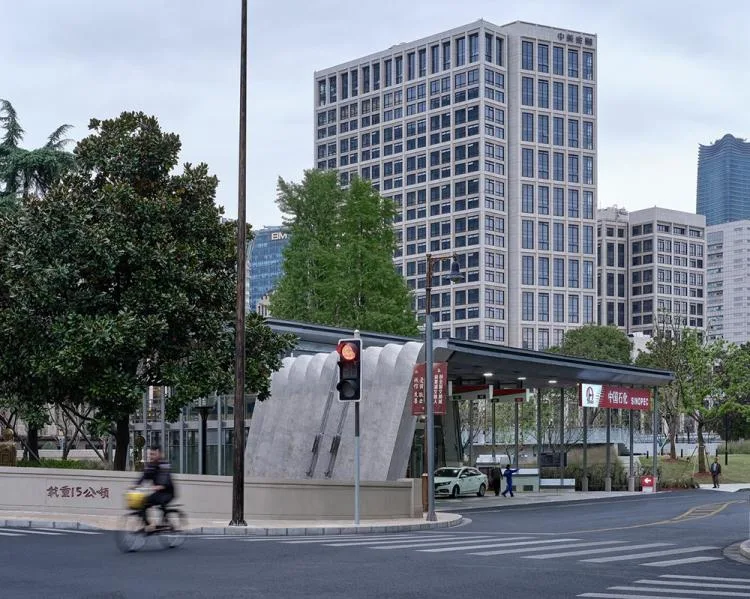
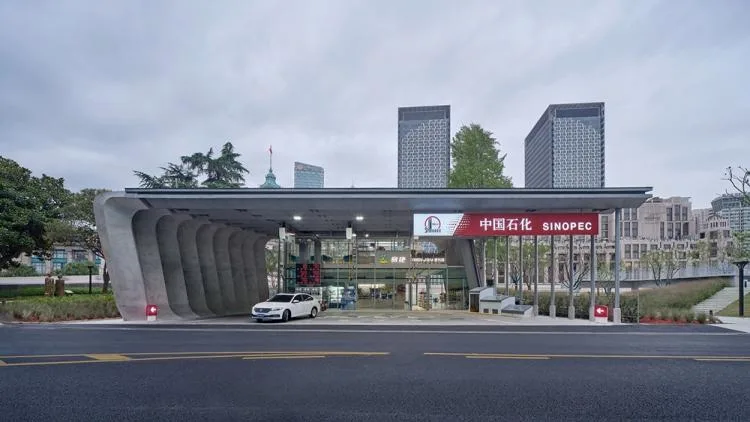
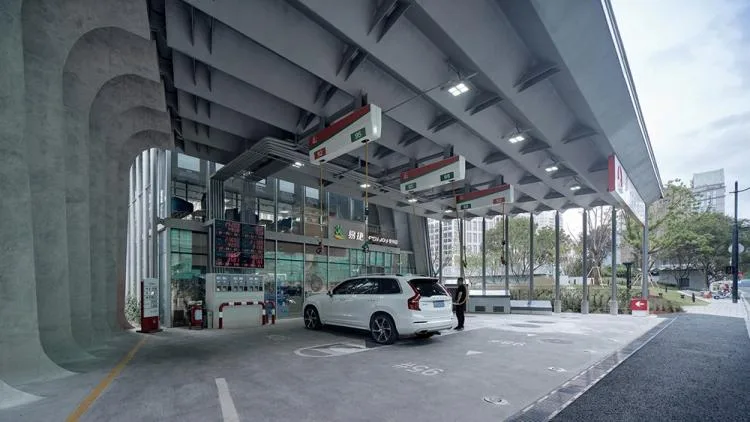
The gas station, named “Suhe Zhe,” highlights the integration of structure and architectural form, with the folded plates serving as its defining feature. Drawing inspiration from the folded walls of historic buildings, the rippling waves of the Suzhou River, and the delicate folds of a fan, the design balances structural purity with poetic ambiguity. This contemporary interpretation fits perfectly within a location rich in historical memory, making it a fitting “cultural refueling station.”
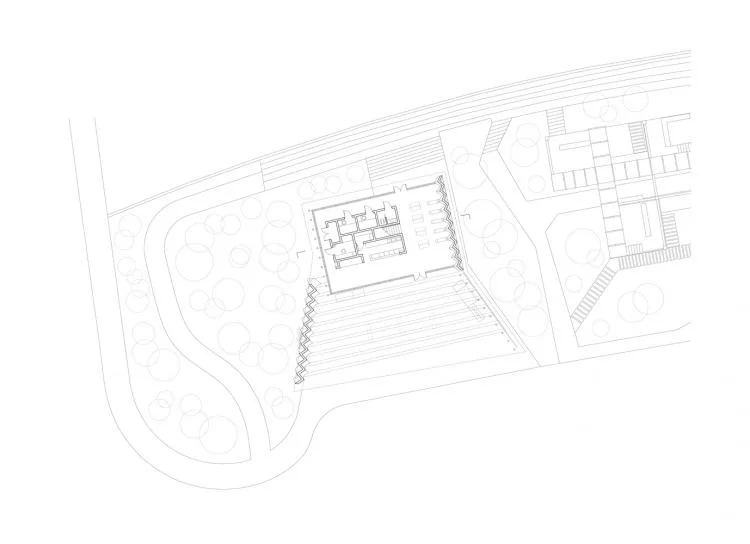
△ First floor plan
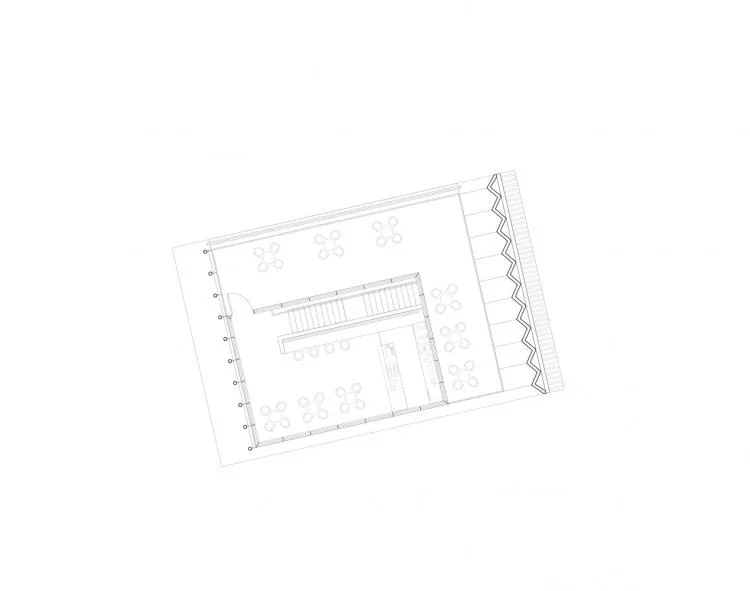
△ Second floor plan
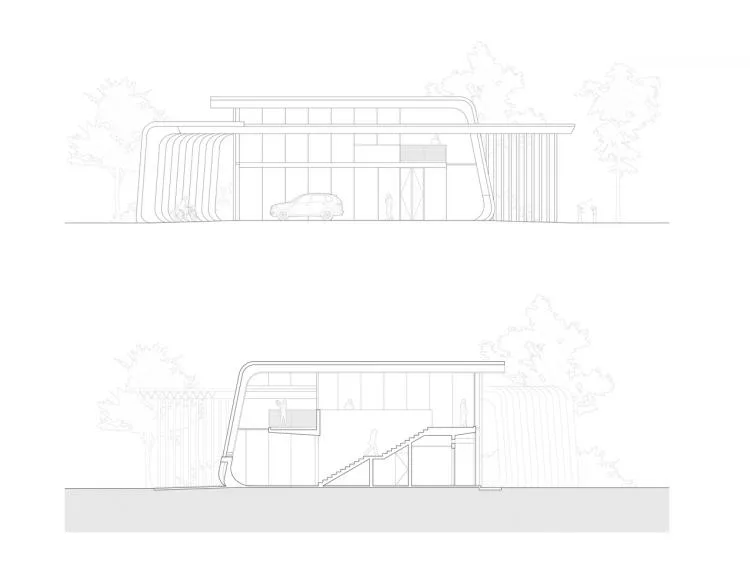
△ Elevation and section views
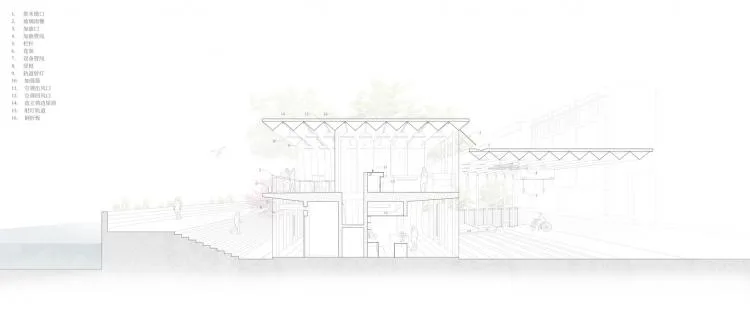
△ Sectional perspective view
Project Information
Project Type: Coffee shop, renovation, gas station
Location: Shanghai, China
Designer: Tongji Original Design Studio
Area: 223 m²
Year: 2020
Photographer: Octopus Sees Architecture
Lead Architects: Zhang Ming, Zhang Zi
Project Architects: Wang Xunan, Ding Chun
Design Team: Zhang Linqi, Wang Xiang, Guo Luwei, Liu Hao (interns)
Structural Engineers: Nan Jun, Zhang Zheng, Chen Lujie, Jiang Ling
Client: Sinopec Sales Co., Ltd. (Shanghai Petroleum Branch)
Equipment Design Team: Tongji University Architectural Design and Research Institute (Group) Co., Ltd. Comprehensive First Institute












Must log in before commenting!
Sign Up