
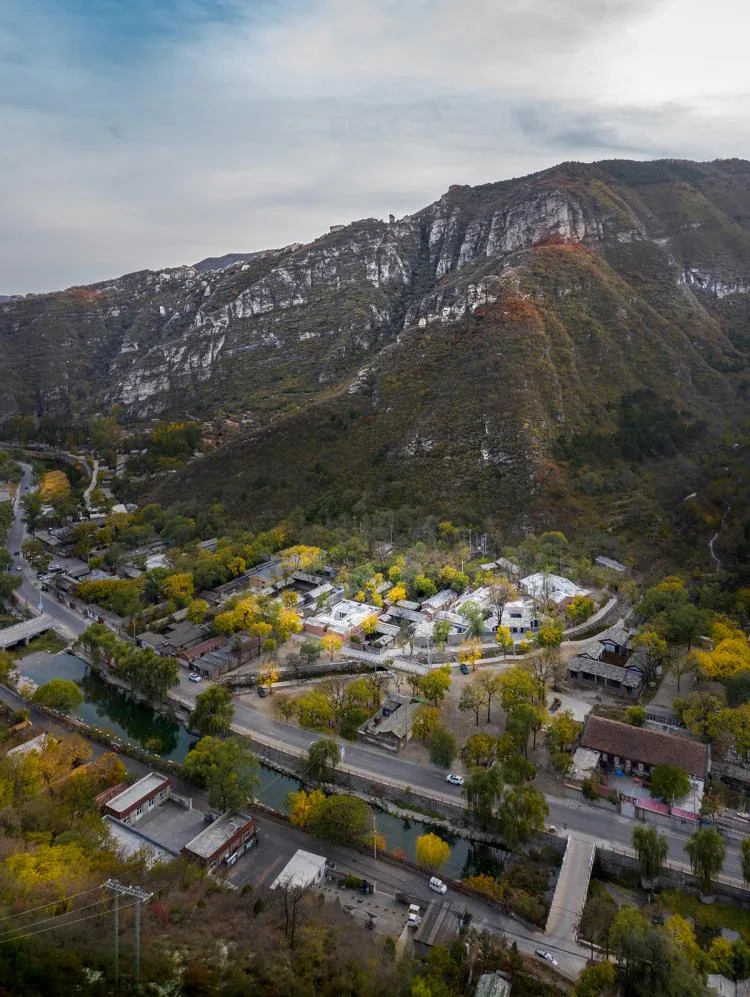
A bird’s-eye view of the Four Seasons at Manlan’s House.
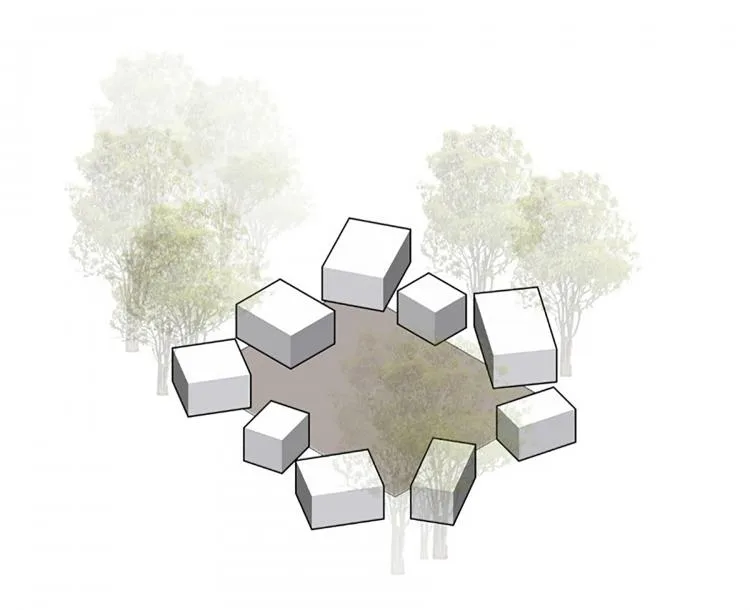
△ Analysis Chart – Natural Coexistence, Poetic Dwelling
The grass covers the land, glistening with morning dew. A beautiful girl gazes with tenderness in her eyes. A chance meeting fulfills a heartfelt wish.
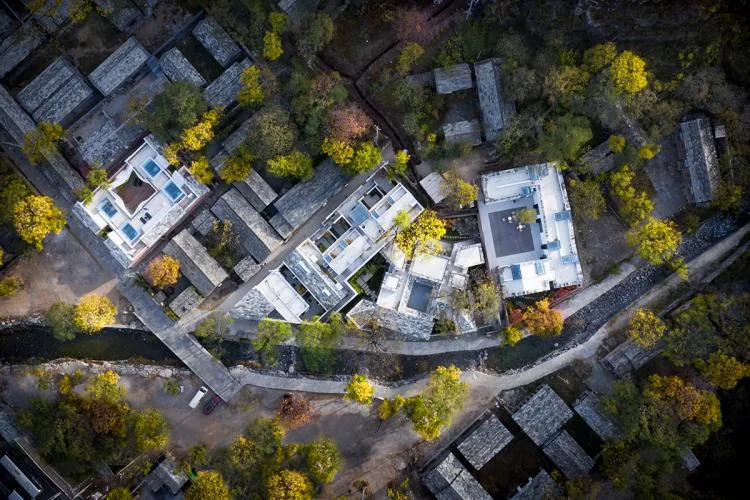
Four homestay clusters.
△ Group bird’s-eye view
“Zero Dew” is a fleeting visitor, leaving behind a poetic dwelling.
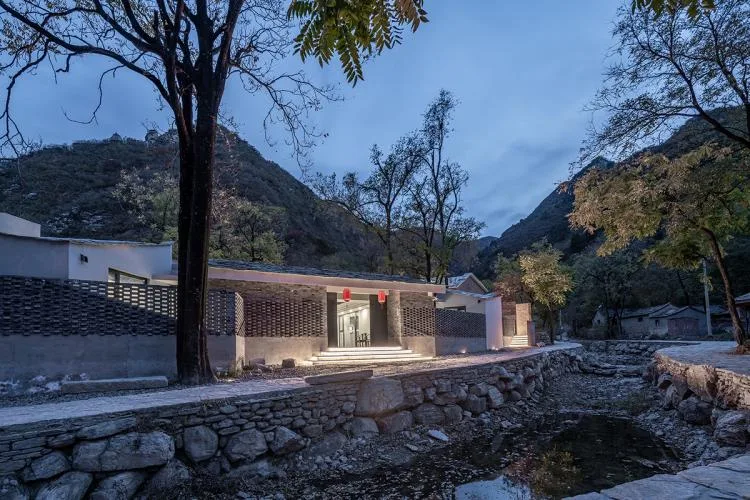
△ Entrance of the “Zero Dew” cluster
Surrounded by breathtaking mountains and rivers, the homestay design goes beyond traditional courtyard residences. It reflects a fresh perspective on life embraced by a new generation. The architecture respects local context and landscape while incorporating innovative ideas to create a spatial experience that harmonizes with people’s deep connection to life and nature. This space is no longer empty; it becomes a memorable place.
Manlan Zero Dew
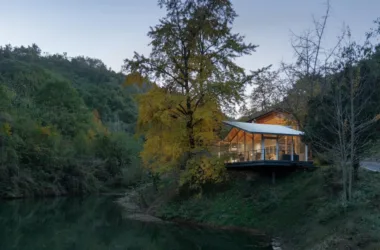
The “Four Seasons of Manlan Family” homestay is nestled in the valley village of Mount Huangshan, Fangshan District, Beijing. It consists of four clusters: “Mancao,” “Zero Dew,” “Youmei,” and “Qingyang.”
The “Zero Dew” cluster, designed by SUNLAY LAB, is situated on an irregularly shaped site. Multiple homestays, backed by mountains and facing the river, coexist to form a unique settlement. This creates a new residential experience hidden within the village, closely connected to Fengling.
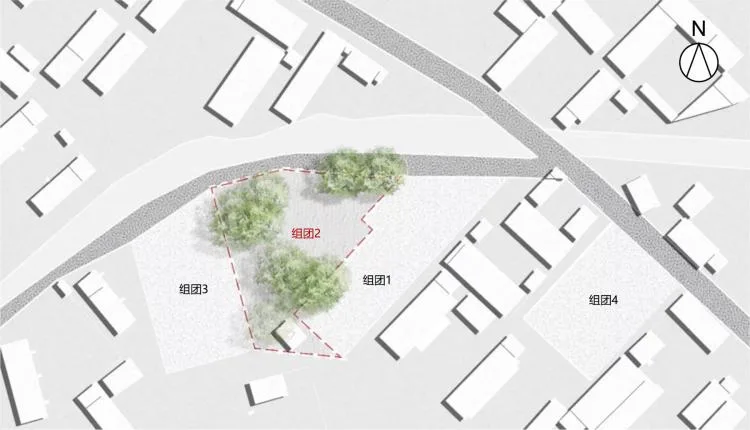
△ Map of the “Zero Dew” Area (Group 2)
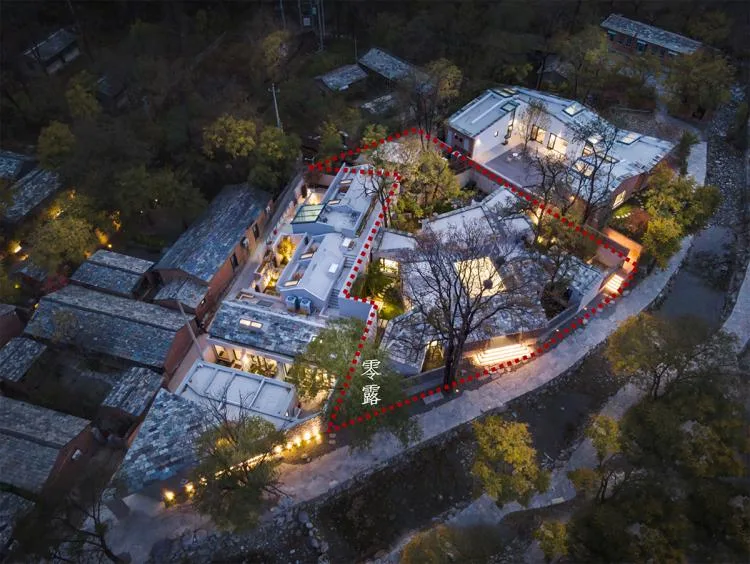
△ “Zero Dew” and adjacent clusters
Design Principles: Context · Nature · Freedom
“Zero Dew” is located in the traditional village of Mount Huangshan Dian. The spatial forms, materials, scale, and colors derive from traditional residential courtyards, reflecting the lifestyle and spiritual heritage of residents who have lived here for millennia. Elements such as the sloping entrance roofs, the symbolic “Four Waters Returning to the Hall,” central axial spatial sequences, and the reuse of local materials are reinterpreted in a contemporary homestay context.
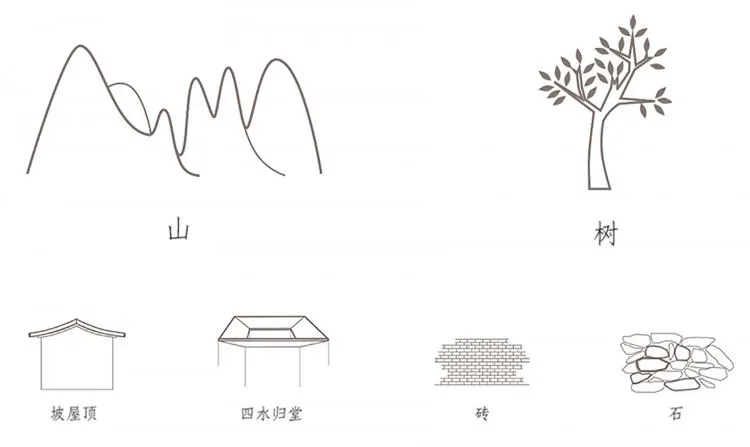
△ Key design elements
Fourteen trees grow naturally on the low terrain of “Zero Dew,” narrating the area’s history and present. These trees were preserved not just physically but embraced as part of the design concept. Respecting the natural surroundings, “Zero Dew” extends living spaces into nature, forming a harmonious and liberating dwelling.
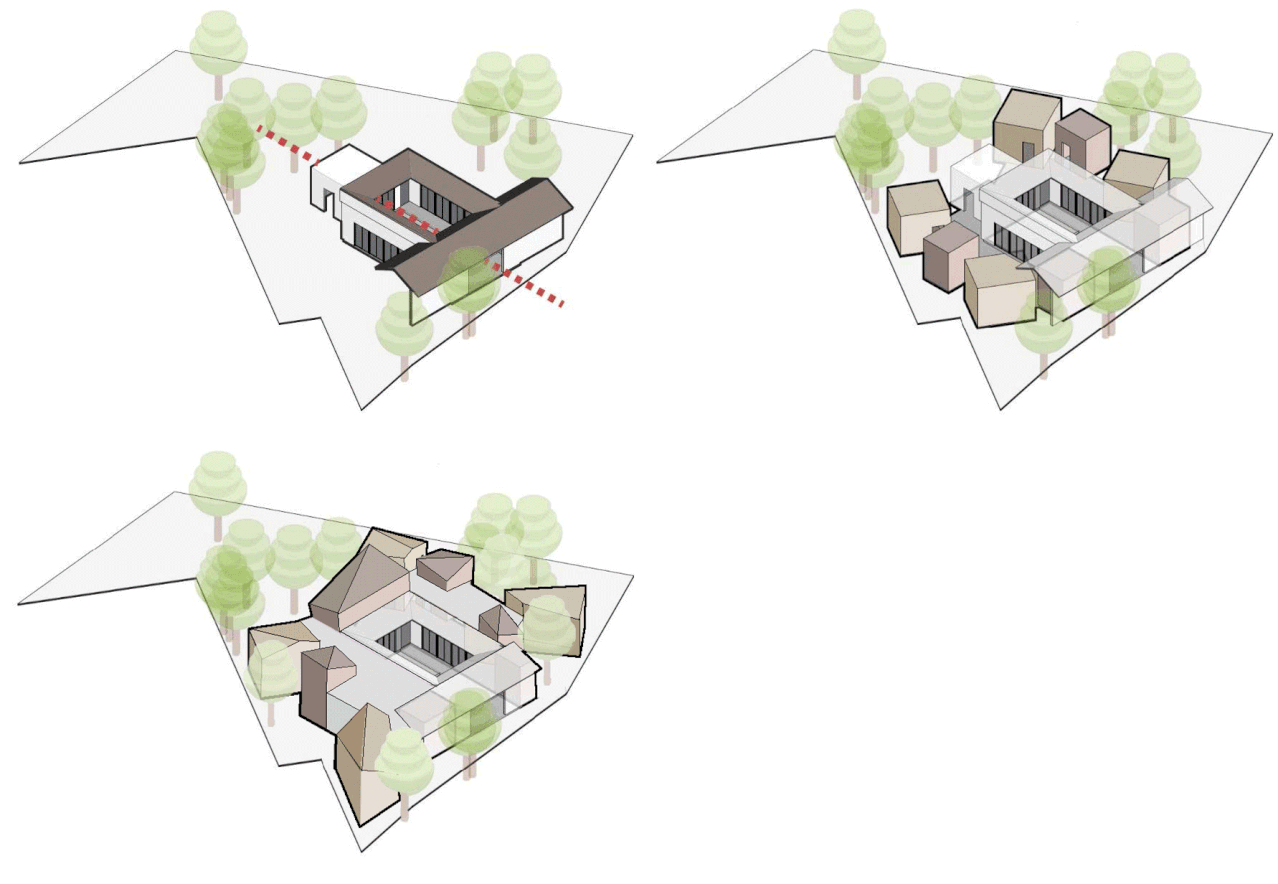
Generation of “Zero Dew” architectural form.
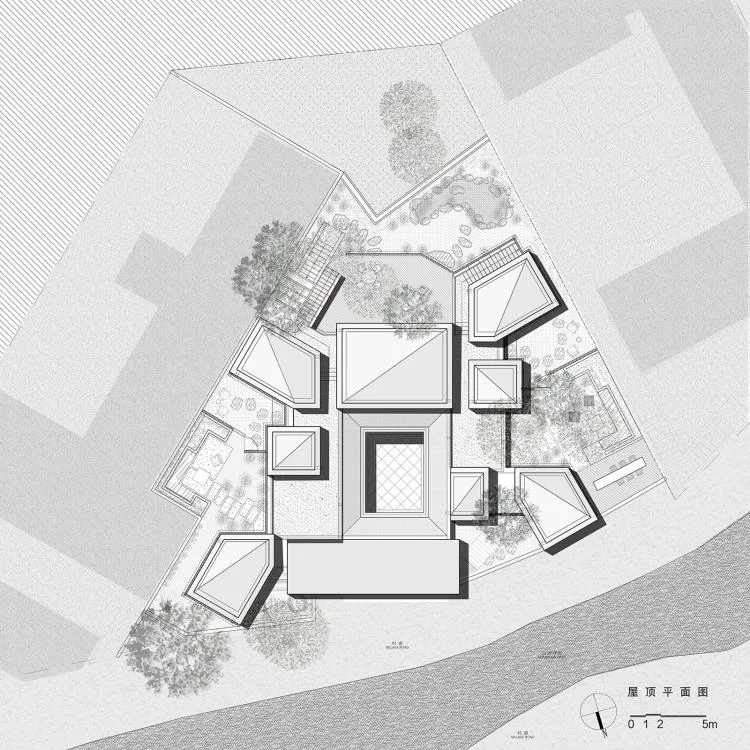
△ General layout plan of “Zero Dew”
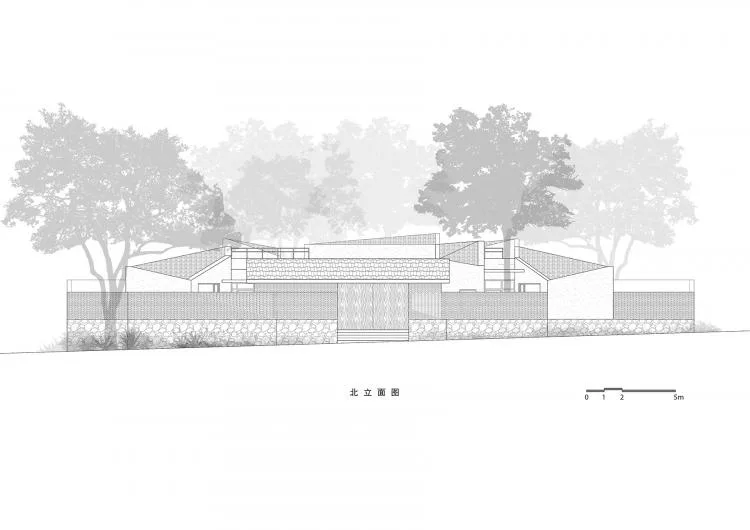
△ North elevation of “Zero Dew”
The design invites residents to feel indoors while in the courtyard and experience a seamless connection between interior and exterior when inside the building.
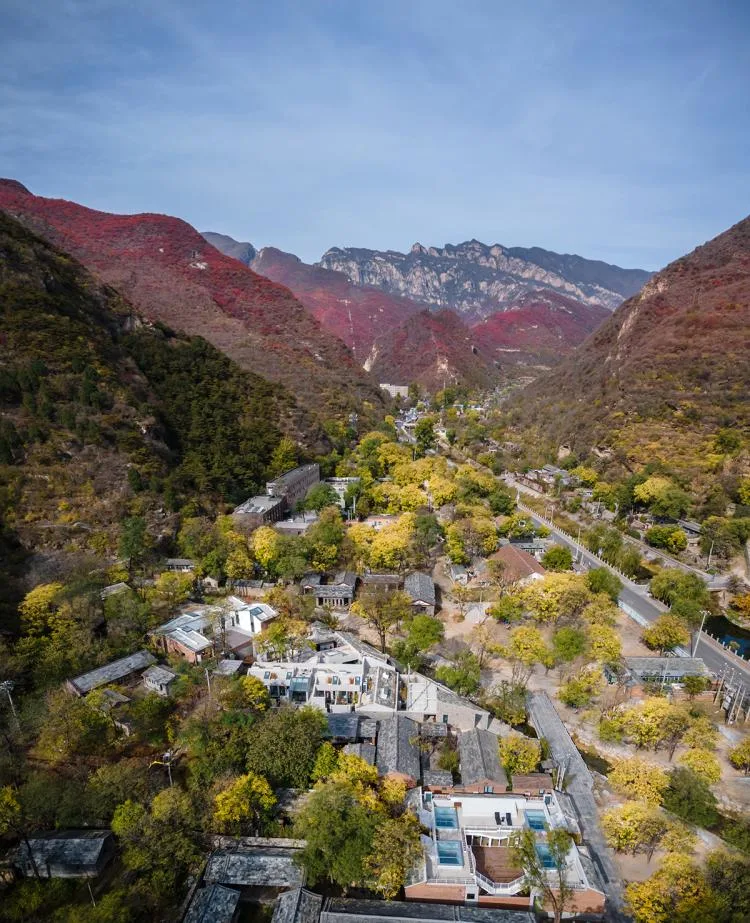
Hidden within the village, engaging with Fengling.
While urban life often draws a clear line between indoors and outdoors, rural homestays allow guests to fully enjoy nature, enhanced by cultural and technological elements that showcase human value.
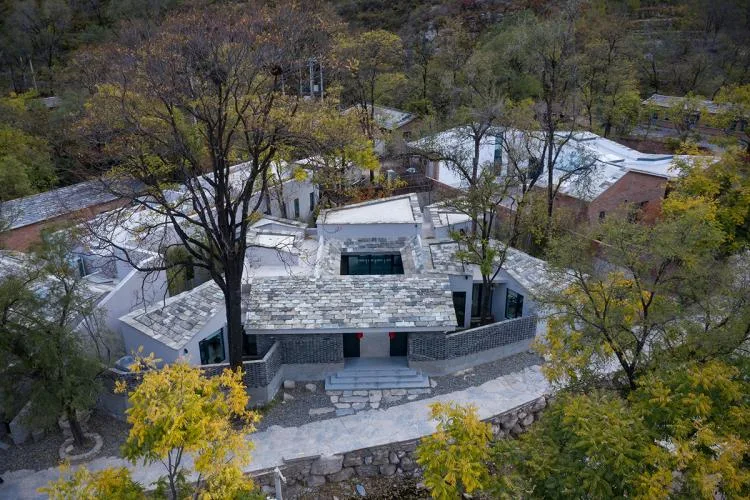
△ “Zero Dew” group cluster
Ascending to the rooftop platform, weaving between stones, embraced by trees and guarded by distant mountains, even a passerby leaves behind a poetic dwelling.
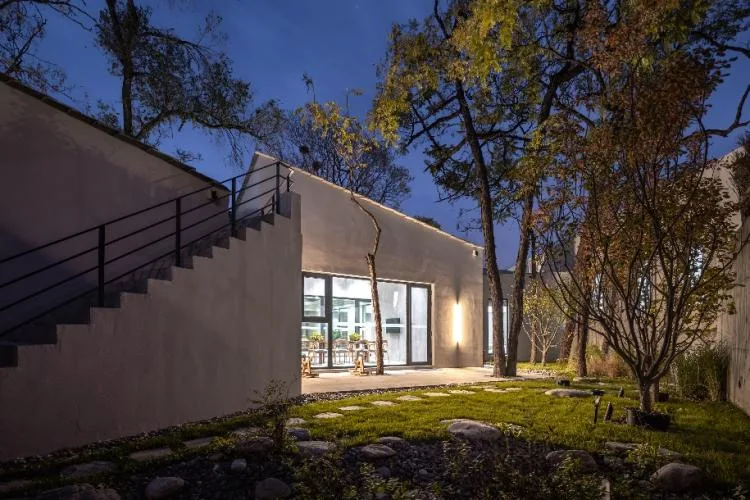
View of the rooftop platform from the courtyard.
Indoor and Outdoor Architecture / “How Deep Is the Courtyard?”
After the intervention of “Zero Dew,” the original fourteen trees and buildings together create a rich, layered interplay between indoor and outdoor spaces. Ensuring privacy while maintaining fluidity, these spaces interconnect and permeate each other.
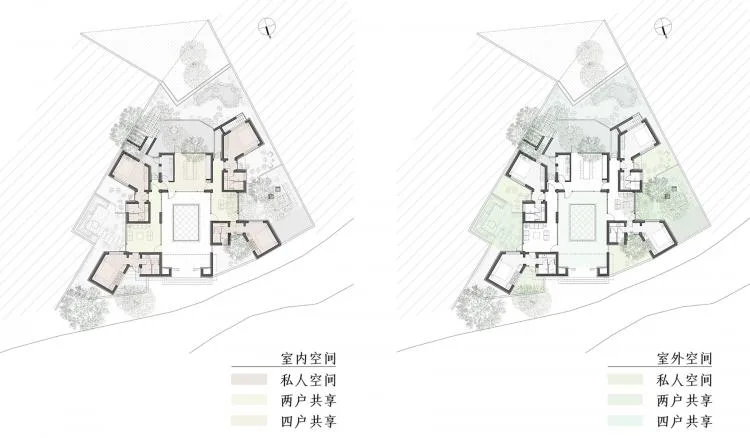
△ Indoor and outdoor spatial relationship in the “Zero Dew” building
The seamless flow of spaces, their hierarchy, and continuous experience invite ongoing exploration and discovery.
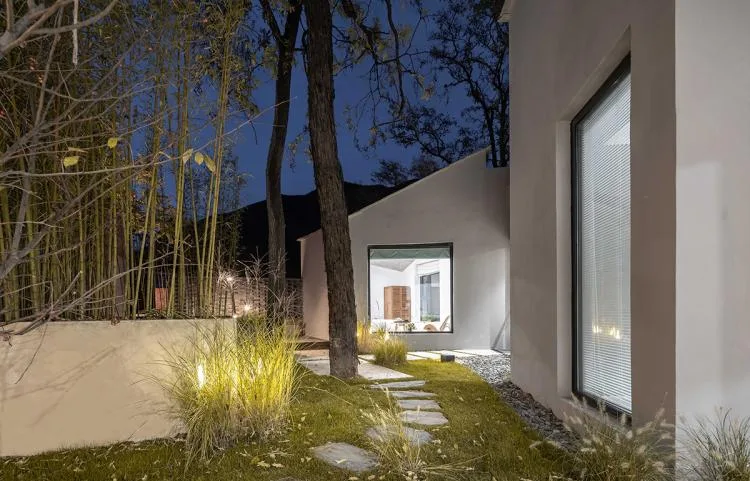
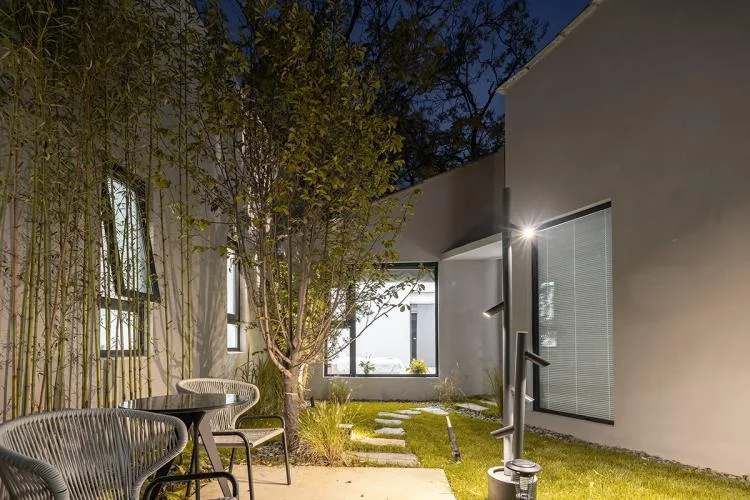
△ Real view of the group courtyard
This unique spatial arrangement creates lasting memories.
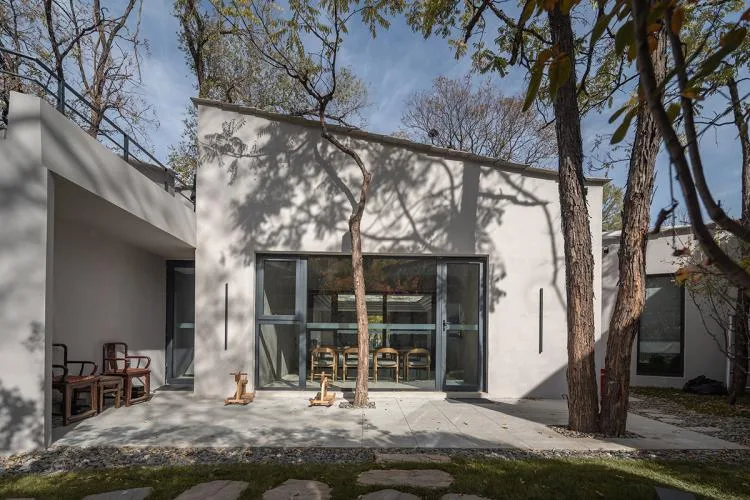
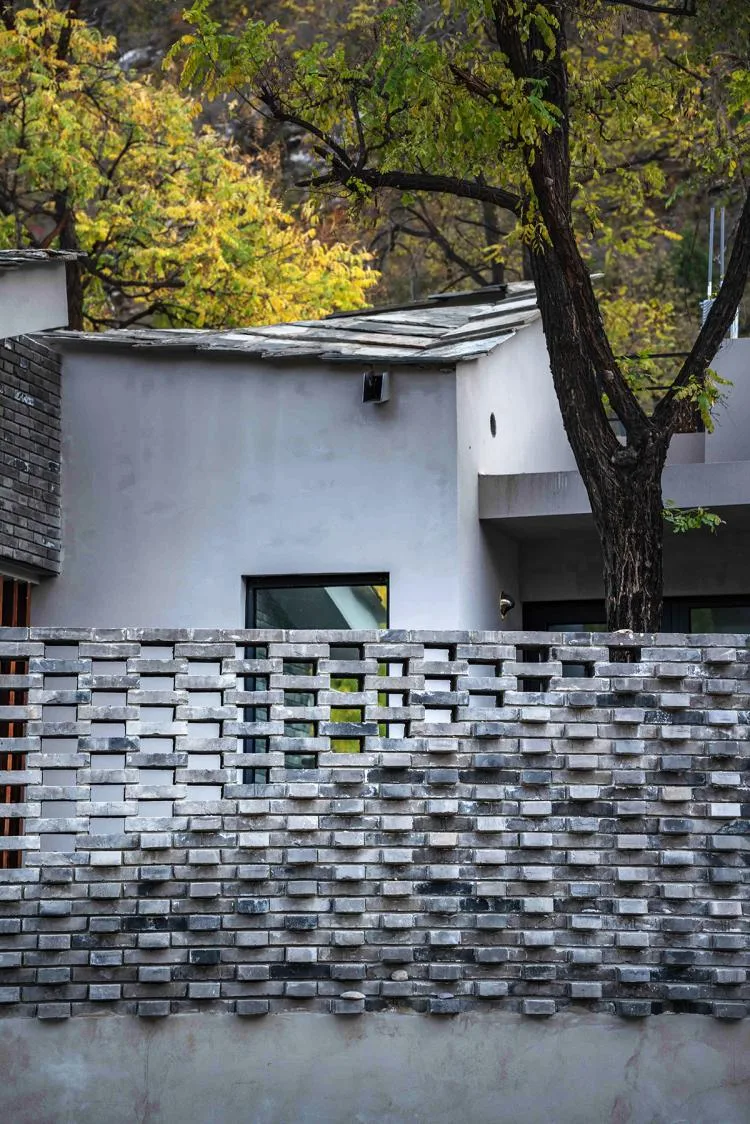
Residential Units: A New Prototype
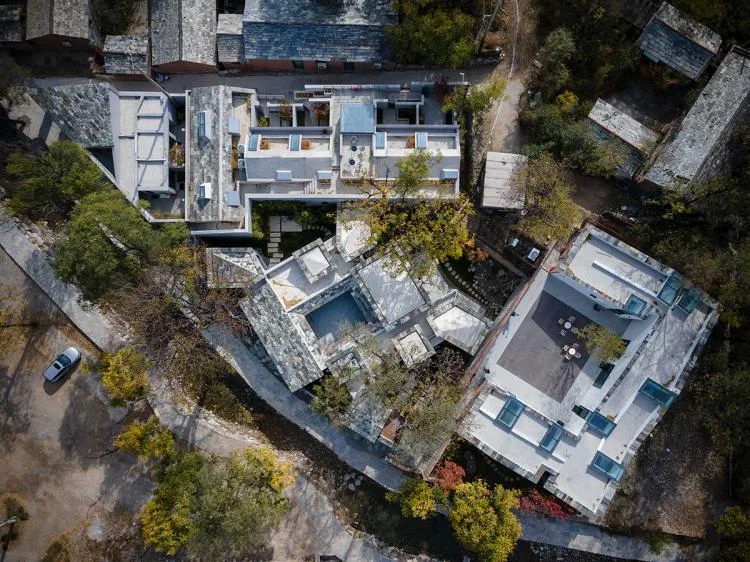
The living units balance structure and fluidity, resembling “stone blocks” scattered freely among trees. This dialogue with nature reflects the underlying spatial logic of the interior.
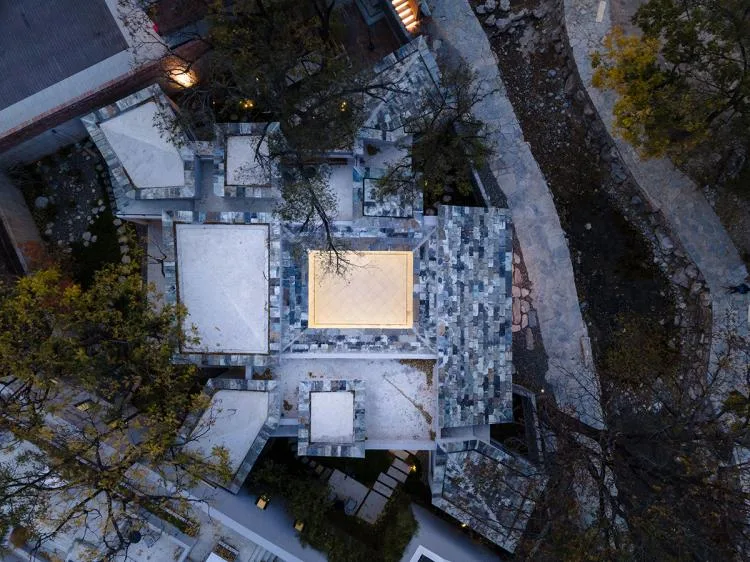
Aerial view of the “Zero Dew” residential cluster at night.
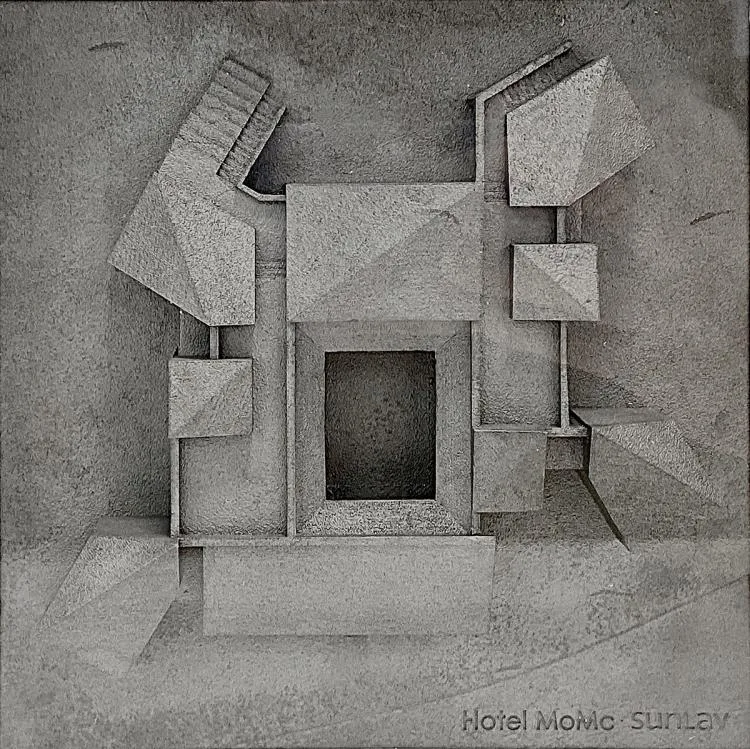
△ “Zero Dew” model
The bedroom and bathroom are separated by trees and natural scenery.
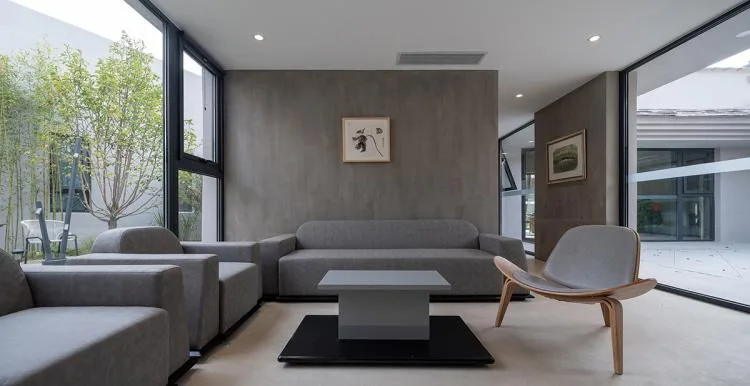
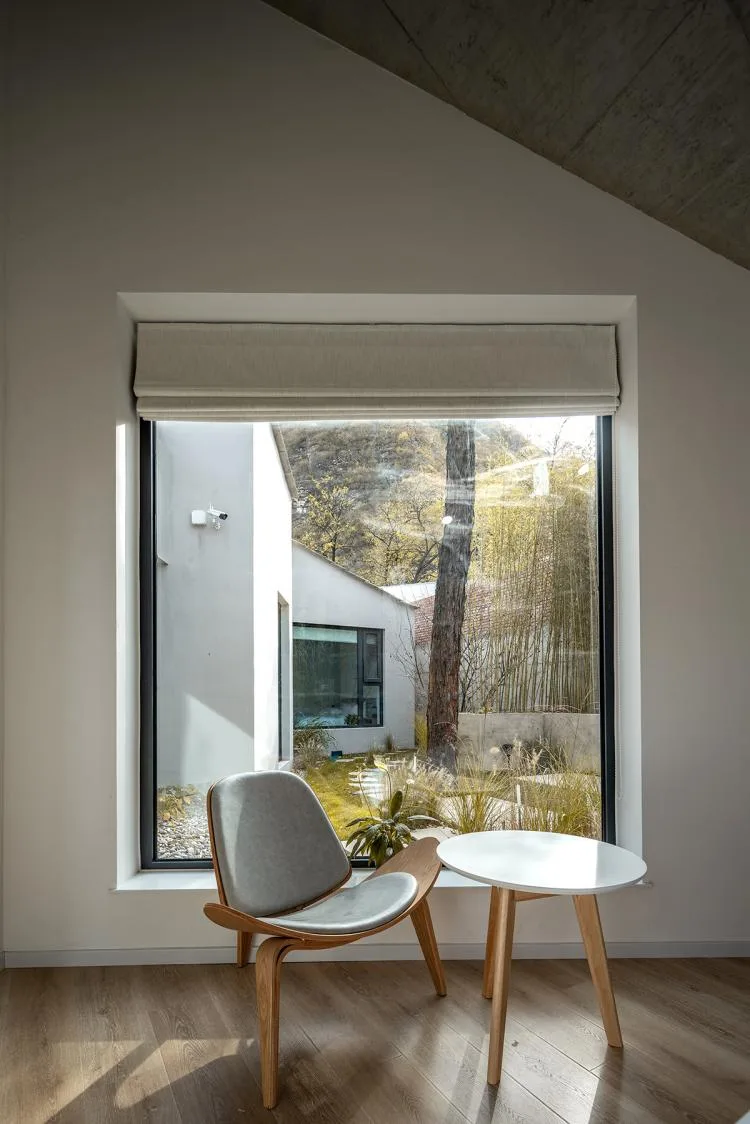
△ Interior view of “Zero Dew”
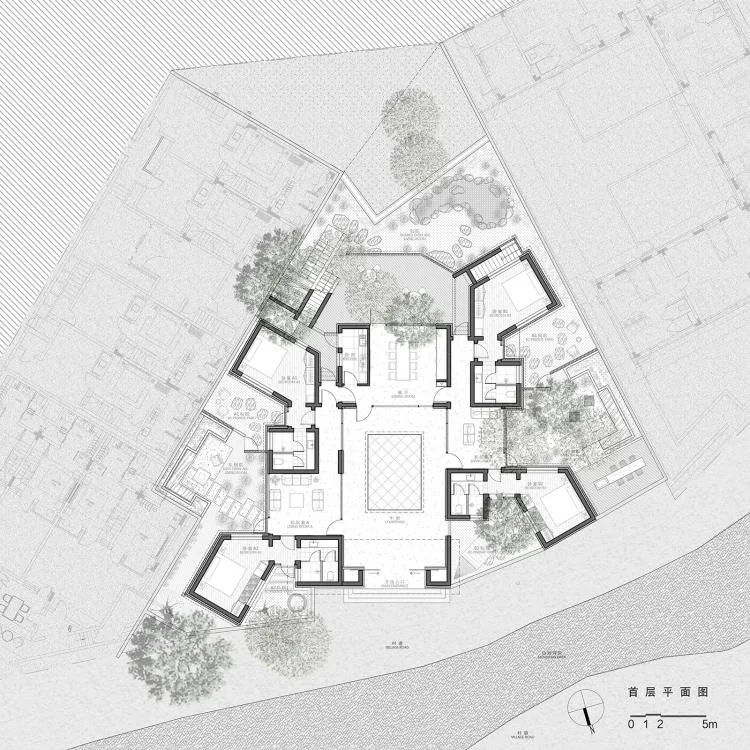
△ First floor plan
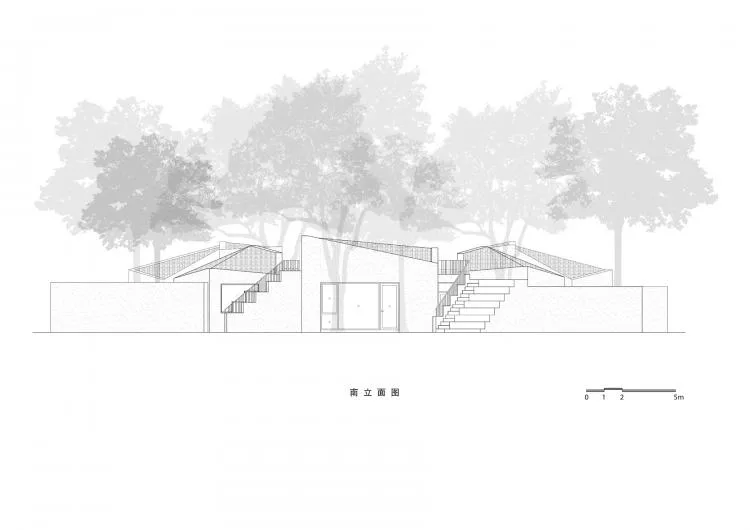
△ South elevation view
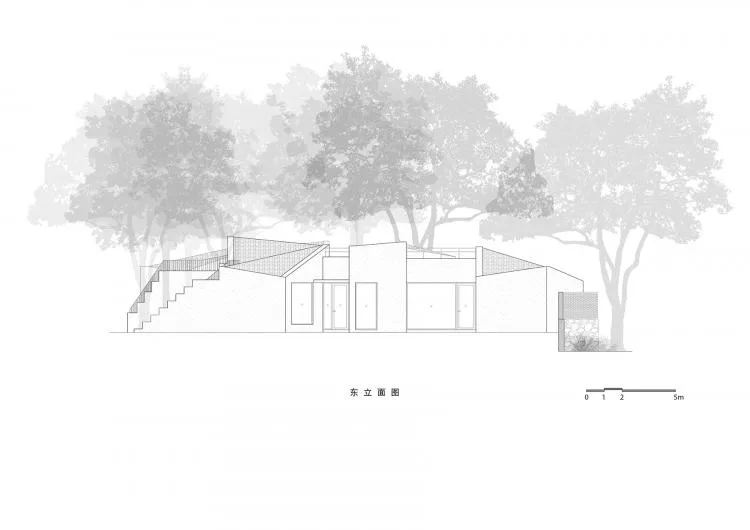
△ East elevation view
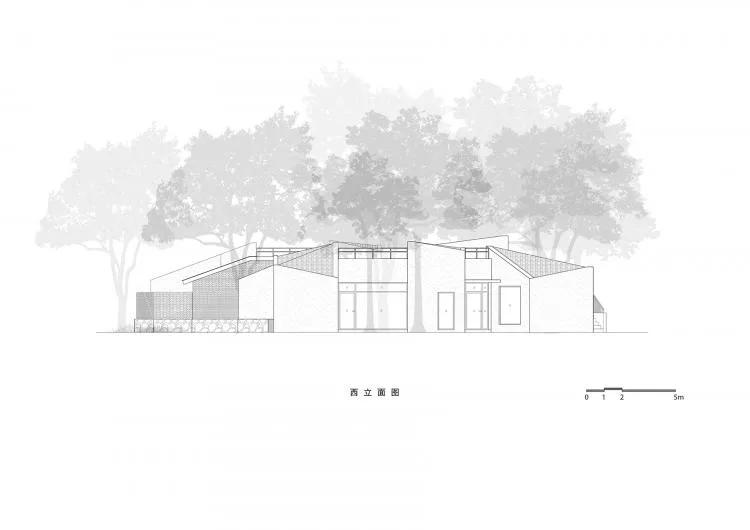
△ West elevation view
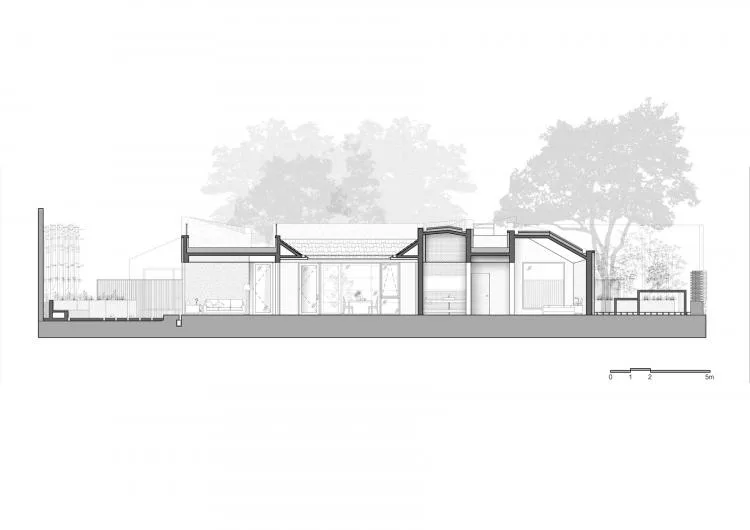
△ Section A-A
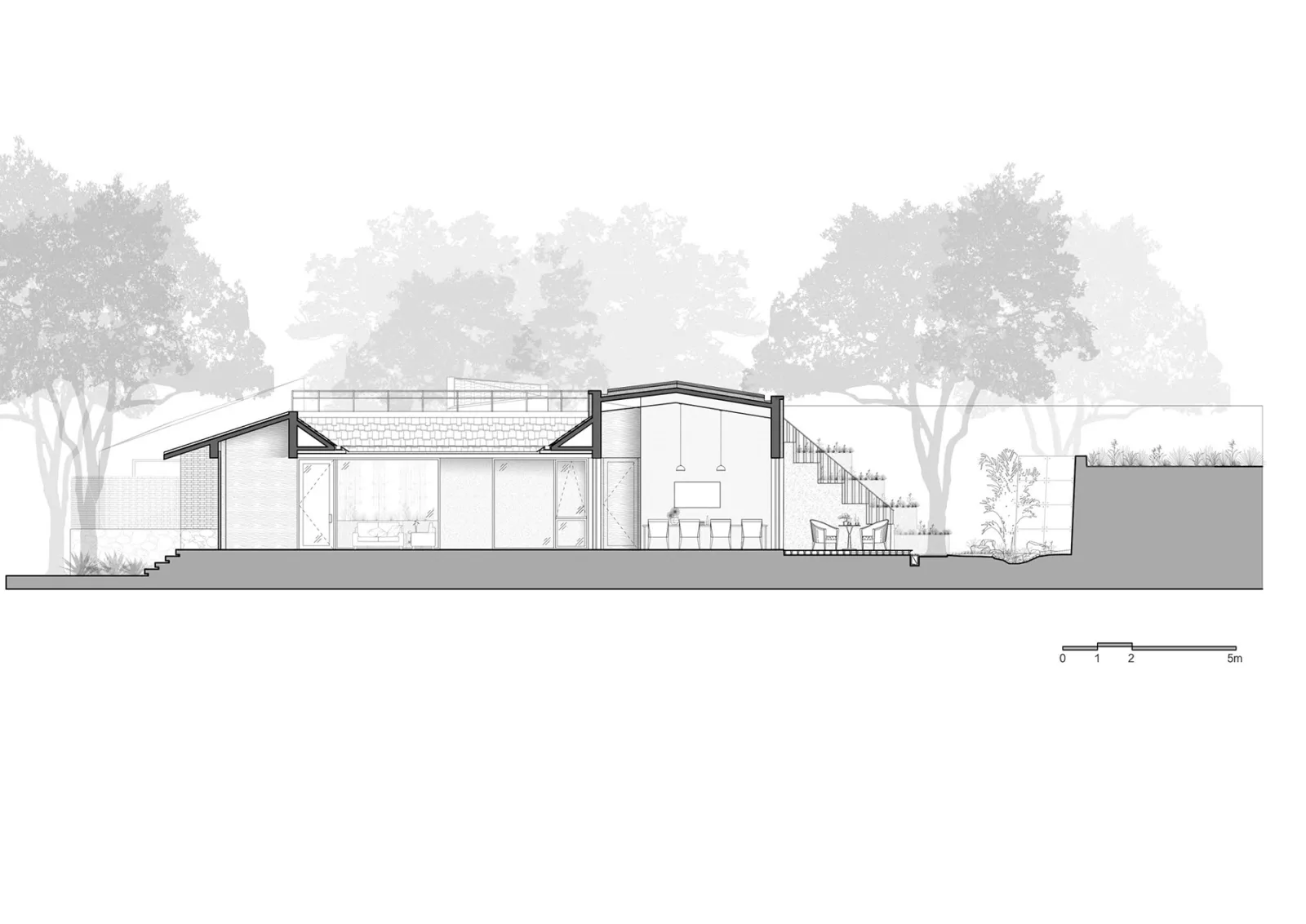
△ Section B-B
Project Information
Project Name: The Four Seasons of the Manlan Family
Location: Four Seasons of Manlan’s Family, Mount Huangshan Branch, Fangshan District, Beijing
Design Firm: SUNLAY Sanlei
Website: www.sunlay.cn
Lead Architect: Zhang Hua
Design Team: Zhang Peng, Lin Yijun, Liu Xiaoya, Yang Shuo, Wu Bingzhang
Owner: The Four Seasons of the Manlan Family
Design & Construction Period: October 1, 2019 – October 1, 2020
Floor Area: 300 square meters
Architecture: SUNLAY Sanlei
Landscape: SUNLAY Sanlei
Interior Design: SUNLAY Sanlei
Construction Drawing Design: Weituo Design
Construction: Tianrun Contemporary Architectural Decoration Engineering (Beijing) Co., Ltd.
Soft Furnishing: Beijing Runbaijia Interior Design Co., Ltd.
Photography: Architectural Photography by AST
Photography Copyright: The Four Seasons of the Manlan Family












Must log in before commenting!
Sign Up