
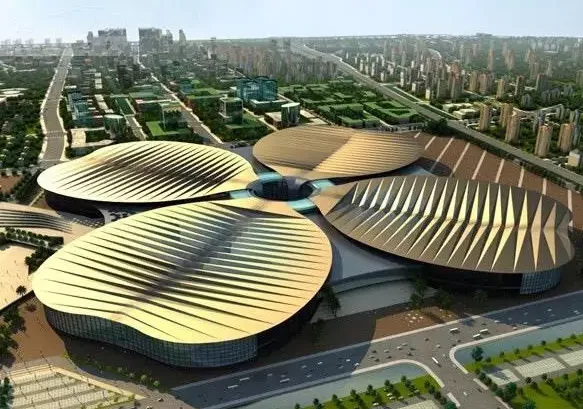
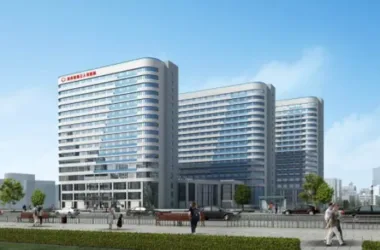
The “Four Leaf Clover” shaped National Convention and Exhibition Center (referred to as the National Exhibition Center) spans 280 meters in width, 270 meters in length, with a maximum net height of 34 meters. It holds the distinction of being the largest single building and exhibition complex in the world. Over the past year of operation, Shanghai has successfully hosted several large-scale exhibitions exceeding 300,000 square meters, including the “Shanghai Auto Show,” “China Medicine,” and the “International Furniture” exhibitions. This has significantly elevated Shanghai’s exhibition capabilities to a new level.
Despite its massive scale, this “behemoth” is actually a model of energy efficiency within the construction industry. But how did it achieve this?
Maximizing 160,000 Square Meters on the Second Floor with a Single-Level Design
One of the groundbreaking features is that container trucks can drive directly onto the second floor—a design unprecedented in exhibition venues due to its extremely high load-bearing requirements.
The structural “strength” of the exhibition hall directly influences the types and sizes of exhibits it can accommodate. The National Exhibition Center offers a net exhibition space of 400,000 square meters, including an additional 100,000 square meters of outdoor space, making it the “largest, most advanced, and most competitive” exhibition complex worldwide.
Allowing container trucks direct access to the second floor makes exhibition setup as convenient as on the ground level. This effectively adds 160,000 square meters of premium exhibition space, greatly enhancing the venue’s flexibility and capacity, explained Li Qing, a senior engineer and professor-level expert at Shanghai Expo Co., Ltd.
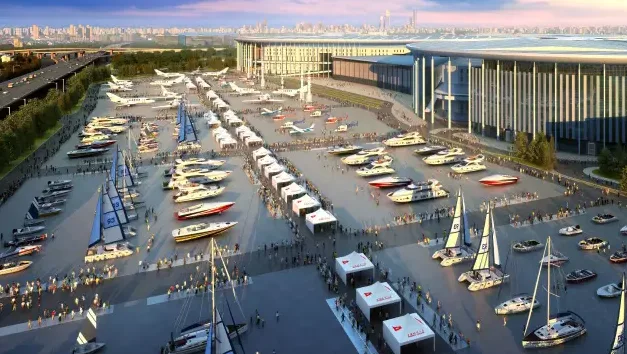
The second floor features a massive exhibition hall covering 160,000 square meters with column spacing of 27 by 36 meters. To accommodate truck traffic, the floor must support loads of 1.5 tons. However, ultra-long concrete floor structures tend to shrink and crack under heavy loads, and the tension ends pose additional challenges.
To address this, the second floor’s large-span floor uses a prestressed reinforced concrete structural system. Segmental optimization of the prestressed reinforcement ensures precise, rapid construction and accurate control of the system, effectively solving the global load-bearing challenges.
Elevators That Continue Operating 15 Meters During Power Outages
The National Exhibition Center is equipped with 50 supercapacitor elevators, six of which are the first in China to feature a safety function that prevents emergency stops during power outages.
These supercapacitor elevators represent a new generation of “safety elevators.” Unlike traditional elevators that stop abruptly during power failures—posing risks to passengers—these elevators can continue operating for over 15 meters by using stored electricity in supercapacitors, ensuring a safer evacuation.
The technology builds on the success of supercapacitor vehicles demonstrated at the Shanghai World Expo Park. Tests by authoritative bodies showed that these energy-saving elevators reduce energy consumption by 25% on average under simulated conditions, with peak savings exceeding 33%. More than 400 elevators combining supercapacitors and energy recovery systems save approximately 3 million kilowatt-hours annually, equivalent to the yearly electricity use of over 3,500 Shanghai households.

Additionally, the China International Exhibition Center has installed 5,000 “LED intelligent safety lights,” a first for exhibition venues. These lights have their own power supply, allowing them to remain illuminated during outages and preventing complete darkness in emergency situations, such as when emergency power circuits fail.
BIM Technology Saves Millions in Construction Costs
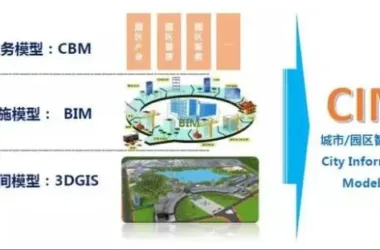
Building Information Modeling (BIM) is regarded as the second major technological revolution in the construction industry after CAD.
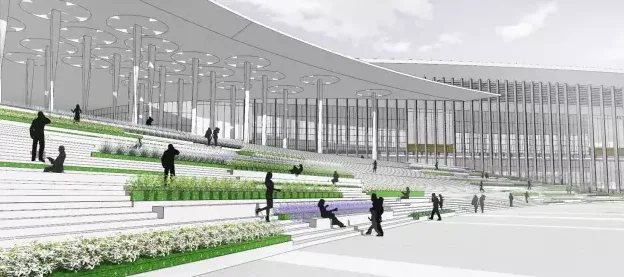
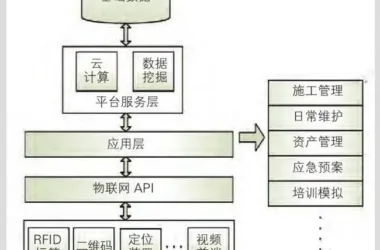
Complex projects often involve multiple design departments responsible for buildings, structures, plumbing, electrical systems, environmental control, fire protection, and more. This complexity frequently results in design conflicts during spatial planning. BIM technology can detect these conflicts early in the design phase, allowing for optimizations that improve overall design quality. Furthermore, BIM enhances spatial management on construction sites, helping to avoid clashes and improve efficiency.
However, BIM demands high modeling accuracy and rigorous project management. It is neither a technology to be rushed nor delayed, requiring commitment to fully realize its benefits. The National Exhibition Center has embraced BIM as a pioneer.
According to Li Qinglai, BIM use shortened the detailed design phase by three months and eliminated thousands of potential design conflicts during simulations. This led to tens of millions of yuan saved in construction investment.












Must log in before commenting!
Sign Up