
Pu She Tea Room is located within a commercial building along Beijing’s Third Ring Road. Owned by Beijing Shenyu Old Tea House, it shares the floor with the Shenyu Art Museum, a center dedicated to jade collection and exhibitions. The design concept behind this project explores the theme of “emotional detachment between interior and exterior.” Through a series of repeated abstractions and transitions between mountain and forest motifs, the design aims to create an ongoing, oscillating experience of separation between the inside and outside spaces. This approach is intended to evoke a sense of detachment from the outside world for tea drinkers, enriching their spatial experience within the tea room.
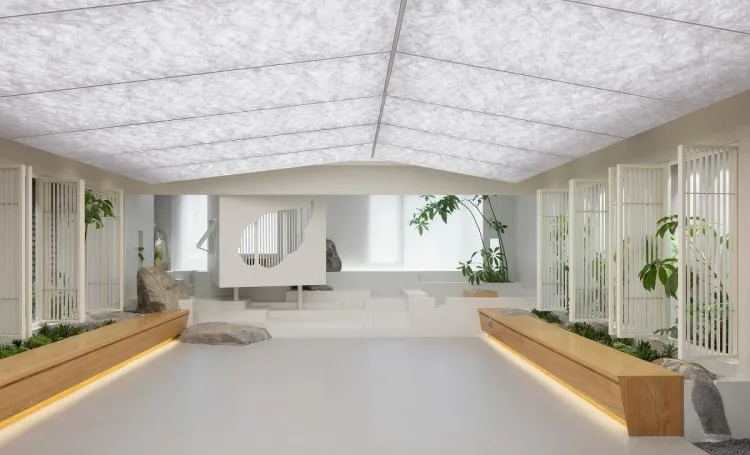
Is this the forest or under the eaves? The answer lies in the ambiguity.
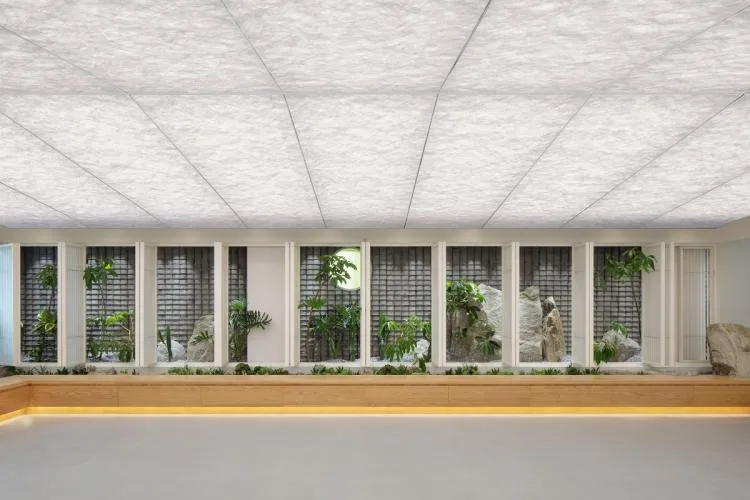
Is this indoors or outdoors? The answer remains elusive.
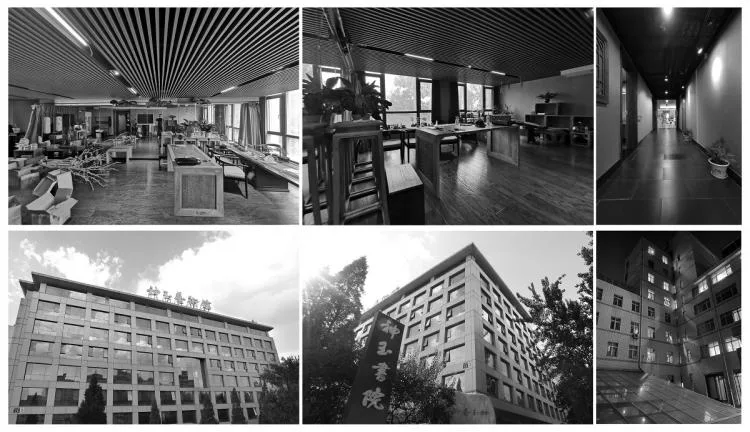
△ Site Photos
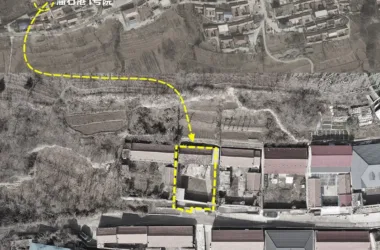
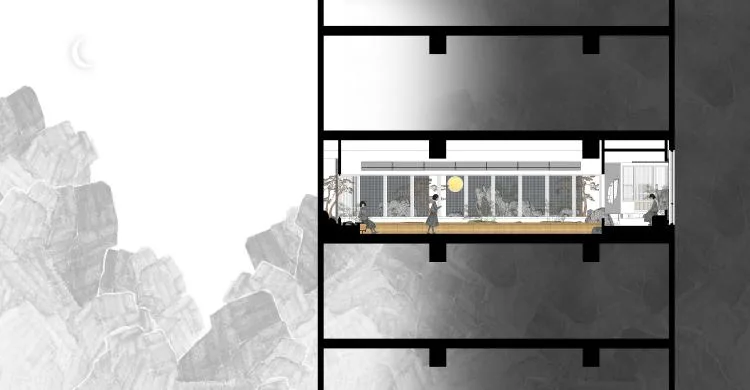 △ Site Profile
White Corridor
The first stage of experiencing this mental deviation during tea tasting begins with “entry.”
Taking the elevator to the fourth floor, visitors enter the tea room through a long, white, misty corridor. This space detaches itself from the ordinary sensory world, implying a transition into an altered subconscious state. It serves as the prelude to entering a fantastical Peach Blossom Land—a cave-like realm—and marks the beginning of a dreamlike experience.
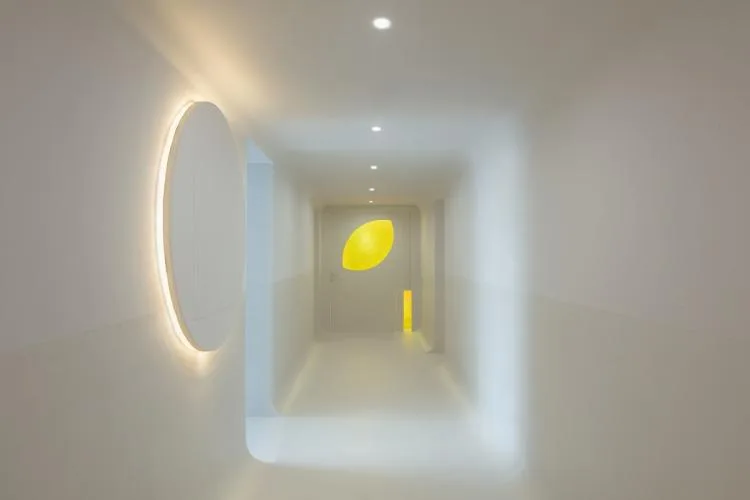
The long corridor leading into the tea room
Leaf Moon Gate and Stepping Stone
The second phase of experiencing mental deviation during tea tasting is based on “symbolism.”
The tea room’s entrance features a leaf moon gate, shaped between a leaf and a moon. This serves as the threshold to the entire tea room space. Passing through the Moon Gate, visitors step onto a stone path designed to evoke the feeling of mountains and forests. Stepping onto this stone formally immerses you in the world of Pu She Tea Room.
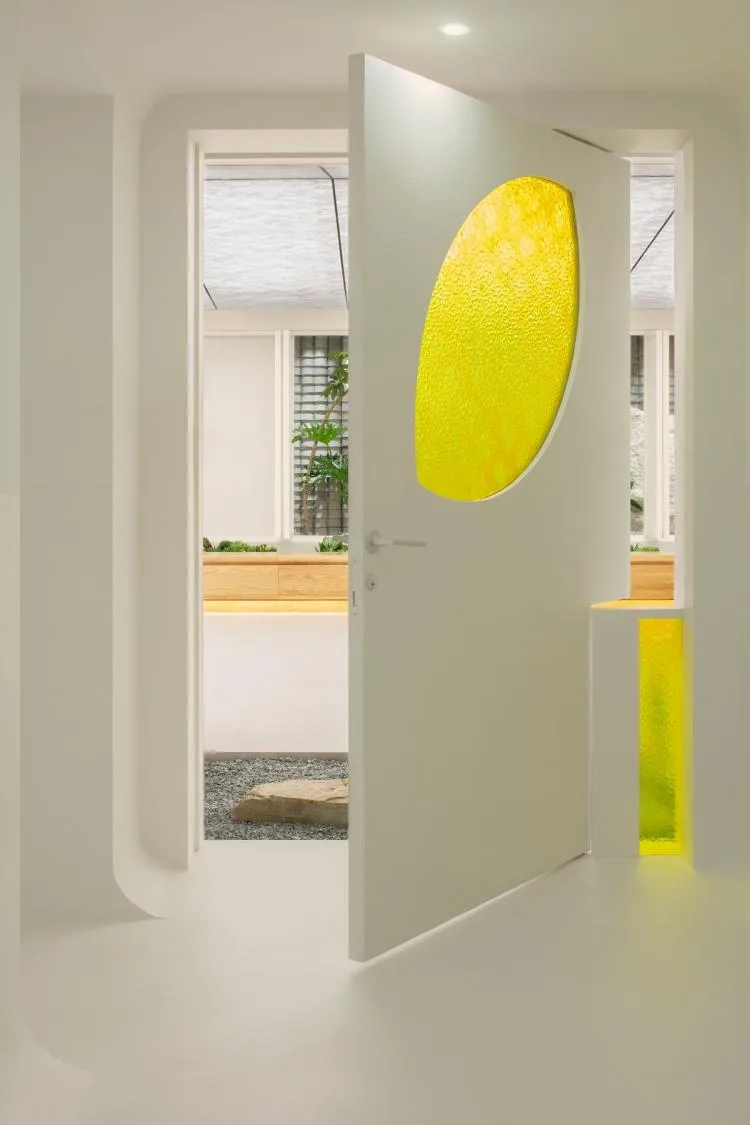
△ Entrance Gate
Surrounding Pavilion
The third stage of experiencing this mental deviation during tea tasting stems from “heterogeneity.”
After stepping on the stones, a completely different space unfolds: a large double-sloped roof envelops the area, beneath which lies the tea room’s primary space—designed for gatherings, sharing, and daily tea drinking. Surrounding this roofed space on all sides are shallow mountain and forest scenes that blur the boundary between indoors and outdoors, enhancing the natural ambiance.
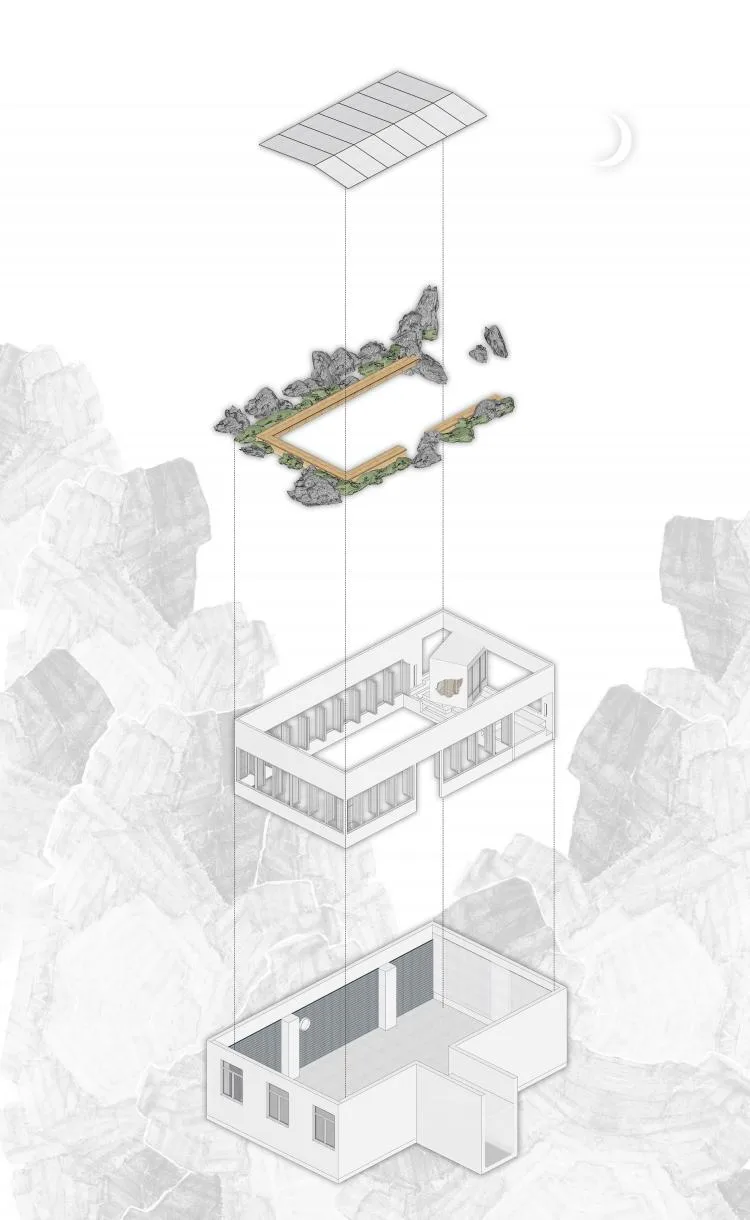
△ Venue Composition
Mountain Pavilion Tea Area
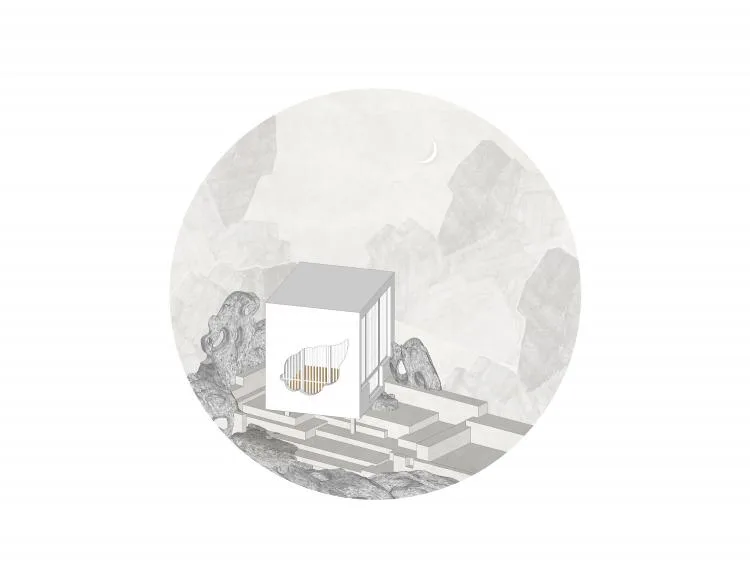
△ Mountain Pavilion Visual
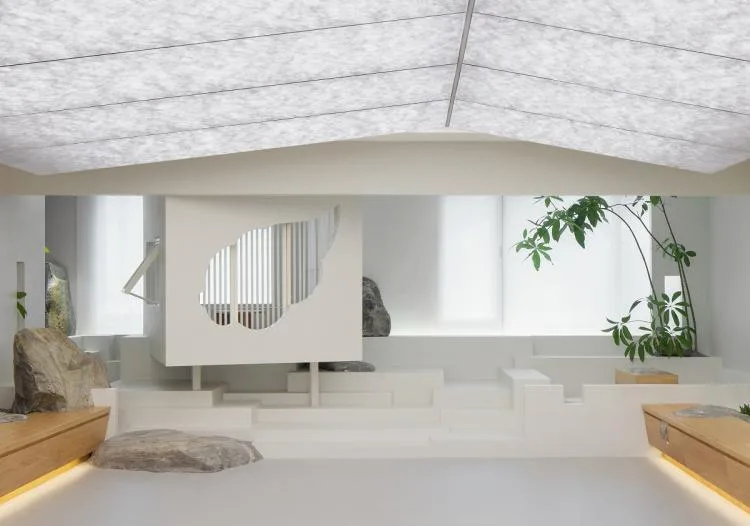
To the east of the tea room, a pavilion stands on the mountainside, overlooking a mountain stream.
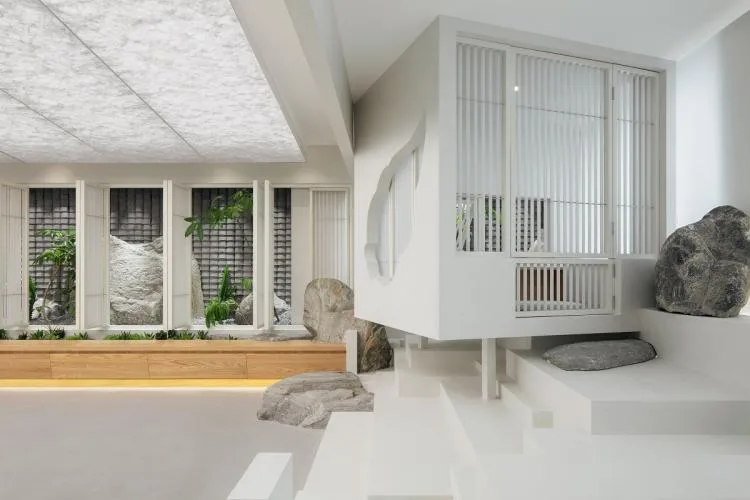
This pavilion serves as an inward-focused tea tasting space and also functions as an outward-looking music venue.
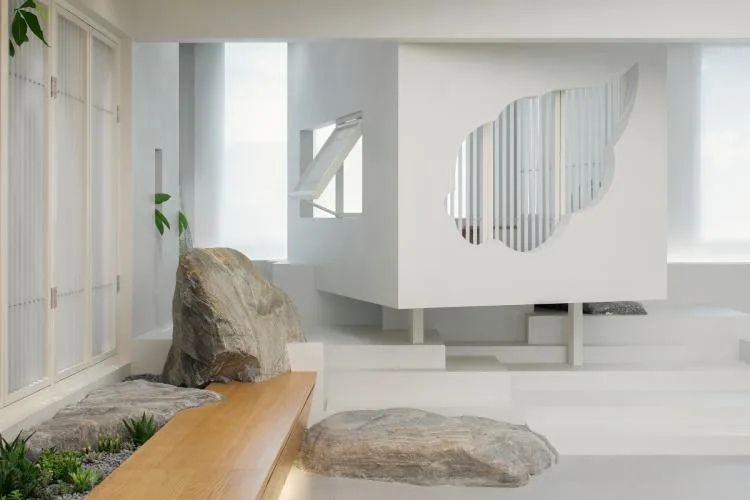
The mountain pavilion’s window adopts the traditional “leaf” shape commonly found in classical gardens.
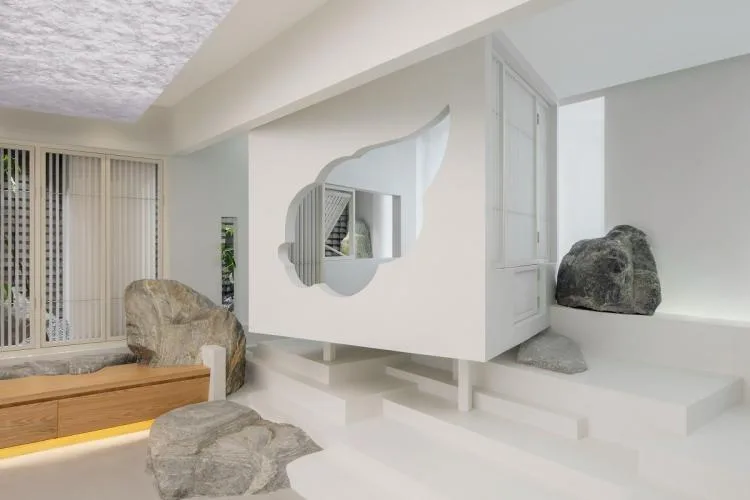
Through the pavilion’s leaf-shaped window, visitors can see the steep cliffs of the opposing Wa Mountain.
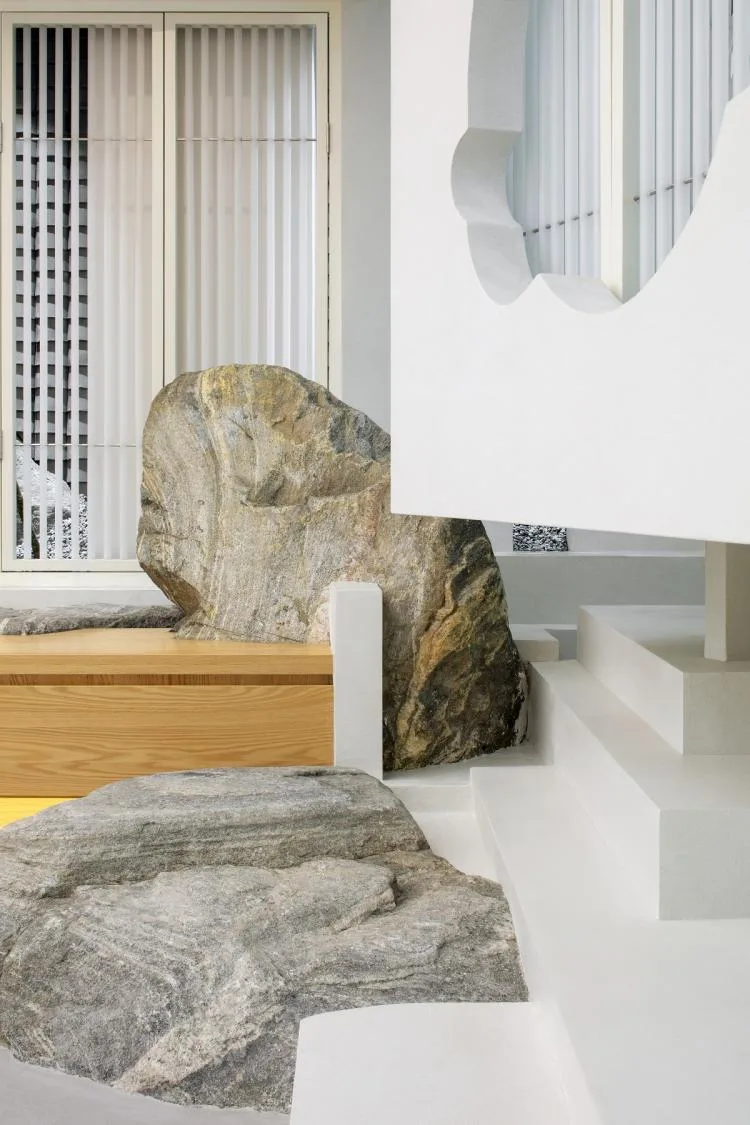
The rugged, irregular rocks beneath the pavilion blend naturally into the surrounding forest landscape.
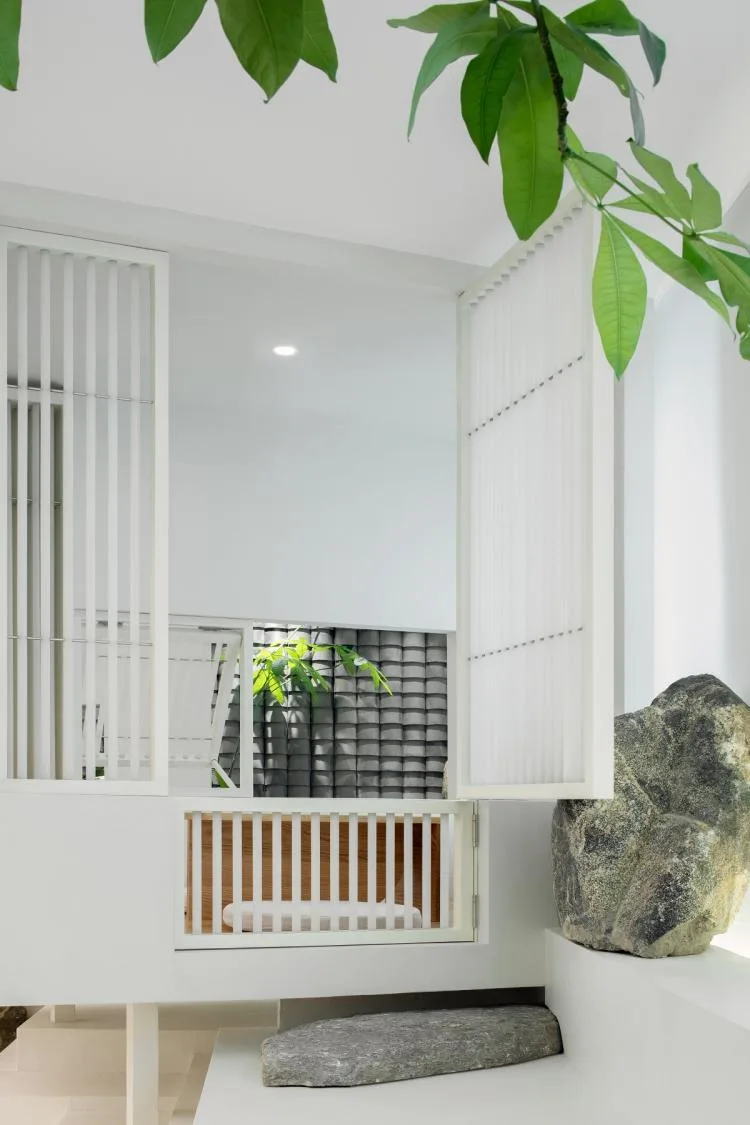
Entering the pavilion from the side offers close-up views of the cliffs and mountain streams indoors, alongside faint city lights in the distance.
Tea Preparation Platform at the Mountain’s Base
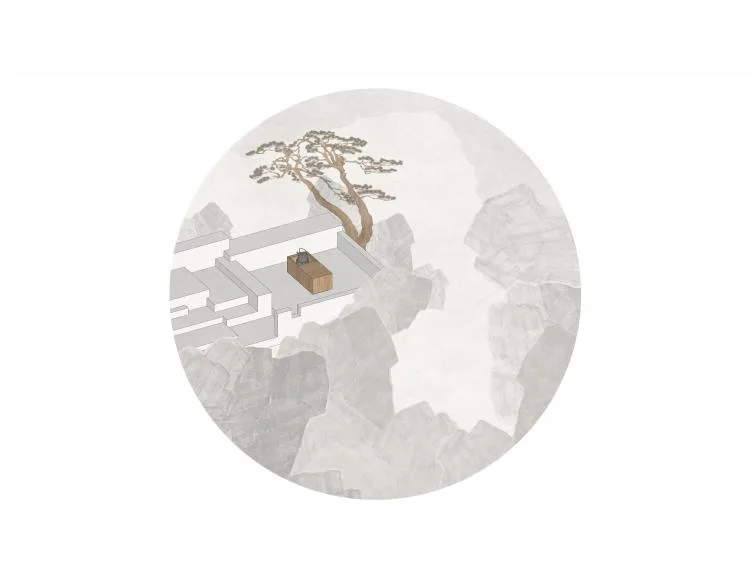
△ Mountain Terrace Visual
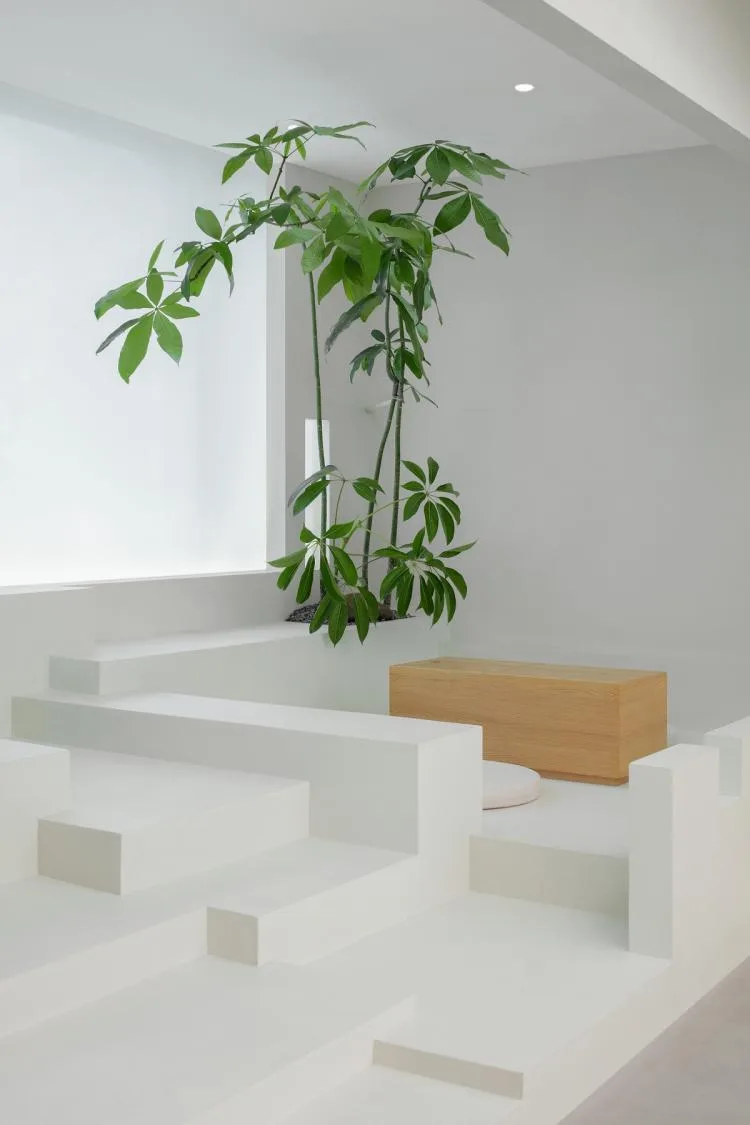
At the mountain’s base, a platform rests at a fork in the path. This flat, open area features a beautiful tree overhead and a seating area below for brewing tea and listening to the qin. It functions as both an intimate tea preparation spot and an outdoor tea room stage.
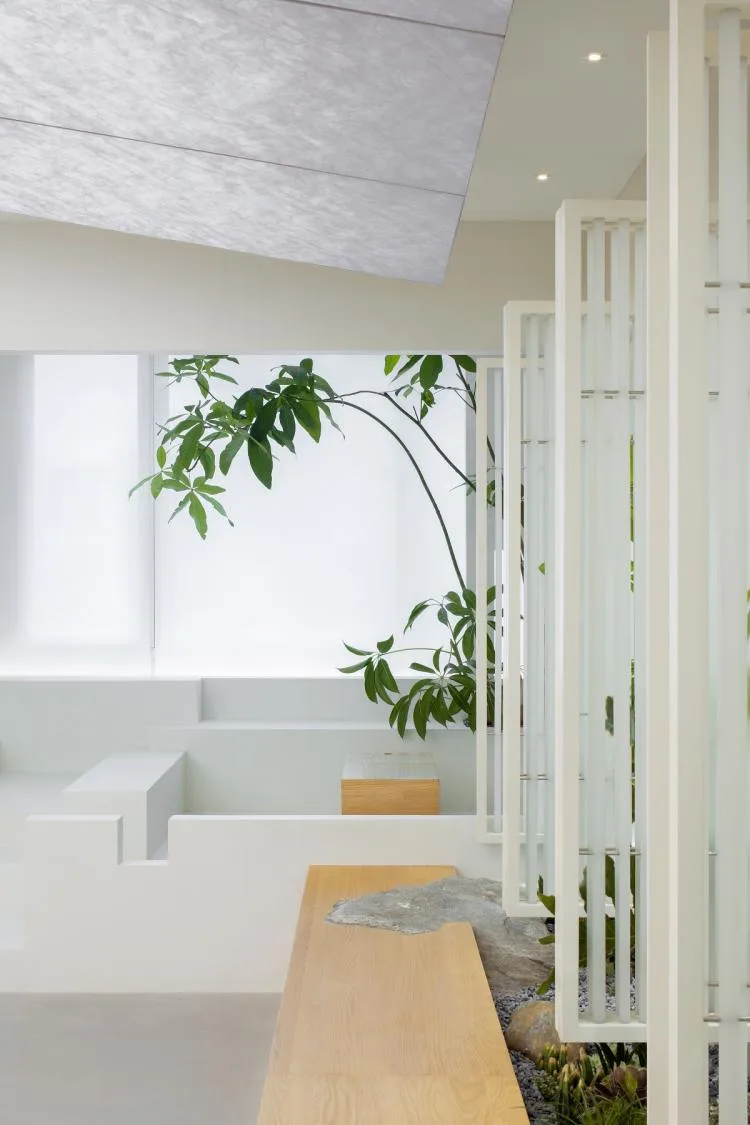
This platform serves as the tea brewing area beneath the watchful tree.
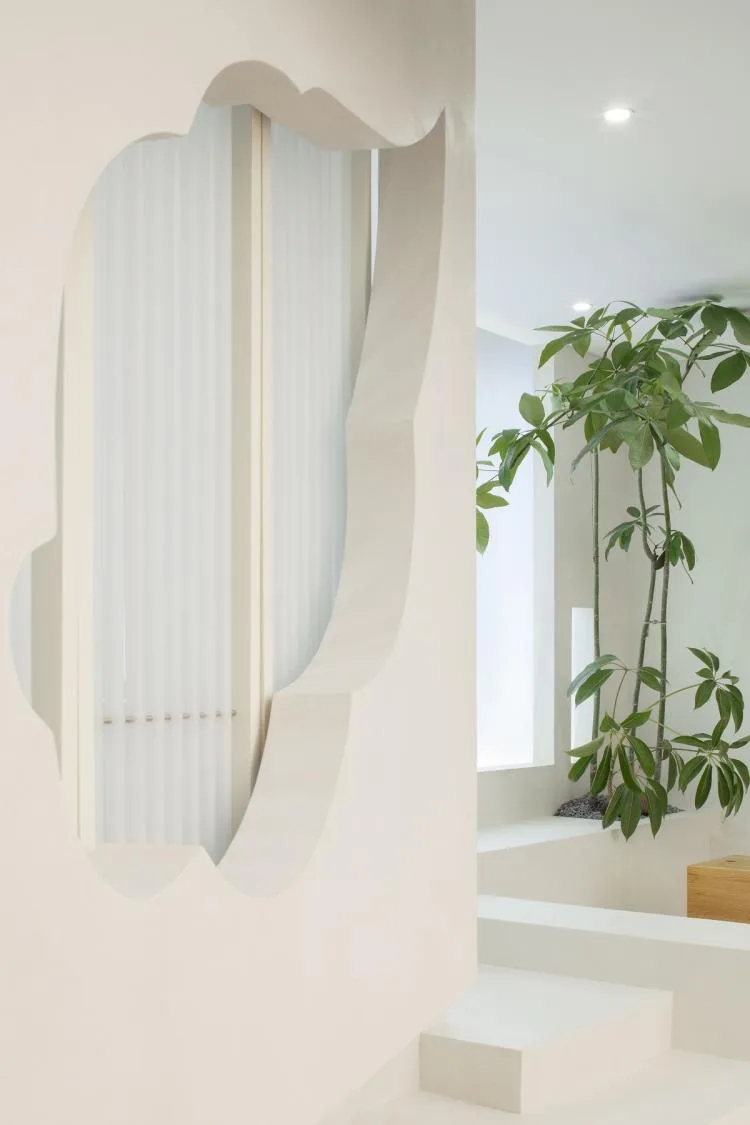
The tea pavilion and brewing platform together form the main eastern visual center of the entire tea room.
The Secluded Spot of Dongting Lake
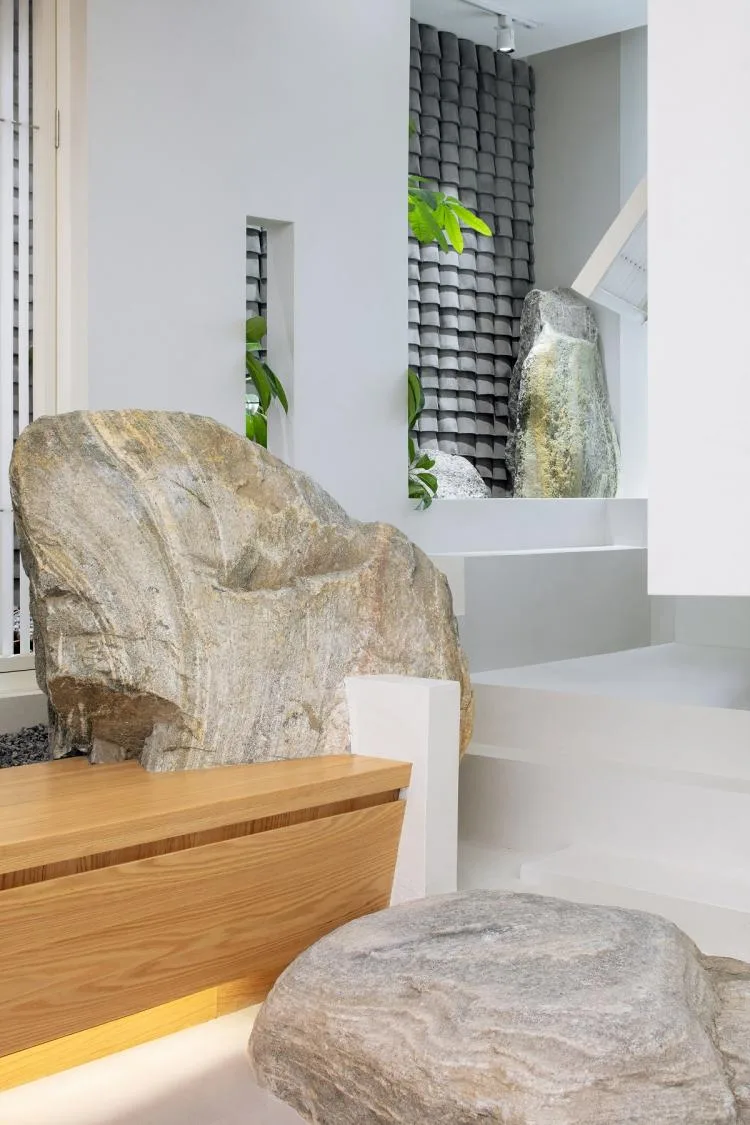
At the convergence of the eastern and northern mountain forests lies a natural valley named Lingling Stream.
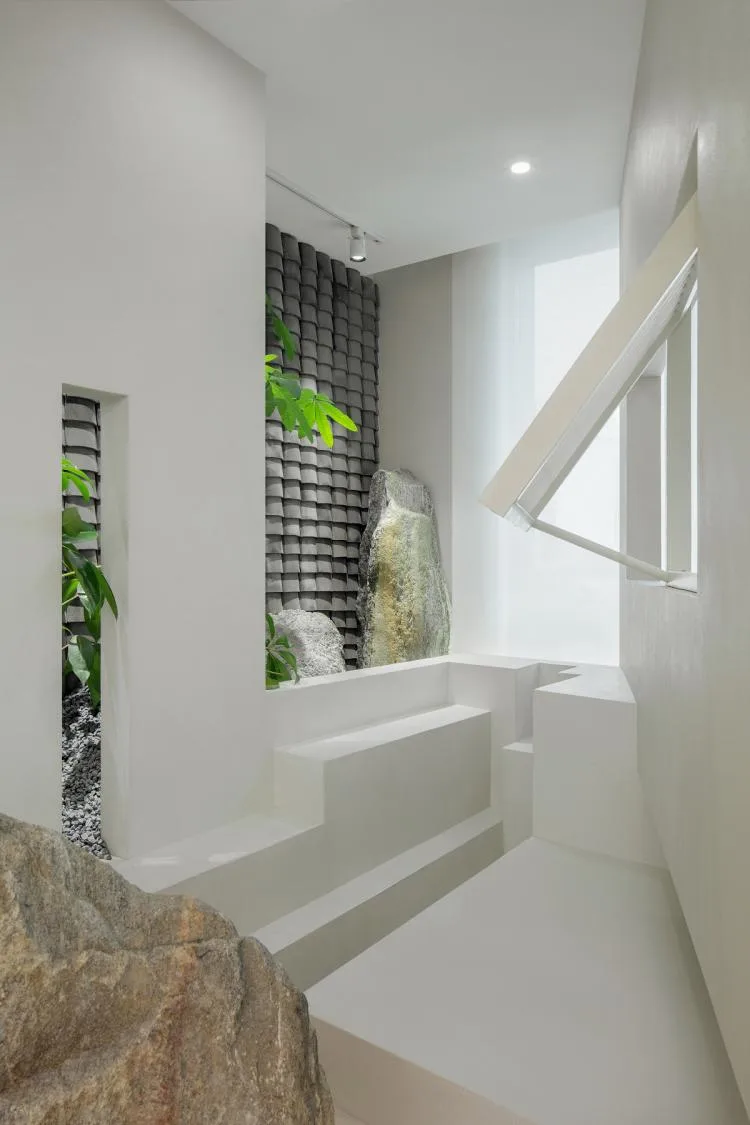
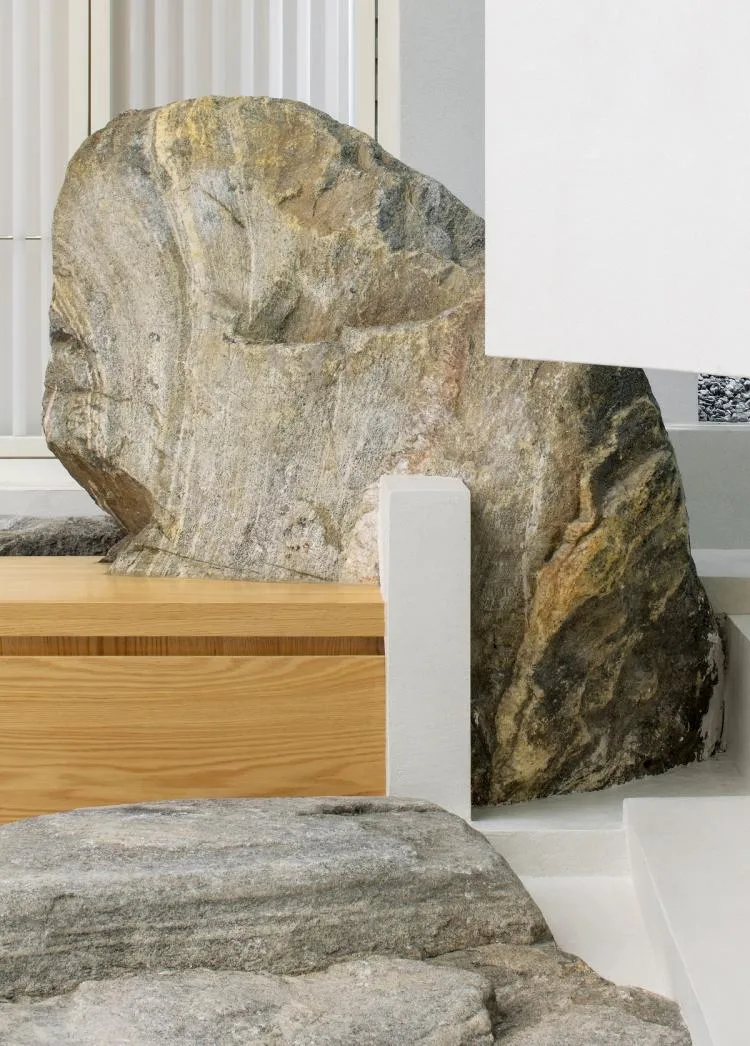
Shaped to mimic mountain and stone ravines, this area seems to echo with the gentle sounds of spring water trickling through crevices.
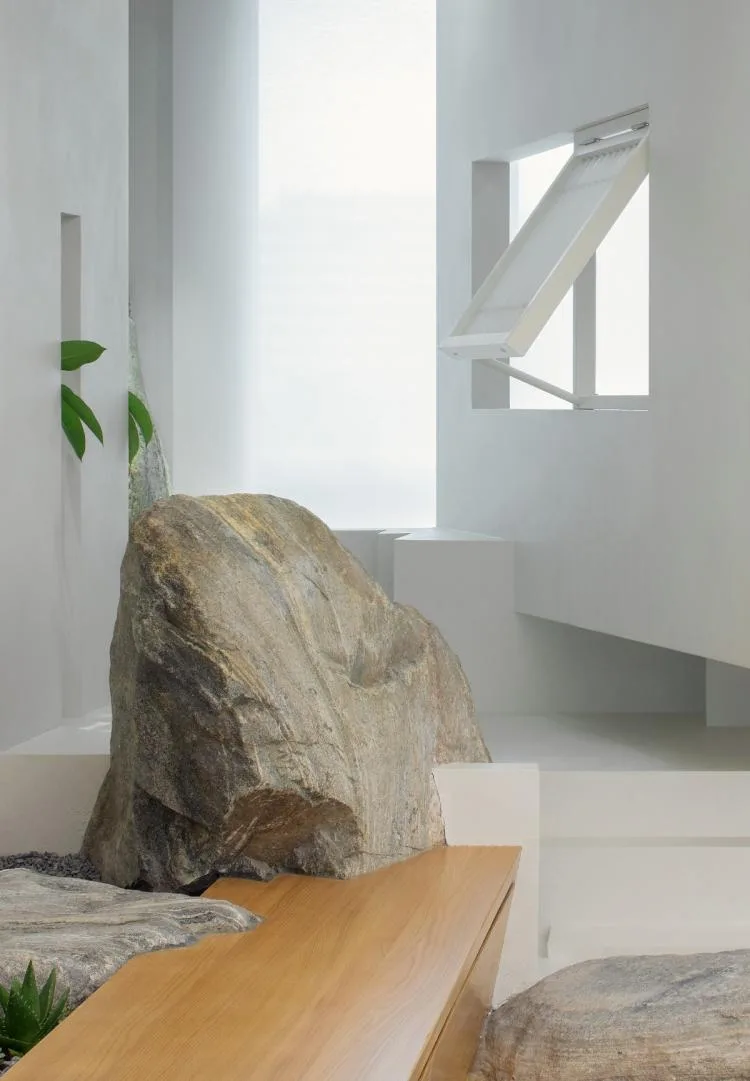
The hazy urban skyline beyond the mountains and ravines blends distance with imagination.
Under the Moon Tile Forest
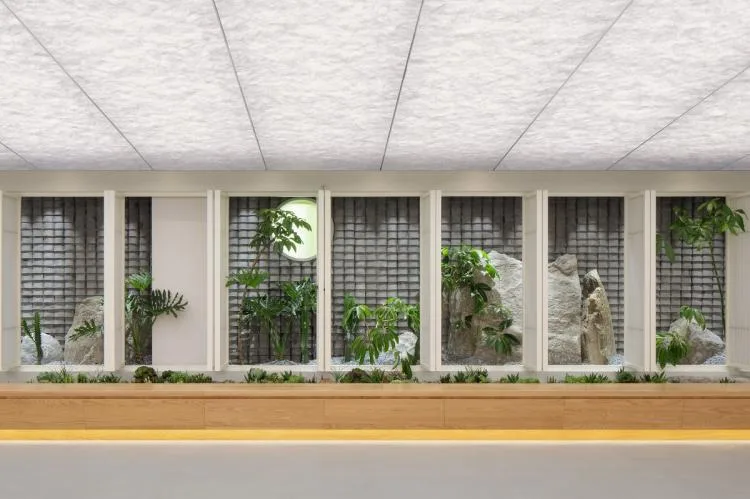
The northern mountain forest is an extremely narrow, 60-centimeter shallow space, constructed with green tiles to simulate the form of Bishan. A circular window represents a full moon, opening outward to frame the city’s moon.
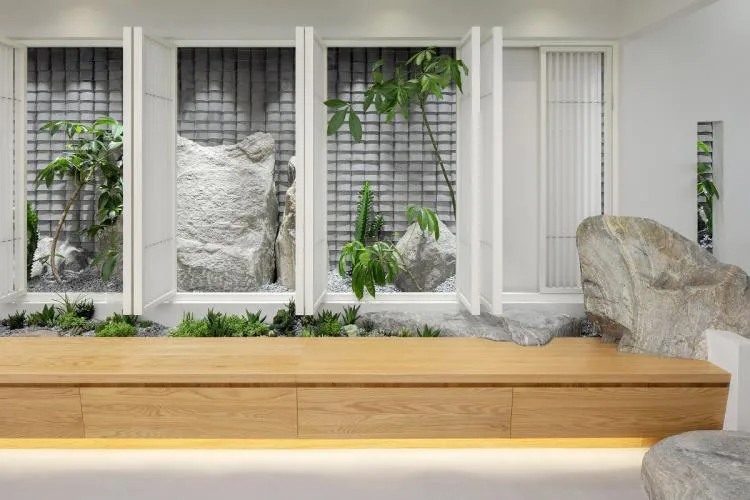
The mountain wall is embedded with shallow, lifelike mountain stones, emulating the undulating forms and varied postures of the mountains.
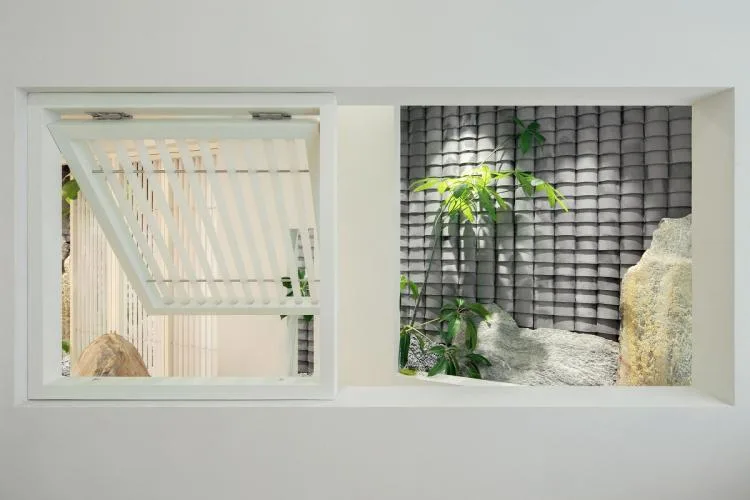
Looking north from the tea pavilion, the view extends toward Bishan.
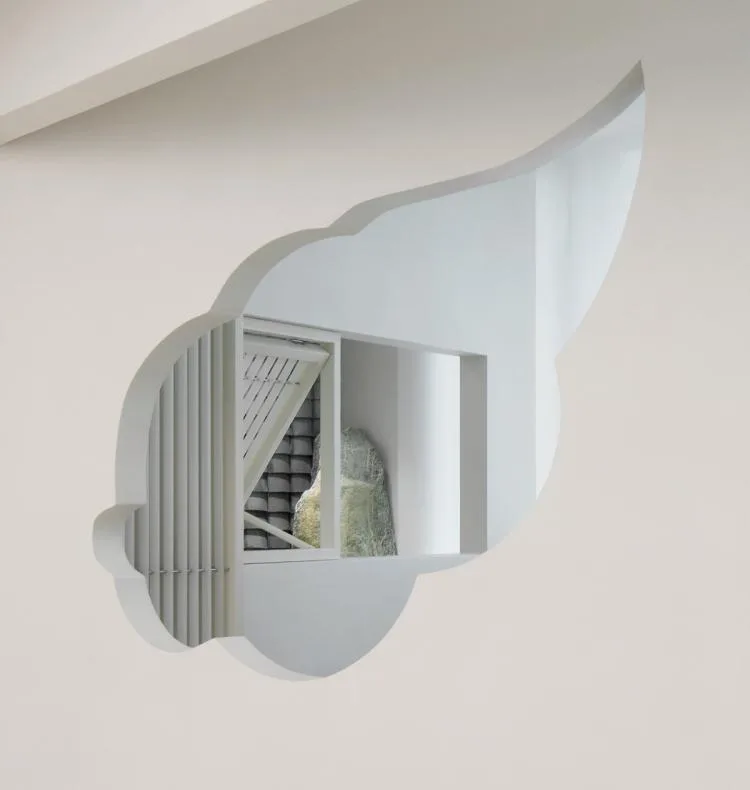
Looking north through the leaf-shaped window, the vista opens onto Bishan.
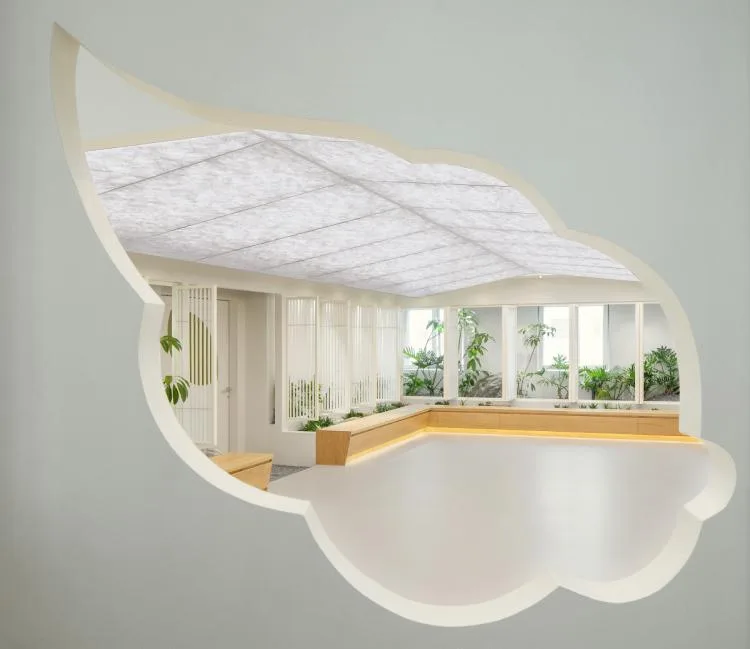
The leaf window offers a framed view of the mountains and forests just outside the main building.
Flowers, Trees, Forests, and Mountains
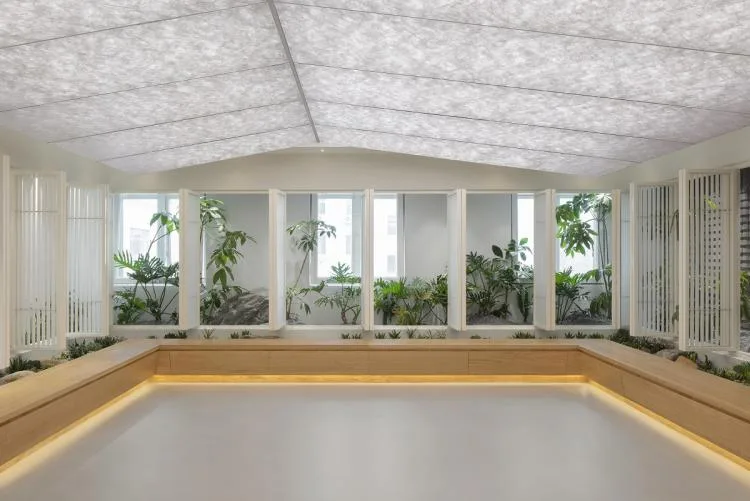
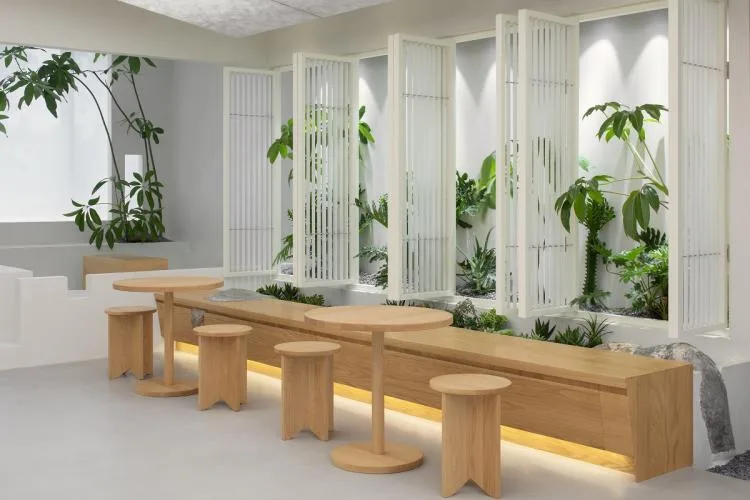
To the west and south, dense forests are planted continuously in a mountainous style. Beyond these thick woods to the west, the urban landscape breaks through the windows, instantly shifting the ambiance between indoors and outdoors.
Urban Mountain Residence and Cave
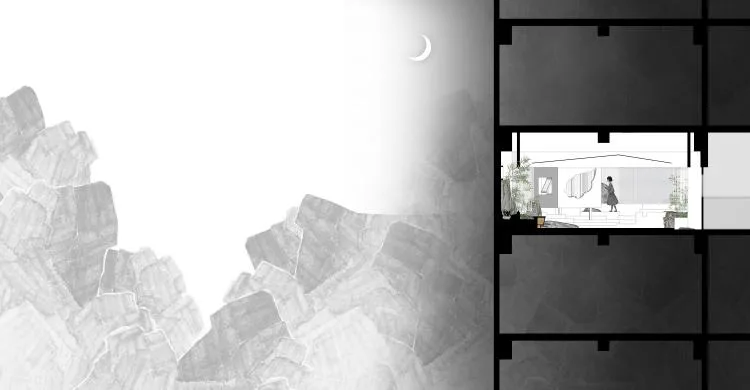
△ Site Profile
The fantasy of living in the mountains has been part of Chinese culture for millennia. This theme is reflected repeatedly throughout the design of this project.
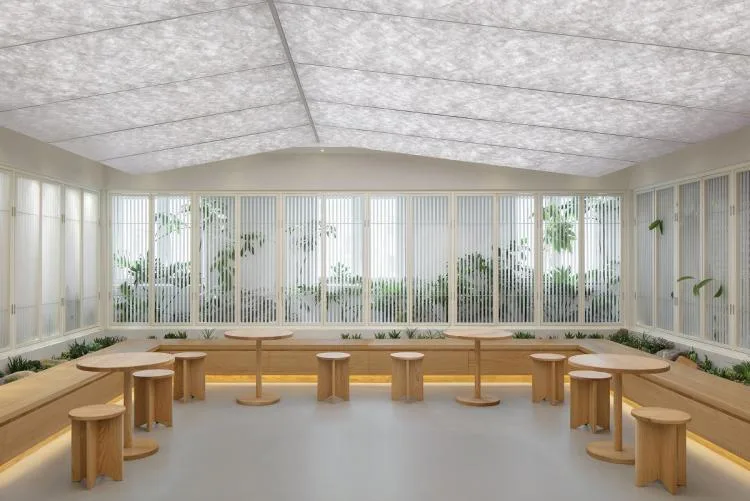
The spacious interior, delimited by the large central roof, forms the core of the building.
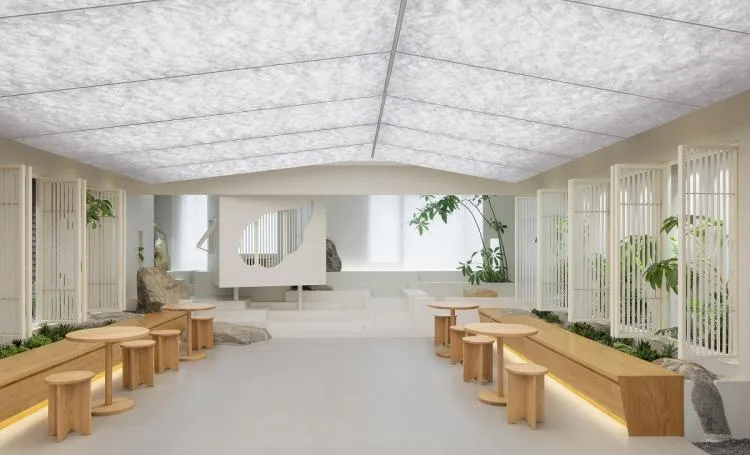
The window opens inward, with seating arranged outdoors facing the Tea Mountain Pavilion to the east, blending indoor and outdoor experiences.
The entire Pu She Tea Room is designed to incorporate various nested and separated spatial elements, embedded thoughtfully into the site. This design aims to create a spatial experience that reflects the relationship between the inside and outside of the “city” and the “cave,” while also resonating with the dynamics of “busyness and tranquility” and the interplay between “external and internal.”
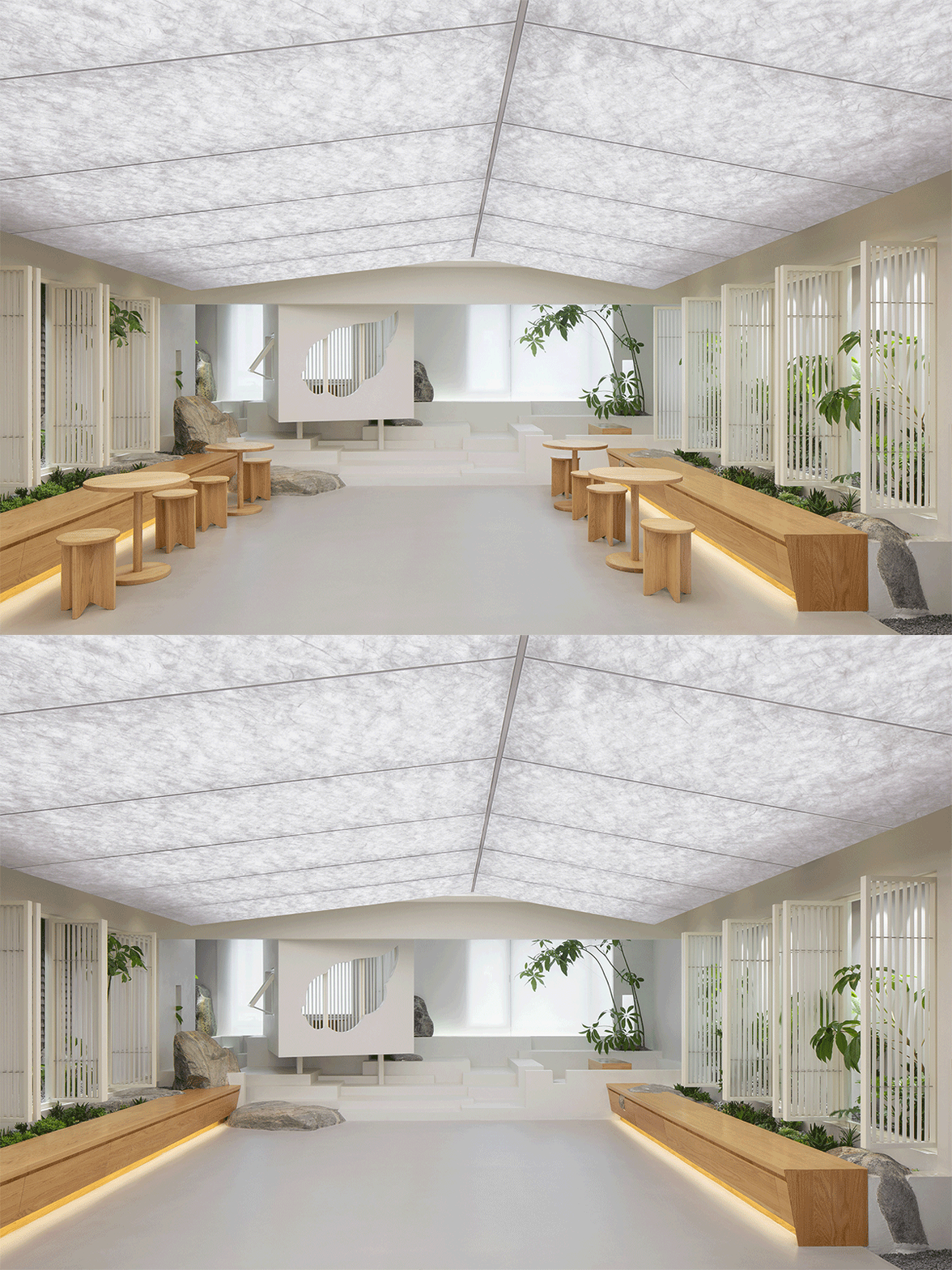
△ Mountain Residence Opening and Closing
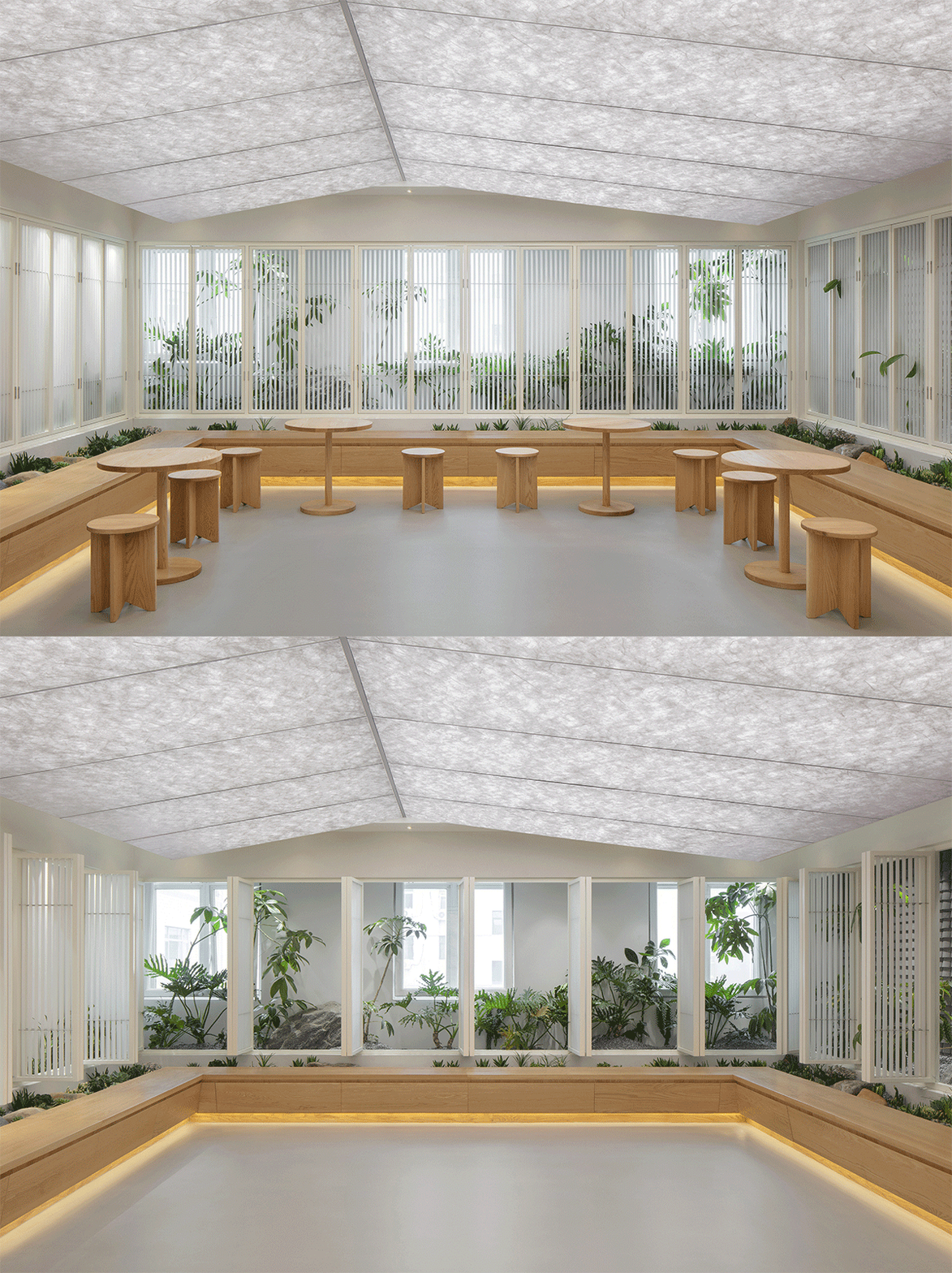
△ Mountain Residence Opening and Closing
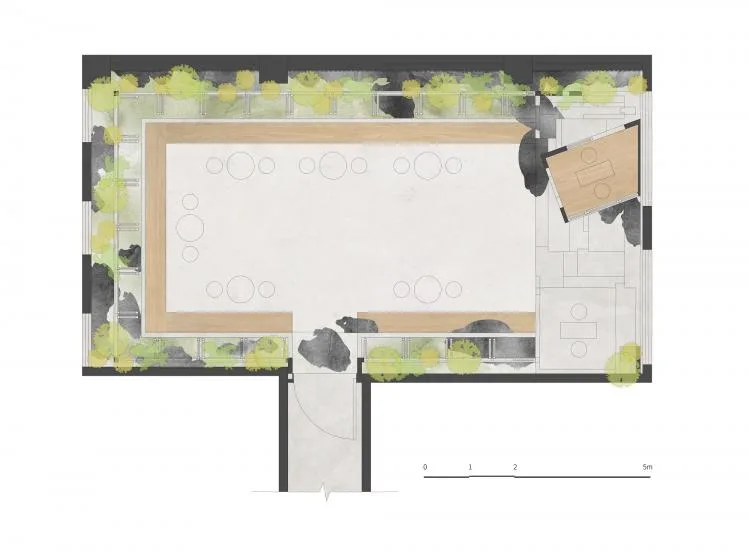
△ Floor Plan
Project Information
Project Name: Interior Design of Beijing Pu She Tea Room
Project Address: 4th Floor, Shuangquan Building, Xicheng District, Beijing
Project Type: Tea Room
Designer: Jiejie Studio
Lead Designer: Ming Guanyu
Project Team: Wang Yifan, Zhang Haiyang
Building Area: 80 square meters
Completion Date: October 2020
Owner: Beijing Shenyu Old Tea House
Photography: Summer Solstice












Must log in before commenting!
Sign Up